

Metrics 101: Ranking NBA's Top 10 Available Trade Targets
Not every target at the NBA's trade deadline is created equal.
Franchise-altering forces are rarely made available, and no players in that category (we're talking about a DeMarcus Cousins or Paul George) have been rumored to be on the move before February 8. But teams in search of in-season injections still have to decide whether they're looking for a player on the All-Star-contention outskirts or a role player who can help improve the second unit.
And we have plenty of options in those categories.
To objectively determine how this year's premier options stack up, we focus only on the 2017-18 season while turning back to a formula for Player Score we've used in previous articles.
We looked at all 294 players who have logged at least 500 minutes and then pulled their scores in three different overarching metrics: NBA Math's total points added (TPA), ESPN.com's real plus/minus wins (RPM Wins) and player efficiency rating (PER). The first two look at volume/efficiency combinations, while the latter focuses on per-possession effectiveness and favors offensive production. Volume and time on the court matter more than they might in other evaluations.
To standardize between three metrics that operate on drastically different scales, we found the z-scores in each category and summed them to find a player's total score. Those z-scores are the numbers you'll see parenthetically included for contributors throughout this article, and they're all that matter for this particular countdown.
10. Derrick Favors, PF, Utah Jazz: 1.26 Player Score
1 of 10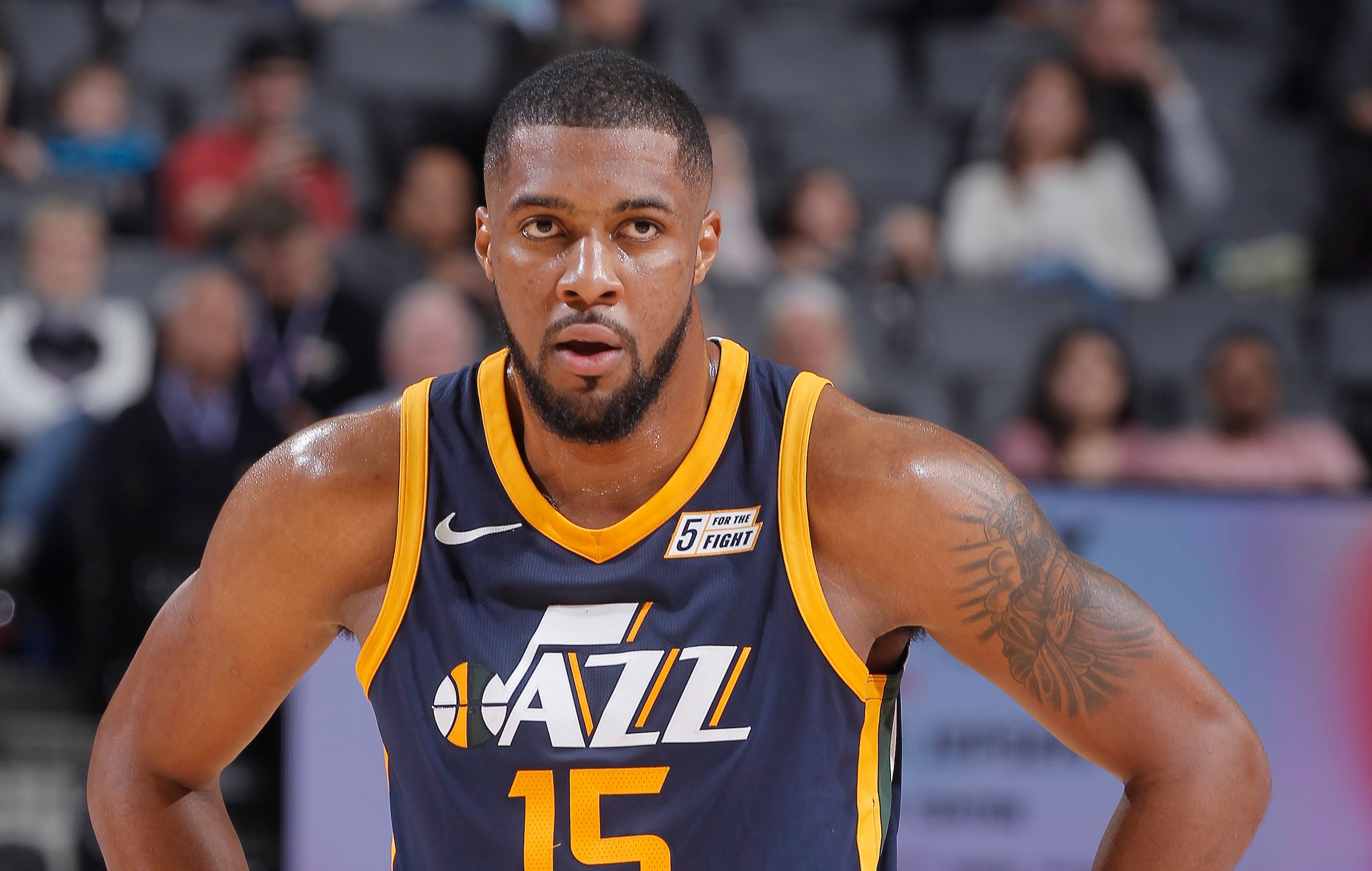
2017-18 Per-Game Stats: 12.2 points, 7.1 rebounds, 1.4 assists, 0.8 steals, 1.0 blocks
Advanced Metrics: 35.15 TPA (0.44), 18.5 PER (0.78), 2.29 RPM Wins (0.04)
Derrick Favors has become a bit of a conundrum for the Utah Jazz. They effectively allowed us to include him among possible trade targets when the Salt Lake Tribune's Tony Jones reported that he could be included in a deal for the Bulls' Nikola Mirotic.
His health has returned, permitting him to suit up in all but three games for the Jazz. So too has his explosion, represented in his dunk tallies: He's already slammed the ball home 25 more times than in 2016-17, and in five fewer contests.
But he still hasn't become the world-beating star they coveted.
In fact, Utah's net rating plunges by 4.1 points per 100 possessions when he's on the floor. He simply hasn't served as a strong fit alongside Ricky Rubio's shooting woes or Donovan Mitchell's desire to push the pace (hence his neutral score in the RPM Wins portion of our calculation).
As an individual, however, Favors still checks plenty of boxes. He's an incredible athlete who compresses defenses around him when he draws interior touches, and he can capably defend the painted area on the other end. That's enough that he should gain significant interest before the deadline if Utah actually makes him available.
Honorable Mentions: Courtney Lee, New York Knicks (1.15); Kent Bazemore, Atlanta Hawks (0.96); Julius Randle, Los Angeles Lakers (0.83)
9. Nikola Mirotic, PF, Chicago Bulls: 1.73
2 of 10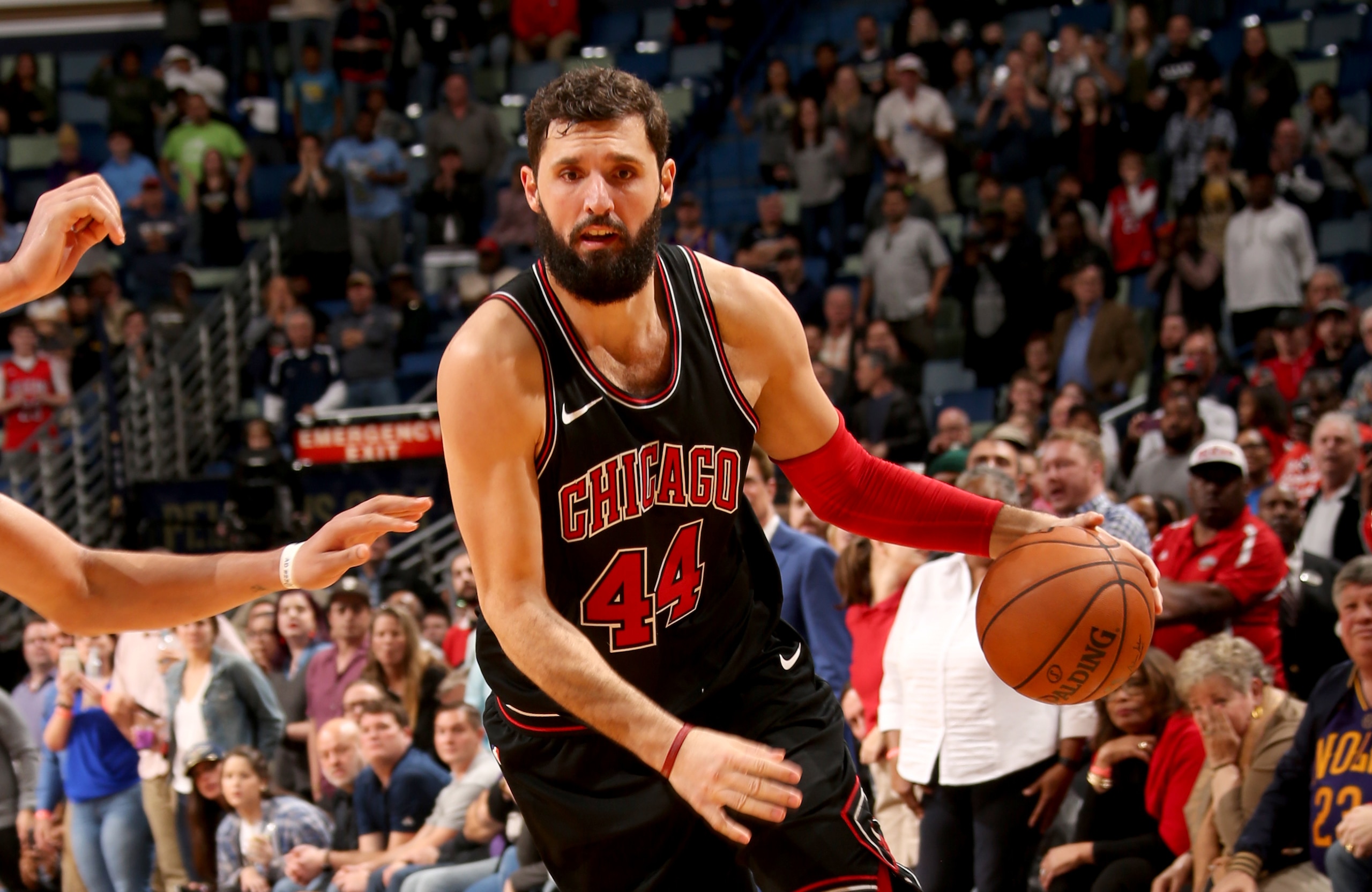
2017-18 Per-Game Stats: 17.0 points, 6.5 rebounds, 1.5 assists, 0.7 steals, 0.4 blocks
Advanced Metrics: 24.46 TPA (0.27), 22.6 PER (1.66), 1.81 RPM Wins (minus-0.2)
Nikola Mirotic can shoot the lights out of the United Center.
Since returning from his facial fractures, the Chicago Bulls power forward has averaged a whopping 24.8 points and 9.5 rebounds per 36 minutes—numbers produced by only five other qualified players (Giannis Antetokounmpo, Anthony Davis, DeMarcus Cousins, Russell Westbrook and Joel Embiid). And he's knocking down 47.5 percent of his field goals, 42.9 percent of his triples and 81.3 percent of his free throws.
Mirotic hasn't caught fire, so much as fire has caught Mirotic.
Naturally, this has provided a monumental impact on the surging Bulls, who have used the Montenegrin's flame-throwing tendencies to go 15-10 since his return. His gravitational pull has opened up easier opportunities for everyone on the roster, and the intense defensive pressure he's faced on a nightly basis hasn't prevented him from getting buckets.
Can he keep this up for a full year? Will he be able to maintain his scorching percentages if he lands with a contender that can't guarantee him as many touches? After all, it's doubtful he'll be able to sustain a 26.5 percent usage rate with a more competitive squad.
At this point, the only certainty seems to be that he'll wear a different uniform by the end of the year. He's still given no indication of backing off his trade demands—an understandable development after a fight during practice defaced the start of his season.
8. Marc Gasol, C, Memphis Grizzlies: 1.98
3 of 10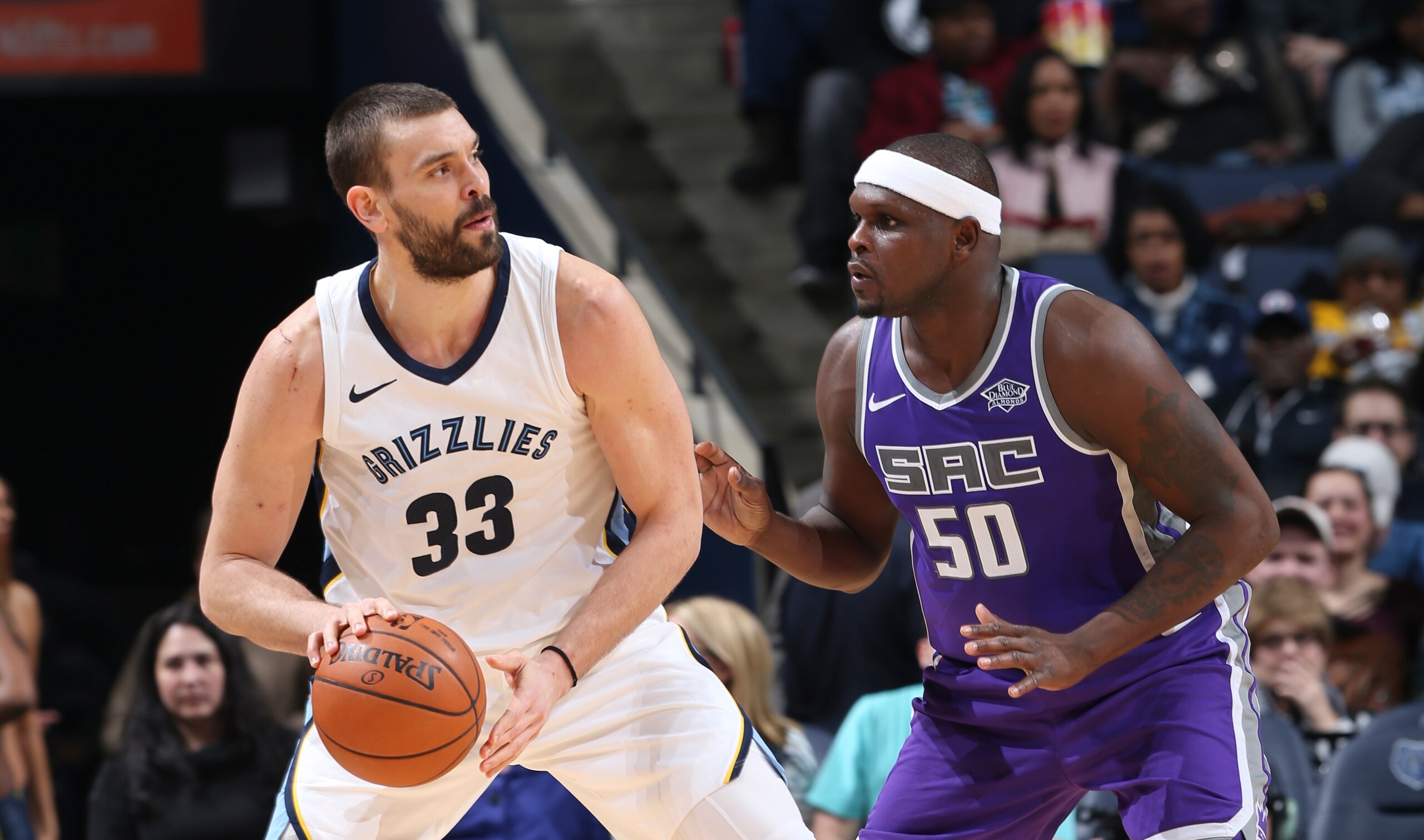
2017-18 Per-Game Stats: 18.1 points, 8.4 rebounds, 3.8 assists, 0.7 steals, 1.4 blocks
Advanced Metrics: 40.1 TPA (0.52), 17.6 PER (0.59), 3.98 RPM Wins (0.87)
Marc Gasol hasn't been the same player in 2017-18, which is why you're seeing him show up far earlier than you might expect. Barely outpacing Nikola Mirotic would've been shocking even a season ago. But just look at how his scores in the three relevant metrics have trended over the last two campaigns (prorating current-season numbers for ease of comparison):
- 2016-17: 204.41 TPA, 20.3 PER, 8.69 RPM Wins
- 2017-18: 69.96 TPA, 17.6 PER, 6.94 RPM Wins
If you're thinking of him as last year's dominant center, stop. He's no longer that player and has spent much of the current season operating like Father Time has finally gotten a grip on his career. The 33-year-old looks more than a few steps slower on the defensive end, and he's been unable to create nearly as much space for his sweet-shooting habits.
This isn't to say Gasol is a bad player. That couldn't be further from the truth.
He's still served as Memphis' second-best contributor (behind another member of this sloth who'll be showing up later in the countdown) and has continued to impact the defensive proceedings in a significant way. He's just not been the same as in previous seasons, since so much of his all-around dominance relied upon mental acuity and the physical ability to get to those spots he anticipated so effortlessly.
Most teams would be lucky to have Gasol on the roster. They just shouldn't expect star-caliber production.
7. DeAndre Jordan, C, Los Angeles Clippers: 2.26
4 of 10
2017-18 Per-Game Stats: 11.8 points, 14.8 rebounds, 1.2 assists, 0.5 steals, 1.0 blocks
Advanced Metrics: 49.6 TPA (0.67), 19.9 PER (1.08), 3.24 RPM Wins (0.51)
Age comes for everyone (except maybe LeBron James...and Dirk Nowitzki...and Vince Carter...and, dammit, I'm defeating my own point!). DeAndre Jordan hasn't been an exception during his 10th season; the 29-year-old center whose game is predicated on extreme levels of athleticism has begun to show some cracks in the high-flying facade.
For quite some time now, Jordan has filled his role to perfection. He's put his hops on display with elite pick-and-roll results, competed for the league lead in rebounds and capably protected the interior of the Los Angeles Clippers' defensive schemes.
And while he's still ticking off those elements, he's not doing so with quite as much aplomb.
As a roll man, he's scoring 1.2 points per possession, which places him in the 73rd percentile—a far cry from last year's 1.52 points per possession (99.1 percentile). His defensive real plus/minus has fallen from 2016-17's 3.44 (No. 6 among centers) to its current mark of 1.2 (No. 30). Only his rebounding has trended in the right direction, as he's now averaging an additional board per contest to push his mark to 14.8.
These are all still strong numbers, hence his ranking here. But teams looking for an infusion of talent at the 5 might want to think twice before giving up too many assets for a declining center pushing 30.
Yes, I'm talking to you and your Brooklyn Nets pick, Koby Altman.
6. Larry Nance Jr., PF, Los Angeles Lakers: 2.27
5 of 10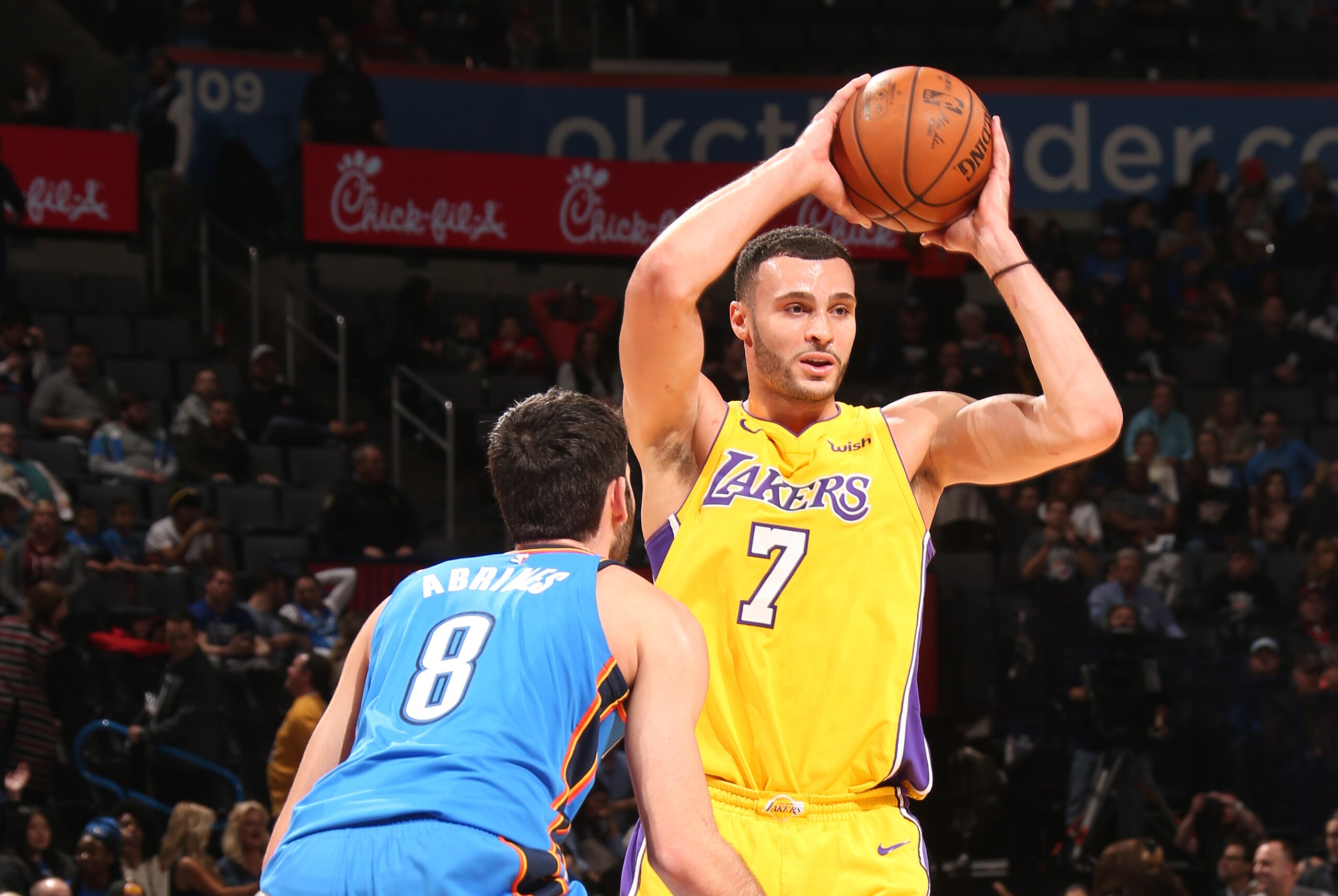
2017-18 Per-Game Stats: 8.9 points, 6.8 rebounds, 1.4 assists, 1.4 steals, 0.5 blocks
Advanced Metrics: 64.3 TPA (0.9), 19.7 PER (1.04), 2.89 RPM Wins (0.33)
Despite his high-flying slams, Statue-of-Liberty proclivities and knack for playing above the rim at all times, Larry Nance Jr. isn't the most glamorous player. He often works underneath the radar, even if he's arguably performed like the Los Angeles Lakers' premier individual during the 2017-18 campaign.
Lonzo Ball gets more hype and is viewed as a foundational piece. Ditto for Brandon Ingram. Kentavious Caldwell-Pope, Julius Randle and Jordan Clarkson draw more headlines. And yet, Nance is the team's leader in TPA by a substantial margin, narrowly edges out Randle for the top mark in PER and has added the second-most RPM Wins in a purple-and-gold uniform, behind only Ball.
He's an advanced-stats darling, and for good reason.
Nance is a gifted defender who translates his athleticism into solid play around the hoop when he's not jetting around the half-court set and disrupting passing lanes. L.A. allows 2.5 fewer points per 100 possessions when he's on the floor—the best on/off differential of any rotation member who didn't play college basketball at UCLA.
But his offense, even with significant jump-shooting limitations, has been similarly valuable because he knows his game and plays with a heightened level of self-awareness. He doesn't take bad shots or turn the ball over, but instead bides his time until he's allowed to unleash his energy on the tin—hence shooting 60.2 percent from the field.
What team wouldn't covet this well-rounded skill set that doesn't detract from the squad's efforts?
5. Kyle O'Quinn, C, New York Knicks: 2.34
6 of 10
2017-18 Per-Game Stats: 6.9 points, 5.8 rebounds, 2.0 assists, 0.4 steals, 1.0 blocks
Advanced Metrics: 71.9 TPA (1.02), 19.7 PER (1.04), 2.79 RPM Wins (0.28)
Kyle O'Quinn hasn't really registered on a national level this season, and that's perfectly understandable. The 27-year-old big man is thriving when he gets onto the floor, but he's only logged 17 minutes per game for a middling New York Knicks squad.
Still, he's been pretty darn good. Like, way-better-than-you-might-initially-think good.
O'Quinn has served as an unstoppable force around the basket, shooting 59.6 percent from the field and becoming one of the NBA's most effective putback finishers. NBA Math's Adam Spinella recently broke this down in more detail:
"Who scores on 70 percent of their offensive-rebound opportunities, gets fouled 20 percent of the time he tries to score them and has averaged 3.4 offensive boards per 36 minutes for his career? [...]
Kyle O’Quinn is a glorified garbage man, and he wouldn’t have it any other way. The Knicks play some bruising two-big lineups, and KOQ has been a successful piece of that puzzle coming off the bench. With a glut of big men, however, O’Quinn is expendable and might be the dose of interior toughness and rebounding some of the more undersized playoff teams crave."
O'Quinn is logging 1.4 points per possession on putback attempts, leaving him in the 89.2 percentile. Those plays also account for a staggering 13.5 percent of his offense, which makes such a lofty finish all the more impressive.
Oh, and the Norfolk State product has been even better on defense this season. Don't be fooled by New York's inability to get him more minutes, given its cavalcade of usable bigs.
4. Enes Kanter, C, New York Knicks: 2.43
7 of 10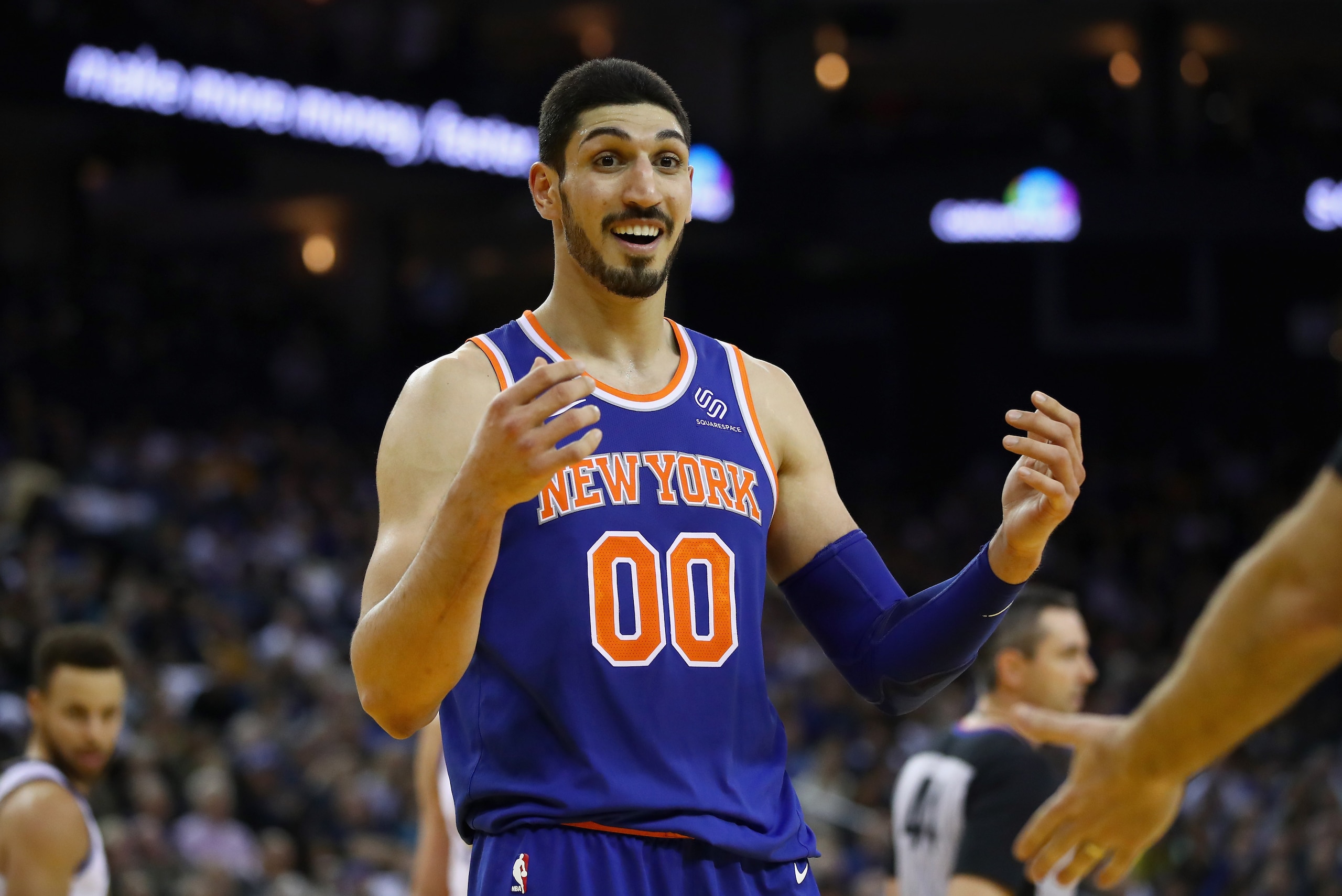
2017-18 Per-Game Stats: 13.7 points, 9.9 rebounds, 1.4 assists, 0.5 steals, 0.5 blocks
Advanced Metrics: 60.64 TPA (0.84), 23.5 PER (1.85), 1.69 RPM Wins (minus-0.26)
Enes Kanter is a fantastic individual presence, but his raw numbers haven't translated into much success for the New York Knicks.
That's easy enough to see just from the advanced metrics listed above. His box-score stats (the primary inputs for TPA and PER) are phenomenal, but his score in RPM Wins (a far more nuanced version of on/off splits) is below the league average.
Let's dive a bit deeper into those on/off numbers:
When Kanter plays, the Knicks have been outscored by 4.7 points per 100 possessions, giving them a net rating comparable to the season-long mark earned by the No. 27 Orlando Magic (minus-5.0). When he's on the bench, that mark skyrockets to 1.1, which would rank No. 11. No rotation member has a worse split, and the only rostered players with inferior numbers are Willy Henangomez, Ramon Sessions and Damyean Dotson.
Kanter can get his individual stats. He's such a skilled offensive presence who thrives on second-chance opportunities and technical finishes in the paint. He's a gifted rebounder who understands the nuances of positioning and box-out physicality. He's even developed into a knockdown mid-range marksman this year, hitting 55.9 percent of his shots between 10 and 16 feet, as well as 44.4 percent of even longer twos.
In New York, at least, this just doesn't translate into wins. The Knicks don't have the perimeter stoppers necessary to cover up his interior porosity, and their offensive schemes aren't designed to maximize his impact.
Granted, this has been a problem throughout Kanter's career—a timeline rife with negative on/off splits. But the Oklahoma City Thunder did a far better job covering up his warts last season before dealing him in the Carmelo Anthony trade; that offers hope that some other organization could maximize his talents after prying him away from the Big Apple.
3. Lou Williams, PG/SG, Los Angeles Clippers: 3.40
8 of 10
2017-18 Per-Game Stats: 23.2 points, 2.5 rebounds, 5.1 assists, 1.0 steals, 0.2 blocks
Advanced Metrics: 78.83 TPA (1.12), 22.3 PER (1.6), 3.59 RPM Wins (0.68)
Lou Williams is a professional scorer.
That statement has rung true throughout his NBA tenure, but it's never been more applicable than during this mind-warping campaign for the Los Angeles Clippers. He's been so relentlessly unstoppable that he's dragged the Clippers back into playoff contention, placed himself in an extension conversation and made the prospect of being traded far more questionable.
That last part is almost unfathomable for a 31-year-old defensive sieve with an expiring contract; he's just been that dominant with the ball in his hands.
"I keep getting used as a pawn in these trades, as rental pieces to try to make some other team that has short-term goals of championship runs right now. And that's OK. But at the end of the day, I pour my heart and soul into the team that I'm on. I'm a loyal person," he explained, per the Los Angeles Times's Broderick Turner. "That's just how I am. So until somebody says different, I'm all about the Clippers."
Maybe he'll continue being "all about the Clippers" for the remainder of the season—and a while longer, if he can come to terms on an extension. But if he does end up moving (which remains a distinct possibility with Los Angeles fighting an uphill battle to reach No. 8), his new squad will get a loyal person in the midst of a historic offensive season.
Throughout the NBA annals, 62 different qualified players have averaged at least 23 points and five assists, led by LeBron James (14 times) and Oscar Robertson (nine). Williams, though, is one of only six to do so with a true shooting percentage north of 60 percent and fewer than three turnovers per contest, joining Larry Bird, Stephen Curry, James, Michael Jordan and Isaiah Thomas.
2. Tyreke Evans, SG/SF, Memphis Grizzlies: 4.55
9 of 10
2017-18 Per-Game Stats: 19.4 points, 5.1 rebounds, 5.0 assists, 1.0 steals, 0.3 blocks
Advanced Metrics: 106.77 TPA (1.56), 21.5 PER (1.43), 5.4 RPM Wins (1.56)
The Memphis Grizzlies offense grinds to a halt without Tyreke Evans.
When any other rostered player with 600 logged minutes goes to the pine, Memphis scores at least 103.2 points per 100 possessions. Without Evans, the offensive rating plunges to a putrid 100.2—only slightly ahead of the Sacramento Kings (100.1), who have the league's worst overall mark.
Granted, they're not deadly when he is playing, but they are at least substantially better when he leads the charge. Looking at the same players with at least 600 minutes, no one has a better on-court offensive rating (105.2), a mark that would rise all the way to No. 14 in the season-long standings.
Considering the dearth of offensive creators with Marc Gasol struggling and Mike Conley injured, this shouldn't be surprising. And pair that scoring acumen (the product of an improved three-point stroke and a well-rounded game) with defensive adequacy, and you—rather easily—have the team's most impressive presence.
Below, you can see the Beale Street leaders in RPM Wins:
- Tyreke Evans, 5.4 (No. 30 overall)
- Marc Gasol, 3.98 (No. 53 overall)
- Mario Chalmers, 1.72 (No. 146 overall)
- Dillon Brooks, 1.12 (No. 202 overall)
- Chandler Parsons, 1.01 (No. 213 overall)
Not only has Evans served as the clear-cut alpha dog, but he's nearly outpaced the combined efforts of the beta and gamma dogs. And that, in a nutshell, is how you go from signing a one-year, $3.3 million deal to potentially bringing back a first-round pick at the trade deadline in under a season.
1. Kemba Walker, PG, Charlotte Hornets: 4.82
10 of 10
2017-18 Per-Game Stats: 21.7 points, 3.4 rebounds, 5.9 assists, 1.2 steals, 0.3 blocks
Advanced Metrics: 109.71 TPA (1.61), 20.0 PER (1.11), 6.45 RPM Wins (2.1)
Kemba Walker's placement atop this list shouldn't surprise you, as he's both the most established figure and the player in the midst of the most valuable season. That's not meant as a dig aimed at the incredible efforts of Tyreke Evans and Lou Williams, but Walker is doing even more for his team.
He's not much of a defensive presence—more because of his diminutive frame than a lack of awareness or effort—and has struggled with his three-point stroke. Knocking down just 34.5 percent of his looks isn't impressive, especially when he connected at a 39.9 percent clip in 2016-17.
And yet, Walker still means everything to the Charlotte Hornets, whose net rating plummets 16.3 points per 100 possessions when he's off the court.
He warps defensive schemes when he dashes around pick-and-rolls, since defenders have to simultaneously contest any pull-up possibilities while steeling themselves against the threat of his speedy bursts into the paint.
He rarely turns the ball over despite boasting so much involvement in the offense as both a scorer and facilitator. Teammates are even shooting 51.8 percent off his passes—not too shabby for a team that, Walker excluded, has a 44.7 field-goal percentage on the season.
The 27-year-old point guard should be the most coveted commodity before this year's trade deadline (first-round picks potentially on the move notwithstanding). Now Michael Jordan just has to actually be willing to deal him.
Unless otherwise indicated, all stats from Basketball Reference, NBA.com, NBA Math or ESPN.com and are current heading into games on Jan. 26.
.jpg?w=2560 "Grading WWE Raw 🔠")
.jpg?w=2560 "Source: Freedom, White Not Eligible for WNBA Draft (AP)")

.jpg?w=2560 "Biggest Rumors Ahead of Roster Cuts 👀")
.jpg?w=2560 "Money Holding Donald Decision")