'He Saw the Potential': Inside the Gordon Hayward-Brad Stevens Bromance
Editor's note: This story was originally published on Friday, June 30.
In April 2007, Brad Stevens was promoted to head coach of the Butler Bulldogs. He won 30 games in his first season, a school record, but the Bulldogs were knocked out in the second round of the NCAA tournament. Butler’s weakness was a common one: The team didn’t have a star player.
TOP NEWS

Predicting the Top 5 MVP Candidates In 5 Years 🔮
Ranking Lakers' Top Trade Targets 📊

Ranking 5 NBA Teams With the Worst Salary-Cap Situations 😖
Kansas, that year’s champion, featured four players who are still in the NBA. Memphis, the runner-up, had Derrick Rose, the No. 1 pick that summer. It was hard to imagine Butler could compete on the floor or in the recruiting circuit.
The Bulldogs' only chance to ascend was to stumble upon a star whom major programs overlooked. Stevens found just the guy.
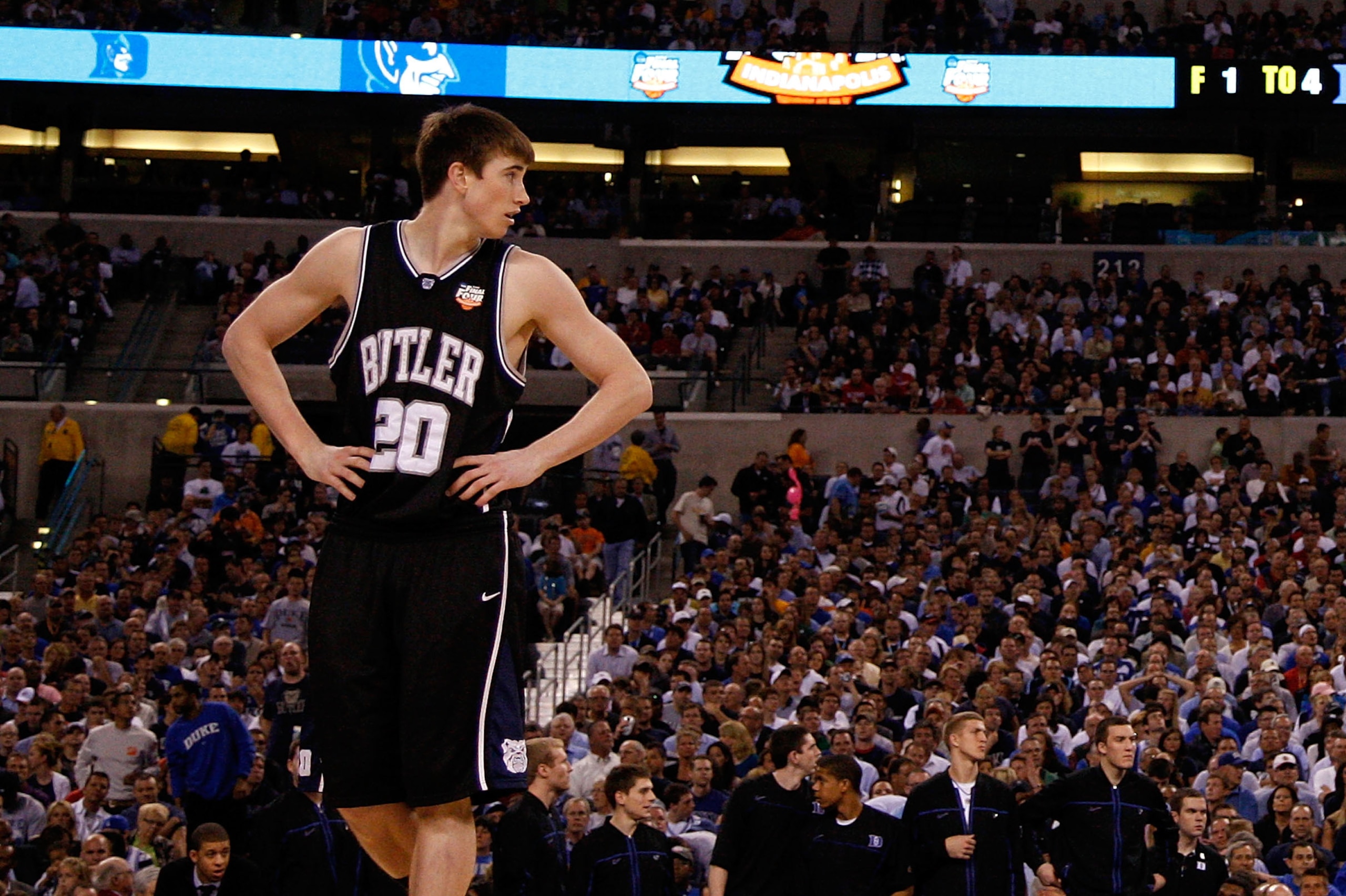
Into his late teens, Gordon Hayward, a local Indiana kid, was skinny and short. His only discernible NBA talent was “outstanding lateral movement,” according to one of Stevens’ assistants, Terry Johnson. That changed quickly.
“When Gordon committed, it was like, 'Great, we got a good player,'” says Johnson. “Then he came in for a workout and we were like, 'We got more than we probably thought.'”
Hayward, who had grown to 6'8", started as a freshman and averaged better than 13 points per game. As a sophomore, he was a revelation. On his way to becoming Horizon League Player of the Year, Hayward took Butler on an unlikely run to the national championship game, where it faced Duke. Trailing by two points in the final seconds, Hayward hoisted from half-court what would become one of the most famous misses in the history of basketball.
Still, Hayward parlayed the surprise run into a first-round grade in the 2010 draft. He went No. 9 to the Utah Jazz, and he became an All-Star this year.
Meanwhile, Stevens remained in Butler for three years without Hayward, reaching the title game again in 2011, only to lose for the second straight year. In 2013, at age 36, he became the head coach of the Boston Celtics.
This year, Stevens’ team won the most games in the East. But a glaring weakness was exposed in the five-game conference finals against Cleveland: Boston is short a star player beside Isaiah Thomas. Just as Stevens once needed Hayward to turn his feel-good team into a contender, he needs the same thing now.

Hayward is an unrestricted free agent this summer. Utah can and will offer him a larger contract than any other team—potentially $180 million over five years, compared to $133 million over four years from other teams, per Ryan McDonald of the Deseret News—but Boston will make a strong push to sign him. The Celtics have what no other team does: Stevens. And not just Stevens in a buddy-buddy sense, but, far more importantly, Stevens as the controller of an environment that Hayward reveres.
While at Butler, Stevens “took the culture to another level,” according to Barry Collier, who coached the Bulldogs through the ’90s and later returned as athletic director. “It was a culture that fit a person like Gordon, who has high goals and isn’t afraid to work and make himself into a really good player.”
As a high school student, Hayward was an elite tennis prospect. But as a basketball recruit, he fell outside the top 150 in the national rankings.
Still, Butler showed early interest. “We really started watching him toward the end of his sophomore year,” says Matthew Graves, a former assistant of Stevens’ who is now the head coach at South Alabama. “You saw a skinny, gangly kid who was 6'3". I vividly remember the first time I saw him, it was in a county tournament. He stole the ball and went coast to coast and dunked with his left hand. That was unique for a righty.”
More impressive were the intangibles that Hayward possessed—the things that fit into the Butler culture. “Brad was drawn to him,” Graves says. “He saw the potential that Gordon had, but the traits that really attracted Brad were his competitiveness and that he was a cerebral thinker. Gordon was quiet initially, but he was very easy to talk to, and he had interests outside of basketball.” (He wanted to become an engineer if athletics didn’t work out.)
Hayward was pursued by a small handful of schools, including nearby Purdue and IUPUI. In the end, though, he committed to the man who most believed in him.
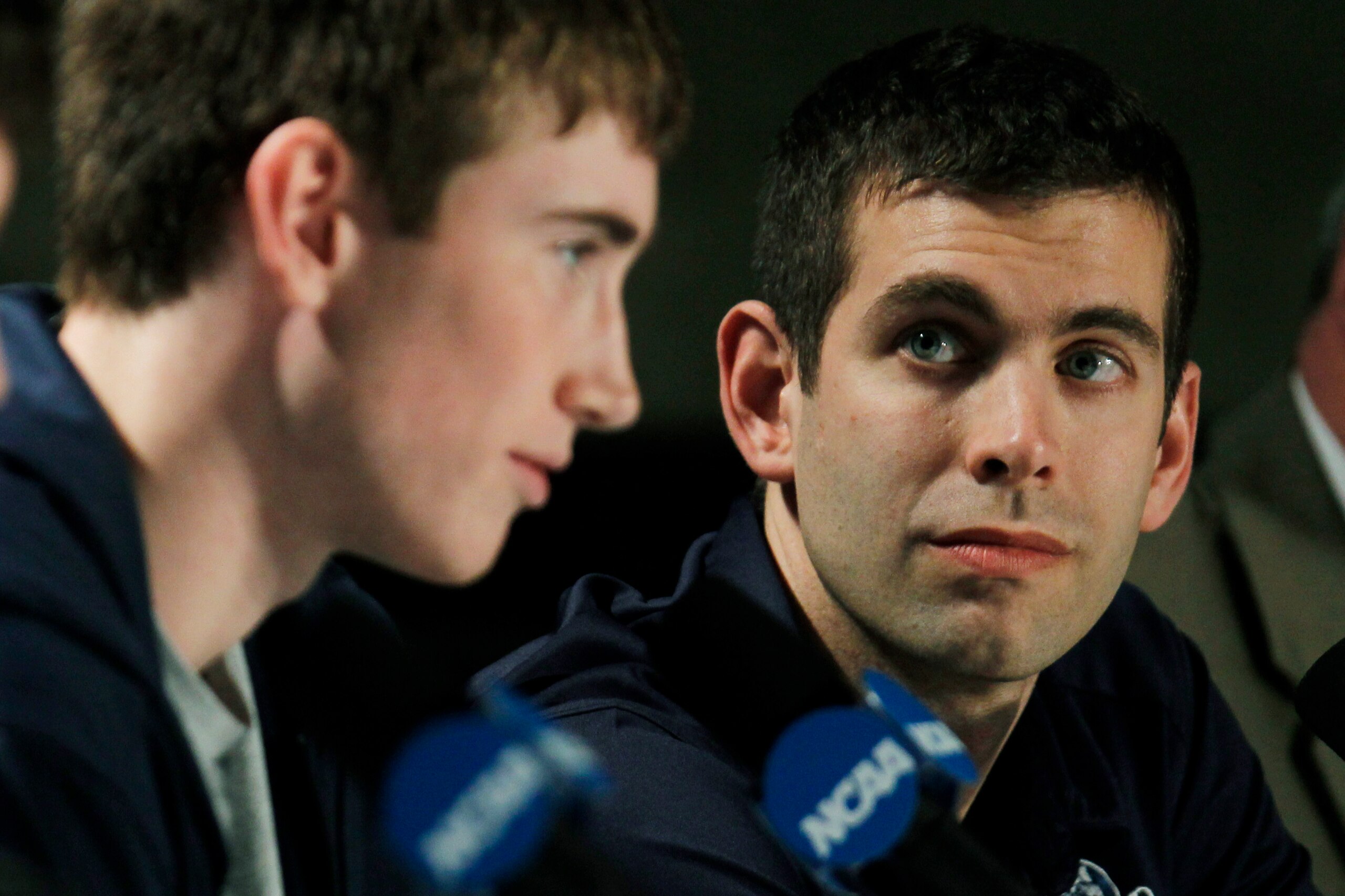
“He made a wise choice,” Hayward’s father told Thayer Evans of the New York Times in 2010. “Gordon really fit perfect into their style of play, the Butler way.”
Hayward and Stevens made for an easy match. “Gordon’s a really intelligent player who understands the game well,” says Matt Howard, the former bruising four-year Bulldog. “Put that with his willingness to do whatever is asked of him, and it’s exactly what Brad wants.”
Moreover, Stevens and Hayward share the same calm demeanor. Stevens, according to Zach Hahn, who played four seasons at Butler, “wouldn’t raise his voice, but he’d say something negative in a calm voice, and you felt like you let him down. It wasn’t a lack of intensity, it was just who he was, and he demanded the best.”
That worked for Hayward, who, according to the coaching staff, didn’t respond well to yelling.
Says Hahn: “Gordon was so unassuming. He was just a down-home Indiana kid who liked playing basketball.”
Before long, Stevens and Hayward developed a deep trust on the floor. Stevens would draw up plays for Hayward as is if he were a point guard. He fed him the ball as often as he could, but only so long as it served the team. Meanwhile, off the court, and even on the sidelines, there was no special treatment, no mentor-protege relationship that might threaten the larger team concept.
“Gordon’s relationship with Brad wasn’t different from any relationship Brad had with his players,” says Ron Nored, a four-year Butler guard who now coaches the Brooklyn Nets' G League team. “Brad coached everyone fairly. That’s Butler in a nutshell. The walk-on, the manager, the head coach, the best player—we’re all a part of something bigger than ourselves. I would say that’s the Butler Way.”

It is easy enough to dismiss the principles of the Butler Way as corny, even cultish rhetoric that carries little tangible value. It is understandable if just reading the phrase causes a given reader’s eyes to roll. Lame as it may sound, though, Butler alums maintain that the Butler Way is the reason for the school’s success.
“Every school talks about different values,” says Johnson, who now works on the Ohio State bench. “But not until I got to Butler were the values talked about and followed through on every day. There are no exceptions, whether you’re the best player or a non-scholarship athlete.”
The system impressed Avery Jukes, who spent his freshman season at Alabama before transferring to Butler in 2007-08. “Their philosophy is to get great individual players, but also strong team players,” says Jukes, who now works at Procter & Gamble. “When I got to Butler, it was more team-oriented. It was ingrained in us to have accountability and humility. They’ve always stayed very consistent with their system. The Butler Way, they call it.”
Still, there was something different about Stevens’ operation—he brought the Butler Way into the modern era. He embraced contemporary trends in basketball. He introduced new approaches to team defense and offensive efficiency. He tested odd rotations to see who performed best and when. He was liable to play a walk-on at any time, which kept everybody sharp.
Over the past few years, that has been the Celtics Way too. Stevens has maximized a deep, gutsy roster that in many ways resembles the old Bulldogs. Boston’s star, Thomas, an undersized second-round pick, was a late bloomer. He is the most unlikely All-Star in the NBA today—maybe the most unlikely ever.
Meanwhile, the guard tandem of Marcus Smart and Avery Bradley plays a college-style, aggressive game, rather than the trigger-happy one sweeping the league.
Recently, Stevens coaxed an epic Game 7 performance from, of all players, Kelly Olynyk, which seems like a miracle until one speaks with Stevens’ former players and coaches, all of whom mention the honcho’s ability to tap into the right guy at the right time no matter how unlikely. Olynyk-esque performances are not accidental—they are a product of Stevens’ coaching philosophy.
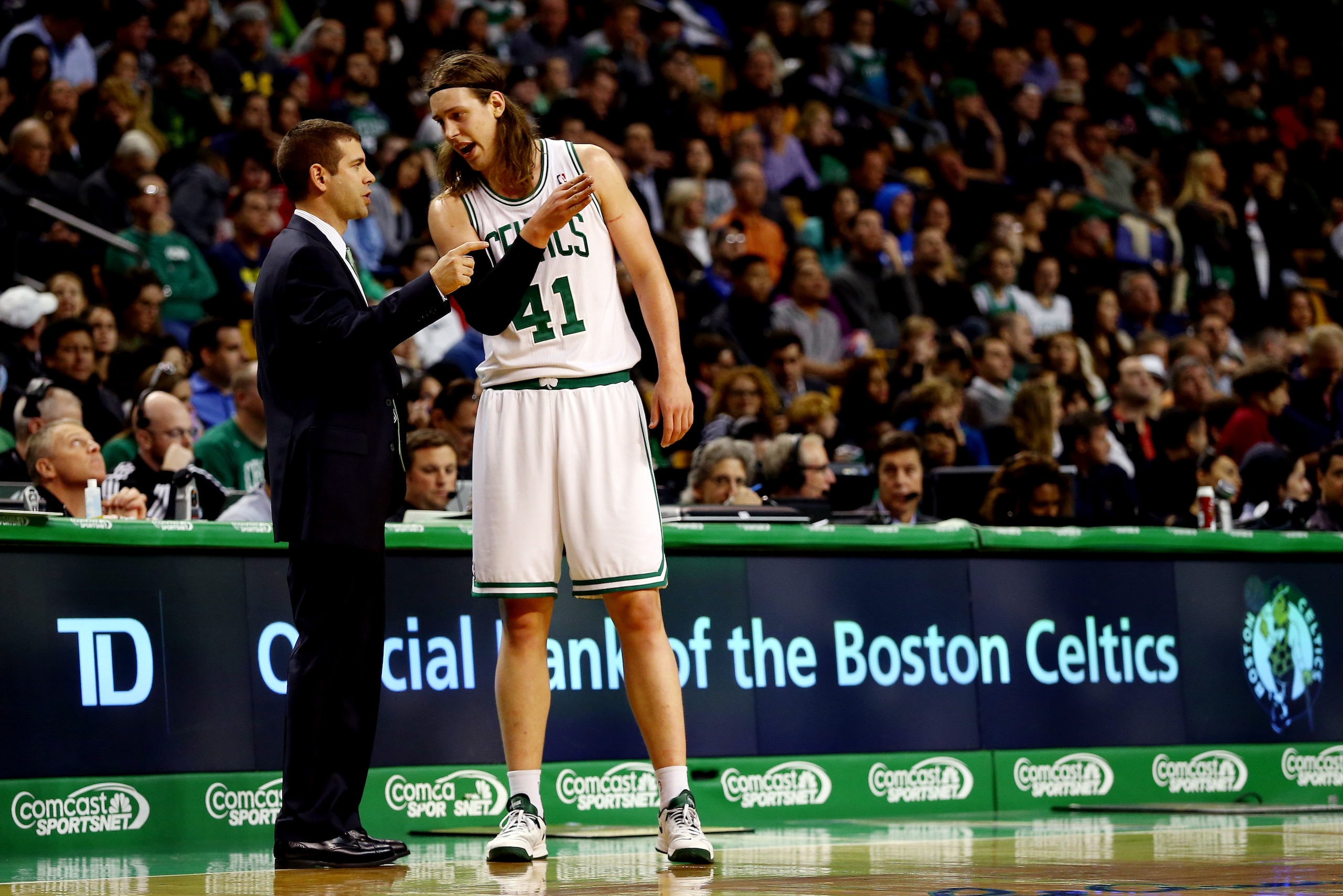
"He's a hell of a coach, but an even better person,” Thomas said during All-Star Weekend, according to Andrew Sharp of Sports Illustrated. “He's real genuine. He has a great relationship with all of his players, shows no favoritism. He's young and he's smart, and I think that's the thing about him—he's probably the hardest-working coach I've been around in my career. He lives in the gym. He knows what he's talking about, and he instilled that in everybody in the organization."
Those characteristics brought Hayward to Stevens nearly a decade ago. They may well do it again now, in Boston.
“It’s no surprise if Gordon is considering playing there just for that reason,” says Howard, who now plays in France. “Gordon would be able to know exactly what Brad wants there. But I can tell you there's a whole lot more money to be made in Utah. It's hard for me to see him leaving that.”
The deciding factor may be a chance at a title, which the admirable Jazz just can’t offer. Utah has no way around the Warriors out West, and the Rockets, last year’s No. 3 seed, just added the league's steadiest point guard.
On the other hand, a Celtics core of Thomas, Hayward, Al Horford and possibly Paul George could sleepwalk into multiple conference championship series.
Consider the state of the Eastern Conference, where Cleveland looks lost, Toronto is fading and Washington is desperate. Meanwhile, the likes of New York and Orlando are happy to welcome Atlanta, Chicago and Indiana to the basement. The Sixers and Bucks loom in the distance, but it is not yet their time, and it’s possible that it never will be. The Celtics may well dominate the remainder of the decade, or at least divvy up Finals appearances with LeBron James and the Cavs. Indeed, for Stevens and Hayward, the future is right this Way.
.jpg?w=2560 "Rams troll Jameis, Giants on social media")


.jpg?w=2560 "WWE Raw Live Grades 🔠")