

Is the Future of the NBA's Shooting Guard Position in Good Hands?
At a time when the NBA's point guard position is alive with present and future promise, it's backcourt comrade, the shooting guard slot, is slogging through tough times.
Quality 2-guard play still exists, but not like it did during the 1990s through mid-2000s, which was the golden age of shooting guards. Clyde Drexler, Michael Jordan, Joe Dumars and Reggie Miller helped pave the way for Ray Allen, Kobe Bryant, Tracy McGrady, Vince Carter, Manu Ginobili and Dwyane Wade, among so many others.
Bryant, Carter, Ginobili and Wade represent the last of that regime, each of them gradually ebbing toward retirement. The administration they leave behind is nowhere near as deep, even if the likes of James Harden and Jimmy Butler have helped keep it afloat.
TOP NEWS

LeBron's Special Helicopter Deal

MJ Makes Record-Setting Donation 🙌
Collins on Brooks Scuffle 👀
Might that change? Could the NBA be within reasonable proximity of a shooting guard renaissance? Is the currently feeble state of backcourt swingmen perhaps exaggerated?
Bleacher Report's Jonathan Wasserman and yours truly are back at it again, this time trying to figure out what the future has in store for the Association's ostensibly dwindling shooting guard ranks.
Current Crop
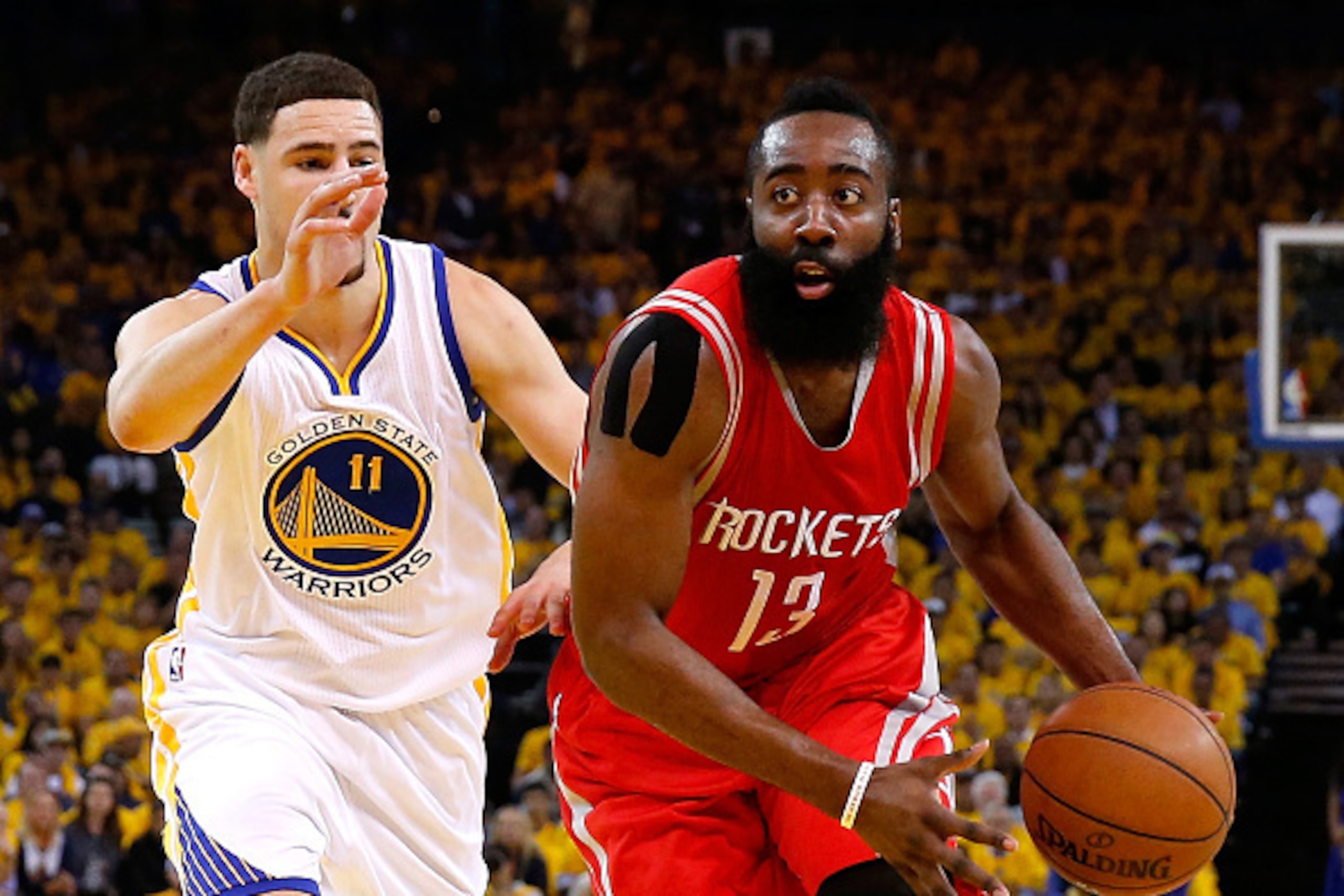
DF: Despite clear lack of overall depth, the shooting guard position does not want for star power.
Harden, Butler, DeMar DeRozan, Klay Thompson and Bradley Beal can all be looped into that category. On most nights, so too can Wade.
But the middle to upper-middle class of the position is terribly thin, if it exists at all. And the absence of everyday shooting guards has created a league in which not even superstar 2s regularly stack up against other positions.
Butler is the only shooting guard who ranks in the top 10 in win shares this season, and just two (Butler and Harden) fall inside the top 20. Harden, Wade and Bryant, meanwhile, are the lone 2-guards to own a top-20 usage rate.
| PG | 16 | 13 |
| SG | 11 | 6 |
| SF | 6 | 8 |
| PF | 13 | 14 |
| C | 4 | 15 |
Teams are more apt to build around point guards, forwards and even centers these days. And the league's crop of up-and-comers doesn't suggest that's about to change.
There are very few 25-and-under players who spend most of their time playing directly beside the league's floor generals. Once you move past Beal (22), Victor Oladipo (23), C.J. McCollum (24) and Thompson (25), the pool of talent starts to thin out.

Brandon Knight (23) predominantly plays the 2 for the Phoenix Suns, but he's really a point guard masquerading as a shooting guard; Kentavious Caldwell-Pope (22) hasn't shown he can be more than the third or fourth option on a good team; Will Barton (24) hero ball is a thing in Denver, but it's only just become a thing; Gary Harris (21) and Zach LaVine (20) are question marks; Avery Bradley (25), Alec Burks (24) and Ben McLemore (22) make up a bulk of the middle class; and the volume-shooting Dion Waiters (23) is the antithesis of what teams look for in present-day cornerstones.
With the exception of Thompson and Beal, there are no surefire stars in waiting. And neither of those two figures to be a No. 1 option for his team in the near future.
What gives?
On some level, it's by design. CBS Sports' Zach Harper explained the situation last year:
"As the NBA has become a league of point guards, great power forwards, and specialists either protecting the rim or bombarding from 3-point range, one position's depth has weakened considerably over the past few seasons. All-Star caliber shooting guards that dominate with scoring have fallen by the wayside. Instead, we've seen a lot of small backcourt lineups looking to take advantage of perimeter defensive rules or bigger wings looking to shrink the perimeter defensively on one end and stretch the floor on the other.
"
Even now, when we count someone as a shooting guard, he's often a combo guard or, in the case of Knight, part of a dual-point guard lineup.
Bradley, Burks, LaVine, McCollum, Oladipo and Waiters follow this trend. Harden and Beal can even be thrown into this stereotype. They're all considered shooting guards, but their responsibilities supersede those designations.
Is this why traditional shooting guards aren't dominating headlines? Because to be a traditional 2 is to be outdated?
Has emphasis just been placed elsewhere? Or is there an actual dearth of talent that's marginalizing the importance and shine of this once-storied position? And if so, is help on the way?
Help on the Way?

JW: There is little doubt college and overseas leagues have recently struggled to produce star power—or even high-end starting-caliber talent—at the 2-guard position.
Part of that may simply be due to a cold streak or natural dry spell. But if I'm looking for possible factors behind the decline of the shooting guard, I'm looking at the rise of the scoring point guard.
Nowadays, when 2s enter the league, almost all play alongside a ball-dominating, volume shot-taker.
It wasn't always like that. Fifteen years ago, only four point guards finished in the top 35 in usage (Stephon Marbury, Gary Payton, Sam Cassell and Steve Francis). In 2015-16, 14 of the top 35 most used players in the NBA are point guards.
With the game now revolving around scoring ball-handlers and frontcourt versatility, 2-guards have been de-emphasized.
This year's rookie class is unlikely to produce the next batch of All-Star shooting guards—you'd have to go out on a real limb to predict any of the rookie 2s emerging as future marquee headliners.
I do, however, see a pair who have a great chance to eventually become franchise cornerstones. And by cornerstones, I mean quality starters worth long-term deals.
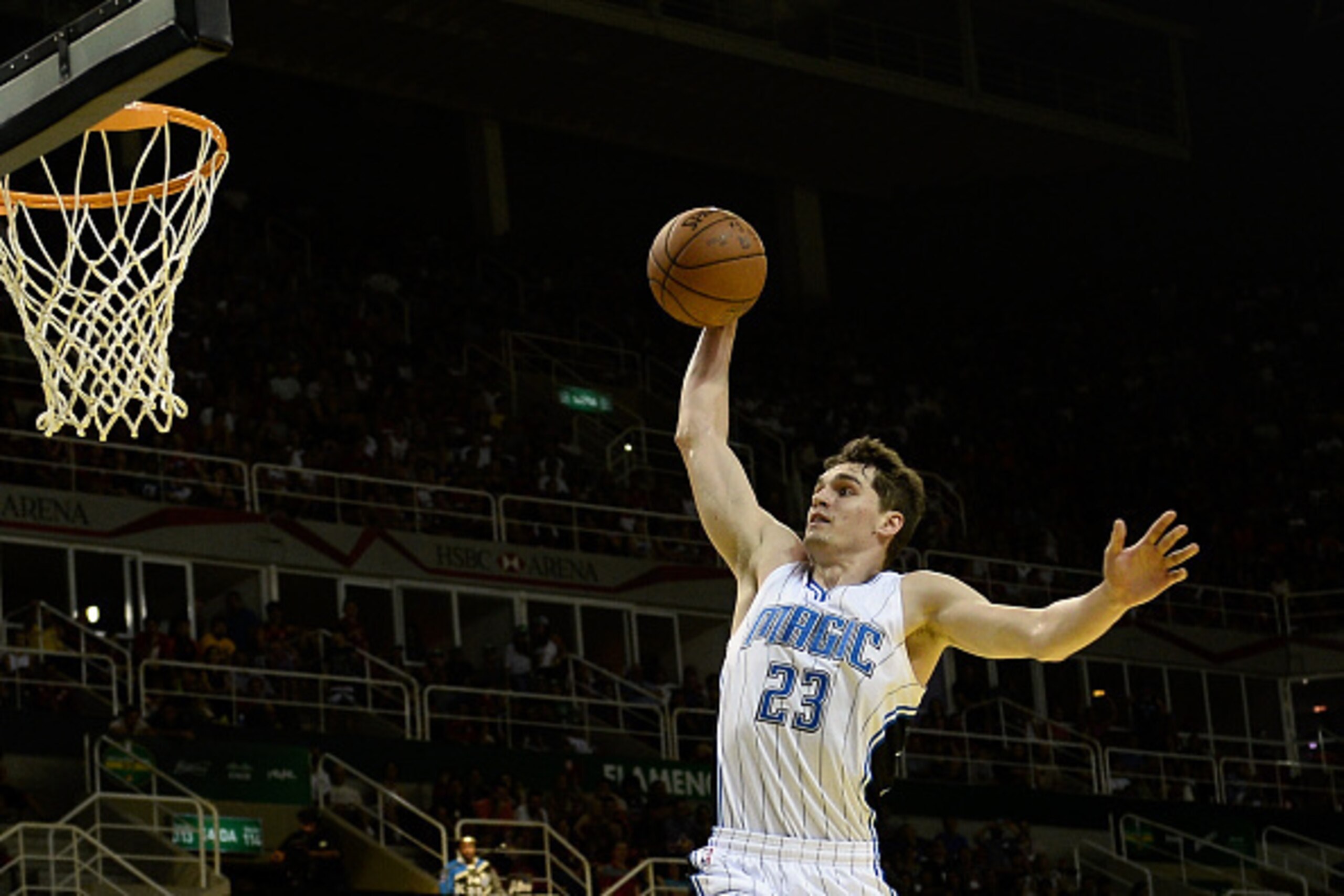
The Orlando Magic's Mario Hezonja has all the talent in the world. Whether or not he can convert it into efficient and consistent high-level play is another question. Hezonja blends mismatch physical tools for the position, world-class athleticism, deep shooting range and mediocre shot selection.
The Phoenix Suns' Devin Booker is currently the youngest player in the NBA, having just turned 19 in October. And he enters the league with a shooting stroke as convincing as anyone's: He shot 41.1 percent from three at Kentucky, 40 percent in summer league, 42.9 percent in preseason and is currently 9-of-14 as a rookie.
It's the shot-creating aspect of his game—the one All-Star 2-guards excel in—that Booker must develop.
Unless Hezonja or Booker break out, the NBA won't see a truly promising showtime 2-guard until 2017 since the upcoming draft doesn't appear likely to change the narrative.
Incoming!

JW: If we consider Kentucky freshman Jamal Murray a point guard—which I do—the league might be lucky to have one shooting guard go in the 2016 lottery.
It could be Michigan's Caris LeVert, my personal top choice as of now. LeVert doesn't scream franchise player, but at 6'7", he has textbook size and athleticism, as well as the versatility to create, shoot and pass.
The next-best option might come from abroad, where Turkey's Furkan Korkmaz has generated buzz in previous FIBA European and World Championships with his effortless leaping ability and perimeter shot-making. At 6'7" and just 18 years old, he's currently playing alongside recent draft picks Dario Saric and Cedi Osman for Anadolu Efes Istanbul, and he just recently went off for 25 points against a Turkish rival.
Mississippi State freshman Malik Newman may be a long shot. He's loaded with quickness and offensive firepower fueled by creativity, shot-making skills and confidence. But at 6'3", he lacks size and loves to dance or settle for Waiters-type desperation attempts.
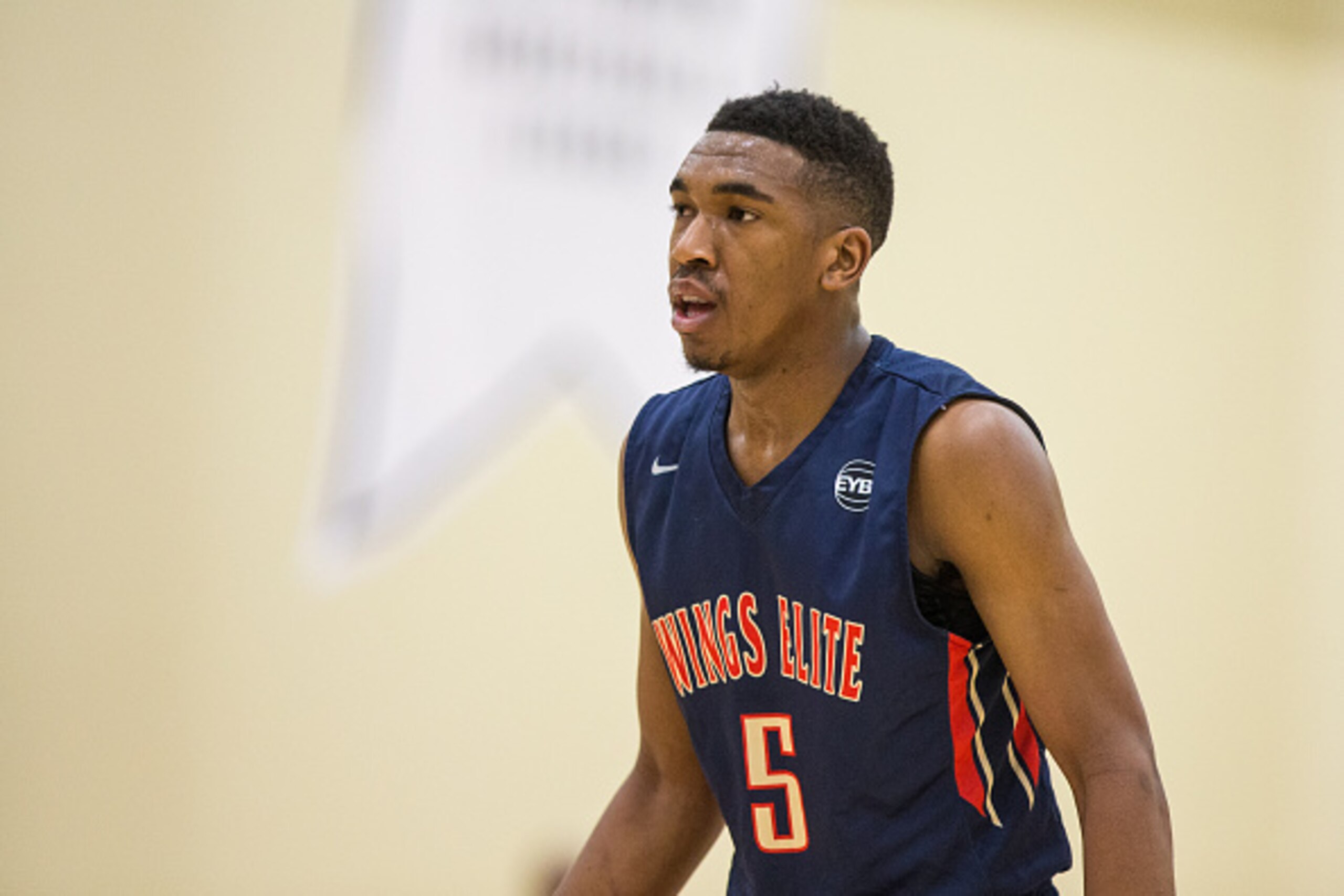
Looking ahead even further, the prospect with the best chance of becoming a future star 2-guard in the NBA may be recent Kentucky commit Malik Monk out of Arkansas.
Monk, a current high school senior, compensates for 6'4" size with an explosive burst, as well as a handle and passing skills that should allow him to earn the combo guard label in the pros—a more accepted identity in recent years.
Crystal Basketball

DF: If the NBA's lack of budding star 2-guards doesn't prove it, the underwhelming number of inbound shooting guard prospects does: The game has changed.
"Watching the league the last couple of years as a broadcaster, it was [Miami Heat head coach] Erik Spoelstra's term, positionless basketball," Golden State Warriors head coach Steve Kerr said last season, per Bulls.com's Sam Smith. "That's the way the league has changed. [...] When you have that kind of versatility at multiple positions, it takes away a lot of your decision making as a coach."
Premiums are being placed on that versatility, and it has given rise to the presence of combo positions.
Pure-as-day shooting guards aren't the only ones who have suffered, either. Combo forwards are all the rage. Power forwards are expected to shoot threes. Centers are not obsolete, but bigs who can't do anything more than post up are.
And as the NBA's dissolution of outmoded player labels continues, so too will the decline of the typical 2-guard.
But only because, in today's league, there is no longer room for convention—and no such thing as a typical shooting guard.
Stats courtesy of Basketball-Reference.com unless otherwise cited and accurate leading into games on Nov. 27.

.jpg?w=2560 "Grading WWE Raw 🔠")


.jpg?w=2560 "2 NFL Officials Suspended")
.jpg?w=2560 "Viral Rams Coach Vid 🖕")