

Adapt or Die: Why Today's NBA Bigs Must Be Like Towns and Porzingis
Of the many changes the NBA has undergone over the years, none is more evident than the role of big men.
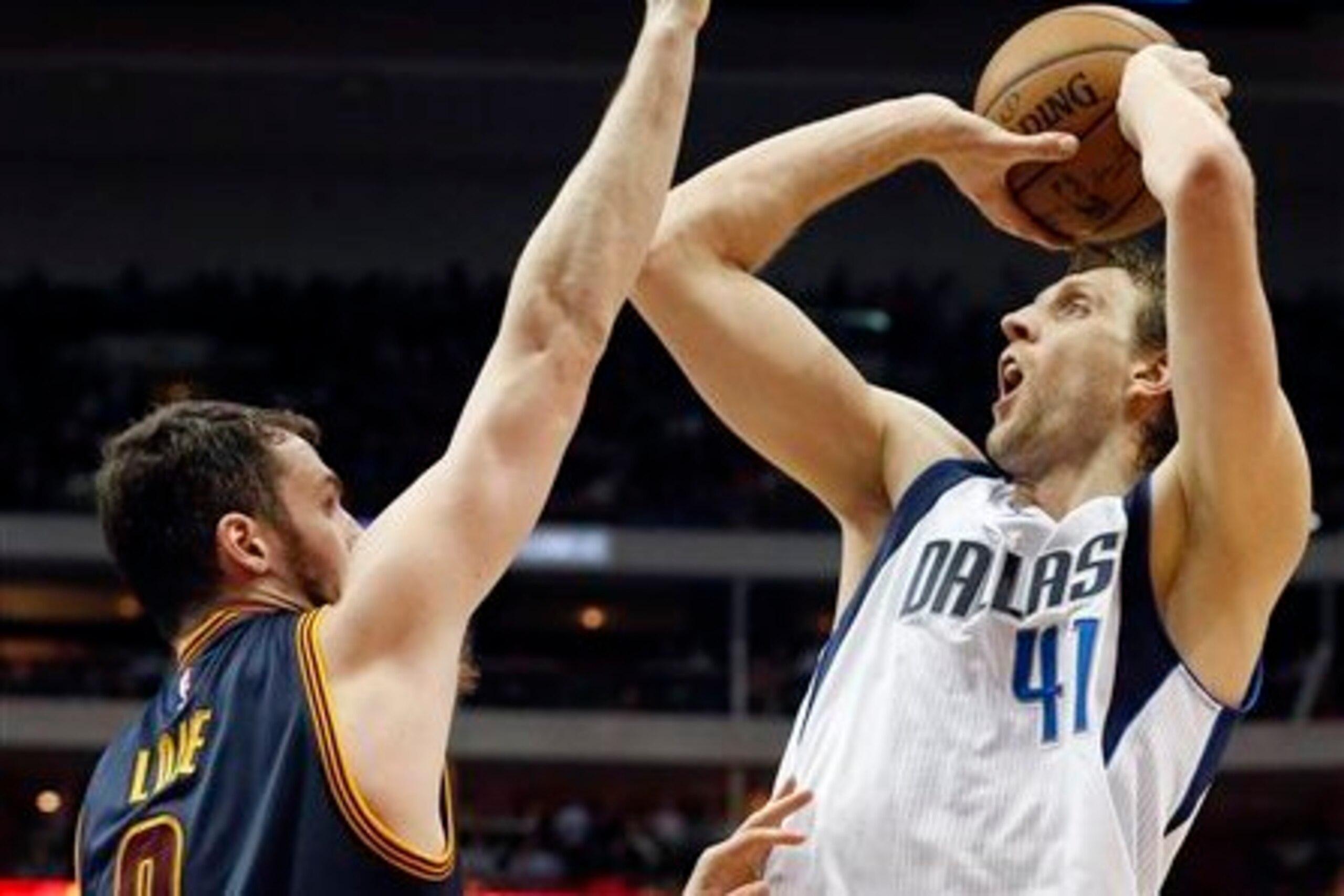
Kevin Love, now of the Cleveland Cavaliers, staked his claim to superstardom on the back of his floor-spacing abilities. LaMarcus Aldridge (who signed with the San Antonio Spurs after leading the Portland Trail Blazers), Chris Bosh (Miami Heat) and Serge Ibaka (Oklahoma City Thunder) have stretched their mid-range-heavy shot selections beyond the arc. Two of the first four picks in this year's draft, the Minnesota Timberwolves' Karl-Anthony Towns and New York Knicks' Kristaps Porzingis, are giants who, at their peaks, will stroke threes in volume.
TOP NEWS

LeBron's Special Helicopter Deal

MJ Makes Record-Setting Donation 🙌
Collins on Brooks Scuffle 👀
Once exclusively considered human billboards for ground-and-pound basketball—for clock-killing half-court sets, for brutal and bruising post-ups, for inside-the-paint-only repertoires—many of the NBA's towers are now poster boys for versatility.
Traditional bigs are still around, plodding up and down the court. But more and more, even those dinosaurs are traveling outside the preordained comfort zone, beyond the three-point line, and finding a new one.
Positions are damn near meaningless as a result. They're loose classifications, subject to being entirely discarded. The Association's All-Star ballots barely take them into account anymore. There are guards and frontcourt members. It doesn't matter beyond that.
So, "big men" will henceforth refer to players standing 6'10" or taller. And in order to limit the small-sample bias that sneaks into the picture, we'll only look at bigs who played enough to qualify for the minutes-per-game leaderboard and attempted at least one three-pointer over the course of the season.
This is a development 36 years in the making, from when the NBA first adopted the three-pointer in 1979—one that shows no signs of stopping.
Why 3-Pointers?
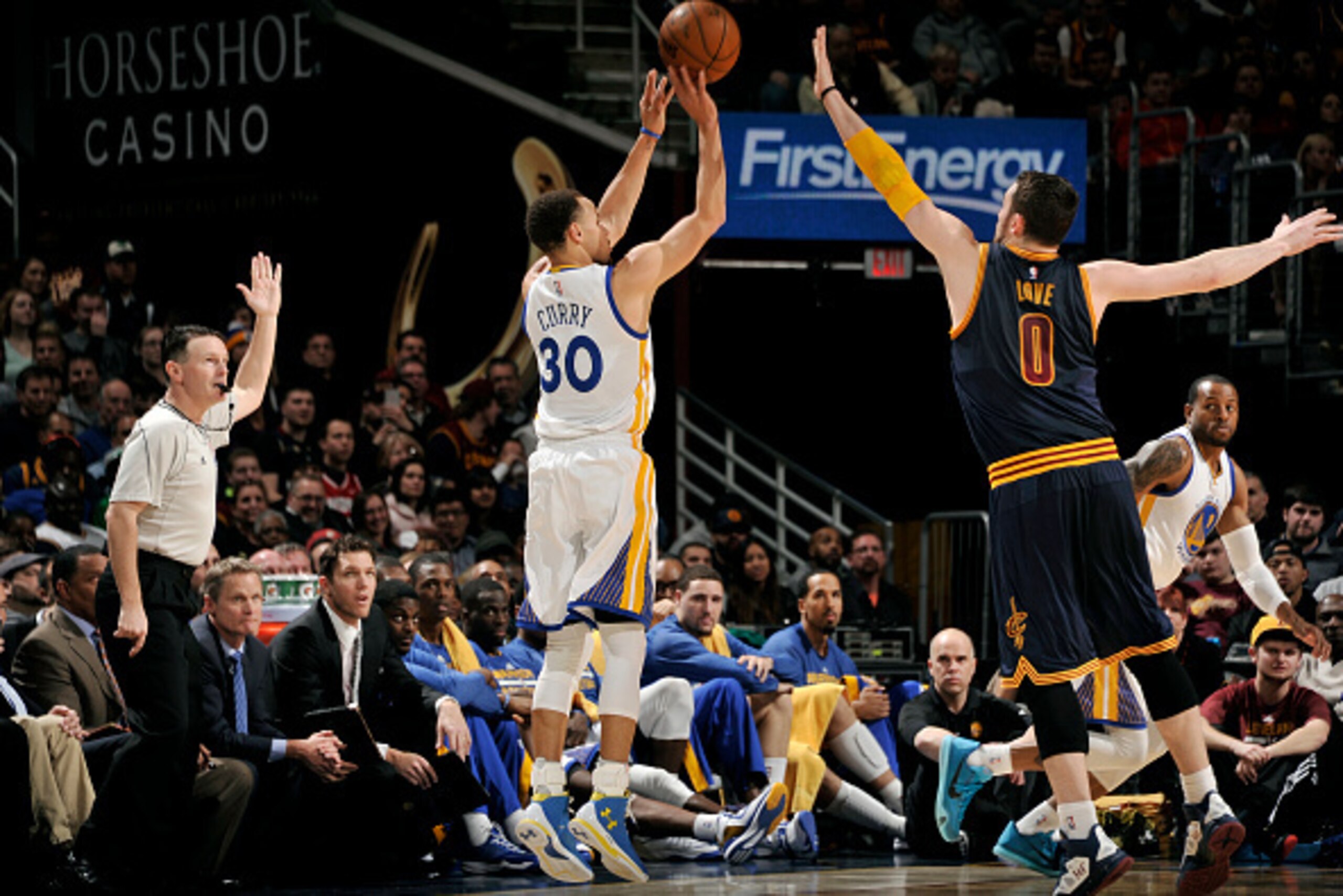
Three-pointers aren't just luxuries or offensive accessories.
Entire offenses are assembled around long-range snipers. This year's NBA Finals participants, the Golden State Warriors and Cavaliers, ranked first and second, respectively, in three-pointers made and attempted throughout the playoffs.
During the regular season, 26.8 percent of all attempted field goals came from downtown. That's a far cry from the league-wide shot distribution of 30, 20 or even 10 years ago.
Simple math is behind this uptick in volume. Three-pointers are worth 1.5 times more than two-pointers, making them more valuable shots if they are hit at a similar rate. The end.
That matters. It's why the rise of the three-pointer isn't some fad. It's here to stay, and the additional value it holds is universal.
As Bleacher Report's Adam Fromal put it:
"Chances are, the continued rise of the three-ball will happen organically rather than stats forcing the issue. But it will still happen. The rise to prominence of stretch frontcourt players will help speed along the process, not that it really needed any acceleration to happen in the first place.
"
Shooting 33.3 percent from distance is the equivalent of shooting 50 percent inside the arc. The average two-point rate in 2014-15: 48.5 percent. That's the same as posting a 32.3 percent clip from deep. And yet, the average player buried 35 percent of his treys last season.
The NBA is buying hard into this efficiency margin, a process specific to every player—the absolute tallest included.
The Big-Man (R)Evolution

When the NBA first implemented the three-point line for the 1979-80 season, just 94 long balls were launched by big men. Last season, by comparison, they threw up 4,369.
There were, of course, fewer teams 36 years ago (22), and by extension, fewer players. Looking at shot-distribution averages counteracts this discrepancy, since it doesn't rely as heavily on volume.
In 1979-80, just 0.5 percent of field goals attempted by big men came from downtown. Fast forward to the 1984-85 campaign, and that number climbed ever so slightly to 0.6 percent.
Jump ahead to 1994-95, and 5.8 percent of all shots attempted by bigs came from three-point territory. Although there are some caveats along the way—the NBA moved in the three-point line from 1994 to 1997—this progression has proved relatively steady since the shot's inception:
More than 11 percent of all shots by the league's qualified towers came from beyond the arc last season. That pales in comparison to those standing 6'9" or shorter; 31.8 percent of all their field-goal attempts were from deep. But the volume for big men, while having fluctuated in certain years, is significant given how they were initially groomed to play.
"When I was at the University of Michigan, I was mainly an inside player," Terry Mills, one of the first five big men to average one made three-pointer per game, told Bleacher Report. "[Three-point shooting] was pretty much a no-no. You don't take three-point shots."
Collegiate styles don't always shape professional careers, but they offer the framework of where players fit in the NBA. If you didn't attempt threes in college, you're unlikely to fire off threes upon reaching the Association. Not right away at least—especially during past decades.
Mills entered the NBA in 1990. The three-pointer wasn't new, but it was barely a decade old. Rare was the coach who heavily emphasized the long ball, let alone one who stressed its importance to big men.
"When you got in the league, the stereotype was that if you were a big guy, you played in the paint," Mills said. "Then all of a sudden you have a coach who wants to utilize your skills and says, 'Here's a guy who can shoot just as well as guards can.'"
It wasn't until 1986-87 that a floor-spacing big averaged one three-point attempt per game (Seattle's Tom Chambers). By the end of the 1990-91 campaign, that same benchmark had been met a total of 17 times.
And even that narrow scope is misleading. Only seven players accounted for those 17 times: Chambers (five times), Bill Laimbeer (three times), Jack Sikma (three times), Richard Anderson (twice), Brad Lohaus (twice), Manute Bol and Danny Ferry.
Eighteen bigs jacked up at least one trey per game last season alone.

It wasn't until 1988-89, 10 seasons into the deep-ball era, that Sikma, then of the Milwaukee Bucks, became the first to average one made three-pointer per game. Twenty seasons into the three-point epoch, through 1998-99, the same had been done just 16 times by only eight different players: Clifford Robinson (four times), Ferry (three times), Mills (three times), Sikma (twice), Matt Bullard, Toni Kukoc, Lohaus and Keith Van Horn.
Eleven different players drilled at least one three per game in 2014-15.
This decades-long transformation doesn't apply strictly to volume. Bigs didn't start chucking more threes just to chuck more threes.
Nor is it solely about the trade-off between two- and three-pointers. It isn't even about individual players. Rule changes and shifting defensive designs have incited adjustments to offensive philosophies.
"I think it even goes back to the rules, like the change in hand-checking," Sikma said. "All those types of things promoted spacing and open-court play."
Most of today's coaches understand the importance of stretching the floor and how even the threat of big men shooting threes can impact defensive schemes by drawing opponents outside the paint. Early on, though, it took a few select head honchos to really push the bill.
"That's what [Houston Rockets coach] Rudy [Tomjanovich] wanted," Bullard said. "Rudy wanted those mismatches so that I could get those open looks. I look at him as one of the pioneers of implementing the three-point shot, putting three-point shooters around Hakeem Olajuwon and using the three-point shot as a spacing weapon.
"Rudy really understood the advantages of spacing the floor and giving more driving range or more space for Hakeem to post up. And even if [defenders] were just hugging me, he still saw the advantage in that."
The NBA's decision in 1994-95 to move the three-point line from 23.9 feet (22 in the corners) to 22 feet all around helped, too. The change was temporary, lasting only three seasons, but it helped spark additional interest in the three-point shot.
"I always had confidence in my jump shot," Robinson said, "so I just decided I was going to make [the three-pointer] a part of my game."
That season, Robinson set the record for most three-point attempts by a big man with 383, shattering Bullard's previous mark of 243 in 1992-93. But while the NBA moved the three-point line back in 1997, its popularity did not wane.
When the league reverted back to a 23.9-foot arc for the 1997-98 season, three bigs had surpassed 250 single-season attempts a total of seven times, with all of them coming during that three-year experimental span. Since then, 25 players have reached 250 attempts a total of 81 times.
Efficiency levels have ascended right along with the volume. The average three-point rate for players 6'10" or taller was 35 percent last season, matching the league mean. So bigs are shooting the long ball just as effectively as their shorter counterparts.
Eclipsing the 35-percent plateau has even become commonplace over the last 20 years. Dating back to 1995-96, the average big man has made 35 percent or more of his outside looks 15 times—incredible considering that 1995-96 marked the first time their group average actually reached 35 percent.
Hovering around or above the league's everyday success rate has become routine as well. While it took more than 20 years for big men to first match the NBA's average (2000-01), they've equaled or outpaced the Association's norm nine times in the last 15 seasons.
From Trend to Standard
Perimeter shooting is now an expectation for bigs. As Grantland's Zach Lowe wrote, post-ups, not outside-shooting bigs, are more of an oddity now:
"There is no debate that post-ups make up a shrinking portion of the scoring pie, though there is some debate about why that is. Only eight teams this season finished even 10 percent of their possessions with a post-up, per Synergy Sports. A decade ago, 22 teams hit that mark, and every team ended at least 7.5 percent of its trips with some kind of post-up. One-third of teams finished with a lower post-up share than that this season.
"
Just as journeying past the three-point line was once considered taboo for a big man, expansive offensive range is now a priority. And that shift is taking place not just in the NBA, but at the most fundamental basketball levels.
"Growing up, coaches were telling me, 'Don't shoot the three-point shot' because it's too far," Bullard said. "Now, my son, who's 17, I've been teaching him to shoot three-point shots since he started playing. So even as a junior in high school, he now has NBA three-point range."
Towns and Porzingis are direct byproducts of this thought process. They are valued, and were subsequently selected, in large part because they're not traditional bigs. They have three-point range, even if, as is the case with Towns, it's an unproven facet of their game.
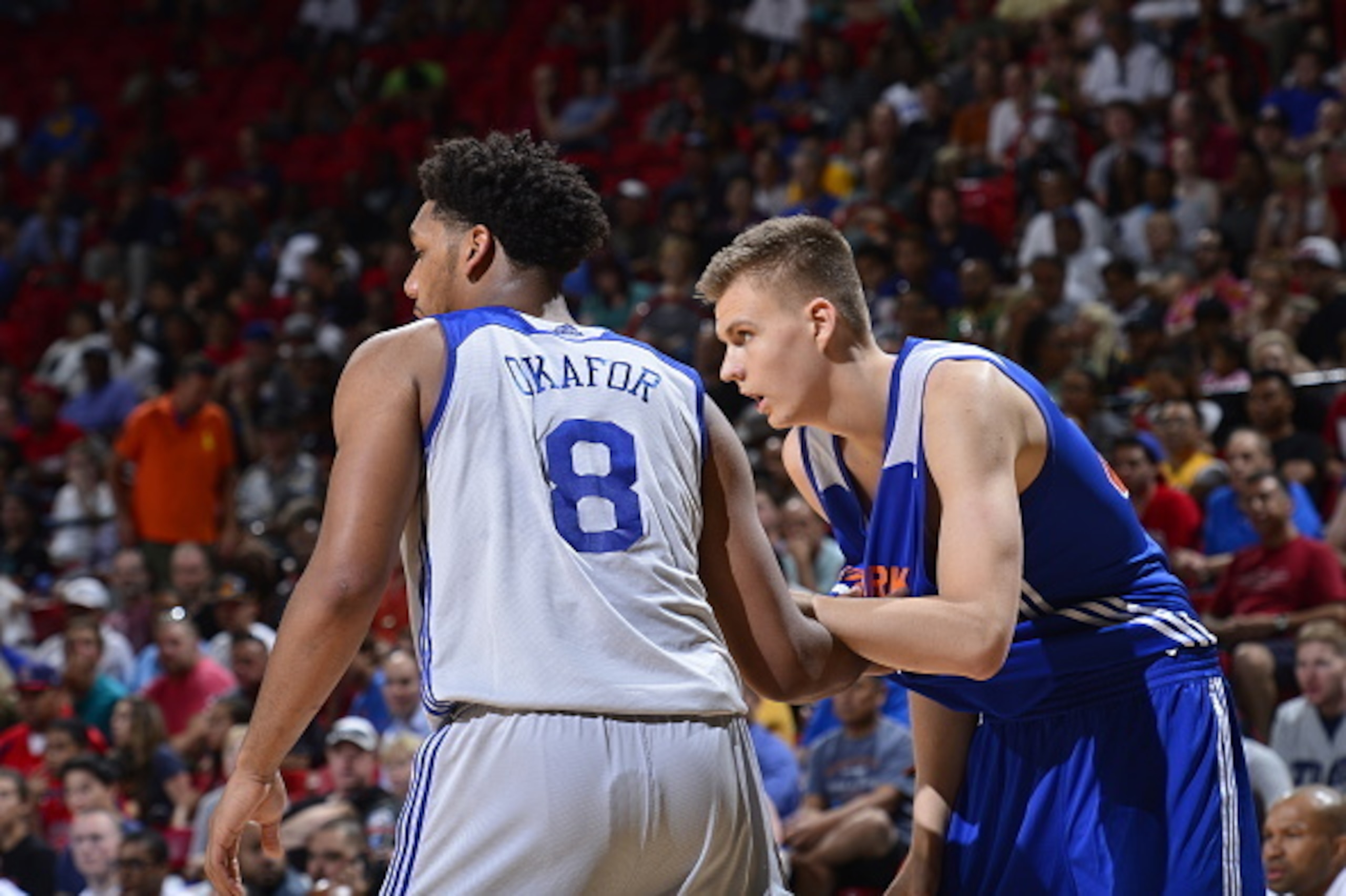
One of the primary knocks on Philadelphia 76ers rookie Jahlil Okafor, the third overall pick in this year's draft, is that the three-pointer, along with any semblance of a perimeter game, is not in his arsenal.
Prior to being selected by the Sacramento Kings at No. 6, Willie Cauley-Stein, who didn't attempt a single trey through three seasons at Kentucky, was showcasing a three-point shot of his own during predraft workouts, per ESPN.com's Chad Ford.
Over the last two seasons alone, the average qualified big man has attempted one three per game. Nearly half of the rookies who fall into this category during that time (five of 12) have maintained an average of 1.5.
New Orleans Pelicans head coach Alvin Gentry wants Anthony Davis to shoot more threes. Love, Aldridge and Ibaka have already adjusted. The Atlanta Hawks' Al Horford made and attempted more threes last season than he had in his first seven seasons combined.
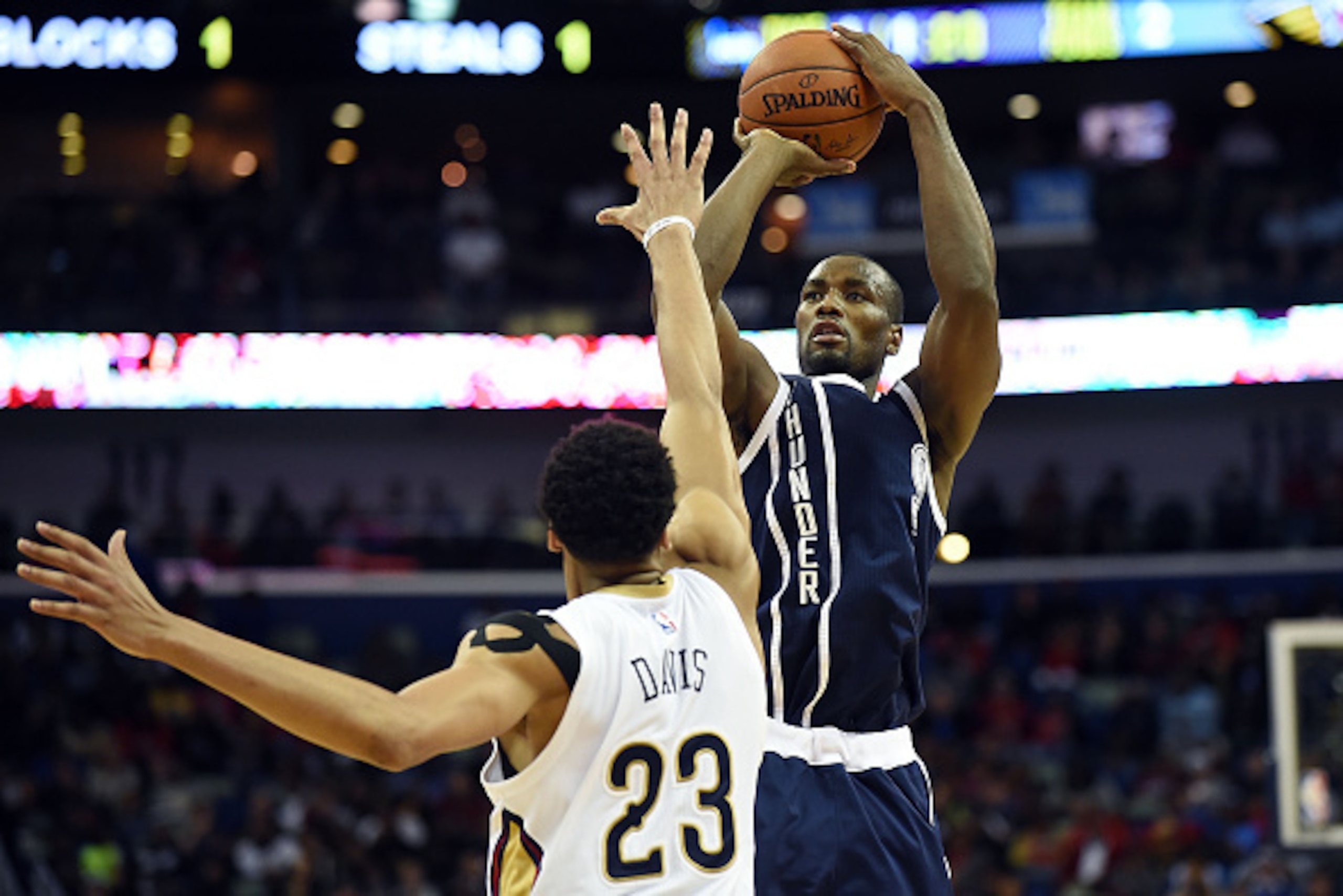
There are three-point specialists tall enough to play center but whose primary jobs are to drain long-range missiles. More than 71 percent of Channing Frye's (Orlando Magic) shot attempts came from beyond the arc in 2014-15. More than 50 percent of Danilo Gallinari's (Denver Nuggets) looks came from the outside.
Same goes for Matt Bonner (San Antonio Spurs). And Rookie of the Year runner-up Nikola Mirotic (Chicago Bulls). This is the NBA now.
Which isn't to say that post-up sets are dead, or that they're even on life support. There will always be a place for them. Today's NBA doesn't reward one-trick ponies, and most players have an innate desire to keep improving.
"Hakeem Olajuwon said something to me that I'll always remember," Robinson recalled. "One time I was getting ready to play against Houston and I was out there warming up, and he was like, 'What did you bring this year new to your game?' And I was like, 'Wow, what did I bring new to my game?' He was one of those guys who was always developing parts of his game. So it definitely made me not want to be pigeonholed to just one type of player."
Therein lies the hope for traditionalists. In a league that values options, the best big men, even when they're perimeter fixtures, must have something else on which to fall back.
Balancing the old with the new, the inside with the outside, is where things get challenging.
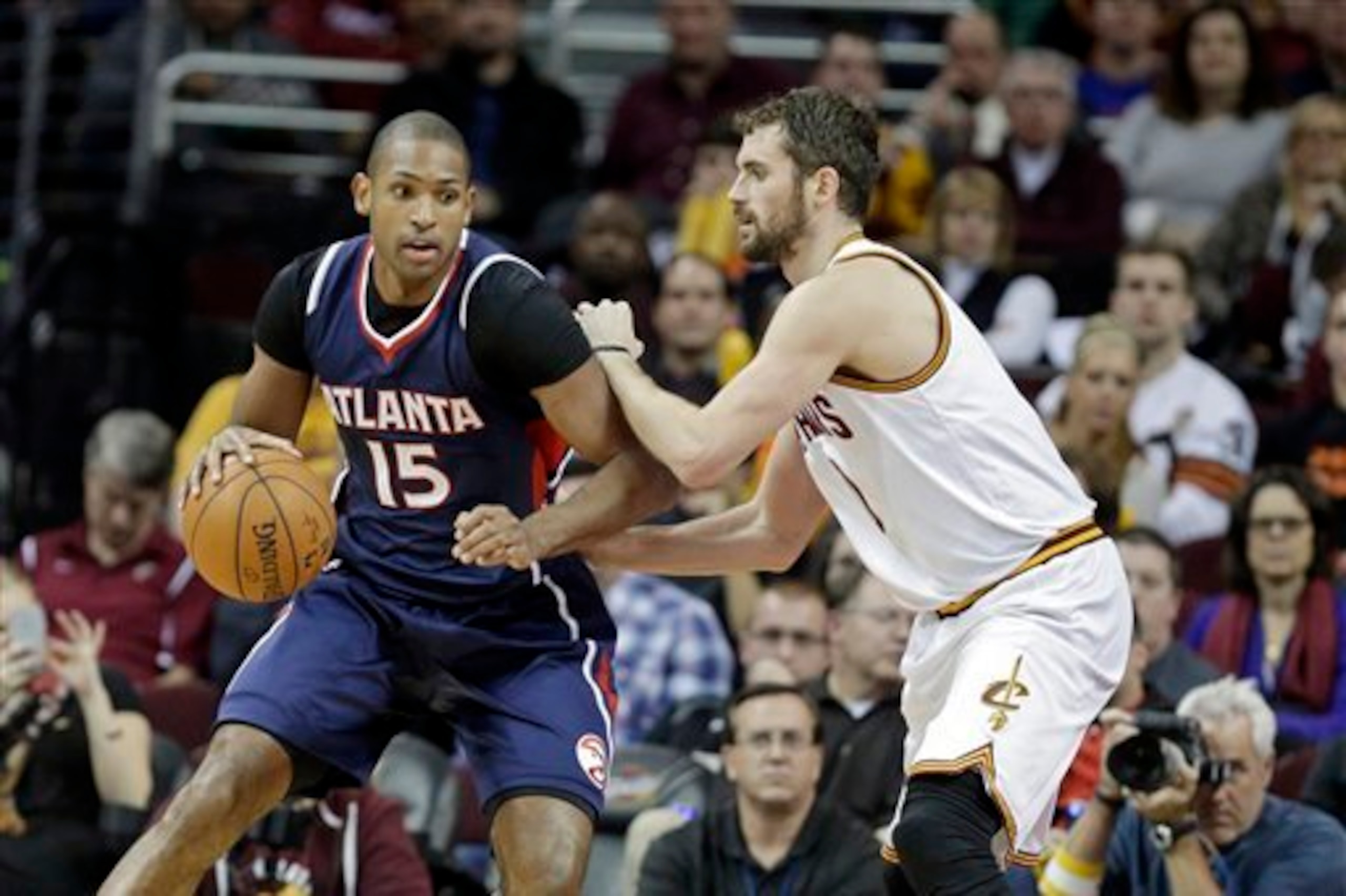
"The game is going where it goes," Sikma said. "Tim Duncan in the post impacts the game. Zach Randolph in the post affects the game. If you can draw a double-team, it affects the game. But those post moves can't just be one-dimensional. You have to develop facing up, back to the basket, all those types of things, because you have to react to how the other team is playing and the situation.
"Kevin is probably a perfect example of not having a problem. When he first got to Minnesota they didn't want him to shoot threes, and he established himself in the post. The issue is how do you make the mix work?"
Interior skill sets are not obsolete, but they're not lifelines. Bigs aren't supposed to operate solely around the rim. If they do, they're viewed as specialists—players with a very specific upside. In the most extreme cases, they're perceived as offensive liabilities or stylistic fossils.
Versatility is part of a modern-day big man's job description, even if three-point shooting isn't. That's why a perimeter-challenged 7-footer such as Milwaukee's Giannis Antetokounmpo can play like a shooting guard. That's evolution, and the game itself has changed accordingly.
"Bigs who can shoot," Sikma concludes, "are much more dangerous than those who cannot."
And that's not a trend or a standard, nor does it spell an unavoidable death to post-ups.
It's just a fact.
Stats courtesy of Basketball-Reference.com. All quotes obtained firsthand.
Dan Favale covers the NBA for Bleacher Report. Follow him on Twitter @danfavale.

.jpg?w=2560 "Grading WWE Raw 🔠")




.jpg?w=2560 "2 NFL Officials Suspended")
.jpg?w=2560 "Viral Rams Coach Vid 🖕")