Former All-Stars Finding a Long Life in the NBA Is Survival of the Wisest
The messages aren't subtle in the NBA, not even when you've made your name in the game, as a former No. 1 overall pick, as an All-Star, as a valuable enforcer in the way Kenyon Martin has. You don't choose to become a role player so much as you come to the conclusion that it's the only remaining option.
Well, other than retirement.
So it was for Martin, during the 2012-13 season, when month after month after month passed prior to anyone showing serious interest, and not for anything more than a 10-day contract that the Knicks finally offered him in February. That is when he first "came to grips" with his new place in the league, a place that was confirmed even after he signed for the remainder of the season—when, during the season that followed, he received fewer minutes than he expected.
TOP NEWS
NBA Vegas expansion bids nearing $10B
Silver Wants Team in Portland 📍

PG Speaks on Fans' Reaction to Trade
Then came this season, which he again started without a roster spot until former teammate and current Bucks coach Jason Kidd called. Martin signed a 10-day contract, and then another, before getting guaranteed. After averaging double-figure points in nine of his first 10 campaigns, and starting 667 games in his career overall, he's averaging just 1.8 points and 1.7 rebounds this season.
And he's—relatively—OK with it.
"It's still a work in progress," he admitted. "You've got to humble yourself. It's about knowing what you've done for the game and knowing what you've done over your career. Some guys are not satisfied with their body of work, so it's kind of hard for them to do it."
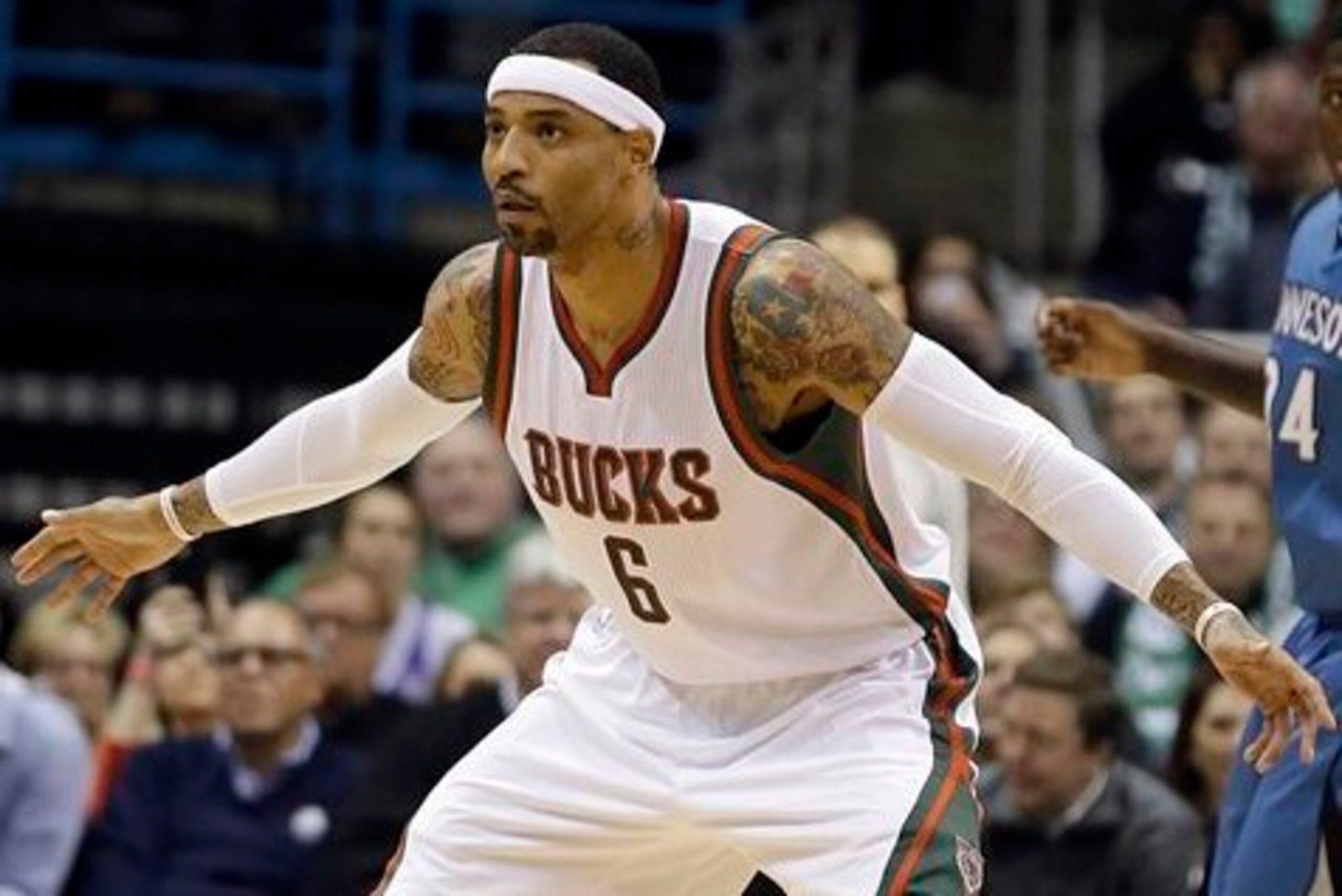
Martin is one of several former top-tier talents who are giving it a try this season, plying their trade in a more limited way for a playoff contender.
In Memphis, Vince Carter, an eight-time All-Star. In Dallas, Richard Jefferson, who twice averaged at least 22.2 points. In Atlanta, two-time All-Star Elton Brand. In Cleveland, four-time All-Star Shawn Marion. None are regular starters at this stage, not at age 38, 34, 35 and 36, respectively. None would seem to need the money—Martin, Carter, Jefferson, Brand and Marion had earned more than $100 million each, and more than $677 million in total, in salary entering this season. Nor would any seem to need the validation.
Still, they're doing something that fellow players deem difficult.
"I think the guys that you named are satisfied with their body of work, and knowing that you can't always play 35 minutes a night," Martin said. "Your body won't let you, for one. You've got to make way for the younger guys, for two. I think humbling yourself is the key."
The five aforementioned veterans aren't alone this season. Paul Pierce in Washington, Caron Butler in Detroit and Andre Iguodala in Golden State are all experiencing a rite of NBA passage, forced to reshape their roles with their primes clearly past. This is something Grant Hill knows well, even if it was injury, and not age, that precipitated his falling place in the pecking order.
Hill's days as an elite player ended at age 27, when he chose to play through a fractured ankle during the 2000 postseason following a sterling regular season (25.8 points, 6.6 rebounds and 5.2 assists per game). After playing just 47 games over his next four seasons, he somehow managed to stick around until age 40, serving a variety of roles for Orlando, Phoenix and, finally, the Los Angeles Clippers.
During that decade, he fought his mind more than his body, as he went from first to third or even fourth option, getting fewer shots, and turning his priorities to the defensive end.

"You've just got to adapt and adjust," Hill said. "I think that's the NBA; that's life. Those that can adapt and adjust can sustain."
He learned to take greater value in doing less, to "do what you've got to do to play. There are not enough basketballs for everyone to get 20 shots per game. It's not easy either. There have been guys who haven't succeeded at adapting. But for those who can, you find that you can get a lot of joy out of still playing, although in a different position, a different role."
That was most challenging on the nights he felt most like his former, spry self.
"You have your moments," Hill said.
He scored 34 in one game, and 30 in another, when he was 38 years old. But he did so more efficiently, making more of his opportunities.
"If I was feeling the way I did 15 years earlier, I might have had 48, 58," Hill said. "The thing is, the grind of the season, the amount of games, it's [unreasonable] to think you can go out there at 38 and always get 25. You see even Kobe [Bryant]. It's wearing on him. He's got to take rests and breaks. It requires a certain level of health, but also a level of energy, to do that day in and day out. And as you get older, Father Time is undefeated. Everybody's different, but it gets harder and harder to do that."
While Jason Kidd was never a dynamic scorer, he also needed to evolve, from a pace-pushing point guard to a disciplined, defensive-minded combo guard. Erratic from outside early in his career, he recorded his four best effective field-goal percentages after turning 35, according to Basketball-Reference. That transformation allowed him, at age 38, to start for the champion Mavericks, and to serve, at age 40, as the steady hand of the rare Knicks team that reached the second round.
Kidd, like Martin, spoke of suppressing ego, recognizing that though "you're not the star, you can give back in different ways." Kidd tried to do that by showing up early for, and staying late after, practice, and by sharing stories with teammates.
"How to stay in this league, how to be professional, how to treat your teammates, those are the small things that we sometimes overlook," Kidd said.

All of this meant that Kidd wouldn't overlook Martin when his former teammate was available and the Bucks needed a veteran forward who knew how to box out, set a screen and defend the post. Nor would he underestimate the maturity Martin had demonstrated, to put aside dreams of still doing more.
"It's not easy," Kidd said. "Because we all want to stay up there. So how can you grow with the game mentally? That's something that you can always share with the players in this league, how to be successful."
Since Kidd was one of the most successful at persevering as a player, perhaps it shouldn't be a surprise that four of the five players featured here—Martin, Carter, Jefferson, Marion—spent a total of 20 seasons as his teammate, whether in Phoenix, New Jersey, Dallas or New York.
Still, each came to their current role a slightly different way.
Carter was the ultimate high-flying rim-rocker, who started to emphasize long-range shooting as he aged, recording two of his higher three-point percentages (40.6 and 39.4) at age 36 and 37 for the Mavericks, the fifth team of his career (he had slipped to 27.3 percent for his sixth team, Memphis, before hurting his foot last week). While in Dallas, Carter had to make another adjustment: from full-time starter to sixth man, coming off the bench for all but three of 162 appearances the past two seasons.

"I didn't have a choice; it's just that it was time," Carter said.
He studied three players in particular: then-teammate Jason Terry (his teammate in 2011-12 and now a 37-year-old part-timer for the contending Rockets), Vinnie Johnson and Manu Ginobili.
"[They're] some of the people who I thought were great at the position, who come in with a starter's mentality, and can still be effective in less minutes," Carter said. "Now I'm going to take pieces of that, and still be me, incorporate it all together, and that's what I came up with.
"It was tough in the beginning. And I think that's the big thing, when you make new adjustments, sometimes we tend to abandon things, because it doesn't work out immediately for us. In this business, in this sport, that's what everybody expects, the success immediately. For me, it was just a patience thing, and believing what I practiced, what I studied, who I am, what I could bring to a team, and it worked out basically."
It worked out well enough that the Grizzlies gave Carter, then 37, a three-year contract for $12 million. That sort of payoff isn't possible for those who are not able to still fill a role.
"Or not willing," Carter corrected.
One man comes immediately to mind: Allen Iverson. In 2007-08, Iverson, then 32, played all 82 games for Denver and averaged 26.4 points per game. After a disappointing season in Detroit, and rejecting Memphis' attempt to make him a sixth man, he played his final NBA game on Feb. 20, 2010, for Philadelphia. Iverson has become the cautionary tale for stubborn superstars, but Martin understands why Iverson acted as he did, since "when you're going to be a first-ballot Hall of Famer, it's probably tougher" to step back.
Carter is a likely Hall of Famer too, but he's done what's necessary to stay in the game. Now he's as proud of this chapter of his career as any other: "I'm able to still play in this league against kids 10, 12 years younger than me and still compete at that level—it's a great feeling. I'm sure they don't feel like I feel in the morning sometimes. But at the same time, it's worth it."
Jefferson, Carter's Nets teammate from 2004 through '08, feels the same. Younger by four years, he has made four starts for the Mavericks, though he is averaging nearly 10 fewer minutes (15.7) than Carter did the past two seasons in Dallas, and nearly a dozen fewer than he did as a regular starter with the rebuilding Utah Jazz last season.
"It's not easy," Jefferson said. "You have days where your body is telling you one thing, your mind is telling you another. Mentally it's extremely hard. Physically, you can still do a lot. You feel like you can still contribute probably more than you're going to get an opportunity. But at 34, they want to see what the 23-year-old can do, see what the 25-year-old can do. You have to mentally be, like, hey, this is my opportunity, and I'm going to make the best of it."
Still, the scope of the opportunity does matter.

"The key thing for some guys in our position is to be an everyday player," Jefferson said. "If you're playing every single day, it doesn't matter if it's five minutes, 10 minutes, 20 minutes, as long as you're playing every day, I think the transition is a little easier mentally. It's when there are days when you are out of the rotation and you can't get a rhythm, and you've always been a minutes guy, a rhythm guy, that's when it becomes mentally tougher. It takes a little bit more to stay focused on playing this game. You have to do whatever you can."
That can mean more shots at practice, more weightlifting on off days, more sprints after games and many other things you may not have done in two decades of playing, from adolescence on.
Jefferson had started all but a couple of seasons since he was 10 years old, one in high school and one with the Golden State Warriors. Then came this summer, when he knew, from the moment he signed to be Chandler Parsons' backup, that he needed to entirely alter his mindset. He needed to rely more upon the skill he honed during two seasons with the Spurs: spot-up shooting, some of which Dallas lost when Carter left for Memphis. And he has, shooting 43.8 percent from behind the arc.
"That helps add years to your career," Jefferson said.
Jefferson cites Kidd and Derek Fisher as among his inspirations, "guys who played longer than they probably should have," because of the way they impacted a locker room while changing enough to contribute on the court. Carter's longevity has impressed him too, though he notes that "Vince is one of the most talented human beings to ever pick up a basketball. Physically, he's be able to do things at [38] that guys couldn't do at 25. So for him, it's definitely mental. He can do whatever he wants to do, as long as he puts his mind to it. He's got a lot of minutes and a lot of time on that body, so staying healthy is also a key component."
That proved prescient recently, with Carter's foot injury. Jefferson has been healthy enough to play 46 games this season. He finds it funny when he's asked how long he'll continue, since it's the clearest sign that others hear his clock ticking.
"Honestly, for me, as long as I'm contributing every day, if I'm playing 10 minutes per night every single day, then I can do it," Jefferson said. "Then I'll do it as long as I can. If I have one or two years when I'm not in the rotation, mentally, it's not like I'm going out early—it could be year 15 or 16 or 17. But if my body is healthy, and I'm able to play every single day, then I'm going to keep doing it, because I love it."
Shawn Marion has decided which year will be his last:
This one.
Marion revealed last month that he will stop at 16 seasons.

Four seasons removed from starting for the champion Mavericks, he doesn't believe his skills have significantly eroded. He still believes he could start on many teams, rather than starting less than half of Cleveland's games, and still believes he could score 20 points "easy" if he got 15 shots per night rather than his current five points on five shots. But he says that starting and stat-sheet stuffing are no longer points of emphasis.
"The point of emphasis is, the older you get, are you willing to take a step back and let these other guys flourish?" Marion said. "You've got to be willing to make sacrifices."
He's doing so in order "to add to my legacy and close it out."
He is averaging a career-low 20.9 minutes, but that's more than Carter, Jefferson, Martin or Brand. It's quite a bit more than Juwan Howard averaged for the Heat, just 9.1 in 92 appearances, during Howard's final three seasons in the NBA, from age 37 to 40. Marion is just 36. He, like Howard, is known as a solid locker room presence. Someone would certainly employ him for longer.
"But you can't play ball forever," he said. "It just depends on how you want to go out. Do you want to go out playing or contributing to a team, or just sitting on the bench and collecting a check? I'm not the type of player to sit on the bench and collect a check. I'm not going to settle for that.
"There's nothing wrong with that. Some guys just love to be around the game, and I commend them for that. But I have other priorities right now. It's just fortunate enough that it's toward the end of my career, that I have an [eight-month-old] son. And he's the No. 1 priority right now. I can honestly say that basketball has come second to him."
Marion and Martin agree that there's a fine line between leaving the game too soon and too late. Martin was adamant that he won't play past his usefulness, repeating "no" five times.
"I want to walk away on my own terms," Martin said. "I think that's what Shawn is doing. You're walking away standing up, you're not limping out. You're still contributing. You're not the guy who is getting DNP after DNP after DNP. I think that plays a factor too, with guys' humbling experience as well."
"It's a sweet spot," Marion said.
Marion believes he's hit it. He did some research before announcing his departure, finding that few had done so prior to their contract's expiration. "Everybody hangs on to that last breath basically," he said. "Or their last leg. I don't want to do that. I got a little basketball left in me. I still enjoy the game a little bit. I feel like I just want to go out on top. We've got a good group of guys here, we're going to see what happens here, and then I'm going to ride off into the sunset."
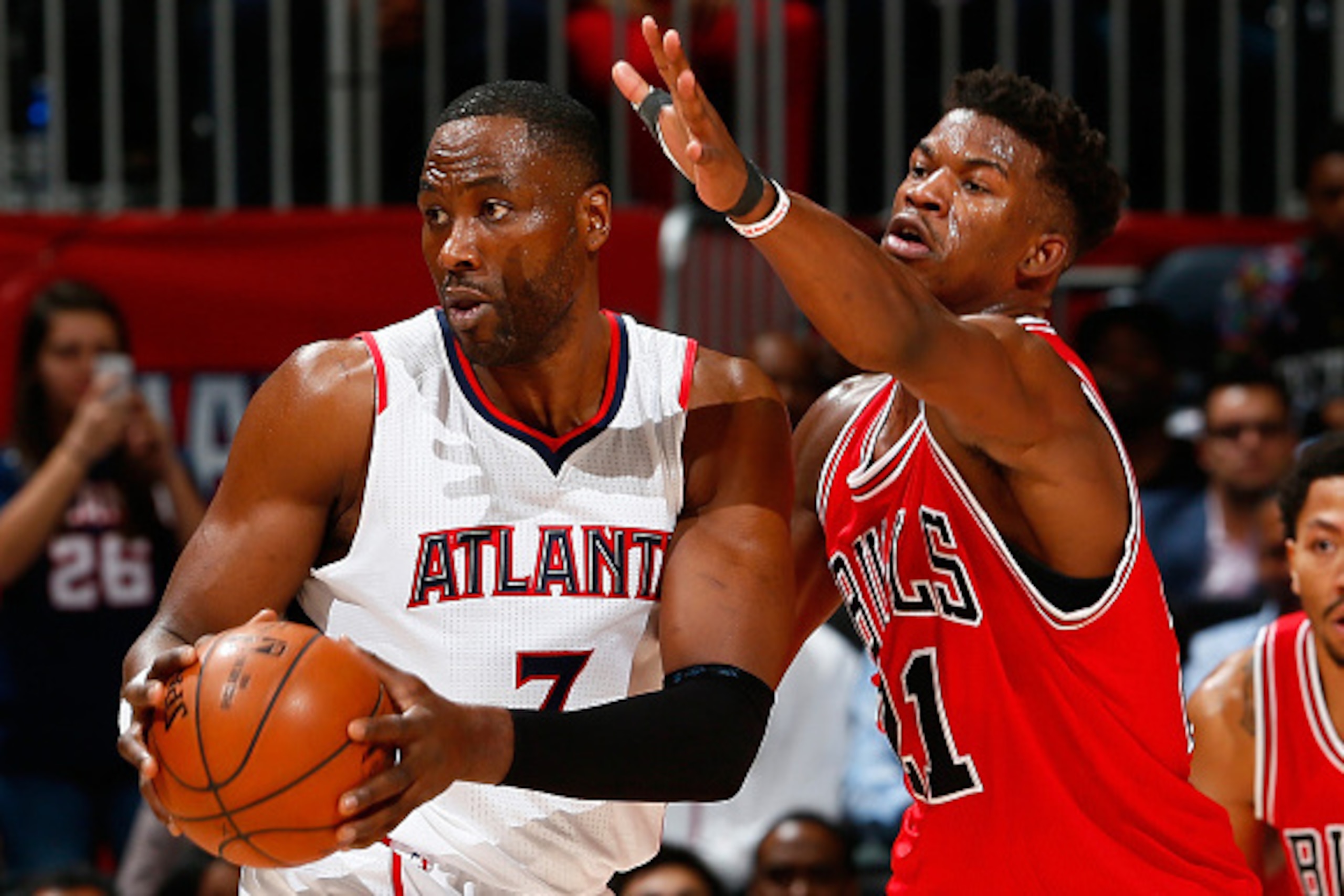
Brand's team, the hot Hawks, may stand in the way.
The Duke product is not a featured player for Atlanta, with a meager 50 points in 211 minutes. Those are paltry sums for someone who averaged no less than 18.2 in any of his first eight seasons. But he's not embarrassed by it. Not at all. He's been at peace with his place at his fifth NBA stop.
He thought he still could have been more of an offensive force while in Philadelphia and Dallas, and maybe he could do more now. But watching film with coach Mike Budenholzer set him straight. Budenholzer showed him instances where he could attack, but also explained that, in most cases, Kyle Korver in the corner and Paul Millsap on the move would be preferred options. Budenholzer convinced him they needed him for his defense, not his scoring, since others could do the latter.
"And that's when it set in," Brand said. "You can still help a team without 20 [points] and 10 [rebounds], or 16 and eight, or whatever."
Brand is glad he wasn't one of the guys who "retire and don't get picked up" because "they say they won't come off the bench, and then they turn 33, and they're like, 'I wish I could I play. I miss it.'" Glad he's one of those still plugging, even in a less glamorous way.
"Ego put a lot of the guys you named in the position they're in," Brand said. "You need to have an ego, like, 'I'm the best on the court.' You need to feel that way, 'I get the ball, I can get a bucket.' But you need to just relinquish that ego. You have to understand who you are. Then you're having fun. That's why guys like myself and Richard and Vince and Paul Pierce and guys like that, you love to play this game, and we'll fit into this role, because it's fun, it's the best job in the world."
So is he, like his former teammate Carter, more proud of this stage of his career than his starring one?
He smiled, and shook his head.
"Nah, not as proud," Brand said. "When you're an All-Star, and you're getting that jacket, you're really proud. But [nowadays] you're proud of what you accomplished and what you're a part of in a different way. That was more individual, more selfish, a little bit. Now it's team. And you enjoy it, especially on a winning team like this."
Ethan Skolnick covers the NBA for Bleacher Report. Follow him on Twitter at @EthanJSkolnick.





.jpg?w=2560 "Report: Darnold Could Miss 3-6 Weeks")