

Biggest Adjustments International Prospects Must Make in the NBA Game
You have to be wired a certain way to successfully make the NBA jump from overseas.
It's a serious jump, given the difference in competition and style of play. The NBA's speed and athleticism is just at a whole other level.
“Watching NBA every day on TV, you can't get the perception of how strong and quick everybody is. I was really impressed by the speed and athleticism, ” Croatian rookie Damjan Rudez told Mark Montieth of Pacers.com following his first practice with Indiana.
TOP NEWS
Buzz: Kings Declined Trae Trade
Giannis' $13.5M Miami Mansion 🤑
Buzz: Why Kawhi Trade Is Delayed ✋
And don't let the Dirk Nowitzkis and Tony Parkers of the NBA fool you. For every international prospect that's made it in the pros, there's a bunch that failed and went back.
Prior to being drafted, many of them found the radar during showcase events like the Under-16 and Under-18 European Championships or the Nike International Junior Tournament. A good portion of these prospects end up securing deals with premier teams at young ages and therefore don't see too much action the season before being drafted.
That's why some of the international prospects who've been drafted lately have been stashed abroad until they're more prepared—both physically and fundamentally.
Nikola Mirotic was the No. 23 pick in the 2011 draft, and he'll finally be making his NBA debut for the Chicago Bulls after spending the last few seasons abroad.
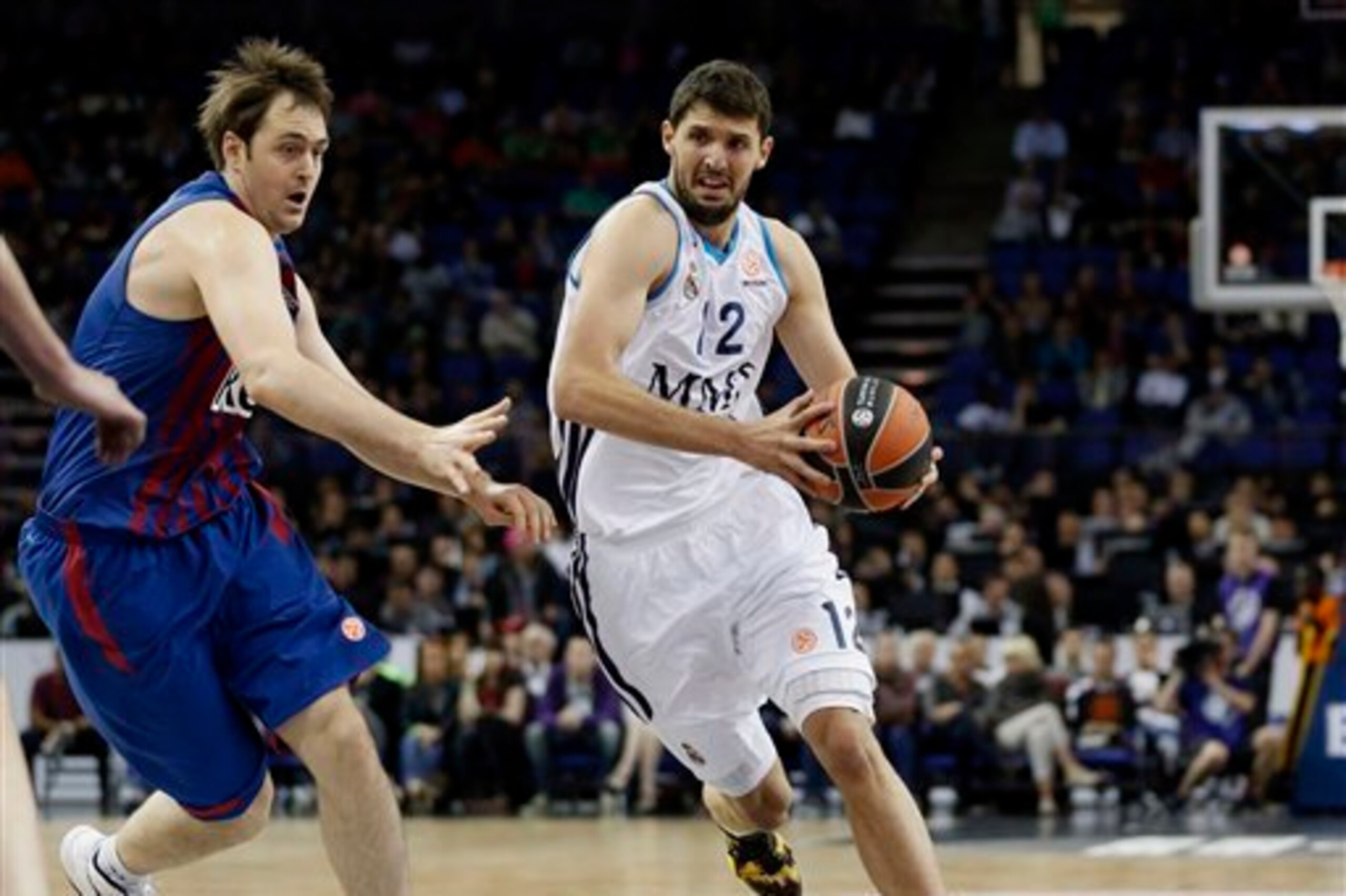
Now 23 years old, Mirotic should be a little more seasoned than he was when he initially entered the draft. And based on early reports, he's appeared to fit in nicely so far in training camp.
“I thought he had a really good first day. And then after watching the film, it was even better than I thought," coach Tom Thibodeau told Bulls.com's Sam Smith.
Mirotic also touched on his first practices and individual strengths:
"It feels good. For me, different because I played before in Europe. So I don't know really how they work, but I learn every day something new; so they've helped me, teammates. Coaches have helped me. I feel good. So exciting. I'm really hungry to work and be better every day. I like to run, you know, fast break. I like to be very good on defense, to give good energy and my game I like to pick-and-pop, three-point line, to penetrate, to make one more pass. I try to do best for team. Depends on how they want to use me.
"
Having already played in two Euroleague Finals and having averaged over 22 minutes a game since 2011 in the competitive Spanish ACB, Mirotic isn't your typical international rookie.
The adjustment process for him shouldn't be as lengthy or challenging as it would be for a 19-year-old kid who either rode the bench the past season or played in a secondary division.
Mirotic, who was used in a respectable 21.65 percent of his team's possessions last season, played in a lineup with former NBA players like Rudy Fernandez and Sergio Rodriguez. And of course, unlike the college kids making the jump, he's been battling against grown men and professionals for the past few seasons.
His game should really translate seamlessly to the stretch 4 position in the NBA, where he'll be able to play to the same strengths he played to as a versatile scorer for Real Madrid.
Though not a standout athlete by any means, at 6'10", Mirotic is money from outside, having connected on 46.1 percent of his three-pointers in Euroleague and 35 percent in the Spanish ACB. That size and shooting touch alone should give him purpose in Chicago's lineup. And those skills should allow him to slide right in without having to make too many changes or adjustments.

Mirotic happens to have more to his game—he's fully capable of putting the ball on the deck, wiggling his way to the rim or stopping in the mid-range for a jumper. But until he nails down the closing speed and lateral quickness of superior NBA defenders, it could be a little while before he's creating on the move.
However, the biggest early adjustment for Mirotic will undoubtedly come on defense and the glass. While the European game is tough and physical—guys play through contact—in the NBA, they play above it or right past it.
An under-the-rim big man, Mirotic could have difficulty contesting shots in the paint or carving out space under the boards.
Regardless, between his ability to stretch the floor and effectively score in between, Mirotic's offensive strengths hold plenty of value in Chicago. I'd imagine it won't be long before Coach Thibodeau is calling on him to knock down shots off the bench.
Though Mirotic should find a way to contribute right away, the adjustment process is ultimately different for each international prospect.
Big men who lack athleticism or the strength to hold their own down low better adjust their games and develop an outside shot. Jan Vesely and Yi Jianlian didn't. Donatas Motiejunas hasn't.
The only thing keeping Andrea Bargnani's bank account loaded is the jumper he helps stretch the floor with.
Monsters like Tiago Splitter, Marcin Gorat and Marc Gasol haven't needed to make as many offensive adjustments, as their strength and power have allowed them to do damage inside the NBA paint. In the meantime, Gasol and Gortat have ultimately added to their games and are each now considered two of the best at their position.

Looking down NBA depth charts, there are actually a lot more international bigs than there are international guards or wings.
Though it's tough to prove, I'd argue you'll find the top NBA athletes at the small forward position.
International scoring wings must adjust to Paul George-like athleticism and length, something you rarely see at the position overseas (the ones that do possess those traits get drafted, like Nicolas Batum, Giannis Antetokounmpo and Bruno Caboclo).
There aren't many international wings who've recently succeeded at high levels in the NBA. Peja Stojakovic comes to mind. So does Danilo Gallinari, another guy who's been able to win the one-on-one battle with tremendous skill and shot-making ability.
The ones who aren't built to win the one-on-one battle will likely have to adjust to a stretch role as a shooter. Omri Casspi has made it work. Damjan Rudez will have to make it work to justify minutes in Indiana.
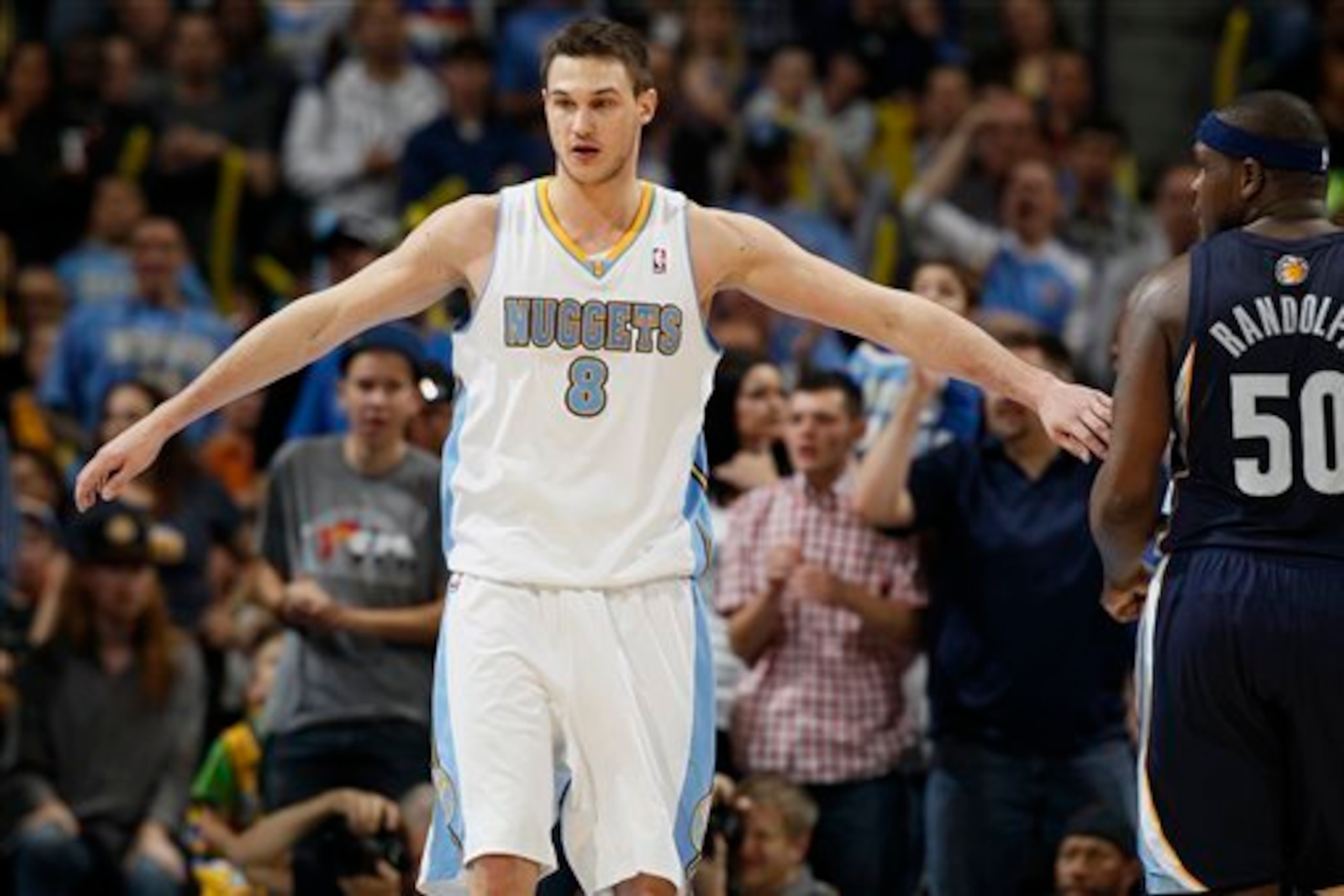
It's rare to even see an international wing get NBA consideration. Since 2005, the only international small forwards that have been taken in the first round have been Casspi, Batum, Victor Claver, Christian Eyenga, Antetokounmpo, Sergey Karasev, Livio Jean-Charles and Caboclo.
The speed and athleticism of the NBA game isn't too kind on international guards either, particularly ball-handlers at the point.
The ones who have made NBA impacts rank rather highly on the "clever and crafty scale." Tony Parker, Goran Dragic, Ricky Rubio and Jose Calderon—the only starting international point guards—all make up for athleticism with sneakiness, deception, IQ and extremely high skill levels.
Last year, we saw Atlanta Hawks rookie point guard Dennis Schroeder struggle after being drafted No. 17 overall.
Schroeder is quick, and that stood out in Germany, but it didn't in the NBA. At least not last year.
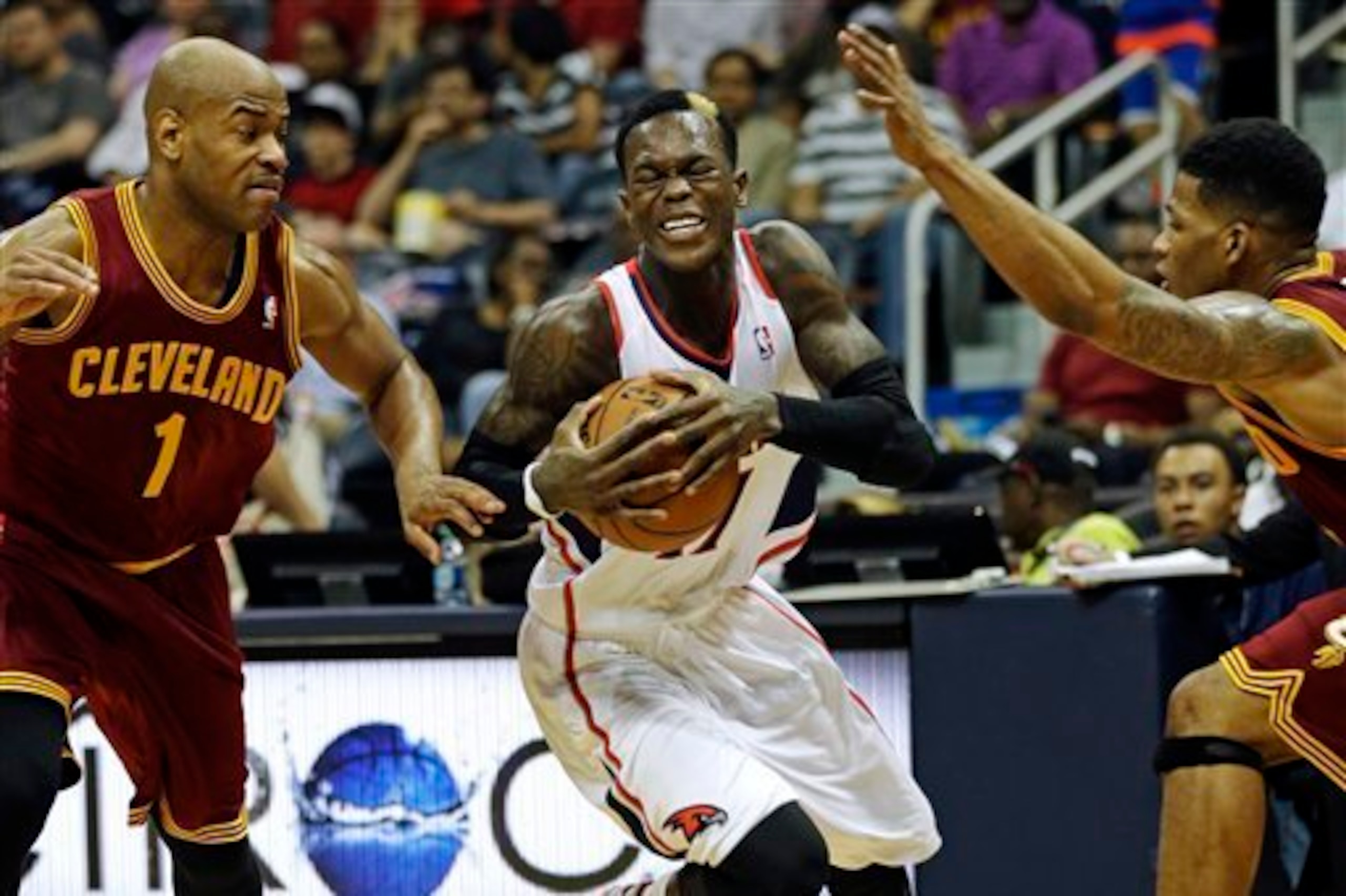
The first step that worked for him abroad now doesn't seem as dangerous. It's tougher to get to spots on the floor. Defensive rotations and pick-and-roll defenders recover much faster.
The perimeter, as well as the secondary level of defense, is a whole lot quicker in the NBA.
Of course, the transition is tough on everyone, whether you're coming over from college, Europe or Mars. Every player will ultimately realize they have a number of adjustments to make once arriving.
Even adjusting to the lifestyle and a new language can pose as a challenge.
“Communication problem is the biggest thing,” Marcin Gortat told Paul Coro of azcentral.com back in 2012. “I’ve seen a lot of good foreign players not make it because they don’t speak English well or they’re afraid to speak up because they know people will laugh at them."
For these international prospects looking to test their NBA luck, the right adjustments should enhance and ultimately extend one's career. A failure to adjust could lead to a one-way ticket back overseas.

.jpg?w=2560 "NFL head coaching legend has a Minecraft hobby just as impressive")
.jpg?w=2560 "Week 1 Waiver Wire Targets")
.jpg?w=2560 "Week 1 Start 'Em, Sit 'Em Plays")
.jpg?w=2560 "Baker, Bucs Agree to Deal 💰")