Are Stable Starting Lineups Pivotal to NBA Regular-Season Success?
Stability is a commodity in the NBA.
From the front office to the bench, from the starting lineup to the 12th man, certainty is invaluable; and it's invaluable because of how uncertain the NBA is.
Starting lineups are no exception.
TOP NEWS

Pic of LeBron's Helicopter Commute 🚁

Duren Calls Out 'False' Rumors

NBA Power Rankings Entering Preseason 🔢
Only twice in the last 10 years has a team enjoyed fielding no more than two different starting lineups throughout an entire regular season. Think about this for a second: Of 300 possible squads, 99.3 percent of them (298) used more than two starting lineups.
Those basking in such predictability should more often than not be reaping major benefits. But is that actually true? Are stable starting lineups a foundation for regular-season success, or are they an irrelevant luxury having little to no impact on the standings?
Elements of Change
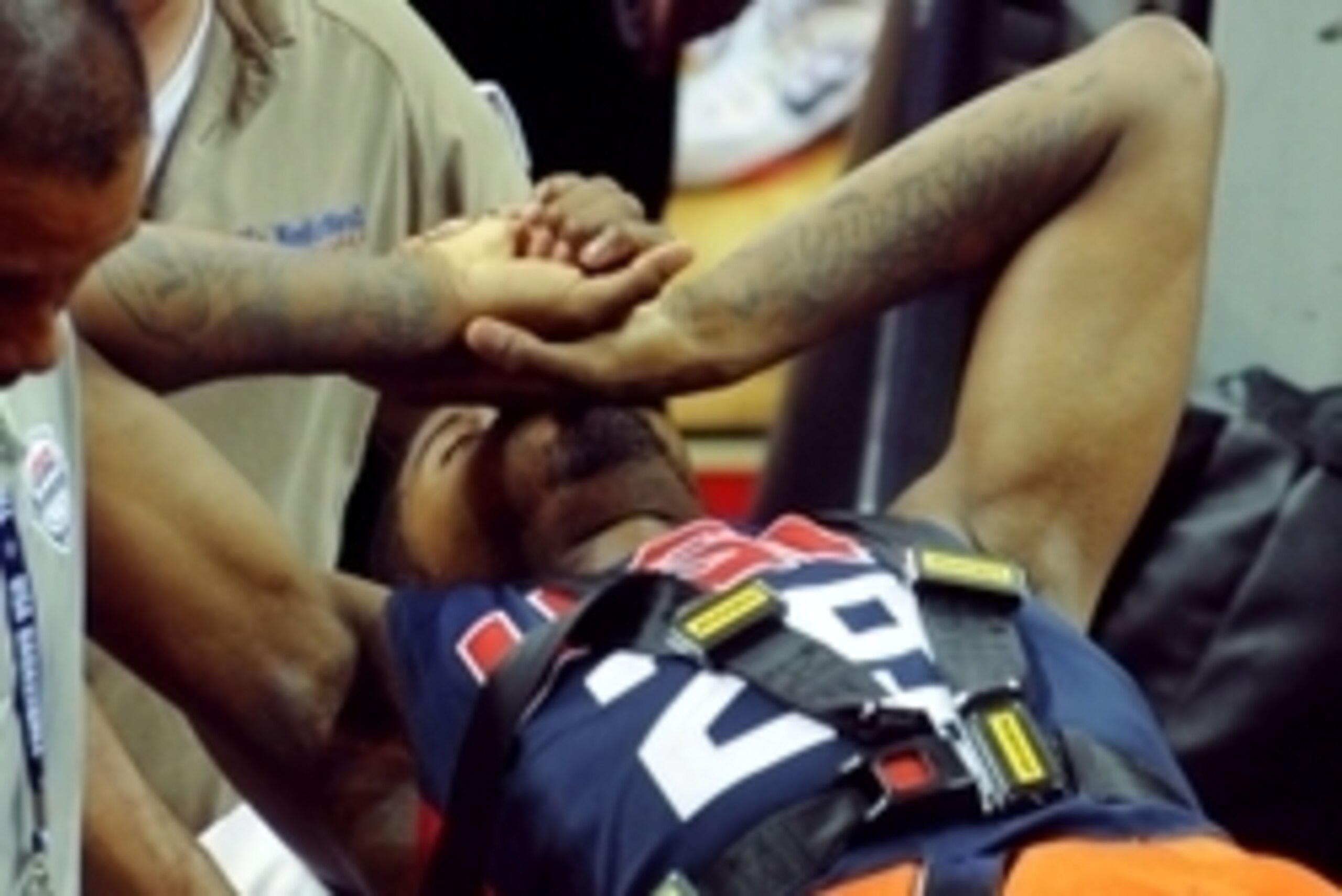
Predicting where teams will be from one day to the next is difficult. Things happen.
Adjustments to starting fives take place for all sorts of reasons. Trades can have an impact. So can a team's desire to experiment with different combinations. Player illnesses and scheduled rest days factor in as well.
Then there's health.
Fans, players and coaches are very much aware of injuries. There is no predicting them, not even if rest is offered or minutes caps are instituted. Coaches can only manage players and bodies how they see it and hope that's enough.
Rarely is it enough, of course. There's no such thing as infallible prevention.
A study led by a group of doctors—medical and otherwise—back in 2010 for the National Center for Biotechnology Information examined 17 years of NBA injury data. None of the findings suggested there was a way to accurately forecast forthcoming health bills:
"Professional basketball today has become a highly physical, high-contact sport. All reportable injuries were collected directly from NBA trainers and team physicians over a 17-year period, and injuries rates were determined by demographics, body area, structure, pathology, and injury type.
Player demographics revealed no correlation between injury rate and age, height, weight, or years of NBA experience. This is an essential finding, given that agents and organizations constantly attempt to stratify and predict the injury risk for each player. If there were a correlation between injury rate and player demographics, players at higher risk could be cut from their team.
"
In layman's terms: Injury bugs are incalculable, fickle, heartless, equal-opportunity jerks.
Every year it's something and someone different. It's been Kobe Bryant. It's been Derrick Rose. Right now it's Paul George.
Losses of this stature affect starting lineups. You can bet your best friend's secret iCarly DVD collection the Indiana Pacers will spend most of next season tinkering with the starting lineup as they try to discover what works.
“It's a major part of the pursuit of a championship,” Pacers coach Frank Vogel said last season, per NBA.com's Mark Montieth. “You have to have a lot of things fall into place. Staying healthy is definitely one of them.”
Preemptive panning does very little to combat health and the remaining factors that influence starting fives. There's no formula that reveals how many starting lineups a team must use, nor is there some existing trend in starting-five volume that sets a universally acceptable number of changes:
As shown above, there's no concrete pattern. Perhaps the last 10 years can be used to find range guidelines—the average fell between 14 and 18 for the last decade—but it's not foolproof.
Largely unpredictable change—the degrees of which will vary by team and year—is the only reliable constant.
What the Numbers Say

Finding the number of starting fives a team uses is easy—Basketball-Reference.com has the information readily available—but how do we measure success?
"Wins and losses, idiot."
That's what you might say, and you wouldn't be totally wrong. But winning percentages are flawed and don't account for strength of schedule, so we're first going to look at Basketball-Reference's Simple Rating System (SRS).
A team's SRS is, as Doug Drinen of Pro-Football-Reference wrote in 2006, its "average point margin, adjusted up or down depending on the strength of their opponents."
Average teams have a rating of zero. The higher the number, the better the rating, the better the team.
For example, the San Antonio Spurs' average point margin for 2013-14 was 7.72, and the strength of their schedule was 0.28 points above average, giving them an SRS of eight. And those worried about the exclusion of trusty winning percentage can find comfort in the strong correlation that exists between it and SRS:
With that out of the way and your trust in SRS established, it's time to gas up the time machine.
Charted below is the relationship between the number of starting lineups a team used and its SRS for the last 10 years:
This time a trend emerges.
Teams with a poor—in this case negative—SRS score tended to use more starting lineups than their counterparts. And that link is highlighted further when splitting the data into two groups.
Of the 300 squads being looked at here, 146 fielded between one and 15 starting lineups during their respective seasons. The other 154 used between 16 and 49.
Here's how those groups fared against SRS:
The relationship becomes clearer still.
More than 69 percent (101) of teams that threw out between one and 15 different starting fives registered an above-average SRS. Only 30.5 percent (47) of those that used 16 or more starting lineups can say the same. Nearly 70 percent (107) of them finished with a below-average SRS.
But while the relationship seems clear at this point, it isn't perfect.
Lineup distribution matters. Looking solely at the number of starting lineups doesn't account for it.
Take the 2013-14 Phoenix Suns and Portland Trail Blazers. The Suns only used six different starting fives, but their most frequently used lineup played in 37 games. The Blazers, by comparison, ran with two different starting bills, and their most-used one appeared in 69 contests.
Division can help limit this impact.
If the number of starting fives a team uses is divided by its most recycled lineup, we should get an even more accurate look at how often teams experimented. The lower the number, the more stable a team's starting lineup usage is.
Phoenix's six different starting lineups would be divided by 37. That gives it a variation rating of 0.16. Portland's two would be divided by 69, giving it a rating of 0.03, noticeably lower—and therefore better—than Phoenix's.
Last year's league average variation was 0.79. Below you'll see how resulting above- and below-average numbers look when weighed against SRS for 2013-14:
Some of the same is seen again here. Although there are plenty of outliers, only two teams with below-average lineup variations—numbers greater than 0.79—finished with above-average SRS scores.
Getting a bigger picture demands a larger sample size. For that, we turn to the last 10 years, during which time the average variation was 0.89:
Acceptable responses to this scrunched-up scatter plot include: Holy 2008-09 Golden State Warriors.
And that's it.
No other team's starting lineup variation exceeded 4.9. Those Warriors—who fielded 47 different starting fives—skew the look because their most-used lineup started only five games.
Even so, many of the original findings are confirmed.
Almost 65 percent (127) of the teams with above-average lineup variations—distributions below 0.89—also finished with above-average SRS scores. A mere 20 percent (21) of clubs with below-average variations did the same.
Not much has changed from before. The teams with higher SRS marks are generally the ones who have used fewer starting lineups and experimented less.
Impact of Stability
Consistency helps.
It is not the be-all and end-all of NBA success, during the regular season or otherwise.
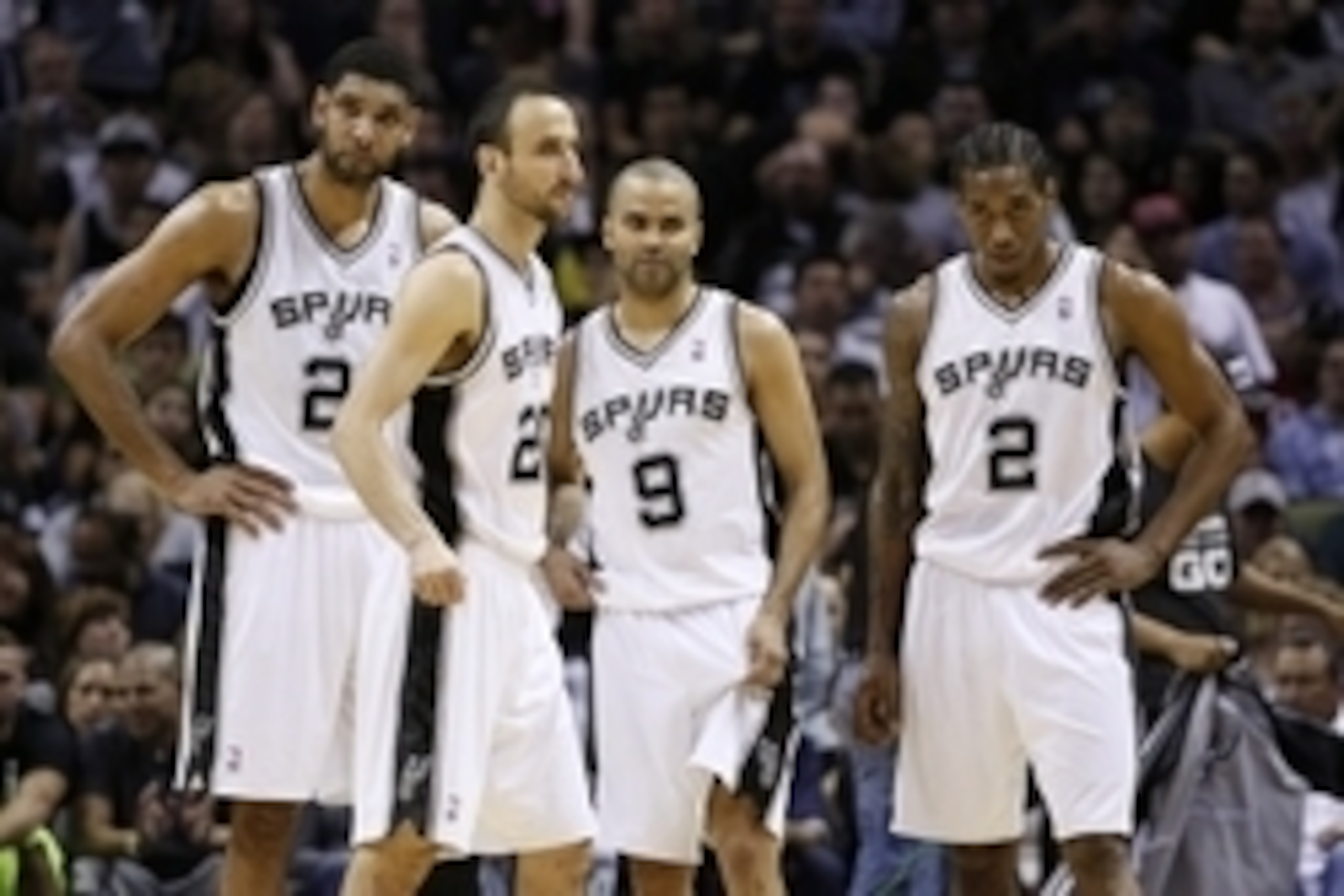
Teams that use more lineups and experiment more often than most can do great things. This year's Spurs are a perfect example. They used the second-most starting fives in the league (30) and still finished first in SRS (eight) and wins (62).
Oh, and they also won a championship.
Methods vary by situation. Transitioning and rebuilding teams are going to futz around with starting lineups as the search for answers and direction plows on. Injuries can occur within preferred starting fives that force teams into trial-and-error mode.
Sometimes, like in San Antonio's case, it's simply part of the plan. That's why teams have and will continue to buck this trend.
Much like there's no predicting how injuries will impact the number of lineups teams use, writing obituaries for those with impermanent starting lineups is premature. But educated guesses can be made based off what we found.
Just look at how NBA champions have fared against the league's average starting-five volume since 2004:
Now look at how they stand out when plotted against our distribution scores:
Good teams, great teams, are consistent in what they do. They're consistent in how they win, score and defend.
They're consistent in how they play.
Most of the time this continuity, this stability, is reflected in the state—lasting or makeshift—of their starting lineups.
*Stats and starting lineup information courtesy of Basketball-Reference.com unless otherwise cited.

.jpg?w=2560 "OBJ Calls Out Giants After Release")