
NBA Draft 2011: Kemba Walker and the 5 Riskiest Picks Among Top Prospects
There are two things scouts look for in a player: potential and skill. A lot of guys coming into the NBA get paid the big bucks because they have a lot of potential, but not necessarily a lot of skill.
Kyrie Irving is an example of the opposite type of player. Right now, I’d say Kyrie Irving is about 80 percent skill and 20 percent potential, whereas the average rookie is probably only 50 or 60 percent skill.
That’s neither a good or bad thing, but it is a limiting factor. It means what you see is what you get. It means Kyrie Irving is a safe pick.
For now, what we’re interested in is the first type of pick: the risky pick.
The really risky picks are players who have potential that outweighs their skill and the further the scale tips toward potential and away from skill, the riskier a prospect becomes. It’s hard to guess which guys will go to any length to realize their potential, and who will simply coast as “good enough.”
If a player seems to be lacking in both skill and potential, well then, that’s not only a risky pick…it’s a stupid one.
What follows is a list of five superb prospects in order from least risky (No. 5) to riskiest (No. 1). None of these players would be considered risky picks late in the draft, or even in the second round. This is a consideration of a scenario in which a team uses a top 10 pick on one of these players and how that might be a risky thing to do.
5. Kemba Walker
1 of 5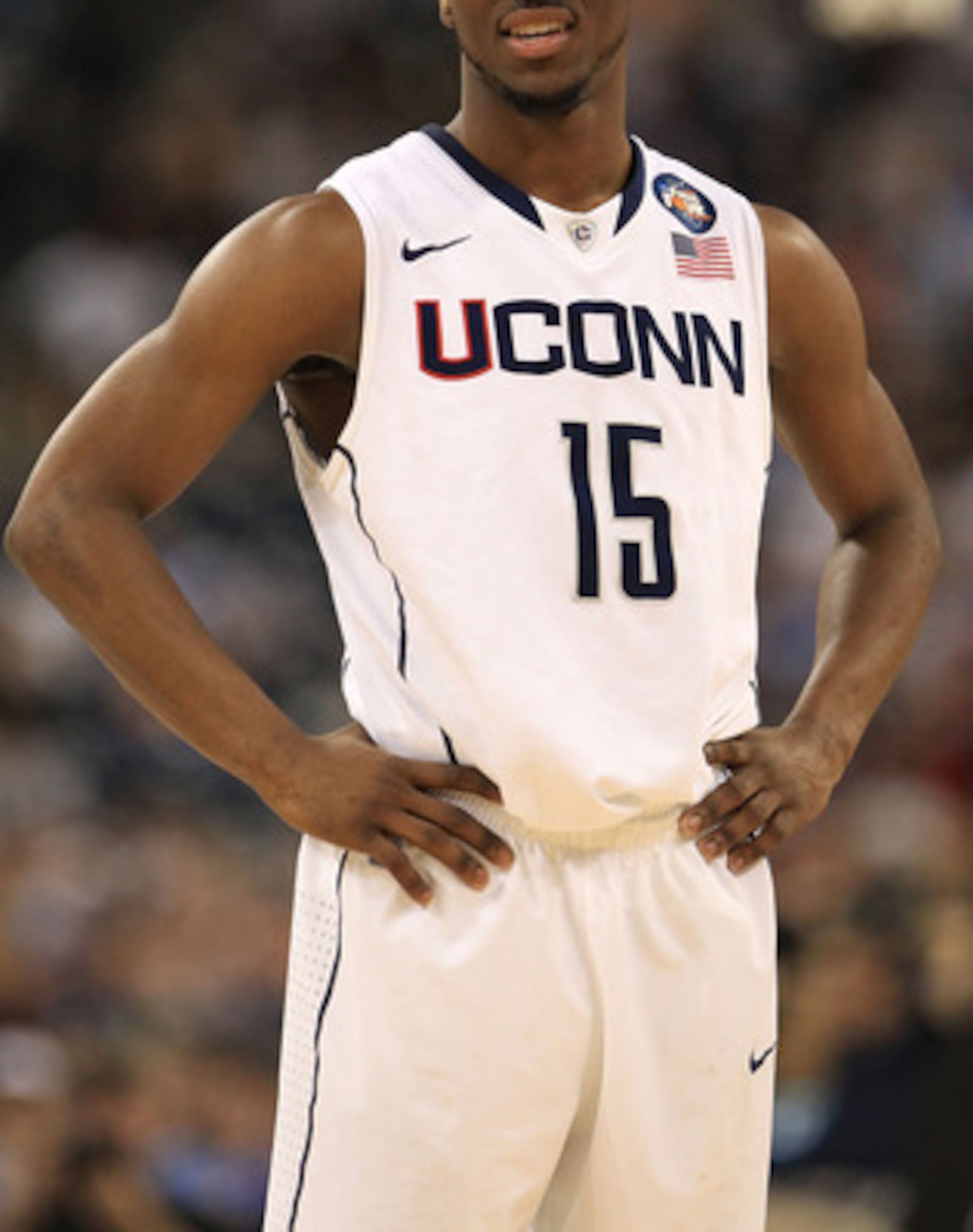
Kemba Walker moves like the boneless fluctuations of a snake and his strikes are just as deadly. There’s no one in the game who’s better at creating space or breaking defender’s ankles for that matter. His speed and exceptional ball handling are reminiscent of a young Allen Iverson, and Walker and Iverson actually have very similar builds.
Kemba Walker isn’t as talented as Allen Iverson, though, and he can’t shoot the ball as well. He also has a tendency to get out of control, consequently creating low percentage shots and turnovers. Conversely, and quite oddly, at times it seems as though he actually shoots better when there’s a hand in his face.
Even with Kemba Walker’s phenomenal gifts there’s some speculation and reticence surrounding him due to his small stature. He is 5’11.5” without shoes on. Allen Iverson was only half an inch taller; Chris Paul, Earl Boykins, Ty Lawson, JJ Barea, and Nate Robinson are all shorter and they are all productive players.
The uncertainty remains. You can never quite tell how a small player’s style will mesh with the athleticism of NBA players, even when the small player is more athletic than almost everyone they go up against.
I’m going to say that Kemba Walker is a risky pick with the caveat that he also has the aptitude to become a star in the NBA. Slightly risky, with a chance of permanent sunshine you might say.
4. Brandon Knight
2 of 5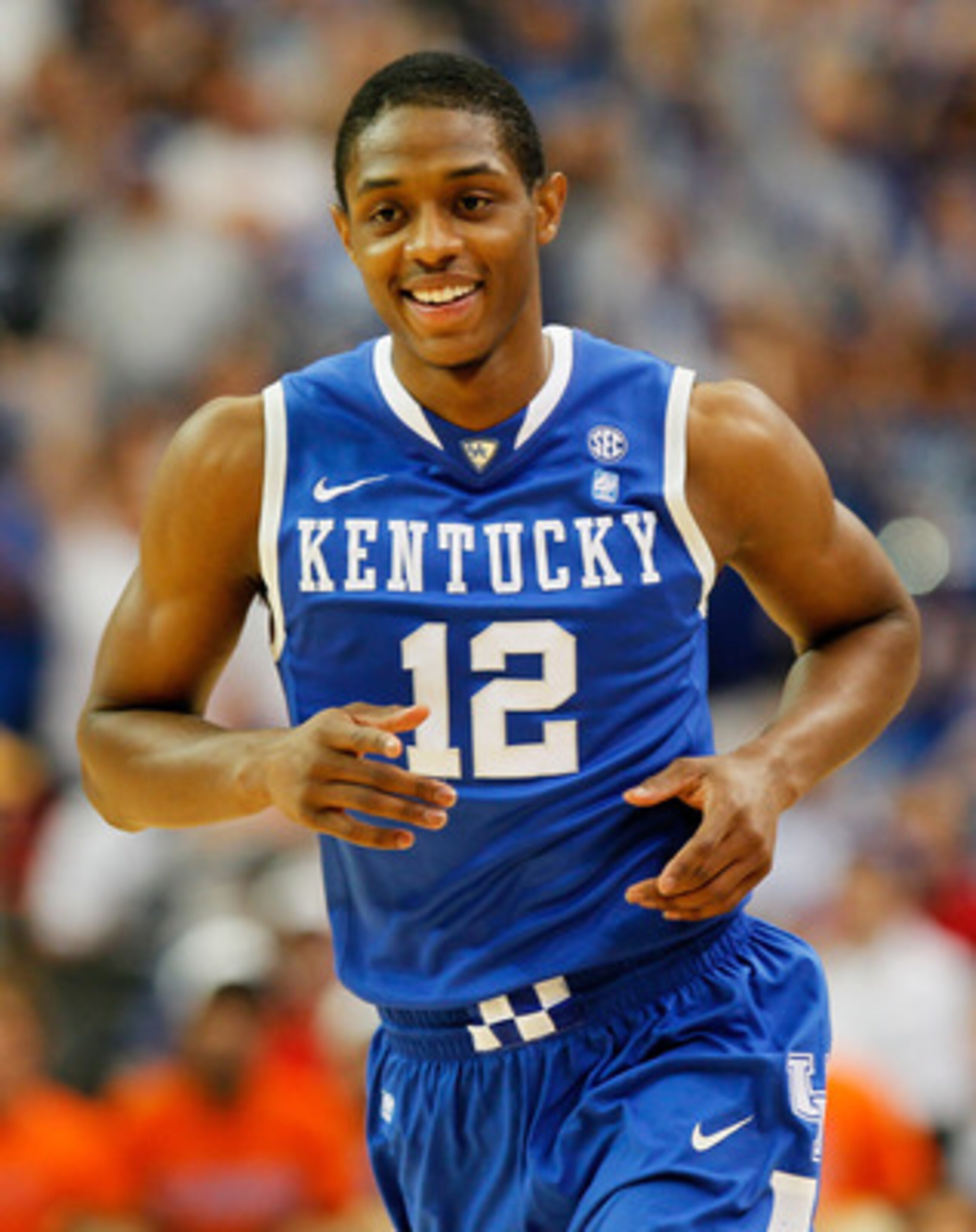
Brandon Knight is a classic example of a player with a lot of potential; with a lot of room to grow.
One of the problems with Brandon Knight is that he’s a very streaky player. Some nights he can light up the score board and some nights he can quiet his own fans with a flurry of turnovers.
The thing that makes Brandon Knight such a tantalizing prospect is his array of superb finishing moves around the basket. He has an uncanny ability to sink floaters and runners—two shots not many players have mastered—from anywhere in or around the paint, similar to Antawn Jamison.
But sometimes he over indulges in that talent and forces the issue when a well-timed pass could have served his team better.
Decision making in general is a problematic endeavor for Brandon Knight, which is exacerbated by the fact that he’s a point guard—essentially a team’s chief decision maker.
Fortunately, one’s decision making usually quickly improves with experience. In some cases, though, poor decision making is simply part of a style of play, and poor choices proceed from the same sort of plays that result in highlight reels.
Brandon Knight’s decision making woes make him more of a potential talent than a simple talent. That means he’s a risky pick, but near the safer side of risky business.
3. Jan Vesely
3 of 5Jan Vesely has spent the last several years playing on fairly large stages in the Euroleague and the Adriatic. In that time he’s become renowned for his in-the-face slams over defenders.
The things that make Jan Vesely stand out are his size and his athleticism. He’s a small forward who stands at an unheard of 6’11”. The downside is Vesely lacks the strength and power to make full use of his athleticism and height advantage.
Built a lot like Kevin Garnett, but lacking Garnett’s patented low post fade away, not to mention his sheer ferocity, Vesely is more or less a one trick pony: big dunks. If he can’t get the dunk off, chances are he can’t score.
You might bet that at 6’11” Vesely would be a decent rebounder, but if you made that bet, you’d owe someone money right about now. Last season he only racked up 3.4 rebounds a game.
Put that next to an uninspired 9.2 PPG and I think it’s pretty safe to say that teams are banking on Vesely’s potential rather than his current level of skill or production.
With such lackluster stats, an explosive first step and a 6’11” frame seem less impressive. Jan Vesely is a gamble—a risky pick—no matter how badly people want to deny it.
2. Enes Kanter
4 of 5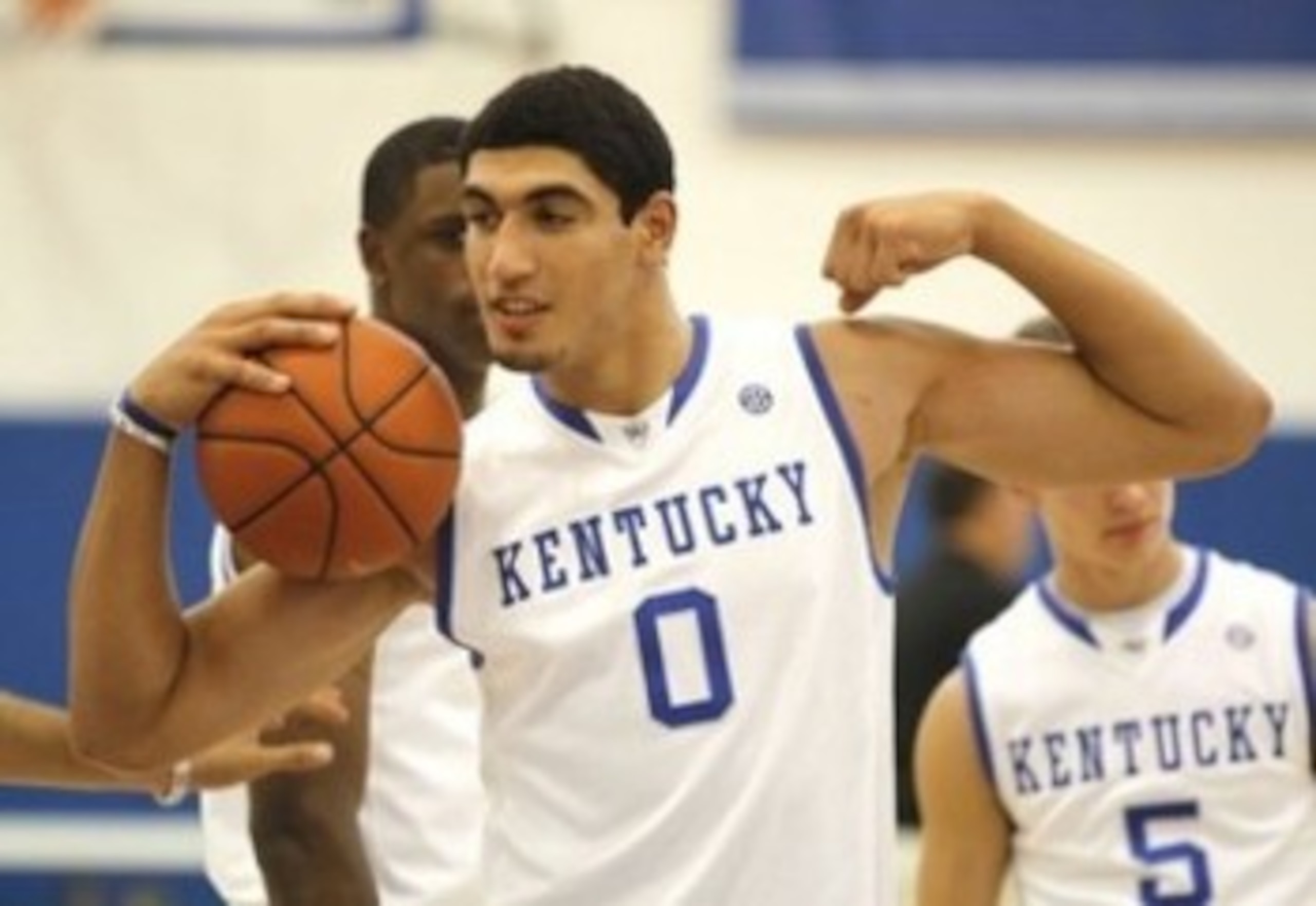
When I first caught wind of this guy I was picturing Pau Gasol part two—a big European with fantastic footwork and even better fundamentals.
Boy, was I wrong.
The information on Enes Kanter is as spotty as the short film clips of his prep school play.
Enes Kanter was slated to play for Kentucky this past year, but the NCAA pronounced him permanently ineligible after discovering that he was compensated for his play in Turkey.
Right now the only qualities that seem to be sending Enes Kanter to the top of the prediction polls are his size and his ability to shoot the ball.
As I said before, the footage is spotty at best, but it appears that Kanter is a solid spot up shooter (maybe even great, considering his size) given a little space, and particularly deadly from long-range. With someone in his face at mid-range, however, he has a tendency to get flustered and throw up as many bricks as points.
As an athlete, Enes Kanter is unremarkable. He is not explosive nor is he blessed with exceptional coordination. In the open court his speed leaves something to be desired, although at times he displays a surprising amount of quickness maneuvering under the basket.
When Enes Kanter does not have the ball, he does not appear to do much of anything better than mediocre. He’s not a good passer and, as a defensive player, he’s either clueless or modestly indifferent—hell, maybe it’s both.
Given how little information there is on Enes Kanter and the fact that a good portion of the information that is available isn’t exactly stunning, it’s difficult to understand all the hype surrounding his ascension to the NBA. He has some talent, but is by no means overladen with it.
The discouraging aspects of his game seem at least equal to, if not greater than, a height of 6’11” and a decent jump shot. It’s certainly possible that he could turn out to be a good player in the NBA, but the possibility falls well short of overt probability.
This is one risky pick.
1. Bismack Biyombo
5 of 5Information is sparse on this over-seas player and yet expectations are high. He only played 14 games and a scanty 17 minutes a game, and in that time he averaged 6.4 PPG, 5.1 rebounds, and 2.3 blocks.
I haven’t seen Biyombo’s shot charts, but I wouldn’t be surprised in the least if the majority of those points were slams by the big boy.
This is a guy whose athletic potential is mitigated by a severe and distinctive lack of grace. The overly optimistic have speculated that a talented coach could mold him into a shorter version of Dwight Howard.
Unfortunately, Bismack Biyombo has an ogre’s touch and that will prevent him from ever developing Howard’s post game; however, he may be capable of blossoming into a defensive, board-nabbing juggernaut similar to Ben Wallace.
But then again, he could also turn out to be a decidedly less vaunted ball-bobbler like Kwame Brown.
Remember, we had a good deal more information on Kwame Brown leading up to the draft than we have on Bismack Biyombo and people still thought Kwame Brown was worth the first overall pick. I think the important lesson there is that bad hands are a very, very bad sign until they perfect hand transplants.
Also remember: if the best case scenario is Ben Wallace, as I’ve suggested, Big Ben suffered through several pretty lousy seasons before he really began to show what he could do, and that was only after he found an ideal niche when he joined the Detroit Pistons in 2000.
The take home message on Bismack Biyombo is simply this: he looks more impressive than he is, and while he could turn out to be a valuable player, he could just as easily fade away into obscurity or that place where a team’s legacy dwindles to lore and memory persists as nothing but the dregs of infamy; the disappointment of another blown pick.


.png?w=2560 "SummerSlam Night 2 Was Cinema 🍿")
.jpg?w=2560 "Jeremiyah Love Listed as RB2")
.png?w=2560 "Who Really Won at SummerSlam?")