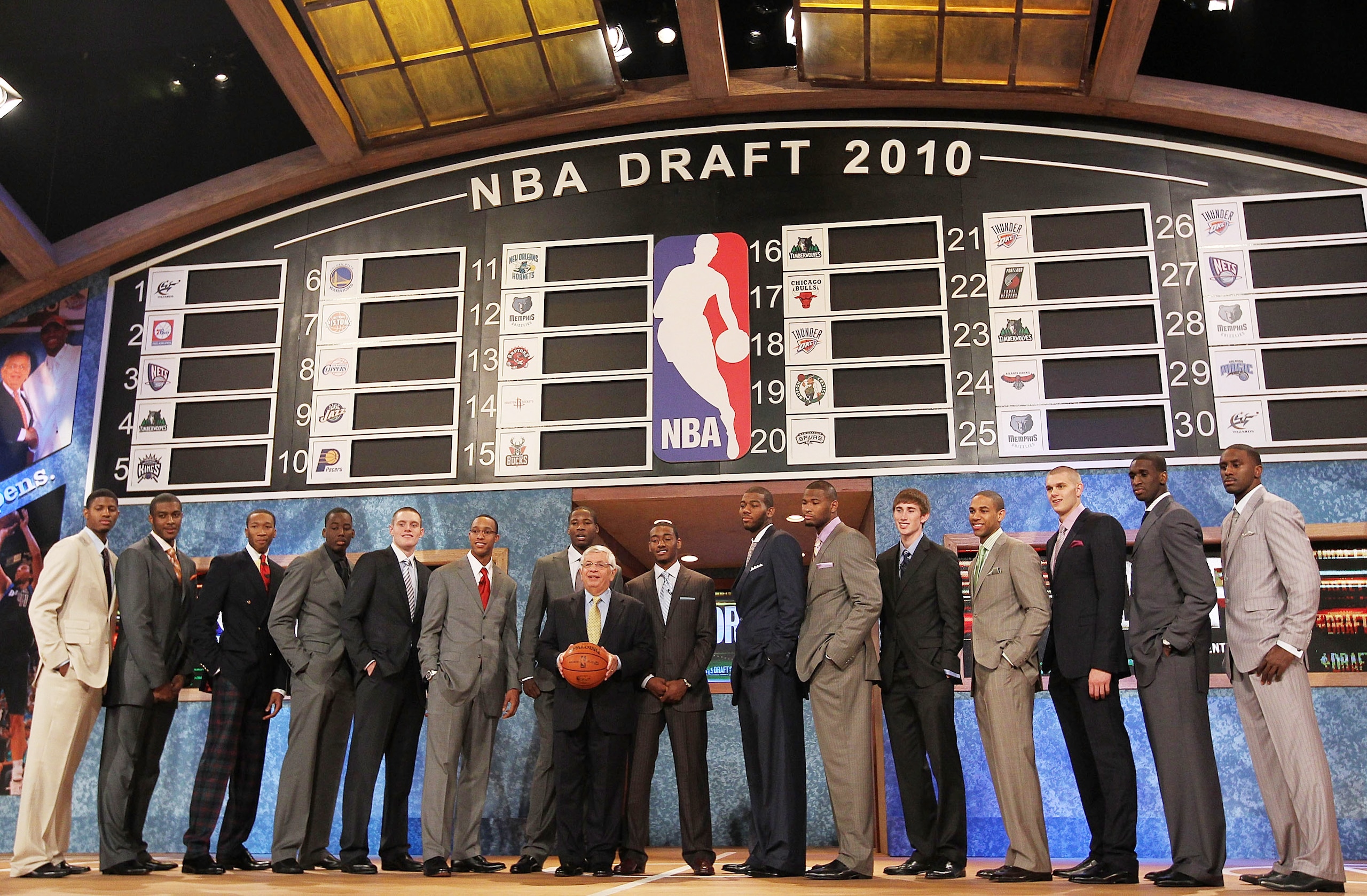

2011 NBA Draft Preview: Fewer Foreign Players to Be Selected This Year
The number of mock drafts available to the everyday NBA fan are limitless these days, all of which are slightly different than the other.
Yet one common theme that cannot be ignored is the decreased number of foreign talent projected to be selected this year—a common trend for the past few drafts.
In 2003, a record 21 international players were taken in the two rounds of the draft, and the next year a record-tying 21 were taken again.
Since then each draft has seen the number of foreigners drop slightly to 17 and 18 in 2005 and 2006 respectively, to 13 in 2007 to 12 in 2008.
In 2009, 10 players were taken from outside the United States and last year's draft saw only four foreigners taken.
According to NBADraft.net and their most recent mock draft, Enes Canter, Donatas Motiejunas, Jan Vesely, Bismack Biyombo, Robin Benzing and Joffery Lauvergne are the only internationals projected to go in both rounds of the 2011 draft.
This year won't be as domestically dominated as 2010, but don't expect to see a sudden spike in numbers either, for a number of reasons.
5. Domestic Talent
1 of 5
This certainly depends on the year, but in recent drafts the quantity and quality of talent coming from American soil has far outnumbered most international prospects.
In 2010, Kévin Séraphin was the only player taken in the first round who was neither American nor came from an American organization.
In fact, the first 16 picks were all domestic players who left or graduated college to play in the NBA.
Though a handful of internationals are projected to go in the first round of this year's draft, most of the talent at the top is homegrown.
Ten of the 14 lottery picks are predicted to be American this year, according to rotowire.com's most recent mock draft.
4. Different Style of Play
2 of 5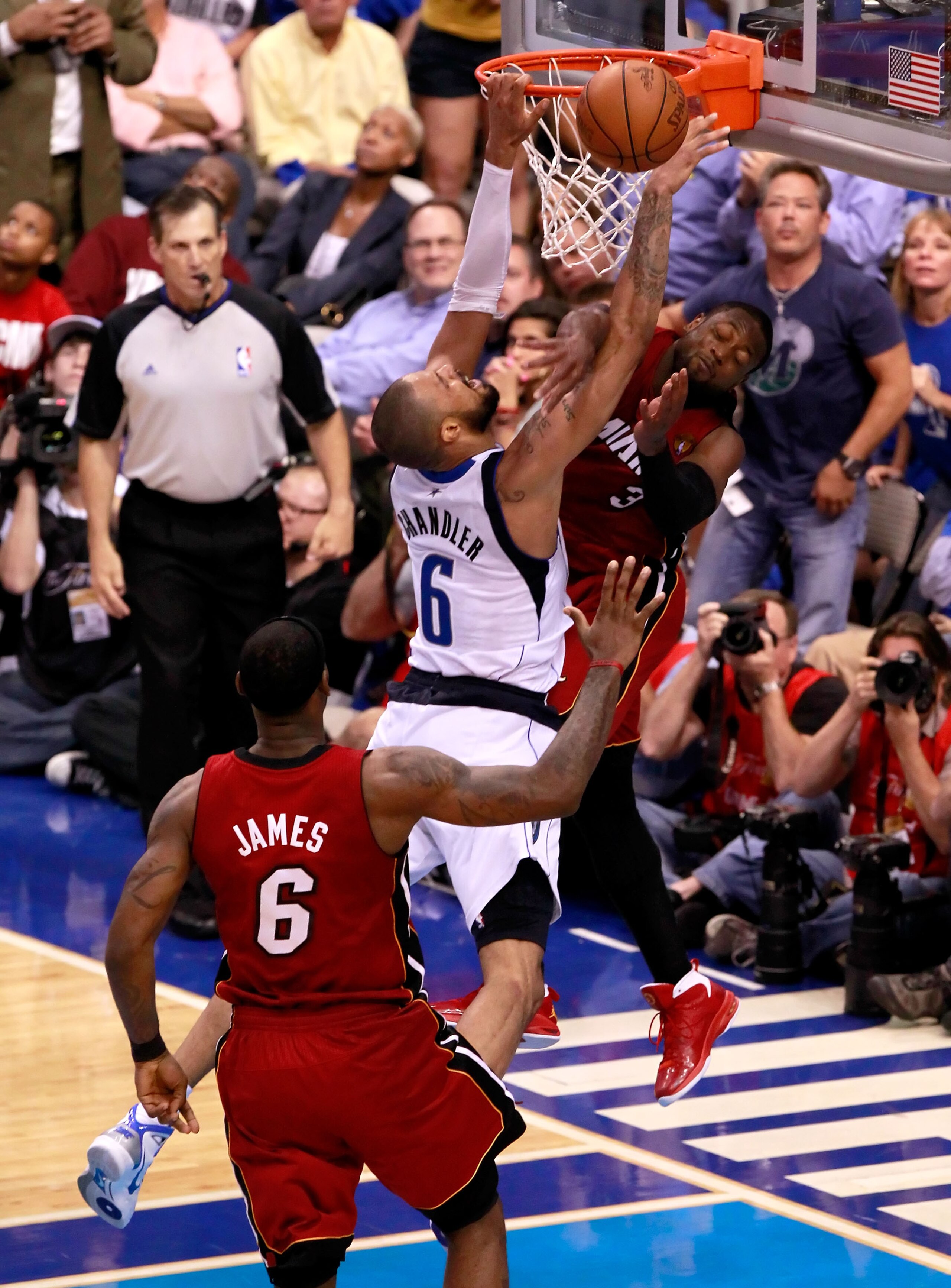
Every basketball fan knows that the game is played somewhat differently overseas, with wider free-throw lanes and a shorter three-point arc.
No argument there.
Yet the aesthetic makeup of American basketball is changing too, which is something the newcomers might find even more difficult than just taking a step back when shooting a three.
The NBA has always been known for its athletic superiority in comparison to the rest of the world, but in the past decade the term "athleticism" has been taken to new heights.
You have physical specimen like LeBron James at 6'8", 250 lbs. who can run the court in three seconds or less and, for a lack of a better cliche, jump out of the gym.
Take Derrick Rose for example. He's arguably the fastest player in the league and has a vertical leap of over 40 inches and can block shots like this.
Plain and simple, the NBA has grown in terms of the talent and athletic combination, and will continue to do so in the years to come.
Europe and other countries just cannot manufacture that type of player to fit the ever-growing mold of the NBA, especially when they are raised playing in international leagues.
Not saying that the adjustment is impossible, but it certainly is difficult and foreign talent must adapt and adjust their games in order to succeed, which takes time—time that some NBA teams do not have.
3. They Typically Want To Play in Big Markets
3 of 5
Part of the reason why foreign stars make the jump to the NBA is to gain international notoriety and success.
With mainstream media tending to cover big-market teams the most, the best way of doing so is by playing for a team in said markets.
The only problem is that the number of big-market teams in the league is limited.
We all remember Yi Jianlian, supposedly the next Yao.
Speculation surrounded him before the draft because it was rumored that Milwaukee was set to take him sixth overall, but he didn't want to play in Wisconsin.
The Bucks went ahead and took Yi, and thus ensued the controversy.
Since Milwaukee isn't a big market and didn't have a large Asian American population, Yi didn't sign until August, after multiple personal visits—including one to Hong Kong—by then-head coach Larry Krystkowiak and owner Herb Kohl.
A similar instance happened two years later when concern arose from Ricky Rubio's camp after he was drafted by Minnesota. Their belief was that it wouldn't be a big enough market for the then-17-year-old, unproven "star."
Both players turned out well for their teams, didn't they?


2. Contract Uncertainty with Old Teams
4 of 5
Ricky Rubio was drafted in 2009.
His current NBA career statistics are: zero points, zero rebounds, zero assists in zero games.
In the following months of the '09 draft, Rubio was traded from DKV Joventut to FC Barcelona, backing out of a deal that the Timberwolves had with his old team to buy out his contract.
Since the NBA has a rule that prohibits teams from paying more than $500,000 for a player's contract buyout, Rubio could not be bought out by the T-Wolves and signed with FCB—a team not subject to these rules.
Rubio signed six-year deal with Barcelona the next day, with an option in his contract to play in the NBA after the 2010-2011 season, according to ESPN.
His contract buyout was reportedly a more manageable $1.4 million at season's end, versus the reported $8.1 million it was back in 2009.
On June 1, KFAN 1130 in Minneapolis reported that the Spaniard reached an agreement to join the T-Wolves for the 2011-2012 season. Finally.
Though many NBA teams agree principal rights for foreign players they draft and send them back to their domestic leagues for further development, the Rick Rubio saga surely has frightened GMs and owners across the league.
1. Past Failures Raise Cause for Concern
5 of 5
Žarko Čabarkapa was drafted 17th overall by the Phoenix Suns in 2003.
His NBA career lasted three years and still, nobody knows who he is.
Darco Milicic was drafted second overall that same year by the Detroit Pistons. He played with the Pistons for three years, and in the five years since he's bounced around to four different teams.
The risk of taking a foreign player is somewhat high, and the reward is usually unknown. Not all general managers and owners are willing to bet their lottery pick on a foreign talent for that reason alone.
Not to say that all American-grown talent pans out perfectly either, but their chances of success are greater because they are fostered in the American game their whole lives.
With the "win now" mentality that surrounds professional sports, franchise executives must look for talent that will bolster their team's success immediately and doesn't need time to develop overseas.

.jpg?w=2560 "Dak to Stroud: Get Some Wins 💯")


.jpg?w=2560 "5 NFL Players Getting Trade Buzz")
.jpg?w=2560 "NFL Won't Fine 'Beverage' Celebrations 🍻")