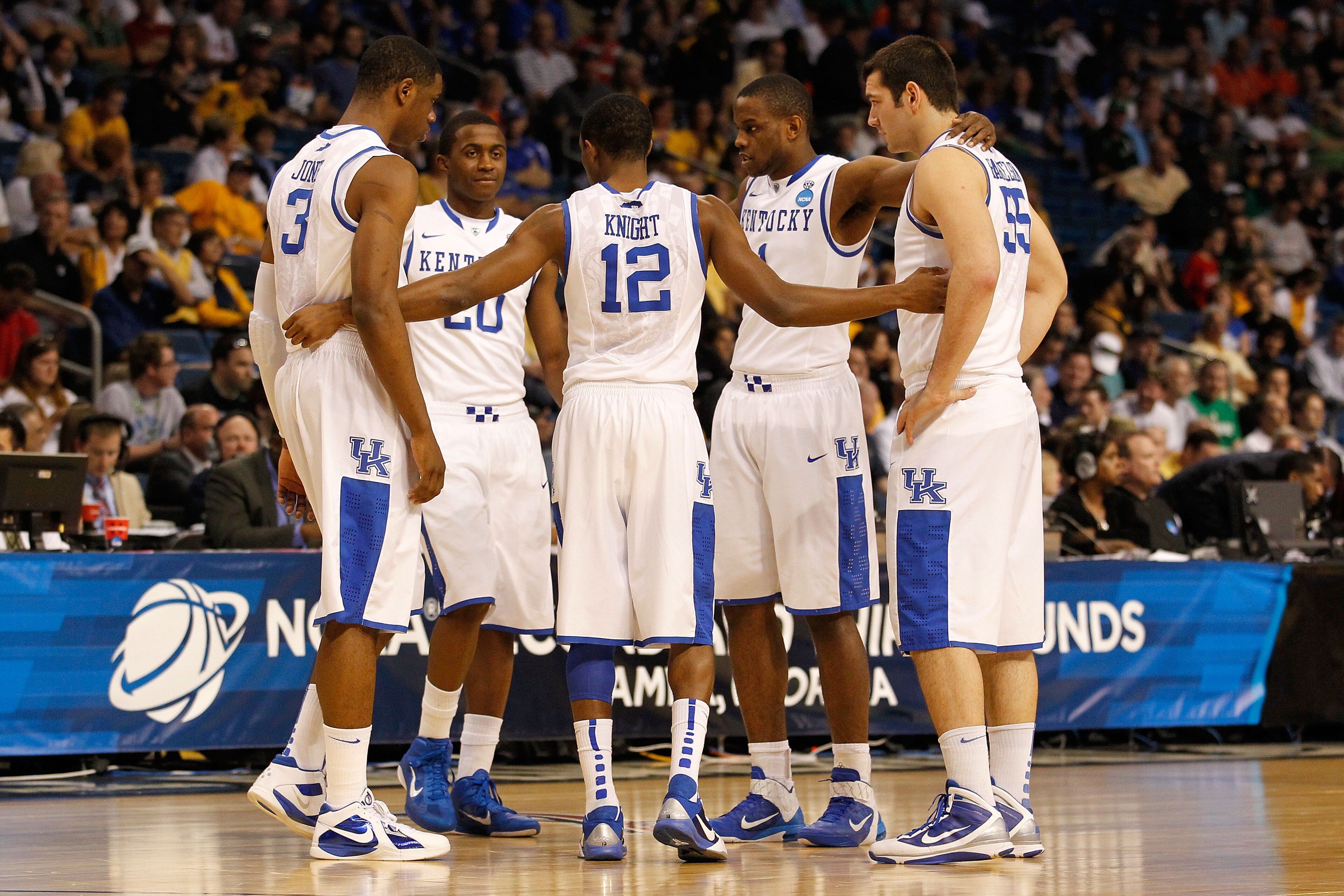

2011 NBA Mock Draft: Will UK's Terrence Jones or Brandon Knight Be Picked First?
Before we delve into the latest B/R NBA mock draft, ask yourself two questions.
1. How many potential 2011 draft picks have to fight the following red flags: Inconsistency, lack of a true NBA position, height/weight deficiencies, inexperience, boom-or-bust labels?
2. How many potential 2011 draft picks will be a top-two player on an NBA playoff team in five years?
My opinions: A ton, four at most.
With the lack of parity in the NBA lately, teams at the bottom of the barrel need franchise players to build around more than ever. The problem is, this draft doesn't offer more than a couple of those.
Don't expect the 2011 NBA draft to be akin in its All-Star talent deficiency as say, the 2006 draft was, but expect there to be much uncertainty and dart-throwing.
Note: Stats and height/weight information courtesy of Draft Express and ESPN.
1. Cleveland Cavaliers: Duke Freshman PG Kyrie Irving
1 of 30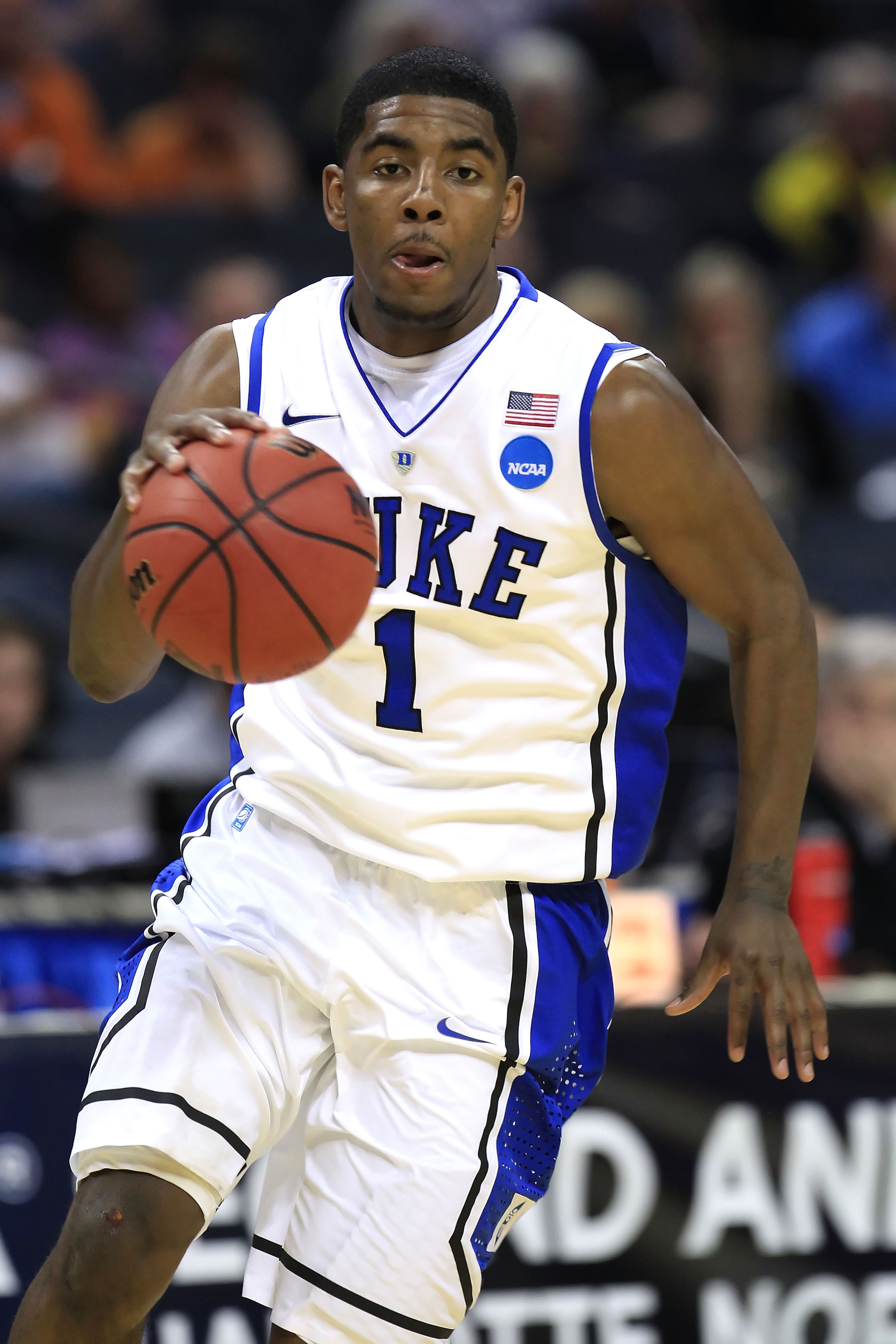
An NBA playoff team can be built around Kyrie Irving, Duke's 6'2", 180-pound point guard.
Right now, I'm not comfortable saying the same about anyone else who may be picked in this NBA draft.
If Irving and the Duke Blue Devils win the national title, expect Irving's draft stock to soar even more than it already has.
Irving has the potential to be a perennial NBA All-Star and a routine playoff participant. At worst, he will lead the NBA's second tier of point guards.
2. Minnesota Timberwolves: International C Enes Kanter
2 of 30I shouldn't even bother predicting what Minnesota Timberwolves general manager David Kahn is going to do, because he is going to do the exact opposite and pick against the consensus.
Enes Kanter should be the pick here, simply because he's the best center available. Kevin Love needs help down low, and although Kahn has a man crush on Darko Milicic, he isn't the long-term answer.
The tweeners at the small and power forward positions have too many question marks, there is no need for a pure power forward like Jared Sullinger, Irving is off the board at this point and there isn't a shooting guard available worth the No. 2 selection.
If Kanter's knees check out okay at upcoming physicals prior to the NBA draft, expect this pick to be a near lock.
Did you know that Kanter is 6'11" and 260-plus pounds? Damn. Also keep in mind that Kanter went for 34 points (13-of-21 shooting) and 13 rebounds in 24 minutes during the Nike Hoop Summit for the world team. The opposing starting lineup? Brandon Knight, Patric Young, Harrison Barnes, Kyrie Irving and Jared Sullinger.
3. Sacramento Kings: Baylor Freshman SF/PF Perry Jones
3 of 30Perry Jones, at 6'11" and 220 pounds, is the most physically gifted player in this draft and a freak of nature. The Kings can conceivably go numerous routes here, but adding Jones, the No. 2 player on Chad Ford's Big Board, gives them a much-needed boost at the forward position. Jones can play small forward while DeMarcus Cousins and Jason Thompson play the power forward and center positions respectively (if Samuel Dalembert leaves via free agency). Or, Thompson can stay on the bench as Jones plays power forward while Cousins moves to center.
The latter scenario is questionable, admittedly. Jones has the athleticism and wingspan to hang with NBA power forwards, but perhaps not the girth. It remains to be seen. Regardless, the Kings will move pieces around to find Jones a spot on the roster if he falls here.
4. Washington Wizards: Ohio State Freshman PF Jared Sullinger
4 of 30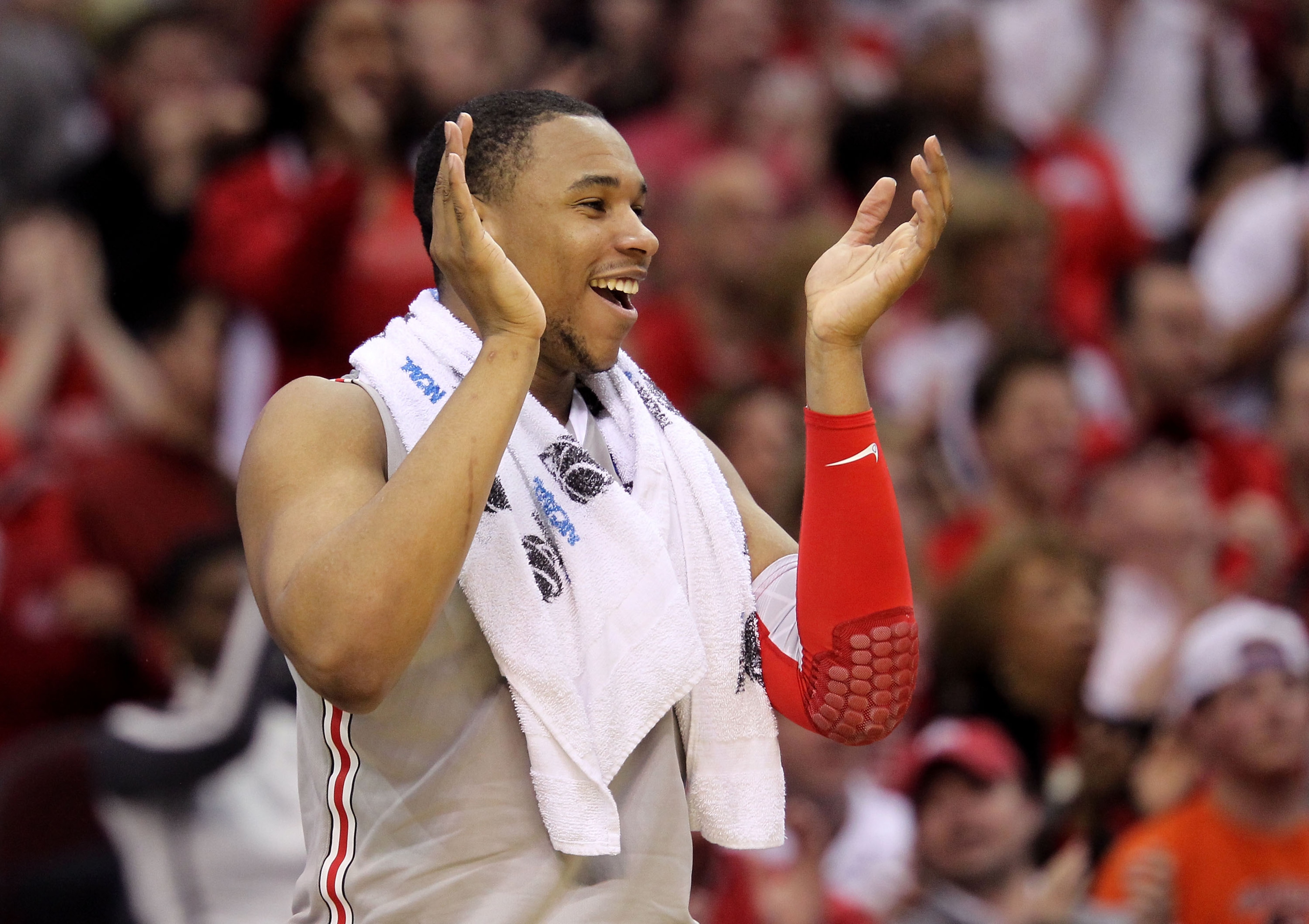
I had Harrison Barnes here for the better part of a day before I thought better of it. The Andray Blatche-JaVale McGee experiment has run its course, with Blatche looking like the odd man out at some point.
With Washington being one of the worst rebounding teams in the NBA, it makes the most sense for the Wizards to take Sullinger and hope for some better luck on the boards.
Sullinger is 6'9" and 280 pounds, so despite giving up some height and length to some NBA power forwards, it'll be hard for opponents to compete with his immense girth.
5. Toronto Raptors: North Carolina Freshman SF Harrison Barnes
5 of 30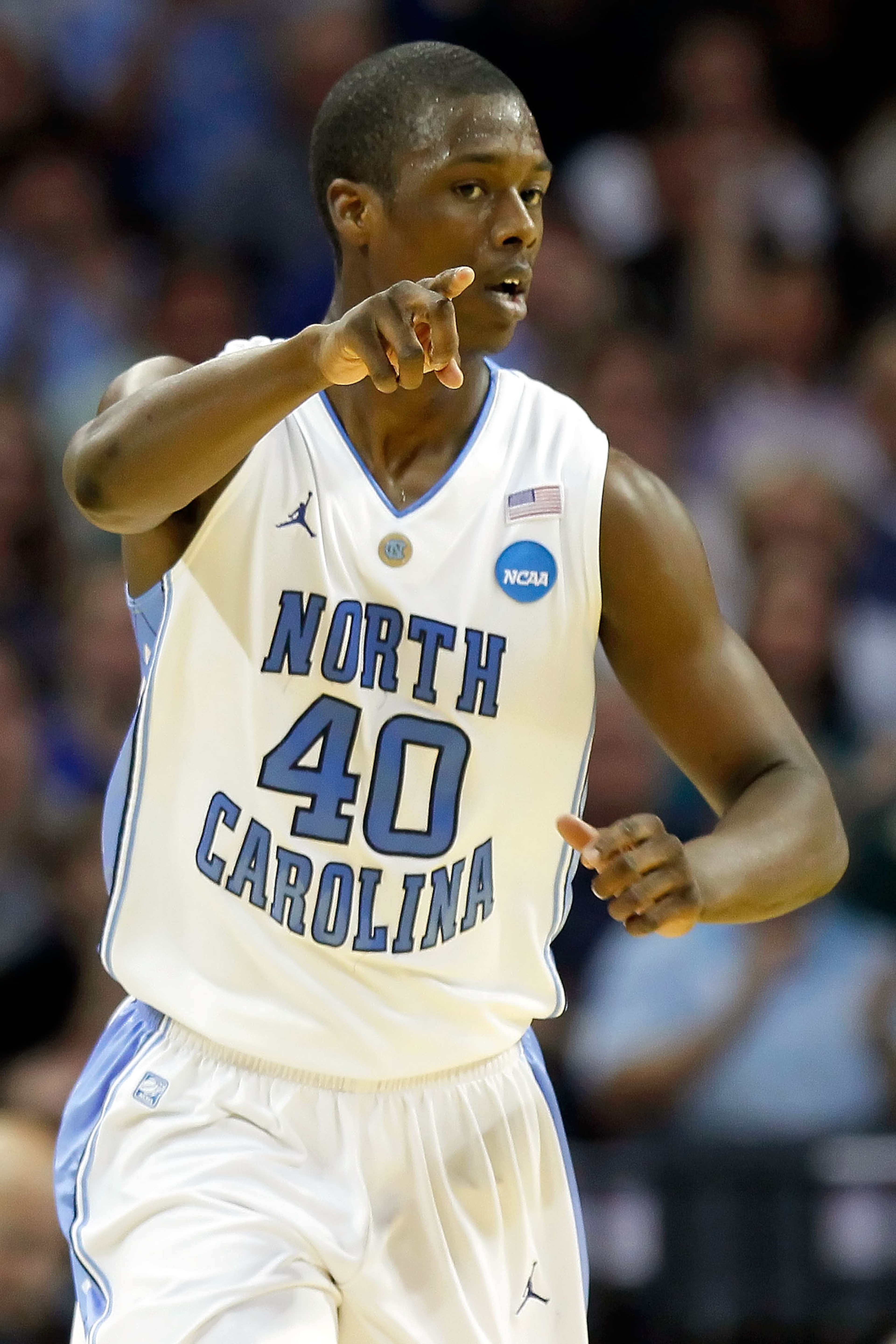
Harrison Barnes has averaged 25.5 points in his last four games, leaving a great impression on scouts if he turns out to be a one-and-done player.
The 6'8", 210-pounder would immediately step into the small forward role for the Raptors and form a solid wing partnership with DeMar DeRozan.
It wasn't that long ago that Barnes was the consensus No. 1 overall pick for the 2011 NBA draft. His slow start deterred some people, but if Kendall Marshall was UNC's starting point guard all year, do you think Barnes would still be the consensus No. 1 pick? It's a fair question.
6. Utah Jazz: Arizona Sophomore SF/PF Derrick Williams
6 of 30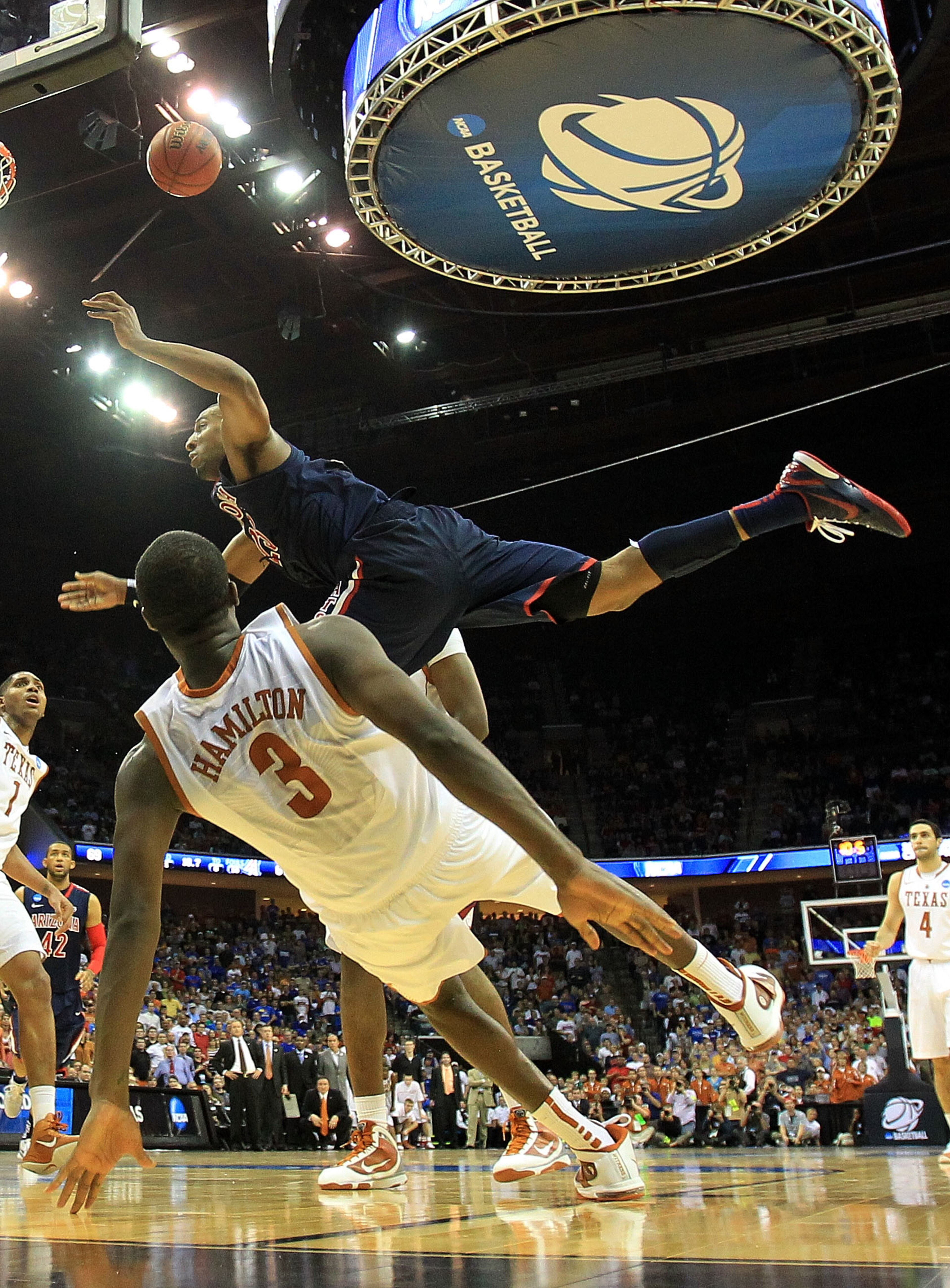
Andrei Kirilenko is as good as gone after this season, but are the Utah Jazz confident enough to give the starting small forward role to Gordon Hayward? Doubt it, but Hayward can be a nice role player.
A small forward, power forward, center combination of Derrick Williams, Paul Millsap and Al Jefferson will be incredibly imposing. Those three plus Hayward, can create many front court looks because of their interchangeability.
Williams, at 6'8" and 241 pounds, is averaging over 19 points and eight rebounds per game this season. He also is shooting over 60 percent from the field (58.1 percent from three-point range on 36-of-62 shooting).
7. Detroit Pistons: UConn Junior PG Kemba Walker
7 of 30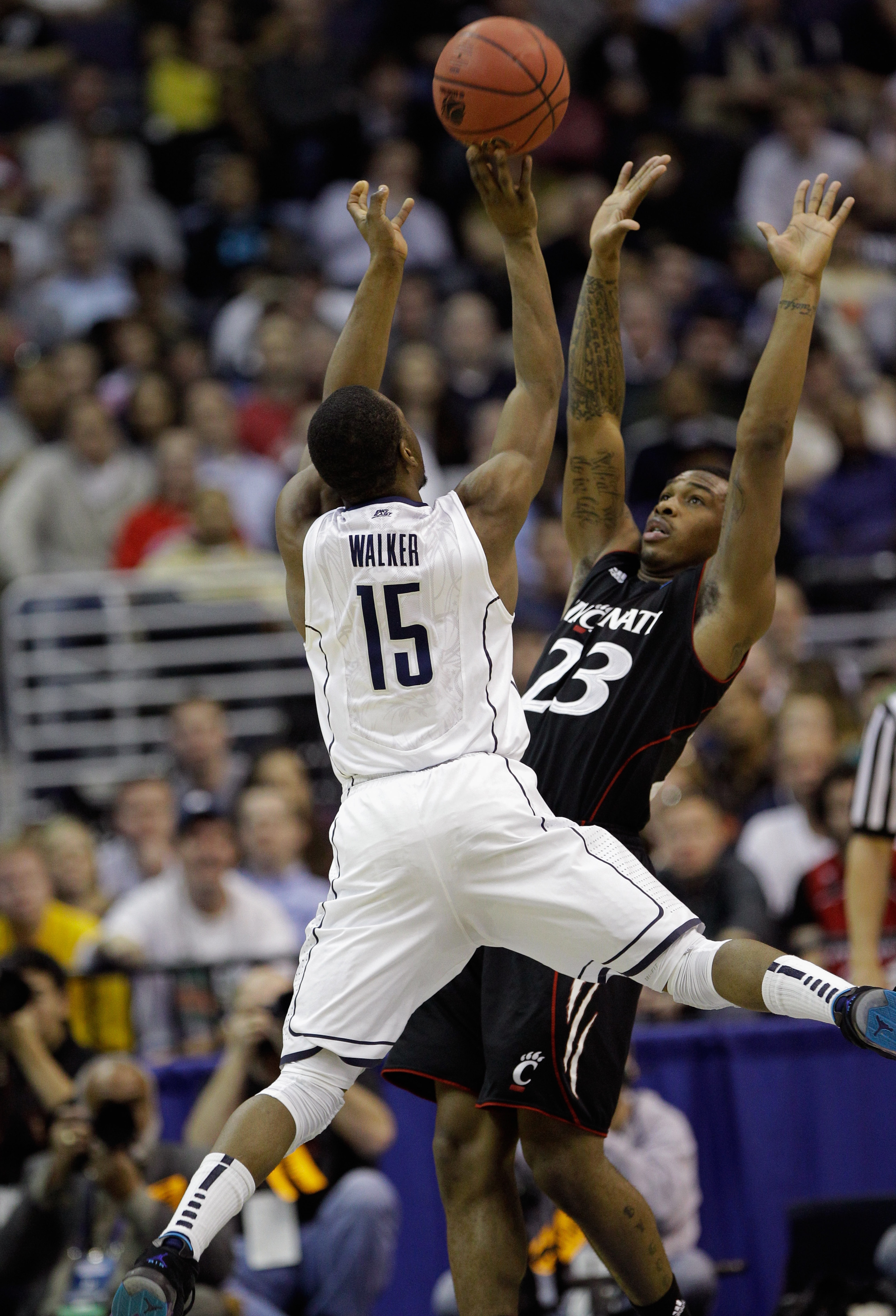
Kemba Walker might not be the best distributor or outside shooter, and he certainly shoots a ton, but he has a certain "it" factor that very, very few players have.
Let's take a look at the box score of UConn's win over Cincinnati last weekend. Walker, a junior, started at the point. UConn also started one sophomore and three freshmen. Off the bench, three players received more than three minutes: One senior, one sophomore and one freshman. In other words, Walker is leading an eight-man rotation that has six underclassmen. He led this team to an unprecedented five straight Big East tournament wins, two of which were one-possession games and another which ended in overtime.
Walker is averaging 23.6 points, 5.4 rebounds and 4.5 assists per game. Oh, and he's the fastest player in college basketball. So he's a born leader, a great scorer and a speed demon.
The Pistons have played Tracy McGrady and Rodney Stuckey at point guard, neither of whom are long-term options at the position. I don't care that Walker is six feet tall. Allan Iverson was a dominant Big East player at a similar height, and look how that worked out.
Walker is the best player available at this point. The Pistons would be crazy not to take him.
8. Cleveland Cavaliers: International PF/C Jonas Valanciunas
8 of 30Some mock drafts have Valanciunas going as high as the second pick. I'm not that optimistic, but Valanciunas definitely has upside.
Valanciunas averages 7.6 points and 5.4 rebounds in 14.9 minutes of Euroleague action for Lietuvos Rytas. He is 6'11" and 240 pounds, projecting to center at the NBA level. Valanciunas needs some time to develop, but in a couple of years a Cavs core of Kyrie Irving, Ramon Sessions, J.J. Hickson, Anderson Varejao and Valanciunas will certainly keep the Cavs out of the Central Division cellar.
9. Milwaukee Bucks: Kentucky Freshman SF Terrence Jones
9 of 30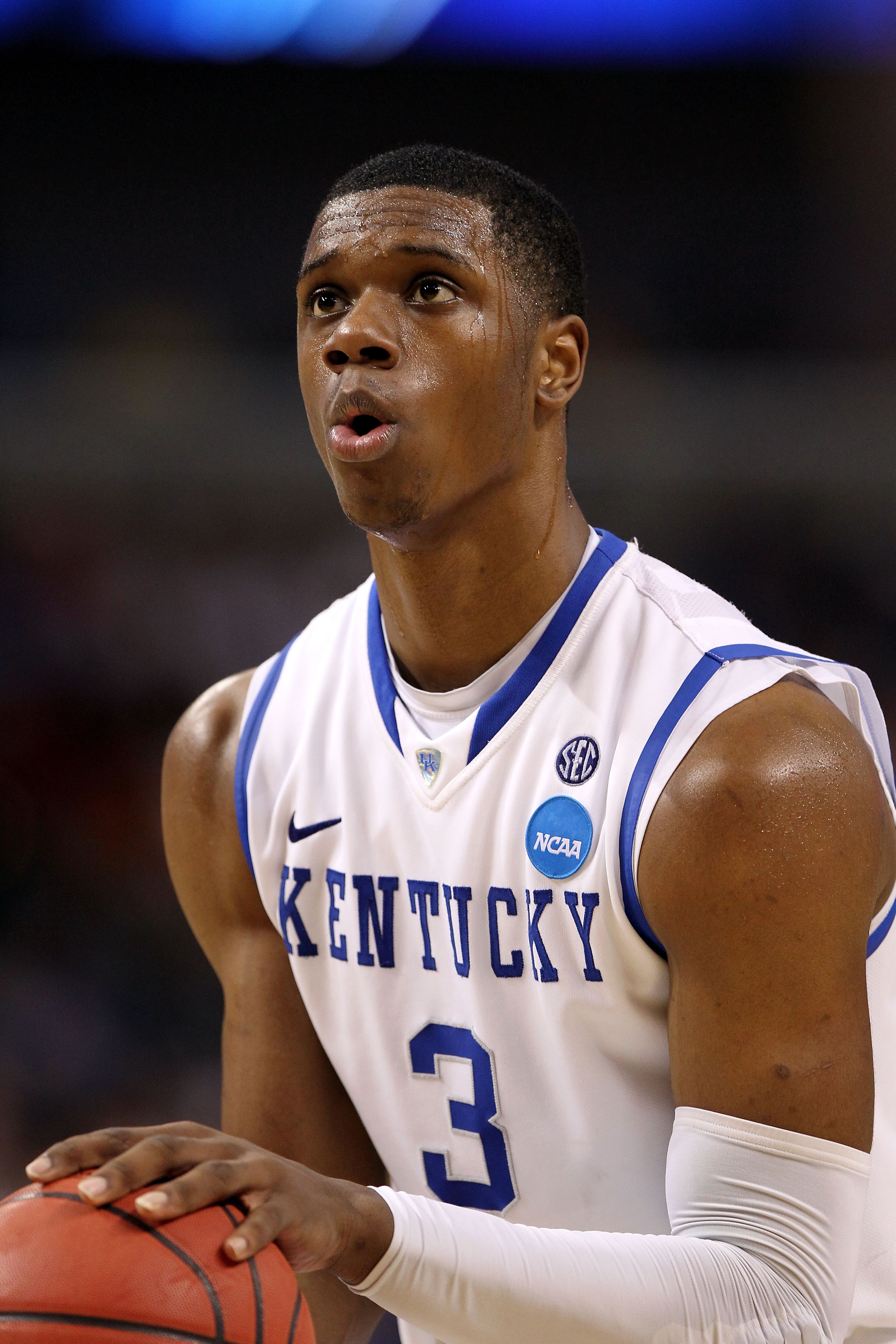
An outside observer might point to Carlos Delfino's 30-point output against the Knicks recently and say that the Bucks don't need another wingman. Let me tell you, it's no great feat to put up 30 on the Knicks, not since 1999 anyway.
Terrence Jones is a double-double threat every night, and while his shooting mechanics are a little wacky, they work...for now. The Bucks are set at point guard and center for a long time, so the Bucks stand to pick up another wing. Jones, who averages about 16 points and nine boards a game, is the best available. The 6'8", 245-pound wing put up 12 points and 10 rebounds in a third-round matchup against West Virginia last weekend.
10. Charlotte Bobcats: San Diego State Sophomore SF/PF Kawhi Leonard
10 of 30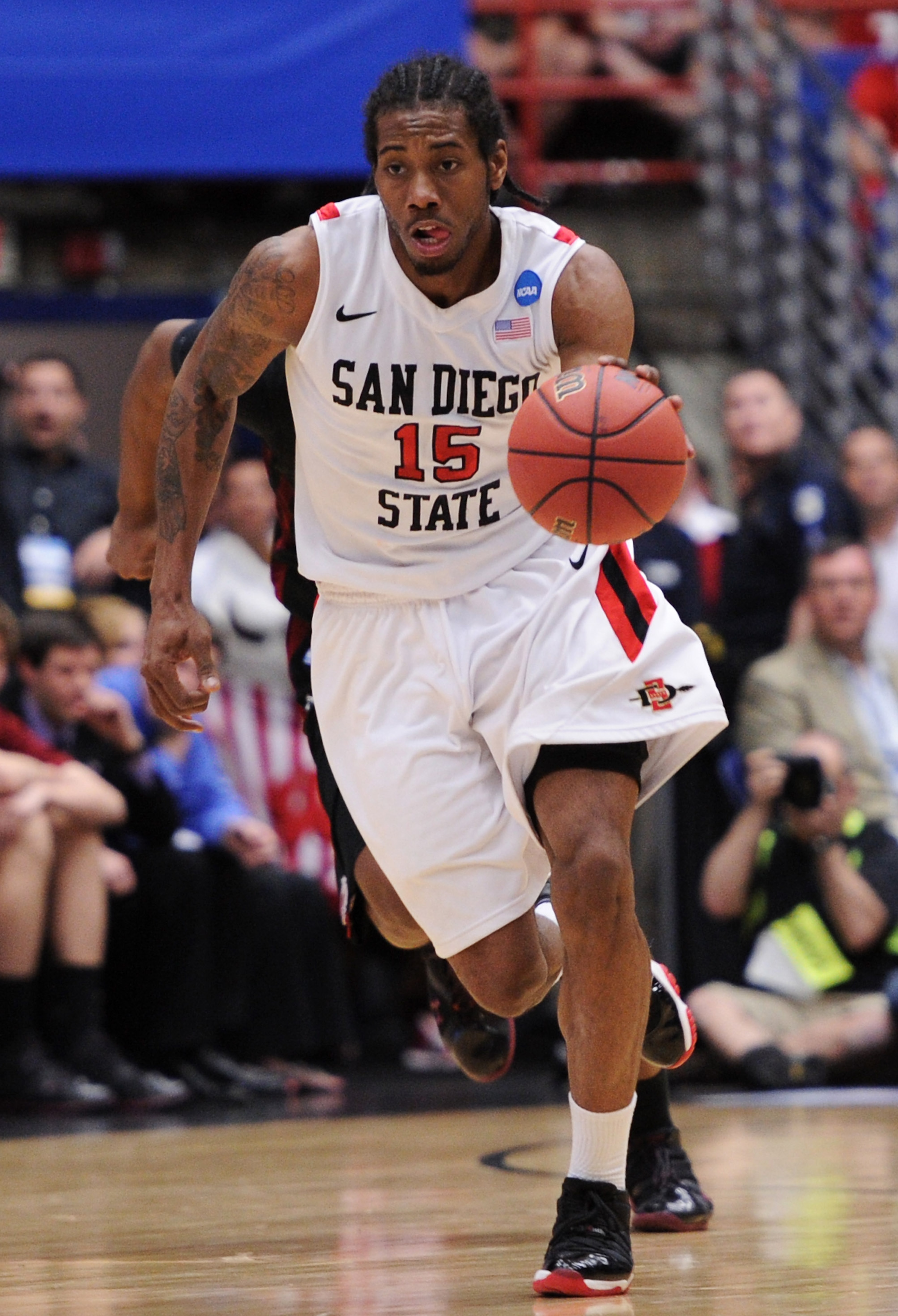
Kawhi Leonard plays in one of the slowest offenses in college basketball. The Charlotte Bobcats run one of the slowest offenses in the NBA. Kawhi Leonard has a similar game to Gerald Wallace. The Bobcats just got rid of Gerald Wallace.
The Bobcats can move Stephen Jackson to shooting guard, Leonard to small forward and call it a day. Leonard, at 6'7" and 225 pounds, averages 15.6 points and 10.6 rebounds per game.
11. Golden State Warriors: Florida State SF/PF Chris Singleton
11 of 30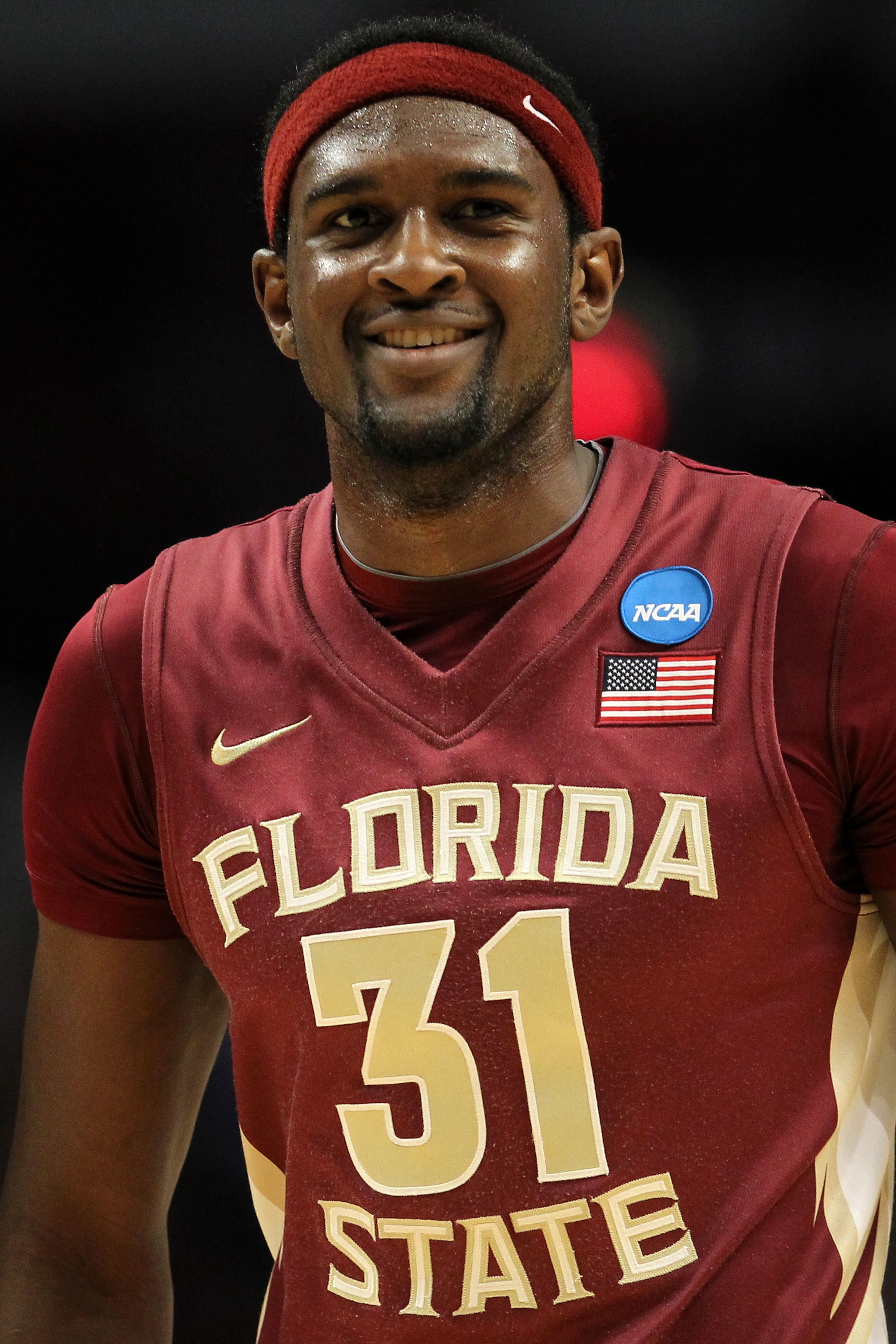
The Golden State Warriors have arguably the worst bench in the entire NBA. They are also the fourth-least efficient defensive team in the entire NBA.
The Florida State Seminoles have the most efficient defense in all of college basketball. Chris Singleton is the best defensive player on that team, and was the ACC Defensive Player of the Year last season and the runner-up to that award this season to UNC's John Henson.
The Warriors' biggest need is at center, but with Enes Kanter off the board and Donatas Motiejunas being a less-than-stellar fit for the team, why not try and beef up the defense with the best defensive player available in the draft? Sure, Singleton isn't a pure scorer, and this is a bit of a reach at No. 11, but he's not about to get the ball on offense anyway unless it's in transition.
Singleton is 6'9", 225 pounds and averages 13 points, seven rebounds, two steals and 1.5 blocks per game. He has accrued five steals three times this season, including a 10-steal game against UNC-Greensboro.
12. Utah Jazz: International SF/PF Jan Vesely
12 of 30One of my best friends from college happens to be the only Utah Jazz fan from Buffalo, New York. When I asked him who the Jazz should take with their second first-round pick, he overwhelmingly supported Jimmer Fredette, on the basis that Fredette likes Utah after having spent four years there at BYU, lessening his chances of leaving free agency.
Such is the life of a Buffalo/Utah Jazz sports fan: Always looking at a glass half-empty.
While there are obvious connections that make Fredette to the Jazz look like a match made in heaven, I'm not seeing it. Fredette runs one of the fastest offenses in the country. The Jazz's tempo is about the NBA average. Fredette is a point guard. The Jazz have a starting point guard in Devin Harris, who may not be the team's long-term answer there, but is not a need that has to be addressed during this draft.
Jan Vesely is the best choice here. He is a 6'11", 240-pound small forward who has the ability to play power forward on the next level—if he bulks up and improves his defense.
With Derrick Williams already taken, the Jazz would have a crazy amount of length and depth at small forward and power forward with Vesely on board. The pressure wouldn't be on Vesely to perform right away, giving him time to develop.
One random note: Vesely is an awful free-throw shooter, shooting 43.8 percent from the line in Euroleague play. From the field, he shoots 51 percent and averages just over nine points and three rebounds in 27 minutes.
13. Phoenix Suns: BYU Senior PG Jimmer Fredette
13 of 30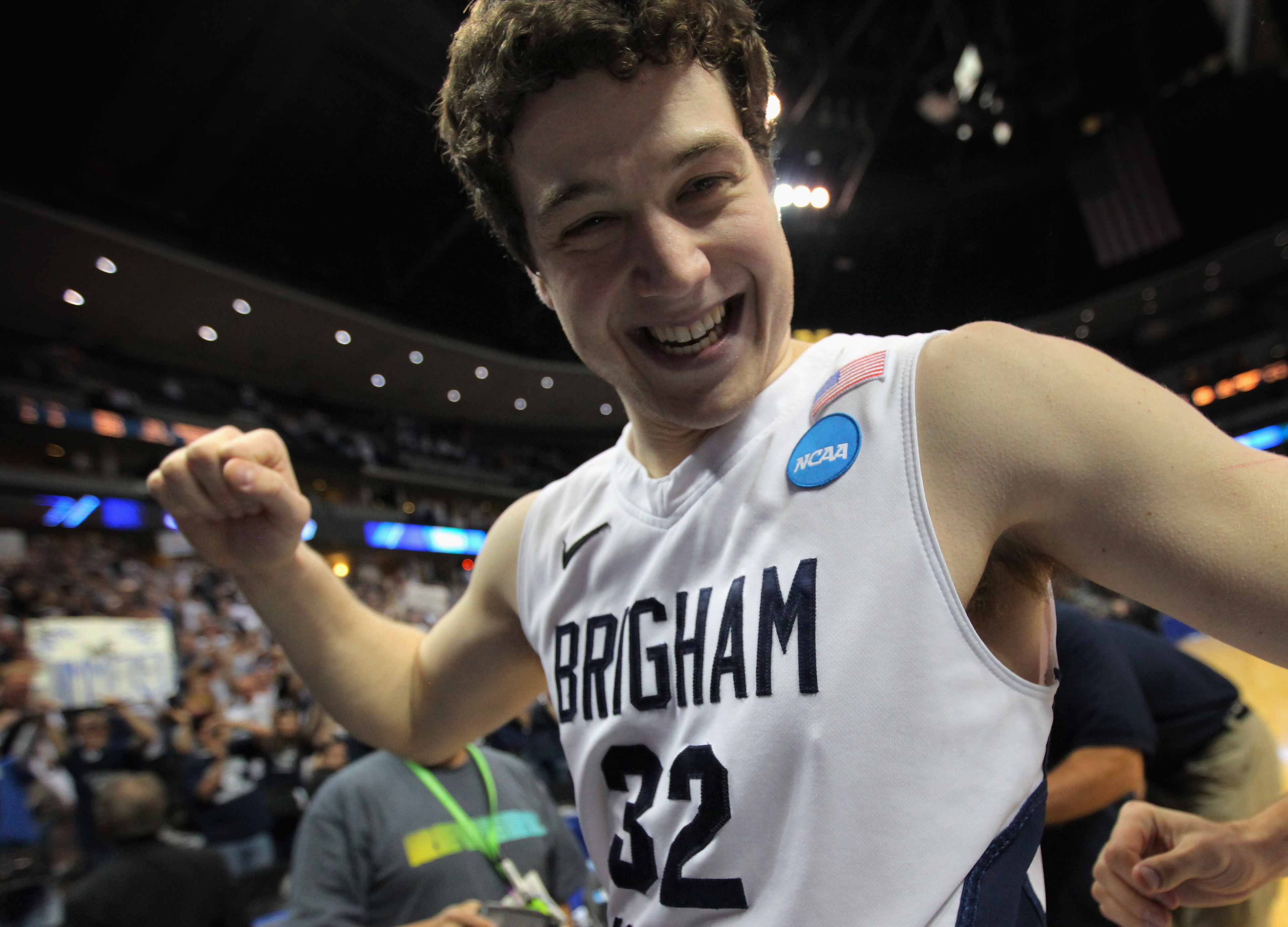
Steve Nash will be 38-and-a-half years old at the end of his contract in the summer of 2012. Although he keeps himself in excellent shape, Nash can't play forever.
Enter Jimmer Fredette, he and his 28.8 points per game this season. His craftiness in driving to the hoop reminds me of Steve Nash, although he isn't as quick in the paint, nor does he have Nash's court vision. Fredette does, however, possess a lethal jump shot. He isn't going to lose that part of his arsenal in the NBA, so coupled with a year of tutoring under Nash's belt, Fredette could be a top-10 NBA point guard during the 2010's decade.
I really don't know what the plan is in Phoenix, and I'm not sure owner Robert Sarver has any idea either, but Fredette to the Suns makes too much sense if they stay a fast-paced team.
14. Houston Rockets: Texas Sophomore SG/SF Jordan Hamilton
14 of 30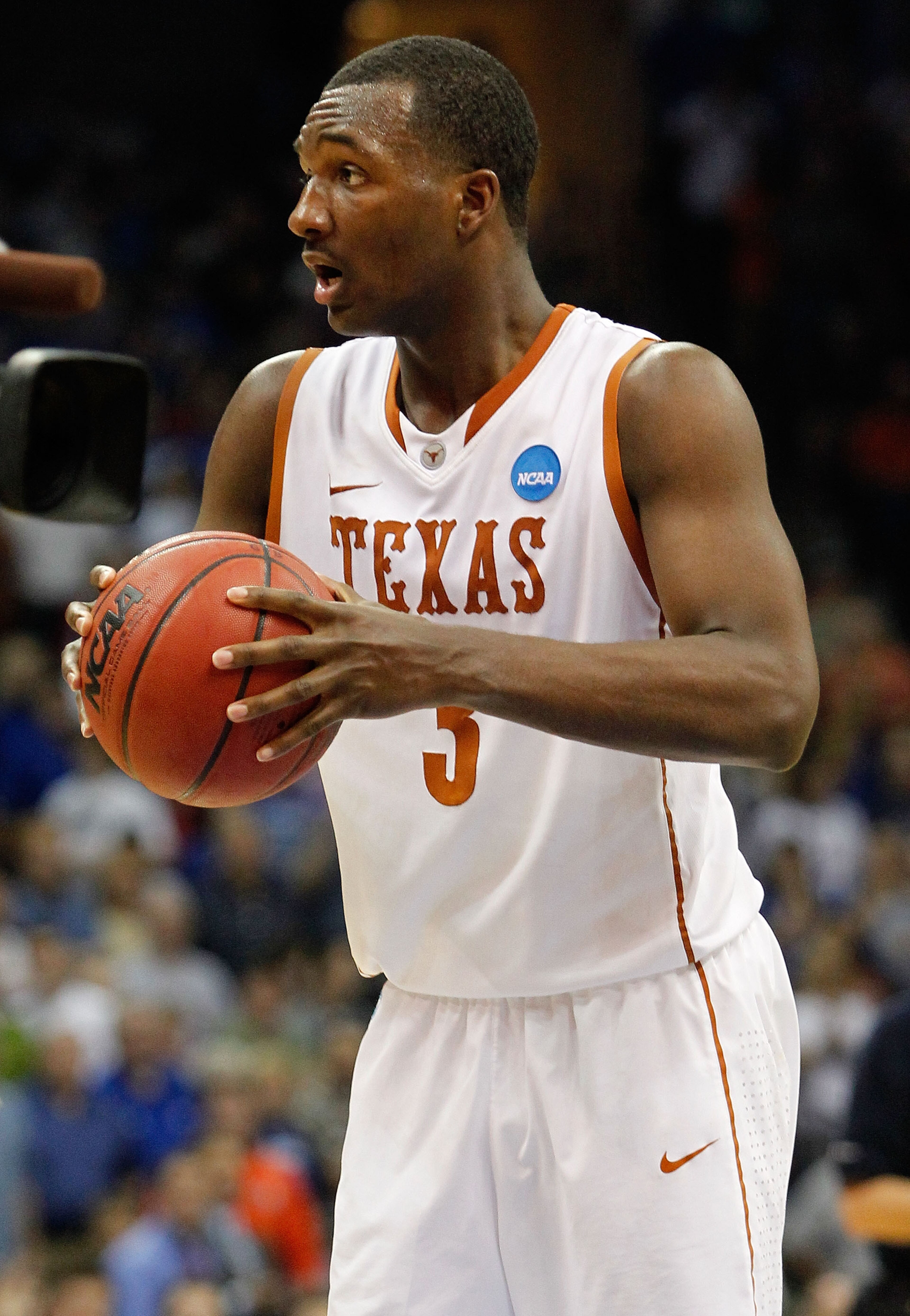
Jordan Hamilton can immediately be plugged into the Houston Rockets' small forward hole and get 10 to 15 points per game in his first season. He'll never be an All-Star, but Hamilton will be a solid NBA player for years to come because of a nice outside stroke and a good NBA wing body at 6'7", 225-plus pounds.
No worries about his intangibles either, as he was a respected team leader at Texas, a team that was No. 1 in the county earlier in the season. He averaged over 18 points and seven rebounds per game on 44 percent shooting.
15. Indiana Pacers: International PF Donatas Motiejunas
15 of 30Chalk this up as a pick where I have absolutely no damn clue. The Pacers could pick the aforementioned Motiejunas, Brandon Knight, Alec Burks, either of the Morris twins or Kenneth Faried, and I wouldn't be surprised.
Ultimately, Tyler Hansbrough is not the long-term answer at starting power forward, and Motiejunas has more upside than any of the remaining potential draftees. If Motiejunas pans out, the Pacers could have two big men at 7'0" and 7'2" down low. Yikes.
16. New York Knicks: Kansas Junior PF Marcus Morris
16 of 30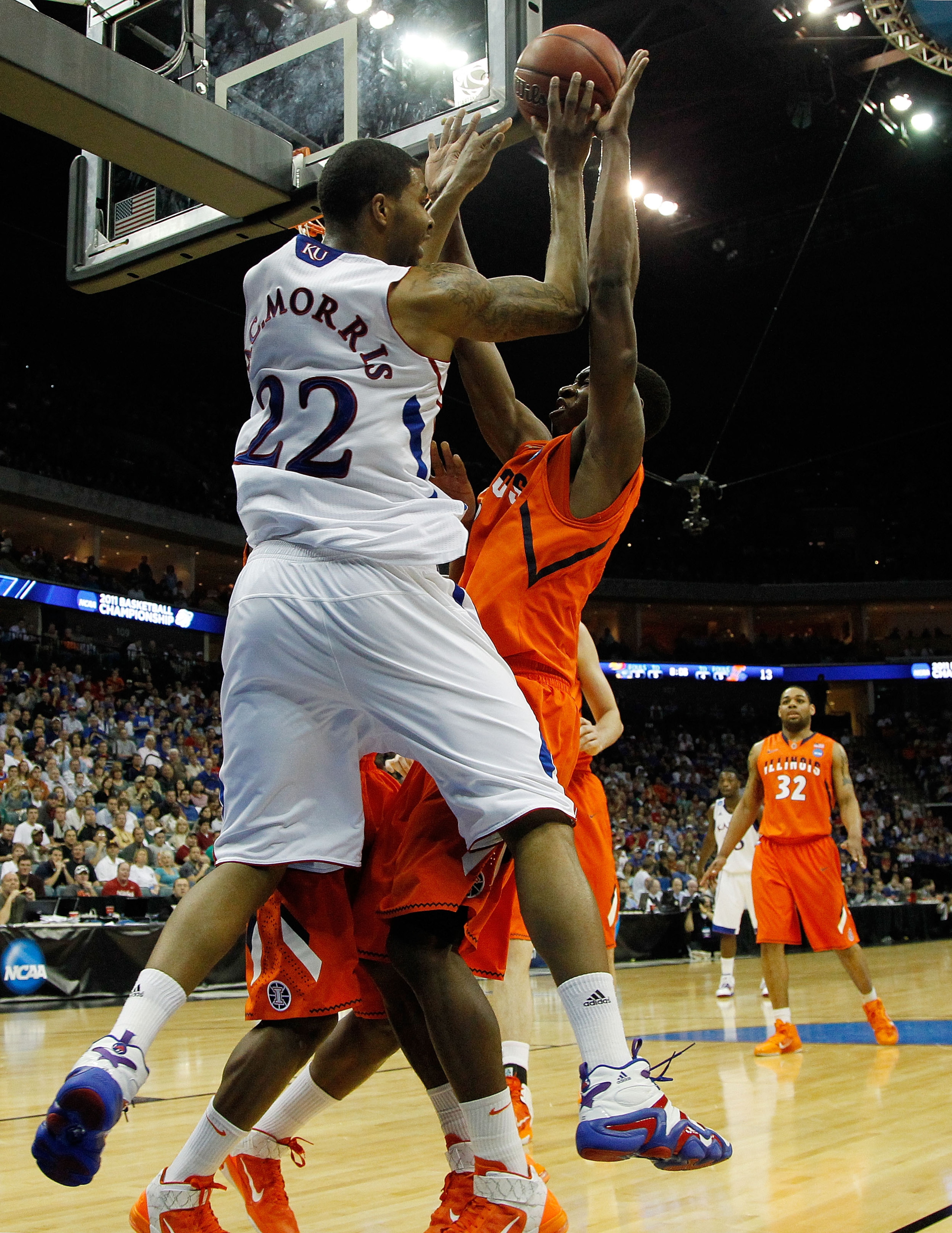
It's down to either of the Morris twins, Kenneth Faried or John Henson for the Knicks, who miss Wilson Chandler's versatility to guard power forwards and score 15 points as much as New Yorkers miss sunny spring days without snow.
Note: I really don't see John Henson entering the NBA draft. Why go now and be a late lottery pick, at best, when you can be a top-five pick one year later with some added bulk and offensive development?
While Faried is intriguing since the Knicks need rebounding like I need Prozac after watching Monday's abomination against Boston (my last simile, I swear), he doesn't have much of an offensive arsenal. His one-on-one defending abilities on the NBA level are tough to predict because he played in a 2-3 zone at Morehead State against weaker opponents.
Marcus Morris, who averaged 17 points and seven rebounds on 57 percent shooting this year, can do it all: Shoot the three, rebound, defend, spread the floor, etc. He won the Big 12 Player of the Year award, and Bill Self called him "the best player [he] ever coached at Kansas, maybe ever."
The Knicks can plug Morris at power forward right away alongside Amar'e Stoudemire at center, knocking Jared Jeffries out of the lineup.
17. Philadelphia 76ers: UNC Sophomore PF John Henson
17 of 30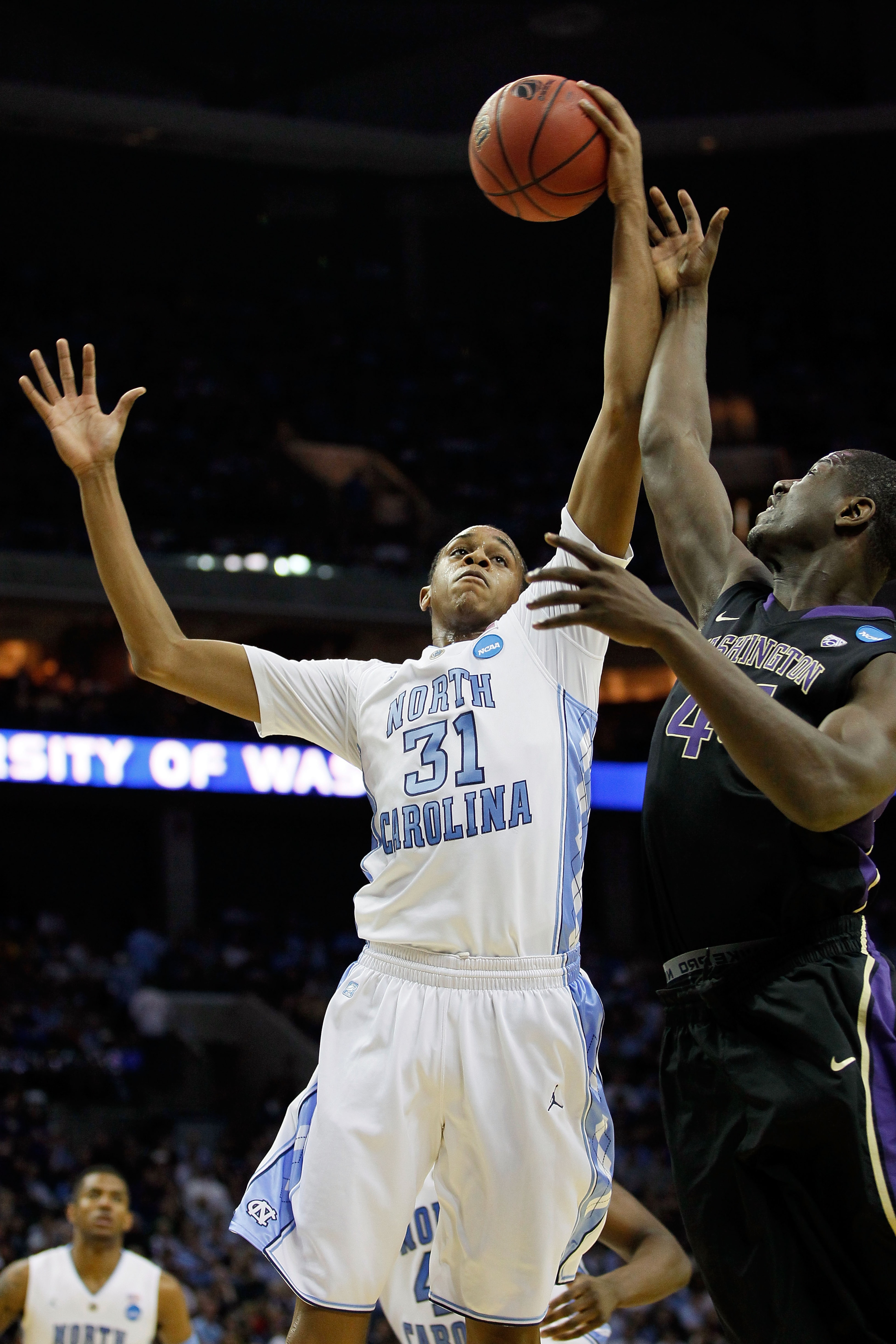
As of now, let's assume Henson, the 6'10", 210-pound power forward, rides his recent wave of momentum into the draft. The 76ers would get a steal here, taking the reigning ACC Defensive Player of the Year.
From my biased Knicks standpoint, take the following with a grain of salt, but the 76ers really need some low-post help. I went to the 76ers-Knicks game at Wells Fargo this year and was astounded that one of Elton Brand's ankles is noticeably smaller than the other due to surgery. His resurrection this year is a great story, but how long will his body cooperate? Also, Spencer Hawes is not an NBA starting center. Don't think I'm rocking many boats with that statement.
Henson averaged 12 points, 10 boards and three blocks this season. He has put up anywhere from 10 to 18 rebounds in each of his last 14 games. Furthermore, he had 28 points and 11 rebounds against Long Island last week.
On the downside, Henson shoots under 50 percent from the free-throw line, a stat that must change. Well, that didn't stop certain other bigs from being dominant...
18. Minnesota Timberwolves: Colorado Sophomore SG Alec Burks
18 of 30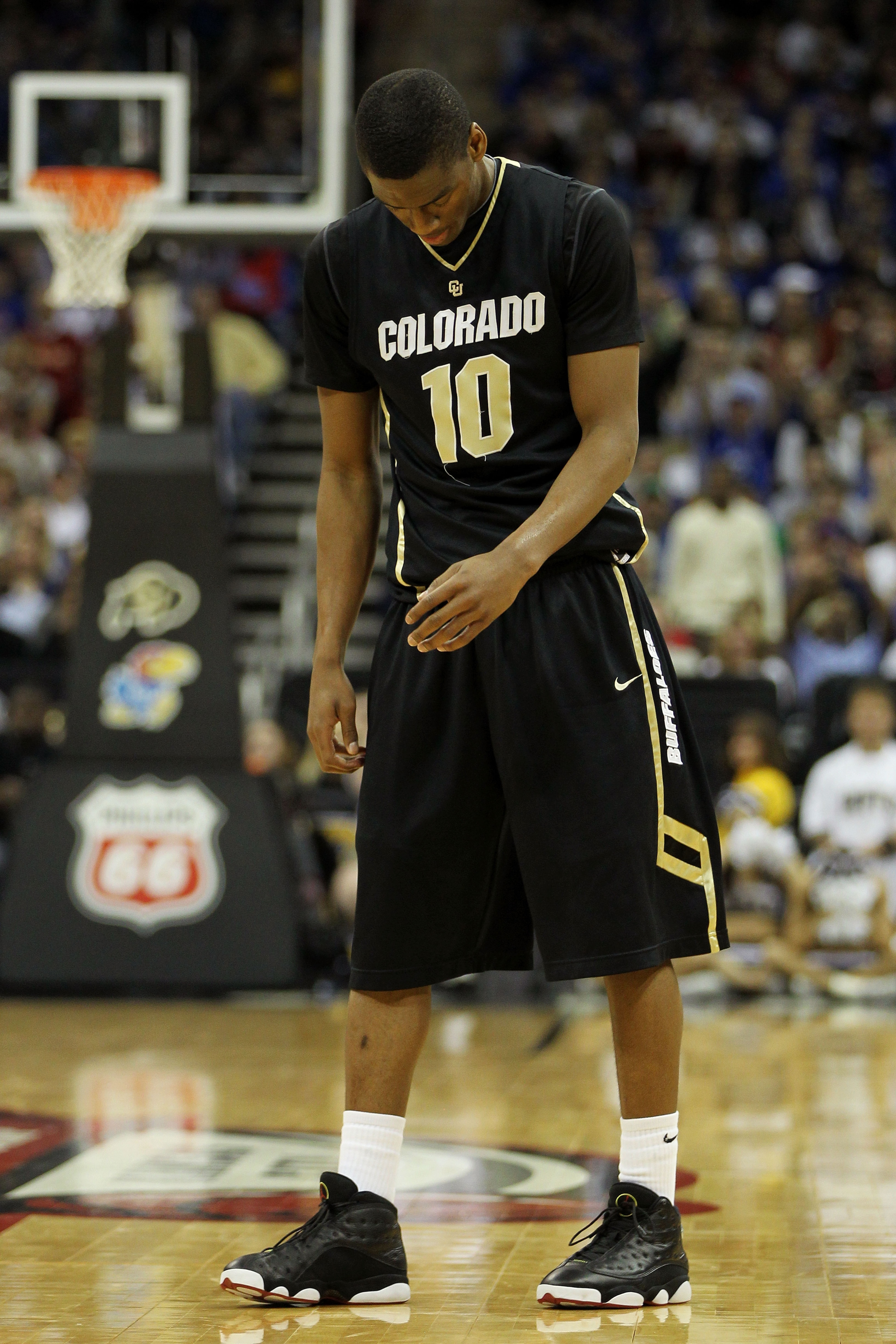
Let me reiterate: I can't begin to read GM David Kahn's mind. I don't even know if Kahn knows what's going in Kahn's mind. But if Kahn takes Kanter, the 6'6" Alec Burks would be a nice fit on the T-Wolves.
Burks is a pure scorer who can easily create his own shot and put up 30 on any given day. He averaged over 20 points and six rebounds per game on 45.6 percent shooting. If Colorado wasn't wrongfully omitted from the NCAA tournament, Burks' draft stock would have certainly gone up.
The Minnesota Timberwolves desperately need a shooting guard, as Wayne Ellington and Wesley Johnson are both shooting under 42 percent from the field this year. On the flip side, adding Burks to the mix will just create another positional logjam in Minnesota, but what else is new?
19. New Orleans Hornets: SG/SF Sophomore Tyler Honeycutt
19 of 30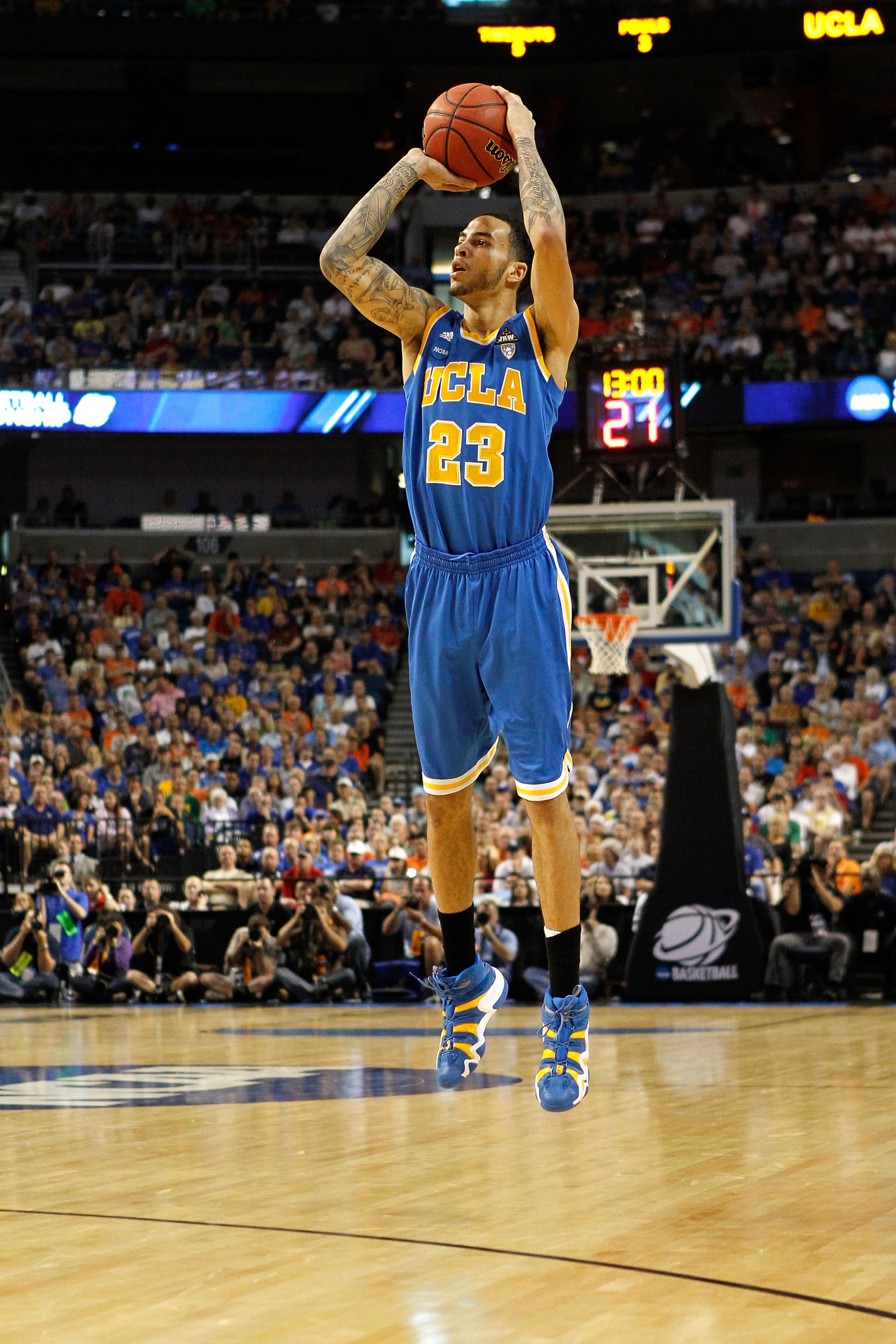
Will Tyler Honeycutt join Kevin Love, Arron Afflalo, Russell Westbrook, Trevor Ariza, Jrue Holliday, Darren Collison, Luc Richard Mbah a Moute, Jordan Farmar, Jason Kapono, Dan Gadzuric, Matt Barnes, Earl Watson and Baron Davis on the list of former UCLA Bruins who found some level of success in the NBA?
Yes. The 6'8", 188-pound Honeycutt's shooting numbers sank from last season (49.6 percent to 40.6 percent), but he has nice upside and showed flashes of it in a 33-point, nine rebound game against Kansas. He would be a good wing option off the bench for the Hornets, and a future starter should he continue to improve. Overall, Honeycutt poured in 13 points and seven rebounds per game this season.
20. Portland Trail Blazers: Kentucky Freshman PG Brandon Knight
20 of 30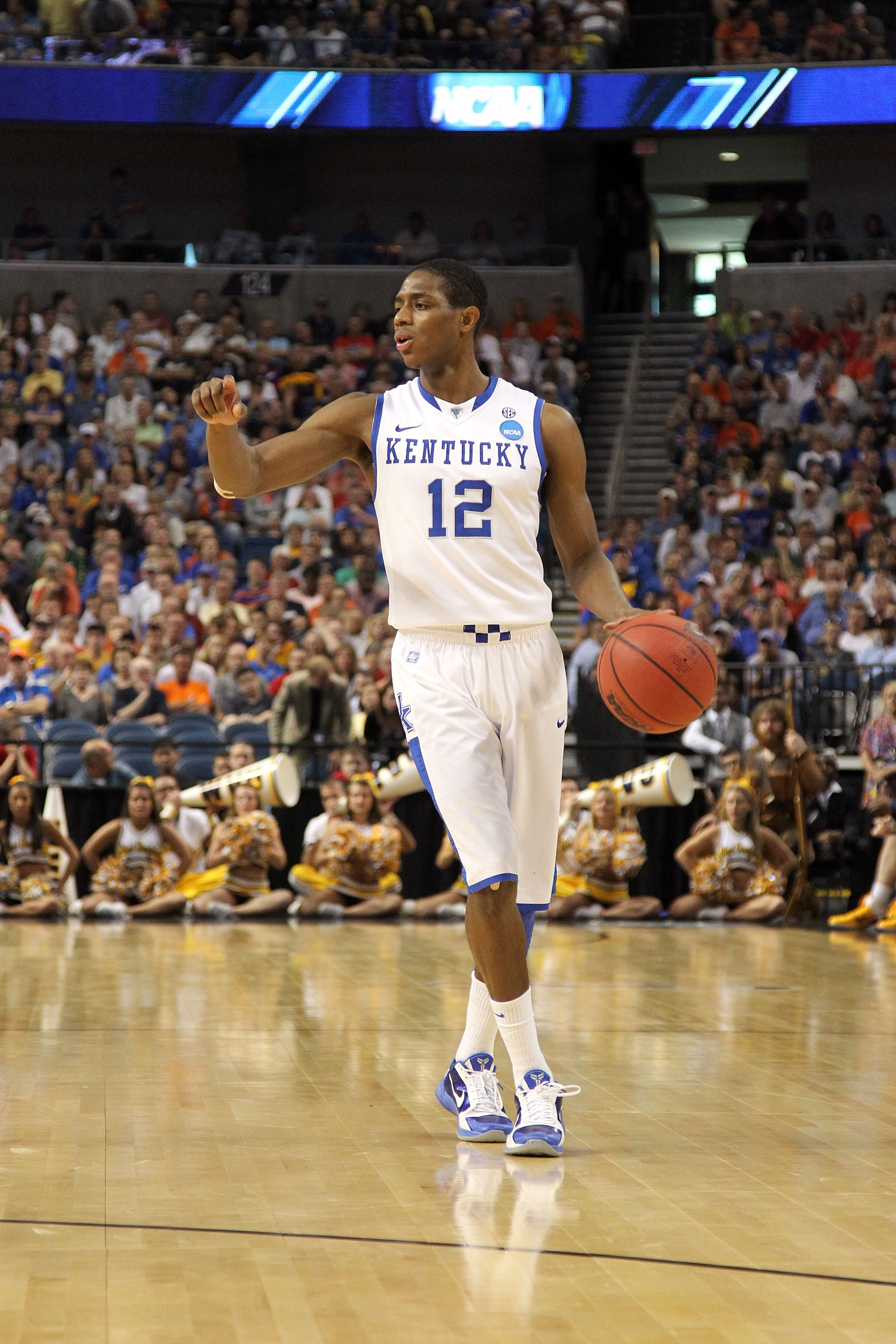
Not sure how Brandon Knight managed to fall all the way down to 20th in the NBA draft, but the Trail Blazers would get an incredible steal if UK's point guard fell here. Knight averages 17.4 points and 4.2 assists per game. At 6'3", 185 pounds, Knight has a good build for an NBA point guard.
There are some concerns about Knight's pure point guard skills and court vision, however, no one can deny Knight's cool, calm and collected nature in the clutch, as evidenced by his game-winning layup against Princeton last week.
Knight could step in as the starter for Andre Miller, who will most likely leave the team after this season when his contract is up.
21. Washington Wizards: Duke Senior PG/SG Nolan Smith
21 of 30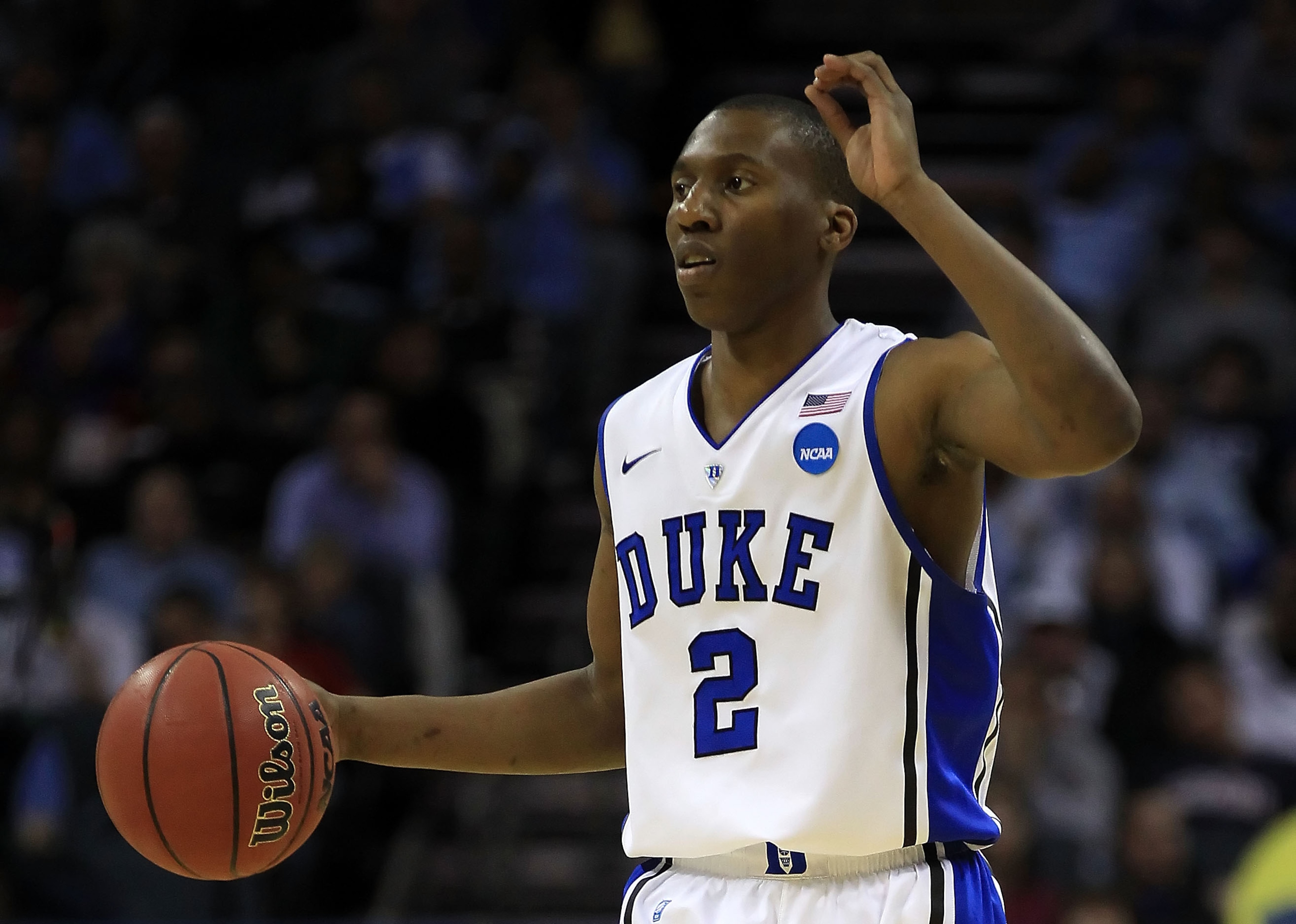
The Washington Wizards could end up with the 2011 Big Ten Player of the Year, the 2011 ACC Player of the Year and the 2010 SEC Player of the Year next season.
Nolan Smith, at 6'2" and 185 pounds, averaged 21 points, 5.2 assists and 4.5 rebounds per game this season. He led Duke to a No. 1 seed in the NCAA tournament after Kyrie Irving went down with a toe injury. Furthermore, Smith scored a game-high 24 points to fend off an upset in Duke's 73-71 win over Michigan this weekend.
Smith could easily step in and be the primary backup off the bench for Nick Young and John Wall. Or, he could even challenge Young for the starting shooting guard role. Regardless, with Jared Sullinger in the mix after the fourth pick, the Wizards next need some backcourt depth.
22. Denver Nuggets: Kansas Junior PF Markieff Morris
22 of 30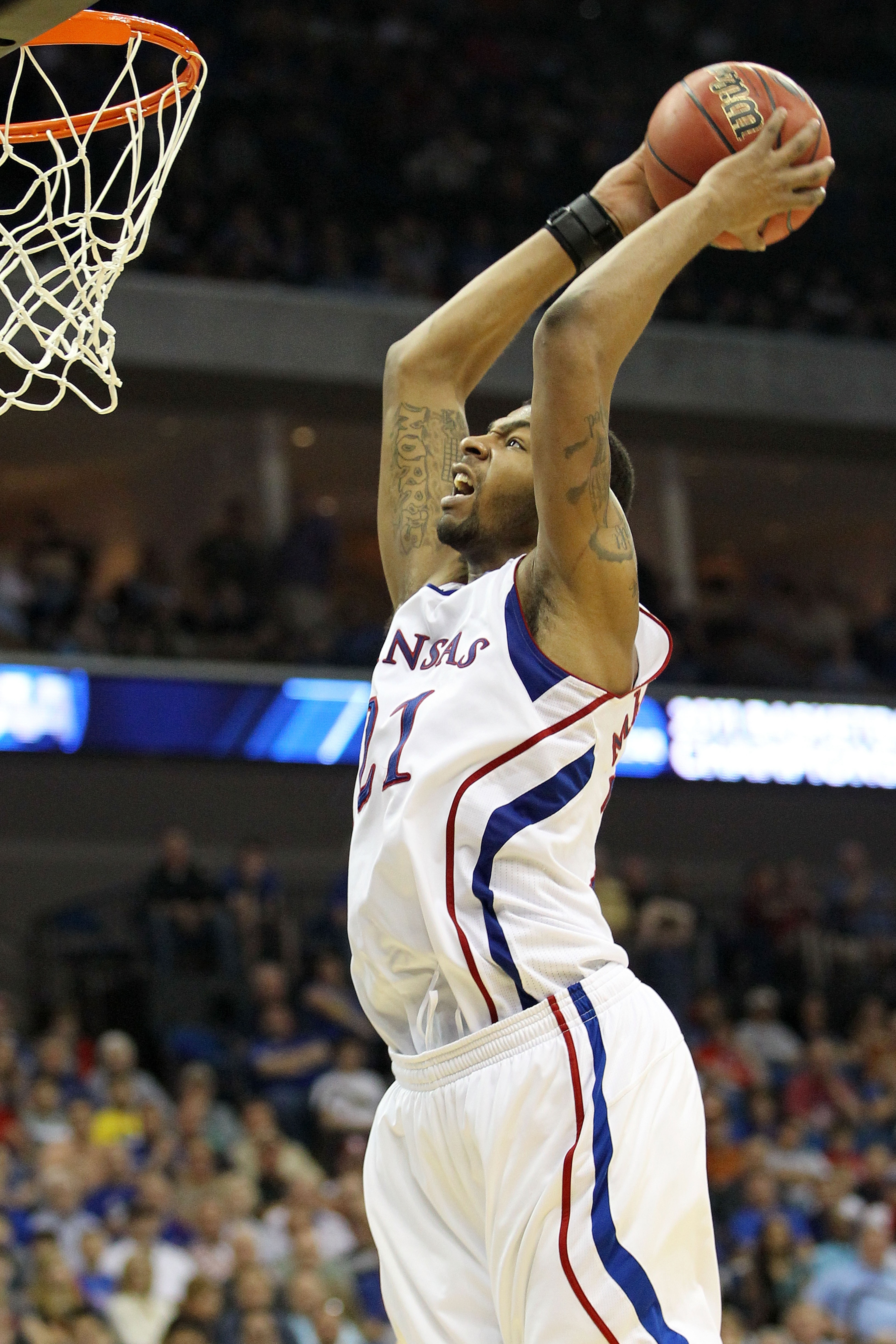
Thanks to the Knicks' benevolence, the Nuggets now have the best bench in the entire NBA. This deep team has few holes, but with Kenyon Martin's contract running out in the offseason, a spot at power forward needs to be filled.
Enter Markieff Morris. The 6'10", 245-pound power forward averages about 14 and eight per game, shooting over 60 percent from the field and 42 percent beyond the arc. Morris perhaps had his best game of the season against Illinois in the third round of the NCAA tournament, going for 24 and 12.
23. Phoenix Suns: Morehead State Senior PF Kenneth Faried
23 of 30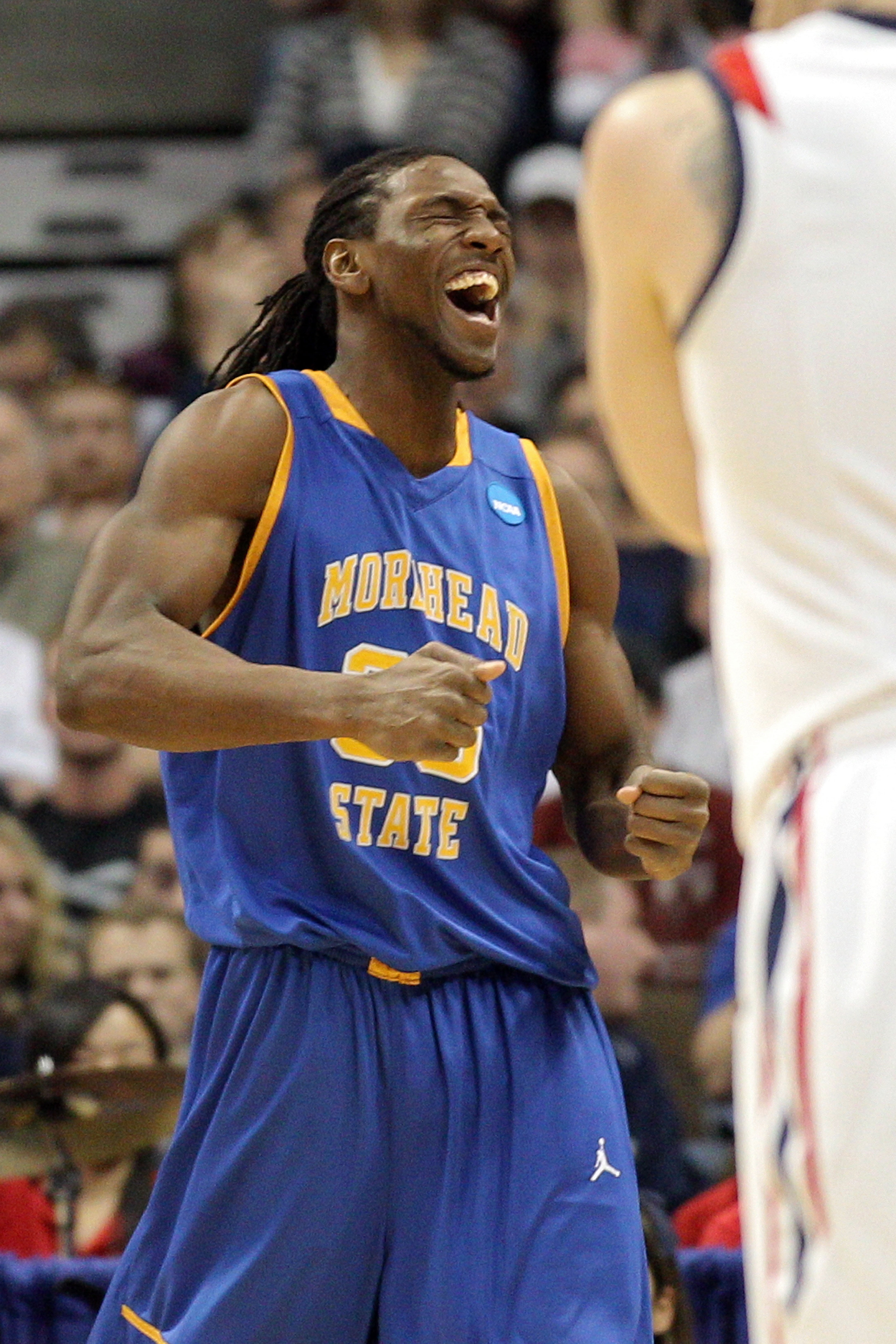
The Phoenix Suns have the second-worst rebounding differential in the NBA. Kenneth Faried is the best rebounder in men's college basketball history. A match made in heaven at pick 23? I say yes.
If my mock draft plays out, the Suns would get the best scorer and rebounder in college basketball this season.
Faried, at 6'8" and 225 pounds, averaged 17.3 points and 14.5 rebounds per game in his senior year. In games against top opponents, he had 15 and 12 against Ohio State, 12 and 17 against Louisville and 11 and 13 against Richmond.
24. Oklahoma City Thunder: Georgia PF Trey Thompkins
24 of 30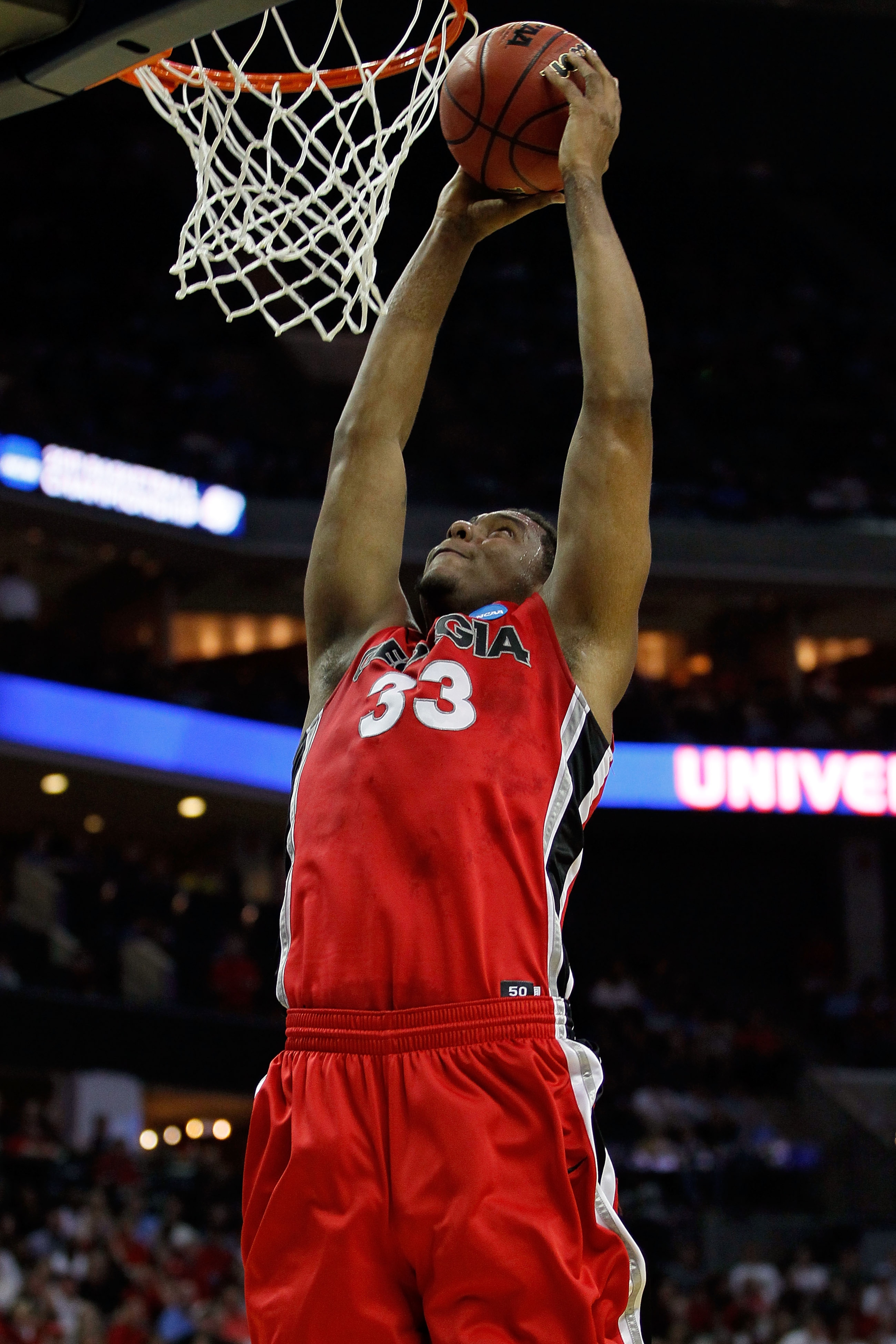
In Oklahoma City's most recent game, a 95-93 loss to the Toronto Raptors, Kevin Durant and Russell Westbrook combined to shoot 13-of-40 from the field for 42 points. Frontcourt starters Kendrick Perkins and Serge Ibaka combined for just 13 points in 58 minutes of play.
If Westbrook and Durant have off nights, the Thunder need a low-post man to pick up some scoring slack off the bench. Thompkins has just that ability. He scored around 17 a game over the past two seasons, and his 6'10", 245-pound frame will translate to the next level.
25. Chicago Bulls: Georgia Junior SG Travis Leslie
25 of 30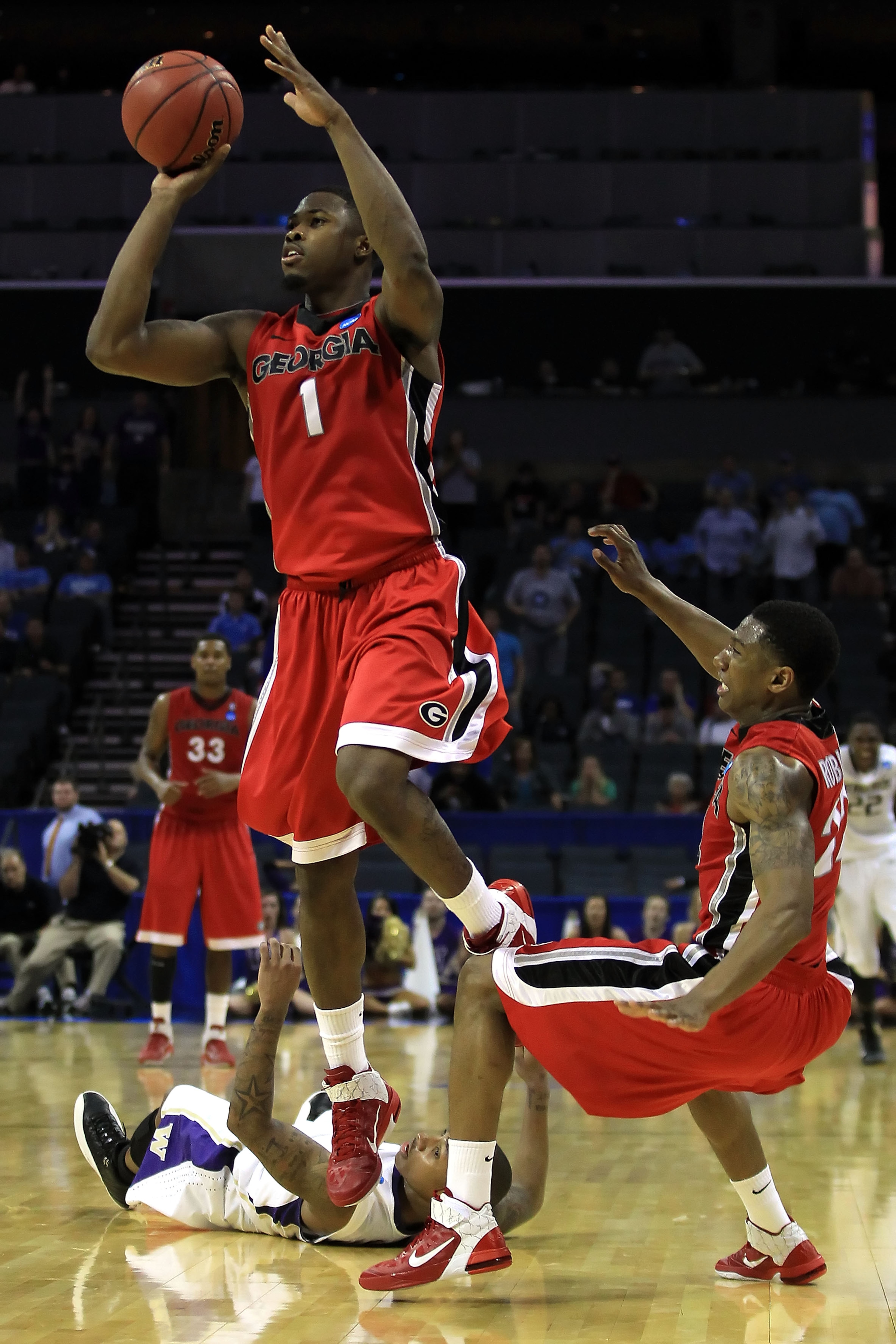
Deep inside the back of my mind resides the notion that no matter what my Knicks do, they will never be able to shake the next NBA dynasty: The Chicago Bulls.
Travis Leslie can help the Bulls out with one of their lone weaknesses: A level of athleticism at the shooting guard position that is not up to par with most NBA teams. He averaged over 14 points and seven boards per game as a 6'4", 205-pound shooting guard, impressive stats to say the least. Don't expect Leslie to light it up from downtown, however, as he made just 13-of-43 three-point attempts this season.
Still, Leslie shot 49 percent overall and would be a nice value pick for the Bulls at No. 25, especially considering his great energy and speed.
26. Dallas Mavericks: Purdue Senior SF/PF JaJuan Johnson
26 of 30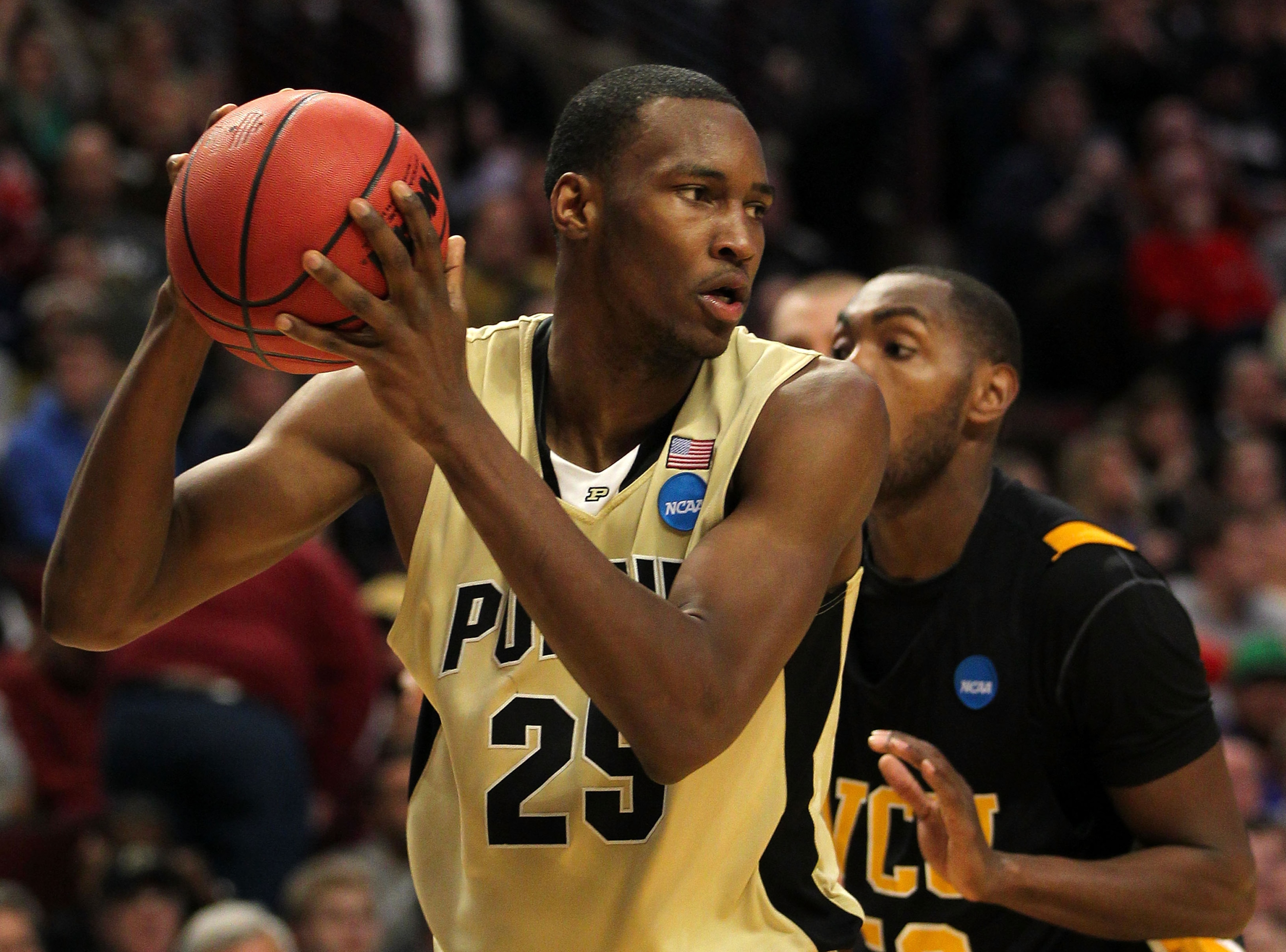
Remember when I said that teams will be throwing darts for some of these picks, with no clue where to go? Well, I'm throwing a dart here.
JaJuan Johnson averaged 20.5 points, 8.6 rebounds and 2.3 blocks per game in his senior season. The 6'10", 220-pound Johnson may be seen as too lean to be an NBA power forward, but at the 26th pick and with the Mavericks needing some more depth behind Nowitzki, Johnson could spell Nowitzki for a few minutes there and even provide some time behind Shawn Marion next season.
27. New Jersey Nets: Providence Senior SG Marshon Brooks
27 of 30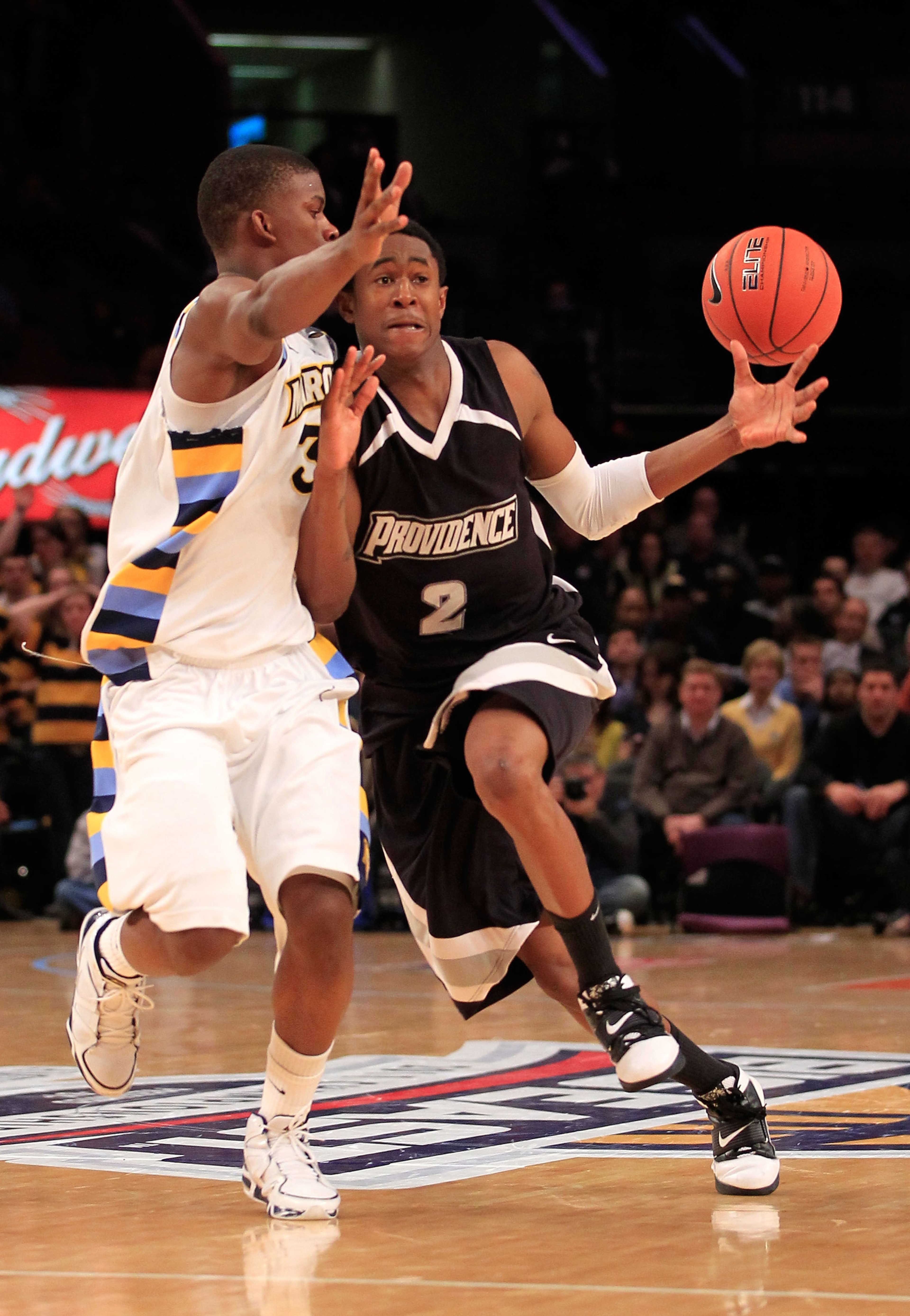
The first pick from left field in this mock draft.
The Nets desperately need scoring help from the shooting guard and small forward positions. Marshon Brooks managed to score over 24 points a game for a Big East team, and even put up 52 against Notre Dame. The knocks on the 6'5" Brooks are that he isn't a great outside shooter (34 percent from deep) and is sloppy with the ball (2.5 assists and 3.1 turnovers per game). He essentially was the offense at Providence and many of the plays went through him. However, he is a solid defensive player, averaging over a block and a steal per outing this season.
The Nets aren't going to grab anyone mind-blowing with this pick, so maybe it stands to spice things up a bit and pick a guy who may turn out to be a stud.
28. Boston Celtics: Oakland Senior PF/C Keith Benson
28 of 30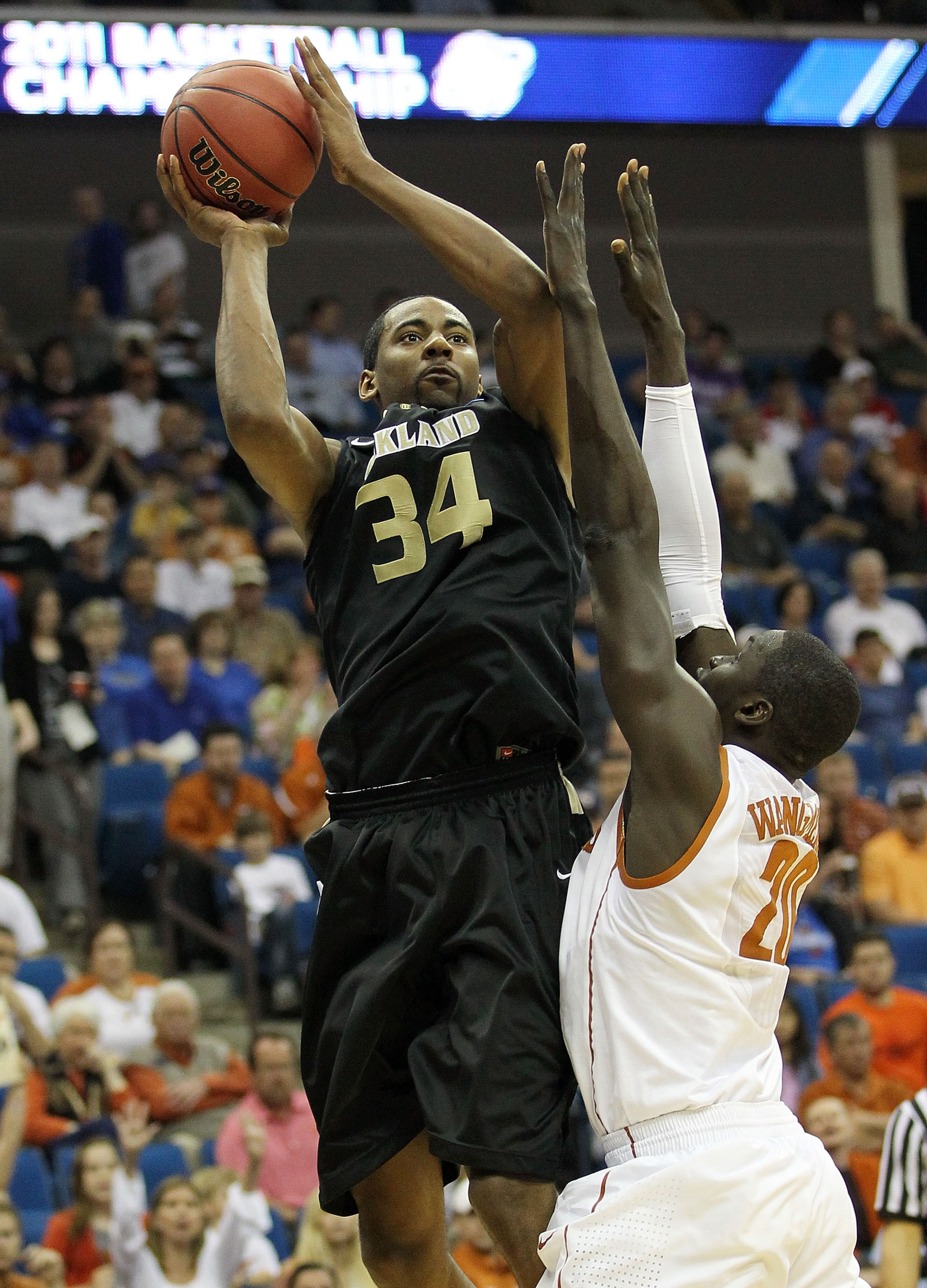
Keith Benson went for 15 points on 6-of-15 shooting, 11 boards and three blocks in Oakland's NCAA tournament game against Texas, but was outplayed by Tristan Thompson (17 points on 7-of-14 shooting, 10 rebounds, seven blocks).
Benson is a 6'11", 230-pound prospect who averaged 18 and 10 this season. He's long and has a nice offensive game, but the worry is he'll be bullied around by beefier low-post players in the NBA.
It's worth the Celtics' pick to draft Benson and let him develop for a year or two to see if he manages to get stronger and is able to be part of the team's future post Big Three, especially after Kendrick Perkins was traded to Oklahoma City.
29. Chicago Bulls: Duke Senior SF Kyle Singler
29 of 30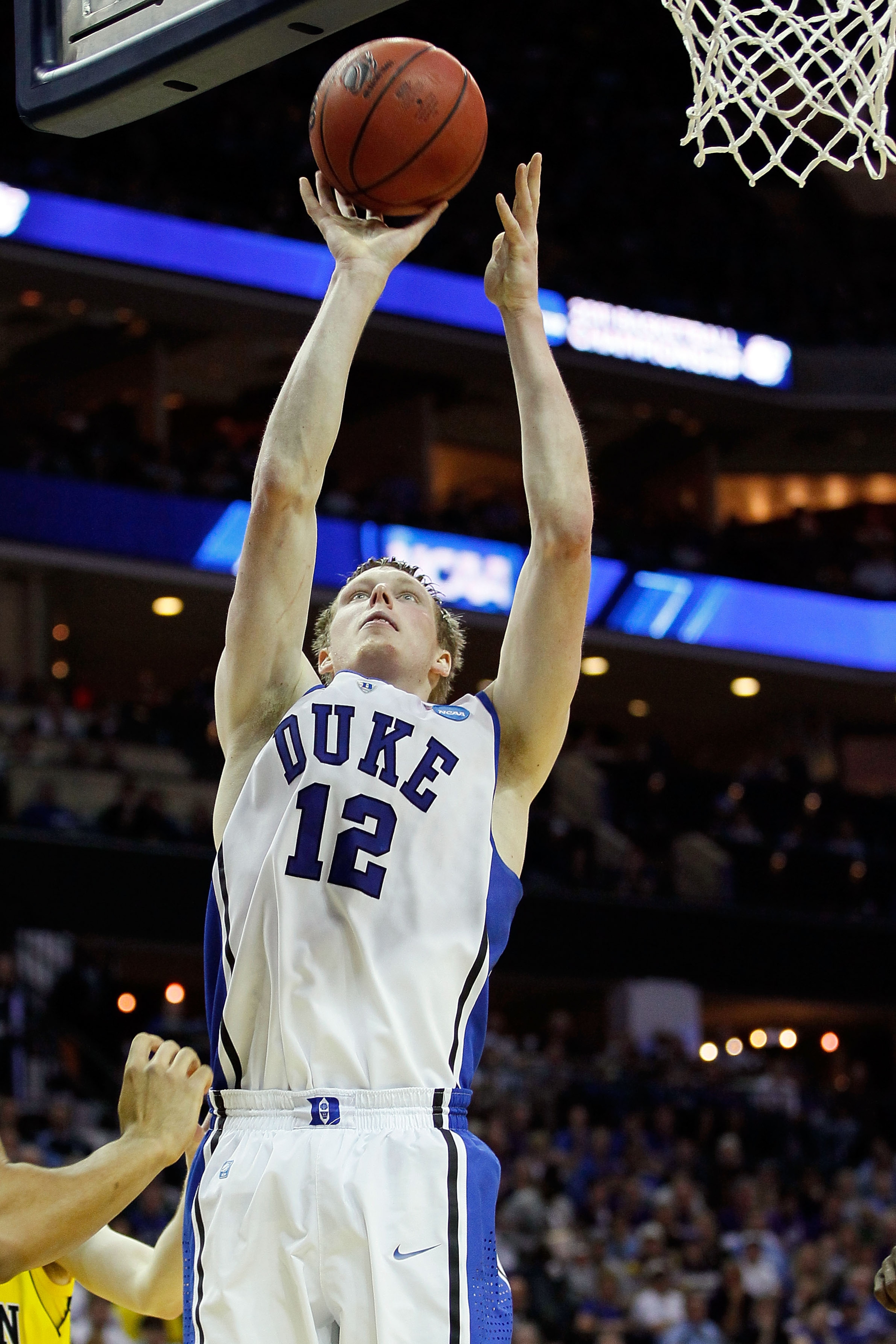
People are all worried about Kyle Singler's three-point shooting numbers going down from 40 percent last season to 31.6 percent this season. Yet, his field goal and free throw percentages are up a bit, and his points, assists and rebounds per game (16.9 PPG, 6.8 RPG, 1.6 APG) are down only slightly, partially because he is playing one less minute a game.
Singler is 6'8", 230 pounds and possesses excellent intangibles. He can be a great asset for a team looking for a solid bench player to give them 10 to15 minutes per game. Luol Deng's primary backup at small forward, Rasual Butler, does not have a contract with the team after this season. Look for the Bulls to find a new backup forward with one of their two picks.
30. San Antonio Spurs: Vanderbilt SF Jeff Taylor
30 of 30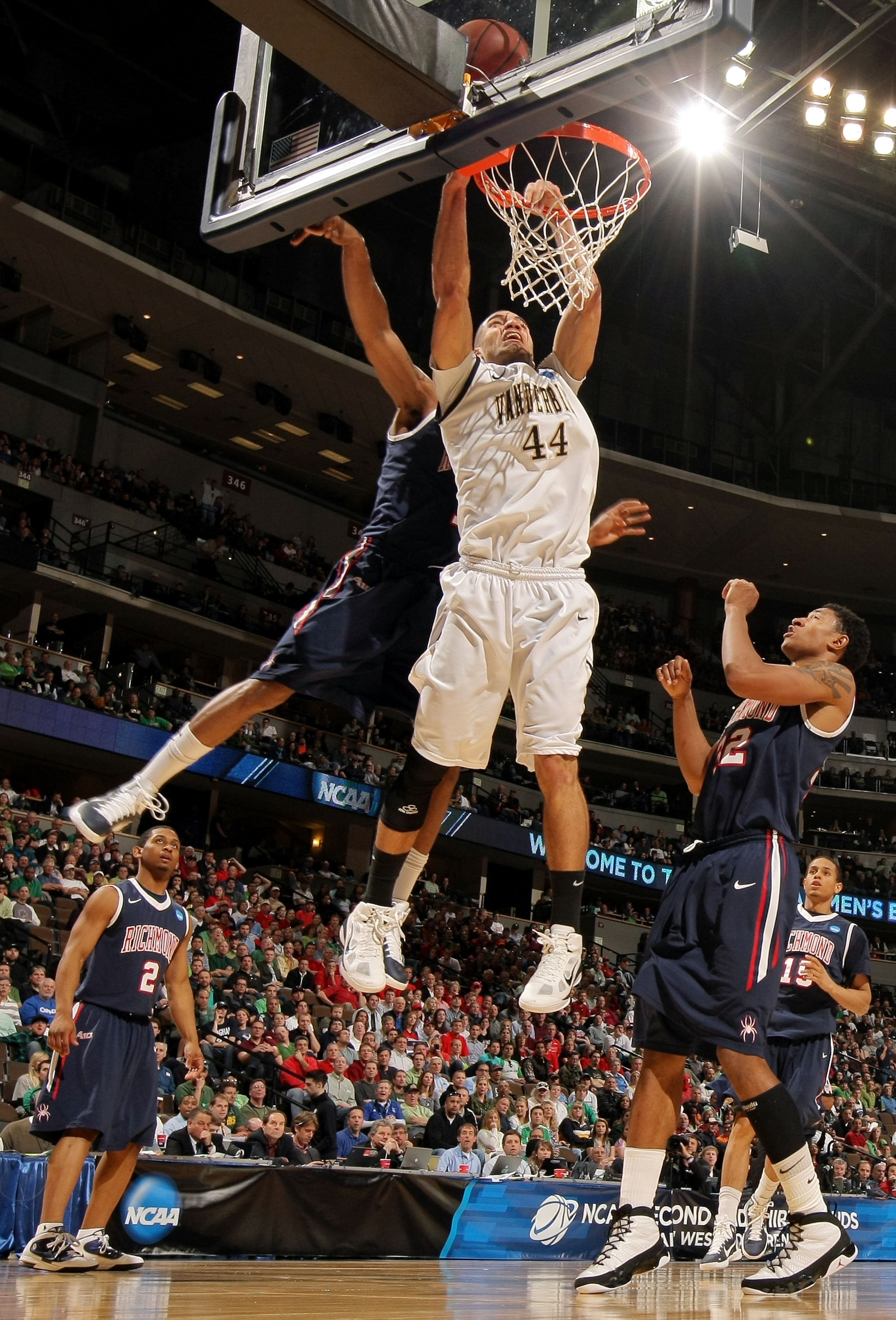
The Spurs could use some backups behind small forward Richard Jefferson. The best small forward left is Jeffery Taylor, a 6'6", 200-pounder who averaged 14.7 points and 5.5 rebounds per game last season. He also shot 45 percent (34.5 percent from three-point range).
Taylor is a very good player, but I'm pretty sure the Spurs could draft me to be their backup small forward and not miss a beat.
.png?w=3840)
.png?w=3840 "Every City's 2000s Mt. Rushmore 🤩")
_0.png?w=3840 "Summer League Takeaways 🧐")