2010 NBA Draft Guide: Mock Draft and Prospect Rankings
By (Correspondent) on June 21, 2010
14,881 reads
(Writer's Note: For part two, go here: http://bleacherreport.com/articles/409745-2010-nba-draft-guide-players-who-could-be-traded-and-bold-predictions
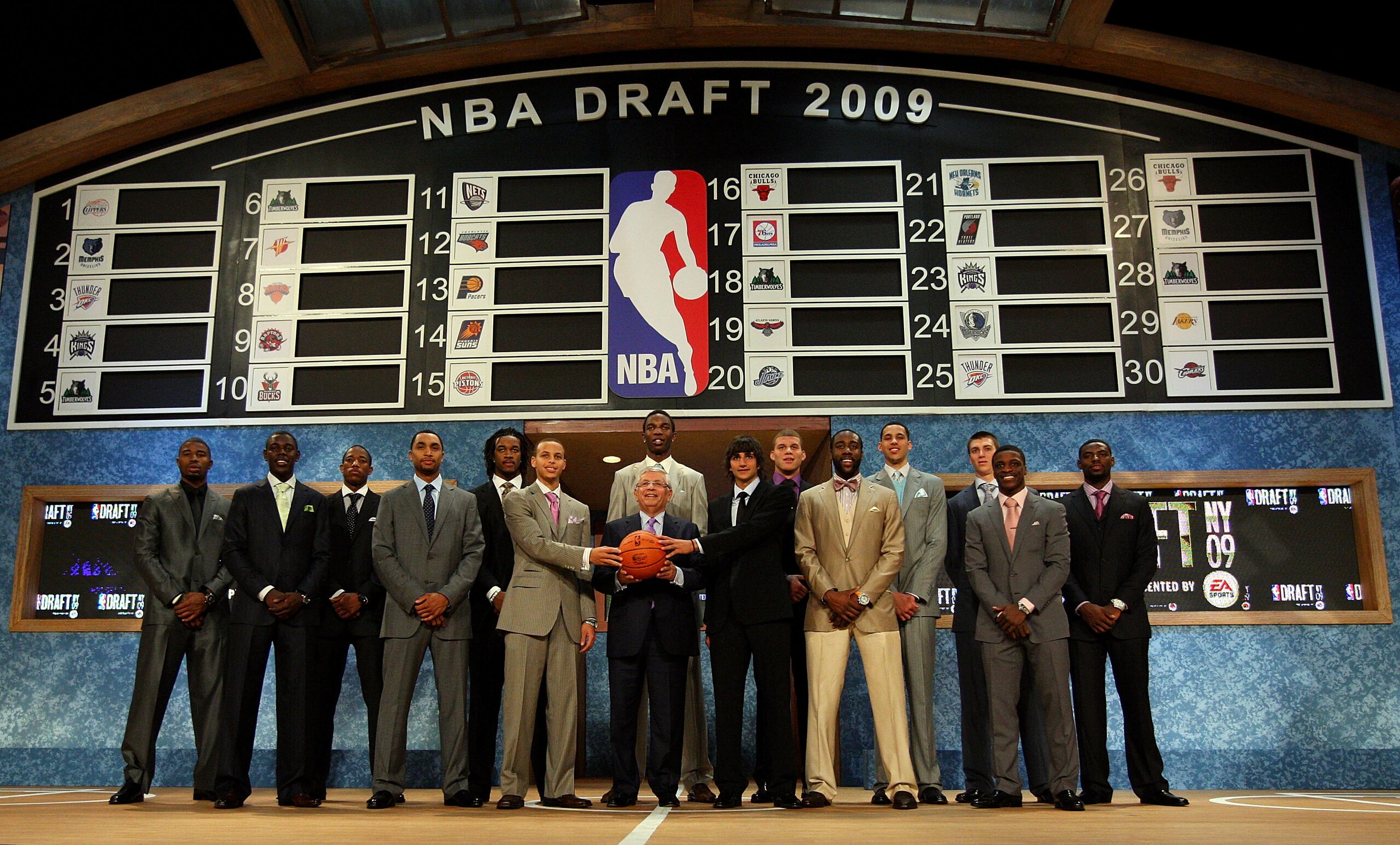
This time one year ago, many draft pundits were deploring the weakness of the 2009 NBA Draft.
I was among them. Despite my man crush on Ricky Rubio, I thought the 2009 Draft was full of maybes and that there were no sure things at the top of the draft.
In my 2009 Draft Guide, I found myself looking ahead to the 2010 Draft more than concentrating on the draft at hand.
One year later, the 2009 Draft produced at least three future All-Stars while the 2010 Draft looks to have only two surefire future All-Stars (John Wall and Evan Turner).
However, it's years like this where the draft actually becomes interesting. Because there is a lack of great players, there are about five billion different scenarios that can happen on draft night.
That's exactly why I thought it was time to do a 2010 NBA Draft Guide and attempt to explore all things NBA Draft.
This Draft Guide consists of the following:
1. Mock Draft
2. Big Board/Career Projections
3. Five Veteran Players Most Likely To Be Traded Draft Night
4. Five Bold Predictions
Because of Bleacher Report's software only allows for 50 slides per article, I will have to split the Draft Guide into two parts.
In part one, I will reveal my mock draft and Big Board.
Tomorrow, in part two, I will discuss players most likely to be traded on draft night and give my five bold predictions regarding the 2010 NBA Draft.
With that said, let's begin the 2010 NBA Draft Guide.
Part One: Mock Draft
In this portion of the NBA Draft Guide, I will discuss what all 30 NBA teams will do with their picks in the first round, what they should be doing, and give my thoughts as to why they should/will make their selection on Thursday.
1. Washington Wizards
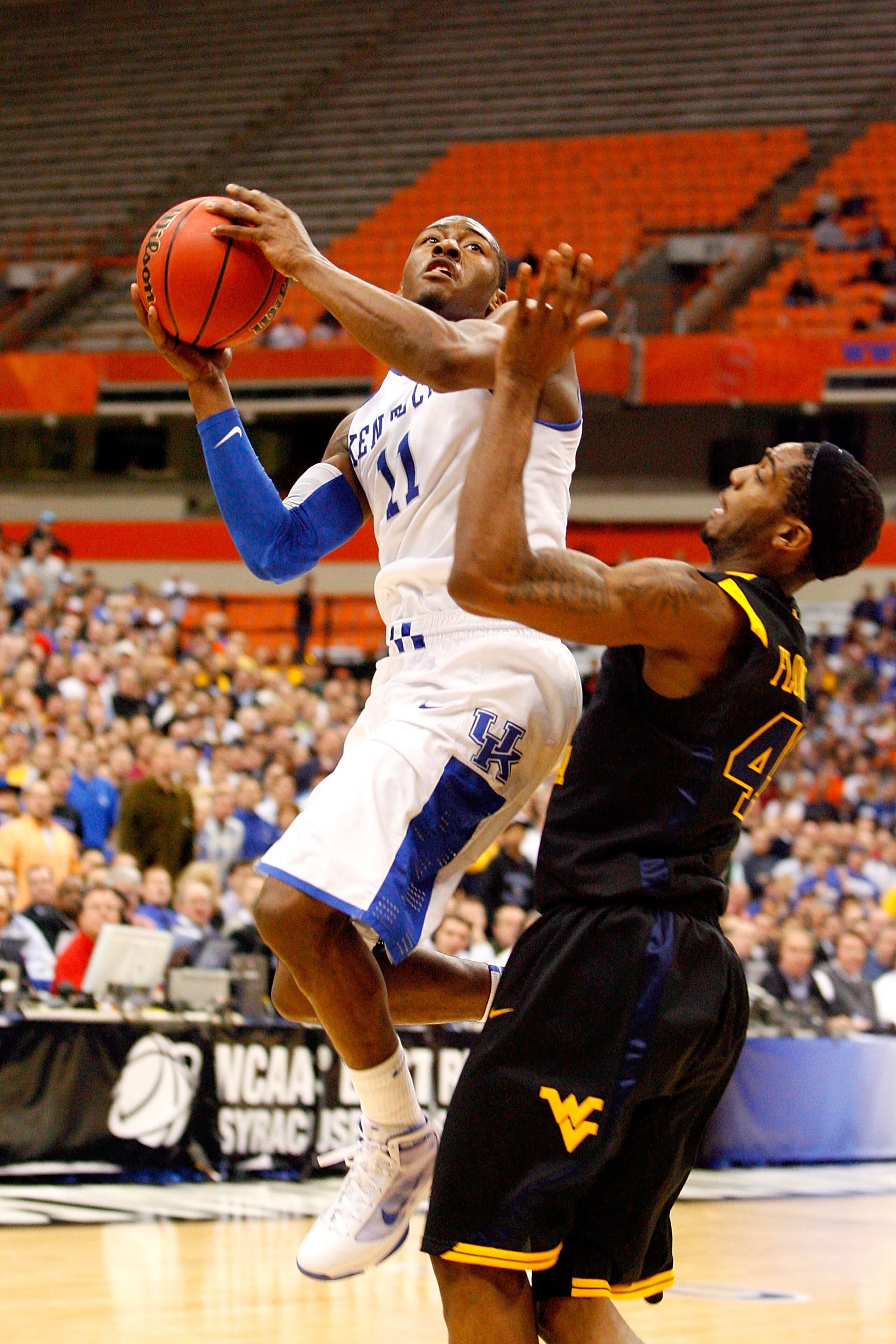
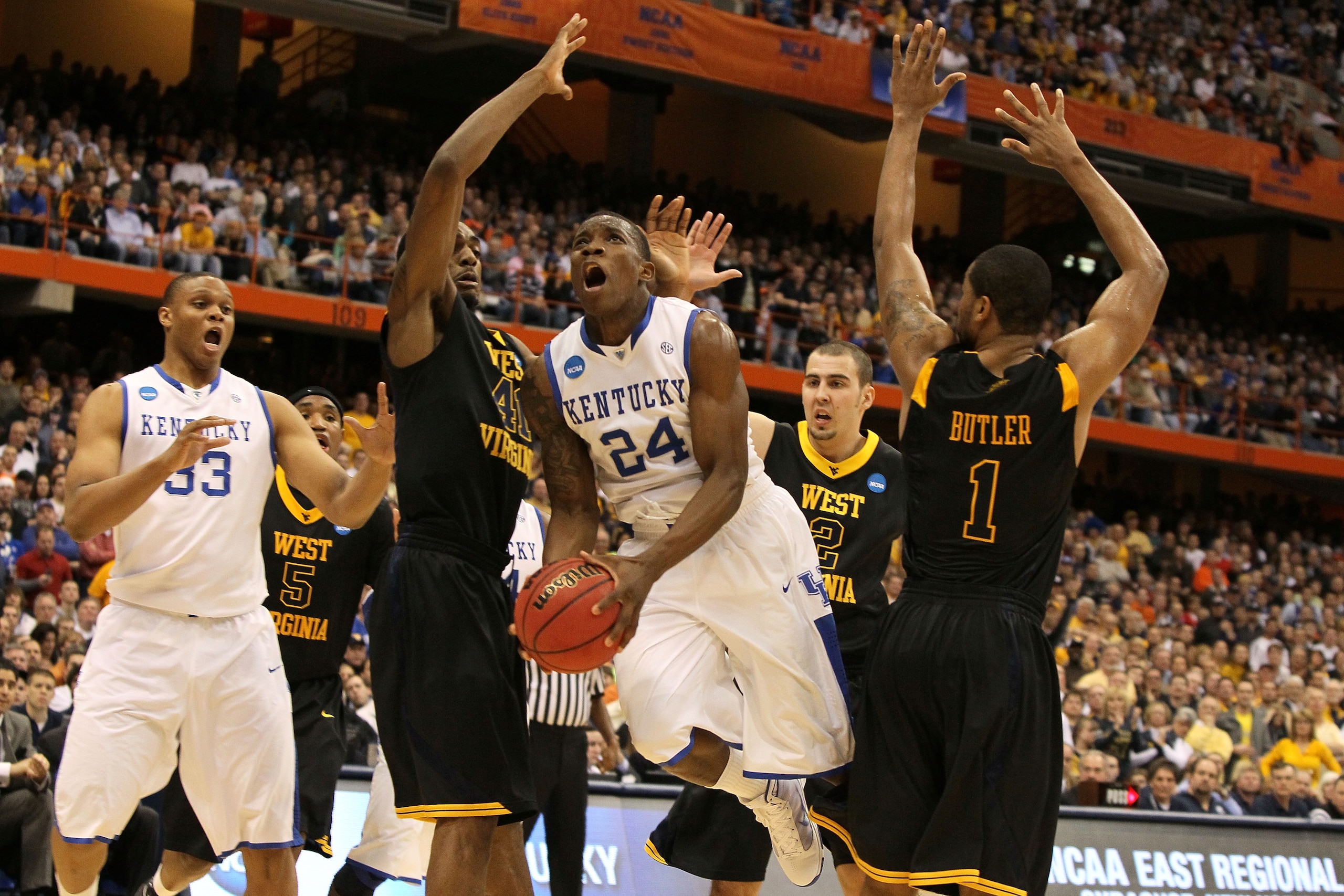
Who the Wizards will select: Kentucky PG John Wall.
Who the Wizards should select: Kentucky PG John Wall.
My Reasoning: The NBA Draft Lottery Gods shined on a ruined franchise when they gave the Wizards the first overall pick. Any pick other than Kentucky point guard John Wall would directly spit in the face of those Lottery Gods who gave Washington a chance to revive its franchise.
Wall had NBA superstar written all over him for the first half of the college basketball season, but faded steeply down the stretch as Evan Turner rose to national prominence.
One could argue that Wall's fading down the stretch is indicative of what he could do at the NBA level.
However, Wall's unbelievable upside, freakish athleticism, and crunch-time cojones make him impossible to pass up for a mending franchise. Aside from those reasons, all remaining Wizards fans would have a coronary if Washington went in a different direction.
Other possible selections: None.
Probability of selection: 100 percent.
2. Philadelphia 76ers
Who the 76ers will select: Georgia Tech PF Derrick Favors
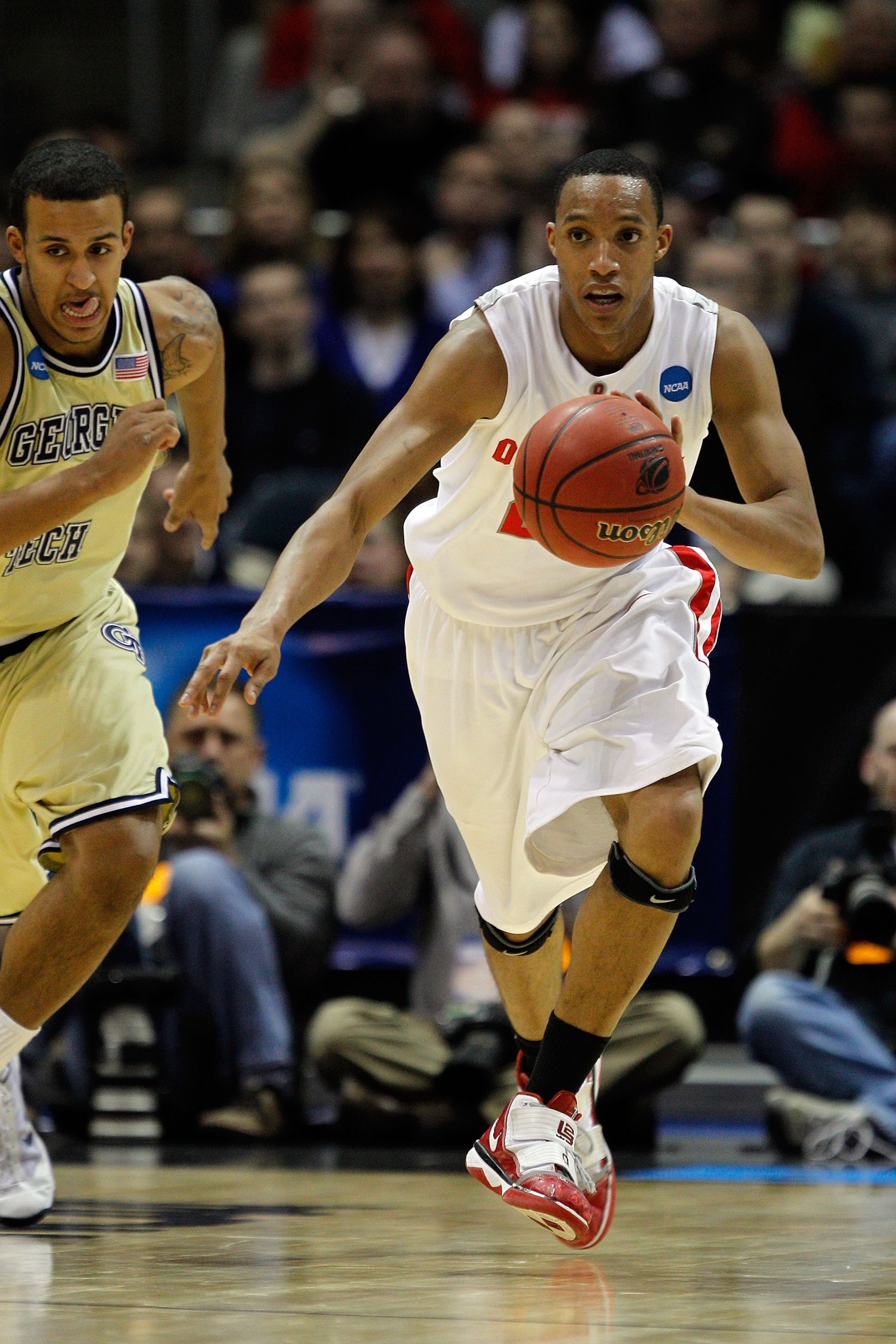
Who the 76ers should select: Ohio State SG/SF Evan Turner
My Reasoning: According to ESPN.com's draft expert Chad Ford, new 76ers head coach Doug Collins prefers Favors to Turner at the No. 2 selection.
According to reports out of Philadelphia, Collins feels that Favors' athleticism and upside is too much to pass up.
The Sixers' brass, however, seemingly has more mixed feelings regarding their selection. Some in the organization feel that while Favors upside is through the roof, his downside is equally bad.
I tend to agree with that assessment. Because of Favors' horrible luck with guards in his short stay at Georgia Tech, we never got to see him truly dominate for long stretches, which is an instant red-flag in my book.
Some have gone so high as to compare Favors to Orlando Magic center Dwight Howard. Well, if Howard is his ceiling, then Tyrus Thomas is his basement.
When in doubt, always go with the sure thing.
Other possible selections: Evan Turner.
Probability of selection (if player is still available): 55 percent.
3. New Jersey Nets
Who the Nets will take: Ohio State SG/SF Evan Turner
Who the Nets should take: Ohio State SG/SF Evan Turner.
My Reasoning: In this scenario new Nets owner Mikhail Prokhorov might have found the first centerpiece of the "dynasty" hopes he placed upon new Nets coach Avery Johnson.
Turner is an experienced, do-it-all type player who will step right into New Jersey's young starting lineup.
On a team that is seemingly lacking leadership player-wise, Turner can also step in right away.
The Ohio State product needs to work on his outside jumper and doesn't have elite athleticism, but he makes up for it all with a fantastic basketball IQ.
Turner also needs to concentrate on improving his vastly improved maturity. According to Mark Titus a.k.a. "Club Trillion", a former Ohio State walk-on, Turner struggled with the spotlight during his first season as a Buckeye.
Titus went on to say that Turner has matured since the days of arguing with and belittling coaches and other players; however, one must wonder whether Turner will regress under the white-hot spotlight of being a top-five selection.
Personally, I feel he is 100% worth the risk.
Other possible selections: DeMarcus Cousins, Derrick Favors (if Philly takes Turner)
Probability of selection: 99.9 percent (if available).
4. Minnesota Timberwolves
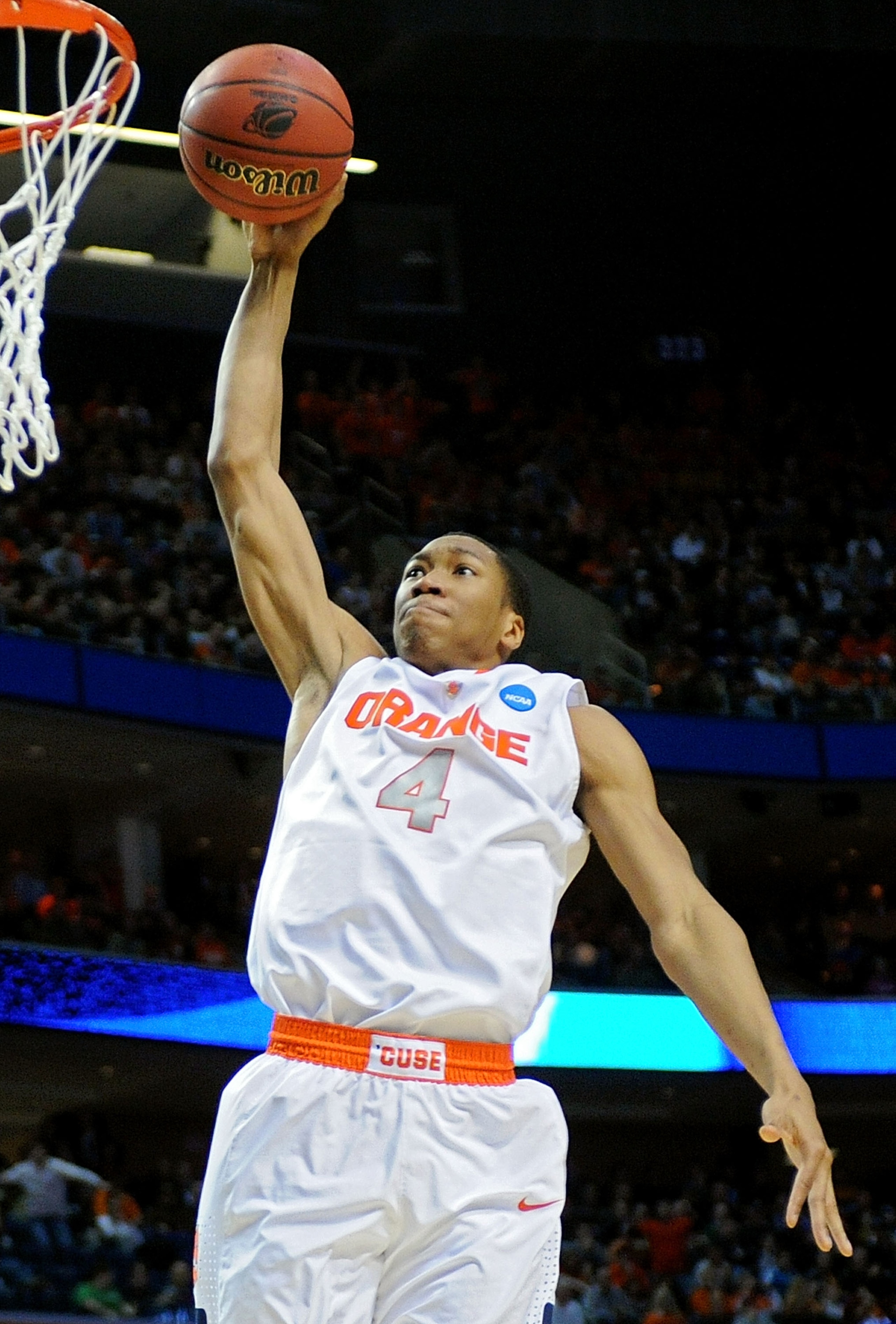
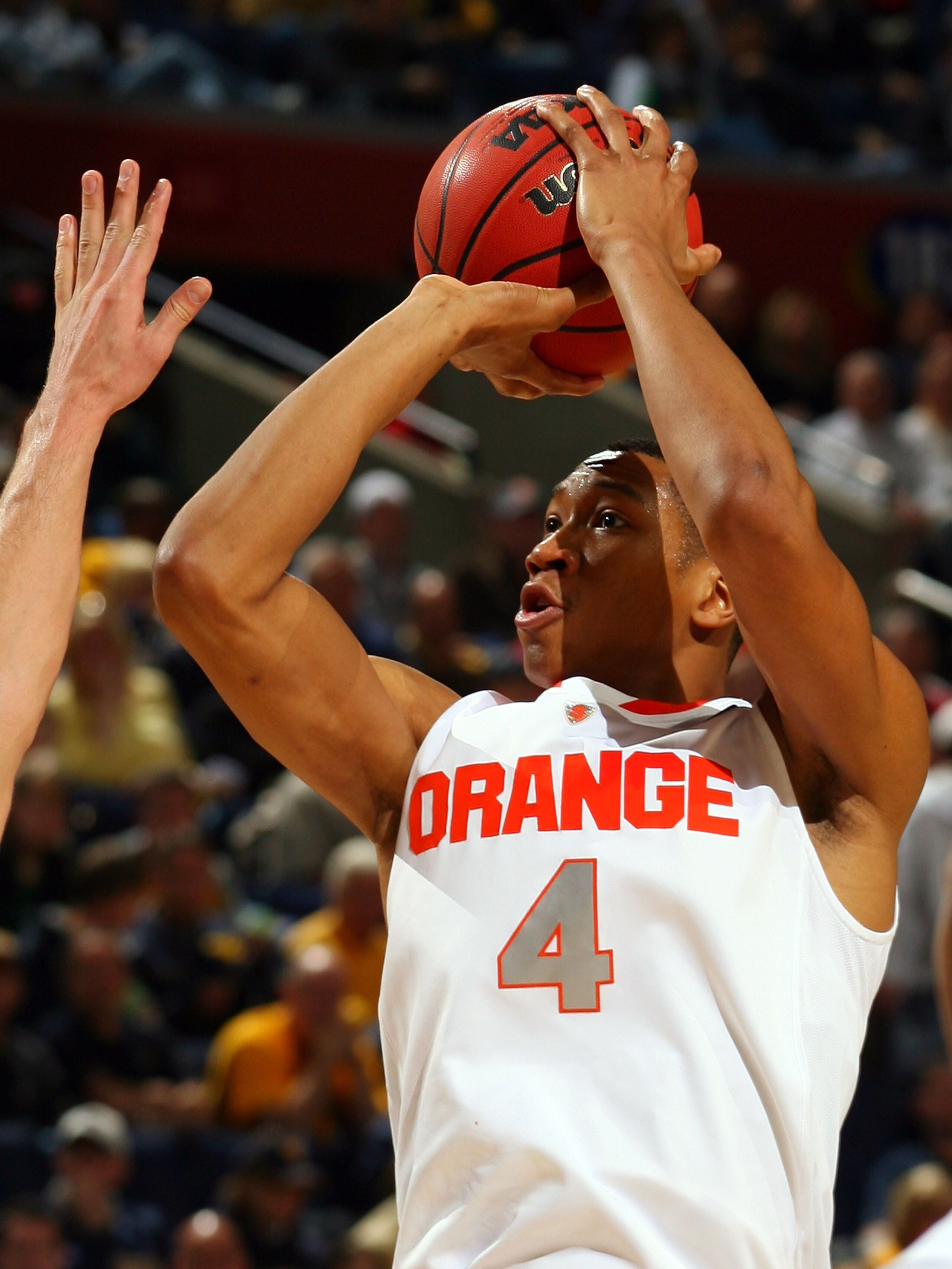
Who the Timberwolves will select: Syracuse SF Wesley Johnson
Who the Timberwolves should select: Syracuse SF Wesley Johnson
My Reasoning: Minnesota's ultra-genius general manager David Kahn is determined to atone for his sinfully awful 2009 Draft.
And if you believe reports, Kahn has just two players on his wish list for the No. 4 pick: Evan Turner and Wesley Johnson.
Obviously, getting Turner involves moving up in the draft.
And, despite their three first-round selections, neither Philadelphia nor New Jersey has had any interest in talking trade without Minnesota first agreeing to take on horrible contracts in return.
In the end, the Timberwolves will have to "settle" for Wesley Johnson — a 6'8 athletic freak who will be an instant NBA contributor. That's more than you can say for last year's No. 5 pick Ricky Rubio.
Other possible selections: None.
Probability of selection: 95 percent (if Minnesota is unable to trade up).
5. Sacramento Kings
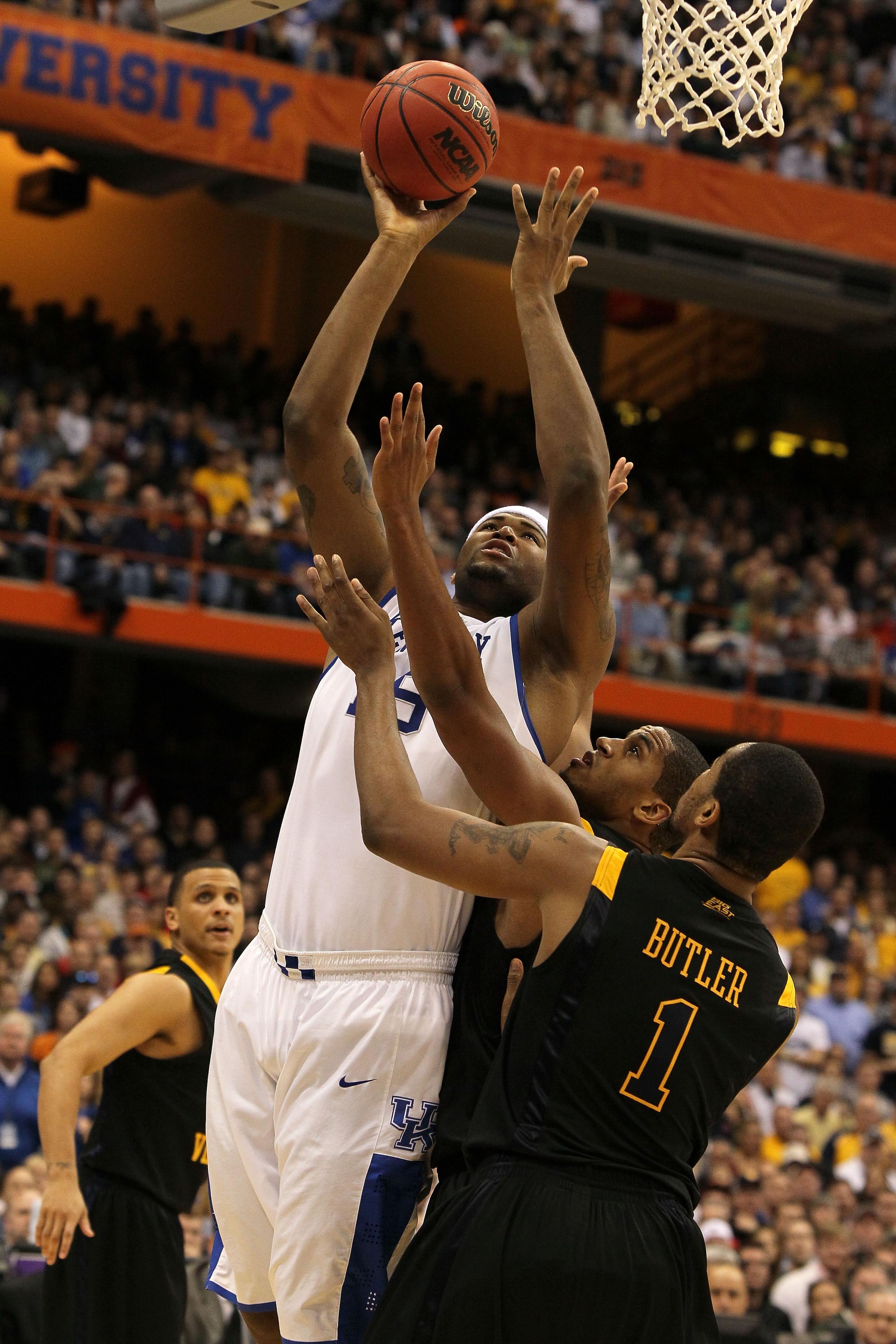
Who the Kings will draft: Kentucky PF/C DeMarcus Cousins
Who the Kings should draft: Kentucky PF/C DeMarcus Cousins
My Reasoning: DeMarcus Cousins is the best basketball player in this draft in my eyes. He is a skilled post player, has range out to 20 feet on the floor, possesses fantastic footwork and rebounding sense, and has decent-enough athleticism to compete at the NBA level.
Seems like a sure-fire top five pick, right?
Well, that is until you realize you're not just drafting basketball players — you are drafting human beings. Flawed ones. And DeMarcus Cousins may be the most flawed human of the 2010 NBA Draft (his only competition is Lance Stephenson).
I wonder about Cousins' work-ethic, his love of the game, and his ability to stay out of legal trouble.
But then you watch the man play basketball and it's a thing of beauty. With the draft taking a steep decline in my eyes after the first four picks, Sacramento has to take the risk of a Tyreke Evans-DeMarcus Cousins nucleus.
Much like Cousins, Evans was not without character issues when Sacramento took him No. 4 overall last season.
Kings fans will have to hope they strike gold for a second consecutive season on draft night.
Other possible selections: Greg Monroe
Probability of selection: 65 percent.
6. Golden State Warriors
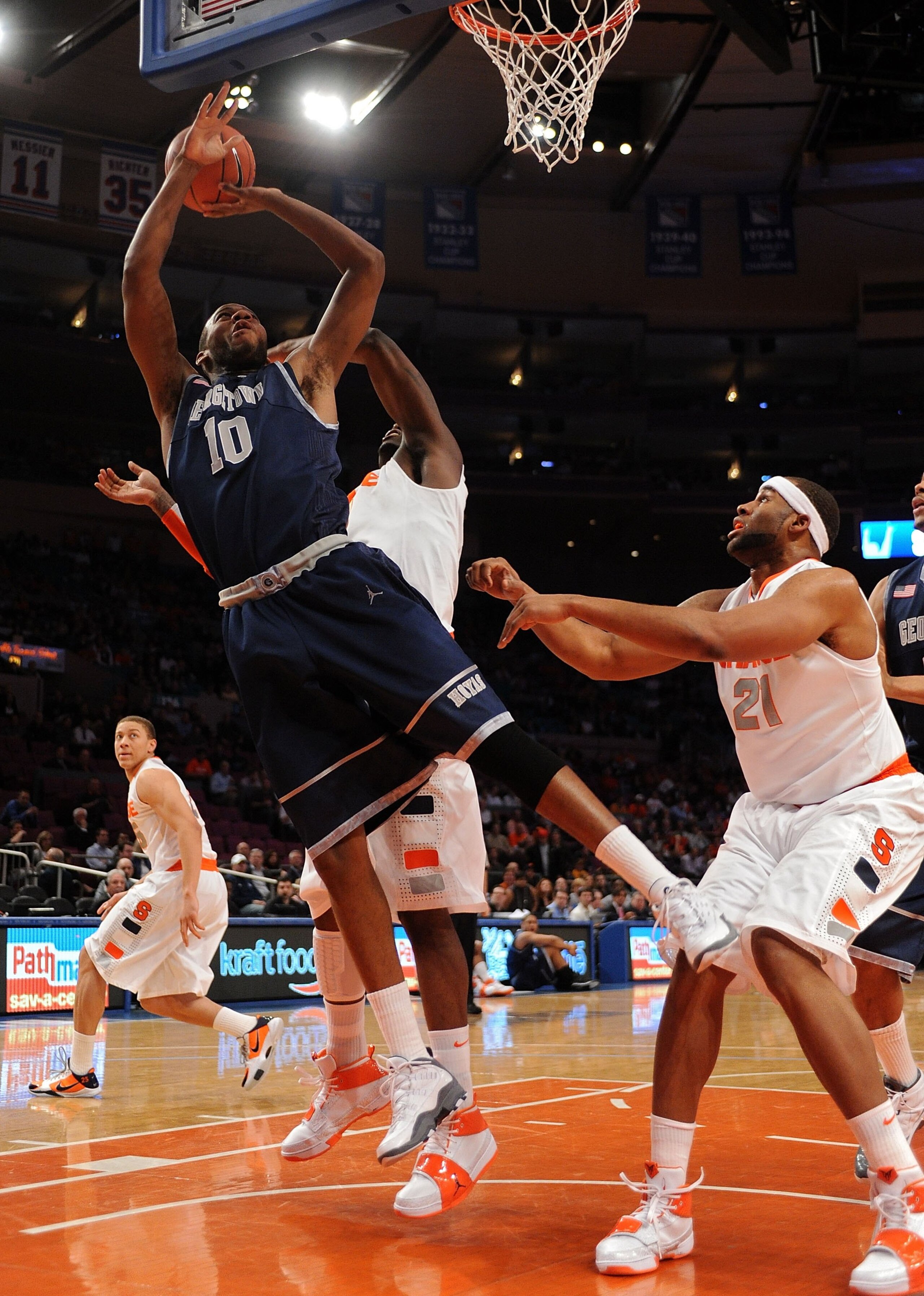
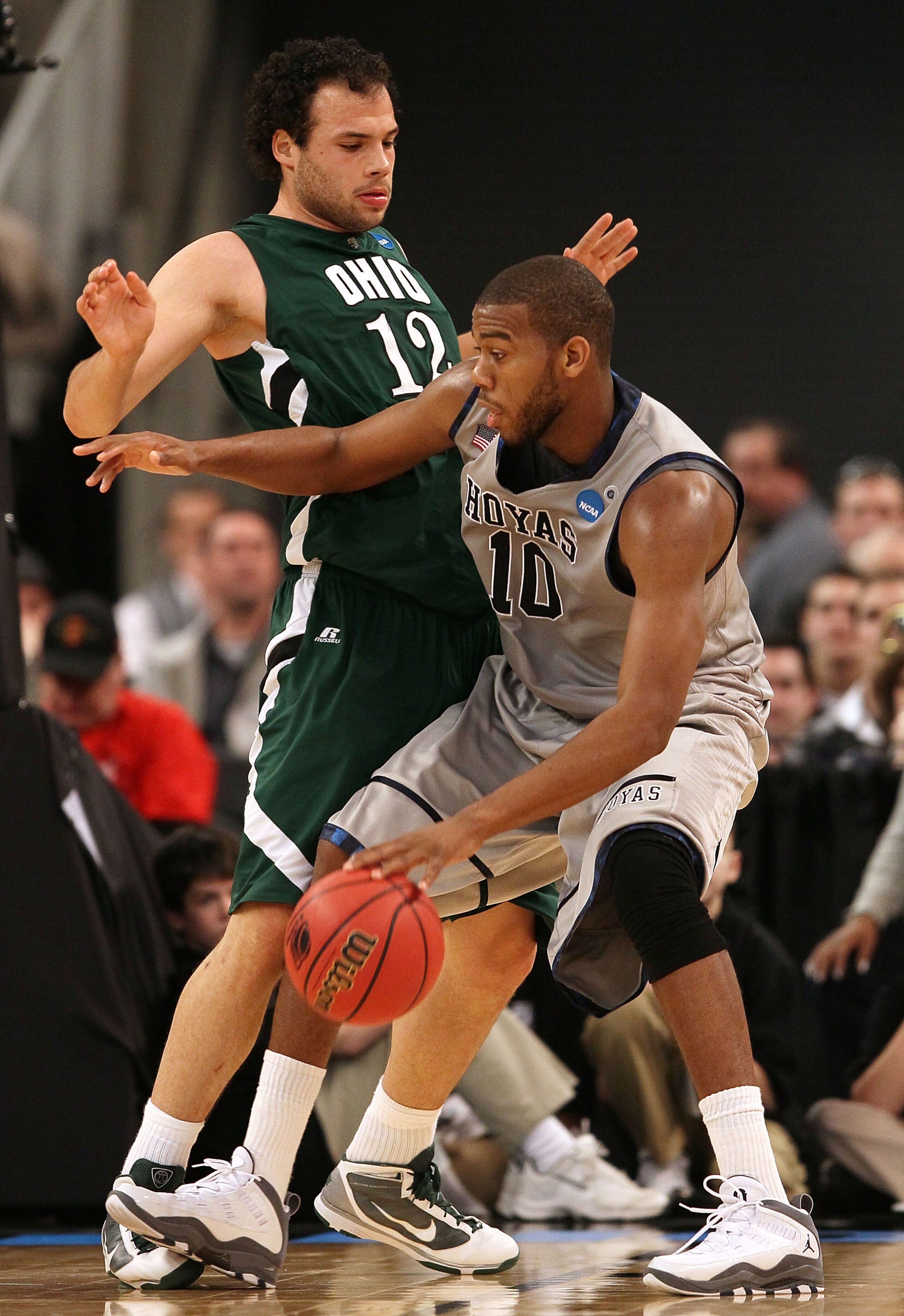
Who the Warriors will select: Georgetown PF Greg Monroe
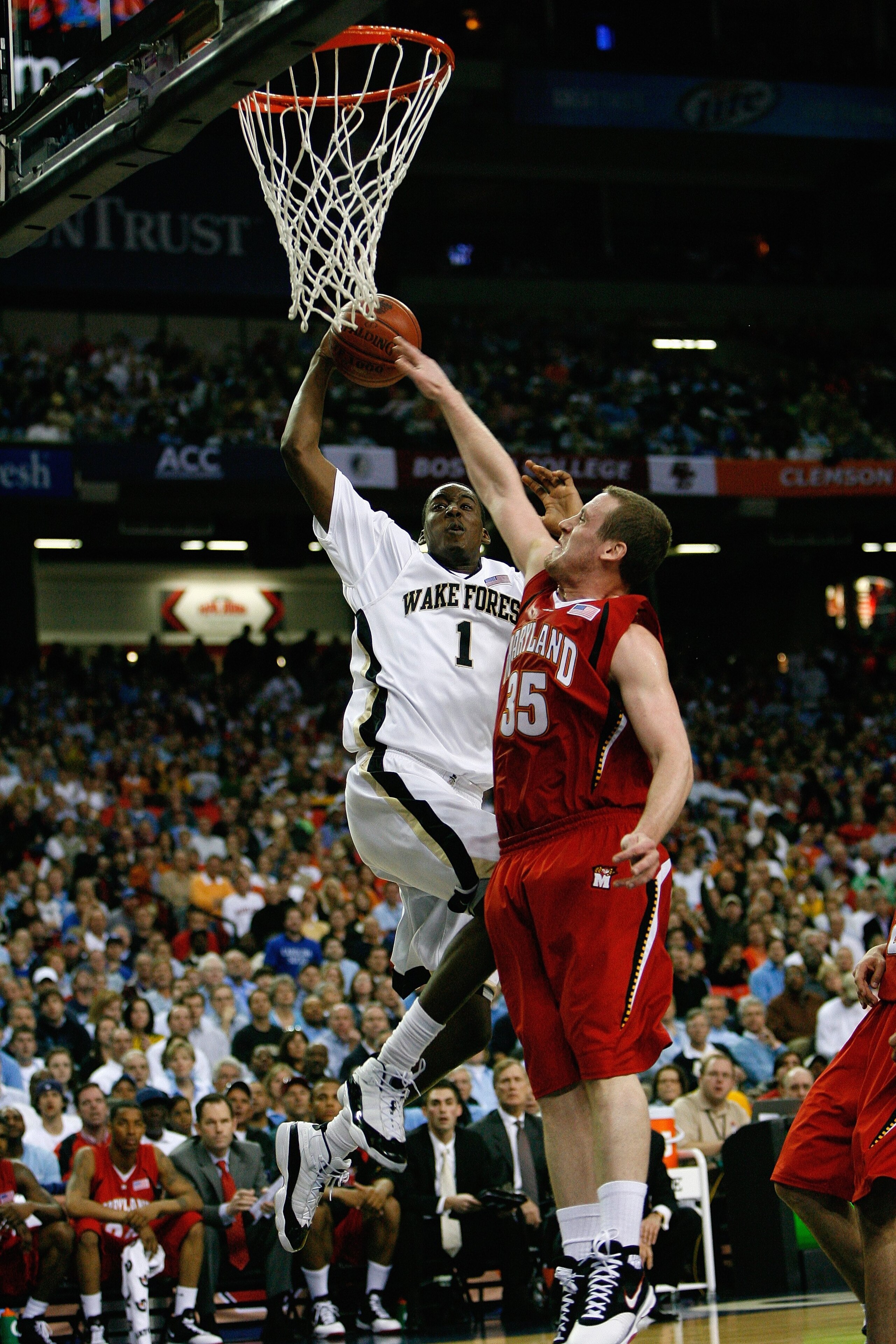
Who the Warriors should select: Wake Forest SF Al-Farouq Aminu
My Reasoning: Anytime the Warriors organization has a chance to take a soft big man who easily becomes disinterested and has no defensive skills whatsoever, isn't it a 100 percent certainty that they do it?
Don't get me wrong; I recognize that Monroe is a fantastically skilled post player who will step on the court and contribute instantly. Monroe just isn't the correct pick for an already Charmin-soft Warriors team.
Aminu, on the other hand, provides toughness at a need position for Golden State.
Don Nelson's system creates offensive stars out of D-Leaguers, but has never been conducive to the defensive end of the floor.
Monroe will fit in perfectly, even if he is not the correct pick.
Other possible selections: Al-Farouq Aminu, Xavier Henry, Ekpe Udoh.
Probability of selection: 55 percent.
7. Detroit Pistons
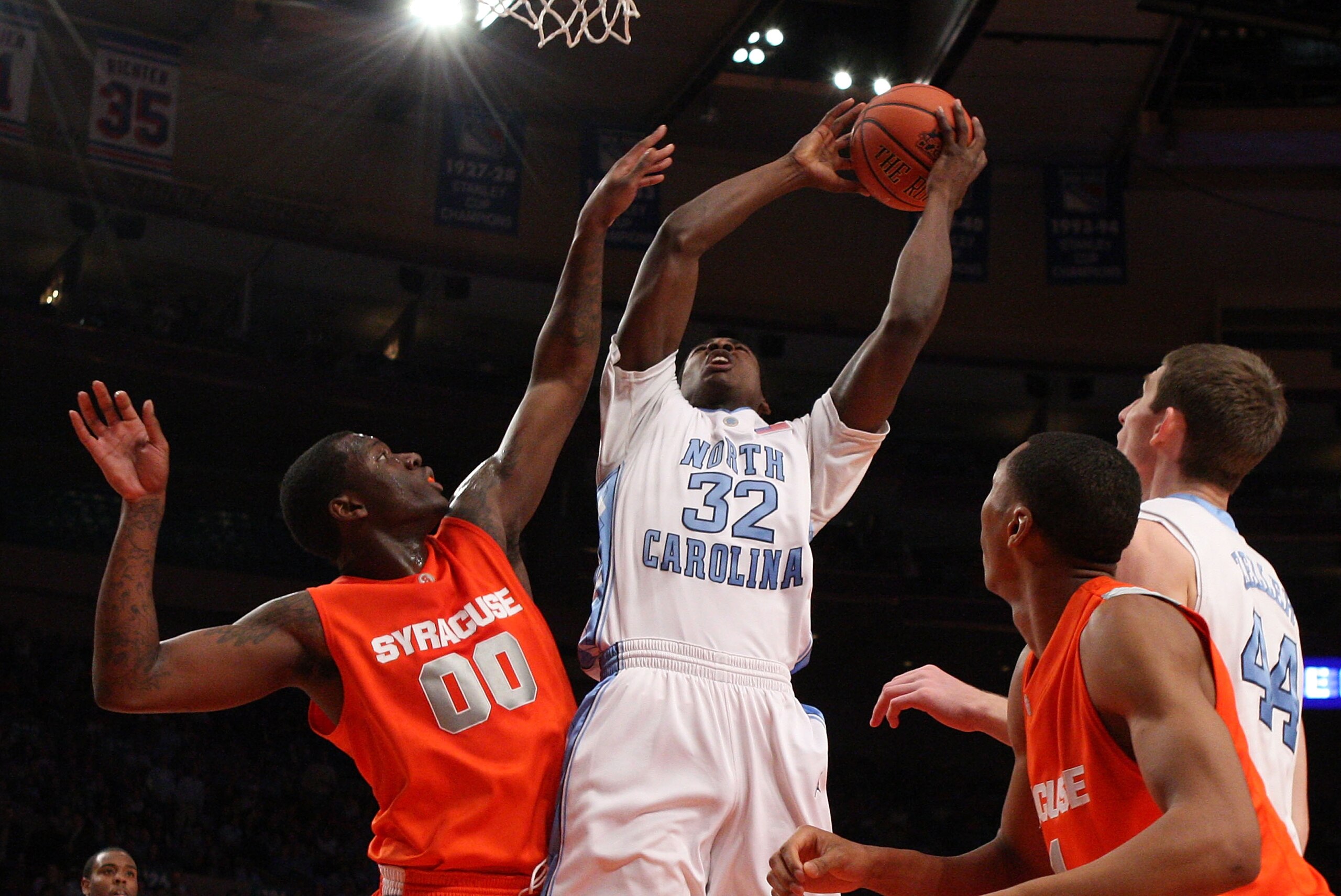
Who the Pistons will select: North Carolina PF Ed Davis
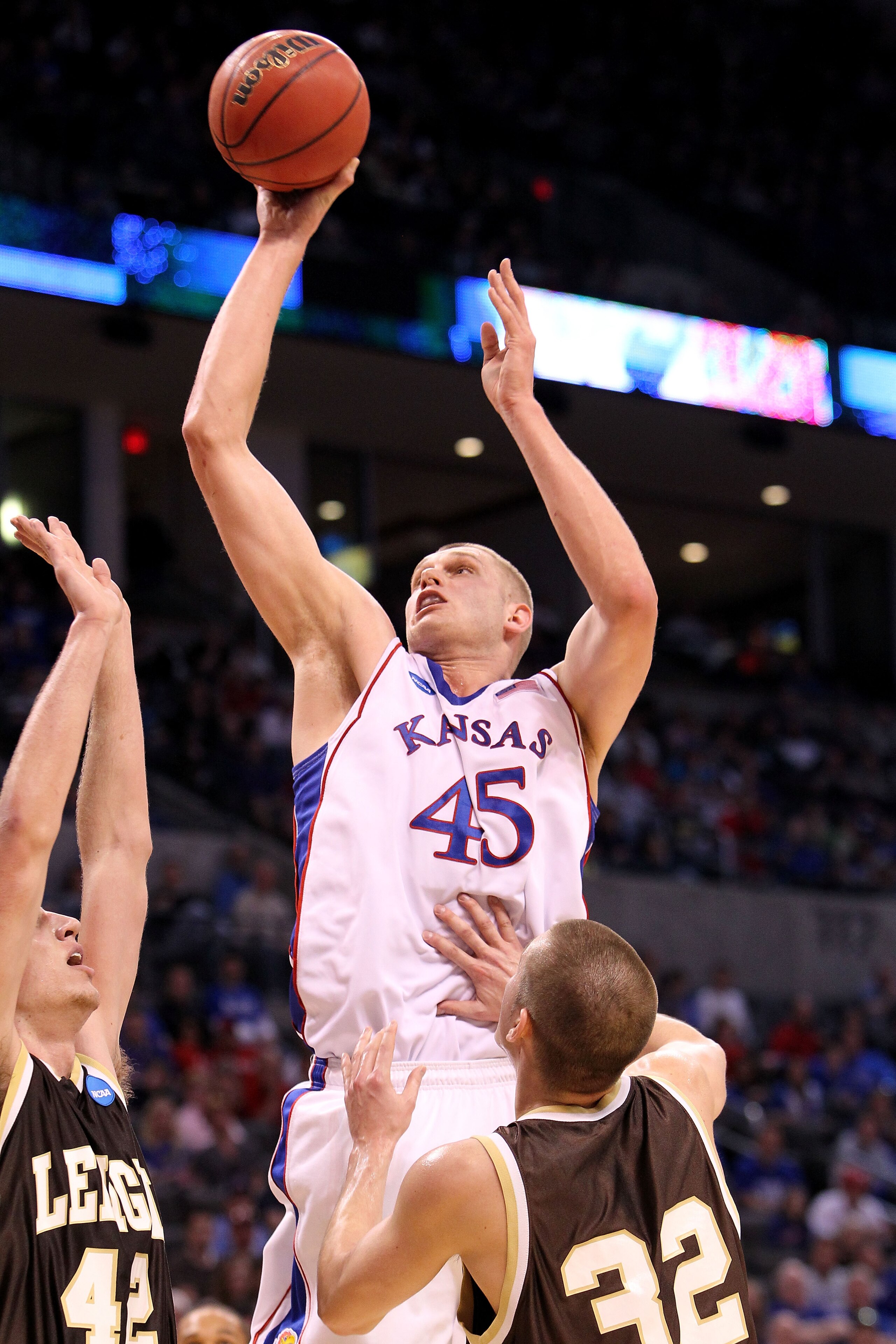
Who the Pistons should select: Kansas C Cole Aldrich
My Reasoning: Am I the only one who finds it incredibly ironic that Pistons GM Joe Dumars is publicly clamoring for his team to regain the toughness of its early 2000s dynasty only a year after he spent $90 million on two defensive liabilities?
Irony and hypocrisy aside, Detroit needs a tough big man not named Ben Wallace.
In my eyes, Kansas center Cole Aldrich would be a perfect defensive stimulus.
And he's also an insanely safe pick.
If history tells us anything, Joe Dumars almost never goes with the safe pick. In the end, Davis' immense upside on both the offensive and defensive end of the court seduces the Pistons into making him the No. 7 pick.
Other possible selections: Cole Aldrich, Ekpe Udoh, Al-Farouq Aminu.
Probability of selection: 55 percent.
8. Los Angeles Clippers
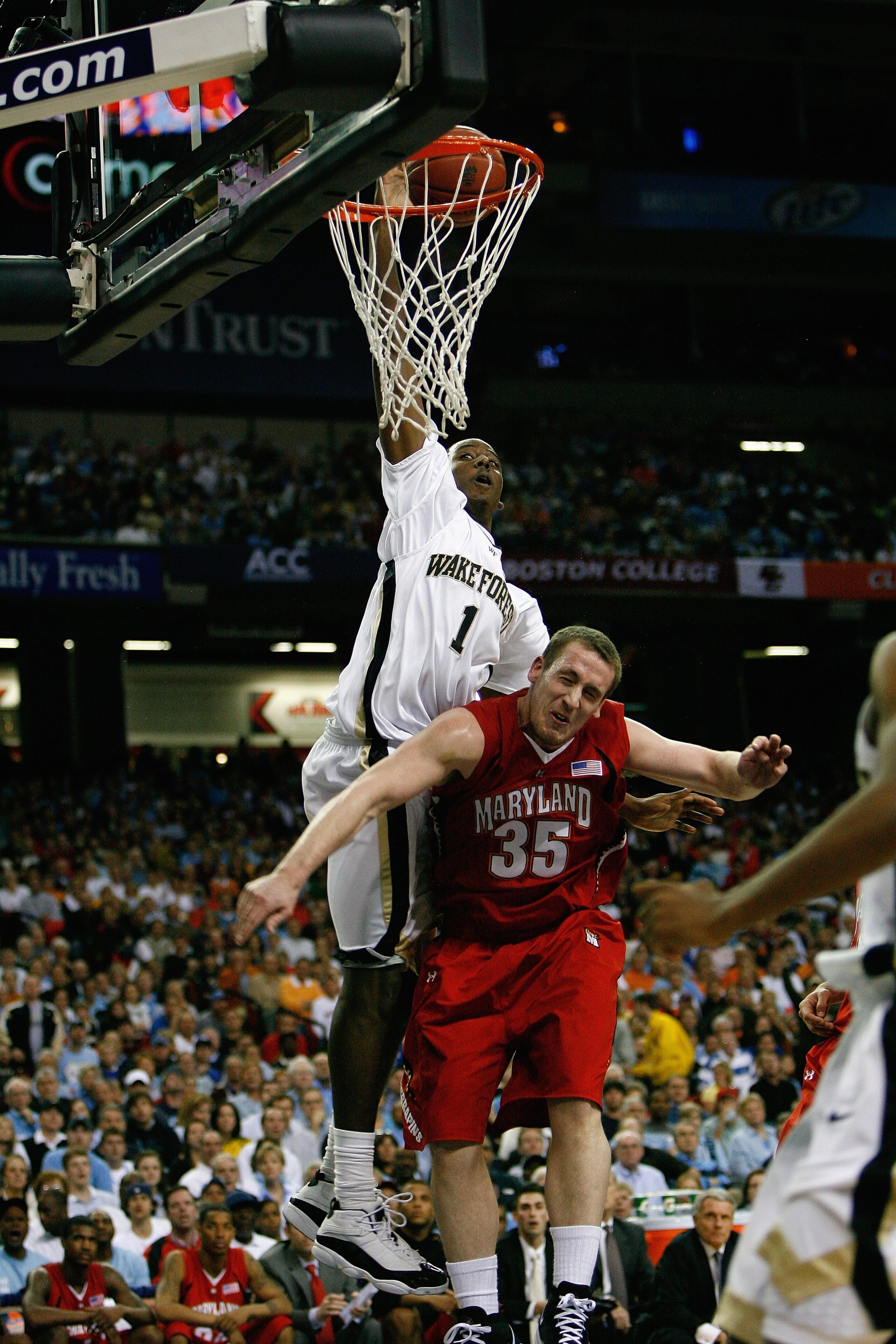
Who the Clippers will select: Wake Forest SF Al-Farouq Aminu
Who the Clippers should select Wake Forest SF Al-Farouq Aminu
My Reasoning: Another year, another perfect draft scenario for the Clippers.
Already young and burgeoning with talent, Aminu dropping to the No. 8 pick not only gives the Clippers a much-needed boost at the three spot, but also prevents the whole "LeBron didn't sign with us, so let's give Rudy Gay a max contract" potential fiasco.
While Al-Farouq Aminu is the perfect fit for the Clippers, he's far from a perfect player. Calling Aminu "undeveloped" on the offensive end is an insult to the word undeveloped.
However, Aminu has the ability to step right in as a defensive stalwart who is able to guard three positions.
In a relatively weak draft, that's about the best you can ask for at No. 8 overall.
Other possible selections: Gordon Hayward, Paul George.
Probability of selection: 70 percent.
9. Utah Jazz
Who the Jazz will select: Kansas C Cole Aldrich
Who the Jazz should select: Kansas C Cole Aldrich
My Reasoning: How could Utah possibly not draft Greg Ostertag 2.0? Jokes aside, Aldrich is obviously already a better player than Ostertag ever was and is probably the safest pick in the entire draft.
Will Aldrich ever be an All-Star? Probably not.
Does he have any bust potential? None at all.
With Carlos Boozer's impending departure and the failure of 2008 first round pick Kosta Koufos, Aldrich seems like not only the safe choice, but the right choice as well.
Other possible selections: Gordon Hayward, Luke Babbitt, Ekpe Udoh, Xavier Henry.
Probability of selection: 60 percent.
10. Indiana Pacers
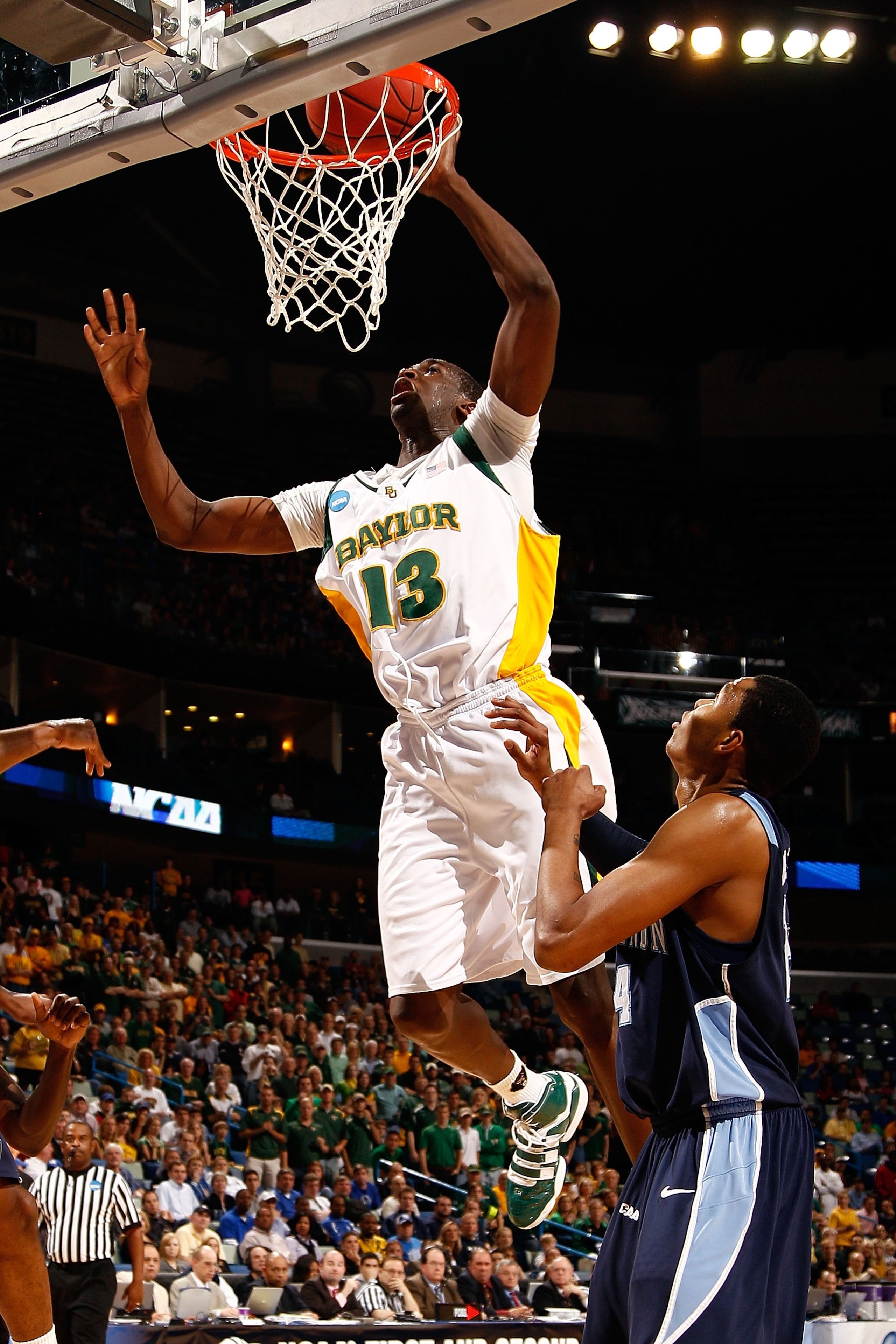
Who the Pacers will select: Baylor PF Ekpe Udoh
Who the Pacers should select: Baylor PF Ekpe Udoh
My Reasoning: At this point in a weak draft, it's truly about drafting contributors. Say what you want about Udoh's offensive game, but he will instantly contribute for a team lacking any defensive post presence.
Some will be quick to point out, at age 23, that Udoh may already be tapped out of upside.
I would argue that he has one of the highest upsides of anyone in the draft despite the age.
With a 7'4" wingspan, Udoh already has the makings of a shot-blocking aficionado and has shown great improvement on the offensive end during his time at Baylor.
In this draft, Indiana should take a defensive stalwart and potential offensive contributor at No. 10 overall.
Other possible selections: Daniel Orton, Hassan Whiteside, Avery Bradley, Xavier Henry, Patrick Patterson.
Probability of selection: 40 percent.
11. New Orleans Hornets
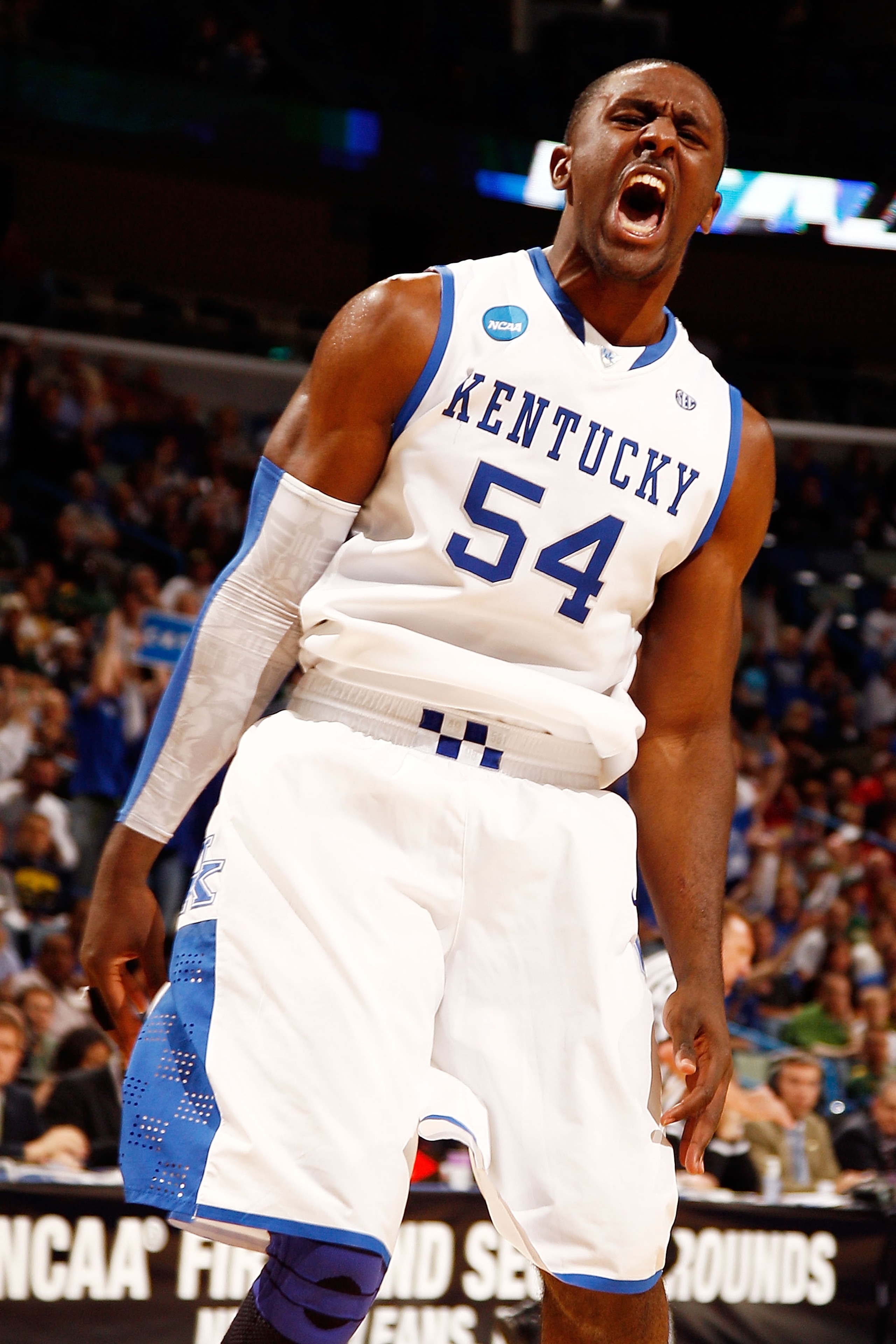
Who the Hornets will select: Kentucky C Daniel Orton
Who the Hornets should select: Kentucky PF Patrick Patterson
My Reasoning: With the Hornets' top target (Cole Aldrich) off the board in this scenario, their choices become limited to three players with the No. 11 pick: Orton, Patterson, and Hassan Whiteside.
While Patterson is the best player who fits a need and Whiteside is more NBA-ready than the two center prospects still on the board, Orton's potential will win out here.
Although, in my eyes, drafting Orton is an awful decision.
Orton showed no ability to contribute last season at Kentucky and drafting big men on potential alone has never been a winning formula (see entire history of the NBA Draft).
The correct pick here is Orton's teammate Patrick Patterson — an explosive big man who has not only contributed it college, but also has immense potential on both ends of the court.
Sadly, as all Hornets fans can attest, their management has been making wrong decisions on a consistent basis for three years. Why stop now?
Probability of selection: 40 percent.
12. Memphis Grizzlies
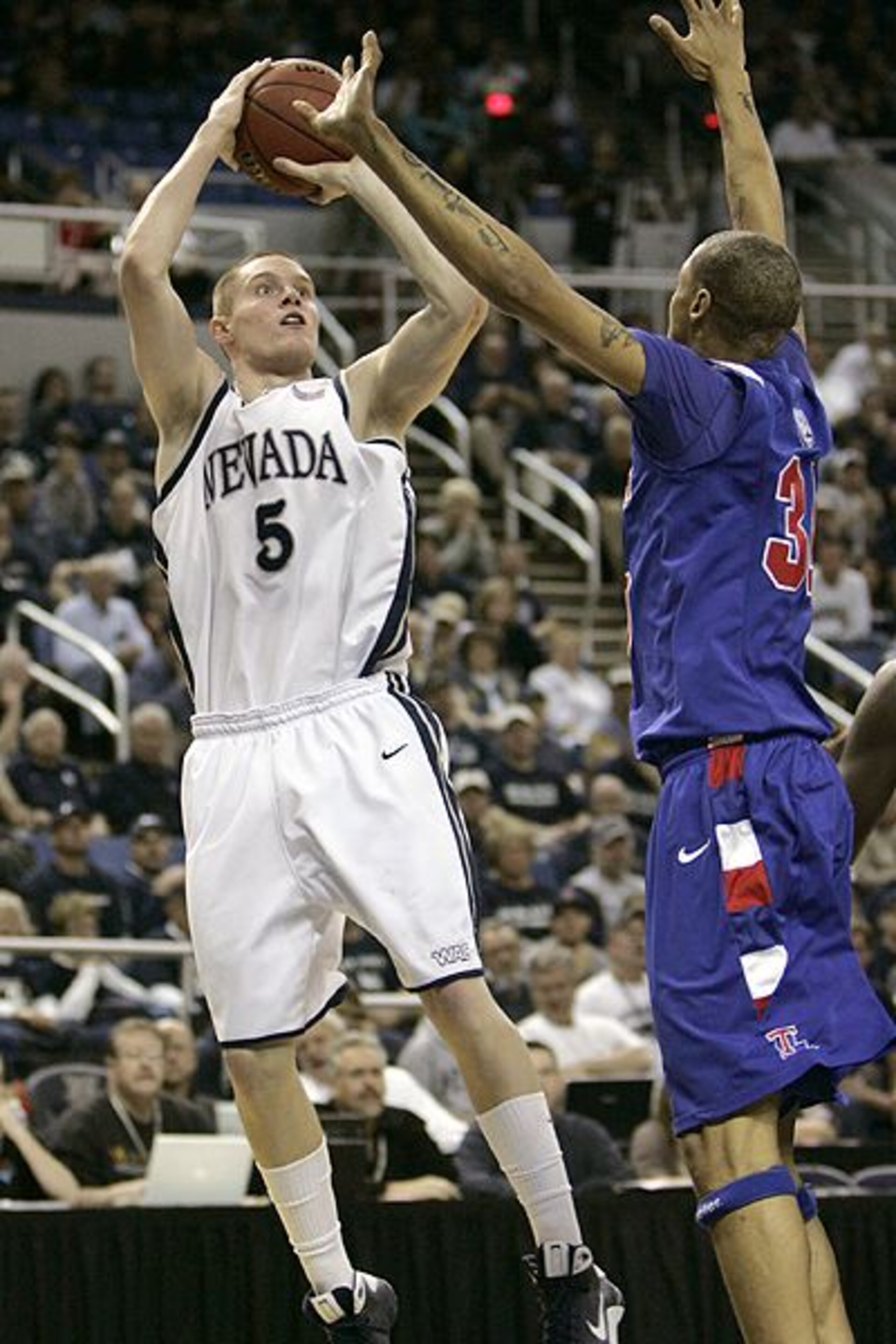
Who the Grizzlies will select: Nevada SF Luke Babbitt
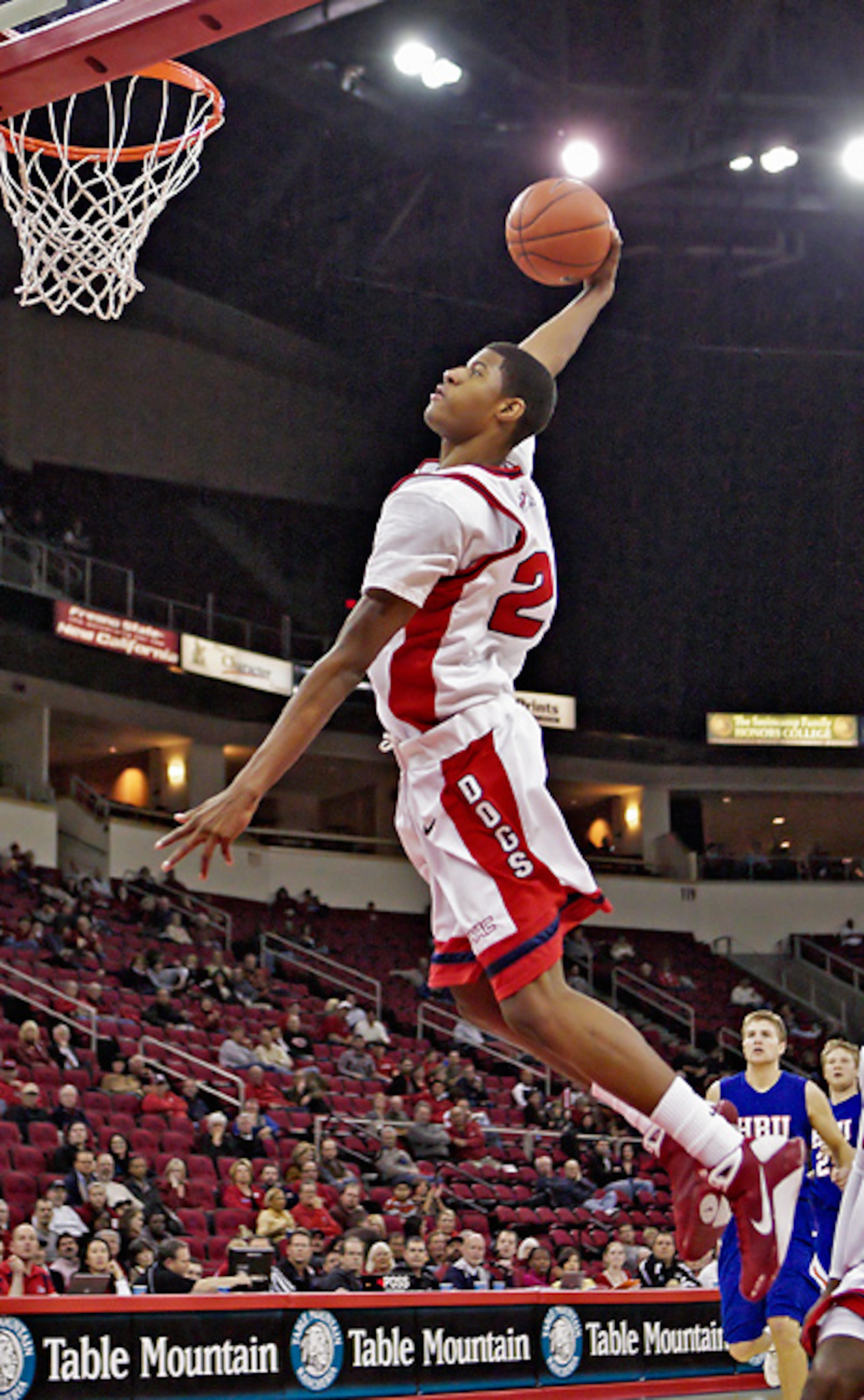
Who the Grizzlies should select: Fresno State SF Paul George
My Reasoning: Word out of Memphis is that Grizzlies management will be holding their collective breath on draft night, hoping that Babbitt falls to them. In this scenario, Memphis' front office will do a collective fist pump when the No. 12 pick comes around.
I'm just not so sure they should.
While Babbitt is a fine player who will contribute offensively, he has absolutely no place guarding anyone in the NBA.
On the other hand, Memphis has the perfect Rudy Gay replacement on the board in Fresno State's Paul George.
Babbitt, on the other hand, seems to have more of a Mike Dunleavy type ceiling.
But hey, in Chris Wallace we trust, right Grizzlies fans? Oh wait...
Other possible selections: Patrick Patterson, Paul George.
Probability of selection: 80 percent.
13. Toronto Raptors
Who the Raptors will select: Butler SF Gordon Hayward
Who the Raptors should select: Fresno State SF Paul George
My Reasoning: With Hedo Turkoglu already whining like a petulant child that he wants out of Toronto, why not draft the perfect Hedo replacement in Hayward?
Well, in my eyes, because there is a better player on the board in Paul George.
As you can tell, I am pretty high on George as a player, but we will discuss that later during the Big Board portion of the Draft Guide.
For now, let's just say there's a reason Chris Bosh is leaving town and Hedo wants out.
For Raptors fans, Gordon Hayward may sadly become the team's best player by default in the next couple of seasons.
Other possible selections: Patrick Patterson, Paul George, Hassan Whiteside, Avery Bradley.
14. Houston Rockets
Who the Rockets will select: Kentucky PF Patrick Patterson
Who the Rockets should select: Kentucky PF Patrick Patterson
My Reasoning: Just another good pick for Rockets GM Daryl Morey, who seemingly knocks the draft out of the park every year.
Whether it's finding diamonds in the rough like Carl Landry or picking in the lottery like this year, Houston always finds a way to make the correct selection.
And, in this scenario, the best fit for the Rockets is obviously Patrick Patterson.
He fits a need as one of the most NBA-ready prospects in the draft, and is a proven leader.
Everything about a Patrick Patterson-Houston Rockets marriage makes sense.
Other possible selections: Hassan Whiteside, Solomon Alabi.
Probability of selection: 65 percent.
15. Milwaukee Bucks
Who the Bucks will select: Fresno State SF Paul George
Who the Bucks should select: Fresno State SF Paul George
My Reasoning: If Paul George went to an elite school with a strong basketball pedigree, he would be a top-five selection.
He's a good athlete, has NBA three-point range with a sweet stroke, a solid basketball IQ, and rebounds well for his size.
In addition to all of that, he is also perfect John Salmons insurance.
The only true downside to George is that we have never gotten to see him compete against elite competition.
Despite that, if Milwaukee brass has any sense about them, George is the pick all the way.
Other possible selections: Xavier Henry, Lance Stephenson.
Probability of selection: 50 percent.
16. Minnesota Timberwolves
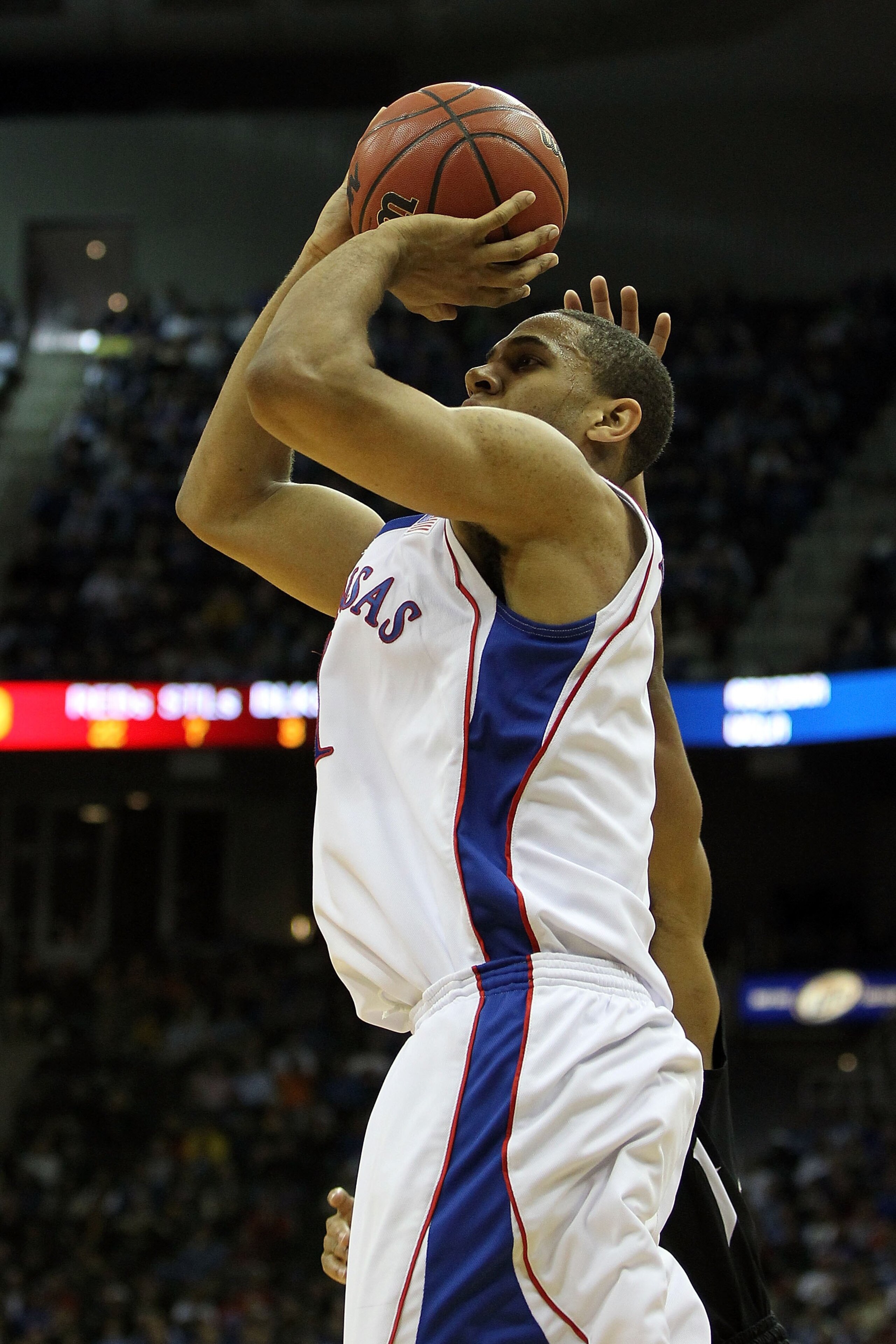
Who the Timberwolves will select: Kansas SG Xavier Henry
Who the Timberwolves should select: Kansas SG Xavier Henry
My Reasoning: In this scenario, the 2010 NBA Draft works out perfectly for Minnesota. They not only get their much-needed athleticism at the swing man spot, but also get a much-needed sweet-stroking two guard who will help create spacing for Al Jefferson.
It would take an idiotic gaffe by GM David Kahn to screw up in this scenario, so let's move on.
Other possible selections: Hassan Whiteside, Damion James
Probability of selection: 70 percent.
17. Chicago Bulls
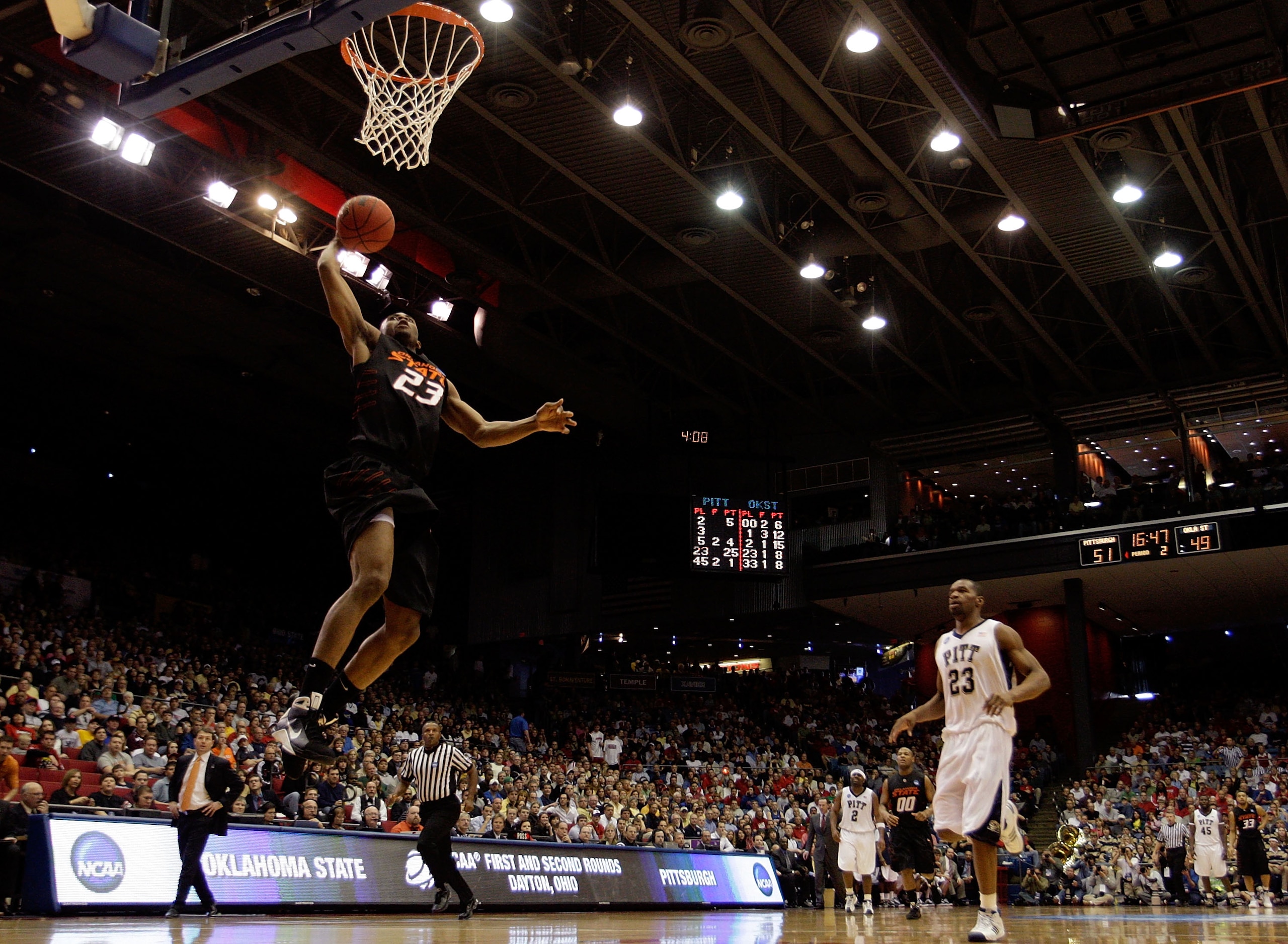
Who the Bulls will select: Oklahoma State SG James Anderson
Who the Bulls should select: Oklahoma State SG James Anderson
My Reasoning: All reports out of Chicago seem to suggest that Anderson is the one and only player on the Bulls board at No. 17.
And it's a fantastic pick at that.
Every year, the NBA Draft's first round is broken into tiers player-wise:
1. Future All-Stars/Superstars (Normally around 3-5 per draft).
2. "Potential" All-Stars/Projects (Normally around 5-7 per draft).
3. NBA-ready instant contributors (Normally 4-7 per draft).
4. Foreign stowaways (Normally 1-3 per draft).
5. Outright head-scratching picks (Normally 1-3 per draft).
6. Combination (potential and talent) guys (rest of first round).
When drafting, I would personally always take the NBA-ready instant contributor over everything other than future All-Star/Superstars.
James Anderson fits the NBA-ready instant contributor mold.
Other possible selections: None.
Probability of selection: 95 percent.
18. Miami Heat
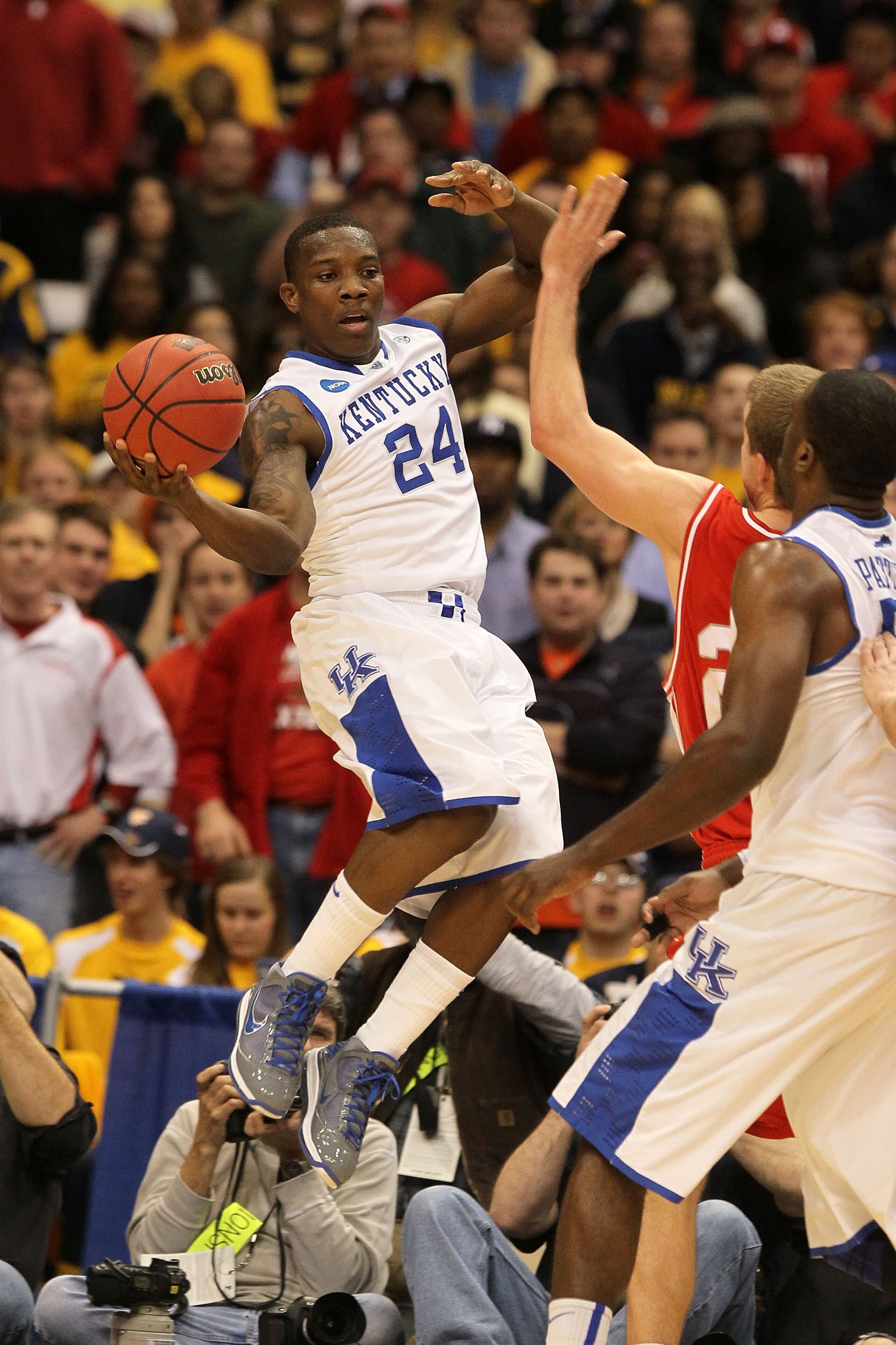
Who the Heat will select: Kentucky PG Eric Bledsoe
Who the Heat should select: Kentucky PG Eric Bledsoe
My Reasoning: Bledsoe is the most intriguing prospect in the entire draft to me. In his limited playing time for Kentucky last season, he shined as a defensive stopper and athletic freak.
For some reason (maybe because I love UCLA basketball) Russell Westbrook kept popping into my head when watching Bledsoe play last season.
Like Westbrook, Bledsoe often played out of position when he did get playing time.
Like Westbrook, Bledsoe is an athletic freak who will become everyone's favorite video game point guard.
The only red flag that pops into my mind when discussing Bledsoe is why he didn't have the meteoric rise up draft boards like Westbrook.
It makes me think that scouts know something I don't.
Either way, at No. 18, Bledsoe is worth the minimal risk involved.
Other possible selections: Avery Bradley, Solomon Alabi, Hassan Whiteside.
Probability of selection: 60 percent.
19. Boston Celtics
Who the Celtics will select: Texas PG/SG Avery Bradley
Who the Celtics should select: Texas PG/SG Avery Bradley
My Reasoning: It's not too often that the NBA Finals runner-up has the No. 19 overall pick.
And, in this scenario, the Celtics brass would be giddy to find Avery Bradley available.
Bradley would provide an instant scoring punch to a team that often lacks it, provide athleticism to a team that often lacks it, and become a capable backup point guard for a team that lacks one.
He has all of the makings of a future Sixth Man of the Year Award winner and is exactly the type of player Boston needs to stimulate their aging core.
Other possible selections: Solomon Alabi, Hassan Whiteside, Damion James.
Probability of selection: 55 percent.
20. San Antonio Spurs
Who the Spurs will select: Texas SF Damion James
Who the Spurs should select: Texas SF Damion James
My Reasoning: Every year San Antonio finds an unappreciated player who slips through the cracks right to them, and every year they pounce on it.
I don't know if that makes the Spurs a great organization or just less stupid than everyone else.
Either way, Damion James is another underrated player for the Spurs to scoop up.
James can defend three positions on the floor and has unbelievable athleticism.
For a tough, defensive-minded team like San Antonio, Damion James will fit in instantly and perfectly.
Other possible selections: Hassan Whiteside, Solomon Alabi
Probability of selection: 80 percent.
21. Oklahoma City Thunder
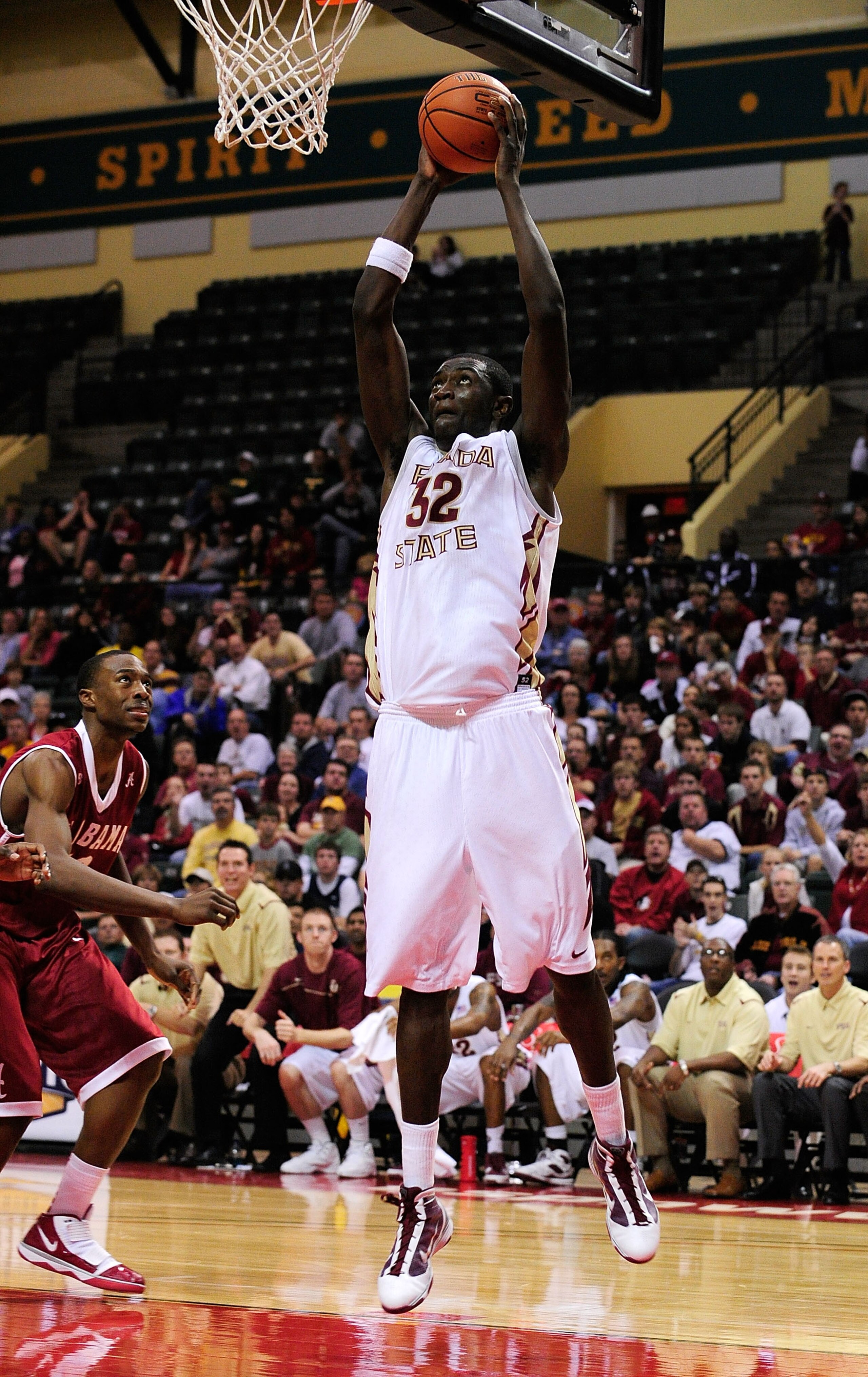
Who the Thunder will select: Florida State C Solomon Alabi
Who the Thunder should select: Florida State C Solomon Alabi
My Reasoning: OKC's one glaring weakness is in the frontcourt and they have two obvious options in this scenario: Alabi and Marshall center Hassan Whiteside.
For a team that's on the precipice of yearly contention, taking the project Whiteside would be irresponsible to the team's 2010-2011 prospects.
Alabi can step right into the Thunder's starting lineup and contribute.
The same cannot be said for Whiteside.
Other possible selections: Hassan Whiteside
Certainty of selection: 75 percent.
22. Portland Trailblazers
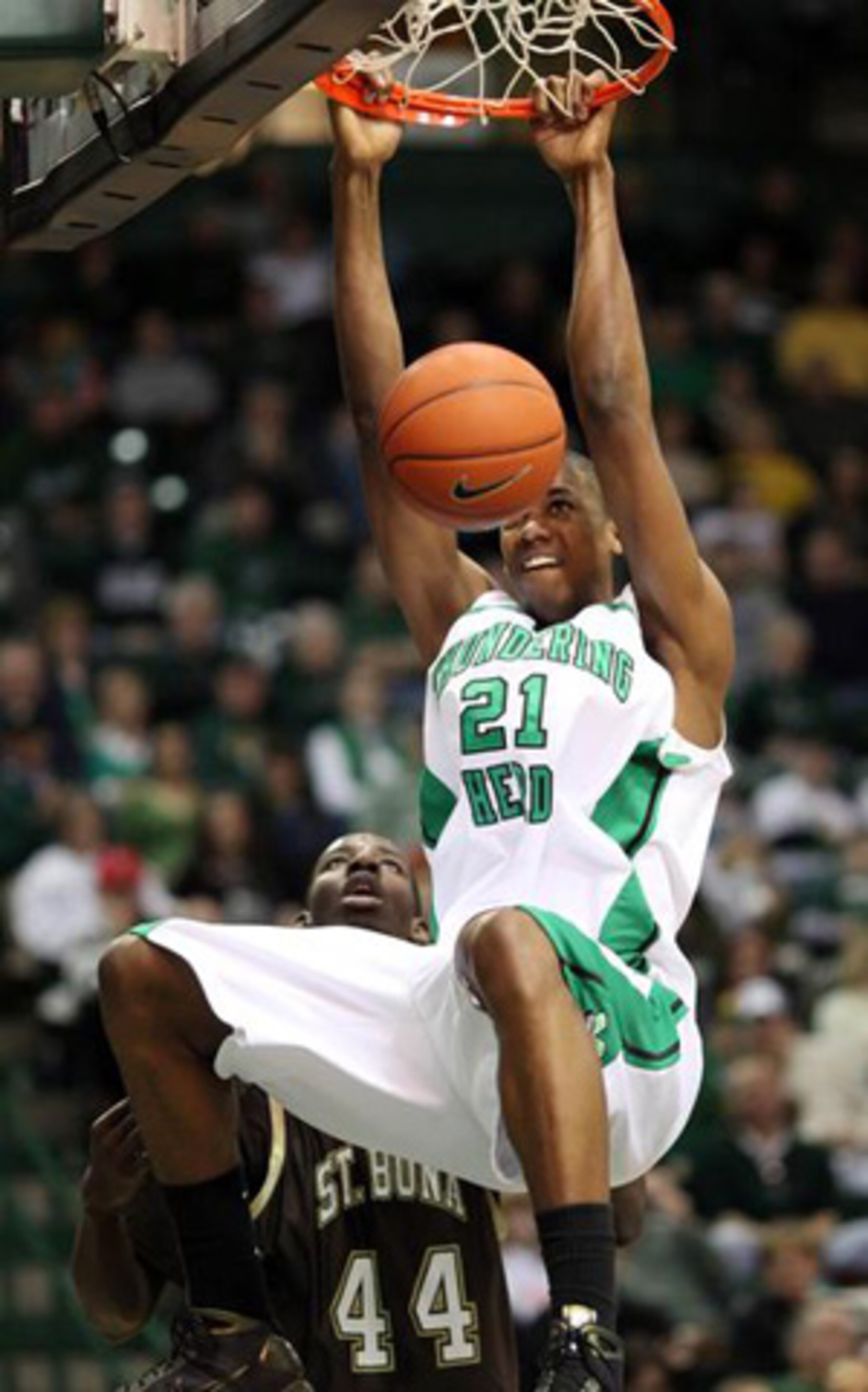
Who the Trailblazers will select: Marshall C Hassan Whiteside
Who the Trailblazers should select: Marshall C Hassan Whiteside
My Reasoning: Whiteside, in my eyes, is the talent-equivalent of Hasheem Thabeet. While I absolutely abhorred Thabeet going No. 2 overall, No. 22 seems too low for someone of Whiteside's potential.
Yes, he needs to add about 40 pounds to his frame to have any chance of defending the likes of Dwight Howard in the paint; however, his shot-blocking skills are off the charts.
With Marcus Camby under contract, Whiteside will have the perfect mentor and the perfect amount of time to develop in Portland.
Or get lost in the shuffle. Either way, at No. 22, it's a risk worth taking.
Other possible selections: Larry Sanders, Quincy Pondexter
Probability of selection: 75%
23. Minnesota Timberwolves
Who the Timberwolves will select: French PF Kevin Seraphin
Who the Timberwolves should select: The top international player on their board.
My Reasoning: No team ever takes and keeps three American first-rounders on their roster. Look for this pick to be traded or for a foreign player like Seraphin to go off the board here.
I have no real experience watching Seraphin because he really has no experience, so I can't really give an opinion.
Other possible selections: Any foreign player who won't be over in the states for two or three years.
Probability of selection: 40 percent.
24. Atlanta Hawks
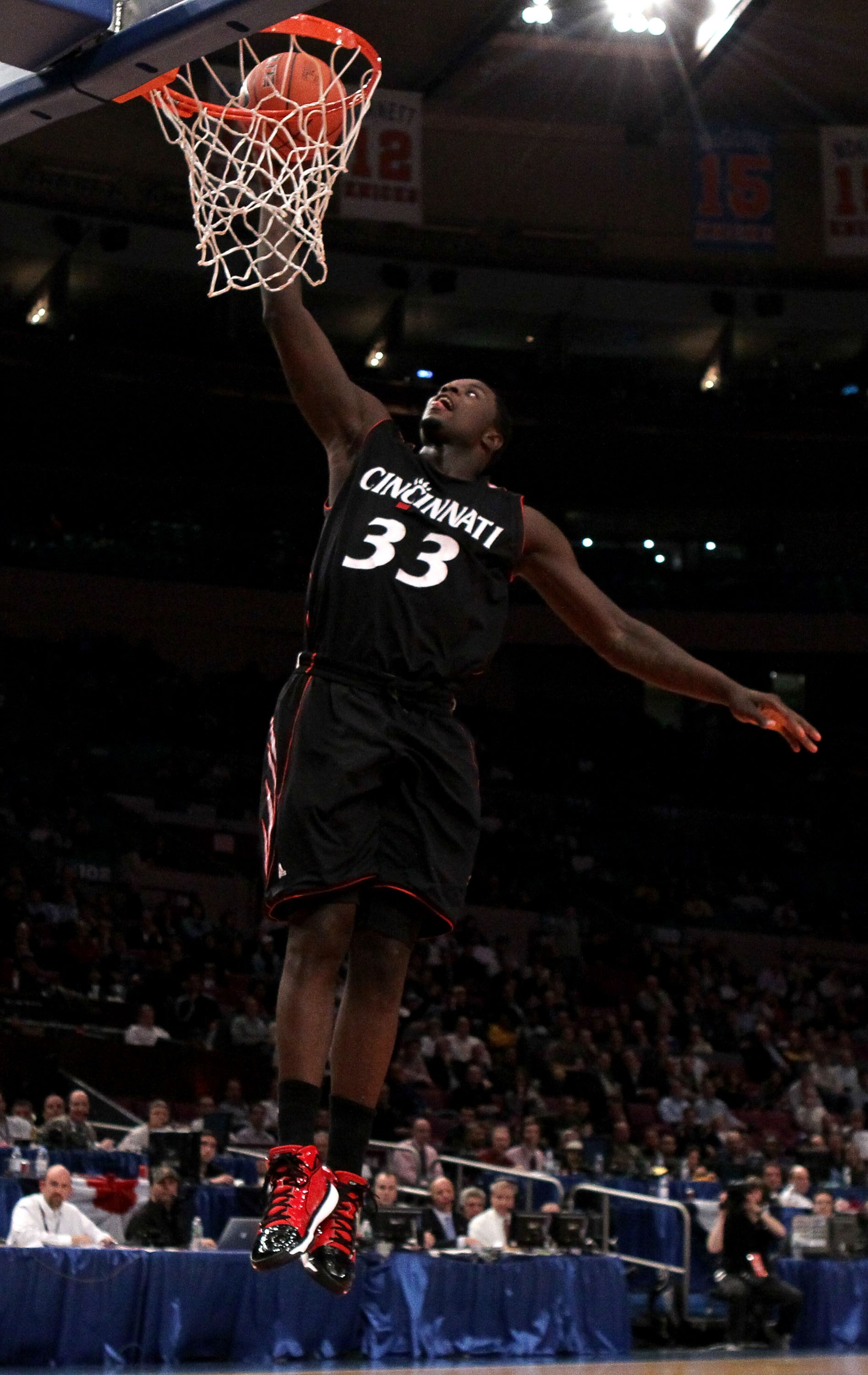
Who the Hawks will select: Cincinnati SG Lance Stephenson
Who the Hawks should select: Washington SF Quincy Pondexter
My Reasoning: I cannot think of a playoff team in recent memory that is in more disarray than the Hawks. Their coach got (rightfully) fired, their best player is probably leaving, and their fans are resigned to the fact that their once-promising nucleus will be gutted this offseason.
During the Hawks' short playoff stint, their glaring weaknesses were a complete lack of basketball IQ and a lackadaisical, knucklehead approach to the game.
Well, Lance Stephenson will fit in perfectly with the knucklehead culture festering in Atlanta.
Too bad finding players that "fit in" is the opposite of what the Hawks front office should be doing.
Other possible selections: Jordan Crawford, Quincy Pondexter, Terrico White.
Certainty of selection: 35 percent.
25. Memphis Grizzlies
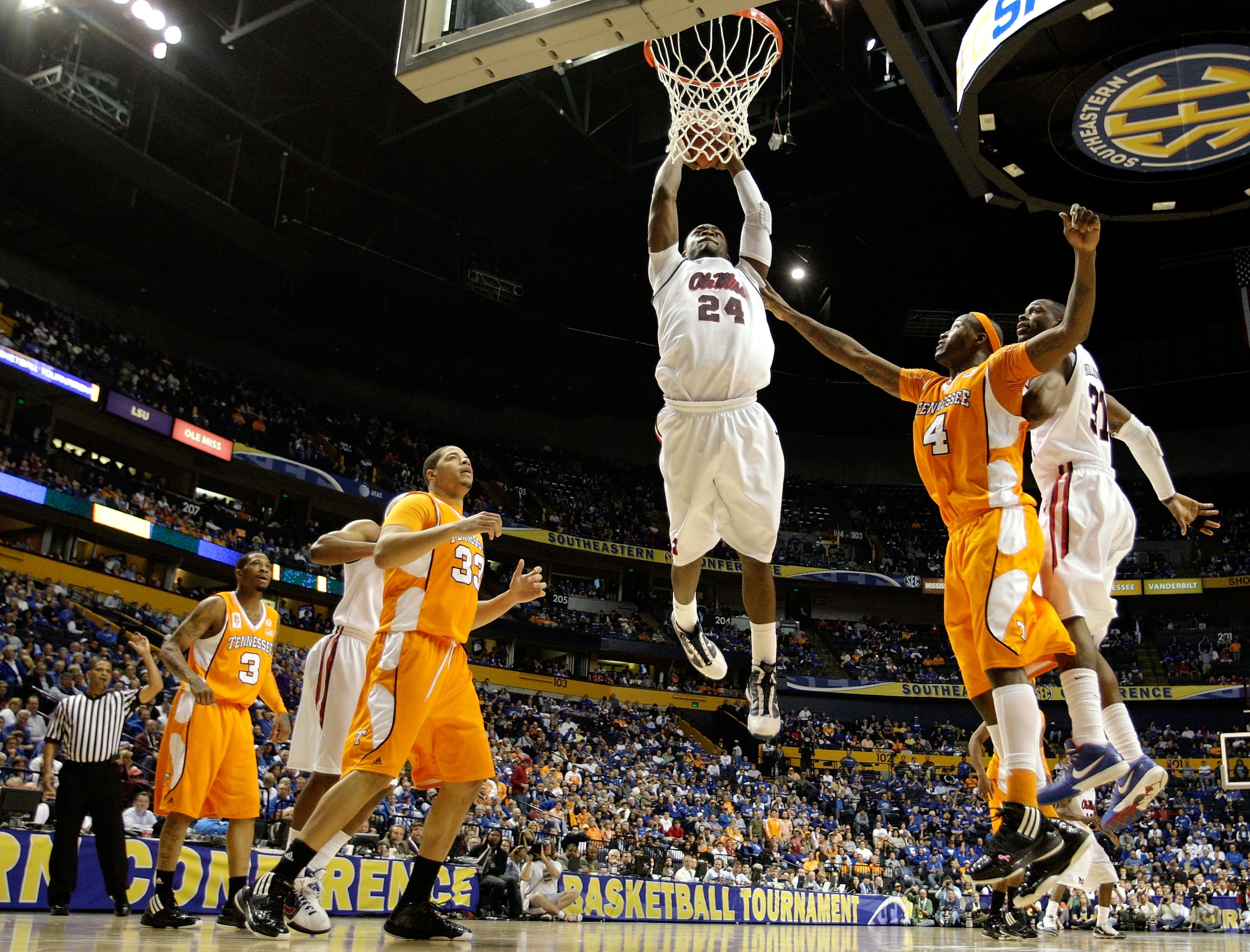
Who the Grizzlies will select: Ole Miss PG Terrico White
Who the Grizzlies should select: Oklahoma PG/SG Willie Warren
My Reasoning: It is becoming unbelievably obvious that the Grizzlies made a mistake when they drafted Mike Conley Jr. No. 4 overall in the 2007 Draft.
Now they have to take the necessary steps to correct their error.
Terrico White has off-the-chars potential, but is also a character risk. That's not to say Oklahoma's Willie Warren is without character flaws, but I just feel more strongly about Warren's translation to the NBA game than White's.
This late in the first round, you basically have to fling mud at the wall and hope it sticks.
Other possible selections: Willie Warren, Armon Johnson, Greivis Vasquez, Dominique Jones.
Probability of selection: 35 percent.
26. Oklahoma City Thunder
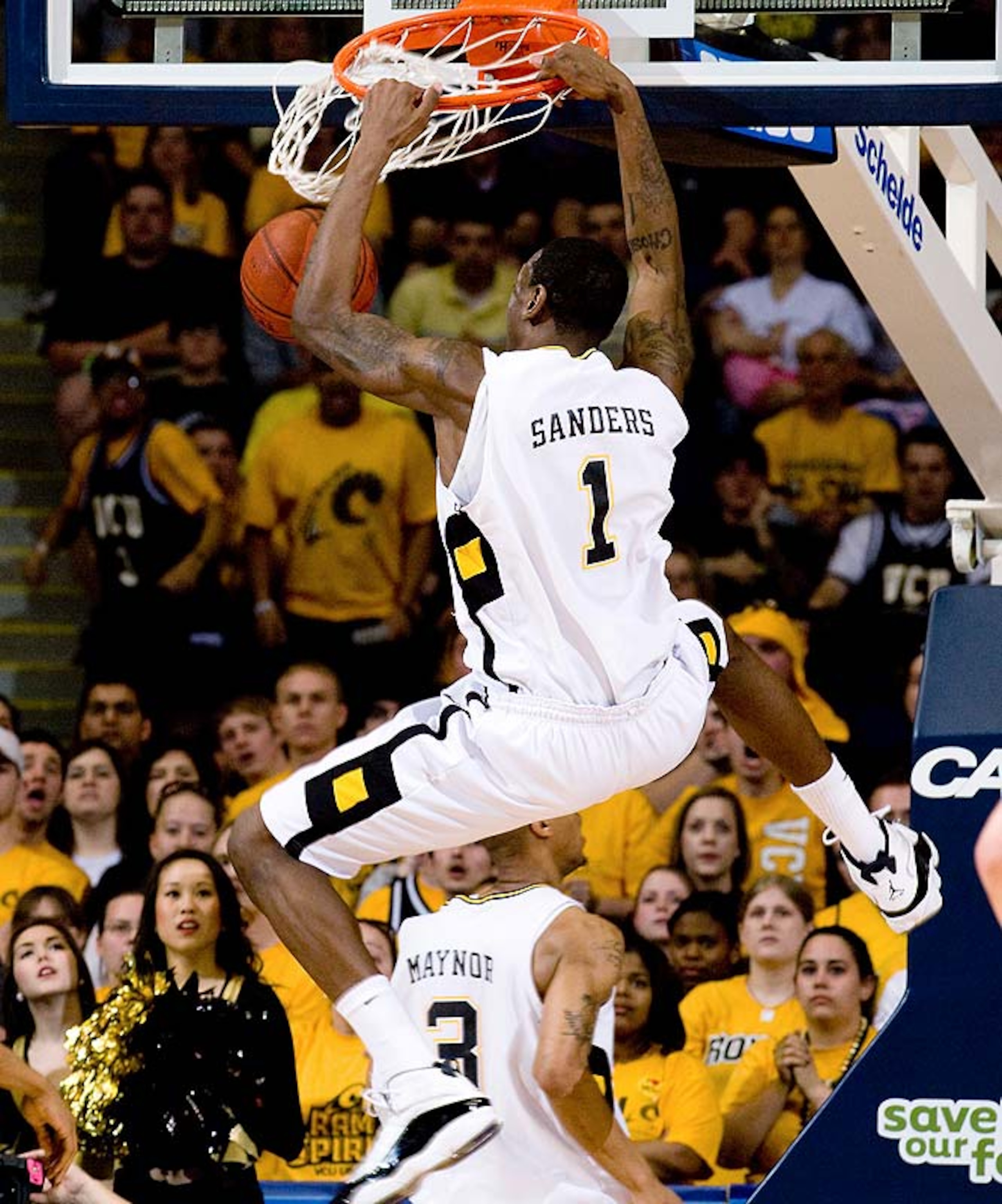
Who the Thunder will select: Virginia Commonwealth PF Larry Sanders
Who the Thunder should select: Virginia Commonwealth PF Larry Sanders
My Reasoning: The Thunder's overhaul of their frontcourt continues with drafting the athletic freak Sanders.
Sanders provides a mean streak that last year's Thunder team was often lacking.
He will need time to develop, but once he does, Sanders could be a nightly double-double in the making.
Other possible selections: Craig Brackins, Keith Gallon, Gani Lawal.
Probability of selection: 40 percent.
27. New Jersey Nets
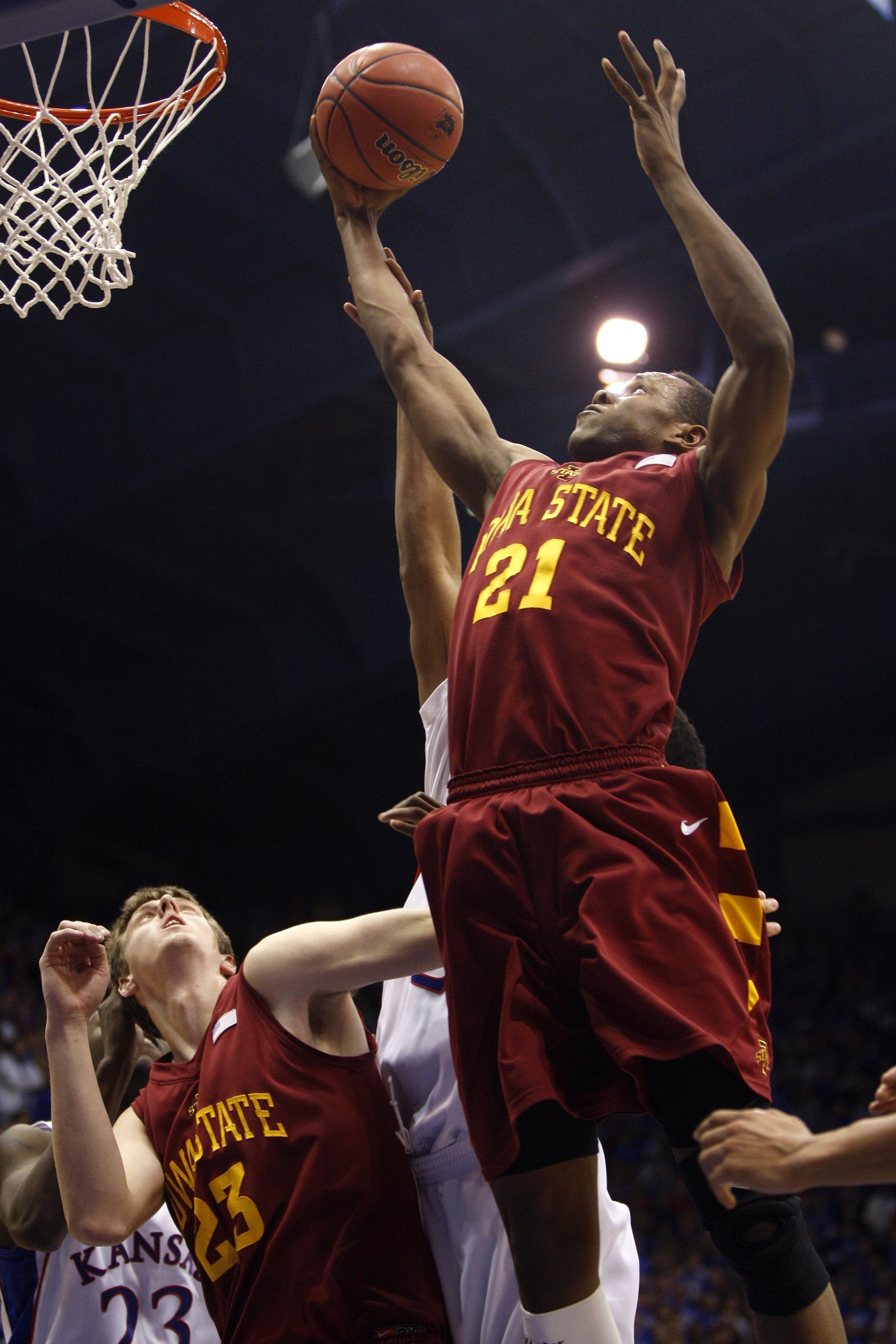
Who the Nets will select: Iowa State PF Craig Brackins
Who the Nets should select: Iowa State PF Craig Brackins
My Reasoning: In this scenario, the Nets already filled their need for a ball-handling point forward in Evan Turner, so Brackins fits the team's second need: a stretch four with the ability to play in the post.
Brackins is another guy who would have gone higher if he received more national attention. He's a character guy who runs the floor well and can do basically anything offensively.
Defensively he's still a bit of a liability and he doesn't have as much interest in rebounding as one would like, but at No. 27, Brackins is about as good as you can do in any draft.
Other possible selections: Quincy Pondexter, Keith Gallon, Gani Lawal.
Probability of selection: 35 percent.
28. Memphis Grizzlies
Who the Grizzlies will select: German C Tibor Pleiss
Who the Grizzlies should select: The top International player on their board.
My Reasoning: Expect Memphis to either sell or trade this pick. If they keep it, they will almost assuredly go foreign instead of having three first round picks on their payroll for next season.
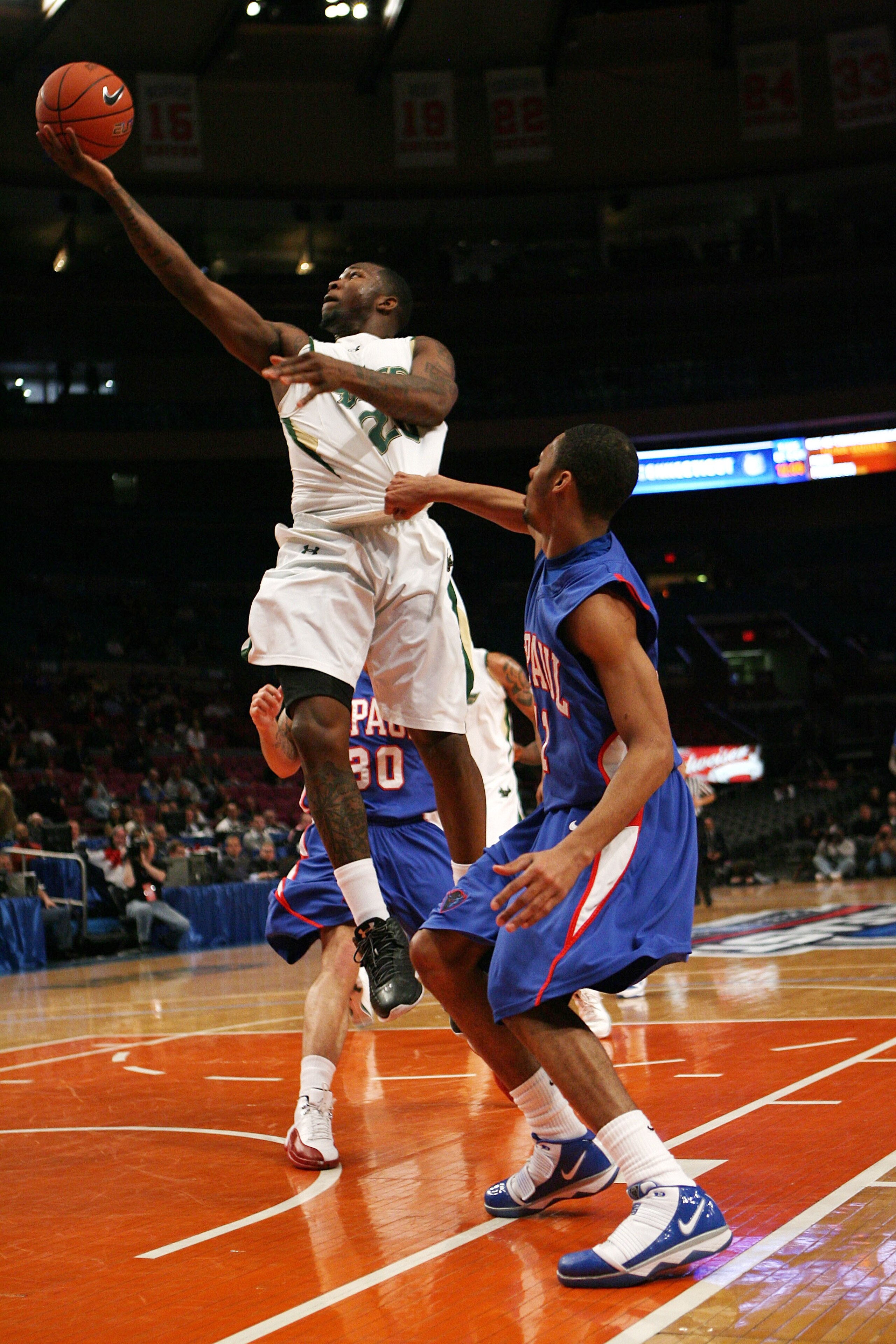
Other possible selections: Any foreign player.
Probability of selection: 30 percent.
29. Orlando Magic
Who the Magic will select: South Florida SG Dominique Jones
Who the Magic should select: South Florida SG Dominique Jones
My Reasoning: While Jones may seem like a redundant addition to Orlando, his ball-handling ability makes him attractive to a team that desperately needs another ball handler.
Some will think that Nevada PG Armon Johnson is the better fit, however, Jones' ability to float between two positions make him the pick here.
Other possible selections: Armon Johnson, Avery Bradley, Willie Warren
Probability of selection: 35 percent.
30. Washington Wizards
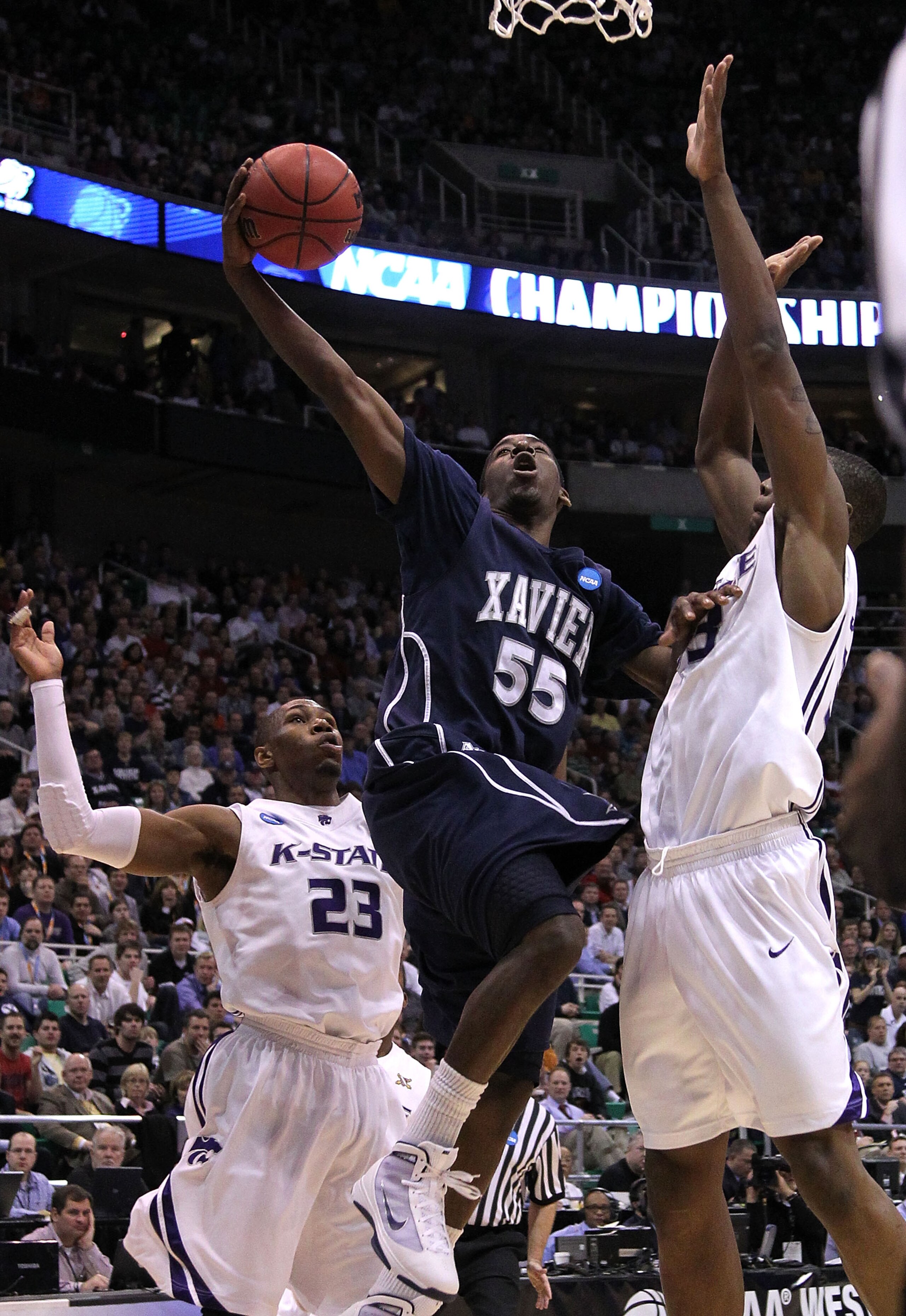
Who the Wizards will select: Xavier SG Jordan Crawford
Who the Wizards should select: Xavier SG Jordan Crawford
My Reasoning: The team that began the first round ends it with an instant contributor who could be a better version of his brother (former Kentucky guard Joe Crawford, 58th overall pick by the Los Angeles Lakers in 2008).
If the Wizards can come out of this draft with Wall and Crawford, they will be everyone's popular pick for the biggest winner of the 2010 NBA Draft.
For that franchise's sake, I hope they are right.
Other possible selections: Quincy Pondexter, Devin Ebanks, Stanley Robinson.
Probability of selection: 40 percent.
Part Two: Big Board
In this portion of the Draft Guide, I will rank my top 30 players in the 2010 NBA Draft.
1. John Wall
Position: PG
Height: 6'4"
Weight: 196 lbs.
Age: 19
School: Kentucky
Potential Ceiling: Derrick Rose's athleticism with Steve Nash's passing ability
Potential Basement: An insanely athletic version of Mike Conley with a petulant babyish attitude.
Scouting Report: The only thing that concerns me in regards to Wall is that, unlike his point guard predecessors (Rose and Tyreke Evans), his game faded down the stretch.
Wall also obviously needs to work on his outside jumper and his decision-making (he averaged four turnovers per game last season).
Despite that, Wall has superstar potential. He has unparalleled athleticism for a point guard and is unstoppable in the open court.
If Wall can keep his head in the game and continues to improve, there is absolutely no reason he won't be a perennial All-Star and MVP candidate.
Career Projection: Hall of Famer. You heard me.
2. Evan Turner
Position: SG/SF
Height: 6'7"
Weight: 214 lbs.
Age: 21
School: Ohio State
Potential Ceiling: Brandon Roy with better rebounding and passing instincts, without three-point range.
Potential Basement: A better version of Gerald Henderson.
Scouting Report: Turner is only player in this draft who I feel 100% certain about being a future All-Star.
Under no possible circumstances can I see Evan Turner being a failure at the NBA level, for he just does too many things exceptionally. He's a great rebounder, slasher, defender, passer, and ball handler.
Despite his greatness in many areas, Turner also has glaring weaknesses in his game — notably being turnover prone and having no three-point shot to speak of.
The great thing about these weaknesses? They are easily fixable.
Turner will never be the best player in the game, but ten years of top-15 is not out of the question.
Career Projection: Five-to-seven All-Star Appearances. Second-best player on a couple of championship teams.
3. DeMarcus Cousins
Position: PF/C
Height: 6'11"
Weight: 292 lbs.
Age: 19
School: Kentucky
Potential Ceiling: A less athletic Karl Malone with three-point range.
Potential Basement: A Derrick Coleman/Zach Randolph-type franchise-killer.
Scouting Report: I will reiterate the previous point I made in the mock draft section of the Draft Guide: Cousins is the best basketball player in this draft.
It's really too bad he's a complete knucklehead because he has an insane combination of great footwork, great post moves, and solid outside range.
His ceiling is truly great. It's sad that he has about a ten percent chance of reaching his potential considering his questionable-at-best motor and complete indifference on the defensive end.
Career Projection: Zach Randolph with flashes of brilliance in contract seasons.
4. Derrick Favors
Position: PF
Height: 6'10"
Weight: 245 lbs.
Age: 18
School: Georgia Tech
Potential Ceiling: Power forward version of Dwight Howard
Potential Basement: Tyrus Thomas
Scouting Report: Favors is an absolute athletic marvel. He will step on the court and instantly be a defensive stopper, athletic force on the offensive end, and overall crowd energizer.
However, when you sit down and study Favors' game tape, there is an obvious lack of polish on the offensive end: He has no go-to post moves, lacks an offensive basketball IQ, and has absolutely no handle.
With Favors, it's really a question as to whether he can combine his freakish athleticism with a freakish work ethic. If he does, look out. If not, he will join a long line of lottery picks chosen simply on potential without yielding any true results.
Career projection: Somewhere between Howard and Thomas—a 17-10-4 career peak.
5. Wesley Johnson
Position: SF
Height: 6'8"
Weight: 206 lbs.
Age: 22
School: Syracuse
Potential Ceiling: Shawn Marion with a slightly better offensive game.
Potential Basement: Shawn Marion with Marion's offensive game.
Scouting Report: The problem with Johnson is that his ceiling has basically been reached. Already 22 years-old, the Syracuse product has a maturity to his game that other prospects don't have, but that maturity also limits his potential. He is an explosive leaper with a vastly improved outside jumper and a stud on the defensive end of the floor.
Johnson is also lacking in the strength department and has some character concerns. Regardless of how you feel about Johnson, there's very little chance he doesn't step in right away and contribute at the NBA level.
In a relatively weak draft, that's about all you can ask.
Career projection: Solid, but not spectacular career.
6. Paul George
Position: SF
Height: 6'9"
Weight: 214 lbs.
Age: 20
School: Fresno State
Potential Ceiling: A better version of Rudy Gay.
Potential Basement: A more athletic version of Mike Dunleavy.
Scouting Report: I realize how far I just went out on a limb for George, but that should tell you how much I believe in him as a prospect. He has flown under the radar for months and is only now rising up draft boards across NBA circles.
During workouts George has shown his unreal shooting range, good athleticism, and knack for rebounding that he put on display all season at Fresno State.
The only hole in George's game is that it lacks consistency. At times he can look like the best player in the world and other times he will disappear for long stretches. Because of that, scouts question his motor.
If George learns how to constantly play at his highest level, my potential ceiling for him might even be low.
Career Projection: Steal of the draft. Future 20-plus PPG scorer.
7. Al-Farouq Aminu
Position: SF
Height: 6'9"
Weight: 215 lbs.
Age: 19
School: Wake Forest
Potential Ceiling A Scottie Pippen-like defender with an average offensive game.
Potential Basement: Out of the league in less than five years.
Scouting Report: Aminu is the biggest boom-or-bust prospect in the entire draft. He has freakish athleticism and a great nose for the ball on the defensive end.
However, he has absolutely no offensive game. His post moves are Kwame Brownian and his outside jumper is Ron Artestian.
There is almost no chance that Aminu is an instant offensive contributor, but his defensive prowess is extraordinary. He is also a fantastic rebounder for his size.
In a draft where teams will often draft based on potential, Aminu's ceiling is great enough to place him among the top prospects in the 2010 NBA Draft.
Career projection: Vital defensive stopper coming off a good team's bench.
8. Greg Monroe
Position: PF
Height: 6'11"
Weight: 247 lbs.
Age: 20
School: Georgetown
Career Ceiling: A slightly better version of Lamar Odom
Career Basement: A poor man's Lamar Odom
Scouting Report: Monroe is an amazingly skilled big man with a fantastic basketball IQ and an underrated unselfishness. He can score from anywhere on the court, and has great footwork and an NBA-ready body.
Despite all of Monroe's positives, he also has an almost equal amount of negatives. He rebounds and plays defense with the enthusiasm of an average NPR host Monroe's intensity and toughness on both ends is also lacking. "Soft" would be a nice way to put it.
He has all of the ability in the world, but it just seems like he is disinterested in using it at times.
Career projection: Second-best player on a perennial losing team or sixth man on a winning team.
9. Cole Aldrich
Position: C
Height: 6'10"
Weight: 236 lbs.
Age: 21
School: Kansas
Career Ceiling: A better version of Joel Przybilla.
Career Basement: An exact replica of Joel Przybilla.
Scouting Report: To slightly borrow the overly used Dennis Green quote, "Cole Aldrich is who we thought he was." Aldrich will never be an All-Star and certainly will never make the Hall of Fame.
However, Aldrich will be a starter for the next eight-to-ten years and will be a yearly consideration for the All-Defense team. He is an insanely smart player who knows how to grab rebounds and block shots without elite athleticism. Aldrich also has the ability to shoot out from 18 feet.
Any team looking for an instant contributor won't find a better player.
Career Projection: Joel Przybilla 2.0.
10. Eric Bledsoe
Position: PG
Height: 6'2"
Weight: 192 lbs.
Age: 20
School: Kentucky
Career Ceiling: Russell Westbrook
Career Basement: Jordan Farmar
Scouting Report: Known as the "other" Kentucky point guard, Bledsoe has desperately tried to separate himself from his former teammate John Wall.
During his short stint in the Bluegrass State, Bledsoe has shown himself as an elite athlete with a lightning-quick first step. He is also a pass-first point guard, which is a trait Wall often abandoned in his freshman season.
While there are many positives to Bledsoe's game, he is also raw on the offensive end. His jumper leaves room for vast improvement and he is more turnover prone than stats let on.
For me, Bledsoe is a risk worth taking in a weak draft.
Career projection: 10 year starter/sixth man for a contender.
11. Patrick Patterson
Position: PF
Height: 6'9"
Weight: 240 lbs.
Age: 21
School: Kentucky
Career Ceiling: A better version of David West.
Career Basement: Glen Davis
Scouting Report: A little over a year ago Patterson made the decision to withdraw his name from the 2009 NBA Draft and return to Kentucky in order to work on his game. Some wondered whether that was the right decision because of the "strength" of the 2010 class.
Well, Patterson certainly made the right call. His game has vastly improved over the past year and the Kentucky product is ready to be an instant NBA contributor.
Patterson still needs to work on his still-raw post game, but he is otherwise a great offensive prospect. Patterson is also an exceptional shot blocker and finisher at the rim.
His only real problems are his size and conditioning. Size cannot be changed, but conditioning can. If Patterson has the desire, he will be a very good NBA player. If not, we may have already seen his peak.
Career Projection: A slightly worse version of David West. His success will somewhat depend on what team he goes to.
12. Avery Bradley
Position: PG/SG
Height: 6'3"
Weight: 180 lbs.
Age: 19
School: Texas
Career Ceiling: A Nate Robinson-Ben Gordon super Sixth Man hybrid.
Career Basement: A dead man's version of Monta Ellis.
Scouting Report: Bradley has everything you could ask for when drafting a sixth man. Bradley has the ability to play multiple positions. He's an explosive scorer and athlete, has a good mid-range jumper and can shut down any point guard you put in front of him defensively.
What Bradley lacks is any true position. He plays like a two but has the body of a point guard.
That's why Bradley will never be effective as a starter, but has all kinds of potential as a sixth man.
He needs to work on adding a three-pointer to his arsenal as well, but if he projects as I think, he will win multiple Sixth Man of the Year awards.
Career projection: Super sixth man until someone vastly overpays him and he becomes a disappointment in the starting lineup.
13. Xavier Henry
Position: SG
Height: 6'7"
Weight: 210 lbs.
Age: 19
School: Kansas
Career Ceiling: A better version of Michael Redd
Career Basement: A poor man's version of James Harden
Scouting Report: Midway through the 2009-2010 NCAA basketball season, it seemed like Xavier Henry was the surefire No. 2 overall pick. What a difference a second half of a season makes.
Henry went through an unbelievable offensive slump and slid down draft boards, perhaps too far.
Henry still has the talent which made him the odds-on favorite to be the No. 2 pick in November: Deep three-point range, finishing ability, and above average defensive ability.
However, a long season and second-half slump did point out the flaws in his game: He's not a great athlete, can't create his own shots, and relies too heavily on his jumper.
Only time will tell whether the real Xavier Henry is the first-half or second-half version.
Career Projection: Solid sixth or seventh man.
14. Ed Davis
Position: PF
Height: 6'10"
Weight: 227 lbs.
Age: 21
School: North Carolina
Career Ceiling: A better version of P.J. Brown
Career Basement: Darrell Arthur
Scouting Report: Let's get this out of the way before I start his scouting report: I wholly believe with every fiber of my being that Ed Davis will be a bust. He is No. 14 on the big board solely because of his potential.
Now that we are clear, Davis has the potential to become a fantastic defensive role player for years to come. His commitment to playing defense is by far his greatest strength. However his offensive game is just as unpolished, as his defensive game is totally polished.
Throughout his entire time at North Carolina, Davis' offensive game has shown flashes but has never taken flight.
He will have to vastly improve offensively to last at the next level.
Career projection: 10th man.
15. Luke Babbitt
Position: SF
Height: 6'9"
Weight: 214 lbs.
Age: 21
School: Nevada
Career Ceiling: Keith Van Horn
Career Basement: A left-handed Adam Morrison
Scouting Report: He can't guard anyone, let's just be bluntly honest about that. He's too slow for threes and too small for fours.
Therefore, Babbitt's potential is directly tied to what he does on the offensive end. And with the recent failure of non-athletic gunners translating NBA success, I find myself bullish on Babbitt's prospects.
Then you watch him play and begin seeing why general managers feel he could be the exception to the rule. He's a fantastic perimeter shooter with an excellent basketball IQ.
It will just be interesting to see whether his game can translate to the pro level. If it can, look out. If it can't, hello D-League!
Career Projection: Solid career role player.
The Rest
16. Damion James, SF, Texas
17. Ekpe Udoh, PF, Baylor
18. James Anderson, SG, Oklahoma State
19. Gordon Hayward, SF, Butler
20. Solomon Alabi, C, Florida State
21. Larry Sanders, PF, VCU
22. Craig Brackens, PF, Iowa State
23. Hassan Whiteside, C, Marshall
24. Jordan Crawford, SG, Xavier
25. Dominique Jones, SG, South Florida
26. Devin Ebanks, SF, West Virginia
27. Daniel Orton, C, Kentucky
28. Willie Warren, PG, Oklahoma
29. Quincy Pondexter, SF, Washington
30. Gani Lawal, PF, Georgia Tech
Be sure to look for part two of the Draft Guide tomorrow!
What is the duplicate article?
Why is this article offensive?
Where is this article plagiarized from?
Why is this article poorly edited?
Flag This Article


33 Comments
Loading comments...
This comment and all replies have been deleted This comment has been deleted Undo delete