The Hassan Whiteside Effect: How the Miami Heat Center Is Changing the NBA
Hassan Whiteside isn't like most D-League call-ups. But with the growth of the NBA's lower division and the Miami Heat's stroke of genius in calling up Whiteside, there could be many more like him down the line.
Not so much shot-swatting, rim-rocking 7-footers, but rather young players on whom teams take low-risk, multiyear gambles.
You may remember Whiteside as the NBA's next Jeremy Lin, at least as far as overnight sensations are concerned. Like Lin with the New York Knicks back in 2012, Whiteside went from unknown D-Leaguer to a solid starter in what seemed like the blink of an eye.
TOP NEWS
LeBron Hypes Embiid Workout Pics
🚨 Suns Extending Dillon Brooks
Ranking Every Team's Trade Assets 📊
But in reality, it didn't happen quite that quickly for Whiteside.
He appeared in just three games—for less than 10 minutes total—before the Heat sent him down to the D-League in mid-December. Even after Miami brought him back, Whiteside didn't start to see substantial playing time for another couple of weeks, until he put in productive minutes against Memphis, Orlando and Indiana to close out the calendar year.
The Heat were able to shuttle him between the big club and the D-League affiliate in Sioux Falls, South Dakota, without fear of another club snatching him up, because they had signed him to a two-year, NBA-minimum deal with partial guarantees in the second year. As such, Miami could retain Whiteside's D-League rights.
Injuries to Josh McRoberts and Chris Andersen up front forced Pat Riley's hand, leading to Shannon Brown's ouster and Whiteside's arrival.
The commitment didn't cost Miami much monetarily (just under $770,000 in year one and a shade over $981,000 in year two, according to Basketball-Reference.com), but it guaranteed a valuable roster spot to a player with a checkered past.
On the whole, though, the terms heavily favored the Heat, as ProBasketballTalk's Dan Feldman explained:
"He hadn’t played in the NBA in two years, so any contract – even a minimum deal – would have appealed to him. Therefore, Miami, holding leverage, fairly sought a cheap second season with no money automatically guaranteed. That way, the Heat would be rewarded for taking a chance on Whiteside if he exceeded minimum-salary production. And if he didn’t, it wouldn’t cost them anything.
"
Pat Riley's wager paid off handsomely. Whiteside soon emerged as a rebounding machine with the length and timing to protect the paint. By the time the 2014-15 campaign came to a close, Whiteside had piled up 22 double-doubles, including a 12-block triple-double in Chicago, and limited his opponents to 46.5 percent shooting at the rim—the fourth-lowest mark among players who faced at least eight such shots per game, according to NBA.com.
Not bad for a guy who spent time in Lebanon and China before working his way back to the States.
| Rudy Gobert | 26.3 | 2.3 | 8.3 | 40.4% |
| Serge Ibaka | 33.1 | 2.4 | 9.3 | 40.8% |
| Nerlens Noel | 30.8 | 1.9 | 9.5 | 45.4% |
| Hassan Whiteside | 24.2 | 2.6 | 8.3 | 46.5% |
| Jonas Valanciunas | 26.2 | 1.2 | 8.1 | 46.5% |
| Tim Duncan | 29 | 1.9 | 9.1 | 46.9% |
| DeMarcus Cousins | 33.9 | 1.7 | 8.7 | 47% |
| Andre Drummond | 30.5 | 1.9 | 8.9 | 48% |
| Pau Gasol | 34.3 | 1.9 | 10.3 | 48% |
| Robin Lopez | 27.8 | 1.4 | 8.8 | 48% |
Miami still missed the playoffs for the first time in seven years, but the shortfall was no real fault of Whiteside's. If anything, his emergence out of left field helped the Heat stay in the hunt in the first place.
Going forward, Whiteside's return to a starting five that features Dwyane Wade, Chris Bosh, Goran Dragic and Luol Deng could put Miami back on the map among Eastern Conference contenders less than two years removed from LeBron James' departure. Or, as Whiteside put it, via the Associated Press' Tim Reynolds:
There is some downside to Whiteside's situation for the Heat. They'll have to be judicious with their salary situation, even under a cap that's set to balloon into the $90 million range next summer, if they're to retain his services long-term. Here's Feldman again:
"After next season, the Heat hold Whiteside’s Early Bird Rights. Those allow the Miami to re-sign Whiteside on a two-to-four year contract that – using estimated figures until the NBA determines the average salary in 2015-16 – starts up to $5,885,440 and is worth up to $26,190,208 over four years. Anything more would require cap space.
"
If Whiteside keeps up his stellar play—and keeps his temper tampered—he'll draw much more than that on the open market. In the estimation of ESPN.com's Amin Elhassan, Whiteside could sign a new deal worth nearly $19 million per year next summer. A single season at that rate would be worth more than eight times what Whiteside has earned to date in the NBA ($2,262,513, according to Basketball-Reference).
The Heat would have to maintain enough room under the cap, rather than plan to shoot past it, if they're to retain his services. It's not ideal for Miami, but in the big picture, it could be a win-win for team and player: The Heat would get two years of stellar production at bargain-basement prices, and Whiteside would get to cash in as an unrestricted free agent thereafter.
Beyond the production and the potential payday, Whiteside's situation is unique and, in some respects, nearly unrepeatable at the molecular level.
He returned to the Association this past season with two years of service under his belt. Granted, those years were short—one game with the Sacramento Kings as a second-round rookie in 2010-11 and 18 more in 2011-12—but they were enough to move Whiteside within one year of restricted free agency and two years of unrestricted service.
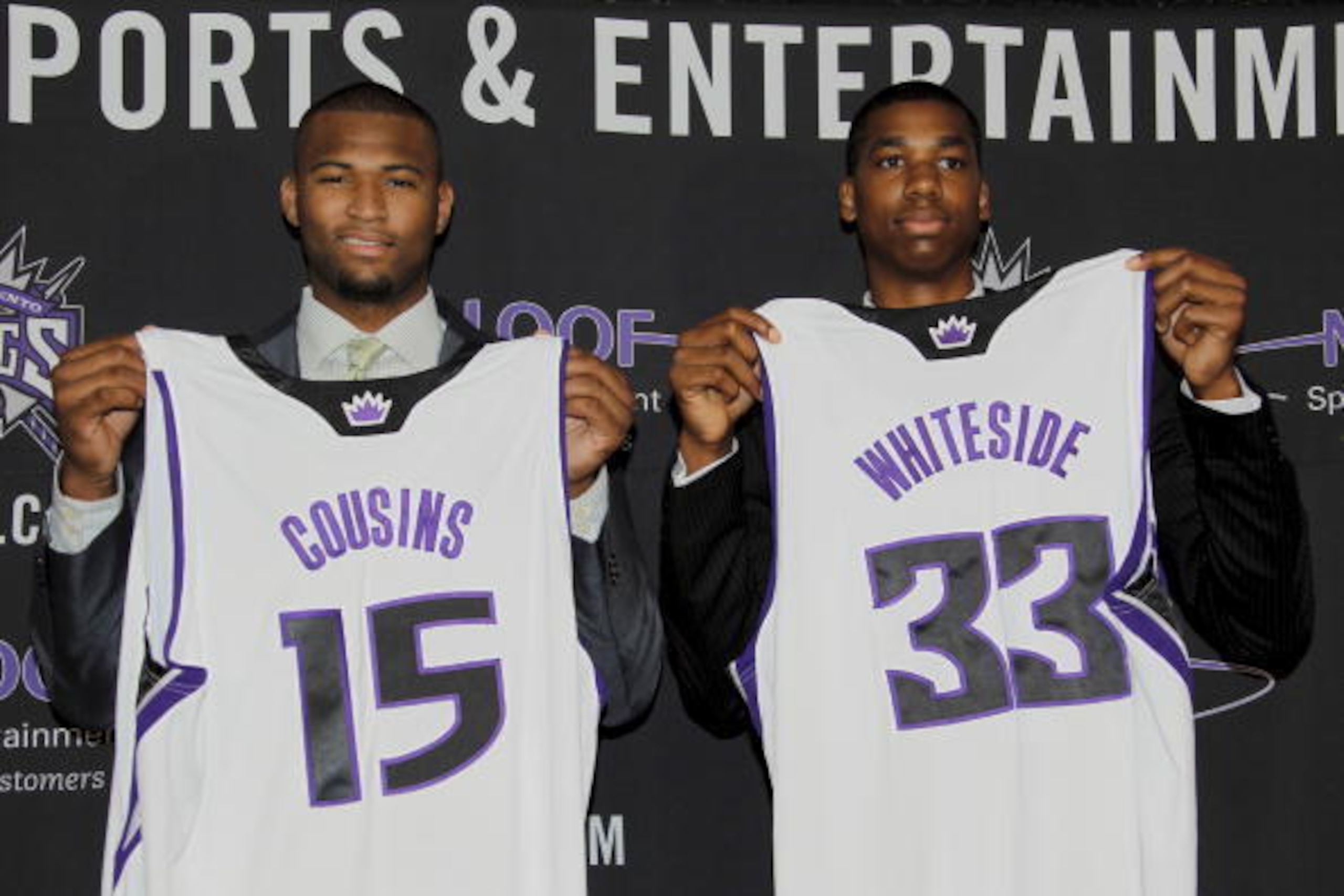
Whiteside's case may wind up as the first instance of a player inking for beaucoup bucks after getting plucked out of the D-League on a multiyear deal, but it probably won't be the last. In fact, there's already at least one other player in the pipeline whose situation could play out somewhat like Whiteside's.
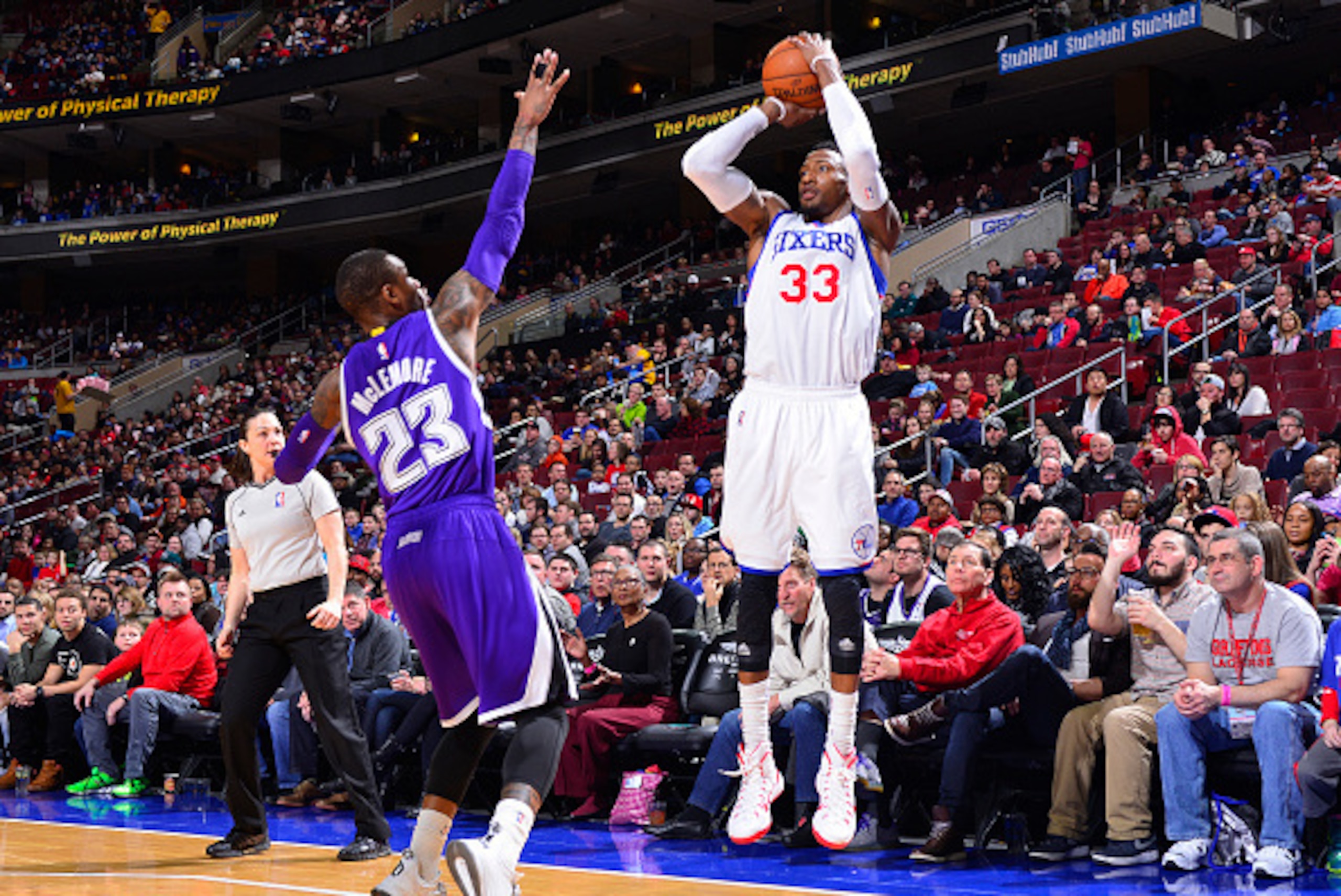
Just go to Philadelphia, where you'll find Robert Covington set to start his second NBA season. Covington began his pro career as Daryl Morey's yo-yo in Houston. The Rockets signed him to a multiyear, partially guaranteed deal as an unrestricted free agent out of Tennessee State in July 2013.
During the 2013-14 season, they assigned Covington to and recalled him from the D-League's Rio Grande Valley Vipers seven times. They subsequently waived him at the end of their 2014 training camp, though Covington took home $150,000 for his troubles.
But rather than let Covington, the first pick in the 2014 D-League draft, go to the Grand Rapids Drive, the 76ers—whose general manager, Sam Hinkie, was Morey's star disciple—snapped him up on a four-year deal replete with partial guarantees and a fourth-year team option.
In that respect, Covington's deal isn't all that different from the ones Philly handed out to JaKarr Sampson, Jerami Grant, Pierre Jackson, Scottie Wilbekin and Richaun Holmes, among others. The Sixers tried to pull a similar trick with K.J. McDaniels, only to see him opt for a one-year non-guaranteed tender that made him a restricted free agent this summer.
But unlike Sampson, Grant, Wilbekin and Holmes, Covington didn't come to the City of Brotherly Love as either a second-round pick or an undrafted rookie free agent but rather as a presumptive D-Leaguer.
And unlike Jackson, a diminutive point guard coming off an Achilles injury, Covington could make some serious scratch down the line. Players with his size (6'9") and skill set (37.4 percent from three on 6.4 attempts per game last season) are all the rage in today's shooting-obsessed NBA. If Covington keeps knocking down treys and expands his game a bit, he'll find himself in line for a substantial raise.
Odds are there will be more like him and Whiteside, if only because the D-League is still growing in terms of both its own size and its influence on the Association.
The 2014-15 season was a banner year for the D-League across the board.
Prior to its start, the leagues announced that NBA teams could designate as many as four of the five players cut from training camp as "affiliate players." Such players would be sent to that NBA team's D-League affiliate, provided they signed contracts there rather than in other leagues around the world.
All told, 46 players were tapped for the affiliate designation. Though they played for teams tethered to NBA counterparts, these players were, by rule, free agents available to any of the 30 organizations that wanted them.
Some of those guys—like James Michael McAdoo (Warriors), Jabari Brown (Lakers), Tyler Johnson (Heat) and Langston Galloway (Knicks)—were among the 47 players involved in the 63 call-ups to and 195 assignments from the NBA. All three of those figures set new records in their respective categories.
And each of those guys mentioned earned multiyear NBA contracts off their 20-day auditions.
That may be just the beginning of a renaissance in the relationship between the NBA and its little brother.
As a matter of simple math, the inevitable expansion of the Assocation's minor league should, in time, lead to more deals like those signed by Whiteside and Covington. More D-League teams offer more spots to players looking to break into the NBA. More spots mean more opportunities for them to make that jump.
And with more teams reaping the harvests on offer in the D-League—in terms of both individual player development and wins at the NBA level—you can bet that others will join the party at some point. At its core, the NBA has long been and figures to remain a copycat league; if a certain tactic works for one squad, chances are others will give it a go for themselves.
Moreover, if players (and their agents) see the pipeline to the NBA widening, they may be more willing to risk forfeiting solid six- and seven-figure salaries abroad for a chance to leap up from the D-League. Guys on the fringes of the Association won't have to worry about scraping by on a D-League salary (between $13,000 and $25,500) when their incomes are being subsidized by partially guaranteed NBA contracts.
How much Whiteside's situation affects that calculus is difficult to predict now, before he's hit free agency, and won't be much easier afterward. But if Whiteside and the Heat both continue to benefit from their arrangement, there could be many more D-League call-ups like his in the years to come.
Josh Martin covers the NBA for Bleacher Report. Follow him on Twitter.

.jpg?w=2560 "Donald Works Out For Rams 🫨")