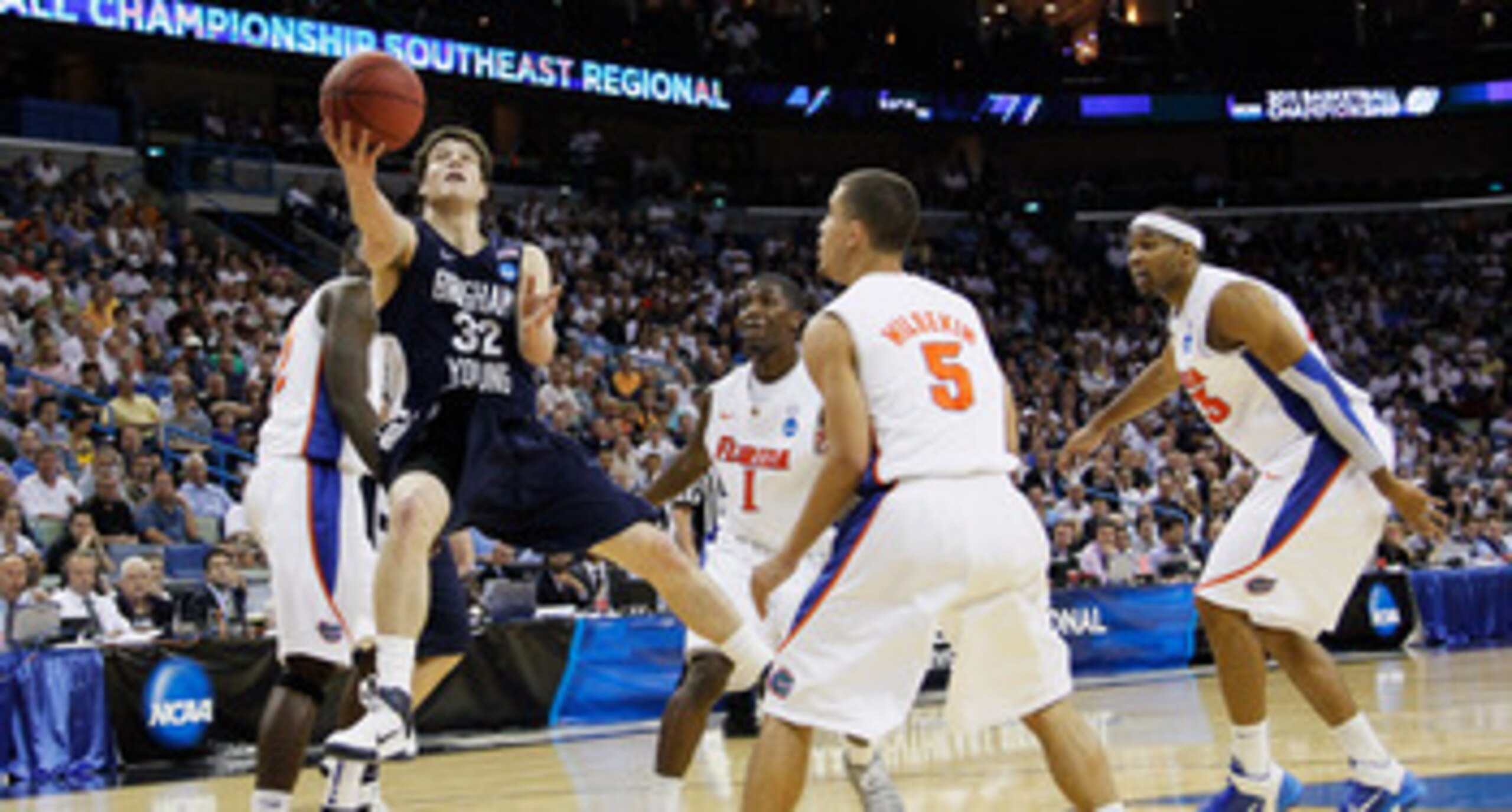

NBA Draft 2011: 3 Areas Jimmer Fredette Must Improve in His Game to Succeed
Jimmer Fredette is unquestionably the most polarizing prospect in the 2011 NBA Draft.
The BYU point guard garnered multiple National Player of the Year awards his senior season, as well as a cult-like following and damn near rock star status.
The idol worship of Jimmer even spawned this ridiculous Facebook thread full of Chuck-Norris-mixed-with-Mormon-religion jokes (my personal favorite: "...and on the seventh day, He scored 47 points").
Of course, a loyal following always comes with a fair share of haters.
Many believe Jimmer is too slow, too unathletic, too indifferent on defense to succeed in the pros.
But are these criticisms fair? And if they are, will they really affect his ability to be an impact player at the next level?
Fredette undoubtedly has a savvy offensive mind (similar to that of Steve Nash or Steph Curry), a unique understanding of angles and positioning, and absurd range on his jump shot.
He is also quite strong for a point guard and performs well under a microscope, as evidenced during his entire senior year.
But as with every prospect, Jimmer certainly has a few flaws. While I certainly don't believe they will be too detrimental to his career, they are flaws nonetheless.
Here are three areas Fredette would be wise to improve upon in order to maximize his NBA potential.
Leaping Ability
1 of 4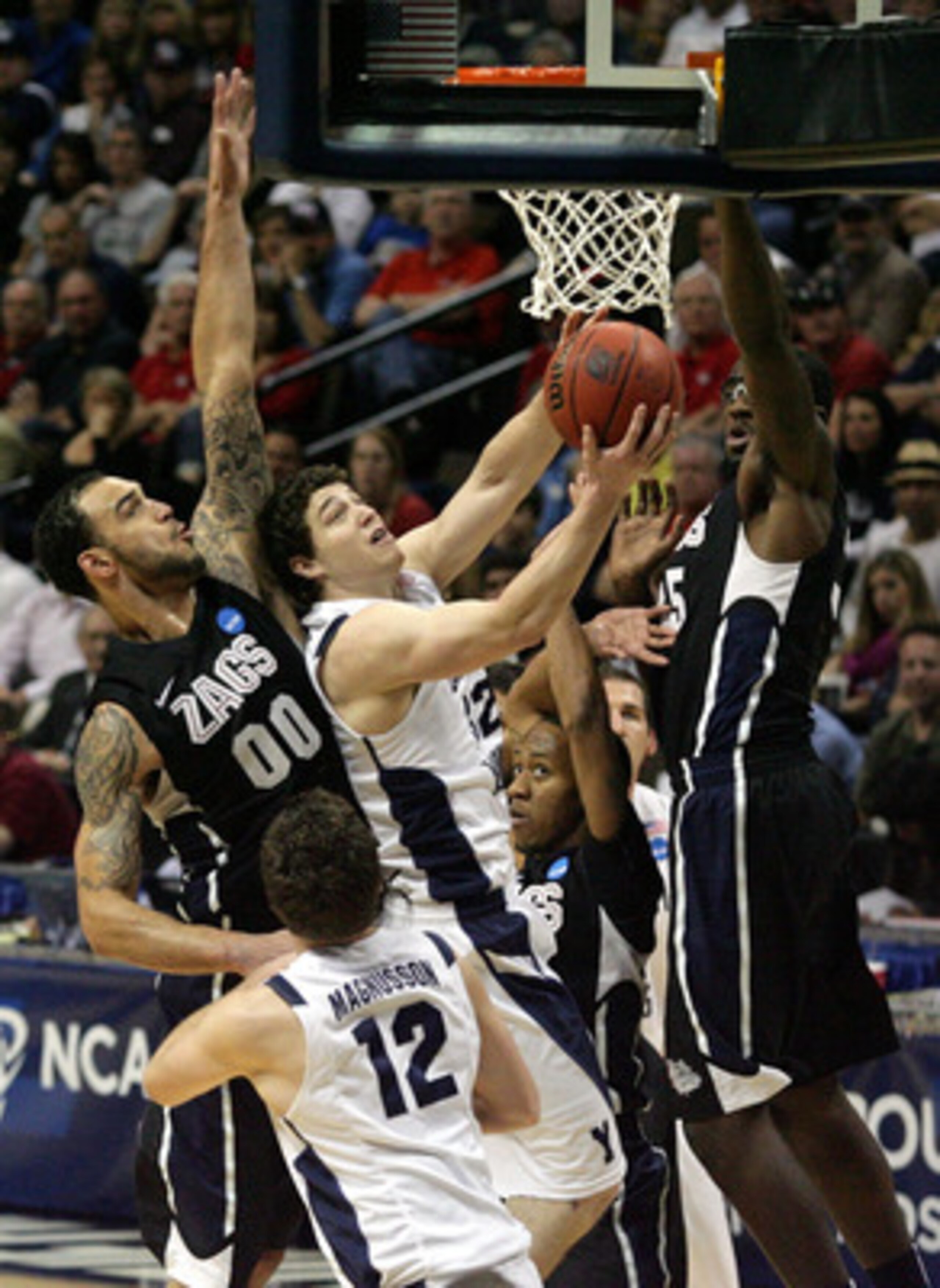
While Jimmer is a better athlete than many people give him credit for, he will definitely need to improve his leaping ability if he is going to a multi-dimensional scorer at the next level.
He was prone to having his shot blocked when he drove to the basket in college, and that was against Mountain West competition.
In the NBA, it's only going to get worse. Fredette will be facing world-class athletes on a nightly basis, most of whom are taller, longer and better leapers than he is.
At the Chicago pre-draft combine, Jimmer's maximum vertical jump was 33 inches. The guys he's competing against for draft positioning—Brandon Knight and Kemba Walker—destroyed him by posting jumps of 37.5 and 39.5 inches respectively.
With NBA trainers providing him elite-level plyometric and weight lifting programs, it's certainly possible that he will improve in this area.
If he does, he will stand a much better chance when venturing into the paint.
Sprint Speed
2 of 4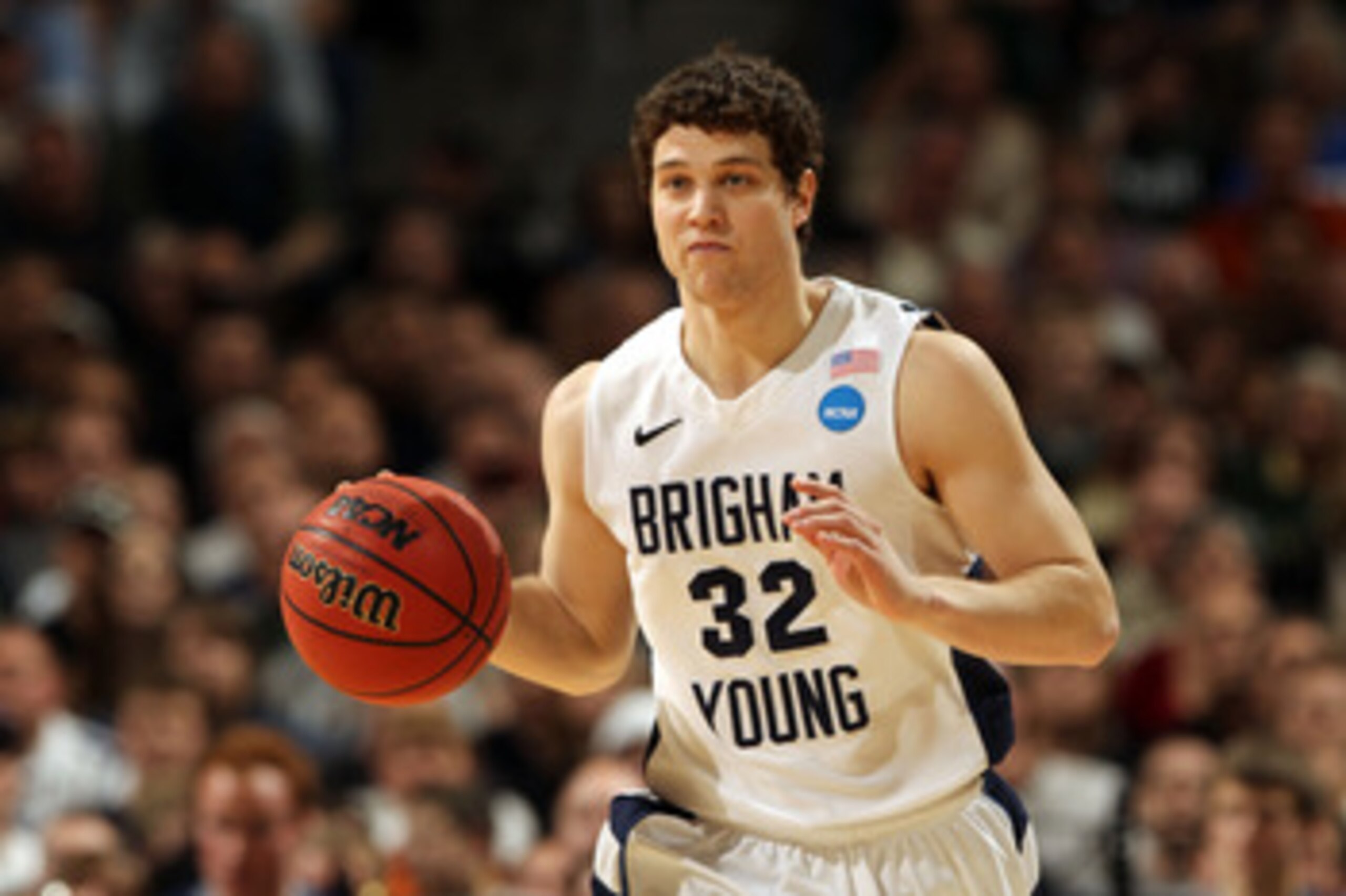
One of the biggest knocks on Jimmer is his lateral quickness, or perceived lack thereof.
However, this is merely an illusion. At the pre-draft combine, Fredette ran the lane agility drill (designed to test body control, ability to change direction, and lateral foot speed) in 10.42 seconds.
That's faster than both Knight (10.74 seconds) and Walker (10.87).
What Fredette actually needs to improve is his sprinting. Jimmer's three-quarter court sprint time was 3.21 seconds, slower than Walker (3.16) and Knight (3.07).
This could negatively affect Fredette in fast break situations, both offensively and defensively.
Due to his lack of height and leaping ability, Jimmer will have to be able to create space in transition to finish at the rim. But this won't happen if he doesn't become a step or two faster.
He will be susceptible to getting run down by faster players in the open court, which could lead to his dribble being swiped from behind or an otherwise uncontested layup turning into a challenged one.
And defensively, I wouldn't be surprised to see him routinely get left behind by quicker guards in transition.
If Fredette improves his foot speed, even just slightly, it will go a long way towards making him a more effective fast break player.
Defensive Effort
3 of 4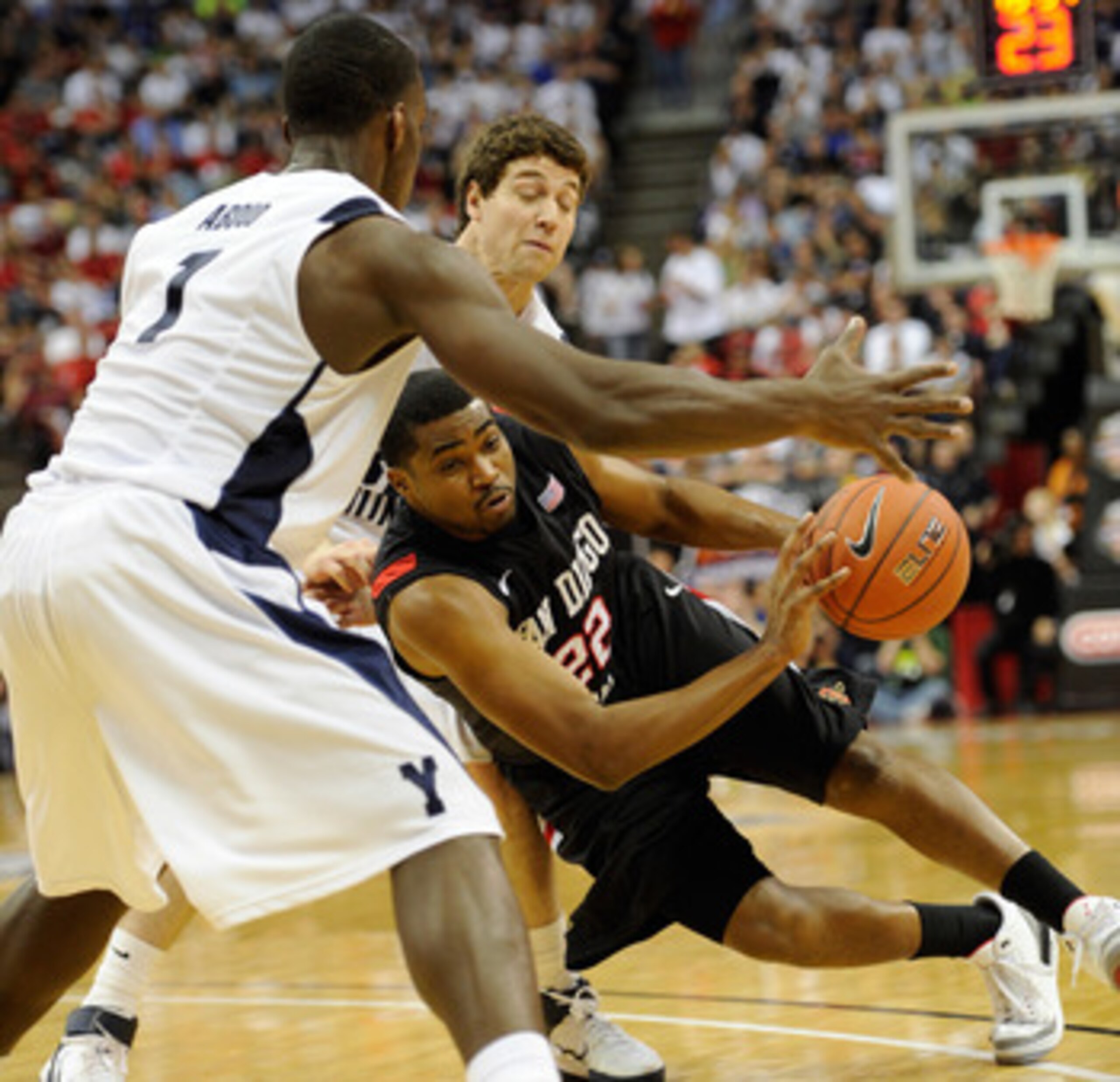
This is the only picture I could find of Jimmer playing something that resembled defense, which is understandable because he was essentially nonexistent at that end of the floor in college.
At times it looked as if fellow BYU guard Jackson Emery had to defend two people at once.
Most Jimmermaniacs will argue that's because Fredette shouldered such an enormous offensive load that it would have been illogical for him to expend energy on defense.
And I guess I'll buy that, since he basically was their entire offense.
But at the next level, Jimmer will have much less offensive responsibility and will be held accountable for his defense.
NBA coaches love great scorers, but when a player's defensive deficiencies outweigh their offensive contributions, they won't hesitate to send them to the bench.
Look at Mike Bibby, a player Jimmer is often compared to. Bibby started the first five games of the NBA Finals before being benched for the decisive Game 6, simply because he wasn't producing enough to make up for his horrendous defense.
Fredette doesn't want to be on the list of guys who are great shooters, but are so bad defensively that they are a detriment to their team in crunch time (An abbreviated version of the list: Kyle Korver, J.J. Redick, Peja Stojakovic, Bibby).
If Jimmer wants to be maximize his playing time in crucial situations, he will have to improve both his aggressiveness and effectiveness on the defensive end.
Conclusion
4 of 4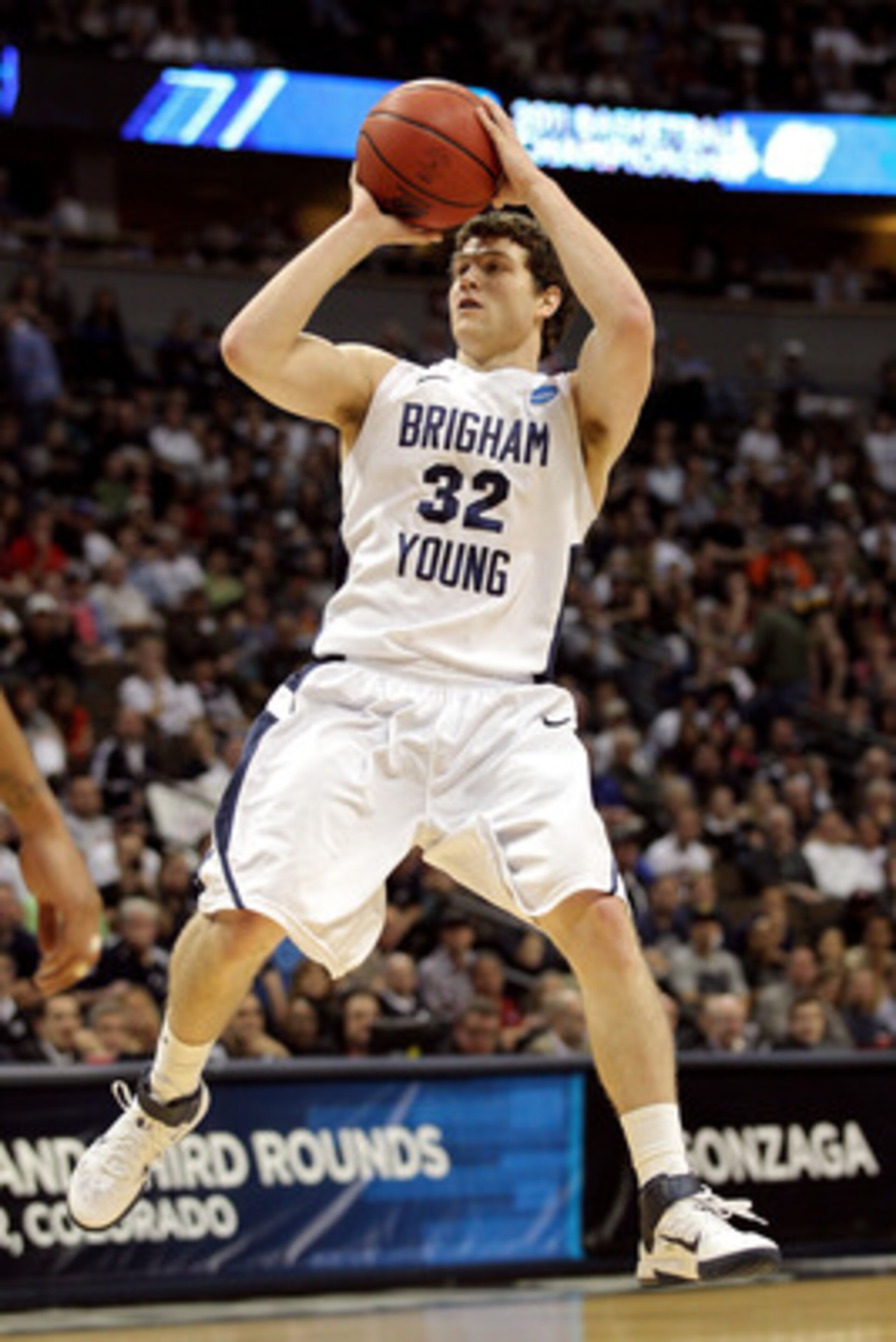
I believe Fredette will be a quality player with a long career in the NBA.
His positive attributes (shooting ability, basketball IQ, competitiveness, strength, nasty crossover) outweigh the negative ones that I've mentioned.
He would be an excellent scorer off the bench (a la Jason Terry) and could certainly start at point guard on the right team with enough elite athletes to hide him a bit defensively.
These proclamations that he could be the savior of a franchise are pretty ridiculous (I'm looking at you, Utah) but he could absolutely be a major contributor on a championship team.
People will criticize his defense and point out that he'll never be able to defend Derrick Rose or Russell Westbrook, but really, nobody defends those guys.
The athleticism and skill level of the current point guard crop pretty much assures that no one will be making a ton of defensive stops. So if you're a guy that can create shots for himself and others, and drain 30-footers with regularity, I'd say you're in a pretty good position.
If Jimmer wants to maximize his potential, he'll need to improve his leaping, his sprint speed, and his effort on the defensive end.
But even he doesn't improve in these areas, he will still have a lengthy career as a role player.

.jpg?w=2560 "Cam Ward Says He's Not A Loser")
.jpg?w=2560 "Chargers Fall to 0-5 🤢")


.jpg?w=2560 "Grading MHJ Trade 📝")