
MLB Hall Of Fame 2011: Do Roberto Alomar, Bert Blyleven Deserve Spots?
On Wednesday, the Baseball Writers Association of America will announce the National Baseball Hall of Fame Class of 2011. There's no telling how the results will shake out, but after seeing how the voters have gone the last few years, one thing's for sure: they'll get it wrong.
Roberto Alomar missed induction by eight votes last year, and Bert Blyleven fell just five ballots short. In 2009, Jim Rice earned enshrinement while Tim Raines is still waiting for his turn. And some of the best players of our generation will never reach immortality because of PEDs. Whether or not you agree with the BBWAA, it's easy to understand why others don't.
With voters like Dan Graziano and Terence Moore already saying preposterous things like that they didn't vote for Jeff Bagwell because they have unfounded hunches that he took steroids, it looks like this year's election has the potential to again exude massive amounts of stupidity.
So Bleacher Report's Featured Columnists decided to take it upon ourselves to decide who gets into the Hall of Fame. Forty-two writers checked off their ballots for a mock Hall of Fame vote, the results of which are in this slideshow.
We played by the same rules as the real BBWAA. Each voter could name up to 10 of the 33 eligible players. Candidates needed at least 75 percent (32 votes) to make it into Cooperstown, while five percent (three votes) was necessary to remain on the ballot for 2012.
In addition to the full results (listed at the end), we've featured the 17 players who received at least three votes with arguments from both people who supported them and those who didn't explain their votes. The result, we hope, is a thorough analysis of each candidate's strengths, weaknesses, and chances for induction.
So read on and be sure to tell us what we got wrong!
No. T16: Tino Martinez—OUT
1 of 18
How he did: 7.1 percent
Why he got Anthony Lifrieri's vote:
Tino Martinez’s stats were not outstanding. However, he did drive in over 1,000 runs over the course of his career, and was consistently one of the best overall first basemen in the game.
Martinez was also the most underrated defensive first basemen in the league. He never won a Gold Glove award, but was a vacuum cleaner of a first basemen. His defense was not appreciated until Jason Giambi replaced him.
The main reason Constantino Martinez should be in the Hall of Fame is his intangibles. Tino was a great teammate, who brought four World Series titles back to the Bronx, while replacing Yankee legend Don Mattingly. Given the circumstances, no other player in baseball could have succeeded the way Tino did, and that is what endears him to the hearts of every Yankee fan.
Why he didn't get Jeremiah Graves':
Martinez put up solid numbers during his 16-year MLB career. He tallied 100 or more RBI in six different seasons and was twice named to the All-Star team.
And that’s about it. He was generally regarded as a solid fielding first baseman, but never won a Gold Glove. He finished in the top 12 for MVP voting just twice. He won only one Silver Slugger award. At no point in his career was he considered the best player, the best player in the league, the best player at his position and—in most instances—not even the best player on his team.
Martinez was a very good first baseman on some very good teams, but at the end of the day, very good just isn’t enough to get your foot in the door of the Hall of Fame.
No. T16: John Olerud—OUT
2 of 18
How he did: 7.1 percent
Why he got Lewie Pollis' vote:
John Olerud isn’t your archetypal Hall of Fame first baseman, and I’ll be surprised if he even appears on the ballot in 2012. But a close look at his résumé reveals his case for induction is better than most realize.
At the end of his 17-year career Olerud’s career OBP stood at just under .400, and he posted a career wRC+ of 133—better than Cooperstown residents Jim Rice and Eddie Murray. He made the playoffs eight times with five teams and won two World Series rings. And, lest we forget, he was one of the best players in the game in his prime—there’s no question he deserved to win MVP over Frank Thomas when he hit .363 and led the Blue Jays to a championship in 1993.
Then, of course, there’s his Glove. Olerud is one of only three first baseman to have been worth over 100 runs on defense in his career.
Why he didn't get Dan Tylicki's:
John Olerud is the prototypical player who had a good career, but who isn’t a Hall of Fame player, or for that matter, not someone I could see getting five percent on the ballot.
He burst on the scene in 1993 and had an amazing year, hitting .363 with 54 doubles and an 8.2 WAR. Furthermore, a career OBP of nearly .400 shows excellent plate discipline, and was certainly a great contact hitter. Beyond that though, he only had two All-Star appearances, had only one other MVP-caliber year, and his overall numbers don’t measure up.
Would you put Olerud among the best players of the era, though? Nope, he belongs in the Will Clark/Mark Grace category of very good longtime players who were great for the game, but will never see Cooperstown.
No. 15: Dale Murphy—OUT
3 of 18
How he did: 9.4 percent
Why he got Brett Kettyle's vote:
While his overall batting line (.265/.346/.469) with 398 home runs and 1266 RBI may seem underwhelming, Murphy had a six year period (1982-1987) in which he was one of the most dominant players in baseball. Although he tailed off faster than most players towards the end of his career, he still ended up with solid career totals and scored well on most Baseball-Reference.com’s HOF metrics.
Murphy was a seven time All-Star and two time MVP award winner who also won five Gold Gloves and four silver sluggers. Murphy is a case of a terrific player who had a shorter career than most others.
Because he was one of the most dominant sluggers in the game during his prime and finished with career stats that the metrics say are better than the average Hall of Famer, Murphy deserves a trip to Cooperstown.
Why he didn't get Robert Knapel's:
Dale Murphy was a very good player. He was elected to seven All-Star games and won two NL MVP awards. However, he is not a Hall of Fame caliber player. He has a career .265 batting average and hit 398 home runs in his career. Murphy also managed to collect just 2111 career hits.
Murphy has been on the ballot since 1999 and has never received more than 23.2% of the vote, which occurred in 2000. The problem is that Murphy was never anything more than a very good player. He was not a superstar. That is generally whom the Hall of Fame reserves its spots for: the elite players in the game. Murphy was not elite and thus does not deserve a spot in the Hall.

No. 14: Alan Trammell—OUT
4 of 18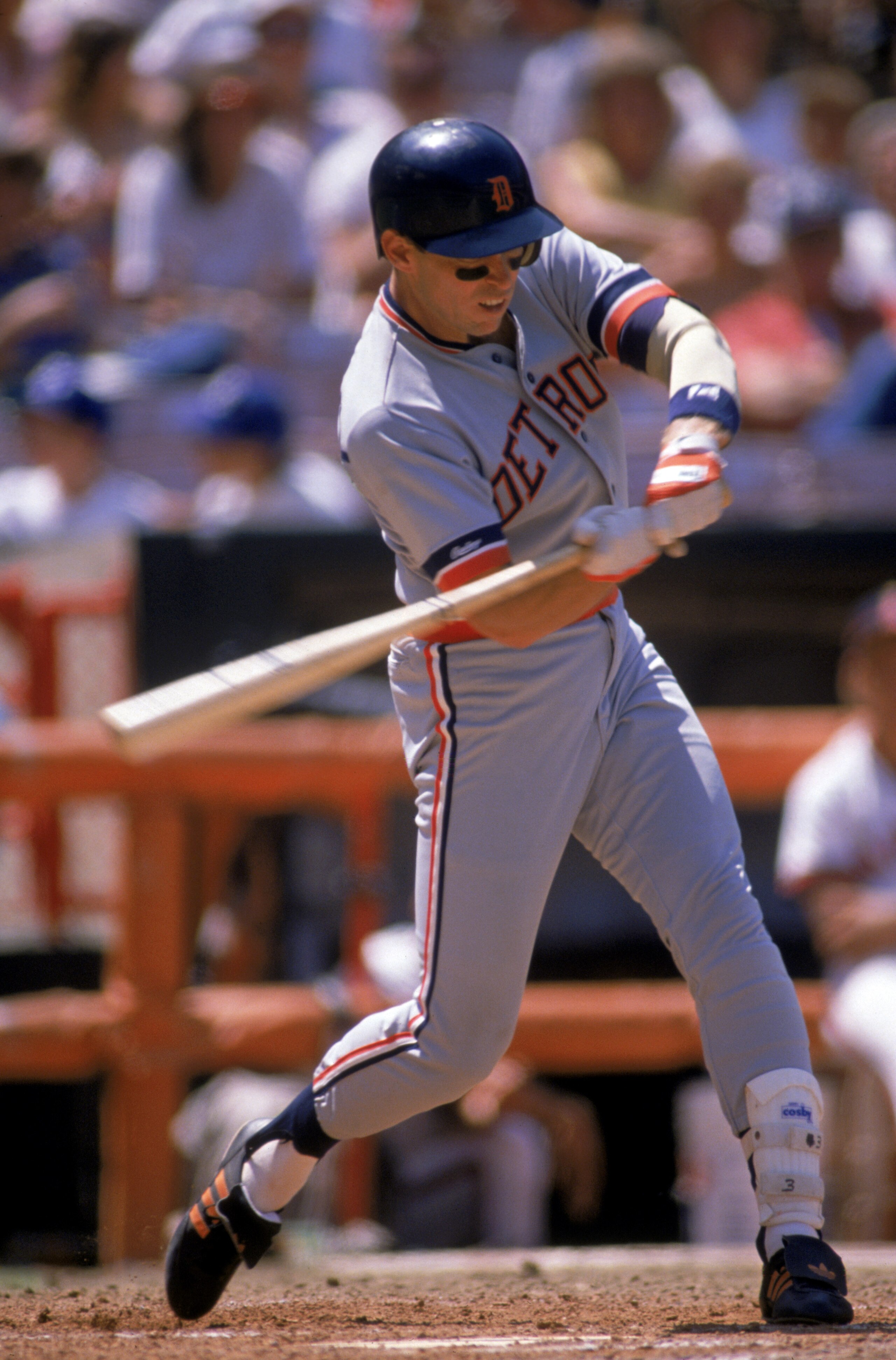
How he did: 14.3 percent
Why he got Evan Bruschini's vote:
Alan Trammell always gets lost in the shuffle of Hall of Fame voting. After nine years on the ballot, he’s only managed to muster 22.4 percent of the vote.
However, Trammell, who retired at age 38, had more Wins Above Replacement than Hall of Fame shortstops Luke Appling and Ozzie Smith, often considered two of the greatest to play the position, did at 38, as well as fellow candidate Barry Larkin. Derek Jeter, 36, has almost exactly the amount of career WAR right now as Trammell did at his age. Yet somehow, I don’t hear anyone questioning Jeter’s credentials.
His best season, 1987, was better than any of the above shortstops’ best years. He batted .343/.402/.551, with 28 homers and 21 steals. If not for George Bell, Trammell would have handily won the MVP, and, like Larkin, would coast into Cooperstown.
Why he didn't get Dan Tylicki's:
Alan Trammell was a great Detroit Tiger who served for many years as their shortstop. However, many of his stats are at best borderline for Hall consideration. One near-MVP season, nearly 2500 hits, a WAR of 66.9, and six all-star appearances are all very nice, but none scream Hall of Famer.
There’s no doubt that he was a very good player for the Tigers and absolutely belongs in the Tigers Hall of Fame, but does he belong in Cooperstown? I would at least put in Barry Larkin before considering Trammell.
No. 13: Rafael Palmeiro—OUT
5 of 18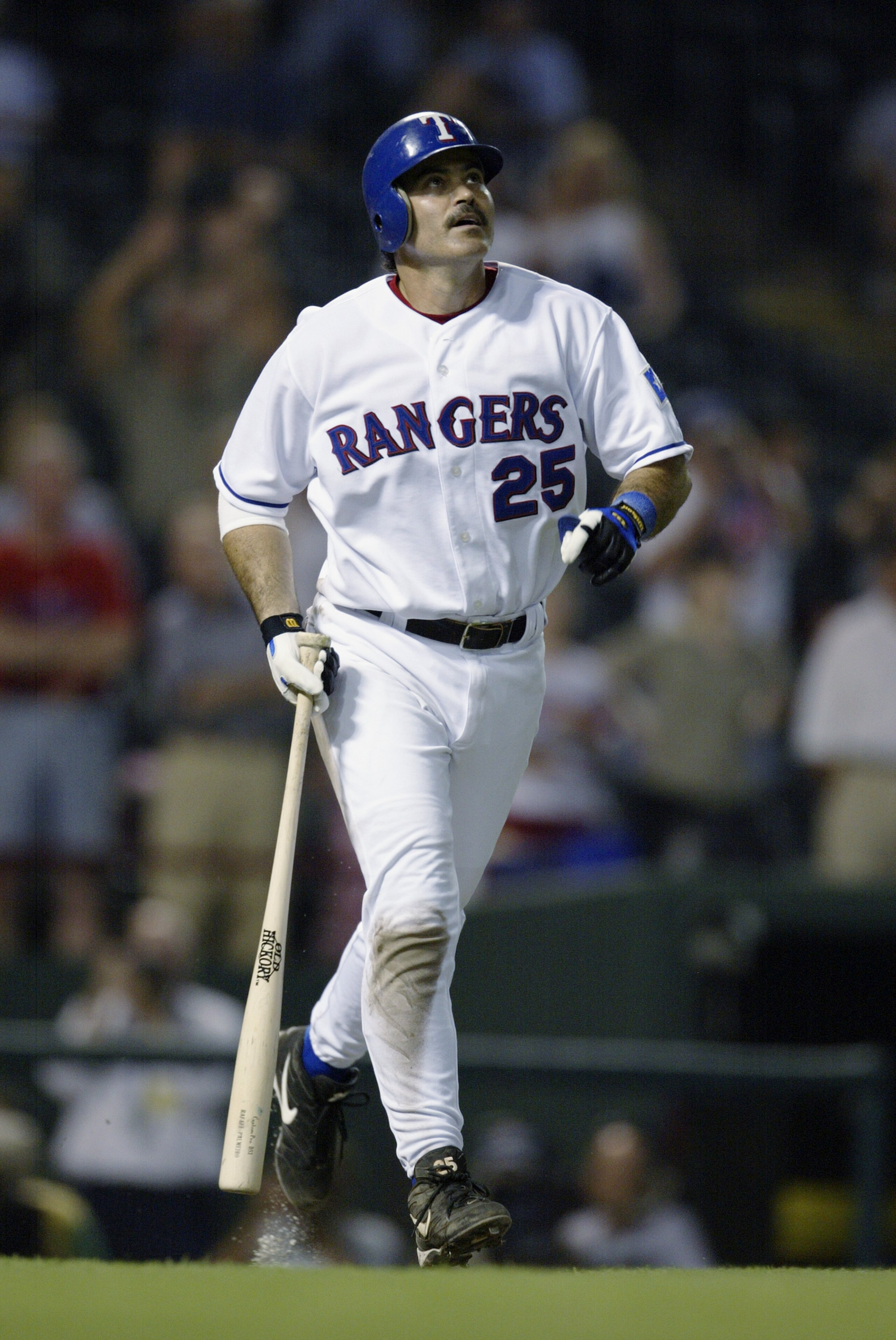
How he did: 16.7 percent
Why he got Evan Bruschini's vote:
When voters look at Rafael Palmeiro’s name on their Hall of Fame ballots, it will be a question of ethics, not statistics.
On the surface, all of Palmeiro’s statistics would generally grant him entrance to Cooperstown. He is, after all, one of just four players with 500 home runs and 3,000 hits. And the other members of that exclusive club – Willie Mays, Hank Aaron, and Eddie Murray – were first ballot Hall of Famers who got more than 85 percent of the vote.
So unless you believe a single failed test, by a player who was often seen as a good sportsman and honest man, should prevent one of the greatest players ever from entering the Hall, there is no question that Rafael Palmeiro deserves a spot in Cooperstown.
Why he didn't get Anthony Lifrieri's:
Despite vehemently denying the use of steroids, Palmeiro failed a steroid test, was named by Jose Canseco as a user, and was named in the Mitchell Report. The amount of evidence against him is staggering, and as such, Palmeiro must be kept out of Cooperstown.
So far, the Hall has been able to keep itself uncorrupted from all the problems and illegalities that have plagued the game over the last hundred years. Letting Palmeiro into the Hall of Fame sets a precedent, allowing all other steroid users in, and justifying baseball’s gilded age. For the sake of the purity of the game, we must keep Palmeiro and all other steroid users out of the Hall of Fame.
No. 12: Jack Morris—OUT
6 of 18
How he did: 19.0 percent
Why he got Matt Busch's vote:
Jack Morris was the winningest pitcher of the 1980s. The only other player who led a decade in wins during the 1900s and isn’t in the Hall of Fame is Greg Maddux, and he will be soon.
Morris sported a career 254-186 record with a 3.90 ERA. He was known for being a big game pitcher, and started an MLB record 14 straight Opening Day games. He was a five-time All-Star and four-time World Series Champion (1984, 1991, 1992, 1993).
The definitive moment in Jack Morris’ career came in 1991. He led his hometown Minnesota Twins to a World Series championship. He pitched one of the most memorable games in World Series history that year. He beat the Atlanta Braves in game seven of the series, 1-0, while pitching the entire 10 innings of the game.
Why he didn't get Jonathan Stilwell's:
Detracting factors for Morris are his career ERA+ (105), his relatively low shutout total (28), and a pedestrian WHIP (1.296). By comparison, Luis Tiant, who has not made the HOF, has 49 career shutouts, a career ERA+ of 115, and a career WHIP of 1.199.
The real clincher is a look at career WAR. Morris’ total of 39.3 would be the lowest total of any HOF pitcher over the last 50 years. The standards for the HOF have risen over the past several decades. There are a handful of pitchers with a career WAR less than 40, but they are few, and are the worst pitchers in the HOF.
Tommy John (59.0) and Tiant (60.1) are sitting on the outside, having received less support than Morris has currently, so Morris does not get my vote for the HOF.
No. T10: Mark McGwire—OUT
7 of 18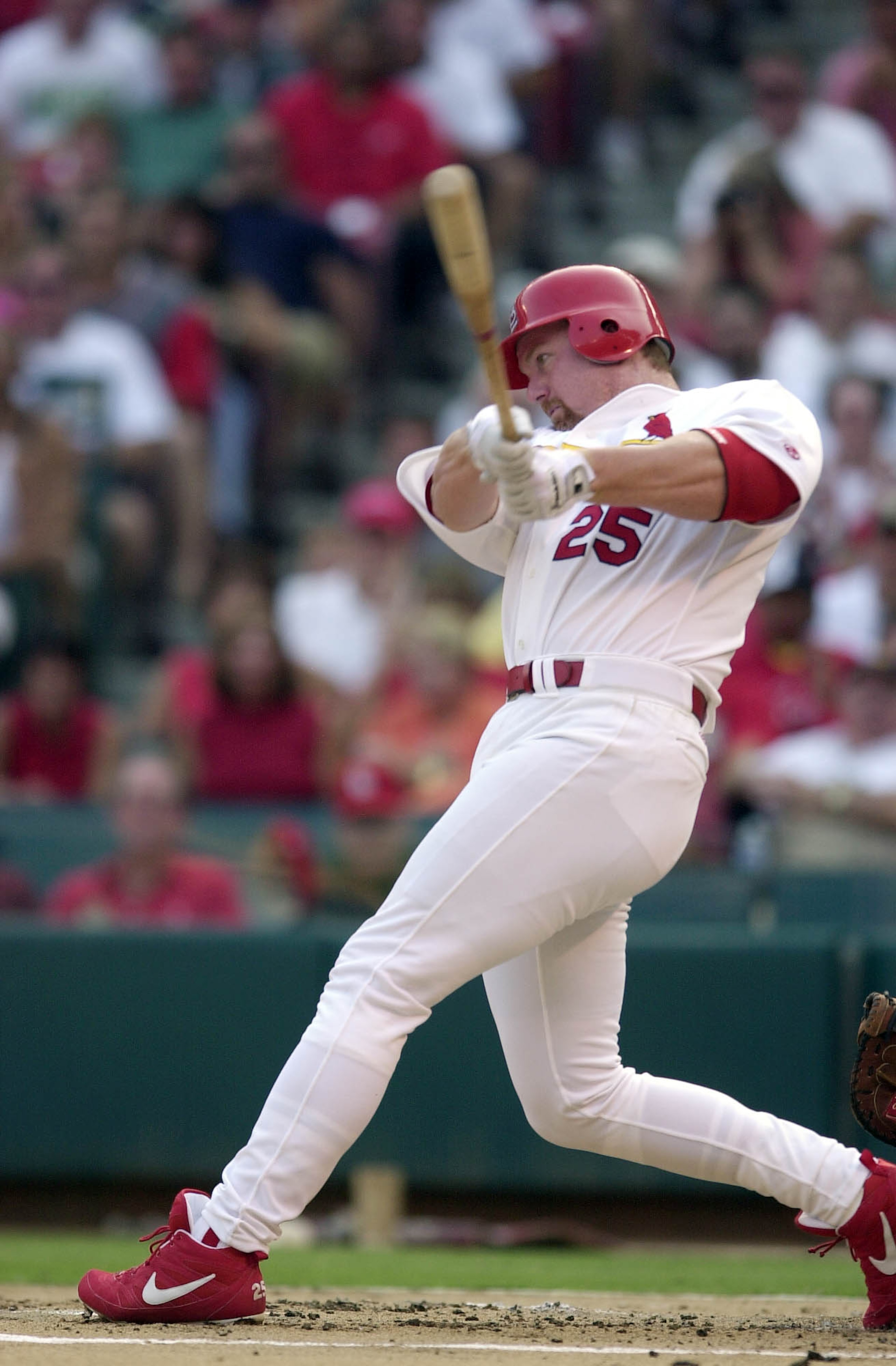
How he did: 23.8 percent
Why he got Robert Knapel's vote:
Mark McGwire was a great player. He is 10th all-time with 583 home runs. He broke Roger Maris’ home run record in 1998 when he hit 70 homers. His .588 slugging percentage is also eight best in MLB history while his .982 OPS is 10th best. Clearly he deserves more than the 23.7 percent of the writers’ votes that he receive in 2010, his 4th year on the ballot.
The crux of the issue surrounding McGwire obviously goes back to his use of steroids. Steroid use was rampant in the game of baseball during McGwire’s playing days. One of the reasons that he came under suspicion is the discovery that he was taking androstendione in 1998, which was banned by the WDA, NFL, and IOC, but not by the MLB or US government. It is time to recognize McGwire‘s accomplishments.
Why he didn't get Topher Guthrie's:
Put aside for a moment the fact that he broke the most cherished record in baseball, Roger Maris’ 61 homeruns, while using illegal PEDs. His career numbers alone make his candidacy questionable at best. His 1,626 career hits and .263 lifetime batting average are insufficient for the Hall.
He was also a poor fielder, had numerous bad seasons, and missed substantial time due to injury. He not only played in an era of elite power hitters, but of elite first basemen, including Jeff Bagwell, Frank Thomas, Jim Thome, and Albert Pujols, all of whom will likely gain induction.
McGwire refused to answer questions at the infamous congressional hearing on steroid use, saying “I’m not here to talk about the past.” His abstention leaves us to talk about the past for him, and a career that falls well short of Hall of Fame induction.
No. T10: Lee Smith—OUT
8 of 18
How he did: 23.8 percent
Why he got Adam Rygg's vote:
There tends to be some disagreement as to whether closers and DHs belong in the Hall of Fame at all, let alone what kinds of standards, statistical or otherwise, should be set for that inclusion. I believe that every player who proves himself worthy of the “member of the Hall of Fame” label at whatever position they happen to play should be given proper consideration.
With that thought process, Lee Smith should have been one of the first closers inducted. He set and for a long time held the saves record (478,) and he wasn’t simply a one-inning, save-situation-only closer for most of his career.
Smith demonstrated longevity, effectiveness, dominance and superiority throughout his career. Those are the hallmarks of a Hall of Fame player. Oh, and since they already let Bruce Sutter and Goose Gossage in, Smith should be a slam dunk.
Why he didn't get Brett Kettyle's:
This isn’t as much a vote on Smith as a vote on what saves mean. A pitcher could retire a team’s 7-8-9 hitters (or even just their ninth hitter) with a three run lead and get a save. At least to get a win you have to make it through five whole innings. With that in mind, Lee Smith is surely not a Hall-of-Famer.
His career 3.03 ERA and 1.26 WHIP are solid, but they are worse than the three other relief pitchers already in the HOF. Also, there are a number of closers (Trevor Hoffman, Mariano Rivera and Billy Wagner, just to name a few) with much better numbers. Heck, Rafael Soriano has much better numbers than Smith.
Lee Smith was a great relief pitcher, but aside from his high save totals, nothing that he did screams "Hall of Fame."
No. T8: Don Mattingly—OUT
9 of 18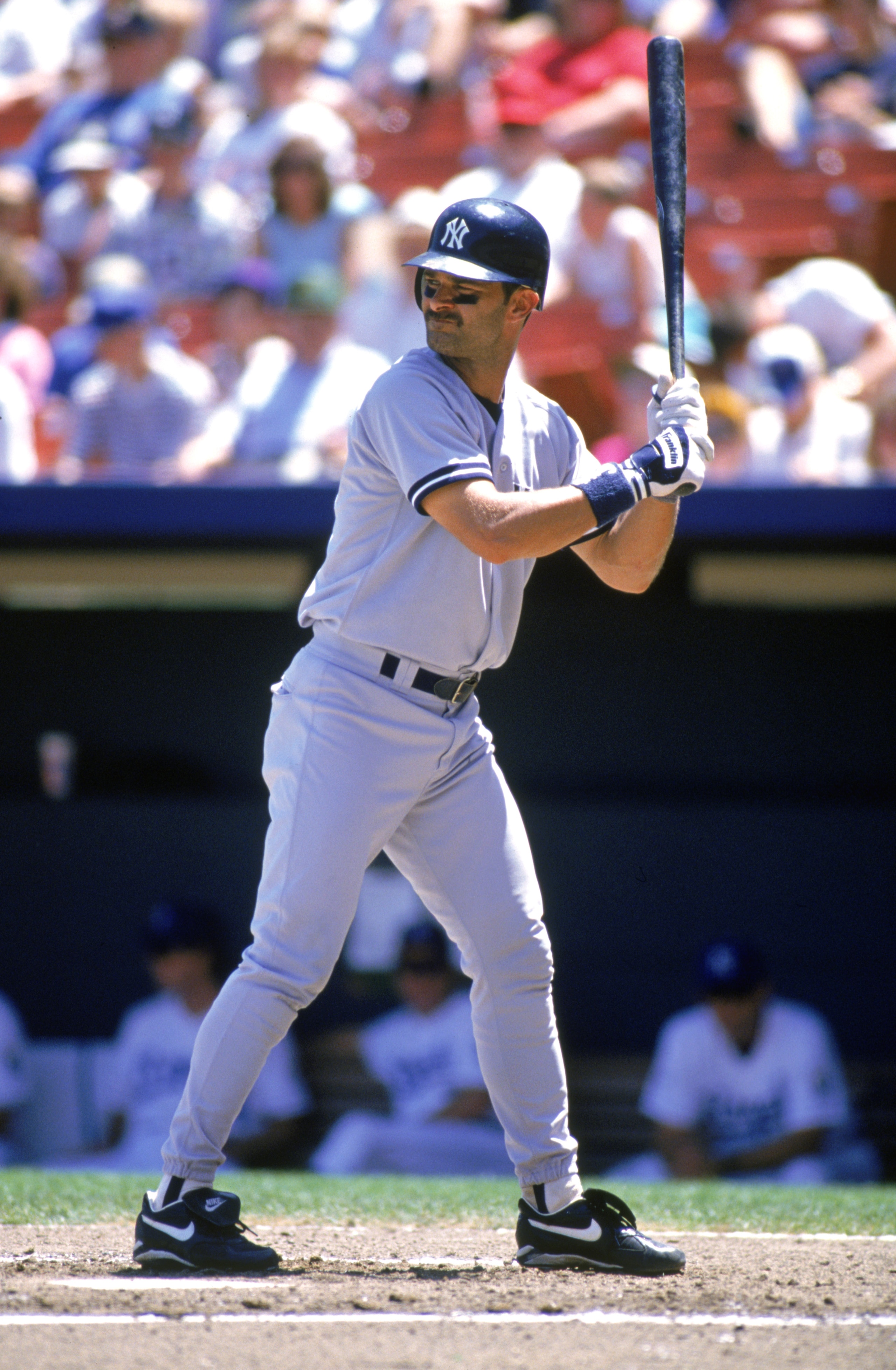
How he did: 28.6 percent
Why he got Christopher Chavez' vote:
Members of the Baseball Writers of America base their votes on talent, sportsmanship, and character. Don Mattingly falls into each one of those categories as a player that dominate in the game and in the hearts of his fans.
Mattingly was the face of one of the world's most renowned sports franchises and could arguably be considered one of the best players of the 1980s. He had MVP-caliber seasons from 1985 to 1987.
Mattingly never made the World Series, but he made it clear to his fans that taking the Yankees to the Fall Classic was his mission every season. If Kirby Puckett (who had similar stats) got in on the first ballot, what is stopping Donnie Baseball?
Why he didn't get Adam MacDonald's:
In 1989, Don Mattingly looked like he would end up a lock for the Hall of Fame. He had batted .300 every season after his rookie year, collected 164 home runs and 717 RBIs, made six All Star teams and won five Gold Gloves. Mattingly was the 1985 MVP and four times finished in the top 10 in voting.
However, back injuries were to derail and ultimately end his career. After the ’89 season, Mattingly played 150 games just twice more and never played in another All Star Game. His batting average in his last six seasons was 37 points lower than in his first six and he averaged 15 homers a year fewer. He did win another four Gold Gloves but his offense and his durability were nowhere near what they once were.
No. T8: Larry Walker—OUT
10 of 18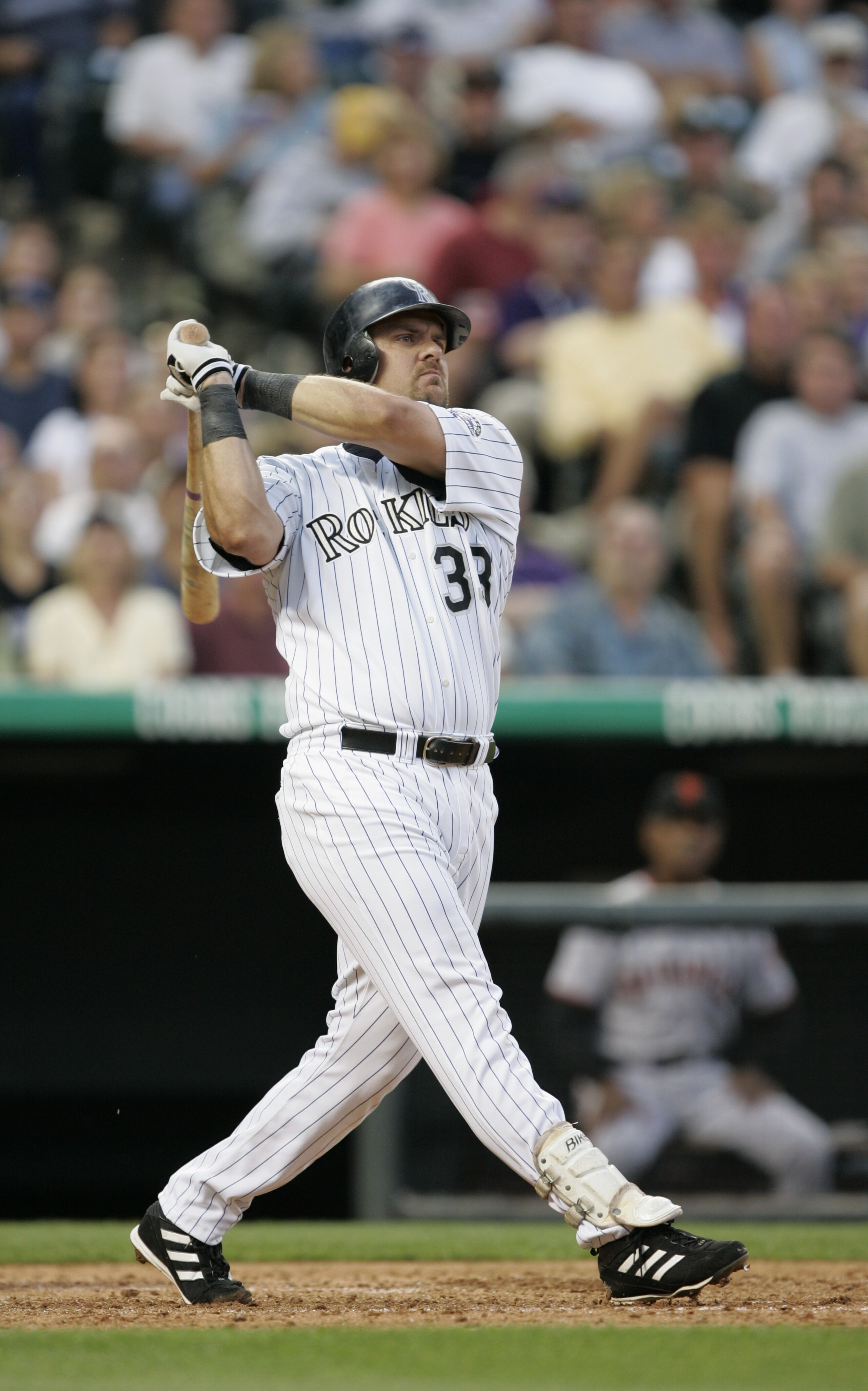
How he did: 28.6 percent
Why he got Jeremiah Graves' vote:
Larry Walker always seems to suffer in the mind’s eye of many fans and experts because his greatest success came with half of his games at Coors Field during the stadium’s launching pad era. However, his career OPS+ is 140, nestling Walker comfortably between Hall of Famers Duke Snider and Reggie Jackson on the all-time list.
Walker’s career batting line of .313/.400/.565 is good for a .965 OPS—among the top 20 hitters of all-time and among the top 10 outfielders. Throw in a great glove, a rocket arm and some speed on the bases and you’ve got yourself a Hall of Famer.
Perhaps the greatest testament to Walker’s candidacy is the recent induction of Jim Rice. The numbers are largely comparable with the overall nod obviously swinging Walker’s way; with that in mind, Walker belongs in Cooperstown.
Why he didn't get Bob Warja's:
The Hall of Fame is not supposed to be ‘The Hall of the Very Good’, it’s for the truly greats of the sport. And Larry Walker just falls short of that mark.
Walker was largely a product of Coors Field (before the Humidor). His huge home/road splits indicate that outside of Denver, Walker was a good-not-great player. His slugging percentages were typically around 100-150 points lower on the road, and in some seasons much more. For example, in 1999 he slugged an incredible .879 at home and .519 on the road. And since he played during the Steroid Era, any negative that could help explain his power will be looked at even closer.
He will likely get in someday, as he has the counting stats that voters love, but no way he’s a first- or second-ballot HOFer.
No. 7: Tim Raines—OUT
11 of 18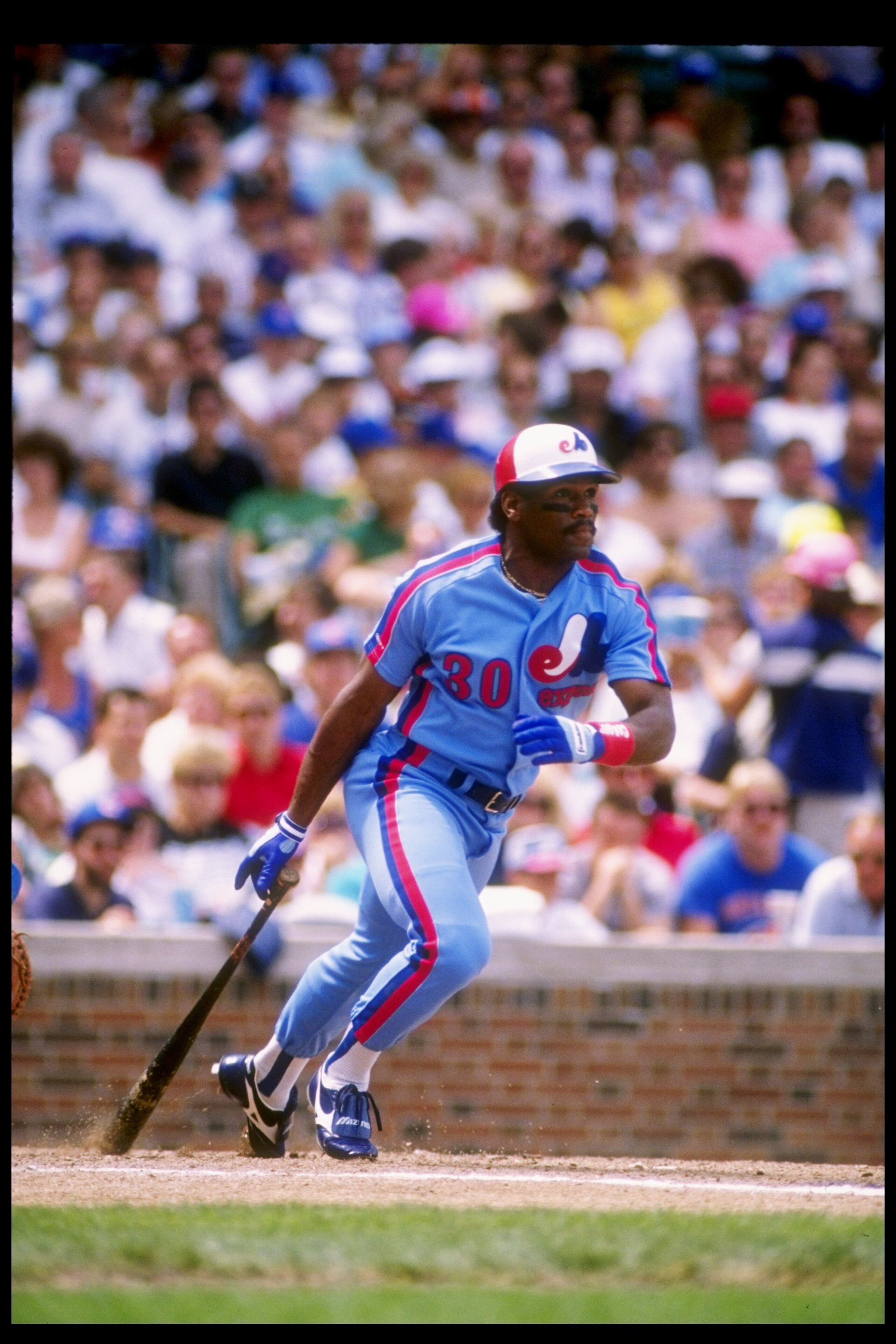
How he did: 35.7 percent
Why he got Joe Slowik's vote:
Tim Raines had everything you could want in a leadoff man. He hit for average, took plenty of walks, and was a prolific and efficient base-stealer. He might be the second-best leadoff man of all time, behind Ricky Henderson.
Lou Brock, a first-ballot Hall of Famer who is Raines’ most comparable eligible player. had a career batting line of .293/.343/.410 for a career OPS+ of 109; Raines, meanwhile, hit .294/.385/.425 for a career OPS+ of 123. Both were also prolific base stealers, but Raines was successful on 84.6% of his stolen base attempts while Brock was successful on only 75.3% of his attempts.
Brock may have had an easier path to Cooperstown because he finished with 400 more career hits, putting him over the magical number of 3,000. But Raines was a more efficient hitter and should join him in the Hall of Fame.
Why he didn't get Jordan Schwartz':
Tim Raines is close to a Hall of Famer because of his longevity, but he does not deserve to be enshrined because he could not continue the dominance that he showed over the first seven full seasons of his career.
From 1981-87, the Expo hit .310 and averaged 72 steals and 103 runs per year. He finished in the top 19 of the MVP voting six times over that stretch, but never placed higher than fifth.
If Raines could’ve kept this pace going for just three to five more seasons, he would’ve punched his ticket to Cooperstown, but over the following decade and a half, he was simply an average player, failing to make a single All-Star game, while hitting just. 282 and averaging only 21 steals and 60 runs per year.
No. 6: Fred McGriff—OUT
12 of 18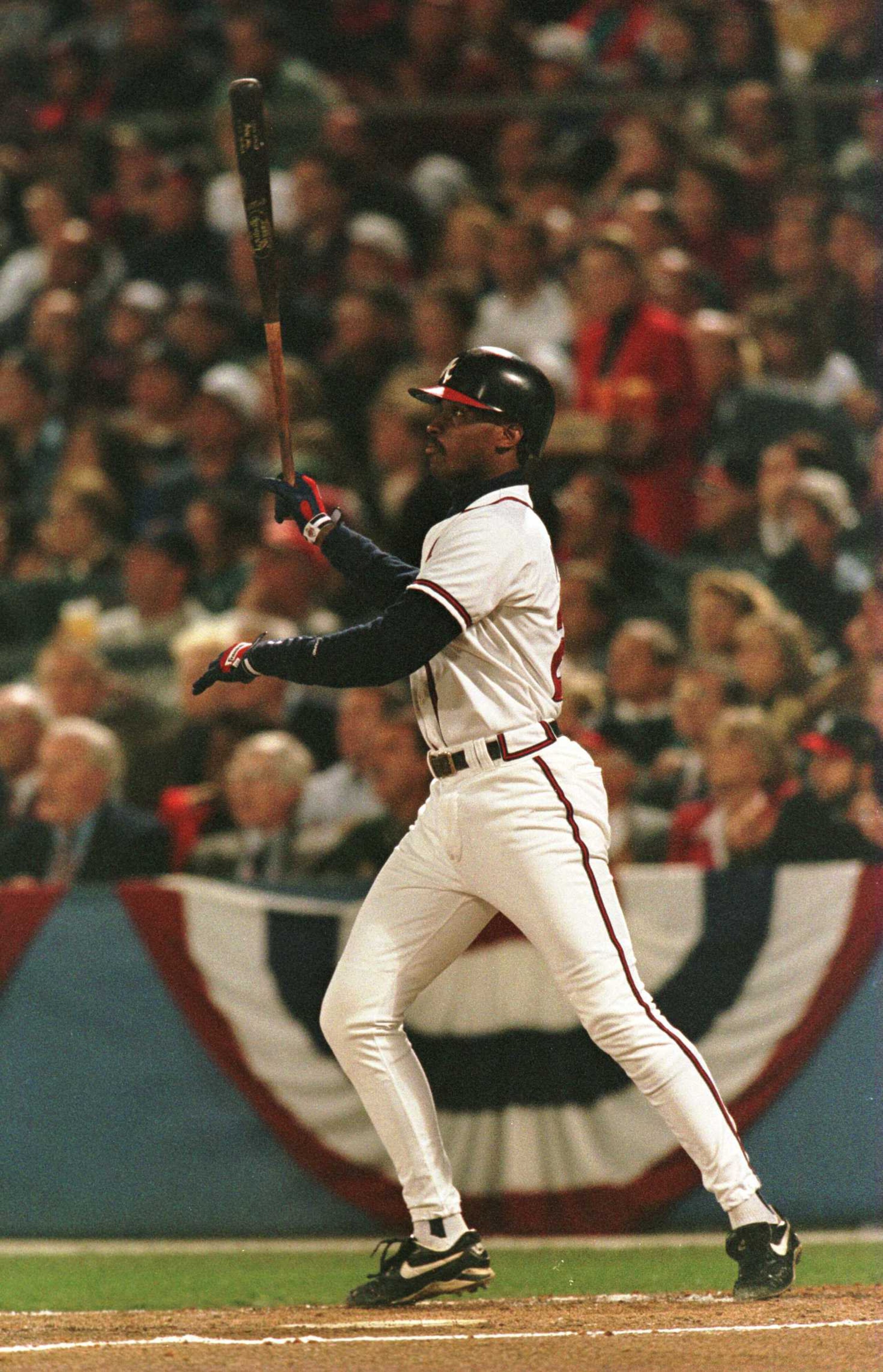
How he did: 38.1 percent
Why he got Lewie Pollis' vote:
493. That’s how many homers Fred McGriff hit in his 19-year MLB career. Had just seven more balls out of the thousands he hit had gone over the fence, he’d be an easy pick for Cooperstown. As it stands, though, the voters’ obsession with arbitrary round numbers will likely keep this deserving candidate out of the Hall.
Besides barely missing the 500-homer club (though he still ranks 27th on the all-time list), Crime Dog knocked in 1,550 RBI (41st) and owns a .509 SLG (85th). He was a Top-10 MVP finisher six times. In addition, he made the playoffs five times, winning a ring with the Braves in 1995.
What’s most impressive, though, is that he had a successful career as a power hitter in this era despite never being seriously connected to PEDs. He’d be a lock for the Hall with seven more homers.
Why he didn't get Bob Warja's:
Fred McGriff is not a Hall of Famer to me. He belongs in the “Hall of the Very Good”, but the HOF should be reserved for the truly great. Counting stats aside, a long career should not automatically guarantee a place in baseball’s hallowed shrine. Further, just because some guys have been elected who are questionable, like Tony Perez and Jim Rice, does not mean that same mistake needs to happen again.
McGriff may someday make it, but he wasn’t a good baserunner or defender, so his primary contribution is on offense, and while he was very good, he should not go in until he waits a bit.
No. 5: Edgar Martinez—OUT
13 of 18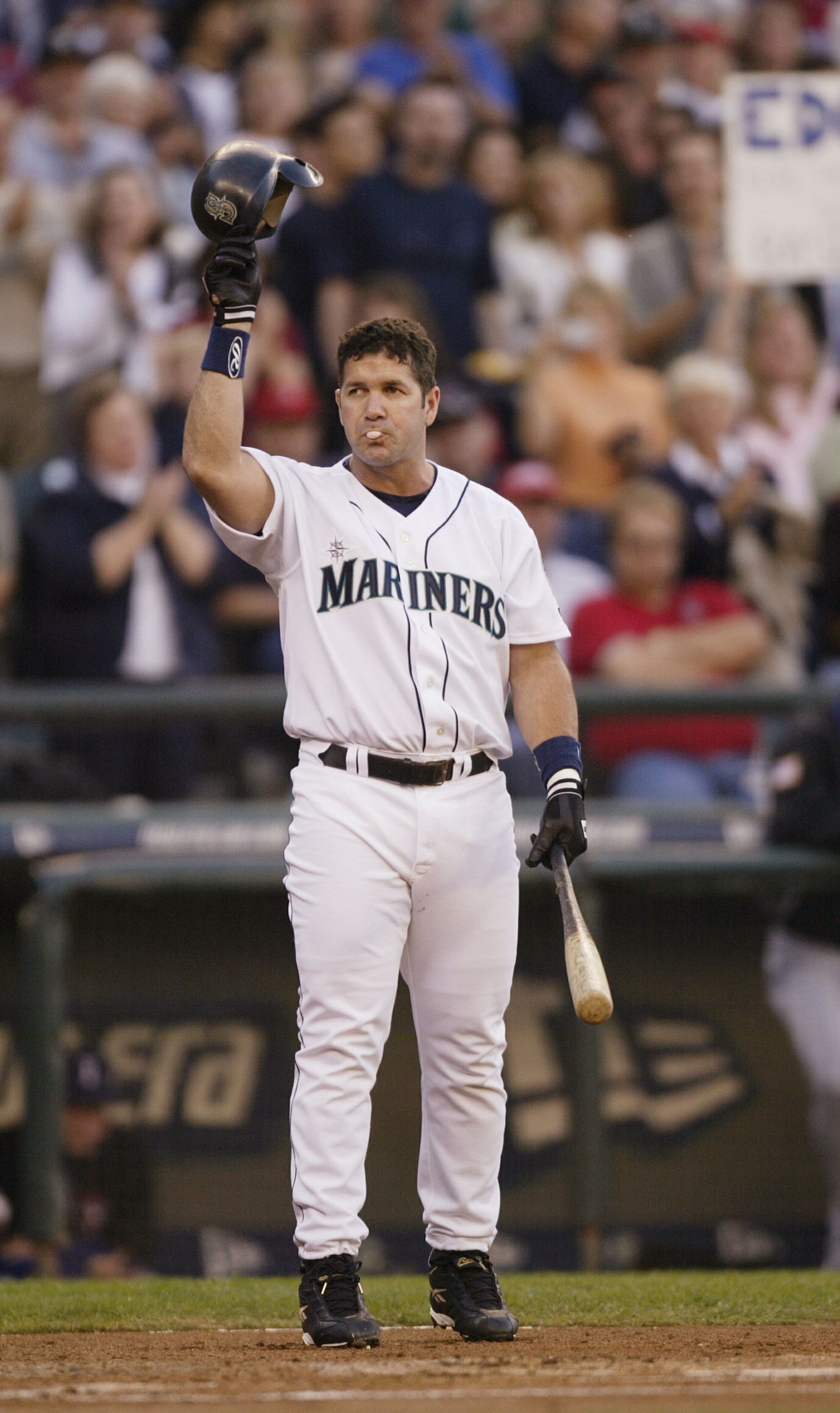
How he did: 42.9 percent
Why he got Samantha Bunten's vote:
It’s tough to quantify the reasoning for voting a career-long DH into the Hall of Fame since their game is so one-sided unless their numbers at the plate are unusually outstanding, but I see Edgar Martinez as an exception based largely on consistency and intangibles. His numbers are good enough, and his contributions to the game in other areas should count for a lot.
I see Martinez as sort of The Last Dinosaur of great DHs…a clean player with a long career and solid, consistent numbers as well as a great reputation with fans and baseball folk alike.
While he can’t match a DH like Paul Molitor in terms of numbers, I believe what he contributed to the game both on and off the field is undoubtedly hall of fame worthy.
Why he didn't get Brandon Williams':
Edgar Martinez was a very good player who occasionally dipped into greatness. That’s not enough to put him in the Hall of Fame.
No one questions his hitting prowess; at age 40, Martinez pulled out a .294-24-98 season. A closer look at his stats, though, shows a steady ballplayer who strung together seven years of solid hitting without playing a position most of the time. There is no doubt he’s the most prolific designated hitter in history, yet there’s a sense of the bar being lowered for him because Martinez was an all-around good guy.
Time may eventually let Martinez in, but in the sudden rush to morality, the BBWAA should not make the mistake of letting a very good player reach a place of greatness he may not deserve.
No. 4: Barry Larkin—OUT
14 of 18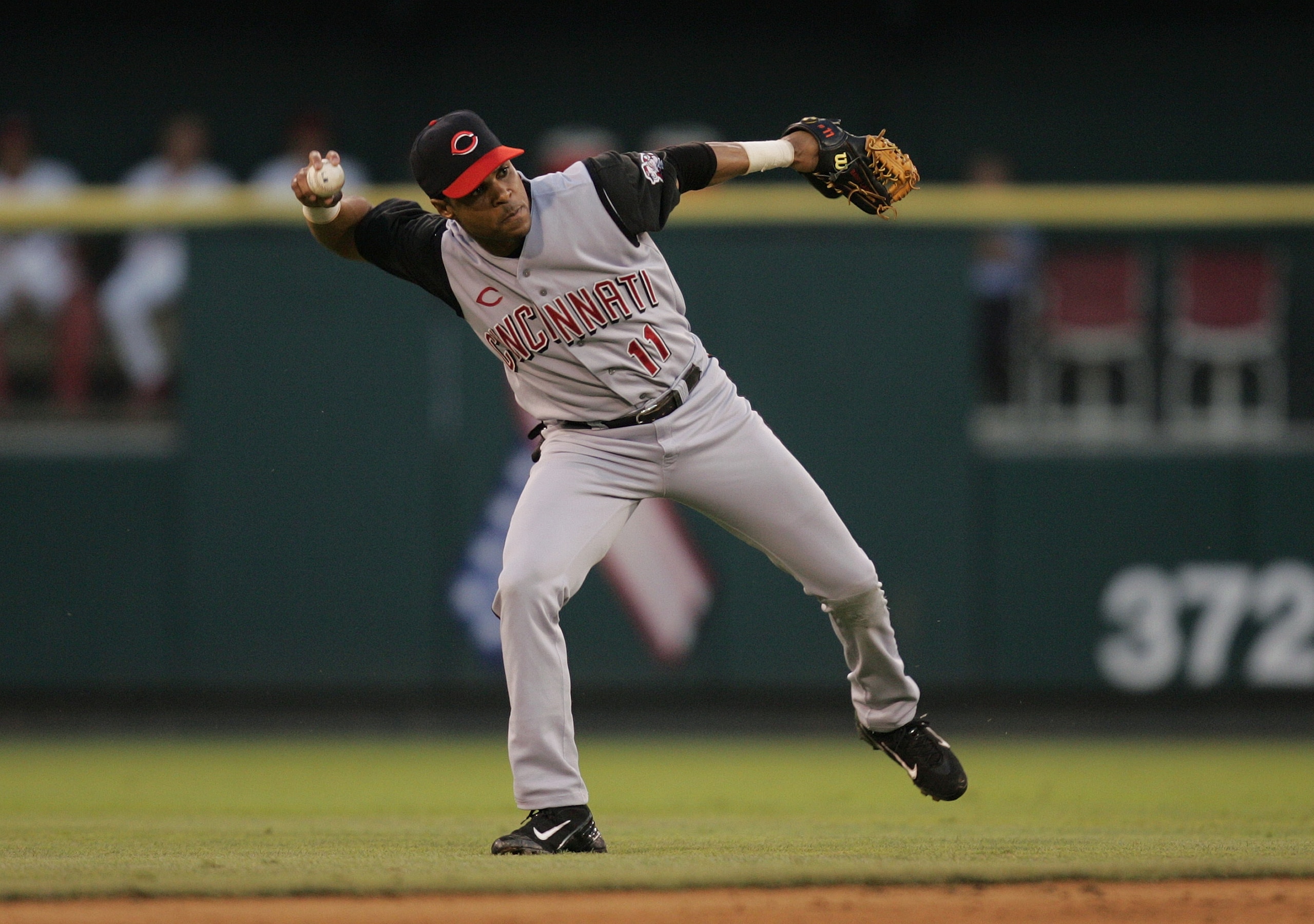
How he did: 52.4 percent
Why he got James Bondman's vote:
Barry Larkin was a steady force throughout his 19-year career which he played for his hometown Cincinnati Reds. In my opinion, when you play for one team for nearly two decades of your Major League career you are a special star and Larkin certainly proved that amongst some higher profile shortstops Cal Ripkin (Orioles) and Ozzie Smith (Cardinals).
Larkin won an MVP award (1995), three Gold Glove awards, nine Silver Slugger awards, and made 12 All-Star appearances. He also displayed outstanding plate discipline, collecting more walks (939) than strikeouts (817) for his career. While not quite the speedster like the modern Hanley Ramirez, Larkin was rather accurate posting a remarkable 83 percent success rate ( 379-for-456) right up there with Tim Raines, another worthy Hall of Famer, in accuracy.
Why he didn't get Jordan Schwartz':
Larkin ranks outside the top 85 all time in every major offensive statistical category. His .295 career batting average is 287th, his .371 on-base percentage is 255th and his .444 slugging percentage is 432nd.
Larkin doesn’t do much better when it comes to cumulative stats. He ranks 108th in runs scored, 127th in hits, 104th in doubles, 309th in triples, 300th in homers, 305th in RBIs, 144th in walks and 86th in steals.
And unlike guys like Ozzie Smith and Omar Vizquel, Larkin doesn’t have the defensive accolades to overcome the lack of offense. He won only three Gold Gloves and his 2.30 career defensive WAR ranks 642nd all time.
No. 3: Jeff Bagwell—OUT
15 of 18
How he did: 69.0 percent
Why he got Brandon Williams' vote:
In an age of steroids and constant player movement, Jeff Bagwell defied both, spending his entire 15-year career with the Astros while becoming one of the most complete first basemen in history.
Slightly overshadowed by Mark McGwire and Frank Thomas, Bagwell proved to be a far superior first baseman. He had only one Gold Glove (as he played in a era dominated by Mark Grace) but his offense was defined by a pair of 30-30 seasons (1997, 1999) that make him the only player at his position to reach that plateau.
Bagwell’s raw numbers (.297-449-1529 with much of his prime played in the Astrodome), along with a career 76.3 WAR and ten top-20 finishes in the NL MVP race, should be more than enough to convince voters to walk Bagwell into the game’s ultimate resting place.
Why he didn't get Zack Farmer's:
Jeff Bagwell was one of the Killer B's and, along with Craig Biggio, the face of the franchise in Houston. He crushed 449 home runs in his 15 big league seasons and was considered one of the more dangerous hitters in baseball. But he led the league in a major offensive category only once and that was in RBIs during the strike shortened 1994 season.
When looking at the Hall of Fame, one also has to consider position. First base is one of the more prestigious positions in the Hall and carry many household names. Willie McCovey, Jimmie Foxx, Lou Gehrig and Harmon Killebrew come to mind. Bagwell is not in the class.
But, unfortunately, Bagpipes won a playoff series only once in his career (2004). The year the Astros went to the World Series, Bagwell played all of 39 games.
No. 2: Bert Blyleven—IN
16 of 18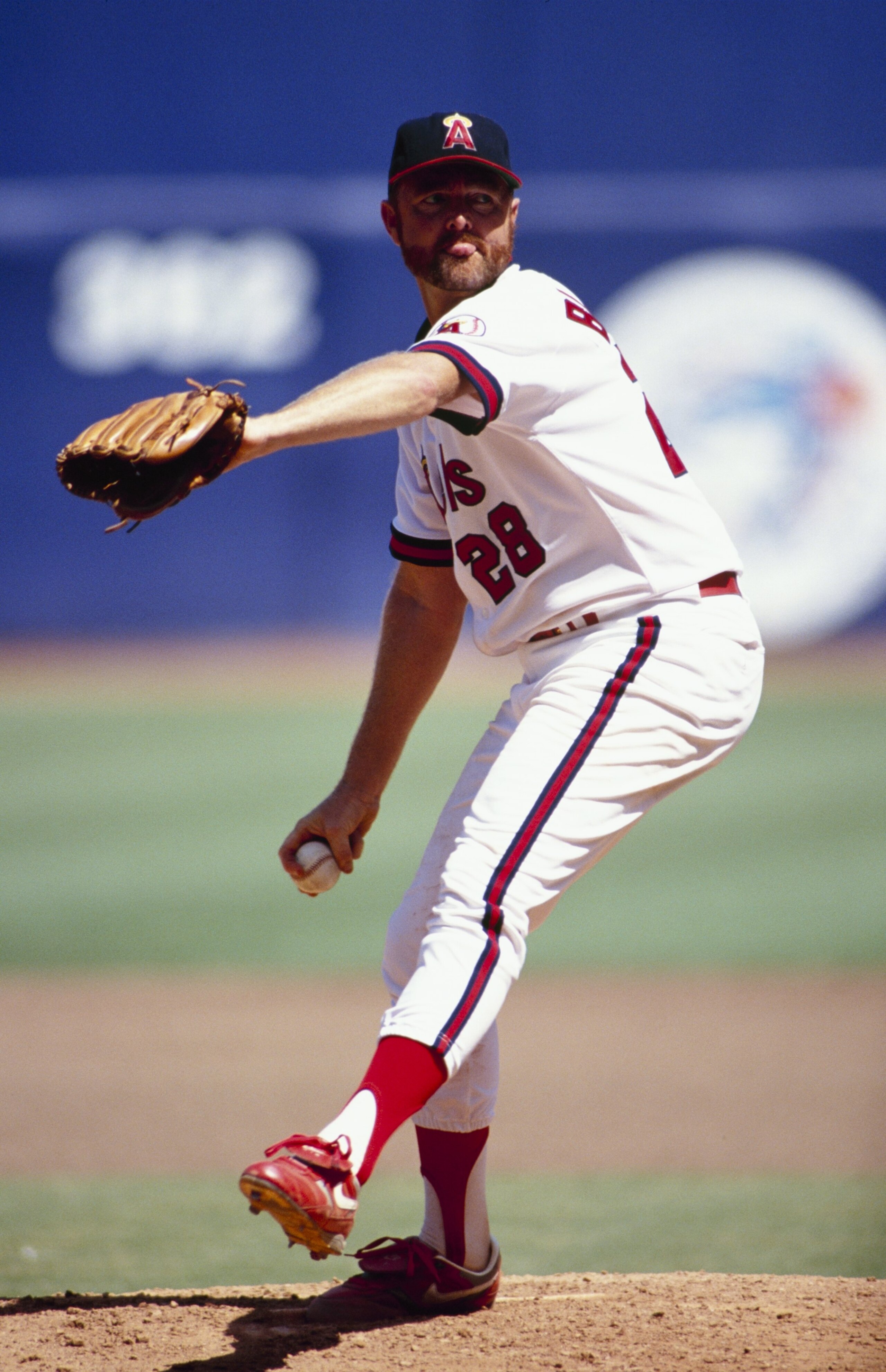
How he did: 76.2 percent
Why he got Dennis Schlossman's vote:
Blyleven’s 1973 season was nothing short of remarkable—he tallied 20 wins, 25 complete games, nine shutouts, 325 innings pitched, and 258 strikeouts—all while boasting a stellar 2.52 ERA. In 22 seasons, he eclipsed the 15-win mark a total of 10 times, and reached double-figures in complete games 12 times.
Many argue that by not winning a Cy Young Award he is not deserving, but considering he’s fifth all-time in strikeouts, 27th in wins, and that he amassed 60 career shutouts and 242 complete games, it’s tough to argue against him.
His 3701 career strikeouts is more than anyone not named Nolan Ryan, Randy Johnson, Roger Clemens, or Steve Carlton; and his 60 shutouts are almost as many as Pedro Martinez and Clemens combined. And on top of everything else, Blyleven threw one of the finest breaking pitches that the game has ever seen.
Why he didn't get Anthony Lifrieri's:
Many people believe Bert Blyleven should be a Hall of Famer. While he was a great player, he is just short of the Hall of Fame.
For starters, many people say he is the best pitcher not to be in the Hall of Fame. In reality, Blyleven suffers from what fantasy football owners call, “The Kevin Kolb Effect.” Much like Kolb, Blyleven was once underrated, but as a result of everyone saying how underrated he was, he became overrated.
The main hallmarks of a Hall of Fame pitcher are 300 wins and a Cy Young. Bert Blyleven accomplished neither. While he was a great player, great alone is not good enough for the Hall. In the end, there has to be a boundary between getting in and missing out, and Blyleven is just on the wrong side of it.
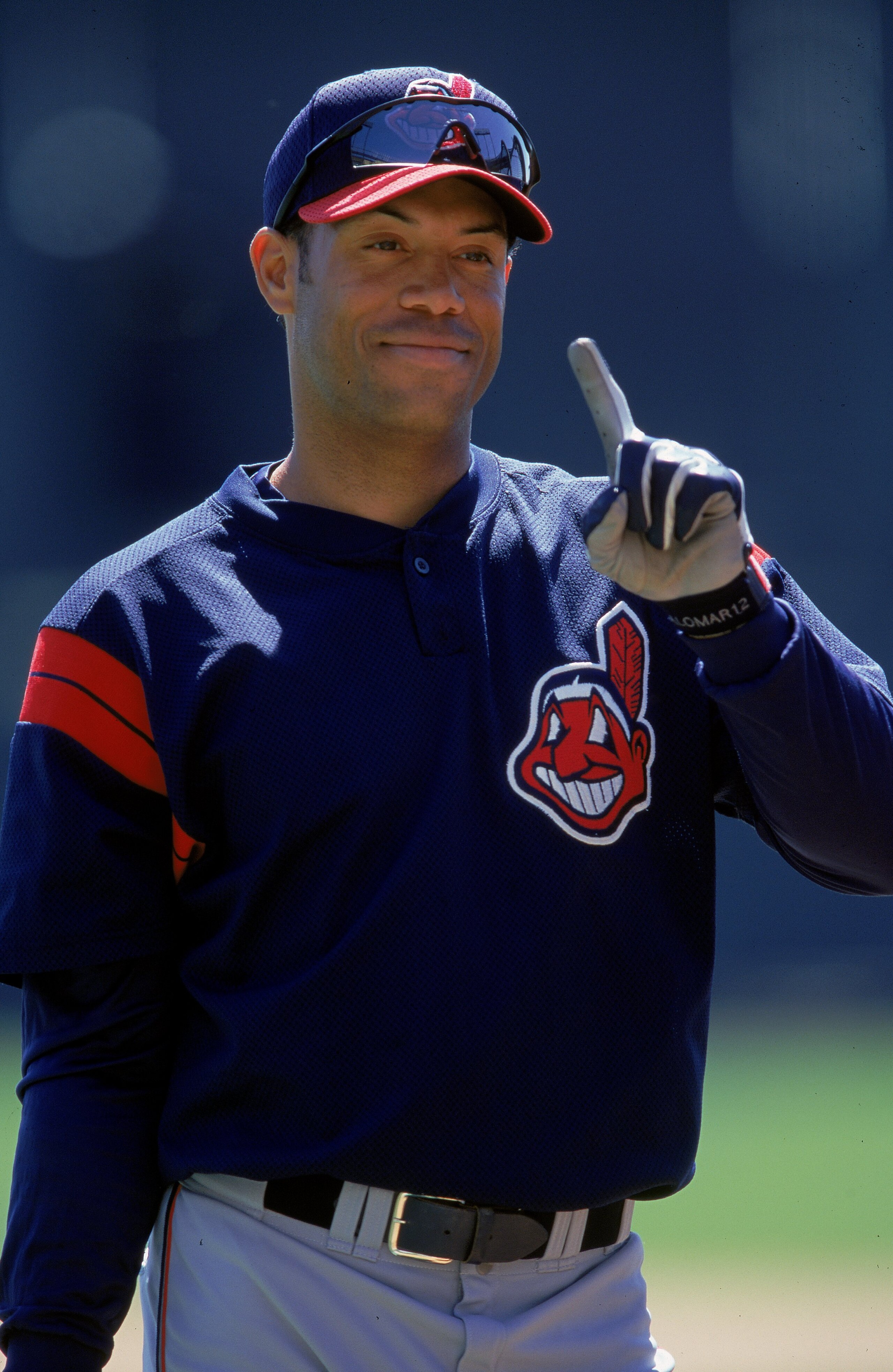
No. 1: Roberto Alomar—IN
17 of 18
How he did: 85.7 percent
Why he got Lewie Pollis' vote:
Roberto Alomar finished just eight votes shy of induction in 2010. If there’s any justice in this world, he’ll come in on the right side of the 75-percent marker in 2011.
Alomar’s case for the Hall is pretty one-sided. In 17 seasons, he stole nearly 500 bases and got more hits than Ted Williams. The 12-time All-Star hit .300 with a 125 wRC+ and earned four Silver Sluggers while winning 10 Gold Gloves at an offensively weak position. On top of that, he made the playoffs seven times with three different teams, winning two World Series (1992, 1993) and earning ALCS MVP honors in 1993. Did I mention his 10 Gold Gloves?
FanGraphs has him at 68.2 WAR for his career. Adjusting for popular perception of his defense, that shoots up to 78.2. Either way, he’s clearly better than 2005 inductee Ryne Sandberg, the standard by which all Cooperstown-eligible second baseman are measured.
Why he didn't get Topher Guthrie's:
Roberto Alomar is a lock to be elected to the HOF, with his likely induction coming in 2011. But there are too many drawbacks to his candidacy for voters to ignore.
He was the fourth-best second baseman of his era, behind Ryne Sandberg, Craig Biggio, and Jeff Kent. All are in or destined for the Hall. Alomar’s counting stats and averages, taken alone, are very similar to another great second baseman awaiting induction—Lou Whitaker.
He was overshadowed on every team he played, whether it was Tony Gwynn in San Diego, Joe Carter and Paul Molitor in Toronto, Cal Ripken in Baltimore, or Albert Belle and Manny Ramirez in Cleveland.
He has just one signature moment, and it was not Hall-worthy: Spitting on umpire John Hirschbeck should keep Roberto Alomar out of the Hall indefinitely.
Full Results
18 of 18
1. Roberto Alomar—36
2. Bert Blyleven—32
3. Jeff Bagwell—29
4. Barry Larkin—22
5. Edgar Martinez—18
6. Fred McGriff—16
7. Tim Raines—15
T8. Don Mattingly—12
T8. Larry Walker—12
T10. Mark McGwire—10
T10. Lee Smith—10
12. Jack Morris—8
13. Rafael Palmeiro—7
14. Alan Trammell—6
15. Dale Murphy—4
T16. Tino Martinez—3
T16. John Olerud—3
T18. Kevin Brown—2
T18. John Franco—2
T18. Marquis Grissom—2
T18. Al Leiter—2
T22. Harold Baines—1
T22. Bret Boone—1
T22. Dave Parker—1
T25. Carlos Baerga—0
T25. Juan Gonzalez—0
T25. Lenny Harris—0
T25. Bobby Higginson—0
T25. Charles Johnson—0
T25. Raul Mondesi—0
T25. Kirk Rueter—0
T25. Benito Santiago—0
T25. B.J. Surhoff—0
Bold indicates that a player would be elected. Italics indicate that a player did not get enough votes to appear on next year's ballot.
.jpg?w=2560 "2026 NFL Preseason Week 1 Winners and Losers")



.jpg?w=2560 "Bengals Rook Pursuing Acting 👀")