The NBA's Toughest Job? It Just May Be Coaching the Warriors Without Steve Kerr
As the evening grew later and the game went longer, Warriors interim coach Luke Walton's gut wrenched ever tighter. The Boston Celtics were threatening his team's mind-boggling, record-setting undefeated streak to start the season and over his brief stint in charge—nine weeks, 23 regular-season games—he hadn't faced a dilemma quite like the one challenging him here on the TD Garden parquet floor.
With the team already showing signs of fatigue by way of flat shots and slow defensive rotations, he had played the foursome of Steph Curry, Shaun Livingston, Andre Iguodala and Draymond Green the final nine minutes of regulation while alternating Festus Ezeli and Andrew Bogut at center.
Two of those players, Iguodala and Livingston, have injury histories checkered enough that the Warriors have always been hyper-vigilant about how much they're used. Iguodala had played more than 30 minutes for only the sixth time all season the previous game in Indiana. Livingston, meanwhile, is a walking medical marvel playing on a left knee once completely shredded.
Walton's stress didn't stem from the possibility that he might taste defeat for the first time. For weeks now, whenever he sensed the hype surrounding the Warriors' phenomenal start getting to his players, he'd remind them in his inimitable SoCal drawl, "The good news is that if we lose, you're waking up tomorrow with one loss. That is the worst-case scenario."
Walton's angst came from the fact that as the head coach, his job was to keep the big picture in mind in any and all decisions. As self-gratifying and career-boosting as the start was for him, its importance didn't supersede having the team in optimal shape to defend its league title in the end.
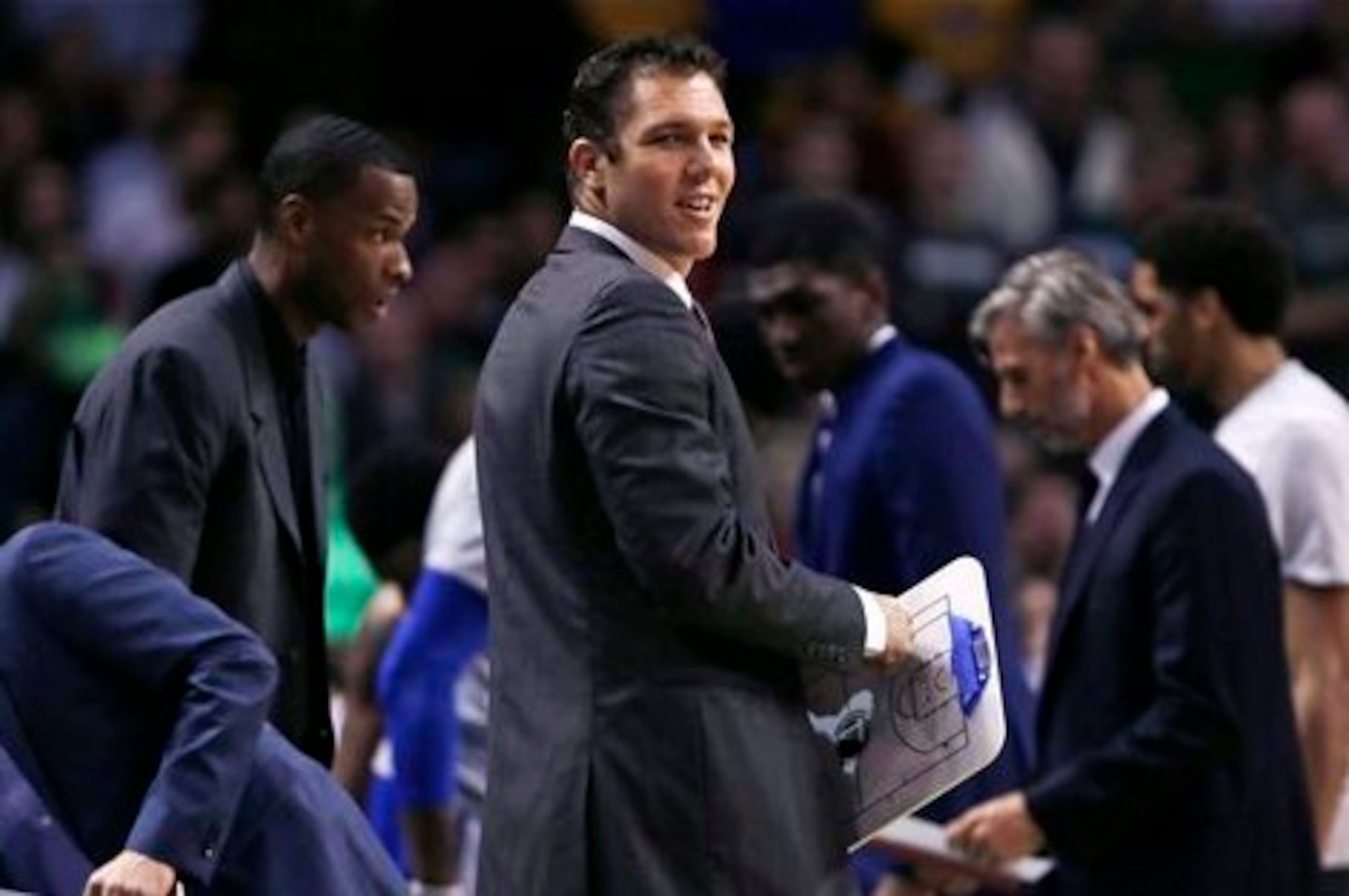
With a roster as deep and versatile as the Warriors', not overworking anyone in particular usually isn't a major issue, but Walton faced a host of problems in Boston. The Warriors were headed to overtime, and a date with the young and uber-athletic Milwaukee Bucks loomed less than 24 hours away.
"I kept asking them, 'How are you feeling?' and they kept telling me they felt good," Walton said later. As a player on two championship teams, he also knew that players with a winning mentality rarely admit fatigue. "That's probably the most decisions I've had to make in any one game and the most difficult," he said.
He stuck with the foursome through the first five-minute overtime, again hoping that would be enough. Now he was looking at a second overtime and the prospect of playing them nearly 20 consecutive minutes.
From the outside, this might not seem like major cause for concern. A championship-caliber team with no one over 33 and already a sizeable lead for the league's best record? What's the problem?
As Walton sees it, plenty—potentially. As the caretaker (as opposed to craftsman) of a championship team that has every right to believe it can win another one, he is well aware that one of the keys to snatching that first title was having all their key hands on deck when the opposition did not. His task, as he sees it, is to make sure they enjoy that same advantage.
Besides, even if he thought sacrificing the undefeated streak for the sake of the bigger picture was the right move, he might not have had the authority to do it.
"We thought about all those things and discussed them," said assistant coach Bruce Fraser. "This team would've resented if Luke had cashed it in. There would've been a lot of resentment toward the substitute teacher over that one."
Hours before the tipoff against the Celtics, Walton sat down in a corner of the Ritz-Carlton team hotel lobby and groused good-naturedly that his interim job was resulting in unwanted weight gain. Despite a wonky back, he relished being able to jump into half-court pickup games with the team's end-of-the-bench players needing extra work to stay in shape last season. "I'm afraid now I'll get hurt and as the top guy, I can't afford that," he said.
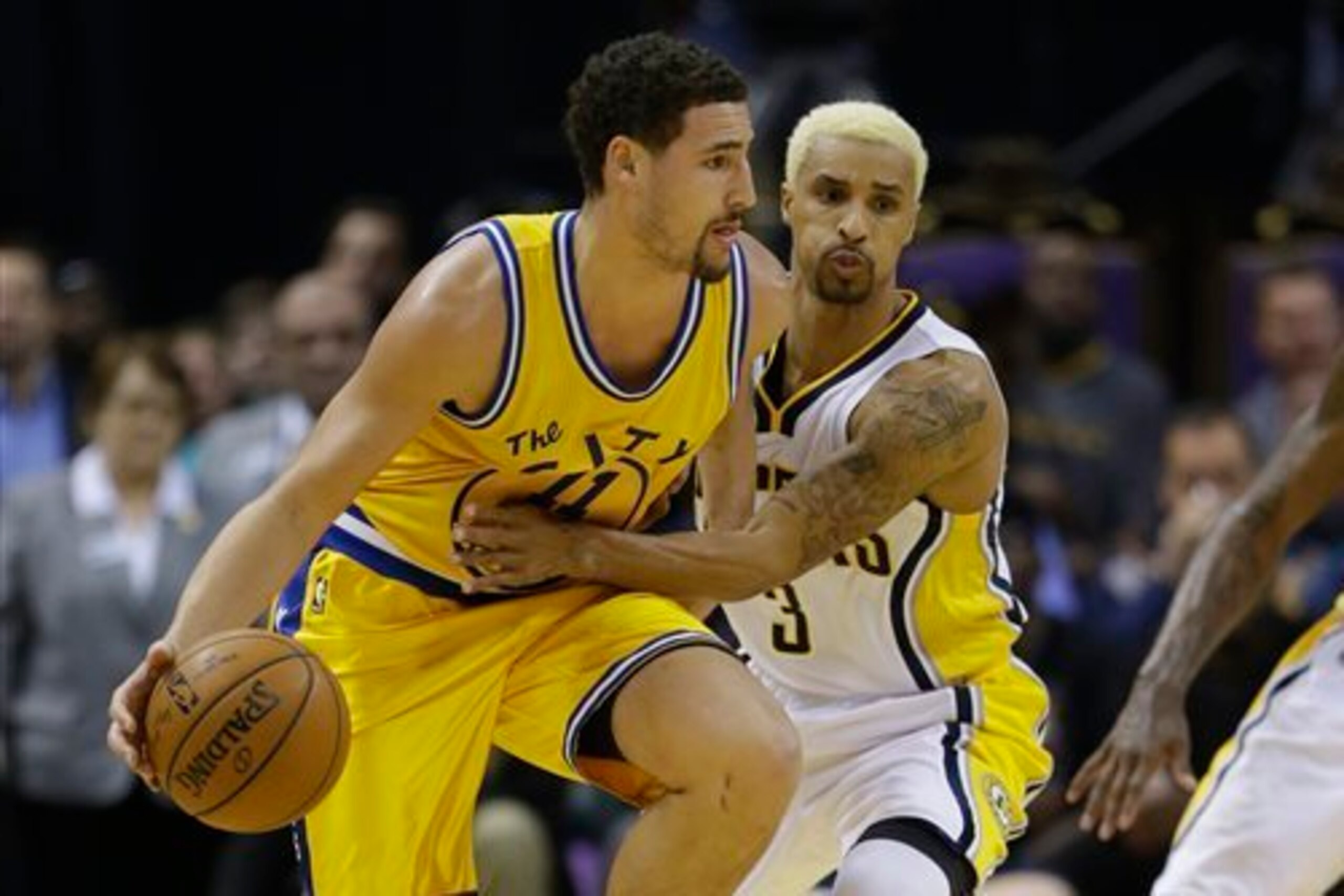
The challenge and rush of in-game decisions is a worthwhile trade-off, even if it comes with the heartache of ones that backfire. Three days before the game in Boston, the Warriors, miffed hearing media pundits suggest they were ripe to be knocked off by a 12-7 Pacers team, scored 70 first-half points and led by as many as 32 in the third quarter.
With the team already laboring to reach the finish line of a seven-game, 14-day trip, Walton planned to rest Thompson, Curry and Green the entire fourth quarter as long as the lead in Indianapolis remained comfortable. If the game tightened up, though, he planned to bring them back sooner rather than have them sit almost the entire period and then have to save the day in the final minutes.
When the Pacers sliced the lead in half with almost six minutes to play, he put back in the threesome. They successfully ushered home Win No. 23 in a row, but Thompson rolled his ankle in the final minute in front of the Warriors' bench and hobbled directly to the locker room.
"That's where Steve has been really helpful," Walton said. "I've gone with my gut on a play or a substitution and when it hasn't worked out, it's a terrible feeling. He said he felt that so often the first few weeks of last season."

What makes the Warriors' record-setting start under Walton truly amazing is he isn't actually a head coach. Not in full.
At some point, maybe as early as the end of December, Kerr is expected to have recovered from the spinal fluid that leaked into his system following back surgery last summer and take over again. Walton, then, will resume his position not only as an assistant coach but also as an unofficial confidant of the players. If he gave off any hint of seeing or treating them in a different light simply because he has a different job, it would make them wonder just how much they could trust him.
"When an assistant becomes a head coach, players hate it," said Iguodala.
Preventing that has been foremost in Walton's mind.
"The way it works with player relationships is a very fine line," he said. "I felt the best way was to be completely honest with them right up front. I told them, 'I have to change. It's my responsibility as the head coach to get after you. If you're sloppy, I might have to yell at you. You're going to get pissed at me, and I'm fine with that. But everything I do and we do is going to be for the good of the team."
Walton's stint as head coach is akin to a rental-car driver—where he drives doesn't matter as much as the shape in which he returns the vehicle, which, in this case, is a Lamborghini.
Against Boston, Walton's moves worked, albeit requiring a second overtime that saw Iguodala play 44 minutes and Livingston log a season-high 35 minutes.
Playing with Green as center and Iguodala as their power forward, the Warriors attacked off the dribble and forced the Celtics to foul, scoring their last 10 points on layups or free throws for a 124-119 win.

Minutes afterward, Walton, the red tie his wife picked out for him askew and his dress shirt damp, wondered what he'd have to work with in Milwaukee in less than 21 hours. "Shaun's not going to be able to walk tomorrow," Walton said wistfully. "But if someone needs a day off, we'll just give it to them."
While Walton's temporary role in some ways is more challenging than the typical assistant promoted to head coach, it is a testament to what Kerr created last season that the Warriors have thrived without him. From the time he was hired two summers ago, Kerr has entitled everyone to feel ownership in the team's success, including his predecessor, Mark Jackson. Anything less would not have worked.
"The culture didn't happen right away," said Fraser, a teammate of Kerr's at Arizona and a scout for him with the Phoenix Suns. "They weren't saying, 'Yippee, Steve's going to be the greatest!' Andre would say, 'This guy is not for real. Give me some dirt on him.' But they were open to letting us prove ourselves."
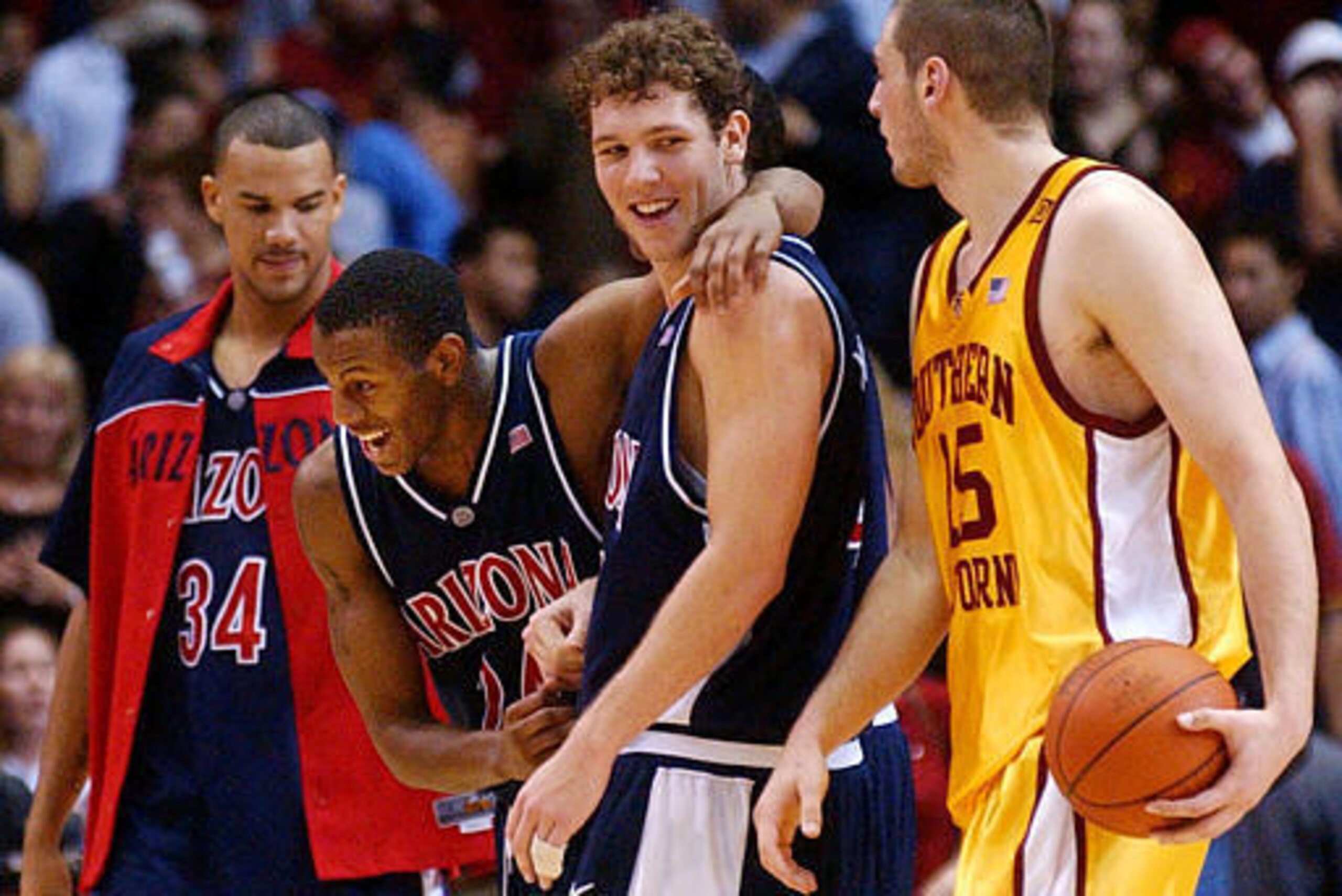
They have done the same for Walton, who has taken the same open, upfront approach. "He didn't say, ‘This is my chance now, I have to be this guy,'" Fraser said. "He stayed true to himself. Luke's first real initial value with the players was that he was one of them. He played with Mo [Speights] and Shaun in Cleveland and Andre at Arizona. He was a great confidant in that way. They could go to him with their issues and know they weren't going to go past him."
Hearing the word "lucky" applied to their success is not something the Warriors take to kindly, as Clippers head coach Doc Rivers learned when he used it in reference to their championship, so let's just say it has been extraordinarily beneficial that Walton mirrors Kerr in a multitude of ways. Like Kerr, his laid-back persona camouflages a deep respect for fundamentals and teamwork, which is reflected in film sessions when they emphasize running a play all the way through. "Luke will say, 'Let it come out in the wash,' which means let everything happen, move the ball," Livingston said. "That's Steve's line."

Like Kerr, Walton was a role player on multiple championship teams (two with the Lakers), affording him both top-shelf status and an appreciation for the value every player on a team can have. Like Kerr, he carved out his career by being an attendant of details, allowing him to both impart and emphasize their importance.
Also like Kerr, he established a relationship early on with one of the team's stars. For Kerr, it was Curry through golf and their shared excellence as long-range shooters. For Walton, it was Green through their similarity as undersized big men with an appreciation for all-around skills and guile. At any given practice this season, Walton could be mistaken for a player in practice shorts that hang past his knees, calf-high NBA socks, a long-sleeve shooting shirt and low-cut basketball sneakers, putting Green through his shooting routine of running floaters, mid-range jumpers and threes, same as last year.

Green watched Walton coach even before the season started, when he dropped by Las Vegas to check in with the Warriors' summer league team. Coaching that team was Walton, who once signaled for a timeout when he was out of them. "I gave him a lot of crap about that," said Green, grinning.
He also tested Walton's mettle after he took over for Kerr. In an early-season practice Green complained, loudly, that Walton was running a drill sloppily. Walton, as promised, went back at him.
"There have been times he's been furious with me," Walton said. "I told him, 'You can yell at me but I might go back at you.' I have no problem talking to Draymond about anything—what I need from him or about how I can get more from the team. It's the same with Andre. I can call or text him at any hour if I can't sleep and I need to run something by him."
Iguodala has been more impressed with Walton's non-verbal communication. In a mid-November film session, he included a clip of two Warriors who had been "beefing" about their respective roles, Iguodala said. The clip showed them combining on a lob and celebrating together. It had nothing to do with the upcoming game and it took Iguodala a minute to realize why they were seeing it.
"Subliminal message," Iguodala said. "Pretty smart."
Walton, of course, isn't alone. The rest of the staff—Ron Adams, Fraser, Jarron Collins, Chris DeMarco—all have a voice as well.
There's no one Walton relies on more, though, than Kerr, who has encouraged him to take ownership of the team. "Luke and I talk a couple times every day," said Kerr, "and we run practice together when we're at home. He takes some responsibility and I take some. It doesn't really require a lot of thought. I've definitely given him a lot of leeway."

Kerr has not accompanied the team on the road except for one pre-Thanksgiving trip to Los Angeles, and he's left all of the logistical decisions up to Walton. On the team's recent two-week excursion, there were plenty of variables to sort out, particularly figuring out how hard to practice and when with multiple days off between their game in Indiana and wrapping up with the back-to-back Boston-Milwaukee set. Even though he knew it wouldn't be popular, Walton decided to have a light practice as soon as the team landed in Boston and a harder one the next day. He ran it by Kerr, who suggested he tell the starters the first one was voluntary.
"Most of the team didn't want to practice," Fraser said. "He made a point of telling them, ‘We're going to do this, this and this.' You don't always have to tell them why, but there are times when it's necessary."
Kerr's critiques through Fraser or to Walton directly are usually succinct and presented by way of questions. He told Walton they could've put the ball in the post more against the Pacers and asked Fraser if switching against the Celtics had been the game plan, since it resulted in Olynyk being guarded on the low block by Curry.
"If he suggests it, we'll make a conscious effort to implement it," Walton said.
Kerr limits his communication with the players on the road to text messages, offering equal parts analysis and encouragement. Curry estimated his phone buzzes with a message from Kerr after every other game. In a game against the Brooklyn Nets at the start of the trip, Curry missed two consecutive free throws. At dinner the next night with his father, former Charlotte Hornets sharpshooter Dell, and Fraser, the subject came up. Dell said he couldn't remember the last time he saw Steph miss two in a row. Steph explained that he couldn't find the nail head in the floor that marks the center of the free-throw line. Curry's routine is to toe the nail head and then take a slight sidestep before shooting. When Fraser relayed that to Kerr, he texted: "Champions don't make excuses."
Another time, Curry texted Kerr apologizing for a couple of quick threes he took down the stretch and Kerr replied: "I didn't mind those 3s. Those 2 TOs at the end, however…"
Walton has been less direct. Roughly two weeks into the season, Curry was getting ready for his usual post-practice shooting routine when Walton caught up with him and asked if there were particular plays he liked to call after an opponent shot free throws, that being an ideal time to run a set play against what is typically a set defense. Curry said he did but was curious why Walton wanted to know. Apparently, Walton had been calling out plays and wondered why they weren't being run.

"Coach Walton thought I was ignoring him," Curry said, smiling. "I just didn't hear him. I'll look over pretty much every time now."
Curry, who said he addresses all his coaches by their proper titles because it's the "Southern boy in him," doesn't feel the need to speak up any more than he did with Kerr in huddles or timeouts, but he does make sure everyone is paying attention.
"Coach Walton has a very intentional way about him," Curry said. "Coach Kerr has a little more fire, he'll slam the whiteboard now and then."
While Walton will solicit as much input as he can, he is not afraid to follow his own instincts—even if they go against Curry's. Standard procedure is to have Curry play to the end of the third quarter and then rest at least the first three minutes of the fourth. Walton decided to break form in a Nov. 17 game against the Raptors. Curry was dropping shots and dimes at a furious pace to end the third quarter. Walton asked Curry if he wanted to stay in and try to break the game open and then take the rest of the night off.
Instead, Curry turned the ball over on the Warriors' first possession of the final period and the momentum switched. Walton then had to pull Curry for a couple of minutes with the Raptors rolling. The Warriors eventually won, 115-110, but the next few times Walton asked Curry if he wanted to try it, he declined. The last time it came up everyone, including Curry, was up for it but Walton was not.
"Luke didn't want to do it and Jarron was a 'maybe,'" Fraser recalled. "I said, 'Let's leave Steph in. He's really rolling.' I looked over at Steph and he gives me the signal, twirling his finger, that he wants to keep going. When Luke sat down in the huddle and Steph didn't see his name on the board, you could tell he was surprised. So there are moments when he is the leader. They've given him space to grow and he's been fair."
Assistant coach Ron Adams, the oldest member of the organization's daily operations at 68, serves as its unofficial Yoda. He started his career in 1969 as an assistant at Fresno Pacific and has served on eight different NBA coaching staffs. "He not only coaches the players, he coaches the coaches," said Collins.

If anyone is concerned that the electric start could be something less than a bonanza, it is Adams. Kerr, he said, had plans for expanding the offense and his inability until just recently to stand through an entire practice has prohibited that. The energy expended overcoming buzzing arenas and hyped opponents eager to say they were the first to knock off the undefeated champs also could exact a toll somewhere down the line. In short, as much as he admires what Walton has done, Adams looks forward to Kerr's return.
"This team respects the message he lays out for them," Adams said shortly after the team arrived in Boston. "The message is laced with the good and the bad, every possibility. We miss that sorely. My biggest concern with the streak is: Are we growing? I think there is slippage. We're trying to combat it without beating them over the head. Would Steve have managed it better? I think so."
That next level for the Warriors' offense Kerr has in mind? Taking a set play and recognizing that it must be flipped on its head to be successful. Examples of that fueled both the win over the Pacers and Thompson's accompanying season-high 39 points.
"If we have a play on and the defense overplays it, we want the players to have the freedom to make a read and go the other way," Walton said. "That happened against Indiana. There was supposed to be a pin-down for Klay, but he set a rip screen for Bogut and then popped out. C.J. [Miles] ran out at Klay, he pump-faked and had a wide open look. The very next play, we call it again, Klay sets a pick when it's supposed to be set for him. Now his man doesn't want to leave him and Steph throws an easy lob for Bogut going to the rim. We tell them all the time: If we do what we're supposed to do, someone really talented is going to get an open shot."
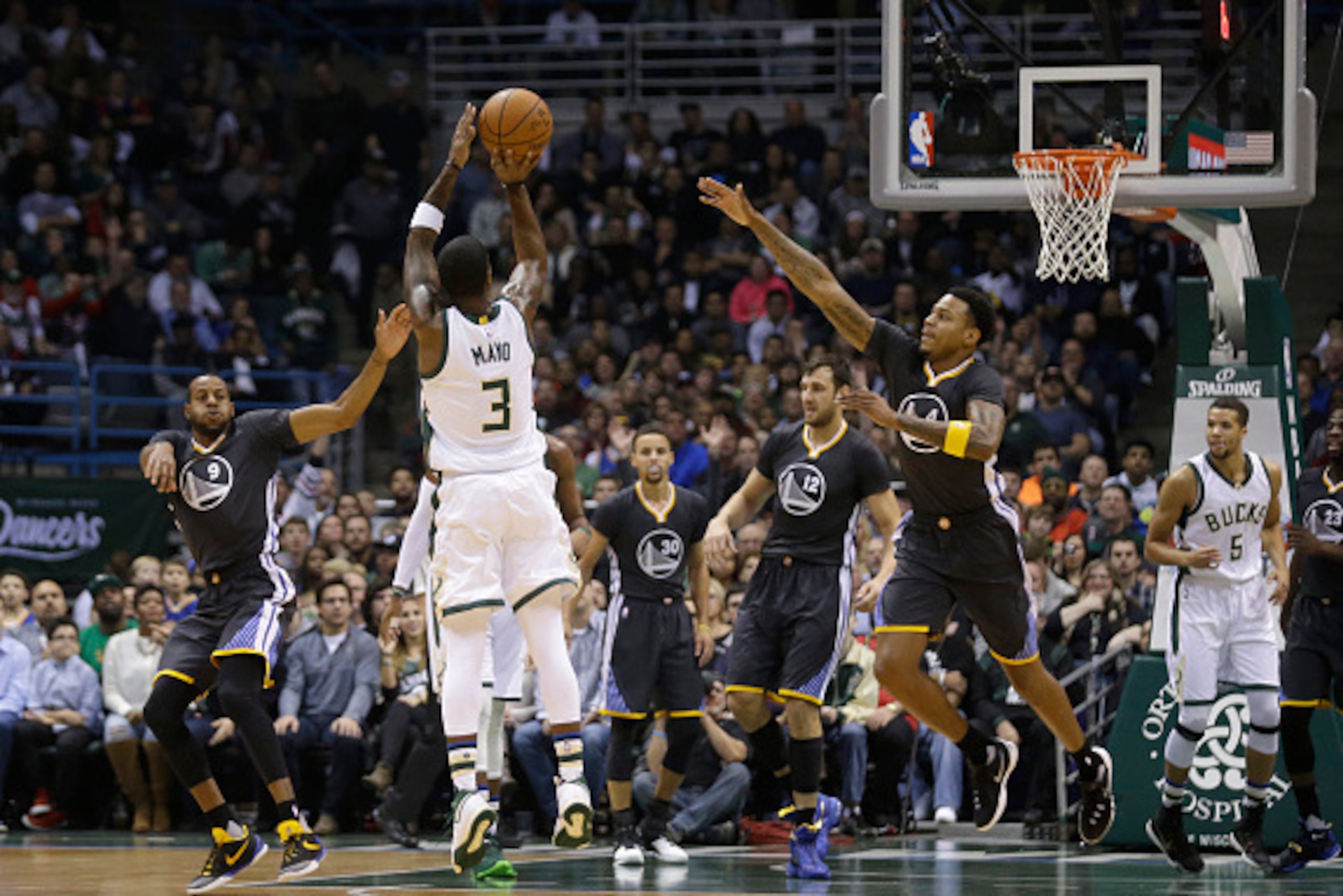
That wouldn't be enough in Milwaukee. Two consecutive opponents and their home crowds operating at Game 7 fever pitches proved to be too much, even with another 28 minutes from Iguodala, 24 from Livingston and 22 from Bogut.
Did the Warriors take an undue risk trying to extend the unbeaten streak to 25? Maybe, said Kerr, but it's one he would've taken as well. "The Milwaukee game, that's where it was tricky," he said. "That would've been where you'd normally rest Andre or Bogut, but at that point you can't do that. It's a lousy position to be in as a coach. It was just reality. Reality set in as far as the schedule."
As far as the schedule, yes. As far as where the Warriors find themselves overall—26-1 under an interim coach, with three games over the next six days at home, with plenty of time to mend that aforementioned slippage and a head coach improving by the day—that's amazingly a reality, too.
Walton appears to be guiding that Lambo back on the lot. Hardly a scratch on it.
Ric Bucher covers the NBA for Bleacher Report. Follow him on Twitter @RicBucher.
.jpg?w=2560 "Colts Giving Taylor $44M")

.jpg?w=2560 "Bucs GM Rules Out Vea Trade")
.jpg?w=2560 "Geno Wearing Red Contacts 🤨")