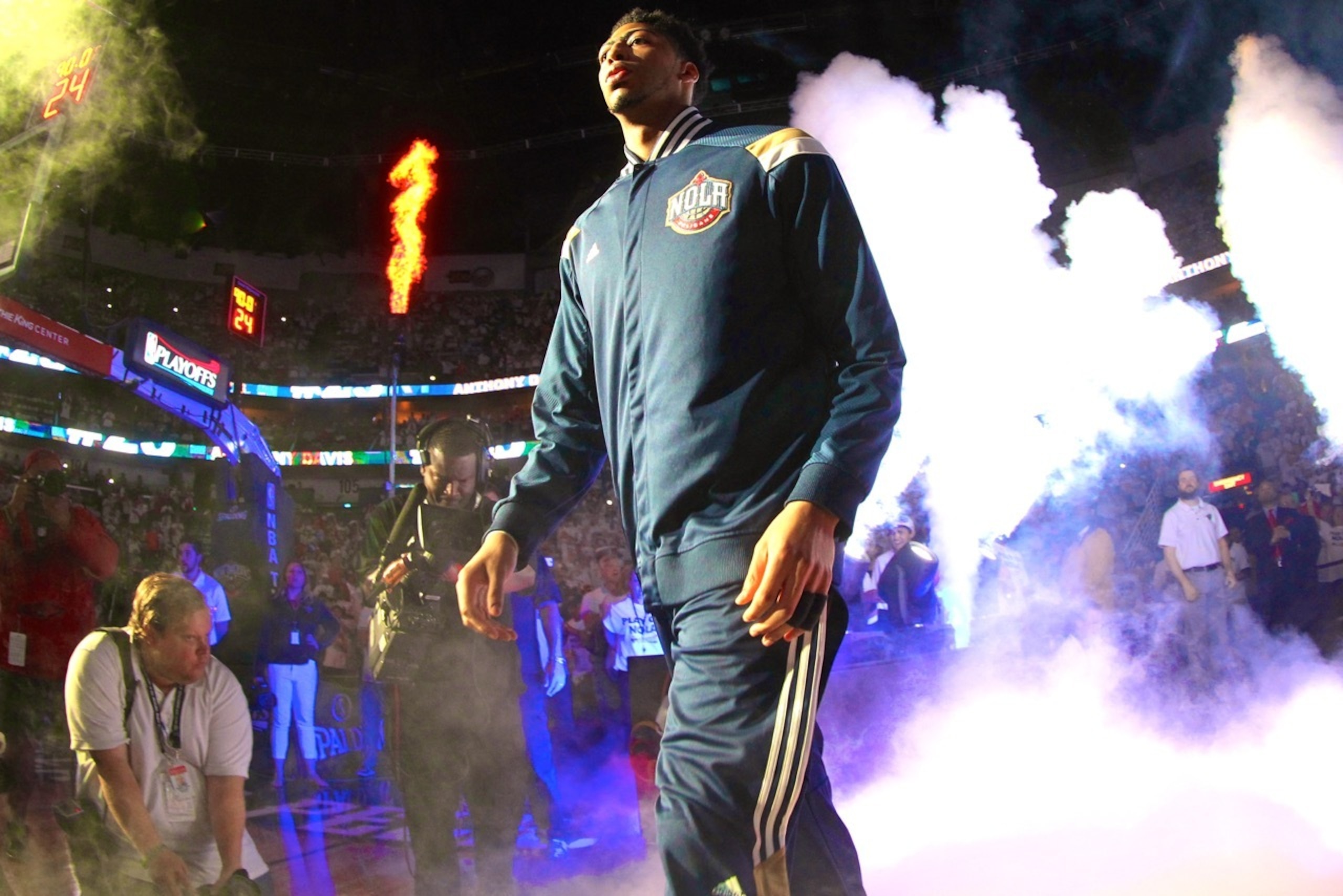


Anthony Davis is still more than six months shy of his 23rd birthday. He's nearly two-and-a-half months away from starting his fourth NBA season, and has missed an average of 15.7 games through the first three.
And yet, Davis is already the owner of the richest contract in league history: a five-year, $145 million extension that doesn't kick in until the start of the 2016-17 season.
That deal beats out the $136 million sum for which Kobe Bryant re-signed with the Los Angeles Lakers in 2004. Throw in the disparity in length between the two deals—Bryant inked for seven years, back when that was still legal under the collective bargaining agreement—and the tables tilt even further in Davis' favor by comparison:
TOP NEWS
JJJ (MCL) Out 6-8 Weeks; Lauri Day-to-Day
Ant to Miss Up to 2 Months
Bam: I'm the Scapegoat for 0-4 Start 😒
In some respects, it's crazy that a kid who's played three years of pro ball and hasn't yet won a single playoff game has already locked down a more lucrative deal than did a 25-year-old Bryant, who already had three championship rings on his fingers. Nine-figure contracts like Davis' were usually reserved for elite veterans in their primes, not precocious kids still shy of theirs.
Then again, today's NBA is a world away from where it was a decade ago. The 2011 lockout and the collective bargaining agreement that came from it radically changed the way the league and its players do business with one another. The Association's nine-year, $24 billion national television contract, which is due to take effect in the summer of 2016, figures to revolutionize pro basketball once again.
Crazier still, Davis deserved that historic pact with the New Orleans Pelicans, and may actually out-earn that lofty number over the life of the deal, assuming his pace of production and improvement continues.
Davis is far from a finished product, but is arguably already the most impactful all-around player in the game today.
Last season, the Chicago native finished fifth in MVP balloting and landed a spot on the All-NBA first team, and for good reason. He ranked among the 10 best in many major statistical categories, including spots atop the heap in blocks (2.9 per game) and PER (30.8):
| 24.4 (4th) | 10.2 (8th) | 2.9 (1st) | 53.5% (7th) | 30.8 (1st) |
In establishing himself as one of the NBA's most feared singular forces, Davis dragged the Pelicans to 45 wins—just enough to edge past the banged-up Oklahoma City Thunder for the West's eighth and final playoff spot, by virtue of a head-to-head tiebreaker. The eventual champion Golden State Warriors needed just four games to dispatch New Orleans in Round 1 of the postseason, though Davis did his best to keep the Pelicans within scratching distance.
In the first playoff game of his pro career, Davis piled up 35 points and four blocks in a seven-point defeat. In this second and third outings, he topped the 20-10 mark—26-11 in Game 2, 29-15 in Game 3. For his final act of the 2014-15 campaign, the Brow beat up the Warriors' frontline for 36 points and 11 boards, albeit in an 11-point defeat.
In three NBA seasons, Davis had grown from a wiry No. 1 pick who finished far behind Damian Lillard in Rookie of the Year voting, to a smooth, sneaky forward who doesn't need the ball in his hands to change the game.
If you include Davis' meteoric rise in high school, it's taken him a mere five years to go from a nobody to the somebody in a sport that seems to pride itself on finding the next big thing before he's shed his diapers. What, then, might Davis be able to accomplish in the half-decade to come?
There's no telling how things will play out—unless, of course, you put stock in the voodoo fortune telling on offer in the Big Easy. What New Orleans can bank on, though, is the reasoned perspective and diligent approach Davis will bring to the table.
"I always try to remember where I was, especially coming out of high school where I was under the radar and I kind of blew up a little bit," Davis said at Team USA's mini-camp in Las Vegas (via the New Orleans Times-Picayune's Jimmy Smith). "I just try to keep doing what I have to do."
Physically speaking, that means more bulk and strength for Davis. He arrived in the NBA at a slender 6'10" and 220 pounds. As of this year's All-Star break, he weighed in around 235 pounds. Chances are, he's added mass to his long, lanky frame since then.
More importantly, Davis has already been hard at work expanding his skill set. As he teased via Facebook back in July, his low-post game and three-point shot are both coming along swimmingly:
Per the Times-Picayune, Davis has also been honing his mid-range game and his ball-handling ability.
He's not starting from scratch in those departments. Once upon a time, before growth spurts turned him into the new prototype at forward, Davis was a 6'2" shooting guard. Granted, he wasn't great in that regard, but the fact that he grew up with the ball in his hands has boded well for his development.
"He looks good," said new Pelicans head coach Alvin Gentry (via the Times-Picayune). "I think he's doing a good job this offseason. He's working on some things we talked about, just trying to get stronger...expanding his range, working on 3-point shots from the corner, things like that."
What should bode even better is the coaching staff that New Orleans has put together to handle Davis' growth from here on out. Between Gentry and assistant coaches Phil Weber and Darren Erman, the Pelicans have put some of the NBA's brightest minds in charge of the league's most lethal weapon.
Gentry's background as an architect of prodigious offenses presages improvement both for a Pelicans attack that already ranked among the NBA's 10 most efficient and for Davis' place therein. He helped to build the Phoenix Suns' famed "Seven Seconds or Less" offense under Mike D'Antoni, then did his part to revive it after D'Antoni left for New York and Terry Porter flopped as his replacement.
Since then, Gentry has fashioned top-flight, high-octane offense for Doc Rivers' Clippers and Steve Kerr's Warriors. In each case, Gentry's teams looked to push the pace whenever possible as a means of putting up points and wearing out the opposition.
Davis, for one, is intrigued.
"I definitely love his playing style," Davis said (via the New Orleans Times-Picayune). "I've seen him coach in Phoenix when he had Steve Nash and Amar'e (Stoudemire). The way he was a big part of Golden State (last year) and the Clippers (the previous season)."
The rest of the Pelicans should be interested, too. According to NBA.com, New Orleans ranked 27th in pace last season, grinding out a snail-like 93.7 possessions per game.
That number figures to skyrocket starting this fall. With Gentry at the controls and young legs—like those of Davis, Jrue Holiday, Eric Gordon and Tyreke Evans—aplenty at his disposal, the Pelicans should have little trouble lighting up scoreboards going forward.
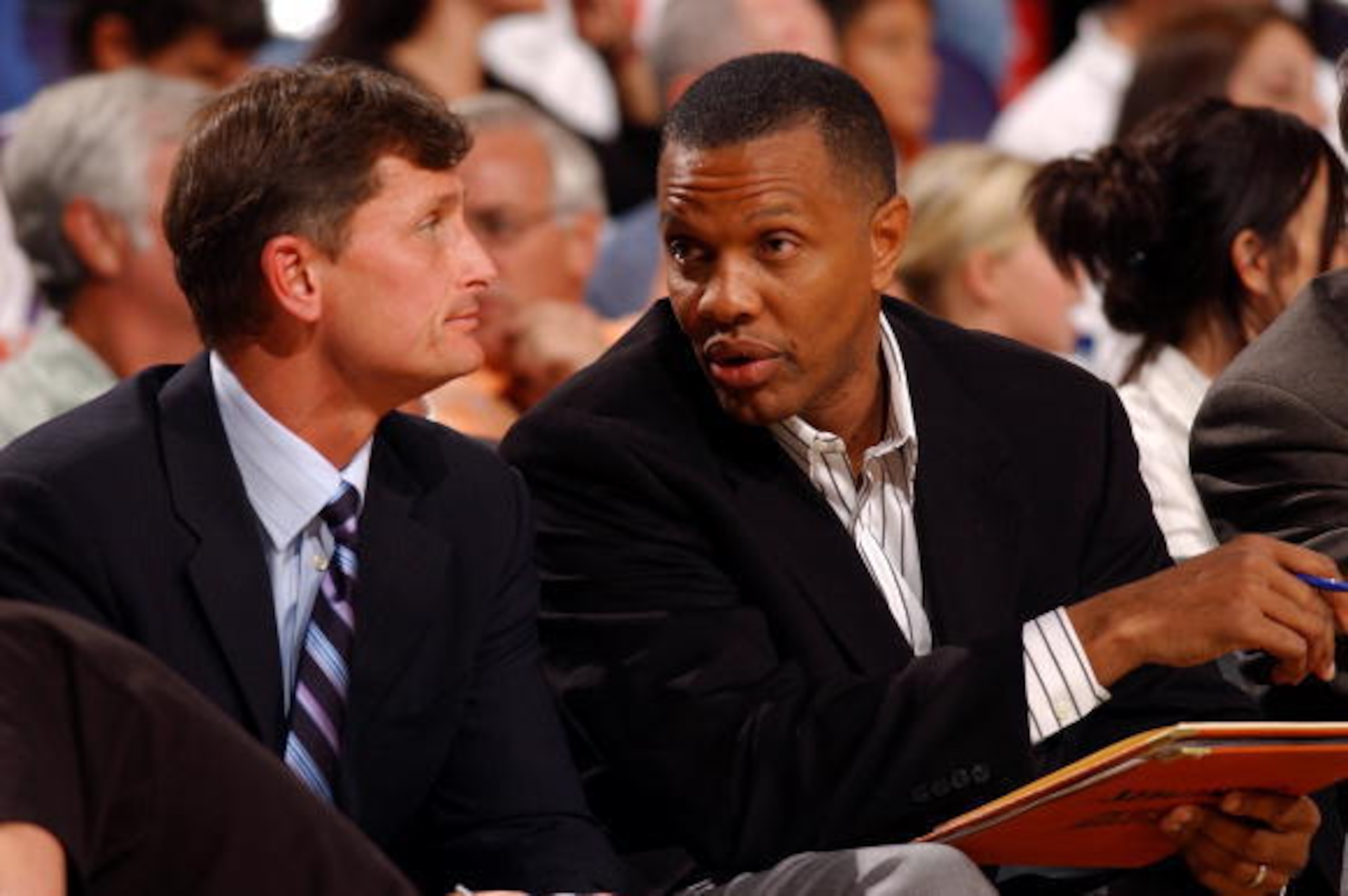
In all likelihood, Weber will have a heavy hand in turning Davis into the focal point of Gentry's offensive agenda. That's great news for the Pelicans, given Weber's track record for developing and maximizing talent.
In Phoenix, while serving under D'Antoni and alongside Gentry, Weber molded Amar'e Stoudemire, Shawn Marion and Boris Diaw into more effective offensive weapons. In New York, he helped David Lee sharpen his shot and, when Stoudemire signed in 2010, turned the Knicks into a point-scoring machine, however briefly.
In Davis, Weber may well have his most gifted pupil yet.
"I'm just watching on TV, and he's a perfect match," Marshall coach Dan D'Antoni, who coached with Weber and under his brother, Mike, in Phoenix and New York, told Bleacher Report's Adam Fromal. "I just think he [Weber] will further all his skill sets and take him another step up, allow him to be even more successful than he already is."
In the grand scheme of things, Davis and the Pelicans were already well on their way to becoming an offensive powerhouse. The bigger problems for his squad have come on the defensive end. Per NBA.com, the Pelicans finished the 2014-15 campaign among the bottom-10 in defensive rating, yielding 104.7 points per 100 possessions.
This, despite suiting up two supposed defensive stalwarts, in Davis and Asik, up front.
In reality, New Orleans' bigs weren't entirely to blame. As a team, the Pelicans allowed an NBA-worst 32.6 shots per game within five feet of the hoop. That's as much a function of poor perimeter defense from the team's guards and wings as it is of any deterrence Davis offers, if not more so. If anything, Davis' defense in the paint (48.6 percent shooting allowed on 7.1 at-rim attempts per game, per NBA.com) prevented the Pelicans from even more problematic puncturing.
To that end, Erman should be a sight for sore eyes in the Crescent City. As revered as Gentry is for his offensive ingenuity, Erman may be even more so for his defensive scheming. The 40-year-old former lawyer from Louisville, Kentucky learned the art of defense under Tom Thibodeau, when the two served on Doc Rivers' staff with the NBA champion Boston Celtics.
Erman went on to mold the Warriors' sieve-like defense into one of the league's stingiest as one of Mark Jackson's top aides. It didn't take the Celtics long to snap Erman back up once Jackson dismissed him from his staff in 2014.
"Darren's really a great defensive coach," Celtics coach Brad Stevens said last fall (h/t the New Orleans Times-Picayune's Jeff Duncan). "He's more than that. He is as detail-oriented as detail-oriented gets. If your hands aren't in the right place as you're guarding the pick-and-roll or if your body positioning is not at the right angle, he'll stop it and he'll correct it."
Such a hands-on approach will be key for a young player like Davis. His grasp of spacing and defensive principles is already far beyond his years, but with Erman's help, Davis could become a truly dominant defender.
It helps, too, that the Brow already holds Erman in high regard.
"I think Coach Erman is one of the best in the league, if not the best, at defense," Davis said (via the Times-Picayune). "Every day when I'm on the floor I work on 15 or 20 minutes of defense."
Davis seems like the sort of sponge who'd readily soak up all that knowledge and put it to use in a pinch.
When healthy, the core of which Davis is a part could be tremendous on both ends. According to NBA.com, the five-man lineup of Davis, Holiday, Evans, Gordon and Ryan Anderson scored points like it was going out of style, while the grouping in which Asik replaced Anderson was elite on both ends:
| Davis-Holiday-Evans-Gordon-Anderson | 106 | 118.5 | 115.3 | 3.2 |
| Davis-Holiday-Evans-Gordon-Asik | 171 | 109.8 | 98.5 | 11.3 |
Unfortunately for the Pelicans, those two units combined to play fewer than 300 minutes, usually on account of injury. Davis sat out 14 games, and Gordon and Anderson missed 21 apiece. With better luck, then, the Brow could find himself in the middle of a new power out West.
And if not, New Orleans should have the financial flexibility to make the necessary changes. Between the skyrocketing salary cap and the staggering of contract expirations from year to year, the Pelicans figure to be players in the market, be it via free agency or trades, for the foreseeable future.
The higher the cap goes, the less the Pelicans' front office will have to sweat over Davis' salary. According to ESPN's Marc Stein, the NBA previously projected the cap to reach $89 million for 2016-17 and $108 million by 2017-18 on account of the coming deluge of national TV money.
Those numbers, though, were forecast in April, before the cap took an unexpected jump—from $67.1 million to about $70 million—for 2015-16. It's possible, then, that the threshold for player salaries will climb even higher.
In any case, Davis won't get to cash in completely. Assuming he's once again chosen as either an All-Star starter or an All-NBA performer, Davis will earn 30 percent of the Pelicans' salary cap in 2016-17, when his extension kicks in. His raises thereafter won't be tethered to the cap, thereby giving New Orleans more freedom to allocate their portion of the league-wide windfall as they see fit on the open market.
Which is to say, Davis' take, while substantial, could look like a much smaller slice of the salary cap as the seasons come and go. The Pelicans probably won't mind paying Davis upwards of $30 million per season if the cap settles in north of $100 million down the line.
All the while, Davis' practical value to the Pelicans only figures to increase. His own growth into NBA superstardom can (and probably will) draw other elite players into his orbit, be it via free agency or trade. The more he can do to lure and recruit other great players to New Orleans, the better equipped the Pelicans will be to compete for a championship.
And, really, can you put a price on that kind of success? If Davis can bring the Larry O'Brien Trophy to New Orleans over the course of his current and upcoming contracts, there won't be any price the Pelicans could pay for his services that would seem all that insane.
Josh Martin covers the NBA for Bleacher Report. Follow him on Twitter.
.jpg?w=2560)

.jpg?w=2560 "World Series Gm. 4 Highlights 🎬")