


Sixteen NBA teams earn the right to compete for a championship every spring, but let's be real: It's much less than that.
A select few squads enter the playoffs as genuine title threats. A few more check in as dark-horse contenders. The rest arrive as foregone steppingstones, some just happy to be participating at all, others tricking themselves into believing they can hoist the Larry O'Brien Trophy.
Since the championship pack is so exclusive, we need more to discuss. We can only come up with so many fake reasons for why the Portland Trail Blazers have a puncher's hope at beating the Golden State Warriors in a seven-game series.
Enter playoff subplots.
These aren't just any old storylines. They're forward-looking issues and questions that can be impacted by postseason developments.
Soon-to-be free agents might switch locales because their team flamed out. Franchises may commit to rebuilds because they realize their roster has peaked. Teams could change play styles based on their postseason finish.
Something, anything, about this year's playoffs will have ramifications that extend well beyond the bracket.
The "Just in Case We Make It" Honorable Mentions
1 of 17
Denver Nuggets: How Much Different Will the Roster Look Next Season?
Armed to the teeth with blockbuster trade assets and able to carve out max cap space, there's no chance the Denver Nuggets enter 2017-18 looking exactly the same.
Nikola Jokic needs a superstar running mate—a partner in crime ready to lead a postseason cause now, not in a few years. The playoffs would provide yet another chance for Denver to showcase young talent that piques the interest of potential superstar sellers.
Never mind the (inevitable) outcome of a first-round sparring with the Warriors. If the Nuggets make it to the postseason and aren't linked to Jimmy Butler or Paul George trades by the NBA draft, something's gone wrong.
Indiana Pacers: Paul George
George will be a free agent after next season (player option). He wants to play for a contender. The Indiana Pacers aren't a contender. The Los Angeles Lakers exist.
You see where this is going.
Sneaking into the playoffs doesn't just give the Pacers an opportunity to crumble against the Cleveland Cavaliers or be fake competitive against the Boston Celtics. They'll be auditioning for George's affections while hoping he receives the All-NBA honor that would permit them to offer him a five-year extension worth more than $200 million over the summer.
Atlanta Hawks: Are We Done Here?
2 of 17
As of late February, the Atlanta Hawks were committed to this core. Paul Millsap, the glue holding it all together, has a player option for this summer, and general manager Wes Wilcox told The Vertical's Adrian Wojnarowski the team plans to keep him (via NBC Sports' Dan Feldman):
"Paul Millsap is absolutely our priority this offseason, in re-signing him with the Atlanta Hawks. We’ve communicated that to Paul, his team, and we feel great about our position there. We also don’t want to hide from the fact that, yeah, we took a long, hard look at it earlier in the season, during a period of time where our team was struggling and ultimately decided that Paul is far too valuable to us. And through that period of time and that exercise, we made that decision to absolutely keep Paul. And he is certainly our priority.
"
If Atlanta's preference is to remain on a treadmill of middle-seeded playoff berths, it makes sense to retain Millsap, irrespective of how this season ends.
Allowing a top-20 player walk for nothing is bad business, and the Hawks already let Al Horford leave for nothing last summer. They cannot afford to incur the same loss twice—not when they're a ghastly 2-9 without Millsap in the lineup this year.
At the same time, they shouldn't want any part of Millsap's next deal. He's 32 and eligible for a max contract that'll pay him roughly 35 percent of the projected $103 million salary cap in year one. He might take an annual discount for a longer agreement, but there will be teams (glances over at Brooklyn) slinging max money over the short term.
Shelling out that much cash for an aging superstar is always a dice roll. Atlanta's situation is exacerbated by Tim Hardaway Jr. (restricted) and Thabo Sefolosha entering free agency, in addition to Dennis Schroder's contract extension taking effect for 2017-18.
Do the Hawks have the stomach-sized wallet to keep this core intact? The length and competitiveness of their postseason push might make that decision for them.
Boston Celtics: Is This Team Too Good to Bust Up?
3 of 17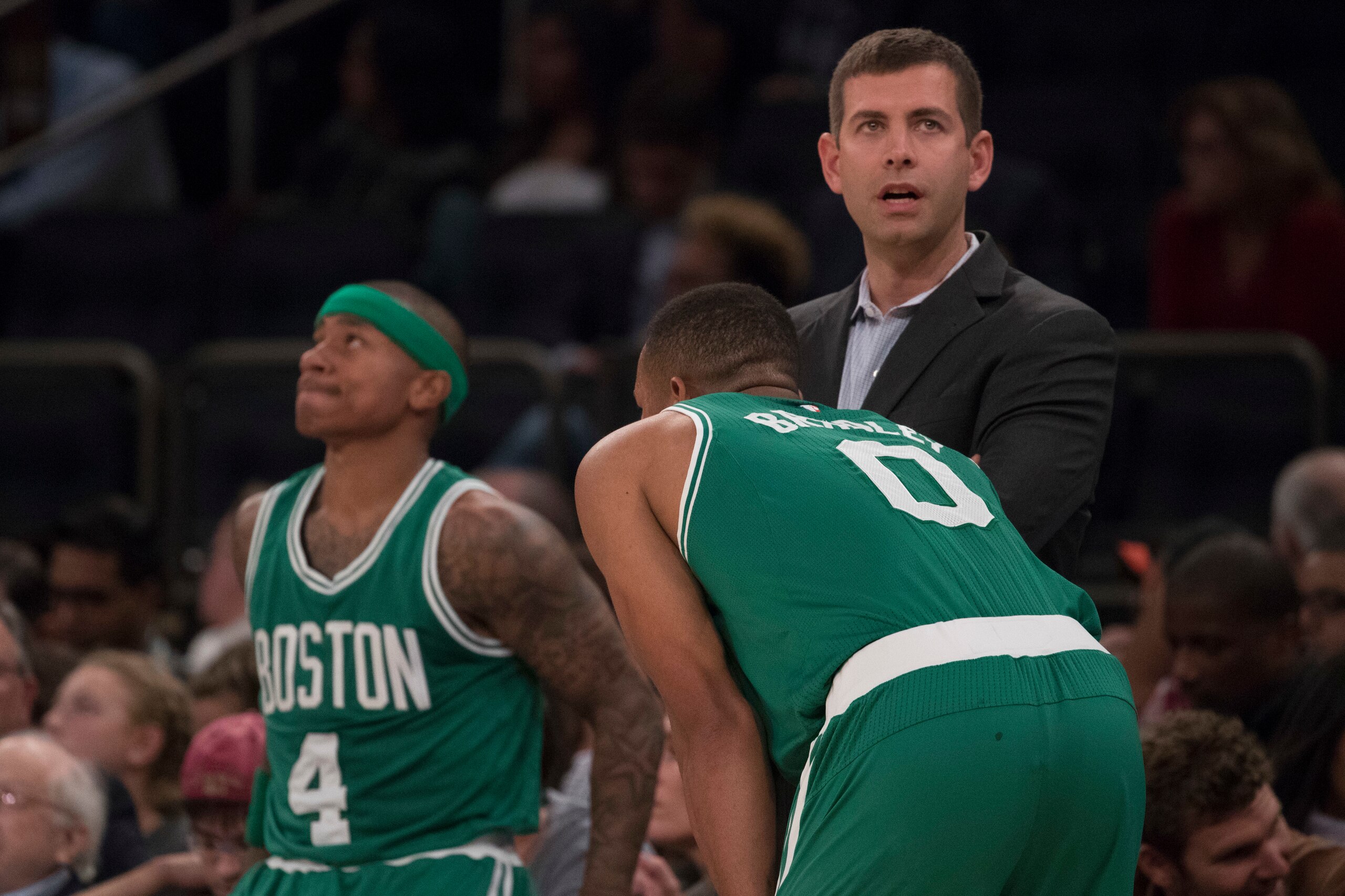
SCENARIO: The Celtics reach the Eastern Conference Finals. They're the No. 1 or No. 2 seed. It doesn't matter. They push the Cavaliers to seven games. Or they win and gain entry to the NBA Finals, where the subsequent outcome also doesn't matter.
What happens next?
Almost any other team in the Celtics' situation would stand pat. Their most notable flight risk is Kelly Olynyk, a backup and a restricted free agent. It will cost them almost nothing to run it back.
But the circumstances in Boston are compounded by unique luxuries.
The Celtics will swap picks with the 19-59 Brooklyn Nets. They have first-rounders galore in the coming years. They were linked to Jimmy Butler and Paul George at the trade deadline, per ESPN.com's Zach Lowe. And their path to max cap space is clear—a matter of renouncing the right holds.
The assumption is the Celtics will go for it. They have the chance to add one, maybe two, stars without gutting a nucleus of Avery Bradley, Jae Crowder, Al Horford and Isaiah Thomas. With Bradley and Thomas scheduled for free agency in 2018, at which point their below-market deals will swell to near-maxes, the team will never enjoy more flexibility.
Could a competitive Eastern Conference Finals cameo compel Boston to play it safe? What about an NBA Finals appearance? Is there anything that can deter team president Danny Ainge from exploring a superstar shakeup?



Chicago Bulls: Jimmy Butler's Future
4 of 17
Congratulations, Chicago Bulls. You've weathered another regular-season firestorm. You're neither whole nor threatening, but hey! You're in the playoffs. Which is good. It just doesn't change anything.
Seventh- and eighth-seeded postseason beats never do.
Cameron Payne's arrival initially made it look like the Bulls had accepted their fate as a lottery team. They prioritized the big picture over the immediate one by dealing Taj Gibson. They weren't hitting reset right away, but they were hinting at that being the plan.
Naturally, then, Payne can't escape the bench, Rajon Rondo looks like an NBA player, Nikola Mirotic is helping people find religion with his shooting, and Chicago is back in the playoff picture. Fancy that. Just don't expect the quasi-resurgence to keep Butler off the chopping block
"Paul George and Jimmy Butler were involved in trade rumors at the deadline, and all indications are that those conversations will resume this offseason," The Ringer's Kevin O'Connor wrote. "One front-office source told me recently that Butler is 'as good as gone,' while George sounds like a player who wants out."
National TV Bulls have the ability to turn every possible first-round matchup into a slog. They swept the season series with the Cavaliers and went 2-2 against the Celtics. You're kidding yourself, however, if you think a competent playoff appearance will quell Butler chatter. They're still teetering on the edge of a rebuild, and the Celtics have more assets than roster spots.
Don't be surprised when "Can Markelle Fultz or Lonzo Ball lead the Bulls to the promised land?" and "Danny Ainge wouldn't trade Jae Crowder for 26-year-old Michael Jordan!" become the rallying cries of Chicago's postseason stay.
Cleveland Cavaliers: Is the Defense a Long-Term Problem?
5 of 17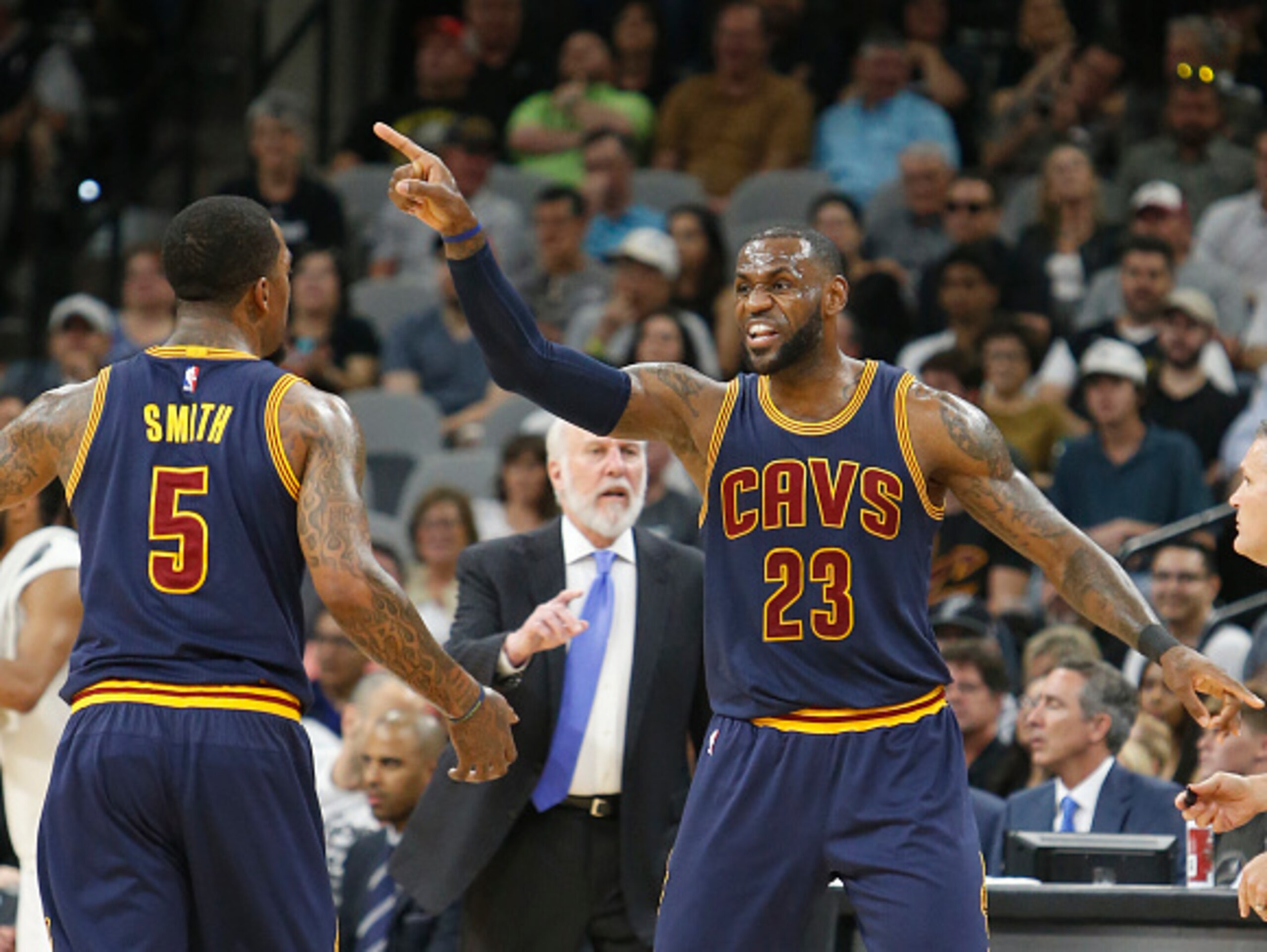
Concern for the Cavaliers defense is not contrived hyperbole. There are real red flags.
Only the Denver Nuggets and Los Angeles Lakers are allowing more points per 100 possessions since the All-Star break. Cleveland's main lineup of Kyrie Irving, LeBron James, Kevin Love, J.R. Smith and Tristan Thompson has made just 10 appearances during that time, through which it's allowing 124.6 points per 100 possessions when on the court. And it's still defending at a league-worst level for the season.
"Zoom out and you’ll find that they’ve been one of the three worst defenses since Jan. 1 [exactly half of their season] in escalating fashion," SI.com's Rob Mahoney wrote. "Say what you will about Cleveland’s ability to flip the switch, but they’ve essentially never been this bad since LeBron James returned and certainly never this late in the season."
Although the Cavaliers have tightened things up over the last five games, they're not out of the woods.
No defense coughs up more points per possession in transition. Cleveland does a good job limiting looks around the basket, but it's a below-average rebounding team. James will kick it up a notch or 50 in the playoffs, but Smith isn't the same defender he was last season, while Larry Sanders is the sole safety net behind Thompson.
Offense alone isn't enough to get the Cavaliers out of the Eastern Conference. Neither the Toronto Raptors (when healthy) nor Celtics are chopped liver. And if they can coast to the NBA Finals, the Cavaliers aren't getting past the Warriors or San Antonio Spurs playing suboptimal defense.
Flip the switch many believe, ad nauseam, still exists, and there won't be a problem. But if defense keeps the Cavaliers from staging a convincing repeat bid, the offseason will be spent searching for scapegoats and questioning, perhaps unfairly, the long-term viability of the Big Three.
Golden State Warriors: What Is the Future of This Roster?
6 of 17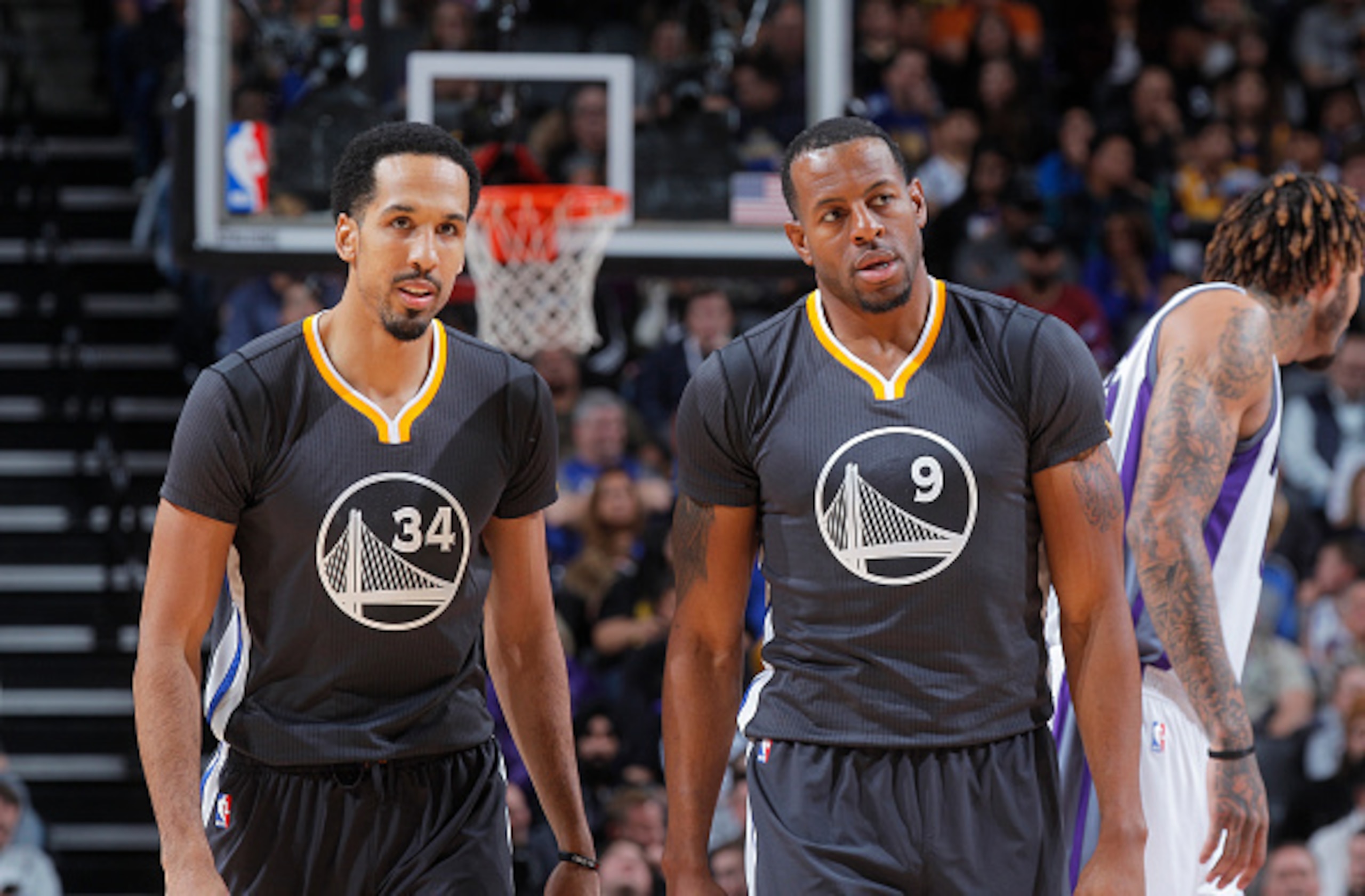
This year's roster might be as good as it gets for the Warriors—which, in a vacuum, is obvious.
Golden State has four All-NBA talents in the starting lineup and a bench that, by net rating, is second only to San Antonio's backups. It doesn't get any better than this, particularly when the house is overrun with free agents.
Stephen Curry, Ian Clark, Kevin Durant (player option), Andre Iguodala, Shaun Livingston, James McAdoo (restricted), JaVale McGee, Zaza Pachulia and David West are all slated to explore the open market. Late-season newcomer Matt Barnes is right there with them.
Curry and Durant aren't going anywhere. Cheap plug-and-play replacements can be found for almost everyone else if need be—except Iguodala and Livingston, Golden State's two most used reserves.
"We'd love to keep them, and I've told them that," general manager Bob Myers told CSN Bay Area's Monte Poole on the Warriors Insider Podcast. "We'd like to try to make it work. We have to approach it with what's in our control, and that's trying to find a way to keep them on the team."
Everything basically hinges on Durant. The Warriors cannot float Iguodala's ($16.7 million) and Livingston's ($11 million) cap holds if he opts out and seeks the full max. But they can retain Bird rights on the second-unit duo if Durant signs a non-Bird max, which is $4 million less than his actual max, per the Bay Area News Group's Anthony Slater.
Winning a championship is a great way to sell Durant and everyone else on pay cuts. Another title also makes it easier for the Warriors to foot whatever luxury-tax bill follows those discounts. But there isn't a postseason outcome that'll deter outside suitors from trying to poach Iguodala and Livingston with money and roles Golden State may not be able to offer.
Houston Rockets: Can You Beat the Warriors at Their Own Game?
7 of 17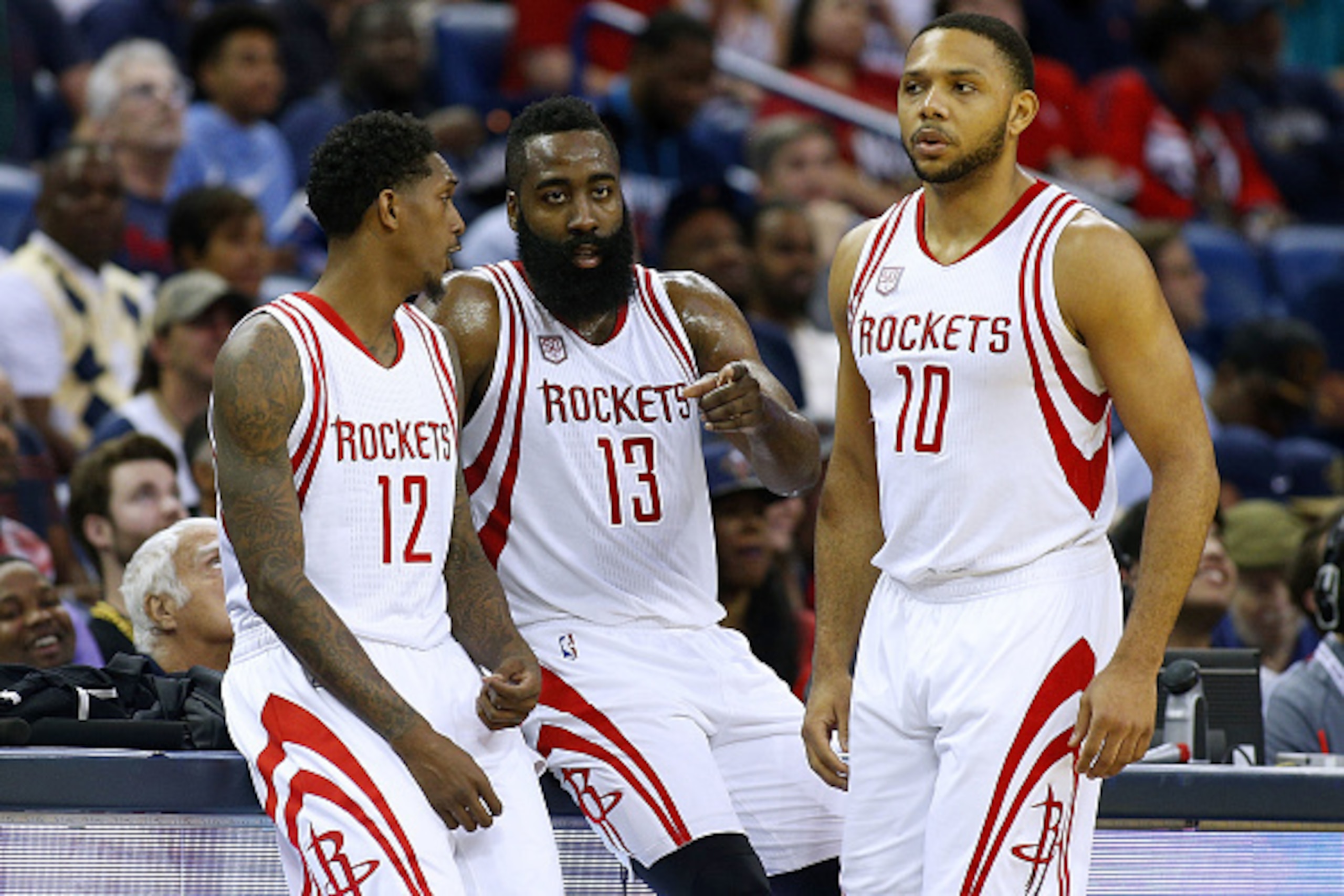
Is it a good idea to fight fire with Fireball whiskey?
The Houston Rockets are bent on finding out.
General manager Daryl Morey has not tried masking his team's identity. The Rockets are trying to beat the Warriors by being the Warriors incarnate. They aren't as switchy on defense, and their off-ball activity isn't so relentless, but they're trying to shoot you out of the state.
Houston has already obliterated the records for three-pointers made and attempted in a single season, breaking its own benchmarks from 2014-15. The Warriors drain triples more efficiently, but the Rockets, on average, drill 2.4 more treys per game. They've also buried at least five more threebies than their opponents on 40 occasions—11 more than their Bay Area counterpart.
While Golden State and Houston can only meet in the Western Conference Finals, the manner in which the postseason unfurls will serve as a referendum on the latter's approach.
If the Rockets offense bogs down in slower-paced games and against more physical opponents, they'll have to recalibrate. Ditto in the event the Spurs, the anti-Warriors, find more success.
And if the Rockets get their crack at Golden State and not only fail, but implode, they'll need to do some serious soul-searching about the composition of their roster: Do they quadruple down on a model that failed, or must they consider a more wholesale redirect?
Los Angeles Clippers: Shelf Life of the Core 4
8 of 17
Since Chris Paul's arrival in 2011-12, the Los Angeles Clippers have won about as many playoff games (21) as the Hawks (19) and Memphis Grizzlies (20). That's less than ideal.
Impossibly ill-timed injuries to Blake Griffin and Chris Paul have derailed momentum or hope more than once—most recently during last year's postseason go-round. But after blowing a 3-1 second-round lead over the Rockets in 2015, the memoriam for this Clippers core will read more like a tale of squandered opportunity should they fail to reach the Western Conference Finals.
Spoiler: They aren't making the Western Conference Finals. They'll need to go through the Warriors to get there, against whom they're 1-11, through both the playoffs and regular season, since 2014-15.
Even if you're bullish on the Clippers' immediate chances—their starting lineup spits fire—it's important to entertain an uncertain future. Six of their nine most-used players, including Griffin (early termination option), Paul (early termination option) and J.J. Redick, are ticketed for free agency.
Sources told Basketball Insiders' Steve Kyler the Clippers will re-sign all three, and that tracks. Bidding any of them farewell without receiving compensation for their departure is a worst-case scenario. You keep them and figure out the rest later.
This assumes Griffin, Redick and Paul all want to return. The money won't get better for Griffin and Paul elsewhere, but the opportunity to win will. Another first- or second-round exodus should be enough for them to test the waters.
And this says nothing of the Clippers' other free agents—namely Luc Mbah a Moute (player option). He's shooting almost 40 percent from deep and suffocating opponents on defense. He's getting more money than Los Angeles can offer using his Early Bird rights. Oh, and the Carmelo Anthony rumors aren't going anywhere.
To some extent, however trifling or radical, the Clippers as we've come to know them are galloping toward change.
Memphis Grizzlies: The Fate of an Era
9 of 17
Watching the Grizzlies, you don't get the sense they're gearing up for a seventh consecutive postseason bid. They are 6-11 since March 1, with a bottom-10 defensive rating. The offense has been updated to incorporate more threes, but it's decidedly below average.
Despite a winning record, the Grizzlies are, in many ways, a disappointment. As Kevin Yeung wrote for Grizzly Bear Blues:
"In a better, more consistent world [and I’m totally swerving the Chandler Parsons factor here because we don’t have good conversations about that], the Grizzlies could’ve been a fourth or fifth seed matched up with the Los Angeles Clippers. The Clippers aren’t exactly trash, but in a sense, they totally are.
This is where we are. For sure, I’m exhausted by the group freak-outs after every loss, so it’s partly something to just get over. The Grizzlies are in the playoffs again, and doing that seven years in a row is a monumental feat. Certainly, this is no rebuild or tear-down—I have no idea where that comes from.
"
A total rebuild is indeed out of the question. No one is going to take the three years and $72.3 million remaining on Parsons' deal, and Memphis won't get adequate value for Mike Conley and Marc Gasol.
But the Grizzlies aren't getting out of the first round, either. They're locked into a first-round matchup with the Spurs, against whom they're 6-26 since 2011-12. Another early exit makes it difficult to perpetuate the Grit-'n'-Grind era.
Do the Grizzlies pay what it takes to keep Tony Allen when he still can't shoot and the defense is a wash without him? Zach Randolph's connection to Memphis runs deep, but it'll cost a pretty penny to keep JaMychal Green (restricted). Vince Carter has been their best wing all year, hands down. He's also 40.
Rail-thin on trade assets, the Grizzlies aren't in position for a quick turnaround. Banking on a Parsons renaissance is their best play, but they also need a pivot point in case that fails. Recommitting to the current nucleus threatens to trap them with no way out.
Miami Heat: Is This the First and Last Hurrah?
10 of 17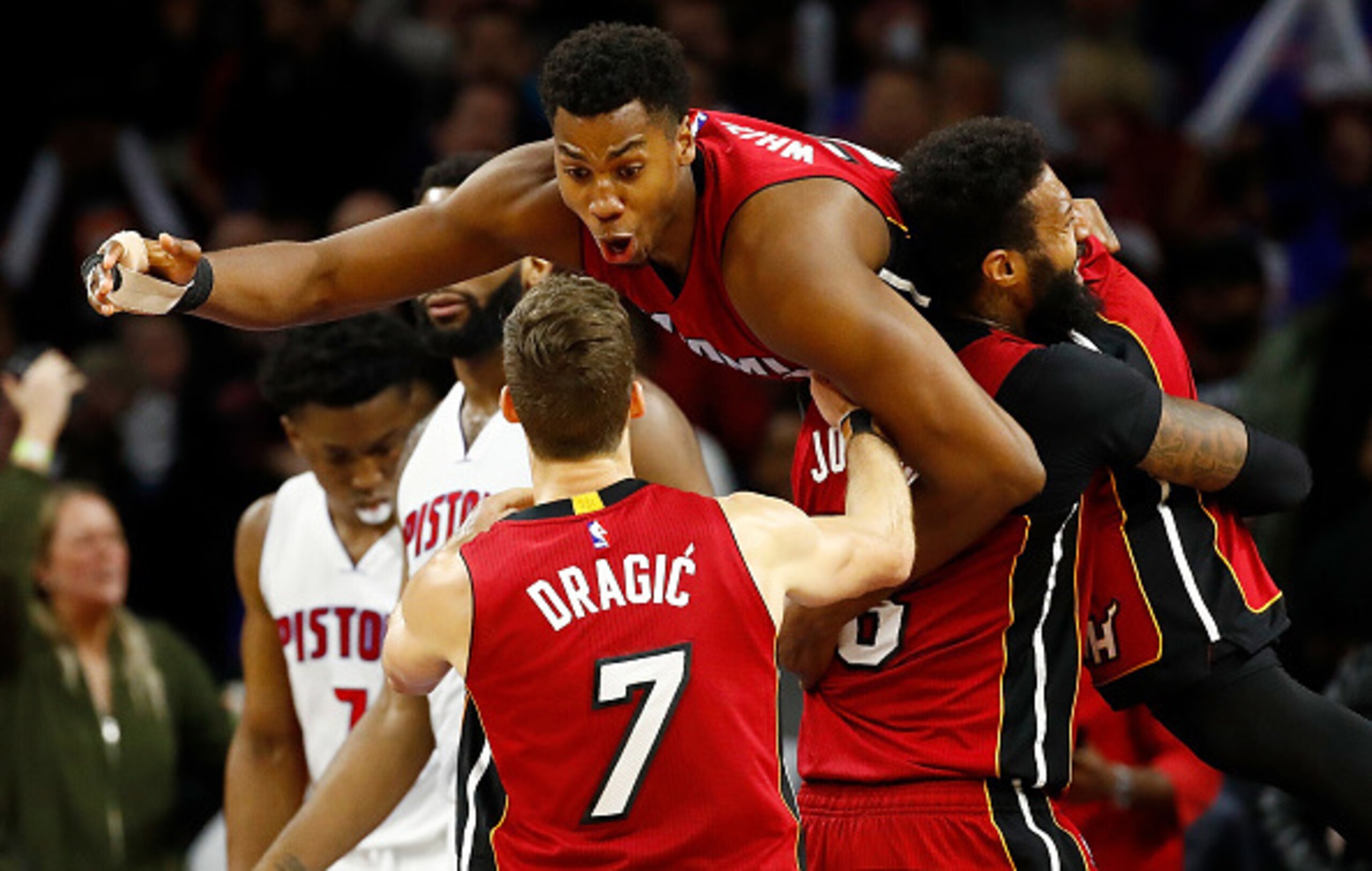
Not even a nine-game, sub-.500 slump can derail the Miami Heat. Their half-season tear is raging on.
Miami is 26-10 over its last 36 games, with top-five offensive and defensive ratings. Golden State is the only other team with top-five marks on both sides of the court during this time.
Repeat: The Heat have been one of the two most balanced squads for almost half the schedule.
Sure, their ceiling is the East's seventh seed. They won't get a participation trophy for prolonging their season by two weeks. The Celtics and Cavaliers shouldn't want to face them, but they're not going to fear them.
And after the Heat get bounced, they'll be in for a reality check—an expensive one.
James Johnson and Dion Waiters (player option), two of their most valuable players, are free agents. Both are due to get two-syllable paid. Johnson has been a two-way terror, while Waiters' suddenly efficient brand of offense will expand his market considerably, even if his ankle injury keeps him sidelined for the rest of the year.
The Heat will have max space and room to spare if Chris Bosh's salary gets expunged from their books. Are they willing to spend most or all of it on career efforts from preconceived outcasts? Does team president Pat Riley go all-in on the superstar pool anyway?
Most importantly: Is a midseason turnaround and the early postseason exit it earns enough to say the Heat have moved beyond rebuilding?
Milwaukee Bucks: Giannis Antetokounmpo's Superstar Barometer
11 of 17
The Milwaukee Bucks are operating on found money. They weren't supposed to make the playoffs after losing Khris Middleton for most of the year. If they bucked (so sorry) preseason projections, it would be as first-round fodder for the Cavaliers, Celtics or Toronto Raptors.
Fast forward to now, and the Bucks have sole ownership of the East's fifth-seed, with a real shot at winning a playoff series.
Except, triumphing over the Raptors or Washington Wizards isn't the expectation. The Bucks are young(ish). Their best player, Giannis Antetokounmpo, has but six playoff games to his NBA resume.
Milwaukee's postseason trek is instead about measuring the merits of its future—specifically Antetokounmpo. He's been designated a superstar, and rightfully so. No one else has ever matched his per-game point, rebound, assist, steal and block totals. He's about to become the first player since James to lead his team in all five categories.
Will his numbers hold up in the playoffs? Can he protect the rim as effectively? Reach the rim as frequently?
Win or lose, can the Bucks exit the first round knowing they deployed the best player, bar none, on the court?
For Milwaukee to truly be ahead of schedule, let alone sniff the second round, the answer needs to be yes.
Oklahoma City Thunder: Wildly Uncertain Outlook
12 of 17
There's no point knocking the Oklahoma City Thunder's body of work this season.
Is their spacing strained by a medley of unproven-to-bad shooters? Totally. But they're flirting with a top-10 offensive rating since the All-Star break anyway. Does Russell Westbrook deliberately chase assists and rebounds, oftentimes at the expense of his teammates? Yes. But he's averaging a triple-double, and Oklahoma City plays like a 50-something-win team when he's on the floor, so who cares?
Clinching a playoff berth and battling for a top-five seed after losing Kevin Durant for nothing is impressive. Most other teams would have endured a complete collapse after forfeiting a top-five player. That the Thunder are still relevant is a testament to both Westbrook and the organization as a whole.
Step back, though, and the future is hazy. The Thunder don't have a blueprint to being any better than they are now.
Exercise Jerami Grant's team option, and they'll have more than $111 million committed to next year's books. Cap holds for Taj Gibson ($13.4 million), Andre Roberson ($5.5 million) and this year's first-round pick (estimated $1.5 million) pull them well past $130 million and deep into the luxury tax. If Oklahoma City is able to keep Gibson and Roberson without forging a $150 million payroll, it'll be a miracle.
That's enough to make any small-market franchise rethink its makeup, even if it's a contender. And the Thunder aren't a contender. Their ceiling might be fourth in the West if one of the current superpowers falls off, and that's assuming Westbrook never burns out.
Oklahoma City can count on some internal growth. Roberson, Alex Abrines, Steven Adams, Victor Oladipo and Domantas Sabonis should all get better. Doug McDermott might find his niche yet. But this roster isn't getting any cheaper, and neither the Warriors nor Spurs are going anywhere.
Tough offseason decisions await the Thunder unless their postseason push spans longer than reason projects.
Portland Trail Blazers: The Inevitability of a Roster Shake-Up
13 of 17
Whip out those calculators. We're about to do some (kindergarten) math.
The Blazers do not have any free agents on their docket. All 15 of their players are currently under contract for next season. Deals for Pat Connaughton, Festus Ezeli and Jake Layman are non-guaranteed, but Portland can technically do nothing and not have any room for additions.
This is problematic for obvious reasons. The Blazers, clinging to eighth place in the West, aren't good enough to remain idle. But they also have three first-round picks in this year's draft; their own, plus selections from Cleveland and Memphis.
Fling in a payroll that will soar past $130 million even if Connaughton, Ezeli and Layman are all let go, and Portland is hightailing its way toward serious change.
Dipping into the luxury tax is probably unavoidable. No team is absorbing Evan Turner into cap space, and the Blazers aren't flipping established players for picks and prospects unless they about-face into a rebuild.
If anything, the Blazers might end up taking on salary. Dangling some combination of first-round picks, Ed Davis, Al-Farouq Aminu, Maurice Harkless and Meyers Leonard should get them in the conversation for another impact contributor.
And then there's the possibility of breaking up Damian Lillard and C.J. McCollum. Together, they're an offensive dream, but Portland will have trouble propping up even an average defense when they're playing almost 25 minutes per game with one another.
Basically, don't let the Blazers' feel-good march into the West's playoff bracket distract you from the inevitability of a summertime facelift.
San Antonio Spurs: What Lies Ahead at Point Guard?
14 of 17
Tony Parker is aging fast, and it's creating problems for the Spurs—both immediate and long term.
San Antonio starts every game in a hole at point guard. Parker turns 35 in May and can't stick with the horde of opposing superstar floor generals. He's a target in the pick-and-roll. Danny Green and Kawhi Leonard limit the bleeding, but he still rates as the squad's worst defender by a direful margin, according to NBA Math.
Parker's offensive value isn't helping matters. He can still get into the lane, but he's shooting 57.2 percent around the rim—the second-lowest mark for his career. His three-point percentage has dropped without an increase in volume, and the offense scores more points per 100 possessions when he takes a seat.
The Spurs aren't making it out of the West with Parker playing 25 minutes per game. And yet, they don't have a ton of other options. Patty Mills presents similar problems on defense, and rookie Dejounte Murray isn't ready to pilot an NBA Finals hopeful.
Things get murkier on a more macro scale. Parker has one year and about $15.5 million left on his deal. Mills is a free agent, and it could take Parker money to keep him.
Moving forward with both feels unlikely. San Antonio was interested in Conley last summer, and there will be a host of higher-end alternatives on the market this July. But the Spurs won't have enough cap space to make a splash at point guard just by letting Mills walk. They'll have to trim salary elsewhere.
Might they be compelled to try dumping Parker? Do they just re-sign Mills and keep plowing along? Do they pass on Mills and wait out Parker's deal? There are so many routes for the Spurs to consider, and while the loyalty to Parker is real, the latest playoff campaign, depending how it ends, could coax them into some roster-rattling decisions.
Toronto Raptors: Cost of the Status Quo
15 of 17
The deeper the Raptors go into the postseason, the harder it becomes to reconcile having to cut off some limbs to field a financially manageable roster next year.
Short of winning a title, there's nothing Toronto can do to stave off change. And even a championship might not be enough. The roster is about to get that expensive.
Guaranteeing the contracts of Norman Powell and Fred VanVleet leaves the Raptors with more than $81 million in 2017-18 salary obligations after accounting for their first-round pick. Cap holds on Serge Ibaka ($18.4 million), Kyle Lowry ($18 million), Patrick Patterson ($9.1 million) and P.J. Tucker ($10.1 million) drag them past $135 million.
Once the Raptors pay everyone what it'll actually take to keep them, they'll be on the hook for between $140 and $150 million in salaries, maybe more. That's not sustainable.
Lowry isn't a flight risk, and Toronto wouldn't have traded for Ibaka without the intention of paying him. Patterson and Tucker are fair game, if good as gone. And the rumor factory is about to churn out piping-hot dirt on the futures of DeMarre Carroll, Cory Joseph and Jonas Valanciunas.
Buckle up, Raptors nation. Whatever happens in the playoffs, it's going to be a bumpy summer.
Utah Jazz: Gordon Hayward's Wandering Eye
16 of 17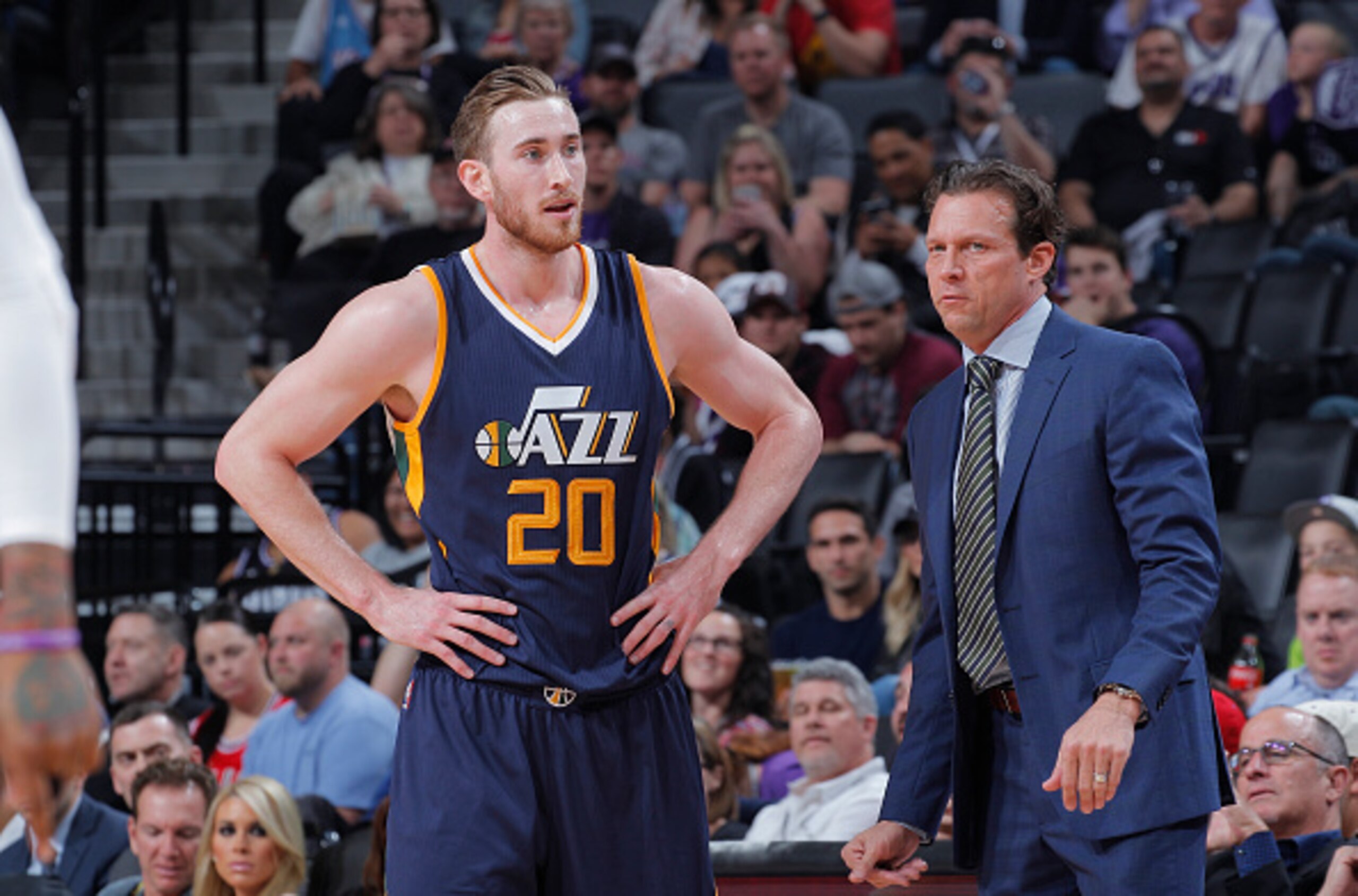
Where Curry, Durant and Lowry, among others, are considered offseason formalities, Gordon Hayward (player option) has been dubbed poachable. The Celtics will forever be on his radar with head honcho Brad Stevens, Hayward's college coach, in tow. And there are "rumblings" that the 27-year-old will give the Heat a look, according to the New York Daily News' Frank Isola.
The Utah Jazz's offseason plot line writes itself if Hayward returns. They'll have all the incentive necessary to pay market value for George Hill and Joe Ingles (restricted). Shelvin Mack and Jeff Withey will still leave, but the heart of the NBA's sixth-best team will be in place.
Losing Hayward sends the Jazz into an impromptu spiral. They won't have to completely start over, because Rudy Gobert is a monster. But doling out big bucks for Hill and Ingles would no longer fit the timeline.
Utah remains the default favorite to re-sign Hayward. No other team can offer him a fifth year, and he'll become eligible for a massive $200-plus million extension if he receives an All-NBA nod (though he'd have to opt in for 2017-18 to get it).
Still, the Jazz's first playoff appearance in four years isn't assured to last especially long. They won't be favored in a first-round series against the Clippers. If they do make it through, they'll have a second-round date with the Warriors.
All the while, Hayward could be looking over toward the Eastern Conference, at the Celtics, wondering how much easier it'd be to reach the NBA Finals when four other Goliaths aren't standing in your way.
Washington Wizards: The Legitimacy of a Big 3
17 of 17
Where do Bradley Beal, Otto Porter and John Wall rank among the NBA's best Big Threes? It's perfectly fine if you haven't given the question much thought. It's not one people are asking.
Internally, though, the Wizards have to pose it. They're already paying Beal and Wall like superstars. Porter is next in line; he's expected to garner max-offer overtures during restricted free agency.
Wall's current deal was signed before the salary-cap spike, so he's making Reggie Jackson money. That helps. But Washington could still be funneling more than $65 million into its three best players—approximately two-thirds of the salary cap.
Sprinkle in salaries for Marcin Gortat ($12.8 million), Markieff Morris ($8 million) and Ian Mahinmi ($16.7 million), and boom: The Wizards are over the cap. They'll be dangerously close to the luxury tax without making any changes. They'll likely break it if Bojan Bogdanovic, also a restricted free agent, plays his way into keeper status.
Paying the tax isn't egregious when you're competing for a top-three playoff seed. But, failing a trade, it ties the Wizards to a core that doesn't register as the foremost threat to the Cavaliers' Eastern Conference throne.
Unless, of course, the playoffs prove otherwise.
Dan Favale covers the NBA for Bleacher Report. Follow him on Twitter (@danfavale) and listen to his Hardwood Knocks podcast co-hosted by B/R's Andrew Bailey.
Stats courtesy of Basketball Reference or NBA.com and accurate leading into games April 5. Team salary information via Basketball Insiders.



.jpg?w=2560 "Jonathan Taylor Landing Spots 📍")
.jpg?w=2560 "Mahomes Asked OT to Leave Meeting")


