From LeSean McCoy to the Seahawks' Line: Smart Solutions for Preseason Problems
The Bills didn't need a running back two months ago, or even this past weekend.
Everything changed when LeSean McCoy suffered a hamstring injury in Monday's joint practice with the Browns. Backups Fred Jackson and Anthony Dixon are already injured, leaving the Bills dangerously thin at running back for the rest of the preseason, if not longer.
Rookie Karlos Williams also suffered an injury this week that will sideline him indefinitely, and Bryce Brown is coping with yet another hamstring issue. The Bills, at a loss for enough guys to work through practice drills, suddenly must solve a problem they never thought they would have.
TOP NEWS
.jpg?w=3840 "Bills Rookies Football")
Overlooked Rookies to Watch in Camp 🔎
Coaches, Execs Rank Top 10 Edges 💪
.jpg?w=3840 "49ers Seahawks Football")
Dark-Horse Candidates to Win Each NFL Award in 2026
McCoy's injury illustrates that preseason football can expose as many problems as it solves. From injuries that turn positions of strength into weaknesses to reality checks for underperforming units, many teams are scrambling to prevent crises, and the clock is ticking toward the season-opener.
Let's examine the Bills' running back situation and other hot spots around the NFL, analyzing the problems and posing potential solutions.
Buffalo Bills, Running Back
Problem: Hamstring injuries are unpredictable, and McCoy will have to be brought along carefully. He's expected back for the season opener, according to ESPN's Adam Schefter, but the Bills need a contingency plan.
Jackson suffered a hamstring injury of his own earlier in the month. His timetable is not clear. Dixon suffered a calf injury at the beginning of the month and is not expected back until September. Brown, a longtime McCoy backup with fumbling issues, injured his hamstring Sunday. (The Democrat & Chronicle has a rundown of the various issues.) The team announced the signing of Cierre Wood on Wednesday, to eat up some reps, but they need better options.
Solution: The buzzy, fashionable thing to do here is invoke Ray Rice and then slam a lid on the comment thread and run away. Rice deserves a tryout and a second chance in a league (and nation) that has shrugged and welcomed back Greg Hardy and other domestic violence offenders.
But...remember last year, when we all grabbed torches and pitchforks and threatened to tar and feather every coach or owner who said anything even remotely conciliatory about Ray Rice? Remember international news organizations swooping in to rake the NFL over the coals? Steve Bisciotti holding a press conference amid demands that he sell his franchise during the Rice fallout?
NFL owners and general managers remember that stuff, folks. And while Rex Ryan doesn't care what we think (as he goes so far out of his way to demonstrate), there won't be any mad rush to bring even 10 percent of that maelstrom to any team's door.
Pierre Thomas is also a fashionable, less controversial choice to round out the Bills depth chart. But Thomas has lofty contract expectations—he couldn't agree to terms with the needy Texans—and the Bills are up against the salary cap.
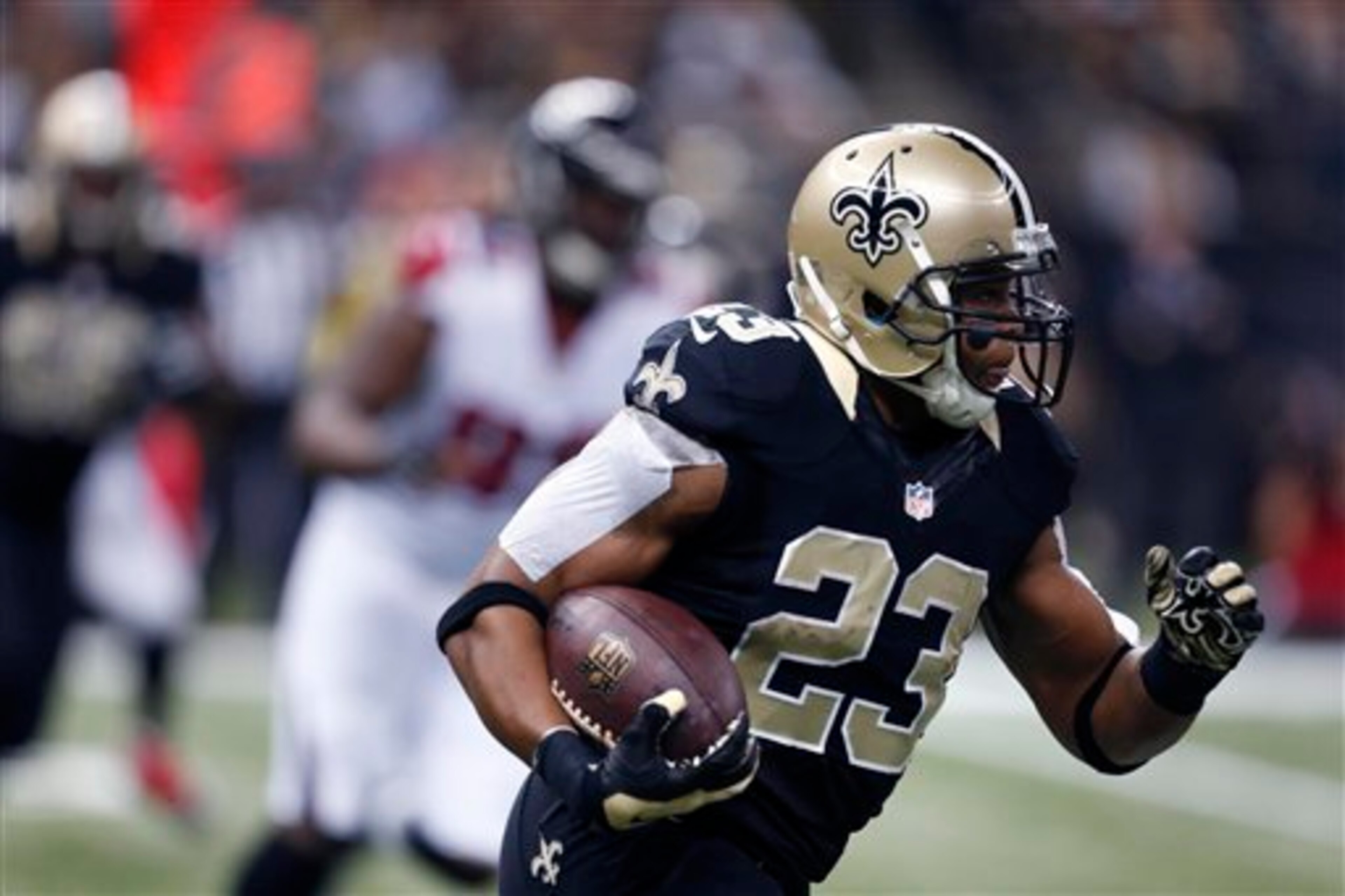
Thomas also knows a shaky situation when he sees it. McCoy will be the featured back when he returns, and Jackson is an institution in Buffalo. The Bills cannot promise many touches to a running back with any pedigree. They may not even be able to guarantee a regular-season roster spot.
Here's a less sexy, more logical solution: Joe McKnight. McKnight worked out with the Texans, so he is still actively swimming in the waiver pool. He played for Ryan's Jets for three years.
McKnight will never be mistaken for McCoy, but he has experience as a return man and a core special-teamer. That means the Bills can justify keeping him on the roster once everyone is healthy. In the meantime, McKnight can take reps and preseason carries, generating some game film that will help him if he turns out to be a three-week rental.
There are other backs of McKnight's caliber on the free-agent market: Shonn Greene also has Ryan experience, Phillip Tanner played briefly for offensive coordinator Greg Roman in San Francisco, and so forth. Unless the McCoy prognosis is worse than expected, the Bills need someone who works cheap and doesn't have many expectations beyond September, not someone who can make another splashy headline.
Carolina Panthers, Wide Receiver
Problem: Kelvin Benjamin, who caught 73 passes for 1,008 yards and nine touchdowns in 2014, tore an ACL in practice Wednesday and is out for the season. Rookie Devin Funchess, who had a promising preseason debut last week (two receptions, 53 yards, a near-miss of a potential acrobatic touchdown), tweaked a hamstring and will miss practice time. Perennial size-speed prospect tease Stephen Hill tore an ACL earlier in camp.
The roll call of remaining Panthers receivers reads like a who's who of has-beens and never-weres: Ted Ginn, Jerricho Cotchery, Corey Brown (who prefers to not be called "Philly" anymore), Brenton Bersin, Jarrett Boykin and some undrafted rookies.
Solution: The Panthers need to sign Reggie Wayne.
Assuming Funchess returns quickly, he will have to grow up quickly as the designated deep threat. Ginn can also help a little as a deep threat and sideline receiver, and neither Boykin nor Brown will kill you. But the Panthers desperately lack a veteran stabilizer and possession target between the numbers.
Cotchery tried to fill that role last season, but he caught just 20 passes for 205 yards in his final seven games, with just two third-down receptions in that span. Cam Newton needs more than 30 yards per game and 10 yards per catch and one third-down conversion per month from his possession receiver.
Speaking of Newton: The Panthers also need to embrace the read-option with their receiving corps depleted. Newton averaged 5.4 yards per designed run last season, according to the Football Outsiders Game Charting Project, with nearly all of his 354 designed rushing yards coming after Week 6, when the Panthers stopped being self-conscious about the read-option and started doing whatever was necessary to move the ball with a weak line and few weapons.
Yes, football purists hate the read option, but football purists generally hate Cam Newton. The option threat draws the defense in and forces it to defend horizontally, creating space for weaker receivers. Stand Newton in the pocket and tell him to wait for the current receivers to get open, and you might as well fit him with the flak jacket now.
Bring Wayne in to provide credibility and route savvy, use Funchess and Ginn to lift the lid, give the defense plenty of option threats to worry about and hope for another Pro Bowl-caliber year from tight end Greg Olsen. It's the best the Panthers can hope for with their potential breakout player sidelined. Someday, Newton will have a full complement of receiving weapons. Until then, he'll have to be the weapon.
New York Giants Defense
Problem: Jason Pierre-Paul is still absent from training camp, and his NFL future is an unknown after losing an index finger in a fireworks accident. Rookie safeties Landon Collins and Mykkele Thompson were injured in the first preseason game—Thompson is out for the year—forcing the Giants to bring former Pro Bowler (and notorious illegal hit machine) Brandon Meriweather straight from the waiver wire to near the top of the depth chart. Meriweather was working with the second-team defense hours after signing and is likely to push his way into the starting rotation.
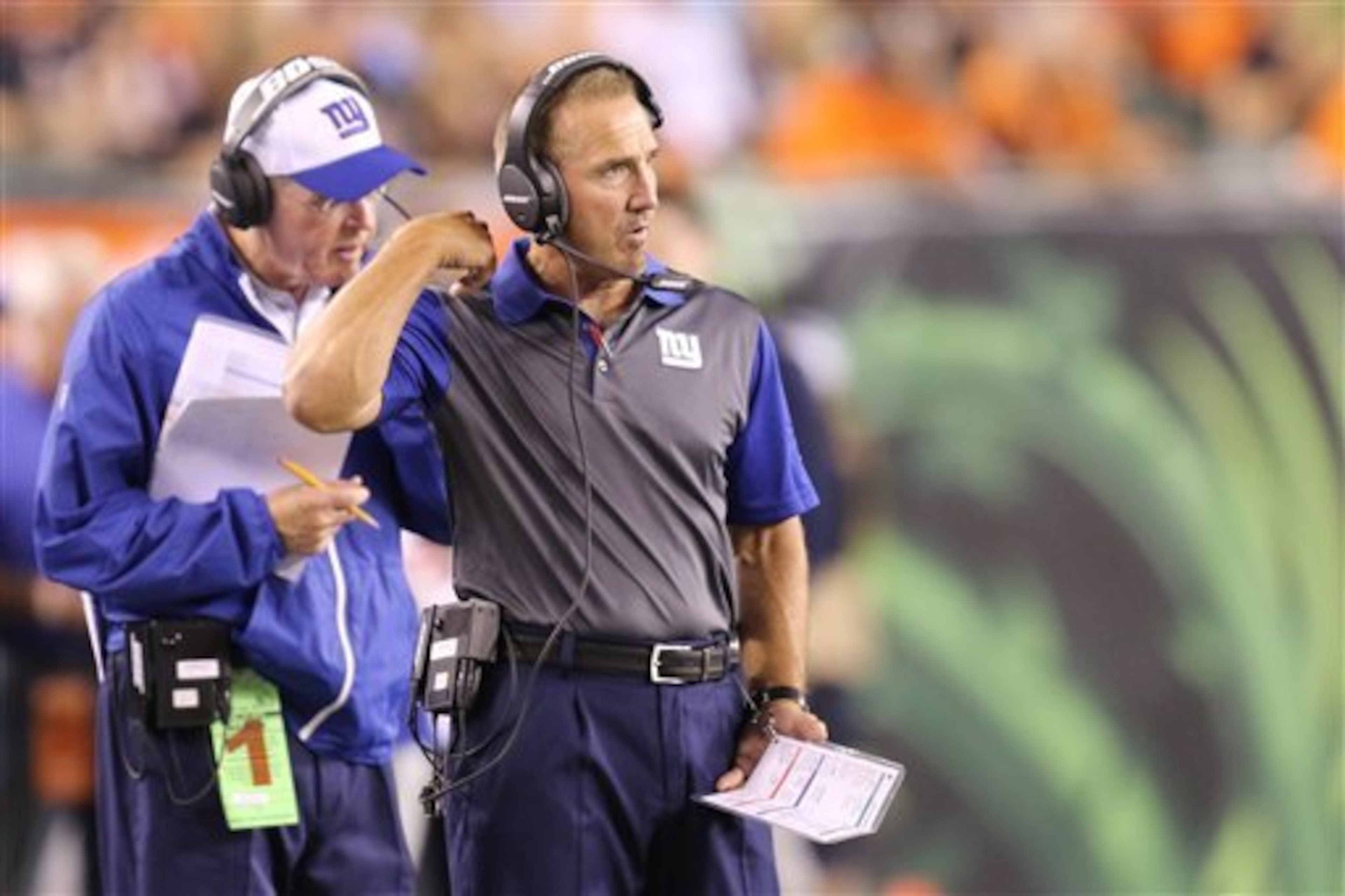
Defensive coordinator Steve Spagnuolo explained the problem succinctly Monday: "You have to cover [receivers] for a certain amount of time so the defensive ends can get there. And the defensive ends have to get there quicker so they aren't back there hanging out." No pass rush plus no safeties equals fun times for Dez Bryant, DeSean Jackson and other deep threats on the Giants schedule.
Solution: Meriweather is a big name, but he's also a 31-year-old with foot injuries and a habit for illegal hits that not even Bill Belichick could coach out of him.
Tom Coughlin was blunt when asked how Meriweather fits the Giants defense. "How does he fit in? He's a safety," the coach said. "When they blow the whistle, 11 are supposed to go out there."
So the Giants will get rudimentary-at-best safety play until Collins returns, and they will then have to endure Collins' learning curve. (Yes, Collins went to Alabama, which runs an NFL-style defense. No, that doesn't mean he enters the NFL as Earl Thomas.)
Their best bet may be to use cornerbacks as safeties in nickel and dime situations. Of course, cornerbacks Prince Amukamara and Chykie Brown have also been battling injuries, hence Coughlin's worry about only eight or nine guys running onto the field.
Spagnuolo said he plans to move his defensive ends inside as tackles on obvious passing downs, much the same way the Giants did when their Spagnuolo-coached defensive line led the team to the Super Bowl in the 2007 season.
There's a big difference between sliding the young Justin Tuck and Osi Umenyiora all over the formation and lining up Robert Ayers over the center on 3rd-and-15 and expecting opponents to tremble. But a four-ends package gets potential playmakers like Damontre Moore and Owamagbe Odighizuwa onto the field in favorable situations.
When and if JPP returns, substitution packages can help ease him back into the lineup. Spagnuolo just can't try anything too funny against the Cowboys, whose line will steamroll any undersized pass-rush packages, or the Eagles, who can use no-huddle tactics to get a bad combination of Giants defenders on the field and keep it there.
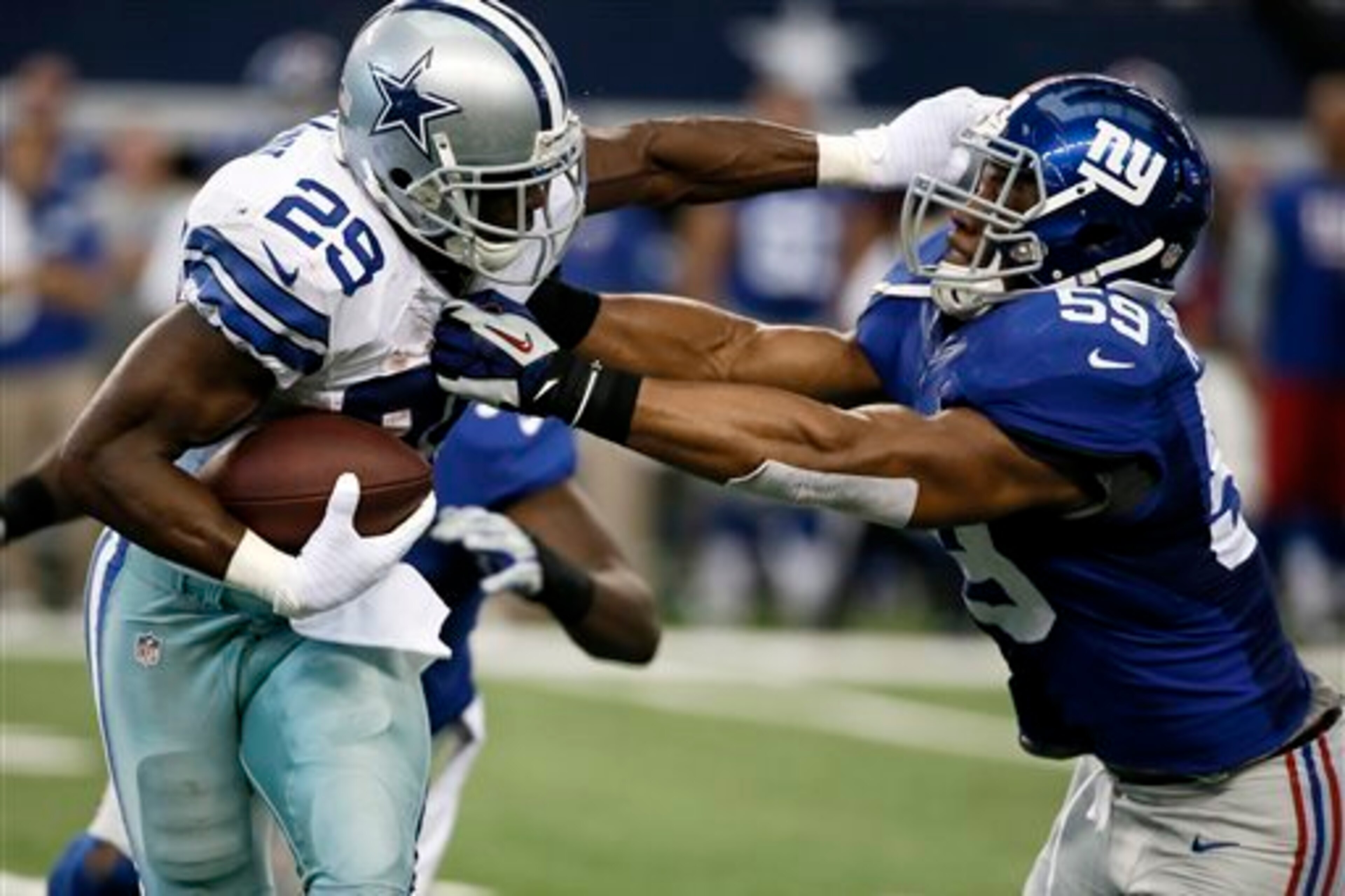
Devon Kennard may be the Giants' defensive salvation. Kennard, a fifth-round pick last season, has had an excellent camp and has a great size-speed-toughness-awareness package. Spagnuolo said he feels comfortable using Kennard as a down lineman in some packages, and Kennard also looks like a rugged run defender and decent coverage linebacker on early downs. If Kennard develops into a player opposing offenses must account for on every snap, it will take some of the sting out of the losses at other positions. Then again, that's a lot of pressure to put on a second-year defender.
With so many injuries, questions and new faces, Spagnuolo and Coughlin were frank about the need to "piece things together" (Spagnuolo's words) at this point. The Giants face the Cowboys in the season opener, so those pieces had better start falling into place.
Seattle Seahawks, Offensive Line
Problem: The starting offensive line—which no longer features Pro Bowl center Max Unger (traded for Jimmy Graham) or two-time Super Bowl starter James Carpenter (now with the Jets) at guard—looked awful in the preseason opener. Pete Carroll and offensive line coach Tom Cable juggled converted tight end Garry Gilliam into the starting lineup at right tackle in this week's practices, with 2014 second-round pick Justin Britt sliding from right tackle to left guard.

Meanwhile, Lemuel Jeanpierre has split first-team center reps with Drew Nowak. Jeanpierre did not play well in the preseason opener, but Nowak, a converted guard plucked from the Jaguars practice squad last year, has not seized the job. Seahawks observers have been impressed with fourth-round pick Mark Glowinski, but Glowinski is more of a long-range prospect than a guy ready to start for a two-time defending NFC champion.
Solution: Evan Mathis would appear to be a logical solution, except that (a) Mathis wants Sultan of Dubai money; (b) the Seahawks are tight against the cap ceiling, with Kam Chancellor still looking for a reworked deal, and splurging for a 33-year-old guard doesn't fit the team's salary model; and (c) Mathis is incredibly overrated at this point in his career.
The Seahawks, brilliant everywhere else, have outsmarted themselves on the offensive line: too many former tight ends playing tackle, guards playing center, college defenders (backup tackle Jesse Davis, who switched to offense in his senior year) playing offensive line. The best thing they can do right now is find a combination they can live with and stick to it.
A 4-12 rebuilding team can experiment with a project like Gilliam at right tackle. The Seahawks need to keep Britt at right tackle, where he started last year, live with experienced veterans Jeanpierre (who often subbed for the injured Unger) and inconsistent J.R. Sweezy and Alvin Bailey at guard, and concentrate on maximizing their timing and continuity, not fiddling with high risk-reward conversion projects that could get Russell Wilson creamed and Marshawn Lynch all retire-y.
The good news for the Seahawks is that Russell Okung still anchors left tackle and the offense is designed to work despite mediocre interior line play. Those who criticize Wilson for not being effective in the pocket should note that Wilson might not have many pockets to be effective from this year.
Cleveland Browns, Running Back
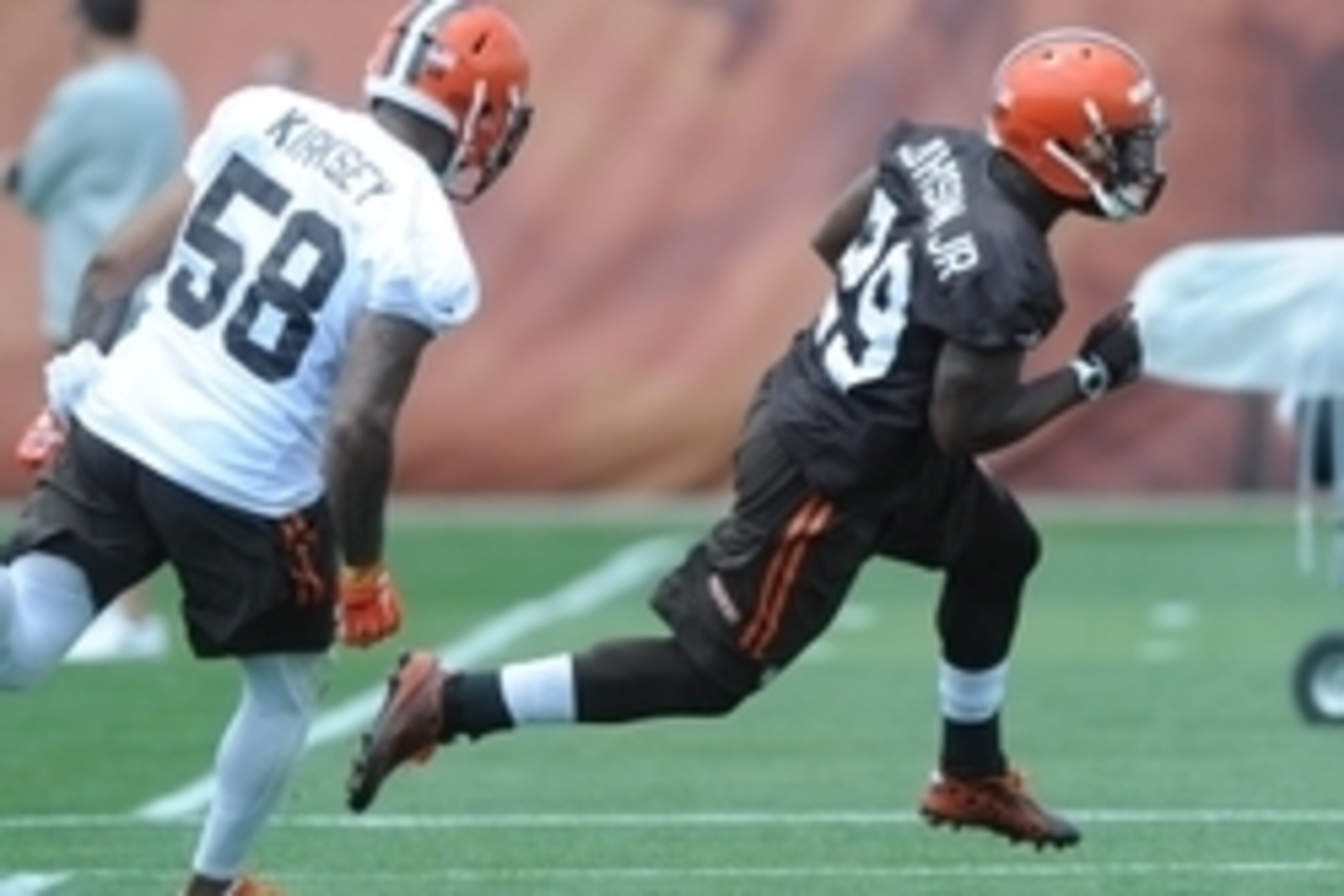
Problem: Buffalo isn't the only team playing Thursday night that is facing a running back crunch. Rookie Duke Johnson, second-year player Terrance West and longtime practice-squad dweller Shaun Draughn have all missed long stretches of camp. West is back, but the Browns were left with Isaiah Crowell, Jalen Parmele and Tim Flanders as their running backs for much of camp.
West, Crowell, Parmele and Flanders combined for 16 carries and 25 yards in the preseason opener, which is hardly okily-dokily. Neither Johnson nor Draughn will be in the lineup Thursday night.
Running backs coach Wilbert Montgomery called out his players in early August, telling reporters that "nobody wants the role" of featured back. Montgomery's full remarks were a little less inflammatory: "All the backs are doing well. It's just the fact is that you're looking for that guy you can just strap the saddle on and they just say, 'Hey, I want the job.' Right now, it's a close race."
But it's clear the Browns are less than thrilled with both their health and their talent at the position.
Solution: Again with Ray Rice; Mike Pettine at least acknowledged to reporters that the Browns discussed Rice early in the month. Pettine and GM Ray Farmer have only slightly more job security than fry cooks. They can be forgiven for not wanting to provide grist for everything from First Take to Hardball to The View.
Pierre Thomas is a more logical choice for the Browns than the Bills: He is familiar with a committee role, can mentor Johnson and might arrive as the most talented back on the roster. The Browns have the cap flexibility to accommodate Thomas. If the running backs play poorly Thursday or if they suffer a health setback, the Browns may pursue a veteran with a pedigree.
In the meantime, the Browns could just wait for their running back problem to solve itself. Johnson (hamstring) looked solid in camp before getting injured. He's a promising passing-down contributor, with Crowell and/or West handling early-down chores. Draughn, who is with his sixth organization since 2011, had an excellent offseason and could play a role if needed.
Both Johnson and Draughn could be back for the August 29 preseason game against the Buccaneers, giving the Browns time to diagnose their progress and get a real sense of their needs at the position.
The most intriguing solution to a preseason problem is rarely the best one. The Browns have promising young players at running back. They are better off providing opportunities for Johnson and the others to develop than seeking a quick fix that could cause another problem down the road.
Mike Tanier covers the NFL for Bleacher Report.
.jpg?w=3840 "Biggest FA Mistakes of the Century 💸")