


Everybody loves an underdog story, and we'll do our best to find some among the eight pairings that compose the first round of the 2017 NBA playoffs.
None of these possible surprises—not even the ones that rank toward the top of the "upset potential" scale—are likely. After 82 games, these teams are where they're supposed to be.
If you're first, you deserve to be there. Same deal if you're eighth.
There are some exceptions in which teams are playing significantly better or worse than their seeding suggests, but those discrepancies tend to overrate the low seeds. The Memphis Grizzlies, for example, have been much worse than seventh in the West for several weeks.
But anything's possible in the NBA playoffs.
Ranked from least to most probable, here's how we see the chances of a first-round stunner.
8. Golden State Warriors (1) vs. Portland Trail Blazers (8)
1 of 8
You've got to hand it to the Portland Trail Blazers for basically being the league's second-best team since the All-Star break, but the Golden State Warriors got in touch with their best selves over the final month of the year.
Even before considering the Dubs' 4-0 regular-season record against Portland, the Dubs' finding their mojo makes this the least likely upset in the field.
Jusuf Nurkic's leg fracture puts his status in doubt, and if the Blazers have to play Meyers Leonard at center, Golden State could top 130 points a couple of times in a four-game sweep. It's true Portland's No. 11 offense makes it a threat against most clubs, but the Warriors own the No. 2 defensive rating in the league and have proved themselves capable of smoking the Blazers in every way imaginable.
They beat them by 23 points in the first meeting, 45 in the second and on the latter night of a back-to-back set without Stephen Curry in the fourth.
It's difficult to rank this meeting last in upset potential without making it sound like a dig against Portland. That's not the intent. If it were, we'd harp on the Blazers' terrible backcourt defense, lack of interior punch and unreliable wing shooters (Allen Crabbe excluded).
The better way to look at it is this: The Warriors, as presently constructed, are healthier and by many measures better than they've been at any point in their three-year run as a superpower. There's just no way to see a series victory for Portland, even in light of its second-half improvement.
7. San Antonio Spurs (2) vs. Memphis Grizzlies (7)
2 of 8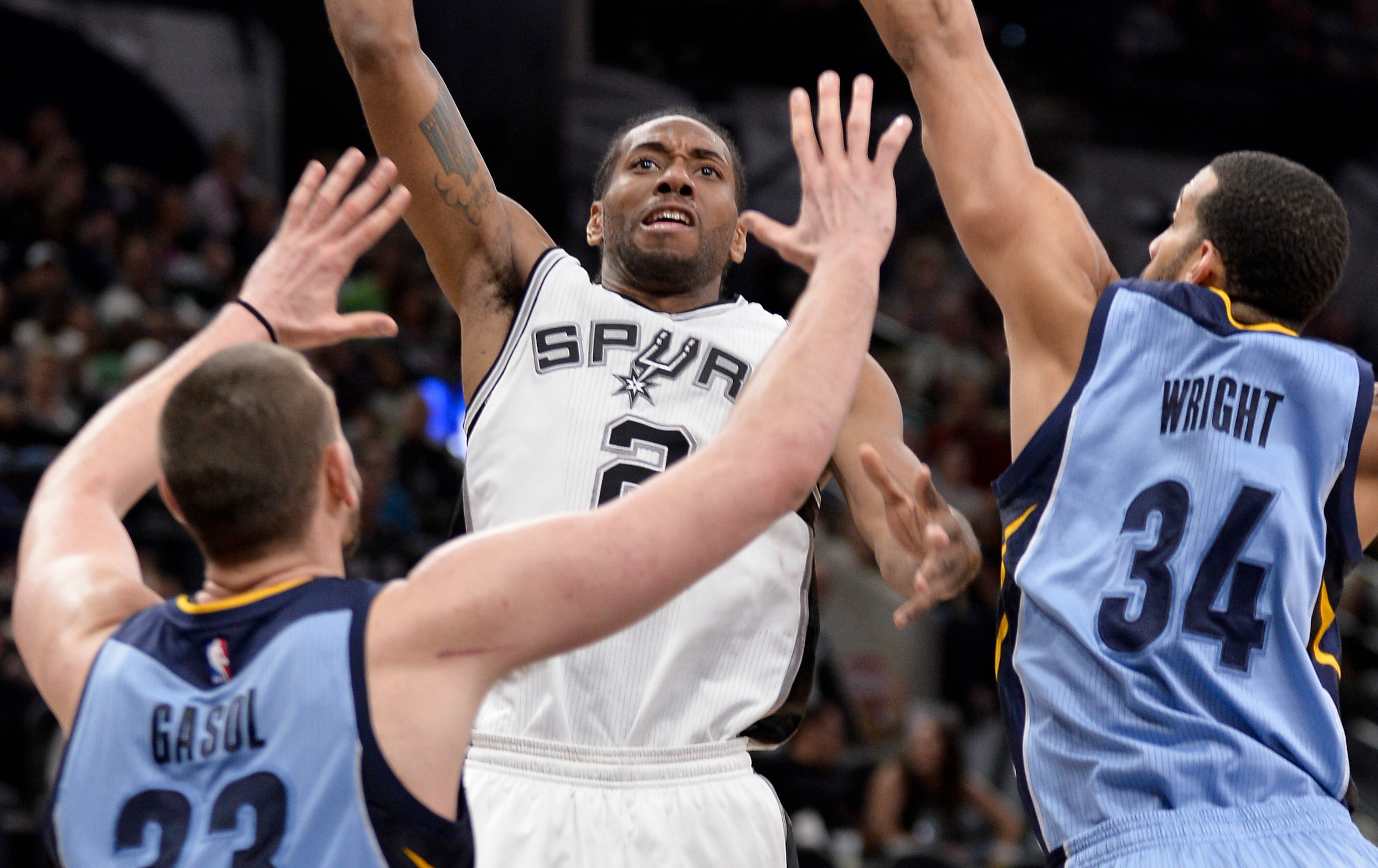
The Memphis Grizzlies beat the San Antonio Spurs twice this season, which you'd think would give them a decent shot to knock off the No. 2 seed in what would be a significant upset.
But Kawhi Leonard didn't play in Memphis' unwatchable 89-74 win on Feb. 6, and San Antonio's starting backcourt shot a combined 2-of-10 in a 104-96 Grizz win on March 18. The Spurs took the final two meetings to even the series.
If you really want to stretch, you could argue that because the Grizzlies don't have a dominant wing scorer, one of the Spurs' greatest strengths—Leonard's neutralizing a key piece of an opponent's offense—won't come into play. But you're really searching if you spin the lack of a reliable perimeter scorer into a positive for the Grizzlies.
The saner approach is noting how Leonard could guard Mike Conley while Tony Parker hides on Tony Allen.
Pull back for some perspective, and it turns out the matchups aren't even the key reason Memphis can't beat San Antonio. It's simpler: The Grizzlies have flat-out stunk since the All-Star break.
No playoff team has been worse in that span than Memphis, which finished the year on a 3-9 skid thanks to a minus-3.0 net rating in the second half.
Beating the Spurs and their league-leading defense is hard enough when you're playing well. When you're coming apart at the seams and your own once-stout stopping power is gone, you have no chance.
6. Cleveland Cavaliers (2) vs. Indiana Pacers (7)
3 of 8
This is almost a hot take.
The Cleveland Cavaliers were under .500 in games played since the All-Star break, and their defense in that span ranked 29th in the NBA—topping only the Los Angeles Lakers. Making them the third-least likely team to suffer an upset feels bold, particularly against an Indiana Pacers team with one of the best options to toss at LeBron James.
Paul George posted 43 points, nine assists and nine rebounds in a head-to-head matchup with James, playing him to a draw for most of a double-overtime loss April 2.
This is a bet on the potency of switch-flipping, though.
We saw the Cavs hit something close to their peak level recently when they stifled and sped past the Boston Celtics during a thorough 114-91 win on April 5. They gave up after that, though, dropping four straight to close the season and surrendering a 26-point fourth-quarter lead to the Atlanta Hawks on Sunday in the process.
But can you really imagine a world in which LeBron James, perhaps the greatest player in the sport's history, playing near the peak of his powers, with something to prove following his team's shoddy second half, loses to the 42-40 Pacers in the first round?
No. Just...no.
It's inconceivable.
Cleveland is vulnerable against a more dangerous foe. Kevin Love had knee surgery this year, the mileage on James is unprecedented and it might not be as easy to channel championship-caliber play after months of lackadaisical coasting.
But Pacers—a .500 team whose second-best player, Myles Turner, is only a sophomore—aren't the ones to exploit those issues.



5. Toronto Raptors (3) vs. Milwaukee Bucks (6)
4 of 8
Depending on how confident you are in Kyle Lowry's surgically repaired wrist, you could make the case that the Milwaukee Bucks have the best player in this series.
Unfortunately, Giannis Antetokounmpo played very much like the best player on either team—averaging 24.8 points, 7.8 rebounds and 7.0 assists on 58.8 percent shooting in four head-to-head meetings—and the Bucks still went just 1-3 against the Raptors during the year.
The best argument in favor of a Bucks upset depends on our lack of information.
This version of the Raptors hasn't faced this version of the Bucks.
Toronto underwent a facelift partway through the season, adding Serge Ibaka and P.J. Tucker to form a newfound defensive identity alongside Lowry and DeMar DeRozan's preexisting offensive one. Milwaukee, meanwhile, lost Jabari Parker and gained Khris Middleton.
The Bucks beat this newer version of the Raptors on March 4, but Lowry didn't play, and Middleton was barely back in the swing of things. Spencer Hawes, of all people, helped decide that game with 16 points.
We just don't know how key matchups will play out, and it's tough to say how frisky the Bucks might be with Middleton fully healthy and commanding serious defensive attention. DeRozan is a poor stopper, and he'll probably see time matched up against Middleton because P.J. Tucker and DeMarre Carroll will have their hands full with Antetokounmpo.
The Bucks match up fine with the Raptors. If Malcolm Brogdon is healthy, his strength and smarts make him a solid option on Lowry—and Matthew Dellavedova is always annoying, which is a plus. Giannis can guard anyone from DeRozan to Ibaka.
This is our first matchup that wouldn't count as a total stunner, even if the Bucks' net rating of minus-0.2 after the break suggests they were lucky to be 17-10.
4. Boston Celtics (1) vs. Chicago Bulls (8)
5 of 8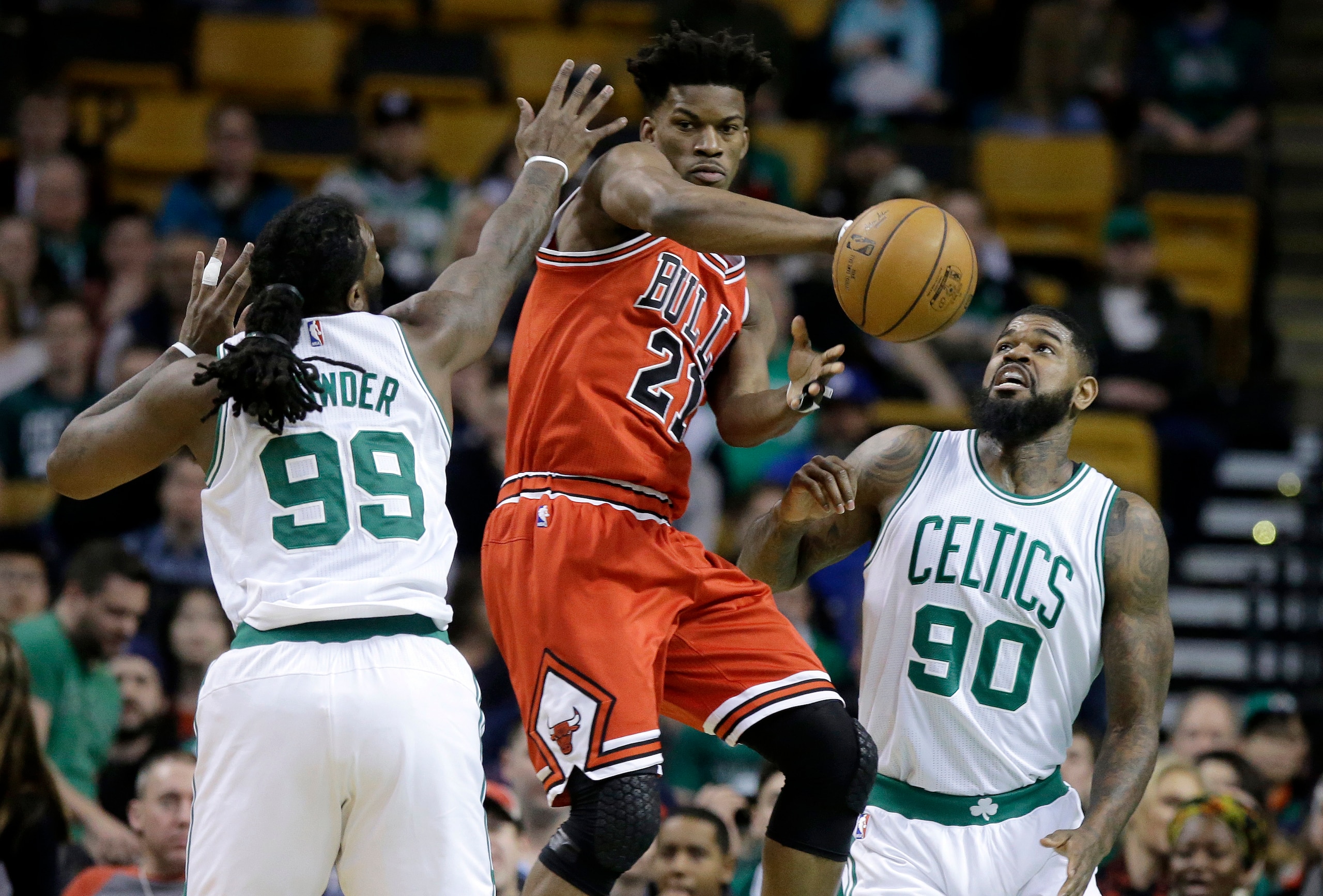
If the Boston Celtics blow this, it'll be their own fault.
They could have traded for Jimmy Butler at the deadline (or during the draft if you want to take it way back), and this matchup never would have materialized.
As it is, the Chicago Bulls pose a legitimate threat to one of the weakest top seeds we've seen in a while.
These teams split four meetings during the year, but giving the Bulls a real shot has more to do with the specific makeup of each team than the way those matchups played out. The main issue here is simple: Boston's best player, Isaiah Thomas, is exactly the kind who tends to get exploited in a postseason series.
That's not to say he won't score in bunches, but Thomas is a major weak link on defense. Chicago can attack him relentlessly. Since the Celtics offense depends so much on what he does individually, even if the Bulls don't capitalize by scoring on him, they could still have success because they forced him to exert too much energy on D.
If Thomas can't lead the offensive charge, the Celtics may not score enough to survive.
That's a best-case scenario for Chicago, of course. The Bulls spent the season losing games they should have won and winning games they should have lost. Aside from Butler, there's nothing about the Bulls you can be certain of.
Boston is the more complete team, and it has Marcus Smart, Avery Bradley and Jae Crowder to throw at Butler. The Celtics should win the series. But this isn't a typical 1 vs. 8 walkover.
3. Los Angeles Clippers (4) vs. Utah Jazz (5)
6 of 8
It's hard to call any 4-5 matchup a potential upset, but it'd be remarkable if the Utah Jazz toppled the Los Angeles Clippers after getting owned three out of four times during the regular season.
The Jazz couldn't score against L.A., posting a 96.7 offensive rating and tallying 75 points or fewer twice.
"They had a lot more resolve in their defensive end than we did on our offensive end," Jazz head coach Quin Snyder told reporters after the Clips took an 88-72 win on Feb. 13 even though Chris Paul sat out. "If we were to make a couple shots, it would have just masked the fact that we didn't have any toughness on the offensive end in order to execute."
Having laid out the difficult task ahead, now feels like a good time to explain why the Jazz rank as a relatively likely underdog winner.
The main reason is Utah's proven potency when healthy. In the 13 games they've had their preferred starting five of George Hill, Rodney Hood, Gordon Hayward, Derrick Favors and Rudy Gobert healthy, the Jazz are 11-2.
Hood, Hayward and Favors are all battling injuries heading into the playoffs, but they're mostly of the nagging variety. The lack of back-to-back sets in the postseason should especially help Hood and Favors, who've been fighting knee soreness all season. Get Hill all the way back from a groin strain, and Utah could have its whole arsenal against L.A.
This is a tough sell because the Clippers have the edge in experience, recent play and home-court advantage. But the Jazz's defense and depth (even if starters are down, Joe Ingles and Joe Johnson have been reliable) give them a real chance.
2. Washington Wizards (4) vs. Atlanta Hawks (5)
7 of 8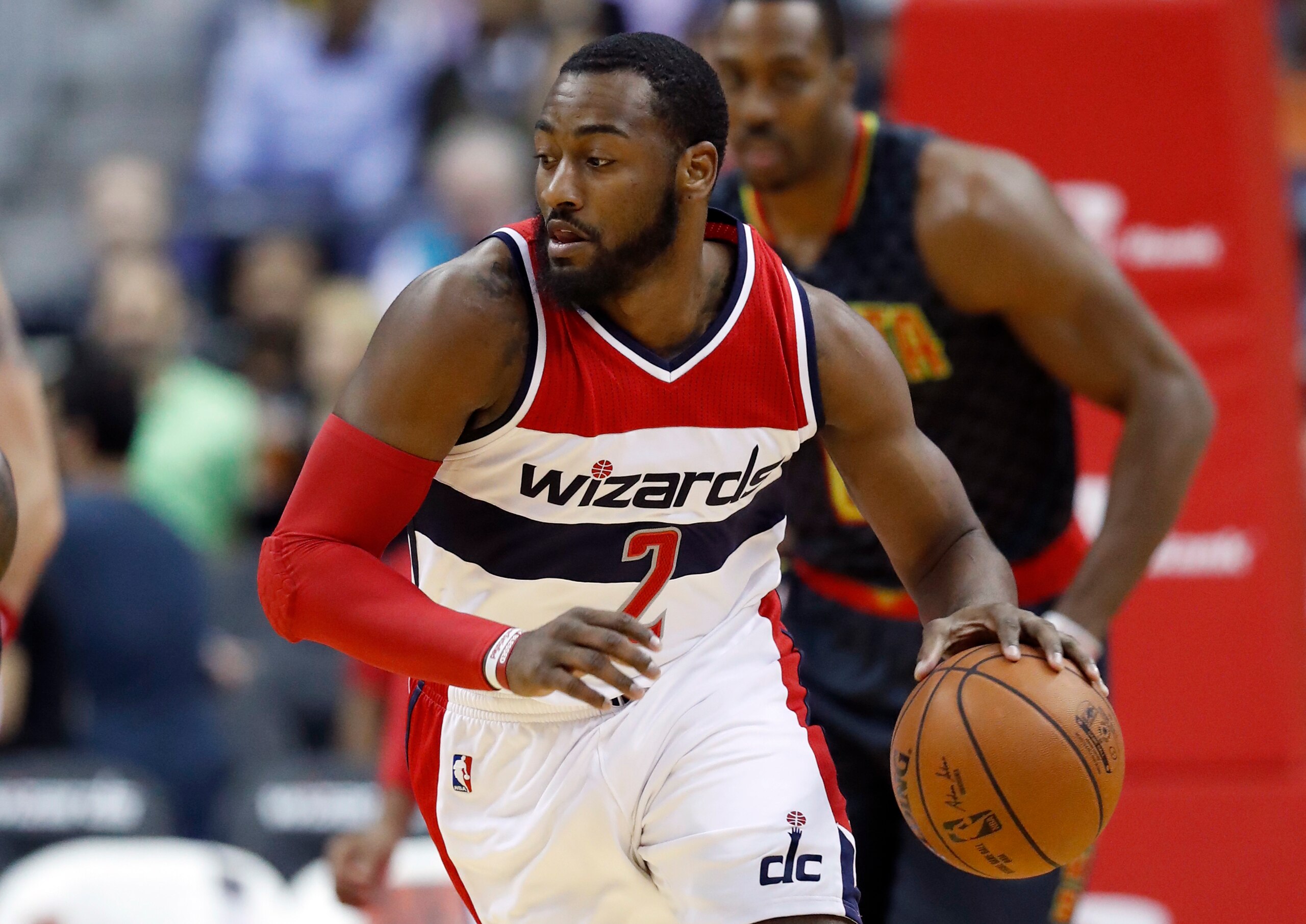
The Washington Wizards quietly quit playing defense after the break, which creates an opportunity for a resilient Atlanta Hawks team that, if we can be sure of anything, will play D.
Ranking 27th in defensive efficiency since Feb. 24, the Wiz will also be without Ian Mahinmi for an undetermined chunk of their first-round series. Marcin Gortat has worn down over the course of the year and isn't providing any stability as an anchor in the middle lately.
The Hawks are another story, ranking fifth in defense since the break and sticking around the top five all season. In Paul Millsap, Dwight Howard and Thabo Sefolosha, they have the three best defenders in the series.
There are several factors working in Atlanta's favor, one of which is a demonstrated ability to dictate the terms of engagement.
The Wizards are best when John Wall is pushing the pace, and though the four games between these two teams were conducted briskly, the defensive tone favors the Hawks. Washington scored just 96.7 points per 100 possessions in four regular-season meetings—roughly a dozen points below its full-season average.
If the playoffs are about slowing the pace and succeeding in uglier games where good shots are tough to come by, the Hawks are properly equipped. And though it's a backhanded compliment, Atlanta struggled offensively all year...so the postseason might not feel that different.
Washington is in for a bigger culture shock, and it might be enough to jolt it out of the first round.
1. Houston Rockets (3) vs. Oklahoma City Thunder (6)
8 of 8
Go with me on this.
Russell Westbrook just wrapped an unfathomably great clutch season, and if you think about it, the playoffs are one long clutch moment. So, obviously, he'll lead the Oklahoma City Thunder to a first-round upset over the Houston Rockets.
Airtight logic, wouldn't you say?
"It's just, he's got this desire, this drive and he'll just find a way. Nothing's too insurmountable to overcome," Thunder head coach Billy Donovan told reporters after Westbrook scored 16 of OKC's final 18 points and hit the game-winner against Dallas on March 27.
The Houston Rockets went 3-1 against Oklahoma City during the season, and the Thunder's only win came on an incredible Westbrook lefty dunk in the initial meeting's closing seconds. In order to peg this series as the most likely upset, you have to rely on things like narrative and Westbrook's "drive" and other generally nonspecific ideas.
The Thunder can field a lineup well-suited to hobbling James Harden and the Rockets offense. When you know Russ will be generating all the points, you can toss out four other players whose entire job is playing defense.
Andre Roberson is one of the best options in the league to throw at Harden, who averaged just 20.5 points on 34.3 percent shooting against the Thunder during the season.
More broadly, Oklahoma City is comfortable switching liberally on defense, which helps short circuit pick-and-roll action, forcing opponents to attack in one-on-one situations against odd mismatches. That's a problem for the Rockets, who don't have reliable isolation options or shot creators aside from Harden.
Lou Williams can get it going during the regular season, but he's historically fallen apart against playoff defense. His career true shooting percentage during the year is 55.1 percent. In the playoffs, it's 46.8.
If you're leaning on Williams to save you in the postseason, you're already finished.
Eric Gordon and Ryan Anderson are better on the catch than creating on their own. If the Thunder execute their switching scheme consistently, we could see Houston struggle to score—especially if Harden finds it tougher to coax whistles on his drives.
Ultimately, isn't this how you'd want Westbrook's story to unfold? Don't you like the idea of his continuing one of the all-timer alpha-loner seasons by taking down his MVP competitor by himself—against all odds?
Feels right, doesn't it?



.jpg?w=2560 "Jonathan Taylor Landing Spots 📍")
.jpg?w=2560 "Mahomes Asked OT to Leave Meeting")


