

Every NBA Contender's Biggest Liability
No one can be perfect.
Whether it's a player with a prominent rotation role or an individual aspect of the team's overall play, every NBA contender has a weakness that can be exploited during the postseason. Circumstances may have to break poorly for the liabilities to manifest themselves in some situations, but they'd still have the potential to knock championship hopefuls out far earlier than expected.
For our purposes, contenders are defined as teams within 10 games of the No. 1 seed in their conference. That means the Cleveland Cavaliers, Boston Celtics, Washington Wizards and Toronto Raptors in the tightly packed East, while the West is limited to just three qualified organizations: the Golden State Warriors, San Antonio Spurs and Houston Rockets.
Our condolences to the Utah Jazz and Los Angeles Clippers, but they're a bit too far away from challenging the aforementioned squads and have numerous liabilities that could be taken advantage of by better teams.
Now, let's sniff out the imperfections.
Boston Celtics: Rebounding
1 of 7
When Al Horford functions as the primary center, rebounding woes can often rear their ugly head. The big man is a fantastic player who contributes in so many different areas, capable of sparking offensive production and anchoring a defense, but excellence on the glass has often eluded him.
As a result, the Boston Celtics as a whole have struggled to dominate the boards throughout the 2016-17 campaign.
They rank No. 24 in offensive rebounding percentage and sit ahead of only the New York Knicks in the corresponding defensive stat. It's the latter that's most problematic, since Boston has seen far too many stops squandered when it gives up a second-chance opportunity right around the bucket.
And it's been an issue all season, to the point that head coach Brad Stevens was genuinely surprised to learn in early February that his troops were no longer the league's worst defensive rebounders. As Spike Sports' Sean Grande reported, he greeted the revelation by asking if a team had dropped out of the NBA.
Fortunately for Stevens' sanity, the upward trend has continued in recent weeks. Thanks to improvements from Horford and Amir Johnson, as well as a surge from Jae Crowder, the Celtics have ranked in the middle of the pack for defensive rebounding percentage since returning from the All-Star break.
But can it continue, or is that a function of playing a weak rebounding slate?
Only time will tell, and that significant weakness returning during the postseason would do away with Boston's hopes of dethroning LeBron James and representing the Eastern Conference in the NBA Finals.
Cleveland Cavaliers: Health
2 of 7
When the Cleveland Cavaliers are operating at full strength, they shouldn't have too much to fear from the rest of the top teams in the Eastern Conference. The Washington Wizards, Toronto Raptors and Boston Celtics are threatening enough to test them, but they don't have the requisite talent to take down a healthy version of the defending champions in a seven-game series.
It's indisputable that Cleveland has struggled to pull away and lock up the No. 1 seed. It's looked immensely shaky for lengthy portions of the season, even posting a minus-2.3 net rating during January as it both failed to score like an offensive juggernaut and made plenty of foes look more potent on the scoring end than they should.
The defense still hasn't recovered.
However, JR Smith has missed plenty of time working his way back from a thumb injury. Kevin Love's knee forced him out of 21 games, which basically overlapped with the brunt of the Cavaliers' struggles. Even LeBron James has taken time off to stay fresh for the inevitable postseason run, indicating that this team should still have another gear during the most important part of the NBA calendar.
But hitting that gear requires health, and the reigning champions do have a number of pieces who have proved fragile in recent months and years. That's why health is the biggest liability, since Cleveland may not be invulnerable enough to survive a lengthy injury at an inopportune time to Smith. Losing Love would be an even bigger disaster.
On the flip side, the Cavs should be excited about their upside at full strength. Love, Smith and James have only spent 357 minutes alongside Kyrie Irving and Tristan Thompson, but they've posted a 5.5 net rating with that quintet, per nbawowy.com.
Golden State Warriors: Draymond Green
3 of 7
The Golden State Warriors don't have any true liabilities.
Kevin Durant should be healthy by the time the playoffs roll around, and that will allow this squad to once again boast the most potent starting five in basketball, featuring four bona fide All-Stars and a capable center. Despite sacrificing depth to acquire the former Oklahoma City Thunder standout, the Dubs have still stocked their bench with quality veterans and youngsters who can ensure the team avoids drop-offs when the starters are resting.
There aren't even any significantly exploitable weaknesses in the team's two-way profile. After all, Golden State ranks No. 1 in offensive rating and trails the San Antonio Spurs by a negligible amount in the quest for the top spot on the defensive-rating leaderboard. Maybe you can point to the bench's lack of shooting. Perhaps you want to focus on the turnover-happy habits of the starters.
Still, the Warriors are the NBA's best team by a significant margin when they're healthy. Even while missing pieces, they can compete for a title.
But they can't afford to lose Draymond Green, and there's always a chance that happens. The volatile power forward's versatile defensive contributions are quite valuable to the schemes employed by head coach Steve Kerr, and his ability to facilitate on offense makes life far easier for his teammates.
If he loses his cool and starts flailing around, anything could happen. He could be suspended for a crucial game, as was the case during Game 5 of the team's failed title defense against the Cleveland Cavaliers. Even if he's available for every contest, his overbearing personality could create disruptions during a time of year in which focus is vital.
Green should be fine. And when he's on the floor, Golden State's net rating improves by a staggering 11.6 points per 100 possessions. But the fact "should" is the preferred choice of word to "will" speaks volumes.



Houston Rockets: Ryan Anderson
4 of 7
To make good on their dreams of an NBA title, the Houston Rockets will inevitably have to take down either the Golden State Warriors or San Antonio Spurs. They may even have to face both Western Conference powerhouses before a Finals showdown against the Eastern representative.
And that means Ryan Anderson's defense will be exposed.
If Houston plays Golden State, the sharp-shooting power forward will be tested against Draymond Green in bigger lineups. If he's on the floor when the Warriors go small, he'll have the unenviable task of slowing down Kevin Durant while preserving energy for his own floor-spacing exploits.
If the Rockets draw San Antonio, a similar situation awaits with Kawhi Leonard and LaMarcus Aldridge. And just imagine if the Rockets somehow earn a date with the Cleveland Cavaliers, where LeBron James will torment Anderson in any smaller groupings and Kevin Love will take advantage of his limited mobility with an endless barrage of triples.
Houston has been able to survive Anderson's defense thus far. Even though he ranks No. 74 of 94 power forwards in ESPN.com's defensive real plus/minus, his offense has made him a positive overall presence.
But situations change in the playoffs. Games slow down. Rotations shrink. Teams aren't holding their cards close to the vest and are willing to take advantage of mismatches until certain players get glued to the pine.
Right now, the matchups don't look good for Anderson if the Rockets advance deep into the postseason.
San Antonio Spurs: Tony Parker
5 of 7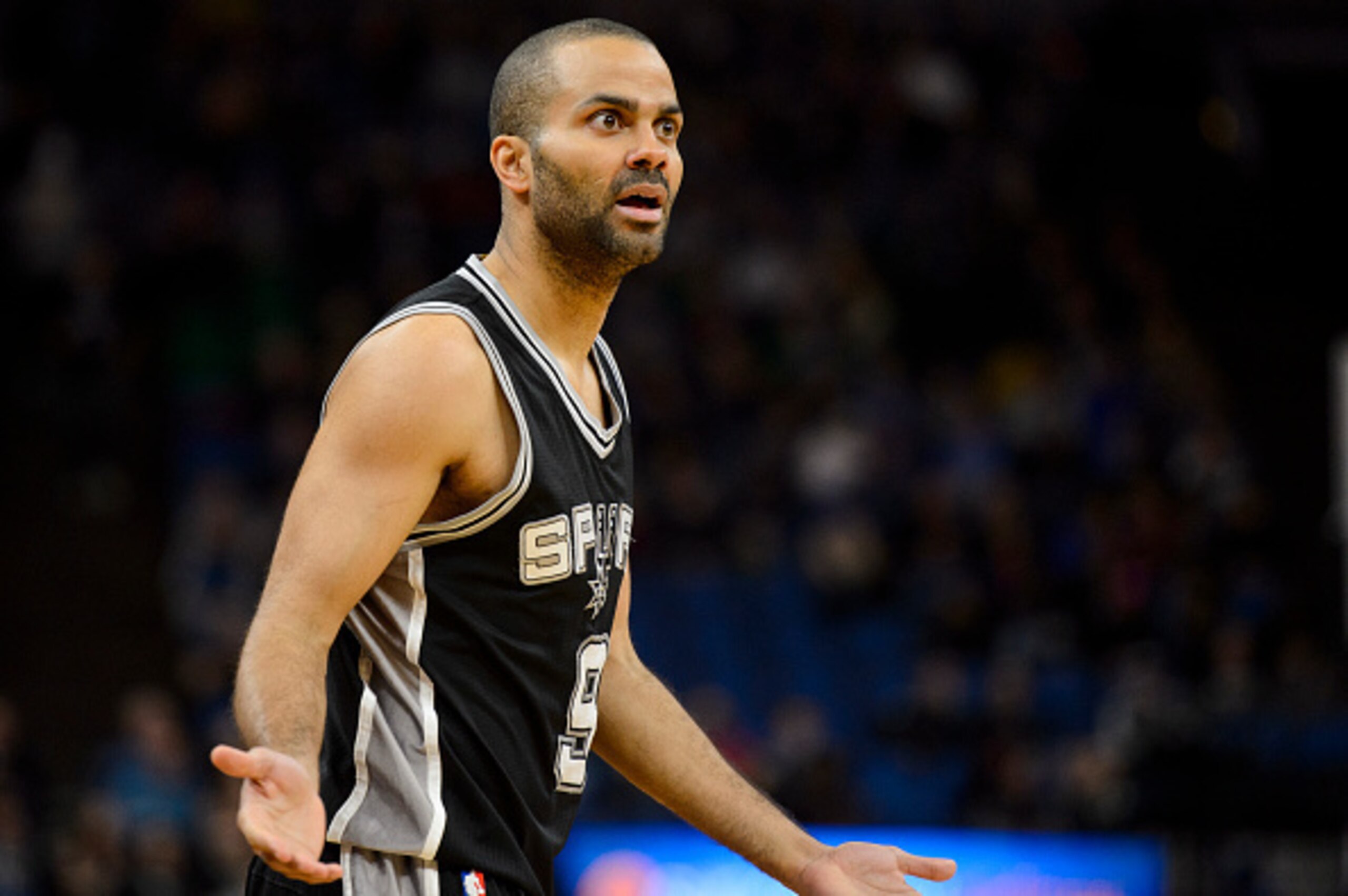
Here's a dirty little secret: Despite the San Antonio Spurs' overwhelming excellence in 2016-17, Tony Parker has struggled.
The point guard is averaging 10.3 points and 4.7 assists while shooting 46.4 percent from the field, but those numbers mask his overall ineffectiveness. He can't get to the basket to draw fouls or shoot from the outside, and his advanced metrics aren't looking strong.
For the first time since his rookie season in 2001-02, Parker has a below-average player efficiency rating (13.2). He's a negative in both offensive and defensive box plus/minus, which has never been true at any other point in his career. ESPN.com's real plus/minus concurs, and the total product has Parker sandwiched between Fred VanVleet and Michael Carter-Williams as the league's No. 39 point guard. The Spurs are even 3.5 points per 100 possessions worse when he's playing.
This won't change anytime soon. If it does, Parker won't be more than an average point guard, incapable of positively affecting a playoff series for a sustained stretch.
Even that's a tough ask when Parker will have to go against a gauntlet of point guards in the Western Conference's postseason bracket. If the current standings hold, he'd have to face Mike Conley, then either James Harden or Russell Westbrook. After that, Stephen Curry would likely be waiting.
The Spurs can't fall in love with sentimentality. Patty Mills in the superior option, even if he comes off the bench, and head coach Gregg Popovich will have to adjust his rotations accordingly when games really start to count.
Toronto Raptors: 3-Point Shooting
6 of 7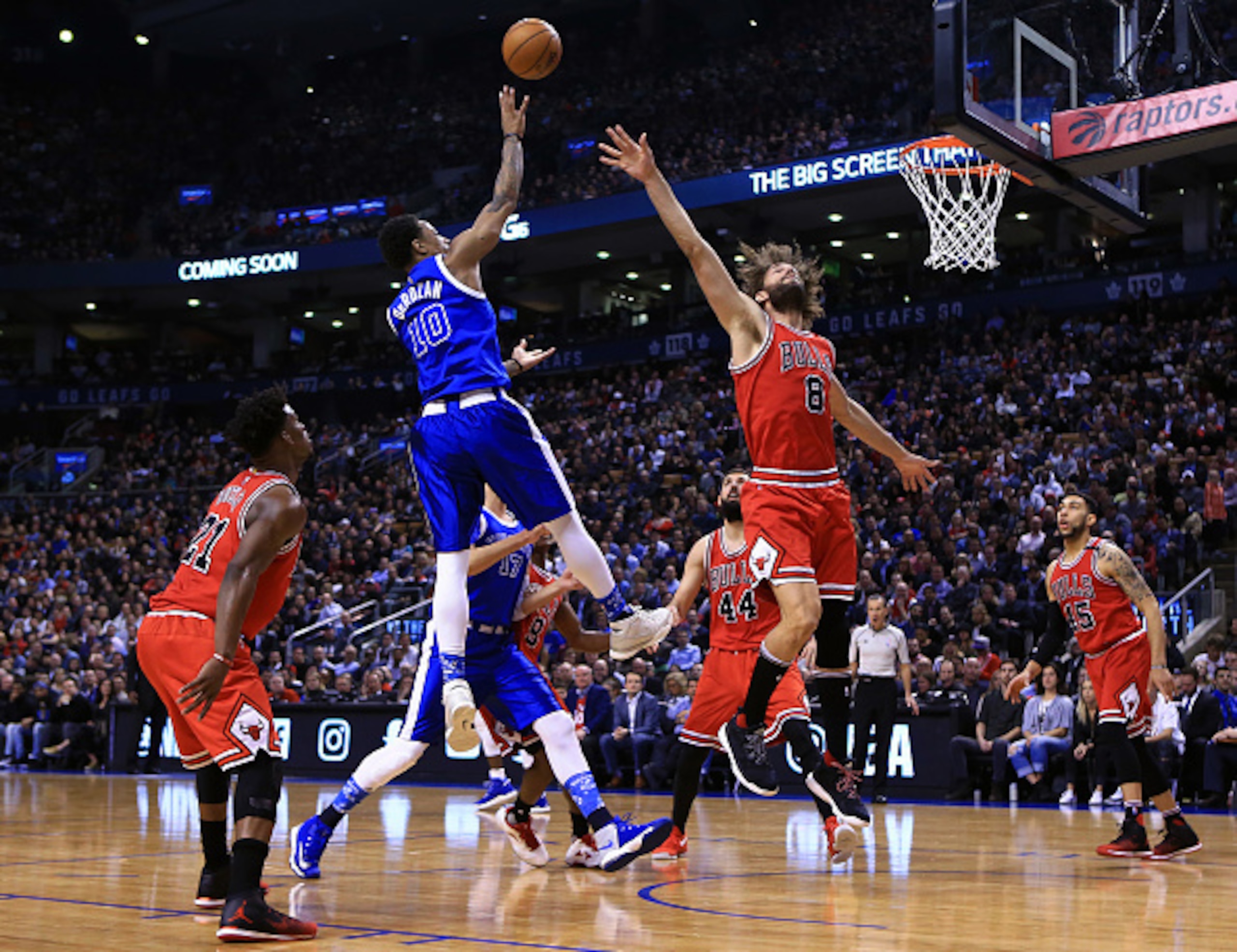
The NBA average on three-pointers this year stands at 35.8 percent. And while the Toronto Raptors are barely above that mark (36.4), they're finding that moderate level of success while taking more shots per game from beyond the arc than only eight other teams.
In fact, just five players have bettered the league average for Toronto in 2016-17:
- Kyle Lowry: 41.7 percent on 7.9 attempts per game, but there's no telling how he'll fare when returning from a wrist injury
- Serge Ibaka: 43.3 percent on 4.2 attempts per game, but that's over the course of a 16-game sample after he hit at a lesser clip for the Orlando Magic
- Fred VanVleet: 38.5 percent on 0.8 attempts per game, but that's earned over the course of just 260 total minutes
- Terrence Ross: 37.5 percent on 4.7 attempts per game, but he's now a member of the Magic
- Patrick Patterson: 37.1 percent on 3.9 attempts per game, and there are no necessary qualifiers here
That's not enough.
Great offenses need more than three rotation players shooting at above-average clips from downtown, especially when games slow down in the playoffs and foul calls are tougher to come by. As reliant as the team has been on DeMar DeRozan's mid-range prowess, it'll have to change during the postseason.
There could be help coming in the form of improvement from DeMarre Carroll and PJ Tucker. Norman Powell could start hitting after connecting on 40.4 percent of his deep attempts as a rookie. But those developments are far from guaranteed.
More of the same would leave the Raptors with a brutal task when tougher opponents start engaging them in seven-game series: maintain offensive excellence in unorthodox fashion when scoring units like this have historically struggled under playoff conditions.
Washington Wizards: Bench
7 of 7
Since the Brooklyn Nets traded Bojan Bogdanovic to the Washington Wizards, the 27-year-old wing has averaged 14.8 points and 3.2 rebounds while shooting 47.3 percent from the field, 40.5 percent from downtown and 93.7 percent at the charity stripe.
He's been fantastic on the offensive end, providing his new teammates with everything they could've hoped for. All of a sudden, a bench that squandered one lead after another during the first half of the season has both a go-to scoring threat and a legitimate identity—a shift only exaggerated by the addition of Brandon Jennings.
Bogdanovic played his first game for the Wizards on Feb. 24, and the team's bench has produced a 2.8 net rating since he arrived in the nation's capital. That's a significant improvement upon the minus-6.2 net rating prior to the midseason trade, but is it sustainable?
When the new leader of the second unit inevitably cools off, Washington's second unit could regress dramatically. And while it will never be as putrid as it was early in the season, when it couldn't score and hemorrhaged points to the other team, even a slightly degraded output could wreck the Wizards' chances against the Cleveland Cavaliers.
As good as LeBron James, Kyrie Irving, Kevin Love and the rest of the starters have been for the defending champions, the second-stringers have struggled. And if Washington can't take advantage when a certain four-time MVP isn't on the floor, it may as well be doomed.
Adam Fromal covers the NBA for Bleacher Report. Follow him on Twitter: @fromal09.
Unless otherwise indicated, all quotes obtained firsthand, and all stats from Basketball Reference, NBA.com or NBA Math and accurate heading into games Tuesday, March 28.
.jpg?w=2560 "Raiders Could Start Mendoza")

.jpg?w=2560 "Rodgers Iced Out on Plane 💎")

.jpg?w=2560 "🚨 Week 8 AP Top 25 Poll")