

B/R NBA 200: Ranking the Top Bigs Heading into 2016-17
Bigs won't dominate 2016-17 NBA highlight reels quite as frequently as guards, but they'll still dominate games. The Association's versatile crop of frontcourt studs is now capable of thriving on both the interior and perimeter, showing off skills previously reserved for littles.
Draymond Green is coming off a year in which he helped lead the Golden State Warriors to a record-setting 73 wins during the regular season, but is he individually superior to Anthony Davis, DeMarcus Cousins and Paul Millsap? How high can the frontcourt trio of Nikola Jokic, Kristaps Porzingis and Karl-Anthony Towns rise after their respective rookie campaigns?
We aren't projecting how well everyone will perform during the upcoming season, but where they are as 2016-17 gets underway. Thus, we use the end of last season as our starting point. Not every player starts out on level footing, either; The NBA 200 metric identifies those who performed best during the 2015-16 regular campaign*. Potential doesn't matter, and neither does reputation or playoff performance (too variable)—it's all about what happened this past regular season only.
In this edition, we're looking at power forwards (PF), combo bigs (CB) and centers (C). All positions are graded using the same criteria (rim protection was added into the equation for bigger positions), but the categories are weighted differently to reflect changing roles, with max scores in parentheses:
- Scoring (20)
- Non-Scoring Offense: Facilitating (5) and Off-Ball Offense (10)
- Defense: On-Ball (15 for power forwards, 12 for combo bigs and 10 for centers), Off-Ball (15) and Rim Protection (10 for power forwards, 13 for combo bigs and 15 for centers)
- Rebounding (15)
- Durability (10)
For a full explanation of how these scores were determined, go here. And do note these aren't your father's classifications for each position. Spots were determined by how much time was spent at each position throughout the season, largely based on data from Basketball-Reference.com, and we're expanding the traditional five to include four combo positions.
In the case of ties, the order is determined in subjective fashion by ranking the more coveted player in the higher spot. That was done by a voting committee comprised of myself, three B/R National NBA Featured Columnists (Grant Hughes, Zach Buckley and Dan Favale) and B/R Associate NBA Editor (Joel Cordes).
There are 73 bigs considered, so you can click "Next" to start the whole list or skip ahead to Bigs 50-41 if you want.
Note: All statistics come from Basketball-Reference.com and NBA.com unless otherwise indicated. Injury information comes from Pro Sports Transactions. In order to qualify for the rankings, players must have suited up in at least 30 games and logged no fewer than 500 minutes. This intro was adapted from last year's edition.
*Thus, a "retired-in-the-offseason" player like Tim Duncan or Kobe Bryant will still show up here as well. Even though they're (sadly) not playing again, they're a valuable placeholder that helps show where 2016-17's bunch stacks up in comparison at the start of the season.
73. Trey Lyles, PF, Utah Jazz
1 of 73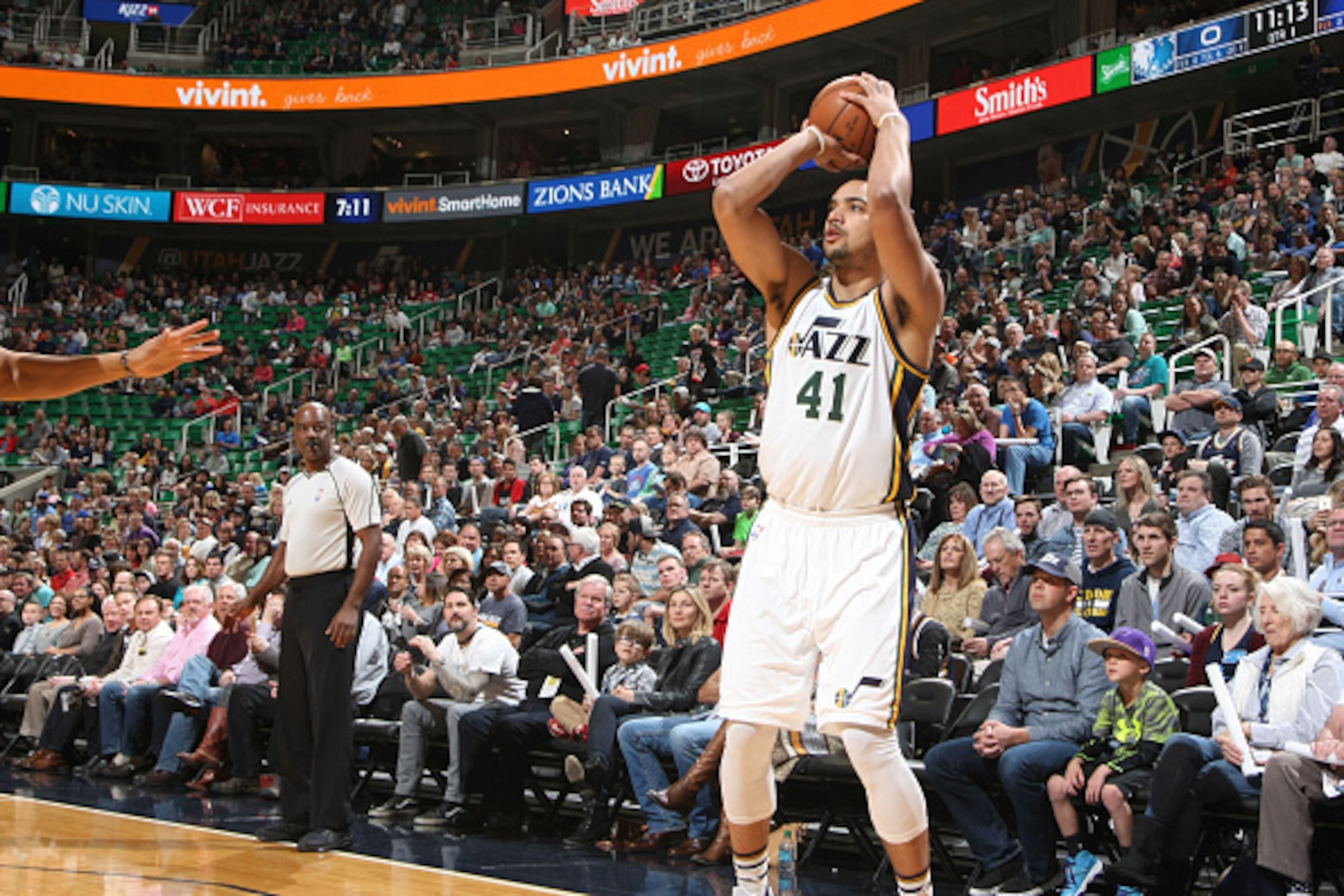
Scoring
Can Trey Lyles score? It's easy to believe after he thrived from every range as a rookie, even knocking down 38.3 percent of his three-point attempts and hitting more than 40 percent of his long twos. But the Utah Jazz often had him work as a spot-up player rather than a shot-creator or via scoring opportunities, which depressed his per-game average to a mere 6.1 points.
Non-Scoring Offense
Lyles will one day be able to space the court as a stretch 4, but his facilitating skills are more questionable. This may stem solely from the team's unwillingness to let him handle the rock, but he had trouble generating assists and finished his first professional campaign with more turnovers than dimes.
Defense
No matter how active Lyles may be away from the primary offensive flow, he won't be a quality defensive big until he protects the rim. He hemorrhaged points when not alongside Derrick Favors or Rudy Gobert and as the last line of defense. While facing three shots per game (a surprisingly large amount, given his diminished run), he allowed opponents to shoot 55 percent at the hoop.
Rebounding
The issue isn't a lack of volume or an inability to grab contested rebounds, so much as a troubling inconsistency. It's problematic when a guard can't haul in at least half of his rebounding opportunities, but it's far more disturbing when a big can't. Lyles should be thankful he checks the other boxes, because his conversion rate of just 49.9 percent would otherwise be a death knell.
Durability
Lyles played 80 games with exactly zero notable injuries, but the Jazz didn't give him a chance to earn a perfect durability score. He averaged just 17.3 minutes and wasn't nearly mobile enough on the defensive end.
Overall
Utah should be excited about Lyles' immense two-way potential, but the sharp-shooting big has plenty to work on as his career progresses. He must pick his rebounding opportunities more wisely, show better instincts while playing interior defense and prove he can maintain his impressive shooting percentages with a bigger role.
72. Boban Marjanovic, C, Detroit Pistons
2 of 73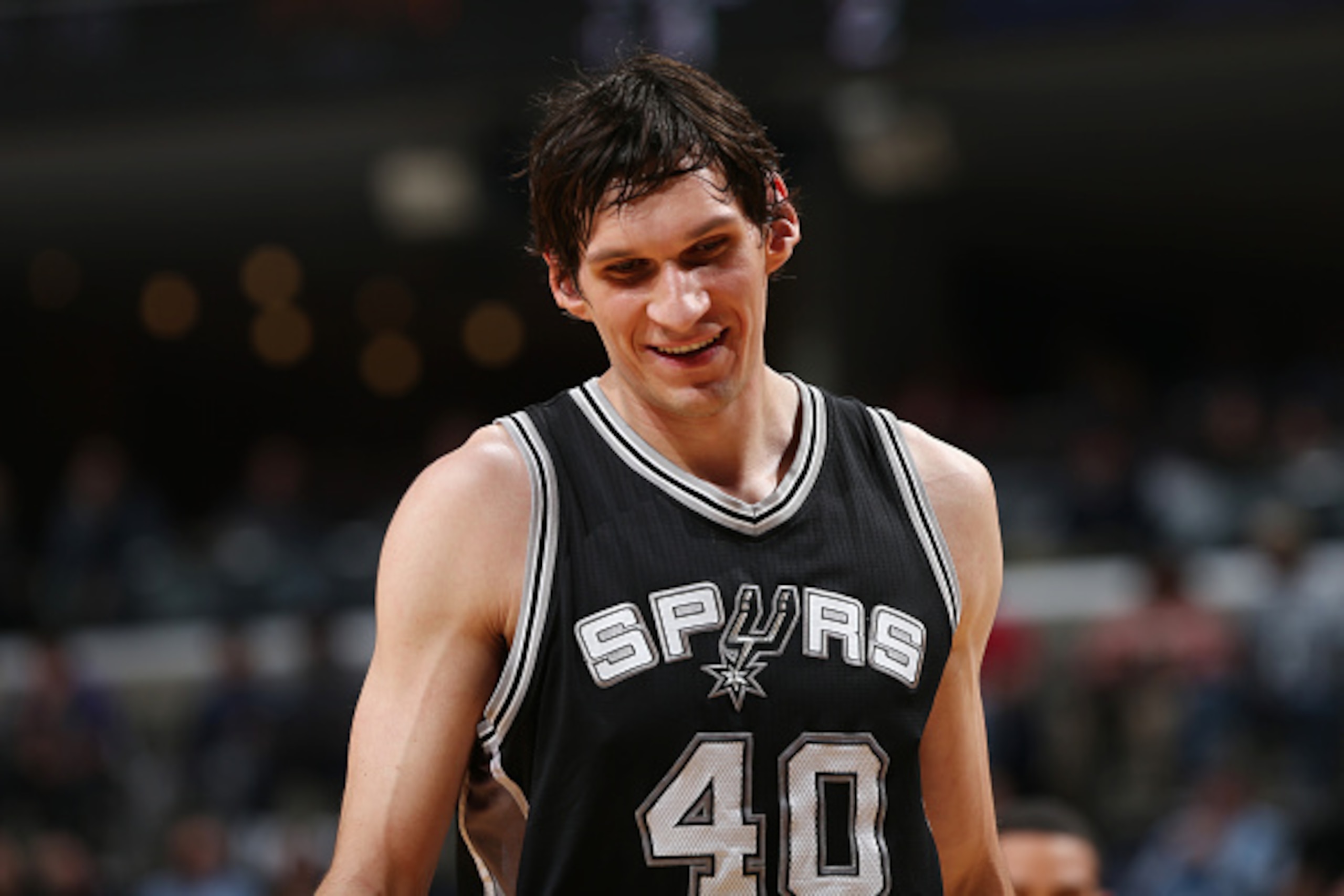
Scoring
As a per-minute scorer, Boban Marjanovic was unimpeachable. He averaged an even 21 points per 36 minutes while shooting 60.3 percent from the field and 76.3 percent from the charity stripe, displaying touch around the basket and a deft stroke from mid-range. However, the 7'3" behemoth didn't fill a large role for the San Antonio Spurs, relying on his teammates' feeds and putting up his numbers in small doses.
Non-Scoring Offense
Passing may well be the only distinct weakness here. Marjanovic's ability to space out the court as a shooter certainly didn't qualify, but the 28-year-old struggled to make proper feeds during his rookie season. It was far too easy for opponents to throw double-teams at him in the hopes he'd force up a shot or make an ill-advised attempt to pass back out to the perimeter.
Defense
It was brutally difficult to score against Marjanovic in the post or when driving the lane, but his off-ball work failed to meet the same standard. His immobility left him uncomfortable against quick bigs who liked working outside the paint, and he was a liability as soon as he left the restricted area, even if his size sometimes allowed him to recover where other players couldn't.
Rebounding
While it's impressive that the Serbian center recorded 13.7 rebounds per 36 minutes, it's not that relevant when he averaged just over a quarter of that time. He did everything he could in his small sample, but no player is capable of posting elite numbers without more run.
Durability
Though the Spurs constantly bounced between activating and deactivating Marjanovic, that was more due to the depth of the team's frontcourt than any injuries the center suffered. He'll get more opportunities to prove he can remain durable now that he's signed with the Detroit Pistons.
Overall
Marjanovic played well enough as a rookie that he asserted himself as a nice high-upside gamble—one the Pistons chose to go for. No one truly knows whether the 28-year-old can continue to look this good when filling a larger role, but it's a risk they should be willing to take after he thrived in small doses and posted a jaw-dropping player efficiency rating of 27.7—better than any rookie not named Wilt Chamberlain among those who logged at least 500 minutes.
71. Meyers Leonard, CB, Portland Trail Blazers
3 of 73
Scoring
So much for those dreams of back-to-back seasons in the 50/40/90 club. Hampered by injuries and a slow release, Meyers Leonard could only connect on 44.8 percent of his field-goal attempts, 37.7 percent of his treys and 76.1 percent of his shots from the stripe. That's still not terrible for a stretchy big, but it represented severe regression for a young player who didn't start creating any more of his own looks.
Non-Scoring Offense
Despite the shooting slump, Leonard continued to draw defensive attention. The slowness of his shooting motion allowed opponents to close out with ease, but they still had to pay mind or risk giving up a momentum-swinging bucket. As for his passing, it improved, but not without the Portland Trail Blazers suffering some extra turnovers.
Defense
Leonard was decent on the ball—he could read and react to post moves, and his lateral quickness allowed him to avoid tricky situations against smaller players. His off-ball defense was similarly mediocre, though he struggled immensely against spot-up shooters. It was his rim protection, however, that needed the most work. Allowing opponents to shoot 52.5 percent at the rim is less than ideal for anyone who spends time at the 5.
Rebounding
Leonard's rebounding plummeted as he filled a bigger role. He did a nice job converting his chances and showed strong form while boxing out, but he was too content to let the ball elude him when it was a bit outside his vicinity. The aggression after a shot went up all but disappeared.
Durability
Leonard dislocated his left shoulder twice, ultimately requiring surgery to fix the issue. The malady kept him out 21 games, and it's not like he was filling a ridiculously large role when healthy.
Overall
A strong breakout candidate heading into the 2015-16 season, Leonard failed to live up to the hype. Injuries didn't aid his case, but it was troubling that his shooting percentages declined across the board, he stopped protecting the rim and he couldn't maintain his skill on the boards while filling a bigger spot in the rotation. He's still filled with potential, but we now have to temper the long-term expectations.

70. Alex Len, C, Phoenix Suns
4 of 73
Scoring
The biggest positive for Alex Len as a scorer is his ability to create some of his own offense. Though the rare triples he makes are always the result of passes, he only needed assists on 66.9 percent of his two-point makes and showed an improved ability to score in the post. Now, the big man desperately needs to develop a consistent jumper.
Non-Scoring Offense
Opponents had no reason to fear Len's offense unless he caught the ball right around the hoop. He was a woeful spot-up shooter from the perimeter who could safely be left free in open space, and he had no idea how to facilitate on the rare occasions he wound up with the ball. Not many of Len's turnovers resulted from bad passes, but it was still troubling that he coughed the ball up so frequently without making many plays for his teammates.
Defense
Masterful as Len may have been on defense during his sophomore season, his junior year failed to prove that was anything but a fluke. He was average (or worse) in every area, failing to stand out for post defense, close-outs against shooters or deterrence at the rim. The Phoenix Suns have to hope that, not the 2014-15 campaign, was the real fluke.
Rebounding
Len has consistently improved on the glass throughout his professional career, and the trend continued in 2015-16. Only a lack of playing time kept him from perfection in this category, since he produced an impressive number of per-minute chances, thrived when boards were contested and converted a lofty percentage of his opportunities.
Durability
Alex Len played 78 games, only missing time to recover from a sprained left hand and right ankle. But with a smaller role, he needed perfect attendance to earn the perfect durability score.
Overall
Even if Len doesn't develop a jumper, he'll retain value as a dominant rebounder and solid defensive presence who can score easy buckets around the basket. That halt in growth would keep him in the smaller role he currently occupies for Phoenix, but it's better than flaming out entirely. Of course, learning how to shoot would open so many new doors.
69. Nemanja Bjelica, PF, Minnesota Timberwolves
5 of 73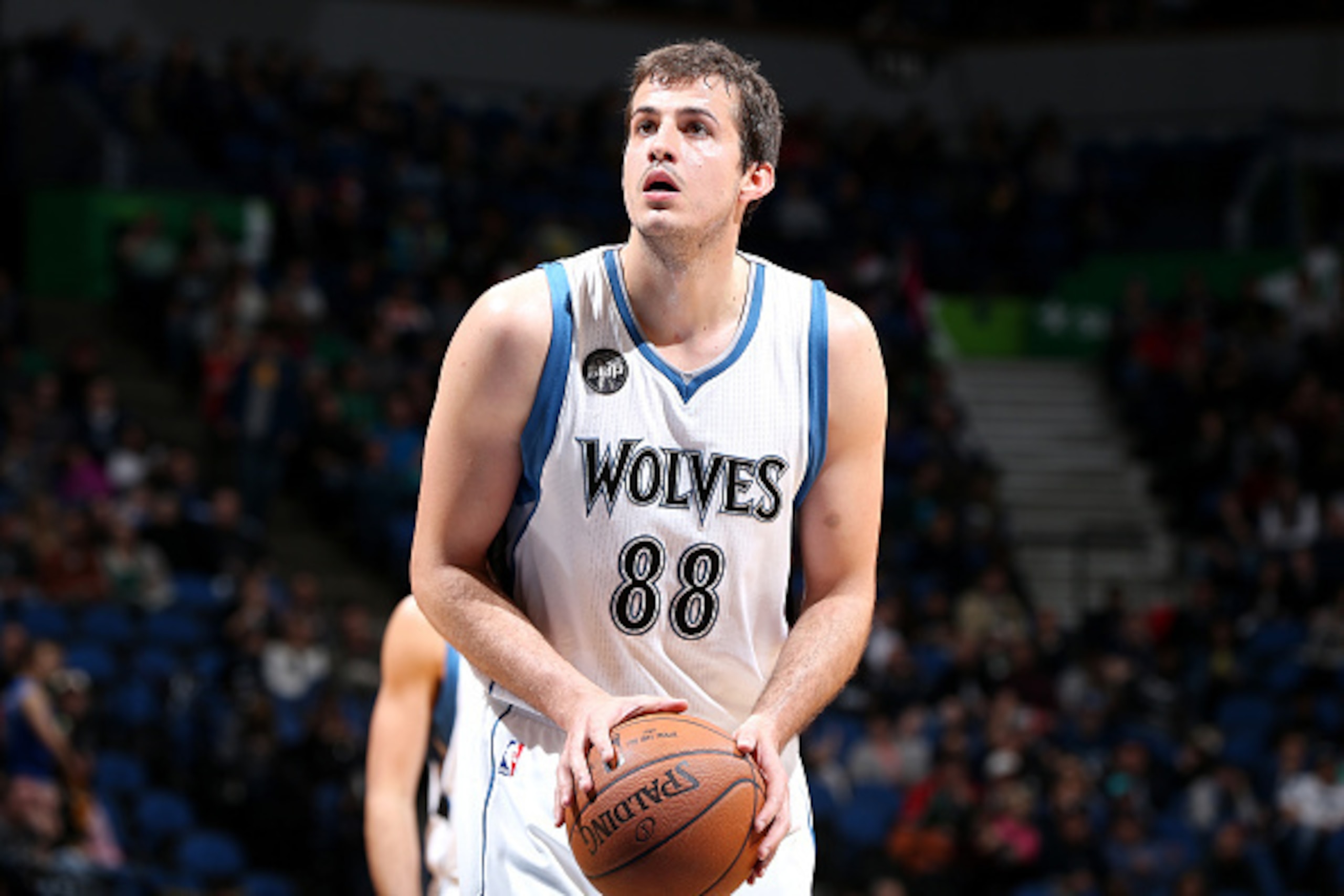
Scoring
Nemanja Bjelica was seldom used by the Minnesota Timberwolves, typically deployed off-ball so as to make most of his shots as a spot-up sniper. There was only so much he could do to look like even an average scorer in a metric that rewards volume, and he did most of that by shooting 46.8 percent from the field, 38.4 percent from downtown and 72.7 percent on his free throws.
Non-Scoring Offense
Volume ceases to matter when we look at off-ball offense, and that's where Bjelica thrives. Defenses had to respect his shooting ability, even on a squad that didn't like to space the court. They didn't need to exhibit the same mentality when he served as a passer, though. He could make the right feeds at the right times, but he rarely had the ball in his hands unless he was shooting or bailing someone out.
Defense
Even though he was surprisingly effective guarding post-ups and isolation plays, Bjelica was horribly overmatched anytime he was left alone on the interior with no weak-side help to protect the rim. He allowed opponents to shoot 58.9 percent at the hoop.
Rebounding
Bjelica wasn't able to convert a strong percentage of his chances, but he did a fantastic job working through contact and hustling for boards at all times. Even when operating on the perimeter, he was rarely willing to sit back and let everyone else try.
Durability
Though a strained right foot and a bruised left knee both held Bjelica out, his role on the 'Wolves limited him to 60 appearances and just 17.9 minutes per game. That, coupled with his lack of defensive activity and occasionally motionless offense, was problematic.
Overall
All things considered, this was a successful rookie year for Bjelica. Not only did he prove he belonged in the NBA, but he carved out an important niche as a floor-spacing big man who could hold his own on the boards. He won't earn more playing time until he shows he can play adequate defense, but this is a solid start for the 28-year-old.
68. Cody Zeller, C, Charlotte Hornets
6 of 73
Scoring
Perhaps Cody Zeller would score more effectively if the Charlotte Hornets made him a featured option. Instead, he's thrived by continuously improving efficiency levels and learning how to create more of his own shots. Zeller is still reliant on teammates as he dives to the hoop, but he was more comfortable than ever putting the ball on the floor and working in the space he was granted.
Non-Scoring Offense
With a broken jumper that makes it nearly impossible to score outside the paint, Zeller isn't a threatening presence who helps space out the court. He's not much of a passer, either. Though it's good that he's able to minimize his turnovers, the third-year center was less willing than ever before to give up the rock when he gained possession.
Defense
Offensive players couldn't abuse him in any one situation, but he also failed to stand out in most every regard. There's a certain skill to preventing yourself from becoming a liability wherever you're used, and that's exactly how we'd describe Zeller's defensive ability.
Rebounding
Zeller has successfully worked on his strength throughout his NBA career, and it paid off as he was able to hold consistent positioning against other bigs. His hands aren't great and make it easier for smaller players to steal contested rebounds, but it's tough to complain about how he puts himself in the right spots.
Durability
A sprained left ankle, bruised sternum and strained right shoulder held Zeller out of the lineup for a combined nine games. Those absences, combined with his limited role for Charlotte, prevented him from achieving a perfect durability score.
Overall
Zeller certainly hasn't justified the No. 4 pick the Hornets (then the Bobcats) spent on him in the 2013 NBA draft, but he's still managed to become a solid rotation big. His rebounding and defense give him value, and he can finish plays around the hoop while picking the right spots. Of course, without developing more offensive versatility or morphing into an interior-defense specialist, he won't become anything close to a star.
67. Tyson Chandler, CB, Phoenix Suns
7 of 73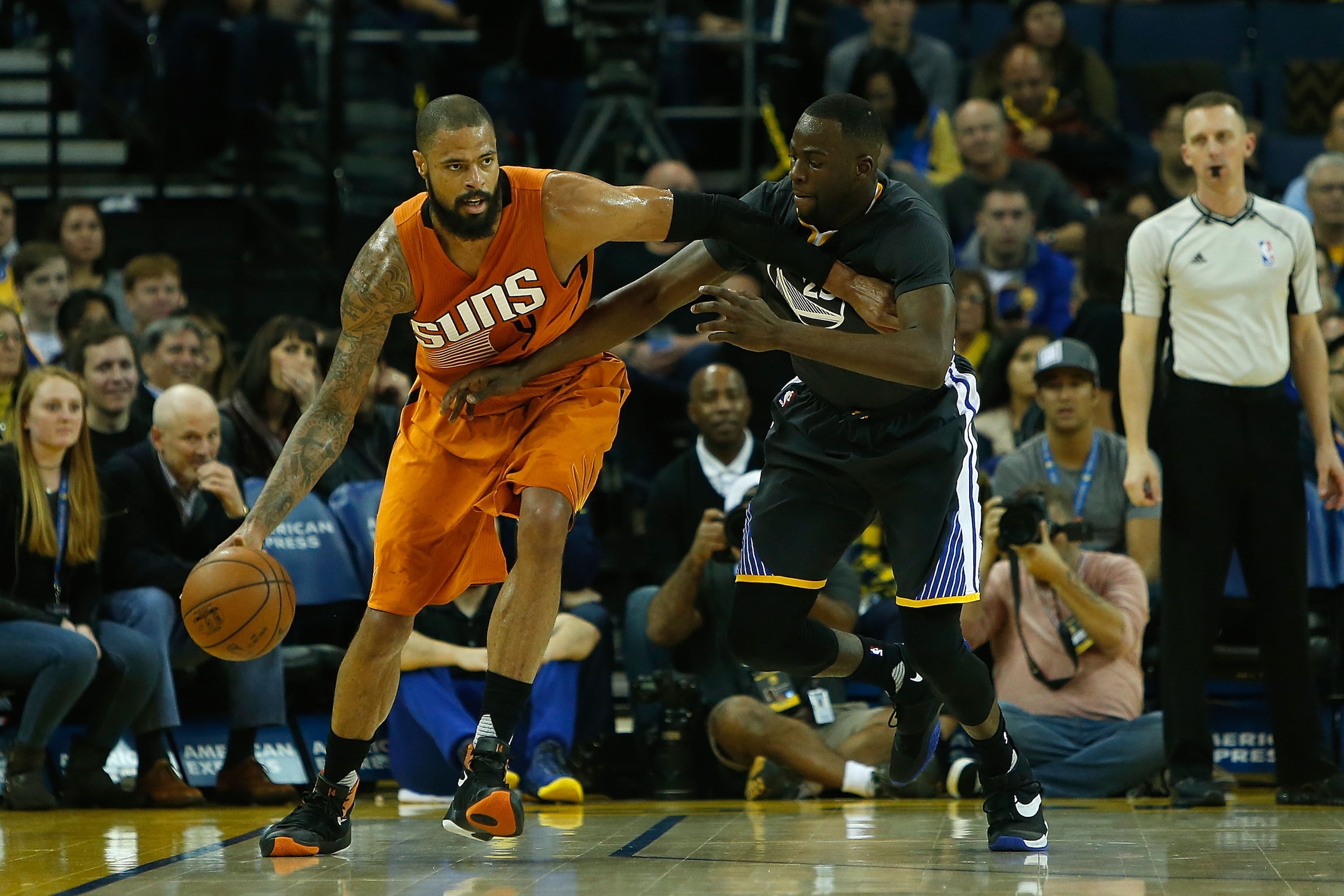
Scoring
Even without any jump-shooting range and while filling a tiny role in the offensive schemes, Tyson Chandler has always remained so efficient that he looks like an above-average scorer. His first season with the Phoenix Suns was no exception, as he knocked down 58.3 percent of his field-goal attempts and thrived as a roll man. Scoring 1.14 points per possession in that situation, the 33-year-old center finished in the 79.9 percentile.
Non-Scoring Offense
A solid finisher, Chandler is no longer the dominant presence he was in his prime. It's far too easy for defenders to forget about him and focus their energy on his teammates, because he's only good for so many cuts per game. Making their jobs even easier is the simple fact that his passing borders on nonexistent.
Defense
What was once a strength for Chandler (he won Defensive Player of the Year in 2011-12) is no longer a primary calling card. He struggled to protect the rim at an elite level and allowed opponents to connect on 53.6 percent of their looks. He was miscast when playing power forward in ultra-big lineups, as quicker 4s could abuse him on the perimeter. Perhaps this is all due to a balky back, but Chandler appeared to have lost more than just a single step in the desert.
Rebounding
Chandler averaged 8.7 rebounds per game and 12.8 per 36 minutes, which stack up nicely against his career averages—9.3 and 11.7, respectively. But there are a few asterisks: He played for a team that produced more rebounding opportunities than most, he spent less time on the court than the top-tier rebounders and too many of his chances came in uncontested fashion.
Durability
Chandler has dealt with back injuries for a while now, including 2015-16. Though he was also plagued by a strained right hamstring, a bruised right shoulder and a concussion, back spasms flared up in March. He was limited to 66 appearances and forced into a smaller role.
Overall
Signed to be a leader for the young Suns, Chandler declined immensely as soon as he arrived. Not even Phoenix's magical training staff could turn back the clock: He couldn't assert himself as a game-changing defensive presence, took on a smaller role and failed to inspire like one might expect of such a strong veteran. He still has three years remaining on his contract, and the Suns can't be thrilled with their investment.
66. JaMychal Green, PF, Memphis Grizzlies
8 of 73
Scoring
JaMychal Green showed flashes of jump-shooting when given chances during his mini-breakout season, though he wasn't quite a floor-spacing presence. It's encouraging that he knocked down 45.5 percent of his shots from between 10 and 16 feet, but his work on longer twos (37.8 percent) and threes (33.3 percent) needs improvement. Green is only 26 years old after a lengthy collegiate career at Alabama, so there's still reason to believe in potential.
Non-Scoring Offense
The power forward's propensity for firing away forced defenses to pay attention, but his passing didn't have the same effect. He was sloppy with the ball and often tried to make plays he shouldn't, which quickly resulted in the opposition trying to force the rock into his hands and then back out a few seconds later.
Defense
As a 6'9" power forward, Green doesn't have the size necessary to hang with some of the league's bigger 4s. His athleticism made him a strong rim protector, but he was thoroughly abused in post-up situations (6.4 percentile) and often so cognizant of his need to prevent interior positioning that he let shooters leak out and torture him from the perimeter.
Rebounding
A strong percentage of Green's boards came in contested fashion, and he showed a nice ability to grab most of what fell near his vicinity. Now, he just needs to parlay his athleticism into more aggressive play after a shot goes up rather than ceding so many opportunities to others.
Durability
On a Memphis squad beset by injuries, Green was one of the few players who managed to stay rather healthy. He missed only four games, but those were due to his role early in the season, not any significant issues. That same role is all that proves problematic here, since playing only 18.5 minutes per game prevented him from the same physical toll withstood by so many other bigs.
Overall
Perhaps the Grizzlies should be thankful for that pesky injury imp. Painful as it may have made their 2015-16 campaign, the thinned-out roster created an opportunity for Green to receive more minutes, and he made the most of it. As soon as he was thrust into a larger role, he began playing with confidence on the offensive end and gradually improving as a defender, offering hope he could lock down a rotation spot going forward.
65. Julius Randle, CB, Los Angeles Lakers
9 of 73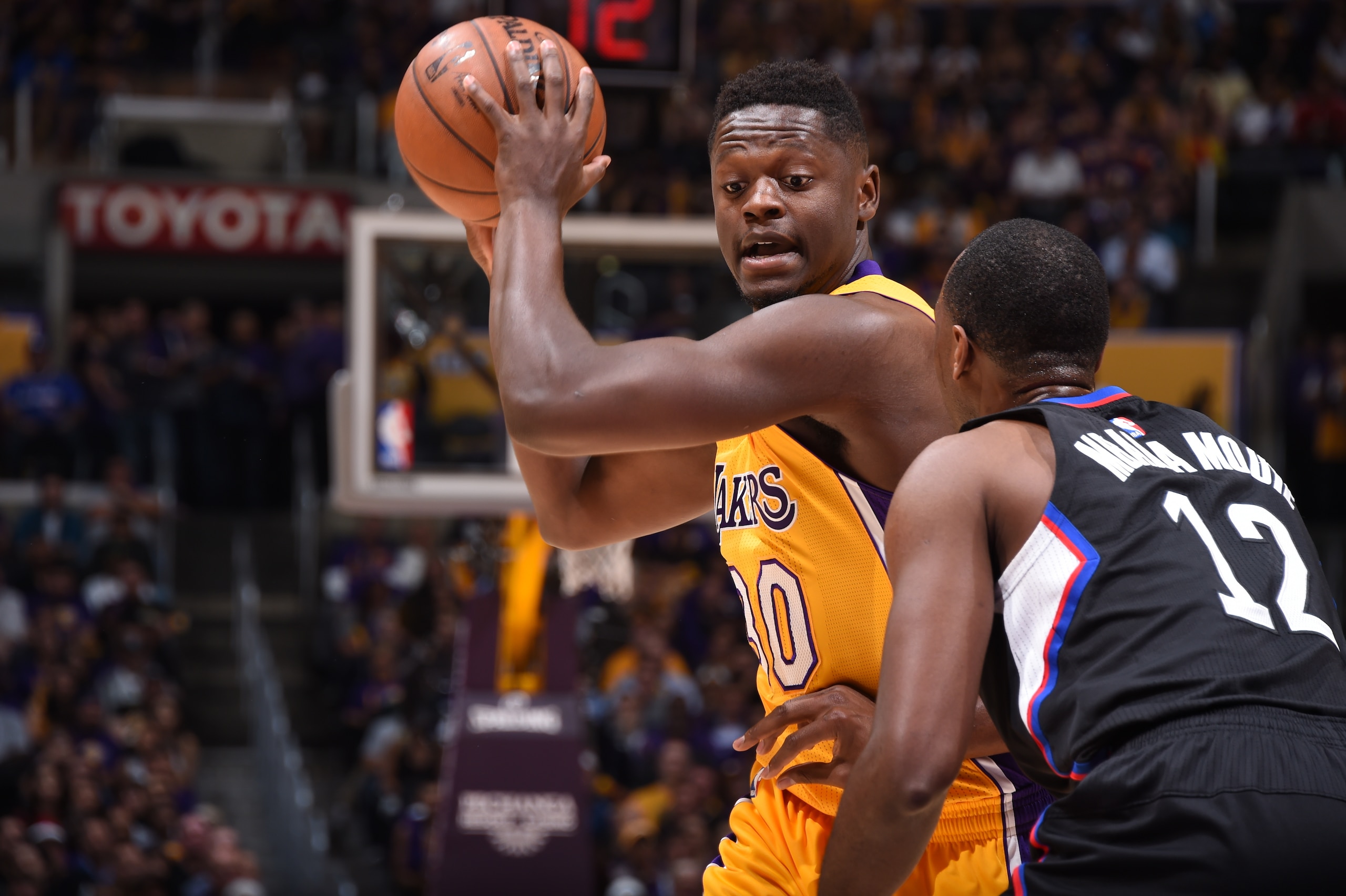
Scoring
Every once in a while, Julius Randle shows flashes of his scoring potential. He can dazzle defenders in the post and thrive when putting the ball on the floor to drive—so long as his mark forgets he only likes going left. But efficiency has not been a strong suit, and he hit only 42.9 percent of his field-goal attempts and 27.8 percent of his triples.
Non-Scoring Offense
Randle could be a gifted passer (for a big man) if he were surrounded by more talent. He tried doing too much to help out his teammates, and that's a role he shouldn't be filling yet. Unfortunately, that's about his only positive in this category.
Defense
Steals and blocks are by no means appropriate measures of defensive talent, but it's still troubling when a frontcourt player records a combined 1.3 per 36 minutes. It's even more concerning when he also allows opponents to shoot 56.3 percent at the rim and finishes in the 25.8 percentile for spot-up defense. Randle grew into a solid post-up defender (75.6 percentile) as a sophomore, but opponents could attack him in every other situation.
Rebounding
If Randle has one defined strength at this stage, it's rebounding. He averaged a sensational 13.1 boards per 36 minutes and had no trouble hauling in opportunities when other players were within a wingspan. Even though he failed to average 30 minutes, he joined Derrick Favors and Zach Randolph as one of three combo bigs to post at least 3.5 contested rebounds per game.
Durability
It seems safe to say the fractured tibia that ended Randle's 2014-15 rookie season 14 minutes after it began was a fluke. He stayed remarkably healthy during his second professional campaign, only missing a single game with a sprained ankle.
Overall
On one hand, Randle's early NBA career has been disappointing, thanks to his atrocious shooting percentages and defensive woes. On the other, he's still just 21 years old and has shown flashes of brilliance in a number of areas. It's impossible to tell whether he'll be a star or bust at this stage of his career, though the true answer likely lies somewhere in between.
64. Willie Cauley-Stein, CB, Sacramento Kings
10 of 73
Scoring
Efficiency can be a magical thing. Willie Cauley-Stein doesn't score in volume (7.0 points per game and 11.8 per 36 minutes), he doesn't space the court and took just 12.7 percent of his shots from beyond 10 feet while relying almost exclusively on his teammates' setup passes. But he shot 56.3 percent from the field, and that's enough to trump many of the negatives.
Non-Scoring Offense
At least Cauley-Stein is an intelligent cutter who can pick opportune moments to crash toward the hoop. Other than that, we're still searching for positives.
Defense
Cauley-Stein was already an impressive defender as a rookie, thriving when left alone on the interior. But that doesn't mean he's devoid of room for improvement. Quite the contrary, as he could become more disciplined against spot-up shooters and learn how to read the movement of roll men, to whom he allowed an even point per possession (34.2 percentile).
Rebounding
Even as a true 7-footer, Cauley-Stein was susceptible to having boards stolen away by smaller players, and his thin frame made it difficult for him to box out true frontcourt behemoths. Until he's recording far more contested rebounds, he'll lag behind the leaders.
Durability
If it weren't for Cauley-Stein missing 16 games as a rookie, largely due to a dislocated right index finger and a laceration on his right middle finger, he would've received a perfect durability score.
Overall
Cauley-Stein did enough as a first-year big that he should be viewed as one of the few building blocks in the Kings organization. Already a defensive menace, he proved an adept finisher who could make timely bursts to the basket and keep the opposition wary. He has plenty of room for growth on both ends, but there's no longer any reason to believe he'll only be a one-way player.
63. Patrick Patterson, PF, Toronto Raptors
11 of 73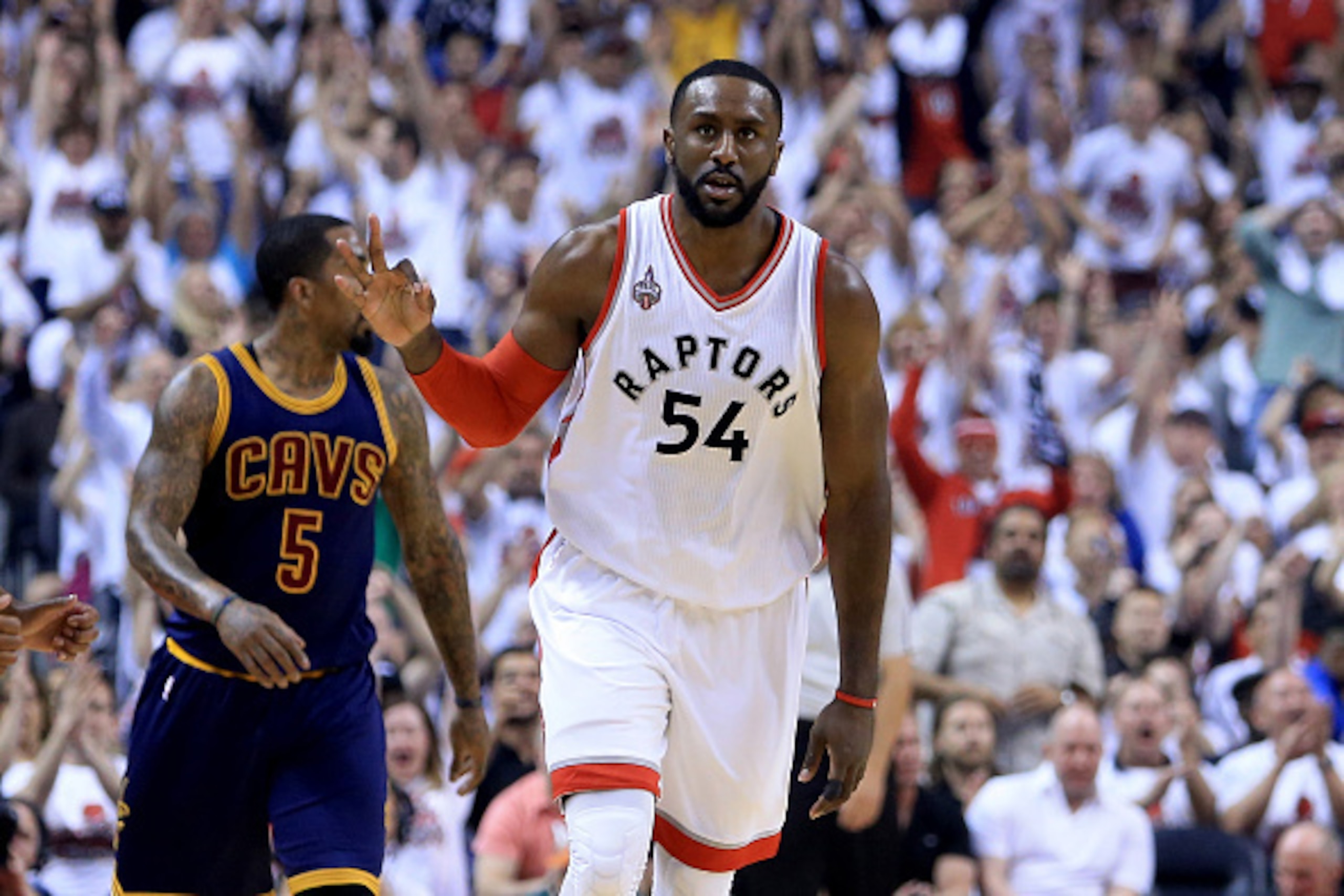
Scoring
Patrick Patterson was a decent floor-spacing presence for the Toronto Raptors, capable of knocking down long twos and the occasional three when their All-Star guards weren't taking over games. But even in his limited role, he was rather inefficient around the hoop, struggling to finish against bigger and longer players who could easily deter him from close-range attempts.
Non-Scoring Offense
Merely mediocre as both a facilitator and floor-spacing presence, Patterson rarely changed a game with his non-scoring offense. He was capable of drawing defenders out to the perimeter and opening up the paint, but they didn't do so every time he spotted up. According to ICE data provided by B/R Insights, his gravitational pull was right in the middle of the pack.
Defense
Patterson was a praiseworthy defender when guarding someone with possession, staying disciplined and remaining between his man and the hoop at all times. If moved into an off-ball situation, he was an average stopper whose lack of size (6'9") often made strong contests a difficult proposition. When asked to serve as the last line of defense, he was slightly subpar, allowing opponents to shoot 49 percent at the rim but remaining uninvolved most of the time.
Rebounding
Patterson may not grab many rebounds—the 6.1 he recorded per 36 minutes actually set a new career low—but the manner in which he accumulates them still aids the Raptors, since he picked his spots wisely and wasn't afraid of contact when the other bigs were occupied elsewhere.
Durability
A sore left ankle was the only injury to sideline Patterson, but he couldn't spend enough time on the court during his 79 appearances to overcome his lack of offensive activity. Standing in place for long spurts doesn't boost the total physio load a player produces.
Overall
Patterson was by no means a liability, but his lack of upside and contributions in only a select few areas is the primary reason Toronto needed an upgrade at the 4. He was not a dominant floor-spacing presence, a great complementary defender beside Jonas Valanciunas or a player capable of creating his own offense. Thus, he wasn't going to boost this team on his own merits.
62. Lavoy Allen, PF, Indiana Pacers
12 of 73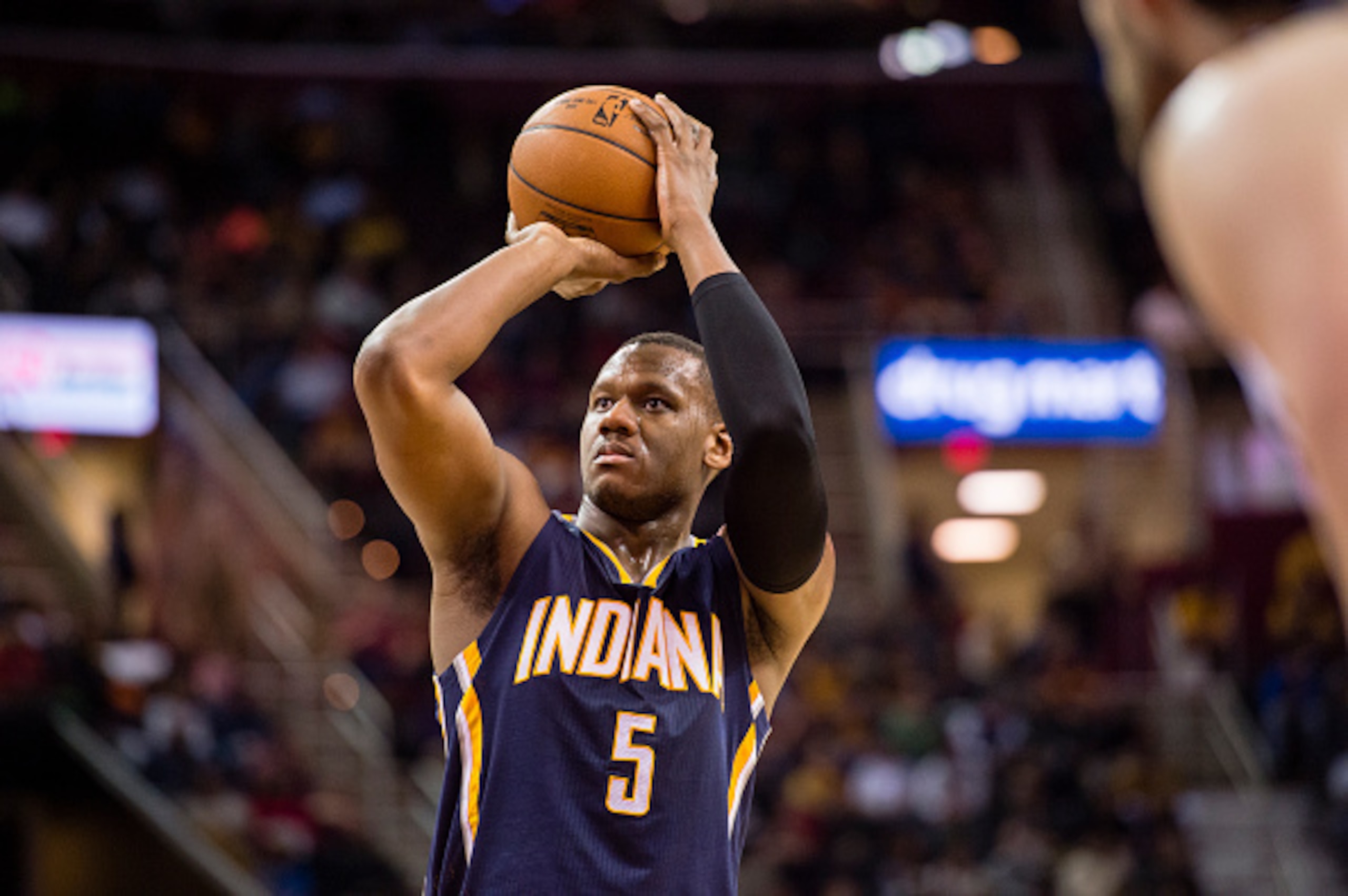
Scoring
Lavoy Allen's 5.4 points per game almost established a new career high for the 27-year-old power forward. It's not the volume that gives him an average score in this category, so much as his efficiency (51.6 percent from the field) and willingness to manufacture his own shots. For such a low-scoring 4, it's impressive to create 30.9 percent of your made twos.
Non-Scoring Offense
It's easy to assume Allen's offensive contributions are terrible when he averages a single assist per game and didn't even attempt a triple for the second consecutive season. But he's at least somewhat respectable as a floor-spacing presence because of his ability to hit elbow jumpers. He's also comfortable passing in a scheme, which leads to secondary and free-throw assists.
Defense
Allen's defense gives him the ability to carve out a rotation role—even occasionally moving into the starting lineup. Though he's misused as the last line and struggles to protect the rim, the physicality of his play and his constant desire to make an impact allows him to thrive against all different types of power forwards.
Rebounding
Though Allen failed to average double-digit rebounds per 36 minutes for the first time in the last three seasons, he did a lot of the heavy lifting for the Indiana Pacers. Few players were so willing to put their bodies on the line and fight for opportunities in traffic, even if Allen was sometimes a bit overaggressive in the pursuit of missed shots he really couldn't get to.
Durability
Allen missed three games with a sore left knee, but it's his smaller role in the rotation that proves most detrimental. The power forward logged only 20.2 minutes per contest and spent a significant amount of time standing still on offense; that depresses his durability score.
Overall
The very definition of a non-glamorous big, Allen is a defensive presence who won't harm his team on offense. His solid screens free up teammates, and he can create the occasional interior shot for himself, but he's content to stay out of the way for most possessions while conserving energy for the other end.
61. Bobby Portis, CB, Chicago Bulls
13 of 73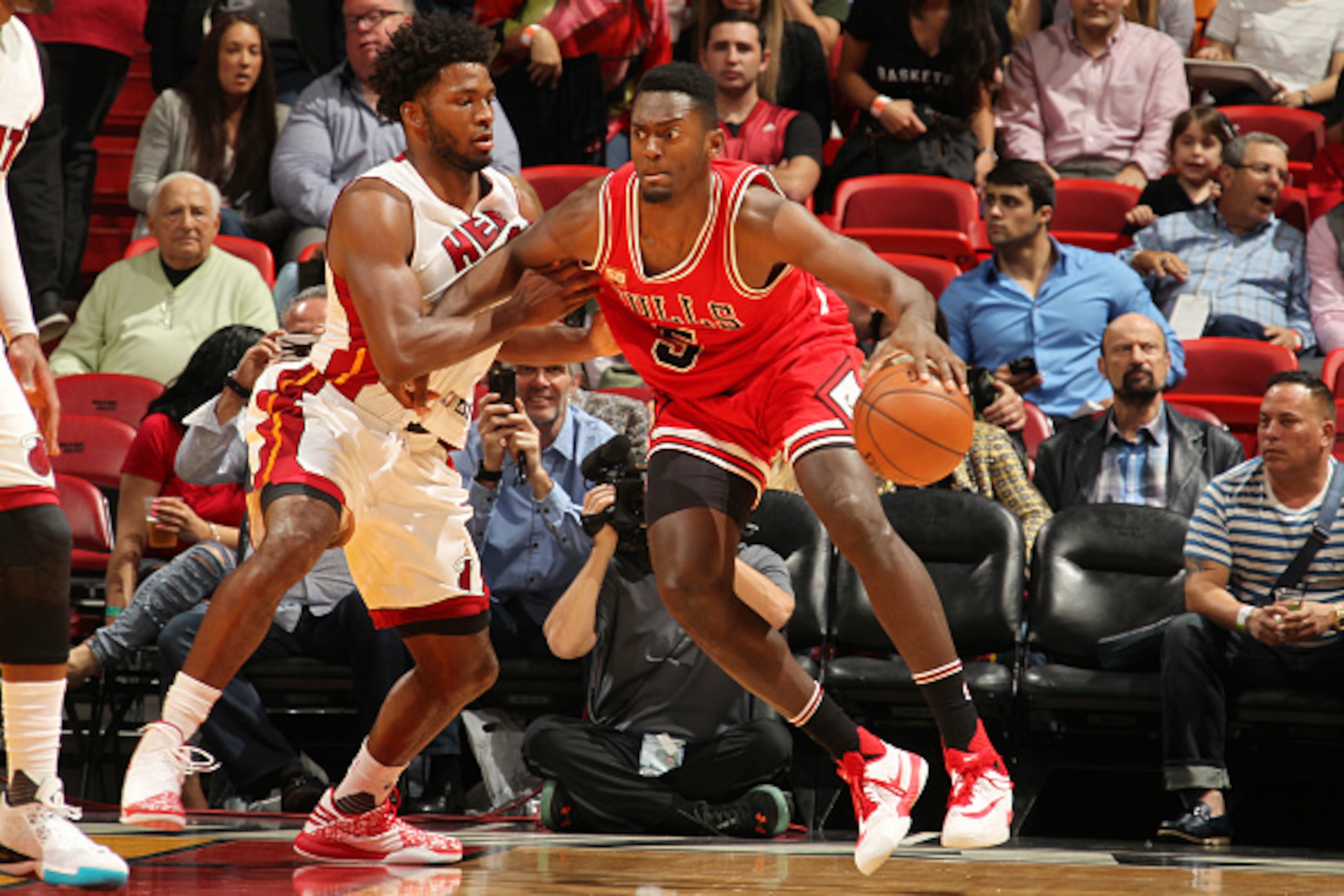
Scoring
Bobby Portis struggled to remain efficient during his rookie season, but that didn't stop him from showing sustained spurts of scoring superiority. Take, for example, the 11-game stretch in February and early March that saw him average 10.4 points while shooting 44.1 percent from the field, 54.5 percent from downtown and 76.9 percent from the stripe. All the pieces are here; it's just a matter of putting them together.
Non-Scoring Offense
Even with his inconsistent shooting, Portis showed willingness to serve as a stretchy big who defenses had to follow out to the perimeter. It was his passing that didn't threaten whatsoever, since he recorded more than three assists just once during his first professional go-round.
Defense
The Arkansas product immediately emerged as a quality defender by holding his own against post-up plays, spot-up shooters, isolation offense (97 percentile!) and roll men. Four of his five lost points in the category stem from atrocious rim protection, as he allowed opponents to shoot 55.2 percent while contesting 3.7 shots per game.
Rebounding
The average combo big who qualified for NBA 200 consideration—not just those who made the rankings—averaged 2.1 contested rebounds. Portis checked in at 2.2. He wasn't an elite rebounder, even if playing for a team that produced plenty of chances and myriad uncontested opportunities gave that appearance.
Durability
Portis didn't miss 20 games because of injuries; he just wasn't a part of the rotation early during the season. Even when he broke in, he filled a minimal role for much of the year and finished in just the 43.21 percentile for total physio load, per ICE data provided by B/R Insights.
Overall
The Chicago Bulls should be thrilled about what they've found in Portis. He thrived as an all-around defender during his rookie season (so long as he wasn't the last line on the interior), held his own on the boards and showed flashes of modern offensive excellence. As he gains jump-shooting consistency, he should establish himself as a franchise centerpiece capable of contributing in almost every way imaginable.
60. Jared Sullinger, C, Toronto Raptors
14 of 73
Scoring
Jared Sullinger may fancy himself a floor-spacing frontcourt player, but the results aren't there yet—he shot only 28.2 percent from beyond the arc during his final season with the Boston Celtics. If he takes a few steps in, the shots become much less trendy, but his success improves, which may have been what won over the Toronto Raptors in free agency. On two-pointers from at least 16 feet, Sullinger knocked down 39.8 percent of his attempts.
Non-Scoring Offense
His willingness to fire away and his ability to connect on long twos shifted a defense in his general direction, though he wasn't consistent enough to command the same gravitational pull as a truly stretchy big. His passing falls into the same category, as he can capably make situational feeds that lead to assists but rarely serves as a featured playmaker.
Defense
Sullinger struggled with a major component of every defensive subsection. His on-ball work was hampered by inability to curtail rolls to the basket (30.2 percentile). Off-ball he was plagued by woes against spot-up shooters (31.5 percentile). He left Boston struggling for answers at the rim, as he gave up 54.3 percent shooting to the opposition while facing 5.7 shots per game.
Rebounding
Unless Sullinger was guarding a post-up set, he struggled to make the most of his massive frame and improved quickness. But both those tools aided him on the glass, making it almost impossible for an opposing player to corral a rebound when bodied up by this center. He didn't produce quite as many chances as the league's top-tier rebounders, but he was darn good at converting them.
Durability
Sullinger suited up 81 games for the Celtics, missing only a single contest with back spasms in late December. However, his physical intensity left him just shy of making the cut for the perfect score, since he spent too much time catching his breath rather than engaging in the action.
Overall
It wasn't hard to see flashes of improved play from Sullinger throughout his age-23 season, but he won't be a starting-caliber big man until he can shore up his defensive weaknesses and connect from the outside more consistently. Right now, it's still a great strategy to force the ball into his hands and wait for him to shoot a jumper. That's not what the Raptors will want from a bruising big man who's capable of becoming one of the NBA's better rebounders.
59. Jared Dudley, PF, Phoenix Suns
15 of 73
Scoring
Jared Dudley was quite efficient and had no trouble spacing the court for the Washington Wizards, but he was rarely used as a top option. Averaging only 7.9 points per game and 10.9 points per 36 minutes makes it difficult to emerge as even an average scoring threat, despite shooting 42 percent from downtown.
Non-Scoring Offense
One of the league's true stretch 4s, Dudley knocked down 43.5 percent of his spot-up triples and commanded a strong gravitational pull, per ICE data provided by B/R Insights. It's only his distributing that plagues him here, since he committed too many turnovers for a power forward who didn't set up teammates and usually stuck to the easy passes.
Defense
Dudley could hold his own in almost any situation, though he excelled in few. It was only serving as the last line of defense that was inherently problematic, which shouldn't be surprising for a 6'7" power forward who, prior to this season, had spent 24 percent of his minutes at the 2 and 62 percent at the 3. Dudley allowed opponents to shoot 53.5 percent at the hoop, which put the Wizards in a bind whenever he was thrust into that role.
Rebounding
It's less that ideal when your power forward can only muster 4.9 rebounds per 36 minutes. Dudley produced a decent number of chances, but he converted them at a subpar rate and sometimes went multiple games without grabbing a single board in traffic.
Durability
Flitting around the court in search of open shots and tracking down sharp-shooting forwards on the other end, Dudley didn't have an energy problem. He didn't have an injury problem, either, sitting out the opening contest against the Orlando Magic and then playing in every other game.
Overall
Despite his ability to stretch out the court with tremendous shooting ability, Dudley is miscast as a power forward. Even in today's NBA, it's a mistake to put him at the 4 for 94 percent of his minutes, and the Phoenix Suns shouldn't make that mistake in 2016-17 now that they're bringing him back to the desert. If Dudley hadn't been asked to protect the hoop or rebound like other big men, he'd have risen much higher up these rankings.
58. Bismack Biyombo, C, Orlando Magic
16 of 73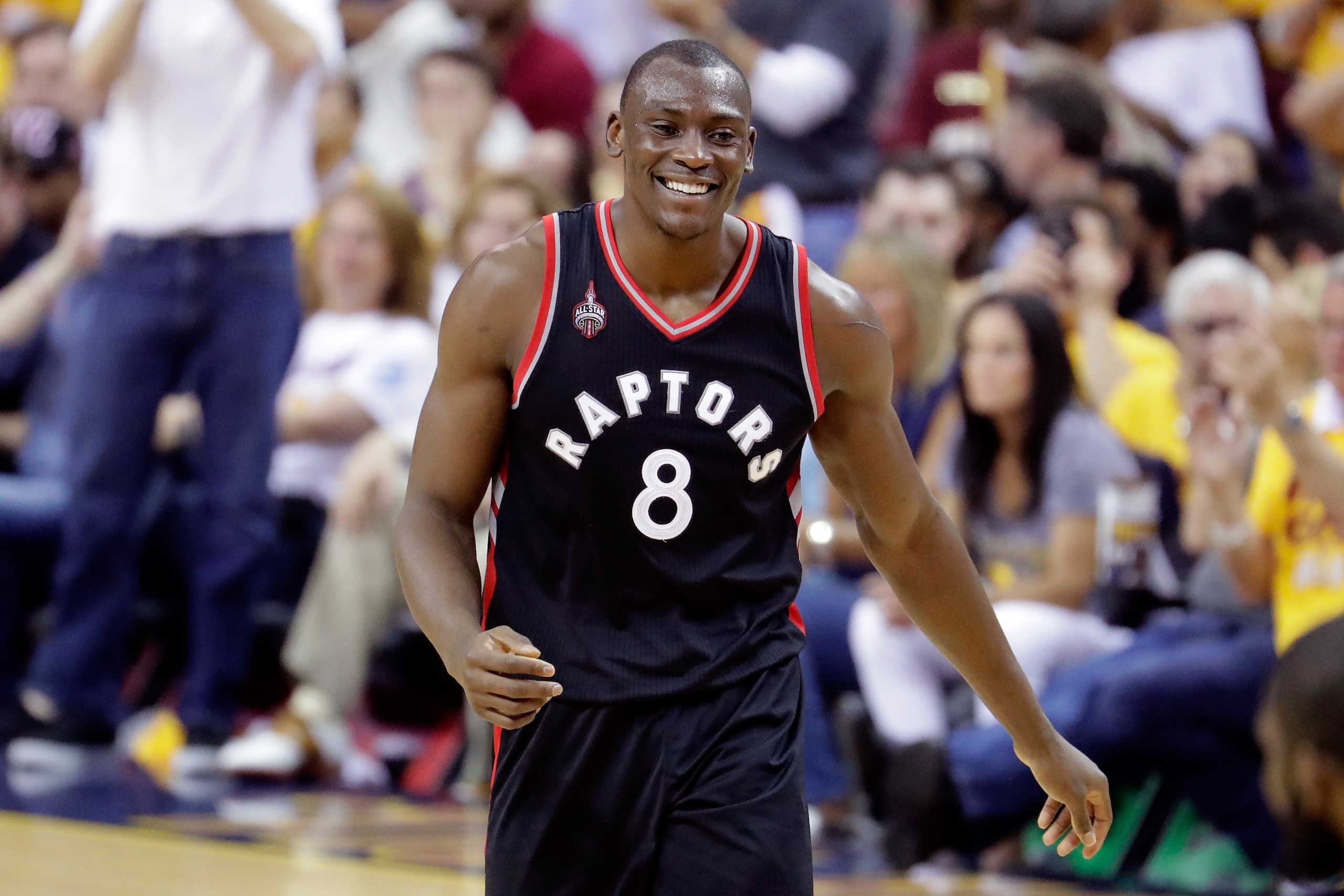
Scoring
Scoring requires touches, and Bismack Biyombo received a meager 12.6 frontcourt touches per game during his final season with the Toronto Raptors—a staggeringly low average for someone who played a significant role in his team's rotation. Among the 476 players who touched the ball in 2015-16, only nine averaged fewer frontcourt touches per 36 minutes.
Non-Scoring Offense
Biyombo was never a threat to score, only earning dap via tough screens and ability to cut to the hoop for lobs when left wide open. His passing left much to be desired, as well. Of the 366 players who played enough to qualify, only 22 received a worse score in our facilitating metric.
Defense
The Congolese center is one of the NBA's best rim protectors and thrives guarding a pick-and-roll or post-up set. The only way to throw him off is dragging him out to the perimeter, then asking him to remain disciplined rather than over-helping in a vain attempt to guard the hoop from afar.
Rebounding
Perhaps Biyombo could've earned additional points if he'd played more than 22 minutes per game. He was fantastic whenever on the floor, thriving in traffic, boxing out with vigor and relentlessly pursuing every opportunity. But volume matters, and it prevented him from fully capitalizing upon his 13 rebounds per 36 minutes.
Durability
Biyombo played in every game, but his motionless offense and diminished playing time prevented him from working quite as much as some of the league's other bigs. He'll have a chance to remedy that if he earns a bigger role with the Orlando Magic, who invested in him over the summer.
Overall
As his free-throw shooting and willingness to draw fouls improves, Biyombo is becoming more of a two-way player. But his offense still lags well behind his spectacular defense. The 24-year-old is already one of the NBA's best per-minute defensive and rebounding presences, making anything he offers on offense tantamount to gravy.
57. David West, CB, Golden State Warriors
17 of 73
Scoring
David West's one season with the San Antonio Spurs didn't provide many opportunities to show off his scoring chops, but the big man made the most by remaining hyper-efficient. This goes beyond his ability to shoot 54.5 percent from the field, 42.9 percent from downtown and 78.8 percent at the stripe. Aided by filling more of an off-ball role, West even knocked down 50 percent of his jumpers from between 10 and 16 feet, as well as 48.4 percent of his twos from beyond 16.
Non-Scoring Offense
A solid passer who minimized turnovers while a floor-spacing threat, West didn't exert the gravity you might expect since he was often the preferred poison in the Spurs' unstoppable offense. It also doesn't help that his 42.9 percent shooting from three came on only seven total attempts.
Defense
West thrived in San Antonio's schemes, though he wasn't quite elite in any one area. His physicality and willingness to sacrifice his body prevented any singular weakness from emerging, and opposing teams spent all season trying to figure out how to best attack him in his limited run.
Rebounding
Strong as West was at grabbing contested boards and converting his opportunities, his role prevented him from doing too much. We're not just referring to how much time he spent on the pine, because the Spurs placed him away from the basket and often had the other frontcourt player or a wing coming in to attack the glass while he served as a decoy.
Durability
West played in 78 games despite suffering no major injuries, and that's indicative of his role. Head coach Gregg Popovich often kept him on the bench, sometimes for entire games, and that prevented West from looking as durable as he has in prior campaigns.
Overall
Now moving from one contender to another by signing with the Golden State Warriors, West still won't receive heavy run, but his limited activity allows him to remain an elite defender, strong role-filling rebounder and efficient source of offense. It's hard to pick glaring flaws, but that's partially because the team that rosters West knows how to prevent those from emerging.
56. Jon Leuer, CB, Detroit Pistons
18 of 73
Scoring
Jon Leuer doesn't create much of his own offense—all 42 of his treys came off assists—or score in volume, but he shoots from all over the floor. Whether finishing plays around the basket, knocking down mid-range jumpers or spacing out the court from the perimeter, he can get buckets.
Non-Scoring Offense
Spacing the court? Fine, though Leuer wasn't a lights-out shooter by any stretch of the imagination. Pass the ball? Forget about it, because Leuer actually recorded three more turnovers than assists on the season.
Defense
This big was a surprisingly adept defender during his fifth professional season, finally producing the first above-average defensive box plus/minus of his career. The biggest stride was his knack for closing out against spot-up shooters (87.6 percentile), as well as a newfound ability to avoid distinct defensive weaknesses that could easily be exploited by an intelligent scouting report.
Rebounding
Leuer was a respectable per-minute rebounder in his limited role, but he benefited from playing for a team that produced more rebounding chances per game than the average squad—something that won't be as true now that he's with the Detroit Pistons. Additionally, he struggled to box out bigger players, only thriving when left alone in the paint after a shot went up.
Durability
Injuries are detrimental here, because Leuer missed time to recover from multiple ankle injuries, lower back spasms and an upset stomach at various points throughout the season. When you're not playing starter minutes, missing 15 games is tough.
Overall
Leuer is perfectly suited for his job as a floor-spacing power forward next to Andre Drummond in the Pistons' four-out, one-in design, but his role with the Suns was a bit less clear. Though he improved dramatically on defense and continued to shine as a stretch 4, he was sometimes asked to do too much on a young, injury-riddled team.
55. Jabari Parker, PF, Milwaukee Bucks
19 of 73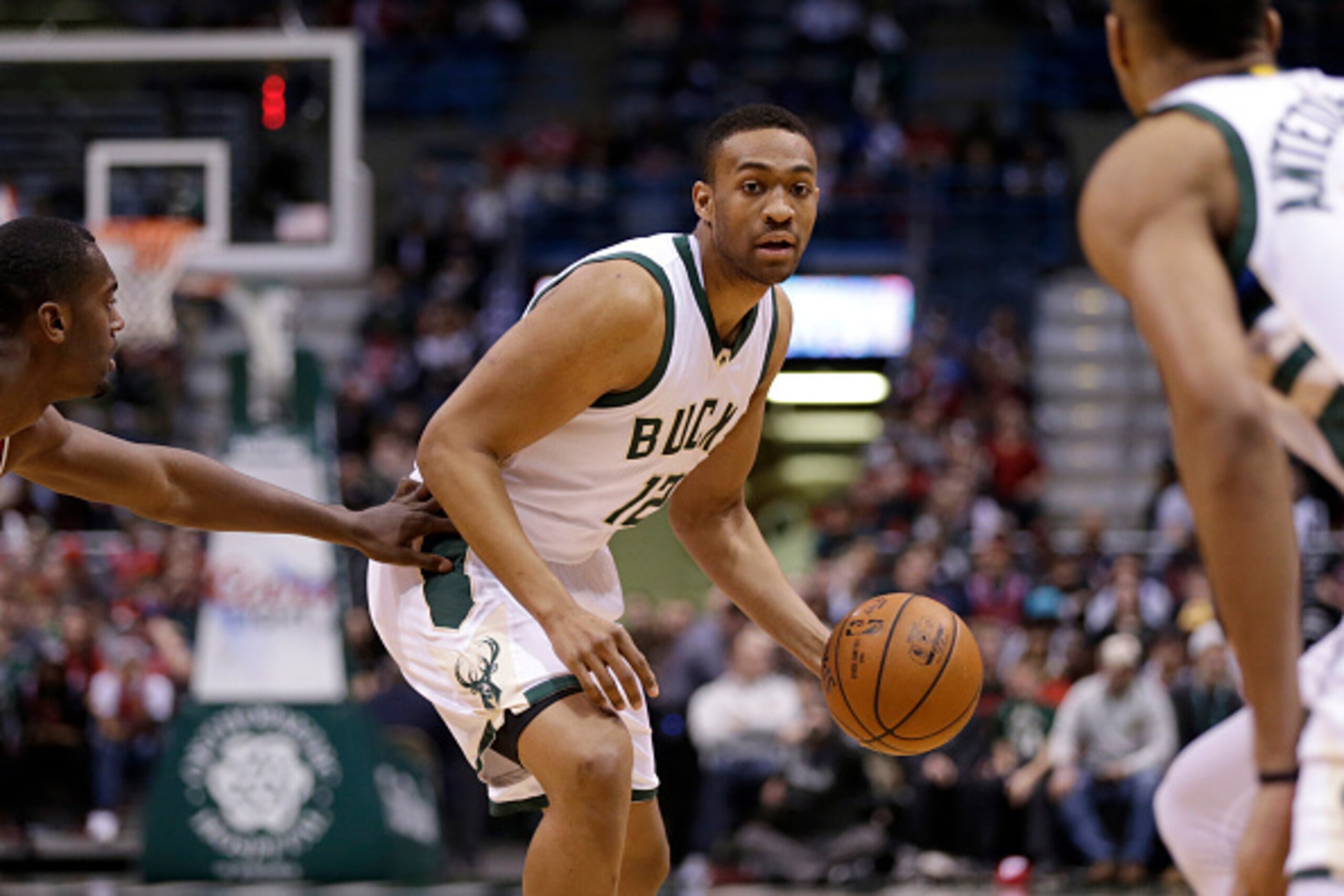
Scoring
Jabari Parker's outside shot still hasn't developed for the Milwaukee Bucks, but he wisely stopped trying to create so many of his own looks in 2015-16. Preferring to pick and choose his spots while losing his mark away from the primary action helped him grow slightly more efficient from the field while maintaining an attacking mentality. As he learns to either knock down treys or put the ball on the floor at the right times, he'll become more deadly.
Non-Scoring Offense
We've already covered the floor-spacing woes, but passing is a foreign concept for this Duke product. He doesn't spend enough time with the ball in his hands to waste those touches as a facilitator—it's tough to turn lifelong scoring instincts off so quickly. And even when he does throw passes, they're nearly as likely to wind up in the wrong hands as the right ones.
Defense
Parker just doesn't play much defense, so we won't spend much time covering his efforts.
Rebounding
Though he wasn't quite as effective on the glass as during his rookie season, Parker still impressed because he was so good at getting to uncontested boards far quicker than other bigs. But if he's going to ascend up the rebounding ladder, he'll need to get more efficient when fighting for loose balls with other players.
Durability
The torn ACL that cut his rookie season short is now firmly in the past. Parker was healthy and active for much of the follow-up campaign, only missing six games between a sprained right foot and the tail end of his ACL rehab.
Overall
Parker certainly hasn't lived up to being the No. 2 pick of the 2014 NBA draft, but he's getting closer to a potential star. Lest we forget, he's really only had 1.5 seasons in the Association, and you can easily see him getting more confident on the offensive end. Now, it's time to get better on defense (i.e. start trying) and figure out how to fix the perimeter stroke.
54. Ed Davis, CB, Portland Trail Blazers
20 of 73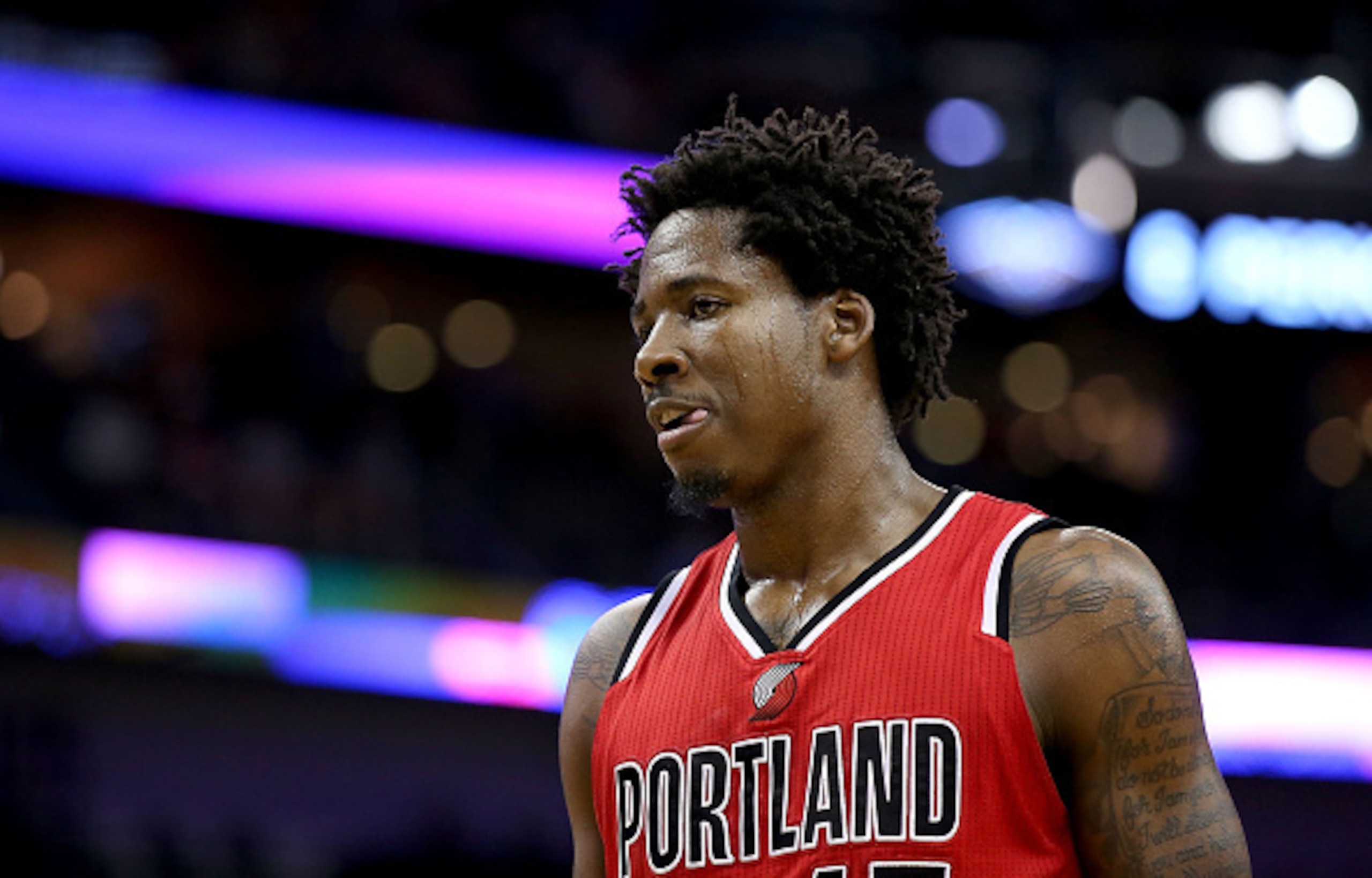
Scoring
Ed Davis rarely takes shots from outside the paint—just 25.2 percent of his attempts came from beyond three feet—and that helps him knock down a stunning 61.1 percent of his field-goal tries. He's also good at drawing whistles, though he'd help his own case more by connecting at better than a 55.9 percent clip.
Non-Scoring Offense
This big man simply isn't an offensive plus, whether because of his uninspired passing and struggles to escape double-teams or his inability to space the court even the tiniest bit.
Defense
The Portland Trail Blazers didn't mess around by playing Ed Davis at the 3, where he could be abused by spot-up shooters running circles around him. He had enough trouble with them already, even when he was guarding power forwards who liked operating from the perimeter. Instead, they left him around the hoop, where he used his long arms and athletic bursts to hold opponents to 45.8 percent shooting at the rim.
Rebounding
Talented as Davis can look on the glass, two factors hold him back. The first is out of his control: He played only 20.8 minutes per game during his first season in Rip City. The second is his overaggressive nature after a shot goes up, since converting only 50.7 percent of your rebounding chances isn't ideal for any big.
Durability
Role, not injury, hindered Davis. He played 81 games for Portland, only missing a single late-December outing to let a minor ankle issue heal.
Overall
Davis' biggest skill may be his innate understanding of his own strengths and weaknesses. Whereas some young players try to do too much, he's willing to play his game by finishing short attempts around the hoop and conserving his energy for defense. It's no fluke the Blazers were 1.2 points per 100 possessions better when he was on the floor.
53. Boris Diaw, PF, Utah Jazz
21 of 73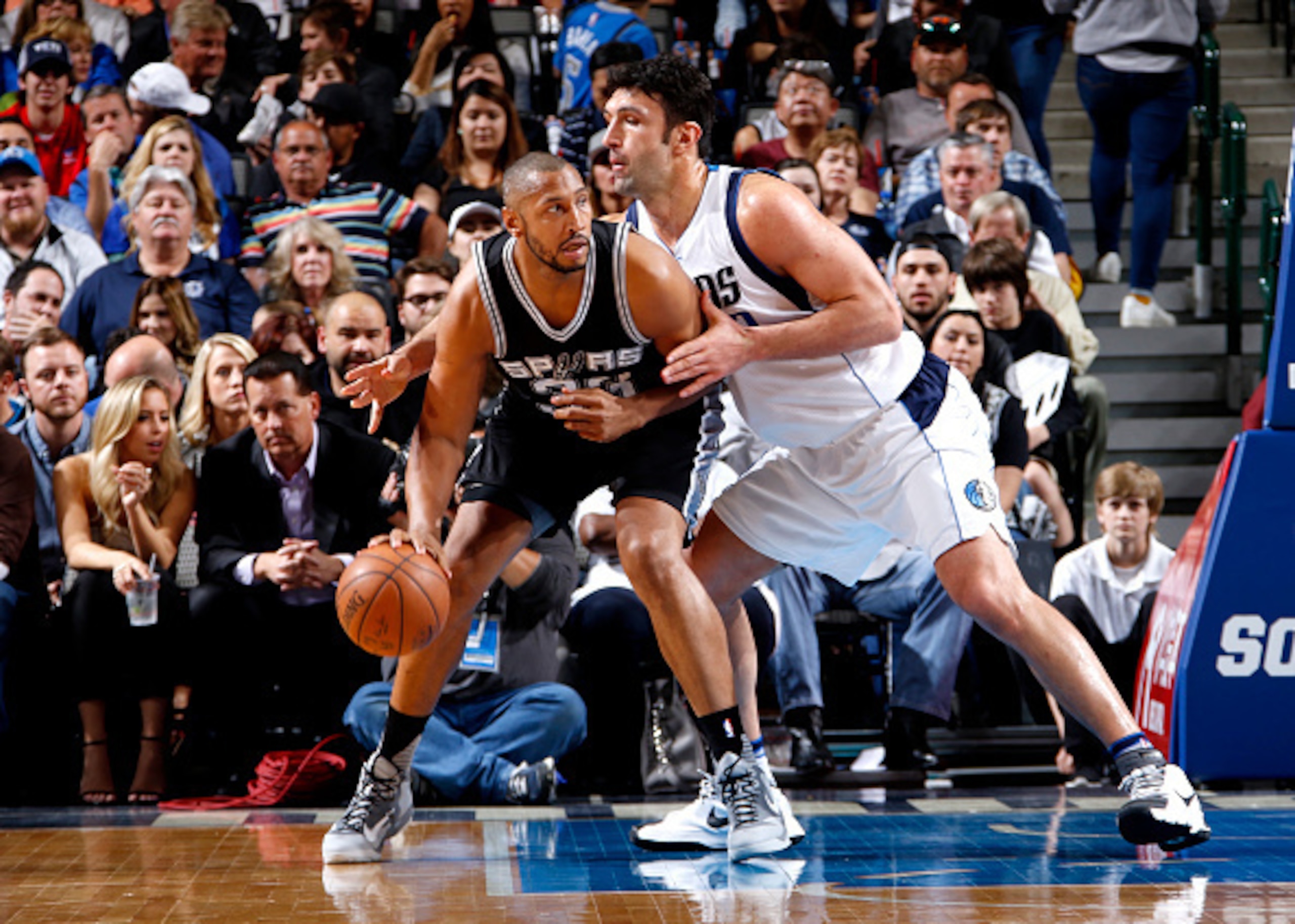
Scoring
Boris Diaw can make the most of a smaller role via his efficient shooting, but it's not floor-spacing ability that stands out on his scoring profile. While most bigs struggle to create their own shots outside the post, Diaw thrives. He's comfortable dribbling on the perimeter and driving toward the hoop, which resulted in a mere 48 percent of his two-point makes requiring assists.
Non-Scoring Offense
Diaw can shoot from the outside, but he launched just 1.8 three-point attempts per 36 minutes during his final season with the San Antonio Spurs. Defenders knew better than to chase him out to the perimeter when they could instead focus on shutting down other players. His passing was the highlight in this category, though his unforced turnovers do curtail the excitement.
Defense
Though Diaw is sometimes viewed as a lumberer, he can hold his own defensively. He's mediocre-or-worse when left as the last line of defense, but his willingness to chase shooters and accurately assess pick-and-rolls makes him a slight asset in most situations. Now, we get to see if that's a product of his skills or the Spurs system when he joins the Utah Jazz in 2016-17.
Rebounding
Diaw has never been a game-changing rebounding presence, and his 6.1 boards per 36 minutes actually represent improvement upon his career average (5.9). The issues stem largely from his placement on the perimeter and willingness to challenge shooters, both of which take him away from many chances. Somewhat surprisingly, an impressive percentage of his successful moments came in contested fashion.
Durability
A sore right adductor was Diaw's only notable injury, but he couldn't overcome six absences and only 18.2 minutes per appearance.
Overall
Diaw remains a unique commodity—a big man who has immense skill levels shooting jumpers and handling the rock. He can create his own looks and find teammates on the move, both of which will aid him in his new Salt Lake City home. Plus, he remains a surprisingly effective defender who can stand his ground in most situations. Diaw is by no means glamorous and would struggle to fill a bigger role, but he's good at what he does.
52. Myles Turner, CB, Indiana Pacers
22 of 73
Scoring
Myles Turner should eventually serve as a floor-spacer, but his three-point stroke wasn't there as a rookie. Fortunately, there were plenty of signs it'll come around, ranging from his excellent mid-range shooting to his 72.7 percent success rate at the free-throw line. All those other factors still made this former Texas Longhorn a per-minute standout.
Non-Scoring Offense
Turner will eventually spread out a defense for the Indiana Pacers rather than stand on the perimeter, but will the passing? He recorded 0.4 more turnovers than assists during his average outing, showing few signs of any playmaking ability—just as was the case in Austin.
Defense
Turner refused to require a rookie adjustment period. He was a strong defender from the get-go, terrorizing the opposition with athletic exploits around the basket and showing no issue when moving out to the perimeter against quicker players. His lack of discipline allowed for a few easy buckets near the hoop—especially when defending a back-to-the-basket threat—but his sheer energy typically made up for mistakes.
Rebounding
Though he could hold his own after a shot went up, his developing instincts and skinny frame made it tough for Turner to gain or hold positioning against more experienced frontcourt players. He produced a solid number of rebounding chances, but his inability to convert held him back.
Durability
During mid-November, Turner went under the knife to repair a chip fracture and torn ligament in his left thumb, and he wouldn't return until the very end of December. That, along with a sore right ankle at the beginning of his rookie season and his struggles to break into the rotation, limited his playing time and kept him to just 60 games.
Overall
If there's such a thing as a three-and-D big man (a designation typically reserved for wings), Turner looks like he could eventually fit the mold. His three-point shooting left plenty to be desired during his first professional campaign, but the Pacers should remain confident in his development. He stood out in various areas and displayed many of the telltale signs that deep range is coming in the not-too-distant future.
51. Robert Covington, PF, Philadelphia 76ers
23 of 73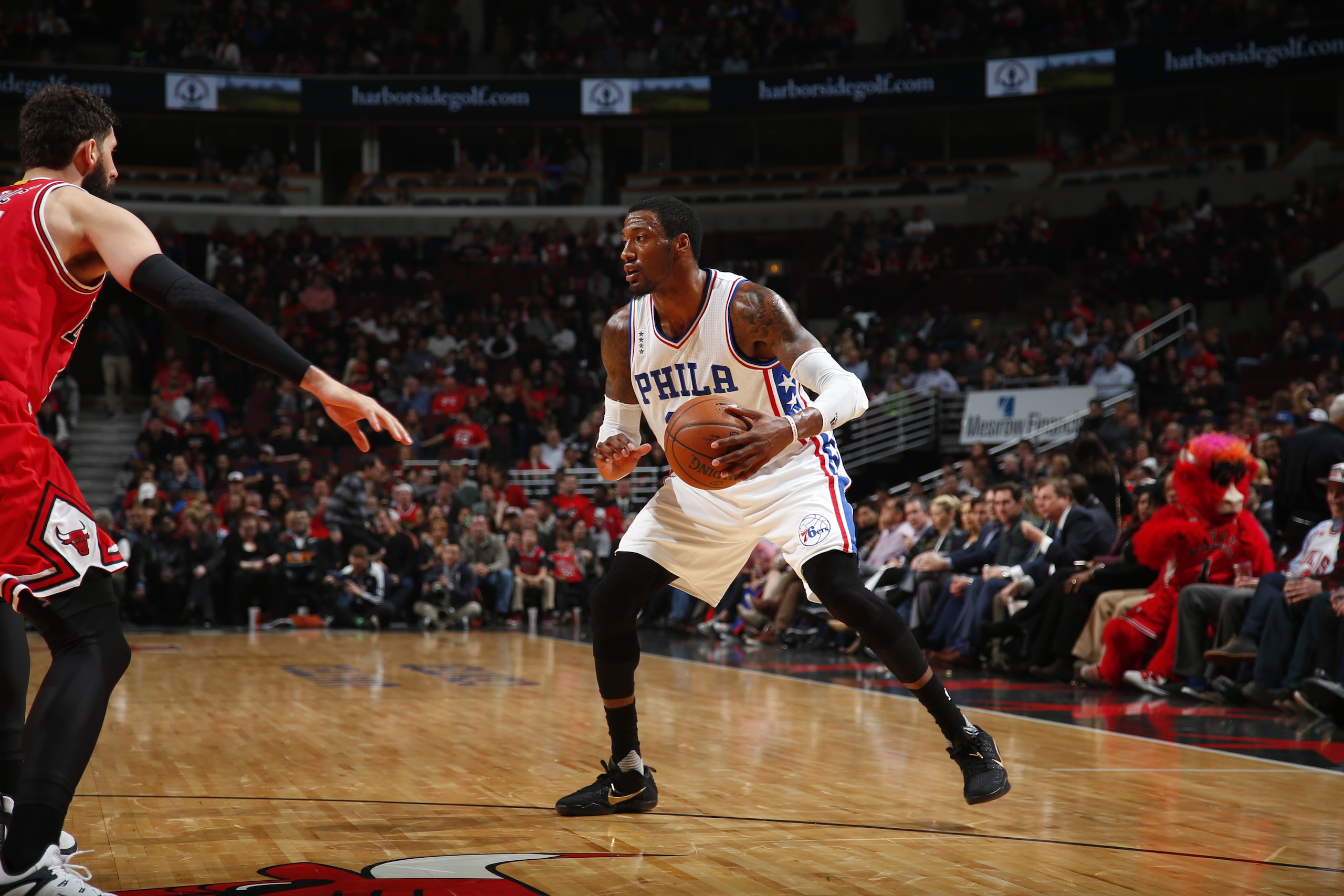
Scoring
Even as his three-point shooting regressed, Robert Covington remained a fairly effective scoring threat. He was one of the few Philadelphia 76ers capable of taking on a significant offensive load while remaining efficient and creating some of his own offense. Barely qualifying as a power forward—23 percent of his minutes came at the 3 and also put him just shy of earning the combo forward designation—he benefited from needing assists on only 55.8 percent of his two-pointers.
Non-Scoring Offense
It's troubling enough he produced only three potential assists per contest, and it's even more concerning that the quality of those passes was so putrid; the Sixers shot only 46.7 percent off those feeds (Philadelphia shot 48.7 percent of everyone else's potential dimes). Covington also struggled to produce a strong gravitational pull because defenders understood that while he excelled as a catch-and-shoot sniper, they could charge him with reckless abandon, knowing full well he wasn't comfortable pumping and putting the ball on the floor.
Defense
The 6'9" Covington was left out to dry whenever asked to serve as a rim protector, and he was placed in that role with surprising frequency. Facing 3.9 shots per game, he allowed opponents to connect at a 56.2 percent clip—a mark that beat out only three point guards (and Carl Landry) on the Sixers roster. Covington was far better away from the rim unless thrust into one off-ball set after another, but this was damaging enough.
Rebounding
Those same size deficits didn't hamper Covington much on the glass; he generated plenty of opportunities and converted more than half of them. Of course, he was far more comfortable working in space than fighting off bigger players, which isn't what you want from a frontcourt rebounder.
Durability
Covington played in only 67 games for the Sixers, missing time due to a sprained MCL in his right knee and a concussion. Still, he was active and physical enough on both ends to make up for his absences, barely making the cut on a perfect durability score.
Overall
Establishing himself as one of the league's more underrated and overlooked players despite failing to live up to his own standards from downtown, Covington displayed two-way versatility. It was a mistake to leave him alone in the middle on defense, but his ability to guard multiple positions was just as valuable as his shot-creating work and floor-spacing ability at the 4. Making just over $1 million in 2016-17, Covington is one of the NBA's great bargains.
50. Zaza Pachulia, C, Golden State Warriors
24 of 73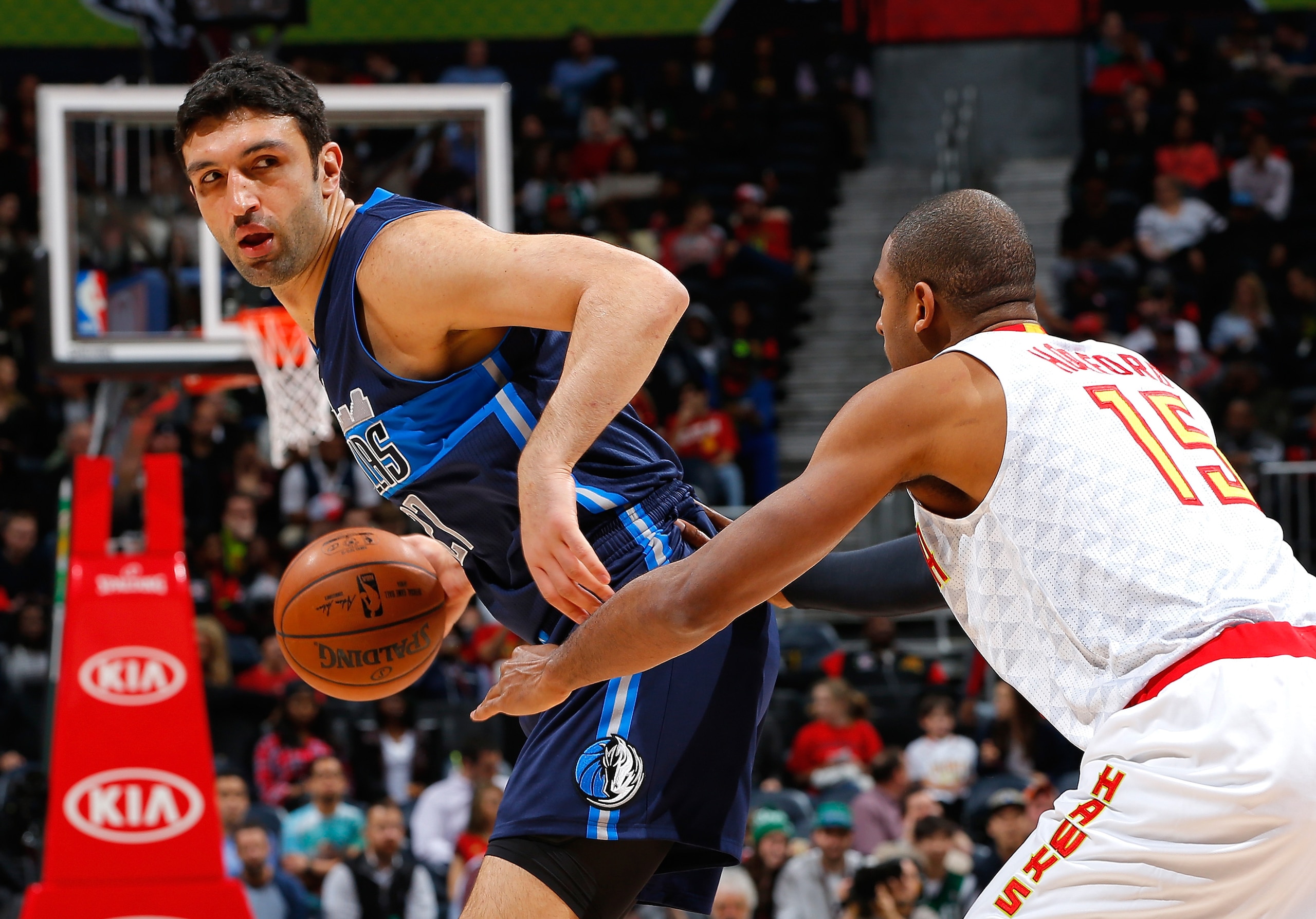
Scoring
Nothing about Zaza Pachulia's scoring stood out for the Dallas Mavericks. He was content in a smaller role and wasn't particularly efficient, but he could create some of his own looks in the post and did plenty of exemplary work as a garbage man. That mentality, combined with a surprising penchant for drawing whistles, allowed him to turn what should be a weakness into an asset.
Non-Scoring Offense
None of the aforementioned positive attributes help here. Pachulia was out of his element when placed outside the paint, and the opposition always knew it could leave him alone without much fear of retribution. At least he was a decent passer when caught in double-teams or playing his part in the ball-moving schemes.
Defense
On the ball, Pachulia could be abused by quicker players with nifty dribbling or post-up moves. Protecting the rim, his lack of athleticism came back to bite him, as he gave up far too many easy looks. But he made up for many of his flaws with his stellar off-ball work, constantly positioning himself perfectly and refusing to quit on any play.
Rebounding
Pachulia was averaging 11 boards through 52 games. That number declined during the stretch run, but the big had already established himself as one of the NBA's most physical and effective rebounders. It's only players such as DeAndre Jordan and Andre Drummond who keep Zaza from earning a perfect score, as only six of the 60 centers analyzed for NBA 200 made that cut-off.
Durability
There's simply not much to complain about here. Pachulia was active whenever he played, filled a big role for the Dallas Mavericks and only missed six games with a sore right Achilles.
Overall
The Golden State Warriors landed a bargain when they acquired Pachulia over the offseason. He may not be a scoring threat or floor-spacing presence, but he doesn't need to be on a roster with so many offensive studs. And while he can't pass as well as the man he replaces (Andrew Bogut), his rebounding and defensive effort will help the Dubs avoid too much backsliding.
49. Jahlil Okafor, C, Philadelphia 76ers
25 of 73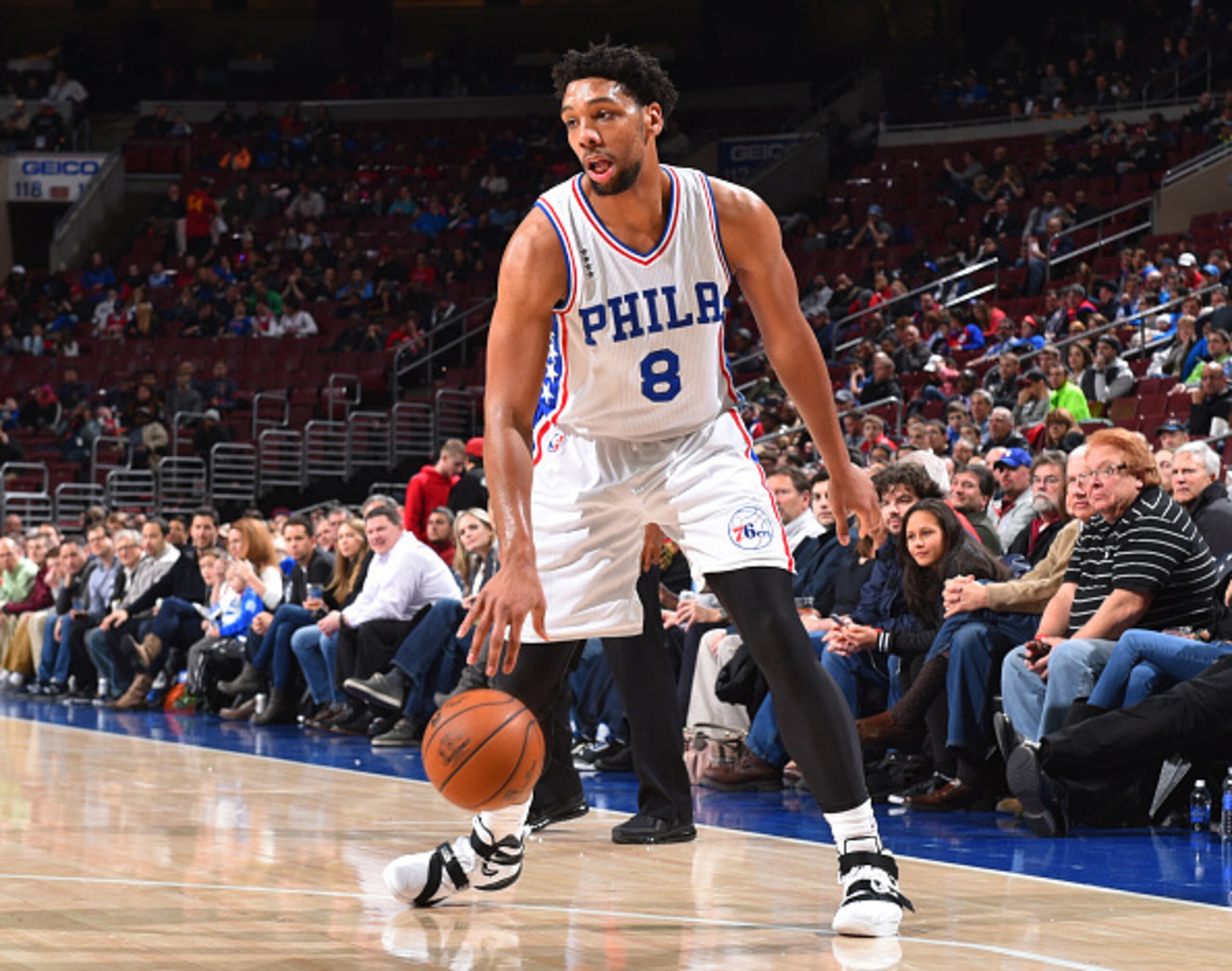
Scoring
If there was one thing we knew Jahlil Okafor could do entering his rookie season, it was score the basketball. Blessed with deft touch on elbow jumpers and a devastating set of post moves, the big man was capable of transitioning from Duke to the NBA without skipping many beats. Sure enough, Okafor thrived as a first-year scorer, averaging 17.5 points on 50.8 percent shooting from the field while creating 58.8 percent of his two-pointers.
Non-Scoring Offense
Despite his interior excellence, Okafor struggled with long twos and hit on just one of his six treys. That made defenders' lives quite a bit easier, even if he set tough screens away from the action. His passing had a similar lack of impact, since it was far too easy to double down and force an ill-advised kick-out pass after he was slow to recognize the developing defense.
Defense
Maybe it was just a lack of motivation. Maybe it was an inability to play defense at NBA speed. Whatever the reason, this center was a glaring liability in most every situation, as expected. Okafor could provide timely help every once in a while and wasn't a sieve around the hoop, but his lack of foot speed and slow reaction to basic post moves served as a deal-breaker.
Rebounding
Despite his box-out ability, a desire to grab every rebound in his area and his vice-like grip on the rock when he touched it, this Sixer was a bit too aggressive on the glass and often found himself exerting wasted energy. Learning to pick his battles is the difference between adequacy and excellence.
Durability
Okafor played in only 53 games during his first professional campaign, and a few of his absences are rather troubling. We're not talking about his late-January illness, his bruised shin or his sore knee. Rather, it's the arthroscopic surgery on his right knee to repair a torn meniscus that ended his season prematurely, plus a two-game suspension after two nightclub "scuffles" and a speeding citation, per ESPN.com news services.
Overall
If you look only at the good, Okafor is a dominant interior scorer despite being only 20 years old. He's also a phenomenal rebounder whose defensive woes didn't prevent him from being a somewhat adequate deterrent at the rim. If you look only at the bad, Okafor is a limited shooter whose immobility and lack of range prevents him from thriving in the modern NBA—not to mention the character concerns after his off-court issues. The truth lies somewhere in the middle, as this center can turn into a star if he's put in the right situation and develops as expected.
48. Mirza Teletovic, PF, Milwaukee Bucks
26 of 73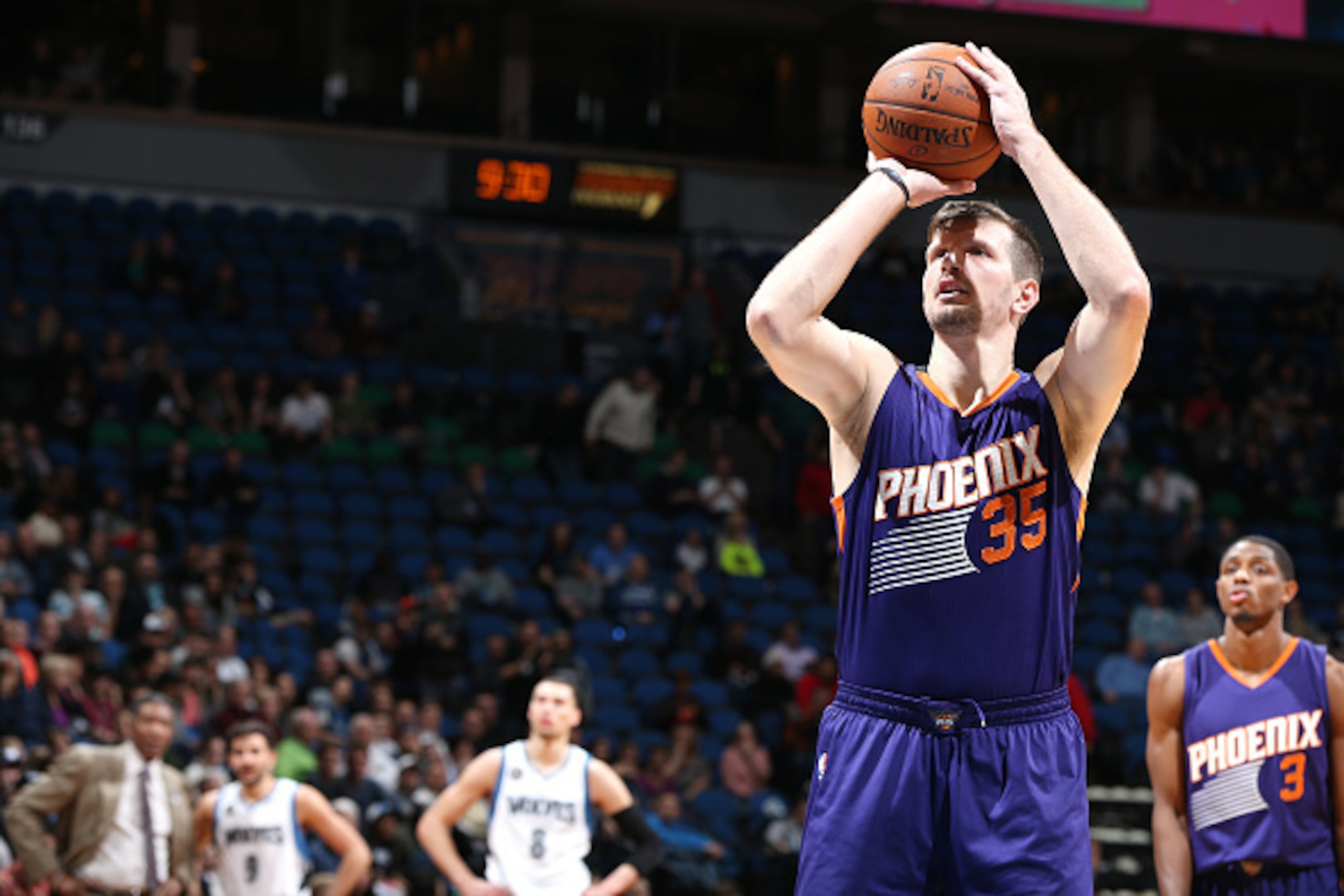
Scoring
Mirza Teletovic played for the Phoenix Suns in 2015-16 and will soon suit up for the Milwaukee Bucks this season, but he would have made a natural Houston Rocket. Great at finishing around the rim (67 percent shooting from within three feet) and spacing the court with his long-range jumper (39.3 percent shooting from beyond the arc), he struggles from every area in between.
Non-Scoring Offense
One of the league's better stretch 4s, Teletovic exhibited strong gravity when spotting up on the perimeter. It was only his passing that let him down here, since he wasn't particularly comfortable with the ball unless catching and almost immediately shooting.
Defense
Teletovic was a terrible interior defender and struggled to fight through screens, but he knew how to position himself so he could work against roll men and spot-up shooters. In the former situation, he allowed just 0.53 points per possession (96.4 percentile). He held opponents to only 0.86 (79 percentile) in the latter.
Rebounding
Teletovic acquitted himself by converting many of his chances. When working on the inside, he was able to fight through contact and come down with the carom, though he still preferred chasing down longer rebounds more than banging bodies in the paint.
Durability
Teletovic played 79 Suns games, missing time only due to a sprained left ankle and an upset stomach. But according to ICE data provided by B/R Insights, his lack of two-way activity left him in the 61.68 percentile for total physio load, which makes it impossible to earn a perfect score.
Overall
Some players are well-rounded contributors; Teletovic is a specialist. He can hold his own on the glass and thrived finishing plays around the basket, but his value still stems almost solely from his ability to knock down jumpers. If he goes cold, he stops spacing the floor and can't contribute in many other areas, so it's a good thing that rarely happens.
47. Kelly Olynyk, C, Boston Celtics
27 of 73
Scoring
Kelly Olynyk didn't play enough to establish himself as an elite frontcourt scorer, but his per-minute excellence and overall efficiency pushed him well up the leaderboard. Few big men are capable of knocking down 40.5 percent of their triples while taking 5.4 per 36 minutes. Not only did Olynyk do that, but he also created more of his own shots than most centers.
Non-Scoring Offense
Olynyk isn't a gifted passer. He's capable of swinging the ball around the horn and completing easy passes within a set piece, but he rarely experiments with distributing in a way that yields easy results for teammates. When he ventures outside that comfort zone, turnovers are likely.
Defense
If Olynyk was anywhere outside the paint, he was a strong defender. He thrived against all different types of action, whether closing out on shooters or sticking with rollers. It was only when protecting the rim that he struggled, which was unfortunately a sizable portion of his defensive profile. While facing 4.1 shots per game, he allowed opponents to shoot 54.7 percent.
Rebounding
Only sheer volume works in Olynyk's favor. Most of his successful rebounds came uncontested, and he converted a mere 46.6 percent of available opportunities. It shouldn't be surprising the Boston Celtics' offensive and defensive rebounding percentages both improved when he was off the court.
Durability
Olynyk played 69 games, missing time due to a bruised right shoulder that never properly healed (and eventually led to surgery). This has to be a long-term concern—not the shoulder itself, but the overall injury history—since Olynyk has yet to play more than 70 games during any given NBA season.
Overall
As a floor-stretching center, Olynyk was quite valuable in Beantown. His improved efforts on the defensive end made him even better, so long as head coach Brad Stevens didn't leave him alone in the painted area. But if the former Gonzaga standout wants to make the proverbial jump, he needs to grow as a passer and improve both his interior defense and rebounding.
46. Nikola Mirotic, PF, Chicago Bulls
28 of 73
Scoring
From outside the arc, Nikola Mirotic is a deadly scorer—a good thing for the Chicago Bulls, since that's his primary offensive role. Anywhere inside it, he struggles immensely. His touch on mid-range jumpers was off, and his finesse shots around the basket were wholly ineffective. Plus, his lack of athleticism made it tough for him to finish plays amidst the trees.
Non-Scoring Offense
Despite Mirotic's impeccable perimeter shooting and floor-spacing abilities, he fails to stand out in this category because he was so prone to turnovers. Though he can make proper feeds on some possessions, he regressed as a distributor during his sophomore year, trying to make more plays while coughing up the ball even more frequently.
Defense
Mirotic was an average defender in most situations, but opponents could get the best of him by feeding the ball to the blocks and letting someone go to work as a post-up threat. In that scenario, the bearded power forward allowed an even point per possession, which left him in the 19.2 percentile—the third-worst mark on the Chicago roster.
Rebounding
It's not the volume of Mirotic's rebounding that's impressive so much as his ability to maximize relatively few chances. The second-year Bull converted 59.8 percent of his opportunities into actual boards, flat-out feasting on the uncontested ones he earned with his hustle after a shot went up.
Durability
One year after suiting up in every single contest, Mirotic was limited to 66 appearances after an appendectomy. Though he endured a substantial physical burden during the games in which he did play, he sat out too frequently to earn the perfect durability score.
Overall
Mirotic's shooting makes him a quality rotation piece, as few power forwards can work off the dribble or take catch-and-shoot attempts en route to a 39 percent clip from beyond the arc. He's also comfortable pumping and taking a step in for a long two, but defenders are quickly catching on to the fact he's unable to do much damage if his jumper is out of the equation. That has to change if he wants to keep earning bigger minutes in Chicago.
45. Kenneth Faried, PF, Denver Nuggets
29 of 73
Scoring
Kenneth Faried finally made strides as a jump-shooter. He only knocked down 34.3 percent of his two-point attempts outside 16 feet, but that's a substantial improvement over each of his last four campaigns and serves as a microcosm for his growing scoring profile. This power forward is still limited and primarily thrives throwing down dunks, but he's slowly becoming a bit more dangerous in other areas while remaining hyper-efficient from the field.
Non-Scoring Offense
He's just not a valuable floor-spacing or passing presence. Faried's best offensive asset, outside of his interior scoring, comes from his willingness to set tough screens and open things up for his teammates. Beyond that, it's his desire to cut to the hoop and finish plays above the rim, which keeps defenders on their toes when he's working the baselines.
Defense
Faried is a glaring liability in two important defensive areas, and that trumps any positives. He can't protect the rim whatsoever and gave up 57 percent shooting on 5.3 attempts per game. Worse still, his work against spot-up shooters, since the 1.06 points per possession he allows (29.9 percentile) and the distraction stretch 4s inflict cause him even when they're not shooting makes him borderline unplayable against this ever-growing contingent.
Rebounding
Remember when Faried suited up for Morehead State and became one of the greatest rebounders in the history of college basketball? That skill hasn't gone anywhere. Impressive as it is that he pulled down a career-best 12.3 boards per 36 minutes, it's even better that he grabbed 4.1 contested rebounds per game while only spending 25.3 minutes on the court. No other power forward analyzed for NBA 200 came within 0.4, and many of them played far more.
Durability
Faried missed time due to a sprained left ankle, a sore left abductor, a sore lower back and the birth of his child, and the absences added up. He only suited up 67 times for the Denver Nuggets, and his overwhelming energy levels could only make up for so many missed contests.
Overall
Denver's frontcourt depth has led to diminished minutes for Faried, and that makes it hard for him to establish himself as one of the NBA's 100 best players—a designation he's enjoyed in previous seasons. But the limited run has also allowed him to make the most of his opportunities and play with even more passion on the offensive end. Now, if only that would translate to defense.
44. Enes Kanter, C, Oklahoma City Thunder
30 of 73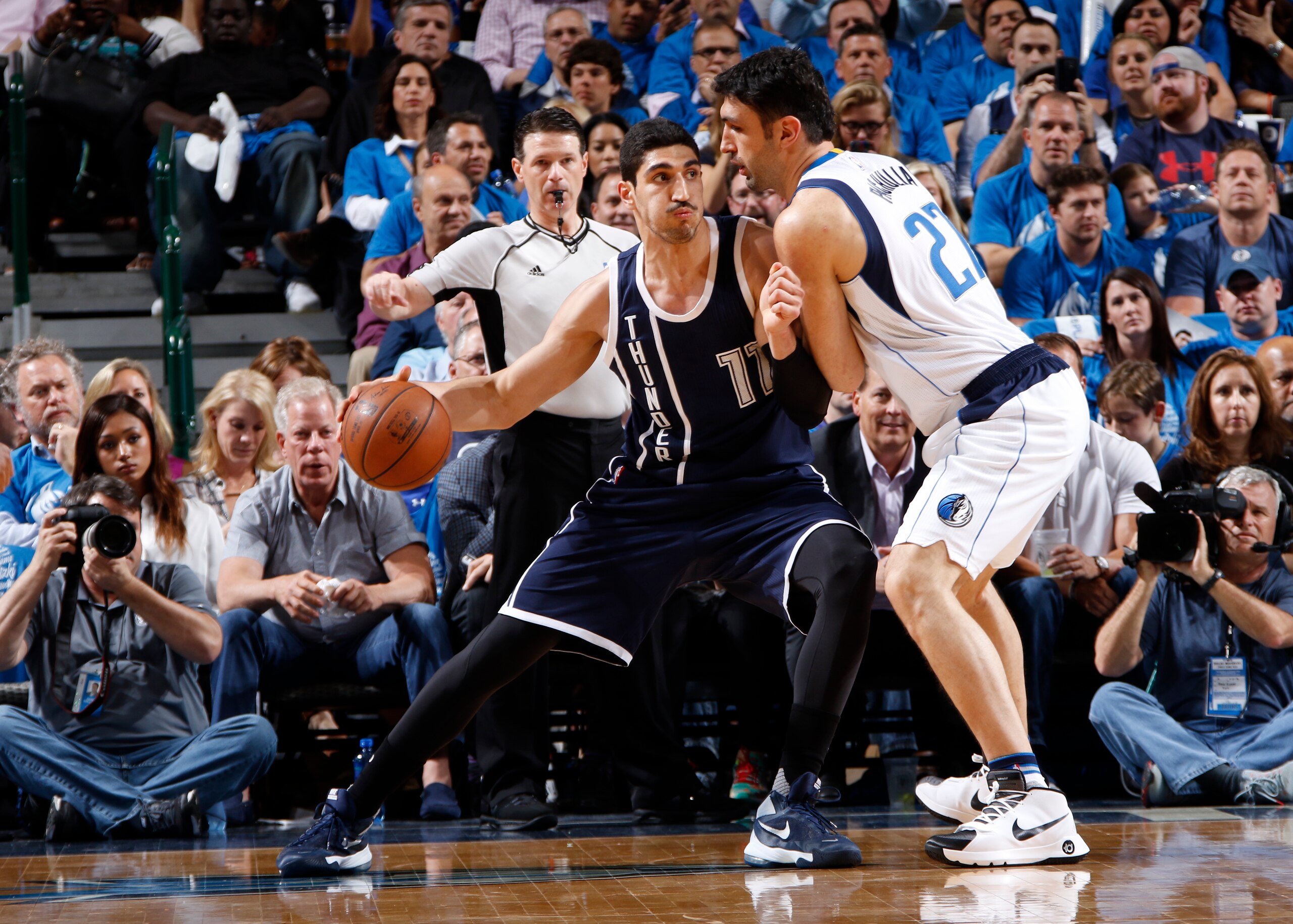
Scoring
What more could the Oklahoma City Thunder want from Enes Kanter on the scoring end? He's incredibly efficient, shooting 57.6 percent from the field and 79.7 percent from the charity stripe. He's one of the league's better per-minute scoring threats after averaging 21.7 points per 36 minutes. He can produce in a variety of ways and even stepped beyond the arc to go 10-of-21. Only a lack of opportunities holds him back.
Non-Scoring Offense
As good as Kanter is at scoring and spacing the court with his diverse point-producing mechanisms, he's that bad at passing. Despite recording 115 turnovers during his first full season for OKC, he produced only 33 assists. Yes, that gave him his worst assist-to-turnover ratio since his rookie year with the Utah Jazz.
Defense
Kanter refuses to play defense, so we're going to refuse to write about it.
Rebounding
No player in the NBA was better at corralling offensive rebounds and creating second-chance points—Kanter led the league in offensive rebounding percentage by collecting 16.7 percent of the available opportunities when he was on the floor. His work on the other end wasn't quite up to that same standard, but the Thunder still have to be more than satisfied.
Durability
Kanter played in all 82 games, but that didn't help him produce a top-notch physio load. According to ICE data provided by B/R Insights, he still finished in just the 72.83 percentile in a stat that typically rewards big men, thanks no doubt to his uninspired defensive play.
Overall
Kanter finished behind only Jamal Crawford and Andre Iguodala in Sixth Man of the Year voting, and he really was that valuable. His offense and rebounding more than negated his defensive inadequacies, as he could camp out underneath the basket and wait for shots to go up, then elevate to create a second-chance finish with ease. He completely changed OKC's tone when in games, though the Thunder presumably would've preferred to go without the tone-deaf defense.
43. Mason Plumlee, C, Portland Trail Blazers
31 of 73
Scoring
Efficiency is Mason Plumlee's friend, especially now that he's getting to the stripe 5.8 times per 36 minutes and converting those at a 64.2 percent clip. He doesn't score in volume or create an inordinate number of his own shots, but he rarely makes mistakes—a valuable trait in and of itself.
Non-Scoring Offense
According to ICE data provided by B/R Insights, Plumlee averaged 4.1 games per spot-up shot, which made it tough for him to scare a defense while standing away from the hoop. Of course, that changes for the better when he cuts to the basket and catches defenders napping. It's his passing that gets more credit here, since he developed as a minor distributing hub by compressing a defense and then hitting cutters right between the numbers.
Defense
Plumlee's defense seemed excellent because he was a quality rim protector and fared nicely when left alone on the blocks, but his work away from the ball left him barely better than average. This isn't reflected in a box score—or many advanced stats, for that matter—but it was problematic how uninvolved he was in off-ball scenarios, rarely jumping into passing lanes or providing help.
Rebounding
He just keeps improving on the glass. He could stand to be a little less aggressive when pursuing rebounds that start their downward descent well away from his occupied territory, but that never-say-die attitude also helped him rack up contested boards and keep plays alive for Rip City.
Durability
Plumlee suited up in every single game, filled a solid rotation role and played a physical style on both ends.
Overall
Plumlee plays a brand of basketball completely devoid of glamor, and he accordingly fails to capture much national media attention. But that didn't make him any less valuable to the Portland Trail Blazers since his offensive efficiency, yeoman's work on the glass and defense (at least, certain aspects of it) all quietly aided the cause.
42. Amir Johnson, PF, Boston Celtics
32 of 73
Scoring
Amir Johnson struggles from the free-throw line and rarely scores, but he's so hyper-efficient that he remains an asset to the Boston Celtics. His ability to score from within three feet (71.2 percent) borders on immaculate, and he shows nice touch from the paint and just outside it—so long as he's not taking a traditional jumper. Missed shots are more detrimental than ones not taken, and that plays in Johnson's favor.
Non-Scoring Offense
Is Johnson a good passer? Not really. But the same theory applies since he rarely commits unforced errors and refuses to make plays that hamper the Celtics' chances of winning games.
Defense
Johnson posted his best defensive box plus/minus since his Detroit Pistons days, but that hides the negative impact he had when dragged out away from the basket. He was phenomenal protecting the rim and guarding interior players on the ball, but his work against spot-up shooters—especially those he had to chase around the court or follow through screens—left much to be desired.
Rebounding
You must once more hearken back to Johnson's Motor City days to find another season in which he averaged double-digit rebounds per 36 minutes (2007-08, specifically). Boston knew the impact he could have when left in the painted area after a shot went up, and this power forward made the most of his opportunities by thriving in the contested category.
Durability
A foot injury and unspecified personal reasons kept Johnson out for a grand total of three games. The rest of the season, he was active and physical during his 22.8 minutes per contest.
Overall
Johnson may be the most self-aware player in the NBA. He's fully cognizant of his strengths and weaknesses, and he never tries to push the envelope by expanding his game. Rather than shooting jumpers, he bides his time until he can work on the interior, remaining incredibly efficient as a result. This mentality prevents his ceiling from rising too high, but it ensures a high floor as well.
41. Al Jefferson, CB, Indiana Pacers
33 of 73
Scoring
Al Jefferson remains effective with his back to the basket, though he only finished in the 63.7 percentile for post-up plays. He was even better shooting long twos, knocking down 51.4 percent from 16 feet or beyond. But the Charlotte Hornets didn't want to force him the ball in the latter situation, and they struggled to get him the rock on the left block, which left him without enough opportunities to score more than 18.5 points per 36 minutes—his worst showing since 2006-07 with the Boston Celtics.
Non-Scoring Offense
The mid-range shooting, tough screens and incredible ability to avoid turnovers made Jefferson valuable on offense when he wasn't scoring, but two aspects of his game held him back: Now that he's playing 51 percent of his minutes at the 4, he has to become a better playmaker for his teammates and could stand to develop a stroke that allows him to shoot at least a single triple.
Defense
Yes, Charlotte head coach Steve Clifford turned Jefferson, who was a notorious defensive liability throughout his entire career, into a slight point-preventing asset. Now, the Indiana Pacers will have to preserve this newfound ability by keeping him away from the basket and ensuring he only has to focus on a small segment of the half-court set at any given point.
Rebounding
Playing time works against Jefferson here, because he fared much better on the per-minute front. It's tough to generate enough opportunities to hang with those at the top of the totem pole while playing only 23.3 minutes per game, even if you're converting the majority of those chances.
Durability
A bruised right quadriceps. Surgery on his right knee to repair a torn lateral meniscus. A strained left calf. A five-game suspension for violating the league's anti-drug policy. Plenty contributed to Jefferson only suiting up 47 games during his final season for the Hornets, even if he worked hard while on the floor.
Overall
Injuries and age (Jefferson will turn 32 during the 2016-17 campaign) have prevented him from enjoying quite as much quickness when on the blocks, forcing him to function as a jump-shooter. He's mitigated this by spending more time at the 4, as well as trying to exert more energy on defense. But it's clear Jefferson is no longer the same player who once made...wait, his 67.1 career win shares (No. 31 among active players) never helped him make a single All-Star team? Unfortunately, that's not likely to change now as he prepares for a backup role with the Pacers.
40. Ian Mahinmi, C, Washington Wizards
34 of 73
Scoring
Ian Mahinmi hasn't scored like this since moving into the biggest role of his career: He averaged 13.1 points per 36 minutes while shooting 58.9 percent from the field, and the strides largely came from his improved ability to make touch shots around the basket. After hitting just 39.1 percent of his shots from between three and 10 feet during the 2014-15 season, he knocked down 48.6 percent from the same area.
Non-Scoring Offense
If Mahinmi isn't scoring, his primary offensive role is to set bruising screens for his guards. He tended to hold his position well and prevent players from getting around with too much ease, though that couldn't make up for his lack of distributing and floor-spacing ability.
Defense
Had Mahinmi spent more time on the floor or played for a team near the top of the standings, he might have earned fringe consideration for Defensive Player of the Year. It's somewhat surprising he wasn't even one of the 17 players to appear on at least one ballot after he thrived as a rim protector and held his own in virtually every area.
Rebounding
Mahinmi converted a strong 55.8 percent of opportunities during his final season with the Pacers, and plenty of those came in contested fashion. Only a lack of playing time and a correspondingly suppressed number of chances held him back.
Durability
A sore lower back (multiple times), a knee injury, a sore left heel and a sprained ankle injury limited Mahinmi to just 71 appearances; his lack of mobility on offense cemented his imperfection in this category.
Overall
The Washington Wizards landed one of the league's best backup bigs when they signed Mahinmi to a four-year deal worth $64 million this offseason. He's nothing more than a role player on offense, but his game-changing defensive abilities will help shore up the second unit and ensure that leads aren't hemorrhaged away by the non-starters, as they so often were in 2015-16.
39. Taj Gibson, PF, Chicago Bulls
35 of 73
Scoring
Scoring just isn't Taj Gibson's strong suit, even though he's physical enough to be an efficient, low-volume asset like other bigs with a similar profile. A lack of confidence is the primary culprit behind his shortcomings, since he often seemed afraid to go up with aggression and draw whistles that would expose his lackluster foul shooting.
Non-Scoring Offense
Gibson set career bests in both assists and turnovers per 36 minutes, but he remains a limited distributor who rarely displays any semblance of creativity with the ball in his possession.
Defense
Though Gibson remains one of the league's better defensive power forwards and gives the Bulls the luxury of letting a center be drawn away from the paint, he still struggles in a few areas. Roll men loved attacking him (39.9 percentile on 9 percent of his defensive possessions), and he sometimes had difficulty keeping up with spot-up shooters well enough to provide timely close-outs (57.3 percentile on 21.7 percent).
Rebounding
A strong contested rebounder who constantly prioritizes and hustles for loose balls, Gibson's only distinct flaw on the glass—other than a lack of playing time in a crowded Windy City frontcourt—was overaggression. It didn't behoove him to chase every missed shot, as unsuccessful quests prevented him from filling lanes or maintaining defensive positioning.
Durability
Gibson played only 26.5 minutes per game and suited up 73 times, missing action to recover from a strained right hamstring and fractured ribs, which ended his season prematurely. He was still so unrelentingly active and physical that the absences were almost entirely negated.
Overall
Gibson's days as a star player have long past, even if he appeared to be tracking that way in previous seasons. He's a role player, but that's not an insult. The power forward is just valuable as an ace defender and rebounder off the bench, and he doesn't try to do too much on the offensive end.
38. Thaddeus Young, PF, Indiana Pacers
36 of 73
Scoring
Thaddeus Young finally stopped trying to shoot so many three-pointers, taking only 0.4 per game during the conclusion of his Brooklyn Nets career. Instead, he focused on his strengths—using his athleticism and rim-seeking instincts to cut through defenses and thrive in transition. For the first time since 2012-13, he made more shots than he missed.
Non-Scoring Offense
Of course, the natural byproduct of Young's diminished perimeter presence was that he didn't space the court for Brooklyn, only helping away from the ball because he was such a threat to cut into open areas. He also struggled as a passer and finished with more turnovers than assists—the result of less comfort handling the rock in a crowd.
Defense
Spending time at small forward earlier in his career helped Young navigate pick-and-rolls and in isolation. It was the tasks typically associated with frontcourt play that held him back. He finished in the 14.6 percentile against post-ups and allowed opponents to shoot 54.1 percent at the rim while facing 5.2 shots per game. Naturally, those weaknesses were heavily exploited.
Rebounding
Only four of the 44 power forwards who met the playing-time requirements for NBA 200 produced higher scores in our rebounding metric, but Young was still well behind the leader (Kenneth Faried). Just 33 percent of Young's boards came in contested fashion; Faried was at 42.7 percent.
Durability
Young has stayed remarkably healthy throughout his NBA career, and this season was no different. He only missed nine games and finished in the 91.58 percentile for total physio load, per ICE data provided by B/R Insights.
Overall
Miscast as one of the offensive leaders in Brooklyn, Young should be at home with the Indiana Pacers, who traded for him shortly after the 2015-16 season ended. The up-tempo system will allow him to act like a homing missile to the rim, and the franchise's defensive inclinations could inspire him to exert a little more energy in a point-preventing side.
37. Tristan Thompson, PF, Cleveland Cavaliers
37 of 73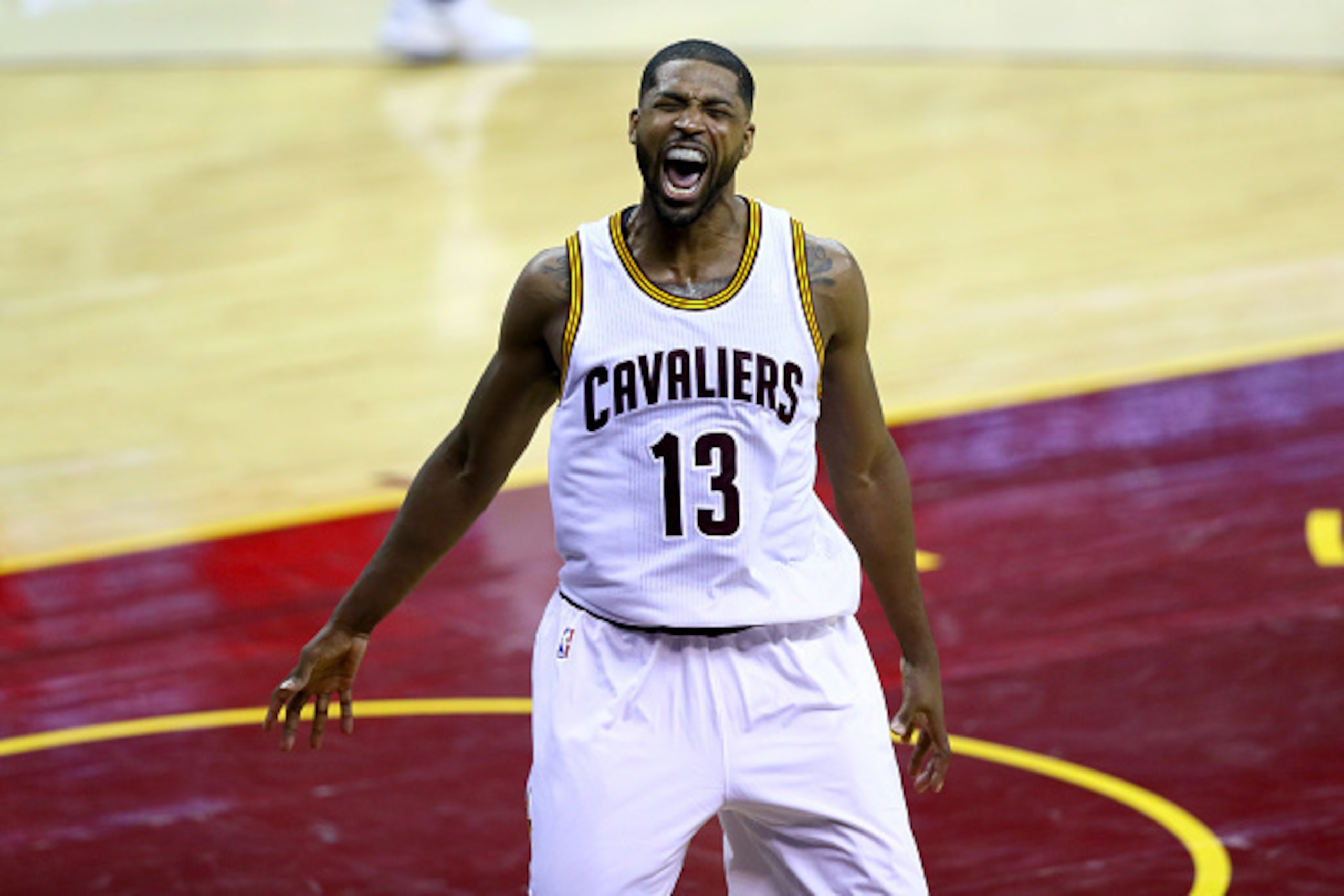
Scoring
Sit down so you can fully absorb this development: Tristan Thompson was actually efficient from outside the paint in 2015-16. For the first time in his professional career, he hit at least 40 percent of his shots from beyond 10 feet. That worked in conjunction with his tremendous finishing instincts, even if he's by no means a featured option for the Cleveland Cavaliers.
Non-Scoring Offense
Thompson has no idea how to pass the ball, and he still can't find nylon from close to the three-point arc. So how does he receive eight points in this category? He's such a dangerous offensive rebounding threat that he requires constant attention, lest he dart to the hoop and create a second-chance opportunity for an ever-dangerous offense. Even without much of a jumper, he warped a defense in his direction.
Defense
Though some areas of his game improved, Thompson remained a glaring liability on defense. He can't protect the rim, and there are few situations in which he excels, which forces the Cavaliers to hide him on most possessions.
Rebounding
Only nine qualified players grabbed at least 13 percent of available offensive rebounds and 23 percent of available defensive rebounds while they were on the floor. Thompson was one of them, and the manner in which he recorded those boards is even more impressive. It's nearly impossible to keep a body in front of him at any point.
Durability
Not only did Thompson play all 82 games, but he remained active on each end of the floor, constantly darting to the hoop for offensive rebounds and attempting to overcome his slow defensive instincts with excess physicality.
Overall
Thompson averaged 3.3 offensive rebounds in 2015-16, making him the sixth player in league history to average at least three during each of their first five professional campaigns. His offense is strong enough to ensure he receives substantial playing time, but he could experience a significant breakout if his defense forced head coach Tyronn Lue to hand him even more minutes.
36. Nerlens Noel, CB, Philadelphia 76ers
38 of 73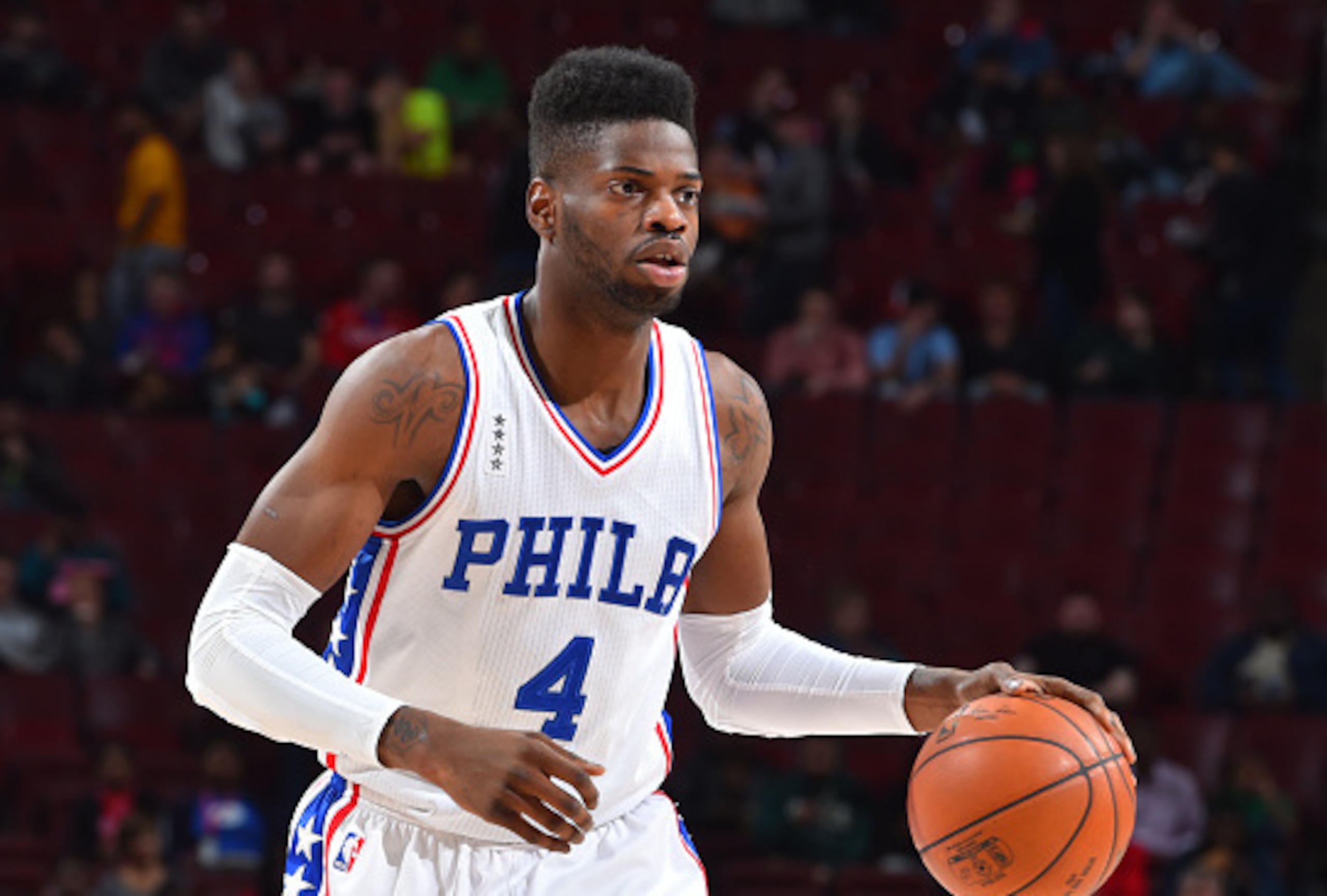
Scoring
When you witness Nerlens Noel knocking down a mid-range jumper and renewing hope that he'll one day develop into a floor-spacer, go buy a lottery ticket. Fortunately for the Philadelphia 76ers, the flat-topped big has become such an efficient interior scorer (71.6 percent on shots within three feet) that sticking to his limited role allows him to serve as a distinct asset.
Non-Scoring Offense
Philadelphia is playing a dangerous game when it asks Noel to develop as a distributor by throwing him into the fire. He's uncomfortable putting the ball on the floor and misses his passing targets, leading to far more turnovers than assists. Until he shores up his broken jumper or proves he can make proper feeds, the Sixers are best letting him stew in open space until they're ready to get him the ball right around the hoop.
Defense
Noel still has distinct weaknesses: He struggles to position himself after hedging against a pick-and-roll, doesn't always close out against open shooters and can be fooled in the post. But he's so good at protecting the rim and providing help defense that he's still on the fringe of Defensive Player of the Year candidacy.
Rebounding
This Kentucky product is improving on the glass, but he still pursues opportunities outside his substantial range. In order to make that next step and become truly elite, he'll need to pick and choose his moments if he's to convert more than 50.3 percent of his chances.
Durability
Noel only played 67 games, hampered by a sore left wrist, a sore right knee, a left eye corneal abrasion, right knee patella tendinitis and a bruised right knee (twice). The amount of time he spends banged up has to concern Philadelphia, but it's at least encouraging that he can still be active enough on both ends (more so on defense) to barely make the cut for all 10 points.
Overall
Though playing Noel and Jahlil Okafor together was untenable, Noel is much further along in his development and can serve as a true game-changing presence on defense, especially as he grows more disciplined. He may never become an all-around offensive threat, but his finishing ability ensures he's not too much of a liability. Here's hoping the overstuffed nature of the Sixers' frontcourt doesn't hinder his long-term growth.
35. Gorgui Dieng, CB, Minnesota Timberwolves
39 of 73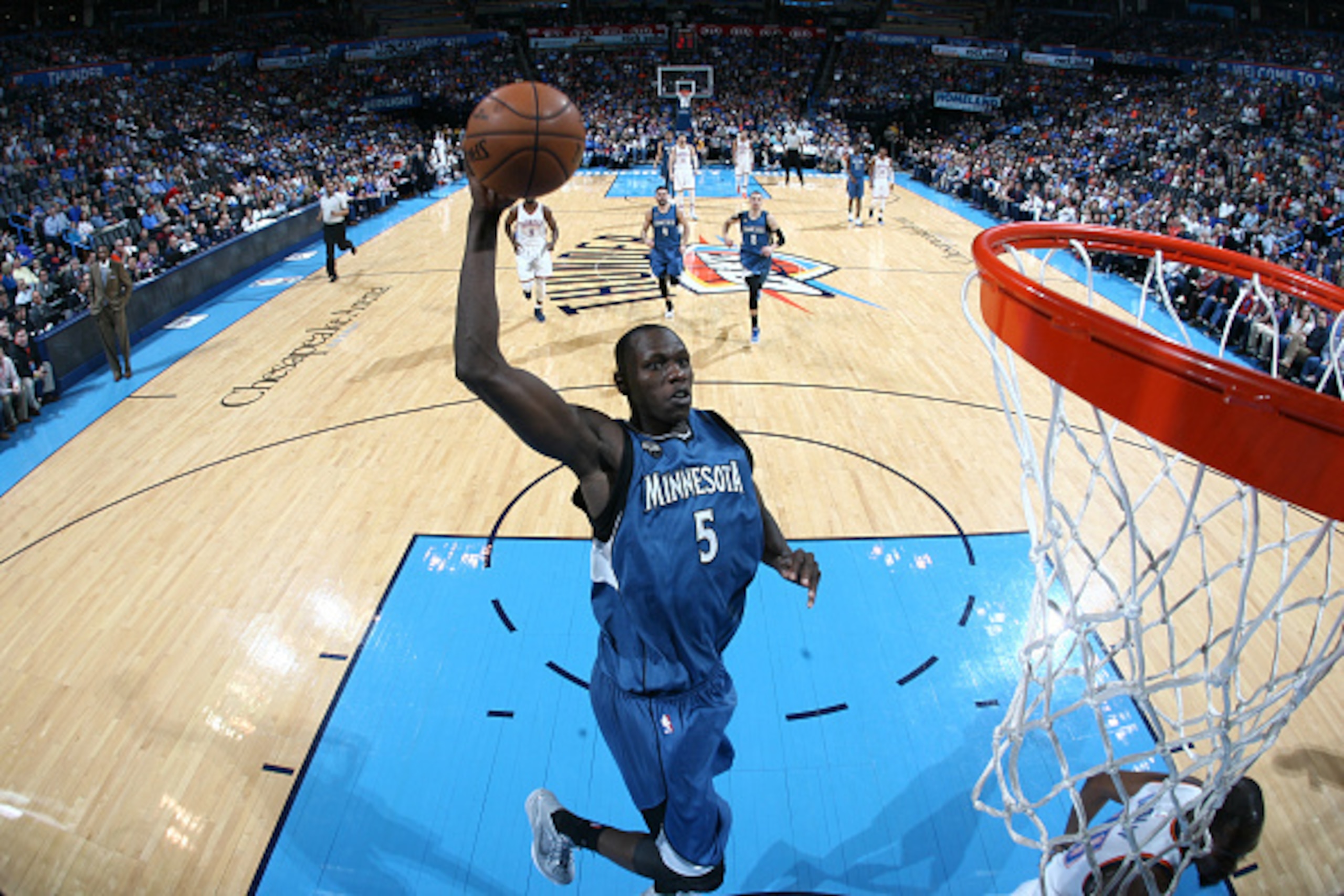
Scoring
Gorgui Dieng began trying to expand his game in 2015-16. While it didn't result in many convincing showings from beyond the arc, he was far more comfortable taking and making mid-range attempts, which helped space things out for the Minnesota Timberwolves and keep defenders on their toes. They could no longer bank on him attacking the hoop, and forcing him to shoot jumpers was no longer a wise strategy.
Non-Scoring Offense
It took defenders a while to recognize Dieng's shooting strides, which meant he didn't exert much gravity until the tail end of his junior season. That development was there nonetheless, and perhaps it will pave the way for him to hit more open teammates with his growing skills as a passer once defenders are paying more attention to him.
Defense
Dieng's biggest downfall as a defender—other than playing time, which was preventing him from moving into an All-Defensive category—is his inability to protect the rim consistently. While facing 7.1 shots per game, he allowed opponents to connect on 52.6 percent of their attempts, and he was forced into that position far too often. The Wolves' bad defense saw Karl-Anthony Towns, Kevin Garnett and Damjan Rudez as the only Minnesota players to cede a lower percentage.
Rebounding
Even though Dieng boasts a 6'11" frame and plenty of athleticism, he's still getting stronger and learning how to throw his body around. He was fine at elevating above everyone else for an easy rebound, but he struggled if asked to use his physicality in traffic.
Durability
Dieng played in all 82 games, splitting time between a starting role and as an important bench piece. He logged 27.1 minutes per contest and was active on both ends, giving us absolutely nothing to gripe about.
Overall
It's easy to understand how Dieng flies so far beneath the radar. Towns, Ricky Rubio, Zach LaVine and Andrew Wiggins are all more recognizable names, and we'll soon be able to add Kris Dunn to that list. Heck, Shabazz Muhammad's name may still resonate more, even though he was 46 spots shy of making NBA 200. But if you watch much Minnesota basketball, you'll know just how impactful this young big has become while accepting his role with nary a complaint.
34. Nikola Vucevic, C, Orlando Magic
40 of 73
Scoring
Few players are so creative with the ball. Nikola Vucevic is comfortable lofting up contested jumpers, doing his best one-legged Dirk Nowitzki imitations, spinning past defenders and finishing around the basket in unorthodox ways, all of which contributed to his 18.2 points per game while shooting a 51 percent clip. It's only the Orlando Magic's need to distribute the ball that keeps him from establishing himself as one of the Association's most dangerous scoring bigs.
Non-Scoring Offense
Vucevic's skill extends to his passing, even if his 2.8 assists per game don't stand out. He was great at hitting cutters in traffic, which led to a respectable number of free-throw assists, and he rarely missed the proper kick-outs. It's only his off-ball offense that holds him back, since defenses liked forcing him into elbow jumpers.
Defense
It's easy to look at Vucevic and see an improved defender. He's subscribing to the Brook Lopez school of stationary defense that involves protecting one spot and one spot alone. That zone can come anywhere away from the rim, and he's fine if he's allowed to remain within it. If he's forced to become more mobile, trouble awaits.
Rebounding
This was the fourth straight season in which Vucevic saw his rebounds per 36 minutes trend in the wrong direction, and he was still at an impressive level. He does everything well on the glass, whether he's creating opportunities, converting them or showing ability in traffic. If he played more than 31.3 minutes per game, he might be on the cusp of remaining in the elite conversation.
Durability
Immobility wasn't his problem, because his physicality often trumped lack of movement. Instead, injuries reared their ugly heads, as a sprained right knee and a strained groin limited him to just 65 games in 2015-16.
Overall
Is Vucevic still a centerpiece for the Magic? It's hard to answer, since he remains one of the most talented/established players on the roster but now has to fight for playing time with a host of new frontcourt players. Even though this 7-footer will only be 26 years old at the start of 2016-17, he may already have hit his peak unless he's moved to a location better suited to his many talents.
33. Serge Ibaka, PF, Orlando Magic
41 of 73
Scoring
It seems like so long ago that Serge Ibaka was developing into a distinct offensive threat for the Oklahoma City Thunder, drilling corner threes and long twos as he proved to be a worthy third member of the team's Big Three. Now, the Orlando Magic have traded for the version who regressed significantly in 2015-16 and has shown a stunning lack of growth in virtually every area. At least he's still a strong finisher around the hoop.
Non-Scoring Offense
Ibaka's floor-spacing presence is still his stronger attribute here, since defenders took a while to realize he was struggling and kept following him around the perimeter. To be fair, his passing is better than you would think for a player who recorded 0.8 assists and 1.4 turnovers per game.
Defense
Still one of the league's best rim protectors—opponents mustered up only a 43.6 field-goal percentage when facing him around the basket—Ibaka only has one distinct defensive weakness. If one of the NBA's stretch 4s runs him through screens on the perimeter, he can fall behind to the point where he's not able to contest the ensuing shot attempt. In those situations, the Congolese big man allowed 1.12 points per possession (22.6 percentile).
Rebounding
If Ibaka produced more rebounding opportunities, he'd be one of the league's best board hoarders. Though he cherry-picks some of his chances and defers to teammates too frequently, he's incredible at converting those moments and fighting through traffic to loose balls.
Durability
Ibaka only missed time to rest up for OKC's playoff run—perfectly understandable. Even with the four absences, he finished in the 90.76 percentile for total physio load, per ICE data provided by B/R Insights.
Overall
The pessimistic view: Ibaka is a player experiencing stunted development and failing to live up to his promise as a rim-protecting stud who could space the court from beyond the arc. But the Magic should be more optimistic after acquiring him, pointing to his enduring status as a Defensive Player of the Year contender, finishing ability, rebounding effectiveness and mid-range jumper.
32. Kristaps Porzingis, CB, New York Knicks
42 of 73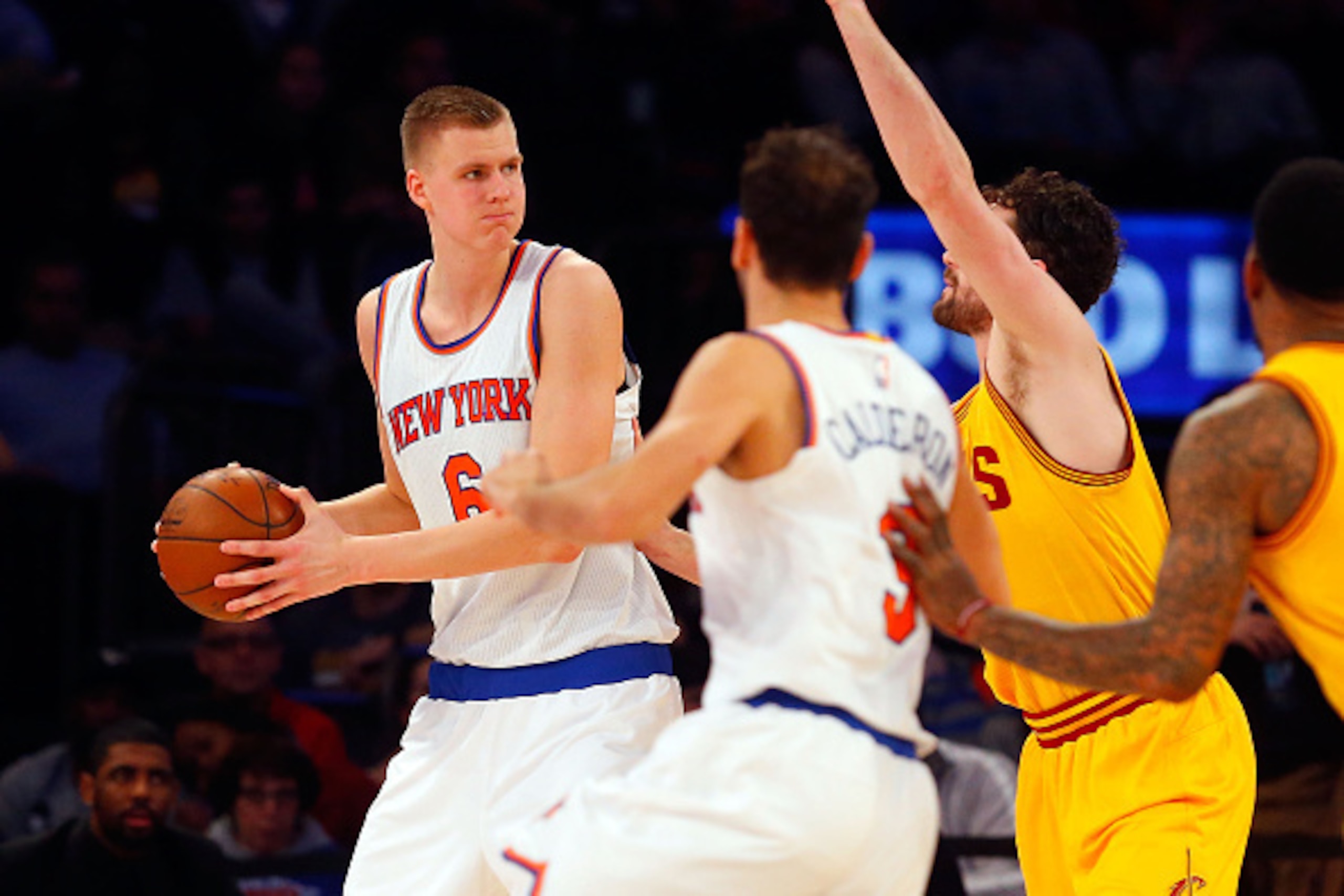
Scoring
Even though Kristaps Porzingis cooled off after his fantastic start, he still showcased plenty of scoring talent as a rookie. He was comfortable shooting from anywhere on the court, even if he had to create his own looks—something he did for 41.4 percent of his two-pointers. Efficiency should come with time, and it'll be nearly impossible to stop the Latvian 7-footer when it does.
Non-Scoring Offense
Porzingis may have struggled to make spot-up attempts during his first NBA season, but he still altered defensive schemes just by waiting for a feed on the perimeter. According to ICE data provided by B/R Insights, only 29 players provided their teams with more gravity. It's his passing that needs improvement, and that should come in the near future since he's already comfortable putting the ball on the floor.
Defense
Dominant protecting the rim and dynamite in isolation, Porzingis was only a weak defender when thrown into a complicated set—perfectly natural for a player journeying across the pond and joining a New York Knicks squad with lackluster defensive pieces. As he learns the nuances of pick-and-roll coverage, his value on this end should skyrocket.
Rebounding
Porzingis provided plenty of memorable rebounds by darting into the lane after a shot attempt, corralling the loose ball and throwing it down in one fell putback slam, but those are low-percentage plays that mask his struggles against physical players. At 7'3", this unicorn has enough size to rebound over most, but he must gain strength to better hold his position in the paint.
Durability
Suiting up in 72 games as a rookie, Porzingis missed time with an upper respiratory illness, a bruised lower left leg, a stomach virus and a strained right shoulder that eventually ended his season. But while healthy, he played 28.4 minutes per contest and never stopped hustling, which negates any and all concerns.
Overall
The Knicks couldn't be happier with the efforts of the 2015 NBA draft's No. 4 pick. Even though he was booed on the night of that selection, he thrived in so many different facets of the game and eventually trailed only Karl-Anthony Towns in the Rookie of the Year voting. A 7'3" big who can move like a wing, shoot threes and protect the rim is every coach's dream, and Porzingis is well on his way to making those aspirations become realities.
31. Steven Adams, C, Oklahoma City Thunder
43 of 73
Scoring
No matter how few points you score, shooting 61.3 percent from the field is going to help your team. Such was the case for Steven Adams, who averaged only 8.0 points for the Oklahoma City Thunder and was rarely asked to generate offense.
Non-Scoring Offense
You can count on Adams for finishes around the hoop off cuts, brutal screens that stop defenders dead in their tracks and...that's about it. He's a lackluster passer with no jumper, and he's forced to wait for sparse opportunities that pop up in the flow of OKC's schemes.
Defense
If Adams is so limited on offense, he has to be a great defender in order to justify his large role in the rotation. And that's exactly what he was, thriving in nearly every area on the less glamorous end. Only his rim protection needed significant work, since he was too quick to bite on up-fakes and allowed opponents to shoot 48.8 percent around the basket.
Rebounding
If you prorate Adams' numbers to DeAndre Jordan's 33.7 minutes per game, he'd have averaged 18.7 rebounding chances (Jordan had 20.3). He'd also grab 4.0 contested boards (Jordan had 5.1) and 4.8 uncontested rebounds (Jordan had 8.7). Adams isn't that far behind, but you can see how his scheme and playing time prevent him from looking like he's relatively close to the best.
Durability
Despite his relentless physicality, Adams logged 80 appearances during his third professional season. He only missed time with a sprained right elbow.
Overall
It's easy to assume Adams' greatest skill is getting under an opponent's skin and forcing him into careless mistakes (or getting tossed from a contest). But that's not fair to his developing game, since Adams' overall defensive efforts and terrific screen-setting aided the Thunder rather significantly. Now, in the wake of Kevin Durant's departure, we get to see if the offensive growth he displayed in the playoffs is sustainable as he tries to fill a larger role.
30. Zach Randolph, CB, Memphis Grizzlies
44 of 73
Scoring
Zach Randolph can still score in volume, but his age (35) has made him slightly less spry. It's no longer as easy for him to bully players in the post before turning quickly and firing up a shot as he jumps so "high" you can just barely slip a piece of paper beneath his sneakers. He's countered this by becoming a bit more efficient from outside the paint, but he doesn't look comfortable enough to demand the ball as frequently.
Non-Scoring Offense
Never an impressive distributor, Randolph didn't change during his age-34 campaign. And even though he was knocking down mid-range jumpers all year, defenders still took their time adjusting to his newfound range, choosing to leave him open.
Defense
No matter how strong Randolph was at holding his position and no matter how hard he tried to close out in off-ball situations, he was betrayed by his utter lack of hops around the basket. It was far too easy for opponents to abuse the Memphis defense by attacking him at the rim, where Randolph allowed 58 percent shooting on 5.6 shots per game. Sixty players faced at least five attempts per contest while suiting up in 40 or more outings, and none were more porous.
Rebounding
For the first time since 2005-06, Randolph failed to average double-digit rebounds per 36 minutes. For the first time since 2002-03, he couldn't even muster up eight per contest. But he still managed to produce like one of the game's best because he constantly produced glass opportunities and was an absolute behemoth in traffic. Derrick Favors was the only player to qualify for NBA 200 as a combo big and produce more contested boards.
Durability
A sore right knee and sprained ankle limited Randolph to 68 appearances, and he didn't look 100 percent even when playing. He was noticeably slower during his 15th pro season and, according to ICE data provided by B/R Insights, finished in just the 70.92 percentile for total physio load.
Overall
The cracks in the facade are emerging. Randolph couldn't muster up his typical dominance in post-ups, finishing in just the 52.9 percentile. He struggled to turn as many rebounding opportunities into actual boards as during his prime years. He was atrocious while protecting the rim and playing interior defense. His physicality and sheer force of will ensured that he remain a strong starting big, but Randolph's days as a double-double lock appear to be firmly rooted in the past.
29. Marcin Gortat, C, Washington Wizards
45 of 73
Scoring
Even though Marcin Gortat is inconsistent from outside the paint and rarely serves as more than a tertiary option for the Washington Wizards, he's so good as a pick-and-roll threat that he remains an upper-tier scoring center. Notching 1.21 points per possession as a roll man, he finished in the 86.3 percentile on the play that accounted for 23.1 percent of his offense.
Non-Scoring Offense
Gortat might not be a threatening floor-spacer, but his ability to set hard screens and roll to the basket while filling the perfect lane forces defenses to adjust. It's just too bad he can't reach a similar level with his passing, since he's yet another big who failed to produce as many assists as turnovers.
Defense
You won't ever watch Gortat and think to yourself, "he's a Defensive Player of the Year candidate." Even in his best moments, he's good but not great. At the same time, you'll never watch him in any situation and wonder why he's such a glaring liability.
Rebounding
When you create 17.9 rebounding chances during your average outing, it would be understandable if you weren't hauling in a large percentage of them. But that wasn't the case for Gortat, who thrived in every scenario and converted 55.3 percent of his opportunities.
Durability
A sore left knee was Gortat's only significant injury in 2015-16. The rest of the year, he was healthy and raring to go, always exerting strength on both ends.
Overall
Especially under the new cap climate, the five-year, $60 million deal Gortat signed before the 2014-15 season is looking like a bargain. Instead of declining drastically during his age-31 season, the big man kept producing on defense and dominating as a frequently used roller. It helps that John Wall's feeds often put him in prime position, but Gortat's strength and timing have helped him stave off the advances of Father Time for at least another year.
28. Greg Monroe, C, Milwaukee Bucks
46 of 73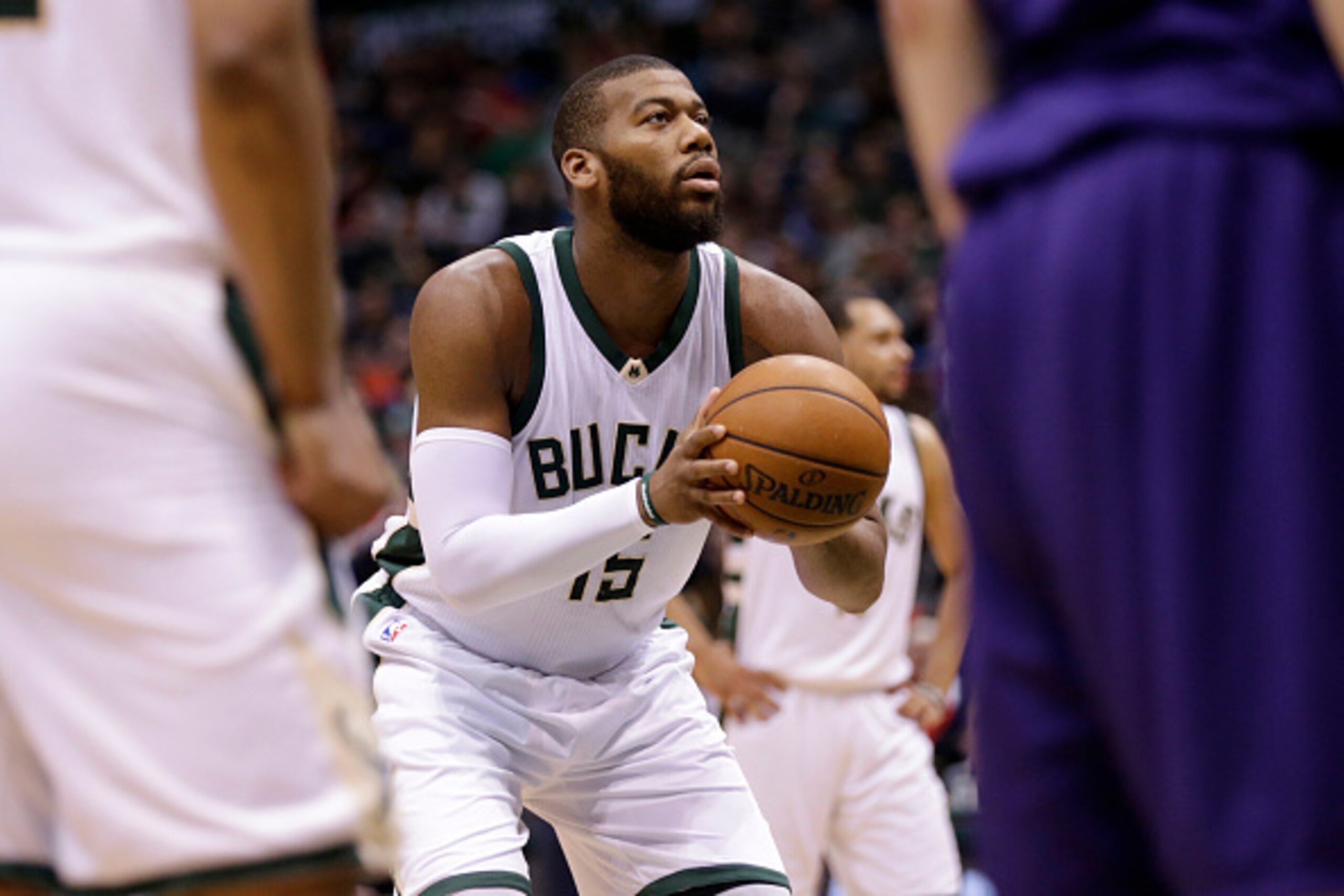
Scoring
Greg Monroe was more efficient than ever in his increasingly limited role for the Milwaukee Bucks, though it was a bit troubling that he stopped attacking the hoop with quite as much ferocity. Without making constant trips to the charity stripe, his lack of range held back his overall efficiency, and defenses could defend more aggressively. He's still one of the best at creating his own offense, but more than 13.2 percent of his attempts need to come from 10 feet or beyond.
Non-Scoring Offense
On the rare occasions Monroe ventured outside the paint, he was skilled enough as a jump-shooter that he could keep defenses honest. They were still more scared of him establishing interior positioning and waiting for an entry pass, and the combination of the two traits made him a solid off-ball presence. Now he needs to get more comfortable passing to cutters, because that would free up the Milwaukee offense to give him more touches on the blocks.
Defense
If you leave Monroe alone against an isolation big, post-up player or roll man, he's at least somewhat respectable. But if you ask him to lumber after an off-ball shooter or protect the rim without the assistance of a long-armed teammate, disaster awaits. The Bucks allowed an additional 2.9 points per 100 possessions with him on the floor, and that's not a context-created fluke.
Rebounding
Creating 16 rebounding chances per game isn't easy. Only 14 of the 60 centers who played enough to qualify for NBA 200 were able to do so. Recording at least 3.8 contested and 5.0 uncontested boards is similarly difficult, and just 13 of the same players met those cutoffs. Monroe joined both those groups despite playing a mere 29.3 minutes per game.
Durability
Monroe stayed quite healthy throughout his first season in Brewtown, missing only three games with a minor knee injury. But his immobility on defense and desire to stick near the paint on offense depressed his physical output to the point that it seems like he missed even more action.
Overall
Will the Bucks continue to experiment with Monroe in their lineups, or will they look to trade him? The offense was distinctly better with him on the floor in 2015-16, but his defensive woes and lack of athleticism make him a questionable fit on a youthful Milwaukee roster that should be focused more on preventing points. There's no doubt Monroe can thrive in today's NBA despite lacking modern range, but he requires the right fit and may not currently be experiencing that.
27. Dwight Howard, C, Atlanta Hawks
47 of 73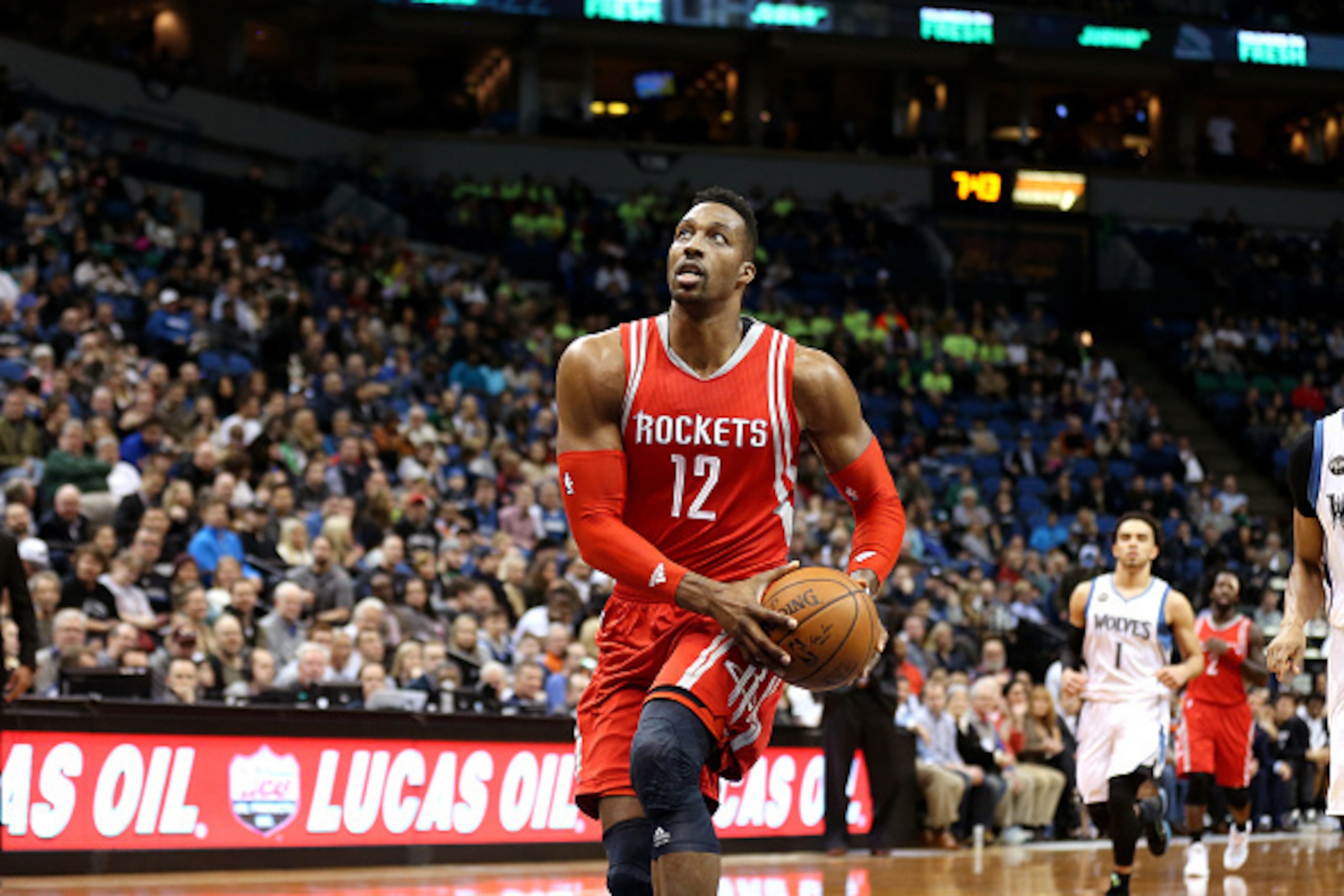
Scoring
The Houston Rockets scored 1.083 points per possession in 2015-16, which means Dwight Howard would have needed to make at least 54.2 percent of his free-throw attempts to create quality offense when at the stripe. He knocked down just 48.9 percent and thus made the offense decline whenever he was fouled in the act of shooting. That was one of his few scoring flaws, as he shot 62 percent from the field and averaged 15.4 points per 36 minutes. The others were his lack of jump-shooting range and unwillingness to stop forcing up shots in the post.
Non-Scoring Offense
Howard's presence as a roller ensured that defenses would pay him mind, and he still finished with one of the NBA's 70 strongest gravitational pulls, per ICE data provided by B/R Insights. Unfortunately for the Rockets, his passing was atrocious, to the point that he recorded nearly twice as many turnovers as assists.
Defense
Even though Howard was a bit slower to react and had less spring on his second jumps, he was a rim-protecting asset and held his own in most defensive settings. That said, he was by no means elite around the basket and often had trouble positioning himself against roll men, who scored 0.94 points per possession against him (44.2 percentile).
Rebounding
Despite turning 30 least season, Howard continued to dominate the glass. His rebounds per 36 minutes (13.2) were actually above his career average (12.9), and he showed no problem hauling in a missed shot while surrounded by other players. In fact, the big man converted a staggering 60.6 percent of his opportunities, which is undeniably elite.
Durability
Howard played in 71 games and only missed limited time with recurring back injuries and a sprained ankle, but he clearly wasn't able to withstand the physio load he's endured in previous seasons. Though he played 32.1 minutes per game, he didn't spend as much time banging bodies and needed more time to rest up during live possessions.
Overall
After signing with the Atlanta Hawks, Howard will have a chance to mitigate two distinct weaknesses: passing within a system and spacing out the court. But even during a rough 2015-16 that was filled with chemistry concerns, back problems and some diminished production, he still continued serving as a high-quality center in multiple areas. Turning those weaknesses into strengths would actually be gravy for Atlanta head coach Mike Budenholzer.
26. Robin Lopez, C, Chicago Bulls
48 of 73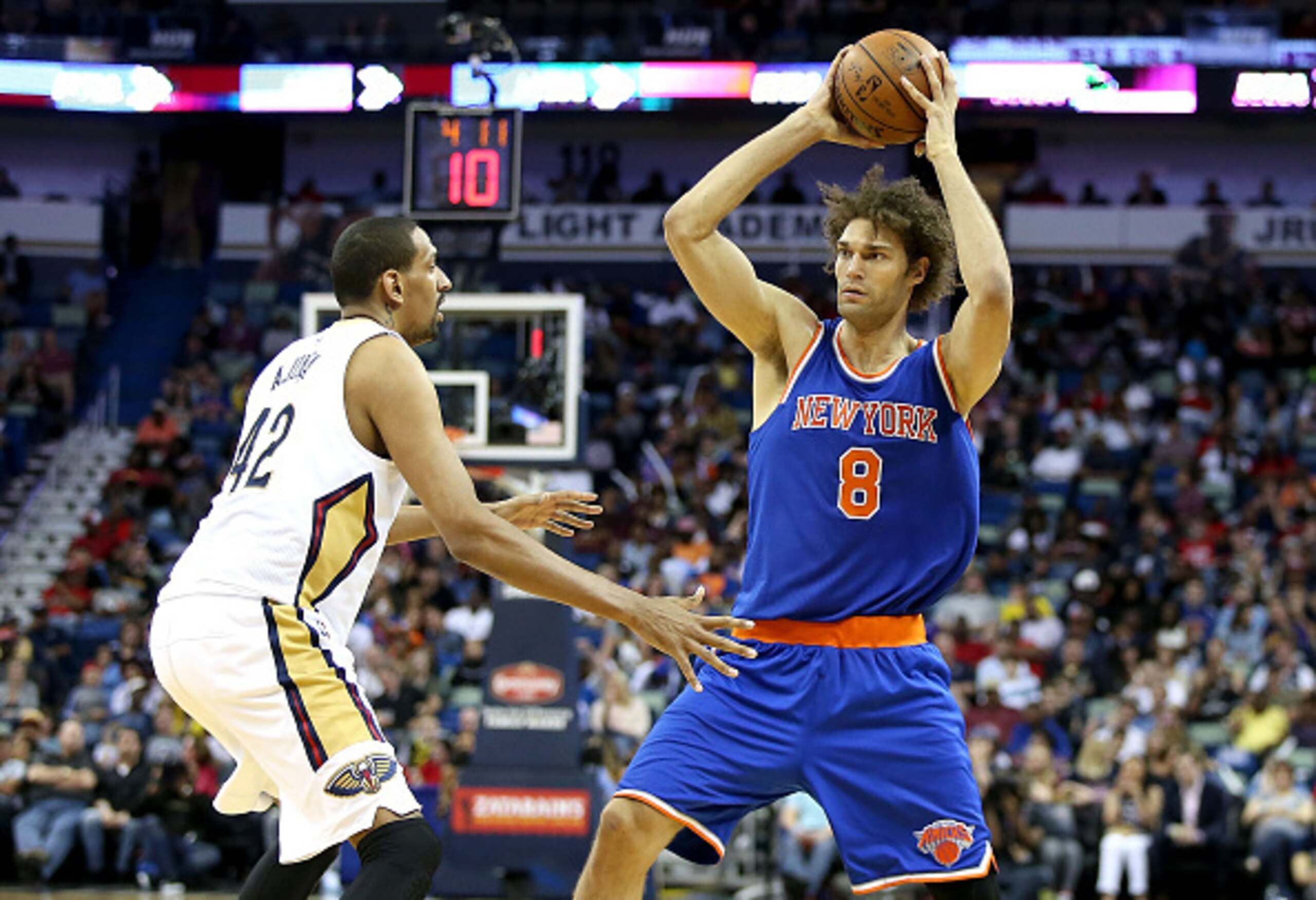
Scoring
Robin Lopez gets just 13.7 points per 36 minutes. He struggles to create his own offense, though picking up garbage points after offensive rebounds did help him require assists on only 52.4 percent of his made twos. He doesn't even space the court, as just 15 percent of his attempts came from 10 feet or beyond. But this Lopez twin remained a valuable scoring presence for the New York Knicks because he was so efficient from the field (53.9 percent) and converted most of his attempts at the stripe (79.5 percent).
Non-Scoring Offense
The most positive aspect of Lopez's non-scoring offense—other than his solid, but unspectacular, passing—was his work as a screener. And that can only have so much value.
Defense
Allowing only 45.8 percent shooting at the rim, Lopez provided plenty of excellent rim protection during 2015-16. That interior work was even more impressive because he faced 7.9 shots per game and was constantly involved altering shots around the basket. But unfortunately for the Knicks, he wasn't as effective away from the paint and even finished in the lowly 34.5 percentile against spot-up shooters, which accounted for 10.7 percent of his defensive possessions.
Rebounding
Lopez had the opposite problem most bigs endure, since he was one of the few for whom more rebounds came in contested than uncontested fashion. Skilled as he may be when getting physical and boxing out other bigs, he had trouble reading long caroms and was often beat to easy opportunities that he should be getting to. Of course, we're really just picking at nits here.
Durability
Not only did Lopez play all 82 games, but he logged 27.1 minutes per contest and was relentlessly physical on both ends. According to ICE data provided by B/R Insights, he trailed only 13 players throughout the entire league for total physio load.
Overall
All it takes to summarize Lopez's increasing value is this: Along with Jerian Grant and Jose Calderon, he was sent to the Chicago Bulls this offseason for Justin Holiday and Derrick Rose. (Joakim Noah also traveled between the Bulls and Knicks, though he did so by signing a free-agent deal.) Lopez was rather easily the best involved.
25. Nikola Jokic, C, Denver Nuggets
49 of 73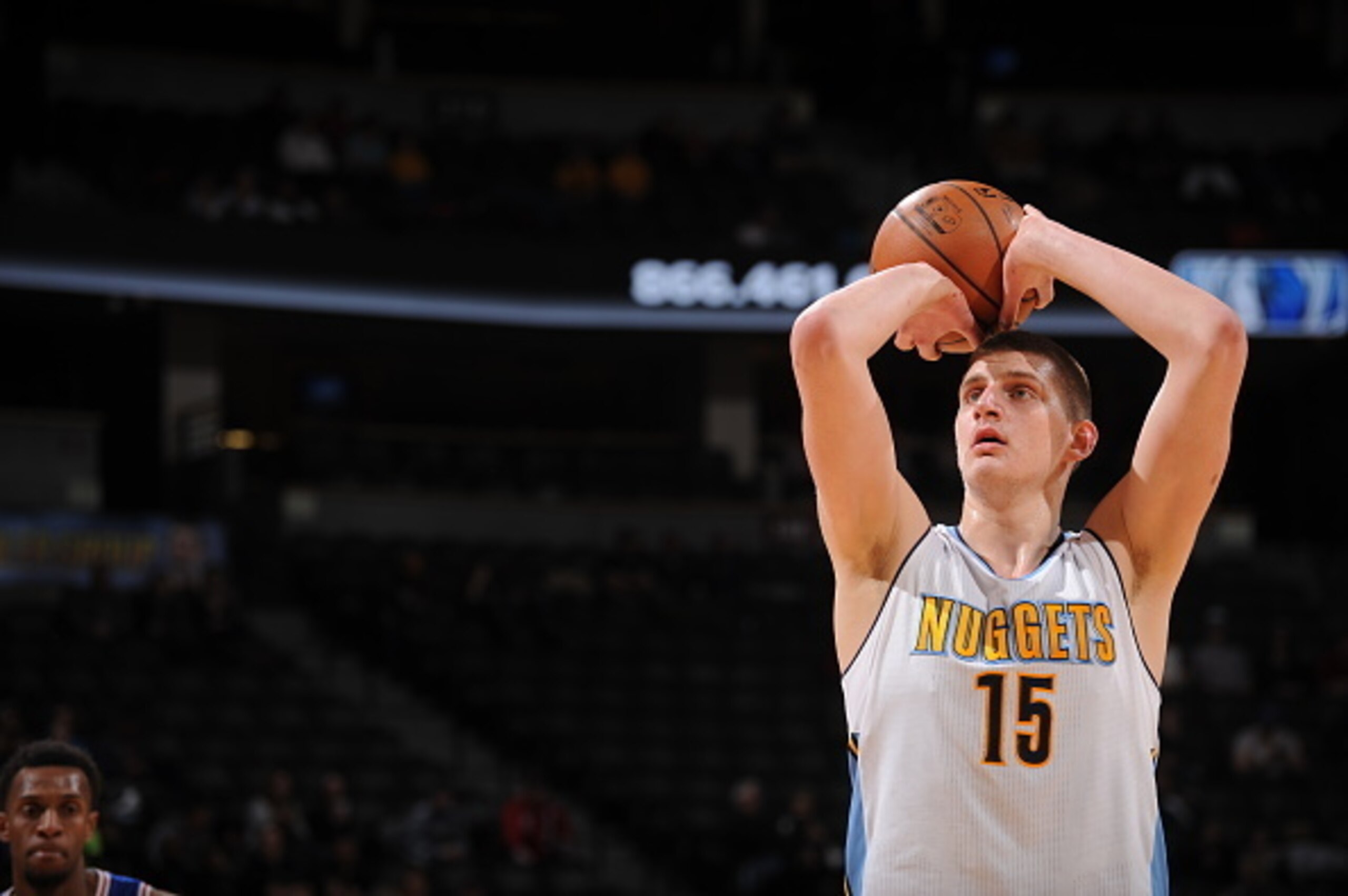
Scoring
Nikola Jokic's outside shot wasn't consistent as a rookie, but he made it perfectly clear he possessed a propensity for scoring from every area of the court. Whether knocking down elbow jumpers, creatively finishing plays around the hoop or creating his own looks from the blocks, he put up big numbers while maintaining his efficiency. Once he plays more than 21.7 minutes per game, his score in this category will only go up accordingly.
Non-Scoring Offense
Opportunity and suppressed volume hold Jokic back as a facilitator, since it wasn't until halfway through the year that Denver Nuggets head coach Mike Malone began using him as an offensive hub. Jokic could dazzle defenders with his dynamic distributing, hitting cutters in stride and throwing plenty of no-look passes. This is another category the now-sophomore should rise in, especially if he shores up his jumper and helps space out the floor a bit more.
Defense
Jokic doesn't have enough verticality to become an ace defender in the restricted area, but his instincts, timing and positioning still made him an asset. He held the opposition to 49.3 percent shooting at the rim while facing 5.6 shots per game. Still, Jokic has more room for improvement in off-ball scenarios, since his lack of foot speed made it tough for him to close out against spot-up shooters (64.3 percentile)
Rebounding
It would behoove Jokic to bulk up and get better at holding his position as he fights for contested boards. That's the only major gripe (besides a lack of minutes) for a rookie who averaged 11.6 rebounds per 36 minutes and converted more than half of his opportunities.
Durability
Jokic played 80 games, only missing time with a strained lower back. It was his limited role and occasional lack of defensive movement that kept him from earning a perfect score here.
Overall
The No. 41 pick of the 2014 NBA draft, Jokic played his inaugural season a year late and finished behind only Porzingis and Towns in the Rookie of the Year voting. Truthfully, he should've leapfrogged Porzingis, though he couldn't while playing in Denver's smaller media market. He's immediately become the true centerpiece of the Nuggets' young roster, contributing in every area and making it a matter of "when" he makes his first of many All-Star appearances.
24. Andrew Bogut, C, Dallas Mavericks
50 of 73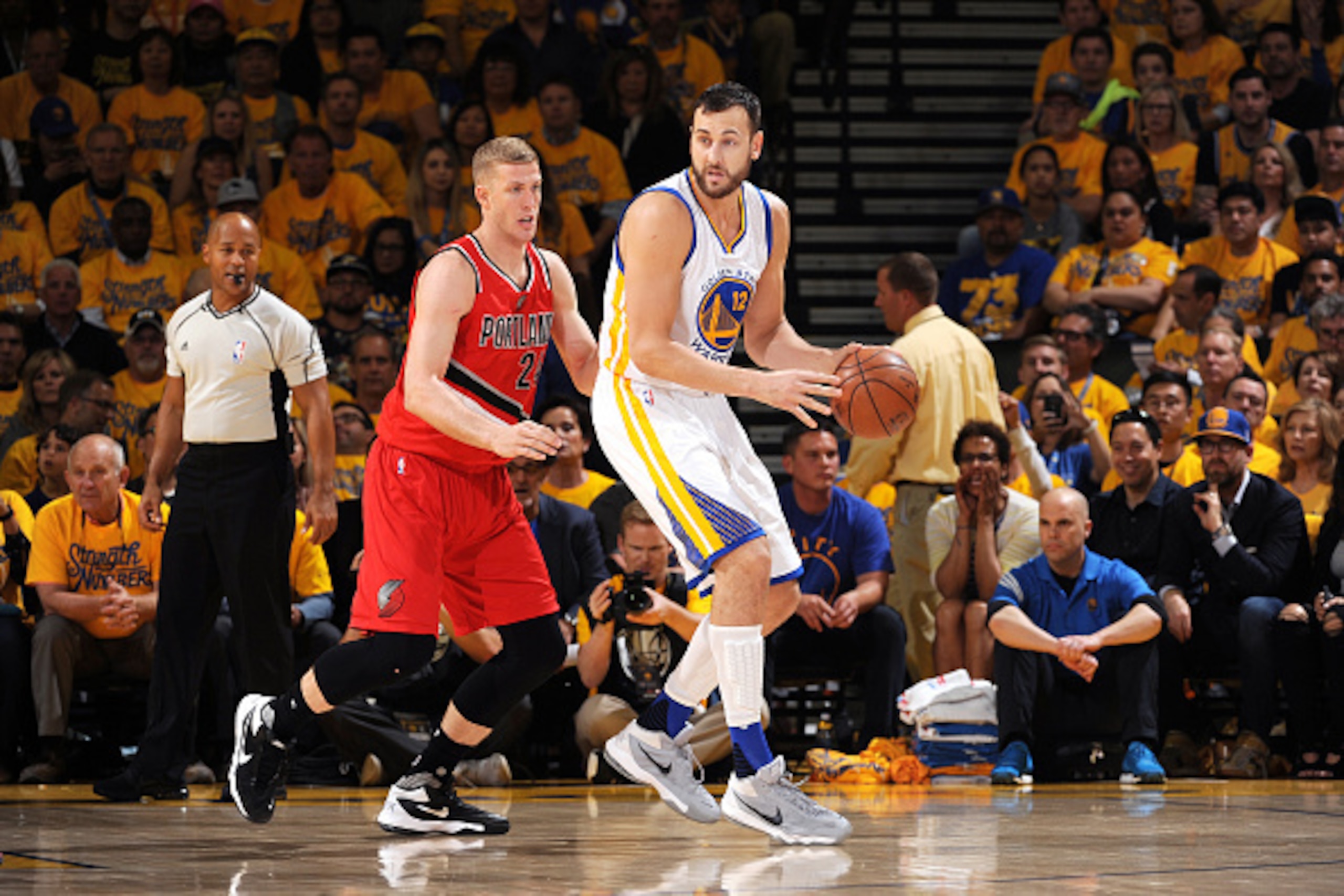
Scoring
It may seem strange that a man who averaged just 5.4 points can post even an average score in this category, but Andrew Bogut checked all the boxes outside of volume. He made a staggering 62.7 percent of his field-goal attempts and rarely exposed himself at the charity stripe. He required assists on only 76.4 percent of his twos, thanks to a knack for collecting rebounds and finishing the play himself.
Non-Scoring Offense
Few are better at setting screens than Bogut. No one is better at setting illegal screens and avoiding whistles. We also can't overlook his passing, since that often keyed the Dubs' offensive schemes when Stephen Curry wasn't handling the ball. If only he could shoot, he'd be much closer to perfection in this category.
Defense
Had Bogut spent more time on the floor, he would've received more Defensive Player of the Year consideration. It's nearly impossible to find extreme flaws in his profile, as he posted the No. 7 rim-protecting score among every player analyzed for NBA 200 and was dominant on the ball. He even finished in the 92.6 percentile against spot-up shooters.
Rebounding
Bogut played alongside so many great rebounders that it was tough for him to stand out, but he still did exactly that in his diminished playing time. He even converted 60.3 percent of his chances. Had he maintained his per-minute rates over the course of 32 minutes per game, he would've produced the No. 4 score in our rebounding metric of any NBA player.
Durability
Always a fragile player, Bogut once more endured a few injuries. He began the season with a concussion and subsequently fought through back spasms, a strained right Achilles, a left toe injury, bruised ribs and a left knee injury that ended his year during the playoffs—though that final malady doesn't affect his score in these rankings. Frankly, it's stunning that Bogut mustered up 70 appearances while playing 20.7 minutes per game.
Overall
Bogut's chemistry in Golden State was finely tuned, and it remains to be seen if he can have the same sort of impact now that he's joined the Dallas Mavericks. But if they know how to maximize his talents, they'll get a big man who's comfortable with the ball in his hands, capable of setting bone-rattling screens and prone to DPOY-caliber defense. Bogut doesn't spend much time scoring, but looking only at his points-per-game average belies his incredible all-around talent.
23. Jonas Valanciunas, C, Toronto Raptors
51 of 73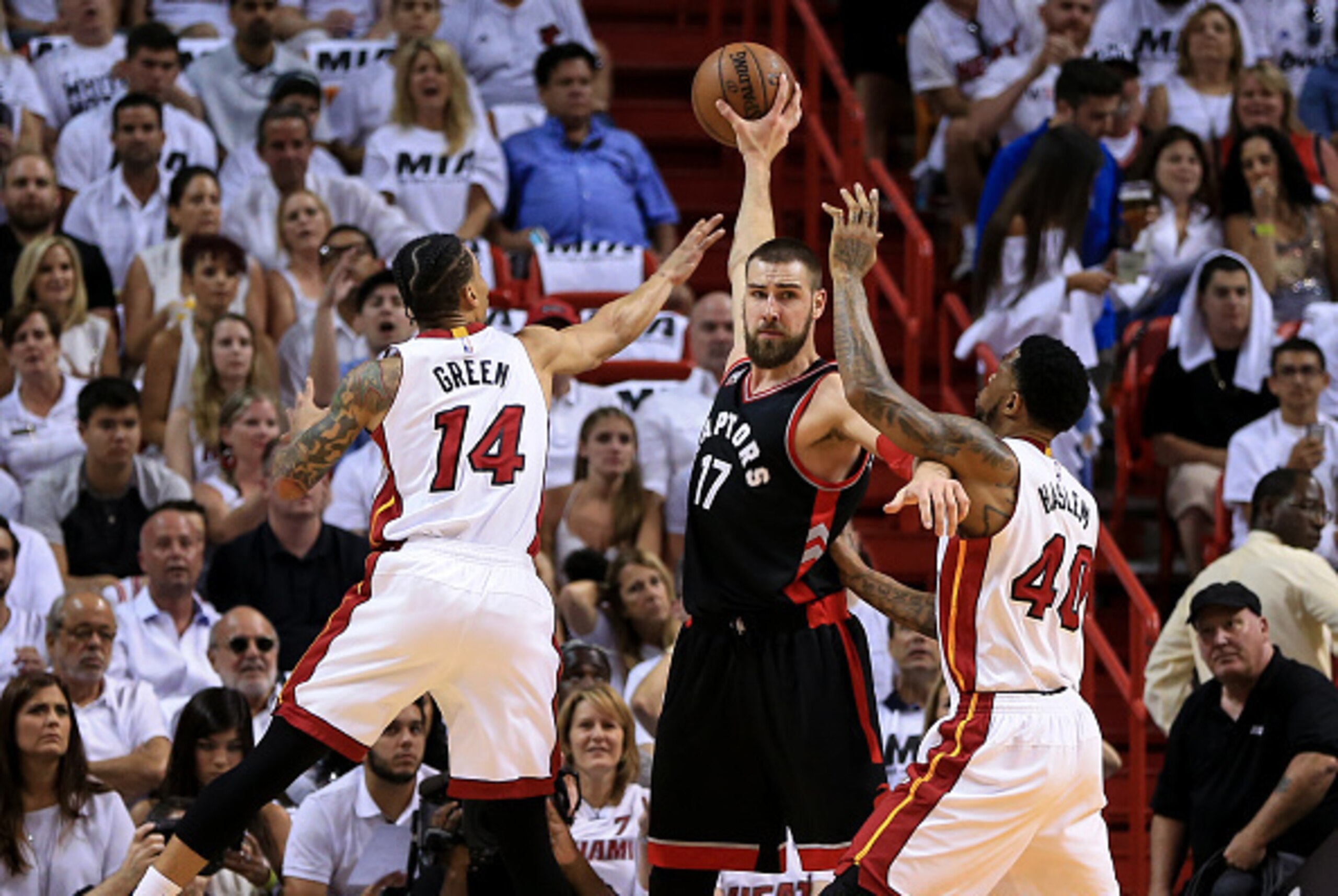
Scoring
Jonas Valanciunas remains a tertiary option for the Toronto Raptors and hasn't added a three-pointer to his arsenal, but his mid-range jumpers made him even more dangerous as a scorer in 2015-16. His field-goal percentages from both 10 to 16 feet (48.9 percent) and 16 feet out to the arc (42.4 percent) shattered his previous respective career averages of 39.1 and 36.4.
Non-Scoring Offense
This big man was capable of drawing opposing frontcourt players out of the paint and setting teammate-freeing screens, but his facilitating ruined his high-quality start in the category. In 2015-16, Valanciunas averaged nearly slightly more than twice as many turnovers as assists, and that actually represented distinct improvement.
Defense
Valanciunas isn't particularly strong in any one area of the defensive game, but he's constantly involved. Even though he allows opponents to shoot 52.2 percent at the rim, he faces a ridiculous 10.7 shots per 36 minutes and is always willing to provide strong contests. This Lithuanian center is never lacking in the effort department.
Rebounding
That carries over to his rebounding, where he's steadily improved during each season of his NBA career. If he played as many minutes as the league's top board-crashers, he'd be right up there with them, given his strong conversion rate and ability to generate chances in every scenario.
Durability
A fractured left hand kept Valanciunas out of the lineup for a substantial portion of the season. An aggravation of the injury once he returned was the only malady that plagued him during the campaign, but he was still limited to just 60 appearances in a smaller role.
Overall
The 24-year-old center still has time to grow, but his development has slowed in recent seasons and prevented him from becoming a truly elite scoring threat or defensive presence. That's perfectly fine, though. Even if he never lives up to the potential that made him a top-five pick in the 2011 NBA draft, he's turned into a quality starting center who can contribute on both ends.
22. Marvin Williams, PF, Charlotte Hornets
52 of 73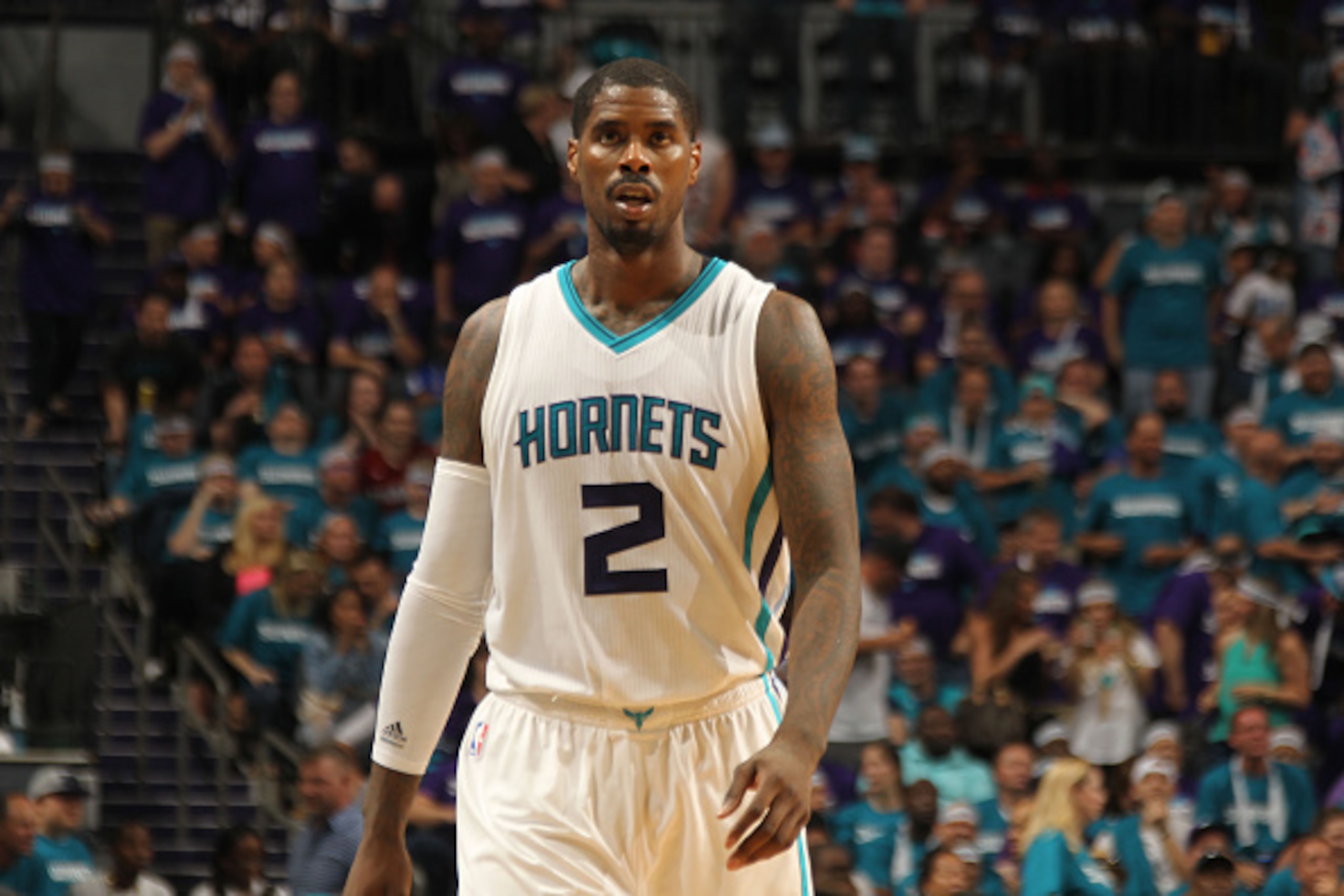
Scoring
Marvin Williams has completed his development into a stretch 4. While taking a career-high 4.7 triples per game, he knocked down a career-best 40.2 percent of his attempts—one of only five qualified players throughout the league to match or exceed those numbers. The other four were Stephen Curry, Klay Thompson, C.J. McCollum and J.J. Redick, which leaves Williams in a class of his own as a frontcourt player.
Non-Scoring Offense
According to ICE data provided by B/R Insights, Williams shot 41.5 percent on spot-up treys, which made him one of the league's best power-forward spacers. It's only passing that curtail's William's value in non-scoring offense, since he rarely handled the ball enough to serve as a playmaker. At least he was nearly immune to turnovers.
Defense
The Charlotte Hornets prevented Williams from lining up as a wing—he spent just 17 percent of his minutes at the 3, which was actually his highest tally since joining the organization—and encouraged him to work as a rim protector. That paid large dividends, since he allowed opponents just 45.2 percent at the hoop. It was only his perimeter work that held him back, and opposing coaches quickly learned to draw up schemes that would drag him out of his comfort zone.
Rebounding
Williams was tremendous at beating other bigs to open space and pulling in easy opportunities, but he struggled if other players were in his vicinity. He could only muster up 1.8 contested boards per contest, which doesn't stack up well against nearly any other high-minute player at his position.
Durability
If it weren't for a minor sprain to his left ankle, Williams would've played in every single game. Couple that with his 28.9 minutes per game and activity finding open shots, and there was nothing to gripe about in this category.
Overall
Memo to whoever employs Williams during the duration of his new four-year, $54.5 million deal: He is not a small forward. Though he was once a draft bust while attempting to work on the wings, he's experienced a career resurgence as a stretch 4 who can knock down triples and protect the rim for sustained stretches. It may be tough to accept that his NBA tenure has experienced such an extreme 180-degree shift, but he's now a highly productive player.
21. Tim Duncan, C, Retired
53 of 73
Scoring
Never before had Tim Duncan been so uninvolved on the offensive end: He routinely passed up open jumpers to find a teammate who could take a different shot, and he rarely forced the issue on the interior. The future Hall of Famer remained efficient during his final season and could create his own looks in the post when the need arose, but his backseat role prevented him from posting any gaudy totals—he only topped the 20-point benchmark once.
Non-Scoring Offense
Duncan didn't shoot a lot, but he was a master of positioning. He knew exactly where to place himself to impede the defensive flow and could draw the opposition's attention. Beyond that, he remained a gifted passer who could create for his teammates, even if the San Antonio Spurs relied on other players to do the distributing more than in previous seasons.
Defense
According to NBA Math's defensive points saved, only six NBA players had a bigger impact on the point-preventing side. That's a stunning statistic for a big who logged only 25.2 minutes per contest and sat out of 21 games, since volume is a key factor in the metric. Duncan was just that good in every defensive aspect and deserved far more Defensive Player of the Year consideration than not even appearing on a single ballot. That's one of the biggest travesties of the 2015-16 campaign.
Rebounding
Held back by his advanced age, Duncan had to be a bit more careful about when he pursued rebounding opportunities. Fortunately for the Spurs, he made up for the relative lack of aggression by becoming one of the NBA's more efficient rebounders. It didn't matter if he was chasing a contested or uncontested chance; he still converted 60.2 percent of his opportunities.
Durability
A right knee injury was the only significant hurdle on Duncan's path to durability perfection, but the Spurs also chose to rest him on many a night. With a lesser role and 21 absences, there was only so much he could do despite remaining active on both ends whenever he played.
Overall
A consummate professional, Duncan ended his career with one of his best defensive seasons and by willingly accepting a smaller offensive role that would lead to more team success for his lifelong franchise. It's the perfect summation of a tenure that always involved sacrifices. He may not have played like a Hall of Famer throughout his swan song while avoiding a public farewell tour, but Duncan is as big a lock for the Hall of Fame as anyone has ever been. He retires as the best player of his generation and a clear top-10 player in the sport's history.
20. Ryan Anderson, PF, Houston Rockets
54 of 73
Scoring
There are distinct flaws in Ryan Anderson's scoring game, but not compared against his floor-spacing ability, willingness to produce points in volume and incredible work at the charity stripe. He struggled to find a rhythm on the injury-riddled New Orleans Pelicans for most of the year, though that could change now with the Houston Rockets. He also rarely created his own triples, even if he was quite adept at generating offense without a teammate's assistance from closer range.
Non-Scoring Offense
If you don't think Anderson has the ability to warp a defense around his mere presence, you've never watched him play. Only his passing is lackluster in this category, as he usually looks to score when granted touches and lacks the skill to make anything more than the most basic feeds.
Defense
For all of Anderson's offensive excellence, he should produce like a superstar. But he fails to do so because he's so woefully overmatched on the other end, where it's far too easy to abuse him in too many scenarios. He was atrocious protecting the rim, struggled against pick-and-rolls and was often left in the dust when opponents darted around the perimeter in search of a catch-and-shoot.
Rebounding
Anderson doesn't produce the same quantity of rebounds as many power forwards and isn't too aggressive after a shot goes up, but he's shockingly good at boxing out and grabbing boards when opponents are within a wingspan. Chalk it up to good hands, as he rarely lets opportunities slip through his fingers if he's able to make contact.
Durability
Shocking as it may be to see a (previous) member of the Pelicans earn a perfect durability score, Anderson overcame the 16 absences created by illness and a sports hernia. According to ICE data provided by B/R Insights, he was so active on both ends—even if many of his defensive pursuits were ill-fated—that he barely made the cutoff for all 10 points.
Overall
Anderson is a specialist, but he's a damn good one. It also helps that offense is his speciality, since he can contribute even when not knocking down one trey after another. If he was willing (and/or able) to play even a little defense around the rim, he could suddenly vault into the All-Star conversation, but it seems like that ship has sailed for this 28-year-old power forward.
19. Brook Lopez, C, Brooklyn Nets
55 of 73
Scoring
Especially now that he's cemented his capability of connecting on mid-range jumpers, it's almost impossible to stop Brook Lopez from scoring. His touch around the basket is incredible, and he's skilled enough to finish in creative ways that keep a defense off balance. Plus, fouling him is an ill-advised strategy since he hit from the charity stripe at a 78.7 percent clip.
Non-Scoring Offense
Lopez commanded plenty of gravity because he was one of the few capable scorers on the Brooklyn Nets, but catch-and-shooting cratered his value. His effective field-goal percentage of 45.4 percent (per ICE data provided by B/R Insights), combined with his gravity, still left him trailing 232 other players. At least he finally figured out how to pass the ball?
Defense
Defense is a tale of two scenarios for this Lopez twin. If you permit him to remain around the rim, he's capable of swatting shots and protecting the basket rather effectively. He's similarly skilled guarding simple isolation and post-up sets. But as soon as movement is involved and he's not able to hound a singular space, everything falls apart—immobility is easy for NBA players to exploit.
Rebounding
The days in which Lopez struggled on the glass now seem like distant memories. He was constantly seeking out board-crashing opportunities and excelled at converting them in traffic, using his size as he established interior positioning and refusing to allow anyone past. In fact, he was so good at this that we have to question why he was so poor early in his career.
Durability
For the second season in a row, Lopez played at least 72 games—something that would've seemed inconceivable a few years ago. This time, he missed only nine contests and suffered no serious injuries—with only a sore right foot, a virus and team-mandated rest keeping him on the pine.
Overall
After staying healthy for the last two years and further establishing himself as an offensive threat who can at least be an interior defender in the right schemes, Lopez has created an interesting conundrum for the Nets. There's no doubt he's a valuable piece, but is he worth keeping around past the 2016-17 trade deadline just to keep serving as a team leader then eventually transition into a smaller role once the rebuild nears completion?
18. Rudy Gobert, C, Utah Jazz
56 of 73
Scoring
Rudy Gobert has shown zero ability to shoot the ball from outside the paint, as only 2.3 percent of his field-goal attempts came from 10 feet or beyond during his junior season with the Utah Jazz. His finishing ability already ensures he remain an above-average threat, but taking that next step will involve either becoming more comfortable with his jumper or learning how to convert at the charity stripe. The latter is the better option after he made 8.6 trips per 36 minutes.
Non-Scoring Offense
There aren't many saving graces here. Gobert struggles with his passing and can be easily trapped by a double-team that forces him into an ill-advised outlet attempt. Nor can he score when outside the paint. The lone positive is his ability to crash through the lane and finish above the rim, which ceaselessly forces defenders to keep a body on him.
Defense
Good luck finding many better rim protectors. Gobert allowed just 41 percent shooting while facing 8.2 shots per game at the basket, and that allowed him to score higher than all but five players—none of whom joined him above 30 minutes per outing—in our rim-protection metric. Gobert can sometimes struggle making the right decisions and recovering to his assignment while guarding pick-and-rolls, but that's the only true flaw.
Rebounding
When you can almost dunk without jumping, you better be a strong rebounder. Such is the case for this 7'1" center with Pterodactyl arms, as he thrived in every area. Andre Drummond, DeAndre Jordan and Whiteside were the only players with superior scores in our rebounding metric.
Durability
Gobert missed 21 games because of sprains in both ankles and a sprained MCL in his left knee. He was relentlessly physical while filling his on-court role in Salt Lake City, but that's just too much missed time to remain perfect in this category.
Overall
Gobert could sit down on offense and still remain a valuable big capable of qualifying for NBA 200. He's that talented on the defensive end, especially when he's allowed to remain in the paint and swat away any attempts from those who dare to drive into his territory. That said, his pick-and-roll game is improving, and he remains quite adept at drawing whistles when smaller players can't body up against him.
17. Blake Griffin, PF, Los Angeles Clippers
57 of 73
Scoring
Blake Griffin still isn't comfortable taking triples and is a bit too reliant on his mid-range shooting for some stretches, but that hasn't stopped him from morphing into a devastating scorer. Few are better at dunking in traffic, and his post-up game remains effective even if it looks unorthodox. Griffin was one of just 14 players to score at least 21 points per game with a true shooting percentage north of 54 percent, and he joins Anthony Davis as one of only two bigs in the club.
Non-Scoring Offense
Defenses still want to force Griffin out to the perimeter, where he does less damage as a jump-shooter. They have to pay attention to him in case he bursts to the hoop, but his gravity isn't where it needs to be as he tries to add stretch 4 capability. Of course, his passing is beyond reproach, to the point that Los Angeles Clippers head coach Doc Rivers often feels comfortable letting Griffin operate as a de facto point forward when Chris Paul is riding the pine.
Defense
Though Griffin usually fails to protect the rim and struggles against strong post-up players, the rest of his defense isn't as bad as some would lead you to believe. He's quite active away from ball-handlers and inserts himself in most plays, even if he rarely records steals or blocks. He's even solid at closing out against spot-up shooters (74.6 percentile). He might not excel in any one area, but his weaknesses are slowly dwindling away—so long as he's not the last line of defense.
Rebounding
After struggling on the glass in 2014-15, Griffin's rebounding bounced back for the 2015-16 campaign. He's still not great at grabbing boards in traffic, but he knows how to pick and choose the right moments to exert energy, converting a 60.2 percent of his opportunities.
Durability
Griffin barely played enough to qualify for NBA 200, as he could only suit up in 35 games. A torn left quadriceps tendon was the first major injury, and he was about to return when he broke his hand in an altercation with an equipment manager—which led to a four-game suspension as soon as he was healthy enough to play. He remained for the rest of the regular season after serving his time, but the damage was already done.
Overall
Imagine that Griffin had maintained his performance levels in each category but stayed healthy enough for a perfect durability score. In that situation, his overall grade of 85 would've moved him up to No. 6 in the big-man rankings and the top 20 overall.
16. Pau Gasol, C, San Antonio Spurs
58 of 73
Scoring
Pau Gasol's scoring average (16.5 points per game) and true shooting percentage (52.9 percent) both stand well below his career averages of 18.2 and 56.5, respectively. But they still leave him in respectable territory, especially because he was so good at creating his own offense. The Spanish 7-footer remained comfortable putting the ball on the floor and fooling a defender without involving his teammates, just as he has throughout his impressive NBA tenure.
Non-Scoring Offense
Gasol is one of the NBA's more creative passing bigs—he's able to make the appropriate feed in every situation, and few centers are so skilled at hitting cutters in stride as they dart through gaps in the defense. It's only his lackluster performance from the perimeter that proves detrimental here, since he gave defenders few reasons to respect his shooting ability from range.
Defense
Much like Brook Lopez, Gasol is terrific at defending one specific spot. Many metrics—he finished with a distinctly positive defensive box plus/minus and ranked No. 9 among centers in ESPN's defensive real plus/minus—severely overrate his impact because he does actually look quite good in that lone area. But the Chicago Bulls had to tailor their defense around his immobility, and that created plenty of holes elsewhere that won't show up in many of those all-encompassing statistics.
Rebounding
Gasol's rebounds are similarly misleading, since he feasted on easy opportunities and failed to create the same type of impact the league's best board-earners produced. His 7.5 uncontested rebounds per game more than doubled his 3.5 contested, and that's not the type of distribution most teams want from the biggest player on the court.
Durability
With his lack of movement on defense, Gasol needed to play in almost every game to earn a perfect durability score. Instead, he missed 10, thanks to the need for rest, a shoulder injury, a sprained left hand and swelling in his right knee.
Overall
Gasol was a constant double-double threat with some strong defensive numbers, and that helped him make the sixth All-Star roster of his career. But his impact was a bit misleading. While he was helpful to the Bulls in many ways, his numbers masked some of the distinct flaws in his game that Chicago was constantly trying to account for. Now, we get to see if the San Antonio Spurs can cover them up more successfully.
15. Chris Bosh, CB, Miami Heat
59 of 73
Scoring
How many bigs are capable of throwing up nearly 20 points per game while shooting plenty of threes, spacing the court and flat-out thriving as an interior finisher? Chris Bosh can and does. His lackluster percentage from beyond the arc (36.5) and reliance on set-up passes prevented him from reaching the scoring pinnacle, but he's not far away.
Non-Scoring Offense
It's tough to find much fault with Bosh's offense when he's not scoring. He's one of the league's most dangerous spot-up bigs and pairs that with an innate understanding of positioning. He constantly injects a disconcerting feeling into defenders' minds, and his passing is similarly strong because of his ability to eschew cough-ups, but it would be nice to see him get just a bit more involved as a facilitator.
Defense
Bosh's value on defense can be boiled down to a single phrase: good, but not great, in every aspect.
Rebounding
Rebounding hasn't been Bosh's strong suit ever since he left the Toronto Raptors for the Miami Heat. While he's not a distinct liability, he struggles immensely when asked to grab boards in traffic and seldom ventures into the paint when it's already occupied.
Durability
This may seem like a strange grade for a player who missed half the season with blood clots in his leg and is still on blood thinners, trying to figure out when (or if) he'll be able to play again. But we're not concerned about the past or future in these rankings, and the facts state that Bosh suited up in 53 contests and still managed to finish in the NBA's top half for total physio load, per ICE data provided by B/R Insights.
Overall
Bosh was arguably Miami's best player before his second bout with blood clots ended another season prematurely. He's a fantastic floor-spacing threat who can do more than just hold his own on defense, and his versatile production often serves as the impetus behind team success. But the lineup congealed in his absence during the second half and now has to figure out 1) when he'll be able to return and 2) how it can re-deploy him when quite a few players emerged.
14. Kevin Love, CB, Cleveland Cavaliers
60 of 73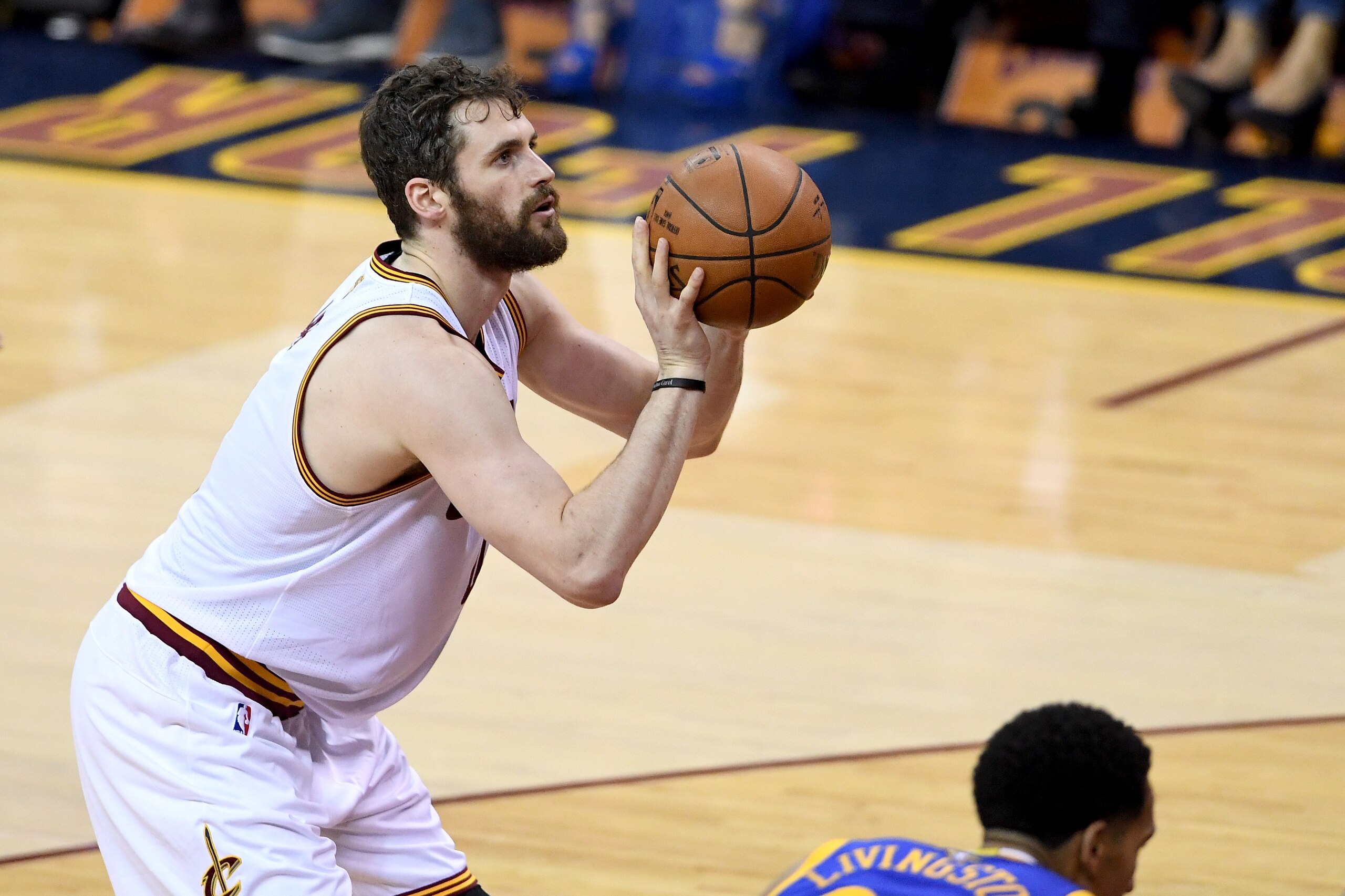
Scoring
Kevin Love clearly isn't the same scoring stud he was as the Minnesota Timberwolves' No. 1 option, particularly if you compare him to the 2013-14 version who logged 26.1 points per game. But it's only in that context that he's disappointing, because many combo bigs would give up everything to average 16.0 points while shooting 41.9 percent from the field, 36.0 percent from downtown and 82.2 percent at the stripe.
Non-Scoring Offense
Even though Love struggled to find a rhythm at times, he commands constant attention. The worst thing a defender can do is leave him alone on the perimeter and watch as he splashes the ball, building confidence for his next attempt. It was better to force the ball into his hands, since his passing in the half-court set doesn't meet the standard that his historically excellent outlet feeds created.
Defense
Love is never going to serve as an interior force or stop guards in isolation for sustained stretches, but he's improved enough that he's no longer a glaring liability. It takes talent to avoid serving as a targeted defender at the NBA level, and that's what Love has done by improving his footwork and learning how to read every play.
Rebounding
Back during the Minnesota days, it would've been inconceivable to think of Love earning anything less than perfection in this category. But his playing time and per-minute effectiveness have both moved in the wrong direction since he left for the Cleveland Cavaliers, and far too many of his rebounds now come in uncontested fashion. Love's box-outs are still excellent when he makes contact, but it's making that effort that sometimes give him trouble.
Durability
A bruised left quadriceps, sore leg, left knee injury and illness kept Love out of the lineup during the regular season, but none of those maladies had any lasting impact. He still participated in 77 games—the third straight season he's moved past the 75-contest benchmark.
Overall
Love has been disappointing since becoming the third member of Cleveland's Big Three, yet he has remained a highly valuable power forward by virtue of his sharp-shooting, passing, nose for rebounding and improved defensive presence. Those two notions are not mutually exclusive.
13. Dirk Nowitzki, CB, Dallas Mavericks
61 of 73
Scoring
Someday, Dirk Nowitzki could probably still threaten 20 points per game as a 52-year-old veteran using a cane when not on the floor. His touch is that immaculate from all areas, including those all-time turnarounds and one-legged fadeaway jumpers. Perhaps the most amazing part of Nowitzki's everlasting scoring excellence? That he's still relying on teammates' passes to set up only 63.2 percent of his two-pointers.
Non-Scoring Offense
Passing is all that depresses Nowitzki's score in this category. He's always careful to avoid racking up costly turnovers and, on average, went 1.9 games between bad-pass cough-ups. But he seldom serves in a playmaking role, and his dearth of assists—whether actual, secondary or free-throw assists—curtails his offensive value when he's not scoring.
Defense
Nowitzki has never been a plus while playing interior defense, but he's not a detrimental presence in most areas either. He's comfortable closing out against spot-up shooters, can hold his own on the blocks and knows how to cut off passing lanes before they develop. This wily veteran has a few tricks up his sleeves sleeveless jersey that help him fight off the advances of Father Time.
Rebounding
Though he's not a terrible rebounder, even when compared to centers rather than power forwards or combo bigs, Nowitzki is average. He struggles when asked to grab contested boards, doesn't convert an inordinate percentage of his opportunities and fails to put himself in position for as many chances as younger, nimbler bigs.
Durability
Aren't players supposed to slow down during their age-37 seasons? Of the 117 who have completed such a campaign throughout NBA history, only 10 did so while logging more minutes than Nowitzki, who averaged 31.5 minutes over the course of 75 appearances.
Overall
Apparently, Nowitzki's scoring chops are eternal. Age hasn't prevented him from thriving as a go-to option for the Dallas Mavericks, and he's just as comfortable as ever when firing away from the perimeter or providing his squad with timely buckets. His team—yes, the Mavs unequivocally belong to him—was 7.9 points per 100 possessions better with him on the floor.
12. Hassan Whiteside, C, Miami Heat
62 of 73
Scoring
Volume is the only flaw in Hassan Whiteside's ever-improving scoring profile. He's unbelievably efficient, knocking down 60.6 percent of his field-goal attempts and 65 percent of his shots at the stripe. He creates plenty of his own looks, requiring assists on just 65.9 percent of his made buckets. He can score in many different ways now that he's more comfortable using his sweeping jump-hook and a mid-range jumper. If he's unleashed as a featured scorer, the sky is the limit.
Non-Scoring Offense
Despite Whiteside's consistent mid-range stroke, defenders wanted to push him out of the paint and away from his interior dominance. Putting separation between him and the rim also ensured he wasn't as big a rebounding threat. Still, off-ball offense was the better part of this category—even the improved version of this center was one of the worst distributors in NBA history. Whiteside joined only three other players ever to record more than 130 turnovers and no more than 30 dimes during a single season.
Defense
A dominant rim protector more because of how many shots he's able to contest than how well he contests them, Whiteside is on the fringe of leading the Defensive Player of the Year race. He might have gotten there if we only looked at the second half of his campaign, since he finally realized that positioning can often be more important than recording a rejection. That's terrifying for the rest of the Association.
Rebounding
What's not to love? Whiteside was one of only three players to generate at least 20 rebounding chances per game, and he converted them at a 59.2 percent clip. It didn't matter if opportunities were contested or not, because this physical specimen was likely to haul them in either way.
Durability
A sore right knee kept plaguing Whiteside throughout his second season with the Miami Heat, and a sprained MCL in that same joint ended up knocking him out for the year. Before that happened, he also dealt with a strained oblique and strained left hip, plus he missed a game due to suspension after elbowing Boban Marjanovic.
Overall
It's all coming together for Whiteside, whose NBA career is now hitting full stride after a delayed start. He's accepting that blocking shots isn't the only way to play high-quality defense, adjusting his positioning as necessary. He's knocking down mid-range shots when opponents grant him enough space, and his touch around the basket is only getting better. As if that's not enough, he's one of the three best rebounders in the league. If he can learn how to pass or command more respect with his jumper, even the sky might not be the limit for his all-around game.
11. Al Horford, C, Boston Celtics
63 of 73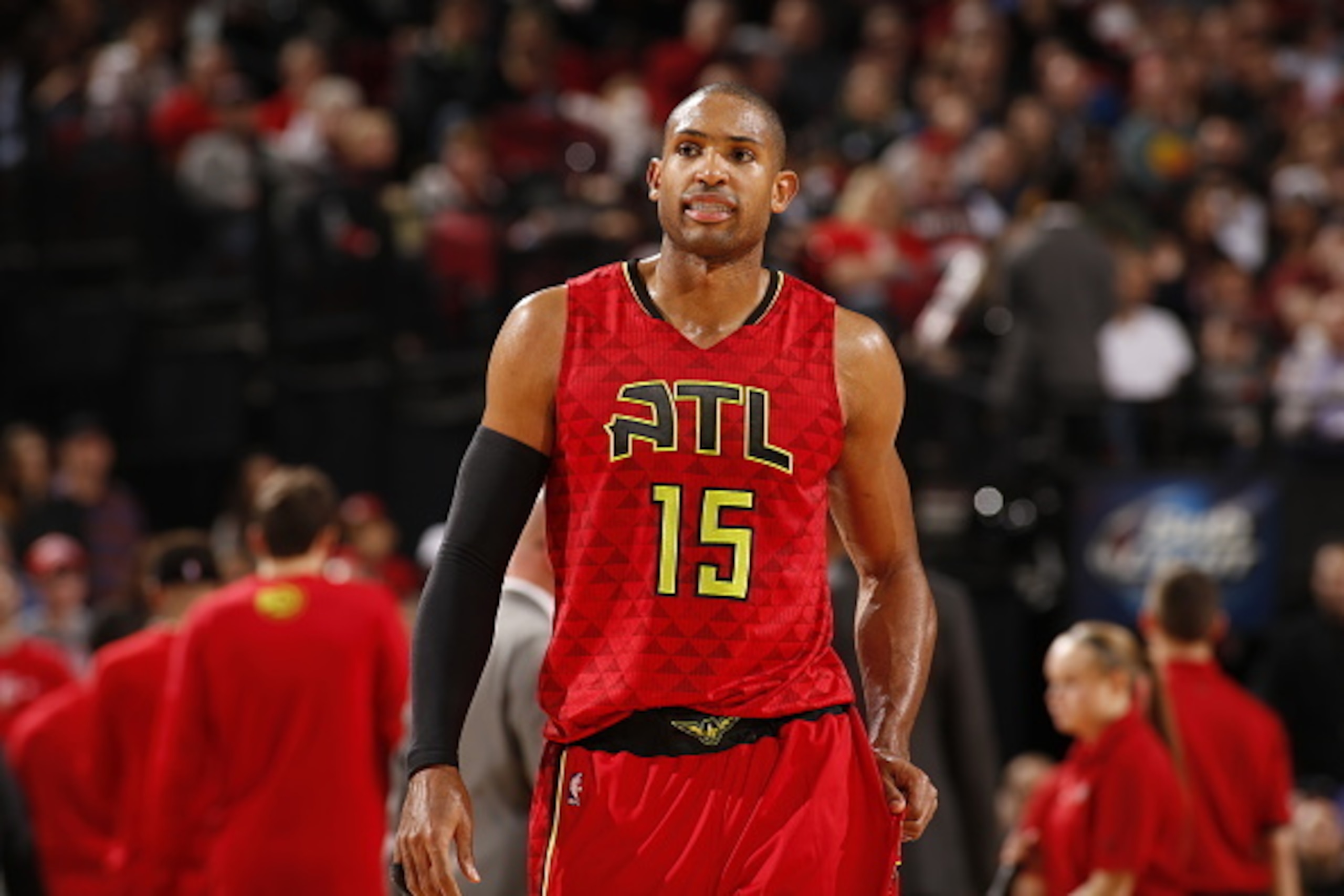
Scoring
Al Horford's three-point shooting didn't help his case in 2015-16. He hit only 34.4 percent of his deep looks while more than sextupling his previous high in attempts per game. When you're not shooting at a league-average rate, you're hurting your offense, particularly when you're forced to rely more on set-up shots and can't play to your many, many strengths.
Non-Scoring Offense
Atlanta Hawks opponents wanted to push Horford to the perimeter because every other part of his game was so strong: If they let him establish interior positioning, he could finish plays himself or hit cutters with ease. If they allowed him to set up on the elbows, he could serve as a secondary offensive hub for Coach Budenholzer.
Defense
Horford didn't deserve to be a candidate for any major awards, but his skills were integral to the Hawks defense. By letting him protect the rim and simultaneously anticipate outlet passes, they squeezed every possible ounce of defensive production from his 6'10" frame. His instincts, quick hands and athleticism all aided to the point that replacing him in the Atlanta system with Howard—this might not remain true in a vacuum—is actually a sizable downgrade.
Rebounding
Never an exceedingly strong rebounder, Horford wasn't helped by Atlanta's conscious decision to take him away from the interior on many possessions. He wasn't given chances to earn many offensive rebounds, and the team adopted a rebounding-by-committee mentality on the defensive glass. The fact that he still managed to record 8.2 boards per 36 minutes is rather impressive.
Durability
Horford played all 82 games and logged 32.1 minutes per contest. Enough said.
Overall
This center meant absolutely everything to the Hawks. His passing and versatile scoring made him an unquestioned centerpiece in the team's ball-sharing offense, while his ability to control passing lanes while protecting the hoop allowed the defense to focus on luring opponents into the paint before trapping them in no-man's land. It remains to be seen whether he'll be a perfect fit in his new home with the Boston Celtics, but there's little doubt he ended his Peach State career as one of the league's elite bigs.
10. Marc Gasol, C, Memphis Grizzlies
64 of 73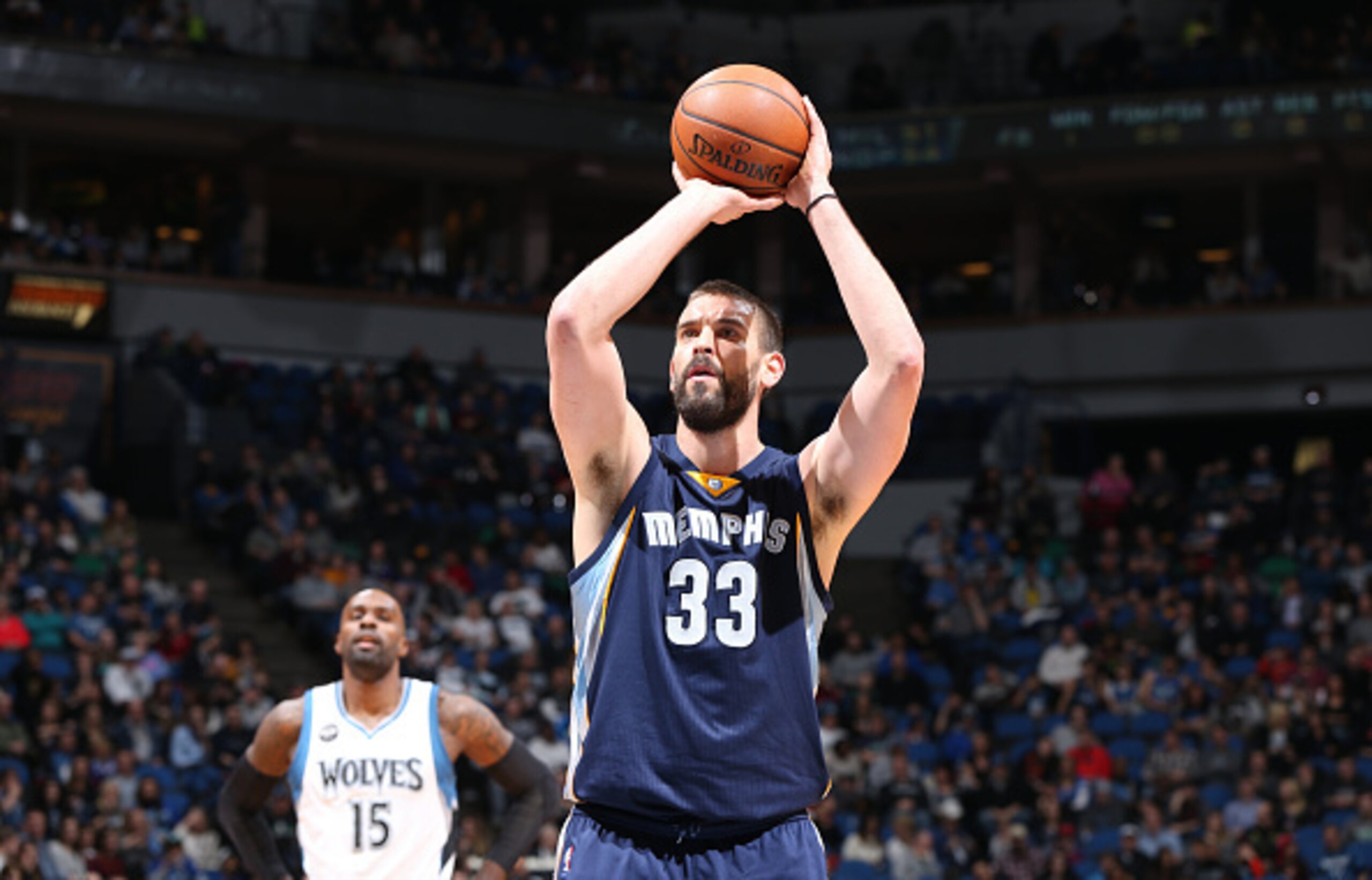
Scoring
Marc Gasol rarely plays like a featured option, but he quietly puts up points in a variety of ways. He's a master at picking the right times to use his mid-range jumper, is a creative finisher around the basket and can confuse anyone with his dizzying array of post-up options. He's rarely limited by Memphis Grizzlies passing because he's comfortable creating his own offense; he'd just rather do that when everything else breaks down first.
Non-Scoring Offense
Even when not racking up assists, Gasol is one of the NBA's best passing bigs. He plays like he has eyes in the back of his head, tossing feeds he has no business trying—except they somehow hit a cutter no one else has even noticed. However, his shooting skills aren't enough to scare a defense on every possession, so opponents still prefer that he work without possession.
Defense
Gasol's defensive excellence is based on an innate understanding of schemes and the corresponding positioning. He always seems to be in the right spot a split second before anyone else would get there, and that allows him to wreak havoc on and off the ball. But two things held him back in 2015-16: some struggles protecting the basket and a shifting roster under former head coach David Joerger that didn't afford the chemistry Gasol's enjoyed in previous go-rounds.
Rebounding
Though he doesn't hoard rebounds like some bigs, Gasol knows just how valuable grabbing the right ones can be. He carefully conserves energy by letting others fight for tougher opportunities and grabs his contested rebounds only when starting in an advantageous spot. It's a recipe for maximizing his own success, but Memphis might not mind if he were a bit more aggressive.
Durability
The Spanish center was only able to play 52 games before he fractured his right foot and eventually went under the knife. Obviously, that's not nearly enough to earn full marks.
Overall
Gasol still functions as one of the league's best all-around players. There's literally nothing he does poorly, so long as you're willing to accept mid-range shooting as a valuable substitute for three-point marksmanship. Injuries forced him down the NBA's totem pole, and his age—he celebrates his 32rd birthday in January—may make it tough for him to climb back up. But even this slightly diminished version would be a strong All-Star candidate when healthy.
9. Derrick Favors, CB, Utah Jazz
65 of 73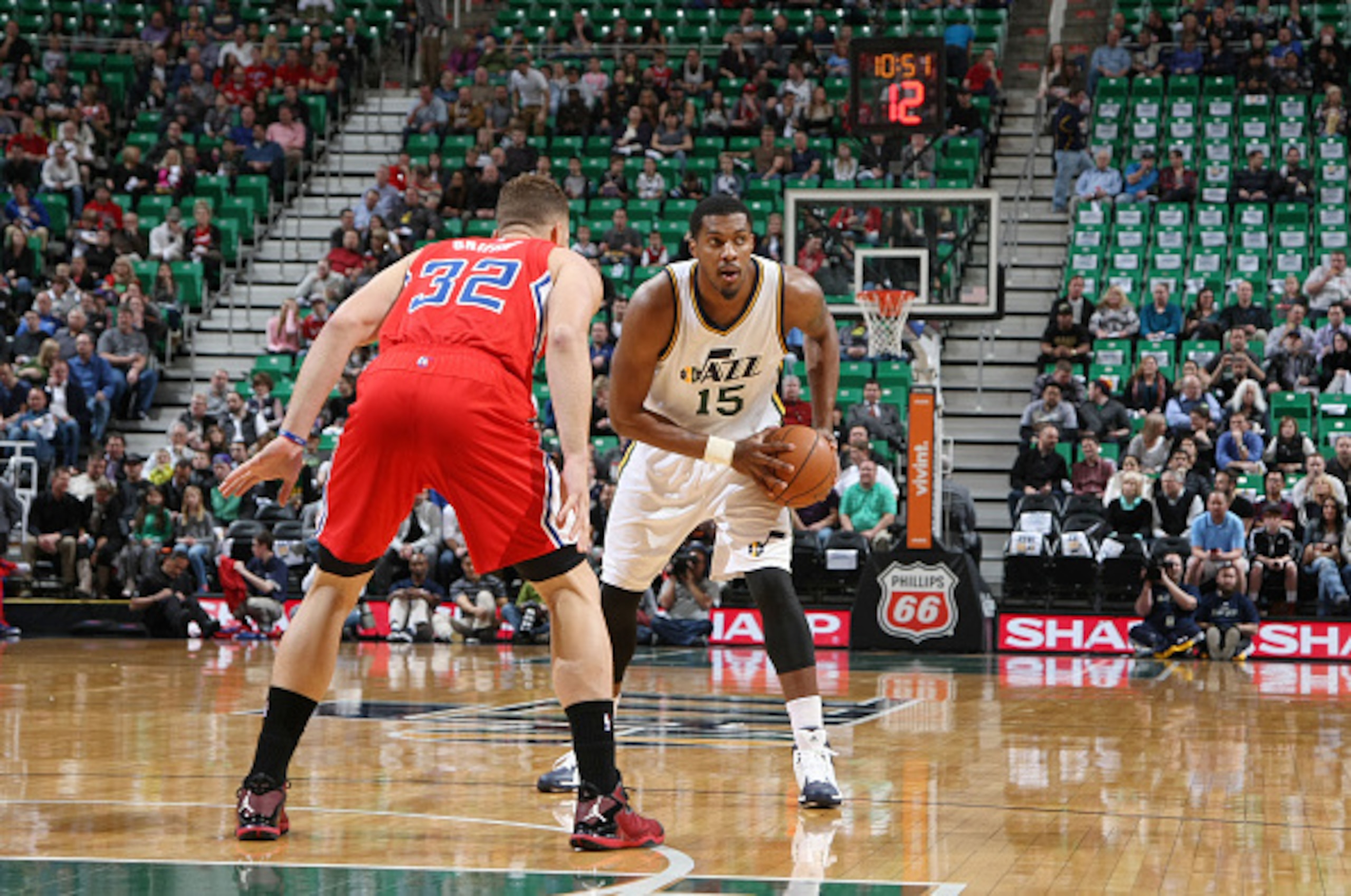
Scoring
Derrick Favors is still at his best when diving to the hoop after setting a screen, hoping for a feed from his teammates. Around the basket, his physicality and athleticism allow him to score through most defenders. But the Utah Jazz weren't set up to play to his strengths, and he was forced to take more jumpers than ever before. Otherwise, he'd look even better as a scorer.
Non-Scoring Offense
It's hard to find positives here, unless we focus on Favors' screening and potentially rim-rattling cuts that force defenders to body up against him outside the paint. He's a lackluster distributor who can get far too careless with the ball, and his jumper is by no means a consistent weapon.
Defense
Favors doesn't receive much credit as an elite defender, yet that's exactly what he's become. He allowed opponents to shoot just 47.7 percent at the rim while facing 7.4 shots per game, and his one true weakness was dragging out to the perimeter against quick stretch 4s. Perhaps he doesn't get the recognition he deserves because, despite his individual excellence, he's still not the best defender in his own frontcourt.
Rebounding
This was the fourth consecutive season that Favors' rebounds per 36 minutes have trended in the wrong direction, but he was starting at a rather high point when averaging 11.1 in 2011-12. Playing alongside many other plus rebounders takes away some of his chances, so Favors makes up for the relative lack of opportunities by fighting for everything in the vicinity of traffic.
Durability
Back spasms and a bad right knee hindered Favors throughout his latest campaign, but he suited up 62 games and was unrelentingly physical on both ends. According to ICE data provided by B/R Insights, his insanely high physio score still finished in the 80.98 percentile.
Overall
Favors rarely gets discussed as a game-changing presence and didn't seem to draw much All-Star consideration, but his all-around excellence has made him the No. 1 player for a Utah team on the rise. That may not remain true as Rudy Gobert and Rodney Hood continue to develop, but Favors' excellent defense and consistent offensive contributions have made him the centerpiece up to this point in the rebuild, even if he by no means enjoys the same name recognition.
8. Andre Drummond, C, Detroit Pistons
66 of 73
Scoring
Given the Detroit Pistons' offensive rating of 106.1 and the fact starting center Andre Drummond hit his "freebies" at a 35.5 percent clip, sending him to the line for two attempts is the equivalent of losing 0.351 expected points on that possession. If we assume he's taking two free throws on each trip to the foul stripe (forgetting about and-ones), he's using 3.6 possessions per game, which means he's losing 1.26 expected points. The Pistons' average margin of victory in 2015-16 was a mere 0.6 points, so you can see why this pulls down his score in spite of interior excellence and a growing post-up game.
Non-Scoring Offense
Defenders had to kept their eyes on Drummond at all times. Not because he was a threat to knock down jumpers—just 5.2 percent of his shots came from 10 feet or beyond—but because he was such a dangerous cutter and could tear them apart on the offensive glass if unchecked outside the paint. Of course, it was an easier alternative to let him catch the ball and attempt to go to work, since passing basically wasn't an option.
Defense
Drummond is counted on as a defensive anchor, but his game still has many flaws. He allowed opponents to shoot 52.6 percent at the rim, struggled immensely against roll men (16.9 percentile) and was abused against both spot-up players (46.4 percentile) and guys working in the post (32.9 percentile). His quick hands allowed him to shut down passing lanes and force turnovers, but he was far from serving as a lockdown defender.
Rebounding
No player earned a higher score in our rebounding metric, and the gap between Drummond and the No. 2 player was rather substantial. This Piston averaged 14.8 rebounds!
Durability
This is about more than Drummond suiting up in 81 games—his one absence stemmed from rest at the end of the regular season—and playing 32.9 minutes per contest. The physical nature of his role on both ends of the floor allowed him to finish ahead of every other NBA player in total physio load, per ICE data provided by B/R Insights.
Overall
Drummond is tantalizingly close to emerging as a superstar, but he won't get there—at least in terms of raw production—until he fixes his free-throw woes and becomes a more disciplined defender. His work on the offensive glass and sheer physical dominance allow him to serve as the centerpiece of Detroit's four-out, one-in strategems, but his per-game numbers give the impression his development is further along than it actually is.
7. DeAndre Jordan, C, Los Angeles Clippers
67 of 73
Scoring
DeAndre Jordan's minor strides at the stripe helped mitigate the negative impact of his free-throw shooting, but his enduring woes were still damaging. However, they weren't damaging enough to cancel out the benefits of his incredible efficiency, since Jordan once again joined Wilt Chamberlain as one of the only two qualified players in NBA history to shoot at least 70 percent from the field.
Non-Scoring Offense
The potential for an offensive rebound keeps defenders watching him, as does his propensity for rolling down the lane and finishing with an unstoppable alley-oop jam. But beyond that, Jordan doesn't offer much on offense.
Defense
Impressive as Jordan's 2.3 blocks per game may be, he's finally getting better as an all-around defender, recognizing it's better to make the right play rather than the one that will show up in a box score. It's still possible to fool this center around the basket or get the better of him with perimeter dribbling, but his rotations are much sharper at this stage of his career.
Rebounding
Drummond was the only player to average more rebounding opportunities than Jordan's 20.3. Only Drummond and Whiteside topped his 5.1 contested rebounds per game, and DJ finished ahead of the pack for uncontested boards. He's unquestionably at the top of the class, even if he produced the No. 2 score in our rebounding metric.
Durability
Pneumonia and team-mandated rest combined to keep him out of the lineup for only five games—the first time in four seasons Jordan missed a game.
Overall
Without their starting center, the L.A. Clippers were outscored by 4.6 points per 100 possessions. With him on the floor, that net rating jumped all the way to plus-9.1. He was that impactful, given his tremendous defense, astronomical rebounding totals and efficient offense around the hoop.
6. Karl-Anthony Towns, C, Minnesota Timberwolves
68 of 73
Scoring
Karl-Anthony Towns was only a rookie in 2015-16 and still hasn't celebrated his 21st birthday. He wasn't quite good enough from beyond the arc, hitting only 34.1 percent of his deep attempts, and he relied a bit too much on his teammates' setup passes. But Towns was potent from every other range, had no trouble putting the ball on the floor and showed every tool imaginable en route to winning Rookie of the Year. He's just the eighth qualified first-year player in NBA history to average at least 18 points with a true shooting percentage north of 58 percent.
Non-Scoring Offense
Towns made too many careless mistakes with the ball, though he showed the vision necessary to make upper-tier feeds when fully focused. The same applies to his floor-spacing ability, since consistency eluded him even as he displayed what will one day make him an elite stretch big.
Defense
Although Towns was solid protecting the rim (opponents shot just 49.6 percent against him on 8.9 shots per game) and could hold his own in simple sets, playing NBA defense did force him to endure some growing pains. He had trouble against spot-up shooters and often found himself out of position against roll men, both of which were easy weaknesses for the opposition to exploit.
Rebounding
Credit Towns for giving 100 percent every time a shot went up, but he'll have to learn that not every carom is worth pursuing. Though his ability to rebound in traffic and beat players to spots bodes well for the future, he fell just shy of the efficiency levels necessary to join the six centers who earned all 15 points in this category.
Durability
Rookie wall? What rookie wall? Playing in 82 games and logging 32 minutes per contest, Towns posted one of the league's 10 highest total physio loads, per ICE data provided by B/R Insights.
Overall
It's admittedly shocking to see Towns listed as the No. 2 center, as the No. 6 big man and among the league's top 20 overall players. But just go watch some tape, because he was legitimately that good. Despite being less than a year removed from playing for John Calipari, Towns excelled in virtually every area and had no distinct weaknesses. After the All-Star break, he was the only NBA player to average at least 20 points, 10 rebounds and three assists while making more shots than he missed, per Bleacher Report's Andy Bailey.
5. LaMarcus Aldridge, CB, San Antonio Spurs
69 of 73
Scoring
LaMarcus Aldridge wasn't allowed to stop the ball and create his own shots nearly as often in the San Antonio Spurs' system as he'd previously done with the Portland Trail Blazers. No problem. He just learned how to thrive as a spot-up shooter and hit a career-best 51.3 percent of his field-goal attempts while constantly working his way to the free-throw stripe. If this is what happened in Year 1, it's terrifying to think of what he can do in this follow-up season.
Non-Scoring Offense
Aldridge's lackluster passing is the only thing holding him back here, since he was often the odd man out in San Antonio. While most players are capable of whipping the ball around the key and anticipating where their teammates would be, his reaction times are a little slower, thereby allowing the defense to catch up to its assignments and force him into more turnovers.
Defense
Setting a new career high in defensive box plus/minus, Aldridge was an integral part of a historically excellent defense. Freed from some of his immense offensive responsibility, he used understated athleticism to hold opponents to 48.4 percent shooting at the rim, and that was still one of his biggest weaknesses. (Perhaps, "worst strengths" would be the more appropriate phrasing.)
Rebounding
The improvements Aldridge made during his last few seasons with the Blazers stuck once he came to San Antonio. Though he didn't spend as much time on the floor and couldn't produce as many gaudy numbers, he did a fantastic job holding his own against bigger players and standing his ground when boxing out opponents.
Durability
Aldridge missed time with a sprained left ankle, migraines and back spasms, and he also got to experience the Spurs' strategy of healthy scratches. He still participated in 74 games and wasn't in serious danger of losing a durability point.
Overall
Before the All-Star break, Aldridge averaged 17.0 points, 8.4 rebounds and 1.4 assists with a 55.4 true shooting percentage. After the midseason festivities, he posted 19.9 points, 8.9 rebounds and 1.6 assists per contest with a 58.5 true shooting percentage. It was abundantly clear he was gaining comfort in his new digs, to the point that he became a true featured option in the playoffs.
4. DeMarcus Cousins, C, Sacramento Kings
70 of 73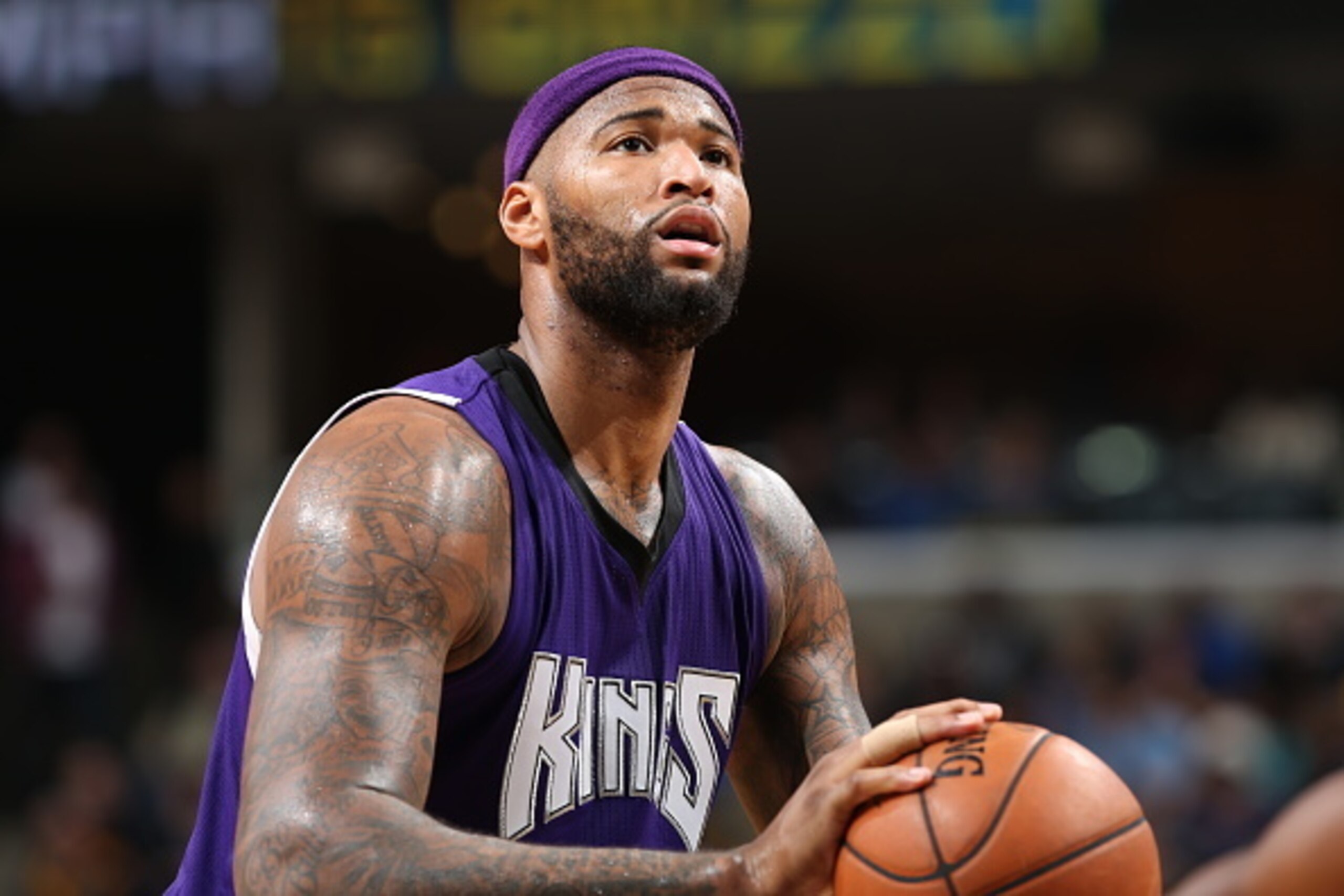
Scoring
Players with this much skill aren't supposed to be so physically imposing. DeMarcus Cousins is a deadly combination of the two extremes, making it virtually impossible to guard him for multiple possessions. As soon as an opponent settles into a comfort zone, Cousins changes up his methods and restarts the defender's adjustment process. It was only when he fell into the trap of shooting too many triples that he could be stopped.
Non-Scoring Offense
Cousins is a phenomenal passer, but he can get too careless with the ball. Even still, the Sacramento Kings are comfortable letting him serve as a primary playmaker and allowing him to lead in transition, which results in the occasional triple-double. It's his floor-spacing work that's a bit problematic, since it's in a defense's best interest to turn him into a supposed stretch 5.
Defense
Though Cousins has the physical gifts necessary to thrive on defense, he takes too many possessions off and lazily chases spot-up shooters who move around the perimeter too frequently. That, along with his lackluster rim protection, sometimes makes him a defensive liability.
Rebounding
Cousins does everything you could ask for on the boards. He's impossible to move when he sets his feet, and that allows him to both rack up contested rebounds and convert a high percentage of his opportunities. Plus, Cousins realized that grabbing a defensive board allowed him to jump-start a transition attack, so he was even more motivated.
Durability
A strained Achilles, strained lower back, sprained left ankle and bruised right knee kept Cousins out of the lineup for a total of 14 contests. But the artist known as "Boogie" also missed three games due to suspensions—one for elbowing Al Horford in the head, one for yelling at head coach George Karl during a timeout and one for receiving his 16th technical foul of the season.
Overall
We're still left wondering just how good Cousins could be if he experienced some organizational stability and got his above-the-neck game together, as he did for Team USA during the 2016 Rio Olympics. Now that Joerger has been hired, the center is about to embark with the sixth head coach of his career. (2016-17 will only be his seventh season.) Hopefully, this will be the one who forces him to play to his strengths and stay focused on both ends for the duration.
3. Anthony Davis, CB, New Orleans Pelicans
71 of 73
Scoring
Perhaps his shoulder was never 100 percent, because Anthony Davis struggled to finish around the hoop at the same rate of his first three professional seasons. He still shot 69.7 percent from within three feet, but that was the worst mark of his career and slightly depressed his overall efficiency even as he got more comfortable taking mid-range jumpers and threes. It's not like this young superstar gives us too much to complain about.
Non-Scoring Offense
The weakest part of Davis' game is his passing, and he recorded more turnovers than assists for the third time in four seasons. The strides he made in 2014-15 were completely gone, replaced by slow instincts and hesitance to feed the ball into small spaces. We know he has the talent to improve in this area—ditto for his jump-shooting—but that hasn't happened yet.
Defense
Scoring against Davis around the rim is tough. The lanky forward held opponents to 47.7 percent shooting at the hoop while facing 6.1 shots per game. But if he wasn't helping around the basket, he wasn't quite so elite, especially struggling when defending roll men (39.6 percentile).
Rebounding
Davis is an incredibly consistent force on the glass. Even though he doesn't generate as many chances as some of the league's other elite rebounders, he's unfairly good at converting those. He hauled it in 66 percent of the time when he was within the vicinity of a rebound, giving him the No. 6 conversion rate among the 94 players who average double-digit rebounding chances.
Durability
For the fourth time in four chances, Davis failed to break the 70-game threshold. He suited up only 61 games and missed contests with a strained right hip, shoulder injury, bruised back, concussion, right big toe injury and then season-ending injuries to his left knee (which required surgery) and labrum in his left shoulder. It's lucky for him he's so active while on the floor.
Overall
Perhaps everyone was a bit too quick to call Davis the next MVP (yours truly included). But it's also hard to hold diminished development against him during a season in which he was constantly injured and trying to carry a New Orleans Pelicans squad that was also devastated by ill health at all times. Davis is still one of the NBA's premier talents and—stop me if this sounds familiar—he should be a big factor in the 2016-17 MVP race.
2. Paul Millsap, PF, Atlanta Hawks
72 of 73
Scoring
Paul Millsap is capable of creating his own looks from anywhere on the court and can destroy a defense with a veritable arsenal of moves. Whether he's knocking down jumpers, using a devastating pump fake and driving to the hoop or working away from the primary action, he scores in just about every conceivable way. Were it not for a surprisingly shaky perimeter stroke, he'd have a chance to establish himself as one of the NBA's best scorers.
Non-Scoring Offense
Millsap's passing earns a perfect score in the facilitating subsection, as he kept the ball moving in the Atlanta Hawks' pass-heavy schemes without turning it over too often. Especially when you include his 0.7 secondary assists per game (the third-most of any power forward analyzed for NBA 200), he was unquestionably elite. His floor-spacing ability, however, wasn't quite up to the same standard during a season in which he shot just 31.9 percent from beyond the arc.
Defense
Although he wasn't a top-tier rim protector (allowing 49.2 percent shooting at the hoop), Millsap could do everything at an above-average level on defense. His versatility and quick hands helped the Hawks force action toward the painted area, because he could trap them and prevent easy outlet passes. Without his ability to guard opponents on the interior and perimeter, Atlanta couldn't have functioned at such a high level.
Rebounding
Millsap's long arms and the springs in his legs have always helped overcome his lack of height for the position (6'8"), but this was his best season yet as a rebounding force. Though his conversion rate couldn't stack up against the best of the bunch, his ceaseless effort and ability to successfully pull down boards in traffic helped him stand out more than most.
Durability
After playing 81 games, Millsap's durability shouldn't be questioned. According to ICE data provided by B/R Insights, only Drummond, Gordon Hayward, Marcus Morris and Paul George finished with higher total physio loads.
Overall
Millsap was the Hawks. His play represented everything that helped this team remain near the top of the Eastern Conference, whether by his diverse offensive contributions featuring skill and ball movement or his defensive versatility that helped anchor unique schemes. There's no telling whether he'll be able to maintain this level of play during his age-31 season, but he was a top-10 player in 2015-16.
1. Draymond Green, PF, Golden State Warriors
73 of 73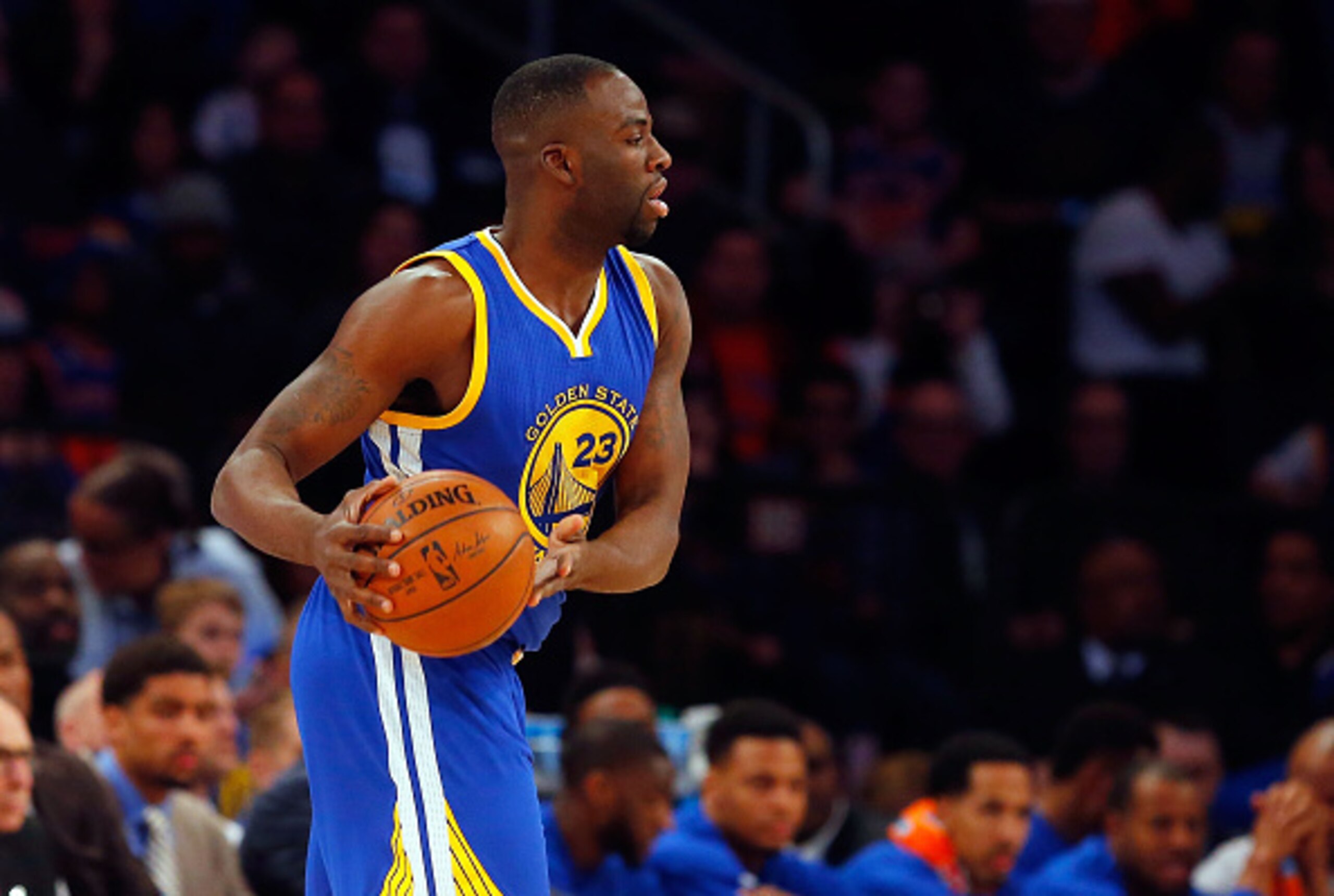
Scoring
It's tough to complain about your power forward scoring 14.0 points per game while shooting 49.0 percent from the field and 38.8 percent from beyond the arc. Draymond Green was by no means perfect—not without scoring in greater volume or creating more of his shots—but his ability to thrive as a non-featured option helped push the Golden State Warriors to a record-setting 73 wins.
Non-Scoring Offense
According to ICE data provided by B/R Insights, Green finished No. 80 in combined effective field-goal percentage on spot-up shots and gravitational pull, which puts him in impressive company. That doesn't even factor in his screen-setting habits, which certainly aid his off-ball offense. His passing was beyond reproach and gave him a score in our facilitating metric more than twice the mark earned by any other big man.
Defense
Green forced plenty of turnovers, thrived when switching on screens against any type of player and protected the rim with aplomb. He was a strong Defensive Player of the Year candidate, and you could make a serious argument that he should've prevented Kawhi Leonard from winning the award two seasons in a row. It's no fluke the Dubs allowed 11.8 fewer points per 100 possessions with this starter on the floor.
Rebounding
Kenneth Faried was the only power forward to post a higher score in our rebounding metric. The data loved Green's relentless efforts to get around bigger players and hold his positioning when he began in the better spot, and it didn't overlook him converting 62.9 percent of his chances.
Durability
Green played 81 games during the 2015-16 campaign, only sitting out for rest purposes. His massive role, omnipresent nature in the lineup and permanent physicality left no doubt he was one of the NBA's most durable players.
Overall
Curry may have pushed the Warriors to astronomical heights, but it was Green who gave Golden State its identity. His all-around defensive excellence set the tone on the less glamorous end, and his offensive skill keyed so much of what the Dubs were capable of doing. Not only did he serve as a spot-up safety valve, but his playmaking ability made it impossible to double-team guards without him picking the remaining defenders apart via an extra-man advantage.
.jpg?w=2560 "Ravens DB Called Tua INT 🔮")
.jpg?w=2560 "Breaking News")
.jpg?w=2560 "Jerry Defends Dak Heckler")
.jpg?w=2560 "Ranking NFL's True Super Bowl Contenders")
.jpg?w=2560 "Buzz: Browns Shopping Jeudy")