
Predicting Every NFL Team's 2017 Breakout Player
Every NFL fanbase is fueled by hope throughout the offseason.
Hope that there are enough pieces in place to defend a championship. Hope that finally a longstanding quarterback mess is injected with even passable play. Hope that, mercifully, the Cleveland Browns claw free from their basement residence and show some shred of progress.
And hope that one breakout player brimming with talent can become an important contributor and difference-maker.
The elusive breakout player is annually the subject of offseason dreaming. If everything falls right, he could be an offensive or defensive leader for years and a core piece to build around. If not, more crushing and soul destroying disappointment will follow as another young talent fails to make the leap.
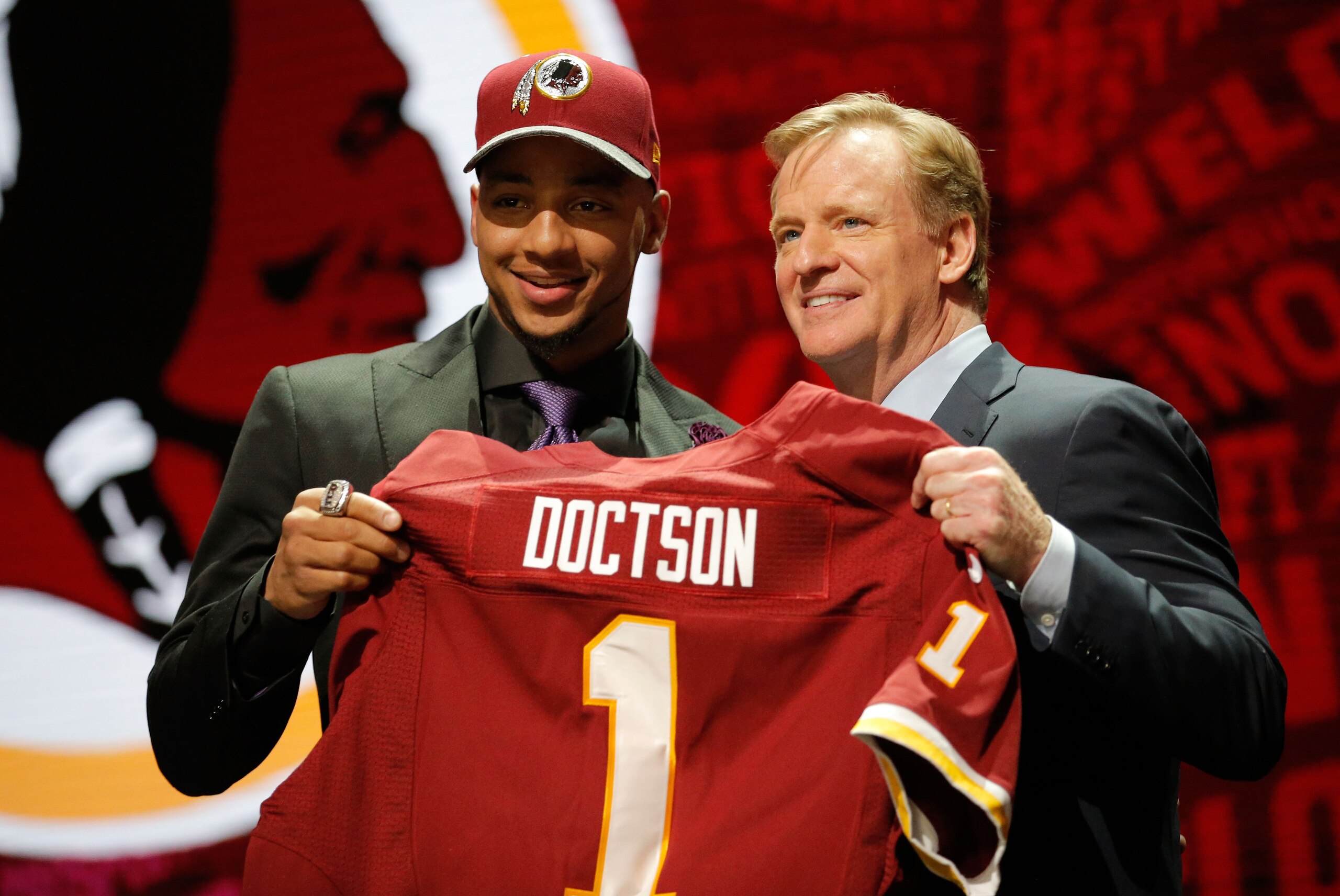
There won't be 32 breakout players in 2017. But there will be 32 hopeful breakouts, ranging from an injury-riddled first-round pick like the Redskins' Josh Doctson, to Grady Jarrett, who had his own mini breakout during the Super Bowl for the Falcons.
Let's take a closer look at them and the other possible budding stars who could change their team's directions in 2017 and beyond.
Arizona Cardinals: Robert Nkemdiche, Defensive End
1 of 32
In 2016, the Arizona Cardinals' defense was rooted in an ability to make a quarterback's mental clock tick louder at first, and then at a deafening level. They led the league with 48 sacks, and eight of them came from defensive end Calais Campbell along with his 56 pressures, according to Pro Football Focus.
That pressure total was tops among all 3-4 defensive ends. That is a problem for the Cardinals now because Campbell no longer plays for them. He signed as a free agent with the Jacksonville Jaguars, leaving 2016 first-round pick Robert Nkemdiche to fill some oversized shoes.
Nkemdiche is certainly capable of blossoming in a larger role and doing it fast. He played only 82 snaps during his rookie year while needing some time to grow and mature behind Campbell. But he showed quality burst as an interior lineman over the final 20 games of his college career at Ole Miss, with 10 tackles for a loss and five sacks during that time.
Concerns about work ethic and off-field issues have followed Nkemdiche. But the raw talent is there, and now he'll get a chance to show it.
Atlanta Falcons: Grady Jarrett, Defensive Tackle
2 of 32
In a different universe where the Atlanta Falcons didn't blow a 25-point lead, we'd be talking about defensive tackle Jarrett even more.
There's still plenty of chatter hovering around the 23-year-old, though, after he was a steal in the 2015 draft, coming off the board at 137th overall. In Super Bowl LI, he camped out in the New England Patriots' backfield while almost single-handedly supplying the Falcons' pass rush. Jarrett recorded three of Atlanta's five sacks and also finished with five tackles.
That was just a taste of the interior pass-rushing power he can provide as his role increases, which it surely will in 2017. Including the playoffs, Jarrett was on the field for only a modest 57.2 percent of the Falcons' defensive snaps in 2016, per PFF. Now the third-year pro can take a significant stride forward while leading a fierce interior line alongside newly signed free agent Dontari Poe.
Baltimore Ravens: Breshad Perriman, Wide Receiver
3 of 32
Multiple parties are invested in Breshad Perriman finally staying healthy in his third season and finally justifying the first-round pick the Baltimore Ravens used on him back in 2015.
That begins, of course, with Perriman himself, who has made just one start and played only 486 snaps over two seasons. He missed his entire rookie year with a knee injury and then played sparingly for most of 2016.
Now Steve Smith has retired and Kamar Aiken departed as a free agent, allowing Perriman to ascend up the depth chart by default. He flashed some of his deep speed with three catches for 30-plus yards near the end of 2016. The 23-year-old will need to show plenty more of that to avoid draft-bust status.
The other two parties leaning on Perriman are obvious: A Ravens offense that averaged only 6.4 yards per pass attempt in 2016 (tied for 27th) and quarterback Joe Flacco, who posted a pedestrian passer rating of 83.5 during his age-31 season.
.jpg?w=2560 "Buccaneers Steelers Football")
.jpg?w=2560 "Lions Football")
.jpg?w=2560 "Browns Camp Football")
Buffalo Bills: Shaq Lawson, Outside Linebacker/Defensive End
4 of 32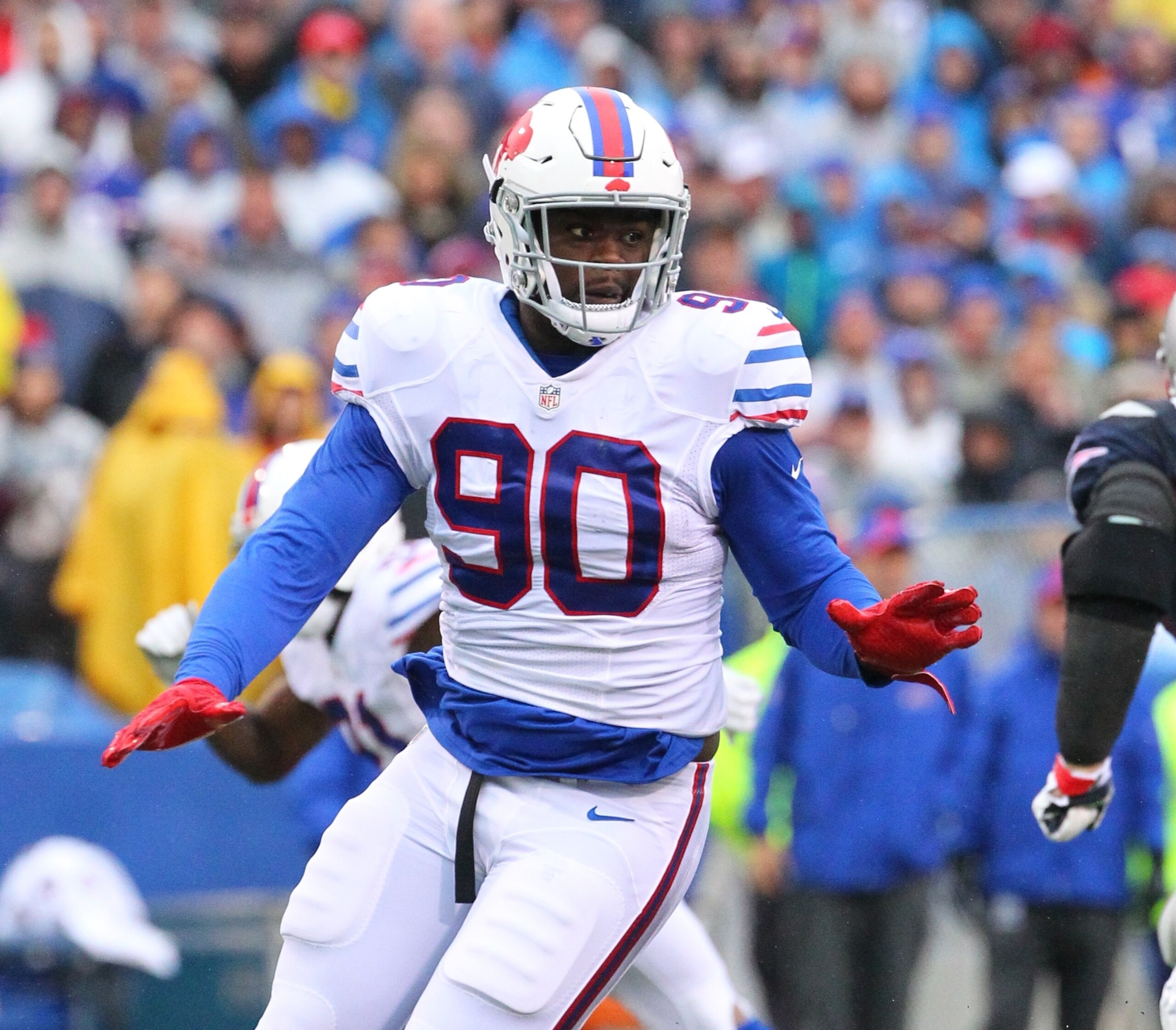
The Buffalo Bills crumbled in 2016 partly because former head coach Rex Ryan sunk to his lowest low while far removed from a defensive-guru past.
And also because the ownership support above him was completely rudderless with no direction whatsoever, which came to a head when general manager Doug Whaley hilariously didn't know why Ryan was fired.
But a rash of defensive injuries definitely didn't help matters. The Bills lost their first two picks in the 2016 draft—middle linebacker Reggie Ragland and outside linebacker Shaq Lawson—for either most or all of the season. It was the latter in Ragland's case, while Lawson was placed on short-term injured reserve and returned late in the year after shoulder surgery.
When he did, the Bills quickly saw what they were missing and received a taste of what was to come. Lawson was eased back in while given limited snaps over his 10 games in 2016, rising above the 50-percent snap plateau in a game just twice. But he took advantage of those sparse opportunities while not at full health, finishing with two sacks and 12 pressures.
That production could surge if Lawson gets even a moderate increase in playing time. He shined throughout his college career at Clemson with 20 sacks over three seasons.
Carolina Panthers: James Bradberry, Cornerback
5 of 32
There was a strong stench of shame and embarrassment coming from the Carolina Panthers' secondary throughout the 2016 season. That smell had its roots in the front office, where letting cornerback Josh Norman walk suddenly wasn't looking like such a smooth move after all.
The Panthers leaned heavily on a group of rookies to man their secondary with Norman gone. Here's the thing about rookies: They can be talented and promising, but often they need time to develop at the next level.
Unfortunately, time wasn't a luxury the Panthers had in 2016. The result was a 29th-ranked secondary that allowed an average of 268.2 passing yards per game, a steep tumble down from their 2015 average of 234.5 yards allowed per game.
But toward the end of that painful experience, one of the Panthers' rookie cornerbacks started to show first a heartbeat and then some serious progress.
James Bradberry missed three games due to injury and then returned in Week 9. Of the remaining nine games at that point, he allowed a passer rating in coverage over 85.0 in only three of them, per PFF. And overall, when he did allow a reception, they weren't of the deep variety too often, with opposing pass-catchers averaging 10.6 yards per catch.
Bradberry will now benefit from the veteran presence of Captain Munnerlyn after the veteran cornerback was signed as a free agent. Every little intangible helps, and having Munnerlyn's leadership guiding a young cornerback group could factor into Bradberry reaching another level in his second year.
Chicago Bears: Cameron Meredith, Wide Receiver
6 of 32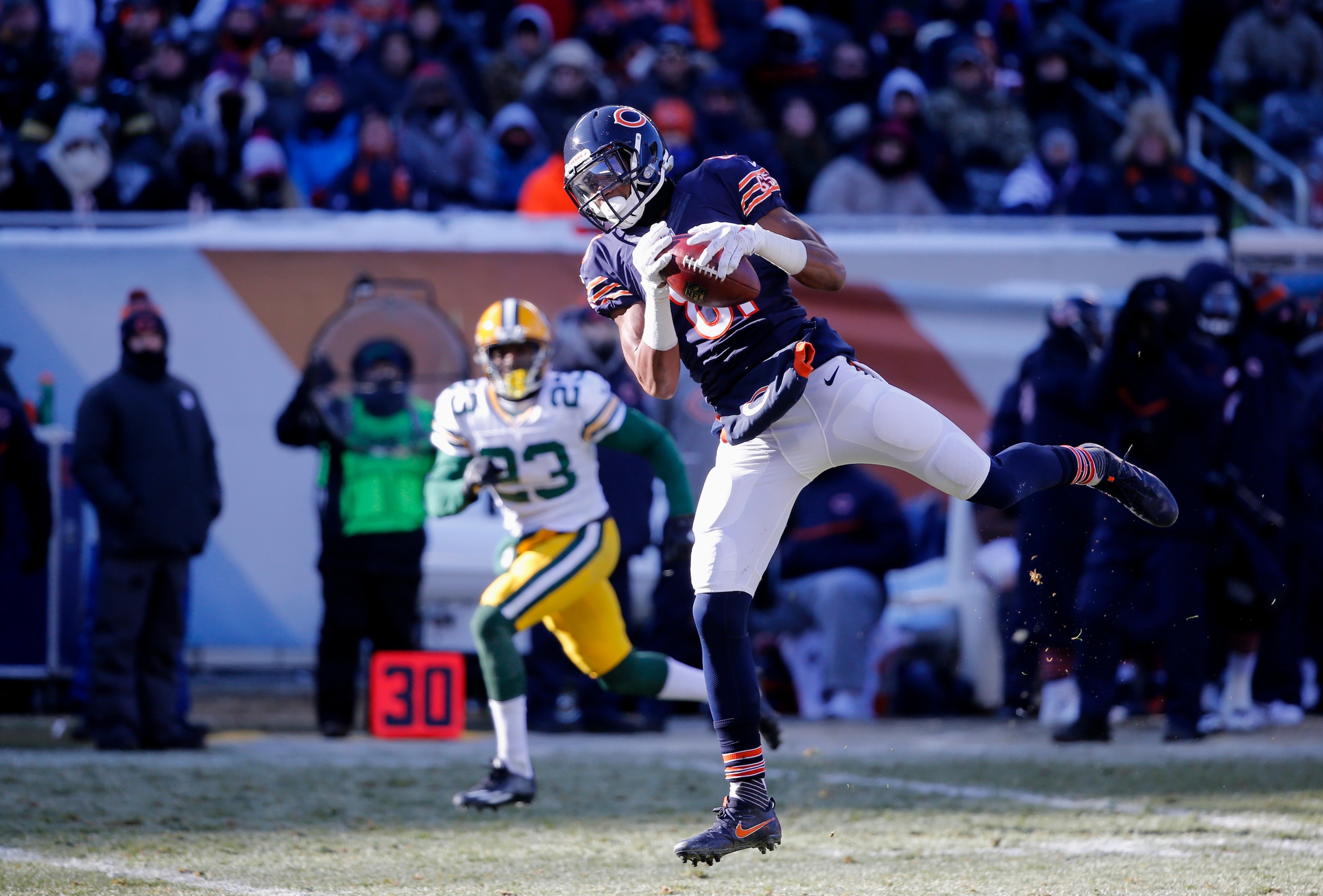
Did we already witness Cameron Meredith's breakout? Maybe, but now the Chicago Bears need a second, louder kaboom in his third season.
The undrafted wide receiver finished his rookie season in 2015 with only 120 receiving yards. Then he exploded in 2016 with four 100-plus yard games. And now a Bears passing offense that's been picked dry of its more established receiving options is kindly asking Meredith for more.
He has the talent to reach another gear in his production after Meredith's second season ended with 66 catches for 888 yards.
Now with Alshon Jeffery gone, the Bears need to replace his 52 receptions and 92 targets, and they'll be doing it with a largely underwhelming group of pass-catchers surrounding Meredith on the depth chart. That includes first-round busts Kendall Wright and Kevin White, slot receiver Eddie Royal and Markus Wheaton, who hasn't topped 800 yards yet after four NFL seasons.
The Bears are asking a whole lot from a still inexperienced receiver. But Meredith just might be the guy to deliver.
Cincinnati Bengals: Tyler Boyd, Wide Receiver
7 of 32
It feels like the Cincinnati Bengals have spent most of A.J. Green's career in search of a suitable wingman for one of the league's premier wide receivers. And inevitably, each time they find a solid option, that receiver moves on in free agency to get paid elsewhere.
That was how the Marvin Jones and Mohamed Sanu experiments ended. Brandon LaFell provided solid support in 2016 with his 64 receptions for 862 yards. However, much of that yardage came when Green missed time with an injury. LaFell was still a disappointment for most of the season, crashing with a thud while logging nine games with less than 50 receiving yards.
So there's a desperate need for young talent to rise, and Tyler Boyd needs to step up now in his second year. Boyd showed his after-the-catch speed when he was targeted on 20-plus-yard throws just 10 times, yet the 22-year-old still finished with nine receptions covering that distance or more.
He has short-area quickness and chunk-play ability. Both qualities could be seen often if he gets more opportunities.
Cleveland Browns: Corey Coleman, Wide Receiver
8 of 32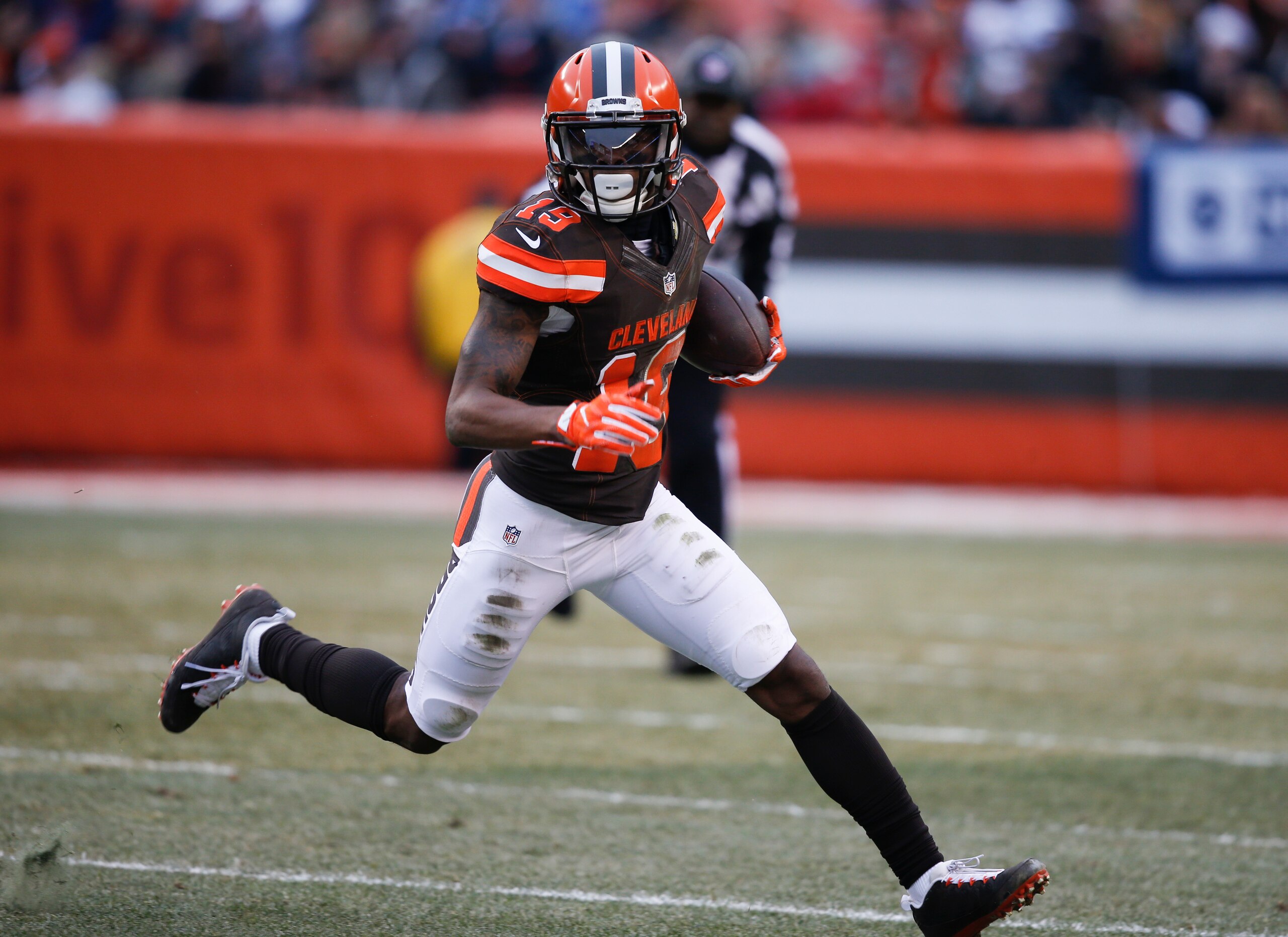
Corey Coleman missed a sizable chunk of his rookie season because of an injury that happened in the most Cleveland Browns 2016 way possible: He broke his hand in practice.
That instantly derailed a season that started out overflowing with promise from the young and dynamic wide receiver. In just his second career game, Coleman scored twice on his five catches for 102 yards.
Then we didn't see him again until Week 9, and by that time, the Browns' offense was in complete disarray, a familiar late-season status for the entire franchise. Coleman also didn't seem like he was playing at full health—he didn't top the 50-yard mark over those final eight games.
Now he has help and a deep threat opposite him in the form of Kenny Britt, who was signed as a free agent. If the Browns can find a way to provide remotely competent quarterback play, then the Coleman we saw over those first two weeks in 2016 (seven receptions for 173 yards) could return, and for a full year this time.
Dallas Cowboys: Byron Jones, Safety
9 of 32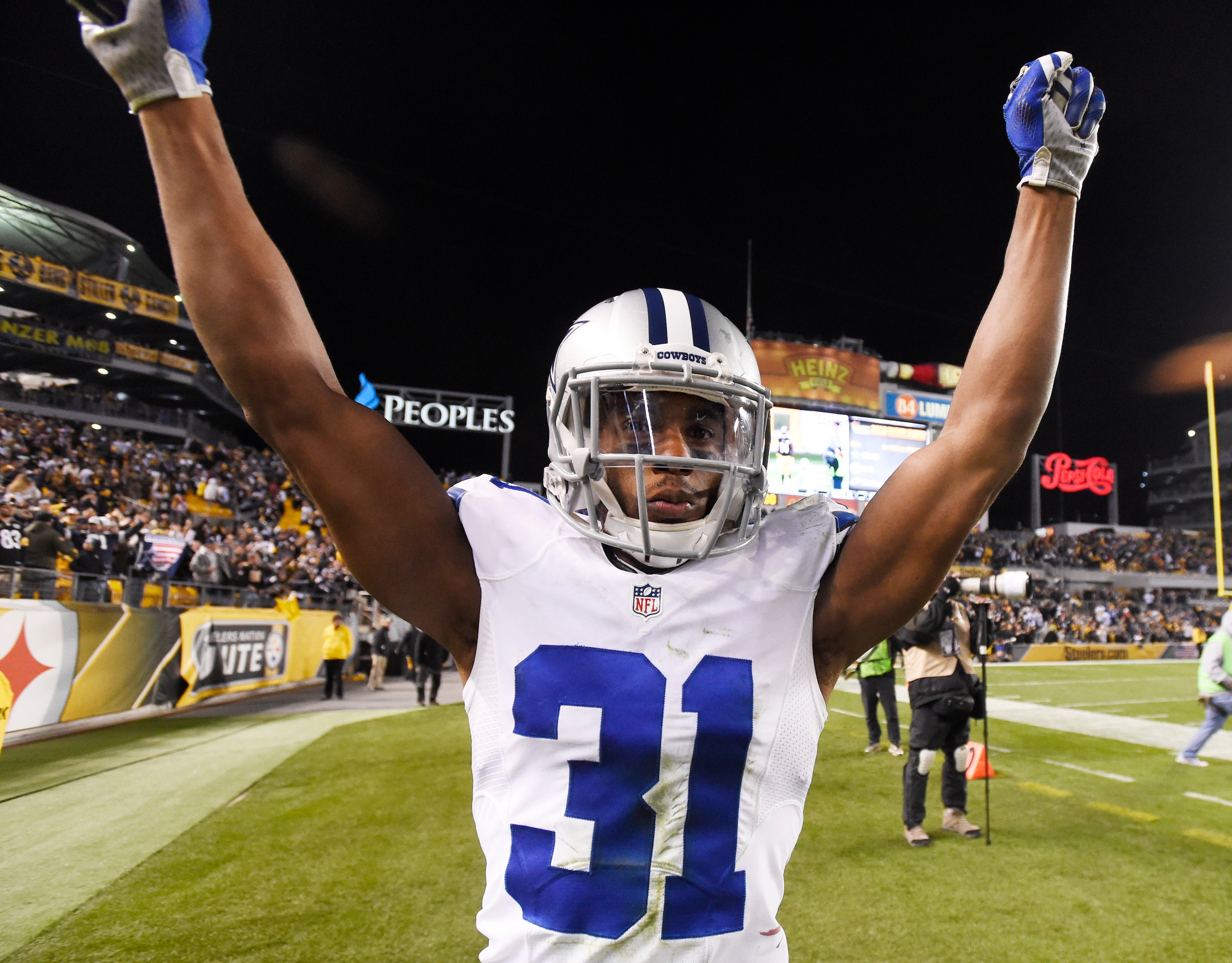
The cap-crunched Dallas Cowboys saw their defensive backfield nearly picked clean during free agency.
Three starting defensive backs are now doing their defending elsewhere: cornerbacks Morris Claiborne and Brandon Carr and safety Barry Church. Church was coming off a season with 85 tackles despite missing four games, and Claiborne might be starting to turn his career around after posting a passer rating in coverage of 63.0 in 2016, per PFF.
A 26th-ranked Cowboys pass defense now desperately needs some sense of stability and continuity. And Dallas can hopefully get it from a third-year safety who's already flashed plenty of growth potential.
In truth, Byron Jones is a hybrid defensive back capable of playing slot corner as well. He has the size needed at 6'0" and 199 pounds to match the physicality of tight ends and the speed to stick with slot receivers. That skill set has resulted in 19 passes defensed over his first two seasons.
Denver Broncos: Shane Ray, Outside Linebacker
10 of 32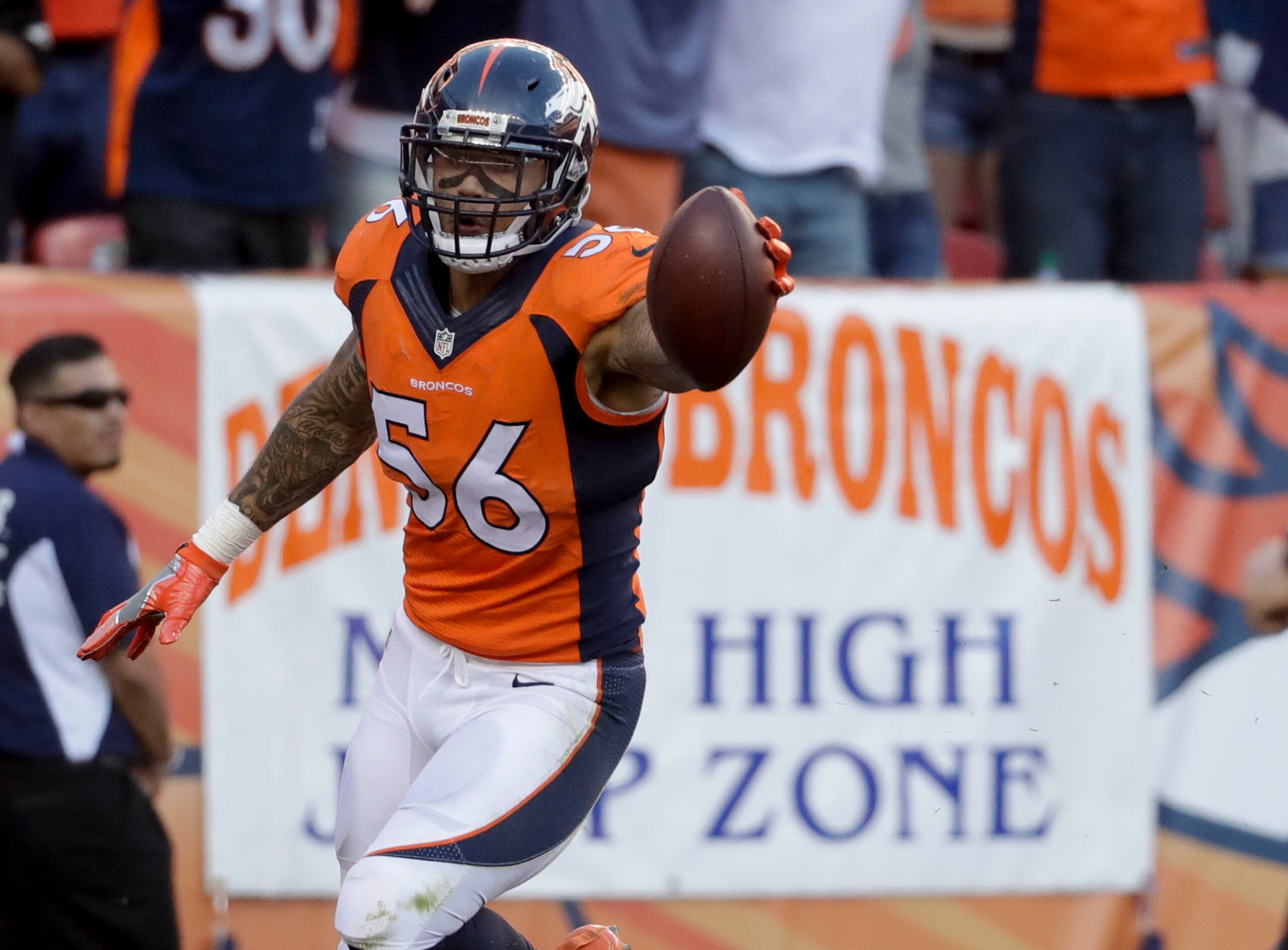
DeMarcus Ware was always either leaving the Denver Broncos as a free agent or retiring. He choose the latter option, and an in-house replacement is ready to step into a brighter spotlight.
Outside linebacker Shane Ray saw his playing time increase when Ware missed five games due to injury in 2016. But overall, Ray's snap count remained modest at best during his second season as he played behind both Ware, when the veteran was healthy, and fellow outside linebacker Von Miller. Ray played in a rotational role and saw the field on only 58.1 percent of the Broncos' defensive snaps.
That makes his pass-rushing production even more impressive. Ray capitalized on his scattered opportunities with eight sacks and 35 pressures, per PFF. He was also effective against the run with 25 defensive stops.
The Broncos finished tied for third in 2016 with 42 sacks. So the thought of them having another healthy, young pass-rusher to exploit the focus Miller draws on the other side is some pretty scary stuff.
Detroit Lions: A'Shawn Robinson, Defensive Tackle
11 of 32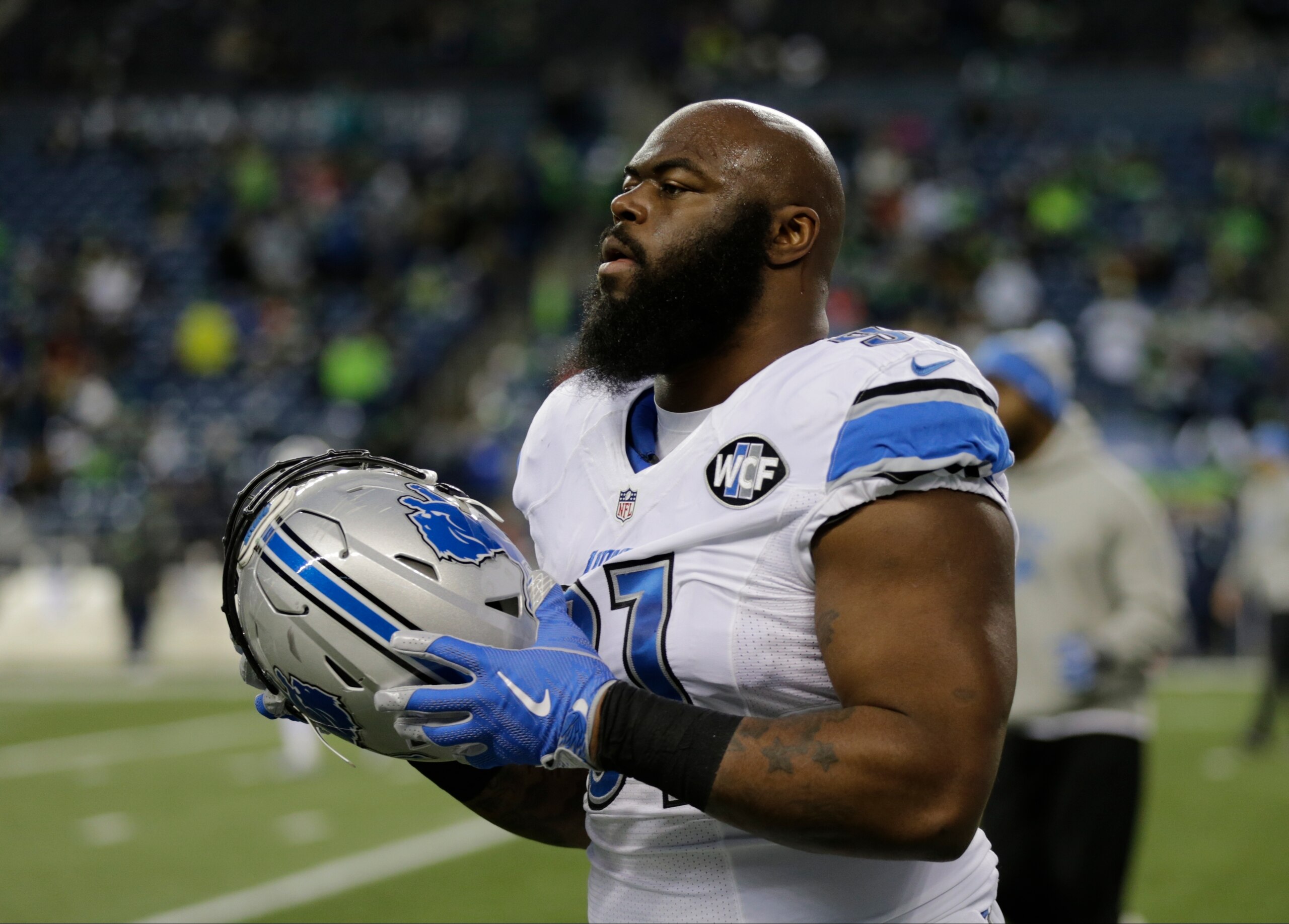
Detroit Lions defensive tackle A'Shawn Robinson needed time to adjust and ease in a little at the next level. But once he became acclimated to a different defensive scheme than the one he played in at Alabama, the results followed quickly late in his rookie year.
Robinson is a run-plugging interior lineman who can also collapse the pocket. That pass-rushing push didn't translate into many sacks during his rookie year in 2016 (just two), but he was effective in another way.
Robinson leaned on his instincts and awareness of space to bat seven balls down at the line of scrimmage, which led all defensive tackles, per PFF.
But he really started to get comfortable and assert himself toward the end of 2016. He recorded 18 total defensive stops, and nearly half (seven) of them came over the Lions' final three games, including the playoffs. And of his 37 tackles, 15 also came over those last three games.
The seeds were planted for Robinson to become a disruptive force, and he'll look to continue that growth in his second season.
Green Bay Packers: Kenny Clark, Defensive End
12 of 32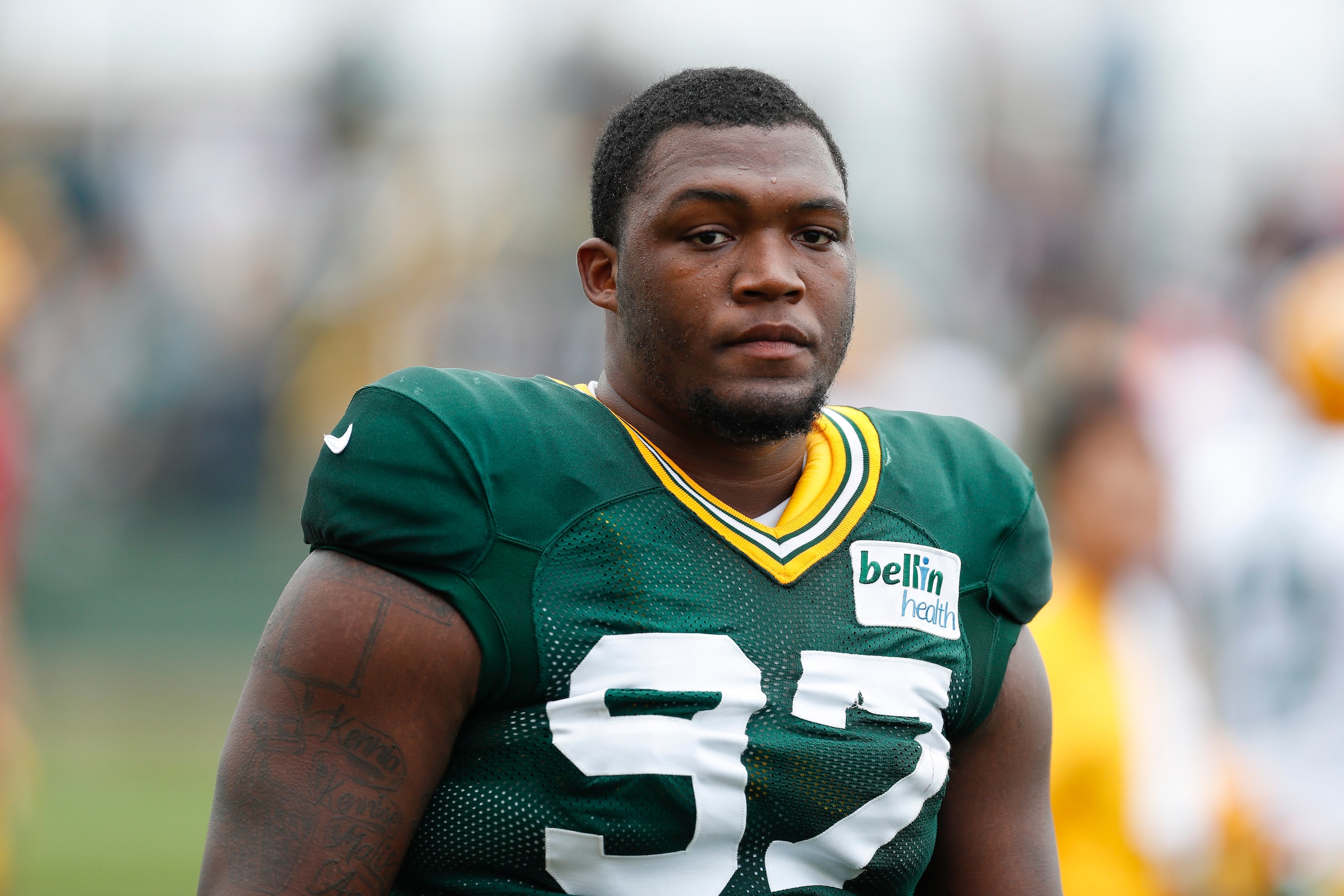
Much like Robinson, Green Bay Packers defensive end Kenny Clark needed time to develop after being a late first-round pick in 2016. And much like Robinson, his playing time and production spiked late in the season when a 21-year-old didn't feel quite as young anymore.
Clark was used beyond sparingly by the Packers while being brought along slowly as a rookie. His snap count hit a single-game low of seven in Week 13. But then suddenly it shot up, and over the final seven games, he averaged 24.6 snaps.
That increased usage was a reflection of how much Clark impressed Packers head coach Mike McCarthy.
"If you just watch the progression of the season, his arrow was straight up," McCarthy told ESPN.com's Rob Demovsky. "I thought he played extremely well the last six weeks. That's something we need to build off. I think he'll take that big jump as a second-year player."
For the Packers' sake, that arrow needs to keep pointing north.
Clark will be called upon to fill in for defensive tackle Letroy Guion, who's set to sit out the first four games of 2017 due to a violation of the performance-enhancing substance policy. If Clark's late-season surge that included six tackles, six quarterback hurries and three defensive stops continues into 2017, then he could take advantage of Guion's absence to earn a more consistent role.
Houston Texans: Braxton Miller, Wide Receiver
13 of 32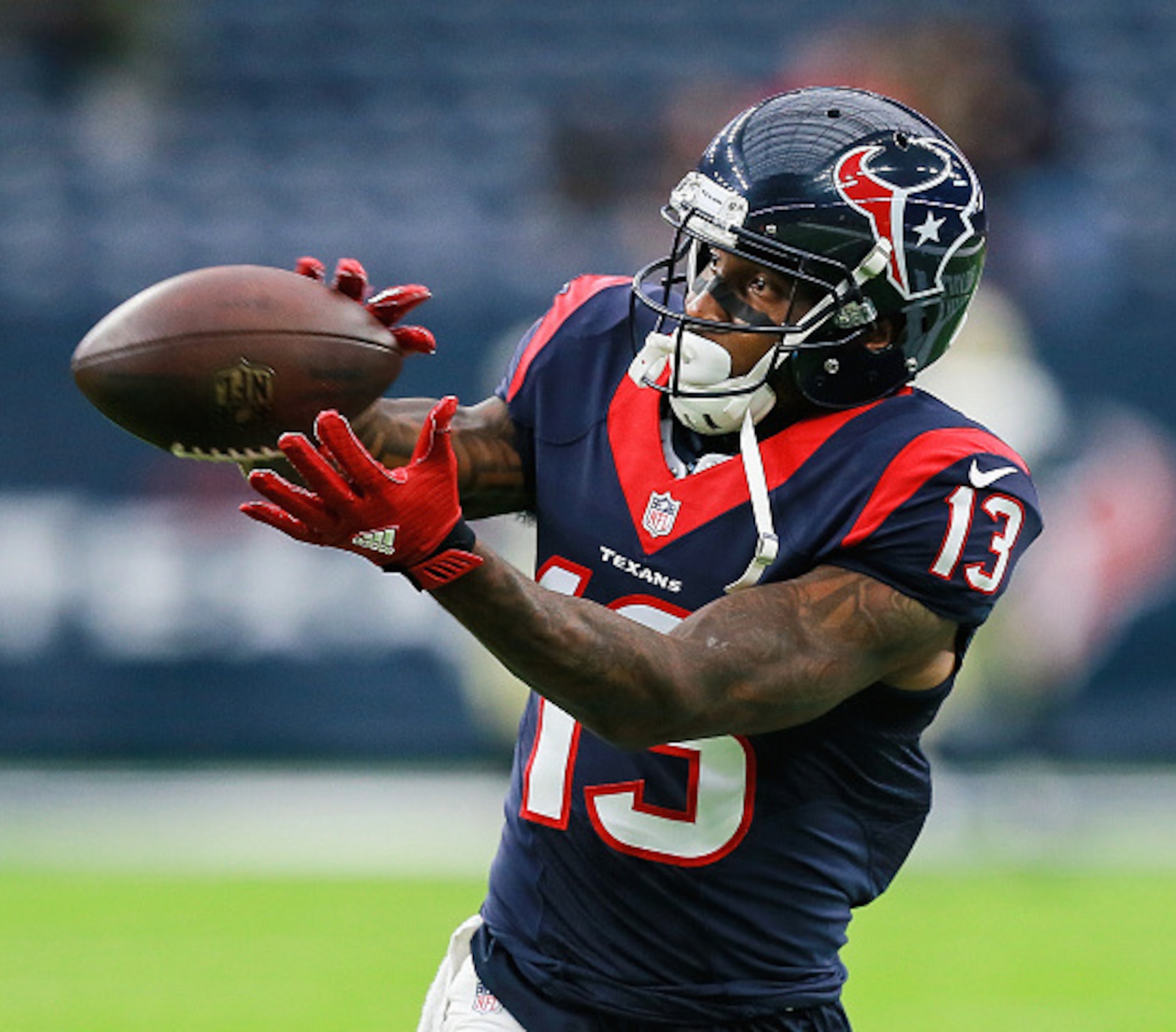
Braxton Miller has the sort of raw athleticism that leads to deep daydreams about what he could become in the near future. That's why the Houston Texans made him a Day 2 draft pick in 2016 even though his experience at wide receiver after making the transition from quarterback was still limited.
Two problems in 2016 stunted his development, and they were both out of his control. The first was health, as Miller struggled to stay on the field, which also robbed him of valuable practice snaps. The 24-year-old missed time with a groin issue early in the season and then had his year end just after Week 14 with a sprained AC joint that required surgery.
The other problem was one that plagued every Texans receiver and still could going forward. Watching Houston's quarterbacks was about as enjoyable in 2016 as stubbing your toe repeatedly. Brock Osweiler was a wayward mess and has since become a mistake the Texans admitted to quickly while moving on. He threw 16 interceptions and averaged only 5.8 yards per pass attempt.
It was nearly impossible for any receiver to develop in that setting. Especially one like Miller, who had spent only one season as a receiver at the college level. There's still plenty of potential ready to be unlocked within him, though, and with an offseason of growth, he can become an ideal slot complement when put next to Will Fuller and DeAndre Hopkins.
Indianapolis Colts: John Simon, Outside Linebacker/Defensive End
14 of 32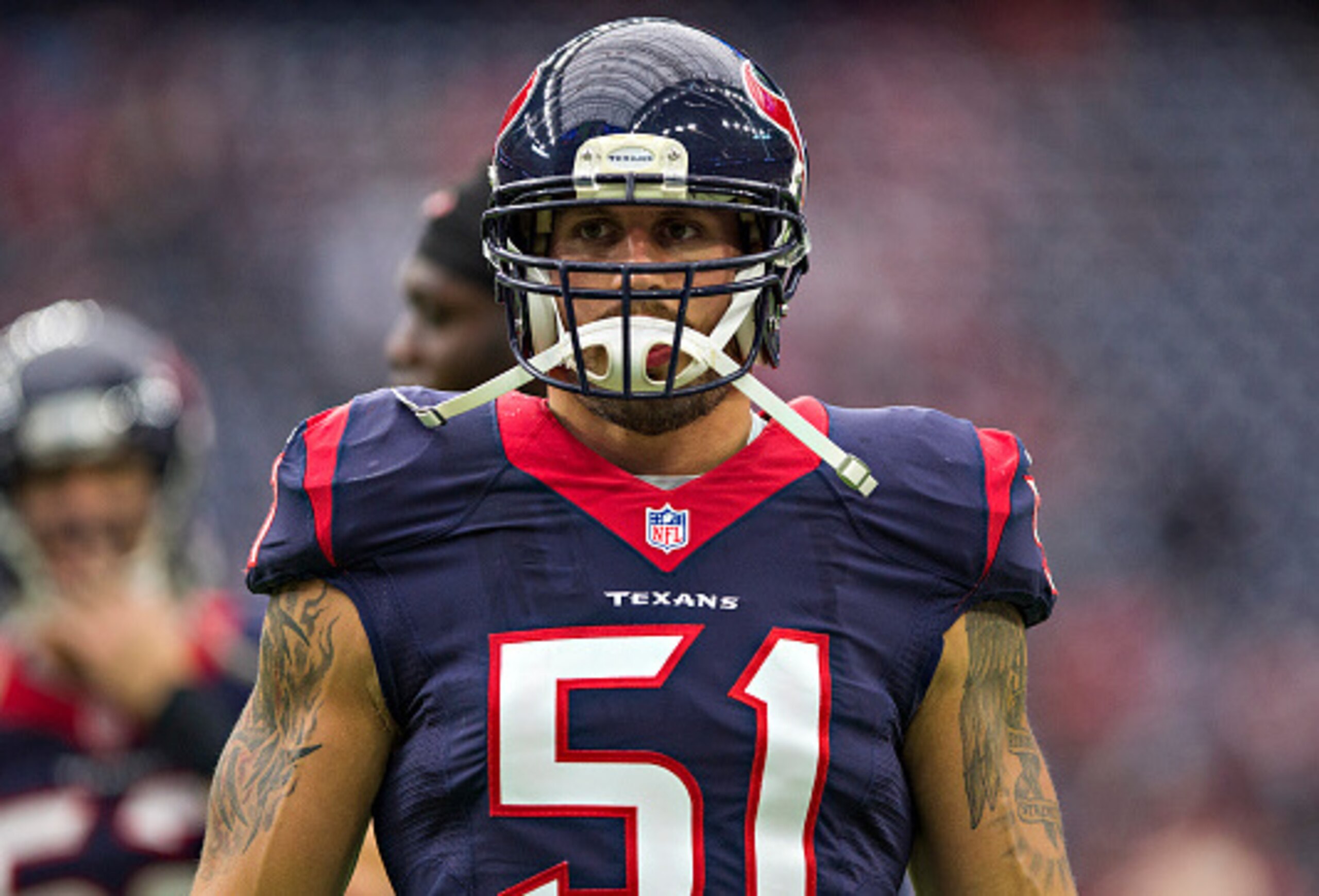
There's a massive question mark hovering over outside linebacker John Simon. Can he keep producing at a high level without the help of former Houston Texans defensive line teammates J.J. Watt and/or Jadeveon Clowney?
If the answer to that question is yes, Simon will step out from those two large shadows to become a free agency steal for the Indianapolis Colts.
Simon agreed to a three-year contract worth $13.5 million in the early days of free agency, with only $5.5 million guaranteed at signing. The deal was a bargain for a Colts team that's been searching for a solution to re-energize its stagnant pass rush.
What made Simon a fine buy-low candidate? Well, how about his two straight years with 50-plus tackles and a total of 8.5 sacks during that stretch in a situational role. Simon was on the field for 61.8 percent of the Texans defensive snaps in 2015, per PFF, and 72.3 percent in 2016. Yet he still recorded 50 defensive stops during that stretch and 53 pressures.
How much of that was a product of Watt and Clowney occupying blockers? The Colts are about to find out.
Jacksonville Jaguars: Dante Fowler, Defensive End
15 of 32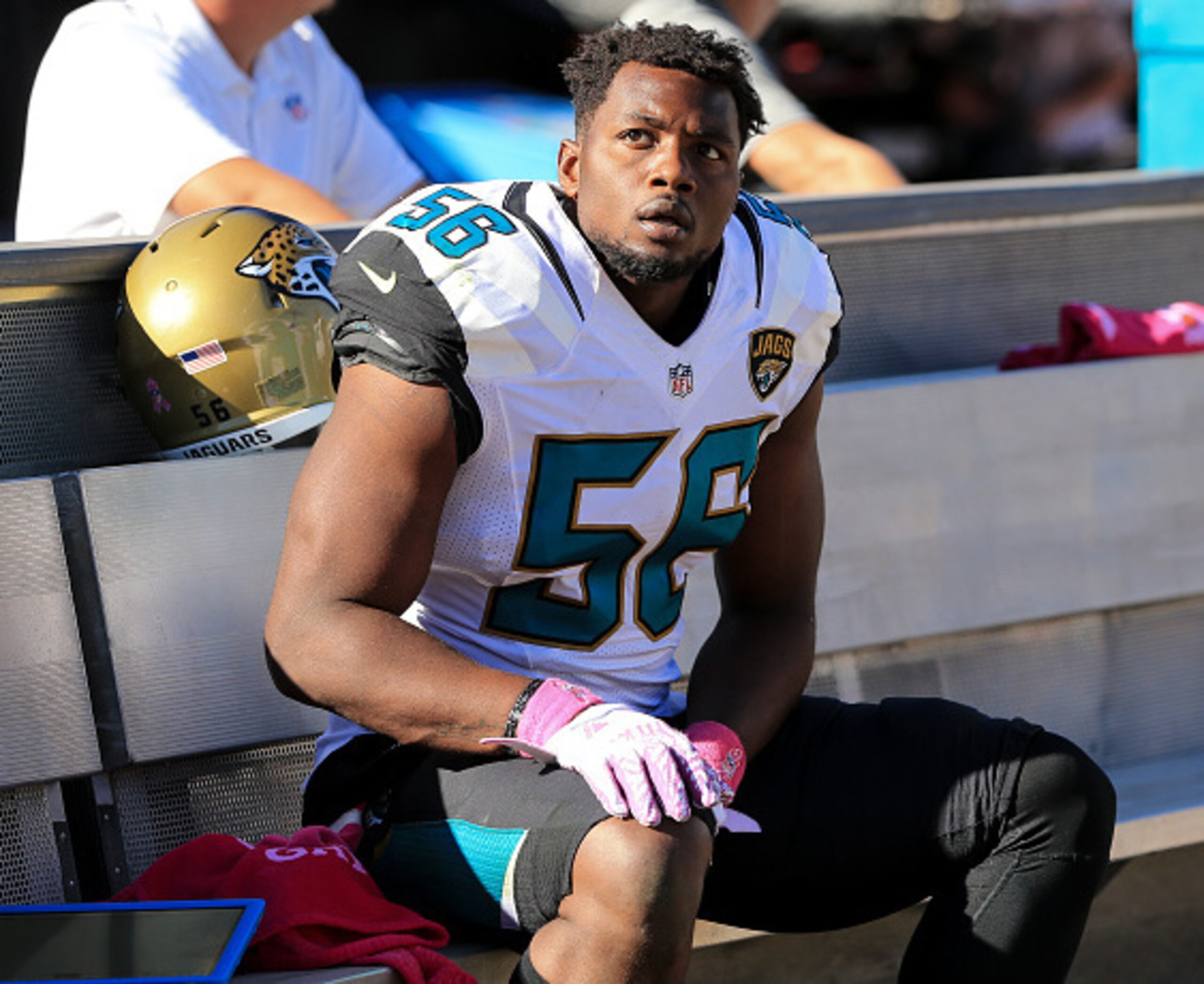
The start of Dante Fowler's NFL career in 2015 was quickly derailed by an ACL tear during his first day of mini camp. Then he was slowed by a shoulder injury in 2016.
After two years, the Jaguars haven't really seen the true Fowler yet—the guy who totaled 14.5 sacks over three seasons for the Florida Gators. He was benched for undisciplined play during a midseason game in 2016 and saw his snap count gradually decrease. Fowler was lined up for at least 60 percent of the Jaguars snaps in three of their first four games. Then his snap count didn't rise to that percentage again until Week 17, per PFF.
There's still plenty of reason for hope, though, as Fowler tries to avoid being a draft bust. Much of it will come from Calais Campbell, the towering pass-rusher who will now be a central focus for opposing offensive lines. Fowler can then lean on his explosive edge speed to collect sacks and pressures and finally have a breakout in his third year.
If that doesn't happen in 2017, his spiral toward being another wasted Jaguars draft pick will continue.
Kansas City Chiefs: Chris Conley, Wide Receiver
16 of 32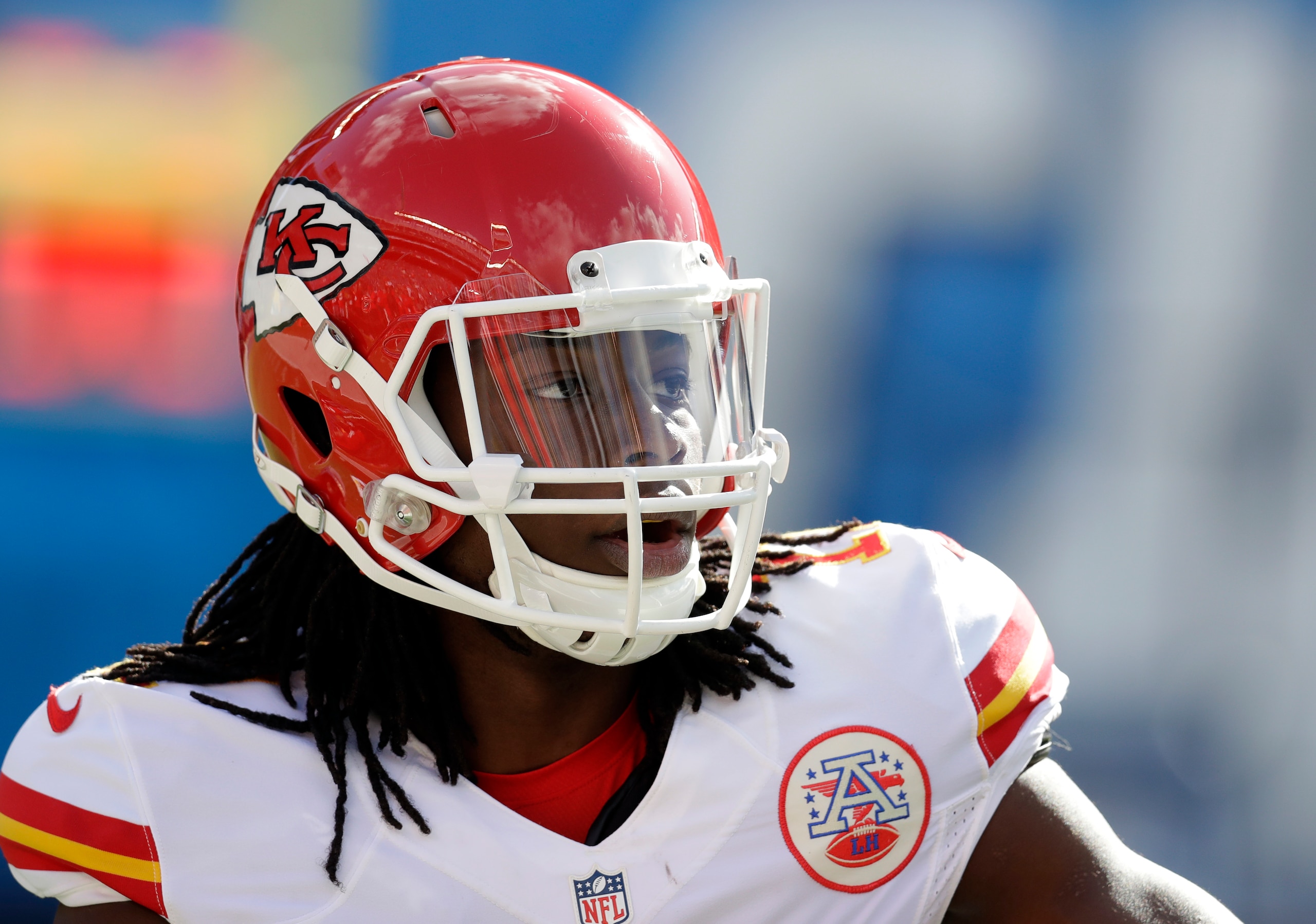
If Chris Conley landed with just about any other team in the draft, he may have broken out already. But alas, a rocket-fueled wide receiver heard his name called by the Kansas City Chiefs, a team rooted in quick-hitting short passes offensively as part of head coach Andy Reid's west coast system.
But Reid has often still had a consistent deep threat in his offenses. Please recall the 2010 season when Reid was then leading the Philadelphia Eagles and wide receiver DeSean Jackson averaged 22.5 yards per reception.
Could Conley eventually become at least a poor man's version of Jackson for Reid now? That's the hope, and Conley certainly has the speed. He posted a 4.35 in the 40-yard dash at his scouting combine appearance and averaged 18.3 yards per catch during his final year at Georgia.
That speed has been deployed sporadically during Conley's time with the Chiefs. But those wheels, along with his 6'3" frame, still give him a high talent ceiling, and one that should eventually shine through even if he's a misfit in Reid's offense.
Los Angeles Chargers: Hunter Henry, Tight End
17 of 32
Yes, Antonio Gates is still hanging around, and the certain Hall of Famer has earned the right to take all the time he needs while winding down his career.
And no, Gates' presence shouldn't impact Hunter Henry's true breakout bid. Or at least it won't matter much, because during his rookie season, Henry nearly busted out even with Gates around.
Gates still had a fine season in 2016 for a 36-year-old. Few tight ends of that vintage could haul in 53 passes for 548 yards and score seven times. But those numbers put Henry's 2016 production in the proper context.
Gates sucked back 85 targets, which left only 47 for Henry. Yet the second-round pick still finished tied for the league lead among tight ends with eight touchdown receptions, and his 478 receiving yards wasn't that far behind Gates considering he had nearly half the targets.
There will still be a target share between the two, but at worst it should be much closer to an even split. Anything less would simply defy common sense after Henry did so much with so little as a rookie.
Los Angeles Rams: Tyler Higbee, Tight End
18 of 32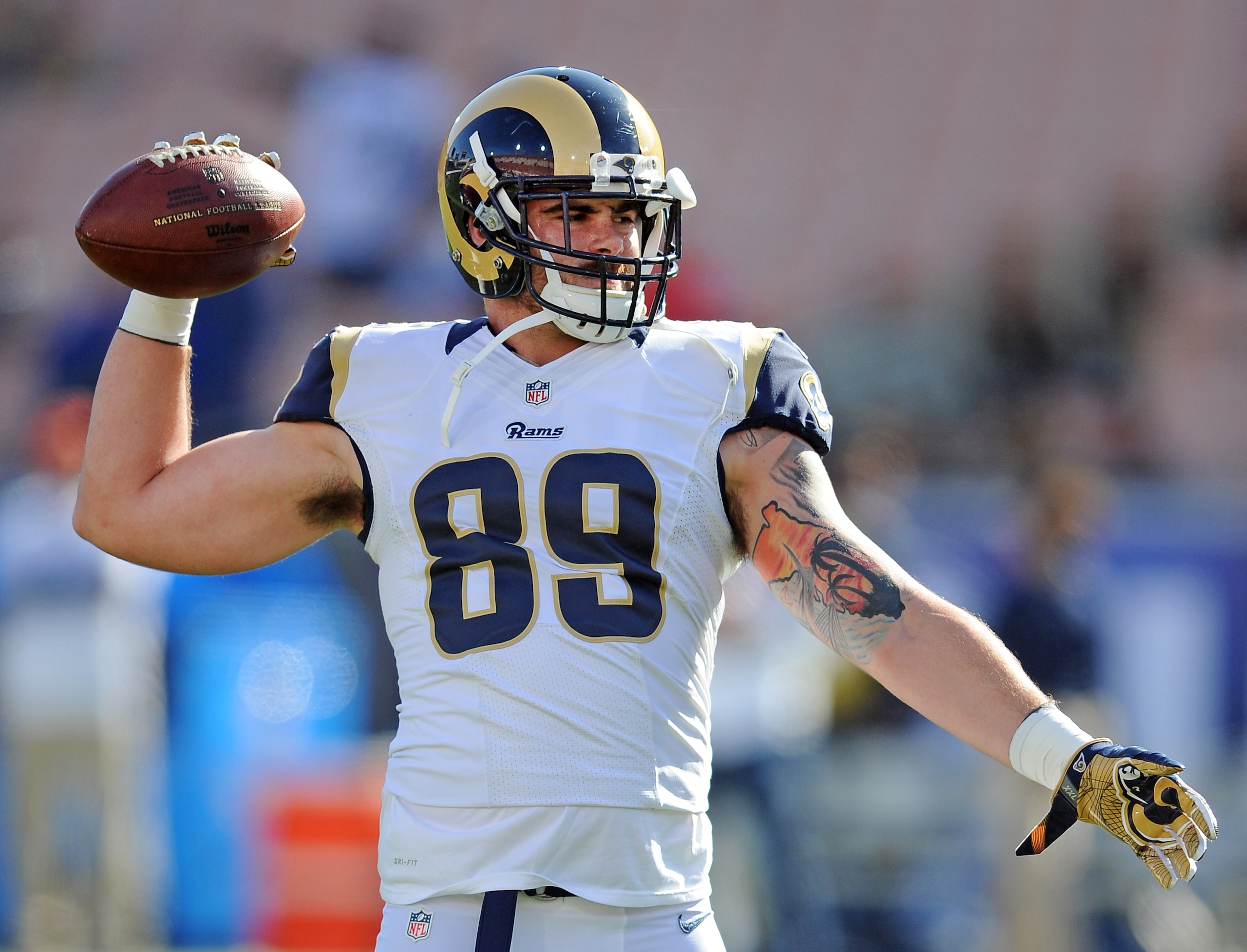
Los Angeles Rams tight end Tyler Higbee had a quiet rookie year after falling in the draft because of off-field issues. But he was gradually given a larger role as the season went along. Of his 26 total targets, 19 came over the last seven games.
He didn't do much with those overall still sparse opportunities (11 receptions for 85 yards with a touchdown). But what he did then is less important than what he can do now under a new coaching staff, and more importantly, with a reshuffled depth chart at his position.
Higbee became the Rams' starting tight end after the departure of Lance Kendricks, who was released and signed by the Green Bay Packers. It's likely only a face plant during OTAs and training camp will remove him from that position. That's certainly the impression you get when listening to Rams head coach Sean McVay shower praise on his new tight end.
McVay was the Washington Redskins' offensive coordinator in 2016, and his unit finished with the most tight end receiving yards. So he knows what a tight end who can thrive in his system looks like.
"He can stretch the seam," McVay told Alden Gonzalez of ESPN.com. "He's got a good feel and savvy in the pass game. How we use him will yet to be determined, but he's a guy we're looking forward to getting on the grass with."
The Rams will likely add talent at the position during a tight end rich draft. But Higbee will still surely see a significant increase over his minimal workload as a rookie.
Miami Dolphins: DeVante Parker, Wide Receiver
19 of 32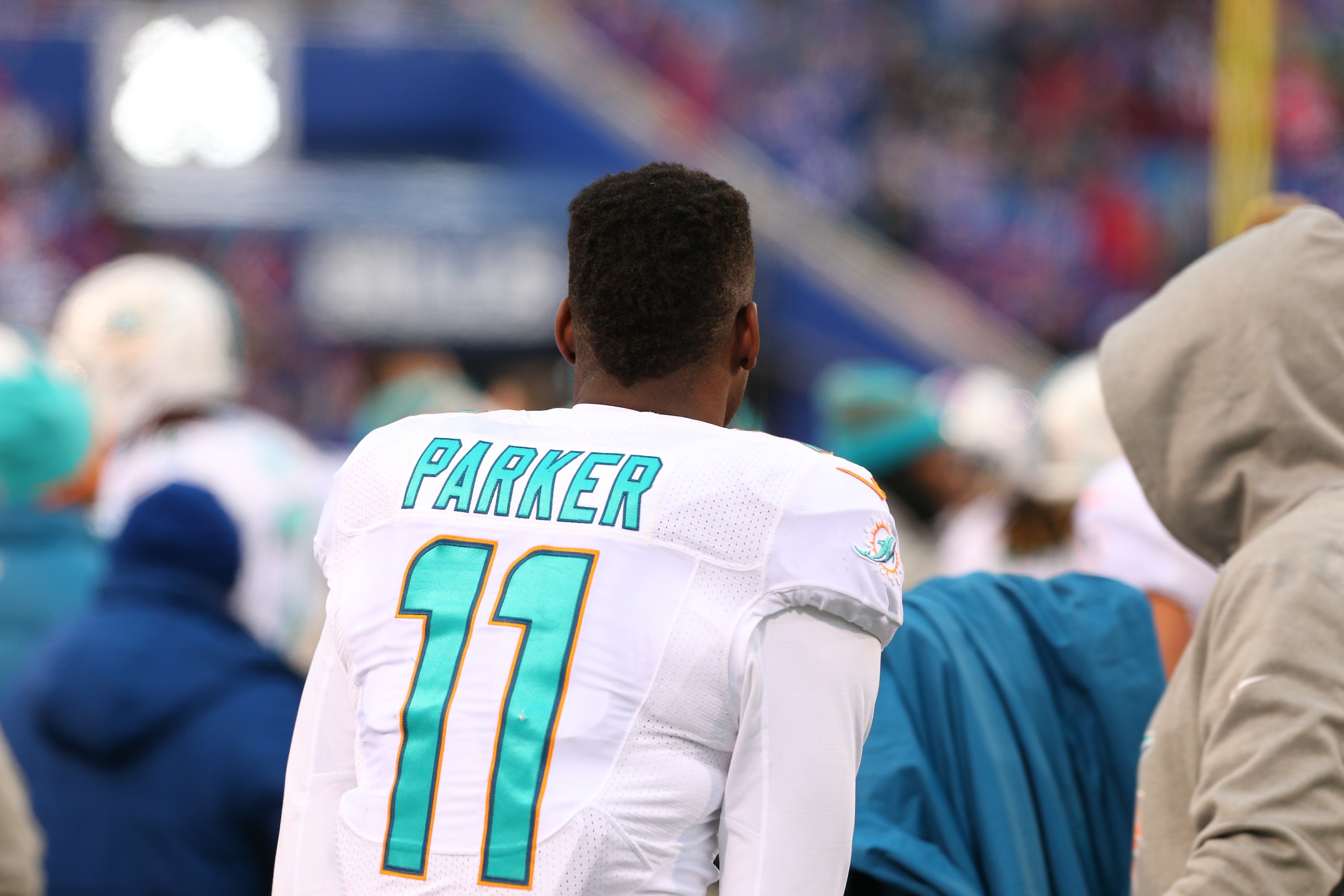
DeVante Parker's career so far has mostly been a series of flashes of greatness but an inability to turn that into anything consistent.
If the Miami Dolphins trusted their young wide receiver to perform consistently, they may have taken a different approach in free agency, spending the money used to re-sign fellow wideout Kenny Stills elsewhere.
Parker has struggled partly because of his work ethic. Dolphins head coach Adam Gase didn't shy away from publicly criticizing him on that front when he said the 24-year-old needs to "be more consistent" in his approach, per NFL.com's Gregg Rosenthal.
What's so frustrating about Parker is that when the former first-round pick does put it all together on a Sunday, he can really launch into another gear to become a feared physical weapon.
He recorded two 100-plus yard games in 2016 and showed deep-ball potential with four catches for 40-plus yards. That came after a rookie season when he seemed to be building toward a second-year breakout with 286 receiving yards over the final three games of 2015.
He'll take another swing at that breakout in 2017. If Parker misses this time, a draft-bust cloud will start to form over him.
Minnesota Vikings: Laquon Treadwell, Wide Receiver
20 of 32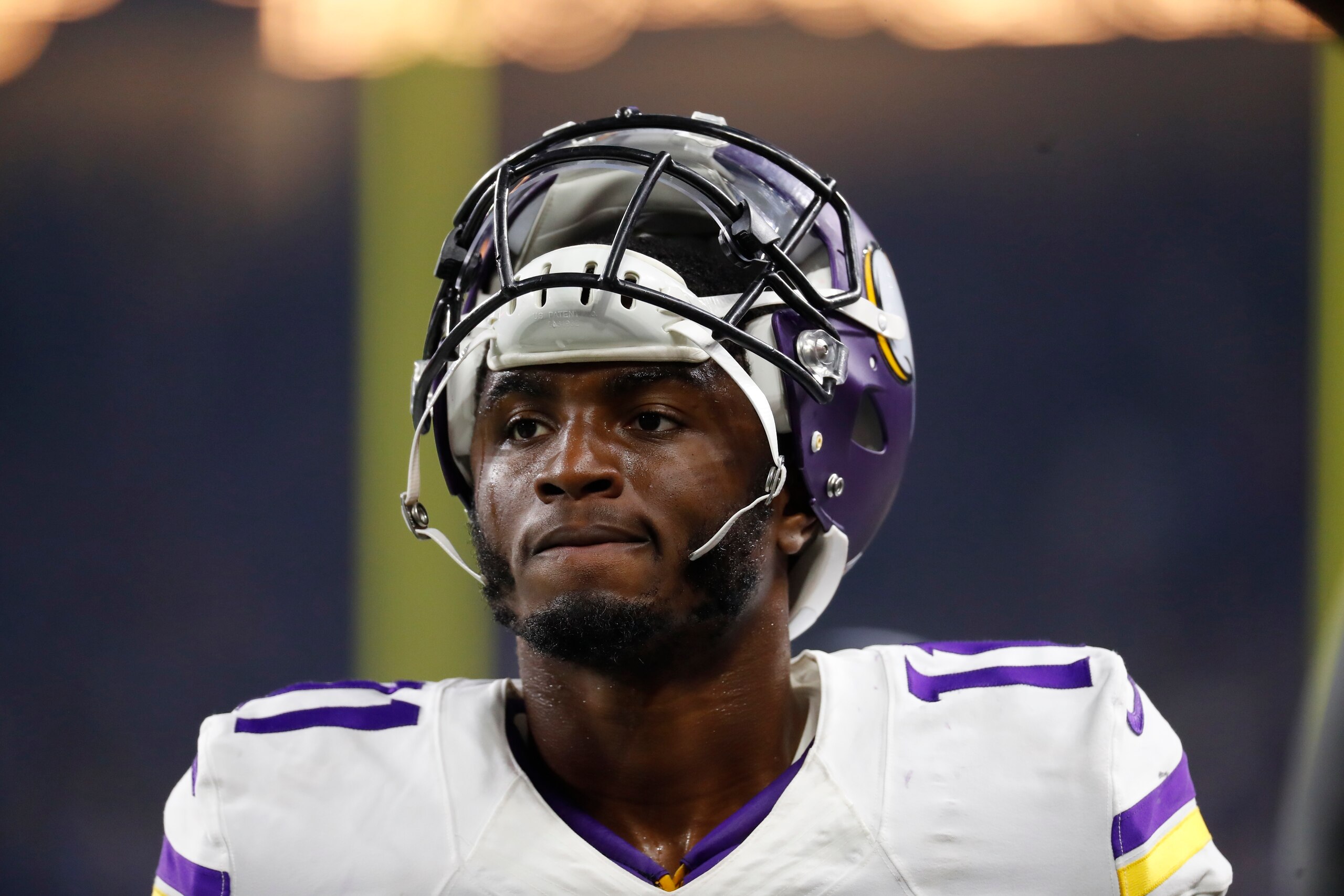
On the surface, this may seem like a reaching pick because Minnesota Vikings wide receiver Laquon Treadwell could barely get on the field during his rookie year in 2016. So he didn't do much to fuel breakout hope.
Skepticism is quite understandable after a first-round pick mustered one measly reception during his first year, and he was targeted only three times. Treadwell did his best to redefine what a first-year dud looks like, though in fairness, he did struggle through multiple injuries.
But being a high draft pick gives a prospect multiple chances to prove he is indeed awful. And although Treadwell may not bust out to become a Pro Bowler anytime soon, it's still difficult to believe he's a complete zero already. Remember, he's still only one year removed from finishing his college career at Ole Miss with 1,153 receiving yards and 11 touchdowns.
He'll get playing time in 2017, even just by default after Charles Johnson and Cordarrelle Patterson left as free agents. Treadwell already needs to breakout and save his career, and the Vikings need him to find that 2015 version of himself.
New England Patriots: Rex Burkhead, Running Back
21 of 32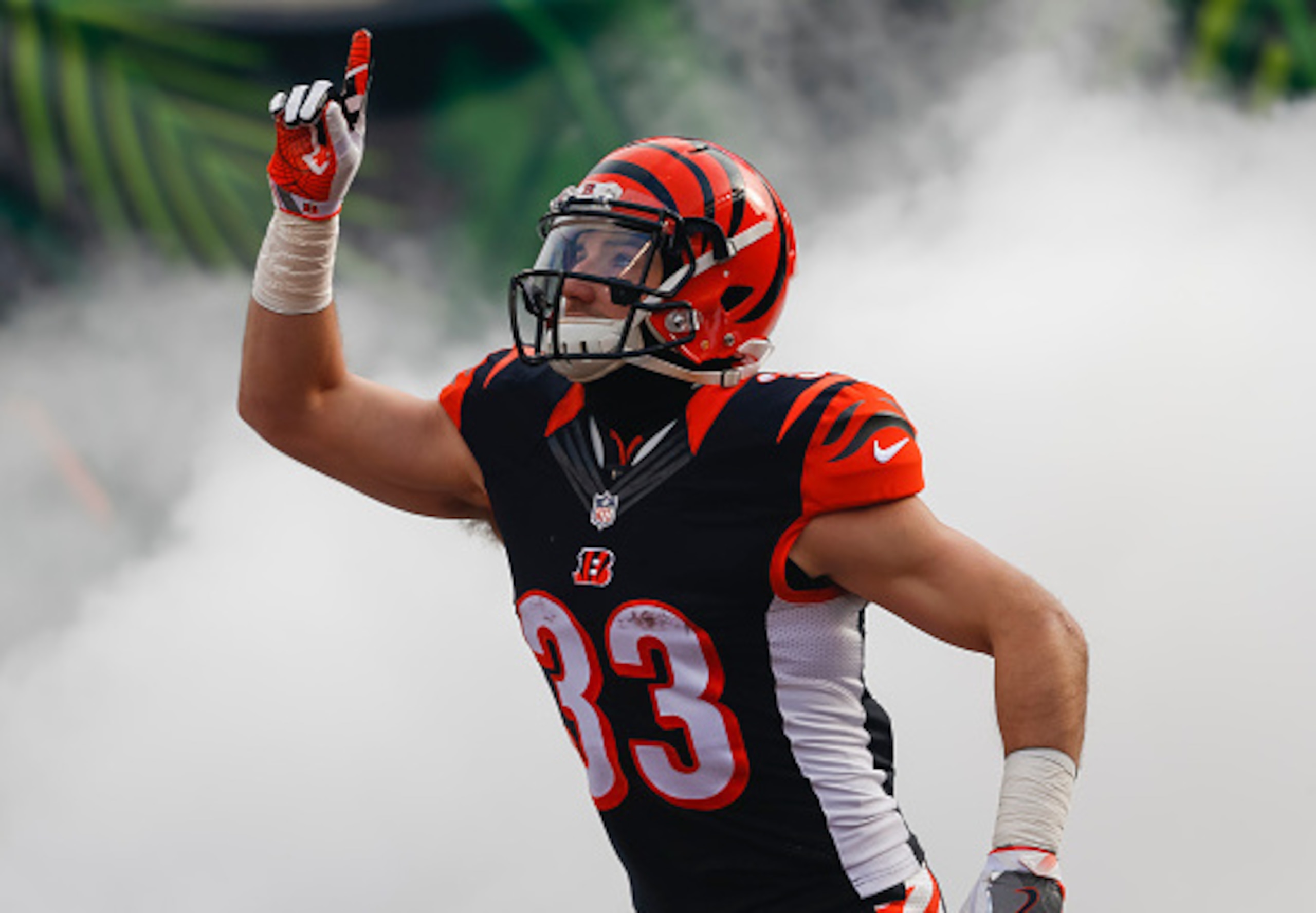
At first it might seem like the New England Patriots already have two other Rex Burkheads in their backfield. But while it's true that running backs Dion Lewis and James White have similar skill sets to the recently signed Burkhead, that might not matter much. Or at all.
Money always speaks the loudest, and the $3.15 million that New England gave Burkhead for one season makes him the highest-paid Patriots running back since Fred Taylor in 2010, according to Mark Daniels of the Providence Journal.
This is an NFL era when running backs are always in the discount aisle of free agency. During free agency, the running back market was sluggish and didn't really get going until nearly every other position was picked away at down to the second tier.
Yet Burkhead was given the most money of any Patriots running back over the past six seasons. A team doesn't pay a running back like that if he's just going to be a depth piece and a special teams contributor.
That financial commitment means Burkhead has a legitimate chance to start for the defending champs, or at worst be on the high end of a platoon. And it's not difficult to understand what head coach Bill Belichick saw in the versatile 26-year-old.
Burkhead wasn't given many opportunities to contribute with the Cincinnati Bengals, but he pounced on his few chances. He can line up in the slot to create mismatches and recorded 239 receiving yards over the past two seasons on 27 catches. He also runs with compact power, with his 2016 season highlighted by the 144 yards from scrimmage Burkhead posted in Week 17 while also scoring twice.
Most impressively, he's slippery and created 15 missed tackles in 2016 on only 91 touches, per PFF. The Patriots might finally give him a longer look, and he could become yet another reliable option in Belichick's running back stable.
New Orleans Saints: Sheldon Rankins, Defensive Tackle
22 of 32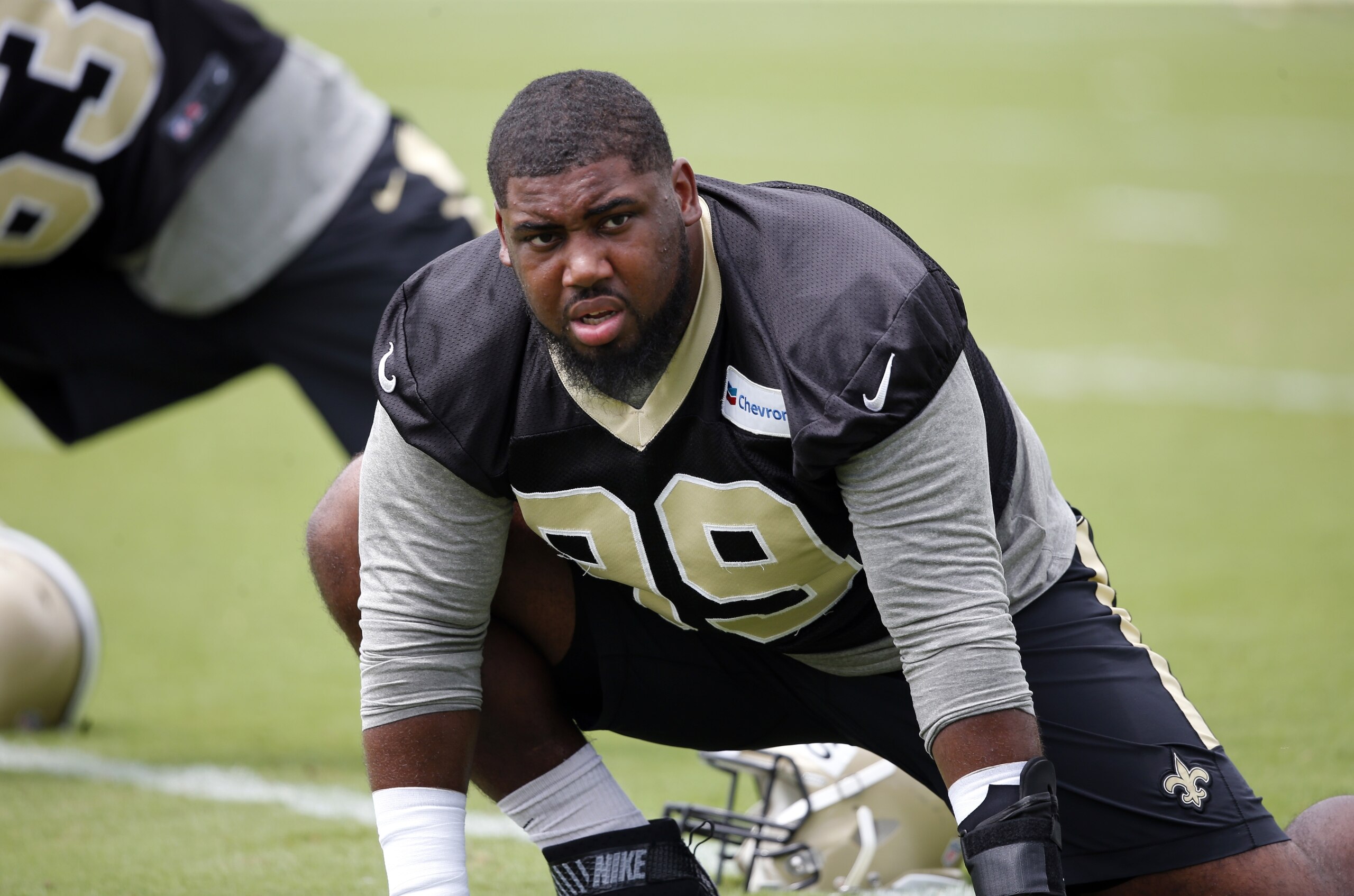
The New Orleans Saints' defense resembled a massive sinkhole during the 2016 season.
It was a group likely set to struggle even with every core piece healthy. Of course, staying healthy didn't happen at all, and it started with defensive tackle Sheldon Rankins breaking his fibula during a mid-August training-camp practice.
It's a roundhouse kick to the jaw any time your 12th-overall pick from the previous draft needs to be placed on short-term injured reserve to begin his rookie season. That was the devastating news for the Saints. The uplifting news going forward lied in what Rankins did immediately when he returned from injury.
Rankins played only nine games, but that's all the time he needed to record four sacks while being an absolute bear on the interior. He also finished with 15 pressures and 10 defensive stops over that short time, per PFF.
He quickly confirmed what the Saints assumed: That Rankins can change the character of their defense by providing a game-altering pass-rush presence up the middle.
New York Giants: Paul Perkins, Running Back
23 of 32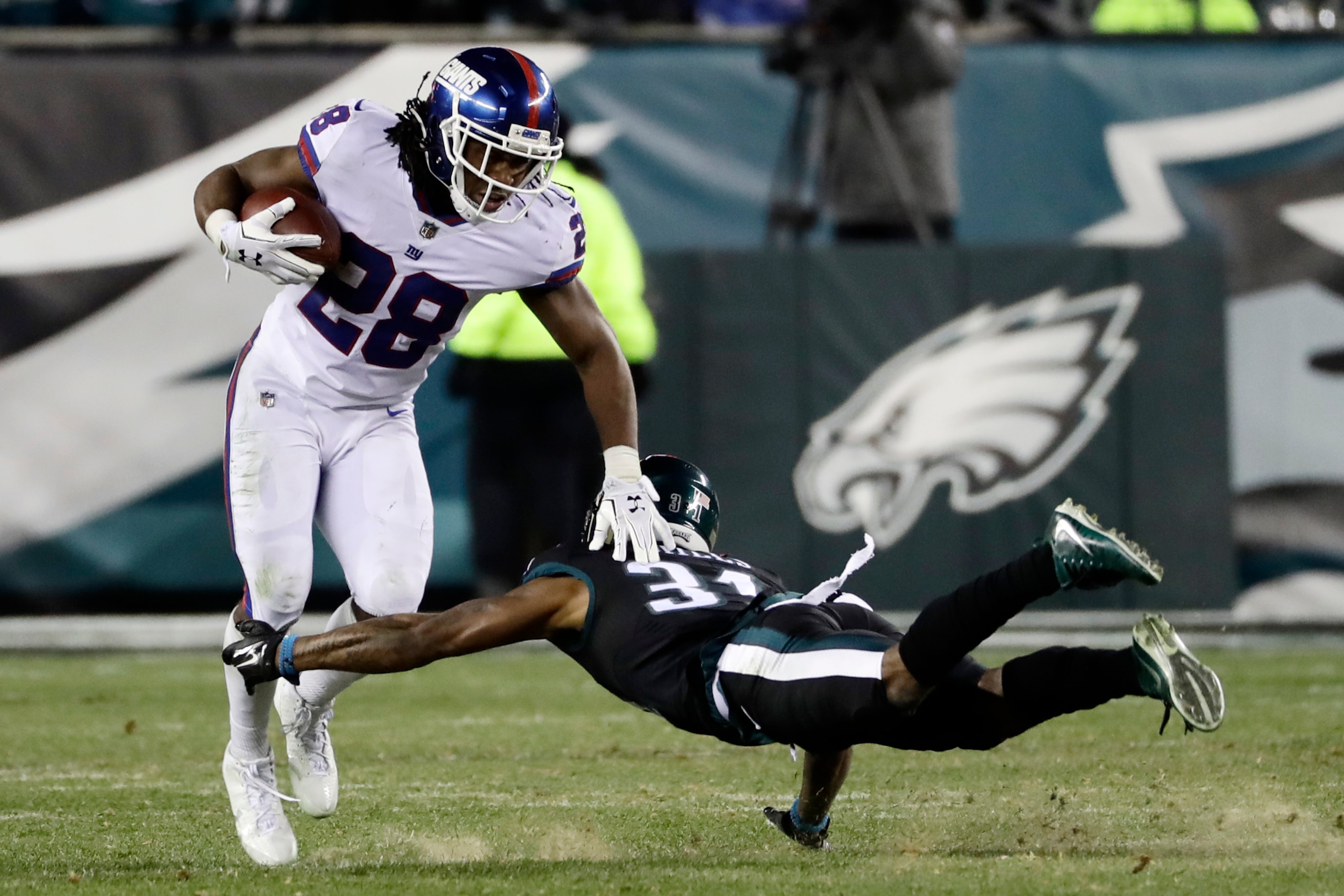
Paul Perkins is like the change you're delighted to find in a coat pocket.
The running back required a minimal draft investment and was available well into Day 3 of the 2016 proceedings. The Giants plucked him off the board at 149th overall, and now in his sophomore NFL season, the 5'10" and 208-pound bundle of forward-charging pain could emerge as their top back.
That job should be Perkins' to lose after Rashad Jennings was released. Jennings became expendable when Perkins began to dazzle late in 2016—especially during a four-game stretch to end the season. Over that final quarter of the year, Perkins was given double-digit carries in each game and rewarded the Giants coaching staff with 271 rushing yards on 62 attempts (4.4 yards per carry).
He was also effective and versatile as a pass-catcher out of the backfield during his rookie year, snatching 15 passes for 162 yards. That was highlighted by a 67-yard catch and run in Week 4.
His production could quickly spike with Perkins in a starting role. He'll provide valuable support for Eli Manning, a quarterback who needs it during the twilight stage of his career.
New York Jets: Robby Anderson, Wide Receiver
24 of 32
The New York Jets' offense spent most of 2016 spiraling deep into sewage. But even during the darkest times there's still some youth-powered hope, which leads us to Robby Anderson.
Anderson started to really showcase his downfield burst late in 2016 as an undrafted rookie. From Week 13 onward, he averaged 15.7 yards per reception. Even more impressively, he recorded four catches for 40-plus yards on just 42 receptions overall. For perspective, the Giants' Odell Beckham Jr. finished among the league leaders with six catches for 40-plus yards, but he needed 101 overall receptions to get there.
That shows Anderson's unique explosion and how quickly he could rise if the Jets somehow find themselves a league-average quarterback.
Oakland Raiders: Karl Joseph, Safety
25 of 32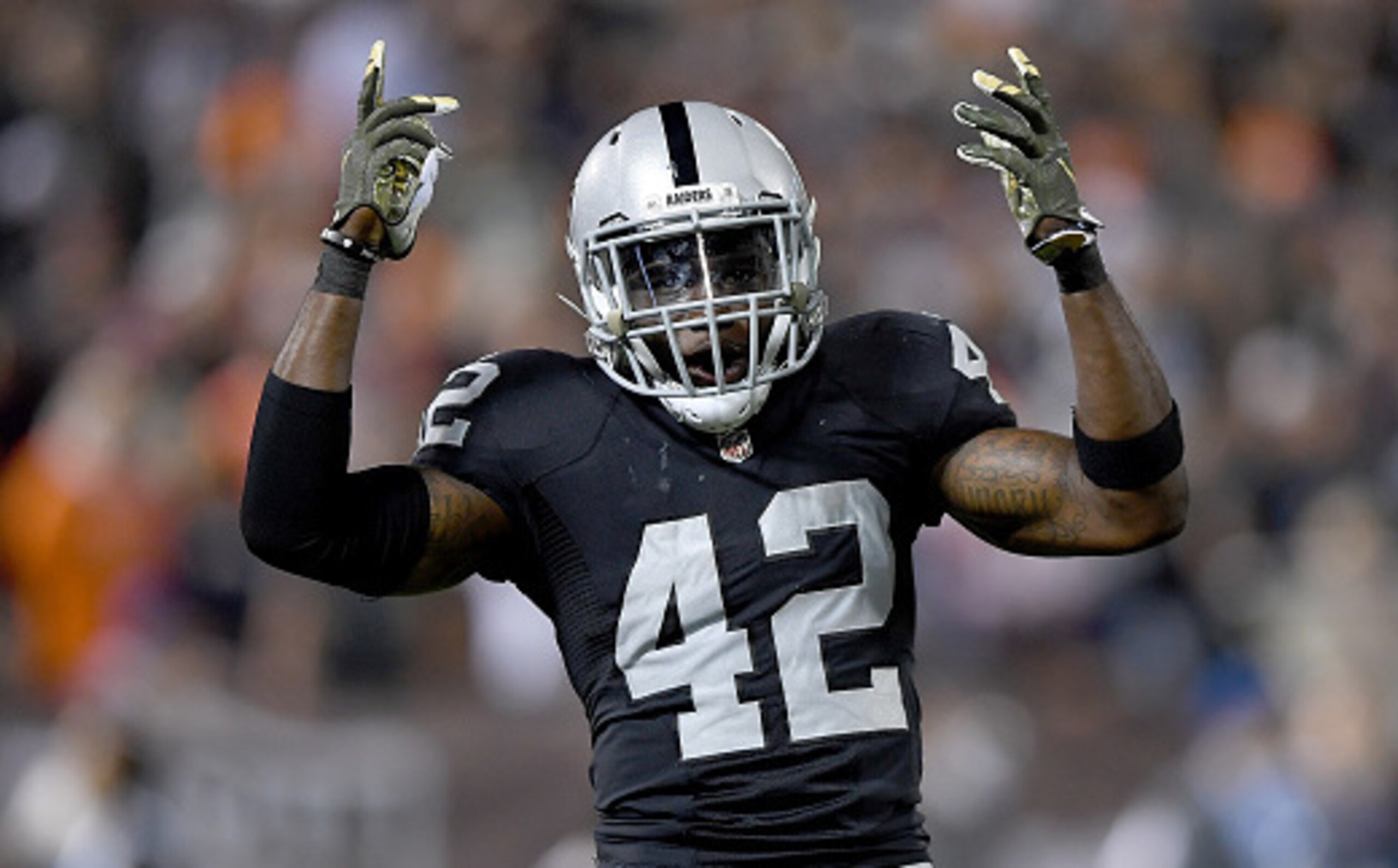
An Oakland Raiders defense that ranked 26th against the pass in 2015 needed a safety who could be magnetized to the ball while minimizing the sting of deep chunk plays.
Which is why they selected Karl Joseph with their 14th-overall pick in 2016, and he filled that hole fast. Joseph flowed to the ball with ease as a rookie, and on 25 targets, he allowed a solid passer rating in coverage of 88.0, per PFF.
He's also quick to read the blocks developing in front of him, which translates to missile-like reactions against the run. Joseph recorded eight-plus tackles in four of the 12 regular-season games he played, along with 15 defensive stops.
His rookie season was cut four games short by a toe injury. But he has the tools to anchor the Raiders' secondary for a long, long time.
Philadelphia Eagles: Jordan Hicks, Middle Linebacker
26 of 32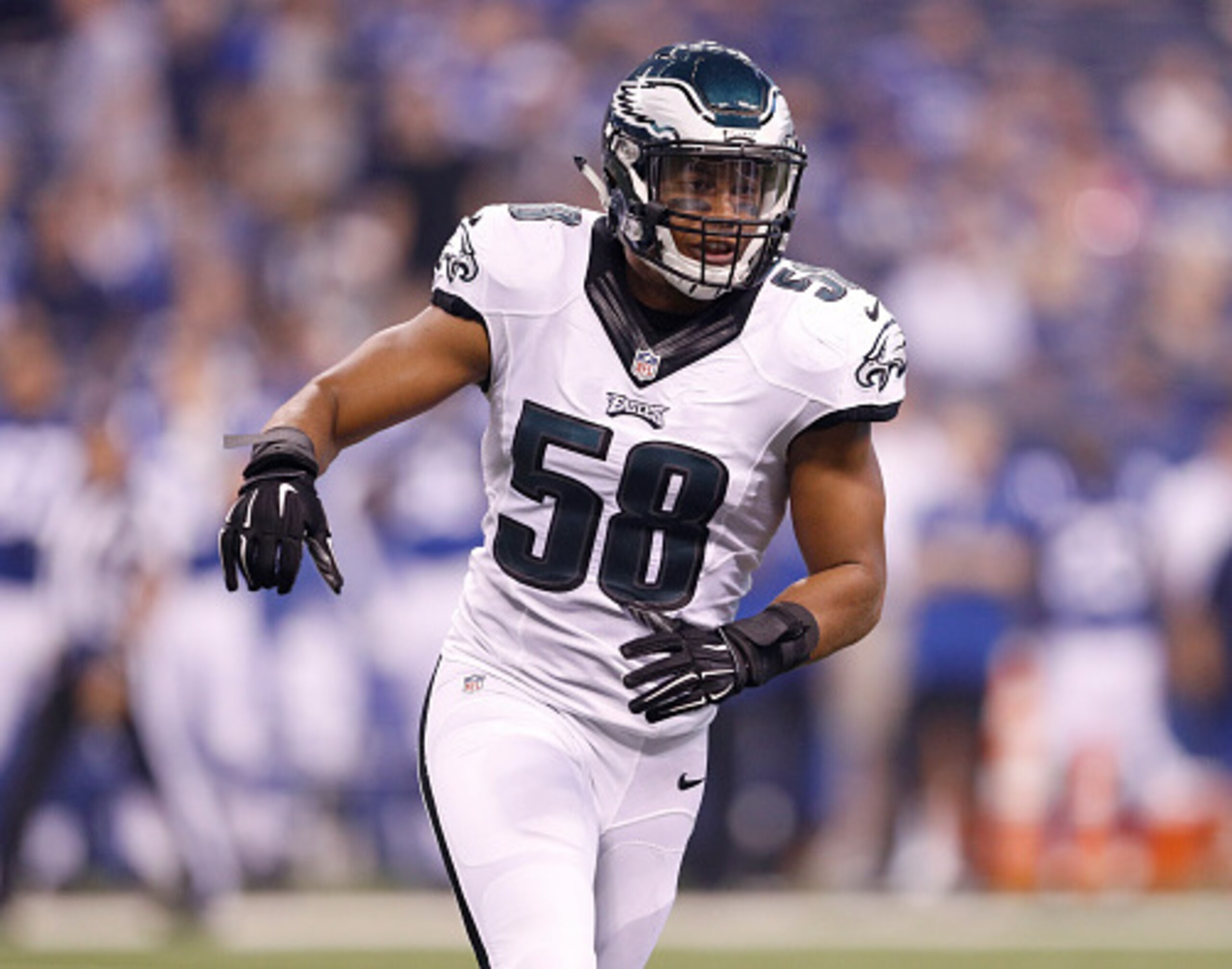
Jordan Hicks did more than just lead all linebackers in 2016 with his five interceptions. The Philadelphia Eagles third-round pick in 2015 was also among the league leaders in interceptions during a season when he rose to become one of the NFL's best coverage linebackers.
He was just one interception behind the likes of Marcus Peters and Dominique Rodgers-Cromartie, and they both play cornerback. Hicks also showed solid instincts against the run while finishing with 40 defensive stops and 85 tackles.
It's easy to assume his breakout has already happened. But given the quick climb to the top tier of his position, it's even easier to assume Hicks isn't close to his talent ceiling yet.
Pittsburgh Steelers: Eli Rogers, Wide Receiver
27 of 32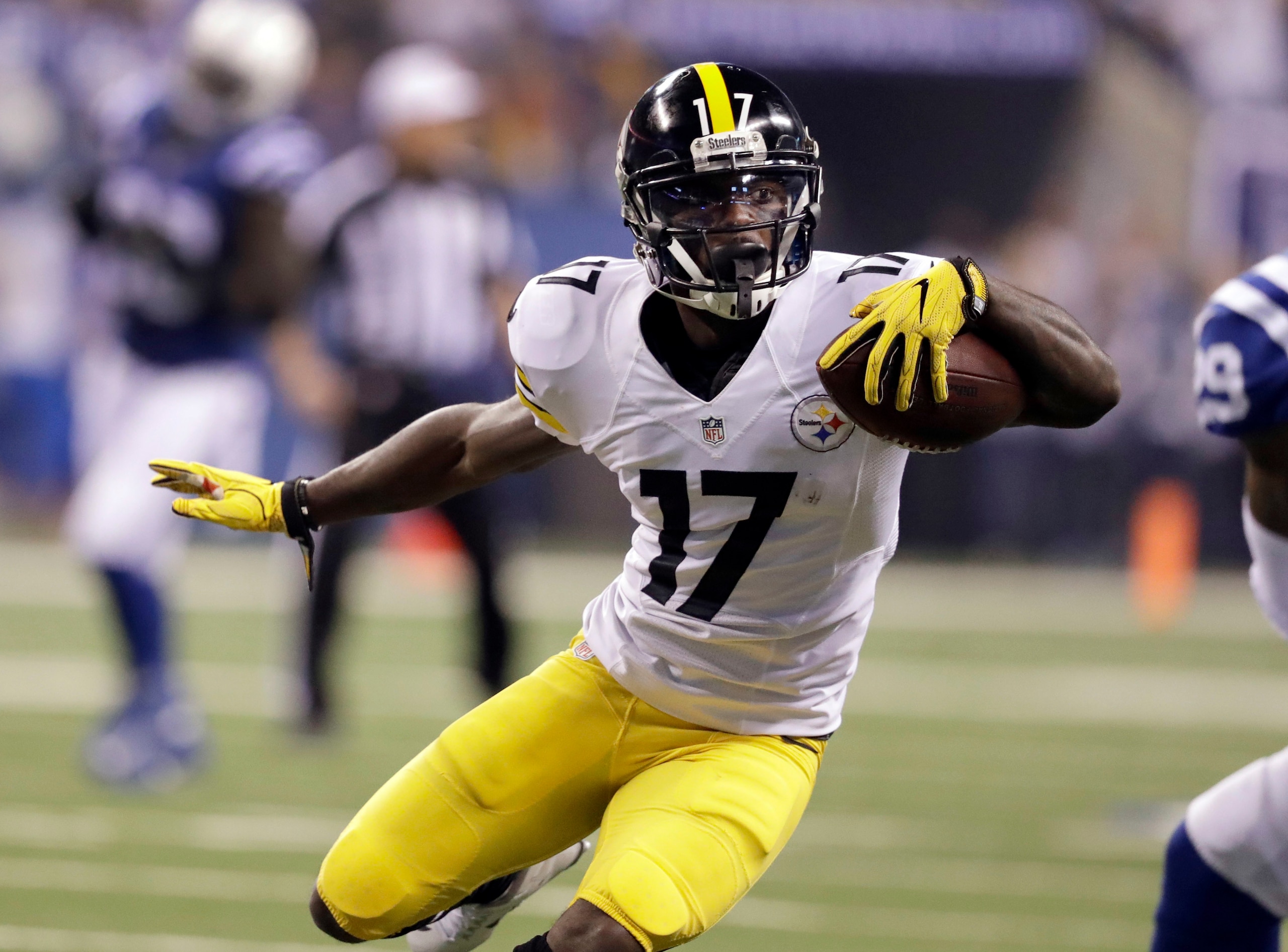
The Pittsburgh Steelers simply can't count on wide receiver Martavis Bryant to be the long-term complementary option across from Antonio Brown. That's clear after he served suspensions in each of the last two seasons and had to sit out all of 2016.
They need to elevate another promising young receiver as the No. 2 option for quarterback Ben Roethlisberger. And Eli Rogers can be that guy.
Rogers went undrafted in 2015 and was then given his first start in Week 6 of 2016. Just a few weeks later, he went off for 103 yards on six receptions against the Ravens. He finished what was essentially his rookie season with 594 receiving yards and three touchdowns, which is solid considering Rogers had only 13 receptions heading into Week 9.
He has secondary-busting speed, and showed it with four catches for 30-plus yards in 2016. His prominence in the Steelers' offense increased to the point that Rogers was targeted 10 times during the AFC Championship Game.
The balls thrown in Rogers' direction should keep increasing in 2017, along with his production.
San Francisco 49ers: DeForest Buckner, Defensive End
28 of 32
It was easy to find yourself tumbling down the DeForest Buckner game film rabbit hole about a year ago at this time as the pre-draft evaluation began. At 6'7" and 300 pounds, he's a gargantuan tree-like human, and the 23-year-old defensive end comes complete with a blend of power and speed to win trench battles consistently.
That is what he did as a rookie after the San Francisco 49ers selected him with their seventh-overall pick in 2016. His six sacks tied Buckner for fourth among all 3-4 defensive ends as a rookie, matching the output from much more established veterans like the Bills' Kyle Williams and former Redskins defensive end Chris Baker.
Buckner also finished fourth at his position with 48 total pressures, per PFF. His arrow is pointing way, way up in 2017 for an otherwise struggling team, and the 49ers have likely found the new centerpiece of their defense.
Seattle Seahawks: Paul Richardson, Wide Receiver
29 of 32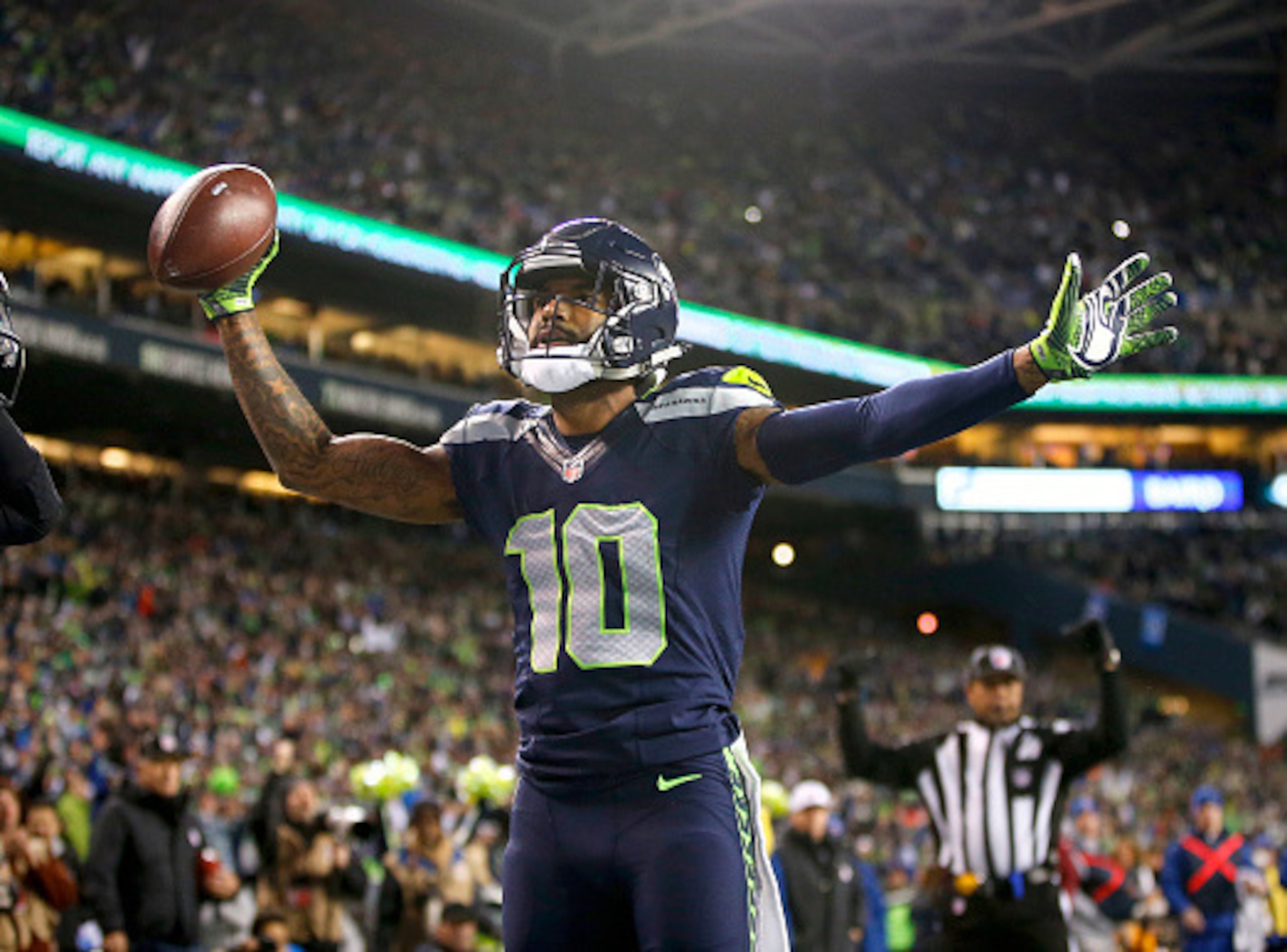
The first two seasons of Paul Richardson's career were a constant reminder of how brutally cruel football can be at times. The Seattle Seahawks wide receiver essentially had those years washed away by an ACL tear in the 2015 playoffs that kept him out until late the following season. Then a hamstring injury in December 2015 also landed him on injured reserve.
In 2016, he was finally healthy, but by then the Seahawks had also added Tyler Lockett to their wide receiver depth chart. For much of the season there was a firm lid on Richardson's playing time, and he logged six games when his snap percentage was at or below 20 percent, per PFF.
But then suddenly he was needed again when Lockett broke his leg in late December. Instantly Richardson morphed back into an athletic receiver with a wide catch radius, and acrobatic grabs became the norm—especially in the playoffs with his one-handed touchdown reception that was maybe and probably a penalty but still showed spectacular skill nonetheless.
Richardson finished the playoffs with 131 receiving yards over the Seahawks' two games. He's still lower on their depth chart, but Richardson's playoff performances alone should earn him more targets and the chance to finally breakout during the last year of his rookie contract.
Tampa Bay Buccaneers: Noah Spence, Defensive End
30 of 32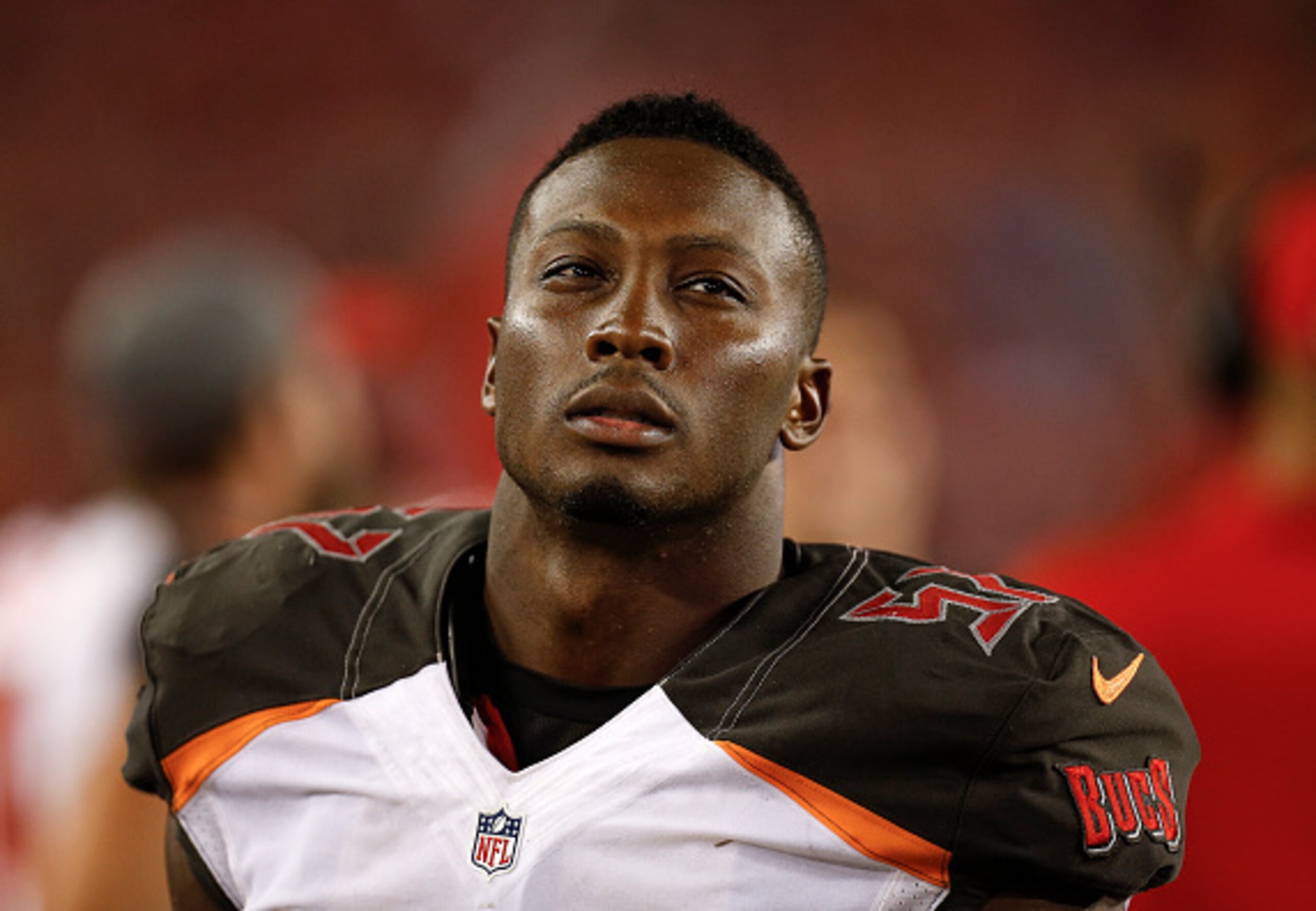
Noah Spence needed to crawl a bit to start his NFL career, and the 2016 second-round pick slowly had his snaps ratcheted up. Then in November he provided a hint of what could be set to come in 2017.
That's when Spence recorded 2.5 sacks and two forced fumbles and was named rookie of the month. Overall, he finished with 5.5 sacks and 40 pressures, per PFF, which is solid from a rookie used only in a rotational role while playing just 53.3 percent of the Buccaneers' defensive snaps.
Spence was blocked on the defensive end depth chart at least partly by Robert Ayers. He's a veteran set to turn 32 shortly after the 2017 season begins, though, and Spence is the ascending young talent.
Tennessee Titans: Tajae Sharpe, Wide Receiver
31 of 32
Tajae Sharpe's rookie season may have ended with a whimper when the Tennessee Titans wide receiver caught only five balls after Thanksgiving. But prior to that, he still showed plenty to build on for a team that still needs to do a lot of hoping and wishing up and down its wide receiver depth chart.
For a five-game stretch starting in Week 7, Sharpe averaged 16.5 yards per catch on 16 receptions, and during four of those games he recorded at least one 20-plus yard grab. He provided what quarterback Marcus Mariota is starving for: deep speed to match his deep arm.
After that, Sharpe started to fade off, which can happen when a still raw rookie fifth-round pick is adjusting to NFL life. There's nothing out of the ordinary about inconsistency from a Day 3 pick.
Showing that flash of brilliance is out of the ordinary, however, even if it was only brief. Now Sharpe is heading into his second season at only 22 years old, an age when he's still far removed from his peak.
Washington Redskins: Josh Doctson, Wide Receiver
32 of 32
Someone has to fill the void left on the Washington Redskins wide receiver depth chart after Pierre Garcon and DeSean Jackson left as free agents, taking 135 receptions and 2,046 yards with them.
Thankfully for the Redskins, that someone can be a first-round pick, and one of the best wide receivers in the 2016 draft class.
Doctson's rookie season was, in a word, frustrating. He sat out the preseason with an Achilles injury and then aggravated the same injury in warm-ups prior to Week 3 and wasn't seen again. He was on the field for only a blink or two in 2016, but that's all the time Doctson needed to dazzle with his deep speed. He hauled in a 57-yard catch in Week 2, which came when he clearly wasn't at full health.
His recovery has been lengthy and delicate, with Doctson needing until late February to look like he's trending toward being ready for OTAs. He posted Snapchat videos of on-field work that wasn't being done at full speed but was still encouraging.
The Redskins signed Terrelle Pryor to also help fill the holes left by Garcon and Jackson, and Jamison Crowder will be relied on to step up as well. But Doctson has both the talent and now the opportunity to be the cornerstone of Washington's passing offense.
Now all he needs is health.
Statistics courtesy of Pro Football Focus unless otherwise noted.
.jpg?w=2560 "Bengals Football")
.jpg?w=2560 "Colts Rookies Football")