B/R MLB 500: Top 500 Players for 2014
Over the past couple of weeks, the B/R MLB 500 series has taken stock of the top players at each position with an eye on the 2014 season, scoring the particulars in several different categories.
With the individual positions all in the bag, it's now time for the big one.
We took the 500 players we scored and put them all in one basket. They were subsequently ordered from 500 to one, and now they're in a slideshow.
Before you run away screaming at the thought of sifting through a book-length slideshow, don't worry. There are only individual slides for the top 100 players, with everyone between 101 and 500 arranged in the other slides in groups of 50.
Another thing to know is this: A lot of players ended up with the same scores (e.g. close to 30 players ended up getting scores of 60). Our protocol in the event of ties in the positional rankings was to give the edge to the player we'd rather have, and we stuck with the same protocol with the top 500.
As for the prospects, they were scored and analyzed by Bleacher Report prospect guru Mike Rosenbaum.
That's all there is to it. Start the show whenever you're ready.
Links and Sources
1 of 109If you've missed any or all of the positional rankings in the B/R MLB 500 series, the links are below:
Each individual slideshow contains shoutouts to the various websites that contributed data that informed the analyses, but they each deserve another one.
Baseball-Reference.com provided basic stats. FanGraphs offered more complex stats, most notably plate-discipline data that was referenced for both hitters and pitchers. Brooks Baseball afforded spray charts; zone profiles; and, most importantly, pitch data. Pitch types, velocity and movement data all came from there.
Lastly, Baseball Prospectus produced additional data and was particularly handy in forming the health sections by way of its injury records. Rotoworld helped with more recent injury updates.
500-451: Doumit-Soriano
2 of 109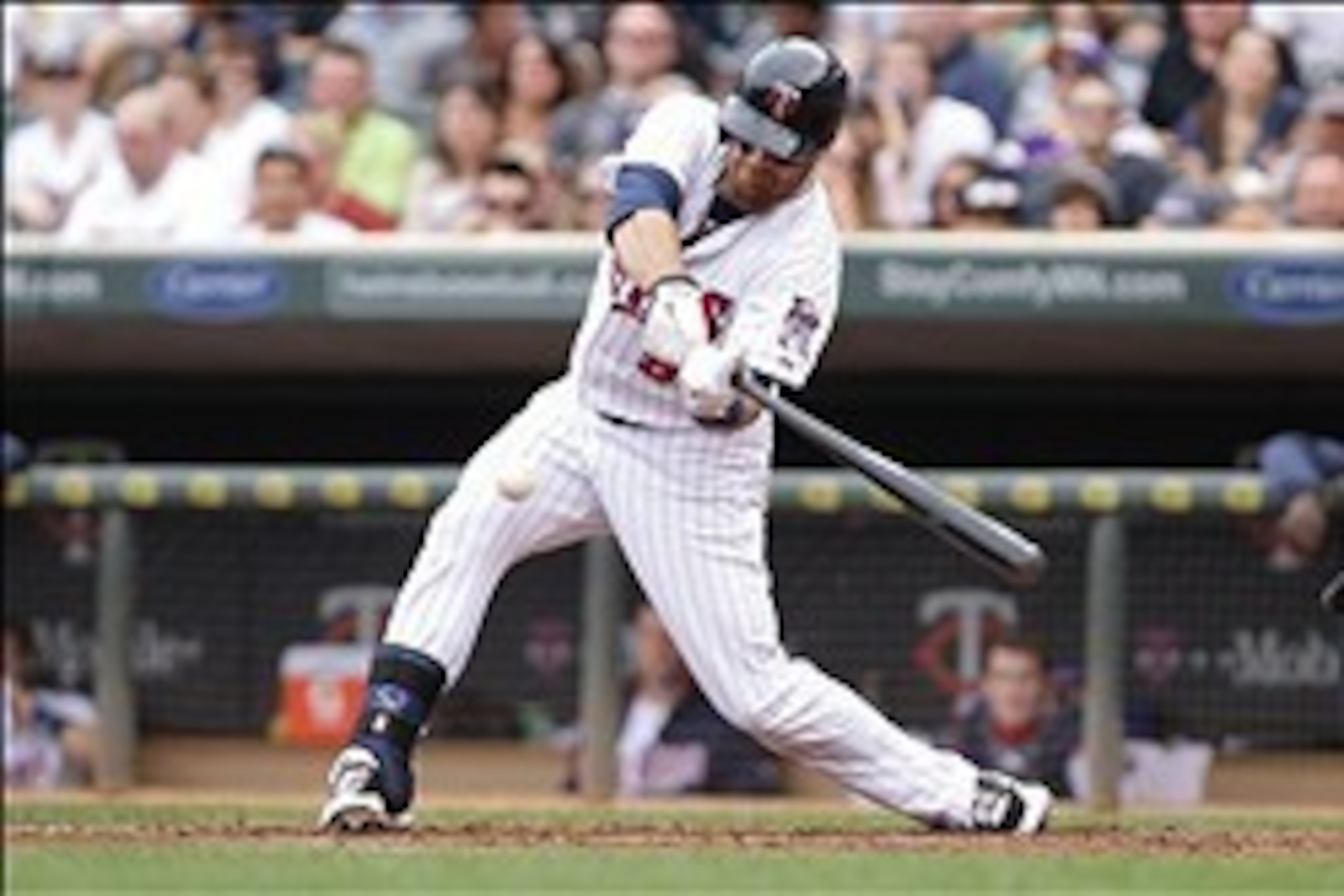
500. Ryan Doumit, DH, Minnesota Twins
This has been a subpar season for Doumit. He's gotten away from some of the things that made him a quality hitter in the past, and he has also seen his power take a sharp decline. But even with these trends taken into account, his bat isn't entirely useless.
499. Reed Johnson, OF, Atlanta Braves
Johnson is a guy who has defined the phrase “solid fourth outfielder” better than most for several years. He's not much of a hitter, but he's still a solid athlete and can play all three outfield spots pretty well.
498. Seth Smith, DH, Oakland A's
This hasn’t been such a great year for Smith’s bat. Still, his power is better than he’s shown, and he’s a guy who can run the bases better than most DHs.
497. Rickie Weeks, 2B, Milwaukee Brewers
An All-Star as recently as 2011, Weeks’ career has taken a drastic turn for the worse over the last two seasons as his hitting has become terribly inconsistent. He can still hit for power, and his athleticism hasn't gone away completely just yet.
496. A.J. Jimenez, C, Toronto Blue Jays
Jimenez has always stood out for his defense, which is good enough to profile as a backup catcher, even if his bat doesn’t come around. However, as long as he can stay on the field, he has the potential to exceed expectations at the plate and play his way into an everyday role.
495. Josh Johnson, SP, Toronto Blue Jays
Johnson's health failed him again, his command was all over the place, and his respectable strikeout rate didn’t save him from hard hit after hard hit. All the same, he still has good stuff and can eat innings when he’s healthy.
494. Ryan Dempster, SP, Boston Red Sox
Dempster’s flat stuff didn’t play very well with Texas down the stretch in 2012, and it hasn’t played much better in Boston. The bright side is that he gets just enough strikeouts to avoid total irrelevance.
493. Ross Detwiler, SP, Washington Nationals
Detwiler's 2013 season was derailed by a back injury. While he's a one-dimensional pitcher who doesn't miss a lot of bats or eat a lot of innings, he at least saves face with quality command.
492. Wade Davis, SP, Kansas City Royals
There’s no question that Davis' stuff plays better out of the bullpen, as his fastball loses a lot of zip and everything else loses its general crispness when he starts. His stuff is passable, and he also qualifies as a decent strikeout artist as a starter.
491. Ian Kennedy, SP, San Diego Padres
Kennedy must find his command again, as he absolutely needs it in order to get by with mediocre stuff. But even on a bad day, he's still a guy who can eat innings.
490. J.A. Happ, SP, Toronto Blue Jays
Happ has neither great stuff nor great command, and he’s been known to have problems with the long ball. He’s also managed to be a decent strikeout artist throughout his career, and he’ll hit the century mark with his pitch count when he takes the mound.
489. Jason Hammel, SP, Baltimore Orioles
Hammel has lost some zip on his fastball this year, not to mention some crispness on his slider. These things have hurt him, and Hammel himself got hurt in July, ending up on the DL with flexor-mass tightness. He's not much more than an innings-eater.
488. Jorge Soler, OF, Chicago Cubs
Even though Soler lacks stateside experience and suffered an unfortunate setback this season, he has the natural ability and tools to get to the major leagues in a hurry.
487. Luke Scott, DH, Tampa Bay Rays
Scott has experienced a turnaround from his poor 2012 season in 2013, in part because he's fixed up his approach and in part because he's done better against lefties. But as far as DHs go, he's really not much more than a slightly above-average hitter.
486. J.B. Shuck, OF, Los Angeles Angels
Nothing about Shuck is impressive. His bat, glove and baserunning all barely pass for major league caliber. But in the realm of fringy reserve outfielders, he’s been better than most in 2013 and looks like a guy who could stick.
485. Jose Tabata, OF, Pittsburgh Pirates
Tabata has tended to stand out as one of the most inconsequential players in recent memory, but his bat has had some life breathed into it this year. Because of that, he's a bit beyond the reach of total irrelevance.
484. Chris Heisey, OF, Cincinnati Reds
Heisey is a lousy hitter, but he has some power to offer and can play some solid D out in left field. These talents make him a good fit as a reserve outfielder.
483. Melky Cabrera, LF, Toronto Blue Jays
Cabrera has gone from being a guy nobody could get out to being a cheat who now barely qualifies as one of the top outfielders in the game. He was playing in pain even when he was healthy in 2013, so don't give up on his bat just yet.
482. Dayan Viciedo, LF, Chicago White Sox
Viciedo’s glove is a disaster, and his hitting really isn't much better. But there's power in his bat, and enough of it to potentially make him an above-average regular.
481. Nick Castellanos, OF, Detroit Tigers
Castellanos has the opportunity to get his feet wet in the major leagues in September. If all goes as hoped, he could be looking at a partial or full-time role in the Tigers outfield next season. While he’s still a bit rough around the edges, his bat is ready to be challenged at the highest level.
480. Conor Gillaspie, 3B, Chicago White Sox
There's not much that's particularly exciting about Gillaspie. He's not a good hitter, power hitter, baserunner or fielder. However, he's good enough at each of these things to get by.
479. Michael Morse, OF, Baltimore Orioles
Morse’s hitting isn’t as hopeless as he’s made it look with his performance this year, and he certainly has the kind of power bat that’s going to keep him in the big leagues for a while longer. But he’s nothing if not inconsistent, and he's the kind of player who should be banned from playing the field.
478. J.P. Howell, RP, Los Angeles Dodgers
There's another southpaw in L.A.'s pen who is better than Howell, but J.P. is a guy who’s death on lefties and who can handle his own against righty hitters.
477. Tanner Scheppers, RP, Texas Rangers
Scheppers definitely has the arm to be a standout reliever, and goodness knows that he’s shown flashes in 2013. But for now, his command is a bit too hit or miss, and he needs to work on missing more bats.
476. Jake McGee, RP, Tampa Bay Rays
McGee hasn't followed through on his brilliant 2012 season in 2013, suffering from regressions in command and his ability to miss bats. But there’s no mistaking that he has a live arm, and any non-LOOGY lefty is a good guy to have in a bullpen.
475. Jose Molina, C, Tampa Bay Rays
Molina can’t hit, hit for power or run, but every catcher in the big leagues could stand to learn a thing or two from him about playing the catcher position. If nothing else, they can take framing lessons from him.
474. Kendrys Morales, DH, Seattle Mariners
Morales' quietly excellent 2009 season is a distant memory at this point, but he can still hit. His numbers will only go so high, though he can manage a .330-.340 OBP and a slugging percentage in the mid-.400s.
473. Roy Halladay, SP, Philadelphia Phillies
The jury's still out on whether Halladay's old stuff will ever return to him. And while you don't want to bet against him, at the same time, it's awfully hard to have faith in the 36-year-old.
472. Cody Allen, RP, Cleveland Indians
Allen’s command is iffy, and he has a thing or two to learn about pressure situations. However, he does have the right kind of fastball-curveball combination to be a shutdown reliever, as well as the ability to miss bats.
471. Darren O'Day, RP, Baltimore Orioles
O’Day fits the mold of the gimmicky submariner relief pitcher, as he doesn't have great stuff and has to get by on smoke and mirrors. But there’s no denying that he’s death on right-handed batters and that he’s proven himself as a good guy to have in a pinch.
470. Samuel Deduno, SP, Minnesota Twins
Deduno has one of the better sinking fastballs in the business, and he has pretty good command of it. Combine the two, and you get a legit ground-ball specialist. He's had arm problems in the past, however, and now his shoulder is messed up.
469. Juan Nicasio, SP, Colorado Rockies
Nicasio isn't much of a workhorse, but he does have a solid fastball-slider mix, and he makes up for a relatively high walk rate and low strikeout rate by keeping the ball on the ground. He has an ugly ERA this year, but his actual performance hasn’t been that bad.
468. Jacob Turner, SP, Miami Marlins
Turner’s command is a work in progress, and he should be racking up more whiffs and strikeouts with his stuff. Still, he has a solid arsenal of pitches to work with, and his ability to keep the ball on the ground has been good enough to allow him to get by.
467. John Jaso, DH, Oakland A's
There’s no question that Jaso makes for a better DH than he does a catcher. He doesn't offer much power, but his talent for getting on base is commendable.
466. Matt Davidson, 3B, Arizona Diamondbacks
Davidson will never wow anyone with his overall play, but he has the ability to be a decent hitter with above-average power. He could even make an All-Star team or two if he continues to improve on both sides of the ball.
465. Freddy Galvis, 2B, Philadelphia Phillies
There's not much to speak of when it comes to Galvis' bat, but he's a terrific defender who's well cut out for a life as a slick-fielding second baseman.
464. John Mayberry Jr., OF, Philadelphia Phillies
Mayberry’s the kind of player who’s hard to get excited about, but he has some power in his bat and a versatile glove that's useful when he plays right field.
463. Logan Forsythe, 2B, San Diego Padres
Jedd Gyorko is the man at second base for the Padres, but Forsythe held his own as a regular down the stretch in 2012. He's got solid pop, can run the bases and can play defense decently enough.
462. Andy Pettitte, SP, New York Yankees
It suddenly doesn't sound like a lock that 2013 will be Pettitte's last season in the bigs. Given the way he's pitched, he certainly has a good excuse to come back in 2014. His stuff is still flat, but he's had more velocity this year than he did in 2012. He also still commands the ball well.
461. Bud Norris, SP, Baltimore Orioles
Norris fits the mold of a No. 5 starter about as well as any pitcher in the majors. He has decent velocity on his fastball and a pretty good slider, but that’s about all he has. His control is suspect, and he’s had problems with the long ball in the past.
460. Jon Niese, SP, New York Mets
It’s hard to rave about Niese’s stuff, but the mediocre walk rate he has this year doesn’t reflect the kind of command he has. He does himself a favor by keeping batted balls on the ground better than 50 percent of the time.
459. Zach McAllister, SP, Cleveland Indians
McAllister throws a lot of fastballs, so it’s a good thing he can run his up to 93 and pitch up in the zone effectively enough to get by. While he struggles to get through six innings consistently, his workhorse ability would be worse off if he weren’t capable of topping the 100-pitch threshold with regularity.
458. Dan Straily, SP, Oakland A's
Straily appeared on the radar last year by racking up strikeouts at an impressive rate in Triple-A, and that skill has translated fairly well to the big leagues, despite a lack of truly impressive stuff. Though only to a slight degree, he's also improved on the command he showed during his cup of coffee in 2012.
457. Danny Duffy, SP, Kansas City Royals
Duffy hasn’t been back from Tommy John surgery for very long, and there are obviously still some question marks. But since he’s still a hard-throwing lefty with a good hook and changeup, Duffy should definitely be on everyone’s radar in 2014.
456. Casey Fien, RP, Minnesota Twins
Fien’s a guy with a modest ERA and barely even a hint of a reputation as a shutdown reliever. But relievers who can throw strikes are always good to have, and Fien can do that and miss a few bats.
455. Matt Belisle, RP, Colorado Rockies
Belisle's terrific command helps make up for his lack of overpowering stuff, and he's going to do the job more often than not. He has, however, seen his status as a shutdown reliever take a few hits over the last couple years.
454. Alberto Callaspo, 3B, Oakland A's
Callaspo was more than just a viable regular a few years back, but his bat is subpar for the position, and his defense has taken a step back in 2013. The best thing that can be said is that he's better than he's shown, both at the plate and in the field.
453. Trevor Plouffe, 3B, Minnesota Twins
Plouffe is far from a star-caliber player, as his bat and defense are just too inconsistent. He does, however, have some decent pop to offer.
452. Brandon Kintzler, RP, Milwaukee Brewers
A nobody before 2013, Kintzler has put his sinker and command to good use in 2013, racking up tons of ground balls and proving himself as a guy who can handle tough innings.
451. Rafael Soriano, RP, Washington Nationals
Soriano has a big contract and has topped 40 saves once again in 2013, but think twice before labeling him an elite reliever. He's still effective, but he's losing velocity, and his struggles to miss bats this season are a legit concern.
450-401: Young-Ogando
3 of 109
450. Michael Young, 3B, Los Angeles Dodgers
Young is a disaster of a defender at third base, and his best days as a power hitter have long since passed. However, his bat isn't totally dead just yet. He can still hit.
449. Lonnie Chisenhall, 3B, Cleveland Indians
It's still up in the air as to whether Chisenhall's bat is good enough for him to cut it as a regular, but he has some decent power at his disposal and isn't a value vacuum on the basepaths or in the field.
448. Adam Dunn, DH, Chicago White Sox
Whether or not Dunn will even be back in 2014 is up in the air. But seeing as how he’s still very much useful as a power specialist, there’s still a place for him in the MLB if he wants to stick around.
447. Mike Olt, 3B, Chicago Cubs
Assuming he regains his feel at the plate and that the vision issue that plagued him earlier this season is a thing of the past, Olt should be able to post a .250 batting average with 25-plus home runs in his best seasons.
446. Arismendy Alcantara, 2B, Chicago Cubs
Alcantara has always shown explosive tools on both sides of the ball, but his inability to stay healthy delayed the development of his secondary skills. After the strides he’s made this season in his first taste of the Double-A level—not to mention the impressive power-speed numbers—he could find himself a part of the Cubs infield by the middle of 2014.
445. Carlos Correa, SS, Houston Astros
Correa is a physically blessed shortstop with the potential for five above-average or better tools at maturity. He’s still growing into his large but athletic frame and will likely endure some rough stretches along the way, but there’s no reason to believe that he won’t be a top-tier shortstop with legitimate MVP potential.
444. Eric Young Jr., OF, New York Mets
Young is in the majors because of his speed. It's a good thing that he puts it to good use, and his bat packs just enough punch to make him a bit more than a mere pinch-running specialist.
443. Kyle Blanks, OF, San Diego Padres
Blanks hasn’t put it all together yet, but he’s shown signs this season that he could do so in the near future to become regular with solid power. The trick will be for him to stay on the field.
442. Lucas Duda, OF, New York Mets
Avert your eyes when Duda is playing the field, but his bat is not something to be underestimated, in light of what he was doing earlier in 2013. He's not much for batting average, but he can get on base and he has some legit pop.
441. Jose Lobaton, C, Tampa Bay Rays
Lobaton has come alive in 2013 thanks in large part to an increased line-drive habit. There are more well-rounded catchers than him out there, but good hitting catchers are always welcome.
440. Jaime Garcia, SP, St. Louis Cardinals
Garcia’s health is a huge question mark, as he has Tommy John in his history and more recently had to go in for surgery to repair a labrum tear after missing big chunk of time in 2012 with a bad shoulder. But he has a track record as a solid pitcher, with good command and a surprising ability to miss bats.
439. Chad Billingsley, SP, Los Angeles Dodgers
Billingsley isn’t going to be seen until later in 2014, as he’s going to be recovering from his April Tommy John operation for a while longer still. But don’t forget about him in the meantime, as he’s a pitcher with a deep repertoire and a solid strikeout ability.
438. John Danks, SP, Chicago White Sox
Danks gets by on very good command of his pitches rather than stuff, and this year his efficiency has made him a solid bet to pitch into the seventh. One major drawback is that it’s easy to get the ball in the air off him, and he’s had all sorts of trouble with the ball going over the fence in 2013.
437. Chris Capuano, SP, Los Angeles Dodgers
Capuano is a survivor of not one but two Tommy John operations, and his injury history has only grown larger this year. He also has underwhelming stuff, with a fastball that sits 89-90 and secondaries that aren’t liable to freeze hitters at the plate. But when he has his command, he gets by OK.
436. Brendan Ryan, SS, New York Yankees
It's not much of a secret that Ryan's bat is about as useless as they come, but his defense is extremely good at a position where extremely good defense is very much of use. His glove alone is good for a couple wins per season (actual fact).
435. Asdrubal Cabrera, SS, Cleveland Indians
In no time at all, Cabrera has gone from being an All-Star player to a guy who barely makes the cut as one of the league’s top shortstops. But since he still has some power to offer, he's not totally irrelevant just yet.
434. Raul Ibanez, OF, Seattle Mariners
It’s up in the air as to whether Ibanez will even return for another season in 2014. But if he does, he’s made it pretty clear that he still has power to offer, even if it means having to live with an inconsistent bat and a terrible glove.
433. Derek Jeter, SS, New York Yankees
If we're being honest, Jeter's 2013 season has been disastrous to the point that he shouldn't even be on this countdown. But we know from his track record that he can hit, and that track record is plenty long enough for the benefit of the doubt.
432. Christian Bethancourt, C, Atlanta Braves
Bethancourt has the potential to impact the game in a variety of ways behind the plate and still has plenty of room for improvement. If he can come close to reaching his offensive ceiling, Bethancourt could emerge as one of the more well-rounded backstops in the game.
431. Derek Dietrich, 2B, Miami Marlins
As much work as Dietrich needs both at the plate and in the field, he has the goods to be a power-hitting second baseman. A rare breed indeed.
430. Junichi Tazawa, RP, Boston Red Sox
That Tazawa’s stuff has lost some electricity from 2012 to 2013 should not be overlooked, but he has some of the best command you’re going to find among relievers. It serves him well.
429. Gaby Sanchez, 1B, Pittsburgh Pirates
Sanchez is a bit of a has-been as a former All-Star and contender for rookie of the year, but he's proven to be a halfway-decent platoon first baseman who has a good bat and a capable glove.
428. Khris Davis, OF, Milwaukee Brewers
You should think twice before trusting the numbers that Davis has put up in his brief time in the majors, and exactly how he fits into Milwaukee’s plans is a question mark. But he’s made it clear that he can hit, and there should be some power in his bat, even after his HR/FB rate deflates.
427. Rajai Davis, OF, Toronto Blue Jays
Davis’ game is based almost entirely around his speed. It’s a good thing that he has lots of that and knows how to put it to good use on the basepaths, even if it is wasted in the field.
426. Yonder Alonso, 1B, San Diego Padres
Alonso’s power leaves a lot to be desired in light of the position he plays, but he gets on base enough and plays good-enough defense to earn his keep.
425. Wandy Rodriguez, SP, Pittsburgh Pirates
Rodriguez's health is a red flag, but he was pitching just fine when he was healthy. His stuff was as mediocre as ever, but he was working with the lowest walk rate of his career, the result of him throwing more pitches in the zone than usual.
424. Steve Delabar, RP, Toronto Blue Jays
Delabar is definitely on the map after making the American League All-Star team this year, as well he should be, with his ability to strike hitters out. It's too bad that his command is lacking and that he can be adventurous when it comes time to nail things down.
423. Sean Doolittle, RP, Oakland A's
As a fastball-only reliever, Doolittle should by all rights be getting smacked around every time he takes the mound. Instead, he's been able to consistently overpower hitters since the moment he arrived and has staked his claim as one of the better lefty setup men in the business.
422. Ubaldo Jimenez, SP, Cleveland Indians
Jimenez’s days as a guy who could sit in the high-90s with his hard stuff are long gone, but he still has good velocity for a starter, and his slider and splitter can still be nasty on a good day. His issues arise with his command, which can't be trusted.
421. Nick Markakis, OF, Baltimore Orioles
Markakis has a reputation as a good, solid player, but this is shaping up to be easily his worst season in the major leagues. He can play the field and run the bases well enough, but his bat has been cold for most of the year.
420. John Buck, C, Pittsburgh Pirates
Buck is not the star that he masqueraded as early in the 2013 season, but his bat has some pop in it, and he can still play passable defense behind the plate.
419. Marcus Stroman, SP, Toronto Blue Jays
Although Stroman’s long-term future as a starter is debatable, there’s no question that his stuff is good enough to compete in the major leagues. Given his success this season since returning from a 50-game suspension for performance-enhancing drugs, it’s seemingly only a matter of time until he gets a chance to prove it.
418. Yordano Ventura, SP, Kansas City Royals
Ventura has taken a huge step forward this season in terms of both his consistency and command, and he's finally looking more like an actual pitcher than a guy who throws really, really hard.
417. Garin Cecchini, 3B, Boston Red Sox
Once he has a clear path to everyday playing time in the major leagues, Cecchini has the potential to be an annual .300-plus hitter with a high on-base percentage, 30-plus doubles and 15 to 25 stolen bases.
416. Jeremy Guthrie, SP, Kansas City Royals
With mediocre stuff and a longstanding inability to miss bats, Guthrie is pretty well established as baseball’s foremost batting-practice pitcher. Living with him means living with hard-hit balls, a good percentage of which find their ways over the fence. At least he can eat innings.
415. Joe Saunders, SP, Seattle Mariners
This has been the first season in a while in which Saunders has struggled to get through six on a consistent basis. It’s a good thing that he’s still better than most at eating innings, however, as you’re left with the following if you strip away Saunders’ ability to do so: average stuff and an extreme inability to miss bats.
414. David Carpenter, RP, Atlanta Braves
Carpenter was a nobody in 2011 and 2012 in his time with the Astros and Blue Jays. Leave it to the Braves to turn a guy like that into an effective reliever.
413. Brett Cecil, RP, Toronto Blue Jays
Cecil owes his respectable standing on this list largely to his deep repertoire, but he does deserve credit for establishing himself as one of baseball’s rarer commodities: a lefty who can be used against both left- and right-handed batters in pressure situations.
412. Brad Ziegler, RP, Arizona Diamondbacks
Need a ground ball in a pinch? That’s a job Ziegler is more cut out for than any other reliever in the game, and 2013 has seen him morph into one of the most dependable relievers in the business.
411. Ryan Ludwick, OF, Cincinnati Reds
Ludwick’s health has seen better days, and he's not a good place to look if you want a lesson on hitting, baserunning or defense. But hey, at least he has has power to offer.
410. Jonny Gomes, OF, Boston Red Sox
Gomes offers two things: power and patience. While that's really all he's got, that's good enough in today's game.
409. Kelly Johnson, OF, Tampa Bay Rays
Johnson looked like a lost cause as a full-time second baseman in Toronto last season, but leave it to the Rays to take him and make a productive player out of him again. His bat's best days have long since passed, but he still has some pop.
408. Joel Peralta, RP, Tampa Bay Rays
This has been a trying season for Peralta, as he hasn't missed as many bats as he did in 2012 and has seen his command suffer to boot. But he still boasts quality stuff, and he's still been capable of doing more good than harm in high-leverage situations.
407. Brett Wallace, 1B, Houston Astros
Whatever hope Wallace had of becoming a star player seems to have passed him by, but it bodes well for him that he's at least unlocked some legit power in 2013.
406. David Freese, 3B, St. Louis Cardinals
Freese was one of the league's better third basemen in 2012. He's been one of the worst in 2013, especially on the defensive side of the ball. It's a good thing that he's still a better-than-league-average hitter.
405. Neal Cotts, RP, Texas Rangers
Cotts’ remarkable return does have a “too good to be true” vibe to it, but the stuff he’s been getting hitters out with is legit. Thanks to that, he's done a good job of missing bats against both righties and lefties and has reestablished himself as an effective setup man.
404. Jim Johnson, RP, Baltimore Orioles
It’s been a down year for Johnson, one that definitely suggests that his 2012 season was largely a product of good luck. However, he still has the command and the quality repertoire to make the grade as one of baseball’s better relievers.
403. Alex Wood, SP, Atlanta Braves
Wood's stuff isn't eye-popping, but that funky delivery of his has proven to be effective at making his stuff hard to pick up. He's pretty good at missing bats, and he also keeps the ball on the ground well.
402. Jason Vargas, SP, Los Angeles Angels
With the exception of his changeup, there’s nothing impressive about what Vargas throws. He’s also tended to be a home run magnet in his career, notably giving up a whopping 35 long balls in 2012. But his command allows him to be efficient and eat innings.
401. Alexi Ogando, SP, Texas Rangers
Ogando’s arm is a live one, as he can run his fastball between 93-94 with a good slider, and the 2013 season has seen him go to his changeup more often. He also has better command than he’s shown this year. Really, the biggest complaint to be made about him is over his health, which has been an issue in 2013.

400-351: Frieri-Ross
4 of 109
400. Ernesto Frieri, RP, Los Angeles Angels
Frieri is the kind of closer who is going to make things interesting due to his poor control, and it’s clear that he needs an off-speed pitch to keep hitters honest. These things being said, his fastball should be cloned and distributed across the land.
399. Wily Peralta, SP, Milwaukee Brewers
Peralta has a live arm and a good fastball-slider combination, and he gets credit for keeping his hard stuff around the bottom of the zone. However, his command isn't particularly good, and he doesn't miss as many bats as he should.
398. Yovani Gallardo, SP, Milwaukee Brewers
Gallardo’s stuff is fading fast, as he’s gone from sitting 93-94 with his hard stuff to barely getting by at 91-92, and his breaking stuff has lost some effectiveness, too. The good news is that his command and ability to miss bats have been a lot better since he returned from the disabled list in mid-August.
397. Mike Moustakas, 3B, Kansas City Royals
It's not a question of talent with Moustakas; it's a question of his making adjustments. He's shown some hope in that regard since the All-Star break, but his bat still has a ways to go before it's consistent, and there's also a question mark that concerns his power potential.
396. Ryan Howard, 1B, Philadelphia Phillies
Chalk 2013 up as yet another injury-shortened season for Howard, and it wasn't going so well when he was healthy. He still has some legit pop, but his bat has gotten to be wildly inconsistent.
395. Eric Stults, SP, San Diego Padres
Stults is basically Mark Buehrle with a little extra velocity. But he does have good command of his stuff, and his efficiency comes in handy in terms of helping him eat innings.
394. Jorge de la Rosa, SP, Colorado Rockies
De la Rosa is admittedly having a much better season in 2013 than this ranking indicates. The reasons he isn't higher are as follows: He has good-but-not-great stuff, his command is just OK, he doesn’t overpower hitters, and he can't be counted on for six innings or 100 pitches when he takes the ball.
393. Jeff Locke, SP, Pittsburgh Pirates
Locke doesn’t have overpowering velocity, but his four-seam fastball has some serious tailing action on it, and he also has a quality changeup and curveball. That's the good. Now here's the bad: Locke doesn’t throw strikes, he doesn’t miss bats, and he’s not even averaging six innings per start.
392. Matt Harrison, SP, Texas Rangers
This was a lost season for Harrison due to a series of back injuries that he hasn’t been able to overcome, eventually culminating in his being shut down for good in mid-August. When healthy in 2012, however, Harrison earned himself a nice new contract by being a good command artist who could keep the ball on the ground and rack up innings.
391. Billy Hamilton, CF, Cincinnati Reds
At worst, Hamilton profiles as a high-level fourth outfielder and a pinch runner. If he develops as hoped, however, Hamilton has the potential be one of baseball’s premier top-of-the-order players up the middle.
390. Roberto Hernandez, SP, Tampa Bay Rays
Hernandez’s sinker isn't what it used to be, but it's still a quality pitch that he commands well, and it keeps the ball on the ground more often than not. It's too bad he can't keep the ball in the yard.
389. Matt Tuiasosopo, OF, Detroit Tigers
Tuiasosopo surely isn’t as good a hitter as his numbers say he is, but he’s definitely made improvements that have helped him become a capable hitter. He can get on base and also boasts solid power.
388. Luis Valbuena, 3B, Chicago Cubs
It’s hard to get excited about guys like Valbuena, but his ability to get on base and his ability to play solid D at the hot corner must be appreciated.
387. Austin Hedges, C, San Diego Padres
Hedges' elite, game-changing chops behind the plate will make him one of the best defensive catchers in the major leagues upon his arrival. If the bat continues to develop ahead of schedule, Hedges has the potential to reach his enormous ceiling as one of the game’s premier catchers.
386. Nathan Eovaldi, SP, Miami Marlins
Eovaldi is still a pup as a starter, and his arm and shoulder have already had it pretty rough over the years. But goodness knows he has a live arm with a nasty fastball-slider combination, and his command this season hasn’t been as mediocre as his walk rate indicates.
385. Dillon Gee, SP, New York Mets
Gee helps make up for having mediocre stuff by having a lot of it, as he has five pitches that he features regularly and varies up his fastball duty between a four-seamer and sinker. He also makes it harder than it should be to square his stuff up, which is all thanks to his easily above-average command. It's too bad he has a scary injury history.
384. Tommy Milone, SP, Oakland A's
Milone’s stuff is about as “meh” as it gets, with the only pitch capable of raising your eyebrows being his changeup. But he has very good command of his arsenal, and that allows him to eat a solid number of innings.
383. Justin Morneau, 1B, Pittsburgh Pirates
Morneau is far from the player he used to be, and his health should be trusted only as far as it can be thrown. However, his bat isn't dead just yet, and his power has experienced a welcome revival in the second half of the season.
382. Drew Smyly, RP, Detroit Tigers
He hasn't been an ace in high-leverage situations in 2013, but Smyly has shown that he has the stuff, the command and the ability to miss bats to be a capable lefty reliever.
381. Paco Rodriguez, RP, Los Angeles Dodgers
He’s far from a household name, and he doesn't boast overpowering stuff, but Rodriguez is a surprisingly hard guy for batters to square up and has proven to be an effective setup man in 2013.
380. Josh Collmenter, RP, Arizona Diamondbacks
Collmenter’s not the kind of guy who’s going to come out of the bullpen and blow hitters away, but he has the right mix to get hitters out, and his ability to go multiple innings at a time makes him all the more valuable.
379. Scooter Gennett, 2B, Milwaukee Brewers
Exactly how Gennett fits into Milwaukee's plans with Rickie Weeks still under contract through 2014 is a dilemma, but he's made it clear in his short time in the majors that his bat has some potential and that he can play passable D.
378. Matt Dominguez, 3B, Houston Astros
There’s a lot of potential in Dominguez’s glove, but the key for him is becoming more consistent at the plate. If he's able to handle that, he's going to be a power-hitting, slick-fielding third baseman.
377. Nate Jones, RP, Chicago White Sox
Jones can light up the radar gun with the best of them, and he's getting better at missing bats and keeping the ball on the ground. The catches are that his command needs some work and that he's also struggling to prove himself as an effective setup man.
376. Henderson Alvarez, SP, Miami Marlins
It’s basically all sinkers when Alvarez is on the mound, but he has made more use of his four-seamer this year and has been rewarded in the form of the two things he desperately needed last year: more whiffs and more strikeouts. It's a shame that he hasn't been healthy for all of 2013 and that he's not much of a workhorse.
375. Fernando Rodney, RP, Tampa Bay Rays
Rodney’s stuff is still outstanding, and he's been better ever since his early-season struggles. However, his command is a serious shortcoming, and he doesn't miss as many bats as he should.
374. Scott Kazmir, SP, Cleveland Indians
Kazmir has turned the clock back on his stuff in 2013, and he’s displayed a much better idea of where it’s going than he did when he was last in the majors, in 2011. His ability to eat innings is still very much limited, however, and the DL stint he needed earlier in the season served as a reminder that his health can't be counted on.
373. Norichika Aoki, RF, Milwaukee Brewers
Aoki is the best in the league at putting the bat on the ball, and he has a terrific arm that fits well in right field. It's too bad that he doesn't have the power for the position and that he's also a mediocre baserunner.
372. Andy Dirks, OF, Detroit Tigers
He doesn’t always make the game look pretty, but Dirks is the kind of dirt-dog player every team should have. He's a decent hitter who can make things happen out in the field.
371. Felix Doubront, SP, Boston Red Sox
Doubront is a decent source of strikeouts and ground balls, but his command is still hit or miss, and this season has seen him feature flatter stuff than what he had in 2012. He's not bad for a lefty starter, but he's probably closer to a back-end guy than a mid-rotation guy.
370. A.J. Griffin, SP, Oakland A's
The only good pitch Griffin has at his disposal is a big, loopy curveball that occasionally jellies a few legs, but his game is more about hitting spots and changing speeds. He’s able to maintain about an average strikeout rate that makes life a little easier, but he’s also a home run magnet.
369. Phil Hughes, SP, New York Yankees
Hughes' arsenal needs more than just his fastball and breaking ball, and he can still be touched up for home runs easily enough. But in his defense, Yankee Stadium does him no favors. His fly-ball style would play well just about anywhere else.
368. Brandon Morrow, SP, Toronto Blue Jays
Morrow’s injury track record is now even more distressing than it already was, and it’s all a damn shame. His fastball-slider-splitter combination is deadly when he has it working, and he’s showed much-improved command of his stuff when he's been able to pitch the last two years.
367. Tony Cingrani, SP, Cincinnati Reds
Cingrani’s fastball is terrific enough to rack up swings and misses all on its own, and as such it has proven to be an effective weapon for him as a starter. But he could stand to expand his repertoire and harness some command, and the back problems he's experienced are a red flag.
366. Brandon Beachy, SP, Atlanta Braves
Beachy's elbow didn't respond well to his return to action, but he continued to show off the kind of control he had in 2012 and at times flashed some of his old electric stuff. He's a candidate for a rebound season in 2014.
365. Victor Martinez, DH, Detroit Tigers
More power would be nice, and it’s a good idea to avert your eyes when Martinez is running the bases. But after a very slow start to his season, he’s done nothing but make it clear that he can still hit with the best of 'em.
364. Byron Buxton, CF, Minnesota Twins
With potential plus tools to his name, it’s obvious why Buxton is regarded as baseball’s consensus No. 1 prospect. Beyond his eye-popping natural ability, the outfielder possesses secondary skills that are uncommon in a player his age.
363. Corey Hart, 1B, Milwaukee Brewers
Hart hasn't played in 2013 as he's recovered from various injuries, so he naturally didn't make out so well in the health portion of this project. But fully healthy, he offers a solid approach at the plate and some power to go with it.
362. Sean Marshall, RP, Cincinnati Reds
There are better relievers in high-leverage situations than Marshall, and there are certainly relievers who come with fewer health concerns. But any lefty with two nasty breaking balls, good command and an ability to miss bats is a lefty who'd be a welcome addition to any bullpen.
361. Yasmani Grandal, C, San Diego Padres
Grandal’s career has had nothing but bad things happen to it since the end of his promising rookie season, as he was first busted by the PED police and then busted in a major way by the injury bug. But he has a better bat than most catchers and is a good receiver behind the dish.
360. Cliff Pennington, SS, Arizona Diamondbacks
Pennington can't hit much, but he's one of the best defenders in the business at shortstop. Because it's a premium defensive position, that's worth something.
359. Trevor Cahill, SP, Arizona Diamondbacks
Cahill is one of the game’s preeminent sinkerballers, throwing his sinker over half the time and using it to consistently rack up high ground-ball rates. He’s prone to inconsistency, however, and that's been the case this season.
358. Paul Maholm, SP, Atlanta Braves
The depth of Maholm’s repertoire is good enough to make up for the relative mediocrity of his pitches, and he has the control to make these mediocre pitches effective. But he can be hit hard when the smoke and mirrors aren’t working, and he’s the kind of innings eater who’s really only good for six innings.
357. Ryan Vogelsong, SP, San Francisco Giants
Vogelsong’s repertoire runs deep, as he’s featured a four-seamer, two-seamer, cutter, curveball and changeup all at least 10 percent of the time in 2013. But while his command can be impeccable when he’s on, he’s generally not much for pounding the zone, is only about average at limiting walks and isn't particularly good at missing bats.
356. Jordy Mercer, SS, Pittsburgh Pirates
Mercer isn't the best defensive shortstop you're going to come across, but he has a good bat for the position, which qualifies him as an above-average regular.
355. Darwin Barney, 2B, Chicago Cubs
Barney can’t hit, but anybody looking for a sure thing on defense at second base is required to at least glance in his direction.
354. Drew Stubbs, OF, Cleveland Indians
You never know what you’re going to get when Stubbs is at the plate, but his bat has recovered a bit from his disastrous 2012 season. He also offers speed and solid defense in right field.
353. Ryan Hanigan, C, Cincinnati Reds
Hanigan’s lousy season at the plate can’t be ignored, but he’s still earning his keep with his work behind the plate. He's one of the best in the business on defense at a position where defense is more important than it is anywhere else.
352. Alex Avila, C, Detroit Tigers
Avila’s career has taken a downturn since his All-Star season in 2011, and there have been times throughout 2013 when he’s been hard to watch. But he’s a quality hitter for a catcher and has been busy proving as much in the second half when he's been able to get in the lineup.
351. Cody Ross, OF, Arizona Diamondbacks
The move away from Fenway Park wasn't the best move for Ross’ power. However, his bat is decent, and he has a good glove that's versatile to boot. His low standing in these rankings has a lot to do with his hip injury.
350-301: Denorfia-Haren
5 of 109
350. Chris Denorfia, OF, San Diego Padres
Denorfia's bat is nothing special, as he's not particularly good at getting on base or hitting for power. But he can run the bases and is useful in the outfield.
349. Miguel Gonzalez, SP, Baltimore Orioles
Gonzalez is mainly a fastball-splitter pitcher with basically average control and not much ability to gather whiffs and strikeouts. He also doesn’t keep the ball on the ground very well, which helps contribute to a minor home run problem. Yet he gets by OK and is capable of eating a solid number of innings to boot.
348. Josh Hamilton, OF, Los Angeles Angels
Yup, it's come to this for Josh Hamilton. His approach at the plate has been just as frustrating in 2013 as it was down the stretch in 2012, and he's also lost some power. He's not the superstar player he's being paid to be.
347. David Lough, OF, Kansas City Royals
Maybe it’s a bit too soon to call Lough a late bloomer, but he’s given the Royals a boost with a decent bat and quality defense in right and left fields. He's been one of the more unsung heroes of the AL Central in 2013.
346. Michael Wacha, SP, St. Louis Cardinals
Wacha works in the 91-93 range with his fastball when starting, and his changeup has the look of a plus offering. He’s also shown some solid command and has missed some bats, though not as many as a starter compared to as a reliever. In short, the early returns on him are encouraging.
345. Joe Kelly, SP, St. Louis Cardinals
Kelly can run his hard stuff up into the mid-90s, and his arsenal also includes a changeup, slider and curveball that are all solid. He’s overachieved a little bit as a starter, but the goods are definitely there.
344. Jarred Cosart, SP, Houston Astros
Cosart has been one of the more frustrating pitchers in the minor leagues for the last several years—well, at least until he was called up for the first time by the Astros in mid-July. He hasn’t missed as many bats in the majors as he did in Triple-A, but that hasn’t stopped the right-hander from emerging as the team’s most consistent starter since the All-Star break.
343. Jameson Taillon, SP, Pittsburgh Pirates
Regarded as one of the game’s top pitching prospects since the 2011 season, it shouldn’t be long until Taillon joins Gerrit Cole, the team’s former top prospect, in the major leagues. The right-hander is one of a select few pitching prospects with two potential plus-plus offerings (fastball/curveball), though his arm action leads to questions about his future command.
342. Sonny Gray, SP, Oakland A's
Gray regressed across the board in 2012—his first full season in the minor leagues—but showed the ability to make adjustments and learn from the experience. The right-hander hasn’t skipped a beat despite pitching on the national stage and is making a strong case for a spot in the team’s 2014 rotation.
341. Javier Baez, SS, Chicago Cubs
Although he’s rough around the edges, Baez has the potential to post multiple 20-20 seasons in his prime and appear in multiple All-Star games as a result.
340. Ryan Flaherty, 2B, Baltimore Orioles
Brian Roberts is the guy with the reputation in Baltimore, but Flaherty has power that helps make up for his lousy hitting. He also offers underappreciated defense at second base.
339. David DeJesus, CF, Tampa Bay Rays
DeJesus has never been a great player, and he’s not about to become one at his age. But he’s a veteran who can get on base and still hold his own running the bases and playing defense.
338. Nick Franklin, 2B, Seattle Mariners
Franklin has experienced some growing pains ever since the start of August, but he has the goods to be a second baseman who can hit for power while holding his own defensively.
337. Kelvin Herrera, RP, Kansas City Royals
Herrera’s numbers don’t look like those of a top-tier reliever, but 2013 has been a tale of two seasons for him. The first was a season in which he was lost in every way possible. The second has seen him recapture the promise of his 2012 season, in which he was a top-15 or maybe even top-10 reliever.
336. Jesse Crain, RP, Tampa Bay Rays
Crain’s health is about as iffy as it gets, but he was in the middle of a terrific season before the injury bug who took a bite out of him. There was some overachieving going on, but he's a guy with good stuff, good command and a good ability to miss bats.
335. Grant Balfour, RP, Oakland A's
With non-elite stuff, spotty command and a relatively modest ability to miss bats, Balfour shouldn’t be enjoying so much success. That he's experienced some regression in the second half is indeed a warning sign. But whether it's the rage or something else, he's a guy who gets the job done.
334. Tyler Clippard, RP, Washington Nationals
Clippard’s magnificent 2011 season looks like an outlier. But armed with his rising fastball and killer changeup, he still has the goods to miss a fair amount of bats, and this season has seen him regain his status as a dominant setup man.
333. Starlin Castro, SS, Chicago Cubs
Castro should be one of the best players in the National League with the talent he has but has instead been one of the worst in 2013. The only thing keeping him on the radar is his talent, as he should be a shortstop who can hit, hit for power, run the bases and play solid D.
332. Jimmy Rollins, SS, Philadelphia Phillies
Rollins’ bat has gone missing in 2013, but we're banking on the notion that he still has some power somewhere inside him to go with his solid baserunning and defensive abilities.
331. Rex Brothers, RP, Colorado Rockies
Brothers’ velocity loss and lack of control are concerning, but he misses bats, does a good job of keeping the ball on the ground and is a lefty reliever who can hold his own against righties. Also, he's been a very sure thing when he's entered games in 2013.
330. Nick Hundley, C, San Diego Padres
Hundley hasn’t gotten back to being the force he was in 2011, when he had an .824 OPS while playing very strong defense. It's a good thing that he can still hit for some power and handle himself behind the dish.
329. Jose Altuve, 2B, Houston Astros
Altuve earned an All-Star nod in 2012 on the strength of a near-.300 batting average. That was a tease, as his bat is below average for the position and in general. His best ability is running the bases, which is something he does very well.
328. Brad Miller, SS, Seattle Mariners
Miller hasn’t been in the majors for long, but he rose fast through the minors, and it looks like he can cut it as a solid hitter at the MLB level. It's possible we haven't seen the best of his power.
327. Randall Delgado, SP, Arizona Diamondbacks
Delgado has shown much better command than what he had in a disappointing stint with the Braves in 2012. He also has some good raw stuff that should eventually translate to him missing more bats. But for now he’s basically a two-pitch pitcher with a sinker and a changeup, and he's been better at giving up homers than he has been at missing bats.
326. Jeremy Hellickson, SP, Tampa Bay Rays
Hellickson’s command has been better this year than it was in 2011 or 2012, paying off in the form of a much-improved walk rate. He’s also picked up a few more strikeouts, helping himself by leaving fewer things to chance. However, his changeup-happy approach has come under fire this year.
325. Tyler Chatwood, SP, Colorado Rockies
Chatwood has some serious stuff at his disposal, and he has some solid command to go with it. His M.O. is to put Colorado’s strong defensive infield to work by generating tons of ground balls. The catch is that he doesn't eat innings.
324. Matt Adams, 1B, St. Louis Cardinals
Adams isn't an asset defensively at first base, but he has a solid bat and more than solid power. It also reflects well on him that he hasn't had much trouble showing off his power against southpaws.
323. Alejandro De Aza, CF, Chicago White Sox
De Aza has tools, but 2013 has been a rough year for his bat and an even rougher year for his glove. He's not a bad player, but he's spent the past season removing himself from the ranks of MLB's top center fielders.
322. Eric Chavez, 3B, Arizona Diamondbacks
Chavez is too old to be a defensive gem, and injuries come with the territory. But his bat is still useful against right-handers, and there's still quite a bit of power to be found in it.
321. David Murphy, LF, Texas Rangers
This has been a rough season for Murphy at the plate, but he's better than he's shown offensively. Also, don't overlook his defense in left field. He's one of the best in the business out there.
320. Travis d'Arnaud, C, New York Mets
After enduring so many significant injuries before even reaching the major leagues, health will be a serious concern for d’Arnaud for the duration of his career. However, despite the checkered medical history, he still has the all-around ability and potential to be an All-Star several times over.
319. Kyle Kendrick, SP, Philadelphia Phillies
Kendrick goes heavy on the sinkers and cutters, using good command of these pitches to try to pitch to contact. He gets plenty of ground balls but could certainly benefit from looking to miss a few more bats.
318. Scott Feldman, SP, Baltimore Orioles
The best thing Feldman has going for him is his command, and he's done a good job of using that and what stuff he has to rack up ground balls in 2013. But when it comes down to it, he's not much more than an innings eater.
317. Dylan Bundy, SP, Baltimore Orioles
After climbing from Low-A to the major leagues last year, Bundy was expected to spend a majority of the 2013 season in the Orioles’ starting rotation. However, the right-hander battled elbow soreness out of the gate this spring before eventually having Tommy John surgery in late June. I’m curious to see how he looks next year with a brand-spanking-new elbow.
316. Kevin Gausman, SP, Baltimore Orioles
Gausman possesses an ideal combination of size, stamina and arm strength—the kind that you want in a frontline starting pitcher. He’s capable of being effective with only a plus-plus fastball-changeup combination. However, Gausman’s breaking ball and overall command will need to improve before he’s offered another crack at the Orioles’ starting rotation.
315. Brett Anderson, SP, Oakland A's
Anderson’s career has basically been on the rocks since 2010 due to injuries, and that’s the damndest of shames. He has some good stuff, with a fastball that sits 92-93 and two sharp breaking balls, and he’s a terrific command artist when he’s healthy.
314. Danny Espinosa, 2B, Washington Nationals
This is going to go into the books as a lost season for Espinosa, as he started the year off hurt and then ended up in the minors. But when he's right, he offers power, speed and good defense at second base.
313. Jackie Bradley Jr., CF, Boston Red Sox
Bradley will never wow with his tools, but he’s a consistent, well-rounded player who projects as an above-average center fielder with a hit tool and on-base skills that profile ideally at the top of a lineup.
312. Dioner Navarro, C, Chicago Cubs
Navarro was about as irrelevant as can be for a while there, but suddenly he’s a power hitter who must be reckoned with. Power is about all he has, but he has enough of it to earn his keep.
311. DJ LeMahieu, 2B, Colorado Rockies
LeMahieu doesn't have much of a bat, but he plays terrific defense at second base and can add some value on the basepaths.
310. Jonathan Papelbon, RP, Philadelphia Phillies
Papelbon is declining, and he’s not going to turn things around unless he finds a way to regain some of his old velocity and general explosiveness. But he still has at least decent stuff, and he still has very good command of it. This combination serves him well.
309. Tommy Hunter, RP, Baltimore Orioles
Hunter should be better at missing bats with so much velocity at his disposal, but he has excellent command, and his ability to collect more than three outs when he appears is very much appreciated.
308. Luke Hochevar, RP, Kansas City Royals
The Royals presumably weren’t counting on Hochevar merely becoming an effective reliever when they drafted him first overall in 2006, but oh well. He has the stuff and the command for relief work and could prove to be darn good in high-leverage situations if given the chance.
307. Christian Yelich, OF, Miami Marlins
Yelich quickly emerged as a main cog in the Marlins offense following a midseason promotion directly from Double-A and, more importantly, proved that he belongs in the major leagues. While his on-base skills are valuable at the top of the lineup, Yelich’s ability to drive in runs could also make him a middle-of-the-order threat.
306. Casey Janssen, RP, Toronto Blue Jays
Janssen’s not the kind of closer who’s going to blow anybody away, but he has a deep repertoire at his disposal, as well as solid command and a decent ability to limit hits. Best of all, he's only getting better at handling high-leverage situations.
305. Oscar Taveras, OF, St. Louis Cardinals
Taveras is a special hitter. Provided that he’s healthy next season, he’s a safe bet to rake upon reaching the major leagues and could potentially run away with the National League Rookie of the Year Award.
304. Mike Carp, 1B, Boston Red Sox
Carp has been one of the best platoon players in baseball in 2013, and that's no surprise given his solid approach at the plate and considerable power.
303. Darin Ruf, 1B, Philadelphia Phillies
Ruf doesn't have the most refined approach at the plate, as he strikes out too much and doesn't have BABIP-friendly hitting habits. But he's able to get on base via the walk, and he also offers legit power.
302. Garrett Jones, 1B, Pittsburgh Pirates
Jones may have peaked with his performance in 2012, but he's not as mediocre as he's shown in 2013 either. A little more luck and a little more power will mean better times in 2014.
301. Dan Haren, SP, Washington Nationals
Haren likely isn't going to rediscover his old stuff any time soon, but he still has terrific control, and he just plain knows how to pitch. It's worth noting that he's had a decent second half.
300-251: Cashner-Mujica
6 of 109300. Andrew Cashner, SP, San Diego Padres
Cashner is still developing as a pitcher, but the signs are good. He certainly has a live arm and has shown off solid command and an ability to get ground balls. He's going to be dangerous if he starts missing bats as often as he should.
299. Billy Butler, DH, Kansas City Royals
It’s a shame that Butler hasn’t been able to maintain the power he found in 2012, as it's obviously preferable to have a DH who can hit the ball a mile. However, Butler's still one of the best hitters at any position, not just DH.
298. Bobby Parnell, RP, New York Mets
There are more reliable relievers than Parnell out there, but he has an electric fastball-curveball combination, and he knows how to command it. That's good enough.
297. Emilio Bonifacio, 2B, Kansas City Royals
This hasn’t been an easy season for Bonifacio, but the player he's been with the Royals is a much truer representative of his real self than the player he was with the Blue Jays. He's a guy who can get on base and do damage with his wheels, and he's a quality defender at second base.
296. Chris Carter, 1B, Houston Astros
It can be painful to watch Carter try to hit. But he's a guy who can hit the ball a mile, and he has value as a major leaguer because of that.
295. Jonathan Singleton, 1B, Houston Astros
As a first-base-only prospect, Singleton’s bat will have to carry him to the major leagues. Luckily, he has a good one that should have him hitting in the middle of the Astros order for years to come.
294. Kolten Wong, 2B, St. Louis Cardinals
Simply put, Wong is a ballplayer. He doesn’t have flashy tools, but he is capable of doing it all on the field. He projects as a slightly above-average second baseman on a first-division team.
293. Adam Eaton, CF, Arizona Diamondbacks
Eaton hasn't turned his tools into outstanding production just yet, but the tools are definitely there. He has speed that plays on both the basepaths and in the outfield, and his bat also has some solid potential.
292. Marcell Ozuna, CF, Miami Marlins
Ozuna isn’t fully formed yet, but his tools are impressive, and he did enough to show that he’s ready to put them to use at the MLB level. He could be a good one very soon if he puts it all together.
291. Ryan Cook, RP, Oakland A's
This season hasn’t been the cakewalk that 2012 was for Cook, when he was one of the best relievers nobody was talking about. But he has good stuff and good command for a relief pitcher, and he’s still been one of the game’s top setup men even despite his issues.
290. Gordon Beckham, 2B, Chicago White Sox
Beckham’s ceiling is pretty low due to his subpar power, but he's been a decent-enough hitter in 2013. He also offers solid defense, particularly when it comes to turning double plays.
289. Eric Sogard, 2B, Oakland A's
Sogard doesn't have much power, but he's been a capable hitter in 2013. He also more than holds his own defensively at second base.
288. Sergio Romo, RP, San Francisco Giants
It’s a concern that Romo isn’t getting as many whiffs all of a sudden, and another concern is that he’s been beatable in his first full season as a closer. All the same, his slider and control are still valuable commodities, and he's still a highly effective reliever.
287. Derek Norris, C, Oakland A's
Norris gets on base better than the bulk of the league’s catching corps, and he also hits for some pop and runs the bases. The combination of these things helps make him a decent player, if not a particularly good one.
286. Nate Schierholtz, OF, Chicago Cubs
The jury’s still out on whether Schierholtz can be an everyday outfielder, but he’s proven himself to be a highly effective platoon player in 2013. That's what good power and a good glove can do for you.
285. Matt Joyce, OF, Tampa Bay Rays
He’s only a platoon outfielder, but you have to hand it to Joyce for excelling at the role he’s been given. He can hit for power and provide solid defense in both left and right fields.
284. Junior Lake, CF, Chicago Cubs
Lake is still raw as an outfielder, and his approach at the plate could definitely use some fine tuning. But there's no denying that the tools are there, and those alone have put him on the radar as a potential power/speed star.
283. Dan Uggla, 2B, Atlanta Braves
Uggla’s power is still his calling card. Thank goodness for that, because he's a lousy fielder at second base, and the only thing he does well at the plate besides hit homers is draw walks.
282. Logan Morrison, 1B, Miami Marlins
The numbers LoMo has racked up in 2013 don't jump off the page, but he's a hitter who can get on base, and he deserves to have better power numbers. Marlins Park does him no favors.
281. Michael Brantley, OF, Cleveland Indians
Brantley hasn’t had the same kind of impact in 2013 that he had in 2012, but his game hasn’t tailed off completely. He’s still a quality hitter, and he’s putting his speed to good use on the basepaths and in the field.
280. Michael Saunders, CF, Seattle Mariners
Saunders doesn't have the legs to play center field well, nor are his legs useful in terms of generating value on the basepaths. It's a good thing his bat works OK.
279. B.J. Upton, CF, Atlanta Braves
Upton still has tremendous natural talent, but the warning signs were there in 2012 that his game was falling apart, and he’s done nothing in 2013 to prove that it was all a fluke. He may be paid like one of the top center fielders in the league, but he's been one of the worst this year as far as his hitting is concerned.
278. Mitch Moreland, 1B, Texas Rangers
Moreland is inconsistent when it comes to hitting, but he does bring good power to the table and can play a solid first base to boot.
277. Brandon McCarthy, SP, Arizona Diamondbacks
Living with McCarthy means living with his injury problems. The good news is that he’s an outstanding command artist when he’s pitching, and his efficiency helps him make up for the fact that he is indeed quite hittable.
276. Chris Tillman, SP, Baltimore Orioles
Tillman's not quite as good as his All-Star status says he is, as he's not an elite strikeout, command or ground-ball artist. But he does know how to pitch, and he's been a quality innings eater in 2013.
275. Danny Salazar, SP, Cleveland Indians
Salazar’s fastball-changeup combination is deadly, and he's shown that he has the ability to maintain his stuff deep into games. It was always possible that he'd have to settle for a life as a reliever, but he instead looks like he could be a dangerous starter.
274. Josh Willingham, LF, Minnesota Twins
You can be forgiven if you forgot that Willingham was even out there, but he has a good power bat and can get on base. If he could run, field or stay healthy, he’d be a star-level player.
273. Nelson Cruz, RF, Texas Rangers
The big cloud hanging over Cruz’s head right now says “Biogenesis” on it. But below it stands a premier power hitter who will be heard from again.
272. Jed Lowrie, SS, Oakland A's
Our scoring system admittedly didn't work in Lowrie's favor, as his shortcomings as a baserunner and defensive player loomed just as large as his hitting talents. However, let the record show that he's been one of the best-hitting shortstops in the league in 2013.
271. Yoenis Cespedes, LF, Oakland A's
Cespedes has loads of talent, but he's failed to put it all together in 2013 after teasing himself as a potential MVP in 2012. This is not to call him a scrub, mind you, as even in a trying season he's still offered a solid bat, good power and very good defense.
270. Eddie Butler, SP, Colorado Rockies
Butler isn’t as well known as many of his peers, but he should be. The right-hander has three pitches that grade as plus or better, as well as a vastly underrated feel for pitching. The only question is whether his arm action and command will translate at the highest level.
269. Robert Stephenson, SP, Cincinnati Reds
Stephenson has taken off over the last year thanks to a fastball that touches elite velocity and a surprisingly advanced feel for pitching. His curveball has become a more consistent pitch this season and played a role in the right-hander’s success at more advanced levels. Stephenson has the ceiling of a front-line starting pitcher.
268. Addison Russell, SS, Oakland A's
Although he’s looked raw at times this season as a 19-year-old in High-A, Russell has the makings of a dynamic shortstop at the major league level, with four above-average or better tools that will only improve with experience.
267. Jason Motte, RP, St. Louis Cardinals
Motte hasn't been seen in 2013, but he should be along sometime early in 2014 season. If all goes well, he'll recapture his old stuff and command and go back to being one of the MLB's more overpowering late-inning relievers.
266. Hank Conger, C, Los Angeles Angels
The Angels have one guy who was supposed to be a good catcher and one guy who actually is a good catcher. Conger is the latter guy. He can hit for some pop and handle the position finely on the defensive end, particularly when it comes to receiving the ball.
265. Tim Hudson, SP, Atlanta Braves
By all rights, Hudson should rank higher on this list, as he’s a pitcher with a deep repertoire, good command and a longstanding expertise at racking up ground balls. But the ankle injury he suffered in July was a brutal one that only added to an extensive list of injuries he's suffered throughout his career.
264. Jarrod Dyson, CF, Kansas City Royals
Dyson’s game is all about speed. It’s a good thing that he does a good job of putting it to use both on the basepaths and in the outfield, because there’s not much there if you take away his wheels.
263. Chris Young, CF, Oakland A's
Young hasn't been heard from very often during his time as a platoon player in 2013, but he shouldn't be judged by this silence too much. He's a good-fielding center fielder with power in his bat and speed to use on the basepaths. Such things come in handy.
262. Addison Reed, RP, Chicago White Sox
Reed still doesn't come off as a finished product just yet, but he has made improvements with his command and his ability to miss bats in 2013. Naturally, he's been a more effective pitcher, and it bodes well for him that he appears to be trending in the right direction.
261. Justin Smoak, 1B, Seattle Mariners
There’s still some untapped potential in Smoak's bat. But with more hits falling and a decent number of them being sent a long way, his bat is certainly more alive than it's ever been.
260. Mike Leake, SP, Cincinnati Reds
Leake's stuff is far from overpowering, but he commands it well enough to avoid walks better than the average pitcher. He also eats a decent number of innings for a back-end guy.
259. Carlos Quentin, LF, San Diego Padres
There’s nothing wrong with Quentin’s bat, as he can get on base and hit for power. Ideal stuff for a corner outfielder. It’s his baserunning, fielding and health that should worry everyone.
258. Edwin Jackson, SP, Chicago Cubs
There’s not much to Jackson’s approach. It’s fastballs and sliders and more fastballs and sliders. But he has made an effort to incorporate a two-seamer more often this season, and it’s helped pay off in the form of more ground balls. He has a bad ERA, but his performance has been solid.
257. Francisco Lindor, SS, Cleveland Indians
Lindor has a realistic ceiling of being the best defensive shortstop in the game—a projection that will only improve as he continues to grow as a hitter. Even if the switch-hitter’s bat doesn’t develop as expected, Lindor has the potential to enjoy a long, successful career in the major leagues based on his defensive merits.
256. Kris Bryant, 3B, Chicago Cubs
The No. 2 overall selection in the 2013 draft, Bryant has the potential to move quickly through the Cubs system thanks to an advanced approach and gaudy power. While there’s some uncertainty as to whether he’ll remain at third base or move to a corner outfield spot, his bat could have him in the major leagues midway through 2014 (or even before, a la Mike Zunino).
255. Gregory Polanco, CF, Pittsburgh Pirates
Polanco’s tools and feel for the game are both highly impressive for a player of his age and experience. This season, the outfielder’s defense has caught up to his bat, which helps explain why he’s emerged as one of baseball’s more intriguing prospects.
254. Ichiro Suzuki, RF, New York Yankees
A recent slump has killed Ichiro's numbers, but he was hitting around .300 for the better part of the season. He's also still capable of providing value on the basepaths and can still play a solid right field.
253. Jordan Walden, RP, Atlanta Braves
Surprised to see Walden so high? Don’t be. He’s a new man with the Braves, one with three awesome pitches and improved command. After a brief hiatus, he’s a stopper again.
252. Steve Cishek, RP, Miami Marlins
Cishek doesn’t have as many saves as some of the top closers in the league, but he’s a better pitcher than some of them. His sinker-slider combination has proven to be a good match for the ninth inning, and his reliability over the last two seasons is absolutely commendable.
251. Edward Mujica, RP, St. Louis Cardinals
It would be great if Mujica had an overpowering fastball to go with his splitter, but his excellent command and uncanny reliability in 2013 make for a fair trade.
250-201: Davis-Profar
7 of 109250. Ike Davis, 1B, New York Mets
It’s downright ugly when things are out of whack for Davis, but he worked his way back from the brink of disaster in 2012 and was able to do so again in 2013 before he got hurt. When he's right, he's working counts and hitting for power.
249. Adam Lind, 1B, Toronto Blue Jays
Lind’s 2009 production looks like a clear outlier, but at least he’s back to being a productive major leaguer again. So long as he's only playing against righties, he's a quality on-base guy with power.
248. Rick Porcello, SP, Detroit Tigers
Porcello is the unluckiest good starter in baseball. He's consistently better than his numbers say he is, and one of these days that's going to change. When it happens, he's going to be cemented as one of the better mid-rotation guys out there.
247. Wade Miley, SP, Arizona Diamondbacks
Miley’s sophomore effort hasn’t been as strong as his rookie effort, but to call it a disappointment would be a stretch. He still has solid stuff and has been terrific at keeping the ball on the ground in 2013.
246. Wei-Yin Chen, SP, Baltimore Orioles
Chen is one of the more boring pitchers at work today, but he gets by with good command and solid stuff. He's one of the more overlooked quality start machines out there.
245. Carlos Ruiz, C, Philadelphia Phillies
There have been times this season when Chooch has looked absolutely finished as a player—or at least like a depressing shell of the player he was in 2012. But he’s looked reborn as a hitter in recent weeks and is still a steady presence behind the dish.
244. A.J. Pierzynski, C, Texas Rangers
Pierzynski isn't a gem of a defensive catcher, and his lack of patience in 2013 makes his batting average out to be awfully hollow. These complaints aside, he is one of the better hitters at the position, and his power outburst in 2012 has somewhat survived into 2013.
243. Alcides Escobar, SS, Kansas City Royals
Escobar's at-bats are tough to watch, but he’s a threat on the basepaths and a very good defender at shortstop. It doesn't take much more than that to be a productive player at the position.
242. Zack Cozart, SS, Cincinnati Reds
It doesn't look like Cozart is going to be much of a hitter, but his power, baserunning and defense are all good enough to hold down a job as a regular.
241. Mike Zunino, C, Seattle Mariners
Zunino made his major league debut barely a year after the Mariners drafted him third overall, which goes to show how highly they think of him. Though it may take some time for Zunino to develop as an offensive force, he should be able to hold his own while playing solid defense in 2014.
240. Kris Medlen, SP, Atlanta Braves
It turns out that Medlen’s brilliant run last season was just a tease, but he’s continued to be a solid starter in 2013 thanks to his good command and ability to eat a fair number of innings.
239. Mark Ellis, 2B, Los Angeles Dodgers
Ellis isn't much for power, but he's not bad at getting on base and can still handle himself at second base. He's also one of those guys who seems to lead the league in doing "the little things."
238. Ben Revere, CF, Philadelphia Phillies
Speed, speed and more speed, as well as a supreme ability to put the ball in play. That's what Revere is all about, and he does these things well enough to earn his keep as a regular.
237. Marco Scutaro, 2B, San Francisco Giants
Scutaro is among the best in the business at putting the bat on the ball, and for that he deserves no shortage of credit. But he doesn't do much besides hit singles, as he doesn't have much power to offer and isn't much of a defender at second base.
236. Pablo Sandoval, 3B, San Francisco Giants
Sandoval has had years in which he's been one of the best in the business at third base both offensively and defensively. But it's abundantly clear by now how much both his offensive and defensive potential hinge on his weight, and there are never any sure bets about that.
235. Brandon Moss, 1B, Oakland A's
Moss strikes out a lot, and he's not very useful on defense at first base. However, he hits for more than enough power to pass as a capable regular.
234. Daniel Nava, OF, Boston Red Sox
Nava is absolutely terrific at getting on base, as he has the eye to draw walks and the contact habits to support a high BABIP. But his power is pedestrian, and he's not much of a defender.
233. Alfonso Soriano, OF, New York Yankees
Soriano’s at-bats aren’t exactly lessons on how to hit, but he still has pop in his bat and speed in his legs. Also, he's better in left field than he gets credit for.
232. Aramis Ramirez, 3B, MIL Brewers
Ramirez has had a hard time staying healthy in 2013, and living with him has always meant living with poor defense. But he can still hit and still hit for power, so don't write him off just yet.
231. Juan Uribe, 3B, Los Angeles Dodgers
Uribe's bat has become useful again in 2013, and that's not all he's good for. Somewhat quietly, he's had a terrific season defensively at the hot corner.
230. Gerardo Parra, OF, Arizona Diamondbacks
Parra's value is located almost entirely in his glove, and that only earned him so much respect in our scoring system for corner outfielders. That said, please let the record show that his defense is truly outstanding.
229. Josh Reddick, RF, Oakland A's
Reddick was quietly one of the best players in baseball when he was hitting home runs and playing an excellent right field. The offensive production hasn't been there in 2013, but his glove is still terrific, and his baserunning talent must not be overlooked.
228. Miguel Sano, 3B, Minnesota Twins
Sano’s prospect stock blew up in a big way this season thanks to the significant improvements he’s made on both sides of the ball. While power will always be his calling card in the majors, his hit tool and defense both have the potential to be slightly above average.
227. Cameron Maybin, CF, San Diego Padres
Maybin has never been the kind of game-changing player he was once billed as, and now his health is compromised. But when he’s healthy, he’s a guy who can provide value with his speed both on the basepaths and in the outfield, and that’s been enough to make him a quality regular.
226. Joaquin Benoit, RP, Tampa Bay Rays
Benoit has a legit repertoire that he commands well and uses to miss bats, but the best thing about his 2013 is how ridiculously reliable he's been while handling a ton of high-leverage situations.
225. Danny Farquhar, RP, Seattle Mariners
Farquhar is still largely an unknown, but his stuff is best described as "beautiful," and he's used it to rack up a ton of strikeouts in 2013. If he can keep that up, there's no question he can be an elite reliever.
224. Anthony Rendon, 2B, Washington Nationals
Rendon is still getting used to second base, but he's shown that he can hit at the MLB level. There should also be more power coming, meaning he has the potential to be a star-caliber player at second base.
223. Jedd Gyorko, 2B, San Diego Padres
Gyorko's stint on the disabled list earlier in the summer threw him for a loop offensively, but his bat looks like a good one that also has some power.
222. Pedro Florimon, SS, Minnesota Twins
Florimon is a poor offensive shortstop, so the bar only goes so high with him. But his defense is downright terrific, and he can run the bases well too.
221. Erick Aybar, SS, Los Angeles Angels
There’s nothing Aybar does particularly well, but there are worse bats at the shortstop position than his, and his legs haven't completely abandoned him just yet.
220. Mark Buehrle, SP, Toronto Blue Jays
Buehrle is baseball's resident "crafty left-hander." He has below-average stuff across the board, but he hasn't lost his command and general pitching know-how. Best of all, he's still a top-notch innings eater.
219. Todd Frazier, 3B, Cincinnati Reds
Frazier’s bat has been a disappointment following his strong offensive showing as a rookie last year. But it's really only declined to average territory, and Frazier's baserunning and defense more than make him worth the trouble.
218. Will Middlebrooks, 3B, Boston Red Sox
Middlebrooks patched up his key weaknesses during his stint in the minors and has looked like a completely different hitter since reemerging. If he can keep it up, he'll be a power-hitting third baseman who also does a decent job of getting on base.
217. Tim Lincecum, SP, San Francisco Giants
The old Tim Lincecum is gone for good, but the new one has shown a better understanding of the art of pitching, and he can still eat innings as well as the old one.
216. Daniel Murphy, 2B, New York Mets
There are better places to look for power and defense at second base, but Murphy brings a solid bat and underrated baserunning skills to the table, and these things are plenty good enough.
215. Lorenzo Cain, CF, Kansas City Royals
Cain’s not a bad hitter, but he doesn't offer much power and is a surprisingly mediocre baserunner. But he can play some serious D in center field, and that's not worth nothing.
214. R.A. Dickey, SP, Toronto Blue Jays
Dickey’s star has faded considerably in 2013, as his knuckleball has lost some of its luster. However, his knuckler is still a darn good one, and he still has value as an innings eater.
213. Jon Jay, CF, St. Louis Cardinals
Jay’s biggest sin as a player is being boring, as he’s not a spectacular hitter, power hitter, baserunner or defender. But his bat is good enough to hold down a job in the majors, and he plays a solid enough center field.
212. Angel Pagan, CF, San Francisco Giants
Pagan’s bat isn't that much better than the average center fielder's, and he doesn't play that great of a center field to boot. But he's dynamite when he gets hot, and his legs tend to be a terrific source of value.
211. Martin Perez, SP, Texas Rangers
Perez is still working on establishing himself, but there's no question he's put himself on the map with the season he's had. His stuff and control are quite good, and a pitcher can go far with those two things.
210. Will Venable, OF, San Diego Padres
Venable has put up some power numbers this season that can't be taken at face value, but he is a solid hitter who can run the bases well and play some solid D in the outfield.
209. Brett Lawrie, 3B, Toronto Blue Jays
Lawrie has improvements to make as a hitter, but it's good enough for now that his power has made a comeback in 2013. While he is prone to making mistakes, he can definitely handle defense at the hot corner.
208. Hyun-Jin Ryu, SP, Los Angeles Dodgers
Ryu doesn't have overpowering stuff, but he does have good command, a solid ability to miss bats and the capacity to eat a fair number of innings.
207. Jarrod Saltalamacchia, C, Boston Red Sox
It’s still possible to nitpick certain aspects of Salty’s game, but let’s give him credit for becoming far more consistent at the plate while retaining most of his power. He's not a great all-around catcher, but he's definitely one of the better-hitting catchers out there.
206. Ricky Nolasco, SP, Los Angeles Dodgers
Nolasco has been more than just another innings eater in 2013. He's gotten back to missing bats and has gone back to baffling hitters as a result.
205. Jonathan Gray, SP, Colorado Rockies
Everything about Gray is powerful: the stuff, the delivery, the mound presence. The right-hander could probably pitch in the major leagues right now, though the Rockies obviously are in no rush to get him to The Show. As long as he can stay healthy, it may be difficult for the organization to keep him in the minors next season for more than a few months.
204. George Springer, CF, Houston Astros
Few players in the minors are as naturally gifted as Springer. For that reason, there are even fewer players with as high of a ceiling as the Astros’ future center fielder. More specifically, Springer’s game-changing power-speed combination will make him an impact player in the major leagues.
203. Didi Gregorius, SS, Arizona Diamondbacks
Gregorius' offensive production has slowed down as the season has gone along. But he's done enough to prove that his bat isn't as terrible as it was billed as, and there's a lot to like about his defense.
202. Xander Bogaerts, SS, Boston Red Sox
Bogaerts has the ceiling of one of baseball’s top players, as he projects to be a plus hitter with plus power at a premium position. Even if he’s forced to slide over to the hot corner, his potent bat should still make him an All-Star-caliber player.
201. Jurickson Profar, SS, Texas Rangers
Profar's standing in Texas is a bit iffy, but there's an alternate reality out there in which he's ready to be the player he has the talent to be: a slick-fielding shortstop with a good bat, a little power and some speed to burn on the basepaths.
200-151: Gentry-Johnson
8 of 109
200. Craig Gentry, CF, Texas Rangers
Gentry's bat doesn't pack a lot of punch. It's his speed that earns him his checks, and it comes in handy both on the basepaths and in the outfield.
199. Joe Nathan, RP, Texas Rangers
Nathan is pretty well removed from his most overpowering days, as he can't blow hitters away anymore. But he still features good stuff, and is as reliable as ever when he enters a game in the ninth.
198. Bartolo Colon, SP, Oakland A's
It's all fastballs, all the time when Colon is on the mound. While he's not good at missing bats or keeping the ball on the ground, he has the command and the durability to pile up innings.
197. Kyle Lohse, SP, Milwaukee Brewers
Lohse's stuff is as underwhelming as it ever is, but he's another guy who gets by on terrific command well enough to pile up innings.
196. Wilin Rosario, C, Colorado Rockies
Rosario has been better defensively in 2013 than he was in 2012, but he's still not a very capable defender behind the dish. It's a good thing he can handle a bat, especially when it comes to power.
195. A.J. Ellis, C, Los Angeles Dodgers
Ellis' bat has a tendency to come and go, but he's not a bad hitter as far as catchers go. His real talents show through when he's behind the dish, however, as he's one of the top receivers in the game and has been outstanding controlling the running game in 2013.
194. Miguel Montero, C, Arizona Diamondbacks
This has been a rough year for Montero's bat, but it's not beyond saving. And even in the event that his hitting doesn't come all the way back, he's still a terrific guy to have behind the plate.
193. Andre Ethier, OF, Los Angeles Dodgers
Ethier's not a very good defensive outfielder, and his offensive ceiling only goes so high. But he certainly is an above-average hitter who can get on base and offer a bit of power—so long as there's not a lefty on the mound, of course.
192. Nate McLouth, OF, Baltimore Orioles
McLouth was a power-speed threat back in 2008, but now his game is more about speed and contact. That makes him a throwback, but it certainly doesn’t make him out of place.
191. Juan Lagares, CF, New York Mets
Lagares’ bat and baserunning needs some polish, but he’s got some pop and can play a mean center field. He was a guy who only prospect nuts knew about not too long ago, but now it looks like he may be sticking around as an MLB regular for a while.
190. Jarrod Parker, SP, Oakland A's
Parker has some quality stuff at his disposal, and it's been working wonderfully ever since a slow start to the season. There's going to be some serious trouble if he sharpens up his command and starts missing more bats than the average starting pitcher.
189. Chris Archer, SP, Tampa Bay Rays
On fire ever since early July, Archer is a young pitcher with a live arm whose command has gotten better and better as time has passed. He's not there yet, but he has the look of a potential top-of-the-rotation starter.
188. Albert Pujols, 1B, Los Angeles Angels
Bad health played a significant role in Pujols' subpar season, but it's getting hard to be optimistic about him. His body isn't going to get in better shape as he gets older, and his declining skills as a hitter date back a couple years at this point.
187. Alex Rodriguez, 3B, New York Yankees
Is Rodriguez what he once was? No. Will he even play in 2014? Nobody knows for now. But in his relatively brief time back, he's made it clear enough that he can still hit better than most third baseman.
186. Zack Wheeler, SP, New York Mets
Wheeler definitely has the stuff to be a frontline starter, and up until recently he was showing off passable control and an ability to miss bats. After getting his feet wet in 2013, he could take off in 2014.
185. Mike Napoli, 1B, Boston Red Sox
Napoli still strikes out a ton, and his power has been coming and going in his first year in Boston. But the pop is still there, he still gets on base and he's proven to be a surprisingly good defender at first base.
184. Martin Prado, 3B, Arizona Diamondbacks
Prado's season got off to a rough start, but things clicked for him eventually. He's been one of the league's top hitters over the last few months, and he plays a solid third base to boot.
183. Travis Wood, SP, Chicago Cubs
Wood can only be so good as long as he’s walking more hitters than the average pitcher, pitching to contact in the air and eating only six innings out of time, but he’s pretty well established as one of the more “safe” pitchers out there with the way he’s pitched over the last two years.
182. Ryan Zimmerman, 3B, Washington Nationals
Zimmerman's defense at the hot corner is a very real concern going forward, but he's still a good hitter. It's also worth noting this score was tallied before Zimmerman decided his best course of action was to start hitting everything over the fence.
181. Pedro Alvarez, 3B, Pittsburgh Pirates
Alvarez is a highly inconsistent hitter and a subpar fielder, but he's one of only three third basemen to hit as many as 60 homers over the last two seasons. The other two: Adrian Beltre and Miguel Cabrera. Power is something he has covered.
180. Carl Crawford, LF, Los Angeles Dodgers
At his peak, Crawford was a very good hitter who could hit for power, run the bases and play an outstanding left field. He’s now a much lesser version of that player, but he obviously still passes for a worthwhile regular.
179. Ryan Raburn, OF, Cleveland Indians
Raburn isn’t the outstanding hitter that his numbers—racked up in part-time duty, for the record—say he is, but there’s no denying he has made improvements as a hitter that have paid off and, in turn, put him on the map.
178. Marlon Byrd, OF, Pittsburgh Pirates
Sometimes guys who appear washed-up fade into the background, and sometimes they reinvent themselves into power hitters and stick around for a while longer. Byrd belongs to the latter collection.
177. Alexei Ramirez, SS, Chicago White Sox
Ramirez's power is becoming more of a lost cause as time goes by, and he's still not the kind of guy who's going to take a walk. However, he makes up for his poor hitting by being productive on the basepaths, and he still plays a terrific shortstop.
176. A.J. Pollock, CF, Arizona Diamondbacks
Pollock’s bat is nothing special, but his legs definitely have a home in the major leagues. They’re what help him get around the bases and make astonishing plays in the outfield.
175. Peter Bourjos, CF, Los Angeles Angels
Bourjos' glove is special, and he has the legs to do damage on the basepaths. But his bat is really just OK, and there are obvious health concerns after what's happened to him in 2013.
174. Mark Trumbo, 1B, Los Angeles Angels
Trumbo strikes out too much and doesn't get on base often enough. But he definitely has power, and don't overlook his defensive talents at first base.
173. Coco Crisp, CF, Oakland A's
Crisp’s game is still based largely on his speed, which is not as explosive these days and isn’t going to get more explosive as he gets deeper into his 30s. But he can still hit, is hitting for some solid power and can still run and play defense better than most.
172. Welington Castillo, C, Chicago Cubs
Castillo’s power has been a disappointment in 2013, but he's more than a solid hitter as far as catchers go. More importantly, he's a very strong defensive presence behind the dish.
171. Nolan Arenado, 3B, Colorado Rockies
Arenado’s bat is unproven, but signs of life have been there in the second half. Even if he becomes only an average hitter down the road, his defense is good enough to put him among the game's top third basemen.
170. Chase Headley, 3B, San Diego Padres
The power surge that Headley enjoyed in the second half of 2012 has proven to be a big tease, but he still has some pop to offer, and he's been victimized by some bad luck throughout the 2013 season. His bat is better than his numbers say, and he certainly still plays a solid third base.
169. Jose Quintana, SP, Chicago White Sox
Chris Sale gets all the attention, as well he should. But Quintana was quietly good in 2012, and he's done it once again this year. He misses bats better than the average starter, and also has some solid command to work with. He's one of the more underappreciated starters in the American League.
168. Torii Hunter, RF, Detroit Tigers
Hunter used to be a game-changing defensive center fielder who had both power and speed to put to use on offense. He’s not that guy anymore, but he can still handle himself at the plate and he now plays solid D out in right field.
167. Alex Rios, RF, Texas Rangers
Rios was quietly one of the best all-around players in the game in 2012, but he’s been a “just OK” player for the better part of the last five years. His bat isn't much better than average, but he does deserve credit for his underrated baserunning and solid defense in right field.
166. Denard Span, CF, Washington Nationals
Span can only be so good without power and a good baserunning tool, but he passes for solid as a hitter and is a guy a lot of teams would love to have in center field.
165. Carlos Santana, C, Cleveland Indians
Santana’s bat is fine; it’s one of the best at the position. But catcher is the most important defensive position on the field, and Santana’s issues on defense are very real.
164. Domonic Brown, OF, Philadelphia Phillies
This score may seem low in light of Brown’s breakout this year, but all we really know about him is that he excels at hitting for power. The jury’s still out on everything else.
163. Carlos Beltran, RF, St. Louis Cardinals
There’s not much there if you take Beltran’s bat away, but why would anyone do that? His walk habit hasn't been very strong in 2013, but he can still hit and hit for power.
162. Matt Holliday, LF, St. Louis Cardinals
Anything hit in Holliday's direction in left field could turn into an adventure, and it's pretty clear that his best days as a power hitter are in the past. But he can still hit for a respectable average, and he still has a discerning eye that helps him boost his OBP with walks.
161. Taijuan Walker, SP, Seattle Mariners
Walker went through a learning year in 2012 when he struggled as a teenager in Double-A. However, his ability to make adjustments and work through his issues has paid huge dividends this season. He’ll look raw at times and endure bouts of wildness, but Walker has both the stuff and potential to serve as the Mariners’ ace for years to come.
160. Mark Appel, SP, Houston Astros
Appel has been tabbed as a future ace since the beginning of the 2012 season and shouldn’t require much time in the minor leagues. But while his arsenal ranks as one of the more advanced and polished among pitching prospects, Appel’s approach and feel for sequencing may need to be adjusted as he climbs the organizational ladder.
159. Ivan Nova, SP, New York Yankees
Nova has been iffy in September, but there's no denying that his stint in the minors earlier in the year was worth it. He really sharpened up his command, and has gotten better at keeping the ball on the ground while still missing more bats than the average starter.
158. Evan Gattis, C, Atlanta Braves
There's plenty of rawness to Gattis' game, but he has more power than any other catcher and he's not entirely out of his league behind the dish. He's done a passable job controlling the running game and has proven to be a solid receiver.
157. Jhonny Peralta, SS, Detroit Tigers
It might be easy to downplay the season Peralta was having before he got suspended, but take note of the fact that he definitely wasn’t getting any help from Biogenesis. He's better than he gets credit for defensively, and he got back to being one of the top hitting shortstops in the league after a down year in 2012.
156. Jose Iglesias, SS, Detroit Tigers
Iglesias very likely isn't a .300 hitter in real life, but he's made it clear enough that he can cut is as a hitter in the majors. And that's outstanding news, because he's one of the best in the business defensively at short.
155. Dexter Fowler, CF, Colorado Rockies
Contrary to what he teased in the early goings this year, Fowler is not a great player, and he’s not even particularly great at any one thing. But he can hit, and he does boast a solid mix of power and speed that serves him well.
154. Michael Bourn, CF, Cleveland Indians
Bourn’s stolen base prowess is gone, and with it has gone much of his value. But he can still run, and he can still flash the leather. Not star-level stuff, but it’ll do.
153. Wilson Ramos, C, Washington Nationals
Ramos emerged as a very promising young player in 2011. Injuries did their part to hold him down after that, but he looks back now. His approach isn't very refined, but he can whack the living daylights out of the ball while providing quality defense behind the dish.
152. James Loney, 1B, Tampa Bay Rays
Loney seemed to be a lost cause when he left Boston at the end of 2012, but the Rays have turned him into one of MLB's top line drive hitters. His numbers have benefited, and Loney's defense at first shouldn't be overlooked.
151. Chris Johnson, 3B, Atlanta Braves
Asking Johnson to maintain a .400 BABIP isn't fair, but he has earned his high batting average this year by hitting a ton of balls on a line. It's too bad his power has taken a turn for the worse.
150-101: Perez-Cueto
9 of 109
150. Salvador Perez, C, Kansas City Royals
Perez is one of the best in the business behind the dish, and it's a good sign that he's rediscovered his power in the second half of the season. Defense-first catchers who can also hit for a little power don't grow on trees, you know.
149. Jay Bruce, RF, Cincinnati Reds
Bruce is a monster when he gets hot, but his reputation as a hot-and-cold hitter is undeniably well deserved. All the same, he can be put down for 30 homers and quality D in right field.
148. Noah Syndergaard, SP, New York Mets
Syndergaard has emerged as one of the game’s top pitching prospects, as his four pitches have noticeably improved and resulted in even sharper command. The right-hander has a realistic chance of reaching his ceiling of a frontline starter and would fit nicely between Matt Harvey and Zack Wheeler in the team’s future rotation.
147. Kyle Zimmer, SP, Kansas City Royals
Zimmer has the potential to be a monster with four impressive offerings and above-average command, as well as knowledge on how to attack hitters and exploit weaknesses. The only thing that could seemingly prevent him from a great career in the major leagues is an injury—something that has already been an issue after two seasons in the minors.
146. Mark Teixeira, 1B, New York Yankees
The wrist problems Teixeira have dealt with in 2013 are a concern, as few things can derail a hitter quite like wrist injuries. However, he proved in his small sample of plate appearances this season that he still has a terrific eye. If he still has some power and can still play an outstanding first base when he comes back, he'll continue being one of MLB's top first basemen.
145. Adam LaRoche, 1B, Washington Nationals
Take away LaRoche's horrid start in April, and his 2013 season doesn't look nearly as bad. He's essentially been the same hitter that he was in 2012, minus some power. Also, he's typically a quality defender at first base.
144. Brian Dozier, 2B, Minnesota Twins
Dozier's bat is inconsistent, but he above-average power for a second baseman, he can run the bases, and he also plays some quality D.
143. Alex Cobb, SP, Tampa Bay Rays
Cobb isn’t a pitcher who’s on a lot of radars out there, but he should be. He has some sneaky-good stuff, quality command, and has been better about missing bats in 2013.
142. Anthony Rizzo, 1B, Chicago Cubs
Rizzo's been bitten by some bad luck in 2013, but he does still have some developing to do as a hitter. The good news is that the power's been there, and he also plays a terrific first base.
141. Ian Kinsler, 2B, Texas Rangers
Kinsler still excels at putting the ball in play, and he's still a good defender at second base. The bigger concerns have to do with his power and baserunning, which are not what they once were.
140. Leonys Martin, CF, Texas Rangers
Martin is a guy we’ve been hearing about for a while, and this is the season in which he’s finally (and, admittedly, quietly) established himself. His bat is still a work in progress, but his glove and baserunning skills definitely make the grade.
139. Stephen Drew, SS, Boston Red Sox
It’s happened somewhat quietly, but 2013 has been a comeback year for Drew. He's played a good shortstop, and has been one of the top hitters at the position for a better part of the season.
138. Jake Peavy, SP, Boston Red Sox
Living with Peavy means living with some home runs, but he has a solid arsenal of pitches at his disposal and terrific command of them. He also misses bats better than the average starter, and can eat a fair amount of innings.
137. Neil Walker, 2B, Pittsburgh Pirates
Walker is one of the better hitters you're going to find at second base, as he's a solid line-drive machine and can also work his share of walks. He also does enough defensively to pass as a quality defensive second baseman.
136. Jon Lester, SP, Boston Red Sox
It’s been a few years since Lester was a dominant force, but he has bounced back from a brutal 2012 season. He's not as overpowering as he used to be, but he has decent command and eat plenty of innings.
135. Prince Fielder, 1B, Detroit Tigers
Fielder has turned things around in a big way recently, but the 2013 season will eventually go into the books as one of his worst, especially in the power department. That can't happen with him, as he's incapable of replacing that lost value by playing good D or running the bases.
134. Matt Cain, SP, San Francisco Giants
Cain’s stuff hasn't been the same in 2013, and there have been days in which that's gotten him in a lot of trouble. But he hasn't totally lost his command, and he still has value as an innings eater.
133. CC Sabathia, SP, New York Yankees
Sabathia's another guy whose stuff has taken a step back in 2013, as has his ability to miss bats. He's been hit and hit hard this season. But given that he still has his command and his ability to eat innings, he's not a lost cause just yet.
132. Archie Bradley, SP, Arizona Diamondbacks
Bradley’s pure stuff is ridiculously powerful and arguably the best in the minor leagues. He has the athleticism and aptitude to make adjustments along the way, which only strengthens his projection as a future No. 1 starter.
131. David Robertson, RP, New York Yankees
Remember what Mariano Rivera was to John Wetteland all those years back? That’s basically what Robertson is now. He has a terrific cutter of his own, and a good curveball to go with it. And in 2013, he's been lights-out.
130. Lance Lynn, SP, St. Louis Cardinals
Lynn's biggest weakness is his inconsistency, which is what inconsistent command tends to bring about. But he has good stuff and misses more bats than most starters, and he's able to make it as a successful mid-rotation guy because of these habits.
129. Omar Infante, 2B, Detroit Tigers
Infante is neither a household name nor, if we're being honest, a real star. But he's definitely overlooked in the realm of second basemen, as he's boasted an above-average bat and glove for several years now.
128. Nick Swisher, 1B, Cleveland Indians
Swisher's first season in Cleveland has been largely disappointing, but it hasn't been a total wash. He hasn't lost his ability to get on base, and he's topped 20 homers once again. In addition, his transition over to first base has gone off without a hitch.
127. Curtis Granderson, CF, New York Yankees
Granderson can be a frustrating hitter and fielder to watch, as he strikes out too much and can tend to make fly balls adventurous. But when he's right, he's the best home-run-hitting center fielder in the business.
126. Everth Cabrera, SS, San Diego Padres
Cabrera’s PED suspension casts a cloud over his 2013 season, but consider this: As with Jhonny Peralta, we know for a fact that he wasn’t getting any help from Biogenesis. As long as he maintains the approach at the plate he was using in 2014, Cabrera should be heard from again as a shortstop who can hit and tear up the basepaths.
125. Brandon Phillips, 2B, Cincinnati Reds
Phillips' RBI count is all well and good, but he's actually been a subpar hitter in 2013. It's a good thing he's still a better hitter than most second baseman, and he can still dazzle defensively at second base.
124. Howie Kendrick, 2B, Los Angeles Angels
Kendrick is one of the top hitters you're going to find at second base, and he also handles the position well defensively. Not much more you can ask for, really.
123. Michael Cuddyer, RF, Colorado Rockies
Cuddyer is a disaster on defense, and he's hardly a medical marvel at this point, but it’s hard to come up with additional complaints about his game. He’s not a bad baserunner, and he's had an outstanding season swinging the bat in 2013.
122. Shane Victorino, RF, Boston Red Sox
After a challenging 2012 season, Victorino's bat has been reborn in 2013. He's also still a good runner, and he has proved to be an outstanding defensive right fielder.
121. Adrian Gonzalez, 1B, Los Angeles Dodgers
Gonzalez was one of the best first basemen in the league back when he had elite power. He doesn’t now, but he can still hit and is among the best in the business defensively at first base.
120. Kyle Seager, 3B, Seattle Mariners
Seager was a well-kept secret last year, and he’s been an even better-kept secret in 2013. He can hit, hit for power, and only appears to be getting better at doing both.
119. Brett Gardner, CF, New York Yankees
Gardner had better years in 2010 and 2011 when his speed made him a treasure chest of hidden value. His speed hasn’t been as big of a factor in 2013, but this season has seen him add some power while playing a solid center field.
118. Jhoulys Chacin, SP, Colorado Rockies
For you Rockies fans who have been watching Chacin closely this season, I know: He's been better than this ranking indicates. In fact, he's had a downright terrific season. He was hurt by our scoring system because he's neither an elite strikeout artist nor an elite command artist, and he still has some proving to do as a workhorse.
117. Shin-Soo Choo, CF, Cincinnati Reds
The scoring system we devised hurt Choo because of his struggles defensively in center field. So just know this: Getting on base is extremely important, and Choo is indeed extremely good at it. It's a bonus that he's none-too-shabby a power hitter.
116. Eric Hosmer, 1B, Kansas City Royals
After a rocky 2012 and beginning to 2013, Hosmer has gotten back to hitting like he was in his promising rookie season in 2011. He has the goods to be one of the top hitters at the position, and he can also play D and run the bases well.
115. Bronson Arroyo, SP, Cincinnati Reds
Arroyo can get hammered pretty bad when he’s off, but he’s on most of the time and has long been flying under the radar as one of the most effective innings eaters in recent memory. Some (heck, many) of the pitchers behind him on this list are more talented than he is, but his reliability earned him some props.
114. Matt Garza, SP, Texas Rangers
Garza's foray into the American League hasn't gone so well, but don't mistake that for meaning he's not talented. He has some good stuff at his disposal, not to mention good command, an ability to miss bats and a solid capacity to eat innings.
113. Matt Wieters, C, Baltimore Orioles
If Wieters ever finds a way to be more consistent at the plate, he’ll take his place among the absolute best of the best the catcher position has to offer. For now, at least he has power and terrific defense behind the plate to offer.
112. Brandon Crawford, SS, San Francisco Giants
Crawford was already a terrific defensive shortstop and has continued to be one in 2013. What's really intriguing, however, is that his hitting is trending upwards.
111. Aroldis Chapman, RP, Cincinnati Reds
Chapman has been easier to get to than he was in 2012, when he was untouchable virtually all season long. But he can still light up the radar gun, and he still misses bats better than 99.9 percent of relievers.
110. J.J. Hardy, SS, Baltimore Orioles
Hardy's not much for getting on base, and that's indeed frustrating. But he has legit pop for a shortstop, and is also one of the top defenders at the position.
109. C.J. Wilson, SP, Los Angeles Angels
Wilson's command can be erratic, and he's not one of the greats when it comes to missing bats. But he does have good stuff in his arsenal, and he can definitely eat innings and handle high pitch counts.
108. A.J. Burnett, SP, Pittsburgh Pirates
Burnett's arsenal is still a simple one: fastballs and curveballs, repeat, repeat. He can also still be wild on occasion. However, he's one of the better strikeout artists out there, and he has the goods to eat up innings.
107. Desmond Jennings, CF, Tampa Bay Rays
Jennings isn’t quite a star-level player, but he’s improved his offensive game in 2013 to a point where he now makes the grade as an above-average hitter. As a bonus, he also runs the bases well and plays a good center field.
106. Yunel Escobar, SS, Tampa Bay Rays
Talent has never been a question with Escobar, and he’s spent 2013 reminding everyone of that. The Rays have revived his bat, and his glove has been downright terrific.
105. Alex Gordon, LF, Kansas City Royals
Gordon’s hitting has been a bit suspect, but he's kept his power warm and is still a fine source of value running the bases and playing the field. He's had better seasons, but he's still one of baseball's most underappreciated players.
104. Matt Moore, SP, Tampa Bay Rays
It’s distressing that Moore hasn’t made much progress with his command in 2013, but he has outstanding stuff in his arsenal and he's definitely capable of overpowering hitters.
103. Allen Craig, 1B, St. Louis Cardinals
Craig’s power is trending the wrong way, and he's at best OK on defense at first base. But goodness knows he can hit with the best of 'em.
102. Jason Grilli, RP, Pittsburgh Pirates
Grilli looked like closer material in 2012 when he used his fastball-slider combination to become one of the better strikeout artists in baseball. He got a shot in 2013, and turned into one of the most untoucable relievers in the game. But after his elbow betrayed him in July, there are certainly doubts.
101. Johnny Cueto, SP, Cincinnati Reds
The health of Cueto's shoulder is a concern that's not going to go away. But if you look past that concern, what you see is a pitcher with terrific stuff who also has good command, a solid ability to miss bats and to keep the ball on the ground.
100. Mark Melancon, RP, Pittsburgh Pirates
10 of 109Stuff
Most relievers are fastball-slider, fastball-curveball or fastball-something. Melancon is a little different. He’s cutter-curveball, as his cutter accounts for about 75 percent of his pitches and his curveball accounts for another 15 percent. His cutter has good velocity at 92-93, though it’s not quite as overpowering as Kenley Jansen’s. His curveball is the more impressive pitch, as it has nasty two-plane break with slider velocity at 82-83 miles per hour.
Command
Melancon seemed to have no idea where the ball was going when he was with Boston last year. It’s been the exact opposite for him in 2013, as he’s been pounding lefties inside and righties away with his cutter like clockwork and has walked under 4 percent of the batters he’s faced. That puts him among the elites.
Hittability
Melancon isn’t as big of a swing-and-miss merchant as other elite relievers, as those aren’t really what he’s after with his cutter-heavy approach. Yet he does get more whiffs than the average reliever thanks to the fact that he gets his share of whiffs on his curveball. But while he has a solid strikeout rate around 25 percent, the really impressive thing is that nearly 60 percent of batted balls off him have been on the ground. He’s been very difficult to square up.
Reliability
Melancon could be trusted about as far as he could be thrown in 2012. But in 2013, he’s been among the surest things the relief pitching profession has to offer. He’s been at the top of the shutdown charts all season long and has melted down only a couple times. What’s keeping him from a perfect score here is that this feels like a deal with the devil scenario after what happened in 2012.
Health
Melancon has barely been hurt in his pro career…except for that one time he needed Tommy John surgery in 2006.
Overall
Good stuff, excellent command and lots of balls on the ground. That’s been Melancon’s recipe for success in 2013, and it’s helped him turn into a dominant reliever.
99. Jered Weaver, SP, Los Angeles Angels
11 of 109
Stuff
Weaver goes pretty heavy on the fastballs, throwing his four-seamer and two-seamer close to 30 percent of the time apiece. The velocity on neither is above-average, but each has gotten better as the year has gone along. He was sitting in the mid-80s earlier in the season and is now sitting 87-88. He rounds out his arsenal with a curveball, slider and changeup. None of the three is particularly impressive. As good as Weaver is, it’s depth much more so than electricity that defines his arsenal.
Command
Weaver’s walk rates the last few years have been in the low sixes like clockwork, and it’s the same old story in 2013. The key difference this year is that he’s throwing fewer than 40 percent of his pitches in the strike zone, but that’s by design. He’s gotten the gist that he’s better off flirting with the zone rather than live in it with his stuff, and his command is precise enough to make it work.
Hittability
For all that’s been made about Weaver’s various issues, he’s actually getting more whiffs in 2013 than he has in a few years. Yet his strikeout rate hasn’t skyrocketed back up to its old stomping grounds, still sitting roughly in the league-average territory. He’s also still prone to homers due to his reliance on fly balls. But since that’s been Weaver’s M.O. for many years and he’s been successful with it, it’s hard to scold him.
Workhorse
Weaver increased his innings count each year between 2009 and 2011, but injuries kept him from doing so in 2012, and it’s the same story this year. Yet he’s still good for six innings and 100 pitches when he takes the ball, and seven-inning performances have been coming more frequently lately than earlier in the year.
Health
Weaver’s broken arm from earlier in the year can be forgiven and forgotten, but it’s less easy to overlook his history of biceps problems and back aches.
Overall
Weaver’s diminished effectiveness earlier in 2013 made him look like a pitcher on the decline, but he’s looked a lot like himself ever since finding some extra velocity upon his return from injury.
98. John Lackey, SP, Boston Red Sox
12 of 109
Stuff
Lackey doesn’t have a particularly deep arsenal, as he throws his four-seamer roughly 45 percent of the time and barely incorporates his two-seamer 10 percent of the time. But his four-seamer has good velocity at 92-93, and he complements it with a slider that’s pretty close to plus and a curveball that’s sharper than the average curveball.
Command
Lackey tended to be all over the place with his command during his first two years in Boston, but it’s been a completely different story in 2013. He’s pounded the zone with his fastball more consistently and more aggressively than he did in 2010 or 2011, and he’s compiled a well-below-average walk rate in the five percent range in the process.
Hittability
Lackey’s newfound mastery of the strike zone has resulted in more pitcher’s counts and, thus, more opportunities to expand the zone. He’s been taking advantage of those opportunities and has been rewarded with whiffs that have boosted his strikeout rate into the 20s. He’s also maintaining a ground-ball rate in the 50 percent neighborhood. But alas, the home runs...
Workhorse
Lackey’s not going to cross 200 innings this year, but he’s basically been as dependable as a 200-inning starter. Despite barely averaging 100 pitches per start, he’s made it through six in the majority of his starts and has made it through seven about half the time.
Health
Lackey is coming off a 2012 season in which he didn’t pitch due to his recovery from Tommy John surgery. Before that, he had gone on the DL twice with elbow-related injuries. After the surgery, he found himself on the DL in April with a biceps strain. Oh, and he's 35 in October.
Overall
Remember when Lackey’s contract was a giant waste of money? Given the rate at which pitchers are signing for big dollars and then flopping, Lackey’s pact doesn’t look so bad all of a sudden.
97. Jose Reyes, SS, Toronto Blue Jays
13 of 109Hitting
Reyes is neither the most patient nor the most disciplined hitter in the league, so it’s a little surprising that he takes as many walks as he does. And while his strikeouts have gone up in the American League this year, he still strikes out far less often than your average hitter and is still ripping line drives all over the field from both sides of the plate. He peaked in 2011, but the guy can definitely hit.
Power
Reyes is one of the great gap-power guys in baseball. Though he does also have the ability to hit the ball over the fence, he’s not the kind of guy to get homer-happy. He’s actually been hitting the ball in the air less often over the last couple years, with the trade-off being a more consistent line-drive approach. Such an approach suits him better.
Baserunning
Reyes obviously isn’t the supreme speedster that he used to be, as age and injuries have taken their toll on his wheels. But he’s still a very fast mover when he’s healthy and is a terrific source of value both stealing bases and taking extra bases on balls in play. He hasn't been able to be these things in 2013, but an offseason of rest should set him right.
Defense
The tools are all there, but Reyes’ defense hasn’t been good in many years. He’s not booting the ball this year as often as he usually does, but that’s owed at least in part to his range having declined. His speed is obviously fine, but he's not the most instinctive shortstop, and he just doesn't cover as much ground as he should.
Health
Reyes was quietly a picture of health in 2012, but his troubles with hamstring injuries have been well documented, and this year he found himself on the DL with a bad ankle sprain. Those legs of his have a lot of mileage on them, and he's not getting younger.
Overall
One worries about how much longer Reyes is going to be an elite player now that he’s on the wrong side of 30. Nonetheless, he still as one of the better bats the position has to offer, and his wheels pack a punch when he's healthy.
96. Hunter Pence, RF, San Francisco Giants
14 of 109Hitting
Pence has been more in control of himself at the plate than he was in 2012, when he was chasing every breaking ball in sight and had little hope of making contact when he expanded the zone. He’s been whiffing far less often in 2013 and has seen both his strikeout rate and BABIP improve as a result. His BABIP can only go so high with his ground ball-heavy approach, however, and his lack of a consistent walk habit means his OBP can also only go so high.
Power
Pence might be champing at the bit to get away from AT&T Park, as it’s been absolutely killing his power production this season. It certainly doesn’t help that his power is focused more up the middle of the field than it is to left or right field, though that funky swing of his does produce a surprisingly high number of liners down both lines. He’s frankly a hard guy to figure from a power standpoint, but there’s no question that he has more power than his numbers with the Giants say he does.
Baserunning
Pence took a break from stealing bases in 2011 and 2012, but he is back on the habit now and is better than ever at it. He’s only been caught a couple times all season while setting a new career high for steals. Pence has also done solid work taking extra bases on balls in play without running into outs. With free agency looming, he’s picked a good time to become a weapon on the basepaths.
Defense
Pence has a tendency to make things look pretty interesting in right field, in large part because he looks like a mutant when he only so much as runs in a straight line. He also doesn’t always read the ball off the bat well and can take some funky routes as a result. But while he’s always gotten grief for his defense, Pence really isn’t much worse than your typical right fielder. And this year, Ultimate Zone Rating has actually really liked what it's seen.
Health
Pence has been on the DL once in his career, and that was in 2007 when he fractured his right wrist. The most serious thing he’s dealt with since then is offseason surgery to repair a sports hernia in 2011, but virtually nothing since then.
Total
Pence can be frustrating to watch at the plate, and his defense can occasionally be a comedy routine. But he’s a fairly solid all-around talent, and he can be one of the game's better all-around players when things are clicking for him. Case in point: this season.
95. Wil Myers, RF, Tampa Bay Rays
15 of 109
Hitting
You can already see what all the hype was about. Myers is advanced for such a young hitter, as he’s shown good patience and decent plate discipline. It also reflects well on him that he hasn’t been overwhelmed by major league breaking balls. The strikeouts are there, but Myers has also drawn a decent amount of walks and has shown off encouraging contact habits. It’s been mainly liners and grounders for him, and the whole field has been in play. He’s certainly enjoyed some good luck, but he does have the look of a hitter who’s going to make his own luck.
Power
Myers’ power numbers don’t jump off the page, but there’s no doubt that the best is still to come. He has home run power to all fields, and there should be more line drives in the gaps coming from him in the future. He’s only slightly better than your average corner outfielder when it comes to power for now, but that will change.
Baserunning
Myers doesn’t have blinding speed, but he does have enough athleticism to steal the occasional base. It also looks good on him that he’s been hard to throw out early on in his MLB career. All he has to do now is see about limiting those pesky outs at second base…
Defense
Myers is a converted catcher who hasn’t really been given a chance to get comfortable at a specific spot in the outfield, but right field is where he’s played in the majors and where he belongs in the long run. He doesn’t have the look of a future Gold Glover, but both his athleticism and his strong arm should make him at least a slightly above-average defensive player.
Health
Myers’ 2011 season was wrecked by bad health, but he’s been healthy and on a tear ever since then. For now, there’s nothing to worry about.
Total
It’s only been a couple months since Myers got the call to the majors, but it’s plenty clear that he belongs. His bat is definitely major league-caliber, and we haven’t seen the best of his power, baserunning or defense. He could break out in 2014 like Manny Machado has this year.
94. Hisashi Iwakuma, SP, Seattle Mariners
16 of 109Stuff
Iwakuma’s arsenal is a pretty full deck, as he throws a four-seamer, sinker, slider, splitter and a very occasional curveball. His hard stuff has at best average velocity on a good day, as he tends to sit 90-91 with it. It’s a good thing his sinker has some quality movement, and his splitter is a plus pitch all the way. It has precisely the kind of late screwball action you want in a splitter. It’s the pitch that pushes Iwakuma’s arsenal from “average” to “above-average.”
Command
Iwakuma boasts one of the lowest walk rates in the league, a gift of his supreme ability to pound the strike zone. He gets his hard stuff over the plate about as well as anyone in the league and is particularly good at hitting the outside corner against righty hitters.
Hittability
Thanks in large part to his splitter, Iwakuma gets more swings-and-misses than you might think he would. As a result, he has a strikeout rate that’s safely above average. He also keeps the ball on the ground pretty well…but not quite as well as he did last year, and he hasn’t totally shaken the home run problem that plagued him in 2012.
Workhorse
Iwakuma isn’t one to go too far over the 100-pitch threshold, so he absolutely needs to be efficient. Since he is, though, he’s been able to make it through six with regularity this year and has found himself completing seven innings about as often as not. The only thing he lacks here is a tried-and-true track record.
Health
Iwakuma’s injury history is a clean slate. Nothing on it.
Overall
Iwakuma’s a guy you rarely hear about, but he got on a roll upon being inserted into Seattle’s rotation last summer and hasn’t stopped yet. He doesn't have much besides his command, but his is plenty good enough to make him a top-tier pitcher.
93. Julio Teheran, SP, Atlanta Braves
17 of 109
Stuff
Teheran has two fastballs he can go to in a regular four-seamer and a sinker, but his four-seamer is his primary offering and it's a good one. It sits 92-93 but can go higher than that and has some solid life to boot. Teheran also boasts a slider, a curveball and an occasional changeup to lefty hitters. Both pitches are more above-average than plus, but that’ll do for a pair of breakers to go with a quality fastball.
Command
Teheran’s command is advanced for a mere 22-year-old, as he’s throwing better than 45 percent of his pitches in the zone and also maintaining a walk rate around six percent. His fastball command is what stands out, as he has no trouble finding the zone with his heater and can work both sides of the plate effectively.
Hittability
Teheran has had little trouble racking up whiffs this year, as you would expect seeing as how he has three pitches that can draw whiffs in his four-seamer, slider and curveball. Yet his strikeout rate isn’t that far above average, and his low ground-ball rate has made him a magnet for hard-hit balls.
Workhorse
This is Teheran’s first full year as a starter, and it’s progressing fairly well. He’s averaging better than six innings per start on less than 100 pitches per start. Once the leash comes off, he’s going to be a good one.
Health
There’s nothing to see on Teheran’s injury track record. It’s about as clean as can be.
Overall
Teheran didn’t get out of the gate very strong this year. But ever since the middle of May, he’s quietly been among the most dominant pitchers in the National League.
92. Yan Gomes, C, Cleveland Indians
18 of 109
Hitting
How do you come out of nowhere to quietly be one of the best hitting catchers in the league? Well, you can start by seeing more pitches at the plate and by swinging at the right ones. That means fewer hacks outside the strike zone. Then move on to handling off-speed offerings better and putting the ball in play more often. Such is the lesson of Gomes. The only things holding his score down here are his way-too-good BABIP on ground balls and the small sample size of plate appearances in which he's put up his ridiculous numbers. But while he will come back to earth, he definitely has some things figured out.
Power
Gomes is a guy who only seems to care about barreling the ball up when he comes to the plate. He’s a little bit all-or-nothing as a result, as the ball is either going to be in the air when it leaves his bat or skidding across the infield. He’s been very productive when he has hit the air, however, showing off home run power to left field and some gap power to right-center. And despite the fact he was a power regression candidate heading into the second half, he hasn't slowed down. He hit for serious power at every minor league level, and now he's doing it in the majors.
Baserunning
Yup, Gomes can run the bases too. He has some decent athleticism for a catcher, and he's put it to good use by going first to third about a third of the time he's had a chance. Just as important, the only out he's made on the basepaths came on a pickoff.
Defense
Gomes wasn’t built up as a defensive gem as a prospect, but he’s quickly establishing a reputation as a guy you just don’t run on. He doesn’t have the quickest transfer from glove to hand, but he has a very strong, accurate arm that has helped him pick off a few runners and throw out roughly half of would-be base stealers. He still has work to do on the finer points of catching, such as keeping the ball in front of him and managing games, and the small sample size caveat obviously applies. But the skills are there, and Gomes has definitely put them to good use in 2013.
Health
Gomes had to take a breather for a while during spring training when he came down with a hamstring strain. Before then, not much. Since then, nothing.
Overall
Few catchers have had the kind of impact that Gomes has had in 2013, and he's done in in fewer than 75 games and 300 plate appearances. Over a full season's worth of games and plate appearances, he could be one of the game's best players if he keeps up what he's done in 2013.
91. Jason Castro, C, Houston Astros
19 of 109Hitting
Castro has been caught up in Houston’s team-wide strikeout problem this year. He’s been whiffing a lot, especially on fastballs up and on breaking balls wherever. But that’s to be expected in what is really his first full major league season, and the Astros can live with it because Castro is a line-drive machine when he makes contact, one capable of using the whole field to boot. He's been among the best hitting catchers in MLB this year, and it's no accident.
Power
Castro’s power production in 2013 has come as a surprise, as he didn’t hit for much power as a major leaguer before this year and didn’t hit for much in the high minors either. His power is no fluke, however, as he has more than enough home run pop to right field and enough to left field to pepper the left field wall with doubles. He’s also popped a couple opposite-field home runs this year, and only one (by my count) was a cheapie into Minute Maid Park's short left field porch.
Baserunning
Castro is quietly quite the terrific baserunning catcher. He’s notched a couple of stolen bases, and has been able to go first to third with impressive regularity. He’s also been very good at avoiding outs, making him the rare catcher who’s actually a guy worth watching when he’s on base.
Defense
Castro hasn’t had such an easy time keeping the ball in front of him this year, and he’s only been about average at controlling the running game. That might always be the case. He gets out of the crouch quickly enough and has a strong enough arm, but the transfer from glove to hand isn’t quick, and Castro oftentimes seems to take forever to cock his arm back for the throw. But being average at controlling the running game is good enough, and Castro’s receiving skills are plenty passable.
Health
Castro has finally been able to stay healthy in 2013, but his right knee has taken a lot of damage. A torn ACL back in 2011 cost him the whole season, and last year he was sidelined for 30 games when he hurt his meniscus. And though it wasn't series, he banged up his right knee again earlier in September.
Overall
It was never a matter of talent with Castro; it was always a matter of him staying healthy. He’s been able to do that this year, and look what’s happening. He's been one of the best catchers in the game.
90. Andrelton Simmons, SS, Atlanta Braves
20 of 109
Hitting
Simmons is a work in progress at the plate. He has made an effort to be more patient in 2013, but it hasn’t paid off in the form of a higher walk rate. And while the bright side is that he can make contact with anything, he wastes his time with too many fly balls. He’s a guy who needs to keep it simple with ground balls and line drives if he wants to save himself from below-average territory.
Power
Simmons isn’t as powerful as he seems to think he is, but he does have solid home run pop to left field and doubles and triples power to right-center field. If he places an emphasis on exploiting the latter more often, he’s going to be more dangerous than he already is.
Baserunning
As athletic as Simmons is, he’s not much of a base stealer. He’s tried, but catchers have taught him a few lessons about how good they are in the major leagues. One wonders if that has something to do with Simmons’ generally tentative approach to running the bases. He has himself a learning curve to tackle.
Defense
There’s no word in the tongues of men that can adequately describe how good Simmons is on defense. With great instincts, unreal range, soft hands and a strong arm, he’s the best defensive shortstop in baseball—and maybe the best defensive player of any kind in the majors, period. Next time he does something awesome while you're on Twitter, get in on the hashtag fun: #Andrelted.
Health
Simmons’ rookie year was halted for a while by a broken hand, but broken bones in young players have a tendency to heal, and Simmons' health has hardly been bothered ever since.
Overall
Simmons may be a work in progress on the offensive side of the ball, but there’s some promise there. In the meantime, everyone is advised to bask in his defensive glory.
89. Trevor Rosenthal, RP, St. Louis Cardinals
21 of 109
Stuff
Rosenthal relies heavily on his four-seamer, throwing it roughly 75 percent of the time. Rightfully so, as it sits at 98 and can touch triples digits. But that’s not all Rosenthal has. He also has a plus changeup and a plus curveball. The fact that he has three legit plus pitches makes him decidedly unique among his fellow relievers, and he would have a perfect score here if he used his curveball as often as he uses his changeup. But alas, he doesn’t. His hook only makes occasional appearances.
Command
Rosenthal pounds the strike zone more consistently than most relievers, so it’s not surprising to see him there with a walk rate in the 7 percent range. What’s cool about him is that he doesn’t just try to do the usual reliever thing of throwing his fastball by hitters. He can spot it—one of more than a couple hints that, yes, he could and perhaps should be starting.
Hittability
Rosenthal gets about as many whiffs as you’d expect for a guy with a high-90s fastball and two plus secondary pitches, and his strikeout rate is just south of elite territory in the mid 30s. That’s obviously still quite good, and it should also be noted that Rosenthal keeps the ball on the ground pretty well. There’s no escaping the notion that his opponents' batting average should be lower than it is.
Reliability
This is Rosenthal’s first year as a full-time reliever. You’d think he’d be among the most dominant shutdown artists in the game with his stuff and his command, but he actually hasn’t had that many shutdowns and has committed his share of meltdowns. That’s largely a result of him being victimized by BABIP, but there’s a limit to how much we can apologize for Rosenthal given his lack of a track record.
Health
Rosenthal’s injury history is currently a clean slate. His million-dollar arm is in mint condition.
Overall
Rosenthal hasn't quite been a "game over" kind of guy in 2013, but he has an overpowering arsenal of pitches, a good idea where to put them and a very strong ability to miss bats. He may not be a closer, but he's certainly one of baseball's elite relievers.
88. Glen Perkins, RP, Minnesota Twins
22 of 109Stuff
Perkins is a fastball-slider reliever, but he throws more than just one fastball. He uses his four-seamer close to half the time but works in a two-seamer about 20 percent of the time. His hard stuff sits 94-96 with some real electricity, and his slider is one of the best lefty sliders in the business. He may not quite have the high-90s capacity that some elite relievers have, but there’s no denying Perkins’ stuff is filthy.
Command
Command is Perkins’ main calling card. He walked less than 6 percent of the batters he faced last year and hasn’t seen his walk rate spike in 2013. He’s not quite among the league’s elite walk suppressors, but he does throw roughly half his pitches in the strike zone and is perfectly capable of spotting his fastball to both lefties and righties.
Hittability
Perkins’ slider doesn’t get quite enough whiffs to push his swinging-strike rate into elite territory, so it’s no surprise that he’s not quite an elite strikeout artist. He’s also been inducing fewer and fewer ground balls over the last couple seasons, with his ground-ball rate dipping below 40 percent this year. The strikeouts are fine, but that's not the most encouraging trend.
Reliability
Perkins has become more of a sure thing in each of the last three years. He committed 12 meltdowns in 2011, seven last year and likely won’t even touch that number in 2013. This would be him establishing himself as a legit closer and, to slightly less fanfare, a legit win probability merchant.
Health
Apart from a minor ribcage issue back in May, Perkins has managed to stay healthy in 2013. But his injury history isn’t the cleanest, as he has past struggles with both shoulder and elbow problems in it. One worries about those cropping up again.
Overall
Perkins doesn’t get that many save chances pitching for the Twins, but he’s a better closer than most of the guys who get more attention than he does. He has outstanding stuff, terrific command and, as a bonus, he knows what FIP is!
87. Jeff Samardzija, SP, Chicago Cubs
23 of 109Stuff
With stuff like his, it’s no wonder Samardzija chose baseball over football. He has a legit five-pitch arsenal that includes a four-seamer, sinker, slider, splitter and cutter. His four-seamer and sinker sit 95-96 with some electric life, and Samardzija’s slider and splitter are both plus pitches that can make hitters look silly. His cutter is just OK, but it works as a pitch to show hitters to keep them thinking.
Command
Samardzija was able to maintain a respectable walk rate in 2012, but not in 2013. He’s walking around nine percentage of the hitters he faces, with a primary symptom being fewer swings out of the zone. But Samardzija’s command issues don’t end there, as he can still struggle with his fastball command within the strike zone. He can get by OK now because he has velocity and movement, but it’s something to keep an eye on as he gets older and invariably begins to lose some zip.
Hittability
Samardzija’s swinging-strike rate is not as astronomical as it was last year, when it finished the season at 12.1 percent. Yet he’s still getting more swings-and-misses than the typical starter, and he’s still maintaining a strikeout rate better than that of an average starter. And while he’s still being touched up for home runs, an increased ground-ball rate is helping to even things out.
Workhorse
Samardzija worked over 170 innings in his first full year as a starter last year, averaging just over six innings and just about 100 pitches per start. He’s throwing more pitches per start this year, but hasn’t seen a huge uptick in innings to go along with it. That’s about what you’d expect seeing as how Samardzija hasn’t been as efficient.
Health
Samardzija has dealt with exactly zero injuries throughout his pro baseball career. It’s almost like his body is built for football or something.
Overall
Samardzija’s ERA has taken a step back this year, but that's misleading. His control hasn’t been as good, but the strikeouts are still there and there’s been some bad luck at work. He's still a dangerous pitcher.
86. Corey Kluber, SP, Cleveland Indians
24 of 109Stuff
Kluber’s a sinker-slider guy, but not just another sinker-slider guy. Kluber's arsenal is a little more complex. He works mainly off his two-seamer, which sits 93-94 with killer movement, but also works in a cutter and a changeup to go along with his slider. His cutter goes at 90 miles per hour and can really get in on lefties, and his slider and changeup are both quality pitches as well. His changeup really falls off the table and his slider is a big breaker. All told, this is one of the better arsenals out there that nobody talks about.
Command
In addition to stuff, Kluber has very good command. He doesn’t pound the zone that much more than the average pitcher, but he’s walking roughly five percent of the batters he’s facing. The one complaint to be made is that he’ll leave a few too many hard ones over the plate against righty hitters, who notably haven’t been much worse against him than lefties.
Hittability
Kluber’s changeup, slider and cutter (surprisingly) are all legit swing-and-miss pitches, so it’s not a shocker that he has an easily above-average swinging-strike rate and a strikeout rate in the 20s. He also generates more ground balls than the average starter. But once again, there’s a complaint: Thanks to that tendency to leave balls up, he hasn’t kicked the home run habit that plagued him in 2012.
Workhorse
This is Kluber’s first full year as a starter, so it basically goes without saying that he’s a work in progress. He hasn’t been a lock for 100 pitches when he takes the mound, but the bright side is that he’s been able to make it through six easily enough and has found himself pitching in the seventh about half the time.
Health
It was all going just fine until Kluber sprained his finger and landed on the DL in early August. That’s not exactly a career-threatening injury, however.
Overall
Is Corey Kluber really this good? Well, let's put it this way: he's been one of 2013's most underrated and overlooked pitchers, and the things that made that possible are for real. Put him on your radar for 2014 if you haven't already.
85. Ervin Santana, SP, Kansas City Royals
25 of 109Stuff
Santana is as much a fastball-slider guy as he’s even been, but there's a twist this year. He’s switching things up between a regular four-seamer and a two-seamer like never before, and both are quality pitches with solid velocity (92-94) and good movement. His slider is still his moneymaker, however, and it still ranks as one of the better sliders in the league.
Command
Santana’s never had a bad walk problem, but he was only ever about average at limiting them. It’s been a different story this year, as Santana has maintained a walk rate well below the league average. It’s not by accident either, as he’s throwing close to 50 percent of his pitches in the zone and about 60 percent of his heaters in the zone. The Royals have done a fine job of sharpening him up.
Hittability
Santana’s strike-throwing ways have put him in a position to throw more sliders this year, and the extra are helping him maintain the highest swinging-strike percentage he’s had since 2008. Not so coincidentally, he has his strikeout rate above the league average and has also benefited from a much-improved ground-ball rate. If only he didn’t still have issues with the long ball…
Workhorse
Santana topped 220 innings in both 2010 and 2011 before regressing in a big way last year, but he's back to gobbling up innings in 2013—as you would expect for a guy who’s cut down on his walks while also getting more hitters out via strikeouts and ground balls. Santana going at least six innings has become one of the best bets in the game, and he’s also pitched into the seventh with regularity.
Health
Santana had all sorts of arm scares in 2009, but he's had virtually nothing since then. His arm and shoulder are fine.
Overall
There’s no understating what a huge bounce-back year 2013 has been for Santana. He’s not among the league’s more dominant starters, but he has quietly been among the league’s more dependable starters.
84. Francisco Liriano, SP, Pittsburgh Pirates
26 of 109Stuff
Liriano’s only a three-pitch pitcher with a sinker, changeup and slider to go to, but each of these three pitches has been absolutely electric in 2013. Liriano’s sinker sits 93-94 with some life that makes it look faster than that. His slider hasn’t looked this good since earlier in his career when he was overpowering every hitter in his path, and the increased trust he’s shown in his changeup this season isn’t misplaced. There’s not a lot of velocity differential between it and Liriano’s hard stuff, but his changeup appears to just stop in mid-air just before it gets to home plate.
Command
The Pirates have to live with a few walks when Liriano takes the mound, as his walk rate is well above the league average for starters and has been all season. That’s life when you throw fewer than 40 percent of your pitches in the strike zone. However, Liriano’s fastball command is hardly disastrous, and part of the reason he hasn’t been living in the zone is because he’s been getting ahead more often with first-pitch strikes.
Hittability
Liriano has two elite swing-and-miss pitches in his slider and changeup, so it’s not a shock to see him with a huge swinging-strike percentage once again. That’s feeding a strikeout rate in the mid-20s, and this is also a season in which Liriano’s ground-ball percentage is over 50 percent. Extra-base hits off him have been hard to come by.
Workhorse
Somewhat amazingly, Liriano has never pitched 200 innings in his career. He won’t get there this year either, and his high-strikeout, high-walk ways put a natural cap on his workload potential. But he has been able to give the Pirates between 95 and 110 pitches more often than not, working six innings more often than not. That’ll do.
Health
Liriano has Tommy John surgery in his history, not to mention assorted other arm and shoulder injuries. His body has a few miles on it.
Overall
Should we call it a comeback? Whatever it is, Liriano has been a revelation in Pittsburgh this season, and it looks for real based on appearances and the numbers.
83. Gio Gonzalez, SP, Washington Nationals
27 of 109
Stuff
Gonzalez has a four-seamer and a sinker that both sit in the 92-94 range, and his sinker has some impressive lateral movement on it. He also has a solid changeup that he breaks out against right-handed batters, but his best pitch is and always has been his curveball. It’s up there among the best lefty curveballs in the game, with hard, two-plane break that has frozen many knees over the years.
Command
Gonzalez doesn’t walk the ballpark like he used to, but he still walks more hitters than your average starter and is not one who specializes in pounding the zone. Only about 40 percent of his pitches find the zone, and this year he hasn’t been able to help himself by putting as many of his hooks in the zone.
Hittability
One thing that hasn’t changed much this year for Gonzalez is his swinging-strike rate. But his strikeout rate has changed, and not for the better. It’s dropped from over 25 percent last year to about 24 percent. That’s obviously still very good, but it's not elite, and Gonzalez hasn't induced as many ground balls, either. Related: He’s given up more homers.
Workhorse
Gonzalez fell just a couple outs shy of what would have been his third straight season of 200 innings last year, but we’ll give it to him. However, 200 innings is about his limit, as he walks too many and strikes out too many to be an efficient innings eater.
Health
There’s very little in Gonzalez’s track record that warrants concern, as he has yet to spend time on the DL and has dealt with absolutely no injuries over the last two years.
Overall
This season hasn’t been the roaring success for Gonzalez that the 2012 season was, but he still has a place among the top pitchers in the league.
82. Brian McCann, C, Atlanta Braves
28 of 109
Hitting
McCann has looked like a new man at the plate after struggling mightily in 2012. His approach hasn’t changed that much, as he still sees his share of pitches while exercising a solid understanding of the strike zone. He walks more often than the average catcher, and strikes out less often. The main difference this year is that McCann is racking up tons of line drives, and the only reason they haven’t helped his BABIP as much as they should have is because a few too many of them have been directly at the right fielder. Turn those into hits, and McCann is having a typical McCann season.
Power
McCann’s power was hardly seen at all in 2012 as he tried to play through a bad shoulder. He got that shoulder corrected over the offseason, and his power has returned with a vengeance. The huge HR/FB rate he had in the first half has been corrected in the second half, but he's still kept the homers coming. The only other catcher who's been on McCann's level in terms of power this year is that one bear-looking teammate of his (who's obviously been better).
Baserunning
Most catchers are station-to-station baserunners, but McCann is more station-to-station than most. He hasn’t bothered trying to go first to third this year. Or second to home. And it basically takes a home run to get him in from first base. But hey, at least he’s avoided outs.
Defense
McCann still has the goods behind the plate. He’s never been outstanding at controlling the running game, but he is quick enough out of the crouch with just enough arm strength to be perfectly average. He also keeps the ball in front of him well, calls a good game and is one of the better receivers out there. His reputation as a top-tier pitch framer is well deserved.
Health
McCann didn’t play until May this year due to his recovery from offseason shoulder surgery. He’s looked terrific ever since, but his injury history is downright scary. He doesn’t often go on the DL, but McCann has certainly had seasons in which he’s been hurt pretty much constantly. At with his 30th birthday due up, odds are we haven’t seen the last of those.
Overall
I get the sense that McCann is taken for granted on the national landscape. He obviously shouldn't be if that's the case, as he's one of the best hitting catchers in the business and a steady presence behind the plate.
81. Matt Kemp, CF, Los Angeles Dodgers
29 of 109Hitting
We know what the real Matt Kemp looks like, and the real Kemp looks nothing like the Matt Kemp who has showed up in 2013. The real Kemp certainly isn’t averse to expanding the zone and will indeed strike out his fair share. But the real Kemp also has astonishing plate coverage and can crush virtually anything. While 2013 is the season that matters most with this project, Kemp gets the benefit of the doubt because of how clear it is that his health (more on that in a moment) is at the root of his problems.
Power
Another thing the real Matt Kemp has in spades is power. His power goes right back up the middle, and he has more than enough raw pop to send the ball soaring over the center field fence. He also doesn’t have much trouble hitting screamers into the outfield that put the center fielder on his horse to catch up. Fully healthy, he's one of the better power hitters in the league, and is certainly one of the best power-hitting center fielders in the league.
Baserunning
Kemp career success rate on stolen bases is only 75 percent, and he’s been known to push his luck a bit too much and run into outs on the basepaths. However, he's a perfect nine-for-nine in steals when he's been able to play this season, and it's generally easy to live with the outs because of how many extra-bases he takes. He's not your typical station-to-station middle-of-the-order hitter.
Defense
Regardless of his health, defense is easily the weakest part of Kemp’s game. He has plenty of athleticism, and he does make the occasional highlight-reel play, but he also takes questionable routes and just doesn’t get to as many balls as most center fielders. The best thing he has going for him is his arm, which is a weapon for most other center fielders to envy.
Health
The injury bug just loves the taste of Matt Kemp. Hamstring strains derailed him at the start of 2012, and then, later in the year, he hurt his shoulder bad enough to require surgery over the offseason. He was clearly hampered by that in the early portion of the season and subsequently found himself on the DL on three separate occasions with three separate injuries. His health is an absolute wreck, and there’s some long-term doubt built in with him due to the state of his surgically repaired shoulder.
Total
The 2013 season has been even more of a lost season for Kemp than 2012 was. He hasn't been close to 100-percent healthy all year, and hasn't looked like himself when he's been healthy enough to play. Regarding his health, one has no choice but to have doubts. But if a full offseason's worth of rest proves to be just what the doctor ordered, he could be a monster once again in 2014.
80. David Ortiz, DH, Boston Red Sox
30 of 109
Hitting
How do you become a yearly candidate for a .300 average and .400 on-base percentage? In Ortiz’s case, it’s simple. He’s always been one to work counts, and he has a much better eye than the average player. When it comes to hitting, the whole field is in play when Ortiz is at the plate, and he makes enough hard contact on his ground balls to beat the shift on a consistent basis. The catch this year is that he hasn’t maintained the effectiveness that he had against southpaws in 2011 and 2012, but he's still the best pure hitter the DH position has to offer.
Power
Anything in the air off of Ortiz’s bat has a good chance to go, and he certainly has power to all fields. And while he is indeed a good fit for Fenway Park with the Green Monster looming in left field, he’s actually hit for more power on the road both in 2013 and throughout his whole career. He’s up there among the best power hitters in the game…though he’s not quite on the next guy's level.
Baserunning
Ortiz’s power hasn’t been quite as explosive in 2013 as it was in 2012. Maybe that explains the career high for stolen bases this year. There’s not much to speak of outside of those, as Big Papi is definitely a station-to-station guy. He can get moving pretty well when he has to, but he hasn’t been pushing himself on the basepaths more than necessary this year. And he shouldn’t, given that that's how he hurt his Achilles last year.
Health
The Achilles injury that ended Ortiz’s 2012 season and delayed his return to action in 2013 hasn’t cropped up, but there are times when he still seems to be favoring the leg/foot in question. Aside from that, he’s got a body with a lot of miles on it and it’s just not fair to expect him to be 100 percent healthy at any given moment.
Total
Left for dead a few years ago, Big Papi provides seemingly daily reminders that he’s still an elite hitter. If hitting were the only thing that mattered for all position players, he’d be up there among the game’s very best.
79. Mike Minor, SP, Atlanta Braves
31 of 109
Stuff
Minor works off a four-seam fastball that’s more impressive than its velocity (90-91) would lead you to believe. It may not move fast, but it has good tailing action that makes it a tough customer. He rounds out his arsenal with a changeup, curveball and cutter. None of the three is particularly overpowering, but they have the same kind of sneaky-good movement that Minor’s fastball has.
Command
Minor’s command was all over the place before the All-Star break in 2012, but he cleaned up his act down the stretch and has kept up the good work in 2013. His walk rate is well below the league average in the 5.0-6.0 range, and he’s improved on both his fastball command and, not so coincidentally, his first-pitch strike percentage. In short: impressive work, Mr. Minor.
Hittability
Minor wasn’t a big swing-and-miss guy last year, but that’s changed this year as he’s gotten ahead more often. He’s been able to expand the zone more often, and hitters have obliged him by swinging and coming up empty. As a result, his strikeout rate has moved above 20 percent. All he needs to do now is see about a ground-ball habit.
Workhorse
Minor fell just short of 180 innings in 2012 when he averaged exactly six innings and 95 pitches per start. His command has bought him a few extra pitches and a few extra innings this year, making him a strong bet to pitch into the seventh. He’s not an elite workhorse yet, but he’s getting there.
Health
Nothing to see here. The Internet machine reports that Minor is in good health and always has been.
Overall
Minor was a well-kept secret down the stretch in 2012. So far as I can tell, he’s still a well-kept secret in 2013. Over the last calendar year, he’s been an ace.
78. Shelby Miller, SP, St. Louis Cardinals
32 of 109
Stuff
Miller’s arsenal has one key weakness right now, and that’s lack of depth. He has a changeup, a cutter and a sinker, but they’re afterthoughts. Roughly 70 percent of his pitches are four-seamers. Another 20ish percent are curveballs. The good news is that his heater sits 94-95 and has some serious late movement on it. And while his curveball’s not a cartoon breaking ball in the spirit of Adam Wainwright’s hook, it does have some sharp break that makes it a plus pitch.
Command
Miller is maintaining a walk rate slightly better than league average in the low seven percent neighborhood, but that doesn’t give his command proper justice. He’s one of the rare ones who throws roughly 50 percent of his pitches in the strike zone, and when he’s on he’s spotting his plus fastball with the savvy of a 10-year veteran.
Hittability
Miller is more likely to get whiffs on his fastball than he is on his curveball, which is generally not how these things work. Regardless, he gets plenty more swings and misses than the average starter and is maintaining a strikeout rate around 25 percent. His next conquest needs to be keeping the ball on the ground better, as he could definitely stand to cut down on the home runs.
Workhorse
This is the one area where Miller is severely lacking, though not really through his own doing. The Cardinals have kept him on a short leash, keeping his pitch count tied closely to the century mark. As a result, starts longer than six innings have been a relative rarity for him. The workhorse department is one in which he’ll have much to prove come 2014.
Health
Miller’s injury history isn’t entirely spotless, but there’s nothing in it that warrants less than a perfect score here. Or even a mention, for that matter.
Overall
Miller needs to develop a reliable third pitch, but aside from that all he really needs is for his leash to be loosened. He’s used his rookie year to show why he was so highly thought of as a prospect.
77. Koji Uehara, RP, Boston Red Sox
33 of 109
Stuff
You’re going to get one or the other when Uehara is on the mound, as he basically splits his four-seamer and splitter usage right down the middle at 45 percent each. His fastball has below-average velocity at 89-90, but it does have some solid tailing action. It may not be a plus pitch, but his splitter sure is. It may only go 81-82, but its killer movement makes it one of the game’s top swing-and-miss offerings.
Command
Uehara is one of the rare relievers who can put the ball precisely where he wants it almost every single time. He owns a career walk rate that’s a shade under 4 percent, and he’s sticking in that same general neighborhood this year. He may have had an other-worldly 2.3 walk rate last year, but this year he’s actually been throwing more pitches in the strike zone. He may have subpar fastball, but he’s not afraid to go right at hitters with it.
Hittability
It’s typically the guys with the blistering fastballs and sharp, biting sliders who lead the relieving gentry in swinging-strike percentage. But in 2013, Uehara’s been at the top of the charts. He gets a ton of swings-and-misses on his splitter, and amazingly gets them on his heater too. The result is one of the highest strikeout rates in the league. The catch is that he can be taken for a ride when he makes mistakes.
Reliability
Uehara has been a godsend for Boston’s bullpen, especially ever since taking over the ninth inning from Joel Hanrahan and Andrew Bailey. It turns out that high-strikeout, low-walk guys in the ninth inning are a good thing, and Uehara has been so dominant that he’s found himself atop the charts in key win probability stays like WPA and WPA/LI. It’s not unprecedented either, as Uehara has been a win probability merchant for some time now. He’s a “proven closer” who just so happens to be late to the whole closing thing.
Health
Uehara’s medical track record is pretty bumpy. He’s had two lengthy DL stints with elbow injuries and another with a bad shoulder just last year. He’s been fine in 2013, but his track record obviously makes it tough to forecast another healthy season. Especially not at his age.
Overall
Armed with a killer splitter, excellent control and an ability to miss bats, Uehara has graduated from criminally underrated reliever to dominant closer in 2013.
76. Gerrit Cole, SP, Pittsburgh Pirates
34 of 109
Stuff
Cole’s repertoire is an impressive one. He throws both a four-seamer and a two-seamer, and we all know about his velocity. He sits right at 97 miles per hour and can get up above triple digits. He rounds things out with a slider, curveball and changeup, but the slider is the only pitch of the three he’s really been comfortable using in 2013, and it’s really more of a cutter than a slider. His secondary stuff in general has been inconsistent, otherwise he'd have a near-perfect score here.
Command
Cole had some issues with his command in the minors before he got the call to the majors, but he’s left those issues at the door. He’s keeping his walk percentage well below the league average and is pounding the zone consistently with his hard stuff, and generally at the bottom of the zone. The one gripe I have is that he’s left too many hard ones up to lefty hitters, which is something for him to work on.
Hittability
Cole’s arm is a live one, but for a while there he wasn't getting as many whiffs as he should have been. That changed in late July. Ever since whiffing eight Marlins on July 28, Cole has been striking out hitters at about the rate that he should be. It's a small sample size, sure, but definitely an encouraging one. Oh, and by the way, Cole keeps the ball on the ground well too.
Workhorse
This is an area where Cole is obviously a work in progress. The Pirates have kept close tabs on him, limiting him to around 90 pitches per start. He’s been able to get through six often with that allotment, however, so things should only be better when his leash is loosened in 2014.
Health
There’s nothing to report here. Cole’s million-dollar arm is in fine shape.
Overall
It was easy to nitpick Cole's early performances, but he's really turned on the jets over the last several weeks and made it clear that he can thrive in the big leagues. The former No. 1 overall pick could be the Matt Harvey of 2014.
75. Justin Masterson, SP, Cleveland Indians
35 of 109Stuff
Masterson is baseball’s preeminent fastball-slider pitcher. He throws both a sinker and four-seamer, with the sinker serving a purpose by moving and the four-seamer serving a purpose by moving fast. He sits 94-95 with it and occasionally gets higher than that. Both hard pitches are above average, but his slider is the pitch that takes the cake. It goes in the mid-80s and has late two-plane break. Masterson’s arsenal may be shallow, but it’s effective.
Command
Walks have come with the territory with Masterson over the last two seasons, as you would expect given the movement on his stuff and the awkwardness of his delivery. His walk rate was close to 10 percent in 2012 and has been hanging steady around nine percent this year. He’s also been throwing fewer pitches in the strike zone, missing often off the outside edge against lefty hitters.
Hittability
Masterson’s slider is a swing-and-miss pitch, but he also gets more whiffs on his sinker than your typical sinkerballer. His stuff has been particularly nasty this year, as he’s drawing more whiffs and has pushed his strikeout rate into above-average territory. On top of that, he’s still among the game’s elite ground-ball artists.
Workhorse
Masterson has topped 200 innings in each of the last two years and he would have done so again this year had it not been for the injury he suffered in early September. He’s a lock for over 100 pitches when he takes the hill, and this year he was averaging right around seven innings per start.
Health
Masterson had to have shoulder surgery after the 2011 season…but it was on his left shoulder. His more recent injury scare involves an oblique strain that has thrown the end of his season for a loop. But since he doesn't have a history with such injuries, we'll let it slide.
Overall
When innings-eating ground-ball artists start racking up strikeouts, one has no choice but to tip one’s cap. Masterson is well deserving of a place in the top 25 among starting pitchers.
74. Clay Buchholz, SP, Boston Red Sox
36 of 109Stuff
Stuff has never been a problem with Buchholz. He has a deep repertoire that sees him split his time between a four-seamer, two-seamer, curveball, changeup, cutter and a very occasional splitter. His fastball and two-seamer both sit 92-94 and the latter can be nasty enough to draw cheating allegations. His curveball is a plus pitch, and his changeup moves about a dozen miles per hour slower than his hard stuff. It gets a lot of hitters leaning on their front foot.
Command
Walks come with the territory with Buchholz. His walk rate was up around nine percent before his shoulder acted up on him, and it was no fluke given that he was throwing fewer pitches in the strike zone than the average starter. Part of his problem is that his hard stuff can be too electric to control, and he doesn’t help himself by being basically incapable of throwing his changeup in the strike zone.
Hittability
Buchholz was a disappointing strikeout artist earlier in his career, but he’s finally found his stride in that department with a strikeout rate in the mid-20s. As a bonus, his ground-ball rate is up around 50 percent. When you do these things, you get an opponent batting average under the Mendoza line.
Workhorse
Buchholz set a new career high in innings last season and appeared well on his way to setting a new career high when he was healthy earlier in the summer. He was averaging seven innings on close to 105 pitches per start. That’s elite territory, but we obviously can’t put Buchholz there given his past reputation and…well the discussion that’s due up next.
Health
If it’s not one thing with Buchholz, it’s another thing. A thigh injury slowed his 2010 season, a stress fracture in his back wiped out his 2011 season, he spent a few weeks on the DL with an illness in 2012, and he's been sidelined for a long while with bursitis in his shoulder this year.
Overall
Buchholz broke through with a 2.33 ERA in 2010, but he didn’t show how good he might be. He didn’t do that until earlier this year when he was mowing his way through the American League. If he ever stays healthy, watch out.
73. Jean Segura, SS, Milwaukee Brewers
37 of 109
Hitting
Segura’s not a patient hitter. He goes up to the plate looking to hack away, and he will expand the strike zone if he is so inclined. But he’s very good at making contact when he does go outside the zone, and he's a quality contact hitter in general. Most impressive of all, however, is his Derek Jeter-like ability to pepper right field with line drives. There's been some overachieving going on thanks to his high BABIP on ground balls, but Segura definitely has the look of a quality hitter.
Power
Segura’s power production has been a surprise this year, and his power hasn’t exactly come cheap. He has impressive pop up the middle of the field, which is where a good chunk of his long balls have gone over the fence. The catch is that he’s benefited greatly from Miller Park, a known hitter’s haven. Realistically, his power isn’t this good.
Baserunning
Segura’s very much a stolen-base threat in addition to a power threat. He’s been piling up the thefts in his first full season in the big leagues. He also does the little things on the basepaths well, with only a couple outs to show for quite a few extra bases taken. The one catch is that his stolen-base efficiency needs some work, as he's in the double digits in terms of being caught.
Defense
Segura was originally a second baseman in the minors. It was his arm strength that got him moved to shortstop, and it’s still his best asset. But despite his athleticism, his range is really just OK. He passes the eye test, but he doesn’t make an excess of plays that other shortstops can’t make. That's in part because of how he doesn't always read the ball off the bat well.
Health
Segura has dealt with some minor injury issues in his first full year as a big leaguer, but he's only missed a couple games due to injury, and nothing he's dealt with gives one pause. He should be OK.
Overall
The Brewers traded two months of Zack Greinke for Segura. It turns out that they traded for a shortstop who can hit, hit for power, run the bases and play some solid defense. Well done, Doug Melvin.
72. James Shields, SP, Kansas City Royals
38 of 109
Stuff
Among the pitches Shields throws at least 10 percent of the time are a four-seamer, a sinker, a curveball, a changeup and a cutter. That makes his arsenal a deep one, and he does have solid velocity with both his four-seamer and sinker sitting in the 92-93 range. Yet aside from the solid velocity, nothing really wows you until you get to Shields’ changeup. It’s been a dandy for a while now and is still among the game’s best out pitches.
Command
Command has long been Shields’ main calling card, but he’s been issuing a few more free passes in 2013 than he usually does. His walk rate this year has been right around the league average for starters. Yet he’s actually been throwing more pitches in the strike zone this year than he did in 2012, and we know from Shields’ track record that he’s better than a merely league-average walk guy.
Hittability
One thing that hasn’t helped Shields both on the walk front and the hittability front is the fact that he’s been getting fewer swings out of the strike zone. That's naturally meant fewer whiffs for him. To boot, he’s seen his ground-ball rate go from being well over 50 percent last year to the low 40s this year. The bright side is that he’s cut down on home runs.
Workhorse
Shields has logged at least 200 innings every year since 2007 and at least 220 the last two years. He’s headed in that direction once again in 2013, and it's been business as usual on a start-by-start basis. He was good for seven innings and 110 pitches when he took the ball with Tampa Bay. Same old story in 2013 with Kansas City.
Health
Shields had surgery on his shoulder way back when he was a minor leaguer in 2002. Since then, a whole lot of nothing has happened to his health.
Overall
Looking for a dependable starter who can eat innings and keep runs off the board? You’re looking for James Shields.
71. Doug Fister, SP, Detroit Tigers
39 of 109
Stuff
Fister works primarily off a sinker, and it’s good one. It doesn’t have much velocity, as it sits around 89-90, but coming from Fister’s 6’8” frame it can seem like it’s falling out of the sky. He also has a four-seamer, cutter, splitter and curveball to turn to, with the last of those being the only one that really stands out as being particularly nasty.
Command
Fister is well established as one of the league’s top control artists. His career walk rate is under five percent, and he’s occupying that territory once again in 2013. Well over half of his sinkers find the strike zone, and he keeps them right where they should be: away from the middle of the plate.
Hittability
Only Fister’s curve is a swing-and-miss pitch, and he doesn’t have much use for swings and misses in general. He gets fewer of those than the average pitcher and is only about an average strikeout artist. He is, however, a terrific ground-ball artist with a GB% well over 50 this year.
Workhorse
Fister has one 200-inning season to his name, and he should be able to cross the threshold again in 2013. He’s a model of efficiency on good days—those would be the ones in which he’s doing his usual thing with walks and ground balls—and is plenty good for 100 or so pitches and six innings. He’s also found himself pitching into the seventh more often than not this year.
Health
Fister had a hard time with injuries in 2012, twice landing on the DL with abdominal strains. But he’s been fine in 2013 and has only had to go to the DL once with an arm/shoulder injury, and it wasn’t a serious one.
Overall
Not walking guys and racking up a ton of ground balls isn’t sexy, but Fister will vouch that it’s effective.
70. Jayson Werth, RF, Washington Nationals
40 of 109Hitting
Werth is among the league’s most patient hitters, and he’s able to make good use out of that patience via good plate discipline. He has no reservations about taking a walk. But Werth has been a bit more aggressive this year than he usually is, and he’s racked up some extra strikeouts because of that. The bright side is that he’s been a line-drive machine who has made good use of the whole field. So that BABIP of his? That’s no joke, and neither are his overall numbers. Werth started to put things together midway through 2012, and it’s safe to say now that he has things pretty well figured out.
Power
Werth has seemed more interested in becoming an on-base machine than in recapturing the explosive power he had in his Phillies years, but some of that power has come back anyway. He’s not putting the ball in the air as often as he used to, but he’s working on his highest HR/FB in years and he hasn’t hit many cheapies to boot. As much as it seems like power’s not really his game anymore, it’s something he can still do.
Baserunning
The days of Werth being good for 20 stolen bases per season are over, but he still has the speed to swipe the occasional base and has gotten to be very good at picking his spots. The same can be said of when he decides to go for an extra base, as he’s taken his share without making many outs in 2013.
Defense
Werth is still a pretty good athlete, but he was never the most graceful outfielder and he’s not becoming any more graceful with age. He doesn’t cover any more ground than the average right fielder, and the last couple years have seen his arm become less of a weapon. He now passes for a merely average defensive player.
Health
Werth was a durable player for a while there, but in the last couple years he’s spent time on the DL with a broken arm and a hamstring strain, and he’s recently come down with an infection in his right foot. At 34 years old, he’s probably not done adding injuries to his track record.
Total
A lot hasn’t gone right for the Nationals in 2013, but they’re finally getting the Werth that they paid for a few years ago. He’s come to be an extremely tough out, and his power stroke looks a lot like it used to.
69. Jose Bautista, RF, Toronto Blue Jays
41 of 109Hitting
Bautista is still a lock to see at least four pitches every time he’s at the plate, and he still has some of the best plate discipline of any hitter in the majors. Combine the two, and you have a guy who’s going to get on base via the walk a fair amount. The catch is that Bautista’s contact habits are a bit all-or-nothing, as he’s either going to send the ball soaring through the air or skidding across the ground. He’s an extremely pull-heavy hitter to boot, and that predictability only makes it easier to defend him and, in turn, harder for his BABIP to go up.
Power
Bautista was the best power hitter in the majors in 2010 and 2011, but that reputation began to fade last year and has continued to fade in 2013. His swing is still geared to get the ball in the air, yet he hasn’t been getting the ball in the air as often in 2013 as he did between 2010 and 2012. He’s also not getting it to go over the fence as regularly, notably hitting quite a few balls that have died on the warning track. His power is still really good, mind you, but not as explosive as it used to be.
Baserunning
Baserunning is one of the more underrated aspects of Bautista’s game. He can swipe an occasional base, and he has no reservations whatsoever about going for the extra base on balls in play. He still has a frustrating tendency to run into outs, but he takes enough extra bases to make up for it.
Defense
Bautista’s range in right field is nothing special. He reacts off the bat well enough and tends to take good routes, but he just doesn’t have the foot speed to cover a ton of ground. What he does have, however, is a cannon for an arm that he makes good use of. Running on Bautista is not advised.
Health
The last two seasons have been rough on Bautista's health. He suffered a partially torn tendon sheath in 2012 that he eventually needed to have surgery on, and his dwindling power production makes one wonder if he’s fully recovered from it. Then he went and suffered a bone bruise in his left femur that got him shut down for the rest of the season. Worth mentioning: he turns 33 in October.
Total
Bautista’s power may be down, but he still hits for more power than most. He’s also good at getting on base and can hold his own running the bases and playing defense as well. All told, he’s still a very well-rounded talent.
68. Austin Jackson, CF, Detroit Tigers
42 of 109
Hitting
Pitchers have been a bit more aggressive in the zone against Jackson in 2013, forcing him to back off the uber-patient approach that he was using in 2012 and go back to being more of a hacker. But he's been able to salvage some of his improved discipline, and has thus been able to salvage a few walks. And although his BABIP is uncharacteristically low, he’s been a line-drive machine who has been bitten by some bad luck. He deserves better than the numbers he has.
Power
Jackson broke out a power bat in 2012 to hit 16 home runs in 137 games, but he hasn’t quite had the same punch this year. He hasn’t hit the ball in the air that often, for one, and he’s been punching a few too many balls to deep center and deep right-center. All the same, he does have some solid power for his position, as that line drive habit of his comes in handy in terms of racking up both doubles and triples.
Baserunning
Jackson has really cut down on the stolen bases over the past two years. Part of that is his power increasing, and another part of it is the fact that he’s had some issues with his wheels. But Jackson is still a very productive baserunner, and he gets a lot of chances to let it loose with guys like Torii Hunter, Miguel Cabrera and Prince Fielder behind him in the lineup. Despite that, he’s getting better about not running into outs on the bases rather than more prolific.
Defense
Jackson was arguably the best defensive center fielder in the league in 2010 and 2011, but the advanced metrics saw regression in 2012, and they haven’t changed their mind this year. The numbers pass the eye test, as he does seem to have lost some a step in the field. The complaints only go so far, though. Jackson still covers a ton of ground, and he’s one of the smoothest in the league out in center field with a pretty good arm to boot.
Health
Jackson’s body doesn’t have too many miles on it so early in his major league career, but it’s looking like he might be a one-DL-stint-per-year kind of guy. He spent three weeks on the DL with an ab strain last year and a month on the DL with a hamstring strain this year.
Total
Jackson was one of the best players in baseball who got no attention whatsoever in 2012. He hasn’t been that guy in 2013, but he still gets on base, hits for some power, runs the bases and plays defense with the big boys.
67. Yasiel Puig, RF, Los Angeles Dodgers
43 of 109Hitting
“Surely this isn’t sustainable.” That’s been the line on Puig’s hitting ever since he first arrived, and it’s still the right conclusion to draw. He’s too aggressive for his own good. Any pitcher who can spin him a solid breaking ball on either corner stands a chance of getting him to whiff, and his contact habits shouldn’t be supporting a BABIP as high as his. But let’s give Puig this much credit: His plate coverage is astounding, and his brute strength helps him make plenty of hard contact. He won’t be a brilliant hitter in the long run, but he should be an easily above-average hitter.
Power
Puig’s power production really hasn’t been as enormous as his .500-plus slugging percentage suggests it has been, but there’s no denying that he has a ton of raw power, and he definitely deserves credit for proving that he has the goods to make it show up in games. Puig has home run power from foul pole to foul pole, and he’s going to be a legit source of doubles and triples once he establishes a more consistent line-drive approach.
Baserunning
Puig is definitely fast enough to be an impact baserunner, but for now he’s a total runaway locomotive on the basepaths. He needs to pick his spots better when it comes to stolen bases, and he also needs to know when to hold up when running on balls in play. He’s taken plenty of extra bases, but he's also racked up a ton of TOOTBLANs since he came to the majors. There’s a learning curve for him to tackle.
Defense
I’ll be surprised if Puig doesn’t win a Gold Glove at some point in his career. He’s not the most instinctive outfielder, but he has the athleticism to cover a ton of ground and he certainly doesn’t mind sacrificing his body to make plays. And yes, his arm is powerful enough as is. Just wait until he learns to harness that power.
Health
Unless he gets the message that he would be wise to tone things down, Puig is the kind of guy who’s going to be banged up all the time. But he’s been able to play through the various aches and pains he’s accumulated in 2013, and let’s not forget that he’s only going to be 23 years old in the winter. Puig’s body should be able to put up with some punishment for a while longer before he starts to break down.
Total
Puig has obviously been a lot more dynamic in his rookie season than this score indicates, but this score also indicates another thing we know about him: He’s still raw. The 2014 season should be a good one for him, but it's unlikely it will go as swimmingly as this season has gone.
66. Freddie Freeman, 1B, Atlanta Braves
44 of 109Hitting
Freeman’s 6’5” frame gives him a big strike zone to watch over, so he deserves credit for cutting down on his strikeouts while also shoring up his walk habit as his big league career has evolved. It helps that he has a short, quick stroke that allows him to smoke line drives all over the field. He has a huge BABIP in 2013, and it should be considered a gift of Freeman’s hard-hitting ways.
Power
Freeman’s power production does leave something to be desired in light of the size of his body and the position he plays. However, he’s going to be a solid source of doubles as long as he continues to crank out line drives on a regular basis, and he has enough pop in his bat to hit the ball out of the yard in any direction.
Baserunning
Freeman was an occasional base stealer in 2011 and 2012, but he hasn’t bothered keeping up the habit in 2013. He’s also not one to surprise you on the basepaths, as he more or less fits the mold of a typical station-to-station big guy.
Defense
Freeman’s a big target for Braves infielders to aim for, and he does a fine job of scooping throws out of the dirt. And while he’s not the quickest first baseman in the league, he’s gotten better at ranging out of his zone to make plays. He’s not among the elites defensively, but the signs of progress are there.
Health
There’s a case to be made for a perfect score here, but Freeman was seemingly never 100 percent in 2012 and has run into more injury problems this year. He spent some time on the DL with an oblique strain earlier in the season and then had to sit out the All-Star Game with a bad thumb.
Overall
Freeman was good in 2011 and 2012. Not great, but good. It was clear all along that he had the potential to be great, and that potential is being realized this year.
65. Derek Holland, SP, Texas Rangers
45 of 109Stuff
Holland throws both a fastball and a sinker that sit 94-95 and can occasionally go higher than that. Both pitches have good action, with the sinker in particular boasting plenty of horizontal movement. Holland has an average changeup that he breaks out against right-handed batters, but his signature pitch is a slider that is criminally overlooked as one of the game’s top offerings.
Command
Walks were an issue for Holland when he was getting his feet wet in 2010, but not so much anymore. His walk habit hasn’t budged too much since last year, and that’s a good thing seeing as how his walk rate in 2012 was 7.1 percent. He’s been pounding the zone with his sinker as consistently this year, and he’s gotten to be pretty good at pounding right-handed batters up and in with his hard stuff.
Hittability
Holland’s slider is his go-to whiff pitch, and it’s a dandy for that. Close to half of the swings taken at his slider have resulted in whiffs, and that’s feeding into what is turning out to be a strong strikeout year for Holland. He’s also keeping the ball in the yard well.
Workhorse
Holland nearly hit 200 innings in 2011, a year in which he threw four shutouts. After a down year due to bad health in 2012, he should be able to hit 200 innings this year. He’s been averaging close to seven innings per start while throwing over 100 pitches per start, which is where the big boys reside.
Health
There’s one medical red flag where Holland is concerned, and it’s planted squarely in his left shoulder. He was sidelined for over two months with shoulder inflammation in 2010 and was on the DL for another month last year when he developed some shoulder fatigue.
Overall
Holland has remained confined to Yu Darvish’s shadow for much of the 2013 season, but he’s quietly developed into a top-of-the-rotation guy in his own right and one of the game’s top southpaws to boot.
64. Brandon Belt, 1B, San Francisco Giants
46 of 109Hitting
Belt’s approach does have some holes, but he has enough knowledge of the strike zone to take his share of walks and a nice, compact swing that allows him to make plenty of solid contact. He’s not cranking out line drives in 2013 like he did in 2012, but the bright side is that he’s traded some in for more hard-hit fly balls. As a result, his average and OBP haven’t budged much.
Power
This score might strike you as surprising, but Belt has always had solid power potential, and he’s started to realize it in 2013. He’s showing off more home run pop and is also driving the ball with authority to left field. His power production has gone way up as a result, and it would be up even more if he played his home games somewhere other than AT&T Park.
Baserunning
Belt stole a dozen bases in 2012 and has added a few more to the pile this year. And while he hasn’t been quite as aggressive rounding the bases, it’s been for the best. He made 10 outs on the bases in 2012, and he won’t come close to approaching that number in 2013.
Defense
Belt is one of the more overlooked defensive gems that first base has to offer. His defense was well thought of when he was a prospect, and he’s shown why in the majors. His hands are fine, and he has the athleticism to make plays away from the bag. If he doesn’t actually earn a Gold Glove, he’ll probably win one on reputation someday.
Health
Belt broke his left wrist on a hit-by-pitch back in 2011, but he’s shown no ill effects from that and has avoided other notable injuries.
Overall
If you stopped paying attention to the Giants a couple of months ago, you've missed Belt's rise to power. Just like they said he would, he's hitting the cover off the ball on an almost daily basis.
63. Anibal Sanchez, SP, Detroit Tigers
47 of 109
Stuff
Sanchez has five pitches he can turn to: a four-seamer, sinker, changeup, slider and curveball. But the four-seamer, changeup and slider are his go-to weapons, and each of them is impressive. He sits at 93-94 with his heater and can get it around 96 when he’s in need. His changeup and slider, meanwhile, are both above-average offerings.
Command
Sanchez’s command was never better in 2012 when he walked less than six percent of the batters he faced, but he hasn’t been able to keep it up this year. His walk rate has regressed closer to the league average for starters. That’s not at all surprising seeing as how he’s not pounding the zone as often this year. These gripes aside, however, Sanchez still finds the strike zone more often than the average starter and can paint with the best when he’s on his game.
Hittability
Sanchez has been one of the league’s top strikeout artists in 2013 with a strikeout rate in the mid-20s. He can throw his fastball by people, but his M.O. is to get hitters to look bad on his secondary offerings. That’s something he does quite often.
Workhorse
Sanchez’s health—more on that in a moment—has a tendency to conspire against him ever reaching 200 innings, but he’s been a quality start machine with the Tigers. He consistently gives them six innings and 100 or so pitches, though he can get in pitch-count trouble due to all the strikeouts.
Health
Sanchez’s injury history isn’t pretty. He’s had both Tommy John surgery and labrum surgery, and he had to miss about three weeks earlier this summer when he suffered a shoulder strain. His health is no sure thing in a given season.
Overall
Sanchez isn't the best pitcher in Detroit's loaded rotation, but he's good enough to be a No. 1 in a fair number of other rotations. And while he's had good seasons before, 2013 is looking like his best.
62. Starling Marte, LF, Pittsburgh Pirates
48 of 109Hitting
Marte does his best to work the count, but his poor plate discipline makes him much more likely to strike out than to walk. It’s not any particular pitch that gives him problems out of the zone either. He swings and misses at pretty much anything. The bright side is that he doesn’t miss when he swings inside the zone, and he has very BABIP-friendly contact habits with a ground-ball rate in the neighborhood of 50 percent and a line-drive rate in the neighborhood of 20 percent. If you think he’s a good-looking young hitter now, he's going to be even better if he shows off some plate discipline in 2014.
Power
Marte may have BABIP-friendly contact habits, but these contact habits aren’t very power-friendly. He doesn’t hit the ball in the air that often, and when he does, odds are it’s going to be up the middle or to the opposite field. Marte’s power in those directions is limited. However, it must be noted that his power is suppressed by PNC Park.
Baserunning
Marte is a great base stealer in terms of volume, and he’s definitely the sort of player who’s going to specialize in taking loads of extra bases as long as his speed holds up. But for now, speed is really all Marte has. He’s been caught stealing too many times this season, and he’s also been picked off and nabbed trying to take extra bases too often. He’s a very good baserunner, but he needs to learn a thing or two in order to be great.
Defense
Marte doesn’t have a great arm, and he’s made a few too many errors in 2013. But these complaints are better in light of the ground Marte can cover in left field. He was a center fielder in the minors, and he’s shown off a center fielder’s range and skills in 2013. He can be late to break on the ball here and there, but he really flies once he gets going, and his speed helps him track down pretty much anything.
Health
Marte’s season hit a bump in the road when he had to be placed on the DL in late August with a hand contusion. That injury isn’t a long-term concern, but Marte’s injury history is already too crowded. He’s now been on the DL twice since arriving in the big leagues last year, and he also has a not-insignificant groin strain and wrist surgery in his past.
Total
Andrew McCutchen is the big star in Pittsburgh, but don’t overlook the guy who plays next to him in left field. Marte’s speed is a game-changing force on the basepaths and in the outfield, and he’s none too shabby a hitter either.
61. Justin Upton, LF, Atlanta Braves
49 of 109
Hitting
Upton is a frustrating hitter to evaluate, to say the least. He’s found himself being more patient in 2013 than he was in 2011 and 2012, and good plate discipline has helped him turn this patience into what should be the highest full-season walk rate of his career. But he can’t lay off—or hit, for that matter—fastballs up above the strike zone, and making contact within the strike zone has suddenly become a major problem for him. Things are fine when he does make contact, as he’s a hitter who can maintain a high BABIP by using the whole field, but his ability to make contact became more like his brother's in 2013.
Power
Upton has tons of bat speed and can certainly generate tons of power with it, but making that power show up in games has never been very easy for him. He has a tendency to get on top of the ball when his swing is even so much as a little out of rhythm, and his inconsistent line-drive rate makes doubles rarer than they should be.
Baserunning
Upton is certainly capable of stealing 20 or so bases in a season, but he wasn’t very efficient in trying to do so between 2009 and 2012 with a modest 72 percent success rate. He’s scaled back his attempts this year, but he has in turn become more efficient. That’s him picking his spots better, which is worth a tip of the cap. He’s also been prolific at taking extra bases and has only been nabbed a handful of times.
Defense
Upton has two things that should come in handy in a corner outfield spot: athleticism and a killer arm. And on occasion, these things do come in handy. But only on occasion, as Upton is not the most instinctive defensive outfielder. That’s somewhat understandable, as he’s a natural shortstop who was first converted to right field and then converted to left field upon joining the Braves. His defense is only solid, but there’s plenty of time for it to get better as he gets more comfortable.
Health
Upton had a thumb injury that may or may not have cost him some power in 2012, but his health tends to be a sure thing. He has a tendency to come down with minor leg injuries, but he hasn’t been on the DL since 2009 and has only missed a handful of games due to injury over the last two seasons.
Total
One can’t help but nitpick Upton’s game, as there’s certainly no escaping that he’s not the player that he should be. But without the context of his former No. 1 overall pick status, it’s much easier to see that he’s a darn good hitter who does plenty of things right.
60. Zack Greinke, SP, Los Angeles Dodgers
50 of 109
Stuff
Greinke has lost a few miles per hour off his fastball in recent years, but that’s OK. He’s responded to that by turning his repertoire into one of the deepest in baseball. He still works off his four-seamer, and it still has above-average velocity at 92-93, and he also throws a sinker, cutter, changeup, curveball and an occasional slider. His curve is a knee-buckler on a good day, and his changeup has a nifty split-finger action to it that makes it a tough one to hit.
Command
On a surface level, Greinke’s command hasn’t been quite as sharp this year, as he’s gone from maintaining walk rates in the low sixes to sitting at around seven percent. He also has a Zone% in the low-40s. But these numbers mask how sharp his command has been in the latter half of the season, as he's all but stopped walking guys since early July and has generally had a much better feel for his pitches.
Hittability
Greinke gets more whiffs than the average starter with a swinging-strike rate in the neighborhood of 10 percent, yet his strikeout rate has fallen far from the lofty heights it occupied in 2011. He’s also not keeping the ball on the ground as well this year as he did in 2011 and 2012. And even in his late-season hot stretch, it's not like he's been missing bats left and right.
Workhorse
Greinke won’t get to 200 innings this year thanks to the Carlos Quentin-induced collarbone injury that sidelined him for several weeks earlier in the season, but he is handling the workload of a 200-inning starter. He’s been good for six innings and 100 pitches when he’s taken the ball.
Health
Greinke doesn’t have any major arm or shoulder injuries in his past, but his health hasn’t been perfect recently. He missed some time with a broken bone in his ribcage in 2011 and more time with his broken clavicle earlier this year, and let’s not forget the scare he had with his elbow during spring training.
Overall
Greinke isn’t as dominant as his contract would lead one to believe he is, but he’s been able to remain effective in large part because he’s one of the game’s savvier hurlers.
59. Kenley Jansen, RP, Los Angeles Dodgers
51 of 109
Stuff
Jansen comes from the Mariano Rivera school of pitching. It’s all cutters all the time, as his cut fastball accounts for about 90 percent of his pitches. There’s no reason for him to do otherwise, as his cutter has both velocity (92-93) and enough wicked movement to rival Mo’s cutter in its prime. It may be his only real pitch, but it’s up there among the best pitches in baseball.
Command
When you’re throwing a fastball 90 percent of the time, you better have good control. Jansen does, as he’s throwing easily over half his pitches in the strike zone and is only walking roughly 5 percent of the batters he’s facing. When he’s on the mound, you know that strikes are coming.
Hittability
Hitters know what’s coming, yet Jansen is still among the league leaders in swinging-strike percentage. His cutter obviously plays a role in that, but Jansen is smart about knowing when to surprise hitters with an occasional four-seamer or slider. And while he’s not quite striking guys out at the rate he did in 2012, his strikeout rate is still in elite territory at close to 40 percent. It’s just a darn shame he doesn’t get as many weak ground balls as Rivera, and he is prone to the home run ball.
Reliability
Jansen wasn’t quite the most untouchable reliever last year with nine meltdowns to 26 shutdowns and modest showings in the win probability departments. But goodness gracious has he been lights-out ever since taking Brandon League’s job in the ninth inning, a job that, if we’re being honest, should have been Jansen’s all along. It’s safe to say that the Dodgers won’t be making that mistake again.
Health
Jansen hit the DL with a bad shoulder in 2011, but neither his shoulder nor his arm has had to be surgically repaired at any point. And while he did have a scare with his heart last year, it wouldn’t be fair to hold that against him.
Overall
There will never be another Mariano Rivera, but Jansen will be the closest thing we have when he's gone. His cutter is a filthy pitch, so it's almost unfair that he also has killer command and a top-tier ability to miss bats.
58. Jordan Zimmermann, SP, Washington Nationals
52 of 109Stuff
Zimmermann has made an effort to work in his changeup more this year, but he’s still essentially a three-pitch pitcher. He relies heavily on a four-seam fastball that sits 94-95 with good life, and he also throws a slider and a curveball. It can occasionally be hard to tell the pitches apart, but when he has them both going his curveball is buckling knees with classic 12-6 action and his slider is running away from bats.
Command
Zimmermann’s walk rates the last couple years have hung steady in the five percent range, which is where the best of ‘em reside. On top of that, he throws close to 50 percent of his pitches in the strike zone, which is where the best of ‘em usually are. The one gripe that can be made is that he could stand to sharpen his fastball command up against righty batters, as the tends to leave pitches over the middle. It’s no wonder righties handle him just as well as lefties.
Hittability
Zimmermann has great stuff, but he doesn’t draw as many swings-and-misses as you would think. He had a swinging-strike percentage in the low eights in 2012 and is right there again this year, with a merely average strikeout rate to go with it. He fortunately saves face by inducing ground balls, which is something he’s doing very well in 2013.
Workhorse
With his leash loosened after 2011, Zimmermann fell just short of 200 innings in 2012 as he averaged just over six innings and 95 pitches per start. He’s not averaging more pitches per start this year, but he is averaging more innings. That’s his low-walk, low-strikeout efficiency at work.
Health
Zimmermann’s been healthy the last couple seasons, but there’s no ignoring the Tommy John surgery he had in 2009.
Overall
Zimmermann doesn’t dazzle as much as a certain other right-hander in Washington’s rotation, but he could pass for a No. 1 on quite a few ballclubs.
57. Ben Zobrist, 2B, Tampa Bay Rays
53 of 109Hitting
Zobrist tends to be a better hitter from the right side of the plate, but his career splits are about as even as you’d like to see with a switch-hitter. Aside from that, he also has a solid approach at the plate that mainly involves him seeing his share of pitches and keeping his hacks confined to the strike zone. He’s definitely one to take a walk, and his tendency to swing mainly at balls in the zone allows him to support a solid BABIP with hard contact.
Power
Zobrist’s power has taken a bit of a turn for the worse in 2013. He’s been hitting the ball in the air more often but not over the fence more often. To boot, a slightly reduced line-drive rate hasn’t helped his traditionally very strong doubles power. But since he can still hit doubles to all parts of the field, he still qualifies as a second baseman with some decent power.
Baserunning
Seemingly every aspect of Zobrist’s game is underrated, but nothing is underrated quite like his baserunning. He steals bags and is one of the absolute best in the game at taking extra bases without running into outs.
Defense
Zobrist is more of a utility man than an actual second baseman, but it’s his primary position and a position that he plays well. He’s not among the more spectacular defenders the position has to offer, but he’s sure-handed and his range qualifies as above average.
Health
Zobrist last spent time on the DL in 2008 and doesn’t have any red flags in his track record worth bringing up. His health is in darn good shape.
Overall
I’ve said it before, and I’ll say it again: Every team should have a Ben Zobrist. He's not particularly great at any one thing, but he can hit, hit for some power, run the bases and field his position quite well.
56. Aaron Hill, 2B, Arizona Diamondbacks
54 of 109Hitting
Hill isn’t the most patient hitter under the Arizona sun, but his plate discipline has been better in 2013 than it was in 2011 or 2012. He doesn't walk or strike out much and isn’t one for wasting balls in play. He’s a solid source of hard contact, particularly to his pull side. It's no accident that he's flirting with a second straight .300/.360 season.
Power
Hill’s power is limited to his pull side, but he certainly has a lot of it in that direction. The bulk of his home runs go out to left field, and he’s always a threat to plant seeds down the left field line for doubles. His track record as a top-tier power-hitting second baseman is well-deserved.
Baserunning
Hill hasn’t been active stealing bags in 2013, but he has the athleticism to do so. He also tends to get around the bases well, taking his share of extra bags without running into too many outs.
Defense
Hill was an elite defender earlier in his career with the Toronto Blue Jays, but not so much now. He still has good hands and good instincts, but he doesn't have the same range that he used to. He's not as quick at the crack of the bat and has lost some speed besides.
Health
Hill does have a bit of a crowded injury history—most notably including a bad concussion in 2008 and DL-worthy hamstring injuries in 2010 and 2011. This season saw him miss a couple months with a broken hand, and he's obviously not getting younger.
Overall
Hill isn’t a gem defensively, but his bat is legit. He can hit for average and power and is one of the few second basemen in the business right now who can say as much.
55. Elvis Andrus, SS, Texas Rangers
55 of 109Hitting
Andrus has spent much of the 2013 season being totally out of whack at the plate. He’s been hacking at more pitches and going outside the zone more than he usually does, and he's gotten killed by sliders from right-handed pitchers. But his actual contact habits haven’t changed that much, and something did click for him some time in late June. Ever since then, he's looked a lot more like himself, and that guy is a quality hitter.
Power
Andrus’ power is another thing that’s been down this year, which is particularly concerning because he doesn’t have much power in the first place. But he does have the ability to hit the ball in the gaps, and it's that ability that saves his power production from total ruin.
Baserunning
Andrus has fortunately combated his lacking power this year by being more active stealing bases, and he’s been doing so with impressive efficiency. He’s also still rounding the bases well, with the only complaint being that he’s still running into his share of outs. Even with that, he's about as good as they come.
Defense
Andrus’ defense was undoubtedly at its best in his debut season back in 2009, but it is still very, very good these days. He still has a terrific feel for the position, with great range and a great arm to go with it. He’ll make some errors here and there, but them’s the breaks when you’re getting to more balls than most.
Health
Andrus should probably shy away from getting more tattoos, but his next trip to the DL will be his first. He's only ever dealt with nagging injuries.
Overall
Andrus has spent much of the 2013 season struggling, but don't let that fool you. He's still a decent hitter, and he still has a very good glove and legs that come in handy on the basepaths. If he had power, he'd be in the discussion for best player in the league.
54. Jonathan Lucroy, C, Milwaukee Brewers
56 of 109
Hitting
Lucroy doesn’t draw many walks for a guy as patient at the plate as he is, preferring to take his cuts instead. He fortunately rarely turns those hacks into unwelcome strikeouts, and the low BABIP he has this year isn’t indicative of the kind of hitter he is. He has the same kind of solid line drive rate that he always does. He doesn't have a high BABIP because he hasn't been able to buy a hit when he's hit the ball on the ground.
Power
Lucroy’s power numbers have tended to be inflated by Miller Park, but not this year. He’s taken for power on the road more consistently than ever before, and it’s no joke. He has plenty of power up the middle of the field, where he’s sent quite a few balls over the fence and has sent others that have traveled farther than the center fielder could run. His power is for real.
Baserunning
Lucroy is a catcher who can steal an occasional base, but his baserunning is realistically average at best. He doesn’t round the bases well at all, and hasn’t been known to be immune to running into outs. In fact, he's almost doubled his career high for outs on the basepaths this year.
Defense
Lucroy doesn’t control the running game better than the average catcher, but it’s not all his fault. He doesn’t have a ton of arm strength, but he does help make up for it by getting out of the crouch quickly and making some accurate throws. Where Lucroy really shines, however, is in his dealings with pitchers. He blocks balls in the dirt just fine, and is arguably the best receiving catcher in the business. He's particularly renowned for his ability to frame pitches, which is something he does just as well, if not better, than the great Jose Molina.
Health
Lucroy has been on the DL twice in his career, both times with broken bones. Since injuries such as those don’t have a tendency to linger or reoccur unless provoked, there’s not much to worry about where his health is concerned.
Overall
Lucroy can hit, hit for power and steal strikes with the very best of them. He gets overlooked, but Lucroy is a true star player and certainly one of the best catchers in the business.
53. Edwin Encarnacion, DH, Toronto Blue Jays
57 of 109
Note: Encarnacion has played the field more than he’s DH’d in 2013, but it was the opposite in 2012 and 2011. He's also not much of a defender no matter where he's playing in the field. We still consider him to be a DH.
Hitting
In light of how powerful he is, it's remarkable how hard it is to strike out Encarnacion. Most players strike out around 20 percent of the time these days. He does so about half that often, and that’s a habit made all the more remarkable by the fact that he’s a patient hitter who lets counts go deep. He owes his lack of a strikeout habit to outstanding discipline and a good old-fashioned ability to make contact with anything. When he does make contact, however, he tends to favor fly balls. Those aren’t so great for BABIP.
Power
Though not on the level of Chris Davis or Miguel Cabrera, there’s no question that Encarnacion is one of the game’s elite power hitters. He doesn’t have much home run power the other way, but he doesn’t need to given how consistently he crushes the ball to his pull side. And because he has a line-drive rate well above his career norm in 2013, he’s found himself hitting a few more doubles.
Baserunning
Encarnacion’s not just some lug. He can run better than most power hitters. He stole 13 bases in 2012 and has kept stealing this year while rarely getting caught. He’s also a DH who can round the bases well, and he’s been much better about avoiding outs than he was in 2012.
Health
Encarnacion has a history of wrist problems that finally caught up to him in September. According to Gregor Chisholm of MLB.com, it's been decided that Encarnacion is going in for surgery on his troublesome wrist. He's expected to be fully recovered by spring training, but the surgery cost him a couple points here.
Total
With all respect to the great David Ortiz, Encarnacion is just as dangerous at the plate, is a better baserunner and a better bet to survive a season in one piece. If it's a DH you're looking for, he's the guy for the job.
52. Adam Jones, CF, Baltimore Orioles
58 of 109
Hitting
Jones is one of the last players in the majors you can look to for a walk. He doesn’t go up to the plate looking to work the count and is among the most infamous chasers in the league. He’s not particularly skilled at making contact when he does so, so swings and misses and strikeouts are always going to have a place in the game. It’s a good thing he hits the ball with authority when he does make contact, and his ability to spray line drives all over the field makes for a solid BABIP tendency. He can't do a .350 OBP, but he can do a .300 batting average.
Power
Jones showed more home run power than ever before in 2012, and it’s carried over to 2013. The ball has a very good chance of going over the fence if he hits it to left or left-center, but he also does have some power to the other side of the field. While he is indeed a great fit for Oriole Park at Camden Yards, his power has been playing just as well on the road in 2013.
Baserunning
Jones isn’t an elite base stealer, but he can take them. This year, he’s doing so more efficiently with a success rate well above his career norm. He’s also been notably less reckless on the basepaths than he was in 2012, when he made four outs at second base and two outs at third. In all, a part of his game that was already a strength has only gotten stronger.
Defense
Jones is a two-time Gold Glove winner—and Exhibit A for why the award is a sham. His athleticism is fine, but he’s not a good defensive center fielder. There were complaints about his route running when he was a prospect, especially going back on the ball. He all too often looks tentative when he has to run back, especially when he gets closer to the wall. The only thing saving him from a below-average score here is his arm, which is quite good and has been a weapon in 2013.
Health
Jones suffered a bad ankle sprain back in 2009 that put him on the 60-day DL and cost him 29 games. But that’s the only time he’s been on the DL in his career, and he hasn’t even dealt with any legit nagging injuries over the past couple of seasons. At the age of 28, he should still be in his prime for a while.
Total
Jones’ anti-walk approach at the plate is as frustrating as his defense, but his combination of power and speed makes it all tolerable.
51. Manny Machado, 3B, Baltimore Orioles
59 of 109
Hitting
Machado is about as aggressive as the next 21-year-old hitter, but that’s the only thing he has in common with other hitters his age. They don’t hit bullets quite like he does, much less to all fields. Really, the only complaint to be made about him is that he rarely walks, which makes his batting average out to be a real tease. This isn't going to change until he starts working some longer at-bats.
Power
Machado obviously has as much doubles power as anybody in the big leagues, but it takes more than doubles power to be a top-tier power-hitting third baseman. But just wait. Machado is a candidate to pack on some pounds, and many of the doubles we’re seeing now are going to start finding their way over the fence when he does.
Baserunning
Machado has some fine-tuning to do with his baserunning. He’s never going to be a stolen-base threat, but he’s had issues with pickoffs, with a couple TOOTBLANS on the side. However, there is a point to be made about how surprising it is he's made so few outs at second base in light of his doubles habit.
Defense
Third base is not his natural position, but you'd never know it from watching Machado play the hot corner. His solid range at shortstop makes for outstanding range at third, and he also has good hands and a plus arm. No doubt you’ve gleaned as much from all the highlights.
Health
Machado’s body barely has a scratch on it at this early juncture of his career. He suffered a knee injury as a minor leaguer in 2011 that kept him out for a while, but nothing either before or after that.
Overall
Machado isn't as productive a hitter as his batting average and collection of doubles make him out to be, but there's still plenty of untapped potential in his bat. There's also no denying the brilliance of his glove.
50. Craig Kimbrel, RP, Atlanta Braves
60 of 109
Stuff
Has Kimbrel’s fastball been as electric this year? Yes, if we’re talking velocity, as it still sits 97-98. No, if we’re talking movement, say the figures at Brooks Baseball. Regardless, it’s still one of the most overpowering heaters in the game. His curvy-slurvy-slider thing is also still a dandy of a pitch, giving him the kind of two-pitch mix that’s hard to find elsewhere.
Command
Kimbrel has better control than most closers, but he has been issuing more free passes this year. His walk rate was an impressive 6.1 percent in 2012, but it isn't far removed from league-average territory for relievers this year. It’s no accident either, as he hasn’t been pounding the zone as often and has seen his fastball command become slightly more erratic. What he’s done is regress toward his 2011 self, though obviously not quite all the way.
Hittability
Kimbrel struck out over half the batters he faced last year, which is undeniably one of the great feats in baseball history. He’s seen his strikeout rate fall under 40 percent this year, and he’s also not keeping the ball on the ground as well. I would call him a bum…but his opponents' batting average is still well south of .200, and he’s still among the strikeout elite as far as relievers go.
Reliability
More walks, fewer strikeouts and fewer ground balls typically isn’t the best recipe for a reliable closer. However, Kimbrel has been as sure a thing as there is in the ninth inning ever since some early struggles. Ever since early May-ish, he’s been about as lights-out as he was in 2012, when he blew only three saves and tied for third in the league in shutdowns. Point being, yes, he’s a “proven closer.”
Health
Kimbrel had his left foot demolished in a sheetrock accident when he was a teenager, which is always a bad time. But his golden right arm and shoulder are just fine, thank you very much.
Overall
There's a reliever in baseball who scored better than Kimbrel, but he's still an extraordinary player. His stuff is filthy, he embarrasses hitters, and he rarely ever screws up.
49. Jason Heyward, Atlanta Braves
61 of 109
Hitting
Heyward works the count well, and the 2013 season has seen him get better at picking his spots when expanding the zone. He expanded the zone less often this season than he did in 2012, but he made contact with more pitches when doing so. This helped him achieve a much-needed decrease in strikeouts, and his walk habit has been stronger than it was in 2012. And while Heyward’s BABIP went down this year, it was a bit fluky. His line-drive rate went up, which usually comes paired with a high BABIP. The only reason it didn’t for Heyward is because he didn’t have much luck with ground balls. If that luck returns in 2014, his overall production will be more like it was in 2014.
Power
Heyward has plenty of raw power, but he hasn’t been overly dependable in terms of making it show up in games. Especially not this year. He hit for his share of power, but he was also stricken with a curious case of warning-track power. He gave quite a few balls a ride only to see them die before going over or bouncing off the fence. It’s a good bet that he’ll have better luck next year.
Baserunning
Heyward’s baserunning was a game-changing force in 2012, as he stole 21 bases and was the best in the league at taking extra bases. But in 2013, his stolen-base production dwindled down to virtually nothing while he also got less aggressive on the basepaths. And even in doing so, he still managed to make as many outs on the basepaths as he did in all of 2012. He’s undoubtedly a strong baserunner, but 2013 raised the question whether 2012 was too good to be true.
Defense
Heyward is arguably the best defensive right fielder in the league. He doesn’t look fast, but his long strides help him cover a ton of ground, and his instincts help give him an uncanny ability to be Johnny on the spot. He also has the plus arm the position requires. He’s the total package. No question about it.
Health
It would be silly to hold Heyward’s broken jaw against him, as it’s not his fault that bones can be broken by wayward fastballs. But 2013 wasn't a smooth year for his health even apart from that, as he needed an appendectomy in April and was also bothered by a hamstring strain in July.
Total
Heyward wasn’t quite the player in 2013 that he was in 2012, when he was quietly putting together an MVP-level performance. But he’s also better than he showed this season, as his hitting improved, his power wasn’t as bad as it looked and his defense remained excellent.
48. Jose Fernandez, SP, Miami Marlins
62 of 109Stuff
The very word “stuff” is a good word to sum up Fernandez in general. He works off a four-seam fastball that sits 95-96 and oftentimes seems to be moving quicker than that. It’s a plus pitch. He also has a changeup that he breaks out around 15 percent of the time against lefties, who have a very hard time hitting it. It’s also a plus pitch. But the money pitch is Fernandez’s curveball, which is an electric two-plane breaker that has made many a hitter look helpless.
Command
Fernandez has been walking more batters than your average pitcher since arriving in the major leagues, but that obscures the fact that he pounds the zone with the best of ‘em. He’s been throwing right around 50 percent of his pitches in the strike zone, which is very impressive for a youngster. He has work to do with spotting his fastball, but for now he has enough velocity and movement to get by with just throwing it over the plate.
Hittability
Fernandez surprisingly doesn’t get as many whiffs as you’d think given the electricity of his stuff, but that hasn’t stopped him from pushing his strikeout rate into elite territory in the land beyond 25 percent. He’s also maintaining a ground-ball rate right about at league average. These would be the reasons he’s been able to hold hitters to a sub-.200 batting average.
Workhorse
Fernandez has been kept on a tight leash this season, as clubs invariably do with 21-year-old rookies with million-dollar arms. He’s been able to get through six often enough, but he has also had more than a few outings in which he’s racked up a large pitch count early and been done after or even before five. However, his leash will presumably be a bit longer in 2014.
Health
There’s nothing in Fernandez’s injury history worth reporting. His arm and shoulder are both A-OK.
Overall
This season has gone about as poorly for the Marlins as we all anticipated, but they have a legit ace in the making at the head of their starting rotation. Fernandez has obscene stuff, and he knows how to use it.
47. Chase Utley, 2B, Philadelphia Phillies
63 of 109
Hitting
Utley’s approach hasn’t been quite as measured in 2013. He hasn’t taken as many walks, which would certainly appear to have something to do with more swings on pitches outside of the strike zone. On those, he’s not making as much contact as one would like. All the same, he still rarely misses balls in the strike zone and is still a fine source of hard contact.
Power
Utley’s power isn’t what it was in his heyday and likely never will be. But he has turned the clock back on his power quite a bit in 2013, elevating the ball more often than he did in his injury-marred 2012 season and sending more balls over the fence. He hasn’t been overly productive hitting for power to left field, but the pull power is still there and is very much formidable.
Baserunning
As you would expect for an aging player with bad knees, Utley’s best days as a base stealer are in the past. However, he can still swipe the occasional base and is still one of the most skilled baserunners in the game. He’s one of the rare ones who can be aggressive without racking up a ton of outs on the basepaths.
Defense
Utley never got the credit he deserved for his defense when he was in his prime, which is a shame because he’s not that good anymore. However, he’s still a lot better than his pile of errors this season would have one believe. He doesn’t move as well as he used to, but he still has a remarkably quick first step that helps him make plays an older second baseman should have no business making.
Health
Utley has a couple of bad knees, hit the DL with a rib cage injury earlier in the summer, and is generally as banged-up as can be. He’s obviously talented, but betting on him to make it through a season unscathed is not recommended.
Overall
He’s not what he once was, but Utley can still hit, hit for power, and field his position. If only he wasn't a walking injury risk...
46. Hiroki Kuroda, SP, New York Yankees
64 of 109Stuff
Kuroda has five pitches that he can turn to, but he relies heavily on just three: his sinker, slider and splitter. His sinker is a good one that sits at 92 miles per hour with good horizontal action. Kuroda’s slider is more average than it is plus, but his splitter is undoubtedly plus with late screwball action at around 86-87. It’s one of baseball’s better splitters and one of the league’s more underrated pitches.
Command
Kuroda has been one of the top control artists in baseball this season with a walk rate that’s been sitting under the five percent threshold. And while he doesn’t really pound the zone more than your average pitcher, his tendency to sit on the edges with his sinker makes it hard to truly quantify how good he is at pounding the zone. That leaves it up to the eye test, which results in a thumbs up for Kuroda’s command.
Hittability
Kuroda is getting more whiffs than he did in 2012, but those haven’t helped turn around a declining trend for his strikeout rate. That’s OK, though, as Kuroda is more about getting hitters to put the ball on the ground anyway. That’s something he does do better than the average pitcher, but not quite as well as he did in 2012.
Workhorse
Kuroda’s innings have gone up three years in a row, topping out at just under 220 last year. He’s going to top 200 innings again this year if he keeps up the good work, which this year has consisted of over six innings per start on fewer than 100 pitches per start. He’s found himself pitching in the seventh inning many a time.
Health
Kuroda found himself on the DL three times in a relatively short span earlier in his career, but he's been able to keep the injury bug at bay ever since. For a pitcher his age, he’s in remarkably good health.
Overall
It’s still up in the air whether Kuroda will be returning in 2014, but powers of deduction lead one to believe that the Yankees wouldn’t mind having him back. Assuming he does come back, his sinker-splitter combo should work just fine once again.
45. Madison Bumgarner, SP, San Francisco Giants
65 of 109
Stuff
Bumgarner’s delivery is more intriguing than his stuff, but his stuff is no joke. He works off a four-seamer that sits 91-92 with some movement, but he throws his slider just as frequently. It’s a good one that comes in around 88-89 and acts like an exaggerated cutter. Bumgarner also throws a curve that seems to spin forever and a changeup that does its job against right-handed batters. Nothing is really plus, but it's all good.
Command
Bumgarner generally commands the ball well for a guy with such a funky arm angle, but his command hasn’t been quite as sharp this year. He’s gone from maintaining walk rates in the 5-6 percent range to settling in around league average territory. It’s no fluke either, as he’s been throwing fewer pitches in the zone this year and isn’t spotting his fastball as consistently.
Hittability
The tradeoff for Bumgarner’s spotty command is a perfectly acceptable one. He’s getting a ton more swings-and-misses than he usually does and, by extension, is working on a career year in the strikeouts department. He can also still rack up ground balls about as well as the average starter and has been better about keeping the ball in the yard. Very quietly, he’s been maintaining an opponent batting average under .200 for most of the season.
Workhorse
Bumgarner has topped 200 innings two years in a row and is going to be right there again this year. He goes six innings and throws 100 pitches like clockwork and has pitched into the seventh in the majority of his starts. Just like aces are supposed to.
Health
Nothing to report here. Bumgarner’s health has remained flawless throughout his still-brief major league career.
Overall
Bumgarner made the All-Star team this year, so he can’t really be called underrated. So we’ll just call him underappreciated instead. He's one of the game's top lefty starters.
44. Homer Bailey, SP, Cincinnati Reds
66 of 109
Stuff
Stuff has never been Bailey’s problem and, well, still isn’t. He throws both a two-seamer and a four-seamer, working primarily off the latter. It’s no wonder he does, as it sits 94-95 and has plenty of natural movement. Bailey also features a slider, a curveball and a splitter, and all three pitches can look unhittable when he has them working. Getting them working is the hard part, as Bailey has been known to be inconsistent with his secondary offerings.
Command
Bailey’s problems with walks are a thing of the past, as his walk rate has been in the 5.5-6.0 neighborhood in each of the last three years. He owes much to greatly improved fastball command, in particular his ability to hit the outside corner against right-handed batters.
Hittability
Bailey has tossed two no-hitters for a reason. His stuff is overpowering when he has it all working, and this year he’s maintaining a swinging-strike rate well above the league average for starters and is also maintaining a strikeout rate in the mid-20s. As a bonus, he’s getting a few more ground balls than your average pitcher. But while all of this should point toward a downright unhittable pitcher, Bailey hasn’t yet given up his old tendency to be quite hittable on occasion. The should-be reality doesn't mesh so well with the actual reality.
Workhorse
Bailey logged over 200 innings for the first time in his major league career in 2012 and should get there again this year. He’s been averaging over six innings and 100 pitches per start and has become a solid bet to pitch into the seventh inning, if not quite a lock.
Health
Bailey ran into some problems with his shoulder in 2010 and 2011, but the last two years have seen nothing crop up on the injury front, and he’s certainly pitching like a guy with an intact shoulder.
Overall
Probably a little higher than you were expecting for Bailey, huh? Well, it’s all about stuff, command, hittability and the ability to eat innings, and Bailey makes out well in all four. He's a dangerous pitcher.
43. Mat Latos, SP, Cincinnati Reds
67 of 109
Stuff
Latos throws both a four-seamer and a sinker that sit in the 92-94 range with good life, and he rounds out his arsenal with both a slider and a curveball. His slider is a very good one with hard bite and good velocity at around 86-87. His curveball comes from the loopy mold of Uncle Charlies, but it’s a solid 12-to-6 that qualifies as above average.
Command
Latos is getting better about limiting walks as his career moves along, but only slowly but surely. He had his walk rate up at 7.8 percent in 2011 when he was with the Padres and has pushed it below seven percent in 2013. And while he can get his fastball in the zone just fine, he has a tendency to leave it up rather than bury it at the knees.
Hittability
With the good velocity and good life he has on his hard stuff and the good break he has on his breaking balls, it’s only natural that Latos would be among the game’s leading whiff artists. He is indeed, and he also boasts a strikeout rate well above the league average and has gotten better about keeping the ball on the ground since arriving in Cincinnati. Considering his home ballpark, he has the right idea.
Workhorse
Latos has increased his innings count in each of the last three years and is in line to top 200 innings for a second year in a row. He’s a lock for six innings and 100 pitches and is a solid (if not great) bet to pitch into the seventh inning.
Health
Latos had to open the 2011 season on the DL because of a shoulder injury, but it was a relatively minor one and his shoulder has been in shipshape ever since.
Overall
Latos has followed up a good year in 2012 with a great year in 2013, establishing himself among the National League’s best in the process.
42 Russell Martin, C, Pittsburgh Pirates
68 of 109Hitting
Martin doesn’t mind working the count, and his outstanding awareness of the strike zone allows him to take plenty of walks that feed right into his OBP. Strikeouts do come with the territory, however, and this year has seen him have all sorts of issues with off-speed pitches. And despite the fact he’s improved his batting average in 2013, it’s not because he’s been hitting the ball more squarely. He's been hitting the ball on the ground more than 50 percent of the time, and he happens to be enjoying more luck on grounders this year than he did in 2012.
Power
Martin’s power production is down this year, and that’s just what happens when one trades Yankee Stadium for PNC Park, one of the least hitter-friendly parks MLB has to offer. He still has some home run pop to left field and doubles pop to the gaps in left- and right-center. Put him in a hitter’s park, and the power would be there more consistently.
Baserunning
There’s no elite baserunning catcher in today’s game, but Martin used to be that guy and he’s turned the clock back a little bit in 2013. He’s been making up for some of his lost power by stealing bases, and he’s also a guy who gets around the bases pretty well and doesn’t run into many outs. He’s not the athlete he used to be, but he’s still a better athlete than most catchers.
Defense
Martin has always gotten respect for his defense, but he’s really not getting enough of it this year. He has a lot of miles on his legs, but he’s still very quick out of the crouch and has a strong arm to boot. These things have helped him catch over 40 percent of would-be basestealers in 2013. He’s also among the best at blocking balls in the dirt, and there’s no ignoring the impact he’s had on Pirates pitchers. He calls a good game and is a good pitch framer. On defense, he's the closest rival to you-know-who.
Health
Martin hasn’t been on the DL since 2010 when he was sidelined for 55 games following a hip fracture. But he’s a typical catcher who’s beat up all the time, as he’s dealt with things ranging from neck stiffness to a foot contusion to low back stiffness to shoulder soreness since the start of 2012.
Overall
Martin has been nothing short of a star for the Pirates in 2013. He’s been good enough, in fact, to warrant more NL MVP consideration than he’s getting (i.e. basically none).
41. Greg Holland, RP, Kansas City Royals
69 of 109
Stuff
Holland has a splitter, but he busts it out so rarely that he’s realistically just your typical fastball-slider reliever. Not that there’s anything wrong with that, of course, as Holland’s fastballs sits 96-97 with some downright ridiculous vertical movement that helps push it from plus territory to plus-plus territory. His slider can be inconsistent at times, but it’s also a nasty offering that does its job: get swings and misses.
Command
Holland walked about 12 percent of the batters he faced in 2012, which translates to “yeesh.” He’s been a lot better this year, basically cutting his walk rate in half. That’s no fluke either, as he’s been pounding the zone more consistently with his hard stuff and is able to spot it pretty well to boot. He’s shown an ability to consistently work on the outer edge of the plate against both lefties and righties.
Hittability
Over half of the swings taken at Holland’s slider result in whiffs, and his fastball has more than enough velocity and electricity to miss bats as well. So it’s not surprising that he’s been among the league leaders in swinging-strike percentage all season, and this year he has supplanted Craig Kimbrel as the top strikeout artist among right-handed closers. He's earned his sub-.200 batting average against.
Reliability
Holland had his share of dominant moments in 2012 with a total of 29 shutdowns, but he also had 11 meltdowns. That’s what a high walk rate can do for you. With fewer runners on base via free passes this year and more strikeouts to boot, it’s no wonder that meltdowns have been few and far between with Holland. He’s been nearly untouchable. But given last year’s somewhat bumpy ride, we’re going to deny him a perfect reliability score.
Health
Holland had to spend some time on the DL in 2012 with a stress fracture in his ribs, but his arm and shoulder are just fine. You worry how much longer his 5’10” frame can ward off injuries, but not enough to give him a less-than-perfect score here.
Overall
Holland is armed with a lethal fastball-slider combination and the ability to control it. He's also a premiere strikeout artist. So basically: Yeah, he's a natural fit as a closer.
40. Cole Hamels, SP, Philadelphia Phillies
70 of 109Stuff
We don’t think of Hamels as a guy who has a great fastball, but his is better than most. It sits 92-93 with some good life on it. He also features a curveball and a cutter, but his signature pitch is still his changeup. It’s the best in the game and hasn’t lost any effectiveness through what has been an up-and-down season.
Command
Hamels is well established as one of the top control pitchers in the game, posting walk rates in the 5-6 percent range throughout his whole career. He throws about as many pitches in the strike zone as your average pitcher, but he picks up more strikes than most because of how often he gets whiffs on his changeup when he throws it down and out of the zone.
Hittability
Hamels’ changeup pretty much assures him a place among the league’s top whiff artists year in and year out. Same old, same old this year…to a degree. He’s getting about as many whiffs as he usually does, but his strikeout rate has fallen from about 25 percent last year to the low 20s this year. He’s also continued to become less of a ground-ball pitcher, so it’s not an accident the hits have been coming more frequently.
Workhorse
Hamels has topped 200 innings three years in a row and four out of the last five. He’s going to do so again this year. For all the clunkers he’s had this year, he’s still averaging better than six innings and 104 pitches per start.
Health
Hamels was pretty banged up at the end of 2011 when he needed surgery to remove loose bodies from his elbow and another to repair a sports hernia, and at the time he had a notable injury history in his wake. But he's been healthy since then, with the only injury scare he's had to deal with this year being the back pain he started feeling during a start earlier this month.
Overall
Ignore the losses Hamels has piled up this year. His performance really hasn't been that far out of line with his 2010-2012 performances. He's still one of the game's top southpaws.
39. Patrick Corbin, SP, Arizona Diamondbacks
71 of 109
Stuff
Corbin uses both a four-seam fastball and a two-seam fastball that have pretty good velocity in the 92-93 range, and both pitches are lively rather than straight. He also features a changeup that he breaks out fairly frequently against right-handed batters. But his signature pitch is his slider, which is a plus pitch that conjures memories of Randy Johnson. The piece Jeff Sullivan of FanGraphs wrote about it is recommended reading.
Command
Among the many things that stand out about Corbin is the rate at which he’s throwing first-pitch strikes. He’s getting strike one more often than any other pitcher in the National League and more pitches in the zone than your average starter. His ability to get ahead as often as he does assures a walk rate below the league average, not to mention many chances for him to throw his slider down out of the zone. He rarely ever hangs one.
Hittability
Corbin’s slider alone makes him a tough guy to hit, as it’s virtually impossible to make contact with that pitch when he throws it. It’s the main ingredient in his above-average strikeout rate, and Corbin is none too shabby at keeping the ball on the ground either. It’s not an accident that extra-base hits have been hard to come by against him.
Workhorse
Corbin showed promise as a potential workhorse last year when he averaged close to six innings per start on fewer than 85 pitches per start. He’s made good on that promise this year, averaging right around 100 pitches per start and pitching into the seventh inning more often than not. That’s life when you get ahead, avoid walks, strike hitters out and avoid big hits.
Health
There’s absolutely nothing to report on Corbin’s health. His arm, shoulder and everything else are intact.
Overall
From a nobody one year to an elite pitcher the next. As Corbin can now vouch, it's amazing what command and a killer slider can do for you.
38. Jason Kipnis, 2B, Cleveland Indians
72 of 109
Hitting
Kipnis has taken the next step as a hitter in 2013. He’s adopted a more patient approach at the plate that has indeed led to more strikeouts, but more walks as well to make it all worth it. He’s also figured out right-handed changeups and is generally making more hard contact to aid his BABIP and, in turn, his OBP. In short, he's made good on the progress he showed in 2012.
Power
Kipnis has showed off home run power to both fields in 2013. And the increased frequency with which he’s driving the ball has paid off in the form of increased doubles power to boot. His power production is impressive enough at first glance, but the catch is that it was a lot better in the first half. And since his power production also fell off in the second half of 2012, there's a clear red flag here.
Baserunning
Kipnis is one of the top base-stealing second basemen in the league, and he deserves a tip of the cap for not getting picked off on a regular basis like he did in 2012. However, he can still get a wee bit overaggressive on the basepaths at times. And despite the decrease in pickoffs, he’s still not the most efficient base stealer.
Defense
Kipnis was originally an outfielder, and there are still some rough edges where his defense at second base is concerned. He's not the most instinctive second baseman, and he doesn't have as much range as you'd expect for a guy with his athleticism. Also, his throwing accuracy can be spotty. But even despite these complaints, Kipnis is not a bad defensive player by any stretch. He earns his keep.
Health
Kipnis did battle with some minor elbow issues earlier in 2013, but those appear to be in the past. And aside from that, his health has been largely fine over the last two seasons.
Overall
Kipnis doesn’t have a reputation as a superstar, but he's undoubtedly up there among the best second basemen in the game. His bat is a live one, and his athleticism is put to good use on the basepaths.
37. Colby Rasmus, CF, Toronto Blue Jays
73 of 109
Hitting
Strikeouts come with the territory with Rasmus, and such things do indeed tend to happen when a hitter has contact issues both inside and outside the strike zone. For Rasmus, nothing gets him quite like off-speed down and in. But he certainly shouldn’t stop looking inside, as he’s a pull hitter who can do a lot of damage in the direction of right field when he makes contact. It was the story in 2010 when he looked like a promising young hitter, and he’s gotten back to it this year. It’s not pretty, but at least it’s working again.
Power
Rasmus’ power has been one-dimensional in 2013. As you’d expect given his approach, he hasn’t been able to hit anything with any authority to a field other than right field. But his home run power to right and right-center is definitely legit, and Rasmus has sent an awful lot of screamers down the right field line for doubles. In addition to his approach, he’s rediscovered the power that he had in 2010 as well.
Baserunning
Rasmus is nothing special as a baserunner, particularly not in light of the position he plays. He doesn’t steal bases, making his best talent his ability to get around the bases well without making outs. That’s something he couldn’t do in 2012, for the record, as he racked up a whopping 11 outs on the basepaths.
Defense
Rasmus may not steal bases, but he does put impressive natural athleticism to good use in the field. He doesn’t have insane closing speed, instead relying on his instincts, a good first step and good old-fashioned route running. While he hasn’t gotten many chances to show it off this year, Rasmus does have a pretty good arm at his disposal as well.
Health
The Blue Jays had to put Rasmus on the DL in August with a strained abdominal muscle. He had been healthy all season before that, however, and his last DL stint had come all the way back in 2011, so we’ll give him a pass.
Total
The 2011 and 2012 seasons were lost years for Rasmus, making it easy to give up on him as a guy who would ever be worth a darn. But lost in the midst of a disappointing season up in Toronto has been Rasmus’ revival as a power-hitting, Gold Glove-caliber center fielder. He's one of the best the position has to offer these days.
36. Joe Mauer, C, Minnesota Twins
74 of 109
Hitting
Mauer is still the best pure hitting catcher in the business and one of the best pure hitters the league has at any position. His awareness of the strike zone is impeccable, as he doesn’t tend to go outside it and doesn’t tend to go that far outside it when he does. Mauer has been swinging more freely this year than he was in 2011 or 2012, but he’s made it worth his while. His line-drive percentage is at an all-time high for him, and that’s helped him rack up a BABIP that’s terrific even for him.
Power
The power run that Mauer went on in 2009 stands out as a pretty clear outlier, but his power has returned to him since his brutal 2011 season. He’s been hitting the ball over the fence at a more regular rate, and he can still plug doubles into the gaps with the very best of ‘em. He also has an uncanny knack for putting the ball just inside the left field foul line, and his doubles prowess in general has helped him solve Target Field.
Baserunning
Baserunning is a part of Mauer’s game that he doesn’t get enough credit for. He’s not stealing bases like he did in 2012, but he’s the rare catcher who can go first to third with some regularity, and it’s been impossible to get him on the basepaths in 2013. As in, actually impossible. He has yet to make an out on the bases.
Defense
Mauer has turned back the clock on his ability to control the running game in 2013, as he’s thrown out over 40 percent of the base stealers who have tested him. His arm may not have elite strength, but it certainly has accuracy. Mauer also does a passable job of keeping the ball in front of him, but I wouldn’t place him among the league’s elite receivers. In fact, he’s been among the worst this year at framing pitches.
Health
To his credit, Mauer has been largely healthy after his 2011 season was wrecked by a series of health woes. But he’s still been prone to nagging injuries that remove him from the lineup, with the latest being a concussion that has sidelined him since August. Per Phil Miller of The Star Tribune, that one still hasn't gone away.
Overall
It seems like there’s a lot of indifference toward Mauer these days, which one supposes is what he gets for playing on a lousy Twins team. But he's still a downright terrific hitter, and he still has the defensive prowess to handle the position. The biggest knock on him is that he just can't stay healthy.
35. Ian Desmond, SS, Washington Nationals
75 of 109
Hitting
Desmond’s plate discipline is still spotty, but he’s been less aggressive swinging outside the zone in 2013 than he was in 2012. On top of that, he’s seeing a few more pitches, resulting in a much-needed improvement in his walk rate. He unfortunately still strikes out more than one would prefer, but he’s been hitting more balls on the line this year. It hasn't really all come together for him yet, but he's clearly getting there.
Power
Desmond’s power hasn’t fallen off very much from where it was in 2012, and that’s obviously a good thing. He can hit the ball out of any ballpark, and you see him hit drives to left- and right-center fields that travel farther than the center fielder can run. The guy hits ropes, plain and simple.
Baserunning
Desmond is one of the better base stealers the shortstop position has to offer, and he's been even better this year because he’s been more careful about not getting caught. The downside is that his baserunning instincts still aren’t quite up to par, as he has issues with getting picked off and with running into outs on the basepaths.
Defense
The advanced defensive metrics don’t seem to know what to do with Desmond, but the eye test does confirm that he’s getting better defensively. He’s still one to boot the ball on occasion, but he’s also getting to more balls thanks to his athleticism and an improved ability to react to and read balls off the bat. He’s not a brilliant defensive shortstop, but he’s better than average and improving.
Health
Desmond had some trouble with nagging injuries in 2012, including an oblique strain that landed him on the DL. But that was a first for him, and 2013 hasn't brought him any additional injury trouble.
Overall
Somewhere, there’s a list of really good players who don’t get the credit they deserve, and Desmond is on it. His bat is terrific for the position, and he can steal bases and play some solid D as well.
34. Ryan Braun, LF, Milwaukee Brewers
76 of 109Hitting
Braun’s reputation as a hitter is obviously compromised now thanks to the Biogenesis scandal, but things weren’t looking so good even before his suspension came down. He wasn’t murdering fastballs like he usually does, he was striking out more often than he had since he was a rookie, and he was putting a ton of balls on the ground. An out-of-whack Braun is still better than 95-ish percent of the hitters in baseball, mind you, but he undoubtedly raised some questions with his pre-suspension performance.
Power
Braun’s power is another thing that disappeared this season. His tendency to hit the ball on the ground was definitely a factor in that, but he also found himself battling a strange case of warning-track power on balls to center field. We’re used to seeing him make the ballpark look small in any direction, but he found himself having to settle for mere doubles on hard-hit balls up the middle of the field. Just like his hitting, Braun’s power is another thing that failed to impress along its usual lines in 2013.
Baserunning
Braun was a terrific base stealer in 2011 and 2012, swiping more than 30 bags each year with solid efficiency. However, his baserunning prowess all but disappeared in 2013, as he got caught more often than he was successful and found himself being more station-to-station than usual on the basepaths. He was still an above-average baserunner, but not as far above average as he was in either of the previous two seasons.
Defense
Braun is a terrific athlete, but his defense in left field has only ever been decent. He doesn’t cover much more ground than your average left fielder, in part because he can be late to react to fly balls. The one thing Braun does have is a good arm, though, and it’s a weapon he can and will put to use.
Health
While Braun’s struggles (relatively speaking) in 2013 might have had something to do with the closure of Biogenesis, it’s at least as likely that they had something to do with the hand injuries he was battling before his suspension. He had a problem with his right thumb and eventually went on the DL for about a month with inflammation in his right hand. One assumes this problem will be cleared up by spring training, but it’s definitely something to be mindful of.
Total
Braun was one of the best all-around players in the game in 2011 and 2012, years in which his hitting, power and baserunning scores would have all been perfect or near perfect. Things fell apart for him in 2013, but I have a hard time believing that his talent has gone away, never to return. With a fresh start in 2014, Braun should once again become a monster.
33. Josh Donaldson, 3B, Oakland A's
77 of 109Hitting
Donaldson is a hitter who likes to make pitchers work, and in 2013 he’s improved on what was already solid plate discipline. Another improvement he’s made is in his ability to go the other way, and another still is his dwindling tendency to strike out. So those numbers he has? Those are no joke.
Power
Donaldson has found extra doubles and home run power in 2013. Part of that is owed to his newfound ability to use the opposite field. He’s also just been putting more of a charge into his fly balls. He’s not hitting more of them than he did last year, but more are finding their way over the fence. He hasn’t even had trouble muscling up at O.co Coliseum, which is not a good park for home run hitters.
Baserunning
Donaldson is a solid athlete, but he doesn’t steal bases or run wild on the bases. But since he’s more than just a station-to-station guy and he doesn’t run into that many outs, an average score is warranted here.
Defense
A converted catcher, Donaldson has taken well to third base. In fact, you’d never know from his athleticism that he had once been confined to the squat, as he has good range for the hot corner. His catcher’s hands and arm also come in handy, even if his throwing accuracy isn’t quite up to par. He's no Manny Machado, but Donaldson's defense at third base is not to be underestimated.
Health
Donaldson’s injury history is almost as spotless as it gets. A left knee injury sidelined him for a while when he was a minor leaguer in 2010, but he hasn't been attacked by the injury bug since then.
Overall
He doesn’t get a lot of national love, but Donaldson emerged as an intriguing player late in 2012 and has built on that success in 2013. His bat and glove are both legit, and put together they make him one of the game's best third basemen.
32. Matt Carpenter, 2B, St. Louis Cardinals
78 of 109Hitting
Carpenter has been the best hitting second baseman in MLB in 2013, and it’s no joke. He’s a pesky hitter who sees a fair amount of pitches, doesn’t expand the zone, strikes out rarely and takes his share of walks. When he does swing the bat, he’s a line-drive machine who is indeed capable of maintaining a high BABIP.
Power
Carpenter has little power to left field, but he certainly has power to his pull side. That’s where he hits the ball over the fence, and that’s where the bulk of his doubles power is located. He hits a lot of those, for the record.
Baserunning
Carpenter isn’t going to wow you with his baserunning. He doesn’t steal bases, nor does he really need to with the amount of doubles he hits. He has, however, proven to be a savvy baserunner who has taken quite a few extra bases in 2013.
Defense
Carpenter is hardly a natural at second base, in large part because it’s not his natural position. He was converted to a second baseman over the offseason because, shoot, somebody had to play there for the Cardinals. But while he's neither particularly sure-handed or very rangy, Carpenter's defense has actually been halfway decent this season.
Health
There’s nothing in Carpenter’s injury history that’s worth mentioning, so he gets his 10 free points without a second thought.
Overall
There's no doubting Carpenter's bat, and you don't want to overlook his ability to run the bases. If he finds a way to become a plus defender at second base, he's going to be a monster.
31. Dustin Pedroia, 2B, Boston Red Sox
79 of 109
Hitting
Pedroia isn’t making contact with everything that comes his way like he used to, but he’s still a very tough out. He doesn’t swing and miss often, and he doesn’t strike out a lot. He’s also back to taking his walks after a down year in that category. He's still spraying line drives and ground balls in every direction. As a hitter, he’s still one of the best.
Power
For a while there, we all knew Pedroia as a little guy with surprisingly big power. Not so much anymore, as his power is now more befitting of his stature. He’s not even hitting the ball in the air that much, let alone over the fence. That makes doubles his primary power outlet, and his knack for hitting those isn't quite what it used to be (102 doubles between 2008 and 2009).
Baserunning
The good news in light of the lost power is that Pedroia is still getting himself into scoring position via stolen bases. However, he does have a track record of being a TOOTBLAN magnet, and he’s not really getting any better in that regard. He's set a new career high for outs on the basepaths this year. The only reason his score isn't lower here is because a good chunk of those came at home.
Defense
Pedroia’s power is trending downward, but one part of his game that's certainly not following suit is his defense. He seems to be good for at least one great defensive play every game, as he’s sure-handed with great range and has no reservations whatsoever about giving up his body to make a play. Watching him play the position is one of the great joys baseball has to offer.
Health
Pedroia is playing through a torn ligament in his thumb this season. That’s par for the course for him, as he always seems to be playing through some kind of injury. You have to tip your cap to him for that, but you also have to wonder just how much longer he'll be able to keep it up.
Overall
Pedroia’s declining power is serving to make him less of a superstar, but he’s still a terrific hitter who can run the bases and play a mean second base.
30. Hanley Ramirez, SS, Los Angeles Dodgers
80 of 109
Hitting
Ramirez’s resurgence at the plate has little to do with him taking a more measured approach. He’s been very aggressive, hacking at a ton of pitches both in and out of the strike zone. That’s not the kind of approach that’s ideal, but he’s made it work. Apparently, the secret is to just hit the living daylights out of the ball. He's hitting line drives like never before, and his fly balls certainly aren't going to waste. For more on that...
Power
Ramirez’s surge has been powered by a HR/FB rate well above his career norm, but I’m not going to tsk-tsk that. He’s always had well-above-average power, with the ability to hit the ball out to any part of the yard and the ability to hit screamers over the heads of outfielders. And indeed, that he's been crushing the ball even at Dodger Stadium this year gives an idea of how locked in he really is.
Baserunning
Ramirez isn’t the elite baserunning threat that he was earlier in his career, but at least he’s more efficient now when he does choose to go. But like another guy we’re soon going to talk about, Ramirez has toned down his act in terms of doing the little things on the basepaths. He’s not quite a station-to-station guy, but he’s headed in that direction as he gets older.
Defense
Ramirez’s defense at shortstop was painful to watch for a long time. It’s been a different story this year. He still doesn’t come off as the most instinctive shortstop, and he still makes the occasional boot. But his effort level on defense is a lot higher than it was in his Miami days, and he just seems to be having more fun in the field. His overall defensive performance has benefited.
Health
As talented as Ramirez is, his health is far from a sure thing. He was a non-factor early in the season thanks first to a thumb injury and then to a hamstring injury, and then he developed a shoulder injury that might nag him through the end of the year. That makes it two injury-marred seasons in the last three, and he turns 30 this winter.
Overall
Ramirez showed signs of a rebirth upon joining the Dodgers in 2012, and this year has seen him be completely reborn. His bat looks as good as it ever was, if not better, and even his glove has become worthwhile.
29. Giancarlo Stanton, RF, Miami Marlins
81 of 109Hitting
Give Stanton credit for the adjustments he’s been able to make this season. He’s barely seen any pitches in the strike zone, and he hasn’t forced the matter by swinging out of the zone more often. He’s actually tightened up his plate discipline, resulting in fewer strikeouts and more walks. He hasn’t been hitting as many line drives this year, but his BABIP isn’t suffering too much because everything he hits is still a rocket. He’s not contending and likely never will contend for a batting title, but Stanton has further established himself as an easily above-average hitter.
Power
Stanton’s power hasn’t been on display this season as often as it was in 2012, but let’s not kid ourselves about the kind of power he’s working with. He has more raw power inside him than any other hitter in the game, and his track record confirms that he’s plenty capable of making it show up in games. If he ever finds himself in a deep lineup again, he’s going to be a candidate for a 50-home run season.
Baserunning
Stanton is not and probably never will be the base-stealing type, but he holds his own when it comes to running the bases. He may not be the fastest runner, but he’s far from hopeless when it comes to taking the extra base, and he does a very good job of avoiding outs. For a slugger of his caliber, that will do.
Defense
The advanced metrics don’t like what Stanton is doing on defense this year, but that’s a switch from what they made of him from 2010 to 2012. He’s hardly the most graceful outfielder, yet he manages to cover a solid amount of ground for a guy his size and has an arm that’s plenty good enough for right field. It’s easy to see him ending up at first base in the long run, but for now he’s good where he’s at.
Health
If there’s one thing that’s become apparent in the last two years, it’s that Stanton can’t be counted on to stay healthy. His right leg in particular is a concern, as he needed surgery on his right knee last year and had to hit the DL for more than a month with a right hamstring strain this year. Given the amount of weight his legs have to support, these problems probably aren’t going away.
Total
Stanton’s power is one of the most impressive tools in baseball, and it alone is enough to make him a mighty figure on the MLB landscape. But hey, he’s not too shabby at hitting, running the bases or playing defense either.
28. Buster Posey, C, San Francisco Giants
82 of 109Hitting
Posey isn’t seeing as many pitches or taking as many walks this year as he did in 2012, but that makes sense in light of the fact that he’s seen more fastballs coming his way. He also hasn’t been smacking line drives at the rate he was in 2012, so his BABIP regression also makes sense. These complaints aside, however, Posey is still the best hitting catcher in baseball from the right side of the plate, with an ability to square anything up and a further ability to boost his OBP by taking his walks. He's not Joe Mauer, but he's not far behind him.
Power
Posey’s power is way down this season from where it was in 2012, when he hit 24 homers and slugged .549. The balls just haven’t been going over the fence at the rate they were last season—especially not at the rate they were going over the fence in the second half. But Posey’s power itself is hardly in decline. Playing home games at AT&T Park does his home run production no favors, but his ability to drive the ball on a line over the center fielder’s head is almost unparalleled among catchers. He still has one of the best power bats the position has to offer.
Baserunning
Posey doesn’t do stolen bases. He doesn’t do first to third. And this year, he’s rarely even done second to home on singles. And this year, he hasn't been as careful about avoiding outs on the basepaths. Baserunning is not one of his finer strengths.
Defense
Posey’s defense tends to get rave reviews in print, but in reality there are a few cracks in it. Notably, he’s gotten progressively worse at controlling the running game. His mechanics are fine, but he has occasionally been slow out of the crouch. He doesn’t have a laser-like arm to account for that. He’s managed to keep his caught-stealing percentage pretty close to the league average, though, and he also does a fine job of keeping the ball in front of him. Posey’s defense may not be great, but that it’s as good as it is must be appreciated in light of the fact that his “days off” tend to consist of him playing first base. He really hasn’t gotten much rest over the last two years.
Health
We all remember the brutal collision that tore Posey’s left ankle to shreds in May of 2011, but he missed just three games due to injuries in 2012: one for shingles and two for hamstring tightness. The worst thing he's had in 2013 is a broken finger that will heel.
Overall
Posey is a premium hitter at a position where there aren’t many premium hitters, and his defense is still good. He hasn't been the all-world player that he was in 2012, but he's still one of the best catchers and better all-around players in the business.
27. Bryce Harper, LF, Washington Nationals
83 of 109
Hitting
Harper is way more patient at the plate than any hitter his age should be, especially in light of the fact that pitchers are still reluctant to throw him fastballs. That his plate discipline is as solid as it is is therefore pretty impressive, and that helps feed a very solid walk habit. He’s not hitting as many line drives this year, so it makes sense that his BABIP would be down. All the same, he’s been better this year than he was in 2012, and there’s no question that we haven’t seen his best yet.
Power
Harper has raw power to spare, but he’s still working on making it show up in games. The good news is that that project is progressing forward rather than backward, with the most encouraging development in 2013 being increased power to the opposite field. Harper still has improvements to make, but establishing legit home run power to all fields is a heck of a big step.
Baserunning
Harper’s baserunning wasn’t as good as he made it look in 2012, as his aggressiveness all too often got him in trouble. He’s toned down his act in 2013, attempting fewer stolen bases and holding up more often when chances to take extra bases present themselves. But then again, it's worth bearing in mind that he hasn't had his legs under him since April. Harper has the goods to be better than he's shown.
Defense
Harper was a legit gem in center field last year, showing off surprisingly good athleticism to go along with a strong arm. He hasn’t been as impressive as a left fielder this year, but the goods are definitely there. Harper can take some adventurous routes when he has go back on the ball, but he has the athleticism to correct his mistakes, and his strong arm is perfectly suited for a corner outfield spot.
Health
It hasn’t been a pretty year for Harper’s health. He suffered a shoulder injury running into an outfield wall in April, and he hurt his left knee doing the same thing in May. More recently, he's been battling some hip pain. Those don't affect Harper's overall score too much due to his youth, as he should be able to overcome these injuries.
Total
Harper’s production isn’t quite matching his potential just yet, but everything is progressing in the right direction. Already a star, it won’t be long before he’s a legit superstar.
26. Justin Verlander, SP, Detroit Tigers
84 of 109
Stuff
Verlander still has all the usual pitches: a four-seamer, changeup, slider and curveball. There’s nothing wrong with the latter three. They’re all still very good pitches. But Verlander’s velocity loss is real, as his average fastball velocity is down from about 95 miles per hour last year to around 93-94 this year. Less velocity isn’t good in his case, as his fastball isn’t much for movement. He would have gotten a perfect score a year ago. That's not practical now.
Command
Verlander’s command regression is at least as big a problem as his velocity regression. His walk rate was 6.3 percent in 2012, and it has been hanging steady in the 8-9 percent range this year. Even when he does find the zone, he’s just not locating his fastball as well as he did last year. Especially not against righties, against whom Verlander has left too many pitches up. He still has better command than the average starter, but Verlander’s has taken a giant leap backward in 2013.
Hittability
Verlander is actually getting about as many swinging strikes this year as he did in his brilliant 2011 season, but he’s not finishing the job with strikeouts as often with a strikeout rate that’s hanging steady in the low 20s. And while it’s easy to chalk it up to bad luck that he’s been BABIP’d to death quite often this year, it’s been going on long enough to chalk it up to something else. Namely the fact that Verlander just isn’t fooling hitters like he usually does.
Workhorse
Verlander has topped 220 innings in each of the last four years and will top 200 innings for a seventh straight season this year. But his off year has taken a hammer to his status as an elite workhorse, as he can no longer be counted on for seven innings and 110 pitches when he takes the hill.
Health
Verlander hasn’t looked right in 2013, but so far as we know there are no health problems to blame. In fact, he’s been a picture of health ever since he battled arm fatigue way back in 2006 when he was a rookie.
Overall
All these complaints about Verlander later, and he still stands out as an elite pitcher (or, at least, a guy who should be an elite pitcher). Don't write off the possibility of a huge turnaround in 2014.
25. Stephen Strasburg, SP, Washington Nationals
85 of 109
Stuff
Strasburg has a sinker, but he still works almost exclusively off his usual four-seamer. It’s still among the game’s most overpowering heaters, sitting 96-97 with life. He also still has his knee-buckling curveball and plus changeup. Give him a fourth pitch, and he might take over the world.
Command
Strasburg has a reputation as a great control pitcher, but his walk rates the last two years have been right around the league average. Related to that is the fact that he really doesn’t throw that many more pitches in the strike zone than your average starting pitcher. However, he has gotten better about locating his fastball in the zone, most notably taking up a residence on the outside corner against right-handed batters.
Hittability
Strasburg was harder to hit in 2012 when he had a strikeout rate over 30 percent. Yet he hasn’t experienced much of a drop-off in his swinging-strike percentage and is maintaining a well-above-average strikeout rate in the mid-20s. And in this case, the tradeoff for fewer strikeouts are more ground balls, as over half the balls hit off of Strasburg this year have been of the ground-ball variety. He may not be getting as many strikeouts, but he’s allowing fewer hits.
Workhorse
Strasburg has been given a longer leash this year and is taking advantage of it. He couldn’t even average six innings and 95 pitches per start last year, yet he is now quite a good bet for six innings and 100 pitches when he takes the ball. He’s not a legit workhorse just yet, but he’s getting there.
Health
We all know the big injury: Strasburg needed Tommy John surgery in 2010 and it has hung over his career ever since. But that’s not all, as this year he's battled forearm tightness and landed on the DL with a bad shoulder.
Overall
Maybe he’s not the next coming of Nolan Ryan or whoever it was he was supposed to be, but Strasburg is still high up there on the list of pitchers you want on your team.
24. Jacoby Ellsbury, CF, Boston Red Sox
86 of 109Hitting
It still feels like Ellsbury rarely walks, but he’s actually been walking more often this year than ever before. That counts as an interesting trend in a season where his plate discipline and patience have basically been par for the course. Where his true talent lies, however, is in his ability to make contact both inside and outside the strike zone, and he has the right idea for a speedster with an emphasis on hitting the ball on the ground. By doing that, using the whole field and mixing in more than a few liners, he’s plenty capable of sustaining a high BABIP.
Power
Ellsbury’s power surge in 2011 was a fluke brought on by an absurd second-half HR/FB rate. He does have some impressive raw power, but his emphasis on hitting the ball on the ground doesn’t leave much room for it to show up. But to give him some credit, he has lost some extra-base hits to the Fenway Park triangle this year, while on the flip side collecting a few extra-base hits by clanking a couple of balls off the Green Monster. He’s not an elite power hitter, but he is better than an average one.
Baserunning
Ellsbury is arguably the best baserunner in the business. He’s back to stealing bases at will this year, racking up a ton of them with a success rate over 90 percent. That's 2012 Mike Trout-esque. He also runs the bases very well, with the bulk of his outs on the basepaths coming courtesy of the third base coach’s pinwheeling arm.
Defense
There are few center fielders in the game who can cover as much ground as Ellsbury. He got much better at reading the ball off the bat somewhere along the line, and he’s lost neither that nor his elite closing speed in recent years. The one thing he doesn’t have is arm strength, which costs him a shot at being graded as a supreme defensive center fielder.
Health
Ellsbury is more snake-bit than he is injury-prone, but his tendency to get hurt has to be taken into account all the same. Collision injuries cost him almost the entire 2010 season, and another collision injury cost him a good chunk of 2011. This season was looking like a healthy one for a while there, but then Ellsbury fouled a ball off his foot and suffered a compression fracture. This makes it three injury-plagued seasons out of four.
Total
When Ellsbury was hitting for power in 2011, he was the best all-around player in the game; Matt Kemp was damn good, but he couldn’t hold a candle to Ellsbury on defense. Ellsbury’s no longer in that discussion without the power, but his speed and hitting abilities still quality him as a damn good player.
23. Evan Longoria, 3B, Tampa Bay Rays
87 of 109
Hitting
Longoria went into a bad slump in July that has killed his numbers, but his numbers are still fine across the board, and there’s plenty to like about the season he’s having. Never much for going fishing in the first place, he’s going outside the zone even less often than usual this year and has done a fine job of using the whole field. One would prefer to see more line drives, but he has an uppercut swing that makes that hard. But that's OK, because...
Power
Longo can hit for some serious power. He's been hitting more fly balls than he usually does this year. His HR/FB rate hasn’t skyrocketed, but it’s remained high enough to justify the extra fly balls. He’s also maintained his doubles power, a solid portion of which have gone the other way to right field.
Baserunning
Longoria isn’t as up for stealing bases as he was earlier in his career, which is understandable given the issues he’s had keeping his wheels healthy. He’s also not one to take extra bases, choosing instead to play it safe. He has made some outs on the bases, but the majority of them have been at home. Not all his fault, those.
Defense
He hasn't found himself in the highlight reels as much as Machado has this season, but Longo is certainly still in the discussion as the best defensive third baseman in the business. His instincts are impeccable, and he has the athleticism and the arm strength to make plays a lot of other third basemen don’t make. It's worth noting that this is also shaping up to be one of his best seasons in terms of avoiding errors.
Health
There haven’t been any DL stints for Longoria this year, but he obviously doesn't have the cleanest injury history. A major hamstring injury sidelined him for three months in 2012. He's had foot surgery and hamstring surgery, and it's not the best of signs that he battled plantar fasciitis earlier this year. It's a good thing he's still on the good side of 30.
Overall
Longoria's health is a question mark, and he has his flaws as a hitter. However, his combination of power and defense is plenty good enough to make him one of the game's great players at any position.
22. Cliff Lee, SP, Philadelphia Phillies
88 of 109
Stuff
There’s not much about Lee’s arsenal that wows you. He works off a sinker that has merely average velocity between 91 and 92 miles per hour, and he also relies heavily on a cutter and changeup that aren’t liable to make one swoon with their action. Lee's curveball is probably his best pitch, but it’s not an unhittable pitch. It’s a solid all-around arsenal, but it’s not stuff that makes Lee so great.
Command
Playing off that last point, it's command that makes Lee so great. He throws more pitches in the strike zone than any other pitcher in the league and consistently produces walk rates below five percent. Of all the great command artists in the game today, Lee is the best.
Hittability
Lee shouldn’t be a top-tier strikeout artist with his stuff, but he is indeed quite good. He hasn’t been able to match the 25.9 K percentage he had a couple years ago in 2011, yet he’s been able to sustain a strikeout rate easily over 20 percent, and he’s been better at neutralizing right-handed power with his cutter this year than he was in 2012.
Workhorse
Lee has topped 200 innings five years in a row, topping out in the 230 neighborhood in both 2009 and 2011. He goes seven innings and throws 100 pitches like clockwork, making his starts relatively relaxing days for the Phillies’ bullpen.
Health
Lee has kept his arm and shoulder in good shape into his 30s, but he has a strange tendency toward abdominal injuries. All four of the DL stints he’s racked up in his career have been due to abdominal injuries of some kind or another. And since he's not getting younger, he probably hasn't seen the end.
Overall
You're not going to be dazzled for a few hours when Lee takes the hill, as he's not the type to go out there and blow hitters away. But he understands the art of pitching as well as anyone, and he's able to apply what he knows as well as anyone.
21. Troy Tulowitzki, SS, Colorado Rockies
89 of 109Hitting
Tulowitzki does just about everything right as a hitter. He’s not the kind of guy who’s going to see a million pitches per at-bat, but he does work the count and is pretty good about keeping his swings confined to the strike zone. That helps him make consistently solid contact, and he’s also a guy who can flirt with a walk rate of 10 percent. The list of things to complain about with his hitting is short, and he obviously has the numbers to confirm that it all works.
Power
Yes, Tulo does get a power boost from playing at Coors Field, but his home/road power splits aren’t as pronounced as your usual Rockies hitter. His power is legit, as he can crush liners into the gaps and send balls over the fence from foul pole to foul pole no matter where he’s playing.
Baserunning
Tulo’s days as a baserunning threat appear to be over. He’s basically given up trying to be a player in the stolen-base market, and he’s also taken to being less aggressive when running the bases. His athleticism is obviously still impressive, but he’s toned down his act to the point at which he’s really just an average baserunner for a shortstop.
Defense
Tulo has lost a few steps over the last couple years, but he’s still an elite defensive shortstop. His instincts and reaction time help him make up for the quickness he’s lost, and he still has a rifle for an arm. He may end up at third base in the long run, but he’s made it clear this year coming off an injury-ruined 2012 campaign that he can still handle short with the best of ‘em.
Health
Staying healthy isn’t one of Tulo’s better talents. He had injury problems even before a major groin injury cut his 2012 season short, and he found himself on the DL again this year with a broken rib. Then it was some abdominal soreness in August and leg soreness early in September. It's a good thing he's still a couple years shy of 30.
Overall
Tulo is not the brilliant all-around player that he used to be, but he’s still outstanding an outstanding hitter and an outstanding defender. And yes, he's still the best player the shortstop position has to offer.
20. Matt Harvey, SP, New York Mets
90 of 109
Stuff
There’s an ideal for a perfect arsenal of pitches for a starting pitcher, and Matt Harvey has pretty much realized it. He works off a four-seam fastball that sits between 96 and 97 with some life on it, and he also has a plus slider, a plus curveball and a plus changeup. Check, check, check and mate.
Command
Harvey has unreal command for a pitcher who hasn’t even been active for two full seasons. He walked less than five percent of the batters he faced in 2013, all while throwing close to 50 percent of his pitches in the strike zone. But while he can and will paint the corners with his hard stuff, the one gripe that can be made is that his M.O. is mainly to just get it over the plate and let the raw stuffness of it do the rest.
Hittability
Harvey was the best strikeout artist in the Senior Circuit with a strikeout rate in the neighborhood of 30 percent, and that’s no surprise seeing as how all four of his pitches are swing-and-miss offerings. To make matters even more unfair, he was maintaining a ground-ball rate in the high 40s. These would be the reasons he was only touched up for a handful of dingers all season long.
Workhorse
Harvey failed to reach the sixth inning just once in 26 starts and failed to reach the seventh only seven times. He was averaging roughly seven innings per outing while also running his pitch count into the 100s with regularity. All he needs now is a track record, and for the Mets to let him off the leash whenever he's ready to pitch again.
Health
Up until recently, the most serious injury Harvey had suffered in 2013 was a random nosebleed. But then the baseball gods cursed him with a partially torn UCL in his pitching elbow, an injury that will likely require Tommy John surgery to fix and will likely keep Harvey out until late in the 2014 season. But since he's choosing to rehab his injury instead of going in for Tommy John, his 2014 season may not yet be lost.
Overall
Will we even see Harvey in 2014? We might not, in which case his very inclusion in this list would be moot. For now, it's our way of giving Harvey props for a superb season that put him on the map.
19. Yu Darvish, SP, Texas Rangers
91 of 109
Stuff
Oh, man, where do we even begin? Darvish works off a four-seam fastball that sits 94 to 95 with some life, but he also has a sinker, slider, curveball, slow curveball and splitter. His is easily the most diverse arsenal featured by any starting pitcher in the big leagues, and his slider gets my vote as the nastiest the world.
Command
Darvish does walk more hitters than your average pitcher, with his walk rate hanging around the nine percent range this year. That's worse than the league average for starters, and it adds up seeing as how Darvish doesn't pound the zone more than the average starter. His command isn't a total loss, however. His fastball command has gotten a lot better since he first began his MLB career, as has his command in general ever since he simplified his repertoire late in 2012.
Hittability
Darvish induces more swinging strikes than anybody in MLB, and he stands alone as the top strikeout artist in the league as well. He’s the only pitcher in the league with a strikeout rate over 30 percent, and his is well over that mark. Facing him is one of the toughest challenges in the game today, as everything he throws is meant to miss bats.
Workhorse
Racking up innings isn’t the easiest chore in the world for Darvish due to his high-strikeout ways and the fact that he walks a few more batters than the average starter. However, he’s one of the only pitchers in the league averaging 110 pitches per start, and he can go a lot higher than that.
Health
As awesome as Darvish is, he has a hard time keeping the nagging injury bug at bay. During his time in the United States, he’s had a couple neck aches, blisters and a bad back that forced him to the DL earlier this year. Maybe I’m being picky, but he doesn’t look like the kind of pitcher who can get through a season unscathed.
Overall
Minor gripes aside, Darvish has more than managed to live up to the hype that accompanied his arrival in the major leagues from Japan last year. He can only be so good with his command, but he is indeed SO good.
18. Chris Davis, 1B, Baltimore Orioles
92 of 109
Hitting
Davis used to be a giant of a man who had little hope of making contact against anything off-speed. He’s improved by leaps and bounds against the slow stuff in 2013, most notably against changeups. He still strikes out more than your average hitter, but Davis is drawing more walks and is hitting enough line drives in 2013 to maintain a high BABIP. That’s the recipe for a .300 hitter with a high OBP.
Power
Davis’ power was the one thing that has never been in question. He’s as strong as a bull, and he makes that abundantly clear every time he swings his bat. He might have the most effortless swing in the majors, and the bad news for pitchers is that it’s geared to hit the ball in the air. Davis does that very well, and his raw strength does the rest.
Baserunning
Stealing bases are not Davis’ thing, so this score might have raised your eyebrows when you first saw it. But for a guy who's not the fastest player the position has to offer, Davis is a surprisingly productive baserunner. He can and does go first to third on singles, first to home on doubles and whatever else the baserunning gods desire. And you'd be surprised how often he does so.
Defense
Davis has the offensive side of the game covered like a blanket, but defense is one area where he’s still human. His hands are fine, but he’s not one to go sprawling all over the place making Mark Teixeira-esque plays around the bag. He has neither the first-step quickness nor the athleticism to do so, making him about an average defender at first.
Health
Davis was banged up pretty badly in 2011 when he had to hit the DL with a shoulder strain toward the end of the year and then went in for surgery to fix a sports hernia during the offseason. But ever since then, his body has collected few scratches.
Overall
There are areas where Davis is not perfect, but he’s undoubtedly the best power hitter first base has to offer and indeed has been the best power hitter at any position in 2013.
17. Yadier Molina, C, St. Louis Cardinals
93 of 109
Hitting
Molina doesn’t wait around very long at the plate, preferring to get on base via swinging away rather than walking. He gets away with it because he’s a downright outstanding contact hitter, and his transformation into a top-notch batting average merchant the last two years is no fluke. He’s continued his assault on fastballs, which once bothered him to no end, and he still conducts his business by spraying line drives all over the field. Keeping him from a perfect score here is the fact that his OBP can only go so high with his inconsistent walk habit, though we could see it spike in 2014 like it did in 2010 and 2012.
Power
Molina had the best power season of his career in 2012, hitting 22 homers and posting a slugging percentage over .500 for the first time. In 2013, his power has gone back to its 2011 form. Balls that went over the fence in 2012 have been landing on the warning track this year, resulting in a tradeoff of some home run power for doubles power. This is a truer version of Molina's power.
Baserunning
Molina looked like the best baserunning catcher in the business when he stole a dozen bases last year, but those masked the fact that he made a whopping 13 outs on the basepaths, including eight at third base. He was actually a poor baserunner. He’s been better this year. The stolen bases may not be there, but he’s cut down on his baserunning mistakes to a huge degree, and the bulk of the ones he has made have been at home. A more measured approach on the bases is working out a lot better.
Defense
Heck, what really needs to be said here? Nobody controls the running game like Molina does, as he owns a caught-stealing percentage over 40 percent for his career that comes off as being perfectly reasonable given the strength of his arm and the quickness of his release. He also lets nothing get past him behind the plate, is renowned for his pitch-calling talents and is rightfully recognized as one of the game’s elite pitch framers. He’s the best there is today, and maybe the best there has ever been.
Health
Molina has been remarkably durable for a catcher, but this season has raised a red flag. His trip to the DL with a right knee sprain in July was his first since 2007, and more recently he's dealt with some wrist inflammation. He's on the wrong side of 30 now, so more injuries could be coming his way.
Overall
Molina’s power has normalized in 2013, but he’s still whacking the daylights out of the ball and is the game’s gold standard for catcher defense. What else is there to say?
16. Adam Wainwright, SP, St. Louis Cardinals
94 of 109
Stuff
Wainwright is a pitcher who leans heavily on hard stuff, as a four-seamer, sinker and cutter account for the bulk of his pitches. He’s able to sit at a decent 91-92 with his four-seamer and sinker, putting decent life on both pitches to boot. His cutter doesn’t move as fast but is definitely an above-average offering. Waino’s curveball, meanwhile, is a plus-plus-plus offering. A better right-handed hook doesn't exist.
Command
Wainwright has been the National League’s golden standard for how not walk guys this year. He’s had the lowest walk rate in the league all season, and his only peer in baseball in these late goings is David Price. Waino doesn’t pound the zone endlessly to get his low walk rate, but he’s one of the best at manipulating the zone to get hitters to give him strikes by going fishing.
Hittability
Since Waino is indeed among the elites at getting hitters to swing outside the strike zone, it’s no surprise that he has a swinging-strike percentage in the neighborhood of 10 percent and a strikeout rate well above league averages in the low 20s. He’s also maintaining a ground-ball rate around 50 percent. Despite all this, he’s actually not keeping hits from finding the holes much better than he did last year, in part because opponents are hitting more liners off him.
Workhorse
Waino was a 230-inning guy before he went in for Tommy John surgery, and he’s gotten back to those old habits this year. After finding his bearings in 2012, he’s once again a virtual lock for seven innings and over 100 pitches, as well he should be with his command and general pitching know-how.
Health
Wainwright has been fine ever since his return from Tommy John surgery, but there’s a limit to how much yours truly can trust a 32-year-old starter with a surgically-repaired elbow.
Overall
There are certainly more overpowering pitchers than Wainwright out there, but he’s got a gift-from-the-gods hook and some of the best pitching smarts in the game.
15. Adrian Beltre, 3B, Texas Rangers
95 of 109
Hitting
Beltre is not typically one to wait around in the batter’s box, so it’s a good thing for him that he can hit pretty much anything thrown in his general direction. He doesn’t strike out much, and he can hit balls well whether they’re in or out of the strike zone. It’s not an accident that he’s been a consistent .300 hitter ever since he left Seattle.
Power
Beltre’s power hasn’t been as explosive in 2013 as it was in 2011 and 2012, but it’s still pretty darn good. He has home run power to all fields, and his ability to hit screamers to the wall makes him a solid source of doubles as well. And before you chalk his success up to Rangers Ballpark in Arlington, just know that Beltre’s home/road splits are actually pretty even this year.
Baserunning
Beltre’s still a great athlete, but he’s at an age where he’s not bothering with stolen bases anymore. He can still go first to third, however, and is doing so quite often this year. More often than he ever has before, in fact. By quite a lot.
Defense
Beltre has been having some trouble with errors this year, and the defensive metrics will say "meh" if asked to assess Beltre's defense. The eye test says otherwise, as Beltre's instincts, range and arm strength all still appear to be in working order. He still looks like one of the greats to ever play the hot corner.
Health
Beltre hasn’t been on the DL since 2011, but his track record of nagging injuries is…well, ”extensive” doesn’t really cut it. He soldiers on as well as anybody, but you wonder how much longer he can keep that up now that he's into his mid-30s.
Overall
Beltre’s at an age where he really should be slowing down. But he’s not. His bat is still lethal, and there are few better with the glove.
14. Chris Sale, SP, Chicago White Sox
96 of 109Stuff
You never quite know what you’re going to get when Sale is on the mound, as he throws all of his pitches at least 20 percent of the time. Those include a four-seamer and a two-seamer that come in between 92 and 95 with outstanding movement, and a slider and changeup that both rate as plus. Everything Sale throws is a feast for the eyes. Unless said eyes belong to the guy at the plate.
Command
Sale had good command last year, throwing close to 50 percent of his pitches in the strike zone and walking only 6.6 percent of the batters he faced. He’s gotten better this year, pushing his Zone percentage even closer to 50 percent and getting his walk rate well below the league average in the 5-6 percent range. He could stand to get better about locating his fastball within the strike zone, but he gets it in there well enough and lets the velocity and movement take care of the rest.
Hittability
Sale can get a whiff on any one of his pitches, so it’s only natural that he would be among the league leaders in strikeouts with a K percentage in the mid-20s. And while he can still be touched up for the occasional home run, they’ve come less frequently in 2013 thanks in part to a superior ground-ball rate over the one he had last year.
Workhorse
Sale doesn’t look the part of an elite workhorse, but he’s played it this year. He’s your American League leader in complete games and is averaging seven innings and close to 110 pitches per start. The White Sox have asked a lot of him, and he just keeps delivering.
Health
It’s hard not to be worried about Sale’s arm and shoulder given his slight frame and the nature of his delivery, and it’s already looking like occasional shoulder issues are going to come with the territory. He needed a rest last year due to shoulder fatigue and was sidelined earlier in 2013 with tendinitis in his shoulder.
Overall
As brutal as this season has been for the White Sox, at least they can rest comfortably knowing that they have one of the filthiest pitchers in baseball at the head of their rotation. One who's only getting better to boot.
13. Robinson Cano, 2B, New York Yankees
97 of 109Hitting
Typically not one to take many walks, the 2013 season has seen Cano draw more free passes than ever before. All of the walks have helped to rescue his OBP from an unspectacular BABIP, but that shouldn’t be taken as a sign that he is losing anything. Cano's actual hitting habits really haven’t changed, as he’s still a guy who turns just about any pitch into a laser.
Power
There is no more consistent power producer at second base than Cano. He can drive just about anything, with all parts of the field in play. And while his power has taken a slight downturn this year, one thing that must be noted is that his power at Yankee Stadium is way down. Given what we know about how well his swing is suited to the Yankees’ home park, that’s something that can be chalked up as a fluke.
Baserunning
Cano has been more active on the bases in 2013, offsetting his slight decline in power by swiping some extra bags. He’s also been much more cautious when rounding the bases after running into a dozen outs on the basepaths in 2013—though it’s obviously worth noting that the Yankees offense hasn’t given him many excuses to run wild in 2013.
Defense
There are indeed occasions when Cano doesn’t seem to give a damn on defense, but nobody makes second base defense look as easy as he does. There are second basemen who cover more ground than him, but Cano looks like he’s going for a walk when he makes rangy plays. One also struggles to think of another second baseman who gets rid of the ball as quickly as he does.
Health
Cano has had some minor injury scares in 2013, but he still hasn't had to hit the DL since 2006. He's kept his body in good shape over the years.
Overall
Cano hasn’t been the dominant force in 2013 that he was in 2010, 2011 and 2012, but he still holds the “Best Second Baseman in MLB” crown.
12. David Wright, 3B, New York Mets
98 of 109Hitting
Wright isn’t on the same level as some other third basemen who we’ll be talking about in just a minute, but he’s a patient hitter with outstanding discipline, and he has a smooth swing that produces bullets to all parts of the yard. He hit over .300/.390 in 2012, has done so again this year and probably does so in his sleep.
Power
Wright still hasn’t rediscovered the power that he had earlier in his career, but he's gotten pretty close this year, and there’s very little to complain about regarding his power in the first place. He has home run pop to all fields and is a solid source of doubles and triples thanks to his ability to hit hot smashes on a line to the warning track.
Baserunning
Wright is the best baserunning third baseman going right now, and there's not even really a close second. He’s still very much capable of stealing bases and doesn’t play it station-to-station when the ball is in play. Like most Mets players, he’s very good at taking the extra base.
Defense
Wright’s defense used to be erratic, as a lot of times his mind was willing but his body just wasn’t able to keep up. He’s gotten better in the last couple years, cutting down on his errors in a big way and turning his impressive athleticism into plenty of plays outside of his zone. He's now one of the best in the business at the hot corner.
Health
It had been two years since Wright’s last DL stint, but then he had to go and strain his hamstring. It was a serious injury, and it's going to make it two injury-shortened seasons in the last three for Wright. For the record, he'll turn 31 this winter.
Overall
He’s not the third baseman you would most want on your team, but there's little question Wright is the best all-around player the position has to offer.
11. Carlos Gomez, CF, Milwaukee Brewers
99 of 109Hitting
Gomez is undeniably an aggressive hitter. He hacks away at over half the pitches he sees and has no reservations whatsoever about going outside the strike zone. The bad: He doesn’t do walks and strikes out more often than your average hitter. The good: Gomez has been able to find the holes in the defense consistently this season. And now some more bad: Since he hasn’t exactly been a big-time line-drive machine, it’s fair to wonder how much longer Gomez can keep flirting with .300.
Power
Gomez’s power has been impressive over the past two seasons, particularly since the second half of 2012. He’s simply been swinging with more confidence and has hit the ball on a rope to all parts of the field. But here’s the catch: A huge percentage of his power production has come at Miller Park, a known hitter’s haven. Specifically, that’s where he’s hit the bulk of his home runs. Take him out of Miller Park, and he becomes less than an elite power hitter.
Baserunning
Gomez has been a stolen-base machine the past two seasons in addition to a power-hitting machine, and he’s been an efficient one too. His success rate is over 80 percent. The one gripe to be made is that he’s run into too many outs at third base this year. There’s a line between aggressive and reckless, and he’s toed it a bit too often.
Defense
You’ve seen the highlights, and they’re not at all misleading. Gomez has always been a superb athlete, and he’s put that athleticism to use in the outfield like never before in 2013. He can run down anything, and he has been ready, willing and able to give up his body. On top of it all, he has an arm that must not be underestimated. Right now, he’s the best there is in center field.
Health
Between 2011 and 2012, Gomez lost 52 games to the DL with shoulder surgery and a hamstring strain, and he’s had some problems with his wheels the past two seasons. Most recently, he banged up his knee making a catch at the wall in August and was hurt so bad he needed crutches. Point being: He’s not a good bet to get through a season healthy.
Total
Gomez isn’t a perfect player. His approach at the plate makes one’s head hurt, his power isn’t what it seems and he can be too reckless at times. But there’s no denying his all-around talent, and this season has seen him put it to use like never before. In doing so, he's taken his place as one of MLB's elite players.
10. Joey Votto, 1B, Cincinnati Reds
100 of 109
Hitting
Votto was born to hit. He has a better knowledge of the strike zone than anyone else alive, and he rarely goes hacking at pitches outside of it. His ability and willingness to take his walks will ensure that he always has a high on-base percentage, but Votto’s certainly no slouch when it comes to making contact. He’s a line-drive machine, and he can bombard any part of the field.
Power
Votto’s power isn’t what it was back in 2010, a season in which he flirted with 40 homers and won the NL MVP award. It doesn’t help that he’s not hitting as many balls in the air these days, as he’s instead settling for line drive after line drive. The good news is that the fly balls he does hit are still finding their way over the fence at a high rate, and his opposite-field power is still very much intact. He may not be becoming a better power hitter, but he does seem to be turning into a more efficient power hitter.
Baserunning
Votto isn’t bothering much with stolen bases anymore, but he’s one of the best baserunners in baseball at any position. He’s not the most athletic player, but he seems to go first to third every chance he gets and is quietly one of the best at taking extra bases when opportunities arise.
Defense
Votto has made more errors in 2013 than he usually does, but don’t let those fool you. He’s still an elite defensive first basemen, with the range, hands and instincts to do all the things the position requires.
Health
Votto never looked right after having surgery on his left knee last summer, and then he had to go in for another surgery on the knee when the offseason rolled around. He’s looked a lot more like himself in 2013, but the fact that his power hasn’t come all the way back leaves one wondering.
Overall
The power may not be as plentiful as it used to be, but Votto is still the best hitter first base has to offer, and he’s pretty good at running the bases and playing defense to boot. Shame on you if you're judging him by his RBI count.
9. David Price, SP, Tampa Bay Rays
101 of 109
Stuff
Price has taken to throwing his two-seamer more often than his four-seamer, and understandably so given the filthy movement he can put on it. And while his velocity is down, being able to sit 94-95 is an area most starting pitchers would love to be “down” in. Price also throws a cutter, a curveball and a changeup. All three are above-average, if not plus, pitches.
Command
Ever since Price came off his lengthy stay on the DL, he’s been as close to a literal strike-throwing machine as it gets. He’s been wearing out the strike zone like he’s never done before. In six July starts, he only issued one walk, and then walked only six of 165 batters faced in August. He’s gone from being a very good control artist to being one of the game’s elites.
Hittability
Price has games when he can be overpowering, but he’s really never been an elite swing-and-miss guy and is barely managing to strike out 20 percent of the batters he’s facing this season. He’s also getting fewer ground balls this year than he did in 2012 when his ground-ball rate was easily over 50. Very hard to hit? Absolutely. But not impossible to hit.
Workhorse
Price had some ugly outings earlier in the year, but he’s been a lock for seven innings ever since coming off the DL. With his control and general tendency to avoid strikeouts, he doesn’t even need high pitch counts to do so either. The only thing he’s missing is a track record as a 230-240 inning guy.
Health
Price had to miss over a month with the triceps injury he came down with in May, but he’s been so dominant ever since he came back that it’s like it never happened. It was also his first ever trip to the DL, so we’ll give him a pass for it.
Overall
Price looked like a fading pitcher earlier in the 2013 season. But since his return from the DL, he’s looked just as good as the pitcher who won the AL Cy Young award in 2012.
8. Max Scherzer, SP, Detroit Tigers
102 of 109
Stuff
Scherzer’s fastball gets my vote as the nastiest thrown by any starter. It sits between 94 and 95 with the ability to go faster than that, and the movement on it is absurd. Scherzer also throws a slider and a changeup that both rate as plus. But while he does deserve credit for working in a curveball more this year, it’s at best an average pitch. Speaking a bit more honestly, it's really below average.
Command
Scherzer’s command has improved by leaps and bounds this year. He was already decent at avoiding walks, and this year he’s been better than most with a walk percentage in the neighborhood of six percent. Improved fastball command has helped, as he’s both pounding the zone more often and hitting his spots more consistently. He can hit the corners with his fastball now, which is downright unfair in light of its velocity and movement.
Hittability
Scherzer isn’t the best strikeout artist in the American League, but he’s up there. All three of his primary pitches are tough to make contact with, so it’s not a shocker that his swinging-strike percentage is once again in the area of 12 percent. And while he can be touched up for the occasional home run due to his limited capacity to keep the ball on the ground, it’s hard to complain while looking at an opponent’s batting average under the Mendoza line.
Workhorse
This is going to be the year that Scherzer tops 200 innings for the first time. He’s gone from being a guy with an apparent maximum of six innings of work to a guy who’s now pitching into the seventh with regularity. Improved control and lots of whiffs will do that for you…but having Scherzer’s run support helps too.
Health
It’s been several years since Scherzer last found himself on the disabled list, but there’s no ignoring his history of nagging shoulder issues. You name it, he’s battled it: inflammation, soreness, fatigue, etc. His shoulder has managed to hold together through it all, but the consistency of the problems does send up a red flag.
Overall
Scherzer always was going to be a dominant pitcher once he put it all together. Lo and behold, that’s what he’s done this year, and it’s been glorious.
7. Carlos Gonzalez, LF, Colorado Rockies
103 of 109
Hitting
CarGo is seeing more pitches per plate appearance than ever before in 2013. But since his plate discipline still qualifies as poor, the downside of that is that Gonzalez is striking out far more often than he usually does. He’s particularly prone to fastballs up in the zone, which isn’t surprising in light of his uppercut swing. The good news is that the extra pitches are helping Gonzalez keep his walk rate about where it was in 2012, and the further good news is that good things still tend to happen when he makes contact. He’s always been a high BABIP guy, and that makes sense given his tendency to spray line drives all over the field. That much hasn’t changed in 2013.
Power
For years, the knock on CarGo was that he could only hit the ball hard at Coors Field. That hasn’t been the case in 2013, as he’s found himself crushing the ball on the road as well. I took a deeper look into the changes CarGo has made, and it basically boils down to him hitting the ball in the air more often and tapping into his pull power like never before.
Baserunning
With his power up this year, you wouldn’t think that Gonzalez would still be stealing bases at his usual rate. But he is, and his efficiency has been better than ever to boot. He’s also been his usual aggressive self on the basepaths, but he has done a fantastic job of avoiding outs. Between that and his stolen-base production, CarGo’s baserunning has been quite good.
Defense
Gonzalez has two Gold Gloves on his mantelpiece, but in past seasons his defensive value had more to do with his arm than his actual range. It’s more or less the same story this year, except Gonzalez’s arm has never been more deadly and he’s actually made more rangy plays than he usually does. Point being: CarGo’s defense isn’t overrated for a change.
Health
Gonzalez is one of those guys who always seems to be battling some sort of injury or another. He had some problems with his legs in 2012, and this year he’s dealt with even more minor problems with his legs and also found himself on the DL for the first time in two years with a bad finger. That cost him about a month, and it secured a third straight season of less than 140 games played.
Total
Gonzalez has been even more dangerous at the plate in 2013 than he was in his batting title season in 2010, and his baserunning and defense are still valuable assets for the Rockies. He stands alone as the best corner outfielder the game has to offer these days.
6. Paul Goldschmidt, 1B, Arizona Diamondbacks
104 of 109Hitting
As a hitter, Goldschmidt has improved in pretty much every way possible since he first burst into the league in 2011. He’s more patient and disciplined at the plate, resulting in him taking more walks and racking up fewer strikeouts. And while he is certainly a hitter with above-average power, he doesn’t go up to the plate looking to elevate everything. He’ll settle for line drives and ground balls, which are good for one’s BABIP. As a result, Goldschmidt can hit for average as well as drive up his OBP with walks.
Power
Goldschmidt’s raw power is legit, and he’s had little trouble making it show up in games in 2013. His ability to spray line drives all over the field makes him a threat to end up on second base at any moment. And while he doesn’t hit as many fly balls as your typical power hitter, the fly balls he does hit tend to be hit with authority. When he's at the plate, no part of the yard is safe from bombardment.
Baserunning
He’s not Rickey Henderson, but Goldschmidt gets around the bases better than any other first baseman. He’s one of a very small number of first basemen who have the athleticism to end up in double digits in the stolen-base department, and he pads his baserunning value by taking his share of extra bases without getting caught.
Defense
Goldschmidt wasn’t billed as an elite defensive first baseman when he was coming up through Arizona’s system. But his defense is another thing that’s gotten better and better, to a point where he now rates as one of the game’s best defensive first basemen. He has the athleticism to make plays away from the bag, and he’s now able to scoop throws in the dirt with the best of 'em.
Health
Goldschmidt developed a bad back toward the end of the 2012 season. Aside from that, his injury history is spotless.
Overall
He’s not the best hitter, power hitter or defender that first base has to offer, but no other first baseman offers the total package like Goldschmidt does. The best way to think of him is as a modern-day Jeff Bagwell.
5. Andrew McCutchen, CF, Pittsburgh Pirates
105 of 109Hitting
McCutchen was probably too patient for his own good in 2011, when he saw over four pitches per plate appearance and drew a ton of walks only to see his batting average suffer in the long run. He’s been getting less patient ever since, yet has become a master at picking his spots. He’s been able to maintain a walk rate over 10 percent over the past two years and has become more and more of a line-drive machine. And if you think he’s an outstanding hitter now, just wait until he starts making more consistent use of right field.
Power
McCutchen’s power outburst in 2012 looks like an outlier now, as his power in 2013 has been more in line with what he showed in 2011. He’s realistically less than an elite home run hitter, but it should be noted that he does get robbed of homers by PNC Park. It’s a good thing he can punch balls into the gaps and smash it over the center fielder’s head on a consistent basis.
Baserunning
There are better baserunning center fielders than McCutchen, but he’s undoubtedly one of the best. He’s having his best base-stealing season since 2010, both in terms of volume and efficiency, and goodness knows he’s still getting around the bases well on balls in play. The one thing that stands out is that he’s made more outs on the basepaths than he has most years, but half of them have been at home.
Defense
There have been reasons to nitpick McCutchen’s defense in the past, but he’s actually been playing like a Gold Glove center fielder in 2013. He was already athletic enough for the position, but he’s been more sure of his reads this year and also has been more willing to give up his body. As a bonus, his arm has been a weapon.
Health
McCutchen has never been on the DL in his career and has barely missed any games with injuries over the past two seasons. His health is in its prime, just as much as his career is in its prime.
Total
McCutchen hasn’t been hitting for as much power this year as he did in 2012, but he’s having a more well-rounded season. He’s been the National League’s best all-around player this year, and he’s somehow managed to do it quietly.
4. Miguel Cabrera, 3B, Detroit Tigers
106 of 109
Hitting
Yes, five bonus points for Cabrera’s hitting talent. Nobody else is getting bonus points for anything, but Miggy getting them here shouldn’t cause an uproar. He’s the best hitter in baseball by a mile and a half and is in the middle of what is easily the best season of his career. He can hit any pitch, use the whole field and isn’t shy at all about taking his walks. He is hitting perfection.
Power
And yes, five more bonus points here. Assigning him a mere 30 points would have been underrating his power, as right now the elite power-hitting club in MLB consists of him, Chris Davis and nobody else. Cabrera's home run power goes from foul pole to foul pole, and his ability to take tough pitches and turn them into balls in the gaps or flies to the warning track is downright ridiculous. For more on Cabrera's power, go check out the GIF that FanGraphs' Drew Sheppard made in May.
Baserunning
Maybe Miggy heard everyone geeking out over Mike Trout and his baserunning value last year, because he’s quietly been a very effective baserunner this year. He’s scored from first base more than he ever has in his career, he’s swiped a couple of bags and, most importantly, he’s hardly run into any outs on the bases. That’s significant, as he made 11 outs on the bases in both 2011 and 2012.
Defense
This is where the Cabrera love has to quiet down. He has a strong arm that fits well at the hot corner, but he’s not sure-handed, he’s slow to react and he has very little range. As much as his apologists want to pretend he can hold his own at third base, he’s playing out of position there. He should either be playing first or DHing.
Health
In addition to his immaculate bat, one thing that has made Miggy so special all these years is his ability to stay healthy. But his age-30 season has thrown that reputation for a loop. His midsection has been the source of much frustration, throwing back, hip and general abdominal pain in Miggy's direction. Now on the wrong side of 30, so many years of wear and tear appear to finally be getting to him.
Overall
Cabrera isn’t a perfect player. He would be if he had better legs and a better glove, but he doesn't. It's a good thing he's more dangerous with a bat in his hands than anyone else alive. Miggy is the very rare hitter that is so elite in those categories that it actually compensates for and overrides his deficiencies in other key areas of the game.
3. Felix Hernandez, SP, Seattle Mariners
107 of 109
Stuff
Hernandez throws everything but the kitchen sink, using a four-seam fastball, a sinker, a changeup, a slider and a curveball all at least 10 percent of the time. He has lost some velocity over the years, but his hard stuff is still better than average at 92 to 93 miles per hour. Velocity only matters so much with him anyway, because everything he throws moves. His changeup, in particular, is like something out of a video game. You wonder how anybody ever hits him when he has everything working—and he did have that one game when nobody did, of course.
Command
King Felix was already an excellent control pitcher before this year, and now he’s downright silly. After finishing at six percent last year, his walk rate has been hanging steady in the five-percent arena in 2013. He actually doesn’t pound the zone that much more than your average pitcher, but he doesn’t have to. He knows how to use his arsenal to get hitters to expand the zone and give him some easy strikes.
Hittability
With such a filthy arsenal and such good command of it, it’s no wonder that Hernandez has been working on the highest swinging-strike percentage of his career and the best strikeout rate of his career in 2013. He’s also maintaining a ground-ball rate in the neighborhood of 50 percent, making it quite difficult for batters to square him up.
Workhorse
King Felix has worked at least 230 innings four years in a row and is once again eating innings by the bushel this year. The Mariners have been able to count on him for at least seven innings when he's taken the ball over the last few years, and it’s been the same old story for the better part of 2013. With Justin Verlander’s status having taken a hit, King Felix stands alone as the American League’s top workhorse.
Health
Hernandez last went on the DL in 2008, but there are things conspiring against a perfect score here. He does have a history of having problems with his lower back, and has recently been battling a bad oblique. There was also the elbow scare that temporarily held up his contract talks with the Mariners over the offseason. He’s a machine, but he's not indestructible.
Overall
Hernandez isn’t the best pitcher in baseball, but he’s undoubtedly the best pitcher in the American League, and it’s crazy to think he’s still only 27. I think we can start to wonder whether Cooperstown is in his future.
2. Clayton Kershaw, SP, Los Angeles Dodgers
108 of 109Stuff
Kershaw is the keeper of the baseball's deadliest trifecta of pitches. He has a four-seam fastball that has both above-average velocity, sitting 93-94, and unreal late movement. In fact, no four-seamer thrown by any other starting pitcher moves as much vertically as Kershaw’s. In addition to that, he has an elite slider and the best curveball in the game. It’s a devastating trio of pitches that makes a perfect score awfully tempting, but not practical seeing as how Kershaw lacks a go-to fourth pitch.
Command
It’s hard to believe that Kershaw was a guy who was once known for walking the ballpark. His command has gotten better and better over the years to a point now where he’s been limiting walks like never before while throwing close to 50 percent of his pitches in the strike zone. He tends to work only one side of the plate with his hard stuff—away from lefties and in on righties—but he works it like a machine.
Hittability
Kershaw has one of the lowest opponent batting averages in the major leagues, and it’s no accident. His curveball is the most unhittable pitch in the league and his slider and fastball are plenty capable of missing bats as well. These things help make him an elite strikeout artist, so it’s almost unfair that he also keeps the ball on the ground better than your average pitcher.
Workhorse
Kershaw logged 461 innings between 2011 and 2012, and his innings count is once again up in the rarefied air this year. He’s a lock for seven innings and 100 or so pitches when he takes the ball and is actually averaging better than seven innings per start this year. He is the workhorse in MLB.
Health
The right hip impingement Kershaw was dealing with toward the end of the 2012 season was a scare, but it hasn’t followed him into 2013. He’s also never been on the DL. He would appear to be indestructible, which is just what the world needs.
Overall
Nasty stuff? Terrific command? The capacity to baffle hitters? The capacity to eat a ton of innings? Kershaw has it all covered. He's the best there is on the mound these days.
1. Mike Trout, CF, Los Angeles Angels
109 of 109
Hitting
Trout isn’t perfect. Any pitcher who can spin him a good breaking ball off the outside edge of the plate has a chance of eluding his lightning-quick stroke. Aside from that, Trout’s list of weaknesses is remarkably short. He has both a patient approach at the plate and good plate discipline to go with it, allowing him to avoid walks and, indeed, strikeouts. When he makes contact, he’s a veritable factory of hard-hit line drives and ground balls. It looked early in the season like he had adjustments to make—some moron writer even tried to make the point that he had peaked—but he’s long since made them and has been on a tear ever since.
Power
Trout hasn’t been sending balls over the fence at the rate he did in 2012, when he had a 21.6 HR/FB rate that helped him get to 30 home runs in a limited number of at-bats. But goodness knows the raw power is still there and that the home runs are still coming, and Trout’s power production hasn’t taken a step back in the slightest thanks to an increased number of doubles and triples. Having legit power to all fields definitely helps.
Baserunning
Trout isn’t stealing bases at the rate he did in 2012, when he stole a ridiculous 49 in only 54 tries. But he’s still among the game’s more efficient base stealers, and he’s still getting around the bases like a maniac. And here’s an important part: He’s not going to come close to making the same number of outs (12) on the basepaths that he did last year.
Defense
Injuries to Peter Bourjos have kept Trout in center field for much of the season, hence the reason he’s under the center fielder category and not the corner outfielder category. The advanced metrics say his defensive prowess has actually been somewhat less this year, but the eye test couldn’t disagree more. He hasn’t racked up the same number of highlight-reel plays that he did in 2012, but we know he takes good routes and has amazing closing speed. The only thing he doesn’t have is a strong arm; otherwise he’d be a candidate for a perfect score here.
Health
Trout occasionally misses games with minor injuries, most notably sitting out a couple of games with hamstring issues this year. Aside from that, his body is about as sturdy as you’d expect a body made of stone and awesomeness to be.
Total
Trout is the best overall player in the league, and it’s not even close. Nobody has the kind of impact he has at the plate, on the basepaths and in the field. The man was just plain born to play baseball.

.jpg?w=2560 "LaFleur Criticizes Packers Offense 😡")


.png?w=2560 "Penix Outplays Love on TNF 👀")