B/R MLB 500: Top 35 Catchers
The B/R MLB 500's last stop was at the mound. It's now time to check out the guys who make their living 60 feet and six inches away from the mound.
By all accounts, catcher is the most important defensive position on the field. The scoring system we came up reflects that: 20 points for hitting, 25 points for power, 10 points for baserunning, 35 points for defense and, as with all other players, 10 points for health. Add it all up and you get 100 points.
As always, hitting entails more than just what happens after the ball leaves the bat. Results do count for something, but so does the process. Each player's approach will be considered.
Power is less complicated, but results will be taken into account just as much as scouting reports. A player may have tremendous natural power, but his score will be lowered if he has a hard time making it show up in games.
For baserunning, it's all about whether a guy can steal bases (and how well) and whether he can get around the bases better (or worse) than the average player. Spoiler alert: Not many catchers are going to do well in this category.
As for defense, it's about how well catchers do the things catchers are supposed to do: control the running game, limit wild pitches and passed balls, receive the ball and frame pitches. We won't be putting much of an emphasis on calling a good game, as not all catchers have the same pitchers to work with.
For hitting, power, baserunning and defense, keep the following in mind: A score that's, say, 10 out of 20 is not a failing score. That's an "average" score. Anything better is above average. Anything worse is below average.
As for health, that's basically 10 free points unless there's a reason(s) to dock points. The scoring is subjective, but the general rule of thumb is that a player is only getting less than five points if he has a potentially career-altering injury.
Lastly, here's a reminder that the whole idea is to round up guys we'd want on a team in 2014. That means top prospects who could potentially make an impact are in play, and they may be ranked higher than you think. And if there are any ties, the edge goes to the player we'd rather have.
That about does it, so let's go and catch up with the best behind the dish.
Note: All prospect writeups/scores were created by B/R's MLB Prospects Lead Writer, Mike Rosenbaum.
Sources
1 of 36The statistics that informed the following analyses came from all over, so we'd certainly be remiss if we didn't dish out some shoutouts.
Baseball-Reference.com was the go-to site for basic statistics. FanGraphs provided more complex data, most notably the data concerning plate discipline. Brooks Baseball also helped with that, and the site's tracking of spray charts for hitters is another thing that came in handy.
And if you're wondering where all the injury information comes from, the credit is owed to the injury databases kept by Baseball Prospectus.
35. A.J. Jimenez, Toronto Blue Jays
2 of 36Hitting
A right-handed hitter, A.J. Jimenez features a short bat path to the ball with a present feel for utilizing the entire field. He does have a tendency to exaggerate his load at times, which, in turn, impedes his ability to barrel velocity and turn on the ball. He demonstrates a consistent approach at the plate that’s aided by slightly above-average pitch recognition, but he still has a tendency to chase quality breaking balls outside the zone. While Jimenez will never overwhelm with his overall ability as a hitter, he has the potential to be a respectable .250-plus hitter in the major leagues.
Power
Even though he is physically strong with above-average bat speed, Jimenez only projects for below-average power in the major leagues. With a swing that’s geared toward contact, he should continue to be a consistent source of doubles. However, don’t expect him to suddenly find his power stroke in the major leagues. At best, he’ll flirt with a double-digit home run total in his prime.
Baserunning
Jimenez is a quality athlete who moves well relative to the position, but he possesses below-average speed overall. That being said, he showcases good instincts on the bases and profiles as an average baserunner at the major league level. However, it’s doubtful that will be the case for the duration of his career due to the inevitable wear and tear behind the plate.
Fielding
Jimenez’s defense is his strongest attribute. He’s an outstanding receiver capable of handling velocity with ease, and he's been lauded repeatedly for his framing prowess. Meanwhile, his ability as a blocker is equally impressive, as he smothers balls in the dirt and keeps everything in front. Jimenez also does a tremendous job controlling the running game, showing good footwork, advanced catch-and-throw skills and an accurate, above-average arm. Overall, he’s posted a staggering 43-percent caught-stealing rate over six minor league seasons. Furthermore, he is also known for calling an aggressive game and has drawn rave reviews from his pitchers at every level. He understandably lacks polish after missing parts of the last two seasons recovering from Tommy John surgery, but that doesn’t detract from his future potential as an above-average backstop in the major leagues.
Health
Jimenez has already made five trips to the disabled list over the last six years and appeared in only 27 games in 2012. He underwent Tommy John surgery last spring and didn’t return to action this season until late May, and the organization has eased him back into his usual duties behind the plate. Jimenez hasn’t been bothered by any lingering effects from the surgery, but it’s obvious he’s not yet playing at 100 percent.
Overall
Jimenez has always stood out for his defense, which is good enough to profile as a backup catcher, even if the bat doesn’t come around. However, as long as he can stay on the field, he has the potential to exceed expectations at the plate and play his way into an everyday role.
34. Jose Molina, Tampa Bay Rays
3 of 36Hitting
Jose Molina can hit a fastball just fine. It’s everything else that gives him trouble, and his plate discipline is lacking for a guy who has such tremendous knowledge of the strike zone (more on that in a moment). Yet he’s been better about putting the ball in play this season than he was in 2011 and 2012, and he does himself a favor by keeping the ball out of the air. He’s never going to beat out any infield hits, but with his lack of pop he has a better chance of ending up with a hit with balls on the ground.
Power
Molina’s power was solid from 2010 to 2012. It hasn’t been so solid in 2013, as he really needs to square the ball up to even have a shot at a double. It doesn’t help that his main power alley has been center field, where his power only goes so far.
Baserunning
Go ahead and make your cracks, but Molina actually has a couple steals in the last few years, and it’s not unheard of for him to go first to third. He's obviously not a threat on the basepaths, but he's not as hopeless as you might think he is.
Fielding
Molina is still pretty good at controlling the running game, as he’s throwing out runners at better than the league average for what feels like the millionth year in a row. He’s one of the best at getting a head start by beginning to spring out of his crouch while the ball is still being delivered. And while he certainly has trouble keeping the ball in front of him, odds are you’ve heard about his ability to frame pitches. If not, well, just know that he's to framing pitches as Ted Williams was to hitting.
Health
Molina hasn’t been on the DL since 2009 when he missed 55 games with a quad strain. But leg injuries have bothered him throughout his career, and they haven’t quit in the last two years. He’s dealt with a quad strain, a couple of knee contusions and some hamstring tightness. And at his age, these things probably aren't quitting.
Overall
He can’t hit, hit for power or run, but every catcher in the big leagues could stand to learn a thing or two from Molina about playing the position.
.jpg?w=2560)

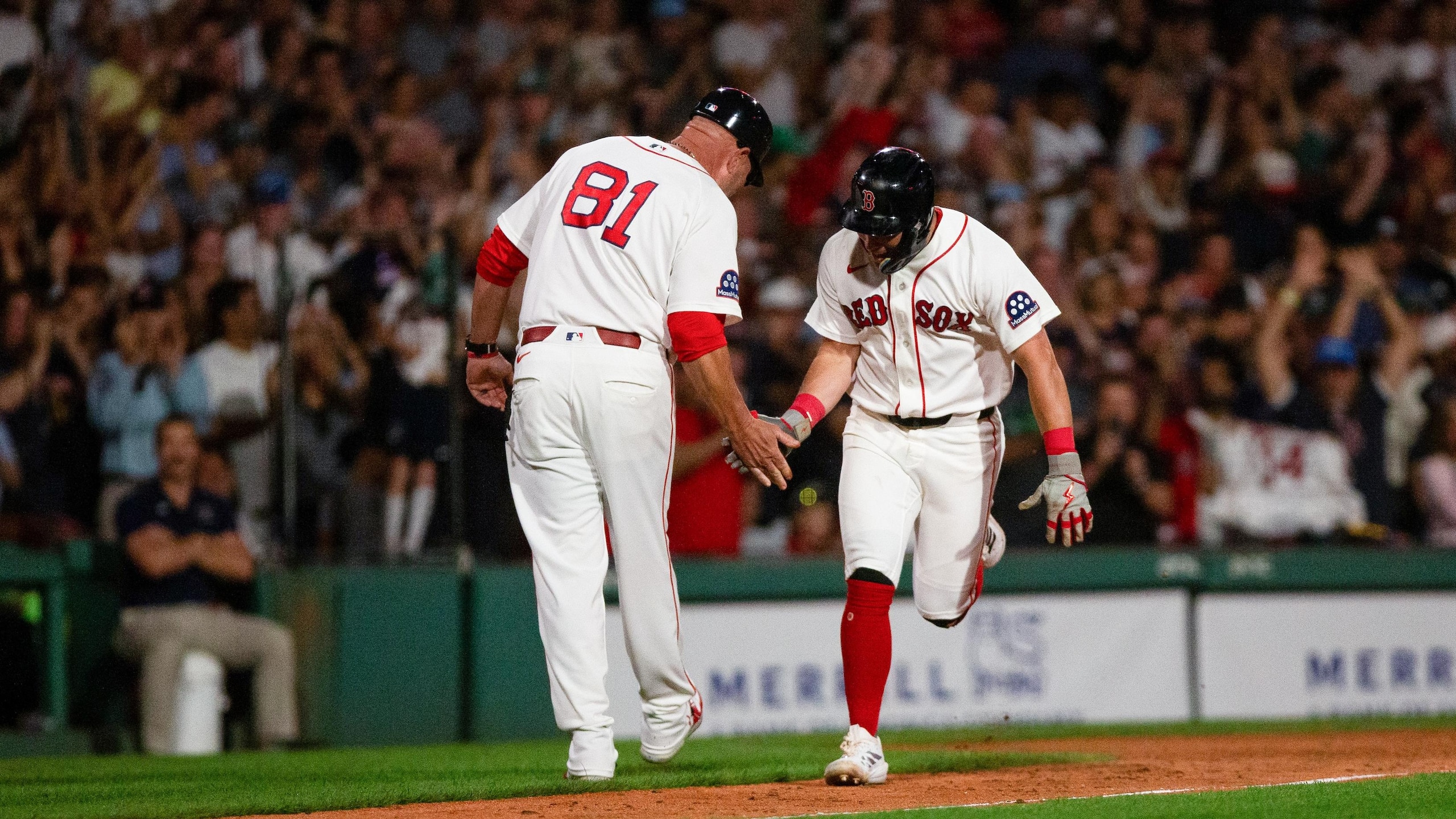
33. Jose Lobaton, Tampa Bay Rays
4 of 36Hitting
Lobaton owns decent career splits for a switch-hitter, but has been far, far better from the left side of the plate in 2013. But that's OK, as that's where he's racked up the bulk of his plate appearances, and he's been productive enough from that side to pass as an above-average hitting catcher. His approach has been a little less disciplined in 2013, but his ability to make contact hasn't suffered greatly and his BABIP has benefited from a sizable line-drive rate.
Power
Lobaton's power production has mostly from the left side of the plate, and it's been almost all pull power. No joke: his HR/FB as a left-handed hitter on balls to right field is 50 percent. If he pulls a ball to right field as a lefty hitter, it has a 50/50 chance of going out. He's also made good use of the right field line as both a lefty and righty hitter, racking up the bulk of his doubles on balls down the line. There's been some overachieving going on this season, but Lobaton's power is solid for a catcher.
Baserunning
Lobaton is basically your garden-variety baserunning catcher. He's not fleet of foot, nor does he pretend to be a guy who is fleet of foot. He takes it a base at a time when he's on the basepaths, and has been known to run into outs.
Fielding
Controlling the running game is a challenge for Lobaton. He nabbed fewer base stealers than the average catcher in 2012, and it's the same story this year. He gets out of the crouch quickly enough, but he lacks the arm strength to make it count. The ball seems to float to second base upon release. Lobaton's receiving could be worse, however. He's decent at keeping the ball in front of him, and Cork Gaines of RaysIndex.com pointed out that Lobaton can occasionally do a Jose Molina impression.
Health
Lobaton has been able to stay healthy in 2013, but he went to the DL in each of the last three seasons. In all, he missed over 100 games with foot, knee and shoulder injuries.
Overall
Lobaton made the cut for this list because of his bat, which has come alive in 2013 thanks to an increased line drive habit. Catchers who can hit are obviously very much desirable, but there are more well-rounded catchers out there.
32. Christian Bethancourt, Atlanta Braves
5 of 36Hitting
While his overall talent is undeniably impressive, Christian Bethancourt’s bat is easily his weakest tool. A right-handed hitter, he employs an overaggressive approach in which he essentially swings at anything around the zone. Even though he showcases impressive bat-to-ball skills and makes consistent contact, Bethancourt frequently gets himself out by either pulling off the ball or putting a weak swing on something away. He’s tightened his zone a bit this season and is driving the ball more consistently as a result, but it’s difficult to envision him becoming anything more than a fringe-average hitter.
Power
At 6’2”, 220 pounds, Bethancourt looks like he should hit for power. But due to the aforementioned inefficiencies in his approach, it only shows up on inner-half offerings when he’s able to clear his hips and turn on the ball. And while he’s improved his power frequency this season against quality pitching, there’s no guarantee that it will translate at the major league level.
Baserunning
Compared to his peers, Bethancourt is an impressive athlete who moves well behind the plate and catches teams off-guard with his ability on the basepaths. He’s not a base-stealer, per se, but he has the quickness to quietly post double-digit totals in a given season. However, due to the wear and tear associated with the position, that may not last long.
Fielding
Regarded as one of the premier defensive backstops in the minor leagues, Bethancourt’s combination of elite, 80-grade arm strength, sound footwork and a quick release results in consistent pop times around 1.8 seconds and has led to a 37-percent caught-stealing rate in six minor league seasons. Both his blocking and framing have noticeably improved this year, though he still occasionally stabs at balls in the dirt. Due to his age and lack of experience in the high minors, Bethancourt’s ability to control the game is still understandably raw and leaves something to be desired. Regardless, all signs point to him becoming a game-changing defender at the highest level.
Health
Bethancourt had successfully avoided the disabled list until last August when he was struck by a pitch on the left hand and suffered a fracture to the fifth metacarpal. Although he’s both physically strong and athletic, he’s only appeared in 100-plus games once in his six-year minor league career, and he hasn’t logged over 80 games behind the plate since the 2011 season.
Overall
Bethancourt is a special talent, no doubt. He has the potential to impact the game in a variety of ways behind the plate and still has plenty of room for improvement. But despite the progress he made this season while repeating Double-A, the development of his hit tool remains a legitimate concern. If he can come close to reaching his offensive ceiling, Bethancourt could emerge as one of the more well-rounded backstops in the game.
31. John Buck, Pittsburgh Pirates
6 of 36Hitting
A high batting average from John Buck is out of the question these days. He’s taken to striking out quite often, most notably whiffing on fastballs up out of the strike zone. And while he does a decent enough job of hitting BABIP-friendly liners and grounders, he doesn’t make enough solid contact to find the holes in the defense to maintain a solid BABIP. On top of all this, his walk rate has spiraled down from where it was in 2011 and 2012, resulting in a very unspectacular OBP. The short version: the guy can't hit.
Power
Seemingly every ball Buck hit at the start of the season found its way over the fence, but those days are long done. His power and power production are still above-average for the position, but it’s been a struggle for him since the start of May. He’s popped quite a few balls harmlessly into right field rather than driving them to left field. That indicates that he used up all his bat speed early in the season, and it doesn't bode well at his age.
Baserunning
Buck spent much of 2013 with the Mets, so he naturally. The last time he went first to third this often was in 2010, and he’s also gone second to home on singles the most times since 2008. He’s even stolen a few bases. There’s something about those Mets, man…
Fielding
Buck has never really been elite at throwing out runners, but he’s better than your average catcher at it. His legs don’t quite have the same spring that they used to, but he makes up for that with some solid arm strength. And while he does a fine job of keeping the ball in front of him, Buck’s receiving skills have never been great. Most notably, he has a well-established reputation as a subpar pitch framer.
Health
Buck has been in the league for a while now, but he’s managed to stay healthy for the most part. His last trip to the DL was in 2010 with a thumb laceration, and since then he’s been pretty much injury-free. For a catcher his age, his health is in good shape.
Overall
Buck is not the star that he masqueraded as early in the 2013 season, but his bat has some pop in it and can still play some passable defense behind the plate. Where he’ll be in 2014 is anyone’s guess, but he can definitely still play.
30. Austin Hedges, San Diego Padres
7 of 36Hitting
Austin Hedges’ bat will ultimately determine whether he becomes the superstar people expect. A right-handed hitter, he has a short, compact swing geared toward line-drive contact across the entire field. Hedges’ approach is especially impressive, as he’s already adept at working counts in his favor, and he controls the strike zone better than most players his age. He doesn’t strike out that often, but his excellent bat-to-ball ability hinders his selectivity at times and forces weak contact. Overall, Hedges has the potential to be a .270 or better hitter in his prime.
Power
Power has never been Hedges’ calling card, and it probably never will. That being said, he does have consistent gap pop capable of producing a sizable doubles total annually. And considering his present strength and feel for the strike zone, there’s a chance he’ll develop some over-the-fence pop as he matures. However, it’s doubtful that it will amount to anything more than average power.
Baserunning
Hedges’ athleticism stands out on both sides of the ball, as he showcases superb athleticism behind the plate and above-average speed for his position on the basepaths. He’s a smart ballplayer who has a knack for taking extra bases, and he already demonstrates knowledge of reading pitchers and picking his spots to steal. Hedges is a rare breed of catcher capable of stealing 10-plus annually.
Fielding
Austin Hedges is the best defensive catcher in the minor leagues. Despite his age and lack of experience in the high minors, the kid could excel right now behind the dish in the major leagues. He’s seriously that good. The quickness and efficiency of his footwork is unparalleled among his peers, and his elite catch-and-throw skills, insanely quick transfer and plus arm strength allow him to essentially shut down the running game. Hedges’ pitch framing has continued to improve since turning pro, and he’s drawn endless praise from pitchers and coaches alike. It’s crazy to think he’s only going to get better.
Health
Hedges dealt with a sore shoulder early in the spring, but besides that, he’s avoided a significant injury since entering the Padres’ system in 2011. As long as he can stay healthy, he should continue a rapid ascent toward the major leagues.
Overall
Hedges' elite, game-changing chops behind the plate will make him one of the best defensive catchers in the major leagues upon his arrival. There’s nothing he can’t do back there. And if the bat continues to develop ahead of schedule, then Hedges has the potential to reach his enormous ceiling as one of the game’s premier catchers.
29. Yasmani Grandal, San Diego Padres
8 of 36Hitting
Yasmani Grandal is significantly better from the right side of the plate than he is from the left side and, in fact, wasn’t much good at all from the left side in 2013 with a .635 OPS over 57 plate appearances. But one thing Grandal did well in 2012 and did really well in a small sample in 2013 is draw walks. He has an outstanding eye, and this year, it helped him rescue his OBP from a subpar batting average. But that average was also misleading, as he was hitting plenty of line drives and getting zero luck on ground balls when he was healthy. Realistically, he’s one of the league's better hitting catchers.
Power
It’s a red flag that Grandal’s power went down as much as it did in 2013, as he was of course coming off a suspension for performance-enhancing drugs. Exactly what kind of power hitter he is is therefore inconclusive, but it’s worth noting that he did show off enough pop to smack a few line drives over the center fielder’s head when he was playing. He deserves at least an average power score.
Baserunning
This is another area where there’s some unknown with Grandal, but we know he’s a solid athlete and was basically your typical catcher when it came to running the bases in 2012. He couldn’t be counted on to take an extra base, but he only made one out on the basepaths that wasn’t at home. That’ll do for a catcher.
Fielding
Grandal has thrown out 20 percent of would-be base stealers as a major leaguer, which is well below average. He’s quick enough out of the crouch when he has to throw, but his glove-to-hand transfer is slow, and he also takes a few ticks to wind up. The bright side is that he keeps the ball in front of him well and is one of the very best pitch framers in the league. He's not a complete defensive catcher, but he has receiving covered.
Health
It’s going to be a while before Grandal is able to set foot on the diamond again. He tore up his knee in July and could need as many as 12 months to recover. He probably won’t be back until midway through the 2014 season.
Overall
Grandal’s career has had nothing but bad things happen to it since the end of his promising rookie season, as he was first busted by the PED police and then busted in a major way by the injury bug. But if it’s talent you want, he has plenty of that.
28. Ryan Hanigan, Cincinnati Reds
9 of 36Hitting
There’s no question that Ryan Hanigan’s best talent at the plate is his ability to draw walks, which he owes to good patience and quality plate discipline. And because he rarely ever swings and misses, he avoids strikeouts with the best of ‘em. Not much tends to happen when he makes contact, however. He hits liners and ground balls that should help his BABIP, but he hasn’t been hitting the ball with much authority this year. It doesn’t feel like a fluke that he has such a low BABIP on both liners and grounders.
Power
Power is not Hanigan’s thing, and it would be even less his thing if he played his home games somewhere other than Great American Ballpark. He really only has a chance at hitting a home run if he hits it down the line, but his measured approach at the plate unfortunately sees him hit the ball back up the middle quite often. He doesn’t have power in that direction.
Baserunning
Understandably, Hanigan tends to bat down in the lineup in front of the pitcher. That renders him with few chances to show off his wheels. But his baserunning is hardly disastrous. He plays it safe, and plays it safe well. Coming into 2013, he had made a total of two outs on the bases in six years.
Fielding
It is absolutely not safe to run on Hanigan. He nabbed 48 percent of the baserunners who tried in 2012, and is at 50 percent this year. His arm is strong, and he’s accurate with his throws. And while he hasn’t had the best of times keeping the ball in front of him, his receiving is fine and he knows all about framing. The interview Ben Lindbergh did with him for a Grantland piece is definitely worth reading.
Health
Hanigan’s body has had it pretty rough this year. He dealt with an oblique strain during spring training, then went on the DL with the same injury in April and eventually found himself back on the DL with a sprained wrist in July. He's also not getting any younger with his 33rd birthday just having past.
Overall
Hanigan’s brutal season at the plate can’t be ignored, but he’s still earning his keep with his work behind the plate. He's not what you might call a WAR hero, but the Reds will no doubt vouch that he's the kind of player who can help glue a team together.
27. Alex Avila, Detroit Tigers
10 of 36Hitting
Alex Avila deserves worse than this score based on how he’s look for much of the season, but he's hit a lot more like himself ever since July (even with an injury absence mixed in). He started the day on July 2 hitting .172/.271, and then hit .244/.320 over 25 games. He's caught fire again in September. It all adds up, as he's not allowing himself to be jammed by chasing pitches inside like he was earlier in the season, choosing instead to wait for pitches out over the plate that he can handle. Skepticism is still warranted based on his slow start, but Avila's strong finish saves him from a worse score here.
Power
Avila’s a left-handed batter who has power to all fields, and that’s another thing he's rediscovered since July. He's clubbed a few opposite-field homers and a few opposite-field doubles on top of those. He may never come close to his 2011 power production again, but when Avila is right, there's no question he has the goods to be a solid power producer.
Baserunning
Avila was a disaster on the bases back in 2011 when he ran into 10 outs on the basepaths. But he made only five outs on the bases in 2012 and has continued to be better in 2013. In what is admittedly a limited amount of action, he’s only made a couple outs on the bases and has been able to do so while being slightly more aggressive than, say, not aggressive at all.
Fielding
Avila’s defense, meanwhile, is just OK. Though he receives the ball fine when it’s thrown on target, he’s never been particularly good about keeping the ball in front of him. And while he's typically been good at controlling the running game, he's been notably less good at it in 2013. That's not always the fault of the catcher, but Avila has indeed looked a little slower out of the crouch this year. That's a problem given that his arm is nothing special. The best things he has going for him are his ability to call a game and his solid pitch framing ability.
Health
Avila has been on the DL three times since the start of 2012, with the most recent stint coming in August via a concussion. He’s obviously been bit by some bad luck, but there’s no ignoring that his health has had a number done on it recently.
Overall
Avila’s career has taken a downturn since his All-Star season in 2011, and there have been times throughout 2013 when he’s been hard to watch. But he’s better than he’s shown, especially offensively.
26. Nick Hundley, San Diego Padres
11 of 36Hitting
Nick Hundley is more aggressive these days than he used to be. He swings at tons of fastballs, and plenty of pitches in general. It’s not such a good strategy, as his walk rate is dwindling and his strikeout rate is hanging steady above 20 percent. And while he’s maintained a solid BABIP by hitting primarily line drives and ground balls, his BABIP isn’t solid enough to save par. All told, it's been a poor year for him offensively.
Power
It’s pretty much all pull power for Hundley, so it’s a good thing he has plenty of it at his disposal. He’s absolutely capable of turning on pitches and hitting rockets to left field for homers and doubles, and those help keep his power production afloat despite the fact anything to center or right probably isn’t going far. And yes, it’s worth noting that he loses some power to Petco Park.
Baserunning
Hundley doesn’t steal bases and rarely gets the excuse to take off running since he so often bats out of the No. 8 hole in front of the pitcher, but he’s definitely a passable baserunner. He can get going when he has an excuse to run and is generally pretty good about avoiding outs.
Fielding
Hundley isn’t controlling the running game very well this year, but it’s something he’s been good at in the past, with caught-stealing percentages over 30 in 2011 and 2012. And from what I’ve seen, his skills are still there. He gets out of the crouch quickly and can deliver strong throws that are on target. Hundley has also only gotten better about keeping the ball in front of him, though he’s not as good a receiver and framer as teammate Yasmani Grandal.
Health
Hundley has been fine in 2013, but he was a magnet for injuries in 2011 and 2012. He missed 63 games due to an oblique strain and elbow surgery in 2011, and 43 games due to knee surgery in 2012.
Overall
Hundley hasn’t gotten back to being the force he was in 2011, when he had an .824 OPS while playing very strong defense. But his power production is saving his numbers from being horrible, and he can still handle himself behind the dish.
25. Travis D'Arnaud, New York Mets
12 of 36Hitting
A right-handed hitter, Travis d’Arnaud’s plus bat speed and strong wrists allow him to make hard contact to all fields. His swing is short with a direct path to the ball, yet he does an impressive job keeping the barrel in the strike zone for an extended period of time. His pitch recognition has noticeably improved in each of the past two seasons, chasing quality secondary pitches out of the zone less often than he did earlier in his career. That being said, he’ll still get pull-happy at times, which usually results in him swinging through too many pitches. As long as he can remain on the field, d’Arnaud should be able to produce a .275-plus batting average in his prime.
Power
Yes, d’Arnaud has played in multiple hitter-friendly parks during his minor league career. However, his power is legit. With plus bat speed and a short path to the ball, he consistently drives through the baseball, creating impressive extension after contact so as to generate backspin carry. He’s showcased plus raw power in the minors, and it should only continue to improve as he settles in and adjusts to major league pitching.
Baserunning
D’Arnaud was an above-average runner relative to the position prior to his rash of injuries over the last several years. Even though he still moves well, he is a below-average runner overall and won’t pose as a threat on the basepaths, especially at the highest level.
Fielding
D’Arnaud’s defense has steadily improved since reaching Double-A in 2011. His footwork is much cleaner and efficient, which, when combined with his above-average arm strength, has made him more effective at stifling the running game with a 48.6 caught-stealing rate over the last three season. Receiving has always been a strength, as he uses his agility behind the plate to offer the umpire a good look at the pitch. More specifically, his ability to frame fastballs at the bottom of the strike zone has drawn rave reviews from his staff at every level.
Health
D’Arnaud would already be an established big league backstop if not for a host of injuries over his career. In 2010, he was limited by a back problem. The following year, he suffered a concussion in the spring and later tore a ligament in his thumb while playing with Team USA. In 2012, d’Arnaud was off to an excellent start at Triple-A when he suffered a season-ending knee injury (torn posterior cruciate ligament), though it didn’t require surgery. And finally, this year, his first in the Mets organization, d’Arnaud suffered a non-displaced fracture in his foot that cost him a majority of the season.
Overall
After enduring so many significant injuries before even reaching the major leagues, health will always be a serious concern for d’Arnaud for the duration of his career. However, despite the checkered medical history, he still has the all-around ability and potential to be an All-Star several times over.
24. Dioner Navarro, Chicago Cubs
13 of 36Hitting
Remember when Dioner Navarro was an All-Star? He’s back to hitting like that again. The key for him has been absolute destruction of fastballs, which is new ground for him. And by jumping all over hard stuff, he’s been able to wean himself off the habit of expanding the strike zone that he had between 2010 and 2012. In turn, he’s upped his walk rate, giving him the double-whammy: a high average and a high OBP. And as much as I want to knock him for being a platoon player, he's traditionally been better from the right side and the bulk of his PAs this season have been on the left side.
Power
Navarro has been maintaining a slugging percentage above .500 this season, which is where few other catchers are able to tread. Navarro obviously isn’t that good at hitting for power, especially if you strip away his three-homer game that came out of nowhere. But this new version of Navarro is a hard swinger, and he really gets a hold of the ball when he makes contact. His power explosion isn't a total fluke.
Baserunning
To call Navarro a station-to-station guy would actually be an understatement. He’s been taking it one base at a time all season, and that’s going to be par for the course for him. Even for a catcher, he's a pretty lousy baserunner.
Fielding
Welington Castillo is the defensive gem behind the plate on the north side of Chicago, but Navarro isn’t too shabby. He’s pretty slow out of the crouch, but he has a decent enough arm to handle the running game almost as well as the average catcher. He’s had a harder time keeping the ball in front of him, as he’s just not as spry as he used to be. He’s also never been much of a pitch framer.
Health
It’s been a while since Navarro last went on the DL, but he’s racked up a pretty extensive injury history since breaking into the league in 2004, and it was added to when Chase Utley demolished him at home plate in early August. It's a good thing he's not ancient, as his 30th birthday is still a few months away.
Overall
Navarro was about as irrelevant as can be for a while there, but suddenly he’s a power hitter who must be reckoned with. It’s a funny game, this baseball.
23. Derek Norris, Oakland A's
14 of 36Hitting
Derek Norris is basically what Jeremy Brown was supposed to be. He’s a catcher who sees a lot of pitches at the plate, and his very strong awareness of the strike zone results in him taking plenty of walks. Those are the driving forces behind his respectable OBP. Norris isn’t much of a hitter when he does make contact and, in fact, is worse than his mediocre-as-is BABIP would suggest. He’s enjoyed some pretty good luck on ground balls this year.
Power
Norris has some solid raw power coiled up inside him, and what’s odd is that O.Co Coliseum has been unable to suppress it in 2013. He’s enjoyed some fine home run-hitting success there, which is commendable in light of the dimensions. But Norris’ power apparently doesn’t travel, and his lack of a consistent line drive habit makes doubles tough to come by.
Baserunning
Norris looks like the exact opposite of a speedster, but he’s actually been a surprisingly successful stolen base artist, and he gets around the bases well besides that. He rumbles first to third and second to home on singles with more regularity than you’d think. He's a better baserunner than your average catcher.
Fielding
Norris doesn’t have the strongest throwing arm, but he does have good throwing mechanics that help him save par when throwing out runners. Where he needs work is in staying in front of the ball, but his receiving is generally fine, and he’s certainly a better pitch framer than fellow catcher John Jaso. Nothing stands out about Norris on defense, but he’s good enough to pass for an average defender.
Health
Norris broke his left big toe in early August, but that’s not the kind of injury that’s going to hold him back long-term. Aside from that, he’s largely been able to stay in good health throughout his pro career.
Overall
Norris gets on base better than the bulk of the league’s catching corps, and he also hits for some pop and runs the bases. The combination of these things helps make him a decent, if not particularly good, player.
22. Hank Conger, Los Angeles Angels
15 of 36Hitting
Regular playing time in 2013 has served to make Hank Conger a bit more willing to work counts, but his approach is still very much a work in progress. His plate discipline is just OK, and he has a tendency to go fishing with nothing to show for it—especially on fastballs up and anything off-speed. He’s surviving on BABIP, and the good news, to his credit, is that he hits enough line drives to make up for the fact that he hits a few too many fly balls.
Power
Conger was a solid power producer in the minors, and he’s gotten better and better in the majors. His power production has indeed been pretty impressive this year, as his slugging percentage would be pushing .500 if he had a higher batting average. He doesn’t have much besides pull power to the right side of the field when batting left-handed, but he has enough of it to hit ropes there regularly. And indeed, his power would show through more often if he played home games somewhere other than the Big A.
Baserunning
There’s not much to be said about Conger’s baserunning. He’s a guy who mainly plays it safe as a station-to-station runner, only occasionally pushing the envelope. He’s gotten burned a couple times when doing so this year, and that doesn’t look so good in a small sample size, but we’ll give him a pass.
Fielding
Conger wasn’t built up as much of a defensive presence when he was a prospect, but he’s looking pretty good now. He’s holding his own controlling the running game thanks to an accurate arm, and it reflects well on him that Angels pitchers perform better with him behind the plate than they do with Chris Iannetta in the crouch. That’s not just one of those things either, as Conger is garnering some attention for his framing ability. For more on that, Jeff Sullivan of FanGraphs has you covered.
Health
Conger has barely even suffered a scratch since arriving in the major leagues. Being a backup catcher up until recently has certainly helped.
Overall
The Angels have one guy who was supposed to be a good catcher and one guy who actually is a good catcher. Conger is the latter guy. He can hit for some pop and can handle the position fine on the defensive end. He's currently one of the game's hidden gems.
The Angels have one guy who was supposed to be a good catcher and one guy who actually is a good catcher. Conger is the latter guy. He can hit for some pop and he can handle the position just fine on the defensive end, and you get the feeling his best is yet to come.
21. Carlos Ruiz, Philadelphia Phillies
16 of 36Hitting
Carlos Ruiz was really struggling against fastballs for a while there, and it wasn't surprising seeing as how he seemed to be missing some bat speed. But he's been crushing fastballs ever since the beginning of August and has been one of the best hitters in the league as a result. He's also still one of the better contact hitters you're going to find at the position, which is owed somewhat to his very good plate discipline. It looked for a while there like he couldn't, but the guy can still hit.
Power
Ruiz only has power to left field, so he’s really only good for power when he’s batting at home in Citizens Bank Park. And while he has indeed been hitting for power during this post-August 1 hot stretch of his, he's still largely been an at-home-only power guy.
Baserunning
There’s an argument to be made for Ruiz as baseball’s top baserunning catcher. He doesn’t steal bases, sure, but it’s remarkable how often he’s gone first to third over the last two years, and he rarely needs to be held up at third base on singles. And while he’s been guilty of making outs at third base in the past, that problem hasn’t been there in 2013. For a catcher, he's a downright terrific baserunner.
Fielding
Ruiz has never been a defensive specimen behind the plate, but he more than holds his own when it comes to controlling the running game. He’s quick enough out of the crouch, and he probably doesn’t get enough credit for his arm strength. He’s not Pudge Rodriguez, but he’s pretty good. Ruiz also keeps the ball in front of him well and is obviously widely credited with being one of the game’s more cerebral catchers. He may not be renowned as an excellent framer, but he handles pitchers very well.
Health
Ruiz has had problems with his wheels the last two seasons, sitting out 32 games with a bad foot last year and 27 games with a hamstring strain this year. With his 35th birthday due up, the injury bug probably will keep dropping in on Ruiz.
Overall
There have been times this season when Chooch has looked absolutely finished as a player—or at least like a depressing shell of the player he was in 2012. But he’s shown enough of his old self recently to convince one that he can still cut it as a regular catcher.
20. A.J. Pierzynski, Texas Rangers
17 of 36Hitting
A.J. Pierzynski is a veteran of many major league seasons, but he still doesn’t like to work the count. He avoids strikeouts by avoiding deep counts, but he also avoids walks in doing so. Further, he doesn’t care if he expands the zone, as he’s notorious for swinging at anything and is only getting worse at doing so. And now for the good news: Pierzynski is a solid contact hitter, and this year, he’s been hitting enough line drives to salvage a solid batting average. It’s a hollow batting average, but it will do.
Power
Pierzynski’s power hasn’t been as prolific as it was in 2012, but nobody actually expected it to be, right? However, he has maintained some of the pop that came out of nowhere last year, once again posting an HR/FB rate above his career norm and picking up a few extra doubles courtesy of his line-drive habit. His power to left is lacking, but he can certainly hit the ball with authority to his pull side.
Baserunning
Pierzynski is a station-to-station guy, but he's even more of a station-to-station guy than the average catcher. He legitimately does take it one base at a time, and he's not particularly good at making up for it by avoiding outs on the basepaths.
Fielding
Pierzynski has never been particularly great at throwing out base stealers, but he’s always been right around average. He doesn’t have the strongest or most accurate arm, but he consistently finds ways to make do. And while he’s never been particularly good at keeping the ball in front of him, he’s been better about it this year. He also deserves credit for how he’s handled a Rangers pitching staff that has featured a lot of different faces in 2013, even if he hasn’t been good at framing pitches.
Health
Pierzynski has stayed largely healthy throughout his career, but his right oblique has been acting up lately. It sidelined him for five games last summer, and put him on the DL this summer. At his age, this is definitely something that deserves attention.
Overall
Pierzynski’s not a great player or a great catcher. Never has been, in fact. But he’s a solid hitter for the position, and he’s been able to do just enough defensively over the years to earn his keep. If nothing else, his consistency deserves a tip of the cap.
19. Mike Zunino, Seattle Mariners
18 of 36Hitting
We have a very small body of work with which to assess Mike Zunino, but he’s looked at the plate like…well, sort of like how you would expect such a young and relatively inexperienced player to look. He’s had a bad time hitting fastballs that he’s chased out of the zone and has also had trouble with breaking balls below the zone. The ability to work the count is there, but Zunino’s plate discipline and pitch recognition aren’t up to par yet. He's also had issues with getting too far under the ball and sending cans of corn to the outfield. He has potential in spades, but we have to play it safe with this score.
Power
Zunino’s power production in the minors was very impressive. It hasn’t shown through in the majors yet, but he has given a good idea about the kind of power he has coiled inside him. He’s really blasted the ball to left-center, making it a bit easier to project at least average power production from him in 2014.
Baserunning
Zunino’s a good athlete for a catcher, and he’s already shown off his athleticism on the basepaths at the major league level. He’s gone first to third half the time he’s had a shot, and he's has also raced around the bases to score from first on doubles on several occasions. He’s going to be a good one when it comes to running the bases.
Fielding
Much is still unknown about Zunino’s defense, but the scouts generally had kind things to say about it as he was coming up through the system, and he has shown some promise at the major league level. He doesn’t have a laser for an arm, but he does have a quick release. The jury’s still out on his actual catching abilities, but he’s done a decent job of keeping the ball in front of him in the majors, and Mariners expert/fanboy Jeff Sullivan likes Zunino's framing abilities.
Health
Zunino’s body was just fine until he fractured the hamate bone in his left hand in July and had to go on the DL. He should be OK in the long run. That sort of injury happens all the time and doesn’t have any lasting effects.
Overall
Zunino made his major league debut barely a year after the Mariners drafted him third overall, which goes to show how highly they think of him. Though it may take some time for Zunino to develop as an offensive force, he should be able to hold his own while playing solid defense in 2014.
18. Jarrod Saltalamacchia, Boston Red Sox
19 of 36Hitting
Strikeouts are always going to be a part of Jarrod Saltalamacchia's game, but give him credit for staying inside the strike zone with his swings a bit more consistently in 2013. That’s helped him cut down on his whiffs a little bit. Elsewhere, he’s hitting the balls on the screws a ton in 2013 with a line-drive rate close to 30 percent, so his inflated BABIP isn’t there by accident. He’s also been drawing more walks, so his transition from well-below-average hitter to above-average hitter is definitely for real.
Power
Salty’s apparent mission to improve his hitting has cost him some power at the plate. He’s not hitting the ball in the air as often, and his HR/FB is way down. He’s been able to avoid a total power outage by using his new-found line-drive approach to pile up the doubles, and he’s been spraying those to all fields. In doing so, he’s maintained his place among baseball’s top power-hitting catchers.
Baserunning
The depth of Boston’s lineup means that Salty has to do a little more running than most catchers, and it’s an area where he more than holds his own. He doesn’t hold things up by being station-to-station, as he’s made some trips around the bases on doubles and is perfectly capable of scoring from second on singles.
Fielding
Salty has gotten better about keeping the ball in front of him, and he has indeed made progress on the finer points of catching, such as calling a game. But his receiving is still lacking at times, especially in his ability to frame pitches, and he’s still very inconsistent with the running game. His biggest problem is accuracy, as he struggles to put the ball on the money and still throws it away too often. He’s gotten to a point where he’s a passable defensive catcher, but still a shade below par.
Health
Saltalamacchia was hurt pretty much all the time in 2009 and 2010, most notably undergoing surgery for thoracic outlet syndrome in ’09. But his last DL stint happened in 2010, and the back problems that started bothering him toward the end of 2012 only recently reoccured.
Overall
It’s still very much possible to nitpick certain aspects of Salty’s game, but let’s give him credit for what has been his best season so far. He’s become much more consistent at the plate, and that’s what he needed to be in order to truly earn his keep.
17. Wilin Rosario, Colorado Rockies
20 of 36Hitting
It’s going to be hard for Wilin Rosario to break into the walk-drawing business as long as he’s swinging at every fastball that crosses his path. Fortunately, he's pretty good at hitting them. He’s hitting a ton of line drives this season that have helped boost his BABIP and, in turn, rescue his OBP from oblivion. More walks would be nice, but at least Rosario knows what he’s doing when he swings the bat.
Power
Rosario hit for a ton of power last year, and he’s still hitting for power in 2013. The difference this year is that there’s not as much separation between Rosario’s power production at Coors Field and his power production everywhere else. That looks good on him, and it’s not too much of a surprise. Rosario’s power goes to all fields, and he has plenty of it.
Baserunning
Rosario is capable of stealing bases and is doing so a whole lot more efficiently than he did in 2012, when he was nabbed five times in nine tries. He’s also cut down on his outs on the basepaths without getting too hesitant. Translation: He’s gotten a whole lot better at the whole baserunning thing.
Fielding
Rosario can control the running game fine. His throwing mechanics are solid, and he has a pretty good arm on him. It’s staying in front of the ball that he still needs to work on. He hasn’t been the utter disaster that he was in 2012, when he led the league in passed balls and saw 63 wild pitches go by, but he’s still not good. Passed balls continue to be a problem for him, as are wild pitches. His receiving in general is a work in progress, though this much must be said: He’s done some pretty good work with a pedestrian staff of pitchers.
Health
Rosario battled some injuries as a minor leaguer in 2009 and 2010, but the worst thing he’s had as a major leaguer was an ankle sprain that sidelined him for three games last year.
Overall
Rosario isn't a master of the art of hitting or the art of catcher defense. But his power is some of the best you're going to find at the catcher position.
16. A.J. Ellis, Los Angeles Dodgers
21 of 36Hitting
A.J. Ellis is extraordinarily patient at the plate, seeing well over four pitches per plate appearance, like clockwork. And since he has such outrageous plate discipline, he specializes in turning all this patience into a good walk habit. But as an actual hitter, Ellis is just "meh." He can hit a fastball, but is so-so against everything else. He’s also not a consistent producer of line drives, tending instead to keep the ball on the ground. One's BABIP can only go so high with a habit like that.
Power
A high line-drive rate helped Ellis collect a bunch of doubles in 2012, and he also enjoyed a very nice 12.5 HR/FB rate. But realistically he’s not a power hitter. He hits too many balls on the ground most years, and his power is more warning-track power than real home run power. The one thing that can be said in his defense is that Dodger Stadium has definitely hurt him.
Baserunning
Ellis is hardly the most athletic catcher under the sun, but he’s more than just a station-to-station guy when he’s on the basepaths. He’s cautious enough to avoid outs, but he’s been able to make it home from second on singles more often than not in 2013 and has also gone first to third a couple times. He’s a smart overall player, and it shows up when he runs the bases.
Fielding
Ellis generally doesn’t specialize in throwing out baserunners, but he’s having a huge year doing so in 2013 with a caught-stealing percentage near 50. That seems a bit high, as his arm is more accurate than strong, but credit definitely has to be given for how hard Ellis has worked to improve this particular part of his game. He’s also gotten better at keeping the ball in front of him, and you hear nothing but rave reviews about his game-managing skills.
Health
Ellis has been beat up for the better part of the last year. He battled left knee soreness in 2012 and eventually went in for surgery over the offseason. This year saw him spend some time on the DL with a bad oblique earlier in the summer.
Overall
Ellis is a guy you don’t hear about, mainly because people only care about catchers if they can hit or have rockets for arms. Ellis doesn’t fit the mold, but he is undoubtedly one of the more well-rounded catchers out there and a guy a lot of teams would love to have.
15. Miguel Montero, Arizona Diamondbacks
22 of 36Hitting
Miguel Montero’s career year in 2012 came courtesy of a patient approach and much-improved plate discipline, resulting in him padding his OBP with walks and getting more hits by swinging mainly at balls in the strike zone. He also had this working for him: a BABIP he had not shot at sustaining. Sure enough, his BABIP has leveled out this year, and other things have regressed as well. His plate discipline hasn't been as sharp, and what was already a distressing whiff habit has gotten worse. Bad luck has played a role in Montero's season, however, as the high line-drive rate he has should be the key to an at least respectable BABIP. He's better than he's shown.
Power
Montero sacrificed some power in becoming a more reliable hitter in 2012, and his power production is down again in 2013. Such is life when one is hitting more balls on the ground and popping too many harmless flies to left field, not to mention hitting fewer fly balls in general. Montero’s old power has shown through in flashes, but it's not a good sign that it's regressed two years in a row.
Baserunning
Montero had a pretty bad problem with running into outs on the basepaths in 2011 and 2012, racking up a whopping 21 outs on the bases between the two seasons. This problem has largely subsided in 2013, effectively putting Montero’s baserunning in line with all the other “good enough” catchers.
Fielding
Montero is very much a danger to would-be base stealers. He threw out over 40 percent of attempted thieves in 2011 and 2012, and he's been better than average this year. His mechanics and arm strength are both quite impressive. He’s had a hard time blocking balls in 2013, but so would you if you had to handle a staff that leads the National League in wild pitches. Montero’s receiving skills are fine, and he’s a decent, if not entirely great, pitch framer. All around, he’s a very solid presence behind the dish.
Health
Montero had to go on the DL with a back strain in late July, but it’s hardly a life-threatening injury that’s a concern going forward. Aside from that, his last notable injury happened all the way back in 2010.
Overall
Montero was one of the more underrated players in the league in 2011 and 2012, but this has been a rough season for him. The BABIP luck he enjoyed in 2012 has evaporated, and his power is quickly becoming a lost cause. It's a good thing his bat isn't beyond saving, and he's obviously still a good defensive catcher.
14. Welington Castillo, Chicago Cubs
23 of 36Hitting
Welington Castillo hasn’t been quite as patient as he teased in 2012 when he saw close to four pitches per plate appearance and drew walks in just about nine percent of his plate appearances. But he has tightened up his plate discipline and taken to collecting line drives and ground balls in bunches. That’s a good way to get a high BABIP, and Castillo can tell you all about it. He's been a BABIP merchant in each of the last two seasons, and this year he finds himself among MLB's most productive catchers because of it.
Power
And now for the downside: Castillo’s power hasn’t shown up as much in 2013. It’s definitely inside him somewhere, but he’s had a bit of a frustrating time with warning-track power. The bulk of his power production has come on hot smashes into the right-center gap and a few more over the left fielder’s head. Maybe those will be home runs in 2014, so we'll give him a slight boost.
Baserunning
Castillo doesn’t have any speed to speak of, so it’s commendable that he has a couple of stolen bases in 2013. What’s not so good is that he’s made a collection of outs at third base when he’s tried to push his limits. That needs to be cleaned up.
Fielding
Be careful about sleeping when you’re on the bases, because Castillo will pick you off. It’s all part of a very strong ability to control the running game, as he gets rid of the ball quickly and has a terrific arm. He’s also been better at keeping the ball in front of him than he was in 2013. He’s still working on the finer points of catching, but he certainly has a solid base to work with.
Health
Castillo missed a few weeks with a knee sprain last summer, but he hasn’t dealt with anything worth noting since. At the age of 26, he’s in solid shape.
Overall
Castillo’s power production has been a slight disappointment, but he can hit, and he can definitely play defense. That’ll do for a solid catcher.
13. Carlos Santana, Cleveland Indians
24 of 36Hitting
Carlos Santana is one of the more notorious count-workers in the game, as his career mark for pitches per plate appearance is over 4.25. He fortunately doesn’t let this talent go to waste, as he consistently posts high walk rates that boost his OBP to high levels. This is true even this year, when his plate discipline has taken a step back as he’s come to be slightly more aggressive than usual. It’s been for the better, as he’s fueled his BABIP with an increased line drive habit. A big key for him has been solving the problem he used to have with curveballs. He's hitting them now, and hitting them hard. So good stuff all around.
Power
Santana has taken to hitting fewer and fewer fly balls, but he’s found a sort of happy medium this year. His fly-ball percentage has never been lower, but he’s maintaining a respectable HR/FB rate that speaks to how well he’s picking his spots. His power is no joke too, as he tends to blast the ball a long way up the middle of the field when he’s not ripping ropes into the corners—that being one of his favorite pastimes. He hasn't been on the level of other power-hitting catchers this season, but he's been darn good.
Baserunning
Santana is athletic for a catcher. He gets around the bases well, never more so than this year. He’s gone first to third more regularly than usual and has been much better about not running into outs on the bases. He made seven outs running the bases in 2012, and likely won't even come close to that number in 2013.
Fielding
This is where brutal honesty is required about Santana. He’s a lousy defensive catcher. Keeping the ball in front of him is and always has been a problem, and this year he’s having a devil of a time controlling the running game. Despite his decent track record, this was bound to happen. Santana’s arm strength is OK, but he’s deliberate out of the crouch and his transfer is also on the deliberate side. His receiving needs work too, especially his ability to frame pitches (which is basically nonexistent). The Indians could fix these things…or they could just make Santana an everyday DH.
Health
Santana was sidelined for a while in 2010 when he had surgery on his left knee, but the biggest bump in the road since then was a concussion that he suffered last May.
Overall
Santana’s bat is fine; it’s one of the best at the position. But catcher is the most important defensive position on the field, and Santana’s issues on defense are very real.
12. Evan Gattis, Atlanta Braves
25 of 36Hitting
Evan Gattis isn’t the kind of hitter who likes to waste time at the plate, and he doesn’t keep his swings confined to the strike zone. In particular, he likes to go after fastballs up, usually in futility. It all paints about the portrait you’d expect. Gattis doesn’t take a ton of walks and strikes out his fair share. And since his swing is geared to elevate the ball, he hasn’t been much of a BABIP merchant this year and likely never will be.
Power
Gattis’ raw power is gigantic, and he hasn’t had much trouble making it show up in games. You might have noticed as much. Over 40 percent of the balls off his bat end up in the air, and about 20 percent of those find the seats. That'll do for a solid rate, and Gattis also picks up doubles by shooting screamers to the left side of the field. I'd say he's got power covered.
Baserunning
For a guy who has the build of a professional wrestler, Gattis can actually get going pretty well on the basepaths when he gets an excuse to run. He’s taken a few extra bases throughout the course of 2013, yet he hasn’t been careless in doing so.
Fielding
He looks the part, but Gattis isn’t an all-offense, no-defense catcher. He’s been able to hold his own throwing out baserunners, as he gets to his feet quicker than you’d expect and has some pretty good arm strength at his disposal. Keeping the ball in front of him has been a challenge at times, but one thing Gattis deserves credit for is his receiving. You can tell he’s been talking to Brian McCann, as he’s done a fine job taking care of Braves pitchers and has even established himself as a good framer. If he was an everyday player, his defensive score would be even higher.
Health
Gattis had to hit the DL for a little while with an oblique strain. That’s not an alarming injury without context, but it must be noted that Gattis was sidelined by an oblique strain as a minor leaguer in 2011 as well. He may be prone to such injuries.
Overall
Gattis is raw as a player, but his power is absolutely legit and he’s useful behind the plate. If and when Brian McCann departs as a free agent, the Braves may not have to look far for an everyday replacement.
11. Wilson Ramos, Washington Nationals
26 of 36Hitting
Wilson Ramos hasn’t been waiting around at the plate in 2013, which is out of line with his previously established reputation. Likewise, his plate discipline has been generous, as he’s been swinging at a ton of pitches outside the strike zone. And yet he hasn’t been piling up strikeouts and has been hitting the ball with more authority. He's never hit more line drives than he has this year, and he's done a terrific job of hitting to all fields. It would be nice if he was taking walks like he used to, but what he's doing is working.
Power
Ramos hit for some legit power in 2011, and he’s doing it again in 2013. His fly balls have been going over the fence at an impressive rate, and they haven’t been cheapies. His power is much more to left-center than it is to left, and he’s also clubbed a few line drives that have found their way to the center field wall. My one gripe: there's no way he's going to maintain a HR/FB rate around 25 percent over a full season.
Baserunning
Ramos was no ordinary baserunning catcher over a large sample size in 2011, when he went first to third 13 times and scored from second base on singles almost half the time he got a chance. He's been a different player in 2013, in part because he's made it easy on himself by collecting exta-base hits. But when he has had to run the bases, he's been less prolific taking extra bags.
Fielding
Ramos hasn’t been able to control the running game as well in 2013 as he did in 2011, when he threw out 32 percent of the runners who tried to steal on him. But he's no worse than average, and he still has the goods with quickness out of the crouch and a strong arm. While he has issues with keeping the ball in front of him, there is nothing but good things to be said about Ramos’ receiving skills, and it's been noted that Nationals pitchers performed better with him behind the plate than they did with Kurt Suzuki.
Health
Ramos’ wheels have been through a lot over the last year or so. He tore his ACL last May and found himself on the DL twice with thigh strains this year. He’s great when he stays healthy, but it’s definitely concerning that his legs have already had to overcome so much damage so early in his career.
Overall
Ramos emerged as a very promising young player in 2011. Injuries have done their part to hold him down ever since, but he’s shown in 2013 that the promise is still very much there. If he stays healthy in 2014, watch out.
10. Salvador Perez, Kansas City Royals
27 of 36Hitting
Salvador Perez is your typical Royals hitter. He doesn’t like to work the count, preferring instead to swing away both inside and outside the strike zone. He’s not going to help his OBP much as long as he’s doing so. The bright side is that he’s a quality contact hitter. More line drives would be nice, but Perez finds just enough holes to maintain a solid BABIP, which, in turn, helps him maintain a passable batting average. He'll do for a solid hitter.
Power
Perez showed off some solid pop in 2012 with 11 homers in only 76 games. That power failed to reappear at first in 2012, but has really come along in the second half of the season. Perez has been elevating the ball more consistently, and has seen his HR/FB rate skyrocket. There's obviously been some luck involved, but it bodes well that it's been all pull power. That's what Perez was working with in 2012. It may not be ideal, but it's better than nothing.
Baserunning
Perez doesn’t have much speed, but he's not a bad baserunner as far as catchers go. He doesn't take extra bases, but he doesn't need to be held up at third when trying to score from second on singles, and he's even been able to scamper home from first on a few doubles this year. He also doesn't run into many outs.
Fielding
Defense is Perez’s calling card. He threw out 42 percent of would-be base stealers in 2012 and is once again doing better than league average this year. His arm strength and accuracy are both very impressive, as many vanquished foes will vouch. He also holds his own on the receiving end of things, though he’s still working on a reputation as a pitch framer.
Health
Perez has been hurt quite a bit over the last two years. He underwent knee surgery in March of 2012 that sidelined him for 67 games, and this year he’s dealt with a hip contusion, back tightness and a concussion. Though it turned out to be minor, he had another concussion scare earlier in September. That's a red flag given the position he plays.
Overall
Perez is one of the best in the business behind home plate, and it's a good sign that he's rediscovered his power in the second half. Power-hitting defensive stalwarts don't grow on trees, you know.
9. Matt Wieters, Baltimore Orioles
28 of 36Hitting
Matt Wieters is and always has been just fine from the right side of the plate against southpaws. It’s the other side of the plate where he’s a liability, and he hasn't gotten any better from that side in 2013. Wieters’ actual approach hasn’t changed much, as he still has relatively solid plate discipline and is taking his share of walks while doing a passable job of avoiding strikeouts. But one thing he has been doing is hitting the ball in the air more often. That’s a good idea for power, but a lousy idea for BABIP. Another thing is that he's still vulnerable against anything that isn't straight. In short: he's still not a good hitter.
Power
Power production has never been the problem with Wieters, and still isn’t the problem this year. He hasn’t been hitting balls over the fence with the same kind of efficiency as he was in 2012 when he had a solid 15.5 HR/FB rate, but he’s helped keep his home run total up with the extra fly balls he’s been hitting. By year's end, it's basically going to be par for the course with Wieters' power.
Baserunning
Wieters doesn’t run particularly better than the next catcher, but he doesn't run any worse than the next catcher either. He has to take it one base at a time, but the bright side is that he has a real shot at ending the season with only one out made on the basepaths.
Fielding
For all the nitpickery that can be carried out with Wieters’ offensive game, his defensive game is just fine. He’s still controlling the running game well, and it’s fun to watch him in action when he throws off because of how smooth he is getting out of the crouch and letting the ball fly. He’s also very good at keeping the ball in front of them, and he’s the kind of guy who can frame an occasional pitch. As frustrating as his offensive game is, he's still one of the best defensive catchers going.
Health
Wieters has been on the DL once in his career, and that was when he strained a hamstring back in 2010. He’s only missed a handful of games due to health woes since then, including none in 2013.
Overall
If Wieters ever finds a way to be more consistent at the plate, he’ll take his place among the absolute best of the best the catcher position has to offer. But that's a pretty big if after four full seasons in the big leagues, especially after a season as bad as the one he's had this year.
8. Yan Gomes, Cleveland Indians
29 of 36Hitting
How do you come out of nowhere to quietly be one of the best hitting catchers in the league? Well, you can start by seeing more pitches at the plate and by swinging at the right ones. That means fewer hacks outside the strike zone. Then move on to handling off-speed offerings better and putting the ball in play more often. Such is the lesson of Yan Gomes. The only things holding his score down here are his way-too-good BABIP on ground balls and the small sample size of plate appearances in which he's put up his ridiculous numbers. But while he will come back to earth, he definitely has some things figured out.
Power
Gomes is a guy who only seems to care about barreling the ball up when he comes to the plate. He’s a little bit all-or-nothing as a result, as the ball is either going to be in the air when it leaves his bat or skidding across the infield. He’s been very productive when he has hit the air, however, showing off home run power to left field and some gap power to right-center. And despite the fact he was a power regression candidate heading into the second half, he hasn't slowed down. He hit for serious power at every minor league level, and now he's doing it in the majors.
Baserunning
Yup, Gomes can run the bases too. He has some decent athleticism for a catcher, and he's put it to good use by going first to third about a third of the time he's had a chance. Just as important, the only out he's made on the basepaths came on a pickoff.
Fielding
Gomes wasn’t built up as a defensive gem as a prospect, but he’s quickly establishing a reputation as a guy you just don’t run on. He doesn’t have the quickest transfer from glove to hand, but he has a very strong, accurate arm that has helped him pick off a few runners and throw out roughly half of would-be base stealers. He still has work to do on the finer points of catching, such as keeping the ball in front of him and managing games, and the small sample size caveat obviously applies. But the skills are there, and Gomes has definitely put them to good use in 2013.
Health
Gomes had to take a breather for a while during spring training when he came down with a hamstring strain. Before then, not much. Since then, nothing.
Overall
Few catchers have had the kind of impact that Gomes has had in 2013, and he's done in in fewer than 75 games and 300 plate appearances. Over a full season's worth of games and plate appearances, he could be one of the game's best players if he keeps up what he's done in 2013.
7. Jason Castro, Houston Astros
30 of 36Hitting
Jason Castro has been caught up in Houston’s team-wide strikeout problem this year. He’s been whiffing a lot, especially on fastballs up and on breaking balls wherever. But that’s to be expected in what is really his first full major league season, and the Astros can live with it because Castro is a line-drive machine when he makes contact, one capable of using the whole field to boot. He's been among the best hitting catchers in MLB this year, and it's no accident.
Power
Castro’s power production in 2013 has come as a surprise, as he didn’t hit for much power as a major leaguer before this year and didn’t hit for much in the high minors either. His power is no fluke, however, as he has more than enough home run pop to right field and enough to left field to pepper the left field wall with doubles. He’s also popped a couple opposite-field home runs this year, and only one (by my count) was a cheapie into Minute Maid Park's short left field porch.
Baserunning
Castro is quietly quite the terrific baserunning catcher. He’s notched a couple of stolen bases, and has been able to go first to third with impressive regularity. He’s also been very good at avoiding outs, making him the rare catcher who’s actually a guy worth watching when he’s on base.
Fielding
Castro hasn’t had such an easy time keeping the ball in front of him this year, and he’s only been about average at controlling the running game. That might always be the case. He gets out of the crouch quickly enough and has a strong enough arm, but the transfer from glove to hand isn’t quick, and Castro oftentimes seems to take forever to cock his arm back for the throw. But being average at controlling the running game is good enough, and Castro’s receiving skills are plenty passable.
Health
Castro has finally been able to stay healthy in 2013, but his right knee has taken a lot of damage. A torn ACL back in 2011 cost him the whole season, and last year he was sidelined for 30 games when he hurt his meniscus. And though it wasn't series, he banged up his right knee again earlier in September.
Overall
It was never a matter of talent with Castro; it was always a matter of him staying healthy. He’s been able to do that this year, and look what’s happening. He's been one of the best catchers in the game.
6. Brian McCann, Atlanta Braves
31 of 36Hitting
Brian McCann has looked like a new man at the plate after struggling mightily in 2012. His approach hasn’t changed that much, as he still sees his share of pitches while exercising a solid understanding of the strike zone. He walks more often than the average catcher, and strikes out less often. The main difference this year is that McCann is racking up tons of line drives, and the only reason they haven’t helped his BABIP as much as they should have is because a few too many of them have been directly at the right fielder. Turn those into hits, and McCann is having a typical McCann season.
Power
McCann’s power was hardly seen at all in 2012 as he tried to play through a bad shoulder. He got that shoulder corrected over the offseason, and his power has returned with a vengeance. The huge HR/FB rate he had in the first half has been corrected in the second half, but he's still kept the homers coming. The only other catcher who's been on McCann's level in terms of power this year is that one bear-looking teammate of his (who's obviously been better).
Baserunning
Most catchers are station-to-station baserunners, but McCann is more station-to-station than most. He hasn’t bothered trying to go first to third this year. Or second to home. And it basically takes a home run to get him in from first base. But hey, at least he’s avoided outs.
Fielding
McCann still has the goods behind the plate. He’s never been outstanding at controlling the running game, but he is quick enough out of the crouch with just enough arm strength to be perfectly average. He also keeps the ball in front of him well, calls a good game and is one of the better receivers out there. His reputation as a top-tier pitch framer is well deserved.
Health
McCann didn’t play until May this year due to his recovery from offseason shoulder surgery. He’s looked terrific ever since, but his injury history is downright scary. He doesn’t often go on the DL, but McCann has certainly had seasons in which he’s been hurt pretty much constantly. At with his 30th birthday due up, odds are we haven’t seen the last of those.
Overall
I get the sense that McCann is taken for granted on the national landscape. He obviously shouldn't be if that's the case, as he's one of the best hitting catchers in the business and a steady presence behind the plate.
5. Jonathan Lucroy, Milwaukee Brewers
32 of 36Hitting
Jonathan Lucroy doesn’t draw many walks for a guy as patient at the plate as he is, preferring to take his cuts instead. He fortunately rarely turns those hacks into unwelcome strikeouts, and the low BABIP he has this year isn’t indicative of the kind of hitter he is. He has the same kind of solid line drive rate that he always does. He doesn't have a high BABIP because he hasn't been able to buy a hit when he's hit the ball on the ground.
Power
Lucroy’s power numbers have tended to be inflated by Miller Park, but not this year. He’s taken for power on the road more consistently than ever before, and it’s no joke. He has plenty of power up the middle of the field, where he’s sent quite a few balls over the fence and has sent others that have traveled farther than the center fielder could run. His power is for real.
Baserunning
Lucroy is a catcher who can steal an occasional base, but his baserunning is realistically average at best. He doesn’t round the bases well at all, and hasn’t been known to be immune to running into outs. In fact, he's almost doubled his career high for outs on the basepaths this year.
Fielding
Lucroy doesn’t control the running game better than the average catcher, but it’s not all his fault. He doesn’t have a ton of arm strength, but he does help make up for it by getting out of the crouch quickly and making some accurate throws. Where Lucroy really shines, however, is in his dealings with pitchers. He blocks balls in the dirt just fine, and is arguably the best receiving catcher in the business. He's particularly renowned for his ability to frame pitches, which is something he does just as well, if not better, than the great Jose Molina.
Health
Lucroy has been on the DL twice in his career, both times with broken bones. Since injuries such as those don’t have a tendency to linger or reoccur unless provoked, there’s not much to worry about where his health is concerned.
Overall
Lucroy can hit, hit for power and steal strikes with the very best of them. He gets overlooked, but Lucroy is a true star player and certainly one of the best catchers in the business.
4. Russell Martin, Pittsburgh Pirates
33 of 36Hitting
Russell Martin doesn’t mind working the count, and his outstanding awareness of the strike zone allows him to take plenty of walks that feed right into his OBP. Strikeouts do come with the territory, however, and this year has seen him have all sorts of issues with off-speed pitches. And despite the fact he’s improved his batting average in 2013, it’s not because he’s been hitting the ball more squarely. He's been hitting the ball on the ground more than 50 percent of the time, and he happens to be enjoying more luck on grounders this year than he did in 2012.
Power
Martin’s power production is down this year, and that’s just what happens when one trades Yankee Stadium for PNC Park, one of the least hitter-friendly parks MLB has to offer. He still has some home run pop to left field and doubles pop to the gaps in left- and right-center. Put him in a hitter’s park, and the power would be there more consistently.
Baserunning
There’s no elite baserunning catcher in today’s game, but Martin used to be that guy and he’s turned the clock back a little bit in 2013. He’s been making up for some of his lost power by stealing bases, and he’s also a guy who gets around the bases pretty well and doesn’t run into many outs. He’s not the athlete he used to be, but he’s still a better athlete than most catchers.
Fielding
Martin has always gotten respect for his defense, but he’s really not getting enough of it this year. He has a lot of miles on his legs, but he’s still very quick out of the crouch and has a strong arm to boot. These things have helped him catch over 40 percent of would-be basestealers in 2013. He’s also among the best at blocking balls in the dirt, and there’s no ignoring the impact he’s had on Pirates pitchers. He calls a good game and is a good pitch framer. On defense, he's the closest rival to you-know-who.
Health
Martin hasn’t been on the DL since 2010 when he was sidelined for 55 games following a hip fracture. But he’s a typical catcher who’s beat up all the time, as he’s dealt with things ranging from neck stiffness to a foot contusion to low back stiffness to shoulder soreness since the start of 2012.
Overall
Martin has been nothing short of a star for the Pirates in 2013. He’s been good enough, in fact, to warrant more NL MVP consideration than he’s getting (i.e. basically none).
3. Joe Mauer, Minnesota Twins
34 of 36Hitting
Joe Mauer is still the best pure hitting catcher in the business and one of the best pure hitters the league has at any position. His awareness of the strike zone is impeccable, as he doesn’t tend to go outside it and doesn’t tend to go that far outside it when he does. Mauer has been swinging more freely this year than he was in 2011 or 2012, but he’s made it worth his while. His line-drive percentage is at an all-time high for him, and that’s helped him rack up a BABIP that’s terrific even for him.
Power
The power run that Mauer went on in 2009 stands out as a pretty clear outlier, but his power has returned to him since his brutal 2011 season. He’s been hitting the ball over the fence at a more regular rate, and he can still plug doubles into the gaps with the very best of ‘em. He also has an uncanny knack for putting the ball just inside the left field foul line, and his doubles prowess in general has helped him solve Target Field.
Baserunning
Baserunning is a part of Mauer’s game that he doesn’t get enough credit for. He’s not stealing bases like he did in 2012, but he’s the rare catcher who can go first to third with some regularity, and it’s been impossible to get him on the basepaths in 2013. As in, actually impossible. He has yet to make an out on the bases.
Fielding
Mauer has turned back the clock on his ability to control the running game in 2013, as he’s thrown out over 40 percent of the base stealers who have tested him. His arm may not have elite strength, but it certainly has accuracy. Mauer also does a passable job of keeping the ball in front of him, but I wouldn’t place him among the league’s elite receivers. In fact, he’s been among the worst this year at framing pitches.
Health
To his credit, Mauer has been largely healthy after his 2011 season was wrecked by a series of health woes. But he’s still been prone to nagging injuries that remove him from the lineup, with the latest being a concussion that has sidelined him since August. Per Phil Miller of The Star Tribune, that one still hasn't gone away.
Overall
It seems like there’s a lot of indifference toward Mauer these days, which one supposes is what he gets for playing on a lousy Twins team. But he's still a downright terrific hitter, and he still has the defensive prowess to handle the position. The biggest knock on him is that he just can't stay healthy.
2. Buster Posey, San Francisco Giants
35 of 36Hitting
Buster Posey isn’t seeing as many pitches or taking as many walks this year as he did in 2012, but that makes sense in light of the fact that he’s seen more fastballs coming his way. He also hasn’t been smacking line drives at the rate he was in 2012, so his BABIP regression also makes sense. These complaints aside, however, Posey is still the best hitting catcher in baseball from the right side of the plate, with an ability to square anything up and a further ability to boost his OBP by taking his walks. He's not Joe Mauer, but he's not far behind him.
Power
Posey’s power is way down this season from where it was in 2012, when he hit 24 homers and slugged .549. The balls just haven’t been going over the fence at the rate they were last season—especially not at the rate they were going over the fence in the second half. But Posey’s power itself is hardly in decline. Playing home games at AT&T Park does his home run production no favors, but his ability to drive the ball on a line over the center fielder’s head is almost unparalleled among catchers. He still has one of the best power bats the position has to offer.
Baserunning
Posey doesn’t do stolen bases. He doesn’t do first to third. And this year, he’s rarely even done second to home on singles. And this year, he hasn't been as careful about avoiding outs on the basepaths. Baserunning is not one of his finer strengths.
Fielding
Posey’s defense tends to get rave reviews in print, but in reality there are a few cracks in it. Notably, he’s gotten progressively worse at controlling the running game. His mechanics are fine, but he has occasionally been slow out of the crouch. He doesn’t have a laser-like arm to account for that. He’s managed to keep his caught-stealing percentage pretty close to the league average, though, and he also does a fine job of keeping the ball in front of him. Posey’s defense may not be great, but that it’s as good as it is must be appreciated in light of the fact that his “days off” tend to consist of him playing first base. He really hasn’t gotten much rest over the last two years.
Health
We all remember the brutal collision that tore Posey’s left ankle to shreds in May of 2011, but he missed just three games due to injuries in 2012: one for shingles and two for hamstring tightness. The worst thing he's had in 2013 is a broken finger that will heel.
Overall
Posey is a premium hitter at a position where there aren’t many premium hitters, and his defense is still good. He hasn't been the all-world player that he was in 2012, but he's still one of the best catchers and better all-around players in the business.
1. Yadier Molina, St. Louis Cardinals
36 of 36Hitting
Yadier Molina doesn’t wait around very long at the plate, preferring to get on base via swinging away rather than walking. He gets away with it because he’s a downright outstanding contact hitter, and his transformation into a top-notch batting average merchant the last two years is no fluke. He’s continued his assault on fastballs, which once bothered him to no end, and he still conducts his business by spraying line drives all over the field. Keeping him from a perfect score here is the fact that his OBP can only go so high with his inconsistent walk habit, though we could see it spike in 2014 like it did in 2010 and 2012.
Power
Molina had the best power season of his career in 2012, hitting 22 homers and posting a slugging percentage over .500 for the first time. In 2013, his power has gone back to its 2011 form. Balls that went over the fence in 2012 have been landing on the warning track this year, resulting in a tradeoff of some home run power for doubles power. This is a truer version of Molina's power.
Baserunning
Molina looked like the best baserunning catcher in the business when he stole a dozen bases last year, but those masked the fact that he made a whopping 13 outs on the basepaths, including eight at third base. He was actually a poor baserunner. He’s been better this year. The stolen bases may not be there, but he’s cut down on his baserunning mistakes to a huge degree, and the bulk of the ones he has made have been at home. A more measured approach on the bases is working out a lot better.
Fielding
Heck, what really needs to be said here? Nobody controls the running game like Molina does, as he owns a caught-stealing percentage over 40 percent for his career that comes off as being perfectly reasonable given the strength of his arm and the quickness of his release. He also lets nothing get past him behind the plate, is renowned for his pitch-calling talents and is rightfully recognized as one of the game’s elite pitch framers. He’s the best there is today, and maybe the best there has ever been.
Health
Molina has been remarkably durable for a catcher, but this season has raised a red flag. His trip to the DL with a right knee sprain in July was his first since 2007, and more recently he's dealt with some wrist inflammation. He's on the wrong side of 30 now, so more injuries could be coming his way.
Overall
Molina’s power has normalized in 2013, but he’s still whacking the daylights out of the ball and is the game’s gold standard for catcher defense. What else is there to say?
That Molina went on the DL in late July with a bad knee is a concern, but the red flag raised isn’t too big. No, he’s not young anymore. And yes, he’s a catcher. But consider this: before that knee injury, Molina hadn’t been on the DL since 2007.
Molina’s power has normalized in 2013, but he’s still whacking the daylights out of the ball and is still the game’s gold standard for catcher defense.
.png?w=2560 "Ranking the Best Shooters of All Time 🎯")
.png?w=2560 "Lane's Son Trolls His QB Play 😭")
.jpg?w=2560 "QB Trades to Pursue Right Now 📞")