Miami Heat: Creating the Ultimate All-Time Heat Roster
For a team that's only been around a little over two decades, the Miami Heat have had one of the most colorful and entertaining histories when compared to other young sports franchises.
They've had a great deal of current and future Hall of Famers wear the uniform and they've seen success and failures in all their forms from winning a championship in 2006 to winning 15 out of 82 games two years later. This franchise is not like many others as it has already had multiple runs of success and droughts in only 23 years.
They started out woeful as any new team would, then achieved mediocrity, then a lengthy history of regular-season success followed by a few years back to obscurity. Those obscure years would then be followed up by some more success, which would also come to a crashing thud with the loss of a few key players, similar as to what happened last time the Heat saw their success wane.
And now? After a few years of playing average ball, the Heat are right back in the mix of being a contender as it appears they just might have found the consistency that they have been searching for. Aside from the brief period between 1996 and 2000, the Heat haven't had much consistent success until now where they will most likely see at least four more years of contention.
Over that time, the Heat have had many All-Stars and superstars walk through the halls of the Miami Arena and American Airlines Arena. If we were to build the perfect Heat roster out of those players, we'd include these 15 players to make that all-Miami Heat team.
PG: Tim Hardaway
1 of 15Playing with the Miami Heat from 1995 to 2001, Tim Hardaway was the Heat's Dwyane Wade before Dwyane Wade even thought of attending Marquette University.
After spending half of the 1995-'96 season with the Heat and beginning to create a cohesion between himself and fellow superstar Alonzo Mourning, Hardaway would go on to help the Heat to their best record in the 1996-'97 season when they finished 61-21 and locked up the second seed in an extremely tough Eastern Conference that featured the likes of Michael Jordan's Chicago Bulls and Patrick Ewing's New York Knicks.
Hardaway is by and far the best point guard the Heat have ever had. His speed and agility allowed him to put opposing defenses on their heels at all times and it allowed constant penetration which would usually result in either an easy score for himself or Mourning in the middle. Being equipped with the famed 'UTEP Two-Step' and a crossover that's second to none even today, Hardaway was unbelievably hard to handle by any point guards standards.
Hardaway made it onto two All-Star teams, two All-NBA Second teams, and one All-NBA First team in his time with the Heat and even finished as high as fourth in MVP voting in the season where he helped lead the Heat to 61 wins.
On a lineup with the likes of the players you are about to see, the Heat would be in a constant fast break and Hardaway is the perfect complement to an athletic team that is always looking to run.
SG: Dwyane Wade
2 of 15The most storied and passionate figure in Miami sports history not named Dan Marino, Dwyane Wade has brought more success to the Miami community than any other individual has in over three decades.
He's also helped the Heat take advantage of the Miami Dolphins woes and is quietly attempting to turn the city into a proud basketball town for once instead of a consistently disappointed football community.
Drafted as the No. 5 pick in the 2003 draft, Wade was greatly overshadowed by the exploits of high school phenom LeBron James and Syracuse small forward Carmelo Anthony, who was just coming off leading his school to an NCAA championship. International product Darko Milicic and Georgia Tech standout Chris Bosh were selected before the Heat took the shooting guard.
In his first season, Wade shared leadership duties with Lamar Odom and Eddie Jones before completely taking over the direction of the franchise once he hit a game-winner in his first-ever postseason game. Wade led the Heat to the second round of the playoffs before bowing out in six games to the powerhouse Indiana Pacers, and it was at that point that the organization began to build around their budding superstar by trading for dominant center Shaquille O'Neal.
O'Neal and Wade dominated the East to the tune of 59 wins in their first year together, but lost in seven games in the conference finals after Wade suffered a rib injury in Game 5, sat out Game 6 and couldn't play at 100 percent in Game 7. Wade returned the next year, though, and led the Heat all the way to the Finals, where he wrote his own legacy by averaging 35 points per game and leading the team back from a potential 3-0 series deficit to a 4-2 championship win.
Injuries greatly hampered Wade over the next few years, but he made a stunning return in the 2008 Olympics and then led the NBA in scoring at 30 points per game the very next season. Now constantly in MVP consideration, as well as being regarded as possibly the best player in the league, Wade is on the lookout of adding more hardware to an already impressive collection.
SF: LeBron James
3 of 15How much longer can we go on criticizing LeBron James for his move from the Cleveland Cavaliers to the Miami Heat?
It wasn't conducted in the right way at all, and there's no arguing that. It was embarrassing to the Cavaliers fan base to see their idol and hero announce in front of millions that he will no longer remain with the Cavs and will instead "take his talents to South Beach." The delivery was incorrect, but James had no choice but to leave. The Cavs gave no inclination they were going to sign anybody and the Heat had the money and talent available for a championship-bound team.
By joining the Heat, James became a social pariah by getting booed and jeered in every stadium he walked into. It only got worse for his situation when the Heat started the season 9-8 with only one quality win and the majority of those losses coming against above-average or elite teams they were supposed to be competing with. However, that all changed once James made his return to Cleveland and began the inspired play.
Coupled with Chris Bosh and Dwyane Wade, James began leading the Heat and turning them into the elite team they were meant to be. After that dreadful 9-8 start, LeBron helped lead the Heat to a No. 2 seed and a 58-24 record, which was good enough for the third best in franchise history. In his first year with the team and despite the supposed chemistry problems, James led the team in scoring at 27 points per to go along with eight rebounds, seven assists, two steals and a block per game.
Even with those impressive regular-season accomplishments, James was greatly criticized for his lack of positive play in pressure moments and continued to back up that theory in the regular season with a number of letdowns. James quickly dispelled of those rumors once the playoffs got started by leading the Heat to the NBA Finals in only 15 games with wins over the Philadelphia 76ers and the rival Boston Celtics and Chicago Bulls.
In all three of those series, James was the focal point and the main reason as to why the Heat even made it to the NBA Finals in the first place. His NBA Finals play was a tremendous disappointment, but it does give James more room to grow and mature as a player, and it will no doubt assist him on his journey to winning an NBA championship.
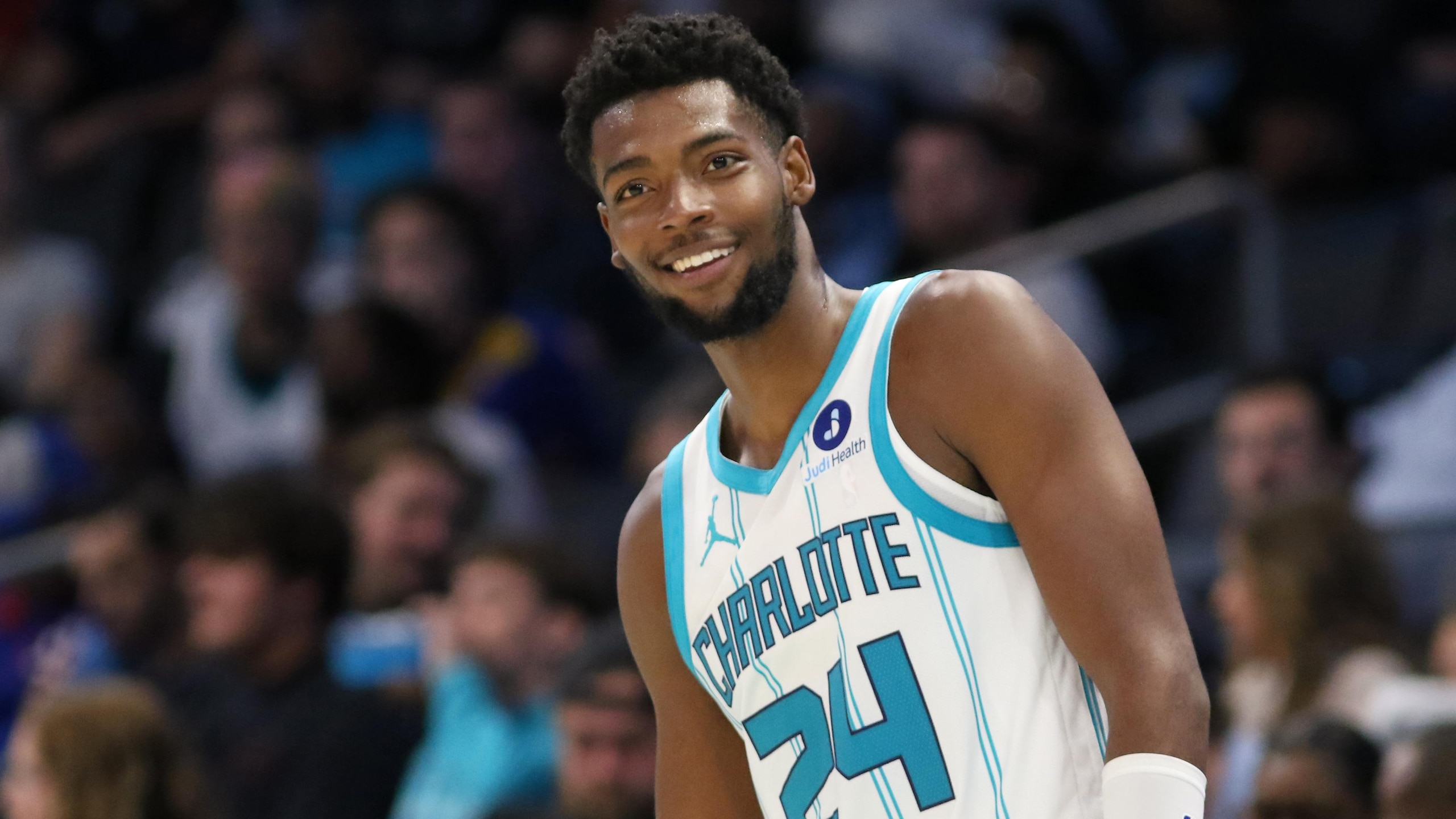
PF: Chris Bosh
4 of 15The most criticized player in the NBA not named LeBron James, Chris Bosh suffered heedless verbal attacks from every corner of the NBA world.
Whether it was a complaint about how passive of a player he was or how he was overrated, Bosh never heard the end of it because of the microscope the media had placed squarely on the Miami Heat and every move the team made. Bosh was just caught in the crossfire as he had to deal with the media constantly chiming in on his play as well as attempting to adjust as a third scoring option for the first time in his career.
After playing for seven years with the Toronto Raptors and leading them to their best seasons in franchise history, Bosh bolted for the Miami Heat last season after growing disgruntled with the lack of moves by the Raptors organization. He struggled from the onset as he constantly attempted to find ways to integrate himself in the offense while also trying to find an identity on a team dominated with two other superstars.
By the end of the season, Bosh finally got into a rhythm as he would make a public demand for the offense to begin running through him by giving him the ball. The Heat responded and so did Bosh, as he finished his first year with the Heat on a strong note. Despite being constantly criticized for his lack of aggression in his overall skill set, Bosh averaged 18 points and eight rebounds per as a third option playing alongside two players that constantly dominated the ball.
Pretty impressive for a player that is sometimes left out of conversations of the big three.
His crowning achievement of the year would come during the Miami Heat's conference finals series against the Chicago Bulls, where he put on a show after being called out by opposing power forward Carlos Boozer. In a series where Wade was off and not producing up to his usual standards, Bosh stepped up and scored 30 or more twice and over 20 points in all but one game.
He's one of the most multi-dimensional power forwards in the league and he never seems to get the respect for it, but time will tell that those who deserve recognition will eventually receive it.
C: Shaquille O'Neal
5 of 15The departure is one we'd like to forget, especially for Ricky Davis and Chris Quinn, but Shaquille O'Neal did accomplish exactly what he wanted to do when he made his touchdown in Miami: Win this franchise a title.
After a long-time bout with the Los Angeles Lakers organization and his Laker teammate in Kobe Bryant, O'Neal demanded a trade out of the franchise that he helped win three consecutive titles with. The 2004 NBA Finals loss to the Detroit Pistons was the tipping point and it boiled over into a tense feud that eventually resulted in O'Neal's departure.
The Lakers' loss was the Heat's gain as they sent Lamar Odom, Brian Grant and Caron Butler in return for the big man. Possibly the best part of the move was the fact that the Heat were able to hold onto budding star Dwyane Wade, thus forming one of the most feared duos in the NBA: Wade and O'Neal. In only their first season together, the two showed a tremendous understanding of each other's games and won 59 games as well as their second No. 1 seed in franchise history.
O'Neal came a few percentage points short of winning his second MVP award after averaging 23 points, 10 rebounds and two blocks per in his first year with the Heat.
It was the next season that O'Neal followed through on his promise by helping the Heat win a title against the Dallas Mavericks in six games. O'Neal might have only averaged 13 points in the series, but his influence alone was enough to free up scoring opportunities for players like Wade, who would go on to average an unheralded 35 points per in the Finals, the most in a Finals setting since O'Neal averaged 38 points in 2000.
Following the title win, injuries and age began catching up on O'Neal and he was traded to the Phoenix Suns mid-way through the 2007-'08 season.
Nevertheless, O'Neal was the most dominant center in the NBA even when he was on the Miami Heat and it allowed the Heat to win a title. His influence in attracting defenders and his ability to pass out to open players were factors that are sometimes overlooked when analyzing the Heat's historic championship run.
Backup PG: Jason Williams
6 of 15It turns out the point guard track record for the Miami Heat hasn't exactly been Hall of Fame worthy.
Aside from Tim Hardaway, the Heat have always seemed to lack a quality point guard, including at the moment where they currently are at a loss of whether to continue keeping the faith that Mario Chalmers is the point guard of the future or to pursue a free agent that could help the team.
The Heat haven't always had the best point guards, but they could sure use a floor general like Jason Williams running the hardwood in the teams second unit. Williams played with the Heat from 2005 to 2008 and was the starting point guard for the 2006 championship team, where he averaged nine points and five assists per while hitting 35 percent of his three-pointers.
Williams was an unorthodox point guard with flashes of brilliance that could also greatly hurt his own team. He was most known for the flash and entertainment value that he brought to every game because of his highlight-worthy passes, but it also hurt the Heat, and his previous teams, because of the high rate of turnovers.
He was also very well known for ridiculous heat checks where he would stop a fast break and pull up at the three-point line before the defense could react.
The Heat didn't get the Williams from his Sacramento Kings or early Memphis Grizzlies days, but they did get an effective one that was efficient at leading an offense that had a number of superstars on it. He averaged 12 points and five assists per in his first season with the Heat before seeing his stats decline over the next two seasons.
Backup SG: Glen Rice
7 of 15Spending the first six seasons of his career as a member of the Miami Heat, Glen Rice was one of the team's first stars and was also one of the key reasons as to why the community began loving their Heat basketball.
Highly touted out of the University of Michigan, Rice was selected by the Heat with the fourth pick in the 1989 draft after impressing the team with his dynamic offense that resulted in him scoring 26 points per game in his senior season as well as being named the Final Four's Most Outstanding Player in 1989 and being a member of the All-American second team.
Rice had a terrific all-around game as he could find ways to score just about anywhere on the court. He was quick and strong enough to drive at will, but it was his fierce jump shot and the range that he had with it that allowed him to make a name for himself. Rice was making two three-pointers per game for two of the seasons he spent with the Heat and shot better than 38 percent in all but his rookie season.
He would also average over 20 points per on three occasions and he still holds the record for most points in a game by a Heat player with 56 when he lit up the Shaquille O'Neal and Anfernee Hardaway-led Orlando Magic. Rice shot 20 of 27 in that game overall and made an unheard-of seven of his eight three-point attempts.
Backup SF: Jamal Mashburn
8 of 15A strong and fierce competitor that played with the Miami Heat from 1996 to 2000, Jamal Mashburn played a vital role on the Heat teams that consistently dominated the NBA and threatened to make a championship run year in and year out.
After averaging 24 points per game in only his second season and then 23 in an injury-plagued third year, the Miami Heat decided to send out a few role players to the Dallas Mavericks as a means to obtain Mashburn. By sending the likes of Sasha Danilovic, Martin Muursepp and Kurt Thomas to Dallas, the Heat not only received a budding star but without having to lose any of their stars at the time.
Mashburn didn't average over 20 points per with the Heat—they didn't need him for that—but they did get an extremely solid role player who would complement Alonzo Mourning and Tim Hardaway very well. He fit well into the pace of the offense and was a multi-dimensional threat that could drive, hit the mid-range and even hit from the perimeter, where he shot over 40 percent twice in the three seasons he spent with the Heat.
He would average 18 points per in his final season with the team before being sent to the Charlotte Hornets in a deal that brought over Eddie Jones.
Backup PF: Udonis Haslem
9 of 15The heart and soul of Miami Heat basketball in cornrows, Udonis Haslem has been one of the most underrated players in the league for some time now and it has paid off dividends as he helped lead the team to a title win as the starting power forward.
Undrafted and found playing in France, the Heat were the only team to give the formerly overweight power forward a work out and a chance to play on an NBA team. Haslem lost 70 pounds during his short professional career overseas and carried that work ethic to the United States as he was given starts from time to time on a young, upstart Heat squad.
Haslem impressed in his first season by averaging seven points and six rebounds per. What the organization liked most about him, though, was the blue-collar work ethic he brought into every single game, the intensity and emotion he gave to his fellow teammates, the passion towards his teammates when letting them know he'll always have their backs and the effort he gave to every rebound or loose ball.
It's what earned him a spot on an NBA roster and what allows him to be a relevant player in today's NBA where finding a player like Haslem is one of the rarest commodities you could have on your roster.
Haslem would be given the start in his sophomore season after the team traded away Lamar Odom and averaged 10 points and nine boards. He continued starting until becoming the sixth man in 2009 as a means by the team to implement Michael Beasley into the starting lineup. It was a gentleman move by Haslem to allow the sophomore to start and it was an even classier move that he showed no reluctance when giving up the spot.
Still on the bench backing up Chris Bosh now, Haslem continues to give the team an all-out effort and even attempted a comeback this post season despite playing on an injured foot that was recently deemed 100 percent. You don't find players like Haslem every day and it was the wise thing of the Heat to sign him before anyone else had noticed he was ready to give it all on any given night.
Backup C: Alonzo Mourning
10 of 15Before there was Udonis Haslem, however, there was Alonzo Mourning, who brought his fair share of passion into every game as well.
With tensions growing between Mourning and Larry Johnson, the Charlotte Hornets decided to give up 'Zo to the highest bidder. With the Miami Heat looking to make a name for themselves and attempting to become established as a contender, they made a gutsy move by trading away Glen Rice among others for the the freakishly strong 6'10" center.
Mourning joined the team before the 1995-'96 campaign and brought about a 10-win increase and a postseason appearance in his first year. He averaged a career-high 23 points, ten boards and three blocks per. 'Zo played the final half of the season with a speedy point guard named Tim Hardaway that was also ready for a change and looking to make a name for this young Miami Heat team.
The next year the team would go on to win a franchise-record 61 wins to go along with their first ever Atlantic Division championship. They'd have a roller coaster ride of a postseason run that had their first two series being decided in a decisive game seven setting before taking on a juggernaut of a Chicago Bulls team that ended the series in five games.
Heartbreak ensued over the next three seasons as they lost to the New York Knicks each and every time, in the final game of each series just to add insult to injury. Mourning and the Heat couldn't make it past the second round and it appeared 'Zo would never reach the success that he strove for once a rare kidney ailment forced the big man to retire.
However, Mourning made his return to the team at the end of the 2004-'05 season and played a huge role as a back up to Shaquille O'Neal. The six blocks he had in the team's Game 6 Finals win over the Dallas Mavericks carries a lot of importance, considering the team only won by three points.
Among Mourning's accolades include leading the league in blocks twice, making it on to the All-NBA first team once, two All-Defensive first teams, two Defensive Player of the Year awards and even finishing as high as second in MVP voting.
He was the defensive anchor to every Heat team he was a part of and the reason for their success in the 1990s and even during his return to end his career.
Third-String PG: Sherman Douglas
11 of 15Known as the "Little General" for his diminutive 6' stature, Sherman Douglas was the first great—and sadly one of the last—Miami Heat point guard.
A second-round steal taken in the 1989 draft out of Syracuse University, Douglas was taken by the Heat because of his strong ability to lead an offense as he did so often with the Orange. He averaged at least eight assists per in his final three seasons at the NCAA level and made it onto the All-American first team in his final year when he averaged 18 points and nine assists per.
Sure enough, Douglas transitioned that game right to the NBA and was given an immediate start. He averaged 14 points per on 49 percent shooting from the field to go along with eight assists and two steals per to earn himself a spot of the All-Rookie first team. After an impressive rookie season, Douglas seemed ready for a breakout career with a tremendous display in his second season where he led the team in scoring and assists with 19 points, nine assists and two steals per.
However, Douglas held out prior to the start of the 1991-'92 season and only played in five games before being shipped off to the Boston Celtics. He played in the NBA until 2001 and would never match the numbers he put up in his second season with the Heat.
Third-String SG: Eddie Jones
12 of 15In between superstars, the Miami Heat were in a dark area. With no Alonzo Mourning and Tim Hardaway and a few years before Dwyane Wade would be drafted and Shaquille O'Neal would be acquired, the Heat were left with only remnants of a former championship contender.
One of those remnants was a prime Eddie Jones, who was 29 years old when he was traded to the Heat from the Charlotte Hornets prior to the start of the 2000-'01 season. Jones was coming off one of the best seasons of his career, where he led the league in steals at three per game and had also averaged a career-high 20 points per game.
Jones became the focal point of a Heat team looking for an identity. He led the offense to the best of his abilities night in and night out and continued establishing himself as one of the league's most consistent perimeter threats by shooting better than 37 percent from deep in every year he played with the Heat from 2000 to 2005. He also converted on at least two three-pointers per game for two consecutive seasons.
He was the leading scorer for the Heat up until the 2004 campaign when he took a backseat to Dwyane Wade in what would also be his final season with the Heat in his first tenure. Jones was traded to the Memphis Grizzlies over the 2005 offseason and returned to the Heat one last time during the 2006-'07 season.
Third-String SF: Caron Butler
13 of 15Not many people seem to be aware of this, but that crafty role player on the Dallas Mavericks named Caron Butler was set to become a superstar with the Miami Heat before Dwyane Wade made his timely arrival.
With Wade rendering Butler obsolete, he was traded to the Los Angeles Lakers as a part of the Shaquille O'Neal trade. Butler spent a year there before being sent over to the Washington Wizards and playing there for the majority of his career until joining the Mavericks and winning a championship off the bench due to an injury that kept him out the entire second half of the season.
Taken with the 10th pick in the 2002 draft out of the University of Connecticut, Butler was highly coveted by the Heat and it appeared the team was looking to build around him at first once it brought in Lamar Odom prior to his second season. There was no question about why, either, since Butler made it on to the All-Rookie first team after averaging 15 points, five boards, three assists and two steals per.
The next year was Butler's final year with the team, though, as a rookie named Dwyane Wade usurped the title of rising young superstar. When Wade flourished, Butler struggled and averaged only nine points per on a dismal 38 percent from the field despite starting at small forward for the second consecutive year.
Butler was extremely raw during his years with the Heat and we wouldn't truly see how much of a multi-dimensional threat he could be until he joined the Wizards. He's a terrific all-around threat on offense that can hit from the mid-range and drive at a prolific rate while also playing solid defense thanks to his length.
Third-String PF: Lamar Odom
14 of 15Just imagine how the Miami Heat landscape could look right now thanks to the Los Angeles Clippers.
Prior to the start of the 2003-'04 season, the Heat made a strong push towards obtaining power forward Elton Brand, who was just coming off averaging his fourth consecutive double-double in four years' worth of being in the NBA. The Heat sent an offer to Brand worth over $80 million, but the Clippers quickly matched it and prevented Miami from acquiring the All-Star.
Instead of Brand, the team then picked up his teammate in swingman Lamar Odom, who was coming off another solid season with the Clippers where he averaged 15 points, seven rebounds and four assists per. Odom joined the Heat as a 24-year-old and took the reins of the team alongside Eddie Jones, Dwyane Wade, Caron Butler and Brian Grant.
After starting out 0-7, Odom helped lead the team to a strong second half of the season by finishing 42-40, which was somehow good enough for a No. 4 seed. It was one of the best statistical seasons of Odom's career and one of the first times in his career that he became a focal point of a team. He averaged 17 points, a then-career-high of 10 rebounds per, as well as four assists.
Unfortunately, Odom was traded as a part of the deal that brought in O'Neal and has been on the Los Angeles Lakers ever since.
Odom is one of the league's most multi-dimensional players and is capable of leading an offense as a point forward. He's a solid defender and can do it all on offense as well from hit from the mid-range to drive and finish with authority.
Third-String C: Rony Seikaly
15 of 15For a team with a history of quality centers, you would think the Miami Heat wouldn't run into a problem like not having a center that you can rely on.
On a team where Alonzo Mourning and Shaquille O'Neal once reigned supreme and dominated the paint, you need to be a true Miami Heat fan to know about the legacy of the Heat's first ever draft pick in Rony Seikaly.
An attendee of Syracuse University and a product of Lebanon, Seikaly was taken ninth overall after four solid years as a member of the Orange. He wasn't the biggest of centers at 6'11" and only 230 pounds, but he still possessed a lot of strength and athleticism in a wiry frame. He became the focal point on both sides of the ball on a young Heat team and averaged 11 points and seven boards per in his rookie season.
Following his rookie year, Seikaly went on to have some of the best years of his career with the Heat. He established himself as one of the league's top rebounders and averaged a double-double for five consecutive seasons, with 17 points and 12 boards per being his career best.

.jpg?w=2560 "Cam Ward Says He's Not A Loser")
.jpg?w=2560 "Texans Trade for MHJ")
.jpg?w=2560 "Chargers Fall to 0-5 🤢")
.jpg?w=2560 "Grading MHJ Trade 📝")
.jpg?w=2560 "LaFleur Explains MHJ Trade")