

Guide to Boston Celtics Upsetting Cavaliers in Eastern Conference Finals
Ending the Cleveland Cavaliers' title defense isn't an easy task, but that's the next challenge for Isaiah Thomas and the Boston Celtics.
After a Kelly Olynyk explosion helped spark a Game 7 victory over the Washington Wizards, the C's are back in the Eastern Conference Finals for the first time since 2012, when Paul Pierce, Kevin Garnett, Ray Allen, Brandon Bass and Rajon Rondo were the team's leading scorers.
A lot has changed since then. Avery Bradley is the only player who's stuck on the Beantown roster since 2012.
But one thing is the same as ever.
To represent the Eastern Conference in the NBA Finals, the Celtics will have to get through LeBron James. It was he who helped lead the Miami Heat past the '12 iteration, and he'll be attempting to spark Cleveland to its third consecutive appearance on the sport's biggest stage.
Even if he hasn't lost to an Eastern team since falling to Boston in 2010, James isn't a lock to advance. His team does have a few weaknesses that could be exploited, and it'll be up to the Celtics to find them in expeditious fashion.
Foul Trouble for LeBron James
1 of 6
Good luck, because this is really more of a pipe dream than a realistic plan.
LeBron James has fouled out of only two postseason games during his NBA career, and both came while he was wearing a Miami Heat uniform. In fact, he's only been saddled with at least five whistles in 6.76 percent of his playoff appearances, and just 18.84 percent have seen him called for no fewer than four fouls. The chances of officials relegating him to the bench prematurely are rather minimal.
But the Celtics should still try to create one of the exceptions. Attacking James is a valid strategy because even the slight possibility of his spending more time on the pine is worth a bit of risk. The Cavs simply aren't the same team without the four-time MVP.
During the playoffs, Cleveland's net rating has declined by 26.7 points per 100 possessions when he's off the floor. Talented as Kevin Love and Kyrie Irving may be, they simply can't carry the squad against quality competition, and the C's certainly qualify as such.
However, this isn't just a pipe dream. It also serves as a way to emphasize a larger point.
Boston must capitalize whenever James isn't on the floor.
The 31-year-old small forward will inevitably spend a few minutes per game catching his breath on the sidelines. He's played "only" 42.4 minutes during his average postseason appearance this year, leaving about six minutes unaccounted for. That's not much to work with, but Boston has to take advantage by playing its stars when James is off, doing everything in its power to either shrink a lead or add to an advantage when its foe is in its most vulnerable state.
Failing That, Let LeBron Feast
2 of 6
James probably isn't going to experience any sort of foul trouble. There's a distinct possibility he tells head coach Tyronn Lue he doesn't want to rest at all if the games are close, then proceeds to play 48 minutes per contest, thereby preventing Boston from capitalizing when he's off the floor. If he's always on it, the Celtics can't possibly gain an advantage in his absence.
Obviously, the underdogs need a strategy when James is playing.
Remember how teams used to treat the Orlando Magic when Dwight Howard was still the organization's centerpiece? They'd often let him feast on the interior, putting up monstrous numbers while they focused their energies on stopping the four-out portion of head coach Stan Van Gundy's four-out, one-in strategy. So long as they could run shooters off the line and minimize the damage stemming from their offensive ability, they'd stand a better chance of winning.
Boston should treat James the same way. If he averages 45 points during the Eastern Conference Finals, that's an acceptable result...so long as his teammates aren't also doing damage.
The Cavaliers are most dangerous when James turns into a pass-first juggernaut. He may be the NBA's best at finding open shooters on the perimeter, and he's the primary reason players such as Deron Williams and Channing Frye have experienced so much success. When they spot up on the perimeter and the defense collapses around the superstar, they're free to take and make plenty of open looks.
During the playoffs, Cleveland is scoring a staggering 30.8 points per game off catch-and-shoot possessions, shooting 48.9 percent from the field and 49.0 percent from three-point territory. Its effective field-goal percentage in such situations (70.7 percent) nearly laps the field; the Milwaukee Bucks (57.6 percent) and Utah Jazz (56.0 percent) finished directly behind, but with a veritable chasm providing some separation.
Better still, the Cavaliers are shooting 51.1 percent off passes from James, and so many of his feeds are leading to triples that he's averaging 2.66 points created per dime.
That's what destroys teams, and Boston must stop it at all costs. Even if it allows James to feast on isolation opportunities around the hoop, it has to run shooters off their spots and make sure one man is beating it, not the whole team.
Isaiah Thomas Goes Supernova
3 of 6
"We know it's going to be tough, but at this point, anything can happen, and we really believe it," Isaiah Thomas said after closing out the Washington Wizards, per USA Today. "They didn't give us a chance in this series. They didn't give us a chance when we were down 0-2 in Chicago. We got the No. 1 seed, and they didn't give us a chance. They don't ever give us a chance, and we just keep going. We don't care about what others say."
That mentality must persist.
A motivated Thomas is a dangerous Thomas, and the Celtics need every ounce of his offensive prowess shining forth against the Cavaliers. Cleveland can counter many of the Boston shooters with tenacious perimeter defense. It can compress around Al Horford. But it doesn't have a singular stopper who can slow down Thomas, especially with James likely avoiding the matchup as he seeks to preserve himself as much as possible.
During four regular-season matchups, the diminutive point guard put up big numbers, but his efficiency lagged behind typical levels. Though he averaged 29.5 points, 3.0 rebounds and 6.5 assists, he shot 49.3 percent from the field and just 21.4 percent from downtown. Fortunately for Boston, that last number should improve.
Cleveland didn't guard him as well as most opponents; it just got lucky as he clanged open jumpers off the iron. Thomas shot 29.4 percent on three-pointers when defenders were no closer to him than four feet away, and 60.7 percent of his attempts fell into that category. During the regular season as a whole, those numbers stood at 42.5 and 50.3, respectively.
If the Cavaliers keep giving him so many open looks—or even wide-open attempts, classified as shots with the closest defender at least six feet away—his percentage will eventually regress to the mean. And when that happens, he has a distinct chance to produce points in bunches, as he's so often done throughout the 2016-17 campaign and the first two rounds of the postseason.


Initiate Almost Every Set with a Pick-and-Roll
4 of 6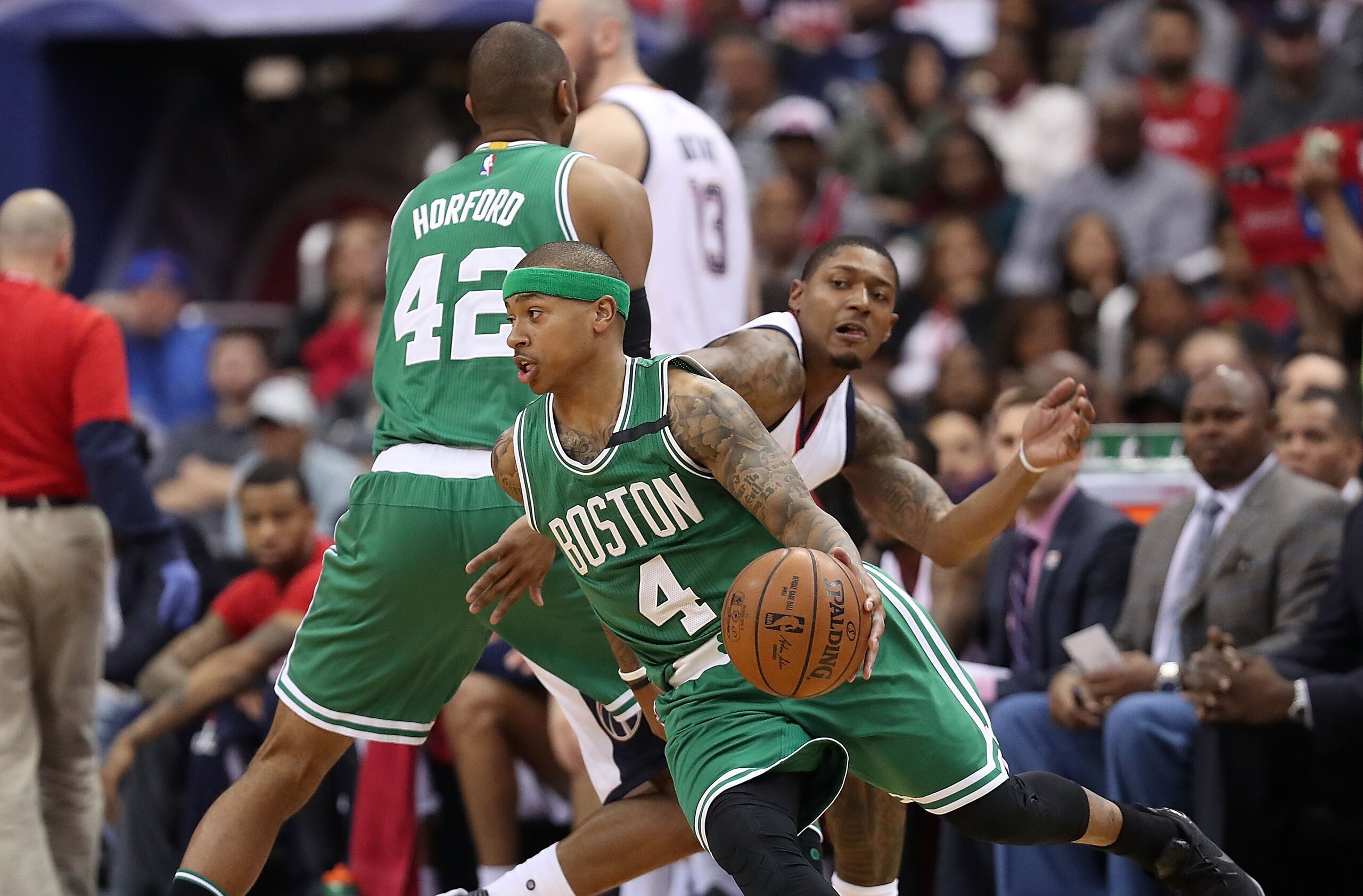
Thus begins a tale of four tables.
First, take a gander at how good the Boston Celtics were at using pick-and-roll (PNR) ball-handlers to find offensive success during both the regular season and the first two playoff series:
| Regular Season | 14.6 | 0.9 | No. 6 |
| Playoffs | 15.6 | 0.84 | No. 12 (of 16) |
Conversely, look how bad the Cavaliers were at stopping that same set:
| Regular Season | 17.0 | 0.89 | No. 26 |
| Playoffs | 17.7 | 0.99 | No. 14 (of 16) |
But that's not all that happens when initiating offense with a PNR. The roll men can also have a big impact, and Boston tended to find success with them, whether it was allowing Al Horford, Amir Johnson or some other big to crash toward the rim:
| Regular Season | 6.8 | 1.05 | No. 16 |
| Playoffs | 7.1 | 1.2 | No. 3 (of 16) |
And again, Cleveland struggled to defend this type of action:
| Regular Season | 6.5 | 1.1 | No. 28 |
| Playoffs | 8.5 | 1.03 | No. 10 (of 16) |
This, bar none, is the biggest defensive inefficiency Boston can attack.
Every set should begin with Isaiah Thomas handling the rock and awaiting a screen from a larger teammate. When he's not in the game, Terry Rozier, Avery Bradley and the other guards should run the same type of action. PNR plays are easy to build off, especially with guards who can so easily create their own looks, using quickness and/or spring-loaded athleticism to their advantage.
All in all, the Celtics scored 0.95 PPP in the PNR (combing both aforementioned sub-types) during the regular season, leaving them trailing only the Houston Rockets (0.99), Los Angeles Clippers (0.99) and Toronto Raptors (0.98). They've also maintained that exact mark in the playoffs.
On the flip side, the Cavs allowed an identical 0.95 overall PNR PPP during the regular season, which put them in last place throughout the Association. Even after supposedly flipping the switch in the playoffs, they're ceding 1.01 PPP, leaving them tied with the Oklahoma City Thunder for the field's worst mark.
Tempting as it may be to let Horford serve as an initiator from the elbows and blocks, that's playing right into Cleveland's hand. Boston must instead live by the PNR, even when Cleveland begins adjusting and starts using different defensive looks to slow it down.
Take Even More 3s
5 of 6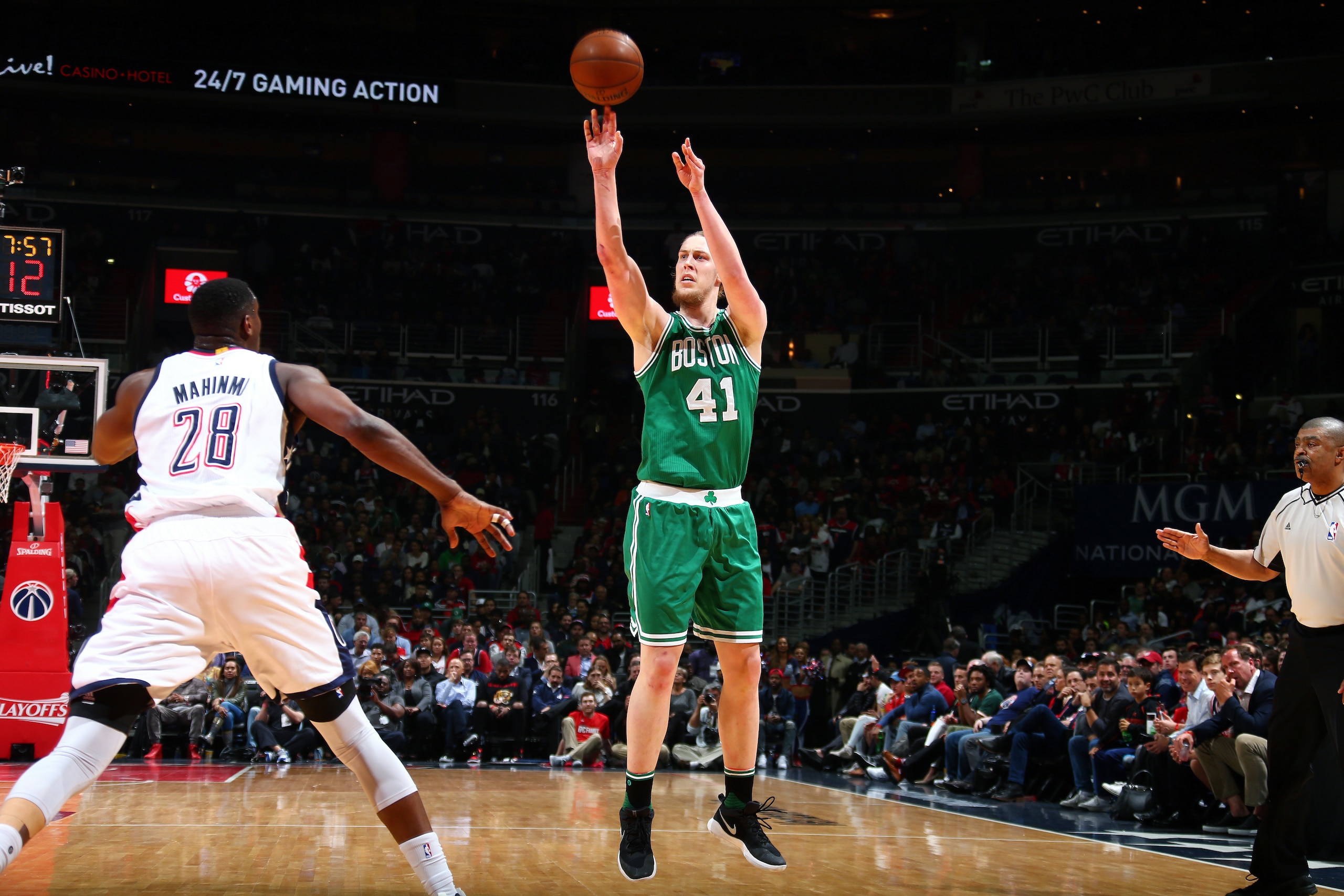
In losses this season, the Cavaliers have allowed opponents to take an extra triple per game while connecting at a clip that's 5 percent better than in Cleveland victories. That's not a good combination for a squad that's already one of the league's lesser units when it comes to defending treys.
During the regular season, only six squads allowed opponents to shoot more three-pointers than Cleveland's 28.7 ceded per game. Foes were successful on 36.1 percent of their attempts, leaving the Cavs sitting at No. 18 in percentage allowed. Both marks have improved during the postseason, but the team is still vulnerable to long-range assaults.
Boston can't hesitate to fire away frequently. After all, it'll be doing so in one of two manners.
If the Cavs defend like they have in the regular season, the Celtics will need to rely on pick-and-rolls to initiate action, then constantly have players flitting around the perimeter and awaiting kick-out attempts. But if Cleveland starts blitzing PNR sets and attempting to trap ball-handlers, as it did against both Jeff Teague and Kyle Lowry in the first two rounds, it'll be even more vital that the role players are ready to shoot. That latter strategy basically baits Boston into having Thomas swing the ball to a spot-up threat on the perimeter, which means Kelly Olynyk, Marcus Smart, Avery Bradley and everyone else needs to be ready.
Fortunately for the Celtics, they love playing like this. Head coach Brad Stevens has recognized the necessity of three-point shooting and then tailored his schemes to promote an abundance of attempts, and he's grown more reliant on triples as the schedule has grown more difficult.
Only the Cavaliers and Houston Rockets took a higher percentage of their regular-season attempts from beyond the arc. And while Boston took 39.1 percent of its tries from distance through the first 82 games, it's sitting at a 42.1 three-point attempt rate after the opening two rounds of the playoffs. It did everything in its power to beat the Washington Wizards into submission with an endless barrage of long-range lofts, and it should try to do the same thing in the Eastern Conference Finals.
Cleveland will inevitably score plenty of points in sets of three. The only way to keep up is to do the same.
Trust the Bench
6 of 6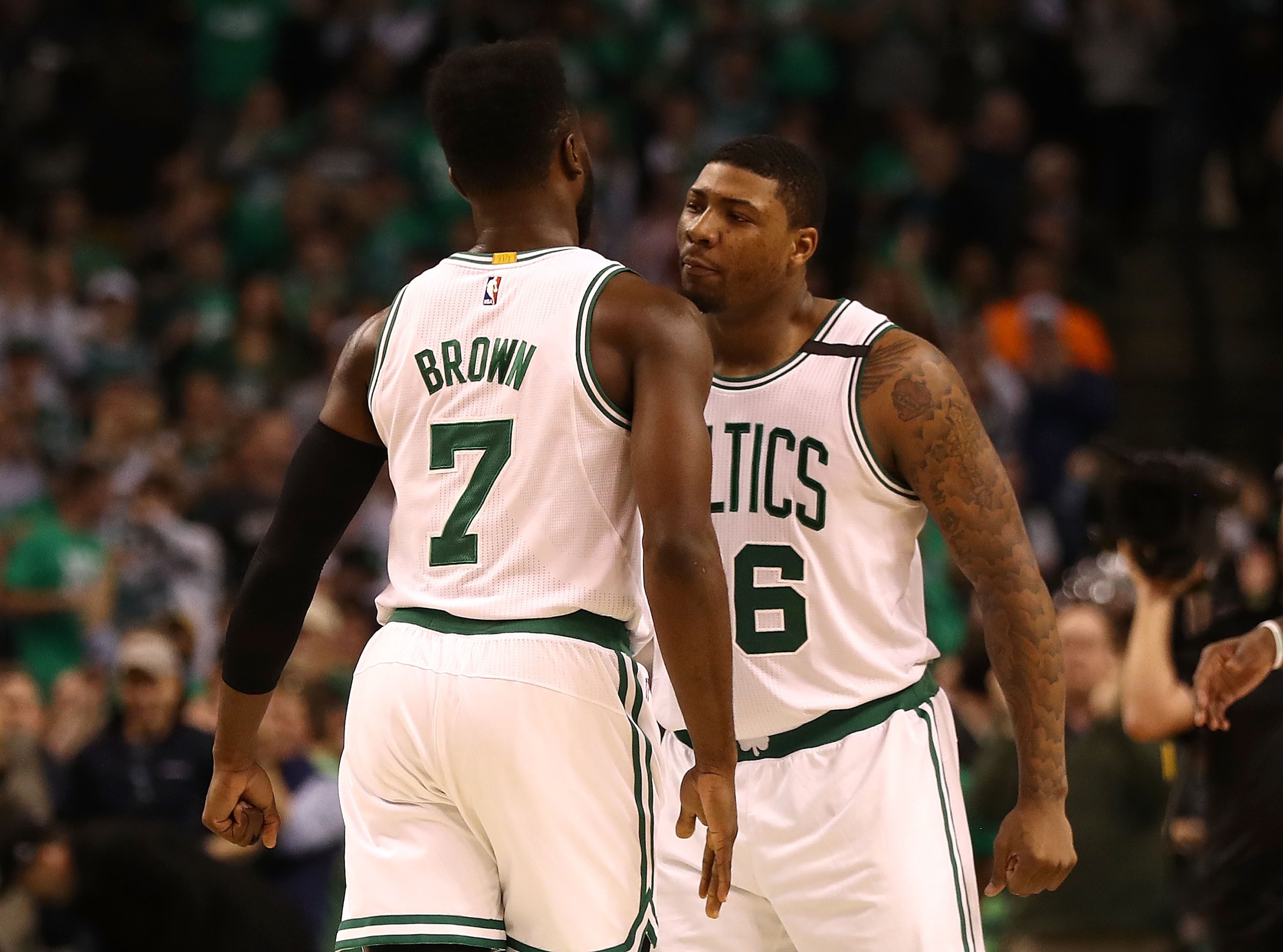
I'm not advocating for the Celtics to turn entirely to their bench lineups. They should keep Isaiah Thomas and Al Horford on the floor as often as possible.
But mixing and matching is advisable.
One of Boston's few roster advantages in this matchup with the defending champions is its depth. With Marcus Smart, Terry Rozier, Jaylen Brown and Kelly Olynyk coming off the pine, the Celtics go deeper than the Cavs, even if the latter has bigger names and more experience outside its group of starters. Whereas Cleveland's bench has produced a 6.7 net rating in the playoffs, Boston's has outscored the opposition by 8.1 points per 100 possessions, leaving it trailing only the Golden State Warriors (8.5) and San Antonio Spurs (8.3).
Playing the bench studs alongside key starters also gives Stevens the ability to shift the series strategy in his favor. One team is always forced to accept a stylistic disadvantage during a postseason battle, and Boston can gain the upper hand on its newest foe by running out small, versatile lineups that emphasize defense and prevent Cleveland from using both Kevin Love and Tristan Thompson at the same time. It won't be easy to do so, but early success from an undersized group such as Thomas, Avery Bradley, Smart, Brown and Horford could do the trick.
Thompson and Love could both make the Celtics pay for downsizing, but that's a risk the underdogs have to take. Matching the Cavaliers' size is akin to admitting they have the advantage, and it'll only lead to an earlier exit.
Now is the time for last-minute experimentation, checking to see if dominant units can work in larger samples.
Bradley, Jae Crowder, Olynyk, Rozier and Smart have earned a 54.6 net rating in 23 playoff minutes. Can they keep that up against a tougher opponent while playing more minutes? Crowder, Horford, Rozier, Smart and Thomas have posted a 38.2 net rating in a little over half that time. Bradley, Brown, Crowder, Horford and Smart have a 20.8 net rating in 11 postseason minutes, but the defensive versatility of that bunch could make it an ideal fit against Cleveland when Thomas needs a breather.
Especially given Smart's development, Rozier's mini-breakout and Bradley's two-way play, Boston's backcourt and forwards are a malleable group. That's a luxury Cleveland doesn't have—at least, not to the same extent—and Stevens can't hesitate to eschew the wrong starters for the right backups at a moment's notice.
Adam Fromal covers the NBA for Bleacher Report. Follow him on Twitter: @fromal09.
Unless otherwise indicated, all stats from Basketball Reference, NBA.com, ESPN.com or NBA Math and accurate heading into games Tuesday, May 16.




.jpg?w=2560 "Love's Body Already 'Tired'")
.jpg?w=2560 "Tyreek Deal May Come Soon")

.jpg?w=2560 "Ward Nearly Walks Out of Presser ▶️")