All these months later, the summer of 2015 is still being billed as the New York Knicks' reward for a 2014-15 season rife with salary dumps, roster turnover and record losing.
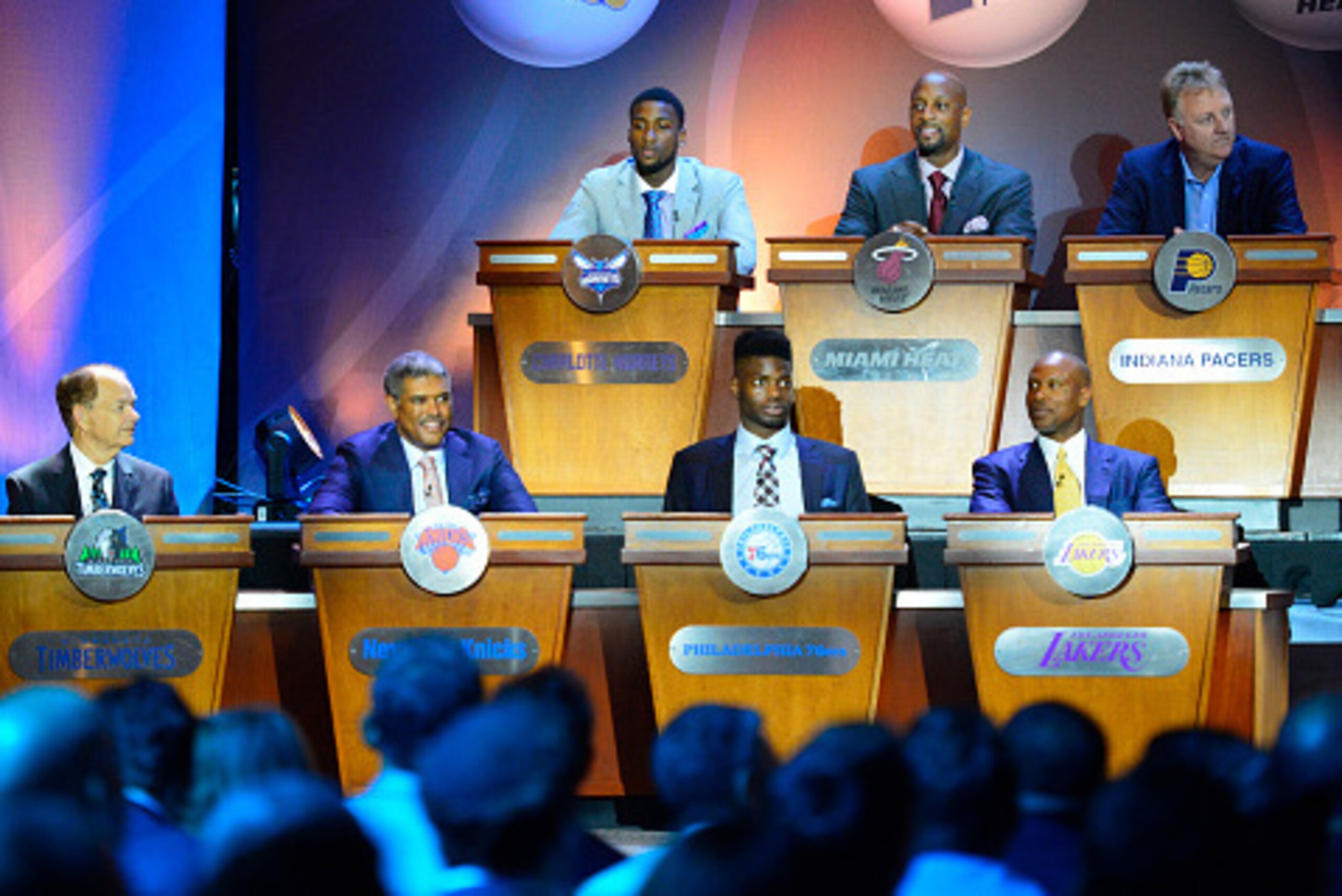
Grabbing the No. 4 pick in this year's draft is part of their prize. Mostly, though, it's the impending cap space—$25-plus million of it, per Basketball Insiders—that has the Big Apple clinging to a faint twinkle of immediate optimism.
This is the opportunity for which the Knicks and their fans have been waiting. The Knicks will take that cap space and spend it, adding superstars and impact players who bring them one step closer to breaking their lottery cycle and, inevitably, 40-year championship drought.

But what if team president Phil Jackson instead conserves that spending power, biding time and dollar signs for the summer of 2016?
It sounds like an unreasonable proposition, one that completely and tactlessly ignores the strain and suffering of an entire franchise and fanbase.
The Knicks are not working off a golden era of basketball. They are not the Los Angeles Lakers. They have no semi-recent championships to keep the twinge of dolor that peppers, and sometimes plagues, every rebuild at bay.
They are not the Boston Celtics. Their reset is not coming under their own terms, and it's not yielding accelerated or unexpected gains, such as a low-level playoff berth.
No, the Knicks are here, rebuilding at all, because their last attempt at starting over peaked in 2013, two rounds into a playoff bracket that was ripe for an Eastern Conference Finals berth. They are here, in this predicament, having made just four postseason appearances since 2001.
Patience, then, isn't something the Knicks have in supply. The whole point of being this bad, of slogging through a 17-win disasterpiece, is to turn things around quickly through an immediate and necessary free-agency coup.
Jackson, to his credit, has not tried to forfend that perception. He readily admitted to reporters at season's end that the Knicks need to have a big summer, per the Wall Street Journal's Chris Herring:
Slipping to fourth in the lottery order further boosts that slant. The Knicks could just as easily draft the next Tyreke Evans (No. 4 in 2009) or even Wesley Johnson (2010) as they could select a fortunes-turner such as Russell Westbrook (2008).
Besides, even the most transcendent superstars don't immediately change everything. It took Anthony Davis three years to transform the New Orleans Pelicans into a playoff team. Established talent is far more pivotal to an instant turnaround.
At the same time, the Knicks cannot afford to be rash in taking the next step.
Feckless frivolity help put them here—signing Amar'e Stoudemire to a $100 million contract no other team would sling, giving up more for Carmelo Anthony than the Los Angeles Clippers did for Chris Paul, flipping a first-round pick for two seasons' worth of a limited Andrea Bargnani, etc.
To that end, while Jackson has repeatedly acknowledged the need for immediate change, he has, in the same breath, also emphasized the importance of remaining shrewd, per Herring:
He didn't downplay the significance of developing homegrown talent ahead of the lottery, either:
Dropping outside the top three of the draft order may have increased Jackson's willingness to trade the pick; Yahoo Sports' Adrian Wojnarowski said it did. But his commitment to process isn't temporary, or something from which he has ever truly deviated, or even kind-of-sort-of new.
Midway through the regular season, seemingly infatuated with the prospect of building something great from the ground up, Jackson strayed away from the big-names-or-bust notion while speaking with the New York Times' Harvey Araton:
"You do need great players to win the championship, but having to always chase the best talent in free agency eventually becomes a mind-set of, well, the best talent wins as opposed to who plays the best team basketball — which is what San Antonio showed last season. Their play was special, a team that really values passing, a system where they're not just standing around, spacing out shooters. That's also what Atlanta and a couple of other teams are showing this year.
"
Neither the San Antonio Spurs nor Atlanta Hawks were assembled overnight or through free agency. Though the same cannot be said of the Cleveland Cavaliers, an NBA Finals participant, it can be said of their counterpart, the Golden State Warriors.
Adding more established talent threatens to stifle the development of the Knicks' young guns, depriving them of touches and playing time. And if they wish to build from the ground up, Langston Galloway, Tim Hardaway Jr., Cleanthony Early and their No. 4 pick, among others, must be given the freedom to play and, most importantly, fail.
With no draft pick to speak of in 2016, the Knicks admittedly aren't going to abandon their free-agent-dependent plan altogether. But, at the very least, preserving their financial flexibility better safeguards them against overspending for second-tier talent.
It also gives them the opportunity to become a more attractive destination.
Never mind New York's weather and moonstruck taxes, the Knicks are bad—worse than in 2010, when they were working off 29 wins and couldn't even appeal to Joe Johnson, let alone megastars such as LeBron James and Dwyane Wade.
Next summer, the Knicks should have more than 17 wins to point toward. At minimum, they should have a healthy Anthony and No. 4 pick with an entire season under his belt.
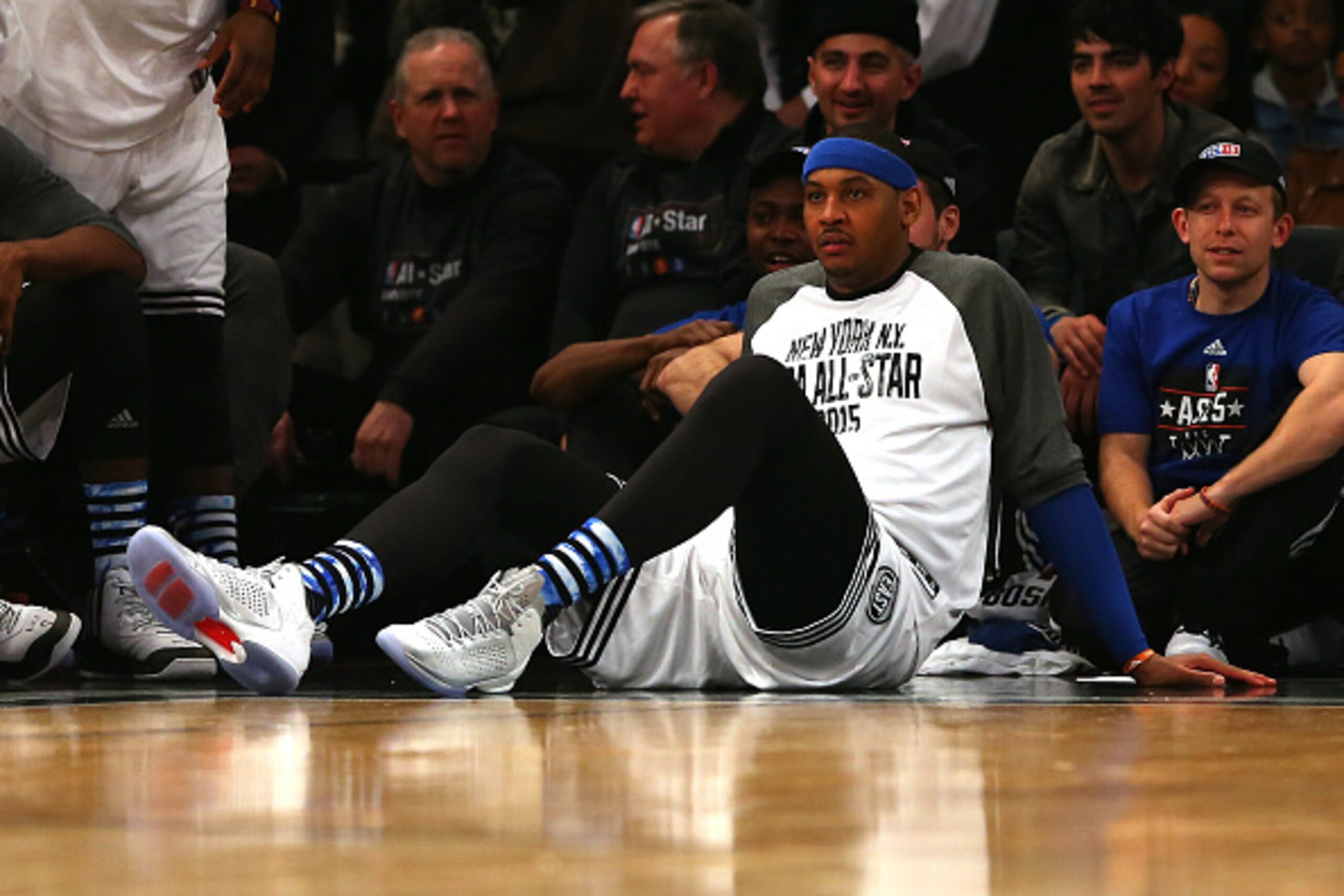
And then there's the free-agency landscape itself.
Jimmy Butler, Draymond Green and Kawhi Leonard are all restricted free agents and won't be going anywhere. Marc Gasol is being linked to the San Antonio Spurs more than anyone else, according to ESPN.com's Marc Stein.
DeAndre Jordan is being tied to the Dallas Mavericks first and foremost, per ESPN Dallas' Tim MacMahon. Stein has earmarked the Spurs and Mavericks as the Portland Trail Blazers' greatest threats for LaMarcus Aldridge.
Kevin Love is either destined to remain with the Cavaliers or sign with the Lakers, according to Grantland's Zach Lowe and ESPN.com's Brian Windhorst (h/t RealGM). If it's not them, it's the Celtics, per Basketball Insiders' Steve Kyler.
More than the Knicks' lack of rumor-mill cachet, there's the possibility no one of note flees for greener pastures. Not one of the biggest names is considered a lock to leave in free agency. Indeed, Wade's contractual dance with the Miami Heat—as detailed by Bleacher Report's Ethan J. Skolnick—could end up being the most dramatic offseason tale.
Certain players may elect to sign short-term deals that allow them to explore free agency in 2016, as well. The salary cap is set to reach $89 million, almost a $23 million jump from next season's $67.1 million ceiling, per DraftExpress' Jonathan Givony.
If the Knicks keep their books relatively clean between now and then, they'll be looking at $45-plus million of flexibility, giving them enough coin to enter the conversation for Kevin Durant, Mike Conley, Al Horford, Joakim Noah and anyone else who reaches the open market.
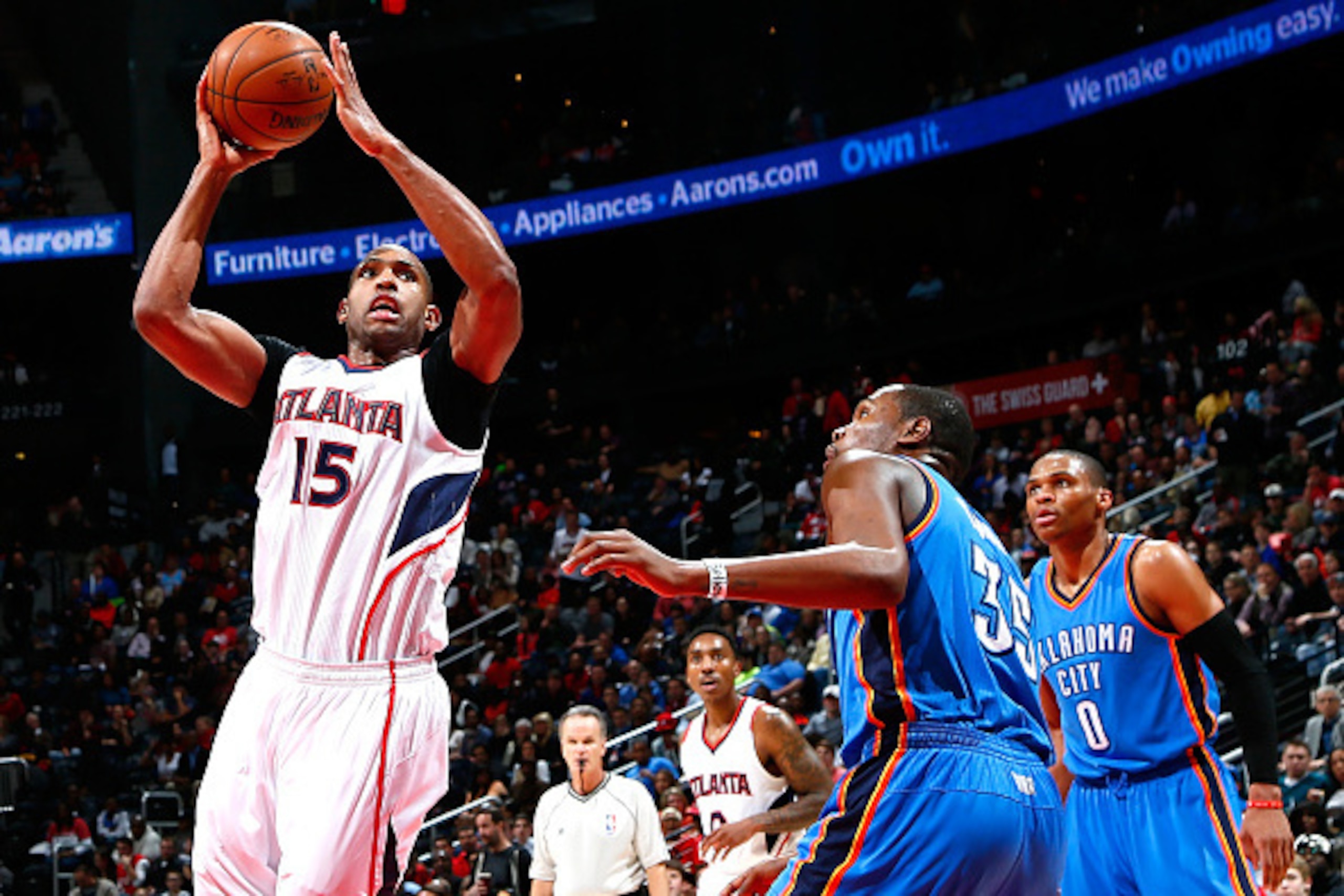
So why wouldn't the Knicks consider saving their free-agent cash until 2016?
Because it sounds better in theory than it would look in practice.
Twenty-something teams will have cap space thanks to that salary-cap eruption. Even if Jackson puts together a markedly better product on the cheap, the competition will be fiercer.
Contracts are also going to increase with the cap, as Stein previously pointed out:
Put simply, $10 million per year will buy the Knicks more this summer than next. Having that additional space won't result in signing more players.
Now, if this is a matter of the Knicks maintaining the ability to offer a max deal next summer, so that signing someone such as Durant is at least financially feasible, that's one thing. They can most certainly forgo the chance to dangle max money and decide to hand out smaller deals to the Danny Greens, Wesley Matthewses and Tobias Harrises of the free-agent pool.
In no certain terms, though, is it better for the Knicks to stand pat or relatively still.

Waiting isn't for a team that employs a 31-year-old superstar in Anthony, or a franchise that's paying a 69-year-old Jackson $60 million to save them, or an organization that cannot promise it'll be a more attractive player when pitted against 25 other opponents, or an outfit that hasn't dissolved what little assets it has into draft picks.
Judicious spending should be part and parcel of any foray into free agency. It is not a license to wait for something—for someone—that may never come. That's an extension of the futile household-name hunts that helped put New York here in the first place.
This summer still needs to be the start of something for the Knicks. If it's not the offseason that sees them morph the roster into a viable Eastern Conference threat, it has to be the one that, through smart yet aggressive additions, allows last season's self-levied misfortune to be remembered as more than just a fool's errand.
Dan Favale covers the NBA for Bleacher Report. Follow him on Twitter: @danfavale.

.jpg?w=2560 "Chiefs, Steelers Eye WR Trades")