OKC Thunder Finally Feeling Pinch of NBA's Stacked Western Conference
Before the NBA's Western Conference was a patented, contender-chocked bloodbath, the San Antonio Spurs and Oklahoma City Thunder stood alone, together, both of equal prominence and promise.
One was—and remains—a certified dynasty operating on what feels like borrowed time, ebbing in shelf life, flourishing in function. The other was a dangerously devised powerhouse, flaunting two megastars, waiting to seize control of its counterpart's throne.
But no more.
TOP NEWS

Pic of LeBron's Helicopter Commute 🚁

Duren Calls Out 'False' Rumors

NBA Power Rankings Entering Preseason 🔢
The Spurs enter their Christmas Day matchup against Oklahoma City hobbled by injuries—yet still the standard for Western Conference longevity. The Thunder, meanwhile, enter as just another member of an increasingly esteemed field.

This is by no means an attempt to vilify the Thunder or paint them as immodest underachievers. Nor does it imply that the Spurs' Association reign won't ever end. It will. It has to. (Right?)
That sense of inevitability behind the Thunder's rise hasn't been forgotten. They are still the team that crept past the Spurs and into the NBA Finals in 2012. They are still the team that has jostled for the West's top spot in each of the previous three seasons.
They are still the same team that met, then fell to, the Spurs in the most recent Western Conference Finals, finishing two victories shy of another statement-making, torch-grabbing series.
Injuries to Kevin Durant and Russell Westbrook haven't wholly foiled the Thunder's standing either. Though they remain outside the West's playoff picture, it's understood that the No. 8 seed is theirs to have and to hold.
"I didn't have no doubt two weeks ago," Westbrook said of Oklahoma City's playoff chances, per NBA.com's Fran Blinebury. "I don't have no doubt now."
Losing Durant to a pesky ankle injury has further impeded the team's turnaround, but the benefits of his brief presence and Westbrook's return are already evident. The Thunder rank an impressive fifth in points allowed per 100 possessions, and they're now 23rd in offensive efficiency after spending much of the season within the bottom three.
So no, this isn't only about the Thunder and their open-ended title window.
It's about the Western Conference's burgeoning brutality.

Seven of the West's teams are on pace to win at least 62 percent of their games this season, hence the reason most have the Thunder slotted for eighth place. For them to even think about seventh place, they'll need to win 51 games; for them to win 51 games, they'll need to finish the season 38-16—not impossible, but still ambitious given that's the bare minimum.
Not that seeding matters too much. There is virtually no disparity between the West's top playoff teams and bottom playoff teams. As Kevin McElroy writes for The Cauldron:
"All of which is to say that there is precious little difference, in terms of postseason viability, between the teams currently at the top of the Western Conference pecking order and those at the fringes of the postseason race. If you’re the Thunder or Spurs, do you have any interest in pressing your (respectively) recovering and aging stars in the interest of playing the Clippers instead of, say, the Mavericks? If you’re the Warriors or Grizzlies or Rockets, do you want to spend the whole season duking it out for the No. 1 seed, only to be rewarded with a date with Kevin Durant or Tim Duncan? Does a home Game 7 matter enough to risk going into a postseason series against a roughly equal team that is potentially healthier and better-rested than you are because they didn’t go all-out for top playoff positioning?
"
Aside from home-court advantage—valuable in its own right—the difference between a projected No. 8 seed (Thunder) and No. 1 seed (Golden State Warriors) is negligible. And that's the point: Durant and Co. are no longer chasing the Spurs on their own.
Golden State is a star-stuffed squad with the experience to contend now and the flexibility to remain indomitable fixtures; the Memphis Grizzlies continue to grind out victories in volume; the Portland Trail Blazers have a feared starting five when healthy to go along with unparalleled familiarity.
The Houston Rockets still have two superstars at different stages of their primes in James Harden and Dwight Howard; the Dallas Mavericks retooled their roster around Dirk Nowitzki in spectacular fashion; and the Los Angeles Clippers have Blake Griffin and Chris Paul locked up long term.
And in this congested race, there is no team prepared to fall off.
Memphis (Marc Gasol), Dallas (Rajon Rondo, Monta Ellis, Tyson Chandler) and Portland (LaMarcus Aldridge, Wesley Matthews, Robin Lopez) all have integral players preparing for free agency. But that's the extent of uncertainty. Barring adverse overhauls, each of these five contenders—in addition to the Spurs and Thunder—should be back next season.
That's before considering the developing risers.
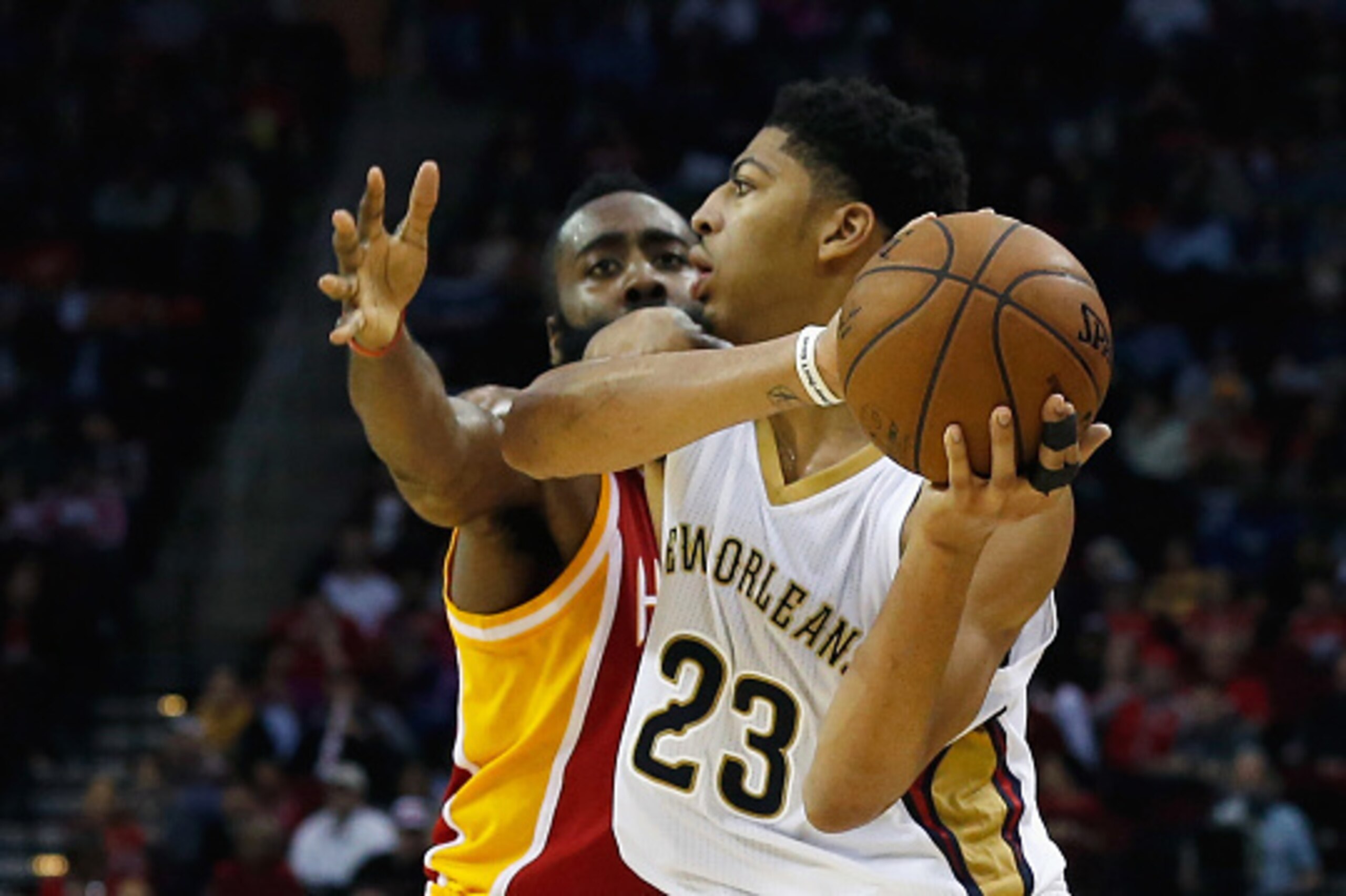
Once the Phoenix Suns consolidate some of their backcourt assets and land another fortunes-turner, they'll be right there. More immediately, so long as the New Orleans Pelicans have Anthony Davis, they aren't going anywhere.
Bogged down by a shallow roster, suboptimal defense and overlapping talent (Austin Rivers, Tyreke Evans, Jrue Holiday, Eric Gordon), the Pelicans already post a better net rating with Davis on the floor than the star-stacked Cavaliers overall. Imagine what the addition of one game-changer—or even another year of Davis' progression—will do for their status.
Of all those teams, the Thunder have one of the most indiscernible futures, trailing only the Suns, Pelicans and, perhaps, Grizzlies.
Immediately they have injuries to worry about. Serge Ibaka and Westbrook have both missed substantial time in each of the last two seasons, and Durant has already missed more games in 2014-15 (19) than his first seven seasons combined (16).
Relief isn't found when looking at the big picture either.
Reggie Jackson, Oklahoma City's third-leading scorer, will enter restricted free agency. History—which is to say, Jeff Green, James Harden and Kevin Martin—tell us the Thunder will trade him or let him walk rather than offer a lucrative, dollars-devouring contract.
Durant himself will reach free agency in 2016, creating a feeding frenzy similar to what transpired in 2010, when LeBron James hit the open market, ringless and on the prowl. And because the Western Conference is so strong, Durant could—and probably will—find his fingers equally naked.

"I’m going to do what’s best for me," he said in July, per The Washington Post's Michael Lee. "It’s hard to talk about that right now when I’ve got two years left in Oklahoma City...Who knows what’ll happen? You never can close a door on anything, but I like where I’m at right now."
Indeed, it's tactless to make predictions that far in advance. But for a player who has been so obviously obsessed with being No. 2, always falling short of James, it's clear his foray into free agency won't be a mindless venture if it comes while he's still title-less and his individual standing is under siege courtesy of Davis.
All of these unresolved issues threaten to push the Thunder out of contention entirely. In the meantime, they soldier on, preparing for another bout against the reigning NBA champions, in what is no longer a date between the present and predetermined future.
Facing internal ambiguity, playing within a conference that has outgrown a two-team regime, the Thunder meet the Spurs as something less than they were before—one of many hopefuls pining after a throne for which they are no longer the heir apparent.
.jpg?w=2560 "OBJ Calls Out Giants After Release")



.jpg?w=2560 "NFL investigating referee after viral exchange with player")