Mike Freeman's 10-Point Stance: Ali and Brown's Fearlessness Defined Their Era
1. The NFL needs another Muhammad Ali-Jim Brown duo
One way to truly understand what Muhammad Ali meant to the world is to understand his relationship with NFL great Jim Brown.
Brown—one of the greatest athletes of all time, and definitely the best football player of all time—always believed he could have been a world-class boxer. And he probably could have been. Ali, meanwhile, was always infatuated with football and lived the sport vicariously through Brown.
TOP NEWS

Week 8 Power Rankings 📊
🚨 Seahawks Trade for Colts OL
.jpg?w=2560 "Colts Football")
Predicting Five Potential Shocking Trades 😲
For those too young to understand, for a spell in the 1960s, Brown was even more famous than Ali. After quitting football at his athletic apex, he became Hollywood's first black action movie hero. He and Raquel Welch had the first interracial love scene in movie history. He was in one of the best war movies of all time, The Dirty Dozen.
Quitting football when he did would be like Tom Brady retiring in 2004 to star in a Batman movie.
Then Ali would become, well, Ali. His fame and impact would trump all American athletes. Along the way, Brown and Ali would become best of friends.
Their relationship is important now, not just because it led to business ventures that were groundbreaking in sports (and mostly forgotten until now; more on that in a moment), but also because something like it is needed now more than ever.
Ali and Brown were united by their fearlessness. Fearlessness of fighting the system. Of talking about race. Of pointing out economic injustice. Brown was a flawed deliverer of this message because of his inexcusable acts of violence against women, but he and Ali became one of the greatest social-justice pairings sports has ever seen.
There's nothing like that now. There are athletes who speak about injustice, but it's sporadic and not coalesced. There remains today, all across athletics but I think particularly in football, a fear of taking a stand, because athletes who do risk losing sponsorships or even their jobs. They face fan retaliation and message-board tough guys. That scares a lot of athletes.
Some disagree, saying those stances are indeed still taken, but it's just that when they are, the athletes are shouted down. "Whenever they do take a stand," former NBA player Etan Thomas said on Outside the Lines this week, "they're criticized."
Thomas remembered how the entire Miami Heat team wore hoodies in solidarity with 17-year-old Trayvon Martin, who was fatally shot. "You saw the level of hatred that started pouring in," Thomas said.
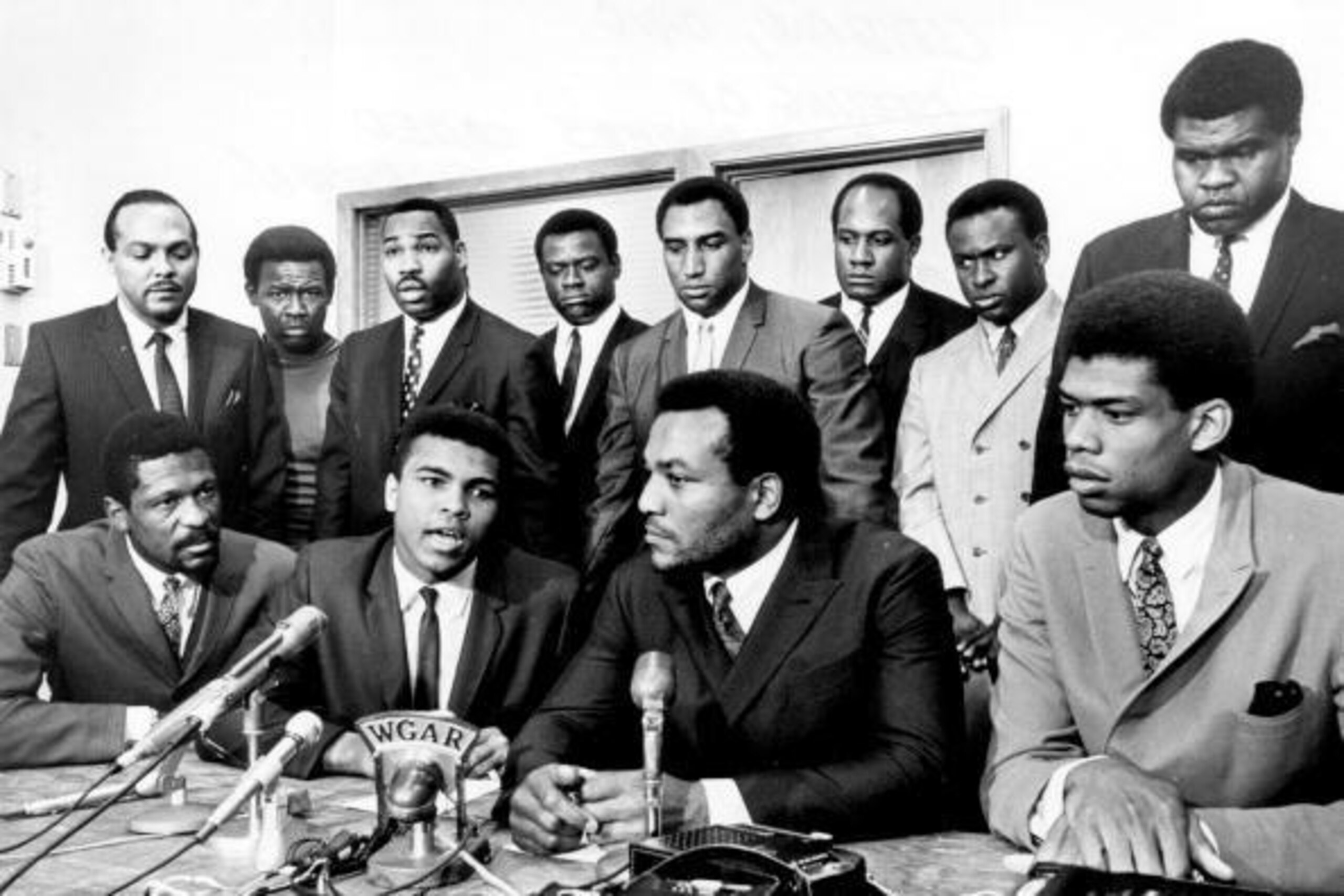
When I wrote a biography of Brown, one of the most interesting things I discovered was how close he and Ali were. Brown organized a key moment in sports history, when many of the great athletes of the time—including Bill Russell and Kareem Abdul-Jabbar (then Lew Alcindor)—held a press conference in Cleveland to support Ali after he refused military service as a conscientious objector.
Brown's role in that press conference—and the other athletes'—was a great personal risk to his career and financial well-being, but this was the power Ali carried with them.
People often forget now that Brown was a huge boxing fan. He and Ali sparred on occasion. He was a boxing commentator on fights in Cleveland and nationally. During Ali's 1964 fight against Sonny Liston (when Ali was Cassius Clay), Brown read soft drink commercials between rounds.
Brown purchased stock in a fight promotion company called Main Bout, Inc. The company handled the distribution rights to the Clay-Ernie Terrell fight. It became the first company composed mostly of blacks to finance and run a major sports television broadcast.
When the Browns held an appreciation day for their star on January 29, 1967, a number of sports dignitaries, including Ali, came to pay their respects. Ali joked to the crowd that Brown was "the greatest athlete in the history of sports next to me."
"He is still pretty," Ali added. "I am glad to see him retire undefeated."
This past week, on Meet the Press, Brown was asked what was one of the greatest lessons today's athletes can learn from Ali.
"Money is not God, and human dignity is very important," he responded. "Your integrity is way up there. And as a single human being, if you carry yourself in a certain way, you can defy all evil that comes at us.
"I'd like to make one thing very clear: Muhammad Ali loved people, and he had white friends as well as black friends—and the only thing that he hated was discrimination and racism. And so, that's the way that I look at him, and that's how I'd close out my talking to you today."
Again, Brown did things that shouldn't be forgiven or forgotten. But he also did good things, and his relationship with Ali was important for sports.
If only there was another Brown and Ali today.
2. Who is the conscience of the NFL?
Ali was more than the conscience of boxing. He was the conscience of sports and, in some ways, the same for the country.
It got me wondering: Who is the conscience of the NFL? Does one exist?
I know there are truly good people with big hearts who were part of the league, such as Scott Fujita and Amy Trask. Maybe it's Dr. Bennet Omalu, who forced the NFL to recognize CTE. Maybe it's all of the players collectively. Maybe it's New England Patriots owner Robert Kraft. Maybe it's Anquan Boldin. Maybe it's the head of the players' union, DeMaurice Smith.
I think one of the problems the NFL faces is there's no one leader who will always do the right thing. Who cares more about the league's image than money. Who understands the league's great power and looks to temper it, not abuse it. Who has the clout to get the entirety of the NFL to listen to him.
In the NBA, there are men like that. LeBron James. Steph Curry.
I have no clue who it is in the NFL, and that's a problem.
3. Russell Wilson: hero
There's no question Russell Wilson can come off as a bit of a phony at times. But he also does things that are genuinely amazing. I mean truly, truly, amazing.
This note a mom posted on Facebook about Wilson's kindness to her daughter, who passed away because of cancer, is one of the most touching things you will ever read:
It shows how in most instances, Wilson is a superman—not when he tries to be something he's not, but when he doesn't try at all.
4. NFL looking closer at marijuana use in football?
A group of researchers backed by Ravens left tackle Eugene Monroe, who is an advocate of marijuana use in the NFL, recently met with some of the NFL's top doctors, per Adam Kilgore of the Washington Post. Those doctors and the media have portrayed this as the NFL perhaps preparing to soften its stance on the drug.
Several team union representatives told me they don't believe the NFL's overtures are sincere. They believe they are a PR stunt to make the league look more open to marijuana use than it really is.
The relationship between the union and league is so bad right now—the worst it has been since the strike years—that it's understandable why these team union reps don't believe the league. But if the NFL is genuinely listening, it would be smart to strongly consider letting the players use marijuana.
5. NFC assistant coach: 'Aqib Talib is a f--king idiot'
We don't know who shot Aqib Talib. We don't know if the report that he accidentally shot himself, per Mike Klis of 9News—also known as Plaxico Burress-ing yourself—is true. WFAA-TV's Rebecca Lopez reported that he told police he was too drunk to know how he got shot. Not sure about anyone else, but I'd have to drink all the alcohol in the world to be so drunk I didn't know how I got shot.
What we do know are two important things.
First, we know Talib is damn fortunate. ESPN's Adam Schefter reported that the "bullet entered and exited his leg. Hit no arteries, tore no ligaments. Talib got stitches, no surgery." It could have been a lot worse.
Second, we know Talib has a long history of issues. In 2008, he got into a fight at the rookie symposium. One year later, he was arrested and charged with battery and resisting arrest. Two years later, he was indicted for aggravated assault. Those charges were later thrown out.
This led to an NFC assistant coach telling me what many people around the NFL are thinking: "Aqib Talib is a f--king idiot."
Hard to disagree. Hope he's OK. Hope he recovers fully. But hard to disagree.
The reports emerging from this incident have to be disturbing to the league and the Broncos. This has the potential to get a lot more interesting.
6. No Super Bowl winner has ever had an offseason like this
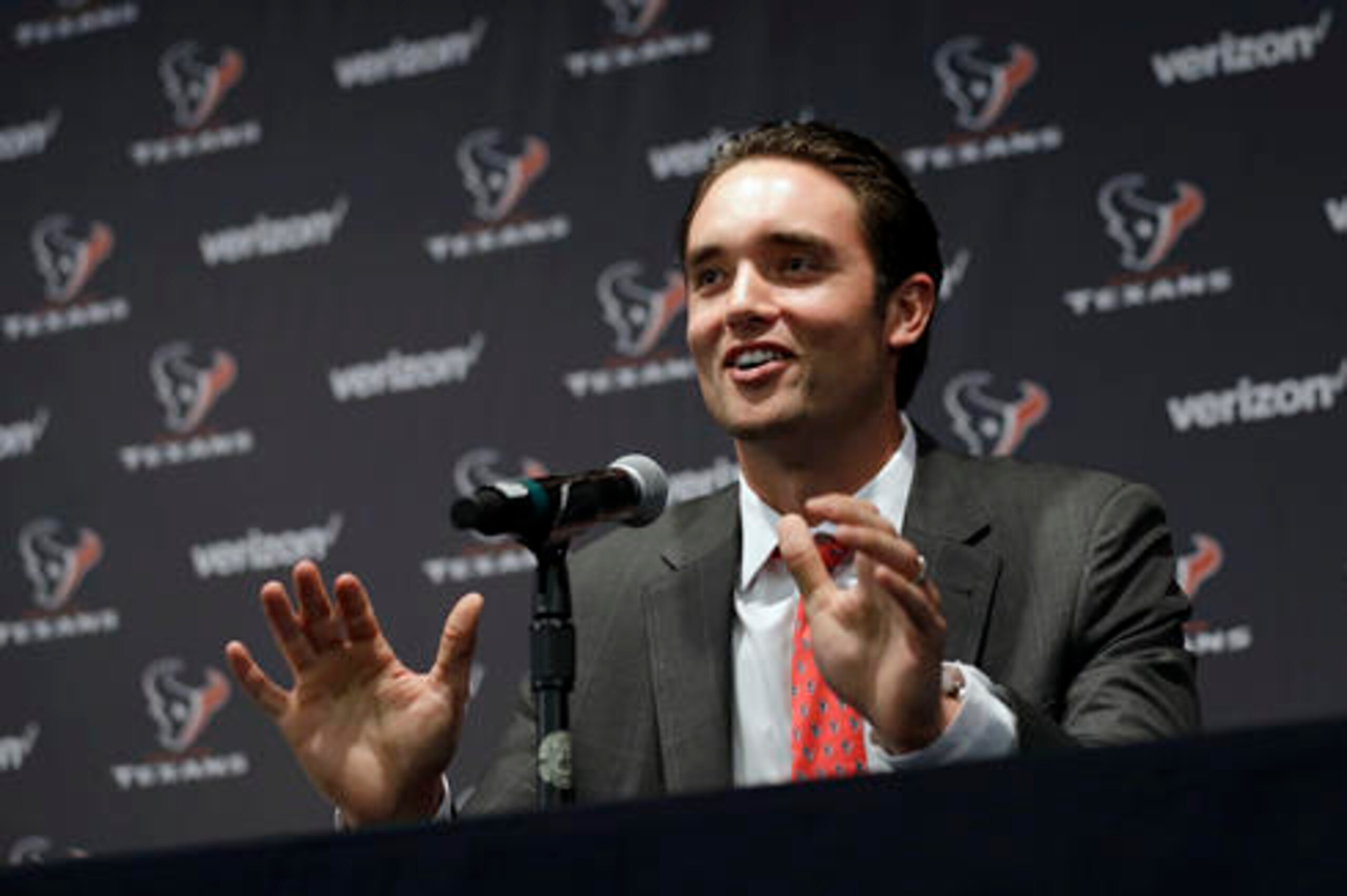
It's not just the number of players Denver has lost to free agency, or that one of their best players just got shot in the leg, or that Peyton Manning retired. It's also the quality of players they've lost.
To me, losing Brock Osweiler is one of the biggest losses any Super Bowl team ever has endured. We'll see how right I am about that, but I believe Osweiler will be a star in this league.
John Elway, who might be the best in football right now at putting a team together, has a lot of work to do.
7. Goodell will keep all of his power
Anyone who believed that Roger Goodell would hand over some of his disciplinary power to a committee or share it with the union, um, no. As I've been saying for some time, there's no damn way that will happen. Ever.
The latest evidence? This quote from ESPN.com's Mike Rodak:
Again, he has no intention of handing over that power. I don't think he ever will.
8. Marshawn Lynch is done…really done…no, really, he is…probably
This video is typical Marshawn Lynch. He gets irritated easily when he thinks people doubt him. He has no time for doubters. Love that about him.
So he's probably done. I'm 98 percent convinced. I've heard players say they were retired before—cough, Brett Favre, cough—and they come back. Lynch is still young enough to play again. He can still change his damn mind. He wouldn't be willing to go back to Seattle, of course, but some team, either because of injuries or sheer desperation, could at some point make an offer Lynch couldn't refuse.
Then let's see if he still says no.
9. The NFL would get obliterated if it did what the UFC did
If you're a serious professional sports organization, you simply cannot do this to a reporter. It's an absolute disgrace. The NFL does try to control the message, but even it would never do something like that. It's still hard to believe the UFC did it. I may get put in a chokehold for this, but put on your big-boy pants, UFC.
10. Underestimating the power of fame
One of the last superstar rookies the Browns ever had was the aforementioned Jim Brown. He was well-known, expansively covered in the media and famous even for a time that didn't have Facebook or that fancy internet invented by Commander Montgomery Scott.
When Brown joined the team as a rookie, he was cool—hard-working and intimidating but professional. The fame never got to him.
Then came the next big rookie star for the Browns, Johnny Manziel. He was unprofessional, lazy and believed fame was something he deserved. He didn't care about earning anything. The end result was disaster.
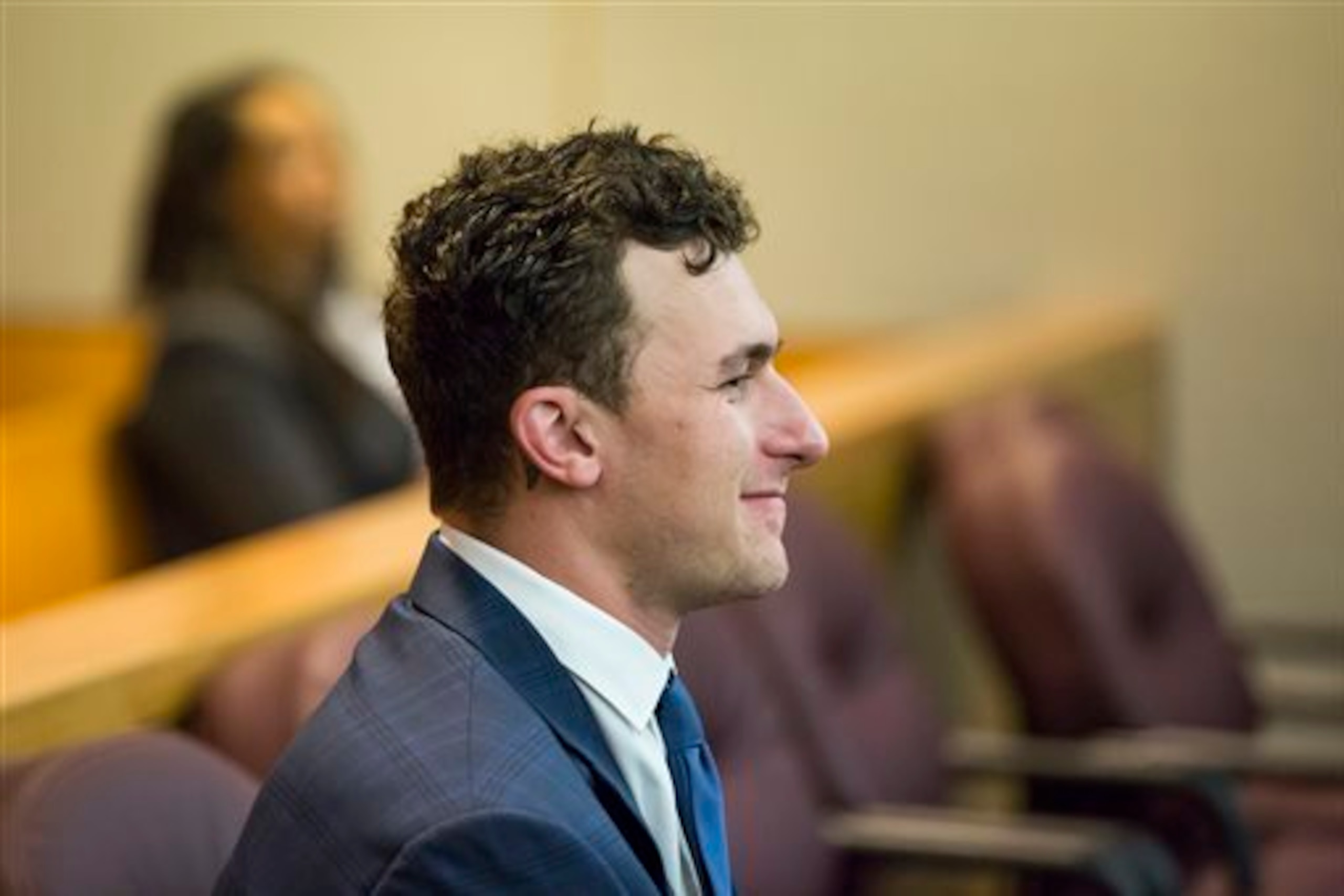
"The club has to be prepared to handle the player regardless of their celebrity, regardless of their position, regardless of what they're required to do," former general manager Ray Farmer, who drafted Manziel, said Monday on ESPN (via Pro Football Talk's Michael David Smith). "The responsibility is born by both the club, and the player. When the club doesn't follow up on its end, it makes it that much easier for players to get off track. …
"It's celebrity. … This player had unique celebrity that I don't think the league has seen. That brings a whole new element of how you try to handle the person."
The problem was the Manziel situation was a two-way, jacked-up street. The Browns didn't know how to handle Manziel's fame, and neither did Manziel.
Mike Freeman covers the NFL for Bleacher Report.
.jpg?w=2560 "Rams Eagles Football")