
New York Knicks: 7 Steps to Become an Eastern Conference Powerhouse
Let’s act like we have amnesia and temporarily forget about the infamous toast made by a certain All-NBA point guard at Carmelo Anthony’s wedding. I could take the easy route and tell you Chris Paul is the quick fix to propel the New York Knicks to the top of the East. I could also say acquiring center Dwight Howard will do the same.
At the earliest, neither player will be on the market until shortly before the 2012 trade deadline. But in all likelihood, teams will have to wait until the summer of 2012 to court these superstars.
While some roster modifications undoubtedly must occur, there are other changes to be made that are unrelated to personnel; a little attitude adjustment can go a long way.
So, as much as improvement is contingent upon team president Donnie Walsh’s front office decision-making, the coaching staff is equally responsible for motivating the roster to step up its game and play with a bit of a chip on its shoulder.
If the Knicks heed the suggestions featured in the following slides, they have a chance to make an immediate impact on the Eastern Conference during the 2011-12 season. Not only will they be competitive, but they will give the Chicago Bulls and Miami Heat a run for their money.
Acquire Starting Center
1 of 7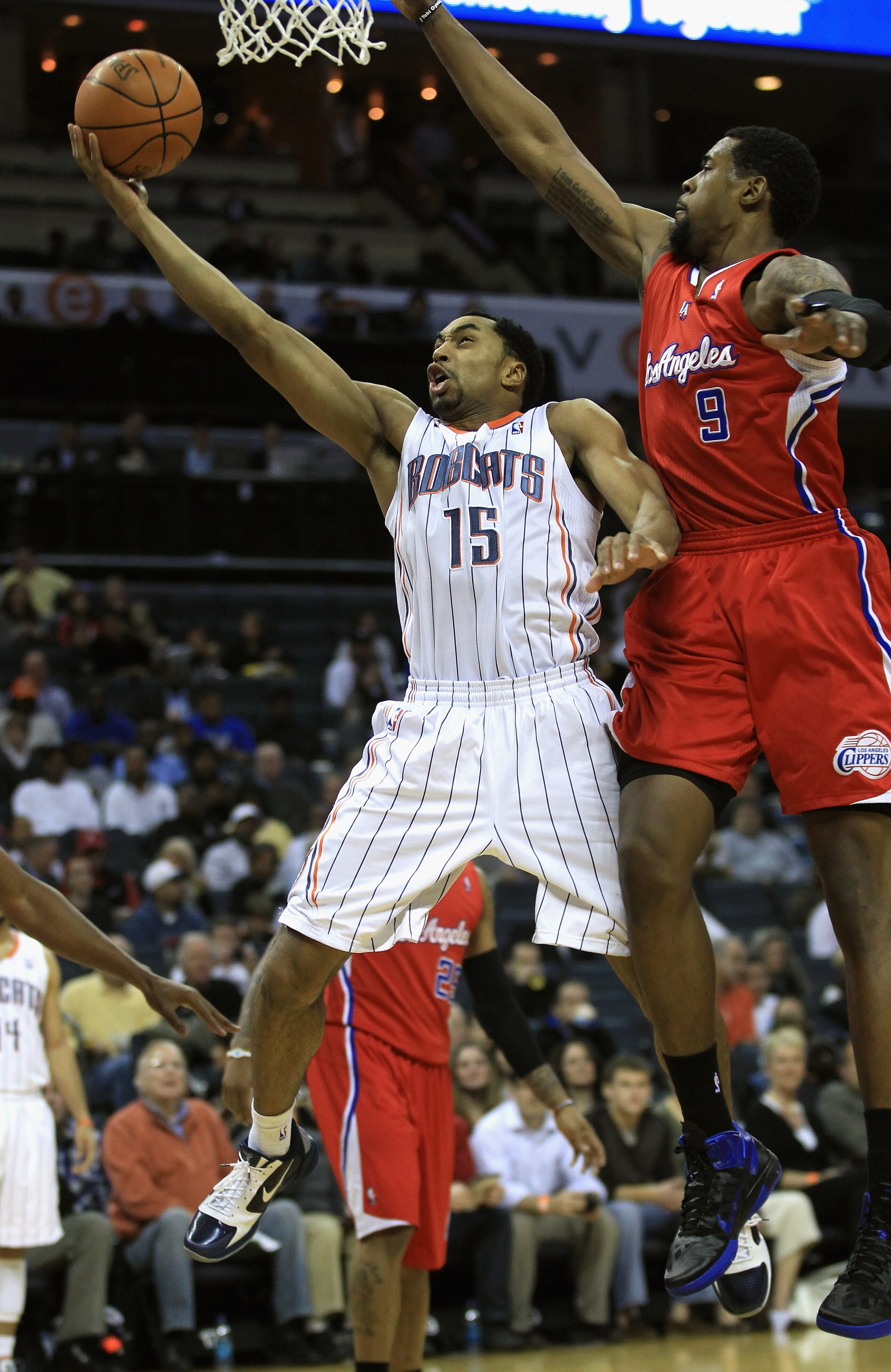
Knicks fans can hope and pray. However, Orlando Magic center Dwight Howard will probably never call Madison Square Garden home. Patrick Ewing may be irreplaceable, but New York can certainly do better than Ronny Turiaf, Jared Jeffries or Shelden Williams.
Of the three, Turiaf is the best fit for the Knicks, and he deserves to stick around as a backup if only he could remain healthy. Turiaf’s high-energy, an above-average shot-blocker and can finish at the rim when given the opportunity.
Jeffries seems like a nice guy, and he’s great for the community, but the organization needs to bid him farewell once and for all. He’s supposedly a great defender, and Mike D’Antoni swears by him, but he’s also such an offensive liability that it’s practically four against five with Jeffries in the lineup.
He’s an afterthought on any other team, but for some reason the Knicks staff insists on using Jeffries as a stopper during critical moments. I never want to see another instance where his offensive ineptitude costs New York a postseason win—or possibly the series—like it did this year versus Boston. Good riddance.
The jury is still out on Shelden Williams. Technically, he’s not a center, but with the Knicks’ lack of options, he learned to be. Towards the end of the season, Williams was a significant part of their seven-game win streak, but he’s nothing more than a role player who shouldn’t be on the floor more than 10 to 15 minutes a night.
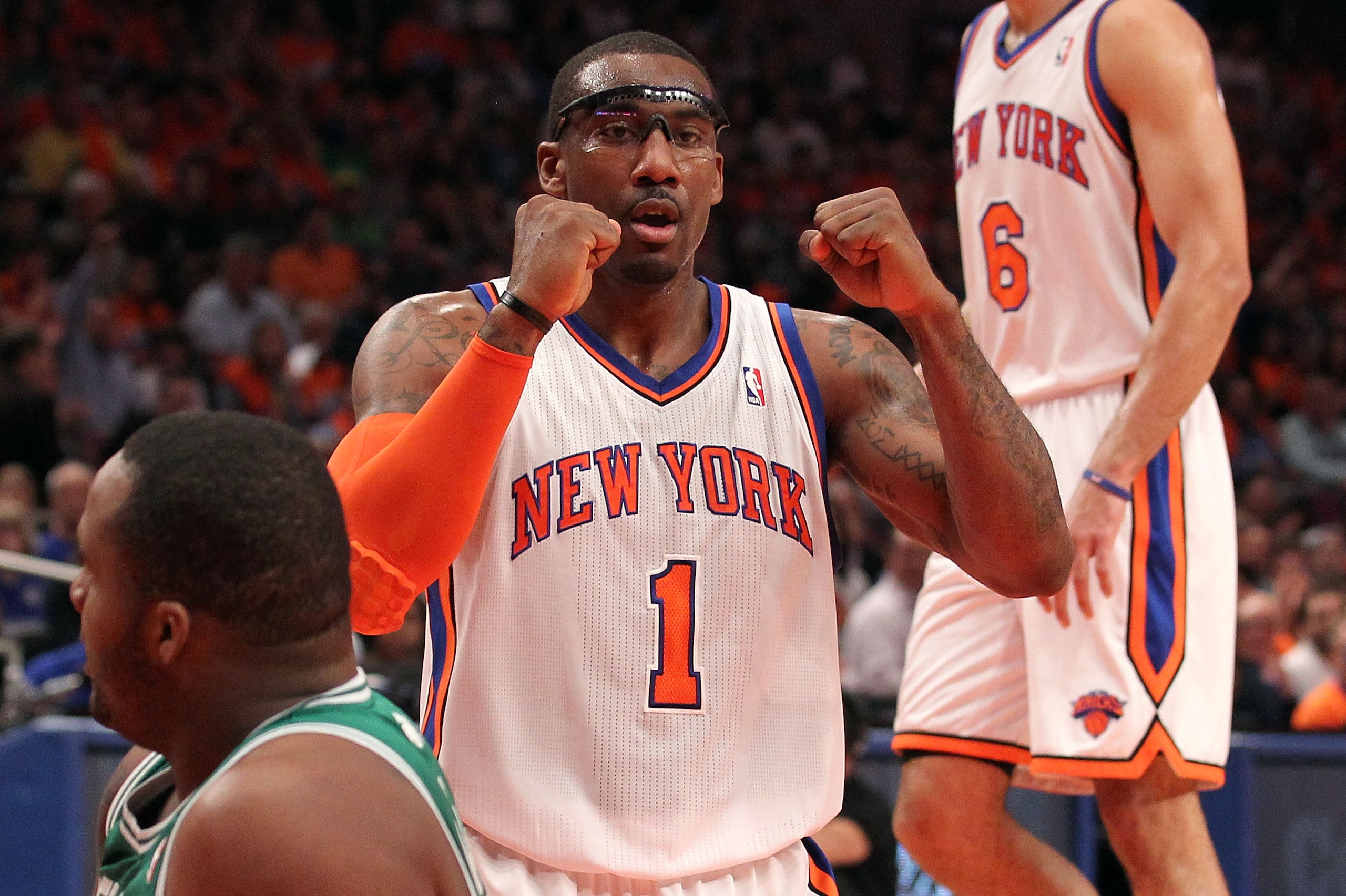
Reflecting on the season, Amar’e Stoudemire really owned the center position despite being a natural power forward. Obviously, for the team to be most successful and utilize Stoudemire’s talents to the fullest, he cannot play center. Banging down low against bigger guys will wear him down, and it could be partially to blame for his nagging injuries.
To resolve this crisis, the Knicks’ best bet is to acquire a true starting center. In no particular order, New York must pursue either Tyson Chandler, Samuel Dalembert, or DeAndre Jordan—all of whom will be unrestricted free agents this summer.
Each of these players has something in common; they’re athletic, long, lean and excel on defense. At 30 years old, Dalembert is the elder of the group. Chandler is closing in on 29, but Jordan is just 22.
Enjoying a fairly productive postseason, Chandler’s stock will rise even further if the Dallas Mavericks win the NBA Finals. Already earning $12.6 million this year, Chandler may not be worth whatever he demands.
The Sacramento Kings are stacked with big men, so Dalembert will likely be expendable. But, with a current salary of $13.4 million, his asking price could be too high.
Offensively, Jordan is still a project, but if he didn’t have Blake Griffin stealing his thunder game after game, he provides quite the highlight reel of his own. Given the fact that Jordan is six years younger than Chandler and eight younger than Dalembert, it may be wisest for the Knicks to err on the side of caution and select Jordan for the sake of youth. He would also be the cheapest to sign, having only made a microscopic $900,000 this season.
The bulk of scoring in the paint will be Stoudemire’s responsibility, so whichever center New York chooses can focus on the other fundamentals: rebounding and defending. Anyone of these three players fits the bill.
Acquire Backup Point Guard
2 of 7
Even at 34 years of age, Chauncey Billups is one of the best point guards in the Eastern Conference, but all the mileage on his body is beginning to slow him down. He is too valuable to the existing roster to watch games in a suit, which is why the Knicks need an alternative in the event Billups gets hurt again.
Toney Douglas has been a pleasant surprise ever since he was drafted out of Florida State two years ago. However, in this year’s playoff series against the Celtics, he showed why the Knicks must search elsewhere for another floor general. Douglas is an able scorer, but he’s not as capable directing his teammates on the court.
Rumor has it the Milwaukee Bucks will be placing point guard Brandon Jennings on the trading block, but the Knicks don’t have the assets to entice them to entertain a deal with New York.
Additional notable available point guards include the Phoenix Suns’ Aaron Brooks and Detroit Pistons’ Rodney Stuckey, who are both restricted free agents. Of the two, Brooks matches D’Antoni’s style; he’s lightning quick, an excellent outside shooter and can create his own shot.
The 2009-10 Most Improved Player, Brooks played all 82 games for the Houston Rockets and averaged 19.8 points, 5.4 assists and a steal per game. He also led the league in three pointers made.
Brooks followed up with a disappointing 2010-11 campaign, where he was eventually traded to Phoenix to serve as backup to Steve Nash. A combination of things led to his drop in production—specifically an ankle injury which caused him to lose his starting job to Kyle Lowry and a falling out with Rockets head coach Rick Adelman. He could replicate the numbers he posted a couple seasons ago when given 30 to 35 minutes a game.
Since Douglas appears to be a key component of the Knicks going forward, Brooks may not be the proper choice. They share similar attributes, but Brooks’ speed gives him the slight edge. Douglas does have a two-inch height advantage though.
Recently, he’s gotten more publicity for being the Los Angeles Lakers’ personal punching bag, but Dallas Mavericks reserve point guard J.J. Barea will be an unrestricted free agent after this season as well. He’s been vital to the Mavs' postseason success and is a reason they’re the first team to punch their ticket to the Finals.
Although slightly shorter, there are parallels to be drawn between Barea and Steve Nash. While he’s not as efficient of a passer, Barea utilizes an impressive floater to score over larger defenders in the lane, and he’s also efficient from behind the arc. Like Nash, he has heart and plays with the kind of drive that is seldom seen.
In a previous article, I discussed why Cleveland Cavaliers point guard Ramon Sessions would also gel with the Knicks. However, he is only attainable via trade.
Stat & 'Melo Must Be in Sync
3 of 7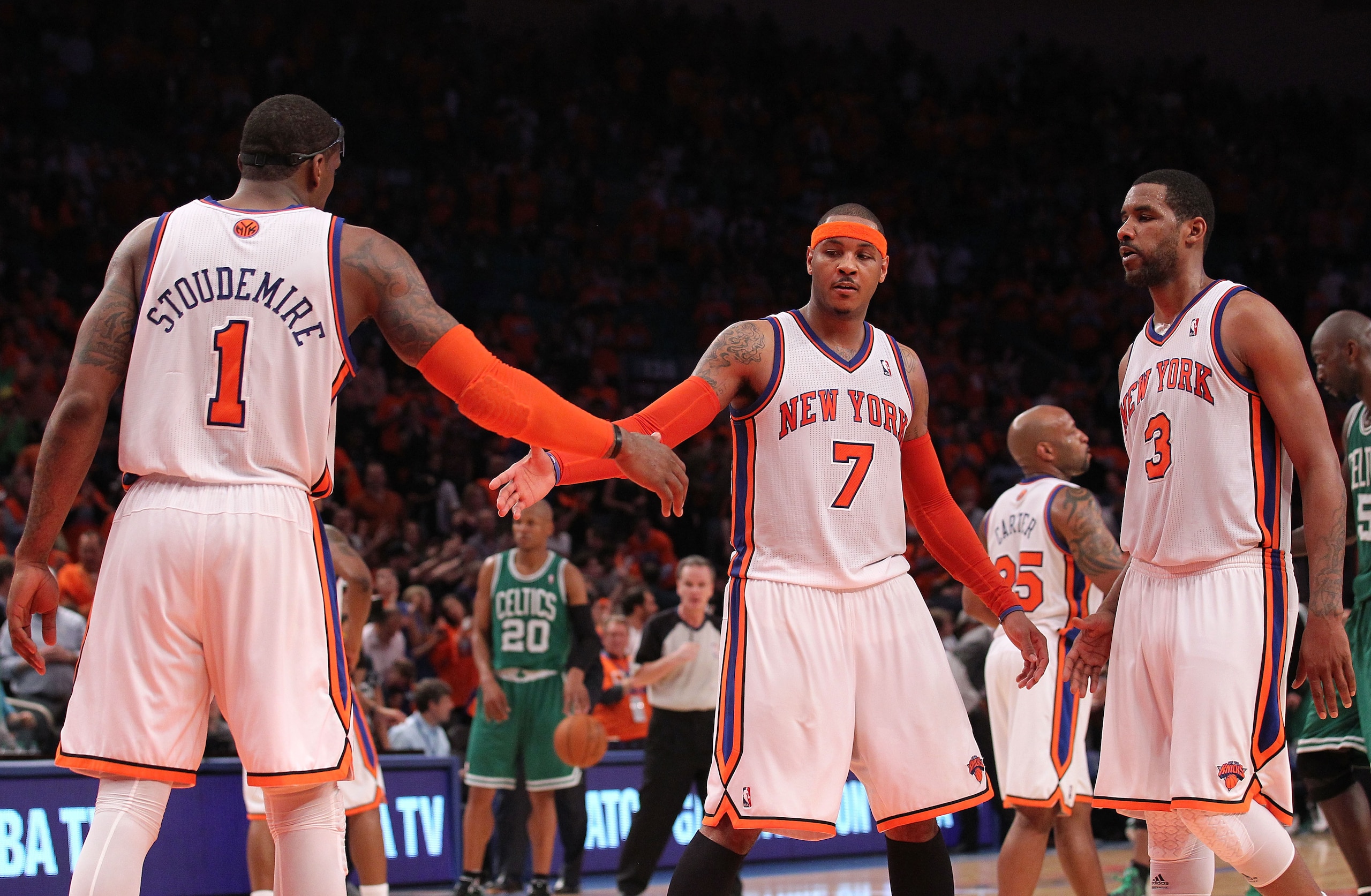
Following Game 2 of the Knicks-Celtics playoff matchup, NBA.com staff writer John Schuhmann revealed a fascinating statistic regarding New York’s efficiency with Carmelo Anthony and Amar’e Stoudemire on the court together versus playing separately.
During the 710 minutes that the two were on the hardwood simultaneously, opponents outscored New York by 10. Conversely, in the 345 minutes Anthony played without his trusty counterpart, the Knicks bested the competition by 39 points. Over the course of the 267 minutes Stoudemire went to battle minus his right-hand man, the team was plus-12.
While some would chalk this up to coincidence, 710 minutes is the equivalent of almost 15 full games together. It may be a small sample size, but it’s substantial enough to know something is not quite right.
If New York is ever going to be a serious contender, it is imperative for these two superstars to be on the same page. LeBron James and Dwyane Wade figured out how to do it, and it’s paying dividends this postseason. Granted, they’ve had a full season together, and Anthony and Stoudemire have only coexisted for 32 games.
Nonetheless, James’ and Wade’s styles of play are one in the same, but Anthony and Stoudemire are far from mirror images of each other. Therefore, we can presume their synchronization process will go smoother since they play different positions, and their games generally don’t overlap. Obviously, this is a lot easier said than done.

Anthony Must Step Up Defense
4 of 7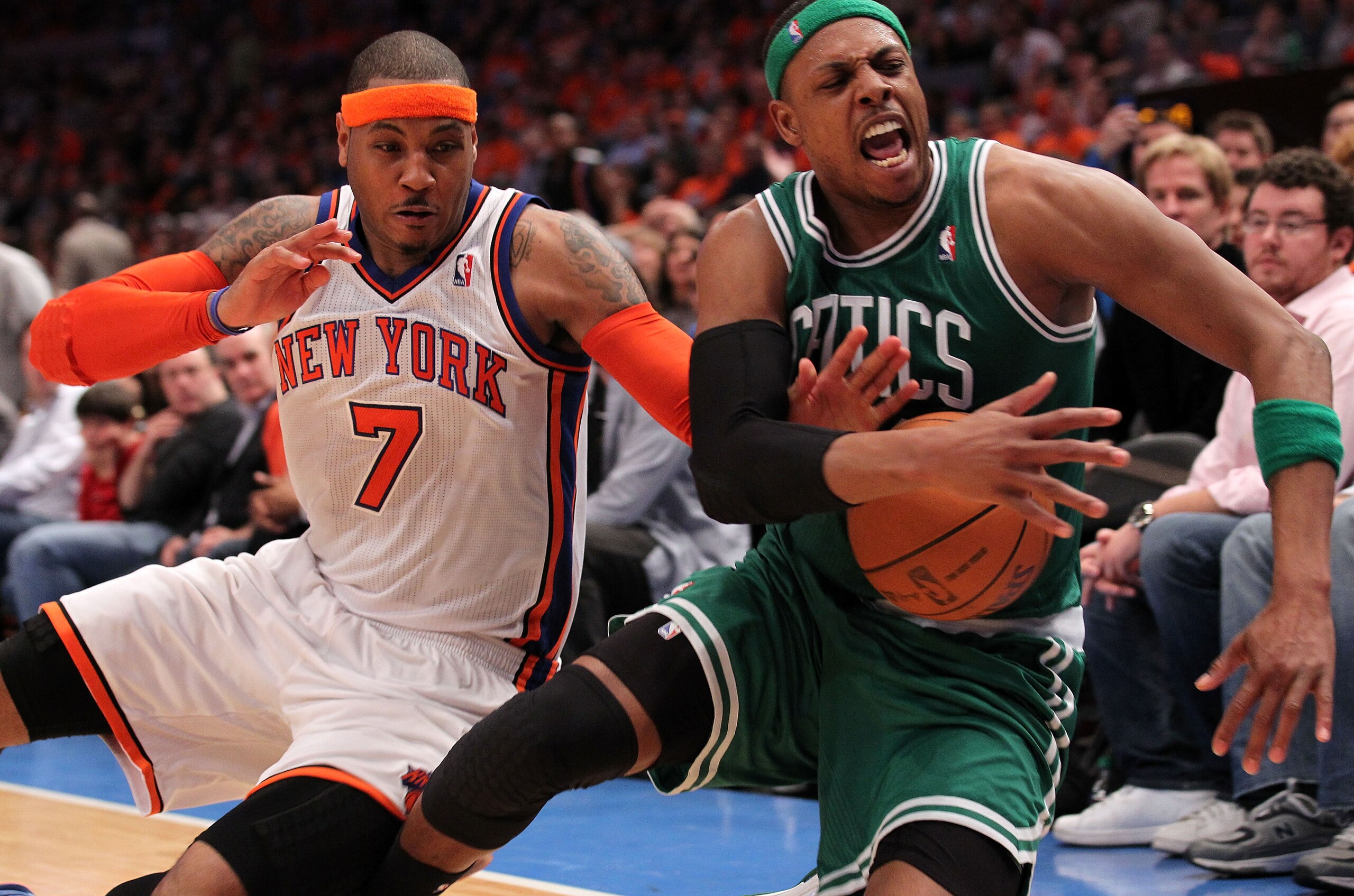
Carmelo Anthony has always been labeled one of the NBA’s most decorated offensive talents, but one knock that seems to trail him wherever he goes is he’s a bad defender. Anthony isn’t lacking the intangibles to be a good defender. Instead, he doesn’t have a defensive mindset. In other words, he’s lazy.
It wasn’t a fluke that Anthony became more involved on defense as the season wound down. In late March, a six-game slide saw the Knicks plummet to seventh in the Eastern Conference standings—barely above the last-place Indiana Pacers. Realizing they were in line to face the Miami Heat or Chicago Bulls, New York knew the odds of beating the Celtics in the first round of the playoffs were more favorable.
Anthony increased his aggressiveness, and in turn, he crashed the boards harder and made a concerted effort to blanket whoever he guarded. When he plays with this level of intensity, it sets an example for the rest of the team, and this domino effect typically results in victories.
The Knicks finished the season winning seven of the final 10 games, and the team reclaimed its sixth seed from the Philadelphia 76ers. Anthony carried his all-around play into the postseason against Boston. He did all he could, including a downright historical performance in Game 2, but injuries to Chauncey Billups and Amar’e Stoudemire put the Knicks out of commission.
If Anthony’s focus on both ends of the floor carries over to next season, it could have a profound impact on the team and ultimately lead to an improved record.
Demote Fields to Reserve Role
5 of 7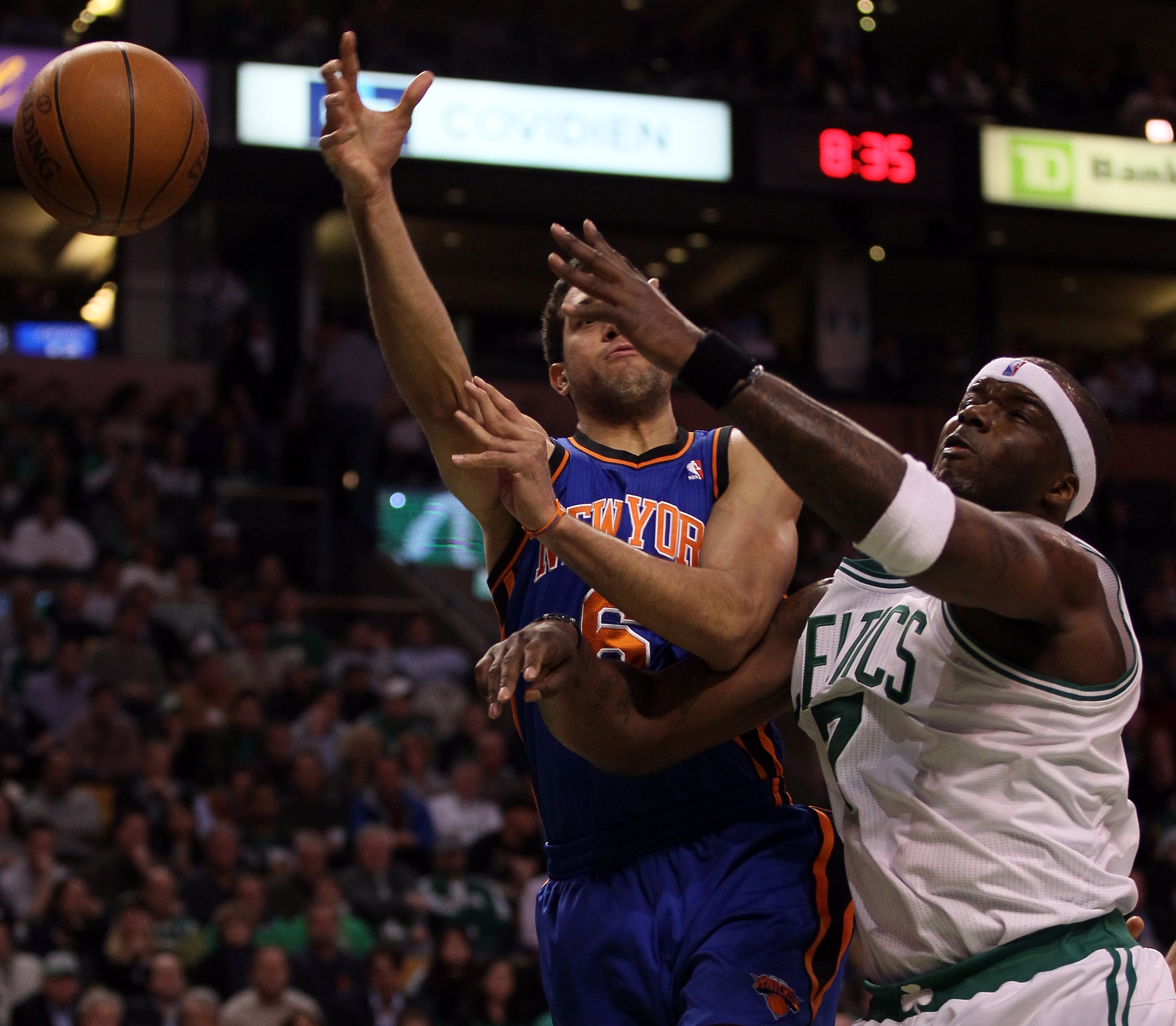
I’m not sure what exactly happened to Landry Fields when Carmelo Anthony arrived, but he was rattled. Fields appeared to have lost all confidence that had contributed to two consecutive Eastern Conference Rookie of the Month awards early in the season.
When he was in the game, he looked confused and uninvolved in the offensive flow. Too many people bought into the hype when Fields seemingly came out of nowhere to average over 10 points and lead all guards in rebounding.
Fields will never be anything beyond a role player in this league, and he would be of greater benefit to the team as a scrappy player who can come off the bench to provide a defensive boost and an occasional three-pointer or crowd-pleasing slam. He’s a positive role model and helps give the Knicks organization a good reputation, but someone needs to replace him as starting shooting guard.
Quite a few bankable shooting guards will be entering free agency this summer, such as Ray Allen, Jason Richardson and Jamal Crawford. When they’re hot, all three of these guys are dangerous and could really do damage in an already potent Knicks offense.
Fans might enjoy a Crawford second-coming, but neither he nor Allen and Richardson are worth the risk. Each of them takes home an eight-digit annual salary, and none are younger than 30. Despite still being lethal from just about anywhere inside half court, it’s safe to say they’re on the downside of their careers when taking age into account.
Even though he’s listed as a small forward, former Knick Wilson Chandler is an inch taller than Fields and more gifted. The Knicks could go with a large lineup and slip Chandler into the 2-guard slot.
Chandler has an inside-outside game, and his athleticism enables him to chase smaller guards. Even if Chandler doesn’t start, he’d be glad to be back in the Big Apple and definitely wouldn’t disappoint, regardless of his role.
As a rookie in 2009-10, Marcus Thornton provided instant offense off the bench for the New Orleans Hornets, averaging 14.5 points and almost a steal in 26 minutes per game. After crossing head coach Monty Williams during his sophomore season, he couldn’t escape the doghouse and was shipped to the Sacramento Kings.
An injury to Kings star guard Tyreke Evans allowed Thornton to immediately step into a starting position, where he would stay for the remaining 23 games. Thornton quietly averaged 21.3 points, 4.7 rebounds, 3.4 assists and 1.7 steals during a 27-game stretch in Sacramento, including a 42-point outburst.
Also a 37 percent career three-point shooter, Thornton averaged two per outing for the Kings. He is the ideal complement to Mike D’Antoni’s system, and his defense isn’t too shabby either, so Thornton wouldn’t even be a downgrade from Fields in that category.
Draft an Energizer Bunny
6 of 7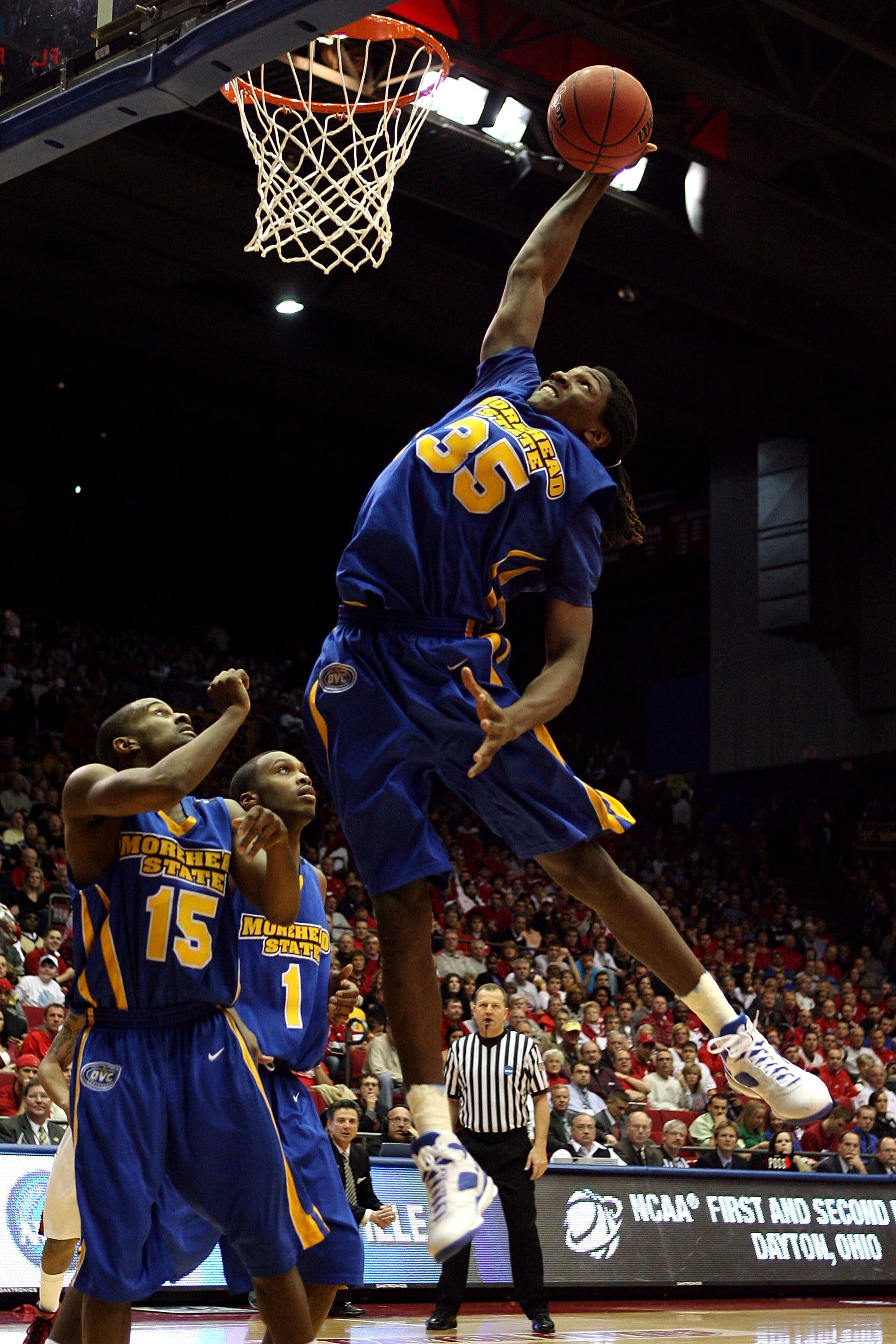
The weakness of the Knicks bench is a severe issue that must be addressed this offseason, or New York will struggle early in the playoffs for the second year in a row. When Isiah Thomas was calling the shots, Renaldo Balkman was his idea of a lightning rod off the bench who would handle the dirty work. It doesn’t take a rocket scientist to figure out how that experiment turned out.
Evidently, Donnie Walsh is willing to take a chance on Balkman 2.0, but this time around the Knicks may get the outcome they desire. If Morehead State power forward Kenneth Faried is passed over in next month’s draft, the Knicks will likely zero in on him with the 17th selection.
Players from smaller schools are a gamble, but for all the busts, some of these lesser known institutions have produced basketball legends. In Faried, the Knicks think they could be getting the next Dennis Rodman.
At just 6’8”, Faried broke Tim Duncan’s Division I career rebounding record, finishing with a four-year total of 1,673. During his senior season, Faried averaged 17.3 points, 14.5 rebounds, 2.3 blocks and 1.9 steals per game.
It remains to be seen whether his collegiate accomplishments will translate to the professional game, but it’s a remarkable story—one that the New York media would salivate over if Faried dons a Knicks cap on June 23.
Attitude Adjustment
7 of 7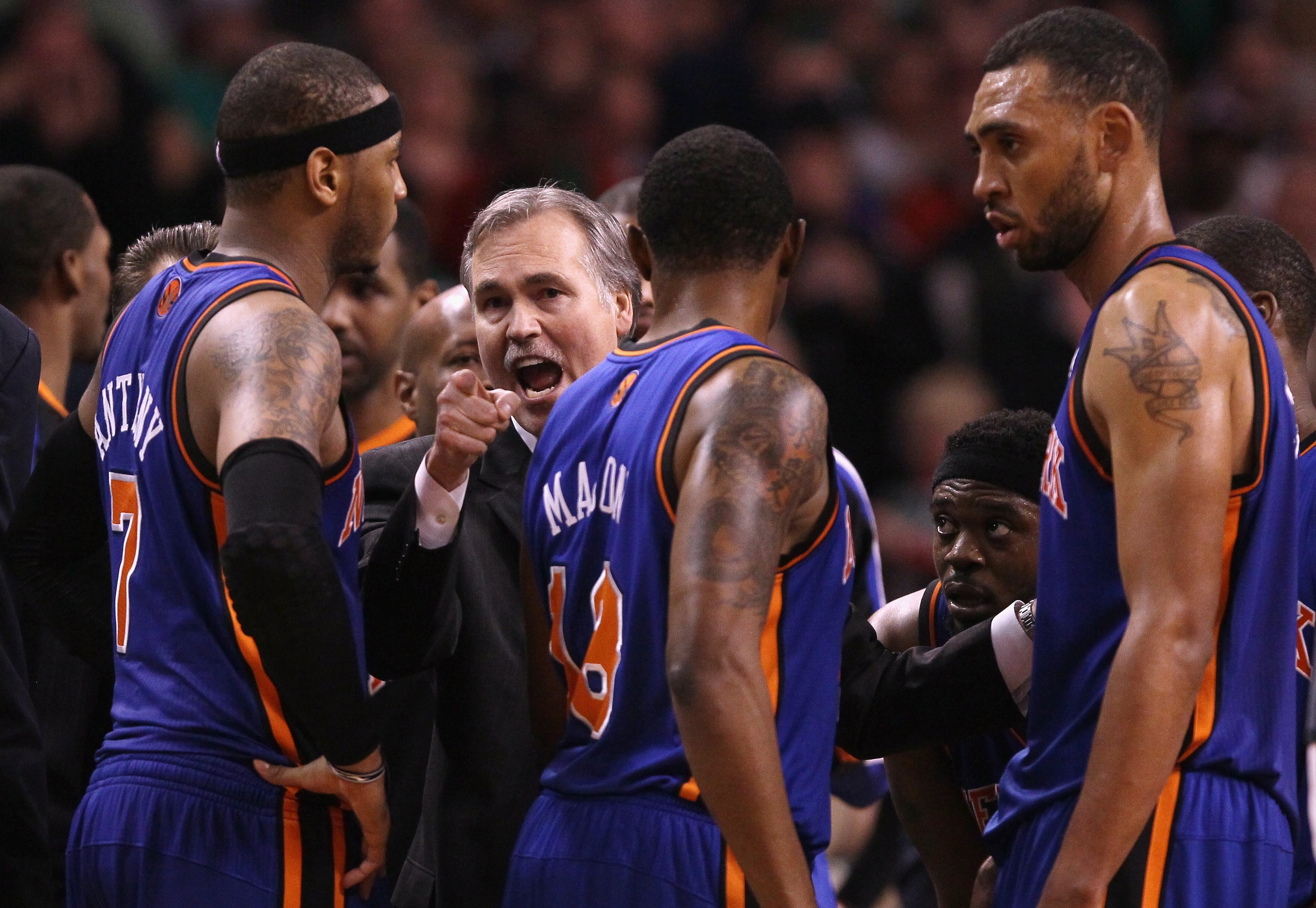
What happened to the physical New York teams of the 1990s with intimidating bruisers like Charles Oakley, Anthony Mason and Charles Smith? The present-day Knicks are soft and emotionless. Amar’e Stoudemire may let out the occasional scream after an earth-shattering dunk, but that’s about the extent of it.
I lost count how many games I saw this past season where there was such a lull in play that it looked as if the team had waived the white flag. First half leads gave way to third quarter collapses, and the fourth quarter was often spent clawing back in an attempt to make the score respectable.
No wonder with lapses like this the Knicks only finished two games over .500. It’s the players’ fault, but Mike D’Antoni and his staff are just as responsible. Coaching 101 teaches you to motivate your team, and D’Antoni fails to effectively do so.
How often can you recall D’Antoni ripping into a player on the sideline? Even Lakers coach Phil Jackson, who’s one of the most reserved, lit into All-Star Pau Gasol for his lackadaisical effort against the Mavericks during the Western Conference semifinals.
Publicly chastising players may not be characteristic of D’Antoni’s personality, but sometimes it simply shows how much you care. Beginning next preseason, Knicks coaches need to set the tone and stress the importance of staying focused and giving it 100 percent until the final buzzer sounds. D’Antoni might place the emphasis on offense, but if he can inspire his team to increase its mental toughness, he could be shocked by how much the defense improves based on mindset alone.



.jpg?w=2560 "Chiefs, Steelers Eye WR Trades")



.jpg?w=2560 "Latest Peyton-Colts Rumors")