What’s to stop the Golden State Warriors from romping to their second straight NBA title?
They are long on experience and confidence, with a banner in their back pocket. They’re even longer on talent and hunger, as their march to 73 regular-season wins—which broke the record held for two decades by Michael Jordan’s 1995-96 Chicago Bulls—made crystal clear.
Still, there must be some way to beat the Warriors, right? If anyone would know, it’s Alvin Gentry, who was Steve Kerr’s right-hand man in Golden State last season before he took over as head coach of the New Orleans Pelicans in 2015-16.
TOP NEWS

J-Dub Suffers Gruesome Injury
Melo's Quote on Confidence 😎
Mazzulla Weighs In on Brown-Tatum Drama
"They don’t have a weakness," Gentry told Bleacher Report. "They really don’t."
That didn’t stop B/R from searching high and low to find one. We spoke to more than 40 NBA players, coaches, scouts and broadcasters to come up with the ultimate blueprint for beating the defending champs. Only a select few squads have the smarts and personnel to put this plan into practice, but those who do could cut short Golden State’s march into the history books.
Stop Stephen Curry at All Costs

The only way to stop Stephen Curry from torching your team is to keep the ball away from him, even if it means tracking him in the backcourt.
"Steph Curry is the head of the snake," said Dennis Schroder, who helped to harass Curry during the Atlanta Hawks’ 10-point loss to the Warriors in February. "After half court, you’ve got to pick him up. If not, he’s going to shoot it."
According to NBASavant.com, Curry hit 43.2 percent (41-of-95) of looks from 27 feet out or further—well above the league average of 35.4 percent from three-point range, period.
"I like what Chris Paul did with Curry a few weeks ago," an Eastern Conference scout said. "He picked him up at three-quarter court and denied him the ball. He couldn’t bring the ball up."
Paul held Curry to five field goals on just 15 attempts—well below his season average of 20.2 attempts—in a three-point Clippers loss Feb. 20.
Not every club has a bulldog at the point like Paul. For most, coming between Curry and the ball is a team effort.
"I think more teams have to trap him," Hall of Famer and current Hawks broadcaster Dominique Wilkins said. "Instead of stringing him out and showing on him, I think you have to trap him, get it out of his hands. You live with someone else beating you."
The trouble is, the Warriors are wired to get the ball to Curry, even if it takes a while.
"You’ve got to have a team that can think in sequences of three [actions]," the scout said. "If you get the ball out of Curry’s hands, they’re just going to run him off screens and get him the ball on a curl or something. You have to defend him the whole way."
Curry’s going to get some shots up. What matters is that those attempts are contested. According to NBA.com, Curry’s shot wasn’t so silky smooth when he had a defender right in his grill.
"If he’s taking long, contested twos or contested threes, that’s what you want to live with," former Warriors reserve and current Hawks wing Kent Bazemore said. "Get the rebound and run it back at them."
The best way to stop Steph, though, might be to make him stop you.
"When the Clippers play them, they’re able to get Steph Curry in foul trouble, which I think is always something you have to try to do," said former Warriors assistant and current Denver Nuggets coach Michael Malone. "Make Steph guard, make him defend. If you can get him in foul trouble, now you have the MVP on the bench. I think that’s a great starting point."
According to NBA.com, the Warriors are 22.1 points per 100 possessions better when Curry’s on the court compared to when he sits.
Defend Draymond Green with a Nimble Wing

If Curry is Golden State’s rock, Draymond Green is the slingshot. When teams crowd Curry with multiple defenders to get the ball out of his hands, Green is there to exploit the resulting advantage, be it by finding the open man or driving the lane himself.
"He’s kind of the key to everything we do," Kerr said. "Obviously, Steph and Klay [Thompson] shooting, it makes things difficult on our opponents, but Draymond is the guy who’s at the center of our defense all the time. He’s at the center of our pick-and-roll stuff with Steph. Trap him, and he’s the guy making the next play. He does everything for us."
"Put a smaller player on Draymond Green," former NBA veteran and current TNT broadcaster Brent Barry suggested. "If you’re going to play a big guy out there, Draymond Green’s advantage is so hard to overcome with the way he can manipulate the defense, create possessions and open shots with his penetration and passing ability, and score the ball."
Jack of all trades though he may be, Green struggles in the low post (0.67 points per possession, per NBA.com). It's better to let Green try his luck on post-ups than risk him getting to the cup and kicking out to a shooter.
Attaching a quicker wing to Green mitigates the lethal Curry/Green pick-and-roll. The more nimble the defenders involved, the easier it will be for them to switch between Curry and Green and contest attempts from either All-Star.
"Any time you get into a situation late in the clock where normally you would find a big guy either showing or giving room for that defender to go under or trail Steph, the big has to give space," Barry said. "If you put a small guy on Draymond Green, now all that space is manipulated by the smaller defender to switch out to try to catch Steph coming off of that screen and that guy going straight to Draymond’s body and hold up the possession."
"You’ve got to get the ball out of Curry’s hands. Make him skip it to the weak-side corner and close out," the scout said. "Even then, Green is so good shorting the pick-and-roll, finding the open man in four-on-three situations."
According to NBA.com, Green’s teammates shot 50.3 percent from the field off his passes.
Still, it's better that a team take its chances with the rest of the Warriors than tempt fate with Curry and Draymond controlling the action. According to data provided by STATS SportVU, only Oklahoma City’s Russell Westbrook-Enes Kanter combo has produced more points per possession than the 1.25 Curry and Green put up. Green’s drives off the pick-and-roll are nearly as effective, yielding 1.18 points per possession with turnovers 6.1 percent of the time.
Don't Leave Klay Thompson Alone
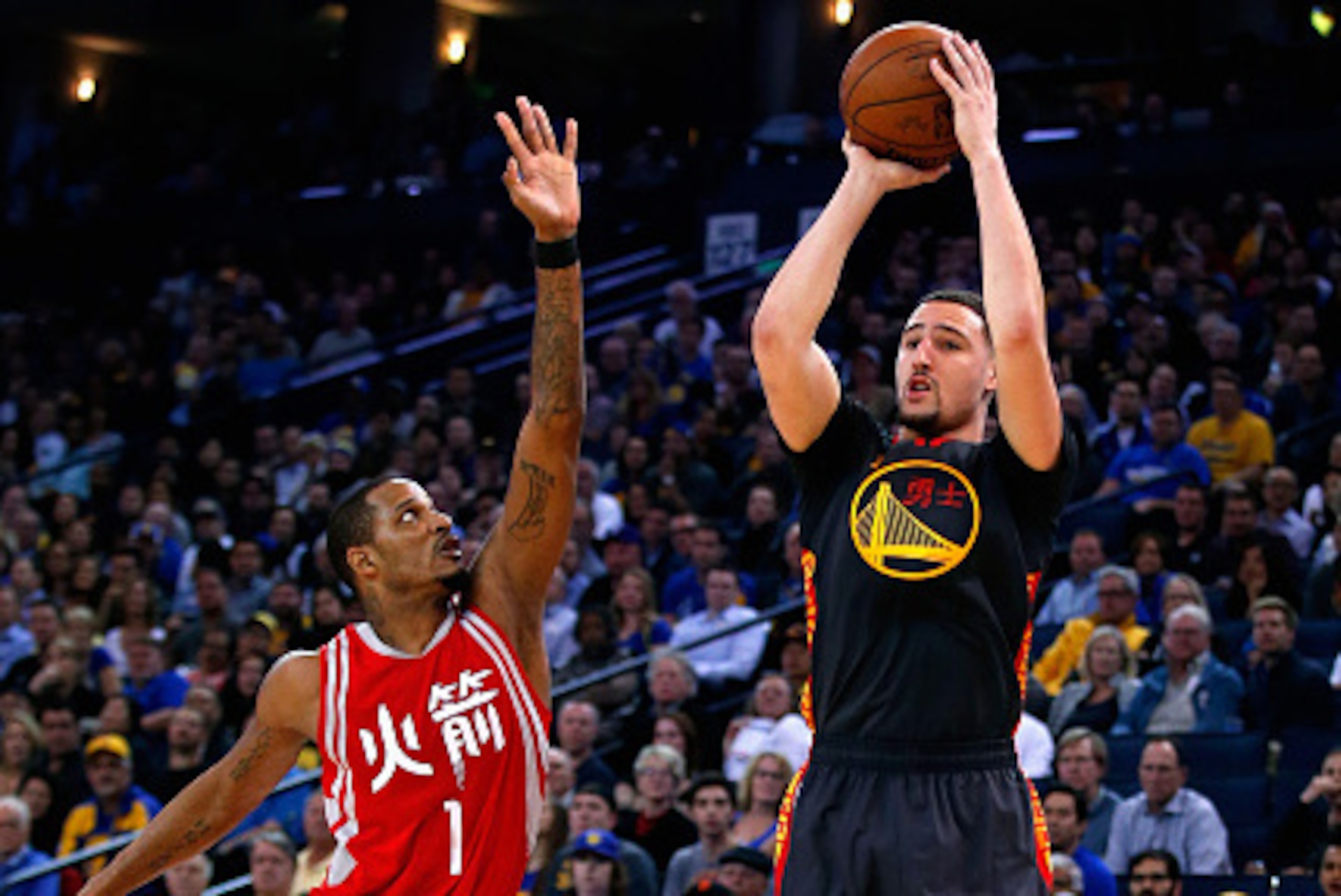
If not for Curry, Thompson would be the NBA’s most dangerous man beyond the arc. He finished second in the league behind Curry in three-point makes (276), knocking them down at a 42.5 percent clip. Leave him any daylight, and he’s liable to pop off for 30 points or more, as he did 17 times in 2015-16.
A multifaceted threat, Thompson can also punish smaller defenders in the post and blow past bigs with his improved handle.
"He is that guy when you talk about what he does for that team on both ends," said Cleveland Cavaliers forward James Jones, who got a close look at Thompson during the 2015 NBA Finals. "What he does for that team as far as his length defensively or what he does as far as their pace, the big shots that he makes, the pressure he puts on teams and then his ability to transition and be the No. 1 scoring threat or the No. 5 scoring threat, that’s what makes him dangerous."
Whatever role Thompson is filling at any given moment, it’s best that the opposition have someone tail him. Like a flame, Thompson becomes more dangerous when he has more room to breathe, per NBA.com.
According to data from STATS SportVU, Thompson boasted the league’s third-best distraction score. That is, defenders stuck closer to him off the ball than all but two of his sharpshooting peers: Curry and Atlanta’s Kyle Korver.
The payoff for getting in Thompson’s grill can be substantial. Those teams that held him under 40 percent shooting in a game lost by an average of 7.2 points—compared to a margin of 12.2 points across Klay’s other contests.
Go Big or Go Home vs. the Lineup of Death

Thompson, Curry, Green, Harrison Barnes and Andre Iguodala comprise the Warriors’ vaunted Lineup of Death (though Shaun Livingston can step in for Iguodala). According to NBA.com, both of Golden State’s best small-ball groups ripped apart the Association this season.
| Net Rating | Assist % | Rebound % | eFG% | |
| Curry-Thompson-Iguodala-Barnes-Green | plus-47 | 65.9% | 54.1% | 72.3% |
| Curry-Thompson-Livingston-Barnes-Green | plus-22.6 | 66.3% | 54.5% | 61.1% |
With five guys on the floor who can all pass, dribble and shoot, Golden State becomes virtually unguardable. Standing between 6'3" and 6'8", they switch every screen on defense.
And with Green’s hustle at the 5, the small-ball Warriors hold their own on the boards.
How, then, can any team hang with Golden State when Kerr goes nuclear with his lineup? That depends on the opponent’s personnel and preferred style of play.
"You have to find a way to make them pay inside if they do that—on the glass, in the post, whatever it may be," Malone said.
"You have to make them do something they don’t want to do more than you adjusting to them," said Nuggets wing Mike Miller, who came off the Cavaliers bench against the Warriors during the 2015 NBA Finals.
But if a team’s giants aren’t fleet of foot, the Warriors can pick a defense apart with quick dribbles and even quicker passes. On the other end, static post-ups can be easy for Golden State to smother.
"You can’t let the ball stick," the scout said. "You have to make them work, make them switch. You can pound their asses on the boards when they go small, but you still have to move the ball."
Control Tempo at All Costs
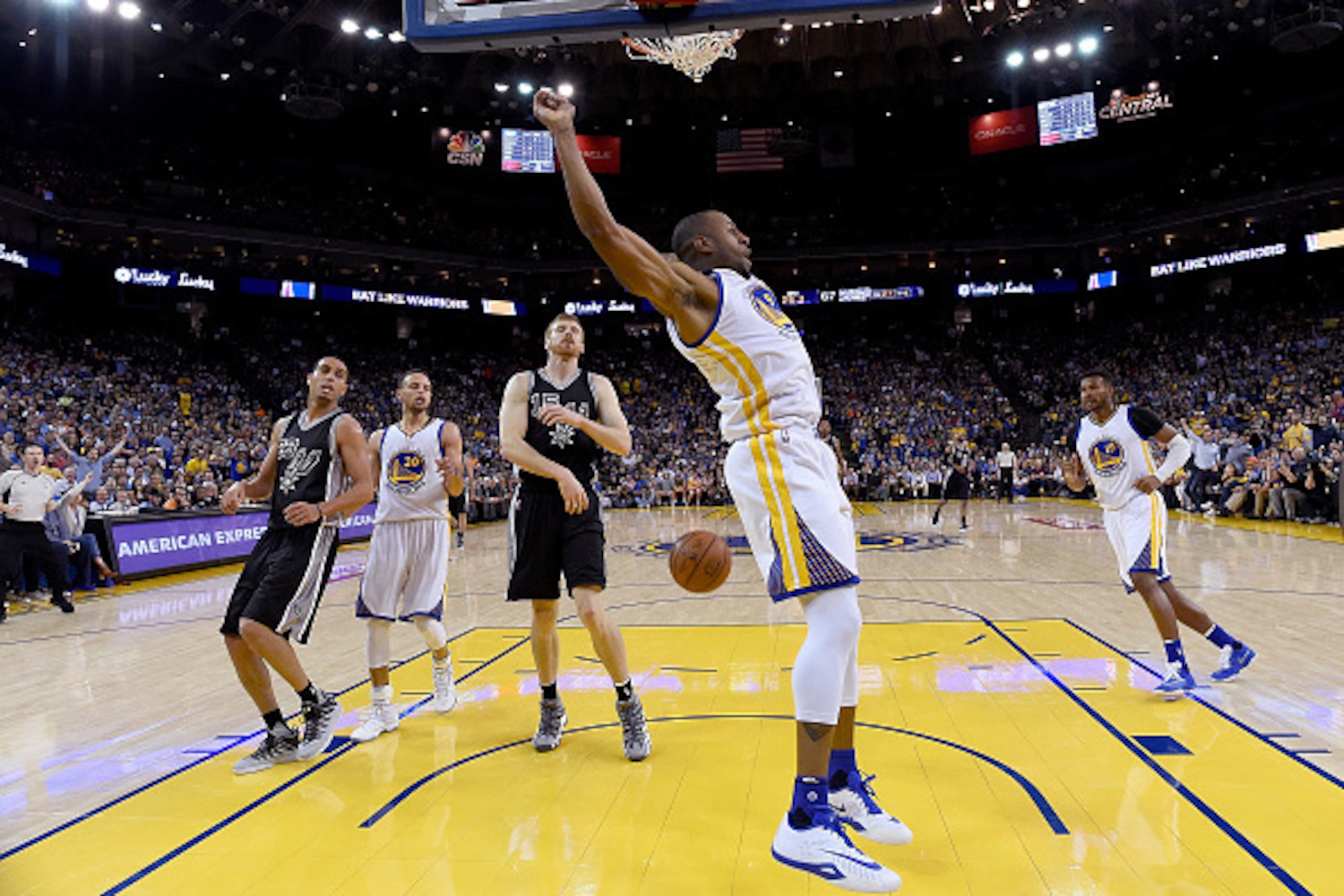
"Pace is huge," said P.J. Tucker, whose Phoenix Suns held a nine-point lead midway through the second half at Golden State on March 12 before eventually falling, 123-116. "Pace is probably the biggest thing in the whole game."
For most teams, the best bet is to apply the brakes. The Warriors, who ranked second in the NBA in possessions per game (101.65), are at their peak when they’re running.
"You get caught up playing fast or playing small ball against them, they usually win those matchups," Miller said.
On offense, that means knocking down shots, going inside and getting to the stripe—anything to force the Warriors to inbound the ball.
"Make your shots," Hawks guard Tim Hardaway Jr. said. "Make them basically take the ball out of the net, slow their pace down as much as you can."
"Making them foul, getting to the free-throw line is probably one of the biggest keys to staying in the game with them," Tucker said. "You want to get on the free-throw line, slow the game up."
Ball pressure can help with that. The more a team can make the Warriors work to initiate their offense, the less time Golden State will have to get a good shot, the more the game will grind toward a halt and the worse the Warriors will shoot.
But an uptempo pace can beat the Dubs. Of Golden State’s nine losses, seven came in games during which both teams mustered more than 100 possessions. Taking down Golden State isn’t so much about what the pace is as it is about who is controlling it.
Said Jones, "If you try to focus on keeping them from doing their best and end up doing the same for yourself, you stand no chance."
Make Golden State's Shooters Uncomfortable
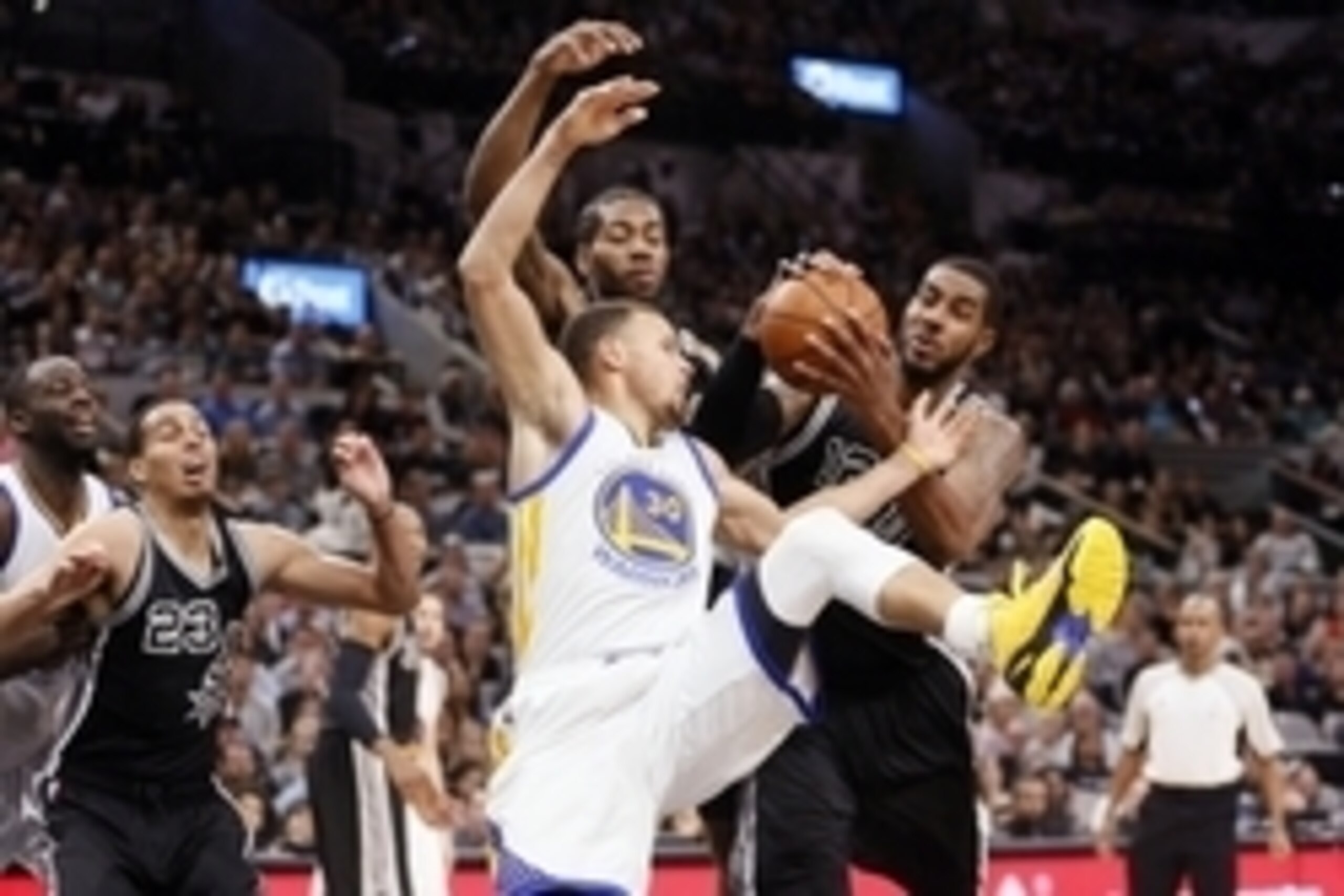
Curry’s record-shattering 402 treys helped Golden State eclipse the 2014-15 Houston Rockets’ previous record of 933 threes during a season with 1,077 of their own. Only the 1996-97 Charlotte Hornets (42.8 percent from three)—for whom Steph's dad, Dell Curry, featured prominently—bested the Warriors’ season-long, team-wide three-point mark (41.6 percent).
No team has ever leaned as heavily on the arc for points as has Golden State, which scored 34.3 percent of its points from threes, per NBA.com.
"If you don’t guard the three-point line against that team, you have no chance," Malone said.
"You just gotta keep them off the perimeter," Cavaliers guard Iman Shumpert said. "If you let them score big on the perimeter, they’re going to kill you."
With the way the Warriors use screens and move the ball, it’s not always enough for a team’s perimeter players to put their hands up. The bigs also have to get involved.
"That’s what bigs are taught: to protect the paint," Kobe Bryant said after his Los Angeles Lakers demolished the Warriors 112-95 on March 6. "The problem is, they’re coming back and protecting the paint and Draymond Green is pushing the ball, right? So now you’re back in the paint and all of a sudden, boom, he goes and dribble-handoff with Steph and there’s nobody there. It’s constantly reminding the bigs, 'You can’t do that. You gotta be up.'"
"If the big’s man got a layup, that’s OK," Lakers center Roy Hibbert said. "It’s better than Steph Curry hitting a three, getting charged up, hitting a half-court three at the buzzer and getting the momentum going."
Value the Ball

Discipline is key to putting a dent in Golden State’s armor. It also happens to be the first thing to go when the Warriors get rolling.
They don’t force a ton of turnovers (19th in opponent turnover ratio), but they make great use of those they do cause (10th in points off turnovers).
"You’ve got to eliminate those mistakes because they capitalize on those things, whether it’s turnovers, whether it’s not blocking out and giving up an offensive rebound," said Thunder head coach Billy Donovan, whose squad fumbled away two games late to the Warriors in late February and early March. "It could be a variety of different things. But you’ve got to be able to have a high level of discipline, a high level of focus."
"You’ve got to play well offensively," said Shumpert. "You can’t try and rush shots. That lets them get off on the break."
No Warriors opponent can survive a Golden State barrage in transition. According to Team Rankings, Golden State is far and away the most efficient fast-break squad in the league. With a quick pass up the court, the Dubs can turn a defensive rebound into a pull-up jumper from deep or an easy layup at the rim.
According to NBA.com, Golden State scores 1.15 points per possession in transition (third in the league) on an effective field-goal percentage of 65.6 percent (second).
In ending the Warriors’ 54-game home winning streak, the Boston Celtics held them to 11 transition points—well below their league-leading season average of 20.9, as reported by TeamRankings—by hounding Golden State with quick, athletic guards and winning the turnover battle, 22-14.
Stay Poised During Golden State's Runs
When the Warriors get out on the break, they turn close games into blowouts in the blink of an eye. According to STATS SportVU, Golden State had the most runs in every category: 5-0 to 9-0, 10-0 to 14-0, and 15-0 and up. They put together two 22-0 runs this season, including one in early December, when they erased an early 21-15 deficit in what turned out to be a 131-123 win over the Indiana Pacers.
"They’re going to hit tough shots. You’ve got to stay with it," Hawks forward Paul Millsap said. "It’s tough. You’ve got to move on to the next play."
Rarely, if ever, do the Warriors lose once they’ve built up a cushion. According to STATS SportVU, they finished among the top five teams in preventing runs during each of the aforementioned categories and went 67-1 when leading by double digits in a game.
Golden State is bound to put together its own spurts over the course of a game or a series, regardless of the opponent’s tactics. What matters is a team’s ability to weather those storms mentally and emerge on the other side with its own identity intact.
"The way they score and how efficiently they score, a lot of teams get away from what their game plans are," Jones said. "They don’t have the mental stability to just continue to contest shots and continue to compete, and they crack."
Said Will Barton, whose Nuggets edged the Warriors in January: "Just be ready to take their punches, keep playing, have confidence in yourself and your team and you’ll be fine."
Take Advantage of the Bench When Possible
The Warriors can break their foes in waves thanks to a deep, balanced bench of versatile veterans.
Leandro Barbosa, Livingston and Iguodala, the reigning Finals MVP, can all step in as perimeter playmakers. Brandon Rush started 25 games and hit 41.4 percent of his threes this season. Marreese Speights is always a threat to get hot—be it from three-point range (38.7 percent) or just inside the line (43.9 percent)—when he’s not stuck on the bench behind Festus Ezeli and the recently signed Anderson Varejao.
"You have guys coming off the bench that, you know, they’ve been together for a minute now," Hardaway Jr. said, "so their core and their mesh with one another are very good."
Still, it's better for a team to feast on "Dub subs" than bank on slowing down the starters. If Speights or Varejao is in, opponents will have better luck attacking the basket than if Andrew Bogut or Ezeli is manning the middle.
When the Splash Brothers are resting, teams can afford to crowd the middle of the floor with not-so-sharpshooters like Livingston and Barbosa on the perimeter.
If Golden State’s foes find themselves desperate to erase big deficits when the starters sit, they can foul Ezeli, Iguodala, Varejao or Rush—four of the Warriors’ worst free-throw shooters.
| Usual Role | FTA/36 Minutes | FT% | |
| Brandon Rush | Bench | 1.0 | 64.3% |
| Andre Iguodala | Bench | 1.7 | 61.4% |
| Anderson Varejao | Bench | 5.6 | 55.2% |
| James Michael McAdoo | Bench | 6.7 | 53.1% |
| Festus Ezeli | Bench | 6.2 | 53% |
| Andrew Bogut | Starter | 1.2 | 48% |
According to Hoops Stats, the Warriors bench ranked 13th in differential efficiency—which measures the production of one team’s reserves against its counterparts—and 21st in scoring. Per NBA.com, Golden State has been most vulnerable in the second and fourth quarters, when its reserves tend to play their most minutes.
The Warriors’ depth may not be quite as exploitable in the postseason. Last spring, Golden State’s rotation shrunk from 11 or 12 during the regular season to nine in the playoffs. The same could happen in the coming weeks.
| Barbosa-Iguodala-Livingston | 357 | minus-3.2 | 47.3% | 63.3% |
| Barbosa-Livingston-Speights | 337 | plus-5.1 | 50% | 63.2% |
| Iguodala-Livingston-Speights | 276 | minus-3.2 | 48% | 62.8% |
| Ezeli-Iguodala-Livingston | 274 | plus-6.7 | 49% | 61% |
| Barbosa-Iguodala-Speights | 246 | plus-1 | 49.1% | 63.6% |
That would leave an even smaller window while the Warriors’ starters rest. Once that opening slams shut, foes have no choice but to take their (slim) chances with the league’s most lethal starting lineup.
Get Lucky
The Warriors aren’t invincible. They’ve been known to go cold from beyond the arc, get sloppy with the ball and let inferior teams hang precariously close.
But that was during the regular season, when the schedule itself can be an obstacle. In the playoffs, teams get more rest between games and have more time to prepare for their opponents.
Golden State will need those extra breathers after spending more than five months relentlessly chasing the Bulls’ win record.
Not only did the Warriors’ core players not sit en masse, but some had to play more minutes to make up for the absences of Iguodala and Ezeli. Those two are back in action, but any rust from either could have far-reaching effects in the playoffs.
For all their inevitability, the Warriors, like any past champion, will need their fair share of good breaks to defend their title. Last season, they were fortunate to face four straight opponents who were hobbled by major injuries, particularly at the point guard spot.
They won’t likely face so many short-handed challengers this time around. The Houston Rockets, their first-round opponents, are as healthy as they’ve been all season. The rival Clippers are clicking again now that Blake Griffin is back. The Spurs and Thunder diligently protected their key players from harm and fatigue over the course of the campaign.
Still, the Warriors have played their best against the toughest competition. They compiled a 37-5 record against the other 15 playoff teams, including an 18-1 mark against the top four teams in either conference.
Even if a team pulls off the above blueprint to perfection—by stymying the Splash Brothers, smothering Green with a quick wing, slowing Golden State’s transition game, staying alive against the Lineup of Death and so on—it’ll still need more than a sprinkling of luck to keep it all up over the course of a seven-game series.
"The best bet is to make sure that all of their players get caught in traffic on the Bay Bridge," Barry joked.
"Against the Warriors? Pray," said Cavaliers broadcaster and former NBA veteran Austin Carr.
Just don’t direct those prayers to the East Bay.
As Barton put it, "They’re the Golden State Warriors. They ain’t God."
Josh Martin covers the NBA for Bleacher Report. Follow him on Twitter (@JoshMartinNBA), Instagram and Facebook.






.jpg?w=2560 "Latest Peyton-Colts Rumors")