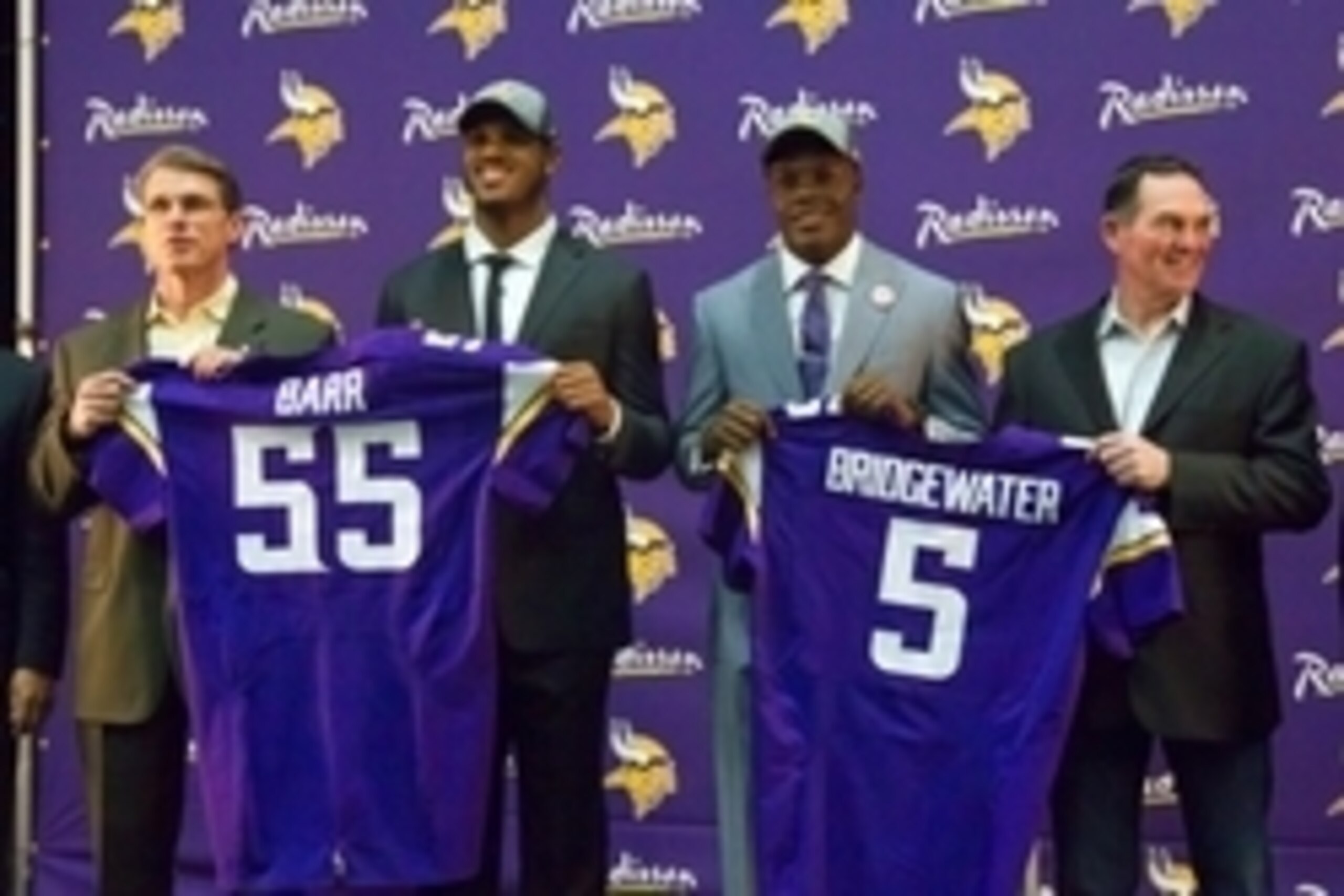

Minnesota Vikings Mock Draft: B/R Community Top 100 and 7-Round Results
In anticipation of the NFL draft, Bleacher Report's featured columnists performed a mock draft for the first 100 selections as the general manager for their respective teams.
The goal for the Minnesota Vikings in this draft wasn't just to acquire talent, a goal of any draft, but to seek undervalued players—if they were at positions of need, all the better.
That doesn't mean going outside the general parameters of what the Vikings do. For the most part, they sought high-character players in last year's draft who showed athletic potential.
At the same time, replicating the Vikings would be impossible for a few reasons. Aside from not knowing all the criteria Minnesota would use, there were no trades—meaning trade-happy GM Rick Spielman could not be copied.
Either way, it's a look at the possible landscape of how the draft could play out.
Round 1
1 of 6
| Pick | Team | Player | Position | School |
| 1 | Buccaneers | Jameis Winston | QB | Florida State |
| 2 | Titans | Marcus Mariota | QB | Oregon |
| 3 | Jaguars | Dante Fowler Jr. | DE | Florida |
| 4 | Raiders | Leonard Williams | DT | USC |
| 5 | Redskins | Brandon Scherff | OL | Iowa |
| 6 | Jets | Vic Beasley | OLB | Clemson |
| 7 | Bears | Amari Cooper | WR | Alabama |
| 8 | Falcons | Bud Dupree | DE | Kentucky |
| 9 | Giants | Kevin White | WR | West Virginia |
| 10 | Rams | Andrus Peat | OT | Stanford |
| 11 | Vikings | Marcus Peters | CB | Washington |
| 12 | Browns | DeVante Parker | WR | Louisville |
| 13 | Saints | Shane Ray | DE | Missouri |
| 14 | Dolphins | La'el Collins | OL | LSU |
| 15 | 49ers | Trae Waynes | CB | Michigan State |
| 16 | Texans | Breshad Perriman | WR | UCF |
| 17 | Chargers | Danny Shelton | DT | Washington |
| 18 | Chiefs | Randy Gregory | LB | Nebraska |
| 19 | Browns | Todd Gurley | RB | Georgia |
| 20 | Eagles | Jake Fisher | OL | Oregon |
| 21 | Bengals | Landon Collins | S | Alabama |
| 22 | Steelers | Kevin Johnson | CB | Wake Forest |
| 23 | Lions | Malcom Brown | DT | Texas |
| 24 | Cardinals | Cameron Erving | OC | Florida State |
| 25 | Panthers | Ereck Flowers | OT | Miami (Fla.) |
| 26 | Ravens | Jaelen Strong | WR | Arizona State |
| 27 | Cowboys | Byron Jones | CB | Connecticut |
| 28 | Broncos | T.J. Clemmings | OT | Pittsburgh |
| 29 | Colts | Arik Armstead | DE | Oregon |
| 30 | Packers | Owamagbe Odighizuwa | OLB | UCLA |
| 31 | Saints | Eric Kendricks | LB | UCLA |
| 32 | Patriots | Melvin Gordon | RB | Wisconsin |
With the 11th pick in the first round, the Minnesota Vikings chose Marcus Peters from Washington. Though his straight-line speed at the NFL combine wasn't within the Vikings' parameters (he ran a 4.53 40-yard dash), his other measurables were above-average.
A high vertical leap (37.5") and an explosive broad jump (10'1") complemented average agility scores (11.16 combined seconds) and a very good bench press (17 reps).
Though he didn't re-run those scores at his pro day in order to dispel the notion that they're average, it is perhaps notable that Peters had been out of football for far longer than almost any other prospect at the combine—his tape shows not just a much faster player, but one of the most fluid players in the draft.
Since the Vikings selected high-character players throughout the draft last year, Peters may raise an eyebrow as their pick. But scouts told Nolan Nawrocki in his NFL Draft 2015 Preview (a print publication) that the issue wasn't Peters; it was head coach Chris Petersen.
Peters had very few problems with his previous head coach (Steve Sarkisian, now at USC) and may not have such problems with a new head coach.
Lance Zierlein from NFL.com was a guest on 790 AM in Houston, and on that show he let people know that teams in the NFL have not scratched Marcus Peters for character concerns. If the Vikings are one of those teams, then expect them to pick the best cornerback in the draft.
Peters plays with a lot of size and length, and though he measured in at 6'0" at the NFL combine (or rather 5'11 ⅝") with 31 ½-inch arms (both above average), his wingspan was longer than any other corner at the NFL combine, per Dane Brugler of NFLDraftScout.com's NFL Draft Guide—an astounding 79 inches, four more than Trae Waynes and 5.5 inches more than Kevin Johnson.
He plays to that length and adds a lot of strength in press coverage to boot, moving receivers off their routes constantly while maintaining solid positioning—pushing receivers to the sideline on outside routes and ready to cut underneath on inside routes. He plays bracket coverage extremely well and understands the defensive concepts around him.
Peters is aggressive and physical in the run game as well, though that is inconsistent from time to time—but it does always show up in critical situations, such as late in games and on third down. He has very good ball skills and great instincts for attacking the ball in the air.
His small hands (8 ⅜") may be a concern, but his ability to track the ball makes up for it. His physicality in the run game is nice, but he does not do a good job of shedding blocks. His speed at the combine is a concern and at times has been beaten over the top, but he has above-average play speed overall.
Round 2
2 of 6
| Pick | Team | Player | Position | School |
| 33 | Titans | Jalen Collins | CB | LSU |
| 34 | Buccaneers | Ty Sambrailo | OL | Colorado State |
| 35 | Raiders | Nelson Agholor | WR | USC |
| 36 | Jaguars | Dorial Green-Beckham | WR | Oklahoma |
| 37 | Jets | Laken Tomlinson | OG | Duke |
| 38 | Redskins | Ameer Abdullah | RB | Nebraska |
| 39 | Bears | Eli Harold | OLB | Virginia |
| 40 | Giants | Damarious Randall | S | Arizona State |
| 41 | Rams | D.J. Humphries | OL | Florida |
| 42 | Falcons | Eric Rowe | S | Utah |
| 43 | Browns | Donovan Smith | OT | Penn State |
| 44 | Saints | Phillip Dorsett | WR | Miami (Fla.) |
| 45 | Vikings | Stephone Anthony | LB | Clemson |
| 46 | 49ers | Preston Smith | DE | Mississippi State |
| 47 | Dolphins | Devin Funchess | WR/TE | Michigan |
| 48 | Chargers | Tevin Coleman | RB | Indiana |
| 49 | Chiefs | Eddie Goldman | DL | Florida State |
| 50 | Bills | A.J. Cann | OG | South Carolina |
| 51 | Texans | Benardrick McKinney | OLB | Mississippi State |
| 52 | Eagles | Devin Smith | WR | Ohio State |
| 53 | Bengals | Maxx Williams | TE | Minnesota |
| 54 | Lions | Duke Johnson | RB | Miami (Fla.) |
| 55 | Cardinals | Ronald Darby | CB | Florida State |
| 56 | Steelers | Nate Orchard | DE/LB | Utah |
| 57 | Panthers | Jay Ajayi | RB | Boise State |
| 58 | Ravens | Clive Walford | TE | Miami (Fla.) |
| 59 | Broncos | Grady Jarrett | DT | Clemson |
| 60 | Cowboys | T.J. Yeldon | RB | Alabama |
| 61 | Colts | Paul Dawson | LB | TCU |
| 62 | Packers | P.J. Williams | CB | Florida State |
| 63 | Seahawks | Carl Davis | DL | Iowa |
| 64 | Patriots | Tre' Jackson | OG | Florida State |
With massive needs at the linebacker position, the Vikings pick Stephone Anthony, a linebacker from Clemson, in the second round.
At the risk of sounding like a broken record, Anthony (6'3", 243 lbs) would be a solid pick for the Vikings. If the Vikings want athletes and character players, perhaps Peters wouldn't be a lock, but Anthony would be. A team captain with an outstanding work ethic, he may not have a leadership role with Minnesota immediately, but he does have the makeup to be one in the long run.
Aside from meeting the measurables requirements the Vikings seemingly implemented, he's simply one of the most athletic linebackers in the draft. He may not be extraordinary in coverage, but he's better than he's given credit for and more importantly has upside there because of his agility and recognition capability.
That upside will be what he needs to unlock in order to be a true three-down linebacker because "underrated in coverage" doesn't mean "good in coverage," where he's been too reliant on his length and not enough on technique or sound footwork.
Still, as the best A-gap blitzer in the class, he will find a fit in a Vikings defense that emphasizes it for the linebackers. With technical fixes, he could be the best off-ball linebacker in the class.
Round 3
3 of 6
| Pick | Team | Player | Position | School |
| 65 | Buccaneers | Rashad Greene | WR | Florida State |
| 66 | Titans | Cedric Ogbuehi | OT | Texas A&M |
| 67 | Jaguars | Jeremy Langford | RB | Michigan State |
| 68 | Raiders | Ali Marpet | OG | Hobart College |
| 69 | Redskins | Danielle Hunter | DE | LSU |
| 70 | Jets | Tre McBride | WR | William & Mary |
| 71 | Bears | Jaquiski Tartt | S | Samford |
| 72 | Rams | Sammie Coates | WR | Auburn |
| 73 | Falcons | Mitch Morse | OG | Missouri |
| 74 | Giants | Rob Havenstein | OT | Wisconsin |
| 75 | Saints | D'Joun Smith | CB | Florida Atlantic |
| 76 | Vikings | Shaq Thompson | OLB | Washington |
| 77 | Browns | Jordan Phillips | DT | Oklahoma |
| 78 | Saints | John Miller | OG | Louisville |
| 79 | 49ers | Denzel Perryman | ILB | Miami (Fla.) |
| 80 | Chiefs | Tyler Lockett | WR | Kansas State |
| 81 | Bills | Bryce Petty | QB | Baylor |
| 82 | Texans | Doran Grant | CB | Ohio State |
| 83 | Chargers | Hau'oli Kikaha | OLB | Washington |
| 84 | Eagles | Quinten Rollins | CB | Miami (Ohio) |
| 85 | Bengals | Za'Darius Smith | DE | Kentucky |
| 86 | Cardinals | David Cobb | RB | Minnesota |
| 87 | Steelers | Jeff Heuerman | TE | Ohio State |
| 88 | Lions | Josh Shaw | CB | USC |
| 89 | Panthers | Michael Bennett | DT | Ohio State |
| 90 | Ravens | Derron Smith | SS | Fresno State |
| 91 | Cowboys | Trey Flowers | DE | Arkansas |
| 92 | Broncos | Henry Anderson | DE | Stanford |
| 93 | Colts | Mike Davis | RB | South Carolina |
| 94 | Packers | Brett Hundley | QB | UCLA |
| 95 | Seahawks | Alex Carter | CB | Stanford |
| 96 | Patriots | Kenny Bell | WR | Nebraska |
| 97 | Patriots | Ifo Ekpre-Olomu | CB | Oregon |
| 98 | Chiefs | Senquez Golson | CB | Ole Miss |
| 99 | Bengals | Steven Nelson | CB | Oregon State |
| *100 | Titans | Nick O'Leary | TE | Florida State |
*First pick of Round 4.
There's been a lot of pushback on Shaq Thompson as a first-round pick or even as the Vikings' selection in the second round, but as a third-round pick, he's an extraordinary value.
With a 6'0" frame to grow to linebacker weight at 235 pounds and play experience at 218 pounds earlier in his career at Washington, he would provide a lot of options for Mike Zimmer—with Brian Peters and Taylor Mays, Zimmer could implement a hybrid safety/linebacker position, or he could play Thompson like he did "undersized" Emmanuel Lamur, Keith Rivers and Jayson DiManche at the "Will" linebacker position.
Though his 4.64 40-yard dash was disappointing, timing the event yourself will likely produce a faster time. In Nawrocki's NFL Draft 2015 Preview (a publication found in print), scouts told him that they have Thompson with a 4.59 time, and my frame-by-frame found it closer to 4.57. Either way, it's faster than reported, and it solidifies his fantastic value in the third round.
He suffers from an "identity crisis" (as Matt Waldman and Ryan Riddle called it in their excellent breakdown of the former Husky), playing like a safety on some plays and a linebacker on other plays.
A defined role may solve that issue, though, because he was asked to play safety on a lot of snaps and play coverage in the slot more than in the box against some teams—which explains his low tackle and tackle-for-loss numbers, which closely resemble always-in-the-box safety Landon Collins'.
When he's on, he's extremely on. He flows quickly to the ball not just because of his speed, which is notable on the field, but his recognition capability. He's an astounding coverage linebacker, and he understands the subtleties of pass defense—not just staying in the hip pocket of tight ends and running backs, but putting them in awkward positions to catch the ball and keeping his plays legal by looking for the ball.
Thompson is an explosive hitter who thumps far above his weight class, but he doesn't wrap up his tackles, creating a lot of opportunities for misses, especially because he aims a little lower than most linebackers do on tackles.
He has better strength than his weight would suggest, but that all comes out to average linebacker strength. Paired with poor take-on skills (he doesn't square up, has poor footwork, terrible hand-fighting technique, and he doesn't know how to use his length), he's not ideal for any linebacker position outside of the Will linebacker position, where others will clear out the trash for him.
Beyond all that, he is probably the best special teams player who doesn't kick or return the ball in this year's class. He is outstanding in kick and punt coverage.
.jpg?w=2560 "Chiefs Giants Football")
.jpg?w=2560 "Colts Football")
.jpg?w=2560 "Titans Colts Football")
Round 4
4 of 6
With no more picks in the community mock, we're projecting from here on out. A cornerback and two linebackers were selected, so the Vikings could pick a guard, receiver, safety or running back. In addition, the team needs a backup tackle (or eventual replacement for Matt Kalil) and a long-term replacement at defensive end if Scott Crichton doesn't pan out.
With Adrian Peterson currently on the team and guard an unusual pick before the fifth round for the Vikings, it would be easier to select a receiver or safety.
Fifteen receivers were picked in the first three rounds, more than have been picked in a long time, with 15 selected most recently in 2009.
That isn't a recipe for value in the fourth round for receivers, but the Vikings love to select offensive skill players before the fifth round—they haven't picked one after the fourth since Spielman took over drafting in 2012.
It's still impossible to ignore that the great value found at linebacker came at the expense of the receiver market, and it may be better to select a safety, especially because Robert Blanton, Taylor Mays and Andrew Sendejo are more problematic as starters than any of the Vikings' starters at receiver.
Anthony Harris, S Virginia
The best safeties on the board were either Cody Prewitt from Ole Miss or Anthony Harris from Virginia, and it was easier to go with the player the Vikings have shown interest in, as they hosted the young safety at Winter Park, per Matt Vensel at the Star Tribune.
Harris may be the better choice either way, as he shows a more physical style of play despite weighing 20 pounds less than Prewitt. Another team captain, Harris has developed a reputation for unselfish play and leadership in the locker room.
Aside from that, he's perhaps the most intelligent safety in the draft, lining up the defense on every play and very often in position (though he has had some issues with play-action passes). His football IQ allows him to jump underneath routes and be a playmaker on the defense.
Having played both strong safety and free safety at Virginia, he could have some versatility, but his extremely thin frame (6'1", 183 lbs) make him an unlikely strong safety at the next level. That prevents his physicality from turning into big hits, and he does struggle with tackling at times.
Round 5
5 of 6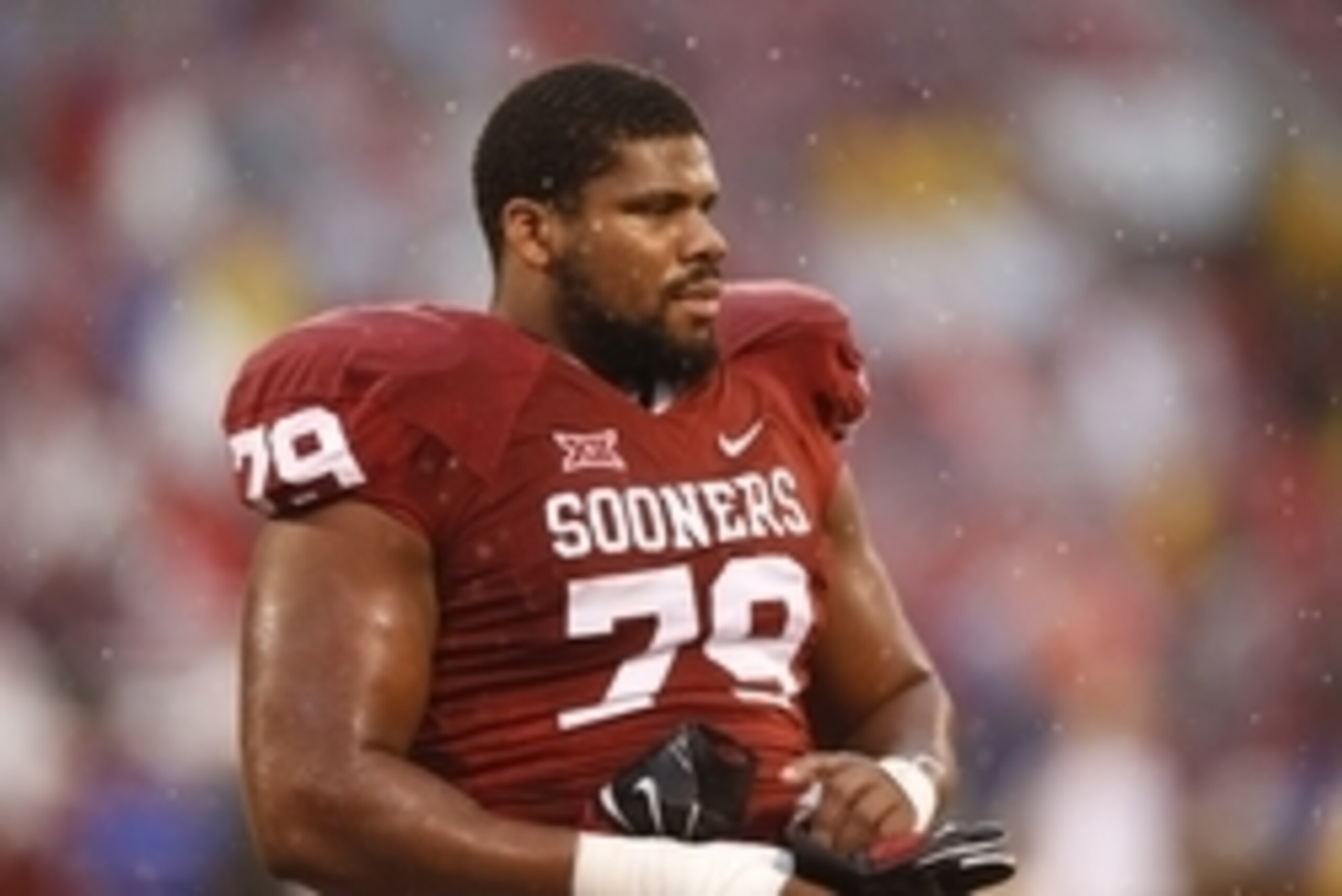
We'll go to the offensive line early and ignore the receiver position for now—the most intriguing receivers who will be left are not particularly more interesting than those who will be found later on, except for players like Darren Waller, who are immensely talented but have some character issues.
While that would be a fine fifth-round pick in my book, it doesn't match the Vikings' general strategy for this last year. The Vikings traded away their fifth-round pick for Mike Wallace, but they did pick up one when trading away Matt Cassel to the Buffalo Bills.
Daryl Williams, OL Oklahoma
Daryl Williams, on the other hand, is a perfect fit. Not just a captain in name, but the clear leader in his locker room at Oklahoma, Williams has exceptional football character. Of note, the Vikings showed interest in him as well, per Tony Pauline of DraftInsider.net (via WalterFootball.com).
He has more than character to offer to teams, though. He's a massive player, and he knows it. At 324 pounds, he's been compared to the Vikings' own Phil Loadholt (sharing a jersey number and alumni certainly help). Long arms (35") and lots of football strength characterize his style of offensive line play.
He made Pro Football Focus' All-America second team as a right tackle helped by the fact that he was among college football's best pass protectors—putting up the ninth-best pass-blocking efficiency from PFF.
Powerful, aware and consistent, Williams would be a great addition, particularly because he has played multiple positions on the line for the Sooners. He would project to backup tackle for the Vikings, who sorely need one, but also can play guard despite his height (6'5").
He doesn't have extraordinary quickness, but it's been good enough in the Big 12. His slow agility scores plus his poor second-level blocking keep him out of the first four rounds, and he's shown lapses in blitz pickup as well. Either way, he's a great value in the fifth round.
Round 7
6 of 6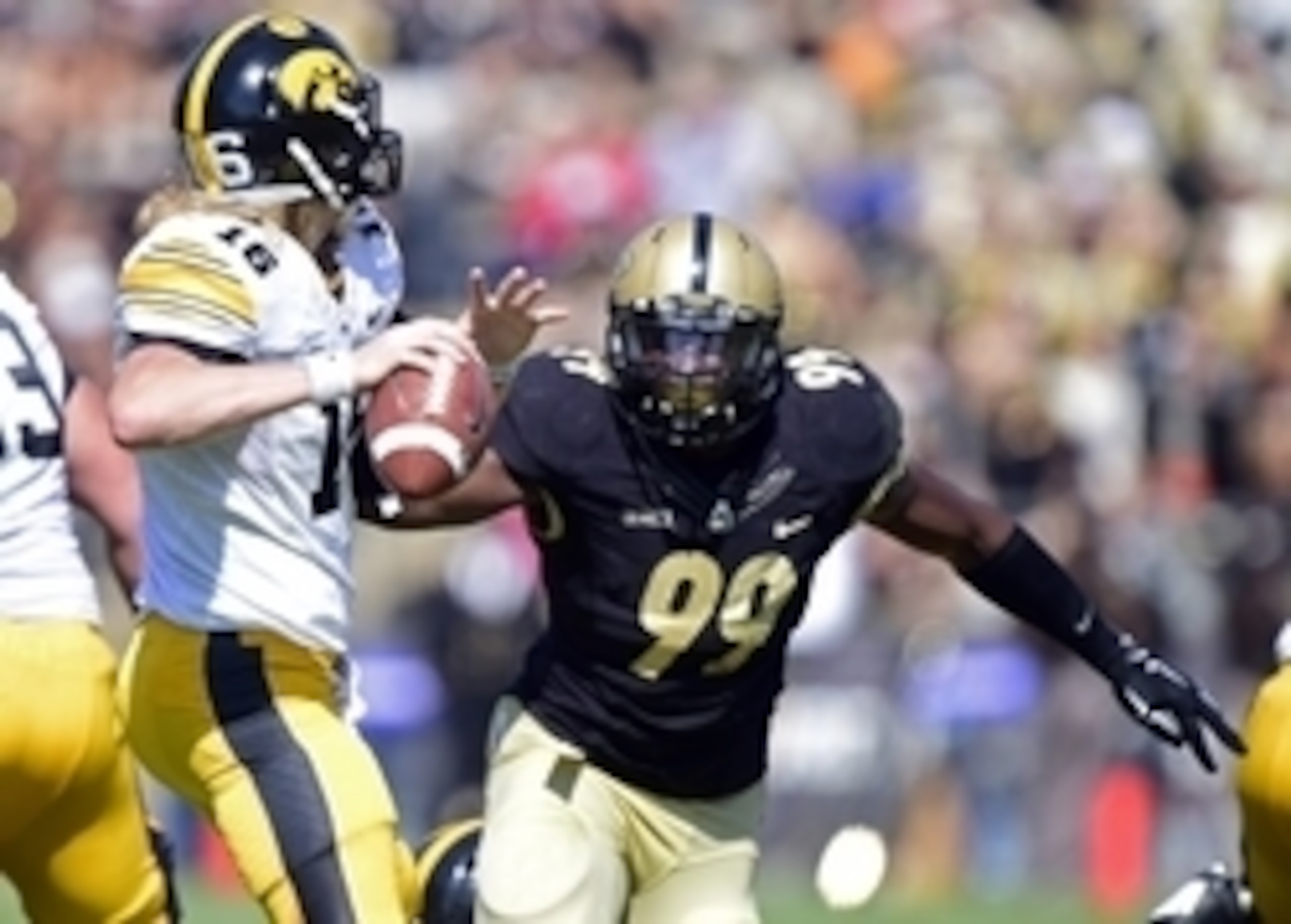
Without a sixth-round pick courtesy of the Cassel trade that netted them an extra fifth, the Vikings have two seventh-round picks to work with. Assuming that Williams killed two birds with one stone as a backup tackle and competition for the guard spot, they still have to figure out what to do at defensive end and receiver.
Ideally, with more picks, the Vikings would select a backup quarterback, but they will have to find a developmental body in undrafted free agency.
Ryan Russell, DE, Purdue
Very few players fit the Vikings' mold at defensive end, but late-round pick Ryan Russell could impress Minnesota enough to earn a seventh-round pick. A captain under two different head coaches, Russell has shown clear team leadership throughout his career at Purdue despite limited production.
An athletic player with explosion to spare and good reaction off the snap, Russell has size (6'4", 269 lbs), strength (25 reps) and speed (4.75 40-yard dash)—with length to spare.
That lack of production comes from real issues, however. He plays tight and doesn't show a lot of on-field agility, and that comes peppered with questions about his on-field effort and consistency. He has some balance issues and a surprising amount of rawness for a four-year starter.
Dezmin Lewis, Central Arkansas
A small-school player with great measurables, Lewis is almost exactly what you would expect from such a player—he's a raw athlete with lots of room to grow but questions about whether he'll reach his potential. Nearly 6'4", Lewis' 214 pounds fit his frame well, and he could add even more weight over time.
The 37-inch vertical and 10'4" broad jump he showed off at his pro day, per NFLDraftScout.com, match his college tape as a taller receiver with long arms and incredible vertical ability. He knows how to use his size and times his jumping well, giving him at least one consistent role in an offense.
His long speed is average (4.58 40-yard dash), but it takes time for him to build up to it. And he occasionally has issues with press coverage. He's not a very good route-runner and will have to improve dramatically in order to see the field—something that may not be easy for him given his stiffness in almost all of his movements.
He did well against tougher competition at the Senior Bowl, but he still doesn't have much usable tape because of that competition to evaluate from. A leader for his team, he also passes what could be a character test for the Minnesota Vikings.
.jpg?w=2560)
.jpg?w=2560 "Cardinals Giants Football")






