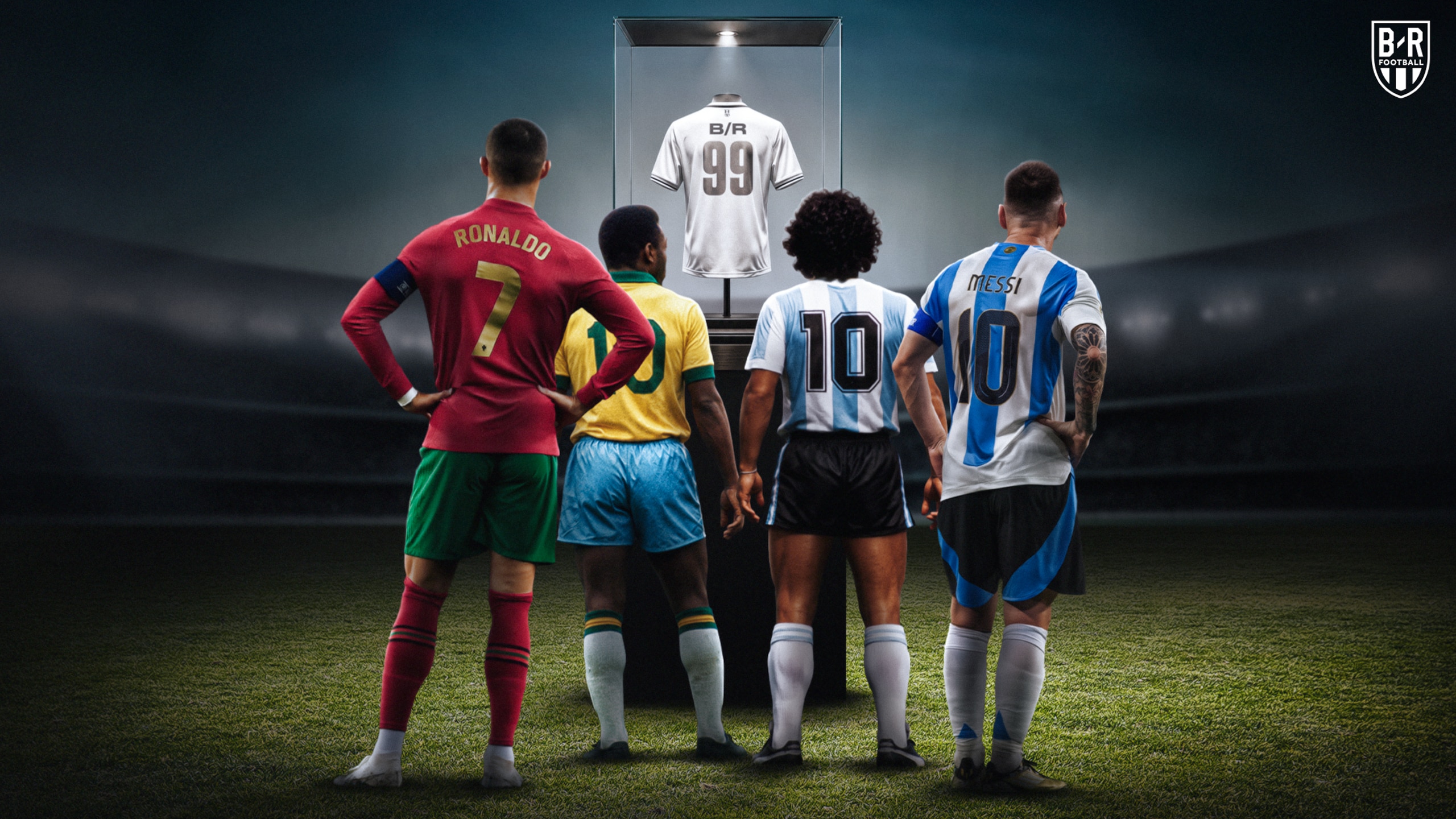

B/R 99: Ranking the 99 Best Men's Soccer Players of All Time
Pelé. Maradona. Messi. Ronaldo. How does one measure the beauty and joy generated from such legends stepping on a pitch? How do you impose order onto the history of soccer, a sport that's more known for its aesthetics than analytics?
To attempt to do so would be an act of lunacy...and love.
So that's exactly what we did.
Our panel of B/R writers and editors pored over the greatest talents of the last 150 years, paring the list to 99 and ranking them via staff vote according to individual and team accolades, era context and pure, unbridled talent.
Read on to see who made the cut and who took home the GOAT crown.
Jump to: Nos. 75-51 | Nos. 50-26 | Nos. 25-1
For more, check out:
99. David Beckham
1 of 99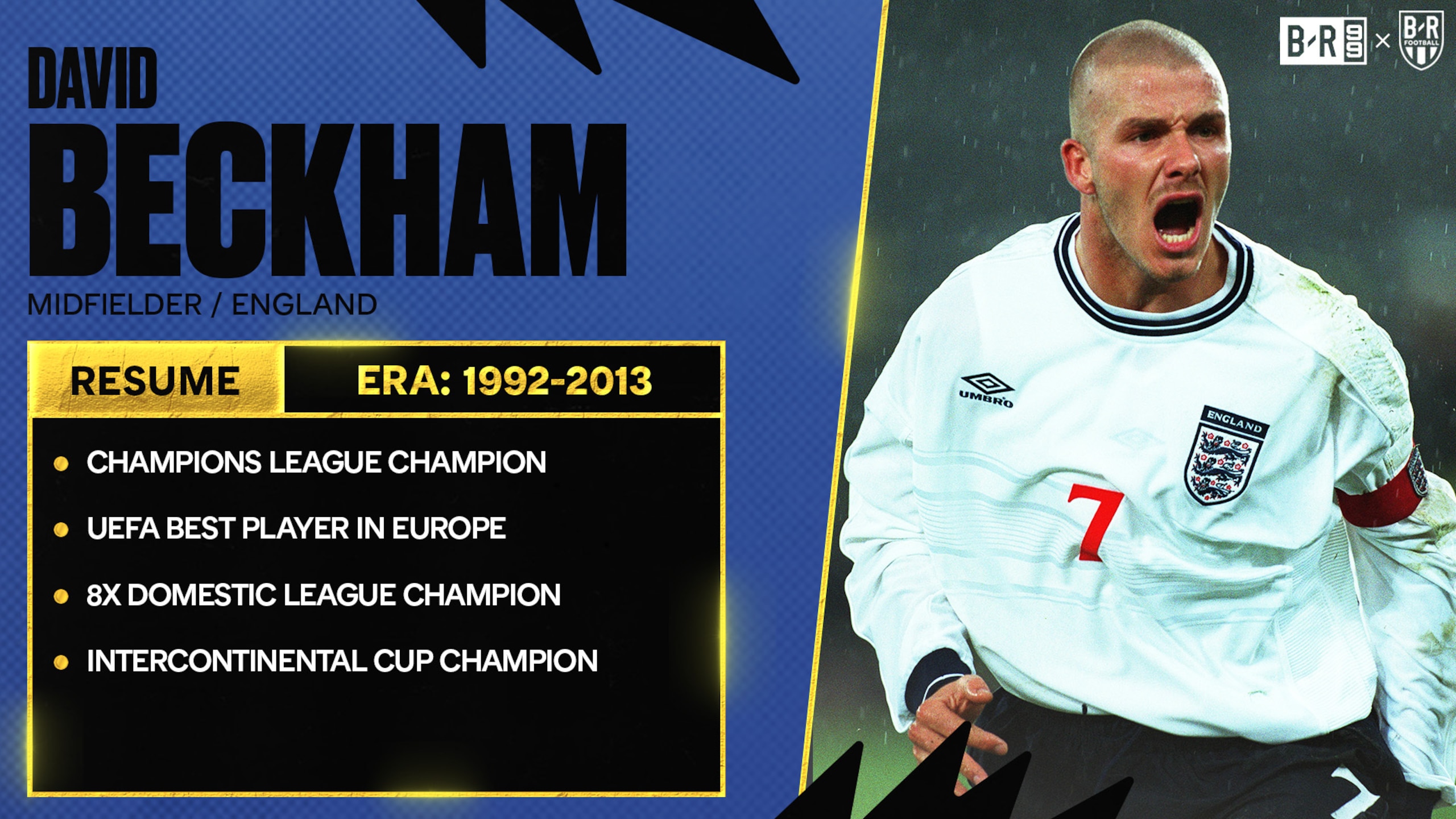
Clubs: Manchester United (1992-2003), Preston North End (loan, 1995), Real Madrid (2003-07), LA Galaxy (2007-12), AC Milan (loan, 2009), AC Milan (loan, 2010), Paris Saint-Germain (2013)
David Beckham practically gets onto this list for his dead-ball prowess alone.
The Class of '92 graduate helped solidify a glorious era of success at Manchester United as he grabbed six Premier League titles in eight seasons.
While he attracted attention for his silky blonde hair, it was a silky right foot that really made the footballing world take notice, ruthlessly finding the back of the net with free-kicks from even the most ludicrous of distances.
His crossing ability was unparalleled, too, picking attackers out with laser precision to help United dominate English football for the best part of a decade.
For England, he was responsible for some of the national team's most iconic moments, both good and bad. His reckless kick at Diego Simeone in the 1998 World Cup last 16 against Argentina earned him a red card and national pariah status. However, a final-second free-kick from miles away against Greece in 2001 to seal qualification to the following year's European Championship erased any lingering bad feeling.
Beckham also earned a La Liga title with Real Madrid as one of the club's modern Galacticos, and he elevated the profile of U.S. soccer with a stunning stint at L.A. Galaxy. Cameos with AC Milan and Paris Saint-Germain simply added to his legend.
One of the most recognizable faces in the game's history gets the 99 started in style.
-Leo Collis
Highest Top 99 Ranking: 73
98. Edwin van der Sar
2 of 99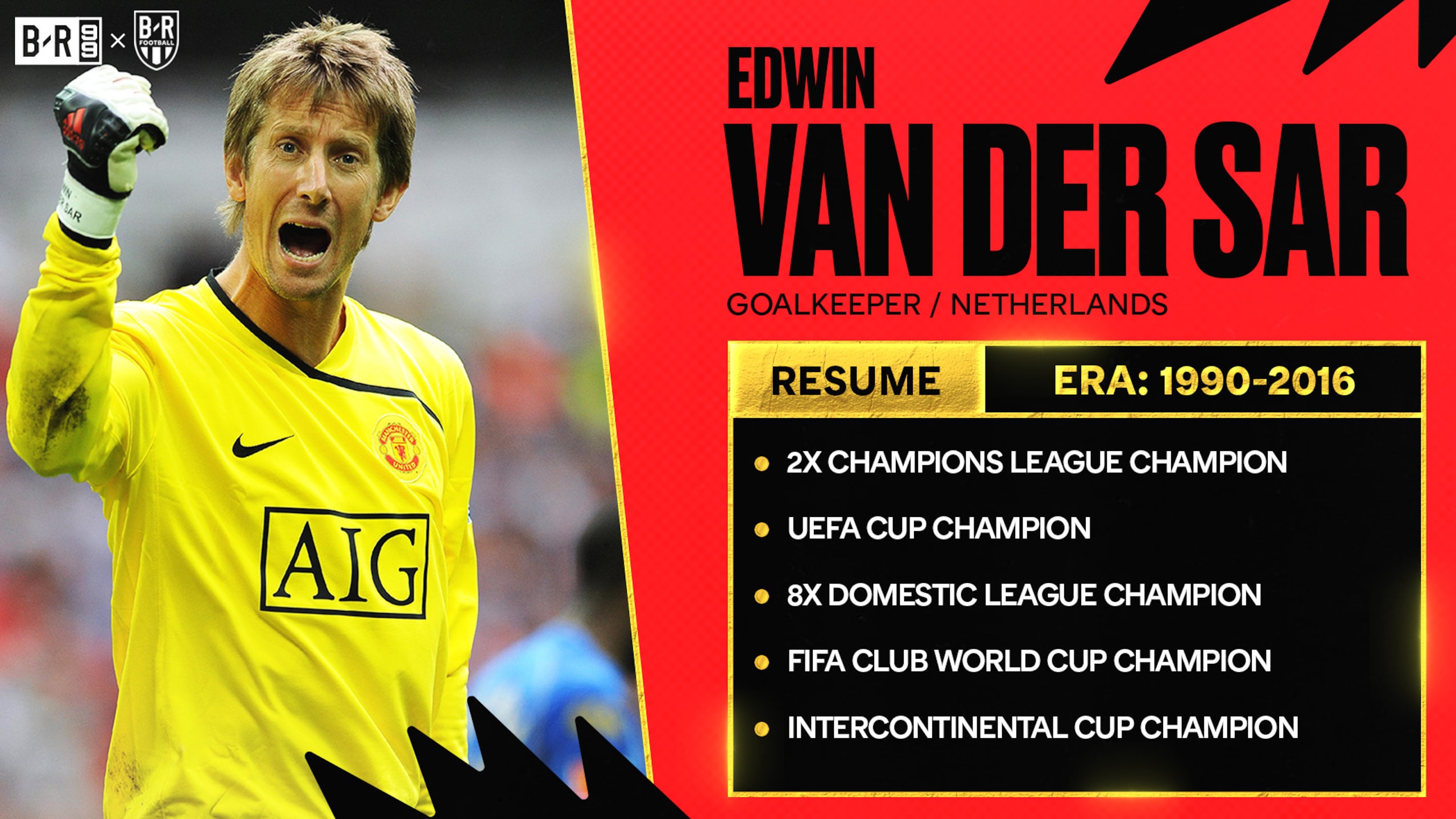
Clubs: Ajax (1990-99), Juventus (1999-2001), Fulham (2001-05), Manchester United (2005-11), Noordwijk (2016)
German legend Manuel Neuer credits Edwin van der Sar for revolutionizing the goalkeeper position. Neuer has been lauded for his ability to blend elite shot-stopping and playing a key role for his teams in possession, but Van der Sar was his inspiration.
"I do not think I was the main protagonist [in the evolution of the goalkeeper position]," Neuer told France Football (h/t FourFourTwo). "One of the very first to have brought a new perspective was Edwin van der Sar, who played a lot with his feet and allowed the position to enter a new phase. I was inspired by his style of play."
In addition to being a transformative player, Van der Sar was a model of longevity. During the last season of his career with Manchester United in 2010-11, in which he played 33 of 38 games, the Dutchman became the oldest player to win the Premier League at 40 years and 205 days old.
-Calum Rogers
Highest Top 99 Ranking: 61
97. Gunnar Nordahl
3 of 99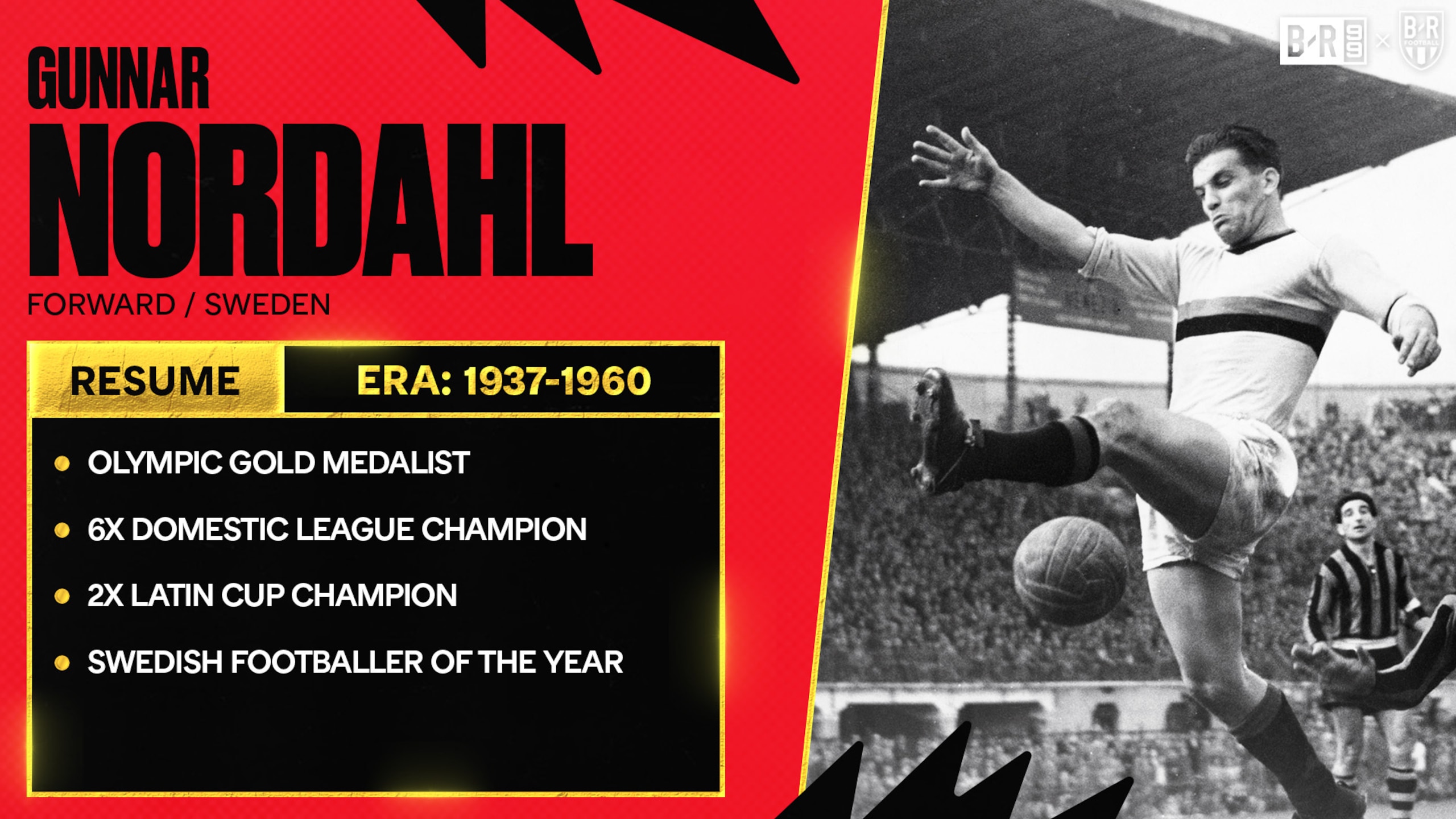
Clubs: Hörnefors IF (1937-40), Degerfors IF (1940-44), IFK Norrköping (1944-49), AC Milan (1949-56), Roma (1956-58), Karlstad BIK (1959-60)
Gunnar Nordahl is one of history's most prolific strikers. A rate of more than a goal per game in international football with Sweden (43 in 33 games) would be absurd on its own, but Nordahl's 0.77 goals-per-game ratio across nine full seasons in Italy's Serie A from 1949 to 1958 has still never been bettered.
Nordahl's international career suffered because of a ban on professional players featuring for Sweden's official team, meaning he had to retire from the team upon joining AC Milan. The move led to him being unable to lead Sweden — the reigning Olympic champions — into the 1950 FIFA World Cup, where the team still finished third despite missing the top scorer from its gold medal team.
Despite missing out on that opportunity, Nordahl's decision to move to Italy still allowed him to cement his place in the history books.
-Calum Rogers
Highest Top 99 Ranking: 57
96. Ángel Di María
4 of 99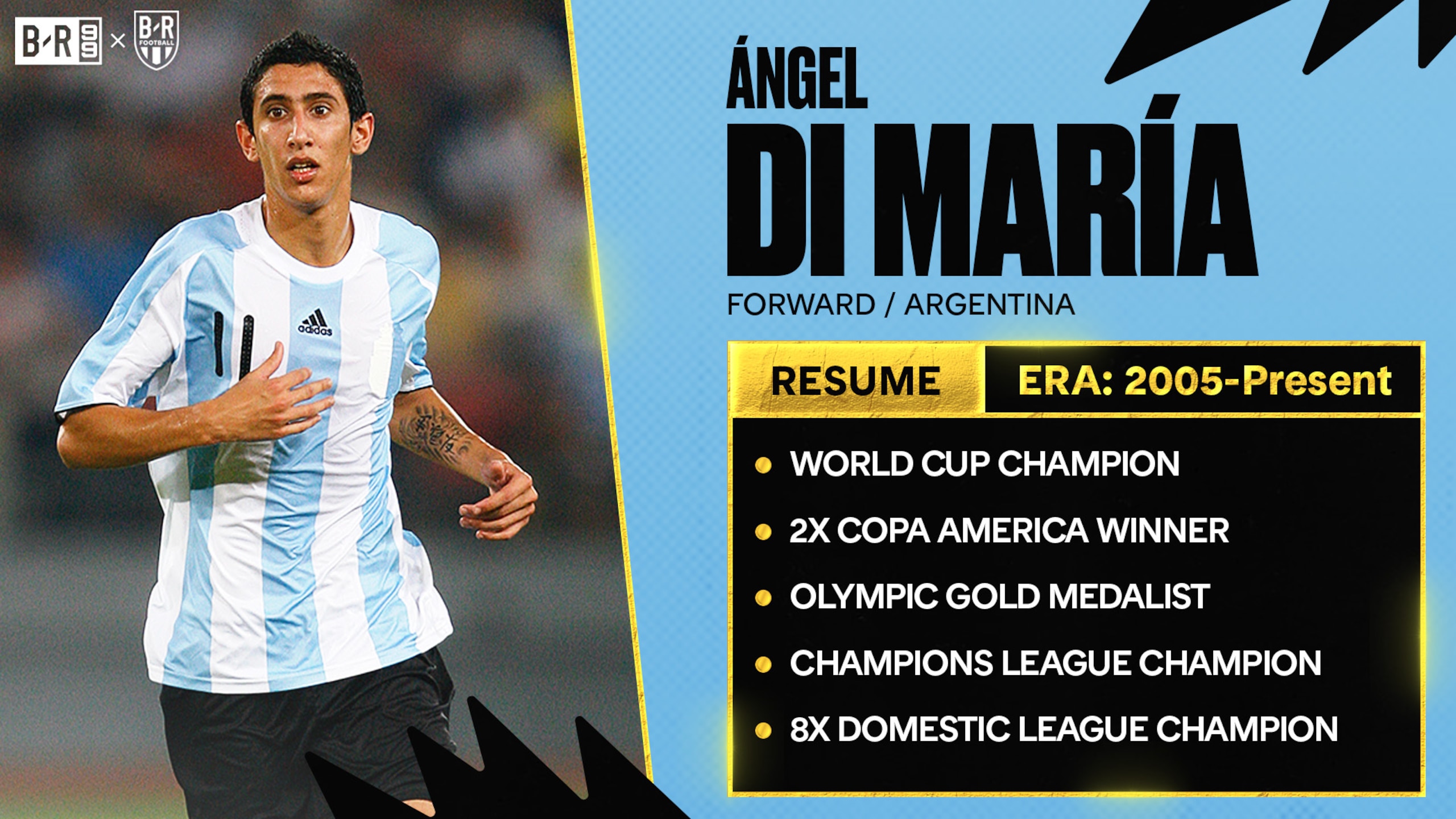
Clubs: Rosario Central (2005-07), Benfica (2007-10), Real Madrid (2010-14), Manchester United (2014-15), Paris Saint-Germain (2015-22), Juventus (2022-23), Benfica (2023-25), Rosario Central (2025-Present)
Other Notable Accolades: CONMEBOL-UEFA Cup of Champions Winner; 2x Argentina Footballer of the Year
When Ángel Di María's career is over he may look back and feel like he can be considered the greatest big-match player in history.
It's a pattern that can be plotted out over his career. Di María netted the winner in the 2008 Olympics gold-medal match, and put in a Man of the Match display in the 2014 Champions League final for Real Madrid. Don't forget the winner against Brazil in the 2021 Copa America, or his goal and assist in Argentina's World Cup final triumph two years later.
Di María's career hasn't always been easy, with his spell at Manchester United a particular low point. But his energy has never waned.
Madrid are yet to find a player quite like him as his work ethic, agility and scope of playmaking is near impossible to replicate. ADM could just as easily dribble around multiple opponents or remove them from the game with a cutting pass, making him an incredible colleague for anyone lucky enough to play alongside him.
- Nick Akerman
Highest Top 99 Ranking: 15
95. Paolo Rossi
5 of 99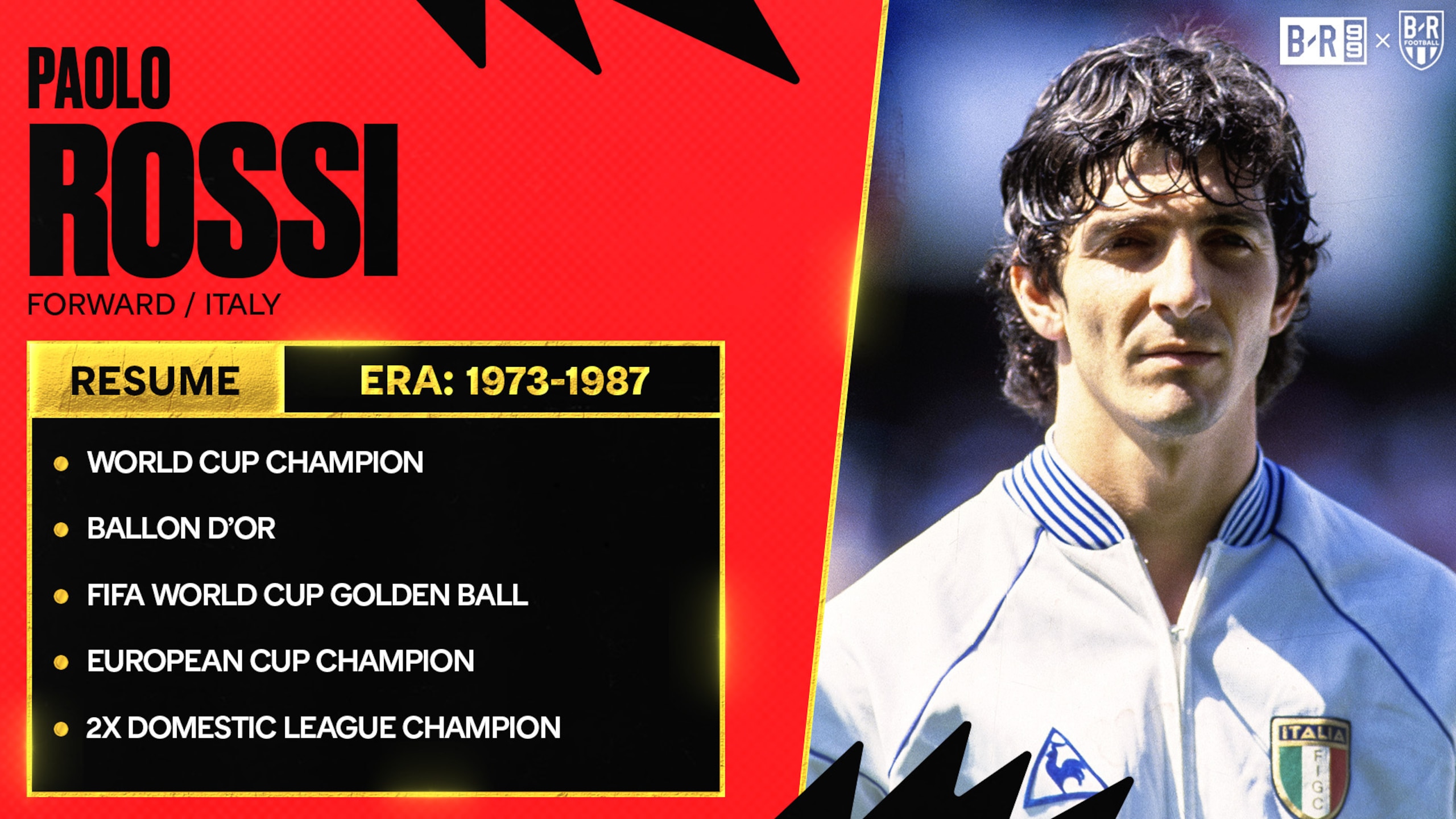
Clubs: Juventus (1973-76), Como (loan, 1975-76), Vicenza (1976-80), Perugia (loan, 1979-80), Juventus (1981-85), Milan (1985-86), Hellas Verona (1986-87)
Other Notable Accolades: FIFA World Cup Silver Ball
Despite receiving a ban from the sport for two years as a result of his connection to a match-fixing scandal—although he always maintained his innocence—Paolo Rossi is still considered one of Italy's finest-ever footballers.
The striker won two Serie A titles with Juventus, as well as a Coppa Italia, a European Cup, and the UEFA Super Cup.
But it was his efforts for Italy in the 1982 World Cup in Spain that ensured he would go down in the nation's history books.
In the second group stage, he scored a hat-trick against a Brazil side featuring Socrates, Falcão and Zico to earn a 3-2 win and seal progression to the semi-finals. There, he put two past Poland to set up a final with West Germany.
In the climactic game, he continued his hot streak by opening the scoring in a game the Azzurri would eventually win 3-1.
Despite coming into the tournament following a two-year absence from the game, he ended it as the top scorer, and he was awarded the Golden Ball as the best player in the competition. He was also presented with that year's Ballon d'Or trophy.
Rossi is level with Christian Vieri and Roberto Baggio as Italy's all-time World Cup goalscorer, and his reputation as a clinical finisher and an unselfish team player has ensured he is still spoken of with affection in the nation to this day.
-Leo Collis
Highest Top 99 Ranking: 54
94. Sergio Agüero
6 of 99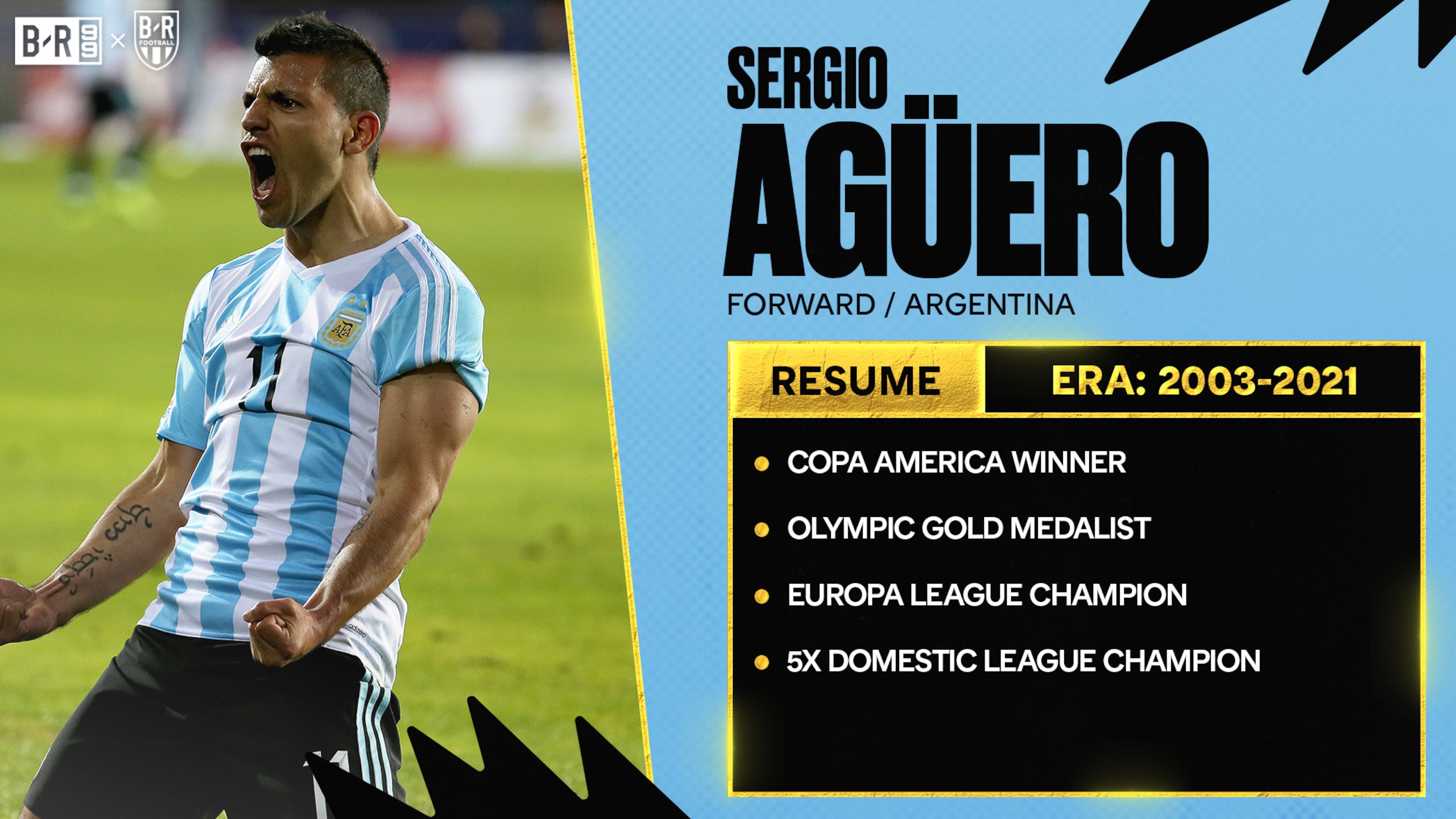
Clubs: Independiente (2003-06), Atlético Madrid (2006-11), Manchester City (2011-21), Barcelona (2021)
Sergio Agüero fits into the breed of Argentina icons whose short stature dictated they play a certain way. His low centre of gravity, like his ex-father-in-law Diego Maradona, kept the ball stuck to his feet, allowing him to shuffle forward before laying it off and getting to the box.
Once there, his finishing was deadly and the catalyst for Manchester City seizing an era of dominance in England. His league winner against Queens Park Rangers was immortalised by Martin Tyler's "AGUEROOOOO" commentary and is one of the most dramatic moments in sporting history.
The touch to set himself up and the calmness of the finish before the mayhem said it all about a striker who consistently kept his cool and delivered.
- Nick Akerman
Highest Top 99 Ranking: 26
93. Philipp Lahm
7 of 99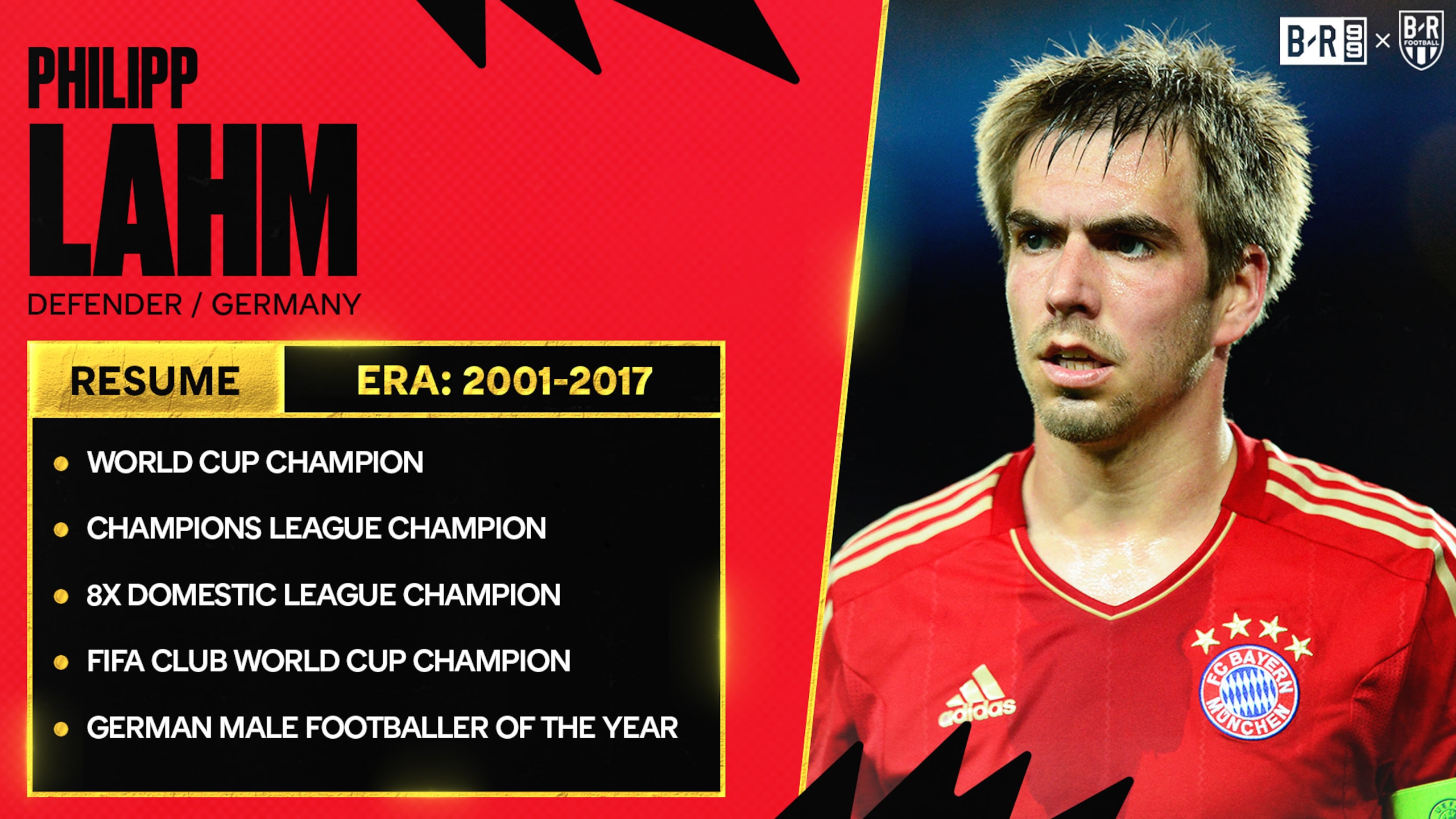
Clubs: Bayern Munich II (2001-03), Bayern Munich (2002-17), VfB Stuttgart (loan, 2003-05)
Philipp Lahm is one of the few players on the list who could confidently say he was once the best player in the world in three different positions.
The German was utilized in defense for the first decade of his career with Bayern Munich and the national team, lining up at both left-back and right-back without skipping a beat. His pace down the flank, impeccable crossing ability, and precise tackling ensured he was a standout at both ends of the pitch.
But with the arrival of a certain Pep Guardiola in the Bayern dugout in 2013, Lahm was moved into the center of the park, operating as a defensive midfielder.
From that position, he made the most of his tactical intelligence to dictate games, break up the play, and channel delicious passes into the final third.
In his club career, he picked up eight Bundesliga titles, six DFB-Pokal trophies, and the UEFA Champions League.
But his greatest achievement came in 2014, when he guided Germany to World Cup glory as captain of the national team. He retired from international duty when the tournament concluded.
Aside from a brief loan spell with Stuttgart at the start of his career, club captain Lahm remained at Bayern for the entirety of his playing career, deservedly entering the Bavarian side's Hall of Fame in 2017.
-Leo Collis
Highest Top 99 Ranking: 22
92. Hugo Sánchez
8 of 99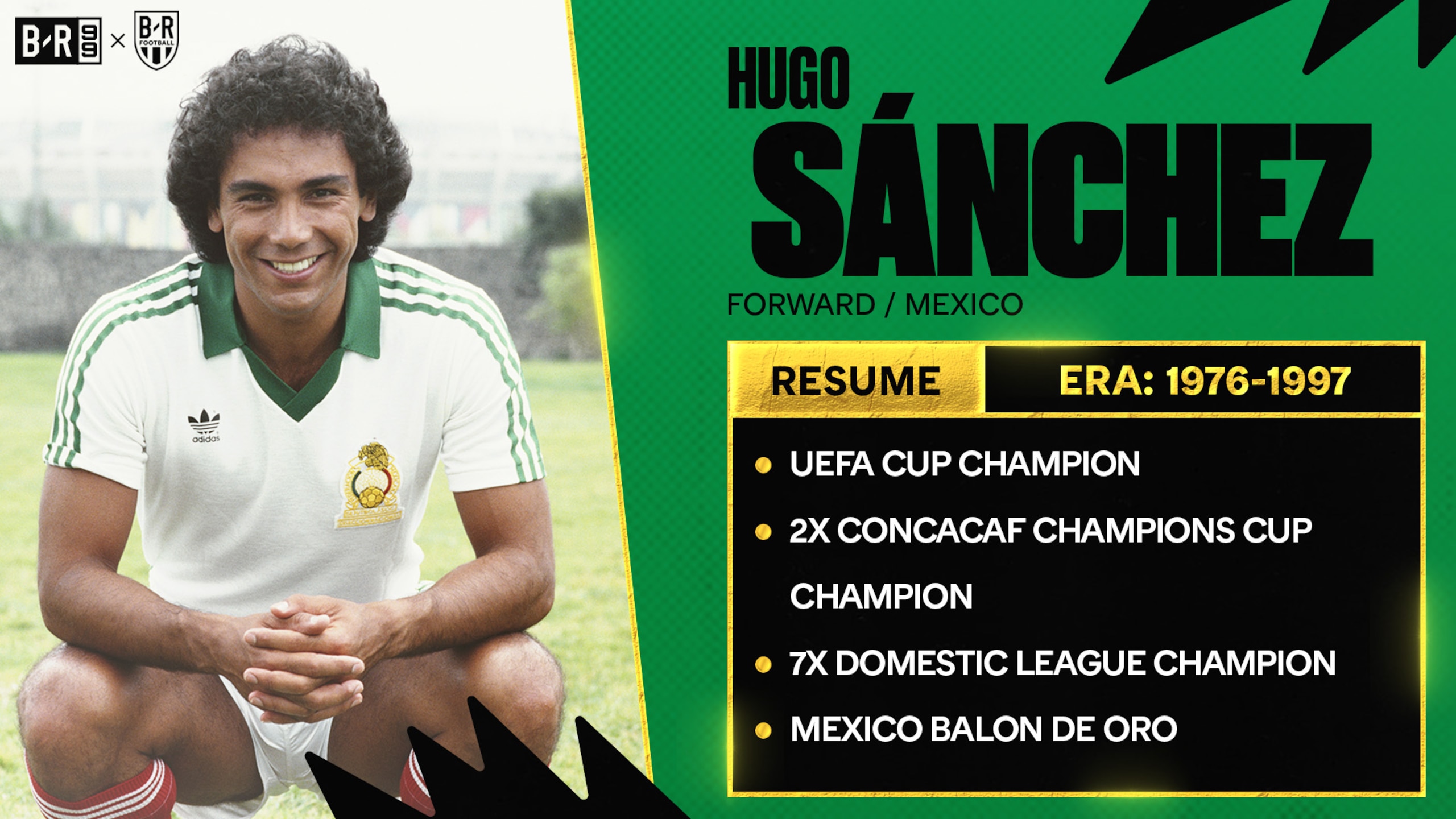
Clubs: UNAM (1976-82), San Diego Sockers (loan, 1979-80), Atlético Madrid (loan, 1981-82), Atlético Madrid (1982-85), Real Madrid (1985-92), América (1992-93), Rayo Vallecano (1993-94), Atlante (1994-95), Stahl Linz (1995-96), Dallas Burn (1996), Atlético Celaya (1997)
Hugo Sánchez was Mexican football's first truly global superstar. After starting out with UNAM in his home country, Sánchez went on to represent Atlético Madrid, Real Madrid and Rayo Vallecano across 12 seasons in Spain's capital.
In that time, he secured his place as one of the league's greatest-ever foreign imports, with only Lionel Messi, Cristiano Ronaldo and Karim Benzema ahead of him on the all-time goalscoring charts for non-Spanish players. In addition to that, only Messi and Alfredo di Stefano won the Pichichi trophy, awarded to the league's top goalscorer in a single season, on more occasions than Sánchez.
Four of those top-scorer awards were won during Sánchez's five consecutive title-winning seasons with Real, and his goalscoring exploits combined with his trophy collection mark him out as one of the sport's greatest-ever strikers.
-Calum Rogers
Highest Top 99 Ranking: 61
91. Samuel Eto'o
9 of 99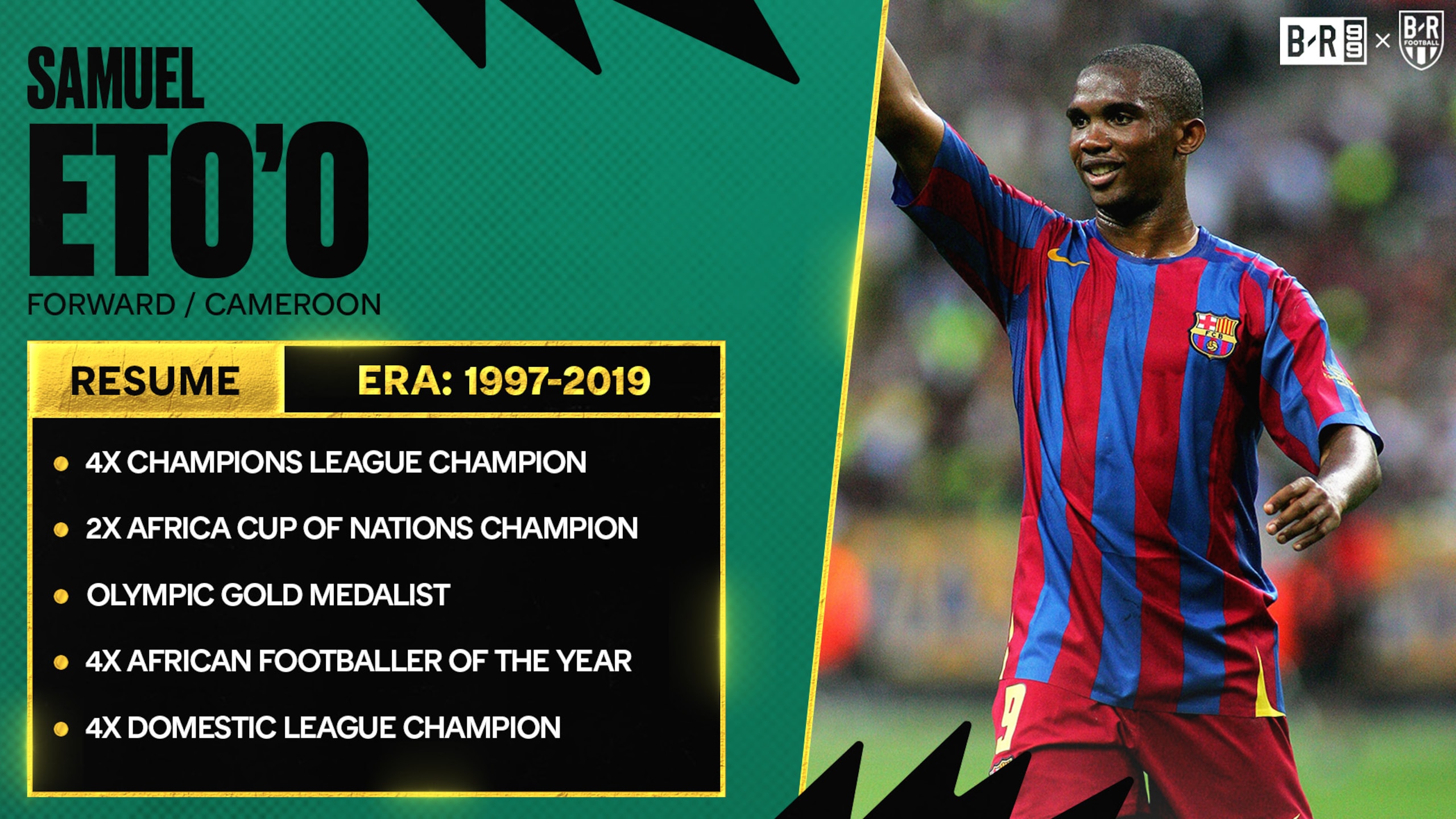
Clubs: Real Madrid (1997-2000), Leganés (loan, 1997-98), Espanyol (loan, 1999), Mallorca (loan, 2000), Mallorca (2000-04), Barcelona (2004-09), Inter Milan (2009-11), Anzhi Makhachkala (2011-13), Chelsea (2013-14), Everton (2014-15), Sampdoria (2015), Antalyaspor (2015-18), Konyaspor (2018), Qatar SC (2018-19)
Other Notable Accolades: FIFA Club World Cup Champion
There aren't many players who can question the decisions of Pep Guardiola and arguably be vindicated, but Samuel Eto'o may be one. Eto'o scored 36 goals for Guardiola in the manager's first season in charge of Barcelona as the team won the Spanish league title, the Copa del Rey and the UEFA Champions League.
Following the season, though, Guardiola swapped Eto'o and a hefty transfer fee with Inter Milan for Zlatan Ibrahimovic in arguably one of the biggest missteps of the Spaniard's managerial career. Eto'o went on to win a second consecutive Champions League with Inter, albeit after being shifted out to the wing by Jose Mourinho, while Ibrahimovic only featured for Barcelona for one season.
"It's clear today, that move, and the opportunity that Pep gave me has gone down in history because it permitted me to be an even bigger part of football history by going to Inter. He allowed Inter to strike the best deal in football history," Eto'o would later tell beIN Sports.
-Calum Rogers
Highest Top 99 Ranking: 32
90. Claude Makelele
10 of 99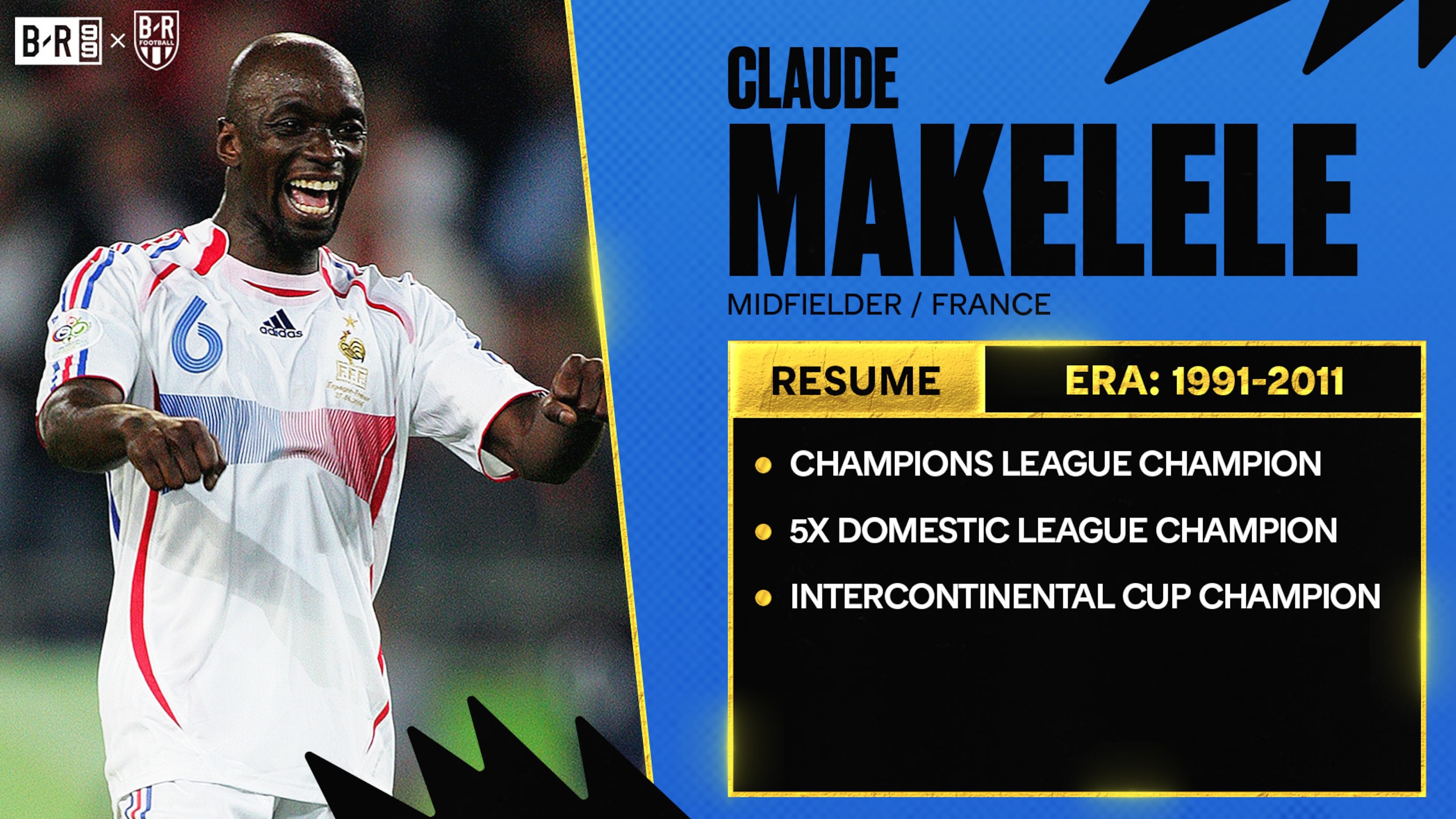
Clubs: Nantes (1991-97), Marseille (1997-98), Celta Vigo (1998-2000), Real Madrid (2000-03), Chelsea (2003-08), Paris Saint-Germain (2008-11)
You know your status as a football legend is sealed when a position is named in your honor.
Claude Makelele's warrior-like qualities in center midfield defined football for a generation, with clubs desperately seeking out players to fulfill the "Makelele role" to provide tough tackling, ball recycling, and constant energy.
The Frenchman effectively created the midfield "destroyer" template that players like Sergio Busquets, Casemiro, N'Golo Kante, and Rodri would all draw inspiration from.
He's the kind of player that was everywhere and nowhere at the same time. He popped up all over the park, but he didn't provide the kind of impact that would show up in full-time reports or box scores. If his name was on the teamsheet, though, players would have known they were in for a combative 90 minutes.
Makelele knew exactly what he excelled at, and he executed those abilities to perfection week in, week out. Over a career that spanned stints at Real Madrid, Chelsea, and Paris Saint-Germain, he earned 14 major trophies and was named to the FIFPro World XI in 2006.
-Leo Collis
Highest Top 99 Ranking: 22
89. George Weah
11 of 99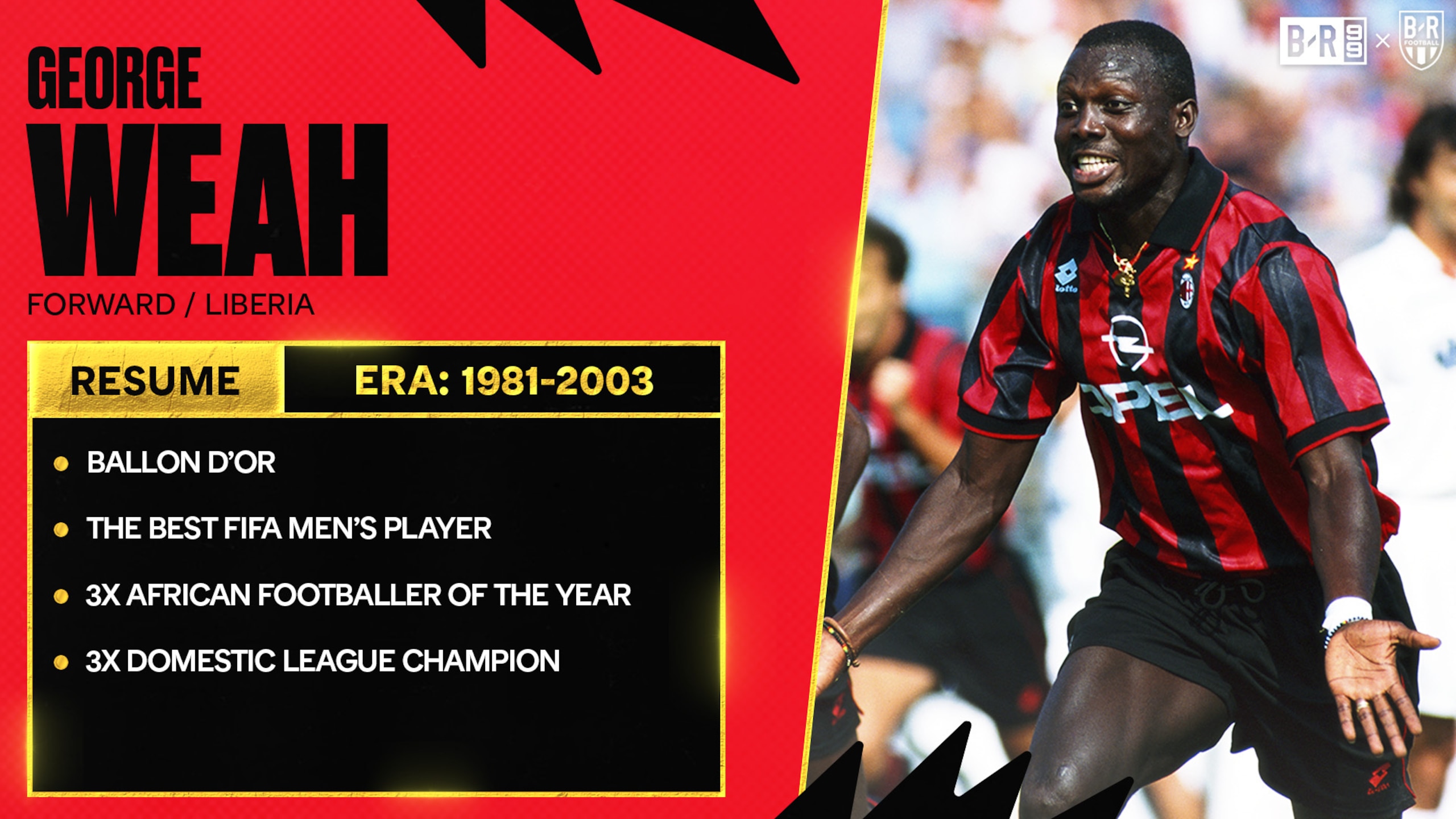
Clubs: Young Survivors (1981-84), Bong Range United (1984-85), Mighty Barrolle (1985-86), Invincible Eleven (1986-87), Africa Sports (1987), Tonnerre Yaoundé (1987-88), Monaco (1988-92), Paris Saint-Germain (1992-95), AC Milan (1995-2000), Chelsea (loan, 2000), Manchester City (2000), Marseille (2000-01), Al Jazira (2001-03)
The all-time top 99 footballers list is even graced by the former president of Liberia.
George Weah was not only a titan in government, but also on the football pitch.
The man known as King George remains the only player representing an African nation internationally to have won a Ballon d'Or, picking up the golden orb in 1995.
In the same year, he was also named FIFA World Player of the Year, African Footballer of the Year, and the Champions League's top scorer—with the latter including a stunning individual goal against Bayern Munich.
Weah's career in Europe spanned stops at Monaco, Paris Saint-Germain, Milan, Chelsea, Manchester City and Marseille, making a total of 478 appearances and scoring 193 goals.
King George offered pace, power, and deadly finishing, and he was the template for a new generation of strikers who worked in more areas of the pitch than simply as penalty-box poachers.
Still widely considered the greatest African player of all time, Weah won the French top flight with PSG and two Italian league titles with AC Milan. He also picked up three Coupe de France trophies, two with Les Parisiens and one with Monaco, and an FA Cup with Chelsea.
-Leo Collis
Highest Top 99 Ranking: 42
88. Luís Figo
12 of 99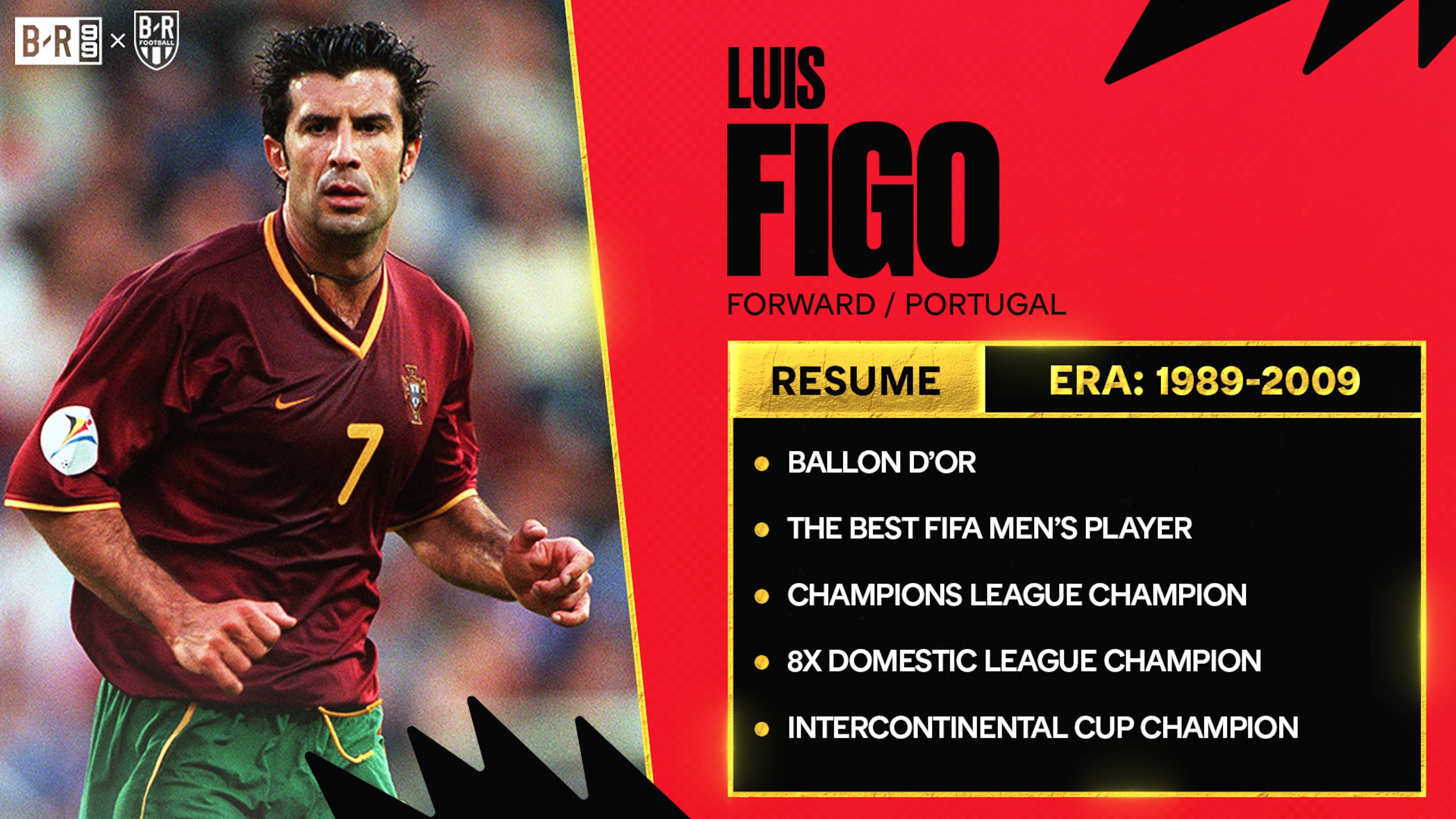
Clubs: Sporting CP (1989-95), Barcelona (1995-2000), Real Madrid (2000-05), Inter Milan (2005-09)
Luis Figo was an integral part of the Portuguese football revival in the late 1990s and early 2000s.
After starting his career at Sporting CP, across the Tagus River from his hometown, he would then skip over the border to Spain, where he represented Barcelona for five years.
Despite being revered in Catalonia, he made the hugely controversial move to league rivals Real Madrid in 2000, becoming the most expensive player in the world at the time—a switch that led spurned Barcelona fans to throw a pig's head at him in a famous El Clásico fixture.
But aside from that controversial incident, the winger was best known for his ball skills, gravity-defying balance, and ability to play with either foot.
In 336 games in La Liga, he scored 68 goals and provided 122 assists. He picked up two league titles each with the Blaugrana and Los Blancos, and he won the Champions League with the latter.
As his pace began to desert him, he moved to Internazionale in 2005, taking up a playmaking role that allowed him to use his intelligence more than his legs. With the Nerazzurri, he earned four Serie A titles.
He is the fourth-most capped player for the Portuguese national team, wearing the captain's armband on multiple occasions—including at Euro 2004, when he guided the Seleçao to the final, and at the 2006 World Cup, when he took them to the semis.
Figo was perhaps the best-known Portuguese player since Eusebio, heralding the beginning of an era in which the country produced a number of world-class talents.
-Leo Collis
Highest Top 99 Ranking: 39
87. Edgar Davids
13 of 99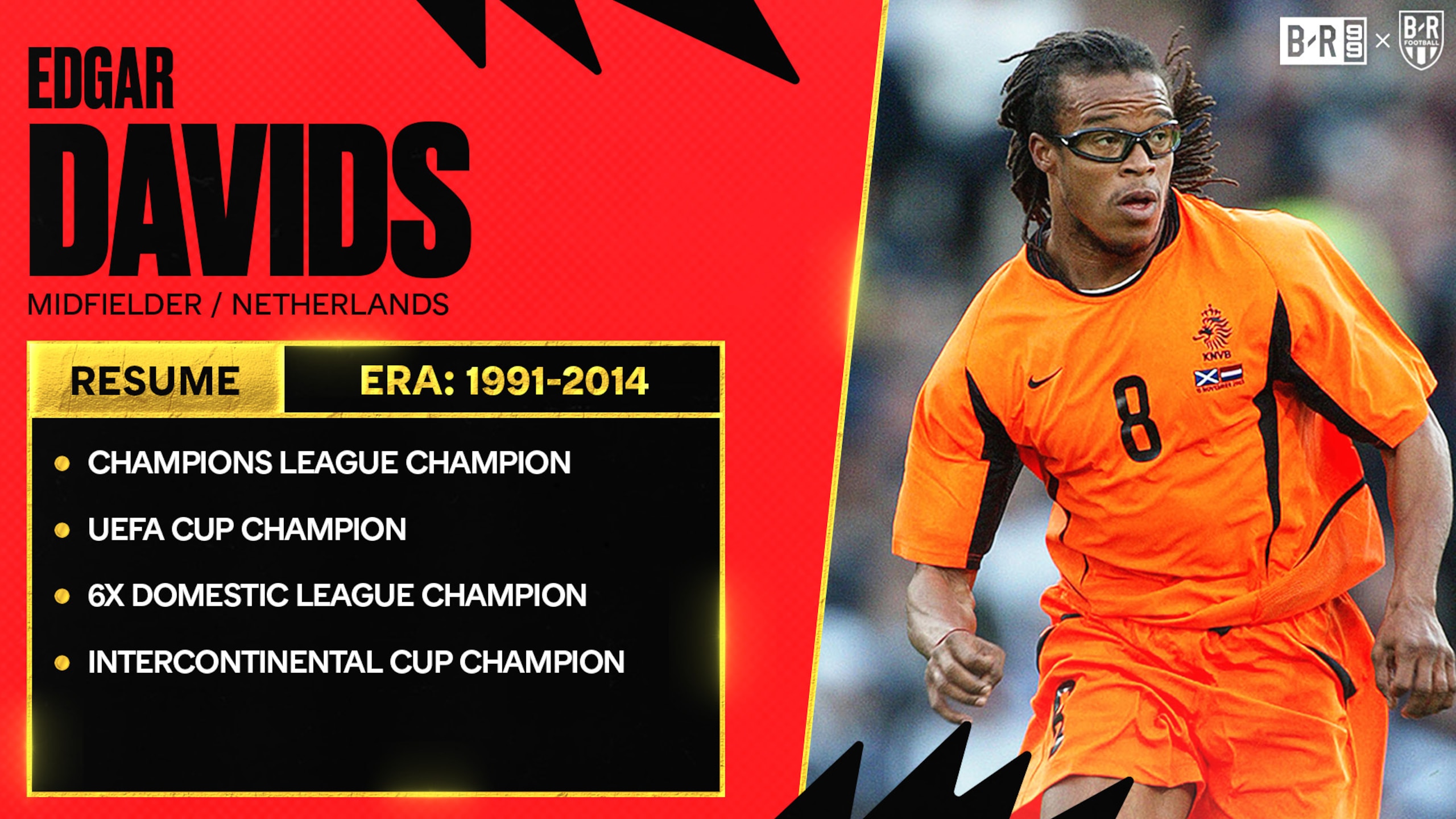
Clubs: Ajax (1991-96), AC Milan (1996-97), Juventus (1997-2004), Barcelona (loan, 2004), Inter Milan (2004-05), Tottenham Hotspur (2005-07), Ajax (2007-09), Crystal Palace (2010), Barnet (2012-14)
Edgar Davids became one of the most iconic players of his era thanks to a combative style of play that made him the fulcrum of multiple successful teams.
Davids won six combined league titles with Ajax and Juventus in the Netherlands and Italy respectively. At Juve, boss Marcello Lippi called Davids his "one-man engine room." While not the most glamorous description, Davids showed throughout his career that he was able to make more talented teammates better through his work rate and tenacity.
He was also a key player in a Golden Generation Dutch team in the late '90s and early 2000s. Davids played every minute for his country in runs to the semifinals of both the 1998 FIFA World Cup and UEFA Euro 2000, and he started every game of another semifinals run at Euro 2004.
-Calum Rogers
Highest Top 99 Ranking: 44
86. Erling Haaland
14 of 99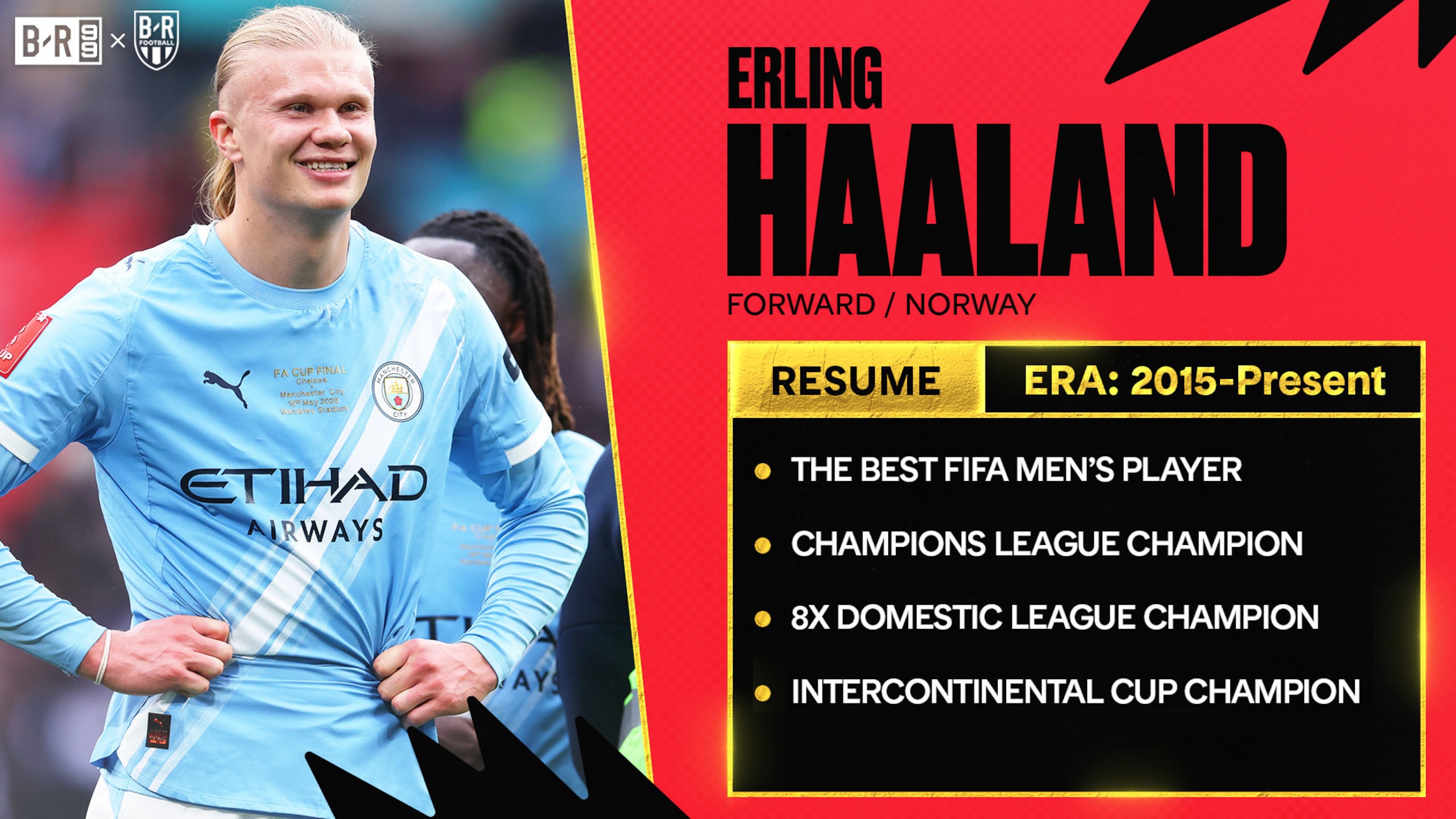
Clubs: Bryne 2 (2015-16), Bryne (2016-17), Molde 2 (2017), Molde (2017-19), Red Bull Salzburg (2019-20), Borussia Dortmund (2020-22), Manchester City (2022-Present)
Erling Haaland will likely rocket up this list when all is said and done. A frightening prospect from the moment he made his debut as a 16-year-old for Norwegian club Bryne, Haaland has gone on to wage an assault on scoring records in Germany and now England.
In two-and-a-half seasons with Borussia Dortmund, Haaland scored 62 goals in 67 appearances. While he didn't stay nearly long enough to match Gerd Müller's record total in the competition, Haaland's goals-per-game ratio of 0.93 in his 67 games was superior to Müller's 0.85.
It's been a similar story since his move to the Premier League with Manchester City in 2022. Haaland's 0.85 goal ratio in England is comfortably outpacing the 0.68 mark set by Thierry Henry. According to Sky Sports, Haaland's current pace puts him on track to break Alan Shearer's overall scoring record of 260 goals shortly after his 30th birthday.
To put it simply, Haaland is on track to become by far the most prolific striker of the modern era.
-Calum Rogers
Highest Top 99 Ranking: 42
85. Ronald Koeman
15 of 99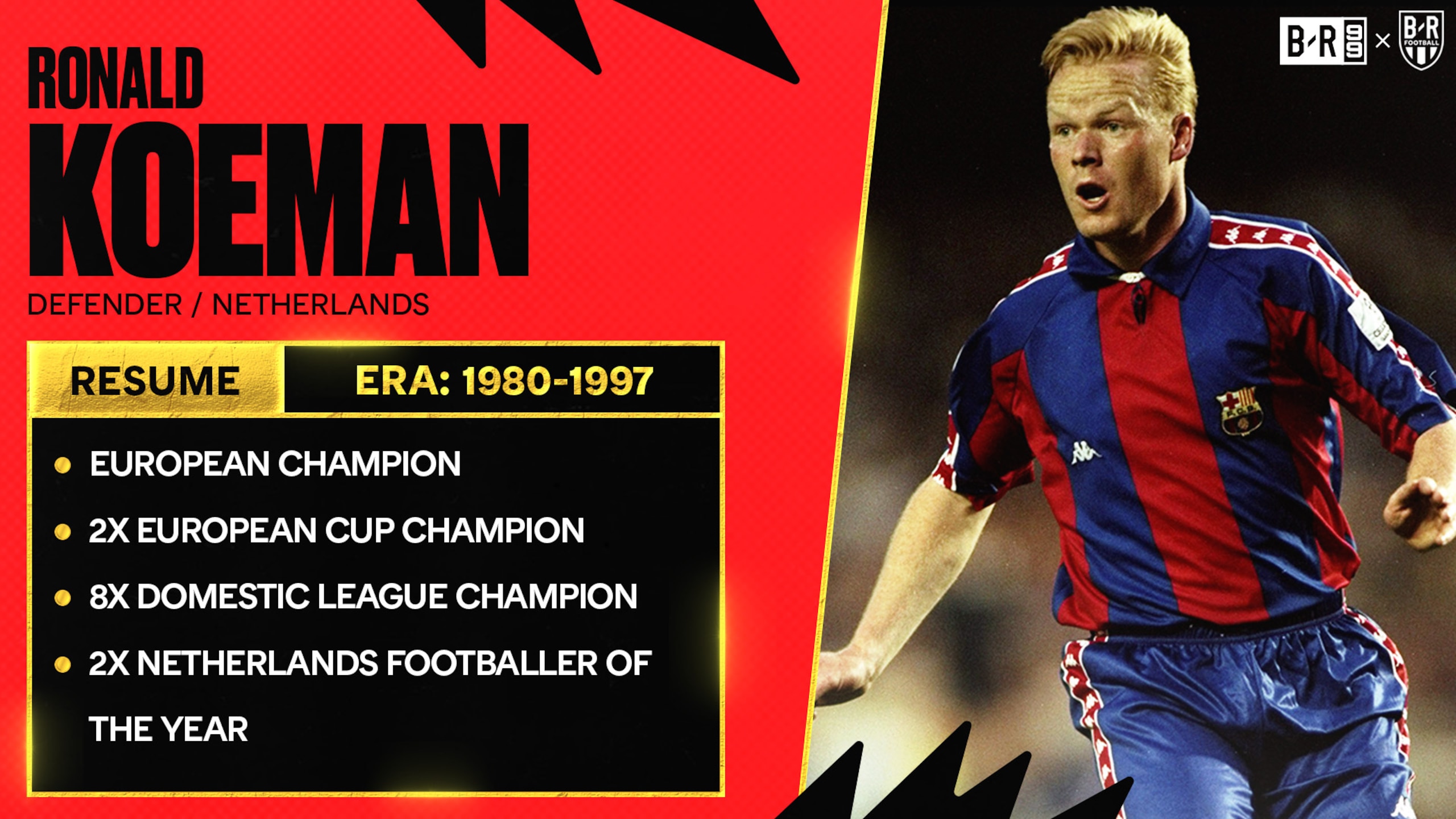
Clubs: Groningen (1980-83), Ajax (1983-86), PSV (1986-89), Barcelona (1989-95), Feyenoord (1995-97)
In a senior club career that spanned 684 appearances, Ronald Koeman scored 240 goals.
He mostly played as a defender.
It's a stunning record for a player who should have been more accustomed to stopping strikes from going in than making them himself.
The Dutchman's greatest successes came with Barcelona, for whom he won La Liga in four consecutive seasons, as well as the Copa del Rey, three Supercopas de España, the European Cup, and a UEFA Super Cup.
But he also plundered silverware in his native Netherlands, winning a total of four Eredivisie titles and three KNVB Cups across stints with Ajax and PSV, while claiming the European Cup with the latter.
That's not to mention his success at the international level, with Koeman lifting the 1988 European Championship in West Germany. Customarily, he scored from the spot in the semi-final.
While his goalscoring prowess and set-piece expertise are perhaps what he's most well-known for—with highlight-reel strikes from distance and accurate penalties not difficult to find footage of—he was still a committed defender and could spray the ball around the pitch with ease.
The highest-scoring defender in football history is well worthy of a spot in the 99.
-Leo Collis
Highest Top 99 Ranking: 56
84. Kenny Dalglish
16 of 99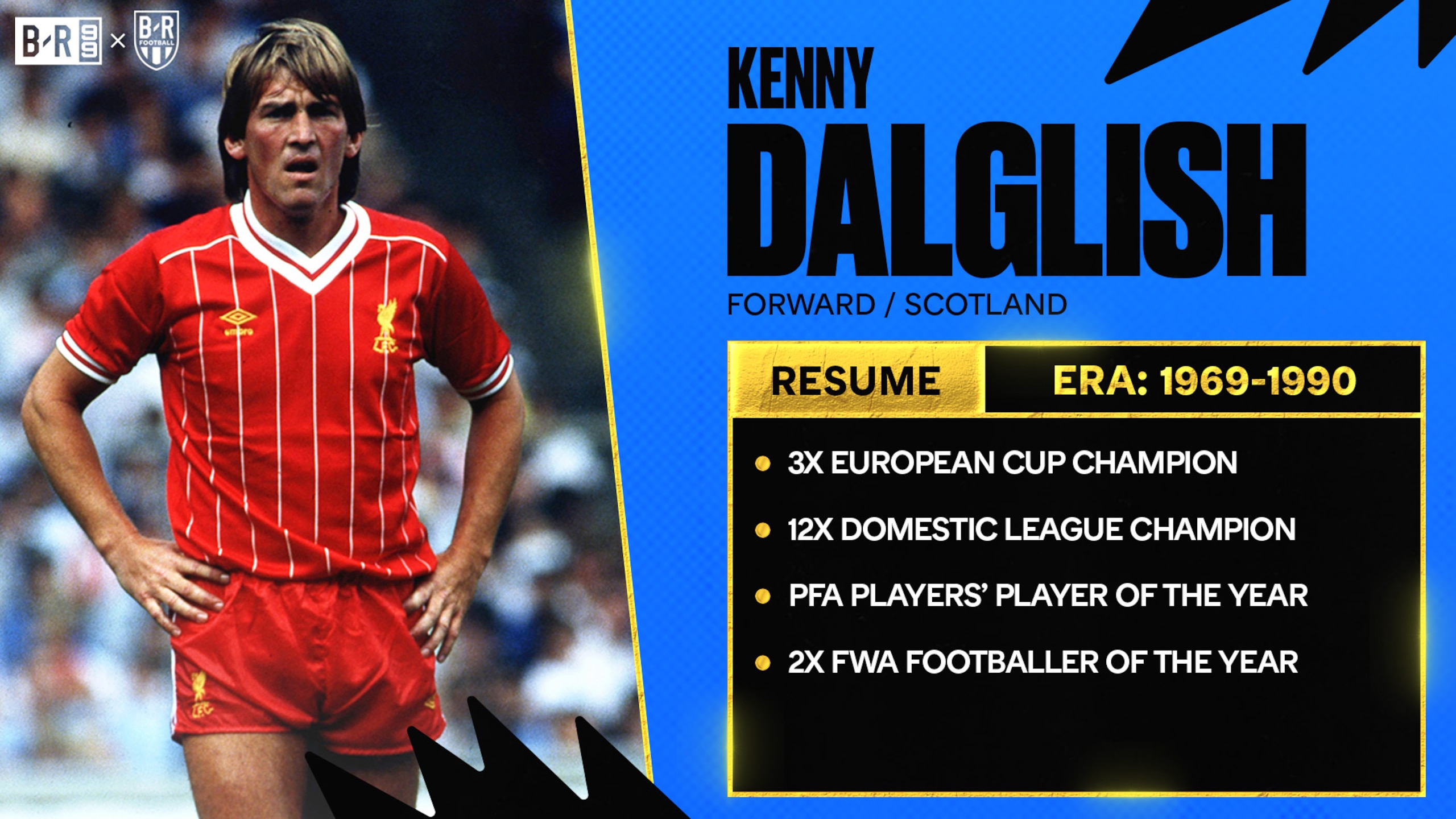
Clubs: Celtic (1969-77), Liverpool (1977-90)
Sir Kenneth Mathieson Dalglish might have been born in Glasgow, but it's Scouse blood that truly runs through his veins.
King Kenny ranks among the finest players and managers in Liverpool's history—and he's a much-loved figure in the Merseyside community—but his ability on the pitch is the only thing that matters for this ranking. And what a talent he was.
After making headlines with Scottish giants Celtic, Dalglish joined an already dominant Reds team in 1977. In the north-west, fears he would be outshone proved unfounded, and he went on to win England's top flight seven times, three European Cups, an FA Cup, and four League Cups, among other honors.
He scored 172 goals in 515 Liverpool appearances, but his contributions to Liverpool's famous pass-and-move philosophy in the late 1970s and 1980s were just as important as the times he found the net himself.
He effectively sealed his legendary status in his debut season, scoring the decisive goal in Liverpool's 1-0 win over FC Bruges in the 1978 European Cup final. That glorious finish ensured he'd be a Kop favorite for life, and it's among the many reasons why the club named one of Anfield's stands after him.
Dalglish is arguably the best-ever Scottish footballer, and he's also the nation's most capped player—the only one to make over 100 appearances.
-Leo Collis
Highest Top 99 Ranking: 37
83. Pavel Nedvěd
17 of 99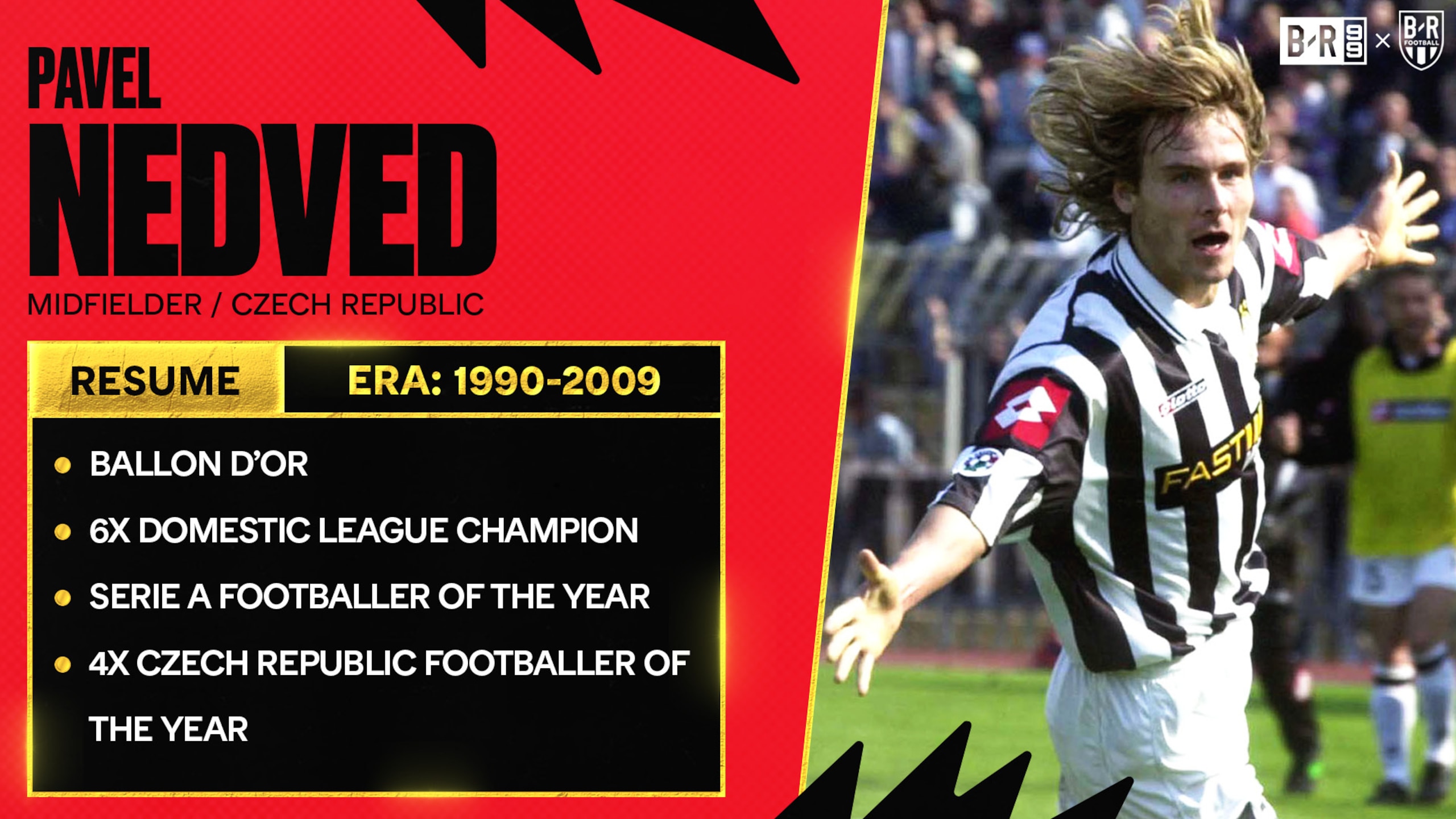
Clubs: Škoda Plzeň (1990-92), Dukla Prague (loan, 1990-92), Sparta Prague (1992-96), Lazio (1996-2001), Juventus (2001-09)
The pressure of replacing Zinedine Zidane would be too much for many, but not Pavel Nedvěd. The Czech joined Juventus from Lazio in 2001, the same summer Zidane left for Real Madrid.
While not totally comparable as players, Nedvěd arguably had a bigger impact than Zidane in Turin and won the Ballon d'Or after helping lead his team to the UEFA Champions League final in 2003. A yellow-card suspension ruled him out of the game, though, and Juventus lost on penalties after a drab 0-0 draw.
In addition to his skill and tenacity and the role he played in the team's success, Nedvěd's loyalty to Juventus was a significant factor in his legacy at the club. After their relegation to Serie B because of a match-fixing scandal, Nedvěd remained with the team and scored 11 goals as a 33-year-old to ensure they returned to Serie A at the first attempt.
-Calum Rogers
Highest Top 99 Ranking: 34
82. Alan Shearer
18 of 99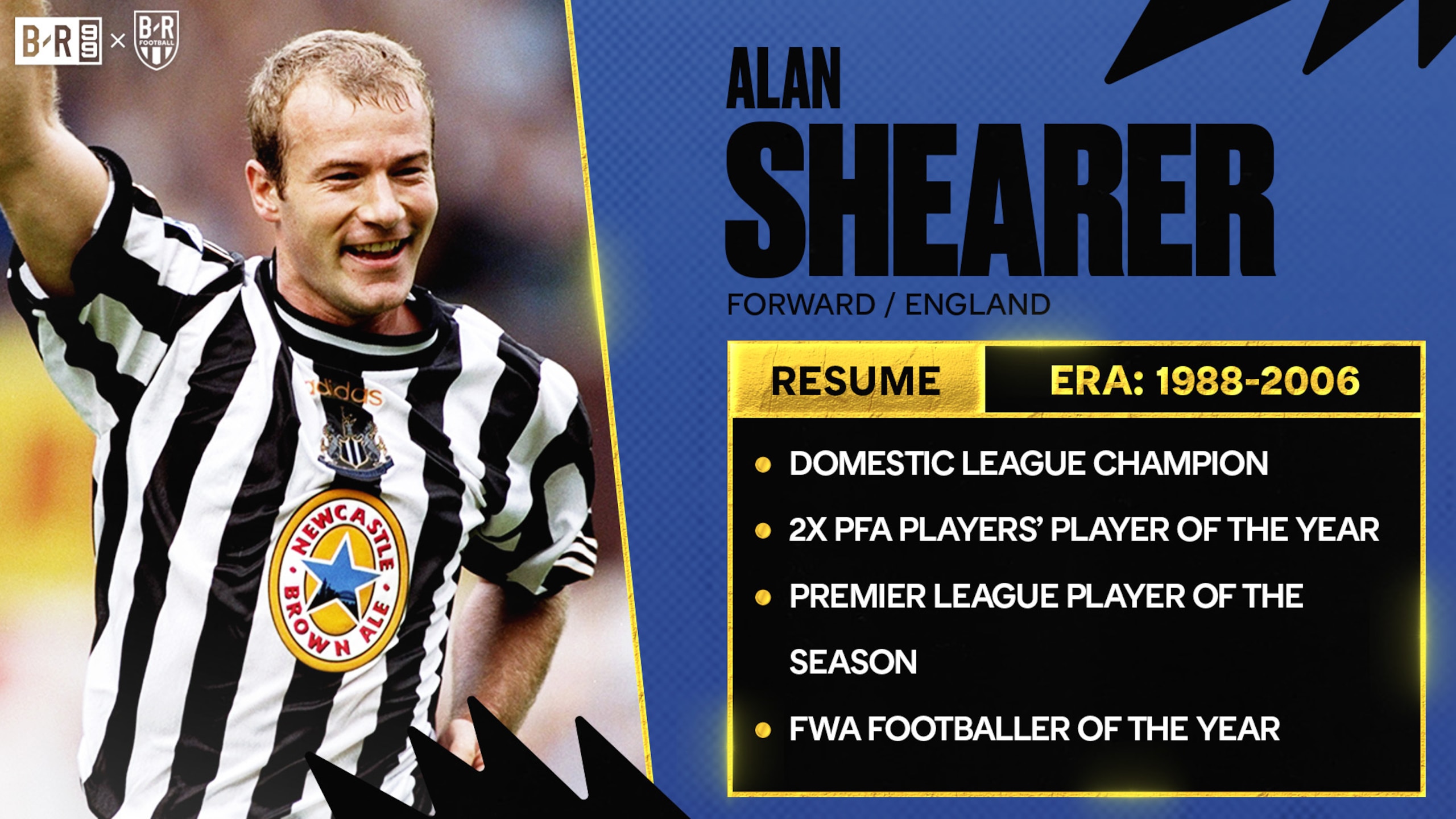
Clubs: Southampton (1988-92), Blackburn Rovers (1992-96), Newcastle United (1996-2006)
There aren't many sporting figures that you could pick out by their silhouette alone. Michael Jordan is one, and Wayne Gretzky is another.
But a shadow of Alan Shearer's iconic raised right-hand celebration could be identified by generations of football fans.
Part of the reason for that was that it was such a common sight, with the Englishman scoring 374 goals across 726 games in the 1990s and early 2000s.
It could have been more, if not for a series of serious injuries halting him in his prime. But Shearer could score practically any way he wanted: headers, tap-ins, piledrivers from outside the box, free-kicks, penalties—he truly had the lot.
The proud Geordie only picked up one Premier League title in his career, in 1994-95 with Blackburn Rovers. But across stints with Rovers, Southampton, and Newcastle United, he was practically the face of the best division in the world for over a decade.
He was the league's top scorer three times, and he influenced thousands of young footballers who would mimic his celebration in the park and schoolyard.
-Leo Collis
Highest Top 99 Ranking: 30
81. John Terry
19 of 99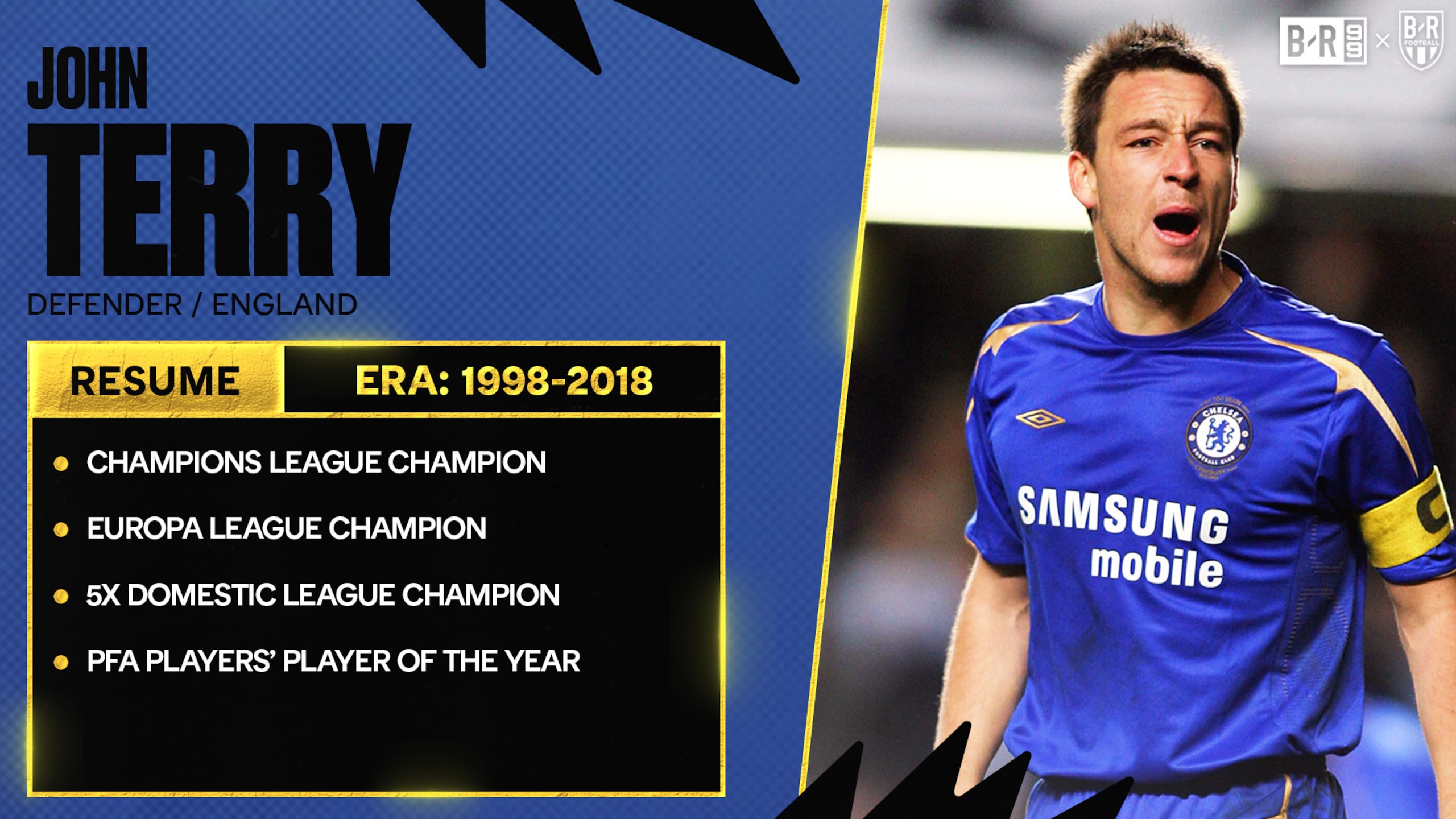
Clubs: Chelsea (1998-2017), Nottingham Forest (loan, 2000), Aston Villa (2017-18)
A banner at Chelsea's Stamford Bridge stadium reads "Captain. Leader. Legend." Those three words refer to none other than John Terry.
The center-back was a near ever-present during the most successful years in the club's history, winning the Premier League and FA Cup five times each, in addition to four League Cups, the Champions League and the Europa League.
Terry was known for his no-nonsense defensive approach, clattering into defensive duels and commanding his back line with authority. He was also a focal point at both attacking and defensive set pieces, often popping up with vital headers into the net or out of the box. In 717 games for the Blues, the second-most in club history, he bagged 67 goals.
He also captained his national team on numerous occasions, even getting the first goal at the new Wembley Stadium. As part of a so-called "Golden Generation" that generally failed to live up to expectations, Terry remained a reliable presence as others around him faltered.
-Leo Collis
Highest Top 99 Ranking: 52
80. Karl-Heinz Rummenigge
20 of 99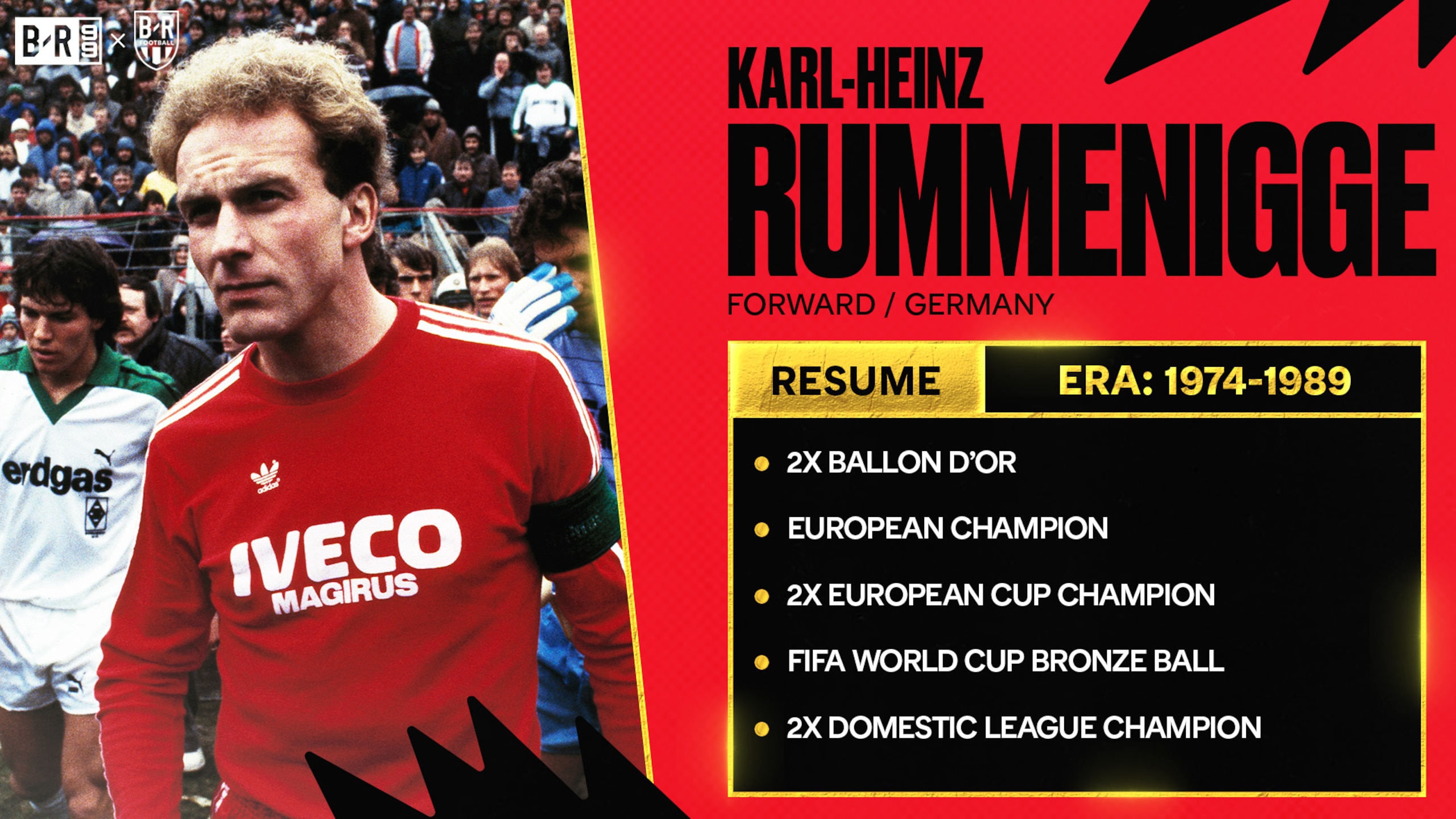
Clubs: Bayern Munich (1974-84), Inter Milan (1984-87), Servette (1987-89)
Other Notable Accolades: Intercontinental Cup Champion; German Male Footballer of the Year
One of only 10 men to win multiple Ballons d'Or, Karl-Heinz Rummenigge defined a generation of West German football that saw the national team finish runners-up at two FIFA World Cups and win the 1980 European Championships, with Rummenigge named in the team of the tournament.
Rummenigge was also a two-time European champion at club level with Bayern Munich, where he also won two Bundesliga titles. From 1977 until 1984, Rummenigge was named in the team of the season by German publication Kicker, and his two Ballon d'Or wins came after leading Bayern to the Bundesliga title as top scorer in both seasons.
In addition to his playing success, Rummenigge went on to become CEO at Bayern in 2002, a position he held until 2021. During that time, Bayern won 14 league titles and two UEFA Champions Leagues.
Just one of those careers both on and off the pitch would have made him a legend. Combining the two makes Rummenigge synonymous with Bayern's status today as a European juggernaut.
-Calum Rogers
Highest Top 99 Ranking: 24
79. Jairzinho
21 of 99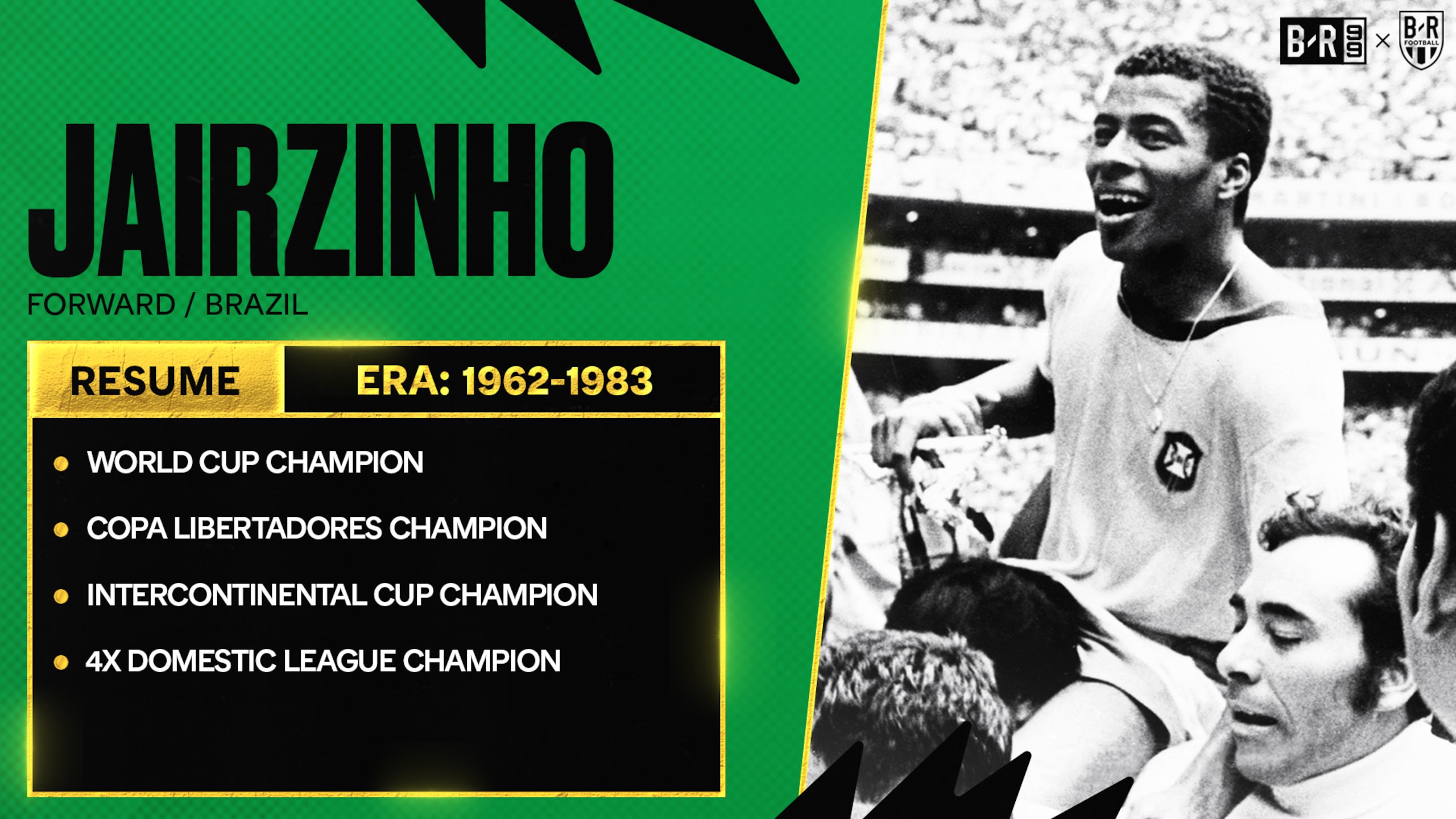
Clubs: Botafogo (1962-74), Marseille (1974-75), Kaizer Chiefs (1975), Cruzeiro (1976), Portuguesa (VEN) (1977), Noroeste (1978-79), Fast Clube (1979), Jorge Wilstermann (1980-81), Botafogo (1981-82), 9 de Octubre (1982-83)
One of a clutch of Brazilian icons from the late 1960s and 1970s, Jairzinho could have shot up this list if he played in Europe during his prime.
Botafogo would be glad he stayed in his home country, though, with the man from Rio representing the club for 12 years, winning one Brazilian league title and four Rio de Janeiro state titles in that time.
His greatest exposure came with the national team, though, for whom he ranks joint-seventh for most World Cup appearances, playing in the 1966, 1970 and 1974 tournaments.
He featured six times as Brazil claimed a third world title in 1970, dazzling the fans in Mexico with his explosive speed and close control on the wing. He scored in every one of the Seleçao Canarinho's games at the tournament, bagging seven in total.
A short-lived spell in France with Marseille in his thirties was the best Europe got to see of his talents at club level, although his stay ended in controversy after he was found guilty of attacking a match official.
Still, he continued to play up until his 40th birthday, representing clubs in South Africa, Venezuela, Bolivia and Ecuador.
-Leo Collis
Highest Top 99 Ranking: 7
78. Ryan Giggs
22 of 99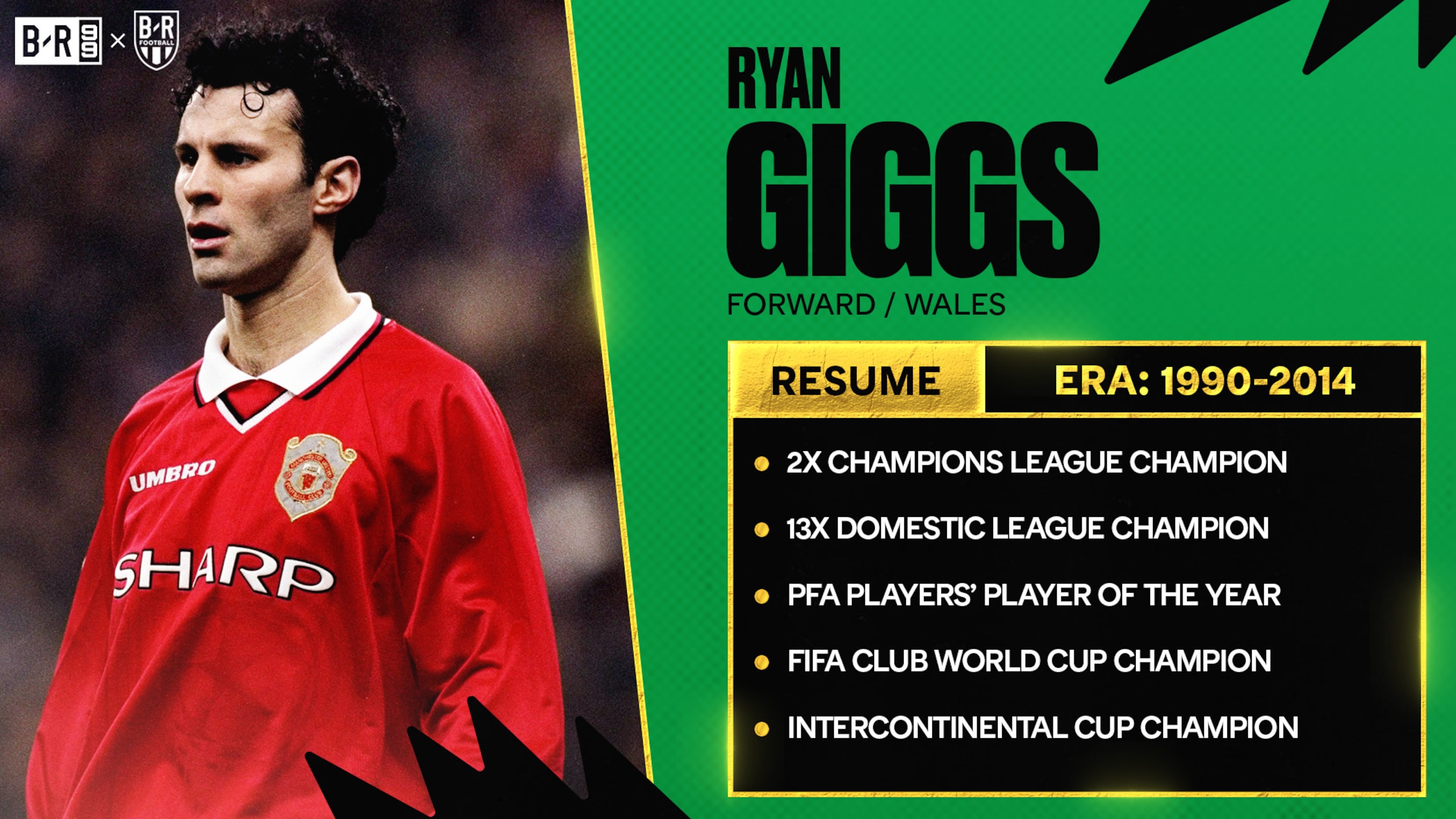
Club: Manchester United (1990-2014)
Ryan Giggs' longevity made him a standout candidate for selection. The Welshman is the only player to have scored in 21 consecutive Premier League seasons.
His debut season as an 18-year-old saw him score nine league goals as United's Class of '92 started to bear fruit, and he remained a consistent presence in the team that largely dominated English football during his 22 seasons with the club.
Giggs is third on the league's overall appearances leaderboard, and he has the most appearances for a Manchester United team that hasn't won the Premier League since his departure in 2014.
He was also part of two UEFA Champions League-winning sides, with his assist for Teddy Sheringham's late equaliser in the 1999 final sparking one of the most memorable comebacks in the competition's history. Ole Gunnar Solskjær scored just two minutes later in the game's 93rd minute to win the trophy for United and seal the most significant victory of Sir Alex Ferguson's reign as manager to that point.
-Calum Rogers
Highest Top 99 Ranking: 28
77. Alessandro Del Piero
23 of 99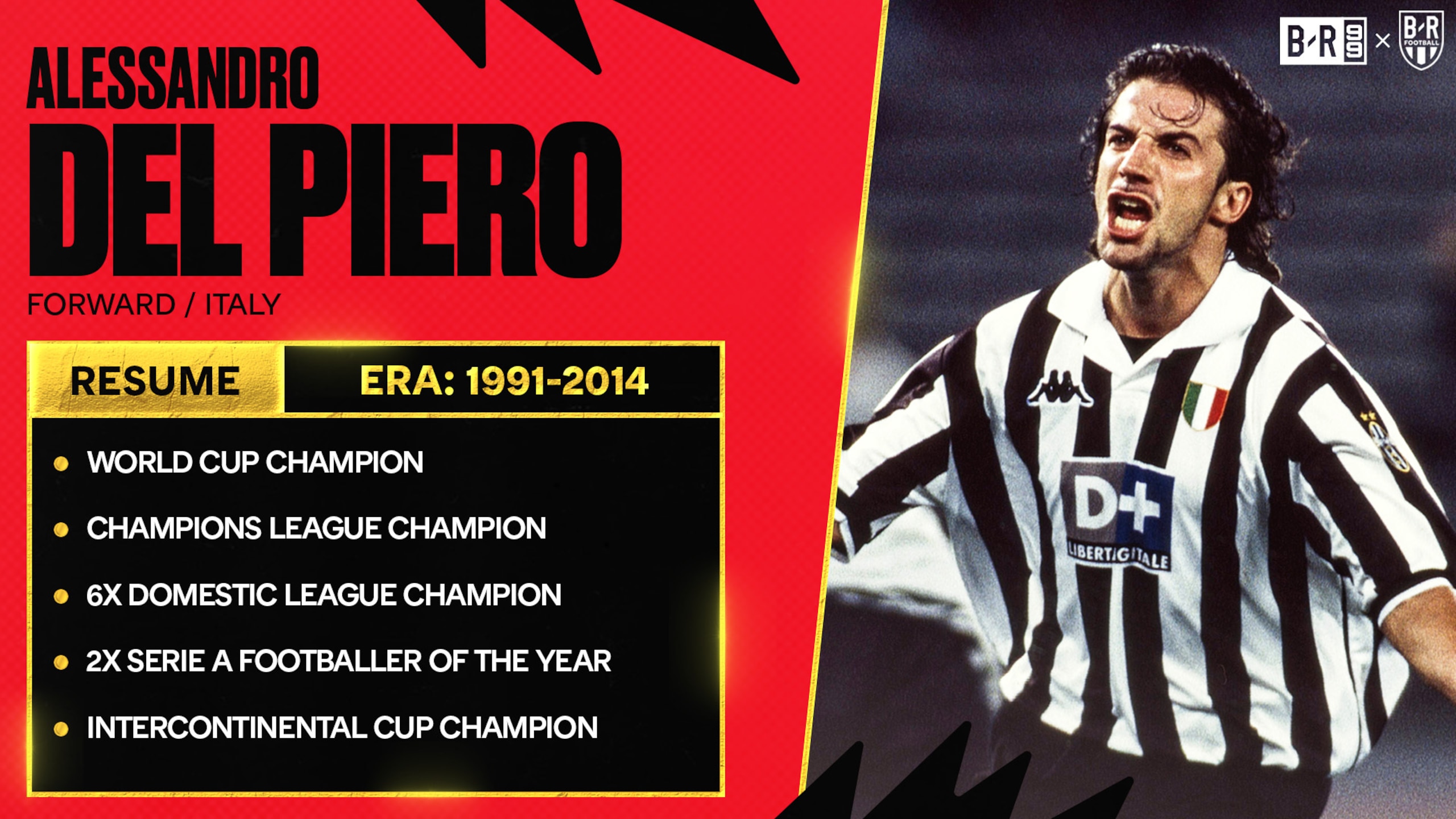
Clubs: Padova (1991-93), Juventus (1993-2012), Sydney FC (2012-14), Delhi Dynamos (2014)
A goalscorer and creator in equal measure, Alessandro Del Piero was a key part of the Juventus team that made it to three consecutive UEFA Champions League finals from 1996 to 1998, albeit only winning the trophy once.
Del Piero scored 20 goals across those three campaigns, including a 10-goal output on the way to the 1998 final, all before his 24th birthday. After a severe knee injury in 1998 threatened to derail his career, he made it back to the final with Juventus in 2003, registering 10 combined goals and assists en route to another unsuccessful effort.
A career that also included a UEFA European Championships runners-up finish with Italy in 2000 may have been defined more by what it could've been than what it was on the biggest stages, but the 2006 FIFA World Cup win washed away any doubts over Del Piero's legacy.
While largely a substitute in the tournament, Del Piero saved his best for the most important moments. His goal sealed Italy's 2-0 victory over Germany in the semi-final, and his converted penalty against France in a final shootout helped secure the trophy for his country.
-Calum Rogers
Highest Top 99 Ranking: 41
76. Gordon Banks
24 of 99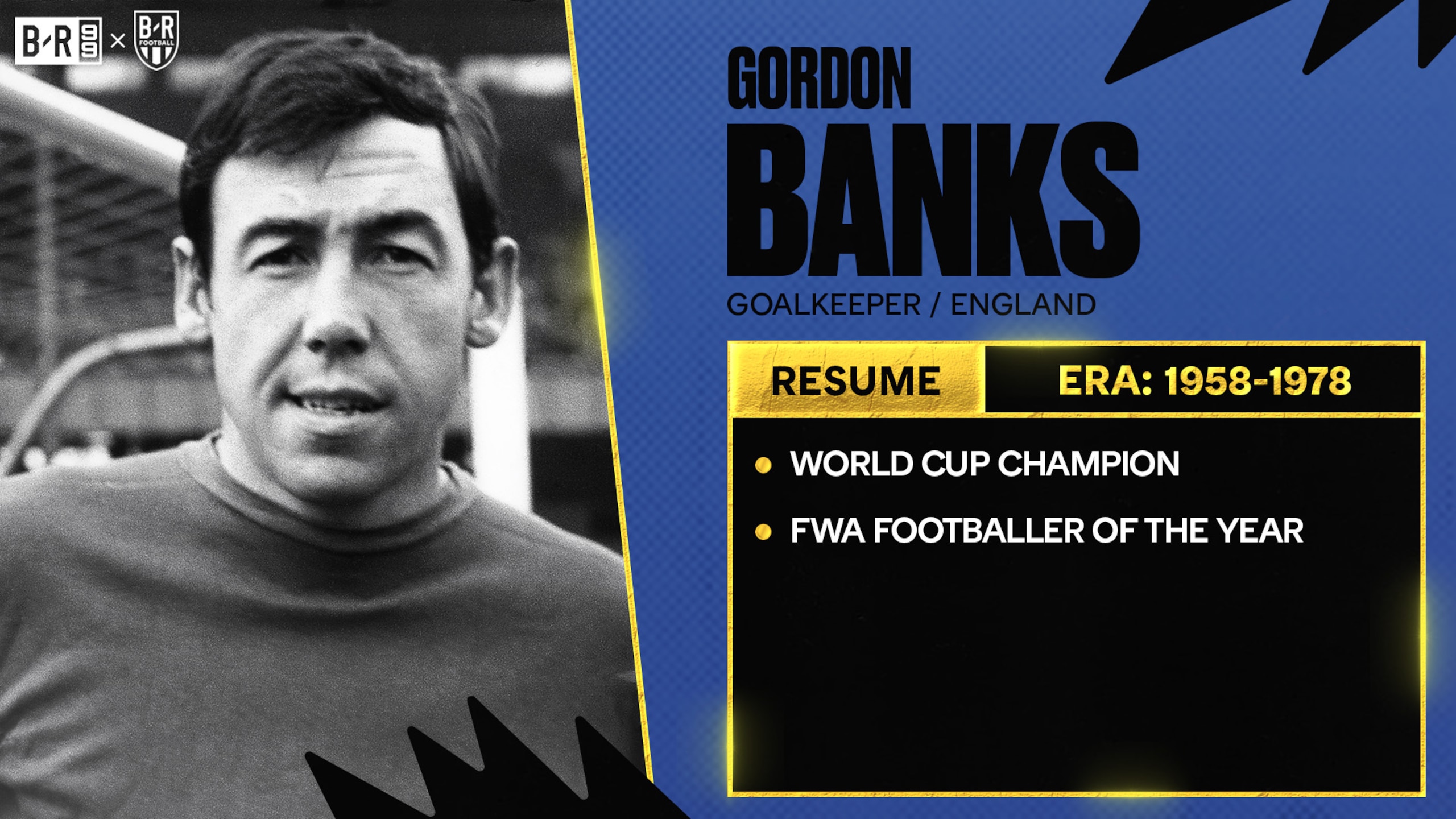
Clubs: Chesterfield (1958-59), Leicester City (1959-67), Stoke City (1967-73), Cleveland Stokers (loan, 1967), Hellenic (loan, 1971), Fort Lauderdale Strikers (1977-78), St Patrick's Athletic (loan, 1977)
For many, the name Gordon Banks brings to mind one moment: an extraordinary save against Brazil in the 1970 World Cup group stage.
Pele, who saw his header clawed off the line, spoke highly of his opponent's incredible stop.
"The save was one of the best I have ever seen—in real life, and in all the thousands of games I have watched since," the Brazil legend said in a Facebook post following Banks' death in 2019.
But Banks was much more than that. The former Stoke City and Leicester City goalkeeper was once considered the best in the world, named FIFA's Goalkeeper of the Year six consecutive years from 1966 to 1971.
His crowning glory came in 1966, when he wore the gloves as England claimed their first and only World Cup title on home turf. Banks played in all six games, keeping a clean sheet in four.
Banks was fearless when closing down onrushing attackers, boasted split-second reactions, and seemingly hung in the air when shots were destined for the top corner. It's no wonder he was one of the first players inducted into the National Football Museum Hall of Fame.
-Leo Collis
Highest Top 99 Ranking: 34
75. Rio Ferdinand
25 of 99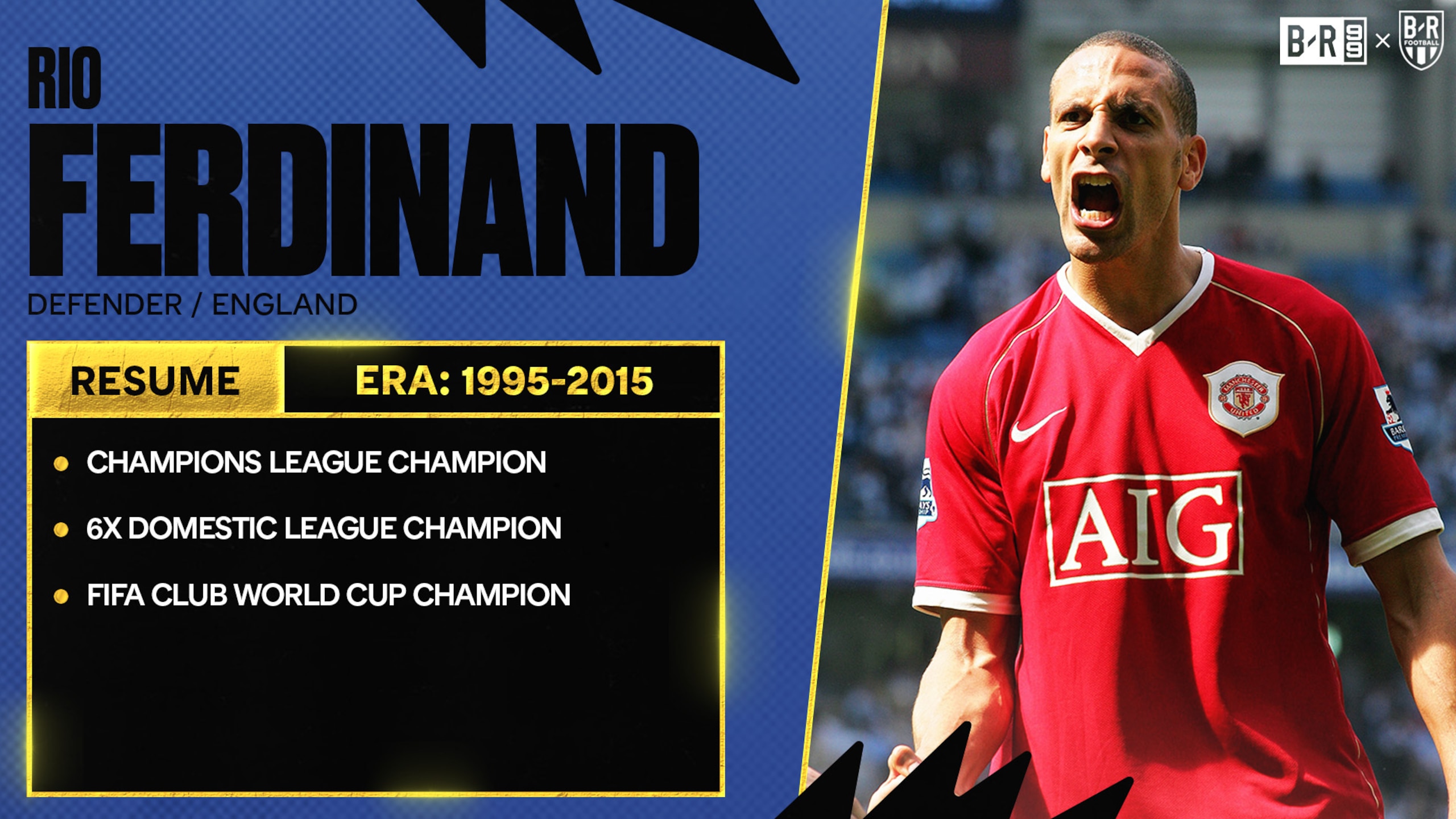
Clubs: West Ham United (1995-2000), AFC Bournemouth (loan, 1996-97), Leeds United (2000-02), Manchester United (2002-14), Queens Park Rangers (2014-15)
Other Notable Accolades: Champions League Champion, 6x Domestic League Champion, FIFA Club World Cup Champion
Football fans these days take ball-playing centre-backs for granted. That calmness and control wasn't as common during Rio Ferdinand's time, making his attributes stand out so considerably that Manchester United simply had to lure him away from rivals Leeds.
Ferdinand's size and pace allowed United to take risks in their play. Strikers could have a headstart over him and still find themselves dispossessed, especially during the years in which he struck an all-time partnership with Nemanja Vidic.
We've grown so accustomed to seeing defenders fire the ball around and start attacking moves. Ferdinand was one of the first, and very best, at utilising that in a trophy-laden team.
- Nick Akerman
Highest Top 99 Ranking: 37
74. Oliver Kahn
26 of 99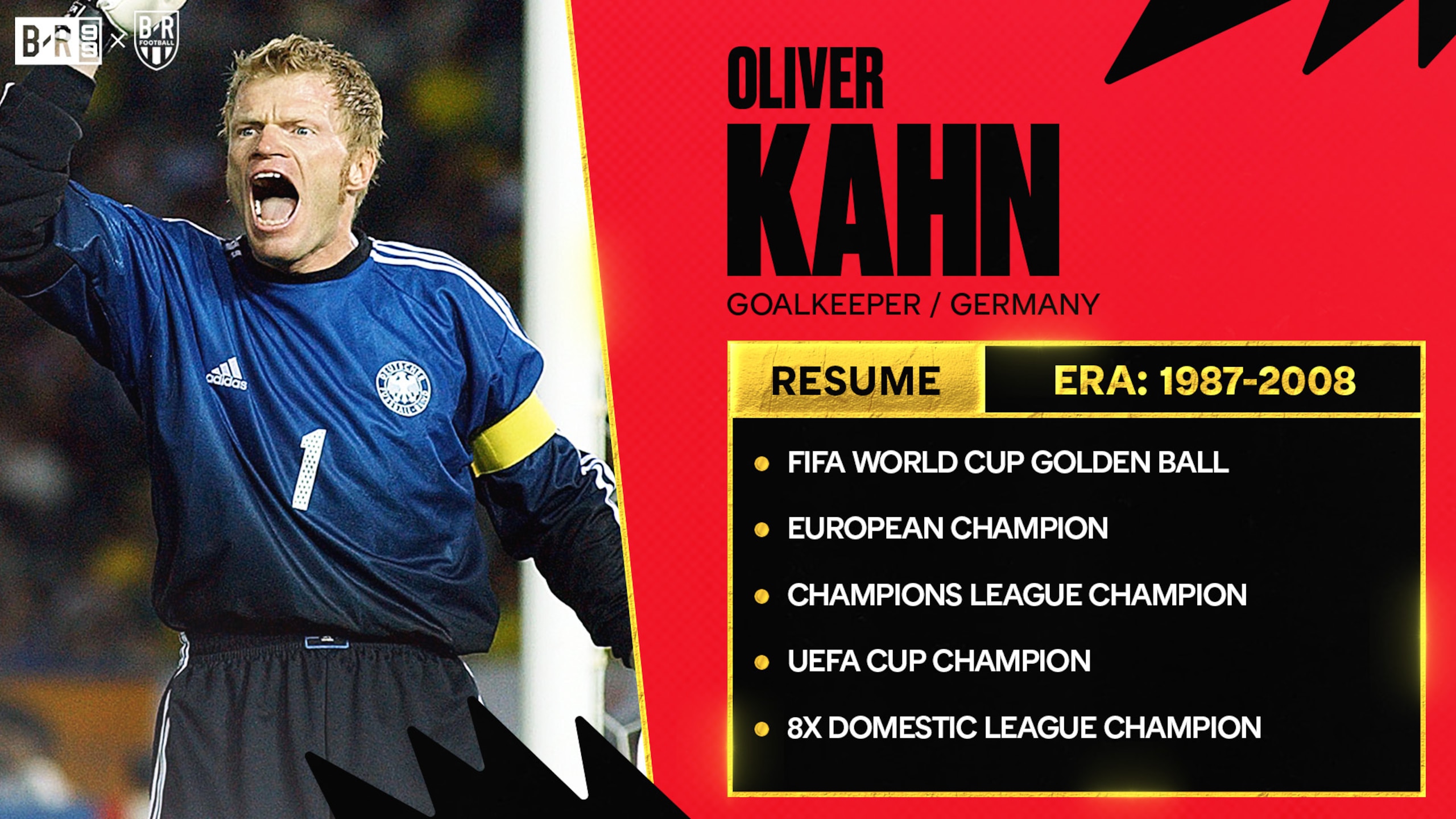
Clubs: Karlsruher SC II (1987-90), Karlsruher SC (1987-94), Bayern Munich (1994-2008)
Other Notable Accolades: Intercontinental Cup Champion; 2x German Male Footballer of the Year
Oliver Kahn is the only goalkeeper in FIFA World Cup history to win the Golden Ball, awarded to the tournament's best player. While he was unable to lead his team to victory in the final against Brazil in 2002, Kahn's was vital in backstopping a largely unfancied German team that conceded just three goals in the entire tournament.
Kahn was previously a backup on the 1996 UEFA European Championships-winning squad, and that taste of success would bleed into his club career. With Kahn the club's unquestioned No. 1, Bayern Munich won eight Bundesliga titles from 1996 to his final season in 2008, also picking up a UEFA Champions League in that time.
Kahn also finished third in Ballon d'Or voting in 2001 and 2002. Lev Yashin is the only goalkeeper to ever win the award, and for Kahn to even be under consideration goes some way to demonstrating how revered he was.
-Calum Rogers
Highest Top 99 Ranking: 55
73. Wayne Rooney
27 of 99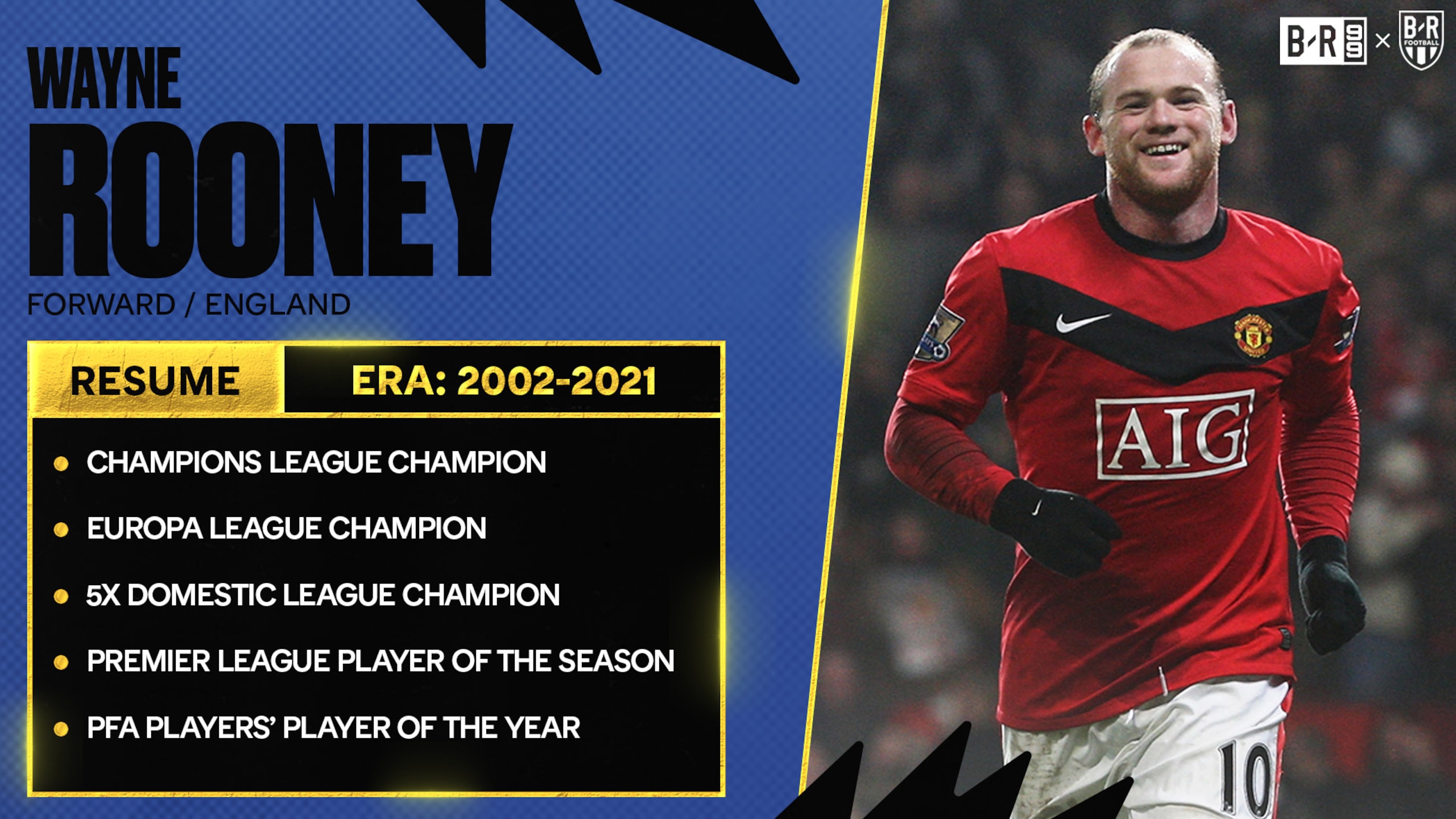
Clubs: Everton (2002-04), Manchester United (2004-17), Everton (2017-18), D.C. United (2018-19), Derby County (2020-21)
Other Notable Accolades: FIFA Club World Cup Champion; FWA Footballer of the Year
Wayne Rooney's long-range winner for Everton against Arsenal in 2002 is one of the greatest Premier League moments ever. That exuberance and fearlessness at 16 years old is not something we've seen from another teenager until Lamine Yamal's ascension in 2023, particularly on the international stage.
Rooney fused the best aspects of his English abilities to make himself an unstoppable forward. A little bit of Paul Gascoigne's dribbling magic and a pinch of Stuart Pearce's nastiness, smoothed out with the goal-scoring range of Alan Shearer.
He was hot-headed, but that fuelled him into delivering iconic moments, like the hat-trick on his Champions League debut for Manchester United or his bicycle kick against rivals Man City.
There's a question whether Rooney was as loved and revered by his own people as he should be. An undoubted world-class player whose play with Cristiano Ronaldo and Carlos Tevez measures up to any trio in history.
- Nick Akerman
Highest Top 99 Ranking: 29
72. Stanley Matthews
28 of 99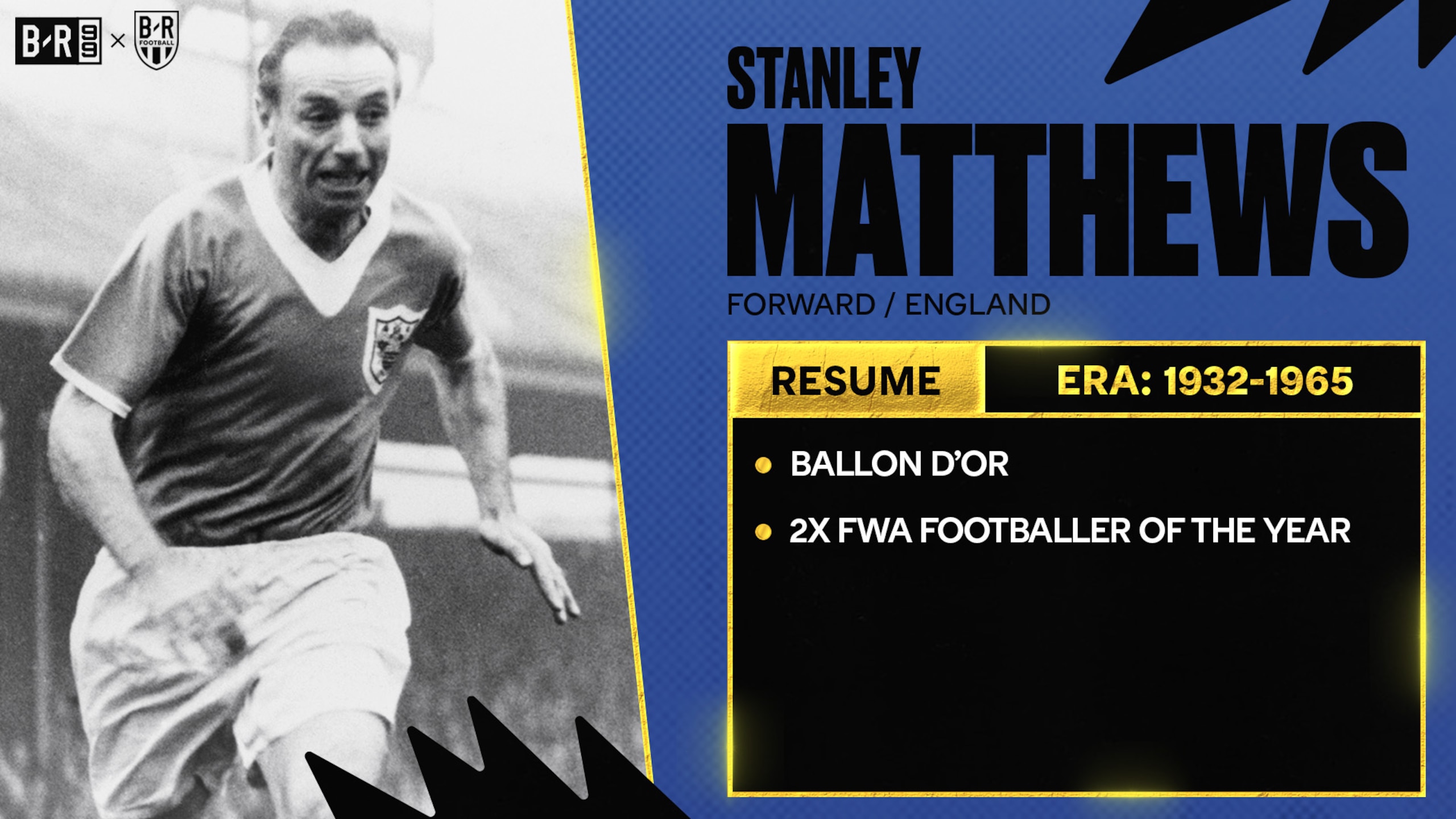
Clubs: Stoke City (1932-47), Blackpool (1947-61), Toronto City (loan, 1961), Stoke City (1961-65), Toronto City (loan, 1965)
Longevity is a common theme among the players on this list, but Stanley Matthews may be the epitome. He finally retired from football at the age of 50 after a 35-year professional career.
As Blake Morrison wrote for The Guardian in a review of The Wizard: The Life of Stanley Matthews by Jon Henderson, "[Matthews] came from a sporty family and was taught the importance of speed and stamina from an early age. Diet, too: while his teammates boozed and caroused, he ate salads, drank fruit juice, fasted every Monday and packed his cupboards with phials of vitamins."
Devastating news for the undisciplined among us, but Matthews' early adoption of the fitness influencer lifestyle clearly worked for him.
His lack of team success is the biggest sticking point on an otherwise superb career. Some of that could be attributed to the cancellation of league football from 1939 to 1946 because of World War II when Matthews would've been around his peak between 24 and 31 years old.
Matthews' only major trophy came in the 1953 FA Cup final, a game dubbed "The Matthews Final" after he provided three assists as a 38-year-old to inspire his Blackpool team to a 4-3 victory over Bolton Wanderers.
-Calum Rogers
Highest Top 99 Ranking: 45
71. Fabio Cannavaro
29 of 99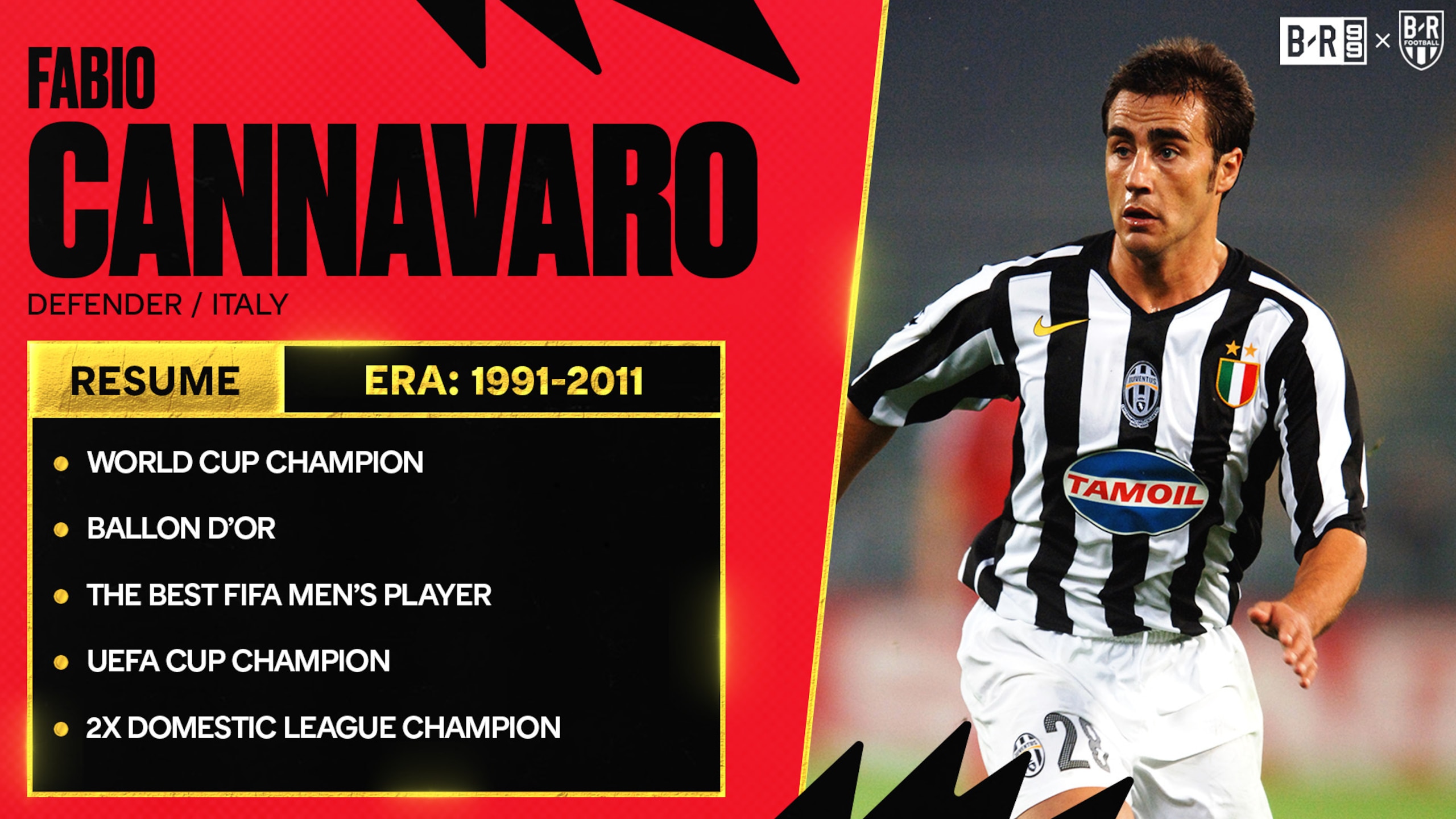
Clubs: Napoli (1991-95), Parma (1995-2002), Inter Milan (2002-04), Juventus (2004-06), Real Madrid (2006-09), Juventus (2009-10), Al Ahli Dubai (2010-11)
Other Notable Accolades: Serie A Footballer of the Year
Among a seriously impressive cabal of Italian center-backs from the late 1990s and early 2000s, Fabio Cannavaro was one of the standout talents.
His resume features time spent at some of Europe's most illustrious clubs, including Parma, Napoli, Juventus, Internazionale and Real Madrid.
His first stint with Juventus was tainted amid the Calciopoli scandal, in which two of the Serie A titles he won would later be rescinded. His time in Madrid made up for that somewhat, with the Italian claiming two La Liga titles with Los Blancos.
It was an illustrious few years for the man from Naples. Including those stripped league titles, he lifted a domestic league trophy every season from 2004-05 to 2007-08, and his greatest achievement came smack bang in the middle.
Cannavaro captained Italy to the 2006 World Cup title, putting in a particularly stunning performance in the semi-final against hosts Germany. He played every game and every minute of Italy's run to the trophy, keeping five clean sheets and conceding just twice.
That led to him being awarded the 2006 Ballon d'Or award, the first defender to win the honor for a decade. No back-line players have done so since.
-Leo Collis
Highest Top 99 Ranking: 37
70. Toni Kroos
30 of 99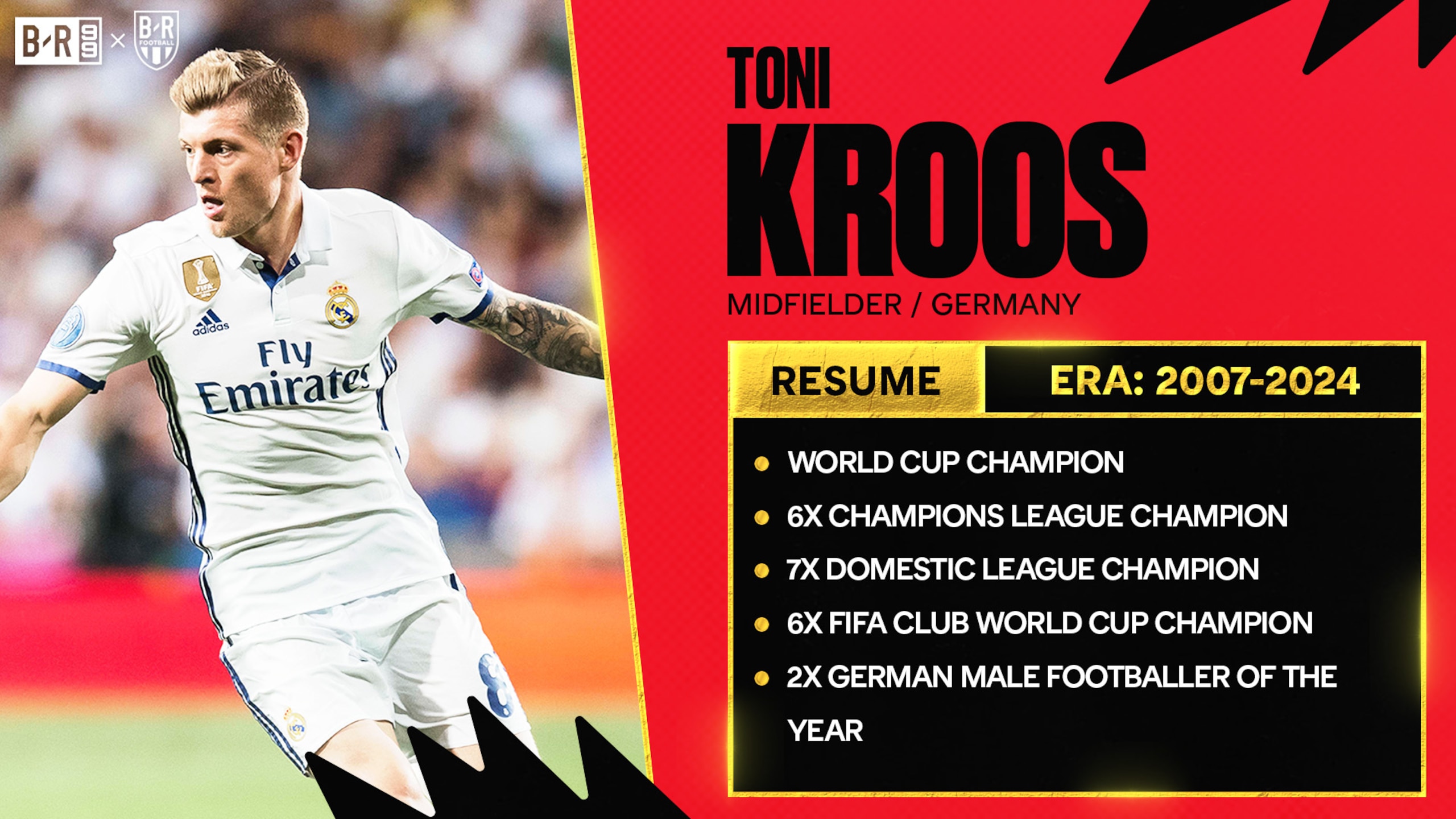
Clubs: Bayern Munich II (2007-08), Bayern Munich (2007-14), Bayer Leverkusen (loan, 2009-10), Real Madrid (2014-24)
Toni Kroos' retirement at the age of 34 in 2024 is still shocking. The German was still one of the best midfielders in the world at the time he hung up his boots, and it's easy to draw the connection between his departure and Real Madrid's failure to win a major trophy since that time.
Kroos' final match for the Spanish giants was fittingly a victory in the final of the UEFA Champions League, a competition Kroos won six times (five with Real Madrid, once with Bayern Munich). Nobody has won Europe's premier club competition more often, and only four players can match Kroos' record.
Many would happily settle for dominating European club football, but Kroos was also a key player in Germany's 2014 FIFA World Cup-winning team. He played almost every minute of every game while providing five goal contributions, and he was named in the team of the tournament following his country's 1-0 victory over Argentina in the final.
-Calum Rogers
Highest Top 99 Ranking: 25
69. Karim Benzema
31 of 99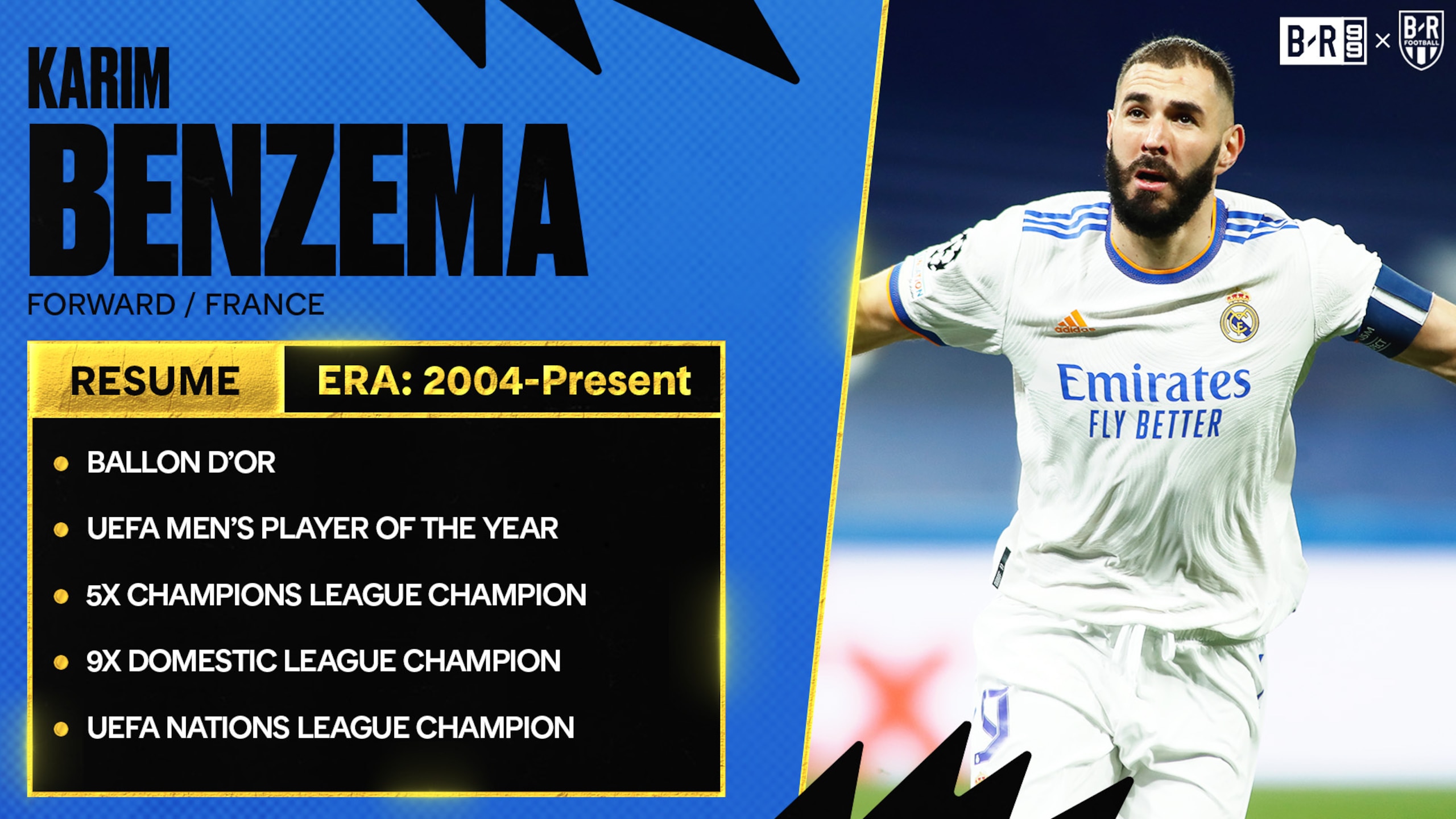
Clubs: Lyon II (2004-06), Lyon (2004-09), Real Madrid (2009-23), Al-Ittihad (2023-26), Al-Hilal (2026-Present)
Other Notable Accolades: 5x FIFA Club World Cup Champion; 2x La Liga Best Player; Ligue 1 Male Player of the Year; 4x French Player of the Year
The hard work finally paid off for Karim Benzema in 2022 when he was awarded the Ballon d'Or for his incredible season with Real Madrid and France.
So often considered the third player in the attacking line alongside Cristiano Ronaldo and Gareth Bale, his blend of deadliness in front of goal and playmaking quality reaped the reward he deserved after years of excellent service.
He flaunts a little bit of everything, and is always willing to work hard to get on the ball, whether that's by dropping deep or taking up wider positions.
The 38-year-old is still going strong in Saudi Arabia, where his brilliantly timed runs perplex defenders as powerfully as they did years ago in the Spanish capital.
- Nick Akerman
Highest Top 99 Ranking: 21
68. Peter Schmeichel
32 of 99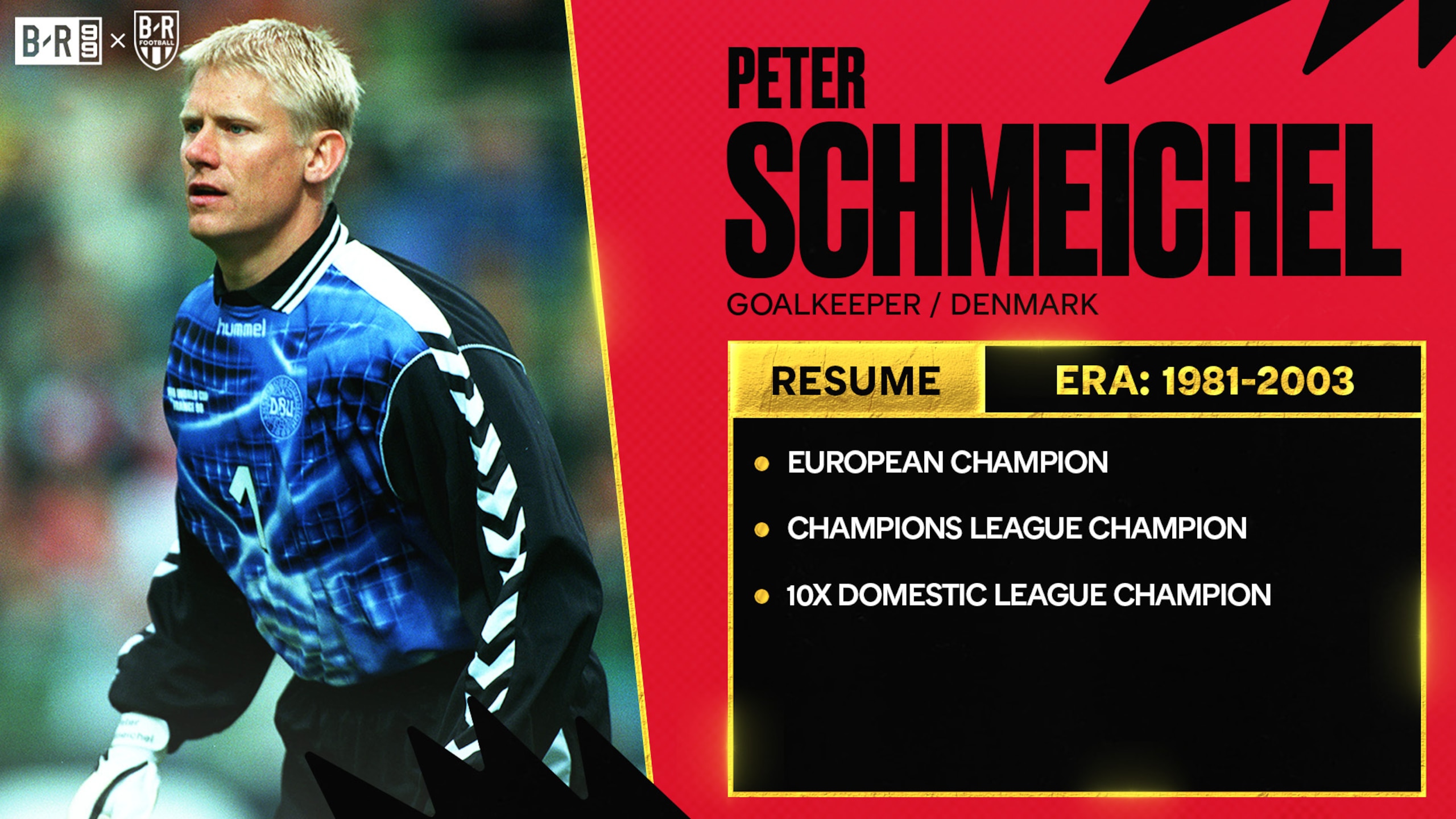
Clubs: Gladsaxe-Hero (1981-84), Hvidovre (1984-87), Brøndby (1987-91), Manchester United (1991-99), Sporting CP (1999-2001), Aston Villa (2001-02), Manchester City (2002-03)
The sight of Peter Schmeichel cartwheeling at the Camp Nou as Manchester United secured the treble with a last-gasp Champions League final win against Bayern Munich will be embedded into the brain of a certain generation of fans. Not least because a man of his size and frame shouldn't be able to move like that.
The Great Dane was an incredibly agile shot stopper and a tough force to overcome in the box. One-on-ones were never straight forward against Schmeichel, his star jump saving technique acting as a tricky last line of defence. He was also a master of cutting down the angle and puffing his body out to look huge in an attempt to save his team.
Schmeichel's tenure with United may have ended abruptly after the greatest triumph in club history in 1999, but he's still considered the No. 1 goalkeeper in Premier League history by supporters and rivals alike.
- Nick Akerman
Highest Top 99 Ranking: 43
67. Javier Zanetti
33 of 99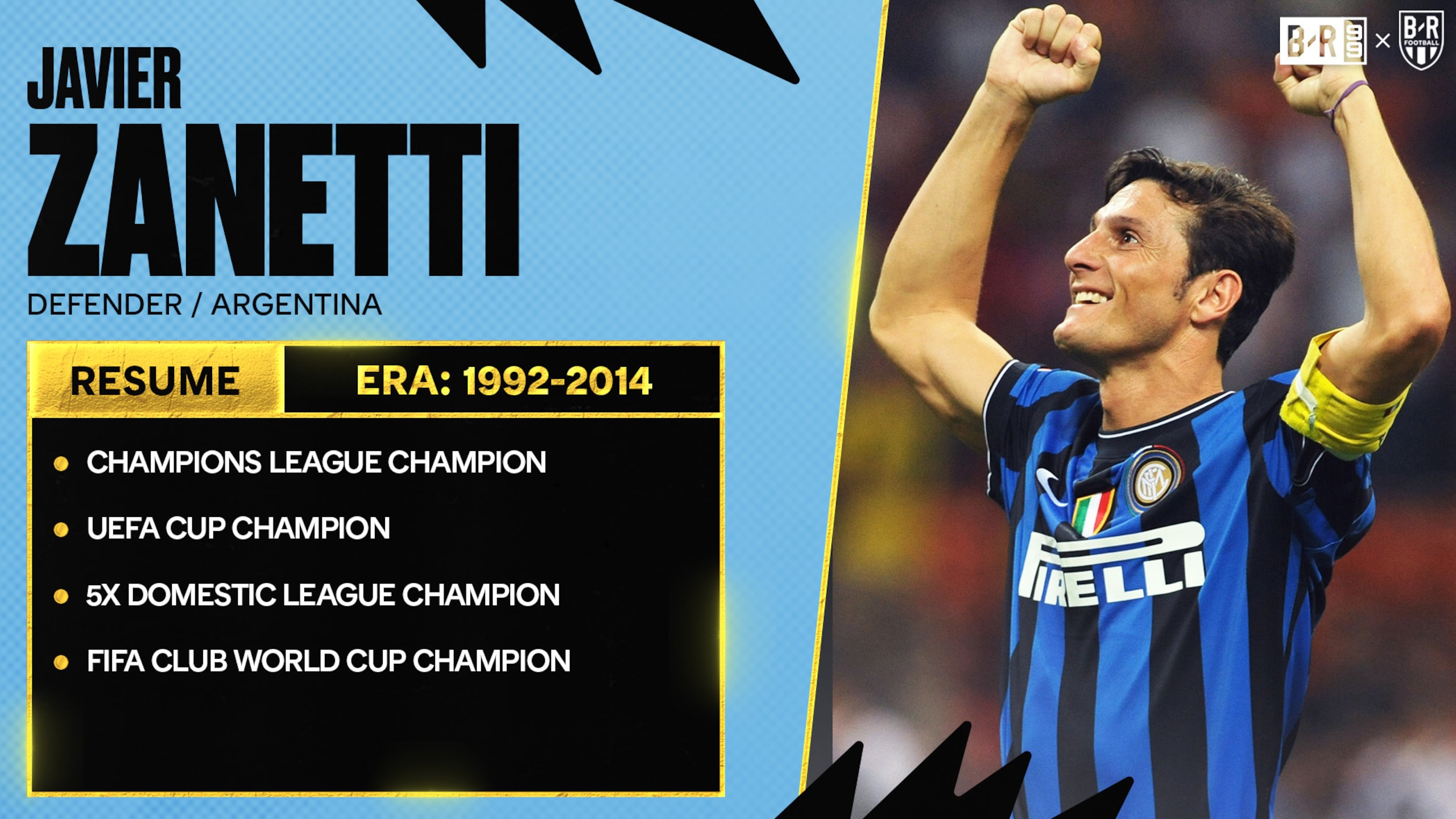
Clubs: Talleres (1992-93), Banfield (1993-95), Inter Milan (1995-2014)
Javier Zanetti is one of the most complete players football has ever seen. Featuring predominantly on both flanks as a full-back and in central midfield, the Argentinian became renowned for his athleticism and durability in a career that saw him play in almost every game over 19 years in Serie A with Inter Milan.
With 858 games played in all competitions, he is by far the club's leading appearance-maker, and he holds the Serie A record for most appearances by a non-Italian player.
While he rarely provided contributions in the attacking third, Zanetti maintained his record of availability alongside unerring consistency. He was a key factor in Inter's success during his time at the club, which includes five straight Serie A titles (including one that was awarded to Inter following a match-fixing scandal involving title rivals Juventus).
Zanetti was also part of a UEFA Champions League-winning squad in 2010 at age 35 in a campaign that saw him play every minute of the tournament.
-Calum Rogers
Highest Top 99 Ranking: 48
66. Frank Lampard
34 of 99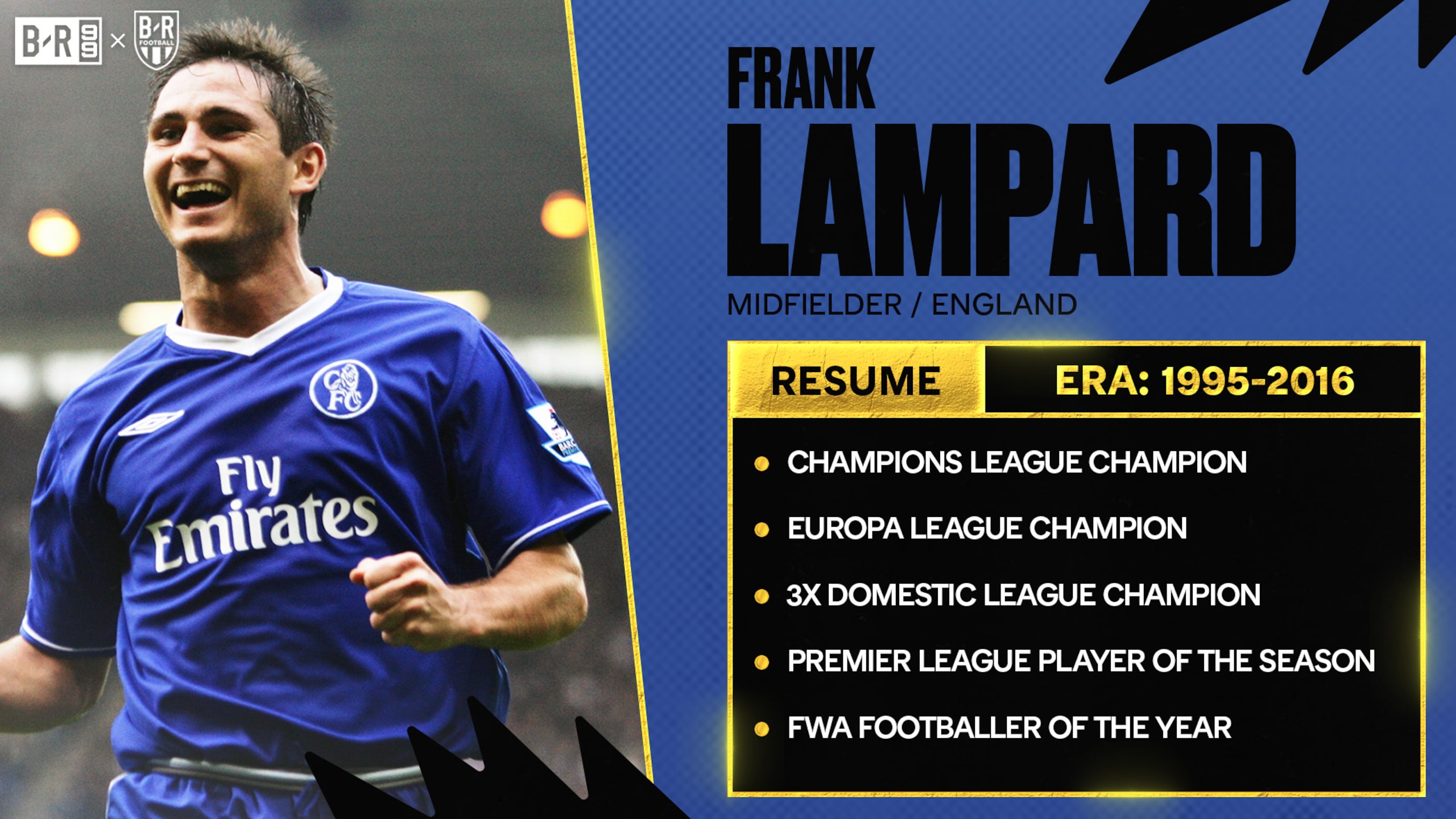
Clubs: West Ham United (1995-2001), Swansea City (loan, 1995-96), Chelsea (2001-14), Manchester City (2014-15), New York City FC (2015-16)
Three names that stir a pretty difficult debate: Frank Lampard, Paul Scholes and Steven Gerrard.
England produced all three in the same era and never made it work. The fact they played for rival clubs also drew tiring comparisons, with Lampard often overlooked because he wasn't as technical as Scholes or as blood-and-guts heroic as Gerrard.
Lampard probably deserves more respect than he gets. He was a brilliant tone setter for Chelsea and England who stepped up in big moments. He was also a better goalscorer than Scholes and Gerrard, a player whose timing can still be noted as the gold standard of making meaningful runs into the box.
He worked hard, played with poise and propelled Chelsea to every title worth winning.
- Nick Akerman
Highest Top 99 Ranking: 49
65. Harry Kane
35 of 99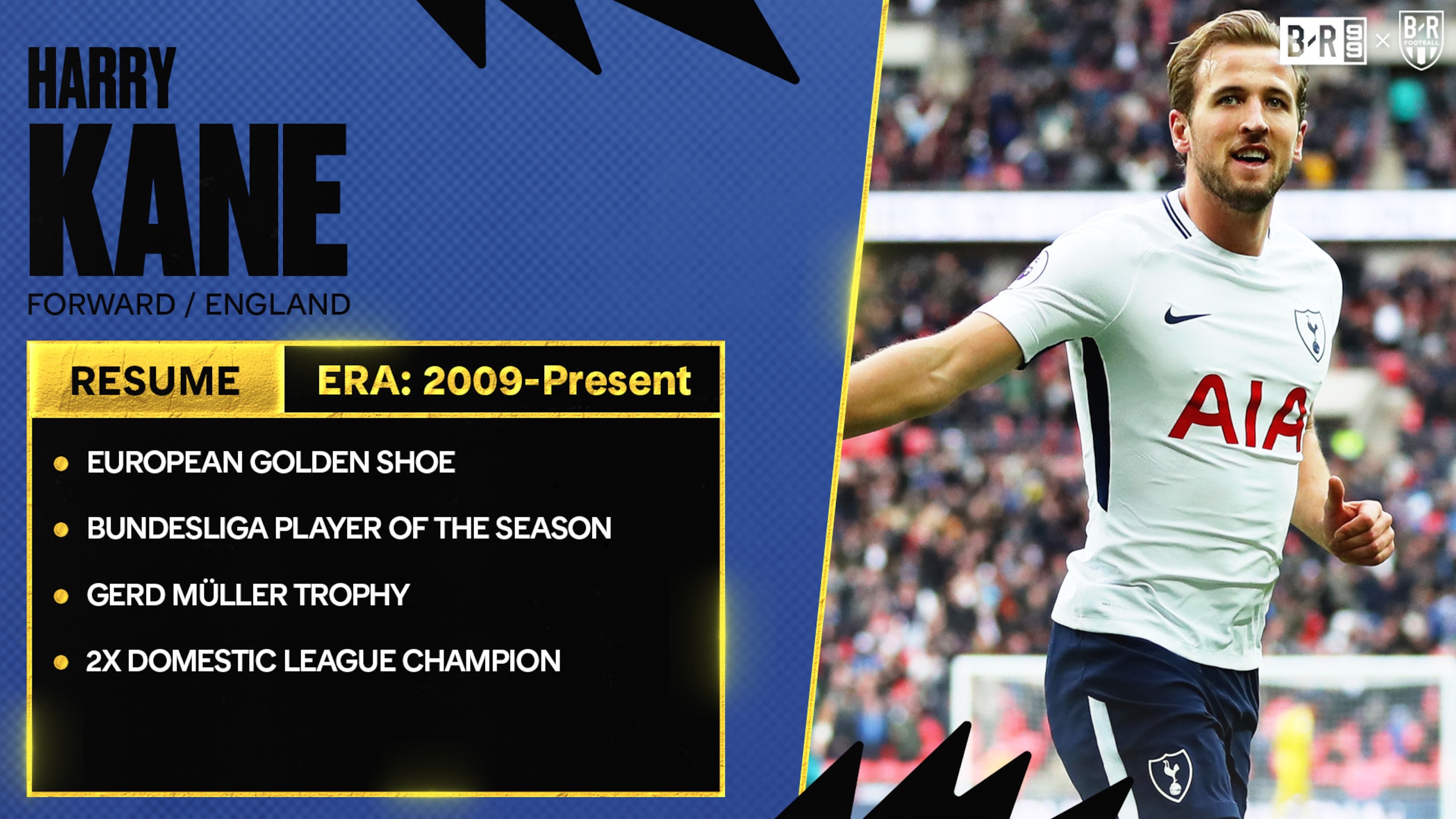
Clubs: Tottenham Hotspur (2009-23), Leyton Orient (loan, 2011), Millwall (loan, 2012), Norwich City (loan, 2012-13), Leicester City (loan, 2013), Bayern Munich (2023-Present)
Harry Kane's career threatened to be defined by what could've been. During a nine-year spell as a first-team regular with boyhood club Tottenham Hotspur, the team never managed to win a major trophy.
Kane is the club's all-time top scorer with 280 goals, but his excellence also unfairly saw him become the symbol of the team's failures. His international career with England has followed a similar path, with the team reaching the final four or better in three major tournaments, and nobody scored more goals than him in two of those tournaments.
A $110 million move to German giants Bayern Munich has seen Kane shake the "nearly man" tag somewhat, winning two Bundesliga titles while scoring 146 goals in 147 appearances for the club in all competitions. Kane has also flourished as a creator in Munich surrounded by better teammates, and there are signs his star could actually continue to rise well into the 32-year-old's latter years.
-Calum Rogers
Highest Top 99 Ranking: 23
64. Dino Zoff
36 of 99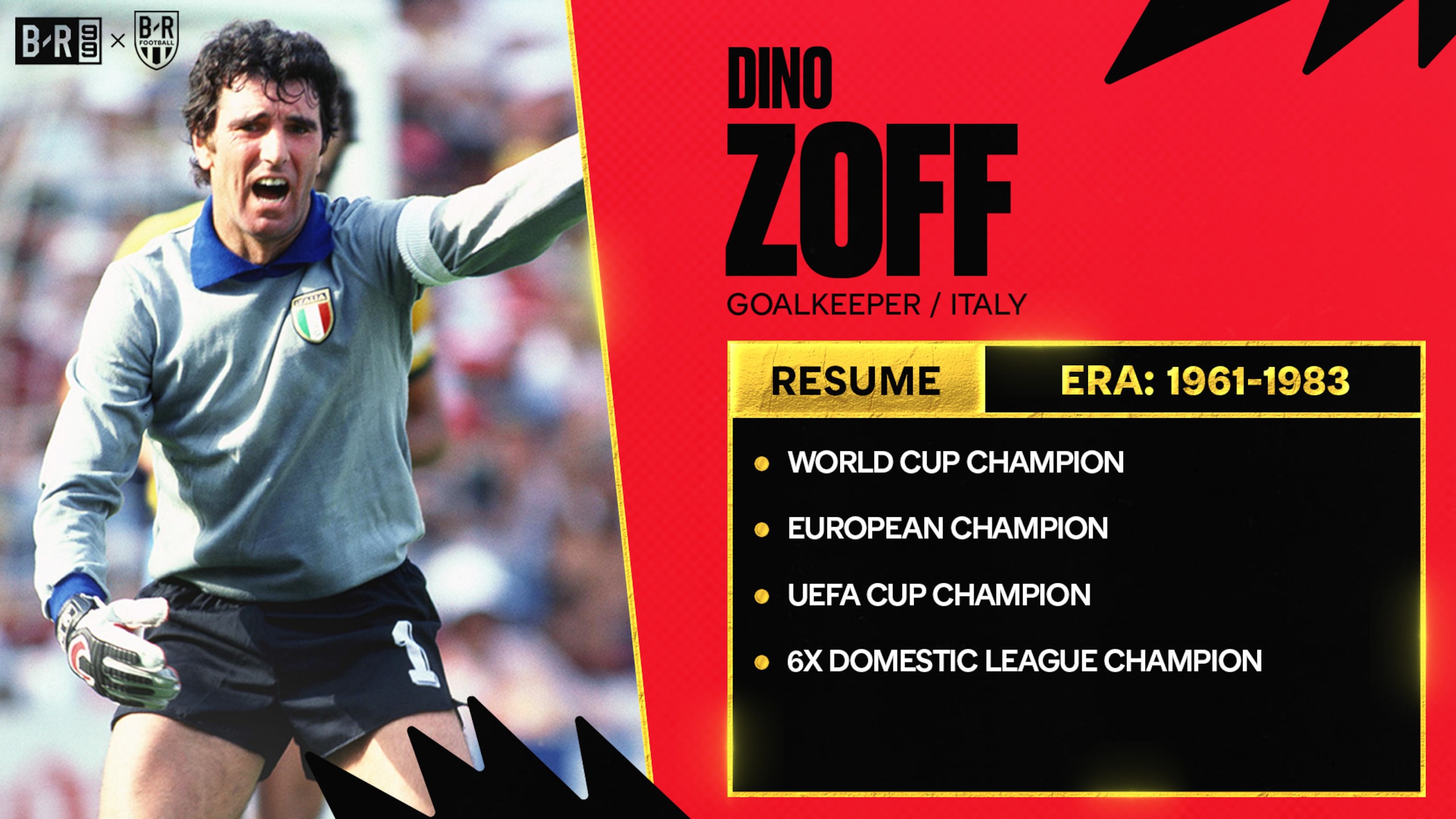
Clubs: Udinese (1961-63), Mantova (1963-67), Napoli (1967-72), Juventus (1972-83)
Goalkeepers tend to have more longevity in top-level professional football than players in other positions.
In fact, of the 10 oldest players to have appeared at a World Cup prior to the 2026 competition, eight donned gloves.
One of them, Italy legend Dino Zoff, is the oldest player to have lifted the trophy, doing so at 40 years and 33 days old.
That came at the 1982 tournament in Spain, 14 years on from winning the European Championships in his home nation. He remains the only Italian player to have won both.
During the triumphant World Cup run, Zoff was not just a veteran leader; he was one of the Azzurri's star players. Crucial saves in the group stages helped Italy scrape through, and he made a heroic last-minute save against Brazil to send his side to the semifinal.
International success is one thing, but Zoff also packed his trophy cabinet with medals from club football. He won six Serie A titles with Juventus, as well as the Coppa Italia twice and the UEFA Cup.
Zoff was a huge player for club and country in a senior career that spanned 22 years.
-Leo Collis
Highest Top 99 Ranking: 39
63. Steven Gerrard
37 of 99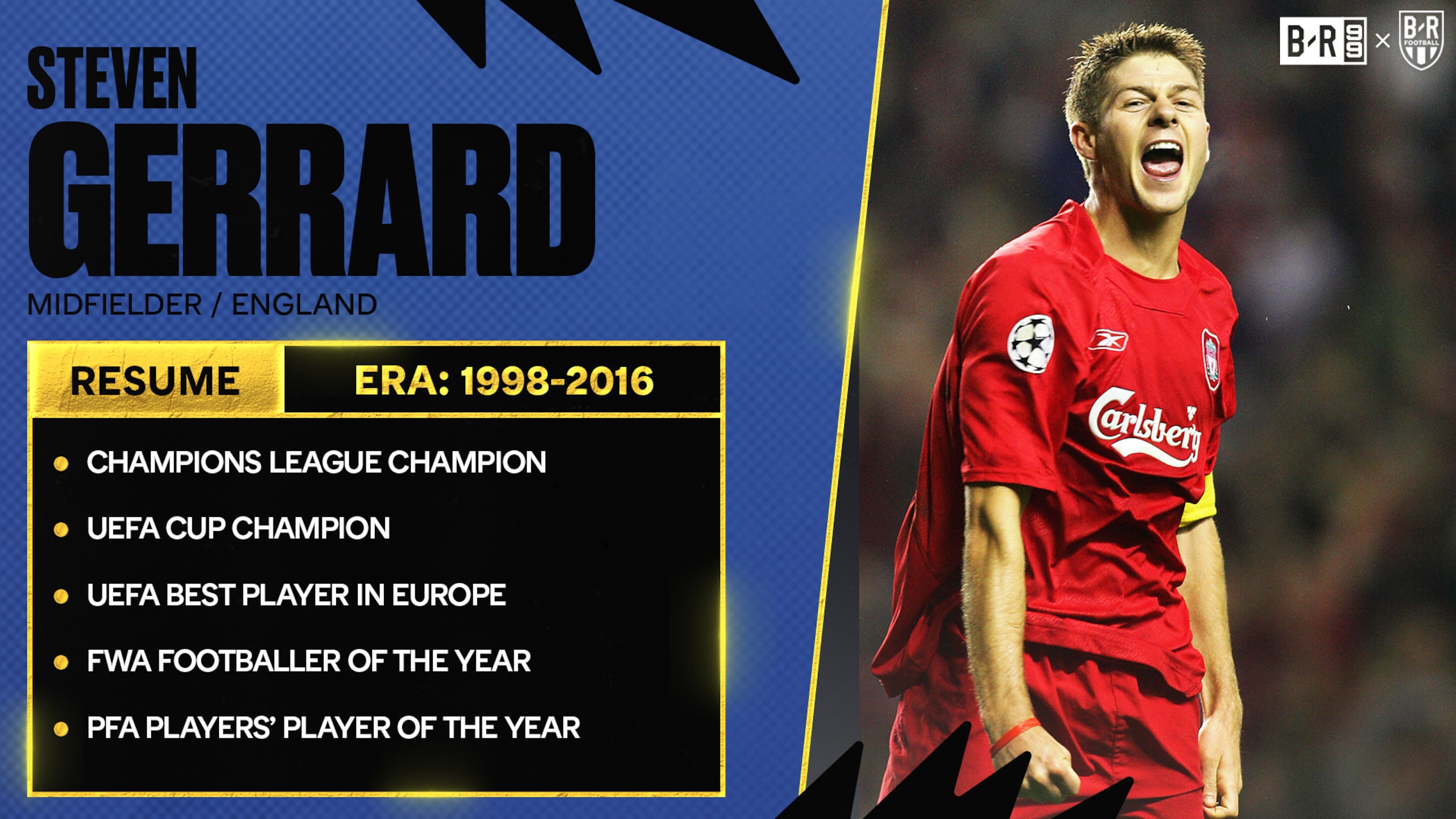
Clubs: Liverpool (1998-2015), LA Galaxy (2015-16)
Perhaps the only thing preventing Steven Gerrard's ascent up this list is a Premier League title.
The Liverpool legend won practically every other trophy available to him during a 17-year senior career with his boyhood club, and he played a talismanic role in the Reds' historic 2005 Champions League campaign and the 2006 FA Cup final.
The club captain was the heartbeat for Liverpool since his true breakout season in 2000-01, representing the side with passion, tenacity, and enduring class up until his departure in 2015.
Gerrard clocked up 710 appearances in all competitions for the Reds, notching 186 goals from midfield. That he sits sixth on the club's all-time scoring list despite playing in a deeper position than others on the chart demonstrates just how effective he was from the engine room.
Among those goals were thunderous hits, game-clinching strikes, and beautifully worked team efforts. He also contributed 156 assists, including sumptuous through balls that would make opponents and onlookers go weak at the knees.
His effortless reading of the game, willingness to crunch into tackles, and ability to strike up a quick rapport with teammates should not be overlooked, either.
Over a decade on from his Liverpool departure, his name is still sung around Anfield with gusto—and it likely will be for decades to come.
-Leo Collis
Highest Top 99 Ranking: 27
62. Rivellino
38 of 99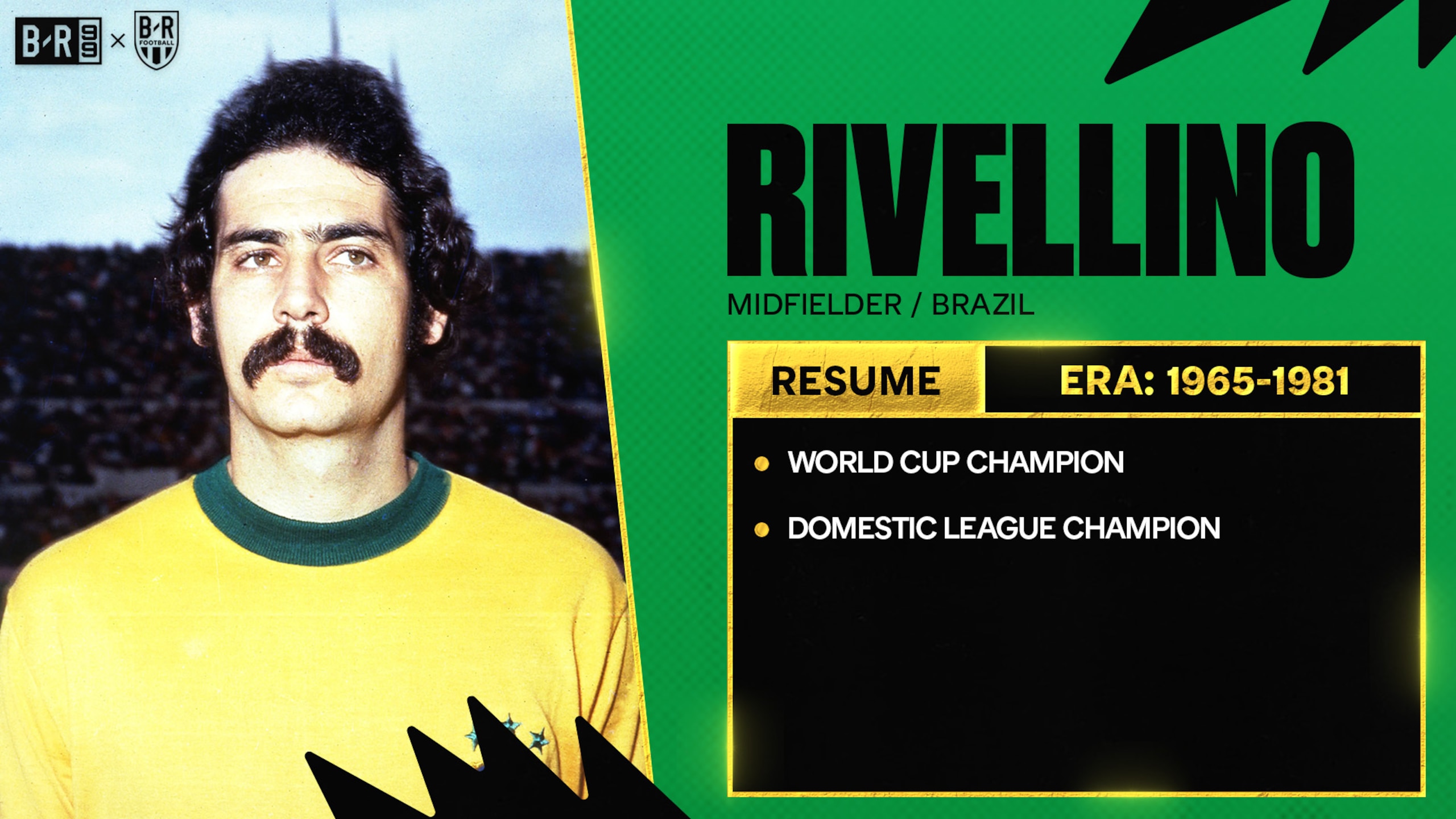
Clubs: Corinthians (1965-74), Fluminense (1975-78), Al-Hilal (1978-81)
One of the game's first free-kick specialists, Rivellino became known as "Patada Atómica" in Brazil, or the Atomic Kick. While such technique would be hyper-analysed by modern-day sports science, the 1970 FIFA World Cup winner offered a more simple explanation.
"To start with you've got to be able to really whack the ball," Rivellino told The Guardian in 2002. People often ask me how I was able to kick a ball so hard, and the answer is, I don't know, I hit the thing like anybody else, it's just that my kicks have a greater velocity. It's an innate, God-given talent, something I could do since I was a kid.
Rivellino's free-kick against Czechoslovakia in 1970 was perhaps the most notable of his wonder strikes, with the sheer power enough to beat Ivo Viktor despite being quite close to the goalkeeper.
-Calum Rogers
Highest Top 99 Ranking: 33
61. Virgil van Dijk
39 of 99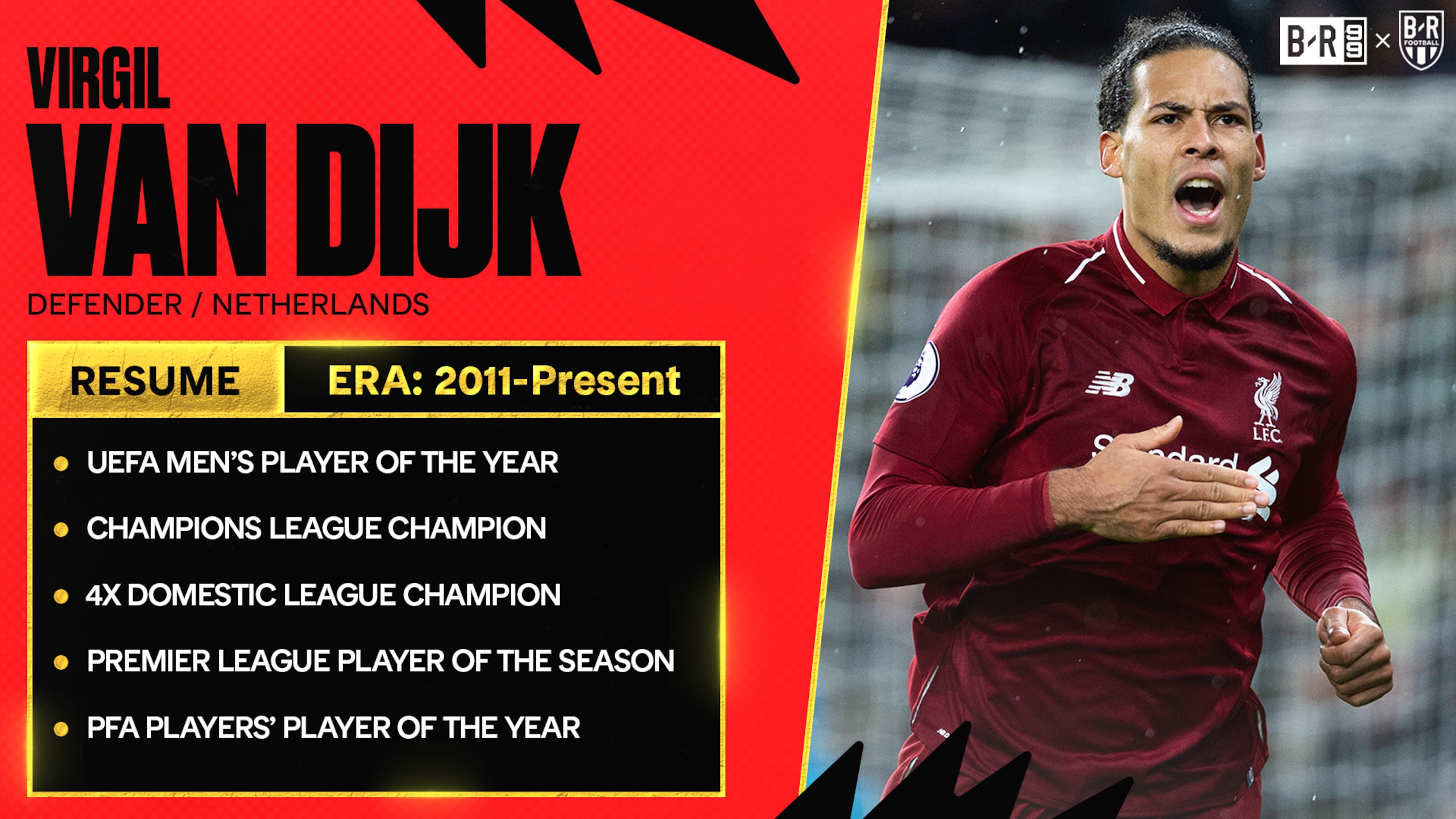
Clubs: Groningen (2011-13), Celtic (2013-15), Southampton (2015-18), Liverpool (2018-Present)
Other Notable Accolades: FIFA Club World Cup Champion
Virgil van Dijk was once the most expensive defender in football history, making a $100 million move from Southampton to Liverpool in the 2018 January transfer window.
In hindsight, that fee looks like an absolute steal for one of the most dominant center-backs of his generation.
Van Dijk was a crucial piece of the puzzle as Jurgen Klopp built a Liverpool side that would go on to win the Champions League and later the club's first English league title in 30 years.
The big Dutchman provided a towering presence in the back line, which was often exposed during the Reds' rapid counter-attacks. His calmness under pressure and stunning reading of the game made him nearly impossible to dribble past in one-on-one situations.
He contributed some huge goals, too, including five in the Reds' triumphant 2019-20 season and the winner in the 2024 Carabao Cup final.
Of course, under Arne Slot, he'd achieve more success, captaining Liverpool to the Premier League title in 2024-25.
There's still time for Van Dijk to add to his Anfield legacy, but even if he doesn't, he'll still go down as one of the finest players to ever put on a Red shirt.
-Leo Collis
Highest Top 99 Ranking: 21
60. Bobby Moore
40 of 99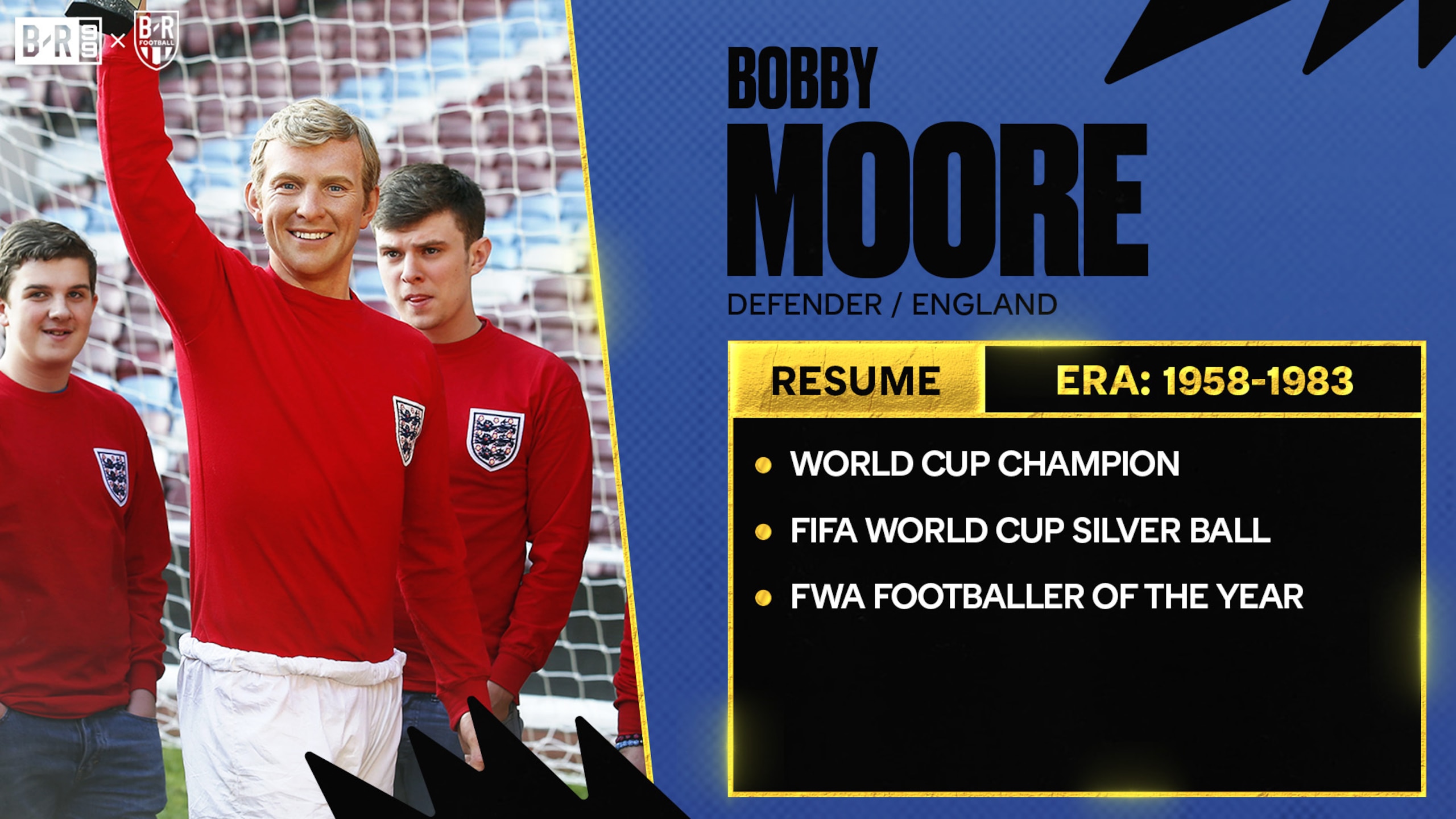
Clubs: West Ham United (1958-74), Fulham (1974-77), San Antonio Thunder (loan, 1976), Seattle Sounders (1978), Herning Fremad (1978), Eastern (1981), Carolina Lightnin' (1983)
Bobby Moore is the only Englishman to captain the national team to a FIFA World Cup. On its own, that fact is enough to secure an iconic legacy.
But Moore was not just the leader of a great team; he was also one of the best players of his era. Brazilian legend Pelé named Moore as the best centre-back he ever saw in a 2017 interview with FourFourTwo.
Teammate Geoff Hurst, who scored a hat-trick in the 1966 World Cup final, told The Guardian, "In the big games you could guarantee that he would play even better. He lived for those games and he would nearly always be the best player on the field."
Even in a losing effort against Brazil's Team of the Century in 1970, Moore's imperious tackle on Jairzinho when left one-on-one with one of the quickest and most skilful wingers of his era is seen as a perfect example of his quality.
Highest Top 99 Ranking: 29
59. Giuseppe Meazza
41 of 99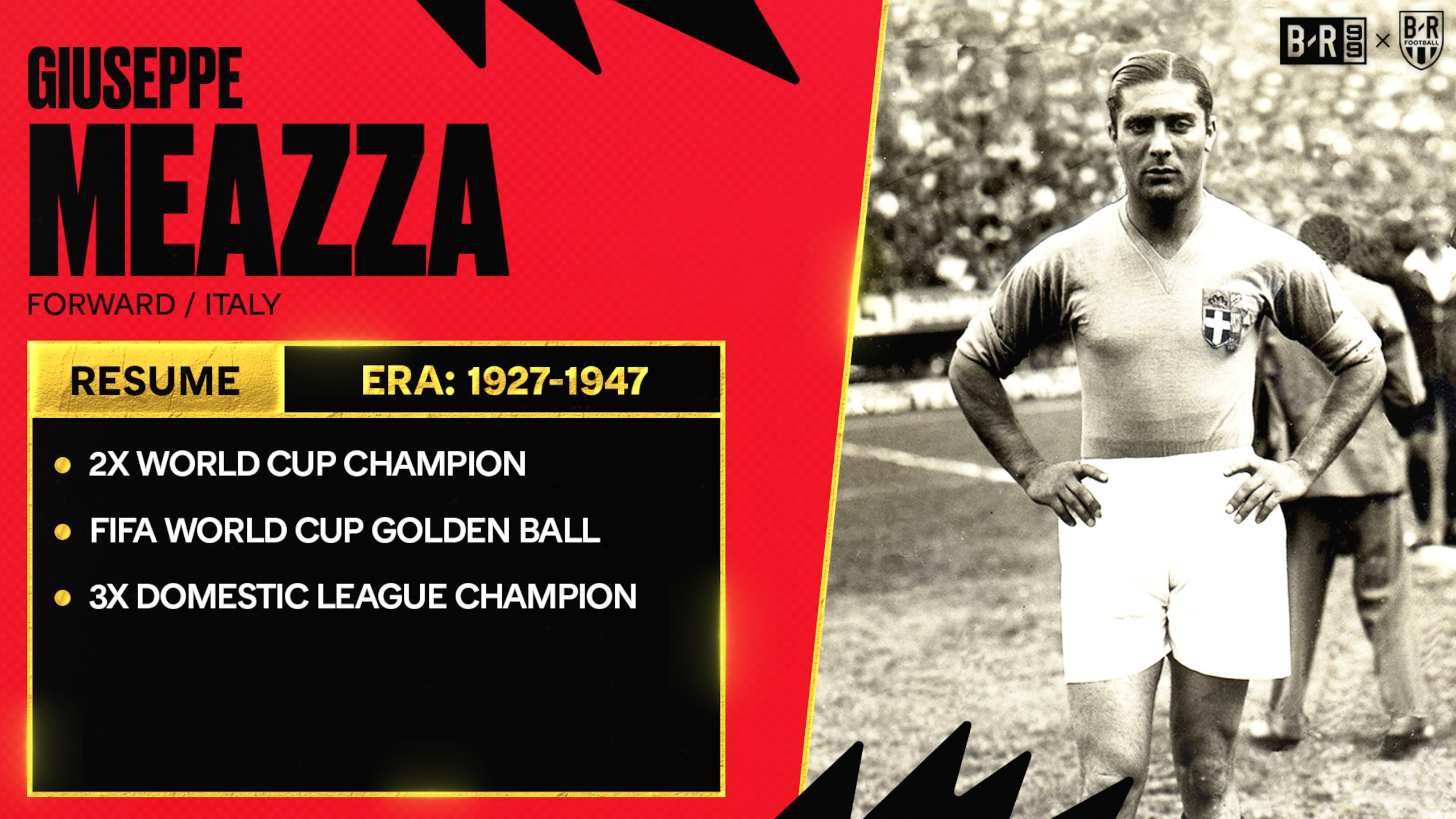
Clubs: Inter Milan (1927-40), AC Milan (1940-42), Juventus (1942-43), Varese (1944), Atalanta (1945-46), Inter Milan (1946-47)
Giuseppe Meazza was the star of two FIFA World Cup-winning teams in 1934 and 1938. As a player, Mike Whittaker described Meazza as "ahead of his time" for ESPN.
"He was a complete footballer," Whittaker wrote. "... [He] had a truly inspiring vision for the game across the field of play, and by playing with both feet, he was a brilliant passer of the ball. All these skills meant he could not only score countless goals, but he also provided many for his teammates too."
As an athlete, Meazza was arguably somehow behind his time, though. He became renowned for his alcohol abuse, and was known to spend nights before games in brothels.
Meazza was revered to such an extent that one of the world's most iconic stadiums, the San Siro in Milan, was renamed in his honor.
-Calum Rogers
Highest Top 99 Ranking: 15
58. Sócrates
42 of 99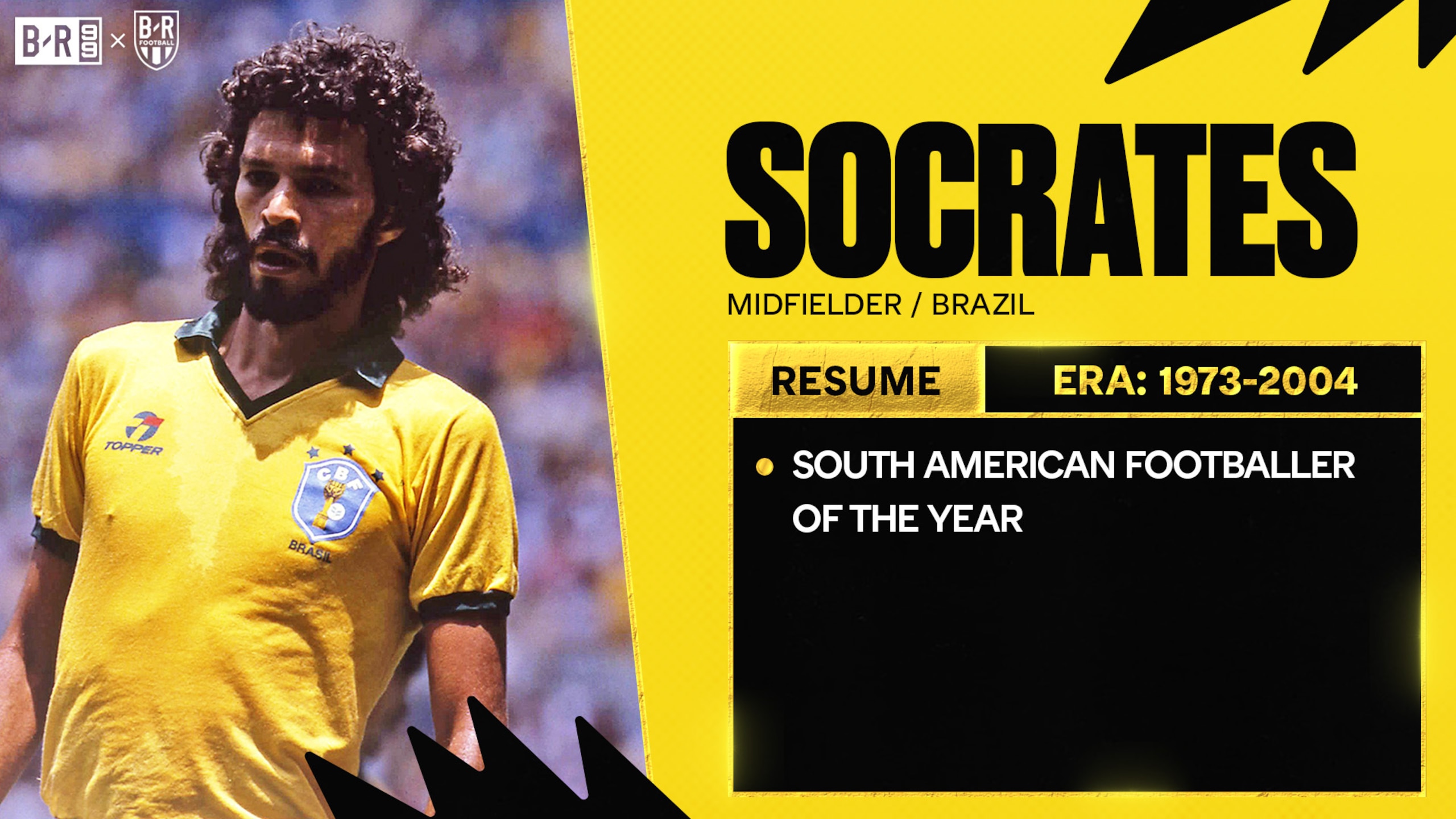
Clubs: Botafogo-SP (1973-78), Corinthians (1978-84), Fiorentina (1984-85), Flamengo (1986-87), Santos (1988-89), Botafogo-SP (1989), Garforth Town (2004)
Few players cultivated as iconic a look as Socrates, the Brazilian midfielder well-recognized for a beard-and-headband combo that oozed cool.
But aside from his undoubted aura and well-documented intellectual strengths—he graduated from the University of São Paulo with a medical degree and was keenly involved in politics—he was also a fantastic footballer.
According to Meu Timão, he scored 173 goals in 298 games for Corinthians, with whom he won three Campeonato Paulistas during a seven-year stay.
But it was on the World Cup stage where he truly earned global attention. His cerebral qualities shone through on the pitch, dictating games, playing passes few others would see, and linking play with an unmatched elegance.
While he didn't win an international title with Brazil, he was a headline player at both the 1982 and 1986 World Cups. He scored four goals across the two tournaments, starting every single game and captaining the 1982 squad.
Doctor Socrates endures as one of the faces of classic Brazil teams, which is no mean feat for a nation that has boasted talent in abundance.
-Leo Collis
Highest Top 99 Ranking: 24
57. Gareth Bale
43 of 99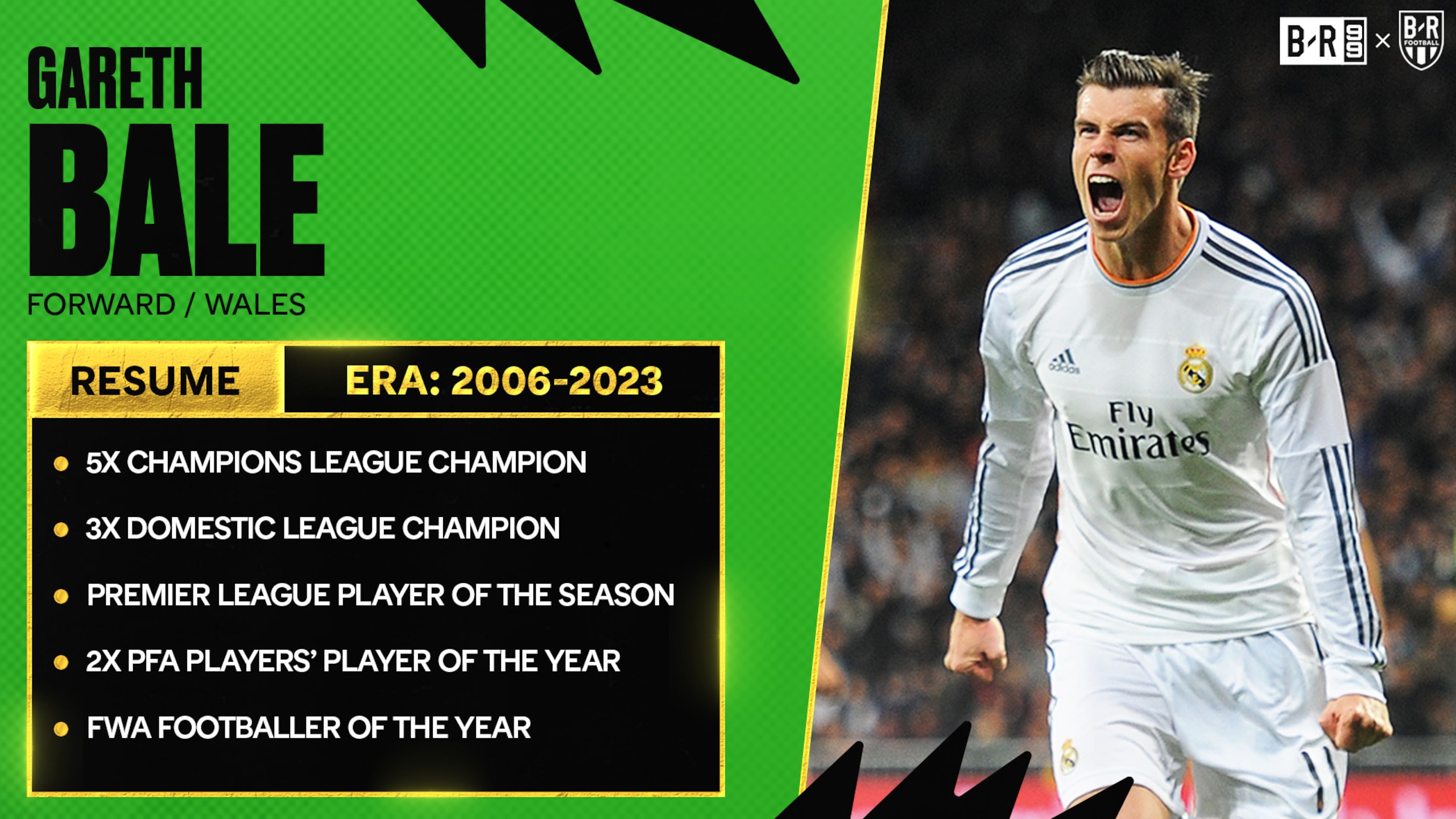
Clubs: Southampton (2006-07), Tottenham Hotspur (2007-13), Real Madrid (2013-22), Tottenham Hotspur (loan, 2020-21), Los Angeles FC (2022-23)
Other Notable Accolades: 3x FIFA Club World Cup Champion; 6x Welsh Male Footballer of the Year
"Wales. Golf. Madrid. In that order."
One of the most iconic photos of Gareth Bale's career, that of him holding a Welsh flag bearing that quote alongside national teammates, both endeared and vilified him in certain quarters.
At the time, Bale was under fire for struggling to maintain his fitness and performances for Real Madrid, but he was an icon in Wales even before leading his country to UEFA Euro 2020 on that night.
While true that his time in Madrid had disappointments, Bale's career highlight reel is formidable. The winger played a role in five UEFA Champions League victories in the Spanish capital, with his overhead kick against Liverpool in the 2018 final a perfect encapsulation of his brilliance.
As the flag indicated, Bale arguably went to another level on the international stage. Accompanied largely by journeyman teammates, Bale led Wales' run to the Euro 2016 semifinals at his peak, with his size and running power alone enough to cause even the best teams problems.
-Calum Rogers
Highest Top 99 Ranking: 23
56. Paul Scholes
44 of 99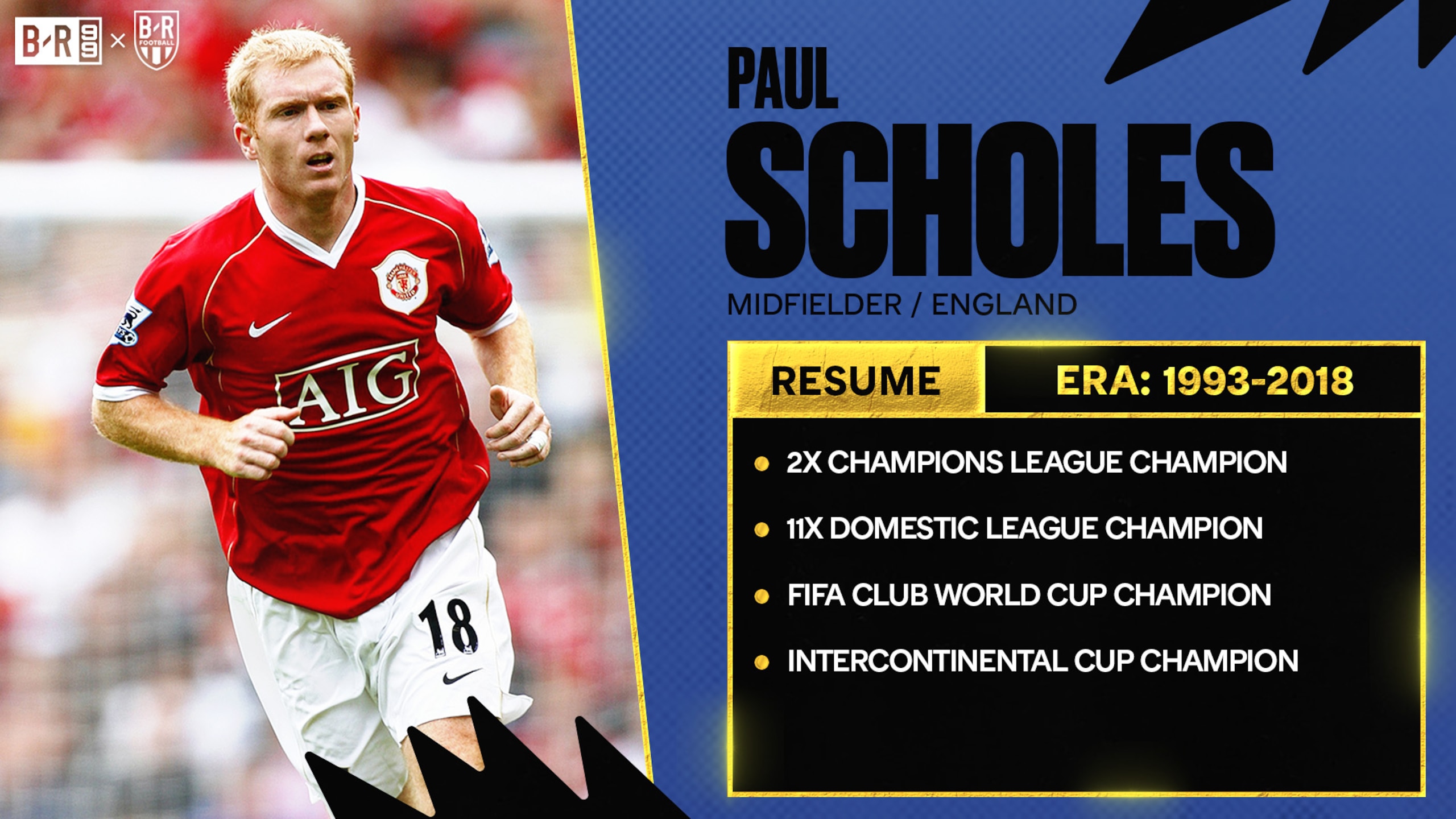
Clubs: Manchester United (1993-2011), Manchester United (2012-13), Royton Town (2018)
What do Zinedine Zidane, Xavi Hernández, Pep Guardiola and Pelé have in common?
They have all publicly stated that Paul Scholes was either the best, or one of the best midfielders in the history of the sport. Zidane even earmarked the Man United and England great as the toughest opponent he ever faced. That's incredible praise from a more than qualified source.
Scholes' long-range passing ability was second to none. He could switch play with pinpoint accuracy, often setting the tempo with passes that would set the likes of Ryan Giggs, David Beckham or Cristiano Ronaldo free on the wings.
He famously couldn't tackle, but it didn't matter, as Sir Alex Ferguson balanced things by having players in the build of Roy Keane and Nicky Butt alongside him. That stability allowed Scholes to make the ball his own and play a prolonged part of the Red Devils becoming one of the most revered clubs in footballing history.
If you ever get the chance to catch him in a Legends match, do it. To this day, he could still crush an ant from the other side of the field.
- Nick Akerman
Highest Top 99 Ranking: 21
55. Mohamed Salah
45 of 99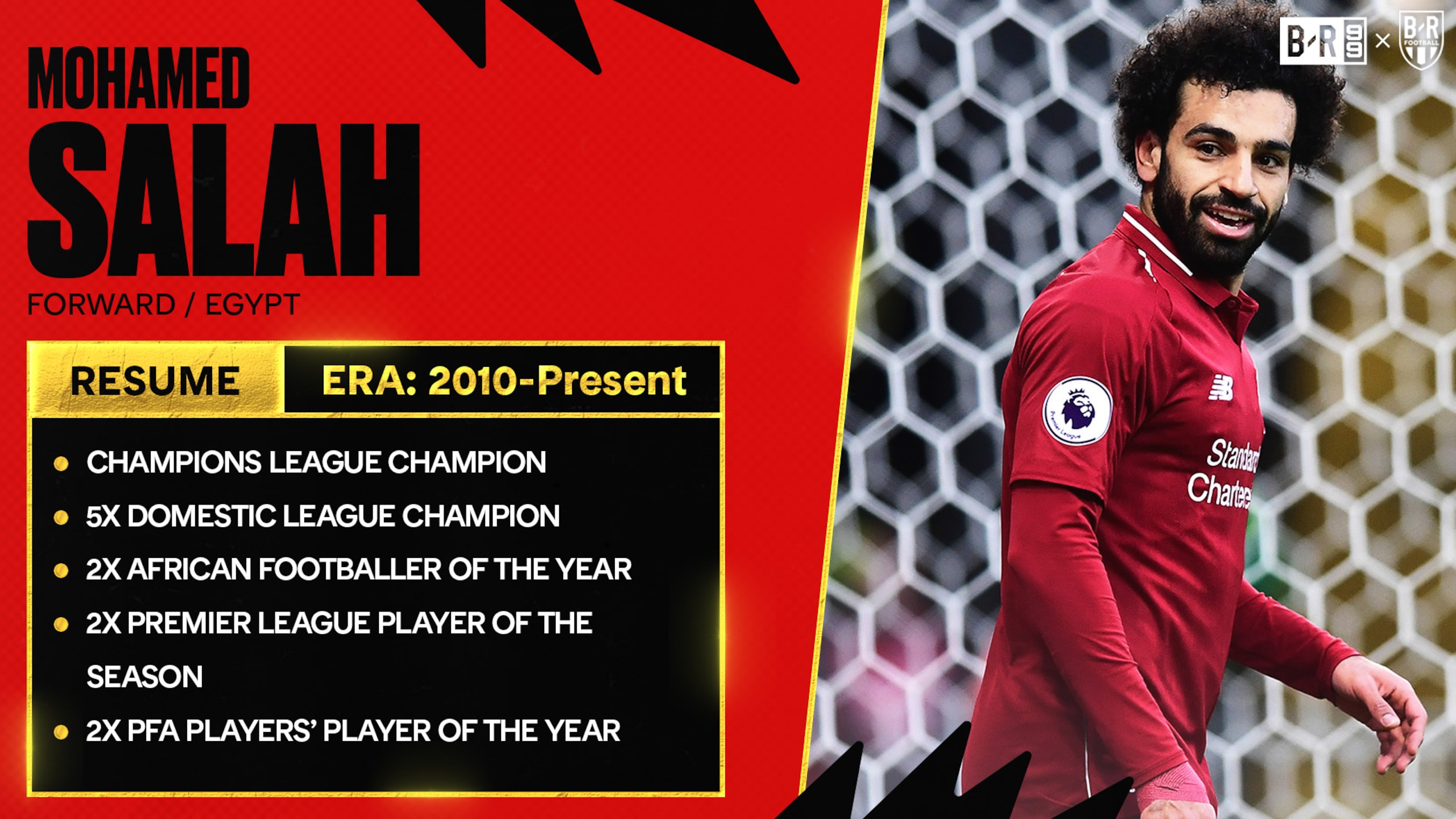
Clubs: Al-Mokawloon (2010-12), Basel (2012-14), Chelsea (2014-16), Fiorentina (loan, 2015), Roma (loan, 2015-16), Roma (2016-17), Liverpool (2017-Present)
Other Notable Accolades: FIFA Club World Cup Champion; 3x FWA Footballer of the Year
Mohamed Salah might have thought his Premier League career was over after an ill-fated move to Chelsea in 2014. However, he ended up becoming one of the finest players to ever grace the division.
The Egyptian King arrived at Liverpool in 2017 and took no time to start smashing in goals at will. He bagged 32 in 36 top-flight games for the Reds in his first season with the club, eventually picking up four Golden Boots during his league career in England.
His efforts helped deliver the Reds' first Premier League title in 30 years in 2019-20, and he almost single-handedly brought another in 2024-25. On top of that, he added a Champions League trophy, an FA Cup, two League Cups, a UEFA Supercup, and a Club World Cup during nine years at Anfield.
Salah is the highest-scoring African player in Premier League history and fourth on the division's all-time goals list. He's also Liverpool's third-highest scorer in the club's storied existence, managing a preposterous 257 goals and 123 assists in 442 games in all contests.
The winger's electric pace, persistence, and petrifying dribbling ability have been so difficult for defenders to deal with, and his appetite for success has ensured his name is etched into Liverpool folklore.
-Leo Collis
Highest Top 99 Ranking: 20
54. Raúl
46 of 99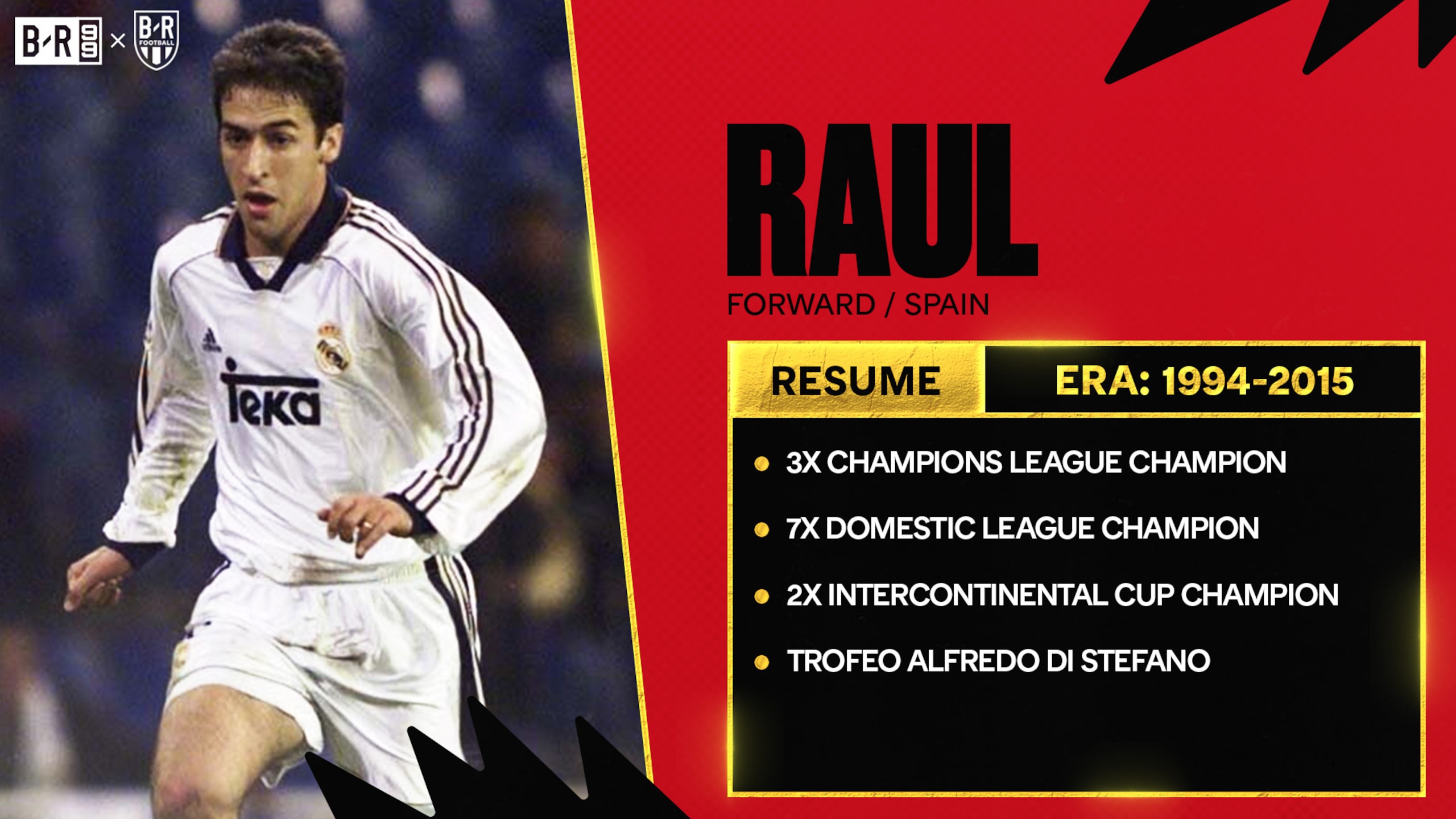
Clubs: Real Madrid C (1994), Real Madrid B (1994), Real Madrid (1994-2010), Schalke 04 (2010-12), Al Sadd (2012-14), New York Cosmos (2014-15)
Other Notable Accolades: FIFA Club World Cup Champion; 3x FWA Footballer of the Year
"The most intelligent player I've played against" was the assessment of Raúl Gonzalez by Rio Ferdinand, then one of the world's finest defenders, in an interview with The Independent's Simon Hart.
Raúl's ability as a goal scorer made him a threat for any defender — the Spaniard is the third-highest goal scorer in Real Madrid's history and fifth in UEFA Champions League goals — but Ferdinand also credited his ability to contribute to his team's approach play.
The Spaniard was a key figure in Real's Galactico era, and while several stars joined him in the Spanish capital, it spoke volumes that the Madrid-born striker remained a near ever-present during 15 years as a first-teamer with the club.
Raúl was part of a national team that underachieved, however, never advancing past the quarter-finals. He still set Spain's individual scoring record with 44 goals in 102 appearances, before the record was broken by David Villa in teams that won a FIFA World Cup and two UEFA European Championships.
-Calum Rogers
Highest Top 99 Ranking: 15
53. Zlatan Ibrahimović
47 of 99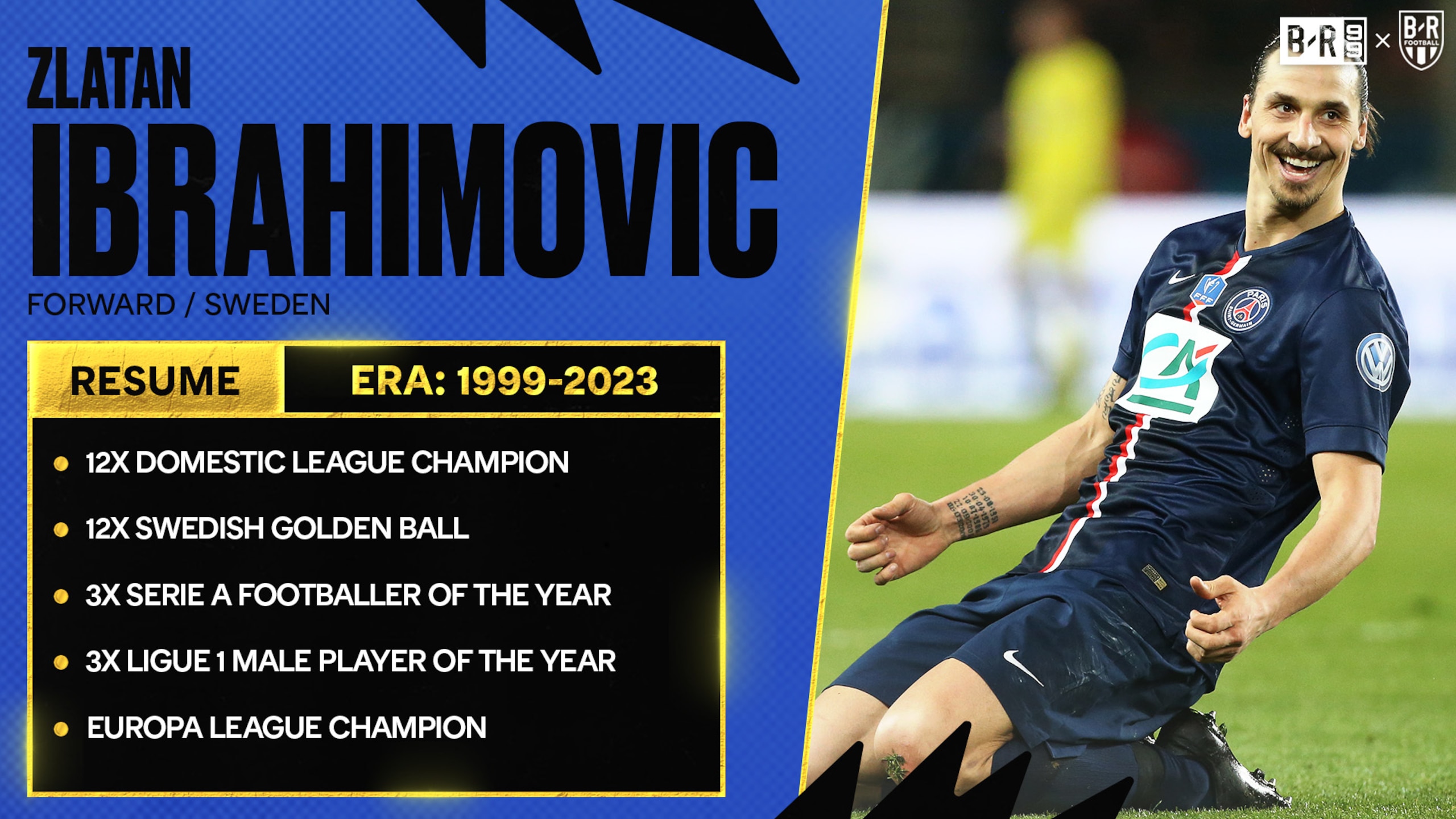
Clubs: Malmö FF (1999-2001), Ajax (2001-04), Juventus (2004-06), Inter Milan (2006-09), Barcelona (2009-11), AC Milan (loan, 2010-11), AC Milan (2011-12), Paris Saint-Germain (2012-16), Manchester United (2016-18), LA Galaxy (2018-19), AC Milan (2019-23)
Other Notable Accolades: FIFA Club World Cup Champion
There was a certain Eric Cantona-esque energy to Zlatan Ibrahimović that made him box office viewing.
Maybe it was cockiness, or total self-belief, but to speak about oneself in the third person suggests a certain level of confidence. This type of cartoonish villainy made Zlatan an antihero for rival fans and a god to his supporters.
He could back it up. Zlatan is an outlier in modern football: super tall, graceful, as likely to physically bully as he was to skill his way around the pitch. He was prolific across a 24-year spell, making a huge impact at clubs like Ajax, Juventus, Inter, PSG, Milan, and Man United, proving he can dominate multiple European leagues in a way few others have shown.
The Swedish superstar also averaged over a goal every two games for the national team - no mean feat when you consider they weren't always the most competitive. Any player who finishes his career with just his first name being instantly recognisable deserves attention.
- Nick Akerman
Highest Top 99 Ranking: 18
52. Frank Rijkaard
48 of 99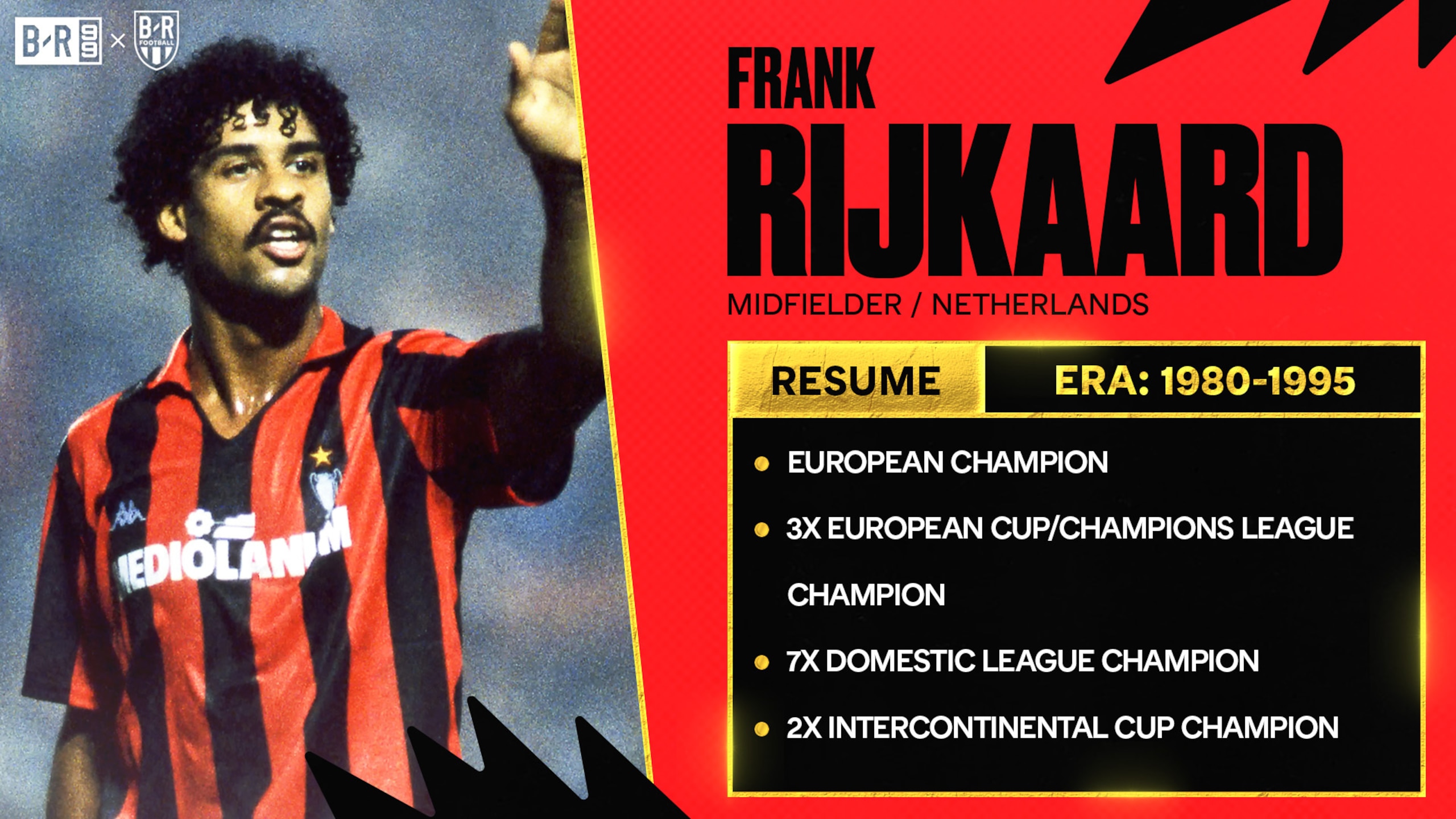
Clubs: Ajax (1980-87), Sporting CP (1987-88), Real Zaragoza (loan, 1987-88), AC Milan (1988-93), Ajax (1993-95)
Frank Rijkaard was part of a Dutch revolution for AC Milan alongside countrymen Ruud Gullit and Marco van Basten. The trio combined to lead the team to two consecutive European Cups, with Rijkaard scoring the only goal in the 1990 final against Benfica.
In an interview with The Overlap, Gullit would later describe Rijkaard as "the last piece of that puzzle" in Milan, with his ability to control games in midfield providing a sturdier platform for Gullit and Van Basten.
Prior to securing the move to Milan in 1988, Rijkaard had played a key role in one of the greatest teams in international tournament history. At the UEFA European Championships that year, he partnered with Ronald Koeman on the only Dutch team to ever win a major tournament.
In 1995, he won a third European Cup in his last-ever game after returning to boyhood club Ajax as a veteran presence alongside a thrilling collection of young stars, such as Marc Overmars, Clarence Seedorf, and Patrick Kluivert.
-Calum Rogers
Highest Top 99 Ranking: 37
51. Carles Puyol
49 of 99_0.jpg?w=2560)
Clubs: Barcelona C (1996), Barcelona B (1997-99), Barcelona (1999-2014)
'No nonsense' is an apt way to describe Carles Puyol. The Spanish leader had it all against him. He isn't tall, didn't have pace, and wasn't as sharp as most of his teammates on the ball.
However, the Barcelona legend almost seemed specifically bred to be one of the best centre-backs of his generation. The kind of player who would throw himself into harm's way if it meant blocking a goal.
His awareness and reading was so acute that he knew the value of his positioning when he didn't have the ball, often using his strength to bounce opponents away to regain control.
Puyol played like a lieutenant for his managers, vocally directing the more gifted tiki-taka squad and demanding excellence down to the smallest details.
- Nick Akerman
Highest Top 99 Ranking: 23
50. Gabriel Batistuta
50 of 99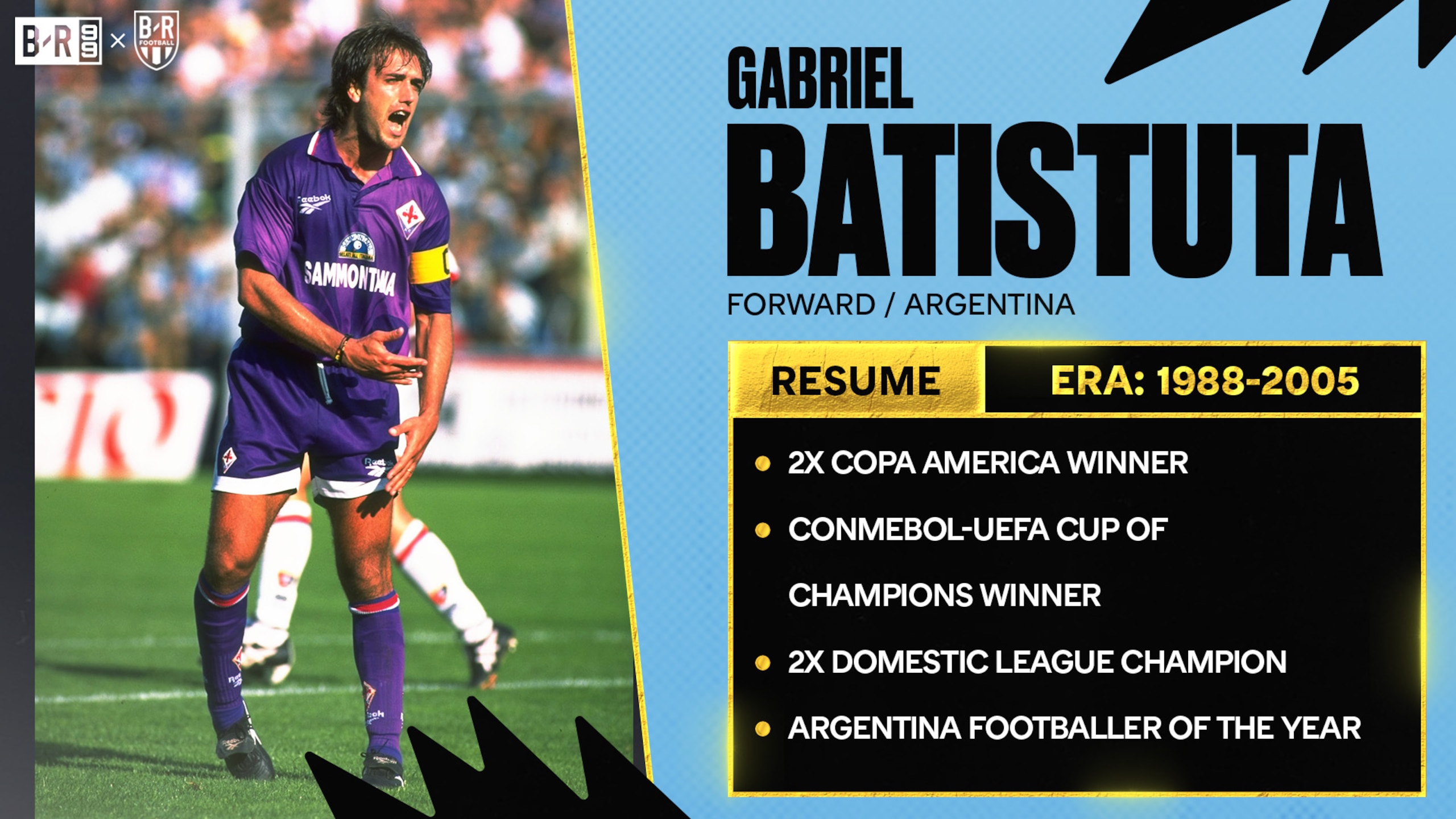
Clubs: Newell's Old Boys (1988-89), River Plate (1989-90), Boca Juniors (1990-91), Fiorentina (1991-2000), Roma (2000-03), Inter Milan (loan, 2003), Al-Arabi (2003-05)
A star in Serie A's golden era of the 1990s, it is impossible to look back on that time and not think of Gabriel Batistuta in the iconic Fiorentina kit.
"Batigol" achieved minimal team success in Florence — a Coppa Italia in the 1995-96 season was the only major trophy of his time at the club. But his loyalty, in addition to his 203 goals in 331 appearances, ensured he will forever be a legend for La Viola. Batistuta even stayed with the club after relegation in 1993, leading them back to the top tier at the first attempt.
The Argentinian would eventually achieve that team success after a move to Roma for a record-breaking fee for a player in his 30s. He won the Serie A title in his first season in Rome, scoring 20 goals.
Batistuta's success also extended to the international stage, where he has since only been overtaken as his country's top scorer by Lionel Messi.
-Calum Rogers
Highest Top 99 Ranking: 44
49. Hristo Stoichkov
51 of 99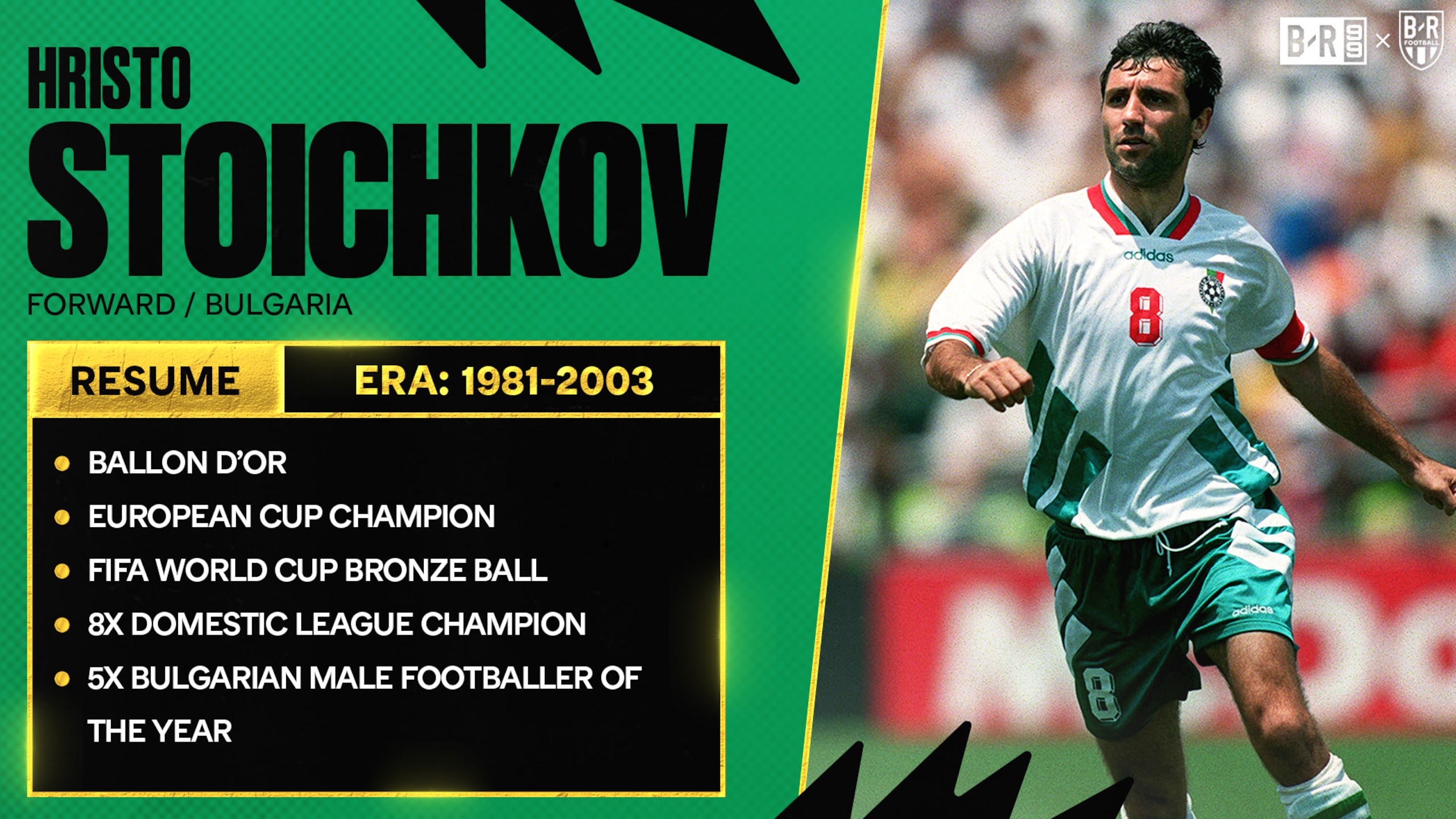
Clubs: FC Yuri Gagarin (1981-82), Hebros Harmanli (1982-83), CSKA Sofia (1984-90), Barcelona (1990-95), Parma (1995-96), Barcelona (1996-98), CSKA Sofia (loan, 1997-98), Al-Nassr (1998), Kashiwa Reysol (1998-99), Chicago Fire (2000-02), D.C. United (2003)
Undeniably the best Bulgarian to ever kick a football, Hristo Stoichkov's left boot and penetrative runs from the wing are the stuff of legend.
While he drew attention for his prolific record with CSKA Sofia in his homeland, it was with Barcelona where he truly blossomed into one of Europe's most impressive talents in the 1990s.
In 255 games for the Catalan giants across two spells, Stoichkov scored 117 goals, helping the Blaugrana to five La Liga titles, two Copas del Rey and a European Cup, among other major trophies.
With the national team, he was immense in leading Bulgaria to an unlikely fourth-place finish at the 1994 World Cup in the United States, topping the scoring chart with six goals alongside Russia's Oleg Salenko. It remains the country's best-ever finish in the global showpiece.
Those efforts didn't bring team success, but they were a notable factor in Stoichkov winning the 1994 Ballon d'Or award, finishing ahead of Roberto Baggio and Paolo Maldini.
The man known as The Dagger was just as likely to score after a burst into the box as he was with a free-kick from distance, and he was also keen on a cheeky chip to embarrass opposing goalkeepers.
-Leo Collis
Highest Top 99 Ranking: 41
48. Patrick Vieira
52 of 99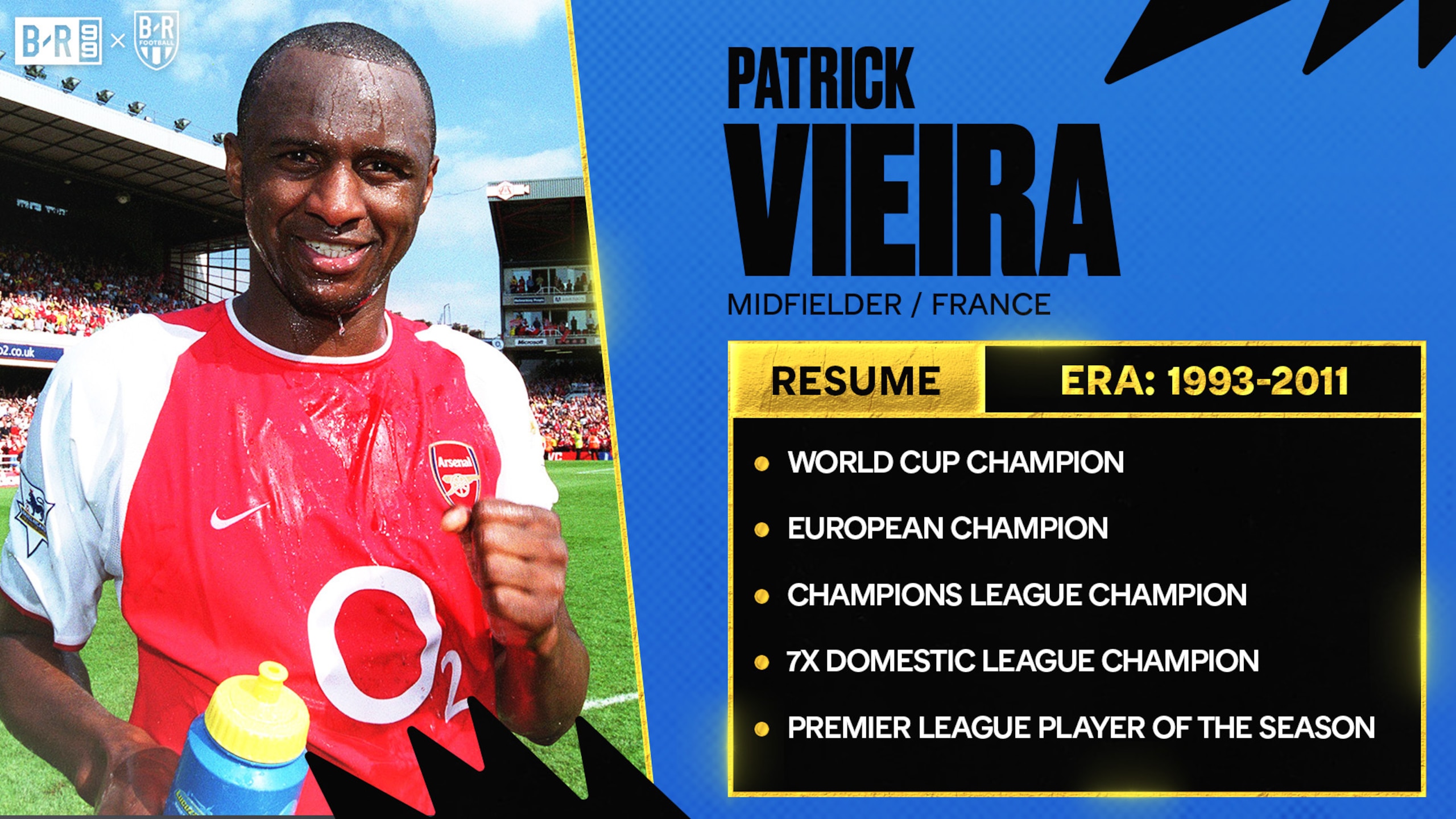
Clubs: Cannes (1993-95), AC Milan (1995-96), Arsenal (1996-2005), Juventus (2005-06), Inter Milan (2006-10), Manchester City (2010-11)
Other Notable Accolades: French Player of the Year
Even to this day, you'd be hard-pressed to find a midfielder who can match the athleticism of Patrick Vieira at his best.
The former Arsenal captain embodied everything that made the Arsène Wenger years such a success. His long limbs almost seemed to cover more ground than humanely possible, sweeping the ball away from opponents and then kickstarting a move forward.
Few players are remembered so lovingly for their rivalry with another as much as Vieira is with Manchester United's Roy Keane, a duo who defined what heart and winning mentality meant in the early Premier League years.
Vieira won it all, set the template for Yaya Toure-style power marauders, and was the captain of the Arsenal Invincibles. Quite the career.
- Nick Akerman
Highest Top 99 Ranking: 23
47. Didier Drogba
53 of 99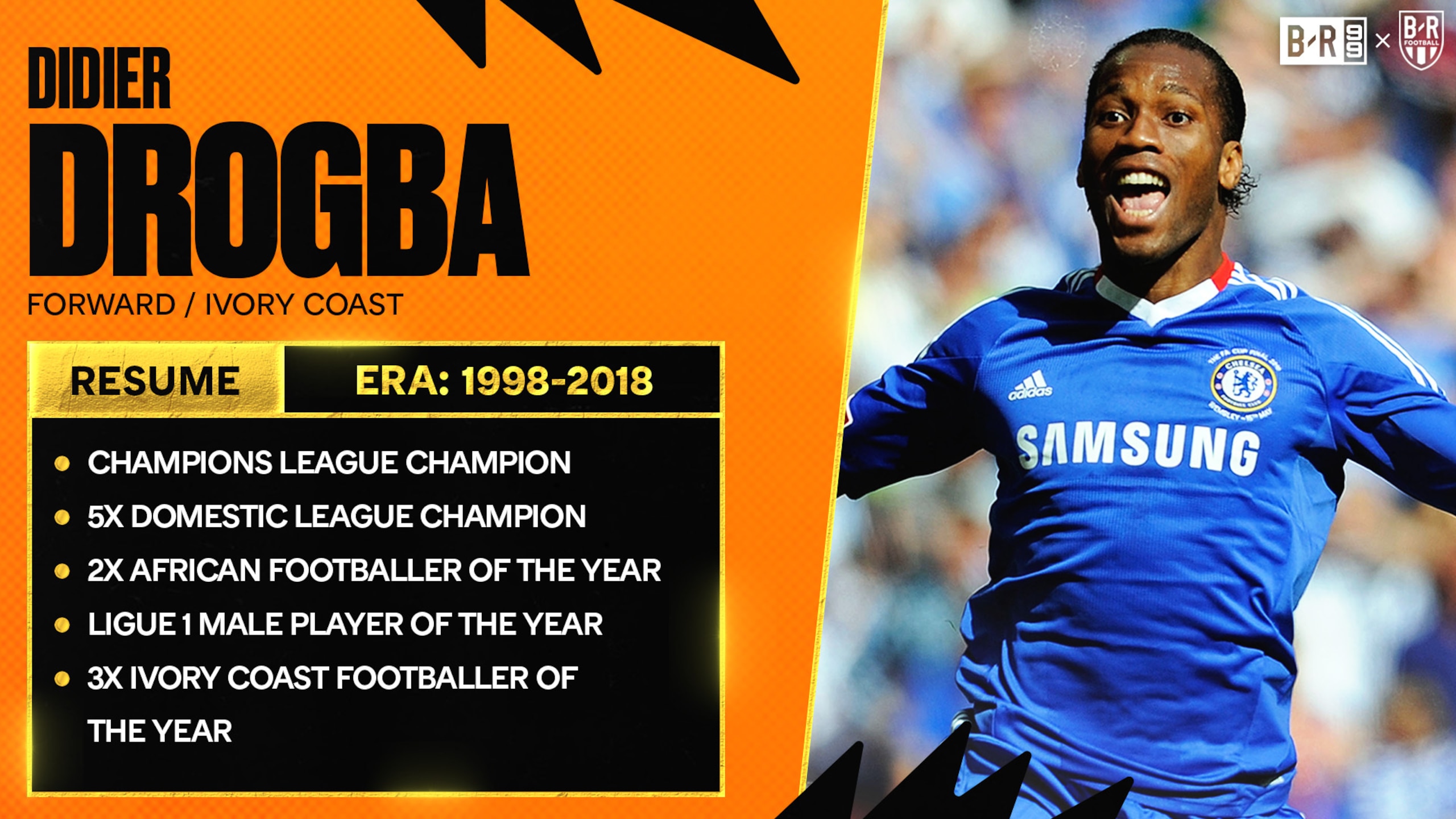
Clubs: Le Mans (1998-2002), Guingamp (2002-03), Marseille (2003-04), Chelsea (2004-12), Shanghai Shenhua (2012-13), Galatasaray (2013-14), Chelsea (2014-15), Montreal Impact (2015-16), Phoenix Rising (2017-18)
Other Notable Accolades: Turkish Footballer of the Year
Despite not making it to a top-flight league until 23 years old, Didier Drogba more than made up for lost time.
While arguably not a great scorer of goals — he only recorded more than 20 league goals twice in a 13-year career in Europe — Drogba was undoubtedly a scorer of great goals. His combination of deft control and sheer power made Drogba the textbook definition of a "handful."
As Carl Anka wrote for the BBC, Drogba's star also shined brightest in the biggest moments. Former Chelsea teammate Frank Lampard said, "In the dressing room before a big game, it was a different Didier, he was like an animal. His preparation, the intensity in his eyes, and then he always produced."
Drogba is the only player to score in four FA Cup finals, with Chelsea winning each of those games. His late equaliser in the 2012 UEFA Champions League final against Bayern Munich also kept a largely outmatched Chelsea team in the game, and his winning penalty in the shootout sparked arguably the greatest moment in the club's history.
-Calum Rogers
Highest Top 99 Ranking: 31
46. Sergio Ramos
54 of 99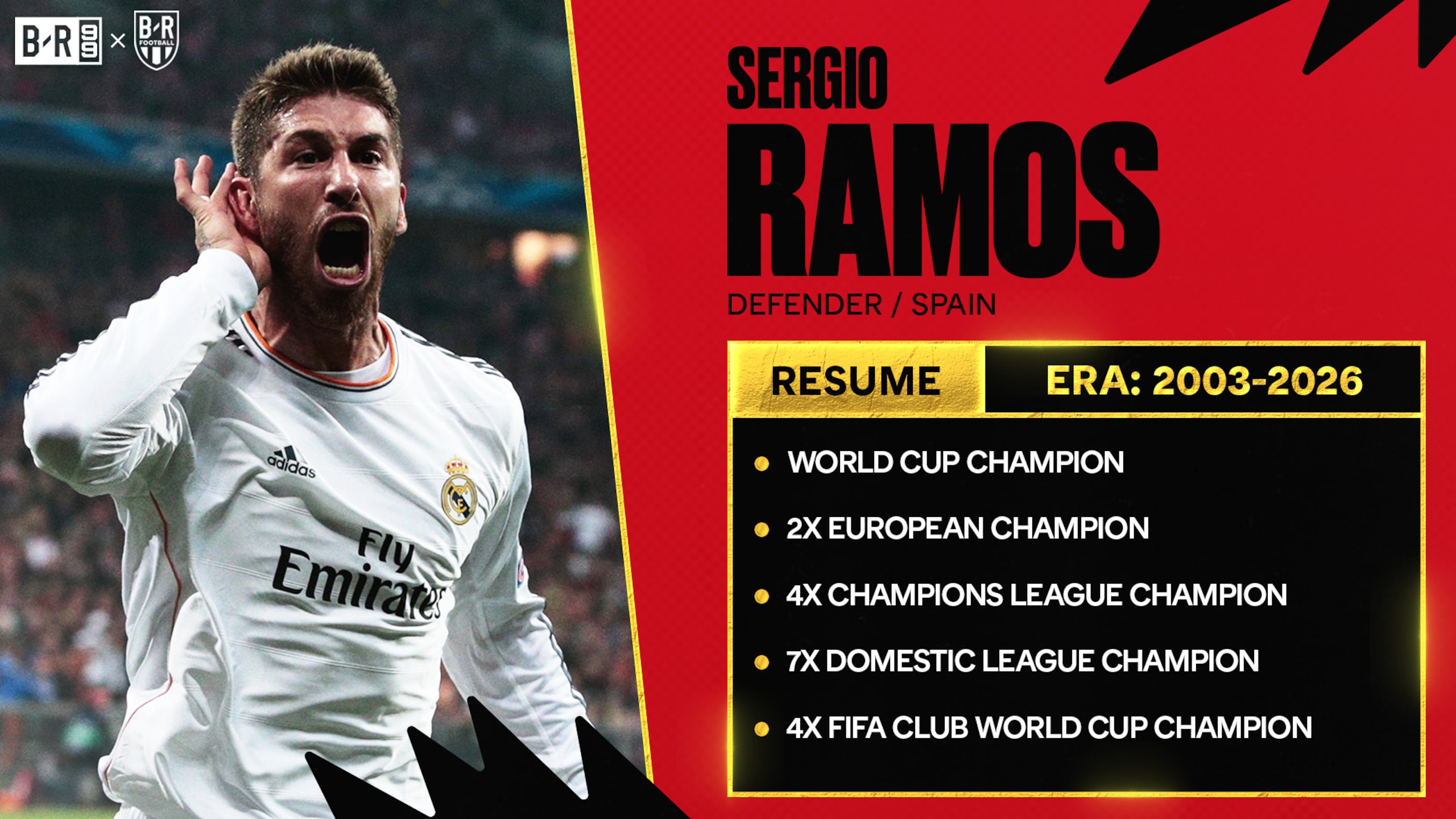
Clubs: Sevilla Atlético (2003-04), Sevilla (2004-05), Real Madrid (2005-21), Paris Saint-Germain (2021-23), Sevilla (2023-24), Monterrey (2025-26)
You fear for anyone who comes up against Sergio Ramos. The Spanish defender has collected 30 red cards in his career, a sign of a player who wears his heart on his sleeve and fully commits to getting the job done.
That sending off tally is the result of an individual whose personality has always forced him to be front and centre of the fight. Prime Ramos was a brutal one-on-one defender who wore strikers down by sticking to them and hitting them hard.
Whether on the floor or aerially, he's always been a full-blooded leader, and notably, the man who could also drag his team out of the fire with important goals.
Ramos' late winner in the 2014 Champions League final, which sank Madrid's city rivals Atlético, is just one example of him standing up and being counted at a vital moment.
- Nick Akerman
Highest Top 99 Ranking: 14
45. Iker Casillas
55 of 99_0.jpg?w=2560)
Clubs: Real Madrid C (1998-99), Real Madrid B (1999-2000), Real Madrid (1999-2015), Porto (2015-20)
Other Notable Accolades: Intercontinental Cup Champion
While Real Madrid went through a Galacticos era in the early 2000s, it was a home-grown talent who was key to pinning everything down.
Iker Casillas progressed through Los Blancos' famed academy to become the club's starting goalkeeper in the 1999-2000 campaign at 18 years old.
He would go on to feature 725 times for the first team, securing 259 clean sheets. During that time, he earned five La Liga titles, two Copas del Rey, and three Champions Leagues as part of one of the most decorated teams of the 21st century.
But his club exploits are only part of San Iker's story. The stopper was a massive part of the Spanish national team for a decade and a half, earning the second-most caps in La Furia Roja's history (167).
He was captain across a period of remarkable success, delivering two European titles and a World Cup between 2008 and 2012. He played all but one game across that run, keeping clean sheets in each tournament final and winning the Golden Glove in 2010.
Among other achievements, Casillas has the second-most Champions League appearances, he was named in the FIFPro World XI five times, and has featured in the UEFA Team of the Year on six occasions.
Even after leaving Real Madrid, success was still coursing through his veins, as he picked up a league title with Porto in 2017-18.
Even if he's not the true best goalkeeper in this list, he's certainly the most successful.
-Leo Collis
Highest Top 99 Ranking: 32
44. Dennis Bergkamp
56 of 99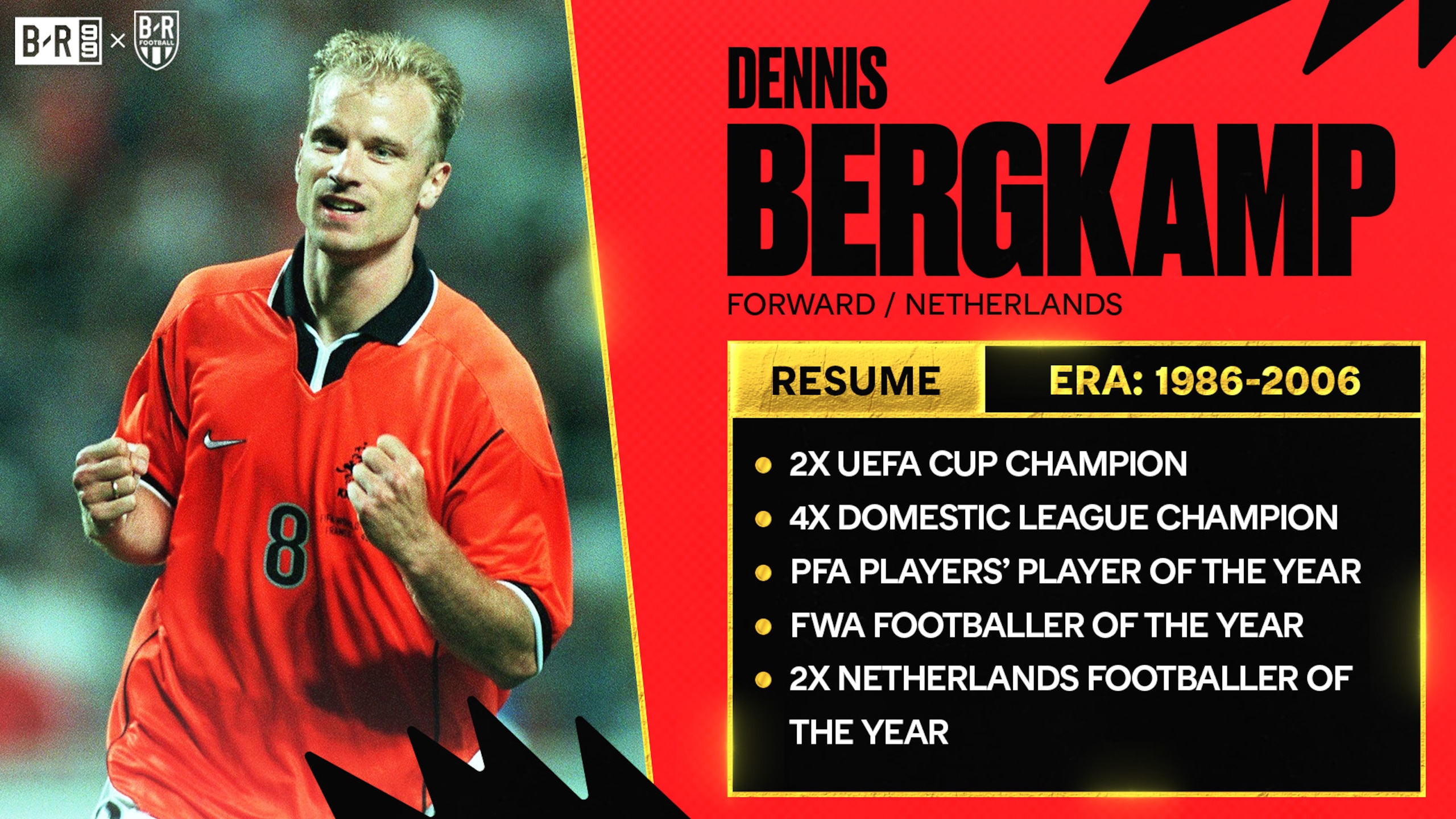
Clubs: Ajax (1986-93), Inter Milan (1993-95), Arsenal (1995-2006)
Dennis Bergkamp might not be the absolute best player to have ever laced up a pair of boots, but he might have been the most satisfying to watch.
The Non-Flying Dutchman was the epitome of footballing elegance, his touch and poise enabling him to stand out in an Arsenal squad that was littered with stars in the late 1990s and early 2000s.
He arrived in North London in 1995, and despite not convincing many fans and pundits in his early days, he truly came into his own under manager Arsene Wenger, quickly becoming a key player for the Frenchman.
Bergkamp scored 120 goals and added 116 assists in nine years at Highbury, sitting sixth on the Premier League's all-time chart for the latter. Along the way, he snagged three Premier League titles and four FA Cups.
Crucially, despite approaching the tail end of his career, he was an important part of the 2003-04 "Invincibles" squad that won the Premier League title without tasting defeat.
Examples of Bergkamp's mastery aren't difficult to find. Just look at the goals he scored against Leicester City in 1997 and Newcastle United in 2002 to understand his ability to manipulate the ball and adjust his body shape to deliver footballing artistry.
Meanwhile, his strike in the 1998 World Cup for the Netherlands against Argentina remains one of the best ever scored in the competition.
Bergkamp was six feet of pure class, and his statue outside Emirates Stadium is richly deserved.
-Leo Collis
Highest Top 99 Ranking: 17
43. Roberto Carlos
57 of 99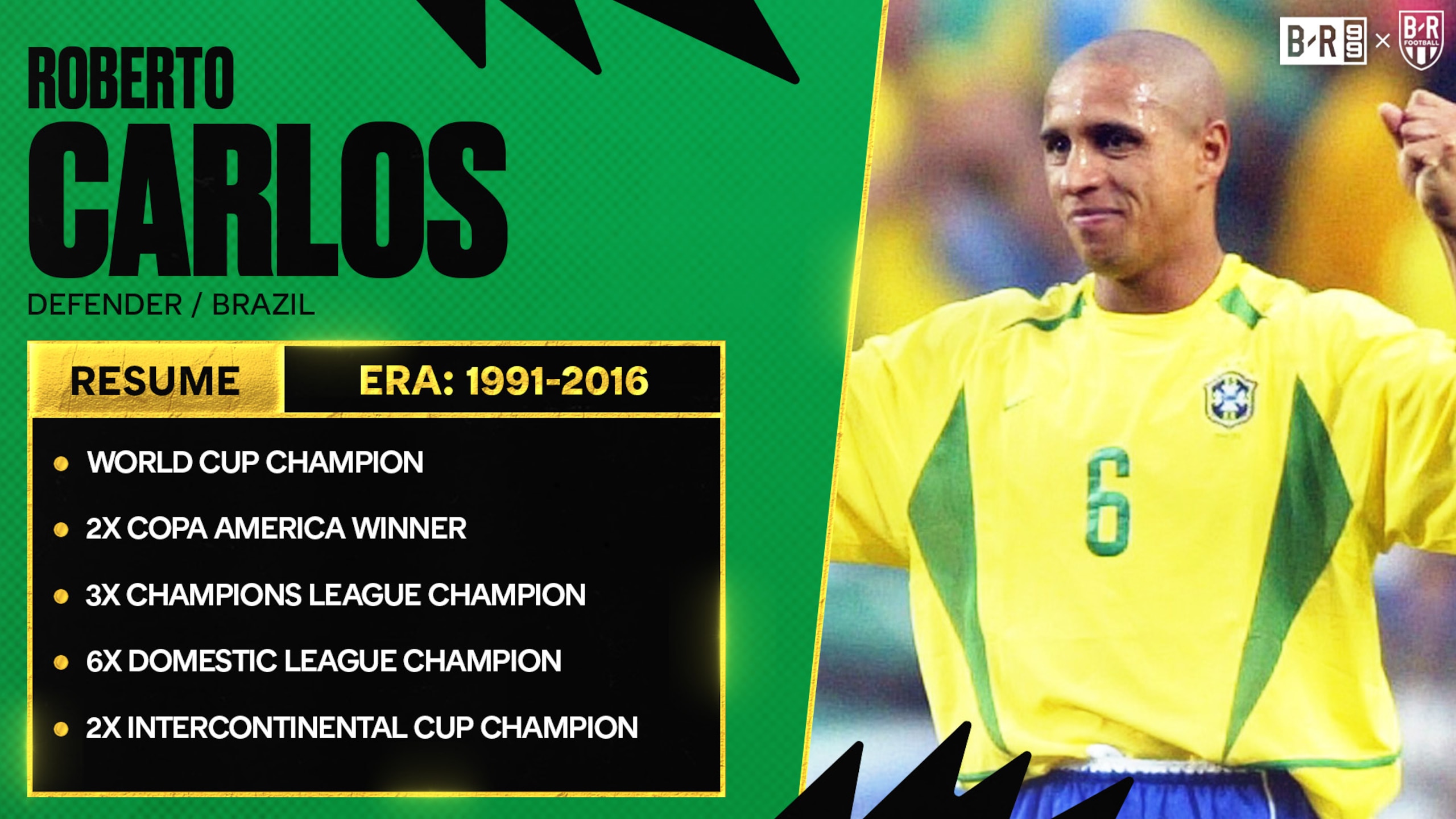
Clubs: União São João (1991-93), Atlético Mineiro (loan, 1992-93), Palmeiras (1993-95), Inter Milan (1995-96), Real Madrid (1996-2007), Fenerbahçe (2007-09), Corinthians (2010-11), Anzhi Makhachkala (2011-12), Delhi Dynamos (2015-16)
Roberto Carlos' 'impossible' free-kick goal seemed to rewrite the laws of physics in 1997.
His legendary left foot wrote itself into sporting folklore by somehow curling the ball away from goal and then sharply back towards the net at the last second…with the outside of his boot!? The long run-up was also so unusual, soon to be replicated on playgrounds and in video games across the world.
Carlos' moment is the headline act of a career that changed what it meant to play at left back.
These days, we talk so often of tracking back and wingers doing their job to support the defender on their side. Carlos barely needed the help. He had the electric pace and energy to romp up and down, covering ground with an intensity that forced his marker to either chase him down or be ripped apart. Few could keep up.
- Nick Akerman
Highest Top 99 Ranking: 14
42. Ruud Gullit
58 of 99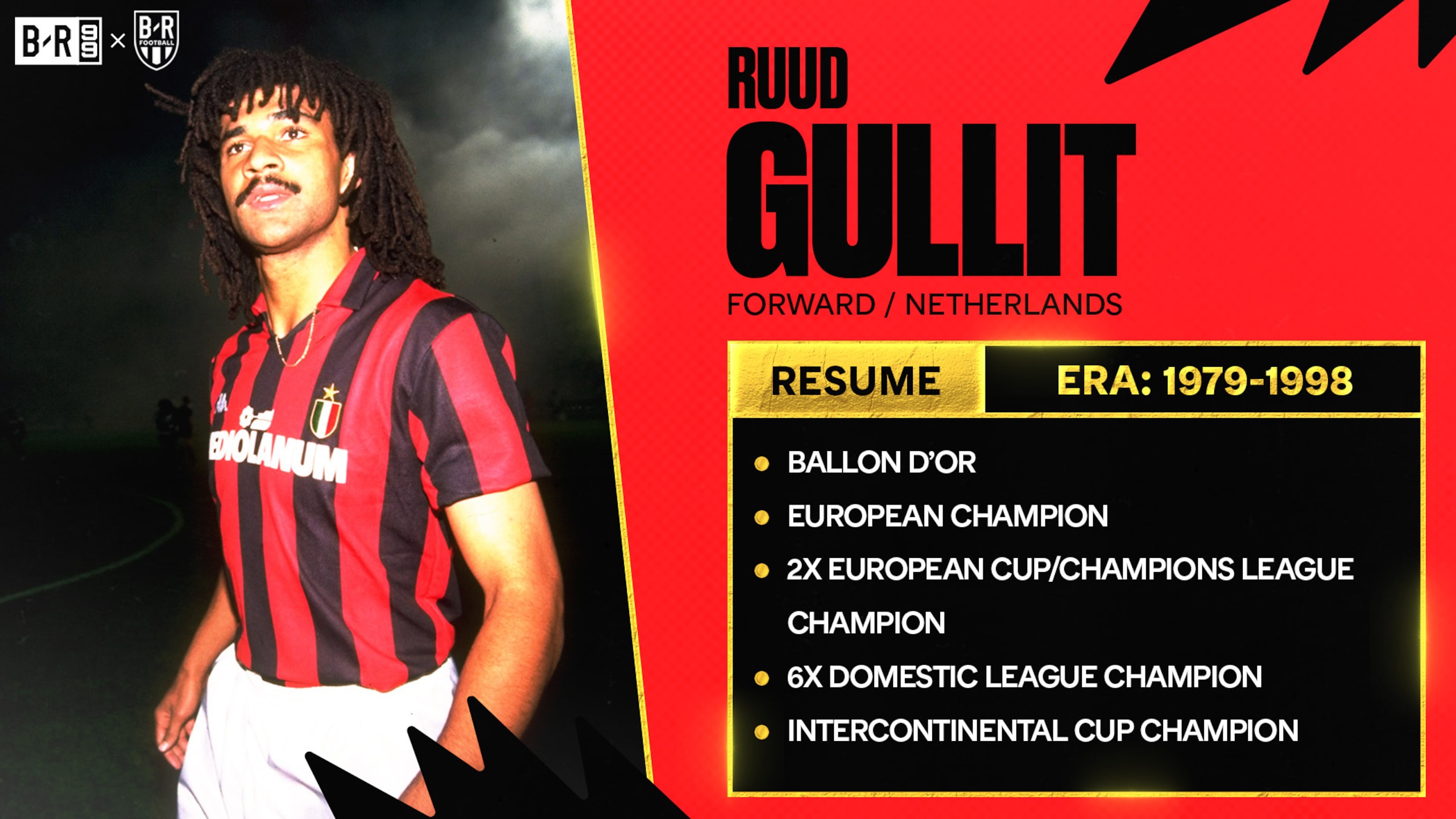
Clubs: HFC Haarlem (1979-82), Feyenoord (1982-85), PSV (1985-87), AC Milan (1987-94), Sampdoria (loan, 1993-94), Sampdoria (1994-95), Chelsea (1995-98)
Other Notable Accolades: 2x Netherlands Footballer of the Year
Many reading this list will see Ruud Gullit's name and know why he was excellent due to his popularity on both EAFC and eFootball. He is the model of a complete footballer, a man who could play across the entire pitch, from up front to snuffing out danger out the back, without losing the spring in his step.
Those all-round stats on the aforementioned video games are actually a great snapshot of why Gullit was so brilliant. The combination of physicality, pace and anticipation meant he played like a rabid dog, always hungry and always hunting.
As with Marco van Basten and Frank Rijkaard, Gullit is another example of Dutch power and technical grace combining into a killer blend that has rarely been seen since.
- Nick Akerman
Highest Top 99 Ranking: 24
41. Luis Suárez
59 of 99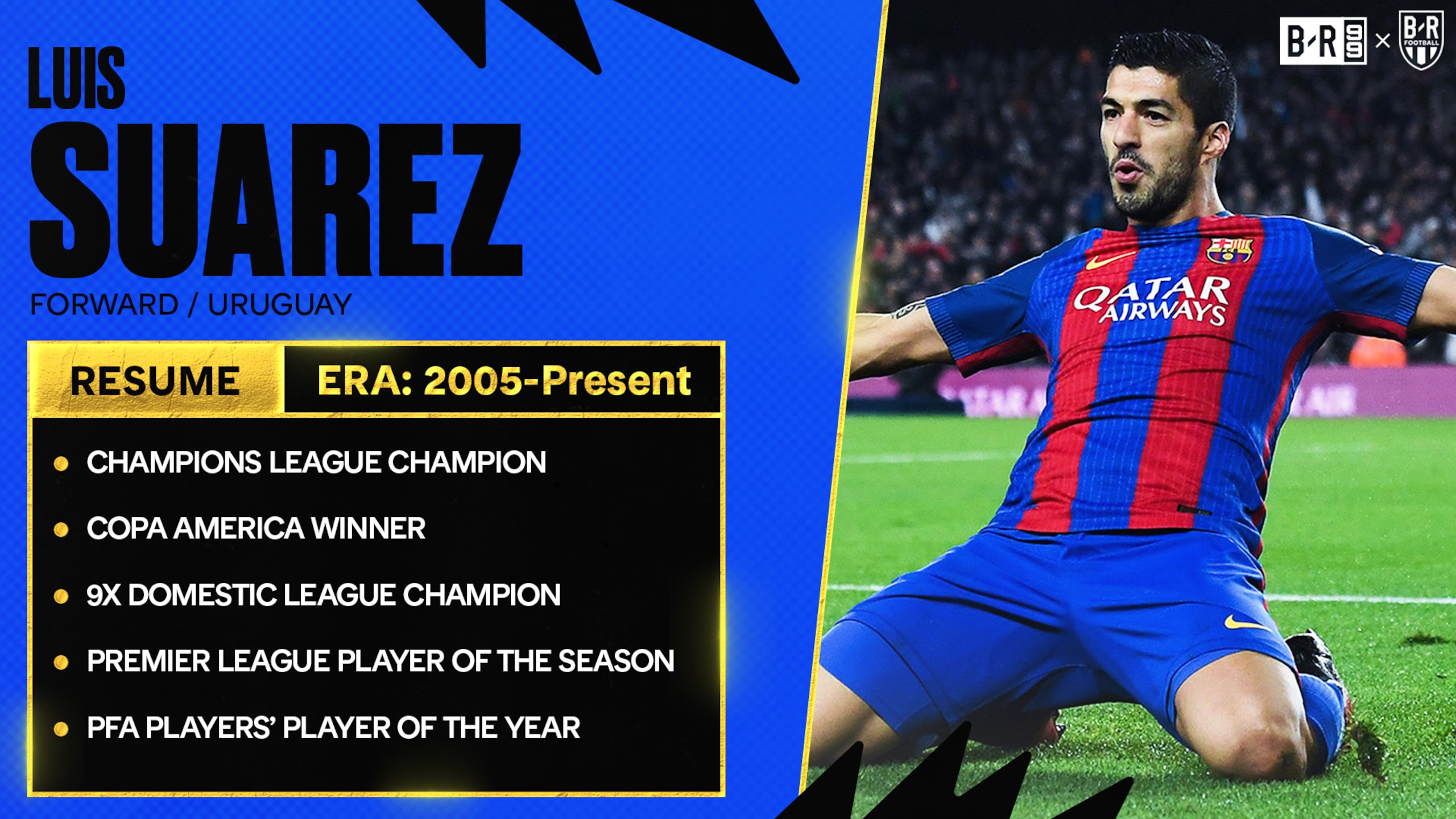
Clubs: Nacional (2005-06), Groningen (2006-07), Ajax (2007-11), Liverpool (2011-14), Barcelona (2014-20), Atlético Madrid (2020-22), Nacional (2022-23), Grêmio (2023-24), Inter Miami (2024-Present)
Other Notable Accolades: FIFA Club World Cup Champion; FWA Footballer of the Year; Netherlands Footballer of the Year; Brazil Golden Ball
Known as much for his on-pitch controversies as his ability, Luis Suarez is very much the definition of a love or loathe footballer.
However, the Uruguayan is among the most lethal attackers the game has ever seen, scoring 519 goals and providing 280 assists in 874 senior games across stints at Ajax, Liverpool, Barcelona, and Inter Miami. For those counting, that's a fraction away from one goal contribution every game across a two-decade-long senior career.
His greatest success came with La Blaugrana, where he formed a terrifying trio with Lionel Messi and Neymar. During his time in Catalonia, he won four league titles, a Champions League, and four Copas del Rey, among other honors.
While his vampiric tendencies might first come to mind when thinking of him, he'll also be remembered for his ability to fashion memorable goals from nothing and score from the most impossible of circumstances. For those unfamiliar, look at his ridiculous, Puskas-nominated backheel for Barcelona against Mallorca, or his masterclass in aerial control for Liverpool against Newcastle United.
In his heyday, Suarez was a true maverick, a player you simply could not take your eyes away from—for better or worse.
-Leo Collis
Highest Top 99 Ranking: 17
40. Cafu
60 of 99_1.jpg?w=2560 "Cafu")
Clubs: São Paulo (1989-95), Zaragoza (loan, 1995), Juventude (loan, 1995), Palmeiras (1995-97), Roma (1997-2003), AC Milan (2003-08)
Other Notable Accolades: FIFA Club World Cup Champion; 2x Intercontinental Cup Champion; South American Footballer of the Year
A modern full-back before modern full-backs were a thing.
Cafu played with the kind of leadership that would reassure everyone else on the team, his boundless stamina and head-down sprints up the wing stretching the pitch for teammates to roam free. The Brazilian could cross on a dime, but his relentless attacking style was just one half of his game.
The Milan legend was also a ruthless defensive force whose aggressive tackling made him indispensable for the majority of his career. To this day he remains Brazil's all-time top appearance maker with 142 caps. He's also the only man to appear in three consecutive World Cup finals.
- Nick Akerman
Highest Top 99 Ranking: 14
39. Kevin De Bruyne
61 of 99.jpg?w=2560)
Clubs: Genk (2008-12), Chelsea (2012-14), Werder Bremen (loan, 2012-13), VfL Wolfsburg (2014-15), Manchester City (2015-25), Napoli (2025-Present)
Other Notable Accolades: FIFA Club World Cup Champion
Chelsea's historic era of fumbling is led by letting Kevin De Bruyne and Mohamed Salah, arguably the Premier League's two best players of the last 10 years, leave without establishing themselves at Stamford Bridge.
KDB went through real frustration, culminating with José Mourinho playing him as a false nine away at Manchester United. Looking back now, it was an insane decision to deploy him without a striker or runners ahead of where he would pick up the ball.
Twelve years after leaving Chelsea, De Bruyne now ranks among the best playmakers in football history.
Few possess his speed of thought. Even fewer have the talent to spot and pull off such difficult passes in clutch moments. He was also a regular goalscorer and a scorer of excellent goals, making him arguably the best player in Manchester City's history.
- Nick Akerman
Highest Top 99 Ranking: 3
38. Lev Yashin
62 of 99.jpg?w=2560)
Club: Dynamo Moscow (1950-70)
You won't find a lot of footage of Lev Yashin in color, but his reputation from an era in which cameras were not nearly as ever-present continues to mark him as the best to put on a pair of gloves.
A true one-club man, representing Dynamo Moscow from 1949 to 1971 in his home nation, Yashin was fondly known as the black spider for his sartorial choices and the impression he had eight arms to stop shots.
In an impressive career, he won five top-flight titles in the Soviet Union and three league cups, while he also claimed the European Championship for the former state in 1960. Notably, he also grabbed an Olympic gold medal at the 1956 games on home soil.
To fully understand why Yashin continues to be spoken of as perhaps the greatest goalkeeper who ever lived, you only need to look at the fact that he remains the only stopper to have won the Ballon d'Or, picking up the trophy in 1963. He was nominated for the honor a further nine times.
-Leo Collis
Highest Top 99 Ranking: 13
37. Neymar
63 of 99.jpg?w=2560)
Clubs: Santos (2009-13), Barcelona (2013-17), Paris Saint-Germain (2017-23), Al Hilal (2023-25), Santos (2025-Present)
Other Notable Accolades: FIFA Club World Cup Champion; Ligue 1 Male Player of the Year; Brazil Golden Ball
Breaking Pelé's 52-year goalscoring record with Brazil counts for a lot. Imagine being the all-time top scorer of Brazil…Brazil! The football nation.
The backend of Neymar's career gives people fuel to discredit what he's achieved. From the faux hawked teen who won the Puskás Award while at Santos, to a key component of Barcelona's legendary 'MSN' triumvirate alongside Lionel Messi and Luis Suárez, Neymar in full flow was one of football's most wonderful sights to behold.
Detractors will say he never won the Ballon d'Or. The criticism has some merit: Neymar never fully escaped the shadow of Messi, which became more obvious because he played with him at
both Paris Saint-Germain and Barcelona. Injuries then halted his chances when they went separate ways.
What he did do, though, was deliver on the hype that excited so many people. The viral sensation and the grainy YouTube compilations fully evolved into a genuine global star who reminded the world that, even if Brazil isn't what it once was, the country still has the power to make legends.
- Nick Akerman
Highest Top 99 Ranking: 12
36. Roberto Baggio
64 of 99.jpg?w=2560)
Clubs: Vicenza (1982-85), Fiorentina (1985-90), Juventus (1990-95), AC Milan (1995-97), Bologna (1997-98), Inter Milan (1998-2000), Brescia (2000-04)
Roberto Baggio might not be the most decorated player on this list, but ask anyone who followed football in the early 1990s who their favorite Italian player was and the answer will likely be him.
Named the "Divine Ponytail" for his iconic hairstyle, Baggio was an Italian football legend, never leaving the country across a 22-year playing career that took him to six different clubs.
According to Transfermarkt, he made 632 senior appearances, clocking up 289 goals. Despite such a formidable breadth of experience, he only picked up two Serie A titles, in 1994-95 with Juventus and 1996-96 with Milan. Even so, the forward was highly regarded as one of the finest talents on the planet in his pomp, lifting the Ballon d'Or in 1993.
He earned plenty of fans for his direct style of play, often picking up the ball from around the halfway line and driving forward, taking on opponents and leaving them in a heap as he effectively glided past. At times it felt like he was simply toying with defenders, beating them more than once simply because he could.
For the Italian national team, he featured 56 times and scored 27, enough for fourth on the Azzurri's all-time list. He was desperately close to a World Cup title, and his missed penalty against Brazil in the 1994 final is unfortunately one of the enduring images of a much-loved player.
Still, that wasn't enough to make him thought of any less fondly, and if things were different, winning that title could have bumped him higher up in the 99.
-Leo Collis
Highest Top 99 Ranking: 10
35. Rivaldo
65 of 99.jpg?w=2560)
Clubs: Santa Cruz (1988-92), Mogi Mirim (1992-94), Corinthians (loan, 1993-94), Palmeiras (1994-96), Deportivo La Coruña (1996-97), Barcelona (1997-2002), AC Milan (2002-03), Cruzeiro (2004), Olympiacos (2004-07), AEK Athens (2007-08), Bunyodkor (2008-11), São Paulo (loan, 2011), Kabuscorp (2012), São Caetano (2013), Mogi Mirim (2014-15)
Other Notable Accolades: 6x Domestic League Champion
The things Rivaldo could do with a football often defied belief. But what made the Brazilian's talents all the more remarkable was he barely looked like he was breaking a sweat.
Despite being over six-feet tall, the 1999 Ballon d'Or winner was a fantastic dribbler, with the kind of footwork typical of players half his size. He also boasted deadly accuracy from dead-ball situations, meaning fouling him wasn't even an option to try to quell his threat.
His versatility was one of the reasons he was so deadly, lining up in various attacking positions that left defenders with little idea about how to handle him. That led to goals in bunches, including 130 across 235 appearances for Barcelona, with whom he won two league titles and the Copa del Rey.
Silverware would follow during a brief stay with Milan, grabbing a Champions League title and the Coppa Italia in the 2002-03 season.
He was also a crucial part of the national team setup for the best part of a decade, winning the 2002 World Cup and the 1999 Copa America. In the former, he played every single game for Brazil, scoring in each group-stage match, in the round of 16, and in the quarter-final. Annoyingly for him, he missed out on the Golden Ball to countryman Ronaldo Nazario.
-Leo Collis
Highest Top 99 Ranking: 28
34. Robert Lewandowski
66 of 99.jpg?w=2560)
Clubs: Delta Warsaw (2005), Legia Warsaw II (2005-06), Znicz Pruszków II (2006), Znicz Pruszków (2006-08), Lech Poznań (2008-10), Borussia Dortmund (2010-14), Bayern Munich (2014-22), Barcelona (2022-Present)
Other Notable Accolades: 2x German Male Footballer of the Year; 12x Polish Footballer of the Year
There's zero doubt that Robert Lewandowski should have won the Ballon d'Or in 2020. The award's cancellation due to the coronavirus pandemic essentially robbed the Polish striker of the biggest individual accolade in the sport.
His ascension to the very best was supported by players such as Lionel Messi and Kevin De Bruyne, who believed Lewa deserved to be recognised for his incredible goal-scoring efforts. Game recognises game.
Lewandowski nearly averaged one goal per match during his eight-year spell with Bayern, a tenure that is sandwiched between prolific years with Dortmund and Barcelona.
He's a player who keeps things relatively simple. Great movement combined with finishing that leaves no crumbs means that, even as a free agent at the age of 37, he's going to have plenty of suitors in the upcoming summer transfer window.
- Nick Akerman
Highest Top 99 Ranking: 17
33. Manuel Neuer
67 of 99.jpg?w=2560)
Clubs: Schalke 04 II (2004-06), Schalke 04 (2005-11), Bayern Munich (2011-Present)
Other Notable Accolades: 2x German Male Footballer of the Year
Imagine revolutionising what it means to be a goalkeeper.
Manuel Neuer's sweeper-keeper style created one of the biggest shifts in modern football, as managers all over the world suddenly realised the potential of having their stopper ready to sprint out of the box and towards opponents as the last man. Nobody does it as well as Neuer in his prime, with many copycats actually showing how difficult such a role is.
Neuer is a physical specimen. His alertness, first touch, and range of passing has allowed him to not only deal with threats, but contribute to attacking moves.
He has 'final boss' vibes: if you get through Bayern Munich or Germany's defence, you'd soon be squashed by a juggernaut whose ability to mop up pressure situations essentially gave his team a 'Get Out of Jail Free' card when things got hairy.
- Nick Akerman
Highest Top 99 Ranking: 14
32. Gianluigi Buffon
68 of 99.jpg?w=2560)
Clubs: Parma (1995-2001), Juventus (2001-18), Paris Saint-Germain (2018-19), Juventus (2019-21), Parma (2021-23)
Other Notable Accolades: Serie A Footballer of the Year
Gianluigi Buffon is one of a handful of professional footballers to have played over 1,000 games. Customarily, he kept a clean sheet when hitting that milestone.
Buffon was once the most expensive goalkeeper in the world, swapping Parma for Juventus in 2001 for around €52 million at a time when transfer fees rarely hit such lofty totals.
It was a shrewd investment, with the Italian going on to make 685 appearances for the club across two spells, the second most in the Old Lady's storied history.
During that time, he won 10 Serie A titles, which could have been two more if not for the Calciopoli scandal, which stripped him of the 2004-05 and 2005-06 winners' medals.
If he hadn't already settled his status as a club hero, he certainly did so by sticking with the club as they dropped down a division, guiding the club back to the top flight at the first time of asking.
In addition to a host of other trophies, including five Coppa Italia titles with Juventus and one with Parma, he also won Ligue 1 with Paris Saint-Germain during a brief spell in the French capital in the 2018-19 campaign.
When all was said and done, Buffon retired back at Parma, hanging up the gloves at 45 years old after a stunning 28-year senior career.
That's not even touching on his international career, which saw the stopper win the 2006 World Cup in Germany, the undoubted highlight among his record-setting 176 Italy appearances.
While his longevity certainly adds to his legend, that's not to ignore his fantastic ability, and he retained those high standards right until the very end.
-Leo Collis
Highest Top 99 Ranking: 14
31. Kaká
69 of 99.jpg?w=2560)
Clubs: São Paulo (2000-03), AC Milan (2003-09), Real Madrid (2009-13), AC Milan (2013-14), Orlando City (2014-17), São Paulo (loan, 2014)
Other Notable Accolades: 2x Serie A Footballer of the Year; 2x Domestic League Champion; FIFA Club World Cup Champion
Pull up a seat to the ballet: Kaká is stepping onto the pitch. The Milan icon was unique amongst his Brazilian comparables, a long-striding, upright dribbler who would send bodies flailing as they tried to stop him.
Seriously, watch a Kaká run and take note of the panic around him. His genius on the ball took Brazilian flair and brushed in an element of gentle aggression that allowed him to propel forwards with pace and power, his directness just too much for many to deal with.
Jamal Musiala is a good comparison for younger fans who missed Kaká's prime; imagine a Musiala who would be good enough to beat Messi and Ronaldo for the Ballon d'Or as they both rose to prominence. Kaká was that guy.
- Nick Akerman
Highest Top 99 Ranking: 7
30. Zico
70 of 99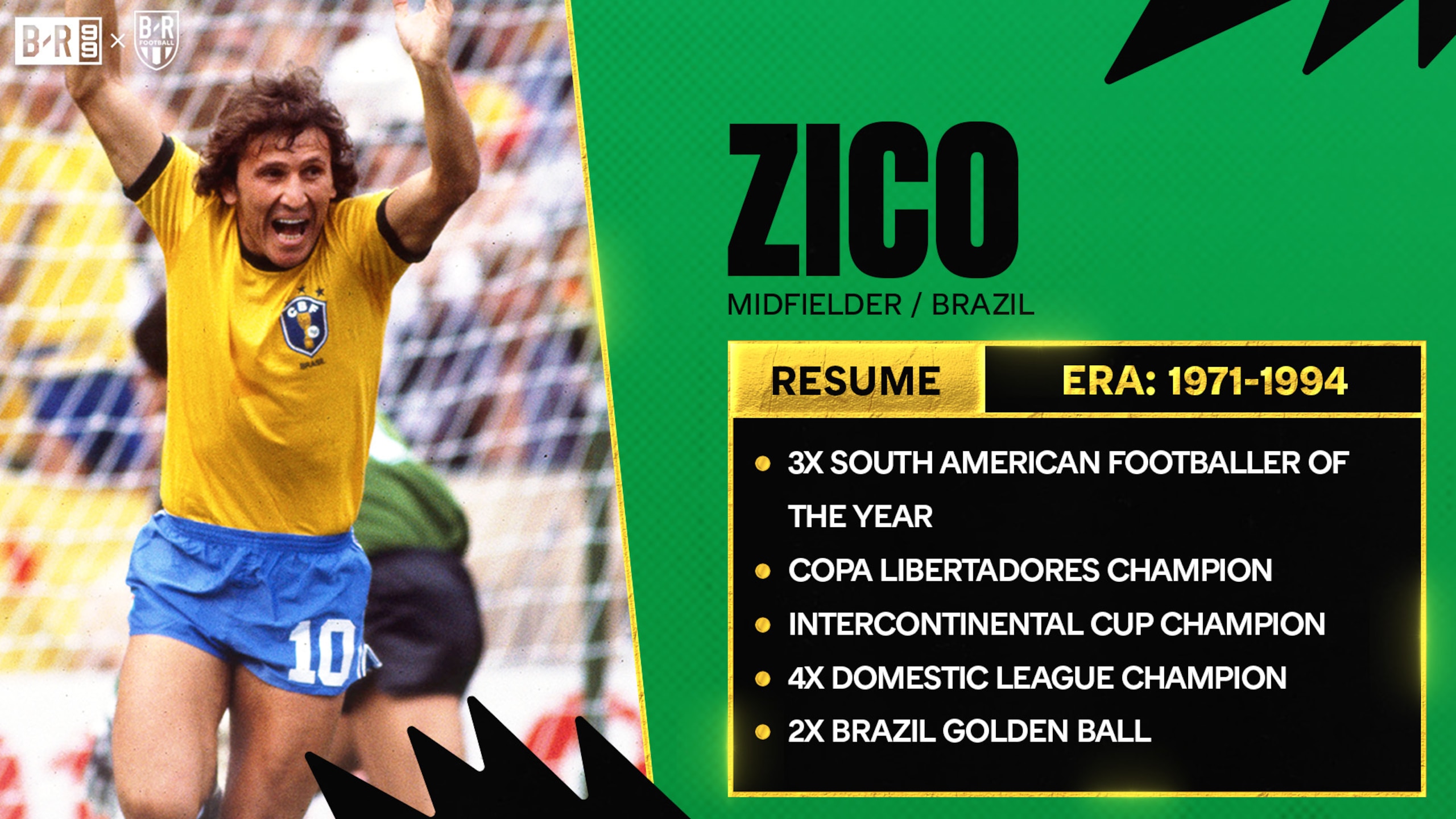
Clubs: Flamengo (1971-83), Udinese (1983-85), Flamengo (1985-89), Kashima Antlers (1991-94)
Arthur Antunes Coimbra, otherwise known as Zico, was Brazil's pocket-sized maestro, a diminutive attacking midfielder who is a legend for both club and country.
The man from Rio represented his hometown Flamengo for 12 years from 1971 to 1983, giving the Mengão the best years of his career.
While scoring records from the time are often spotty at best, it's said he bagged 508 goals for the club, according to the United Nations, making him the top goal-getter in Flamengo's history.
He won the Campeonato Carioca seven times and the Campeonato Brasileiro on three occasions. He also claimed one Copa Libertadores and the Intercontinental Cup, which saw Flamengo line up against a dominant Liverpool team.
After a stunning performance against the Reds, which included two assists and a Man of the Match nod, captain Phil Thompson told Folha, via Goal, "This Zico is incredible. He is a dream of a player... He is a monster."
While he was often put up against Pele in terms of quality and importance to the Brazil national team, that does a disservice to Zico. He was an unbelievable talent in his own right.
With 48 goals, he is the fifth-highest scorer in the nation's history. His talents were on full display in the Seleçao Canarinho's 1982 World Cup, with four goals and a role in plenty more, but the team couldn't deliver the trophy his efforts deserved.
-Leo Collis
Highest Top 99 Ranking: 8
29. Lothar Matthäus
71 of 99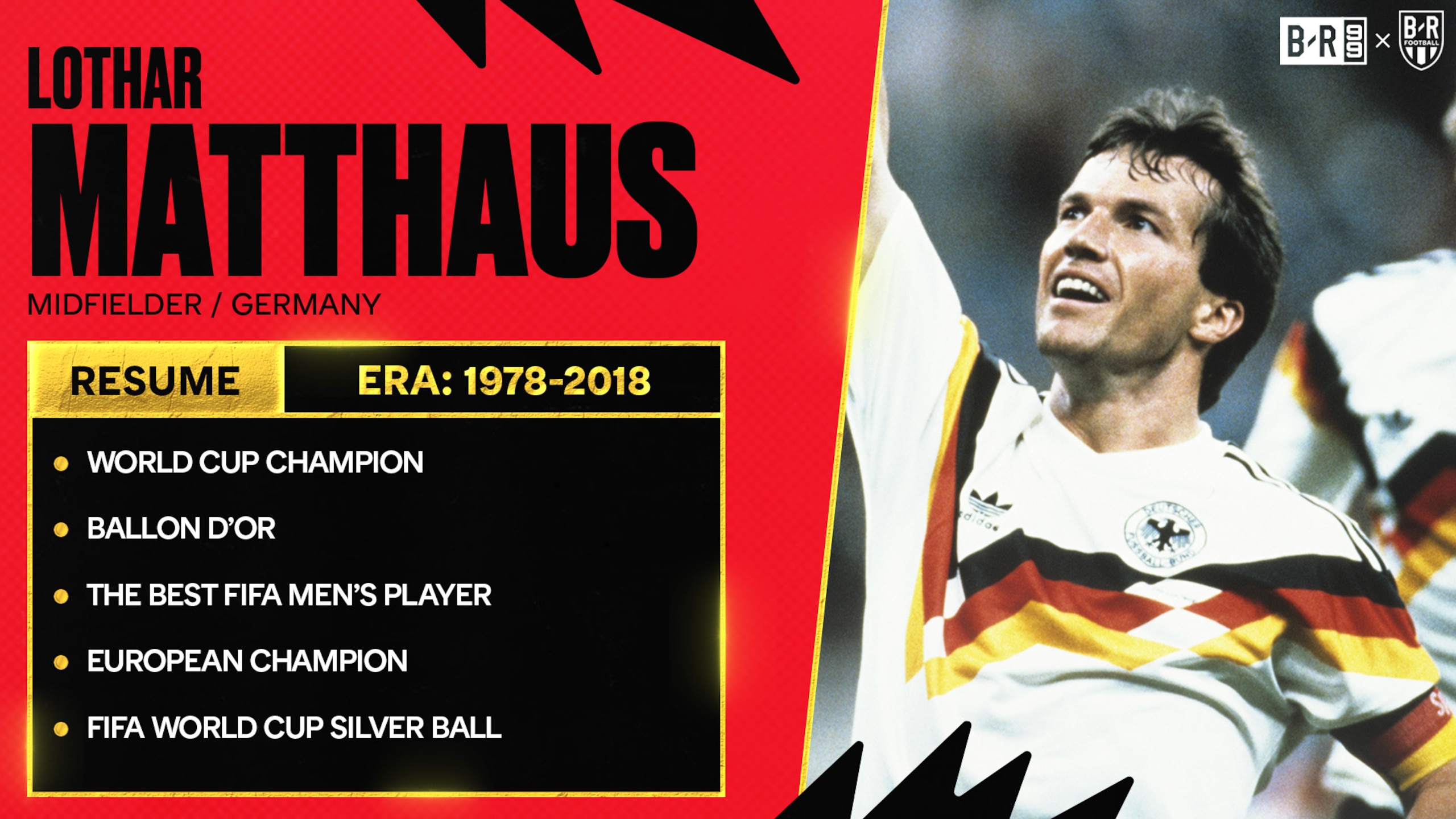
Clubs: FC Herzogenaurach (1978-79), Borussia Mönchengladbach (1979-84), Bayern Munich (1984-88), Inter Milan (1988-92), Bayern Munich (1992-2000), MetroStars (2000), 1. FC Herzogenaurach (2018)
Other Notable Accolades: 2x UEFA Cup Champion; 8x Domestic League Champion; 2x German Male Footballer of the Year
"He is the best rival I've ever had. I guess that's enough to define him," Diego Maradona wrote of Lothar Matthäus in his autobiography (h/t 90 Min).
Maradona and Matthäus faced off in the final of the 1986 and 1990 FIFA World Cups. Maradona and Argentina won the trophy in 1986 before Matthäus' West Germany side came out on top four years later.
Typically either playing as a defensive sweeper or in midfield, Matthäus was in direct competition with Maradona. As FIFA.com noted, he was given the unenviable task of man-marking Argentina's superstar in 1986. While he helped keep Maradona off the score sheet, Matthäus was given more license to attack in 1990, and Germany dominated the final en route to a 1-0 victory.
While his battles with Maradona comprised a small part of a storied career, Matthäus' ability to match up with one of the game's greatest-ever players is a perfect example of why he's on this list.
-Calum Rogers
Highest Top 99 Ranking: 10
28. Andrea Pirlo
72 of 99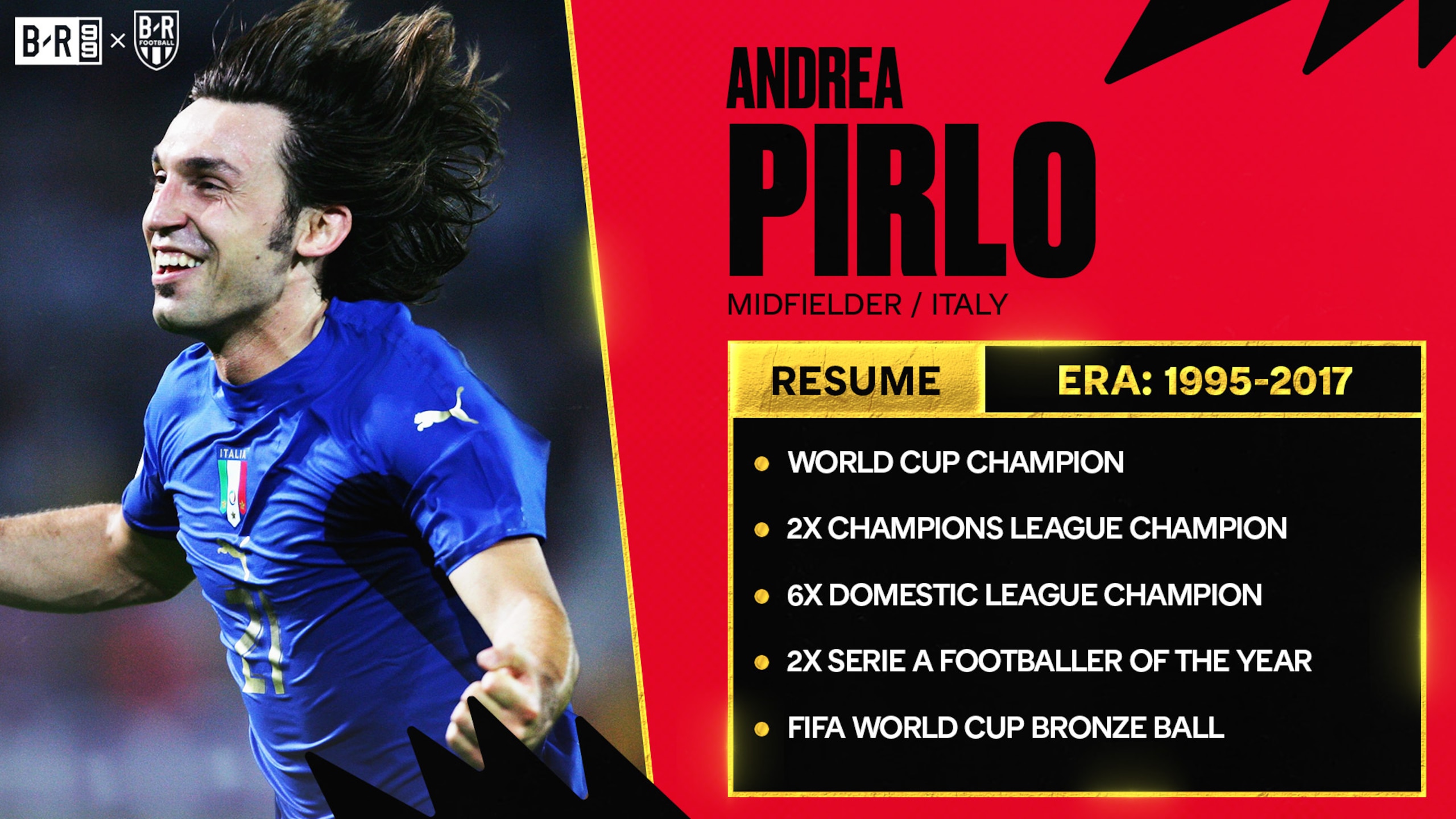
Clubs: Brescia (1995-98), Inter Milan (1998-2001), Reggina (loan, 1999-2000), Brescia (loan, 2001), AC Milan (2001-11), Juventus (2011-15), New York City FC (2015-17)
Other Notable Accolades: FIFA Club World Cup Champion
Ah, the regista.
Andrea Pirlo was the type of midfielder who could whip out an easel, plop down a canvas and pull up a stall while keeping the ball at his feet. Effortlessly nonchalant, he made the deep-lying playmaker role seem like a stroll in the local park.
The Italian's presence had the power to dictate both teams' game plans. His side would know he'll find them, as even when under pressure, he seemed unshakeable. The opposition knew they'd have to make special adjustments to try and slow his influence, as famously played out by Sir Alex Ferguson when he forced Park Ji-Sung to man-mark the midfielder in Man United's 2010 Champions League tie with Milan. Is there a better compliment?
- Nick Akerman
Highest Top 99 Ranking: 19
27. Luka Modrić
73 of 99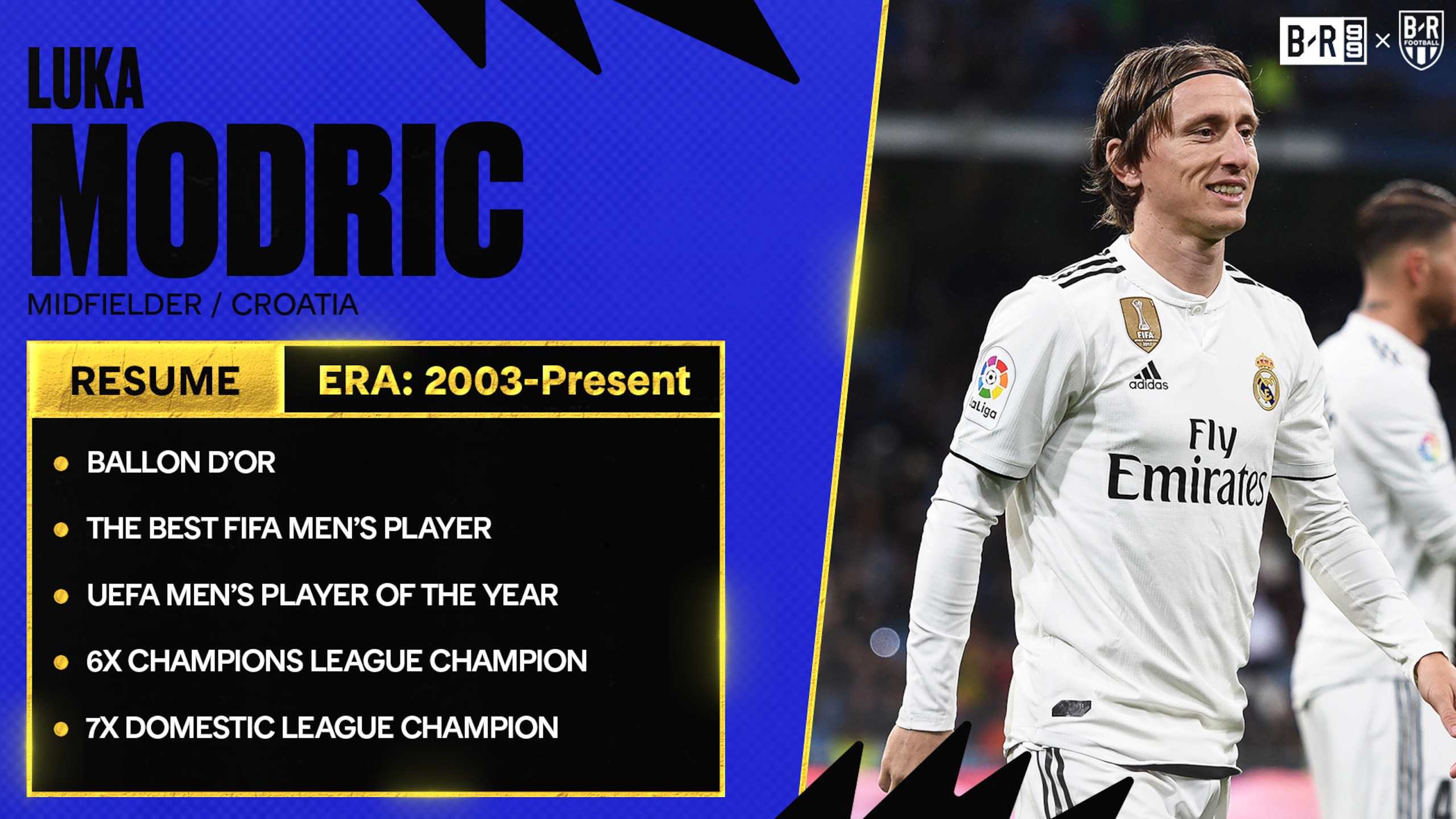
Clubs: Dinamo Zagreb (2003-08), Zrinjski Mostar (loan, 2003-04), Inter Zaprešić (loan, 2004-05), Tottenham Hotspur (2008-12), Real Madrid (2012-25), AC Milan (2025-Present)
Other Notable Accolades: 4x FIFA Club World Cup Champion; FIFA Intercontinental Cup Champion; 13x Croatian Footballer of the Year
Luka Modrić might be the most complete midfielder in the modern game. Twenty three years on from the Croatian legend's debut, he's still playing at the top level and heading to his fifth World Cup after previously leading the perennial dark horses to the 2018 final and 2022 semis.
His trophy haul speaks for itself, and let us not forget, he was the individual to interrupt the decade-long Messi-Ronaldo duopoly on the Ballon d'Or. Not Neymar, or a forward who gets the chance to win most games, but instead, the little magician who defined over 10 years of success at Real Madrid.
Modric's longevity comes down to the clarity in his game. He plays front-footed football even when deep, stepping forwards, skipping around a player or gliding side-to-side to open up space.
In his prime, his box-to-box instincts meant he would simultaneously be around to create a chance and then sprint back to ensure the other team couldn't. Watch the way he moves in possession; the ball is Modric's puppet on a string.
- Nick Akerman
Highest Top 99 Ranking: 16
26. Sergio Busquets
74 of 99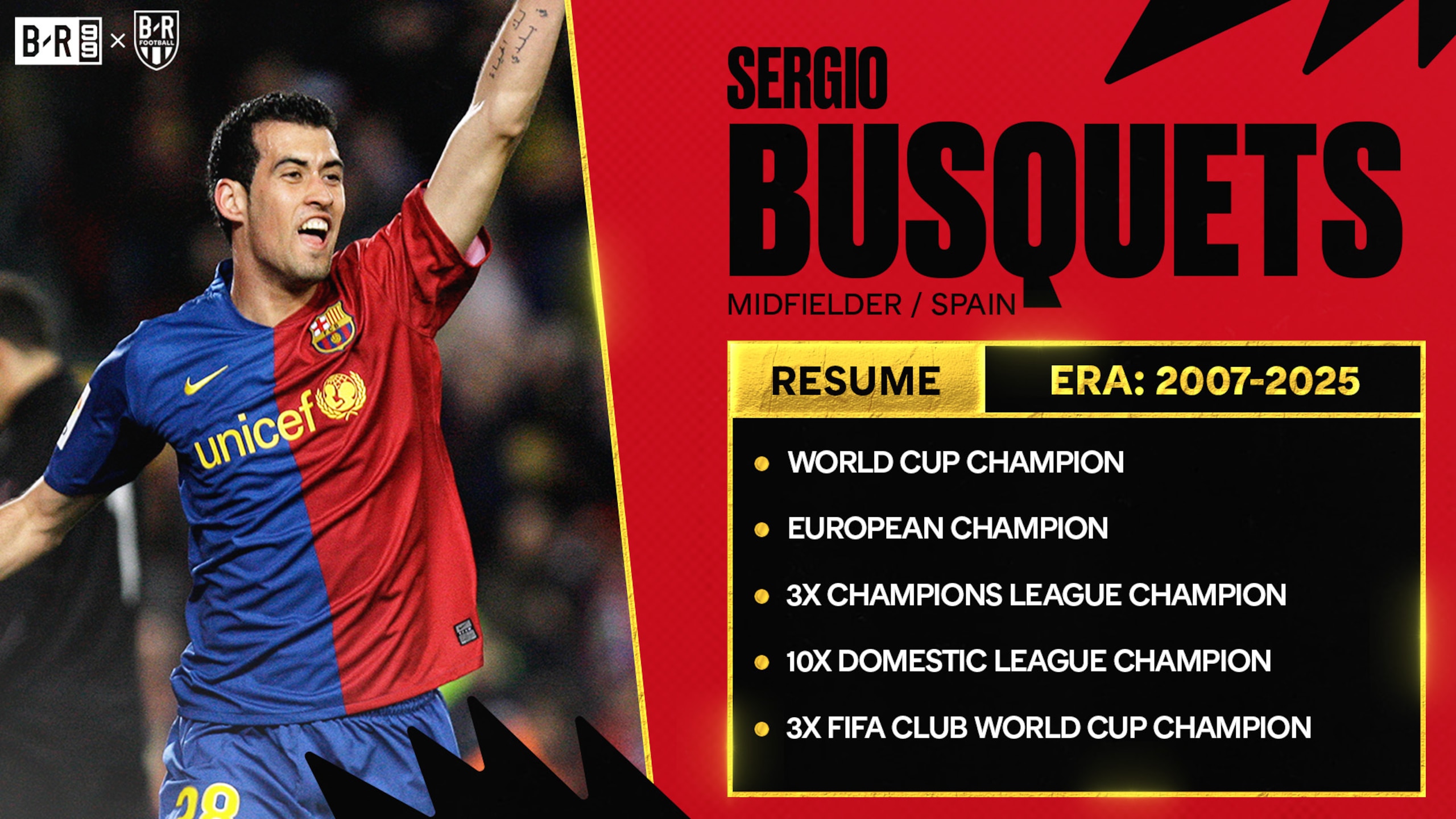
Clubs: Barcelona B (2007-08), Barcelona (2008-23), Inter Miami (2023-25)
Like the other Barcelona midfielders on this list, Sergio Busquets wasn't blessed with noticeable physical attributes.
Upon first glance, you'd think he'd get overpowered or outpaced. As we soon learned, looks are deceiving. Busquets is a generational defensive midfielder and someone who redefined what it means to protect the back line.
Footballing IQ was at the heart of his game. Busquets' deep-lying playmaker role called for someone who could escape the press. He was excellent at removing opponents from the game with his passing, starting attacking moves from deep and then keeping his energy in check so that he wouldn't lose a step as a gruelling 90 minutes wore on.
His total of 21 career goals in 939 appearances shouldn't be knocked back. It's a mark of a specialist who did his job, sometimes with major bite and gamesmanship, for the good of his teammates.
- Nick Akerman
Highest Top 99 Ranking: 13
25. Franco Baresi
75 of 99_1.jpg?w=2560 "Baresi")
Club: AC Milan (1977-97)
Over a 20-year career with AC Milan, the only club he ever played for, Franco Baresi forged a reputation as one of football's most formidable defenders.
Baresi played every game for the club as an 18-year-old as they won the Serie A, but it was not all smooth sailing from there. The club was relegated twice, once after a match-fixing scandal (which Baresi wasn't implicated in) and then the following season after returning to Serie A, and wouldn't win another Serie A title for nine years after Baresi's first.
By staying through it all, Baresi had already secured his place in the hearts of Milan's fans. He was named captain at 22 years old, and Milan's fortunes improved drastically after a change of ownership in 1986 saw them invest more heavily.
Under Arrigo Sacchi, Baresi was central in Milan's success in both Italy and Europe, which saw them win one Serie A title and two consecutive European Cups. Four more Serie A titles and a European Cup would follow under Fabio Capello, including a title-winning season in 1993-94 that saw the team concede just 15 goals all season.
-Calum Rogers
Highest Top 99 Ranking: 15
24. Kylian Mbappé
76 of 99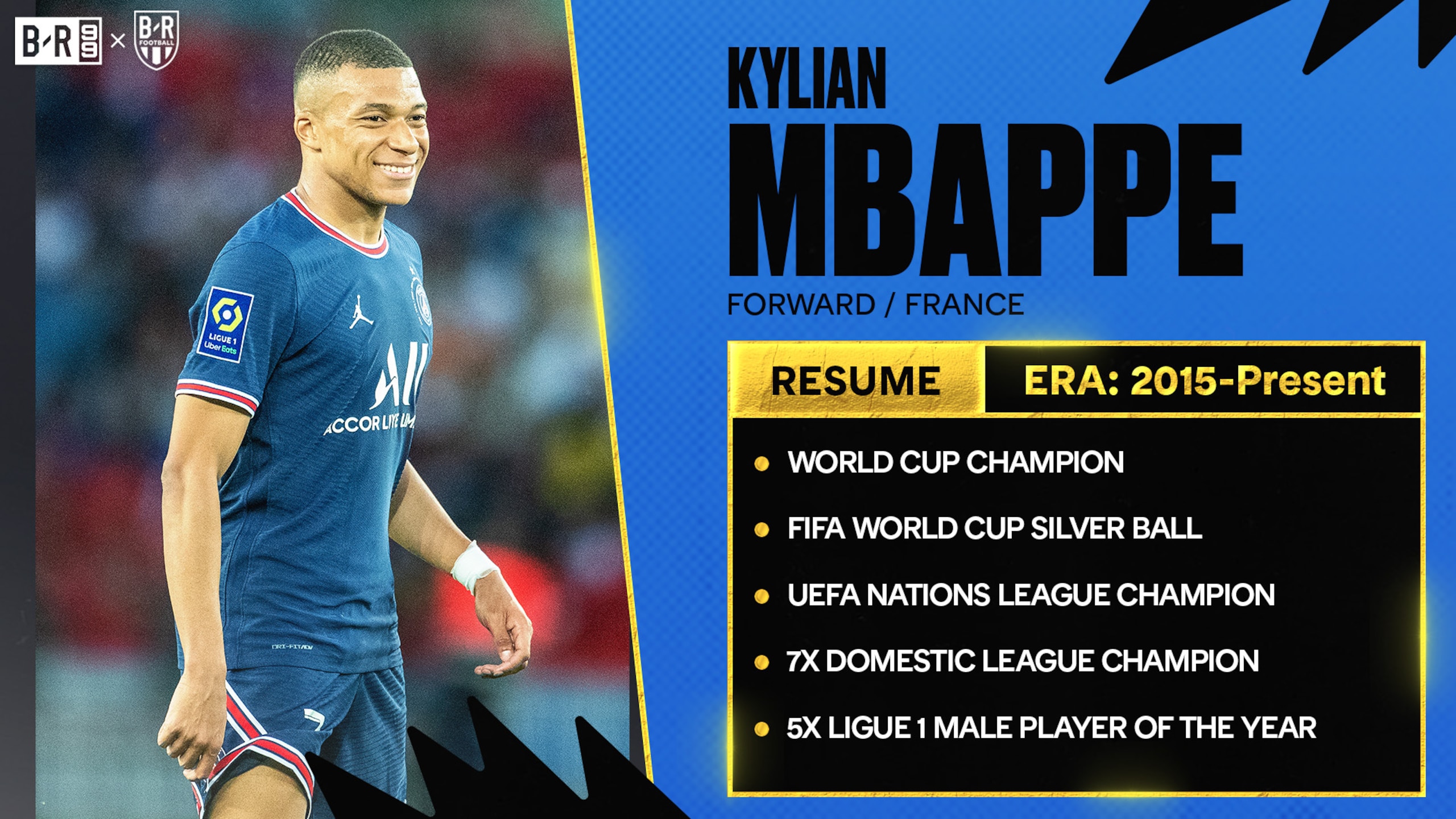
Clubs: Monaco II (2015-16), Monaco (2015-18), Paris Saint-Germain (loan, 2017-18), Paris Saint-Germain (2018-24), Real Madrid (2024-Present)
Other Notable Accolades: 4x French Player of the Year; FIFA Intercontinental Cup Champion
It's very easy to hate on Kylian Mbappé. The nature of social media is reactionary, extreme and often jumps to conclusions, so there are few players on this list who will have faced the week-to-week scrutiny of the French World Cup winner.
Make no mistake about it: Mbappé is the best overall forward of the post-Messi and Ronaldo generation. Somehow a decade has passed since he scored his first goal for Monaco. In the time since, he's become Paris Saint-Germain's all-time top goalscorer and broken records at Real Madrid.
Mbappé's greatest individual performance came in the 2022 FIFA World Cup final, where he scored a hat-trick and went toe-to-toe with Lionel Messi in a game for the ages. He still needs to win the Champions League and the Ballon d'Or, but at 27, he has time to push himself further up this list.
- Nick Akerman
Highest Top 99 Ranking: 9
23. Bobby Charlton
77 of 99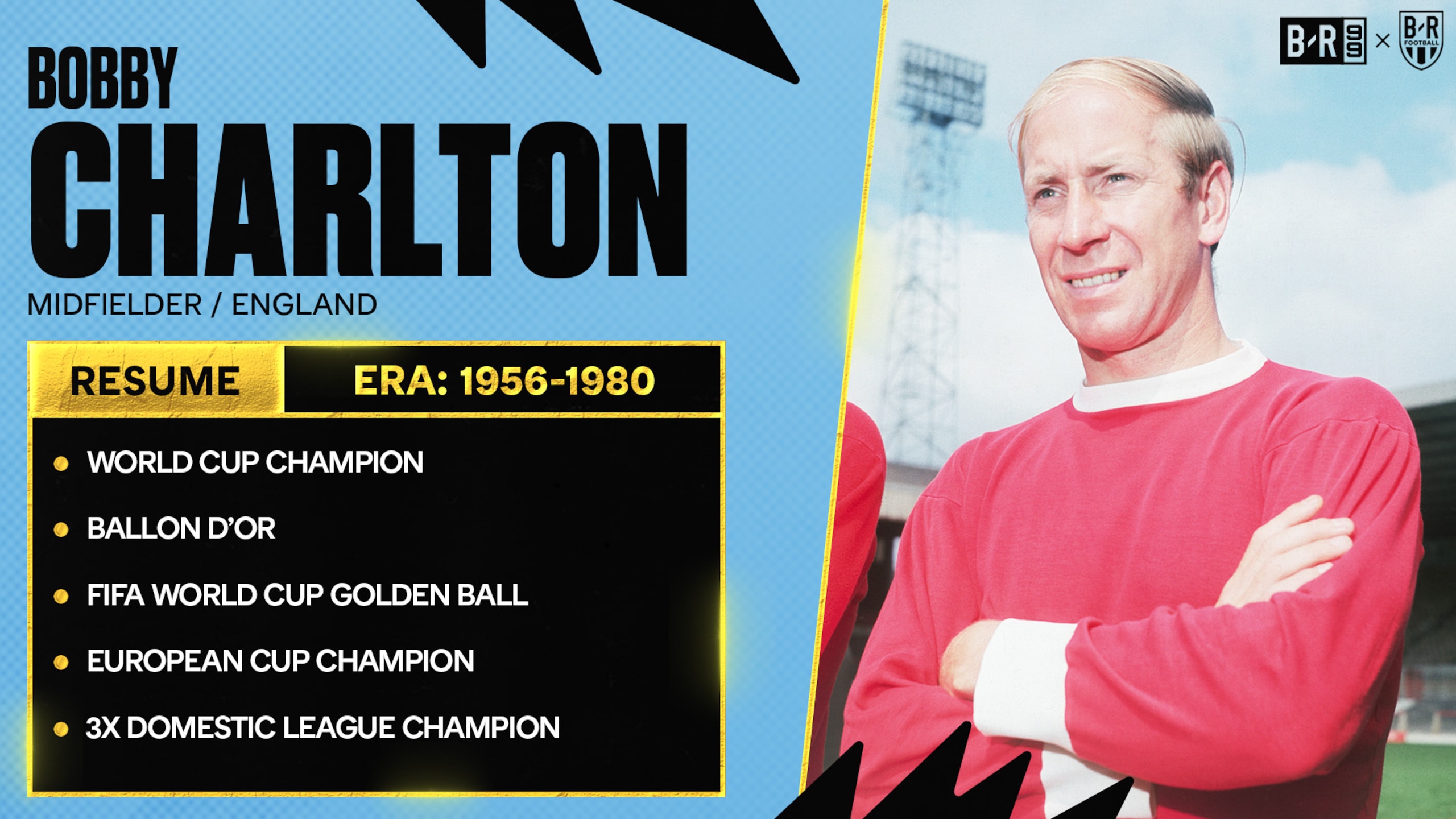
Clubs: Manchester United (1956-73), Preston North End (1974-75), Waterford (1976), Newcastle KB United (1978), Perth Azzurri (1980), Blacktown City (1980)
Other Notable Accolades: FWA Footballer of the Year
One of England's first true football stars in the post-World War II period, Sir Bobby Charlton was an icon of both the national team and Manchester United.
His appearance record of 758 games for the Red Devils held until Ryan Giggs surpassed him in 2008, while his scoring record of 249 goals was only topped by Wayne Rooney in 2017.
But Charlton's presence in the Manchester United history books goes far beyond his on-pitch exploits. He was one of the few surviving members of the tragic Munich air disaster in 1958, which saw 23 people killed, including eight teammates.
At just 20 years old, Charlton was seen as one of the key figures to help rebuild the team following the tragedy. He would be vital as United won league titles in 1964-65 and 1966-67, adding to the trophy he lifted before the disaster in 1956-57.
He also claimed the FA Cup in 1962-63 and won the 1968 European Cup, scoring twice in the final against Eusebio's Benfica.
His finest moment came in 1966, when he lifted England's one and only World Cup title. He scored three times on England's march to glory, including both strikes in a 2-1 semifinal win against Portugal. Charlton is third on the nation's all-time scoring list with 49 goals in 106 caps.
-Leo Collis
Highest Top 99 Ranking: 14
22. Romário
78 of 99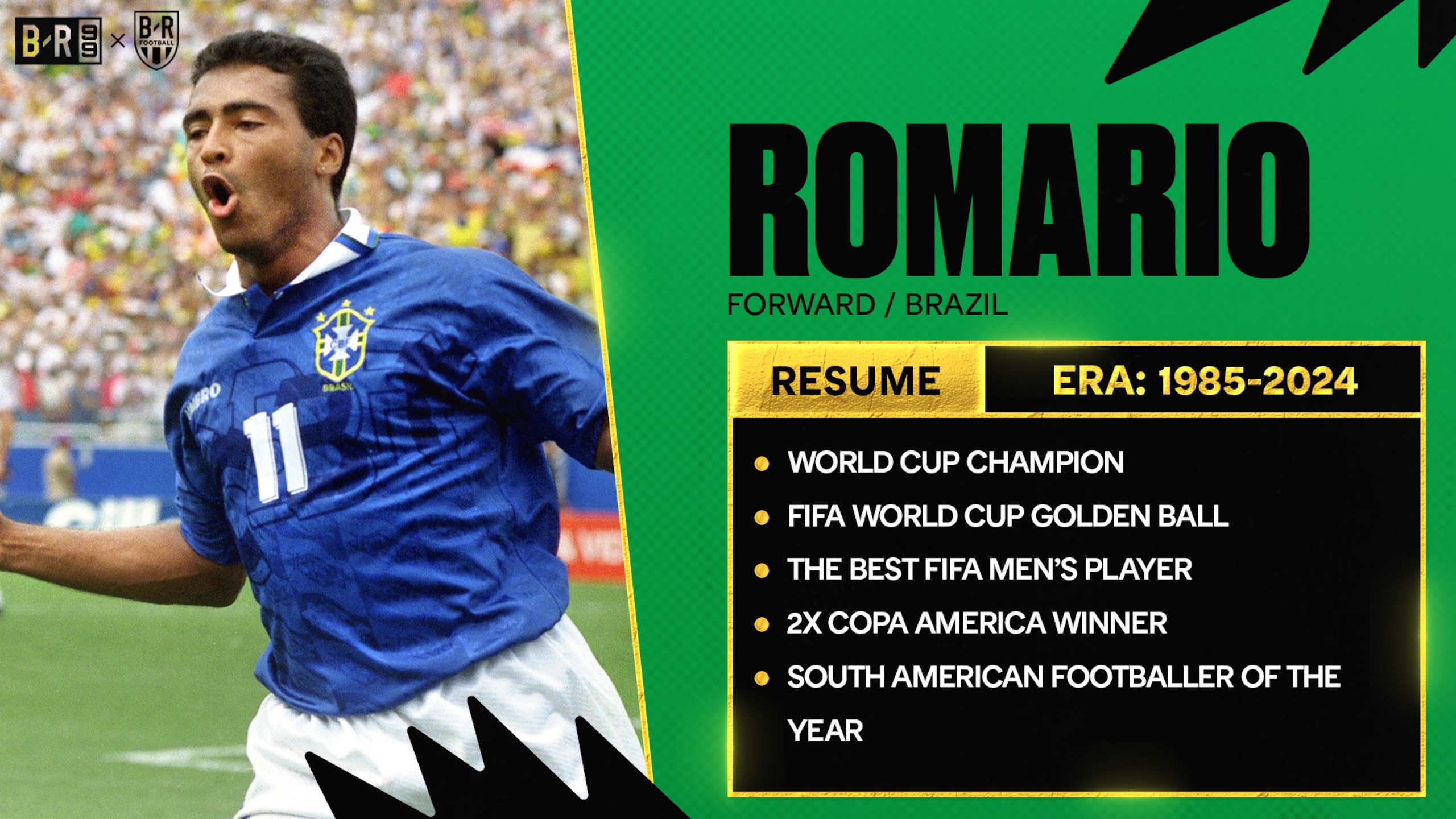
Clubs: Vasco da Gama (1985-88), PSV Eindhoven (1988-93), Barcelona (1993-95), Flamengo (1995-96), Valencia (1996-97), Flamengo (loan, 1997), Flamengo (1998-99), Vasco da Gama (2000-02), Fluminense (2002-04), Al Sadd (loan, 2003), Vasco da Gama (2005-06), Miami FC (2006), Adelaide United (loan, 2006), Vasco da Gama (2007), America-RJ (2009), America-RJ (2024)
Other Notable Accolades: 5x Domestic League Champion; Brazil Golden Ball; Netherlands Footballer of the Year
"It has to be Romário," Johan Cruyff told FIFA.com when asked who was the best player he ever coached. "You never knew what to expect with him. His technique was outstanding, and he scored goals from every possible position, most of them with his toe, funnily enough."
That is no mean feat given that Cruyff's star-studded Barcelona squad is known as the Dream Team.
At only 5'5", Romário is one of the shortest players on this list. Rather than being physically outmatched, however, Romário's shorter stature made him more explosive than the vast majority of opponents.
And once he gained a yard on his defender, he was a ruthless finisher, with the unconventional toe-poke mentioned by Cruyff — typically a no-no to maintain respect on the playground — becoming the favored technique of a man whose international goal-per-game ratio for Brazil is only bettered by Pelé.
-Calum Rogers
Highest Top 99 Ranking: 14
21. Garrincha
79 of 99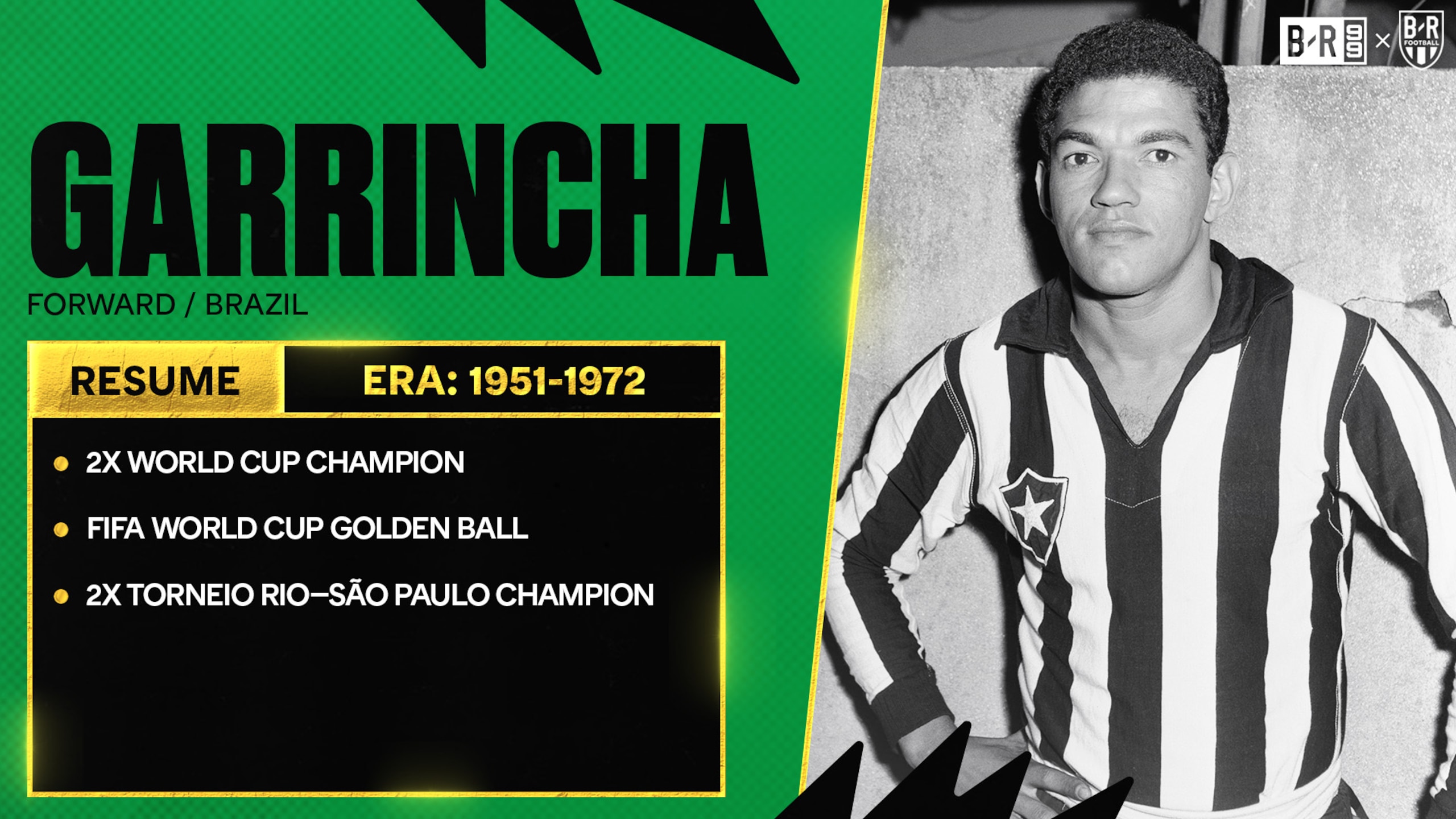
Clubs: Serrano (1951), Botafogo (1953-65), Corinthians (1966), Atlético Junior (1968), Flamengo (1968-69), Sacrofano (1970-71), Olaria (1971-72)
Alongside Pelé, Garrincha formed one of the greatest duos in international football history. In 40 games that the pair played together, Brazil won 35 and never lost.
And while Pelé's legacy has gone on to outshine his teammate's, Garrincha wasn't just the Robin to his Batman.
In Brazil's 1962 FIFA World Cup win, an injury to Pelé saw him miss the latter stages of the tournament, but Garrincha's four goals in the knockout rounds helped lead his team to the final, where they beat Czechoslovakia.
He shared the top scorer title and was awarded the Golden Ball as the tournament's best player.
-Calum Rogers
Highest Top 99 Ranking: 11
20. George Best
80 of 99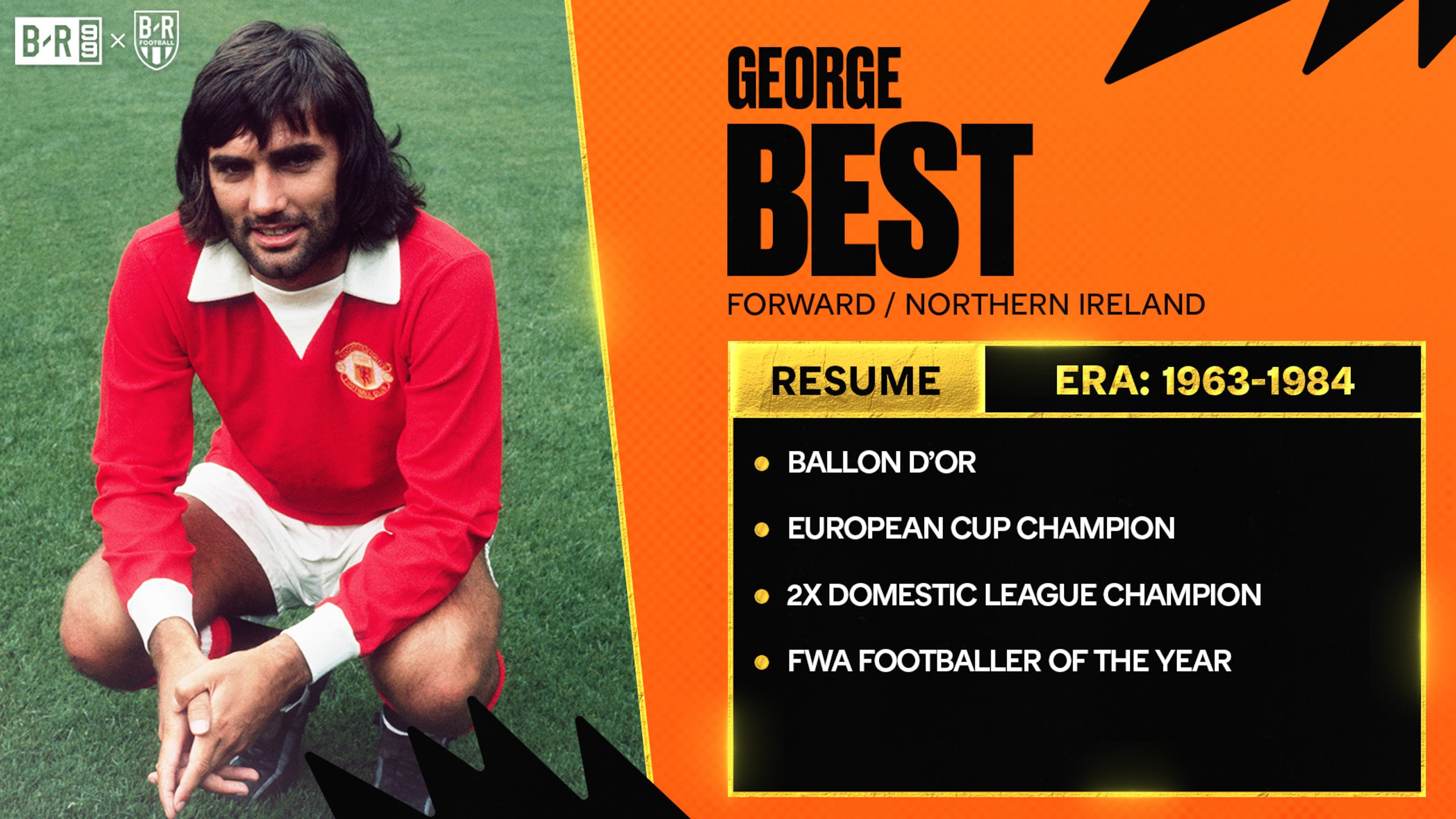
Country: Northern Ireland
Clubs: Manchester United (1963-74), Jewish Guild (1974), Dunstable Town (1974), Stockport County (1975), Cork Celtic (1975-76), Los Angeles Aztecs (1976), Fulham (1976-77), Los Angeles Aztecs (1977-78), Fort Lauderdale Strikers (1978-79), Hibernian (1979-80), San Jose Earthquakes (1980-81), AFC Bournemouth (1982-83), Brisbane Lions (1983), Tobermore United (1984)
Other Notable Accolades: Ballon d'Or, European Cup Champion, 2x Domestic League Champion, FWA Footballer of the Year
"Maradona good, Pele better, George Best." A tongue-in-cheek saying that goes a long way to showing just how well-regarded the Manchester United legend is to this day.
Best took the art of dribbling and elevated it, his balance and close control unmatched at a time where many football pitches bobbled and bounced, a world away from the carpets we have now. The Northern Irishman was fearless in his approach, the kind of player who thrived in the heat of battle and demanded the ball so that he could try something special.
A playboy with issues off the pitch, Best was one of the first celebrity footballers who captured the public's imagination when his boots were off. His character and his legacy are now woven into United's DNA, immortalised outside Old Trafford as one of the holy trinity alongside Denis Law and Sir Bobby Charlton.
- Nick Akerman
Highest Top 99 Ranking: 10
19. Eusébio
81 of 99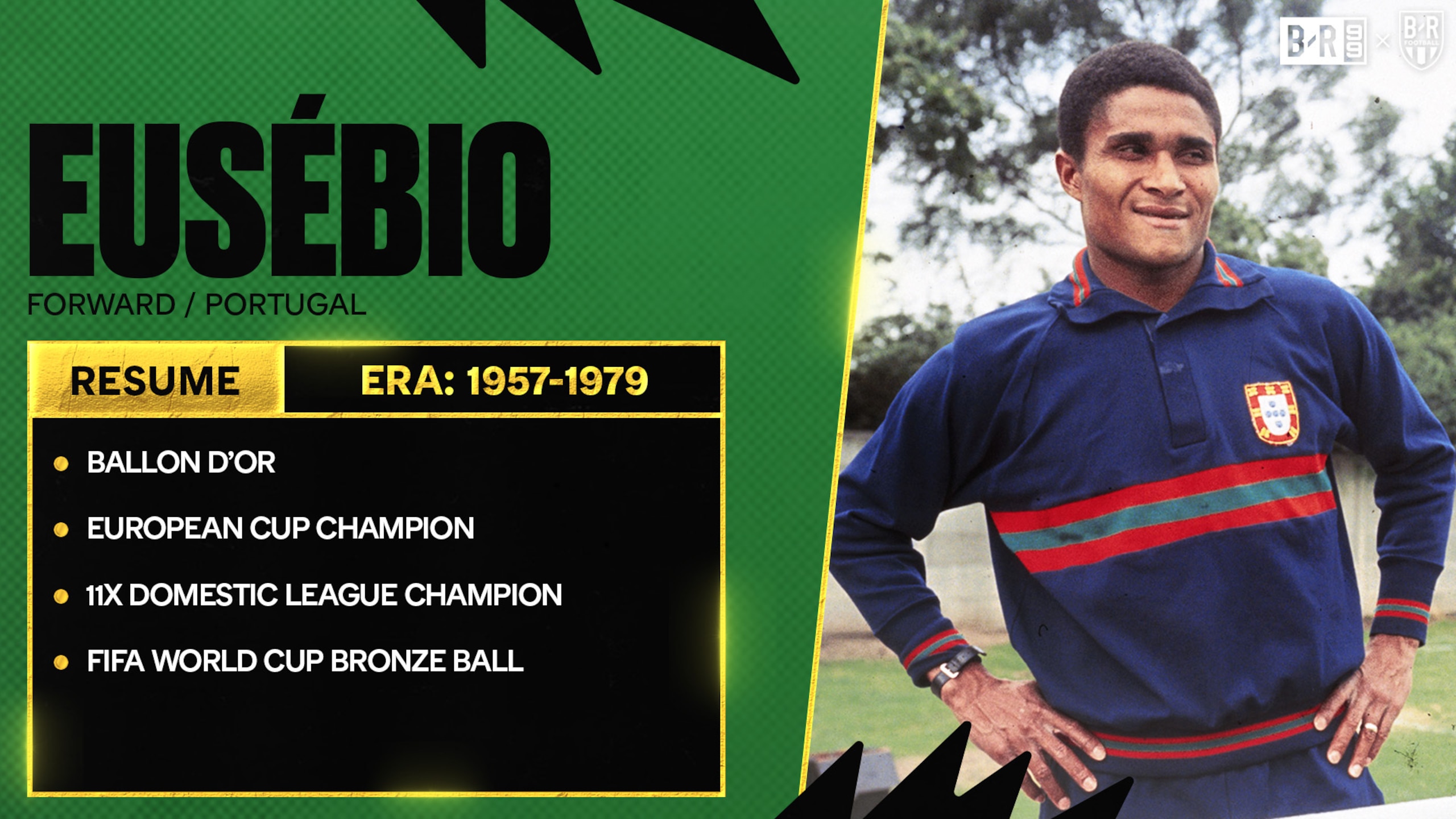
Clubs: Sporting Lourenço Marques (1957-60), Benfica (1961-75), Boston Minutemen (1975), Monterrey (1975), Toronto Metros-Croatia (1975-76), Beira-Mar (1976), Las Vegas Quicksilvers (1976-77), União de Tomar (1977-78), New Jersey Americans (1978-79)
The first true superstar of the Portugal national team, Eusebio grabbed the world's attention after guiding the country to its first-ever World Cup in 1966 and dragging the Seleçao to a third-place finish.
During the tournament in England, the man born in Mozambique scored nine goals to claim the Golden Boot, notably notching four in a 5-3 comeback win against North Korea in the quarter-final.
But Eusebio's ability was known long before that breakout tournament by those in Portugal. He was already bagging goals in bunches for Benfica, with his efforts contributing to four league titles before his memorable World Cup display.
He would pick up a further seven Primeira Liga trophies with As Águias, in addition to five Taças de Portugal. On a personal level, he won the 1965 Ballon d'Or and was runner-up for the award in both 1962 and 1966.
Eusebio more than deserves his statue outside of Benfica's Estadio da Luz after grabbing 638 goals for the club in just 614 matches. He's also third on the national team's all-time scoring chart with 41.
-Leo Collis
Highest Top 99 Ranking: 13
18. Marco van Basten
82 of 99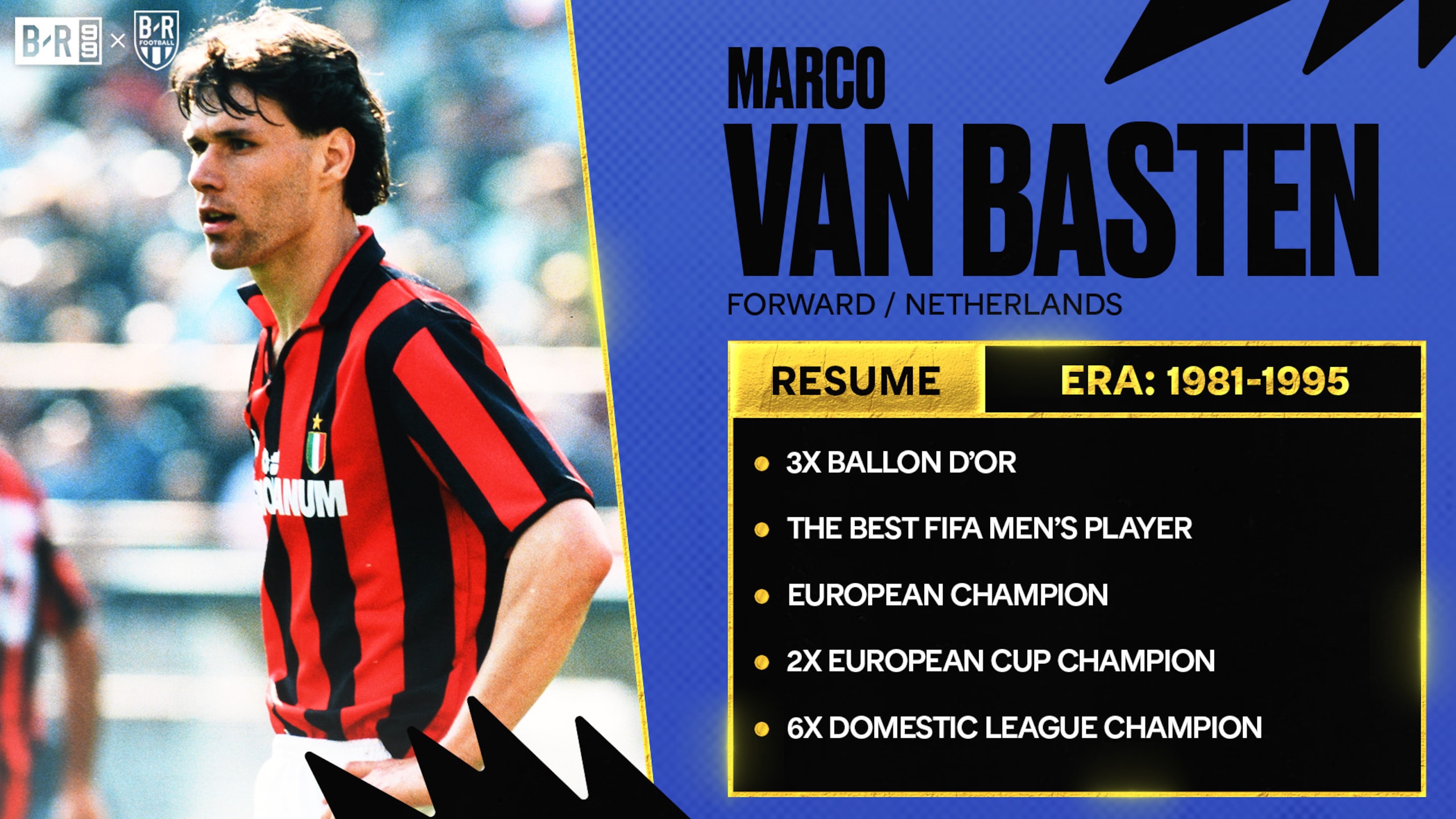
Clubs: Ajax (1981-87), AC Milan (1987-95)
Other Notable Accolades: 2x Intercontinental Cup Champion; Netherlands Footballer of the Year
It's amazing Marco van Basten is on this list considering his career was cut tragically short. The Dutch master's recurring ankle issues closed the curtains on an unbelievable run with Ajax, Milan and the Netherlands at just 28 years old.
Van Basten somehow still had the time to win multiple European Cups, Serie A titles, domestic cups and even Euro 1988 with the national team. He scored all types of goals and played with a technical ability that seemed unusual for a player of his height at the time. 'A good touch for a big man' is a joke these days, but MvB's touch and composure often felt like time slowed down around him.
If you check out one goal mentioned on this list, make it Van Basten's strike against the Soviet Union from the Netherlands' triumphant Euro campaign. It's almost impossible to fathom.
- Nick Akerman
Highest Top 99 Ranking: 10
17. Gerd Müller
83 of 99_0.jpg?w=2560)
Clubs: 1861 Nördlingen (1963-64), Bayern Munich (1964-79), Fort Lauderdale Strikers (1979-81)
Other Notable Accolades: Intercontinental Cup Champion; 2x German Male Footballer of the Year; FIFA World Cup Bronze Ball
Gerd Müller's record of 68 goals in 62 international matches makes him one of only four players to average more than a goal per game internationally.
Miroslav Klose broke Müller's record for Germany in 2014, but it took him 70 more appearances to get to that point. Müller retired from international football at just 28 years old, but his goals in the 1972 UEFA European Championships and the 1974 FIFA World Cup finals helped propel West Germany to both titles.
Müller's clutch gene also extended to club football, where he scored in two of the three consecutive European Cup finals won by Bayern Munich from 1974 to 1976. Müller is the club's top all-time goalscorer with 570 in 613 appearances during 15 years in Munich, and while records are made to be broken, the next-best player being over 200 goals behind suggests it will stand for an awfully long time.
-Calum Rogers
Highest Top 99 Ranking: 11
16. Paolo Maldini
84 of 99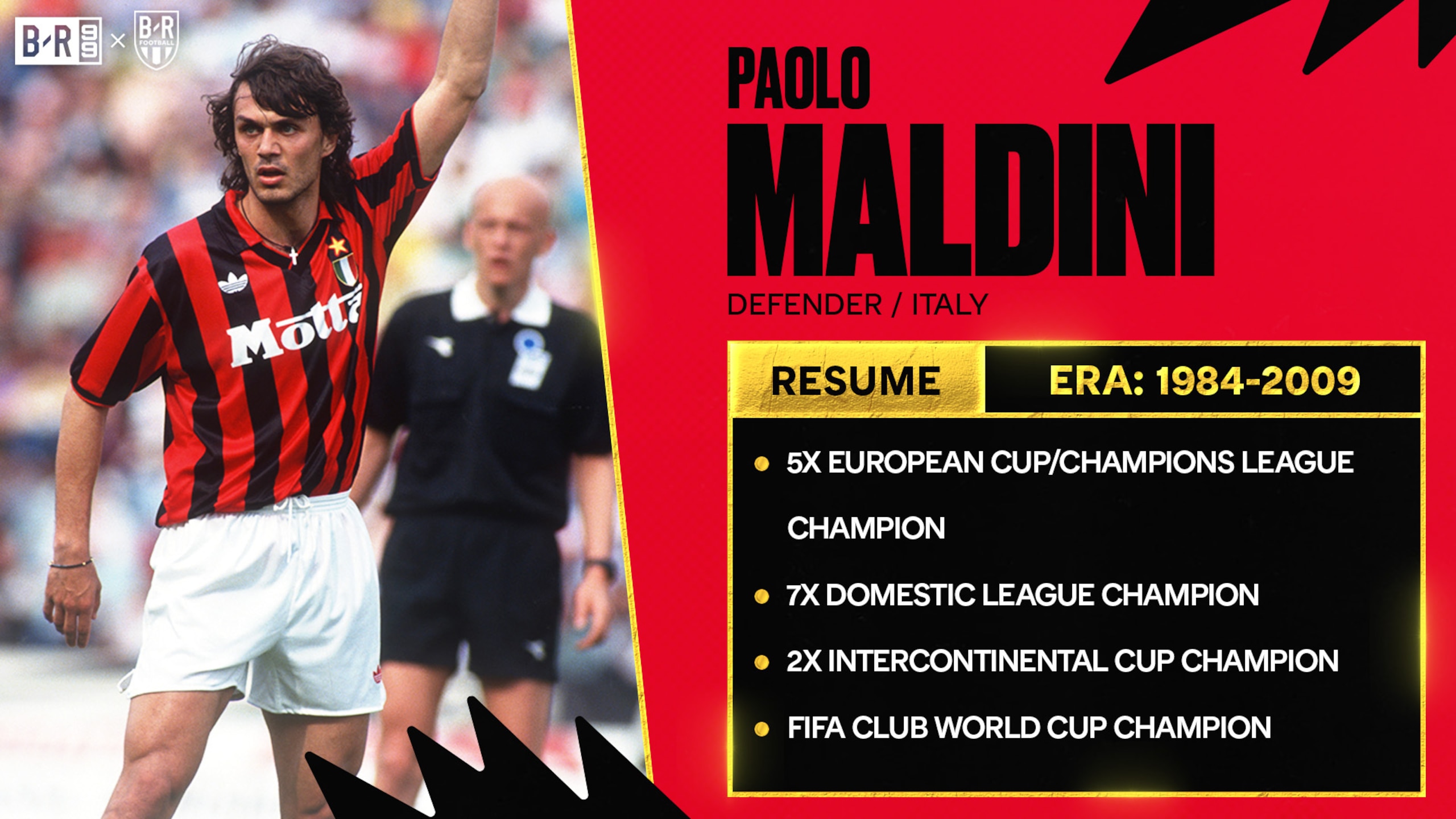
Club: AC Milan (1984-2009)
A dominant one-on-one defender with beautiful hair. What a combo.
Paolo Maldini aged like a fine wine and should be considered a defender for the connoisseurs who love the art of stopping the other team from scoring a goal. He played top-level football for over two decades with a career that saw him lead some of the best backlines the sport has ever produced - all with the pressure of his father's legacy sat over him.
Retiring at 41 was unusual in 2009, a time when many players put their slippers on and gave up in their early to mid-thirties. Maldini looked after himself, continued to learn, and remained an important asset to his beloved Milan until it was over, as summed up by winning the old European Cup in 1989 and making the the rebranded Champions League final in 2005.
- Nick Akerman
Highest Top 99 Ranking: 12
15. Thierry Henry
85 of 99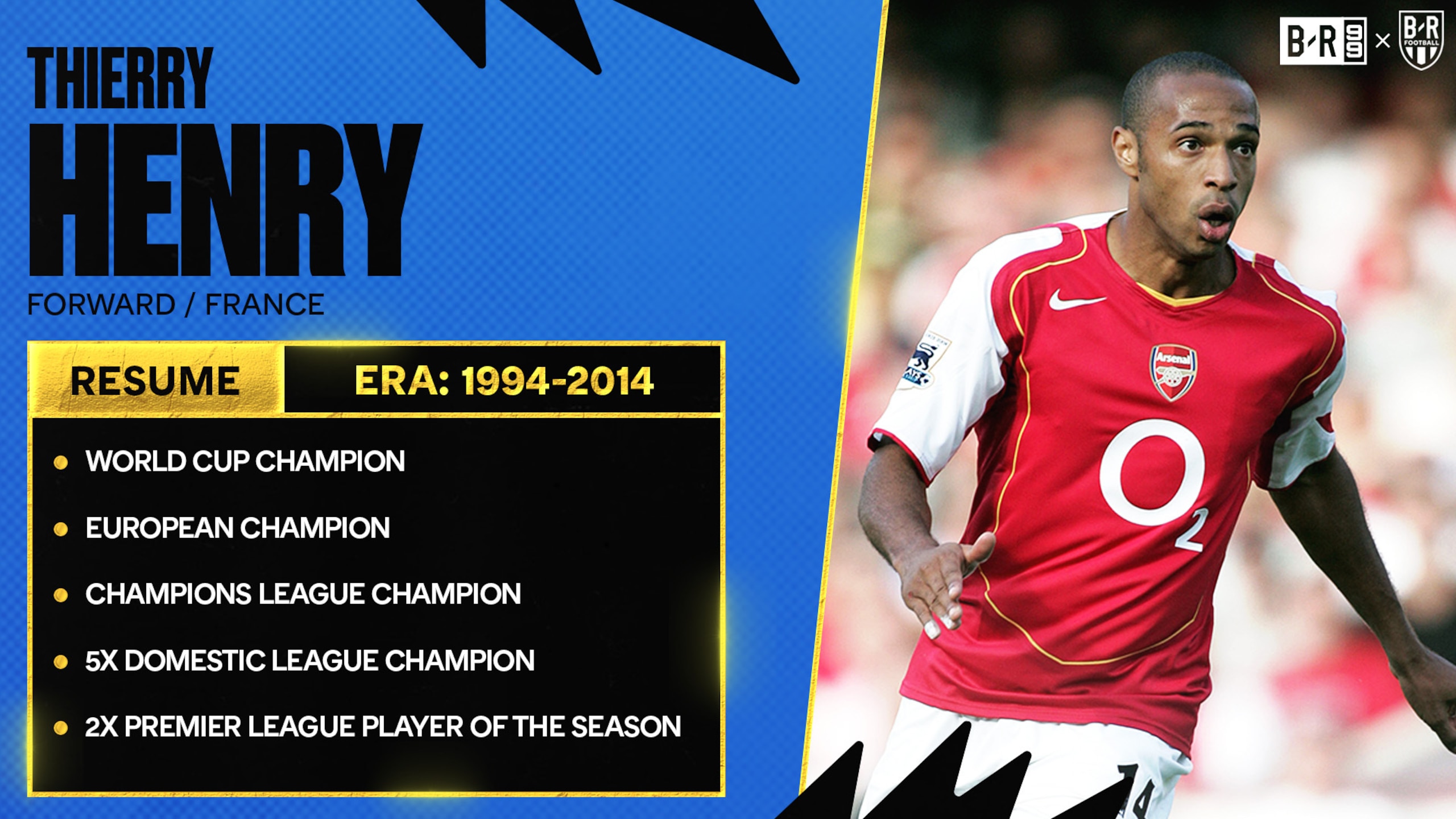
Clubs: Monaco B (1994-95), Monaco (1994-99), Juventus (1999), Arsenal (1999-2007), Barcelona (2007-10), New York Red Bulls (2010-14), Arsenal (loan, 2012)
Other Notable Accolades: FIFA Club World Cup Champion; 5x French Player of the Year
Thierry Henry played real football how gamers play EAFC.
His frightening pace and dribbling control was OP. His finesse finish–that beautiful little shoulder drop to one side as the ball curls in–the real-world version of holding R1 and knowing the net will bulge.
He flaunts one of the most jaw-dropping 'Best Goals' compilations in Premier League history and was such a creative force that he only recently lost his assists record in one season to Bruno Fernandes.
Henry played with the type of self-belief that would inevitably see his knee-slide goal celebration immortalised outside Arsenal's Emirates Stadium. Aura, before aura farming was a thing.
- Nick Akerman
Highest Top 99 Ranking: 8
14. Ferenc Puskás
86 of 99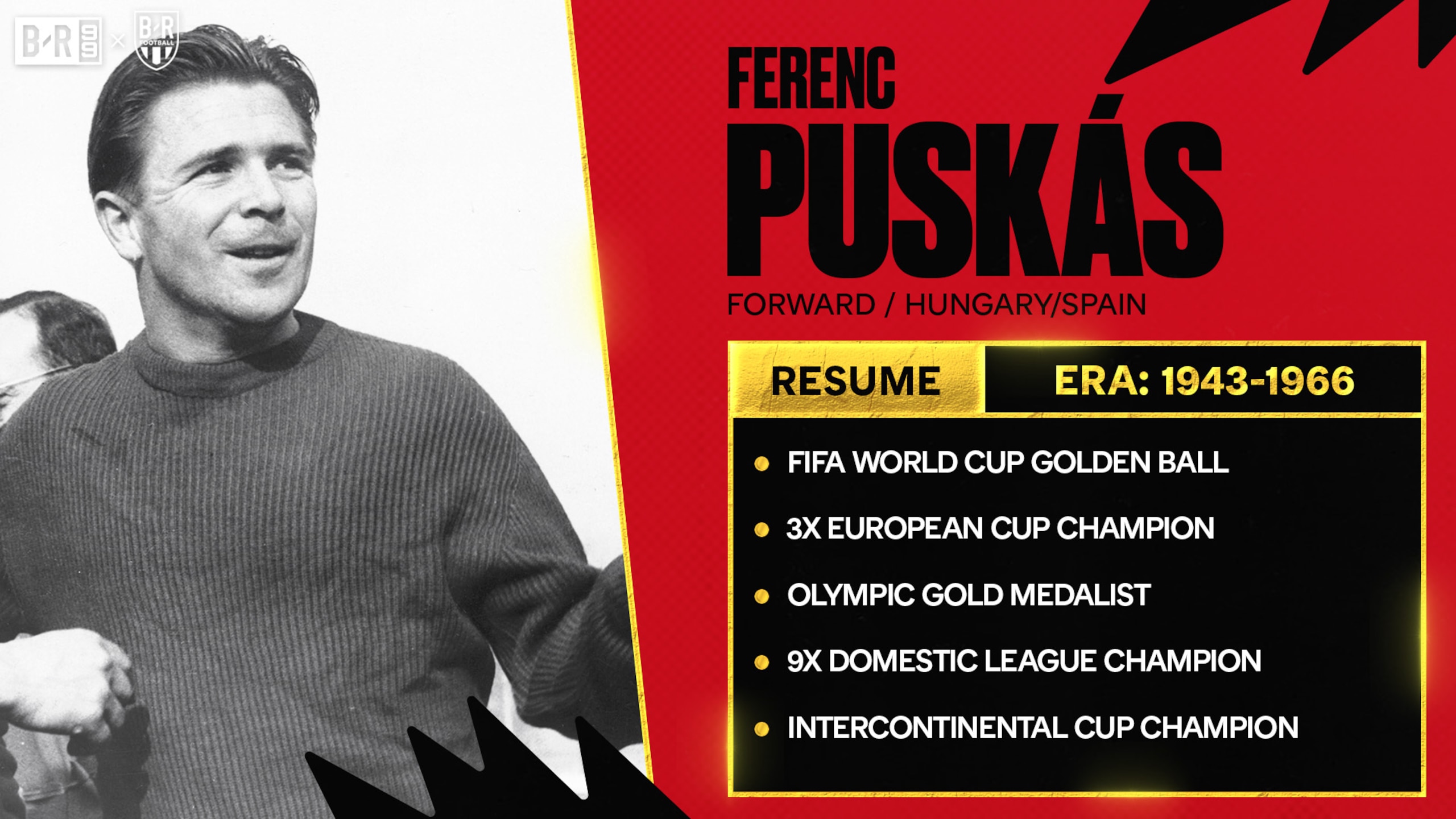
Clubs: Budapest Honvéd (1943-56), Real Madrid (1958-66)
There's a reason why FIFA's award for the best goal in world football during a calendar year is named after Ferenc Puskás.
The Hungarian was renowned for his stunning strikes, with many coming for Real Madrid in the late 1950s and 1960s.
In eight years in the Spanish capital, he clocked up 242 goals, putting him sixth on the club's all-time scoring list. He also filled his trophy cabinet with five La Liga trophies and three European Cups.
He courted global attention at the 1954 World Cup in Switzerland, playing a notable role in a team that lost to West Germany in the final, representing the nation's joint-best performance in the tournament.
While he played in the competition's climactic game with a hairline fracture on his ankle, he still managed to score in the 3-2 defeat, his fourth goal in just three games.
In all, he scored an astonishing 84 goals in 85 games for the Magyars, and he is said to have scored 806 goals in 793 matches to sit fourth on the sport's all-time scoring chart.
-Leo Collis
Highest Top 99 Ranking: 7
13. Michel Platini
87 of 99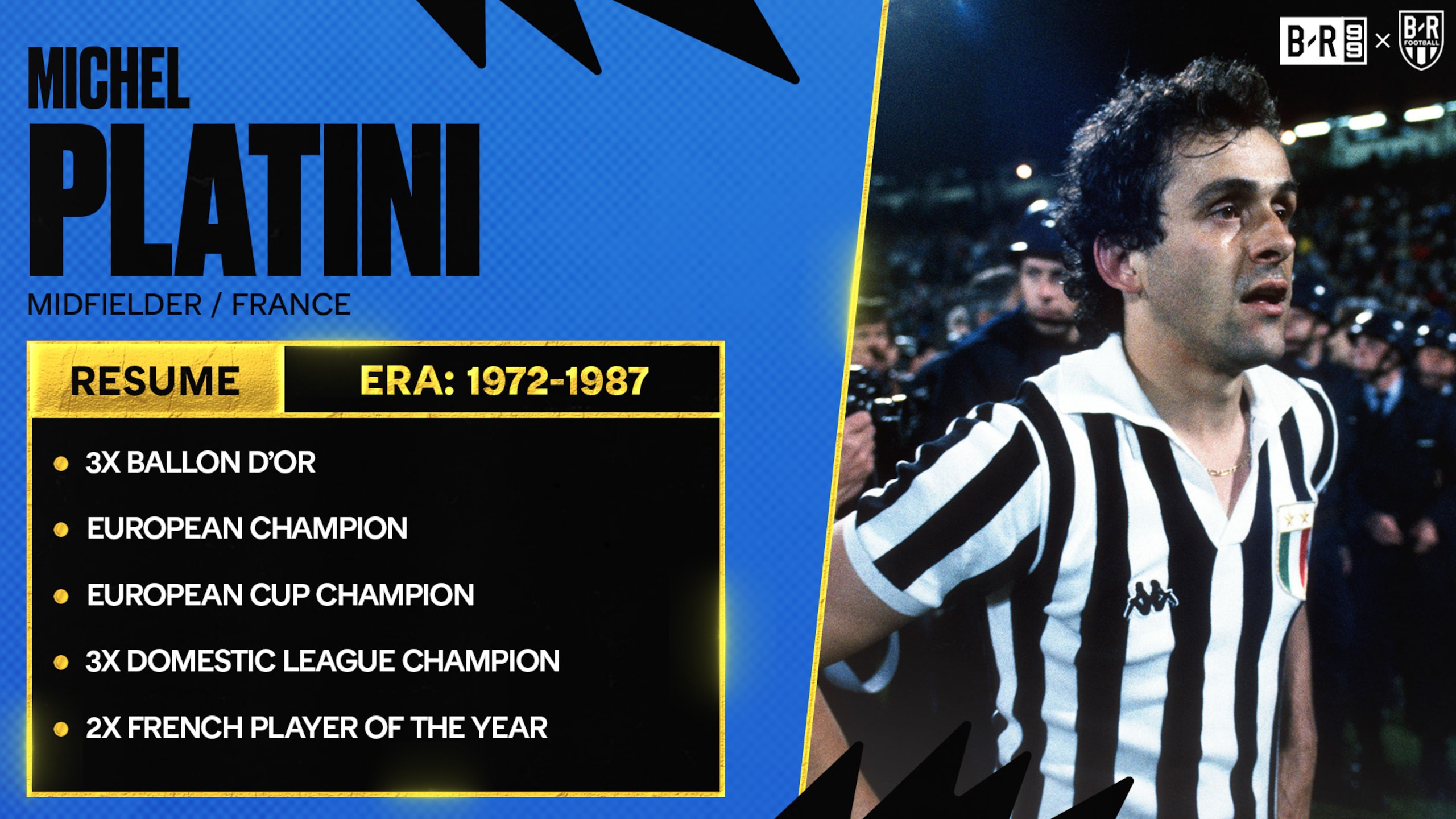
Clubs: Nancy (1972-79), Saint-Étienne (1979-82), Juventus (1982-87)
Other Notable Accolades: Intercontinental Cup Champion; CONMEBOL-UEFA Cup of Champions Winner
One of just five players to win three or more Ballons d'Or, Michel Platini is one of football's most prolific midfielders. He scored 41 goals in 72 appearances for France, placing him fifth on the country's all-time leaderboard. His goals-to-game ratio is second only to Kylian Mbappe among players with 50-plus caps.
Platini's 1984 Ballons d'Or win came on the back of one of the best major tournament performances ever. Platini's nine goals are the most anyone has ever scored in a single European Championships campaign, with his free-kick in the final helping lead his team to a 2-0 victory over Spain in Paris.
At club level, Platini was Serie A top scorer in three consecutive seasons, leading Juventus to title victories in two of those years. He was also the joint-top scorer in the club's successful 1984-85 European Cup campaign, which included the only goal in a 1-0 victory over Liverpool in the final.
-Calum Rogers
Highest Top 99 Ranking: 6
12. Xavi Hernández
88 of 99_0.jpg?w=2560)
Clubs: Barcelona B (1997-99), Barcelona (1998-2015), Al Sadd (2015-19)
Other Notable Accolades: 2x FIFA Club World Cup Winner
Metronome is the perfect word to describe Xavi Hernández. When Andrés Iniesta roamed, he sat, monitoring.
The art of 'scanning' has become a joke on social media these days, with commenters suggesting some players look back and forth performatively to seem busy. Xavi never acted without intention. Every read calculated, every pass precise.
Xavi was the type of midfielder who didn't need great physical attributes to dominate. His technical skills were far greater than any brawn in front of him.
It's no wonder his early management career has been so meticulous, and although he's currently dormant, it's not far-fetched to imagine Xavi's footballing brain playing a huge part in the sport's future, even from the sidelines.
- Nick Akerman
Highest Top 99 Ranking: 10
11. Alfredo Di Stéfano
89 of 99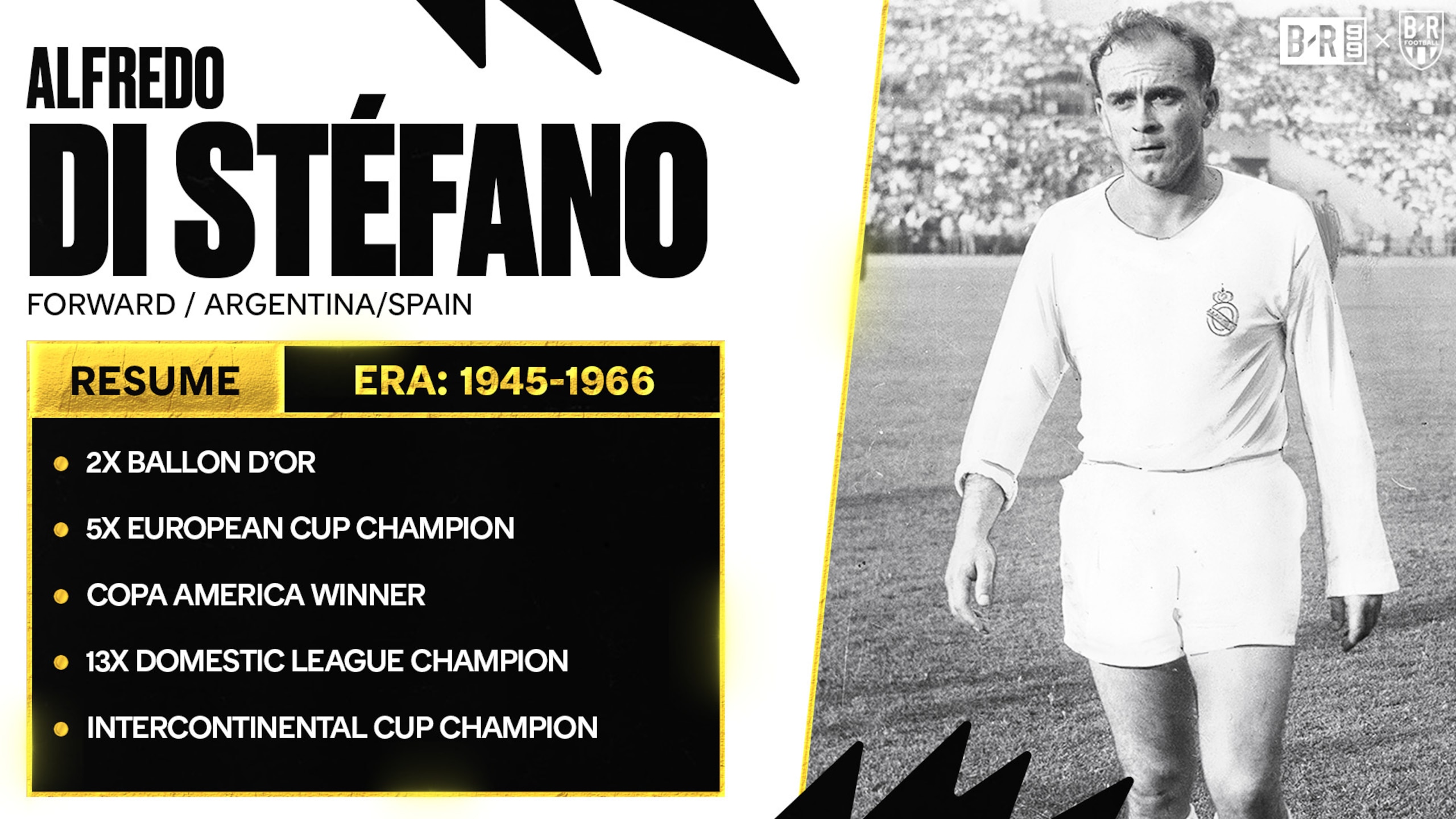
Clubs: River Plate (1945-49), Huracán (loan, 1945-46), Millonarios (1949-53), Real Madrid (1953-64), Espanyol (1964-66)
Other Notable Accolades: 2x Ballon d'Or, 5x European Cup Champion, Copa América Winner, Intercontinental Cup Champion, 13x Domestic League Champion
Long before players like Ronaldo Nazario, Raul, Cristiano Ronaldo and Karim Benzema etched their names on Real Madrid's goalscoring chart, Alfredo di Stefano was banging them in for Los Blancos.
The Argentinian had made headlines in his homeland with River Plate in the 1940s and in Colombia with Millonarios from 1949 to 1953 before rocking up in the Spanish capital, where he would go on to notch 308 goals, good for fourth in Los Blancos' all-time list.
His performances in Madrid earned him two Ballon d'Or awards, as well as a host of team trophies. He lifted eight La Liga titles and five consecutive European Cups from 1955-56 to 1959-60. He scored in every single one of those European final victories.
Despite his accomplishments at club level, he never featured at an international tournament for Spain, to whom he switched allegiance in 1957.
Still, Di Stefano is rightly recognized as one of Real Madrid's all-time greats, putting Los Blancos on a path to domestic dominance that would endure for the best part of the next seventy years.
-Leo Collis
Highest Top 99 Ranking: 5
10. Andrés Iniesta
90 of 99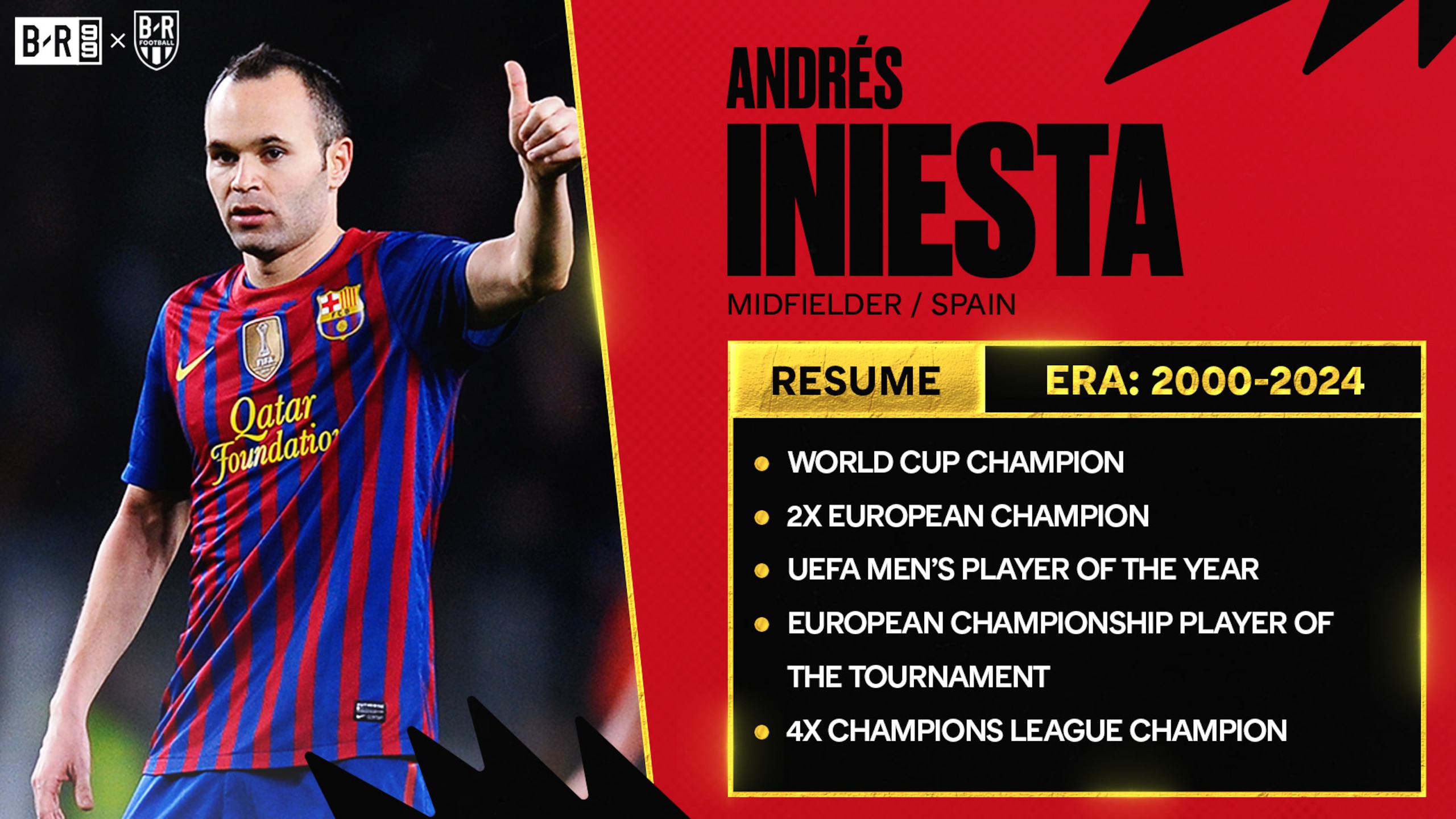
Clubs: Barcelona B (2000-03), Barcelona (2002-18), Vissel Kobe (2018-23), Emirates (2023-24)
Other Notable Accolades: 9x Domestic League Champion; 3x FIFA Club World Cup Winner
There are players who define systems and teams that change football. Andrés Iniesta was one of those. A key cog in Pep Guardiola's tiki-taka Barcelona and the man who scored the World Cup-winning goal for Spain, it's a testimony to Iniesta's understated brilliance that you could sing his praises without needing to mention any of that.
It almost felt like Iniesta never had a direct marker, immortalised by the photo taken during the Euro 2012 final against Italy, where five Azzurri players are in shot trying to close him down.
Iniesta's glue-like ball control, awareness when finding space and natural desire to keep possession added an invaluable buzz to his clubs and country. All qualities that are so easy to overlook.
- Nick Akerman
Highest Top 99 Ranking: 2
9. Franz Beckenbauer
91 of 99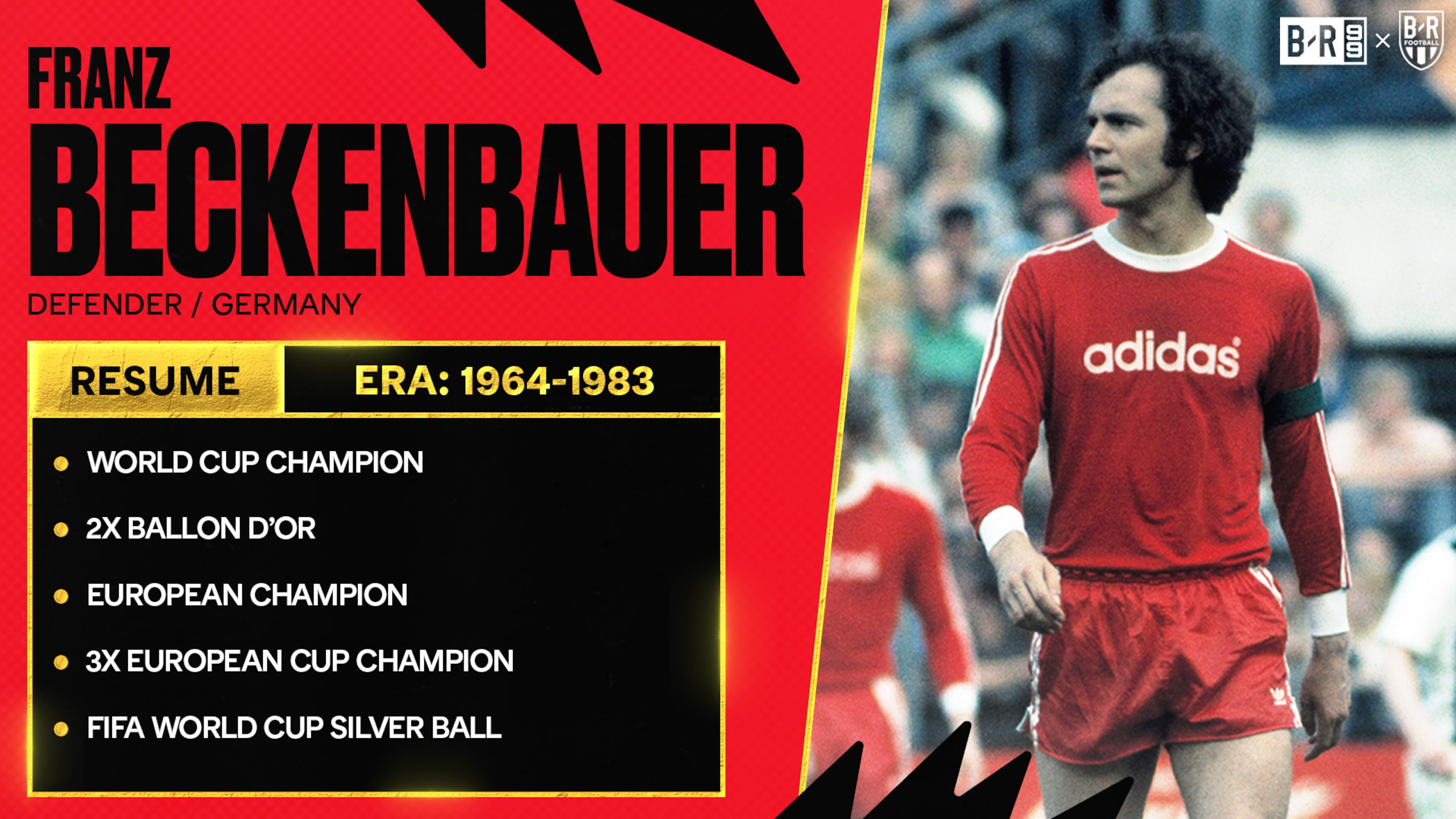
Clubs: Bayern Munich (1964-77), New York Cosmos (1977-80), Hamburger SV (1980-82), New York Cosmos (1983)
Other Notable Accolades: 4x German Male Footballer of the Year; 6x Domestic League Champion; Intercontinental Cup Champion
Franz Beckenbauer is the highest-rated defender on this list. He's also the only defender to twice win the Ballon d'Or.
Perhaps the most impressive aspect of that feat is that Beckenbauer was a left-winger and midfielder in his early career before moving back. Rather than adapting to his new position, Beckenbauer reshaped it entirely.
As Gabriele Marcotti explained for ESPN, "He wasn't the first sweeper, nor the first central defender who could play a pass and step into the midfield, but nobody did it as effectively and on such a big stage (arguably, before or after). The skills formed in his early years as an attacking midfielder never abandoned him."
Beckenbauer became the heartbeat of a dominant West Germany side that reached four finals of major tournaments in his 12-year career, and his Bayern Munich team won three consecutive European Cups with him as a central figure.
-Calum Rogers
Highest Top 99 Ranking: 5
8. Ronaldinho
92 of 99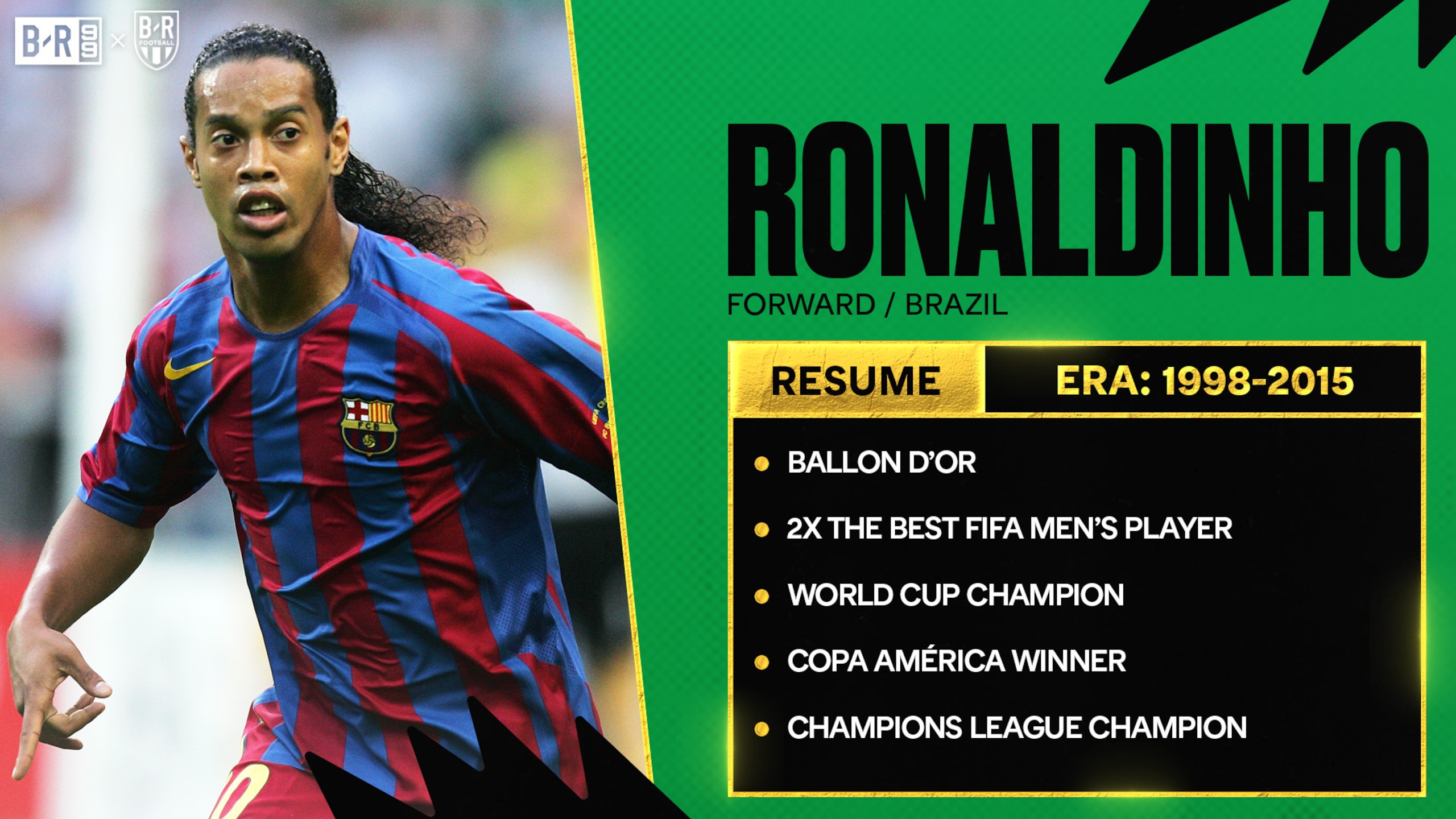
Clubs: Grêmio (1998-2001), Paris Saint-Germain (2001-03), Barcelona (2003-08), AC Milan (2008-11), Flamengo (2011-12), Atlético Mineiro (2012-14), Querétaro (2014-15), Fluminense (2015)
Other Notable Accolades: Copa Libertadores Champion; UEFA Best Player in Europe; South American Footballer of the Year; 3x Domestic League Champion
Every football fan should educate themselves on Ronaldinho.
He's the antithesis to the modern era of ultra-tight tactics. The man who would flip-flap instead of track back. Ronaldinho combined flair with goals and assists, his individuality so mesmerising that Real Madrid fans once stood to applaud him during a Barcelona win in El Clasico.
Whether it's the outrageous free-kick against England's David Seaman in 2002, or the genius dancing poke against Chelsea a few years later, Ronaldinho should be marked as the most audacious and entertaining footballer in history.
- Nick Akerman
Highest Top 99 Ranking: 1
7. Zinédine Zidane
93 of 99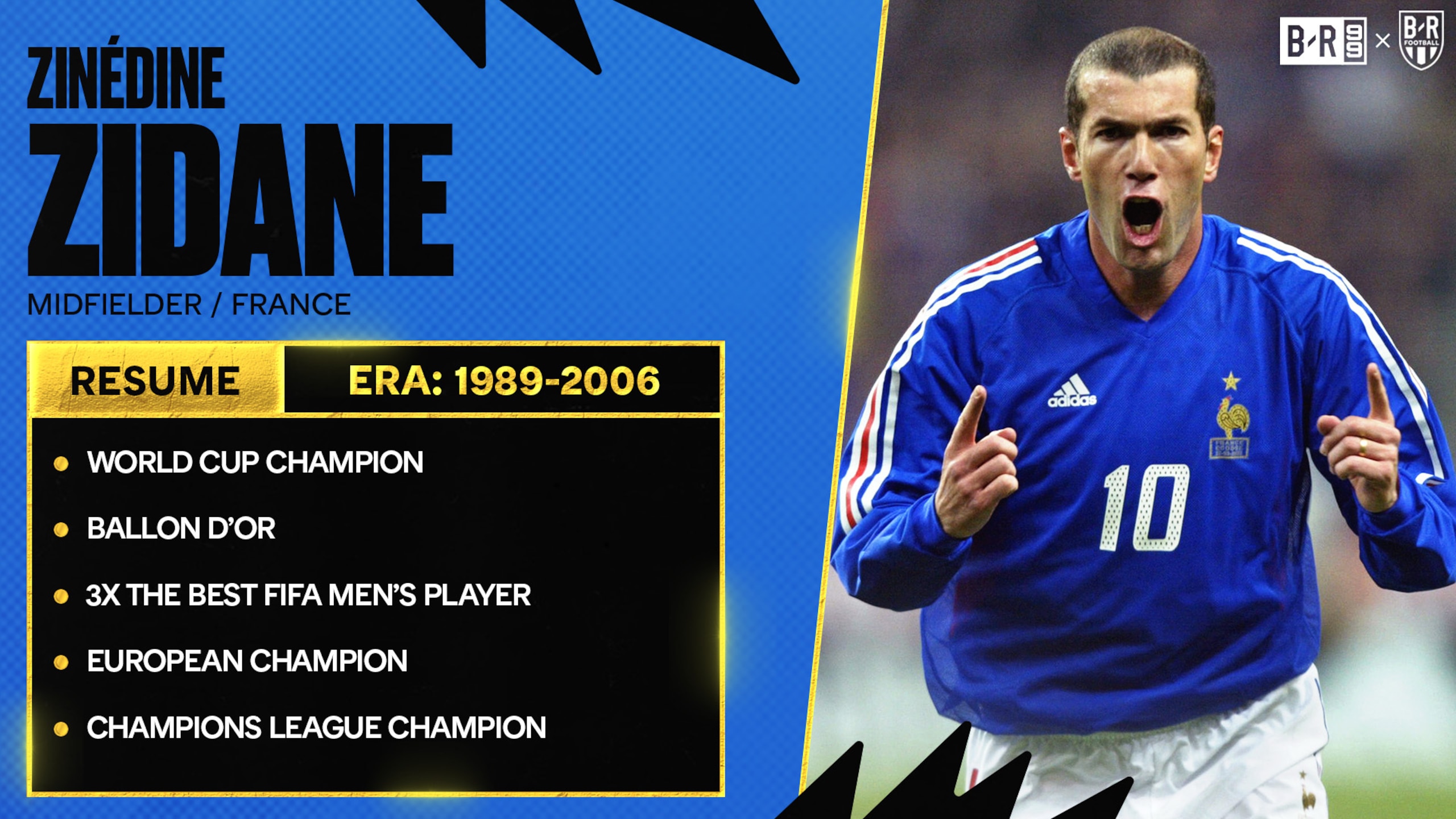
Clubs: Cannes (1989-92), Bordeaux (1992-96), Juventus (1996-2001), Real Madrid (2001-06)
Other Notable Accolades: UEFA Best Player in Europe; 3x Domestic League Champion; 2x Intercontinental Cup Champion; Ligue 1 Male Player of the Year; Serie A Footballer of the Year
Zinedine Zidane was so elegant to watch that a documentary crew followed his every move for a single match in Zidane: A 21st Century Portrait. The film shows off Zidane's supreme first touch and his ability to glide around the pitch, seemingly at a stroll even though opponents also can't really get near him.
After providing an assist and helping his Real Madrid team to a 2-1 lead, a late scuffle saw Zidane sent off. It's a neat encapsulation of the two sides of a player who received arguably the most infamous red card in FIFA World Cup history after headbutting Italy's Marco Materrazzi in the 2006 final.
That it was the last act in Zidane's career made it all the more shocking, and the sad truth is that the moment has arguably distracted from the magic that came before.
Zidane's otherworldly performance at the 1998 World Cup, which saw him score twice in the final for champions France, thrust him into the global spotlight. He followed that up by being named Player of the Tournament at Euro 2000 as France secured a second straight major title.
In 2001, Real Madrid made him a Galactico. At the end of that season, Zidane scored one of the greatest goals in UEFA Champions League final history, volleying the ball into the top corner from Roberto Carlos' high, looping cross — the ultimate display of Zidane's technique and control.
-Calum Rogers
Highest Top 99 Ranking: 5
6. Johan Cruyff
94 of 99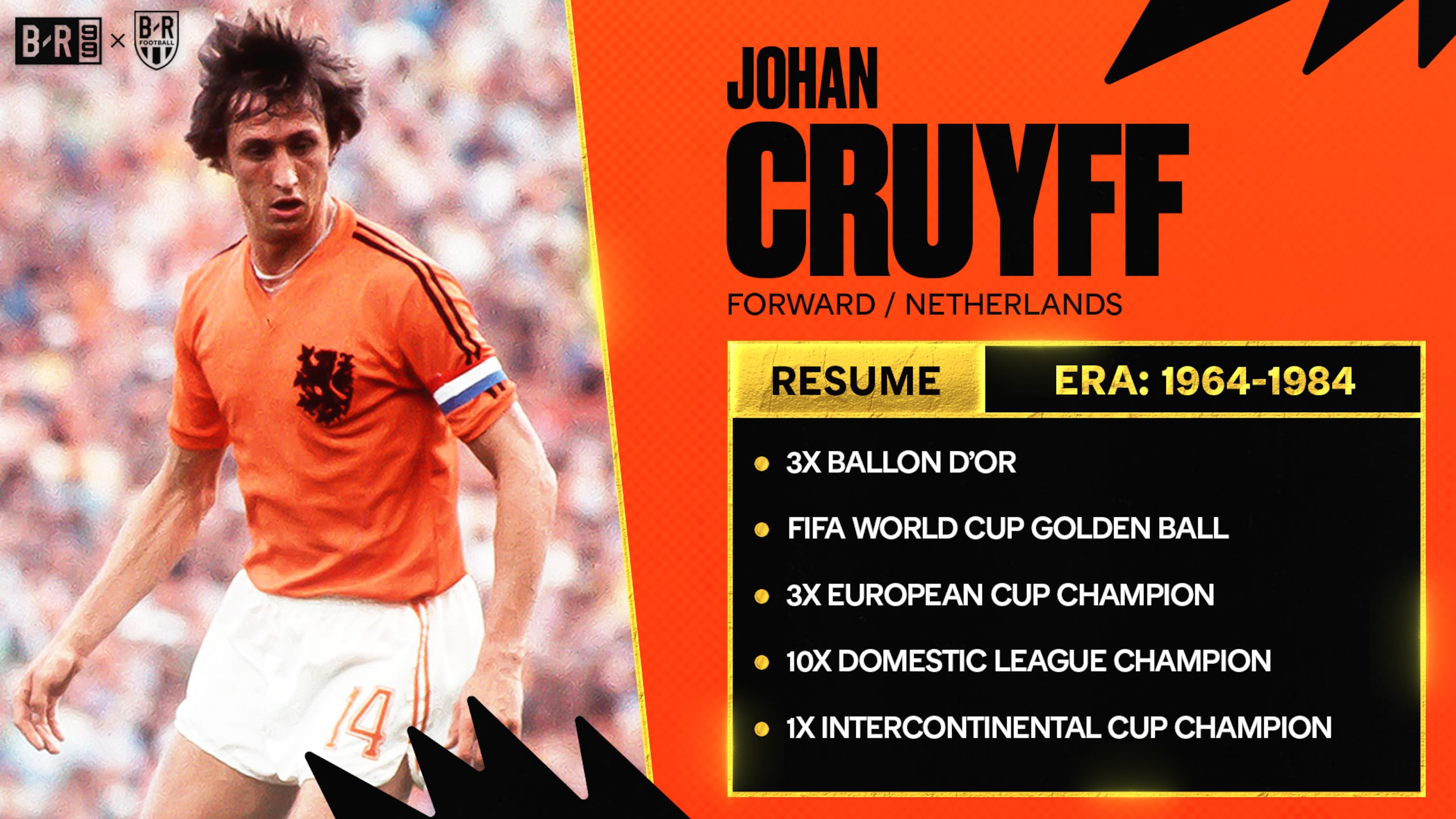
Clubs: Ajax (1964-73), Barcelona (1973-78), Los Angeles Aztecs (1979), Washington Diplomats (1980-81), Levante (loan, 1981), Ajax (1981-83), Feyenoord (1983-84)
Despite his playing peak coming in the 1970s, Johan Cruyff is arguably the architect of the style of football we all know and love.
While his time in the dugout is what really molded the possession-based attacking game that would shape the tactical framework of teams through the 1990s and into the 21st century, the signs of a unique football brain were evident during his career on the pitch.
His ability to knit the play together, willingness to cover every inch of grass, understanding of space, and perfect passing timing were crucial in Ajax's stranglehold over Dutch and European football in the 1960s and 1970s.
After a decorated career with his hometown club, he joined Barcelona in 1973 for a then-world record fee.
While his team success with the Blaugrana was not as illustrious as during his time in the Dutch capital, he still landed a La Liga title and the Copa del Rey, and he made fans fall in love from the moment he arrived.
He returned to Ajax in 1981 after a jaunt in the United States and in Spain, and he ended his time with the Godenzonen with 270 goals in 369 games, the second-most in the club's history.
The Cruyff turn—a skill he popularized—is taught to young footballers to this day and is a well-utilized element of a player's skill set.
The three-time Ballon d'Or winner was a true one of a kind.
-Leo Collis
Highest Top 99 Ranking: 4
5. Ronaldo Nazário
95 of 99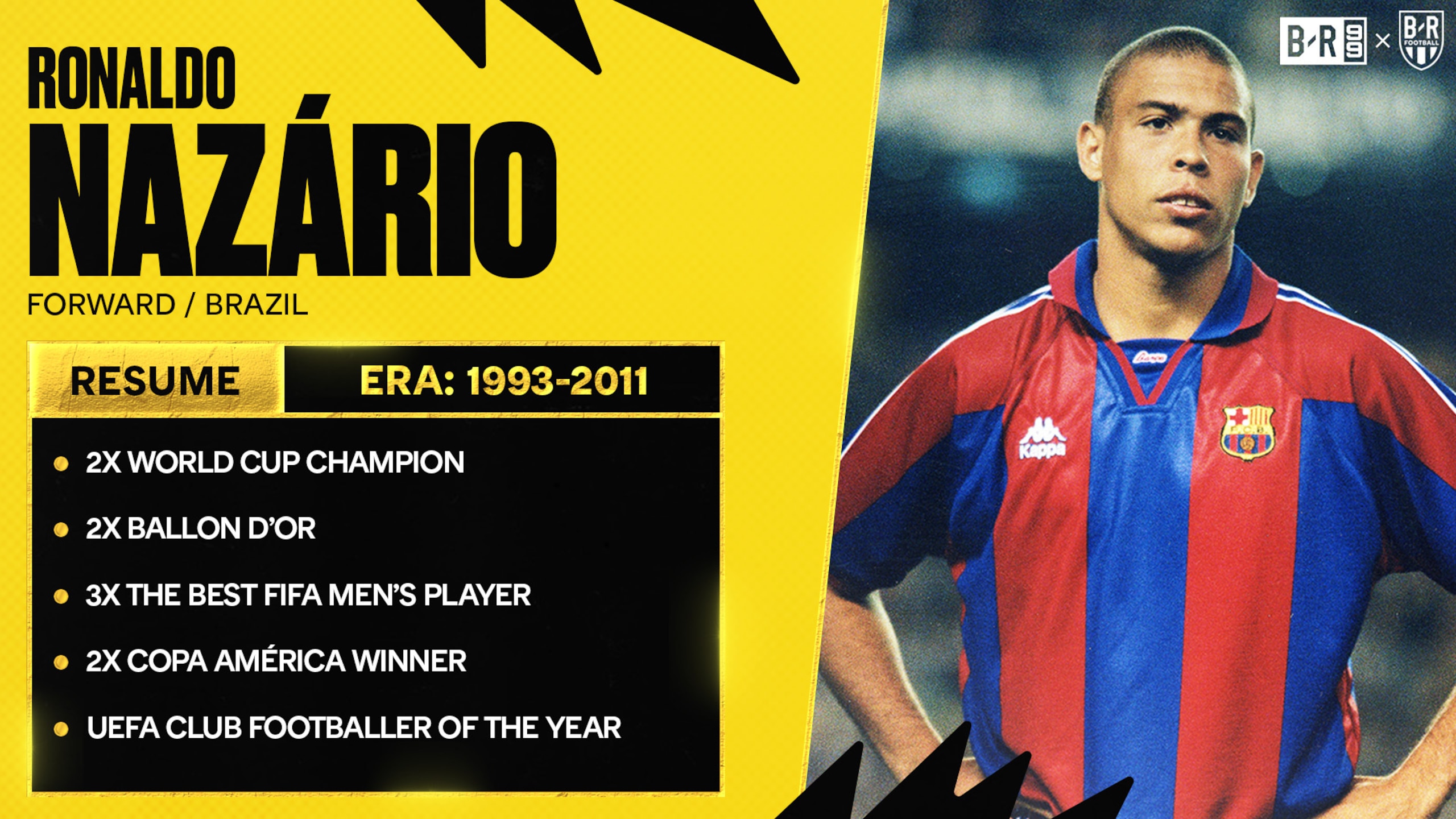
Clubs: Cruzeiro (1993-94), PSV (1994-96), Barcelona (1996-97), Inter Milan (1997-2002), Real Madrid (2002-07), AC Milan (2007-08), Corinthians (2009-11)
Other Notable Accolades: Serie A Footballer of the Year; 2x Domestic League Champion; UEFA Cup Champion; Intercontinental Cup Champion
Ronaldo Nazario's peak was tragically short, but it was also so electrifying that he's impossible to ignore in conversations about the greatest strikers of all time.
After a thrilling start to his career with Cruzeiro and PSV Eindhoven, Ronaldo signed for Barcelona for a world-record $19.5 million as a 19-year-old. His 47 goals in 49 games made Ronaldo the most exciting young star in the world, with his combination of frightening speed, elite dribbling ability and ruthless finishing setting him apart from just about every striker who had come before.
Ronaldo's ascension continued at the 1998 FIFA World Cup. He lived up to the hype entering the tournament, leading Brazil to the final with four goals and three assists. Prior to the showpiece, though, the striker was reported to have suffered a convulsive fit hours before the game. Despite being admitted to hospital and left off the initial team sheet, Ronaldo arrived at the stadium and insisted he was fit to play, but Brazil lost 3-0 and Ronaldo was largely anonymous.
Two devastating knee injuries at Inter Milan, the second coming just six minutes into his return from the first, then caused Ronaldo to miss almost two years of action.
But while he had lost much of his explosiveness, Ronaldo's return at the 2002 World Cup demonstrated that he still knew where the goal was. His eight goals in the tournament have only been bettered in a single World Cup by Just Fontaine, and scoring both goals in a 2-0 win over Germany in the final perhaps healed any emotional wounds from 1998.
A summer move to Real Madrid followed, but despite an impressive return of 104 goals in four-and-a-half seasons, Ronaldo was never able to return to the form that saw him dubbed Il Fenomeno.
-Calum Rogers
Highest Top 99 Ranking: 4
4. Cristiano Ronaldo
96 of 99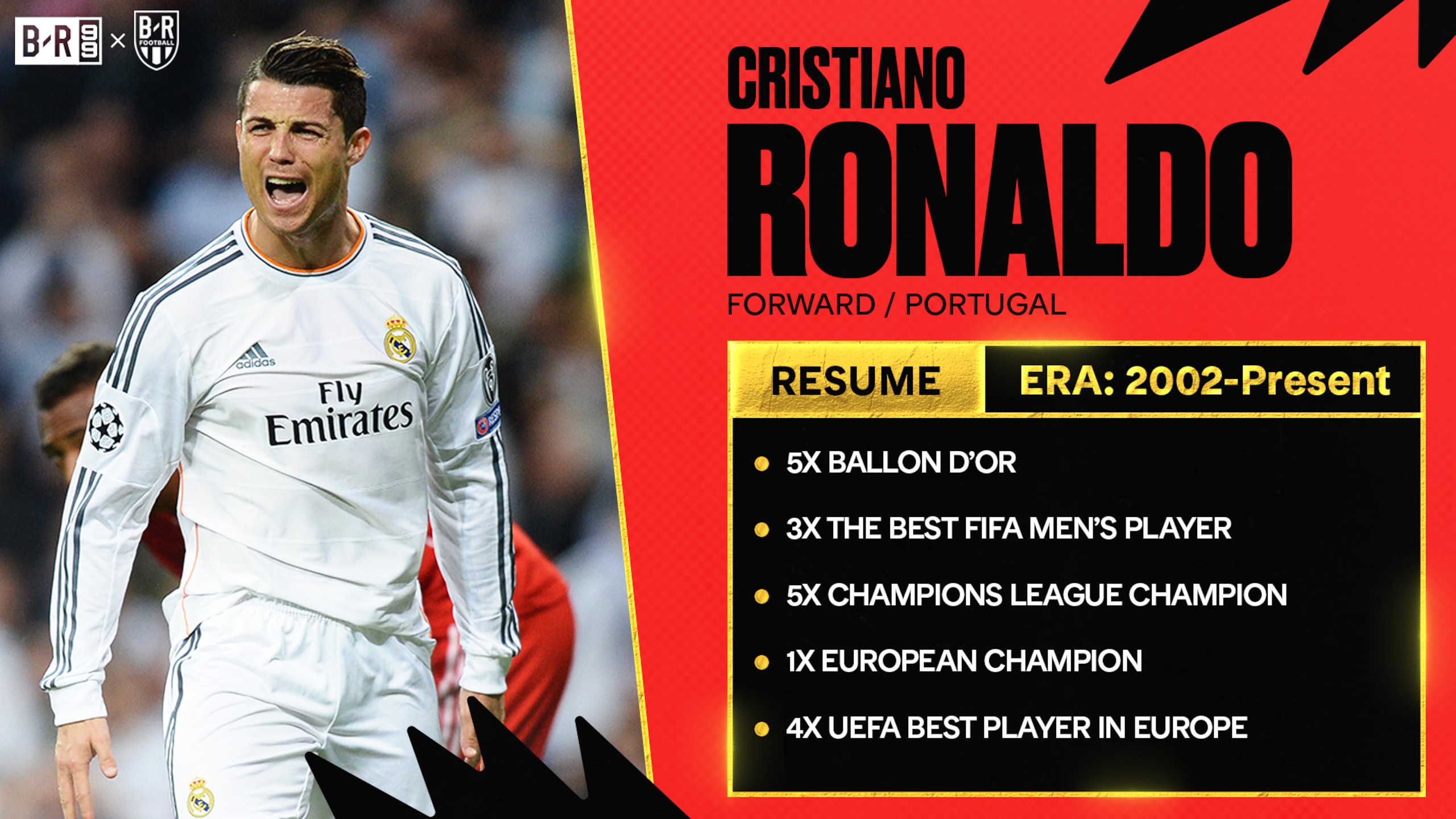
Clubs: Sporting CP B (2002-03), Sporting CP (2002-03), Manchester United (2003-09), Real Madrid (2009-18), Juventus (2018-21), Manchester United (2021-22), Al-Nassr (2023-Present)
Other Notable Accolades: 7x Domestic League Champion; 4x FIFA Club World Cup Winner; 2x UEFA Nations League Winner; 2x Premier League Player of the Season; 2013-14 La Liga Best Player; 2x Serie A Footballer of the Year
Cristiano Ronaldo's most impressive accomplishment might be evolving from one of the best wingers of all time into the greatest striker of his generation.
Much of Ronaldo's career should be considered a dream for players of his era. A teen starlet at his boyhood Sporting, he was snapped up and developed by Sir Alex Ferguson at Manchester United, before hitting his prime with Real Madrid. Later spells with Juventus and Al-Nassr underline the eternal goalscorer, a player who continues to find a way despite Father Time closing in.
It's been a decade since 31-year-old Ronaldo won the Euros, and he's still winning trophies (don't mention the World Cup). Pace, power, decisiveness in big moments, Ronaldo is the biggest global star the sport has produced since David Beckham.
- Nick Akerman
Highest Top 99 Ranking: 2
3. Diego Maradona
97 of 99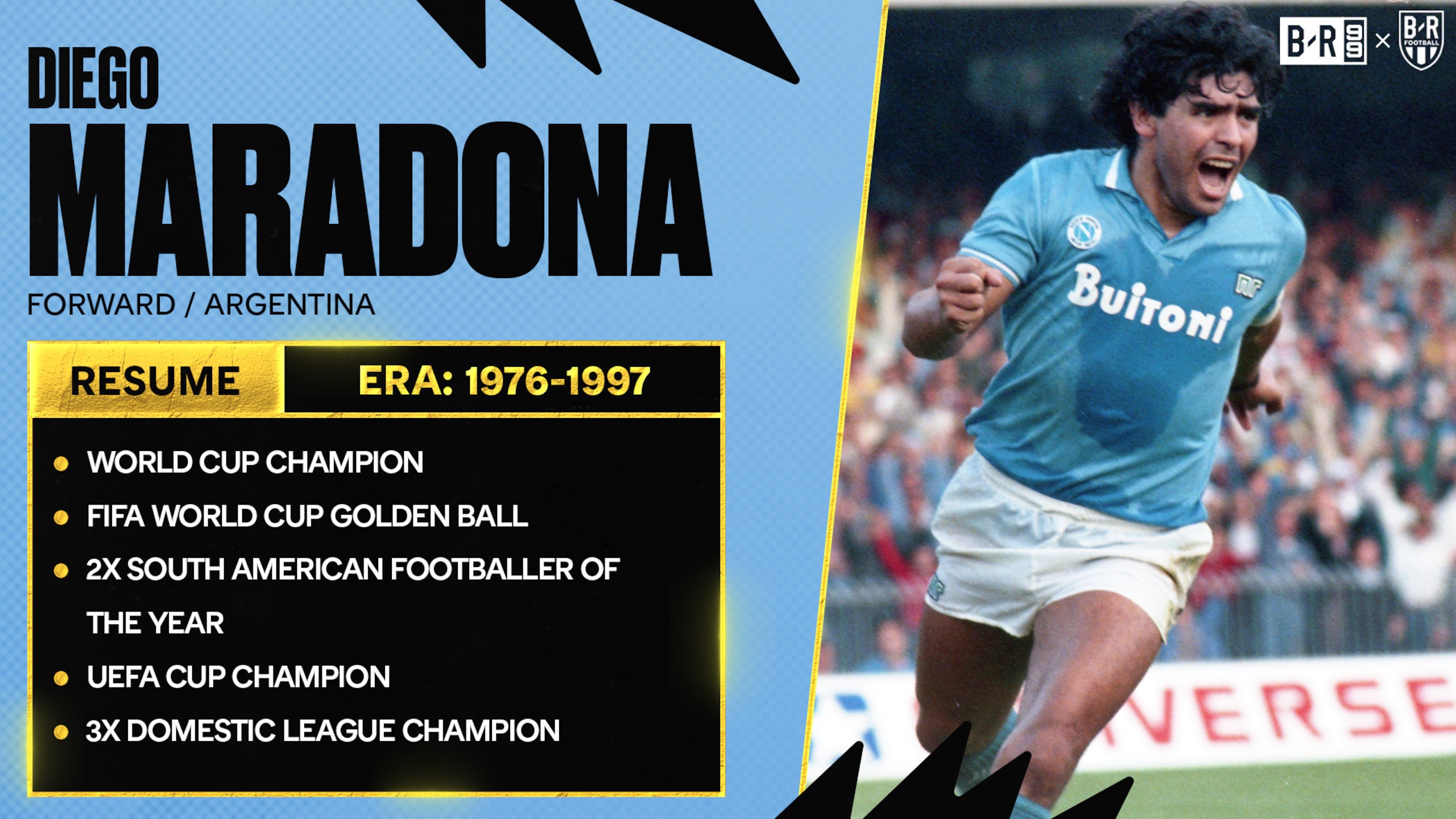
Clubs: Argentinos Juniors (1976-81), Boca Juniors (1981-82), Barcelona (1982-84), Napoli (1984-91), Sevilla (1992-93), Newell's Old Boys (1993-94), Boca Juniors (1995-97)
Other Notable Accolades: CONMEBOL-UEFA Cup of Champions Winner; FIFA World Cup Bronze Ball
Diego Maradona's career and life can perhaps best be summed up in four minutes. In the quarter-final of the 1986 FIFA World Cup against England, Maradona scored two of the most iconic goals in the competition's history in quick succession.
The second showcased Maradona's incredible speed, control and dribbling ability, which he used to beat five opponents on a winding run from around the halfway line to score the second goal in a 2-1 win.
The first, though, was later dubbed "The Hand of God" after Maradona punched the ball into the net while jumping with England goalkeeper Peter Shilton. Officials didn't spot the offence, and the goal was allowed to stand. Maradona and Argentina went on to win the trophy, with the team's captain also named the tournament's best player.
Unfortunately, many of the other issues in Maradona's life were more serious than an unnoticed handball. A cocaine addiction became common knowledge, as did a number of paternity lawsuits. He was also accused of domestic violence and rape following his career.
In a society that is willing to overlook a lot in return for artistic brilliance, Maradona remains beloved by many, particularly in Argentina, where three days of national mourning were observed following his death in 2020. His time in Italy with Napoli, which saw him lead the club to its first two Serie A titles, also elevated him to God-like status in southern Italy.
-Calum Rogers
Highest Top 99 Ranking: 2
2. Pelé
98 of 99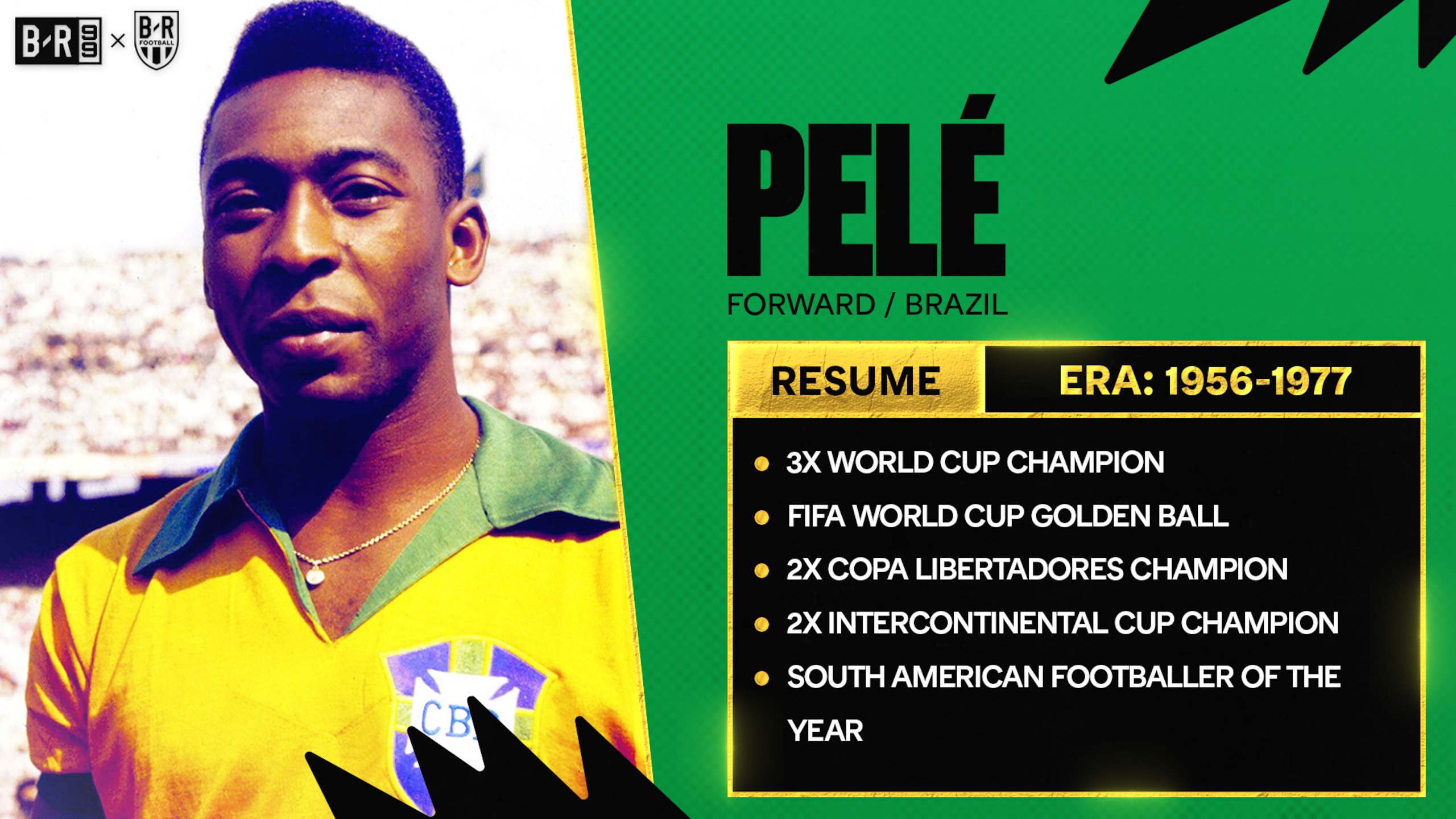
Clubs: Santos (1956-74), New York Cosmos (1975-77)
Other Notable Accolades: 6x Domestic League Champion; 10x Campeonato Paulista Champion; FIFA World Cup Silver Ball
Pelé's name will stand the test of time. Watching videos of him playing in 2026 is no different from looking back at Muhammad Ali gracefully sending his opponents to the canvas, a beautiful legacy captured in black and white, brought to life by how important he has been to the sport's evolution since.
Watch his movement. Study the way he'd anticipate and pounce. He was too quick for football at the time, his range of movement and unprecedented ability to stick the ball in the back of the net amounting to the 1,000-goal tally that Cristiano Ronaldo is still so desperately chasing.
Pelé was a global pop culture icon before the sport regularly produced such stars. Even the fact that he was the first football player mentioned in The Simpsons is an indicator of his impact, the reception to his talent a pivotal sign of what the sport would grow to be in the future.
- Nick Akerman
Highest Top 99 Ranking: 1
1. Lionel Messi
99 of 99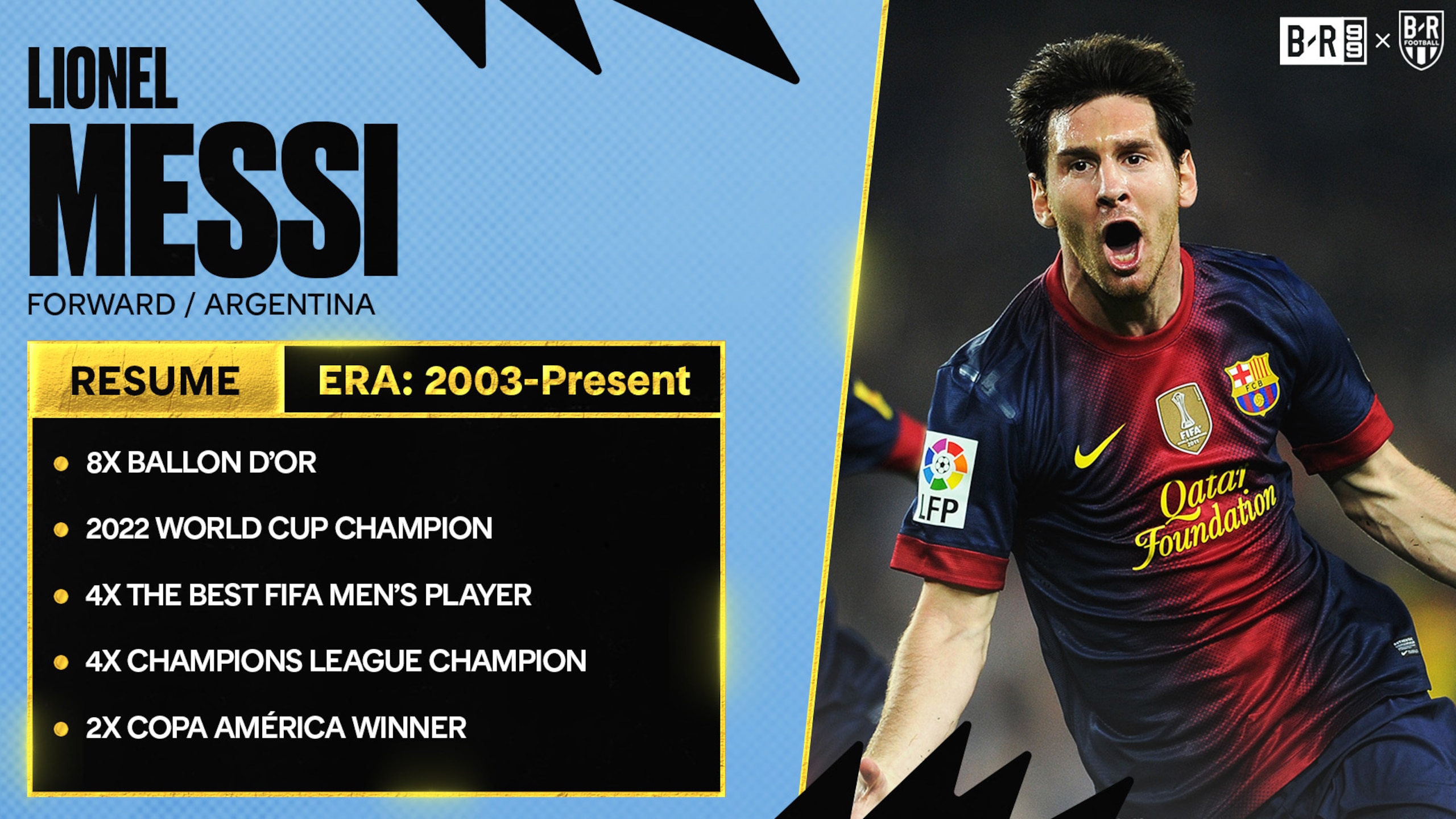
Clubs: Barcelona C (2003-04), Barcelona B (2004-05), Barcelona (2004-21), Paris Saint-Germain (2021-23), Inter Miami (2023-Present)
Other Notable Accolades: 3x UEFA Best Player in Europe; 1x Olympic Gold Medalist; 13x Domestic League Champion; 3x FIFA Club World Cup Winner; 1x CONMEBOL-UEFA Cup of Champions Winner; 9x La Liga Best Player
With 82 percent of the No. 1 votes, Lionel Messi comfortably lands in top spot in the B/R 99 All-Time Best Footballer poll.
After arriving in Barcelona from his hometown of Rosario, Argentina, the pocket-sized dynamo quickly made his mark as the most electric talent the sport had seen for a generation.
He made his senior debut at just 16 years old, and from there, he would go on to become the club's highest appearance maker in history, featuring in 778 games. His 672 goals are also a club record, with the next highest scorer notching over 400 fewer.
In addition to a wealth of team trophies, he won six of his eight total Ballons d'Or with the club, with two more added during his time at Paris Saint-Germain and Inter Miami.
Crucially, and what truly sets him apart from a certain Portuguese rival, he took his nation to a World Cup title in 2022. Messi captained the side and scored twice in the final against France, which Argentina ultimately won on penalties.
Messi has the stats, the accolades, and the longevity to justify his place at the summit of the 99, but even that doesn't account for how he made millions of fans fall in love with the game.
His pace, his trickery, his selflessness, his deft passing, his ruthless finishing, his obvious joy when running around the pitch; all of those factors have contributed to fans' enduring adoration, and it might be some time until we are blessed to see a player of his quality again.
-Leo Collis
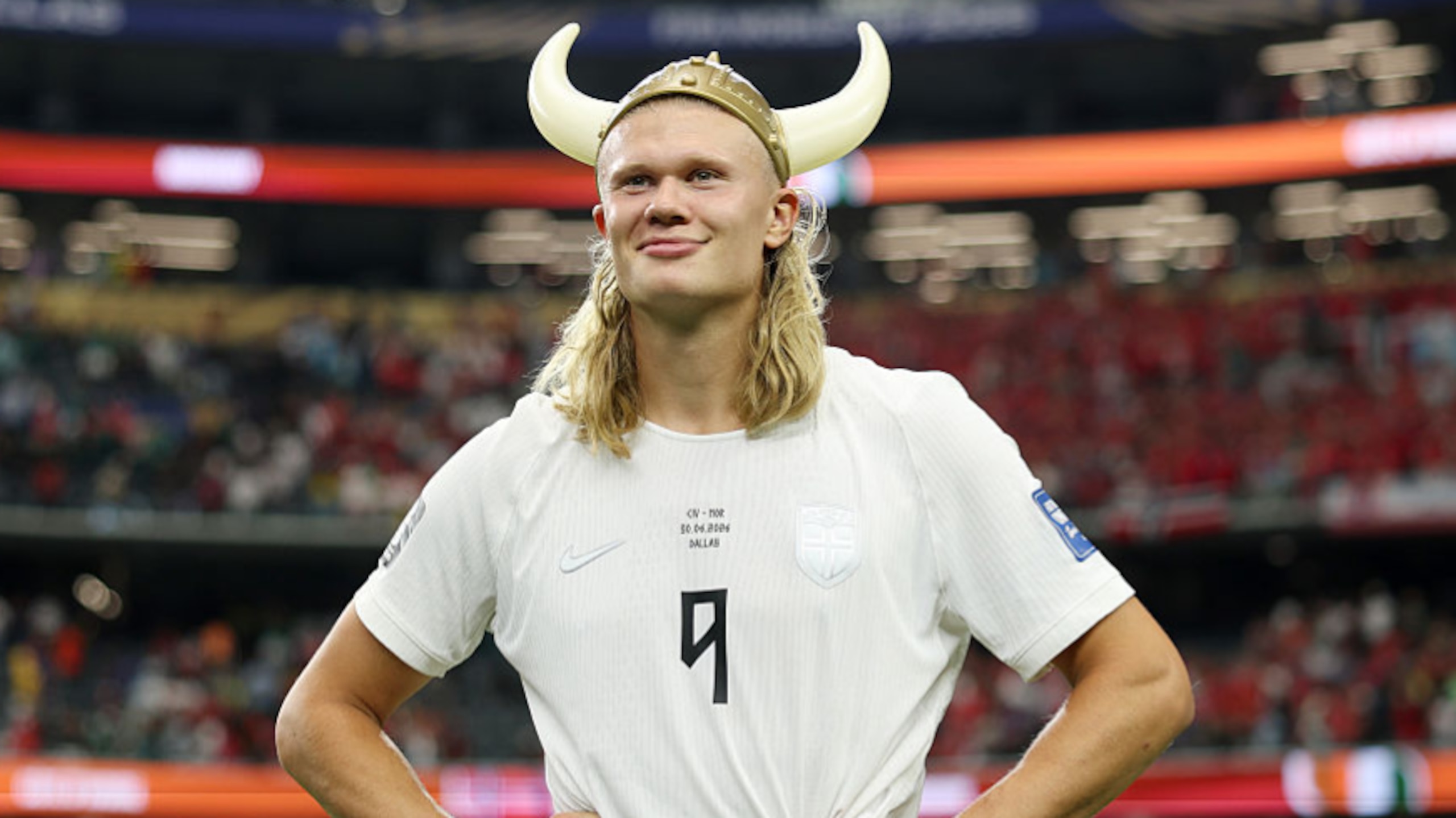
.jpg?w=2560 "Mystery team revealed in blockbuster NFL trade")

.png?w=2560 "Money In The Bank Ends In Shocker 💼")
.jpg?w=2560 "Cardinals Finalizing MHJ Trade")
_0.jpg?w=2560 "Live: Updates from every NFL game")
.jpg?w=2560 "DB's Willis Quote Resurfaces")
.jpg?w=2560 "Sirianni Takes Blame for Eagles Loss")