

Has Kobe Bryant Already Played His Last Postseason Game?
Kobe Bryant of the Los Angeles Lakers is one of the greatest players in the history of the game. His name has become almost synonymous with "postseason," but the reality is he has very likely competed in the last playoff game of his career.
Bryant has five rings. According to basketball-reference.com, he is tied for third in postseason starts, third in minutes played and third in points scored. One competitive series would move him into second in both minutes and points. Two or three would put him second in games. However, he will probably never get that chance.
This is a perspective born from a hard look at the facts. It is neither inflamed by the irrationality of “hate” nor obscured by the deceptions of affection. One of the greatest the game has ever seen will see his fade into the sunset marred by losing and frustration.
TOP NEWS

Power Ranking Every NBA Team's Starting Lineup 🔢
Luka 50 Piece in Win 🔥
Worst NBA Predictions 🫣
When you look at the current roster, the prospects of Bryant’s return and the limited ability of the Lakers to improve, there is little reason to believe they can make the postseason during the next two years.
The Reality of the Roster
Perhaps the darkest hour in the Bryant era prior to tearing his Achilles is from the 2004-05 season. That was the lone time in his career the Lakers missed the playoffs.
His best teammates that year were Caron Butler, Lamar Odom and Chucky Atkins [1]. They were not much of a supporting cast.
Bryant had his usual great year, averaging 27.6 points, 6.0 assists and 5.9 rebounds. But everyone else floundered, and the Lakers stumbled to a 34-48 record.
Fast forward to last season. With only six games coming from Bryant—and coaching that was most kindly described as “questionable”—the Lakers again faltered and missed the playoffs, winning only 27 games.
Their leader in assists from that squad, Kendall Marshall, is gone. Their leading rebounder and third-leading scorer, Pau Gasol, left.
They've added players, too. They signed Carlos Boozer and Ed Davis in free agency. They traded for Jeremy Lin. They drafted Julius Randle. Those are the players who should be a regular part of the rotation.
So how does the current supporting cast stack up against 2004-05? I compiled the win shares for Bryant's new teammates (regardless of where they played) and compared those with the eight best players from Bryant's 2004-05 companions to get an assessment of the two squads:
The sum of his expected help this year had just 20.4 win shares last year. The former version of the Lakers combined for 27.3. That’s a significant difference.
Granted, there are some arguments which might suggest the numbers are skewed in the direction of the prior team.
- A healthy Steve Nash will have more than .1 win shares.
- The numbers don’t include the Lakers’ first-round draft choice, Julius Randle.
- Playing with Bryant should help the current roster improve its efficiency, as he’ll draw more defensive attention.
That said, there are three qualifiers in the other direction, too:
- Nash did not get younger, and while it’s hopeful he’ll be healthier, it’s a fair assessment his All-Star days are well behind him. More win shares doesn’t mean lot more.
- Randle might be an All-Star eventually, but it won’t be this year. To compensate for the difference in win shares, he’d have to play at that level.
- The former squad had Bryant, whose high usage inherently lowered other players' touches and, thus, their win share totals. The current squad didn’t have that concern.
The worst team that Bryant ever played with had 34 percent more win shares than the current rotation. Even if you skew everything in the new roster’s favor and say the two teams are the same, the playoffs aren’t a realistic goal. The old team didn’t make them either.
Kobe Bryant Won’t Be the Same
Bryant will be coming back this year, and no one knows for sure how good he’ll be, but the likelihood of him playing at the same elite level as he did at 34 is very low. His days as a top-10 player are over. In fact, even if he defies all the odds, the best the Lakers can hope for is that he is at an All-Star (top-25) level.
Ben Golliver and Rob Mahoney of Sports Illustrated ranked him 24th, which seemed to draw the ire of Lakers fans everywhere. Truth be told, if that ranking is off, it’s because it’s overly optimistic.
There are three things that have to be considered here: Bryant has played just six games in the last 18 months, he’s 36 years old and he is coming back from two major injuries—a torn Achilles and broken knee.
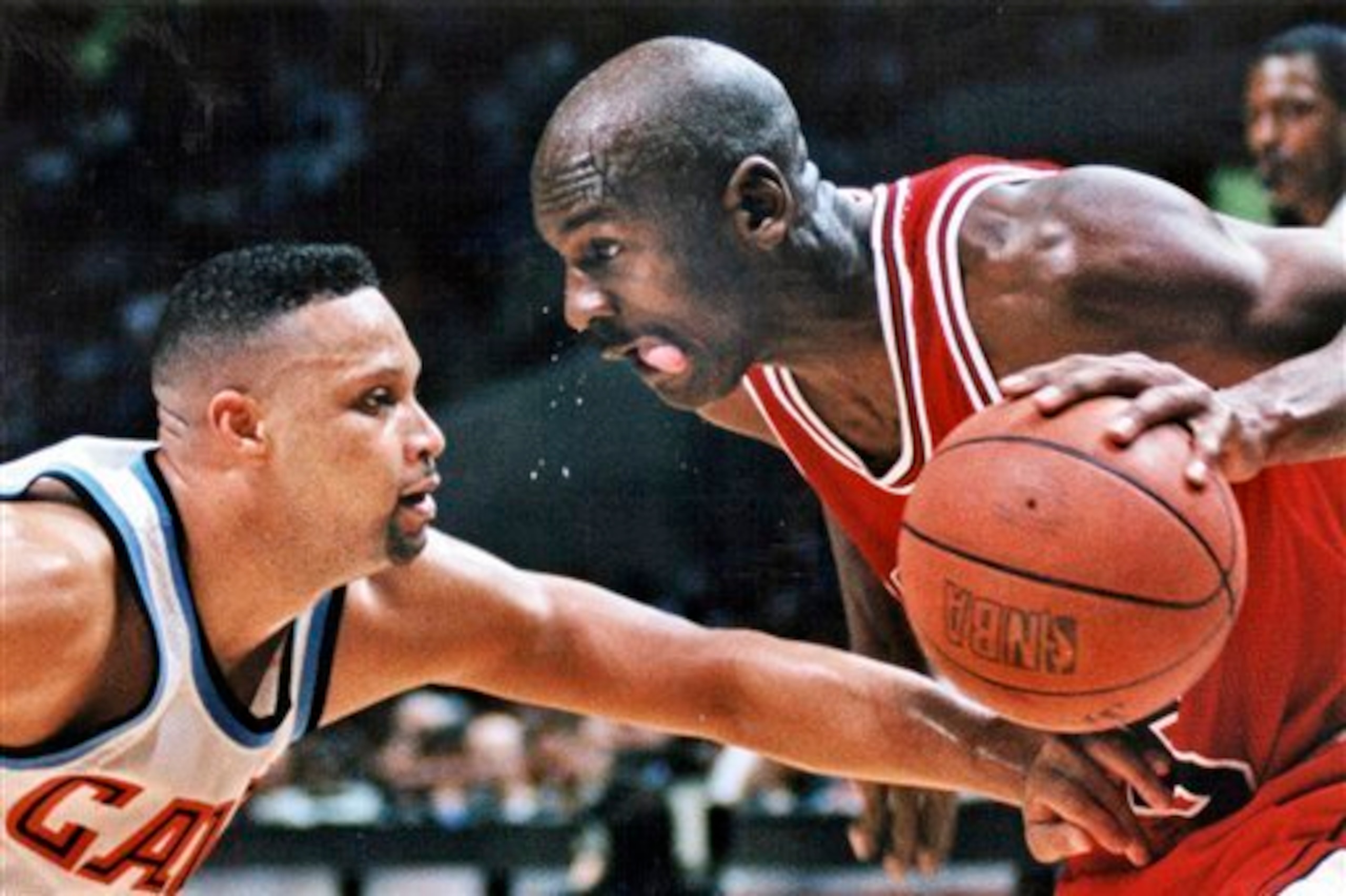
Coming back from a prolonged absence isn’t easy. Even Michael Jordan, returning completely healthy in 1994 after his first retirement, saw a fairly steep drop in his production. His scoring fell from 32.9 to 26.9, and his field-goal percentage dropped from .495 to .411. His player efficiency rating (PER) plunged from 29.7 to 22.1, a difference of 7.6.
Bryant coming back will face the same sort of challenge, and that’s the least of his concerns.
The fact is, he has yet to really come back from his torn Achilles, much less the broken knee he sustained last year.
But let’s just concentrate on the Achilles injury and what that means. A report in the American Journal of Sports Medicine, principally authored by Nirav H. Amin, MD, and Douglas L. Cerynik, MD, MBA, entitled “Performance Outcomes After Repair of Complete Achilles Tendon Ruptures in National Basketball Association Players” (subscription required), stated:
"At the time of injury, the average age was 29.7 years, average BMI was 25.6, and average playing experience was 7.6 years. Seven players never returned to play an NBA game, whereas 11 players returned to play 1 season, with 8 of those players returning for ≥2 seasons. Players who returned missed an average of 55.9 games. The PER was reduced by 4.57 (P = .003) in the first season and by 4.38 (P = .010) in the second season. When compared with controls, players demonstrated a significant decline in the PER the first season (P = .038) and second season (P = .081) after their return.
"
So, PER fell by an average of 4.57 in the first year.
Dominique Wilkins is the lone exception to the rule that players in their 30s don’t fare well coming back from Achilles ruptures, but it’s not an entirely apples-to-apples comparison either. As Deadspin’s Kyle Wagner pointed out last year:
"At the time of his injury, Dominique had played 27,482 minutes over 10 seasons (playoffs included). Kobe, now in his 17th year, has logged 54,041 (now 54,208) minutes. He's just two years older than Wilkins was at the time of his injury, but he has twice as much pro basketball mileage on his legs. And that doesn't even take into account Kobe's slogs through international competition (another 37 games started).
"
That’s an important distinction. Amin told Wagner, “Players of a similar age have generally not been able to return to play." And as Wagner states:
"It's simple physiology, really. As the body ages, tendons and ligaments lose water content, making them more fragile and less elastic. This is where old-man knee ache comes from. It happens at different rates for different people, but it's nonetheless inescapable.
"
As much as Bryant is renowned for his work ethic and willpower, those won’t help him. There’s no way to “want” your tendons younger. Bryant may seem like it at times, but he is not actually a superhero. He’s still bound by mortality. He’s the son of Joe, not Zeus.
Finally, contrary to idiom wisdom, age is not just a number. Time is a relentless menace, and it’s undefeated. Bryant is 36, and history has not treated 36-year-old perimeter-scorers kindly.
There are only six such players, including Bryant, who ever averaged 20 points and maintained a PER of at least 20 at the age of 34 [2]. Bryant’s PER of 23.0 is second best all-time, so that bodes well, right?
Not so fast. How did the others do by the time they were 36? I looked at each elite 34-year-old season compared to when the player was 36. Two players didn’t have an exact corollary, so I used the best I could. Jordan retired and came back at 38 with the Washington Wizards. Dominique Wilkins played in Europe at 36, so I used his numbers from when he was 35.
Here are the results:
Among perimeter players, only Jordan has ever had a PER and a scoring average over 20 past the age of 36. Now some might argue, “If Jordan can do it, then so can Bryant.” But that argument ignores two things: Jordan’s 34-year-old season was significantly better than Bryant’s, and Jordan wasn't coming back from two major surgeries topped with a one-year absence.
There are three distinct challenges which would pose a real problem for Bryant climbing back to elite status. Each portends a 20-25 percent drop in production.
And these factors aren't independent of one another. Quite the opposite, they compound one another. The notion of Bryant coming back to play at an elite level is highly unrealistic, if not biologically impossible.
If he blows apart history and defies all the odds, his production will only drop around 30 percent. That would put him around 19 points per game, and that’s the most optimistic scenario.
There’s no way Bryant playing on that level can strap this band of vagabonds on his back and march into the postseason.
He’s a decade older than he was in 2004-05, and the team around him is worse. If he couldn’t carry that group to the playoffs, how can he be expected to carry this one? There’s always the “miracle” caveat, but barring one, the Lakers are destined for an early summer vacation.
Free Agency Won’t Help

Things don’t look up for the Lakers from there. But I can anticipate the arguments.
What about the next summer? What about the cap space? What about the Lakers' history?
Yes, the Lakers have a legacy like no other team. Oh sure, the Boston Celtics have one more banner—17 championships to the Lakers’ 16—but that’s semantics.
While the Celtics' history is mostly known for two dominant dynasties (the Bill Russell era and the Larry Bird era), they've also had long lulls of average, including a 21-year hiatus from the Finals stretching from 1986-87 to 2007-08.
The Lakers, though, have been perennially in the championship hunt. They’ve been in the NBA Finals 31 times, playing 179 contests. To put that in perspective, the Dallas Mavericks have played 186 playoff games.
The only time the Lakers went consecutive years without making the postseason was the 1974-76 seasons. In fact, last season was only the second time in their 66-year history they went back-to-back seasons without winning a playoff series.
No team in American professional sports has been so consistently at the top for so long a time.
That history has been viewed as a selling point for free agents, but that theory has been taking hits of late.
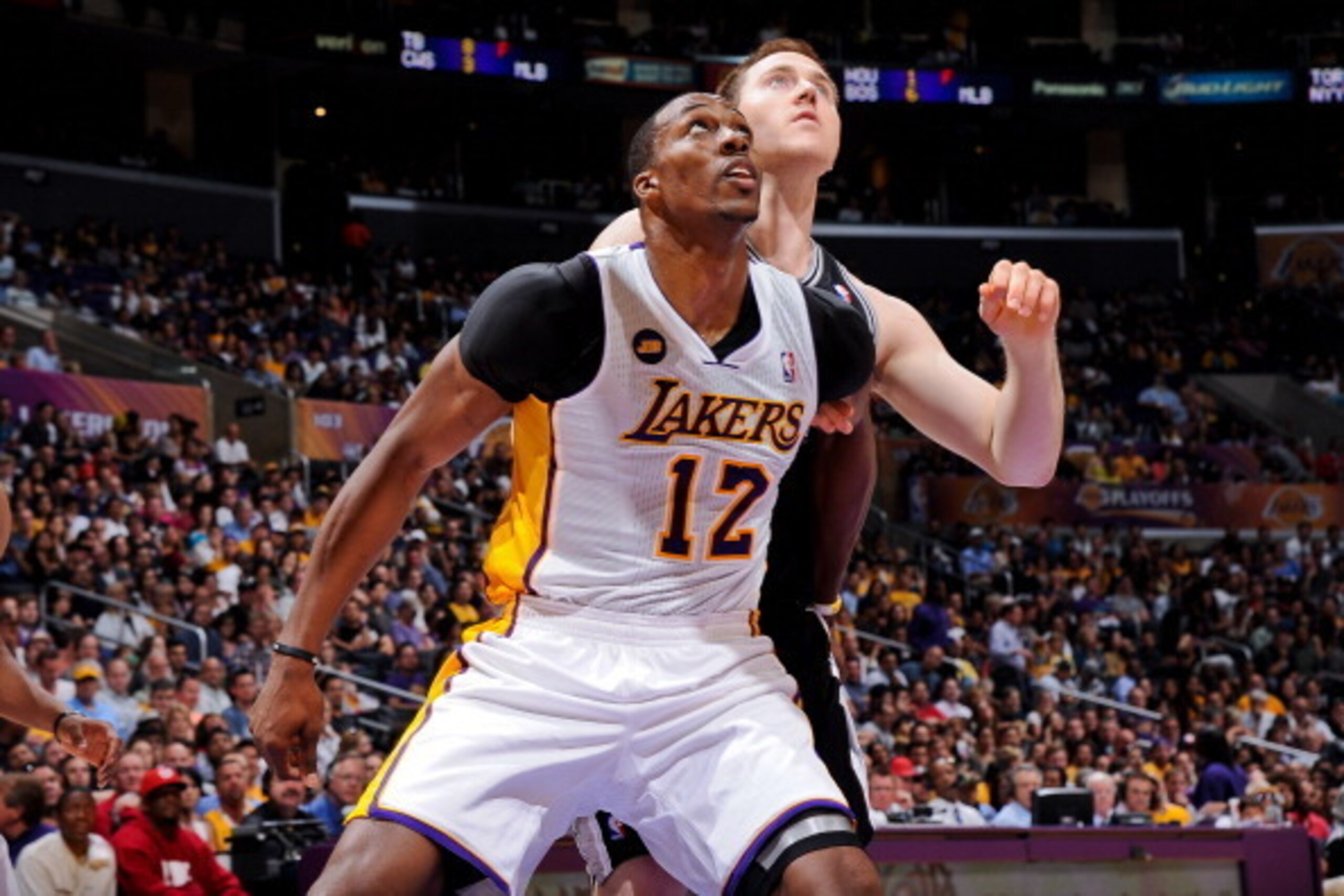
Dwight Howard spurned the Lakers for the Houston Rockets. LeBron James didn't even seriously consider the Lakers when he chose the Cleveland Cavaliers. Kevin Love—who has ties to Southern California, and who many thought might be destined for LA next year—never even hit free agency before he decided he’d rather throw his lot in with James in Cleveland. Carmelo Anthony opted to stay with his current team in New York.
Players are looking for one of two things: money or championships. Anthony—however much he denies it—chose the money. The rest chose to chase rings instead of cash. Neither decision is wrong. To each his own. I just point out those are the two factors free agents consider.
Ergo, teams with Bird rights have a built-in advantage in salary, and teams without them are only going to lure a player away with the promise of winning. The problem here is that the Lakers can’t offer either. A max offer and a pitch about legacy and history won't work. The Anthony shun establishes that.
This is the current reality: Cleveland is a more desirable destination than the Lakers. Cleveland! Why? Because future banners mean more to current players than past ones, and there’s nothing on the Lakers roster which promises “future titles.”
The Lakers do have cap space. According to HoopsHype.com, they will have $36 or $45 million in contract obligations next season, depending on whether they chose to exercise their team option on Jordan Hill. That decision probably depends at least partly on how Randle develops this season.
That means they’ll have enough money for a max deal, but that doesn't assure they can get one.
There’s not much hope to land one of the top unrestricted free agents.
Rajon Rondo will probably opt for a team he can slide into and make a difference. LaMarcus Aldridge and Marc Gasol are happy. There’s little reason to think they would take less money and a worse chance of winning to leave their current digs. The next best unrestricted free agent, Paul Millsap, overlaps with Randle.
There are a large number of players with player options. Alec Nathan of Bleacher Report provides a list and an observation:
""
- Al Jefferson ($13.5 million)
- Arron Afflalo ($7.5 million)
- Brook Lopez ($16.8 million)
- David West ($12.6 million)
- Goran Dragic ($7.5 million)
- Jeff Green ($9.2 million)
- J.R. Smith ($6.4 million)
- Monta Ellis ($8.7 million)
- Paul Pierce ($5.5 million)
- Roy Hibbert ($15.5 million)
- Thaddeus Young ($9.9 million)
Scanning that list, it's hard to find many options that are worthy of decline at this point in time.
The point is a valid one. Most of the contracts are generous, so there’s no reason to expect the player to opt out. Apart from that, there’s the reality that a massive new TV deal will go into place the following season. That’s a big enticement to hold off on free agency an extra year. Everyone could be spilling over with cap space, and that means huge contracts.
In other words, there’s not a lot of incentive to opt out of a generous contract now and sign an even better one later.
There are also restricted free agents, but franchise-level restricted free agents aren't easy to acquire. If they’re worthy of a max deal, teams are generally going to retain them.
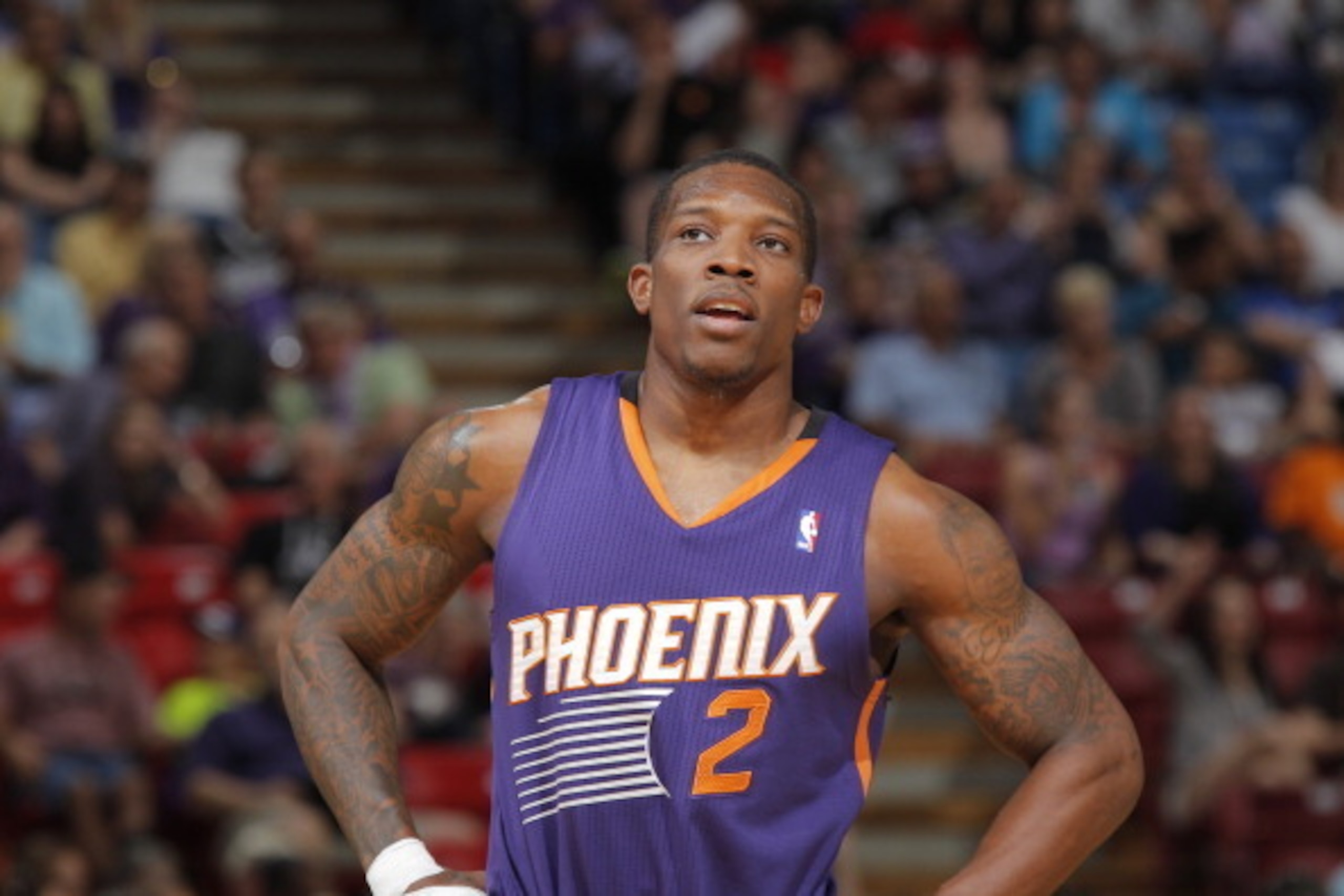
Eric Bledsoe and Greg Monroe may both be available as unrestricted free agents after playing out their qualifying offers, and there’s some glimmer of hope there, but it’s not much more than that.
Both players will likely be on the trading block this year, and either could be dealt before the season concludes. Even if that doesn’t happen, there’s no reason to suggest the Lakers would have an edge on signing them or that both will go to the same team.
It’s easy to invent scenarios that work out for the Lakers. It’s harder to come up with realistic or probable ones.
LA will learn what other bad teams have known for years: Having cap space in a vacuum doesn't do much good. There has to be something else there to entice elite players. Howard went to Houston because of James Harden. James went to Cleveland because of Kyrie Irving. Love went to Cleveland because of Irving and James.
It’s doubtful that Randle will ever be that kind of player, but even if he is, he won’t become “that guy” in just one year.
The draft doesn't offer much hope either. While they have the Houston Rockets' lottery-protected pick coming to them next summer, the Lakers owe their own top-five protected pick to the Phoenix Suns. If the Lakers are bad enough to retain the pick, it means they have that much more to improve before they get to the playoffs. If they don’t get it, that means there is no help.
Either way, it doesn't seem the Lakers are getting to the playoffs any time soon off the draft.
Finally, trades aren't likely to offer much hope. What do the Lakers have to trade? None of the contracts they are sitting on are especially valuable. Probably the best one is Nick Young’s but at $5 million, what can they expect back?
There’s just no realistic way that next summer the Lakers add enough help to return to the postseason.
Rebuilding Takes Time

The most the Lakers can hope for is that they get their two picks this summer and start rebuilding around them. But rebuilding takes time.
Even with top-five picks, Kevin Durant, Russell Westbrook and James Harden, the Oklahoma City Thunder took a few years to get back into postseason contention. The Cavaliers collected No. 1 picks like they were stamps, then parlayed two of them into Love.
That only took a four-year absence from the playoffs (and counting, technically, but we’ll give them this year).
The reality of rebuilding is it takes time, and that is not something Bryant has. We've already looked at the decline from 34 to 36. Each ensuing season means another precipitous drop in production. That will have a negative impact on the Lakers winning, as well.
So, even if he keeps playing at 38, it will be as a shadow of what he once was. And I don’t see Bryant being one of those players who elects to take minimum contracts to chase rings as a hanger-on. He has too much pride and dignity for that.
That’s not to say the next two years won’t have their meaning for the Lakers or their hero.
Bryant’s legacy is still receiving its final touches. He’s just 592 points behind Jordan for third on the all-time points list. No player has ever had 30,000 points, 6,000 rebounds and 6,000 assists. With only 75 more dimes, Bryant will achieve it. That’s quite a club to christen.
Those personal milestones will impact his stature in comparison with the all-time greats. And the league will get a proper chance to bid farewell to one of the greatest to ever step on the court. So, it’s not all bad. But sadly, Bryant’s twilight years won’t include another postseason run.
[1] Contrary to popular belief, Smush Parker was not yet with the Lakers. Even that group made it to the playoffs.
[2] There are bigs who have done it, too, but that’s an uneven comparison.
All stats for this article were obtained from Basketball-Reference.com.

.jpg?w=2560 "Mahomes Told Teammate to Leave Meeting")
.jpg?w=2560 "Rodgers Iced Out on Plane 💎")
.jpg?w=2560 "🚨 Week 8 AP Top 25 Poll")


.jpg?w=2560 "Lamar Being Out Shocked Ravens")
.jpg?w=2560 "Raiders Could Start Mendoza")