
Identifying Every NFL Roster's Biggest Strength Entering 2024 NFL Offseason
With the matchup for Super Bowl LVIII set, most NFL franchises are already in full offseason mode.
Scouting events will begin en masse in January, leading up to the NFL Scouting Combine in late February. The legal tampering window and free agency follow in mid-March, and the 2024 NFL draft is in late April.
Teams will use those tentpole events to try to fix whatever ailed them in 2023.
We spent all season chronicling each team's biggest weaknesses on a weekly basis. This offseason, B/R's Alex Ballentine (AFC) and Kris Knox (NFC) will provide updated analysis for all of the ways each team can improve ahead of the 2024 campaign.
This week, instead of examining team weaknesses, we'll look back on the 2023 season and examine every team's biggest strength. While some teams obviously performed better than others in 2023, every squad had at least one unit upon which it could depend.
Here, we'll dive into each franchise's strongest area or position group and what needs to be done this offseason to keep them intact.
Arizona Cardinals: Offensive Backfield
1 of 32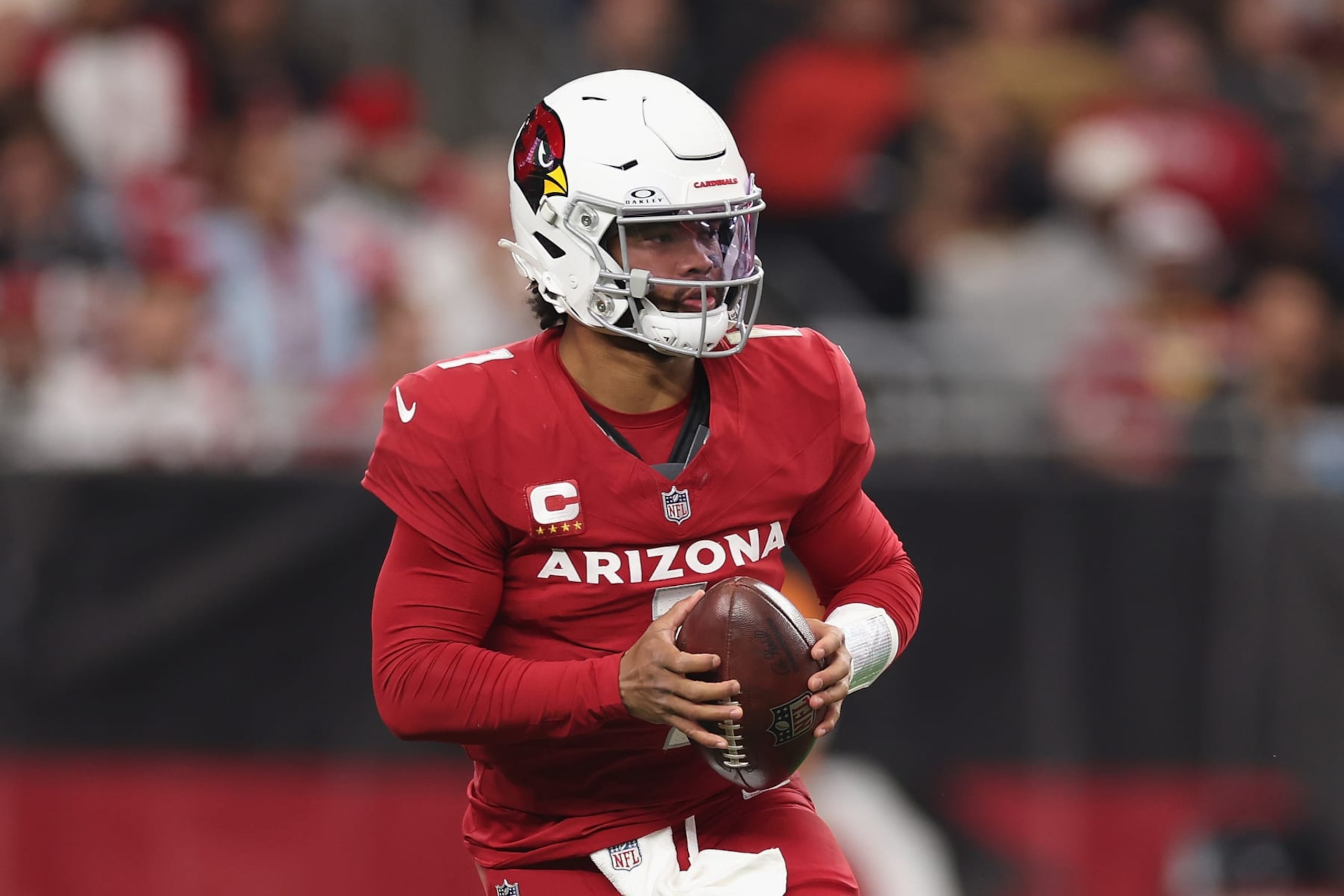
Armed with a projected $45.2 million in cap space and the fourth overall pick, the Arizona Cardinals should be active in both free agency and the draft. They also have several roster areas to address, including the offensive line, the receiving corps and the defense.
However, Arizona should be set in its offensive backfield. The tandem of quarterback Kyler Murray and running back James Conner was terrific following Murray's return, and it seems that the Cards plan to progress with Murray as their signal-caller.
"There's not [any doubt]," head coach Jonathan Gannon told 98.7's Burns and Gambo (h/t NFL.com's Grant Gordon). "I love this guy, man."
Murray is a two-time Pro Bowler who posted a respectable 89.4 passer rating following his return from a torn ACL in November. He should be better next season with more time between him and the injury. Meanwhile, Conner tallied 1,205 scrimmage yards and nine touchdowns despite playing half the season without his franchise quarterback.
While the Cardinals have depth at running back—Emari Demercado averaged 4.9 yards per carry this past season on 58 attempts—they'll want to add quarterback depth this offseason to ensure the offense keeps rolling if Murray misses time.
The Cardinals got great results from journeyman backup Joshua Dobbs early in the season, but they shipped him to the Minnesota Vikings at the trade deadline. Clayton Tune will provide depth on a rookie contract, but he struggled mightily in his first career start, albeit against a dynamic Cleveland Browns defense on the road.
If the Cardinals can add a seasoned vet like Dobbs, Tyler Huntley or Tyrod Taylor to their quarterback room, they can proceed with fleshing out the rest of their roster. The foundation of a strong backfield is otherwise in place.
Atlanta Falcons: Skill Group
2 of 32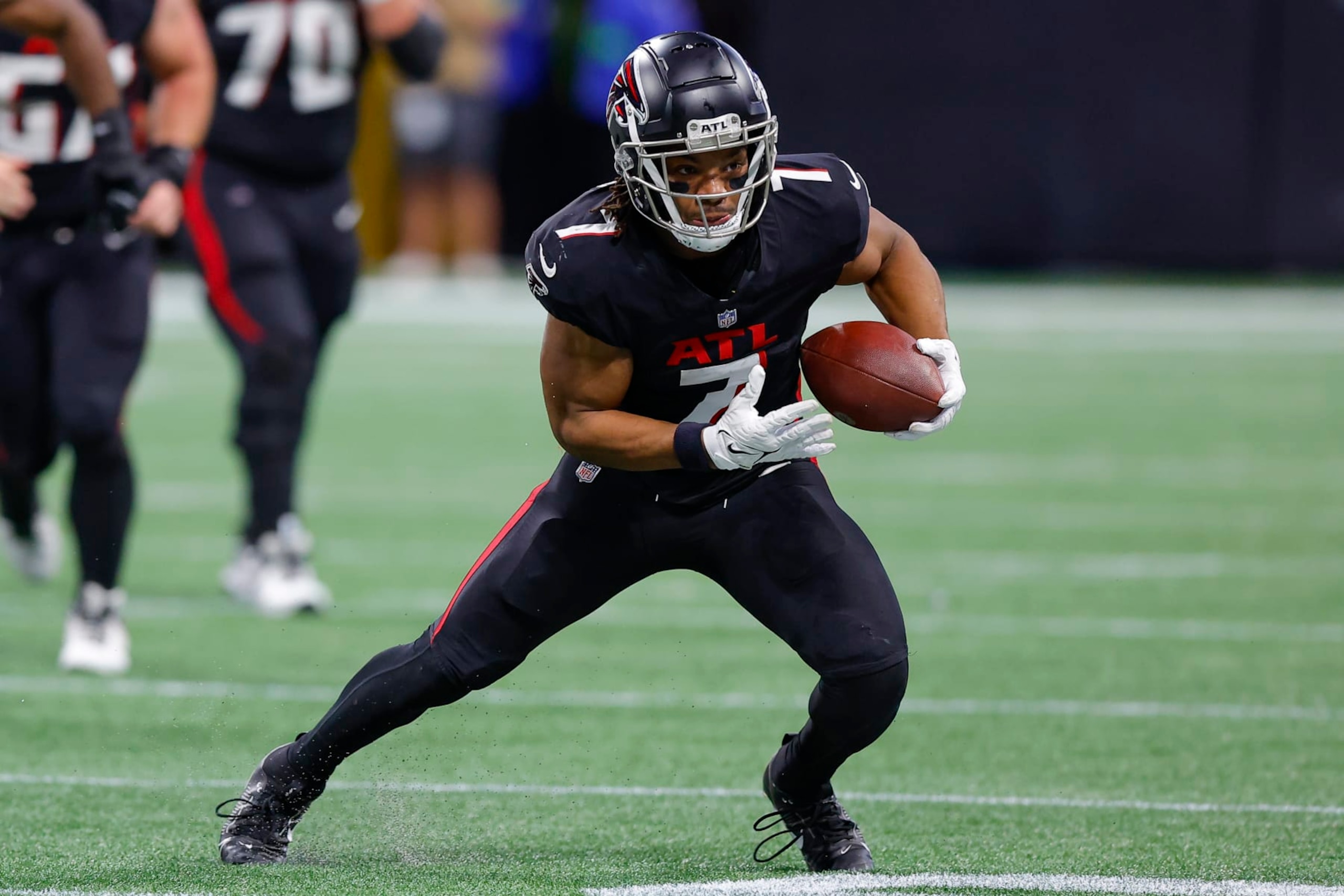
The Atlanta Falcons have their new head coach in Raheem Morris. The next step for Atlanta will be finding a franchise-caliber quarterback. Desmond Ridder hasn't shown enough in his two seasons, and Taylor Heinicke wasn't a much better alternative in 2023.
The Falcons are projected to have $29.9 million in cap space plus the eighth overall pick in the draft. Expect them to be aggressive in finding a new quarterback this offseason.
The good news is that Atlanta has a fairly complete roster outside of the QB position. The Falcons ranked 11th in total defense this past season and managed to win seven games despite their instability under center.
The Falcons' biggest strength, though, is an impressive collection of skill players that can help elevate their next signal-caller. Wideout Drake London and tight end Kyle Pitts both have elite upside, while the backfield duo of Bijan Robinson and Tyler Allgeier is simply superb. Atlanta also boasts a terrific second tight end in Jonnu Smith.
All of these playmakers are under contract through 2024, and virtually any quarterback would be thrilled to operate with this core group. However, Atlanta is still a piece or two away from fielding a truly elite group.
The Falcons desperately need more reliable receiver options behind London. Mack Hollins was Atlanta's second-most-productive wideout with just 18 catches for 251 yards. He's set to be a free agent, along with Van Jefferson, Scotty Miller, KhaDarel Hodge and Cordarrelle Patterson.
Quarterback is undoubtedly Atlanta's biggest need, but it would behoove the Falcons to add another pass-catcher or two to its lineup. The list of options includes impending free agents like Tee Higgins and Curtis Samuel, along with Day 2 draft prospects like Washington's Ja'Lynn Polk and Texas' Xavier Worthy.
The foundation for one of the NFL's best offensive skill groups is in place.
Baltimore Ravens: Middle of the Defense
3 of 32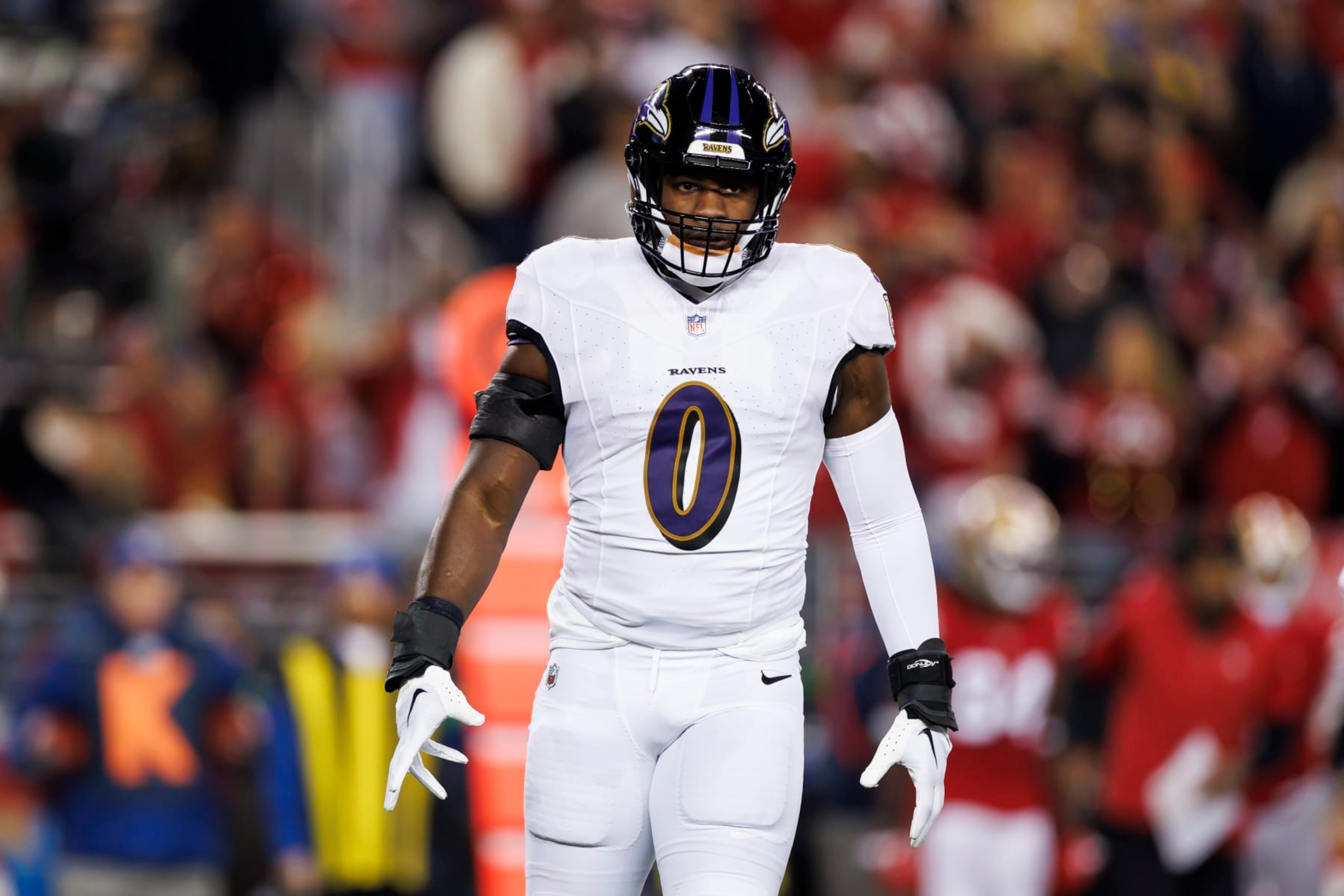
Going with a bit of an unorthodox answer here. The Ravens' greatest strength didn't come from one particular position group, but rather the spine of their defense.
From the interior defenders to the linebacker tandem to the safeties, the inside of the Ravens defense is arguably better than any in the league. Just look at the All-Pro roster if you have a hard time believing it.
Both primary off-ball linebackers made teams. Roquan Smith was a first-teamer, while Patrick Queen earned a second-team nod. The duo combined for 291 total tackles, five sacks, two interceptions, 14 tackles for loss, 14 passes defended and 11 quarterback hits.
Up front, it was Justin Madubuike who made the second team. He was one of the best interior pass-rushers in the league this season with a career-high 13 sacks.
The safety group was a highlight for the AFC North champions as well. Geno Stone had seven interceptions, and Kyle Hamilton was a first-team All-Pro selection as well.
Typically, it's the edge defenders and corners who get the credit for elite defenses. But Baltimore's unit was built from the inside out.
Madubuike and Queen are the two key pieces that the Ravens could lose this offseason. Both have expiring contracts, but ESPN's Jamison Hensley reported the Ravens are expected to use the franchise tag on Madubuike if they can't agree to a long-term contract.
Queen is a different story. With so much money tied up in Roquan Smith, they could call on 2023 third-round draft pick Trenton Simpson to step into Queen's role next season.


Buffalo Bills: Offensive Backfield
4 of 32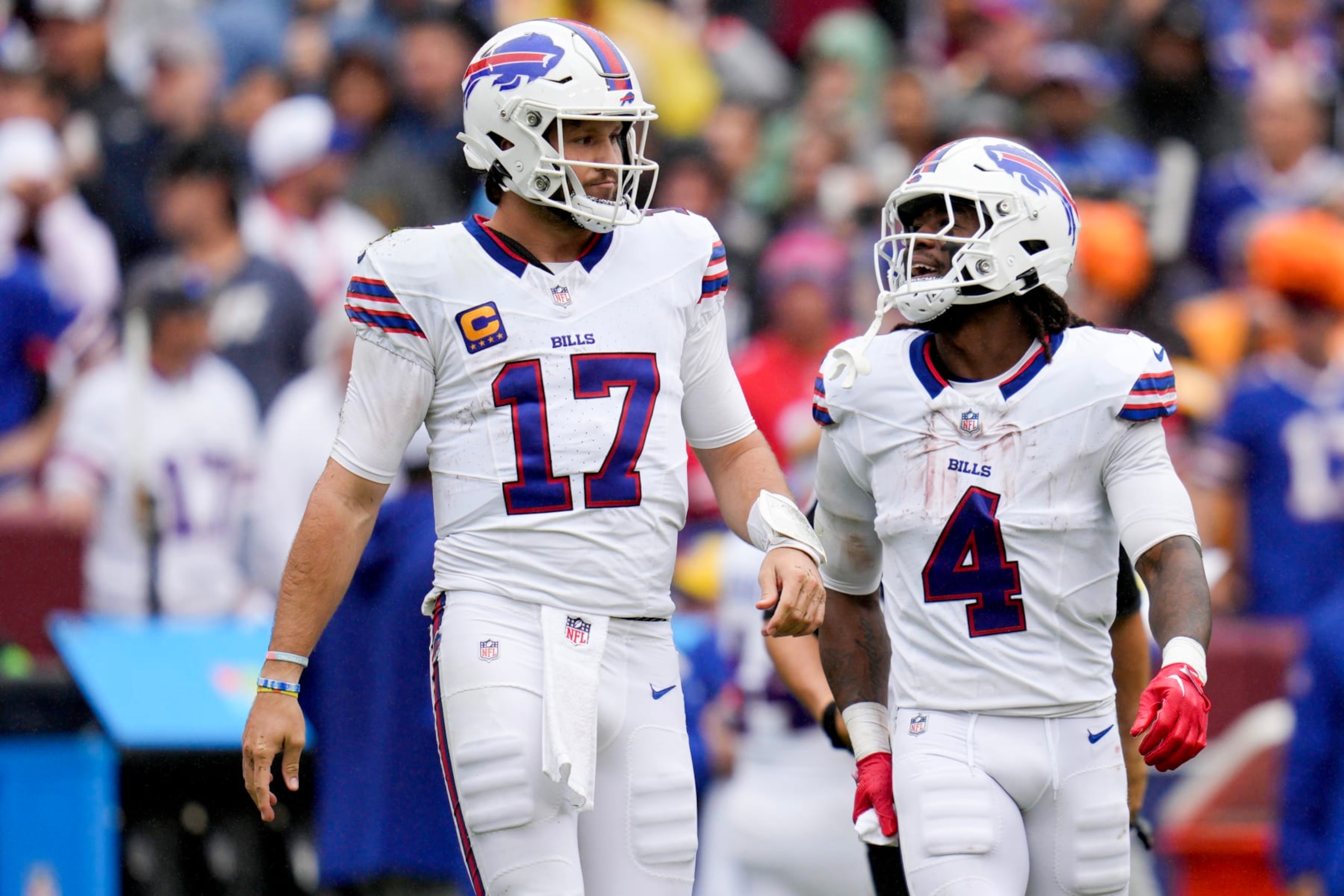
The Buffalo Bills were far from perfect on offense, but their drive to another AFC East crown served as an important reminder: The Bills will continue to be a threat in the AFC as long as Josh Allen is playing quarterback.
Allen had way too many turnovers this season. He threw 18 interceptions and lost four fumbles. Only Sam Howell had more this season. But he also still found a way to be second in the league in EPA. That's just how good he is when he's not busy giving the ball to the other team.
In previous seasons, the Bills were too reliant on Allen. Their lack of a run game forced the quarterback to play the role of quarterback and lead running back, but James Cook's breakout season has changed things.
Cook was sixth in the league in yards from scrimmage with 1,567. He ranked fourth in rushing yards with 1,144 and was also a useful cog in the passing game with 445 receiving yards.
Allen didn't completely step back from his rushing role, either. He still had 524 yards on 111 carries and a career-high 15 touchdowns, essentially playing the role of goal-line back for the Bills.
The duo of Allen and Cook figure to be a staple of the offense for a while. Allen is the face of the franchise, and Cook has two more seasons on his rookie deal.
However, finding a second back this offseason should be on the to-do list. Latavius Murray played the role this season, but he is 34 years old and averaged 3.8 yards per carry.
Carolina Panthers: Pass Defense
5 of 32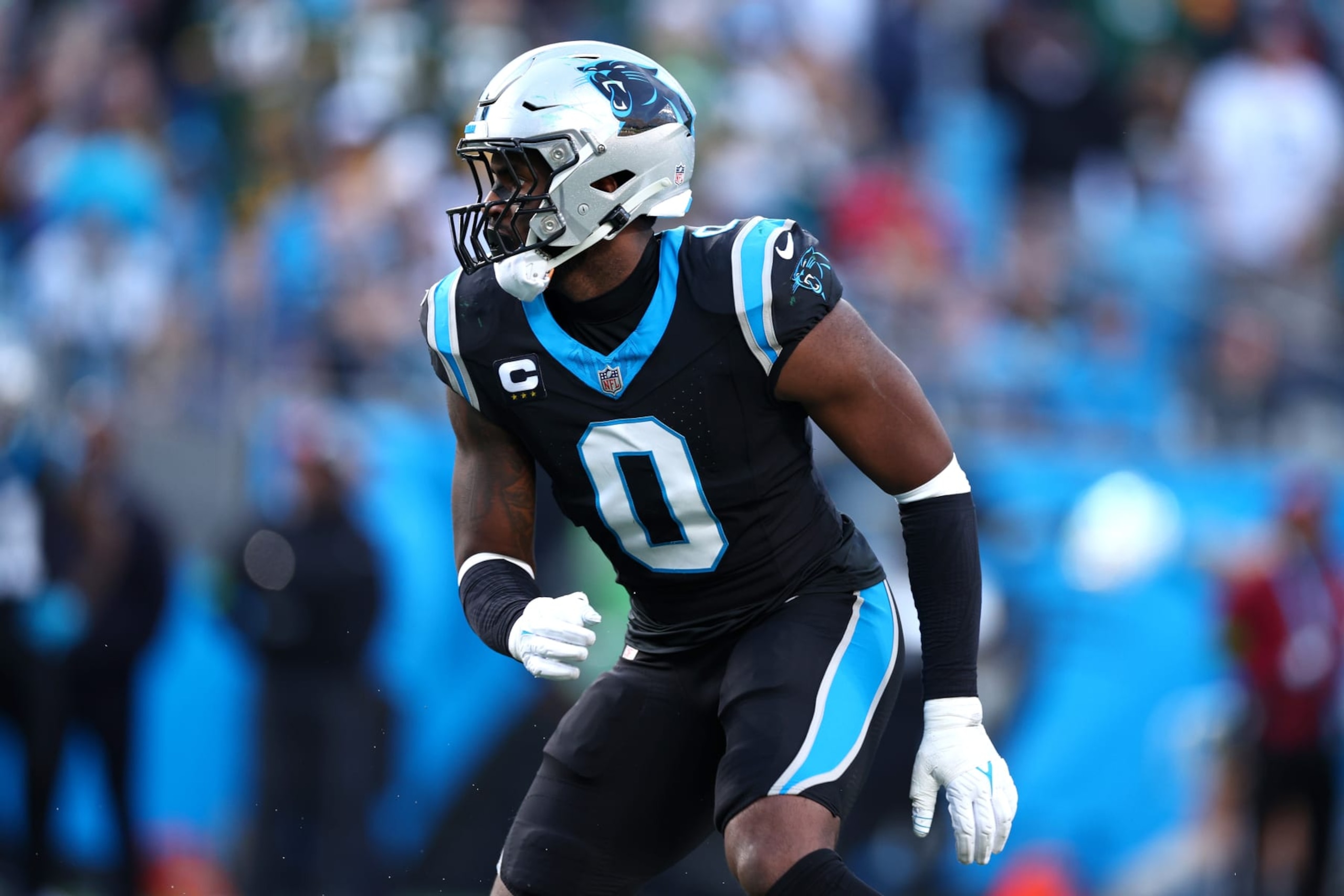
The Carolina Panthers have their new coach in Dave Canales, and he is facing quite the rebuilding project.
Quarterback Bryce Young struggled mightily as a rookie, and the majority of Carolina's roster also underwhelmed. The Panthers finished with the league's worst record while ranking 31st in scoring and 29th in points allowed.
Carolina doesn't have a first-round pick because of the trade to acquire Young, and there's no shortage of needs to address with its $31 million in projected cap space. If there was one thing Carolina could hang its hat on in 2023, it was its pass defense.
The Panthers ranked eighth in net yards per pass attempt, third in passing yards allowed and fourth in passing touchdowns surrendered. Carolina also boasted some impressive defensive playmakers like edge-rusher Brian Burns, cornerback Jaycee Horn, safety Vonn Bell and cornerback Donte Jackson.
Carolina didn't do a lot well this past season, but it could limit opposing passers.
Unfortunately, it's likely to take some financial gymnastics to keep Carolina's pass defense together while also improving other areas. Burns, cornerback C.J. Henderson, cornerback Troy Hill and safety Jeremy Chinn are all scheduled to be free agents.
Retaining Burns, who logged eight sacks and 21 quarterback pressures in 2023, could be particularly expensive. Most of the league's top edge-rushers command more than $23 million annually, and using the franchise tag isn't exactly a budget alternative.
The projected 2024 tag value for linebackers is $22.8 million.
This all puts Carolina in a tricky situation. The team has massive needs at the skill positions, in the second level of the defense and along the offensive line (65 sacks allowed), and keeping the one team strength intact won't be cheap.
Pass defense is, however, one area the Panthers can address by re-signing their own.
Chicago Bears: Run Defense
6 of 32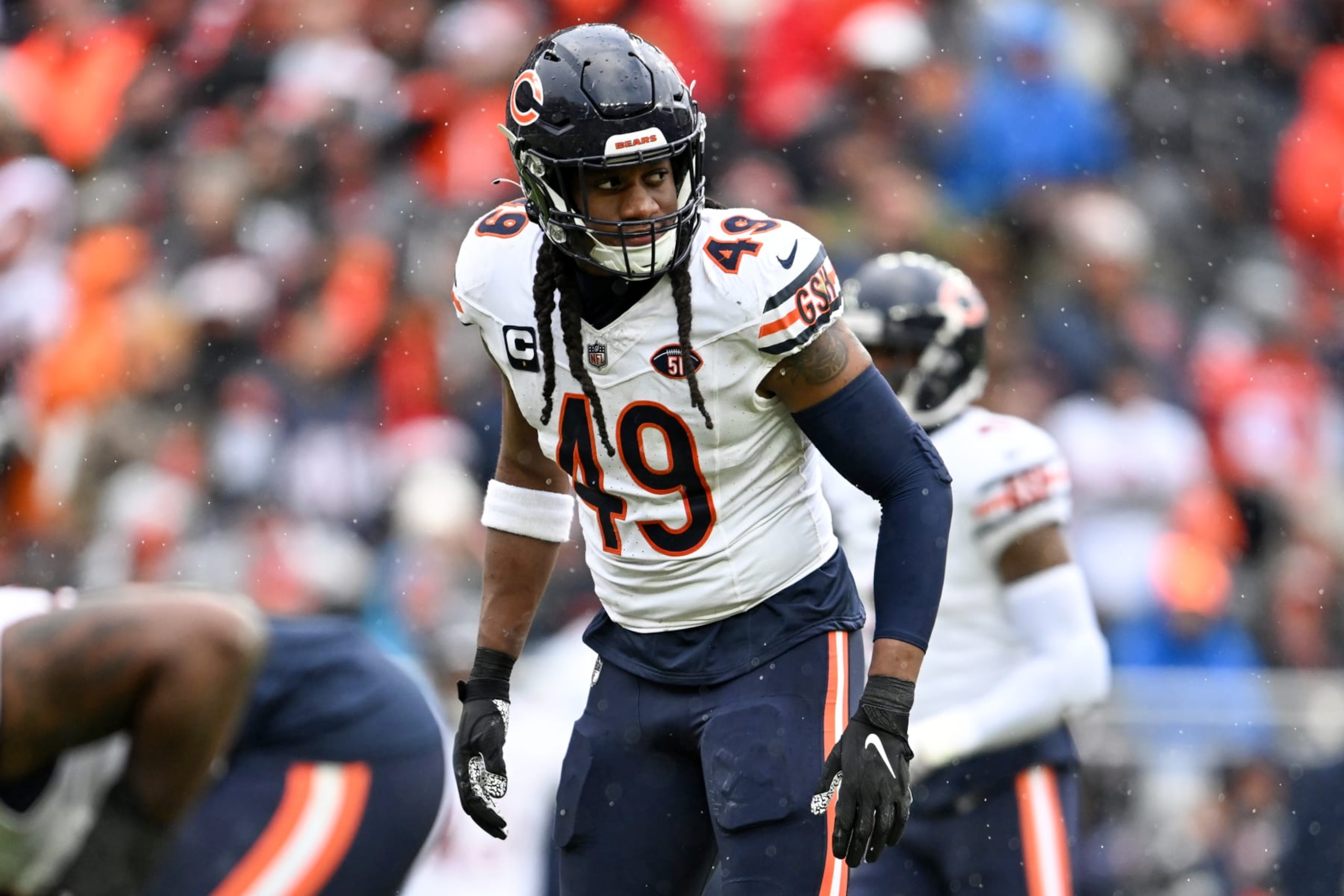
The Chicago Bears are likely to have a team that looks very different in 2024, specifically on offense.
For one, the Bears have already replaced offensive coordinator Luke Getsy with Shane Waldron this offseason. Secondly, Chicago has a decision to make regarding quarterback Justin Fields, who led the Bears with 657 rushing yards.
Thanks to Carolina, the Bears have the No. 1 pick in the draft. They may look to move on from Fields and target a QB prospect like North Carolina's Drake Maye or USC's Caleb Williams with that selection.
Chicago's ground game will likely take a step back if Fields doesn't return. However, Its run defense should remain one of the league's best.
Offseason additions like Tremain Edmunds, Andrew Billings, Justin Jones, Yannick Ngakoue and T.J. Edwards helped Chicago improve its defensive front dramatically. The trade-deadline addition of Montez Sweat solidified Chicago's front, which was nearly impenetrable by season's end.
The Bears finished the year ranked fifth in yards per carry allowed and first in rushing yards allowed. A year ago, Chicago finished 31st in rushing yards allowed, which shows just how impressive the defense's 2023 turnaround was.
The Bears are set to have two top-10 draft selections and $49.1 million in cap space. Expect them to use that capital to re-sign key players like Jaylon Johnson and Darnell Mooney, improve the secondary and, of course, make a decision at quarterback. There's virtually no work to be done with the run defense.
While Ngakoue and Jones are set to be free agents—along with defensive lineman Rasheem Green and linebacker Dylan Cole—the vast majority of Chicago's front seven is set to return. The Bears may want to add another pass-rusher to the mix after recording just 30 sacks, with six of them coming from Sweat.
However, the run defense can largely be left alone this offseason.
Cincinnati Bengals: Pass Catchers
7 of 32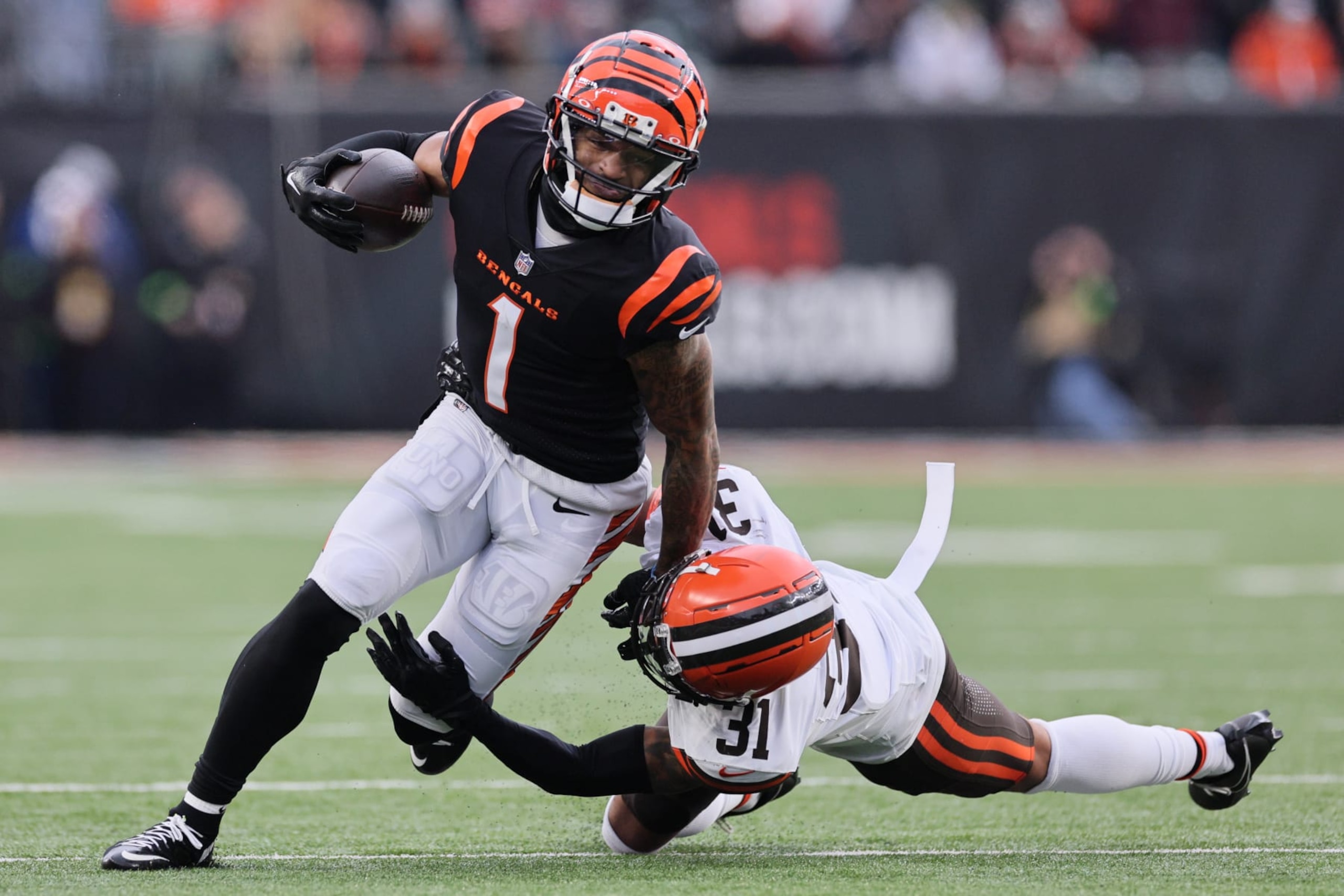
The Bengals missed Joe Burrow for 10 games and still managed to have a threatening passing attack.
While Burrow averaged 230.9 passing yards per game as the starter, Jake Browning averaged 215.1. In other words, there was only about a 15 yard drop-off per game going from one of the best quarterbacks in the league to a career backup.
That's a testament to how good this group of pass-catchers is.
The Bengals were second in the league in yards after the catch. Joe Mixon was a big reason for that. Working as a receiver out of the backfield, he had 463 yards after the catch, but Ja'Marr Chase was a YAC star with 541 on the season and 5.4 per reception.
Tee Higgins has been one of the best No. 2 receivers in the league over the past few seasons, but injuries kept him from hitting his full potential. He played through a rib injury early in the season. Then he dealt with a hamstring injury late in the season.
When he was healthy, he still showed off the skills that will make him a desired free agent if he actually hits the market.
Tyler Boyd continues to be one of the most overqualified No. 3 receivers in the league. The former second-round pick had 67 receptions for 667 yards and two touchdowns.
Keeping this group together will be difficult in the offseason. Both Higgins and Boyd are free agents, while Mixon is set to account for an $8.9 million cap hit.
Higgins figures to be a candidate for the franchise tag, while Boyd could be replaced through the draft.
Cleveland Browns: Defensive Line
8 of 32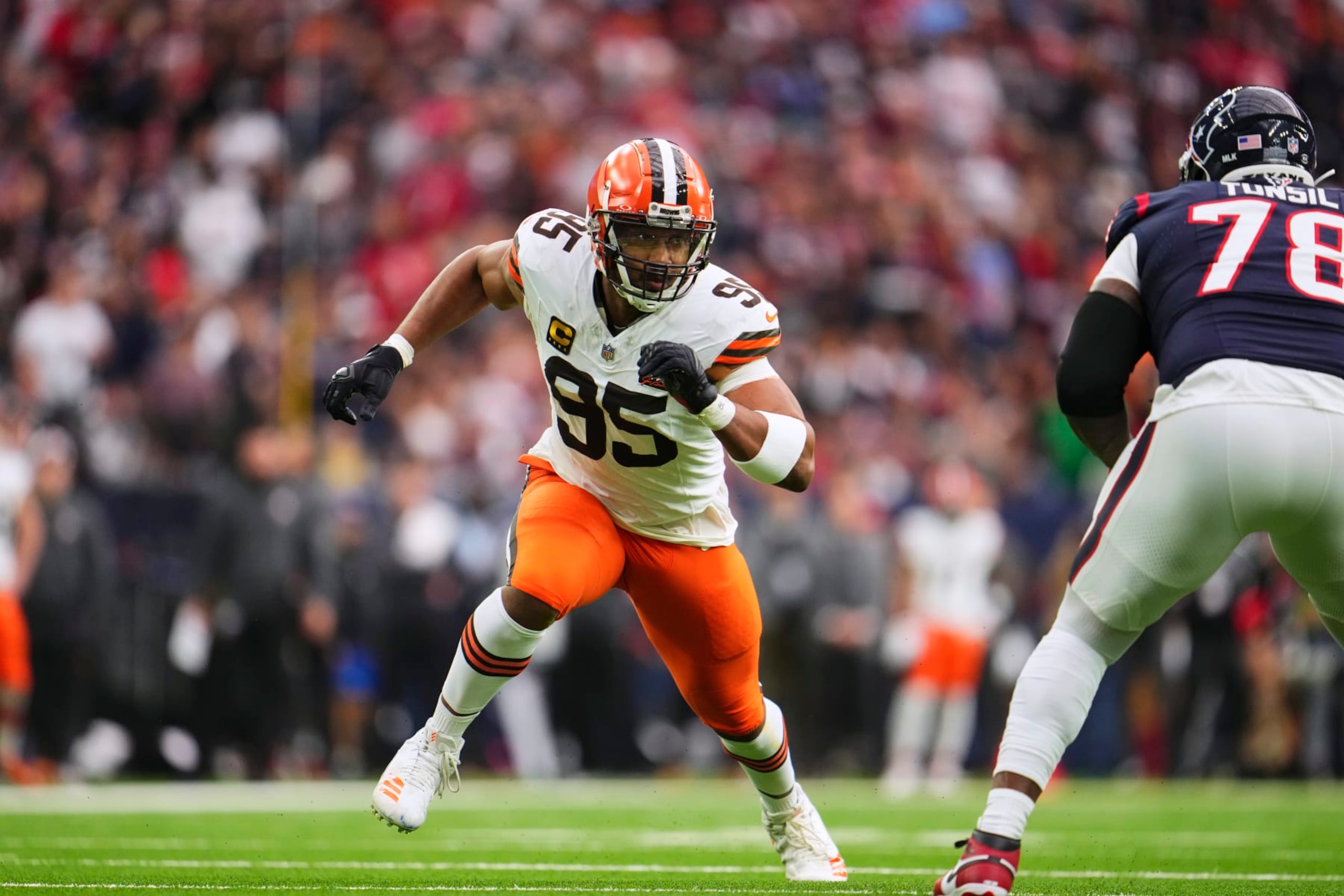
Thanks in large part to defensive coordinator Jim Schwartz and one of the best defensive lines in the league, the Cleveland Browns were able to weather a lot of injuries that most teams couldn't handle.
The Browns made the playoffs despite losing Nick Chubb, three starting offensive tackles and Deshaun Watson, because they had one of the best defenses in the league. Schwartz's defense relied on getting consistent pressure with the front four. They ranked seventh in pressure percentage while ranking 14th in blitz percentage.
Myles Garrett is obviously the centerpiece, but the Browns went to free agency to surround him with more talent and it paid off in a big way. Garrett was his usual dominant self with 14 sacks, 17 tackles for loss and 30 quarterback hits.
But the Browns defensive line was one of the most unblockable units in the league. They ranked second in pass-rush win rate and first in run-stop win rate, per ESPN Analytics.
Free-agent addition Dalvin Tomlinson was instrumental in the run-stop win rate. He ranked second in the league behind Derrick Brown while Jordan Elliott was sixth.
Za'Darius Smith and Ogbonnia Okoronkwo were also key additions on the edge combining for 10 sacks and 28 quarterback hits while rushing opposite Garrett.
Keeping the group together will be a tall task. The Browns' cap situation is tight and Smith along with Shelby Harris, Mo Hurst and Elliott are set to be free agents.
Dallas Cowboys: Pass Defense
9 of 32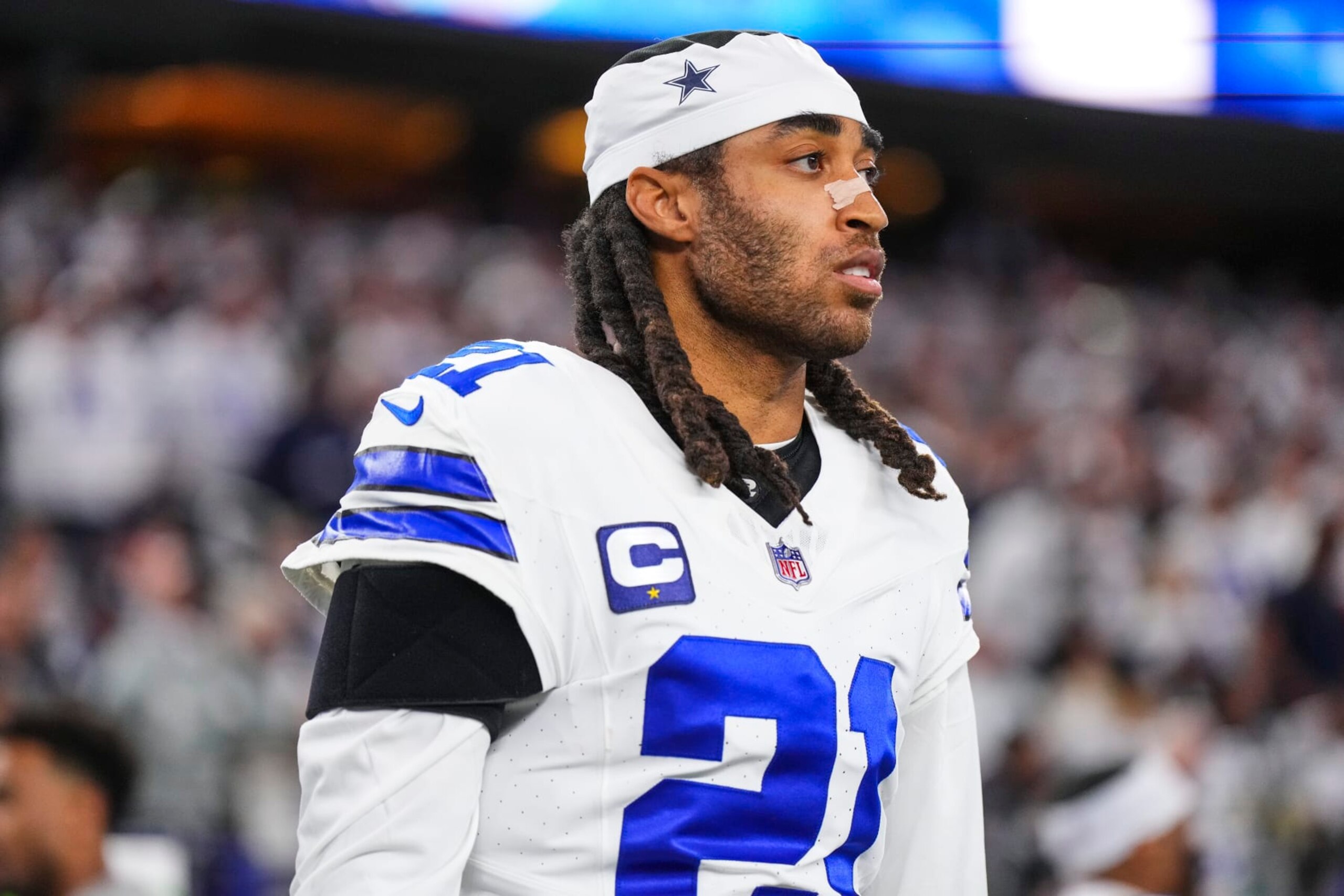
The Dallas Cowboys earned the NFC's No. 2 seed, because they have a deep and talented roster that is set at several positions. They'll want to find receiver depth, linebacker help and a running back this offseason—Tony Pollard is an impending free agent—but Dallas shouldn't be a major player in free agency.
With a projected $14.3 million cap deficit, that's a good thing.
However, if Dallas wants to retain a borderline elite pass defense, it may have to spend. This was the Cowboys' strongest area in 2023, even with star corner Trevon Diggs missing most of the season with a torn ACL.
Dallas fielded a strong pass rush (40 sacks) thanks to the presence of Micah Parsons and DeMarcus Lawrence. Safeties Jayron Kearse and Donovan Wilson were solid, and the cornerback group of Stephon Gilmore, DaRon Bland and Jourdan Lewis held its own following Digg's injury in Week 3.
The Cowboys finished the year ranked seventh in net yards per pass attempt allowed and eighth in passing yards allowed. They also recorded 17 interceptions while allowing only 21 touchdown passes.
The challenge will be keeping the secondary together, as Gilmore, Kearse and Lewis are set to be free agents. Given Dallas' recent track record, those players are likely to take priority over external free agents—though the Cowboys certainly could target a top young defender like L'Jarius Sneed or Jaylon Johnson if they uncover a cap surplus.
It wouldn't be a total surprise to see the Cowboys target a top CB prospect like Iowa State's T.J. Tampa or Georgia's Kamari Lassiter either. Finding a young long-term complement for Diggs would make plenty of sense for Dallas.
Yet, the Cowboys should be perfectly content to run it back with the same pass rushers and defensive backs they had in 2023. Dallas struggled against Jordan Love and the Green Bay Packers in the divisional round, but pass defense was rarely a problem.
Denver Broncos: Offensive Line
10 of 32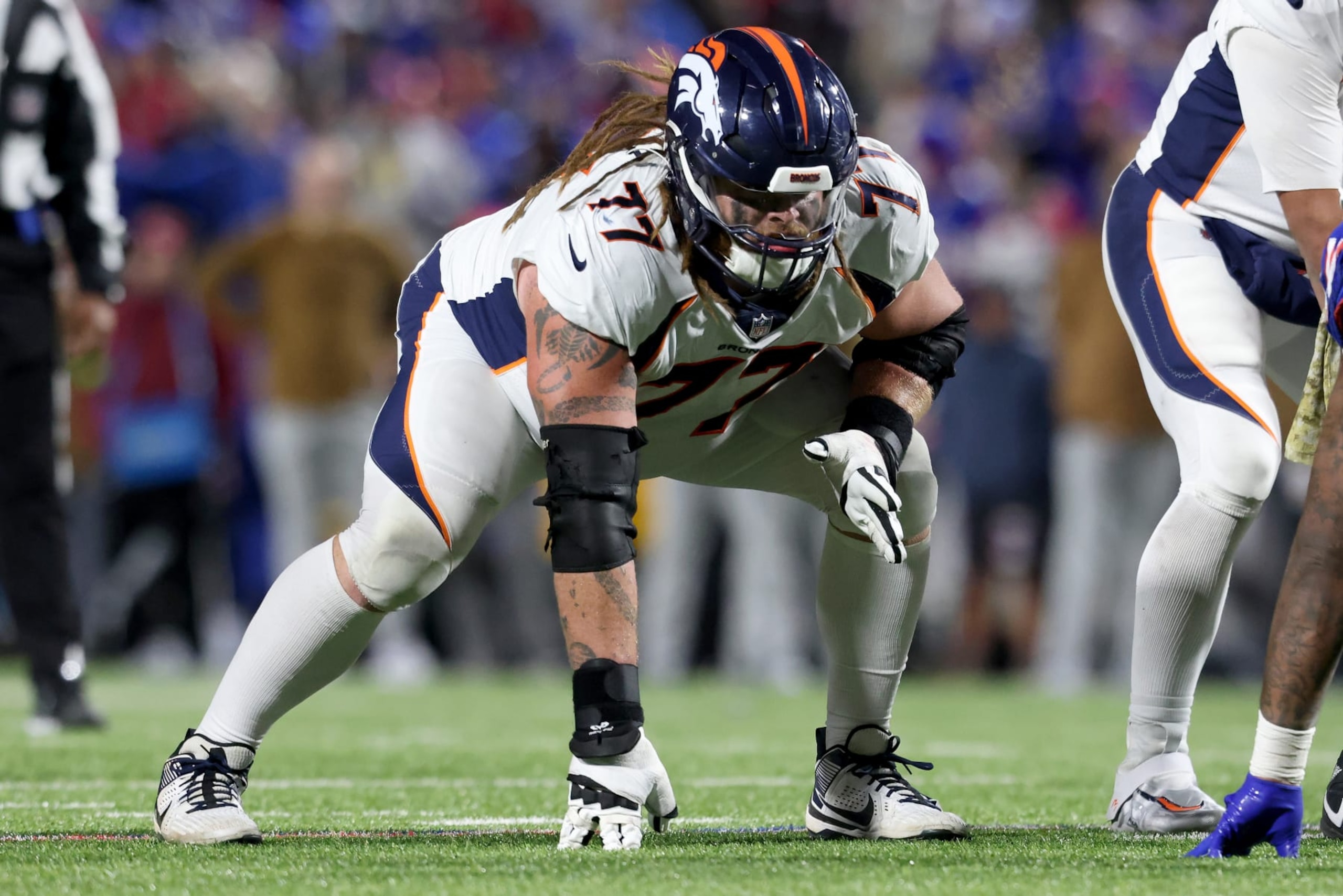
When you think of the best offensive lines in football, the Denver Broncos don't immediately spring to mind. That just goes to show that sometimes a good line can go underappreciated.
On first glance, it isn't hard to see why they have gone unnoticed. They surrendered the sixth-highest number of sacks (52) on the season. However, Russell Wilson is notoriously difficult to protect. He's taken at least 40 sacks in 10 out of his 12 seasons. His penchant for hanging onto the ball and trying to extend plays means he takes a lot of sacks that aren't really on the line.
Case in point, the Broncos were one of the top teams in the league when it came to pass-block win-rate, which measures the percentage of reps where the blocker held off his assignment for at least 2.5 seconds.
The Broncos offensive line was one of a handful of units in the league that was top-10 in both pass-block and run-block win rates as a team, per ESPN Analytics.
Garrett Bolles and Mike McGlinchey were alright as a tackle tandem, but it was the interior that really shined. Center Lloyd Cushenberry III (10th) and right guard Quinn Meinerz (third) both received top-10 grades at their position from PFF, while left guard Ben Powers ranked 30th among all guards.
The good news for the Broncos is all five starters are expected to be back next season. With Russell Wilson expected to be gone, they might have a quarterback that will help them look a little better next season.
Detroit Lions: Skill Players
11 of 32
The Detroit Lions made it to the NFC title game, and at one point, held a 24-7 lead over the San Francisco 49ers. Detroit ultimately lost that game, and the Lions' inconsistent secondary was largely to blame.
The Lions are projected to have $61.1 million in cap space, and they'll likely use a large chunk of that to rebuild their secondary. If Detroit can solidify the back end of its defense, it could emerge as next year's NFC favorite. Most other pieces are in place.
Detroit's defensive front is strong, and its offensive line is one of the best in the league—though Jonah Jackson and Halapoulivaati Vaitai are impending free agents. The Lions also have an above-average quarterback in Jared Goff. What makes them truly dangerous, though, is a multi-faceted and extremely explosive collection of offensive skill players.
David Montgomery and rookie Jahmyr Gibbs formed the league's best running back tandem in 2023. Each back came close to reaching 1,000 rushing yards, and each topped 1,100 scrimmage yards on the season.
The Lions also had a tremendous trio of pass catchers in Amon-Ra St. Brown, Josh Reynolds and rookie tight end Sam LaPorta. Kalif Raymond was a fine complementary receiver, and second-year wideout Jameson Williams made the occasional impact.
Detroit finished the year ranked fifth in rushing, second in passing, third in total yards and fifth in scoring. Its ability to attack defenses in a variety of ways made the Lions offense one of the NFL's best.
With only Reynolds, trade acquisition Donovan Peoples-Jones and backup tight end Brock Wright (restricted) set to be free agents, the Lions have a great chance to run things back or even improve their offense this season.
Re-signing Reynolds and replacing Peoples-Jones (five catches, 58 yards) with a more productive fifth receiver would ensure Detroit's skill group is again elite in 2024.
Green Bay Packers: Passing Offense
12 of 32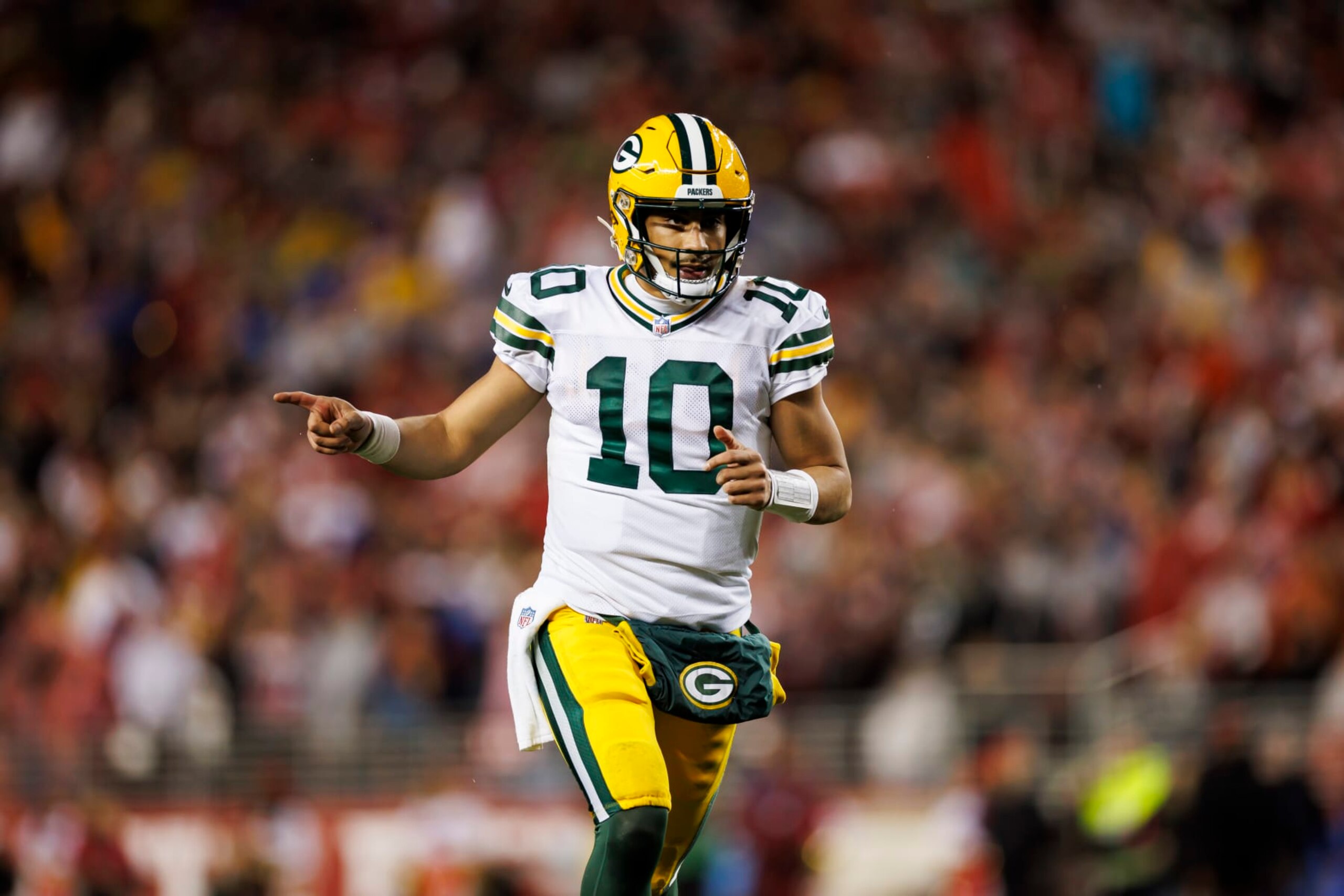
The Packers made it to the divisional round and gave the 49ers everything they could handle before ultimately dropping a 24-21 contest. As the NFL's youngest team, the Packers have an extremely bright future.
Green Bay is set to be right up against the salary cap, but it doesn't have a ton of flaring holes. The Packers need to address their 28th-ranked run defense, and they could use a reliable No. 2 running back to pair with Aaron Jones. However, the most important pieces are in place.
It took a little while to get going, but the Packers' passing attack was one of the most dynamic in the league by season's end.
It started with the emergence of quarterback Jordan Love. He had some early struggles in 2023, but he was playing like one of the NFL's top signal-callers by November. Green Bay has no reason to doubt his ability to be the quarterback of the future.
Love benefited from a young receiving corps that also grew over the course of the season. The Packers didn't have a true No. 1-caliber receiver, but pass-catchers like Romeo Doubs, Jayden Reed, Dontayvion Wicks, Bo Melton, Luke Musgrave and Tucker Kraft gave Green Bay a quality receiving corps.
The Packers didn't have a receiver reach 800 yards, but they still finished the year ranked ninth in new yards per pass attempt, 12th in passing yards and third in passing touchdowns.
Green Bay may consider adding another young wideout to the mix just to give Love that true No. 1 target. If cap space can be found, a free agent like Tee Higgins or Michael Pittman Jr. could make sense. The Packers may also consider a receiver prospect like Washington's Ja'Lynn Polk or Oregon's Troy Franklin.
However, the Packers should also feel good about simply running it back with the receivers they have. Love and all of his top pass-catchers are under contract through 2024, meaning Green Bay can firmly focus on other areas this offseason.
Houston Texans: Passing Offense
13 of 32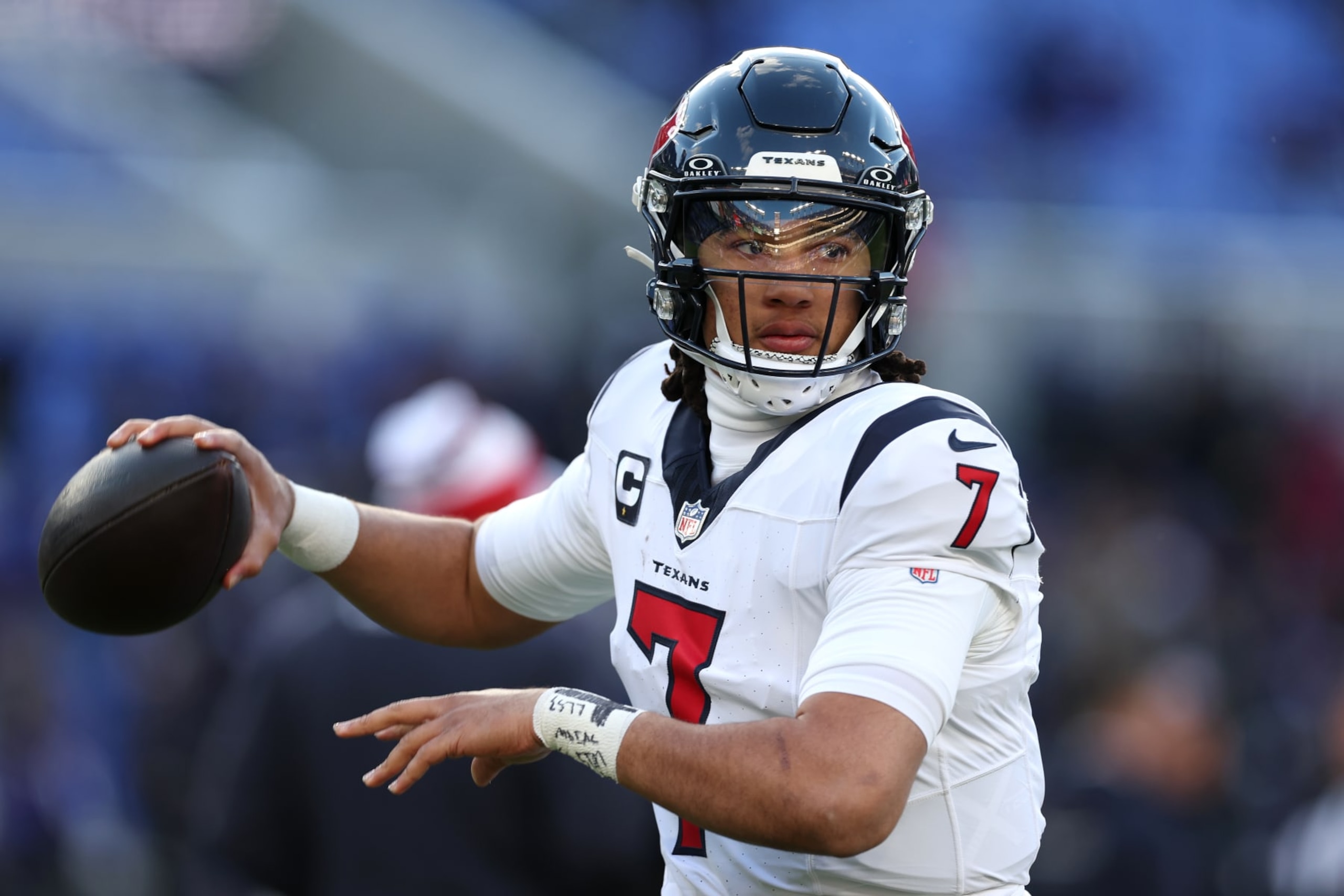
DeMeco Ryans and the Houston Texans did some great things on defense, but there's no way they make their surprise run to the playoffs this season without C.J. Stroud spearheading a surprisingly productive passing game.
Stroud surpassed all expectations as the No. 2 pick in the 2023 draft. The rookie was able to handle multiple defenses thrown at him throughout the season. He was fifth in passer rating vs. man coverage (102.0) and third in passer rating against zone (106.5), per Player Profiler.
The quarterback wasn't the sole reason that the Texans had a dynamic passing attack. Nico Collins had a breakout season more than doubling his career-high for catches (80), yards (1,297) and touchdowns (eight). He became Stroud's go-to target and the trust in him was rewarded, as he was second in the league in yards per route run.
Stroud also might have a future when his playing days are over as a GM. He reportedly asked the Texans to draft Tank Dell, and that gave him another playmaker this season. The rookie had 47 receptions for 709 yards and seven scores before a broken leg ended his season after 11 games.
Dalton Schultz was a critical element to the passing attack as well. The veteran tight end signed a one-year deal in free agency and was a consistent target for Stroud, ranking second in first downs.
There's a lot to get excited about for the Texans offense as they go into next season. Collins has one more year left on his rookie contract, so it would make sense for the team to start working on an extension for him. Schultz is set to be a free agent, but he has an established connection with Stroud, and the Texans have plenty of room ($66 million) to bring him back.
It would make sense to continue building the receiving corps by adding one more receiver this offseason. Someone like South Carolina receiver Xavier Legette would work as someone who can play in the slot and has high YAC potential with his 6'1", 223-pound frame.
Indianapolis Colts: Offensive Line
14 of 32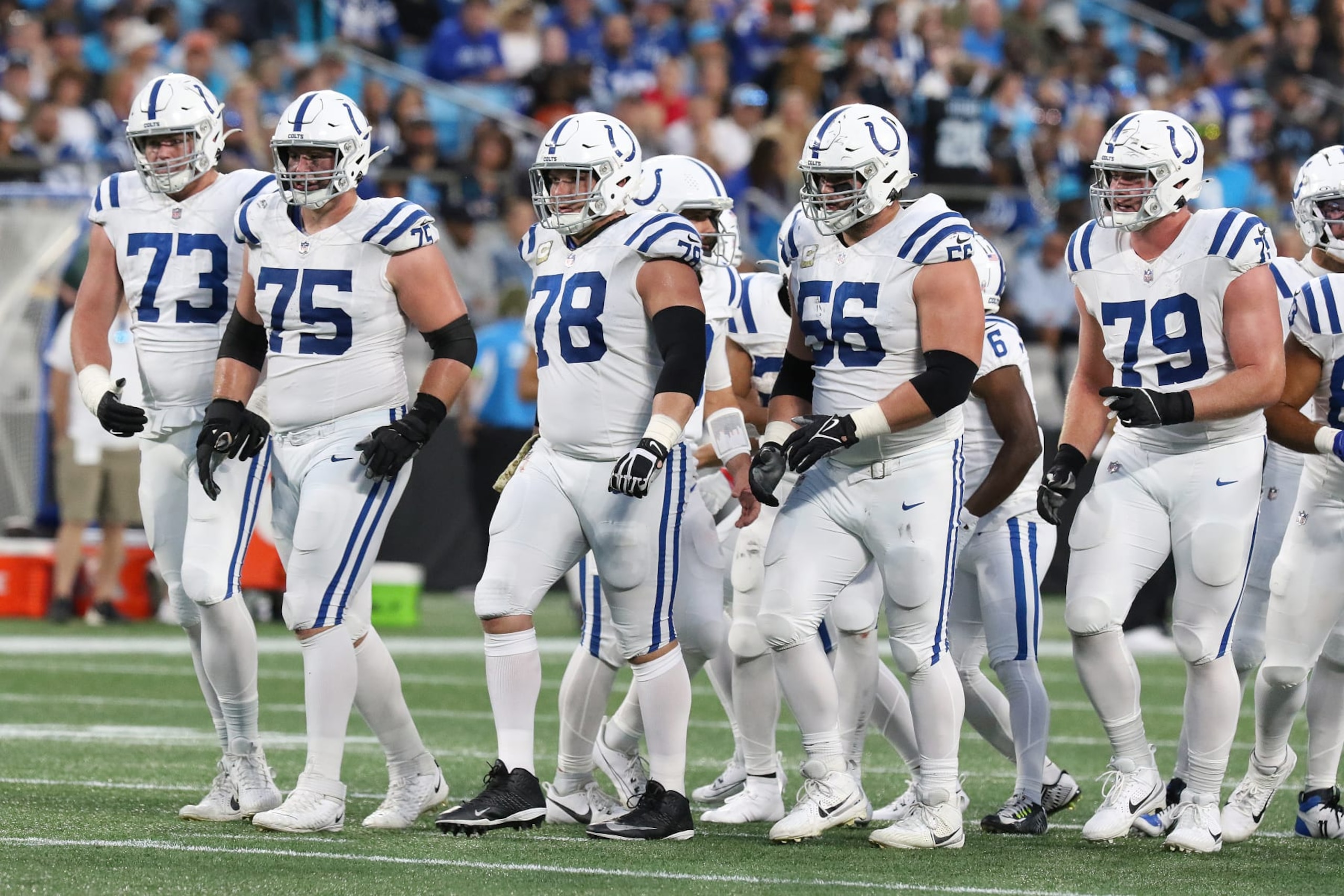
The defensive line makes a pretty compelling argument as the Colts' greatest strength, but the offense was more successful than the defense as a complete unit, so the O-line gets the nod here.
The Colts lost Anthony Richardson four games into the season and only got 10 games out of Jonathan Taylor, forcing them to go with Gardner Minshew II at quarterback and Zack Moss as the primary back for a large portion of the season.
Indy was still 10th in rushing yards on a per-carry and per-game basis while boasting a pass offense that was 15th in sack percentage on the year. That only happens if you have a group of blockers up front that are adept at opening up holes and protecting the quarterback.
PFF loved the group up front. Bernhard Raimann (eighth), Ryan Kelly (eighth) and Braden Smith (sixth) were all top-10 players at their positions based on their grading. Minshew was able to keep the offense at a respectable level, and he benefited from protection that gave up the ninth-lowest pressure rate in the league (18.3 percent).
Head coach Shane Steichen got a lot of credit for keeping the Colts competitive all season despite a roster with some obvious weaknesses. However, the offensive line deserves some of that credit, as they were a close facsimile to the one that Steichen had in Philadelphia.
The bad news for opposing defenses is that this group is all set to come back next season. Reserves Jack Anderson and Danny Pinter are the only free agents. Kelly and guard Will Fries are the only two starters whose contracts expire in 2025.
If anything, the Colts might want to consider drafting an eventual replacement for Kelly. He will be 32 next season and 34 when his contract expires. Dominick Puni played center, guard and tackle at Senior Bowl practices. He would make a great utility lineman who could jump in at just about any spot in a pinch before ultimately taking over the center job.
Jacksonville Jaguars: Pass-Catchers
15 of 32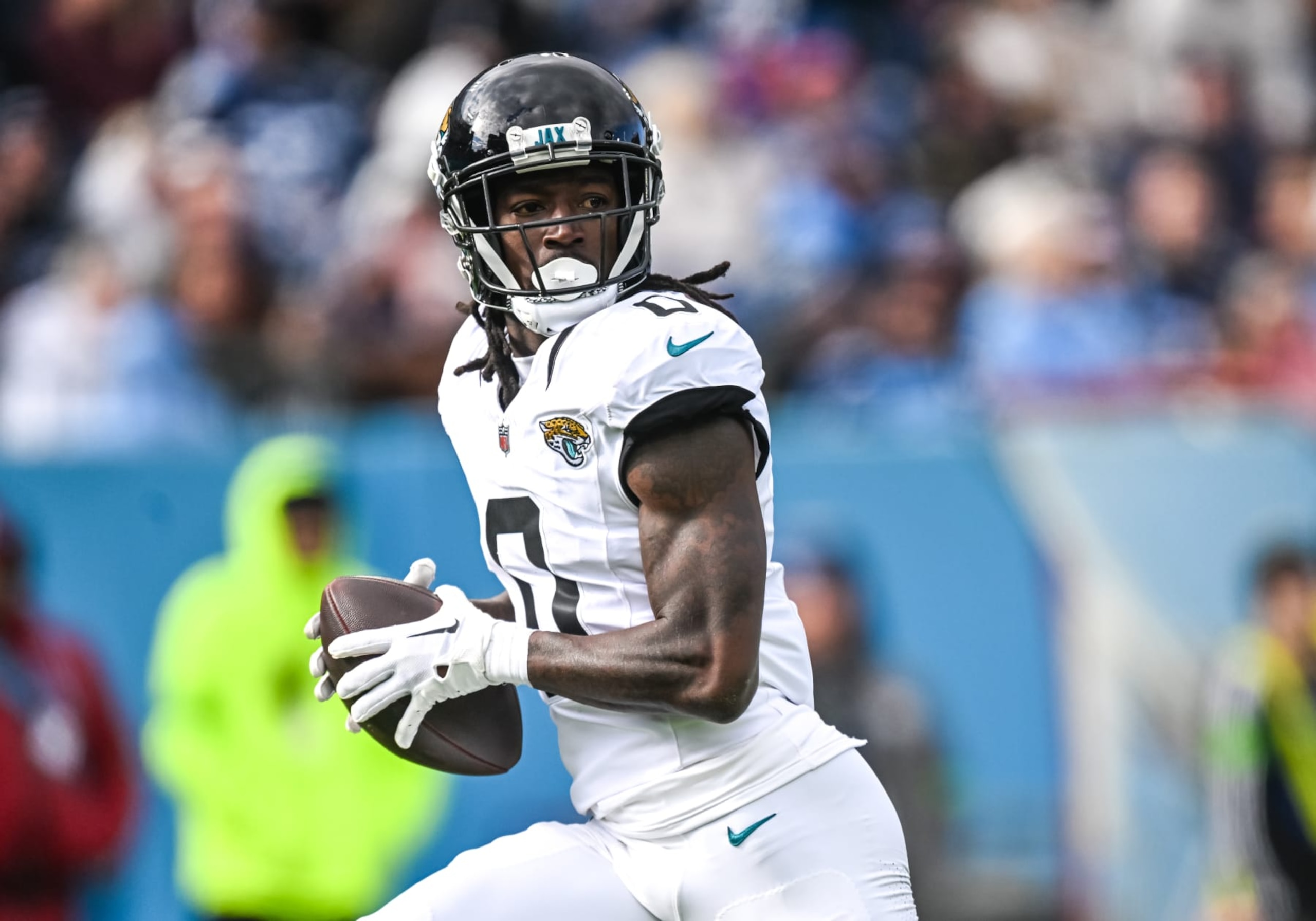
Trevor Lawrence had too many turnovers and took too many unnecessary risks with the football to be considered a strength this season. The 2023 campaign has to be considered a step back after he put together a strong year in 2022. He was tied for fourth in interceptions (14) and also ranked fourth in interceptable passes (24) and dangerous plays (34), per Player Profiler.
The blame has to fall on him, because his group of pass-catchers was a strength.
Calvin Ridley might not be the best No. 1 receiver in the league, but he had his first 1,000-yard season since 2020. He was able to put together that season despite ranking 82nd in catchable target rate, per Player Profiler.
The Jags' greatest strength is how balanced their receiving corps is, though. Ridley, Christian Kirk, Evan Engram and Zay Jones all averaged at least seven targets per game. So while Ridley had the best overall stats, the Jags' group of pass-catchers could be led by any one of those four in any given game.
Injuries held the unit back a bit. Kirk was limited to 12 games, while Jones was limited to nine. Fortunately, Travis Etienne is a good receiver out of the backfield (58 catches, 476 yards), giving Lawrence another outlet.
Assuming Lawrence can get back to his 2022 form, the Jaguars have a few major questions to ask themselves if they want to run this group back. The first is how much they are willing to pay Ridley. He is set to become a free agent, and Spotrac puts his value at $17 million in annual average salary.
They would also lose a second-round pick instead of a third-rounder to Atlanta as the final piece of the trade that brought him to Jacksonville. The pick is conditional on whether the Jaguars extend his contract.
If they don't re-sign him, they would still be giving up a third-rounder and wide receiver becomes a real need in the draft. An option like Keon Coleman who has the build to be a legitimate X receiver or Brian Thomas Jr. who would add an element of deep speed would ensure it remains a strength.
Kansas City Chiefs: Cornerbacks
16 of 32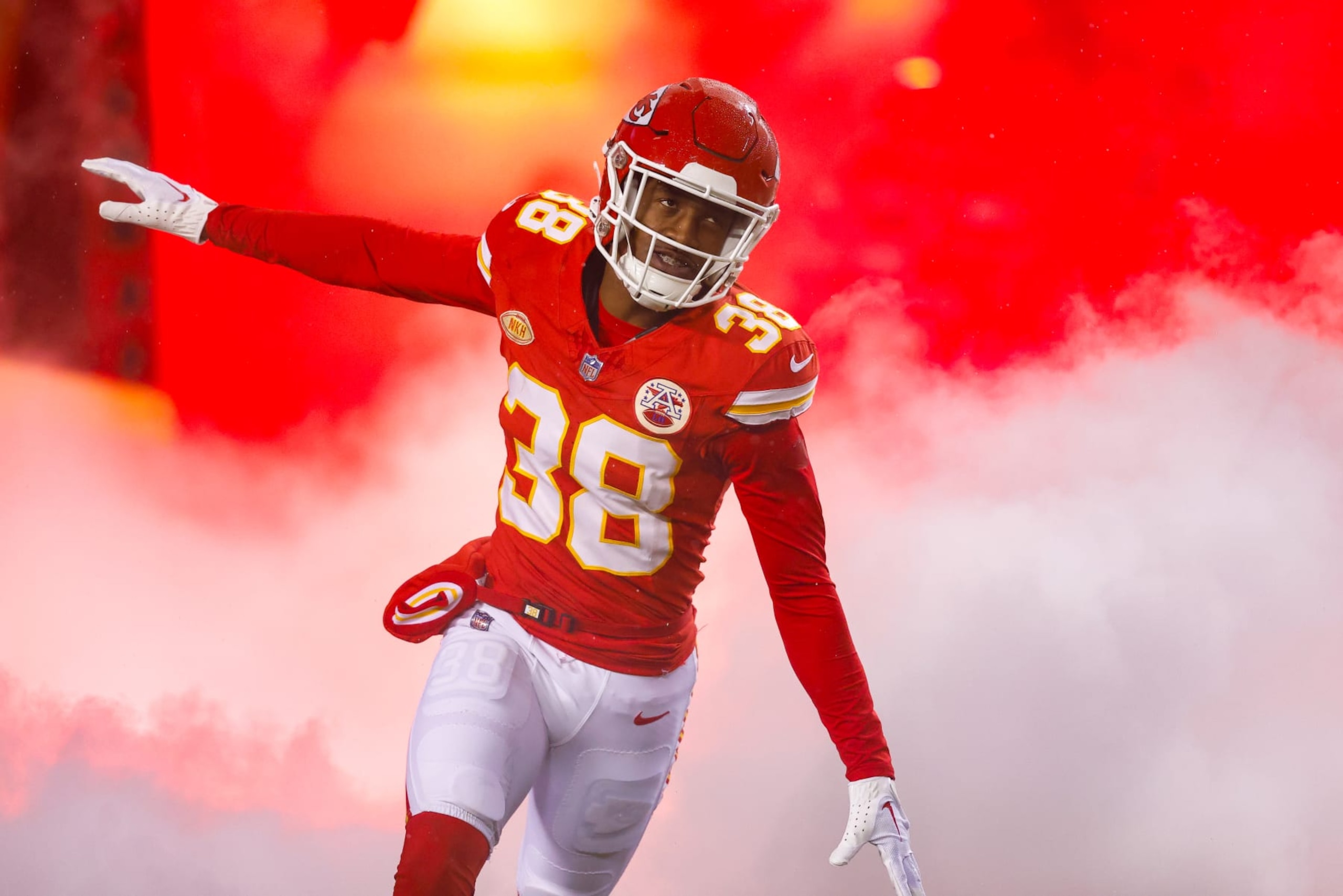
The Chiefs are still a Super Bowl-caliber team, but they've done it differently this season. Instead of riding the coattails of Patrick Mahomes and an electrifying offense, they've had one of the stingiest defenses in the league.
The unit has been strong, but the cornerbacks deserve special recognition. Defensive coordinator Steve Spagnuolo asks a lot of them, and their ability to execute sets the whole defense up for success.
L'Jarius Sneed has received a lot of attention this season. He shut down both Tyreek Hill and Jaylen Waddle in a high-profile matchup with the Dolphins, punched the ball out of Zay Flowers hands to swing the momentum in the AFC Championship Game and held opposing receivers to a passer rating of 56.2.
Sneed wasn't a one-man show, though. Trent McDuffie also put together a strong campaign. He carried the fourth-highest grade from PFF at the position and was named first-team All-Pro slot cornerback. Both Sneed and McDuffie have the ability to cover the slot, so they provide a lot of versatility that helps the whole defensive backfield.
Jaylen Watson and Joshua Williams provide the depth. Williams was strong, allowing just 4.9 yards per target.
Chris Jones is the best internal free agent the Chiefs have, but Sneed isn't that far behind. The former fourth-round pick has earned the right to cash in, and he plays a pivotal role for the Chiefs.
If they allow him to walk they would need to consider targeting another corner in the first round to replace him. Khyree Jackson would fit the mold as a long, athletic corner who can play some press coverages.
Las Vegas Raiders: Defensive Front
17 of 32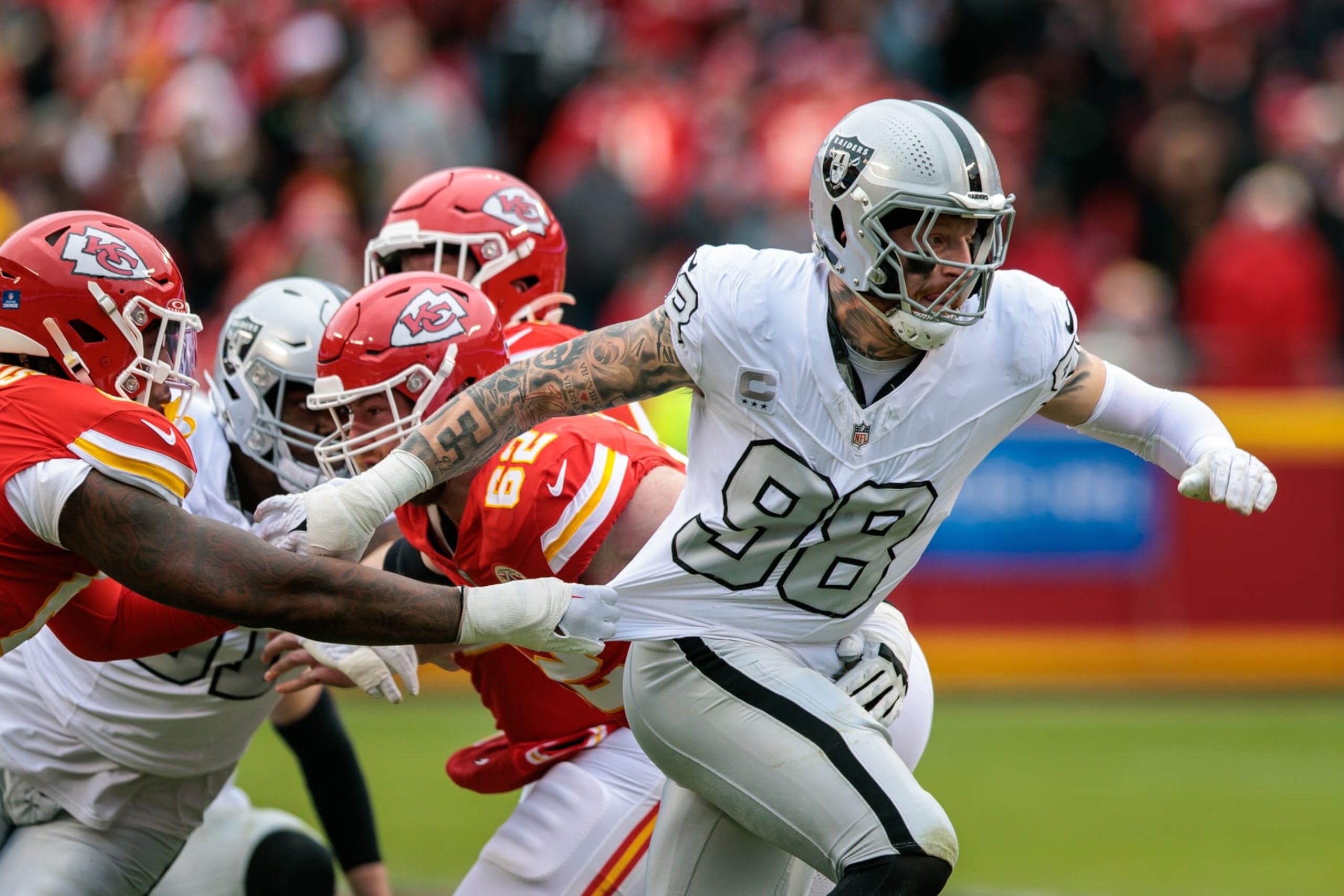
The majority of the Raiders' most recognizable names are on offense. Davante Adams and Josh Jacobs teaming up with Jakobi Meyers and second-round tight end Michael Mayer give Vegas some name recognition.
But it's the largely unknown defensive front that powered a lot of the Raiders' success in the back half of the season. Starting with Week 9 when Antonio Pierce took over as interim head coach, the Raiders were second in EPA allowed per play, 11th in dropback success rate and 10th in rushing success rate.
The defensive front is a big reason Pierce was able to shed the interim label and will be the team's head coach moving forward. Maxx Crosby has long been one of the best players on the edge, but Malcolm Koonce showed up as a sidekick.
The 25-year-old was the biggest beneficiary of Pierce's takeover. All eight of his sacks came after Josh McDaniels was relieved of his duties.
The scary thing is that the defensive line played so well without first-round pick Tyree Wilson really breaking out. The first-round pick was only on the field for 44 percent of the snaps and only notched 3.5 sacks in his first campaign.
However, defensive coordinator Patrick Graham talked about how much Wilson has improved, and he likes what he saw in practice from the former Texas Tech standout.
The area where the front could improve over the offseason is on the interior. Wilson has the frame to help out on the inside in passing situations, but Bilal Nichols, Adam Butler and John Jenkins are all set to be free agents.
The Raiders have the space ($43.4 million) to make a run at someone from a fairly strong interior class. Signing away Chris Jones from their AFC West rival Kansas City Chiefs would be a coup. However, if they miss out on him, then Leonard Williams, Christian Wilkins and Justin Madubuike would be other high-dollar options.
Los Angeles Chargers: Defensive Front
18 of 32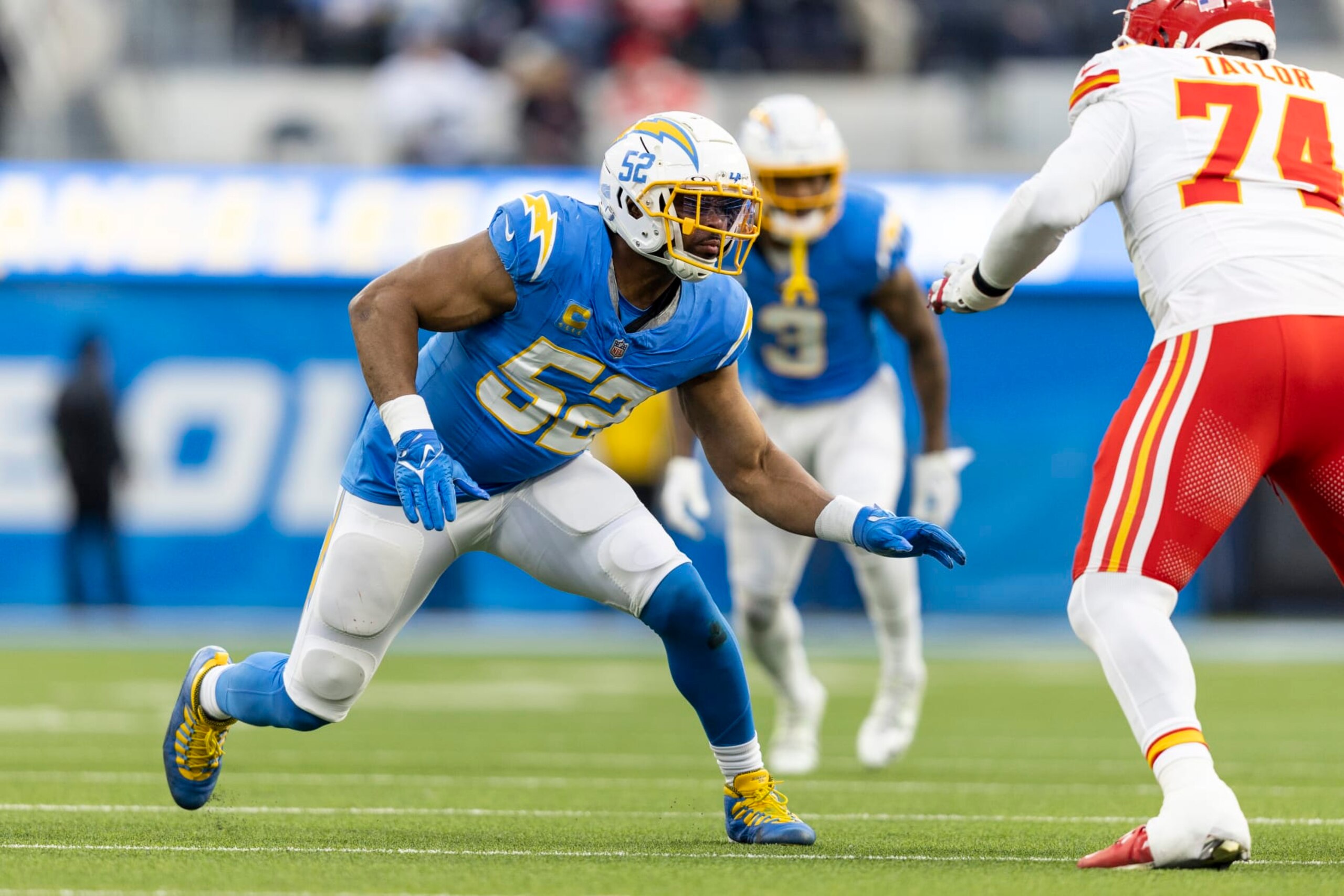
There weren't many units that lived up to expectations for the Chargers this season. They were a lot better team on paper than what they showed on the field.
However, the defensive line arguably did the most positive things and was the greatest strength for the team.
Khalil Mack led the way with one of his most productive seasons yet. He had a career-high 17 sacks with 10 passes defended, five forced fumbles and 22 quarterback hits. In short, he was a menace to opposing offenses.
Joey Bosa couldn't stay on the field, but he was productive when he played. In nine games he posted 6.5 sacks with eight quarterback hits and six tackles for loss.
Tuli Tuipulotu had an impressive debut season. He ranked ninth among all edge defenders in run-stop win rate, per ESPN Analytics. On the interior, Morgan Fox helped out with 5.5 sacks, which was good for third on the team.
Like most of the units on the Chargers, injuries played a role in keeping them from reaching their potential. This group would have probably been even better if Bosa had been available for more of the season.
It's not going to be easy to keep the group together, either. Mack ($38.5 million) and Bosa ($36.6 million) are set to be the two most expensive players on a Chargers roster that is currently $44 million over the cap.
That makes one or both of them prime candidates to be traded or outright released. New head coach Jim Harbaugh and general manager Joe Horitz are going to have some important decisions to make, but it's hard seeing both Bosa and Mack coming back in 2024.
That means Tuipulotu and potentially another rookie are going to have pick up the slack. Their first-round pick could be spent strengthening a weakness, but using a second-round pick on the likes of interior defender Leonard Taylor or edge-rusher Chris Braswell would make a lot of sense.
Los Angeles Rams: Receiving Corps
19 of 32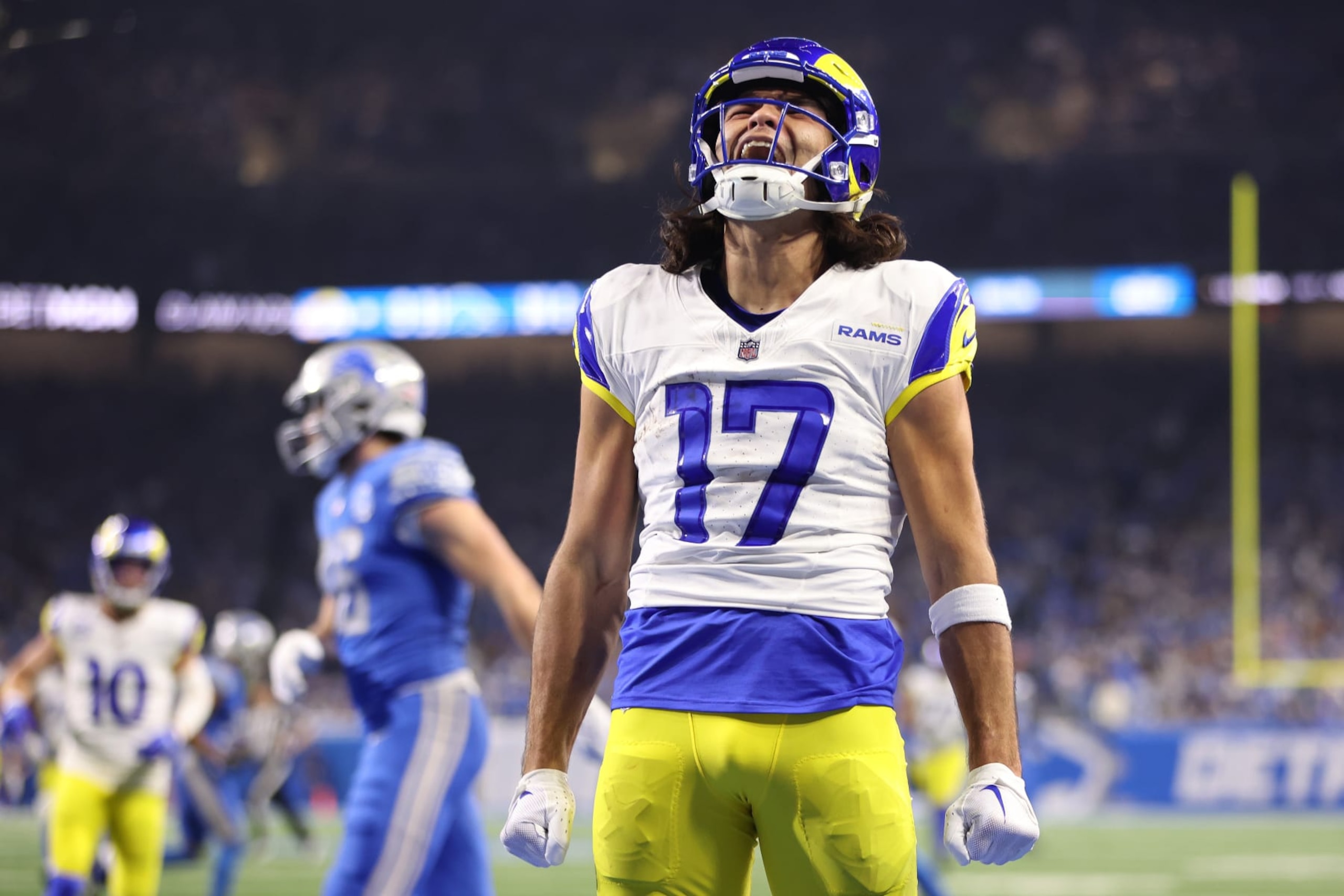
The Los Angeles Rams made a valiant push into the postseason that most didn't see coming. Matthew Stafford, Aaron Donald and Cooper Kupp largely stayed healthy, while the Rams found a running back in Kyren Williams.
Most of L.A.'s offseason work will need to be done on the defensive side of the ball, where the team ranked 20th overall and 19th in points allowed. Expect a large amount of the Rams' $35.3 million in projected cap space to go toward the defense.
Offensively, the Rams have a few impending free agents to address on the line—including Kevin Dotson and restricted free agent Alaric Jackson—but with Stafford and Williams returning, L.A.'s seventh-ranked offense should again be a force.
The challenge, however, will be ensuring the Rams again field a stellar receiving corps. Kupp and rookie Puka Nacua formed arguably the best receiver duo in the league this past season, while Tyler Higbee was a serviceable tight end and Demarcus Robinson came on strong late in the year.
That receiving corps allowed Stafford to return to Pro Bowl form and helped open up the ground game. However, Higbee just turned 31, and Robinson is set to be a free agent, so there's some work to do.
For the Rams to maintain a truly elite receiving corps, they'll have to field a dependable third receiver—either by re-signing Robinson or finding a new No. 3 in free agency or the draft. General manager Les Snead might not spend big at the position, but impending free agents like Tyler Boyd and Curtis Samuel could be on his radar.
In the draft, expect prospects like South Carolina's Xavier Legette and Ladd McConkey to be of interest.
It would also behoove the Rams to find a younger and more dynamic tight end. Higbee, who had 495 yards in 2023, is fine but isn't particularly explosive—he ranked eighth on the team in yards per reception. A free agent like Hunter Henry or Dalton Schultz could make a lot of sense for L.A.
Overall, though, the Rams are poised to field one of the most potent passing attacks in the league next season.
Miami Dolphins: Skill Players
20 of 32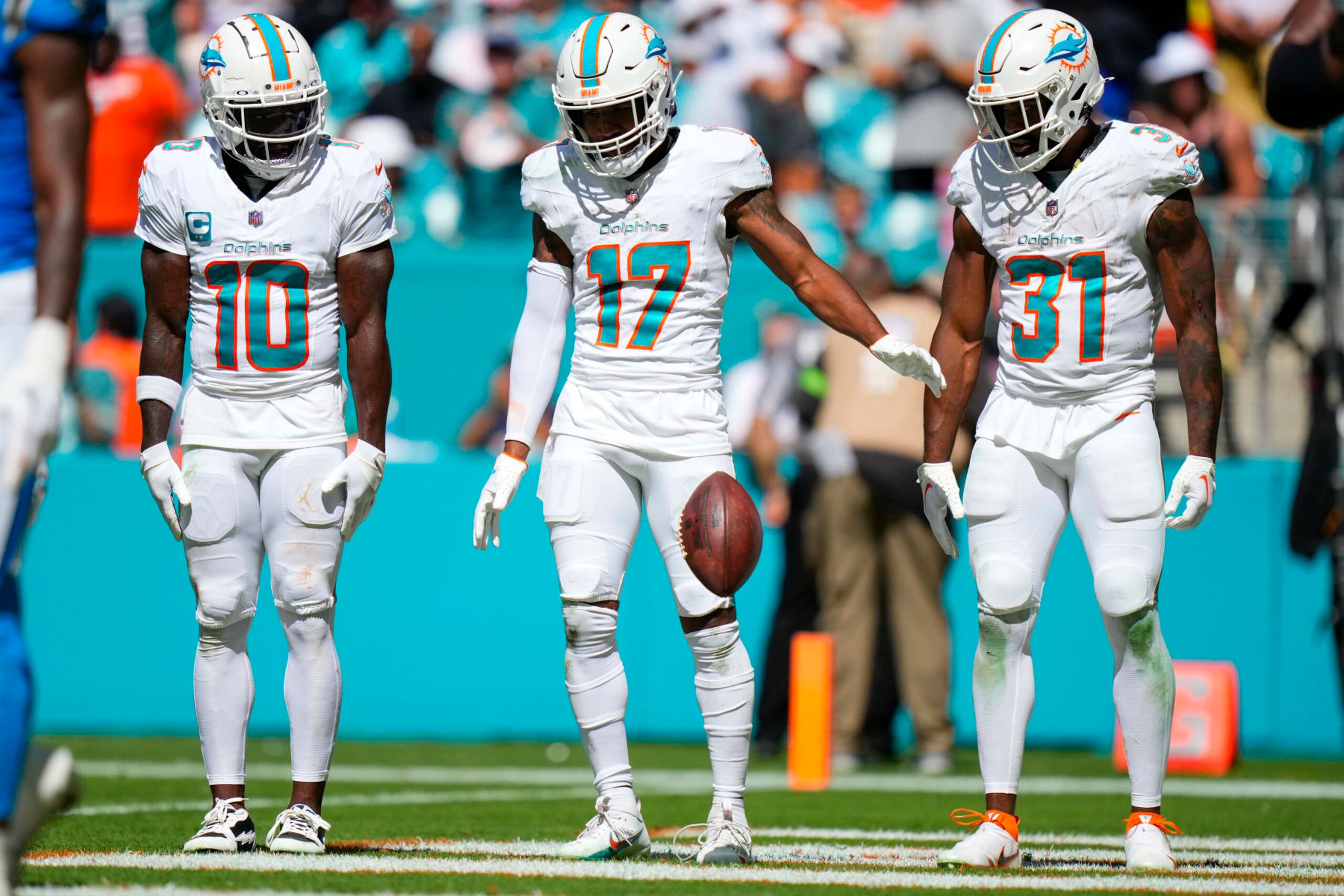
The Miami Dolphins have built one of the league's best offenses with a really simple formula. Hire Mike McDaniel as the head coach and surround him with really, really fast players.
Although there is a little more to it, it's undeniable that the Dolphins' collection of speedsters is what really drives their offense. The Dolphins were second in offensive DVOA, fourth in EPA per play and third in scoring.
The contributions of Tyreek Hill (1,814 scrimmage yards), Raheem Mostert (1,187) Jaylen Waddle (1,026) and rookie De'Von Achane (997) nearly gave them four players with over 1,000 scrimmage yards.
To exemplify their speed, Hill, Mostert and Achane combined to account for six of the 10 fastest ball-carrier speeds in the league this season, per Next Gen Stats. Guess that makes Waddle (who has hit 21.68 MPH in a game before) the "slow" one.
The offensive line needs to take the next step in 2024, and the offense has to find ways to answer the bell against the best opponents on the schedule. But the core of offensive playmakers is one of the best in the league. All four are set to be back next season.
The major question they will have to answer is how long Mostert can continue to be an elite athlete in the league. He's going to be 32 next season but is coming off his first 1,000-yard rushing season ever.
Outside of that, the Dolphins probably need to add a legit third receiver. Tight end Durham Smythe was third on the team with 366 receiving yards. They traded for Chase Claypool, and he didn't really work out.
It doesn't have to be a receiver. A Day 2 tight end like Ja'Tavion Sanders who could take advantage of mismatches in the middle of the field could add a new element to this constantly evolving offense.
Minnesota Vikings: Receiving Corps
21 of 32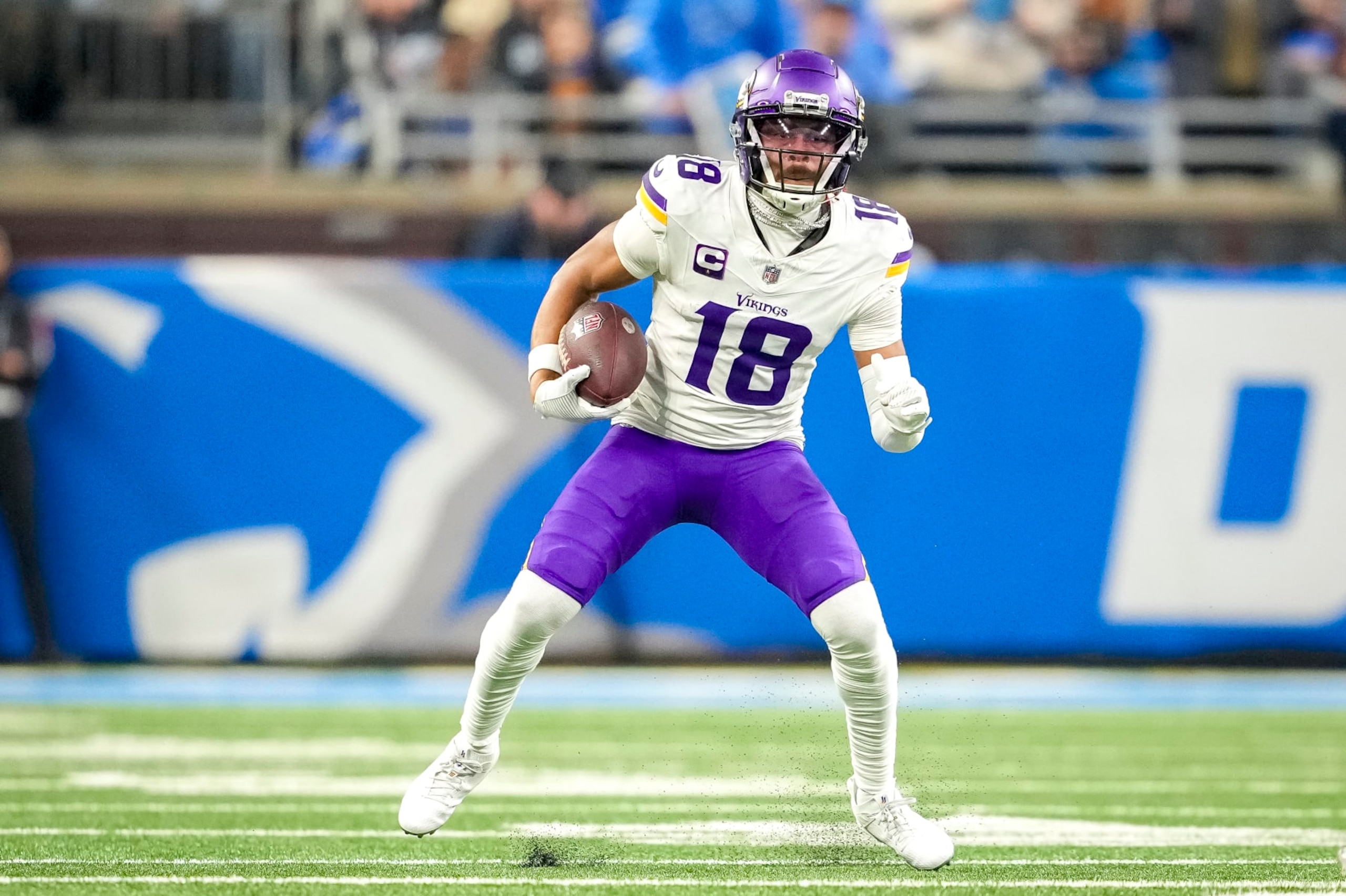
The Minnesota Vikings face an uncertain future at quarterback, as Kirk Cousins is set to be a free agent. Minnesota may look to re-sign Cousins or may consider a prospect like LSU's Jayden Daniels or Oregon's Bo Nix early in the draft.
Regardless of which route the Vikings take, their quarterback will be in a great position because of a stellar receiving corps.
Justin Jefferson remains arguably the league's best wideout when healthy, and Jordan Addison (911 yards, 10 TDs) was special as a rookie. K.J. Osborn is a vastly underrated No.3 receiver, and T.J. Hockenson is among the NFL's elite tight ends.
Despite losing Cousins to a torn Achilles after eight games and having a revolving door at quarterback thereafter, the Vikings still finished the year ranked fifth in passing yards.
Expect Minnesota to use its $29.1 million in projected cap space on other areas this offseason. The receiving corps, for the most part, is set. However, that doesn't mean it can totally be ignored.
Osborn is set to be a free agent, and Hockenson suffered a torn ACL and MCL in December. Minnesota will need to re-sign or replace Osborn, and it may target a free agent tight end like Noah Fant or Gerald Everett to provide depth early in the season.
Jefferson is also entering the final year of his rookie contract and is due a sizable extension. General manager Kwesi Adofo-Mensah should look to get one done before the Bengals extend Ja'Marr Chase and the Cowboys extend CeeDee Lamb, because whoever signs last is likely to become the NFL's new highest-paid receiver.
Overall, though, fans shouldn't expect major changes to Minnesota's receiving corps this offseason.
A middle-round draft prospect like Georgia's Ladd McConkey or Louisville's Jamari Thrash would make sense if the Vikings look to replace Osborn with a rookie contract. However, Minnesota is sure to put a lot more focus on who is going to throw the ball in 2024 than on who will catch it.
New England Patriots: Run Defense
22 of 32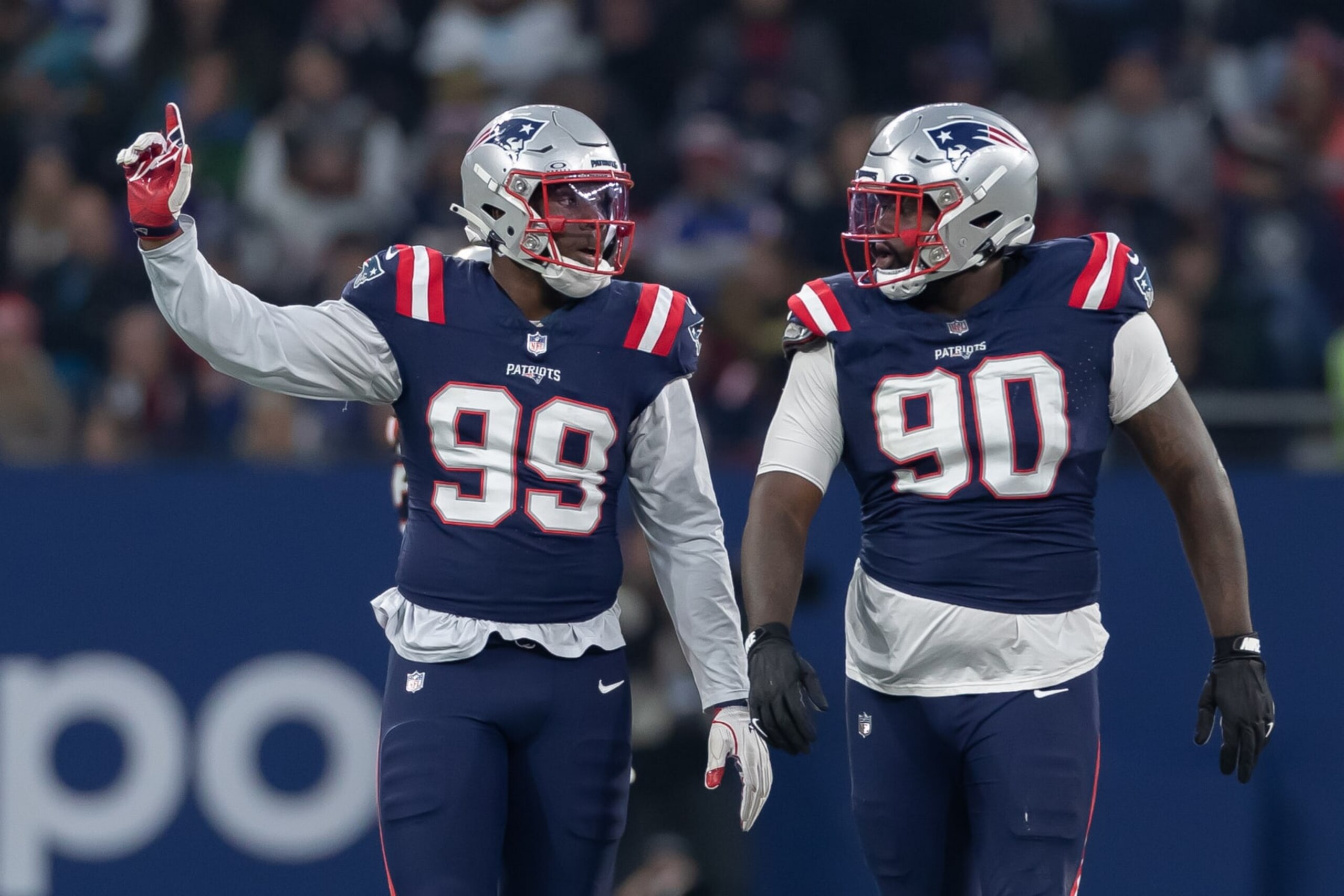
It's not easy to find the strengths of a team that went 4-13, fired their legendary coach and are on the precipice of blowing up the roster. This season was a low point for a franchise that defined football for more than a decade under Bill Belichick.
However, the Pats were ninth in defensive DVOA, which was hidden by a burdensome offense that was one of the league's worst (29th).
That number was undoubtedly buoyed by a run defense that was one of the best in the league. The Patriots allowed just 3.3 yards per carry, and that was despite facing a large volume of carries. Opposing offenses ran the ball 480 times against the Patriots, as oftentimes they were trying to protect a lead.
Some of that can be explained away by the fact that the Patriots spent much of this season playing from behind, but they were also tied for the top run defense measured by EPA per rush.
Much of the credit belongs to the defensive line. They were 27th in pass-rush win rate, but they were money against the run with the sixth-highest run-stop win-rate in the league, per ESPN Analytics.
Anfernee Jennings was the star by their metrics, ranking fifth among all edge-rushers in run-stop win rate. Christian Barmore was a notable star against the run too with 13 tackles for loss to go with his 8.5 sacks.
Linebacker Jahlani Tavai should be given credit as well. He registered 106 total tackles with an average tackle depth of just 2.5 yards, per Sports Info Solutions. PFF liked what he did in the middle of the defense as well, he carried the fourth-highest off-ball linebacker grade from them this season.
That gives new head coach Jerod Mayo something to work with as he looks to build this defense. As the linebackers coach, he helped Tavai have a great season and should know what levers to pull to have the Patriots defending the run well again next season.
Jennings and fellow edge defender Josh Uche are both free agents, but the Patriots have $69.9 million in cap space to spend. Bringing back Jennings should be a priority, but they will need to spend money elsewhere to become a viable team in the AFC East again.
New Orleans Saints: Secondary
23 of 32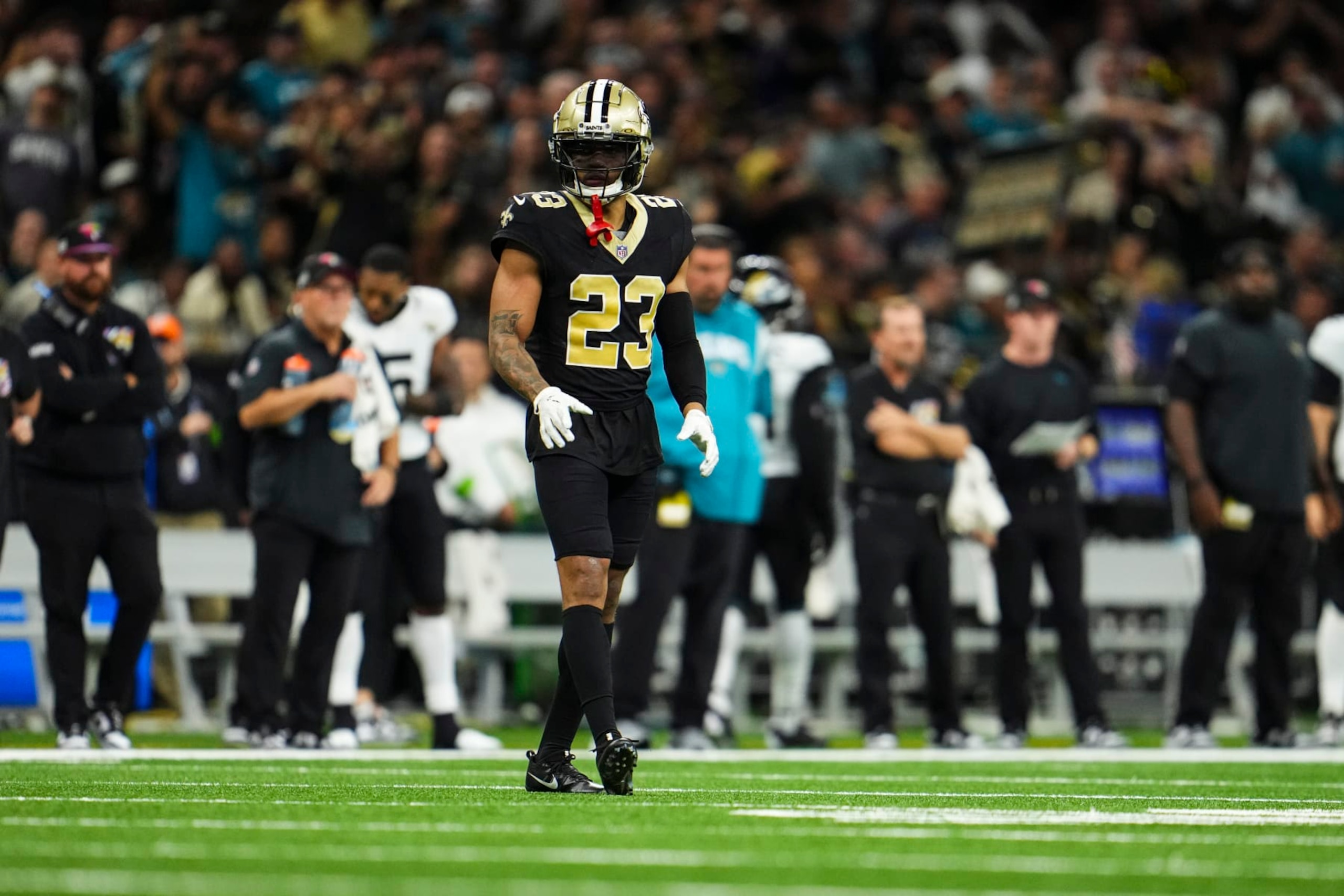
The New Orleans Saints and new quarterback Derek Carr managed to produce a winning record in 2023, though they fell short of the playoffs.
The Saints do have some needs heading into the offseason. Their offensive line struggled to open holes in the ground game, they lacked depth at receiver behind Chris Olave and Rashid Shaheed, they struggled to run consistently and they ranked just 22nd in net yards per rush allowed.
However, New Orleans' secondary was strong. Despite fielding a middling pass-rush (34 sacks), the Saints ranked a solid 12th in net yards per pass attempt allowed and 10th in passing yards surrendered.
New Orleans also snagged an impressive 18 interceptions in 2023.
Thanks to the strong play of defensive backs like Tyrann Mathieu, Marshon Lattimore, Paulson Adebo and Marcus Maye, the Saints defense was generally dependable on the back end.
The problem is that New Orleans may have some difficult decisions to make regarding its secondary. Depth players like Isaac Yiadom, Ugo Amadi, Lonnie Johnson Jr. and Johnathan Abram are set to be free agents.
Facing a projected $82.8 million cap deficit, the Saints may also have to address the situations of players under contract like Mathieu. The 31-year-old is set to carry a cap hit of $12.1 million in 2023, and releasing him with a post-June 1 designation would save $9 million in 2024 cap space.
Lattimore is set to carry a cap hit of $14.6 million, but with $45.1 million in dead money remaining on his deal—one he just restructured in January—a trade may be the only option for cap relief.
According to ESPN's Field Yates, $15 million of Lattimore's base salary has been converted to an option bonus, which would be paid by his next team if he is dealt in the offseason.
There's a lot to sort through here, but if general manager Mickey Loomis can make it all work financially, New Orleans should again have arguably the top secondary in the NFC South next season.
New York Giants: Defensive Front
24 of 32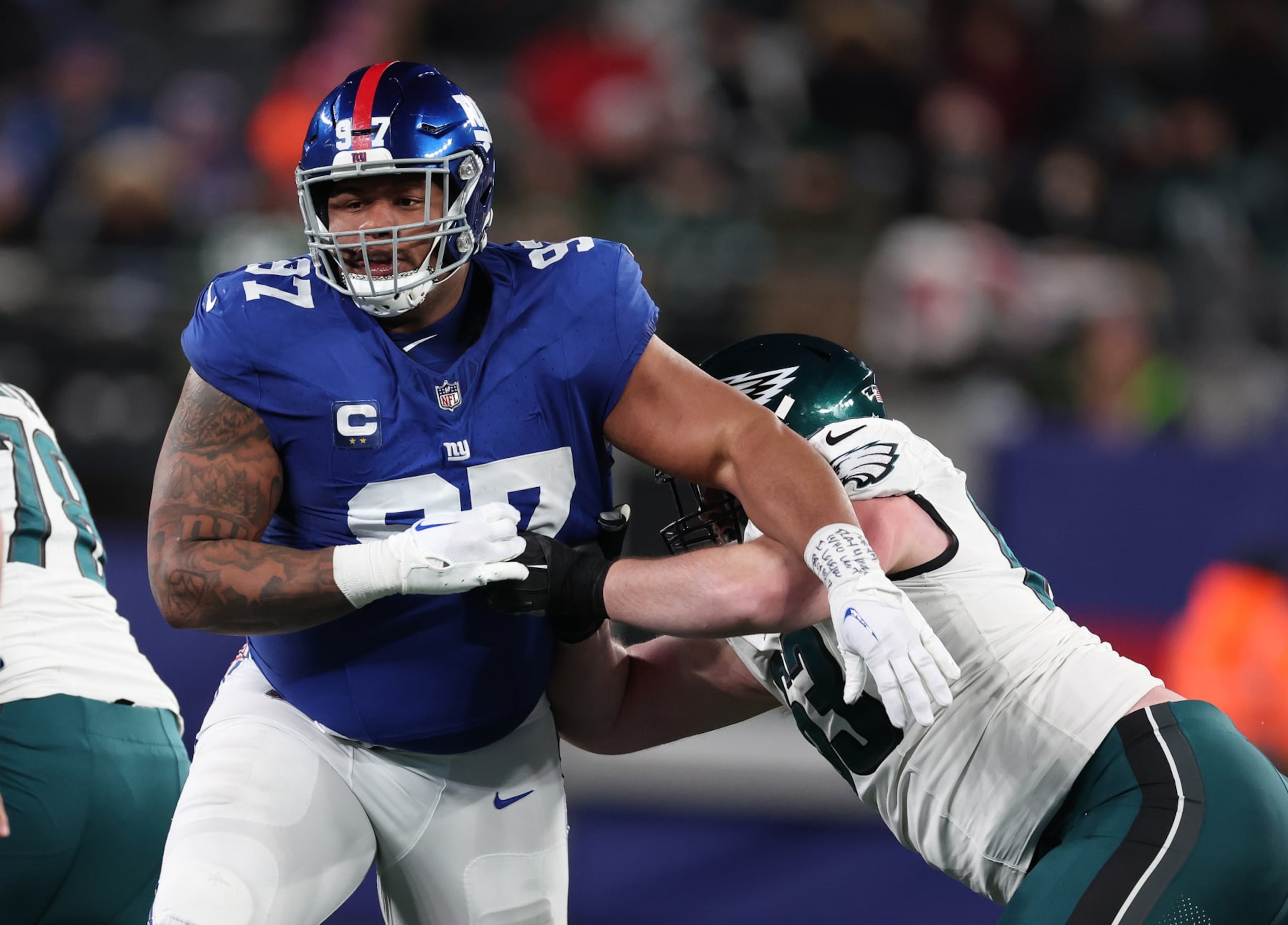
It's fairly difficult to pinpoint one area where the New York Giants excelled last season. They likely discovered that Daniel Jones wasn't the answer at quarterback. They couldn't run consistently or stop the run, they lacked receiver depth, and their line surrendered a nearly unfathomable 85 sacks.
General manager Joe Schoen has a lot of work to do with New York's $27.8 million in projected cap space.
One area where the Giants at least have a solid foundation is the defensive front. The unit wasn't as strong after New York dealt Leonard Williams to the Seattle Seahawks, but between Dexter Lawrence, Kayvon Thibodeaux, Jihad Ward, Azeez Ojulari, Rakeem Nuñez-Roches and A'Shawn Robinson, the Giants featured plenty of talent and depth up front.
New York's 29th-ranked run defense was more of a result of poor linebacker play than what the Giants had along the line and on the edge. Lawrence was a Pro Bowler, and Thibodeaux logged an impressive 11.5 sacks.
The Giants will have to find a replacement for Williams, who was traded at the in-season deadline. They'll also have to re-sign or replace Robinson and Ward, who are impending free agents. Expect defensive linemen like Justin Madubuike, Christian Wilkins and Grover Stewart to be firmly on Schoen's radar if he can find the cap space for high-end free agents.
New York may also consider defensive line prospects like Clemson's Ruke Orhorhoro and Texas' Byron Murphy II relatively early in the draft.
Overall, though, defensive linemen and edge-rushers should be relatively low on New York's wish list this offseason. The offensive line, linebacker position, secondary, quarterback position and running back—Saquon Barkley is set to be a free agent—should all be larger priorities.
The Giants are set to enter 2024 with a dependable defensive front.
New York Jets: Pass Defense
25 of 32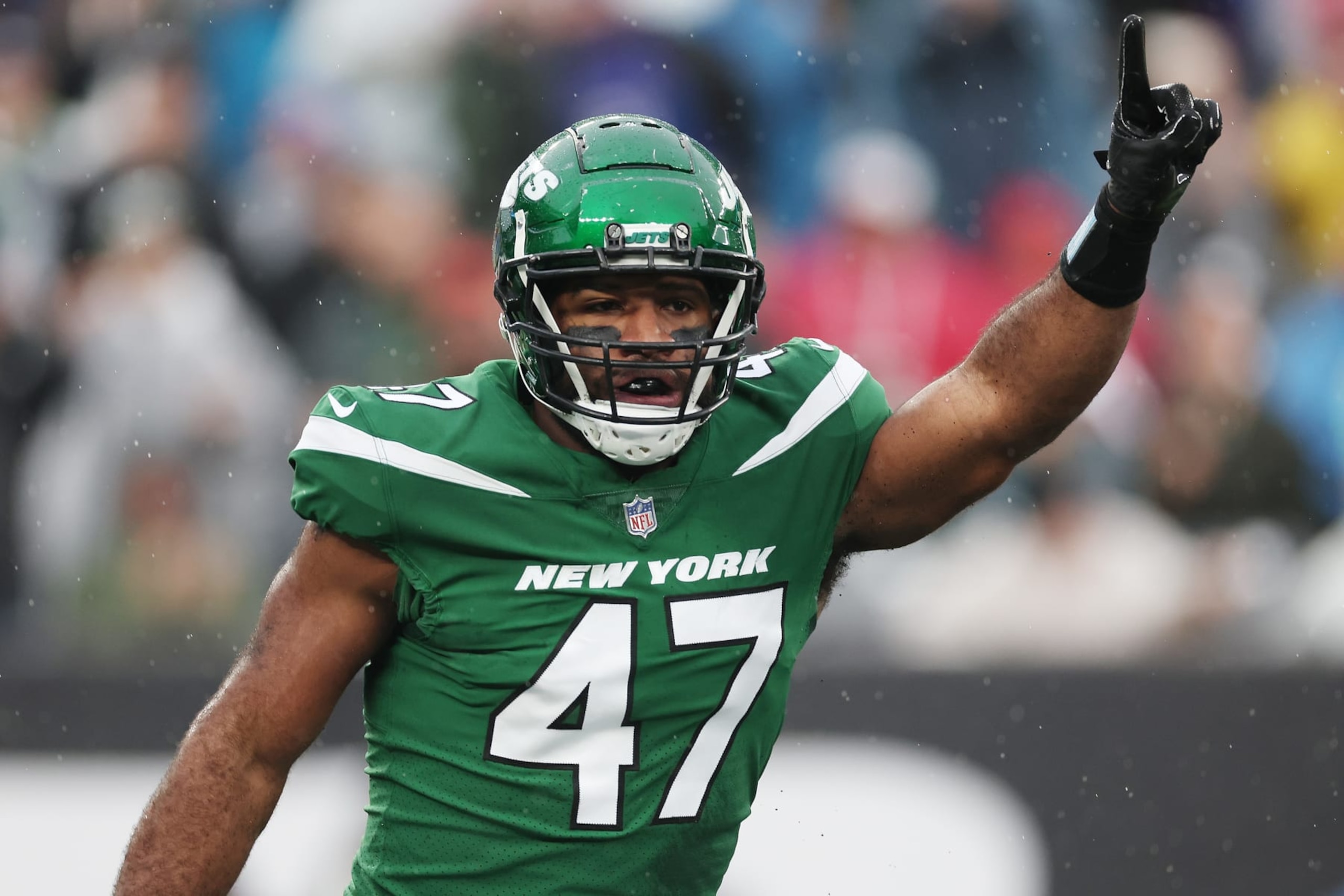
The New York Jets couldn't throw the ball this season, but neither could their opponent most of the time. Between a fierce pass-rush and a secondary led by Sauce Gardner, there weren't many teams that had a good time throwing the ball against the Jets.
That's how a team that was stuck starting Zach Wilson, Trevor Siemian and Tim Boyle this season still manages to pick up seven wins.
The Jets were third in EPA allowed per pass, with only the Browns and Ravens ahead of them. It's hard to divide up the credit between the pass-rush and the coverage in this instance, so we'll chalk it up to both units being excellent.
The front was responsible for the fourth-highest pressure rate in the league. Meanwhile, the secondary allowed the third-lowest passer rating (76.0) in the league and collecting 17 interceptions.
It was a joint effort in both units, though. Bryce Huff led the way with 10 sacks, but the Jets had seven players with at least three sacks. They got help from Quinton Jefferson and Quinnen Williams on the inside. They combined for 11.5 sacks while Jonathan Franklin-Myers, had the versatility to play multiple alignments and had 3.5.
Gardner gets a lot of the credit in the secondary, but safeties Jordan Whitehead, Tony Adams and Ashtyn Davis combined for 10 interceptions while D.J. Reed held opposing quarterbacks to a passer rating of 81.6 when targeted.
This secondary is a big reason to believe in the Jets if they can get even league-average quarterback play from Aaron Rodgers next season.
Managing free agency is going to be a challenge. Whitehead, Jefferson, Thomas and Bryce Huff are all set to be free agents and the Jets have just $7.6 million in cap space to start the offseason.
Huff would be the most painful loss. He has one of the best pass-rush win rates (22 percent) in the league and put it all together for his most successful season yet.
Philadelphia Eagles: Offensive Line
26 of 32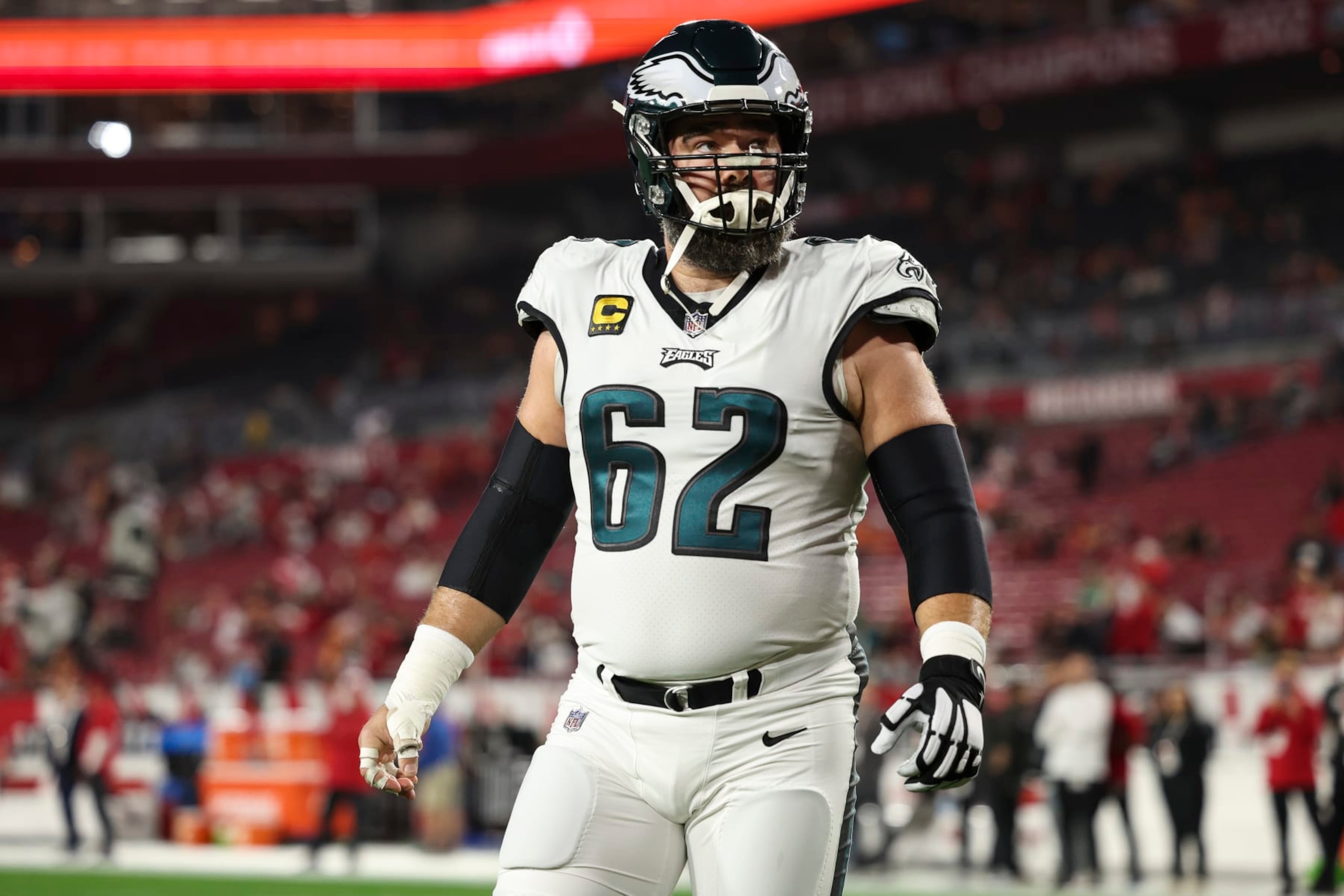
The Philadelphia Eagles fell short of expectations in 2023 for a few different reasons. Despite having a talent-laden roster, Philly struggled down the stretch both offensively and defensively.
It seems that Philadelphia's immediate solution will be to replace its offensive and defensive coordinators. Vic Fangio has already been hired to coach the defense, while Kellen Moore has been hired for the offense.
The Eagles could still use help at linebacker and in the secondary, and they'll need to find a reliable third receiver and running back—D'Andre Swift is set to be a free agent. However, the Eagles don't have many glaring needs to address with their $20.1 million in projected cap space.
Philly has its quarterback in Jalen Hurts, a strong receiver tandem in A.J. Brown and DeVonta Smith and a stout defensive front. By far its biggest asset in 2023, though, was its powerful offensive line.
Pro Football Focus ranked Philadelphia's line as the league's best following the 2023 season.
The entire Eagles' starting line is under contract through 2024 with one notable exception. Canter Jason Kelce is scheduled to be a free agent, and the 36-year-old is leaning toward retirement, according to Jeff McLane of the Philadelphia Inquirer.
Losing Kelce would create a massive void. Not only is he still one of the game's most dominant interior linemen, but he's also the catalyst of Philly's famed quarterback push play.
Replacing Kelce won't be easy. The Eagles drafted Cam Jurgens in the second round of the 2022 draft, but he started at right guard when healthy in 2023. If the Eagles keep Jurgens at guard, they may have to target a veteran like Andre James or Lucas Patrick in free agency.
And if the Eagles kick Jurgens over to center, they may have to consider a top interior line prospect like Kansas State's Cooper Beebe or Kansas' Dominick Puni early in the draft.
If Philadelphia can find a reliable replacement for Kelce, though, it should again have one of the best lines in the league.
Pittsburgh Steelers: Edge Defenders
27 of 32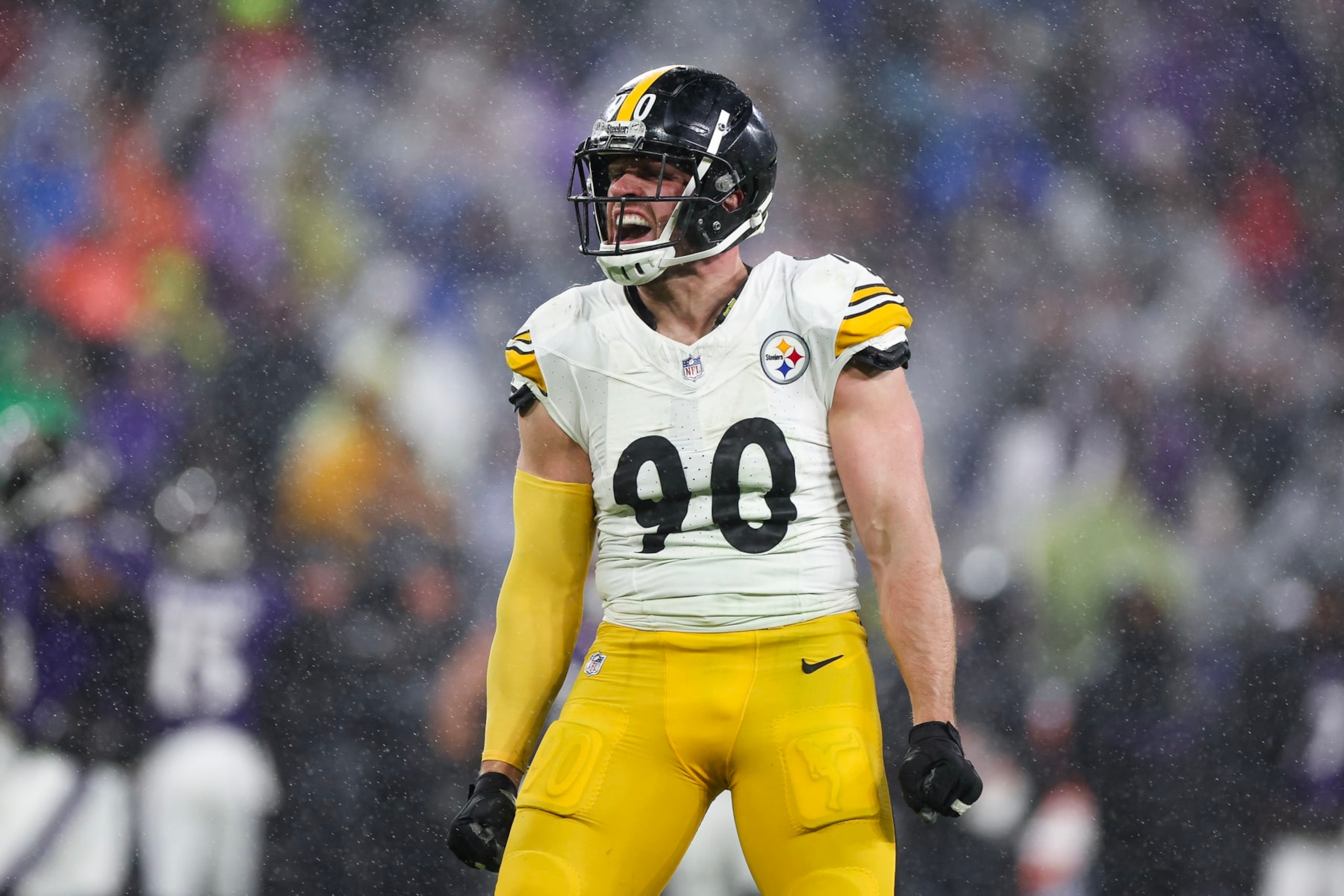
The Steelers defense dragged a mediocre offense to the playoffs on the strength of its defensive front.
It starts with T.J. Watt. The star pass-rusher is among the best at the position and put in another elite season. He ranked fifth among all edge defenders by PFF's grades and racked up 19 sacks with 19 tackles for loss and 36 quarterback hits.
If you look at sack totals, then Alex Highsmith's season was a disappointment. He went from 14.5 sacks in 2022 to just seven this year, but he still ranked 10th among all edges in PFF grade and registered nearly the same amount of quarterback hits (18) as he did last season.
Markus Golden and Nick Herbig worked well as rotational pieces. The 32-year-old Golden notched a career-high 15.7 percent pressure rate, per Sports Info Solutions. Herbig only played 17 percent of the defensive snaps, but he was productive with three sacks and two forced fumbles.
Looking ahead, this should continue to be a strength in 2024. Watt, Highsmith and Herbig are all still under contract, while Golden is set to be a free agent. Watt is under contract until 2026, and Highsmith got an extension last year that pays him through 2027.
However, they only signed him for $1.3 million last season, so there's a good chance they could either bring him back or find another similarly priced veteran who could help.
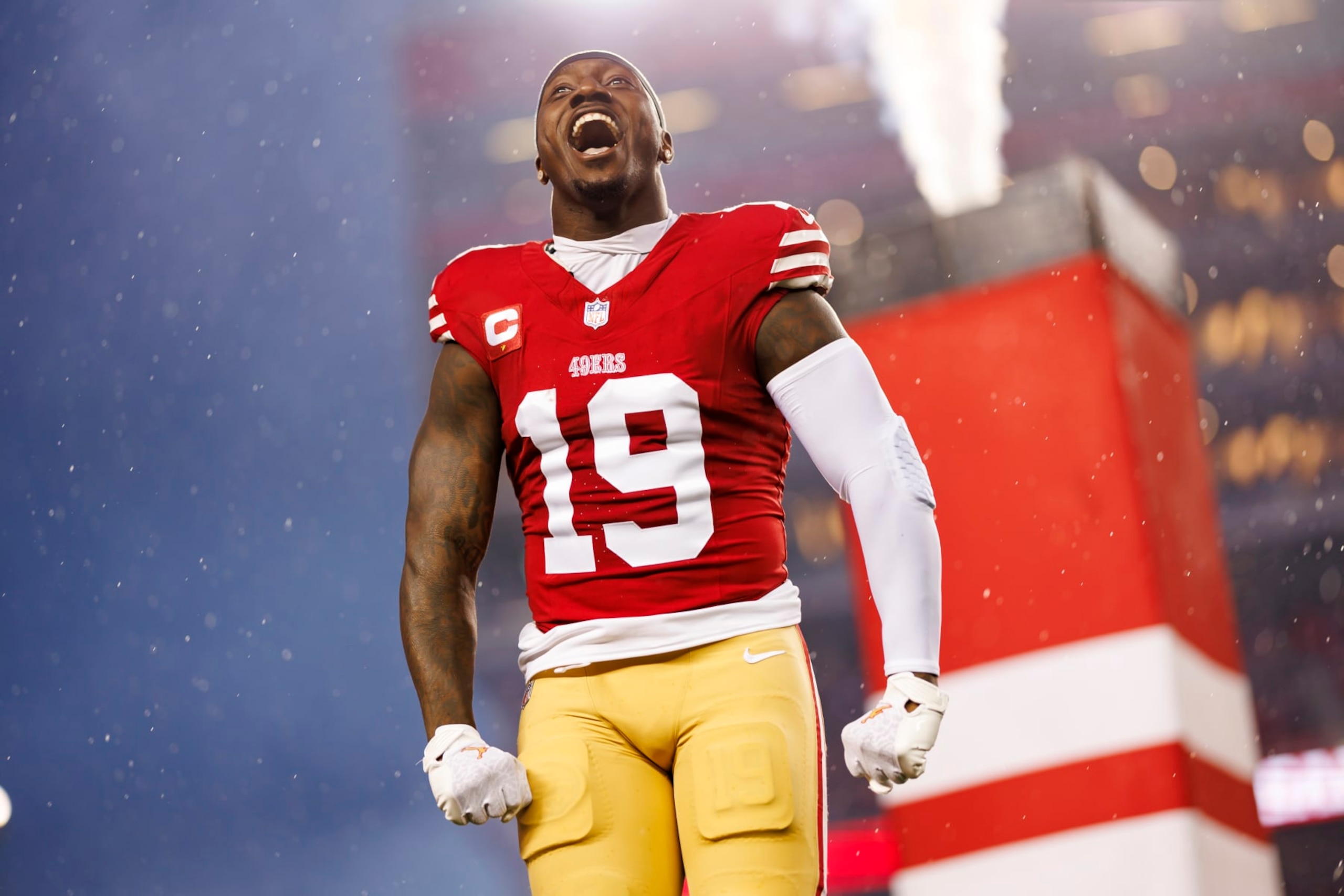
San Francisco 49ers: Skill Group
28 of 32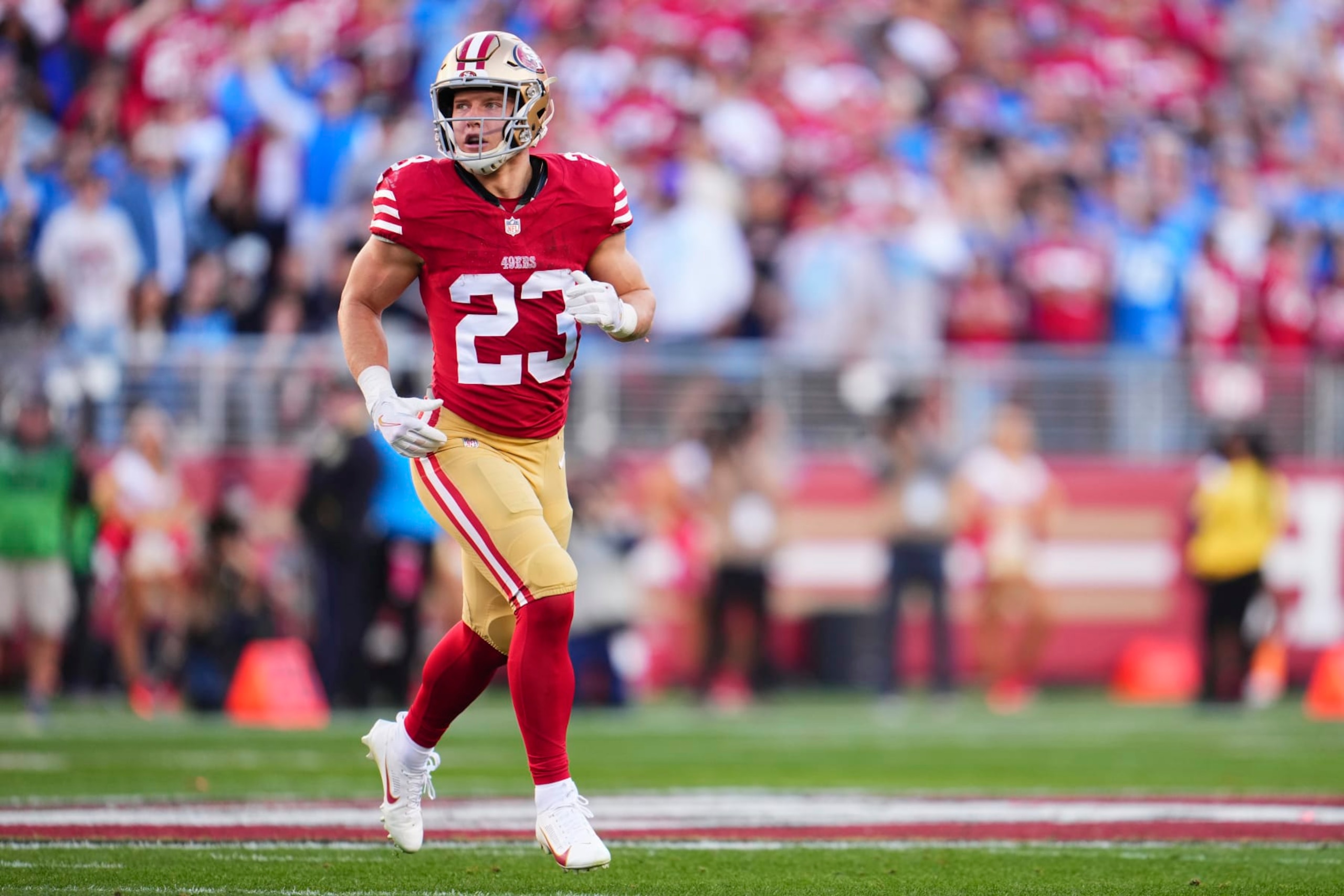
The 49ers, who are preparing for Super Bowl LVIII, don't have a ton of holes. They should shore up a defensive front that has struggled against the run in the playoffs, they could use another top perimeter corner, and they need to address the right side of their offensive line.
Expect those areas to take priority if/when general manager John Lynch creates more cap space—San Francisco is projected to have just $1.4 million available.
Offensively, the foundation is set, because the 49ers have quarterback Brock Purdy on a rookie contract. San Francisco also boasts arguably the league's best collection of skill players in Deebo Samuel, Christian McCaffrey, Brandon Aiyuk and George Kittle. That foursome provides a ton of offensive flexibility and is under contract through 2024.
However, San Francisco's skill group can't be completely ignored this offseason.
For one, Aiyuk is entering the final year of his rookie contract and is due an extension. Getting one done could be beneficial, as he's set to carry a cap hit of $14.1 million. However, it could also be problematic, given the investment the 49ers have already made in the rest of their lineup.
At this point, trading and replacing Aiyuk doesn't appear to be a likely option. The 49ers dismissed trade calls last offseason and are unlikely to change their stance in 2024, according to ESPN's Nick Wagoner.
However, things could change if Aiyuk draws an impassable line in contract negotiations and/or refuses to report without a new deal.
San Francisco also needs to figure out the future of impending restricted free agent Jauan Jennings. The 26-year-old is a bit of a forgotten man in the lineup, but he's been a clutch contributor in the playoffs with five of his six receptions going for first downs.
While the 49ers aren't in danger of having their offense fall apart, they'll need to keep their skill group intact to continue developing Purdy and contending for championships.
Seattle Seahawks: Receiving Corps
29 of 32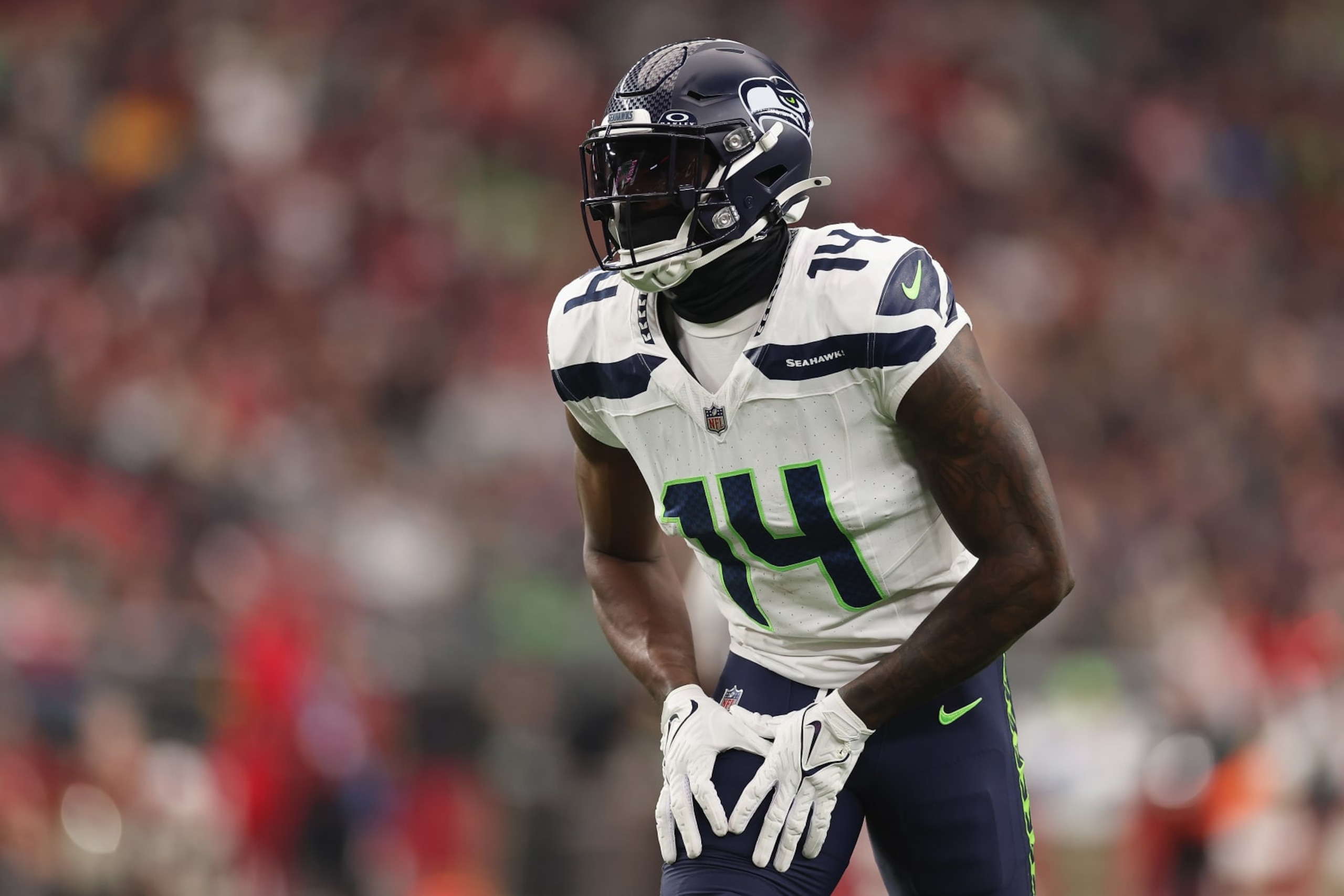
It'll be very interesting to see how the Seahawks and their next head coach address the quarterback position in 2024. Geno Smith saw a slight regression in 2023 and is only under contract for two more years.
The Seahawks may look to draft Smith's successor and start developing him for the future.
The good news is that Seattle had one of the top receiving corps in the NFL this past season. The trio of Tyler Lockett, DK Metcalf and rookie Jaxon Smith-Njigba was phenomenal, and tight end Noah Fant (404 yards) was more than serviceable as an ancillary target.
Seattle needs to continue improving its 30th-ranked defense, and it could use help along the offensive line. However, whoever is under center should benefit from a very strong receiving corps.
There are a couple of caveats, however. Fant is set to be a free agent, and Lockett's contract could be a bit of an issue.
The Seahawks are projected to be just over the salary cap, and Lockett is set to carry a cap hit of $27.8 million. That's high for a receiver who will turn 32 in September.
There's a very real chance Lockett could become a trade candidate in the coming weeks, though a restructuring could make a lot more sense.
If the Seahawks do move off of Lockett, they'll need to replace him. Smith-Njigba showed a ton of potential in his inaugural campaign, but he's best-suited for the slot. Seattle will need to find a new No. 2 for the perimeter if Lockett departs.
Given the cap situation, that will likely mean targeting a prospect like Oregon's Troy Franklin or Washington's Ja'Lynn Polk in the draft.
Seattle will also need to re-sign or replace Fant. Targeting an impending free agent like Hunter Henry or Dalton Schultz would be logical.
Whether the Seahawks are looking to develop a quarterback of the future or simply trying to return Smith to his 2022 form, they must enter next season with a strong receiving group.
Tampa Bay Buccaneers: Defensive Front Seven
30 of 32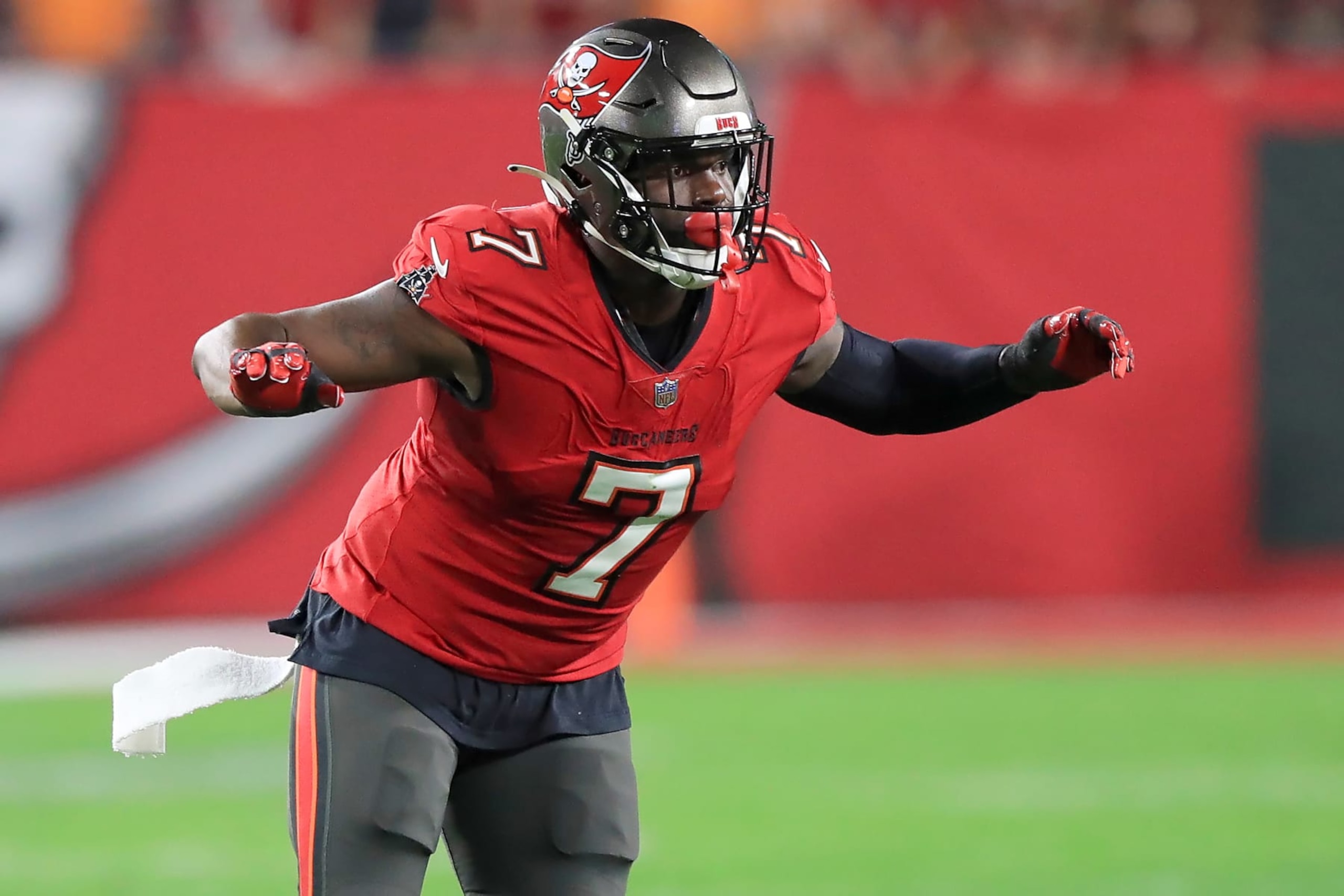
The Tampa Bay Buccaneers surprised plenty of folks in 2023 by winning the NFC South, beating the defending NFC champs in the postseason and advancing to the divisional round. A talented roster and an unexpectedly strong campaign by quarterback Baker Mayfield led the way.
Mayfield forged a strong connection with Mike Evans, Chris Godwin and Tampa's pass-catchers, and that was certainly a team strength. However, Tampa's defensive front was even better.
Featuring the likes of Shaquil Barrett, Joe Tryon-Shoyinka, William Gholston, Greg Gaines, Devin White and Lavonte David, the Bucs were extremely good up front. They ranked eighth in net yards per rush allowed, recorded 48 sacks and had a solid coverage unit at the second level.
Tampa's impressive defensive front allowed the team to rank seventh in points allowed despite having a lot of issues on the back end (29th in passing yards allowed).
The issue for Tampa entering the offseason is that several front-seven defenders—including Gaines, Gholston, David and White—are scheduled to be free agents. Barrett is also 31 and entering the final year of his contract with a $14.2 million cap hit. Trading or releasing Barrett after June 1 would save $5 million in 2024 cap space.
This is a problem, because the Bucs have several key players at other positions—including Mayfield, Evans, Ryan Neal and Antoine Winfield Jr.—also set to be free agents. The secondary must also be addressed, which further adds to the financial conundrum.
The Buccaneers will have to use their $48.7 million in projected cap space carefully.
Tampa may either have to re-sign players like White and David to budget-friendly deals or replace them with younger, cheaper options in the draft. If the Bucs go with the latter option, expect prospects like Texas A&M linebacker Edgerrin Cooper and Michigan linebacker Junior Colson to draw their attention.
The Buccaneers have several critical players to re-sign or replace this offseason and a few needs to address. That will make keeping a stellar front seven together difficult, though certainly worth the effort.
Tennessee Titans: Running Backs
31 of 32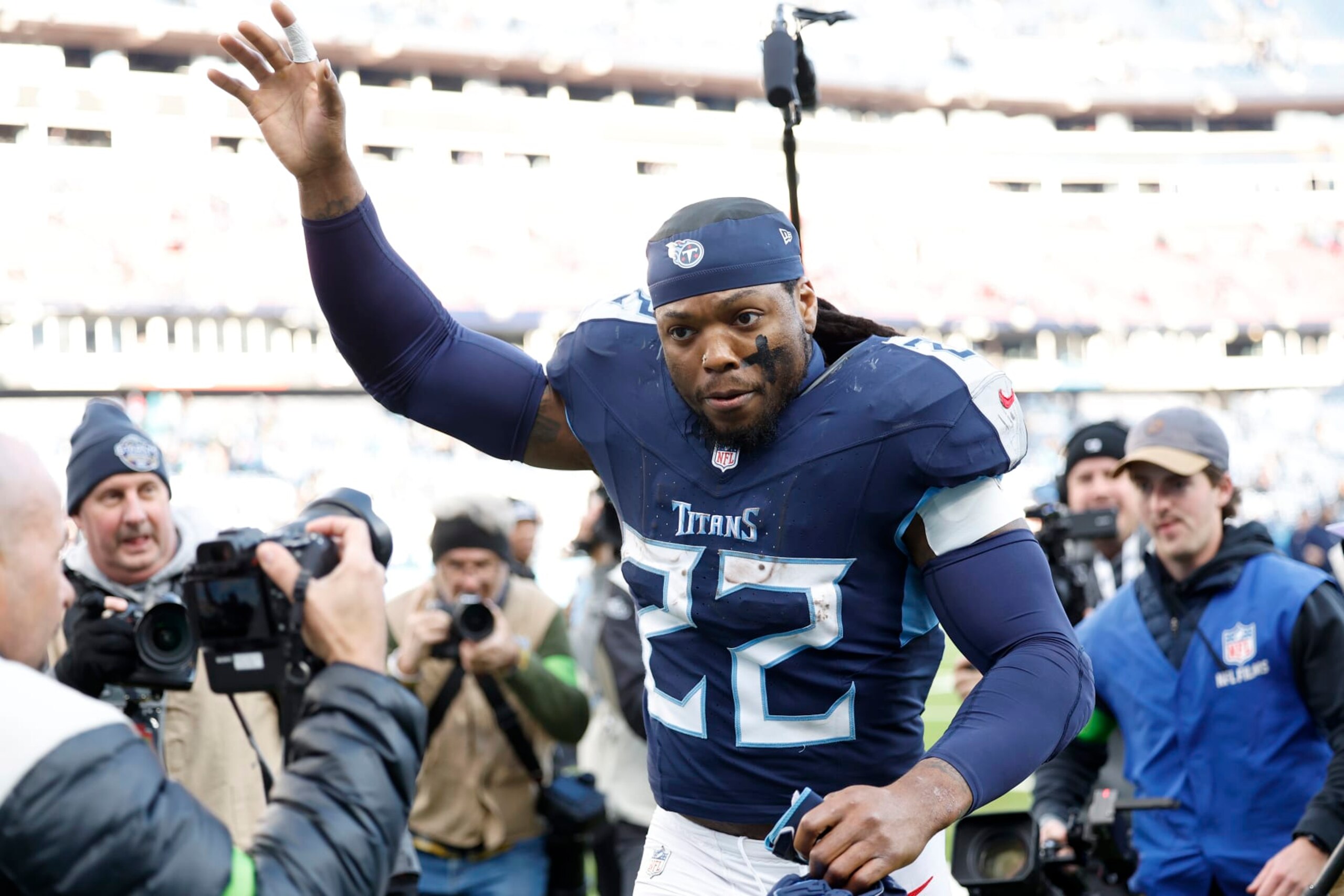
It's rare for running backs to be the biggest strength of a team in the league right now. Most successful rushing attacks can give a large portion of the credit to the offensive line and the scheme.
But Derrick Henry is not most NFL running backs.
King Henry might be slowing down, but he was still second in the league in rushing yards (1,167) this season. That was despite playing behind an offensive line that gave him the 25th-ranked run blocking rating from Player Profiler.
The Titans lack of a passing game would have kept most backfields from doing what the Titans did. Henry only saw light fronts on 29.3 percent of his carries, which ranked 52nd in the league.
Rookie Tyjae Spears stepped on the scene in a big way as a rookie. He was the perfect complement to Henry. He was third on the team in yards from scrimmage with 838. He was the primary receiving back but also took 100 carries for 453 yards.
Having that kind of consistent ground game was nice for Will Levis in his first season, but the backfield seems destined to look different in 2024. Henry is a free agent this offseason and he recently made comments on the Bussin' With the Boys podcast (h/t Josh Alper of Pro Football Talk) about wanting to go somewhere that gives him, "the best shot of winning the Super Bowl."
In other words, Henry is not necessarily looking to return to Nashville and the Titans aren't necessarily looking to bring him back. Spears will likely be running with someone else.
The free agent market figures to be saturated with veteran talent. D'Andre Swift, Zack Moss or D'Ontra Foreman are all physical runners who could pair well with Spears. If they want to find another jumbo back who can handle a heavy burden than 6'2", 245-pound Braelon Allen is the man to target in the draft.
Washington Commanders: Wide Receivers
32 of 32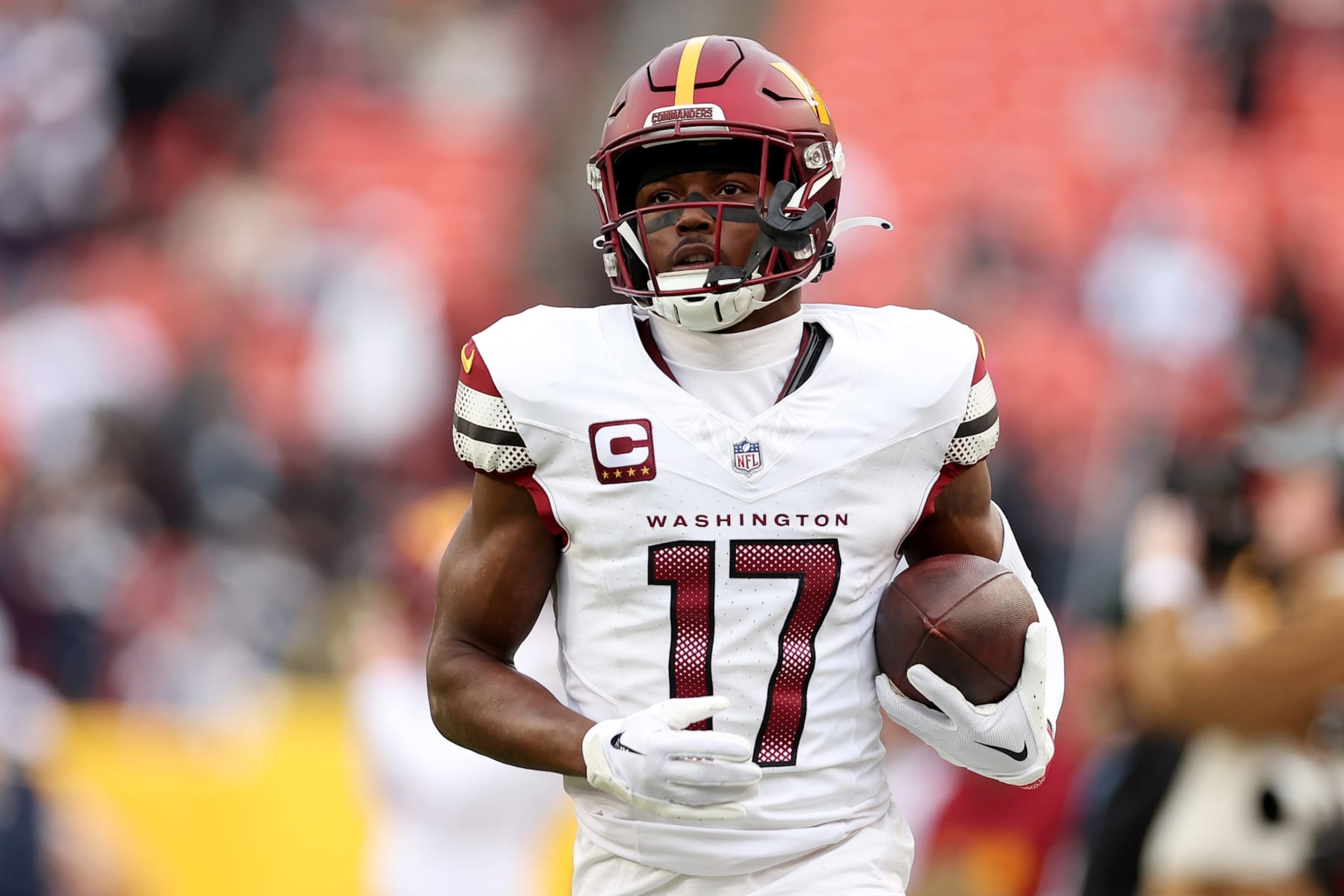
New head coach Dan Quinn is inheriting a Washington Commanders team with plenty of holes.
Washington needs to find its franchise quarterback. It needs to improve an offensive line that allowed a whopping 65 sacks in 2023, and it needs to bolster a defense that ranked dead last in both yards and points allowed.
The good news is that the Commanders are set to have the second overall pick in the draft and a projected $83.5 million in cap space, the most in the NFL.
We're likely to see wholesale changes in Washington this offseason, but one unit that shouldn't change dramatically is the wide receiver group. The Commanders had a strong receiver trio in Terry McLaurin, Curtis Samuel and Jahan Dotson this past season, and it helped the inconsistent Sam Howell throw for 3,946 yards.
The Commanders should exhaust every avenue in finding a quarterback upgrade over Howell, but Washington's next signal-caller should benefit from having a strong wide receiver group.
The caveat is that Samuel, along with ancillary receivers Byron Pringle and Jamison Crowder, are set to be free agents.
With both Dotson and McLaurin under contract, the Commanders may not take a swing at a top impending free agent like Tee Higgins, Calvin Ridley or Michael Pittman Jr. If Washington doesn't re-sign Samuel, though, players like Tyler Boyd and Gabe Davis could draw interest.
The Commanders may also look at promising receiver prospects like Georgia's Ladd McConkey and Florida State's Johnny Wilson early in the draft.
Finding an answer at quarterback will be Washington's single biggest objective this offseason. Providing said signal-caller with a strong supporting cast will be a close second. While the Commanders don't have a ton of pieces in place, they have the foundation of a strong receiving corps.
*Cap and contract information via Spotrac. Advanced statistics from Pro Football Reference unless otherwise noted.
.jpg?w=2560 "49ers Player Shooting Arrests Football")