

The 2017 Major League Baseball season just ended, so there's no time like the present to look back on the players who shone the brightest.
Over the past few weeks, Bleacher Report has been rolling out its rankings for the top players at each position. The process covered 300 total. For full write-ups on all of them, here are the links you need:
Now's the time to stack these 300 players next to each other.
Players were ranked based on their productivity and durability in their individual rankings. When lumped together, things like positional scarcity and positional value became factors. Altogether, it amounts to a well-reasoned judgment call.
Now to begin.
Note: These rankings mistakenly exclude Seattle Mariners slugger Nelson Cruz, who should have been factored in among the top 45 corner outfielders despite making 146 starts as a designated hitter. Due to his .924 OPS and 39 home runs, he would rank within the top 100 here.
300-251: Cabrera-Marquez
1 of 55
300. Miguel Cabrera, 1B, Detroit Tigers
He was finally a bad hitter for a change. Or was he?
299. Dansby Swanson, SS, Atlanta Braves
A strong finish saved an otherwise disappointing season for the much-hyped rookie.
298. Nomar Mazara, RF, Texas Rangers
He showed enough flashes of his potential to salvage a rocky sophomore season.
297. Nick Markakis, RF, Atlanta Braves
If nothing else, the veteran is still good for durability and quality at-bats.
296. Nicholas Castellanos, 3B/RF, Detroit Tigers
It's a good thing his bat has a knack for hard contact because his glove doesn't have a knack for anything.
295. Chase Utley, 2B, Los Angeles Dodgers
His hitting, fielding and baserunning are far from vintage but not yet useless.
294. Jon Jay, OF, Chicago Cubs
Jay was an unspectacular yet capable utility outfielder.
293. Gerardo Parra, OF, Colorado Rockies
His glove remains an asset, and his bat bounced back from a tough 2016.
292. Ben Gamel, OF, Seattle Mariners
He went from being off the radar to a pleasant surprise with 134 games' worth of solid offense.
291. Matt Boyd, SP, Detroit Tigers
He pitched better than his 5.27 ERA indicates.
290. Ketel Marte, SS, Arizona Diamondbacks
Adjustments turned him into a better two-way shortstop.
289. Jameson Taillon, SP, Pittsburgh Pirates
Jameson Taillon was a merely average pitcher in 25 starts that spanned 133.1 innings, but even that counts as a good season for a guy who missed time for testicular cancer.
288. Lucas Duda, 1B, Tampa Bay Rays
His home run talent wasn't as valuable in a season with plentiful homers, but 30 long balls is still a lot.
287. Johnny Cueto, SP, San Francisco Giants
The veteran had a rough year, but some of that is on the terrible defense he had behind him.
286. Rick Porcello, SP, Boston Red Sox
No Cy Young this year, but only he and 14 other guys pitched 200 or more innings.
285. Eric Sogard, 2B, Milwaukee Brewers
He returned from a yearlong absence with the same glove and a better bat.
284. Tim Anderson, SS, Chicago White Sox
"Volatile" is a good word for him, but he played a full season and flashed his upside here and there.
283. Jordy Mercer, SS, Pittsburgh Pirates
He was boringly reliable as usual.
282. Freddy Galvis, SS, Philadelphia Phillies
Galvis was not very consistent, but he was a capable shortstop with a bit of power and speed.
281. Wilmer Difo, SS, Washington Nationals
A little speed goes a long way. A lot of speed goes even further.
280. Manny Pina, C, Milwaukee Brewers
He paired a strong arm with a decent bat for 107 games.
279. Brandon Drury, 2B, Arizona Diamondbacks
He had a passable combination of offense and defense at second base.
278. Logan Forsythe, 2B, Los Angeles Dodgers
Forsythe was a versatile defender who was a more capable hitter than his subpar numbers let on.
277. Aroldis Chapman, RP, New York Yankees
His triple-digit heat kept him from falling too far from the ranks of elite relievers.
276. Dellin Betances, RP, New York Yankees
He remained extremely tough to hit despite being a threat to walk the ballpark.
275. Lance McCullers Jr., SP, Houston Astros
His electric stuff helped him salvage another frustrating season.
274. Kenta Maeda, SP, Los Angeles Dodgers
He had a tough time eating innings and keeping the ball in the yard but was otherwise a tough customer.
273. Eduardo Rodriguez, SP, Boston Red Sox
Striking out nearly 10 batters per nine innings is a good way to make up for inefficiency.
272. Sean Manaea, SP, Oakland Athletics
He quietly made 29 mostly strong starts.
271. Chad Kuhl, SP, Pittsburgh Pirates
His hard fastball-slider combination made him largely effective over 31 starts.
270. Jaime Garcia, SP, New York Yankees
He stayed healthy and racked up ground balls for three different teams (Yankees, Atlanta Braves, Minnesota Twins).
269. Yangervis Solarte, 2B, San Diego Padres
He provided 128 games of roughly average offense and defense.
268. Brandon Phillips, 2B, Los Angeles Angels
He's past his prime yet has an uncanny ability to stay relevant.
267. Derek Dietrich, 3B, Miami Marlins
Dietrich was just good enough to rank as one of the better players at a loaded position.
266. Eduardo Nunez, UTIL, Boston Red Sox
For all his unpredictability, he also provided energy.
265. Scott Schebler, RF, Cincinnati Reds
What's not to like about a 30-homer breakout?
264. Shin-Soo Choo, RF/DH, Texas Rangers
He's still working good at-bats and showing off some power.
263. Ryan Braun, LF, Milwaukee Brewers
His durability is past its prime, but his bat remains potent.
262. Adam Frazier, LF/UTIL, Pittsburgh Pirates
Frazier is a versatile defender who was a headache for right-handed pitchers.
261. Matt Joyce, RF, Oakland Athletics
Speaking of headaches for right-handed pitchers...
260. Chris Iannetta, C, Arizona Diamondbacks
Albeit in only 89 games, he was the better half of Arizona's catching tandem.
259. Jake Marisnick, CF, Houston Astros
This year more than ever before, he flashed impressive athletic tools in limited playing time.
258. Jacoby Ellsbury, CF, New York Yankees
He showed he can still be a useful player in his post-stardom days.
257. Cameron Maybin, OF, Houston Astros
He's a versatile outfielder with a bit of power and plenty of speed.
256. Billy Hamilton, CF, Cincinnati Reds
His bat is as weak as they come, but his speed is overwhelming on defense and on the bases.
255. Steve Cishek, RP, Tampa Bay Rays
He's more of a righty specialist than a shutdown guy, but a job well done is a job well done.
254. Brandon Morrow, RP, Los Angeles Dodgers
Albeit in only 43.2 innings, he made good on elite relief potential that had been there all along.
253. Blake Parker, RP, Los Angeles Angels
The journeyman emerged as one of the best swing-and-miss relievers in the business.
252. Cole Hamels, SP, Texas Rangers
He missed fewer bats and got hit harder than usual this year, but he retained enough pitching know-how to pitch 148 mostly good innings.
251. German Marquez, SP, Colorado Rockies
Although he was less overpowering than expected, it's hard not to like a guy who pounds the strike zone with high-octane stuff.
250-201: Richard-Albers
2 of 55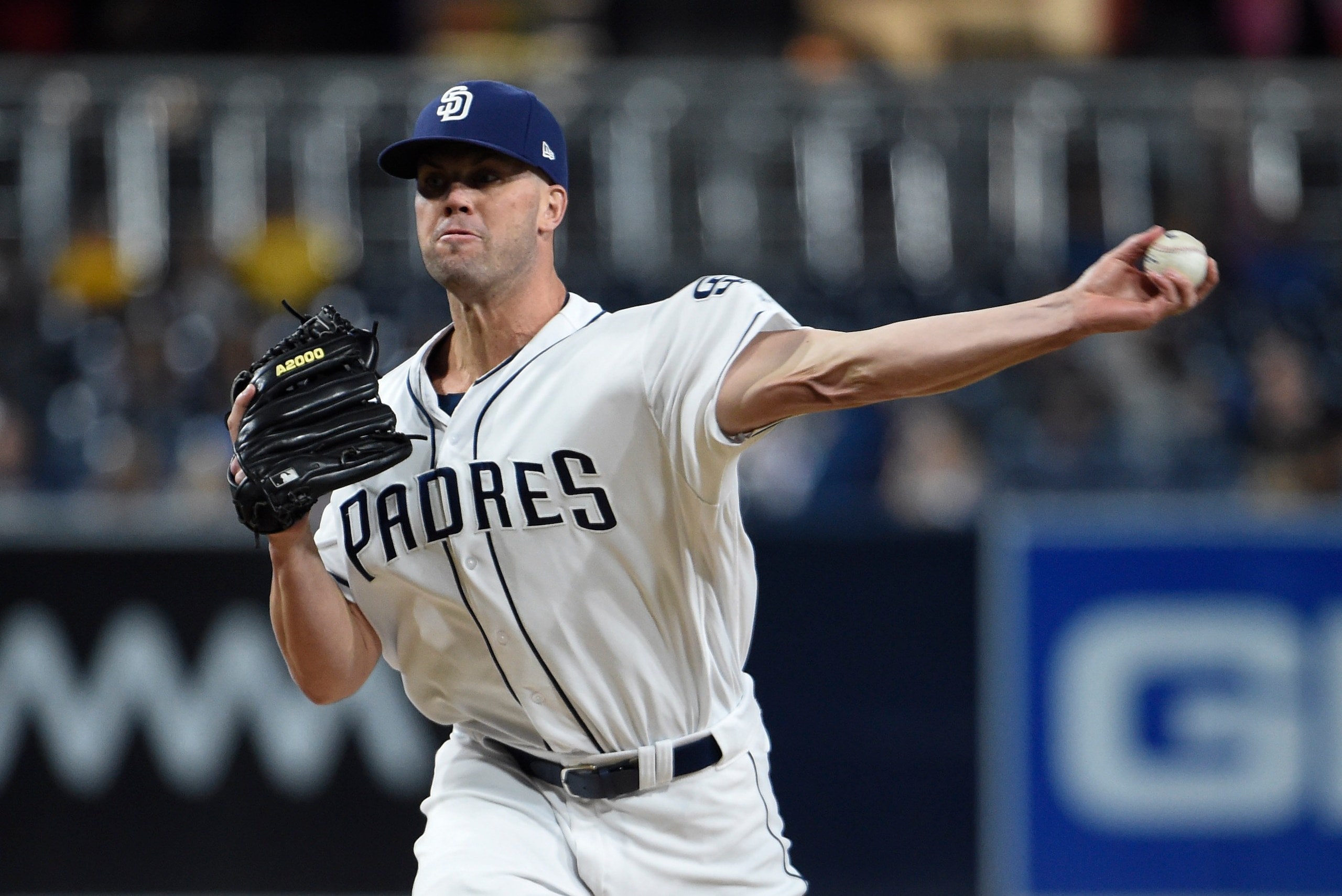
250. Clayton Richard, SP, San Diego Padres
He stayed healthy and collected enough ground balls to get through 32 starts.
249. Martin Perez, SP, Texas Rangers
Perez was like Richard, except slightly better.
248. Jose Iglesias, SS, Detroit Tigers
He's a good enough shortstop to justify keeping his woeful bat in the lineup.
247. Jake Lamb, 3B, Arizona Diamondbacks
This 2017 All-Star's power and patience are enough to compensate for a subpar glove.
246. Chase Headley, 3B, New York Yankees
Headley did nothing flashy, but good at-bats and dependable defense have value.
245. David Freese, 3B, Pittsburgh Pirates
Freese was a better version of Headley on both sides of the ball.
244. Joe Panik, 2B, San Francisco Giants
Panik was really good at making contact and hitting line drives.
243. Mitch Moreland, 1B, Boston Red Sox
Moreland had a good enough bat and more than good enough glove for first base.
242. Rhys Hoskins, LF, Philadelphia Phillies
Any guy who can put up a 1.014 OPS and 18 homers in only 50 games is doing something right.
241. Jose Pirela, LF/RF, San Diego Padres
Pirela was one of the quieter yet better breakout stories of 2017.
240. Masahiro Tanaka, SP, New York Yankees
Tanaka was painfully inconsistent with a home run problem yet also pretty tough to hit.
239. Julio Teheran, SP, Atlanta Braves
Teheran provided 188.1 solid innings despite going backward from an All-Star season in 2016.
238. Yoenis Cespedes, LF, New York Mets
He put up eye-popping numbers despite being limited to 81 games by injuries.
237. Michael Brantley, LF, Cleveland Indians
The injury bug won't leave him alone, but he remains one of the best pure hitters in the sport.
236. Delino DeShields, LF, Texas Rangers
He's fast and knows how to use that speed.
235. Aaron Altherr, LF, Philadelphia Phillies
Altherr had a well-rounded breakout over a 107-game sample.
234. Trey Mancini, LF, Baltimore Orioles
He can't do much else, but he proved over 147 games that he can definitely hit.
233. Josh Bell, 1B, Pittsburgh Pirates
He took a step toward becoming one of the better two-way first basemen in the National League.
232. Jason Heyward, RF, Chicago Cubs
His new swing mechanics didn't fix anything. Fortunately, his glove didn't need fixing.
231. Adam Duvall, LF, Cincinnati Reds
His power and defense are fair trade-offs for his inconsistency.
230. Kolten Wong, 2B, St. Louis Cardinals
Wong still hasn't put it all together, but he did take a big step in the right direction this year.
229. Kurt Suzuki, C, Atlanta Braves
Suzuki was no Tyler Flowers on defense, but 19 homers in 81 games are good for anyone and great for a catcher.
228. Alex Avila, C, Chicago Cubs
Avila was essentially a left-handed-hitting version of Suzuki.
227. Robinson Chirinos, C, Texas Rangers
Chirinos was a pretty good hitter and a capable defender over an 88-game sample.
226. Max Kepler, RF, Minnesota Twins
His full upside remains untapped, but he tapped into enough of it to save par.
225. Kole Calhoun, RF, Los Angeles Angels
This wasn't Calhoun's best year, but he remained a capable hitter and fielder.
224. Eddie Rosario, LF, Minnesota Twins
A second-half breakout helped put him on the map.
223. Jon Lester, SP, Chicago Cubs
He logged 180.2 mostly good innings despite missing David Ross behind the plate.
222. Madison Bumgarner, SP, San Francisco Giants
A dirt-bike mishap limited him to 17 starts, but they were 17 really good ones.
221. Tanner Roark, SP, Washington Nationals
Roark was a low-key ace in 2014 and 2016 and good enough in 2017 to log 181.1 solid innings.
220. Yusmeiro Petit, RP, Los Angeles Angels
Petit was a long reliever with a dash of shutdown specialist.
219. Anthony Swarzak, RP, Milwaukee Brewers
He reaped the benefits of throwing much harder than he used to.
218. Kevin Gausman, SP, Baltimore Orioles
He salvaged a disastrous start with a strong finish.
217. Jordan Montgomery, SP, New York Yankees
His pitches fell from the sky and mostly befuddled opposing hitters.
216. Trevor Williams, SP, Pittsburgh Pirates
If you don't know him, feel free to get acquainted with his final 24 starts.
215. Dan Straily, SP, Miami Marlins
He seems so darn hittable yet logged an NL-high 33 mostly effective starts.
214. Christian Vazquez, C, Boston Red Sox
Vazquez was an elite defensive catcher who proved to be a pesky out at the dish.
213. Ivan Nova, SP, Pittsburgh Pirates
Nova was an elite strike-thrower who tallied 187 mostly good innings.
212. Jhoulys Chacin, SP, San Diego Padres
Chacin rode his sinker-slider combo to 180.1 above-average innings.
211. R.A. Dickey, SP, Atlanta Braves
Dickey turned his best knuckleball in years into 190 quality innings.
210. Marco Estrada, SP, Toronto Blue Jays
The crafty veteran didn't fall off as much as his 4.98 ERA suggests.
209. Curtis Granderson, OF, Los Angeles Dodgers
Granderson was miscast as a center fielder, but he played in 147 total games and kept the power coming.
208. Dexter Fowler, CF, St. Louis Cardinals
Although his defense regressed, he kept getting on base and flashing power and speed.
207. Carlos Gomez, CF, Texas Rangers
Gomez was still a capable all-around center fielder despite being a shell of his former self.
206. Jon Gray, SP, Colorado Rockies
Gray was dominant in an injury-shortened season.
205. Mike Clevinger, SP, Cleveland Indians
He's wild but overpowering and plays for Cleveland. Go ahead and make your Ricky Vaughn jokes.
204. Alex Claudio, RP, Texas Rangers
He logged 82.2 innings by keeping two-thirds of his batted balls on the ground.
203. Chris Rusin, RP, Colorado Rockies
A steady stream of ground balls led to 85 excellent innings in relief.
202. Tommy Kahnle, RP, New York Yankees
Elite heat and strong control made him a tough customer over 62.2 innings for the White Sox and Yankees.
201. Matt Albers, RP, Washington Nationals
The veteran made the switch from passable middle reliever to shutdown relief ace.
200-151: Edwards-Minor
3 of 55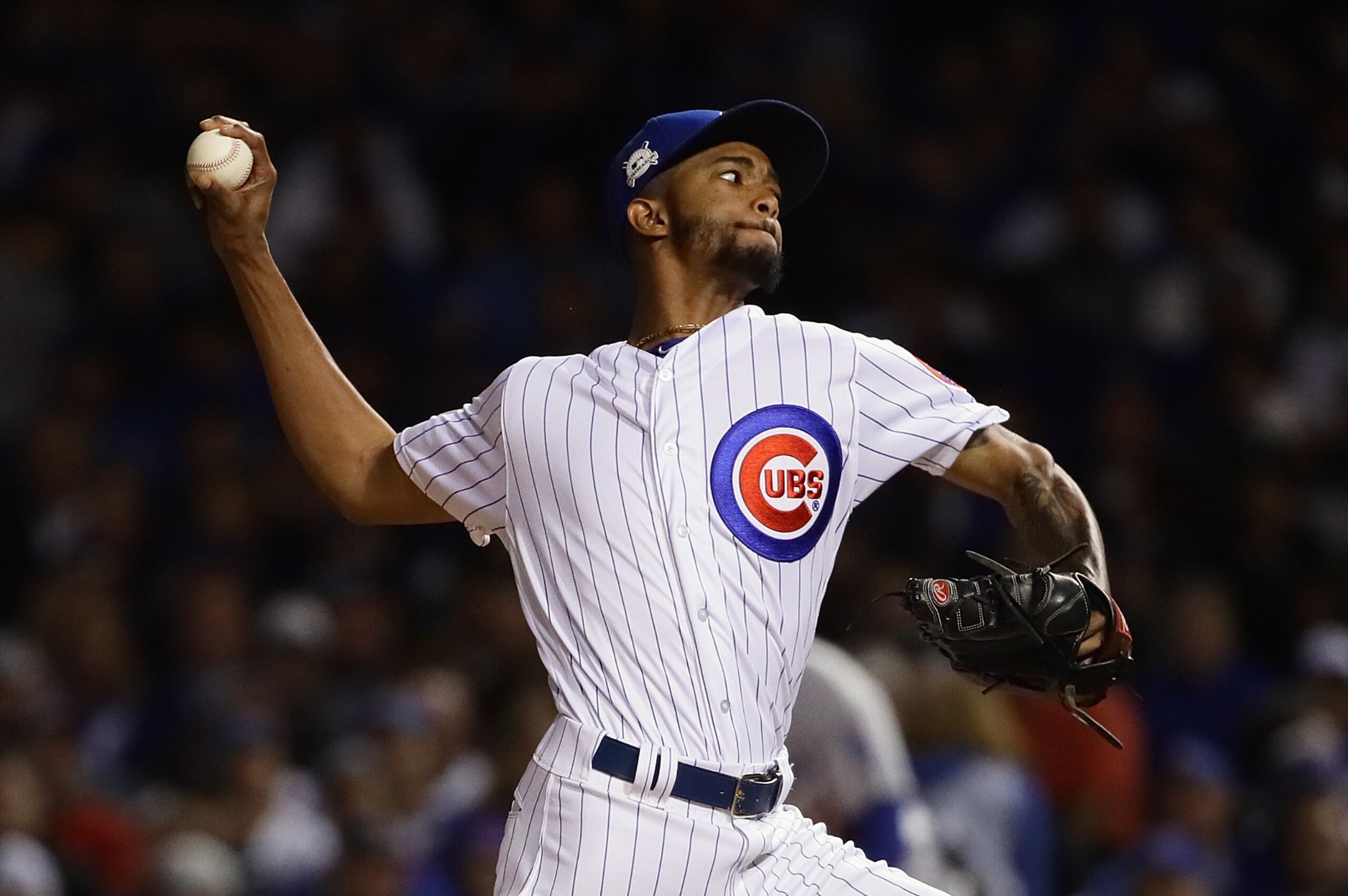
200. Carl Edwards Jr., RP, Chicago Cubs
He didn't always know where they were going, but his fastball and curveball were tremendously difficult to hit.
199. Ian Happ, CF, Chicago Cubs
The rookie showed good power and adjusted well to his new position.
198. Brad Peacock, SP, Houston Astros
It happened under the radar and over a limited sample of innings, but he turned into a dominant starter over the season's final four months.
197. Michael Wacha, SP, St. Louis Cardinals
Dramatically improved velocity helped get the former phenom back on track.
196. Starlin Castro, 2B, New York Yankees
He continued to hit for power in a season marred by injuries and his usual brand of unpredictable defense.
195. Neil Walker, 2B, Milwaukee Brewers
No matter what happens, he can always be counted on for above-average offense.
194. Dustin Pedroia, 2B, Boston Red Sox
His body and power are crumbling, yet he's still a tough out and slick defender.
193. Ian Kinsler, 2B, Detroit Tigers
His bat had its worst-ever season (.236 BA), but the veteran's body and other skills held up fine.
192. Addison Russell, SS, Chicago Cubs
His defense was a bright spot in a rocky year both on and off the field.
191. Xander Bogaerts, SS, Boston Red Sox
A hit-by-pitch ultimately ruined what had been shaping up as another excellent season.
190. Jorge Polanco, SS, Minnesota Twins
He put himself on the shortstop map with a hot second half.
189. Wade Davis, RP, Chicago Cubs
This season made it official that his most dominant days are behind him but also that he's not close to done just yet.
188. Sean Doolittle, RP, Washington Nationals
When he's healthy, he's overpowering. That simple.
187. Scooter Gennett, 2B, Cincinnati Reds
His four-homer game June 6 was just the start of an eye-opening power breakout.
186. Cesar Hernandez, 2B, Philadelphia Phillies
Hernandez provided another year of steady offense and defense despite a six-week spell on the disabled list.
185. Mitch Haniger, RF, Seattle Mariners
If not for injuries, the rookie would have been one of the year's best corner outfielders.
184. Manuel Margot, CF, San Diego Padres
Margot was an excellent defensive center fielder who teased good offensive potential.
183. Michael A. Taylor, CF, Washington Nationals
Adam Eaton's torn ACL opened the door for Taylor to show off his power, speed and defense.
182. Andrew Cashner, SP, Texas Rangers
He put a lot of faith in his defense but at least did so via strong contact-management skills.
181. Kyle Freeland, SP, Colorado Rockies
His variety of fastballs produced 156 good innings, no small feat for a Coors Field pitcher.
180. CC Sabathia, SP, New York Yankees
His durability is gone, but he's using elite contact management to prove his effectiveness is not.
179. Jose Berrios, SP, Minnesota Twins
After a rough introduction in 2016, his ace potential began to show this year.
178. Rich Hill, SP, Los Angeles Dodgers
He only logged 135.2 innings in 25 starts, but his talent for spinning the ball made them great innings.
177. J.A. Happ, SP, Toronto Blue Jays
The injury bug that limited him to 25 starts is really the only bad thing that happened to him in 2017.
176. Taijuan Walker, SP, Arizona Diamondbacks
He moved to the National League, added a slider and took off.
175. Kyle Hendricks, SP, Chicago Cubs
An excellent finish to the season made up for a rough start.
174. Lance Lynn, SP, St. Louis Cardinals
Lynn was healthy and back to doing his usual thing with 186.1 solid innings.
173. Mike Leake, SP, Seattle Mariners
He washed away the taste of 2016 by doing some things slightly different and keeping everything else the same for St. Louis and Seattle.
172. Matt Olson, 1B, Oakland Athletics
Small-sample-size caveat be damned: 24 home runs in 59 games is impressive.
171. Martin Maldonado, C, Los Angeles Angels
Maldonado was an elite defensive catcher who played every day and hit for decent power to boot.
170. Austin Barnes, C, Los Angeles Dodgers
Barnes was an excellent two-way catcher who sadly only logged 262 plate appearances in 102 games.
169. Jason Vargas, SP, Kansas City Royals
Had a Cy Young-caliber first half en route to 179.2 above-average innings.
168. Danny Duffy, SP, Kansas City Royals
He can't handle the workload of an ace but often looks the part.
167. Charlie Morton, SP, Houston Astros
What used to be just a sinker is now a power sinker, and the results speak for themselves.
166. Justin Bour, 1B, Miami Marlins
Bour keeps evolving as a hitter when he's able to stay on the field.
165. Yuli Gurriel, 1B, Houston Astros
Gurriel is cut from a different mold than most first basemen but proved to be a good one all the same.
164. Brandon Belt, 1B, San Francisco Giants
Of all the good players in MLB, he's still the hardest one to appreciate.
163. Dylan Bundy, SP, Baltimore Orioles
His season was a bigger breakout than his mediocre numbers would suggest.
162. Jake Arrieta, SP, Chicago Cubs
Arrieta shook off a rocky start to look more like his ace self for a better part of the year.
161. Ken Giles, RP, Houston Astros
His hard fastball and slider make him a cookie-cutter reliever, but they sure work wonders.
160. Raisel Iglesias, RP, Cincinnati Reds
His electric stuff worked about as well in relief as anyone could have anticipated.
159. Sonny Gray, SP, New York Yankees
From June on, he looked a lot like the guy who contended for the Cy Young in 2014 and 2015.
158. Trevor Bauer, SP, Cleveland Indians
Bauer rode extra curveballs to his best season yet.
157. Alex Cobb, SP, Tampa Bay Rays
Cobb still hasn't crossed the 30-start plateau but continues to be quietly effective when healthy.
156. Yonder Alonso, 1B, Seattle Mariners
When an advanced hitter decides to hit for more power, good things happen.
155. Patrick Corbin, SP, Arizona Diamondbacks
More sliders paved his way to 189.2 above-average innings.
154. Zach Davies, SP, Milwaukee Brewers
Davies is probably the best starter nobody knows about.
153. Archie Bradley, RP, Arizona Diamondbacks
His final numbers oversell his dominance, but one can only pick so many nits with his 73 excellent innings.
152. Chad Green, RP, New York Yankees
Albeit rarely in high-leverage situations, this guy was one of 2017's most overpowering relievers.
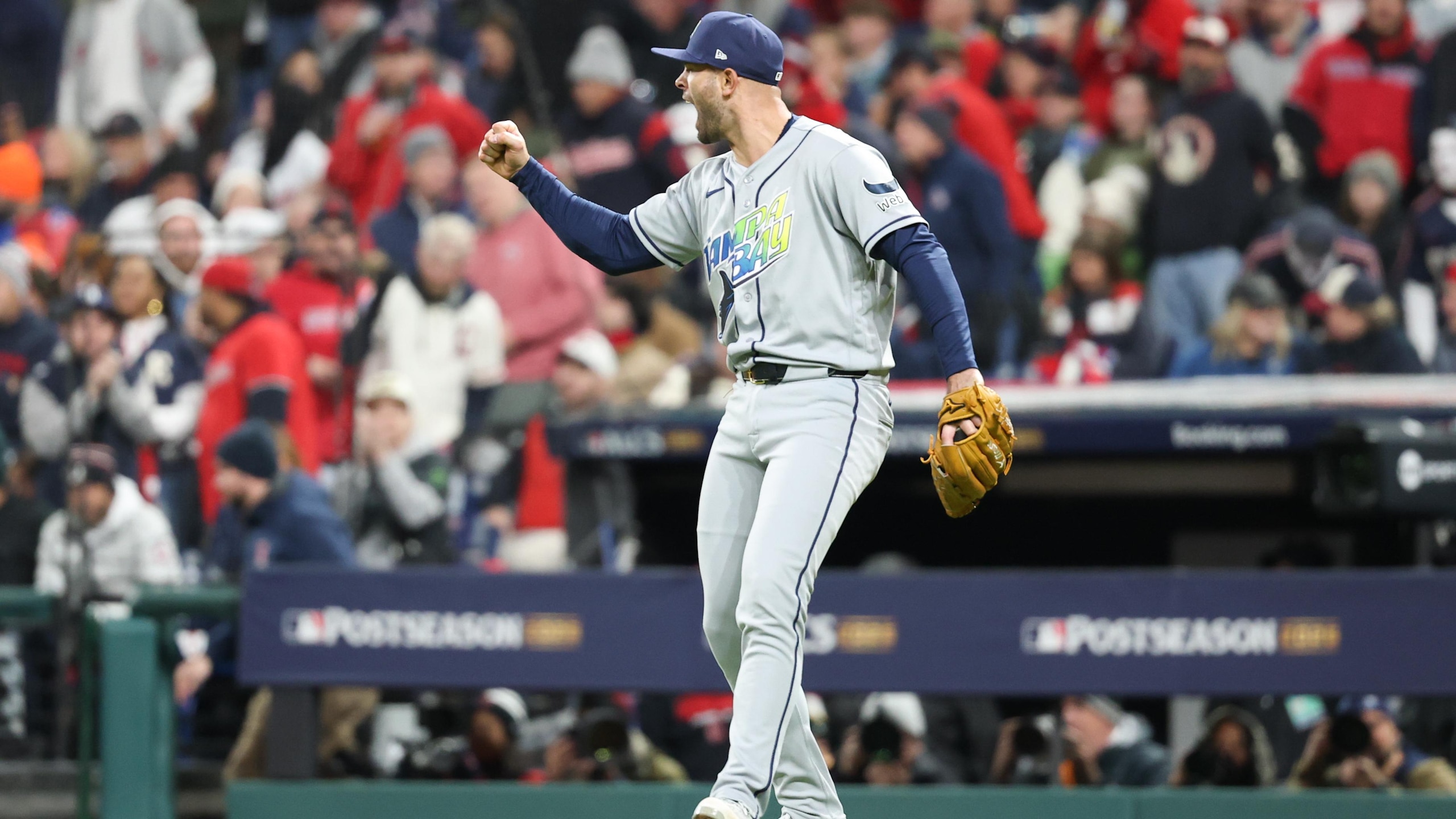
151. Mike Minor, RP, Kansas City Royals
A harder fastball and slider turned this former starter into a shutdown reliever.

.jpg?w=2560)
150-101: Neshek-Anderson
4 of 55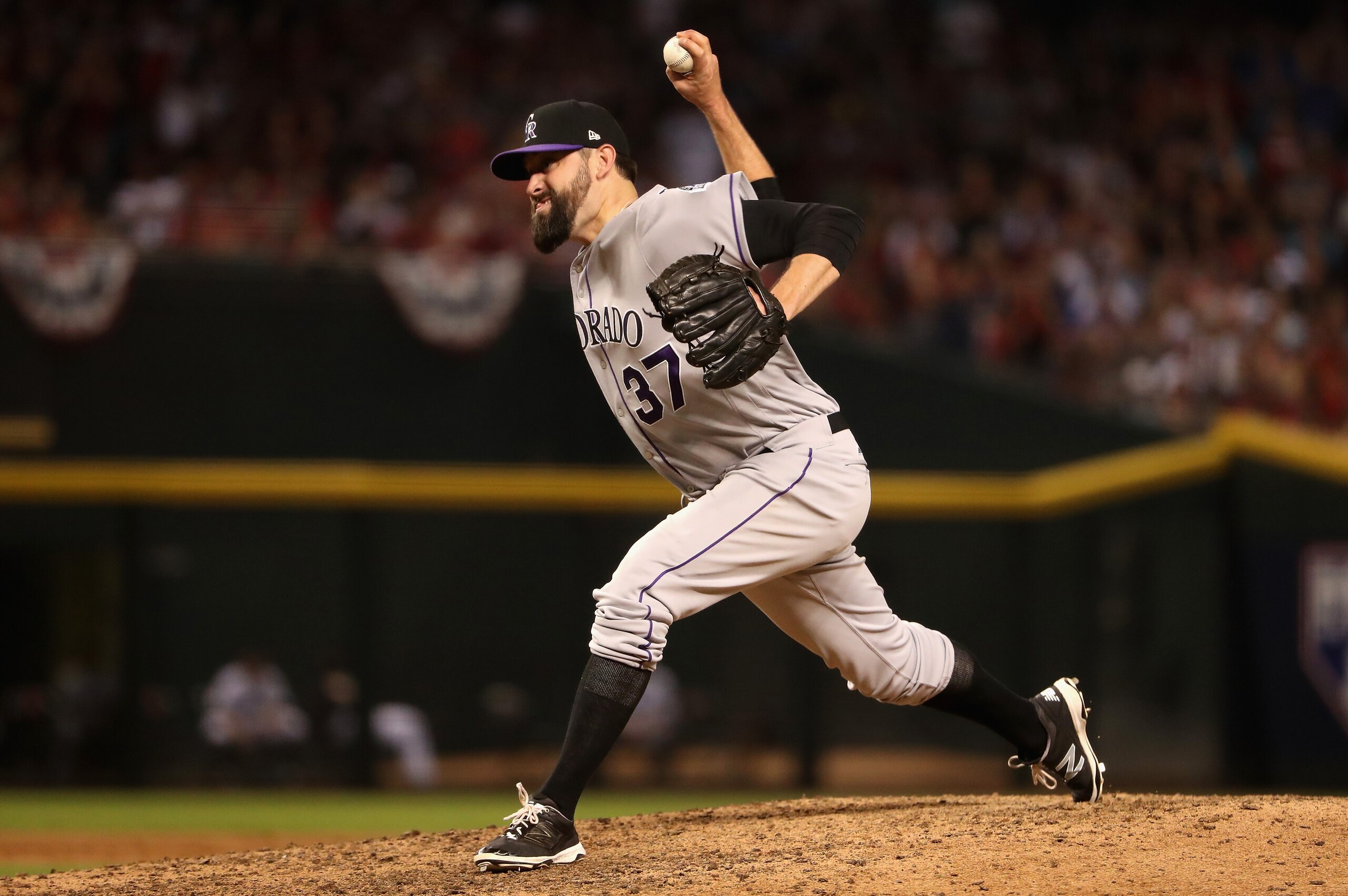
150. Pat Neshek, RP, Colorado Rockies
His funky deliver and sinker-slider combo just keep doing their thing.
149. Tucker Barnhart, C, Cincinnati Reds
He was a tough out behind the dish and a running-game cop behind it in 121 contests.
148. Welington Castillo, C, Baltimore Orioles
Castillo rode a strong arm and a powerful bat to another quality season.
147. Brad Hand, RP, San Diego Padres
Hand was a discount Andrew Miller.
146. Chris Devenski, RP, Houston Astros
Devenski was dominant in every which way over 80.2 innings.
145. Ryan Madson, RP, Washington Nationals
He might have had his best season, which is saying something given all he's done and been through.
144. Roberto Osuna, RP, Toronto Blue Jays
Osuna was one of the most overlooked dominant relievers in MLB.
143. Josh Harrison, 2B, Pittsburgh Pirates
As always, Harrison was a bundle of energy who got it done in most phases of the game.
142. Yolmer Sanchez, 2B, Chicago White Sox
Yoan Moncada is the future, but this guy proved he can be a capable two-way second baseman.
141. Eric Thames, 1B, Milwaukee Brewers
The huge numbers he put up in Korea weren't a mere tease after all.
140. Austin Hedges, C, San Diego Padres
He's emerging as arguably MLB's best defensive catcher, with power to boot.
139. Paul DeJong, SS, St. Louis Cardinals
The rookie showed good enough defense and more than good enough power at shortstop.
138. Trea Turner, SS, Washington Nationals
Injuries didn't make it easy for him to build on his 2016 breakout, but he remained a capable hitter and an absolute nightmare for opponents when he got on base.
137. David Peralta, LF/RF, Arizona Diamondbacks
Peralta did nothing fancy. Just good hitting and defense on an everyday basis.
136. Khris Davis, LF, Oakland Athletics
Rarely has anyone so quietly put up back-to-back 40-homer seasons.
135. Trevor Story, SS, Colorado Rockies
Story took a step back from his 2016 breakout, but a hot second half and good defense more than salvaged his 2017 season.
134. Orlando Arcia, SS, Milwaukee Brewers
Arcia was an excellent defensive shortstop who played every day and provided passable offense.
133. Brandon Crawford, SS, San Francisco Giants
Next to his strong second half and characteristically excellent defense, rumors of his demise are exaggerated.
132. Tim Beckham, SS, Baltimore Orioles
The 2008 No. 1 pick finally looked the part after joining the Orioles from the Tampa Bay Rays.
131. Corey Dickerson, LF, Tampa Bay Rays
This guy is aggressive swinging done right.
130. Mike Moustakas, 3B, Kansas City Royals
He hit 38 homers despite playing half his games at Kauffman Stadium.
129. Jose Quintana, SP, Chicago Cubs
A slow start necessitated a few adjustments that got him back on track.
128. Jeff Samardzija, SP, San Francisco Giants
He struck out 173 more batters than he walked in 207.2 innings and would have had better results with a better defense.
127. Miguel Sano, 3B, Minnesota Twins
When healthy, Sano was a dangerous hitter and a surprisingly capable defender.
126. Kyle Seager, 3B, Seattle Mariners
Seager wasn't his usual underrated self, but he remained an asset on both offense and defense.
125. Wil Myers, 1B, San Diego Padres
If he took a step back from his 2016 breakout, it was only a small one.
124. A.J. Pollock, CF, Arizona Diamondbacks
He couldn't reclaim his superstar form of 2015, but he put an injury-marred 2016 behind him with both his bat and his glove.
123. Kevin Pillar, CF, Toronto Blue Jays
He's like if The Flash played center field.
122. Jackie Bradley Jr., CF, Boston Red Sox
His offense took a step back but was still plenty good enough to justify keeping his elite glove in the lineup.
121. David Robertson, RP, New York Yankees
He just keeps building on one of the most impressive relief track records in the industry.
120. Corey Knebel, RP, Milwaukee Brewers
Walks notwithstanding, few relievers were as dominant this year.
119. Felipe Rivero, RP, Pittsburgh Pirates
His blazing fastball was hard on everyone but especially so on lefty batters.
118. Jean Segura, SS, Seattle Mariners
Take away an injury that limited him to 125 games, and he took only a small step back from his 2016 return to form.
117. Domingo Santana, RF, Milwaukee Brewers
He was one of the most improved and, ultimately, one of the best hitters of 2017.
116. Jay Bruce, RF, Cleveland Indians
His best offensive season in years featured a new career high in home runs (36).
115. Andrew Benintendi, LF, Boston Red Sox
The rookie looked the part of an advanced hitter and enjoyed a 20-20 season.
114. Salvador Perez, C, Kansas City Royals
He played in "only" 129 games because of injury but was his usual reliable self plus extra offense.
113. Aaron Hicks, CF, New York Yankees
Injuries are the only black mark on what was otherwise a huge breakout season.
112. Odubel Herrera, CF, Philadelphia Phillies
When he feels like it, he can be one of the best two-way center fielders in MLB.
111. Robinson Cano, 2B, Seattle Mariners
His 2016 power surge didn't last, but he nonetheless remained one of the best pure hitters in the sport.
110. Dee Gordon, 2B, Miami Marlins
He used his speed to run away from a 2016 season to forget, notably stealing an MLB-high 60 bases.
109. Jed Lowrie, 2B, Oakland Athletics
Lowrie was a doubles machine who had the best offensive season of an underappreciated career.
108. Eugenio Suarez, 3B, Cincinnati Reds
He was only a great hitter at home, but he was a good hitter overall who also played a good third base.
107. Gerrit Cole, SP, Pittsburgh Pirates
He wasn't his Cy Young-caliber self, but he logged 203 innings and was better than his 4.26 ERA indicates.
106. Matt Carpenter, 1B, St. Louis Cardinals
Walks and extra-base hits are all he does. That's a compliment.
105. Edwin Encarnacion, 1B/DH, Cleveland Indians
Encarnacion was a less fearsome yet still pretty darn fearsome slugger.
104. Javier Baez, SS/2B, Chicago Cubs
Baez was a frustratingly inconsistent yet dazzling two-way player.
103. Dallas Keuchel, SP, Houston Astros
It wasn't smooth sailing, but a 2.90 ERA over 145.2 innings is a heck of an end result.
102. James Paxton, SP, Seattle Mariners
Injuries held back what could have been a Cy Young-caliber season.
101. Chase Anderson, SP, Milwaukee Brewers
He only made 25 starts, but a velocity increase helped make them ace-caliber starts.
100-51: Wood-Martinez
5 of 55
100. Alex Wood, SP, Los Angeles Dodgers
He only pitched 152.1 innings. That's it for the list of his season's cons.
99. Michael Fulmer, SP, Detroit Tigers
The reigning AL Rookie of the Year had a rare knack for avoiding home runs in his 25 starts.
98. Zack Godley, SP, Arizona Diamondbacks
His season seems too good to be true until you look under the hood and get blown away by what's there.
97. Drew Pomeranz, SP, Boston Red Sox
He was rarely not on a tightrope yet still logged 32 mostly good starts.
96. Andrew Miller, RP, Cleveland Indians
A stint on the disabled list was the only thing that stopped him from being his usual self.
95. Kenley Jansen, RP, Los Angeles Dodgers
He's like Mariano Rivera, except way ahead of the legend's pace.
94. Craig Kimbrel, RP, Boston Red Sox
Kimbrel's return to good health was very bad news for opposing hitters.
93. Daniel Murphy, 2B, Washington Nationals
His bat was once again more than good enough to account for his awful glove.
92. DJ LeMahieu, 2B, Colorado Rockies
LeMahieu didn't fall that far from the form that won him a batting title in 2016.
91. Whit Merrifield, 2B, Kansas City Royals
He came out of nowhere to become perhaps MLB's most well-rounded second baseman.
90. Matt Chapman, 3B, Oakland Athletics
Get to know this guy if you like excellent hot-corner defense with a bit of power on the side.
89. Adrian Beltre, 3B, Texas Rangers
Injuries limited him to 94 games, but he nonetheless collected career hit No. 3,000 amid yet another excellent year.
88. Jedd Gyorko, 3B, St. Louis Cardinals
Gyorko is quietly an easily above-average hitter and fielder.
87. Michael Conforto, OF, New York Mets
Only a nasty shoulder injury could stop him from hitting.
86. Willson Contreras, C, Chicago Cubs
He is still working on putting it all together yet is already one of the game's best catchers.
85. Carlos Santana, 1B/DH, Cleveland Indians
Santana is a patient and powerful hitter who also plays a good first base.
84. Joey Gallo, 3B, Texas Rangers
He hit nine more home runs than singles yet was more than just a mindless slugger.
83. Todd Frazier, 3B, New York Yankees
He traded some power for more consistency and kept everything else the same.
82. Evan Longoria, 3B, Tampa Bay Rays
Longoria didn't maintain his 2016 power surge but was otherwise the same reliable player.
81. Joe Mauer, 1B, Minnesota Twins
He is still an excellent hitter and is becoming a better first baseman every year.
80. Mike Zunino, C, Seattle Mariners
Zunino played in 124 games and provided both extreme power and pretty good defense.
79. Yasmani Grandal, C, Los Angeles Dodgers
He maintained his elite pitch-framing talent while continuing to hit for power.
78. Tyler Flowers, C, Atlanta Braves
Flowers only played in 99 games, but in those, he was a catcher who checked every single box.
77. Adam Jones, CF, Baltimore Orioles
He did his usual thing: play nearly every day in center field and provide above-average offense.
76. Andrew McCutchen, CF, Pittsburgh Pirates
McCutchen followed a lost 2016 season by recovering a good amount of his MVP-caliber form.
75. Ryan Zimmerman, 1B, Washington Nationals
He rode good health and a hot start to his best offensive season in years.
74. Yadier Molina, C, St. Louis Cardinals
He is still a steady presence on both sides of the ball and doesn't take many days off (136 games).
73. J.T. Realmuto, C, Miami Marlins
Realmuto is a good hitter with unmatched athleticism among his catching brethren.
72. Justin Smoak, 1B, Toronto Blue Jays
He finally made good on his promise as a slugger.
71. Logan Morrison, 1B, Tampa Bay Rays
Same story as above.
70. Yasiel Puig, RF, Los Angeles Dodgers
He didn't tone down his antics but did put a better head on his shoulders and keep his body healthy. The result was his best season since 2014.
69. Steven Souza Jr., RF, Tampa Bay Rays
He found ways to channel his impressive raw skills into impressive results.
68. Chris Taylor, UTIL, Los Angeles Dodgers
Taylor played everywhere and hit everything.
67. Kevin Kiermaier, CF, Tampa Bay Rays
He caught everything and hit plenty but, alas, played in only 98 games.
66. Christian Yelich, CF, Miami Marlins
Yelich was better in left than in center but was otherwise his usual well-rounded self.
65. Ender Inciarte, CF, Atlanta Braves
One of the best defensive center fielders is also a .300 hitter with speed and developing power.
64. Didi Gregorius, SS, New York Yankees
He is a quality shortstop who just keeps getting better at the plate.
63. Aaron Nola, SP, Philadelphia Phillies
Apart from how he fell short of 30 starts, his season offers little to complain about.
62. Jimmy Nelson, SP, Milwaukee Brewers
A shoulder injury on the basepaths ruined what had been a revelation of a season.
61. Josh Reddick, RF, Houston Astros
He is a platoon outfielder who rose above all other platoon outfielders.
60. Marwin Gonzalez, UTIL, Houston Astros
A versatile defender, Gonzalez was one of the best hitters in an all-time great offense.
59. Avisail Garcia, RF, Chicago White Sox
A series of adjustments resulted in a long-awaited offensive breakthrough.
58. Brett Gardner, LF, New York Yankees
Gardner is among MLB's toughest outs and best defenders, now with more power.
57. Travis Shaw, 3B, Milwaukee Brewers
He is one of the best trade acquisitions in recent memory.
56. Alex Bregman, 3B, Houston Astros
Bregman is just beginning to tap into his superstar potential.
55. Robbie Ray, SP, Arizona Diamondbacks
Struck out 218 batters in only 162 innings. 'Nough said.
54. Yu Darvish, SP, Los Angeles Dodgers
He enjoyed his best season since finishing second in the 2013 AL Cy Young race.
53. Chris Archer, SP, Tampa Bay Rays
Trouble with the long ball didn't stop him from pitching 201 electric innings.
52. Marcus Stroman, SP, Toronto Blue Jays
Stroman finally put together the season everyone had been waiting for.
51. Carlos Martinez, SP, St. Louis Cardinals
He just keeps getting better and, just as important, more durable.
50. Ervin Santana, SP, Minnesota Twins
6 of 55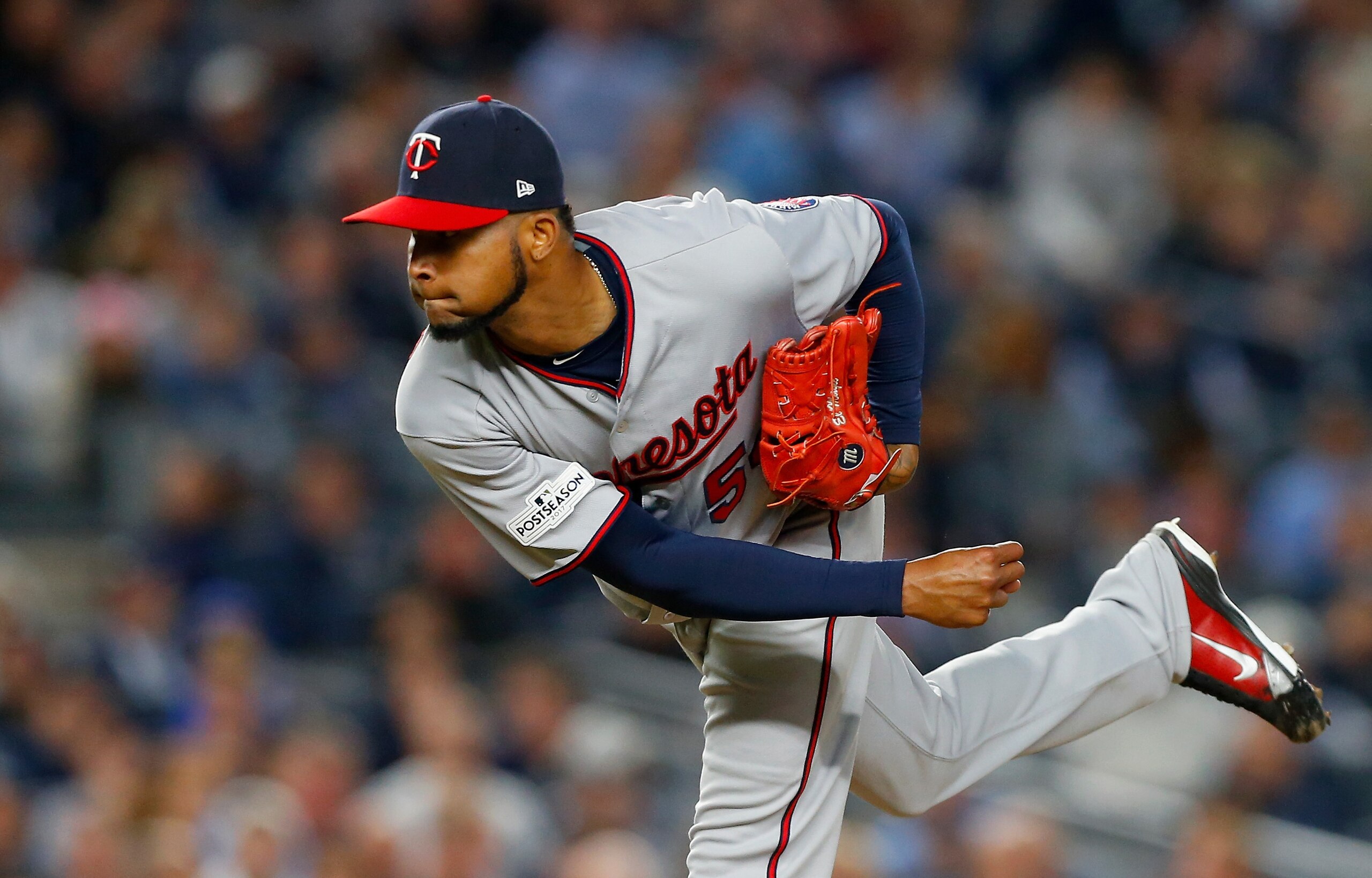
Age: 34
Key Stats: 33 G, 211.1 IP, 7.1 K/9, 2.6 BB/9, 1.3 HR/9, 80 OPS+, 134 ERA+
WAR: 4.6
2017 Player Report
Ervin Santana got by with a well-below-average strikeouts per nine innings in 2017 by being one of the better contact managers out there.
His exit velocity went from 88.0 mph in 2016 down to 85.3 mph, his soft-hit rate increased over the league average, and he went back to inducing pop-ups. His .286 average allowed on batted balls was right there with the best of the best.
Some of this was due to his coaxing hitters into going fishing by living outside the zone, but it also had to do with how he employed his arsenal of pitches. His hard stuff was up on the arm side, while his slow stuff was down on the glove side. With four different pitches at work, this was no easy guessing game.
It's tempting to assume Santana's success is too good to be true. But according to the minuscule difference between his wOBA and expected wOBA (xwOBA), it wasn't.
49. Brian Dozier, 2B, Minnesota Twins
7 of 55
Age: 30
Key Stats: 152 G, 705 PA, .269/.357/.496, 126 OPS+, 34 HR, 16 SB, -4 DRS
WAR: 4.5
2017 Player Report
After he was arguably MLB's top second baseman in 2016, Brian Dozier took a step down in 2017 that was probably inevitable.
His offensive M.O. is to keep his bat on his shoulder until he gets something he can pull in the air. But pitchers avoided his pull power by pounding him up and away this year, and it worked. Both his pull and fly-ball percentages declined.
Still, Dozier didn't get completely off his game. He stayed within his approach well enough to work an 11.1 walk rate and continued to knock well-hit balls to left field to keep his power afloat.
Meanwhile, he was again one of MLB's faster second basemen and a better defender than his DRS lets on. It seems like he has to dive for everything, but it's hard to fault him for that as long as he's making plays. And 2017 was another year in which there weren't many he couldn't make.
48. Freddie Freeman, 1B, Atlanta Braves
8 of 55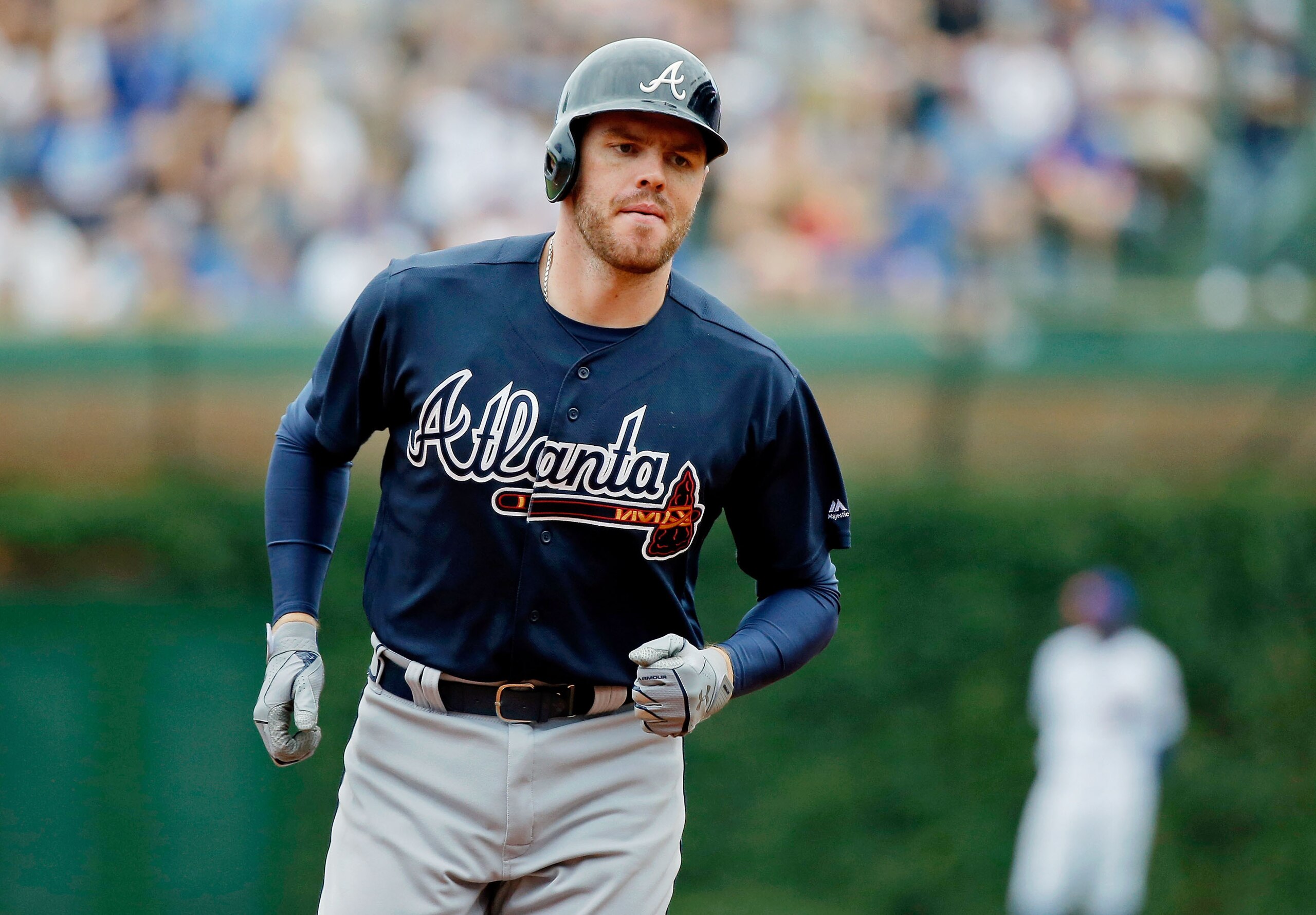
Age: 28
Key Stats: 117 G, 514 PA, .307/.403/.586, 157 OPS+, 28 HR, -2 DRS
WAR: 4.5
2017 Player Report
Freddie Freeman emerged as one of MLB's best hitters in the second half of 2016 and kept raking out of the gate in 2017.
Then he broke his wrist and missed six weeks. There's no blaming him for his ensuing production drop-off, and the fall of his exit velocity from 92.3 mph pre-DL to 88.5 mph post-DL helps put it in context.
Freeman is nonetheless a fascinating player. He swings a ton but draws walks and doesn't strike out too much. His swing is short and quick, yet generates both launch angle and exit velocity. In short: Dude can hit.
It was a funky year for Freeman on defense, as he had to spend time at third base while Matt Adams was riding a hot stretch. But his negative DRS gives the wrong impression of his first base defense. It wasn't vintage, but his long reach and good hands produced plenty of outs.
47. Eric Hosmer, 1B, Kansas City Royals
9 of 55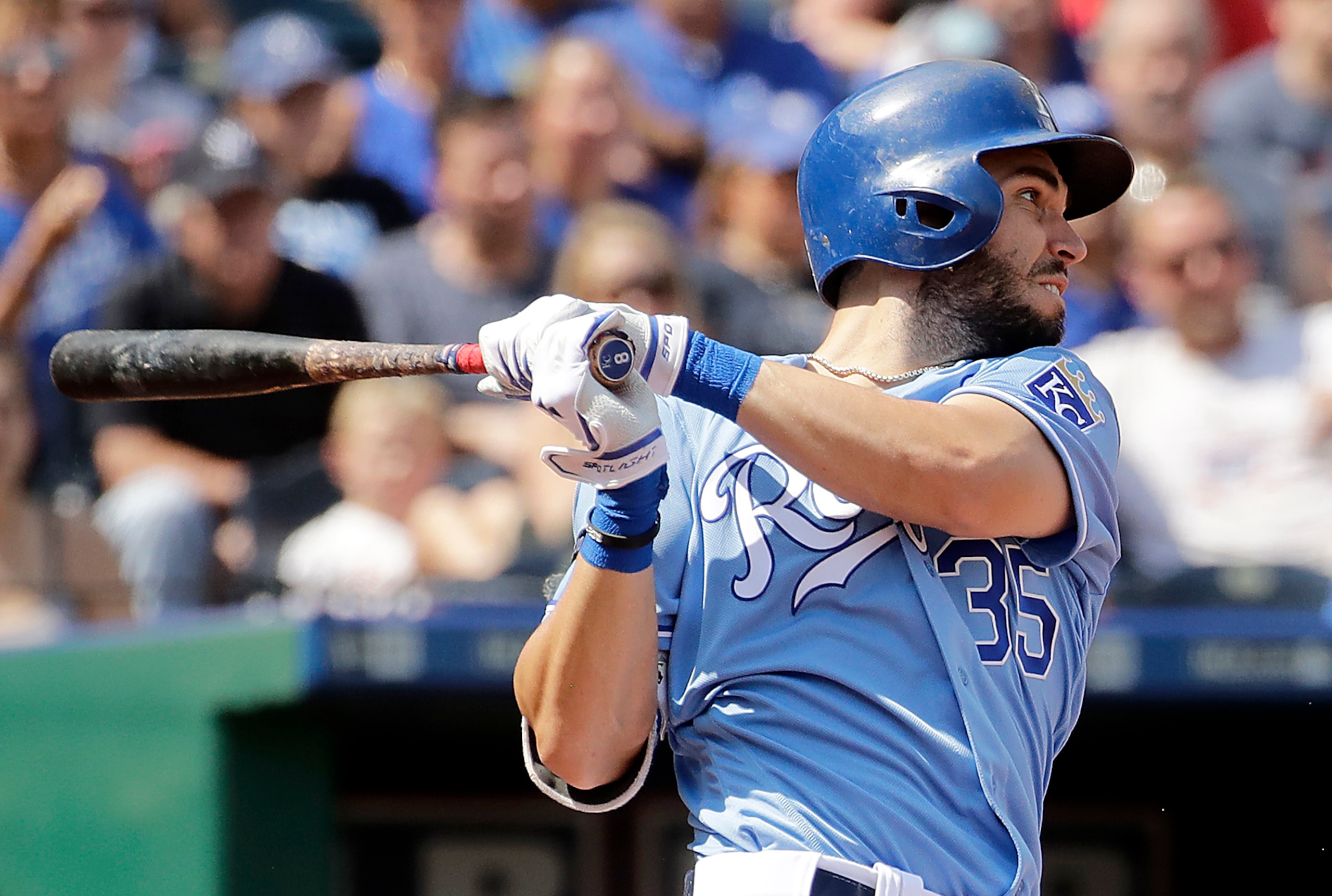
Age: 27
Key Stats: 162 G, 671 PA, .318/.385/.498, 132 OPS+, 25 HR, -7 DRS
WAR: 4.0
2017 Player Report
Despite a few teases here and there, it wasn't until this year that Eric Hosmer put his many skills to proper use.
An overaggressive approach and a swing that wasted too much good contact on the ground previously held him back. But in 2017, he chose better swings and brought his ground-ball rate down from its 2016 peak. That allowed him to launch more balls. And in all directions to boot.
The result: He became a better walk artist and power hitter in addition to remaining a great contact hitter.
Hosmer was also one of the fastest first basemen at 27.5 feet per second and a solid baserunner because of it. And while his DRS plays into the discussion about whether he covers as much ground as he should, he at least remained an excellent scoop artist on defense.
46. Zack Cozart, SS, Cincinnati Reds
10 of 55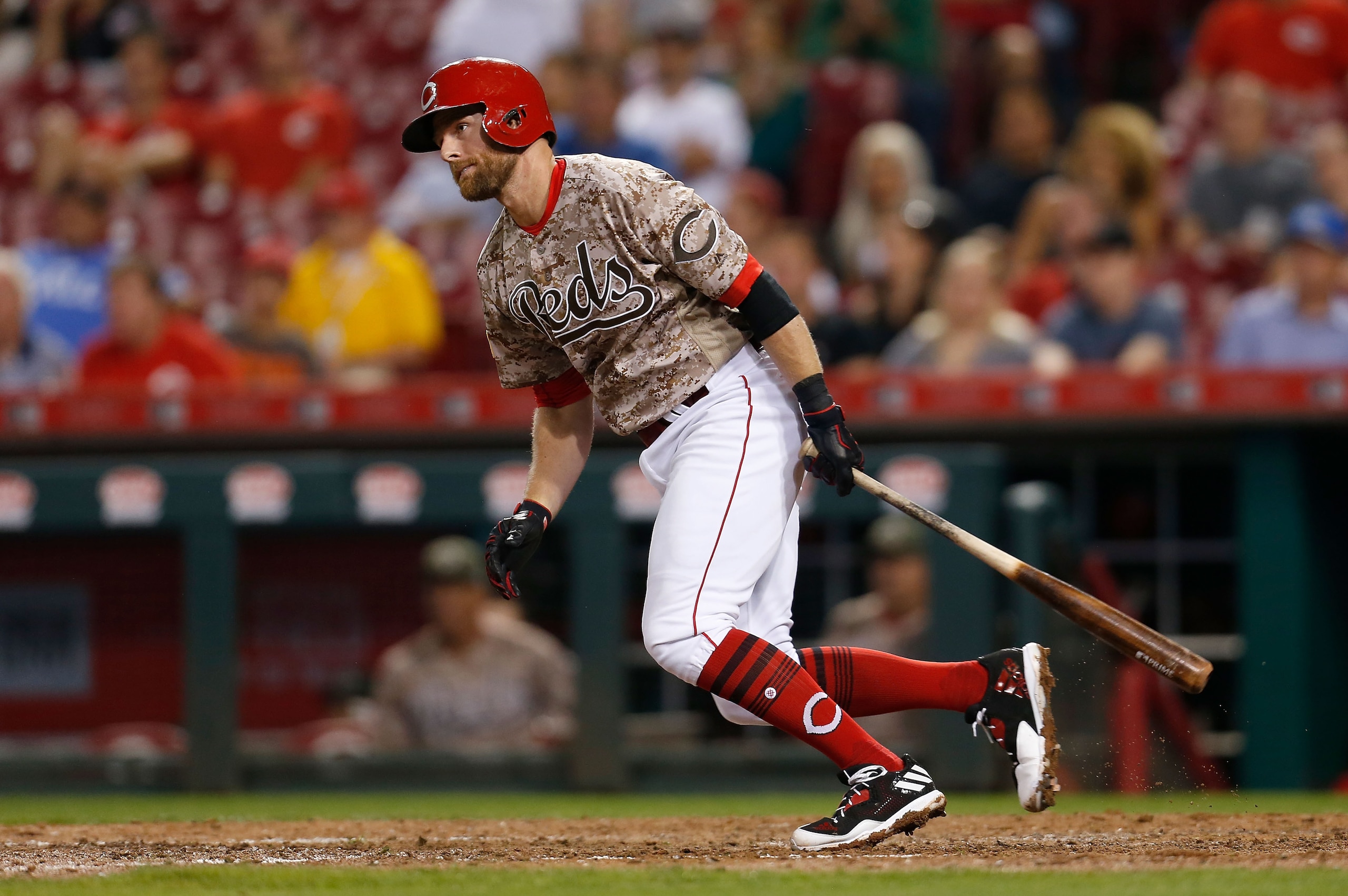
Age: 32
Key Stats: 122 G, 507 PA, .297/.385/.548, 141 OPS+, 24 HR, 3 SB, 2 DRS
WAR: 4.9
2017 Player Report
The most frustrating aspect of Zack Cozart's 2017 season is that he again had trouble staying healthy. He hasn't had a steady presence since 2013 and 2014.
Otherwise, there isn't much to gripe about.
This year saw Cozart perfect an offensive approach he's been working on for years. He first sought to become more of a pull hitter in 2014 and then less of a ground-ball hitter in 2015. Increased selectivity was his new trick for 2017, as he dropped both his swing and chase rates. This is how walk and power spikes happen.
On the other side of the ball, Cozart has never been one to play highlight-reel defense. Among other things, he doesn't have the range for it. His strengths—e.g. his internal clock and sound fundamentals—are more subtle and make him more reliable than flashy. So it went in 2017.
45. Elvis Andrus, SS, Texas Rangers
11 of 55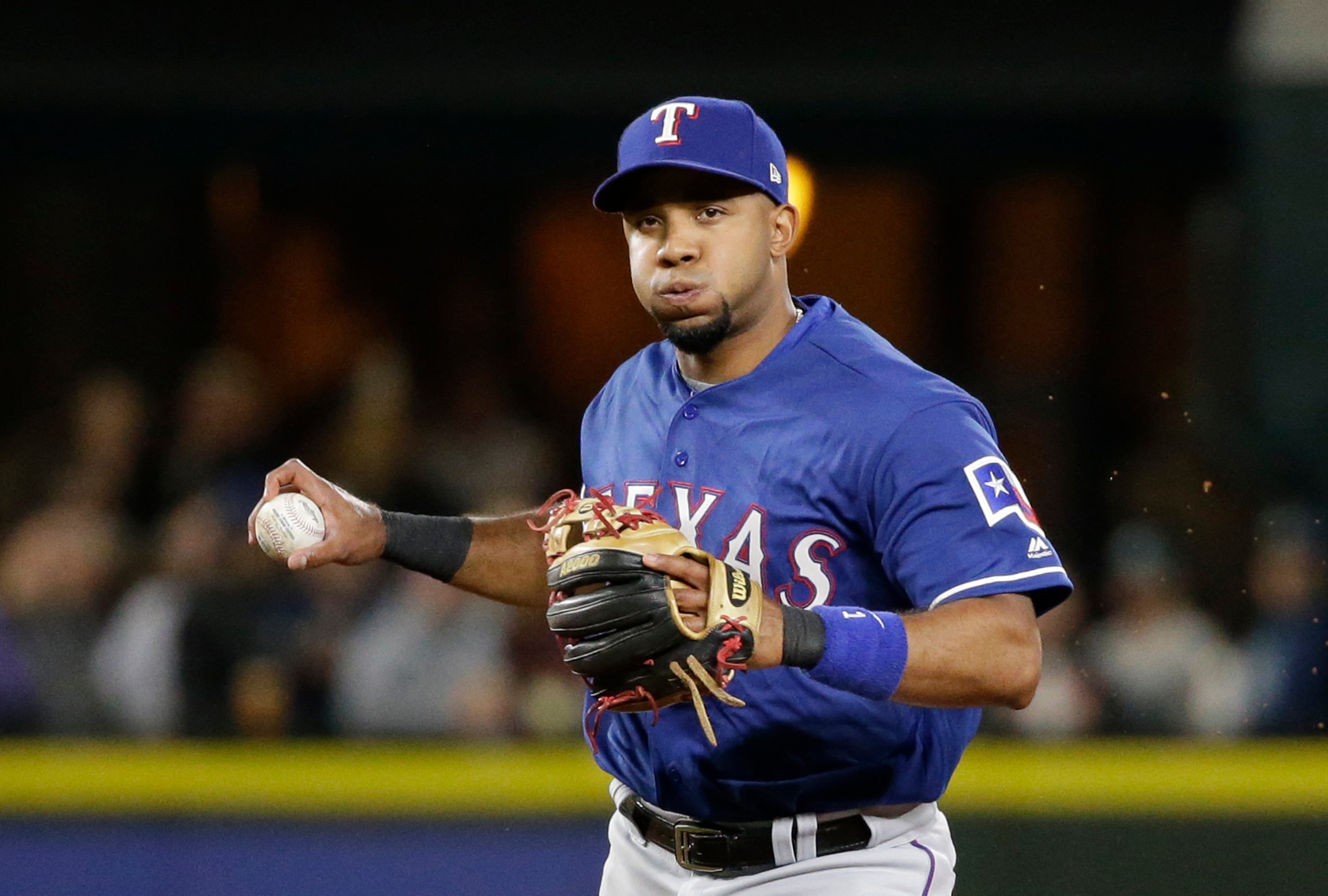
Age: 29
Key Stats: 158 G, 689 PA, .397/.337/.471, 108 OPS+, 20 HR, 25 SB, 4 DRS
WAR: 4.7
2017 Player Report
Before 2017, Elvis Andrus was averaging four homers per year. To go from there to 20 is quite the leap.
It was in 2015 that he shifted from a ground-ball-oriented, all-fields hitter to a dead-pull hitter with an emphasis on keeping the ball off the ground. That's a power approach, and two things helped it take off in 2017: applying it more often with more swings and, to be perfectly frank, the juiced ball.
Andrus is slowing down as he powers up, as his sprint speed is down 0.7 feet per second from where he was in 2015. Yet he remained as aggressive as ever on the bases and was highly productive.
His speed loss is hurting him more on defense, where his range has declined since 2015. But he at least clamped down on routine plays while maintaining the instincts and actions necessary to make more than just the gimmes.
44. Jacob DeGrom, SP, New York Mets
12 of 55
Age: 29
Key Stats: 31 G, 201.1 IP, 10.7 K/9, 2.6 BB/9, 1.3 HR/9, 84 OPS+, 119 ERA+
WAR: 4.4
2017 Player Report
Jacob deGrom was healthy and effective despite being on a cursed New York Mets team that had one of the worst defenses in MLB.
Bypassing that defense via strikeouts was the right play, and he earned those with one of the lowest contact rates in the league. And he at least made things easy for his fielders. Balls off him averaged just 85.5 mph, including an MLB-best 76.3 mph on the many swings he drew outside the zone.
Everything worked off a four-seam fastball that had rejuvenated velocity (95.9 mph). He also threw his high-velocity slider (89.9 mph) more often but without abandoning his curveball, changeup and sinker. That's a five-pitch arsenal, and the fact that four of them had double-digit whiff rates says it all about how nasty it is.
The end result was a great season that, by all rights, should have been even greater.
43. Byron Buxton, CF, Minnesota Twins
13 of 55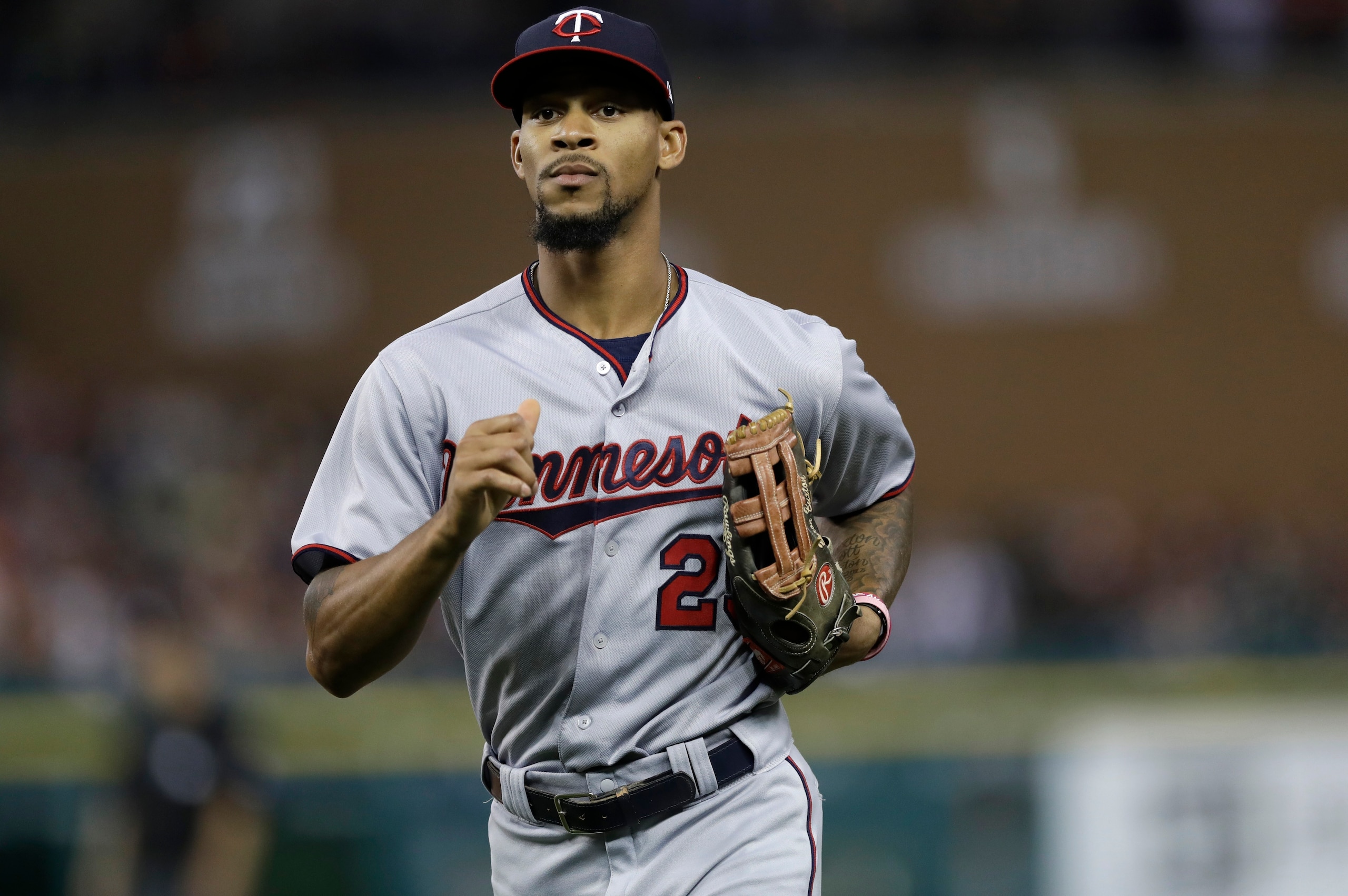
Age: 23
Key Stats: 140 G, 511 PA, .253/.314/.413, 94 OPS+, 16 HR, 29 SB, 24 DRS
WAR: 5.1
2017 Player Report
This is the year that Byron Buxton finally made good on the hype.
Nobody did better than his 30.2 feet-per-second sprint, and he put that to work stealing 29 bags and taking the extra base on hits 71 percent of the time. He also got caught stealing only once and made just one other out on the bases. All told, that's baserunning value that only one other player (Mookie Betts) could match.
Buxton also had a better defensive season than any center fielder. He played shallow and used his speed and instincts to track down seemingly everything that stayed inside the fence. The range he covered is staggering. Baserunners also had to watch out for his arm, another plus tool.
His bat, meanwhile, was a non-factor at the start and a huge factor at the end. Although his strikeouts remained a constant, he found mechanics he was comfortable with and the hard contact began to flow.
42. Manny Machado, 3B, Baltimore Orioles
14 of 55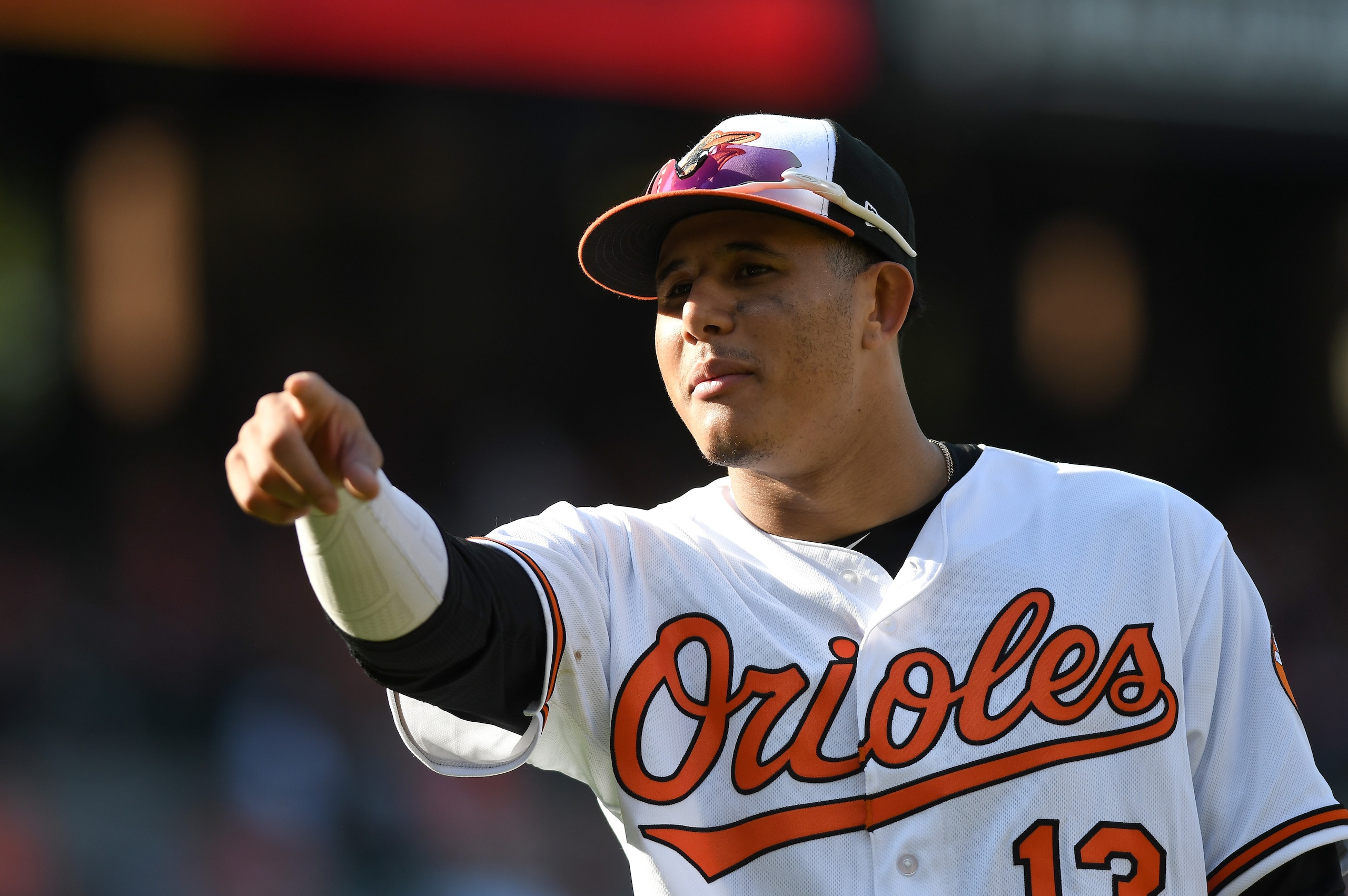
Age: 25
Key Stats: 156 G, 690 PA, .259/.310/.471, 107 OPS+, 33 HR, 9 SB, 6 DRS
WAR: 3.5
2017 Player Report
It might seem like Manny Machado needed a hot second half to salvage his season, but...nah.
With one of the largest gaps between his expected and actual production, he was one of the least lucky hitters of the first half. He wasn't quite on point, but he was hitting enough rockets to deserve better.
His numbers eventually did get big, and there's no question that he earned it. With a 16.7 strikeout rate and a swing that produced 90.9 mph in exit velocity and hard contact a career-high 40 percent of the time, Machado often put the ball in play and often did damage when doing so.
41. Cody Bellinger, 1B, Los Angeles Dodgers
15 of 55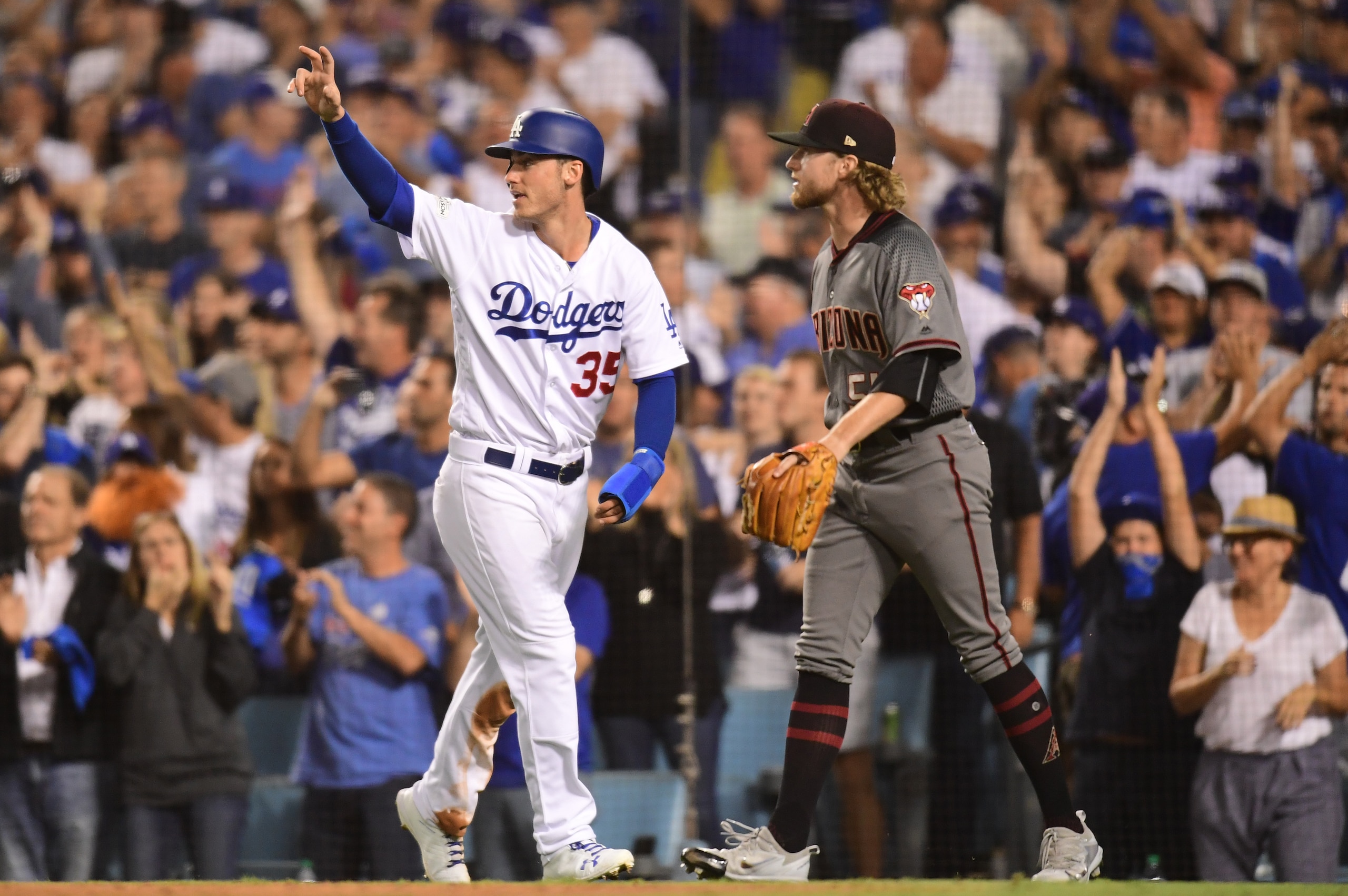
Age: 22
Key Stats: 132 G, 548 PA, .267/.352/.581, 142 OPS+, 39 HR, 2 DRS
WAR: 4.2
2017 Player Report
Fun fact: Cody Bellinger wasn't a power hitter when the Los Angeles Dodgers drafted him in 2013. He projected as a light-hitting, slick-fielding first baseman.
Next thing anyone knew, he started slugging in the minors and had no trouble carrying the act into the majors. His powerful uppercut swing generated a 16.5-degree launch angle and an 89.5 mph exit velocity—a solid combo for power if there ever was one.
Bellinger's swing did offer a hole above the belt that's complicit in driving his strikeout rate to 26.6. But with a disciplined approach, he was able to balance his many whiffs with an 11.7 percent walk rate.
Bellinger was also one of MLB's fastest first basemen, sprinting 28.4 feet per second, and lived up to the hype on defense, where he showcased crafty footwork and smooth hands. All told, the only thing to gripe about is the small sample size resulting from his slightly delayed call-up.
40. Jose Abreu, 1B, Chicago White Sox
16 of 55
Age: 30
Key Stats: 156 G, 675 PA, .304/.354/.552, 140 OPS+, 33 HR, 0 DRS
WAR: 4.7
2017 Player Report
Jose Abreu isn't the most consistent hitter. In fact, his OPS graph looks like somebody hooked a seismograph up to a paint-shaker.
Yet he's nonetheless a good hitter. Although he's not a big launch-angle guy, his 90.5 mph exit velocity confirms that he packs about as big a wallop as you'd expect from a 6'3", 255-pound behemoth. And he can apply said wallop to any part of the field.
It's also very much to Abreu's credit that he's always making more contact as his career goes along. He has erased what was once a significant problem hitting off-speed stuff. Heaven help major leaguers if he ever starts taking his walks too.
Elsewhere, his much-improved baserunning is tied to faster footspeed, as he went from 26.2 feet per second in 2016 to 26.9 this season. That athleticism came in handy on defense too. Relative to 2016, not as much got past him in 2017.
39. Jonathan Schoop, 2B, Baltimore Orioles
17 of 55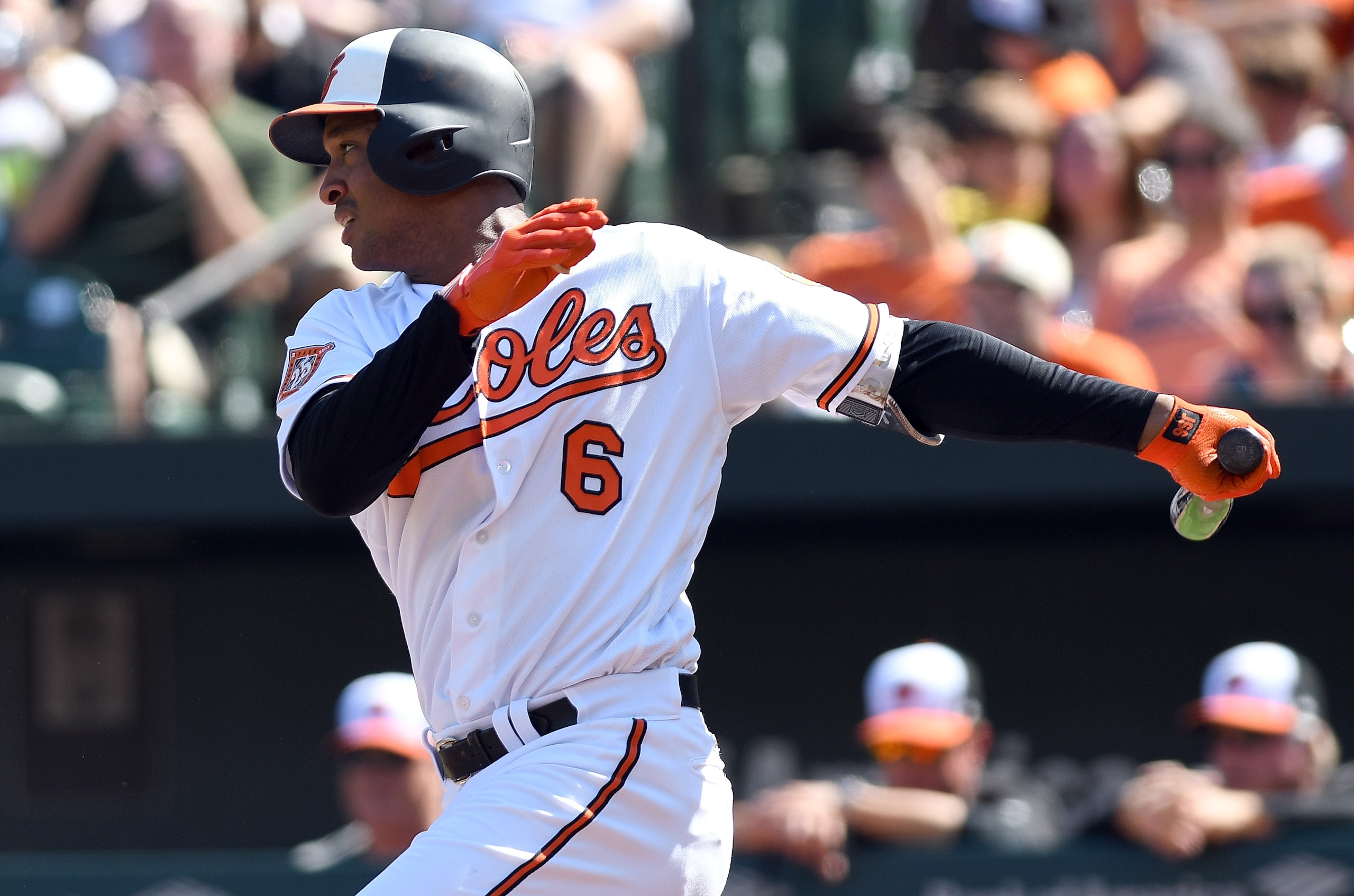
Age: 25
Key Stats: 160 G, 675 PA, .293/.338/.503, 123 OPS+, 32 HR, 1 SB, 2 DRS
WAR: 5.1
2017 Player Report
Suddenly, Jonathan Schoop became a star in 2017.
He always had the underlying talent for it, but he would waste too many swings in his previous life. He would chase anything, which only works if you can hit anything. To that end, he was no Vladimir Guerrero.
But this year, both Schoop's swing and chase rates were way down. That didn't fix everything that ailed his bat, but it allowed him to make more frequent use of a swing that already had a built-in knack for power via launch angle and exit velocity. All this year did was take it to another level.
On defense, Schoop is an exception to the rule of weak-armed second basemen. His arm is a gun, and it's a big reason he converted more double plays than anyone at his position. He also covered a good amount of ground for a guy his size (6'1", 225 lbs).
38. Anthony Rizzo, 1B, Chicago Cubs
18 of 55
Age: 28
Key Stats: 157 G, 691 PA, .273/.392/.507, 132 OPS+, 32 HR, 9 DRS
WAR: 4.4
2017 Player Report
He's Anthony Rizzo, so everyone should know the score by now. He's going to do a little of this, a little of that, and in the end, he'll have authored a terrific season.
But even Rizzo is capable of new tricks. This season saw him pull off the feat of walking more times (91) than he struck out (90). Getting there required pushing his strikeout rate south once again, which mainly involved chasing fewer pitches outside the zone.
It could be seen as a red flag that Rizzo's launch angle is trending down, but...nah. There's nothing wrong with a 15.3 degree launch angle, especially when it's paired with 88.1 mph exit velocity. He's catching more balls on the barrel, not fewer.
Defensively, a second straight Gold Glove would be well-earned. Rizzo has hands that make him a scoop maestro as well as the reactions and footwork to make outs that many first basemen don't get.
37. Gary Sanchez, C, New York Yankees
19 of 55
Age: 24
Key Stats: 122 G, 525 PA, .278/.345/.531, 126 OPS+, 33 HR, 0 DRS
WAR: 4.1
2017 Player Report
The extreme power tear that Gary Sanchez went on in 2016 turned out to be a sign of things to come.
He went fishing more often than is recommended but otherwise had all the ingredients for extreme power: a higher launch angle, excellent exit velocity and a way-above-average pull rate. He did crush some balls to right field, but he mostly spent the season crushing pitches to left.
It can't go unmentioned that Sanchez's defense got him benched in August. His 16 passed balls reflect poorly on him. This was allegedly caused by decreased flexibility after a winter of pumping iron but often seemed to be simple carelessness.
Yet his defense wasn't a disaster. He used his arm cannon to post a 38 percent caught stealing rate. And while there's room for improvement with his framing, he did secure a solid 85.6 percent of in-zone pitches for strikes.
36. Lorenzo Cain, CF, Kansas City Royals
20 of 55
Age: 31
Key Stats: 155 G, 645 PA, .300/.363/.440, 112 OPS+, 15 HR, 26 SB, 5 DRS
WAR: 5.3
2017 Player Report
Lorenzo Cain sprinted at an average of 29.1 feet per second in 2017. That's his fastest mark in three years of Statcast data, and he made the most of it.
With 26 stolen bases in only 28 tries and plenty of smaller baserunning plays, Cain was one of MLB's most productive baserunners, period. And DRS underrates his defense. His seven errors and poor throwing ratings aside, his speed and route-running produced 15 outs above average for Statcast. Only two players beat that.
All this is worth plenty of value even without any hitting to go with it. But Cain did that, too.
He recaptured his strong contact ability with a 15.5 percent strikeout rate and did so while aiming for more power with a higher launch angle and 89.2 mph exit velocity. If only he didn't favor the power-killing void that is center field so much, he would have been even more productive.
35. Josh Donaldson, 3B, Toronto Blue Jays
21 of 55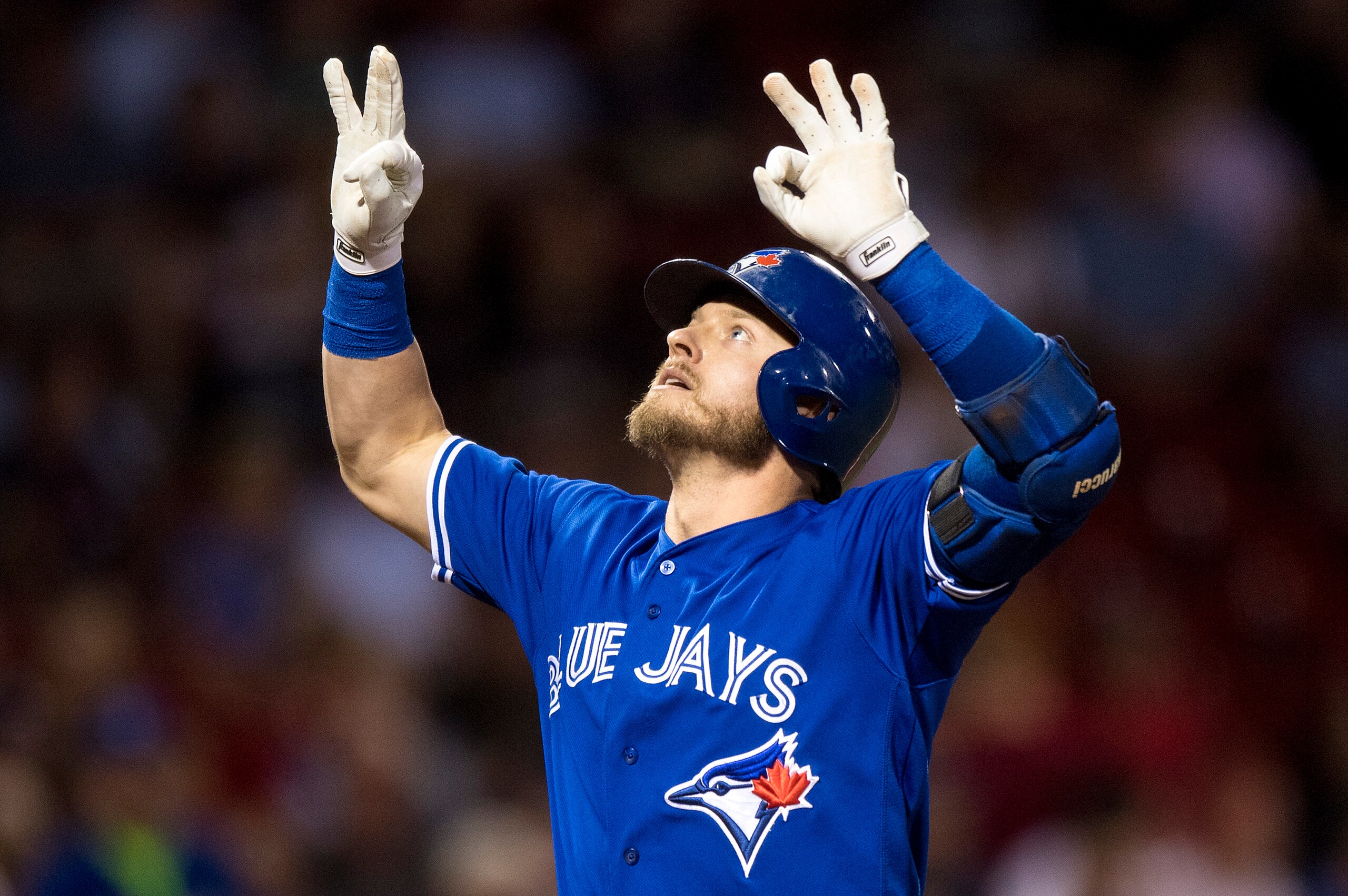
Age: 31
Key Stats: 113 G, 496 PA, .270/.385/.559, 144 OPS+, 33 HR, 1 SB, 3 DRS
WAR: 4.8
2017 Player Report
Josh Donaldson lost a good chunk of 2017 to a calf injury. And while he eventually recovered to post a strong offensive season, his defense took a hit and stayed hit.
When he was at his defensive peak, he played deep and let his energy, athleticism and arm strength guide him. But in 2017, he played even shallower and was largely restricted to making lower-difficulty plays. He wasn't bad by any stretch, but he was certainly diminished.
On the plus side, there is the aforementioned fact that Donaldson's bat continued to thrive.
He was extremely picky with his swings and drew a career-high 15.3 percent walk rate, but he also kept what's made him dangerous over the years: an uppercut swing that gets under the ball and produces good exit velocity. He especially had everything working in his final 56 games, finishing with a 1.103 OPS and 24 homers.
34. Justin Verlander, SP, Houston Astros
22 of 55
Age: 34
Key Stats: 33 G, 206 IP, 9.6 K/9, 3.1 BB/9, 1.2 HR/9, 75 OPS+, 133 ERA+
WAR: 6.3
2017 Player Report
Justin Verlander's ERA stood at 4.96 after a seven-run dud on July 2. Then came a whole new pitcher who looked like the old Justin Verlander.
He maintained a high-spin arsenal fronted by a high-velocity fastball (95.2 mph), but there was a change in how he paired his fastball with his slider. He started throwing the latter more often, and at lower speeds and to lower locations. It was a crafty ploy to increase his deception, and there's no arguing with the results.
His contact rate plummeted, as did his rate of hard contact. It led to a 1.92 ERA over his final 16 starts, a span in which his dominance was close to that of Corey Kluber's, as they each posted a top-six wOBA allowed.
33. J.D. Martinez, RF, Arizona Diamondbacks
23 of 55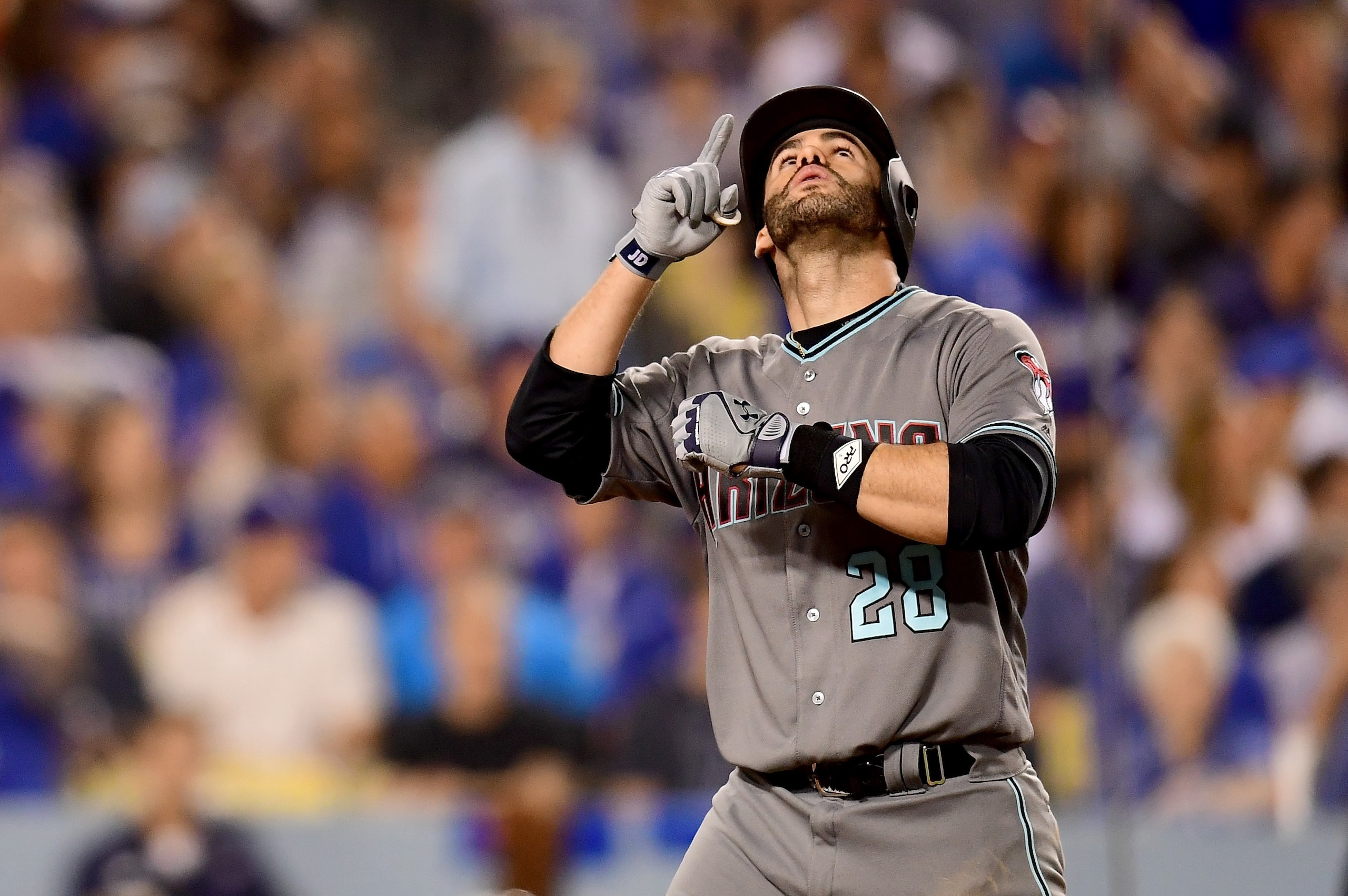
Age: 30
Key Stats: 119 G, 489 PA, .303/.376/.690, 166 OPS+, 45 HR, 4 SB, -5 DRS
WAR: 4.2
2017 Player Report
J.D. Martinez pulled no punches in telling FanGraphs' Travis Sawchik about his approach: "I'm not trying to hit a [bleeping] line drive or a freaking ground ball. I'm trying to hit the ball in the air."
This season featured a long list of hitters with higher fly-ball rates. But Martinez didn't waste what he did get airborne. His fly balls averaged 97.5 mph in exit velocity, good for seventh among qualified hitters. Aaron Judge may have barreled balls at a higher rate, but Martinez led everyone in hard contact rate.
And while Martinez is an aggressive swinger, he isn't reckless. His swing rate is declining, which allows him to mix in more walks with his power.
He doesn't live nearly as large outside the batter's box, but at least he didn't repeat his minus-22 DRS disaster from 2016. By playing deeper, he was able to keep more balls from going over his head.
32. Bryce Harper, RF, Washington Nationals
24 of 55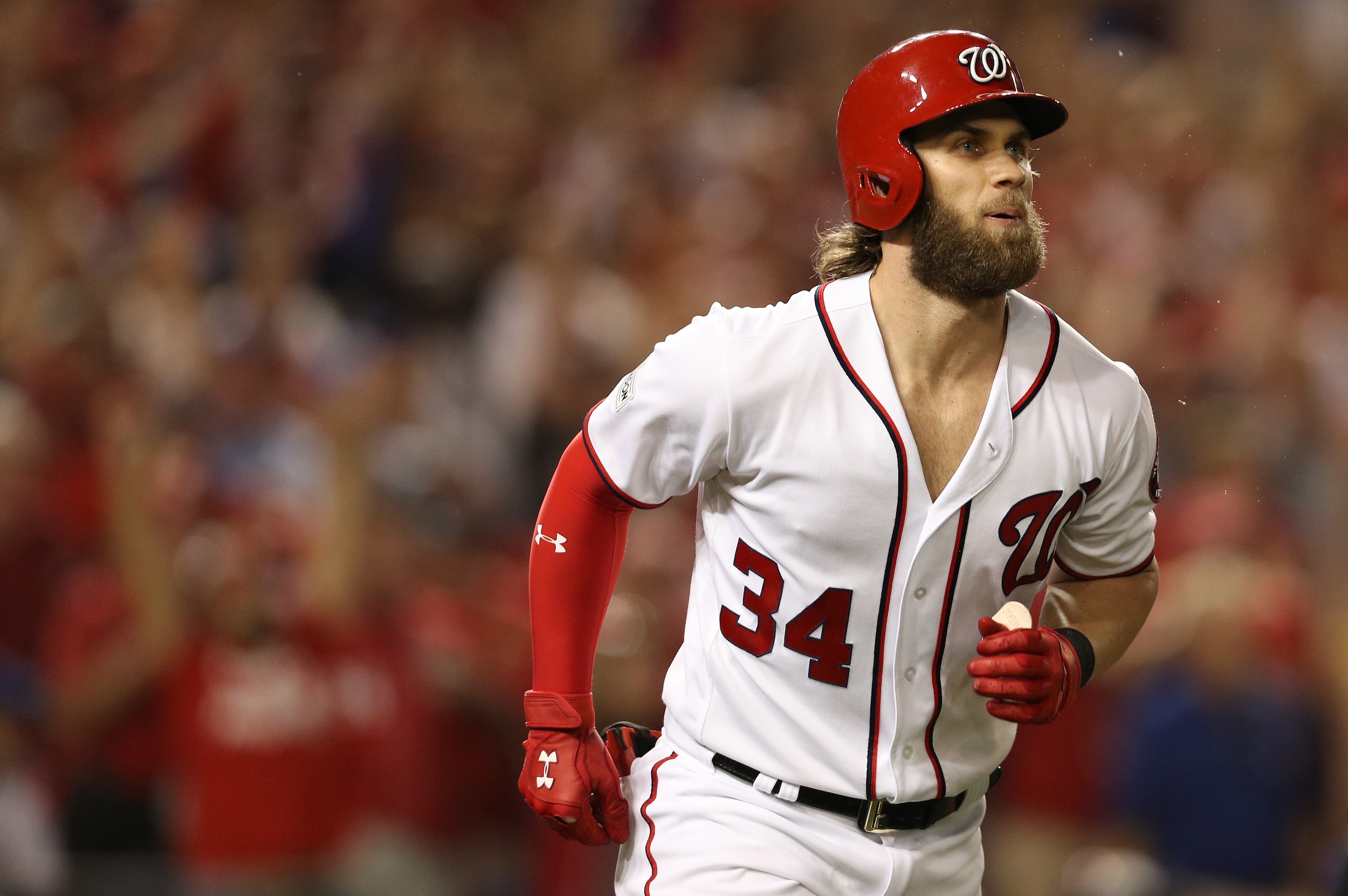
Age: 24
Key Stats: 111 G, 492 PA, .319/.413/.595, 157 OPS+, 29 HR, 4 SB, 4 DRS
WAR: 4.7
2017 Player Report
An August knee injury didn't end Bryce Harper's season, but it did end his chase for a second MVP award. Nonetheless, his 2017 beats the heck out of the struggle he endured in 2016.
His exit velocity improving from 88.6 mph to 90.6 mph likely had to do with his right shoulder being healthy, but it also helped that he erased the passivity that marred his 2016 hitting. He kept his good eye for the zone while getting back on the attack within the zone.
Although this hurt his walk and strikeout rates, his 13.8 percent walk rate, 20.1 percent strikeout rate and .703 in-zone slugging percentage made for a fair trade-off.
Harper's defense remained more good than great, but there was one noticeable difference. After playing progressively shallower in 2016, he moved back to his usual positioning in 2017. This presumably had to do with a healthy shoulder permitting his arm strength to return, but it also didn't hurt his range.
31. Justin Upton, LF, Los Angeles Angels
25 of 55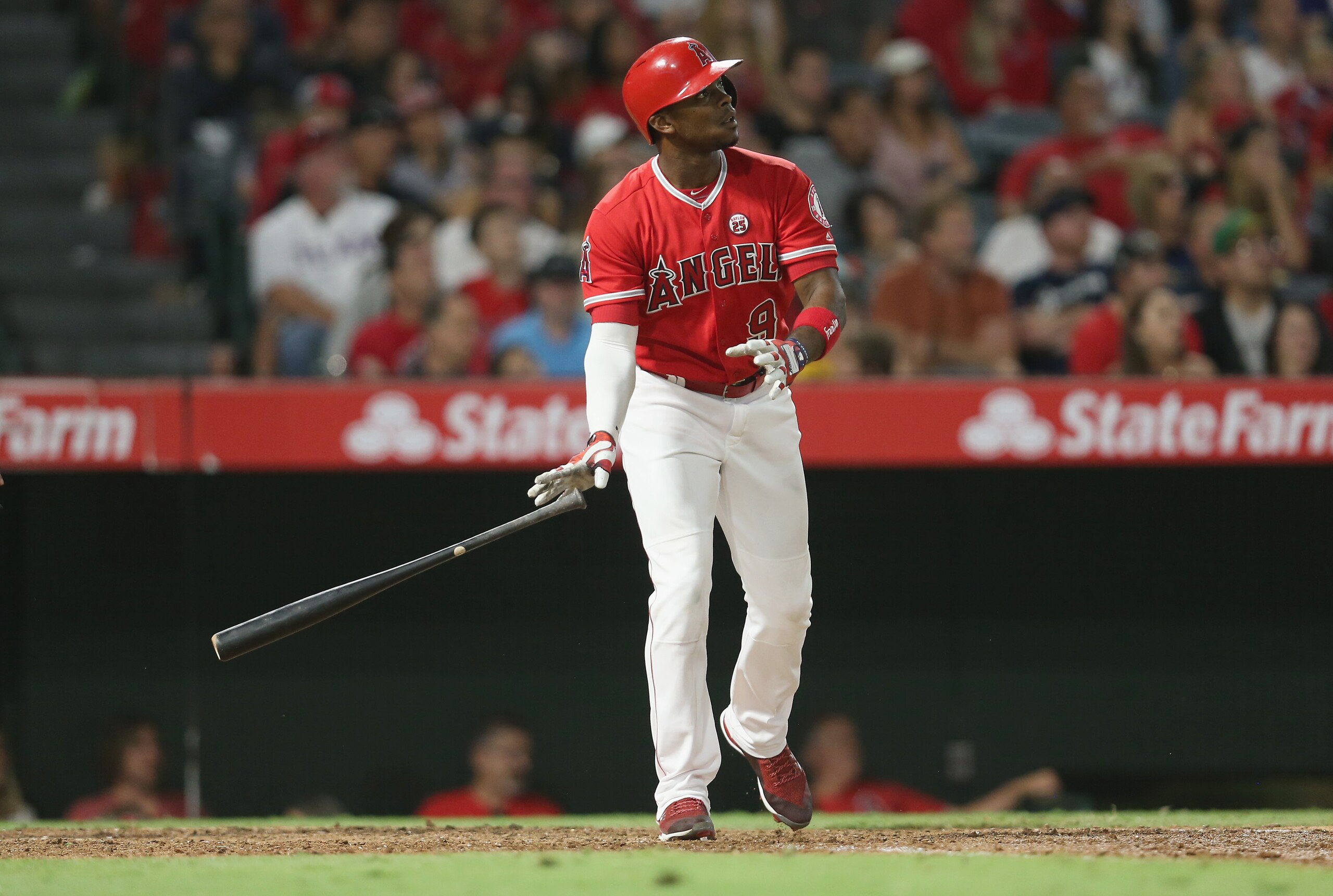
Age: 30
Key Stats: 152 G, 635 PA, .273/.361/.540, 135 OPS+, 35 HR, 14 SB, 8 DRS
WAR: 5.7
2017 Player Report
Justin Upton's seasons have tended to contain peaks and valleys that add up to an inconsistent experience. But in 2017, it was smooth sailing.
How? Well, he spoke amid his torrid finish to 2016 about how he was getting better at controlling his emotions during cold stretches. There's some evidence that continued into 2017. In keeping his swings clustered in the middle of the zone, he didn't try to force things as much as he did in previous years.
Otherwise, the only thing to say is that the dude is simply a good hitter. He may strike out (28.3 percent strikeout rate) more than he should, but his good eye (11.7 percent walk rate) and natural pop (88.8 mph exit velocity) are worth it.
Athletically speaking, Upton's speed and arm strength are no longer in peak form. But while DRS overstates his defensive quality, he runs and tracks balls better than the typical left fielder.
30. Gio Gonzalez, SP, Washington Nationals
26 of 55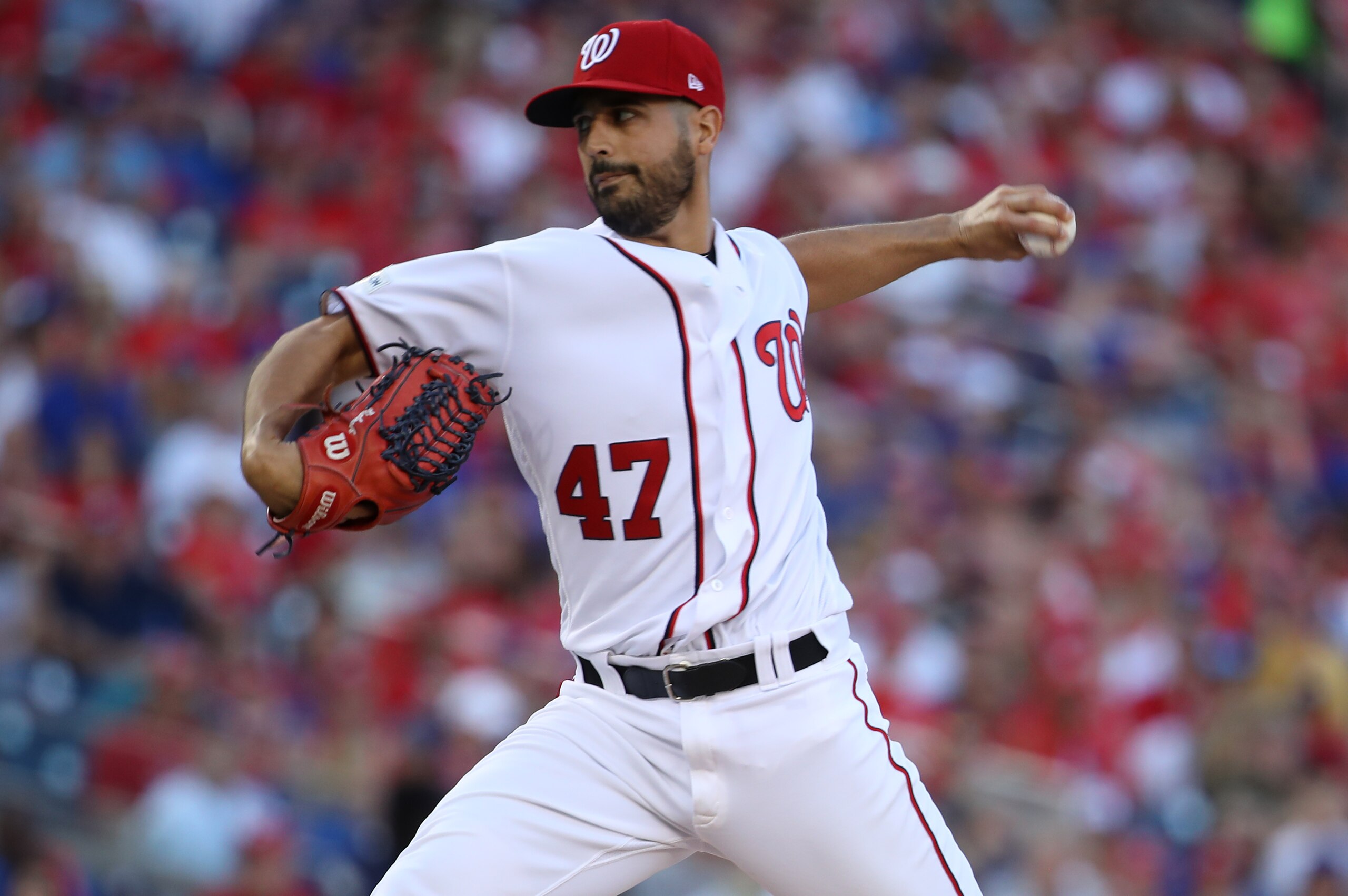
Age: 32
Key Stats: 32 G, 201 IP, 8.4 K/9, 3.5 BB/9, 0.9 HR/9, 70 OPS+, 150 ERA+
WAR: 6.5
2017 Player Report
Gio Gonzalez's NL-high 79 walks are a flaw that sticks out like a sore thumb. He also finished with a curiously high strand rate that makes it easy to wonder if he spent 2017 in Lady Luck's graces.
But if nothing else, there's no denying his curveball's ongoing excellence. It continued to look the part of an unhittable pitch and limited hitters to just a .161 average and five extra-base hits.
There were also more subtle changes working in Gonzalez's favor in 2017. He got his arm slot back down to 2012 levels and threw more pitches on the edges of the strike zone. One benefit was more hitters reached for contact, which helped drive his exit velocity south to 84.9 mph.
Granted, all this doesn't quite add up to a complete renovation that would turn Gonzalez into an ace. But it goes to show his excellent 2017 isn't without explanation.
29. Carlos Carrasco, SP, Cleveland Indians
27 of 55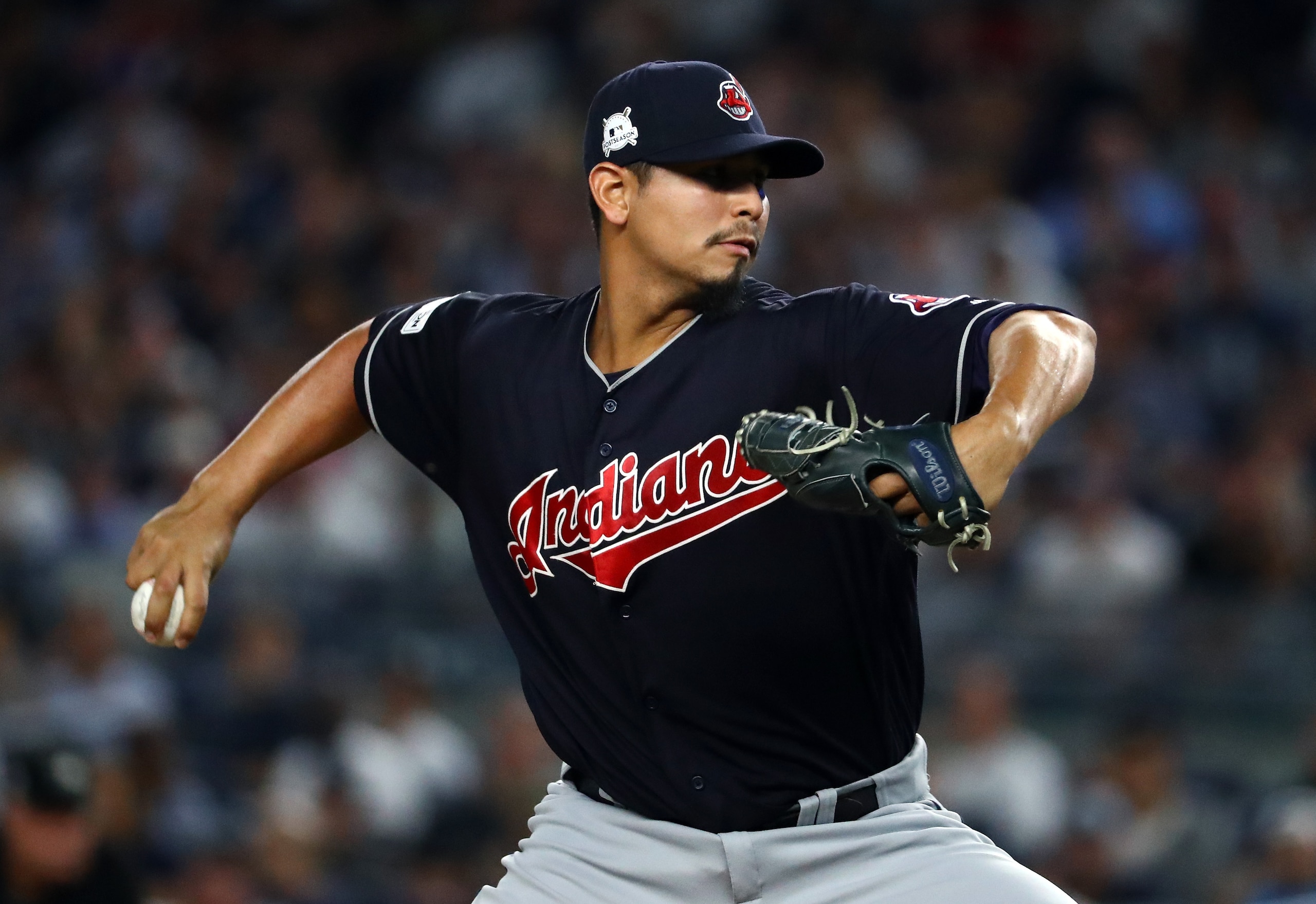
Age: 30
Key Stats: 32 G, 200 IP, 10.2 K/9, 2.1 BB/9, 0.9 HR/9, 74 OPS+, 139 ERA+
WAR: 5.4
2017 Player Report
When healthy, Carlos Carrasco was one of the best pitchers in the American League between 2014 and 2016. And in 2017, he was healthy all season.
The more detailed explanation for his success starts with what comes out of his hand. He worked off a 94.3 mph fastball and complemented it with three above-average secondaries: a biting slider, a diving changeup and a bendy curveball. Batters hit under .200 against all three.
One notable difference is how much more aggressive Carrasco was in the strike zone. The Cleveland Indians' excellent receivers enabled the move by leading the majors in percentage of pitches called strikes. His stuff also ensured that his rate of in-zone contact didn't budge. Even his exit velocity got better.
Basically, this was a case of an overpowering pitcher who decided not to mess around.
28. George Springer, CF, Houston Astros
28 of 55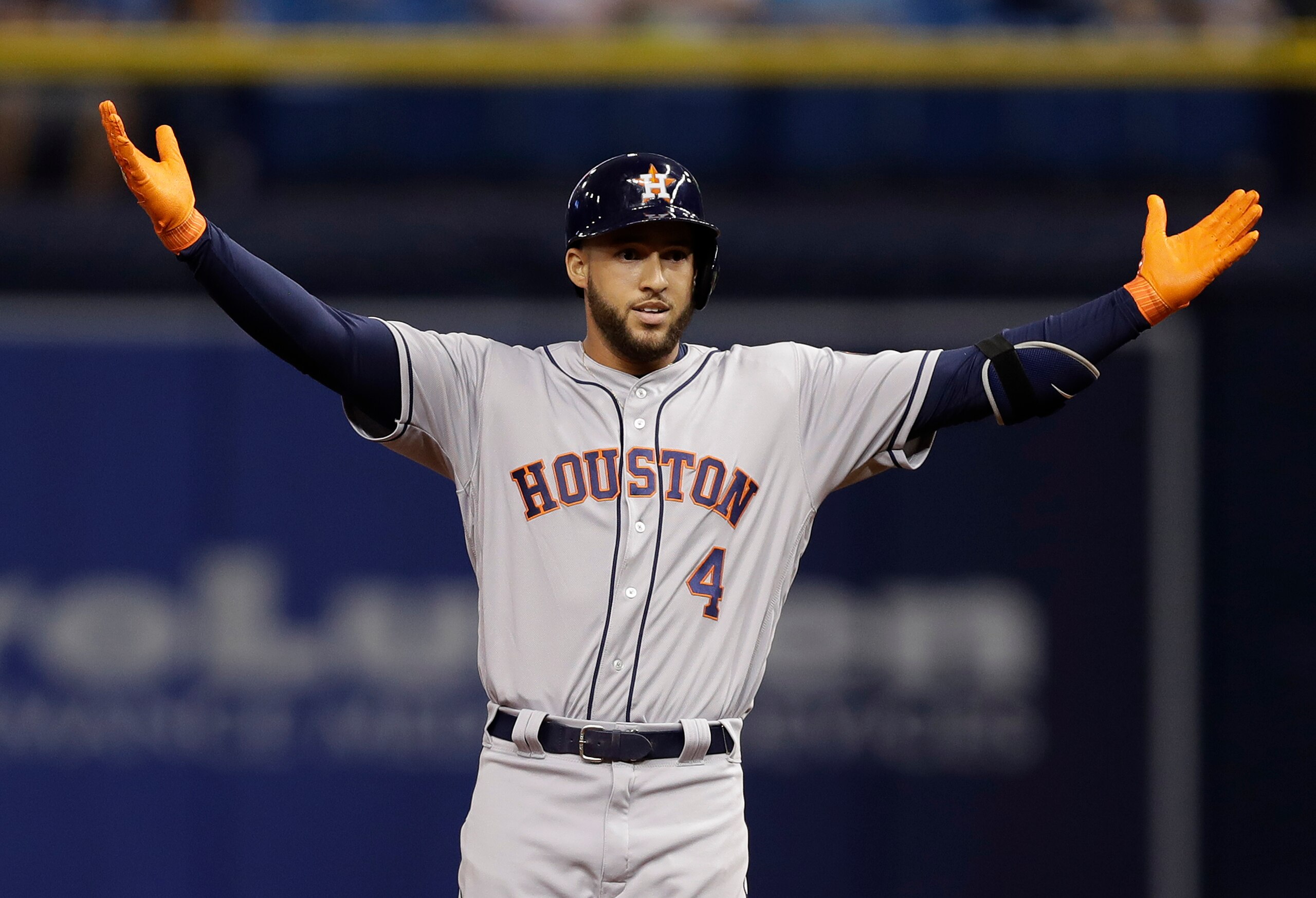
Age: 28
Key Stats: 140 G, 629 PA, .283/.367/.522, 144 OPS+, 34 HR, 5 SB, 5 DRS
WAR: 5.0
2017 Player Report
George Springer didn't need to change much to go from a good hitter to a great hitter.
He already had a disciplined approach and a swing that could really put a charge into the ball. All he did in 2017 was swing almost exclusively at mistake pitches where he could get his arms extended. Not surprisingly, he connected more often (17.6 percentage strikeout rate) and made plenty of hard contact.
The one negative of Springer's offensive surge is that his baserunning remained a sore spot. He already had tendencies to run into outs. Those stayed put despite the fact he got a tad less aggressive.
Springer's defense was similarly hit-or-miss but was more hit than miss when he played center field. He played much deeper than he did during his last full-time tour of center in 2015, yet still shallow enough to accommodate the Houston Astros' propensity for shallow fly balls. He also played a solid right field.
27. Zack Greinke, SP, Arizona Diamondbacks
29 of 55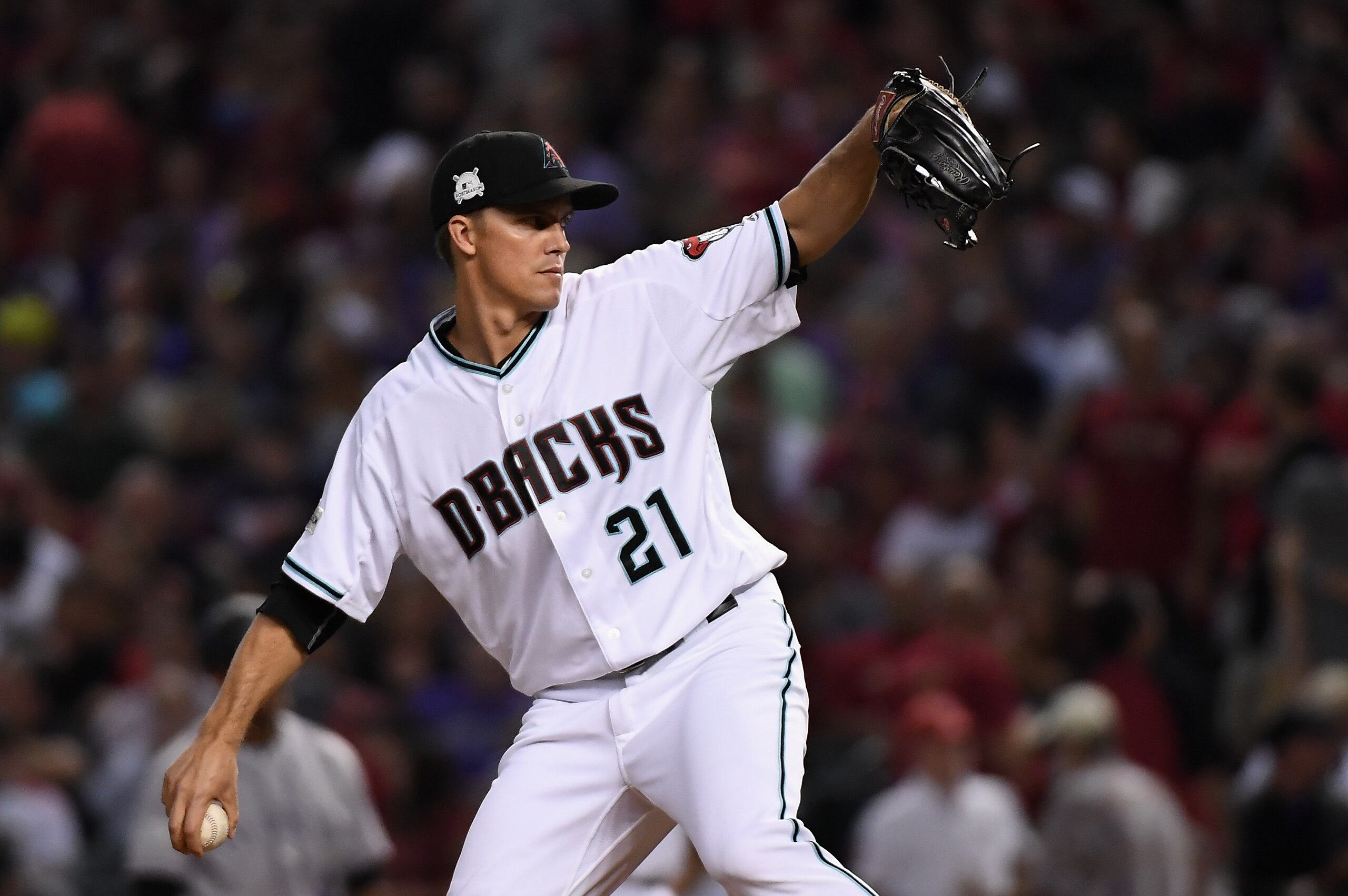
Age: 33
Key Stats: 32 G, 202.1 IP, 9.6 K/9, 2.0 BB/9, 1.1 HR/9, 68 OPS+, 149 ERA+
WAR: 6.1
2017 Player Report
How did Zack Greinke put a rough 2016 behind him? Partially through his catchers.
Arizona Diamondbacks backstops went from being among the worst at securing strike calls outside the zone in 2016 to being much better at it in 2017. This was of use to Greinke, who doesn't like to pitch inside the zone. He benefited accordingly from called strikes on an increased percentage of his pitches.
Of course, he's also responsible for his own success. Like clockwork, he continued to feed lefty and righty batters a steady diet of low-and-away offerings. Having to guard against that made bad swings inevitable, resulting in his turning more pitches outside the zone into outs than any other pitcher.
In so many words: Greinke succeeded better than anyone at beating batters on his pitches. He's crafty like that.
26. Clayton Kershaw, SP, Los Angeles Dodgers
30 of 55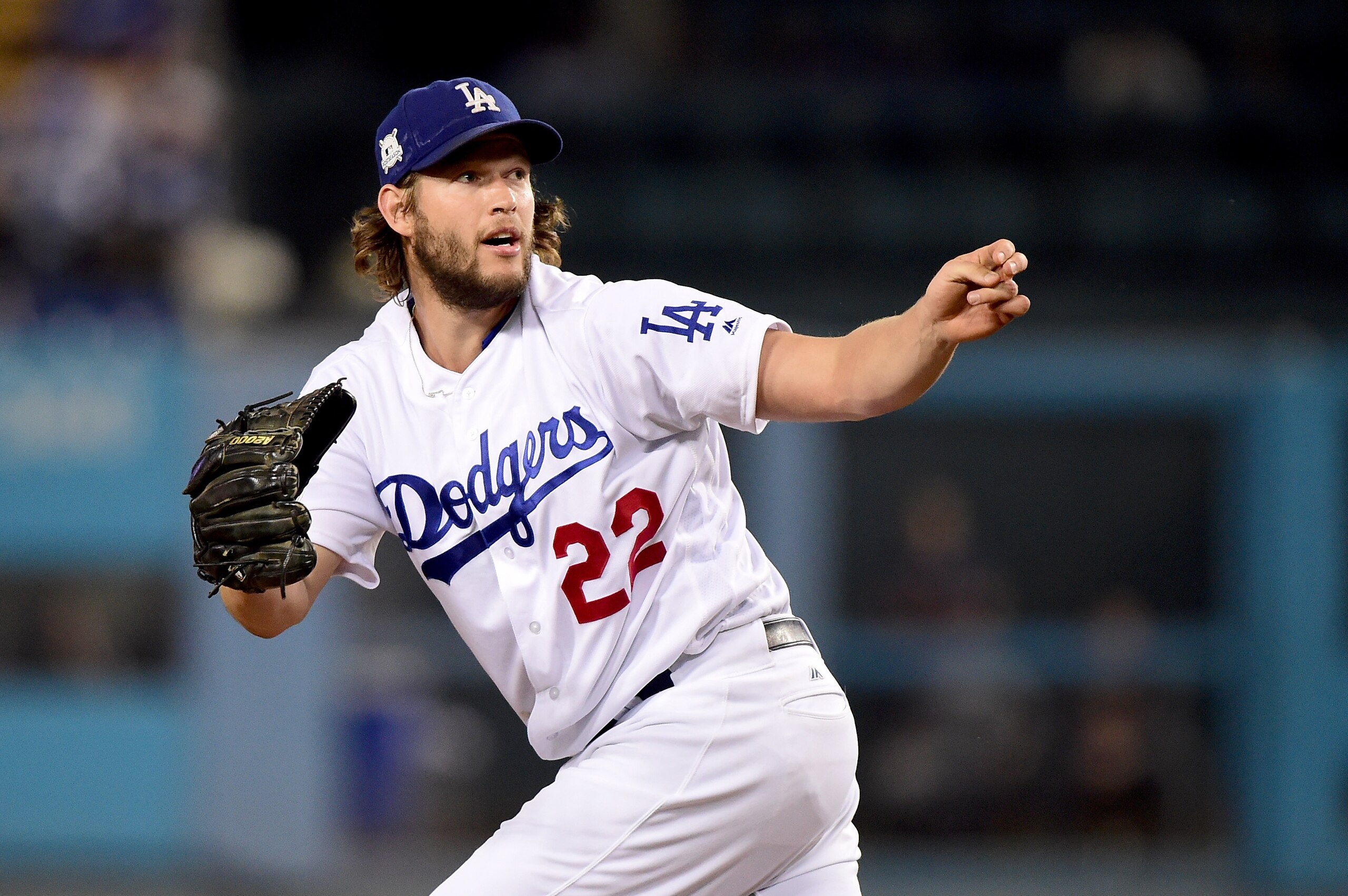
Age: 29
Key Stats: 27 G, 175 IP, 10.4 K/9, 1.5 BB/9, 1.2 HR/9, 62 OPS+, 180 ERA+
WAR: 4.6
2017 Player Report
The back injury that landed Clayton Kershaw on the DL for a few weeks is the big black mark on his 2017 season. His career-high home runs per nine innings is a lesser, yet still significant, black mark.
Otherwise, there's not much to complain about.
He continued to assault the strike zone with his hard (and rising) fastball and finish hitters off with his disappearing slider and optical-illusion curveball. The latter two pitches made him a late-movement wizard who avoided contact and suppressed good contact. Balls off him averaged just 84.6 mph.
Kershaw's succumbing to the injury and home run bugs lend credence to the question of whether he's still the best pitcher in baseball. There's still an excellent argument in favor of "Yes," though he wasn't quite up to his lofty standard in 2017.
25. Tommy Pham, LF, St. Louis Cardinals
31 of 55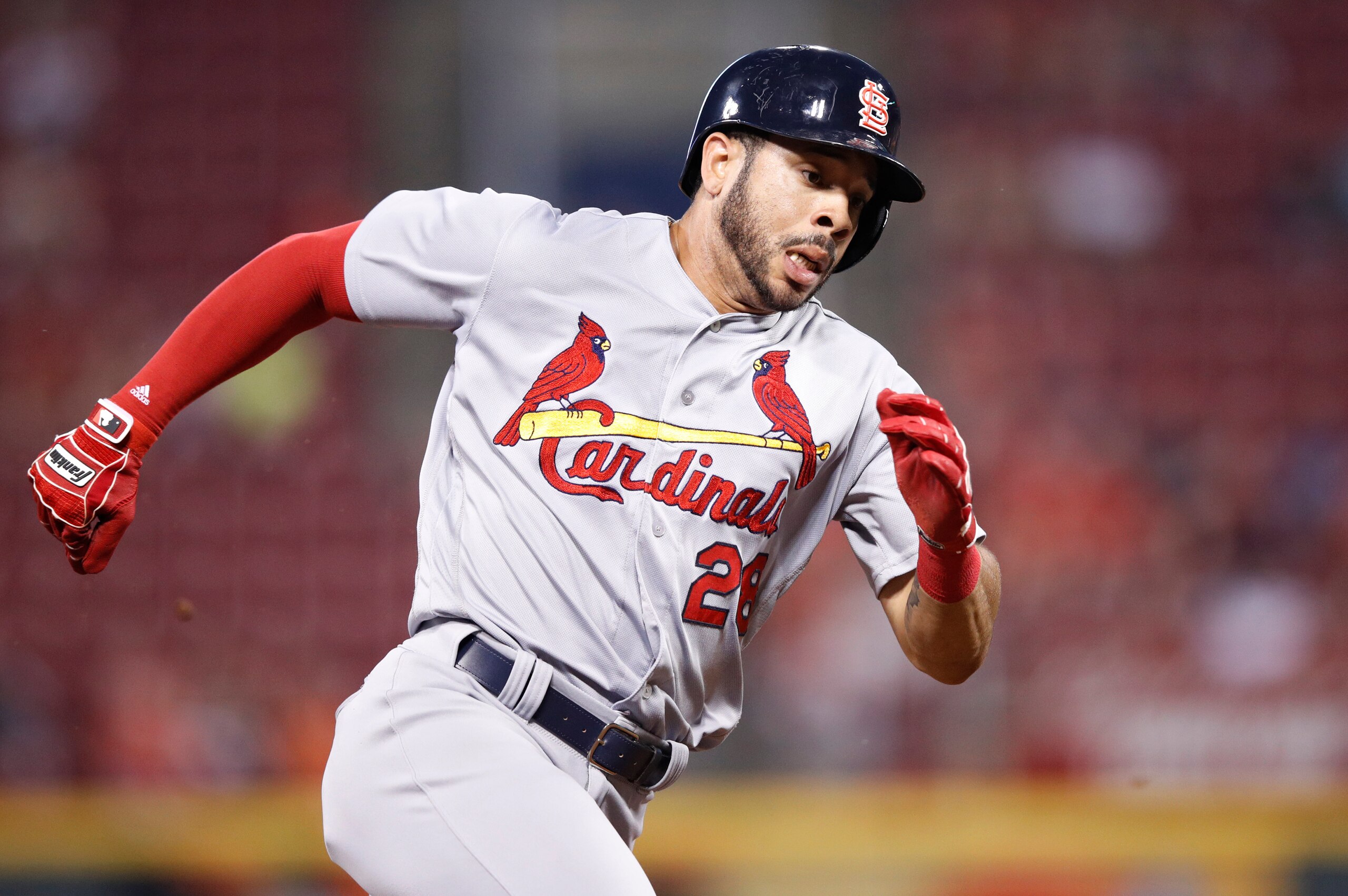
Age: 29
Key Stats: 128 G, 530 PA, .306/.411/.520, 144 OPS+, 23 HR, 25 SB, 10 DRS
WAR: 6.4
2017 Player Report
Despite a setback in September, Tommy Pham spent 2017 reaping the benefits of being able to see clearly.
He was one of the best in MLB at not chasing outside the zone. That helped boost his walk rate to 13.4 and drop his strikeout rate to 22.1, and it also allowed for better use of a swing that had always packed a punch. This wasn't his hardest-hitting year, but his 89.2 mph exit velocity is still impressive.
In addition to a dangerous bat, Pham also put his speed to good use. Although he got caught stealing seven times, his 25 steals and extra aggression made up for that.
He also covered plenty of ground both in left field and in center field. Just don't expect him to tally eight assists again, however, as his arm isn't as strong as that number makes it look.
24. Marcell Ozuna, LF, Miami Marlins
32 of 55
Age: 26
Key Stats: 159 G, 679 PA, .312/.376/.548, 145 OPS+, 37 HR, 1 SB, 11 DRS
WAR: 5.8
2017 Player Report
Marcell Ozuna played the full year and went from being frustratingly inconsistent to just plain great from start to finish.
Whether he could achieve such consistency never was a question of if he could punish the ball. He's always had a knack for loud contact, and it continued with 90.7 mph exit velocity and long home runs in 2017.
Like Avisail Garcia, the big difference involved Ozuna being more aggressive within the strike zone. That helped attract more walks (9.4 percent walk rate) and generally made it easier for him to apply his considerable strength.
Ozuna again wasn't much of a baserunner despite his speed, but moving to left field turned him into a defensive asset. His speed and excellent arm played a lot better there than they had in center field.
23. Justin Turner, 3B, Los Angeles Dodgers
33 of 55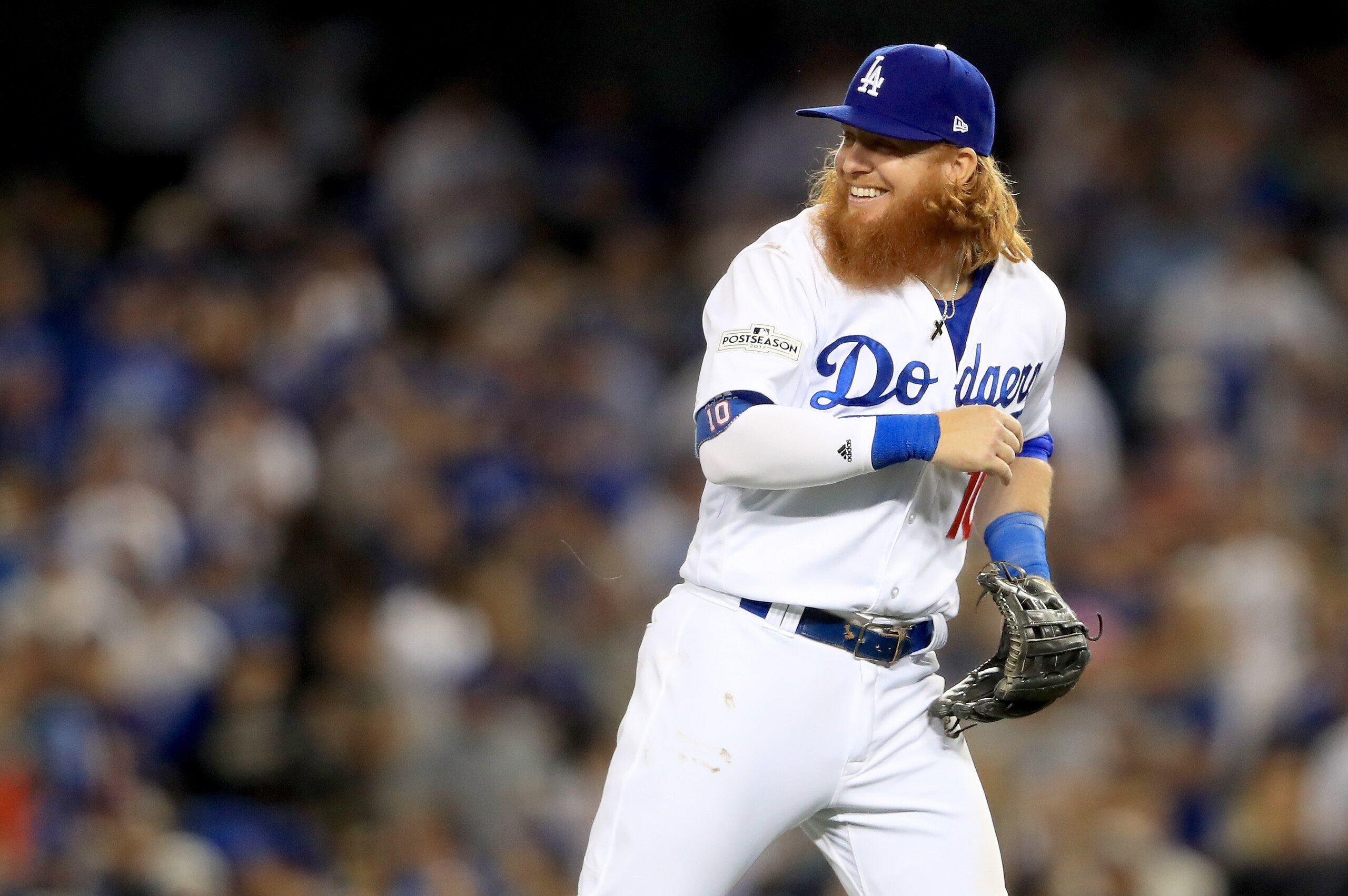
Age: 32
Key Stats: 130 G, 543 PA, .322/.415/.530, 149 OPS+, 21 HR, 7 SB, 6 DRS
WAR: 5.7
2017 Player Report
This isn't much of a secret by now, but Justin Turner is really into the Fly Ball Revolution.
"You can't slug by hitting balls on the ground," he told Dave Sheinin of the Washington Post. "You have to get the ball in the air if you want to slug, and guys who slug stick around, and guys who don't, don't."
Thus, Turner's launch angle keeps getting higher and his ground-ball rate keeps getting lower. But unlike many modern hitters, Turner doesn't let his search for power take away from his consistency. He's selective with his swings and capable of working walks (10.9 percent walk rate) but also puts the ball in play (10.3 percent strikeout rate).
The fact that he's also a capable defender mainly stems from how he locks down on routine plays. That's his reward for marrying his fringy tools to extremely shallow positioning, with the only downside being roughly average range.
22. Paul Goldschmidt, 1B, Arizona Diamondbacks
34 of 55
Age: 30
Key Stats: 155 G, 665 PA, .297/.404/.563, 140 OPS+, 36 HR, 10 DRS
WAR: 5.8
2017 Player Report
Paul Goldschmidt generated 4.8 WAR in a "down" year in 2016. He was back up again in 2017—and how.
His foundation is a selective approach that earns walks (14.1 percent walk rate) and keeps his strikeout rate (22.1 percent strikeout rate) from getting out of hand. Maybe he got slightly passive with his in-zone swings in 2016, but no matter. He was more aggressive in 2017 and benefited with a career-best .710 in-zone slugging percentage.
His swing is too direct for launch angle, but it has enough loft to avoid wasting the considerable exit velocity he generates (91.4 mph). At FanGraphs, 44.3 percent of his batted ball registered as "hard." Only Aaron Judge and Joey Gallo did better.
Goldschmidt was also an elite baserunner by way of 18 steals and more under-the-radar aggression. And with good hands and range working for him, he was arguably the best defensive first baseman in MLB this year.
21. Charlie Blackmon, CF, Colorado Rockies
35 of 55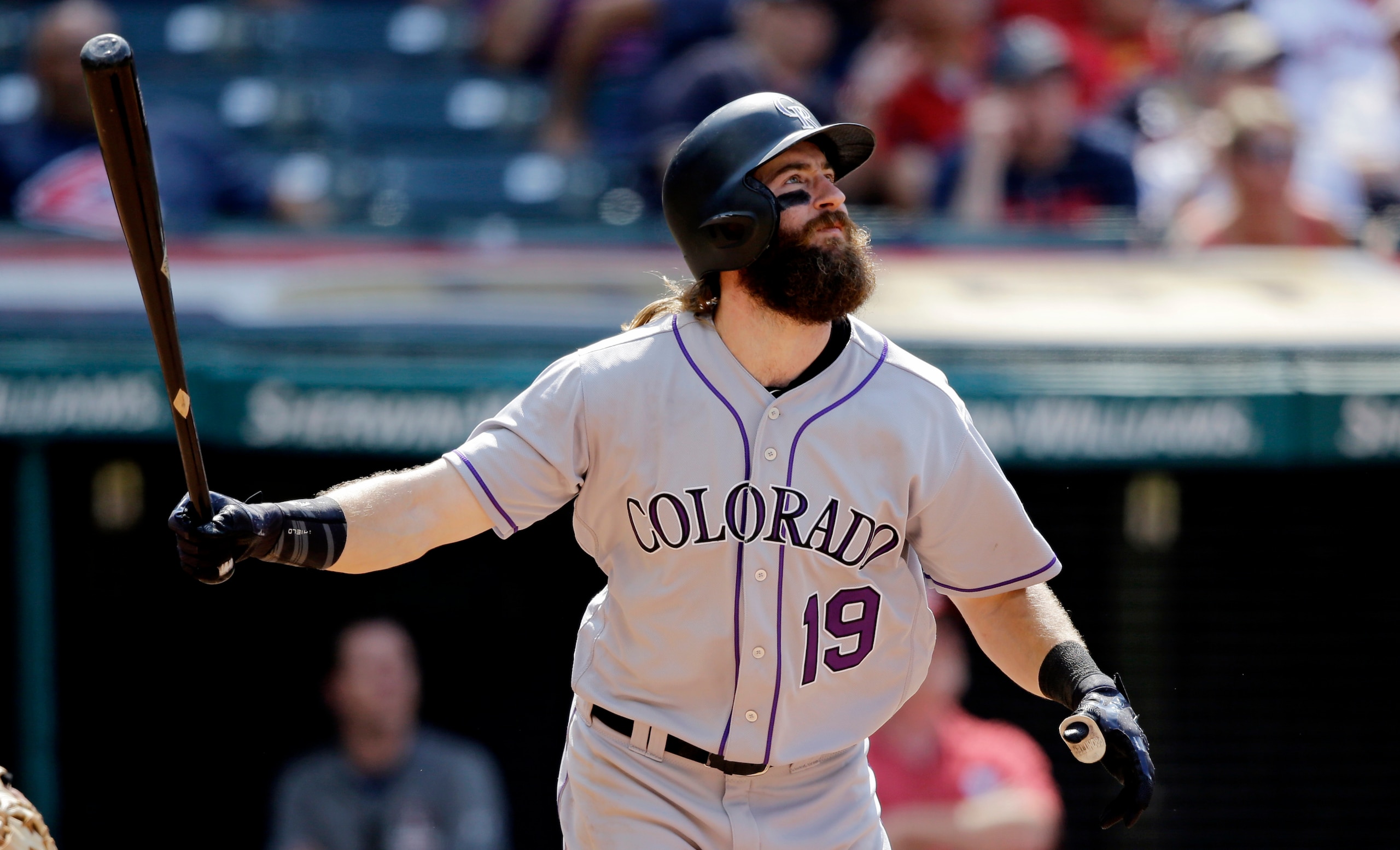
Age: 31
Key Stats: 159 G, 725 PA, .331/.399/.601, 142 OPS+, 37 HR, 14 SB, -5 DRS
WAR: 6.0
2017 Player Report
There's no ignoring that Charlie Blackmon was significantly better at home (1.239 OPS) than he was on the road (.784 OPS) this season. However, he wasn't entirely a Coors Field creation.
He found an equilibrium with his approach that resulted in unleashing his fury at pitches in the heart of the zone. That's a great way to make contact, so it's no wonder his hard contact rate continued its upward trend.
Elsewhere, DRS is too unkind about his defense. It makes his arm look worse than it actually is and doesn't give him enough credit for solid fly-ball catching skills. He got to plenty, and what he didn't get to was mostly long shots.
One legit gripe is that his baserunning has declined. Although he's still fast, he isn't as prolific stealing bases as he used to be and hasn't gotten better at avoiding outs.
20. Carlos Correa, SS, Houston Astros
36 of 55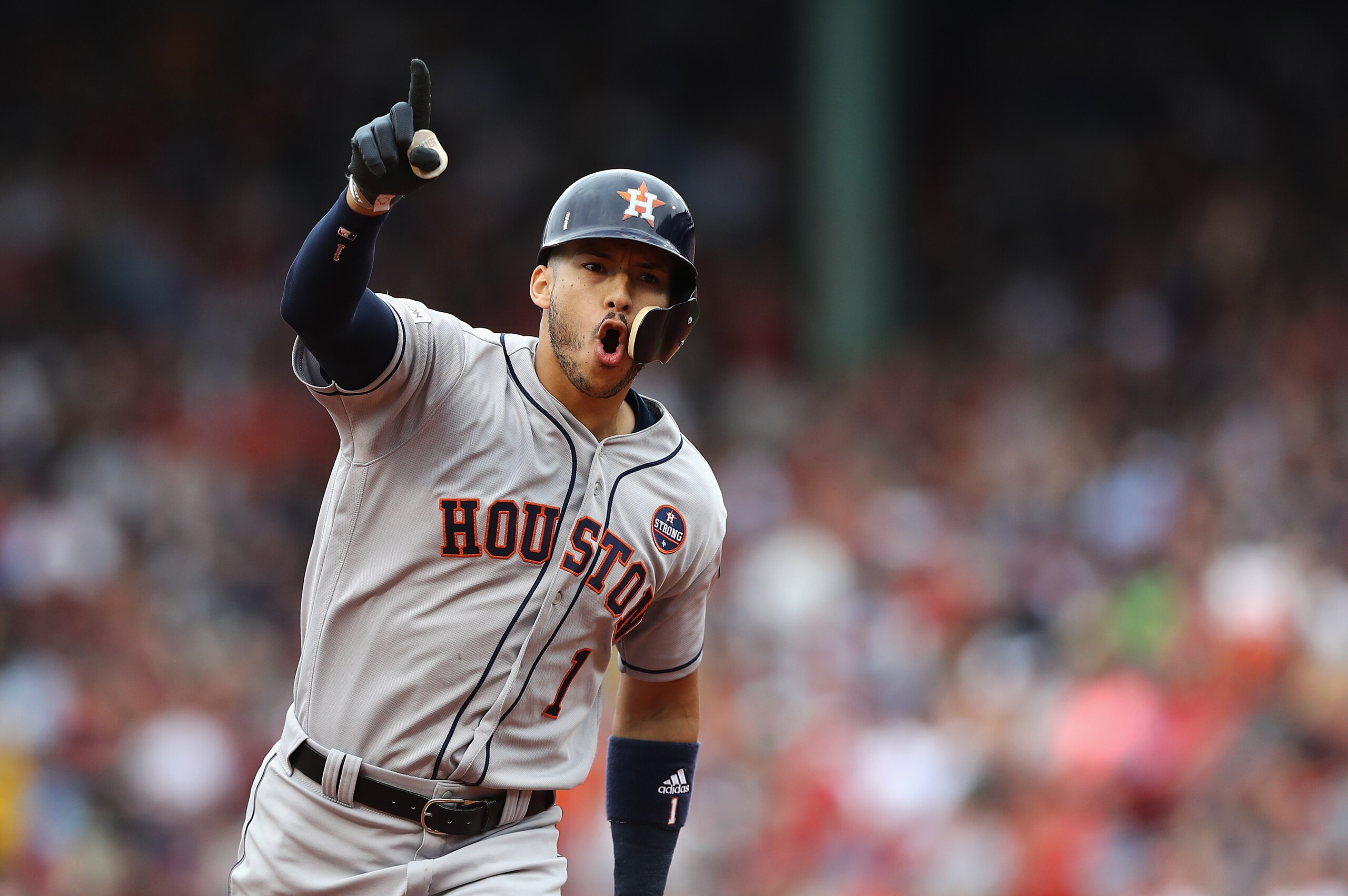
Age: 23
Key Stats: 109 G, 481 PA, .315/.391/.550, 158 OPS+, 24 HR, 2 SB, 4 DRS
WAR: 6.3
2017 Player Report
A thumb injury sidelined Carlos Correa for six weeks. Otherwise, 2017 would have been his most fruitful season yet.
He was already equipped with good selectivity and as much raw power as any shortstop. But this year he did a better job of applying the latter with a higher launch angle and more liberal use of the whole field. In the end, he worked an 11.0 percent walk rate, a 19.1 percent strikeout rate and rocketed balls in all directions.
Correa's DRS is likely generous, but playing a step deeper than where he started has been for the best. He has the arm for it, and having more time to react has helped make him more reliable on routine plays.
The one area of Correa's game that went backward in 2017 was his baserunning. But next to his elite hitting and consistent defense, that's an acceptable sacrifice.
19. Corey Seager, SS, Los Angeles Dodgers
37 of 55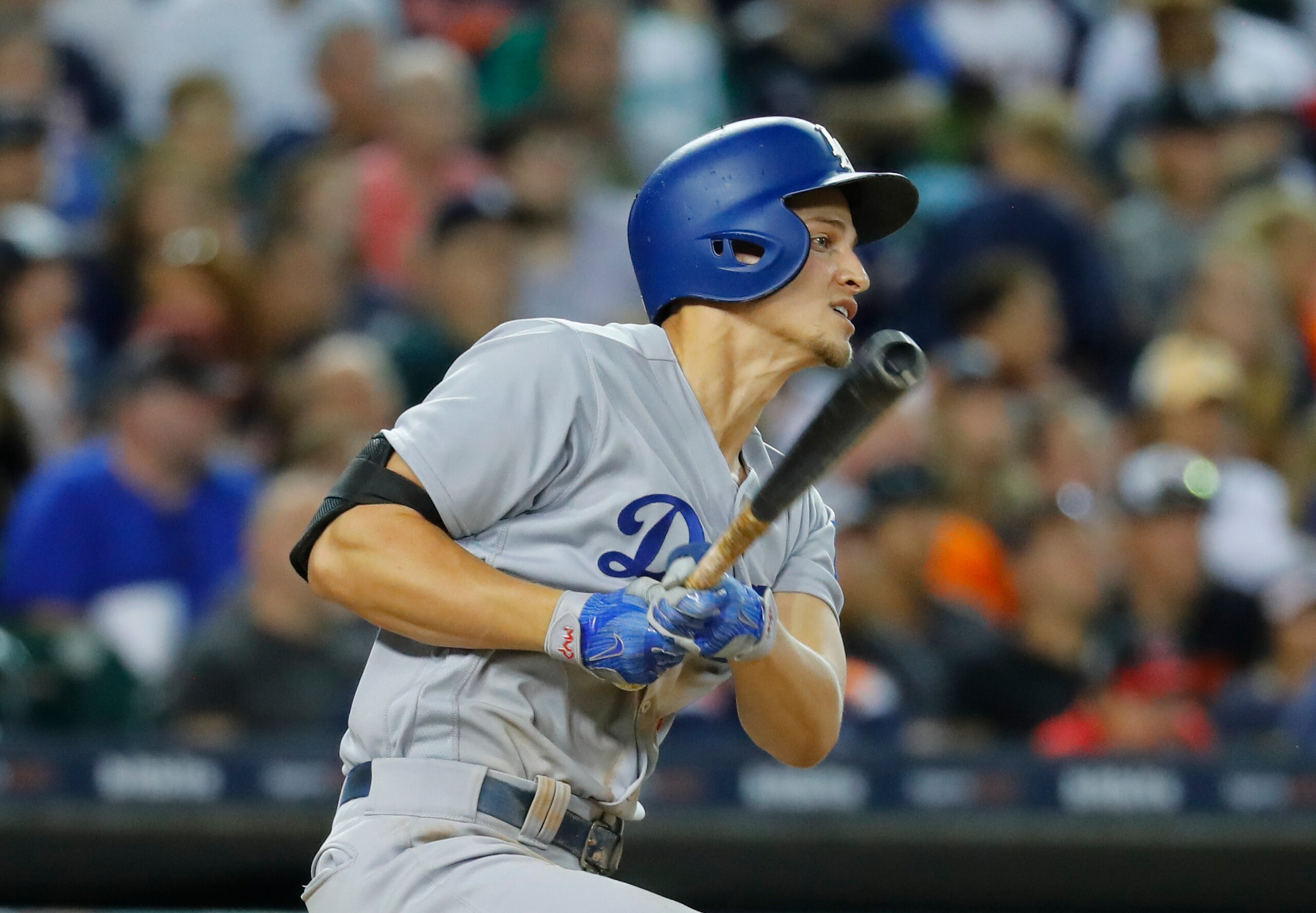
Age: 23
Key Stats: 145 G, 613 PA, .295/.375/.479, 125 OPS+, 22 HR, 4 SB, 10 DRS
WAR: 5.6
2017 Player Report
Not that Corey Seager needed to get better after winning the NL Rookie of the Year and contending for the NL MVP in 2016, but it's to his credit that he didn't get worse.
Improved discipline helped him boost his walk rate from 7.9 to 10.9, and what was already an excellent feel for the barrel got even better. He had a higher launch angle, about the same exit velocity and, lo and behold, a higher hard-hit rate than everyone except Paul Goldschmidt, Aaron Judge and Joey Gallo.
What Seager lacks in sprint speed he continued to make up for with smarts. Not counting caught-stealings, he ran into just two outs all year. There's value in that kind of risk-aversion.
Defensively, it's counterintuitive that a big guy with a strong arm would be playing closer to home plate every year. But his long strides and long reach do give him more range than expected, and it's not hurting him on routine plays.
18. Luis Severino, SP, New York Yankees
38 of 55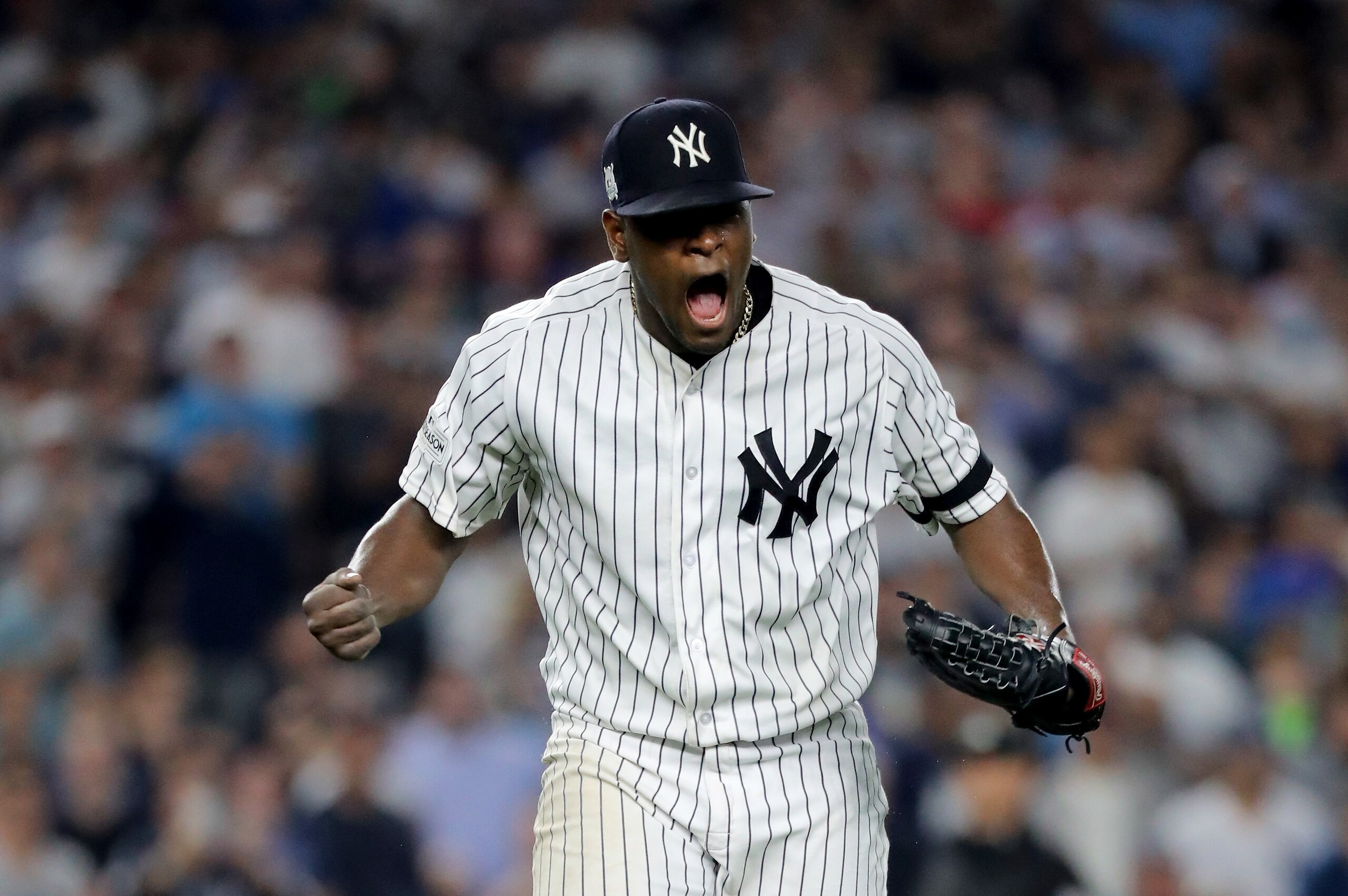
Age: 23
Key Stats: 31 G, 193.1 IP, 10.7 K/9, 2.4 BB/9, 1.0 HR/9, 58 OPS+, 152 ERA+
WAR: 5.4
2017 Player Report
No starter had a speedier offering than Luis Severino's 97.6 mph fastball. Moreover, he was somehow throwing harder at the end of the year than he was at the start.
A fastball like that comes with a wide margin for error, so it's no wonder that—courtesy of a more consistent release point—he was more aggressive in the strike zone than any AL starter. Beyond having to protect against his extreme velocity, hitters also had to watch out for his electric slider and changeup.
It all added up to an overpowering experience. Severino finished the year with an elite contact rate, as well as above-average batted ball rates pretty much across the board: ground balls, pop-ups and hard-hit.
In any other year, his breakout season would be good enough for a Cy Young. Good thing for him it's just the beginning.
17. Buster Posey, C, San Francisco Giants
39 of 55
Age: 30
Key Stats: 140 G, 568 PA, .320/.400/.462, 129 OPS+, 12 HR, -1 DRS
WAR: 4.0
2017 Player Report
Once one of MLB's most celebrated players, Buster Posey is now one of MLB's most underappreciated players.
He may not be getting in on MLB's power craze, but any guy who can rock an average over .300 with a .400 OBP is living right in his own way. In 2017, Posey's way involved fine-tuning his approach to produce nearly as many walks (61) as strikeouts (66) with swings that produced solid contact to all fields.
Elsewhere, don't put too much stock into that number in the DRS column.
Posey's framing did take a tumble, as he just couldn't get strikes outside the zone like he did in 2015 and 2016. But he allowed only one passed ball and also controlled the running game with a 38 percent caught stealing rate. And as per usual, he played a solid first base when he wasn't catching.
Let there be no debate about it: This guy is the best catcher there is.
16. Kris Bryant, 3B, Chicago Cubs
40 of 55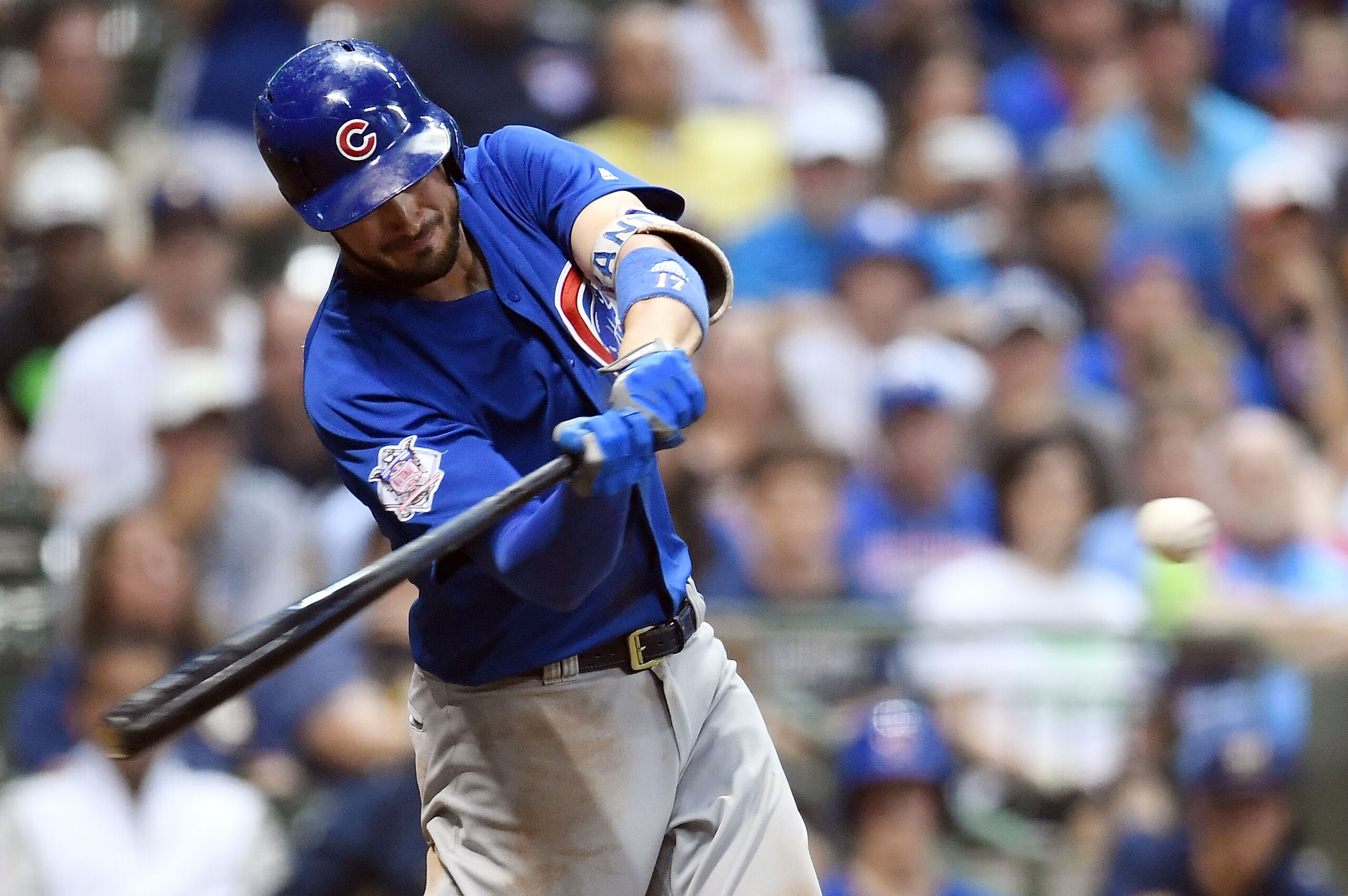
Age: 25
Key Stats: 151 G, 665 PA, .295/.409/.537, 143 OPS+, 29 HR, 7 SB, 1 DRS
WAR: 6.1
2017 Player Report
Kris Bryant spoke in 2016 about wanting to flatten his swing as a means to gain consistency. This was the year he actually did it.
He got his launch angle down from 20.9 degrees to 17.0 degrees. This plus better discipline helped drive his strikeout rate below the MLB average at 19.2. Less power was the trade-off, sure, but 6'5" monster men like Bryant can only lose so much power no matter what they do.
Not to be overlooked is how he also remained one of the fastest third basemen in the business with an average sprint of 28.2 feet per second. He mainly funneled his speed into aggressive running on hits.
On defense, whether third base is even Bryant's best position and whether he should play it so shallow are good questions. But thanks to his athleticism and strong arm, he does enough at the hot corner to downplay such questions.
15. Anthony Rendon, 3B, Washington Nationals
41 of 55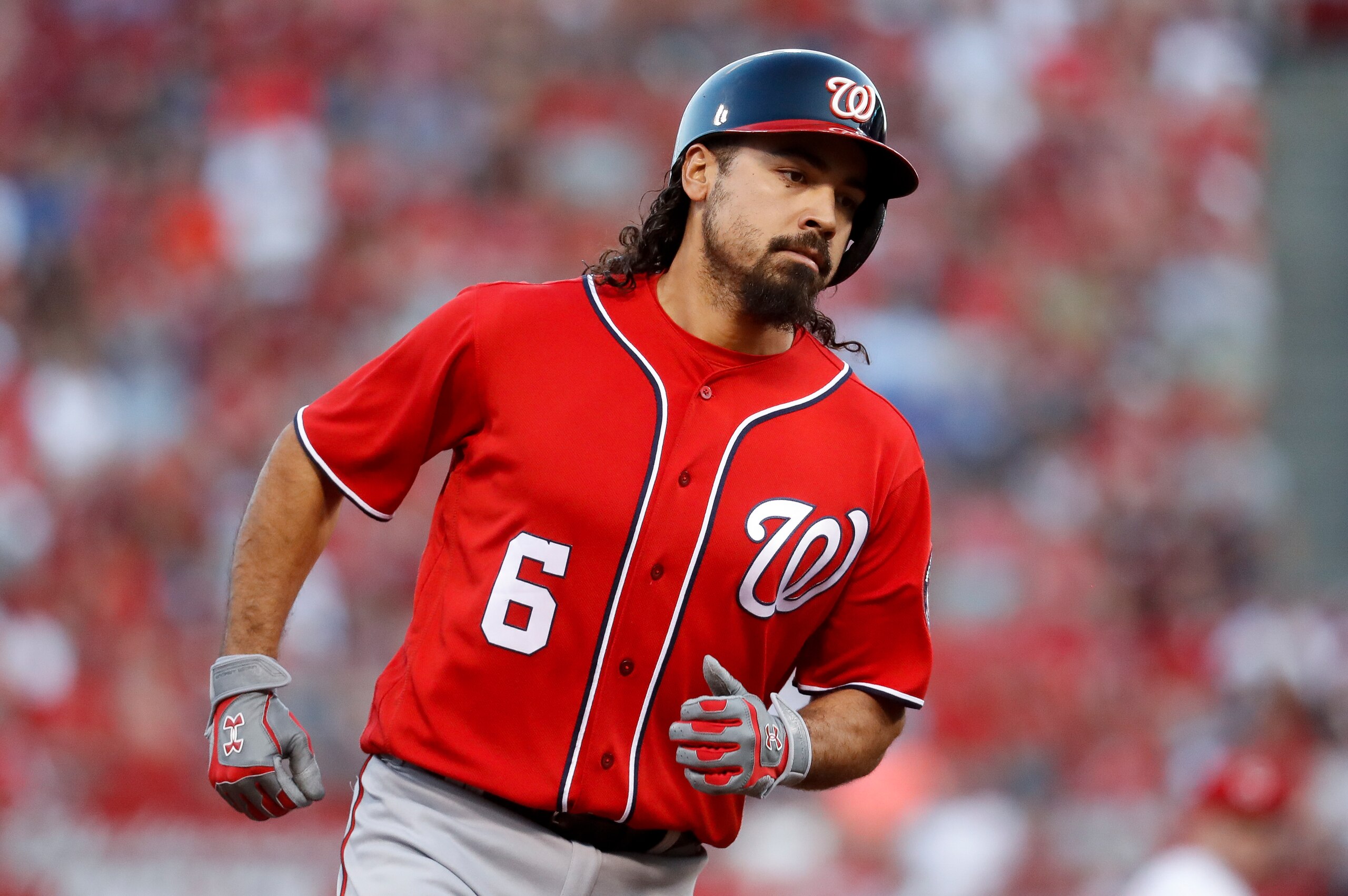
Age: 27
Key Stats: 147 G, 605 PA, .301/.403/.533, 140 OPS+, 25 HR, 7 SB, 7 DRS
WAR: 5.9
2017 Player Report
There's a clear rule of thumb developing with Anthony Rendon: When he's healthy, he's really good.
He's always been an interesting hitter and became a downright great hitter in 2017. The changes he made were subtle, but he produced a more disciplined approach, even more contact and a higher launch angle that unlocked his power.
To further push the envelope, Rendon mixed in his usual solid work on the basepaths and excellent defense at third base.
Although he doesn't get the attention of a Nolan Arenado or a Manny Machado, Rendon's fielding is legit. He has keen instincts for the right way to play every ball—especially ones he has to come in on—and he finishes plays off with athletic movements, quick hands and a good (if not quite great) arm.
14. Stephen Strasburg, SP, Washington Nationals
42 of 55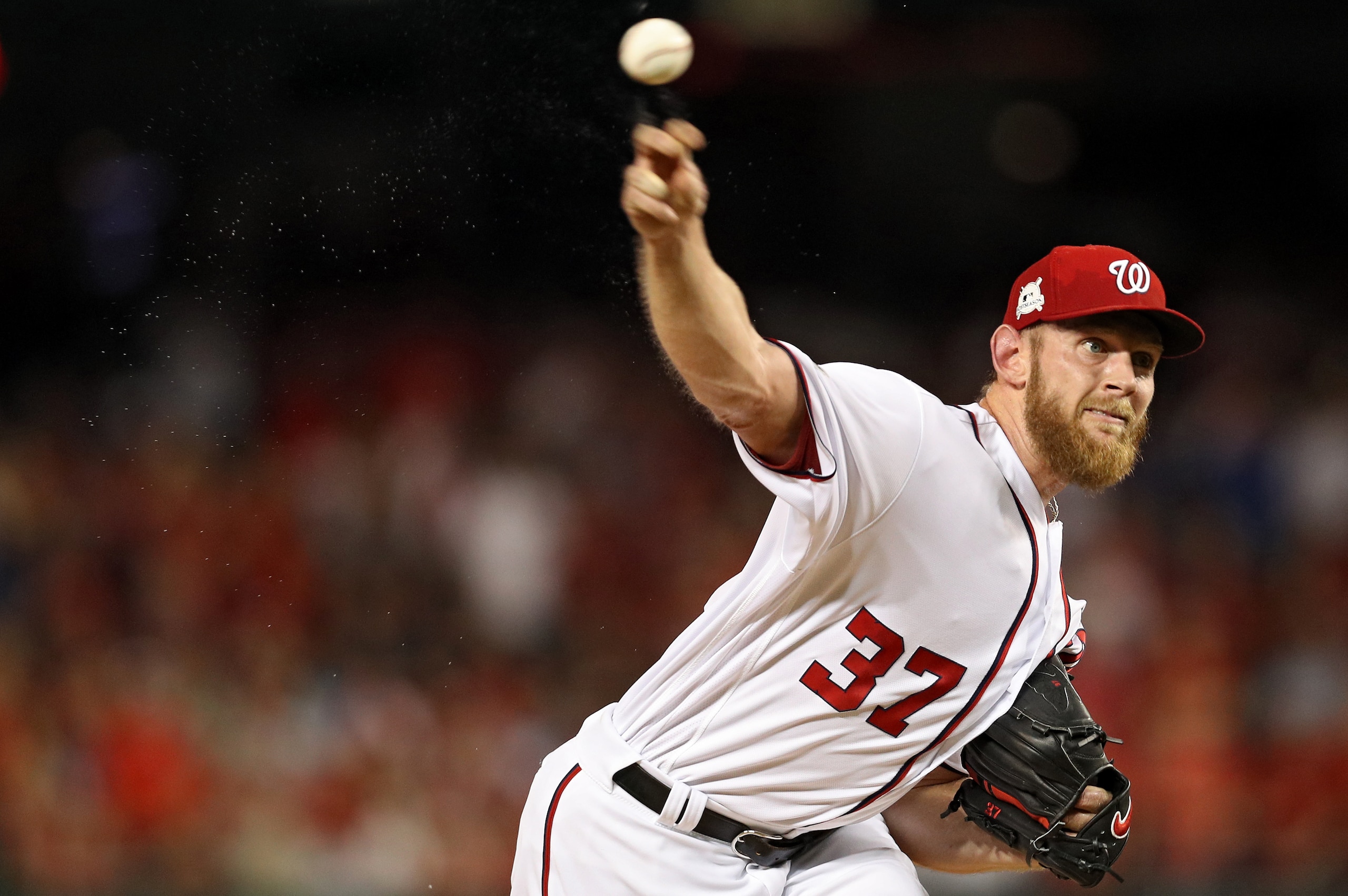
Age: 29
Key Stats: 28 G, 175.1 IP, 10.5 K/9, 2.4 BB/9, 0.7 HR/9, 54 OPS+, 176 ERA+
WAR: 6.4
2017 Player Report
This is the Stephen Strasburg that was promised.
His stuff and ability to control it have been there from day one and remained there throughout 2017. He was second in strike zone rate, tied for the fourth-hardest fastball and continued to make hitters look silly with both his curveball and changeup en route to an elite contact rate.
The problem for Strasburg in the past had been the inability to avoid hard contact when hitters did put the bat on the ball. The trends of his soft-hit and hard-hit rates reflect how he'd already been mending that problem. His new trick in 2017 was making it extraordinarily difficult for batters to pull the ball.
All told, the only bad part of Strasburg's season is the right elbow impingement that put him on the DL in July. Otherwise, his 2017 would have a spotless record.
13. Chris Sale, SP, Boston Red Sox
43 of 55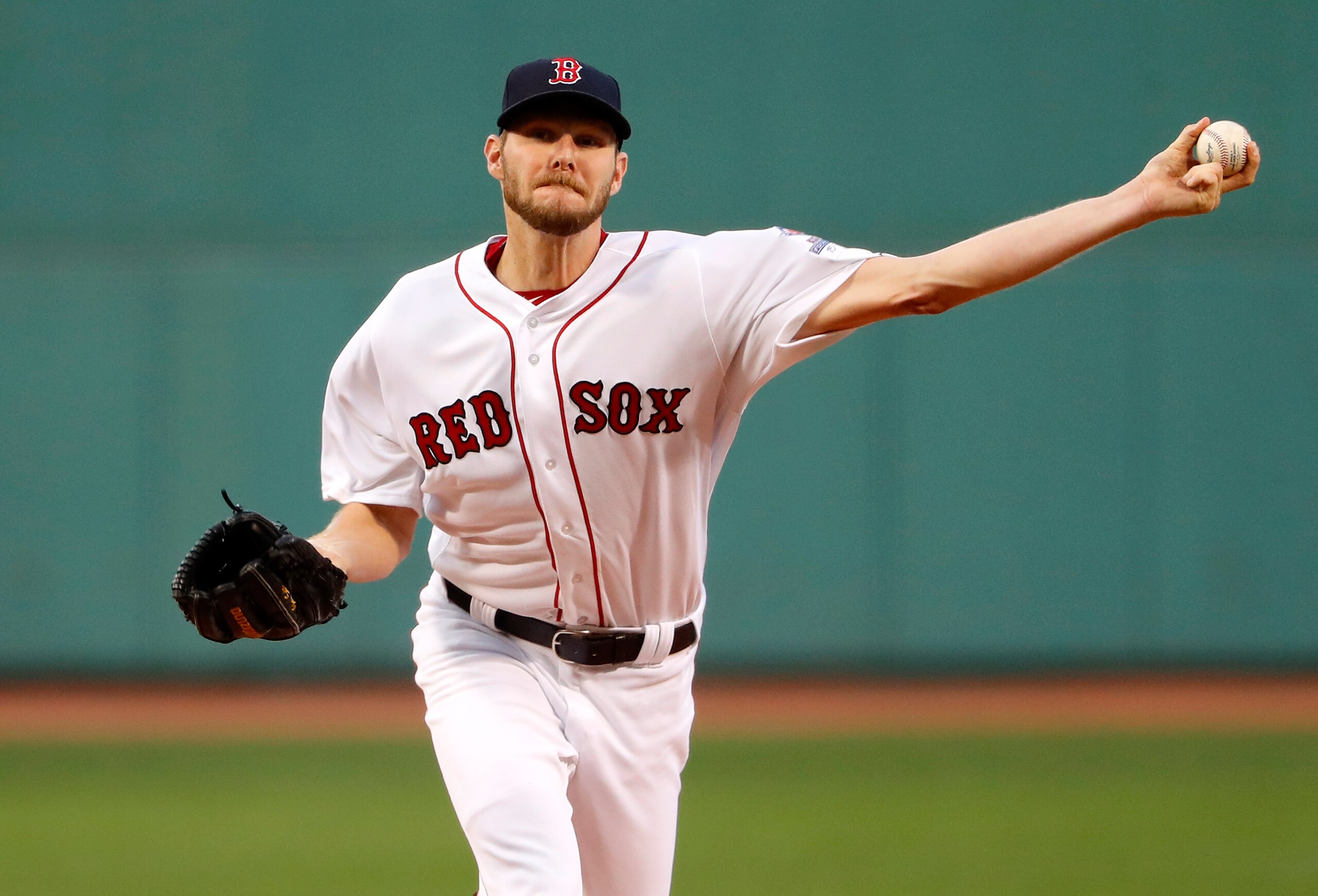
Age: 28
Key Stats: 32 G, 214.1 IP, 12.9 K/9, 1.8 BB/9, 1.0 HR/9, 56 OPS+, 157 ERA+
WAR: 6.0
2017 Player Report
After experimenting with a pitch-to-contact approach in 2016, Chris Sale got back to business in 2017.
He returned to attacking hitters with a downright filthy array of pitches: heat with mid-90s velocity and electric action both on said heat and on his slider and changeup. Since he could throw all three pitches for strikes, it's no surprise he missed bats within the strike zone better than anyone.
One notable difference was his love for the high fastball. And it worked, as hitters could neither lay off it nor hit it. That was a big factor in his limiting hitters to an MLB-low .083 average on pitches outside the zone.
Alas, Sale did run out of gas with a 4.09 ERA in his last 11 starts. But despite that, it's hard to frown on a dominant season that produced 308 strikeouts.
12. Mookie Betts, RF, Boston Red Sox
44 of 55
Age: 24
Key Stats: 153 G, 712 PA, .264/.344/.459, 108 OPS+, 24 HR, 26 SB, 31 DRS
WAR: 6.4
2017 Player Report
After an MVP-caliber 2016, Mookie Betts' bat wasn't quite the same in 2017.
He has pitchers to thank for that. Clearly aware of the danger he poses when he turns on the ball, they had no qualms about staying away from him this year. He struggled to adjust, particularly during the dog days.
Betts still ended up with solid offensive numbers, however, because he's a gifted all-around hitter. His approach is advanced and his swing is short, quick and dangerous all at once. He walked (77) nearly as often as he struck out (79), and his exit velocity finished at a solid 88.4 mph.
Elsewhere, he was arguably the game's best baserunner and defender. He's as instinctive and as opportunistic as they come on the basepaths, and he impresses with both his range and arm strength in the field.
11. Francisco Lindor, SS, Cleveland Indians
45 of 55
Age: 23
Key Stats: 159 G, 723 PA, .273/.337/.505, 116 OPS+, 33 HR, 15 SB, 5 DRS
WAR: 5.5
2017 Player Report
Having already defied low expectations for his offense in his first two MLB seasons, Francisco Lindor blew them away in 2017.
He was the same hitter to the extents that he was fairly choosy with his swings and good at making contact. His power output was the difference, and in a way that was typical of 2017: by upping his launch angle, thereby driving his ground-ball rate south.
Lindor also clocked as a faster runner. He went from an average sprint of 27.4 feet per second in 2016 to 28.2 feet per second in 2017. That plus his keen instincts kept his value coming.
Alas, there is something to the notion that Lindor wasn't the same Gold Glove-caliber defender. Regardless of difficulty, he just didn't make as many plays. But since he covered a huge territory and, to the naked eye, had all the same defensive tools, his defensive demise seems exaggerated.
10. Andrelton Simmons, SS, Los Angeles Angels
46 of 55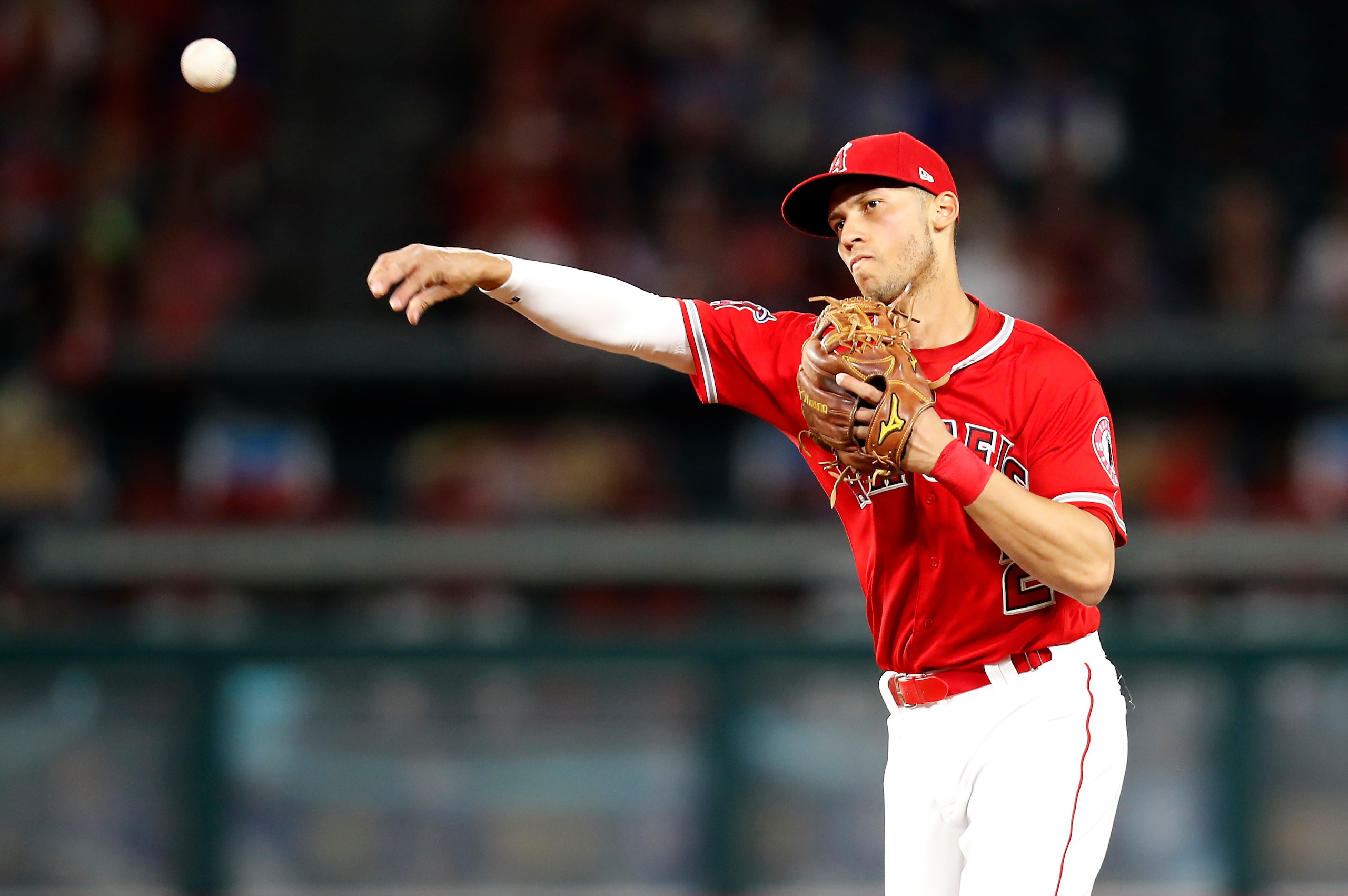
Age: 28
Key Stats: 158 G, 647 PA, .278/.331/.421, 103 OPS+, 14 HR, 19 SB, 32 DRS
WAR: 7.1
2017 Player Report
Andrelton Simmons' best talent is still his defense.
Save for deeper positioning, nothing changed for him in 2017. There were shortstops who covered more ground, but he covered plenty and continued to set himself apart by finishing anything he started. If he could get to a ball, his soft hands and strong, accurate arm did the rest.
But while his glove remained as impressive as ever, Simmons is No. 1 because his offense got better.
He had no trouble putting the ball in play before 2017, but his poor numbers proved how that talent on its own is only worth so much. What he did this year was keep that talent while pulling more balls and hitting with more loft. His bat became a source of consistent contact and solid power.
Elsewhere, the explanation for Simmons' improved baserunning is as simple as can be: Rather than go with Father Time's flow, he's getting faster with age.
9. Max Scherzer, SP, Washington Nationals
47 of 55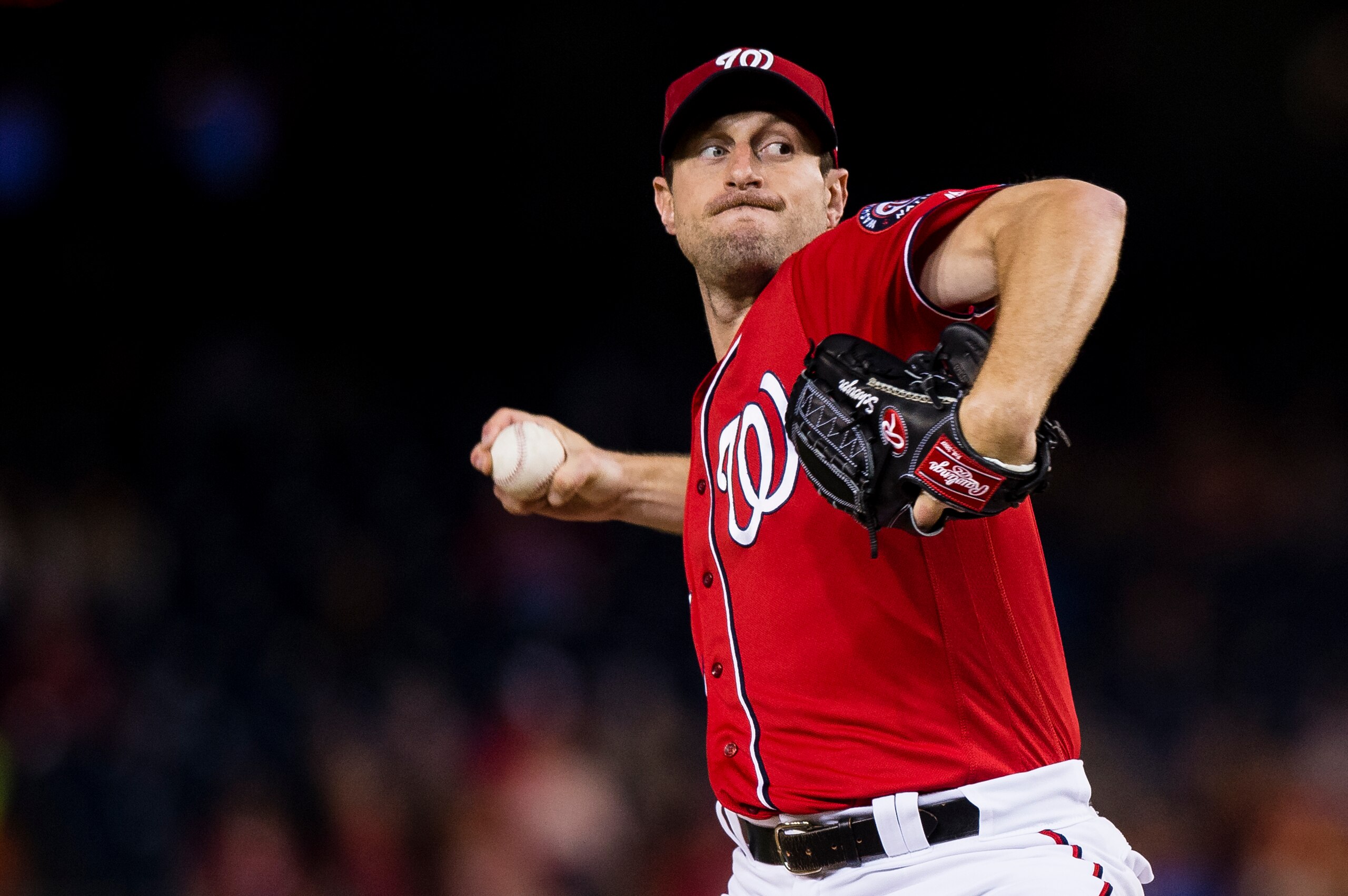
Age: 33
Key Stats: 31 G, 200.2 IP, 12.0 K/9, 2.5 BB/9, 1.0 HR/9, 49 OPS+, 177 ERA+
WAR: 7.2
2017 Player Report
Between an achy neck and hamstring injury in his final start, Max Scherzer endured a rough finish to 2017. Yet there's a good chance he'll win his third Cy Young award anyway.
He remained an aggressive strike thrower with a repertoire fronted by an explosive fastball and a slider and changeup that both disappear on hitters, which enabled the third-lowest contact rate among qualified starters.
While his low ground-ball rate was a recipe for trouble with so many balls flying over fences, Scherzer survived because hitters couldn't square him up. An average batted ball off him was just 85.7 mph, and he once again had little trouble inducing pop-ups.
You see that 49 OPS+ allowed? That was the lowest of any National League starter. That plus 200 innings is a good mix.
8. Jose Ramirez, 3B, Cleveland Indians
48 of 55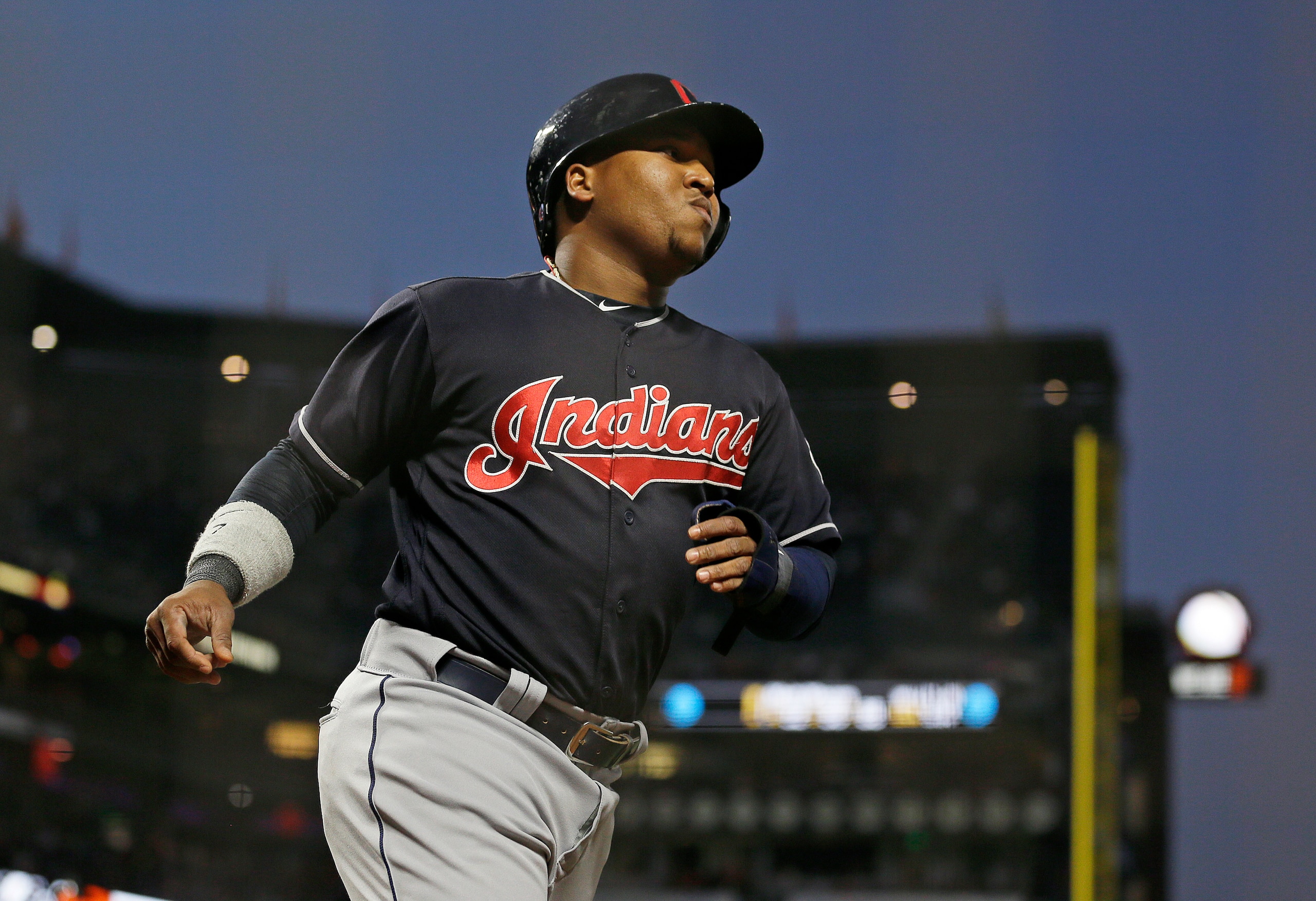
Age: 25
Key Stats: 152 G, 645 PA, .318/.374/.583, 145 OPS+, 29 HR, 17 SB, 0 DRS
WAR: 6.9
2017 Player Report
Jose Ramirez has gone from being a modestly talented utility infielder to one of the best hitters in baseball.
He's a selective hitter who was also one of the best contact hitters in MLB despite having a powerful swing good for both launch angle and exit velocity. Such frequent contact combined with such good contact resulted in 91 extra-base hits, tying Giancarlo Stanton for the MLB lead.
To these extents, Ramirez fit the offensive profile that's expected of third basemen. He further sweetened the deal by running fast and, albeit with 12 outs run into, wreaking havoc on the bases.
On defense, Ramirez's value is more so in his ability to play multiple positions well rather than one position really well. But with a relatively shallow starting position, he lets his athleticism carry him when he plays third and it mostly works.
7. Mike Trout, CF, Los Angeles Angels
49 of 55
Age: 26
Key Stats: 114 G, 507 PA, .306/.442/.629, 187 OPS+, 33 HR, 22 SB, -6 DRS
WAR: 6.8
2017 Player Report
Sure, Mike Trout missed six weeks with a thumb injury. But he was still the top center fielder in the game.
The one complaint to be levied against Trout is that he's not the same defender he used to be. He's a step slower and thus has to play deeper, and to the naked eye he exercises more caution on the warning track. He makes the easy catches but few hard ones.
Fortunately, he remains a nightmare for the opposition on offense.
Already a disciplined hitter, this was the year that Trout became downright Joey Votto-esque in his selectivity and discipline. He also got in on the launch-angle revolution but without losing his swing's innate quickness and explosiveness. Thus, the trifecta of an 18.5 percent walk rate, a 17.1 percent strikeout rate and a 38.3 percent hard-hit rate. Elsewhere, rumors of his baserunning's demise continued to be exaggerated.
6. Nolan Arenado, 3B, Colorado Rockies
50 of 55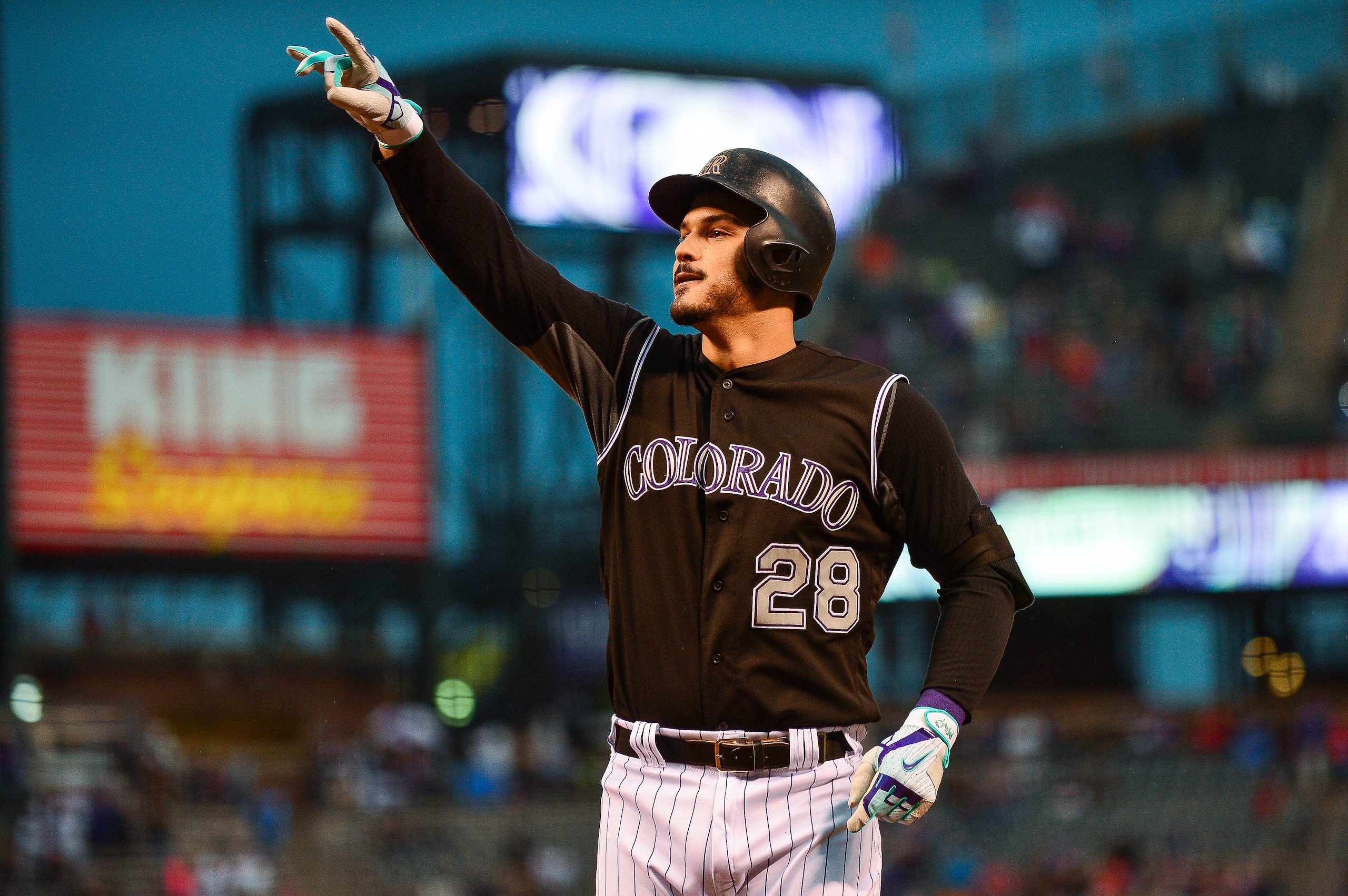
Age: 26
Key Stats: 159 G, 680 PA, .309/.373/.586, 132 OPS+, 37 HR, 3 SB, 20 DRS
WAR: 7.2
2017 Player Report
There is one criticism to make of Nolan Arenado: Without great speed, he can't do much on the basepaths.
But that's it.
Not that he needed to prove anything, but 2017 was the year that Arenado's hitting basically became above reproach. He already had a knack for putting the ball in play with power. This season saw him maintain the extra discipline he'd added in 2016 while relying less on his pull side and more on the whole field.
Abilities like these play anywhere. So as easy as it is to chalk up his success to Coors Field and move on, the career-best .886 OPS he posted on the road must not be overlooked.
Arenado also remained elite at the hot corner. His hands and arm are as good as any at the position, but what sets him apart is just how quick he is. Throw in how he maintains a good enough head to keep from getting reckless, and he pulls off the tough task of having a ton of range without being error-prone.
5. Giancarlo Stanton, RF, Miami Marlins
51 of 55
Age: 27
Key Stats: 159 G, 692 PA, .281/.376/.631, 165 OPS+, 59 HR, 2 SB, 10 DRS
WAR: 7.6
2017 Player Report
Alas, Giancarlo Stanton failed in his quest for 60 home runs. But it was a heck of a ride all the same.
His normally outrageous exit velocity took a step back to "only" 91.9 mph in 2017. The real difference was a closed stance that kept him on the ball and better able to make contact. His strikeout rate dropped to a career-low 23.6, and his mighty raw power did the rest.
Throw in his career-high 32 doubles, and power is one thing Stanton did better than anyone in 2017. To boot, he did so despite playing in a much less power-friendly home ballpark.
Stanton was also an excellent right fielder. That tends to be the case whenever he's healthy, as that permits him to get good range out of his solid speed. He also has an arm that runners must think twice about testing.
4. Joey Votto, Cincinnati Reds
52 of 55
Age: 34
Key Stats: 162 G, 707 PA, .320/.454/.578, 168 OPS+, 36 HR, 11 DRS
WAR: 7.5
2017 Player Report
First off, props to Joey Votto for improving in the field after posting a minus-14 DRS in 2016.
It was a priority back in spring training, per Owen Perkins for MLB.com. He took a few steps back, thereby giving himself more time to react and move on plays. Sure enough, he extended his range and got back to converting routine plays.
OK, now about Votto's bat.
As expected, nobody chased outside the zone less frequently. But he also swung inside the zone more frequently than he had in years. That's how he ended up walking 51 more times (134) than he struck out (83). And by getting in on the launch-angle craze, he paired his pre-existing consistency with extra power.
There is but one gripe: As he becomes increasingly station-to-station with age, Votto is now as bad at baserunning as he is great at hitting. But even despite that, there was no better first baseman in 2017.
3. Corey Kluber, SP, Cleveland Indians
53 of 55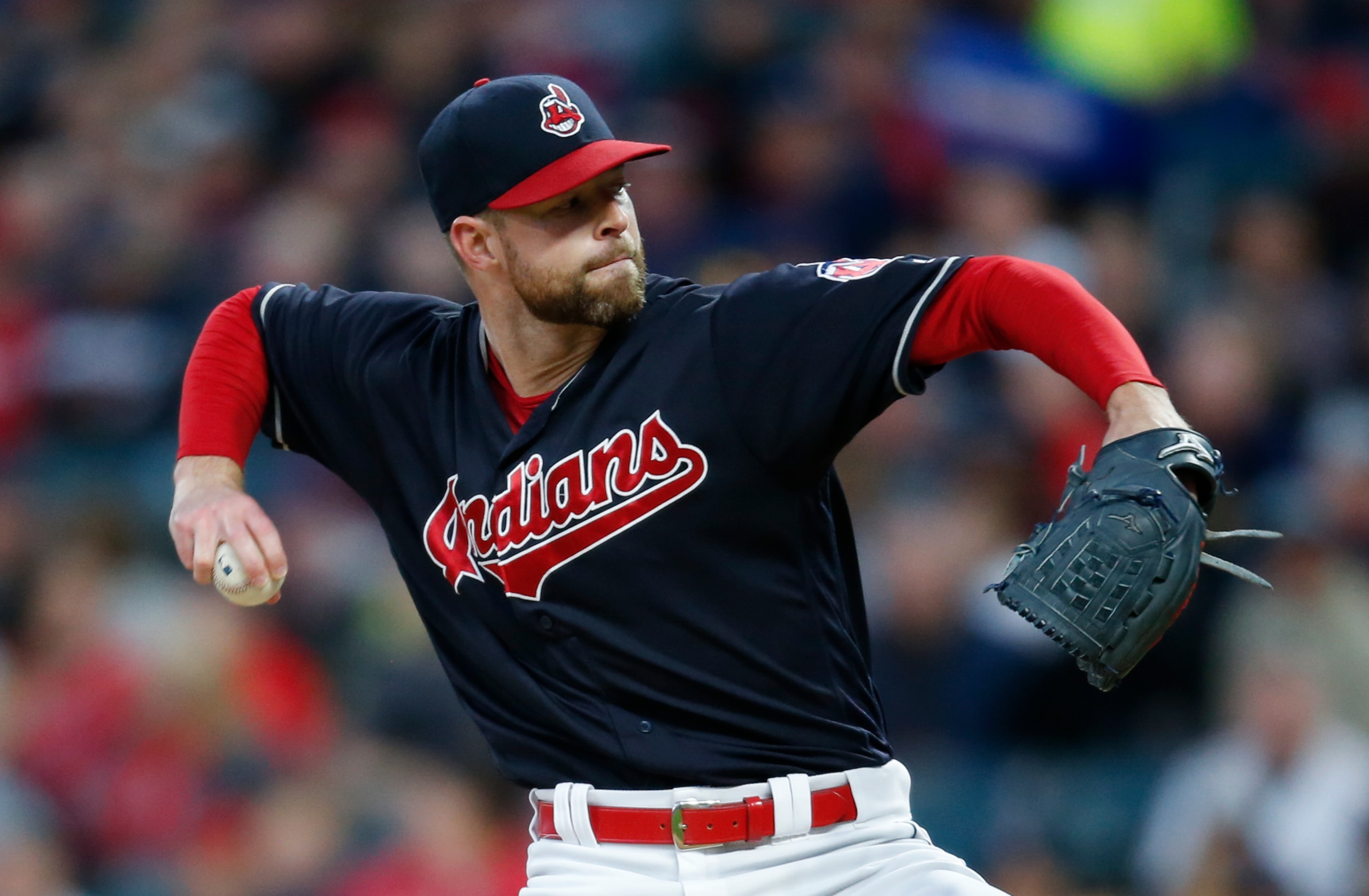
Age: 31
Key Stats: 29 G, 203.2 IP, 11.7 K/9, 1.6 BB/9, 0.9 HR/9, 44 OPS+, 202 ERA+
WAR: 8.0
2017 Player Report
There was a time when Corey Kluber's 2017 season was looking like a lost cause. He had a 5.06 ERA through six starts and then missed a month with a bad back.
Then came 23 starts in which he put up a 1.62 ERA and struck out 201 more batters than he walked.
Kluber featured his slider more often as the year went along, which was a big boost. With elite glove-side run, it's a dandy of a pitch that worked well in tandem with his filthy sinker-cutter combination. Hitters were doomed if they chased outside the zone, which paved the way for his AL-low contact rate.
Hitters weren't liable to do much even if they did make contact. With 85.0 mph exit velocity and an MLB-best 24.4 soft-hit rate, Kluber didn't suffer loud contact gladly.
In the end, he permitted the lowest OPS+ and led in ERA+ and WAR. Only the best pitcher in baseball can do that.
2. Jose Altuve, 2B, Houston Astros
54 of 55
Age: 27
Key Stats: 153 G, 662 PA, .346/.410/.547, 164 OPS+, 24 HR, 32 SB, 3 DRS
WAR: 8.3
2017 Player Report
The one knock against Jose Altuve is that he's more so a passable defender than a great one. He puts as much effort into his defense as he does the other aspects of his game, and he'll keep making it onto highlight reels because of that. But with a limited reach and a weak arm, he can only be so good.
But, man, can the guy can hit. This was established well before this season, of course, and the only thing Altuve did differently was get back to using the opposite field. Otherwise, his hitting was the usual blend of elite contact and surprising power.
And don't forget Altuve's baserunning. He was better about picking his spots on stolen bases, failing only six times in 38 attempts. He also offered par-for-the-course aggression en route to elite baserunning value.
1. Aaron Judge, RF, New York Yankees
55 of 55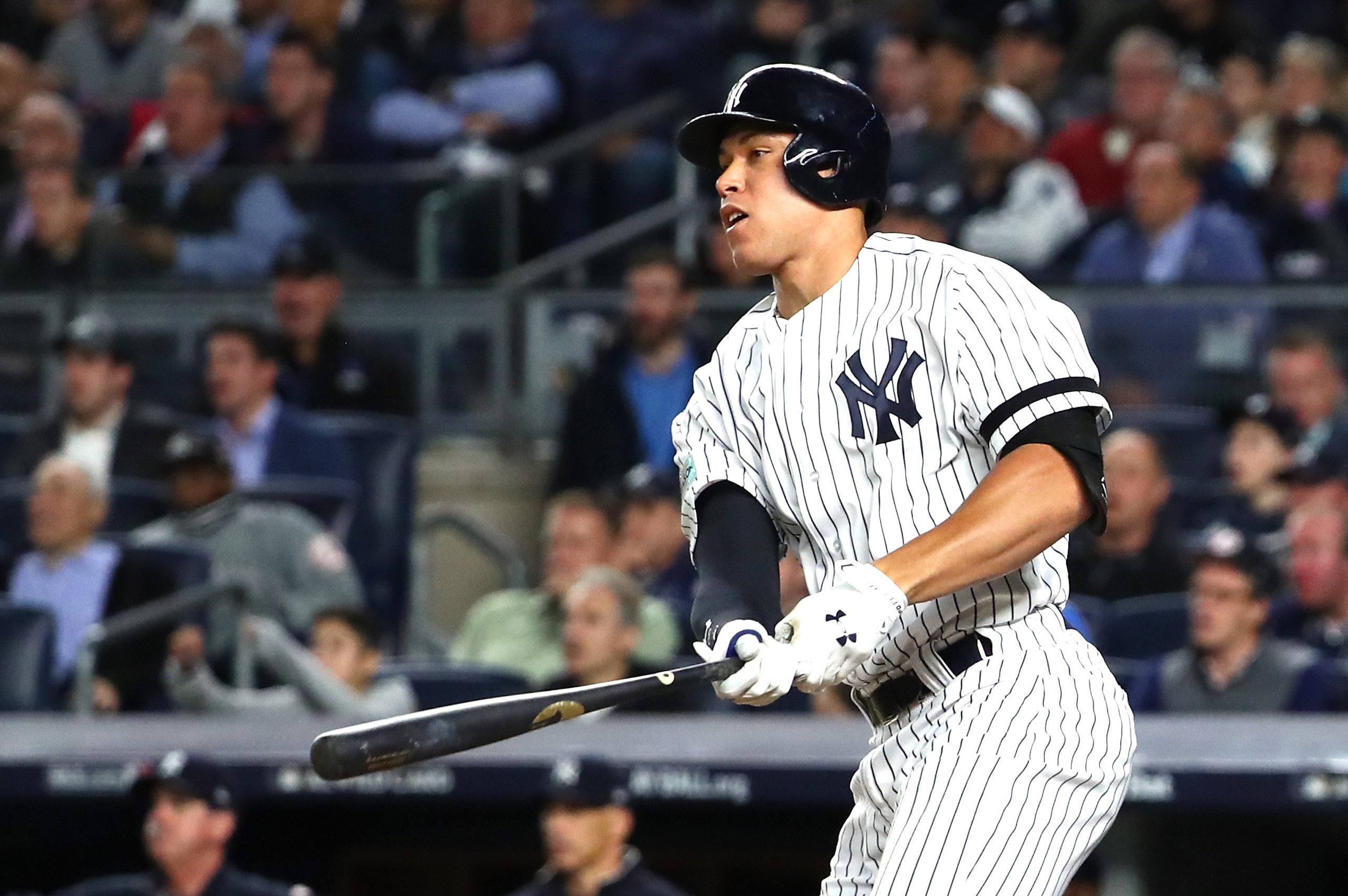
Age: 25
Key Stats: 155 G, 678 PA, .284/.422/.627, 171 OPS+, 52 HR, 9 SB, 9 DRS
WAR: 8.1
2017 Player Report
It's only fitting that perhaps the strongest hitter ever broke Mark McGwire's rookie home run record.
It was clear from the 95.1 mph exit velocity that Aaron Judge averaged in 2016 that he had a lot of oomph packed into his 6'7", 282-pound frame. He simply needed to be more efficient at applying it. Despite an out-of-character stretch in July and August, he achieved that by being more selective.
That doubled his walk rate and cut his K% down from 44.2 to 30.7. And for Judge, more balls in play meant more fireworks. He averaged 94.9 mph on his batted balls and barreled the ball more frequently than anyone else. His home runs averaged a patently absurd 110.0 mph off the bat and went as far as 495 feet.
Judge's good defense was the proverbial icing on the cake. His sneaky-good speed and long reach kept plenty within his considerable range, and any runner who tested his arm was liable to get a harsh sentence.
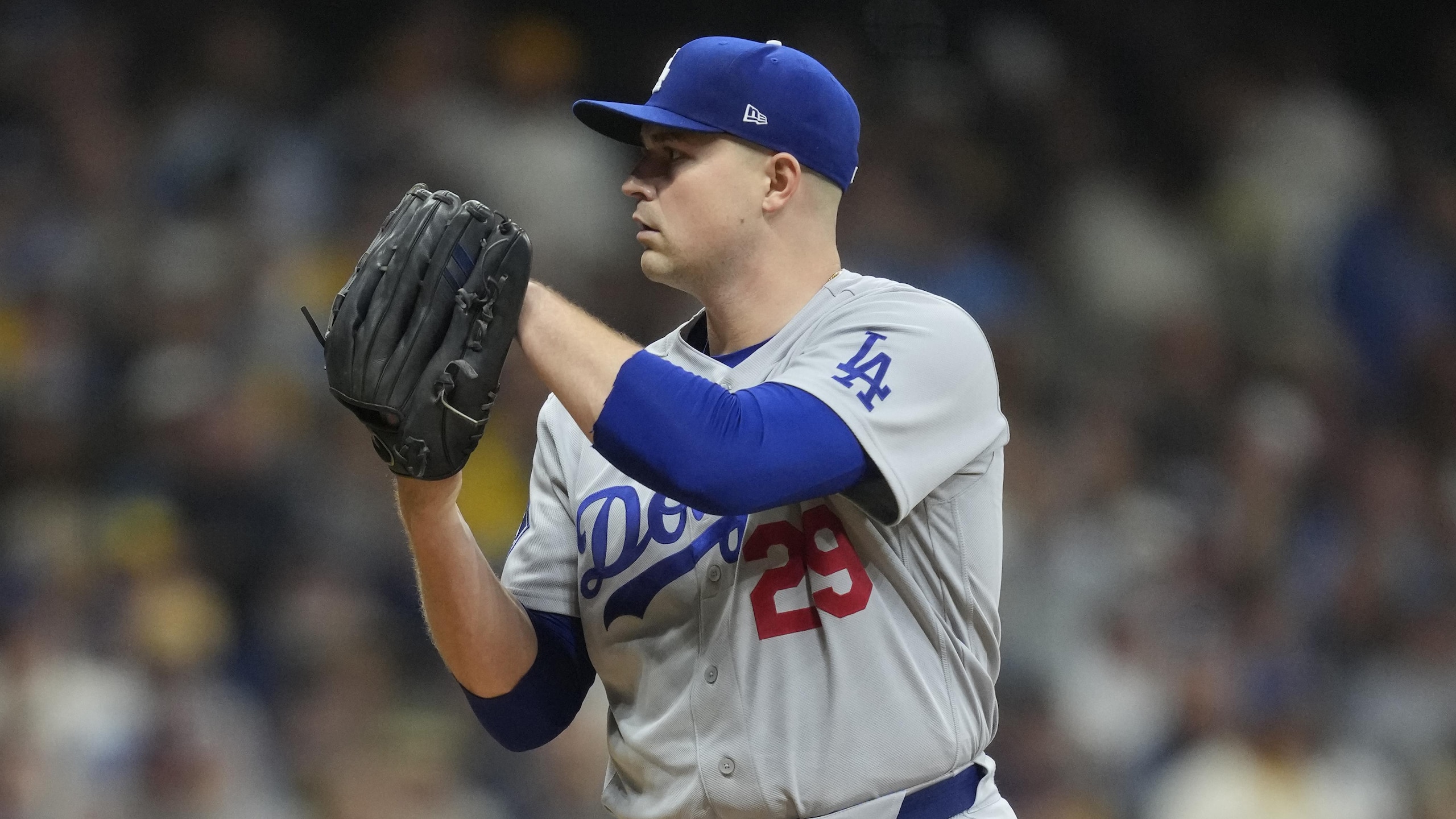

.jpg?w=2560 "Puka Dealing with Calf Injury")