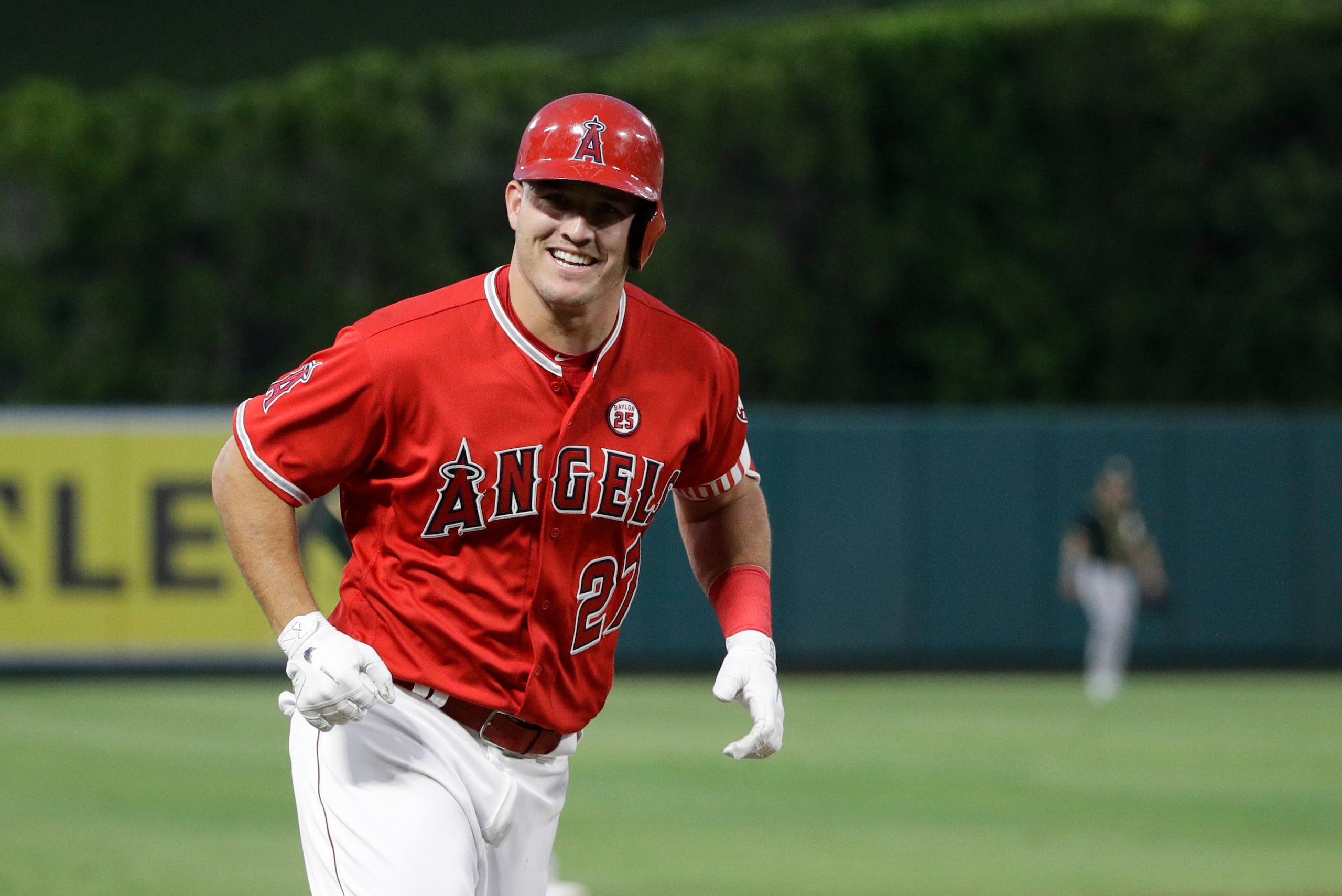


It's time for Bleacher Report's final positional power rankings for the 2017 Major League Baseball season to get out of the dirt and head for the outfield.
Now up are the season's top center fielders. Although there are arguably more than just 25 of them worth talking about, that's how many made the cut.
Here are the ground rules:
- Players must have logged the majority of their games in center field.
- Players were ranked both on the quantity and the quality of their work.
- Offense, defense and baserunning fall under the "quality" umbrella.
- Center field is an important defensive position but also a home to talented hitters and speedy baserunners. As such, the best center fielders are the ones with more than just one marketable skill.
The rankings were a simple judgment call. Baseball Reference's version of wins above replacement (WAR) is useful in this respect but will be treated more as a guideline than the word of the baseball gods.
Lastly, this is neither a far-reaching retrospective nor a gaze into the future. Only what happened in 2017 counts.
A Few Statistics to Know
1 of 26
In the year 2017, it's ill-advised and arguably irresponsible to talk about players in detail without using statistics to contextualize their talents and shortcomings.
So, be warned: There are indeed statistics in these rankings.
Many stats will simply be alluded to via links that go to relevant data at Baseball Reference, FanGraphs, Baseball Savant, Brooks Baseball and Baseball Prospectus. But a few to know are...
Wins Above Replacement (WAR): As a stat that puts a number on a player's hitting, baserunning and fielding contributions, WAR is a fine go-to in any circumstance.
On-Base Plus Slugging Plus (OPS+): This takes a player's OPS, adjusts it for league and ballpark factors and puts it on a scale where 100 represents average. It shows how well a hitter performed relative to his peers.
Defensive Runs Saved (DRS): It sounds like a measurement of a player's defensive quality, and that's what it is. It's the main defense component for Baseball Reference's version of WAR. Some play multiple positions, but the DRS listed for them here is that of their primary position.
Launch Angle: This Statcast specialty measures the angle of the ball off a hitter's bat. It provides a snapshot of the shape of a hitter's swing—i.e. whether it's flat and tailored for ground balls and line drives or lofty and tailored for fly balls. The MLB average in 2017 was 11.1 degrees.
Exit Velocity: Another Statcast specialty that measures the speed of the ball off a hitter's bat. As you'd expect, there's a strong correlation between high speeds and hitting success. The MLB average in 2017 was 86.6 miles per hour.
Plate Discipline: Although they'll rarely be mentioned explicitly, Swing% (percentage of swings at all pitches), Z-Swing% (in-zone swing percentage) and O-Swing% (out-of-zone swing percentage) paint a picture of a hitter's approach. These figures are found at FanGraphs.
Pull Percentage (Pull%): Also from FanGraphs, this shows the rate at which hitters pull the ball—to left field for righties and to right field for lefties. Pulling the ball is a double-edged sword: It can make a hitter vulnerable to shifts but is also by far the best avenue to power.
25. Jake Marisnick, Houston Astros
2 of 26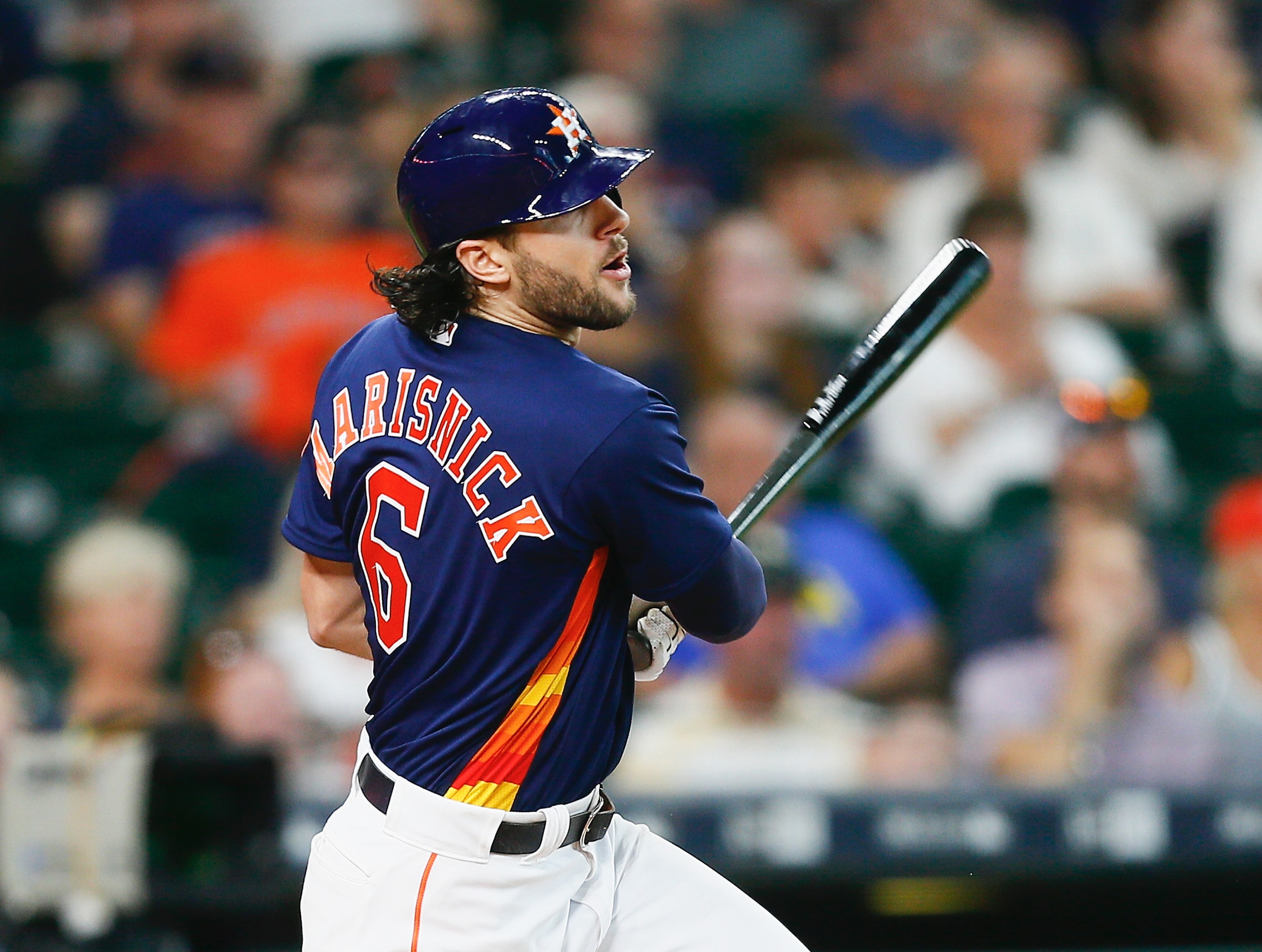
Age: 26
Key Stats: 106 G, 259 PA, .243/.319/.496, 121 OPS+, 16 HR, 9 SB, 0 DRS
WAR: 2.0
2017 Player Report
Jake Marisnick was only a part-time player who saw a healthy chunk of his action against left-handed pitching in 2017. So, take his inclusion here for what it's worth.
Yet it's to his credit that he didn't need the platoon advantage to produce. He joined the launch-angle revolution and put more balls in the air, which had the desired effect of increasing his power output.
It wasn't always pretty, however. Marsnick wasn't a source of explosive exit velocity, so a fair number of his air balls didn't go far. He also swung through enough pitches to post a career-worst 34.7 K%.
Lest anyone read too much into his goose egg in the DRS column, his defense was fine. His excellent throwing arm remained an asset and he had enough range to justify his shallow positioning. Some of that was quick reactions and good speed, but there's also something to be said about his refusal to be wall-shy.
Honorable Mentions: Keon Broxton (MIL), Albert Almora Jr. (CHC), Mikie Mahtook (DET) Austin Jackson (CLE), Bradley Zimmer (CLE), Juan Lagares (NYM), Mallex Smith (TBR)
24. Jacoby Ellsbury, New York Yankees
3 of 26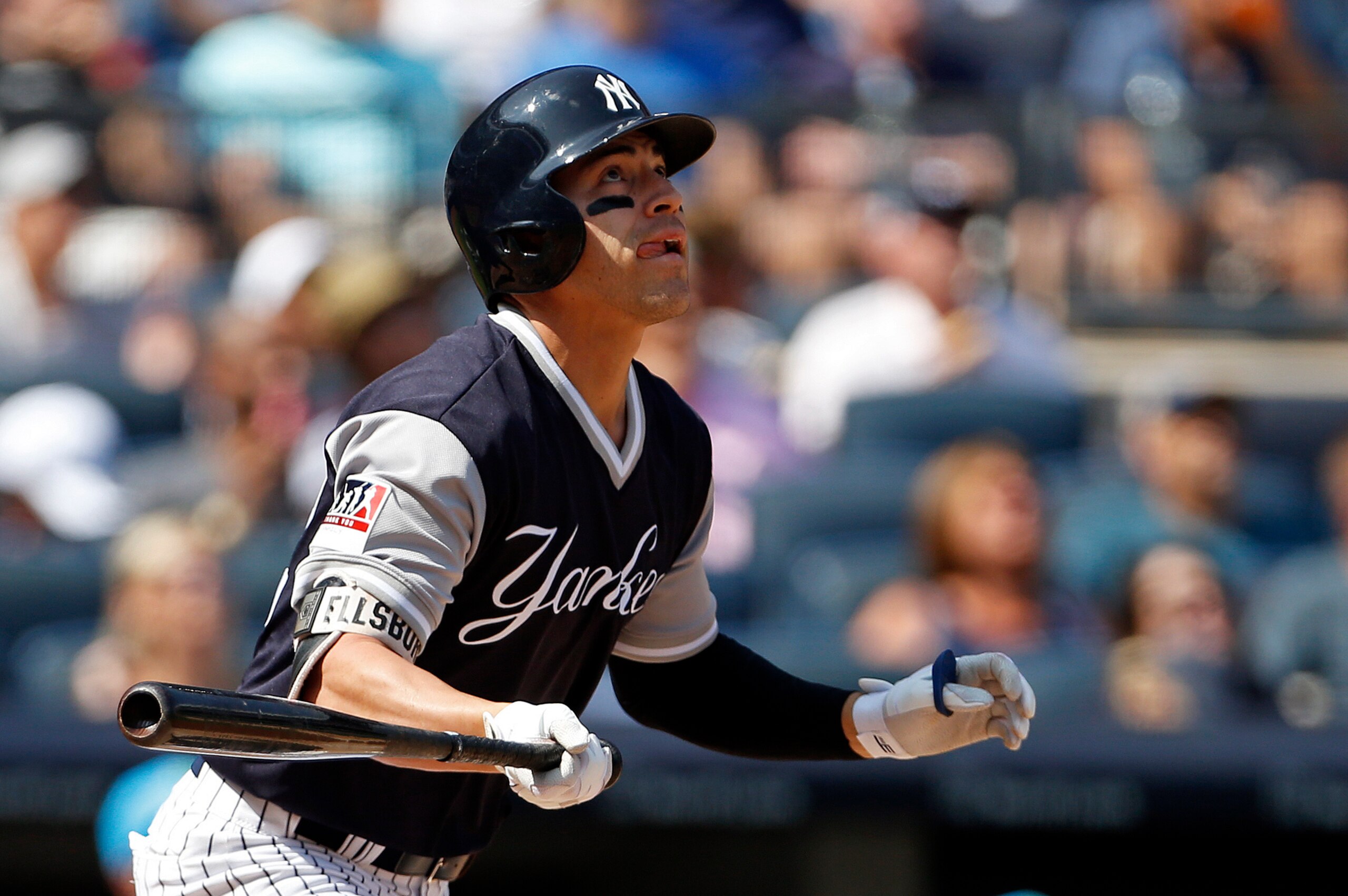
Age: 34
Key Stats: 112 G, 409 PA, .264/.348/.402, 97 OPS+, 7 HR, 22 SB, -3 DRS
WAR: 1.7
2017 Player Report
Lost amid the many positive storylines of the New York Yankees' season was how Jacoby Ellsbury became a useful hitter again.
Some of that was due to him being largely restricted to action against right-handers. All the same, he deserves credit for turning an approach that had been aggressive into a super-disciplined one. That resulted in a career-high 10 BB%. Albeit with hardly any power, his line-drive swing kept the hits coming.
Ellsbury's speed also enjoyed a renaissance. His 28.3 feet-per-second sprint is his fastest of the Statcast era. He put it to use going 22-of-25 stealing bases and generally being a baserunning pest.
Alas, DRS doesn't lie about Ellsbury's defense. His speed may have improved in 2017, but it was still far from vintage. He must play a deeper center field because of that, which opens up shallow center and makes his cringe-worthy arm even easier to expose.

23. Cameron Maybin, Houston Astros
4 of 26
Age: 30
Key Stats: 114 G, 450 PA, .228/.318/.365, 87 OPS+, 10 HR, 33 SB, 0 DRS
WAR: 1.7
2017 Player Report
Any season in which Cameron Maybin can remain relatively healthy is a good one. To that end, 2017 was one of his better ones.
Otherwise, it was never likely that he would repeat his .315 batting average from 2016. That was driven by a BABIP spike that, in light of his astronomical ground-ball rate and low exit velocity, he didn't really earn.
However, Maybin did buoy his offense through sheer patience. Few hitters swung less often than he did. That earned him an 11.3 BB%. And despite not having the speed he once did, he picked the right battles with the speed he still has. A nice chunk of his value was in his baserunning.
By playing deeper in center field, Maybin has responded appropriately to his declining speed. Although he didn't flash exceptional range in 2017, it's important that not much got over his head.
22. Billy Hamilton, Cincinnati Reds
5 of 26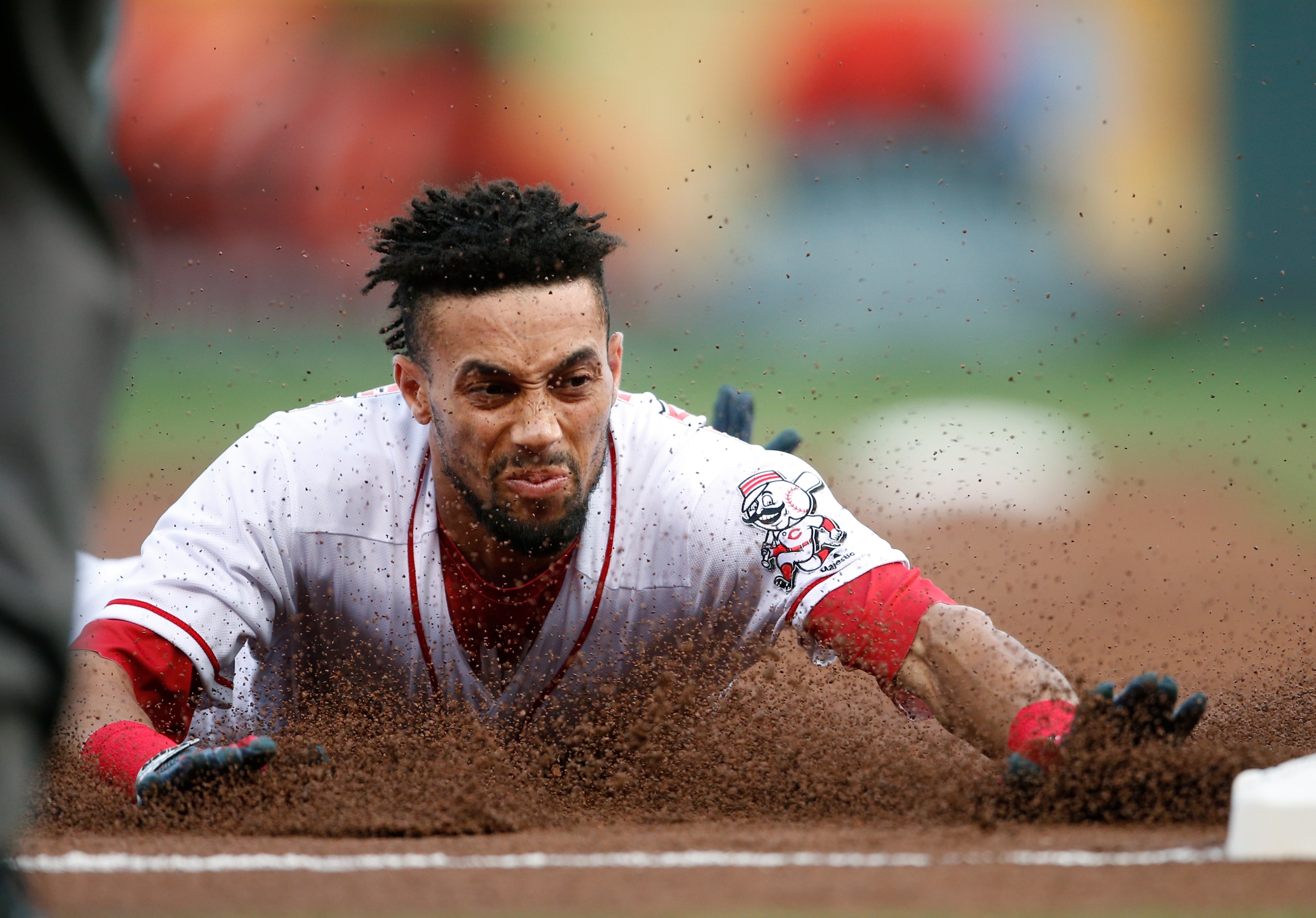
Age: 27
Key Stats: 139 G, 633 PA, .247/.299/.335, 66 OPS+, 4 HR, 59 SB, 9 DRS
WAR: 1.0
2017 Player Report
If nothing else, Billy Hamilton's speed justifies his existence as an everyday center fielder.
He sprinted at an average of 30.1 feet per second in 2017, ranking just south of Byron Buxton for the fastest in MLB. Throw in good health and a passable (by his standards) OBP, and you get a career-high 59 stolen bases and elite baserunning value.
Hamilton's speed also permitted him to play a shallower center field than anyone else. Thus he could make plays on short batted balls and hustle back to get anything over his head. In all, he covered a ton of ground.
It's too bad his bat is still as punchless as they come. His 78.6 mph exit velocity was the lowest of any qualified hitter. It's hard to hit your way on like that. And in the face of consistently above-average fastball and strike zone rates, it's also tough for him to walk his way on.
21. Curtis Granderson, Los Angeles Dodgers
6 of 26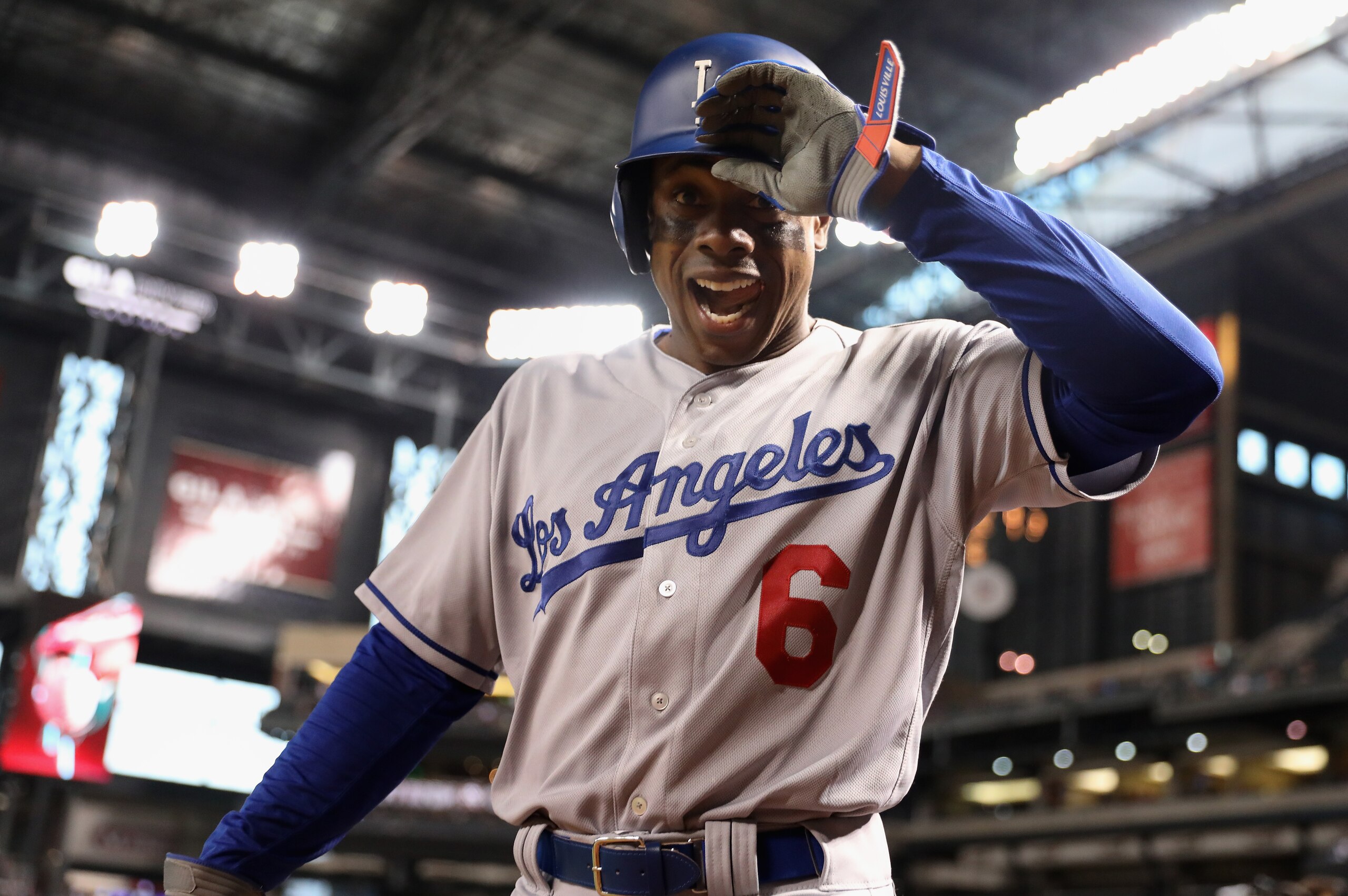
Age: 36
Key Stats: 147 G, 527 PA, .212/.323/.452, 103 OPS+, 26 HR, 6 SB, -7 DRS
WAR: 1.4
2017 Player Report
Curtis Granderson isn't a true center fielder, of course. He's just a guy who was forced to play there in 2017.
The New York Mets had to play somebody in center, after all. Using Granderson worked about as well as expected. The veteran was as slow as they got in center field and had limited range because of that. Like Roger Murtaugh from Lethal Weapon, he's too old for this you-know-what.
Luckily, Granderson's bat was a redeeming quality.
His tendencies to take a ton of pitches and hit into shifts can make him frustrating to watch, but it mostly works. His general refusal to swing helps explain his 13.5 BB%. And while many hitters are just now getting around to it, he's been producing power via a high launch angle and pull rate for years.
20. Dexter Fowler, St. Louis Cardinals
7 of 26
Age: 31
Key Stats: 118 G, 491 PA, .264/.363/.488, 122 OPS+, 18 HR, 7 SB, -18 DRS
WAR: 1.6
2017 Player Report
Although it didn't help that the injury bug refused to leave him alone in 2017, Dexter Fowler was always likely to regress after a career year in 2016.
He was mainly disappointing on defense. After seemingly cracking the code of his poor metrics by playing a deeper center field in 2016, Fowler played a few steps shallower this season. That combined with diminished speed—his sprint declined from 28.8 to 28.2 feet-per-second—resulted in little range.
On the plus side, he remained a reliable top-of-the-lineup hitter.
Although he was slightly more aggressive than he was in '16, he continued to have a watchful eye that resulted in a 12.8 BB%. His bat produced both launch angle and exit velocity, resulting in a career-best rate of hard-hit balls.
19. Carlos Gomez, Texas Rangers
8 of 26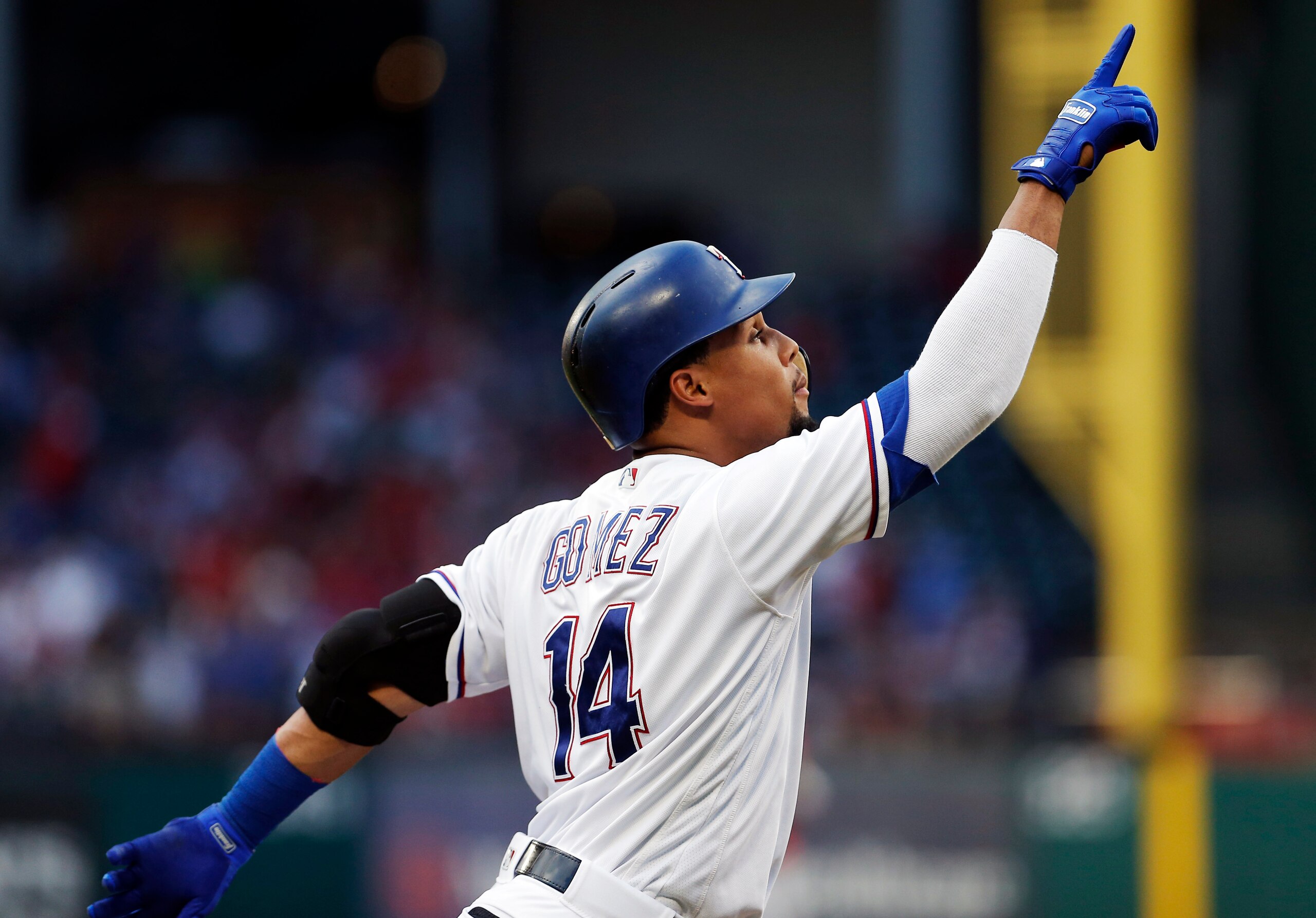
Age: 31
Key Stats: 105 G, 426 PA, .255/.340/.462, 106 OPS+, 17 HR, 13 SB, -3 DRS
WAR: 1.8
2017 Player Report
Already past his prime as a speedster, Carlos Gomez wasn't helped by leg and ankle injuries in 2017.
But more so than DRS lets on, his defense was closer to "average" than to "below average." He played much deeper than he did in 2015 and 2016. As a result, fewer balls went over his head. Throw in an arm that's still an asset, and you have a solid center fielder.
At the plate, it's clear by now that Gomez will never kick his extreme swing and chase habits. He also dashed any hope that his strikeout spike from 2016 wouldn't be permanent, as he settled with a 29.8 K%.
However, he remained capable of putting a charge into the ball through both launch angle and exit velocity. With aggressive baserunning to accompany his power, he did enough on offense to save face.
18. Ian Happ, Chicago Cubs
9 of 26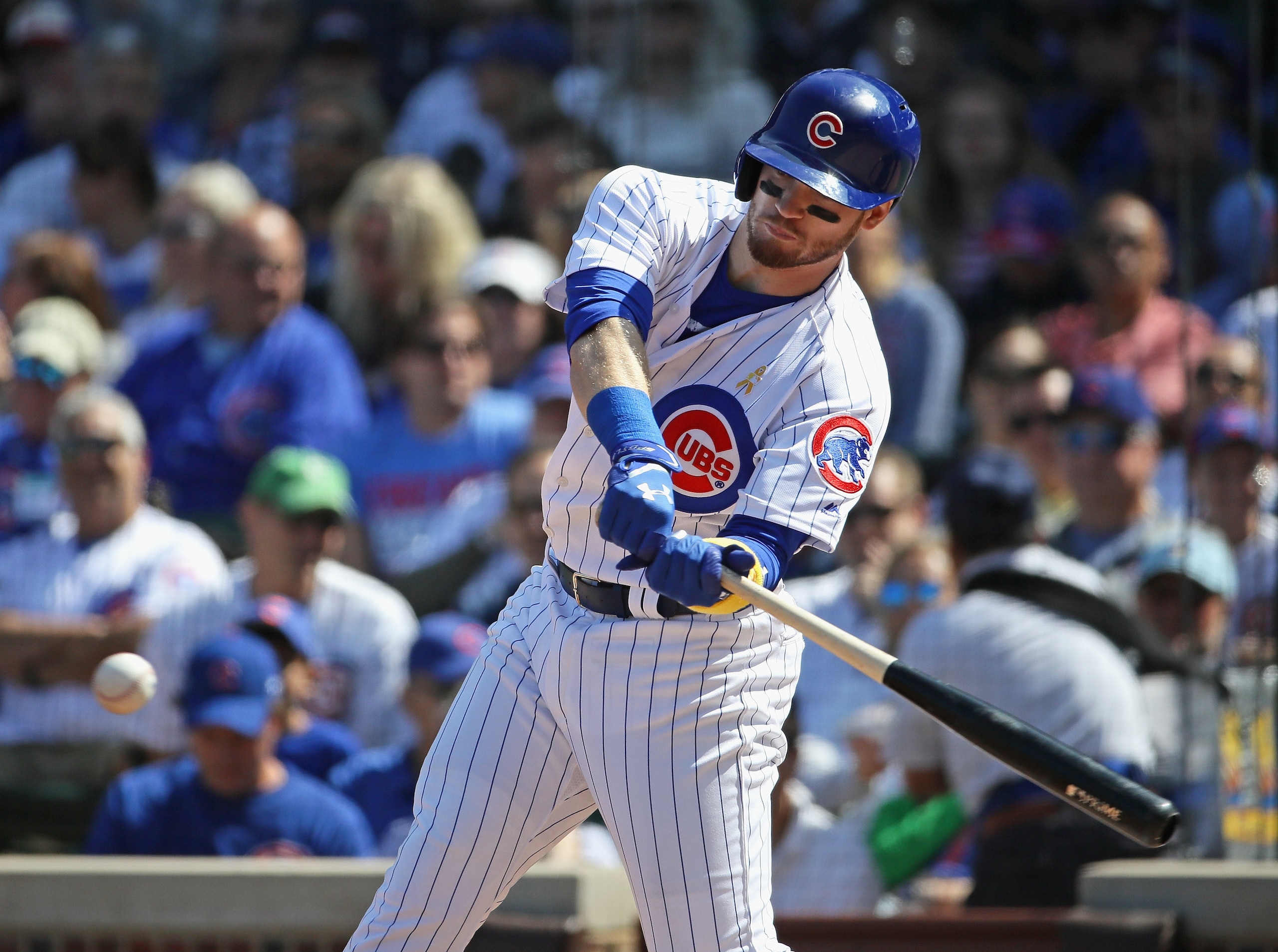
Age: 23
Key Stats: 115 G, 413 PA, .253/.328/.514, 114 OPS+, 24 HR, 8 SB, 3 DRS
WAR: 1.8
2017 Player Report
Ian Happ spent a fair amount of time at second base in addition to center field in 2017. But while he's more experienced at the former, the latter often looked like the better fit for him.
While it occasionally showed that he was inexperienced with tracking balls, he at least broke well and used his athleticism to cover enough ground to haul in what he had to. His arm was yet another asset to help him earn his keep at his new position.
Offensively, Happ fits with the modern trend of trying to get under the ball and use one's pull side. He did these things well with a 12.9 degree launch angle and 44.8 pull percentage, so it's no wonder he was a way-above-average power producer.
Now all he needs to do is make his 31.2 K% a one-time thing. He can either cut down on his swings or expand his plate coverage. Preferably, he'll do both.
17. Manuel Margot, San Diego Padres
10 of 26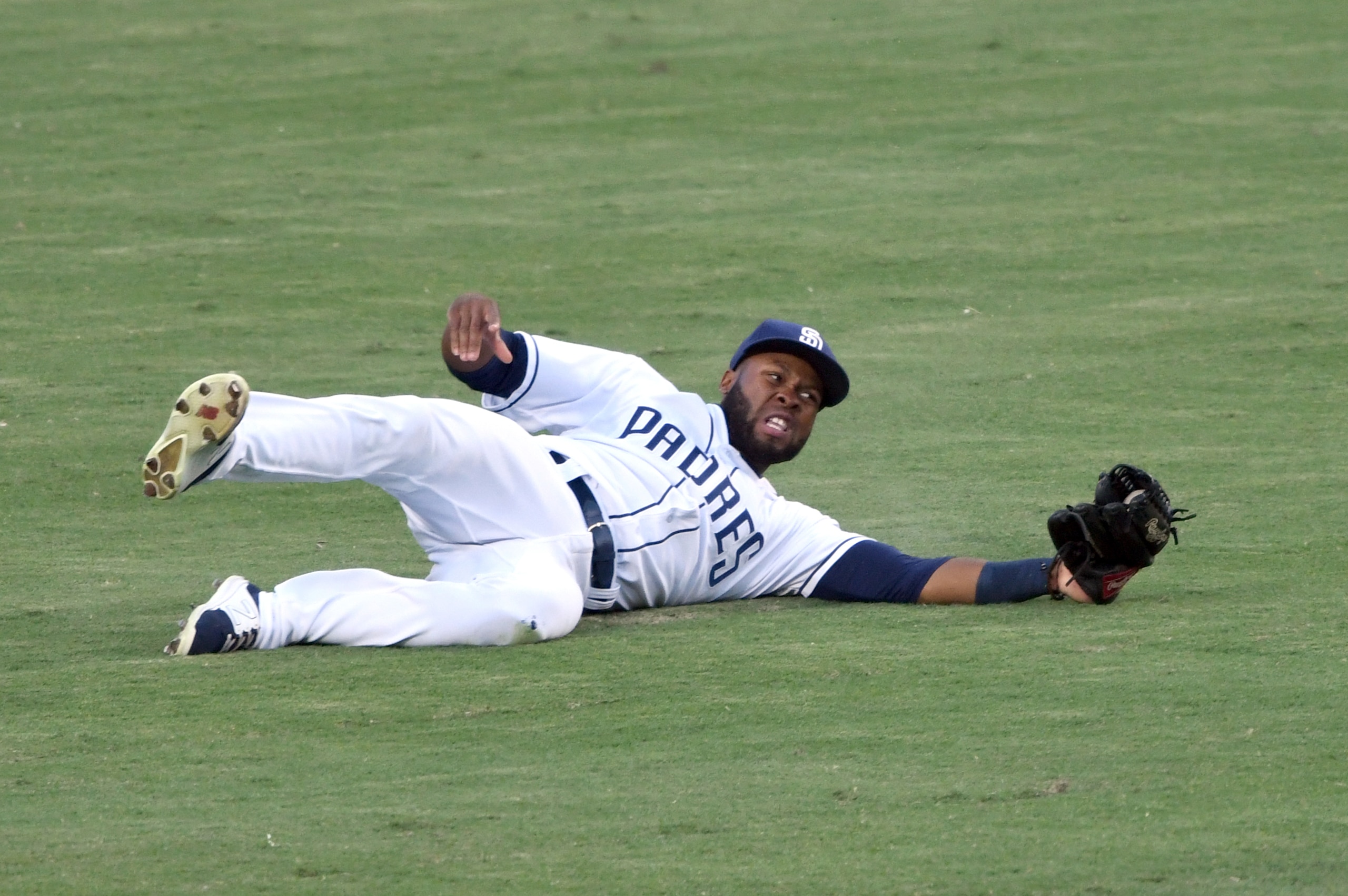
Age: 23
Key Stats: 126 G, 529 PA, .263/.313/.409, 92 OPS+, 13 HR, 17 SB, 8 DRS
WAR: 2.5
2017 Player Report
Manuel Margot is here largely thanks to three things: his wheels, his glove and his arm.
His average sprint of 29.3 feet per second ranked high up there among center fielders and allowed him to be an active baserunner despite his .313 OBP.
Even better was how his speed served him on defense. It permitted him to play a shallow center field, and from there he covered a huge amount of ground. Not to be overlooked is his strong arm, which also helped boost his impressive DRS.
Now all Margot needs is a better bat. He did have a decent approach and teased some power. But since his approach involved being passive against pitches in the strike zone and his bat generated just 84.5 mph exit velocity, he lacked avenues to truly productive hitting.
16. Michael A. Taylor, Washington Nationals
11 of 26
Age: 26
Key Stats: 118 G, 432 PA, .271/.320/.486, 105 OPS+, 19 HR, 17 SB, 9 DRS
WAR: 2.6
2017 Player Report
Adam Eaton's torn ACL opened the door for Michael A. Taylor to claim some playing time. He didn't waste it.
It was on defense where he shone the most. His big DRS has much to do with baserunners failing tests of his strong arm, as he posted eight assists in only 940.1 innings in center field. But due to both his speed and actions, there was also little he couldn't get to despite his extremely shallow positioning.
Taylor remains an all-or-nothing hitter thanks to a swing-and-miss habit that he just can't quit. His approach isn't terrible, but he has trouble making contact against anything with spin. And pitchers know it.
However, his launch angle and pull rate made him a source of power. Factor in how his speed was frequently on display on the bases, and you get more than just a passable offensive presence.
15. A.J. Pollock, Arizona Diamondbacks
12 of 26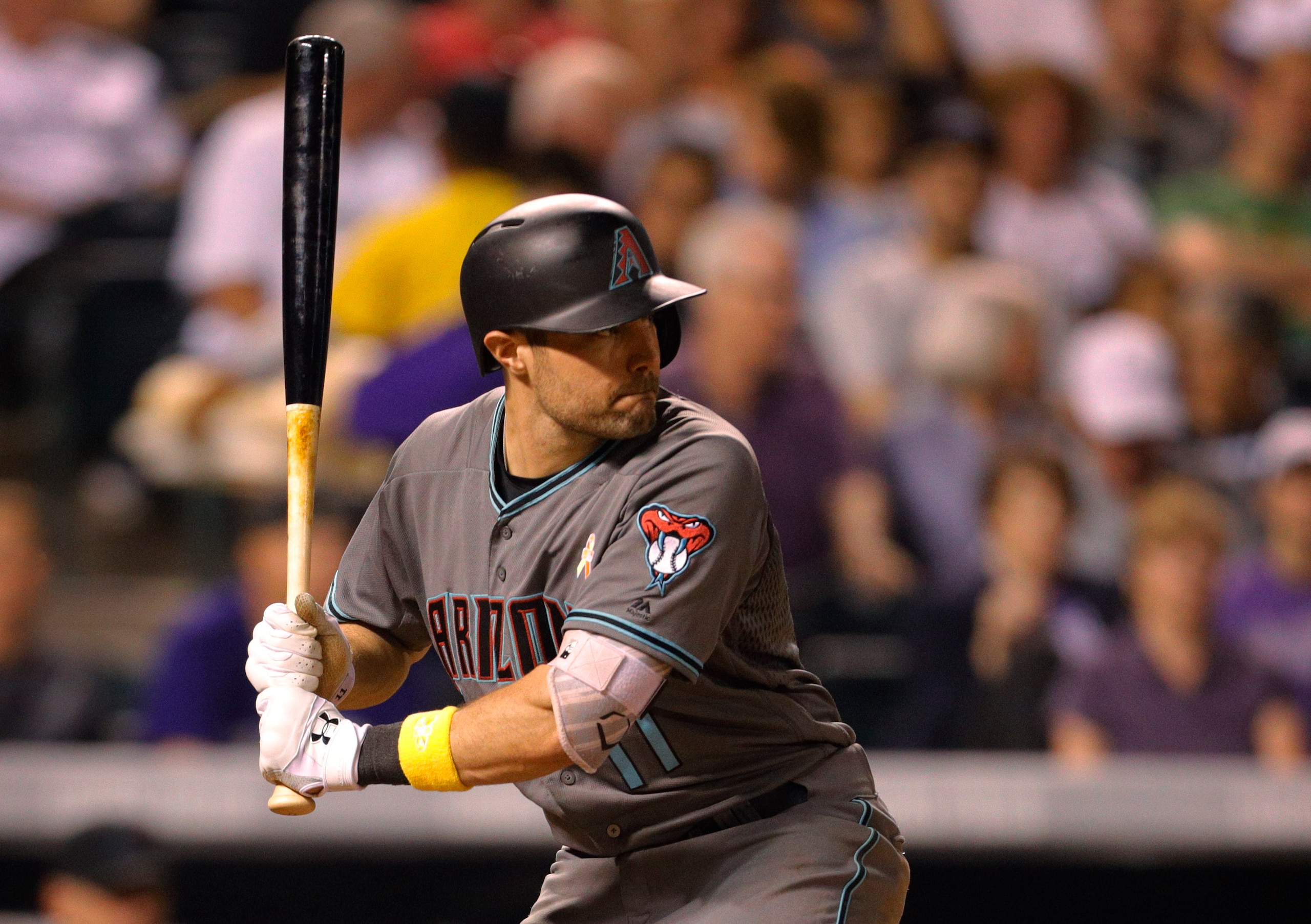
Age: 29
Key Stats: 112 G, 466 PA, .266/.330/.471, 99 OPS+, 14 HR, 20 SB, 7 DRS
WAR: 2.9
2017 Player Report
A.J. Pollock lost almost all of 2016 to an elbow injury and a chunk of 2017 to a groin injury. So, he can be forgiven for having trouble finding a groove this year.
The silver lining is that his underlying talents remain strong. The best of the bunch this season was his defense. He's lost some of the speed that he had in 2015—28.3 feet-per-second versus 27.9 feet-per-second—but was therefore wise to play deeper. He didn't miss anything within his range.
Pollock eschewed the trend toward launch angle, opting for a flatter swing that produced consistent contact (15.2 K%) and line drives. Not explosive stuff but enough to keep his hitting afloat.
Given his speed decline, it's not surprising that Pollock couldn't recapture his incredible baserunning value from 2015. And yet, he still stole bases and ran aggressively on balls in play.
14. Kevin Pillar, Toronto Blue Jays
13 of 26
Age: 28
Key Stats: 154 G, 632 PA, .256/.300/.404, 83 OPS+, 16 HR, 15 SB, 15 DRS
WAR: 2.8
2017 Player Report
Statcast posits that Kevin Pillar was actually a below-average defender in 2017. That at least raises the question of whether he oversells many of his highlight-reel catches.
However, there's no question that his speed and fearlessness allowed him to cover a ton of ground and run down all varieties of batted balls. So, the idea that he's an elite fielder holds more water than any suggestion to the contrary.
At the plate, Pillar was held in check by a hyper-aggressive approach and a general inability to hit the ball squarely. But his launch angle and pull habit made him liable to pop one now and again, and he mostly made good use of his legs when he got on base.
A perfect player? Hardly. But one with an elite glove who otherwise does enough to warrant everyday action.
13. Jackie Bradley Jr., Boston Red Sox
14 of 26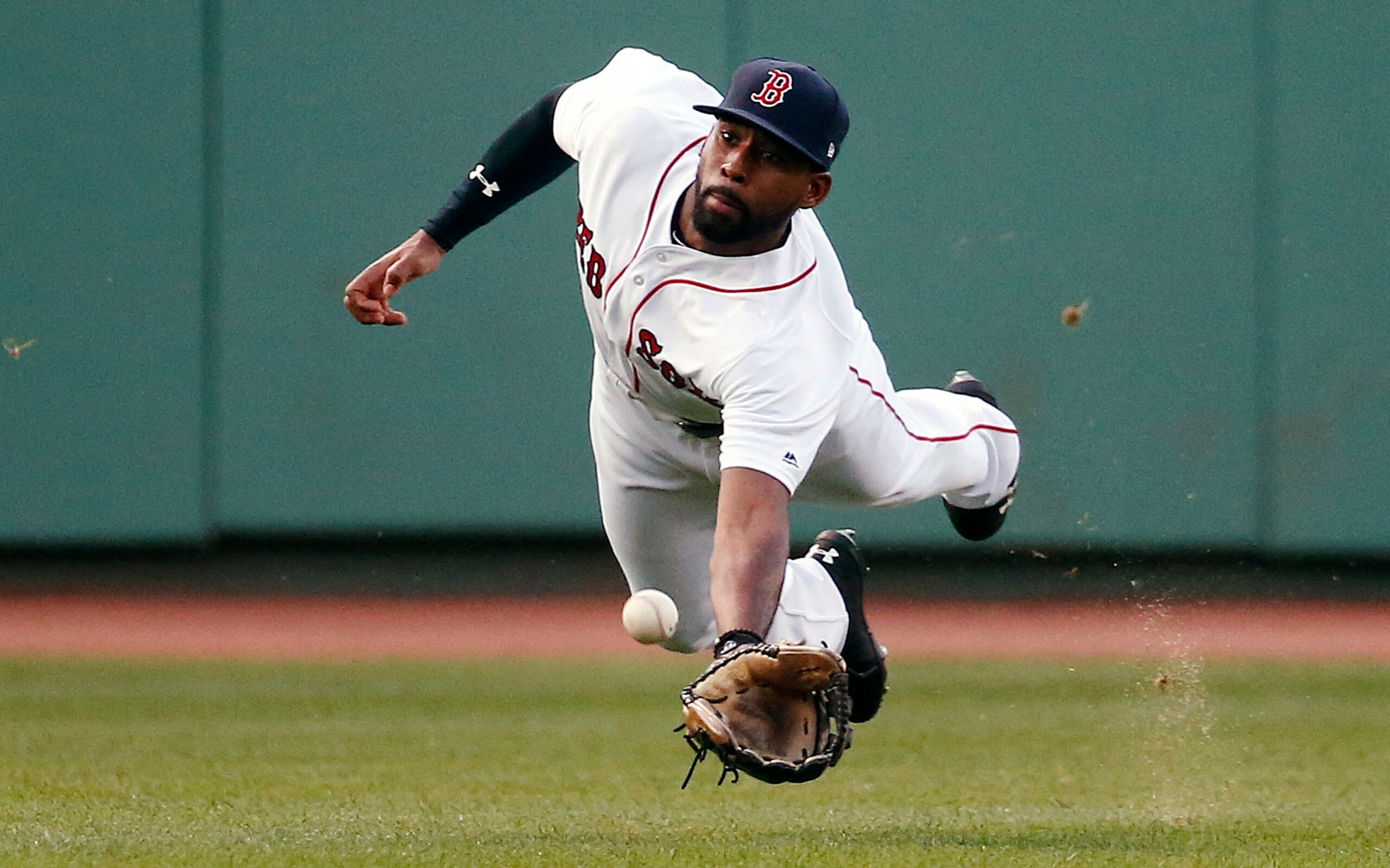
Age: 27
Key Stats: 133 G, 541 PA, .245/.323/.402, 89 OPS+, 17 HR, 8 SB, 9 DRS
WAR: 2.8
2017 Player Report
Jackie Bradley Jr. is proof that you don't need great speed to be a great center fielder.
It helps to have an excellent arm, but Bradley is also one of MLB's best fly-ball catchers. He never takes a bad route to a ball, nor does he ever lose his cool on the warning track. Thus, he gets to plenty and doesn't miss much.
On the other side of the ball, the stiffness and short reach of Bradley's swing opens up holes for pitchers to exploit. He's also liable to get jammed and roll one over, oftentimes into a shift.
Yet he also has an uncanny feel for the barrel that produces good exit velocity and a steady flow of hard contact. That and his patience (8.9 BB%) keep his offense from going too far below average, and his knowledge for how to use his legs on defense also extends to the basepaths.
12. Aaron Hicks, New York Yankees
15 of 26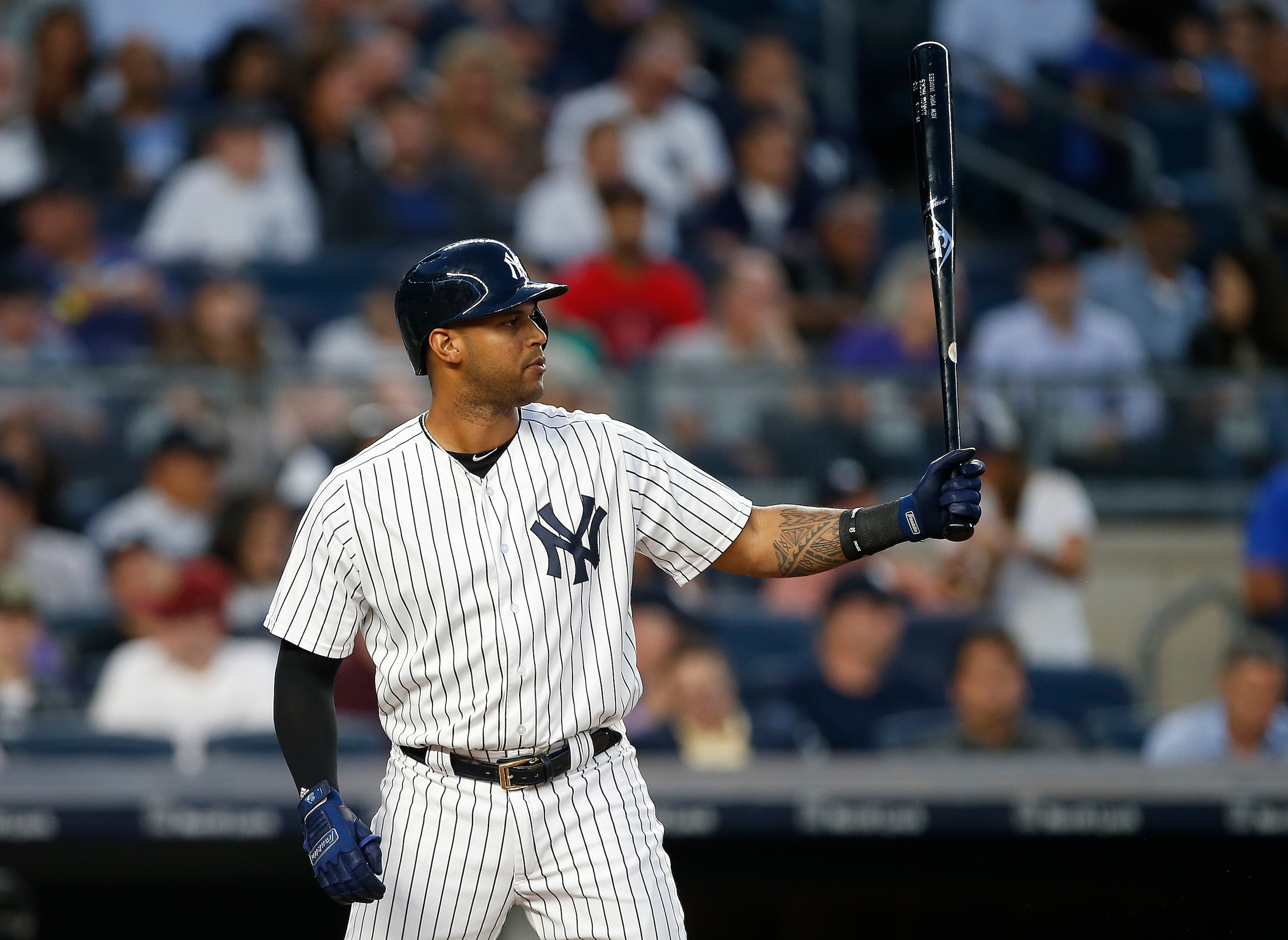
Age: 28
Key Stats: 88 G, 361 PA, .266/.372/.475, 122 OPS+, 15 HR, 10 SB, 12 DRS
WAR: 3.9
2017 Player Report
According to his WAR, Aaron Hicks was one of the best center fielders of 2017.
But bear in mind that injuries limited him to roughly half a season. He also hit 12 of his 15 homers at Yankee Stadium, a decent chunk of which were short-porch cheapies. Can't give him too much credit for those.
But this is not to suggest Hicks was doing nothing different and getting different results. He became extremely selective with his swings and slightly improved his launch angle. His 14.1 BB% and power surge are the residue of design.
On defense, Hicks was more a utility outfielder than a true center fielder. But his rocket arm played well at all three outfield spots, and playing deeper in center field translated into good range. It all adds up to quite a bit of quality for such a small sample size.
11. Odubel Herrera, Philadelphia Phillies
16 of 26
Age: 25
Key Stats: 138 G, 563 PA, .281/.325/.452, 104 OPS+, 14 HR, 8 SB, 3 DRS
WAR: 2.2
2017 Player Report
For a guy who started slowly and who was once again unable to escape bad press, Odubel Herrera actually had a solid season.
He was a much hotter hitter after the All-Star break largely because he stopped swinging so aggressively, allowing his patience (6.9 BB%) and contact abilities (19.4 K%) to come back in line. Since he already had the swing for solid all-fields contact, he didn't have to do much else.
Herrera's defense wasn't always pretty, as he continued a habit of taking zigzaggy routes and indeed authored the year's ugliest defensive lowlight. But given the amount of ground he covered, he was mostly a plus despite his misadventures.
Then only real gripe with Herrera's overall performance is how reckless he was on the basepaths. But on the whole, an everyday center fielder who can hack it at the plate and in the field is a nice thing.
10. Adam Jones, Baltimore Orioles
17 of 26
Age: 32
Key Stats: 147 G, 635 PA, .285/.322/.466, 109 OPS+, 26 HR, 2 SB, -12 DRS
WAR: 2.5
2017 Player Report
Despite his modest WAR, 2017 was another year in which Adam Jones was durable and generally dependable.
As per usual, he was one of MLB's most aggressive swingers and egregious chasers in 2017. That's a frustrating rejection of walks. But since he hasn't yet lost his feel for the barrel, his line-to-line extra-base hit ability once again kept his offense above par.
He also remained an asset on the basepaths despite being one of MLB's slowest center fielders. Although he doesn't steal bases anymore, he runs aggressively without running into dumb outs.
Defense is another matter, however. Despite trying to account for his slowing speed by playing deeper, there was still plenty he didn't get to both in front of him and behind him. He made his share of highlights, of course, but he's Exhibit A for how highlights alone don't tell the whole story.
9. Andrew McCutchen, Pittsburgh Pirates
18 of 26
Age: 31
Key Stats: 156 G, 650 PA, .279/.363/.486, 121 OPS+, 28 HR, 11 SB, -15 DRS
WAR: 2.5
2017 Player Report
Due to slumps that bookended his season, Andrew McCutchen wasn't all the way back in 2017. But he was back enough.
He was mostly healthy, for one, and didn't repeat his 2016 mistake of trying to do too much. He stayed within his approach and didn't try to pull everything. He thus resembled the hitter he was at his peak, avoiding strikeouts (17.8 K%), working walks (11.2 BB%) and hitting rockets to all fields.
But since McCutchen's exit velocity is on the decline, "rockets" is a relative term. And while he's still a capable runner who isn't yet a station-to-station guy on the bases, age is slowing his activity there.
On defense, McCutchen was closer to average than his way-below-average DRS would suggest. Thanks to deeper positioning, he was able to expand his range beyond what he was able to get to in 2016.
8. Kevin Kiermaier, Tampa Bay Rays
19 of 26
Age: 27
Key Stats: 98 G, 421 PA, .276/.338/.450, 114 OPS+, 15 HR, 16 SB, 22 DRS
WAR: 5.1
2017 Player Report
It speaks volumes that Kevin Kiermaier could miss two months with a broken hip and still have a 5-WAR year.
His defense is still the best reason to watch him play. He's one of MLB's fastest center fielders, and he chases after fly balls with reckless abandon. The result is a ton of range and a steady flow of highlight-reel catches of legitimate difficulty. And his arm is yet another weapon.
On offense, Kiermaier made a concerted effort to hit for more power in 2016 by drastically upping his pull rate and launch angle. Both normalized in 2017, yet he crushed what he put in the air (91.5 mph exit velocity) and collected hits to all fields.
With his speed, it's only natural that Kiermaier was also a productive baserunner. Although he's not the most efficient baserunner, he was at least productive and was otherwise aggressive without being careless.
7. Christian Yelich, Miami Marlins
20 of 26
Age: 25
Key Stats: 156 G, 695 PA, .282/.369/.439, 117 OPS+, 18 HR, 16 SB, -6 DRS
WAR: 3.9
2017 Player Report
Christian Yelich was cold in the first half and overshadowed by Giancarlo Stanton in the second half. Along the way, a productive season got lost in the shuffle.
Yelich began tapping into his impressive raw power (see his exit velocity on fly balls and line drives) in 2016 by raising his launch angle and hitting fewer ground balls. Continuing this revolution in 2017 didn't boost his power even further but at least kept it from declining to its previous levels.
In the meantime, he didn't sell out his other offensive talents. These include patience (11.5 BB%), contact (19.7 K%) and bat control, as few hitters make use of all fields like he does. Throw in his speed, and you get a well-rounded offensive performer.
Alas, Yelich's transition from left field to center field didn't go better than expected. He's a good athlete who runs smooth routes, yet there was a lot that he didn't get to this year.
6. Ender Inciarte, Atlanta Braves
21 of 26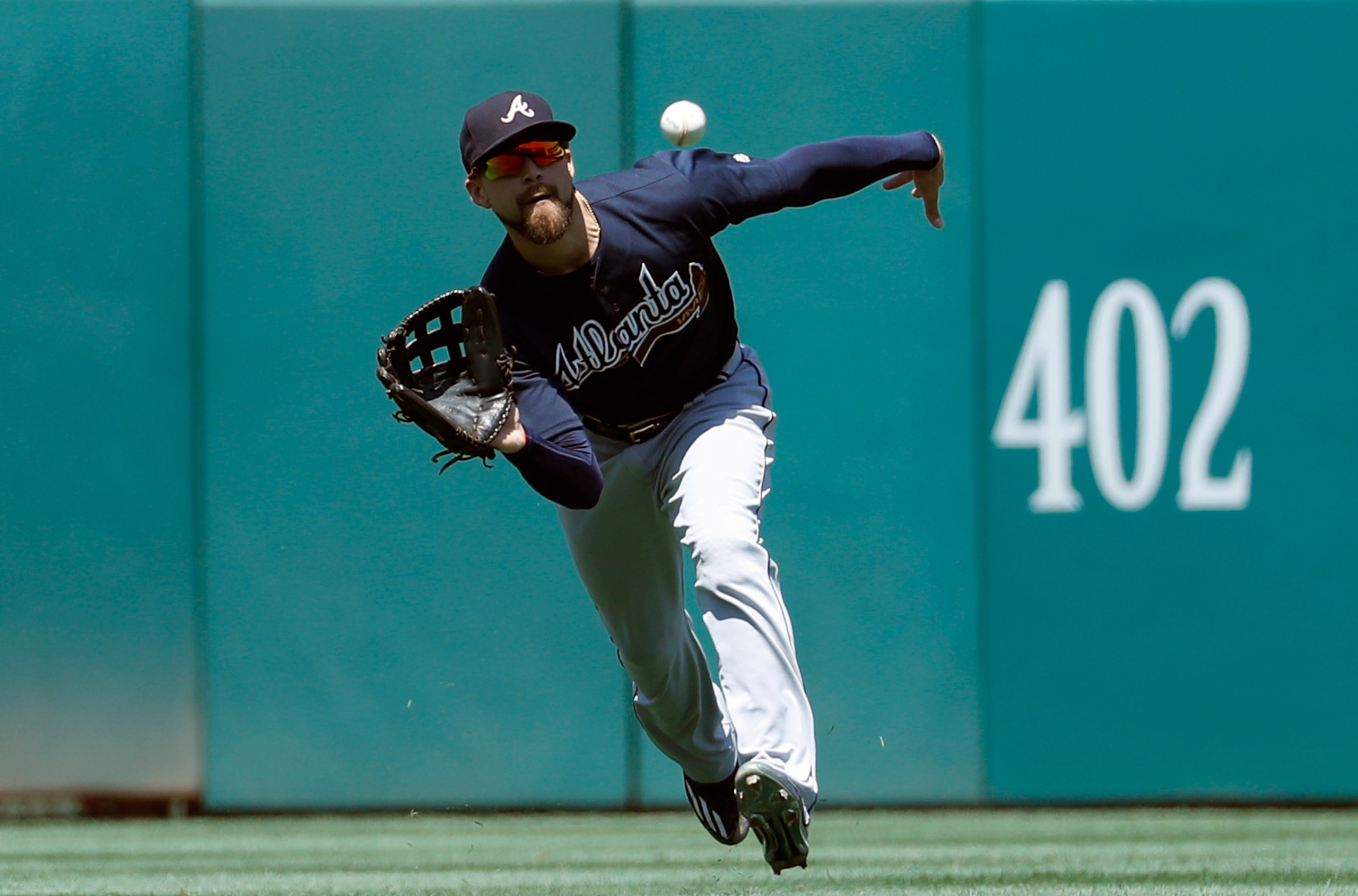
Age: 26
Key Stats: 157 G, 718 PA, .304/.350/.409, 100 OPS+, 11 HR, 22 SB, 5 DRS
WAR: 3.0
2017 Player Report
This is a high rank relative to Ender Inciarte's WAR. That's because DRS doesn't do his defense justice.
He didn't squeeze as much value out of his arm as he usually does, but his fly-ball catching remained on point. Although he's not one of the faster center fielders, he breaks quickly, runs direct routes and doesn't lose focus on the warning track.
Thus, Statcast has the more accurate depiction of Inciarte's defense: 19 outs above average, second only to Byron Buxton out of all outfielders.
Next to that, his offense was a nice bonus. Despite rating as one of MLB's softest hitters with 81.2 mph exit velocity, he once again made a ton of contact (13.1 K%) and ran into some more power by joining the launch-angle revolution. In the meantime, he also continued to be his usual productive self on the bases.
5. Byron Buxton, Minnesota Twins
22 of 26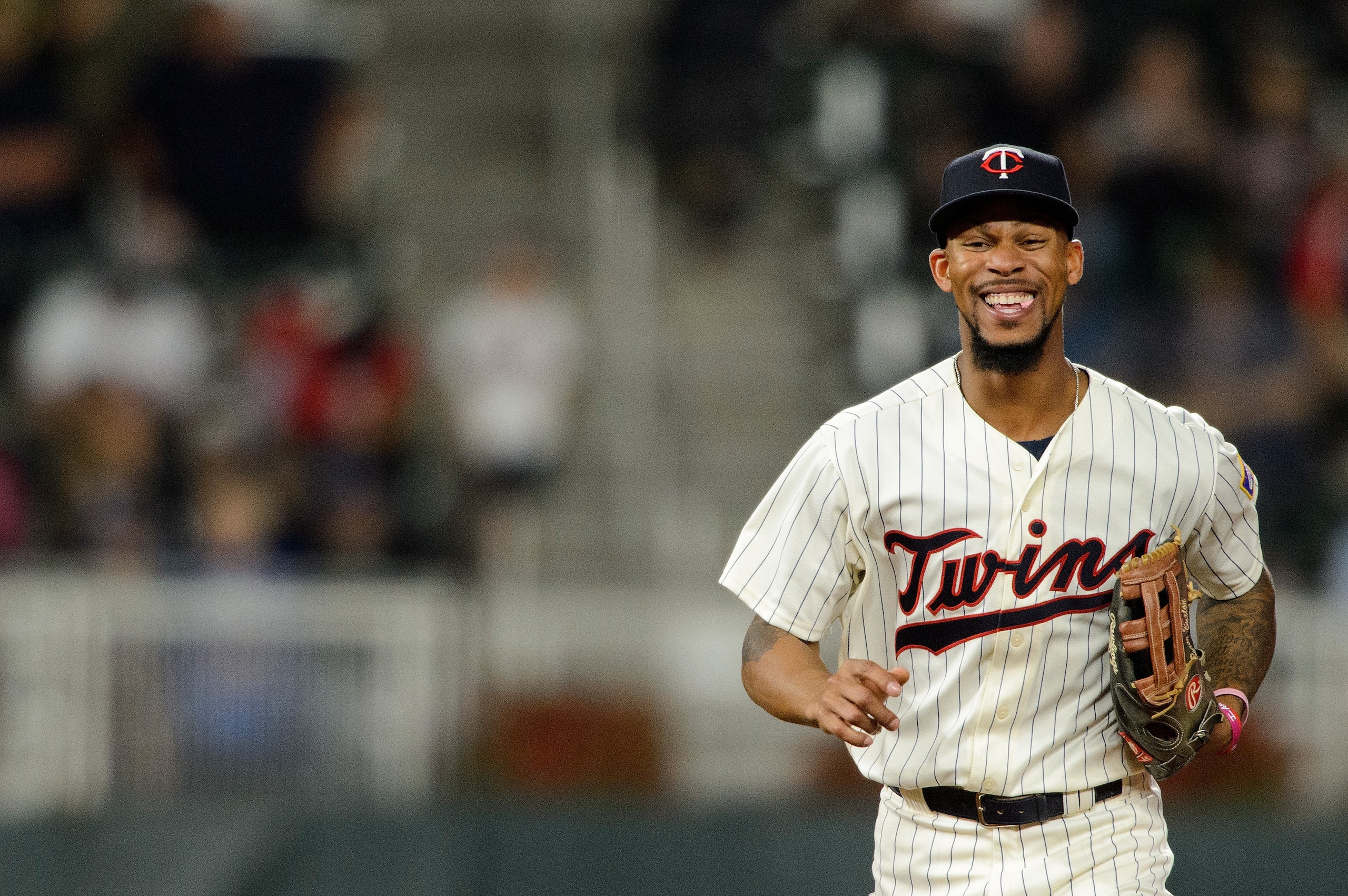
Age: 23
Key Stats: 140 G, 511 PA, .253/.314/.413, 94 OPS+, 16 HR, 29 SB, 24 DRS
WAR: 5.1
2017 Player Report
This is the year that Byron Buxton finally made good on the hype.
Nobody did better than his 30.2 feet-per-second sprint, and he put that to work stealing 29 bags and taking the extra base on hits 71 percent of the time. He also got caught stealing only once and made just one other out on the bases. All told, that's baserunning value that only one other player (Mookie Betts) could match.
Buxton also had a better defensive season than any center fielder. He played shallow and used his speed and instincts to track down seemingly everything that stayed inside the fence. The range he covered is staggering. Baserunners also had to watch out for his arm, another plus tool.
His bat, meanwhile, was a non-factor at the start and a huge factor at the end. Although strikeouts remained a constant, he found mechanics he was comfortable with and the hard contact began to flow.
4. Lorenzo Cain, Kansas City Royals
23 of 26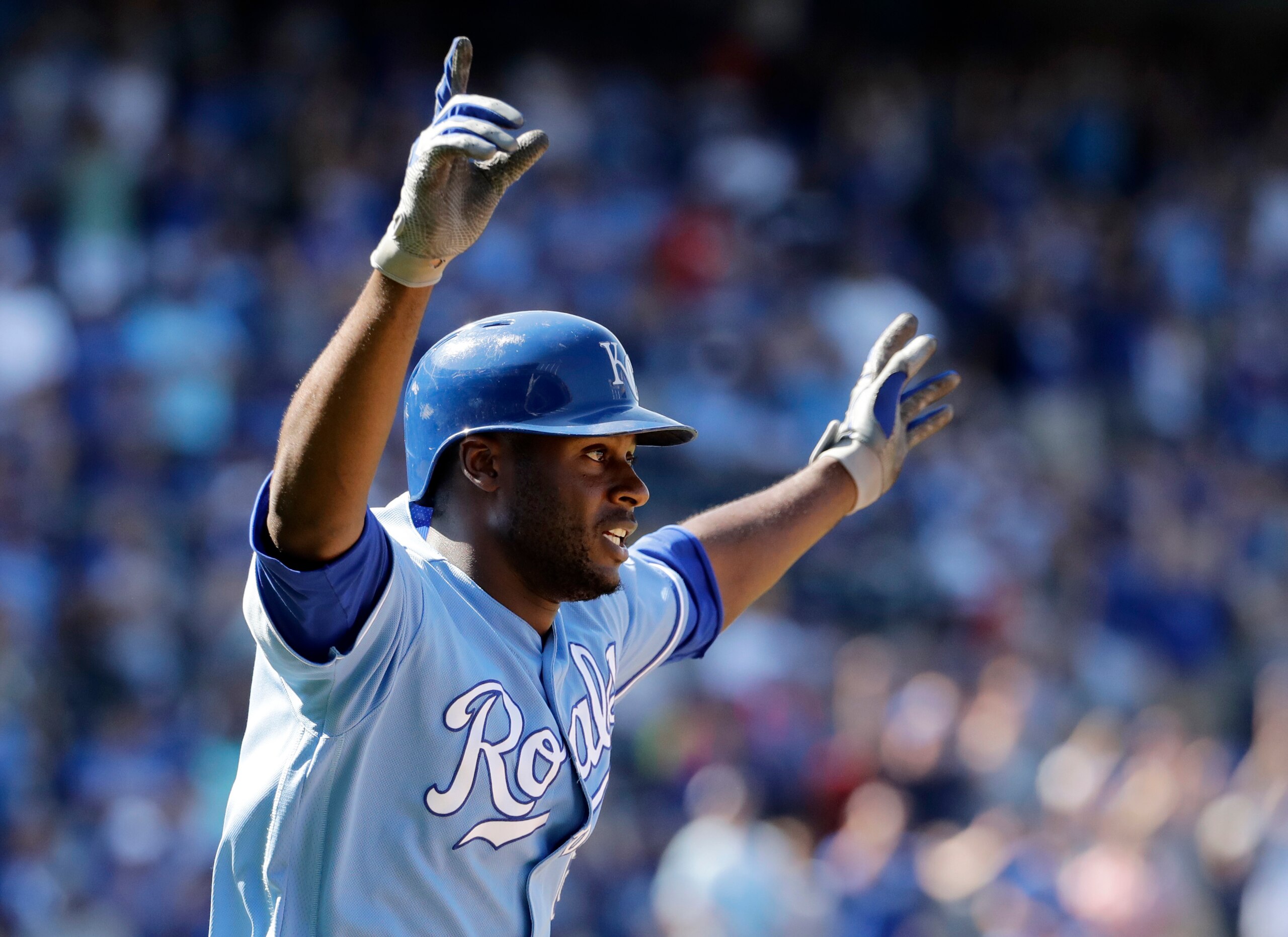
Age: 31
Key Stats: 155 G, 645 PA, .300/.363/.440, 112 OPS+, 15 HR, 26 SB, 5 DRS
WAR: 5.3
2017 Player Report
Lorenzo Cain sprinted at an average of 29.1 feet per second in 2017. That's his fastest mark in three years of Statcast data, and he made the most of it.
With 26 stolen bases in only 28 tries and plenty of smaller baserunning plays, Cain was one of MLB's most productive baserunners, period. And DRS underrates his defense. His seven errors and poor throwing ratings aside, his speed and route-running produced 15 outs above average for Statcast. Only two players beat that.
All this is worth plenty of value even without any hitting to go with it. But Cain did that, too.
He recaptured his strong contact ability with a 15.5 K% and did so while aiming for more power with a higher launch angle and 89.2 mph exit velocity. If only he didn't favor the power-killing void that is center field so much, he would have been even more productive.
3. George Springer, Houston Astros
24 of 26
Age: 28
Key Stats: 140 G, 629 PA, .283/.367/.522, 144 OPS+, 34 HR, 5 SB, 5 DRS
WAR: 5.0
2017 Player Report
George Springer didn't need to change much to go from a good hitter to a great hitter.
He already had a disciplined approach and a swing that could really put a charge into the ball. All he did in 2017 was swing almost exclusively at mistake pitches where he could get his arms extended. Not surprisingly, he connected more often (17.6 K%) and made plenty of hard contact.
The one negative of Springer's offensive surge is that his baserunning remained a sore spot. He already had tendencies to run into outs. Those stayed put despite the fact he got a tad less aggressive.
Springer's defense was similarly hit-or-miss but was more hit than miss when he played center field. He played much deeper than he did during his last full-time tour of center in 2015, yet still shallow enough to accommodate the Houston Astros' propensity for shallow fly balls. He also played a solid right field.
2. Charlie Blackmon, Colorado Rockies
25 of 26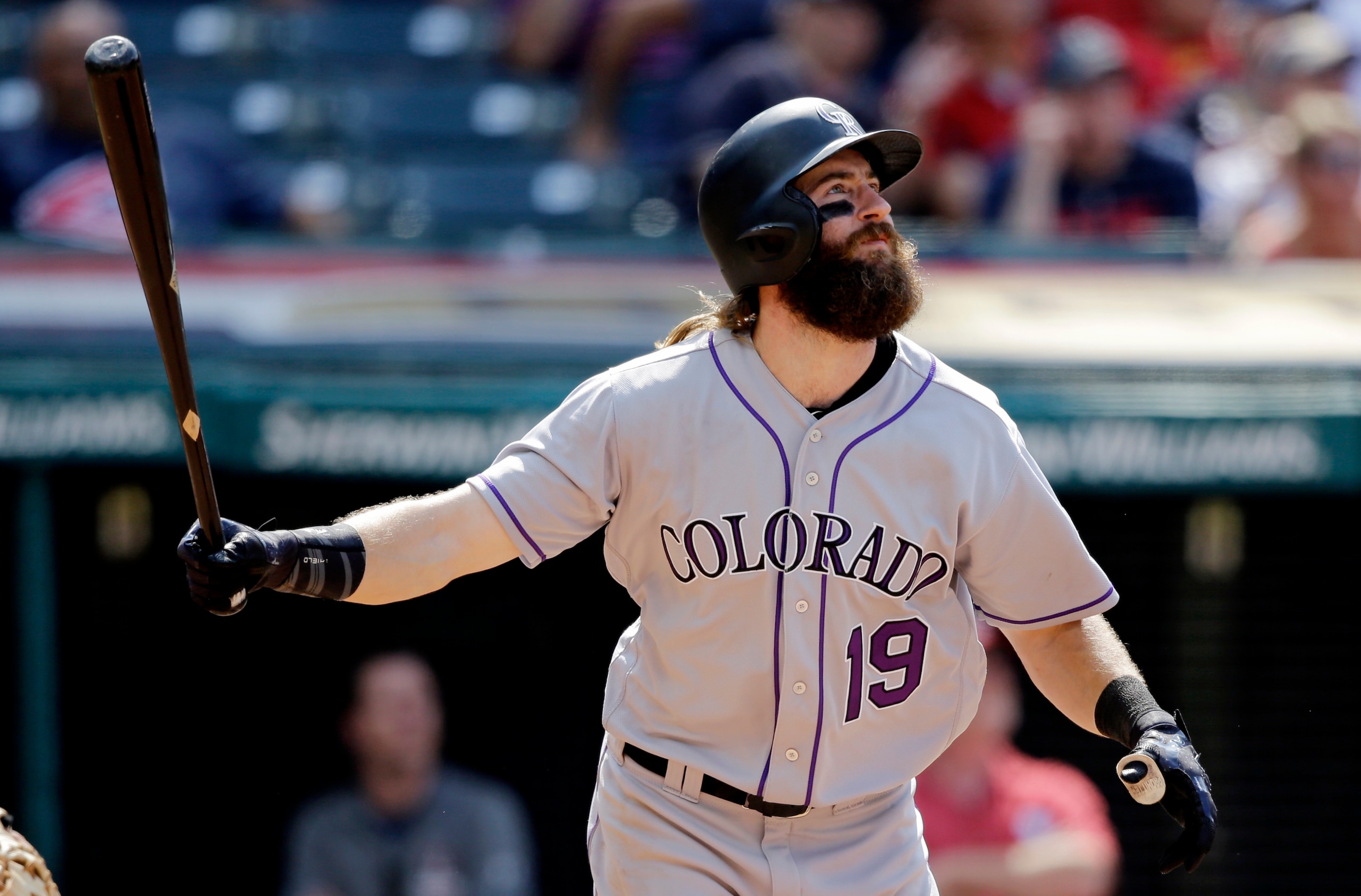
Age: 31
Key Stats: 159 G, 725 PA, .331/.399/.601, 142 OPS+, 37 HR, 14 SB, -5 DRS
WAR: 6.0
2017 Player Report
There's no ignoring that Charlie Blackmon was significantly better at home (1.239 OPS) than he was on the road (.784 OPS) this season. However, he wasn't entirely a Coors Field creation.
He found an equilibrium with his approach that resulted in unleashing his fury at pitches in the heart of the zone. That's a great way to make good contact, so it's no wonder his hard contact rate continued its upward trend.
Elsewhere, DRS is too unkind about his defense. It makes his arm look worse than it actually is and doesn't give him enough credit for solid fly-ball catching skills. He got to plenty, and what he didn't get to was mostly long shots.
One legit gripe is that his baserunning has declined. Although he's still fast, he isn't as prolific stealing bases as he used to be and hasn't gotten better at avoiding outs.
1. Mike Trout, Los Angeles Angels
26 of 26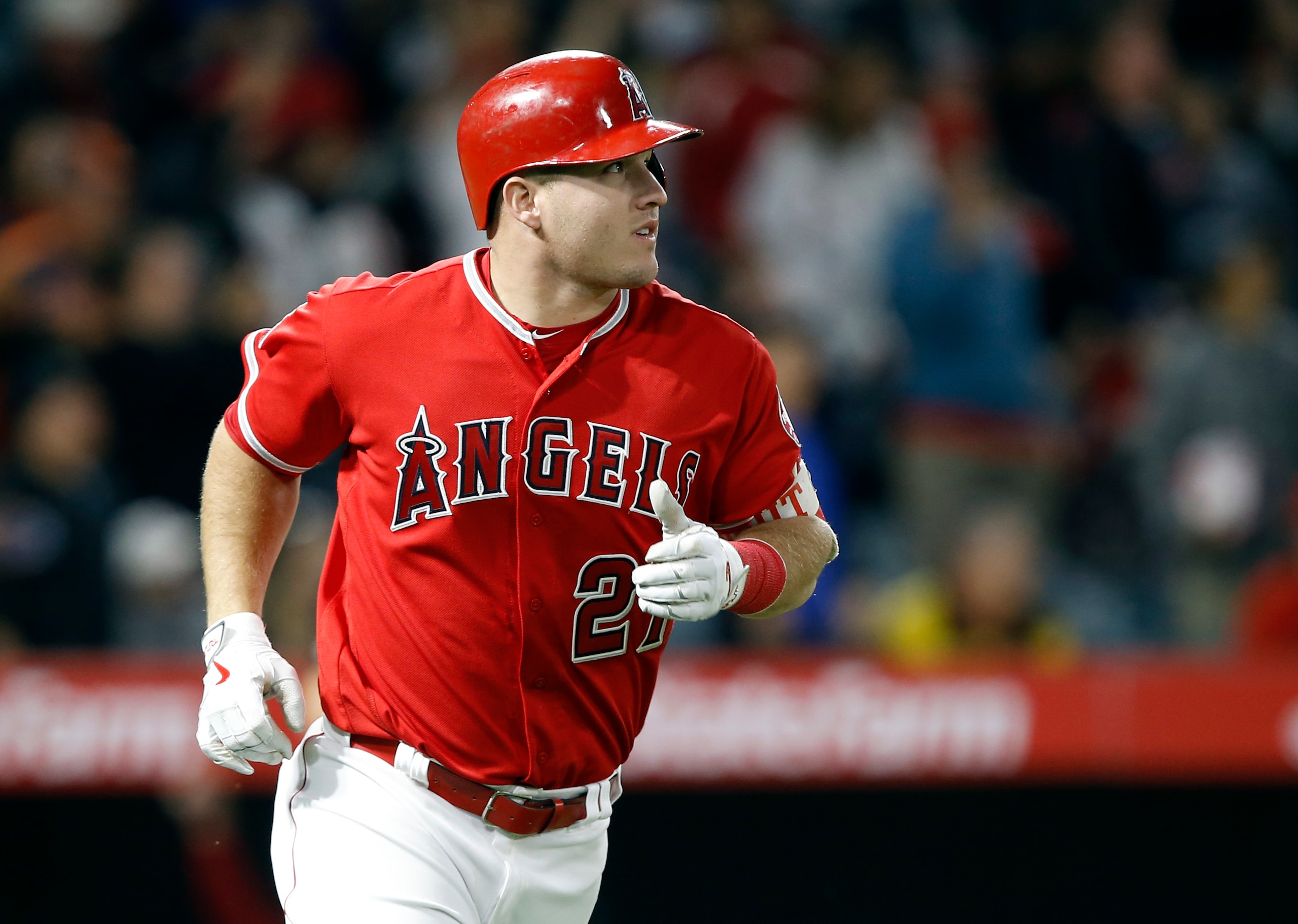
Age: 26
Key Stats: 114 G, 507 PA, .306/.442/.629, 187 OPS+, 33 HR, 22 SB, -6 DRS
WAR: 6.8
2017 Player Report
Sure, Mike Trout missed time with a thumb injury. But did you really expect to see someone else at No. 1?
The one complaint to be levied against Trout is that he's not the same defender he used to be. He's a step slower and thus has to play deeper, and to the naked eye he exercises more caution on the warning track. He makes the easy catches but few hard ones.
Fortunately, he remains a nightmare for the opposition on offense.
Already a disciplined hitter, this was the year that Trout became downright Joey Votto-esque in his selectivity and discipline. He also got in on the launch-angle revolution but without losing his swing's innate quickness and explosiveness. Thus, the trifecta of an 18.5 BB%, a 17.1 K% and a 38.3 hard-hit rate. Elsewhere, rumors of his baserunning's demise continued to be exaggerated.
In all, Mike Trout remains Mike Trout.
.jpg?w=2560 "McCarthy 'Not Surprised' to Be QB1")
.jpg?w=2560 "Breaking News")


.jpg?w=2560 "Porziņģis Trade Packages 📦")