

MLB Position Power Rankings: B/R's Final Top 45 Corner Outfielders of 2017

Having checked in on the top center fielders of the 2017 Major League Baseball season, it's now time for Bleacher Report's final positional power rankings to head to the corners.
There are 60 left fielders and right fielders to choose from at any given moment, and their ranks swell even further when the many platoon players found at both positions are factored in. In this space, only 45 will be discussed.
Here are the ground rules:
- With some exceptions, players must have logged the majority of their games in left and/or right field.
- Players were ranked both on the quantity and the quality of their work.
- Offense, defense and baserunning fall under the "quality" umbrella.
- The corner outfield spots are traditionally heavy on offense and light on defense and baserunning, but it will only help a player's cause if he can run and field well when he's not at the plate.
The rankings were a simple judgment call. Baseball Reference's version of wins above replacement (WAR) was useful in this respect but was treated more as a guideline than the word of the baseball gods.
Lastly, this is neither a far-reaching retrospective nor a gaze into the future. Only what happened in 2017 counts.
Note: These rankings mistakenly exclude Seattle Mariners slugger Nelson Cruz, who should have been factored in despite making 146 starts as a designated hitter. Due to his .924 OPS and 39 home runs, he would rank within the top 10.
A Few Statistics to Know
1 of 46
In the year 2017, it's ill-advised and arguably irresponsible to talk about players in detail without using statistics to contextualize their talents and shortcomings.
So, be warned: There are indeed statistics in these rankings.
Many stats will simply be alluded to via links that go to relevant data at Baseball Reference, FanGraphs, Baseball Savant, Brooks Baseball and Baseball Prospectus. But a few to know are...
Wins Above Replacement (WAR): As a stat that puts a number on a player's hitting, baserunning and fielding contributions, WAR is a good go-to in any circumstance.
On-Base Plus Slugging Plus (OPS+): This takes a player's OPS, adjusts it for league and ballpark factors and puts it on a scale where 100 represents average. It shows how well a hitter performed relative to his peers.
Defensive Runs Saved (DRS): It sounds like a measurement of a player's defensive quality, and that's what it is. It's the main defense component for Baseball Reference's version of WAR. Some play multiple positions, but the DRS listed for them here is that of their primary position.
Launch Angle: This Statcast specialty measures the angle of the ball off a hitter's bat. It provides a snapshot of the shape of a hitter's swing—i.e. whether it's flat and tailored for ground balls and line drives or lofty and tailored for fly balls. The MLB average in 2017 was 11.1 degrees.
Exit Velocity: Another Statcast specialty that measures the speed of the ball off a hitter's bat. As you'd expect, there's a strong correlation between high speeds and hitting success. The MLB average in 2017 was 86.6 miles per hour.
Plate Discipline: Although they'll rarely be mentioned explicitly, Swing% (percentage of swings at all pitches), Z-Swing% (in-zone swing percentage) and O-Swing% (out-of-zone swing percentage) paint a picture of a hitter's approach. These figures are found at FanGraphs.
Pull Percentage (Pull%): Also from FanGraphs, this shows the rate at which hitters pull the ball—to left field for righties and to right field for lefties. Pulling the ball is a double-edged sword: It can make a hitter vulnerable to shifts but is also by far the best avenue to power.
45. Nomar Mazara, Texas Rangers
2 of 46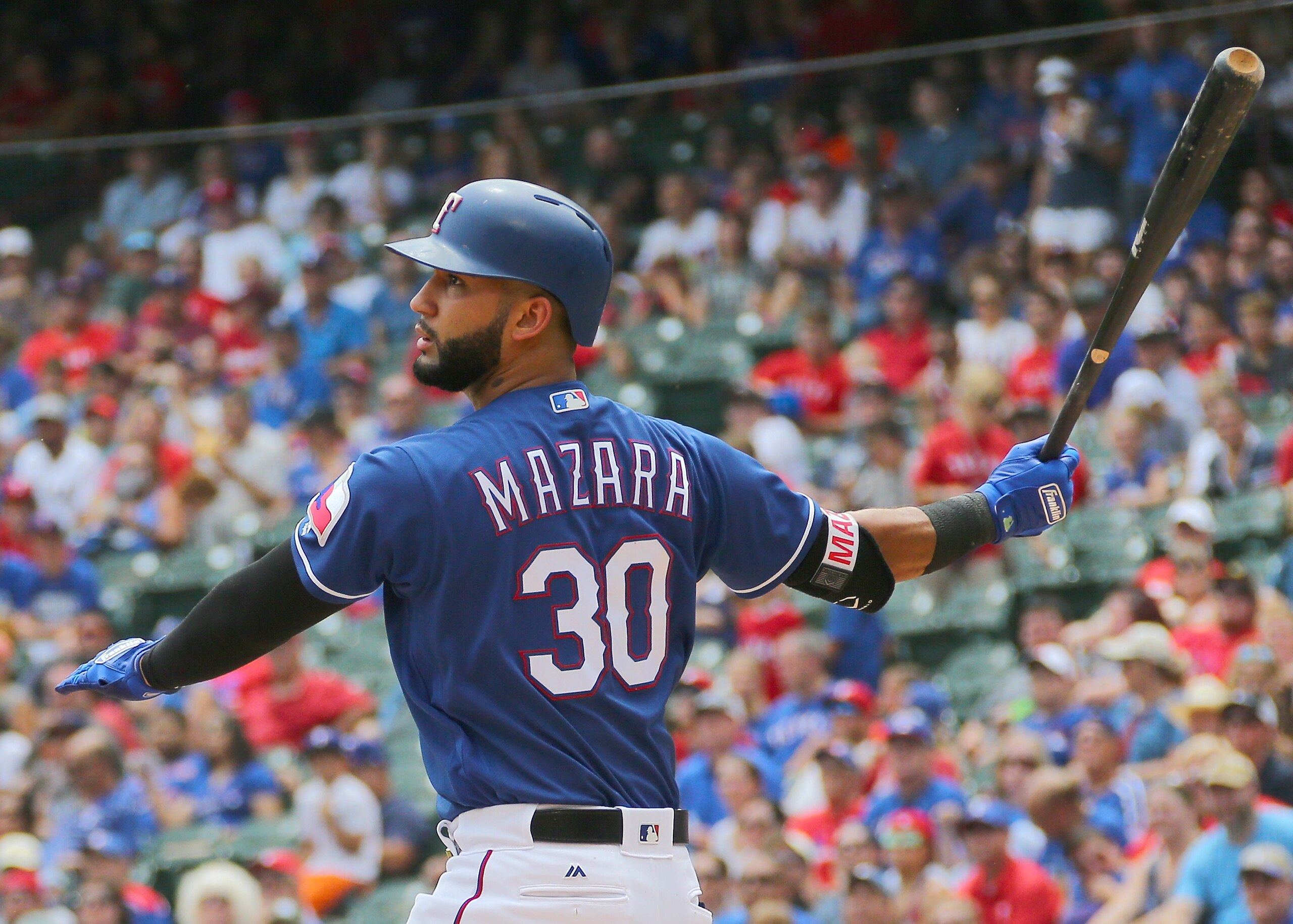
Age: 22
Key Stats: 148 G, 616 PA, .253/.323/.422, 92 OPS+, 20 HR, 2 SB, -3 DRS
WAR: 0.1
2017 Player Report
It's not easy to make a case for a replacement-level player, but here goes: Nomar Mazara was at least an everyday player in 2017, as well as a better hitter than his numbers reflect.
He's tuning his approach to be more patient yet with more in-zone swings. He also added to his launch angle and exit velocity, and he once again flashed plus-plus power with elite distance on his home runs.
Despite his negative DRS, he also continued to play a passable right field. His long strides allow him to cover a decent amount of ground. He also has enough arm for the position.
But since Mazara doesn't have enough speed to be either a great baserunner or a great defender, his star potential hinges on him squeezing as much value out of his bat as possible. For that, he must start by conquering his platoon split and stop hitting into so many darn shifts.
Honorable Mentions: Melky Cabrera (KCR), Howie Kendrick (WAS), Lonnie Chisenhall (CLE), Guillermo Heredia (SEA), Randal Grichuk (STL), Hunter Renfroe (SDP), Nick Williams (PHI), Kyle Schwarber (CHC)
44. Nick Markakis, Atlanta Braves
3 of 46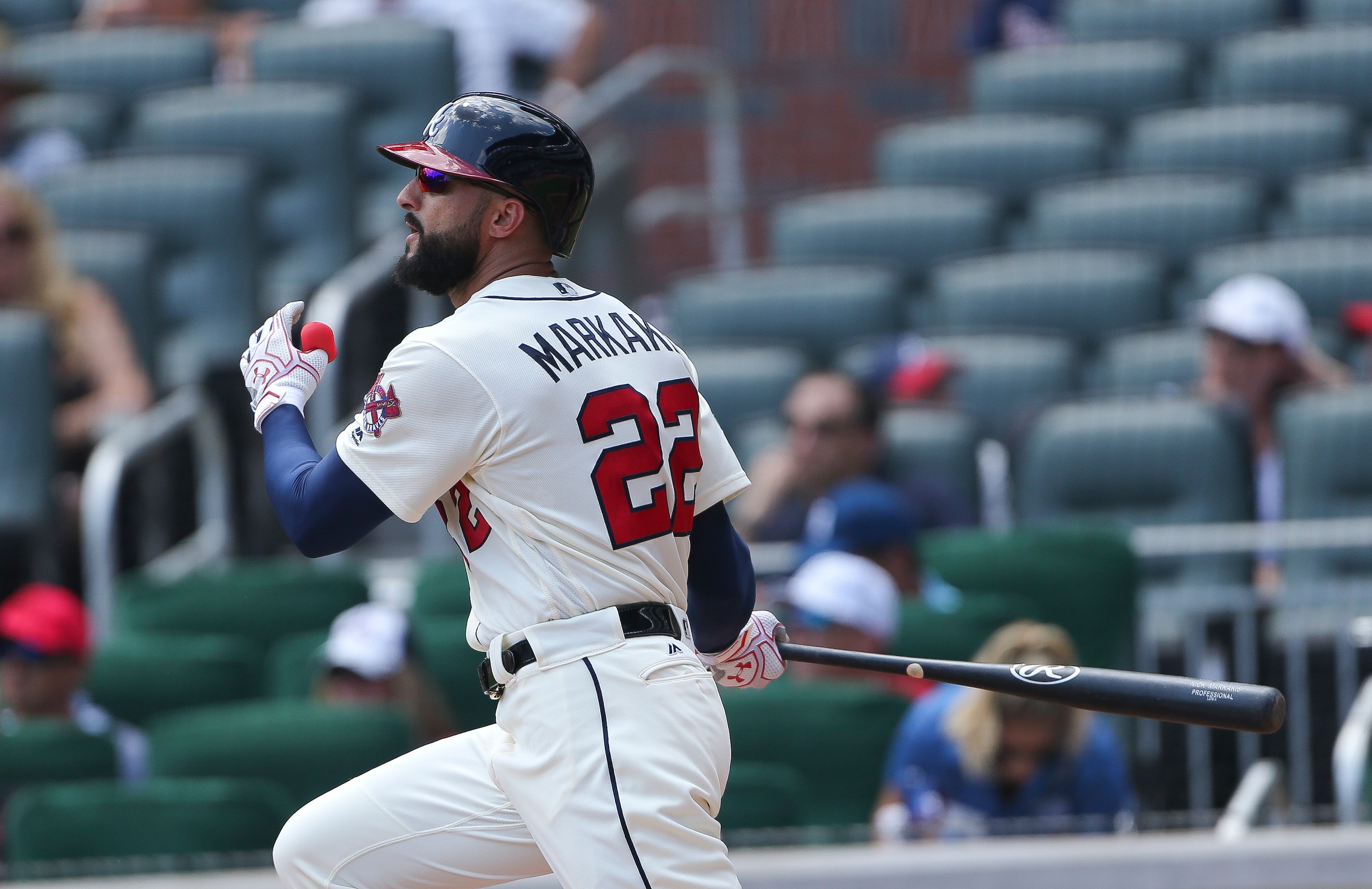
Age: 33
Key Stats: 160 G, 670 PA, .275/.354/.384, 96 OPS+, 8 HR, 0 SB, -4 DRS
WAR: 0.7
2017 Player Report
Nick Markakis always gets points for durability. He played in 147 games as a rookie in 2006 and has averaged 153 games per season ever since.
He can also always be counted on for quality at-bats. His approach is as steady as they come, his swing is nice and short to the ball, and he can hit it in any direction. The result for 2017: a combination of walks (10.1 BB%), contact (16.4 K%) and hits to all fields.
Otherwise, Markakis had little to offer.
He held his power in check by not getting in on the launch angle craze. He's slow-footed even by right field standards, which limits him on the basepaths and doesn't help his good-not-great range on defense. And his arm simply hasn't been the same weapon since his 2014 neck surgery.

43. Jon Jay, Chicago Cubs
4 of 46
Age: 32
Key Stats: 141 G, 433 PA, .296/.374/.375, 96 OPS+, 2 HR, 6 SB, 0 DRS
WAR: 1.1
2017 Player Report
Jon Jay was less a "corner outfielder" and more a "utility outfielder who mostly played the corners" in 2017.
He wasn't a standout at any of the three positions, but it's a testament to his defensive know-how that he didn't embarrass himself either. He has neither great speed nor a great arm, but he makes up for that with his smooth fly-ball tracking and situational awareness.
Jay's awareness extends to the basepaths. Despite not being a speed demon or a base-stealer, he got good value out of taking plenty of extra bases without running into too many outs.
A small sample size and a punchless swing are the big caveats of Jay's hitting performance. But in an approach that produced a solid 8.5 BB% and a line-drive swing that he could apply to all fields, he featured two things that consistently put him on base.
42. Gerardo Parra, Colorado Rockies
5 of 46
Age: 30
Key Stats: 115 G, 425 PA, .309/.341/.452, 94 OPS+, 10 HR, 2 SB, 4 DRS
WAR: 0.9
2017 Player Report
Gerardo Parra is several years removed from his past life as an elite defensive outfielder. But as his DRS lets on, 2017 proved he's not finished yet.
Despite being one of the slower left fielders, Parra extended his range by tracking and closing on balls well. He also tallied nine total assists with an arm that, while past its prime, is still a weapon.
Parra had a smaller role on offense and was indeed helped by regular action at Coors Field. However, the latter isn't the only reason his bat recovered from a pitiful 2016 season.
The veteran toned down his aggression and became less reliant on his pull side. His walk (4.7 BB%) and strikeout (15.8 K%) rates improved and he planted hits all over the field.
41. Ben Gamel, Seattle Mariners
6 of 46
Age: 25
Key Stats: 134 G, 550 PA, .275/.322/.413, 98 OPS+, 11 HR, 4 SB, -6 DRS
WAR: 1.0
2017 Player Report
Despite following an early peak with a late valley, Ben Gamel was still a pleasant surprise in 2017.
He specialized neither in patience (6.5 BB%) nor in contact (22.2 K%) nor in power, but it's to his credit that he didn't lag far behind in any of these departments. Thanks to a line-drive swing that he could apply to any field, he was direct to the ball and capable of hitting it where they ain't.
With an average sprint of 28.4 feet per second, Gamel was also a fast runner. With one caveat being that he ran into 10 outs, he put his speed to good use, taking as many extra bases as he could.
Both Gamel's speed and arm strength came into play on defense, but his negative DRS reflects how it wasn't all pretty. He was more about energy than instincts, which helped cost him routine plays in left field.
40. Scott Schebler, Cincinnati Reds
7 of 46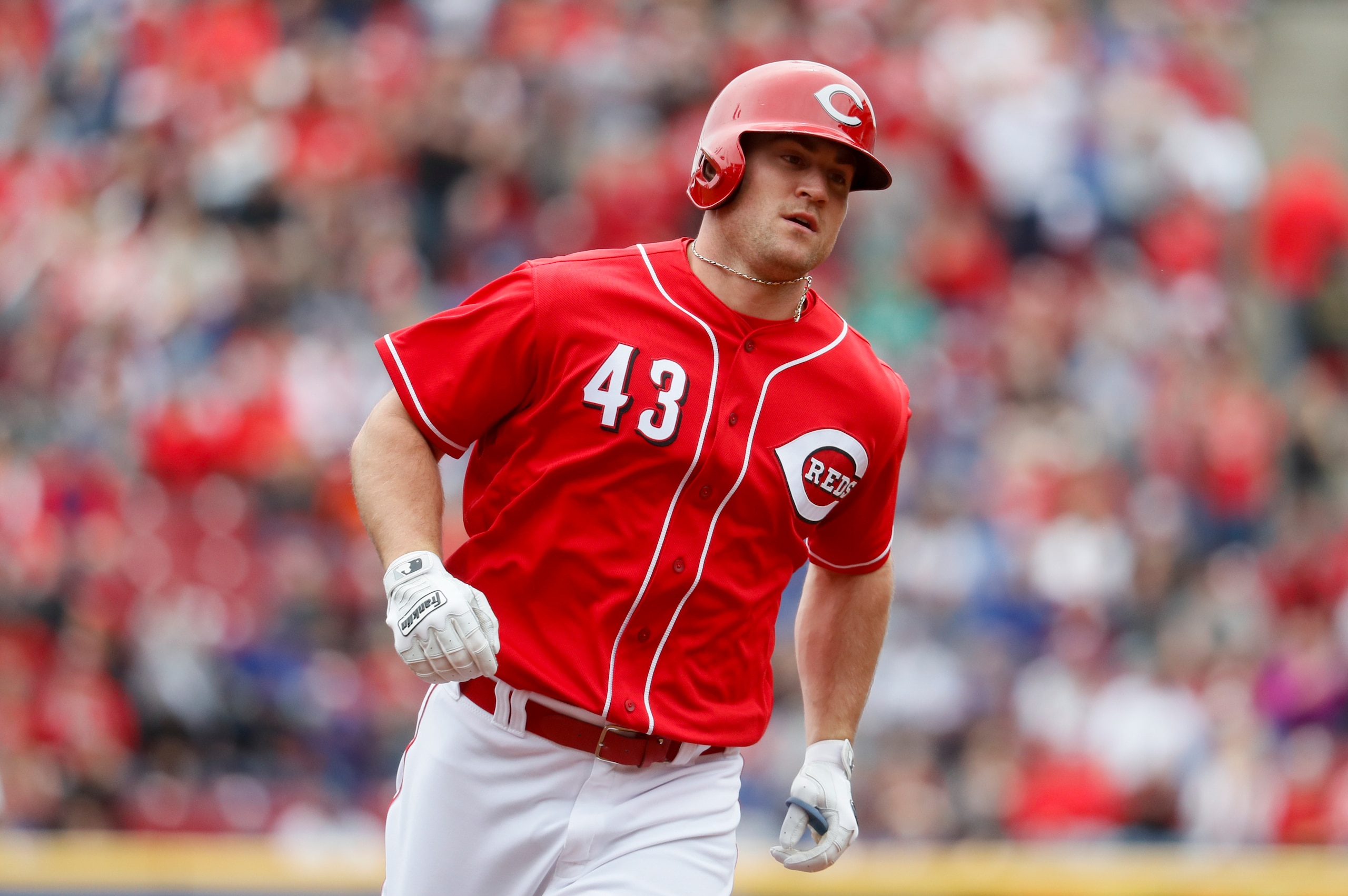
Age: 27
Key Stats: 141 G, 531 PA, .233/.307/.484, 103 OPS+, 30 HR, 5 SB, 0 DRS
WAR: 1.2
2017 Player Report
Despite a bad slump in July and August, Scott Schebler finished strong to put a nice bow on his breakout.
There's no chalking it up to either the platoon advantage or playing home games at Great American Ball Park. Schebler simply made the most of regular playing time, swinging aggressively and showing off his new launch angle. His above-average pull rate also helped, resulting in a bombardment of the right field bleachers.
The downside of that pull habit? Shifts. Schebler saw a lot of them and was powerless to beat them.
But lest anyone think his breakout was all in his power, he also played a solid right field. He had enough speed to account for the reality that he wasn't the smoothest route-runner, and his below-average arm came with enough accuracy to occasionally punish those who would test it.
39. Shin-Soo Choo, Texas Rangers
8 of 46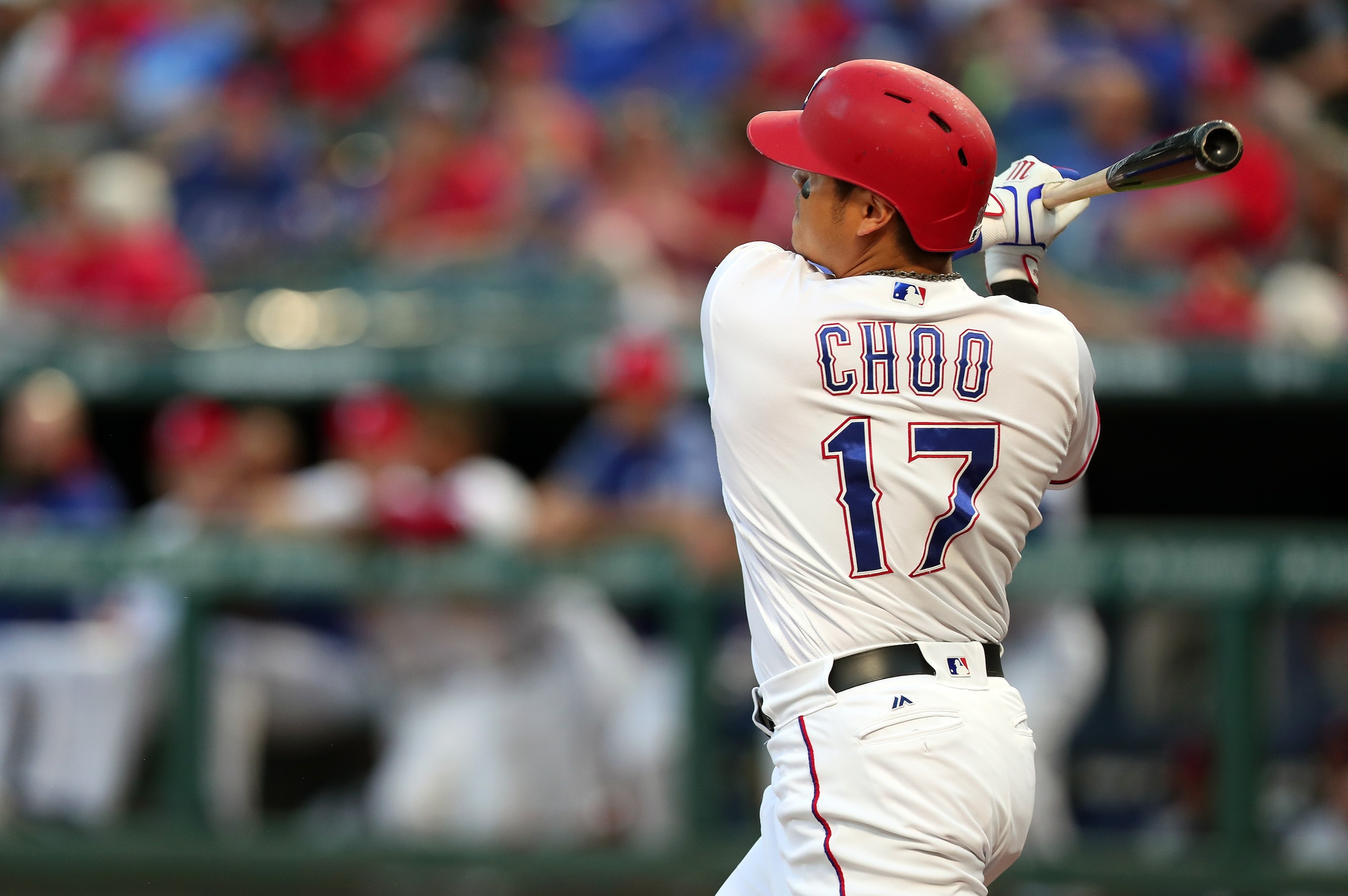
Age: 35
Key Stats: 149 G, 636 PA, .261/.357/.423, 103 OPS+, 22 HR, 12 SB, -6 DRS
WAR: 1.1
2017 Player Report
Following an injury-marred 2016, staying healthy was a nice change of pace for Shin-Soo Choo in 2017.
Otherwise, he remained one of MLB's most advanced hitters. He swung rarely and expanded the zone even more rarely, hence his 12.1 BB%. And while he kept his swing relatively flat, he hit with good exit velocity that helped provide a steady stream of extra-base hits to all fields.
However, Choo couldn't stop himself from hitting into shifts. And his 12 stolen bases must be taken with a grain of salt. He was mostly a station-to-station runner who nonetheless ran into eight outs.
On defense, he retains enough arm for right field and knows what he's doing well enough to make routine plays. But his range is limited to a point where routine plays are basically all he can make. There's a reason he also DH'd for 65 games, you know.
38. Ryan Braun, Milwaukee Brewers
9 of 46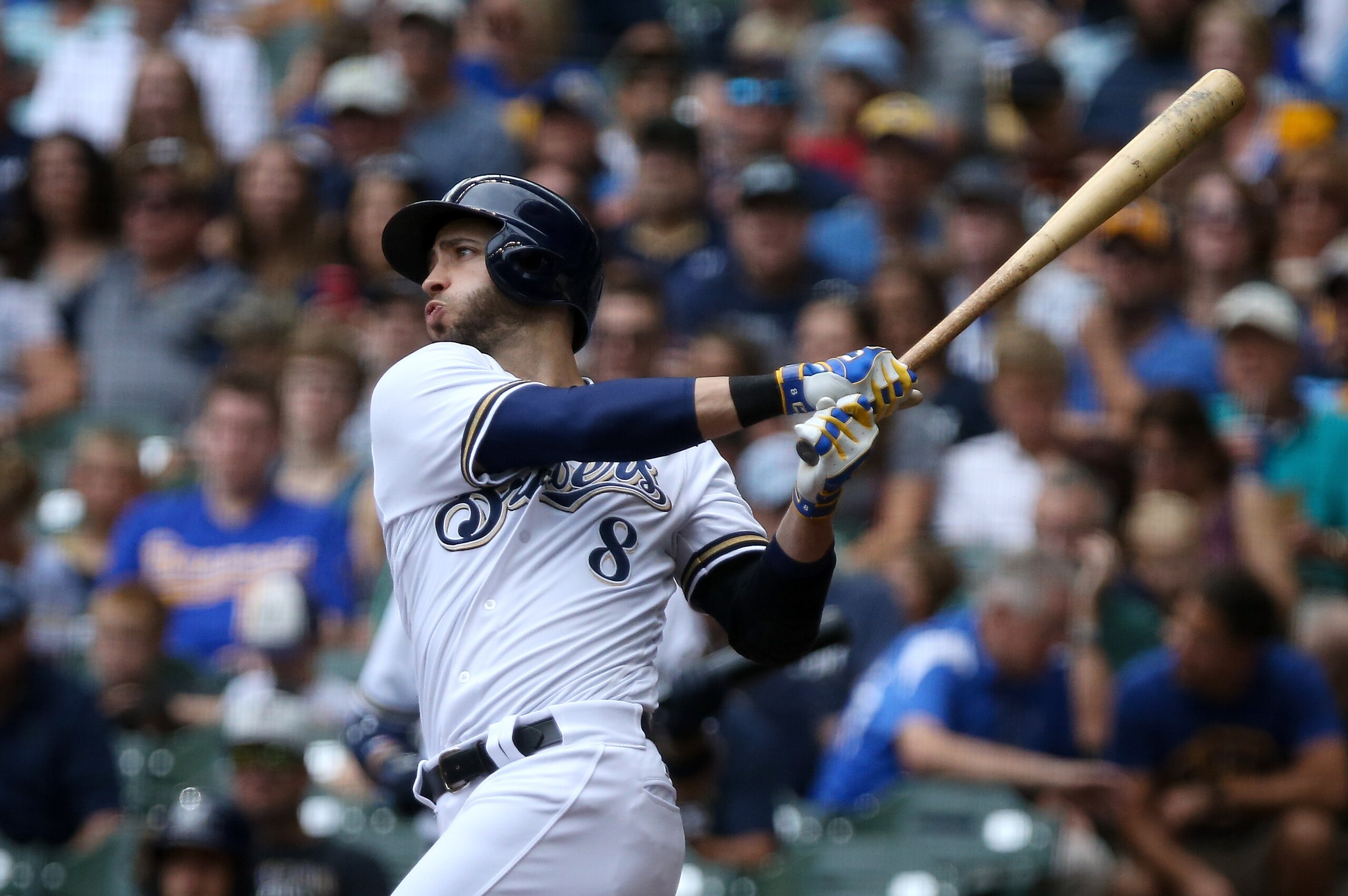
Age: 33
Key Stats: 104 G, 425 PA, .268/.336/.487, 112 OPS+, 17 HR, 12 SB, -5 DRS
WAR: 1.2
2017 Player Report
Due to a calf strain that sidelined him for a good chunk of May and almost all of June, this season further cemented the reality that Ryan Braun's most durable days are behind him.
However, he was a better hitter than his modest (by his standards) numbers let on. Extreme aggression remained a hallmark of his approach, but he balanced an 8.9 BB% with a 17.9 K% and finished with his best hard-hit rate in years.
Braun also didn't let his leg woes turn him into a useless baserunner. He didn't push his luck on hits, but he was 12-of-16 stealing bases and ran into only two other outs.
As per usual, the veteran's defense was in the realm of "good enough." Although he didn't have the range to make high-difficulty catches, he retained the athleticism to make the plays he had to.
37. Adam Frazier, Pittsburgh Pirates
10 of 46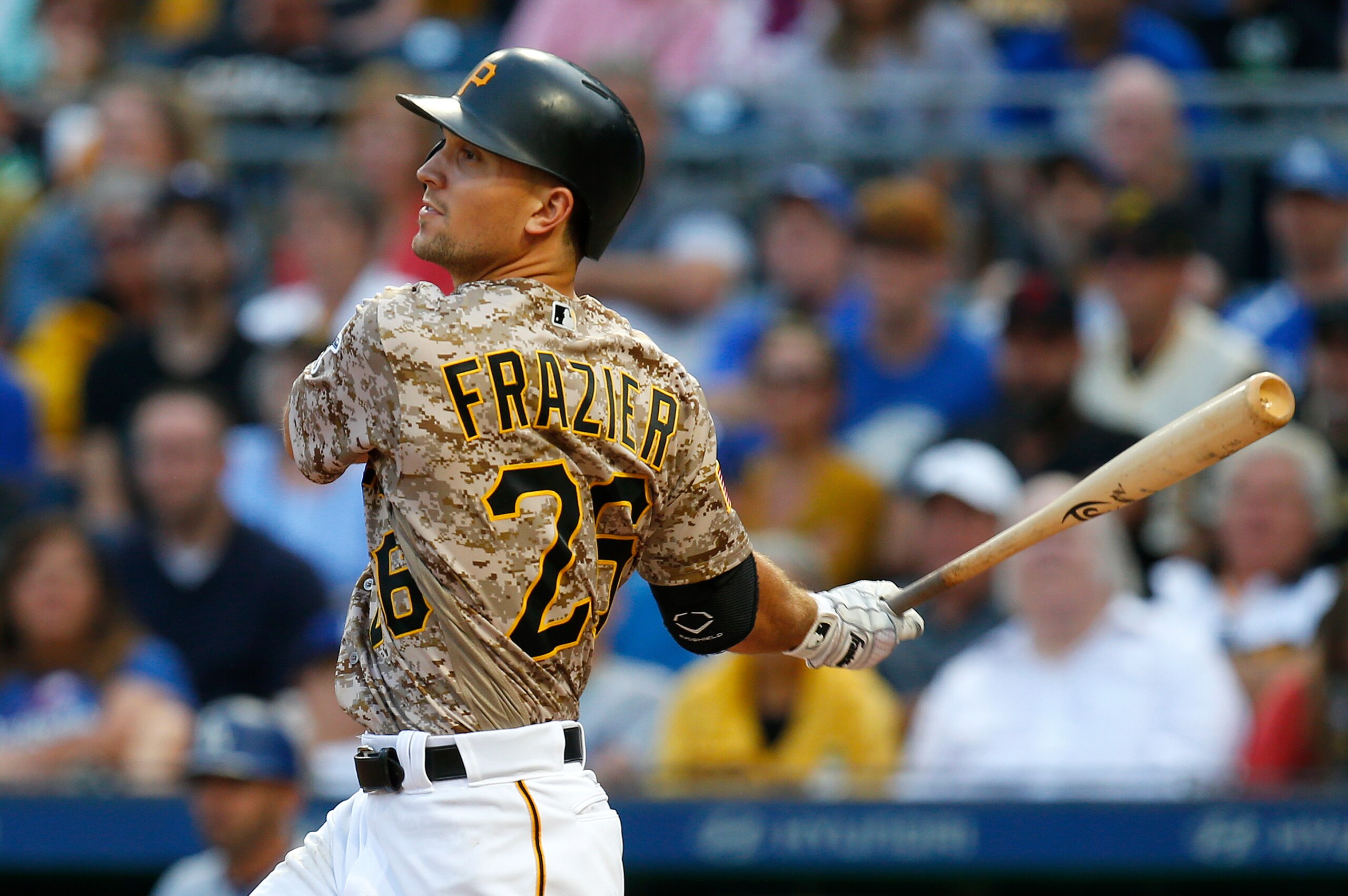
Age: 25
Key Stats: 121 G, 454 PA, .276/.344/.399, 95 OPS+, 6 HR, 9 SB, 6 DRS
WAR: 1.8
2017 Player Report
Adam Frazier rarely faced left-handed pitching in 2017, so his emergence as a capable hitter has to be taken for what it's worth.
Yet there's still plenty to appreciate about how his bat operated. At a time when seemingly everyone is emphasizing power, he went old-school by emphasizing contact (12.6 K%) with a line-drive swing that he applied to all fields. He also worked a solid 7.9 BB%, making him an all-around tough out.
Despite modest speed and a mere 9-for-14 effort stealing bases, Frazier was also a capable baserunner. He was aggressive enough to take plenty of extra bases but also cautious enough to run into only two outs.
Although DRS overstates the quality of his left field defense, playing deeper than the average left fielder resulted in basically nothing getting over his head. He was also versatile, logging extra time at second base and right field.
36. Matt Joyce, Oakland Athletics
11 of 46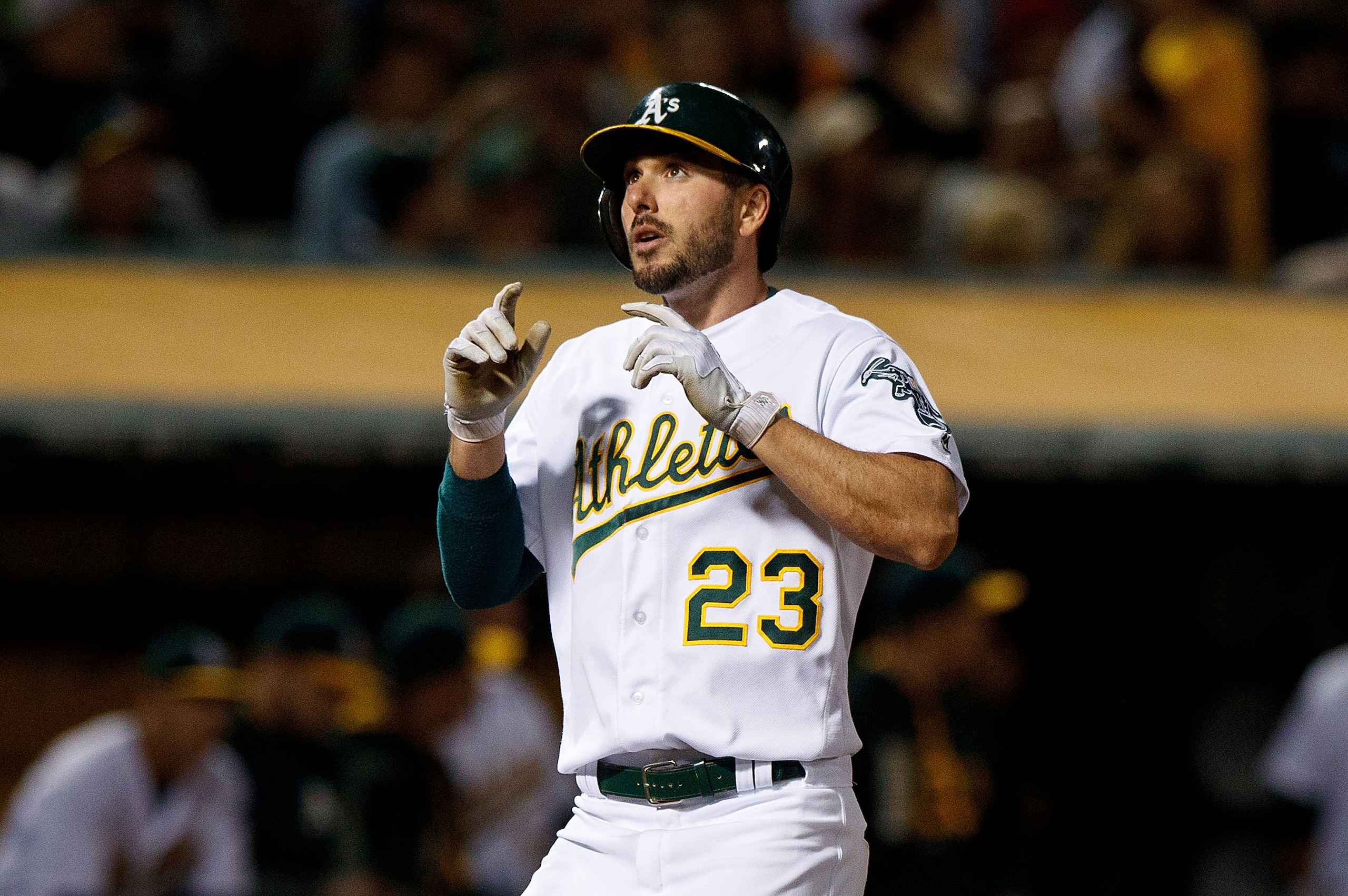
Age: 33
Key Stats: 141 G, 544 PA, .243/.335/.473, 117 OPS+, 25 HR, 4 SB, -8 DRS
WAR: 1.7
2017 Player Report
Matt Joyce is a productive hitter in large part because he hardly ever sees left-handed pitching.
But to give credit where it's due, the guy also knows what he's doing at the plate.
Joyce didn't sustain the ultra-low swing rate that led to a 20.1 BB% in 2016, but he maintained enough patience to work a 12.1 BB% and make good use of what swings he did take. He made reasonably consistent contact (20.8 K%) and put a good charge into balls via launch angle and exit velocity. Hitting into more shifts didn't help, but he actually dropped his pull rate and hit with authority to all fields.
35. Rhys Hoskins, Philadelphia Phillies
12 of 46
Age: 24
Key Stats: 50 G, 212 PA, .259/.396/.618, 165 OPS+, 18 HR, 2 SB, -1 DRS
WAR: 2.0
2017 Player Report
Rhys Hoskins comes with an obvious small-sample-size caveat. There's also something to be said about him feasting on less-than-stellar pitchers.
Still, there's no denying the obvious: His bat is a source of great power.
He's clubbed 85 home runs in the minors and majors over the last two seasons by way of an absolutely perfect profile for slugging. He waits for his pitch. His swing has loft and punch. And his preference is to pull. He's basically a vintage Jose Bautista clone.
It's a good thing Hoskins is such a promising hitter because his potential for impact outside the batter's box is limited. He's slow even by left field standards. Between that and a lack of outfield experience that resulted in him not making makeable plays, first base is where he belongs.
34. Jose Pirela, San Diego Padres
13 of 46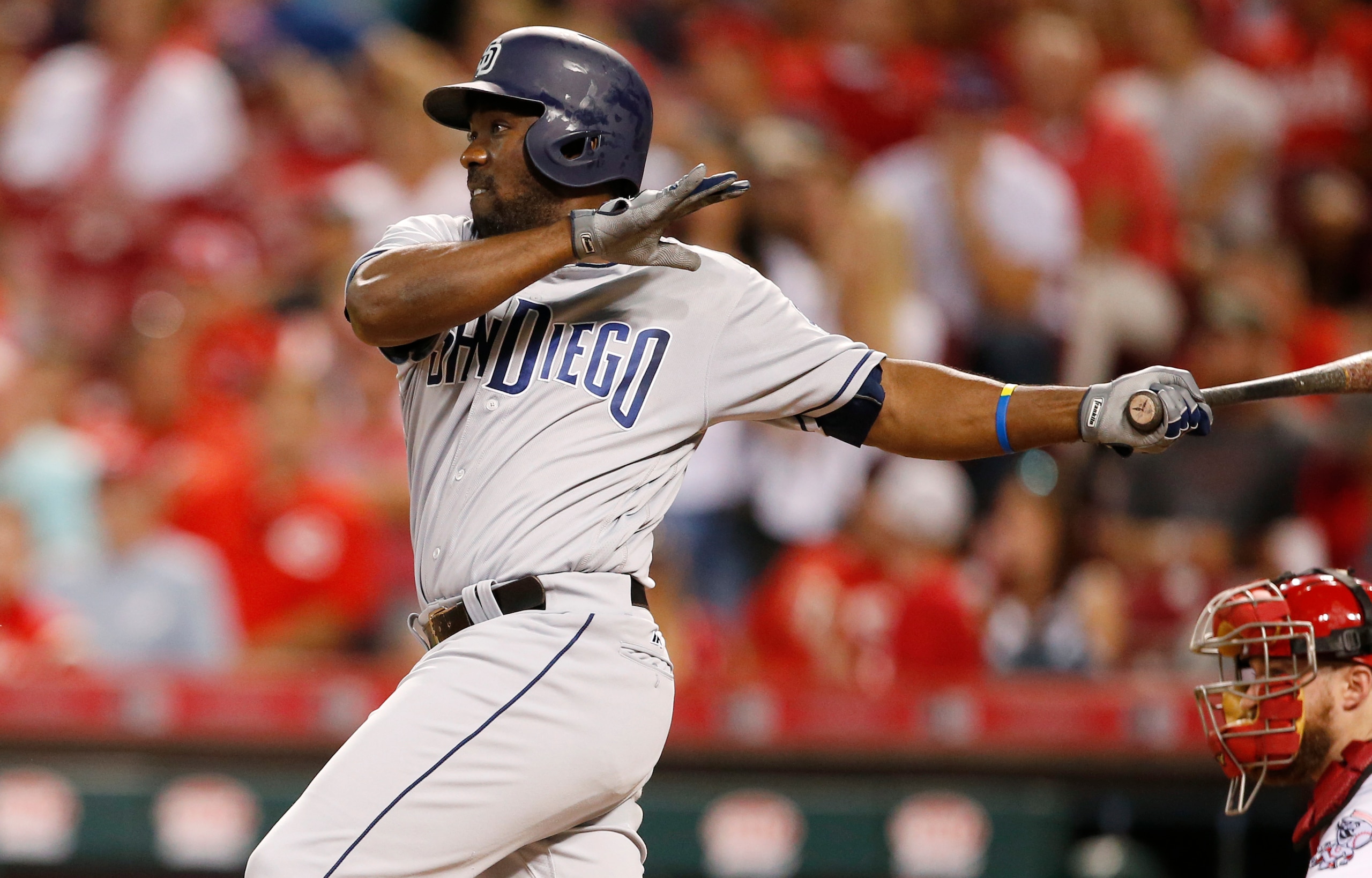
Age: 27
Key Stats: 83 G, 344 PA, .288/.347/.490, 122 OPS+, 10 HR, 4 SB, 3 DRS
WAR: 2.0
2017 Player Report
This season saw Jose Pirela rise from a piece of organizational depth to a productive everyday major leaguer.
Simply being healthy following an injury-marred 2016 helped. What also helped was the San Diego Padres' insistence on a modern makeover, urging him to get under more balls so his raw pop wouldn't go to waste.
All told, he decreased his ground-ball rate while hitting balls at an average of 88.7 mph. He also pulled more balls. Since these are all good ingredients for power, his power went way up.
Pirela also boasted excellent speed by left field standards. It's disappointing that he didn't take full advantage on the basepaths, but it gave him good range in the field. Not to be lost is how he filled in admirably at right field, second base and first base as well. Small sample size be damned, he had a heck of a year.
33. Yoenis Cespedes, New York Mets
14 of 46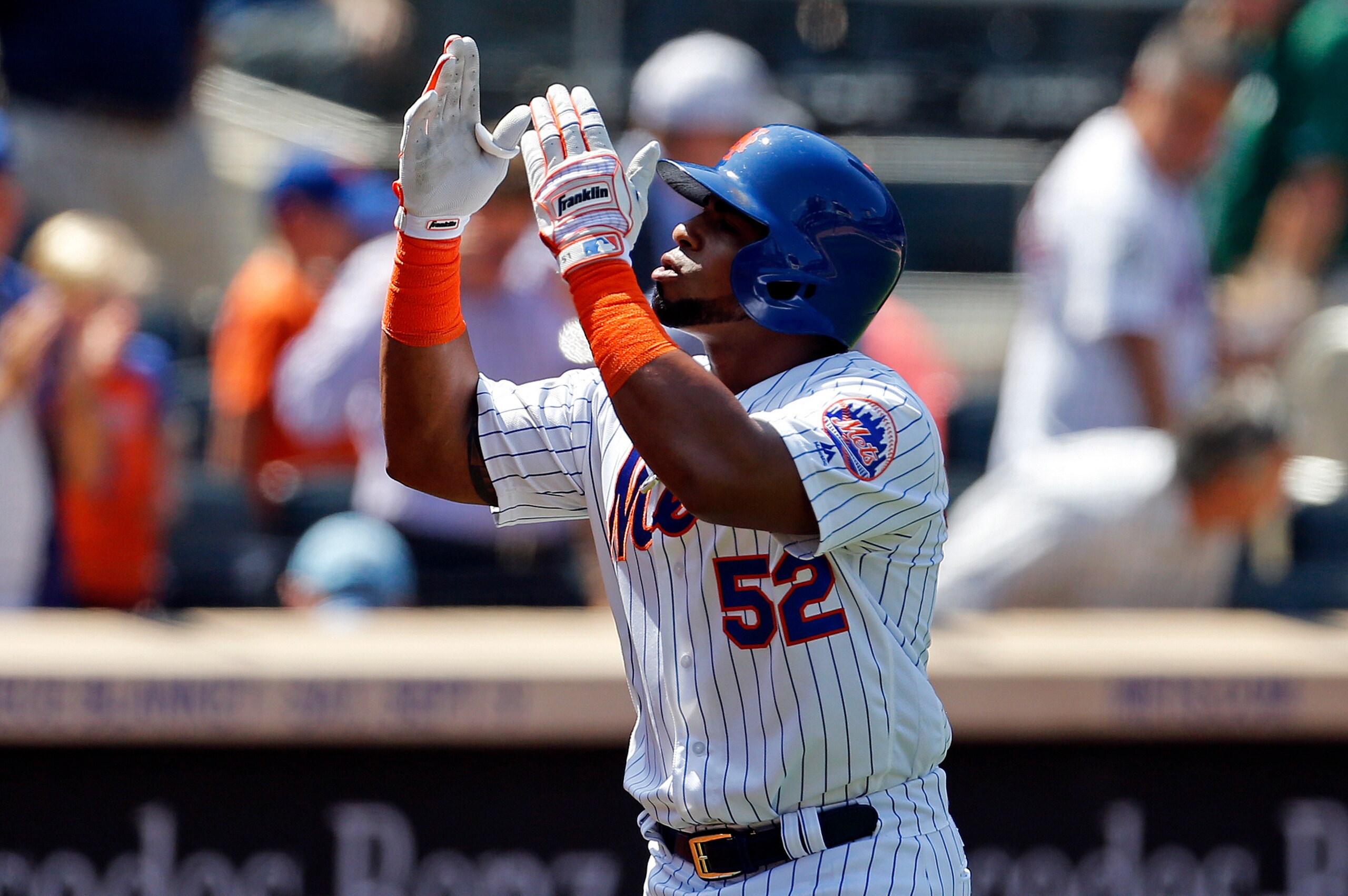
Age: 31
Key Stats: 81 G, 321 PA, .292/.352/.540, 132 OPS+, 17 HR, 0 SB, 2 DRS
WAR: 2.1
2017 Player Report
You should be able to surmise as much just from knowing he played for the New York Mets, but Yoenis Cespedes lost much of 2017 to injuries.
Between that and his number in the "Age" column, it's no wonder he couldn't reclaim his peak athleticism. His average sprint back in 2015 was 28.6 feet per second. It fell to 27.8 feet per second in 2017, which cost him activity on the bases and range on defense.
When healthy, though, Cespedes remained a dangerous hitter. He largely retained the discipline that he gained in 2016 and funneled his tremendous strength into 90.1 mph in exit velocity, while continuing to up his launch angle to boot. The power awakening that began in 2015 lived on.
And while his defensive range may be declining, his arm is still a threat. He recorded six assists in only 630.2 innings in left field.
32. Michael Brantley, Cleveland Indians
15 of 46
Age: 30
Key Stats: 90 G, 375 PA, .299/.357/.444, 108 OPS+, 9 HR, 11 SB, 4 DRS
WAR: 2.1
2017 Player Report
Although nowhere near as bad as 2016, this ended up being another injury-marred season for Michael Brantley. An ankle injury sidelined him for a good chunk of the year.
Otherwise, there wouldn't be many ways to tell 2017 apart from his All-Star-caliber 2014 and 2015 seasons.
Especially not at the plate. Brantley was the same pure hitter, working off an excellent approach that produced an 8.3 BB% and a 13.3 K% and using a line-drive swing that worked as intended. He spent his season knocking hits from line to line.
He also continued to be a crafty baserunner despite his modest speed, stealing and taking bags without running into many outs. His defense was similarly non-flashy, but he continued to be money on routine plays and punished runners with his accurate arm.
31. Delino DeShields, Texas Rangers
16 of 46
Age: 25
Key Stats: 120 G, 440 PA, .269/.347/.367, 87 OPS+, 6 HR, 29 SB, 5 DRS
WAR: 2.2
2017 Player Report
Delino DeShields was one of the fastest runners of 2017, and he benefited accordingly.
Despite getting caught stealing eight times and running into eight other outs, 29 stolen bases with a whole bunch of extra aggression was more than enough to pump up his baserunning value. His speed also ensured that little got past him in either left or center field.
At the plate, DeShields is equipped with one of the least threatening bats in MLB. To wit, his 79.2 mph exit velocity was the worst of any hitter not named Billy Hamilton.
But in keeping his launch angle relatively low, he functioned like a classic speedster and kept the ball out of the air. He benefited by collecting infield hits at a higher rate than anyone. The fact that he could also work a 10.0 BB% doesn't reflect well on opposing pitchers, but it's worth a tip o' the cap to DeShields himself.
30. Aaron Altherr, Philadelphia Phillies
17 of 46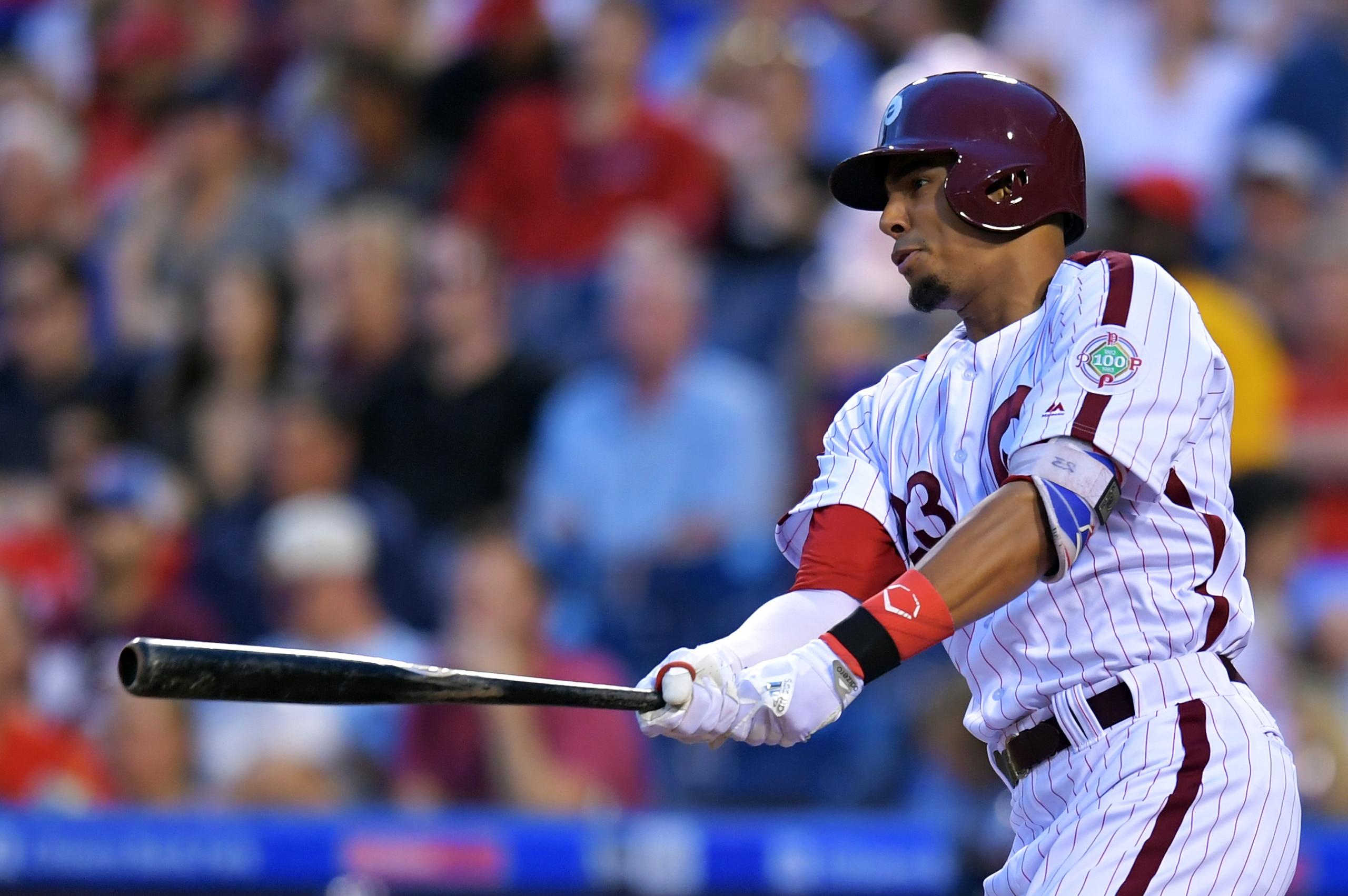
Age: 26
Key Stats: 107 G, 412 PA, .272/.340/.516, 124 OPS+, 19 HR, 5 SB, 0 DRS
WAR: 1.7
2017 Player Report
Thanks to a healthy wrist and a mechanical tweak, 2017 saw Aaron Altherr put a rough 2016 behind him.
His ability to generate exit velocity didn't totally diminish amid his rough '16 season, but getting back on track with his health and mechanics permitted the return of his ability to generate loft. His launch angle recovered, his ground-ball rate dropped, and, lo and behold, his hard-hit rate spiked.
Throw in an approach that already came equipped with good patience and selectivity, and Altherr's second breakout looks less like a surprise and more like a thing that just makes sense.
Although hamstring trouble was a factor, it's disappointing that he didn't make more use of his good speed on the bases. Defense is another matter, however. He may not have rated well, but there's value in how his athleticism and solid arm made him a capable defender in all three outfield spots.
29. Trey Mancini, Baltimore Orioles
18 of 46
Age: 25
Key Stats: 147 G, 586 PA, .293/.338/.488, 120 OPS+, 24 HR, 1 SB, -1 DRS
WAR: 2.2
2017 Player Report
Even defensive runs saved doesn't fully capture the sacrifices the Baltimore Orioles had to make in order to keep Trey Mancini's bat in the lineup.
It could've been worse in left field, as playing deep allowed him to keep balls in front of him while not letting many go over his head. But in covering limited ground even despite that, he still looked the part of a converted first baseman. And for the time he did log at first base, he was hit with another minus-4 DRS.
But that bat? It was dangerous indeed.
Mancini didn't help himself by swinging at everything, and you'd never know he was a power hitter from looking at his launch angle alone. But his relatively flat swing helped him post a respectable 23.7 K%, and the pop baked into his 6'4", 215-pound frame generated 88.7 mph exit velocity that played to all fields.
28. Jason Heyward, Chicago Cubs
19 of 46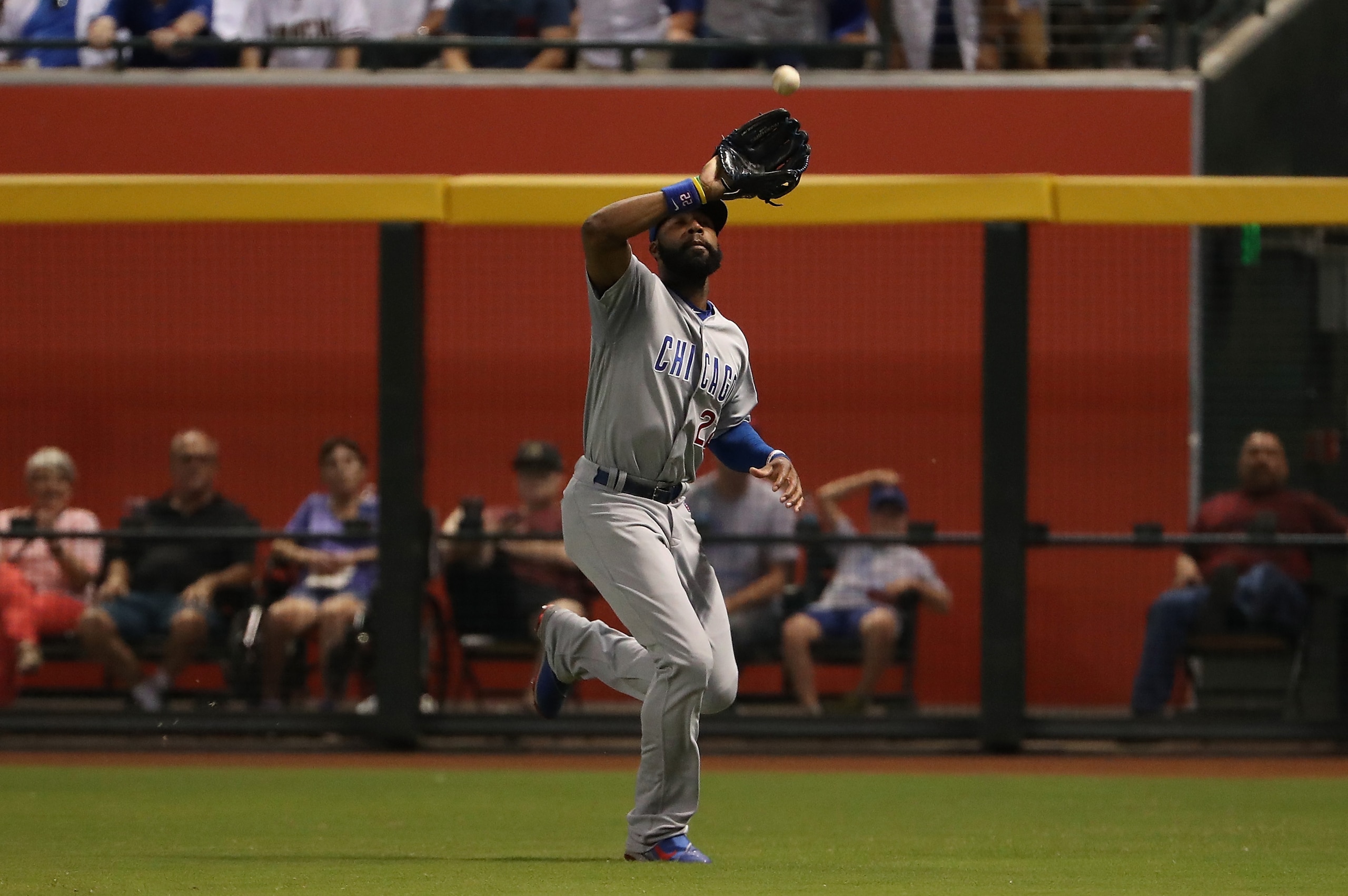
Age: 28
Key Stats: 126 G, 481 PA, .259/.326/.389, 85 OPS+, 11 HR, 4 SB, 18 DRS
WAR: 2.3
2017 Player Report
Much was made of how Jason Heyward was coming into 2017 with a new and improved swing that would help him erase a career-worst 2016 campaign.
Not so much, as it turns out. His launch angle stayed the same, and his exit velocity actually went down. One positive is that he didn't lose his ability to put the ball in play, finishing with a 13.9 K%. But in the scheme of things, that was a mere moral victory.
Heyward's offensive decline also extends to his baserunning. Getting on base less often has diminished it by default, and he's no longer as aggressive when he does get on.
Luckily, his defense is still as good as it gets in right field. He still gets plenty of range out of his quick breaks, sharp instincts and above-average speed, and his arm remains both strong and accurate.
27. Adam Duvall, Cincinnati Reds
20 of 46
Age: 29
Key Stats: 157 G, 647 PA, .249/.301/.480, 100 OPS+, 31 HR, 5 SB, 8 DRS
WAR: 1.8
2017 Player Report
Adam Duvall is an aggressive swinger who, thanks to his pull habit, is also a rare right-handed hitter who has to worry about shifts.
But he likely won't change a thing as long as the power keeps coming. And between his aforementioned pull habit and his extreme launch angle—only three hitters have him beat in that department since 2016—he has what he needs to make sure it does.
To boot, 2017 confirmed Duvall isn't a one-dimensional player.
26. Max Kepler, Minnesota Twins
21 of 46
Age: 24
Key Stats: 147 G, 568 PA, .243/.312/.425, 96 OPS+, 19 HR, 6 SB, 3 DRS
WAR: 2.1
2017 Player Report
As a left-handed swinger with a preference for pulling the ball, Max Kepler's weaknesses are as expected: hitting against lefties and into shifts.
If not for those things, he would be a perfectly capable hitter. With a selective approach and a swing that's always been good with exit velocity and is getting better with launch angle, Kepler has a typical slugging profile. Weaknesses aside, that made his bat worth playing every day.
His athleticism was another reason for the Minnesota Twins to keep him in the lineup.
He's a quick runner by right field standards and generally efficient with how he uses his speed on the bases. And while his defense was more "solid" than "spectacular" this season, he had enough range and arm strength to make it a well-rounded brand of "solid."
25. Kole Calhoun, Los Angeles Angels
22 of 46
Age: 29
Key Stats: 155 G, 654 PA, .244/.333/.392, 97 OPS+, 19 HR, 5 SB, 2 DRS
WAR: 2.1
2017 Player Report
Normally an above-average hitter, 2017 was largely a struggle for Kole Calhoun.
In light of his decreased exit velocity and launch angle, he may not have had as strong a hitting base following core muscle surgery. Regardless, those two factors plus a pull rate increase made shifts a bigger problem. Pitchers also found an up-and-away hole to exploit with fastballs.
It's to Calhoun's credit that none of these things entirely killed his production. His swing remained reasonably well-suited for hard contact. It also helped that he swung more selectively.
He also remained an asset in right field. The depth with which he plays ensured that only borderline-uncatchable balls got over his head, and he remained adept at coming in on the ball and a threat to punish overly aggressive runners with his strong arm.
24. Eddie Rosario, Minnesota Twins
23 of 46
Age: 25
Key Stats: 151 G, 589 PA, .290/.328/.507, 120 OPS+, 27 HR, 9 SB, -6 DRS
WAR: 1.7
2017 Player Report
Although it mostly happened in a red-hot second half, Eddie Rosario's offensive breakthrough is a testament to the power of selectivity.
He didn't morph into Joey Votto, but he swung and chased less often than he had been and focused his swings in areas where he could do damage. Namely: up in the strike zone, where his best power had been all along.
In the end, he enjoyed three-pronged benefits: a solid (for him) 5.9 BB%, an 18.0 K% and plentiful power.
23. Mitch Haniger, Seattle Mariners
24 of 46
Age: 26
Key Stats: 96 G, 410 PA, .282/.352/.491, 126 OPS+, 16 HR, 5 SB, 8 DRS
WAR: 3.0
2017 Player Report
Mitch Haniger was red-hot out of the gate, but then suffered an oblique injury and struggled for two months.
That could have ruined his season, but he rallied at the end. Good health was a big factor. He also worked on gearing his approach to allow him to see the ball deeper in the zone. That helped revitalize a talent for exit velocity that had largely been silenced following his injury.
Mind you, a few great weeks don't equal a great season. But Haniger's offensive numbers are impressive for a relatively small sample, and they look good next to the work he did outside the batter's box.
He may not be the fastest sprinter, but he was an asset in right field regardless thanks to his quick breaks and strong fly-ball tracking skills. He reeled in plenty, particularly around the warning track.
22. David Peralta, Arizona Diamondbacks
25 of 46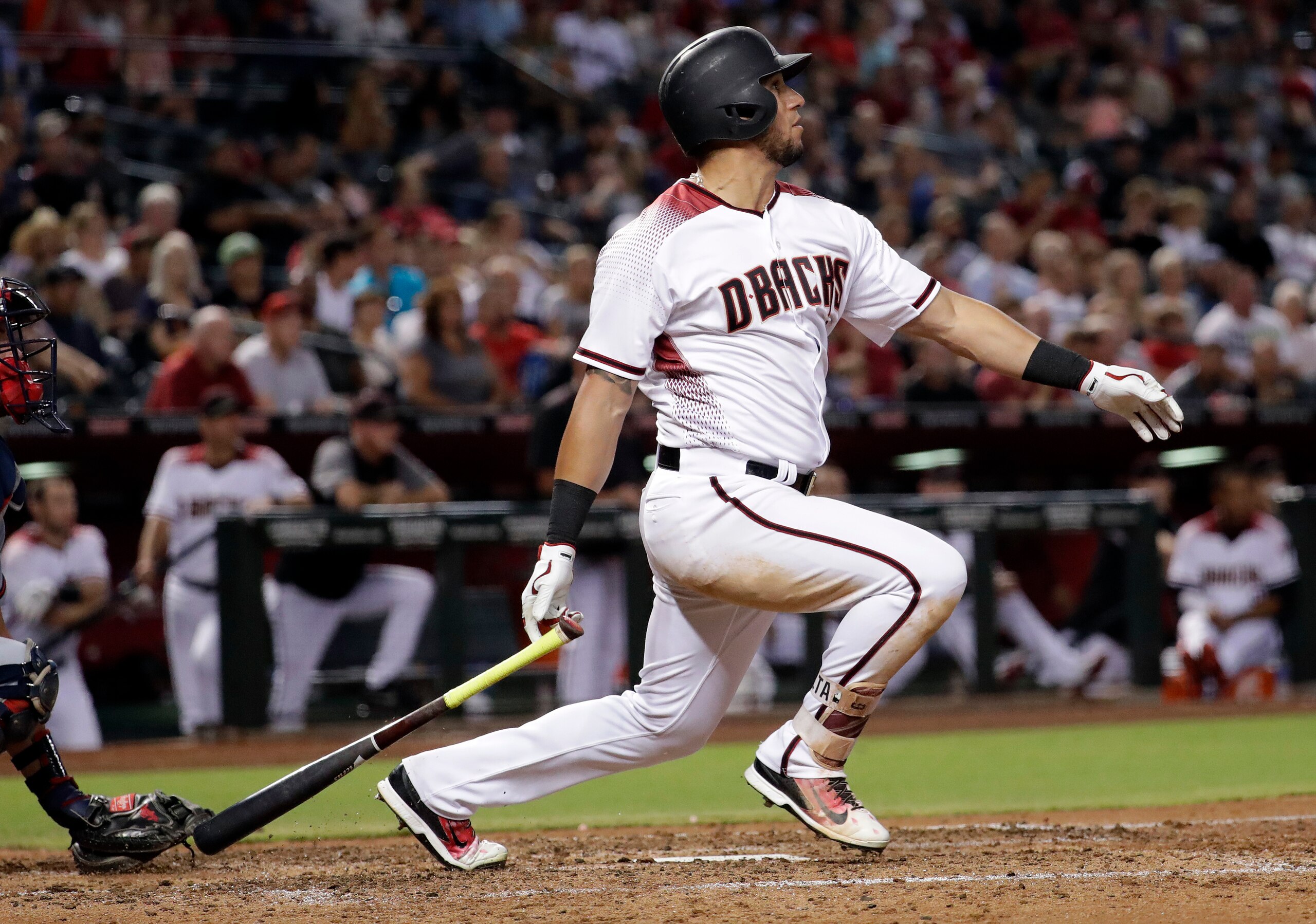
Age: 30
Key Stats: 140 G, 577 PA, .293/.352/.444, 99 OPS+, 14 HR, 8 SB, 3 DRS
WAR: 2.5
2017 Player Report
David Peralta is a rebel who, unlike all the cool kids, refused to up his launch angle and instead went backwards and hit more ground balls in 2017.
But if one is going to survive despite such habits, Peralta's 2017 offers a good model to follow. Being more direct to the ball helped drop his K% to 16.3, and becoming more of an all-fields hitter made it easier for his ground balls to avoid gloves.
In the meantime, he continued to be a source of under-the-radar value on the bases and on defense.
He had a knack for taking the extra base in one arena and made the most of a solid collection of tools in the other. The occasional zig-zag route does happen with Peralta, but he has enough speed for good range in both corner outfield spots, as well as an arm that plays well in either.
21. Khris Davis, Oakland Athletics
26 of 46
Age: 29
Key Stats: 153 G, 652 PA, .247/.336/.528, 130 OPS+, 43 HR, 4 SB, -13 DRS
WAR: 2.5
2017 Player Report
How does a guy who stands at just 5'10" and 195 pounds generate so much power?
Khris Davis just has a knack for it. He has the wherewithal to go hunting for hittable pitches in the heart of the zone and lets loose with a swing that generated a 14.2 degree launch angle and 91.2 mph exit velocity this year.
There are more impressive individual figures than those, but Davis' ability to consistently combine loft with hard contact was uncanny. For reference, see how only J.D. Martinez and Aaron Judge "barreled" balls in play at a higher rate.
But while Davis' 11.2 BB% proves that he accepted the walks that pitchers were only too willing to give, his 29.9 K% confirms he still couldn't kick his swing-and-miss habit. And with slow footspeed and perhaps the weakest arm in the majors, he didn't offer much to see outside the batter's box.
20. Corey Dickerson, Tampa Bay Rays
27 of 46
Age: 28
Key Stats: 150 G, 629 PA, .282/.325/.490, 120 OPS+, 27 HR, 4 SB, -1 DRS
WAR: 2.7
2017 Player Report
It should surprise nobody that Corey Dickerson faded after a hot start.
Hot starts have a way of doing that, and he isn't exactly geared for consistency. He was once again one of MLB's most aggressive swingers and egregious chasers. That's fine if you're a Vladimir Guerrero-level bad-ball hitter. Dickerson never has been.
These gripes aside, it's to Dickerson's credit that he's a dangerous hitter anyway. He slugged .625 when he connected in the strike zone, courtesy of a swing that a high launch angle and pretty good exit velocity.
19. Domingo Santana, Milwaukee Brewers
28 of 46
Age: 25
Key Stats: 146 G, 586 PA, .277/.370/.498, 124 OPS+, 28 HR, 15 SB, -5 DRS
WAR: 3.0
2017 Player Report
In a vacuum, it's a bad sign that a hitter as large and as dependent on power as Domingo Santana lost 3.5 miles per hour off his average exit velocity between 2016 and 2017.
However, an average of 89.3 mph is still pretty good. Certainly good enough to justify Santana's move toward more efficient use of his power, anyway.
He achieved that by becoming the good kind of aggressive, upping his in-zone swings while keeping his chase rate relatively steady. That helped lead to more walks (12.0 BB%), fewer strikeouts (29.3 K%) and utmost lethality within the strike zone. He slugged .614 against pitches in the zone.
Santana also evolved on the basepaths, where he overcame nine outs with his 15 stolen bases and aggressive baserunning. And while he was limited as a defender, he at least handled the easy plays.
18. Jay Bruce, Cleveland Indians
29 of 46
Age: 30
Key Stats: 140 G, 593 PA, .254/.322/.507, 114 OPS+, 34 HR, 1 SB, 5 DRS
WAR: 2.9
2017 Player Report
Jay Bruce's 2017 season is as good example as any for the power of data.
Beyond cleaning up an approach that got too wild last summer, his offensive turnaround was thanks to him being receptive to numbers that helped his swing. He was already a pull-power hitter, but he took the act to another level by increasing his launch angle and hitting fewer ground balls.
Data could also be at the core of Bruce's defensive turnaround. He posted a minus-11 DRS in 2016 in part because too many catchable balls got over his head. Playing deeper in 2017 helped solve that problem. Keeping more balls in front of him also allowed him to keep more runners in check with his arm.
With his speed now past his prime, Bruce doesn't run the bases like he used to. But as long as he keeps hitting and playing a solid right field, that's OK.
17. Andrew Benintendi, Boston Red Sox
30 of 46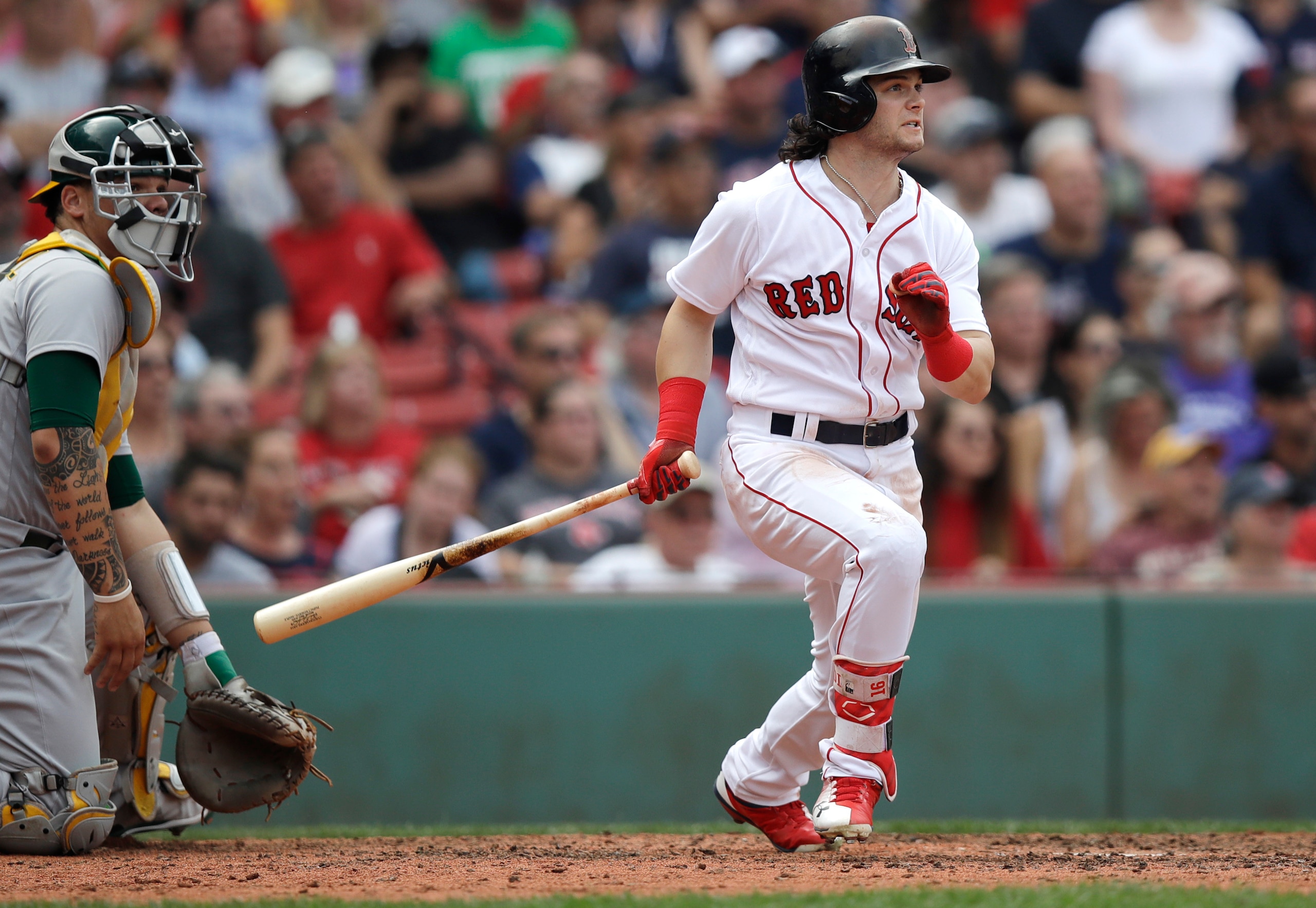
Age: 23
Key Stats: 151 G, 658 PA, .271/.352/.424, 103 OPS+, 20 HR, 20 SB, 9 DRS
WAR: 2.6
2017 Player Report
Andrew Benintendi was (rightfully) overshadowed by fellow American League rookie Aaron Judge in 2017, but that didn't stop him from making good on his potential.
Between patience that led to a 10.6 BB% and a feel for contact that led to a 17.0 K%, Benintendi featured the foundation of a classic pure hitter. He also featured the swing: a line-drive stroke that he could apply to all fields. Left-handers remained a bugaboo, but skills like his should fix that in the long run.
Elsewhere, Benintendi more quietly lived up to his billing as a good athlete.
He ran well by left field standards, which served him well on the basepaths and in covering ground in the outfield. Mastering the Green Monster still looms as the hard part of his defensive maturation, but it's some comfort that he showed enough arm to make up for occasional mistakes.
16. Michael Conforto, New York Mets
31 of 46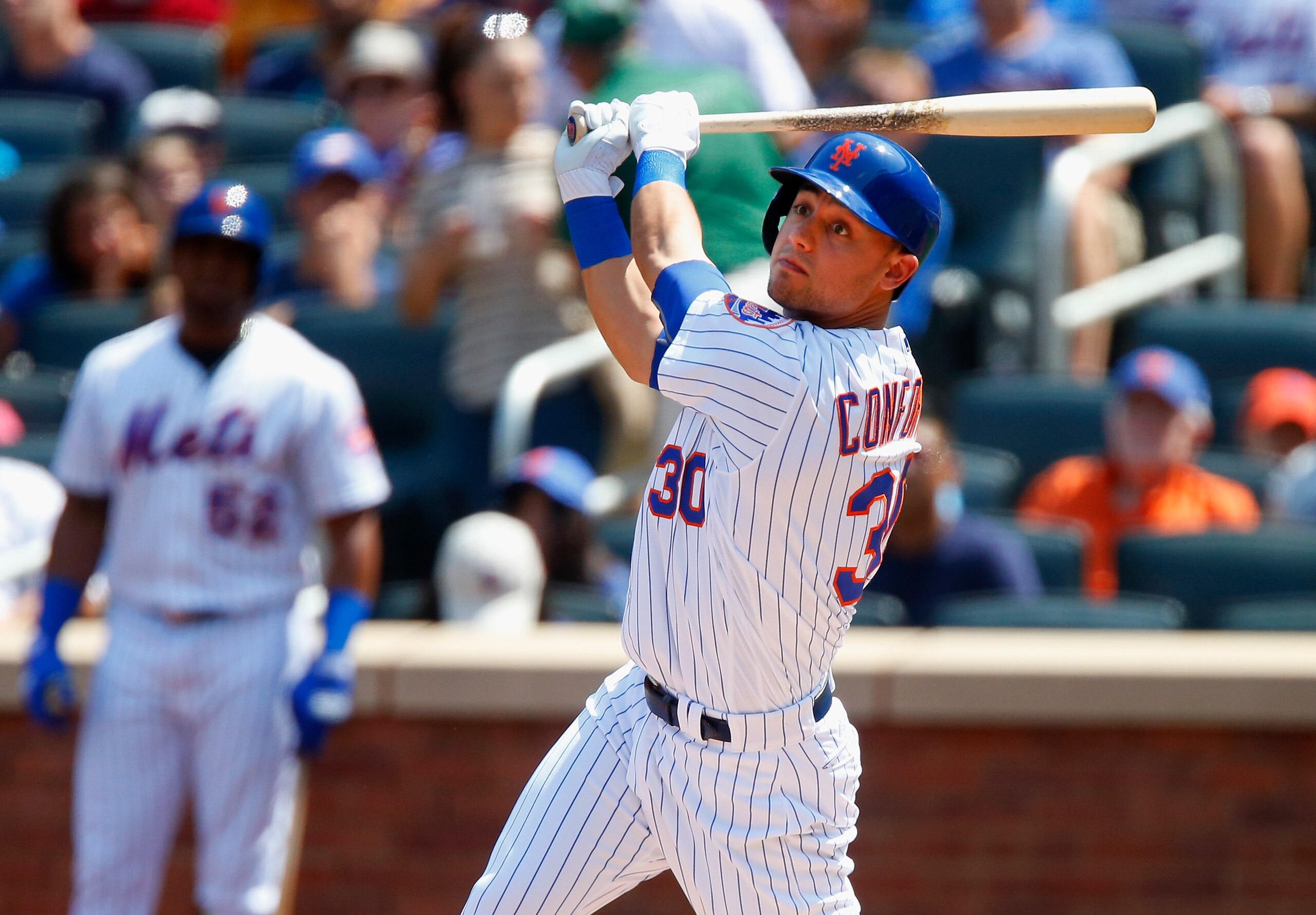
Age: 24
Key Stats: 109 G, 440 PA, .279/.384/.555, 145 OPS+, 27 HR, 2 SB, 0 DRS
WAR: 3.6
2017 Player Report
The shoulder surgery that ended Michael Conforto's season in August casts a dark cloud over his future. But in the meantime, his 2017 is worth appreciating.
Although his stock took a hit in 2016, one thing that stayed alive was his talent for hard contact. Making better use of that in 2017 was largely a matter of him reigning in an out-of-zone swing rate that got out of hand in 2016. Making better use of the whole field also helped.
In the end, Conforto worked a 13.0 BB% and made hard contact more frequently than all but 12 qualified hitters. That's more than enough damage to overcome his not-even-that-bad 25.7 K%.
Defensively, Conforto's lack of speed and grace made him a poor fit for a role that asked him to play all three outfield spots. But there was no faulting his effort level, and it was at least good for converting routine plays.
15. Yasiel Puig, Los Angeles Dodgers
32 of 46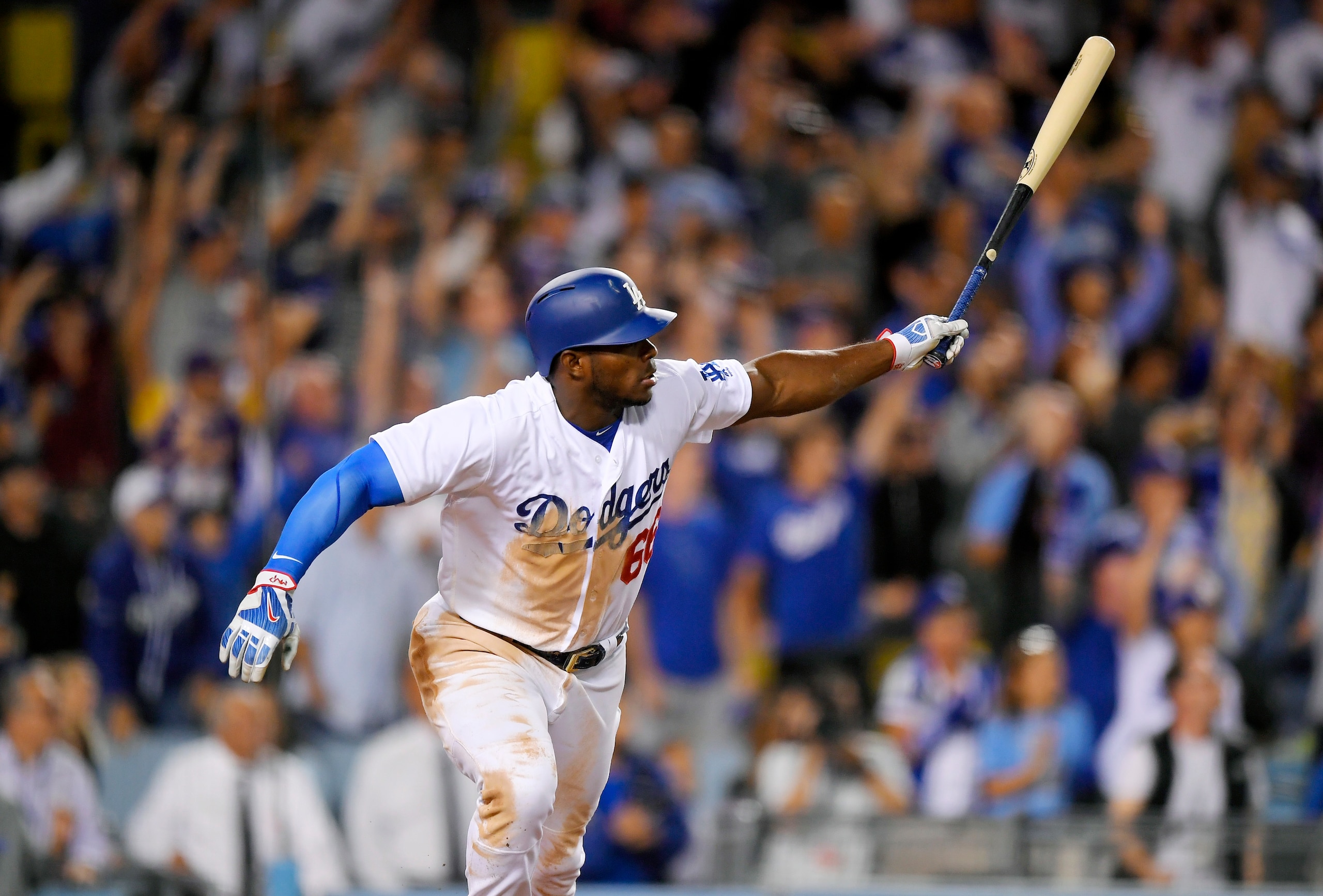
Age: 26
Key Stats: 152 G, 570 PA, .263/.346/.487, 118 OPS+, 28 HR, 15 SB, 18 DRS
WAR: 3.7
2017 Player Report
Here's Yasiel Puig's 2017 summed up with a Radiohead lyric: "Fitter, happier and more productive."
It was a drama-free season for him, and the good health that he enjoyed isn't the only residue from an offseason fitness program. He put his good speed to use making a ton of plays of all difficulties. He only had four assists, but that's because his cannon arm was mostly used to keep runners in check.
Unfortunately, Puig couldn't follow through on his desire to make like teammate Justin Turner and hit more fly balls. His launch angle actually went down. Evidently, his swing is his swing.
It can pack a punch when properly applied, however, and that points to the real offensive improvement Puig made in 2017: He stopped swinging at everything. An 11.2 BB% was one benefit. Another was his best in-zone slugging percentage since his rookie year.
14. Steven Souza Jr., Tampa Bay Rays
33 of 46
Age: 28
Key Stats: 148 G, 617 PA, .239/.351/.459, 121 OPS+, 30 HR, 16 SB, 7 DRS
WAR: 4.2
2017 Player Report
In 2016, Steven Souza Jr. struck out five times as often as he walked and didn't hit for enough power to render that no big deal. Thus, he sought change in 2017.
He tightened his approach and benefited with a 13.6 BB%. He also adjusted a swing that, by his own admission, had been geared for fly balls to its detriment. A lower launch angle equaled a more direct path to the ball that helped drop his K% to 29.0.
With adjustments like these, less power is typically the expected trade-off. But Souza is a naturally powerful guy, and he compromised by making more use of his pull side. Thus, his power actually increased.
Elsewhere, he remained a fast runner who uses his speed both on the basepaths and in right field, where he covered a good amount of ground and had a penchant for making high-difficulty catches.
13. Chris Taylor, Los Angeles Dodgers
34 of 46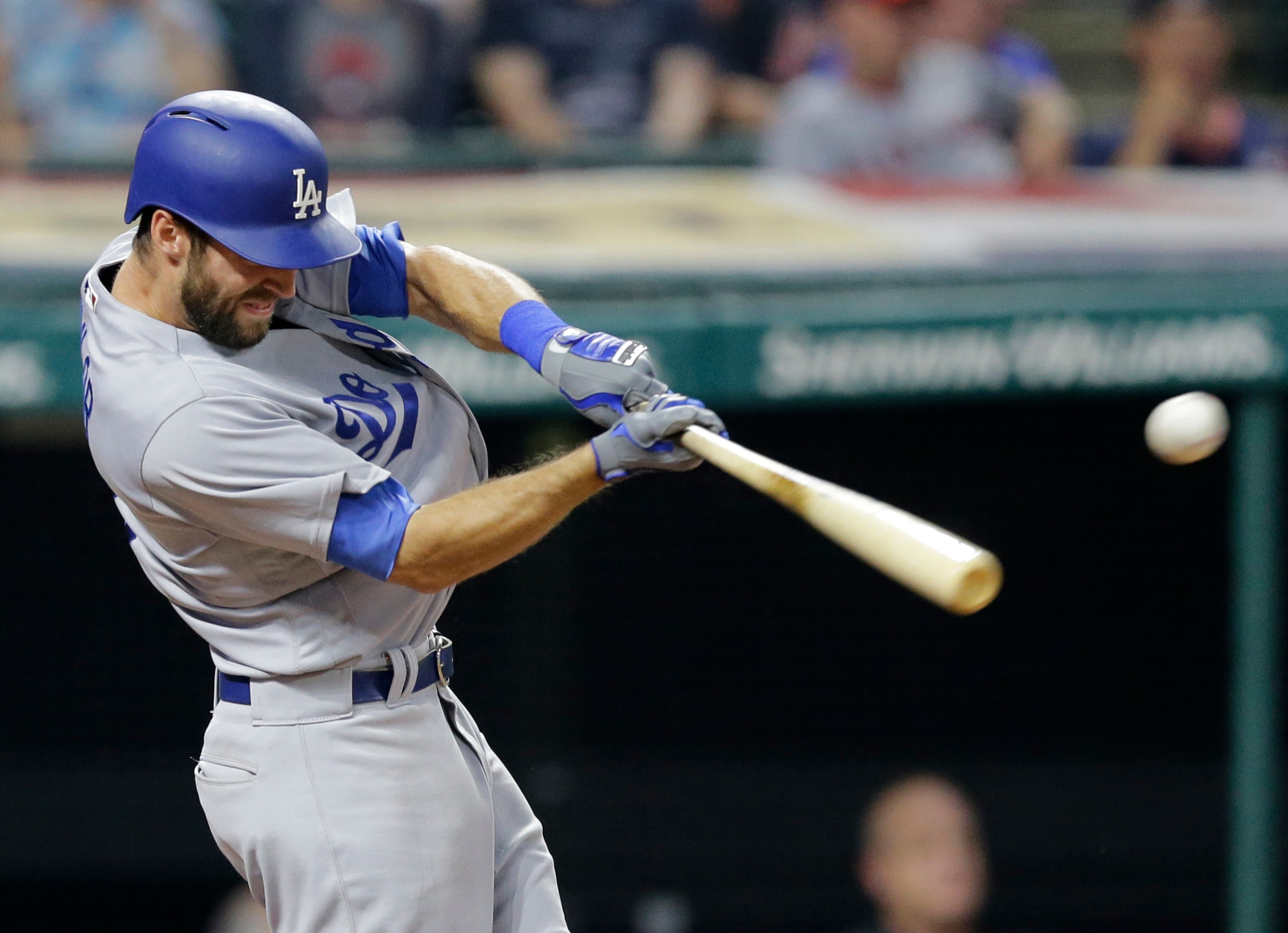
Age: 27
Key Stats: 140 G, 568 PA, .288/.354/.496, 122 OPS+, 21 HR, 17 SB, 5 DRS
WAR: 4.8
2017 Player Report
Chris Taylor entered 2017 with one homer in 120 career games and exited it with 22 homers in 257 career games.
Given that he averaged just 86.8 mph exit velocity, his power outburst does come with a funky smell. But he spoke of simply wanting to get the barrel to the ball, and he did that by choosing his swings more carefully and targeting pitches that allowed him to extend his arms. His rate of "barrels" went way up.
Taylor's hitting made it impossible for the Los Angeles Dodgers to deny him playing time. In giving it to him, they also benefited from his other talents.
His good speed made him a menace on the basepaths, and his athleticism and energy played wherever the Dodgers had him on a given day. He mostly played left field, but his talents also proved useful in center field, second base and shortstop.
12. Josh Reddick, Houston Astros
35 of 46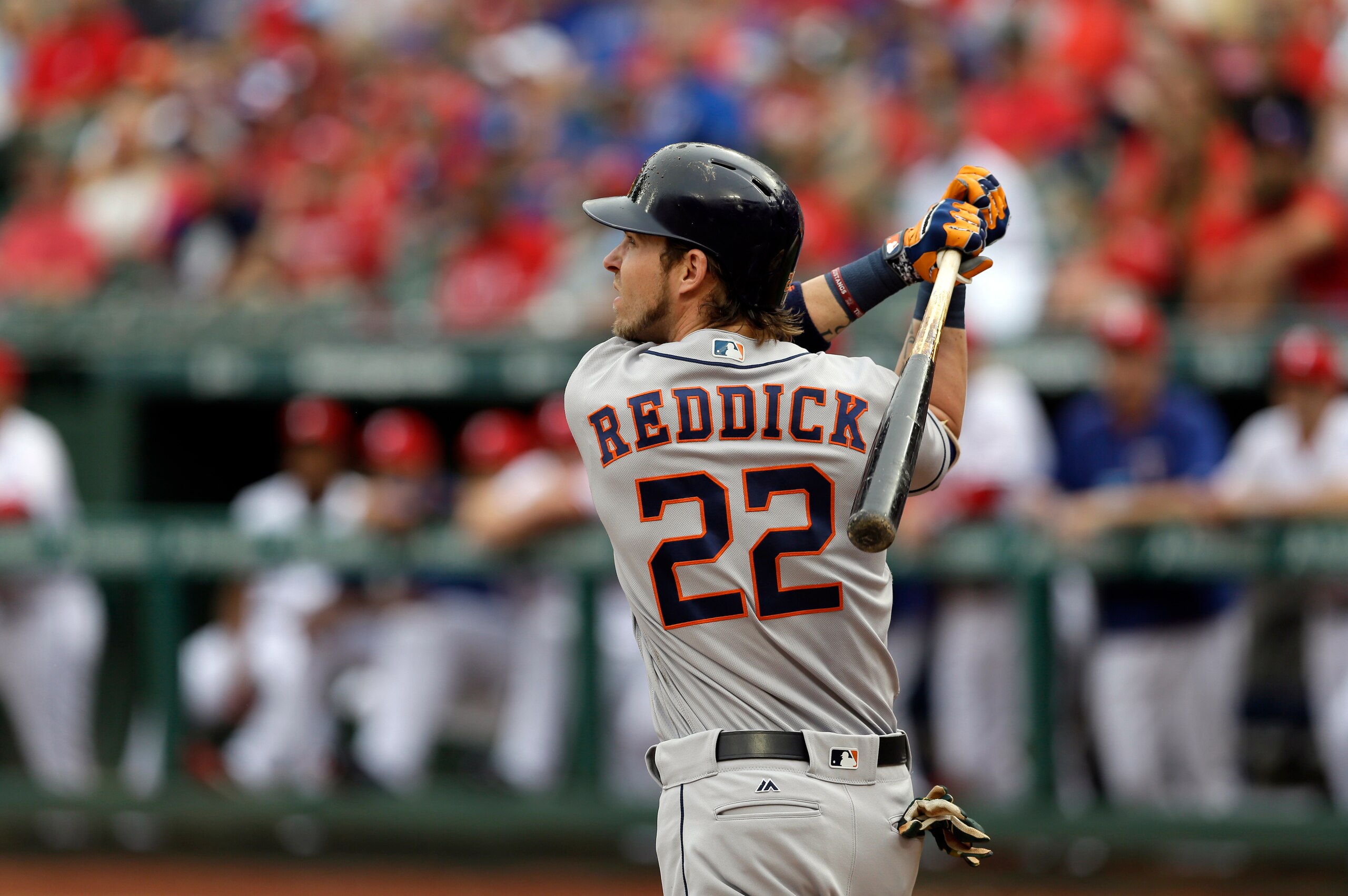
Age: 30
Key Stats: 134 G, 540 PA, .314/.363/.484, 133 OPS+, 13 HR, 7 SB, 5 DRS
WAR: 4.4
2017 Player Report
Josh Reddick just keeps seeing less and less action against left-handed pitching, but that's not the only reason 2017 was his best-ever offensive season.
He was a practically a ranking officer in the launch angle revolution, as his went way up and helped produce one of the lowest ground-ball percentages of any hitter. His home run power was concentrated to right field, but he hit enough doubles the other way to justify his all-fields hitting.
Just as important is how Reddick didn't compromise a longstanding talent in becoming more of a fly-ball hitter. By maintaining a 13.3 K%, he pulled off the tough trick of combining power with consistent contact.
His defense also continued to be a strength. His best speed is behind him, but he maintained enough quickness and instincts to track down balls regardless of where he was playing. His arm was still good, too.
11. Marwin Gonzalez, Houston Astros
36 of 46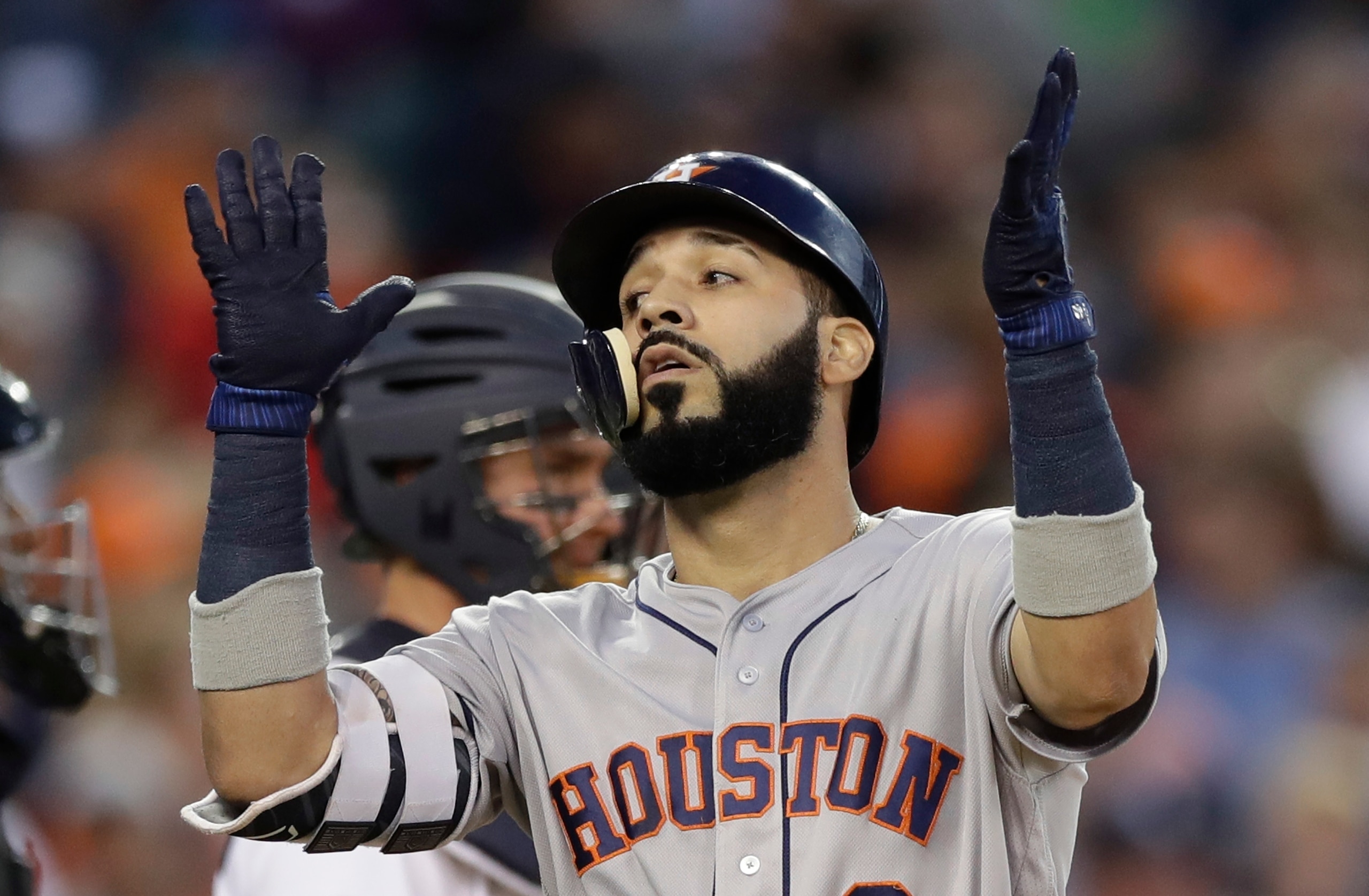
Age: 28
Key Stats: 134 G, 515 PA, .303/.377/.530, 149 OPS+, 23 HR, 8 SB, 0 DRS
WAR: 4.3
2017 Player Report
Marwin Gonzalez is a "corner outfielder" because he has to go somewhere and left field is where he played the most in 2017.
It's no secret that he's actually a super-utilityman. It's also no secret that he's a good one. He doesn't have a spectacular set of tools, but it's the kind of set that's good enough to play anywhere and is elevated by a high-running motor. In this way, he's a cross between Ben Zobrist and Josh Harrison.
Oh, and he can hit, too.
Always having the platoon advantage by way of being a switch-hitter helps, but this season saw Gonzalez benefit from new tricks. He made the switch from an aggressive hitter to a disciplined one while also joining the launch angle revolution. His rewards were career highs in walks (49) and slugging percentage.
10. Avisail Garcia, Chicago White Sox
37 of 46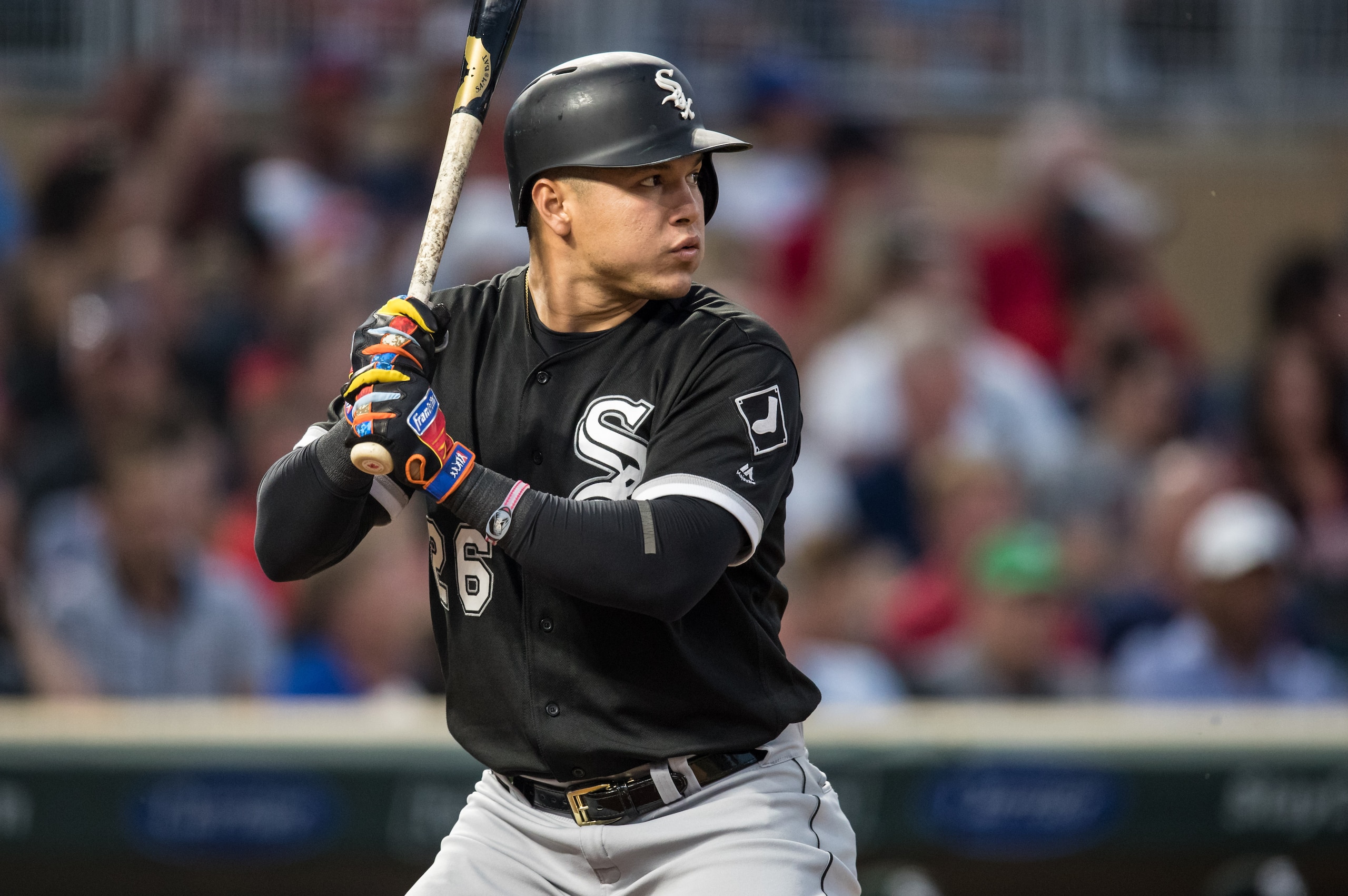
Age: 26
Key Stats: 136 G, 561 PA, .330/.380/.506, 137 OPS+, 18 HR, 5 SB, 1 DRS
WAR: 4.5
2017 Player Report
Avisail Garcia always had a talent for hitting, but it tended to get lost in a wild approach.
That changed in 2017. He continued to swing a ton, but it was a case of him being more aggressive within the zone than outside of it. That helped drop his K% to 19.8 and generally allowed him to cut loose with a swing that's always been good for exit velocity.
Not to be overlooked is that Garcia actually runs well for a 6'4", 240-pounder. Being on base more often let him show that speed off, as he was frequently taking extra bases.
As an outfielder on a Chicago White Sox team that gave up a ton of fly balls, Garcia didn't have an easy task on defense. But he handled it well, using his speed to get the job done far more often than not.
9. Brett Gardner, New York Yankees
38 of 46
Age: 34
Key Stats: 151 G, 682 PA, .264/.350/.428, 104 OPS+, 21 HR, 23 SB, 17 DRS
WAR: 4.9
2017 Player Report
Brett Gardner seemed to abandon his pursuit for power in 2016, but he revived it in 2017 by doing the same thing as everyone else: upping his launch angle and hitting fewer ground balls.
Still, his 85.4 mph exit velocity contains the truth about his actual power: There isn't much of it. So it's a good thing he maintained his extraordinary patience and talents for contact and all-fields hitting. Even without his homers, he would have made the grade as a good hitter.
Gardner's speed is past its prime, and he felt the sting of that in running into a career-worst nine outs. It's nonetheless still above-average speed which ultimately allowed for more good than harm on the bases.
His speed also remained an asset in left field. Amid the many lumbering sluggers found at the position, he was once again an athletic beacon who let little exceed his grasp.
8. J.D. Martinez, Arizona Diamondbacks
39 of 46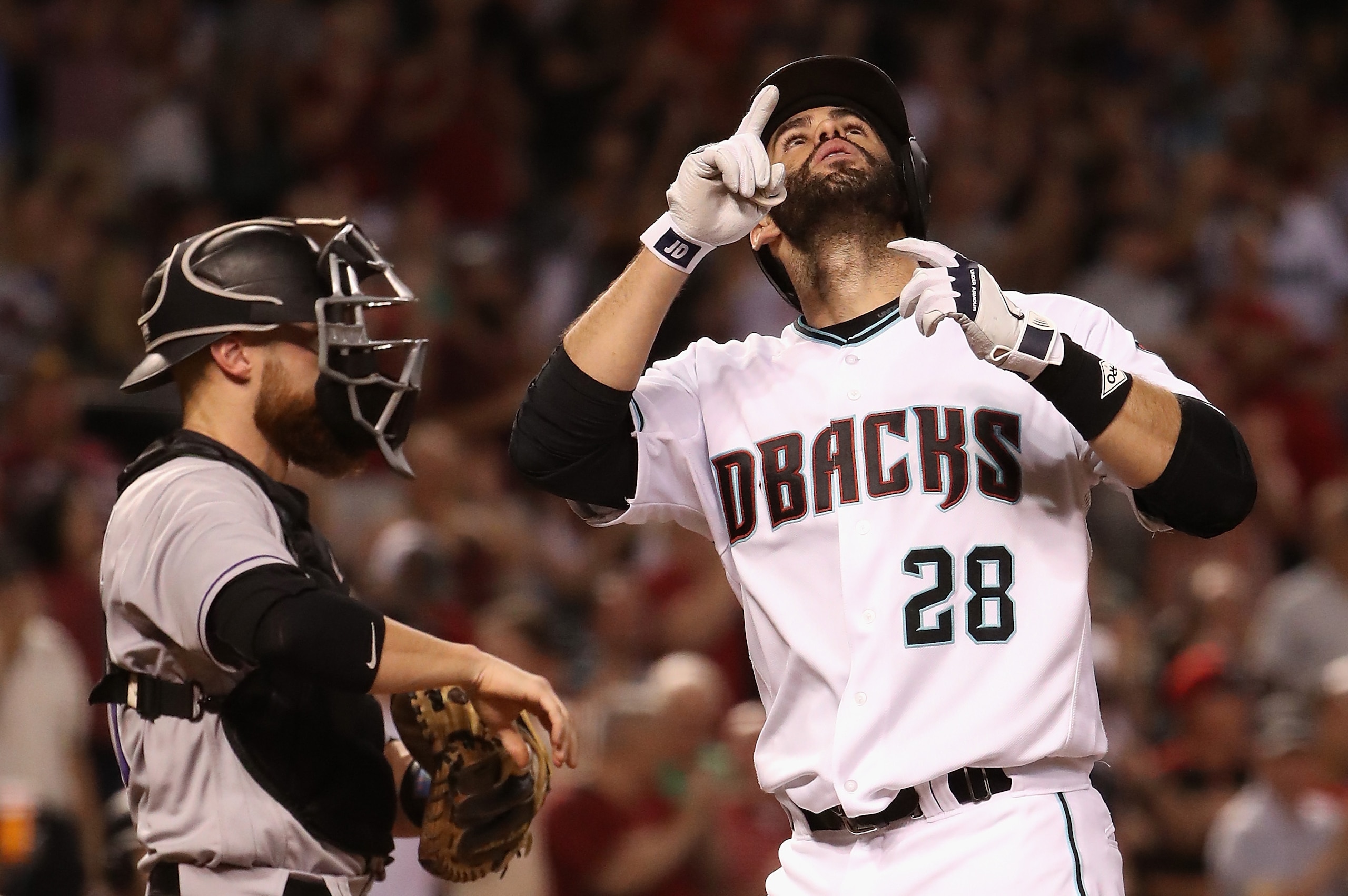
Age: 30
Key Stats: 119 G, 489 PA, .303/.376/.690, 166 OPS+, 45 HR, 4 SB, -5 DRS
WAR: 4.2
2017 Player Report
J.D. Martinez pulled no punches in telling FanGraphs' Travis Sawchik about his approach: "I'm not trying to hit a [bleeping] line drive or a freaking ground ball. I'm trying to hit the ball in the air."
This season featured a long list of hitters with higher fly ball rates. But Martinez didn't waste what he did get airborne. His fly balls averaged 97.5 mph in exit velocity, good for seventh among qualified hitters. Aaron Judge may have barreled balls at a higher rate, but Martinez led everyone in hard contact rate.
And while Martinez is an aggressive swinger, he isn't reckless. His swing rate is declining, allowing him to mix in more walks with his power.
He doesn't live nearly as large outside the batter's box, but at least he didn't repeat his minus-22 DRS disaster from 2016. By playing deeper, he was able to keep more balls from going over his head.
7. Bryce Harper, Washington Nationals
40 of 46
Age: 24
Key Stats: 111 G, 492 PA, .319/.413/.595, 157 OPS+, 29 HR, 4 SB, 4 DRS
WAR: 4.7
2017 Player Report
An August knee injury didn't end Bryce Harper's season but did end his chase for a second MVP award. Nonetheless, his 2017 beats the heck out of the struggle he endured in 2016.
His exit velocity improving from 88.6 mph to 90.6 mph likely had to do with his right shoulder being healthy, but it also helped that he erased the passivity that marred his 2016 hitting. He kept his good eye for the zone while getting back on the attack within the zone.
Although this hurt his walk and strikeout rates, his 13.8 BB%, 20.1 K% and .703 in-zone SLUG% made for a fair trade-off.
Harper's defense remained more good than great, but there was one noticeable difference. After playing progressively shallower in 2016, he moved back to his usual positioning in 2017. This presumably had to do with a healthy shoulder permitting his arm strength to return, but it also didn't hurt his range.
6. Justin Upton, Los Angeles Angels
41 of 46
Age: 30
Key Stats: 152 G, 635 PA, .273/.361/.540, 135 OPS+, 35 HR, 14 SB, 8 DRS
WAR: 5.7
2017 Player Report
Justin Upton's seasons have tended to contain peaks and valleys that add up to an inconsistent experience. But in 2017, it was smooth sailing.
How? Well, he spoke amid his torrid finish to 2016 about how he was getting better at controlling his emotions during cold stretches. There's some evidence that continued into 2017. In keeping his swings clustered in the middle of the zone, he didn't try to force things as much as he did in previous years.
Otherwise, the only thing to say is that the dude is simply a good hitter. He may strike out (28.3 K%) more than he should, but his good eye (11.7 BB%) and natural pop (88.8 mph exit velocity) are worth it.
Athletically speaking, Upton's speed and arm strength are no longer in peak form. But while DRS overstates his defensive quality, he runs and tracks balls better than the the typical left fielder.
5. Tommy Pham, St. Louis Cardinals
42 of 46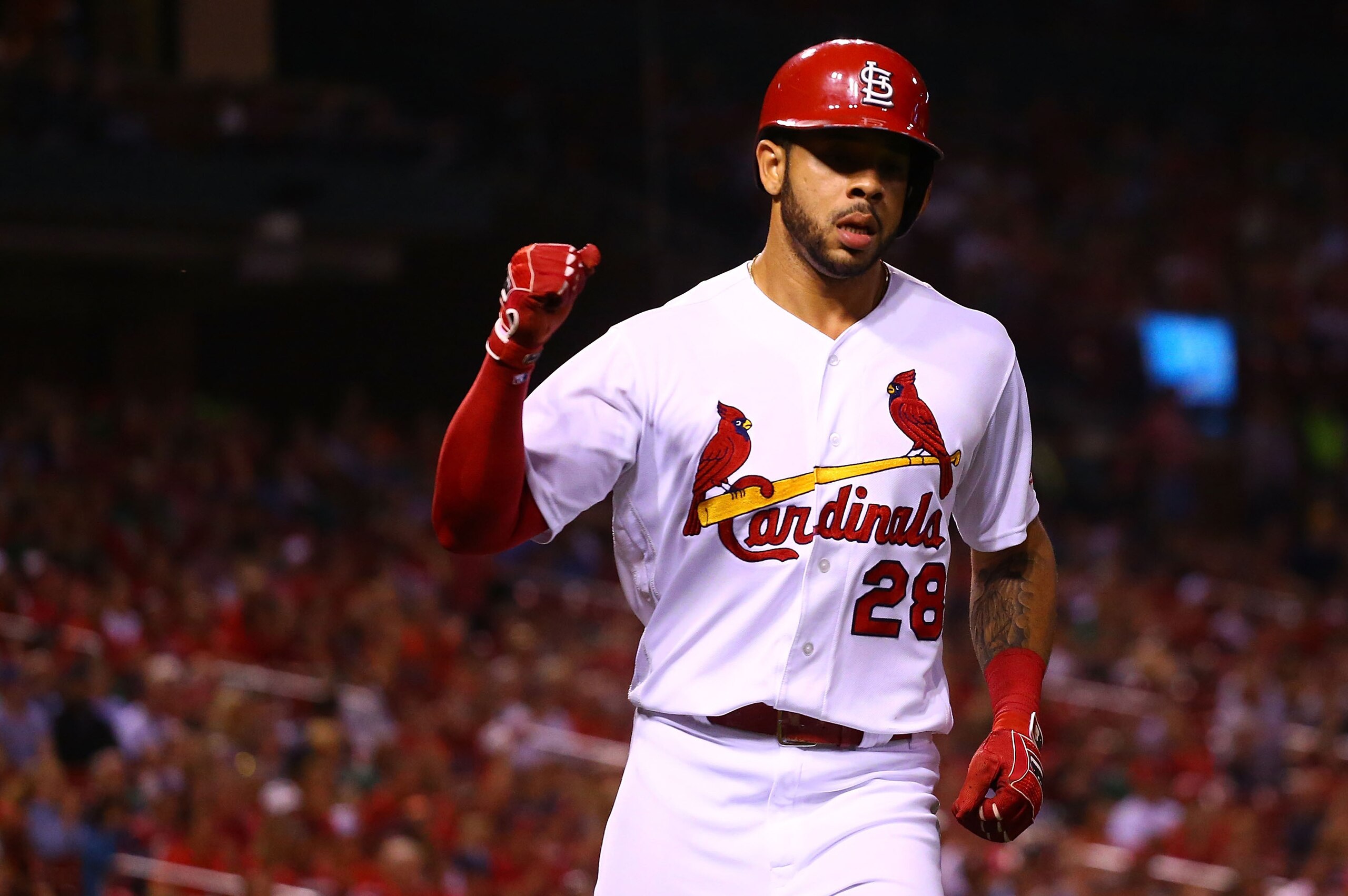
Age: 29
Key Stats: 128 G, 530 PA, .306/.411/.520, 144 OPS+, 23 HR, 25 SB, 10 DRS
WAR: 6.4
2017 Player Report
Despite a setback in September, Tommy Pham spent 2017 reaping the benefits of being able to see clearly.
He was one of the best in MLB at not chasing outside the zone. That helped boost his BB% to 13.4 and drop his K% to 22.1, and it also allowed for better use of a swing that had always packed a punch. This wasn't his hardest-hitting year, but his 89.2 mph exit velocity is still impressive.
In addition to a dangerous bat, Pham also put his speed to good use. Although he got caught stealing seven times, his 25 steals and extra aggression made up for that.
He also covered plenty of ground both in left field and in center field. Just don't expect him to tally eight assists again, however, as his arm isn't as strong as that number makes it look.
4. Marcell Ozuna, Miami Marlins
43 of 46
Age: 26
Key Stats: 159 G, 679 PA, .312/.376/.548, 145 OPS+, 37 HR, 1 SB, 11 DRS
WAR: 5.8
2017 Player Report
Marcell Ozuna played the full year and went from being frustratingly inconsistent to just plain great from start to finish.
Whether he could achieve such consistency never was a question of if he could punish the ball. He's always had a knack for loud contact, and it continued with 90.7 mph exit velocity and long home runs in 2017.
Like Avisail Garcia, the big difference involved Ozuna being more aggressive within the strike zone. That helped attract more walks (9.4 BB%) and generally made it easier for him to apply his considerable strength.
Ozuna again wasn't much of a baserunner despite his speed, but moving to left field turned him into a defensive asset. His speed and excellent arm played a lot better there than they had in center field.
3. Mookie Betts, Boston Red Sox
44 of 46
Age: 24
Key Stats: 153 G, 712 PA, .264/.344/.459, 108 OPS+, 24 HR, 26 SB, 31 DRS
WAR: 6.4
2017 Player Report
After an MVP-caliber 2016, Mookie Betts' bat wasn't quite the same in 2017.
He has pitchers to thank for that. Clearly aware of the danger he poses when he turns on the ball, they had no qualms about staying away from him this year. He struggled to adjust, particularly during the dog days.
Betts still ended up with solid offensive numbers, however, because he's a gifted all-around hitter. His approach is advanced and his swing is short, quick and dangerous all at once. He walked (77) nearly as often as he struck out (79), and his exit velocity finished at a solid 88.4 mph.
Elsewhere, he was arguably the game's best baserunner and defender. He's as instinctive and as opportunistic as they come on the basepaths, and he impresses with both his range and arm strength in the field.
2. Giancarlo Stanton, Miami Marlins
45 of 46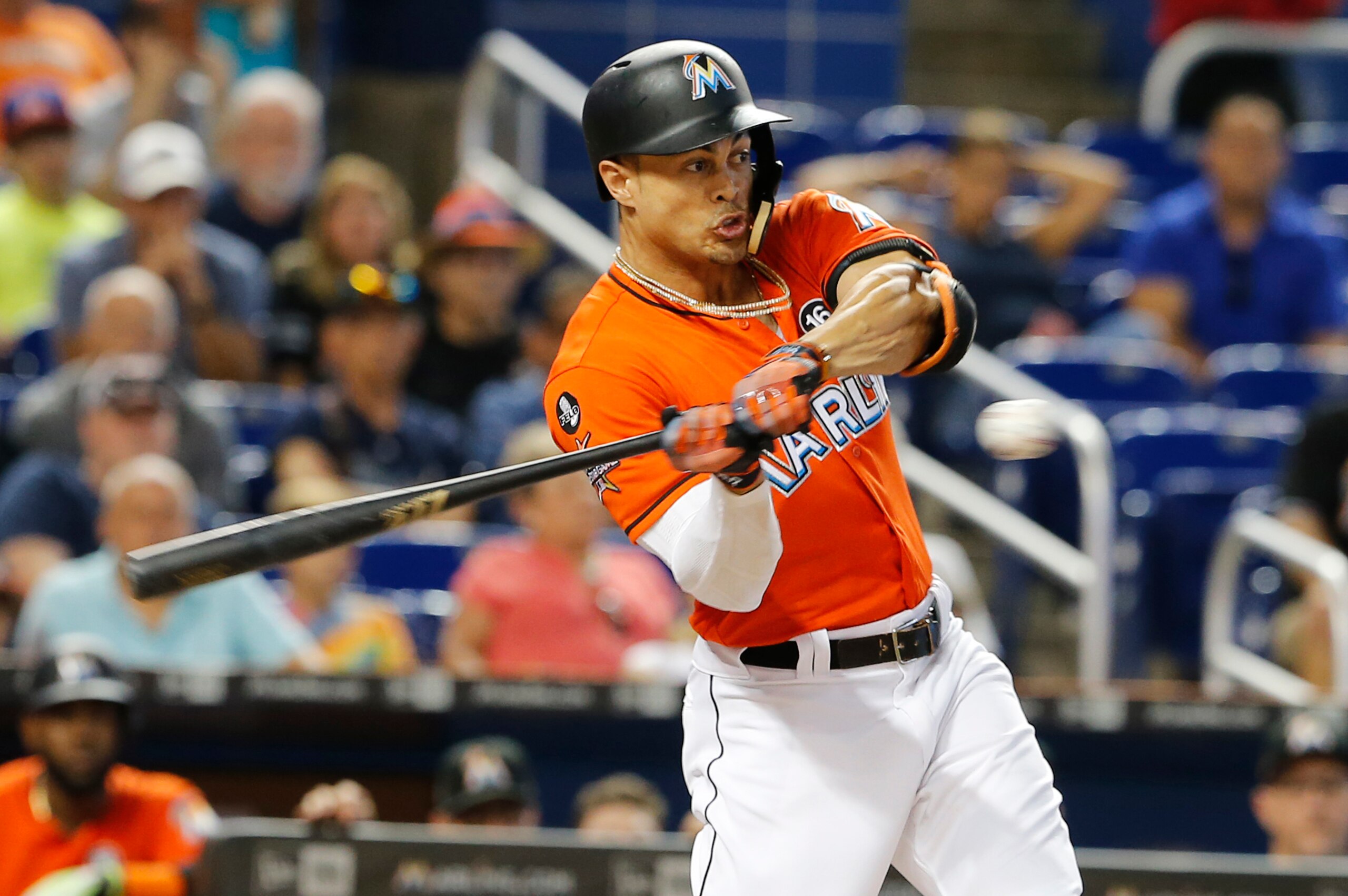
Age: 27
Key Stats: 159 G, 692 PA, .281/.376/.631, 165 OPS+, 59 HR, 2 SB, 10 DRS
WAR: 7.6
2017 Player Report
Alas, Giancarlo Stanton failed in his quest for 60 home runs. But it was a heck of a ride nonetheless.
His normally outrageous exit velocity took a step back to "only" 91.9 mph in 2017. The real difference was a closed stance that kept him on the ball and better able to make contact. His K% dropped to a career-low 23.6, and his mighty raw pop did the rest.
Throw in his career-high 32 doubles, and power is one thing Stanton did better than anyone in 2017. To boot, he did so despite playing in a much less power-friendly home ballpark.
Stanton was also an excellent right fielder. That tends to be the case whenever he's healthy, as that permits him to get good range out of his solid speed. He also has an arm that runners must think twice about testing.
1. Aaron Judge, New York Yankees
46 of 46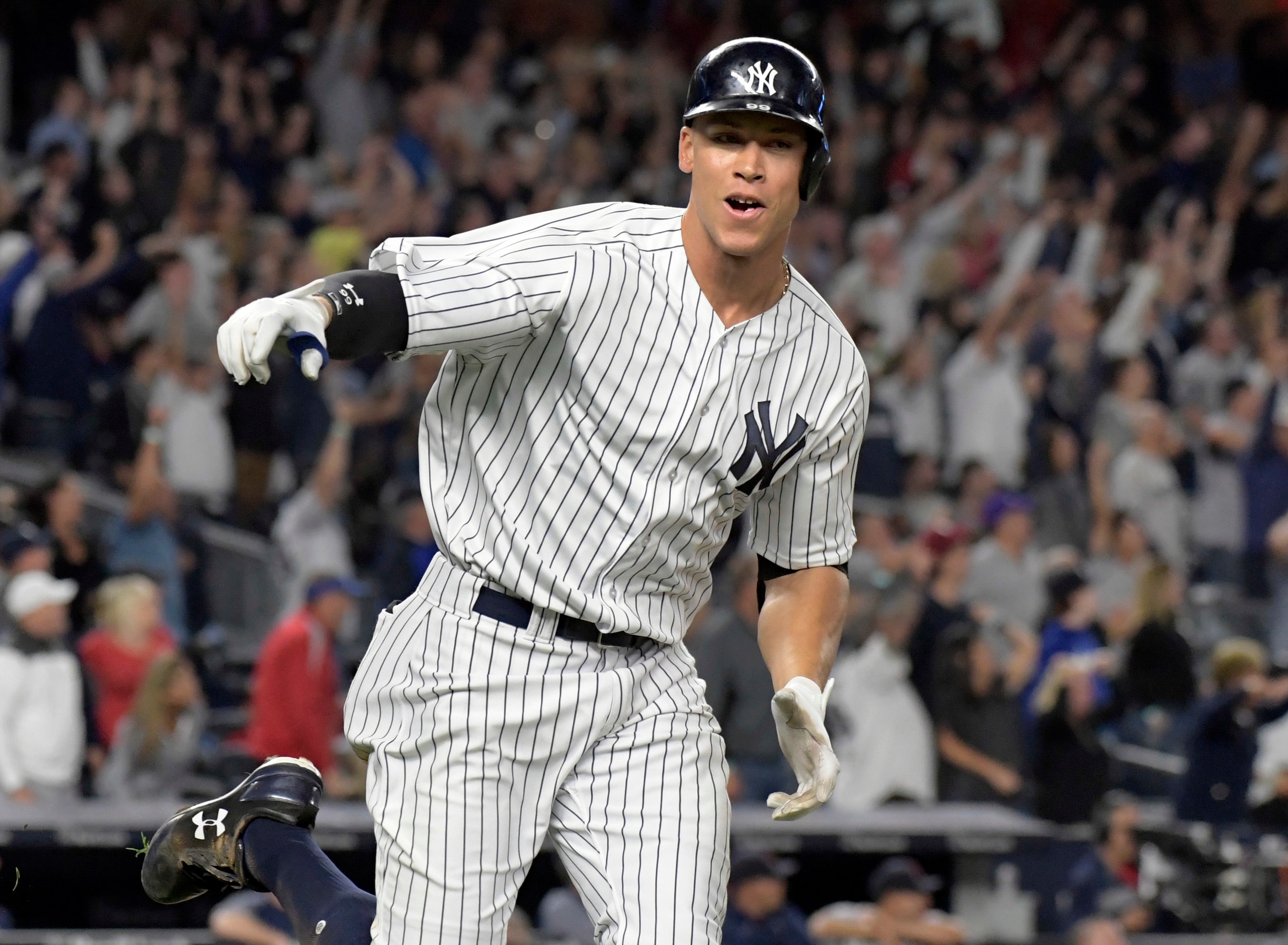
Age: 25
Key Stats: 155 G, 678 PA, .284/.422/.627, 171 OPS+, 52 HR, 9 SB, 9 DRS
WAR: 8.1
2017 Player Report
It's only fitting that perhaps the strongest hitter ever broke Mark McGwire's rookie home run record.
It was clear from the 95.1 mph exit velocity that Aaron Judge averaged in 2016 that he had a lot of oomph packed into his 6'7", 282-pound frame. He simply needed to be more efficient at applying it. Despite an out-of-character stretch in July and August, he achieved that by being more selective.
That doubled his walk rate and cut his K% down from 44.2 to 30.7. And for Judge, more balls in play meant more fireworks. He averaged 94.9 mph on his batted balls and barreled the ball more frequently than anyone else. His home runs averaged a patently absurd 110.0 mph off the bat and went as far as 495 feet.
Judge's good defense was the proverbial icing on the cake. His sneaky-good speed and long reach kept plenty within his considerable range, and any runner who tested his arm was liable to get a harsh sentence.
In all, Judge was basically Stanton with a better OBP and, despite the difference in results, better power. That's why he's the best corner outfielder there was in 2017.

.jpg?w=2560 "McCarthy 'Not Surprised' to Be QB1")
.jpg?w=2560 "Breaking News")


.jpg?w=2560 "Porziņģis Trade Packages 📦")