NFL1000: Falcons' Super Bowl Run Not All Offense, Young D Has Great Potential

It should come as no surprise that over the last two years, the Atlanta Falcons have drafted as well on the defensive side of the ball as any NFL team, and better than most. Kudos go to general manager Thomas Dimitroff and his staff, but Dimitroff has been with the Falcons for years, and the team never did this well in the draft. The real difference-maker is head coach Dan Quinn, the former Seahawks defensive coordinator who did a lot to help head coach Pete Carroll and general manager John Schneider assemble the Legion of Boom defense.
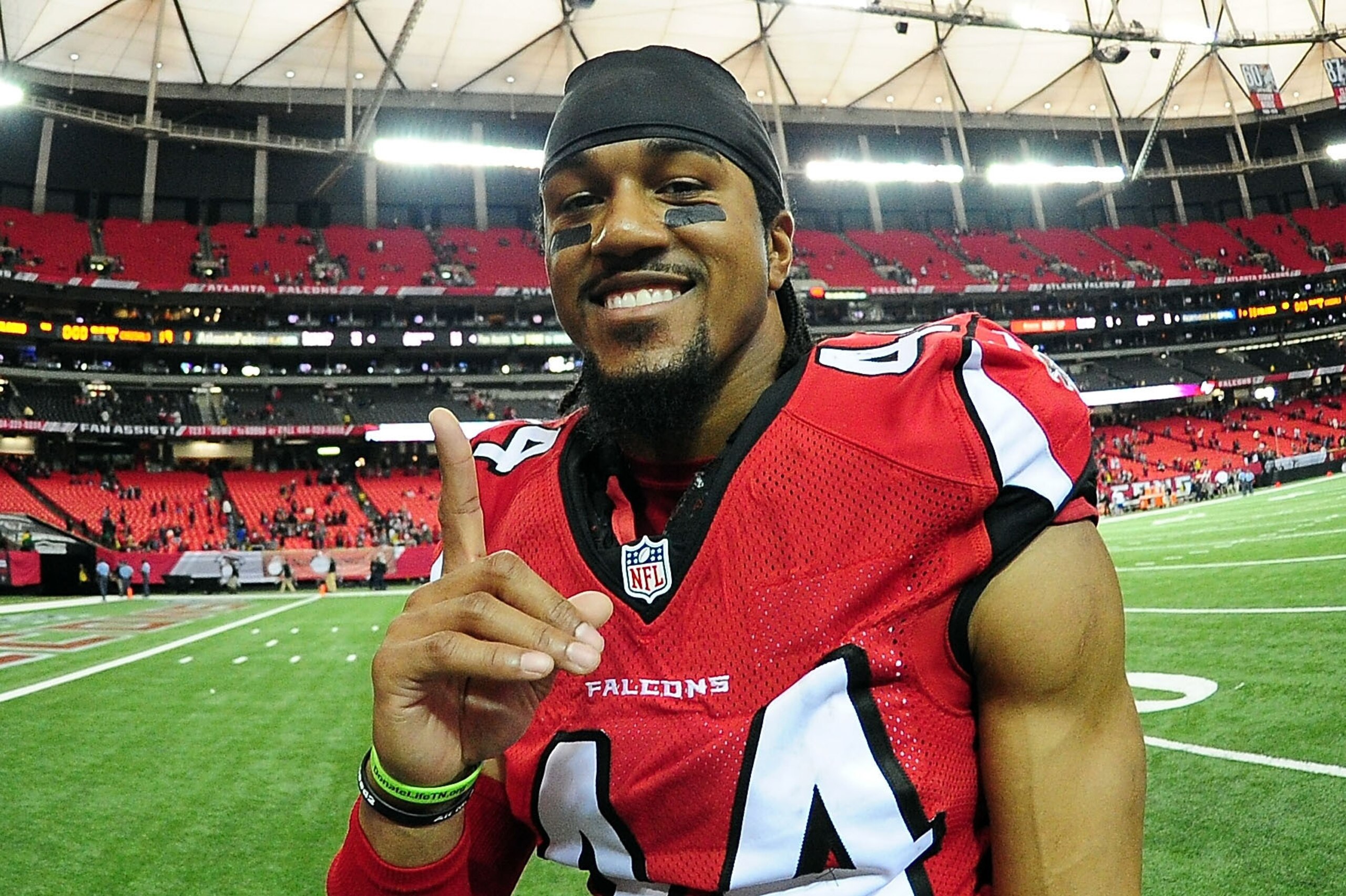
Quinn has always had a good bead on the right types of players for his aggressive defense and how best to use them. In Seattle, he was the one who turned Red Bryant, a former washout at defensive tackle, into the only 360-pound defensive end in NFL history—to great effect. And when the Seahawks picked up Michael Bennett in free agency in 2013, Quinn was the one who turned him loose as a multi-gap disruptor.
.jpg?w=2560 "Seahawks Chiefs Football")

That combination of personnel acumen and mental acuity has worked well for Quinn in his two years with the Falcons, and the draft picks prove it. In 2015, the team selected Clemson edge-rusher Vic Beasley in the first round; he led the NFL in sacks in 2016 with 15.5. Second-round pick Jalen Collins from LSU has been Atlanta's most consistent coverage cornerback in the second half of the 2016 season, keeping that secondary afloat after the season-ending pectoral injury that sidelined Desmond Trufant in November.
The real steal from that 2015 draft, though, was defensive tackle Grady Jarrett. Somehow, the leverage monster from Clemson lasted all the way to the fifth round, and the Falcons were lucky to get him.
At 6'1" and 290 pounds, Jarrett may not pass the size test that many teams apply to disruptive tackles, though given the recent success of Geno Atkins and Aaron Donald, it's possible NFL teams should re-examine their templates. Jarrett has been an absolute force in both of his NFL seasons. He has three sacks, eight quarterback hits, 30 quarterback hurries and 25 stops this season, and his ability to command double-teams on a high percentage of plays allows Beasley and Atlanta's other linemen to get free to disrupt.
But the 2016 draft class really has people noticing that the Falcons are assembling the league's next great young defense. First-round safety Keanu Neal from Florida has become for Quinn in Atlanta what Kam Chancellor was for Quinn in Seattle—the enforcer lurk defender who will sit in short-to-medium coverage and make receivers think twice about coming over the middle.
Second-round linebacker Deion Jones from LSU has become the paradigm for one of the most important positions in the modern NFL—the mid-field 'backer who can cover tons of ground in any direction. From blitzes to run stops to deep coverage, Jones can do it all, and it's why he has my vote for Defensive Rookie of the Year.
Fourth-round linebacker De'Vondre Campbell has been nearly as effective on the outside, and undrafted cornerback Brian Poole has been a valuable addition as a slot cornerback and occasional blitzer.
The result is that a formerly porous, uninspired defense now looks like the Seattle squad I saw firsthand in the early days of the Carroll era: prone to youthful mistakes at times but filled with speed and power and coming to terms with its potential. It's this defense that will go up against Tom Brady and the Patriots in Super Bowl LI, and it's this defense that absolutely obliterated the Packers' passing game in the NFC Championship Game.
Aaron Rodgers, who had been on a ridiculous hot streak in the season's second half, was rendered mute, completing 12 of 17 passes for 119 yards, no touchdowns and an interception in the first half, and 27 of 45 passes for 287 yards and three garbage-time touchdowns overall. When the game was still competitive—which wasn't for long—the Falcons shut Rodgers down after a few easy completions. They did so especially well on third down; the Packers converted four of their 10 third-down attempts, while the Falcons converted 10 of 13.
How did this defense do it? With a compelling combination of pressure and coverage that will be needed against Brady and his targets.
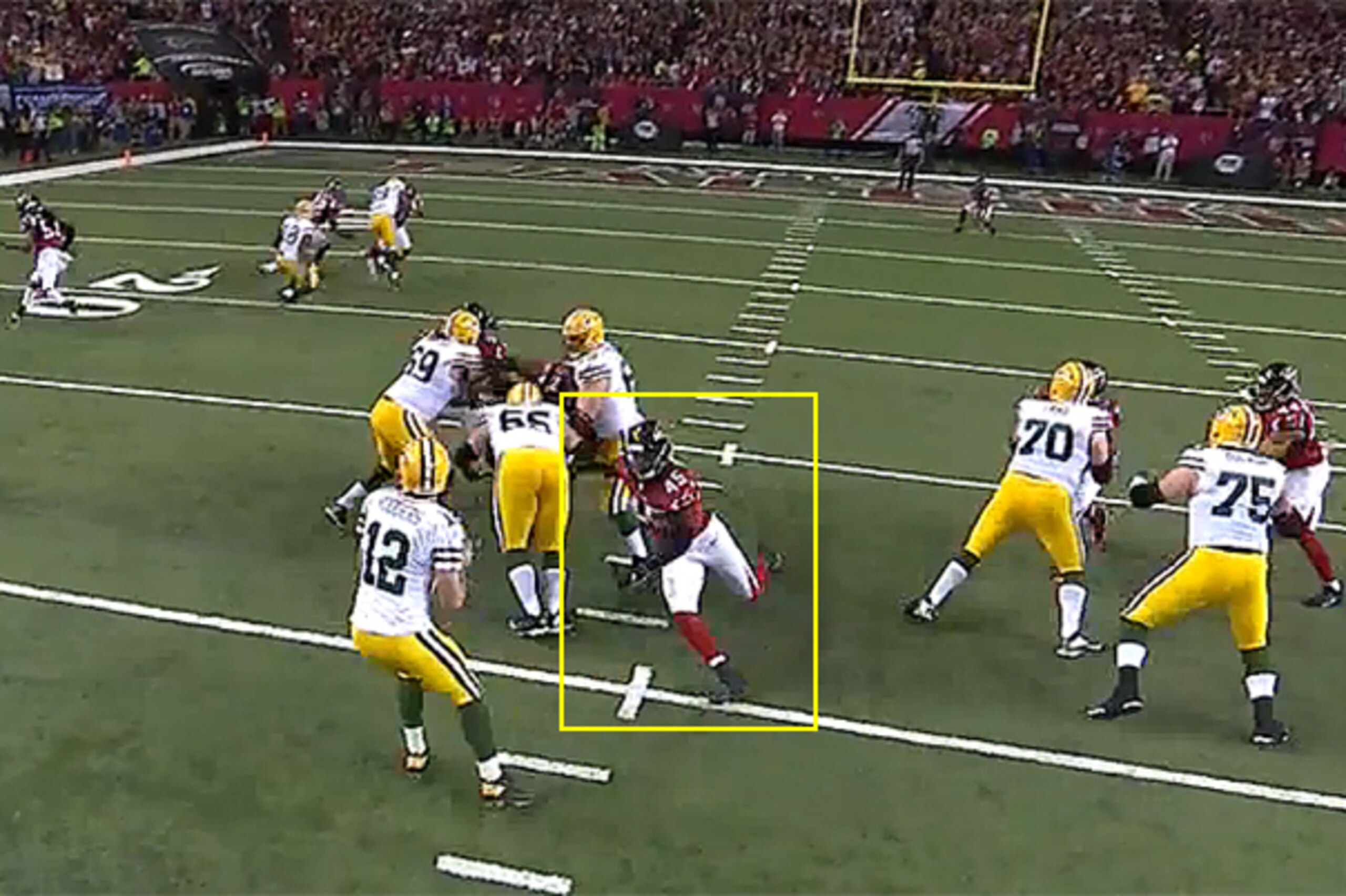
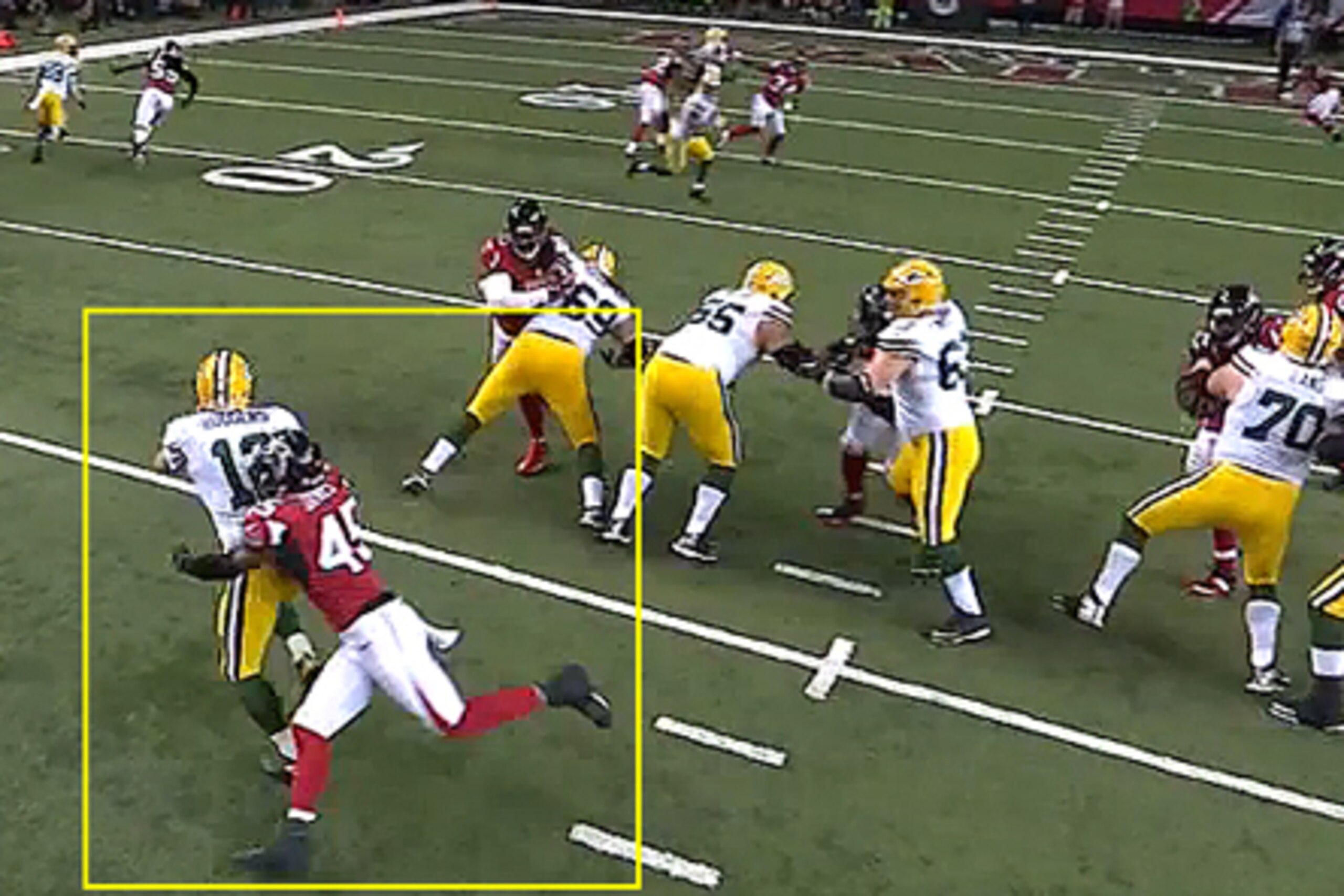
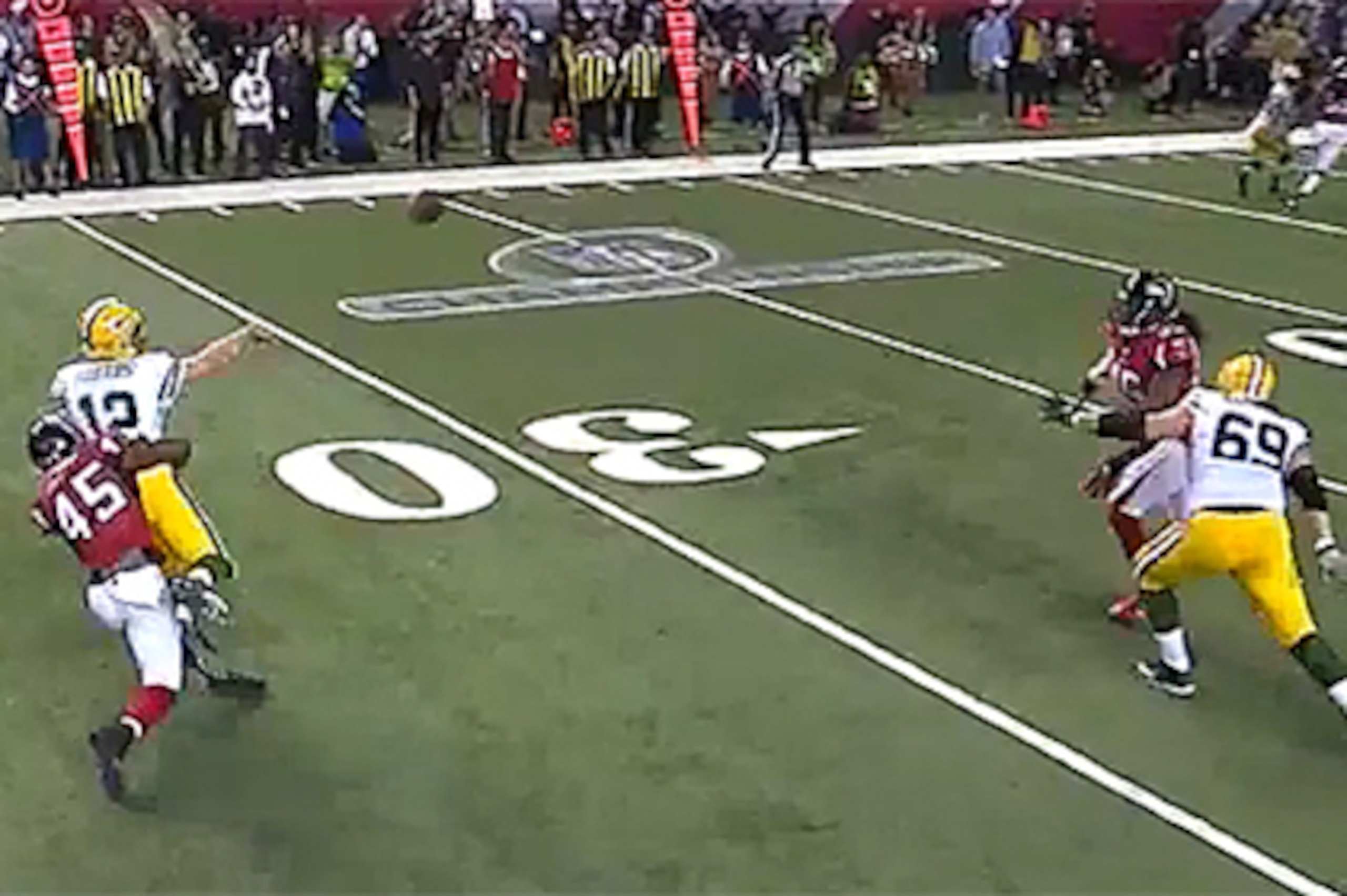
Let's start with the final play of Green Bay's first drive. There's 5:44 left in the first quarter, and after a couple of easy throws to Jordy Nelson, Rodgers is starting to feel this defense moving around his neck. Deion Jones (45) is the star on this play with a delayed blitz to force Rodgers out of the pocket and make him throw the ball away.
Jones waits until Green Bay's blockers are occupied and shoots through unobstructed. The Falcons also use this strategy with Beasley moving between gaps pre-snap, but it's Jones' turn to bring the heat.

I love the design and execution of this next play because it shows how the Falcons' young defenders have learned to trust in the scheme and one another. There's 6:54 left in the first half, and the Packers have a bunch left formation. Atlanta counters with man-deep coverage to that side and Poole (34) blitzing from the wide side. Neal (22) starts in intermediate lurk coverage, ready to take anything underneath.
Neal first gets on top of Davante Adams (17) if the ball is going there, but it isn't, because Poole's perfectly timed blitz limits Rodgers' timing. He has to make a bail-out throw to Randall Cobb (18), and Cobb falls down before the ball gets there. Had Cobb caught the ball, the chances of Neal's blowing him up and eliminating another third-down conversion would have been high.
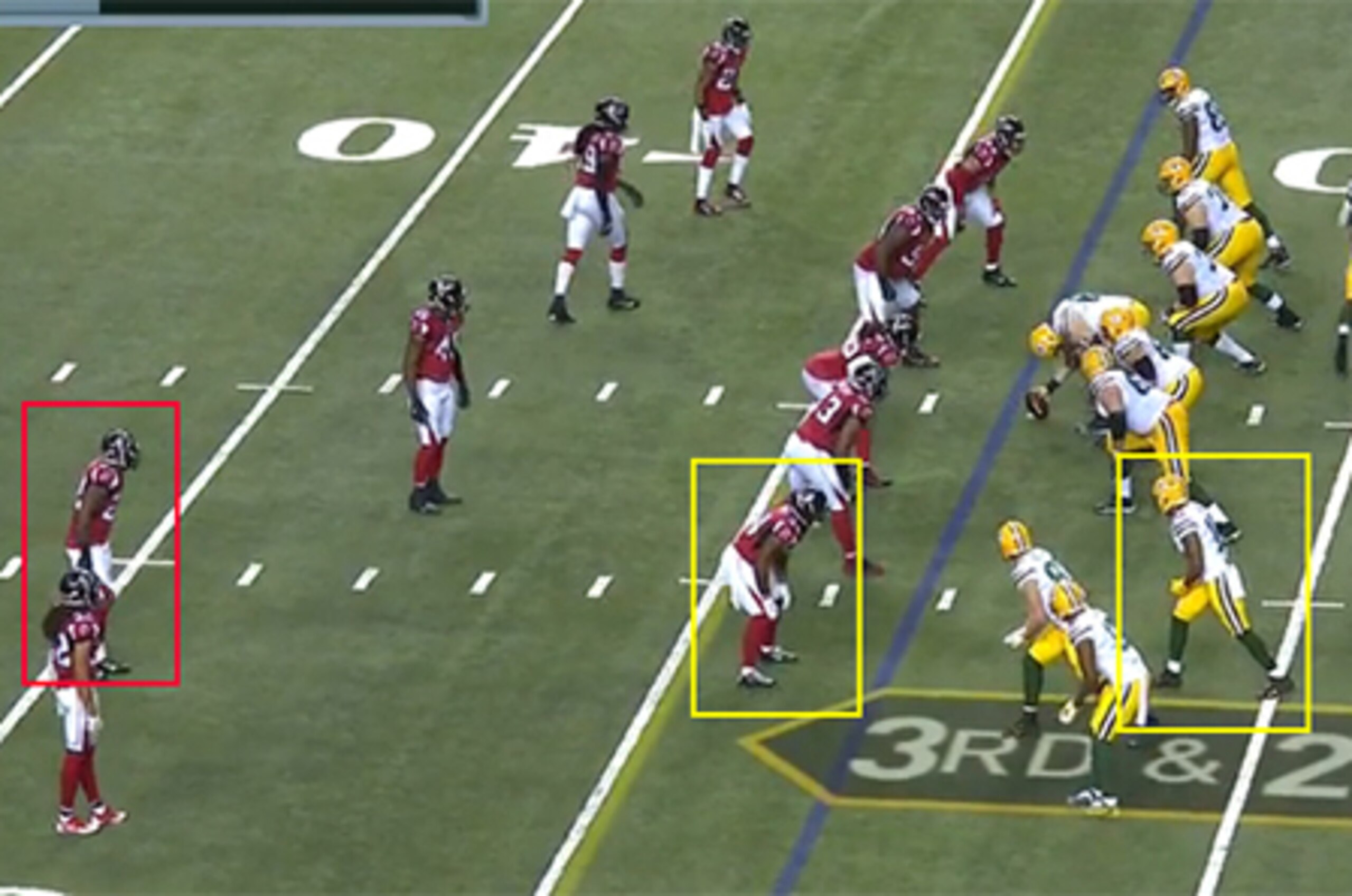


Rodgers' interception came with two minutes left in the first half, and some dismiss it as an "arm punt" because it came on 3rd-and-21 from the Green Bay 13-yard line. To say that is to ignore the role that pressure—and the spy element—had to do with the errant throw.
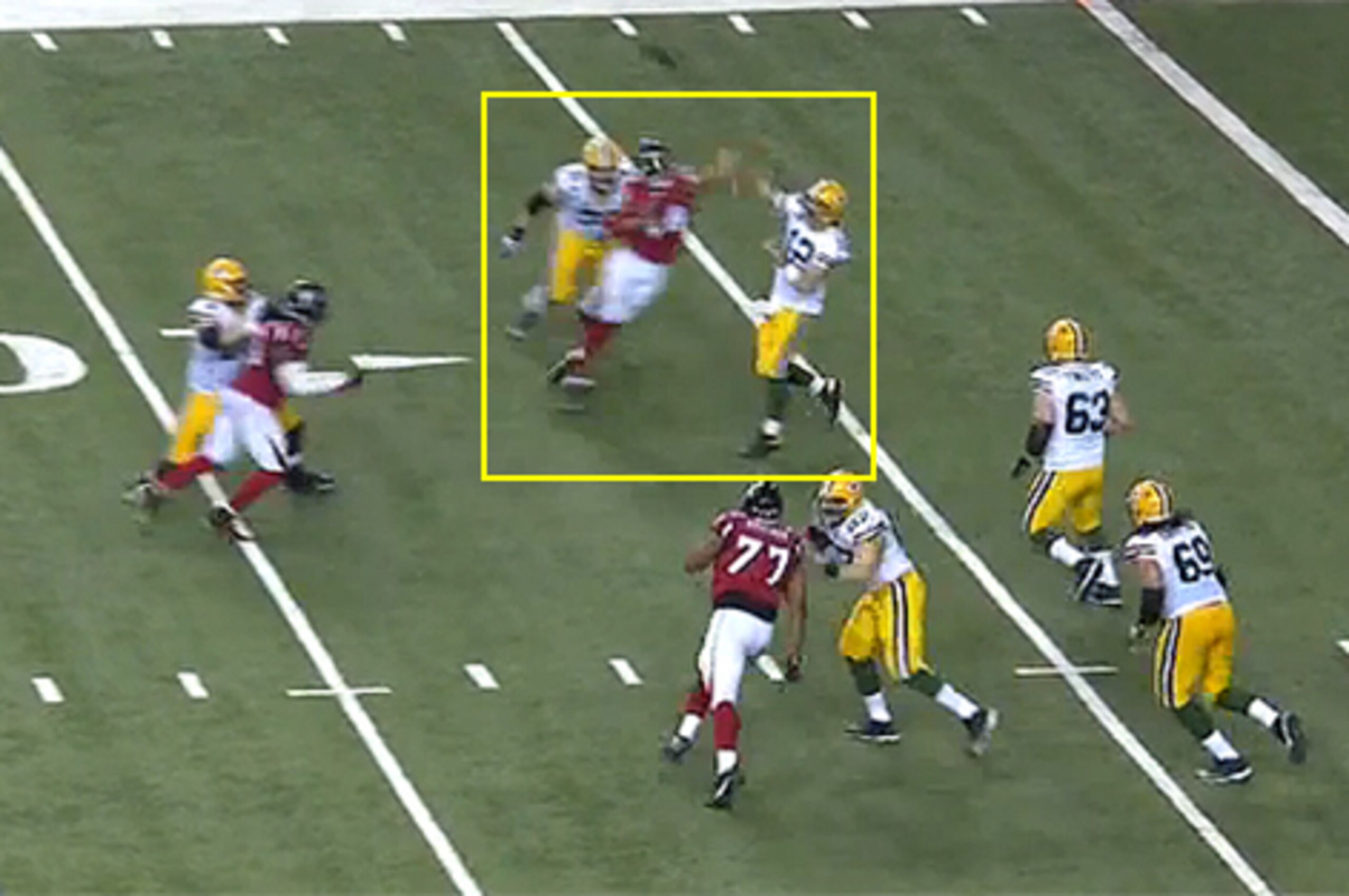
Rodgers has his eye on Jordy Nelson deep, but his problem is Beasley (44), who starts the play looking like he's rushing from inside. Instead, he backs off with two assignments—keep an eye on tight end Jared Cook (89) if Rodgers throws short and spy Rodgers to the sideline if Cook goes deep. Beasley executed his assignment perfectly, closing in on Rodgers with demon speed and forcing the heave.
This was a brilliant counter to the eternal question: How do you keep Rodgers from moving out of the pocket and making improvised deep throws? In this case, you take a rare athlete and have him run Rodgers down.


How might Bill Belichick game-plan against this defense? We can take some cues from New England's win over the Seahawks in Super Bowl XLIX. There, the idea was to deflect the pressure by making short throws with comebacks and angle routes that would frustrate Seattle's defenders. That worked well, especially after injuries took cornerback Jeremy Lane and defensive end Cliff Avril out of the game.
Michael Bennett was the unblockable force, and it could be Jarrett this time. When Avril was still healthy, he could take advantage of the double-teams put on Bennett, and this will be a key factor in an Atlanta win—the Falcons must take advantage of single-teams with gap play and well-timed blitzes.
Of course, it's not just the aerial attack Atlanta has to worry about—the Patriots are just as capable of going smashmouth with LeGarrette Blount, and that might be a problem for this particular defense. The Falcons finished 25th in Football Outsiders' Defensive Adjusted Line Yards metric, and they were below league average in their ability to stop short-yardage and conversion plays on the ground. Facing two teams with subpar run games in the Seahawks and Packers through the NFC playoffs didn't show this, but you can bet Belichick will be all over it.
The key man on Quinn's side is tackle Ra'Shede Hageman, who had one of the best games of his career against the Packers with a sack, two quarterback hurries and three stops. When Hageman is playing well, Quinn can put him at the nose tackle spot, which makes up for Jarrett's one debit—he's not always going to get a push inside. Lining Jarrett up at the 3-tech tackle spot instead of the nose position allows him to use his leverage and explosiveness against the run and pass to great effect.
In both of New England's Super Bowl losses in the Belichick era, New York Giants defensive tackle Justin Tuck upended Brady by getting pressure right up the middle. Jarrett abused Packers left guard Don Barclay, and Patriots left guard Joe Thuney was not at his best against the Steelers. Watch for Quinn to dial up that inside pressure to keep Brady from stepping up in the pocket, and watch for Jarrett to be a big part of that.
Will the Patriots be able to rip apart Atlanta's defense like they did the Steelers in the AFC Championship Game? That's unlikely. The Falcons can be beaten by option routes, and no team is better at running option routes than the Pats, but these defensive backs will maul you at the line of scrimmage, and they'll run a few deep coverages to try to stop the big plays. They won't have to use Beasley as a spy on Brady as they did with Rodgers, which means Beasley can just rush from different gaps. If they get pressure with the front four and Poole can stay in coverage instead of blitzing, all the better.
It may seem like the biggest mismatch of Super Bowl LI—Atlanta's young defense against the greatest quarterback ever to lace 'em up. Indeed, with Neal, Jones and Campbell, the Falcons will become the first Super Bowl team to start three rookies on defense since the 1981 San Francisco 49ers did it with Ronnie Lott, Carlton Williamson and Eric Wright (per ESPN Radio). That turned out well for the start of the Bill Walsh dynasty, as the 49ers eked out a 26-21 win in Super Bowl XVI. It's not out of the realm of possibility that this young defense could pull off a similar upset.
Advanced statistics via Pro Football Focus unless otherwise noted.
.jpg?w=2560 "Super Bowl Halftime Jay-Z")
.jpg?w=2560 "Rams Eagles Football")

.jpg?w=2560 "WWE Raw Live Grades 🔠")