
B/R MLB 300: Ranking the Overall Top 300 Players
Over the past few weeks, the 2016 Bleacher Report MLB 300 has been ranking the top players at each individual position. Now it's time for the grand finale: the complete list.
In case you're just now joining us, the goal of the B/R MLB 300 is to rank the best players from the 2016 season by analyzing their assorted talents and scoring them accordingly. For more on how each individual position was approached, you can go straight to the source:
- September 19: Top 25 First Basemen
- September 21: Top 20 Catchers
- September 22: Top 25 Second Basemen
- September 26: Top 25 Shortstops
- September 28: Top 25 Third Basemen
- September 29: Top 80 Starting Pitchers
- September 30: Top 25 Center Fielders
- October 3: Top 40 Corner Outfielders
- October 4: Top Five Designated Hitters
- October 5: Top 30 Relief Pitchers
With all the scores accounted for, now it's time to put all 300 players on one list for a definitive look at the top players in Major League Baseball for 2016.
As you go, there are a few things to keep in mind. Many players are tied with the same score, in which case higher ranks became judgment calls. Also, the stats within are current as of the publication date of the given player's positional ranking.
Take it away.
300-251: Alvarez-Fister
1 of 55
300. Pedro Alvarez, DH, Baltimore Orioles
The fact that Pedro Alvarez is only a part-time DH means his value only goes so high. He's lived up to his job description, however, using a whole bunch of hard contact to cement himself as an above-average hitter.
299. Greg Garcia, SS, St. Louis Cardinals
Greg Garcia has little power and speed, and he has been less than flawless on defense, so it's a good thing he has an excellent on-base talent.
298. Marwin Gonzalez, 1B, Houston Astros
You won't get anyone to call Marwin Gonzalez an exciting player. But with some pop in his bat, speed in his legs and a glove that can play anywhere, he's definitely useful.
297. Yunel Escobar, 3B, Los Angeles Angels
Yunel Escobar has revitalized his hit tool in the last couple of years by reinventing himself into a pretty good slap hitter. But since that's his only talent, it's not worth that much.
296. C.J. Cron, 1B, Los Angeles Angels
There's a playing-time penalty and a few nits to pick here, but no one should ignore that C.J. Cron is advancing as both an offensive and defensive talent.
295. Derek Dietrich, 2B, Miami Marlins
Without a good glove or good legs, Derek Dietrich needs to hit in order to earn his keep. Fortunately for him, the approach he's used in 2016 has allowed for greater consistency at the dish.
294. Tim Anderson, SS, Chicago White Sox
In his first taste of the big leagues, Tim Anderson has been as advertised. He packs a solid bat and some impressive athleticism, but his technique needs fine-tuning on both sides of the ball.
293. Kendrys Morales, DH, KC Royals
Morales has been mostly good since a slow start in April and May, mainly by clobbering the ball en route to more power than he featured in 2015. On the whole, though, he hasn't been as consistent.
292. Cody Allen, RP, Cleveland Indians
Cody Allen served up too much hard contact in 2016, a reality of him changing his approach with his fastball and curveball. But both pitches still missed plenty of bats, allowing him to limit the damage.
291. Tyler Thornburg, RP, Milwaukee Brewers
Tyler Thornburg had a good dynamic going between the vertical action on his fastball and the downward action on his curveball, making him tough to hit. He's not a command artist, however, and he was hit harder than his low home run rate indicates.
290. Craig Kimbrel, RP, Boston Red Sox
Craig Kimbrel still has the wicked stuff to miss bats, which keeps him out of trouble more often than not. But with poor control and a fading ability to miss barrels, he's no longer a flawless reliever.
289. Miguel Sano, 3B, Minnesota Twins
The most appealing aspects of Miguel Sano's game are still his booming power and his outstanding batting eye. Now he just needs others to go with them.
288. Blake Snell, SP, Tampa Bay Rays
The negatives here are obvious: Blake Snell has gotten limited exposure (86.1 innings in 18 starts) and has battled control struggles with a 5.2 walks per nine innings. An inconsistent arm slot, which he may not fix until he adds more weight to his 6'4", 180-pound frame, hasn't helped the latter. There's a lot to like about the action on his pitches, though, which has helped him secure a 9.8 strikeouts per nine innings and a solid exit velocity.
287. David Phelps, RP, Miami Marlins
An oblique injury and a few spot starts helped hide David Phelps among fellow dominant relievers. But make no mistake, his good command and arsenal of moving hard stuff made him a tough matchup.
286. Sam Dyson, RP, Texas Rangers
The book on Sam Dyson got around in 2016, allowing hitters to erase some of the dominance he enjoyed last year. However, hard-throwing relievers with good command who get ground balls and pop-ups are always going to get it done.
285. Yasmany Tomas, RF, ARI Diamondbacks
Yasmany Tomas lived up to his power potential in 2016, particularly in a second half that was filled with rockets. But the other elements of his game still need work. Even with his power surge, he's still struggling to be a replacement-level player. He barely made the cut for this list.
284. Albert Pujols, DH, Los Angeles Angels
Albert Pujols is still a solid hitter who can make contact and make loud contact against mistake pitches. If you miss the days when he was so much more than that, the only guys who can help are named Doc and McFly.
283. Hector Neris, RP, Philadelphia Phillies
Hector Neris got a lot of mileage out of his extreme splitter usage in 2016, mainly using it to miss plenty of bats. If he can one day find better command, he may also be able to miss barrels.
282. Brandon Phillips, 2B, Cincinnati Reds
It's no secret by now that Brandon Phillips is past his prime. But relative to many over-the-hill stars, he's still useful. His bat and glove both have life left.
281. Danny Valencia, 3B, Oakland A's
Danny Valencia has fallen into the background as Ryon Healy has feasted on September pitching. But Valencia has been the more productive player on the whole, particularly with his powerful bat.
280. Adam Conley, SP, Miami Marlins
There's a lot to like about Adam Conley's three-pitch mix. He has a four-seamer with a bit of rise and outstanding arm-side run as well as a changeup and a slider that both have a good deal of deception. This is where his 8.4 K/9 comes from. Now he needs a consistent release point to help him improve his ugly 4.2 BB/9 and, just as importantly, be more efficient from inning to inning.
279. Eugenio Suarez, 3B, Cincinnati Reds
Eugenio Suarez is a difficult player to analyze, but the basic breakdown goes like this: pretty good power, pretty good athleticism.
278. Corey Dickerson, LF, Tampa Bay Rays
Corey Dickerson's job is to go to the plate and crush right-handed pitching. He mostly does that, although it means living with a lot of wild swinging and limited baserunning and defensive value.
277. Nomar Mazara, RF, Texas Rangers
Nomar Mazara has some adjustments to make at the plate if he wants to get back to where he was in the first two months of 2016. But the rookie wasn't completely out of his depth and generally provided enough moments to justify the hype he arrived with.
276. Denard Span, CF, San Francisco Giants
Denard Span is not the two-way player he once was, as his age and injuries have hurt his speed and defense. However, he remains a good place to look for an example of an advanced hitting approach.
275. Jason Heyward, RF, Chicago Cubs
Jason Heyward is still arguably the best defensive right fielder in the game. But whereas that used to be just another tool in his belt, in 2016 it was really the only tool in his belt. Pitchers found weaknesses to exploit, and he was unable to adjust.
274. Victor Martinez, DH, Detroit Tigers
Despite some cracks appearing in his game, Victor Martinez is healthy and mostly back to hitting the way we know he can hit. He's not a great player, but he's certainly a great hitter.
273. Derek Law, RP, San Francisco Giants
Derek Law may have succeeded in part due to an incomplete scouting book on him. However, his funky delivery and diverse repertoire won't make that scouting book easy to write.
272. Jordan Zimmermann, SP, Detroit Tigers
Even Jordan Zimmermann's 2.0 BB/9 doesn't do his control justice. Beyond simply being good at throwing strikes, the way in which he changes eye levels with high fastballs and low secondaries makes him tough to square up. However, his velocity decline isn't helping him there or, as evidenced by his 5.7 K/9, in the whiffability department. And that's just when he's even been able to take the hill.
271. Mark Reynolds, 1B, Colorado Rockies
The disappearance of Mark Reynolds' power leaves him without any standout tools. But with a better approach at the plate, he's a more well-rounded player than he used to be.
270. Jordy Mercer, SS, Pittsburgh Pirates
Jordy Mercer might as well be called "Anonymous Shortstop No. 10." But just because he's not a star doesn't mean he's not useful. He has a solid bat and can make the routine plays on defense.
269. Adeiny Hechavarria, SS, Miami Marlins
Adeiny Hechavarria's main draw is still a glove that makes him one of the best defensive shortstops in the league. But even a bat that's arguably undersold by its surface numbers still isn't very good.
268. David Dahl, LF, Colorado Rockies
David Dahl is only a small-sample-size hero, which is why his score isn't higher. All the same, he showed some good potential in all phases of the game, particularly in his ability to barrel the ball to all fields.
267. Travis Shaw, 3B, Boston Red Sox
There was a point when Travis Shaw looked like a nice find for the Red Sox. He's since been revealed for what he really is: a player who's serviceable on both sides of the ball but not special on either side.
266. Chase Utley, 2B, Los Angeles Dodgers
Chase Utley is getting close to the end of what could be a Hall of Fame career. It's not as pretty as the beginning, but the fact he's still useful on both sides of the ball is extraordinary.
265. Kyle Barraclough, RP, Miami Marlins
There's no ignoring how big a problem Kyle Barraclough has with walks. But with stuff that's good for missing both bats and barrels, he had what he needed to downplay that problem.
264. Martin Perez, SP, Texas Rangers
Martin Perez's whole approach is to attack hitters with a variety of moving pitches at and below the knees. When it's working, he gets ground balls (52.9 ground-ball percentage), and the Rangers go home happy. But it also means living with a few walks (3.5 BB/9) and virtually no strikeouts. Perez's 4.7 K/9 is the lowest among all qualified starters, and it means he needs a lot of help from his defense.
263. Yordano Ventura, SP, Kansas City Royals
Yordano Ventura still has a live arm, averaging 96.0 mph on his heat. And with a 50.7 GB%, he's still benefiting from keeping the ball down. But there's bad news there too. He hasn't been keeping his off-speed pitches down enough, which is costing him in whiffs and loud contact. It's thus the same old story with Ventura: He has worlds of potential, but he still needs to fine-tune his craft.
262. Max Kepler, RF, Minnesota Twins
Max Kepler had a run this year when he looked like a breakout star. That misrepresented him somewhat, but his bat, legs and glove all offer things to be optimistic about.
261. Lonnie Chisenhall, RF, Cleveland Indians
Among the many platoon players at the corner outfield spots, Lonnie Chisenhall is one of the better ones. He doesn't excel at any one thing, but his bat, baserunning and glove are all solid.
260. Randal Grichuk, CF, St. Louis Cardinals
It's a lot of fun to watch Randal Grichuk tee off on the ball, as he's about the perfect blend of raw power and a power swing. Now he just needs a more consistent approach and a home on defense that asks less of him than center field.
259. Maikel Franco, 3B, Philadelphia Phillies
It's clear Maikel Franco still has work to do to become a consistent hitter. But with good power and more consistent defense, he's at least earned his keep as a solid everyday option.
258. Brad Miller, SS, Tampa Bay Rays
There's no question Brad Miller has excellent power by shortstop standards. But with an inconsistent bat and a glove that's no longer playable at shortstop, it's only worth so much.
257. Jose Iglesias, SS, Detroit Tigers
After hitting over .300 in 2013 and 2015, Jose Iglesias has become what he was always supposed to be in 2016: a guy who can field the ball like crazy but who isn't actually that good at hitting it.
256. Chris Tillman, SP, Baltimore Orioles
Chris Tillman is still changing eye levels well, generally working up with his four-seamer and at and below the knees with everything else. And after losing velocity in 2014, he's gained it back and used it to boost his K/9 to 7.5. But that doesn't make him a strikeout pitcher, and Tillman's not much of a command artist or contact manager either. He gets ace billing, but he's just a reliable workhorse.
255. Nick Markakis, RF, Atlanta Braves
Nick Markakis is an unexciting player but not a bad one. His advanced approach and revived power give him a solid bat, and he still plays a serviceable right field.
254. Nick Castellanos, 3B, Detroit Tigers
Nick Castellanos' value is still limited to what he can do at the plate. He's showing signs of living up to his former hype there, particularly with a much-improved power stroke.
253. Will Harris, RP, Houston Astros
Will Harris comes from the Mark Melancon school of relief pitching: kill 'em with cutters, curveballs and good command. And he's not much worse than Melancon is at pulling it off.
252. Ken Giles, RP, Houston Astros
Ken Giles' 4.11 ERA doesn't capture how good he was after a rough first month, much less how difficult it is to make contact against him. However, any contact against him did tend to be good contact.
251. Doug Fister, SP, Houston Astros
A return to health has restored Doug Fister's velocity and spin. His return to a location pattern of putting his hard stuff higher and his slow stuff lower has allowed him to do a good job of missing barrels with a 87.9 mph exit velocity. He's still a shell of his old self, though. Though improved, his 5.7 K/9 reflects how his stuff is far from vintage. His control also isn't as sharp as it once was.
250-201: Jankowski-Davis
2 of 55
250. Travis Jankowski, CF, San Diego Padres
The speed elements of Travis Jankowski's game are A-OK. He's an excellent baserunner and a quality defender. But with no power, he needs to cut down on his strikeouts to make his hitting worthwhile.
249. Justin Bour, 1B, Miami Marlins
Justin Bour's low score is reflective of how much time he's missed. But make no mistake: When he has been on the field, he's been a legit offensive threat.
248. Mitch Moreland, 1B, Texas Rangers
The Rangers know what they're going to get from Mitch Moreland every year: pretty good power and solid defense but not much else.
247. Chase Headley, 3B, New York Yankees
Headley's mediocre hitting makes him easy to overlook at a position populated with heavy hitters. But he's one of the better ones at fielding his position and running the bases.
246. Josh Harrison, 2B, Pittsburgh Pirates
Josh Harrison isn't the big star he pretended to be in 2014, particularly on the offensive side of things. However, his legs and his glove are still assets.
245. Jason Hammel, SP, Chicago Cubs
It's a nice change of pace that Jason Hammel has stayed fresh for a whole season. Thank you, potato chips. He's also maintained good control for a guy who pitches off his slider, posting a 2.9 BB/9 and keeping everything low. However, his 7.8 K/9 is a big downturn from 2015. And because he can't fool hitters in the zone, he can't avoid high exit velocity (90.8 mph).
244. Danny Salazar, SP, Cleveland Indians
You can't doubt the quality of Danny Salazar's stuff. He works in the 94-95 mph range with his fastball and finishes hitters off with one of the top swing-and-miss changeups in the business. Thus, his studly 10.6 K/9. Now he just needs three things: better control, an ability to avoid loud contact and, last but not least, good health.
243. Felix Hernandez, SP, Seattle Mariners
Felix Hernandez used to combine great stuff with great control. But now his stuff is losing velocity. His 3.9 BB/9 reflects how his control is going too. His arm slot is trending down, and his whole style now involves putting the ball below the knees and hoping hitters chase. The one area where this is still working is his hittability. He's maintaining a 50.7 GB% and a solid exit velocity at 88.9 mph.
242. David Ross, C, Chicago Cubs
David Ross among the game's best catchers? That's partially because it's been a lean year at the position. It's also because he's hit well and has continued to be a strong defensive presence.
241. Tom Koehler, SP, Miami Marlins
Tom Koehler no longer pitches off his four-seam fastball. His slider, curveball and changeup account for the bulk of his pitches. That has allowed for more swinging strikes and softer contact. But as his 4.0 BB/9 serves to remind, it's hard for anyone not named Bronson Arroyo to control a secondaries-first approach. He also doesn't miss enough bats or barrels to excel away from Marlins Park.
240. Melvin Upton Jr., Toronto Blue Jays
Melvin Upton's bat didn't get any more consistent in 2016 and indeed got even worse after he was shipped from San Diego to Toronto. However, power, speed and defense are good ways to save face.
239. Jason Castro, C, Houston Astros
Jason Castro's offensive game has been a quagmire that too many whiffs and not enough power have brought down. However, he remains an asset because of how many strikes he earns his pitchers.
238. Jameson Taillon, SP, Pittsburgh Pirates
Jameson Taillon hasn't needed to pitch a ton of innings to make an impact in his rookie season. His 1.3 BB/9 reflects excellent control that comes from a consistent arm slot and ownage of the arm-side edge of the zone with his hard stuff. And apart from his four-seamer, everything he throws has proved effective at getting ground balls. In time, he should improve on his modest 7.4 K/9.
237. James Paxton, SP, Seattle Mariners
A lower arm slot unleashed James Paxton's full velocity potential and gave him greater consistency within the strike zone. From this, he benefited with a rock-solid 4.7 K/BB ratio in 19 starts. Good health continues to come and go for him, however. And despite his uptick in stuff, he's continued to struggle with hard contact. Batters hit the ball at an average of 91.0 mph off him.
236. Joe Ross, SP, Washington Nationals
Joe Ross was doing fine before he was waylaid by a bad right shoulder. Not great but fine. Like his older brother, Tyson, he works off a sinker-slider combination with enough location and movement to post a solid 7.8 K/9 and keep hard contact at bay. Now all Ross needs to do is work on getting his sinker lower in the zone, and better things may be in store.
235. Starlin Castro, 2B, New York Yankees
It's high time everyone gave up on Starlin Castro once again being the rising star he was earlier in his career. But at least he can play second base without embarrassing himself—and with some pop on the side.
234. Angel Pagan, LF, San Francisco Giants
Angel Pagan didn't have his best season in 2016. But with a good bat, glove and baserunning, he put a rough 2015 season behind him.
233. Cameron Maybin, CF, Detroit Tigers
Keep in mind that Cameron Maybin's score is low partially because he just hasn't played that much in 2016. He's mostly been good when he has, showing off a particularly impressive approach at the dish.
232. Andrew McCutchen, CF, PIT Pirates
This has been the worst season of Andrew McCutchen's career, and it may have lingering effects. The Pittsburgh Pirates need to have a serious talk about removing him from center field. However, it's saying something that he's still a quality hitter even in a down year.
231. Dan Otero, RP, Cleveland Indians
Dan Otero isn't an exciting reliever due to his lack of exciting stuff. But there's no denying his effectiveness. He comes in and throws strikes and stifles loud contact, leading to a well-deserved 1.53 ERA.
230. Alex Colome, RP, Tampa Bay Rays
Hittability issues aside, Alex Colome's command and nasty cutter make him one of the more unheralded relievers in the business.
229. Brad Brach, RP, Baltimore Orioles
Brad Brach's stuff and funky delivery always gave him a good reliever profile. Turns out all he needed was some command. Rough second half aside, he did become a better pitcher in 2016.
228. Addison Reed, RP, New York Mets
Addison Reed has adjusted his mechanics and found new life as a premiere strike-thrower who, while not quite as untouchable as his 1.97 ERA suggests, certainly wasn't easy to hit.
227. Chris Herrmann, C, ARI Diamondbacks
Chris Herrmann's small sample size of playing action required that his scores be suppressed. But with a good bat and defensive versatility on display, there's no question he was useful when on the field.
226. Michael Wacha, SP, St. Louis Cardinals
Michael Wacha remains reasonably good at keeping the ball down. He also still rocks a bread-and-butter changeup that gets him whiffs and ground balls. It's not enough for him to excel at either, however, as he managed just a 7.4 K/9 and 47.0 GB% before getting injured and moving to the bullpen. He mainly gets hurt on his fastball, which too often strays down the middle.
225. Trevor Bauer, SP, Cleveland Indians
Trevor Bauer has embraced the sheer electricity of his arsenal, downplaying his four-seamer in favor of more movement. That's helped him become a ground-ball pitcher with a 48.3 GB%. But he otherwise remains a frustrating pitcher, still unable to avoid walks (3.3 BB/9) and now not missing as many bats (7.8 K/9). Maybe next year will finally be the year he puts it all together.
224. Tyler Naquin, CF, Cleveland Indians
Tyler Naquin has been limited to part-time hero status by his platoon role against right-handed pitching. But he's certainly made the most of it, especially in showing off a surprisingly productive power stroke.
223. Josh Reddick, RF, Los Angeles Dodgers
The big knock against Josh Reddick is that he's only a platoon hitter. But it's to his credit that he's turned himself into a quality platoon hitter in the last two seasons. And he can still catch it in right field.
222. Gio Gonzalez, SP, Washington Nationals
It's to Gio Gonzalez's credit that he hasn't paid a more dire price for such a substantial velocity decline. That speaks to how he still has two good secondaries in his curveball and changeup and to how he's showing solid control for the first time in his career. He nonetheless remains a diminished version of his vintage self: still not very efficient and more hittable in every way.
221. Vince Velasquez, SP, Philadelphia Phillies
Vince Velasquez was having a rough second half before the Phillies shut him down. He certainly has things he can improve on. Chief among them would be his control, as his style consists of challenging hitters and not much else. You can say this, though: It's no small feat that each of his five pitches posted double-digit whiff rates. That's a live arm, and its 10.4 K/9 may be just the beginning.
220. Matt Moore, SP, San Francisco Giants
Matt Moore is healthy for the first time since 2013, and he has better control (3.3 BB/9) now than he did then. Throw in good velocity with 92-93 mph heat and a sharp curveball, and you get a typical power left-hander. But the big disappointment of Moore's career continues to be his inability to miss as many bats (8.1 K/9) as he should. He's also nothing special at missing barrels.
219. Matt Bush, RP, Texas Rangers
A life as a dominant reliever isn't what Matt Bush had in mind when he was a young shortstop who went No. 1 overall in the 2004 draft. But after all he's been through, that he has a major league career at all is something he's no doubt thankful for.
218. Pedro Strop, RP, Chicago Cubs
He's the less heralded part of the trade that brought Jake Arrieta to Chicago, but Pedro Strop continues to be a dominant reliever for the Cubs. All it's required is better control of his excellent fastball-slider combo.
217. Nate Jones, RP, Chicago White Sox
That we're singing Nate Jones' praises at all is a cool story after Tommy John surgery sidelined him for most of 2014 and 2015. He reminded us what he can do with his strong command and power stuff.
216. Steve Pearce, 1B, Baltimore Orioles
Disappointing finish notwithstanding, Steve Pearce recaptured some of the magic of his big 2014 breakout in 2016 by hammering left-handers and playing versatile defense.
215. Anthony DeSclafani, SP, Cincinnati Reds
Anthony DeSclafani has been a quiet (albeit limited) success story with a 3.38 ERA in 19 starts. He's never struggled to control the ball, but he's trying a new trick this year by working lower with his secondaries. That's had a hand in him becoming a better strikeout pitcher with a 7.8 K/9. The catch is that his hittability has gone backward, with both his GB% and exit velocity taking hits.
214. Sean Rodriguez, 1B, Pittsburgh Pirates
Sean Rodriguez is probably best known for that time he punched out a water cooler. Now meet a guy who can hit a bit in addition to playing all over the field.
213. Brandon Moss, 1B, St. Louis Cardinals
Brandon Moss' value revolves almost entirely around how much power he can provide, so hats off to him for maximizing it by adding more loft to go with his raw pop.
212. Francisco Cervelli, C, Pittsburgh Pirates
Francisco Cervelli hasn't recaptured the magic of his big breakout in 2015. But with an advanced bat and an elite framing skill, he's still been useful.
211. Jayson Werth, LF, Washington Nationals
Good health allowed Jayson Werth to make a strong recovery from a rough 2015 season, specifically in his ability to punish the baseball. Which is good, because he needs to hit to downplay his bad defense.
210. Michael Saunders, LF, Toronto Blue Jays
Michael Saunders had a rough second half after an All-Star first half. But what happened in that first half still counts and was good enough to cement Saunders as one of 2016's better left fielders.
209. Junior Guerra, SP, Milwaukee Brewers
Don't read too much into Junior Guerra's 2.81 ERA. The aged rookie owes that to how well he's kept the ball in the yard (0.7 HR/9) with a little help from the BABIP gods (.250), and he hasn't earned either with what's actually pedestrian contact management. Nonetheless, he has shown solid control (3.2 BB/9) of a pretty good arsenal and has been good for six innings every time out.
208. Carlos Beltran, RF, Texas Rangers
While Carlos Beltran's legs and glove have aged like milk, his bat has aged like fine wine. He still knows what he's doing when he steps in the box, and his power remains a threat.
207. Kelvin Herrera, RP, Kansas City Royals
Kelvin Herrera still has the lethal power stuff you want a late-inning reliever to have. The difference this year was that he threw more strikes, allowing him to get even better as a strikeout artist.
206. Freddy Galvis, SS, Philadelphia Phillies
Anybody could have predicted Freddy Galvis getting it done on defense this season. It's the power that's been a pleasant surprise, and it's helped make up for a bat that's not at all built for consistency.
205. Cesar Hernandez, 2B, PHI Phillies
The Philadelphia Phillies did the right thing when they moved Cesar Hernandez to leadoff in July. His bat profiles well at that spot. Now all he needs are some other defining qualities.
204. Stephen Vogt, C, Oakland A's
Stephen Vogt's All-Star form from early 2015 is long gone. However, he's still a dependable presence behind the dish and a solid hitter in the box.
203. Ryan Schimpf, 2B, San Diego Padres
As a 28-year-old rookie, it's fair to call Ryan Schimpf a late bloomer. The fact we're talking about him at all is something, and he mainly owes that to his emergence as a lethal power threat.
202. Marcus Semien, SS, Oakland A's
Marcus Semien's defense remains a major drain on his overall value, but his excellent power (by shortstop standards) goes a long way toward making up for that.
201. Rajai Davis, CF, Cleveland Indians
Rajai Davis' baserunning alone makes him worth playing, but he's useful in other ways too. He's not a bad hitter, power hitter or defender.
200-151: Martin-Samardzija
3 of 55
200. Leonys Martin, CF, Seattle Mariners
Leonys Martin has tried to add some more power to his game in 2016, but he's mostly the same player he's always been: a good defender with an inconsistent bat.
199. Chris Carter, 1B, Milwaukee Brewers
Chris Carter still swings and misses too much and doesn't bring a lot to the table when he's not at the plate. But if anyone wants humongous power, he's your huckleberry.
198. Melky Cabrera, LF, Chicago White Sox
Melky Cabrera is a quality hitter who makes plenty of contact and sprays line drives all over. That's about the extent of his value, but it's enough to make him one of the better everyday left fielders in the league.
197. Hunter Pence, RF, San Francisco Giants
Hunter Pence looks like he's past both his physical and productive prime. But when he's able to stay on the field, he still provides good offense and mostly good defense.
196. Jose Bautista, RF, Toronto Blue Jays
With his excellent eye and outstanding raw power, Jose Bautista remains a dangerous hitter. But injuries held him back this season, and these days he's just not the good all-around player he's used to being.
195. Ivan Nova, SP, Pittsburgh Pirates
Pittsburgh Pirates pitching coach Ray Searage has salvaged something from Ivan Nova's season. His sinker and curveball combination have always made him a good ground ball pitcher. So it goes with a 53.0 GB%, helping to make up for otherwise loud contact. As Jeff Sullivan covered at FanGraphs, all Searage has done is make Nova throw more strikes. That's a good way to improve a pitcher.
194. Cameron Rupp, C, Philadelphia Phillies
Cameron Rupp was toying with a bigger breakout earlier in the year. That didn't pan out, but the Phillies should gladly take a solid hitting catcher who can hold his own on defense.
193. Mark Melancon, RP, WAS Nationals
Mark Melancon isn't overpowering, but he's awfully deceptive with an arsenal that earns him enough whiffs and more than enough quiet contact.
192. Paulo Orlando, OF, Kansas City Royals
Paulo Orlando doesn't get on base or hit for power. But with his ability to hit for average, run the bases and play defense, he more than makes up for that.
191. Yangervis Solarte, 3B, San Diego Padres
This former Yankee is a member of the "Better Than You Think" club. Yangervis Solarte's nothing special when he's not in the box, but he packs a surprisingly potent bat when he is.
190. Carlos Rodon, SP, Chicago White Sox
A wrist injury got in his way, but 2016 has otherwise been a step forward for Carlos Rodon. His 2.9 BB/9 is a massive improvement over last year's 4.6. That's a combination of him going over the top and downplaying his slider. He's had to sacrifice some whiffs to make it work, but his 8.9 K/9 proves his stuff is good no matter what. Keep an eye on this guy.
189. Yu Darvish, SP, Texas Rangers
It's like Yu Darvish was never gone. His year off recovering from Tommy John surgery hasn't stopped his improving control (2.9 BB/9) or his extreme ability to strike hitters out (11.5 K/9). He's actually come back with better stuff, showing more velocity and earning double-digit whiff rates on his slider, curveball and cutter. To boot, all this stuff is tough to square up for exit velocity. Welcome back.
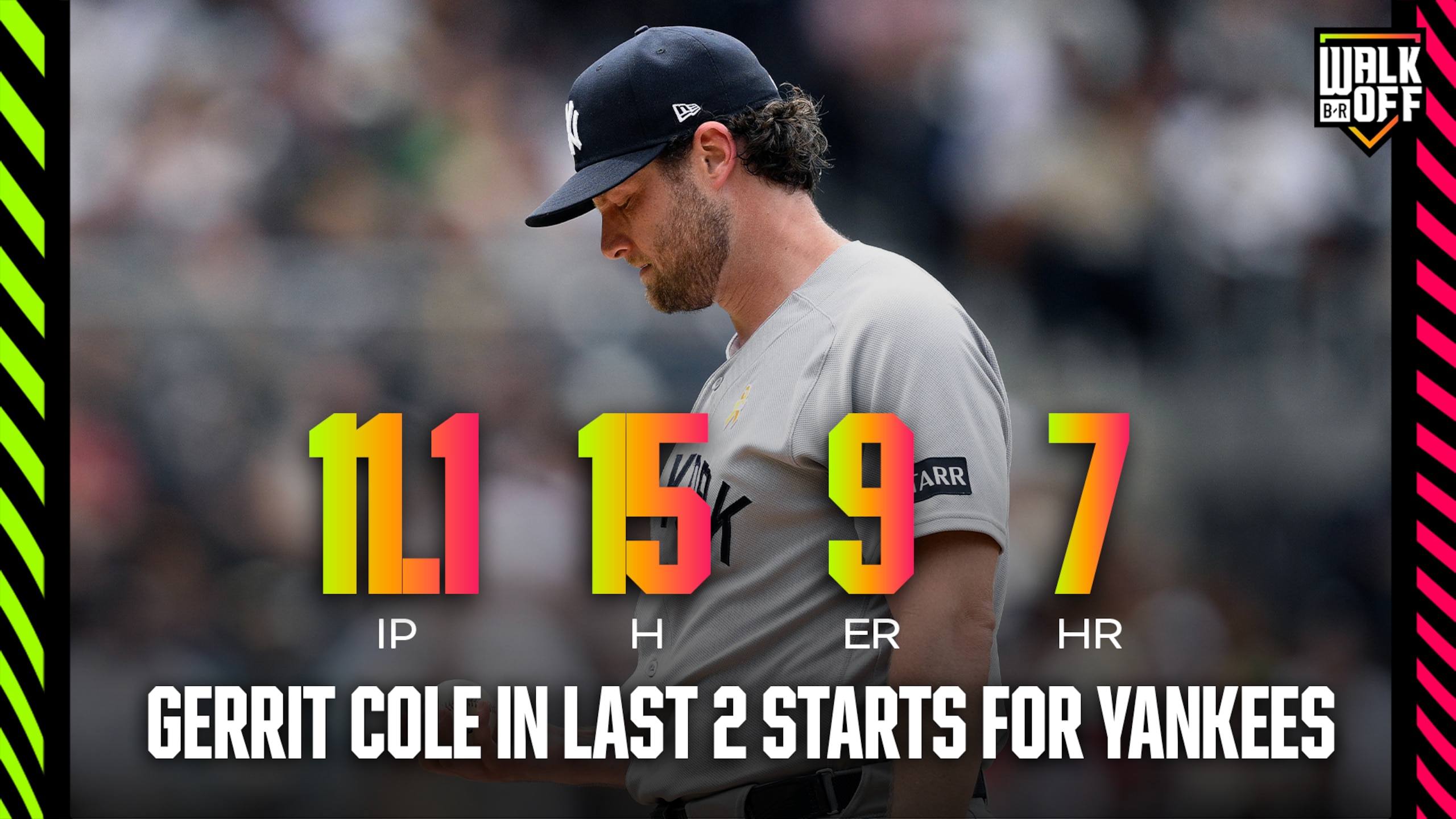
188. Gerrit Cole, SP, Pittsburgh Pirates
Injuries have kept Gerrit Cole off the mound and have made it difficult for him to find a consistent release point. On the plus side, his stuff remained overpowering. He averaged 95.2 mph on his heat and maintained good action on his secondaries. This didn't buy him many whiffs. But with a 45.6 GB%, a 11.7 infield fly-ball percentage and 88.5 mph in batted ball velocity, he remained tough to square up.
187. J.J. Hardy, SS, Baltimore Orioles
Injury aside, J.J. Hardy has bounced back nicely from a rough 2015. In addition to his usual good defense, he's provided some more pop at the plate.
186. Joe Panik, 2B, San Francisco Giants
Injuries have done Joe Panik no favors this season, particularly at the plate. He remains an advanced hitter, however, with decent power and underrated baserunning and defensive talents.
185. Jonathan Schoop, 2B, Baltimore Orioles
Jonathan Schoop's profile remains the same as always: It can be painful to watch him hit, but he's got serious pop and is surprisingly well-rounded.
184. Alex Gordon, LF, Kansas City Royals
This will not go into the books as Alex Gordon's finest season, but all he's become is a lesser version of a once-great player. He's still a quality hitter, baserunner and fielder.
183. Marcell Ozuna, CF, Miami Marlins
Marcell Ozuna's first-half revival has also been his downfall in the second half. The one standout skill he has is his power. Ever since pitchers adjusted to it, he's looked awfully human.
182. Eric Hosmer, 1B, Kansas City Royals
Eric Hosmer hasn't had a bad season, but it's been frustrating. The increased power is nice, but it's a big price to pay for regression in every other department.
181. Adrian Gonzalez, 1B, LA Dodgers
A creaky back hasn't made Adrian Gonzalez's life easy in 2016, but he's done a solid job of turning things around with better contact while continuing to be a reliable defender at first base.
180. Roberto Osuna, RP, Toronto Blue Jays
Roberto Osuna built on his breakthrough 2015 season in 2016, establishing better control and missing more bats. He doesn't get enough credit for being one of the best relief aces in the sport.
179. Seung Hwan Oh, RP, St. Louis Cardinals
"The Final Boss," indeed. Seung Hwan Oh may not light up radar guns, but he throws strikes and misses a ton of bats with his mix of good stuff and deception.
178. Jerad Eickhoff, SP, Philadelphia Phillies
With just a 1.9 BB/9, Jerad Eickhoff has displayed impressive control for a guy who barely throws 50 percent fastballs. It's largely because of that he's been the rock in the Philadelphia Phillies rotation, averaging six innings per start. But for a guy who throws so many breaking balls, he's surprisingly hittable. A 7.5 K/9 is nothing special, and a 1.4 HR/9 is painful.
177. Kendall Graveman, SP, Oakland A's
Kendall Graveman is a sinkerballer who pitches exactly like you expect a sinkerballer to pitch. He does a heck of a job working hitters at the knees, limiting walks (2.3 BB/9) and racking up plenty of ground balls (52.2 GB%). But only Martin Perez has a lower K/9 than Graveman's 5.1, and all his ground balls don't prevent him from serving up iffy exit velocity at 89.8 mph.
176. Ian Kennedy, SP, Kansas City Royals
Ian Kennedy loves to go right at hitters with his fastball, and it's very much a reason why he's once again missing bats with an 8.7 K/9. It's getting harder to hit every year. But he still doesn't limit walks (3.1 BB/9) or command the ball that well for a guy who loves his fastball so much. And when he doesn't miss bats, he gets hit very hard. Case in point: a 1.5 HR/9 and 89.9 mph exit velocity.
175. Jarrod Dyson, CF, Kansas City Royals
Jarrod Dyson is a part-time player who might be the least powerful hitter in baseball. But with a good on-base talent, tons of speed and a brilliant glove, he more than makes up for these faults.
174. Wade Davis, RP, Kansas City Royals
Wade Davis wasn't as absurdly dominant in 2016 as he was in 2014 and 2015, in part thanks to issues with his control. But he was still throwing pitches that look like special effects, and they still worked.
173. Danny Espinosa, SS, WAS Nationals
Danny Espinosa is a good argument against the idea of using batting average alone to judge hitters. Between his power, baserunning and defense, he has value beyond his poor average.
172. Gary Sanchez, C, New York Yankees
Has Gary Sanchez overachieved in his big breakthrough? That should be obvious, yes. But has he shown talents worth getting excited about? Also yes.
171. Welington Castillo, C, ARI Diamondbacks
Welington Castillo has come back down to earth after an explosive revival in 2015, but he remains a solid offensive weapon by catcher standards.
170. Didi Gregorius, SS, New York Yankees
Didi Gregorius had been a player with solid tools in search of a defining feature in his first couple of years. He's finally found one in his increased power.
169. Robbie Ray, SP, Arizona Diamondbacks
Robbie Ray has some under-the-radar stuff. His four-seamer and sinker have good velocity and good action, and his slider is quietly among the best at missing bats. That's where his sparkling 11.4 K/9 comes from. Ray just doesn't offer much else, as he's not efficient and is largely incapable of beating right-handed batters within the zone. Hence a platoon split that can't be ignored.
168. Jake Odorizzi, SP, Tampa Bay Rays
Perhaps more than any other pitcher, Jake Odorizzi makes his way by changing eye levels. His 2.7 BB/9 and 7.8 K/9 are testament to how well he executes it, as he's consistent and frequently able to fool batters. But when they're not fooled, balls go far. He's served up 1.4 homers per nine innings and 90.4 mph in exit velocity. That's made him prone to short outings.
167. Jedd Gyorko, 2B, St. Louis Cardinals
It's happened under the radar, but 2016 has arguably been Jedd Gyorko's best season. He's not the most well-rounded player, but power and reliable defense come in handy.
166. Devon Travis, 2B, Toronto Blue Jays
We've yet to see Devon Travis over a whole season, but he's given us a good idea of what it would look like. Although none of his tools are great, they're all good.
165. Luke Gregerson, RP, Houston Astros
Luke Gregerson has quietly been one of the best relievers in baseball for a while now. So it went in 2016, as he was still throwing strikes, missing bats and getting lots of ground balls.
164. Edwin Diaz, RP, Seattle Mariners
Edwin Diaz isn't a flawless reliever. But with a big fastball and an even bigger slider, he fills the most basic job description of a shutdown reliever: strike hitters out.
163. Brian McCann, C, New York Yankees
Everyone is freaking out over Sanchez, and for good reasons. But also give Brian McCann credit for continuing to pack a solid bat and undervalued defensive skills.
162. Zack Cozart, SS, Cincinnati Reds
Zack Cozart is still the reliable defensive shortstop he's always been. The real key has been him adding more offense to his game simply by making better contact.
161. Brett Gardner, LF, New York Yankees
The power that Brett Gardner found in 2014 and 2015 disappeared in 2016, but he was still a tough out who continued to provide good value on the basepaths and on defense.
160. Marco Estrada, SP, Toronto Blue Jays
Marco Estrada has a four-seamer that rises and a changeup that seems to stop in mid-air. He's been putting his changeup lower in 2016 and baiting hitters with fastballs at the belt. He gets a lot of easy outs from this style, collecting an 8.5 K/9 and a 16.4 IFFB%. Disciplined hitters can coax him for walks (3.3 BB/9), though, and any batted ball that's not a pop-up is usually trouble.
159. Kevin Pillar, CF, Toronto Blue Jays
The strides Kevin Pillar made as an offensive player in 2015 have been erased in 2016, both at the plate and on the basepaths. On the bright side, he remains one of the best defensive center fielders in the league.
158. Jose Abreu, 1B, Chicago White Sox
Jose Abreu is not the thunderous offensive force that he was when he first arrived in 2014. But thanks to his second-half surge, he's shown he still has one of the more dangerous bats at the position.
157. Javier Baez, 2B, Chicago Cubs
Javier Baez still has holes in his swing to patch before he can live up to his superstar potential. But for now, he's turned out to be a useful utility guy.
156. Justin Upton, LF, Detroit Tigers
Justin Upton was much-maligned for most of his first season with the Detroit Tigers, and for good reason. But his bat came alive in the second half and proved that, if nothing else, he still packs a wallop.
155. Adam Jones, CF, Baltimore Orioles
Adam Jones has a unique skill set that makes him a tough guy to analyze by traditional center field standards. But what we know in 2016 is this: He's still a wild swinger, there are more cracks in his power than his 28 homers let on and his defensive reputation doesn't quite align with reality.
154. Jeurys Familia, RP, New York Mets
Jeurys Familia might have the nastiest arsenal of pitches of any reliever, and it serves him well missing both bats and barrels. Heaven forbid he ever start throwing strikes more consistently.
153. CC Sabathia, SP, New York Yankees
CC Sabathia showed up to 2016 healthy and with a new pitch selection. He's ditched his four-seamer and added a cutter, ensuring everything he throws moves. This has made it easier for him to miss barrels, as his average of 85.4 mph puts him among baseball's exit-velocity leaders. But with more movement comes less control. And with his velocity still long gone, missing bats remains a struggle.
152. Zach Davies, SP, Milwaukee Brewers
Zach Davies' lilliputian stature (6'0", 155 lbs) doesn't make it easy for him to log high pitch counts or innings totals. And with velocity that sits in the 89-90 mph range, he's not overpowering anyone. But he sure does keep the ball low, limiting walks (2.1 BB/9) and racking up quiet contact. He's quietly been one of the more interesting success stories of 2016.
151. Jeff Samardzija, SP, SF Giants
With just a 7.1 K/9, Jeff Samardzija's strikeout rate still isn't what it used to be. Still, being able to throw seven different pitches for strikes at least allows him to give batters plenty of different looks. If nothing else, it's helping him maintain respectable exit velocity at 89.3 mph. And at the end of the day, the guy's a lock for six innings. Good or bad, that's worth something.
150-101: Wainwright-Fowler
4 of 55
150. Adam Wainwright, SP, St. Louis Cardinals
Don't read too much into Adam Wainwright's 4.67 ERA. He still does many things well, including control (2.6 BB/9) and missing barrels (87.3 mph exit velocity). He's also still a workhorse. But with his arm slot dropping more and more, his command is becoming less precise. Meanwhile, his curveball isn't the swing-and-miss pitch it used to be.
149. Sandy Leon, C, Boston Red Sox
Sandy Leon's rise to stardom is the kind that justifiably raises eyebrows. But with an offensive surge brought on by improved contact, it passes the smell test surprisingly well.
148. Willson Contreras, C, Chicago Cubs
Willson Contreras isn't perfect, but the good outweighs the bad. With a good approach, good power, good athleticism and a well-rounded defensive game, he has a bright present and an even brighter future.
147. Bartolo Colon, SP, New York Mets
Bartolo Colon is still around and still doing his thing: throwing 90 percent fastballs and assaulting the strike zone with them. The idea is to limit walks and use different movements to avoid barrels. He's not great at the latter, but his 1.5 BB/9 is proof of how good he is at the former. His big weakness is what's inevitable when a pitcher pumps 80-something heaters into the zone over and over: no whiffs.
146. Eduardo Nunez, 3B, SF Giants
With consistent playing time, Eduardo Nunez has found better contact and been able to show off his speed more often. The next challenge for him to conquer is consistent defense.
145. Lorenzo Cain, CF, Kansas City Royals
Lorenzo Cain's score here is hurt by his injury as well as some downturns in his performance. On the whole, though, he's still a good player who packs a quality bat and is productive on the bases and in the field.
144. Martin Prado, 3B, Miami Marlins
Martin Prado doesn't come with much power, but he's one of the game's most advanced hitters, and he still holds his own on the bases and on defense.
143. Giancarlo Stanton, RF, Miami Marlins
Giancarlo Stanton is a superstar player, but he didn't have a superstar-level season in 2016. His power and defense remained in fine shape. What he was missing are the other things that have made him so good: a steady on-base habit and underrated baserunning.
142. Hisashi Iwakuma, SP, Seattle Mariners
The Seattle Mariners can still count on two things when Hisashi Iwakuma takes the ball: excellent command (2.1 BB/9) that keeps his pitch count low and provides at least six good innings as a result. But he was a more effective pitcher when his splitter was a larger part of his arsenal. Downplaying it has cost him ground balls (40.8 GB%) and strikeouts (6.5 K/9).
141. Neil Walker, 2B, New York Mets
Neil Walker's big redeeming quality remained the same as it ever was: His bat is good for both consistency and power.
140. Joe Mauer, 1B, Minnesota Twins
Without power and a steady role behind the dish, two things that once inflated Joe Mauer's value are gone forever. But it is nice to see him hitting and getting more comfortable at first base.
139. Asdrubal Cabrera, SS, New York Mets
Asdrubal Cabrera is a lesser athlete than he used to be, which limits him on the bases and on defense. But he's once again packing a potent bat that specializes in loud contact.
138. Andrelton Simmons, SS, LA Angels
Andrelton Simmons remains arguably the best defensive shortstop in the entire league. The difference this year is that he's also found ways to be more consistent at the plate.
137. Mark Trumbo, RF, Baltimore Orioles
This is a low score for MLB's leading home run hitter. But strip away Mark Trumbo's power, and there's not much left. He's not a consistent hitter, and he's a non-factor on the bases and on defense.
136. Curtis Granderson, RF, New York Mets
Curtis Granderson's game still mostly boils down to two things: get on base and hit home runs. Fortunately, he still does both things quite well while also providing some value with his legs.
135. Dallas Keuchel, SP, Houston Astros
How do you go from a Cy Young winner to a 4.55 ERA? Stuff and command struggles will do the trick. Dallas Keuchel lost velocity in 2016. He also didn't make hitters go get his pitches, throwing more sinkers inside the strike zone rather than just outside the zone. But with a strong 56.7 GB%, a decent 3.0 K/BB ratio and 168 innings, Keuchel also didn't crumble as much as his ERA suggests.
134. Steven Wright, SP, Boston Red Sox
Steven Wright's knuckleball has given us some of the best GIFs of the season, and they also earned him a decent 7.3 K/9 and even better 87.4 mph exit velocity. He's missed fewer bats than anyone in the zone and earned more contact than anyone outside the zone. Too bad his big breakout had to be ruined by a bum shoulder and a generally lousy second half.
133. Marcus Stroman, SP, Toronto Blue Jays
Marcus Stroman's 4.34 ERA exaggerates how bad he's been in 2016. He's delivered in his promise on some fronts, showing strong command of a deep arsenal that's allowed for a solid 3.1 K/BB ratio and MLB-best 60.5 GB%. But doing nothing but keeping the ball down has made him predictable. Despite his tendency for ground balls, the price he's paid for that has been 91.2 mph exit velocity.
132. Elvis Andrus, SS, Texas Rangers
At his peak, Elvis Andrus was a consistent hitter who could wreak havoc on the bases and play a mean shortstop. Now he's pretty much just a consistent hitter, but that's still a lot better than nothing.
131. Rougned Odor, 2B, Texas Rangers
Rougned Odor is a fun player to watch, as you never know when he's going to hit a ball a mile or make a dazzling play in the field. It's everything in between that he needs to get better at.
130. Ervin Santana, SP, Minnesota Twins
Ervin Santana has flown under the radar for a lousy Minnesota Twins team by being his usual self: throwing strikes, eating innings and getting just enough whiffs to make it all interesting.
129. Drew Pomeranz, SP, Boston Red Sox
Drew Pomeranz's control and workload issues prevent him from rating as a top pitcher. But he's established himself as a tough at-bat for opposing hitters, capable of missing bats and barrels with his curveball-heavy attack.
128. Keon Broxton, CF, Milwaukee Brewers
Every season brings at least one small sample-size star. Between his ability to crush everything in his sight and his ability to run wild on the basepaths and in the field, that's what Keon Broxton's been.
127. Jake Lamb, 3B, Arizona Diamondbacks
Defensive issues aside, Jake Lamb has taken a step toward stardom in 2016. His bat always had potential, and it's being realized through frequent loud contact.
126. Todd Frazier, 3B, Chicago White Sox
Todd Frazier just can't find the right approach at the plate. However, good power, baserunning and defense are pretty good ways to save par.
125. Mike Napoli, 1B, Cleveland Indians
Mike Napoli is having one of his good BABIP years, so his offensive success is probably a bit overstated. But only a bit. He's back at full strength, and that's restored the mighty power that he's made his name on.
124. Adam Duvall, LF, Cincinnati Reds
Adam Duvall fits the usual mold of a slugger in that he hits the ball hard but isn't consistent. The bonus with him is that he also happens to be a quality defender.
123. Stephen Piscotty, RF, St. Louis Cardinals
Stephen Piscotty may not adhere to the usual blueprint of a quality hitter, but what he does works for him. He's also not to be overlooked as a defender, making him a good all-around player.
122. J.D. Martinez, RF, Detroit Tigers
This is three years in a row now that J.D. Martinez has been one of the best sluggers and most productive hitters in baseball. It's a shame that his game was otherwise one-dimensional.
121. Salvador Perez, C, Kansas City Royals
Salvador Perez packs a powerful bat and a good throwing arm, and he deserves props for being behind the plate every day. Otherwise, he's not the superstar catcher he's often portrayed as.
120. Jung Ho Kang, 3B, Pittsburgh Pirates
Jung Ho Kang looked like a great find at the plate in 2015. Now he's even better, mainly thanks to a barrel-to-ball ability that deserves more attention.
119. Tyler Anderson, SP, Colorado Rockies
The easy knock against Tyler Anderson's position as a top-40 pitcher is that he's handled a small sample size. But in this small sample size, he's showed good control and stifled hard contact while putting up a 3.54 ERA for the Colorado Rockies. The latter, in particular, is no small feat.
118. Evan Gattis, C, Houston Astros
Evan Gattis is his same ol' powerful self, except now with more patience and solid defense.
117. Troy Tulowitzki, SS, Toronto Blue Jays
Troy Tulowitzki isn't the superstar he once was. However, he still offers a thunderous bat and a reliable glove at the toughest position on the infield.
116. John Lackey, SP, Chicago Cubs
John Lackey has been more prone to hard contact than he usually is, but he's otherwise featured more of the same: pretty good control, pretty good stuff and a lot of innings.
115. Kevin Gausman, SP, Baltimore Orioles
Kevin Gausman is still developing from a thrower into a pitcher. But with improving command to go with a nasty arsenal of pitches, he's not even all the way there yet, and he's already getting really good.
114. Ian Desmond, CF, Texas Rangers
Although Ian Desmond began 2016 a lot stronger than he's finishing it, it's mostly been a success with good power, good baserunning and surprisingly strong defense in the outfield.
113. Billy Hamilton, CF, Cincinnati Reds
Billy Hamilton's legs make him just the kind of weapon you'd expect him to be on the bases and in the outfield. His bat still needs a lot of work, but it's at least headed in the right direction.
112. Jon Gray, SP, Colorado Rockies
Don't put too much stock into Jon Gray's 4.54 ERA. That's actually pretty good for a Coors Field product, and it masks how he's developing into the power arm the Colorado Rockies hoped he would be.
111. Zack Greinke, SP, Arizona Diamondbacks
Zack Greinke's 4.37 ERA overstates how bad he's been. If nothing else, he remains a terrific command artist and a good workhorse. But between his diminished whiffability and hittability, he's definitely not the same pitcher he was a year ago.
110. Chris Archer, SP, Tampa Bay Rays
Even when Chris Archer was struggling in the first half, he was still among the best in the game at missing bats. Ever since he found his control in the second half, he's turned back into one of baseball's best starters, period.
109. Julio Teheran, SP, Atlanta Braves
It's been wasted on a bad Braves team, but Julio Teheran is back to looking like the promising starter who made a name for himself back in 2014. His stuff has always been good. He just needed to get his command back.
108. Rich Hill, SP, Los Angeles Dodgers
Rich Hill's health woes have undermined his season and put a dent in his score here. Make no mistake, though. When Hill has been healthy, he's been among the game's most dominant starters.
107. Russell Martin, C, Toronto Blue Jays
Russell Martin disappeared from the ranks of baseball's top catchers in the first two months of the season. But ever since then, he's continued to be a well-balanced hitter who serves his pitchers well on defense.
106. Khris Davis, LF, Oakland A's
With his power, Khris Davis isn't that dissimilar from Chris Davis. He's not a one-trick pony, though, as he also played a decent left field in 2016.
105. Aledmys Diaz, SS, St. Louis Cardinals
With poor baserunning and defense weighing him down, Aledmys Diaz's value is tied up in what he can do at the plate. And if he can do one thing, it's hit the ball hard.
104. Ender Inciarte, CF, Atlanta Braves
It's easy to miss Ender Inciarte due to his lack of superstar skills. But the dude is a quality hitter and baserunner, and he further adds to his value with excellent defense in center field.
103. Trevor Story, SS, Colorado Rockies
With a powerful bat and a surprisingly good glove, Trevor Story came out of nowhere to become one of 2016's best feel-good stories narratives.
102. Carlos Martinez, SP, St. Louis Cardinals
Carlos Martinez hasn't been as dominant as his 3.15 ERA suggests, as he's struggled with his command and ability to miss bats relative to his legitimately great 2015 showing. He still has electric stuff, though, and it continues to miss barrels.
101. Dexter Fowler, CF, Chicago Cubs
Dexter Fowler's on-base talent is a huge strength, and it comes with no real weaknesses. He has good power, good speed and a serviceable glove.
100-51: Calhoun-Rendon
5 of 55
100. Kole Calhoun, RF, Los Angeles Angels
It's by design that Kole Calhoun didn't hit for as much power in 2016 as he did in 2015. But with greater consistency and a glove that remained one of the best in right field, that's an acceptable loss.
99. Trea Turner, CF, Washington Nationals
The small sample size Trea Turner has played in doesn't help his cause here. Otherwise, he's shown why he was considered one of baseball's top prospects. He has a surprising amount of pop in his bat for a speedy hitter, and his speed has indeed been as advertised.
98. Jeremy Hellickson, SP, PHI Phillies
Even I think this score overrates Jeremy Hellickson's 2016 season a little. But it goes into the books as a return to form anyway, as he's back to missing bats and, more importantly, keeping loud contact to a minimum.
97. Yadier Molina, C, St. Louis Cardinals
Maybe Yadier Molina isn't baseball's best defensive catcher anymore. But he's still a damn good one with a revitalized bat in 2016.
96. JT Realmuto, C, Miami Marlins
Although JT Realmuto still needs to polish his defense, he's a reliable everyday catcher who can hit with the best of 'em.
95. Carlos Santana, 1B, Cleveland Indians
Carlos Santana was already one of baseball's most advanced hitters. Now he comes with more power. This calls for a guitar solo.
94. Hanley Ramirez, 1B, Boston Red Sox
Hanley Ramirez has rescued himself from the ranks of baseball's worst players. He showed up in better shape and has benefited from a more measured approach without sacrificing much power.
93. Brandon Belt, 1B, San Francisco Giants
Brandon Belt's modest power numbers make him easy to overlook among his first base peers. But with a consistent bat and a really good glove, he remains an overlooked gem at first base.
92. Logan Forsythe, 2B, Tampa Bay Rays
It's easy to overlook Logan Forsythe, but at least we know now that his 2015 breakout was legit. The other parts of his game are limited, but he can hit.
91. Carlos Gonzalez, RF, Colorado Rockies
There's no getting around Carlos Gonzalez's home/road splits. But while his overall numbers are skewed by Coors Field, his bat is still dangerous and it comes with a reliable glove.
90. J.A. Happ, SP, Toronto Blue Jays
J.A. Happ's 3.20 ERA (not to mention his 20 wins) overstates how good he's been in 2016, but there's no question he's been one of the top pitchers in the league. The last couple of years have seen him establish good command and turn into a generally crafty pitcher.
89. Aaron Sanchez, SP, Toronto Blue Jays
Aaron Sanchez's breakout season has hit something of a wall in its final two months. If nothing else, that's a reminder he's not yet a complete pitcher. But if this is what he can do with some control of his electric stuff, watch out.
88. Dellin Betances, RP, New York Yankees
Dellin Betances has one of the best fastballs and one of the best curveballs and an idea of what he's doing with both. Don't read too much into his 3.08 ERA, as 2016 was another dominant season for the big right-hander.
87. Steven Matz, SP, New York Mets
Injuries have once again conspired against Steven Matz in 2016. Nonetheless, it shouldn't be overlooked how well he's pitched when he's been healthy, throwing strikes and overwhelming batters with an array of quality pitches.
86. Cole Hamels, SP, Texas Rangers
Cole Hamels has come down to earth in the final weeks of 2016. That's not a fluke, as he was overachieving for much of the year. But let's be real: The guy still has good stuff and an idea of how to use it.
85. Odubel Herrera, CF, Philadelphia Phillies
Despite my minor criticisms of how Odubel Herrera is tackling his 2016 season, he remains a very good player. He's a good hitter with some power, good speed and a glove that, while not 100 percent reliable, is still an asset.
84. Nelson Cruz, RF, Seattle Mariners
It's business as usual for Nelson Cruz: His job is to hit, and he does his job by hitting the ball harder than anyone in the league. That'll do.
83. Aroldis Chapman, RP, Chicago Cubs
Aroldis Chapman is proof that throwing almost nothing but triple-digit heat is good business in the relief pitching racket—you know, just in case anyone needed further proof of that.
82. Jonathan Villar, SS, Milwaukee Brewers
Sometimes all a guy needs is a chance to play. Jonathan Villar has gotten his. And between his quality bat and amazing baserunning, he's proved to be a valuable offensive player.
81. Ben Zobrist, 2B, Chicago Cubs
We're past the point where we can bicker and argue about WAR and its opinion of Ben Zobrist as one of the best players in the game. But with an advanced bat to go with a dependable glove, he's still useful.
80. Bryce Harper, RF, Washington Nationals
Bryce Harper fell pretty far from his 2015 performance, and any investigation into why that is will turn up quite a few red flags. But we also have to be real. Harper wasn't as good, but on the whole, he remained a good on-base guy with good power, speed and defense.
79. Joc Pederson, CF, Los Angeles Dodgers
Joc Pederson was mostly just a power hitter in 2015. Now he's a power hitter who's swinging and missing less and playing more reliably on the bases and in the outfield.
78. Xander Bogaerts, SS, Boston Red Sox
Xander Bogaerts' mediocre defense is holding him back from being a superstar. But it's impossible to ignore his quality bat, and he deserves more attention for his baserunning.
77. Michael Fulmer, SP, Detroit Tigers
Michael Fulmer's Rookie of the Year charge has slowed down in the last month or so, allowing all the talk about Gary Sanchez to heat up. Fulmer is a legit candidate, however, as he's overwhelmed hitters with his stuff and his command of it.
76. Danny Duffy, SP, Kansas City Royals
Simply remaining healthy in 2016 has been an accomplishment for Danny Duffy. Meanwhile, he's also shown what he can do when given a chance to air out his high-octane stuff. He's not impossible to square up, but the hard part is hitting him, period.
75. Carlos Carrasco, SP, Cleveland Indians
Carlos Carrasco's hard contact problem and injury proneness hold him back from being truly elite. But anyone who can throw strikes with his kind of stuff is always going to be a tough guy to face.
74. Gregory Polanco, RF, Pittsburgh Pirates
Gregory Polanco just keeps getting better. Now that he has some power to go with his consistency at the plate, he's one of the most well-rounded right fielders in the sport.
73. Yasmani Grandal, C, Los Angeles Dodgers
Yasmani Grandal is one of the most underappreciated players in the majors. A great eye and lots of power are hiding behind his low batting average, and he frames strikes as well as anyone.
72. Matt Carpenter, 3B, St. Louis Cardinals
Matt Carpenter is a player without a true home on defense, so it's a good thing he brings versatility to the table. Meanwhile, his excellence at the plate is not in question. He has one of the best approaches of any hitter and continues to hit for power.
71. Evan Longoria, 3B, Tampa Bay Rays
Evan Longoria is past his prime on both sides of the ball, but his power surge is proof that even players past their primes can learn new tricks.
70. DJ LeMahieu, 2B, Colorado Rockies
The degree to which Coors Field has helped DJ LeMahieu's offensive surge shouldn't be ignored. But neither should the things he's done to push the envelope even further.
69. Adam Eaton, RF, Chicago White Sox
Adam Eaton wasn't much more than a slap hitter with occasional power before 2016. Now he's a slap hitter with occasional power who plays one hell of a right field.
68. George Springer, RF, Houston Astros
George Springer has some flaws in his game, but it's good enough for now that he's erasing his flaws at the plate and turning himself into a reliable two-way player.
67. Zach Britton, RP, Baltimore Orioles
Zach Britton probably won't win the American League Cy Young, but he's about as good as they say he is. He can throw strikes, miss bats and, most of all, limit the damage when the ball is put in play.
66. Kevin Kiermaier, CF, Tampa Bay Rays
Kevin Kiermaier's game mostly revolves around what he can do with his legs, which he uses to be both an elite baserunner and an elite defender. But while his bat isn't quite a weapon yet, it is evolving into one.
65. Kenley Jansen, RP, Los Angeles Dodgers
The Mariano Rivera comp is at once way too easy and entirely valid for Kenley Jansen. He has good command of a nasty cutter, and it brings him plenty of whiffs and quiet contact.
64. Matt Shoemaker, SP, Los Angeles Angels
Matt Shoemaker's season came to an abrupt and frightening end, but there's no ignoring how good he was when he was on the mound. He took the good command he always had and found ways to parlay it into more whiffs and some soft contact to boot.
63. Jake Arrieta, SP, Chicago Cubs
There's no question Jake Arrieta is a diminished version of the ace he became in 2015. There's also no question even a diminished version of him is still really good, particularly because it's still very difficult to hit him hard.
62. Jose Ramirez, 3B, Cleveland Indians
Jose Ramirez is one of the more underrated feel-good stories of the 2016 season. A player nobody expected anything out of has gotten it done on both sides of the ball with a good bat, power, speed and defense.
61. Brandon Crawford, SS, SF Giants
Last year, Brandon Crawford made the leap from glove-only shortstop to legit two-way star. It's been more of the same this year, and this is probably the best his defense has ever been.
60. Addison Russell, SS, Chicago Cubs
Addison Russell, 22, often feels like the forgotten man in Chicago's stable of great young players. But now that he's adding some offense to go with his stupendous defense, that may not last.
59. Andrew Miller, RP, Cleveland Indians
Andrew Miller probably has the best slider in baseball, and this season we saw what he's capable of when he feels like unleashing it again and again with good command. Behold the best relief pitcher in baseball.
58. Jose Quintana, SP, Chicago White Sox
Any list of the most underrated pitchers in baseball needs to have this guy on it. Arguably at the top. Jose Quintana isn't overpowering, but he's an excellent command artist who can get outs in a number of ways.
57. Tanner Roark, SP, Washington Nationals
This is the second year out of three that Tanner Roark has quietly put up a sub-3.00 ERA in a heavy workload. He was arguably better the first time around, but there's no arguing this: He's a flat-out terrific contact manager.
56. Chris Davis, 1B, Baltimore Orioles
Davis' year-to-year consistency could use some work. But then again, you could find worse than a slugging first baseman who hits for lots of power, gets on base and fields his position.
55. Wil Myers, 1B, San Diego Padres
Wil Myers looked like a flameout in 2014 and 2015 after winning the Rookie of the Year in 2013. Now here he is as a surprisingly well-rounded first baseman, with an improved approach, good power, excellent speed and a strong glove.
54. Wilson Ramos, C, Washington Nationals
In the past, Wilson Ramos has looked like a good bundle of tools minus technique. It turns out he was only missing good eyesight. Now that he has it, he's a quality two-way player.
53. Yoenis Cespedes, LF, New York Mets
Yoenis Cespedes has continued his transformation into an elite power hitter. With that done, he's basically the player everyone envisioned back when "The Showcase" first arrived.
52. Kyle Seager, 3B, Seattle Mariners
Kyle Seager was already underappreciated, and that may be even truer now that his younger brother is hogging all the attention. But if anyone wants an example of a good two-way third baseman, the elder Seager's a good place to look.
51. Anthony Rendon, 3B, WAS Nationals
Anthony Rendon has gotten lost in the shuffle this year, but he's back to looking like the emerging star he was in 2014. Although he doesn't excel at any one thing, he can hit, hit for power, run the bases and play defense very well.
50. Dustin Pedroia, 2B, Boston Red Sox
6 of 55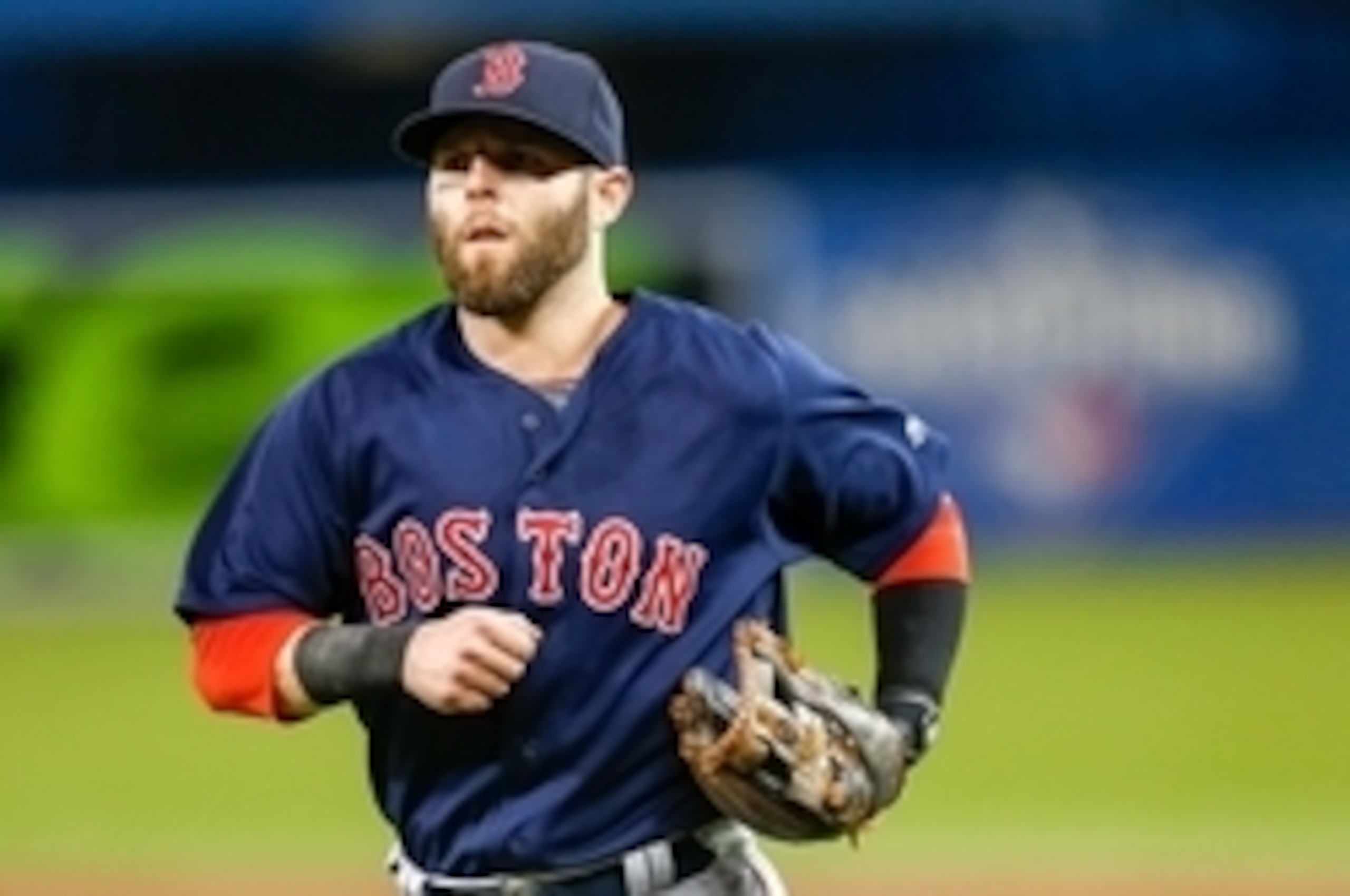
G: 144 PA: 650 AVG/OBP/SLUG: .325/.384/.452 HR: 13 SB: 7
Hitting
Dustin Pedroia really likes batting leadoff, but there's more to his surge than his lineup position. He's always had the right baseline for consistency, using a disciplined approach and rarely coming up empty on swings. Apart from good health, the difference this year is that he's not trying to force his vintage power to return. He's gone back to a line-drive stroke that uses more of the whole field. And he's doing so with solid authority, averaging 89.3 mph exit velocity.
Power
The pivot in Pedroia's approach hasn't cost him any exit velocity on fly balls and line drives, but his average of 91.4 mph leaves something to be desired all the same. Ditto for his launch angle of 9.1 degrees. He can still give the ball a ride when he turns on it, but there's no ignoring how Fenway Park makes that habit look better than it is.
Baserunning
Pedroia isn't the same guy who used to be a lock for 20 stolen bases. He's swiped only seven in 11 tries this year. He's not what he once was taking extra bags, either. He's taken 16 bases on non-hits and the extra base 35 percent of the time on hits, both short of his career peaks. In a related story, he's 33.
Defense
He has his four Gold Gloves, and ultimate zone rating has Pedroia as by far the best second baseman in the business since 2008. He got away from this reputation in 2015, prompting Boston president of baseball operations Dave Dombrowski to order a change in his offseason training. That's paid off. The spring Pedroia was lacking in his step last season has returned. Combined with his instincts, his hands, his quick release and his throwing accuracy, Pedroia can once again make any play there is.
Total
With his power and his baserunning hurt by age, Pedroia's not the all-around marvel he used to be. He can still hit it and pick it, though.
49. Joey Votto, 1B, Cincinnati Reds
7 of 55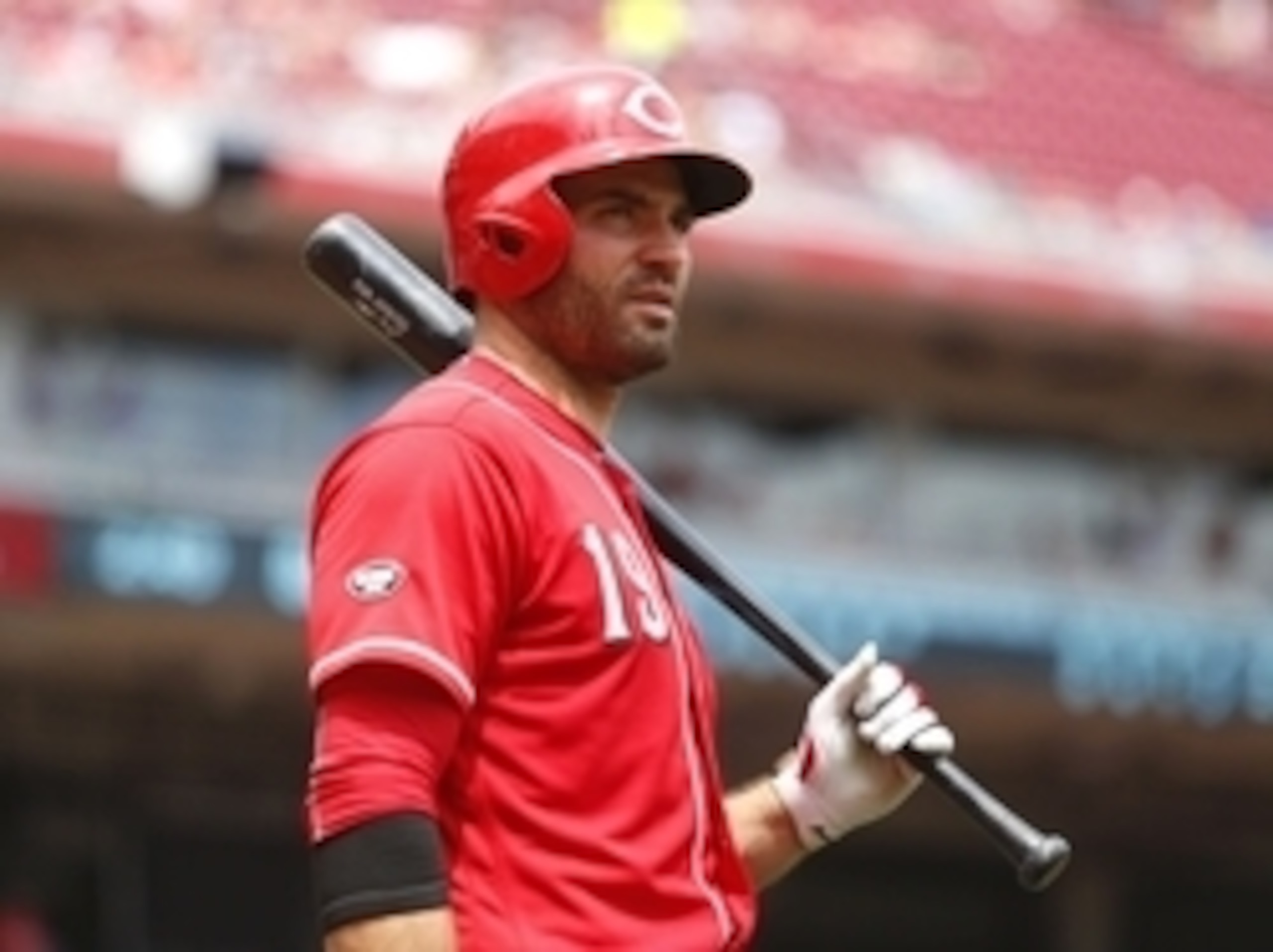
G: 144 PA: 614 AVG/OBP/SLUG: .313/.428/.519 HR: 24 SB: 8
Hitting
Joey Votto's first two months were rough. Since then, he's basically been Joey Votto. He never lost his eye for the strike zone, which is still one of the best there is. But he was failing to cover the inside part of the zone and trying to pull too many pitches. He's corrected both those issues. And while his exit velocity has remained consistent throughout, he's made it worth it by keeping balls off the ground since June, going from a 48.8 GB% to a 40.7 GB%. Guy can hit, folks.
Power
Votto's rush to adjust hasn't cost him too much power. The aforementioned move away from ground balls has been a factor, boosting his launch angle to 13.1 degrees. He also puts a good charge into the balls he puts in the air. His average of 93.6 mph on fly balls and line drives is down from 94.7 mph in 2015 but still good. And no part of the yard is safe when he's at bat, although playing at Great American Ball Park also helps.
Baserunning
Age (33) and battered legs have slowed Votto. He's not the same baserunner he was in his heyday, like when he stole 16 bags and took a ton of extra bases in 2010. He especially doesn't do much of the latter anymore, taking few bases on either hits or non-hits. But if nothing else, his 8-for-9 showing in stealing bases is a reminder for pitchers not to fall asleep on him.
Defense
It's hard to turn a blind eye to how the defensive metrics are rating Votto as a terrible defender as well as how much he's struggled to make even routine plays. According to Zach Buchanan of the Enquirer, his explanation earlier in the year was that his hitting slump got to him and forced some bad decisions. That can't be excused. But since Votto's defense has always consisted more of technical brilliance than physical brilliance, it can be believed. He's looked better lately, showing off his usual good instincts and quick reactions to make plays.
Total
No matter which way you slice it, 2016 has not been one of Votto's better seasons. But the picture does look a lot brighter when the focus is restricted to the last four months, in which he's regained his status as arguably baseball's best hitter.
48. Jacob deGrom, SP, New York Mets
8 of 55
G: 24 IP: 148.0 K/9: 8.7 BB/9: 2.2 HR/9: 0.9 ERA: 3.04
Control
Jacob deGrom's season is over, but let's recognize that it was another good one. His arm slot has gotten lower, but that hasn't compromised his ability to find the zone. His 47.0 percent of pitches in the strike zone Zone% was actually a career high. That's good by any standards, but it's especially impressive for a legit five-pitch pitcher. He's also continuing to change eye levels, putting plenty of four-seamers up high and keeping everything else down low. So apart from the arm slot, business as usual.
Whiffability
Some velocity has fallen off deGrom's fastball. He went from sitting at 95.0 mph to the 93-94 range. His whiffability suffered accordingly but was still good. His solid strikeout rate was backed up by an equally solid 10.7 swinging strike percentage. It's not any one pitch that did the deed but rather four of the five. Only his two-seamer didn't have a whiff rate in the double digits. Basically, what you already knew: He has great stuff.
Hittability
It sure was tough to pull the ball against deGrom, as his 32.2 Pull% was the lowest among starters with at least 140 innings. That helped mitigate the reality that his contact management was otherwise just OK. He didn't make real improvements to his ground ball (45.6 GB%) or pop-up (7.7 IFFB%) rates, and his 88.7 mph in batted ball velocity was just a tick south of average.
Workhorse
After being limited by the Mets' best intentions last year, deGrom's workload was limited by the injury bug in 2016. That interrupted a season in which he averaged 6.2 innings per start on fewer than 100 pitches, a testament to his efficiency. To boot, it's a testament to his craftiness that he doesn't get considerably tougher to hit with each plate appearance despite losing stuff throughout games.
Total
Health troubles cut deGrom's season short and could limit him come 2017. But when he was healthy in 2016, he continued to establish himself as an ace with an ideal mix of stuff and command.
47. Justin Turner, 3B, Los Angeles Dodgers
9 of 55
G: 146 PA: 603 AVG/OBP/SLUG: .276/.342/.499 HR: 27 SB: 4
Hitting
Justin Turner has good numbers, but even they understate things. He's been money ever since a slow start in April and May. This is a reminder that only his health has stood between him and stardom since he arrived in L.A. He's always had a good approach and a strong ability to make contact. What he's added in L.A. is consistent hard contact. That's especially true this year, in which his exit velocity (91.1 mph) and hard-hit rate (38.3) are both up. To boot, this hard contact is going to all fields.
Power
There's more than just hard contact going into Turner's power numbers. His swing is also good for getting under the ball, as he's right there with Nolan Arenado in average launch angle at 17.5 degrees. He gets good zip on his balls in the air too, hitting them at an average of 93.2 mph. Between his ability to get the ball airborne and his ability to hit it hard, no part of the yard is safe.
Baserunning
Turner's never been much of a base stealer, and he isn't becoming one now at the age of 31. His four steals in five tries only highlight how he can't be slept on. This has been a good year in the aggressiveness department, however. Turner is usually good for a 40 percent extra-base rate on hits. This year, he's at 49 percent.
Defense
Turner is less a third baseman and more a utility man who's found a home at third. Neither his hands nor his arm are ideal for the position. But he makes up for that with good reactions and generally good technique. He doesn't make many mistakes, hence why he's so reliable making routine plays. He's not as good with tough plays, but he probably makes more than another guy could with his tools.
Total
It's high time to stop viewing Turner as some random upstart. When he's been healthy in the last three years, he's been one of the game's best players by way of loud contact at the plate and steady defense at the hot corner.
46. Edwin Encarnacion, 1B, Toronto Blue Jays
10 of 55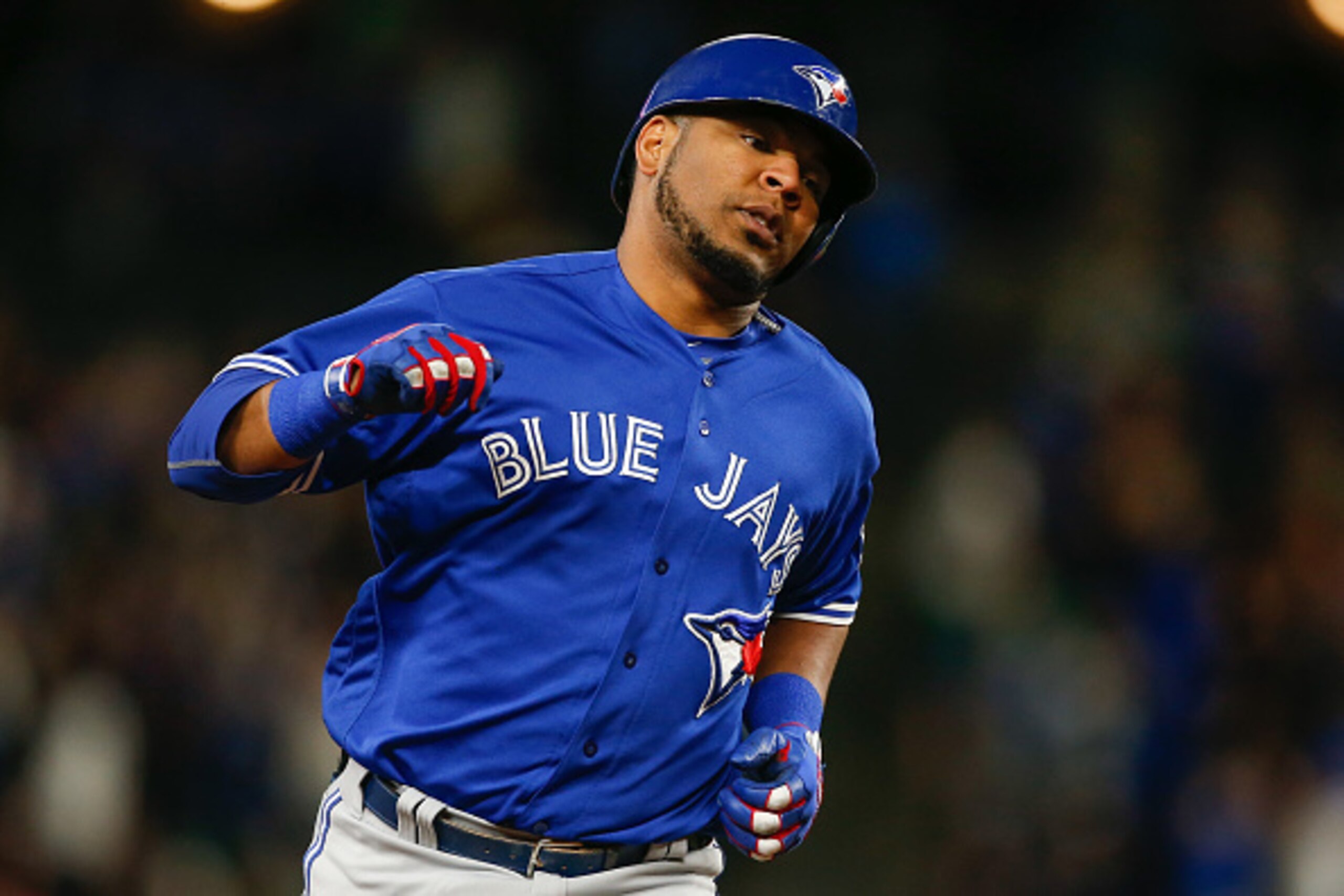
G: 146 PA: 639 AVG/OBP/SLUG: .265/.354/.539 HR: 40 SB: 2
Hitting
Edwin Encarnacion just keeps being himself. The only red flag is his escalated strikeout rate, which erases the one thing that had made him so different from other power hitters. A spike in fastball whiffs is to blame for that, which may be an indication his bat is slowing down. But this isn't much more than a nitpick. Encarnacion still has an outstanding eye; he knows what he wants and gets it when he does. He is liable to swing at any pitch middle-in and crush it. Simple yet effective.
Power
Encarnacion remains tethered to the 40-homer plateau. He has loads of raw power and a formula for showcasing it. He gets under the ball well, posting a launch angle of 14.2 degrees. And when he does get the ball in the air, two things are given: The ball will be somewhere in the mid-90s (95.8 mph this year) in exit velocity, and it will be to left field. This is how dingers happen.
Baserunning
Encarnacion could move well a couple of years ago. But now he's 33 and mainly keeping it station-to-station. He's swiped only a couple of bags and has sparingly taken extra bases both on hits and non-hits. His best quality now is his caution, as he's run into only two outs all year.
Defense
Encarnacion has been the DH more than he's played first base, but he's played enough first base to be graded as one. And he's been reliable when he has played there. Among first basemen with at least 500 innings, he's the only one with a 100 percent success rate on routine plays. It's likely a one-time thing due to Encarnacion's non-elite hands and athleticism, but he still gets credit for making it happen.
Total
As always, Encarnacion is a bat-only player. But also as always, that bat comes with a good approach and lots of power.
45. Jean Segura, 2B, Arizona Diamondbacks
11 of 55
G: 142 PA: 650 AVG/OBP/SLUG: .318/.365/.487 HR: 17 SB: 30
Hitting
Jean Segura has indeed looked the part of a guy with a new swing and a new outlook. He's never struggled to make contact, but now his old wild hacker self is gone and has been replaced with a more selective self with career-best Swing% and O-Swing% marks. This new selective hitter is miles better at driving the ball, upping his exit velocity from 87.3 mph to 89.9 mph. He's pulled that off while continuing to spread his batted balls around.
Power
It's no accident Segura's hit five more home runs than he did in 2014 and 2015 combined. That's a natural benefit of not only more exit velocity, but a higher launch angle as well. His has gone from 6.0 degrees to 11.0 degrees. And while he's done most of his damage to his pull side, another benefit of having a more powerful swing is more opposite-field power.
Baserunning
Speed was the one redeeming quality Segura had the last two seasons. His 30 steals are his most since his rookie season in 2013. Meanwhile, he's also taking the extra base about 58 percent of the time on hits, adding 26 on non-hits. The only drawback? He's been caught stealing nine times and has also run into 13 other outs.
Defense
Moving Segura from second base to shortstop was necessary for two reasons: He didn't have good range at shortstop despite his speed, and his less than great throwing accuracy was more of a problem there. Lo and behold, Segura's range at second base is pretty good. And with shorter throws to make, his accuracy issues have popped up less often. He's handled routine plays just fine.
Total
The Diamondbacks' change-of-scenery play on Segura has worked to perfection. He's found himself again and has been one of the most well-rounded second baseman in the game as a result.
44. David Ortiz, DH, Boston Red Sox
12 of 55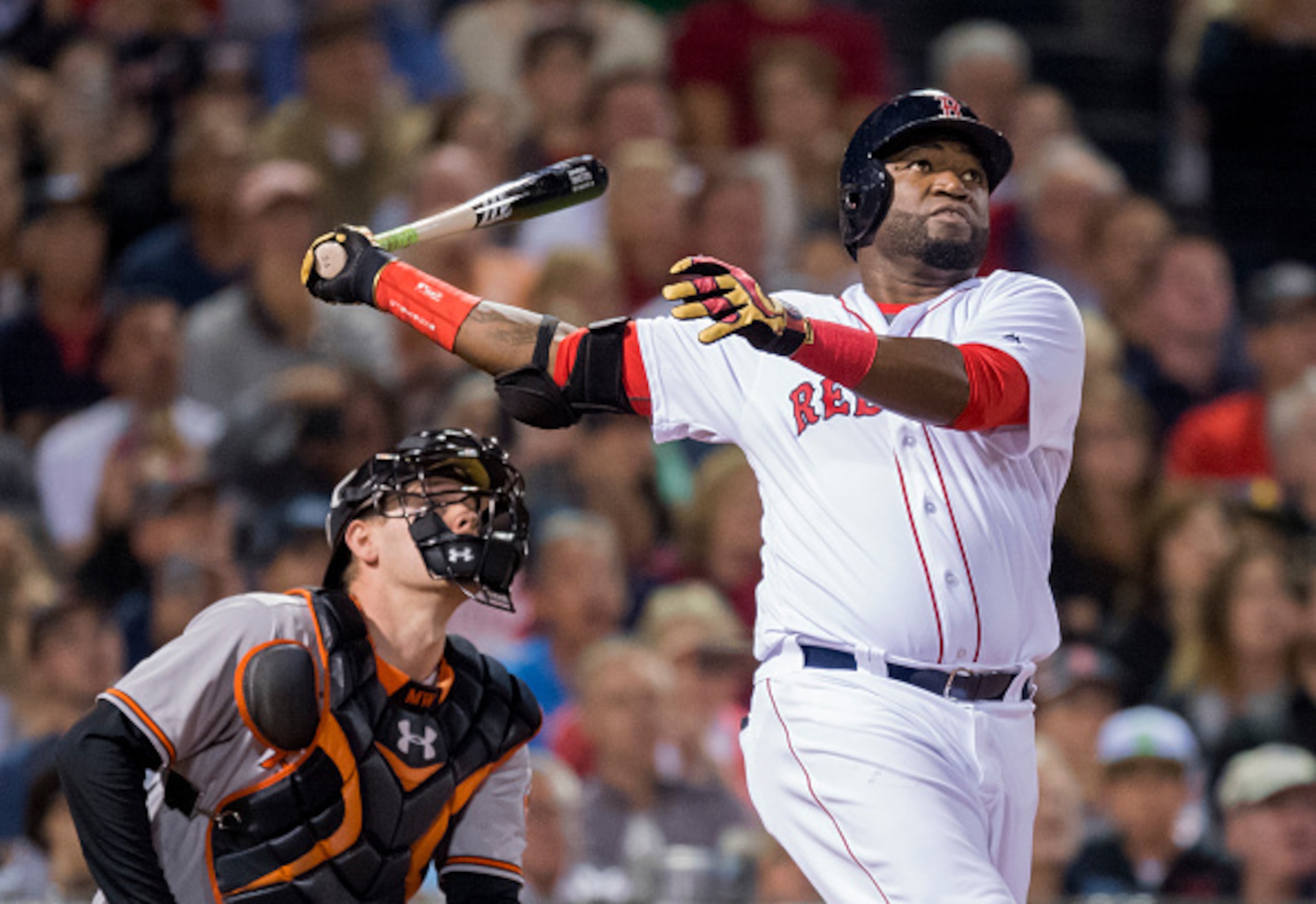
G: 147 PA: 613 AVG/OBP/SLUG: .316/.401/.622 HR: 37 SB: 2
Hitting
For David Ortiz, it's simple: swing at good pitches, make contact with them and blast them to utter smithereens. He excels at all three of these things, leaving teams to get creative with how to beat him. One trick this year has been to throw him more fastballs, which has sort of worked. His exit velocity against heat has declined as the year has moved along. Shifting on him has also sort of worked, as he's been only an average-ish hitter against the shift. But in general, there's nothing misleading about Ortiz's slash line. Everyone thinks of him as a slugger first and foremost, but he's a great hitter too.
Power
Behold the best power hitter in the league. His 37 homers may not lead the league, but those and his league-leading 48 doubles amount to many extra-base hits. He's earned those by destroying balls in the air, averaging 97.3 mph on fly balls and line drives. He also has the launch angle (15.5 degrees) and the pull habit to make the most of all that raw power.
Baserunning
Ortiz is 2-for-2 stealing bases because sometimes he gets confident and decides to troll the opposition. It's certainly not because he's fast. Otherwise, he'd be taking the extra base on hits more than 16 percent of the time and not running into seven outs.
Total
As jarring as it is, the gap between Big Papi and the other top DHs of 2016 really is that big. He's one of the best hitters in the league, period. He's also the best power hitter in the league, period. Hell of a way to go out.
43. Jason Kipnis, 2B, Cleveland Indians
13 of 55
G: 146 PA: 645 AVG/OBP/SLUG: .277/.344/.468 HR: 22 SB: 14
Hitting
Jason Kipnis has had a strong second half for once, and he's earned it. He still blends patience and discipline, and he is better at making contact than his 20.6 K% lets on. He also still has a line-drive swing that's produced a solid 90.3 mph in exit velocity. He's even handled lefties well for a change. One gripe is that his pull habit has invited more shifts, but otherwise, even his solid numbers don't do him justice.
Power
After disappearing in 2014 and 2015, Kipnis' power has returned with a vengeance in 2016. He's on record saying he's been looking to pull more pitches after going with an opposite-field approach in the last couple of seasons, per Cleveland.com's Zack Meisel, hence the pull habit that's invited more shifts. But his extra-base hits have indeed clustered to right field. It also helps he's gotten under more balls, upping his launch angle from 9.4 degrees to 14.0 degrees. All this plus his exit velocity improvement equal a good recipe for power.
Baserunning
Kipnis' 30-steal days appear to be over. But his speed hasn't declined to a point where it's no longer a weapon. He's swiped 14 bags in 17 tries and continues to show solid aggression otherwise. He's taken the extra base 37 percent of the time on hits, and he's taken 19 other bases on non-hits.
Defense
Kipnis (5'11", 195 lbs) has the perfect kind of build and athleticism to play second base. That shows in his ability to make tough plays, in which he turns his speed and solid arm strength into good range. He's not blessed with great hands, though. That hurts him on double plays and also in making routine plays. He's never had a high success rate on those, and it's downright low this year.
Total
Now that Kipnis has his power back, he once again looks like one of the most well-rounded second basemen in the game.
42. Kenta Maeda, SP, Los Angeles Dodgers
14 of 55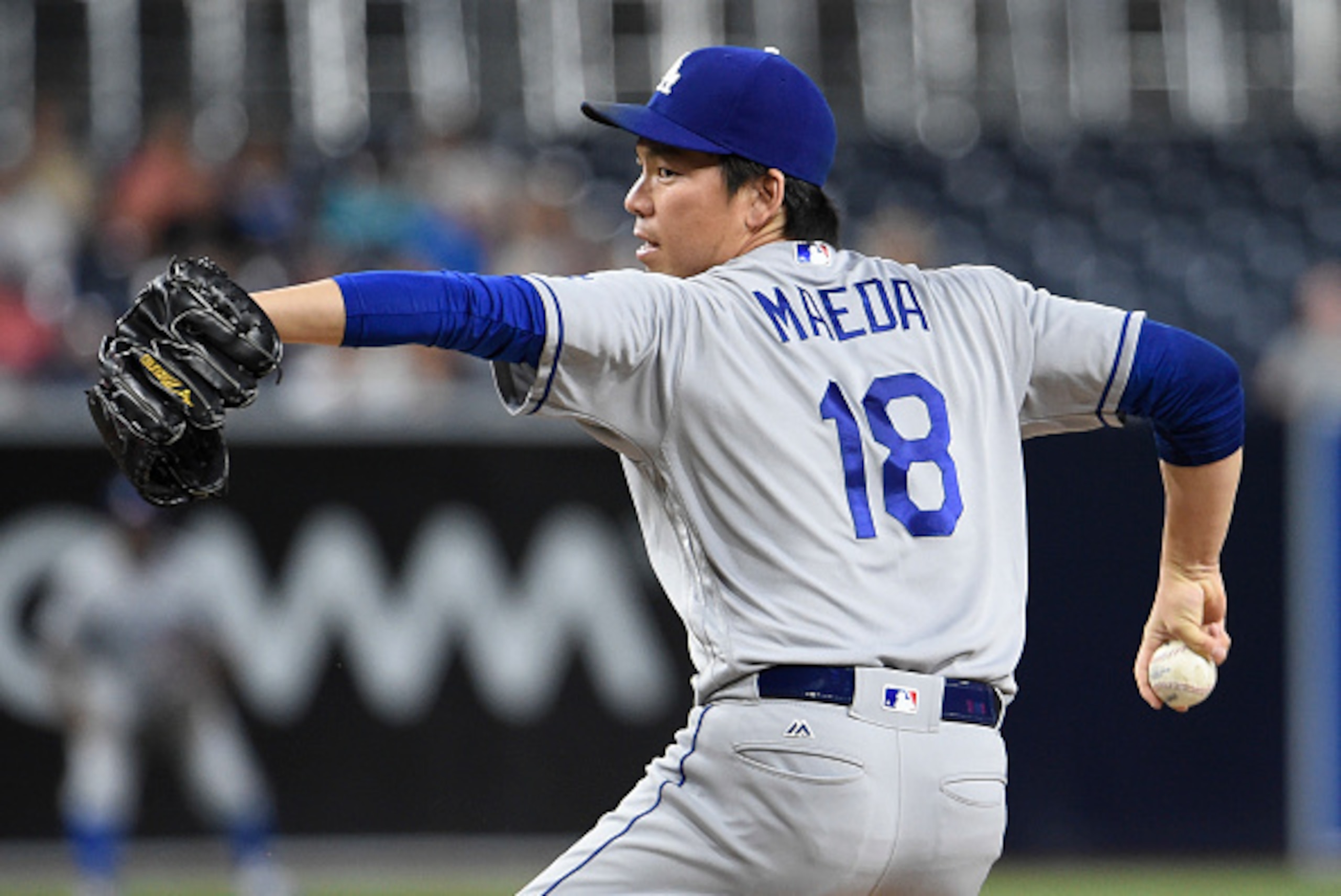
G: 31 IP: 173.0 K/9: 9.2 BB/9: 2.5 HR/9: 1.0 ERA: 3.28
Control
Kenta Maeda is a low-rent Greinke. He doesn't limit walks by pounding the strike zone, posting just a 42.1 Zone%. His approach is more about pounding the edge of the zone away from both lefties and righties. A consistent release point allows him to be precise in doing so, and that precision results in two things: a healthy number of strike calls and swings (31.6 O-Swing%) outside the zone.
Whiffability
Maeda's strikeout rate is the real deal, as it's backed up by an easily above-average 11.5 SwStr%. He doesn't have overpowering stuff, averaging just 90.0 mph in fastball velocity with no really explosive movement on any of his pitches. But the fact that his fastball, slider and changeup all have double-digit whiff rates is a testament to how well he locates and sequences his pitches.
Hittability
With so much movement on the outside edges of the zone, it's disappointing that Maeda has only managed a 43.9 GB%. His style of pitching away also works better against righties than lefties, who have made some loud contact on that outside corner. But overall, the reality that he's allowed just 85.9 mph in average exit velo speaks to how tough he is to square up. His 11.4 IFFB% also helps.
Workload
Maeda faced a tough transition in his first year in the States, but he's stayed healthy and maintained his stuff throughout the year. However, he's not a workhorse. Pitch count limitations have played a part in his averaging 5.6 innings per start. So has the competition, which has struggled early but ultimately knocked Maeda around to the tune of an .879 OPS the third time through the order.
Total
Workload issues aside, Maeda has been everything the Dodgers could have hoped for in 2016. Through the use of command and sequencing, he's avoided both barrels and, surprisingly, bats entirely.
41. Stephen Strasburg, SP, Washington Nationals
15 of 55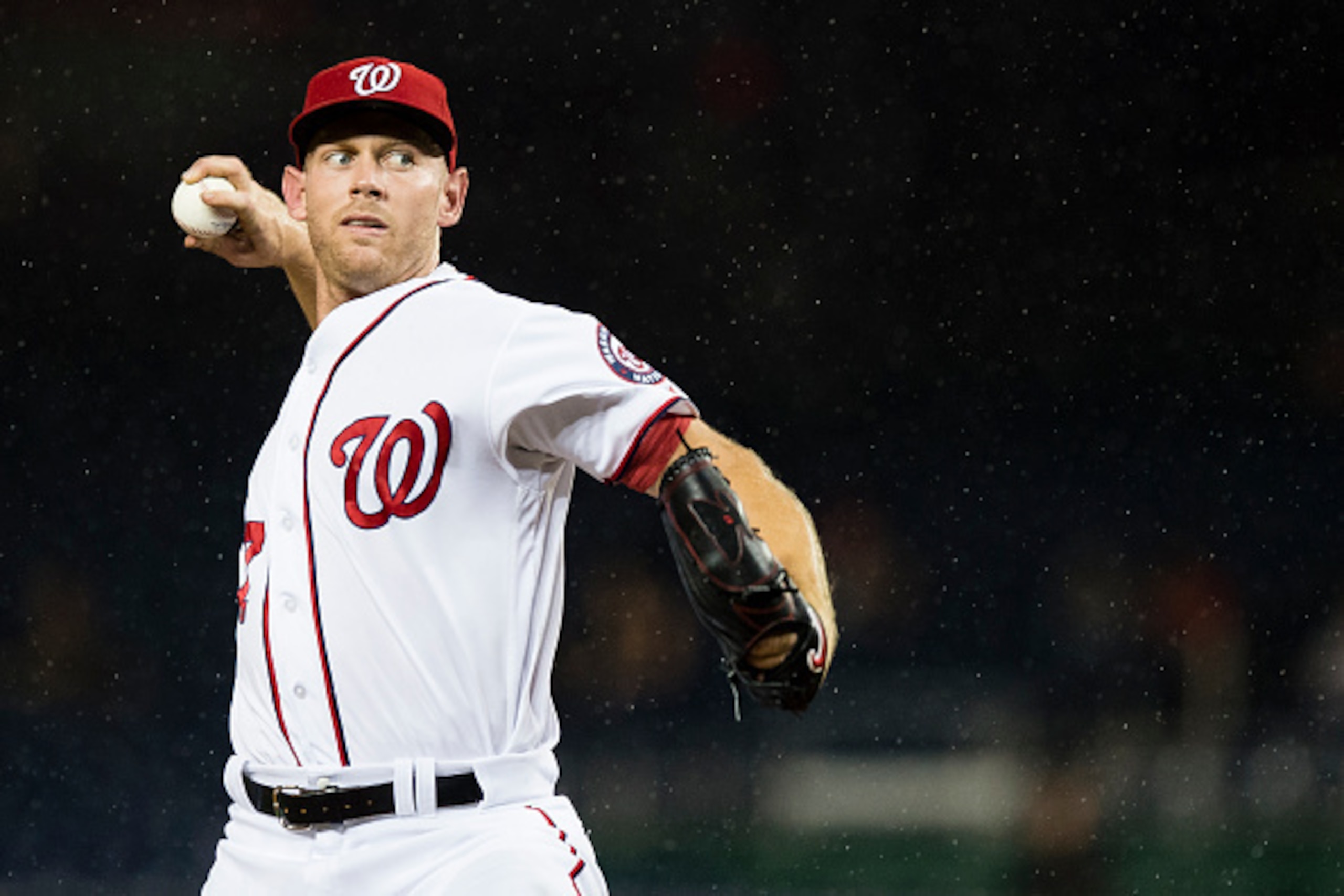
G: 24 IP: 147.2 K/9: 11.2 BB/9: 2.7 HR/9: 0.9 ERA: 3.60
Control
Stephen Strasburg's regular season is finished because of his latest injury. If so, he won't get to lower a 2.7 BB/9 that's not his finest. But otherwise, his 49.4 Zone% is plenty high. He's always thrown strikes, but the last two years have seen him really start challenging hitters. Not just by throwing more heaters in the zone, but by also throwing them higher in the zone. That works to set up his slider, curveball and changeup around the knees.
Whiffability
Strasburg is backing up his 11.1 K/9 with a 11.0 SwStr% that, strong though it is, understates his arsenal. With his newfound slider joining the fray, Strasburg has expanded from three swing-and-miss pitches to four primary offerings with double-digit whiff rates. His changeup remains the nastiest of the bunch as well as the most GIFable. But really, they're all just...good.
Hittability
Contact management traditionally hasn't been one of Strasburg's strengths. He's changed that. His average of 88.2 mph is a case of his exit velocity going further south, and that's backed up by improvements in his soft-hit and hard-hit rates. He's not doing this by getting ground balls (39.5 GB%) or pop-ups (7.7 IFFB%). He's simply missing barrels, with his migration up in the zone with his hard stuff being a big factor.
Workload
It's a shame about Strasburg's ongoing durability issues. Otherwise, 2016 would have been a nice step forward. His last injury-shortened start aside, this is the first season in his career in which he's been good for over six innings and 100 pitches per start. He's maintained his stuff within starts and has actually gotten harder to hit each time through the order.
Total
Strasburg's iffy durability is more of the same. Apart from that, 2016 has probably been his most well-rounded season yet. He could always command the ball and miss bats. This year, he mixed in some contact management too, making him one of the game's most dominant starters.
40. Robinson Cano, 2B, Seattle Mariners
16 of 55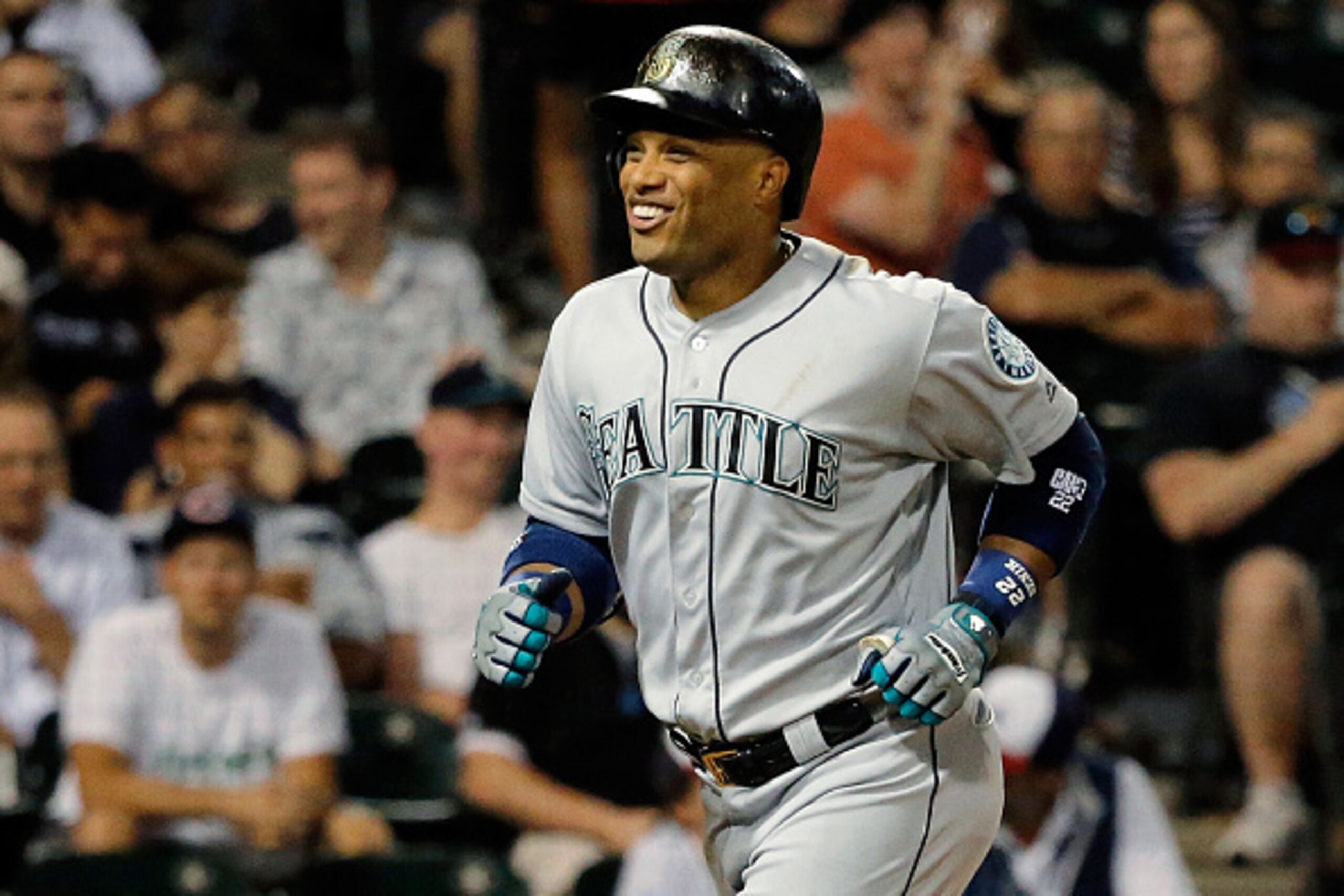
G: 150 PA: 663 AVG/OBP/SLUG: .294/.345/.512 HR: 33 SB: 0
Hitting
After Robinson Cano came into 2016 healthy following an illness in 2015, we shouldn't be surprised at his rebound. He's not doing it with an improved approach, as his Swing% and O-Swing% are higher than they've been in years. But the quality of his contact is better. His exit velocity may have declined from 91.5 mph to 91.0 mph. But his 35.6 hard-hit percentage is his highest since 2013, and he's cut back on ground balls. That's allowing him to fight back against shifts.
Power
And now for another tangible benefit of Cano's good health. His ability to get more balls airborne is no fluke, as he's doubled his launch angle from 5.4 degrees to 11.5 degrees. That makes up for the fact that his exit velocity on fly balls and line drives is also down, although it's still good at 93.3 mph. And while he's still mostly a pull-power guy, good health has also allowed him to regain some of his old opposite-field power.
Baserunning
In becoming more of a power hitter, Cano has been running like one again. His one and only steal attempt this season was unsuccessful, and he otherwise doesn't round the bases like he used to. His 36 percent success rate taking extra bases on hits is below his career norm, and his number of bases taken on non-hits is down from 22 to 17.
Defense
The defensive metrics have gone back and forth on Cano's defense, which highlights how difficult he is to assess as a fielder. Sometimes he makes things look too easy. Other times, he makes it look like he's trying to make things look too easy. But what's true either way is that he's one of the smoothest fielders around, showing effortless actions, good hands and a strong, accurate arm. And this year, good health has revitalized his ability to make tough plays. This is one of his good years.
Total
Even in what was an off year in 2015, Cano wasn't that terrible. Now he's back on again, showing a lethal bat and good defense in his return to stardom.
39. Ryan Braun, LF, Milwaukee Brewers
17 of 55
G: 135 PA: 564 AVG/OBP/SLUG: .305/.365/.538 HR: 30 SB: 16
Hitting
Behold a healthy Ryan Braun. He made his contact rate go retro, allowing him to justify his aggressive approach for the first time in a while. Braun was once again a rare aggressive hitter whose reach doesn't exceed his grasp. The catch is that he no longer drives the ball as well as his prime self. Both his launch angle and his exit velocity were down. But since he remained a hard hitter by league standards and also spread the ball around, we shouldn't be surprised that he hit .300.
Power
Hypothetically, a smaller launch angle and less exit velocity shouldn't lead to more power. But Braun's raw power was just fine in 2016. He averaged 94.5 mph on what he did put in the air. And it's not as if he was hitting fence scrapers. His average home run was 403 feet, and no bleacher section was safe from his barrage. He wasn't muscling up all the time, but he didn't miss when he did.
Baserunning
Braun had a couple of years in 2013 and 2014 when it looked like he was slowing down for good. Not so much anymore. He was 16-for-21 stealing bases after swiping 24 last season. He also took the extra base on hits 51 percent of the time. And after running into 20 outs in the last two seasons combined, he ran into only four this year. For a 32-year-old with a lot of miles on his legs, this is good stuff.
Defense
Braun's outfield defense remains a mixed bag. On the one hand, he's a solid enough athlete for left field, and that results in a good amount of range. He also has an arm that's fine for left field. But he's not an instinctive fielder, leading to some zig-zaggy routes and poor judgment that results in makeable plays going unmade.
Total
Since age is having no effect on him, it appears that good health is all Braun needs in order to be himself: a good hitter with power and athleticism.
38. Daniel Murphy, 2B, Washington Nationals
18 of 55
G: 141 PA: 581 AVG/OBP/SLUG: .347/.391/.596 HR: 25 SB: 5
Hitting
So much for last October being a fluke. Daniel Murphy's approach hasn't changed at all, and he's still one of the best there is at making contact. The big key last year was getting closer to the plate and allowing himself to pull the ball more often. That's still going on. Teams have tried to adjust by shifting on him more. That's not working in part because he's hitting the ball harder. His exit velocity has improved to 91.3 mph, and his Hard% has skyrocketed from 31.0 to 38.3.
Power
Although his NL-high .596 slugging percentage overstates things a bit, the power Murphy showed last year has also carried over. A higher pull rate and more hard-hit balls will do that for you. But there's something else you shouldn't overlook. His swing has always had loft potential, and it's showing in his launch angle, which has risen from 11.1 degrees to 16.6 degrees. That's a big jump that's brought him not only his 25 home runs, but his MLB-high 47 doubles.
Baserunning
Murphy was quietly one of the best baserunners in the league a couple of years ago, stealing bases and aggressively taking extra bags left and right. His power has decreased the need for him to keep doing this, but he hasn't fully transformed into a station-to-station slugger. He's swiped his five bags in eight tries and has taken the extra base 50 percent of the time on hits.
Defense
As always, this is the dent in Murphy's armor. He's not a good defensive second baseman no matter which way you slice it. He's not blessed with either good hands or quick-twitch athleticism. These things severely limit his range and make it tough for him to make difficult plays. And with a 96.9 success rate on routine plays, even the easy ones are no picnic.
Total
Murphy isn't the athlete he once was, and that limits him to a bat-only player. But man, oh man, is that bat good.
37. Miguel Cabrera, 1B, Detroit Tigers
19 of 55
G: 145 PA: 620 AVG/OBP/SLUG: .308/.384/.545 HR: 33 SB: 0
Hitting
When you win four batting titles in five years, even a .308 average is somewhat disappointing. But whatever. Miguel Cabrera is still arguably the most consistently locked-in hitter at the plate, showing a lovely mix of discipline and contact and an ability to square the ball up to every field. The one thing that's taken a hit this year is his ability to hit everything. A hole has opened up at the top of the zone. If nothing else, it's something to monitor as he heads deeper into his 30s.
Power
Miggy's power has made a comeback after injuries and lengthy recoveries did a number on it in 2014 and 2015. He's still not getting under the ball like he did in 2012 and 2013, posting GB/FB ratios in the 1.2 range. Nonetheless, he's maintaining a solid launch angle at 13.5 degrees and destroying fly balls and line drives at an average of 97.1 mph. And as much as anything, good health has restored his once-mighty opposite-field power.
Baserunning
Cabrera wasn't fast to begin with. Now he's 33 and playing on legs that have soaked up a lot of mileage and, in recent years, quite a bit of damage. You'll have to excuse him for becoming strictly a station-to-station baserunner.
Defense
To repeat an oft-repeated point: Cabrera is a much better fit at first base than he was at third base. He can at least make the easy plays at first base, converting 98.1 percent of routine plays. He just doesn't bring much else to the table. Slow reactions and slow feet give him virtually no range, and his hands are at best just OK.
Total
Cabrera's elite status was tied to his firm grip on the "Best Hitter in Baseball" label, which he no longer has a firm grip on. All the same, he remains one of the best hitters in baseball.
36. Masahiro Tanaka, SP, New York Yankees
20 of 55
G: 31 IP: 199.2 K/9: 7.4 BB/9: 1.6 HR/9: 1.0 ERA: 3.07
Control
Masahiro Tanaka has never not been a strike-thrower, but finding a consistent arm slot after searching for one in 2015 has certainly helped. Otherwise, he's still a guy who doesn't necessarily have to pound the zone to get strikes. He moves in and out with his four-seamer, sinker and cutter, and he keeps everything low to set up his slider and splitter. It takes a high chase rate to make this work. He has that covered and then some with a league-high-tying 36.5 O-Swing%.
Whiffability
This aspect of Tanaka's game has become less of a factor. It's not just his K/9 that's down. His 10.9 SwStr% is way down as well. Hitters have gotten better at recognizing and hitting his splitter, rendering it somewhat less of a world-beating force. It's still solid, however, and his slider is equally as solid. Having two good swing-and-miss pitches is a nice substitute for one elite one.
Hittability
It's a good thing Tanaka is so good at getting hitters to reach, because he's prone to getting crushed whenever he goes in the zone. That's where his not-so-good average of 89.7 mph in batted ball velocity comes from. But since he is indeed good at getting hitters to expand, he can downplay that problem. And with a 48.2 GB% and 12.0 IFFB%, much of the contact off him doesn't go far.
Workload
Remember when everyone assumed Tanaka's elbow was a ticking time bomb? So much for that. He's stayed on the mound and been a reliable workhorse the whole way. His efficiency has allowed him to average 6.4 innings per start on an average of 95 pitches. He also has a little extra zip late in games, making him a challenge to face the third time around.
Total
Tanaka began his career amid overwhelming hype. There's been less of that in 2016, and it's rendered his best season yet largely invisible. Although he's not the strikeout pitcher he used to be, he's craftier and just as effective.
35. David Price, SP, Boston Red Sox
21 of 55
G: 34 IP: 225.0 K/9: 9.0 BB/9: 1.9 HR/9: 1.2 ERA: 4.04
Control
There's not much left to say about David Price's control. Everything stems from perfect mechanics, and throwing fewer fastballs hasn't robbed him of his ability to throw strikes. He doesn't wander far from the center of the zone vertically or horizontally. What he does instead is move the ball around, working all edges of the zone and keeping hitters guessing. He's been sharper at some times than others in 2016, but on the whole, neither his 1.9 BB/9 nor his 47.3 Zone% really does him justice.
Whiffability
Price's velocity loss is too great to be ignored, as he's gone from sitting 94-95 mph to sitting 92-93 mph. But he's still striking out a batter per inning with a 12.0 SwStr% anyway. He mostly owes this to his changeup, which continues to get better as a swing-and-miss offering. It has more arm-side fade than it used to, and Price is typically flawless in locating it.
Hittability
This is where Price's velocity loss has actually hurt him. It's been years since he was a good ground-ball artist, so limiting damage is entirely up to him missing barrels. He hasn't done that. His 88.2 mph average in batted ball velocity isn't terrible, but hiding behind it is (by far) a career-high 34.9 Hard%. Not surprisingly, that stems from an exit velocity increase against his hard stuff.
Workload
Nothing wrong here. Price hasn't missed a start and has once again gone well over 200 innings. He's averaged 6.6 innings and 103 pitches per start. His stuff is remarkably consistent within each start. And despite his overall decrease, he's actually managed to add velocity over time.
Total
Price's 4.04 ERA doesn't befit an ace, but he's been steady with a 3.43 ERA since mid-May. Along the way, he's done what he usually does: throw a lot of strikes, miss a lot of bats and eat a ton of innings.
34. Starling Marte, LF, Pittsburgh Pirates
22 of 55
G: 129 PA: 529 AVG/OBP/SLUG: .311/.362/.456 HR: 9 SB: 47
Hitting
It's about time Starling Marte was a .300 hitter. The one thing he needed to do was become a good contact hitter. Once he finally did that last year, he sold out for power and tried to pull too many balls. In 2016, he became what he needs to be: an all-fields hitter who focuses on making good contact on line drives and ground balls. His big vice remains his aggressiveness. But since he's now a good contact hitter, all that's costing him is walks. That's a bummer but not a tragedy.
Power
Marte's power declined but not because of his launch angle. It actually went up from 6.3 degrees to 10.0 degrees. And when he did get the ball airborne, he showed decent raw power with an average of 92.6 mph in exit velocity. But without a steady pull rate to translate these things into home run power, Marte had to settle for gap power and occasional home runs.
Baserunning
Getting away from last year's power meant a return to Marte's speed game. In addition to his 47 steals, he also took the extra base on hits 52 percent of the time. The catch is that Marte is still prone to running into outs. He got caught stealing 12 times and made seven other outs on the basepaths. Even still, he earned some bonus points by outrunning corner outfield standards.
Defense
Marte is a center fielder who's playing left field in deference to a superstar. Whatever the case, he looks like a center fielder, using his speed and good reads to track down anything and everything. He makes it look so easy, in fact, that highlight-reel catches are relatively infrequent. Marte's arm isn't anything special, but his accuracy gets some plays made.
Total
Marte isn't a household name yet, but it's not by accident he was an All-Star for the first time in July. This was his best all-around season to date, featuring consistent hitting, good power and lots of speed and defense.
33. Rick Porcello, SP, Boston Red Sox
23 of 55
G: 32 IP: 217.0 K/9: 7.6 BB/9: 1.2 HR/9: 0.9 ERA: 3.11
Control
Simply hitting the strike zone is no problem for Rick Porcello, in no small part because he has efficient mechanics that he's consistent with. But how he throws strikes is also commendable. He's fallen in love with the high fastball, which by itself is a useful tool for changing eye levels. But usually that means setting up pitches below the knees. Porcello may be the only guy in the sport who so consistently works at the knees with his other pitches. Impressive stuff.
Whiffability
Neither Porcello's 7.6 K/9 nor his 8.1 SwStr% highlights him as a strikeout artist. That's a sacrifice he has to make with all his pitches in the strike zone. But there's still no ignoring how his four-seamer has taken over as his most reliable swing-and-miss offering and one of the better swing-and-miss fastballs anywhere. With velocity that sits in the low 90s, this is proof that location can indeed be as valuable as any radar gun reading.
Hittability
With a 43.8 GB% that's on track to be a career low, Porcello is no longer the extreme ground-ball pitcher he used to be. But he hasn't become a poor contact manager despite that. He's cashed in some ground balls for pop-ups with a 13.2 IFFB%, and his batted balls average is just 88.9 mph. He can still get caught making the occasional flat pitch and pay for it with a rocket off the bat, but those are really the only times he gets hurt.
Workload
With velocity that peaks in the first inning and goes swiftly downhill from there, Porcello should be having trouble eating innings. Instead, he gets tougher to hit with each time through the order and has averaged 6.8 innings per start on 103 pitches. That's what craftiness can do.
Total
Has Porcello been as good as his 22 wins and 311 ERA? Probably not. He's benefiting from a career-low BABIP that overstates his contact management. Nonetheless, he's certainly one of the elite command artists and workhorses in the game.
32. Carlos Correa, SS, Houston Astros
24 of 55
G: 147 PA: 636 AVG/OBP/SLUG: .271/.362/.454 HR: 20 SB: 13
Hitting
Carlos Correa is as good as he is in part because he hits the ball so darn hard. He made plenty of loud contact in 2015, and now both his exit velocity and his hard-hit rate are up in 2016. Such is life when you're 6'4" and 215 pounds. But there's more than just strength going on here. Correa is selective not just in the sense of his good eye for the strike zone but also in what he swings at. He goes hunting for pitches on the inner half. When he connects, that's when fun happens.
Power
Despite playing in many more games, Correa may not match last year's 22 homers. But truth is, maybe last year was the fluke. He didn't have a high launch angle to begin with, and it hasn't budged this year at 6.7 degrees. His power is more about efficiency, a la crushing the ball when he does get under it. With an average of 95.0 mph on fly balls and line drives, he's got that covered.
Baserunning
Correa also hasn't made good on the promise of his rookie season (14 steals in 99 games) in this department. But this has little to do with his speed and more to do with how he chooses his spots. He's been caught stealing only three times. Elsewhere, he's taken the extra base 47 percent of the time on hits and run into only two outs.
Defense
Because the Astros shift more than any other team, there's arguably less pressure on Correa to have good range than there is on other shortstops. Which is good, because his size makes it difficult for him to move in a hurry. But lest anyone be in a hurry to move him to the hot corner, Correa's length at least gives him good reach. And with his rocket arm, anything he gets to is as good as an out. That's allowing him to downplay his modest 96.7 success rate on routine plays.
Total
If it feels like Correa has had a disappointing sophomore season, think again. He's continued to be an excellent offensive shortstop while holding his own on defense.
31. Johnny Cueto, SP, San Francisco Giants
25 of 55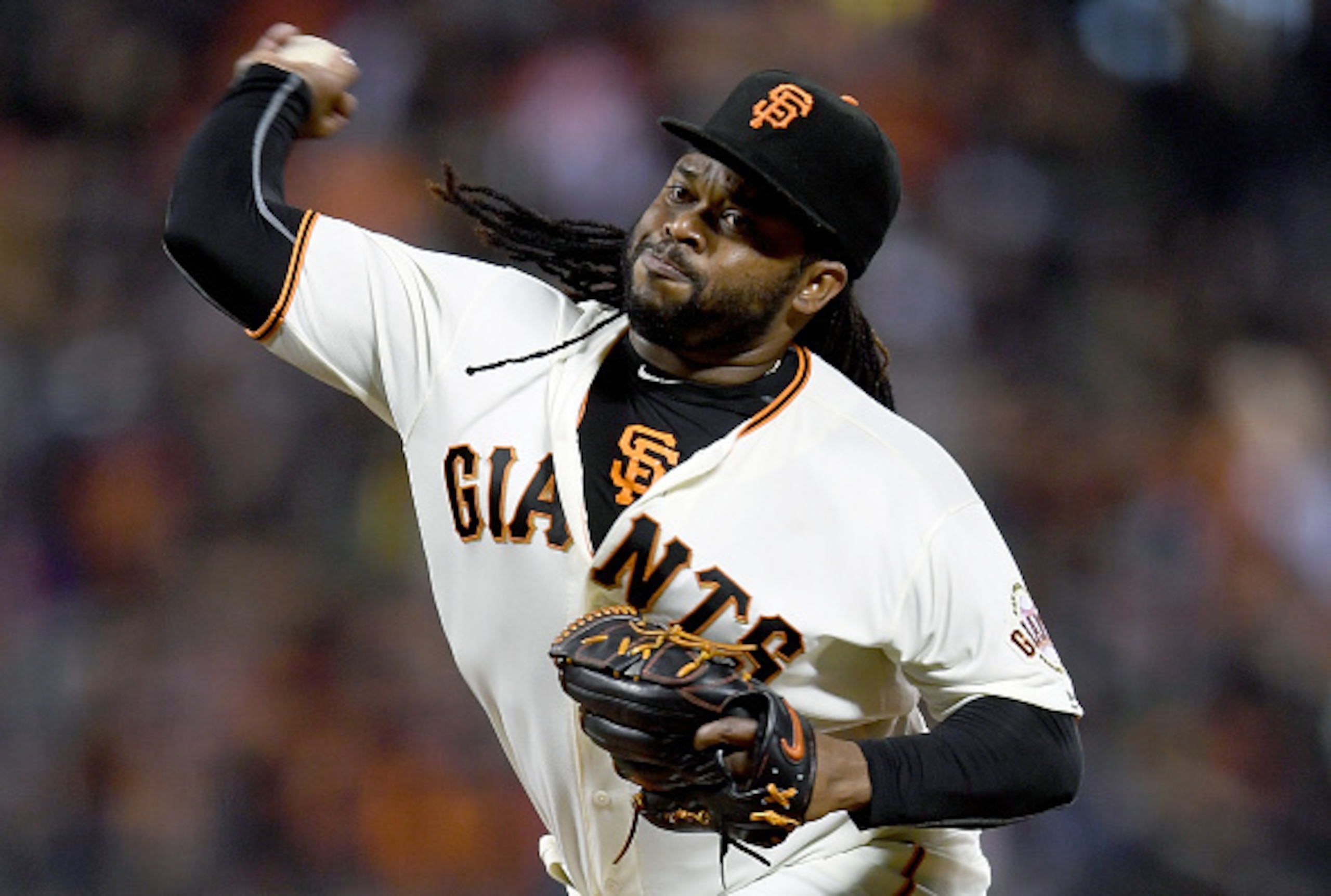
G: 31 IP: 212.2 K/9: 7.9 BB/9: 1.9 HR/9: 0.6 ERA: 2.79
Control
Explaining Johnny Cueto is a bit like explaining Mulholland Drive, but here goes...First off, it shouldn't work. He not only uses a variety of motions that spread his release point around, but he also has an arsenal that favors pitches with movement. But he actually can find the zone, posting a 44.6 Zone%. And by going in, out, up and down, he also forces hitters to expand the zone (32.4 O-Swing%). It's weird...but effective.
Whiffability
With his different looks and movements, Cueto is more about freezing hitters than racking up whiffs. His SwStr% is only 9.2 this year. One issue is that he just doesn't throw that hard anymore, as his fastball now averages just 91-92 mph. But if nothing else, he'll always have his changeup to get whiffs for him. It's a good change of pace from his other stuff. And also totally nasty.
Hittability
With so many different types of movements, the only pitch Cueto throws that doesn't get ground balls is his four-seamer. Instead, it gets pop-ups. Hence his combination of a 50.6 GB% and a 10.9 IFFB%. He also rocks below-average exit velocity at 88.3 mph, with most of that coming courtesy of his talent for getting hitters to reach for his pitches.
Workload
This is Cueto's fourth year out of five with over 200 innings, and he's averaged darn near seven innings on over 100 pitches per start to get there. His velocity may be down overall, but he adds velocity as games go along. That and his general ability to befuddle hitters explains why he's so tough the third time around.
Total
As good as he is, young pitchers should take note: Don't be like Johnny Cueto. Only Johnny Cueto can use different quirks, movements and sequences to baffle the opposition.
30. Christian Yelich, LF, Miami Marlins
26 of 55
G: 154 PA: 654 AVG/OBP/SLUG: .295/.375/.478 HR: 21 SB: 9
Hitting
Christian Yelich is a unique hitter. His excellent discipline may be a typical sign of a good hitter, but in 2016 he also had one of the lowest launch angles and highest GB/FB ratios in the majors. Neither made life difficult for Yelich because of his uncanny ability to aim the ball while also finding the barrel. He sprayed the ball all over while maintaining an average of 93.3 mph with his exit velocity. The one thing keeping him from a perfect score? He's not a great contact hitter.
Power
Yelich has been a gap power guy in the past. Now he has some home run power, too. His trick is crushing whatever he does get in the air, as he averaged 96.8 mph on fly balls and line drives. In the past, that power has only been good for pull home run power. But in 2016, he expanded his horizons beyond right field. If he played anywhere other than Marlins Park, he likely would have hit for even more power.
Baserunning
Yelich's power burst decreased his need to be a base stealer, as he attempted only 13 steals after swiping 37 total bags in 2014 and 2015. He was otherwise still an aggressive runner, taking the extra base on hits 50 percent of the time. And true to his instinctive style, he ran into just two outs.
Defense
Yelich won a Gold Glove in 2014 and continued doing his usual thing in left field this season. He's one of the better athletes at the position and might be the most confident route-runner there is. There's not much that escapes his grasp. And while his arm is lacking in strength, he's accurate with it.
Total
Yelich badly needs more national exposure. He's one of the best pure hitters in the majors, and his skill set extends beyond what he can do with the bat.
29. Ian Kinsler, 2B, Detroit Tigers
27 of 55
G: 144 PA: 638 AVG/OBP/SLUG: .277/.335/.469 HR: 26 SB: 14
Hitting
Ian Kinsler has made adjustments to generate more power, and these have manifested a higher launch angle (18.3 degrees), very few ground balls (31.0 GB%) and more exit velocity (87.4 mph). Adjustments such as these could have hurt his consistency, but a couple of things have kept it going. He hasn't sacrificed his disciplined approach and has continued to be a strong contact hitter. He probably deserves a worse BABIP than the one he has, but he's mostly making his new style work.
Power
The other benefit of going for more power? Surprise! It's more power. At 90.6 mph, he gets subpar exit velocity on his fly balls and line drives. But what he lacks in quality, he makes up for in quantity with a career-low 0.68 GB/FB ratio. Throw in a steady pull habit, and you get a spray chart crowded with extra-base hits on one side of the field.
Baserunning
Now 34, Kinsler is not as fast as he was when he was stealing 30 bases way back when. But he's swiped 14 bags in 20 tries anyway. He's crafty with his leads and his jumps when he does decide to go, often getting walking starts. To boot, he's taking the extra base on hits 52 percent of the time.
Defense
The Inside Edge numbers show Kinsler has had a tough time making high-difficulty plays this year. But the eye test tells a different story. Kinsler can't burst after balls on defense like he once did, but his instincts and effort level allow him to get to plenty of balls, and his quick release and throwing accuracy allow him to finish of plenty of plays. His defense used to be better, sure, but it's still good.
Total
Kinsler is still one of the most underrated players in the game, albeit in different ways. He's not the athlete he used to be, but he still does everything well and now has more power.
28. Jon Lester, SP, Chicago Cubs
28 of 55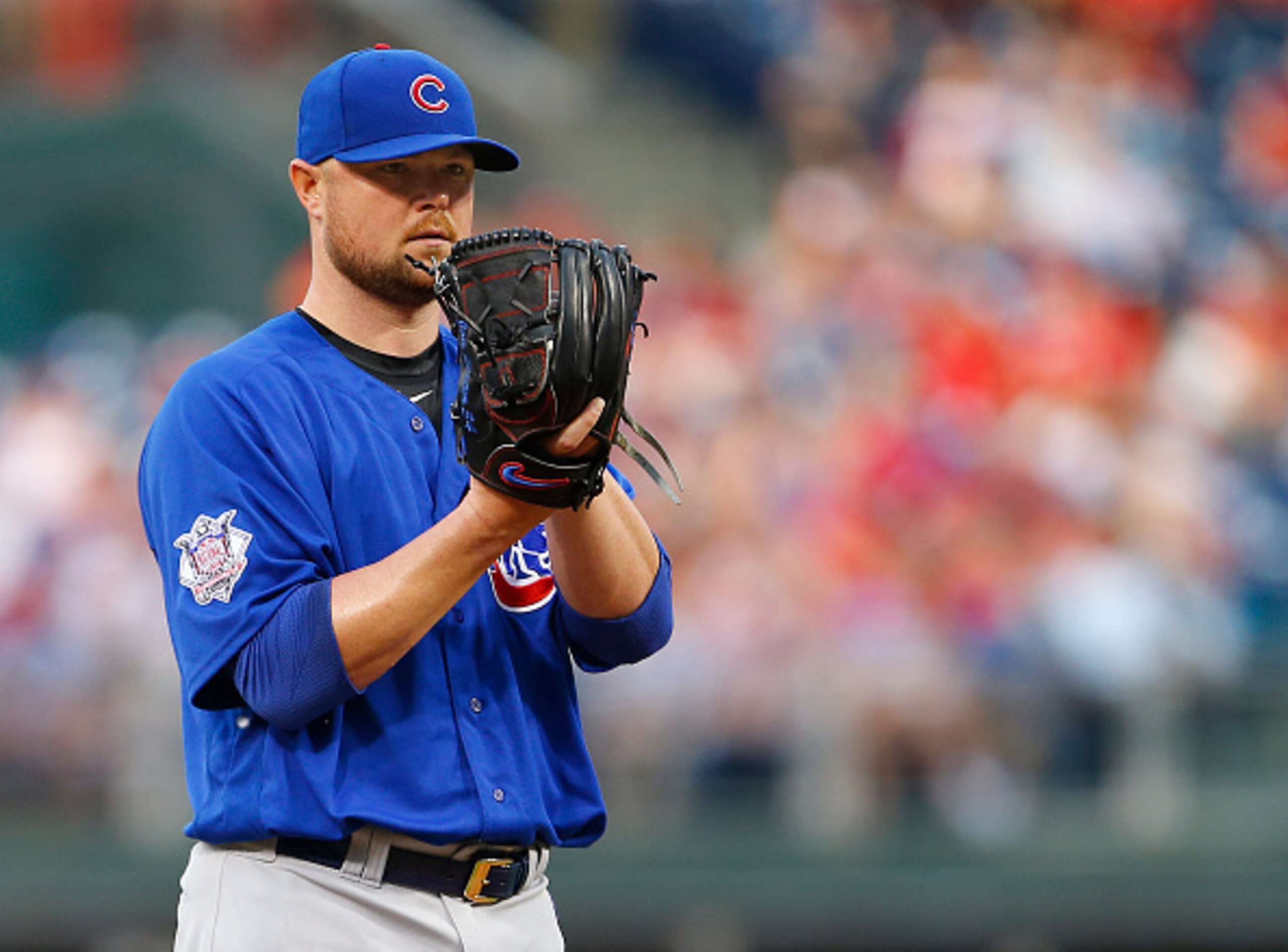
G: 31 IP: 197.2 K/9: 8.7 BB/9: 2.2 HR/9: 0.9 ERA: 2.28
Control
In appreciation of Jon Lester's mechanics, we'll now acknowledge that his release point has barely budged in the last few years. That's one reason why he's one of the best command artists working today. The other is how consistently he works both sides of the zone with his four-seamer and owns the glove-side edge with his cutter. This leaves only one reasons why his walk rate is just 2.2 per nine innings: David Ross hasn't stolen as many strikes for him.
Whiffability
Lester has experienced a nice velocity spike in 2015 and 2016, averaging a little over 92 mph on his heat. But that's not really the reason he has a solid strikeout rate, not to mention a 10.4 SwStr%. What's really helping is how he's using his curveball. He's been moving it lower and lower and has watched its whiff rate rise accordingly. It now draws more whiffs per swing than any other curveball.
Hittability
Lester's cutter and curve induce ground balls, and his four-seamer gets pop-ups. It's a nice dynamic that has led to a 46.6 GB% and an 10.8 IFFB%. And by virtue of his ownership of the glove-side edge of the strike zone, he also has good average batted-ball velocity at 88.0 mph. His mistakes get hit hard, but this is what happens when you don't make many of those.
Workload
Lester may be pushing 33, but he's still ticking as a reliable workhorse. He's once again averaging over six innings per start, this time on less than 100 pitches. There hasn't been a drop-off in his stuff throughout the year. Ditto for within games.
Total
It feels like Lester has gotten lost in the shuffle after a moderately disappointing season in 2015. But make no mistake: He's back to doing everything well thanks to pinpoint command and stuff that's aging well.
27. Jose Fernandez, SP, Miami Marlins
29 of 55
G: 29 IP: 182.1 K/9: 12.5 BB/9: 2.7 HR/9: 0.6 ERA: 2.86
Control
As petty a gesture as it may be, the final season of Jose Fernandez's all-too-brief career is certainly worth saluting. He continued to avoid the lower arm slot that may have ruined his elbow in 2014. He also assaulted the strike zone with more fastballs. Just as important was his curveball command. He kept moving it further from the center of the zone, making it more tempting for hitters to chase as it swept across the plate. We were watching a great thrower turn into a truly great pitcher.
Whiffability
Of course, the stuff that made us all fall in love with Fernandez in the first place was still there as well. He finished with a 12.5 K/9 and a 14.2 SwStr%. His curveball only got tougher to hit and was an elite swing-and-miss offering no matter which way you slice it. GIFable, too. His changeup and fastball, which sat in the 95-96 mph range, weren't too shabby either. Together, these things were pushing Fernandez toward one of the highest strikeout rates ever. A couple of bonus points are only fair.
Hittability
Hitters are most dangerous when they pull the ball. That's something they weren't able to do against Fernandez, who had the lowest pull rate in MLB. That was a good way for him to limit the effect of the hard contact that found him anyway. His batted balls averaged 89.9 mph, which he didn't absorb with ground balls (40.2 GB%) or pop-ups (7.7 IFFB%).
Workload
The Marlins watched Fernandez's workload closely, but that didn't stop him from making strides as a workhorse. This was the first year he averaged over 100 pitches in addition to six innings per start. And whereas he used to leak velocity as games went along, he held his throughout games this season.
Total
Fernandez was absolutely one of the best pitchers in baseball in what tragically turned out to be his final season. And as always, boy did he make it look fun. I'm at once amazed that he left us with so many fond memories in just four years as a big leaguer and heartbroken that there will be no more.
I like to think he's on a mound in the middle of an Iowa cornfield, smiling as he blows heat past "Shoeless" Joe Jackson and other legends who have passed us by.
26. Francisco Lindor, SS, Cleveland Indians
30 of 55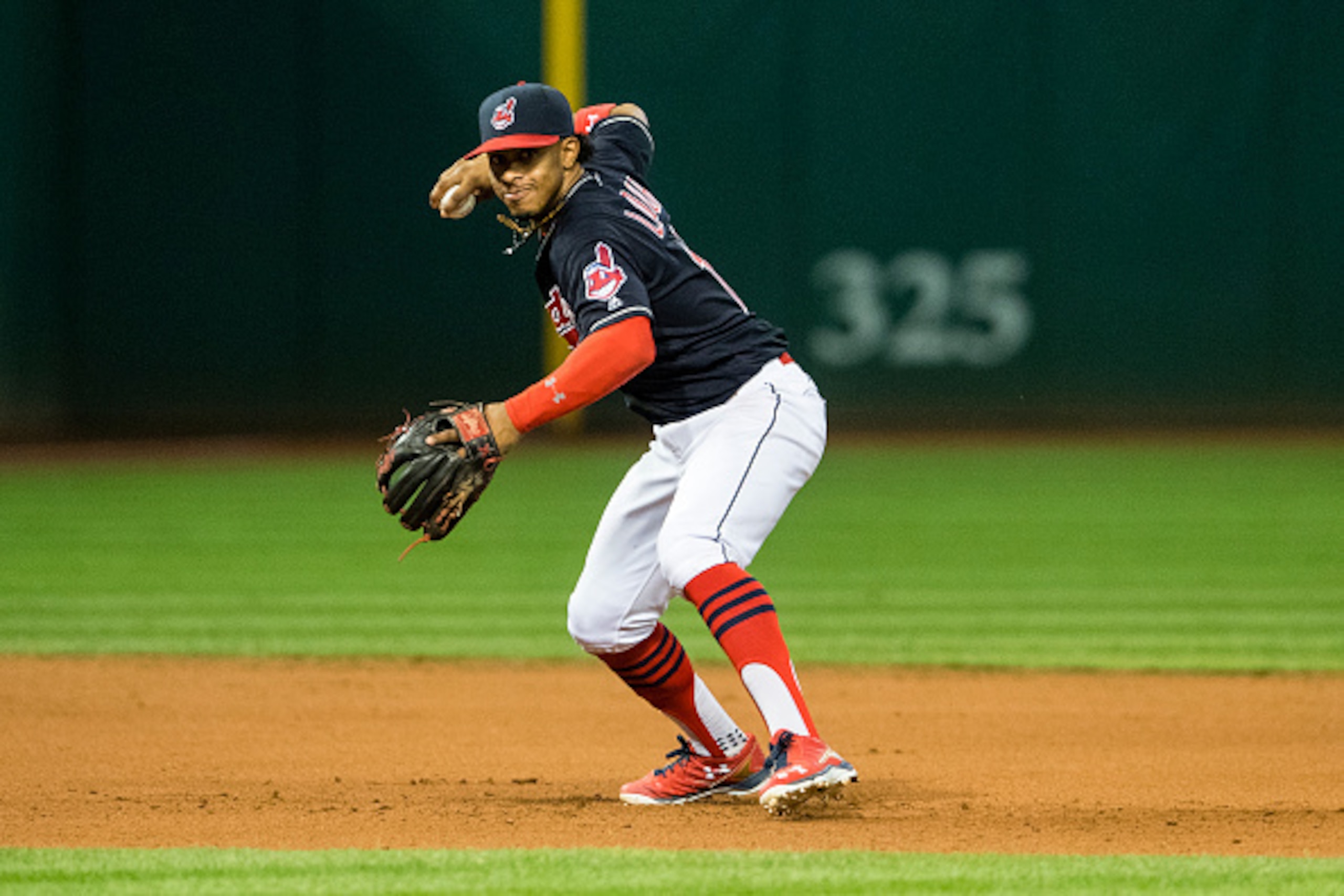
G: 153 PA: 663 AVG/OBP/SLUG: .302/.354/.431 HR: 14 SB: 19
Hitting
It turns out Francisco Lindor is legit after all. He does have qualities you like to see in a high-average guy, such as an excellent contact habit and a line-drive swing packaged with good bat control. He's the type of hitter who can spray base hits in every direction. And this year, he's gotten more selective. The one thing he still doesn't do is make loud contact. But with exit velocity in the 89-90 mph range, his contact isn't quiet either. In short, dude can hit.
Power
Lindor's 14 homers make his power look good. But on closer inspection...meh. It's not that he's incapable of giving the ball a ride. He can. He's just not built to do so. Despite an increase in his launch angle from 4.4 degrees to 9.3 degrees, his GB/FB ratio has actually climbed closer to 2.0. And when he does get the ball in the air, he's averaging an unspectacular 90.6 mph in exit velocity. He's more of a gap power guy who occasionally runs into one.
Baserunning
Lindor is a plus runner, but teams have been keeping closer tabs on him this year, which explains his five caught-stealings to go with his 19 successes. The good news is that he's continued to take the extra base on hits about half the time at 48 percent. And after running into seven outs in 2015, he's run into only four this year.
Defense
Lindor cemented his place among the best defensive shortstops in baseball last season. Nothing has changed in 2016. He still has great hands, a great arm and smooth actions, and none of these things abandons him when he has to make the routine play. Meanwhile, he has as much (or more) range as any other shortstop. He reacts quickly at the crack of the bat and covers ground in a flash. As such, there aren't many parts of the infield he doesn't cover.
Total
Lindor may not be the best shortstop in the game, but he is the most well-rounded. He can hit, run and definitely defend.
25. Charlie Blackmon, CF, Colorado Rockies
31 of 55
G: 139 PA: 621 AVG/OBP/SLUG: .320/.377/.545 HR: 28 SB: 17
Hitting
The fact that Charlie Blackmon is raking away from Coors Field confirms he's been legit. He's always had a good contact habit and a line-drive swing. A big difference this year is his approach, which is a happy medium between his old aggressive self and the passive hitter he turned into last season. Elsewhere, he's added nearly two mph of exit velocity from last season. This is a case where center field standards don't really cut it for one of MLB's top hitters, so bonus points are appropriate.
Power
Blackmon's power numbers are slightly misleading. They make him look like a hitter who gets way under the ball and has booming raw power to boot. With a 13.7 degree launch angle and 90.7 mph exit velocity on balls in the air, neither is especially true. Nonetheless, he hasn't needed much help from Coors Field, and none of his homers have been cheapies. Full credit is the least I can give him.
Baserunning
Blackmon's power surge is part of the reason why he won't come close to last year's 43 stolen bases. His 17 steals are still good, though, and he's also taken the extra base on hits 53 percent of the time. And after running into 10 outs and being caught stealing 13 times in 2015, five outs and seven caught-stealings is a nice change of pace.
Defense
Blackmon has good speed and was revealed in 2015 to be an efficient route-runner. Despite that, quite a few balls in his direction continue to go uncaught. Coors Field's gigantic dimensions are a factor there, to be sure. But Blackmon doesn't always get the quickest breaks, which takes away from his speed and route running. And with his arm, he can't make up for that by cutting down runners.
Total
Blackmon has made the leap from good Coors Field player to good player, period. He's been an elite hitter both at home and on the road and has continued to boost his value with his athleticism to boot.
24. Jackie Bradley Jr., CF, Boston Red Sox
32 of 55
G: 152 PA: 621 AVG/OBP/SLUG: .272/.354/.496 HR: 26 SB: 9
Hitting
Turns out Jackie Bradley Jr.'s late 2015 breakout was the real deal. His defining characteristic is his ability to get the barrel to the ball, creating good exit velocity and a high hard-hit rate. He's also disciplined, and it's not as easy to get him to swing over something with spin as it used to be. He does still strike out too much, though. And with a pull rate as high as his, he's probably lucky he hasn't been hurt by the shift more than he has.
Power
For a guy who's only 5'10" and 200 pounds, Bradley has a surprising amount of raw power. He's averaging 94.4 mph on fly balls and line drives. As such, he doesn't truly need his pull habit to boost his power. What he lacks is consistency getting the ball in the air. His launch angle has fallen under 10 degrees, and his GB/FB ratio is trending up as a result.
Baserunning
Bradley's not a fast runner, but he's one of the best in the business at getting the most out of what speed he has. The two caught-stealings he has this year are the first two of his career. He also has a rate of 51 percent extra bases taken on hits. He's notably come home from first on a double six times in 10 chances. Pretty good.
Defense
Bradley gets the most out of his modest speed on defense, too. He breaks quickly and runs some of the smoothest routes of any center fielder. In particular, he looks more comfortable going back on the ball than maybe any other player at the position. This results in plenty of range. To boot, he also has an absolute cannon for an arm that he also happens to be accurate with.
Total
Bradley had trouble finding his footing in The Show. But ever since late last summer, his frequent hard contact and excellent defense have turned him into one of the very best two-way center fielders.
23. Madison Bumgarner, SP, San Francisco Giants
33 of 55
G: 33 IP: 219.1 K/9: 10.1 BB/9: 2.2 HR/9: 1.1 ERA: 2.71
Control
Doug Thorburn of Baseball Prospectus rated Madison Bumgarner's mechanics as the best in the NL West in 2014. This season is the best he's been at repeating them. Meanwhile, he's keeping it simple with his three-pitch mix; four-seamers go high, cutters/sliders go low and curveballs go lower. Any pitcher could do this in theory, but his execution of it sets him apart. One gripe: Working a little lower with his fastball and a little higher with his cutter has cost him swings outside the zone.
Whiffability
Bumgarner's career-best 10.1 K/9 is slightly misleading, as it comes with an 11.5 SwStr% that's not a career best. But whatever. His ability to throw his fastball and cutter by hitters is going strong, and his curveball continues to gain steam as one of the best swing-and-miss hooks out there. That reflects its increasing nastiness, as it keeps dropping more and more every year. This calls for a GIF.
Hittability
Bumgarner started out as a ground-ball pitcher, but he's become more of a pop-up guy as he's fallen in love with the high fastball. So it goes with a 11.2 IFFB%. He's also rocking average exit velocity of 89.1 mph, which is respectable. But this is the area where drawing fewer swings outside the zone is hurting him. He collects as much soft contact outside the zone as anyone, but that ability hasn't been exploited as much in 2016. There's been louder contact off him as a result.
Workload
By now, I'd say Bumgarner's picture belongs next to the term "workhorse" in the dictionary. He continues to be good for more than 100 pitches per start as well as nearly seven innings. This isn't so much because he gets tougher to hit as games go on. The opposite is actually true. It has more to do with him being a literal Paul Bunyan clone who never tires and can't be broken.
Total
Bumgarner is about to make it four years in a row with over 200 innings and an ERA under 3.00. That shows what you can do with strong mechanics and great stuff.
22. Anthony Rizzo, 1B, Chicago Cubs
34 of 55
G: 142 PA: 624 AVG/OBP/SLUG: .290/.388/.551 HR: 31 SB: 3
Hitting
Anthony Rizzo just keeps chugging along. After conquering lefties in 2014, he found the right balance between patience, discipline and contact in 2015. These improvements are alive and well in 2016. And at 90.1 mph, he's even improved his exit velocity from last year's 89.1 mph. This leaves but one weakness: Only Ortiz has faced more shifts than Rizzo has. Until he starts going the other way more often, he can expect those to keep his production in check.
Power
Despite that last note, here's where Rizzo has incentive to change nothing. His power is only getting better. His swing is perfect for getting the ball in the air, producing an average launch angle of 16.9 degrees. And while his pull habit hurts him with shifts, it sure helps his power. With habits like these, his modest average of 92.5 mph on fly balls and line drives isn't a deal-breaker.
Baserunning
Rizzo stole 17 bases last year, prompting praise about his becoming more of a well-rounded player. Well, this year he's swiped three in seven tries. Pitchers are keeping a closer eye on him. And it gets worse. He's not taking extra bases on either hits or non-hits like he did in 2015, and he's only improved from nine outs on the bases to seven outs.
Defense
If nothing else, Rizzo's defense gets points for creativity. But he's really good in other ways too. His athleticism is regularly on display, as he may have as much range as any first baseman in the game. He's handy around the bag as well, showing good footwork and hands that make him a near-lock on routine plays.
Total
Rizzo officially became a great player in 2014, and he's pushed the envelope each year since. He now stands as a consistent, powerful hitter who's also an excellent defender.
21. Chris Sale, SP, Chicago White Sox
35 of 55
G: 31 IP: 221.2 K/9: 9.2 BB/9: 1.8 HR/9: 1.0 ERA: 3.21
Control
With a delivery seemingly comprised entirely of knees and elbows and stuff that moves all over the place, Chris Sale shouldn't be able to throw strikes. And yet, he does. He's among the best at finding the zone and among the best at working it. He can go in, out, up and down with his heat and work off the corners with his slider and changeup. He thus enjoys the best of both worlds: strikes in the zone and strikes from hitters who are chasing his pitches (33.4 O-Swing%).
Whiffability
It was clear early on that Sale would be pitching to contact more in 2016. He's held himself to that, working with less velocity and lowering his strikeout rate and SwStr% (11.3) well below his 2015 numbers. But this is still Sale we're talking about. He still throws hard, and his four-seamer, sinker, changeup and slider all have insane movement. The only one without a double-digit whiff rate is his sinker, giving him three reliable swing-and-miss pitches.
Hittability
Pitching to contact with less velocity has allowed more hard contact to find Sale. His exit velocity is up from 86.2 mph to 89.1 mph, and his hard-hit rate is up from 25.1 to 31.7. But he's still mostly safe when he works on the edges and when he gets hitters to chase—two things he continues to do well.
Workload
Here's one benefit of not chasing as many strikeouts: Despite averaging about the same number of pitches per start as he always does, Sale is also averaging 7.2 innings per start for the first time. And he's been tougher the second and third time through the order than the first. He starts hitters off with a lot of four-seamers and then likes to hit them with more sliders later. That's no fun for them.
Total
This hasn't been Sale's most overpowering season, but even a less overpowering Sale is still one of the best pitchers in the sport. Maybe he doesn't miss bats, but he still has outstanding command of lethal stuff.
20. Adrian Beltre, 3B, Texas Rangers
36 of 55
G: 149 PA: 626 AVG/OBP/SLUG: .298/.356/.519 HR: 32 SB: 1
Hitting
Adrian Beltre is still aging like a fine wine. Some things haven't changed, such as an approach that's aggressive but not too wild and features plenty of contact. It also helps that he has an uncanny ability to get the barrel to the ball. In fact, his exit velocity is up to 90.7 mph from 89.8 mph. He's also still good at spreading his hits around. He's not Votto, but you can set your watch to Beltre's consistency.
Power
After failing to reach 20 homers in 2014 and 2015, Beltre's power has come roaring back. He hasn't had to deal with any power-sapping injuries, such as last year's thumb woes. He's also hit more fly balls (41.7 FB%) despite no real change in his launch angle. That plus a modest increase in his exit velocity on balls in the air explains why his increased power is no fluke. He also has 434 career homers, so...
Baserunning
Beltre was once a pretty good stolen-base artist, but the 37-year-old is now good for just one steal annually. He hasn't devolved into a station-to-station runner, however. Beltre's 44 percent success rate taking extra bases on hits is par for the course, and he's added 15 on other plays.
Defense
For what it's worth, both DRS and UZR rate Beltre as the best defensive third baseman on record. And at 37, he's still going strong. He no longer has the quick-twitch athleticism of an Arenado or a Manny Machado. But he still moves well for a guy his age, and his hands and arm allow him to make and finish just about any play.
Total
Beltre is technically in the twilight of his career, but he's still one of the best third basemen in baseball on both sides of the ball. Let's remember this when it comes time to put him in the Hall of Fame.
19. Jose Altuve, 2B, Houston Astros
37 of 55
G: 150 PA: 669 AVG/OBP/SLUG: .336/.395/.540 HR: 24 SB: 27
Hitting
Jose Altuve finally hit a wall in September, but it's still time to pay homage to a great season. He was dangerous enough when he was an aggressive swinger who made lots of contact. Now he's a more disciplined swinger who makes lots of contact, and it's notably better contact. His exit velocity has risen from 86.1 mph to 88.8 mph. We could gripe about how he barely uses the opposite field. But since teams know better than to open the right side by shifting on him, that's a nitty nitpick.
Power
And now for the surprising part: Altuve's newfound power. This traces back to how hard he's hitting the ball, as his exit velocity on fly balls and line drives is also up from 90.3 mph to 92.3 mph. That makes up for a GB/FB ratio that hasn't really budged despite a higher launch angle at 11.5 degrees. And though he barely uses right field, his extra exit velocity is helping him hit for more power to right field than ever before. One thing, though: The short porch at Minute Maid Park has done him a few solids.
Baserunning
A dirty secret is that Altuve's baserunning was significantly less than perfect in years past. In 2013 and 2015, especially, he ran into way too many outs. He's been better at that in 2016, running into "only" 10 outs in addition to "only" being caught stealing nine times. And indeed, 27 steals and a 55 percent success rate taking the extra base on hits are enough good to outweigh that much bad.
Defense
The 5'6" Altuve makes the most of what he has on defense. In addition to his good speed, he covers ground with his sheer effort level and is able to get throws off in a hurry. He doesn't have much arm strength, however, and his height limits his range and makes him a tough target to find on double plays. It's therefore imperative for him to make the easy plays. Fortunately, he does that well with a 99.2 conversion rate on routine plays.
Total
The idea that Altuve somehow isn't the best second baseman might sound like blasphemy. But while there's no mistaking he's had an amazing season, he's not obviously the best hitter at the position and isn't quite the power hitter or baserunner that his surface-level numbers make him out to be.
18. Corey Kluber, SP, Cleveland Indians
38 of 55
G: 32 IP: 215.0 K/9: 9.5 BB/9: 2.4 HR/9: 0.9 ERA: 3.14
Control
Thorburn rated Corey Kluber's mechanics as the best in the AL Central back in 2014. His arm slot has dropped since then, but at least it's remained consistent throughout 2016. And while he doesn't make things easy by throwing more sinkers, cutters and sliders than four-seamers, he makes it work. He can work both sides of the plate with his hard stuff and has done a better job of keeping his slider and changeup down.
Whiffability
Kluber's K/9 is down a notch from his high of 10.3 in 2014, but his 12.6 SwStr% is par for the course. He doesn't throw as hard, sitting at 92-93 mph with his fastball. But he can still throw the ball by hitters and has a downright filthy weapon in his slider. It gets more glove-side run than any slider thrown by any other starter. That leads to some awesome GIFs as well as an elite swing-and-miss rate.
Hittability
Despite his array of movements and strong command, Kluber remains a modest ground-ball artist with a 44.5 GB%. His real talent is limiting hard contact. He's averaging just 87.0 mph on his batted balls, with one of the league's lower hard-hit rates to boot. Both lefties and righties can hurt him around the arm-side edge of the zone, but it's tough to square him up anywhere else.
Workload
Kluber should make it three years in a row with over 220 innings. He's helped himself by gaining velocity as the year has moved along. He's also maintained his stuff well within games, making it that much easier to sustain his dominance each time through the order. These things plus his efficiency and his sheer size explain how he's able to average 6.7 innings on 100 pitches per start.
Total
Kluber may never again match his 2014 peak, but this season has put to rest the notion that it was a one-year wonder. He still has filthy stuff and an idea how to use it.
17. Jonathan Lucroy, C, Texas Rangers
39 of 55
G: 133 PA: 513 AVG/OBP/SLUG: .294/.357/.502 HR: 23 SB: 5
Hitting
So much for last year's injuries portending Jonathan Lucroy's doom. One nit to pick is his sudden vulnerability to pitches with spin. That's cost him some contact, but it hasn't gotten him out of his approach. He also boasts a lovely batted-ball profile, applying his line-drive stroke to all fields with authority. He's only averaging 88.2 mph in exit velocity, but his 35.4 Hard% is as good as ever.
Power
Lucroy's power has also come roaring back, as his 23 homers are a career high by plenty. This points to the biggest difference between 2015 and 2016: His launch angle has gone from 10.6 degrees to 14.8 degrees. It doesn't show in his 91.4 mph exit velocity on balls in the air, but he's crushing fly balls with a career-best 45.8 hard-hit rate. He's essentially swapped gap power for over-the-fence power.
Baserunning
At 6'0" and 200 pounds, Lucroy has always had more of an athletic build than the next catcher. His injuries prevented him from using it on the bases last season. But this year, he's back with five steals in five tries and more aggressiveness. His bases taken on non-hits are up from seven to 13. His success rate taking bases on hits is up from 33 to 40 percent.
Defense
Lucroy's usually not one to shut down the opposing running game, but he has this year with a 38 percent caught-stealing rate. He's also had quick reactions and an accurate throwing arm, so he was likely bound to run into a year like this. His once-legendary receiving is not what it once was, but his framing gets passing grades. He's also been among the best at blocking wayward pitches.
Total
Thoughts of Lucroy's demise were exaggerated. Good health has allowed him to return to being an excellent offensive player with assorted talents behind the plate.
16. Justin Verlander, SP, Detroit Tigers
40 of 55
G: 33 IP: 220.2 K/9: 10.0 BB/9: 2.3 HR/9: 1.2 ERA: 3.10
Control
Justin Verlander wasn't right for a while. Especially not in 2014, when he was all messed up following offseason surgery. But good health has allowed him to be free and easy with his delivery the last two seasons, and his command has been particularly on point this year. He's back to loving the high fastball, and he can work on both sides of the plate with it. That keeps hitters off all the other pitches he has, which he keeps low enough to boost his chase rate from 31.3 to 33.8.
Whiffability
Verlander has regained some of his lost velocity, going from 92-93 mph to 93-94 mph with his fastball. Beyond that, he's getting more spin on his pitches than all but a couple of other starters. These things would indeed equal a high strikeout rate, not to mention his best SwStr% in years at 12.0. None of his pitches are truly elite at racking up whiffs, but his four-seamer, slider and changeup all have double-digit whiff rates. That mix of quality and quantity is a taste of Verlander's good ol' days.
Hittability
Verlander has always been more of a fly-ball pitcher, so it's imperative that he collect as many pop-ups as he can. His 11.2 IFFB% is right in line with his career norm in that regard. He's also doing a good job of stifling loud contact in general, limiting batted balls to 88.3 mph in exit velocity. That's mostly thanks to his preference for high hard ones and his renewed ability to get hitters to chase.
Workload
Let's not be surprised that a healthy Verlander is averaging darn near seven innings and 110 pitches per start. It's not smooth sailing the whole way, as he hasn't been exempt to the third-time-through-the-order penalty. But for all we know, it would be worse without his time-honored habit of throwing harder as games move on.
Total
Verlander is back. He may not have his vintage stuff, but being able-bodied for the first time in years has allowed him to reclaim good stuff and even better command.
15. Nolan Arenado, 3B, Colorado Rockies
41 of 55
G: 154 PA: 670 AVG/OBP/SLUG: .293/.361/.571 HR: 40 SB: 2
Hitting
Cutting right to the chase: Yes, Coors Field has helped boost Nolan Arenado's numbers. When you get down to it, a pull-happy approach that's heavy on fly balls and surprisingly light on exit velocity (90.4 mph) isn't the kind of thing that plays well when the air's not thin. Still, Arenado deserves credit for pushing his OBP to a new height. He's become more selective, dropping his Swing% below 50. That's helped earn him more walks, which was the only missing ingredient in his offensive profile.
Power
Arenado's power outburst lives on. Which is not surprising, as any guy whose pull and fly-ball rates are as high as his is going to hit lots of dingers. And while it's nothing special, his 92.9 mph in exit velocity on fly balls and line drives is at least above-average. Like above, the only gripe to make is that he's gotten a lot of help from Coors Field. There, 19 percent of his fly balls are home runs. On the road, only 14.5 percent. I hesitate to give him bonus points even despite his 40 homers.
Baserunning
Like a few others on this list, Arenado is a good athlete rather than a fast runner. Difference is, Arenado doesn't even bother with stolen bases. He's been successful in two of only five tries. He can handle taking more than one base on hits, however, doing so 44 percent of the time he's had the chance.
Defense
The advanced metrics confirm Arenado is still one of the best, if not the best, third basemen in the game. We can talk all the livelong day about how good his hands and arm are. There's no ball he can't snag and no throw he can't make. But one thing that needs more attention is just how quickly he reacts at the crack of the bat. It often seems instantaneous, and it's a reason why his fielding chart covers almost the entire left side of the infield.
Total
Arenado's offense gets a major boost from his home ballpark, but he'd be a great player anywhere. He's designed to hit for power, and his glove may be the best the hot corner has to offer.
14. Brian Dozier, 2B, Minnesota Twins
42 of 55
G: 146 PA: 651 AVG/OBP/SLUG: .281/.353/.572 HR: 41 SB: 16
Hitting
Brian Dozier started 2016 as cold as he finished 2015, batting .202 with a .294 OBP through the end of May. He got out of his approach, chasing too many pitches away and costing himself hard contact. But he's been cruising ever since. He's gone back to hunting on the inner half of the strike zone, resulting in two things: extreme use of his pull side and more consistent contact. You can't ignore those first two months, but Dozier has been a quality hitter for most of the year.
Power
It makes perfect sense that Dozier has gone on a home run tear in the final two months of the season. He's not only an extreme pull hitter who's improved his exit velocity on fly balls and line drives from 92.5 mph to 94.5 mph, but he's also a guy who has no trouble getting the ball in the air. His average launch angle is 15.7 degrees. There are more powerful players than him, but only Ortiz has hit for more power among qualified batters. A helping of bonus points is appropriate, as he'd profile as elite here at first base, let alone second.
Baserunning
Dozier has ratcheted up the power but hasn't lost any speed. He's swiped 16 bags in 18 tries and has taken the extra base on hits 47 percent of the time. He hasn't been as mistake-prone as he was in his other big season, either. He ran into 10 outs in 2014. He's run into half that many this year.
Defense
The 5'11, 200-pound Dozier isn't a physical marvel at second base, and yet he continues to make the easy plays, the tough plays and everything in between. That has less to do with his athleticism and more to do with his effort level, instincts and quick release of the ball. All these things allow him to cover quite a bit of ground, and the last one comes in handy when turning double plays.
Total
Dozier owes his top ranking here to his bonus power points, but even those underrate just how dangerous his power has been in 2016. Throw in a good on-base talent, quietly good baserunning and quality defense, and you get the best second baseman in the business.
13. Kyle Hendricks, SP, Chicago Cubs
43 of 55
G: 30 (29 GS) IP: 185.0 K/9: 8.1 BB/9: 2.1 HR/9: 0.7 ERA: 1.99
Control
You know you're living well when people are comparing you to Greg Maddux. It's high praise that Kyle Hendricks is deserving of. He has a fluid delivery that he's worked into a consistent arm slot this year. Beyond that, watching him pitch typically means taking in a master class on how to locate. Hendricks will work both sides of the zone, and this year he's doing a better job of changing eye levels with more high four-seamers and lower off-speed pitches. I try to avoid perfect scores, but...
Whiffability
Hendricks isn't really a strikeout pitcher, but his 8.1 K/9 and his 10.2 SwStr% are above average. He doesn't throw hard, averaging just 87-88 mph with his fastball. But he quietly has an elite swing-and-miss changeup. His new habit of changing eye levels helps it, but nothing beats old-fashioned sharp movement. The pitch dives like a splitter, except with more arm-side run.
Hittability
Moving the ball around with different types of movement? That's a good way to avoid barrels. He's the type who can induce ground balls (48.6 GB%) and pop-ups (9.7 IFFB%). He also boasts an average of 87.3 mph on his batted balls that actually understates things. His 25.0 Soft% is the best in baseball, and his 25.6 Hard% is one of the best.
Workload
Hendricks doesn't have as many starts as other top pitchers, but he's otherwise handled as much as the Cubs could have asked. He's needed only 95 pitches to average 6.3 innings per start, and he's maintained his stuff well and refused to wilt under the weight of more exposure.
Total
Hendricks may be the best pitcher in a starting rotation that also features Arrieta, Lester and John Lackey. All he's needed to achieve that is pinpoint command of an arsenal full of movement.
12. Paul Goldschmidt, 1B, Arizona Diamondbacks
44 of 55
G: 145 PA: 649 AVG/OBP/SLUG: .297/.414/.480 HR: 20 SB: 26
Hitting
Pitchers are becoming increasingly afraid to go in the strike zone against Paul Goldschmidt. He's responded appropriately, rarely swinging (38.7 Swing%) and rarely expanding the zone (22.9 O-Swing%) when he does. In a related story, his 79.7 Contact% is a new career best. The quality of his contact hasn't been as good, as he's gotten away from last year's all-fields approach while hitting more ground balls. But when you average 92.2 mph in exit velocity, things could be worse.
Power
This is where Goldschmidt's 2016 season comes with actual disappointment. He won't come close to last year's 33 homers in part because he just hasn't gotten under the ball as well. His launch angle has fallen from 14.2 degrees to 12.2 degrees. He also hasn't driven the ball as well. His exit velocity on balls in the air has dropped from 96.9 mph to 94.5 mph. These things are still good, but they reflect how his power decline is no fluke.
Baserunning
His power is down by the position's standards, but Goldschmidt's 26 steals are a new career high. Part of that is good athleticism. As Mike Petriello of MLB.com noted last year, Goldschmidt's lead size is another. Meanwhile, he's also willing and able to go more than one base at a time. He's taken 18 bases on non-hits and the extra base 44 percent of the time on hits. Like with Myers, bonus points are in order.
Defense
There's no more perfect package at first base right now than Goldschmidt. It would be enough if he just had good athleticism for the position. But he also sprinkles in good instincts and reactions with good hands to boot. The result is a first baseman who doesn't botch routine plays while also showing good range around the bag.
Total
This hasn't been Goldschmidt's best year because his typically explosive power just hasn't been there. But even that's still a solid part of an excellent all-around game that features a consistent bat, great baserunning and an elite glove.
11. Corey Seager, SS, Los Angeles Dodgers
45 of 55
G: 151 PA: 663 AVG/OBP/SLUG: .310/.370/.514 HR: 25 SB: 3
Hitting
Corey Seager is a walking instructional video on hitting. He has a direct swing that's good for line drives, and he can use the whole field. Between his size and his feel for the barrel, we shouldn't be surprised at his 91.5 mph exit velocity. Maybe the one thing to take issue with is his lack of elite strike-zone discipline. But he's not a wild swinger either, and he doesn't give pitchers a safe space within the zone. No other shortstop has been as good or as consistent, so bonus points are in order here.
Power
Seager doesn't go to bat looking to drive the ball, as his average launch angle is a less than eye-popping 11.4 degrees. But he fits the description of a classic "good hitter with power" in the sense that anything he does drive is truly driven. His exit velocity on fly balls and line drives is 94.8 mph. Not even Dodger Stadium has held him back.
Baserunning
Seager (6'4", 215 lbs) is roughly the same size as Correa. But he doesn't run nearly as well or pick his spots as well. His three successful steals come with three failures. Seager is not a station-to-station runner, though. He's taken the extra base 40 percent of the time on hits and has added 23 bases on non-hits. He's also run into just three outs all year.
Defense
With his size, Seager probably will need to move to third base somewhere down the line. He's not the kind of shortstop who can cover a wide swath of ground. But what he lacks in athleticism, he makes up for in technique and actions. Seager has a good pair of hands and a good sense of timing, and his plus arm strength allows him to finish whatever he can get to. He's not a great shortstop, but he's reliable.
Total
Seager has been the best offensive shortstop in the league by a good distance in his rookie season and has played a solid shortstop to boot. Although not as well-rounded as Lindor, the fact is a bat like Seager's at a position like shortstop is simply too valuable to ignore.
10. Noah Syndergaard, SP, New York Mets
46 of 55
G: 31 (30 GS) IP: 183.2 K/9: 10.7 BB/9: 2.1 HR/9: 0.5 ERA: 2.60
Control
We'll get to Noah Syndergaard's habit of throwing thunder in a second. For now, his control is worth appreciating too. His delivery has no wasted movement, making it easy for him to maintain a consistent release point. And while he could just try to blow hitters away in the strike zone, he's a bit more methodical. He'll work both sides of the plate, especially against righties. He earns himself a solid 45.3 Zone% and sets hitters up for an elite 36.5 O-Swing%. Now then, thunder...
Whiffability
It would be disappointing if Syndergaard didn't have one of the highest strikeout and swinging strike (14.2 SwStr%) rates in the league. His average fastball of 98.0 mph is the best there is by plenty, and he also has a slider and changeup that can both eclipse 90 mph. The latter two do the heavy lifting, as both rate as elite swing-and-miss offerings. You know, just in case you couldn't tell from looking at them.
Hittability
Syndergaard doesn't just try to blow hitters away with his four-seamer. It's only accounting for about 30 percent of his pitches, with the rest being sinkers and off-speed offerings. That's where his 51.2 GB% comes from. As for his upper-crust 21.0 Soft% and his 87.9 mph in average batted-ball velocity, well, that's what happens when you have stuff so good that you can only be hurt right down the middle.
Workhorse
Syndergaard's first full season has gotten to him a little bit lately, as his velocity hasn't been as consistent in the last three months as it was in the first three. Besides which, the Mets have been cautious with his pitch counts. All the same, he's averaged 6.1 innings on 97 pitches per start. He's been notably tough the third time through the order. In a related story, he has a little Verlander in him, upping his heat when games get late.
Total
Syndergaard's first full season in the majors has been as advertised. If anything, he's surpassed expectations with his stuff and has certainly surpassed them with his command.
9. Clayton Kershaw, SP, Los Angeles Dodgers
47 of 55
G: 20 IP: 142.0 K/9: 10.7 BB/9: 0.6 HR/9: 0.4 ERA: 1.65
Control
It's unfair to give a guy who's missed half the season a perfect score. Otherwise, there's nothing to complain about. Clayton Kershaw probably has baseball's most consistent delivery, and he continued to use it to assault the strike zone in 2016. And he can pretty much do what he wants with his stuff. In or out with his fastball. At or below the knees with his slider. Ditto with his curveball. And with hitters constantly on edge, he's able to get them to expand the zone with a 34.5 O-Swing% too.
Whiffability
Apart from the sample size, there's nothing to gripe about here either. Kershaw backs up his strikeout rate with a 15.6 SwStr%. His fastball, which has elite vertical action in addition to solid 93 mph velocity, has become a good swing-and-miss pitch. His slider is one of the best there is at missing bats. His curveball actually isn't, but, well, come on.
Hittability
This is something Kershaw still doesn't get enough credit for. He's become a good ground-ball artist as he's continued to downplay his fastball, posting a 49.5 GB%. But since that fastball can still induce pop-ups, he's also rocking a 15.5 IFFB%. He's also limited batted balls to just 87.4 mph. He can be beaten when he makes mistakes, but, yeah. This is Kershaw we're talking about.
Workload
Had it not been for his bad back, this would be yet another year of Kershaw eating innings like, as the kids used to say, they're going out of style. He was averaging darn near eight innings per start before his back acted up, and his average has regressed to only 7.1 innings per start since he returned.
Total
It says a lot that Kershaw can sit for half the year and still come out looking like arguably the best pitcher in baseball. He's the most perfect pitcher in the sport, combining pinpoint command with some of the best stuff around.
8. Freddie Freeman, 1B, Atlanta Braves
48 of 55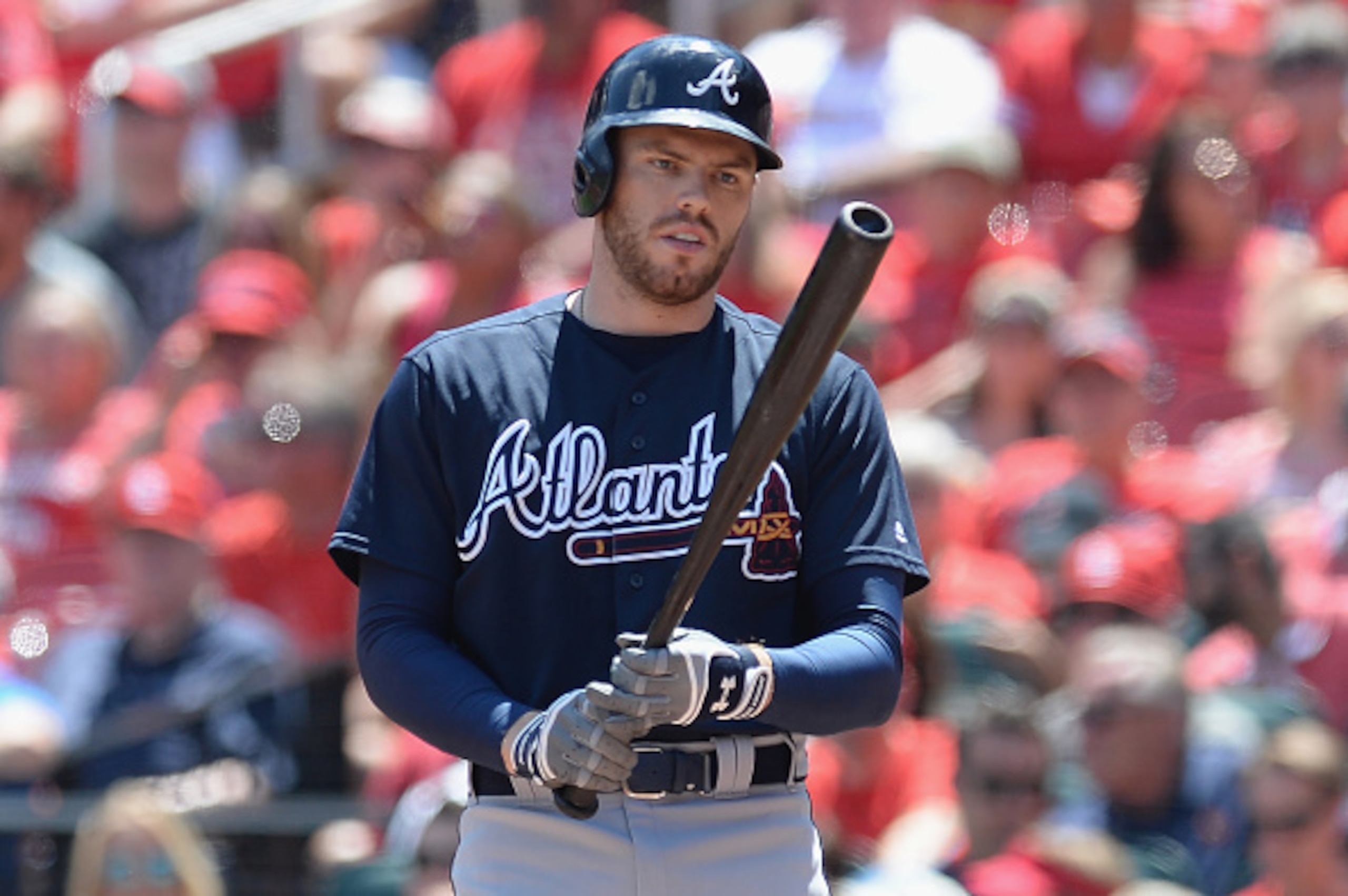
G: 145 PA: 638 AVG/OBP/SLUG: .295/.392/.554 HR: 30 SB: 4
Hitting
After starting relatively slow, Freddie Freeman quickly began looking like himself again. He's still an odd sort of hitter. He's aggressive (52.4 Swing%) and swings and misses a lot (72.5 Contact%), but he also knows when to take his walks, and his swing is dangerous. It's as quick as any swing you could see from a 6'5" hitter yet also powerful (91.6 mph exit velocity) and perfectly suited for line drives. And this year, Freeman's new trick is more frequent use of the opposite field with a career-high 29.8 Oppo%.
Power
Freeman is finally having the power breakout we've been waiting for. He's always had good raw power packed into his 6'5" frame, but his line-drive habit tended to restrict him to doubles. But in 2016 he's getting the ball airborne more frequently with a 17.1-degree launch angle that's producing a 0.8 GB/FB ratio. His exit velocity on fly balls and line drives is also up, from 94.3 mph to 95.6 mph. As the icing on the cake, his power has gone along with his shift toward the opposite field.
Baserunning
Freeman may be 6'5," but he has only 220 pounds on him. He runs well, and his 4-for-4 showing in stolen bases reflects good instincts that will punish pitchers who forget about him. Otherwise, the bad news is that his 27 percent success rate taking extra bases on hits includes just two first-to-thirds in 32 chances. The good news is he's taken 19 bases on non-hits.
Defense
As good as Freeman's bat is, be careful not to overlook his glove. He has the usual things you want in a first baseman, such as good reactions and footwork that allow him to make both tough plays and routine ones. He also has soft hands that allow him to stand out as an elite scoop artist. As a bonus, he has one of the better arms you'll find at the position.
Total
It's been wasted on a rotten Atlanta Braves team, but 2016 has been Freeman's best season yet. He continues to be a menace at the plate, only now with more power. And that's only half of a well-rounded game.
7. Manny Machado, 3B, Baltimore Orioles
49 of 55
G: 151 PA: 671 AVG/OBP/SLUG: .301/.352/.545 HR: 36 SB: 0
Hitting
Manny Machado's big 2015 breakout has continued into 2016, but he's not quite the same hitter. Last year's Machado was more disciplined and better at making contact. And making good contact as well. His exit velocity is down from 92.4 mph to 90.9 mph. But at the same time, Machado is doing more with the good contact he does make. A slight increase in his launch angle has helped him keep the ball off the ground with a 36.8 GB%. Also, his exit velocity is hiding a career-high 35.2 Hard%.
Power
Surprise! Turns out that striving for more power can produce more power. Machado's launch-angle improvement has helped, and he's actually gained some exit velocity on fly balls and line drives: from 94.5 mph to 94.9 mph. It's no wonder he hasn't needed much help from Oriole Park at Camden Yards. Time for more bonus points.
Baserunning
Machado stole 20 bases last year. This year, he has zero in three attempts. This points to two valid excuses: Pitchers are keeping a closer eye on him, and the Orioles just don't run much. He's tried to make up for this with aggressiveness, taking the extra base 53 percent of the time on hits. Too bad he's also run into eight outs—twice his previous career high.
Defense
Machado's reputation as an otherworldly defender precedes him. And yes, it's still legit. He gets my vote for the best combination of hands and arm strength of any player at the hot corner. There's no play he can't make. Let's also not forget he spent a good portion of the season back at his natural shortstop. He played good defense there, too, all the more reason for a perfect score.
Total
This year's Machado may not be a carbon copy of last year's Machado, but he remains an excellent two-way player with improving power and a dandy of a glove.
6. Buster Posey, C, San Francisco Giants
50 of 55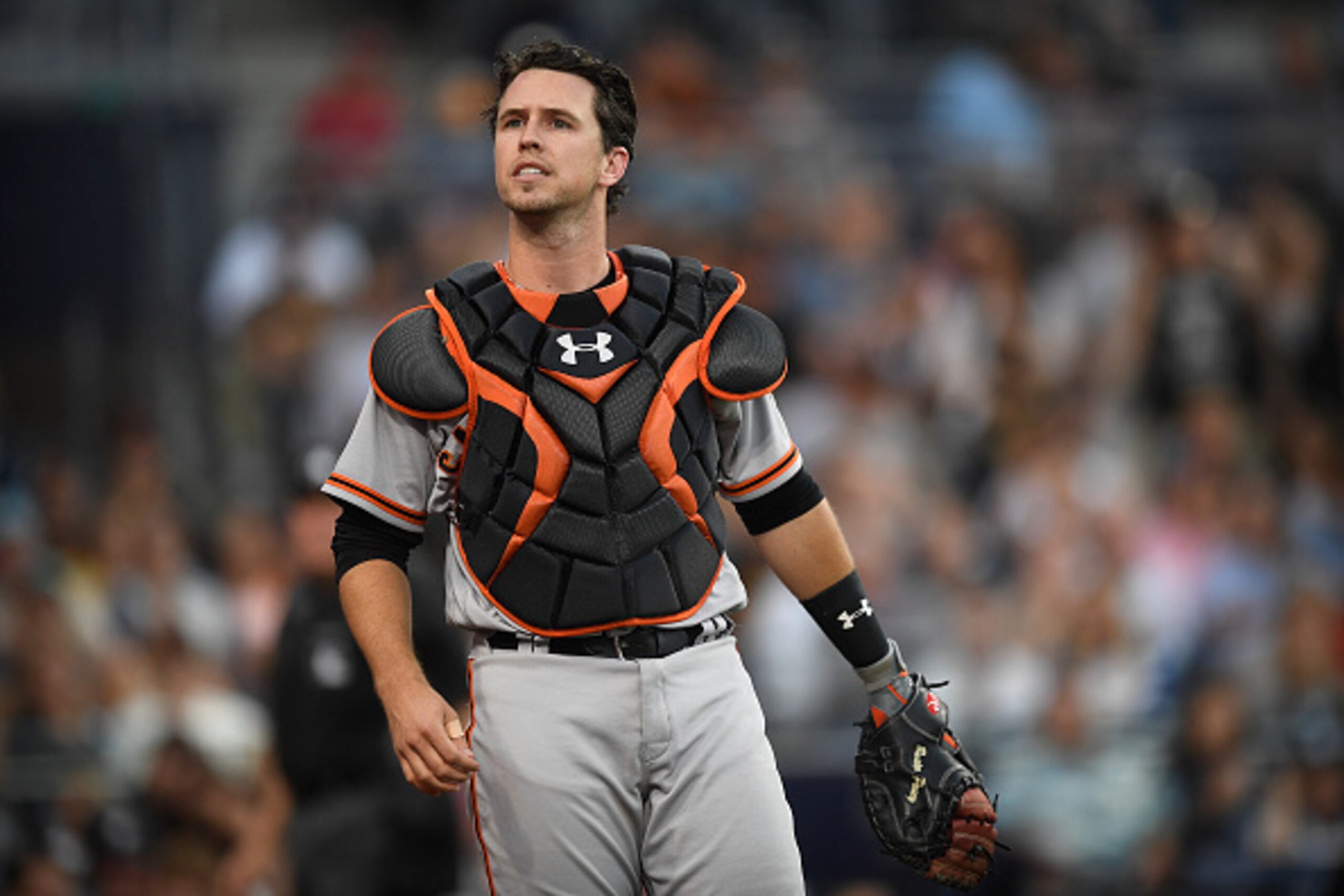
G: 134 PA: 561 AVG/OBP/SLUG: .291/.364/.443 HR: 13 SB: 6
Hitting
An AVG/OBP combo like that is only disappointing when you're Buster Posey, a .307 career hitter with a .373 OBP. He hasn't regressed, however. He's maintained an approach that features excellent patience and discipline and an ability to make contact. And when he has made contact, his sweet swing has continued to produce batted balls all over the yard—and at even better velocity than in 2015 at 91.2 mph. What's holding him back is a higher ground-ball rate, but even that is a little flukey.
Power
Despite a higher average launch angle at 11.9 degrees, Posey's GB/FB ratio has ticked upward. Fortunately, this hasn't cost him as much doubles power as it has home run power. He's still hitting what he gets in the air hard at an average of 94.4 mph, and his all-fields approach allows him to plug any gap he likes. As such, his power hasn't actually gotten worse.
Baserunning
(Blinks once.) (Blinks twice.) Yes, it's true. Posey has six stolen bases in six tries. He's been more willing to take off on pitchers who ignore him. To boot, he's nabbed 20 bases on non-hits for the second year in a row and has gone first to third a career-high 11 times.
Defense
Yes, let's talk about Posey's defense. He's cut down 37 percent of would-be thieves, showing off quick reactions and making strong, accurate throws. He's also let only 21 passed balls and wild pitches get by him all season. He's also been the most productive framer of them all, excelling in particular at securing strikes in the zone. And when he's not catching, he plays a solid first base. For my money, he's the most valuable defender in MLB.
Total
Even in one of his lesser years, Posey is not to be underestimated. He remains a terrific hitter. He may be an even better defender. And now, he's even running a little bit.
5. Max Scherzer, SP, Washington Nationals
51 of 55
G: 33 IP: 223.1 K/9: 11.2 BB/9: 2.2 HR/9: 1.2 ERA: 2.82
Control
Max Scherzer's 2.2 BB/9 isn't as impressive as last year's 1.4 mark. That's life when you opt for more movement and hitters are more disciplined against you. But throwing strikes has hardly become a problem. The consistent arm slot Scherzer found in 2013 is still going strong, and he's hitting the zone with over 60 percent of his fastballs. The only gripe is that he hasn't been changing eye levels as well, as he's down with his heat and up with his secondaries. Otherwise, nothing to complain about here.
Whiffability
This is the second year in a row Scherzer has rocked a K/9 in the 11 neighborhood and a SwStr% in the 15 neighborhood. You shouldn't need me to tell you his stuff is straight-up nasty. He sits 94-95 mph with a fastball that also has lethal late life, making it one of the best in the business at missing bats. His slider is also an elite swing-and-miss pitch. His curveball and changeup are two good ones. With stuff like this, it doesn't matter where he locates it. He can get whiffs both inside and outside the zone.
Hittability
The home runs are an obvious blemish. That's related to how Scherzer is very much a fly-ball pitcher. In addition, even he's risking being hurt whenever he makes mistakes in the zone. Nonetheless, his batted-ball velocity is just 87.6 mph, and he has strong soft-hit (22.1) and hard-hit (29.5) rates, not to mention a 13.3 IFFB%. He may be home run-prone, but most of what he serves up is soft contact.
Workhorse
Make it three 220-inning seasons in three years for Scherzer. He's big, strong and efficient, and he maintains his stuff well. Plus, he's not terrible the third time through the order. These are good ways to average 6.8 innings on 105 pitches per start.
Total
In a year that's gotten only half a season out of Kershaw, Scherzer stands out as the National League's most well-rounded pitcher. He might have the most electric stuff of any pitcher, and his command of it has only gotten better with age.
4. Josh Donaldson, 3B, Toronto Blue Jays
52 of 55
G: 149 PA: 674 AVG/OBP/SLUG: .284/.403/.551 HR: 36 SB: 7
Hitting
Josh Donaldson has been less dominant in the second half, but his 2016 season on the whole has been another roaring success. He's more disciplined in the face of a smaller rate of pitches inside the zone, ergo his 15.6 BB%. He's also slightly better at making contact and is going the other way more often. That might make it sound like he's just shortening up and trying to be consistent. But nah. His exit velocity is just fine at 93.0 mph. In short, dude's good.
Power
Donaldson may not get to 40 homers again, but his power remains a major threat. While his exit velocity hasn't changed, his launch angle has actually gotten higher and forced more of his batted balls in the air. And on fly balls and line drives, his average of 97.7 mph in exit velocity is among the highest in baseball. He hasn't needed Rogers Centre to help him out with home runs. Since not even his immense power production does him proper justice, I'm issuing a nice helping of bonus points.
Baserunning
Donaldson is another guy who's more a "good athlete" than a "fast runner," but his baserunning instincts are not to be overlooked. He finally got caught, but his seven successes make him 21-for-22 stealing bases since 2014. He's also taken the extra base on hits 41 percent of the time and added 23 more on non-hits.
Defense
Donaldson certainly has the goods for highlight-reel plays, playing with a high motor and frequently showing off his laser arm strength. What he struggles with is keeping his outstanding tools in control. That's been a bigger issue than usual this year, as he's posted his lowest success rate on routine plays since he first broke through in 2012. He's also covered noticeably less ground than he did in 2015. This won't go into the books as one of his best defensive years.
Total
No thanks to a humbling second half, Donaldson hasn't quite been the same superstar force he was in 2015. But make no mistake: He's still a dangerous hitter who can work some magic on defense.
3. Kris Bryant, 3B, Chicago Cubs
53 of 55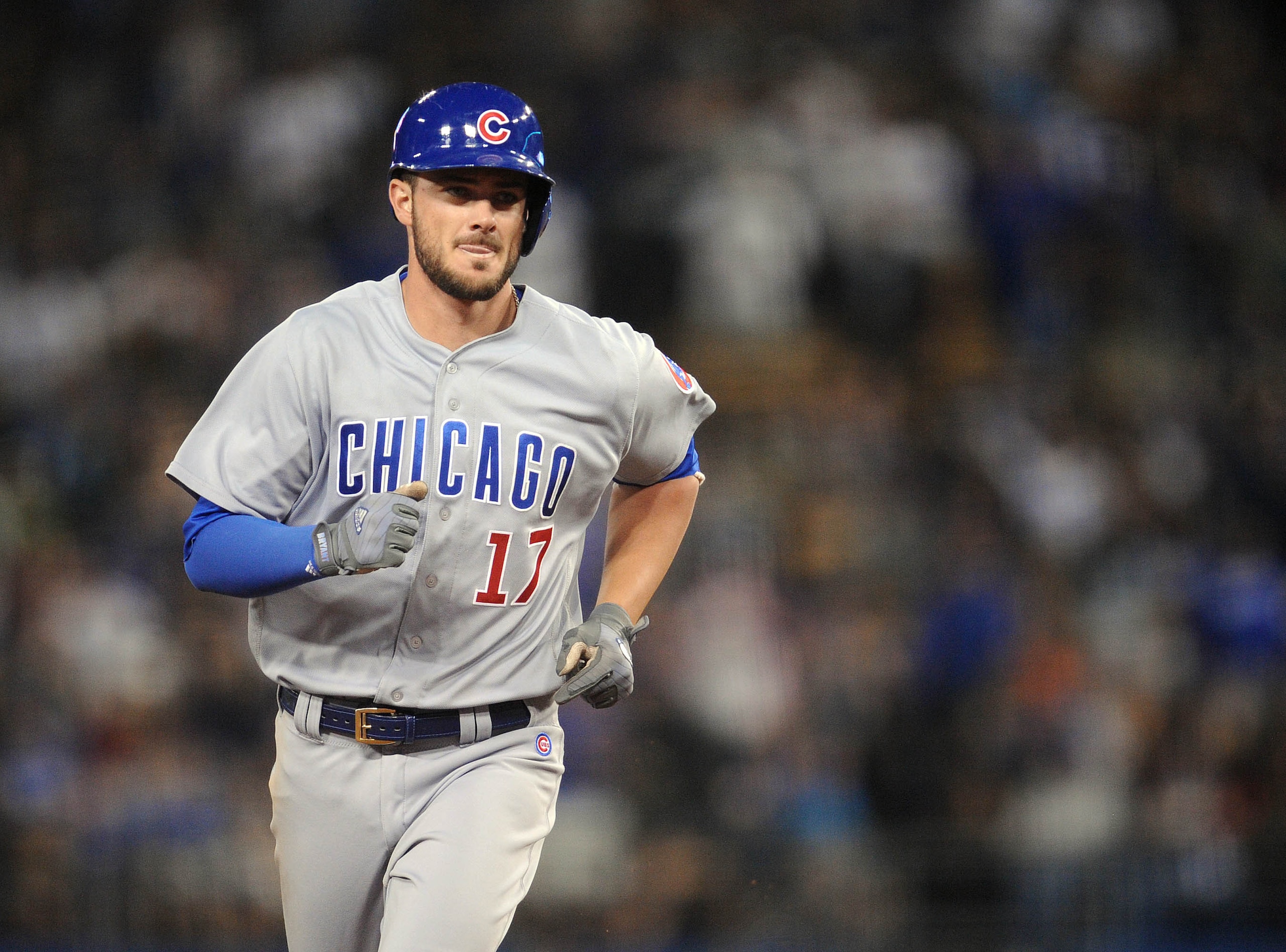
G: 151 PA: 684 AVG/OBP/SLUG: .295/.389/.564 HR: 39 SB: 8
Hitting
Despite winning the Rookie of the Year with his old swing, Kris Bryant came into 2016 with a new swing that was designed to be more direct to the ball. It's working. His strikeout rate is down considerably, and he hasn't had to sacrifice any hard contact to make that happen. He's averaging 90.1 mph in exit velocity. That and his ability to get under the ball (more on that in a moment) have helped him survive a huge increase in shifts. And while he's not Votto, he has good awareness of the zone.
Power
The real risk of Bryant's swing change was less power, but so much for that. He still gets under the ball with a 19.8-degree launch angle that's one of the highest in the league. And on the balls he gets in the air, Bryant averages 94.3 mph in exit velocity. He doesn't have much opposite-field power, but he's otherwise the ideal power hitter who's been too good for a mere 30 points.
Baserunning
This is the part of Bryant's game nobody talks about. He's not fast, per se, but his 6'5" frame gives him a long stride. That only helps somewhat stealing bases, as he's 8-for-13 on the season. But it makes a big difference when rounding the bases. He has a 54 percent success rate taking the extra base on hits and has added 16 bases on other plays.
Defense
Although Bryant has pitched in solid defense in left and right field, he's spent the majority of his time at his native hot corner. His size brings both good and bad. It allows him to reach some hot smashes other third basemen would miss, but it's also a lot of mass to move quickly and also makes it tough to reach some balls. And while his arm is strong, accuracy still isn't one of his finer points. He's done more good than harm on defense, but we should recognize his versatility is more impressive than his talents.
Total
Bryant has made the leap from very good to outright great. He's cleaned up his fundamental flaw at the plate, making him an advanced hitter with superb power and athleticism that plays on the bases and on defense.
2. Mookie Betts, RF, Boston Red Sox
54 of 55
G: 157 PA: 726 AVG/OBP/SLUG: .320/.365/.537 HR: 31 SB: 26
Hitting
The one disappointing thing about Mookie Betts is the awesome walk rates he had in the minors haven't translated to the majors. But that's pretty much it as far as disappointments go. He's exceptionally disciplined despite his lack of walks. He's also an outstanding contact hitter who rarely gets jammed, posting solid exit velocity at 90.6 mph in 2016. He's mostly a pull hitter, but he spreads his hits around. So, yeah, dude's good.
Power
How the heck does a 5'9" hitter like Betts hit 31 homers? Well, Fenway Park has helped. There's no point in ignoring that. But Betts also generates some impressive power with his quick wrists, averaging a solid 92.6 mph on balls in the air this season. And whereas it used to be easy to avoid that power by pitching him away, that's no longer the case. About the only thing he's missing is a high launch angle.
Baserunning
Betts isn't the fastest runner, but he combines speed and instincts as well as any player in the majors. He was caught stealing only four times all year. And if taking the extra base on hits 59 percent of the time is a good reflection of his aggressiveness, the three outs he's made all year are a good reflection of his caution.
Defense
The Red Sox bumped Betts from center field so they could play Bradley there, but playing right field at Fenway Park isn't that far removed from playing center field. And Betts is the perfect guy to handle it. He's not the most instinctive fly-ball tracker, but he breaks quickly and gets plenty of range out of his speed. And just as his power is big for a little guy, his arm is too.
Total
Betts may not be the best player in the game, but he's arguably the most well-rounded. He has power, speed and a good arm, and his approach to everything he does only amplifies his abilities.
1. Mike Trout, CF, Los Angeles Angels
55 of 55
G: 156 PA: 669 AVG/OBP/SLUG: .318/.441/.556 HR: 29 SB: 27
Hitting
Yup, looks like Mike Trout. By now, you should already know that he's one of baseball's most disciplined hitters who also happens to be very good at making loud contact. There's not much more to say on either front. Rather, the big difference this year is in Trout's strikeout rate. It's way down from a couple of years ago. He's made a huge improvement against off-speed pitches. He still swings and misses at high heat, but that's no longer a fatal weakness. Bonus points for the league's OBP leader!
Power
Trout won't come close to last year's 41 homers. Part of the problem has been less explosive contact on balls in the air. He's gone from an average of 96.7 mph to "only" 94.5 mph. His launch angle, meanwhile, hasn't budged. He still has excellent power by the position's standards, of course, but it's no longer the kind of power that would pass for excellent at any position.
Baserunning
The prodigal baserunning son has returned. Trout's 27 steals are as many as he had in 2014 and 2015 combined. He's also taking the extra base on hits 51 percent of the time and has snagged another 32 (!) bases on other plays. Low by his standards, but still good. So much for the notion that he was slowing down.
Defense
Trout's defense, on the other hand, does seem to be past its peak. He's not making really tough catches at the same rate he did in 2012, a year in which he was flying around the outfield with reckless abandon. But his speed and strong route running still allow him to cover a wide swath of ground, and highlight-reel catches remain a part of the overall experience. To boot, an arm that used to be a non-factor is now a solid weapon.
Total
After shifting toward a life as a power hitter in 2014 and 2015, Trout has reverted back to being the best all-around player in baseball. He can hit, hit for power, run and field. And how.



.jpg?w=2560 "Lions Clear $35.6M Cap Space")
.jpg?w=2560 "Report: Tucker Kraft Earns $75M Deal")

.jpg?w=2560 "Most Important 2027 NFL Free Agents")