

B/R MLB 300: Ranking the Top 25 First Basemen of 2016
Hello and welcome to the first stop on the Bleacher Report MLB 300: first base.
The rankings ahead are the first in a series that will lead to the top 300 players in Major League Baseball for 2016. They feature 25 first basemen, most of whom abide by the heavy-hitting tradition of first base. As such, hitting talents account for the majority of the 100 possible points each player can earn:
- Hitting: 35 points
- Power: 40 points
- Baserunning: 10 points
- Defense: 15 points
This is the same scoring pattern that the first three iterations of the MLB 300 used, but there is one major difference this year. Rather than use the events of 2016 to project for next season, this year the focus is strictly on 2016. Think of these rankings as year-end report cards.
For more on how the scoring and ranking work, read ahead.
How They're Ranked
1 of 26
It takes a minimum of 50 games in the majors to qualify for this list. And with a few exceptions, most of the first basemen ahead have also played at least 50 percent of their games at the position.
The scoring is based mostly on statistics—current through Saturday, September 17—from Baseball-Reference.com, FanGraphs, Brooks Baseball, Baseball Savant and MLBfarm.com. The numbers at these sites leave few blind spots when looking at each player's performance, allowing for analytical scouting reports that cover the following:
Hitting: We know the average first baseman is hitting .258 with a .337 on-base percentage. What we also want to know is how each first baseman is living up to that standard and assorted MLB norms with his patience, discipline and ability to make contact, make good contact and, ideally, use the whole field.
Power: The average first baseman is slugging .452, and no position has produced more home runs. This is a cue to look at not only raw power but how well each hitter gets the ball in the air and how else (i.e. a steady pull habit) he maximizes his power potential.
Baserunning: This neck of the woods features more gray areas, so we'll keep it simple with a few questions for each player. Can he steal bases? Can he take more than one base at a time when the opportunity arises? Does he avoid running into outs?
Defense: This is where it's most necessary to do video scouting, but there are also helpful analytics to consult. Defensive runs saved and ultimate zone rating are helpful guiding stars. The same goes for Inside Edge fielding data and the fielding plots available on each player's FanGraphs page.
The individual scores are meant to mimic the 20-80 scouting scale while also taking sample sizes into account. Perfect scores are reserved for players who have excelled throughout the entire season, with extra points being possible (but rare) under extraordinary circumstances. Anything else is a judgment call.
Last but not least: If any two (or more) players end up with the same score, we made another judgment call on the player (or players) we'd rather have.
25. Marwin Gonzalez, Houston Astros
2 of 26
G: 128 PA: 467 AVG/OBP/SLUG: .253/.289/.412 HR: 13 SB: 11
Hitting
After making progress in 2014 and 2015, Marwin Gonzalez's AVG and OBP now more closely resemble his overall career performance. He's an aggressive hitter, particularly with regard to how often he expands (36.7 O-Swing%) the zone. He's also stuck in power-hitter mode, trying to elevate and pull everything he puts in play. This isn't helping his escalating strikeout habit. His one redeeming quality is that he at least makes better contact than the average hitter with 89.8 mph in average exit velocity.
Power
On that last note, Gonzalez has continued his modest power awakening. Although his launch angle of 8.7 degrees is below the league average, he is better at getting the ball airborne than he used to be. After starting out over 2.0, his ground-ball/fly-ball ratio (GB/FB ratio) has settled around 1.4. And when he does put the ball in the air, he shows solid raw power with an average of 94.3 mph in exit velocity. His pull habit further aids his power from both sides.
Baserunning
As you would expect from a guy who's more of a utility player than a true first baseman, Gonzalez can run. The only first basemen with more stolen bases are Wil Myers and Paul Goldschmidt. Gonzalez is also rocking a solid 34 percent extra bases taken rate on hits. It's just too bad he's been caught six times while trying to steal those 11 bases.
Defense
Gonzalez came up as a shortstop, so it's not the biggest shock that his defense at first base features some good range around the bag. His athleticism also serves him well when he needs to make tough picks at the bag. And even if he's still working on his instincts at the position, his versatility is worth whatever points that takes away. He's also filled in at third base, second base and left field.
Total
You won't get anyone to call Gonzalez an exciting player. But with some pop in his bat, speed in his legs and a glove that can play anywhere, he's definitely useful.
24. C.J. Cron, Los Angeles Angels
3 of 26
G: 102 PA: 390 AVG/OBP/SLUG: .279/.327/.478 HR: 16 SB: 1
Hitting
A broken left hand interrupted what's otherwise been a quiet breakout for C.J. Cron. He's still an aggressive swinger, but his discipline is trending in the right direction: His O-Swing% is going down, and his Z-Swing% is going up. His strikeout rate thanks him for it. And with the balls he's put in play, he's only increased his output to the opposite field with a career-high 29.2 Oppo%. He's averaging 90.3 mph in exit velo despite that, leaving little to complain about beside his residual aggressiveness.
Power
Cron's matured approach hasn't hurt his power too much, but there has been one negative effect. In his effort to be more consistent, he has shifted his main power alley from left field to center field, which is a long way away at Angels Stadium of Anaheim. And though his launch angle has improved to a solid 11.6 degrees, his average of 92.9 mph on fly balls and line drives isn't far better than the MLB average of 92.1 mph. His power is at once both good and underwhelming.
Baserunning
At 6'4" and 235 pounds, Cron is a big dude. Lo and behold, he moves like one too. It's a minor miracle that he's stolen even one base, but the three times he got caught stealing are more telling. Meanwhile, it says a lot that he's gone first to third once in 23 chances while compiling an extra bases taken rate on hits of just 17 percent. He's also run into six outs.
Defense
The book on Cron as he was coming up was that he would have to work hard to avoid becoming a DH type. To this extent, it's to his credit that he's at least playable at first base, with good reactions and solid hands. But he brings little range to the position, and his hands aren't good enough to make him an especially adept scoop artist. He's thus mostly confined to making routine plays.
Total
There's a playing-time penalty and a few nits to pick here, but no one should ignore that Cron is advancing as both an offensive and defensive talent.


23. Mark Reynolds, Colorado Rockies
4 of 26
G: 117 PA: 438 AVG/OBP/SLUG: .281/.354/.442 HR: 13 SB: 1
Hitting
His season over due to a broken hand, Mark Reynolds finished 2016 with an AVG and OBP slightly out of his character. Getting to play half his games at Coors Field has helped. Elsewhere, his once sky-high strikeout rate continues to trend in the right direction. There's never been anything wrong with his discipline. Now he's no longer in power mode all the time, adjusting for more line drives and less reliance on his pull side. The catch is inferior contact, as his 88.3 mph exit velo was "meh."
Power
Reynolds as a regular at Coors Field could have been lots of fun, but his move toward greater consistency nixed that. At 33 years old, his age has diminished his power somewhat. But the real culprit is his adjusted approach. When you're not trying to crush every pitch, you're not going to crush every pitch. With an 11.7-degree launch angle and 92.5 mph exit velo on fly balls and line drives, the once-mighty Reynolds is now a merely average power hitter.
Baserunning
Nobody can accuse Reynolds of being a burner, but he does have a more athletic build than the stereotypical first baseman. It doesn't help him steal bases, but he wasn't completely inept at running them in 2016. Simply being on base more consistently helped him take 16 bases on non-hits, and his 38 percent success rate taking extra bags on hits was above his career norm.
Defense
Thank goodness Reynolds no longer plays third, if for no other reason than we're now spared the sight of him throwing the ball. He's a better fit at first base. Although nobody will stump for him for the Hands Hall of Fame, the athleticism that allowed him to play third gives him good range for a first baseman. His success rate on unlikely plays was a nice balance for his iffy success rate on routine plays.
Total
The disappearance of Reynolds' power leaves him without any standout tools. But with a better approach at the plate, he's a more well-rounded player than he used to be.
22. Justin Bour, Miami Marlins
5 of 26
G: 77 PA: 270 AVG/OBP/SLUG: .262/.341/.494 HR: 15 SB: 0
Hitting
An ankle injury took Justin Bour off the field for a while, leaving us with only half of a solid breakout. It helps that the Marlins have forbid him from facing lefties. Otherwise, credit him for tightening up his approach to be more selective with a higher rate of contact. His walk and strikeout rates have improved accordingly. He's also increased his use of the opposite field and more frequently barreled the ball. His exit velocity was just OK in 2015. At 93.6 mph, it's now better than OK.
Power
Had Bour not gotten hurt, he might be gunning for a 30-homer season. This is another benefit of his improved exit velo, which is up to 96.0 mph on fly balls and line drives. He's also benefited from a higher launch angle, going from 8.0 degrees to 10.1 degrees. The one change that could have hurt his power would be his emphasis on the opposite field, but that hasn't happened.
Baserunning
A 6'4" and 250-pound frame would indeed come in handy in generating power. But a frame that large is also hard to move. Thus, Bour is very much a station-to-station runner. It's nice that he hasn't run into any outs, but you can almost count the number of extra bases he's taken on both hits and non-hits on one hand.
Defense
The benefit of having Bour at first base is he's a big target for the other infielders. Other than that, Bour doesn't bring much to the table. His lack of athleticism translates to little range away from the bag, and nobody will mistake him for one of the league's more coordinated first basemen. Even routine plays are a challenge for him.
Total
Bour's low score is reflective of how much time he's missed. But make no mistake: When he has been on the field, he's been a legit offensive threat.
21. Mitch Moreland, Texas Rangers
6 of 26
G: 136 PA: 466 AVG/OBP/SLUG: .243/.311/.448 HR: 22 SB: 1
Hitting
It's appropriate that Mitch Moreland's AVG and OBP are in line with his career rates. He looks like his usual self, mixing a moderately aggressive approach with a swing designed to get the ball airborne to his pull side. He needs hard contact to make it work, and he's just barely getting enough with 91.3 mph exit velo. One difference this year is more success against lefties, but he faces them so infrequently that it's not worth much.
Power
Moreland's power output in 2016 is also par for the course. He's always had good raw power—see his 95.2 mph exit velo on fly balls and line drives—as well as an underrated ability to drive the ball the other way despite his reliance on his pull side. The only real difference this year is a higher average launch angle at 13.8 degrees. He arguably deserves more power than he has thanks to that.
Baserunning
Moreland has typical first base size at 6'2" and 230 pounds and typical first base speed to go with it. He's fulfilled his usual quota of one stolen base, and everything else looks the way it always does as well. He can get from second to home on a single just fine, but he otherwise goes one base at a time.
Defense
Maybe Moreland is not good enough to be an underrated defender, but he is an underappreciated one. He's a good scoop artist, showing good anticipation to go with his dependable hands. And though he doesn't move quickly, he gets solid range from good reactions and his willingness to get dirty.
Total
The Rangers know what they're going to get from Moreland every year: pretty good power and solid defense, but not much else.
20. Steve Pearce, Baltimore Orioles
7 of 26
G: 85 PA: 302 AVG/OBP/SLUG: .288/.374/.492 HR: 13 SB: 0
Hitting
Steve Pearce's bat cooled off upon his return to Baltimore, and then an elbow injury ended his season early. Still, his season was mostly good. The caveat, as always, is that he did the bulk of his damage against lefties. His frequent matchups against them amplified his generally disciplined approach. The real difference between 2016 and his disappointing 2015 was in how he hit the ball, going from 87.4 mph to 90.4 mph in exit velo. And while he remained a pull hitter, he wasn't as much of one.
Power
Small sample size be darned, Pearce's 13 homers and a .492 slugging percentage is good stuff. His swing was actually flatter this year, but an average launch angle of 15.0 degrees still equals a large number of balls in the air. He hit them well too, averaging 93.9 mph in exit velo. And if he got anything in the air to left field, it was good as gone.
Baserunning
At 5'11" and 200 pounds, Pearce is slightly undersized for a first baseman. That's what allows him to play elsewhere on the diamond as well as hustle around the bases. He's not a base stealer, going 0-for-3 in that department. But for a guy who's only a part-timer, the 11 extra bags he took on non-hits and his 44 percent success rate taking extra bags on hits are impressive.
Defense
Pearce wasn't an everyday first baseman, but he did the job when he played there. He played the position with some energy, showing off quick reactions and rarely half-assing it with his positioning when he has to pick throws in the dirt. He was, and always has been, as much of a lock on routine plays as a first baseman can possibly be. He's less handy in the outfield, where he's less comfortable.
Total
Disappointing finish notwithstanding, Pearce recaptured some of the magic of his big 2014 breakout in 2016 by hammering left-handers and playing versatile defense.
19. Sean Rodriguez, Pittsburgh Pirates
8 of 26
G: 127 PA: 293 AVG/OBP/SLUG: .266/.349/.516 HR: 16 SB: 2
Hitting
Sean Rodriguez's primary offensive function is to feast on left-handed pitching, and he's done that better than ever in 2016. This traces to a couple of things: He's become more disciplined after trying a more aggressive approach in 2014 and 2015, and he seeks to destroy with his swings. His exit velocity is 91.0 mph, up from 87.4 mph in 2015. Trouble is, all those wild swings lead to a lot of strikeouts.
Power
Rodriguez's power is good stuff for a part-timer. This traces back to the punch he packs, as his exit velo is even more extreme on balls in the air. He's averaged 96.9 mph on fly balls and line drives, a figure that tops even Chris Davis and Jose Bautista. And with an average launch angle of 11.9 degrees, he's putting plenty in the air. Small sample size be damned, this is good power.
Baserunning
It's been years since Rodriguez has been a double-digit stolen base guy, but he remains a good case study for aggressive baserunning. His rate of extra bases taken on hits is north of 40. It's also true to his usual form that he's run into only three outs.
Defense
Rodriguez has mostly played first base, but he's also played second, short, third and all three outfield positions. He's not really out of place at any position. No one tool stands out, but he has good defensive instincts to go with solid hands and a solid arm. If nothing else, he can be counted on to make the easy plays—especially at first base, where he has yet to miss one of those in 2016.
Total
Rodriguez is probably best known for that time he punched out a water cooler. Now meet a guy who can hit a bit in addition to playing all over the field.
18. Brandon Moss, St. Louis Cardinals
9 of 26
G: 115 PA: 415 AVG/OBP/SLUG: .238/.313/.518 HR: 27 SB: 1
Hitting
Brandon Moss crushed it in the first half, but his second-half slump was likely inevitable. His new stance (more on that in a second) hasn't led to a more disciplined approach or more contact. In general, he still operates like a power hitter: try to get under the ball and smash it to the pull side. His exit velo of 89.4 mph is underwhelming in this regard, and it's not enough for him to hit through the many shifts he attracts.
Power
Moss has always had good raw power, and it shows up when he puts the ball in the air. His fly balls and line drives are averaging a solid 93.9 mph. Meanwhile, his lower stance has helped his launch angle. At 20.6 degrees, he's lead a fellow Brandon (Belt) for the highest mark among qualified hitters. This plus raw pop is a good power recipe.
Baserunning
This 6'0" and 210-pounder isn't necessarily fast, but he's not the typical lumbering first baseman either. Moss' wheels don't serve him stealing bases, as he's stolen only one this year and nine in his career. But this is the fourth year in a row he's taken double-digit bases on non-hits, and he's taken the extra base on hits 40 percent of the time.
Defense
Moss has played both corner outfield spots in addition to first base, so he's a tough guy to place at any one position. When he does play first, his athleticism allows him to make some tough plays. But the routine plays have been a significant problem for him, as he doesn't have good hands for the position.
Total
Moss' value revolves almost entirely around how much power he can provide, so hats off to him for maximizing it by adding more loft to go with his raw pop.
17. Chris Carter, Milwaukee Brewers
10 of 26
G: 147 PA: 590 AVG/OBP/SLUG: .222/.324/.488 HR: 35 SB: 3
Hitting
The way in which Chris Carter has cut down on his pull rate the last two years makes it look like he's up to something. But otherwise, it's same ol', same ol'. He's not a wild swinger, routinely posting sub-30 O-Swing% rates. Walks will always be there for him because of that. But so will whiffs. His swing still revolves around loft and little else, as there are few launch angles as extreme as his. Anything not in his swing path eludes his bat. Alas, strikeouts and fly balls do not a consistent hitter make.
Power
And now for Carter's bright side. His extreme launch angle puts the majority of his batted balls in the air, giving him a GB/FB ratio safely under 1.0. And he annihilates what he does put up in the air. Seriously. His exit velo on fly balls and line drives is 97.5 mph. He and few others can do that. So while his move away from his pull side isn't helping, it's not killing his power either.
Baserunning
Carter is a 6'4" and 245-pound behemoth who doesn't usually find himself in a position to have to "run" around the bases. And when he does, he's station-to-station all the way. His three stolen bases and 12 bags taken on non-hits aren't enough to make up for his 18 percent success rate taking extra bags on hits or the six outs he's run into.
Defense
Considering that his best position is DH, it's to Carter's credit that he hasn't made a total mockery of himself at first base this season. But he's not about to win a Gold Glove either. He looks sluggish even when he makes an athletic play, so it's no wonder he's whiffed on a handful of makeable plays in 2016. He's OK at making routine plays. Anything beyond that is generally a no-go.
Total
Carter still swings and misses too much and doesn't bring much to the table when he's not at the plate. But if anyone wants humongous power, he's your huckleberry.
16. Eric Hosmer, Kansas City Royals
11 of 26
G: 147 PA: 619 AVG/OBP/SLUG: .272/.336/.442 HR: 23 SB: 5
Hitting
Eric Hosmer's season has been book-ended by great production and solid overall. He remains a good all-fields hitter, and this year his exit velocity has improved from 90.5 mph to 93.6 mph. But that's gone to his head, leading to more aggressive swinging in the middle of the year and a whiff problem against stuff with spin throughout the season. That's also made it difficult for him to correct his long-standing ground-ball problem, leaving much of his exit velo to go to waste.
Power
At long last, Hosmer has crossed the 20-homer plateau. That he's done so despite an average launch angle of just 6.2 degrees goes back to how well he's been barreling the ball this year. He's averaging 95.5 mph on fly balls and line drives, and he hasn't let his all-fields approach bar him from extra-base hits. If not for Kauffman Stadium, he'd probably have even more.
Baserunning
With just 225 pounds on a 6'4" frame, Hosmer is blessed with a more athletic body than most first basemen. But with more power comes less need for him to use his speed. Hosmer has become a less aggressive baserunner in every conceivable way, attempting only eight steals and taking extra bases far less often. He still moves well, but he's become more of a station-to-station runner.
Defense
Hosmer is the Derek Jeter of first base. His reputation says he's great, but defensive metrics such as DRS and UZR paint a different picture. There's truth on both sides. Hosmer often looks great in part because he's good at saving his infielders from throwing errors with his scooping skills. But as August Fagerstrom demonstrated at FanGraphs, Hosmer's range from the bag is nothing special. And this year more than ever, he's been restricted to making routine plays.
Total
Hosmer hasn't had a bad season, but it's been frustrating. The increased power is nice, but it's a big price to pay for regression in every other department.
15. Adrian Gonzalez, Los Angeles Dodgers
12 of 26
G: 144 PA: 590 AVG/OBP/SLUG: .285/.349/.434 HR: 17 SB: 0
Hitting
Adrian Gonzalez had to fight to get his numbers where they are, as he was dealing with a bad back that rendered him largely useless earlier in the year. Ever since he got over that, he's had an easier time getting under the ball and making hard contact. His GB/FB ratio has dropped from 2.0 in the first half to 1.5 in the second, and his Hard% has gone from 29.4 to 37.4. Meanwhile, he's continuing his regression back to being a more patient type of hitter.
Power
Gonzalez went from slugging .412 with seven homers before the break to .465 with 10 homers after the break. His launch angle has improved from 8.9 degrees to 12.2 degrees, allowing him to make the most of his improved hard-hit rate. This doesn't excuse a modest overall performance, but we have to recognize good rescue work when we see it.
Baserunning
Gonzalez isn't a dumb baserunner. He's run into only two outs on the basepaths and hasn't been entirely hopeless in terms of taking extra bases, bagging 12 on non-hits and 12 on hits. But if you've seen him run, you know he moves about as quickly as King Zora from The Legend of Zelda: Ocarina of Time.
Defense
Gonzalez's reputation as one of the finer defensive first basemen in the game is well-earned. He has some of the best hands you'll find at the position, allowing for routine plays to be, well, routine. It's not all good, though. In years past, he used a quick first step and smooth actions to extend his range. Perhaps because of his back, that ability has been hit-or-miss this year.
Total
A creaky back hasn't made Gonzalez's life easy in 2016, but he's done a solid job of turning things around with better contact while continuing to be a reliable defender at first base.
14. Jose Abreu, Chicago White Sox
13 of 26
G: 145 PA: 637 AVG/OBP/SLUG: .300/.353/.481 HR: 24 SB: 0
Hitting
Just when the league seemed to have figured Jose Abreu out, he's caught fire in the second half. His qualities include an improving contact habit that comes from his considerable zone coverage. And even more so than when he first broke in, he uses the whole field well. Most important of all, he's quieted any concerns about a slowing bat. He's gone from a .293 average against fastballs in the first half to .383 in the second half, seeing them deep into the hitting zone and punching them the other way.
Power
Rumors of the demise of Abreu's power were also exaggerated. He's upped his launch angle from 9.7 degrees to a more power-friendly 10.9 degrees. That makes up for how his exit velo on balls in the air has decreased from 94.5 mph to 92.8 mph. With these two things together, it's no wonder he's able to clear any fence. This is one power hitter who doesn't need to rely on his pull side.
Baserunning
Abreu's 6'3" and 255-pound frame allows power to come easily. Speed, not so much. We must credit his brain for the fact his rate of extra bases taken on hits is trending up. He started at 27 percent in 2014 and is now at 35 percent. He's also once again nabbed double-digit bases on plays where there's been no hit involved. He's not Billy Hamilton, but there's worse baserunning at this position.
Defense
Year 3 of Abreu's defense hasn't been much better than Year 1 or Year 2, if at all. It's not for nothing that he presents such a big target for White Sox infielders to throw to. But he is blessed with neither quick-twitch athleticism that gives him range from the bag nor good hands. Even routine plays are no sure thing for him. Difficult plays are all but out of the question.
Total
Abreu is not the thunderous offensive force that he was when he first arrived in 2014. But thanks to his second-half surge, he's shown he still has one of the more dangerous bats at the position.
13. Joe Mauer, Minnesota Twins
14 of 26
G: 132 PA: 571 AVG/OBP/SLUG: .263/.364/.392 HR: 11 SB: 2
Hitting
Joe Mauer can see again. His approach never got wild, but now it's back to being hyper-disciplined with a 35.9 Swing% and 23.3 O-Swing%. What had been escalating swing-and-miss rates are now down across the board. He's back to smacking line drives with heavy use of the opposite field. That makes up for the fact that his average batted ball is "only" 90.1 mph; we sarcastically use the quotation marks because even that's still above average. However, it's a shame even he gets hurt by the shift.
Power
We've entered Year 7 of wondering whether Mauer's 28-homer explosion in 2009 was a fluke. It's probably safe to guess the answer is yes. Mauer simply doesn't get under the ball, posting an average launch angle of just 5.0 degrees. His GB/FB ratio continues to hover well north of 2.0 because of that. One saving grace is the 93.9 mph he averages on balls in the air. The other is how much power his opposite-field habit provides.
Baserunning
Mauer is 33 and playing on legs that have taken a few beatings. And yet, he's still a halfway decent baserunner. He's only good for a couple of steals per year these days, but his 38 percent success rate taking the extra base on hits is higher than you would expect from a guy as well-traveled as him.
Defense
Mauer's third full season as a first baseman has probably been his best. He only played mistake-free defense in 2014 and 2015. He's continuing to do that in 2016, posting an elite success rate on routine plays, but now he's bringing more to the table as well. He's extended his range to make tough plays and is helping out his fellow infielders with some nifty scoops.
Total
Without power and a steady role behind the dish, two things that once inflated Mauer's value are gone forever. But it is nice to see him hitting and getting more comfortable at first base.
12. Mike Napoli, Cleveland Indians
15 of 26
G: 139 PA: 598 AVG/OBP/SLUG: .250/.344/.493 HR: 34 SB: 4
Hitting
Mike Napoli is relevant again! He's forced the issue by upping his aggressiveness without getting too crazy. That and simply being fully removed from a grueling surgery in 2015 has boosted his exit velocity from 89.1 mph to to 91.1 mph. Some weaknesses remain, however. Napoli is still prone to swing through his fastballs, and he's seen more of those in 2016 than he did in 2015. He also remains a terrible bad-ball hitter, so his increased aggressiveness isn't all good.
Power
This is where there are fewer nits to pick. Napoli's tremendous raw power has long been the stuff of legend, and he's been showing it off with 96.4 mph in exit velocity on fly balls and line drives. And with an average launch angle of 16.2 degrees, he's still giving himself plenty of chances to show off his raw power. He's also rocking his highest Pull% in years, resulting in a gloriously skewed spray chart.
Baserunning
You wouldn't expect a power-hitting, 34-year-old first baseman like Napoli to be much of a baserunner. But he's showing he's still decent. He has swiped four bags in five tries and has taken 23 bases on non-hits and 32 percent of the extra bases presented on hits. The one problem? The 10 outs he's run into.
Defense
Napoli has mostly been a success as a full-time first baseman but not so much in 2016. Normally pretty sure-handed, he's had problems with errors, including a few too many on makeable plays, leading to the lowest success rate on routine plays of any qualified first baseman. And relative to when he first started at first base in 2013, his range just isn't the same.
Total
Napoli is having one of his good BABIP years, so his offensive success is probably a bit overstated. But only a bit. He's back at full strength, and that's restored the mighty power that he's made his name on.
11. Carlos Santana, Cleveland Indians
16 of 26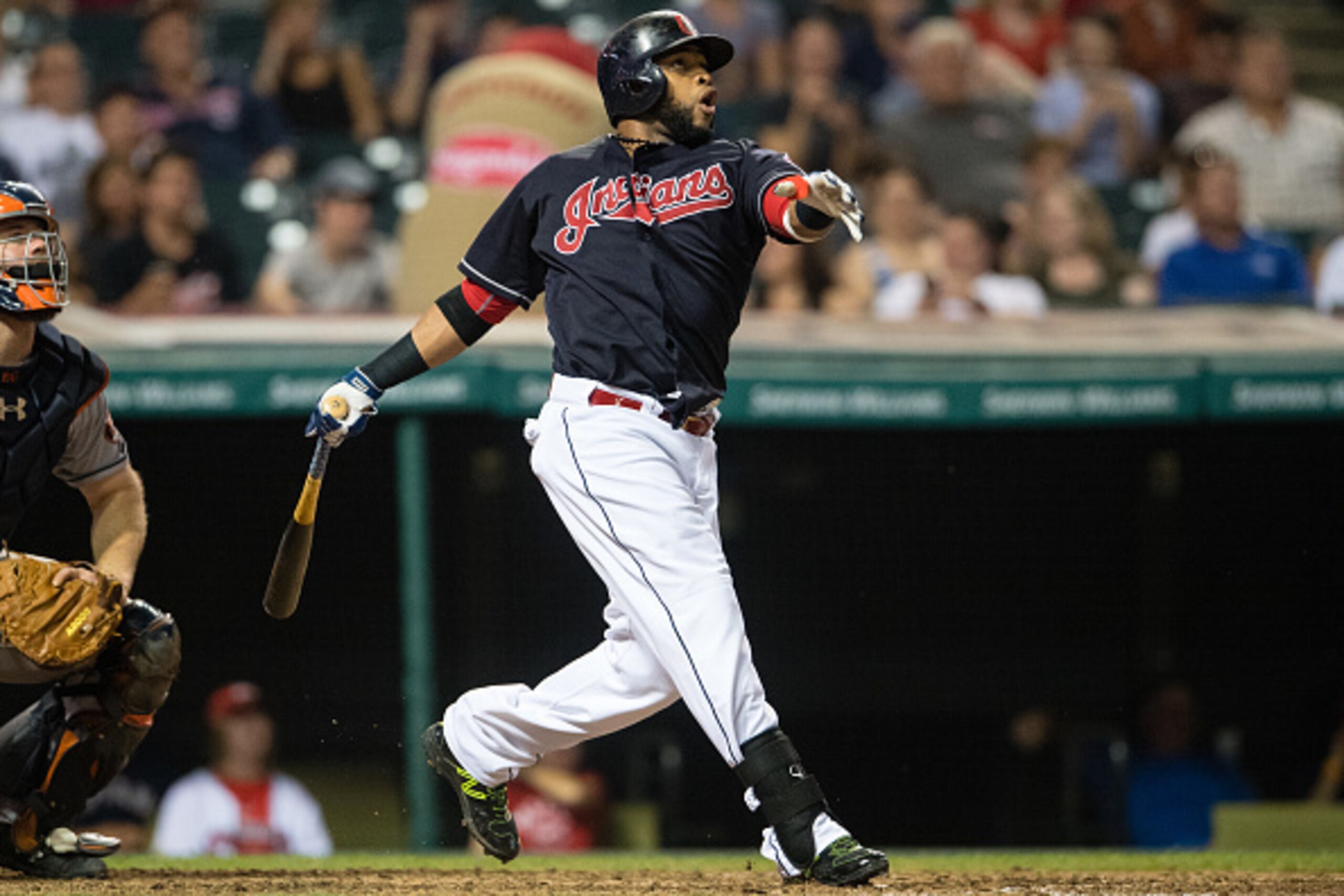
G: 145 PA: 632 AVG/OBP/SLUG: .244/.354/.467 HR: 31 SB: 5
Hitting
Carlos Santana remains one of the most disciplined hitters in the sport. He chooses his swings extremely carefully, posting a 38.7 Swing% and a 19.6 O-Swing% that's among the lowest in baseball. His sin in the past had been being disciplined to the point of being passive. Now he's swinging at more pitches in the zone, leading to more contact and better contact to boot. He's averaging 91.4 mph on his batted balls. His last remaining vice is a big one: an extreme habit that's easily contained by the shift.
Power
Santana's 31 homers are a new career high. He's not only making louder contact but also getting under the ball more frequently. His average launch angle is up to 12.4 degrees from 8.9 degrees. His average of 93.6 mph on balls in the air is plenty high, and much of that action is to his pull side whether he's batting lefty or righty. Lastly, there's this: A lower strikeout rate means more opportunities to show off his power approach.
Baserunning
Big-bodied first base/DH types on the wrong side of 30 aren't supposed to run well. Santana is an exception. He's not fast, but he accelerates quickly for a guy his size. The result? Five steals in seven tries and a 39 percent success rate taking extra bases on hits, not to mention his whopping 24 bases taken on non-hits. Fun fact: The whole Indians team is really good at that.
Defense
Santana has mostly served as Cleveland's DH in 2016, but his 500.2 innings in the field are too many to ignore. The athleticism that serves him well on the bases also shows on defense. He's quick on his feet and capable of making some tough plays. But his hands weren't great to begin with and seem to have gotten worse due to inconsistent playing time. He's made five errors, mostly on makeable plays.
Total
Santana was already one of baseball's most advanced hitters. Now he comes with more power. This calls for a guitar solo.
10. Hanley Ramirez, Boston Red Sox
17 of 26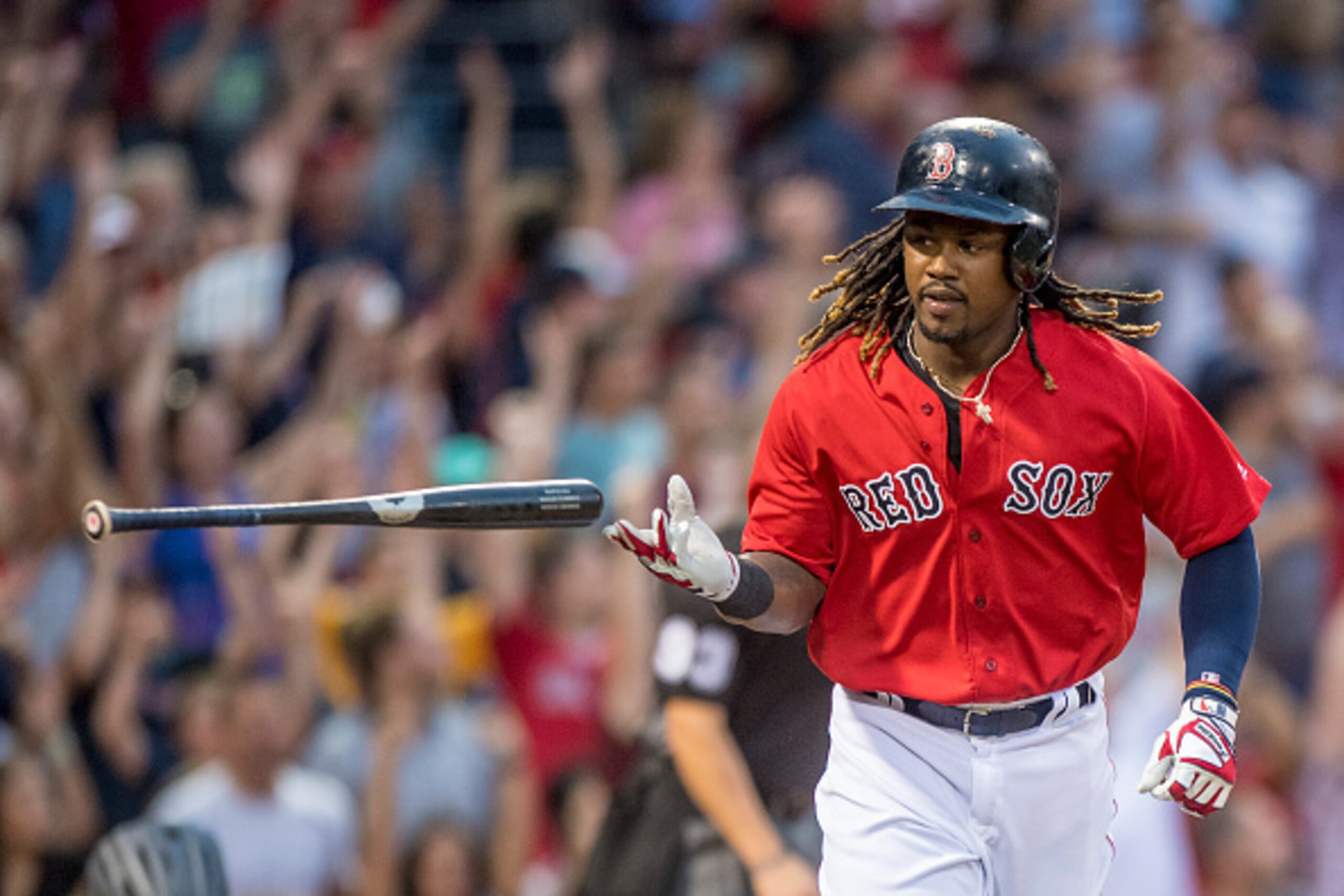
G: 135 PA: 570 AVG/OBP/SLUG: .290/.361/.503 HR: 26 SB: 9
Hitting
Hanley Ramirez has put last year's sub-.300 OBP behind him thanks to some real improvements. One is simply good health. That's helped the quality of his contact, boosting his exit velo from 90.9 mph to 91.7 mph. He's also turned his power-mode dial below 11, becoming more selective and going the other way more often. His discipline and oppo tendency have indeed weakened in the second half as he's chased more power, but overall he has had more of a well-rounded approach in 2016.
Power
Ramirez's power-hitter act yielded better raw power in 2015, as his exit velo on balls in the air is down from 95.4 mph to 94.8 mph. But on the plus side, his launch angle is up from 6.1 degrees to 8.8 degrees. The further good news is that Ramirez's all-fields approach hasn't killed his home run prowess. He's assaulted all fields.
Baserunning
It's not just a different approach that has sapped Ramirez's power. He also lost weight over the winter. That's had some payoff on the basepaths, where he's stolen nine bags in 11 tries and taken the extra base 42 percent of the time on hits. However, the 11 outs he's run into are way too many.
Defense
It was easy to agree with ESPN.com's David Schoenfield's preseason assertion that Ramirez would be a disaster at first base. He certainly was in left field, and he wasn't much of a shortstop before that. It's not surprising that he's shown good athleticism around the bag, allowing him to make some tough plays. But his modest success rate on routine plays is no accident. Ramirez has not been a great pick artist, and there are times when his inexperience shows. Sometimes painfully so.
Total
Ramirez has rescued himself from the ranks of baseball's worst players. He showed up in better shape and has benefited from a more measured approach without sacrificing much power.
9. Brandon Belt, San Francisco Giants
18 of 26
G: 142 PA: 597 AVG/OBP/SLUG: .273/.390/.465 HR: 15 SB: 0
Hitting
Brandon Belt got power-happy for a couple of years there. Owen Watson of FanGraphs highlighted how he's since made adjustments to help him see pitches longer, resulting in much-improved discipline, more contact and a more even distribution of hits to all fields. He's paid for this in exit velo, though, going from 90.2 to 87.0 mph. He's also struggled to adjust to the adjustment against him, which calls for more breaking balls and more high-and-away heat.
Power
Belt's swing sure has enough loft, producing one the highest launch angles of any hitter at 20.1 degrees. However, an approach that's not as much designed for power doesn't produce much power. His exit velo on fly balls and line drives is below average at 91.3 mph. And now that he's no longer frequently pulling the ball, he's neglecting his main power alley. He's maintained plenty of doubles power, but his home run power is dormant.
Baserunning
Belt is normally aggressive by first base standards, swiping 12 bags in 2012 and nine last year. But this year? Zero. It could be that he hasn't felt like running after suffering injuries to both ankles early in the season. But he's still doing well on the harder-to-notice baserunning plays, taking a career-high 19 extra bags on non-hits and maintaining a solid 30 percent success rate of bases taken on hits.
Defense
I'm trying not to take too many cues from defensive metrics, but Belt's are hard to ignore. Both DRS and UZR rate him as one of the top five defensive first basemen in the game since 2012. He's the total package at first base, getting range from his quick reactions and athleticism. He has a nice pair of hands on him too, although those have admittedly let him down more than usual on routine plays.
Total
Belt's modest power numbers make him easy to overlook among his first base peers. But with a consistent bat and a really good glove, he remains an overlooked gem at first base.
8. Chris Davis, Baltimore Orioles
19 of 26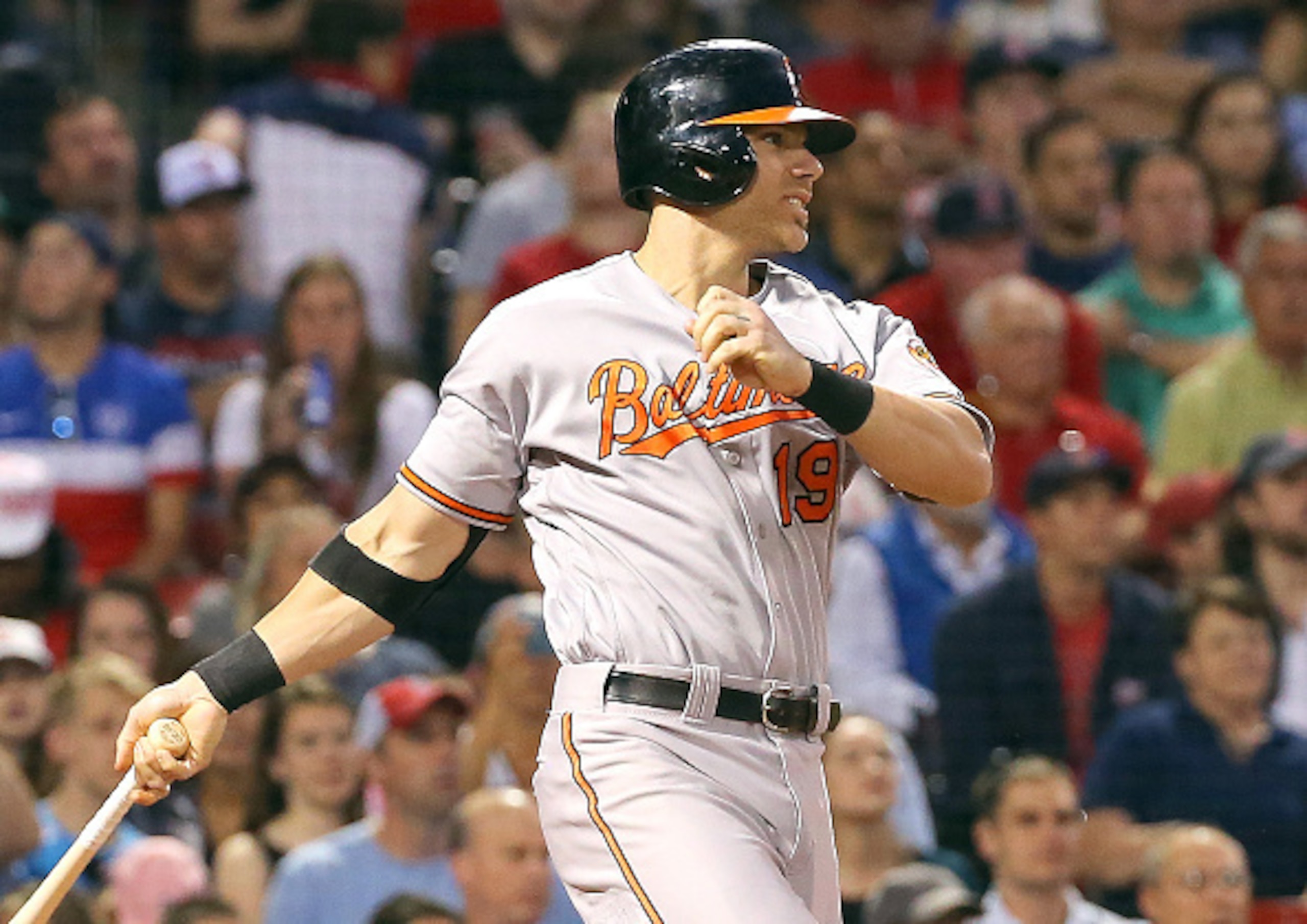
G: 143 PA: 604 AVG/OBP/SLUG: .223/.336/.482 HR: 38 SB: 1
Hitting
It's an even year, so of course Chris Davis is a little off. He's once again rocking a strikeout rate over 30 percent and getting killed by frequent shifts. With a big strike zone and an approach built for power, that's just how it is. The key to his game is barreling the ball when he does make contact, and he's just not doing that as well in 2016 as he did in 2015. His exit velo is down from 92.2 mph to 91.7 mph. On the bright side, he's at least been more selective and taken more free passes.
Power
On another other bright side, Davis' power is still going strong. He has so much raw pop that he could probably hit a ball with a toothpick and still send it over the fence. And while his exit velocity may be down overall, his average of 96.4 mph on balls in the air is still elite. Ditto his launch angle, which is still hovering above 18 degrees. And as usual, no part of the yard is safe from his power.
Baserunning
Nobody is going to call Davis a fast runner, but he does have long strides and a good sense of various baserunning situations. Hence, this is not the first time he's taken the extra base nearly half (48 percent) the time he's had an opportunity and double-digit extra bags on other plays. Don't call him a station-to-station guy.
Defense
Davis is an ideal first baseman for fellow infielders: big and with good hands. He's one of the game's better scoop artists. And for a guy his size, he's also surprisingly mobile around the bag. Although he doesn't specialize in any of them, he can make the tough plays, the routine plays and everything in between.
Total
Davis' year-to-year consistency could use some work. But then again, you could find worse than a slugging first baseman who hits for lots of power, gets on base and fields his position.
7. Wil Myers, San Diego Padres
20 of 26
G: 143 PA: 613 AVG/OBP/SLUG: .260/.334/.459 HR: 25 SB: 25
Hitting
Second-half slump aside, this is what a healthy Wil Myers looks like. He's doing many things right, including selectivity and improved contact across the board. And despite being a middle-in swinger, he's de-emphasized his pull side and looked to go the other way more. When a hitter is this advanced, it's easier to overlook his modest 89.2 mph exit velo. Trouble is, exit velo has been even harder to come by as pitchers have taken to pounding him low and away. He needs another adjustment.
Power
Myers has hit only six homers in the second half after mashing 19 in the second half. This could be the Home Run Derby curse. Or it could be an inevitable regression. His launch angle of 8.8 degrees is nothing special. Ditto his 92.8 mph exit velo on balls in the air. He also hasn't helped himself with his newfound oppo habit. He's hit some home runs in that direction but has also settled for a few doubles.
Baserunning
This isn't even fair. Most first basemen are first basemen by trade. Myers is a former outfielder who used to play a passable center field. So, of course he's blowing away positional standards with 25 stolen bases and a 61 percent success rate taking extra bases on hits. He's earned some bonus points here. Only fair.
Defense
Myers' athleticism is also serving him well on defense. Combined with surprisingly natural reaction times, he's shown good range around the bag. He's also been a surprisingly good scoop artist with a nice feel for how to position his body. That explains his 98.3 percent success rate on routine plays.
Total
Myers looked like a flameout in 2014 and 2015 after winning the Rookie of the Year in 2013. Now here he is as a surprisingly well-rounded first baseman, with an improved approach, good power, excellent speed and a strong glove.
6. Joey Votto, Cincinnati Reds
21 of 26
G: 144 PA: 614 AVG/OBP/SLUG: .313/.428/.519 HR: 24 SB: 8
Hitting
Joey Votto's first two months were rough. Since then, he's basically been Joey Votto. He never lost his eye for the strike zone, which is still one of the best there is. But he was failing to cover the inside part of the zone and trying to pull too many pitches. He's corrected both those issues. And while his exit velo has remained consistent throughout, he's made it worth it by keeping balls off the ground since June, going from a 48.8 GB% to a 40.7 GB%. Guy can hit, folks.
Power
Votto's rush to adjust hasn't cost him too much power. The aforementioned move away from ground balls has been a factor, boosting his launch angle to 13.1 degrees. He also puts a good charge into the balls he puts in the air. His average of 93.6 mph on fly balls and line drives is down from 94.7 mph in 2015 but still good. And no part of the yard is safe when he's at bat, although playing at Great American Ball Park also helps.
Baserunning
Age (33) and battered legs have slowed Votto. He's not the same baserunner he was in his heyday, like when he stole 16 bags and took a ton of extra bases in 2010. He especially doesn't do much of the latter anymore, taking few bases on either hits or non-hits. But if nothing else, his 8-for-9 showing in stealing bases is a reminder for pitchers not to fall asleep on him.
Defense
It's hard to turn a blind eye to how the defensive metrics are rating Votto as a terrible defender, as well as how much he's struggled to make even routine plays. His explanation earlier in the year was that his hitting slump got to him and forced some bad decisions. That can't be excused. But since Votto's defense has always consisted more of technical brilliance than physical brilliance, it can be believed. He's looked better lately, showing off his usual good instincts and quick reactions to make plays.
Total
No matter which way you slice it, 2016 has not been one of Votto's better seasons. But the picture does look a lot brighter when the focus is restricted to the last four months, in which he's regained his status as arguably baseball's best hitter.
5. Edwin Encarnacion, Toronto Blue Jays
22 of 26
G: 146 PA: 639 AVG/OBP/SLUG: .265/.354/.539 HR: 40 SB: 2
Hitting
Edwin Encarnacion just keeps being himself. The only red flag is his escalated strikeout rate, which erases the one thing that had made him so different from other power hitters. A spike in fastball whiffs is to blame for that, which may be an indication his bat is slowing down. But this isn't much more than a nitpick. Encarnacion still has an outstanding eye; he knows what he wants and gets it when he does. He is liable to swing at any pitch middle-in and crush it. Simple yet effective.
Power
Encarnacion remains tethered to the 40-homer plateau. He has loads of raw power and a formula for showcasing it. He gets under the ball well, posting a launch angle of 14.2 degrees. And when he does get the ball in the air, two things are given: The ball will be somewhere in the mid-90s (95.8 mph this year) in exit velocity, and it will be to left field. This is how dingers happen.
Baserunning
Encarnacion could move well a couple of years ago. But now he's 33 and mainly keeping it station-to-station. He's swiped only a couple of bags and has sparingly taken extra bases both on hits and non-hits. His best quality now is his caution, as he's run into only two outs all year.
Defense
Encarnacion has been the DH more than he's played first base, but he's played enough first base to be graded as one. And he's been reliable when he has played there. Among first basemen with at least 500 innings, he's the only one with a 100-percent success rate on routine plays. It's likely a one-time thing due to Encarnacion's non-elite hands and athleticism, but he still gets credit for making it happen.
Total
As always, Encarnacion is a bat-only player. But also as always, that bat comes with a good approach and lots of power.
4. Miguel Cabrera, Detroit Tigers
23 of 26
G: 145 PA: 620 AVG/OBP/SLUG: .308/.384/.545 HR: 33 SB: 0
Hitting
When you win four batting titles in five years, even a .308 average is somewhat disappointing. But whatever. Miguel Cabrera is still arguably the most consistently locked-in hitter at the plate, showing a lovely mix of discipline and contact and an ability to square the ball up to every field. The one thing that's taken a hit this year is his ability to hit everything. A hole has opened up at the top of the zone. If nothing else, it's something to monitor as he heads deeper into his 30s.
Power
Miggy's power has made a comeback after injuries and lengthy recoveries did a number on it in 2014 and 2015. He's still not getting under the ball like he did in 2012 and 2013, posting GB/FB ratios in the 1.2 range. Nonetheless, he's maintaining a solid launch angle at 13.5 degrees and destroying fly balls and line drives at an average of 97.1 mph. And as much as anything, good health has restored his once-mighty opposite-field power.
Baserunning
Cabrera wasn't fast to begin with. Now he's 33 and playing on legs that have soaked up a lot of mileage and, in recent years, quite a bit of damage. You'll have to excuse him for becoming strictly a station-to-station baserunner.
Defense
To repeat an oft-repeated point: Cabrera is a much better fit at first base than he was at third base. He can at least make the easy plays at first base, converting 98.1 percent of routine plays. He just doesn't bring much else to the table. Slow reactions and slow feet give him virtually no range, and his hands are at best just OK.
Total
Cabrera's elite status was tied to his firm grip on the "Best Hitter in Baseball" label, which he no longer has a firm grip on. All the same, he remains one of the best hitters in baseball.
3. Anthony Rizzo, Chicago Cubs
24 of 26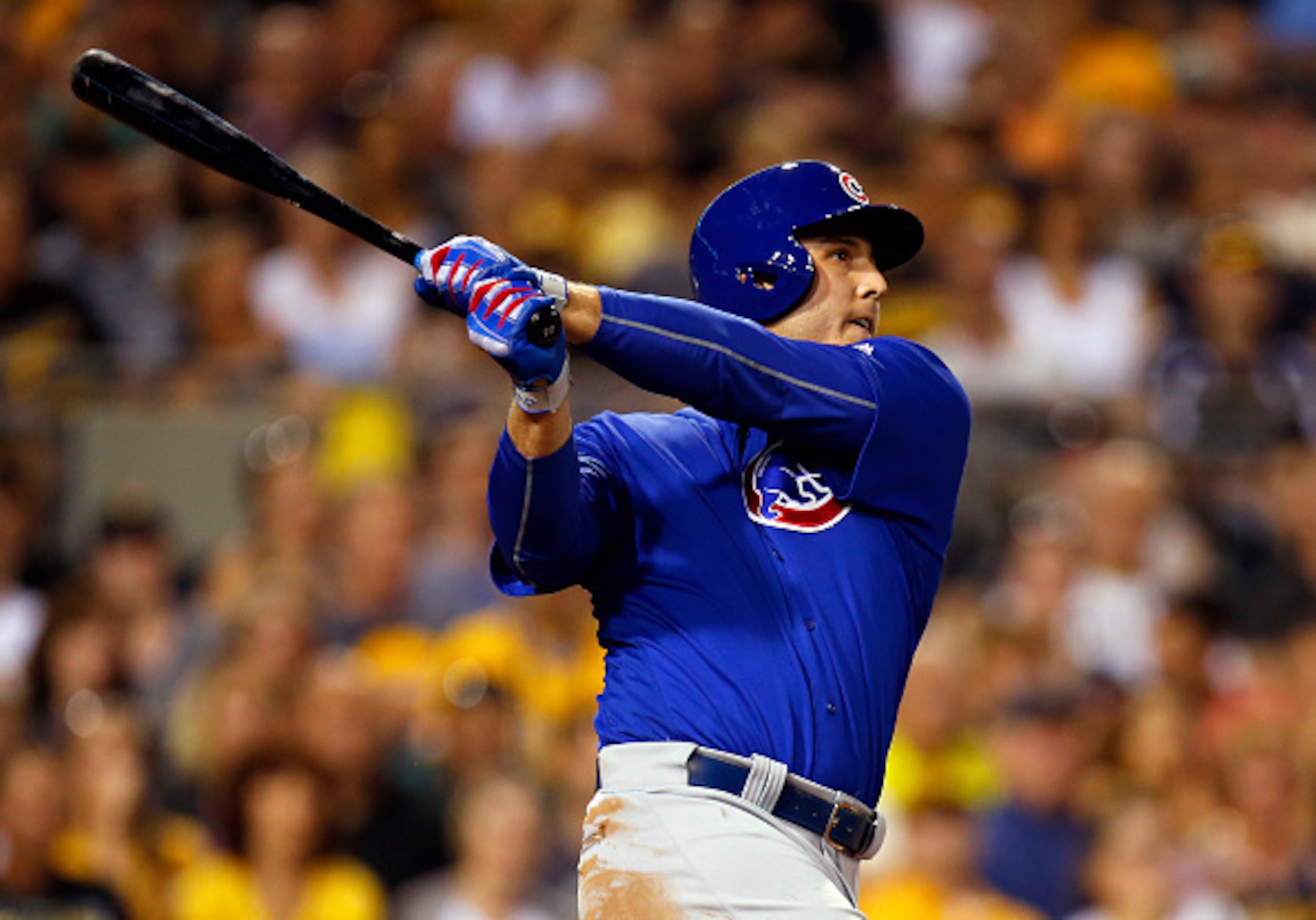
G: 142 PA: 624 AVG/OBP/SLUG: .290/.388/.551 HR: 31 SB: 3
Hitting
Anthony Rizzo just keeps chugging along. After conquering lefties in 2014, he found the right balance between patience, discipline and contact in 2015. These improvements are alive and well in 2016. And at 90.1 mph, he's even improved his exit velocity from last year's 89.1 mph. This leaves but one weakness: Only David Ortiz has faced more shifts than Rizzo has. Until he starts going the other way more often, he can expect those to keep his production in check.
Power
Despite that last note, here's where Rizzo has incentive to change nothing. His power is only getting better. His swing is perfect for getting the ball in the air, producing an average launch angle of 16.9 degrees. And while his pull habit hurts him with shifts, it sure helps his power. With habits like these, his modest average of 92.5 mph on fly balls and line drives isn't a deal-breaker.
Baserunning
Rizzo stole 17 bases last year, prompting praise about his becoming more of a well-rounded player. Well, this year he's swiped three in seven tries. Pitchers are keeping a closer eye on him. And it gets worse. He's not taking extra bases on either hits or non-hits like he did in 2015, and he's only improved from nine outs on the bases to seven outs.
Defense
If nothing else, Rizzo's defense gets points for creativity. But he's really good in other ways too. His athleticism is regularly on display, as he may have as much range as any first baseman in the game. He's handy around the bag as well, showing good footwork and hands that make him a near-lock on routine plays.
Total
Rizzo officially became a great player in 2014, and he's pushed the envelope each year since. He now stands as a consistent, powerful hitter who's also an excellent defender.
2. Paul Goldschmidt, Arizona Diamondbacks
25 of 26
G: 145 PA: 649 AVG/OBP/SLUG: .297/.414/.480 HR: 20 SB: 26
Hitting
Pitchers are becoming increasingly afraid to go in the strike zone against Paul Goldschmidt. He's responded appropriately, rarely swinging (38.7 Swing%) and rarely expanding the zone (22.9 O-Swing%) when he does. In a related story, his 79.7 Contact% is a new career best. The quality of his contact hasn't been as good, as he's gotten away from last year's all-fields approach while hitting more ground balls. But when you average 92.2 mph in exit velo, things could be worse.
Power
This is where Goldschmidt's 2016 season comes with actual disappointment. He won't come close to last year's 33 homers in part because he just hasn't gotten under the ball as well. His launch angle has fallen from 14.2 degrees to 12.2 degrees. He also hasn't driven the ball as well. His exit velo on balls in the air has dropped from 96.9 mph to 94.5 mph. These things are still good, but they reflect how his power decline is no fluke.
Baserunning
His power is down by the position's standards, but Goldschmidt's 26 steals are a new career high. Part of that is good athleticism. As Mike Petriello of MLB.com noted last year, Goldschmidt's lead size is another. Meanwhile, he's also willing and able to go more than one base at a time. He's taken 18 bases on non-hits and the extra base 44 percent of the time on hits. Like with Wil Myers, bonus points are in order.
Defense
There's no more perfect package at first base right now than Goldschmidt. It would be enough if he just had good athleticism for the position. But he also sprinkles in good instincts and reactions with good hands to boot. The result is a first baseman who doesn't botch routine plays while also showing good range around the bag.
Total
This hasn't been Goldschmidt's best year because his typically explosive power just hasn't been there. But even that's still a solid part of an excellent all-around game that features a consistent bat, great baserunning and an elite glove.
1. Freddie Freeman, Atlanta Braves
26 of 26
G: 145 PA: 638 AVG/OBP/SLUG: .295/.392/.554 HR: 30 SB: 4
Hitting
After starting relatively slow, Freddie Freeman quickly began looking like himself again. He's still an odd sort of hitter. He's aggressive (52.4 Swing%) and swings and misses a lot (72.5 Contact%), but he also knows when to take his walks, and his swing is dangerous. It's as quick as any swing you could see from a 6'5" hitter yet also powerful (91.6 mph exit velo) and perfectly suited for line drives. And this year, Freeman's new trick is more frequent use of the opposite field with a career-high 29.8 Oppo%.
Power
Freeman is finally having the power breakout we've been waiting for. He's always had good raw power packed into his 6'5" frame, but his line-drive habit tended to restrict him to doubles. But in 2016 he's getting the ball airborne more frequently with a 17.1-degree launch angle that's producing a 0.8 GB/FB ratio. His exit velocity on fly balls and line drives is also up, from 94.3 mph to 95.6 mph. As the icing on the cake, his power has gone along with his shift toward the opposite field.
Baserunning
Freeman may be 6'5," but he has only 220 pounds on him. He runs well, and his 4-for-4 showing in stolen bases reflects good instincts that will punish pitchers who forget about him. Otherwise, the bad news is that his 27 percent success rate taking extra bases on hits includes just two first-to-thirds in 32 chances. The good news is he's taken 19 bases on non-hits.
Defense
As good as Freeman's bat is, be careful not to overlook his glove. He has the usual things you want in a first baseman, such as good reactions and footwork that allow him to make both tough plays and routine ones. He also has soft hands that allow him to stand out as an elite scoop artist. As a bonus, he has one of the better arms you'll find at the position.
Total
It's been wasted on a rotten Atlanta Braves team, but 2016 has been Freeman's best season yet. He continues to be a menace at the plate, only now with more power. And that's only half of a well-rounded game.



.jpg?w=2560 "NFL investigating 2 referees for separate viral exchanges")
.jpg?w=2560 "Report: Chiefs Contact Hill's Agent")
.jpg?w=2560 "OBJ Calls Out Giants 😳")


.jpg?w=2560 "Tyreek makes another cryptic post amid Chiefs rumors")
