B/R NFL 1000: Ranking the Top 75 Tight Ends from 2015
Now that we've reached the end of the 2015 NFL season, who was the best tight end in the game? We're not talking about who made the Pro Bowl or even who got the All-Pro votes. Who was really, truly, the best? Forget reputation and how much money each player makes. We want the sort of cold, hard analysis that comes from watching the games and grading the players.
That's what the B/R NFL 1000 is for, and it's back for another year.
The B/R 1000 metric is based heavily on scouting each player and grading based on key criteria for each position. The criteria are weighted according to importance for a best possible score of 100.
Potential is not taken into consideration. Neither are career accomplishments.
Tight ends are judged on hands (35 points), route running (35), blocking (20) and the overall value of the position relative to the other spots on the field (eight points). The maximum score for this position is 98.
In the case of ties, our team asked, "Which player would I rather have on my team?" and set the rankings accordingly.
Subjective? Yes. But ties are no fun.
Each player was scouted by a team of experienced evaluators (Dan Bazal, Luke Easterling, Cian Fahey, Duke Manyweather, Matt Miller and Marshal Miller) with these key criteria in mind. The following scouting reports and grades are the work of months of film study from our team.
All statistics from Pro Football Focus. Players' heights, weights and seasons played from NFL.com.
75-71. Kendricks, Sims, Hanna, Myers, Chandler
1 of 55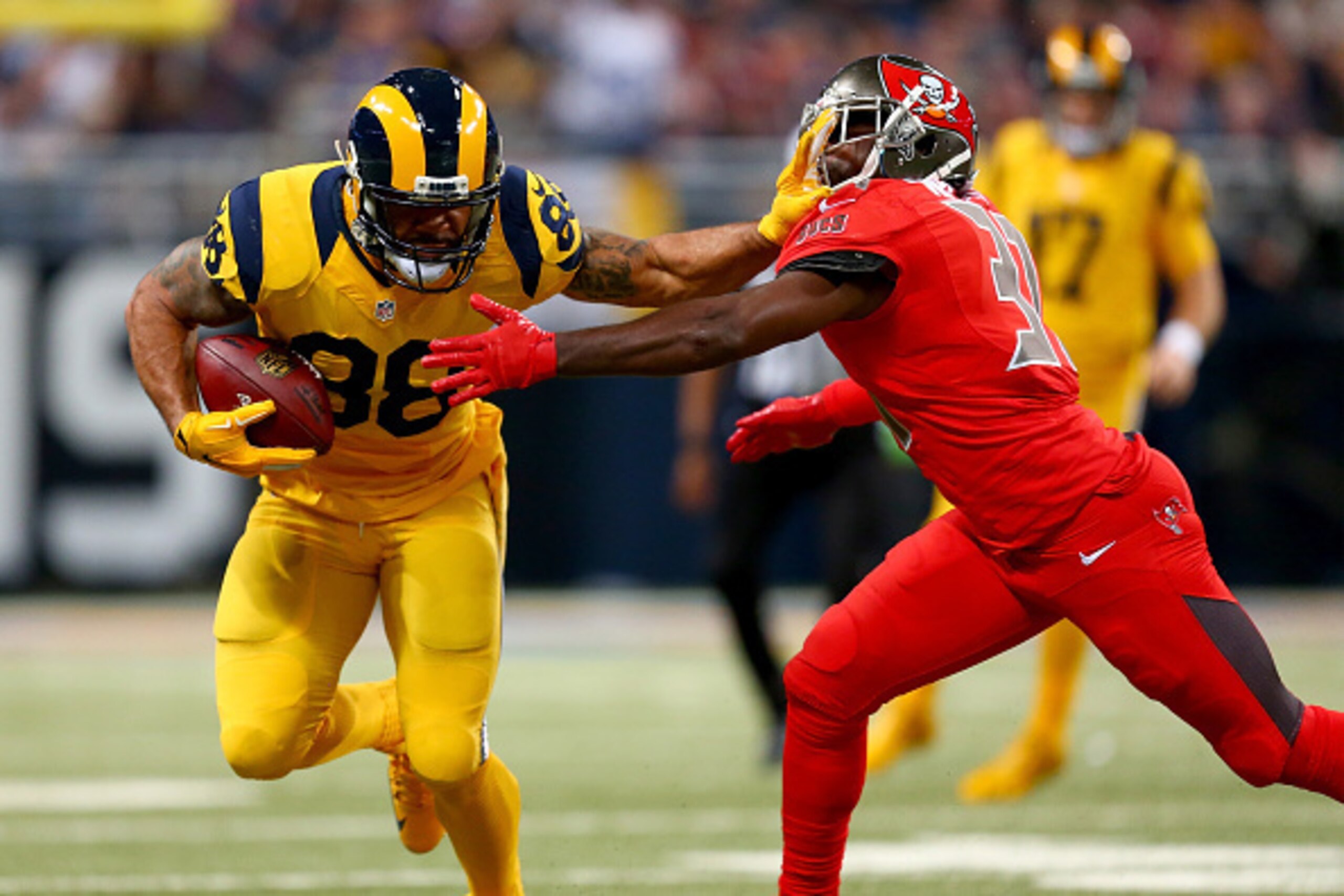
75. Lance Kendricks, St. Louis Rams
Hands: 23/35; Route Running: 27/35; Blocking: 10/20; Position Value: 8/8
The athletic and undersized tight end continues to struggle with drops (four this year) and also saw his catch percentage go down this year. The Rams need talent that can help their quarterback. As a tight end with poor hands who doesn’t contribute as a blocker, Kendricks needs to focus on bringing in catchable balls with his hands before worrying about what he is going to do after the catch.
74. Dion Sims, Miami Dolphins
Hands: 25/35; Route Running: 23/35; Blocking: 13/20; Position Value: 8/8
Sims had 18 catches and one touchdown in 2015 but did record two drops in his 25 targets. Sims needs to find his role in the NFL, as he is not a solid receiver or blocker. Although Sims is only in his third year with the Dolphins, he has five career drops. Reliable hands are a must for a tight end who struggles to block.
73. James Hanna, Dallas Cowboys
Hands: 18/35; Route Running: 26/35; Blocking: 17/20; Position Value: 8/8
The fourth-year man has work to do to get consistent playing time behind Hall of Fame tight end Jason Witten. As his blocking continues to improve, he will see more time on the field. Hanna sees most of his playing time on special teams and short-yardage situations.
72. Brandon Myers, Tampa Bay Buccaneers
Hands: 16/35; Route Running: 30/35; Blocking: 15/20; Position Value: 8/8
One of many tight ends out of Iowa who have seen a lot of success in the NFL, Myers showed solid hands early in his career but is used mostly as a blocker at this point. He showed limited route running and speed. He 12 catches and two drops in five games.
71. Scott Chandler, New England Patriots
Hands: 16/35; Route Running: 28/35; Blocking: 17/20; Position Value: 8/8
The eighth-year journeyman played for his fifth team in 2015 and continues to find a role on any team he plays for. Chandler came out of Iowa as a big, blocking tight end and continues to pave the way for many running backs as a dominant blocker. He saw limited use in the passing game but was able to pull in 23 catches and four touchdowns. The problem with his receiving is his number of drops (six) and his being unable to catch the ball away from his frame.
70-66. Spaeth, Fells, Hoomanawanui, Pruitt, Griffin
2 of 55
70. Matt Spaeth, Pittsburgh Steelers
Hands: 15/35; Route Running: 29/35; Blocking: 17/20; Position Value: 8/8
Matt Spaeth is one of the most impressive blocking tight ends in the league. Spaeth can handle any blocking assignment his coaches ask of him. He is the ideal, hard-nosed, physical tight end and Steeler. Spaeth isn’t going to provide much in the passing game, but if he is on the field, his team's running game will be stronger.
69. Darren Fells, Arizona Cardinals
Hands: 28/35; Route Running: 24/35; Blocking: 10/20; Position Value: 8/8
Fells is a massive tight end who had good production in 2015 (21 catches and three touchdowns) for the Cardinals, who have many tight ends on our list. At 6’7” and 281 pounds, Fells looks like the most athletic tackle on the field. While he has the body of an offensive lineman, he doesn’t play with great functional strength and needs to continue to work on blocking technique.
68. Michael Hoomanawanui, NO Saints
Hands: 25/35; Route Running: 25/35; Blocking: 12/20; Position Value: 8/8
His 11 catches and three touchdowns in 2015 were about par for his career averages. Hoomanawanui lacks speed and plays too stiffly to make any moves as a route-runner. He has no problem mauling defenders and uses his natural strength to aid the run game.
67. MyCole Pruitt, Minnesota Vikings
Hands: 27/35; Route Running: 25/35; Blocking: 11/20; Position Value: 8/8
MyCole Pruitt plays on a team that loves to use tight ends, but that also means it keeps a lot on the roster. Pruitt lacks length and strength but has good speed and has shown solid hands over the middle. If he wants to continue to climb the Vikings depth chart, he better show he can help pave the way for Adrian Peterson.
66. Ryan Griffin, Houston Texans
Hands: 23/35; Route Running: 26/35; Blocking: 14/20; Position Value: 8/8
Griffin had 20 catches and two touchdowns for the Texans in his third season. He continues to see more playing time as a tight end, not just as a special teams player. To keep himself in the lineup at tight end, he needs to extend his long arms and focus on bringing the ball into his body after he has it in his hands.
65-61. McDonald, Helfet, Carrier, Escobar, Williams
3 of 55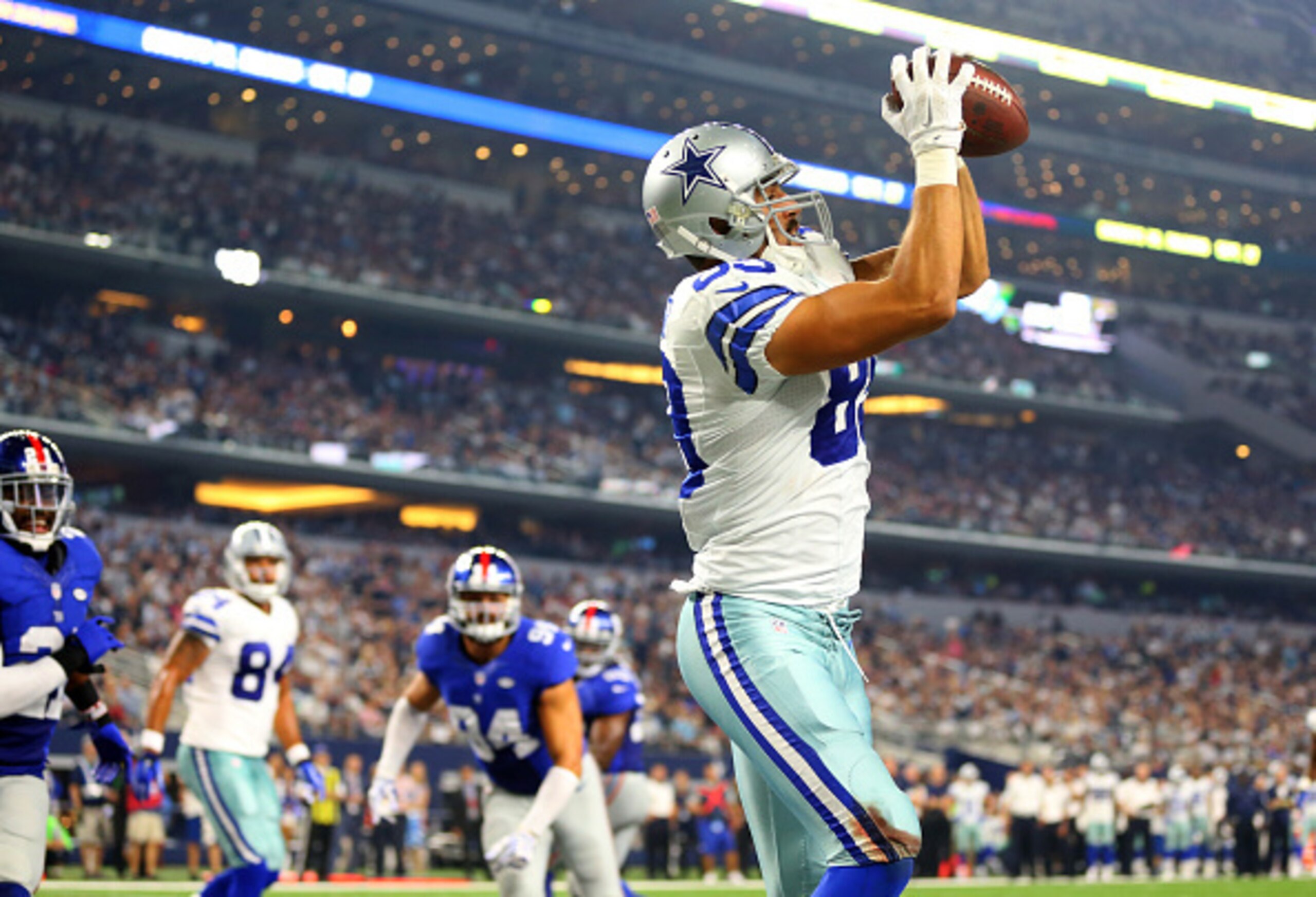
65. Vance McDonald, San Francisco 49ers
Hands: 22/35; Route Running: 27/35; Blocking: 14/20; Position Value: 8/8
Thirty catches and three touchdowns look good on a stat sheet, but his five drops do not. McDonald needs to improve his poor catch radius and work on catching balls away from his frame. McDonald has solid blocking technique and strength but must improve separation or shield ability to reduce his drops.
64. Cooper Helfet, Seattle Seahawks
Hands: 23/35; Route Running: 27/35; Blocking: 14/20; Position Value: 8/8
Cooper Helfet saw more action after the Jimmy Graham injury but showed he has a lot to work on. The undersized tight end needs to add bulk to complement his toughness and physicality.
63. Derek Carrier, Washington
Hands: 31/35; Route Running: 23/35; Blocking: 11/20; Position Value: 8/8
Carrier started 12 games for Washington in his first year with the team after spending two years with the 49ers. He recorded 17 catches with one touchdown and one drop. He showed reliable hands but still needs to work on playing with leverage and using his hips as a route-runner and blocker.
62. Gavin Escobar, Dallas Cowboys
Hands: 30/35; Route Running: 25/35; Blocking: 10/20; Position Value: 8/8
Gavin Escobar has impressive hands for a big tight end. He is able to snatch the ball out of the air and has enough speed to be a downfield threat. He needs to add strength and prove he can be a reliable blocker to see more playing time.
61. Michael Williams, New England Patriots
Hands: 28/35; Route Running: 24/35; Blocking: 13/20; Position Value: 8/8
Michael Williams, like many third-string tight ends, saw most of his playing time on special teams. Williams brought in just three passes in 2015 and was used more as a blocking tight end rather than a receiving tight end. He is a limited route-runner.
.jpg?w=2560)
.jpg?w=2560 "Rams Eagles Football")

60-56. Ebron, Stoneburner, Perillo, Bell, Tye
4 of 55
60. Eric Ebron, Detroit Lions
Hands: 25/35; Route Running: 28/35; Blocking: 12/20; Position Value: 8/8
It was another disappointing year for Ebron and the Lions. Ebron wowed people in his junior year and at the combine but hasn’t been able to put it together on the field yet. He had a much-improved 47 catches and five touchdowns but still had too many drops (six) and relies on athletic ability alone to get open. He needs to work on technique and focus to meet his potential.
59. Jake Stoneburner, Miami Dolphins
Hands: 30/35; Route Running: 24/35; Blocking: 12/20; Position Value: 8/8
Another tight end who sees most of his time contributing on special teams, Jake Stoneburner is your classic high-motor, physical, determined football player. He has to work hard to overcome limited athleticism but can compete with anyone in a crowd and will help hold a locker room together.
58. Justin Perillo, Green Bay Packers
Hands: 30/35; Route Running: 23/35; Blocking: 13/20; Position Value: 8/8
In his second season out of Maine, Justin Perillo struggled to find playing time in a crowded Packers depth chart. Perillo does most of his damage on special teams, even though he was able to bring in 11 catches and one touchdown. If Perillo wants to compete for more playing time, he needs to prove to the coaches and Aaron Rodgers that he can get open and make plays.
57. Blake Bell, San Francisco 49ers
Hands: 30/35; Route Running: 25/35; Blocking: 11/20; Position Value: 8/8
Blake Bell played only his second season at tight end in 2015 and looked much more polished than other rookie tight ends. As Bell learns the position, you will hear his name more often. He continues to work on his route running and blocking technique, which he had never worked on until his senior season at Oklahoma. Bell has a very high ceiling, and 49ers fans know it.
56. Will Tye, New York Giants
Hands: 26/35; Route Running: 30/35; Blocking: 10/20; Position Value: 8/8
Forty-two catches and three touchdowns is a good way to start off a career. The rookie tight end was used more and more as the year went on and became more confident, too. Tye needs to limit the number of drops in 2016 if he wants to stay in Eli Manning’s good graces, as well as improve his blocking.
55-51. Celek, O'Shaughnessy, Johnson, Harbon, Phillips
5 of 55
55. Garrett Celek, San Francisco 49ers
Hands: 33/35; Route Running: 24/35; Blocking: 10/20; Position Value: 8/8
Garrett Celek did most of his damage early in the season playing opposite Vernon Davis. After Davis was traded away, Celek wasn’t able to take the starting job. He has solid hands as a receiver but needs work on routes and blocking to be an every-down tight end or even a reliable No. 2.
54. James O'Shaughnessy, Kansas City Chiefs
Hands: 30/35; Route Running: 25/35; Blocking: 12/20; Position Value: 8/8
O'Shaughnessy only played in seven games for the Chiefs in his rookie season. He looked good when healthy and provided the Chiefs with another weapon at tight end opposite Travis Kelce. He'll look to pick up where he left off in 2016.
53. David Johnson, San Diego Chargers
Hands: 28/35; Route Running: 27/35; Blocking: 12/20; Position Value: 8/8
Johnson isn’t known for his receiving, and there is a reason. He lacks the speed and separation ability to be a downfield threat. He is at his best when used to block and can handle in-line and move-blocking.
52. Clay Harbor, Jacksonville Jaguars
Hands: 29/35; Route Running: 26/35; Blocking: 12/20; Position Value: 8/8
Harbor saw limited snaps with the Jaguars in 2015 but took advantage of the time he did play. He pulled in 14 catches and one touchdown while only recording one drop. He needs to show more of a mean streak in blocking and prove he can be a weapon and not a liability for the run game.
51. John Phillips, San Diego Chargers
Hands: 30/35; Route Running: 28/35; Blocking: 10/20; Position Value: 8/8
Phillips has ideal length for the position and is able to get open underneath but lacks the speed to be a downfield threat. He is becoming more comfortable and confident as a blocker and plays behind good tight end depth in San Diego.
50. Marcedes Lewis, Jacksonville Jaguars
6 of 55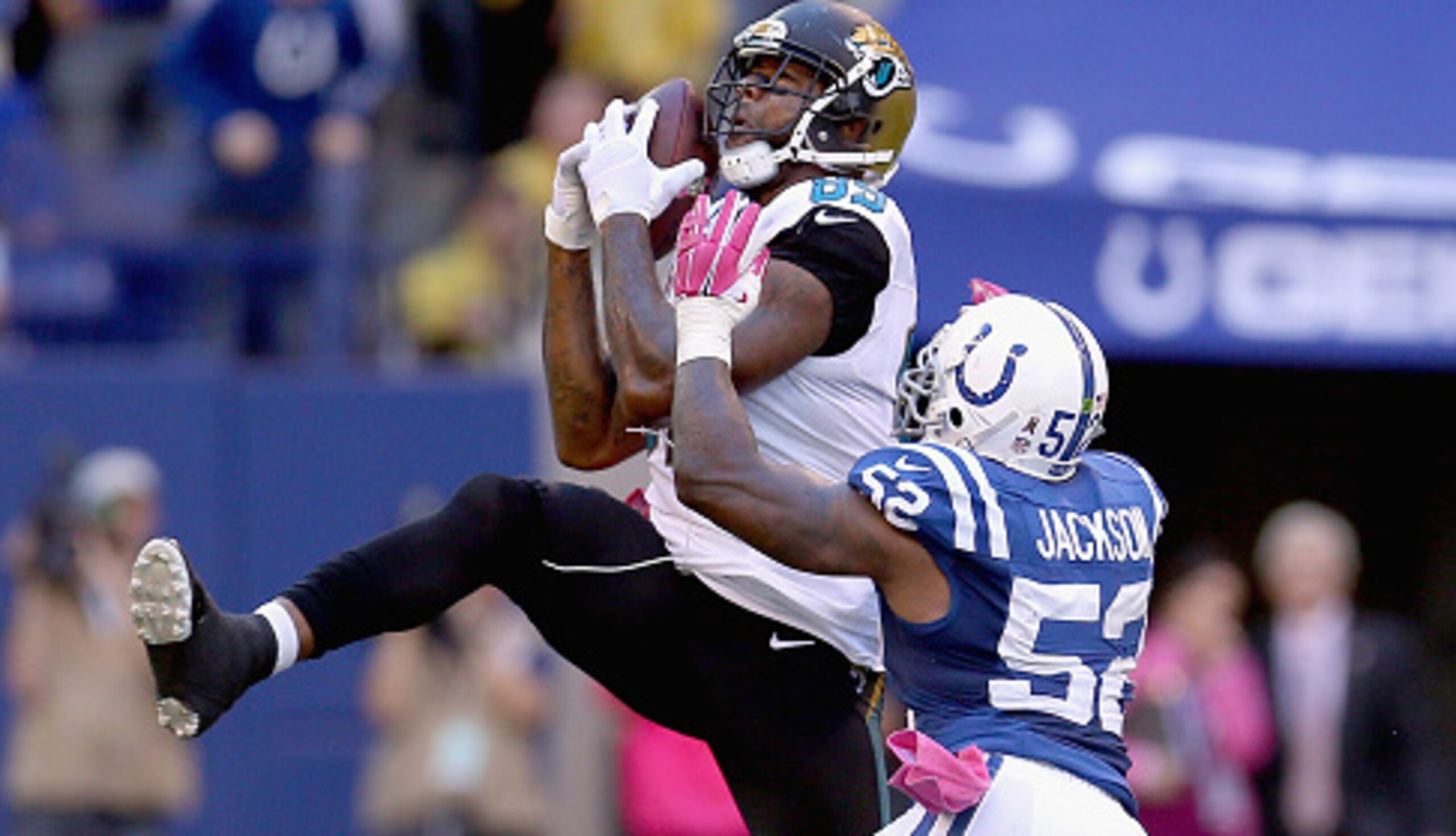
Hands
Drops continue to haunt the big tight end. Early in his career, he had the excuse of being young, but that isn’t the case anymore. Lewis also had a career-low catch percentage at 48.5 percent. Moving forward, Lewis will have to prove that he can be a reliable receiver for the Jags and make more catches outside his frame.
Route Running
Lewis has the size and athletic ability but runs too high and gets knocked off his routes. He struggles to sit in windows and isn’t able to outmuscle defenders for the ball anymore. He is best used as a red-zone, jump-ball-type target.
Blocking
Lewis has stiff hips and lacks functional strength for a tight end his size. He has never made blocking an important part of his game, and the latter part of his career will be shortened due to his inability to block.
Position Value
Overall
49. Rhett Ellison, Minnesota Vikings
7 of 55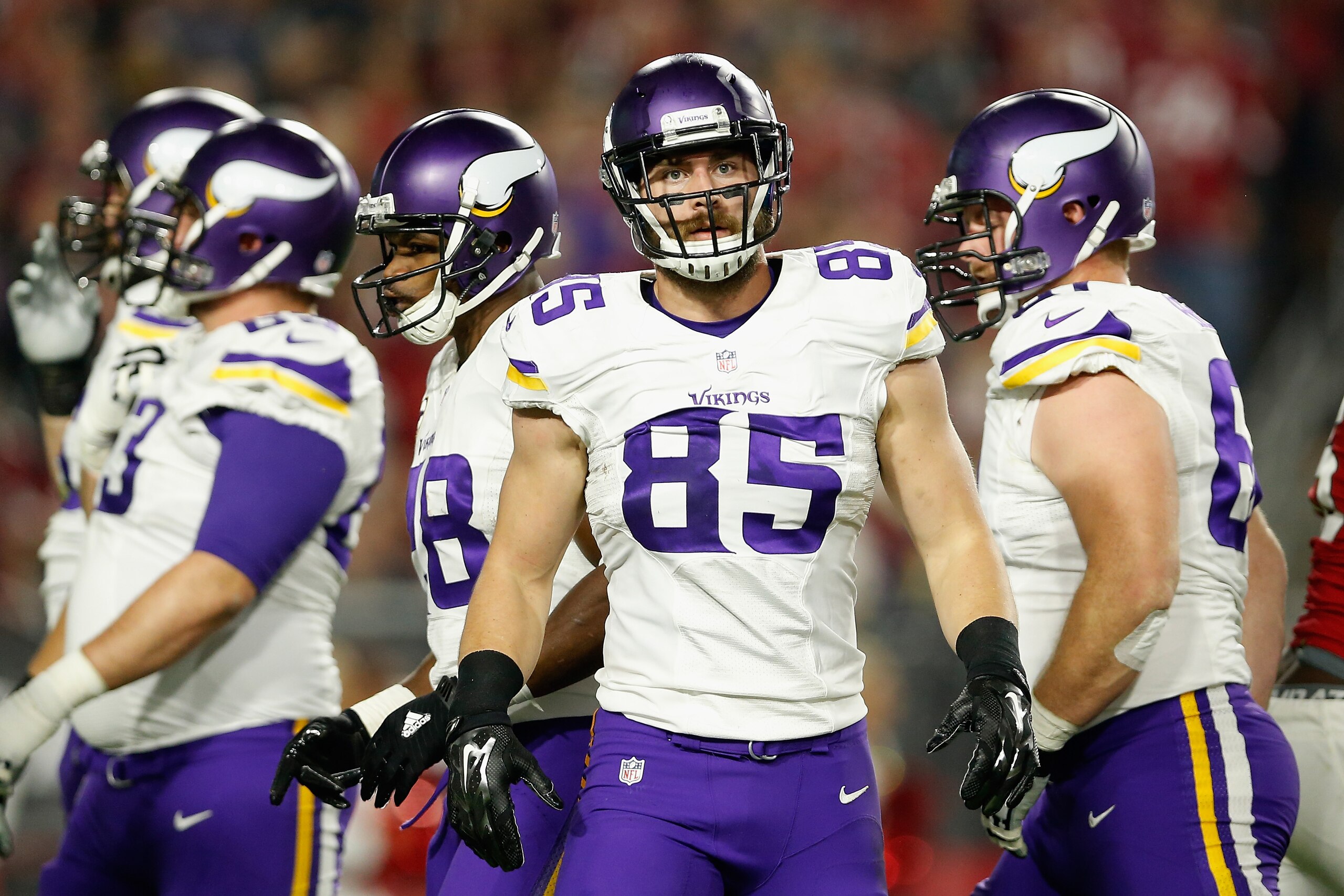
Hands
In 2015, Ellison saw his number of targets reduced to just 14. Having a catch percentage of 78.6 shows a good, consistent catch radius. He has the ability to extend his arms and pull in his catches while in traffic.
Route Running
He doesn’t have the ability to stretch the field and has limited speed. The Vikings used Ellison mostly underneath and as a blocker.
Blocking
He plays with good aggression and doesn’t shy away from any matchups. The Vikings love two-tight end sets, and Ellison is able to to be an effective in-line blocker. He needs to play with more functional strength and leverage like he did in 2014.
Position Value
Overall
48. Ben Watson, New Orleans Saints
8 of 55
Hands
While taking over the role of starting tight end in the Saints offense, Ben Watson posted stats Saints fans are used to seeing from the position. With 74 catches for 825 yards and six touchdowns, Watson's positives overshadowed his seven drops. There is no question about his athletic ability, but Watson still needs to work on catching away from his body and not worry as much about making plays after the catch.
Route Running
Only eight tight ends saw 100 or more targets in 2015, and Watson was one of them. The 12-year veteran still has some speed and quickness left in the tank. The ability to sink his hips and get separation from his defender helps make up for his short arms.
Blocking
He lacks size and strength to be used as a blocker, which has limited his playing time throughout his career. Watson even lacks the footwork to be effective in the second level of blocking and is a liability when in-line blocking.
Position Value
Overall
47. Troy Niklas, Arizona Cardinals
9 of 55
Hands
Standing at 6’6” and 270 pounds, it’s hard to miss Troy Niklas. Used most as a blocker, Niklas had only four catches, but two were for touchdowns.
Route Running
The Cardinals rarely target their tight ends due to amazing depth and speed at receiver. However, Niklas made the most of his playing time, and teams had to account for him in the red zone. Niklas can shield defenders, and his strength made it difficult for defenders to jam him.
Blocking
Strength, physicality and a hard-nosed mentality make Niklas an above-average in-line blocker. The second-year tight end is finding his role in the NFL, and he might settle in as a great blocking tight end if he can continue to work on his technique and using his lower body.
Position Value
Overall
46. Lee Smith, Oakland Raiders
10 of 55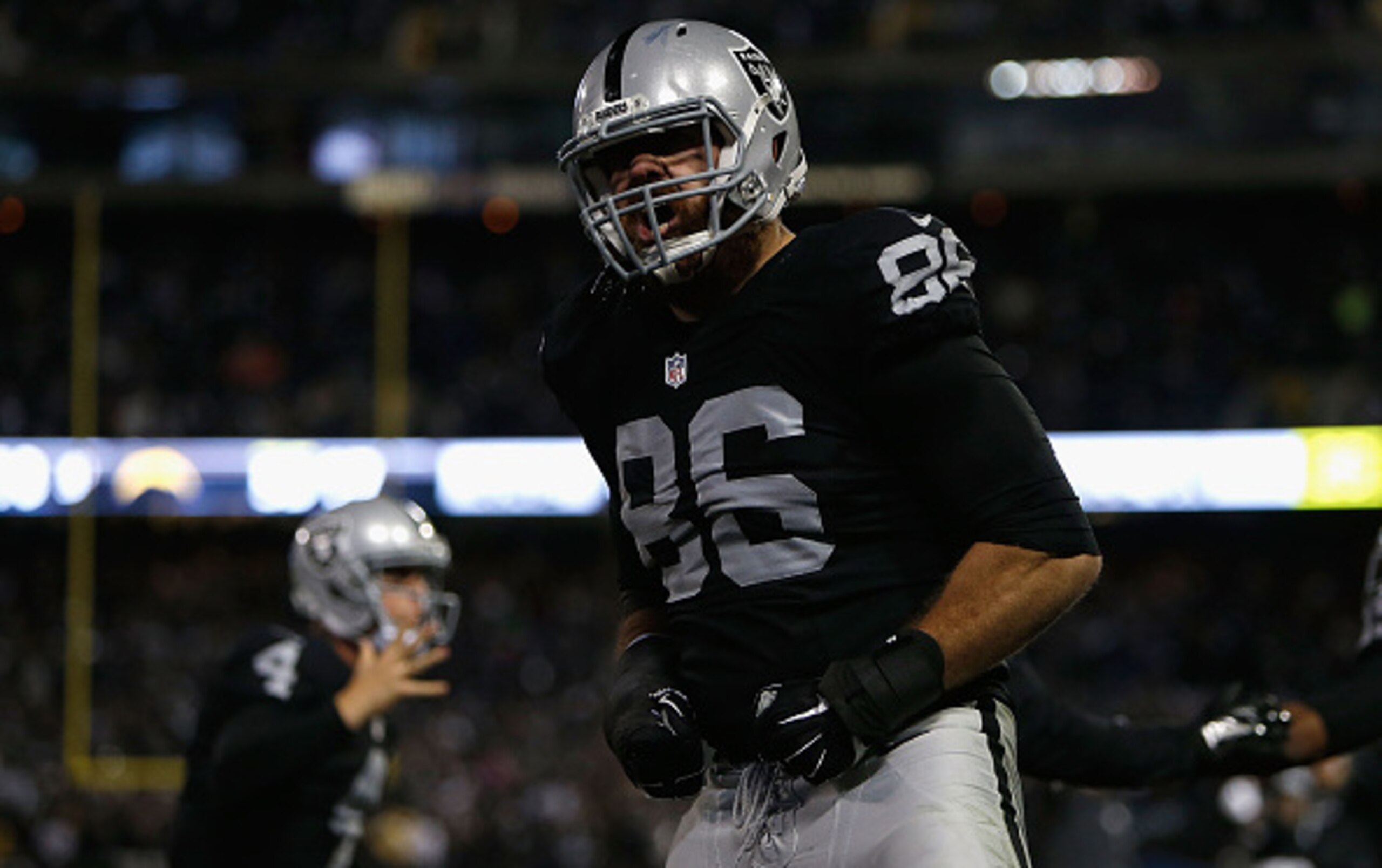
Hands
In his first year with the Raiders, Lee Smith brought in 12 of his 13 targets. His limited number of targets make his hands hard to grade, but the big-bodied tight end didn’t record any drops, even when having to catch Derek Carr’s high-velocity throws.
Route Running
His below-average athletic ability will limit his route running to more underneath routes, and he is not really a threat to get up the seam. For the veteran tight end to be viewed more as a receiver, he needs to stop rounding off routes and improve his stiff hips.
Blocking
What Smith is able to do best is block—and block anyone. Being able to line up in line and handle defensive linemen is a rarity in the NFL today. Smith is one of few tight ends who can still in-line block and not look completely lost doing so.
Position Value
Overall
45. Owen Daniels, Denver Broncos
11 of 55
Hands
The undersized veteran saw plenty of playing time with the Broncos, even after they acquired Vernon Davis. The Broncos quarterbacks targeted Daniels 73 times in 2015. However, he was only able to bring in 46 catches and had five drops, showing a limited catch radius for a tight end best known for his receiving.
Route Running
One reason Daniels sees so many targets year after year is his above-average route running. Knowing how to drop his hips and change direction are key for Daniels, who doesn’t have the top-end speed of other tight ends.
Blocking
Daniels won’t be asked to do much as an in-line blocker. He lacks size and strength and is limited to being a move blocker when he is asked to block. That's where his value came in Gary Kubiak's offense, as the line is asked to zone block and shift on a regular basis. Daniels' presence was felt in these situations.
Position Value
Overall
44. Tyler Kroft, Cincinnati Bengals
12 of 55
Hands
The rookie tight end didn’t see much action in the first half of the season but was able to show the team he could produce after Tyler Eifert got injured. By bringing in 11 of his 13 targets, Kroft showed he has strong hands and isn’t afraid to go over the middle.
Route Running
Quickness off the line and good playing speed helped Kroft get open when he finally got onto the field. His above-average athleticism complements the other tight ends and makes him a threat to hit the seam. Being able to play in the slot will help Kroft see more playing time going forward.
Blocking
Used mostly as a move blocker, Kroft uses his flexibility and feet to drive opponents when engaged. Adding bulk and strength will help Kroft handle bigger defensive linemen so that he can be used on more in-line blocking assignments, which will also increase his playing time.
Position Value
Overall
43. Jesse James, Pittsburgh Steelers
13 of 55
Hands
The massive rookie out of Penn State saw limited time on the field this year but looks the part of a Steelers tight end. James has big hands and was able to bring in eight passes in only eight games.
Route Running
James doesn't hit the seam or outrun defenders downfield. He does most of his work underneath and as a blocker.
Blocking
Playing behind Matt Spaeth in 2015 will help James play the same role as Spaeth moving forward. James is comfortable playing in a crowd and in-line blocking, which is what the Steelers will be asking of him. His size, strength and hand use make him a weapon in the run game, and he is an athletic pass-blocker when asked to stay in.
Position Value
Overall
42. Jack Doyle, Indianapolis Colts
14 of 55
Hands
Jack Doyle threw his name into the Colts' tight end mix in 2015. Though he didn't get the number of snaps Fleener and Allen received, he showcased his ability by bringing in 12 of his 14 targets.
Route Running
If Doyle wants to see more playing time, he needs to show that he can get open and get downfield. His size (6’6”, 267 lbs) helps him shield, but it also doesn’t allow him to break free from defenders like smaller tight ends.
Blocking
What Doyle has to offer that the other Colts tight ends don’t is his ability as a blocker. Doyle has functional strength and plays with strength as well. If he wants to become a top tight end, he needs to play with better leverage and sustain his blocks.
Position Value
Overall
41. Luke Willson, Seattle Seahawks
15 of 55
Hands
In his third season out of Rice, Willson continues to show that he has strong, reliable hands for a No. 2 tight end. Willson played more snaps after Jimmy Graham was injured, and the Seattle offense didn’t miss a beat. In 2015, Willson limited his number of drops and increased his catch percentage, showing great progress.
Route Running
He has good athletic ability and length, and that makes him dangerous downfield. Being able to get off the line and challenge defenders for every ball are two strengths Willson has and continues to improve on.
Blocking
He has the weight room strength to be a blocker but needs to play with more strength on the field. He needs to improve when using his long arms to punch and lower body to drive, especially since the Seahawks no longer have Marshawn Lynch.
Position Value
Overall
40. Coby Fleener, Indianapolis Colts
16 of 55
Hands
With his raw athletic ability and years of experience with Luck, Fleener has disappointed many by not emerging as one of the NFL’s elite tight ends. The number of drops continue to haunt Fleener, four more in 2015. Fleener needs to improve on pulling in passes after getting his hands on them and worry less about making plays after the catch.
Route Running
There is no doubt that he has the speed and quickness to separate from defenders, but Fleener needs to improve his quickness in and out of his breaks and not just trying to beat everyone with pure speed.
Blocking
Allen and Fleener continue to compete for playing time, and Fleener finally started to do so in 2015. If Fleener wants to move forward as the No. 1 tight end for the Colts, he needs to improve as an in-line blocker and possibly add bulk. Playing in the slot and making blocks on the outside are not a problem, but when playing in the box, Fleener looks lost.
Position Value
Overall
39. Dwayne Allen, Indianapolis Colts
17 of 55
Hands
Few tight ends offer the consistent and strong hands that Dwayne Allen has. He will catch almost everything inside his frame but still needs to improve on making catches away from his body and in traffic. Expanding that catch radius will allow Allen to start producing on the level of the best tight ends in the game.
Route Running
The Colts will use Coby Fleener as a deep threat and let Allen do more work underneath out of their two-tight end sets. Quickness isn’t a problem for Allen, who has good agility and short burst, but top-end speed is. His big frame makes it difficult for any defender to get around him.
Blocking
Early in his career Allen showed good footwork and strength as a blocker, especially out of the backfield. But we didn’t see that same ability in 2015. The Colts had many problems on offense in 2015. If Allen returns to the Colts in 2016, a healthy Andrew Luck and new offensive coordinator Rob Chudzinski could get him back on track.
Position Value
Overall
38. Jermaine Gresham, Arizona Cardinals
18 of 55
Hands
Seeing only 27 targets and bringing in 18 catches is not what Jermaine Gresham has become used to. After bringing in at least 46 catches in his five years with the Bengals, Gresham showed a limited catch radius and struggled to get open in 2015. His drops also showed that he did not get his arms extended like he has in the past.
Route Running
More than most tight ends, Gresham relies too much on athletic ability and size. He is able to use his body to shield defenders but will need to show that he can be the tight end we are used to seeing.
Blocking
The Cardinals don’t use tight ends as much as other teams and like to spread out the field. Gresham has the ability to line up in the slot and run-block at a high level, but when asked to line up off the tackle, Gresham often is overmatched.
Position Value
Overall
37. Cameron Brate, Tampa Bay Buccaneers
19 of 55
Hands
The Harvard product saw an increase in playing time after making the roster in 2014. He helped Jameis Winston and the Bucs see more success in 2015 by bringing in 23 of his 30 targets. His ability to pull in passes away from his body and keep defenders off him enabled him to see more playing time and more opportunities to make plays.
Route Running
Brate has a lot of work to do as a route-runner and needs to play with more leverage and quickness in and out of his breaks. The athletic ability is there, but Brate needs to learn how to use that in his route running.
Blocking
At 235 pounds, Brate looks more like a big receiver, and he blocks like one too. Adding more strength and bulk will go a long way for Brate and the Bucs running game. When asked to stay in as a blocker on passing plays, Brate does well at shuffling his feet and not letting defenders beat him on the edge.
Position Value
Overall
36. Nick Boyle, Baltimore Ravens
20 of 55
Hands
Nick Boyle was able to bring in 85.7 percent of his targets and show an impressive catch radius, until he was suspended for violating the substance abuse policy. In his 11 games, he caught 18 of 21 targets and had zero drops.
Route Running
The aspect of his game that needs the most work is route running. Finding areas to sit it and being quicker in and out of his breaks will help the young tight end in the long run.
Blocking
Boyle has no problem playing aggressively or playing in space. He has the quickness needed to block in the second level and drives his feet well when engaged. Using his hands and playing with leverage are two concerns Boyle has faced so far.
Position Value
Overall
35. Chris Gragg, Buffalo Bills
21 of 55
Hands
Limited snaps meant Chris Gragg saw few targets. Of his 19 targets, he was able to pull in 12 catches and didn’t have any drops. He needs more work on catching balls away from his frame and adjusting to poorly thrown balls.
Route Running
The Bills haven’t asked Gragg to run a variety of routes. Even though he has the athletic ability, he doesn’t have the fundamental aspect of route running down yet to be a threat.
Blocking
Undersized at 244 pounds, Gragg needs to add bulk to be used more in the Bills' run-heavy offense. Beating his opponent off the ball is not a problem, but sustaining blocks and playing with aggression is.
Position Value
Overall
34. Larry Donnell, New York Giants
22 of 55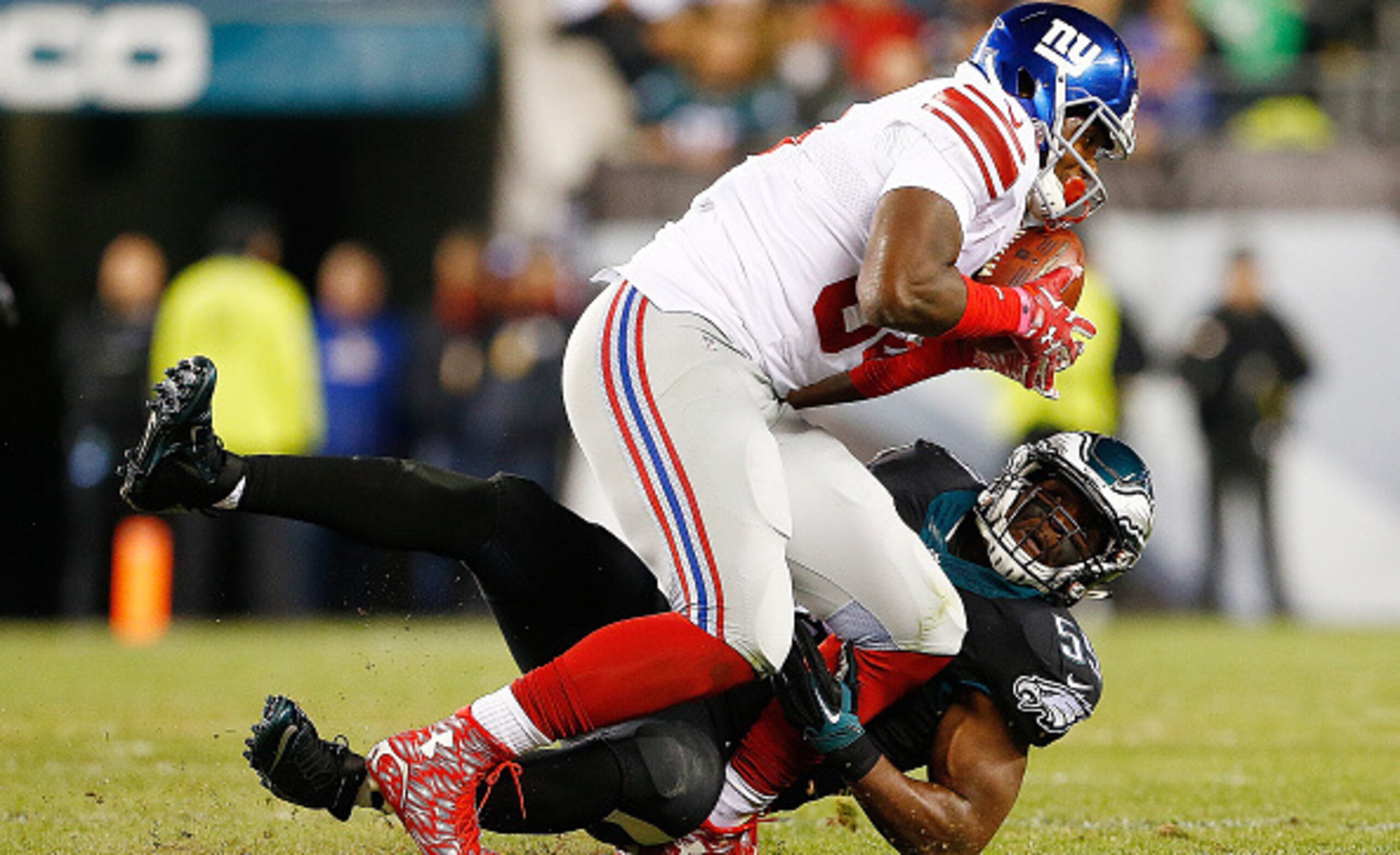
Hands
Larry Donnell saw his season reduced to just eight games in 2015. But that didn't stop the young tight end from pulling in 29 of his 41 targets. Big, strong hands are just one of his many tools that have made him a favorite target of Eli Manning. Donnell needs to limit the number of drops (two in eight games) and work on catching the ball away from his massive frame.
Route Running
His size (6’6”, 265 lbs) makes it tough for any defender to jump his route, and he keeps himself between defenders and the ball. His lack of speed makes it more difficult for him to break away from defenders, but he continues to learn to use his skill set to get open underneath and in the intermediate routes.
Blocking
With his size, Donnell should be a great in-line blocker, but that’s not the case. Donnell is inexperienced as a blocker and lacks the mean streak to be as effective as he should be.
Position Value
Overall
33. C.J. Fiedorowicz, Houston Texans
23 of 55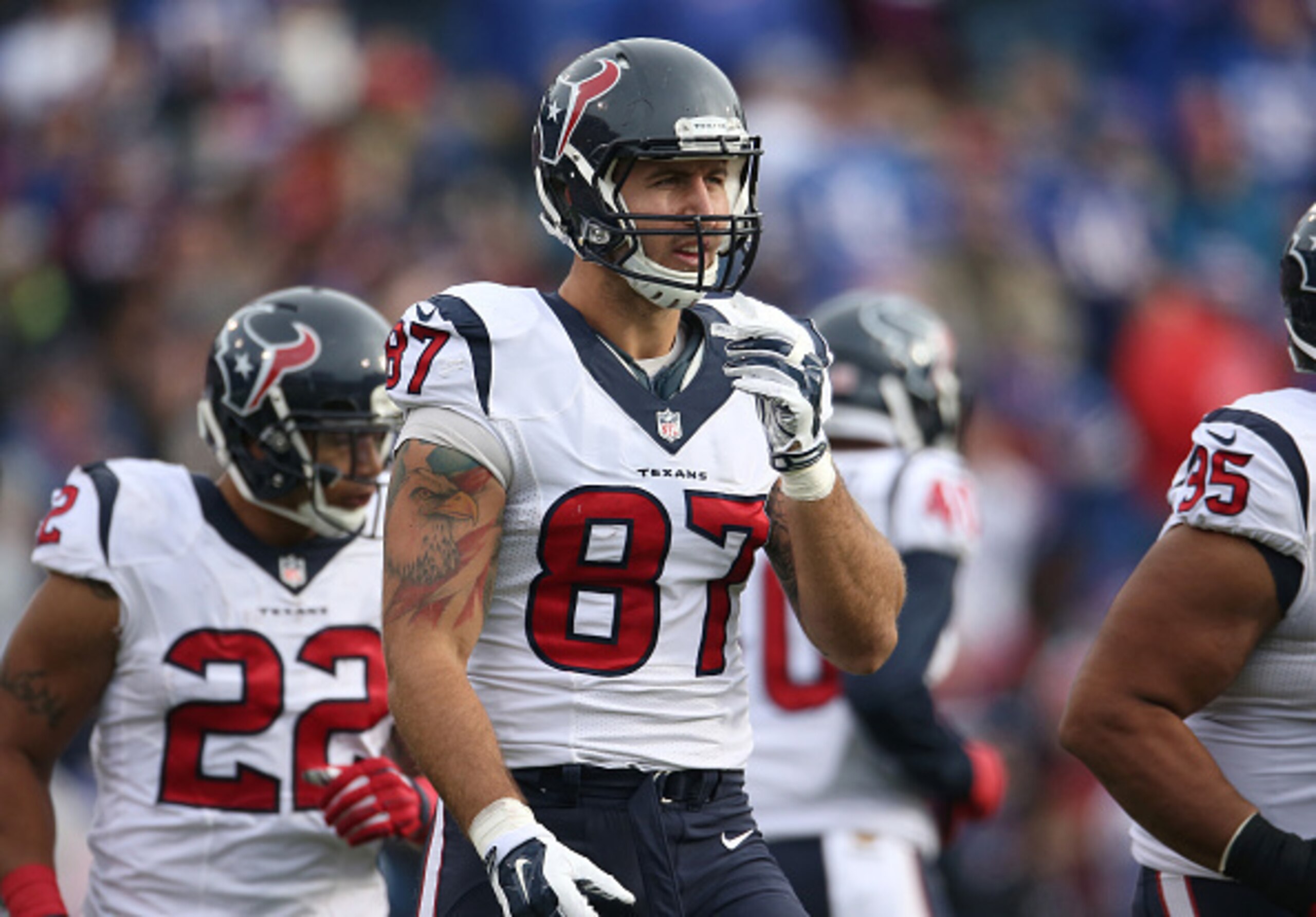
Hands
Limited targets in his two-year career make it tough to grade Fiedorowicz. From his limited playing time, he has shown reliable hands, with only one drop in his 30 career targets. In 2015, Fiedorowicz saw more action and was used more and more as the year went on.
Route Running
Fiedorowicz is a huge tight end at 6’5”, 265 pounds. That same size has hindered his ability as a route-runner. Stiff hips and a lack of burst limit Fiedorowicz to run anything but underneath routes.
Blocking
The same size that limits Fiedorowicz as a receiver makes him an amazing blocker. His physical nature and hard-nosed mentality help him play in the trenches and free up running lanes for the Texans running game.
Position Value
Overall
32. Vernon Davis, Denver Broncos
24 of 55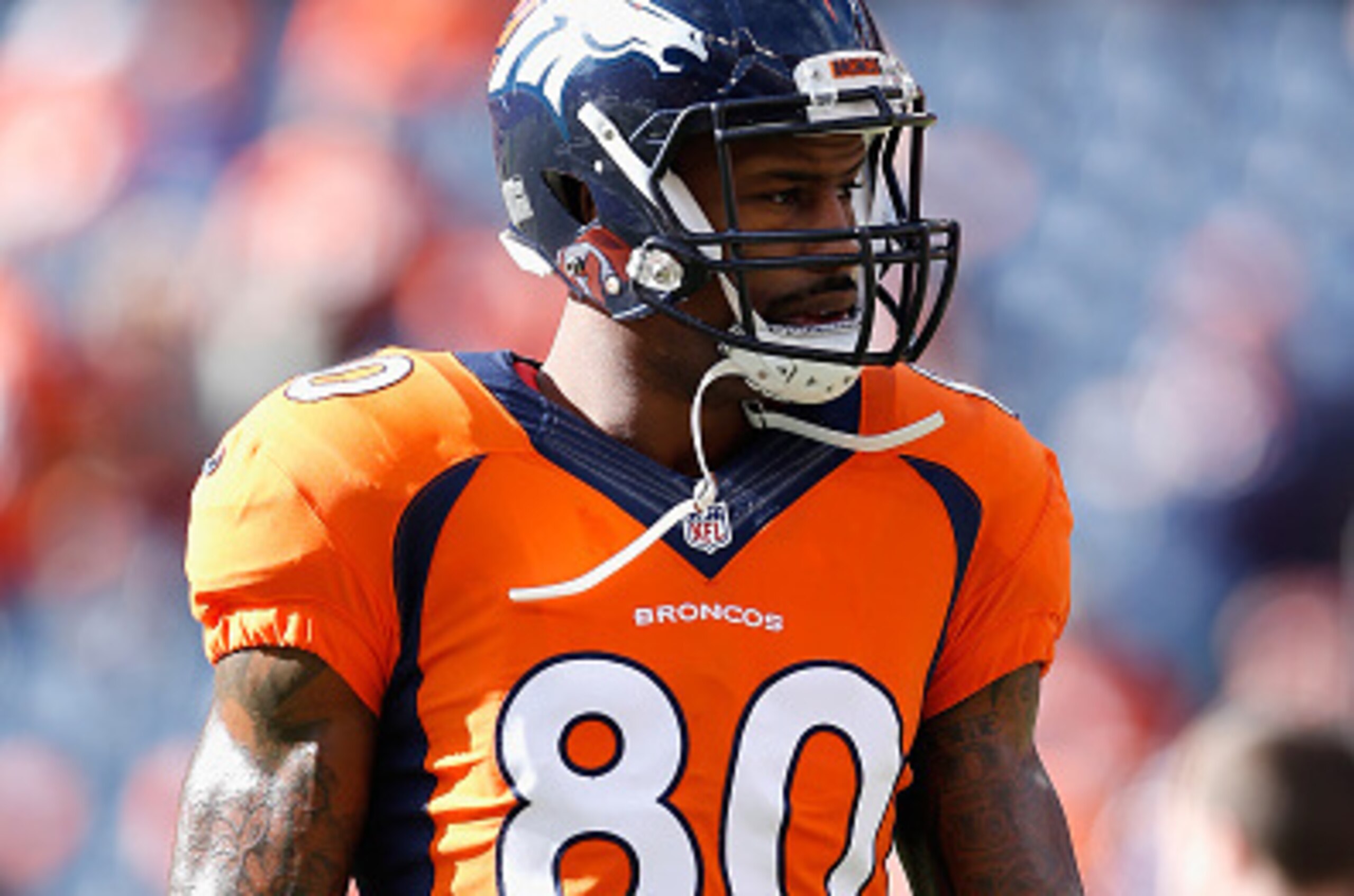
Hands
It is hard to believe that the Vernon Davis who ran a 4.38-second 40-yard dash at the 2006 combine is the same tight end we see today. Davis is still athletic but tries to make too many catches close to his body and doesn’t have long enough arms to keep defenders away from making plays on the ball. His drop rate was respectable in 2015, as he had just three drops in 55 targets.
Route Running
Even after his 10th year in the NFL, Davis is still one of the more athletic tight ends, but he isn’t able to use his speed or quickness to get past defenders. His routes were rounded off, and the team change in the middle of the year didn’t help. Davis tried to find timing within a new offense while also playing with two quarterbacks.
Blocking
Even in his prime Davis was never an amazing in-line blocker. He has the strength and plays with awesome leverage, but he has struggled to sustain blocks. Davis is best suited making blocks downfield. He is too athletic and strong for members of the back seven.
Position Value
Overall
31. Mychal Rivera, Oakland Raiders
25 of 55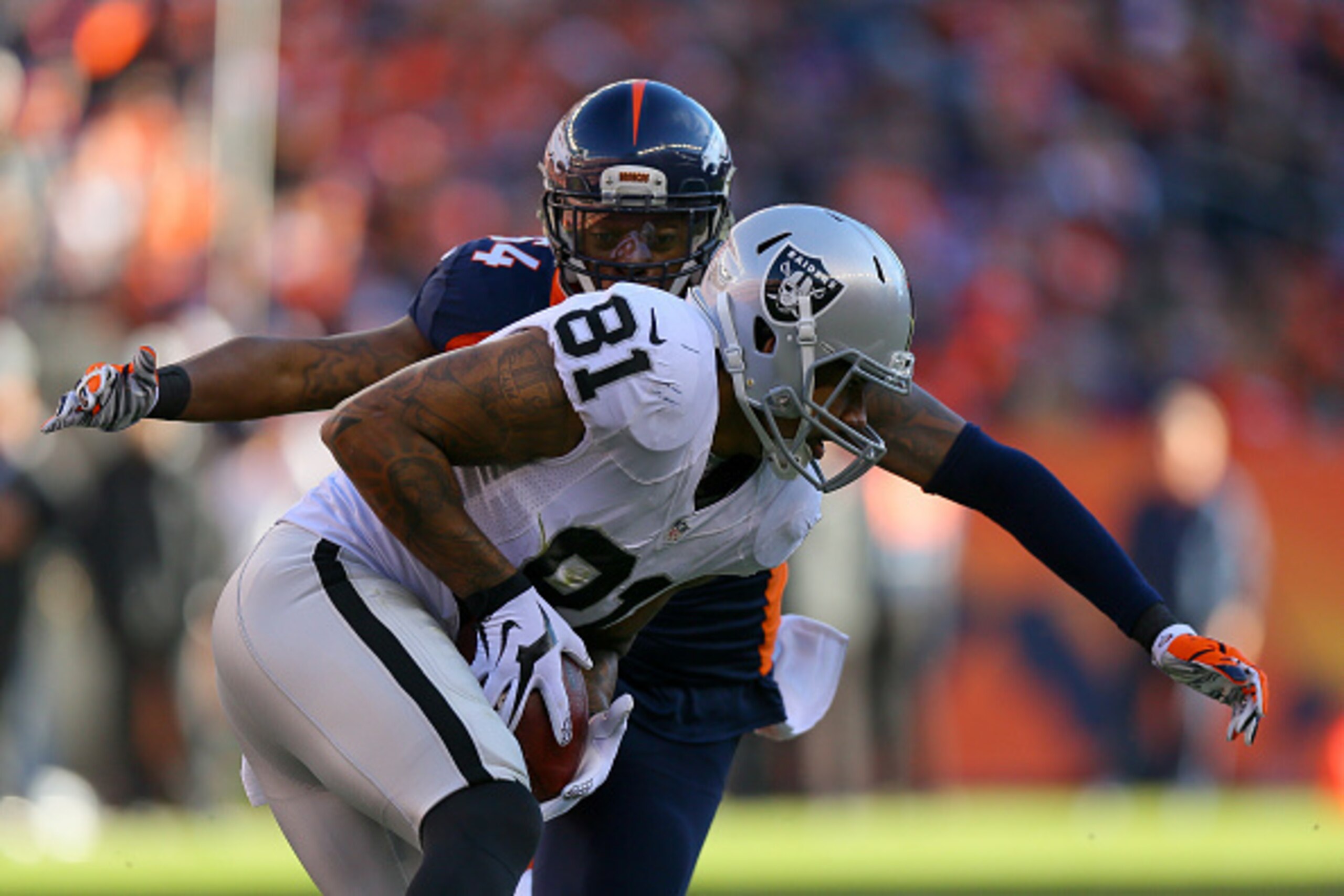
Hands
In his third season out of Tennessee, Mychal Rivera is turning into quite the receiving tight end. Even though he saw fewer targets in 2015, he was still able to bring in 32 catches with only one drop. Rivera does a good job at catching the ball away from his body and making plays over the middle.
Route Running
Rivera is undersized at 6’3”, 245 pounds and lacks top-end speed, which is not a good combination of traits. To make up for those shortcomings, Rivera is able to use his leverage and flexibility to keep defenders off him and away from the ball.
Blocking
He lacks functional strength and size to be an in-line blocker. The Raiders used him to chip and get to the next level, rather than asking him to handle bigger defensive players.
Position Value
Overall
30. Jordan Cameron, Miami Dolphins
26 of 55
Hands
Two years removed from his breakout season in 2013, Cameron didn't come close to the same stats. Of his 64 targets, Cameron only brought in 35 catches and three touchdowns. While he was able to stay healthy in 2015, he didn't show the same catch radius he had prior to his shoulder injury.
Route Running
Year after year, Cameron continues to become a better route-runner. His ability to hit the seam and use his length makes him a threat all over the field. A mid-year coaching change didn’t help the Miami offense, and Cameron will look to get back to his Pro Bowl form in 2016.
Blocking
An area that Cameron needs to work on is his blocking. As mentioned earlier, Cameron continues to work on his route running, but he also continues to struggle with in-line blocking. A lack of strength and aggression in the box have hurt his ability to seal and get to the next level.
Position Value
Overall
29. Anthony Fasano, Tennessee Titans
27 of 55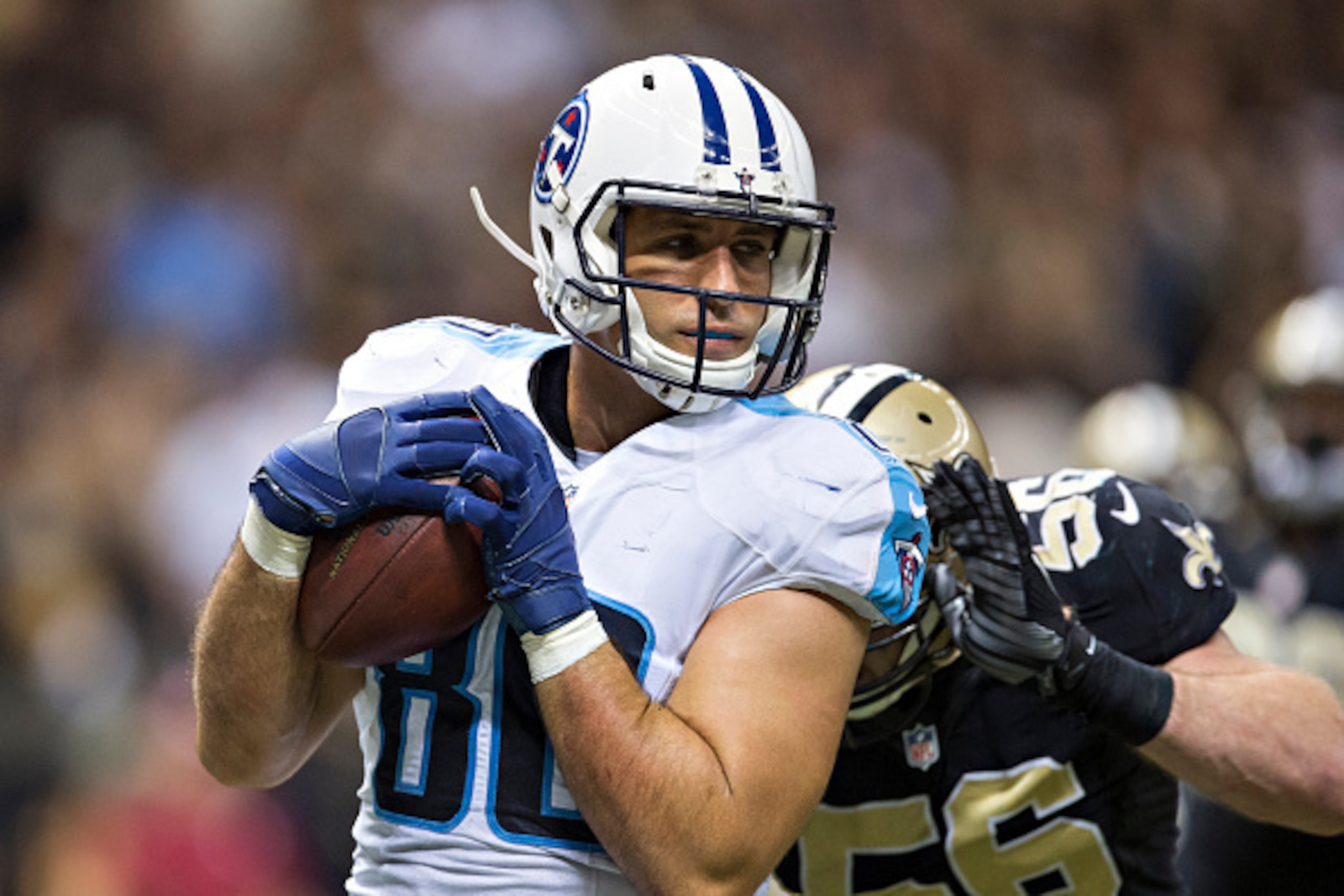
Hands
The 10-year veteran tight end has found his place in the league, even though it isn’t as the pass receiver many thought he would be coming out of Notre Dame. In 2015, Fasano had 26 catches on 39 targets but also had three drops to go along with his catches. Fasano struggles to extend his arms and makes too many catches with his body. He has limited ability to make catches thrown outside of his frame.
Route Running
He's a stiff runner and doesn’t have the ability to do much of anything downfield. Fasano is most dangerous when getting to the flat and and making plays after he has the ball.
Blocking
At 6’4”, 255 pounds, Fasano has exceptional strength and plays with great aggression at the line of scrimmage. There might not be a tight end better at sealing off the end and handling defensive linemen than Fasano. The Titans must love his skill set as a blocker, and I’m sure the other teams he has played for would love to have Fasano back as their No. 2 tight end.
Position Value
Overall
28. Richard Rodgers, Green Bay Packers
28 of 55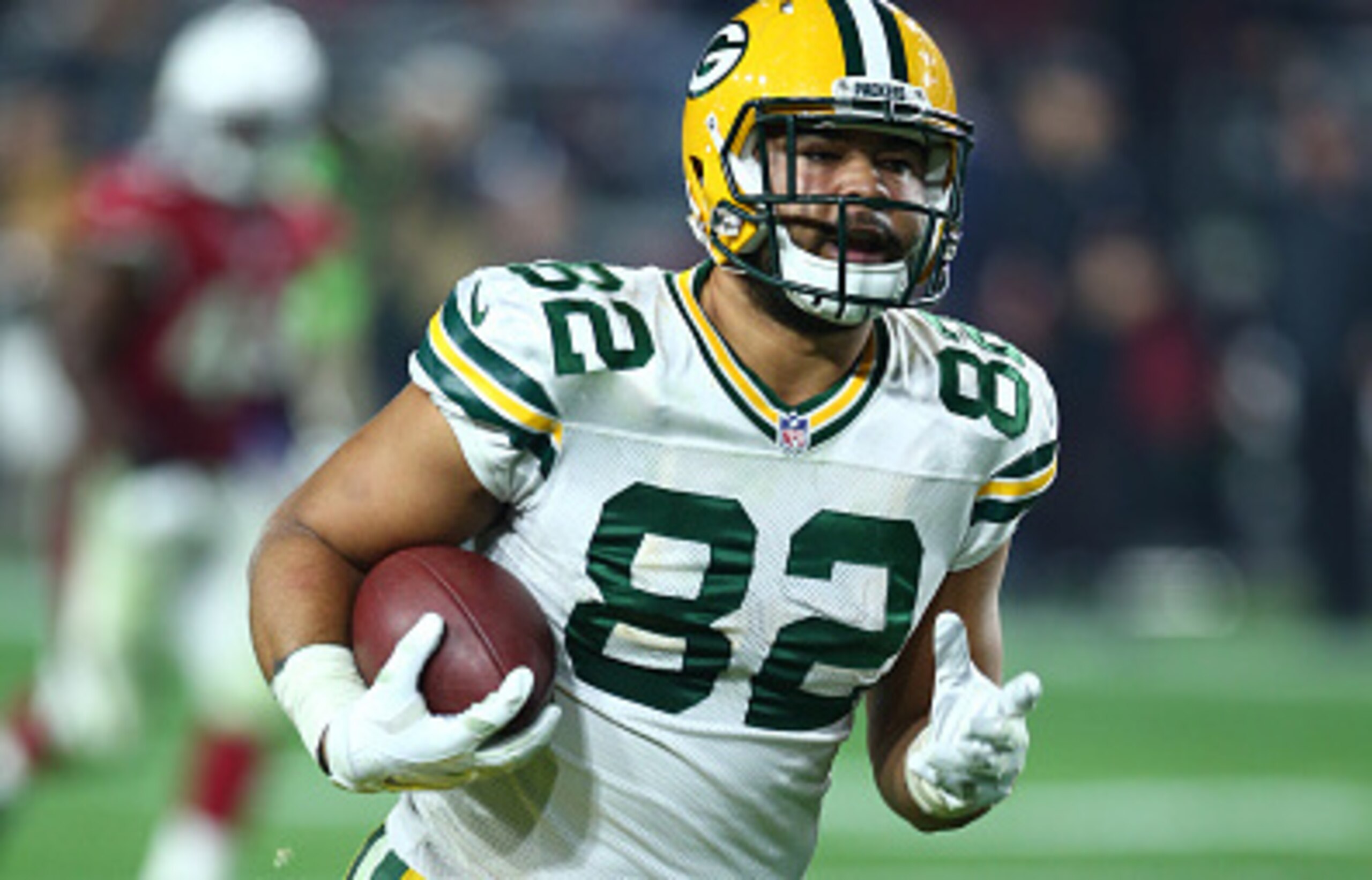
Hands
Richard Rodgers showcased his hands in 2015 after a promising year in 2014. The Hail Mary touchdown grab was not the only time Rodgers showed he could go up and get the football. His strong hands and ability to extend his arms helped him pull in 71.4 percent of his targets and eight touchdowns in 2015.
Route Running
Route running is still a work in progress for Rodgers, but he has shown improvements in getting out of his break and has been used more as a weapon up the seam. As Aaron Rodgers and Richard Rodgers become more comfortable playing together and Richard Rodgers gets his timing down, the two could pair up for many more touchdowns.
Blocking
With a lot of depth at tight end, Rodgers will have to show the Packers that he can be used as a blocker. Rodgers is going to have to play physical at the point of attack and not rely only on being a receiver. Playing with leverage and using his lower body will be key for Rodgers going forward.
Position Value
Overall
27. Ladarius Green, San Diego Chargers
29 of 55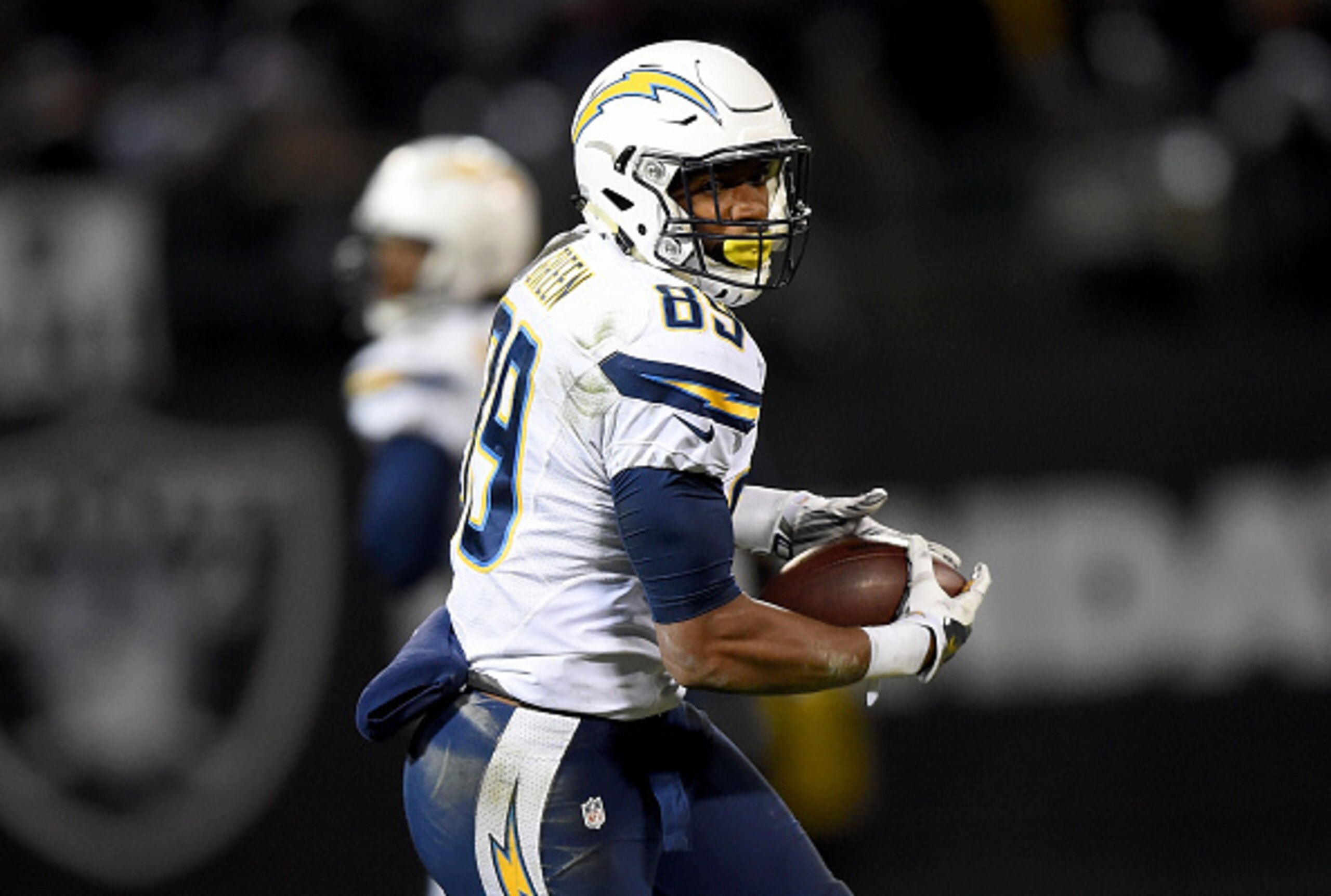
Hands
The lanky 6’6”, 240-pound tight end saw a career-high 56 targets in 2015 and brought in 37 of those for 429 yards and four touchdowns. Green offers big hands and long arms, but he struggles to keep himself between the ball and defenders and allows defenders to make too many plays on him and the ball. Green had a career-high 686 snaps in 2015 playing behind future Hall of Famer Antonio Gates.
Route Running
Not many tight ends run better routes than Gates, and Green has been fortunate enough to play with Gates for all four of his seasons. As he becomes more experienced, he has become a better route-runner and hasn't rounded off routes like he did early on. Green still struggles to come out low and allows people to get their hands on him and change where he goes. But the big tight end has good speed and is able to be a downfield threat for Philip Rivers.
Blocking
Adding strength and bulk would make a big difference for Green in route running and blocking. The Chargers like pass-catching tight ends, and that is what Green does best. San Diego won’t ask Green to block much in-line, and he is more effective in second-level blocking.
Position Value
Overall
26. Andrew Quarless, Green Bay Packers
30 of 55
Hands
Limited action in 2015 made it difficult to grade Quarless, having played only five games and seeing only four targets. In the past, Quarless has shown the ability to make plays on difficult balls and has proved he can make difficult catches.
Route Running
Quarless has the athletic ability to get up the field, but the Packers don’t use their tight ends downfield much. Being able to sit in windows and come back to the football are key for Quarless. When Rodgers scrambles out of the pocket, he is excellent at finding targets all over the field. When Quarless can get back to the football and find open windows, he becomes a better target.
Blocking
He struggles to play with functional strength when blocking in-line. He does his best work when releasing to the second level and overpowering members of the secondary. The Packers use Quarless a lot as a motion blocker and let him hit and release to the flat or to the second level, which fits his skill set well.
Position Value
Overall
25. Craig Stevens, Tennessee Titans
31 of 55
Hands
The veteran tight end is used more as a blocker than as a pass-catcher, which limited his number of targets. Stevens saw only 15 targets in 2015 but was able to bring in 12 of those. A limited catch radius and a lack of burst hurt Stevens' ability to get open and make catches.
Route Running
He is limited to underneath and mid-range routes and doesn’t have the speed or burst to hit the seam. Stevens is not asked to do much route running while playing alongside Delanie Walker.
Blocking
What Stevens does bring to the game is dominant blocking. He's very physical and able to seal the edge against any defensive end. Not many tight ends do a better job run blocking than Stevens.
Position Value
Overall
24. Virgil Green, Denver Broncos
32 of 55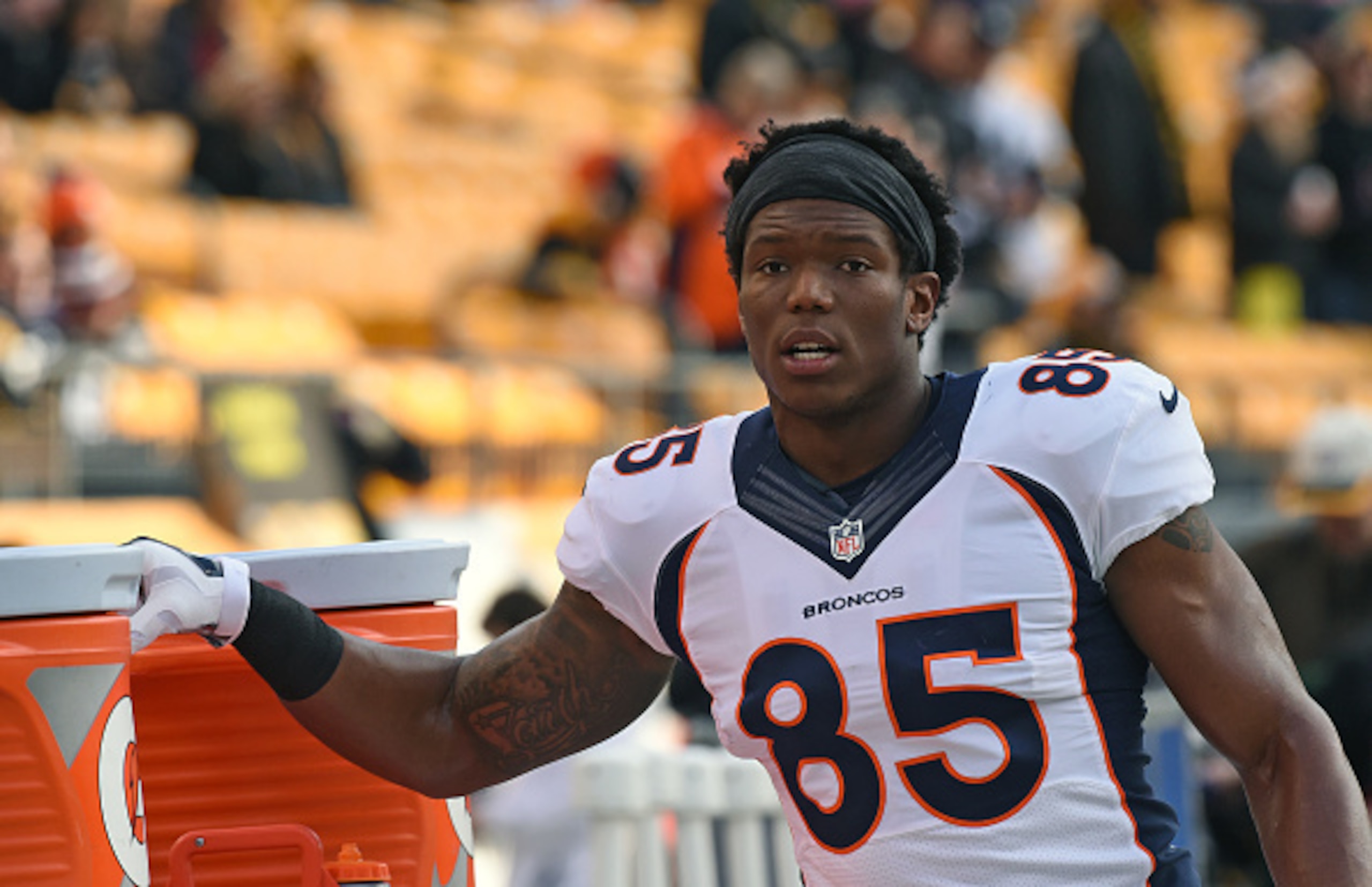
Hands
The college wide receiver continues to grow into a tight end. One thing that Virgil Green has been able to maintain from his days playing on the outside are his hands. The young tight end had a career year in 2015, bringing in 12 catches and showing that he is becoming a reliable player in the NFL. Green has no problem going up and getting the ball and is able to show off his long arms and impressive catch radius when given the chance.
Route Running
Green is not a natural route-runner, but he is big and athletic and able to get up field and out of his breaks. He has a tendency to round off routes and miss open windows.
Blocking
There is still a lot of room to grow as a blocker at tight end, but Green continues to show progress when given the chance. The position change has not been smooth for him, but he has seen more playing time year after year. Denver will rely more on two-tight end sets under Gary Kubiak's guidance, and that will mean more blocking from Green.
Position Value
Overall
23. Josh Hill, New Orleans Saints
33 of 55
Hands
Josh Hill had big shoes to fill when the Saints shipped Jimmy Graham to Seattle, and many expected him to be the leading tight end. However, Hill was only targeted 30 times and only brought in 16 of those targets. His hands and catch radius were limited, but the young tight end did show ability in limited snaps.
Route Running
If the young tight end wants to see more playing time, he needs to work on his routes. Becoming more versatile and being more than an underneath target will get him on the field as more than just a blocker.
Blocking
Head coach Sean Payton looked to run the ball and control the clock in 2015, and Hill helped pave the way for more carries with his solid run blocking. By bringing in two tight ends, not only were the Saints able to run the ball more, but they were also able to keep Drew Brees upright.
Position Value
Overall
22. Martellus Bennett, Chicago Bears
34 of 55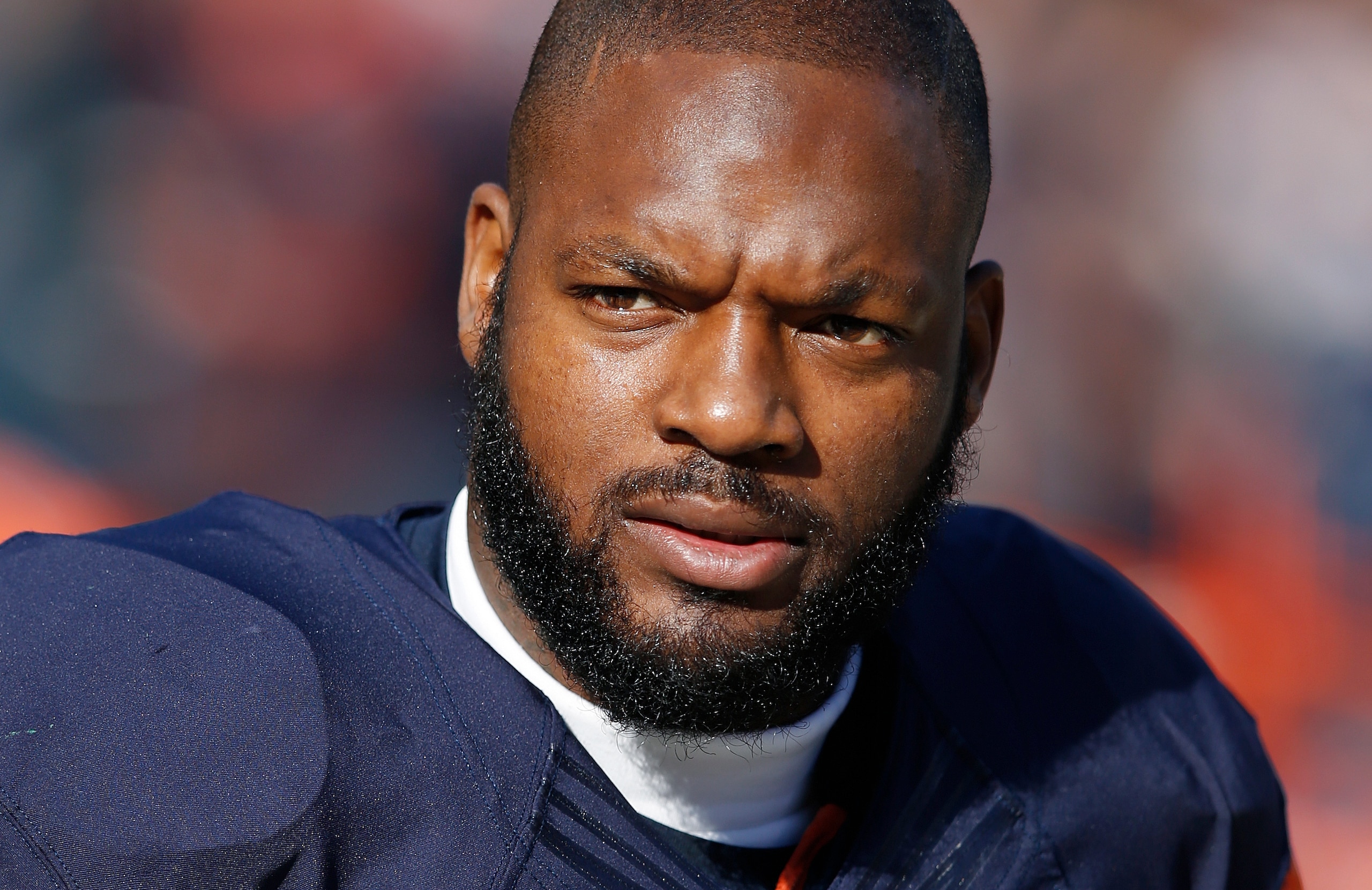
Hands
At 6’6”, 273 pounds with unbelievable athletic ability, Martellus Bennett stands out during every game. His long arms and big hands enable him to have an unusual catch radius. His ability to use those hands does not always match his physical attributes. Drops continue to be a problem for Bennett, four in 2015, and Jay Cutler's trying to throw footballs through people hasn’t helped Bennett. The big tight end has never posted a high catch percentage and needs to if he wants to balance out his locker room distractions.
Route Running
Bennett has always relied on his size and athletic ability to get open, and it has worked for many years. His route-running skills are not as impressive as his measurables. Bennett comes out of his stance relatively low but runs too high and doesn’t sink his hip. If Bennett would work on the small aspects of his game, he could become one of the best tight ends in the game.
Blocking
Not playing with strength and consistency continue to hurt Bennett in blocking. He has always been able to block; it is just a matter of whether he wants to or not.
Position Value
Overall
21. Charles Clay, Buffalo Bills
35 of 55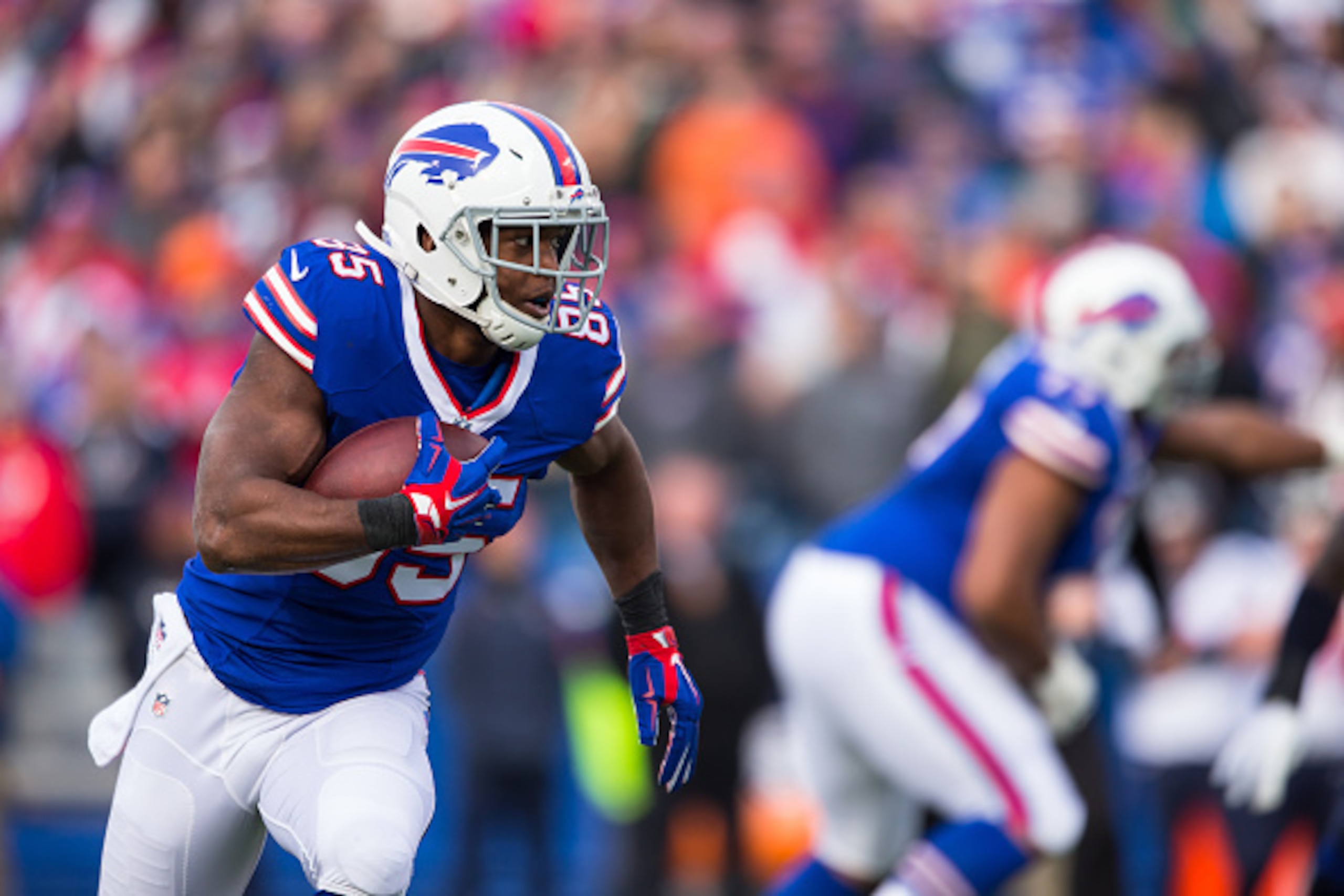
Hands
Charles Clay looks more like a fullback than a tight end, and he catches more like a fullback at times. Catching passes close to his body have resulted in too many drops, five in 2015, and too many balls that he should have made a play on. When Clay does have the ball, he is one of the hardest tight ends to bring down, totaling 16 missed tackles for a four-way tie for most at his position.
Route Running
While Clay has adequate speed, he lacks the length to be a deep threat at tight end. His lateral quickness and agility make him not only hard to bring down but also hard to stay with. Clay ran routes out of the backfield, in-line and from the slot in 2015, which also made him hard to find.
Blocking
Being physical and staying low will help you win any blocking battle, and Clay has no problems in either of those areas. His burst off the ball and experience playing fullback make him a natural blocker at tight end. He needs to improve his ability to sustain blocks and drive bigger players back.
Position Value
Overall
20. Julius Thomas, Jacksonville Jaguars
36 of 55
Hands
Julius Thomas has declined statistically every season since his breakout year in 2013. In 2015, Thomas showed a limited catch radius and was only able to pull in 61.3 percent of his 75 targets, ranking near the bottom of his position and alongside many No. 2 and 3 tight ends. Thomas also had six drops and continues to struggle to stay healthy.
Route Running
The athletic ability is there, and he is able to get up the seam and make big plays. That makes him difficult to cover, especially for linebackers. His ability to make the big plays downfield helps him get open when finding windows in zones and in the underneath routes. When Thomas gets to the flat, he is a threat to make big plays after the catch.
Blocking
His run-blocking skills were poor early in his career. However, Thomas continues to improve in this area and is becoming more comfortable with the game and all his assignments. Head coach Gus Bradley has asked him to do more as a blocker in Jacksonville, and Thomas has answered the call.
Position Value
Overall
19. Clive Walford, Oakland Raiders
37 of 55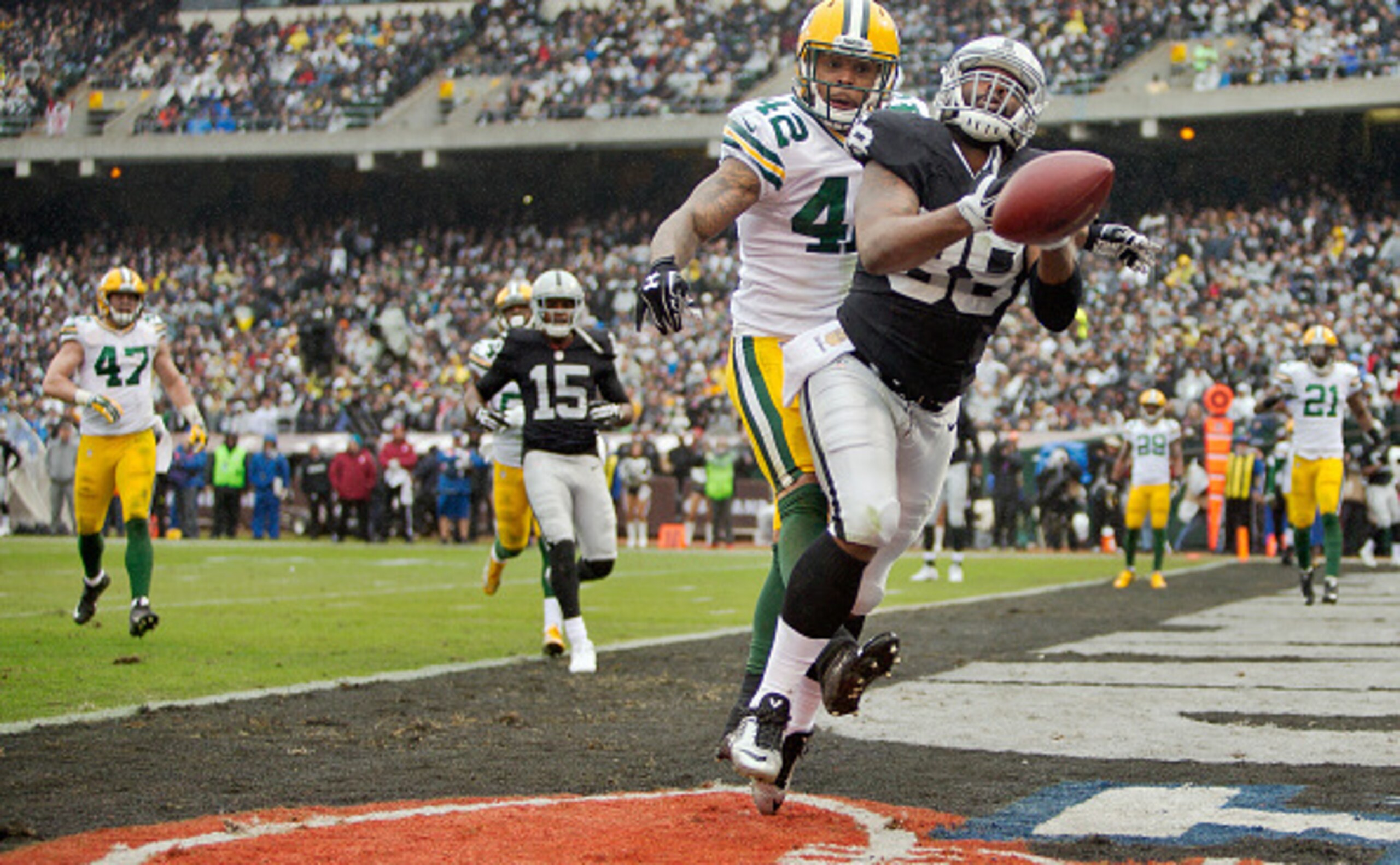
Hands
The rookie out of Miami (FL) came on to the scene at last year's Senior Bowl by showcasing his hands and athletic ability. Walford gets his arms extended when making catches and doesn’t shy away from contact over the middle. Focusing on bringing in the ball is where Walford struggled. He recorded just three drops in 2015 but only saw 49 targets.
Route Running
Route running is hard for a lot of bigger tight ends entering the league. Walford rounded off too many routes and needs to focus on sinking his hips and getting out of his break, like he is capable of.
Blocking
Walford was able to benefit from playing a lot of in-line tight end at Miami. He has that natural ability to handle defensive linemen, using both strength and athleticism, and has no problem getting to the second level. As Walford adds bulk and more strength, he could become a dominant run-blocker.
Position Value
Overall
18. Travis Kelce, Kansas City Chiefs
38 of 55
Hands
Travis Kelce showed some of his amazing potential when it mattered most: the playoffs. However, his six drops to just five touchdowns in the regular season show that Kelce needs to strengthen his hands to become an elite tight end. In his two NFL seasons, Kelce has 10 drops. There is no question that he is a beast when he brings in the ball, but he needs to work on extending his arms and keeping defenders away from the ball.
Route Running
At 6’5” and an athletic 260 pounds, Kelce can run nearly every route. He is dangerous up the seam and dominant in the red zone. Kelce is able to adjust to balls in the air and make plays on poorly thrown balls—in addition to being a nightmare for anyone in the secondary.
Blocking
Most young pass-catching tight ends enter the league as poor blockers. That isn’t the case here. While Kelce is not the most dominant blocker, he is physical and able to use his lower-body strength well for just a second-year tight end. Andy Reid has seen many young tight ends excel in his offense, and Kelce has proved he can be an amazing pass-catcher as well as a solid run-blocker.
Position Value
Overall
17. Gary Barnidge, Cleveland Browns
39 of 55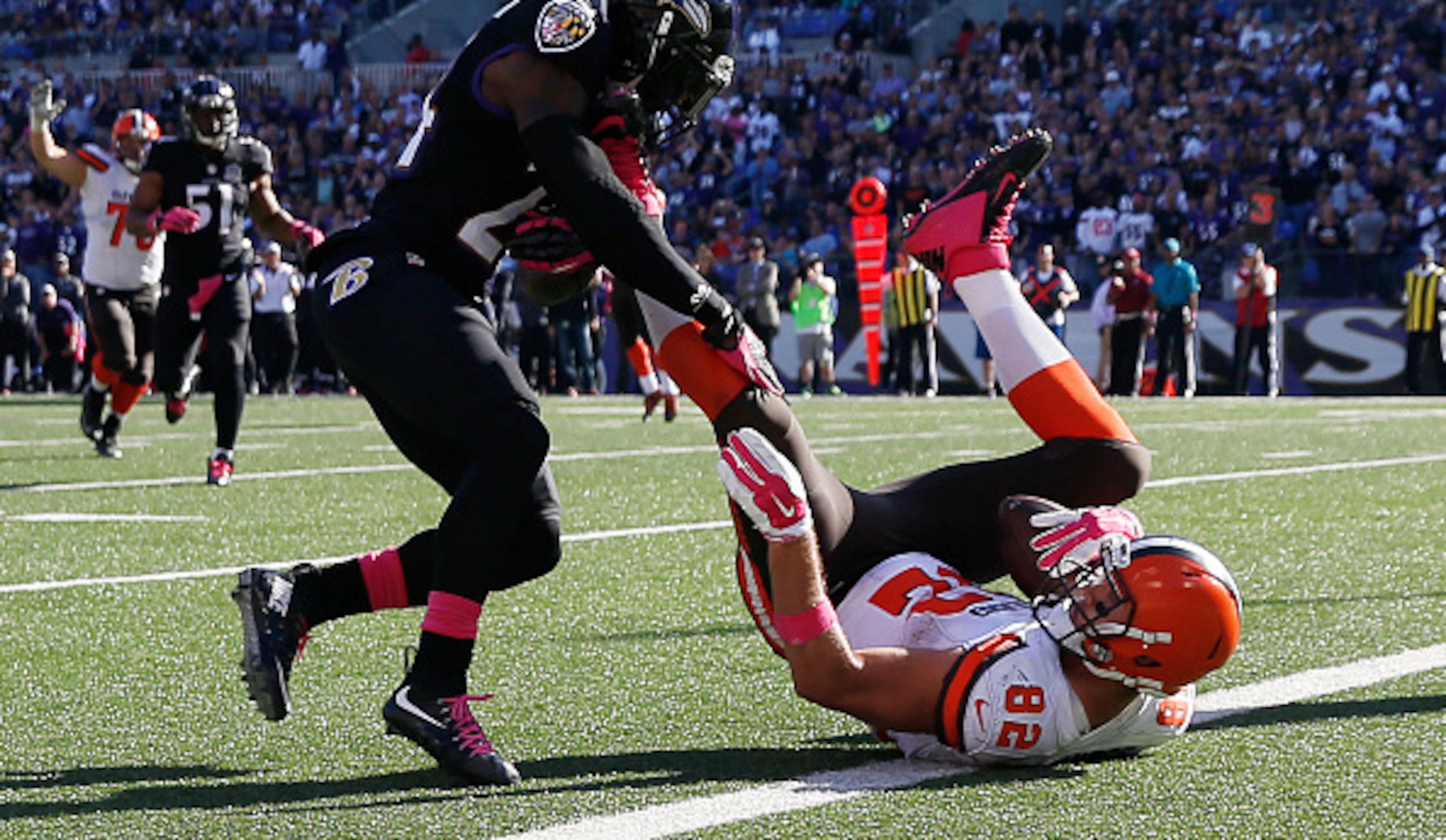
Hands
Gary Barnidge had a career year in 2015, bringing in 79 catches and nine touchdowns. The big-bodied tight end made for an easy target, no matter who was playing quarterback. A limited catch radius and seven drops hurt his hands rating this year, but the kind of improvement he has made gives Browns fans something to look forward to.
Route Running
Seven drops in 2015 will stick out on a stat sheet, but one thing that doesn’t show up is his great ability to get open. Only one other tight end, Delanie Walker, saw more targets than Barnidge in 2015. Barnidge excelled at keeping himself between the defender and the ball.
Blocking
An area for improvement moving forward would be his blocking. At 6’6”, 250 pounds, Barnidge has the size and length to maul people in the second level, but he lacks playing strength to be an effective in-line blocker.
Position Value
Overall
16. Kyle Rudolph, Minnesota Vikings
40 of 55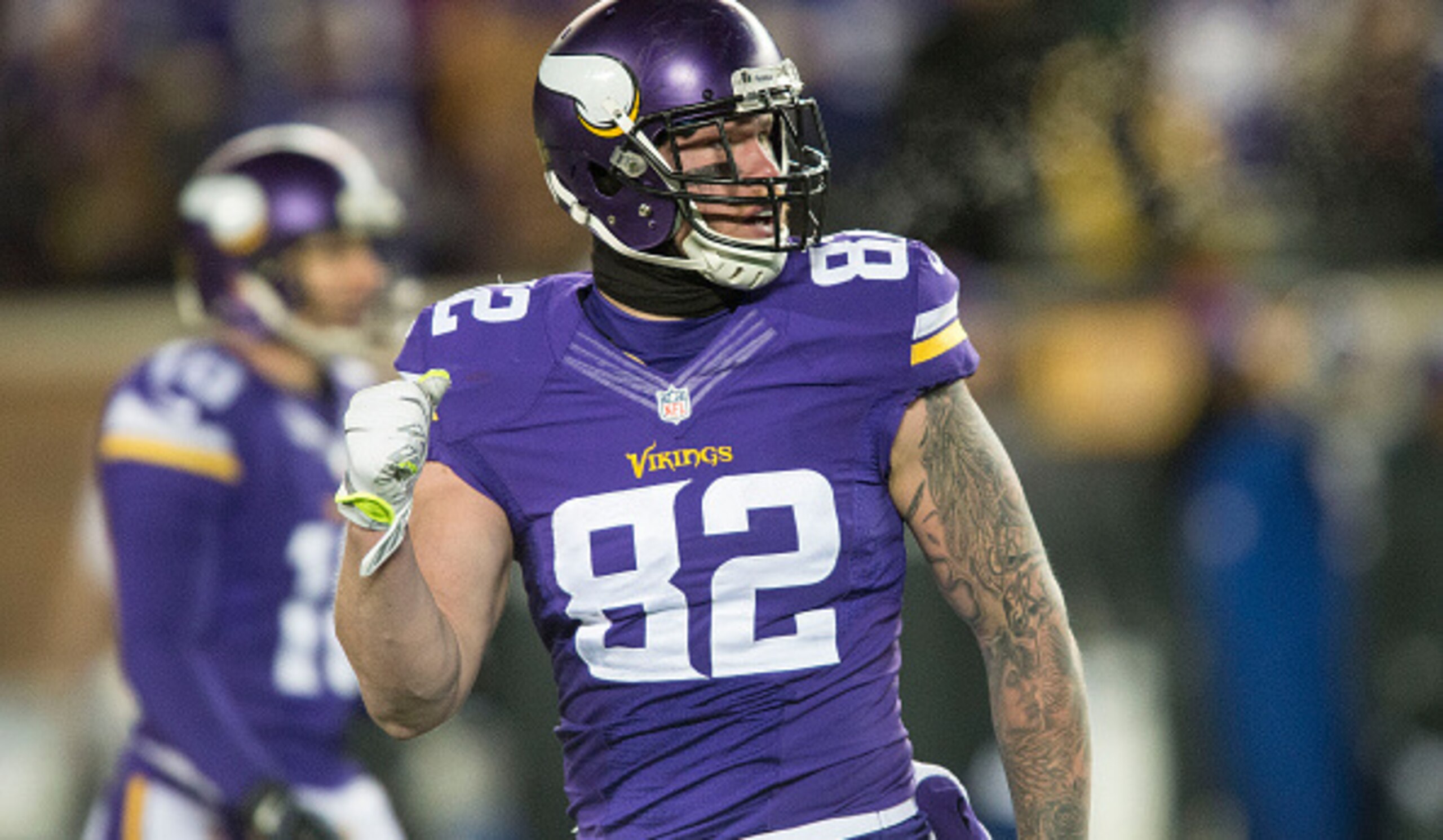
Hands
One word to summarize Kyle Rudolph’s hands: inconsistent. At times it looks like he can catch anything thrown close to him. Then the next game he can’t catch anything thrown at him. Rudolph did a good job to correct that problem in 2015, only having two drops, but he has struggled to play consistently year to year.
Route Running
The tight end provides Teddy Bridgewater with a big target and has the athletic ability to get out of his breaks. His route running continues to progress. If his hands take the same progression, Rudolph will be a top tight end in 2016.
Blocking
At 6’6”, 265 pounds, Rudolph has the ideal size, strength and athleticism to be a dominant blocker. But he continues to struggle as a blocker. Luckily, Adrian Peterson has the ability to make anyone look like a solid blocker. Rudolph needs to improve his toughness on in-line blocks and finish blocks in the second level.
Position Value
Overall
15. Jacob Tamme, Atlanta Falcons
41 of 55
Hands
Jacob Tamme saw a bit of a resurgence in 2015, pulling in 59 catches while being targeted 78 times. The undersized tight end has excelled as a pass-catcher, and in 2015, he provided the Falcons with some much-needed production at tight end. His strong hands would serve well on any team.
Route Running
Playing in the same offense as Peyton Manning—as Tamme did for several years earlier in his career—seems to require, or make, you be a good route-runner. While only weighing in at 230 pounds, Tamme still shows good body positioning and ability to get up the field for a veteran tight end. He isn’t going to burn anyone, but he is able to use his hips and and put himself in a good position to make catches when in the right offensive scheme.
Blocking
Blocking is not Tamme’s strength. He is overmatched physically and is not able to be fire off the ball to get a good initial push. His most effective blocking style is chipping the end and getting to the second level.
Position Value
Overall
14. Heath Miller, Pittsburgh Steelers
42 of 55
Hands
Year after year, Heath Miller continued to impress, even though we all expect him to regress. After a career-high six drops in 2014, Miller reduced that number to two while also improving his catch percentage in 2015. Miller lived and excelled in the underneath-to-intermediate routes, where he was able to separate himself from linebackers and overpower safeties with body positioning and the ability to catch the ball in heavy traffic.
Route Running
It’s no secret that Miller wasn't going to be streaking up the stream and making plays downfield. But that doesn’t mean Miller wasn’t a dangerous receiving tight end. Miller was able to use his frame to shield defenders from the ball and keep himself in position to make the catch.
Blocking
While Miller didn't lose much production from his stat line, he lost a step or two in his blocking. Miller helped pave the way for many Pro Bowl running backs in his 11 seasons, but he was not able to sustain that ability over time. The hard-nosed, physical tight end lost his ability to beat defenders off the ball and then had to try to make up for that lost step when in-line blocking.
Position Value
Overall
13. Maxx Williams, Baltimore Ravens
43 of 55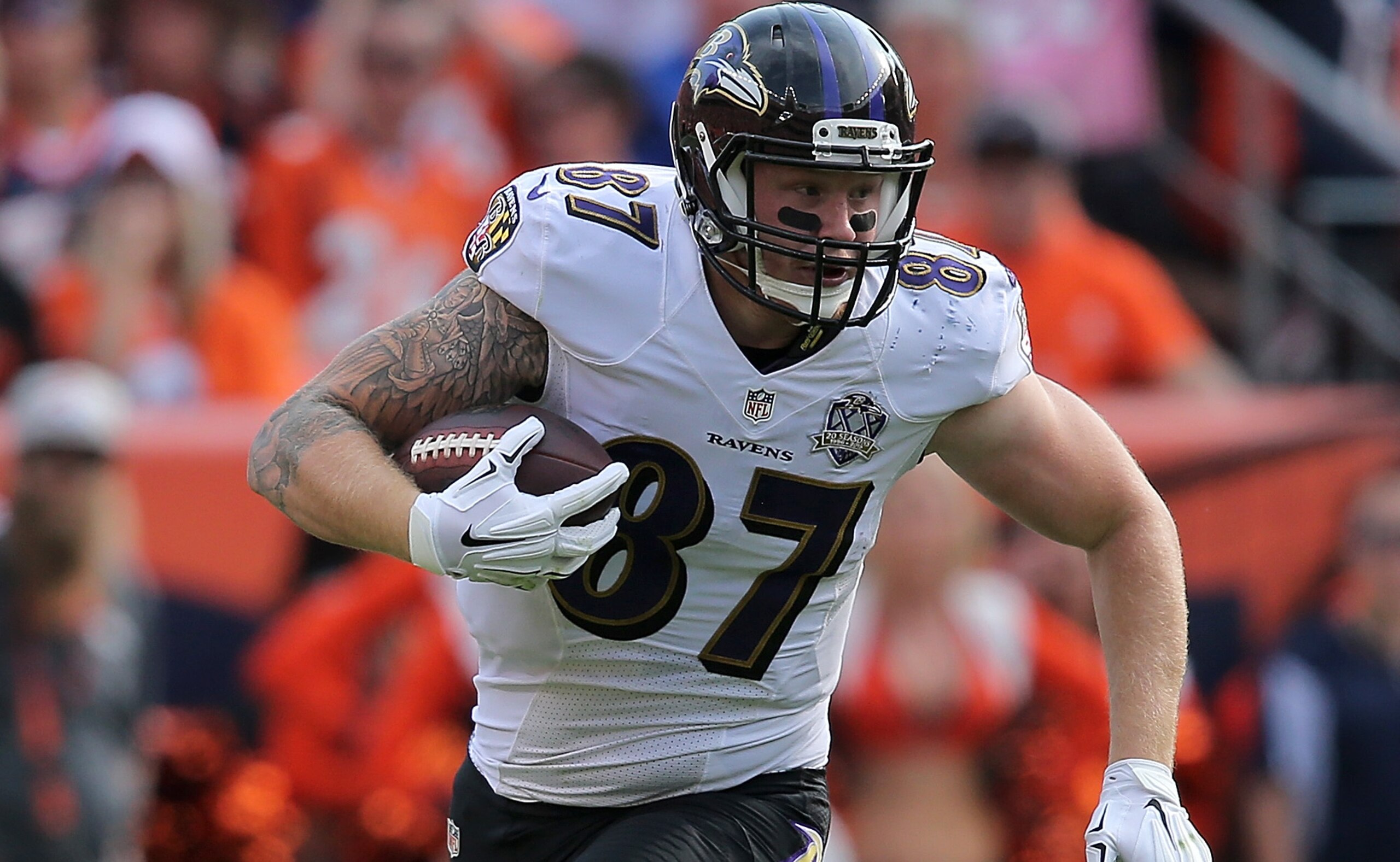
Hands
The first tight end taken in the 2015 draft showed the pass-catching ability that he was known for at Minnesota. While only seeing 45 targets, he was able to bring in 32 catches and only one dropped pass. His hands were already great coming into the league, and he is able to sell out and pull in passes not many other tight ends can while also being competitive on every pass.
Route Running
An area of improvement for the young tight end is his route-running technique. Running upright, not sinking his hips and rounding out routes hurt his production in 2015. However, you can see a great improvement from Week 1 to Week 17. Williams has all the athletic ability he needs to be a dangerous route-runner and will look to be a threat up the seam for the strong arm of Joe Flacco for years to come.
Blocking
He lacks the strength to be a great blocker and needs to add weight to take on bigger defenders. As Williams grows mentally and physically—he will be 22 in April—he will grow as a blocker as well. Learning to use his hands and initiate contact with blockers will go a long way for Williams in 2016.
Position Value
Overall
12. Crockett Gillmore, Baltimore Ravens
44 of 55
Hands
The Ravens are in desperate need of some pass-catchers. With Gillmore being a 6’6” athletic tight end, he will get a chance to prove himself. His length enables him to pull in tough passes and get his hands on more passes. In his 10 games played this season, Gillmore only dropped two passes on 44 targets. With Flacco coming back healthy next season, Gillmore should see more passes his way and increase his number of catches.
Route Running
In just his second season, Gillmore showed impressive route running and athletic ability for a 270-pound tight end. Every quarterback loves a tight end who can get up the seam and be a threat downfield. And Gillmore has the size and enough speed to be dangerous when any safety is covering him. As his footwork improves, he should be able to rely more on his routes and less on his size.
Blocking
The things that stand out most about Gillmore as a blocker are his tenacity and ability to get his hands on defenders. If he is able to improve his burst off the line and his lower-body strength, Gillmore has the ideal tools to be an outstanding blocker.
Position Value
Overall
11. Brent Celek, Philadelphia Eagles
45 of 55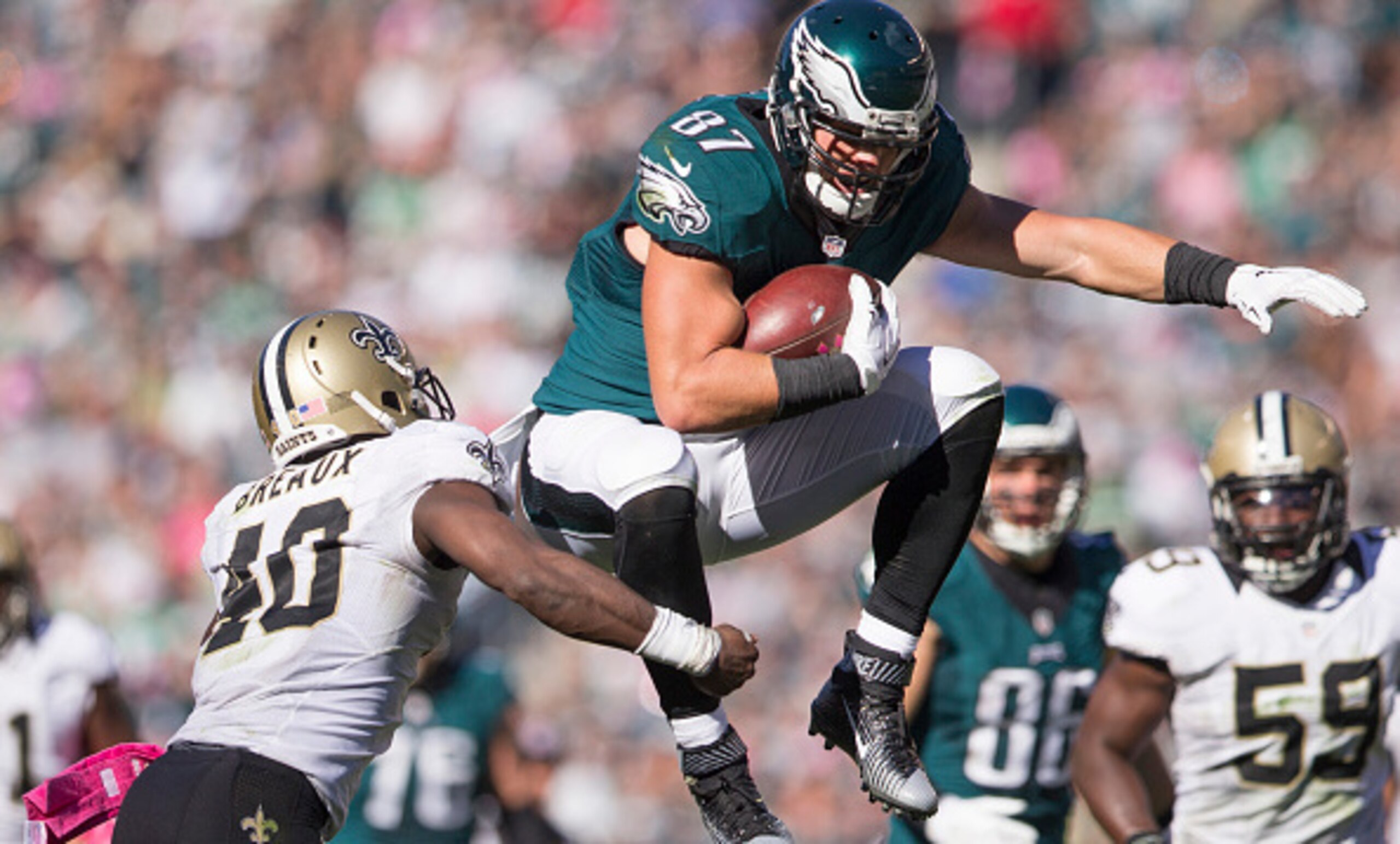
Hands
Celek's catch total for each of the last three seasons—27, 32, 32—are far lower than his 2012 total of 57. But he was also able to decrease the number of dropped passes—zero—for the third straight year. Early in his career, Celek struggled with drops and catch radius, and he has been able to right many of those wrongs in the latter part of his career. A change of offensive philosophy and consistency at quarterback would truly benefit the tight end who pulled in an amazing 84.4 percent of his targets in 2015.
Route Running
When young tight ends enter the league, many of them can rely on fresh legs and athleticism, but that won’t get you nine seasons in the NFL. Being able to realize that has helped Celek extend his playing career. When you watch Celek play, you can see his ability to recognize coverages and find windows.
Blocking
When it comes to blocking, Celek is best used when chipping the end and releasing to the second level, which is what Chip Kelly asked him to do a lot of. His lack of bulk and strength make him a liability against defensive linemen, but he has the athletic ability and technique to hold his own against linebackers and safeties.
Position Value
Overall
10. Zach Ertz, Philadelphia Eagles
46 of 55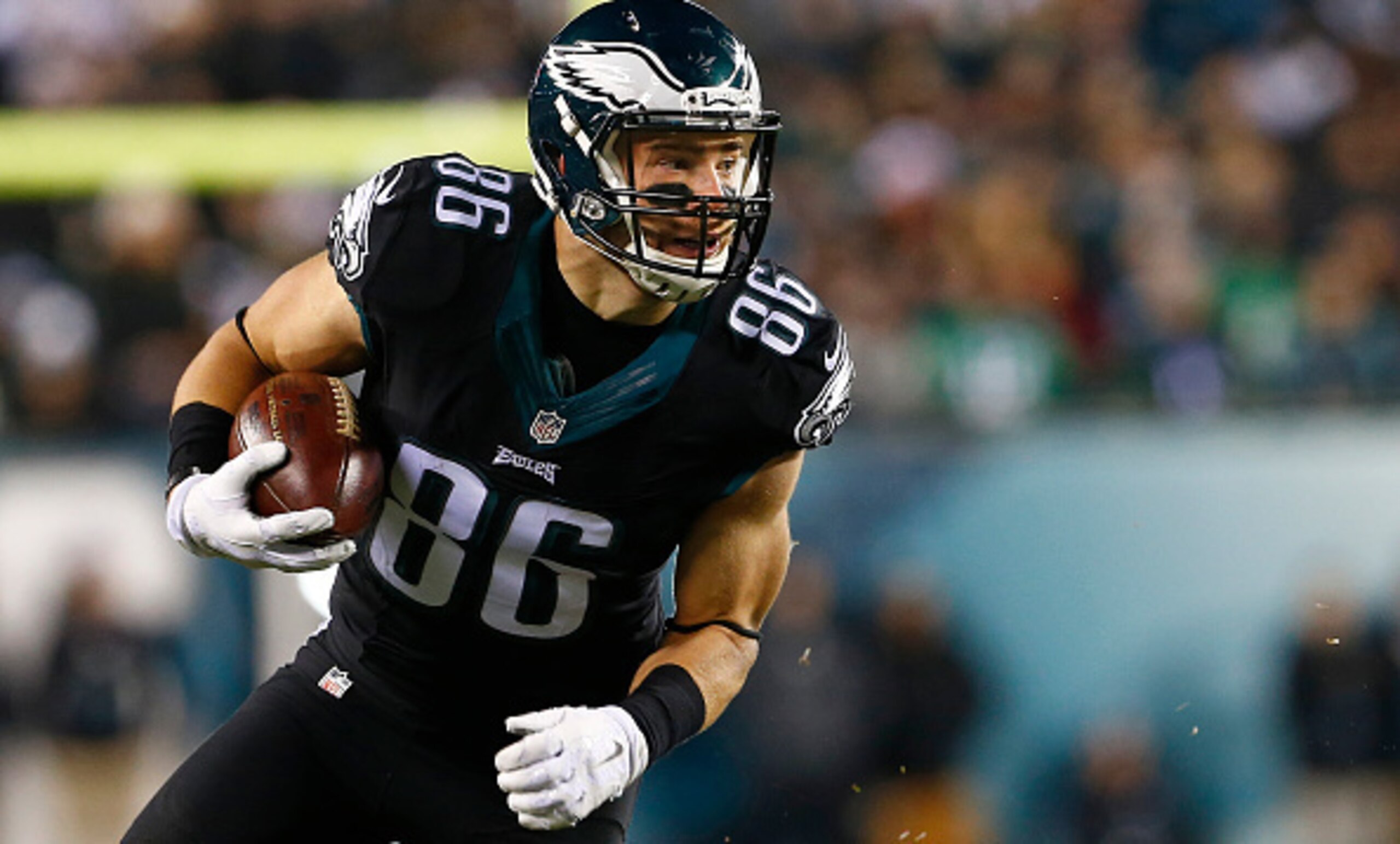
Hands
Zach Ertz was one of the NFL’s most productive tight ends in 2015, bringing in 75 passes on 106 targets. So why does he only get 28 points here? The seven drops hurt. Ertz has flashes of being unstoppable and then times when he has concentration drops that make no sense. And while he was No. 6 overall for tight end targets, he came in second for drops at the position. It’s a trade-off with Ertz, who also added just two touchdowns in 2015, but the potential is there for him to continue being a dynamic part of the offense.
Route Running
In the Kelly offense, Ertz rarely went outside the hashes, focusing more often on working up the seam to split safety coverage. When he got man-to-man looks from linebackers or safeties, it was an easy read for Sam Bradford. With Ertz’s 6’5”, 250-pound frame, he’s a natural mismatch when he gets into space. And with above-average ability to work over the top of the defense, he’s one of the better intermediate-to-deep threats in the middle of the field.
Blocking
An underrated blocker coming out of Stanford, Ertz flourished in the zone-blocking scheme the Eagles used up front under Kelly. He’s agile enough to attack angles as a blocker and win with leverage. And with his length and hand strength, Ertz more than holds his own at the point of attack.
Position Value
Overall
9. Antonio Gates, San Diego Chargers
47 of 55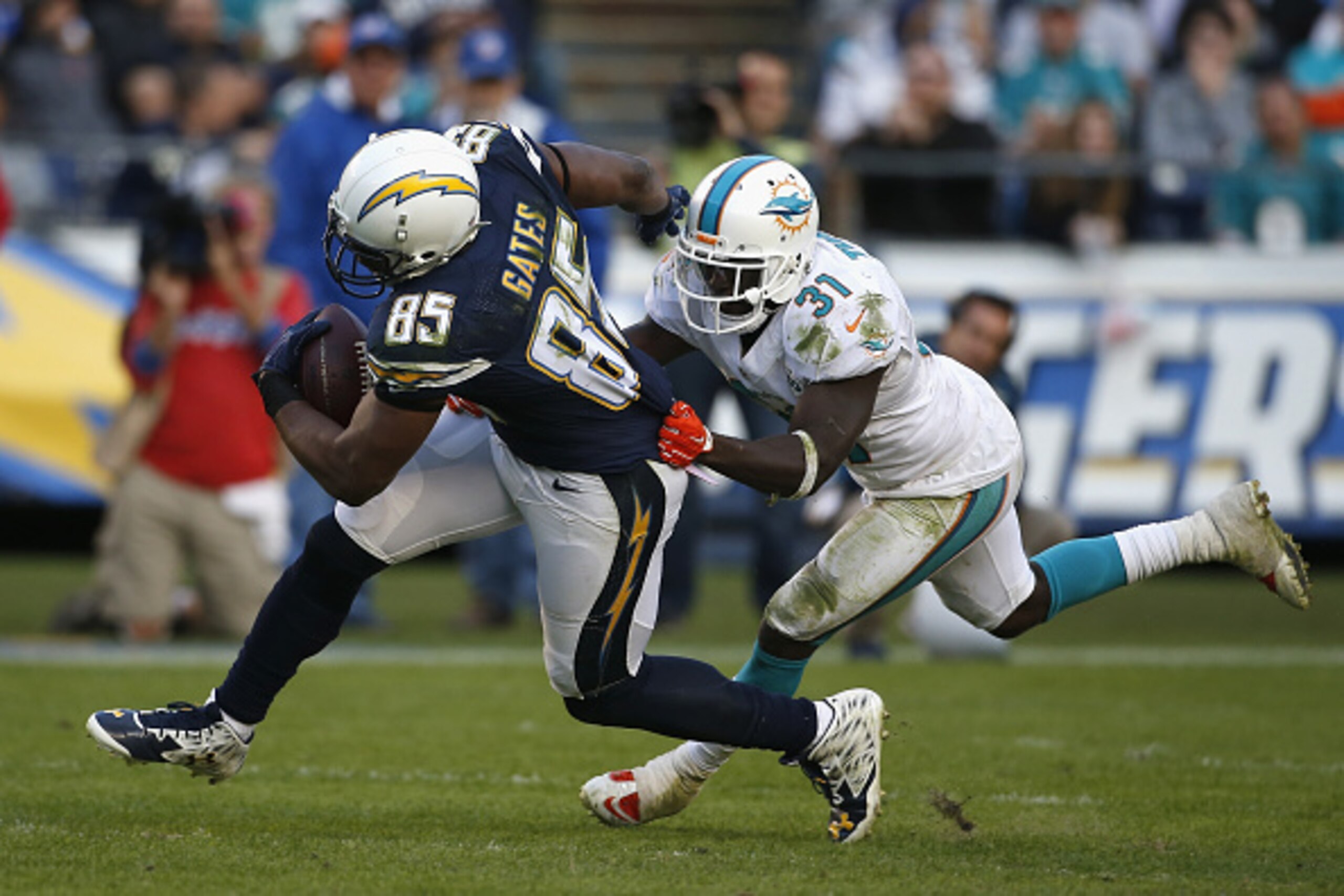
Hands
Antonio Gates is still a reliable option in the passing game, especially when he can box out defenders. In 2015, the future Hall of Famer saw 75 targets in a suspension-shortened season and pulled down 56 passes with just three drops. Gates doesn’t have the catch radius he used to—largely due to a lack of flexibility—but he’s still solid when he’s able to get inside positioning.
Route Running
If any player in the NFL has a signature route, Gates’ would be coming off the line of scrimmage and using his rear end to box out a linebacker or strong safety. That eight-yard button-hook is his go-to play, and it results in the majority of his yards and catches. Gates will still work out outside that eight- to 10-yard box, but it’s becoming less and less often that he does go outside the hashes.
Blocking
The anti-Graham, Gates is all about willingness at this point in his career and less about having the athleticism to reach outside defenders. He’s still strong and finds good hand holds to lock out defenders, but his impact as a blocker isn’t what it used to be.
Position Value
Overall
8. Jimmy Graham, Seattle Seahawks
48 of 55
Hands
Jimmy Graham’s impact in Seattle was not what anyone expected, and he ended the season after Week 12 with an injury. But while on the field, Graham did produce when thrown to. On 68 targets, he caught 48 passes and dropped just two of those. The biggest issue continues to be a lack of willingness to fight for the ball over the middle. Graham wants to live in space, but the Seahawks need him to get tough and fight for the ball and yards in trash.
Route Running
Route running has always been a strength for Graham. He’s tall, flexible and can move quickly through transitions. Since he started suffering more injuries, his flexibility and skills in planting to change direction have become noticeably stiffer. This is an area in which a healthy Graham could score better than the beat-up version we’re seeing.
Blocking
The knock on Graham in New Orleans was often that he didn’t want to block, and that held true in Seattle as well, even as the Seahawks made his blocking a point of emphasis. Graham has the length to be an impact blocker, but often the desire to do so isn’t there when he has to engage a defensive end or linebacker at the point of attack.
Position Value
Overall
7. Tyler Eifert, Cincinnati Bengals
49 of 55
Hands
On the year, Tyler Eifert dropped seven passes, which brings down his receiving score considerably. On the other hand, three of those drops came in one game (Houston), and he otherwise proved himself to be a valuable up-the-seam receiver. Eifert’s concentration can improve, and he has all the skills to make a big jump statistically over his 52-catch season if healthy.
Route Running
Eifert moves like a big wide receiver, and the Bengals take advantage of that with their offensive scheme, splitting him out into the slot and letting him attack from inside the formation. Eifert is able to get the jump on linebackers and safeties with his burst out of his stance. With his size (6’6”, 250 lbs), he can get over the top on most defensive backs. With his range, speed and size, Eifert can dominate the middle of the field.
Blocking
When looking at Eifert, one wouldn't expect a good blocker, but he’s developed into a good player on the edge of the line in the run game. His length is a key, as he’s able to lock out defensive ends while still being nimble enough to reach outside linebackers if he’s starting off lined up next to the right tackle. And with good athleticism, Eifert can be effective as a fullback, H-back, in-line tight end or flex tight end.
Position Value
Overall
6. Zach Miller, Chicago Bears
50 of 55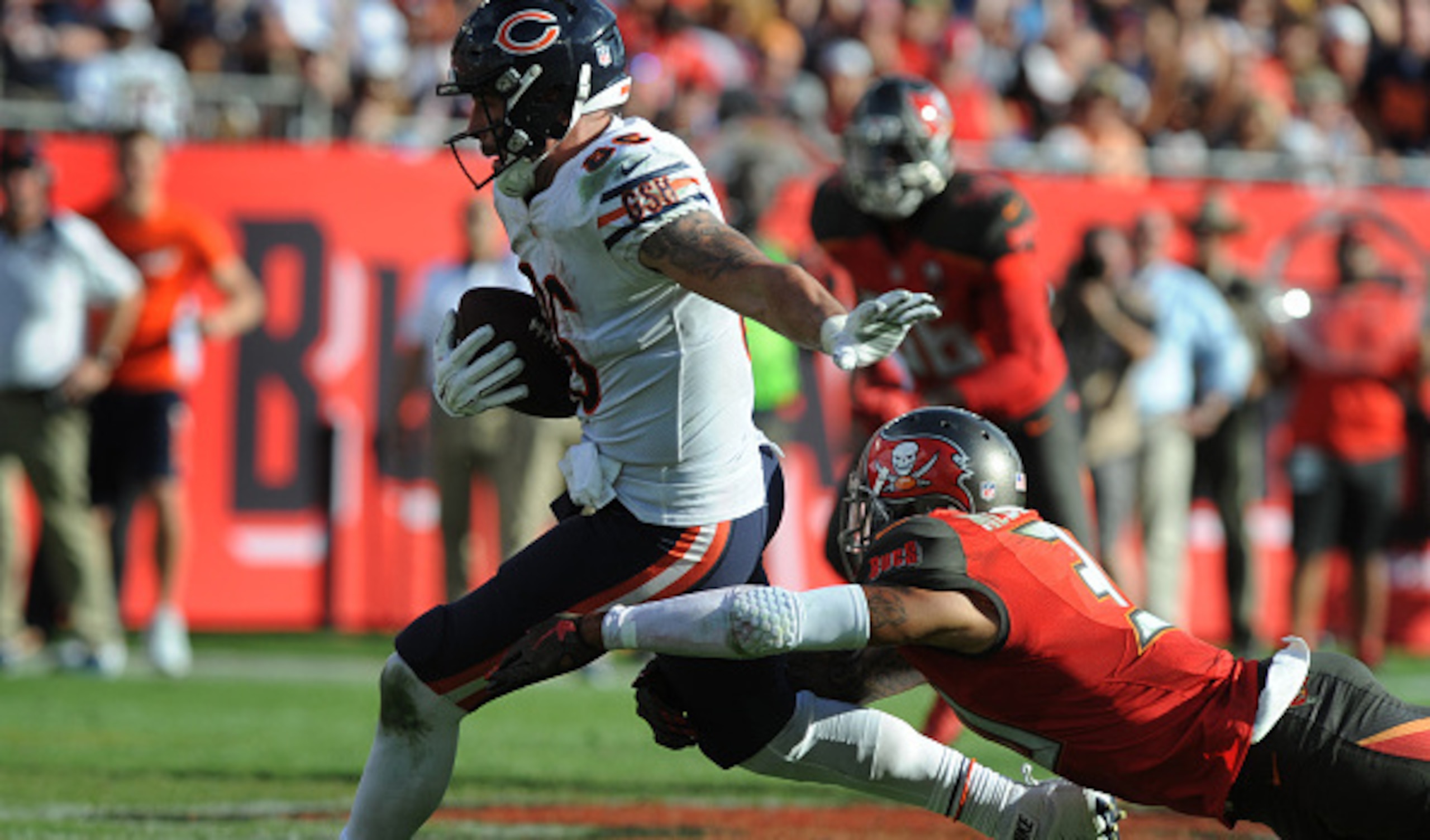
Hands
Zach Miller’s athletic potential became on-field production in 2015. He posted a career-best 42 targets in the passing game, hauling in 34 catches for five touchdowns. Even better, he didn’t drop a pass all season. Miller’s catch radius needs to expand some, which is something that often comes with reps and getting comfortable with spacing in the offense. But his 6’5”, 240-pound frame makes him a nice target over the middle and in the end zone.
Route Running
Miller dominated inside linebackers and box safeties with his ability to get big and box-out on crossing routes and when allowed to sit down in space coming off the line of scrimmage. Miller has the ideal quickness and length to be a matchup problem in the middle, and with his above-average hip flexibility, he’s able to shake off defenders in man coverage.
Blocking
Miller became a valuable run-blocker for the Bears, largely because of the guards struggling to pull and seal off outside defenders. Whether he was lining up in-line next to Kyle Long or in the backfield, Miller proved he can pop the pads and get leverage to drive defenders out of a rushing lane.
Position Value
Overall
5. Delanie Walker, Tennessee Titans
51 of 55
Hands
The former sixth-round pick from Central Missouri State came on strong in the Tennessee offense in 2015, showcasing his receiving skills by catching 94 passes on 130 targets with just five drops. Walker has soft, natural hands, but he has to fight for the ball on those 50-50 passes better to keep defenders from jumping his route and flipping the field with interceptions.
Route Running
One of Walker’s strengths is his agility and strength in space as a route-runner. He’s physical enough to power through defenders at the top of his stem, but he is agile enough to throw a hip shake at linebackers and get open in space. And with an offense heavy on read-option plays in 2015, Walker was able to thrive as a quick-release option in the passing game.
Blocking
Long recognized as one of the better run-blocking tight ends in the game, Walker continued to live up to that reputation. He’s an excellent move blocker with the lateral agility to get in position to wall off linebackers or crack down on a defensive end.
Position Value
Overall
4. Jordan Reed, Washington
52 of 55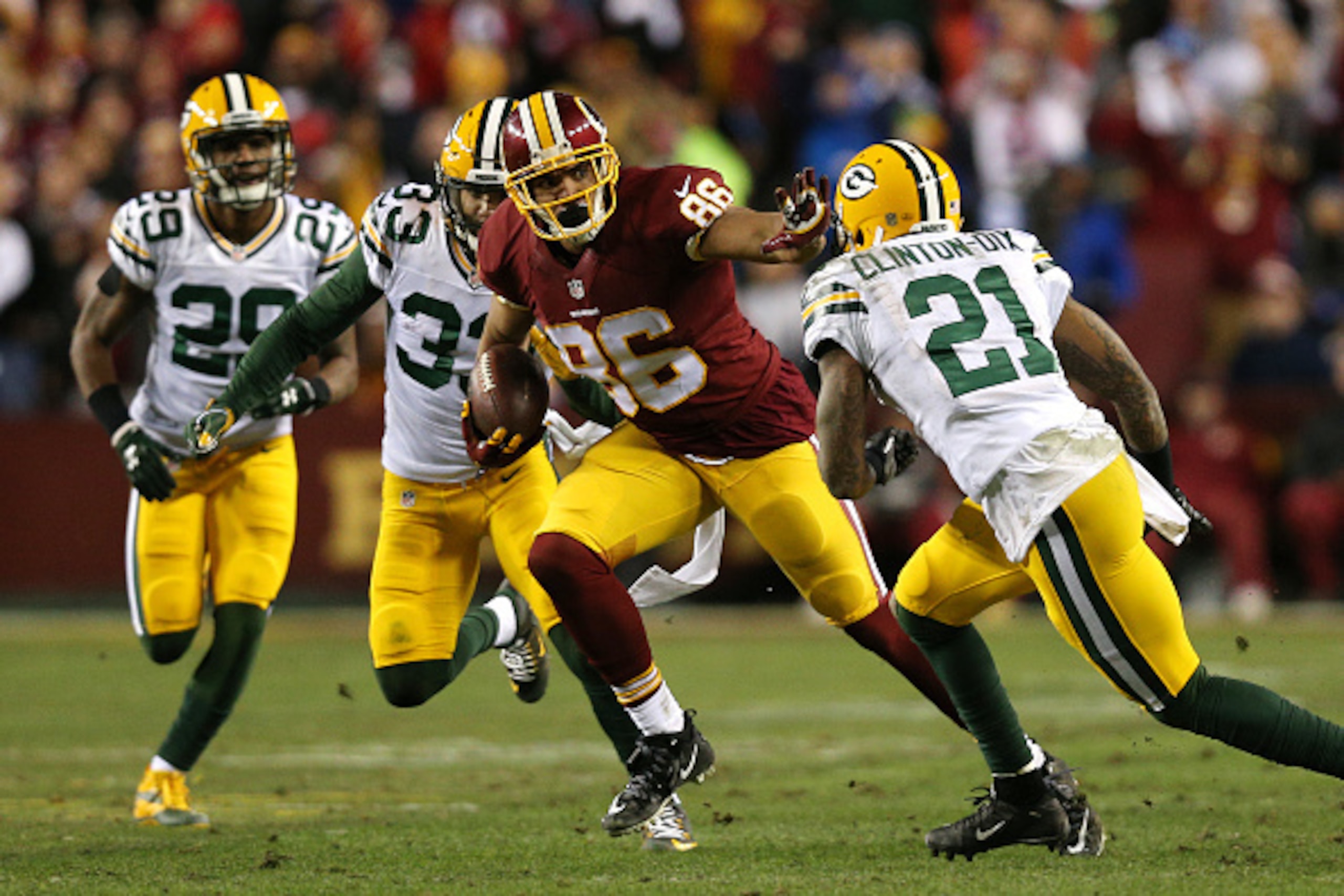
Hands
Jordan Reed had a monster season in 2015 as the Washington offense moved to a more pro-style system with Kirk Cousins under center and the threat of a run game again. Reed reaped the benefits of that, as he saw 111 targets (about as many as he’d seen in his first two seasons combined) and caught 87 balls with just three drops.
Route Running
Reed is built like a wide receiver at 6’2” and 237 pounds. He runs like one, too, showing the quickness in his footwork and flexibility in his hips to shake defenders at the top of his route stem. Reed is able to accelerate in and out of cuts, but he’s also aware of space and knows how to break away from coverage to get open.
Blocking
As a smaller tight end, Reed is best used crack-blocking defensive ends or linebackers. He’s simply not big enough or strong enough to line up on the end of the line and power a down lineman out of the hole.
Position Value
Overall
3. Greg Olsen, Carolina Panthers
53 of 55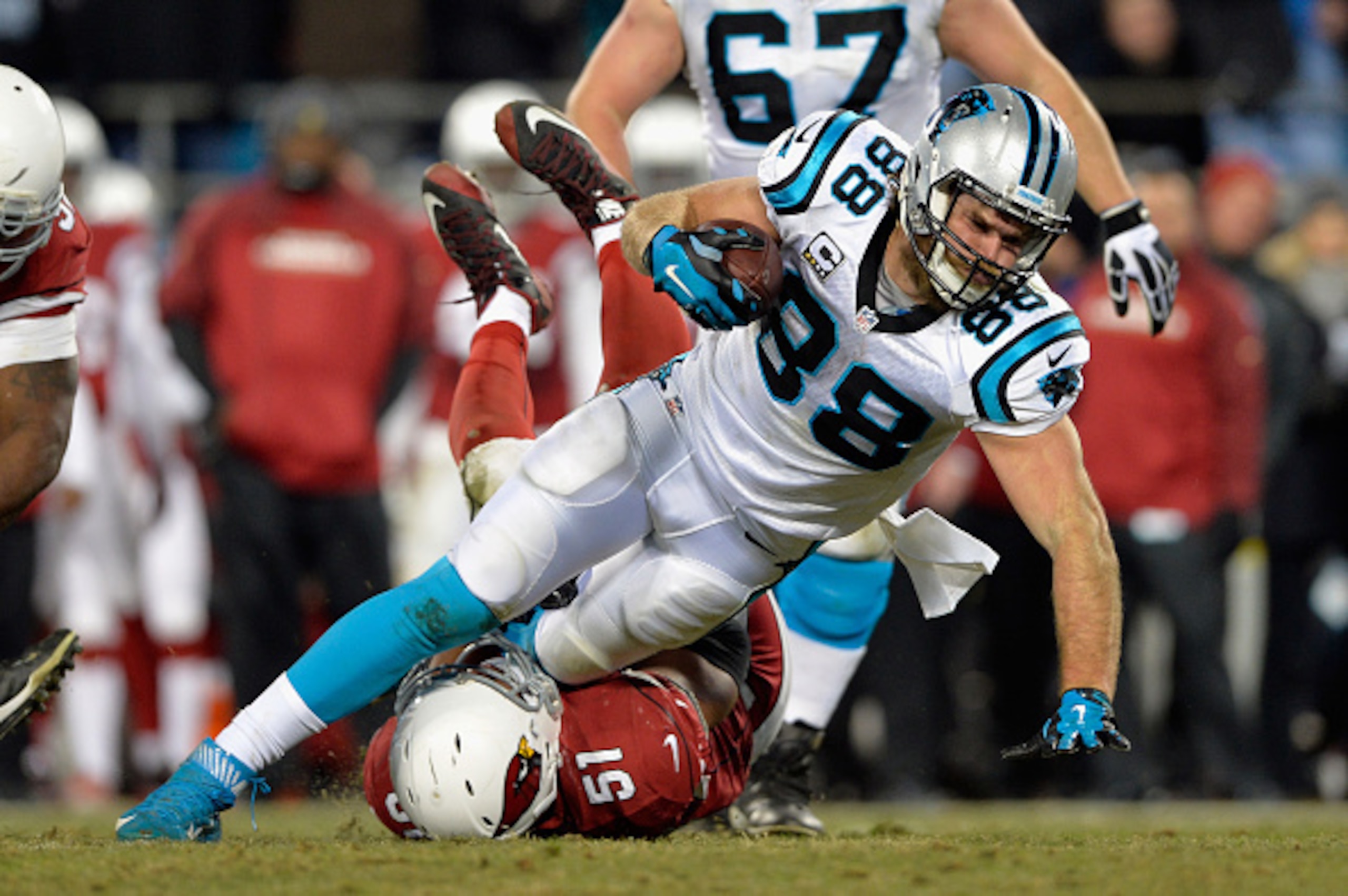
Hands
2015 was a career year for Greg Olsen, and his role as the primary option in the Carolina Panthers passing game was a huge reason for their long playoff run. Including the postseason, Olsen saw 136 targets and caught 93 passes. On those attempts, he dropped just four passes and showed the toughness and concentration to be a reliable target on contested catches both over the middle and up the seam.
Olsen tracks the ball cleanly over either shoulder when in space, but he does his best work using his frame to work back to the ball.
Route Running
Olsen is among the best route-runners the NFL has at the tight end position. He’s equal parts big and long, with excellent power to drive off the line of scrimmage and get into his route. But he also has the agility and footwork to execute cuts and leave defenders in his transitions. Olsen is explosive enough to get up the field and run past linebackers, and he’s too physical to simply cover with a slot cornerback.
Blocking
The success of the Panthers run game is directly tied into Olsen’s ability as an outside blocker. He can line up next to the right tackle and get the push needed off the ball to open outside lanes, but he’s also capable of cracking down on ends and linebackers from a slot position. Olsen’s versatility and his production as a blocker make the offense go.
Position Value
Overall
2. Jason Witten, Dallas Cowboys
54 of 55
Hands
Jason Witten is as close to automatic as they come at tight end. Playing with a rotating cast of characters at quarterback, Witten saw 100 targets in 2015 and caught 77 balls. The most amazing fact: He didn’t drop one attempt. Witten’s hands were glue-like. When asked to go over the middle, he remains a fearless receiver. (Bleacher Report research revealed 42 of his receptions were in the middle of the field and within 10 yards of the line of scrimmage.)
Route Running
Witten is no longer the agile, smooth route-runner he was coming out of Tennessee, but he’s smart and crafty at finding ways to separate from defenders with his length, his athleticism and/or his size. Witten is great at using his arms to press linebackers—giving a look like he’s executing a block—and then coming underneath the defender to find an opening. Given freedom on option routes, Witten will consistently find space.
Blocking
The blocking game has always been a strength for Witten, and while he took a bit of a step back in 2015, he remains one of the better run-blockers in the league when asked to get leverage on an edge defender and scoop him out of the rushing lane.
Position Value
Overall
1. Rob Gronkowski, New England Patriots
55 of 55
Hands
Rob Gronkowski has become one of the NFL’s best receiving threats, regardless of position. That was no different in 2015, as Gronk was once again the premier tight end in the NFL when healthy. On 135 targets (playoffs included), Gronkowski caught 87 passes for over 1,400 yards and saw his drops go from nine in 2014 to just four in 2015. With a huge catch radius, Gronkowski is able to extend the play and has become Tom Brady’s favorite target in pressure situations.
Route Running
So much of what Gronkowski does as a route-runner is based on his size, but he’s also agile and can explode through his cuts and transitions. The Patriots love to get Gronkowski matched up on crossing routes where he can box out defenders, and in the end zone, he dominates by going over the top of defenders.
Blocking
For all his talents as a receiver, it’s what Gronkowski does as a pass- and run-blocker that’s eye-opening. His big frame (6’6”, 265 lbs) allows him to lock out defenders and also gives him the power to drive-block defensive ends or linebackers in the run game.
.jpg?w=2560 "Commanders Football")


.jpg?w=2560 "Tennis Player Gets 24-Year Ban for Match Fixing (AP)")