2016 NFL Draft: Recent History Proves Running Backs Should Be Taken Early
When the NFL draft rolls around every year, we hear the lines repeated with mind-numbing frequency.
"The running back position is devalued in today's NFL."
"You don't need to waste a first-round pick on a running back."
.jpg?w=3840 "Pro Bowl Football")
.jpg?w=3840 "Giants Cowboys Football")
"You can get the same kind of production out of a mid-round pick at running back."
More and more NFL teams have been moving from the "featured back" model to the committee approach in recent years—only seven backs topped 1,000 yards rushing in 2015, the fewest since 1991—but does that mean they're better off waiting until the later rounds to address the position? Should teams pass on a potentially dynamic talent and get better value deeper in the draft?

The well-documented failures of recent high draft picks like Trent Richardson have led many to believe running backs aren't worth a top pick. But while there have been quite a few busts at the position near the top of the draft, recent history tells us that the majority of the NFL's top backs were taken in the first two rounds.
Since 2005, there have been 52 different running backs that have finished in the top 10 in the league in rushing yards. Of those 52, 33 were drafted in the first two rounds—23 in the first round and 10 in the second round.
Here's the breakdown of the first-rounders from that group:
| Player | Year |
| Adrian Peterson | 2007, 2008, 2009, 2010, 2012, 2013, 2015 |
| LaDainian Tomlinson | 2005, 2006, 2007, 2008 |
| Steven Jackson | 2006, 2009, 2010, 2011 |
| Thomas Jones | 2005, 2007, 2008, 2009 |
| Marshawn Lynch | 2011, 2012, 2013, 2014 |
| Chris Johnson | 2008, 2009, 2010, 2012 |
| Willis McGahee | 2005, 2007, 2011 |
| Edgerrin James | 2005, 2007 |
| Larry Johnson | 2005, 2006 |
| DeAngelo Williams | 2008, 2015 |
| Jonathan Stewart | 2009, 2015 |
| Ryan Mathews | 2011, 2013 |
| Doug Martin | 2012, 2015 |
| Shaun Alexander | 2005 |
| Warrick Dunn | 2005 |
| Jamal Lewis | 2007 |
| Fred Taylor | 2007 |
| Cedric Benson | 2009 |
| Ricky Williams | 2009 |
| Rashard Mendenhall | 2007 |
| C.J. Spiller | 2012 |
| Darren McFadden | 2015 |
| Todd Gurley | 2015 |
13 of the 23 first-rounders finished in the top 10 multiple times, and seven did it three or more times. If we include second-round picks, the case for spending an early choice on a running back grows even stronger:
| Player | Year |
| Clinton Portis | 2005, 2007, 2008 |
| Maurice Jones-Drew | 2009, 2010, 2011 |
| Ray Rice | 2009, 2010, 2011 |
| LeSean McCoy | 2011, 2013, 2014 |
| Tiki Barber | 2005, 2006 |
| Matt Forte | 2008, 2013 |
| Eddie Lacy | 2013, 2014 |
| Travis Henry | 2006 |
| Le'Veon Bell | 2014 |
| Jeremy Hill | 2014 |
With the second-rounders included, that makes 20 backs who finished in the top 10 in the NFL in rushing multiple times since 2005. Only 10 backs drafted after the second round accomplished that feat over the same span.

How do the rest of the rounds break down? Let's take a look.
Third Round
| Player | Year |
| Frank Gore | 2006, 2011, 2012, 2013, 2014, 2015 |
| Jamaal Charles | 2010, 2012, 2013 |
| Brian Westbrook | 2006, 2007 |
| DeMarco Murray | 2013, 2014 |
| Steve Slaton | 2008 |
| Stevan Ridley | 2012 |
Fourth Round
| Player | Year |
| Rudi Johnson | 2005, 2006 |
| Lamar Miller | 2014 |
| Devonta Freeman | 2015 |
Fifth Round
| Player | Year |
| Michael Turner | 2008, 2010, 2011 |
Sixth Round
| Player | Year |
| Alfred Morris | 2012, 2013 |
| Chester Taylor | 2006 |
| Latavius Murray | 2015 |
Seventh Round
| Player | Year |
| Ahmad Bradshaw | 2010 |
| Justin Forsett | 2014 |
There are a few backs from each round sprinkled throughout the top 10 rushers since 2005, but it's clearly more rare to find them in the draft after the second round. Heck, if a team is going to wait until Day 3 to get its runner, it might as well just wait until the draft is over and sign one of the leftovers as a free agent.
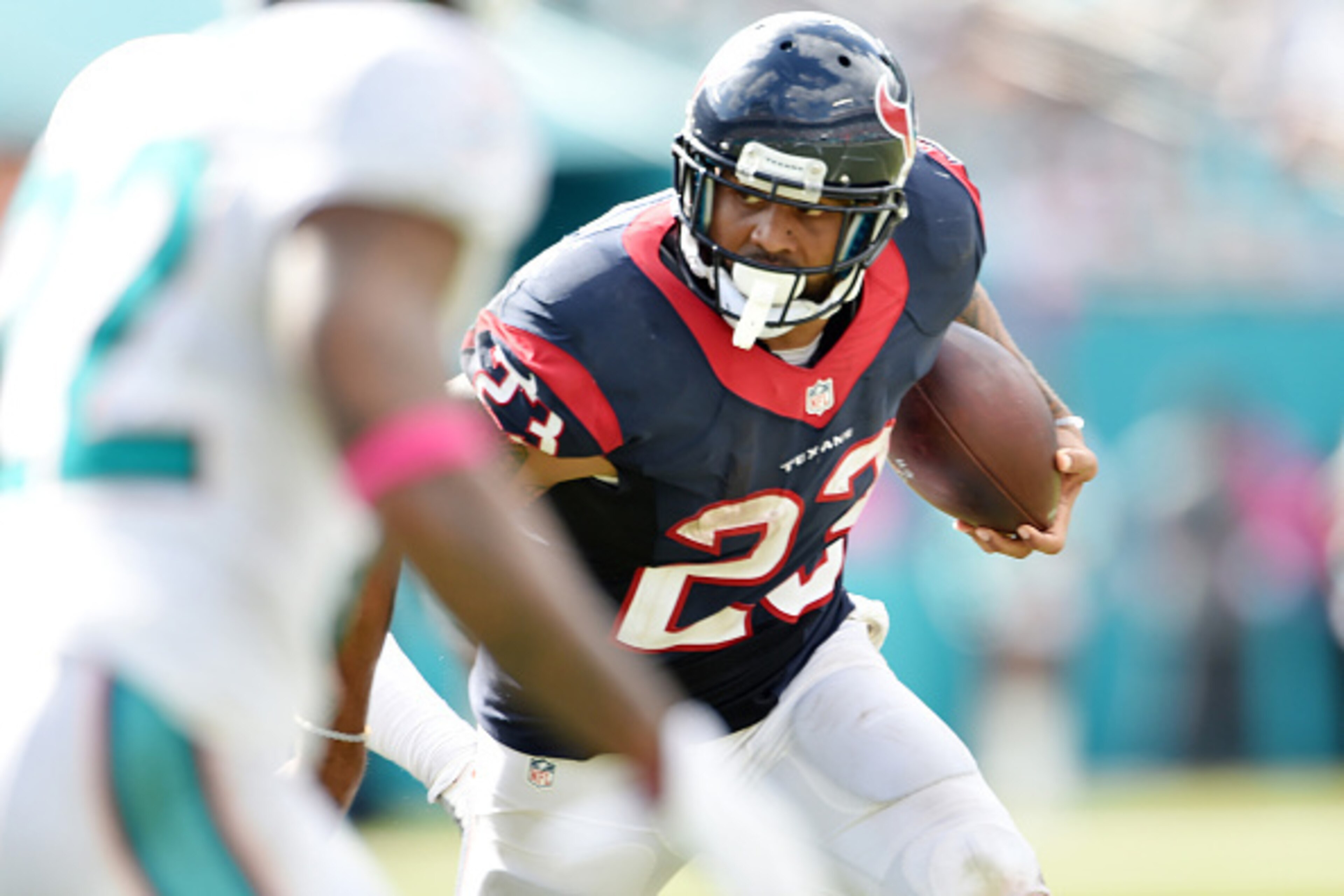
Take a look at the undrafted free agents who have made that list:
| Player | Year |
| Arian Foster | 2010, 2011, 2012, 2014 |
| Willie Parker | 2006, 2007 |
| Ryan Grant | 2008, 2009 |
| Chris Ivory | 2015 |
That's right. Since 2005, the NFL has gone just one season—2013—without an undrafted free agent finishing in the top 10 in rushing yards.
This year's draft class features plenty of backfield talent, led by two of the nation's most productive and dynamic workhorses—Ohio State Buckeyes running back Ezekiel Elliot and Heisman Trophy winner Derrick Henry from the Alabama Crimson Tide—but many NFL fans are already wondering if either is worth a premium draft pick.
While it's easy to point to busts like Richardson as cautionary tales, the same argument can be made for just about every position on the field.
Elliot, in particular, has a rare skill set that should make him the first back off the board come April, combining fantastic power and toughness between the tackles with superb vision, quickness, patience and explosion.
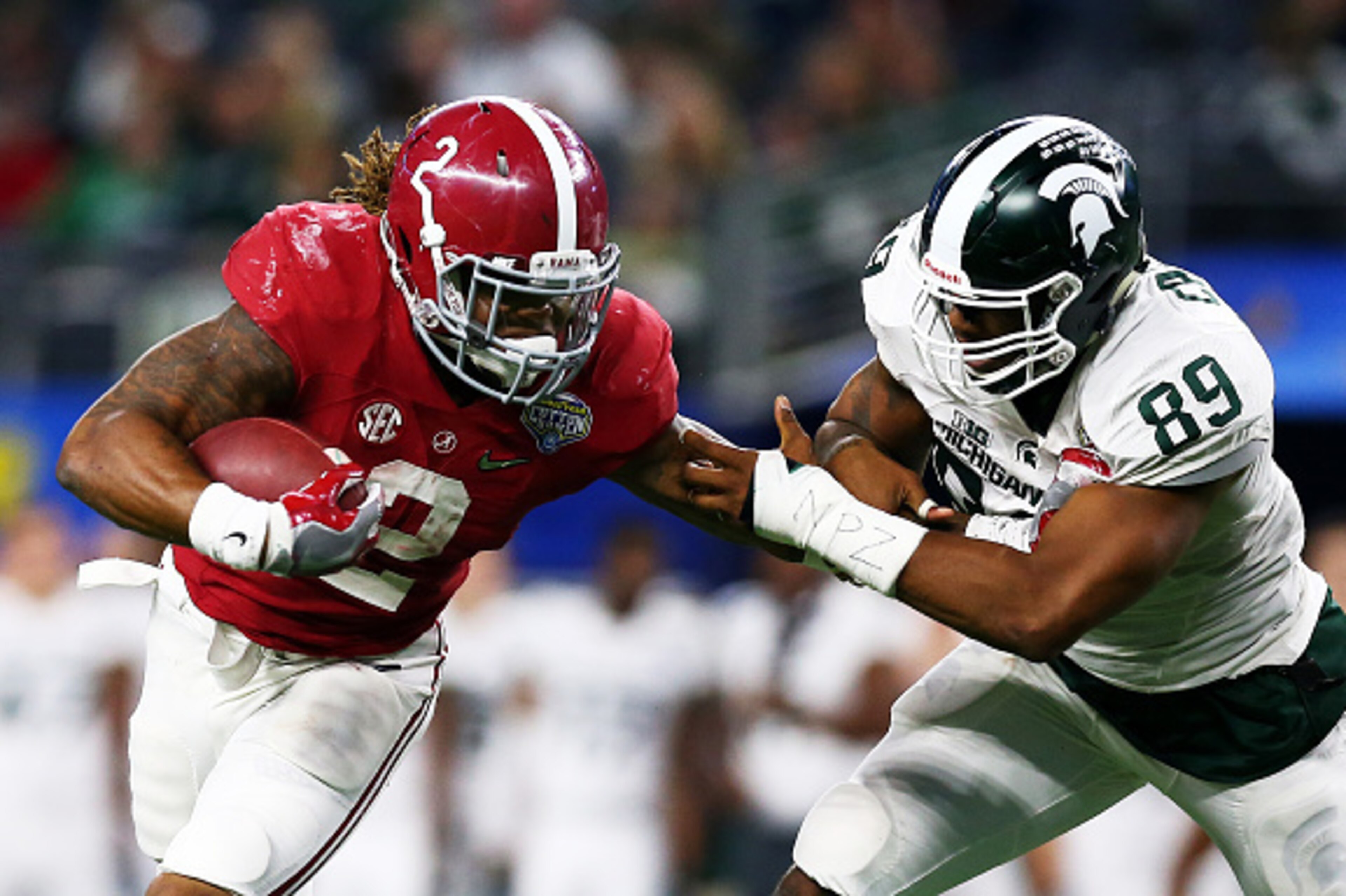
Henry isn't the quickest or the fastest back in the world, but his relentless running style and ability to get more effective as the game wears on make him an attractive prospect who could thrive as the "thunder" in a split backfield.
Should NFL teams—especially those with a need for a dynamic young running back—pass on these kinds of talents just for fear of them busting? Should they just wait until the later rounds, assuming they can scrape the bottom of the barrel and come up with a top-10 rusher?
Over 10 years worth of data tells us, "Not so fast, my friend."
Elliot and Henry have a chance to be impact players as soon as they step onto the field at the next level. Teams would be wise not to avoid them, unless they're on the opposing sideline.
*All stats courtesy of ESPN.com
Luke Easterling is a featured columnist covering the NFL Draft for Bleacher Report. He also covers the Tampa Bay Buccaneers for Scout. Follow him on Twitter @LukeEasterling.
.jpg?w=3840 "SEMANA 10-PANORAMA")
.jpg?w=3840 "Commanders Football")

.png?w=3840 "Kuz Calls Out Athlete Spending")