
Fantasy Football 2015: Biggest Injury Risks Heading into the Season
Predictive modeling is the rage these days. Daily fantasy sports have helped to spur a wave of data-driven models and curated algorithms.
Fantasy investors are more informed than ever, with rich resources available for every sport. One element that remains unpredictable, though, is injury. We want to know which players are at increased risk before we invest, but this has proved to be a fickle pursuit over time.
Enter Sports Injury Predictor, a platform fueled by a patent-pending algorithm that seeks to formulate predictive injury assessment based on myriad factors specific to a given player's history and usage pattern.
In 2012, just a few years into his fantasy football career, Sports Injury Predictor's Jake Davidow marveled at the market's pricing of Darren McFadden. DMC was consistently going higher than Adrian Peterson, who was returning from an ACL injury.
In many ways, the market deemed Peterson a prohibitive risk and McFadden a potential difference-maker. We all know how Peterson's 2012 went. And, of course, we know how disappointing shares of McFadden proved to be.
Davidow was flummoxed by the lack of available injury resources and the absence of a central database for what is a highly influential portion of fantasy investing. So, he worked with a friend with extensive risk analysis experience thanks to a background in insurance to assess which factors influence injury outcomes. Below you'll find a brief breakdown of the model's foundation:
"Injury history: An account of every injury that has taken place to skill position players in the NFL and college for the last 10 years. Includes type of injury, games missed, surgery required and more. Our ever growing injury database goes back all the way to college for all the skill position players. This database goes back 14 years and has nearly 500 players' injury history all stored in great detail.
Injury Correlation: Next we have our correlation matrix that weights the different injuries by investigating the relationship between them. By keeping a running count of which injuries lead to other injuries we are able to dynamically weight the chances of an injury reoccurring or causing another type of injury.
Biometrics: We also take into account biometric data such as age, weight and height as some physical profiles are more resistant to injury than others. For example, short, thick running backs tend to get hurt less than tall skinny ones.
Game data: Finally, we use game data such as position and projected touches to act as a lever that defines the player’s exposure to risk. Players who touch the ball more often are more likely to get injured.
"
Using Sports Injury Predictor as a potential resource heading into the 2015 campaign, let's look at some of the "riskier" commodities at each position as revealed by Sports Injury Predictor's algorithm.
Carson Palmer and Sam Bradford: QBs with Risk
1 of 4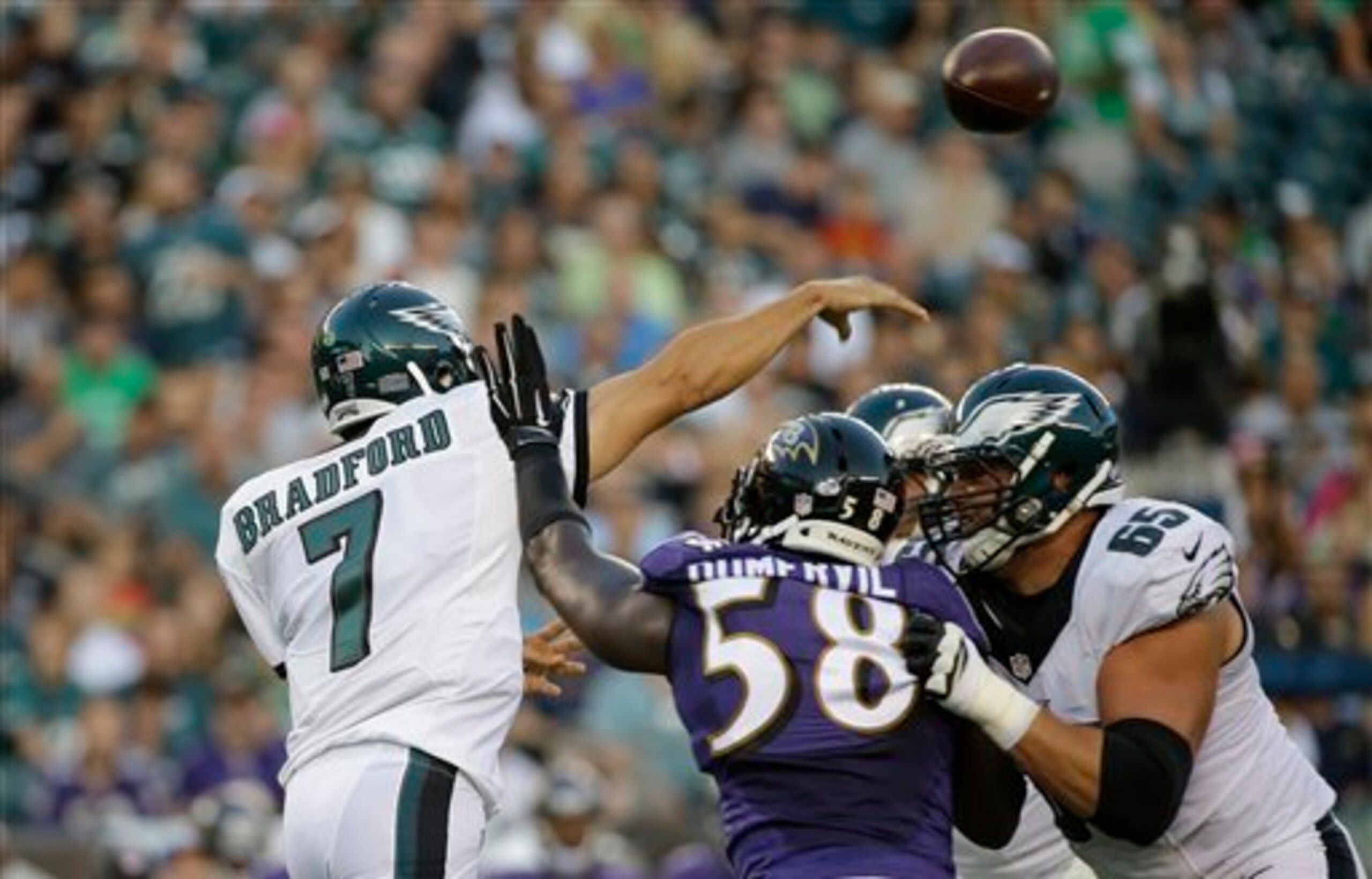
As the 20th quarterback off the board on average, according to Fantasy Pros' aggregated ADP index, Carson Palmer is poised to potentially provide value to investors who are seeking a cheap second fantasy arm. While I do find value in the proposition, his deflated market value in part recognizes the inherent risks associated with his injury profile.
According to Sports Injury Predictor, Palmer, who ranks highest in the risk assessment model at the position with a 65 percent risk factor, "is a veteran who is coming off a revision ACL tear. We have him as a high injury risk heading into 2014. Revision (second tears) of the ACL carry a lot more risk than those ACLs that are being surgically repaired for the first time."
That brings us, naturally, to one of the most intriguing risk/reward commodities in all of football for 2015, the Eagles' Sam Bradford, who is tied with Palmer on the injury index. Serious previous injuries and a role at the helm of the snap-happiest offense in football (add in the zone-read risks) combine to propel Bradford's injury exposure to such a high rate.
Rounding out the top five risks in the Sports Injury Predictor index are Robert Griffin III (61 percent, shocking we know), Teddy Bridgewater (56 percent) and Cam Newton (53 percent). The site isn't telling you not to take these players but rather to be cognizant of the potential risks.
Running Back Risk Assessment
2 of 4
You might want to sit down for this, but Andre Ellington tops the injury risk index among tailbacks on Sports Injury Predictor at 90 percent.
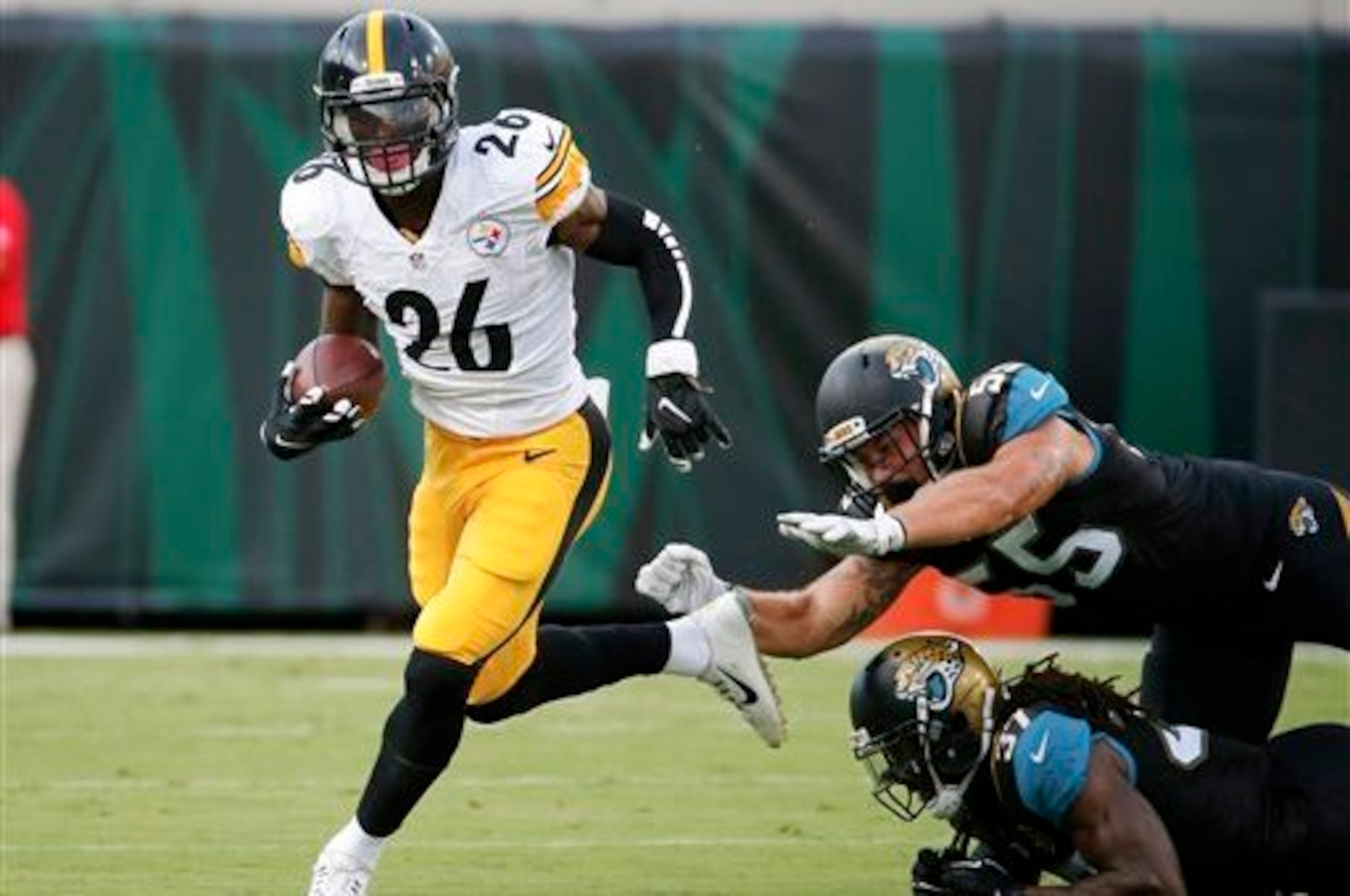
While an overworked, diminutive back having great injury risk isn't surprising, I did find it telling to see Le'Veon Bell bear the second-highest risk factor among veteran running backs. The site notes, "There are several red flags that are a combination of his injury history, experience and his gigantic workload."
While I wouldn't put it past Chip Kelly to already have a subscription to Sports Injury Predictor, it's interesting to see DeMarco Murray and Ryan Mathews share identical risk numbers (48 percent) on the site. Talk of a closer workload share than the bonus dollars might suggest could potentially help both players endure the season.
Want to know the perceived risks with Adrian Peterson? Factoring in his age (30), his year off the field and expected feature workload, he comes in at just 21 percent in the risk assessment model. Somewhat similarly, Justin Forsett is viewed as a relatively low-risk (20 percent) asset in the injury sense.
I'm sure you are curious about Jonathan Stewart's assessment, and without surprise, he's rated as a high-risk player relative to the pack with a 67 percent factor. The site says, "His injury risk rockets proportionate to the amount of touches he gets in a game...it is unlikely that he will be able to maintain health for the full year."
Most intriguingly, Marshawn Lynch's massive workload doesn't bear significant risk according to the site, as he's the lowest among all backs published on the running back index with a 5 percent risk assessment.
Interestingly, rookie running backs bear significant injury risks, according to the data that Sports Injury Predictor has compiled. Veteran NFL players are tested professionals, with developed patterns of preparation and recovery. Rookies, it seems, are at risk not just because of inherent on-field exposure but the mere lack of professional experience.
Therefore, we find T.J. Yeldon tied with Ellington with a 90 percent injury risk assessment. Tevin Coleman and Duke Johnson aren't far behind. I have shares of David Johnson, Duke Johnson and Yeldon in various leagues. I'm willing to accept the risk factors, but this information can prove invaluable when trying to balance your roster with risk/reward assets as well as some higher-floor, veteran commodities.
Risky Receivers: Odell Beckham Ranks High
3 of 4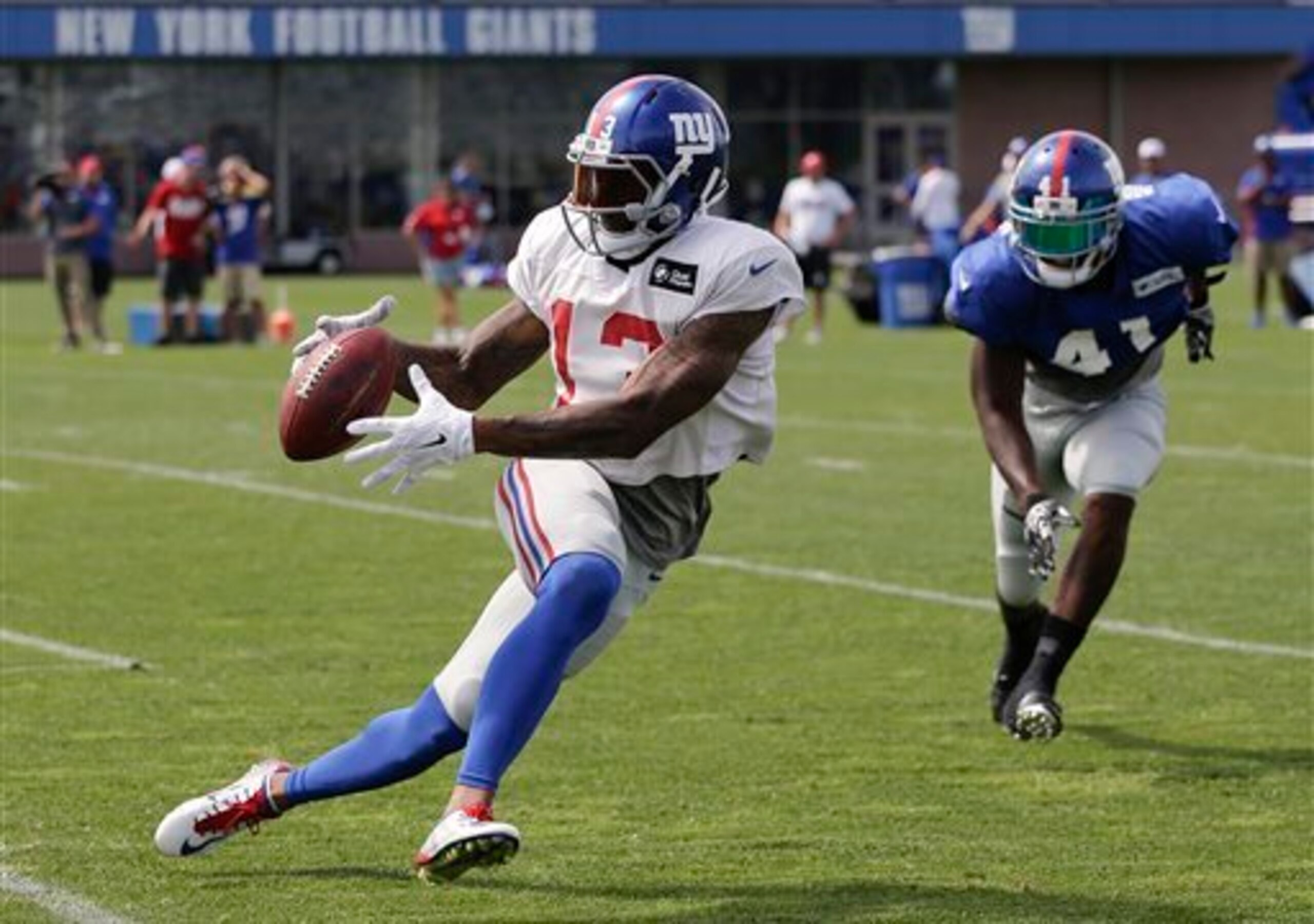
While you must still be reeling from the disclosure about Andre Ellington's injury risks, next we find that superstar wideout Odell Beckham bears a high injury risk factor, according to Sports Injury Predictor.
A history of hamstring ailments and a high-volume role combine to propel Beckham as the highest risk index among veteran NFL receivers, according to the site's predictive model. Similarly to the running back index, rookie wideouts litter the risk list at receiver, with DeVante Parker claiming the highest risk assessment.
Two favorites of mine for the 2015 redraft market are Julio Jones and Allen Robinson, even as both bear significant risks for injury, according to the site's model. This won't keep me away from chasing shares of these players, but I do find it revealing to see Antonio Brown's risk factor (23 percent) so much lower than Jones' (81 percent), given how both are such high-volume, high-exposure assets with similarly lofty draft prices.
When things are close, would this be a factor for you while investing?
.jpg?w=2560 "Texans Bears Football")
.jpg?w=2560 "Browns Football")
.jpg?w=2560 "Raiders Camp Football")
Gronkowski's Injury Risks Appear Reasonable
4 of 4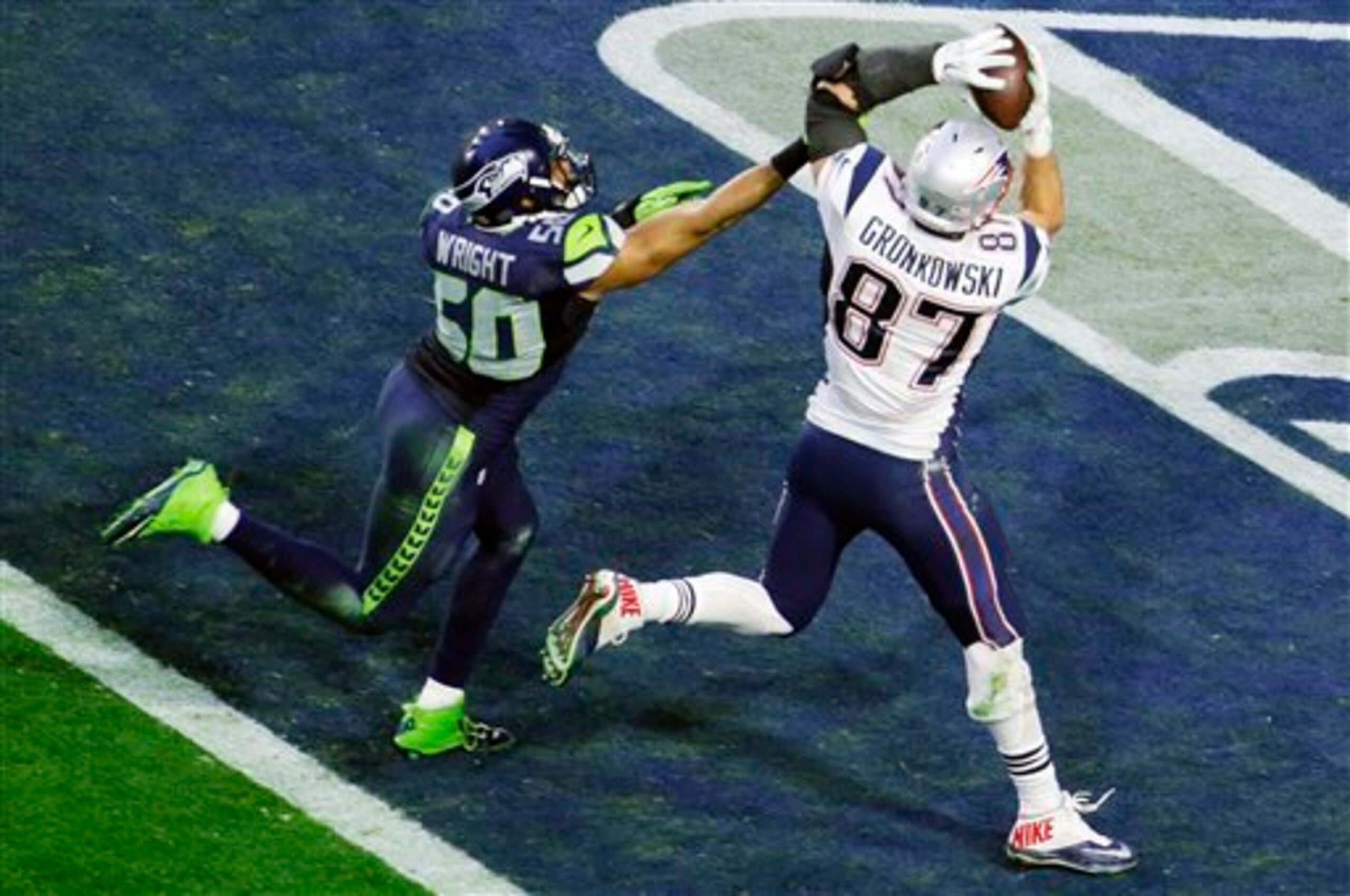
The tight end class in Sports Injury Predictor's injury risk index at the position doesn't offer many surprises. We find Jordan Reed and his extensive concussion and hamstring injuries leading the way.
The more time and healthy game logs Rob Gronkowski puts together, the lower his injury factor becomes, it seems. The weight given to an ACL injury, for example, is lessened as a player distances himself with a "healthy" track record. In the site's index, Gronk bears a reasonable 51 percent injury risk.
Intriguingly, you'll find Travis Kelce with a palatable 25 percent injury risk. Getting mid-round shares of Kelce, who missed the entirety of his rookie season to injury, doesn't seem to bear the injury risks one might assume for a player who is destined for increased per-route usage.
.jpg?w=2560 "Hall of Fame Football")

.jpg?w=2560 "WNBA to Discuss Transgender Participation (AP)")