A Complete Guide to 2015 NFL Tag Decisions
The franchise tag. Players' bane, owners' gain.
Without it, teams might have trouble hanging on to top talent in free agency. Of course, why a team would want to force a player to stay if he doesn't want to be there is an interesting question. On the flip side, getting all those millions guaranteed for one year of work can't be too bad, can it?
The franchise tag will start flying soon—or at least be wielded in a threat—and we are here to give you a primer. Here is a look at the franchise tag, from the basics to some upcoming decisions for the 2015 offseason.
How the Franchise Tag Works
1 of 12
Surely you have heard of the franchise tag. But in case you haven't, here is a little introduction.
There are three flavors to the franchise tag in the NFL—exclusive, non-exclusive and transition.
The exclusive tag is pretty straightforward—it gives teams absolute rights to that player, disallowing any negotiation with any other teams and effectively locking that player up for a year.
Any player who gets tendered with the exclusive tag has no option other than to play for that squad, unless he wants to sit out a year.
Not too dissimilar from its brother, the non-exclusive tag gives players a contract tender worth an average of top salaries, but it's calculated a bit differently. More on that on the next slide.
The non-exclusive tag allows other teams to negotiate a new contract with the tagged player, but it grants his team the right of first refusal. Should the tagging team choose not to match the contract offer, it will receive two first-round picks as compensation.
The transition tag is essentially the non-exclusive tag without the promise of compensation for the team. It still has the right of first refusal, but there is no compensation for letting a player go.
It's all but useless—a team could use it to allow a player to explore the market and see if he gets a contract bigger than the team is willing to pay, but there's little utility there.
Basically speaking, the exclusive and non-exclusive tags ensure a player is going to stay with that team for the next year.
Sure, the non-exclusive tag allows a different team to negotiate a deal, but why would any team give up two first-round picks in addition to paying big money to that free agent? Unless his name is Aaron Rodgers or Andrew Luck, the odds of that happening are almost nil.
Getting tagged for a second consecutive year will give that player a salary at 120 percent of what it was during the previous season, making it pretty expensive to keep him. The Dallas Cowboys did that with defensive end Anthony Spencer not too long ago, and he wound up sitting out most of the second season due to injury.
A third consecutive tag will give that player the greatest of these—the average of the top five salaries at quarterback, 120 percent of the top five salaries at his position or 144 percent of his own salary.
In other words, it's unlikely any player will get tagged three years in a row.
The only way out of a signed franchise tender is if there is a "failure of the player to establish or maintain his excellent physical condition," which would be an interesting battle to fight for any club given the vague nature of that rule.
Franchise-Tag Calculations
2 of 12
In the previous collective bargaining agreement (CBA), the non-exclusive tag at each positional group was determined by the top five salaries at the position for the previous year. This calculation has become a common misconception since things changed in 2011.
The new CBA, however, tied the non-exclusive tag to the salary cap in lieu of the top-five-salary comparison.
Today's tag numbers are calculated by a relatively simple formula—the sum of the previous five franchise-tag figures at any given position divided by the sum of the overall salary cap for the past five seasons and multiplied by the 2015 salary cap.
That calculation will yield a percentage of the 2015 salary cap on a positional basis. Here is that calculation for each positional group based on a few different salary-cap projections for 2015:
| Position | Cap % | $138 cap | $142 | $143.80 | $150 | Exclusive |
| QB | 13.39% | $18.48 | $19.01 | $19.25 | $20.08 | $18.76 |
| RB | 7.94% | $10.96 | $11.27 | $11.42 | $11.91 | $9.63 |
| WR | 9.99% | $13.79 | $14.19 | $14.37 | $14.99 | $13.97 |
| TE | 6.27% | $8.65 | $8.90 | $9.02 | $9.40 | $7.59 |
| OL | 9.47% | $13.07 | $13.45 | $13.62 | $14.20 | $11.44 |
| DE | 9.81% | $13.53 | $13.93 | $14.10 | $14.71 | $13.46 |
| DT | 9.34% | $12.90 | $13.27 | $13.44 | $14.02 | $14.98 |
| LB | 10.43% | $14.39 | $14.80 | $14.99 | $15.64 | $11.10 |
| CB | 9.65% | $13.32 | $13.71 | $13.88 | $14.48 | $10.76 |
| S | 7.38% | $10.18 | $10.48 | $10.61 | $11.07 | $9.59 |
| PK/P | 3.05% | $4.21 | $4.33 | $4.39 | $4.58 | $3.88 |
The $143.8 million number above reflects the amount the cap would rise in 2015 if it mirrored last year's rise of 8.13 percent—from $123 million to $133 million.
Players on the franchise-tag bubble—or at least their agents—may be experiencing cognitive dissonance with regard to the salary cap. On the one hand, less cap space means squeezed contracts all around. On the other hand, more cap space means exponentially more room for a team to use that non-exclusive tender.
For example, the Dallas Cowboys have roughly $9.4 million in cap space if the cap were to come in at $142 million. Not only would they gain another $8 million in head room should the cap shoot up to $150 million, but the cap hit to keep, say, receiver Dez Bryant would only go up an additional $700,000.
The exclusive tag is still calculated based on the top five salaries from last season, however, and that is reflected in the final column above.
Calculations were based on cap and tag numbers from the previous five seasons, including $124 million cap for 2010 based on the average cap from 2009 and 2011. Exclusive-tag calculations based on the top five salaries for each position in 2014.
Update: Calculations were updated to reflect actual franchise tag calculations for each year to be the top five salaries at the position, per a clarification in the CBA. Thank you to Jason Fitzgerald of Overthecap.com for the clarification.
Dates to Remember
3 of 12
The Game of Tag Begins
Valentine's Day is over. Now bring on free agency.
Well, we still have a few weeks until the feeding frenzy begins, but teams can start placing franchise tags on Monday, February 16. Let the games begin!
Deadlines Spur Action
Teams cannot indefinitely slap players with franchise tags, however.
Once the tag period begins, NFL clubs will have two weeks to decide whether to use them. The window closes on March 2, just over a week before the new league year is set to roll over and free agency begins.
Most teams will likely use as much time as possible to pressure players to negotiate a long-term deal, so we probably won't see too many players tagged until the deadline nears.
The Damocles Provision
Any player who gets tendered with a non-exclusive contract must beware of the potential consequences of spurning the one-year deal.
Teams can rescind the offer at any time. While it would be silly to tender a player and take that back before free agency hits, a team could pull an offer well into free agency—when most teams have spent their money—and leave a player twisting in the wind.
Once July 15 rolls around, however, the team and player are locked in for the year—he can either sign the franchise tender or ink a deal for more money, but he cannot sign a multi-year deal with the team.
.jpg?w=2560 "Falcons Buccaneers Football")
.jpg?w=2560 "Commanders Eagles Football")
Teams Facing the Toughest Decisions
4 of 12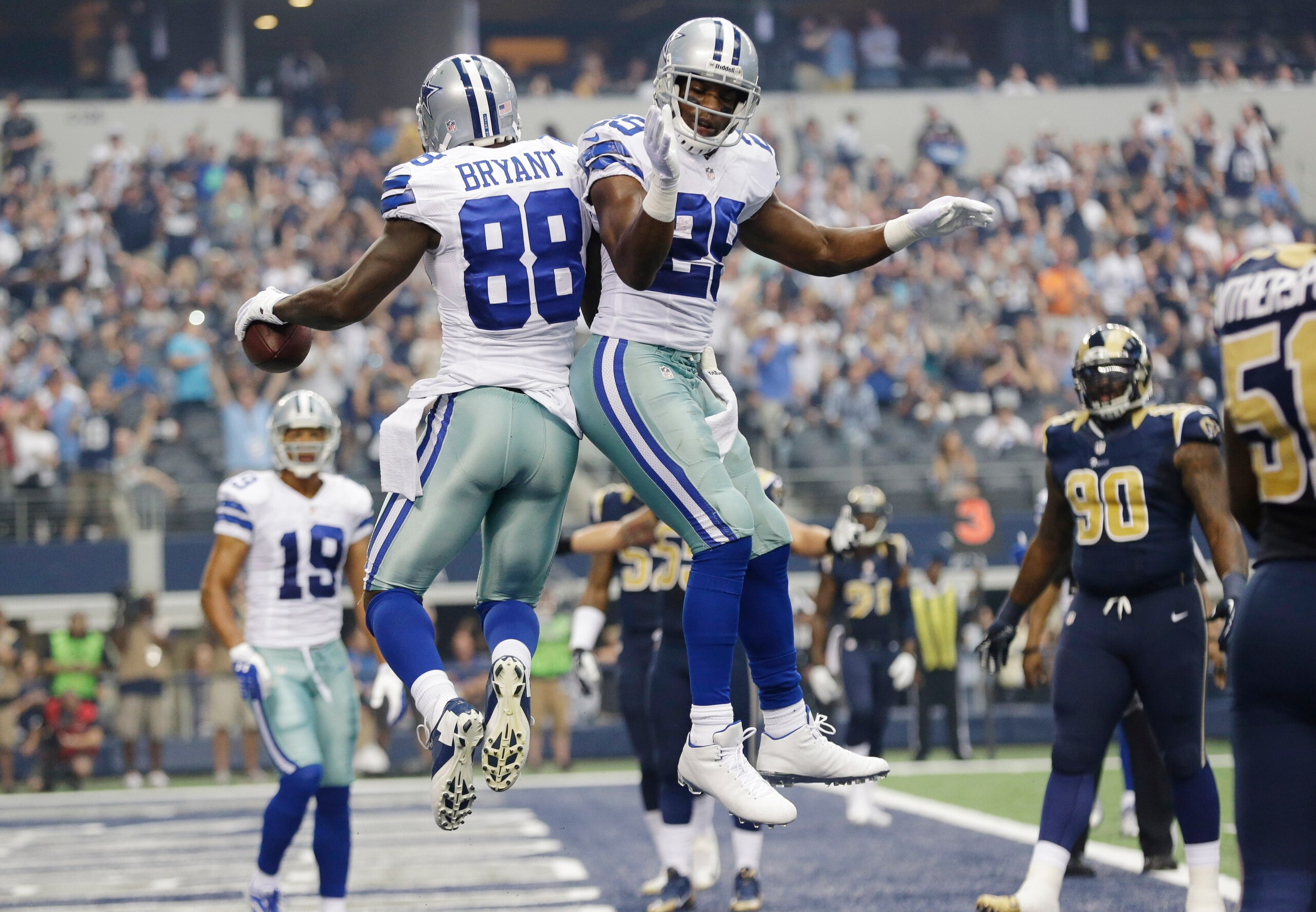
Kansas City Chiefs
The Kansas City Chiefs are in the unenviable position of having no cap space and one of the best defenders in the league slated to hit free agency.
With Justin Houston primed to hit the market after nearly breaking the season sack record and coming in second for Defensive Player of the Year, Kansas City's only leverage in long-term contract negotiations is the franchise tag.
The Chiefs will need to get back under the cap first, and they will need to carve out enough space to tag Houston if they intend to use it.
Detroit Lions
Do they risk losing both defensive tackles Ndamukong Suh and Nick Fairley, or do the Detroit Lions hit one of them with a franchise tag?
Suh has naturally commanded far more attention, but his cap hit might be too rich for Detroit's blood. Fairley has been great on that defensive line as well, but he might not be worth that cap hit.
Dallas Cowboys
With just $9.4 million or so in cap space—assuming a $142 million salary cap—the Cowboys don't have much room to spare heading into the offseason. Unless the cap balloons far more than projections, they will have tough decisions to make about the roster.
One of those will be whether to use the franchise tag on their franchise receiver, Dez Bryant. Or, perhaps, another player merits the tag, though that would be a bit of a surprise.
Ndamukong Suh, DT, Detroit Lions
5 of 12
Ideally the Detroit Lions would want to keep Ndamukong Suh, at least if common sense prevails. Despite Suh's myriad issues on and off the field, he has been a big reason why that defensive line has been great in recent years.
The question is whether the Lions are willing to commit to him long-term, at least from a financial standpoint.
Of course, there is one big number that will short-circuit any real talk of the franchise tag as it pertains to Suh—$26.8 million.
That's how much the Lions would owe him if they hit him with the exclusive or non-exclusive tag, which would account for nearly 19 percent of Detroit's cap if it's set at $142 million for the year.
Why is his number well above the tag numbers for defensive tackles? Because Suh made $22.4 million last season, and he would be entitled to a 20 percent raise as opposed to the far lower tender.
The transition tag is a viable candidate here, however—it would allow the Lions to keep Suh by matching any contract offer while saving them from over-spending.
Verdict: Suh will hit it big in free agency.
Dez Bryant, WR, Dallas Cowboys
6 of 12
Dez Bryant is sure to be the Dallas Cowboys' biggest priority. The big receiver is more valuable to that offense than anyone, save quarterback Tony Romo—yes, more so than running back DeMarco Murray—and he is going to command a big payday one way or another.
For his part, Cowboys owner Jerry Jones wants to keep his prized receiver in Dallas for a long time, per Jon Machota of The Dallas Morning News:
"What we want to do is have an agreement for the rest of Dez’s career. To me, that says a lot about the concern about off-the-field [issues] if we want him on the Dallas Cowboys for the rest of his career.
I’m real impressed with how he’s evolved over the last several years, or we wouldn’t be in serious contract negotiations with him. So I think all of that is where it really is, and I do look for us to get something done with Dez.
—
But it’s got to fit. It has to really fit our team. One thing about it, everyone knows this: I spend all the money. I spend all the money and I’m as imaginative spending it as you’re allowed to spend in the NFL. So what one player gets another one doesn’t
"
That doesn't sound like a guy who is willing to let Bryant go, whether that means hammering out a deal or using the franchise tag.
Verdict: Bryant will re-sign to a long-term deal
Jason Pierre-Paul, DE, New York Giants
7 of 12
Jason Pierre-Paul has dealt with injuries for years. That's what makes his impending free agency so tricky.
The 25-year-old oozes potential, even after dealing with myriad maladies in recent years. His breakout sophomore season came when he was just 22, and the NFL was his oyster before his body betrayed him.
The fierce pass-rusher was relatively healthy last season, and he amassed 12.5 sacks to lead the New York Giants and help them collect 47 overall, good for fourth in the league.
So Pierre-Paul's value is obvious. But his long-term viability isn't.
Those injuries may flare up again, after all, and a multi-year deal with major guarantees carries serious risk here. That's why the Giants might be tempted to stick with the franchise tag in lieu of serious contract negotiations.
Verdict: The Giants will use the non-exclusive tag on Pierre-Paul.
Randall Cobb, WR, Green Bay Packers
8 of 12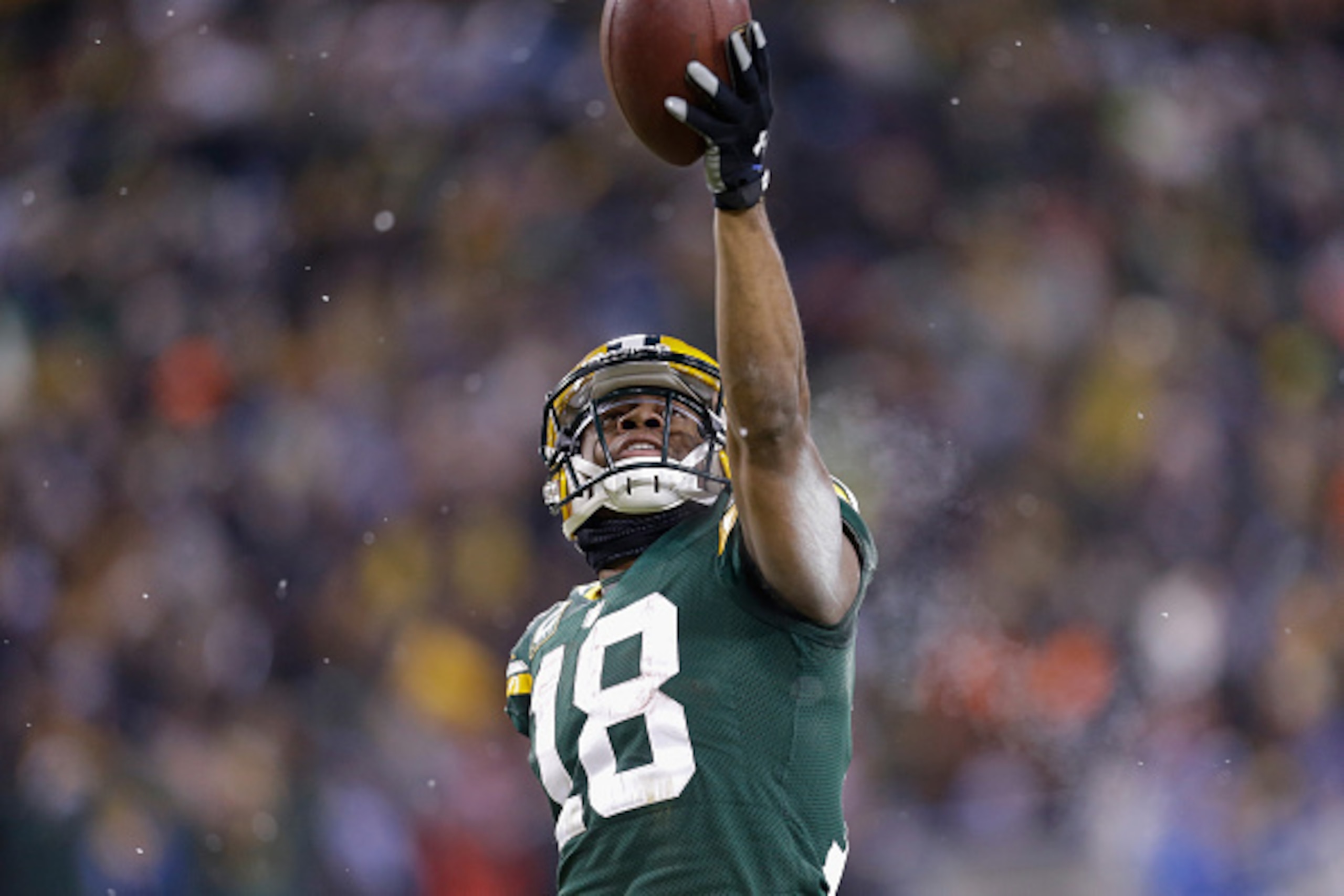
Randall Cobb picked a good time to have a career year.
The Green Bay receiver has battled injuries in the past, but a fully healthy season netted him 1,324 total yards and 12 touchdowns.
He's a versatile offensive weapon who allows quarterback Aaron Rodgers and co. plenty of creativity on that side of the ball. The diminutive receiver carries durability concerns, however, and the Packers are already paying Jordy Nelson, though that $39 million deal looks like a huge steal at this point.
General manager Ted Thompson knows when to play or fold, and Cobb is definitely a hand he should keep.
Verdict: Cobb will re-sign a long-term deal to stay a Packer.
DeMarco Murray, RB, Dallas Cowboys
9 of 12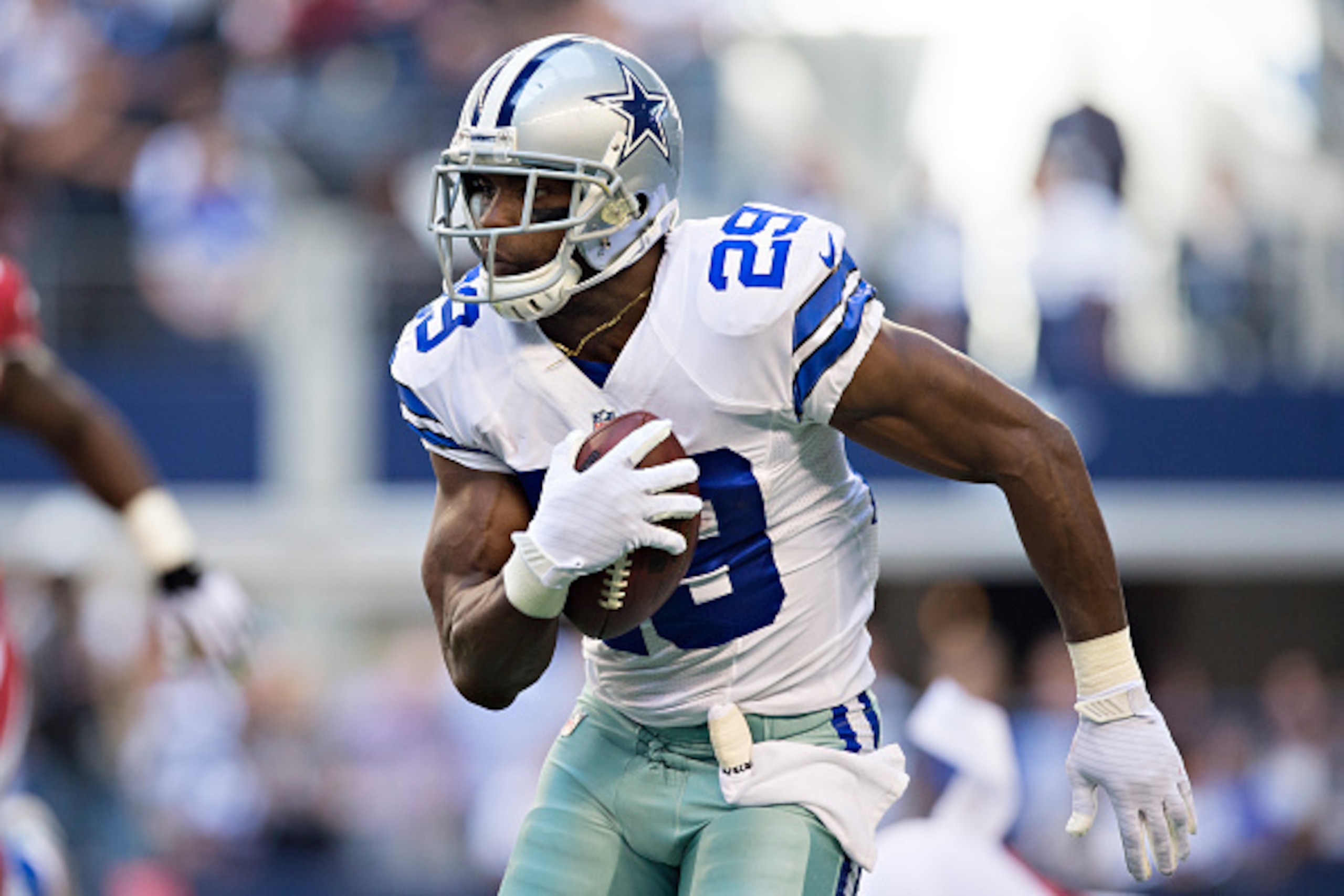
Now here is an interesting possibility.
Much has been made about Dez Bryant's impending free agency and what the Dallas Cowboys will do to keep him. The franchise tag has already been bandied about as a possibility.
But what about DeMarco Murray?
Cowboys owner Jerry Jones has admitted it will be difficult to keep the group together given cap constraints in Dallas. Signing Murray to a long-term deal may not be in the cards unless the salary cap exceeds $145 million.
Verdict: Murray will hit free agency.
Justin Houston, OLB, Kansas City Chiefs
10 of 12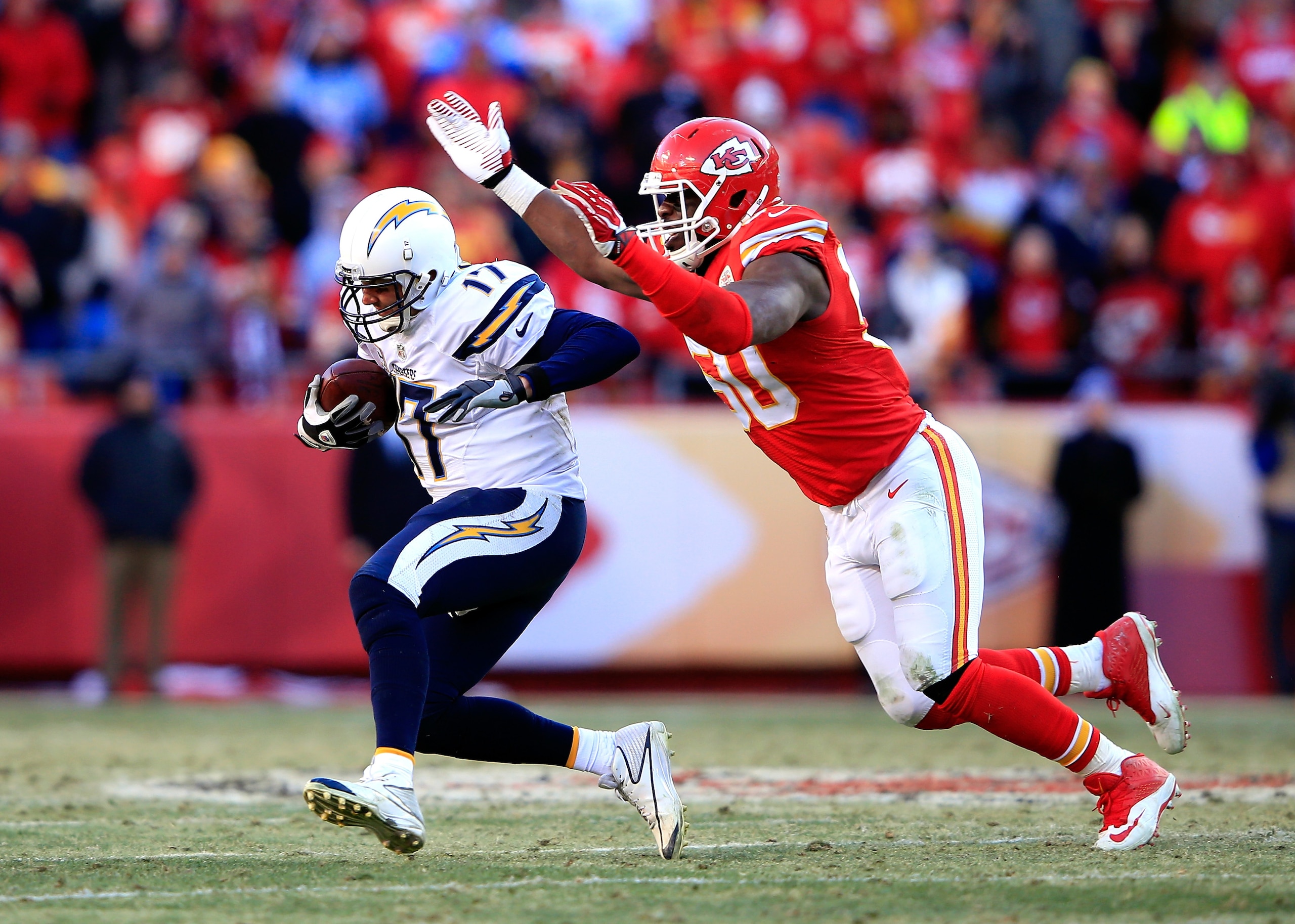
This might seem like a no-brainer if the Chiefs and Justin Houston cannot agree on a long-term deal, but things aren't so simple in Kansas City.
As we have already seen, the Chiefs are strapped for cap space heading into 2015. Even with some roster cuts or contract restructuring elsewhere, there isn't going to be a ton of room available.
There haven't been serious contract talks between Houston and the team, per Pro Football Talk's Mike Florio, who speculates they will definitely tag him. Considering he just came off a career year, that makes sense—Houston has all the leverage right now, and the tag would let the Chiefs keep him without the long-term risk.
Verdict: Kansas City will use the non-exclusive tag on Houston.
Demaryius Thomas, WR, Denver Broncos
11 of 12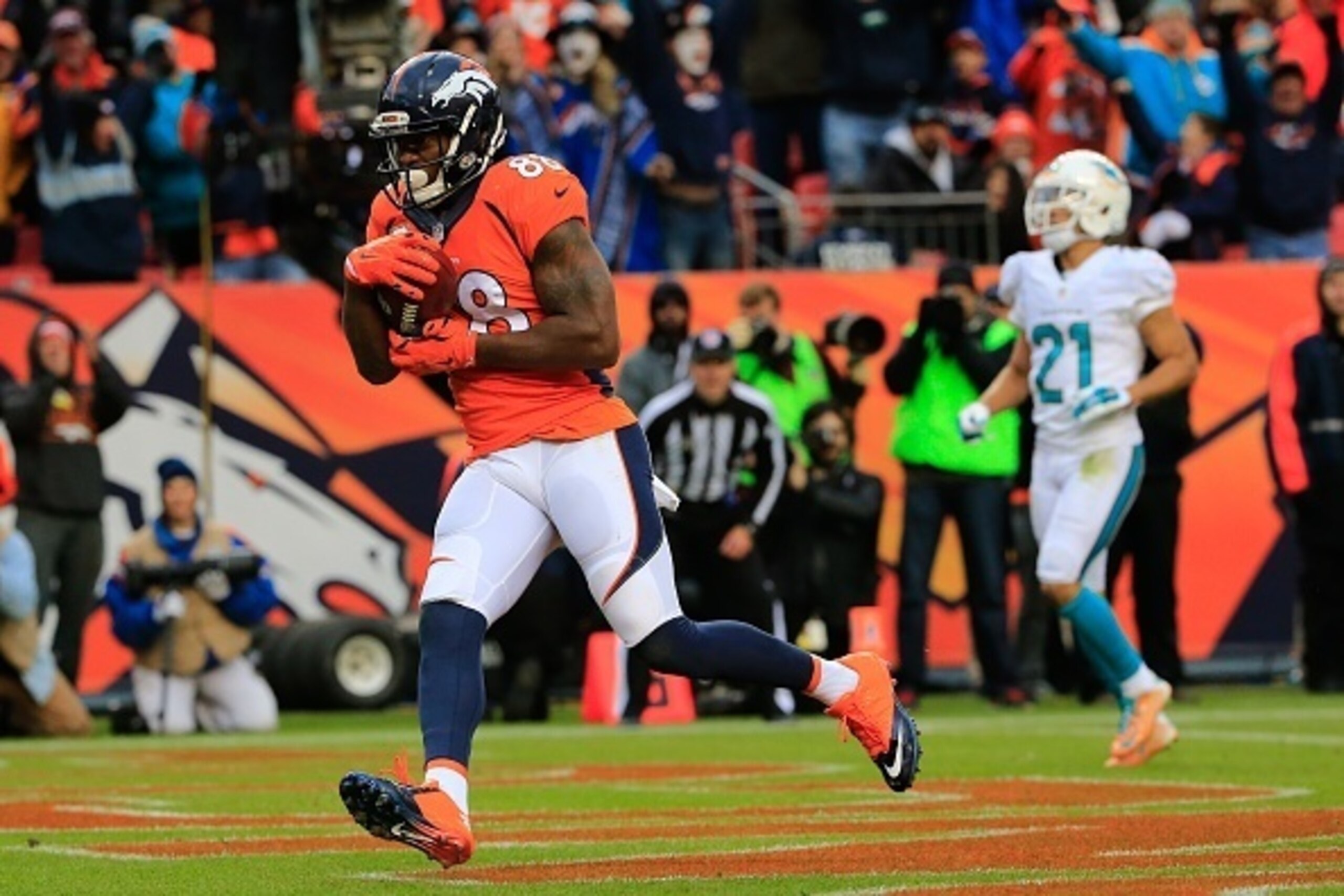
Where would the Denver Broncos and that record-breaking offense be without Demaryius Thomas?
The big wideout has been an integral part of that high-powered, Peyton Manning-led unit that broke the NFL's scoring record two seasons ago, and he would be sorely missed.
With or without Manning, the Broncos are intent on keeping their No. 1 receiver—they are prepared to use the franchise tag, per NFL.com's Chris Wesseling.
Of course, if a long-term deal is struck, the tag won't be necessary. Per Wesseling's report, however, contract negotiations have been on ice for a while.
Verdict: Thomas will be tendered with a non-exclusive contract.
Stephen Gostkowski, K, New England Patriots
12 of 12
What's a kicker doing on this list?
Quite simply, Stephen Gostkowski is arguably the best kicker in the league, and the franchise tag might be the easiest way to keep him in New England.
It might seem silly to use the tag on a kicker, but it's not unprecedented. Because kickers typically don't command huge salaries, the exclusive tag doesn't come anywhere near as expensive as other positions.
Now, the Patriots should try to keep their steady stalwart for the foreseeable future, but this wouldn't be the first time they have stonewalled a key contributor.
Verdict: The Patriots will re-sign Gostkowski to a multi-year deal.
Salary-cap information courtesy of Overthecap.com and Spotrac.com. Information about franchise tag rules and calculations comes from the CBA.
.jpg?w=2560 "Seahawks Camp Football")
.jpg?w=2560 "Titans Football")

.jpg?w=2560 "Grading SummerSlam Night 1 🔠")