

The One Key to Every NBA Team's 2016-17 Season
Many different factors contribute to the outcome of an NBA team's regular season. But what would happen if you needed to boil down every squad's ability to actualize its best-case scenario into one vital determinant?
This discussion.
One question will be kept in mind throughout this exercise: What does Team X need to do, improve upon or avoid for its 2016-17 crusade to be remembered as a success story?
Answers are relative to expectations. Title contenders are held to different standards than rebuilding franchises, so a triumphant year for the Golden State Warriors varies drastically from one for the Philadelphia 76ers. And since good health is pivotal for every team, it will only be used in the most exceptional situations.
Atlanta Hawks: Dennis Schroder
1 of 30
The Atlanta Hawks need Dennis Schroder to work out as their starting point guard. It's that simple.
There is no safety net beyond the 23-year-old anymore. Atlanta traded Jeff Teague to the Indiana Pacers and waived veteran Jarrett Jack. Behind Schroder, there's 27-year-old rookie Malcolm Delaney, and that's it.
Kent Bazemore and DeAndre' Bembry, another rookie, can get away with bringing the ball up the floor every now and then. Taurean Prince, yet another rookie, saw more time on the rock as a senior at Baylor. But the Hawks don't have a tried-and-true facilitator other than Schroder.
This might not matter. Atlanta scored more points per 100 possessions with Schroder than with Teague last season, and the former averaged a promising 15.3 points and 7.9 assists per 36 minutes during the preseason.
Still, the Hawks fell outside the top 15 of offensive efficiency in 2015-16 and have since downgraded their frontcourt's scoring potential by replacing Al Horford with Dwight Howard. If Schroder isn't ready to direct an above-average offense, they're in trouble.
Boston Celtics: Floor Spacing
2 of 30
Last season, only the Los Angeles Lakers and Memphis Grizzlies converted a lower percentage of their triples than the Boston Celtics, whose offense accordingly imploded whenever Isaiah Thomas stepped off the floor. He alone was able to find holes and collapse defenses despite nightly traffic jams inside the arc.
Al Horford remedies much of this congestion. His well-placed screens create room in the tightest spaces, and the threat of his post game forces defenses to scramble. And where Jared Sullinger was a floor-spacer insofar as he wasn't afraid to jack threes and long twos, Horford actually makes them.
It's not clear, though, whether the Celtics upgraded their shooting elsewhere.
Will Marcus Smart build upon his three-point accuracy from the first round of the playoffs (34.4 percent) after returning from a left-ankle injury? Will Jae Crowder carry his exhibition shooting (42.9 percent from deep) into the regular season?
Is Terry Rozier's preseason three-point clip (60 percent) even a partial harbinger of what's to come? Can rookie Jaylen Brown be more of a long-range threat than the departed Evan Turner? Will Kelly Olynyk remain healthy enough to provide the second unit with an outside sniper up front?
Boston will win a ton of games, even if it's inept from deep. But it'll register on the Cleveland Cavaliers' radar if three-pointers start to fall in volume.
Brooklyn Nets: Balancing Playing Time Between Veterans and Prospects
3 of 30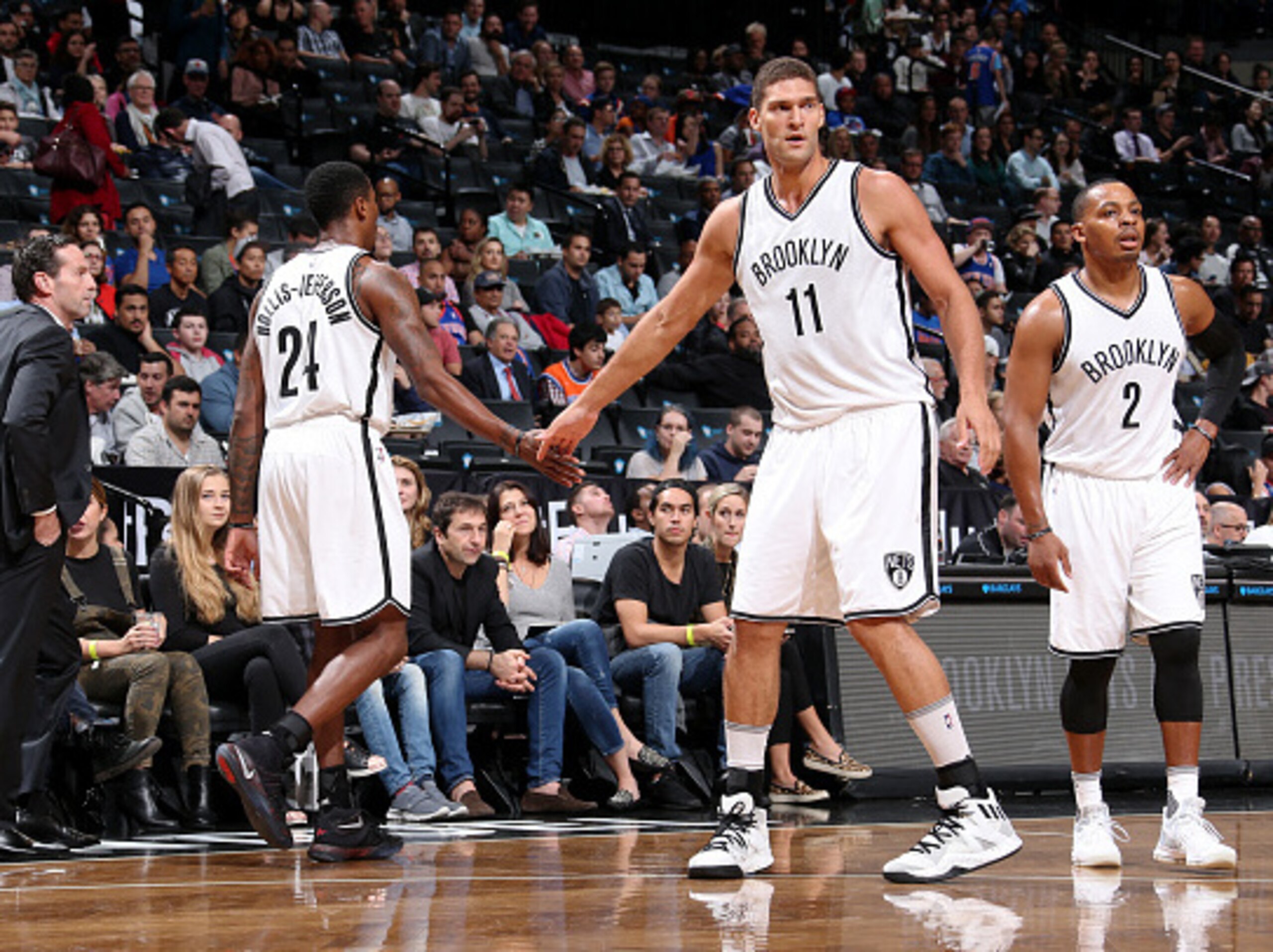
The Brooklyn Nets are in a weird spot.
In rebuilding, they don't have any incentive to chase losses. The Celtics can swap the Nets' first-round pick with their own next June and control Brooklyn's selection in 2018.
New head coach Kenny Atkinson will subsequently have the go-ahead to win as many games as the roster allows—an approach that typically includes playing veterans over prospects and projects. And yet, the Nets won't be building toward anything real over the next two years if they tether their developmental investments to the bench.
Rondae Hollis-Jefferson, a budding sophomore, is the only unproven talent guaranteed any playing time. Offseason acquisitions Trevor Booker, Randy Foye, Jeremy Lin, Luis Scola and Greivis Vasquez, not to mention the incumbent Brook Lopez, will dominate the rotation.
But it's equally important the Nets find time for Anthony Bennett, Sean Kilpatrick, Caris LeVert (when healthy), Chris McCullough and Isaiah Whitehead. Throw 25-year-old flier Joe Harris in there too.
General manager Sean Marks already showed a willingness to prioritize the future over everything else by flipping Thaddeus Young to the Pacers for a first-rounder this past June (LeVert). With virtually no chance of making the playoffs, the Nets must ensure that approach extends to how minutes are dispensed.



Charlotte Hornets: Carving Out Enough Offense
4 of 30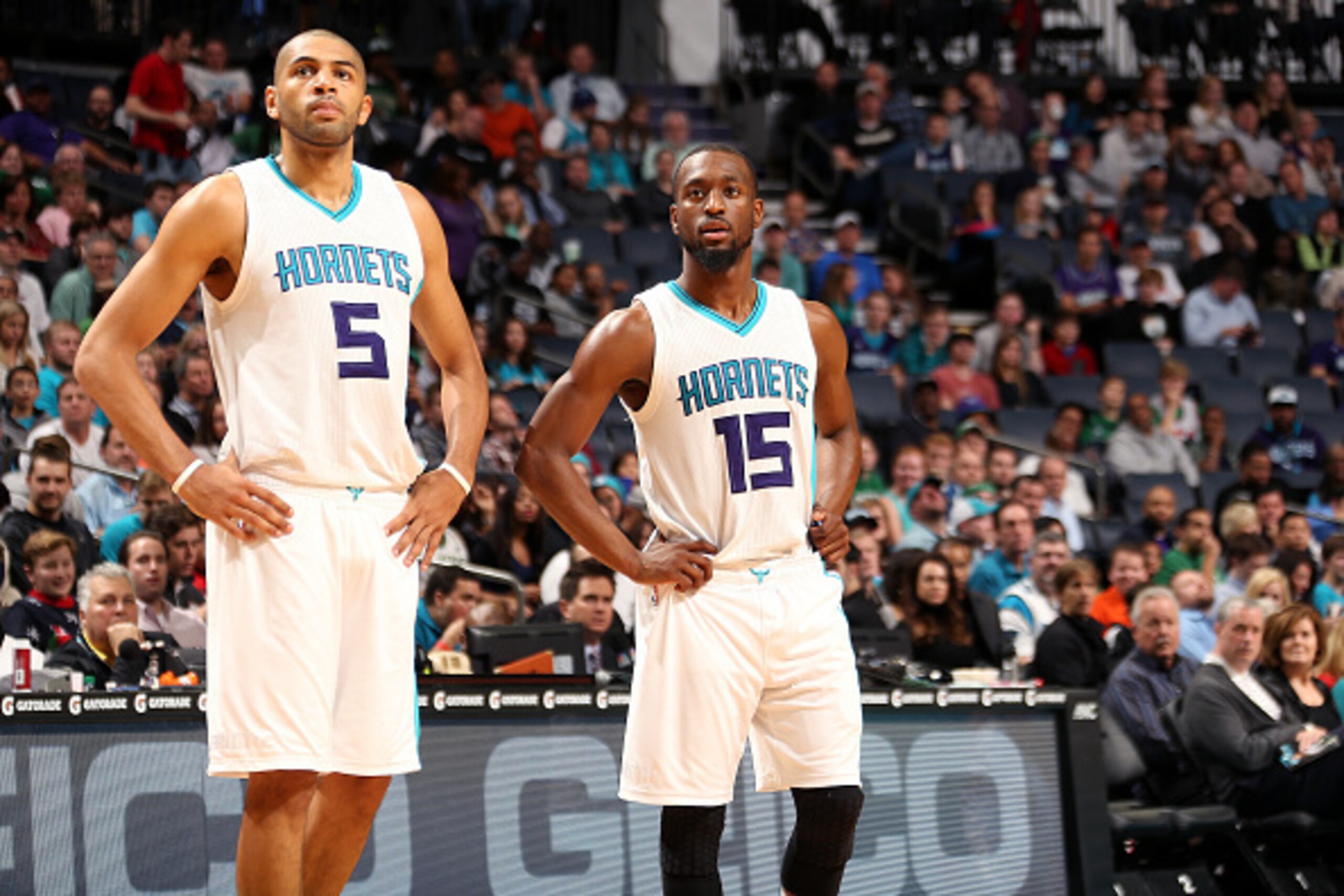
The Charlotte Hornets offense was one of last season's biggest surprises. The team ranked in the top 10 of points scored per 100 possessions and top seven of three-point efficiency.
Too bad all signs point toward that being a fleeting success.
It's not just that Jeremy Lin was a more creative backup point guard than Ramon Sessions is or that Michael Kidd-Gilchrist's jumper pales in comparison to Courtney Lee's on its best day. Supplanting Al Jefferson's polished post game with two relative offensive unknowns, albeit superior floor-spacers, in Frank Kaminsky and Cody Zeller isn't even that big of a concern.
It's the returning fixtures the Hornets must worry about.
Kemba Walker all of a sudden became a dangerous three-point shooter in 2015-16. Marvin Williams morphed into a three-position assassin during a contract year. Nicolas Batum set career highs in points and assists per game, also during a contract season.
Sustaining those results, given the aforementioned free-agent losses, will be difficult. But Charlotte needs to hope for an encore from at least one of Batum, Williams and Walker, lest it be on the defense to secure a playoff berth.
Chicago Bulls: Backcourt Chemistry
5 of 30
Poor Fred Hoiberg.
Hired as Tom Thibodeau's successor ahead of last season under the guise that his pace-and-space offense would transform the Chicago Bulls into genuine title contenders, he is now coaching a team with no backcourt shooting.
What was missing from a rotation that included Rajon Rondo and Dwyane Wade? Michael Carter-Williams, apparently.
Five non-rookies make up Chicago's backcourt pecking order: Isaiah Canaan, Jerian Grant, Carter-Williams, Rondo and Wade. Only one of them (Canaan) is shooting even 30 percent from long distance for his career.
Jimmy Butler, now a full-time small forward, might see some burn at shooting guard, and he shot 50 percent on triples during the preseason. Chicago's capacity to field an average offense rests on career backcourt clunkers and rookie Denzel Valentine's hitting jumpers and finding ways to create space when they're not.
What could go wrong?
Cleveland Cavaliers: Foresight
6 of 30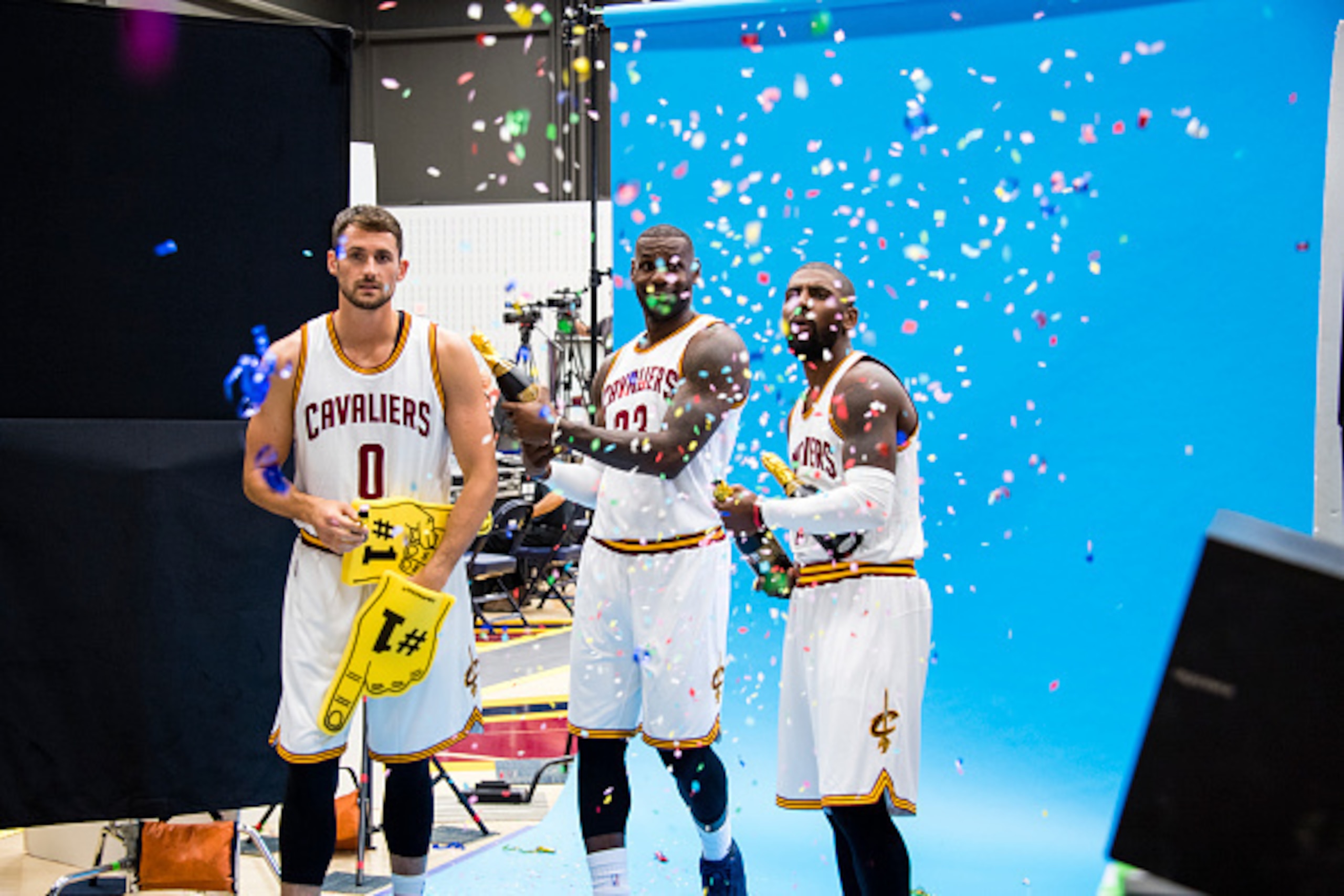
We could pretend the Cleveland Cavaliers' point guard situation is cause for unrest. Kyrie Irving is hardly a billboard for durability, and their primary backup options include 5'9" newbie Kay Felder, ex-NBA D-Leaguer Jordan McRae and, probably, Iman Shumpert.
Let's not do that, though; it's not that dire. Worst-case scenario, head coach Tyronn Lue drastically staggers the minutes of LeBron James and Irving. Poof! Problem solved.
The real key for the Cavaliers is foresight. They need to keep their eye not just on the playoffs, but also on June—on the NBA Finals.
Al Horford renders the Celtics second-place favorites, the Toronto Raptors are candidates to win 50-plus games, and the New York Knicks, bless them, believe they're contenders. But the Cavaliers, failing catastrophe, are still NBA Finals locks. It's on them to make sure that doesn't change by their own hands.
So rest James, even if it means he cedes MVP votes. Embrace minute limits. Tread water. Sleepwalk through the first three-quarters of the regular season. Don't go chasing loose balls into the stands or onto the floor.
Do whatever it takes to stay fresh and whole for another NBA Finals trek.
Dallas Mavericks: Rick Carlisle's Coaching Voodoo
7 of 30
Health will play a substantial role in the Dallas Mavericks' search for yet another low-end playoff berth—a larger part than most other cases.
Andrew Bogut has to wear a bubble-wrap onesie to bed, and last season, Wesley Matthews played 78 games less than one year after rupturing his Achilles. Dirk Nowitzki is 38, and Deron Williams hasn't been fully healthy since he was in Utah.
Dallas is one injury away from sniffing the Western Conference's basement.
And still, head coach Rick Carlisle holds the key to the Mavs' season. Mash together a roster of fringe NBA talent and ebbing, injury-prone veterans with minimal depth, and Carlisle will deliver a competitive product. (See: last season.) (Also see: the season before that.) But you can't help but wonder if Dallas is asking too much of its sideline sage this year.
Harrison Barnes couldn't hack it as the fourth option behind Stephen Curry, Draymond Green and Klay Thompson. Seth Curry is a wild-card backup. Salah Mejri and Dwight Powell will have to play meaningful minutes. Justin Anderson is about the only above-the-rim player on the docket. And then there's the abnormal amount of injury risks.
Most teams in this situation would be contemplating the benefits of seller's mode and looking toward next summer's lottery. If Carlisle grinds out a playoff berth with this roster, he deserves a statue outside American Airlines Center.
Denver Nuggets: Depth Trumping Star Power
8 of 30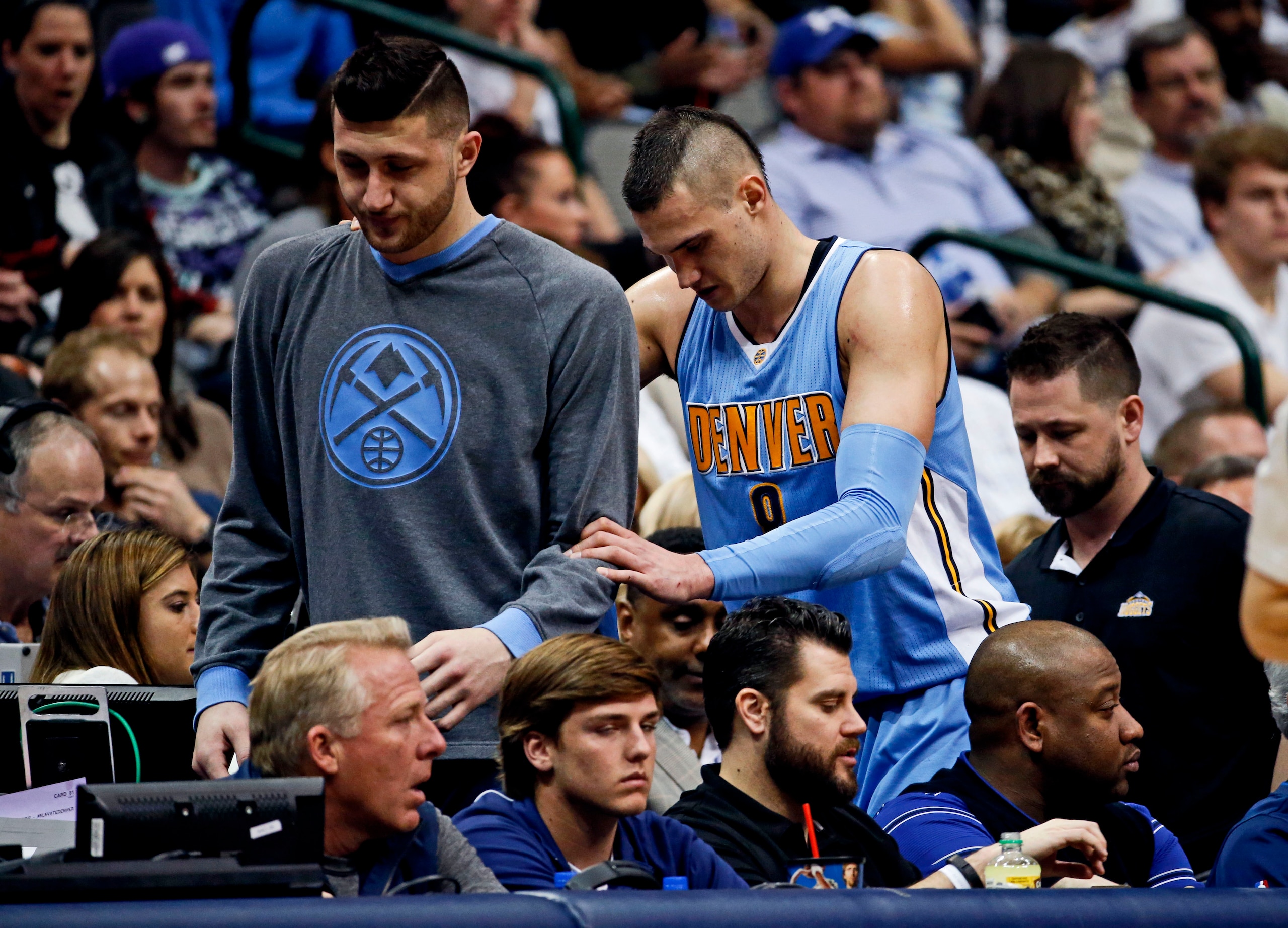
Take a gander at the Denver Nuggets' 15-man position ladder, and you'll find they have roughly all the depth:
| Emmanuel Mudiay | Gary Harris | Danilo Gallinari | Nikola Jokic | Jusuf Nurkic |
| Jamal Murray | Will Barton | Wilson Chandler | Kenneth Faried | Jarnell Stokes |
| Jameer Nelson | Malik Beasley | Juan Hernangomez | Darrell Arthur | |
| Mike Miller |
Oh, just three NBA-caliber players at nearly every position. No big deal.
Seriously, though, the Nuggets' excess of quality talent doesn't assure them a playoff spot. It doesn't even guarantee they'll be in the hunt for a postseason slot. It's mostly appealing in big-picture terms.
Some of Denver's most important contributors are projects. Gary Harris, Nikola Jokic, Emmanuel Mudiay, Jamal Murray and Jusuf Nurkic all have starry upside, but they have just six seasons of experience between them. The team's best player right now is either Danilo Gallinari or Jokic, neither of whom is a surefire All-NBA candidate.
Star power is traditionally a non-negotiable ingredient to immediate success; the same goes for lineup continuity. But the Nuggets are brimming with the studs of tomorrow and could spend most of 2016-17 experimenting with different lineups and shifting around roles.
Does obscenely obvious depth supersede that need for a star or two? Can it offer stability when the rotation doesn't? The Nuggets are about to find out.
Detroit Pistons: 3-Point Shooting
9 of 30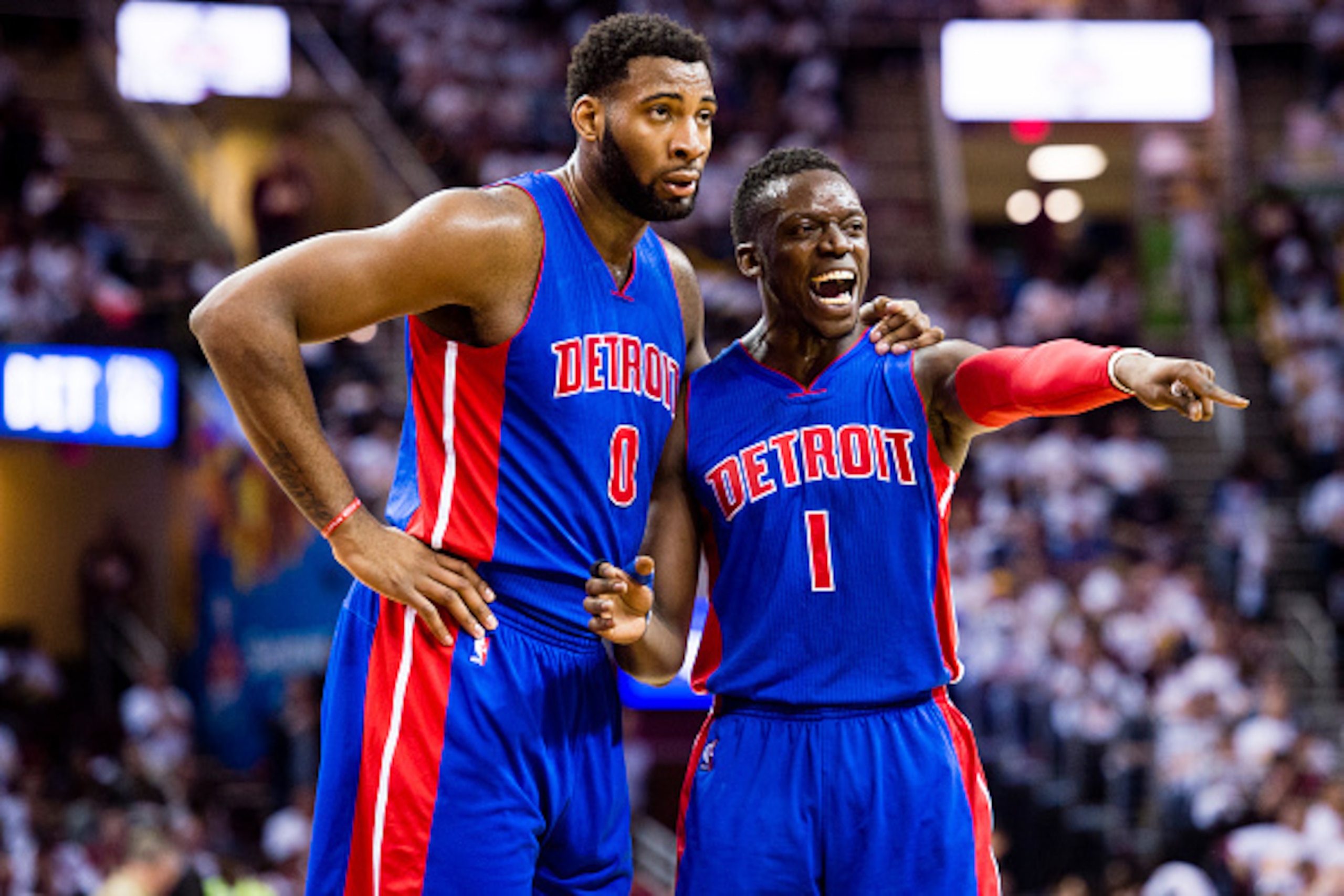
Reggie Jackson's left knee and right thumb injuries won't do the Detroit Pistons' spacing any favors—which is a real problem because the team is on shaky ground, even when he's in the fold.
Detroit ranked in the bottom 10 of three-point marksmanship last season and saw its percentage dip further whenever Jackson took a seat. His absence—Jackson shot a career-high 35.3 percent outside clip in 2015-16—will affect the offense's entire infrastructure, as ESPN.com's Zach Lowe wrote:
"Analytics gurus at other teams have mocked my freaking out about Jackson missing perhaps a quarter of the season; they project the injury might cost Detroit just one or two wins.
They're probably right. But the Jackson-Andre Drummond spread pick-and-roll literally is Detroit's offense. They can try to mimic it with Ish Smith, but his jumper is busted; defenders will duck 10 feet under Drummond's picks to cut off Smith's roadrunner drives.
"
Smith is shooting under 30 percent from behind the rainbow for his career and was an erratic finisher inside pick-and-rolls last season. The two-man game between him and Drummond, a non-threat outside the restricted area, won't make life easier for Detroit's questionable cast of shooters.
Marcus Morris has cleared 35 percent accuracy on deep balls in four of five seasons, but Tobias Harris has maintained 34 percent accuracy for an entire year only once. Stanley Johnson will be lucky to match his rookie mark (30.7 percent), and Kentavious Caldwell-Pope has offered no signs of making a perimeter-scoring leap.
On top of that, when Jackson returns, the Pistons must see whether last season's outside shot-making was the new normal or an anomaly. That much could be the difference between a playoff appearance and a lottery letdown.
Golden State Warriors: Building Continuity
10 of 30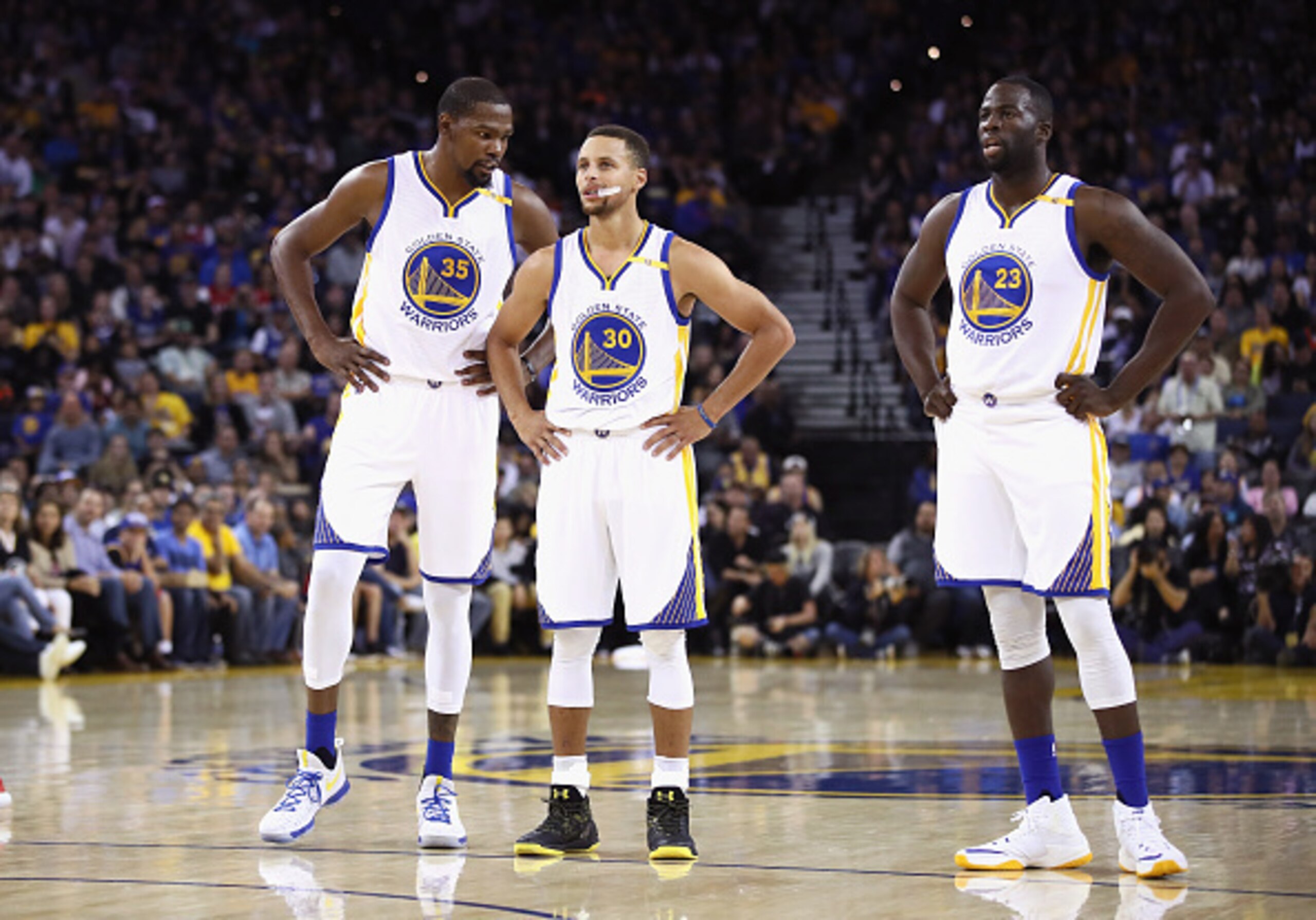
Never mind the usual superteam learning curve. That doesn't apply to the Golden State Warriors.
Stephen Curry, Draymond Green and Klay Thompson all recruited Kevin Durant. Their playing styles complement each other. What everyone sacrifices in touches and shot totals, they'll make up for with wide-open threes. They needn't overcome a loss-loaded grace period during which the general public questions this formation with a straight face; it won't exist.
Building continuity through lineup patterns is the real key. Head coach Steve Kerr has already admitted, per Bay Area News Group's Anthony Slater (h/t Santa Cruz Sentinel), that it's a "pretty good bet that Steph and KD will be staggered."
This is a must.
Golden State should barely ever play without an MVP on the floor outside garbage time. Separating Curry and Durant negates the loss of any offseason depth while organically dispersing touches and field-goal attempts.
At the same time, the Warriors must figure out how often they'll use their new "Death Squad"—the five-out lineup of Andre Iguodala, Curry, Durant, Green and Thompson. They might not need to put Green through the ringer at the 5 and Durant at the 4 during the regular season, but they'll want their five best players to be familiar with marching beside one another in advance of the postseason.
Houston Rockets: Surviving on Defense
11 of 30
If preseason was any indication, the Houston Rockets will tower over the rest of the offensive field. They pumped in an NBA-leading 111.1 points per 100 possessions, a mark even the superstar-stuffed Warriors will be hard-pressed to rival.
Offense, of course, was never going to be the downfall. Defense is a different story.
Though the preferred starting lineup has three potential plus defenders—Trevor Ariza, Patrick Beverley, Clint Capela—the bench is barren of reliable stoppers. And Beverley, by far the Rockets' best perimeter pest, might not play until sometime in December after undergoing arthroscopic surgery on his left knee, per ESPN.com's Calvin Watkins.
James Harden is in shape and will hold his own defensively if he tries, but neither he nor Eric Gordon should be chasing point guards. Capela is a lively rim protector and rotator, but there are only a handful of souls on the planet who can cover up Ryan Anderson's lack of everything on that end.
Fortunately for the Rockets, they don't need to be a great defensive squad. With their offense, mediocre to slightly below average is fine.
Unfortunately, even a slightly below-average defense is a tall order given the personnel.
Indiana Pacers: Identity Preservation
12 of 30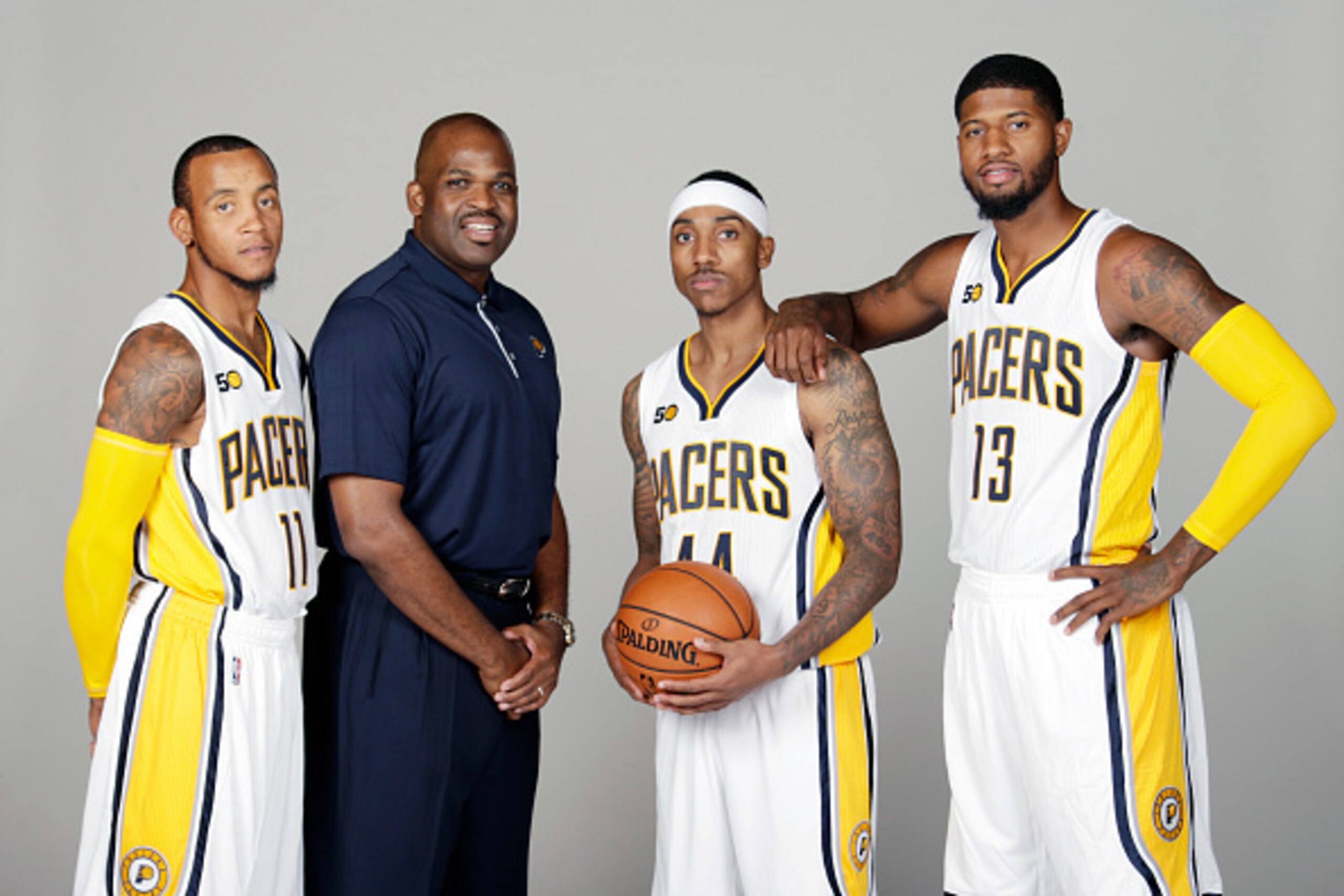
"We want a style where we can score," Indiana Pacers team president Larry Bird said on The Dan Patrick Show (h/t Ryan Eggers of FanSided). "I'd like to score 105 points a game, or maybe 106, but still defend the way we have."
Every team in the league would like to score a ton of points while deploying a top-three defense. But there's a trade-off when changing identities.
By focusing more on offense—and building their rotation accordingly—the Pacers are bound to take a step back on defense. Jeff Teague will not mask Monta Ellis' flaws as well as George Hill. Myles Turner, though a plucky rim protector with outside range, isn't an instant upgrade over the ever-underrated Ian Mahinmi (now with the Washington Wizards).
The Pacers won't find relief on the bench, either, where they're waiting to turn loose Aaron Brooks, Al Jefferson and Rodney Stuckey—all profile as defensive minuses.
Indeed, the offense should be better. Paul George is Paul George, Thaddeus Young and Turner are a dynamic frontcourt duo and Jefferson will eat opposing second-stringers alive. But did the Pacers retain enough of their defensive identity to get by when the offense falters or to be considered a two-way threat if it takes off?
That much remains to be seen.
Los Angeles Clippers: Staggering Blake Griffin and Chris Paul
13 of 30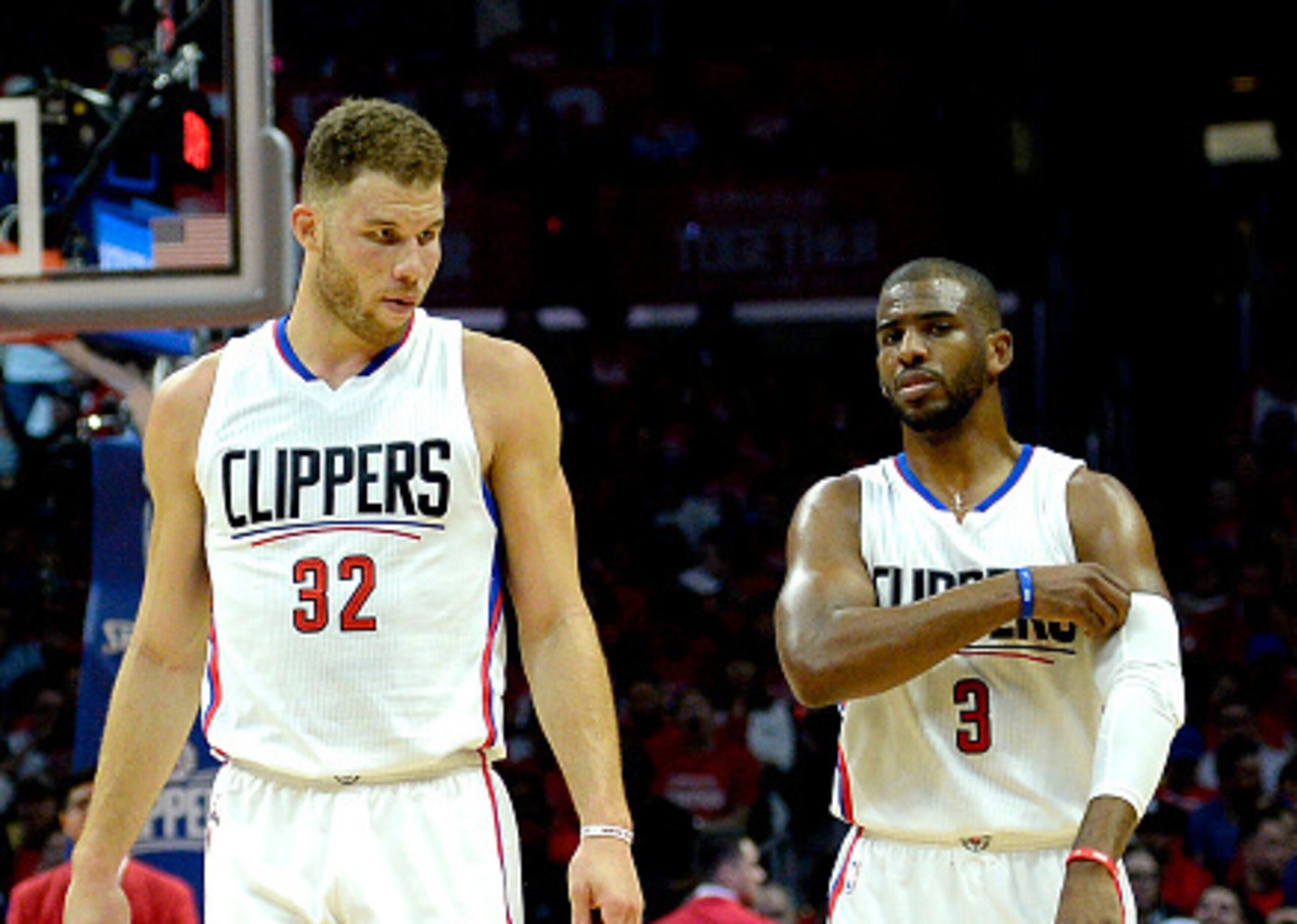
Before Blake Griffin went down with a torn left quad last season, the Los Angeles Clippers played, on average, more than 11.4 minutes per game without either him or Chris Paul on the floor, according to NBAWowy.com.
That's too much.
Single-game absences skew this number—Paul missed five of those 30 games—but not by much. And this was a problem well before 2015-16.
Prior to Griffin's right elbow injury in 2014-15, he and Paul appeared in all 51 of the team's games. The Clippers still averaged 10.7 minutes of floor time without both of them. When Griffin returned for the final 16 games of the regular season, beginning on March 15, that jumped past 11.
Playing almost an entire quarter without two top-10 superstars wouldn't be a huge deal if the Clippers had a strong second unit, but they don't. Their bench ranked middle of the road in offensive and defensive efficiency last season, according to HoopsStats.com, and it isn't much better off now.
Staggering more of Griffin's and Paul's minutes lets the Clippers play like a deeper team. Griffin gets to see more spin as a point forward with the second-stringers, since DeAndre Jordan depends on Paul for easy looks at the rim, and the offense won't fall off a cliff for stretches at a time.
Los Angeles Lakers: Letting the Kiddies Play
14 of 30
Anyone hoping the Lakers contend for a playoff berth is kidding themselves. Or they are being possessed by Kobe Bryant. Or living in the year 2020.
As a team in the early stages of a rebuild, the Lakers are inoculated against real expectations. Developing the kiddies is their only aim.
This sounds simple enough, but the temptation to toss out veterans is real. Luol Deng and Timofey Mozgov didn't put pen to paper on big-money contracts to perfect their sideline celebrations, and head coach Luke Walton is already expected to start Lou Williams over Jordan Clarkson, per the Orange County Register's Mark Medina.
Some level of restraint is fine. Bringing Clarkson off the bench better splits the ball-handling duties between him and D'Angelo Russell, while Brandon Ingram, also a projected member of the second unit, will get more looks next to backups.
But the youngsters need to finish games and be allotted certain freedoms. Russell shouldn't have to worry about being benched after making a mistake (or five). Julius Randle must be able to push the ball following a defensive rebound. Ingram should get to see how his 6'9", 190-pound frame holds up at power forward. Neither Nick Young nor Williams should have a higher usage rate than Clarkson (or Russell).
In other words, so long as Walton doesn't end up idolizing his predecessor (Byron Scott), it's tough to imagine the Lakers' season being a legitimate failure.
Memphis Grizzlies: Health, Health, Health
15 of 30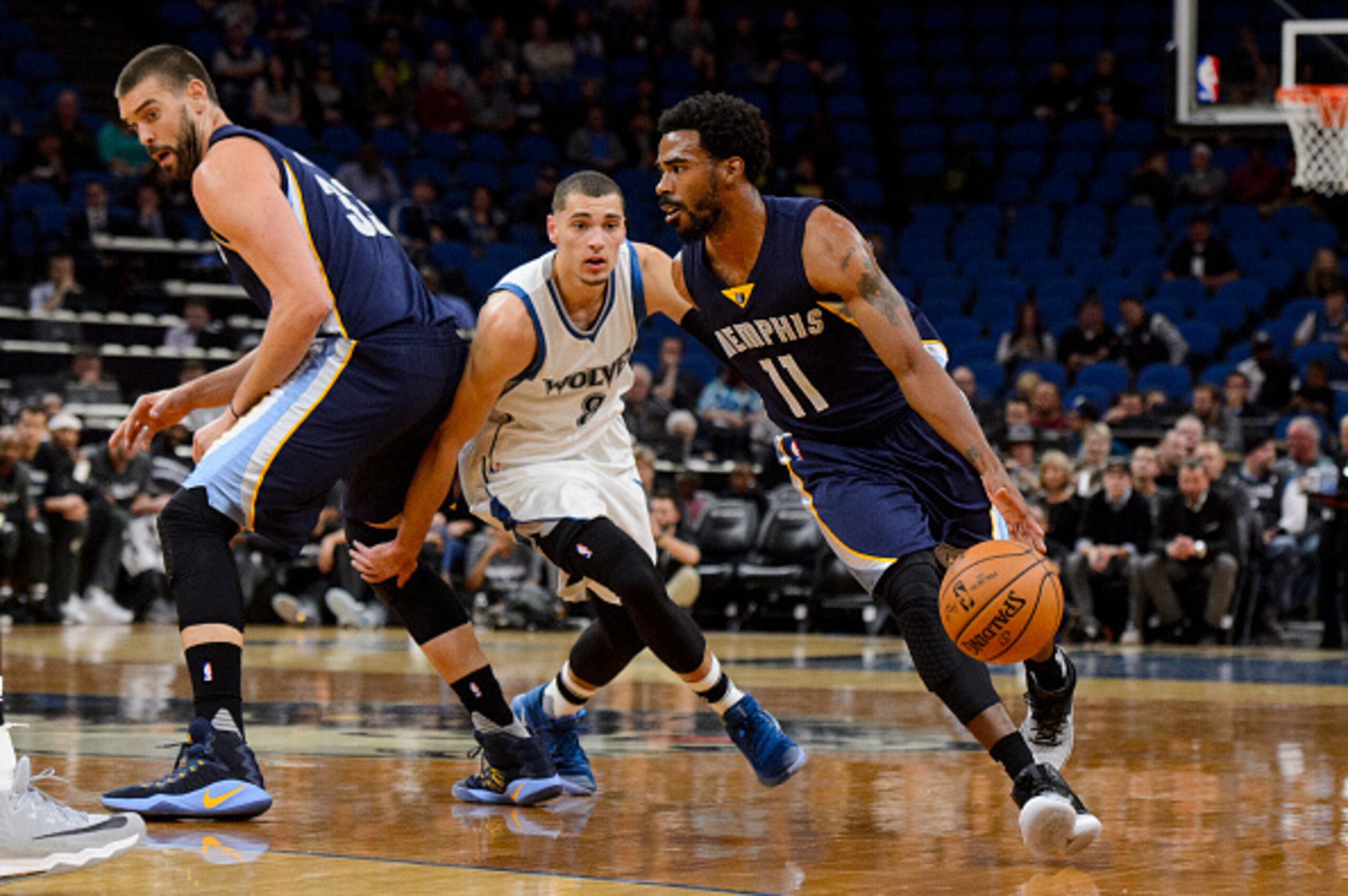
Hot damn, the Memphis Grizzlies' starting five looks good on paper.
If only it didn't have the structural stability of said paper.
Chandler Parsons has undergone season-ending knee surgery each of the last two years and will begin 2016-17 from the sidelines, according to ESPN.com's Tim MacMahon. Tony Allen missed the entire preseason with right knee soreness and has cleared 65 appearances once in the last half-decade.
Marc Gasol sat 30 games with a broken right foot last season and has already suffered a bone bruise in that same foot since returning. He will be on a minutes limit to start the year, per the Commercial Appeal's Peter Edmiston. Mike Conley is full steam ahead at the moment, but an Achilles injury shut him down for the final 20 games of 2015-16.
But hey! At least JaMychal Green is healthy.
Zach Randolph is healthy too. He's also 35. Vince Carter is 39. Brandon Wright is only 29, but he's not healthy (ankle).
Such is the pain of the Grizzlies roster. It's not a matter of if Memphis has enough talent to make the playoffs; it's a matter of whether that talent will play in enough games together to keep the postseason within reach.
Miami Heat: Unearthing Sidekicks for Goran Dragic and Hassan Whiteside
16 of 30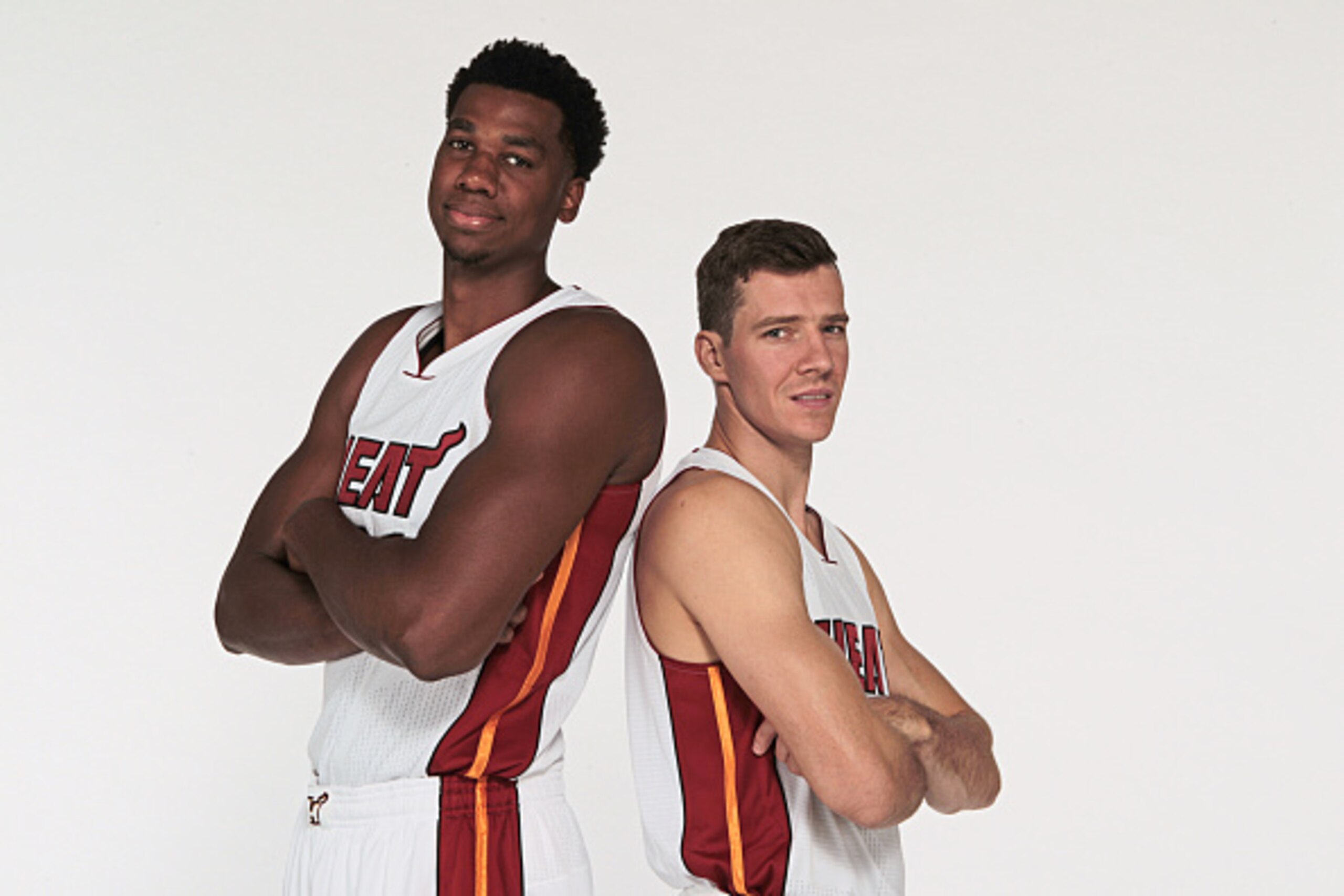
Goran Dragic had himself a preseason. He averaged 13.5 points and 6.5 assists on 55.2 percent shooting in under 26 minutes per game and looked super comfortable as the Miami Heat's indisputable ball-handling alpha.
Hassan Whiteside, meanwhile, has all the makings of a $98.4 million bargain. He spent the preseason showcasing a (much) deeper bag of offensive tricks and putting up All-Star numbers (14.8 points, 10.3 rebounds, 2.3 blocks) in seventh-man minutes (22).
Now, about the rest of Miami's roster...
The absence of Chris Bosh and exits of Luol Deng and Dwyane Wade have left gaping holes in the team's chain of command. Dragic and Whiteside need a dependable set of running mates—preferably near-equals—for the Heat to be more than inevitable trade-deadline sellers.
Are those partners in crime already on the roster? Is it Tyler Johnson, the $50 million combo guard with 68 games' worth of regular-season experience? Could it be Josh Richardson, the sweet-shooting sophomore who's nursing a partially torn MCL? Or is it Justise Winslow, the second-year defensive dynamo with an improving jumper?
Do James Johnson, Josh McRoberts and Derrick Williams make for a complete power forward rotation? Is contract-year Dion Waiters destined to shine? Can Luke Babbitt be the J.J. Redick of James Jones-esque forwards?
Whatever this season becomes for the Heat, it needs to include the discovery of bankable building blocks and complementary mainstays.
Milwaukee Bucks: The Rise of Point Giannis
17 of 30
Giannis Antetokounmpo has never been more important to the Milwaukee Bucks.
Khris Middleton will be lucky to play at all this season after suffering a torn left hamstring and is being spelled by the combination of Tony Snell and Michael Beasley. No team has a more baffling defensive ceiling; the Bucks have plenty of length with John Henson (6'11") and Thon Maker (7'1"), plus Antetokounmpo, but they also feature the turnstile stylings of Greg Monroe and Jabari Parker.
Stir in a point guard rotation headlined by Matthew Dellavedova and rookie Malcolm Brogdon, and there's only one thing left to do: Measure Milwaukee's livelihood against the progression of Antetokounmpo, the 7-foot(ish) point guard who will now take on the most difficult defensive assignments without the respite Middleton permitted.
Granted, point Giannis isn't a new concept. The Bucks used him as the primary ball-carrier over their final 23 games last season. He averaged 19.1 points and 7.3 assists on 51.4 percent shooting, and they scored like a top-five offense with him in the game. It was a win-win, although Milwaukee didn't get many wins (nine).
Except that was with Middleton orbiting the arc and opening lanes for Antetokounmpo to streak down. It will be a different world this season, even with Dellavedova and Snell serving sound spot-ups.
Milwaukee's frontcourt spacing remains wonky too. Antetokounmpo isn't yet a threat outside eight feet himself—though he did sink 34.3 percent of his corner threes last year. He has to evolve as a shooter and distributor (especially in pick-and-rolls) for the Bucks to make some offensive noise—or, for that matter, any noise at all.
Minnesota Timberwolves: Remembering the Big Picture
18 of 30
The Minnesota Timberwolves' 2016-17 projections are all over the place. Depending on the day and the person, they're either an intrepid upstart or a bona fide playoff squad.
Bleacher Report's Adam Fromal has them winning 42 games. Kevin Pelton of ESPN.com has them snagging between 38 and 39. The Washington Post's Tim Bontemps pegs them as a 50-win candidate.
This is a lot of fanfare for a team that, while hovering around the top 10 in offensive efficiency, finished last season with a bottom-five defense and 29 victories—perhaps too much fanfare.
Karl-Anthony Towns isn't your average sophomore; he's already an All-NBA hopeful. Andrew Wiggins is a 20-points-per-game scorer. Kris Dunn, Zach LaVine and Ricky Rubio make for one helluva backcourt tricycle. Head coach Tom Thibodeau turns this group into a top-15 defensive group just by showing up; Minnesota wrapped the preseason as the NBA's second-stingiest team.
All of this is great—not to mention utterly terrifying for the rest of the league—but the Timberwolves are still rebuilding. Thibodeau shouldn't be overextending Towns or playing Brandon Rush over LaVine and Wiggins to win games in January and February that might help them secure a first-round exit in April. Nor should he be in any rush to flip Rubio and other assets for another high-profile veteran.
These Timberwolves, as currently constructed, might be a playoff team. But they don't need to be right this second. And for the sake of patience, process and avoiding unnecessary pressure, they'd do well to remember as much.
New Orleans Pelicans: Testing the Unknowns
19 of 30
The New Orleans Pelicans needn't nab a playoff spot for this season to be a success. And that's good because they aren't going to get one.
Getting a fully healthy Anthony Davis for 82 games won't change that. New Orleans is slogging through too many absences (Tyreke Evans, Jrue Holiday, Quincy Pondexter) and houses too many unknowns. The Pelicans can ill afford to keep wasting Davis' prime with impermanent cores that won't make it out of or even into the first round. They need to lay down seeds that can grow with him.
Part of that process entails rolling the dice on unfinished projects, which they've done. They signed Tim Frazier, Langston Galloway, Solomon Hill and Terrence Jones. They chose Lance Stephenson over Alonzo Gee. They drafted Buddy Hield.
And now it's on head coach Alvin Gentry to experiment to no end.
See if a Davis-Jones frontcourt yields the intended offense without imploding on defense. Test out Hill, standing 6'7", at the 4 and give him the unconditional green light from downtown. Use Hield as a de facto point guard in Holiday's absence. Trot out the best possible defensive lineup without regard to offense and vice versa.
Forget about win totals and playoff bids that aren't coming. The Pelicans can color 2016-17 a success by figuring out which of their offseason gambles will pay off long term and then continuing to rebuild and retool from there.
New York Knicks: Offensive Reinvention
20 of 30
This excerpt from Bleacher Report's Yaron Weitzman perfectly encapsulates the state of New York's offense:
"It's still unclear how frequently the Knicks plan on running the triangle. [Derrick] Rose himself seems a bit confused.
"We're running an uptempo type of game," Rose said Saturday. "On out-of-bounds plays, that's when we're throwing in the triangle. On just dead balls, so it's very simple."
[Head coach Jeff] Hornacek was asked Sunday whether Rose's description was correct.
"Yeah, no, not totally," he said. "We can call it at any time, we're just trying to give him a basic thing that might happen just so he can train into it, and so, yeah, there's some of that, but it's not all the time."
"
To triangle or not to triangle? How fast will these supposedly souped-up Knicks play? How many threes will they launch? Will the pick-and-pop be a systemic hallmark or a seldom-used stratagem?
Can Rose become a pass-first point guard in a contract year? Will he shoot better in the restricted area? Is Carmelo Anthony ready to spend more time off the ball? Will Kristaps Porzingis get enough touches next to Rose and Anthony? Can Mindaugas Kuzminskas be better than Kevin Durant Brandon Jennings improve his efficiency and be a steady playmaker off the bench?
There is still so much the Knicks don't know about their offense. And given their relatively unimpressive defensive chops, it's important they find balance—otherwise this past summer's overhaul will be just another futile about-face.
Oklahoma City Thunder: Russell Westbrook's World Takeover
21 of 30
Russell Westbrook is not alone.
Steven Adams is a premier defender and serviceable pick-and-roll diver. Victor Oladipo has a max-contract skill set. Enes Kanter gets buckets in tight spaces and is an offensive-rebound magnet. Alex Abrines recorded a 50-60-100 shooting slash in exhibition play, and the Law of Post-Preseason Hype decrees that we say this means something.
But the Oklahoma City Thunder's season, everything about it, still comes back to Russ—and how far he can ferry them without Kevin Durant—as their one and only superstar.
Much of what we know about Westbrook's solo act comes courtesy of Durant's injury-riddled 2014-15 campaign: There will be plenty of triple-doubles—even more double-doubles—and Oklahoma City's offense will persevere. Pretty much everything else is a mystery, right down to how much Westbrook will miss Durant, as Steve McPherson wrote for Rolling Stone:
"At the same time, there are facets of Westbrook's game that Durant absolutely compensated for. Despite his willingness to shoot them, he's never been a knockdown 3-point shooter (30.2% for his career) and although some of the rest of the roster can hit them, the team will be hard-pressed to match Durant's productivity as both a 3-point threat and scorer in general.
And while Westbrook can play the agent of chaos on the defensive end, he's not elite there. Although he's in the top three of ESPN's real plus-minus for point guards, he has the worst defensive real plus-minus of the top five – strictly by DRPM, he's ninth.
"
The 2014-15 Thunder, remember, missed the playoffs. They won 45 games but went 27-28 without Durant, and Westbrook's efficiency dipped under the strain of a lifeline-sized workload. To believe things will be different now is to bank on his exploding and evolving in ways that, thus far, are foreign to even him.
Orlando Magic: Aaron Gordon's Development at Small Forward
22 of 30
Aaron Gordon's transition to small forward is the experiment upon which the 2016-17 Orlando Magic will prosper or perish.
Defensive concerns surrounding his move are scarce. He has the lateral gait to stick with opposing 3s and won't get destroyed off the dribble when switching onto backcourt ball-handlers.
But his offensive role will be drastically different.
"We will put a lot of pressure on him," head coach Frank Vogel said, per the Associated Press (via the Boston Herald). "We are giving him a lot of responsibility. He is going to have the ball in his hands. He is going to be asked to beat defenses over the top with his three-point shooting and to get out and play his game in the open court."
If Gordon can get comfortable attacking off the bounce, deferring on the move and chucking threes on the regular, Orlando's frontcourt cluster has a puncher's chance of panning out long term. Paying Bismack Biyombo, Serge Ibaka and Nikola Vucevic is superfluous, but the rotation is workable when Gordon doesn't have to play the 4.
If he goes bust at the 3, everything changes. At least one, maybe two, of Biyombo, Gordon, Ibaka and Vucevic will need to go, forcing the Magic to once again punt on a direction.
Philadelphia 76ers: Lineup Stability
23 of 30
Actual NBA players are on the Philadelphia 76ers! Not one or two, but a bunch! Enough to construct a rotation!
Yes, the Sixers will be bad—another top-five lottery finish feels like a foregone conclusion. Various injuries complicate matters: No. 1 overall pick Ben Simmons will miss extensive time with a Jones fracture in his right foot, and Jerryd Bayless is on the shelf while he recovers from a torn ligament in his left wrist.
These setbacks will impede the Sixers' search for continuity and identity early on. But they have enough players to sketch an outline in the interim, and Simmons, as of now, isn't on track to miss his entire rookie crusade—like Joel Embiid and Nerlens Noel before him.
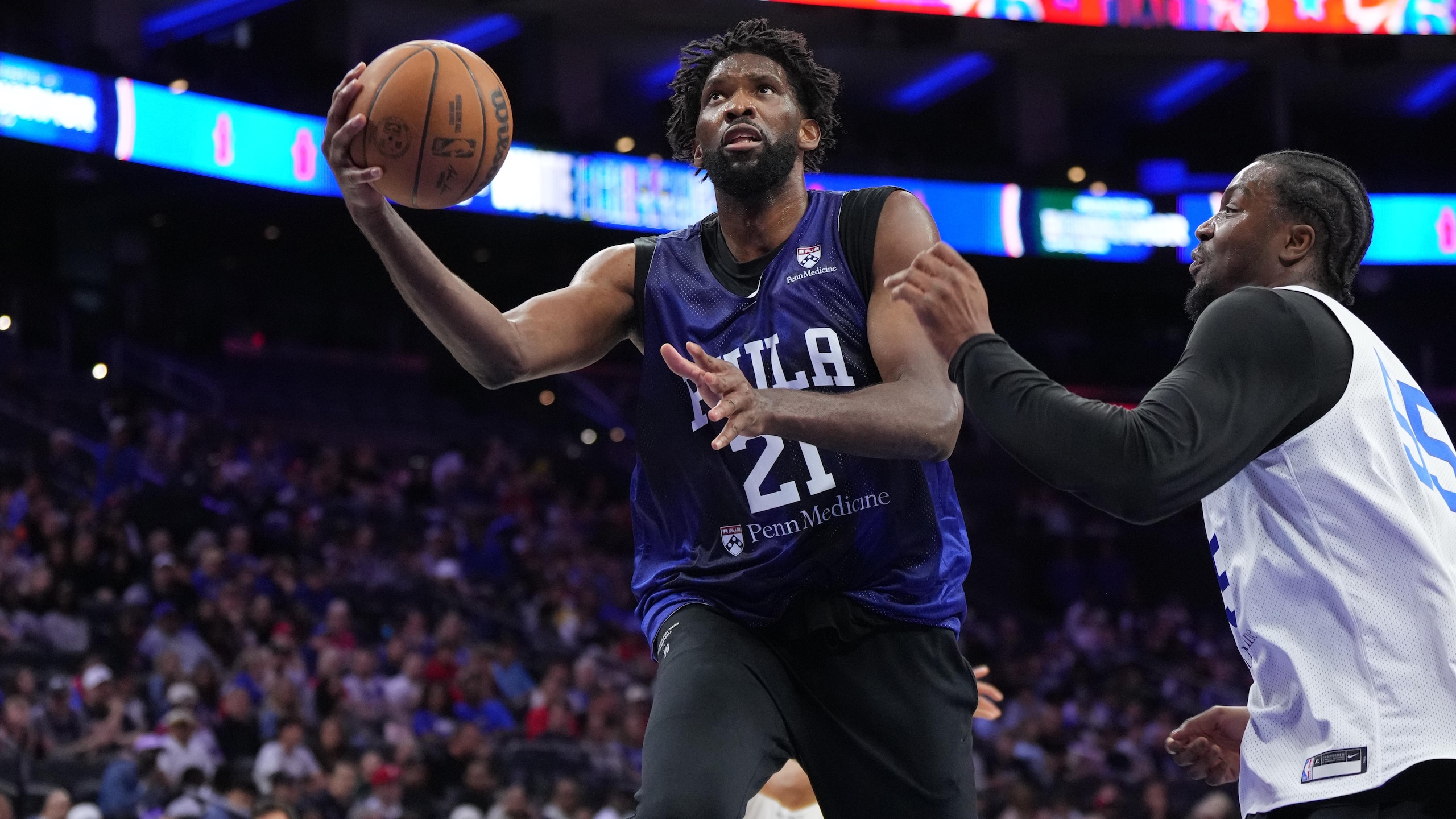
Speaking of centers, the Sixers have too many. Figuring out how Embiid can work beside or in conjunction with Jahlil Okafor and Noel, if that's even possible, is paramount to frontcourt order. If neither can coexist in some form with Embiid, one or both has to be dealt.
Simmons' time on the shelf gives Philly the flexibility to move Dario Saric between the 3 and 4, which will then determine where Simmons spends most of his time when the two play together with a point guard. Gerald Henderson is a known asset at shooting guard, but the Sixers need to tinker for keeps at the 2 and 3 with Robert Covington, Timothe Luwawu, Nik Stauskas and Hollis Thompson. Covington should also get burn at the 4 while Simmons is out of the equation.
Once he returns, the Sixers need to see which cast members work best around him. Should he be the point guard, or is the potential for mismatches and defensive success greater with him playing alongside another floor general (T.J. McConnell, Sergio Rodriguez, Bayless)? And which big complements him best?
The Sixers will spend most of the year experimenting, and that's fine. By the end of it, however, they need to have what's eluded them for a half-decade: some semblance of a set rotation.
Phoenix Suns: Frontcourt Play
24 of 30
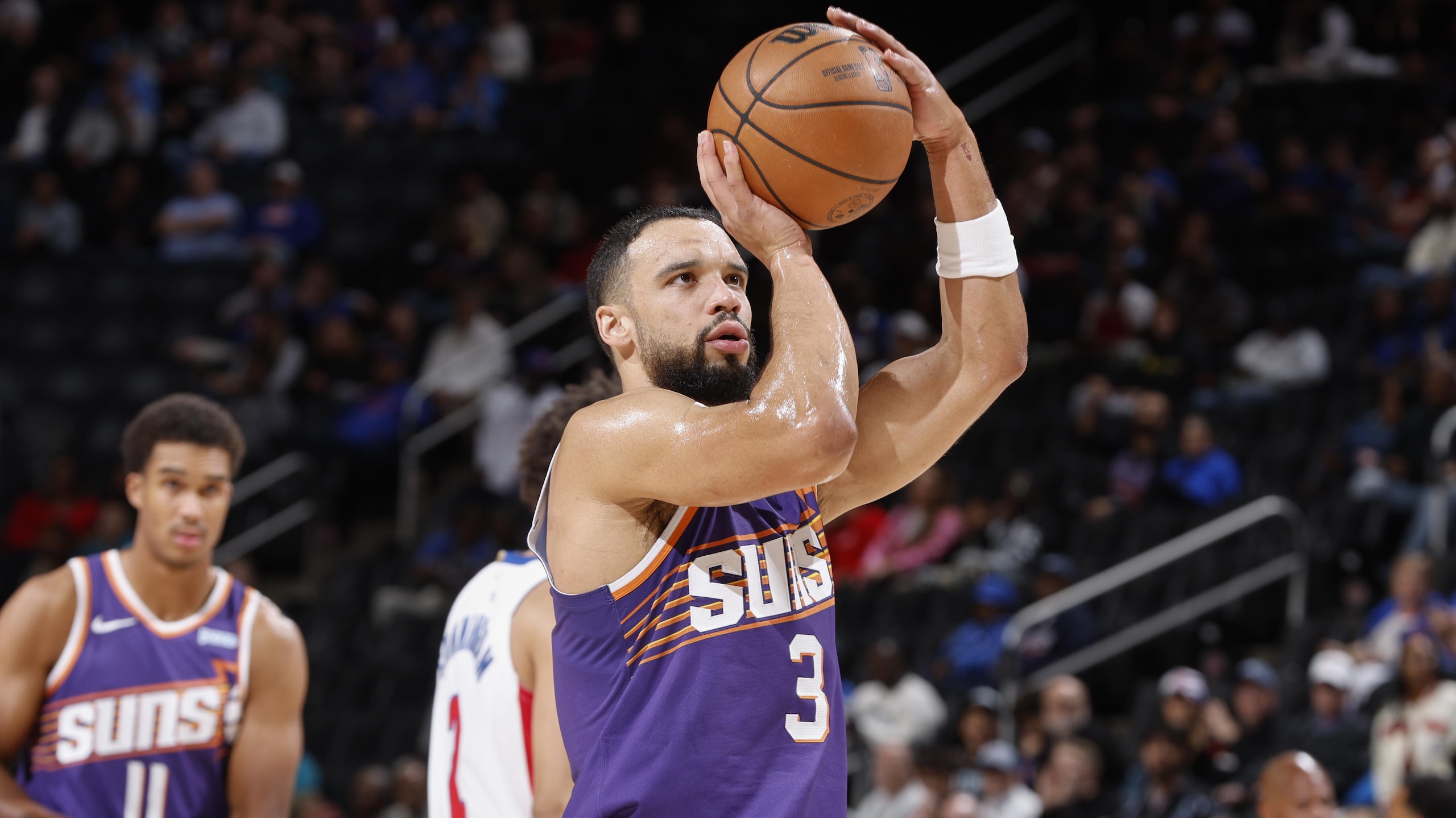
The Phoenix Suns are jumping in front of their perimeter pecking order by waiving Archie Goodwin and using Brandon Knight as their sixth man. (Whether this can be a permanent solution is another thing.) Their frontcourt configuration isn't as cut-and-dry.
Pinning rookies Dragan Bender and Marquese Chriss to the 4 while slotting Tyson Chandler and Alex Len at the 5 provides an easy fix. It also undercuts the Suns' versatility.
Bender's entire game is green, but as a 7'1" beanpole with three-point range, he screams "modern-day center." Chriss, at 6'10", has more bounce than any of his teammates; his rim-running and shot-blocking skills should allow him to wreak havoc at the 5.
Jared Dudley (6'7") and T.J. Warren (6'8") deserve runs as small-ball 4s. Dudley stretches traditional bigs outside the paint, and Warren can torch them off the dribble with his strong mid-range game and crafty finishes around the bucket.
Certain futures will be in jeopardy as the Suns favor a type of lineup. Chandler and Len (both 7'1") project as the most likely casualties if it's (rightfully) small. And with the latter slated for restricted agency next summer, it's imperative for Phoenix to make sweeping decisions soon so the frontcourt's development doesn't lag behind the backcourt.
Portland Trail Blazers: Evan Turner's Integration
25 of 30
Portland Trail Blazers head coach Terry Stotts has confirmed his starting lineup Tuesday will be Damian Lillard, C.J. McCollum, Maurice Harkless, Al-Farouq Aminu and Mason Plumlee, according to CSNNW.com's Jason Quick. His decision is twofold.
First, in the 36 games and 290 minutes these five played together last season, they outscored opponents by 14.4 points per 100 possessions, posting an offensive rating (113.2) that would have ranked first and a defensive rating (98.8) that would have placed second overall.
Second and most importantly, this starting lineup keeps Evan Turner in the sixth-man role he assumed with the Celtics, in theory limiting the time he spends next to Lillard and McCollum. He'll maximize his time on-ball, while the two guards reprise their floor-general timeshare from 2015-16.
But Stotts can only split these three up for so long. Portland didn't sign Turner to a four-year, $70 million deal so he could play under 25 minutes per game, and the second unit has a finite number of shooters. Lillard, McCollum and Turner will have to coexist within the same units for the Blazers to approach their apex. That means more spot-up duty for the backcourt, which isn't an issue.
It also demands off-ball work from Turner. That's an issue.
He shot better than 55 percent on a limited number of cuts and handoffs last season but drilled fewer than 40 percent of his looks off screens and spot-up opportunities. And he has only once notched an above-average clip from deep (2012-13), so he must reinvent his offensive value to some degree for this marriage to work, let alone thrive.
Sacramento Kings: Point Guard Play
26 of 30
The 2016-17 Sacramento Kings' point guard rotation is, in two words, not ideal.
Darren Collison—who will serve an eight-game suspension for pleading guilty to a domestic battery charge—projects as the starter. The Kings scored more points per 100 possessions (104.8) with him than Rajon Rondo (103.3), but that was when they were playing with league-leading pace.
New head coach Dave Joerger won't embrace warp speed. Sacramento will slow things down, not to a taxing grind, but just enough to accentuate the half-court game.
Directing a calculated offense is not Collison's strong suit. Ditto for Ty Lawson.
Short of 2013-14 Lawson walking through Golden 1 Center's doors with an affinity for post-entry passes, the Kings must ground their offense upon a committee of playmakers, including DeMarcus Cousins and Garrett Temple.
Here's hoping the defense exceeds expectations.
San Antonio Spurs: Frontcourt Defense
27 of 30
Losing a 40-year-old Tim Duncan—though he was still valuable—is manageable for the San Antonio Spurs. Parting ways with him, Boris Diaw, Boban Marjanovic and David West, all in one offseason, might not be.
LaMarcus Aldridge and Pau Gasol aren't interior scrubs, but the Spurs bid farewell to three of their most productive frontcourt defenders, according to NBA Math. Any team is going to feel that.
San Antonio already received a taste of Aldridge as its primary paint-policer, and it wasn't pretty. He logged 213 minutes as the lone big man last season, during which time the defense forfeited what would have been a league-worst 114.8 points per 100 possessions, according to NBAWowy.com.
Lineups that stuck Kawhi Leonard at the 4, with Aldridge again at the 5, weren't much better. They gave up 111.6 points per 100 possessions through 160 minutes of exposure—also a would-be league-low mark.
Gasol ensures the Spurs won't have to rely on smaller combinations as much, and he led the Bulls in total points saved on defense, per NBA Math. But he isn't in the same league as Duncan overall, and backups Dewayne Dedmon and David Lee don't invoke fear in dribble-drivers.
Knowing the Spurs, they'll assemble a top-three interior defense despite all the obstacles. The samples without their departed contributors are small, and they can adapt their schemes to compensate for Leonard (or Kyle Anderson) guarding 4s.
In the event they can't, well, the Clippers will be ready and willing to grab the West's No. 2 seed.
Toronto Raptors: Small-Ball Domination
28 of 30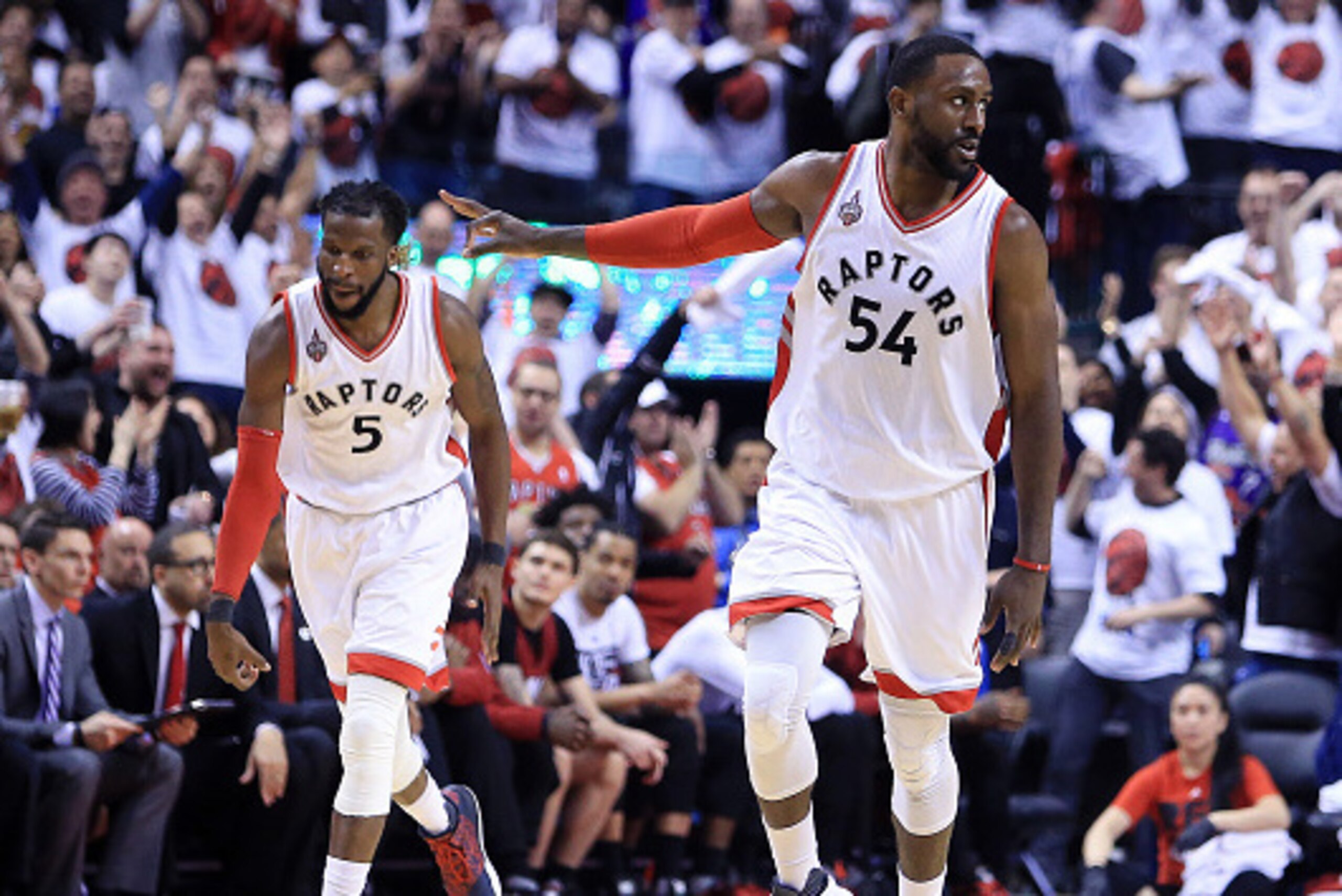
The Raptors signed Jared Sullinger to help replace Bismack Biyombo. Now they need to replace Sullinger, who will miss extensive time after undergoing foot surgery, according to The Vertical's Adrian Wojnarowski.
Lucas Nogueira and rookie Jakob Poeltl will take up part of the mantle behind Jonas Valanciunas, but their collective inexperience isn't conducive to Toronto's eye for second place in the Eastern Conference. Not even a healthy Sullinger is the perfect backup 5; he doesn't come close to duplicating Biyombo's rim protection.
Small-ball combinations offer a more enticing answer.
Slide DeMarre Carroll (6'8") to the 4 and Patrick Patterson (6'9") to the 5. Then the Raptors have the basis for a rangy five-out lineup that steamrolls opposing defenses. Interior protection still suffers with Patterson as the last line of defense, but the resulting offense is worthy of the collateral damage.
Toronto can send out DeMar DeRozan, Cory Joseph and Kyle Lowry with Carroll and Patterson and then run pick-and-rolls all day. It can sub in Norman Powell or Terrence Ross for DeRozan and just switch everything.
Each of these combinations has next to or absolutely no experience, in large part because Carroll missed most of last season. But mastering some, if not all, of them is the best way for the Raptors to offset their lack of depth at center.
Utah Jazz: Health, Health, Health
29 of 30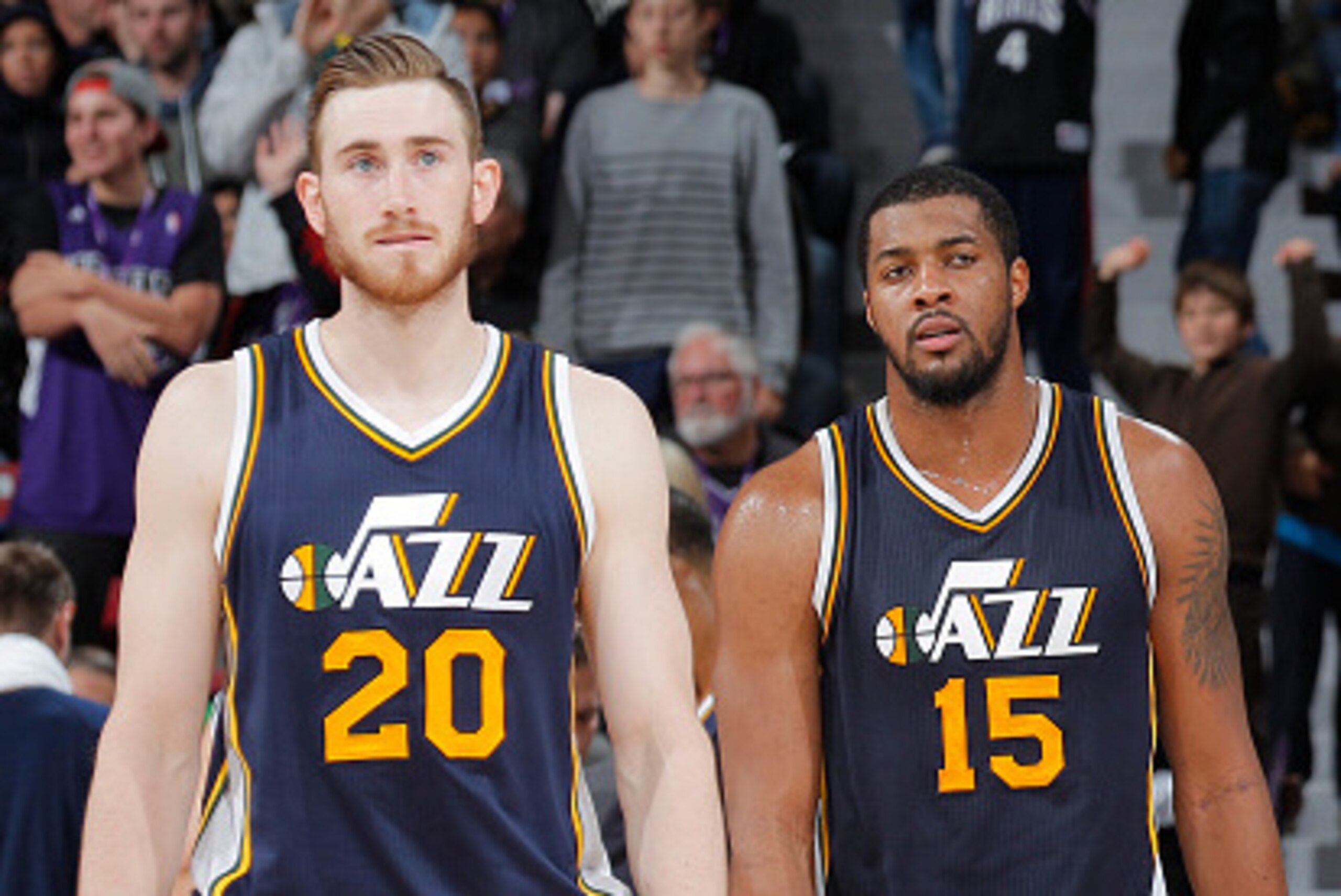
Health is simultaneously the reason why you will and won't bet on the Utah Jazz to win 50 games.
Five of their six most-used lineups last season posted the equivalent of a top-three net rating. The problem: Not one of those combinations appeared in 30 games together. Injuries swept through the roster, claiming Alec Burks, Dante Exum (entire season), Derrick Favors and Rudy Gobert at different times.
Still, the foundation for a powerhouse was laid. Gordon Hayward, Rodney Hood, Favors and Gobert outscored opponents by five points per 100 possessions in 688 minutes of action. And now they add George Hill (or Exum) to that quartet.
Or maybe not.
Hayward is sidelined with a broken finger, while Favors, despite returning to practice, continues to cope with a left knee injury. The Jazz will have to wait, again, before they can drop their best five-man assembly. (Burks is also still working his way back from offseason knee and ankle surgery.)
In the meantime, their absurdly deep bench will keep them afloat. The additions of Boris Diaw and Joe Johnson, the emergence of sophomore Trey Lyles and the return of Exum make it so they stretch two or three everyday rotation players at each position.
If the Jazz get fully healthy—to the point their endless bench mob is a luxury rather than necessity—watch out.
Washington Wizards: Big Leaps from Small Forwards
30 of 30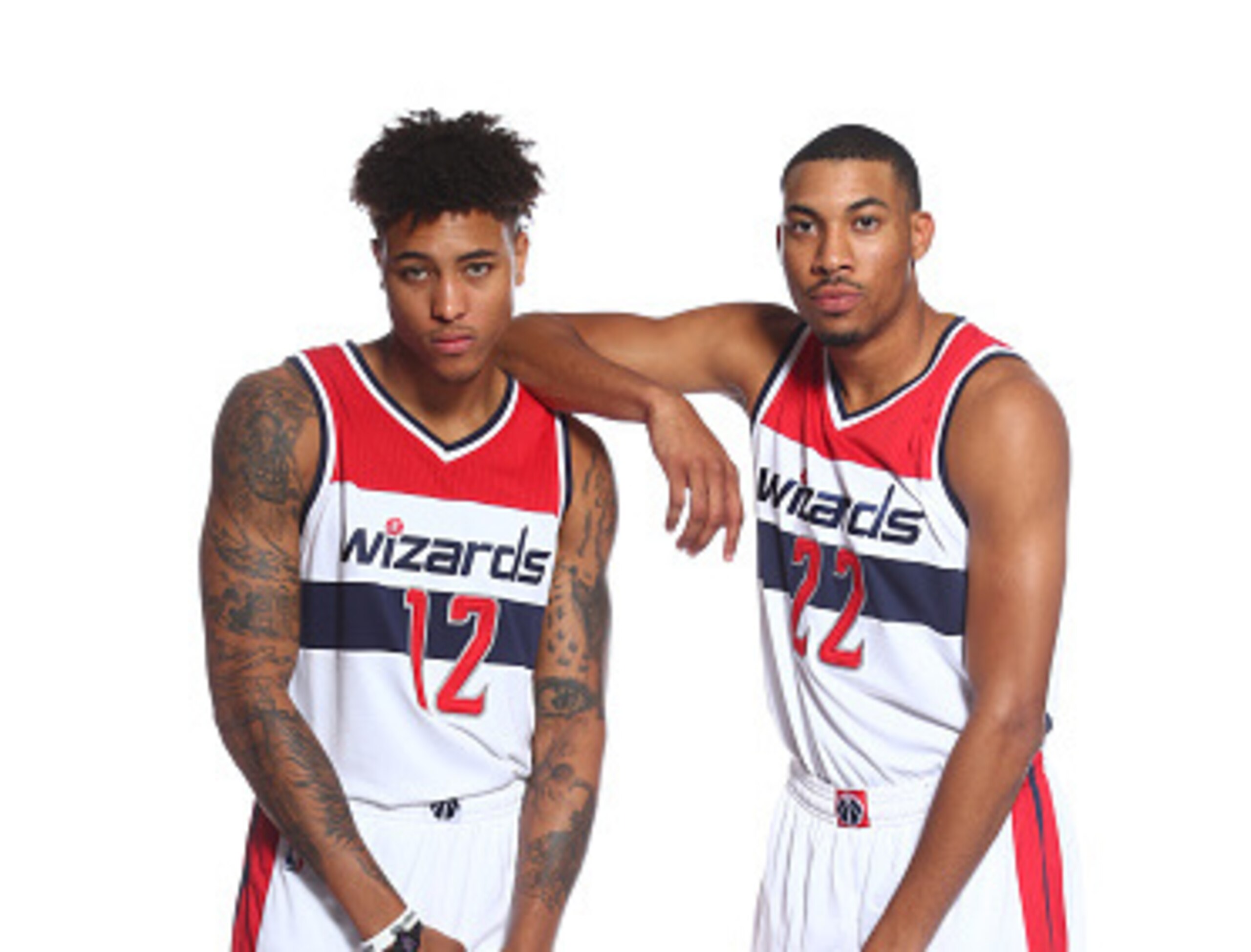
The Washington Wizards have struggled to glean production from their small forwards since Trevor Ariza bolted for Houston. Both forward spots ranked poorly on offense and defense last season, according to HoopsStats.com, but the 3 is a more pressing uncertainty now that Markieff Morris and Andrew Nicholson are positioned at the 4.
And that leaves the Wizards waiting, hoping, needing a breakout season from Otto Porter or Kelly Oubre—or maybe just Oubre.
It's the 20-year-old sophomore who appears primed for a leap after averaging 13.1 points, 3.6 rebounds and 1.7 steals while putting down 35.3 percent of his triples in the preseason. Porter shot a higher clip from deep (37.5) and overall (52.8), but Oubre showcased more offensive versatility and defensive consistency.
Either way, the Wizards' postseason bid will feel much more like a formality if they get value out of the small forward slot.
Bradley Beal, Marcin Gortat, John Wall and Morris outscored opponents by 6.9 points per 100 possessions when they took the floor together last year. Picture what they could do now with a dependable three-and-D fifth wheel.
Stats courtesy of Basketball-Reference.com and NBA.com unless otherwise cited. Salary information via Basketball Insiders.
Dan Favale covers the NBA for Bleacher Report. Follow him on Twitter, @danfavale.

.jpg?w=2560 "Grading WWE Raw 🔠")

.jpg?w=2560 "Viral Rams Coach Vid 🖕")
.jpg?w=2560 "Bijan's INSANE 1st Half 🤩")

.jpg?w=2560 "Injury-stricken Seahawks signing veteran RB")
.jpg?w=2560 "2 NFL Officials Suspended")