
B/R CFB 250: Top 250 Overall Players in College Football
Bleacher Report's CFB 250 is an annual ranking of the best players in college football, regardless of NFL potential. Through interviews with B/R experts Matt Miller, Michael Felder, Barrett Sallee and Adam Kramer, authors Brian Leigh and Brian Pedersen have studied, ranked and graded the top athletes in the country, narrowed that list to 250 and sorted by position. Today, we present the Overall Top 250.
Other CFB 250 Positions
After breaking down it by position, we've finally reached the end: the top 250 players in college football.
In cases where two or more players had the same final grade, a subjective call was made by the authors. This call was based on an abstract "Wins Above Replacement" formula: Which players most exceed a replacement-level starter at their position?
Also remember that these players were graded for their college abilities, not on how they project to the NFL.
Targeted skills such as QB arm strength are important at both levels, but there is a difference between college arm strength and professional arm strength. If a quarterback slings it well enough to hit his marks in the SEC or the Big 12, it doesn't matter that he can't stretch the field against the NFC North. At least not here, it doesn't.
This is all about college performance.
Note: If two players finished with the same grade, a subjective call was made based on whom we would rather have on our team right now. Also, all recruiting info refers to the 247Sports composite rankings.
Nos. 250-241
1 of 115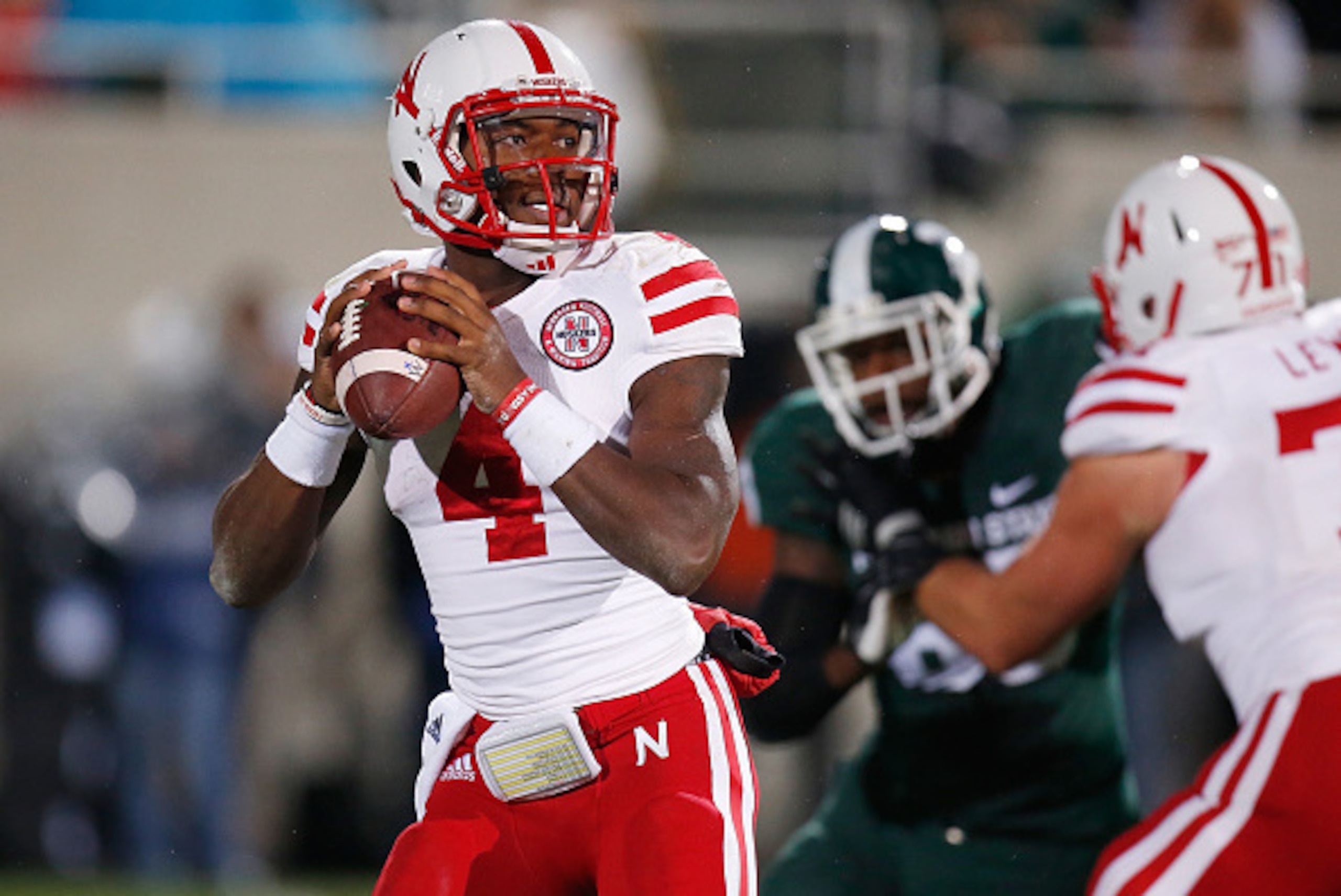
250. QB Tommy Armstrong Jr., Nebraska
Accuracy: 20/25; Arm Strength: 17/20; Pocket Presence: 7/10; Mobility: 7/10; Football IQ: 16/20; Leadership: 12/15.
Tommy Armstrong Jr. developed into a capable weapon last season in Bo Pelini's spread offense, but now he'll have to show more passing acumen as Nebraska adapts to a pro-style attack under new head coach Mike Riley. Could a 381-yard, three-touchdown performance in the Holiday Bowl against USC be a glimpse into his future?
249. DE Silverberry Mouhon, Cincinnati
Pass Rush: 40/50; Run Defense: 31/40; Motor: 8/10.
Silverberry Mouhon is an undersized (6'3", 255 lbs) but tenacious edge-rusher. He moves like an outside linebacker—which might be where his NFL future lies—but works his tail off when he plays with his hand down. His production dropped from 9.5 sacks in 2013 to four sacks last season, which is something to keep an eye on. But he still shows plenty of positive traits on tape.
248. OT Mason Halter, Florida
Power: 15/20; Lateral Quickness: 17/20; Pass Protection: 24/30; Run Blocking: 23/30.
Mason Halter started for three years at Fordham—twice winning some sort of FCS All-American honor—before transferring this summer to Florida. He is slightly undersized (6'6", 295 lbs) but quick and has a ton of experience. Call this an optimistic projection, considering how well FCS offensive linemen sometimes fare in the NFL. If Halter was a two-time All-American, he deserves to be taken seriously.
247. DE Kemoko Turay, Rutgers
Pass Rush: 41/50; Run Defense: 30/40; Motor: 8/10.
Kemoko Turay emerged from nowhere to finish with 7.5 sacks as a freshman in 2014. Only two of those sacks came after October 4, which makes it seem as though opponents caught up with him. But those late-season sacks came against a great pair of offensive lines (Indiana and Wisconsin). He needs to develop more technical skills, but his long frame (6'6", 240 lbs) and athleticism make him dangerous. Bonus points for rocking the flat-top.
246. DE Eddie Yarbrough, Wyoming
Pass Rush: 40/50; Run Defense: 32/40; Motor: 8/10.
Eddie Yarbrough is this year's lovable Mountain West lineman, following the track laid by Nevada's Brock Hekking last season. His ukulele skills have made him a fan favorite off the field, but not as much as his 18.5 career sacks and 28.5 career tackles for loss have made him a fan favorite on the field. He has good size for a 4-3 end (6'3", 251 lbs) and should continue to produce for Wyoming as it enters Year 2 under head coach Craig Bohl.
245. RB Russell Hansbrough, Missouri
Ball Security: 8/10; Power: 15/20; Vision: 16/20; Hands: 12/15; Speed: 17/20; Balance: 12/15
Missouri nearly had two 1,000-yard rushers last season, with Russell Hansbrough being the leader of that tandem with Marcus Murphy. Murphy has moved on, leaving the slippery 5'9”, 195-pound senior to handle the workload all by himself.
244. Chad Voytik, Pittsburgh
Accuracy: 21/25; Arm Strength: 16/20; Pocket Presence: 7/10; Mobility: 7/10; Football IQ: 17/20; Leadership: 12/15.
With big names at running back (James Conner) and receiver (Tyler Boyd) taking up most of the spotlight, Chad Voytik has managed to work in relative anonymity. But he's still become quite an effective player. Last season, he had a pair of 100-yard rushing games and five contests with two touchdown passes.
243. RB DeAndre Washington, Texas Tech
Ball Security: 8/10; Power: 15/20; Vision: 16/20; Hands: 13/15; Speed: 16/20; Balance: 12/15
A massively underrated rusher, DeAndre Washington compiled 1,103 yards last season, the most for Texas Tech since 1998. Washington also averaged nearly 11 yards per reception in the Red Raiders' wide-open offense.
242. LB Josh Forrest, Kentucky
Tackling: 23/25; Pass Rush: 17/25; Run Defense: 20/25; Pass Coverage: 20/25.
Josh Forrest is the best player on a young and improving Kentucky team. He finished fifth in the SEC with 110 tackles last season and second with 64 solo tackles. His game film is worse than his numbers but only because his numbers look so good. He's on the short list of All-SEC linebacker candidates.
241. DT Davion Pierson, TCU
Pass Rush: 31/40; Run Defense: 41/50; Motor: 8/10
Davion Pierson is a three-year starter who captained TCU's defense last season. He has adequate size (6'2", 305 lbs) for a defensive tackle, and his production (30 tackles, eight tackles for loss) was solid in 2014, but it remains to be seen if he can handle losing teammate Chucky Hunter. Pierson was the captain, but Hunter was the one commanding double-teams. Now Pierson has to be the alpha dog.
Nos. 240-231
2 of 115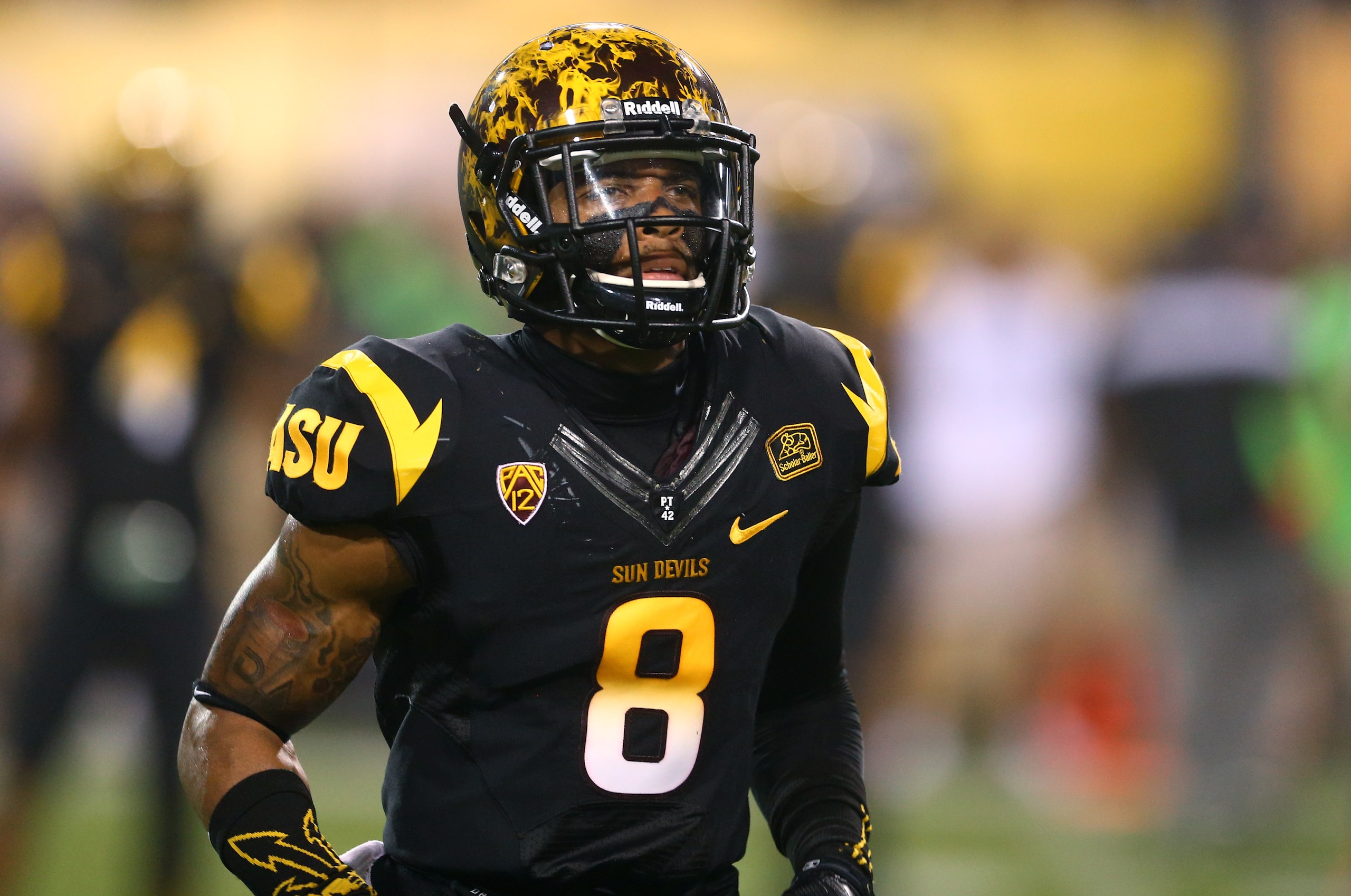
240. CB Lloyd Carrington, Arizona State
Speed: 15/20; Ball Skills: 16/20; Run Defense: 17/20; Pass Coverage: 32/40.
Lloyd Carrington is the leader of a solid Arizona State secondary. He's physical near the line of scrimmage and plays more like a safety than a corner—he's a playmaker rather than a lockdown guy—but can hold his own in coverage as well. He and Kweishi Brown form an underrated cornerback tandem.
239. OT Dan Skipper, Arkansas
Power: 17/20; Lateral Quickness: 15/20; Pass Protection: 22/30; Run Blocking: 26/30.
Dan Skipper brings uncommon size (6'10", 331 lbs) to an uncommonly large Arkansas line. He started last year at left tackle but will move to the right side this season, which is probably for the best given his limitations in pass protection. Still, despite his occasional stiffness, he is strong at the point of attack and can toss around defenders in the running game.
238. LB Devonte Fields, Louisville
Tackling: 19/25; Pass Rush: 23/25; Run Defense: 20/25; Pass Coverage: 18/25.
What are we supposed to make of Devonte Fields? He was the Big 12 Defensive Player of the Year as a true freshman in 2012, but since then his career has taken him from TCU to junior college—where he did not look like the same player—and now to Louisville. It's also taken him from defensive end to the hybrid linebacker spot in Todd Grantham's defense. There are too many questions to rank him higher, but it wouldn't be a shock if he exploded and finished in the top 10. It's not like he lacks the talent.
237. K Brad Craddock, Maryland
Accuracy: 36/40; Power: 23/30; Clutch: 12/15; Kickoffs: 9/15.
The reigning Lou Groza Award winner missed only one of his 19 field goal attempts, and that was from 54 yards out. He drilled a 57-yarder against Ohio State and showed great accuracy from both hashmarks.
236. CB Wayne Lyons, Michigan
Speed: 16/20; Ball Skills: 15/20; Run Defense: 16/20; Pass Coverage: 33/40.
Wayne Lyons transferred to Michigan after graduating from Stanford in June. Jim Harbaugh recruited Lyons to Palo Alto, and David Shaw coached him up into a typical Stanford cornerback. He's physical in press-man coverage and unafraid to play on an island. The Wolverines will be fine with Lyons replacing Blake Countess.
235. QB Marquise Williams, North Carolina
Accuracy: 21/25; Arm Strength: 16/20; Pocket Presence: 7/10; Mobility: 8/10; Football IQ: 16/20; Leadership: 12/15.
Because North Carolina's defense struggled so mightily in 2014, Marquise Williams' outstanding play went mostly unnoticed. But this senior-to-be threw for more than 3,000 yards and notched 783 rushing yards and 35 total touchdowns.
234. S Nate Gerry, Nebraska
Ball Skills: 21/25; Tackling: 22/25; Run Defense: 19/25; Pass Coverage: 19/25.
Nate Gerry moved to safety last season after starting his career at linebacker. The move paid immediate dividends, as Gerry started every game and posted great stats across the board: 88 tackles, five interceptions, 4.5 tackles for loss, four pass breakups and two forced fumbles. He still needs to work on coverage but has the size (6'2", 205 lbs) to check tight ends and is still just a true junior. He'll be looked to as a leader on a veteran Blackshirts defense.
233. LB Deon Hollins, UCLA
Tackling: 19/25; Pass Rush: 23/25; Run Defense: 19/25; Pass Coverage: 20/25.
Deon Hollins is the next great UCLA pass-rusher. He enters the year with substantially less hype than former Bruin Anthony Barr, but he could easily match Barr's production. The rest of his game needs to catch up with his pass rushing, but for now he does one thing exceptionally well. He doesn't have the longest frame (6'0", 230 lbs), but he's an explosive athlete who last year posted six sacks in his final four games.
232. CB Duke Thomas, Texas
Speed: 17/20; Ball Skills: 16/20; Run Defense: 16/20; Pass Coverage: 32/40.
Duke Thomas has started 23 games the past two seasons and now finally enjoys some coaching stability. He benefited last season from playing with Quandre Diggs but held his own against teams' No. 2 receivers. He's slightly undersized (5'11", 178 lbs) but scrappy—just the way head coach Charlie Strong likes 'em.
231. TE Josiah Price, Michigan State
Hands: 22/25; Route Running: 16/20; Blocking: 16/20; Release: 16/20; Speed: 11/15.
Josiah Price is a bit of a hidden gem in that Michigan State didn't go to him very often outside of the red zone. Look for him to see a more expanded role this season with a lack of experienced receivers on the roster, which should lead to greater production.
Nos. 230-221
3 of 115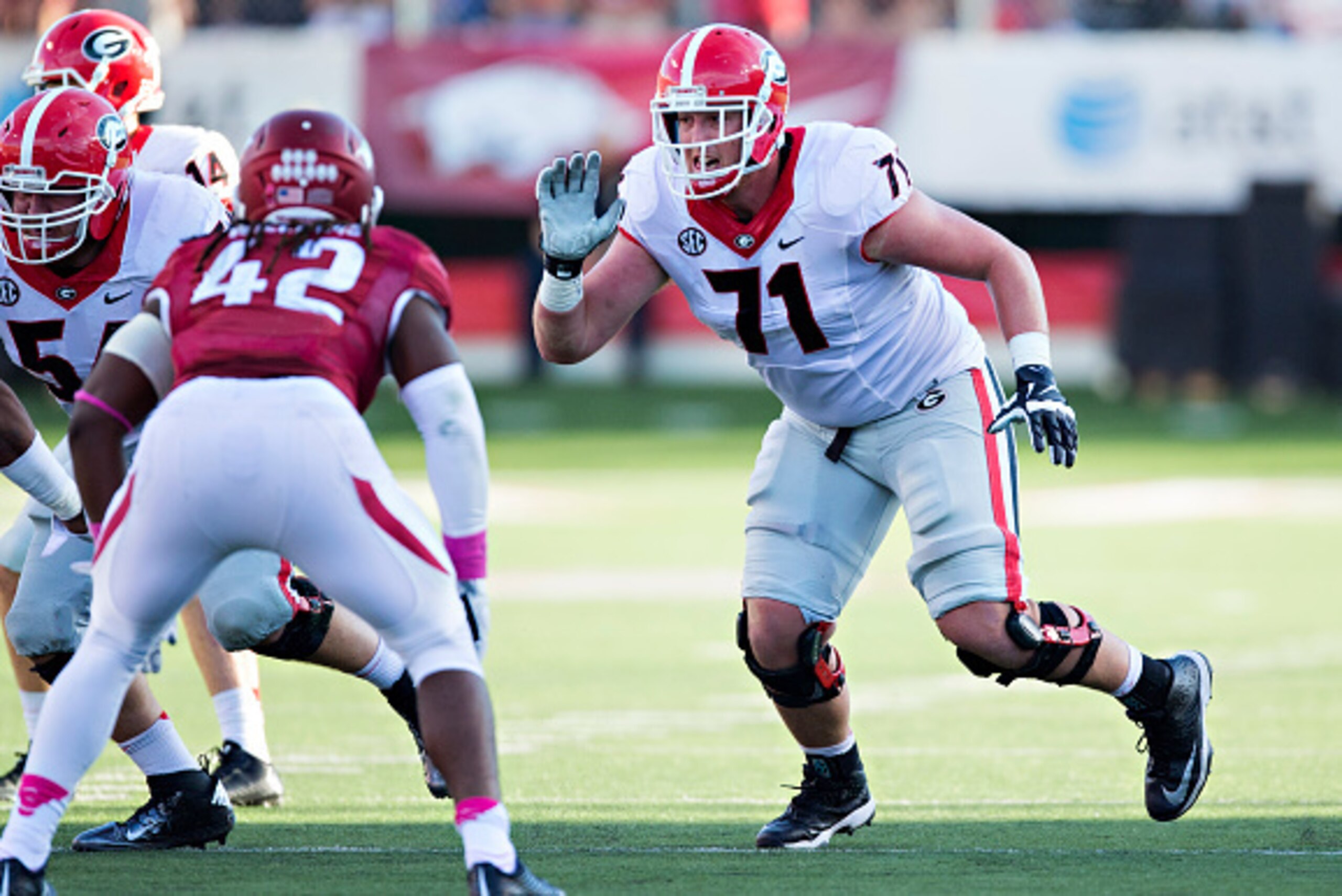
230. OT John Theus, Georgia
Power: 16/20; Lateral Quickness: 16/20; Pass Protection: 23/30; Run Blocking: 26/30.
After slumping through his first few years in Athens, John Theus improved as a junior and positioned himself for a big senior year. The former 5-star recruit fared better at left tackle than right tackle, although he'll need to add some weight (6'6", 303 lbs) to combat the SEC's more physical pass-rushers. Still, he gets the job done as a run-blocker for an offense that doesn't mind ignoring the pass.
229. CB Kevin Peterson, Oklahoma State
Speed: 16/20; Ball Skills: 16/20; Run Defense: 16/20; Pass Coverage: 33/40.
Kevin Peterson made a name for himself when he held West Virginia star Kevin White to three catches for 27 yards last season. His coverage wasn't always that spectacular, but he buoyed occasional lapses with strong run defense (59 tackles) and ball skills (13 passes defended). If he puts it all together for 12-13 games, he could finish the year as a top-10 cornerback.
228. WR Keevan Lucas, Tulsa
Hands: 22/25; Route Running: 16/20; Blocking: 2/5; Release: 16/20; Speed: 13/15; Run After Catch: 12/15.
Stuck on a 2-10 team that had one of the worst defenses in the country, Keevan Lucas thrived as Tulsa's top weapon. His 101 receptions were second in the American Athletic Conference as a sophomore, and he had five games with at least 10 catches.
227. RB Tarean Folston, Notre Dame
Ball Security: 8/10; Power: 16/20; Vision: 16/20; Hands: 12/15; Speed: 16/20; Balance: 13/15
Tarean Folston developed into the Fighting Irish's top rusher last season and now will be even more integral to the run game with backup Greg Bryant ineligible for 2015.
226. QB Baker Mayfield, Oklahoma
Accuracy: 22/25; Arm Strength: 21/25; Pocket Presence: 7/10; Mobility: 3/5; Football IQ: 16/20; Leadership: 12/15
Baker Mayfield could be the key to an offensive resurgence for Oklahoma, which is switching to the Air Raid passing attack that Mayfield ran effectively at Texas Tech in 2013. He hasn't played in more than a year but possesses the precision and timing needed to succeed in this scheme.
225. CB Cyrus Jones, Alabama
Speed: 17/20; Ball Skills: 16/20; Run Defense: 16/20; Pass Coverage: 32/40.
After a rocky first two years in Tuscaloosa, Cyrus Jones enjoyed a breakout junior season. He improved as much as any SEC defender and surpassed Eddie Jackson and a pair of 5-star freshmen (Tony Brown and Marlon Humphrey) to become Alabama's No. 1 corner. He's not quite of the caliber of Dee Milliner, Dre Kirkpatrick or Kareem Jackson—don't expect him to become a first-round pick—but he's good enough to hang against a deep cast of SEC wideouts.
224. TE Jonnu Smith, Florida International
Hands: 23/25; Route Running: 16/20; Blocking: 15/20; Release: 15/20; Speed: 12/15.
Jonnu Smith might not have such a defined role if he played for a bigger program, but he's exactly what Florida International needs in its offense. Most opponents can't guard him, and the Panthers will continue to exploit this mismatch in 2015.
223. S Dante Barnett, Kansas State
Ball Skills: 20/25; Tackling: 21/25; Run Defense: 20/25; Pass Coverage: 20/25.
Dante Barnett is a rock at the back of Kansas State's secondary. He finished last season with 77 tackles, three interceptions and eight pass breakups and rarely committed an error. He'll need to become an even bigger star in 2015 for a Wildcats defense that lost Jonathan Truman, Randall Evans and Ryan Mueller.
222. OG Alex Kozan, Auburn
Power: 17/20; Lateral Quickness: 16/20; Pass Protection: 23/30; Run Blocking: 25/30.
Alex Kozan was a Freshman All-American two years ago but missed 2014 with a back injury. Auburn's offense got by without him, but there were times it sorely missed one of the best young guards in college football. He has adequate size (6'4", 300 lbs) and moves well in space, which is essential in Gus Malzahn's offense.
221. QB Gunner Kiel, Cincinnati
Accuracy: 21/25; Arm Strength: 22/25; Pocket Presence: 7/10; Mobility: 3/5; Football IQ: 16/20; Leadership: 12/15
Gunner Kiel's long journey from high school star to actually playing in college took several years (and stops at multiple schools) before finally getting on the field last year with the Bearcats. He flashed a big arm and fondness for going deep but wasn't able to do it on an every-game basis.
.jpg?w=2560 "AP Poll Top Five Week 9")
.png?w=2560)
Nos. 220-211
4 of 115
220. OT Germain Ifedi, Texas A&M
Power: 16/20; Lateral Quickness: 17/20; Pass Protection: 23/30; Run Blocking: 25/30.
Germain Ifedi enters 2015 with less hype than his predecessors—and that might be a good thing. The spotlight shone too bright on Cedric Ogbuehi last season, which led to frequent struggles and a move away from left tackle. Now Ifedi inherits the position, and he definitely has the frame (6'5", 335 lbs) and athletic tools to handle it. The former right guard and right tackle needs to shore up his pass-blocking, but his upside is considerable.
219. RB Jordan Howard, Indiana
Ball Security: 8/10; Power: 17/20; Vision: 16/20; Hands: 12/15; Speed: 16/20; Balance: 12/15
Jordan Howard shined for UAB last season but was without a team after the Blazers shuttered their program during the winter. Now he gets to face power-conference competition on a regular basis while stepping in for 2,000-yard rusher Tevin Coleman at Indiana.
218. CB Desmond King, Iowa
Speed: 15/20; Ball Skills: 16/20; Run Defense: 16/20; Pass Coverage: 34/40.
One of the most overlooked players in college football, Desmond King returns to Iowa, alongside Greg Mabin, to give the Hawkeyes a formidable secondary. He's exceptional in zone coverage and can hold his own on an island as well. There's a reason Iowa games are ugly on both sides of the football.
217. P JK Scott, Alabama
Accuracy: 34/40; Leg Strength: 32/40; Hang Time: 15/20.
Alabama's secret weapon last season was an unheralded freshman who was constantly flipping the field for the Crimson Tide with his kicks. JK Scott led FBS with an average of 48 yards per attempt, and 31 of his 55 kicks were downed inside the 20.
216. WR De'Runnya Wilson, Mississippi State
Hands: 22/25; Route Running: 16/20; Blocking: 3/5; Release: 16/20; Speed: 12/15; Run After Catch: 12/15.
Though Dak Prescott got most of the attention for Mississippi State's strong offense last year, he couldn't have done it without De'Runnya Wilson's contributions on the outside. The wideout had nine touchdown receptions and performed his best down the stretch with 25 catches for 313 yards and three scores over his final three games.
215. DE Shaq Lawson, Clemson
Pass Rush: 41/50; Run Defense: 32/40; Motor: 8/10.
Shaq Lawson flew below the radar on a defense with so many great linemen. This year Clemson loses roughly everybody, chief among them Vic Beasley and Grady Jarrett, but Lawson stuck around to pick up the slack. He was stellar in a reserve role and has the size (6'3", 275 lbs) and mindset to dominate against the run. It didn't hurt that he played with such great mentors.
214. C Nick Martin, Notre Dame
Power: 16/20; Lateral Quickness: 17/20; Pass Protection: 24/30; Run Blocking: 24/30.
Nick Martin emerged from his brother's shadow last season, earning captain honors and starting all 13 games. He's not as physically gifted as Zack was, but he's a tough, cerebral player who keeps the Notre Dame offense on track. At 6'4 ½" and 301 pounds, he has just enough strength to open creases up the middle, and he showed well against a physical LSU defense in the Music City Bowl.
213. LB Keith Kelsey, Louisville
Tackling: 21/25; Pass Rush: 21/25; Run Defense: 21/25; Pass Coverage: 19/25.
One of three Louisville linebackers on this list, Keith Kelsey flies deep (and inexplicably) below the radar. Never mind that he finished last season with 87 tackles, seven tackles for loss, six sacks and seven QB hurries for the No. 6 total defense in the country—it's easier to overwrite Louisville as a fluke. Keep a close eye on Kelsey, Fields and the linebacker-to-be-named-later when the Cardinals take on Auburn in Week 1 on Sept. 5.
212. CB Iman Marshall, USC
Speed: 17/20; Ball Skills: 16/20; Run Defense: 17/20; Pass Coverage: 32/40.
Iman Marshall is an 18-year old true freshman, but you could never tell by looking at him. He's built like a Seattle Seahawk (6'2", 200 lbs) and is not afraid to throw his frame around. Without having yet played a college game, he's already someone Pac-12 receivers dread facing. Incumbent starter Kevon Seymour is a good one, but Marshall will force his way into the lineup.
211. QB Josh Rosen, UCLA
Accuracy: 21/25; Arm Strength: 22/25; Pocket Presence: 7/10; Mobility: 4/5; Football IQ: 16/20; Leadership: 12/15
The top-rated pro-style passer in the 2015 recruiting class, per 247Sports, Josh Rosen comes in with plenty of hype following a prep career that was frequently in the national spotlight. He's got a great shot to win UCLA's starting job this season as long as he's able to translate past success to the college level.
Nos. 210-201
5 of 115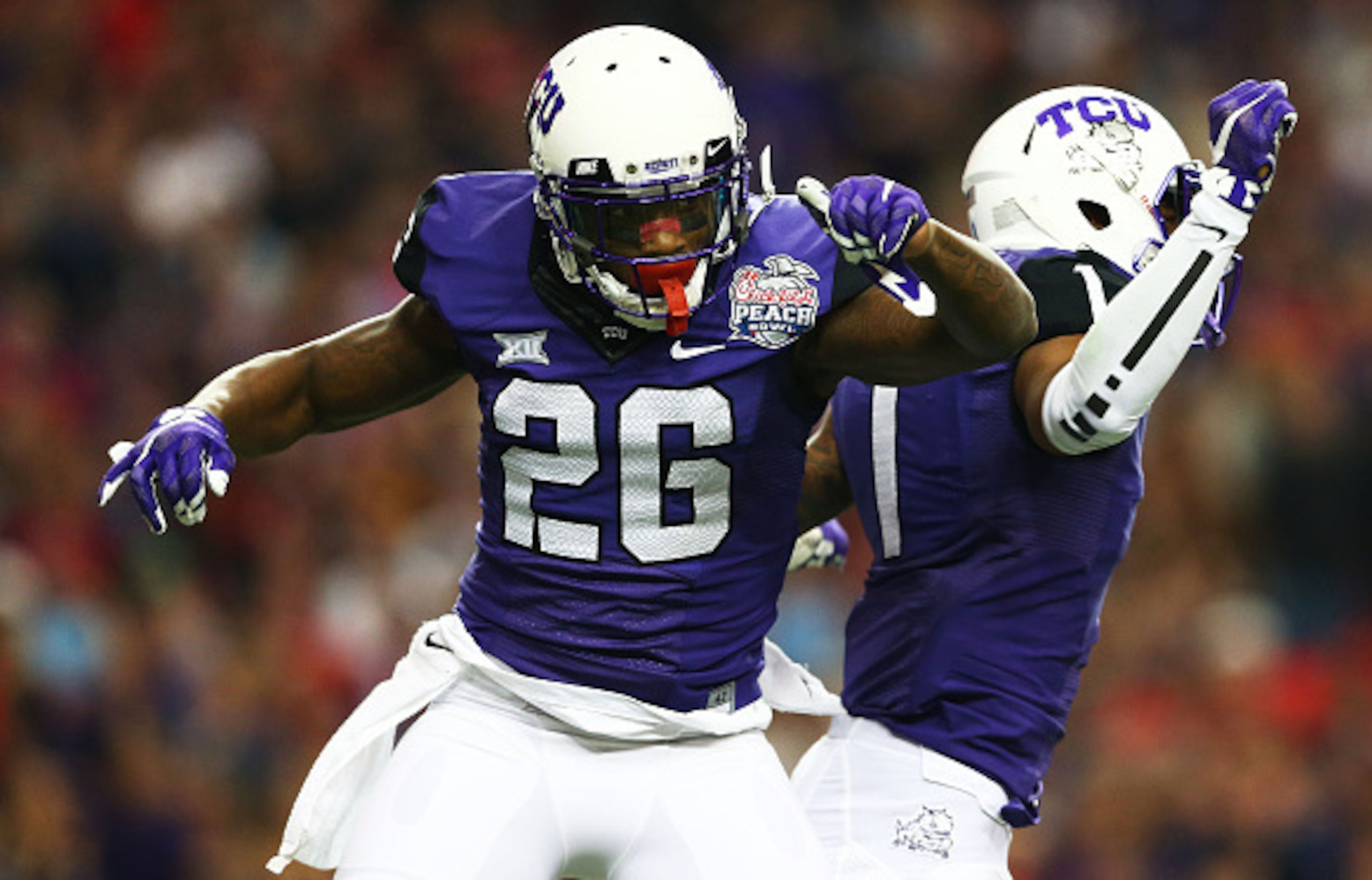
210. S Derrick Kindred, TCU
Ball Skills: 21/25; Tackling: 21/25; Run Defense: 20/25; Pass Coverage: 20/25.
Derrick Kindred is the best and most experienced player in TCU's secondary. Based on recent history, that's a great thing to be. This year he'll assume a bigger a leadership role to account for losing Sam Carter and Chris Hackett. But based on what he showed as a junior, when he recorded 79 tackles, four interceptions and five pass breakups, he is ready for the challenge.
209. TE O.J. Howard, Alabama
Hands: 21/25; Route Running: 15/20; Blocking: 14/20; Release: 18/20; Speed: 14/15.
A player with this much talent is at risk of being a bust if he can't put it all together, and this junior season is a make-or-break one for O.J. Howard. With better blocking and other technical areas cleaned up, he could be one of Alabama's top weapons.
208. RB Jovon Robinson, Auburn
Ball Security: 6/10; Power: 18/20; Vision: 17/20; Hands: 11/15; Speed: 16/20; Balance: 14/15
The nation's top-ranked junior college running back figures to be Auburn's next big producer in the backfield. In 2013, he set national JUCO records with 2,387 yards and 34 touchdowns for Georgia Military College.
207. DT Trent Thompson, Georgia
Pass Rush: 33/40; Run Defense: 41/50; Motor: 8/10
Trent Thompson was the No. 1 overall recruit in the 2015 class, and it's not hard to see why. He meets the size threshold for defensive tackles (6'4", 307 lbs) but explodes off the line with rare burst. This should help him adjust to the college game as both a pass-rusher and a run-stuffer. Georgia loses Ray Drew and Mike Thornton from last year's defensive line and will throw Thompson directly into the fire.
206. OT Roderick Johnson, Florida State
Power: 17/20; Lateral Quickness: 17/20; Pass Protection: 24/30; Run Blocking: 24/30.
Roderick Johnson saved Florida State's offense last season, replacing Cameron Erving at left tackle so that Erving could replace the hole at center. Although he was just a true freshman, Johnson proved he belonged from the minute he stepped on the field and gave the 'Noles a big young body (6'7", 323 lbs) to build around. Whoever starts at quarterback will not have to worry about his blind side.
205. WR Kolby Listenbee, TCU
Hands: 21/25; Route Running: 14/20; Blocking: 3/5; Release: 16/20; Speed: 15/15; Run After Catch: 13/15.
The fastest player in college football, Kolby Listenbee has managed to convert his sprinter speed into a deadly weapon. He averaged 18.4 yards on 41 receptions last season and figures to be even more involved in 2015 as a deep threat.
204. QB Chuckie Keeton, Utah State
Accuracy: 21/25; Arm Strength: 17/20; Pocket Presence: 7/10; Mobility: 7/10; Football IQ: 17/20; Leadership: 13/15.
One of the most dangerous mid-major players in the country, Chuckie Keeton has only been able to play nine games over the past two seasons because of knee injuries. When healthy, he's a mobile monstrosity who has topped 300 yards of total offense 12 times in his career.
203. LB Kris Frost, Auburn
Tackling: 22/25; Pass Rush: 21/25; Run Defense: 19/25; Pass Coverage: 20/25.
Kris Frost has the tools to be great but has struggled with inconsistency. He has impressive size (6'2", 240 lbs) and almost never misses tackles, but he suffers too many mental lapses. New defensive coordinator Will Muschamp gets the most out of his players in terms of energy. If he can do the same with Frost in terms of discipline, you're looking at an All-SEC linebacker.
202. DT Chris Jones, Mississippi State
Pass Rush: 32/40; Run Defense: 43/50; Motor: 7/10
Chris Jones has the tools to be special. He is big for a 4-3 defensive tackle (6'6", 308 lbs) but athletic enough to play end. Sadly, that versatility has actually hurt him at Mississippi State; the Bulldogs play a 4-3 and have wanted to use him at tackle, but Jones seems like he prefers playing end. If new defensive coordinator Manny Diaz can figure out how to unlock him, Jones is an All-American candidate. But for now, he's an underachiever.
201. C Isaac Seumalo, Oregon State
Power: 18/20; Lateral Quickness: 16/20; Pass Protection: 24/30; Run Blocking: 24/30.
Isaac Seumalo missed last season with a foot injury but returns to a nice situation. He is moving from guard to center, where his instincts can make a bigger impact, and will learn under a new run-friendly coaching staff. The physical tools have always been there, and he has great length (6'5", 298 lbs) and strength for his new position. If he shores up a few minor mechanical issues, he's an All-Pac-12 type of talent.
Nos. 200-191
6 of 115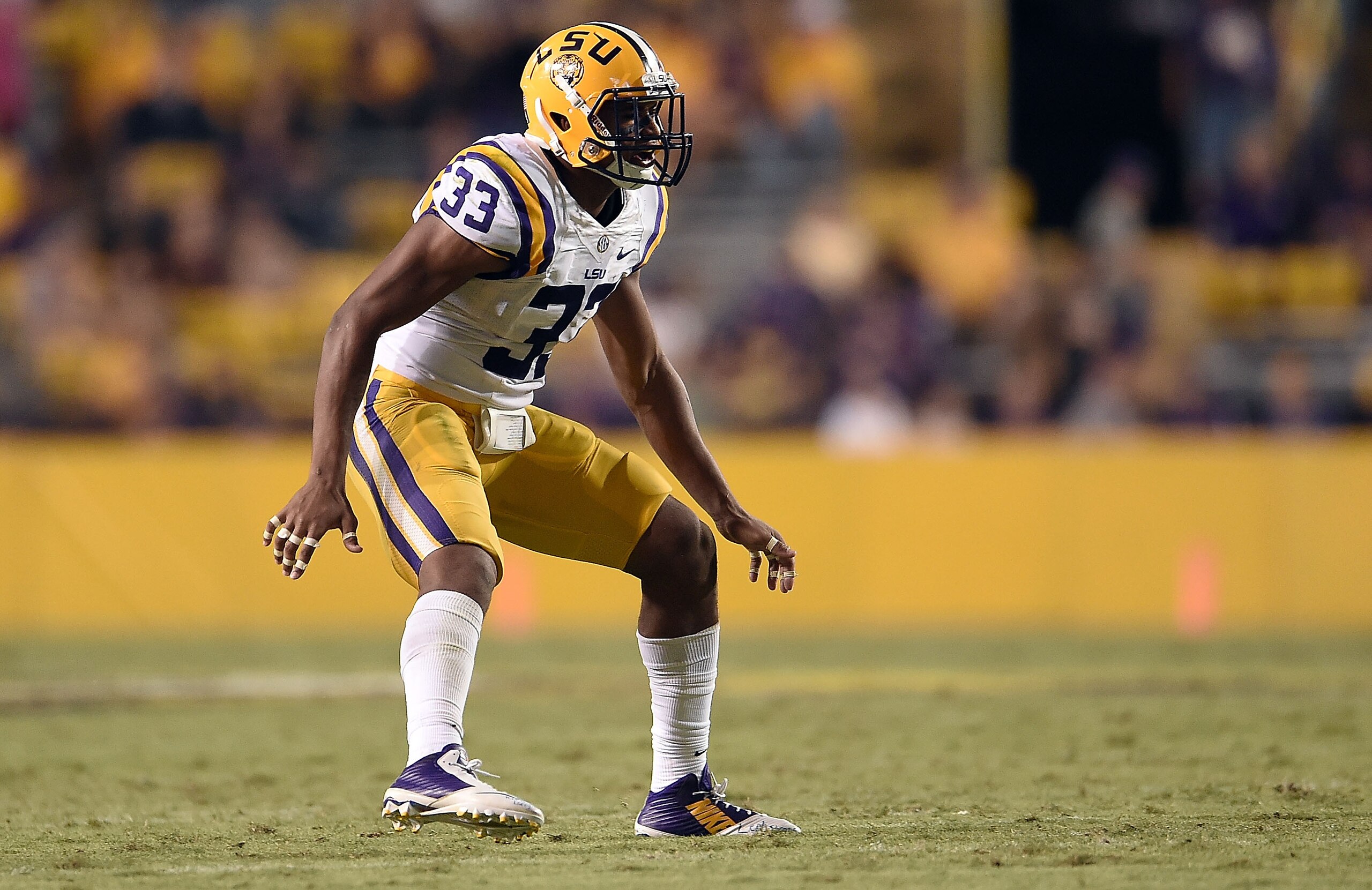
200. S Jamal Adams, LSU
Ball Skills: 20/25; Tackling: 21/25; Run Defense: 21/25; Pass Coverage: 20/25.
Jamal Adams saw meaningful playing time as a freshman last season. It says a lot when a kid straight from high school cracks Les Miles and John Chavis' lineup, but Adams was too good not to play. His flopping made enemies among SEC opponents, but not as much as his tackling range and playmaking. He finished the year with 66 tackles and five pass breakups and should improve across the board—despite losing Chavis—as a sophomore.
199. WR Mike Dudek, Illinois
Hands: 22/25; Route Running: 17/20; Blocking: 3/5; Release: 16/20; Speed: 12/15; Run After Catch: 12/15.
A star in the making following a great freshman year, Mike Dudek begins this season in street clothes after tearing his ACL in spring practice in April. Illinois is hoping to get its leading receiver back by October, and his absence will have a negative effect on the passing game.
198. TE Bucky Hodges, Virginia Tech
Hands: 22/25; Route Running: 16/20; Blocking: 14/20; Release: 17/20; Speed: 13/15.
Bucky Hodges had a heck of a debut last season, but he's just getting started. The only thing keeping him from being a complete player at his position is the blocking issues, but his future might be more tuned toward becoming a full-time receiver.
197. WR Demarcus Robinson, Florida
Hands: 22/25; Route Running: 15/20; Blocking: 3/5; Release: 17/20; Speed: 13/15; Run After Catch: 12/15.
On a Florida offense that often couldn't get out of its own way and managed to set back passing prowess in the Swamp a decade, Demarcus Robinson still had a big year. His 53 receptions, 810 yards and seven touchdowns were more than any other three Gators had combined.
196. RB Storm Barrs-Woods, Oregon State
Ball Security: 8/10; Power: 17/20; Vision: 16/20; Hands: 13/15; Speed: 16/20; Balance: 12/15
Storm Barrs-Woods will get a chance to show off his full value this year, with Oregon State moving to a spread attack. Despite limited touches, he's rushed for more than 2,100 yards in his career.
195. RB Matt Breida, Georgia Southern
Ball Security: 8/10; Power: 15/20; Vision: 16/20; Hands: 12/15; Speed: 18/20; Balance: 13/15
Part of the nation's top-ranked rushing offense, Matt Breida was the workhorse of the nearly unstoppable Georgia Southern triple-option attack with 1,485 yards, 17 touchdowns and an astounding 8.68 yards per carry.
194. QB Seth Russell, Baylor
Accuracy: 21/25; Arm Strength: 22/25; Pocket Presence: 7/10; Mobility: 4/5; Football IQ: 16/20; Leadership: 12/15
Seth Russell is getting the keys to Baylor's offense this fall, and while he showed signs of promise in brief action last season—including a five-touchdown performance in one half—he still has work to do. Russell is more mobile than predecessor Bryce Petty, but he's still working to become more consistent.
193. C Jake Brendel, UCLA
Power: 15/20; Lateral Quickness: 17/20; Pass Protection: 25/30; Run Blocking: 25/30.
When Jake Brendel plays, UCLA's offensive line runs smoothly. When he doesn't, it becomes a sieve. He has decent size for a center (6'4", 305 lbs), and plays smart, disciplined, technically sound football. There's a reason this offense falls apart without him.
192. DE Marquis Haynes, Ole Miss
Pass Rush: 43/50; Run Defense: 31/40; Motor: 8/10.
Sophomore Marquis Haynes is already one of the SEC's best pass-rushers. He posted 7.5 sacks last season and finished second in the conference with 72 sack yards. He's slight (6'3", 220 lbs) and doesn't do much against the run, but his quickness off the edge makes him a nuisance on obvious passing downs.
191. TE Pharaoh Brown, Oregon
Hands: 22/25; Route Running: 16/20; Blocking: 15/20; Release: 17/20; Speed: 12/15.
A horrific leg injury against Utah last November ended Pharaoh Brown's season early—and nearly led to him needing to have the limb amputated, per Andrew Greif of the Oregonian. He's participating in fall practice and hopes to be able to make a full return, though whether he'll be the same player as before getting hurt is still uncertain.
Nos. 190-181
7 of 115
190. WR DaeSean Hamilton, Penn State
Hands: 22/25; Route Running: 16/20; Blocking: 3/5; Release: 16/20; Speed: 12/15; Run After Catch: 13/15.
The only consistent weapon Penn State had last year was DaeSean Hamilton, and he was a doozy. The true freshman had 82 catches and 899 yards. But because the Nittany Lions had no running game, opponents stifled him in the red zone, holding him to two touchdowns.
189. S Will Parks, Arizona
Ball Skills: 21/25; Tackling: 21/25; Run Defense: 20/25; Pass Coverage: 20/25.
Will Parks flies under the radar on a defense that is all about Scooby Wright. Even his former safety partner, Jared Tevis, earned more praise and distinction last season. But those who watch the Pac-12 closely know that Parks is a special player in his own right. He plays the "Spur" in Arizona's defense to perfection and has the size (6'1", 194 lbs) and hips to fill multiple roles.
188. OT Kyle Murphy, Stanford
Power: 17/20; Lateral Quickness: 17/20; Pass Protection: 24/30; Run Blocking: 24/30.
Kyle Murphy started last year at right tackle while his classmate, Andrus Peat, manned the left. This year he gets to replace Peat on the blind side, where his long frame (6'7", 301 lbs) should serve him well. He's a flexible blocker with surprising power considering his lack of girth. If he plays as well as Stanford fans expect him to, we've ranked him too low on this list.
187. P Tom Hackett, Utah
Accuracy: 33/40; Leg Strength: 33/40; Hang Time: 16/20.
Not only did Tom Hackett lead the Pac-12 with a 46.7-yard average, he was also one of the busiest punters in the country with 80 kicks. The reigning Ray Guy Award winner, a former Australian rules football player before coming to the states, Hackett only had 10 touchbacks and placed 45 percent of his punts inside the 20-yard line.
186. LB Kyler Fackrell, Utah State
Tackling: 20/25; Pass Rush: 23/25; Run Defense: 20/25; Pass Coverage: 20/25.
Kyler Fackrell was one of the hottest prospects in college football before tearing his ACL last season in the season opener. He ranked No. 18 on ESPN analyst Mel Kiper Jr.'s preseason big board—the result of posting 82 tackles and 13 tackles for loss as a sophomore in 2013—but has fallen off the radar since his injury. If he comes back and regains his explosion, there's a lot to like about him as a prospect. He's massive (6'5", 250 lbs), long and bouncy when he comes off the edge.
185. CB Will Redmond, Mississippi State
Speed: 17/20; Ball Skills: 17/20; Run Defense: 16/20; Pass Coverage: 33/40.
The NFL is high on Will Redmond, and it's not hard to see why. He's a balanced combination of size (6'0", 186 lbs), speed and instincts, and it still feels like he hasn't reached his ceiling. On a Mississippi State defense that lost a lot of last year's talent, he'll be looked to as a source of stability.
184. RB Kenneth Dixon, Louisiana Tech
Ball Security: 7/10; Power: 18/20; Vision: 16/20; Hands: 13/15; Speed: 16/20; Balance: 13/15
Kenneth Dixon has a nose for the end zone, having topped 20 touchdowns for the second time in three seasons in 2014. Louisiana Tech has gotten dependable production from him since his freshman year in 2012.
183. LB Blake Martinez, Stanford
Tackling: 21/25; Pass Rush: 20/25; Run Defense: 21/25; Pass Coverage: 21/25.
Blake Martinez did an admirable job replacing Shayne Skov last season and finished with 101 tackles. This year he loses another one of his mentors, A.J. Tarpley, and will be counted on as one of the only veterans left on Stanford's defense. He doesn't stand out in any one area, but he's solid across the board and plays with the seething intensity of all Cardinal defenders.
182. QB Mason Rudolph, Oklahoma State
Accuracy: 20/25; Arm Strength: 23/25; Pocket Presence: 8/10; Mobility: 3/5; Football IQ: 16/20; Leadership: 13/15
Mason Rudolph was set to redshirt the 2014 season before getting thrust into action in the final month, and he ran with the chance. A big-armed, 6'4” prospect, he still has to harness his strength to become a more accurate thrower.
181. CB Kevin Toliver II, LSU
Speed: 17/20; Ball Skills: 17/20; Run Defense: 15/20; Pass Coverage: 34/40.
LSU fans have been awaiting Kevin Toliver II since he committed back in November 2012. He didn't waste any time making a strong first impression, as he enrolled early and showed well in spring camp. He has a long, lean frame (6'2", 196 lbs), easy speed and the game just seems to come naturally to him. Ed Paris is the "favorite" to start the season opener, but Toliver is already on his heels.
Nos. 180-171
8 of 115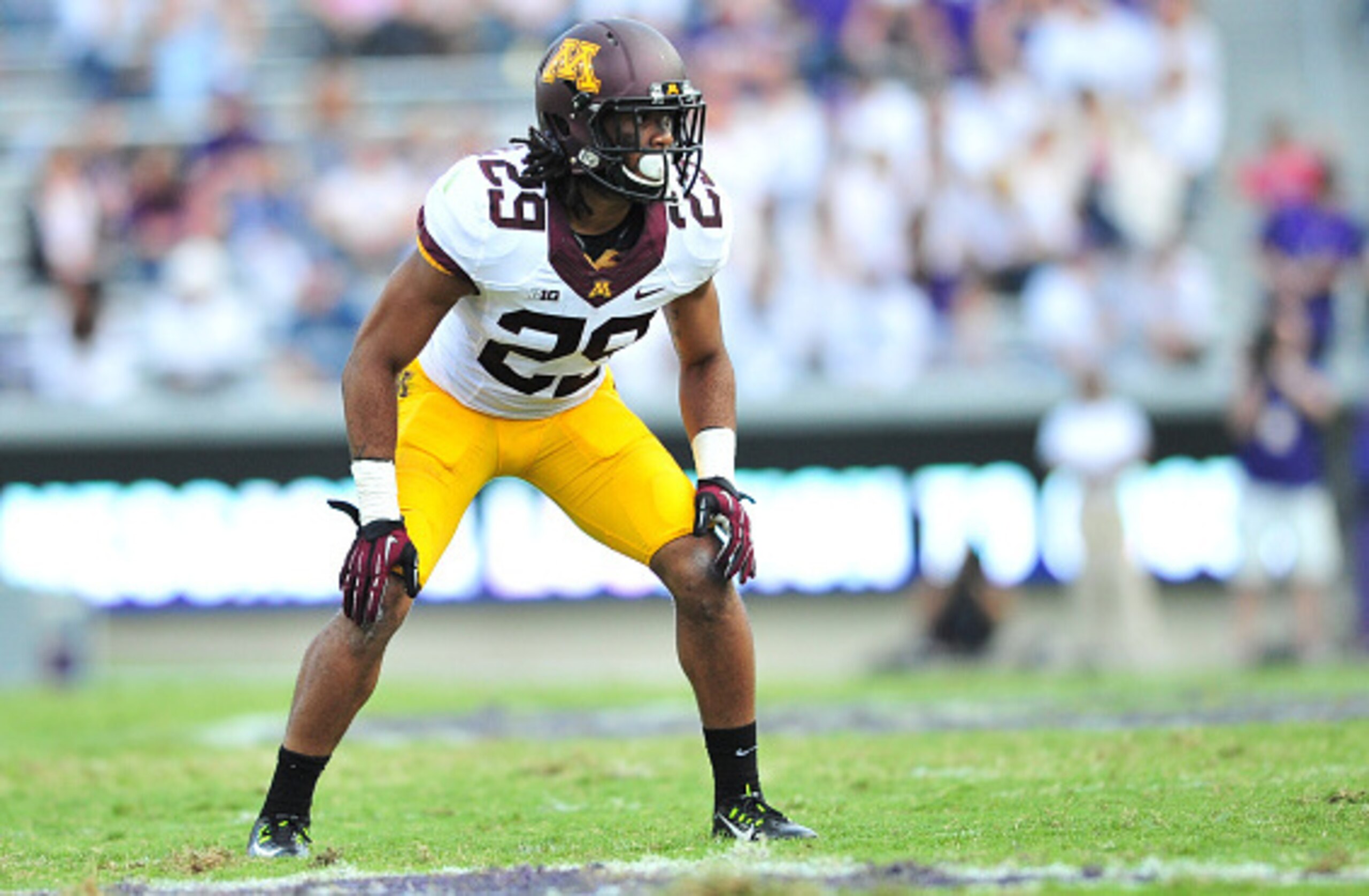
180. CB Briean Boddy-Calhoun, Minnesota
Speed: 16/20; Ball Skills: 17/20; Run Defense: 16/20; Pass Coverage: 34/40.
Briean Boddy-Calhoun teams with Eric Murray, who just missed our Top 250, to give Minnesota the Big Ten's best cornerback tandem. Murray is the better run defender, but Boddy-Calhoun excels in coverage and with his ball skills. His 14 passes defended—five interceptions, nine breakups—tied for third in the conference last season.
179. LB Jared Norris, Utah
Tackling: 22/25; Pass Rush: 19/25; Run Defense: 22/25; Pass Coverage: 20/25.
Jared Norris led Utah with 116 tackles last season. The next-closest player (Nate Orchard) had 84, and the next-closest returning player (Gionni Paul) had 61. Norris gets no love on a national level, but he's a sturdy run defender (6'2", 240 lbs) and one of the undisputed leaders of Utah's defense. Considering how good that defense looked at times last season, that is not a bad thing to be.
178. DE Jarran Reed, Alabama
Pass Rush: 38/50; Run Defense: 37/40; Motor: 8/10.
Jarran Reed made an impact last season in his first year at Alabama from junior college. He improved as the season went on and used his thick frame (6'4", 313 lbs) to clog gaps and holes. Playing next to nose guard A'Shawn Robinson, he helped shut down an entire two-thirds of the line in run defense. The third member of Alabama's defensive front appears later on this list as well.
177. OT Tyler Marz, Wisconsin
Power: 18/20; Lateral Quickness: 15/20; Pass Protection: 24/30; Run Blocking: 26/30.
No term better describes Tyler Marz than "Wisconsin offensive lineman." He's a limited athlete with impressive size (6'7", 325 lbs), imposing strength and a blue-collar disposition. He's started the past two years at left tackle, and while that hasn't always required a lot of pass protection, the Badgers have rushed for roughly 10 trillion yards. Marz has been a big reason why.
176. LB Brandon Chubb, Wake Forest
Tackling: 22/25; Pass Rush: 20/25; Run Defense: 21/25; Pass Coverage: 20/25.
Maybe you've heard more about his cousin, a running back who plays down in Georgia, but Brandon Chubb deserves praise on his own merit. He's a big (6'1", 245 lbs), physical, energetic presence in the middle of a small Wake Forest defense. The Demon Deacons have not been good in recent seasons, but they did produce Nikita Whitlock, one of the best defensive tackles in the country in 2013. Chubb can accomplish the same feat at inside linebacker.
175. DT Kahlil McKenzie, Tennessee
Pass Rush: 32/40; Run Defense: 43/50; Motor: 8/10
Kahlil McKenzie was the No. 6 overall recruit in the 2015 class. He ranked five spots behind Thompson but is readier than his classmate to contribute. At 6'3", 344 pounds, he's already one of the biggest 4-3 tackles in the country but is a terrific athlete who knows how to win with leverage. Bleacher Report's Michael Felder and SB Nation's Bud Elliott have both called McKenzie the best freshman prospect in the country. His performance on the first day of fall camp made them look like prophets.
174. WR Jordan Payton, UCLA
Hands: 23/25; Route Running: 16/20; Blocking: 3/5; Release: 16/20; Speed: 12/15; Run After Catch: 13/15.
Jordan Payton broke through as UCLA's top target last year, catching more passes (67) than in his first two seasons combined (56). He had three 100-yard games and at least five receptions in nine of 13 contests.
173. DT Montravius Adams, Auburn
Pass Rush: 33/40; Run Defense: 42/50; Motor: 8/10
The sky is the limit for Montravius Adams, who has the size (6'4", 296 lbs), speed and power to make disruptive plays from multiple positions. He's shown flashes of brilliance as a freshman and sophomore but is still learning how to dominate consistently. The chance to play for new defensive coordinator Will Muschamp should do wonders for his development.
172. LB Antonio Morrison, Florida
Tackling: 23/25; Pass Rush: 18/25; Run Defense: 22/25; Pass Coverage: 20/25.
Antonio Morrison led Florida with 101 tackles last season but tore up his knee in the Birmingham Bowl. It's unclear when he will return to the lineup or how he will move once he does, which are the only things preventing him from rising any higher on this list. When healthy he's a tackling machine and one of the five best inside linebackers in the country. The way he played last season, on the heels of a down sophomore year, was inspired.
171. RB Aaron Green, TCU
Ball Security: 8/10; Power: 15/20; Vision: 17/20; Hands: 12/15; Speed: 18/20; Balance: 13/15
Despite not joining the starting lineup until November, Aaron Green led TCU in rushing with 922 yards and nine touchdowns. His lightning quickness and shifty moves resulted in 7.15 yards per carry.
Nos. 170-161
9 of 115
170. QB Vernon Adams, Oregon
Accuracy: 22/25; Arm Strength: 17/20; Pocket Presence: 8/10; Mobility: 8/10; Football IQ: 16/20; Leadership: 12/15.
The Eastern Washington transfer has dominated in the past against FBS competition, including a seven-touchdown performance last year against Washington, which makes us salivate when thinking about what he could do in Oregon's offense. Adams might be the perfect successor to Heisman Trophy winner Marcus Mariota—if he beats out Jeff Lockie for the job.
169. DT Luther Maddy, Virginia Tech
Pass Rush: 31/40; Run Defense: 44/50; Motor: 8/10
Luther Maddy is a squat (6'2", 286 lbs) but intense defensive tackle and one of the best run-stuffers in the ACC. He tore his meniscus after four games last season but should be back to full health in 2015. Although he wins with power more than speed, he's quick enough to split the center and guard and make a play by himself in the backfield.
168. S Mike Hilton, Ole Miss
Ball Skills: 20/25; Tackling: 21/25; Run Defense: 21/25; Pass Coverage: 21/25.
Mike Hilton does a little bit of everything. He obviously lacks ideal height (5'9", 184 lbs), but so did former teammate Senquez Golson, who last year finished as our No. 1 cornerback. Hilton plays bigger than his size and can hold his own at safety or slot cornerback. He led Ole Miss with 71 tackles last season.
167. RB Justin Jackson, Northwestern
Ball Security: 8/10; Power: 16/20; Vision: 17/20; Hands: 13/15; Speed: 17/20; Balance: 12/15
Justin Jackson was buried deep on the depth chart to start last season but quickly developed into Northwestern's most reliable weapon. He averaged 142 yards and scored five times in the Wildcats' last three games.
166. WR Cayleb Jones, Arizona
Hands: 22/25; Route Running: 16/20; Blocking: 3/5; Release: 17/20; Speed: 12/15; Run After Catch: 13/15.
Arizona's potent offense enabled Cayleb Jones to become a star in 2014. After sitting out the 2013 season following a transfer from Texas, the 6'3”, 215-pound beast had team highs in receptions (73), yards (1,019) and receiving touchdowns (nine).
165. C Ryan Kelly, Alabama
Power: 16/20; Lateral Quickness: 16/20; Pass Protection: 26/30; Run Blocking: 25/30.
When Ryan Kelly plays, the Crimson Tide offense hums. When he sits, the Crimson Tide offense sputters. Is he as good as the man he replaced, future College Football Hall of Famer Barrett Jones? Of course not. But given all the change Alabama has undergone at quarterback, where it's breaking in its third starter in as many years, one could argue he's been just as important.
164. RB Jarvion Franklin, Western Michigan
Ball Security: 7/10; Power: 17/20; Vision: 17/20; Hands: 12/15; Speed: 17/20; Balance: 13/15
An unheralded recruit who was key to Western Michigan's big turnaround, Jarvion Franklin was a touchdown machine with 24 scores as a freshman in 2014, including six three-TD games as well as seven 100-yard outputs in his first nine college games.
163. DE Carl Lawson, Auburn
Pass Rush: 44/50; Run Defense: 32/40; Motor: 7/10.
Carl Lawson tore his ACL last summer and missed his entire sophomore season. The injury was such a shame because he'd really turned the corner at the end of his freshman year. When healthy, he's a squat (6'2", 257 lbs) but athletic edge-rusher who fits at "Buck" linebacker in Will Muschamp's defense (the position Dante Fowler Jr. played at Florida). We just need to see more production before we can rank him any higher on pure potential.
162. LB Terrance Smith, Florida State
Tackling: 22/25; Pass Rush: 19/25; Run Defense: 21/25; Pass Coverage: 22/25.
Bigger-name teammates have overshadowed Terrance Smith the past two seasons, but there's a reason he's played so many snaps for such a good squad. He's a tall (6'4", 230 lbs), lean athlete who doesn't stand out on tape but has experience and football instincts to spare. You may not hear his name a lot this season—and even if you do, it's so anonymous you might forget it—but his leadership will be vital on a young Florida State defense.
161. S Jordan Lucas, Penn State
Ball Skills: 21/25; Tackling: 20/25; Run Defense: 21/25; Pass Coverage: 22/25.
Jordan Lucas spent the past two years at cornerback but will now replace Adrian Amos at safety. He has the size (6'0", 199 lbs) to handle the position switch, but more importantly, he also has the attitude. His game exudes the good type of arrogance—the type that defines so many of the best defensive backs. Do not underestimate his willingness to come down and hit people.
Nos. 160-151
10 of 115
160. WR Speedy Noil, Texas A&M
Hands: 21/25; Route Running: 16/20; Blocking: 3/5; Release: 16/20; Speed: 14/15; Run After Catch: 14/15.
The ultra-deep Texas A&M receiving corps kept Speedy Noil from being as productive as he could have been in 2014, but there's no denying the sophomore has the tools to be a star. He also serves as one of the Aggies' key punt and kick return men.
159. OG Landon Turner, North Carolina
Power: 18/20; Lateral Quickness: 16/20; Pass Protection: 23/30; Run Blocking: 27/30.
Landon Turner has started 28 games the past three seasons, including all 13 as a sophomore in 2013. That year he shared the field with Jonathan Cooper, whom the Arizona Cardinals drafted No. 7 overall—higher than any guard since 1986. In other words: North Carolina knows how to develop linemen, and Turner is the latest in what has subtly been a very consistent trend. He is big (6'4", 325 lbs), physical and sure to entice a long look from NFL scouts.
158. QB Mike Bercovici, Arizona State
Accuracy: 23/25; Arm Strength: 22/25; Pocket Presence: 7/10; Mobility: 3/5; Football IQ: 16/20; Leadership: 13/15
Mike Bercovici shined in his injury-fill-in job for Taylor Kelly last season, showing a strong arm and great poise for a player who'd hardly seen action in his first three years. Now, Arizona State has constructed the offense around him with the expectation he's ready to break out.
157. OG Greg Pyke, Georgia
Power: 18/20; Lateral Quickness: 15/20; Pass Protection: 23/30; Run Blocking: 28/30.
Greg Pyke is a run-blocking specialist with NFL size (6'6", 313 lbs) and power. He is perfect for an offense with quarterback issues but no shortage of running backs. He is not as skilled in pass protection, which is where scouts will focus as Brian Schottenheimer installs his pro-style offense, but if he shores up those issues there's a chance he goes All-American.
156. S DeVon Edwards, Duke
Ball Skills: 21/25; Tackling: 23/25; Run Defense: 20/25; Pass Coverage: 20/25.
His partner in crime ranks even higher on the list, but DeVon Edwards deserves credit, too. He's built more like a slot corner than a safety (5'9", 180 lbs) but has outstanding range in coverage and as a tackler. He finished last season with 133 total tackles, 77 of which were solo, along with nine pass breakups and five forced fumbles. He sometimes gets burned going for the big play instead of the safe one, but he forces enough of those big plays to justify it.
155. DT Adam Gotsis, Georgia Tech
Pass Rush: 33/40; Run Defense: 43/50; Motor: 8/10
Adam Gotsis is the most important player on a deep and balanced Georgia Tech defense. He is tall and a little skinny (6'5", 282 lbs) but energetic and quick through the line. A native of Australia who for eight years played Australian rules football, he's taken quickly to the American game and appears to have an NFL future.
154. CB Ishmael Adams, UCLA
Speed: 18/20; Ball Skills: 18/20; Run Defense: 16/20; Pass Coverage: 32/40.
Ishmael Adams is a big play waiting to happen. Whether at cornerback or as a punt returner, he has game-breaking speed and ball skills. Teammate Fabian Moreau is the better cover corner—and like Minnesota's Murray, he also just missed our Top 250—but Adams is more crucial to UCLA's success. The Pac-12 is a big-play conference, and Adams gives the Bruins a leg up.
153. CB Richard Leonard, Florida International
Speed: 18/20; Ball Skills: 17/20; Run Defense: 15/20; Pass Coverage: 34/40.
Speaking of big plays waiting to happen: Meet Richard Leonard. He's the C-USA Preseason Defensive Player of the Year, and he's an even better home run threat than Adams. His four return touchdowns last season set a Florida International record, and his six career return scores are tied for the program lead with former Panther T.Y. Hilton. It shouldn't take long for him to undo that tie.
152. OT Jason Spriggs, Indiana
Power: 16/20; Lateral Quickness: 17/20; Pass Protection: 24/30; Run Blocking: 27/30.
Running back Tevin Coleman was awesome, but it's not like he didn't have help. Indiana's offensive line is one of the best-kept secrets in college football, and Jason Spriggs is at the heart of that phenomenon. He is lean for a left tackle (6'7", 305 lbs) but combats that with a strong anchor and hand placement. He's a four-year starter with great quickness, technique and instincts, and the production at Indiana speaks for itself.
151. OG Sebastian Tretola, Arkansas
Power: 18/20; Lateral Quickness: 15/20; Pass Protection: 23/30; Run Blocking: 28/30.
Sebastian Tretola has great size for a guard (6'5", 334 lbs) and even better size for a quarterback. After starting his career at Nevada, he worked his way to Fayetteville and landed in the perfect situation. Head coach Bret Bielema loves big, chunky, earth-moving linemen who take no prisoners in run blocking. Tretola fits that description like a glove.
Nos. 150-140
11 of 115
150. LB Nick Kwiatkoski, West Virginia
Despite its reputation as an offense-only powerhouse, West Virginia will be led next year by its defense. And its defense will be led by the man in the middle: Nick Kwiatkoski. "There were games last year where it felt like he was the only guy out there," defensive coordinator Tony Gibson said of Kwiatkoski, per Brandon Chatmon of ESPN.com. "You look around and he's all over the field."
149. WR JuJu Smith, USC
JuJu Smith used last year to get his feet wet in USC's system, though he still made big contributions. Now he has to be the go-to receiver, which he'll be able to do with continued development of his routes.
148. DE Drew Ott, Iowa
Iowa loses a pair of great defensive tackles (Carl Davis and Louis Trinca-Pasat) and will thus rely on Drew Ott even more this season. He already does a lot for his teammates, but now he must do more for himself. He's prepping for the new role by eating raw eggs—shell included—like the good ol' farm boy he is. That doesn't really matter for his scouting report…but how could we not mention it?
147. QB Malik Zaire, Notre Dame
Still raw and mostly unproven, what Malik Zaire has shown to this point gives us a sense that he's going to be very good. In order to avoid becoming another version of the mistake-prone player Golson was last season, Zaire will have to make solid decisions and take care of the ball.
146. S Derwin James, Florida State
One of two true freshman on our overall Top 150, Derwin James has all the tools to be special. Rivals.com national recruiting director Mike Farrell said he has "as high a ceiling as any safety that I've ever seen in my 15 years covering high school football," per Corey Clark of the Tallahassee Democrat. That is lofty praise, but it's not necessarily hyperbolic. Based on what James showed in spring ball, neither is this high preseason ranking.
145. WR Josh Reynolds, Texas A&M
Josh Reynolds and quarterback Kyle Allen clicked late last season, connecting on five TD passes in the final four games. That tandem will be a big one this year for A&M, and Reynolds will again be the first place Allen looks for big plays.
144. QB Jacoby Brissett, North Carolina State
Had Jacoby Brissett stayed at Florida, the Gators might not have been such an offensive disaster last season. But their loss was NC State's gain, and his play will have a lot to do with whether or not the Wolfpack compete for a division title this season.
143. DE Eddie Vanderdoes, UCLA
Eddie Vanderdoes is a massive 3-4 defensive end who would probably play inside if not for UCLA's having one of the best nose tackles in America (Kenny Clark). But even though he's out of position, he gives the Bruins defense an identity—leaving people thinking, "man, these guys are huge"—and moves better than any 300-pounder should. No one would be surprised if he enjoys a breakout season.
142. DT Hassan Ridgeway, Texas
Hassan Ridgeway's nickname, The Green Mile, says a lot about him. He is big and strong but also calm and gentle. Those latter two qualities are great, and Ridgeway shouldn't abandon the things that make him likable. But he needs to flip a switch and find a balance once he steps on the field. Calm and gentle don't make for great defensive tackles; every other part of Ridgeway does. The physical tools are there for him to be great.
141. QB Anu Solomon, Arizona
If not for what J.T. Barrett did at Ohio State, Anu Solomon would have been the nation's best freshman quarterback last season. He won the job in training camp, and since then he has been the No. 1 guy without question, so this fall he should be able to play with more consistency and with fewer youthful mistakes.
Nos. 140-131
12 of 115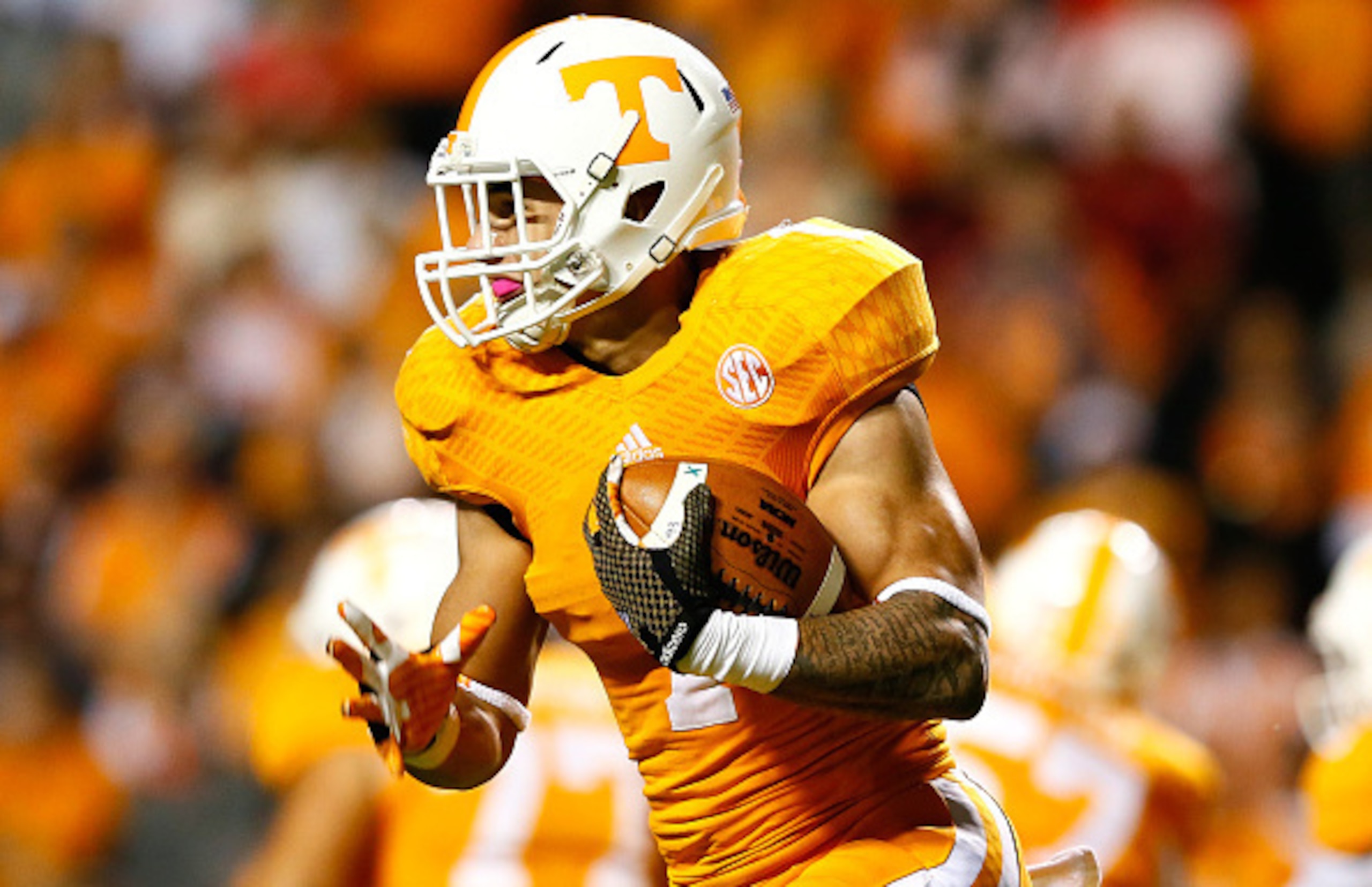
140. RB Jalen Hurd, Tennessee
With the addition of junior college transfer Alvin Kamara, Tennessee is going to have one of the more formidable running duos in the SEC. But it all begins and ends with Jalen Hurd, who had a promising start to his career and can still do so much more.
139. WR Leonte Carroo, Rutgers
Leonte Carroo averaged 19.8 yards per catch last season and was a consistent threat to break off a big play. Rutgers' offense will go as far as he's able to take it, as long as he continues to beat his man.
138. QB Keenan Reynolds, Navy
Barring injury, Keenan Reynolds will become the FBS' all-time leader in rushing touchdowns. Navy tends to have good teams most years, but with Reynolds at the helm the past three seasons, it's become a far more imposing opponent.
137. CB Maurice Canady, Virginia
Maurice Canady has a world of potential; he just needs to fill out his frame. He's a senior who's played meaningful snaps since 2012, and his instincts are those of a seasoned cornerback. NFL scouts will be watching his progress closely.
136. RB Donnel Pumphrey, San Diego State
At a bigger school, Donnel Pumphrey would likely get converted into a slot receiver or return man, but San Diego State has built its offense around him—and the results have been great. The Aztecs are 10-3 in games when he tops 100 rushing yards.
135. QB Taysom Hill, BYU
BYU needs Taysom Hill to stay healthy this year, especially with a power-packed schedule that includes Nebraska, Boise State, UCLA and Michigan in the season's first month and following leading rusher Jamaal Williams' departure. Hill's capable of carrying his team every week, but he needs to make better decisions to avoid getting hurt again.
134. RB Devon Johnson, Marshall
Devon Johnson ran for more than 1,700 yards for an offense that also had a 3,900-yard passer. His workload will become much greater in 2015, but based on his results, Johnson should be able to handle being more of a regular factor.
133. De'Mornay Pierson-El, Nebraska
Despite having a strong freshman year, De'Mornay Pierson-El could see even bigger returns in 2015—once he returns from a foot injury that will cost him 6-8 weeks—thanks to the change in offensive scheme. If he can get down the technical part of being a receiver, his speed and athleticism will do the rest.
132. RB Alex Collins, Arkansas
If he hadn't been splitting carries, Alex Collins would have made a hard push for at least 1,700 yards in Arkansas' offense last season. Now that Williams has been ruled out for the regular season (h/t Yahoo! Sports) after needing foot surgery, the spotlight is entirely on Collins to be the workhorse.
131. QB Joshua Dobbs, Tennessee
Tennessee is building around Joshua Dobbs on offense, and while it has some great weapons for him to work with, he's the man who will determine whether or not the Vols can meet the lofty expectations that come with starting the season ranked in the Associated Press Top 25 for the first time since 2008 (h/t Matt Slovin of the Tennesseean). His relief appearances the past two years have been impressive, but he still has to show he can handle the job on a full-time basis.
Nos. 130-121
13 of 115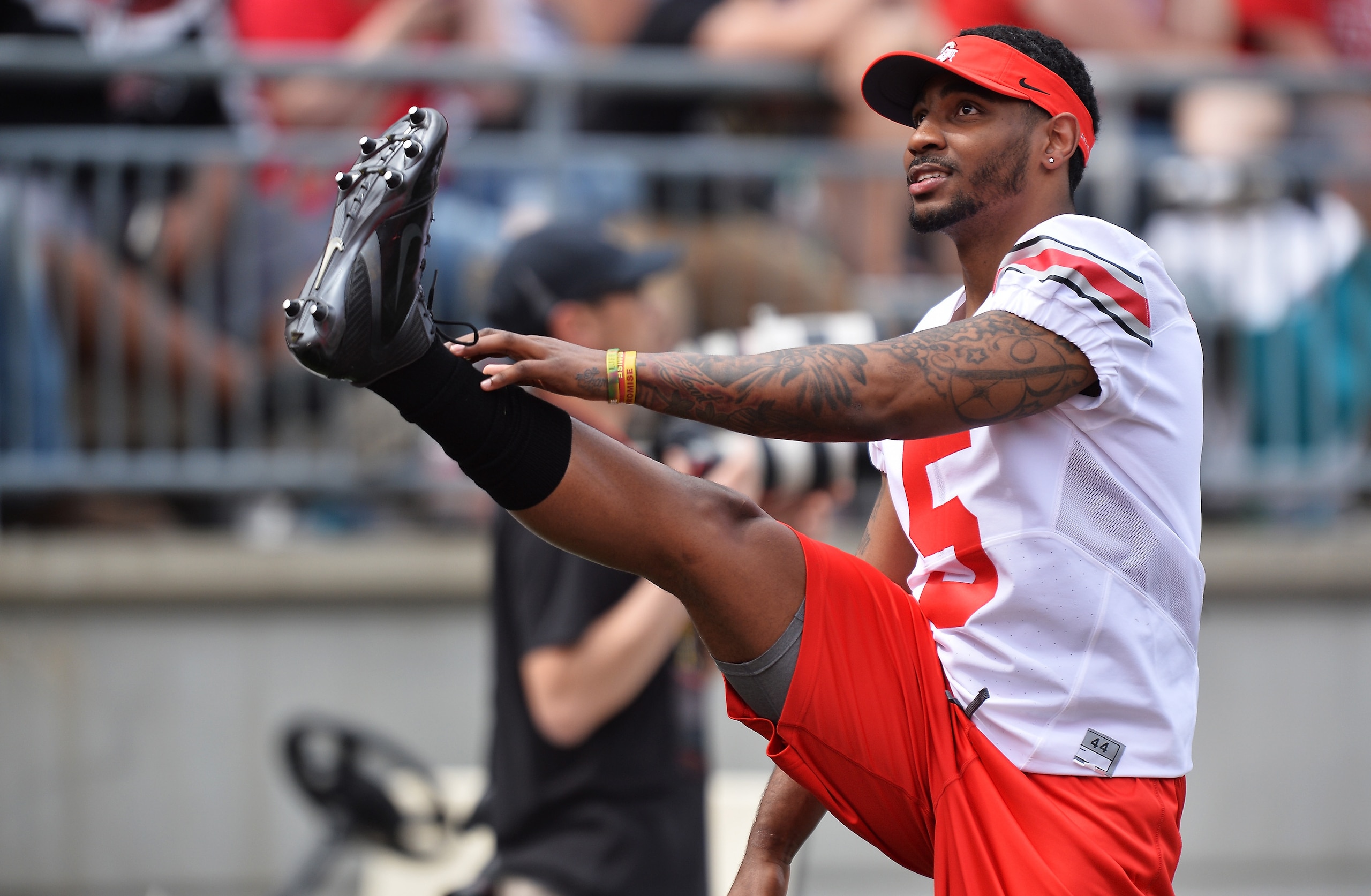
Miller is a work in progress as a wide receiver, but his amazing athleticism and dedication to the game is a big reason why his position change should be wildly successful. Not only will it provide OSU with a much-needed home run hitter, but it will set up Miller for a pro career, since quarterbacking doesn't seem to be in his future anymore.
129. LB Malik Jefferson, Texas
Malik Jefferson was a difficult player to grade. He's done everything right since enrolling for spring camp and is already a key player on Texas' defense. Combine that with his off-the-charts measurables and pedigree—he was the No. 10 overall recruit in the 2015 class—and it's easy to get carried away with his projections. If ranking him this high seems premature, you should have seen how high he wanted to rank him. A grade of 84 was us trying to rein things in.
128. RB Nick Wilson, Arizona
A 1,375-yard season included 100-plus-yard games in his first three appearances and seven for the year. Nick Wilson performed far better than expected, and as long as he's able to weather the workload, he'll keep producing.
127. LB Jalen Reeves-Maybin, Tennessee
Jalen Reeves-Maybin isn't the best player on Tennessee's defense, but he's probably the most important. He was criminally overshadowed by A.J. Johnson, whose box score oversold his production. NFL scouts will yawn because Reeves-Maybin is short and thin and doesn't do anything extraordinary, but Tennessee fans know how versatile he is and how vital he's become to the team's success.
126. WR Travin Dural, LSU
One of those receivers who almost seems wasted in the system he's in, Travin Dural can become a major weapon if LSU can just get the ball to him.
125. LB Cassanova McKinzy, Auburn
Cassanova McKinzy has played well the past two seasons and still has considerable upside. A player with his size and strength should emerge under defensive coordinator Will Muschamp. He already plays with a Muschampian attitude, which will endear him to the new defensive coaching staff. Expect him to flirt with a 100-tackle, 15-tackle-for-loss type of season.
124. DE Charles Tapper, Oklahoma
When evaluating Charles Tapper, it's important to look past the numbers. On paper it seems like he went from a decent sophomore season to a below-average junior year. In reality, however, he was great in 2013 and just as good last season; he's just not the type whose work shows up in the box score.
123. TE Evan Engram, Ole Miss
Paired with a healthy Laquon Treadwell, Evan Engram gives Ole Miss one of the more dynamic pass-catching combos in the country. He still needs to become more efficient as a run-blocker if he plans to remain a tight end; otherwise, receiver will be his future.
122. DT Maliek Collins, Nebraska
Maliek Collins has the upside to finish as a top-three defensive tackle. He is that big, that fast and played that well in spots as a sophomore. There were ugly moments, such as Melvin Gordon's 408 rushing yards (in three quarters!) when Wisconsin drilled Nebraska, 59-24. But if Collins can eliminate the off weeks and play to his potential, he will rocket up NFL draft boards.
121. DE Jonathan Bullard, Florida
Jonathan Bullard is a name most fans have heard of but don't really know. He's contributed the past three seasons but has taken a back seat to national superstars—guys like Dante Fowler Jr. in 2014. This year, however, is the season Bullard should break out in his own right. He's the leader of the Gators' front seven, which historically means good things for his NFL future.
Nos. 120-111
14 of 115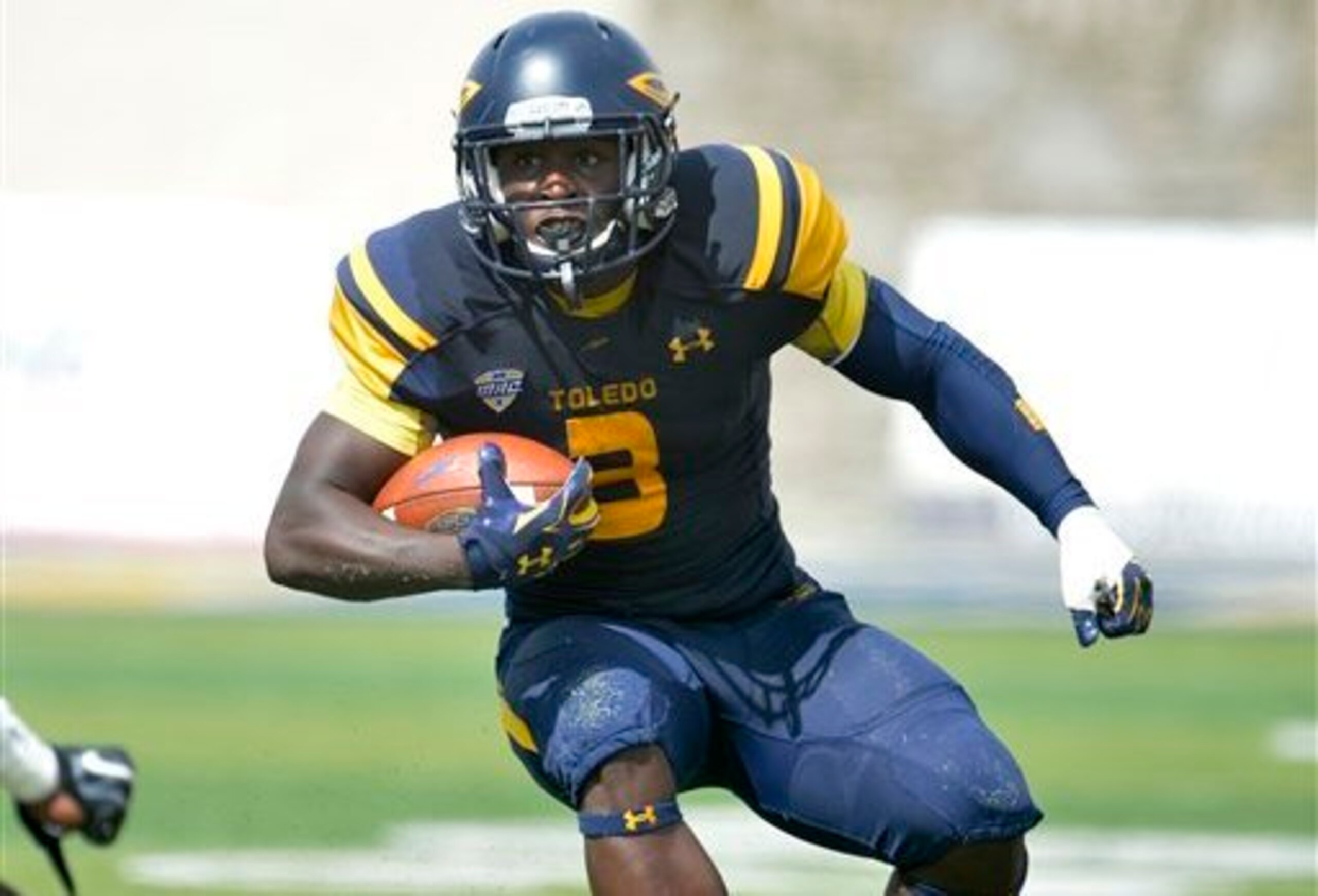
120. RB Kareem Hunt, Toledo
If Kareem Hunt played in the Big Ten instead of the MAC, he'd be getting far more praise for the fact he's topped 100 rushing yards in 15 of his last 16 games. He's a good one who deserves more attention.
119. QB Everett Golson, Florida State
With the Notre Dame chapter of his career in the past, Golson is looking to finish on a high note by being the answer to Who will replace Jameis Winston? Golson has all the skills to thrive in the Seminoles offense; it's just a matter of reining in his inconsistency.
118. S Tony Conner, Ole Miss
Tony Conner was a big part of Ole Miss' 2013 recruiting class, although his name was buried under Robert Nkemdiche, Laremy Tunsil and Laquon Treadwell. The presence of his classmates has overshadowed him in Oxford, too, but it's about time someone noticed his contributions. He lacks ideal size for a safety and may be viewed in NFL circles as a "tweener," but he's already been a heck of a college player and still has room to grow.
117. LB Vince Biegel, Wisconsin
Wisconsin began last season with a new cast of linebackers, but what started as a weakness slowly developed into a position of strength. Vince Biegel was the biggest reason for that, although his castmates—Marcus Trotter, Derek Landisch and Joe Schobert—deserve credit, too. Only Schobert and Biegel return from that foursome, but they're good enough to carry the load.
116. OT Tyler Johnstone, Oregon
Tyler Johnstone missed last season with a torn ACL after starting two straight years at left tackle. His injury depleted Oregon's line depth, which showed when Jake Fisher suffered a subsequent injury and the offense sputtered in a loss to Arizona. The secret of Oregon's offense is that everything starts up front—not with the quarterback or skill players. Not having Johnstone was a big loss last season, but his return should be an equally big gain.
115. RB Shock Linwood, Baylor
The best Baylor offenses are more than just prolific passing attacks; they require a dependable rushing element that Shock Linwood has provided. He figures to be more valuable this season with an untested quarterback.
114. QB Jeremy Johnson, Auburn
His potential is such that Jeremy Johnson deserves higher placement on this list, but he still has to prove he can live up to expectations. Coach Gus Malzahn's early faith in him indicates this shouldn't be a problem, but the jury is still out.
113. WR Michael Thomas, Ohio State
Michael Thomas was a consistent threat throughout Ohio State's national title run and will be the top weapon in the passing game this season. With more emphasis on using his physicality, he could put his name on the NFL scouting radar.
112. CB Eli Apple, Ohio State
Co-defensive coordinator Chris Ash, whom Ohio State hired from Arkansas last offseason, has been labeled a secondary guru. The way he developed Eli Apple did nothing to dispel that reputation. Now entering his redshirt sophomore season, Apple has gone from fringe starter to NFL prospect. He doesn't stand out in any one area, but there's nothing he doesn't do well.
111. LB Kendell Beckwith, LSU
Wisconsin, Mississippi State and Auburn had their way with LSU up the middle last season, at which point head coach Les Miles called on Kendell Beckwith. The new starting linebacker quickly transformed the defense into something more recognizable: a unit that held Alabama (20) and Texas A&M (17) under 21 points apiece in November. With defensive coordinator John Chavis gone to College Station, the Tigers will count on Beckwith to keep this defense rolling in 2015.
Nos. 110-101
15 of 115
110. DE Hunter Dimick, Utah
Some will question whether Hunter Dimick is as good as his stats make him appear. So is the case with any defensive end who plays across from an All-American—in this case, Nate Orchard. But not as many teams rolled protection toward Orchard as you might expect. They knew or learned the hard way that they couldn't ignore his partner.
109. LB Leonard Floyd, Georgia
Leonard Floyd is a work in progress (no one is denying that), but when he flashes, he shows the traits of an All-American. If nothing else, he already excels on passing downs, when he can rush the quarterback or drop into coverage at an All-SEC level. If he shows up more consistently and improves his functional strength, he's a first-round draft pick waiting to happen. As it stands, he is more of a specialist—albeit a very good one—than an every-down linebacker.
108. S Budda Baker, Washington
Budda Baker is an active ball of energy and the best single reason to watch Washington games. He's raw and still in the process of understanding his strengths and weaknesses, but the tools for an elite safety are there. He was overshadowed last season on a defense with four legitimate megastars (Danny Shelton, Shaq Thompson, Hau'oli Kikaha and Marcus Peters), but now he's the main attraction. Don't rule out an All-Pac-12 season.
107. WR Nelson Spruce, Colorado
Nelson Spruce is an incredibly reliable receiver who will catch whatever is thrown his way. But he might be better served as a slot receiver if Colorado can find someone else to play outside. He's great in traffic and isn't afraid to take a hit, which works better over the middle.
106. QB Kevin Hogan, Stanford
It's a tough act trying to follow Andrew Luck, but Kevin Hogan has held down the position admirably and allowed Stanford's next batch of top quarterback prospects to learn the system before taking over in 2016.
105. CB Tre'Davious White, LSU
Tre'Davious White (5'11", 191 lbs) lacks the size of Patrick Peterson and the playmaking skills of Tyrann Mathieu, but he's solid in every aspect. If you're looking for a modern LSU comparison, think more along the lines of Morris Claiborne. Claiborne, by the way, won the Jim Thorpe Award as the nation's top defensive back in 2011. White might not follow in his footsteps, but he shouldn't be too far behind.
104. DT Adolphus Washington, Ohio State
Washington has had an interesting career. He played well at end as a freshman alongside classmate Noah Spence but moved inside when Bosa arrived the next season. Bosa, Spence and Bennett overshadowed him in 2013, but then Spence was declared ineligible by the Big Ten and the team lost Bennett to the NFL. For the first time since he arrived in Columbus, Washington is being looked upon as a star. Frankly, that is long overdue.
103. S Michael Caputo, Wisconsin
Michael Caputo flies under the radar as another anonymous helmet on Wisconsin's anonymous defense. But while it's true that the Badgers' whole is greater than the sum of their parts, it's not as if those parts can't be stars. Caputo is a name that should probably be more recognizable. If you don't get the memo in 2015, you'll get it when he's playing on Sundays.
102. LB Tyler Matakevich, Temple
Tyler Matakevich comes with obvious downsides, but his strengths outweigh his weaknesses tenfold. The stats are inflated by whom Temple plays and whom he's surrounded by—who else is going to make all those tackles?—but they aren't inflated by much. The way he senses plays as they happen is like a power forward who always knows which way the ball will bounce off the rim. Basically, he's Kenneth Faried.
101. CB Mackensie Alexander, Clemson
Mackensie Alexander missed his true freshman season with a groin injury, at which time people seemed to forget about him. But the former 5-star recruit lived up to his billing in 2014, and he still has room to grow as a redshirt sophomore.
100. WR William Fuller, Notre Dame
16 of 115
B/R Expert Scouting
“He had probably the most underrated, monster wide receiver season we've seen in recent memory. Why aren't we talking about him more?”
—Adam Kramer
Hands
Will Fuller had a breakout year in 2014, going from six catches the season before to 76 as Notre Dame's primary receiver. He caught most of what came his way, using a style that let his hands guide the ball into his body rather than plucking it out of the air.
Route Running
Fuller handled both short and intermediate routes well. But he stood out best on the deep balls by juking his defender with great footwork.
Blocking
Used more as a decoy on run plays rather than someone Notre Dame would run toward, Fuller did fine with this aspect of the position but didn't excel.
Release
Fuller isn't big enough at 6'0” and 184 pounds to be the kind of receiver who outmuscles defenders for the ball, so he has to get a step on them. He's very fast but also gets off the line quickly without needing to make much contact.
Speed
It takes a little while for him to get up to full speed, but once Fuller turns on the jets he's often untouchable. This stands out most when he goes up the seam or catches a screen pass.
Run After Catch
Fuller gets a lot of his yards after the catch by outmaneuvering defenders with his speed and footwork. On jump balls he can also come down in position to continue forward if needed.
Overall
Fuller made himself a known quantity last season, but now he'll be playing with a target on his back. He's coming off one of the best campaigns for a receiver in Notre Dame history, and the Irish will count on him to make big plays all year long.
99. RB Devontae Booker, Utah
17 of 115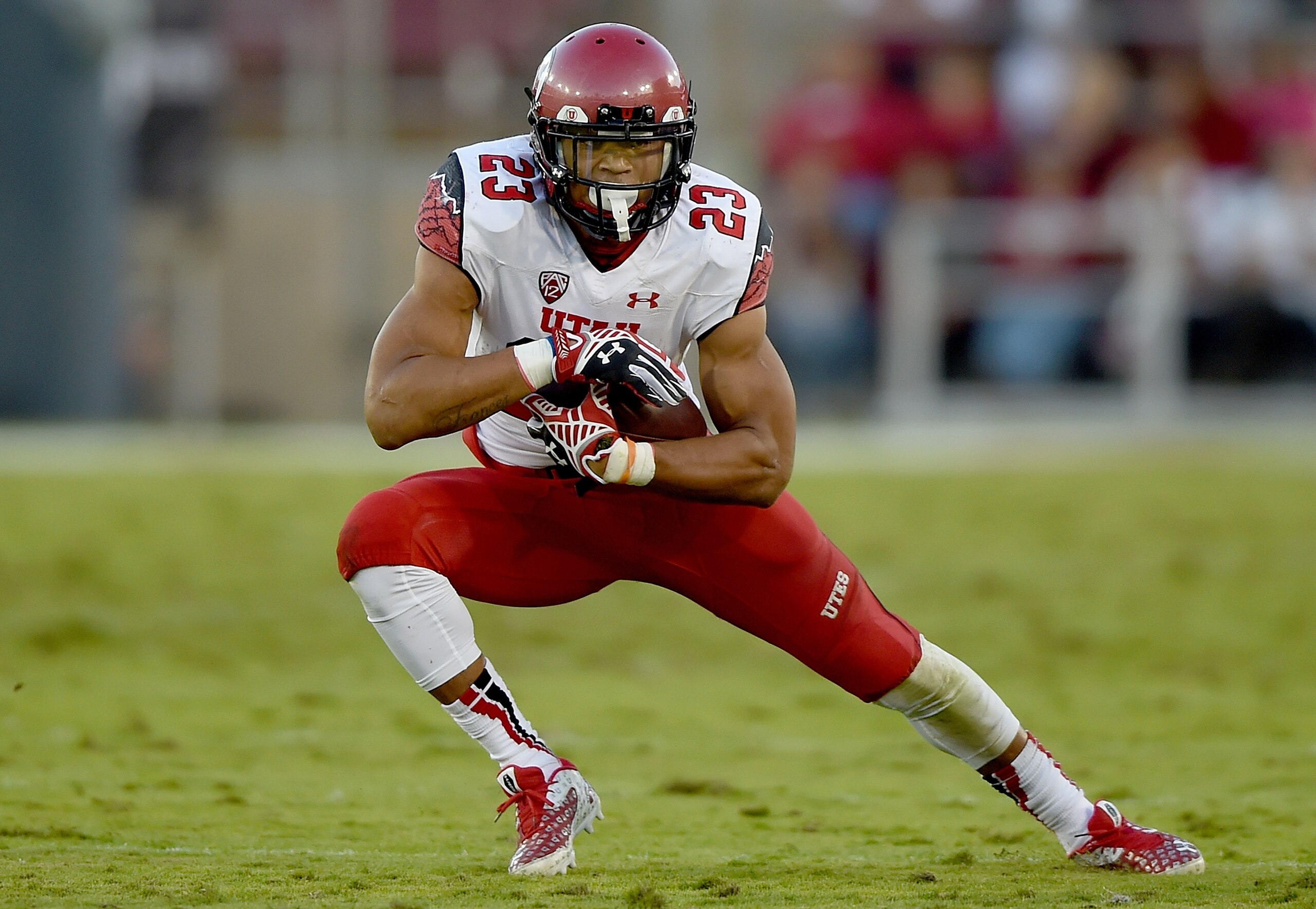
B/R Expert Scouting
"He's violent, an extremely violent runner—one of those guys whom I would hate to have to wrap up. He's just done it without the same number of eyeballs as other guys."
—Adam Kramer
Ball Security
Despite becoming Utah's most important offensive player last season, Devontae Booker was surprisingly careless with the ball and had several notable fumbles. With the Utes expecting even bigger production from him in 2015, this has to change.
Power
Booker barrels ahead and will look to push through defenders as his first option in traffic, and he's strong enough to make this work. He's well-defined, at 212 pounds, and willing to draw contact.
Vision
It took Booker a few games to work his way into a featured role, and part of this was because he showed some hesitation at the point of attack, though this improved as the season went on.
Hands
One of the better pass-catching backs in the country, Booker had 43 receptions to rank third on the team. He's quick to turn upfield without slowing his momentum on screen passes, a key element of the Utah offense.
Speed
Booker is faster than he looks, especially when going from side to side. There's a burst he can tap into—almost like a turbo button—to get around the edge or spin away from a defender.
Balance
He's not a leaner—more upright than anything—but Booker keeps himself centered and avoids putting too much weight on one foot while stutter-stepping.
Overall
Booker's big burst in production coincided with Utah having a breakthrough campaign, and it will lean heavily on him this fall. If he continues to be a dangerous weapon on screens, he'll easily top 2,000 all-purpose yards after going for 1,875 in 2014.
98. DE Jonathan Allen, Alabama
18 of 115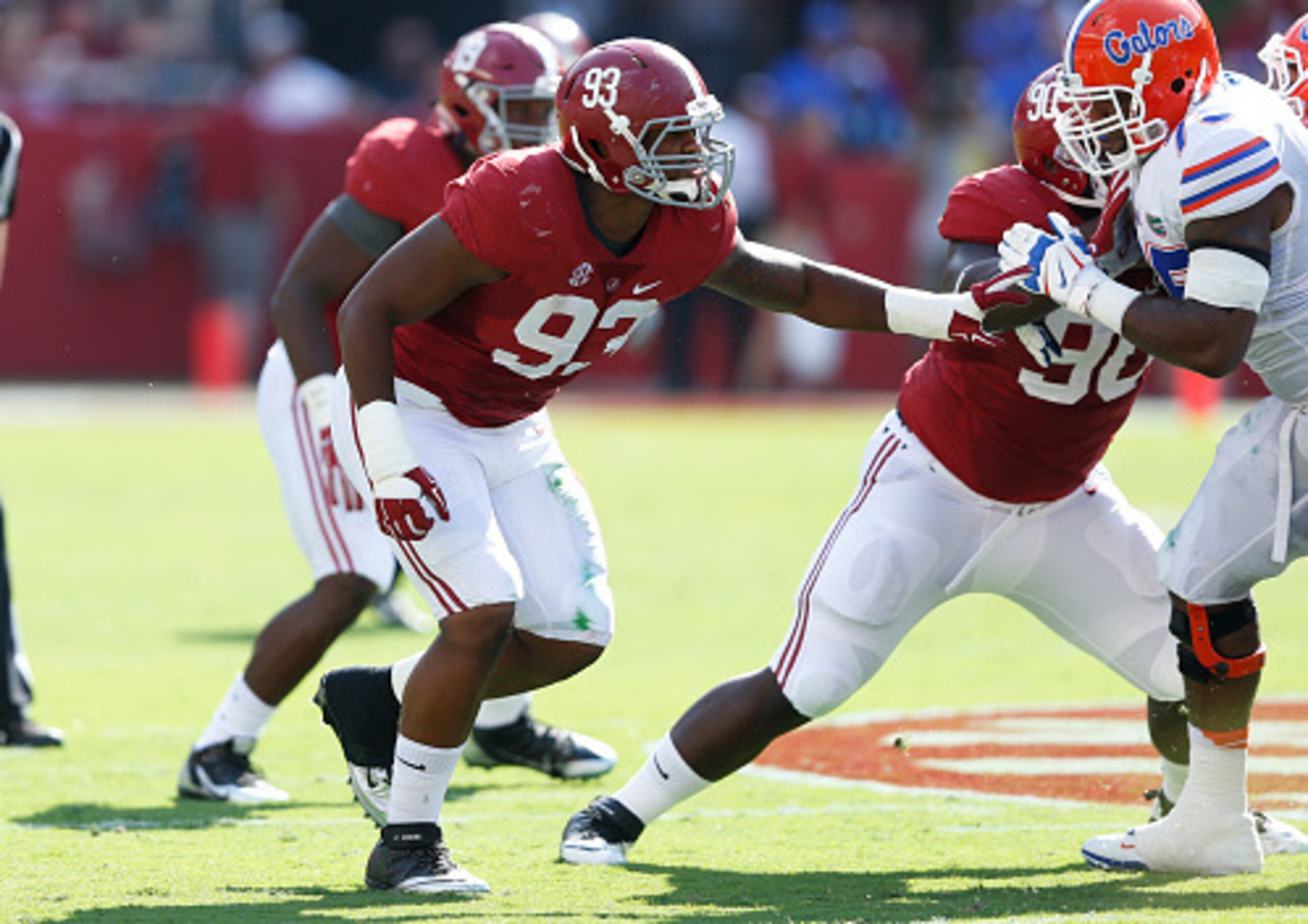
B/R Expert Scouting
"He's the new era of defensive end at Alabama. Generally, they've had bigger guys who take up space and are semi-athletic—Marcell Dareus types. But Jonathan Allen is different. I remember him in the 2013 Iron Bowl chasing Tre Mason down from behind. Like, that doesn't happen at Alabama."
—Barrett Sallee
Pass Rush
Jonathan Allen recorded just five sacks last season, which seems like a pretty small number. But the five offensive lines he bested—West Virginia, Texas A&M, LSU, Auburn, Ohio State—were all among the best in the country. You'd like to see him tee off on lesser competition, but Allen's combination of size (6'3", 272 lbs) and quickness makes him a threat to reach the quarterback no matter who tries to block him. He just needs to be more consistent.
Run Defense
Although he's not as big as Nick Saban's previous 3-4 ends, Allen has the strength to hold his own against the run. He doesn't make many tackles but fights on the edge and collapses plays back inside. Alabama had the No. 1 run defense in college football last season, according to the S&P+ ratings at Football Outsiders, and Allen was a key part of that.
Motor
Sallee's anecdote about the 2013 Iron Bowl, when Allen chased down a Heisman-finalist running back, is a perfect demonstration of the lineman's motor. When he's invested in a game, he gives 110 percent. If he starts giving the same effort against lesser competition, we'll boost this grade accordingly.
Overall
Allen flies under the radar despite playing for Alabama. His numbers aren't huge, and his name is indistinguishable. But Saban doesn't wan't household names, necessarily, at defensive end; he wants guys who accept their roles and make the play that results in the tackle. Allen might be quicker than his predecessors, but he plays with that same Alabama edge.
97. WR Byron Marshall, Oregon
19 of 115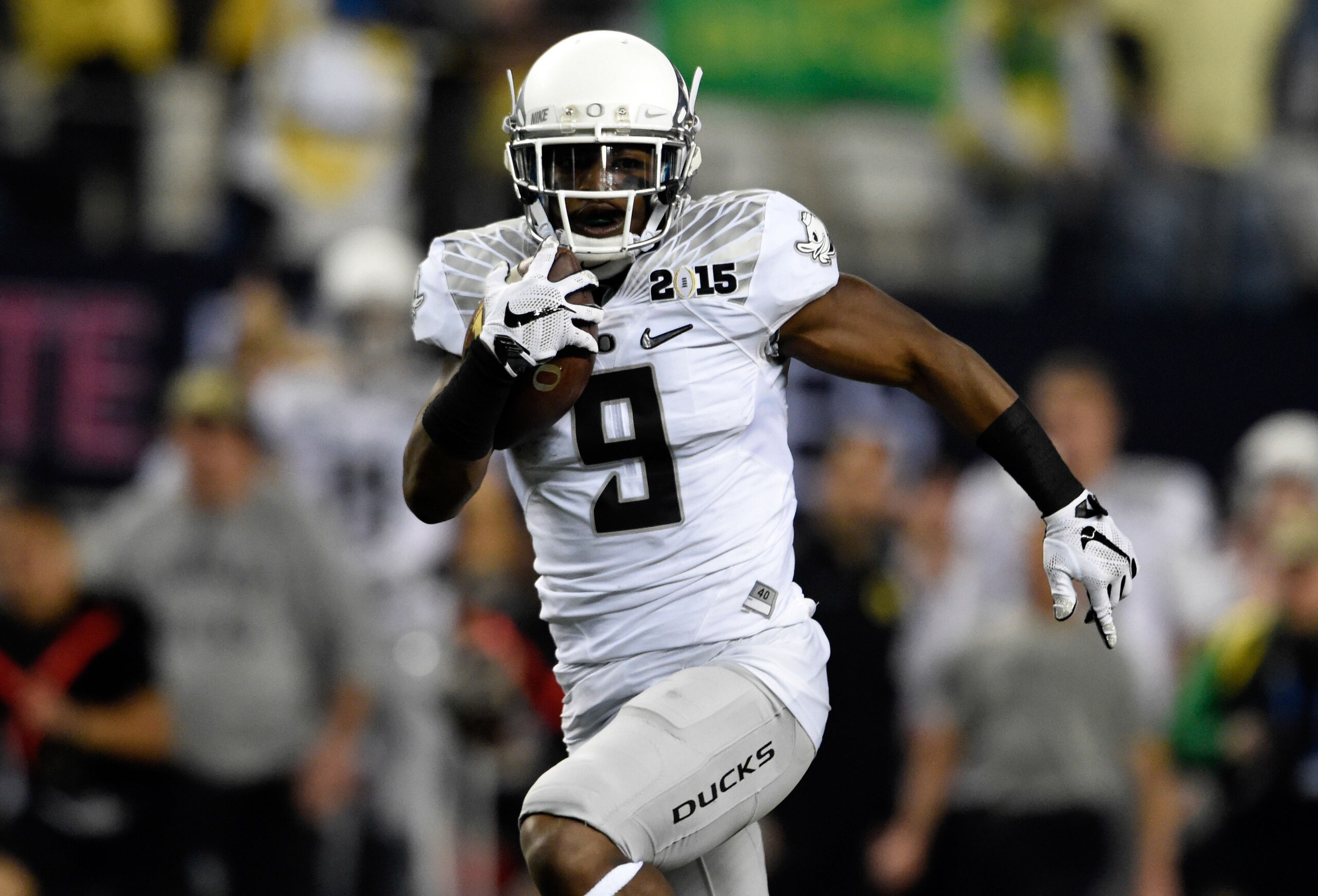
B/R Expert Scouting
“Defensive coordinators lose sleep over this guy. An exceptional weapon. They needed him to fill a role, and he did it expertly.”
—Adam Kramer
Hands
A converted running back who had to move to receiver after injuries ravaged Oregon's depth there, Byron Marshall showed off good hands for a player just learning the position. He parlayed that into 1,003 yards and six touchdowns in 2014.
Route Running
Marshall's running back skills came in handy here in that he could read the defense in front of him and adjust his line to find openings. He got away with this with Marcus Mariota throwing the ball, but with a new quarterback in 2015 he will need to be better at sticking to the script.
Blocking
With a background in pass blocking, Marshall handled his assignments well enough to extend plays. He needs to be better at pushing his man further away from the action.
Release
Marshall does fine with getting separation when he's got some room to work, but muscling past a cornerback isn't his specialty.
Speed
At 5'10" and 200 pounds, Marshall is a downhill runner who relies more on strength than speed. He moves well enough but isn't going to blow past the secondary often.
Run After Catch
Marshall was exceptional at powering through tackles when running the ball, and he's carried this over to receiver. He's both strong enough and elusive enough to make the first guy miss.
Overall
The loss of No. 2 running back Thomas Tyner to a season-ending shoulder injury could force Marshall to split time between the backfield and lining up out wide. He's shown he can do both, so this might actually make Oregon's offense even harder to defend.
96. CB Jonathan Jones, Auburn
20 of 115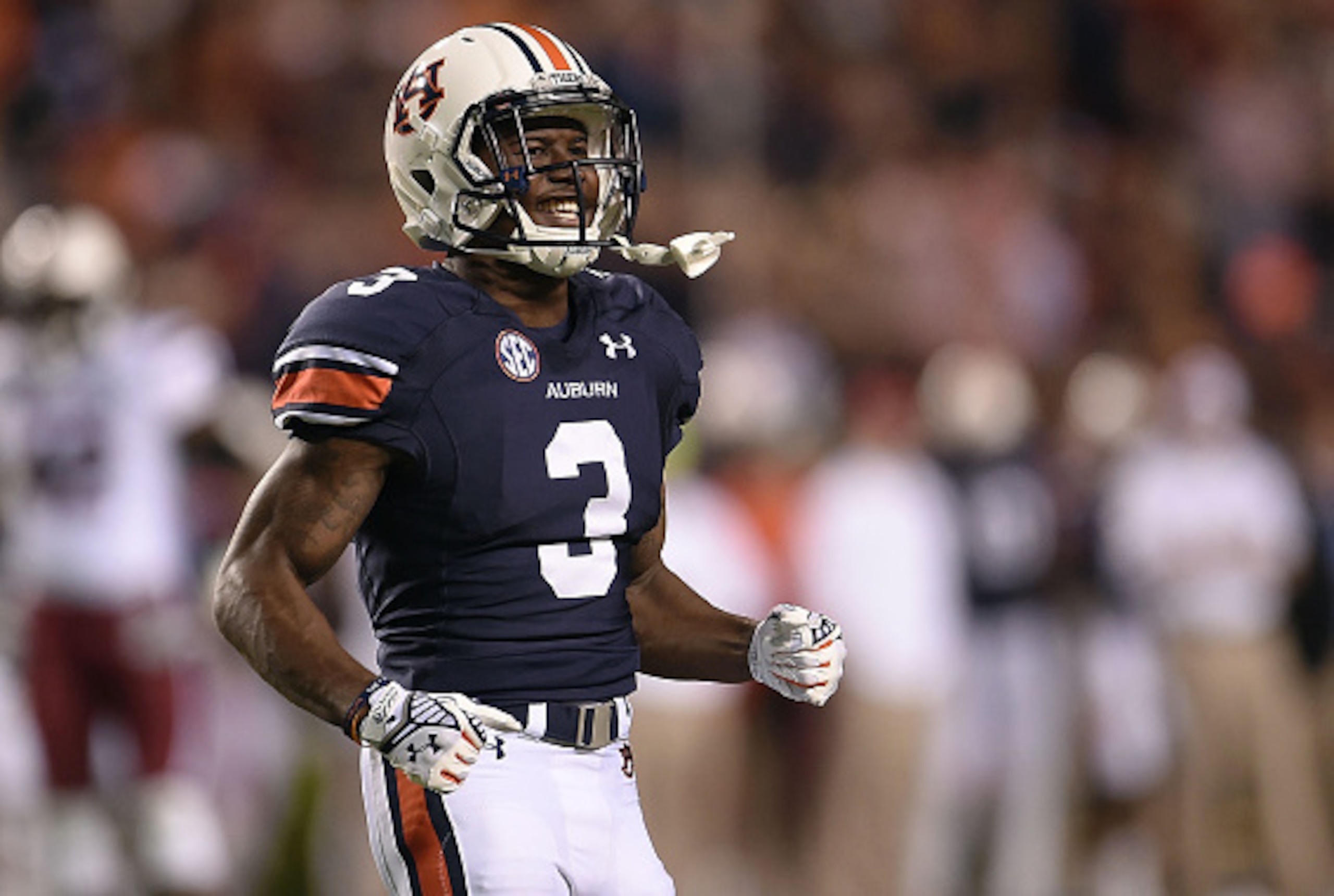
B/R Expert Scouting
"He was good last year when Auburn got basically no pressure. So if Auburn gets some pressure this year, I think you might be looking at a double-digit interception season."
—Barrett Sallee
Speed
Jones proved his speed against Georgia last season, when he shadowed wide receiver Chris Conley. Conley ran a 4.35 40-yard dash at the NFL Scouting Combine and was a third-round draft pick, but Jones held him to one reception. Only a speedy corner could have contained Conley so thoroughly.
Ball Skills
Here is where Jones excels. His 18 passes defended—six interceptions, 12 breakups—gave him a share of last year's SEC lead, and he kept Auburn in the game with a pair of clutch interceptions at Mississippi State. Despite his smaller frame (5'10", 181 lbs), he boasts impressive timing, instincts and leaping ability.
Run Defense
While his frame doesn't hurt him with ball skills, it does cost Jones a few points in run defense. He wants to be more active in support, but he struggles at times to disengage from bigger receivers. Like the rest of Auburn's defense, he looked small and soft defending Melvin Gordon in the Outback Bowl.
Pass Coverage
A tier below the best SEC cover corners, Jones is still someone the Tigers can trust on an island. Even if he sometimes gets beat, his speed and ball skills allow him to recover and turn a negative into a neutral. He makes smooth transitions and has the ability to cover slot receivers, which is probably where his NFL future lies.
Overall
Jones emerged last season after injuries plagued the start of his career. Auburn's defense was a mess under Ellis Johnson, but Jones played well regardless, and new defensive coordinator Will Muschamp should mine even more potential out of the Tigers' star cornerback. The whole of Auburn's defense might finally equal the sum of its parts.
95. LB Jordan Jenkins, Georgia
21 of 115
B/R Expert Scouting
"Of all the great linebackers they have at Georgia, he probably gets talked about the least. But he deserves to be talked about the most because he's the best one they have."
—Barrett Sallee
Tackling
Jordan Jenkins improved from 45 tackles in 2013 to 70 tackles last season. More impressively, he improved despite spending occasional snaps at defensive end, where it's harder to make a tangible impact. He doesn't have the long speed to chase offensive players sideline to sideline, but he accelerates into gaps and makes sturdy tackles near the line of scrimmage.
Pass Rush
Jenkins posted five sacks last season, but his 21 QB hurries were one of the highest totals in the country. He may not always finish the play, but he's a constant source of stress for opposing quarterbacks. He's thicker than the prototypical edge-rusher (6'3", 253 lbs) and doesn't have explosive speed, but he's savvy with his hands and consistently gets tackles off balance.
Run Defense
Jenkins is a rugged defender who does the dirty work to win in the trenches. His willingness to play with his hand down, fire out of his stance and set the edge for his teammates is rare for someone who technically plays linebacker. His ability to line up at multiple positions without sacrificing intensity or confidence makes him a vital cog in Georgia's run defense.
Pass Coverage
Georgia rarely asks Jenkins to cover, which is good because it's definitely not his strong suit. He is more of an explosive athlete than a fluid one, which basically means he accelerates better than he changes directions. He holds his own in simple zones but can be crossed up in man coverage.
Overall
Leonard Floyd and Lorenzo Carter earn more press because they have higher ceilings. And it's true: If they develop properly, they'll eventually be better than Jenkins. But this list is all about right now, and right now Jenkins is the best linebacker at Georgia. He's the toughest and the most consistent, and his ability to play two positions unlocks a lot of what the 'Dawgs do on defense.
94. S Jabrill Peppers, Michigan
22 of 115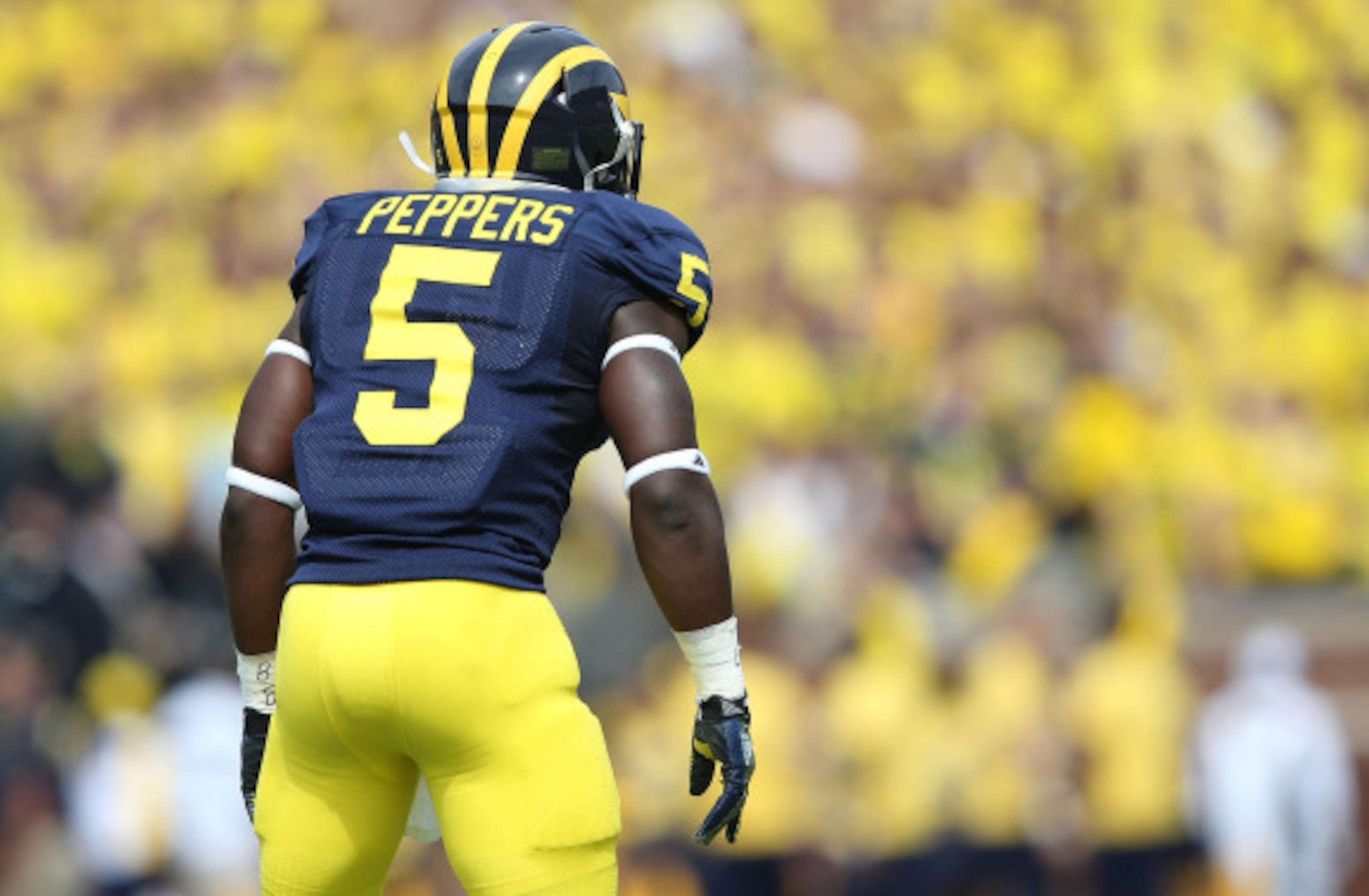
B/R Expert Scouting
"I love that he's at safety. They tried him [last season] at corner, but he's not good there. We talked about him in preseason videos, and I just never felt comfortable saying, 'I think he's a star at cornerback.' But now that he's at safety? Yeah. I think Jabrill Peppers is a star."
—Michael Felder
Ball Skills
Peppers is a freak athlete whom Michigan will use in all three phases. He was a track star in high school and can play offense (running back or wide receiver) and return kicks and punts. He should theoretically play the ball well in coverage, but we can't grade him higher since he's never proven as much at the FBS level. Still, we'd be surprised if he struggles.
Tackling
Peppers likes to come down and hit people. He has adequate size (6'1", 205 lbs) and is a missile once he has momentum. His speed should make him a dangerous tackler in space, which Michigan needs after losing inside linebacker Jake Ryan (112 tackles last season) to the NFL.
Run Defense
Consider this grade a work in progress. Peppers has the physical tools of a great run defender, but we can't know for sure about his mental tools. Michigan will use him in a variety of roles, and when allowed to play on instinct we have no doubt he'll play well. He can pump this up to a 22 or 23 if he takes to Jim Harbaugh's coaching and does the dirty work (taking on defenders, funneling plays inside, etc.) that leads to stout run defense.
Pass Coverage
Peppers is not a natural cornerback, which is why Harbaugh's regime moved him to safety. But the fact the previous coaching staff was willing to try him at corner says a lot about his upside in coverage. The technique isn't there yet, but Peppers has the size, speed and smoothness to eventually keep up with anyone. He might be more of a rover than a lockdown guy—at least for the time being—but he has the athletic gifts to make that work.
Overall
Peppers appeared in three games last season before taking a medical redshirt. He was the No. 3 overall recruit in the 2014 class but had to sit and watch while the two players ranked ahead of him (Leonard Fournette and Myles Garrett) and three of the four players directly behind him (Cameron Robinson, Quin Blanding and Adoree' Jackson) flourished. But there's a reason Peppers ranked so high in the first place, and the arrival of Harbaugh and coordinator D.J. Durkin (via Florida) might be just what the doctor ordered. Expect him to be a focal point—if not the focal point—of Michigan's 2015 defense.
93. WR Artavis Scott, Clemson
23 of 115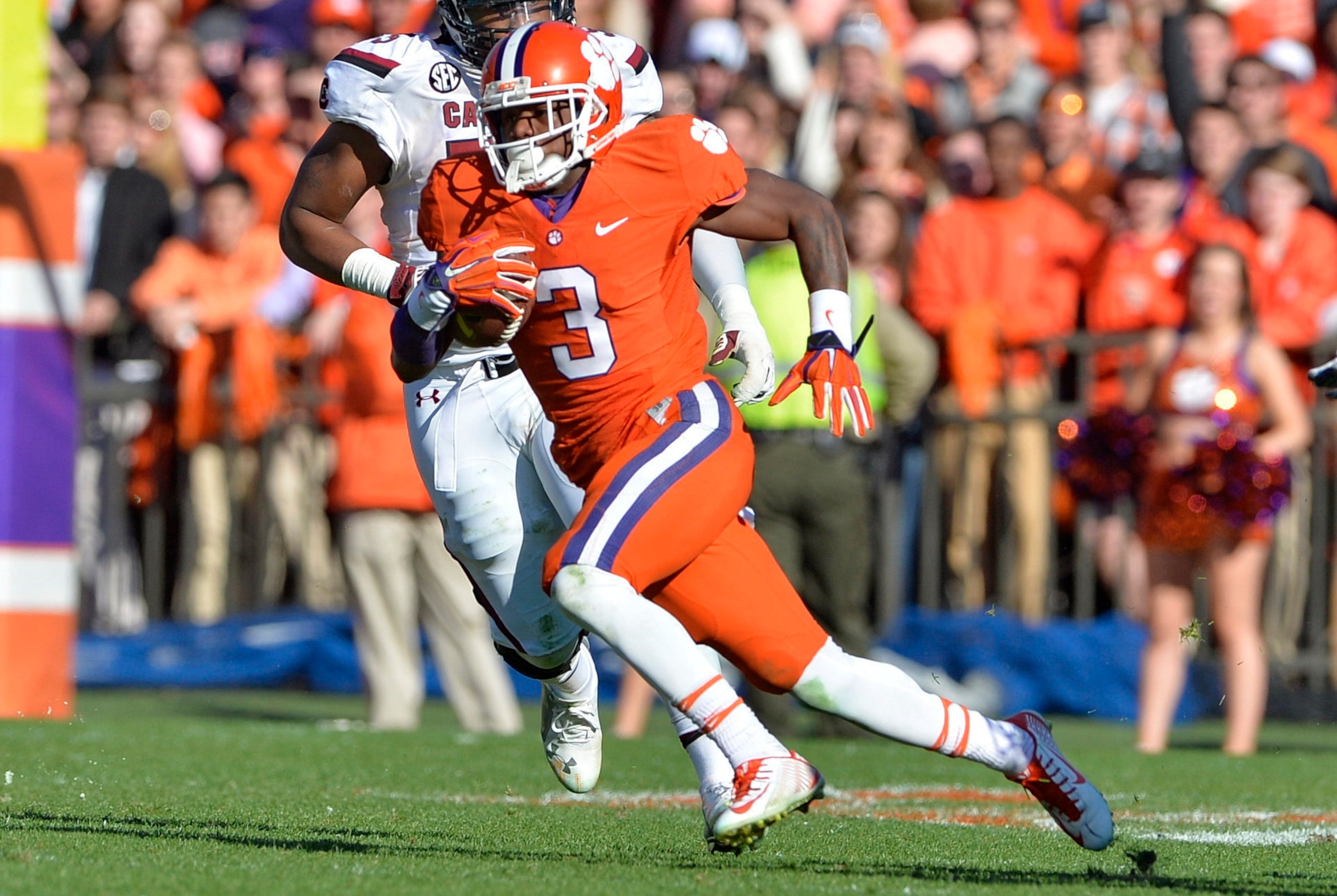
B/R Expert Scouting
“He has that jitterbug mentality that makes him a perfect complement to [Mike] Williams. Playing with Deshaun Watson for two more years, he's going to put up huge numbers.”
—Adam Kramer
Hands
Artavis Scott hauled in some very difficult balls during his first year in 2014 but also dropped a few that shouldn't have been a problem. He's good in traffic, which bodes well for the future.
Route Running
He can cut well and do so without getting off balance, which gives him an advantage against defenders who are playing tight. Scott also shows a strong willingness to go over the middle despite being just 5'11".
Blocking
Scott is an adequate blocker, which came in handy when his quarterback, Watson, would take off and need help beyond the line of scrimmage. It's not what Scott's in there for, though, so his blocking can still stand to improve.
Release
The sophomore is most successful when he's got a built-in cushion to start the play, whether if the defender plays off the line or he steps back to catch a screen or a short out. When pressed Scott can get the edge, but it takes him a bit.
Speed
A very swift receiver who benefits as much from quick feet as any in the country, Scott has a stride that allows him to change direction easily and accelerate immediately after a cut.
Run After Catch
Scott only averaged 12.7 yards per reception, but many of his catches began at or behind the line of scrimmage. On a few occasions he would get a shovel pass after going in motion and turn it into a huge gain by getting around the edge so quickly.
Overall
Scott's freshman year was sensational and is just the start of what should be a great career. Clemson keeps finding playmakers at the wide receiver position, and this one could end up being the best of the lot before it's all over.
92. OG Pat Elflein, Ohio State
24 of 115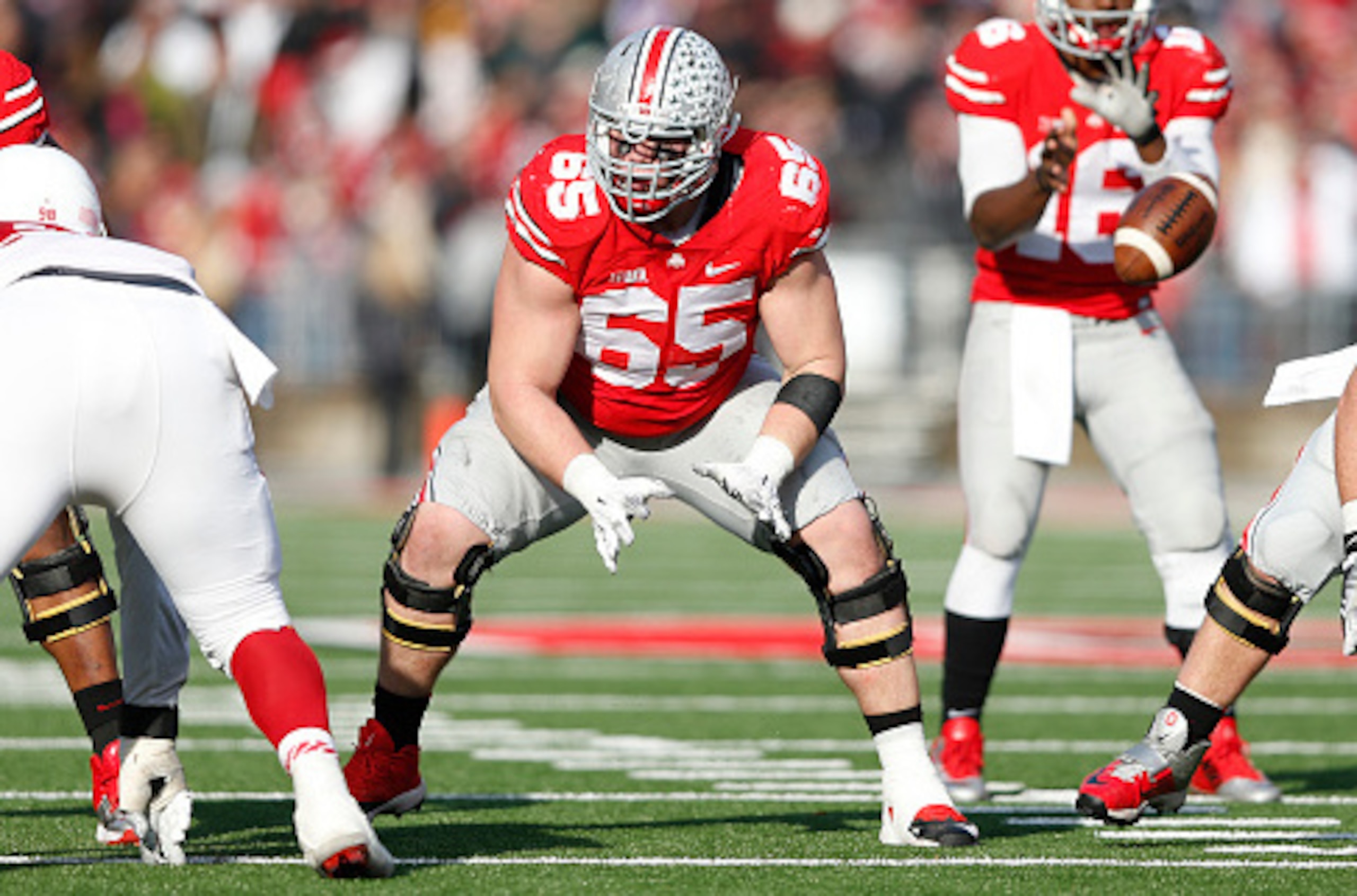
B/R Expert Scouting
"I have him as the second-best guard in college football. A little bit short, but he moves well, has good hand use, and he finishes plays."
—Matt Miller
Power
Even though he's short (6'3", 300 lbs), Elflein displays good power for a guard. He's a fighter who understands leverage and uses hand placement to drive defenders backward. He might be overpowered by the biggest defensive tackles in America—but anything short of that, he can handle.
Lateral Quickness
Elflein moves well in space, which is essential in Urban Meyer's offense. He can pull or leak on screen plays and has the balance to finish blocks on linebackers and safeties. He doesn't move his feet as well in pass protection, where he's susceptible to agile interior rushers, but quickness is still a strength.
Pass Protection
As mentioned in the previous section, Elflein's quickness shows in run blocking more than pass protection. He's not a bad pass-blocker by any means, but he can be exploited when a tackle explodes off the line. Still he gets the job done more often than he doesn't, and he demonstrates great awareness against stunts, twists and blitz packages.
Run Blocking
Elflein improved throughout last season—his first as a starter—and eventually became a dominant run-blocker. He was the best player on the field in the College Football Playoff National Championship, where he paved holes for running back Ezekiel Elliott (the game's awarded MVP) and made Oregon's defensive front seven look soft. His no-nonsense mentality, combined with his versatility, allow him to truck opponents in a variety of ways.
Overall
Elflein made great strides as a sophomore and ended the year on a hot streak. Big boys get none of the credit, but he was every bit as vital to the rout of Wisconsin and the wins over Alabama and Oregon as Elliott, Devin Smith and Cardale Jones. Ohio State won the title from the inside out; by controlling the line of scrimmage. Elflein was a huge reason why.
91. S Darian Thompson, Boise State
25 of 115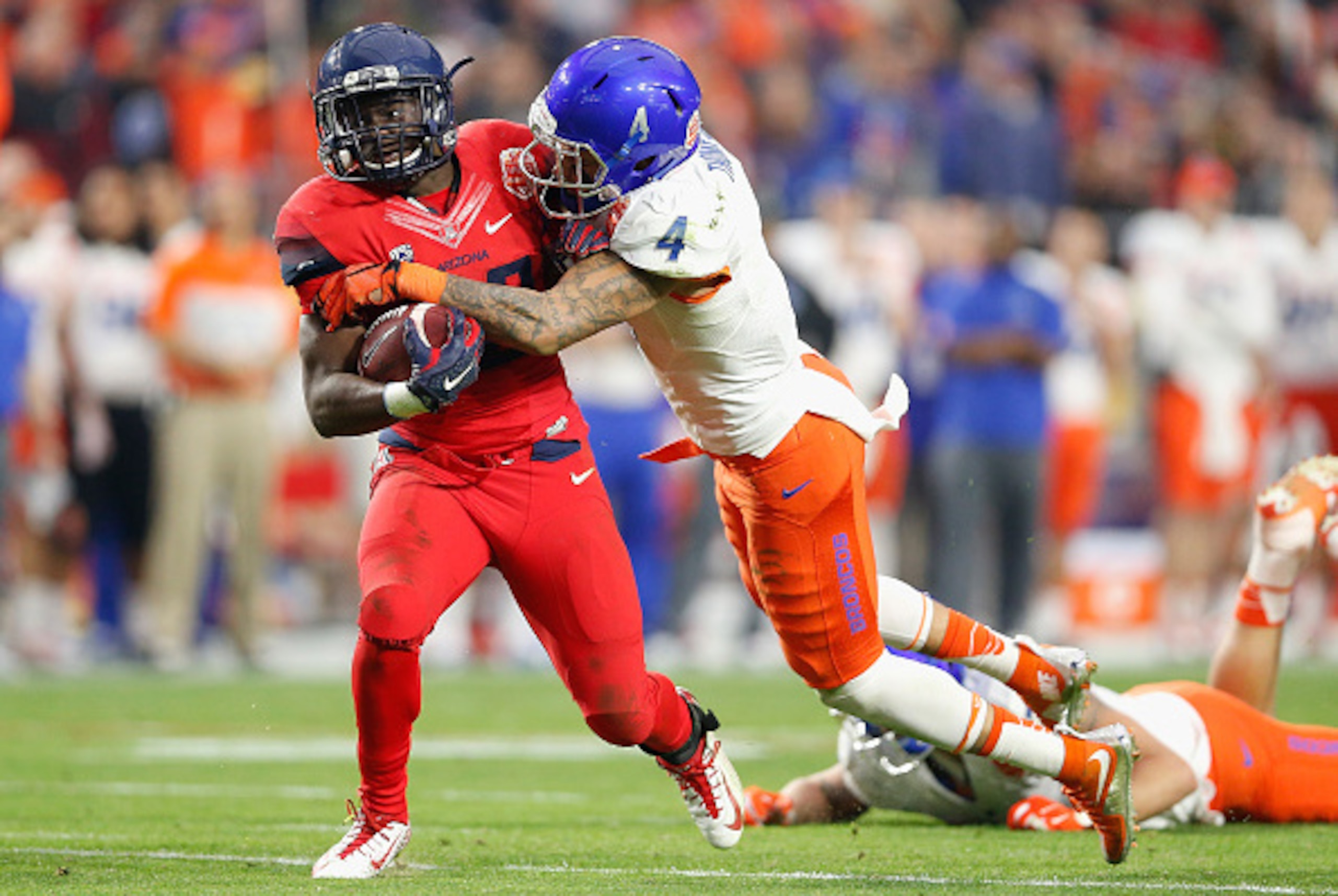
B/R Expert Scouting
"He's a projected top-50 pick on preseason lists from scouts. His ability to play single-high safety with the instincts to locate and attack the ball makes him valuable."
—Matt Miller
Ball Skills
Thompson is the most productive safety in college football. His seven interceptions were tied for No. 3 in the country last season and rank No. 1 among returning players. He had four interceptions the previous season and three as a freshman in 2012. You can't afford to throw in his direction.
Tackling
Thompson posted 71 total tackles, 50 of which were solo, last season. He has closing speed to make plays in space and rarely lets a ball-carrier slip away. He started his career as a bit lean but has beefed up now to 6'2", 212 pounds, which gives him a chance against power backs and tight ends.
Run Defense
Although he does his best work in space, Thompson also makes plays in the box. He is unafraid to throw his size around and create a mess near the line of scrimmage. He doesn't diagnose runs as well as the best run defenders in the country, but he's good enough to earn passing marks. His two 10-tackle games last season came against San Diego State and Arizona, two of the strongest run offenses Boise State faced.
Pass Coverage
Thompson has the length, range and instincts to excel in zone coverage. He plays single-high safety and is trusted to gain proper depth, read the quarterback's eyes and blanket the intended area. He is fluid and tall enough to cover tight ends and outside receivers, too. No one will confuse him with a cornerback, but he gets the job done in man coverage.
Overall
Few college players force as many negative plays as Thompson. He added five tackles for loss to last year's seven interceptions, so it's not as though he's one-dimensional, either. Like all great Boise State defenders, he won't become a household name until draft season; that's just how the hype machine works. But don't think any less of him because of it.
90. K Roberto Aguayo, Florida State
26 of 115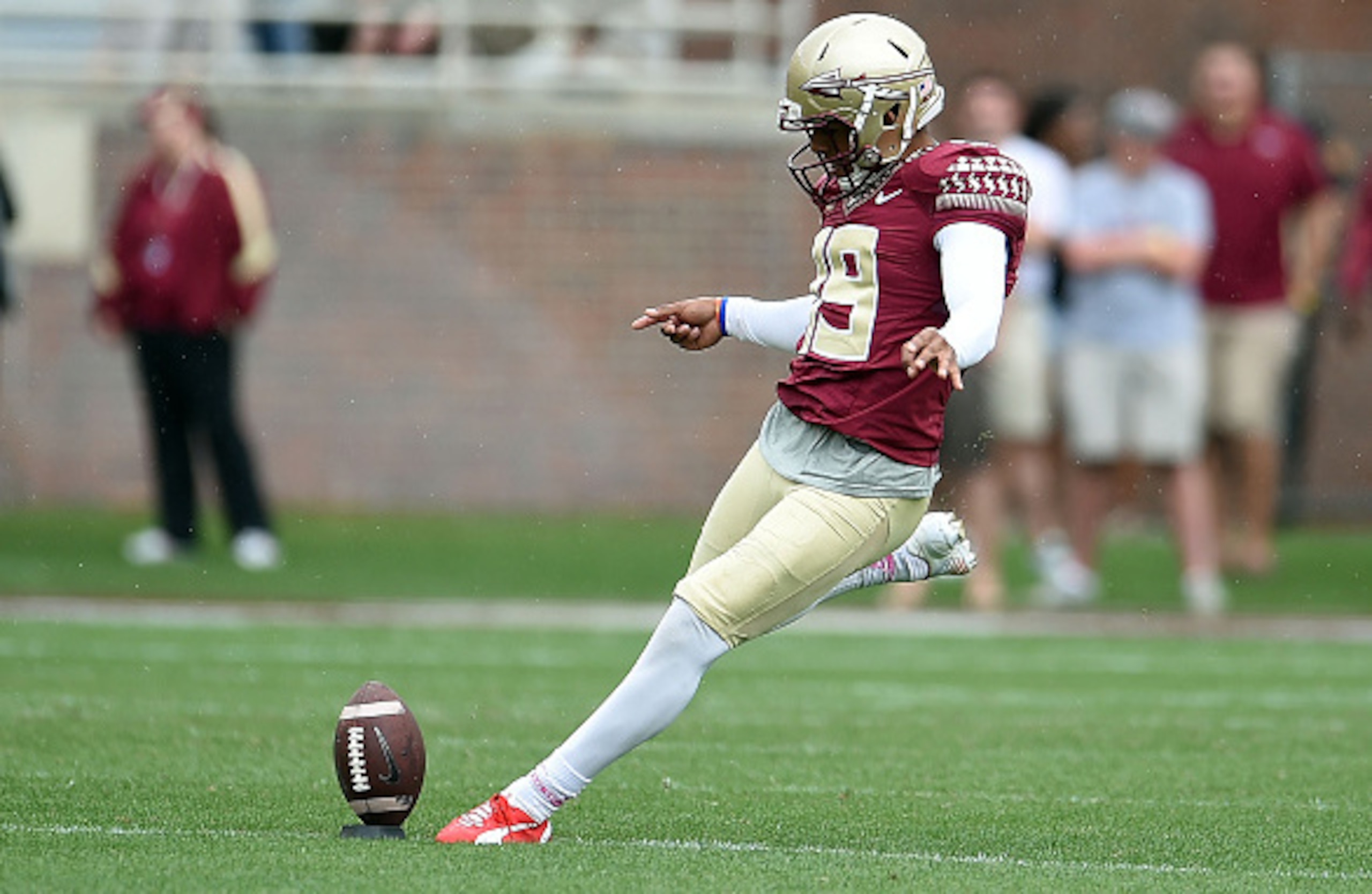
B/R Expert Scouting
"He has range, he has power and he's incredibly accurate. You don't have to worry about him. He's the best kicker I can remember seeing."
—Matt Miller
Accuracy
Roberto Aguayo has been about as close to automatic as you get at the college level. He's missed only four field goals in two seasons, and all 149 of his extra-point attempts have been true.
Power
Florida State's offense wasn't nearly as efficient last year as it was during its title run in 2013, but because Aguayo could routinely make kicks from beyond 40 yards there wasn't an urgency to push the envelope. Most of his longer attempts would split the uprights with plenty of room to spare.
Clutch
Aguayo hasn't had many opportunities to kick a game-winning field goal for the Seminoles, but last year his 26-yarder with three seconds left against Boston College was a no-doubter.
Kickoffs
After booting five kickoffs out-of-bounds as a freshman, last year Aguayo only had two of his 96 kicks result in a penalty. In 2014 he averaged just under 63 yards per kick, with 51 percent resulting in touchbacks.
Overall
Aguayo personally outscored eight of Florida State's opponents in 2013 and has been an amazingly reliable asset for the Seminoles throughout his career. For a school that's produced so many notable kickers, he's on pace to be the best of the lot.
89. RB Corey Clement, Wisconsin
27 of 115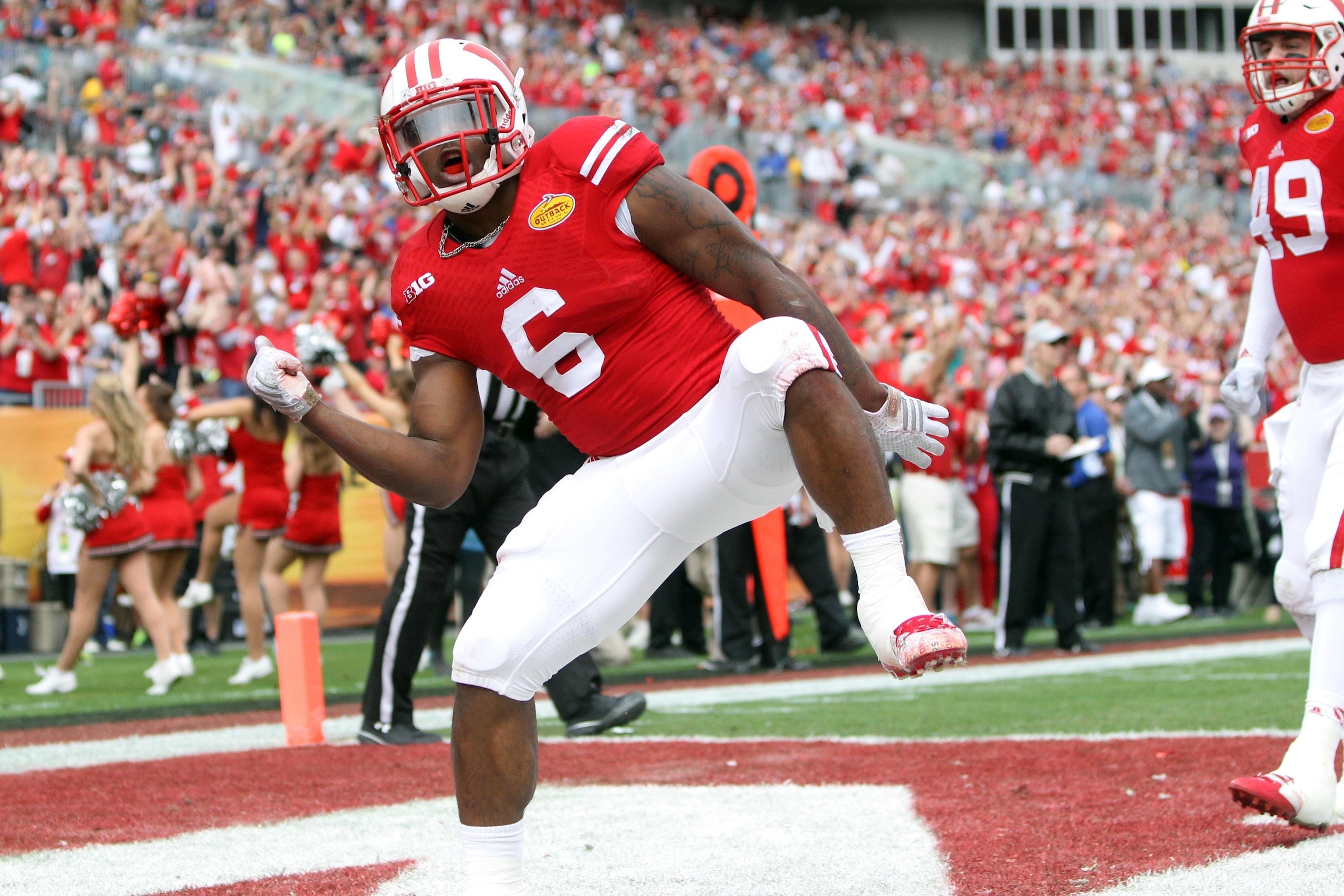
B/R Expert Scouting
"If you're going to lose a guy who ran for 2,500 yards, he's the guy you want after him. I'd be shocked if he didn't have a 1,700-yard year. He's the next great running back at Wisconsin."
—Adam Kramer
Ball Security
Corey Clement spent the past two seasons as Melvin Gordon's understudy and learned many of his traits from the star running back, including the importance of taking care of the ball. This is one of his strengths.
Power
A compact but thick 5'11" and 219 pounds, Clement can handle contact well and doesn't shy away from it. He isn't outwardly forceful but brings it out when necessary.
Vision
Wisconsin routinely has one of the best offensive lines in the country—and the holes are almost always there—yet that group is being retooled for 2015. Clement's move into a featured role will require him to be better at identifying running lanes.
Hands
A seven-yard touchdown catch early in the Outback Bowl bodes well for Clement's prospects as a receiver, something he'll need to be more involved with under new coach Paul Chryst.
Speed
Clement has excellent footwork that helps him make quick cuts and change direction in an instant combined with straight-line speed that's above average and helps him pick up extra yardage.
Balance
With a solid frame and an ability to remain centered, Clement can stay on his feet relatively well and avoid being susceptible to touch tackles.
Overall
The best backup running back in the country in 2014 now has a chance to be Wisconsin's next great rusher. He outgained several starters in the Big Ten and was given key touches alongside superstar Gordon, so he should be prepared to take the next step.
88. QB Kyle Allen, Texas A&M
28 of 115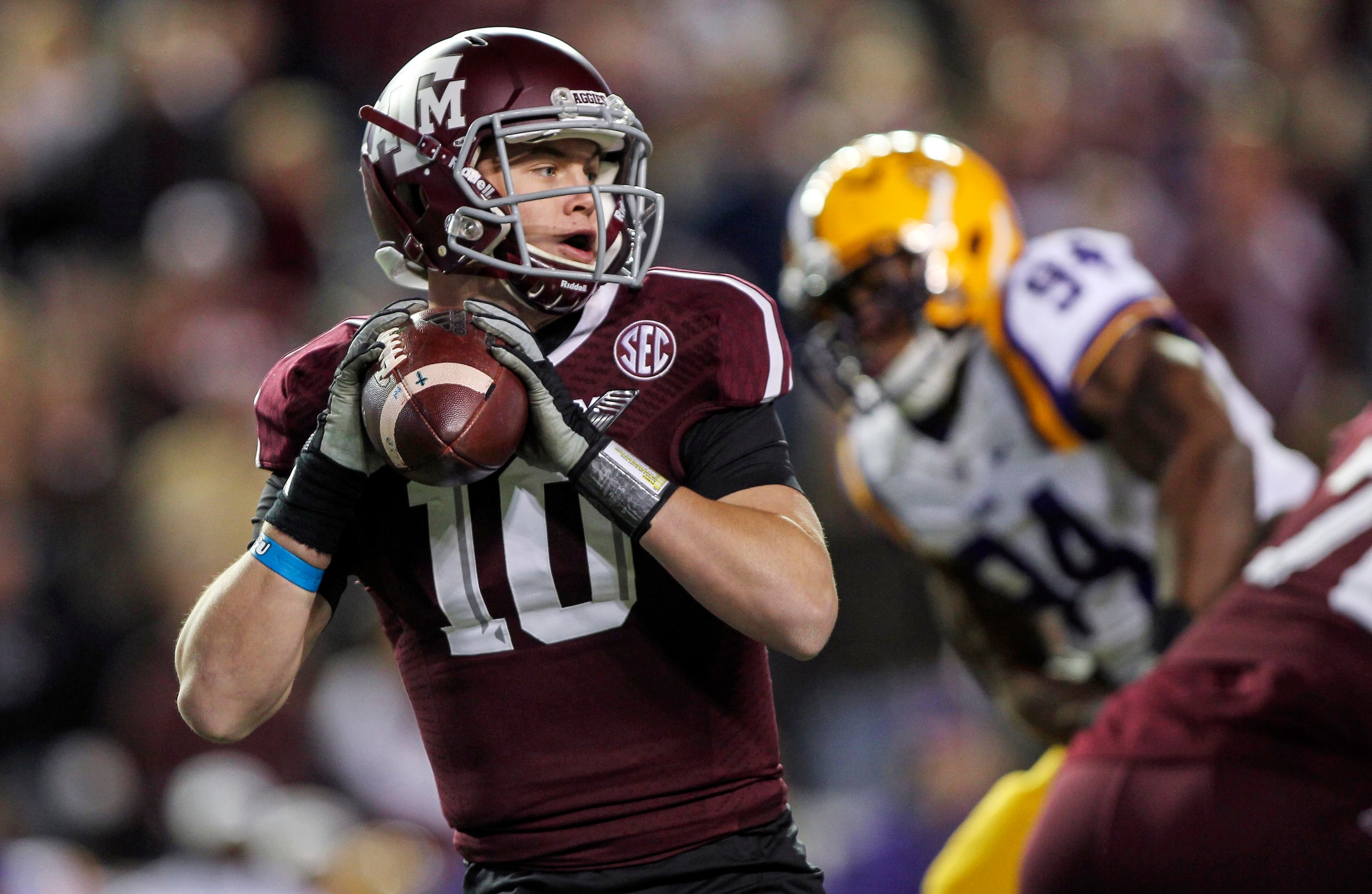
B/R Expert Scouting
“The light bulb went off for him (during last year's bowl game), and he's going to use that to his advantage this year. He's got a ton of weapons around him, and they've built that system around him. I think he'll be a superstar.”
—Barrett Sallee
Accuracy
The quarterback that Kyle Allen became over the final month of his true freshman season is the one that we expected to see when he arrived at Texas A&M, and that included how he hit his targets. He's got great weapons to work with, but it took him a while to realize he could put it up and let them run to a spot.
Arm Strength
The quick-strike approach of the Aggies offense calls for a mix of short, intermediate and deep passes, and Allen showed a knack for every level after some early hiccups.
Pocket Presence
Allen has learned to trust his line and focus on his reads, but he's still paying attention to what's around him and doing his best not to walk into sacks. Opposing players took him down 12 times in a little more than 200 dropbacks last season.
Mobility
Though not a dual-threat passer, Allen still needed to be able to shift around and move the pocket while waiting for his receivers to get open. He isn't particularly fast, but it's also not a liability.
Football IQ
As an early enrollee in 2014, Allen got to work within the system all spring but then had to sit back as the Kenny Hill phenomenon happened to start the season. Once Hill fell out of favor, Allen had a breaking-in period before showing why 247Sports rated him as the No. 1 pro-style passer in the 2014 class.
Leadership
Allen put a reeling A&M team on his shoulders when he took over as starter in November, righting the ship and ending a three-game losing streak with poised play and unflappable confidence.
Overall
This guy is just scratching the surface of what he can do at this level. He'll be challenged by another prized recruit, Kyler Murray, during training camp, but that will just prepare him even more for a starring role in 2015.
87. S Deon Bush, Miami
29 of 115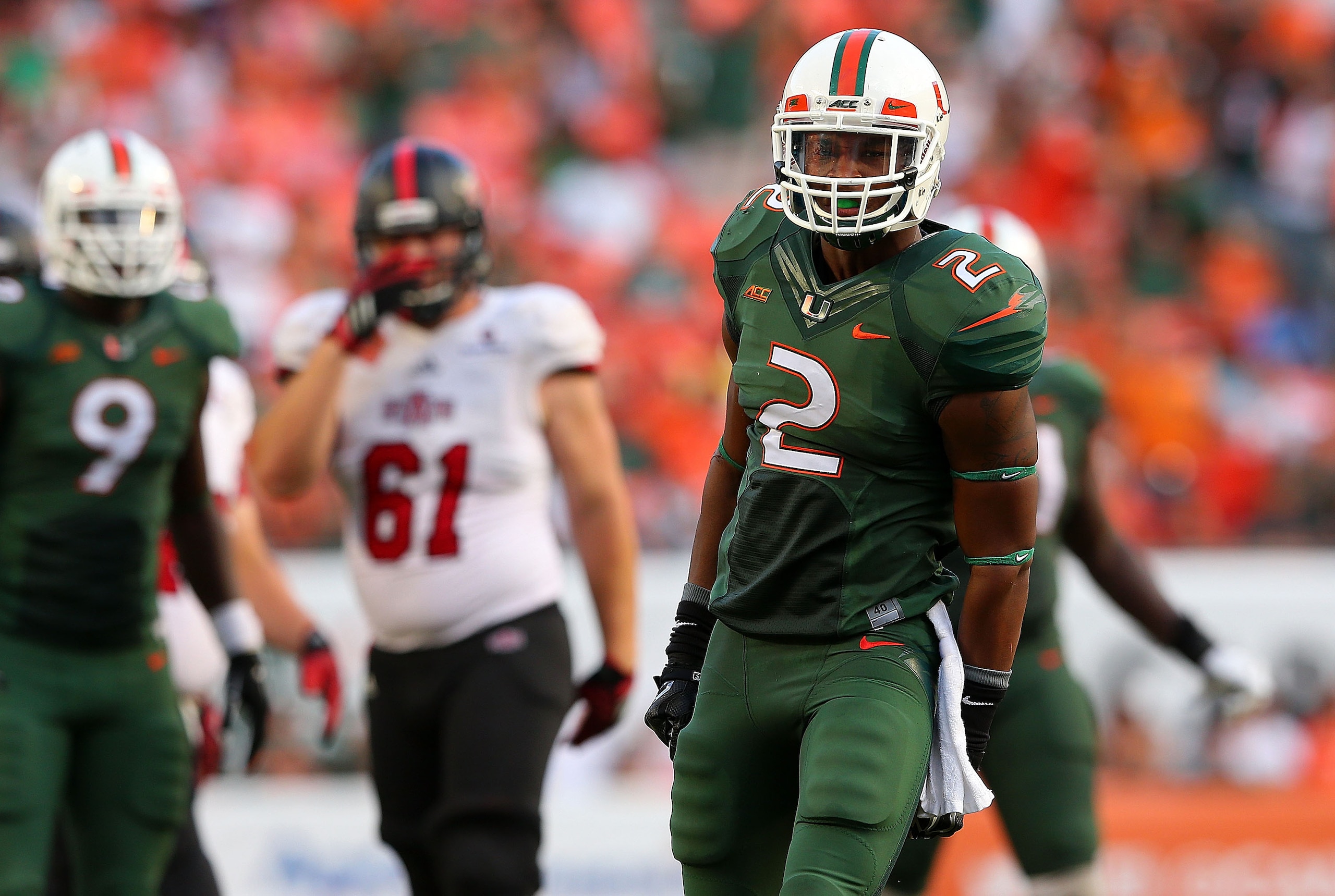
B/R Expert Scouting
"This guy just—everybody loves him. Scouts always seem to be mentioning his name. He hasn't really been tested a lot, so I think he’s a big potential player. But the size-weight-speed are obviously off the charts."
—Matt Miller
Ball Skills
Bush recorded two interceptions and three pass breakups last season. Importantly, he also finished one off the national lead with five forced fumbles. You'd like to see him jump more routes and get his hands on more deep passes, but you can't deny his nose for the football. He's pesky enough to cause problems.
Tackling
Bush recorded 53 tackles last season. He has the frame (6'1", 205 lbs) and range to be an otherworldly tackler but hasn't put all the pieces together. He sometimes takes poor angles and doesn't always wrap up to finish plays. His raw tools earn him passing marks, but he should still be so much better.
Run Defense
Miami gave up 300-plus rushing yards to Nebraska and Georgia Tech—two of the best rushing offenses in the country—but was otherwise OK on the ground. Its two worst performances besides those came against Virginia (43 carries for 195 yards) and Pittsburgh (47 carries for 226 yards). It's not a coincidence that Bush missed most or all of those games with injury. He's a physical specimen in the box and the keystone of Miami's run defense.
Pass Coverage
Bush combines strong reps with poor reps in pass coverage. Sometimes he flashes fluid hips and great acceleration to accompany his long, lean frame; other times he looks lost guessing routes and trips over his own feet. It's a high-upside crapshoot Miami fans are willing to play. Al Golden said he'll line Bush up at cornerback this season, per Barry Jackson of the Miami Herald, and hopefully those reps will get him over the hump in coverage.
Overall
Bush is the most important player on Miami's defense, as he has been since last season. The Hurricanes are a completely different team without him, which speaks well to his presence and leadership. What's scary about Bush is that he's productive while still being raw. There's a whole other level he could potentially raise his game to, but he's fine even if he stays where he is.
86. DT Kenny Clark, UCLA
30 of 115
B/R Expert Scouting
"Apparently, he's a huge personality, and the coaches love him. And he really went off in the second half last season. I know that he's incredibly football-smart, and that's going to help him out a lot."
—Matt Miller
Pass Rush
Kenny Clark has appeared in 26 games, 17 of which he started, and only posted one sack and one QB hurry. He's better than those numbers indicate, because he occupies blockers and frees up rushing lanes for one of the most productive linebacker groups in America—but that is still a pretty passive performance. UCLA does not rely on him to do much on passing downs.
Run Defense
Because UCLA does not rely on him too much on passing downs, Clark can give his all on standard downs. He has good size for a nose tackle (6'3", 310 lbs) and produces despite facing constant double-teams. He had 57 tackles and 5.5 tackles for loss last season, both of which are great numbers for a tackle. Assign one man to block him at your own risk.
Motor
Clark plays with great power and maintains his intensity throughout the game. He is willing (if not eager) to do the dirty work in the trenches, where he throws his weight around like a wrecking ball. He's the type of nose tackle coordinators dream of coaching—a player who embraces his role up the middle and makes his teammates look better.
Overall
Clark forced his way into the starting lineup last season over junior defensive tackle Ellis McCarthy—a pretty solid player in his own right. He made himself invaluable for a defense with as much front-seven talent as any team in the country. With McCarthy out of the picture, Clark will be counted on to play even more snaps in 2015. But it seems like he's ready for the challenge.
85. WR KD Cannon, Baylor
31 of 115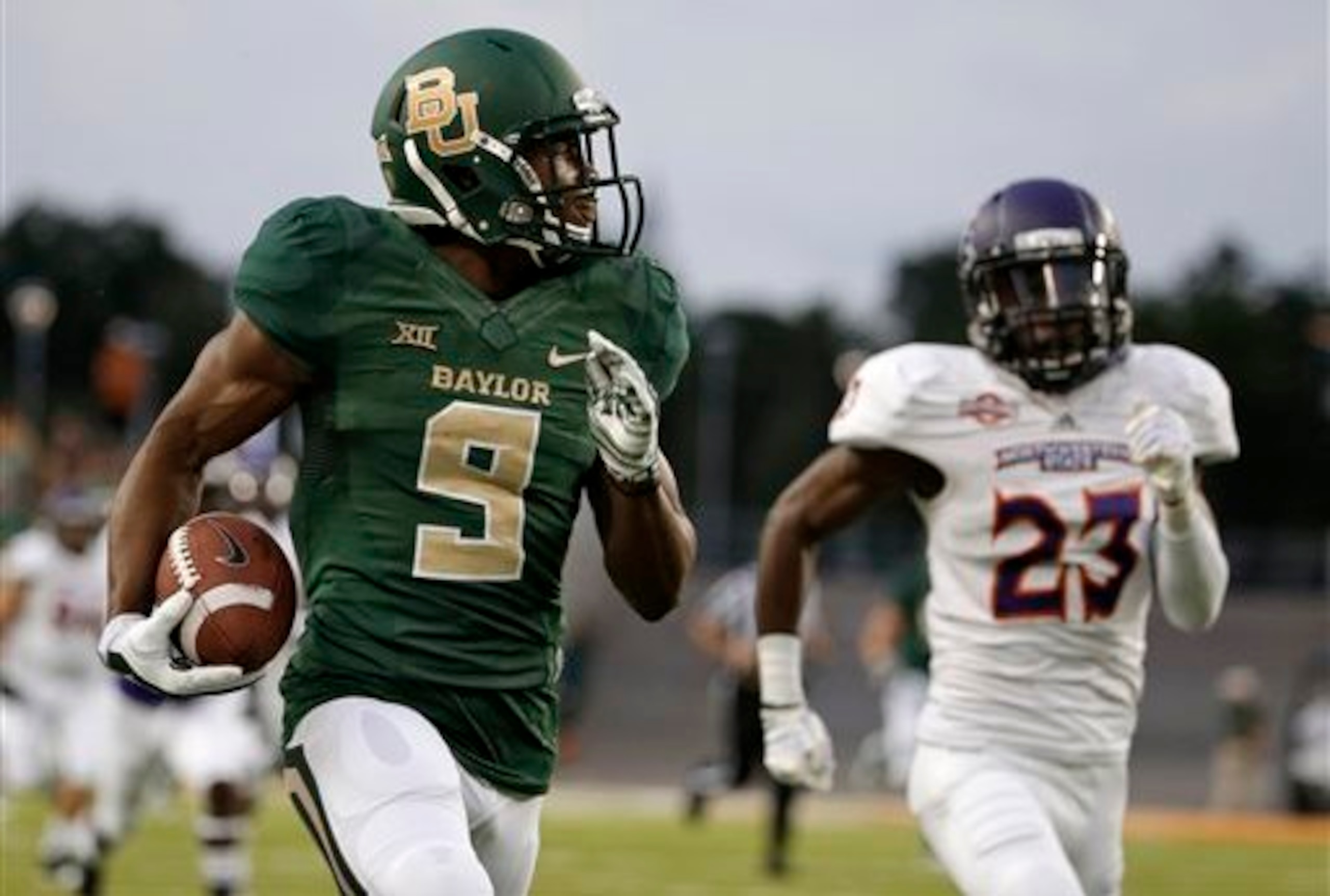
B/R Expert Scouting
“Coming into last year, he was the most exciting freshman I was interested in watching, and he delivered. One of the best deep threats in the college game. He can be that ultimate home run threat.”
—Adam Kramer
Hands
Most of what KD Cannon did in his first season of college was to go long and let the ball fall into his hands thanks to Bryce Petty's deep-ball accuracy. His hands didn't stand out in any spectacular way, though he didn't have many significant drops, either.
Route Running
Cannons aren't meant for pinpoint targeting, so it's fitting that this receiver didn't show much in terms of being an advanced route-runner. This should improve over time, but for now he has been more of an up-and-out kind of player.
Blocking
A thin receiver at 6'0” and 175 pounds, Cannon does his best to block on run plays or get in the way of tacklers upfield.
Release
Cannon's first step is great, which helps him overcome a lack of strength to push past defenders. His footwork also provides space to get into the route cleanly.
Speed
The sophomore is a burner, but he's still not the fastest receiver on the Bears because of Corey Coleman. He's still among the quickest in the game and can get downfield in a blink.
Run After Catch
Most of Cannon's post-catch yards are due to the fact he's already a step or two past his receiver when he catches the ball. When side-by-side with a tackler he has shown a good stiff arm but can be taken down relatively easily.
Overall
Cannon's 1,030 receiving yards were the third-most by a freshman in 2014, and those included nine catches that went for at least 40 yards. He disappeared at times last year but could become one of the best in the country with a little more consistency.
84. DE Kamalei Correa, Boise State
32 of 115
B/R Expert Scouting
"The sacks are what we always talk about—and this young man gets lots of them—but what impresses me most is how complete of a player he is each and every week. He won't get the same publicity because he plays for Boise State, but I implore you to watch him as often as you can."
—Adam Kramer
Pass Rush
Kamalei Correa led the Mountain West with 12 sacks last season. He posted only 2.5 sacks in the first six games of the year. But he came on strong in the second half with two sacks against BYU, three against Wyoming and two against Arizona in the Fiesta Bowl. He is a classic hybrid end/linebacker with solid size (6'3", 248 lbs) and great flexibility to bend the pocket and dip around the edge.
Run Defense
Correa moves well in space and finishes plays on his own. He made 10 tackles against Arizona and finished the year with 59. He's too small to set the edge or clog gaps with consistency but finds other ways to contribute in run support. In a 3-4 system he would have to play linebacker, but as a 4-3 end he does fine.
Motor
Watching Correa gain confidence and grow into himself last season was enjoyable. He began as a semi-timid sophomore but emerged down the stretch and started playing like he knew how good he was. The newfound swagger helped with his motor and was on full display under the bright lights of the Fiesta Bowl.
Overall
Correa became a household name—at least for one night—in the Fiesta Bowl, but he'd been playing at a high level for months. He's the latest in a long line of Boise State NFL draft prospects, and his game evokes memories of former Bronco Demarcus Lawrence. Lawrence was listed at the same height and three pounds lighter than Correa before becoming a first-round draft pick. A strong junior season would put Correa on a similar path.
83. OT Vadal Alexander, LSU
33 of 115
B/R Expert Scouting
"I think he's a much better run-blocker than a pass-blocker, but he does both pretty well. And he is so good for [running back] Leonard Fournette."
—Barrett Sallee
Power
Alexander displays impressive natural power. He uses every fiber of his 6'6", 329-pound frame to move the pile or drive defenders off their marks. He previously served LSU at left guard, lining up next to La'El Collins to form the most powerful blocking wall in America. As a freshman he played right tackle, where he'll serve again this season and provide Fournette with a bulldozer to the right.
Lateral Quickness
Like most guards who move outside to tackle, Alexander faces questions about his quickness. He dropped 15-20 pounds this offseason, per Ben Love of Scout.com, but it remains to be seen if that will significantly improve his foot speed. Either way, it's not like Alexander is a stiff or anything; his positional versatility attests to that. He's just not the quickest lineman you'll encounter.
Pass Protection
Alexander doesn't "struggle" as a pass-blocker as much as he "doesn't excel." Speedy pass-rushers such as Auburn's Carl Lawson, whom Alexander will face in September, might potentially cause problems off the edge. But once Alexander gets his hands on someone—which is often, because he has such long arms—he typically controls them through the play.
Run Blocking
As previously mentioned: Alexander is a bulldozer. His power, technique and willingness to participate at the second level make him a spectacular run-blocker. For a team like LSU that has quarterback issues, sliding such a talent from guard to tackle is a luxury. The Tigers might have to double down on the running game this season, but they have the personnel to make it work.
Overall
Alexander typifies the modern LSU lineman: strong enough to play guard and just quick enough to play tackle. He dominates the short area and helps the Tigers field a dangerous power running game. Even when the defense (plus the announcers, plus the fans, plus the popcorn vendors) knows it's a handoff, the Tigers get a push off the line. That is Alexander in a nutshell.
82. LB James Burgess, Louisville
34 of 115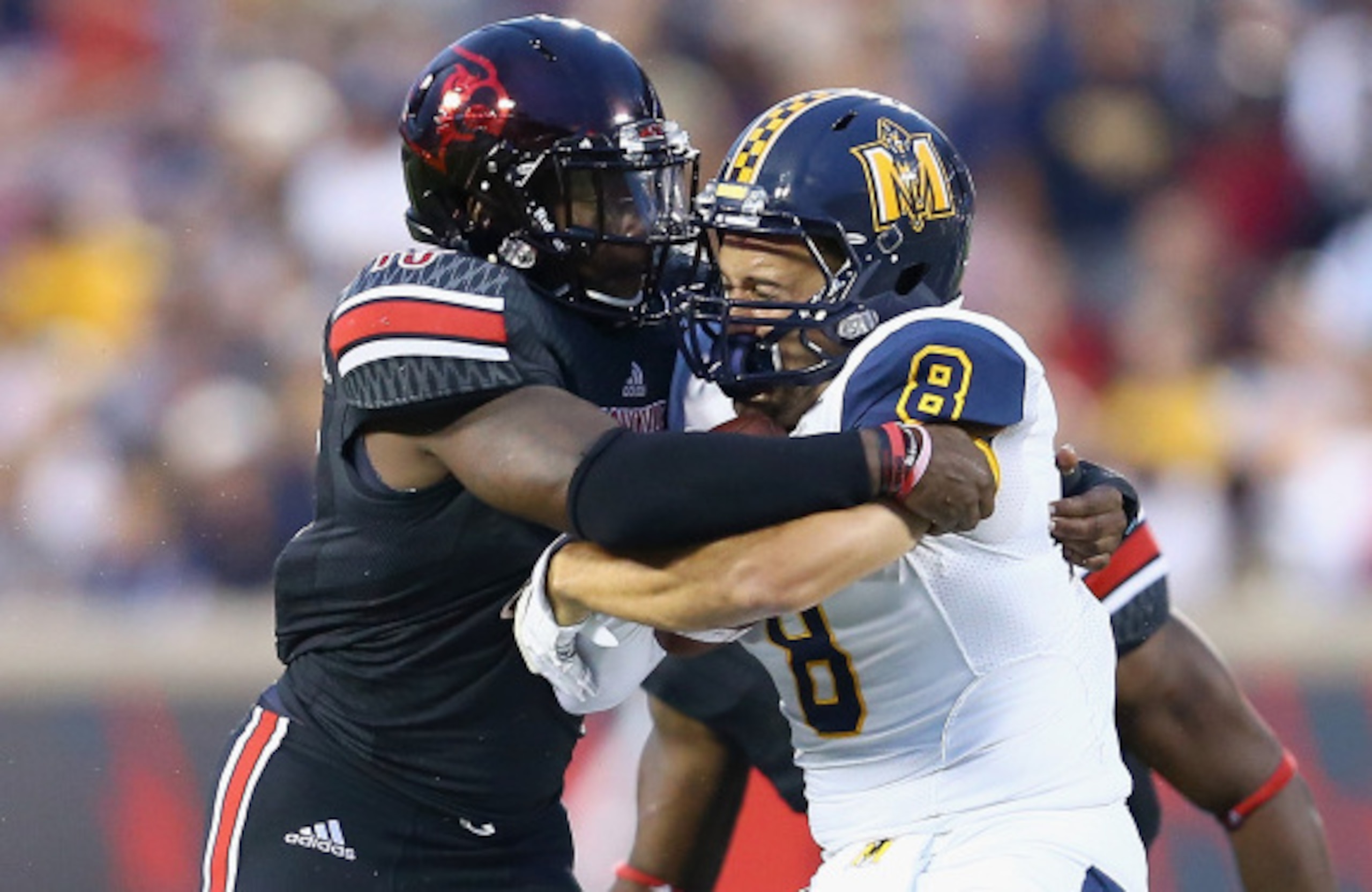
B/R Expert Scouting
"The best thing that happened for Burgess is that he played for [former Louisville head coach] Charlie Strong. So he's very well-taught, and he's carrying that over. He reads his keys, he gets downhill and then he strokes opposing ball-carriers."
—Michael Felder
Tackling
James Burgess is one of the hardest hitters in college football. He's an attacking inside linebacker who whaps offensive players in the hole. He recorded only 71 tackles last season because he doesn't make an impact on the edges, which caps his potential as a tackler. But the things he does well, he does very well.
Pass Rush
Burgess posted three sacks and six QB hurries last season. He is limited in what he can do as a pass-rusher—again, he doesn't make an impact on the edges—but succeeds when he shoots inside gaps. He's a good fit for Louisville's 3-4 defense, which always plays two outside linebackers wide.
Run Defense
It's a pleasure watching Burgess play run defense. He's a short but burly linebacker (6'0", 229 lbs) who attacks the line of scrimmage with conviction and never takes a play off. Whether he is taking on a blocker, filling a cutback lane or making a tackle, he plays with the same intensity. He had seven non-sack tackles for loss for 22 yards last season.
Pass Coverage
Although he doesn't look like a normal coverage linebacker—the ones built like safeties or cornerbacks—Burgess has always fared well in the passing game. He gains depth off the line of scrimmage and does a good job tracking the quarterback's eyes in zone coverage. He finished last season with three interceptions and five pass breakups, so the ball skills are there as well.
Overall
Burgess started six games as a freshman in 2012 and never relinquished the job. He's a leader in the middle of Louisville's defense who kept the unit together after losing head coach Charlie Strong and defensive coordinator Vance Bedford to Texas. The arrival of highly touted transfers Devonte Fields and Josh Harvey-Clemons gives the Cardinals a high defensive ceiling, but that's only if the veterans make sure everyone is on the same page. With Burgess, there's a good chance they will be.
81. CB Zack Sanchez, Oklahoma
35 of 115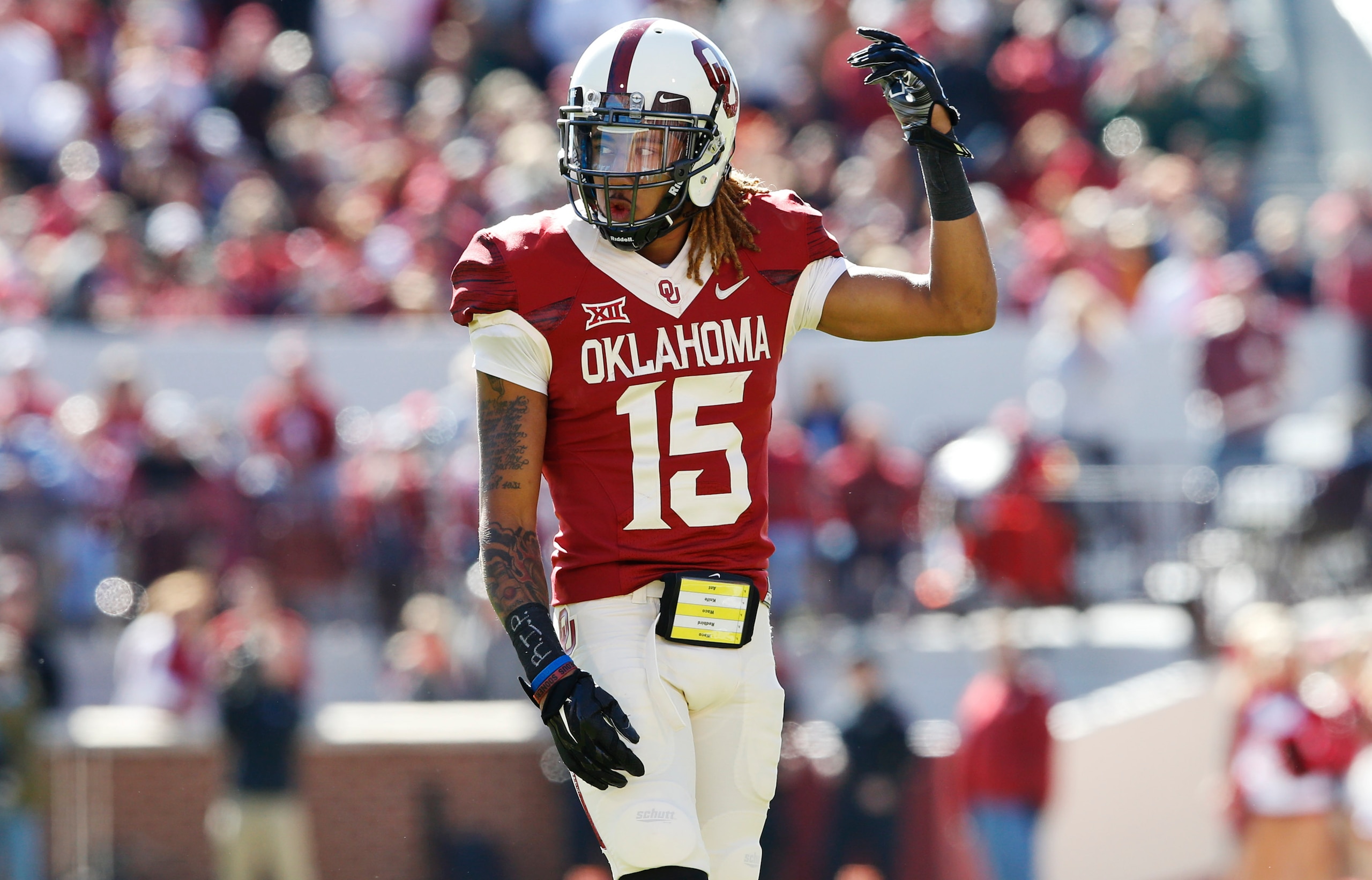
B/R Expert Scouting
"Looks undersized. Struggles with transitions. But he's an obvious playmaker with ball-hawk hands."
—Matt Miller
Speed
Sanchez is an above-average athlete with what scouts call "functional speed." He's not the type to moonlight as a punt returner or cover a speedy slot threat, but he fares well with most outside receivers. Only special athletes (see: Kevin White) have made him look bad going vertical.
Ball Skills
Sanchez will earn his paycheck as a playmaker with ball-hawk instincts. He's an Asante Samuel type who gambles often but forces enough turnovers to make that gambling worthwhile. Between the 2013 Kansas State game and the 2014 Texas game, he recorded an interception in seven of nine contests. The highlight of that stretch was a five-game interception streak against Alabama, Louisiana Tech, Tulsa, Tennessee and West Virginia.
Run Defense
Sanchez is an active defender who doesn't shy away from contact. He's thin (5'11", 175 lbs) and sometimes overwhelmed by bigger wide receivers, and he doesn't know how to wrap up and tackle, but at least he shows a willingness to crash from the outside and participate in run defense.
Pass Coverage
What makes Sanchez so valuable—his willingness to gamble and force turnovers—also makes him vulnerable in coverage. He's better in zone than man, where his awkward transitions lead to occasional blown assignments. As long as he keeps forcing turnovers, Oklahoma can live with these breakdowns. But if the well of interceptions ever runs dry, Sanchez is not the No. 8 corner.
Overall
The book on Sanchez is simple, as explained in the sections above. He makes enough plays to forgive the occasional coverage breakdown, and those breakdowns are infrequent enough to justify his place on this list. His instincts for the position are exceptional, and ultimately that's why he ranks so high. Instincts are harder to teach than the things Sanchez needs to improve.
80. DE Sheldon Rankins, Louisville
36 of 115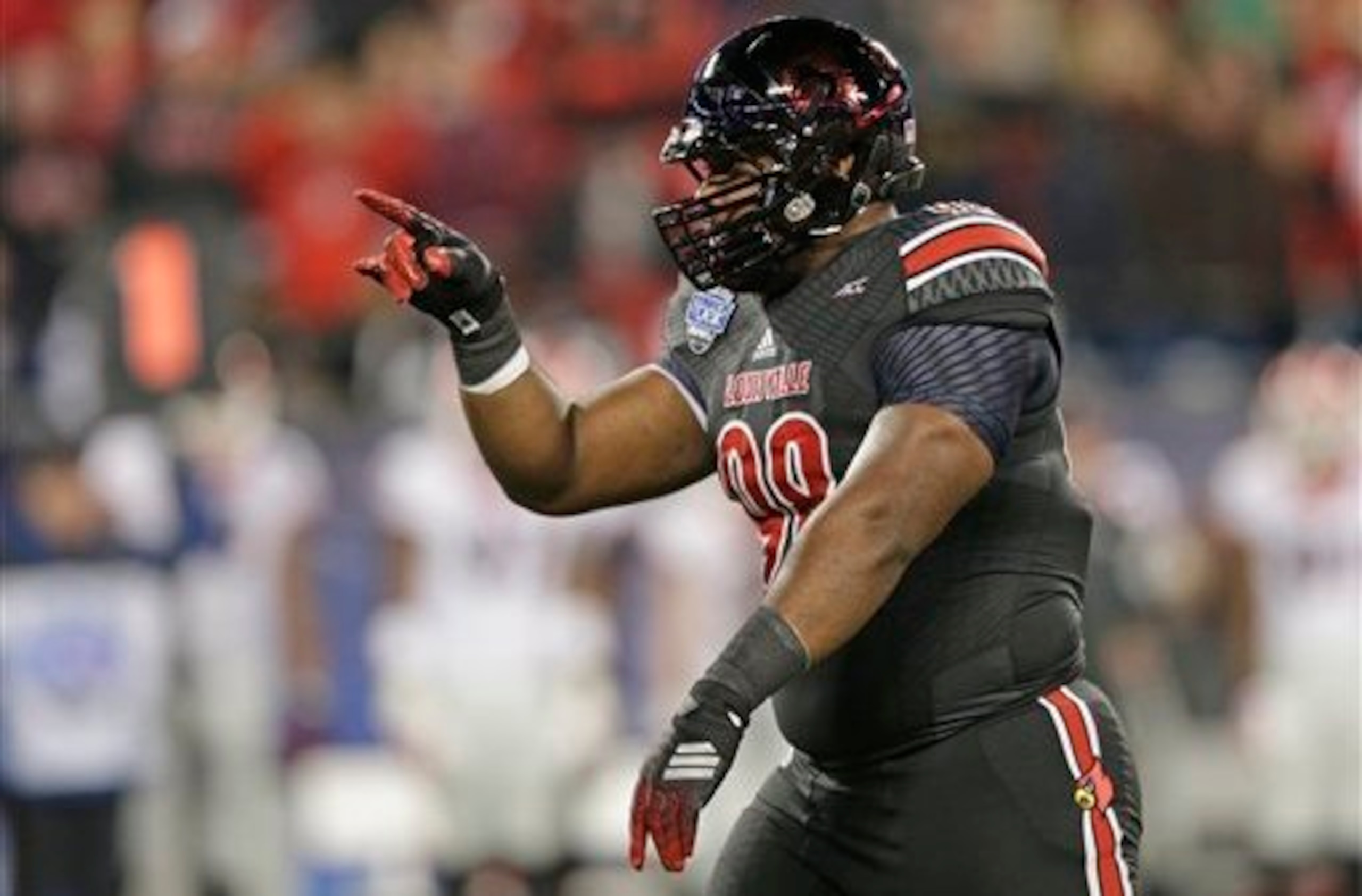
B/R Expert Scouting
"Louisville defenders are all just so finished. He's big enough to play in a 3-4, but he's active as a pass-rusher. I think they can move him around a little bit."
—Matt Miller
Pass Rush
Sheldon Rankins led Louisville with eight sacks last season. That's a great total for a 6'2", 303-pound lineman who rushes as often through the middle as on the edge. He has great quickness for a man his size and can overpower certain blockers. He's a versatile rusher whom the Cardinals use all over the defensive front.
Run Defense
Rankins is even better against the run than he is at rushing the passer. When he lines up as a 5-technique, his size to hold the edge stands out. But when he kicks inside to play tackle, he is quick enough to slice through guards and centers. He had 53 tackles and 5.5 non-sack tackles for loss last season.
Motor
Rankins adopts the mindset of Louisville's defense, which perpetually plays angry and underappreciated. He's a team player who prefers—like almost every defensive lineman—to create negative plays on his own, but he works just as hard when his assignment is to leverage a gap or clog a hole.
Overall
Louisville's defense has been a treat to watch the past two seasons. Rankins played more in 2014 than in 2013, but he has made a noticeable impact both years. This season the Cardinals lose defensive ends Lorenzo Mauldin and Deiontrez Mount, so Rankins will find even more responsibility heaped onto his plate. Based on last year's performance, he can handle it.
79. TE Hunter Henry, Arkansas
37 of 115
B/R Expert Scouting
"When it comes to receiving threats, he's one of the best in the SEC. He's faster than he probably should be at his size. He's more than just a safety valve."
—Barrett Sallee
Hands
Arkansas head coach Bret Bielema loves his tight ends, and Hunter Henry has developed into one of the most reliable pass-catching threats in the country thanks to his development in the Razorbacks' system. His hands are soft, big and make for a great target.
Route Running
Henry plays on the line and splits out wide, and he can run all of the routes. His cuts and moves are wide receiver quality, and he can fake out defenders with his footwork.
Blocking
If you can't block for the run, you won't see the field at Arkansas. Henry is an every-down player who is another lineman when in there on run plays.
Release
When split out, Henry tends to be given some space since he's strong enough to overpower most safeties and linebackers. When on the edge, he is adept at making himself disappear in the chaos and ends up wide-open quite often.
Speed
Henry is 6'5” and 253 pounds yet runs like a much smaller player, which is why Arkansas will regularly send him beyond the first level of the defense. He's not one to outrace defenders, but when they give him too much cushion, he's fast enough to hold the lead.
Overall
While Arkansas would ideally like to have more traditional receiving targets as their go-to players, Henry remains a great option who will be very difficult for most teams to slow down. He's had a very strong first two seasons and is poised to be an All-American this coming fall.
78. QB Brandon Doughty, Western Kentucky
38 of 115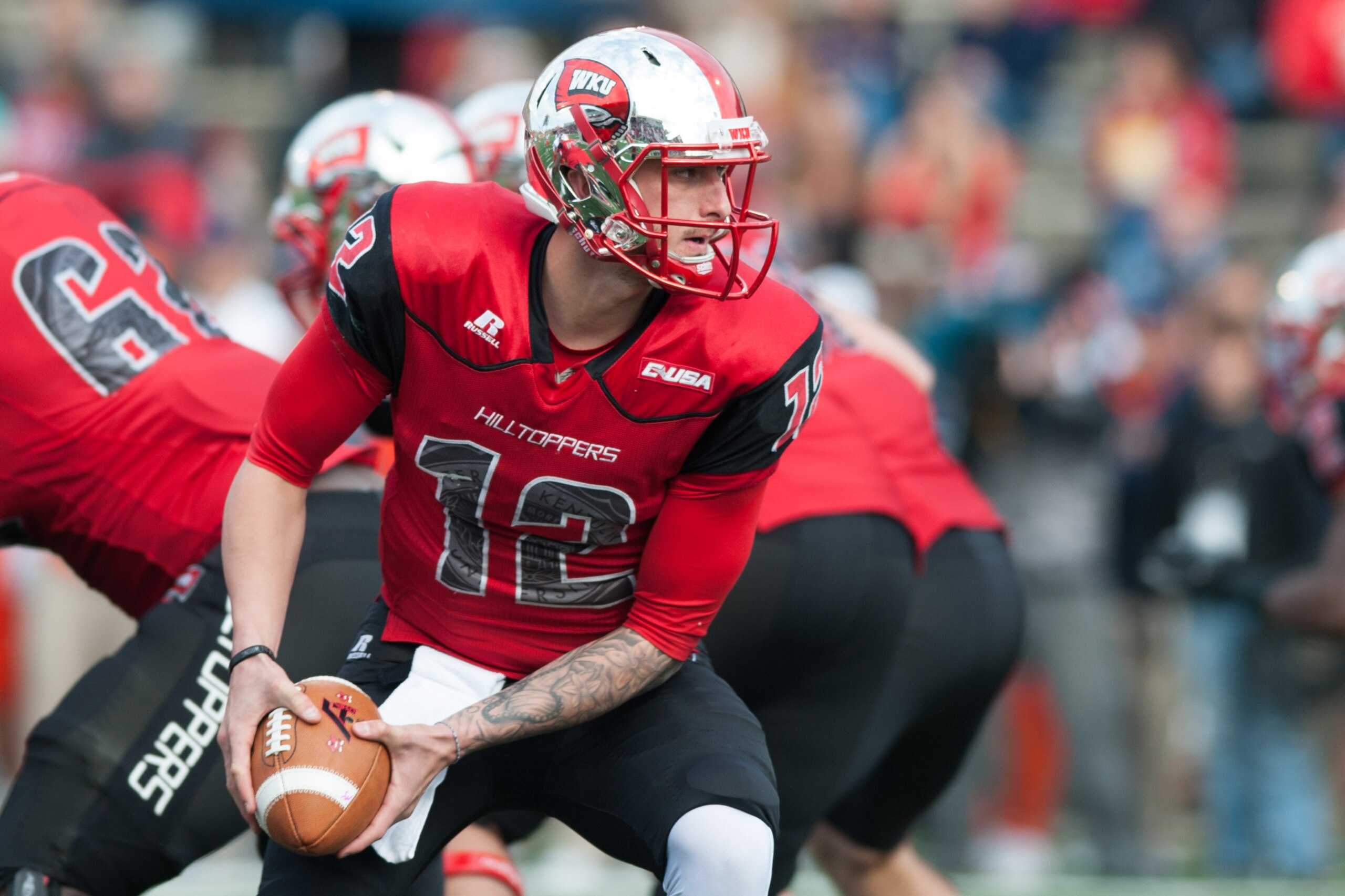
B/R Expert Scouting
“I think he's vastly underrated and underappreciated. He certainly benefits from being in that system, but he's a guy that makes that system better, too.”
—Adam Kramer
Accuracy
Brandon Doughty tied for sixth in FBS with a 67.9 percent completion rate last year, but that's only the beginning of the story. Those he tied with and trailed all threw between 271 and 452 passes, compared to the 552 he attempted while leading the nation in touchdowns (49) and yards (4,830). He also only threw 10 interceptions, and take away a nightmare four-pick game against Louisiana Tech, and he had six in 517 throws.
Arm Strength
Doughty has some power behind his throws, but Western Kentucky's offense is predicated more on quick throws, so he uses his strength to fire it in there as swiftly as possible.
Pocket Presence
Considering Doughty has had multiple knee surgeries that robbed him of nearly two full seasons, his ability to elude tacklers and only take 19 sacks in 13 games is pretty amazing. The natural tendency to avoid further injury works in his favor here.
Mobility
Doughty is only going to move around enough not to get hit; he won't be asked to bring the ball forward unless absolutely necessary.
Football IQ
The injuries have made Doughty well aware of his limitations, so he doesn't try to overdo it. That's a testament to the maturity he's developed throughout his career as he heads into his sixth season after being granted a medical redshirt for one of his lost years.
Leadership
Doughty's teammates would run through a wall for him knowing the sacrifices he's made to get to this point. And his poised play is why the Hilltoppers are favored, according to an American Sports Network poll, to win Conference USA's East Division this year.
Overall
Doughty is playing on borrowed time, having been given this extra season in December. He's not going to waste it, and that will result in him performing at his peak on a weekly basis.
77. OT Denver Kirkland, Arkansas
39 of 115
B/R Expert Scouting
"Jonathan Williams and Alex Collins are running through the Grand Canyon because of him. He is just an absolute mauler."
—Barrett Sallee
Power
NFL.com ranked Kirkland the No. 2 "biggest" player in college football. He ranks about the same in terms of power. He bullies defensive linemen off the line of scrimmage, making the most of his massive frame (6'5", 340 lbs) in the short area. He's the perfect offensive lineman for Arkansas head coach (nee Wisconsin head coach) Bret Bielema.
Lateral Quickness
Arkansas is betting on Kirkland's quickness by shifting him from right guard to left tackle. The coaching staff seems to think he can handle it, so by the end of the year this rating might be higher, but based on what we've seen he's neither quick nor smooth enough to handle speedy defensive ends. In the past he has won with strength only, and the past is all we have to go on. If there's more to his game (which there might be), let's see it.
Pass Protection
Kirkland hasn't spent much time in pass protection. He's played guard the past two seasons, and last year Arkansas had roughly 200 more run attempts (557) than pass attempts (359). He does have the long arms, strong hands and thick base to succeed in pass protection, especially against power-rushers, but for now let's consider this grade a work in progress.
Run Blocking
Arkansas has one of the best rush offenses in college football; the key to that rush offense is its offensive line; and the key to that offensive line is Kirkland. He's a people-mover who can open up an inside gap or seal the edge for runs on the perimeter.
Overall
Bielema has coached some great offensive linemen. Joe Thomas, Gabe Carimi, Travis Frederick—the list goes on. But the way Bielema speaks about Kirkland makes it seem as if he's right at their level. It's hard to say for sure because he's never played tackle, and the move to Brandon Allen's blind side brings so many questions, but keep an eye on Kirkland as a potential breakout player. NFL scouts are already watching closely.
76. DE Shilique Calhoun, Michigan State
40 of 115
B/R Expert Scouting
"He's trying to figure out who he is still. He's long and lean, but is he too small? He's kind of a tweener right now, but the potential is obviously there."
—Matt Miller
Pass Rush
Shilique Calhoun is a consistent pass-rusher with the upside to be a great one. He posted eight sacks in 2014, including one sack in five consecutive games. He has the burst and flexibility of a rotational NFL edge-rusher, and his lanky build (6'5", 250 lbs, long arms) allows him to disengage with hand combat.
Run Defense
He doesn't boast the size of some of the other defensive ends on this list, but Calhoun is a solid run defender. He's athletic enough to split gaps and make plays in the backfield or chase down running backs in space. His NFL future might lie at linebacker, where he can play to those strengths instead of fighting to maintain gap control as a lineman. He lacks the brute size to hold the edge against bigger tackles.
Motor
Calhoun plays with a chip on his shoulder—something common at Michigan State. He ranked outside the Top 900 players in his recruiting class but has quickly proved high school scouts wrong. Too many players with Calhoun's athletic tools would coast on having...well, his athletic tools. What makes Calhoun so special is that he plays as if he's not a freak of nature.
Overall
Calhoun broke out in 2013 but stagnated as a prospect last season. He played well for a team that won 11 games, but anyone who watched the Spartans knew that it wasn't the same defense. Calhoun could afford to stagnate because he was so advanced for a sophomore two years ago. But now he needs to put all the pieces together and figure out where he fits as a player.
75. RB Paul Perkins, UCLA
41 of 115
B/R Expert Scouting
"He's extremely balanced, and he has a perfect understanding of how he fits in this offense. Now that Brett Hundley is gone, I think people will realize that."
—Adam Kramer
Ball Security
Paul Perkins is one of the most careful ball-carriers in the game, whether it's running it or catching it out of the backfield. This security helped make UCLA become more and more confident in his play as last season progressed.
Power
Perkins isn't a bruiser—a little bit more finesse than straightforward power—but he can still take and dish out a hit. He's on the smaller side at 5'11" and 198 pounds but still has enough strength to handle the contact.
Vision
The holes weren't always there for Perkins last season behind a shaky offensive line, so he often had to freelance and scope out lanes on his own. This sometimes came off as looking hesitant but in reality was because of what was going on in front of him.
Hands
An underrated part of Perkins' game is how he handles being part of the passing attack. He had huge receptions to trigger wins over Texas and California last season and becomes an open-field running back when he gets thrown to.
Speed
Perkins' speed is most noteworthy when watching how he can cut and change directions. He isn't a sprinter who outruns people but rather one who uses lateral quickness to create separation.
Balance
Perkins is able to stay balanced rather well, but it's not something he excels at. He can be knocked around a bit but does well to keep his feet moving and remain upright.
Overall
Hundley got all the attention last season, but Perkins was the unsung hero of UCLA's offense. He'll be far more important this fall, with the Bruins likely playing a freshman at quarterback, and he figures to have a good shot to repeat as the Pac-12 rushing champion.
74. DE Pete Robertson, Texas Tech
42 of 115
B/R Expert Scouting
"The biggest thing I noted is that he shows up every week. Tackles, tackles for loss, sacks, turnovers—he's always gonna do something. And he's a really, really good athlete."
—Matt Miller
Pass Rush
Pete Robertson led the Big 12 with 13 sacks last season. His ability to get to the quarterback was the lone bright spot on an otherwise terrible defense. He can rush standing up or with his hand down and has ideal speed and quickness off the edge. He'll play more end than linebacker this season as Texas Tech transitions to a 4-3 defense, but there's enough meat on his frame (6'3", 239 lbs) to handle the switch.
Run Defense
Texas Tech has one of the worst run defenses in the country, and Robertson plays a role in that. He's one of the Red Raiders' better run defenders, but A) that's not saying a lot and B) he's not so much better than the rest. He's a talented athlete who chases the ball down the field and is capable of making tackles. But he lacks gap discipline and doesn't always execute his run fits. Perhaps a more permanent move to defensive end, where there is less to diagnose than at linebacker, will be just the change he needs.
Motor
It would have been easy for Robertson to get discouraged; most of his teammates clearly did. Many pegged Texas Tech as a bowl team, but instead its season fell to pieces and it fired defensive coordinator Matt Wallerstedt after three games. Still, Robertson showed up each week as if the Red Raiders were in the College Football Playoff. He proved he's not a fair-weather hustle guy by competing in the midst of disaster.
Overall
Robertson will play more defensive end under new coordinator David Gibbs. It remains to be seen how he holds up with his hand down more frequently, but ideologically the match makes sense. Gibbs' Houston defenses forced more turnovers over the past two years than any team in the country. Texas Tech has struggled to force turnovers, but Robertson is the type of explosive, intense, opportunistic athlete who should thrive in a more aggressive scheme.
73. QB Justin Thomas, Georgia Tech
43 of 115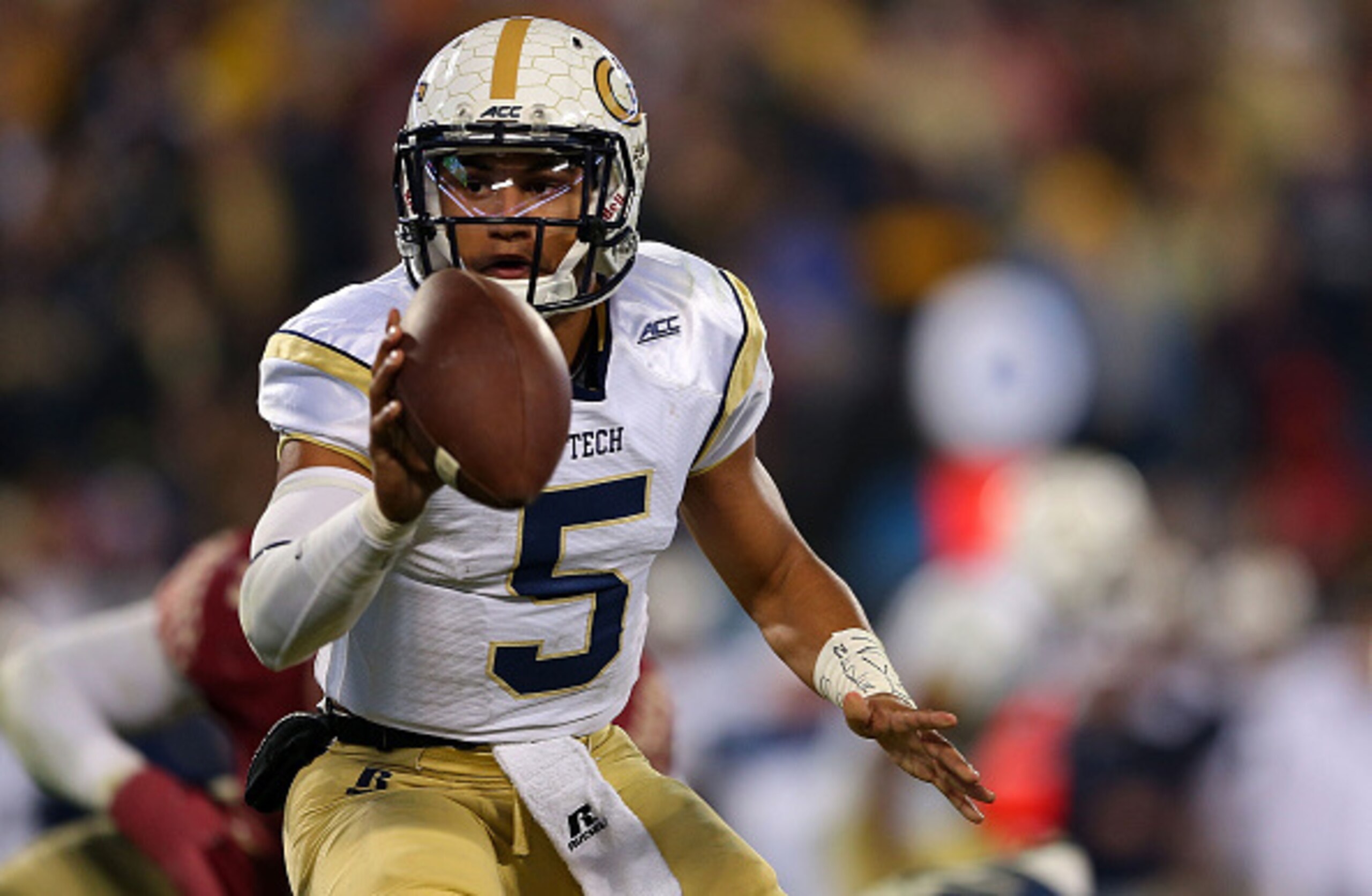
B/R Expert Scouting
"He's a guy who's perfect for what Tech wants to do. I love the way he plays. Georgia Tech has its most productive quarterback in some time."
—Adam Kramer
Accuracy
The passing aspect of a triple-option offense revolves around big plays: Teams catch the defense off guard by drawing it in for the run and then throwing over the top. Justin Thomas does this about as well as any option quarterback, but he still connected on only 51.3 percent of his passes last year.
Arm Strength
Thomas isn't lacking in the arm strength department, as he regularly sends the ball deep. If he were to play in a more traditional passing offense, this would be one of his best attributes.
Pocket Presence
Opponents don't often get pressure on Thomas because the pass plays happen quickly, but when he has to wait for someone to get open, he can become a little shaky in the pocket. He was sacked 10 times last year, which is a relatively high number for an option passer.
Mobility
Thomas is the best in the business when it comes to quarterbacks on the move. He was Georgia Tech's leading rusher, with 1,086 yards and five 100-yard games, and his speed around the edge was too much for opponents to handle.
Football IQ
His ability to pick the right option on each play is Thomas' best attribute. The Yellow Jackets allowed only 65 tackles for loss last season, per CFBStats.com.
Leadership
Thomas understands his role in Tech's offense perfectly, and this carries over to how he leads his team on the field. Head coach Paul Johnson has said as much, telling ESPN.com's Andrea Adelson, "If I had to take one guy to come back, he's it."
Overall
The key difference between Georgia Tech in 2013, when it finished 7-6, and last year's 11-3 team was Thomas. His understanding of the option and headiness on the field were critical, and despite the Yellow Jackets having to replace all their other skill players, his return ensures they'll again be competing for an appearance in the ACC title game.
72. LB Kentrell Brothers, Missouri
44 of 115
B/R Expert Scouting
"Defense is Missouri's identity, and Brothers is the perfect fit. He forces his teammates to play disciplined football, gets them all lined up right and really deserves more credit for what he does."
—Barrett Sallee
Tackling
Kentrell Brothers ranked No. 2 in the SEC with 122 tackles last season. No returning player in the conference had more. Those numbers might have been inflated by one of the best defensive lines in college football, which occupied blockers and kept Brothers free to make plays; but the tape says he was as good as advertised. He's a sound wrap-up tackler with strong arms and hands that prevent offensive players from slipping away from him.
Pass Rush
Brothers has posted one sack in each of the past two seasons. The first came against Murray State in 2013; the second came against an even more hapless opponent: Florida during last year's six-turnover slopfest on October 18. Basically, Brothers does little to contribute as a pass-rusher. He's a pure 4-3 weak-side linebacker who only preys on overwhelmed offensive lines.
Run Defense
Missouri ranked No. 12 in the country in run defense last season, per Football Outsiders' S&P+ ratings, which again had a lot to do with the defensive line but also a lot to do with Brothers. He's a physical presence at the heart of the Tigers defense with enough size (6'1", 235 lbs) to take on smaller blockers. He also has the balance to slip past bigger blockers when necessary. Brothers doesn't play middle linebacker, but he plays like a middle linebacker in run support.
Pass Coverage
One reason Brothers posts so few sacks is that Missouri prefers to use him in coverage. He moves well despite his square frame and only takes smart chances when playing zone. He posted three interceptions in the first six games of 2013, and while he hasn't had an interception since then, he did record four pass breakups last season.
Overall
Even within a team that flies under the radar, Brothers flies under the radar. Defensive ends Kony Ealy and Michael Sam stole the show in 2013, and then their replacements, Shane Ray and Markus Golden, did so in 2014. But those who watch the SEC closely know how important Brothers has been to Missouri's surprising success. This year this defense is his, so if the Tigers stay competitive, he won't fly under the radar for long.
71. CB Cameron Sutton, Tennessee
45 of 115
B/R Expert Scouting
"Cam Sutton is the most underrated player in the SEC. Vernon Hargreaves gets all the credit, but Sutton deserves to be right up there. He just needs a little more consistency."
—Barrett Sallee
Speed
Sutton has excellent closing speed, which helps both in run defense and coverage. He's tall for the position but lean (6'1", 189 lbs), and he uses that length to run stride for stride with receivers down the field.
Ball Skills
Sutton's 13 pass breakups gave him a share of last year's SEC lead. Add on his three interceptions, and only Senquez Golson and Jonathan Jones recorded more passes defended. While certain taller cornerbacks lack coordination, Sutton finishes plays with excellent ball skills.
Run Defense
Here is where Sutton needs work. He's physical and fast enough to play run defense, but he misses too many tackles. Unlike his ball skills in coverage, where he finishes plays with conviction, his tackling holds him back from defending the run as well as he should.
Pass Coverage
Size, speed, fluidity—Sutton has it all. He's sometimes inconsistent in man coverage, where his footwork is less than ideal, but he gets the job done and then some. According to Jack Farrell of Pro Football Focus, he held quarterbacks to a rating of 51.6 last season. No SEC corner with more than 400 snaps in coverage fared better.
Overall
Sutton is one of the best kept secrets in college football. He's not as consistent as the best cornerbacks in the country, but when he's on, he is every bit as good. If he smooths the minor lapses in his game, he's got the ceiling of an All-American.
70. C Max Tuerk, USC
46 of 115
B/R Expert Scouting
"I really like the athleticism he's shown when he gets on the move. He can pull, he can reach the second level and track defenders, and he's awesome when they put him in space on screen passes."
—Michael Felder
Power
Tuerk looks too lean to be a lineman (6'6", 285 lbs) and struggles against legitimate nose tackles. He's stronger than those numbers indicate but not by much. Another year in USC's weight program should help him add muscle—which he'll need before a season in which the Trojans play Sheldon Day (Notre Dame), Lowell Lotulelei (Utah) and Kenny Clark (UCLA).
Lateral Quickness
Tuerk combats his size concerns with rare athletic gifts. He's a nimble, fleet-footed lineman in the mold of what Chip Kelly coached at Oregon. He is smooth executing down blocks and rumbles down the field to spring his running backs at the second level.
Pass Blocking
Prior to playing center, Tuerk made starts at left guard, right tackle and left tackle. The left tackle starts came in 2012, when he was only a true freshman, but he was advanced enough to hold his own in pass protection. No interior lineman in college football displays better mirroring skills than Tuerk. He can be pushed back by nose tackles, but he's not as often as he probably should.
Run Blocking
Although he's obviously limited in the short area, Tuerk is a very good run-blocker. USC plays to his strengths by asking him to pull or get to the second level and bulldoze. It helps to play with guards such as Toa Lobendahn and human giants such as tackle Zach Banner (6'9", 360 lbs), who can handle power linemen on their own. The help he receives is a part of his assessment, but Tuerk still plays well in his role.
Overall
Tuerk is one of the most versatile and athletic offensive linemen in the country. His experience paid off for USC last season, when despite integrating three true freshmen in the trenches, the Trojans' offense ran smoothly. It's difficult to overstate the importance of a veteran center. Tuerk isn't the best player on USC's roster, but he might be the most important.
69. DE Curt Maggitt, Tennessee
47 of 115
B/R Expert Scouting
"He's quick enough to be a pass-rushing force, but physical enough and smart enough to always be in the right place at the right time. Tennessee is gonna need him to be the quarterback of this defense."
—Barrett Sallee
Pass Rush
Curt Maggitt is one of the best pure pass-rushers in the country. Whether he lines up with his hand down or at linebacker—he could have qualified for either position—his speed off the edge and experience shedding blocks make him a hassle. According to Jack Farrell of College Football Focus, he was the third-most productive pass-rusher in the FBS last season.
Run Defense
Maggitt defends the run better as a rush linebacker than as a defensive end. He's good for the occasional non-sack tackle for loss (four in 2014) but doesn't have the frame (6'4", 252 lbs) to occupy bigger offensive linemen. Despite that, he is willing to throw his body around and works hard to execute his run fits, clog up potential holes and free up his linebackers.
Motor
Maggitt worked his butt off to return from the ACL injury that ended his 2012 season. He didn't rush himself back into action, sat out in 2013 and returned with a vengeance once he was ready. He's the emotional leader of a talented Tennessee defense, and his motor sets the tempo for everyone.
Overall
Maggitt ranks this high because of his pass-rushing prowess—but don't think he's a one-trick pony. His ability to get to the quarterback is his signature trait, but Tennessee relies on his attitude, experience and leadership as much as on his quick first step.
68. QB Brad Kaaya, Miami
48 of 115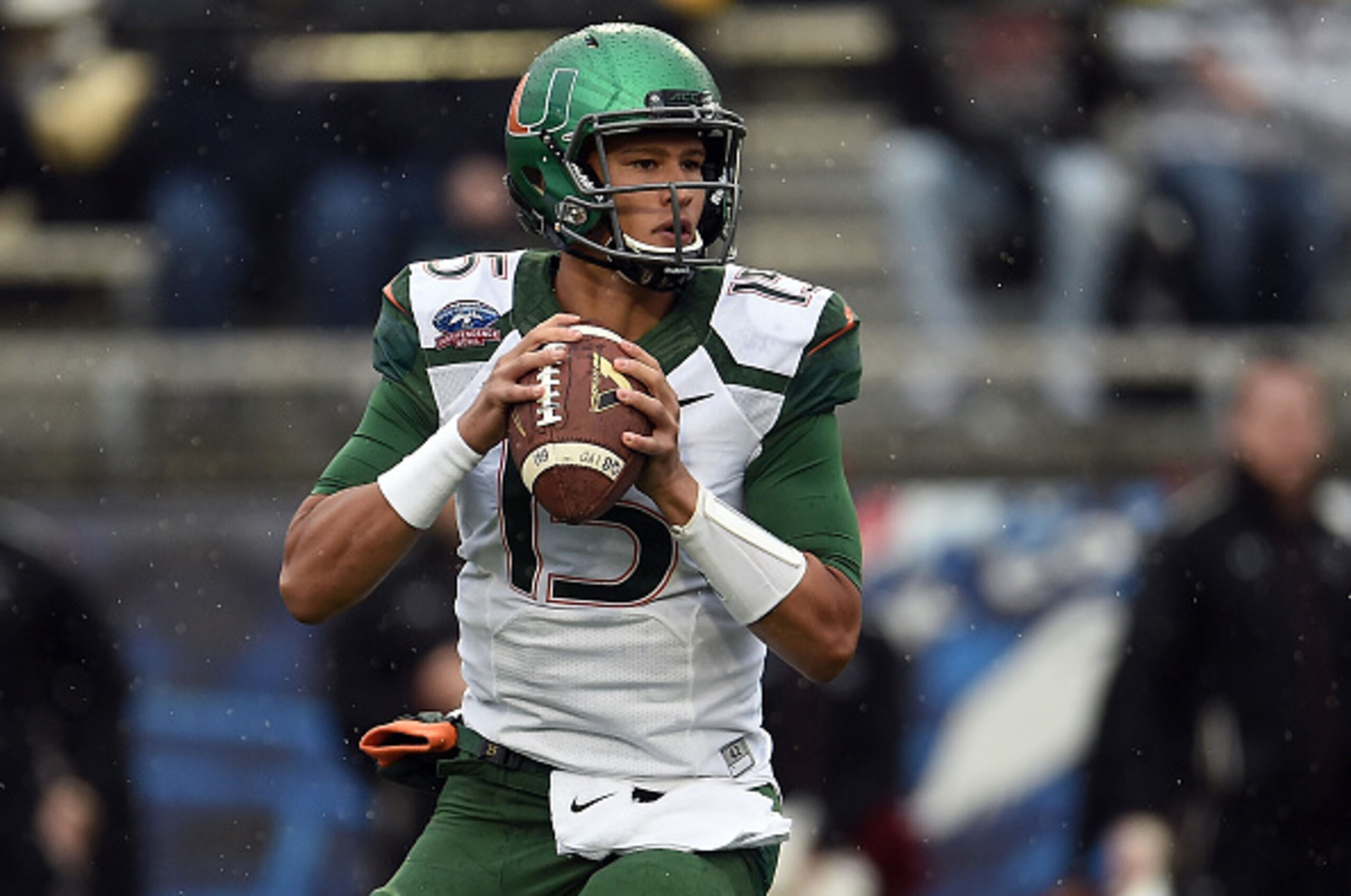
B/R Expert Scouting
“He has fascinating potential. As a true freshman, he was well beyond his years. He has the body and the arm; he has a chance to be special.”
—Adam Kramer
Accuracy
Working with a receiving corps that was pretty much all or nothing in terms of its skill set, Brad Kaaya managed to make those pass-catchers look good despite being a true freshman. His 58.5 percent completion rate might have been a lot higher had his receivers not been so susceptible to dropping the ball.
Arm Strength
He still has to grow into his body and put on more weight to make that 6'4" frame work to his advantage. For now, he's having to put everything into the throw to make it go, but in time, he should become more polished and rely on the mechanics.
Pocket Presence
It is hard to believe Kaaya hadn't arrived on Miami's campus until last summer, as he showed great poise in the pocket despite very few reps to learn the system.
Mobility
Miami's run game had no use for a mobile Kaaya in 2014 and probably won't need him to do more than avoid pressure with his feet.
Football IQ
Other first-year players had bigger seasons at quarterback, but most of them had a year to redshirt and get comfortable. Kaaya is playing ahead of schedule and showing a maturity beyond his years, all of which translates into a player who knows what he's doing.
Leadership
With a good chunk of last year's Miami team no longer around, Kaaya quickly moves from a newcomer to a veteran. He conducted himself like one in 2014 and will be asked to do so even more this fall.
Overall
The sample size is small, but Kaaya has us excited to see what he can do with more time to develop. Miami threw him into the fire last year, but he handled himself well. Now, Kaaya has much higher expectations to live up to. The results so far indicate he is up to the challenge.
67. RB James Conner, Pittsburgh
49 of 115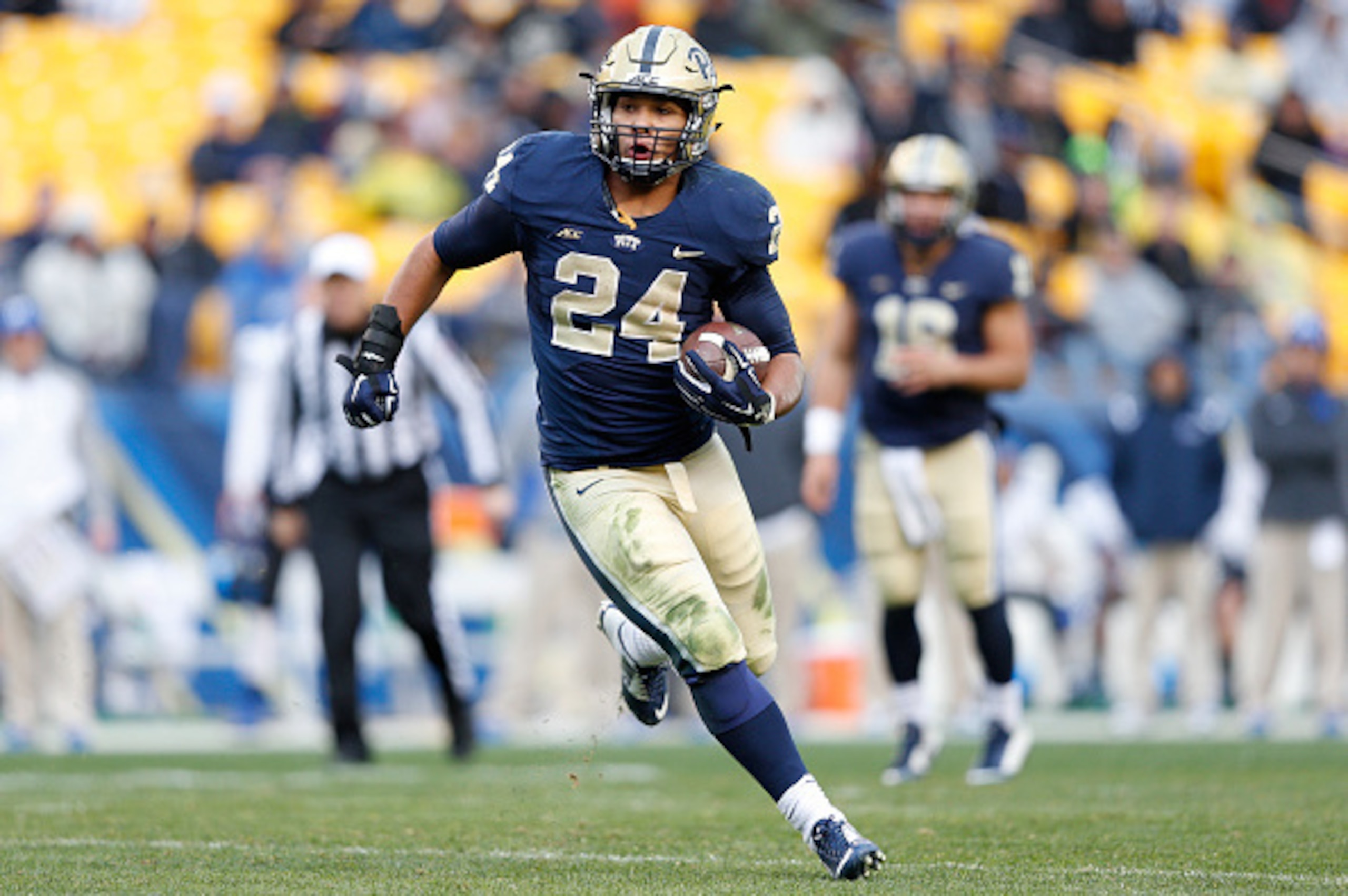
B/R Expert Scouting
"It's such a year for those power backs, and James Conner is probably the most accomplished of them all. He's abusive with that stiff-arm. He plays pissed off."
—Matt Miller
Ball Security
As big as he is, Conner doesn't protect the ball as well as you'd expect. He had one punched out at the end of a long run against Georgia Tech last October, though for someone with as many carries as he had, the problem wasn't that frequent.
Power
There are few players on the field who have more strength than the 6'2", 240-pound Conner. A former defensive end, he dishes it out as well as anyone else in the country and runs like a wrecking ball with a full-frontal assault on tacklers. He also has one of the best stiff-arms in the game.
Vision
Because he's more brawn than flash, Conner doesn't concern himself too much with seeking out holes since he can create his own.
Hands
The ball looks tiny in his massive hands, yet Conner doesn't treat it the same way when catching passes. As a result, he's rarely on the field in passing situations and is only looked at as a last resort.
Speed
Conner can be run down without much effort, but he's not in the game for his speed. He's as fast as he needs to be for his size.
Balance
There's no weak spot on Conner's body where he can be hit and knocked off his line, and he also avoids putting himself in position to be upended easily.
Overall
A throwback rusher who emphasizes strength and brute force over finesse, Conner is the kind of weapon whom every ball-control team dreams of having. His 26 rushing touchdowns set ACC and school records, topping Hall of Famer Tony Dorsett's Pitt mark.
66. S Jalen Mills, LSU
50 of 115
B/R Expert Scouting
"[New defensive coordinator] Kevin Steele puts a ton of responsibility on his safeties. Jalen Mills and the way he's moved around his whole career—I think he's gonna help with that. He understands what offenses are trying to do."
—Barrett Sallee
Ball Skills
Mills recorded an interception against Wisconsin last season—his first game at safety after two years at cornerback—but had zero the rest of the year. He has good hands and still posted five pass breakups, so it's not as if the ball skills didn't translate, but he was definitely more active at cornerback. Keep a close eye on how he attacks the ball this season.
Tackling
Mills improved his tackling throughout last season and ended the year on a hot streak. He tied his season high with seven tackles against Texas A&M and then surpassed it with eight tackles in the Music City Bowl. He has the frame (6'0", 196 lbs) and speed to make plays in space; he just needed time to adjust to playing safety. If he capitalizes on how he ended last season with a strong, productive offseason, he could easily improve this grade in 2015.
Run Defense
Although he's thinner than previous LSU safeties, Mills plays with their signature attitude. He gets amped up in big environments and is willing to sacrifice his body as a hammer player. He may not make all of the tackles, but he makes a lot of the plays that lead to the tackles.
Pass Coverage
Here is where Mills stands out. His background as a cornerback precedes him—he started 26 games as an underclassman at a school known as "DB U"—and it allows him to line up all over the place. He can handle the deep third in single-high looks, read quarterbacks' eyes in shallow zone and play man on the outside or in the slot. He's the best coverage safety in America.
Overall
The transition from cornerback to safety wasn't always smooth, but Mills thrived once he got the hang of it. More importantly, he opened the door for LSU to keep as many talented defensive backs on the field as possible. He is the rock of the Tigers secondary and the leader of their defense as a whole. With John Chavis gone to College Station, that last part is especially important.
65. OT Le'Raven Clark, Texas Tech
51 of 115
B/R Expert Scouting
"I think he moves really well for a big guy. Executing down blocks, firing out of his stance, getting good depth. I don't see him protecting on five-step or seven-step drops, so the upside is questionable, but the talent is definitely there."
—Matt Miller
Power
Clark has a big but skinny frame (6'6", 307 lbs) and still feels like he's growing into himself. He plays with adequate power but is sometimes driven back in pass protection. He is strong moving forward in the running game once he gets a head of steam but must improve his base strength and anchor.
Lateral Quickness
Clark moves more like a tight end than a tackle. He has quick feet in pass protection, which allow him to gain depth off the line and mirror speedy edge-rushers. In the running game he seals the edge and makes plays at the second level. It's a treat to watch him get out in space.
Pass Protection
It's hard to evaluate pass blocking in a scheme such as Texas Tech's. The quarterback delivers the ball so quickly that the tackles only protect for so long. From what Clark has shown, he's an above-average pass-blocker with room to grow as he adds muscle and improves his footwork. He fares well against smaller, quicker rushers but gets knocked off his base against power moves.
Run Blocking
Texas Tech doesn't run often, but it is quietly very efficient. The ballast of a tackle like Clark has been a big reason why. His speed, length and finishing make him a perfect fit for the scheme in which he plays. He excels in space but can also open creases on the inside.
Overall
Clark is a four-year starter who hasn't missed a game since 2012. He began his career at guard, which made sense despite his lack of girth because he's so good in the running game. He's been more valuable to Texas Tech at left tackle, where most teams put their best offensive lineman, and he's a nice fit for the air raid offense. With a little more strength and refinement, he for sure has an NFL future.
64. DT Andrew Billings, Baylor
52 of 115
B/R Expert Scouting
"Super-compact, high-energy player. I have him as an ideal nose tackle. He makes plays in the backfield and has surprising quickness for his size."
—Matt Miller
Pass Rush
Andrew Billings recorded just two sacks last season but added nine QB hurries. He's a thickly built tackle with a squat frame (6'2", 300 lbs) and the strength to collapse the pocket by winning with leverage. If he learns to use his hands to disengage rather than simply push guards and centers backward, he can turn more of those pressures into sacks.
Run Defense
Billings is one of the strongest players in college football—check out this 805-pound squat, which helped him set the Texas prep weightlifting record of 2,010 pounds—and it shows when he drives blockers off their marks. But he also boasts deceptive speed and quickness, which allows him to dart through the line and make plays in the backfield. He had 9.5 non-sack tackles for loss last season, including three for 10 yards against Oklahoma State.
Motor
Billings treats each rep as if he's going for the Texas state record. He pushes himself to the max but then comes back just as hard the next play. Without inside linebacker Bryce Hager, who graduated after four outstanding years, the Bears need a new emotional leader. Based on what he's shown the past two seasons, Billings is the perfect replacement.
Overall
Last year, Baylor finished No. 7 in the country with 3.15 yards allowed per rush. Despite its reputation as an offense-only juggernaut, it stymied opposing teams up the middle. Defensive end Shawn Oakman has the bigger name and upside, but Billings might be the better college player. If he's not, they are at least neck-and-neck.
63. S Vonn Bell, Ohio State
53 of 115
B/R Expert Scouting
"He knows what he's looking at, which I think is a huge plus for safeties. There are a lot of guys who can run like him, a lot of fluid athletes like him—but a lot of them don't know what they're looking at."
—Michael Felder
Ball Skills
Bell is the best playmaker on Ohio State's loaded back seven. His six interceptions were tied for the Big Ten lead last season and included a three-game streak against Michigan, Wisconsin and Alabama. He previously flashed his ball skills with a leaping red-zone pick against Clemson in the 2014 Orange Bowl. Considering he made that play as a freshman and then improved across the board as a sophomore, it's scary to think how good he might be as a junior.
Tackling
Bell recorded 92 tackles last season. He never posted 10 in a single game but landed consistently between six and nine. His eight solo tackles in the Sugar Bowl against Alabama stood out as one of the major keys to victory. His speed on the perimeter makes him a tackling threat from sideline to sideline.
Run Defense
Anything Bell lacks in size (5'11", 205 lbs), he makes up for in run-defense instincts. He diagnoses plays in the backfield and decides on a smart course of action. Many of his tackles come in space, but he has also shown a willingness to come down and compete near the line of scrimmage. Although he is built like a free safety, he has the attitude and motor of a strong safety.
Pass Coverage
Coverage is Bell's weakest area, which says a lot because it's not a "weakness," per se. He has the fluid hips and quick feet to develop into a great cover safety but still needs to work on the mental aspects—things like not playing overly aggressive. He already fares well covering the middle of the field on underneath routes and should only improve in that area.
Overall
Bell was a 5-star recruit in the 2013 class, showed flashes of brilliance as a freshman and then burst onto the scene as a sophomore. That is a familiar progression for blue-chip recruits under head coach Urban Meyer, which is why so many kids want to play for him. Meyer and co-defensive coordinator Chris Ash, who arrived in Columbus last offseason, have done wonders for Bell's development and are reaping the rewards of their coaching. Bell played his best at the end of last season and will likely be a first-round draft pick.
62. C Jack Allen, Michigan State
54 of 115
B/R Expert Scouting
"That team very rarely makes mistakes up front and a lot of that has to do with Allen recognizing what's going on and helping the Spartans get set to protect the quarterback. Very curious to watch him this year because between him, [offensive tackle Jack] Conklin and the rest of the offensive line, they're going to have to make one of those running backs a star."
—Michael Felder
Power
Allen doesn't boast great size (6'2", 296 lbs) but plays with adequate power. He stays low enough to win off the line and has registered 207.5 career knockdowns, per his official team bio. Bigger defensive linemen can knock him off his spot and get him off-balance when they attack him one-on-one. For the most part, though, Allen is solid.
Lateral Quickness
Michigan State doesn't ask Allen to play much in space. He is a perfect fit for the offense in which he plays, where he has just enough agility to stay in front of interior defenders and form a stable pocket for quarterback Connor Cook. When he does leak into space, he demonstrates above-average (but unremarkable) flexibility, quickness and balance.
Pass Protection
Allen makes the pre-snap reads and distributes the blocking assignments for one of the best offensive lines in college football. The Spartans ranked No. 4 in the country with just 11 sacks allowed last season, thanks in large part to Allen's instincts and leadership. He fares just as well when the ball is in play, having not allowed a single sack last season.
Run Blocking
Allen was a high school wrestler who plays with a brawler's mindset and a nuanced understanding of leverage. He attacks defenders with excellent hand placement and impedes them from executing run fits. Despite his less-than-ideal size, he consistently succeeds in run blocking.
Overall
Allen has started 35 games for the Spartans and played a big role in their recent ascent. His wrestling background informs his hand usage, but he's just as smart before the snap as he is when the ball is in play. Younger brother Brian Allen starts at guard beside him and was a Freshman All-American last season. Consider this another of those Michigan State First Families.
61. WR Corey Coleman, Baylor
55 of 115
B/R Expert Scouting
"He's certainly a guy that fits the system well. He has a really great knack for finding space.”
—Adam Kramer
Hands
Corey Coleman doesn't have hands so much as he has what seems like a catching pouch, based on the way he allows the ball to come into his body and holds it there. Only on quick outs and bubble screens does he reach out for the ball, but that is done well also.
Route Running
Because of his pure speed, Coleman doesn't need to be too tricky with his routes. Just send the junior up the field and let him outrun everybody. But when he can't get behind the coverage he ends up having no moves to get away from defenders.
Blocking
Coleman is above-average at containing his man on the outside, and he's effective at picking up blocks downfield to help other receivers get extra yardage.
Release
Most teams didn't try to press Coleman because of his speed, but when met with contact at the line he sometimes needed a little longer than normal to get separation.
Speed
Highlight films of Coleman's 2014 season are pretty much like watching a football player run track. It's a lot of deep balls that are lofted only a few seconds after the snap, but there's Coleman behind his receiver and waiting to haul in a touchdown.
Run After Catch
With a body frame (5'11", 190 lbs) that makes him look like he'd fit in well as one of Baylor's running backs, Coleman can fend off most tacklers for a few extra yards. That's assuming they were able to get a hand on him in the first place.
Overall
Coleman led Baylor's three-headed receiving group last season despite missing three games with a hamstring injury. He'll again be the Bears' deep threat and one most defensive backs won't be able to keep up with.
60. WR Josh Doctson, TCU
56 of 115
B/R Expert Scouting
“He's kind of a possession receiver, which maybe undermines his ability because he's really athletic. He's just your perfect throw-it-seven-yards-and-watch-what-he-can-do-with-it kind of guy.”
—Adam Kramer
Hands
TCU had several strong wide receivers last season, but Josh Doctson was the one it turned to for a big catch. Of his 65 receptions, 18 came on third or fourth down and resulted in 14 first downs and four touchdowns.
Route Running
Last year was the first for Doctson and his teammates in an uptempo system. And while it was successful, it came with its share of headaches. Doctson wasn't particularly flashy on his routes but got the job done.
Blocking
The running game was essential for the Horned Frogs, and when TCU asked him to help in this area Doctson was able to help keep defenders from cutting toward the ball-carrier too easily.
Release
Doctson was a master at getting early separation with a mix of footwork and long arms that he could use to slap away a defender. He often got a quick jump on his route and had his man chasing him.
Speed
Sprinter Kolby Listenbee is TCU's fastest wideout, but Doctson isn't far behind. The senior can stretch the defense well or make quick cuts to split a pack closing in on both sides.
Run After Catch
Doctson gets his feet moving soon after coming down with the ball and does well to maintain forward momentum even when the throw takes him off his route.
Overall
The top receiving threat in a balanced, explosive offense, Doctson thrived in the new system and figures to keep getting better with more preparation and practice. He needs 81 receptions, 1,282 yards and eight touchdowns to become TCU's all-time receiving leader.
59. DT Anthony Zettel, Penn State
57 of 115
B/R Expert Scouting
"Good interior quickness. He's a guy who really fires off the ball, plugs up the middle—and if you give him a chance to go make plays in the backfield, he's not just going to sit there and watch."
—Michael Felder
Pass Rush
Anthony Zettel led Penn State and finished tied for No. 3 in the Big Ten with eight sacks last season. All eight sacks came in separate games, including one apiece against Ohio State and Michigan State—the two best offensive lines he faced. He's a converted defensive end with a smaller frame (6'4", 284 lbs) but unfair quickness through the middle. He makes the quickest guards and centers look like they're cinder blocks.
Run Defense
Zettel holds his own for a skinny defensive tackle. He can't plug two gaps at once but does well to split defenders and force negative plays. He posted nine non-sack tackles for loss last season, including four in his final two games. Penn State finished No. 2 in the country in rushing yards allowed per attempt (2.95), which speaks well to Zettel's run defense.
Motor
Zettel sets the tone for Penn State's defense, which last year was the class of the Big Ten. He's a nasty, relentless player with a collar as blue as his home jersey. His energy makes his lack of size irrelevant, or at least not as important as it should be. And he finished the season strong to prove he's conditioned enough to last 13 games.
Overall
It was unclear before last season how Penn State was going to replace defensive tackle DaQuan Jones. Scholarship restrictions depleted the Nittany Lions depth chart and put the team in an uncomfortable spot. Sliding Zettel inside looked like a desperate move, but the switch went as well as it possibly could have. Now Zettel and Austin Johnson give Penn State the best defensive tackles in the conference.
58. OT Spencer Drango, Baylor
58 of 115
B/R Expert Scouting
"I don't like him as much as a draft prospect. I think that scheme really helps him cover some things up. So he needs to take a step this year—I think he needs to be a better finisher. I wouldn't be surprised if he plays guard in the NFL."
—Matt Miller
Power
Drango has a tall, lean frame (6'6", 310 lbs) but plays with good power. He engages defensive ends and never lets them out of his grasp. For someone who plays a mauling style of football, he is prone to bouts of sluggishness. But when he's on and completely engaged, he will crush you.
Lateral Quickness
Drango is not a special athlete at the tackle position. He lacks some of the quick-twitch stuff required to stay in front of speedy edge-rushers. His lower body (footwork) is quicker than his upper body (handwork), which is good because the former is harder to teach. He slides to stay in front of defenders but sometimes struggles hitting them in space.
Pass Protection
It's hard to scout a tackle in a timing-based offense. That's why the NFL is so wary of Baylor linemen. As a college prospect, though, Drango succeeds protecting the quarterback's blind side. At some point his lack of quickness might hurt him, but that is not for us to project. From what he's shown, he's earned this lofty grade.
Run Blocking
Drango does the dirty work in the running game, dispelling all misconceptions of the "finesse" Baylor lineman. He controls defensive ends to seal the edge on either side, paving big holes for his running backs to dart through, and he's not afraid to hit the second level. He could stand to be a better finisher—he doesn't always connect once he reaches the second level—but that's mostly a minor concern.
Overall
Scouting and grading Drango induced a headache. His profile results in so many conflicting thoughts. Based on physical tools (strength and speed), he's good. Based on game film (success rate), he's great. Based on the history of Baylor linemen (think Jason Smith)…who knows? In the end we deferred to the game film, since we're not scouting Drango as an NFL prospect. We're scouting him as a college prospect. And in college, there's no denying he gets the job done. He's the rock of a very good Baylor line.
57. QB Jared Goff, California
59 of 115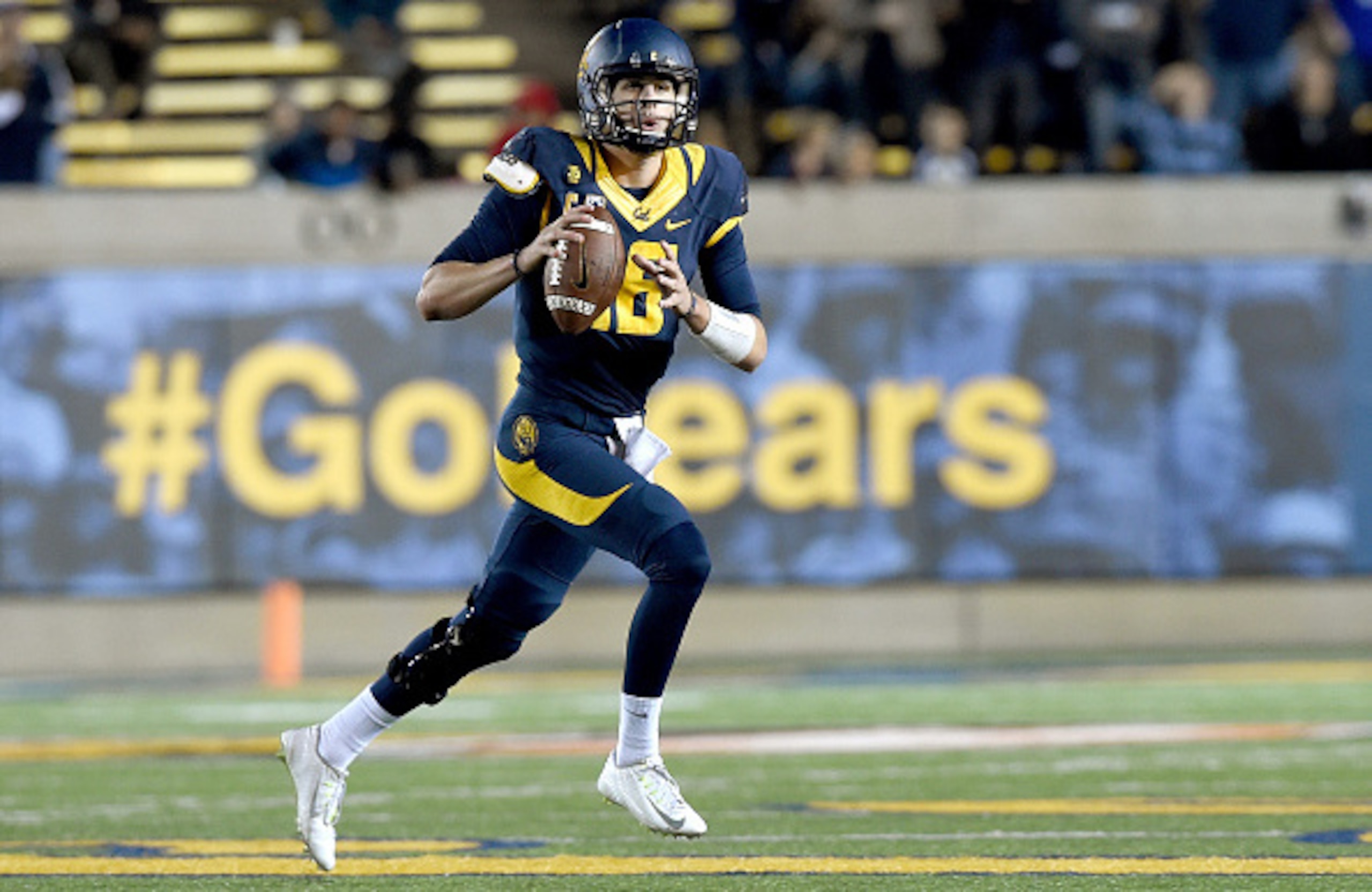
B/R Expert Scouting
“His mechanics are very, very good. Super clean, good release, very accurate. The throws he makes in that system, he does them well.”
—Matt Miller
Accuracy
Jared Goff has thrived in Sonny Dykes' Air Raid offense and shown the ability to make all the necessary throws that come with this style. He's thrown more than 1,000 passes in two seasons, and while the 61 percent completion rate isn't earth-shattering, what is stellar is his scant 1.6 percent interception rate. None of his seven picks in 2014 came on third or fourth down or in the red zone.
Arm Strength
Thanks to his 6'4" frame, Goff sees over his line well and doesn't have to overthrow to get the ball to his receivers. His power is more of the fluid kind rather than sheer strength, though he does throw a very good deep ball.
Pocket Presence
Twenty-six sacks aren't very many when you consider how often Goff has to drop back, and thanks to his awareness of what's going on around him, he is able to avoid many takedowns.
Mobility
Because Cal occasionally used a two-quarterback system in 2014, bringing in freshman Luke Rubenzer to give the offense a run-throw option, Goff rarely took off by design. His mobility is meant more to avoid contact than to gain yards.
Football IQ
This isn't a system where you just step back and sling it around; it requires an understanding of the various routes being run and how long the blocking up front will hold up. Goff has never had any issues operating the offense, and he's a big reason the Golden Bears are a trendy pick to be a potential Pac-12 sleeper.
Leadership
A ridiculously bad defense has had a lot to do with it, but Goff's Cal teams have won just six games in two seasons. He has done what's expected of him to this point, but to get the Bears over the hump and into a bowl, he needs to put them on his back.
Overall
If he were to choose to stick around for all four years, Goff would challenge many career passing records. That's unlikely to happen if he has another big year, for the allure of the NFL will be too great to pass up, since Goff projects as a far better pro passer than most Air Raid graduates.
56. S Karl Joseph, West Virginia
60 of 115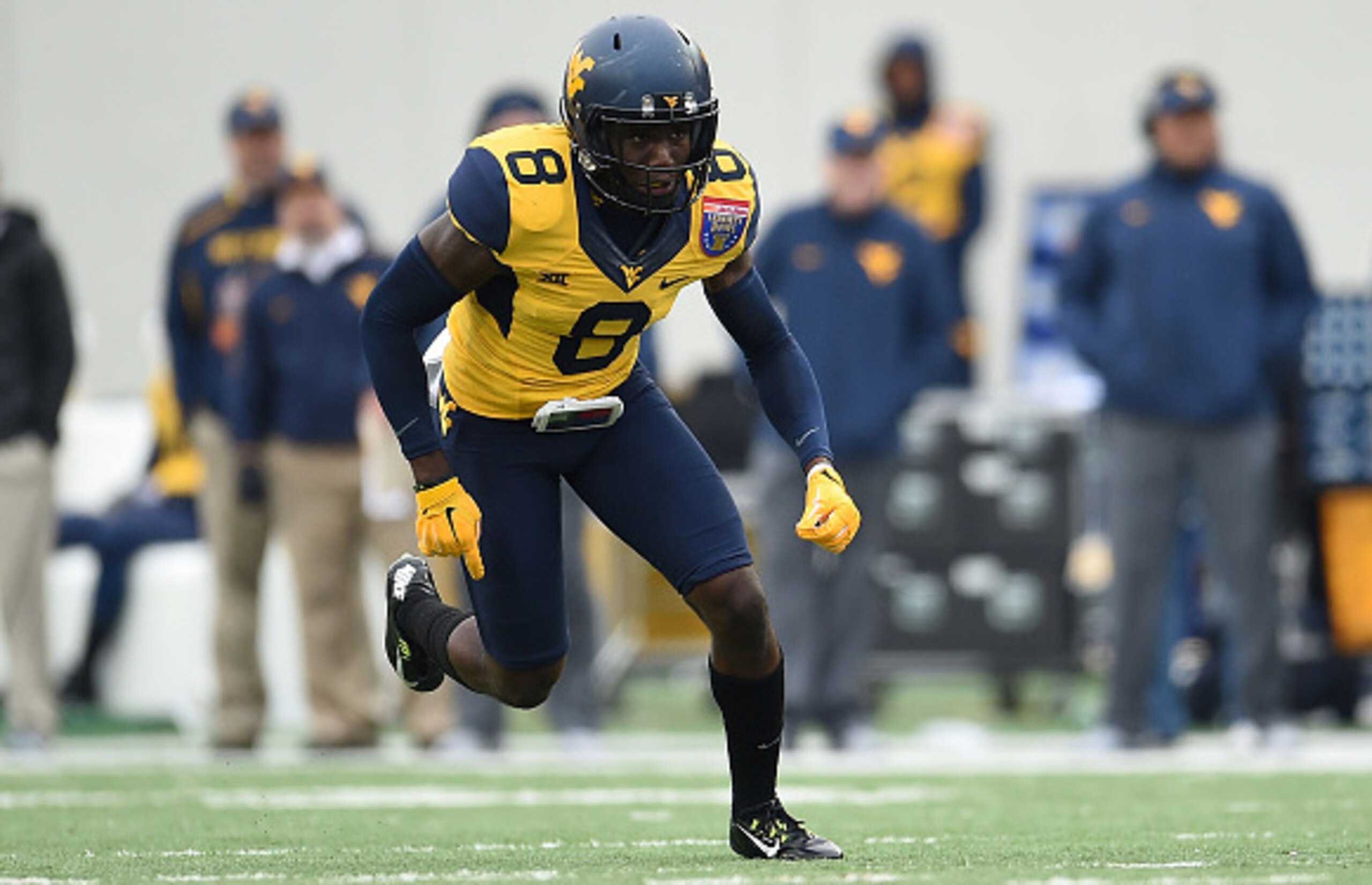
B/R Expert Scouting
"He reminds me of [former Louisville safety] Calvin Pryor. No, I don't want him being my full-time deep safety, but I'd like to have him out there because he will separate his man from the football."
—Michael Felder
Ball Skills
Joseph has recorded four interceptions and 13 pass breakups in three seasons. Those are modest numbers, but his impact is hard to quantify because his biggest asset—enforcing the middle of the field—does not show up on the box score. Receivers will sometimes get alligator arms when they see Joseph barreling toward them. Those don't "count" as breakups…but they are.
Tackling
Joseph recorded 90 tackles last season, 68 in 2013 and a team-leading 102 in 2012. He sheds blocks from smaller players and uses his compact frame (5'11", 197 lbs) to lay people out. He doesn't always demonstrate proper tackling form, which can get him into trouble when he looks for the big hit. But he improved in that regard last season after a down year in 2013, so it's hard to hold that against him moving forward.
Run Defense
Despite posting high tackle numbers, Joseph does his best work in passive run support. He is an unselfish player who runs into (and sometimes through) opposing blockers to free up his teammates to make plays. He loves to get downhill and has actively changed the ethos of West Virginia football. After years of being teased for their softness, the Mountaineers ranked No. 17 in the country last season in run defense, according to Football Outsiders' S&P+ ratings.
Pass Coverage
Here is where Joseph needs work. He's quicker than most people realize, but technique issues have led to occasional coverage lapses. He needs to show better footwork and make smoother transitions with his hips. The speed is there for him to recover from those lapses—as well as to patrol the deep third—but he shouldn't be playing catch-up so frequently.
Overall
Joseph is a pure strong safety who plays bigger than his size. Mike Huguenin of NFL.com named him the most physical player in college football before the upcoming season and the biggest hitter in college football before the previous one. But it's more than just big hits that land Joseph so high on this list. He's slowly turned a Dana Holgorsen team into a defensive juggernaut with offensive questions, which frankly seemed impossible at one time.
55. WR Mike Williams, Clemson
61 of 115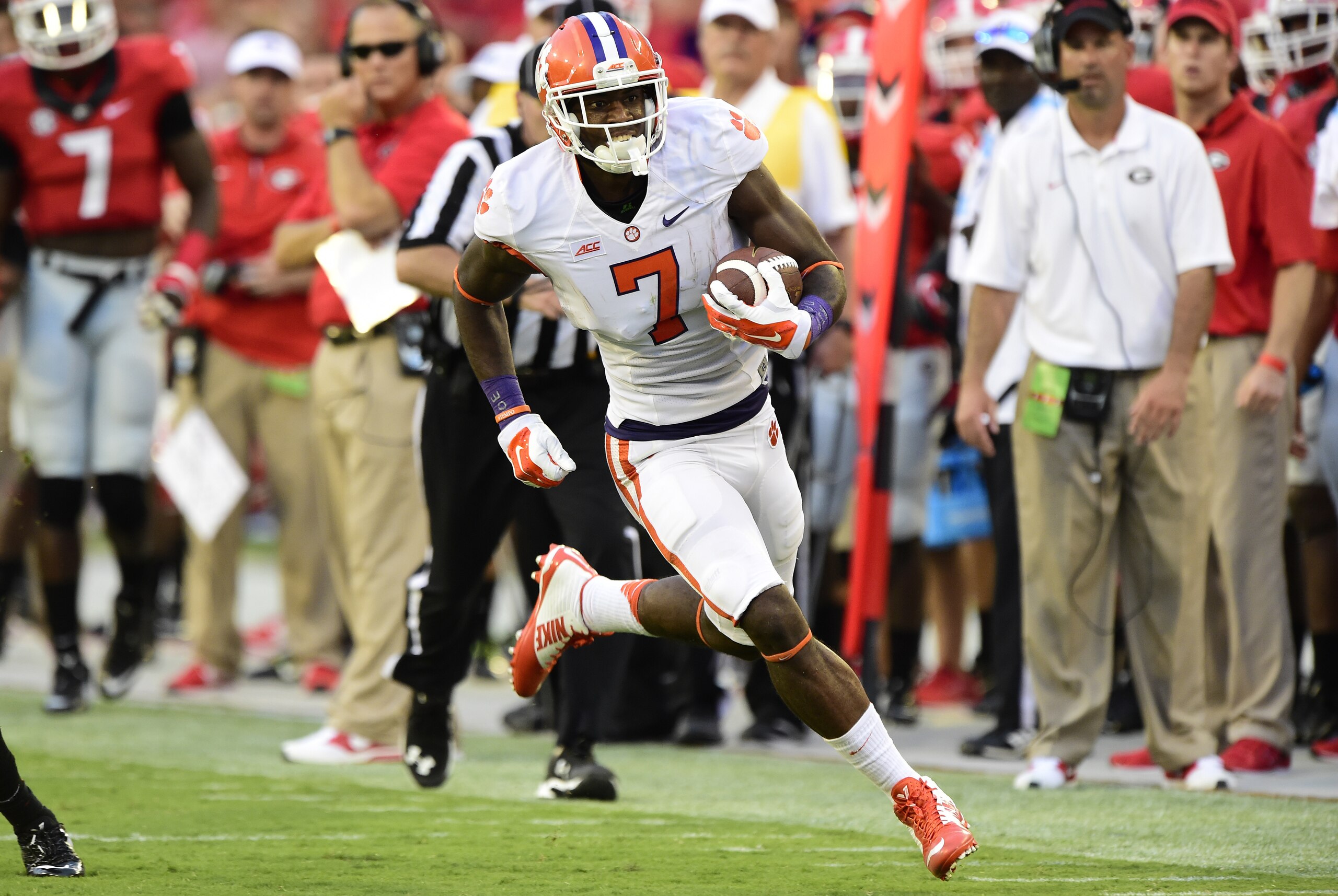
B/R Expert Scouting
“He reminds me a bit of [former Clemson receiver] Martavis Bryant. He's a little more polished but still raw. If he's not the best deep threat in the country, he's close. He's a guy that really can run pretty much any route because he has the speed and size to do it.”
—Adam Kramer
Hands
With a big body (6'4", 220 lbs) that enables him to bang around in traffic, Mike Williams has the hands to ensure he comes down with the ball. His catch radius is such that the passes don't always have to be perfect for him to make the reception.
Route Running
Williams isn't the kind of player who stretches the field, though he does run a good route and gets to his spot on time without being blanketed.
Blocking
There's room for improvement in this area, but Williams isn't a liability in run blocking. He just needs to be able to hold his blocks slightly longer to help ensure a play can extend.
Release
Williams handles press coverage very well, pushing back more than he's bumped. The added cushion he's able to provide himself helps make up for a lack of breakaway speed.
Speed
He's fast enough that he isn't going to get chased down from behind often, but Williams' speed is that of a stretch-the-field player. He's better laterally than vertically.
Run After Catch
Williams gets some decent yardage after making the catch, but not to the level of some of the top players in the game. Because of his tendency to end up in jump-ball situations, he's often not in position to continue the play after making the catch.
Overall
Williams, a junior, continues Clemson's trend of having big, strong wide receivers who can catch anything. He worked very well with quarterback Deshaun Watson last season, and the duo could end up being the best in the country.
54. RB Royce Freeman, Oregon
62 of 115
B/R Expert Scouting
"He's so physically imposing and yet pretty shifty. He looks like that workhorse whom you can hand it to 30 times a game, and he has a nose for the goal line."
—Adam Kramer
Ball Security
Taking care of the ball was never an issue for Royce Freeman during his stellar true freshman season at Oregon. Even as he wore down toward the end, Freeman remained focused on keeping the rock from hitting the turf.
Power
Most bowling balls don't weigh 230 pounds, but Freeman is an exception. He turns himself into a compact knot of muscle and strength at the point of contact, which enables him to be the aggressor rather than the victim.
Vision
Oregon's zone-read offense puts most of the vision responsibilities on the quarterback, but Freeman is still adept at spotting where a hole exists and where it's going to close up.
Hands
The running backs are a key part of the Ducks pass offense, but Freeman hasn't been much of a factor to this point. He'll need to be more assertive in this area with a new quarterback in the system.
Speed
Freeman is the thunder to teammate Thomas Tyner's lightning—not necessarily a slow back but also not one who's going to outrun most defenders.
Balance
Because he won't often be getting around tacklers, Freeman works hard to remain level as he makes cuts and approaches contact. This makes him seem more light on his feet than you'd expect from someone of his size.
Overall
Freeman had the most productive freshman season ever for an Oregon back, and that was while sharing carries with Tyner. He's capable of being a workhorse as long as he continues improving his conditioning and durability.
53. LB Eric Striker, Oklahoma
63 of 115
B/R Expert Scouting
"I'm a Texas fan, and he has destroyed us. I know he's not real big, but it just seems like he's all over the field. It seems like there are two of him out there."
—Matt Miller
Tackling
Eric Striker recorded 68 tackles last season, which is not great but respectable production for a player his size (6'0", 222 lbs). He has a nose for where to go around the line of scrimmage but does not make many plays in space. If he uses his speed as a weapon at the second level, he could boost that total up near 80 or 90. For now, though, he's a one-dimensional tackler.
Pass Rush
Striker is a menace off the edge and one of the best pure pass-rushers in America. He posted nine sacks and five QB hurries last season and pushed the pocket countless more times. The best game of his career came in the 2014 Sugar Bowl, when he recorded three sacks in an upset of Alabama. The last of those sacks forced a fumble that led to the game-clinching touchdown.
Run Defense
Striker makes a difference in run support despite being undersized. He can't set the edge or get a push on offensive linemen, but he uses his speed and instincts to make plays in the backfield. He finished last season with eight non-sack tackles for loss, including four in his final four games.
Pass Coverage
Oklahoma uses Striker at nickelback on certain occasions because he's athletic enough to hang with anyone. He's better in man coverage than in zone, where he's still learning the little things such as when to jump versus when to sink. But his ceiling as a cover linebacker is considerable.
Overall
Striker is like the 5'11" wide receiver with average speed who always seems to be open and no one understands how. It's difficult to pinpoint what makes him so good, but then you flick on an Oklahoma game and there he is again wrecking shop in the backfield. He's a player opponents dread facing because he makes them look silly.
52. QB Deshaun Watson, Clemson
64 of 115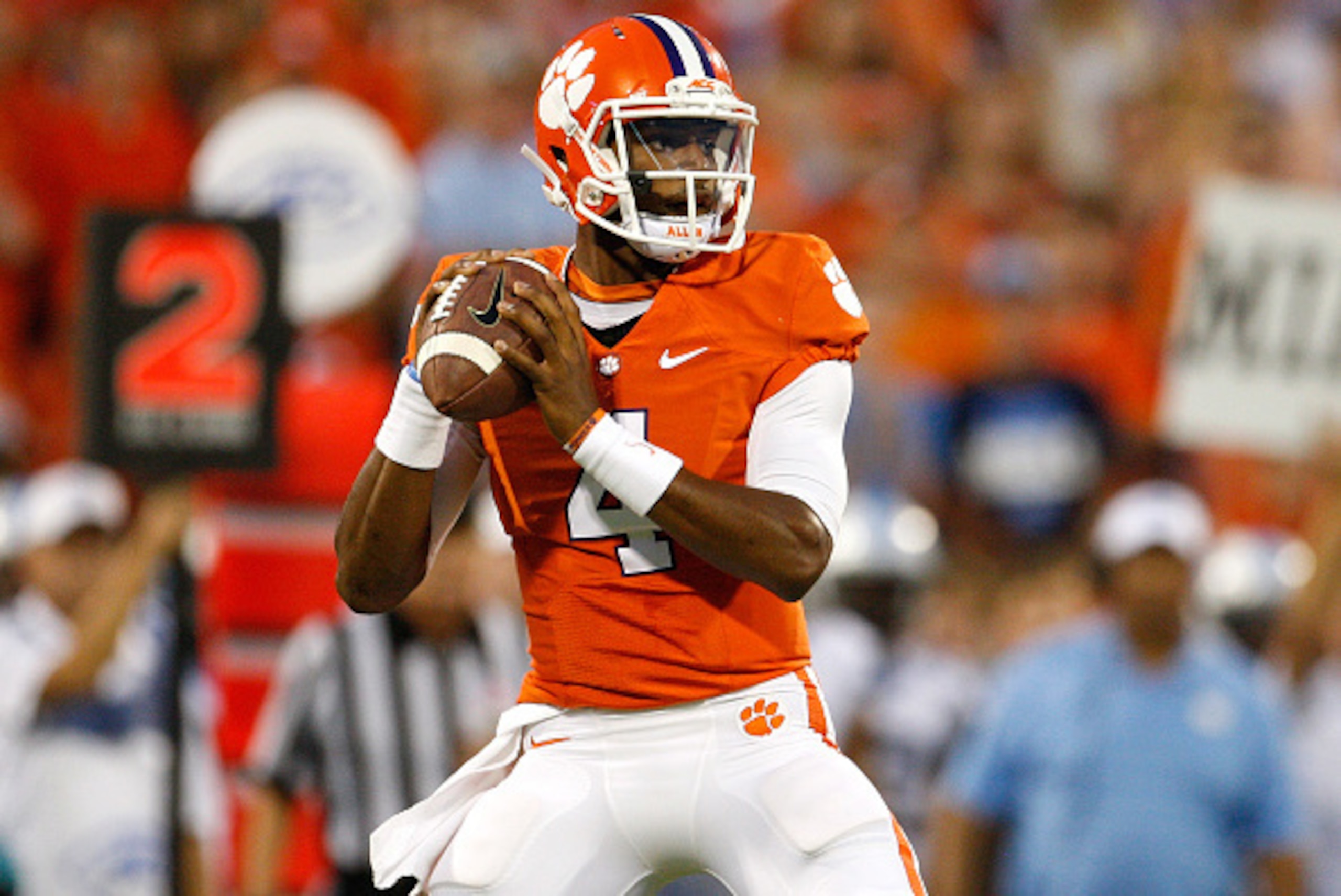
B/R Expert Scouting
"His stardom to me isn't surprising. I don't think it's a matter of if; it's a matter of when with him as long as he can stay healthy. The sky is the limit."
—Adam Kramer
Accuracy
Deshaun Watson completed nearly 68 percent of his passes last season, completely transforming Clemson's offense from a lethargic unit to one that could move the ball with ease. His ability to throw to a spot with just the right touch and timing is far advanced for his age.
Arm Strength
It'll be exciting to see how much stronger Watson is with his throws after a full offseason in the weight room. Even with a broken hand, he was able to zip the ball hard in 2014, and this will only keep getting better.
Pocket Presence
Watson took off more than Clemson would have liked last year, and this ultimately contributed to his many injuries. When he stayed in the pocket, though, he knew where all the pass-rushers were at any given moment.
Mobility
At 6'2" and 210 pounds, Watson isn't a burner, but he's got the kind of speed and agility that makes running look effortless. A long stride and great balance helped him break off runs of 10 or more yards on 9.5 percent of his carries, per CFBStats.com.
Football IQ
Watson enrolled early in 2014 and took advantage of that extra practice time to learn Clemson's system and be ready to contribute when his time came. This showed in how quickly he was able to step in and figure out what was going on.
Leadership
When Watson suffered a knee injury early against Georgia Tech, the effect it had on the Tigers was evident. He had become their offensive leader, and though senior Cole Stoudt had plenty of experience with that group, the unit just wasn't the same with Stoudt in the game.
Overall
One of college football's most electric players, Watson has been held back by only injuries to this point. He's been on the shelf since a torn ACL in November, but he declared himself healthy over the summer, per Pete Iacobelli of the Associated Press (via the Gainesville Times). It will be fun to watch a full year of Watson with the weapons he has around him.
51. LB Nick Vigil, Utah State
65 of 115
B/R Expert Scouting
"He's an attacking, downhill tackler and shows the speed to play in space in coverage. He projects as a three-down pro linebacker."
—Matt Miller
Tackling
Nick Vigil recorded 123 tackles last season. Only 61 of those were solo, but gang tackling is just the method of Utah State's defense. You won't find many 6'2", 235-pounders with the speed to moonlight on offense at running back. Vigil is that rare specimen, and it shows when he is flying around the field.
Pass Rush
Vigil is a gifted athlete who improved throughout last season as a pass-rusher. He posted two sacks in his first six games before five in his final seven. He blossomed once he realized he could take on blocks in multiple ways. More than half of his seven sacks came against the three best teams on Utah State's schedule (Tennessee, Colorado State and Boise State).
Run Defense
Utah State led the Mountain West in rushing yards allowed per game and yards allowed per rush. Vigil and his older brother, Zach, who started beside him at inside linebacker, were the two biggest reasons why. The lessons Nick learned at running back seemed to help him read holes and gaps. He finished the year with 10 non-sack tackles for loss, including 4.5 in his final four games.
Pass Coverage
Here is where Vigil needs work. His speed is more explosive than fluid, and so he struggles to turn his hips and cover in space. He has the speed to check running backs and receivers and should improve as he refines his core agility. Until then, however, this is closest thing he has to a weakness.
Overall
Vigil is a special player with a long career ahead of him. Even though he earned lower marks in coverage, there's no reason to think he can't improve. He was miles ahead of the curve for a sophomore last season, and the return of Kyler Fackrell should prevent teams from game-planning around him. Do yourself a favor and watch this defense at least once in 2015.
50. CB William Likely, Maryland
66 of 115
B/R Expert Scouting
"I love him. He's the most underrated cornerback in college football. Ball skills off the charts, quick breaks on the football—I love watching him play. He's the reason I always put Maryland games on my second screen."
—Michael Felder
Speed
Likely has better quickness than long speed, but he's fast enough to get where he needs to go. For reference, check out his four long touchdowns (two interceptions returns, one kick return and one punt return) last season. He's sticky chasing receivers across the field on drag routes, too.
Ball Skills
Likely is a ball hawk who can alter the outcome of a game. He makes quick breaks on the football, and he knows what to do once he undercuts a route. His 15 passes defended gave him a share of last year's Big Ten lead. If not for his size limitations (5'7", 175 lbs), which affect how he defends jump balls, he would grade even higher than an 18 out of 20.
Run Defense
Likely posted 70 tackles as a freshman and 83 as a sophomore, proving he's a willing and able tackler. Bigger wide receivers can overpower him on the outside, but he fights back with an impressive array of block-shedding moves. If those bigger wide receivers underestimate him, he'll slip right by them and make a play.
Pass Coverage
Height-obsessed teams tried to target Likely early last season. They learned the hard way that that's a bad idea. He did allow the occasional big play, but for the most part Likely used his quick feet, balance and athleticism to mirror his opponents and disrupt offensive rhythm. If he limits that "occasional big play" thing, it's hard to find a weakness in his game.
Overall
Yes, Likely is only 5'7". Get over it. He's been knocked for his height since high school, but all he's ever done is produce. At the next level—and yes, he will get there—he might be forced to work from the slot, but for now he fares just fine on the outside.
49. QB Cardale Jones, Ohio State
67 of 115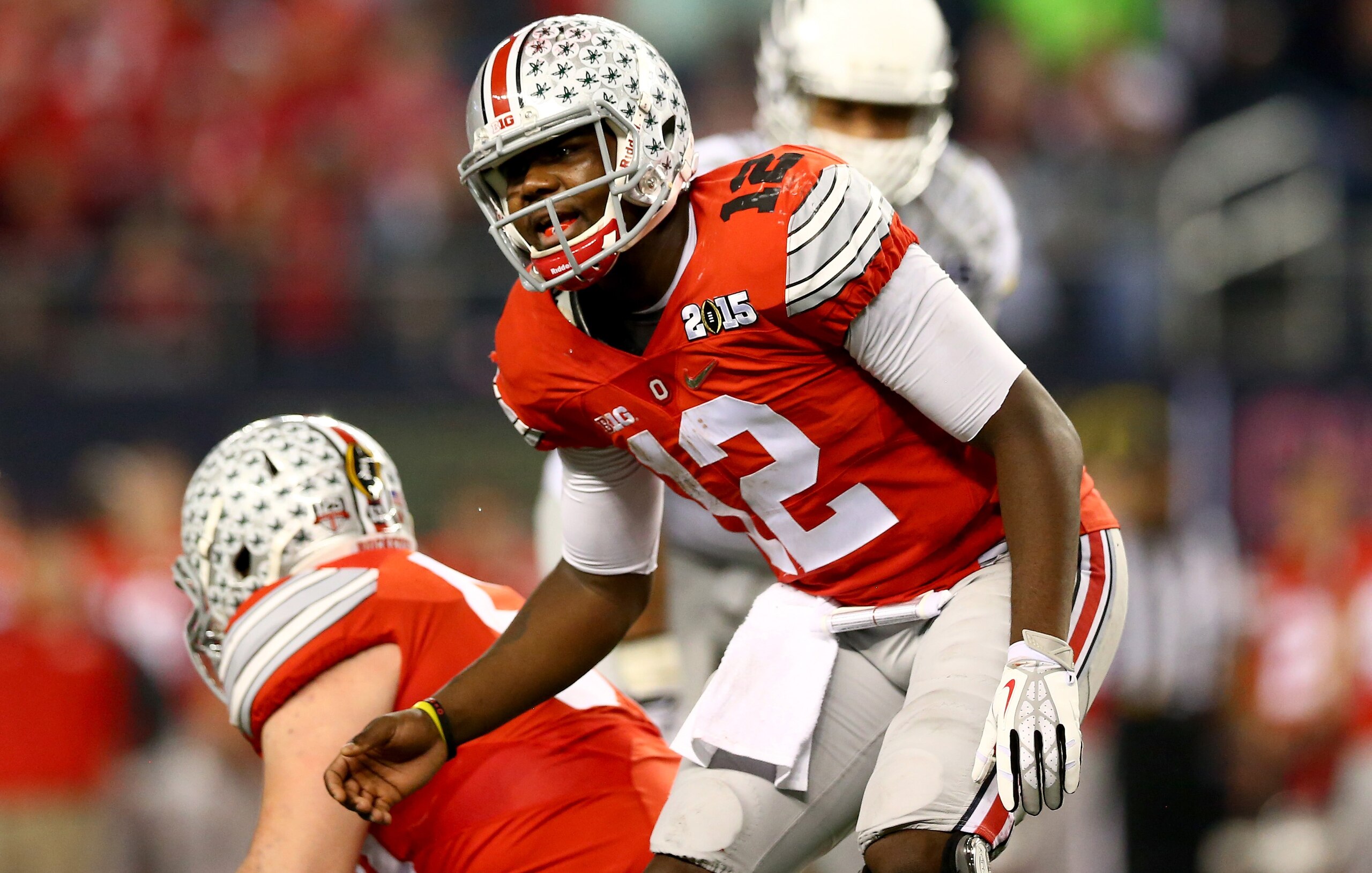
B/R Expert Scouting
"He does everything so flawlessly. He just makes everything look so easy. He was making veteran decisions, and it was his first start. I just think he's a natural."
—Matt Miller
Accuracy
In his magical three-game run as the Ohio State Buckeyes quarterback last postseason, Cardale Jones made a lot of big throws but also missed some easy ones. Power over precision has been his forte to this point, but that's an area he's likely spent much of the offseason working on.
Arm Strength
His nickname is "12 Gauge," so it's no surprise Jones has college football's strongest arm. He threw the ball "only" 74 yards during a skills competition at halftime of Ohio State's spring game, per Doug Lesmerises of the Northeast Ohio Media Group.
Pocket Presence
Jones was sacked five times in his limited action in 2014, but there could have been more if not for the fact that the 6'5", 250-pounder is a load to bring down. He hung in a little too long on occasion instead of trusting his ability to run.
Mobility
The biggest surprise about Jones when he got into games last winter was his mobility and how well he ran for his size. He could fake out much smaller defenders or bulldoze them if he couldn't get around them.
Football IQ
It's a testament to Ohio State's ability to develop quarterbacks that a third-stringer played as well as Jones did, but he still has a lot to learn. Getting to be the No. 1 guy for spring ball likely helped in this area.
Leadership
Jones exudes confidence, and it comes out in how he plays. His teammates feed off that assertiveness, and when he was running the offense in the playoffs, there was no uncertainty about how well the unit's players meshed.
Overall
It was a small sample size, but what we saw from Jones last year is an indication he could be a monster if given the chance to play full time. A Jones-led offense is scary to fathom, but so too is him coming off the bench for a change of pace.
48. DE DeForest Buckner, Oregon
68 of 115
B/R Expert Scouting
"I like him better than (former teammate) Arik Armstead. He might be a top-five, top-10 draft pick next year. In the 4-3 he looks like (Arizona Cardinals defensive end) Calais Campbell; but for a guy so tall, he plays with really good leverage."
—Matt Miller
Pass Rush
DeForest Buckner doesn't record many sacks—only 7.5 in three seasons—because he plays as a true 3-4 end. Like all the other 5-techniques on this list, he makes his biggest contribution as a space occupant. His massive frame (6'7", 290 lbs) demands attention on the outside and makes things easier on Oregon's outside linebackers. They're the ones who record all the sacks.
Run Defense
Good luck trying to push Buckner backward. The aforementioned frame (for emphasis: 6'7", 290 lbs!) makes Buckner an excellent run defender, especially when you consider his athleticism. Players built like skyscrapers should not have such excellent flexibility and understand how to win with leverage. He finished fourth on the team and third among Pac-12 linemen with 81 tackles last season.
Motor
NFL scouts watching Oregon tape to see Armstead—who eventually became a first-round draft pick—noticed the contrast between him and Buckner. Both players are walking giants, but only Buckner has the mindset to match his body. He leads by example with hard work and intensity, which helped Oregon's defense shed the "soft" label.
Overall
It's unclear why Armstead was the more well-known name (probably because of recruiting rankings), but Buckner was the better player. He returned for his senior season after gradually improving the past three years, and there's no reason to think that will stop. When Buckner becomes a household name this autumn, it might seem like he came from nowhere. But don't fall for that. He didn't. He's been doing this since he was a sophomore.
47. WR D.J. Foster, Arizona State
69 of 115
B/R Expert Scouting
“I view him in kind of that Byron Marshall role [at Oregon], except more explosive. He's so dynamic, it wouldn't shock me at all for him to have 80 or 85 catches, and they're going to hand off to him some. He's going to be the focal point of the offense.”
—Adam Kramer
Hands
D.J. Foster was Arizona State's leading rusher in 2014 with 1,081 yards but also one of the top pass-catching backs in the country. His ball security, which made him such a great ball-carrier, is one of the main reasons the Sun Devils had no problem switching him to a slot wideout for his senior season.
Route Running
This will be a work in progress for Foster until he's through a full regimen of workouts as a receiver. He's spent spring ball and training camp learning to do more than just slipping out of the backfield and finding an open spot.
Blocking
Foster was a solid blocker when in the game on passing downs, and the hope is that his skill can translate into cutting off defenders and creating mismatches over the middle.
Release
Foster is going to need to use his quickness more than strength to get off the line as a receiver. He's 6'0” and 195 pounds and has slimmed down in an effort to become faster.
Speed
The role of a slot receiver isn't to outrun the defense. It's to elude it with cuts and footwork, things Foster showed proficiency at both as a rusher and when catching outlet passes. His speed is deadly in open space, and he can get around plenty of defenders.
Run After Catch
Foster keeps his feet going as he comes down with a pass and doesn't break stride, which enables him to extend plays beyond just the first few yards. Last year, nearly one-third of his 62 receptions went for at least 15 yards.
Overall
With the versatility to be either a featured back or a primary receiver, Foster is Arizona State's most valuable weapon other than quarterback Mike Bercovici. Look for the Sun Devils to use him in numerous ways each game, sometimes in the same series, as he'll challenge the 2,000-yard mark for all-purpose production.
46. RB Dalvin Cook, Florida State
70 of 115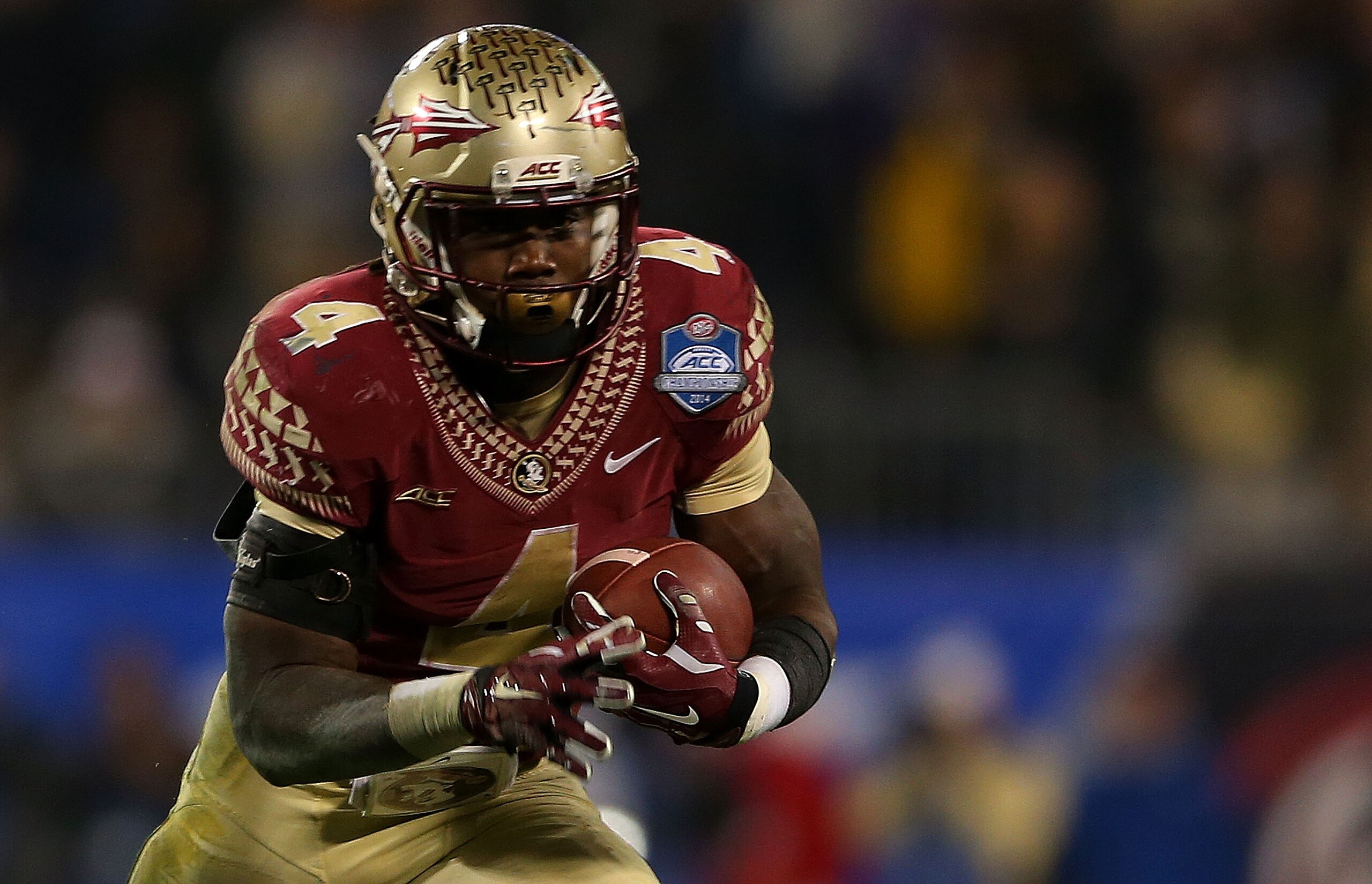
B/R Expert Scouting
"There are no questions about him on the field. When he had the ball in his hands last year, I stopped breathing because anything could happen."
—Adam Kramer
Ball Security
Critical fumbles in the Rose Bowl loss to Oregon exposed a weakness in the way Dalvin Cook carries the ball, something he likely spent much of the offseason working on. If that problem persists, he'll risk losing touches.
Power
Cook is strong but doesn't do much muscling to get his yards—instead he tries to slip off tackles and extend plays with his legs.
Vision
An observant player for one so young, Cook doesn't hesitate and hits the hole almost as soon as it develops.
Hands
Cook was a valuable outlet for Jameis Winston for either dump-off passes or screens and figures to be in the same boat with this year's quarterback.
Speed
Once he gets to the corner, Cook isn't likely to be caught. His speed and big-play ability are what initially got him into the mix last season, and they remain key assets as the rest of his game develops.
Balance
Excellent footwork and cutting ability make it possible for Cook to be fast and elusive without ever getting off-balance.
Overall
Cook was expected to play a major role in Florida State's offense this year, but his future is uncertain as he remains suspended, pending the resolution of a battery charge from June. If he returns, he'll take a lot of pressure off Florida State's new quarterback.
45. DE Dadi Nicolas, Virginia Tech
71 of 115
B/R Expert Scouting
"Virginia Tech consistently has guys who are high-quality football players, whom most guys who call themselves college football fans couldn't pick out of a lineup. That's Dadi Nicolas."
—Michael Felder
Pass Rush
Nicolas finished second on Virginia Tech and third in the ACC with 8.5 sacks last season. Teammate Ken Ekanem posted more (10.5 sacks), but Nicolas blew him away with 26 QB hurries (to Ekanem's 14). That is an insanely high number and a testament to Nicolas' edge-rushing. He is built like a linebacker (6'3", 227 lbs) but has long arms and understands how to use them.
Run Defense
Nicolas is a better pass-rusher than run defender, but he's solid in the latter area. Defensive coordinator Bud Foster wouldn't let him on the field if he wasn't. Even though he can't hold the edge, Nicolas contributes with his speed and athleticism. His 71 tackles were the most by an ACC lineman.
Motor
When a pure defensive end logs 71 tackles, it speaks volumes about his motor. Nicolas chases quarterbacks around the pocket and never gives up on a sack opportunity but is just as willing to run and make a play downfield. That is what separates the great pass-rushers from the great all-around football players. Nicolas is a great all-around football player.
Overall
He doesn't have great size or power, but Nicolas knows how to rush the quarterback. He's too quick for the biggest tackles and sound enough to rip past the quick ones. More people would know him had Virginia Tech not faded during conference play last season. Ohio State will have its hands full in the much-awaited season opener September 7.
44. QB Dak Prescott, Mississippi State
72 of 115
B/R Expert Scouting
"He's faster than people give him credit for, much shiftier. He has that bruising style like Tim Tebow. He makes 3rd-and-2 basically automatic. And I think he proved last year that he can be effective on the tougher throws."
—Barrett Sallee
Accuracy
Dak Prescott has shown much improvement over the course of his career, but he's still not to the level where he can make all throws with precision. He completed 61.6 percent of his passes last season, up from 58.4 percent the year before, and was exceptionally accurate on third down with 10 or more yards to go, with a 69.6 percent completion rate, per CFBStats.com.
Arm Strength
Prescott has a powerful arm he uses effectively, thanks to being able to put all of his 230-pound frame behind his throws. Mississippi State didn't go deep very much last season, but Prescott was able to chuck it down the field on corner routes.
Pocket Presence
One of college football's most elusive quarterbacks in the pocket, Prescott sometimes almost baits defenders into trying to get to him before he slips away at the last second. Knowing he can get yards by running at any time, he stays composed under pressure and hangs in as long as possible.
Mobility
Prescott runs like a fullback but with running back speed, bowling over defenders and powering for extra yards rather than working to go around them.
Football IQ
The Bulldogs offense revolved entirely around Prescott's ability to make decisions on the fly and go with his reads. He's best when it comes to deciding whether to hand off or keep it, but with nine first-half interceptions, he took too many chances early.
Leadership
Prescott is unquestionably Mississippi State's leader on the field. After announcing his decision to return for his senior year, he explained why he chose the program in the first place, per Michael Bonner of the Clarion-Ledger. "It was about competing for championships and making this a program that's not a one-hit wonder."
Overall
Prescott might be the single most important player to his team in college football. Playing with a rebuilt offensive line and without an established running back, he will again be the focal point of everything the Bulldogs do and determine whether or not they come close to matching last year's breakthrough performance.
43. DE Shawn Oakman, Baylor
73 of 115
B/R Expert Scouting
"For a guy his size, I think he disappears at times on film. And it's not just being picky and saying, 'Oh, he took a play off.' Oakman, I think, takes games off."
—Matt Miller
Pass Rush
Shawn Oakman recorded 11 sacks last season and ended the year with five in his final four games. He is built like an NBA power forward crossed with a Transformer (6'9", 275 lbs) and can rip past offensive tackles of all sizes and builds. His production comes in spurts, but last year he outplayed Le'Raven Clark of Texas Tech (the No. 7 offensive lineman on our list) and recorded a sack against Jack Conklin of Michigan State (No. 3), so at least he didn't pad his stats against no-names.
Run Defense
Size is Oakman's biggest strength in run support, although it's also sometimes a weakness. He can dominate the edge and drive blockers into the backfield and ruin offensive plays but sometimes plays too high and loses with leverage. If he works on his technique and mechanics and doesn't allow opponents to use his size against him, there's no limit to how good he can be. For now, though, he is still a work in progress.
Motor
Here is where Oakman loses points. Miller is not the only scout who questions the big fella's motor. Someone so big and strong should not disappear on film; he should make his presence painfully obvious. Too often he drifts and is content making one big splash play and then coasting. If he fixes that in 2015…watch out.
Overall
Oakman is a controversial player. He went viral for his size during the Cotton Bowl, and his stats look roughly as good as his measurables. Despite that, he's surrounded by questions. Is he really as good as everyone says he is? Does he care enough to give his best on a weekly basis? No one doubts his potential to become an All-American and top-10 draft pick. But plenty of people doubt he will ever get there.
42. QB Christian Hackenberg, Penn State
74 of 115
B/R Expert Scouting
“He can sling the ball all over the place. He has great velocity; he can truly make every throw out there.”
—Matt Miller
Accuracy
Christian Hackenberg has yet to show he can complete passes at a high rate, dipping to 55.8 percent during his sophomore year. It wasn't all his fault, since he was playing behind a Swiss cheese line, but he also forced too many throws and rushed when he had the time. It's an area in which Hackenberg needs to vastly improve in order to live up to the hype he came into college with.
Arm Strength
Hackenberg has one of the strongest arms in the country, but because he hasn't learned how to use it, the results haven't been there. His technique is mechanically sound and full of power, but the inaccuracy masks this attribute.
Pocket Presence
Hackenberg didn't do himself any favors en route to taking 44 sacks in 2014, as he allowed himself to get flustered when the line wouldn't hold up for him. Rather than accept his blockers' limitations, he let it affect his play far too often.
Mobility
As the year went on and Hackenberg got hit more and more often, his ability to elude the rush also regressed. He's not going to juke anybody, but he also hasn't managed to perfect his ability to sidestep pressure.
Football IQ
Despite all of the problems he went through last season, Hackenberg remains very confident and sure of himself. This might sometimes come off as cocky, but he knows what he's doing out there. He'll now be entering the second year of James Franklin's system, and it should run much smoother thanks to his headiness.
Leadership
Frustrations aside, Hackenberg remains committed to the cause he and his teammates have undertaken. He cannot afford to let his emotions get the best of him anymore, though, especially as he sets his sights on playing at the next level, where tantrums won't fly around more experienced players.
Overall
Give him a few more seconds, some semblance of a run game and a few less bruises, and Hackenberg can be as good as anybody in college football. He has all the tools you want in a pro-style passer, but to this point, he's still waiting to show the full arsenal.
41. OT Taylor Decker, Ohio State
75 of 115
B/R Expert Scouting
"Their offense makes it hard to evaluate tackles, but in the run game he is still pretty special. He's very physical but also agile with good balance."
—Matt Miller
Power
Decker is humongous (6'8", 315 lbs) and plays like it. He dominates opponents off the line and gets moving downhill. Certain taller tackles can be exploited by low-rushing ends, but Decker bends his knees, transfers power through his base and uses leverage to his advantage instead of his detriment.
Lateral Quickness
Decker impressed with his agility and light-footed movement last season. It seemed like even Ohio State's coaches underestimated him, and once they realized his abilities as a downfield run-blocker, that's when the Buckeyes offense opened up. He's still more of a power guy than a speed guy, but he's quick enough to not be exploited in pass protection.
Pass Protection
At the start of last year, Decker struggled. He was new to the left tackle position, having started the previous season at right tackle, and sometimes came up late from his stance. But as the season went on and he became more comfortable, you could see the makings of an excellent pass-blocker. He might need to play right tackle at the next level, but in college he is fine on the left.
Run Blocking
Ohio State boasts the most dangerous ground game in America. And while some of that has to do with scheme, and a lot of it has to do with Ezekiel Elliott, nothing plays a bigger role than blocking. Decker is the leader and best run-blocking tackle on Ohio State's line, which is vital in a scheme such as Urban Meyer's. He is just as good near the line of scrimmage as he is moving downfield, and versatility makes him perfect for this offense.
Overall
Entering last season, Ohio State faced huge offensive line questions. After squeaking by Navy and losing to Virginia Tech, those questions reached DEFCON 1. Decker was the only returning starter, and his leadership helped bring the group together and improve throughout the year. By the end of the season, Ohio State's offensive line was not just not a weakness but a strength. A big strength. It carried the Buckeyes to a national title.
40. DT Sheldon Day, Notre Dame
76 of 115
B/R Expert Scouting
"Day gives more effort than maybe anyone I've seen so far this year. He's not the most athletic guy, he's not the biggest guy, but he's just all-effort, all the time. I think he can be a heck of a nose tackle."
—Matt Miller
Pass Rush
Sheldon Day has recorded only 3.5 sacks in three seasons—two of which came in 2012. He has the quickness and burst to reach the quarterback, but his technique doesn't match his raw tools. If he learns a few pass-rush moves, there's no reason he can't improve this part of his game. There's no reason he can't be great at it. For now, though, he's a work in progress.
Run Defense
Day is the ideal run-stuffer for a 4-3 defense. He's small for a nose tackle (6'2", 285 lbs) but big enough to command two gaps. His NFL future might lie at defensive end, where his ability to get underneath a blocker and dominate an area makes him intriguing as a 5-technique. But Notre Dame is happy to leave him at tackle, where those same skills make him a force up the middle.
Motor
Day is a fighter who gives his all on every play and isn't afraid to sacrifice his body. He throws himself around in run support and won't stop thrashing until the whistle. Bleacher Report's Matt Miller named Day the best run-stopping tackle in the 2016 draft class, which is rare for a 285-pounder. His motor is the biggest reason why.
Overall
Notre Dame head coach Brian Kelly made a splash in 2014 when he told Thayer Evans and Pete Thamel of Sports Illustrated that he thought Day "can be the best lineman we've had here." On paper, Day did not meet those expectations, but a close look at the tape reveals why Kelly thinks so highly of his captain. Many of the best defensive tackles do their best work independent of the box score. Day is a perfect example of that.
39. LB Darron Lee, Ohio State
77 of 115
B/R Expert Scouting
"He's another of those—he just does everything well. I'd like to see him fill out his frame a little more, but otherwise he's a prototypical weak-side linebacker."
—Matt Miller
Tackling
Darron Lee recorded 81 tackles last season. He never had a double-digit game but improved throughout the year and finished with nine tackles, seven tackles, seven tackles and eight tackles in his final four appearances, respectively. He has excellent pursuit speed and only needs to fill out his frame (6'2", 235 lbs) and gain more experience with his mechanics.
Pass Rush
The excellent pursuit speed mentioned in the tackling section also helps Lee as a pass-rusher. He posted 7.5 sacks and three QB hurries last season, causing problems as he dipped past tackles and stuck his long arms into the faces of quarterbacks. Former Alabama QB Blake Sims, whom Lee sacked twice in the Sugar Bowl, learned the hard way how good he can be.
Run Defense
Lee is an attacking linebacker whose playmaking translates to run support. He had nine non-sack tackles for loss last season and made a habit of crashing into backfields. He doesn't have the strength to plow through blockers, but he's so quick and shifty that for the time being he doesn't need it. Why plow through blockers when you can simply go around them?
Pass Coverage
Prior to the College Football Playoff, it was unclear how good Lee was in coverage. But he proved his worth against Alabama and Oregon, allowing Ohio State to play its base 4-3 defense against a pair of teams that prefer facing nickel. His quick feet and hips are obvious, but Lee also has surprisingly good size to cover tight ends up the seam. His ability to fill multiple roles unlocks so much of what the Buckeyes do defensively.
Overall
Lee was the breakout defensive star of the College Football Playoff. Cardale Jones and Ezekiel Elliott stole the headlines, but Buckeyes fans know Lee was just as important. He didn't reach his peak until the end of the season, which is why he doesn't rank higher on this list, but it's not far-fetched to think he could land at No. 1 by December. His upside is that considerable.
38. LB Reggie Ragland, Alabama
78 of 115
B/R Expert Scouting
"Monster hitter. I mean, he hits you, and it hurts for weeks. He's smart; he knows when to attack; he just plays like a missile."
—Barrett Sallee
Tackling
Reggie Ragland is a monster hitter who also knows how to wrap up. He finished last season with 93 tackles, or one tackle per 7.7 snaps. He also has better speed than he's given credit for and can make plays in open space. The fear he instills in offensive players who know his reputation as a hitter causes them to run timidly and functions as a self-fulfilling prophecy.
Pass Rush
Ragland is a non-factor in the pass rush. He posted 1.5 sacks last season, only 0.5 of which came against Power Five competition (Texas A&M), while the other came against Florida Atlantic. Part of this has to do with the way Alabama uses him—namely that he sits sometimes on passing downs—but he still needs to improve this part of his game.
Run Defense
Is Ragland the best run-defending linebacker in the country? If not, he's on the short list of candidates. He uses his massive frame (6'2", 252 lbs) to take on offensive linemen and smash through blocks—a technique that blows up runs before they even get started. Alabama finished last season with the No. 1 run defense in the country, per Football Outsiders' S&P+ ratings, and Ragland was a big reason why.
Pass Coverage
Ragland needs to get better in coverage, but he's not as bad as one might expect. He moves well for a 252-pounder, which doesn't mean he moves well, per se, but it does mean he's deceptively fluid. His leaping interception against Texas A&M, which came in more of a spying role than a coverage role, showed a glimpse of what he can do. Now he just needs to harness that athleticism and prove he can drop consistently.
Overall
Ragland is an old-school linebacker who understands the ethos of Alabama football. He is physically imposing, subtly athletic and plays as if his hair is on fire. He is not former teammate C.J. Mosley—that's a totally different type of player. But he has a chance to be just as good. And no, that is not hyperbole; his ceiling is legitimately that high.
37. S Jeremy Cash, Duke
79 of 115
B/R Expert Scouting
"I like him. He's obviously more athletic than [former Duke safety] Walt Canty, but I think they're the same type of player. He knows where he's supposed to be, and he likes to put his hat on the football."
—Michael Felder
Ball Skills
Cash recorded two interceptions and seven pass breakups last season. The prior year he recorded four of each. Those are solid numbers for an in-the-box safety who's proven he has the ball skills to make plays and create turnovers. He's also forced six fumbles the past two seasons.
Tackling
Last year Cash had 111 tackles. The previous year he had 121. His two-season total of 232 stacks up with that of any college defender. He's not as fast as some of the country's other high-volume tacklers, but he sheds blocks in the hole and loves to come down and hit people. He has a nose for the football and does his best work near (or behind) the line of scrimmage.
Run Defense
Cash is an unselfish run defender who, in addition to making tackles for himself, is willing to crash the edge and funnel plays inside. He's part of the reason former teammate David Helton, an inside linebacker, led the ACC in tackles the past two seasons. There is obvious room for improvement after Duke ranked No. 108 in the country in run defense, according to Football Outsiders' S&P+ ratings. But that had more to do with the defensive line than anything.
Pass Coverage
Duke relies on Cash for sound coverage. Teammate DeVon Edwards has better instincts and ball skills and is at his best roaming the field, which only works because Cash makes smart reads behind him. He's too big (6'2", 210 lbs) and stiff to cover the best slot receivers in man coverage, but that size allows him to check most tight ends.
Overall
Cash started his career at Ohio State but transferred after his freshman season. Can you imagine how good the Buckeyes would be if he'd stayed? Alas, he made the trip down to Durham, where he's become something of a legend en route to helping Duke win 19 games in two years. He may not have a national championship, but it's hard to say he made the wrong choice.
36. WR Laquon Treadwell, Ole Miss
80 of 115
B/R Expert Scouting
“He can basically do everything. They used him in a variety of ways, and if he's healthy he's the best receiver in the game.”
—Barrett Sallee
Hands
Laquon Treadwell possesses some of the biggest, strongest hands in FBS, making it a near certainty that when the ball comes into that zone, he's pulling it down. This came into play quite often last year when he had to fight off defenders for a poorly thrown ball from Bo Wallace.
Route Running
Strong enough to take the ball away from cornerbacks and safeties, Treadwell could get away with just having a rudimentary ability to run a route. But he's among the crispest in the game, using cuts and fakes to put himself in space.
Blocking
Treadwell is 6'2” and 210 pounds, not much smaller than Ole Miss tight end Evan Engram (6'3”, 227 lbs). In that respect, when Ole Miss asks Treadwell to block, he's almost like someone who should be lining up between the hash marks on run plays.
Release
It's a rare occasion that the junior isn't able to get free off the line, not because he's blowing past his defender but because he's blowing through him. Bump-and-run coverage is not a good idea against this guy.
Speed
Treadwell will never get confused with one of those speed wideouts who sprint downfield and haul in 50-yard passes. His speed comes from his footwork and not from long strides, which makes him better closer to the line than on deep routes.
Run After Catch
Only five of Treadwell's 48 catches last season went for 25 or more yards, but many of the 10- to 20-yard receptions were ones that came off a five- or seven-yard route. His physicality makes it possible to turn those short passes into big gains.
Overall
Treadwell's horrific leg injury in November against Auburn ended his season and devastated Ole Miss' offense. He's essential to the Rebels' passing game this year, and assuming he's able to play at the same level as before, he'll be a force.
35. WR Sterling Shepard, Oklahoma
81 of 115
B/R Expert Scouting
“Injuries have gotten in the way, and he hasn't benefited from great quarterbacks, either. We've seen smaller wideouts like him make a big difference, so let's see what he can do. I'd like to see what [quarterback] Baker Mayfield can do with him.”
—Adam Kramer
Hands
At only 5'10," Sterling Shepard isn't going to regularly outleap defenders. That puts a premium on his hands, which are among the best in the business. He secures the ball tightly without risk of it being knocked away by contact.
Route Running
The last two seasons have seen some of the worst passing from Oklahoma in Bob Stoops' 17-year tenure, and Shepard wasn't immune to letting this impact his play. Some routes would get cut off early, so he needs to address this in the new air raid system.
Blocking
Shepard became adept at sealing off defenders for running back Samaje Perine last season, and he's turned himself into a receiver whom the team can run toward on the outside.
Release
Shepard doesn't go the physical route to create separation and instead uses an amazing first step to catch his shadow off guard. He then employs his speed to keep his distance.
Speed
This isn't the receiver you send deep hoping he'll get behind the defense. He's the one who can weave through traffic and carve up a zone or quickly cut across the middle to break away from a defender.
Run After Catch
If someone gets a good grip on him, Shepard is likely going down. But that's the hard part: The senior has such a knack for changing direction and cutting that he often fakes out the first few would-be tacklers.
Overall
The Sooners will have plenty more balls to catch this season with a change in scheme, and Shepard has the tools to thrive in such a system. He just has to stay healthy and remain consistent.
34. LB Joshua Perry, Ohio State
82 of 115
B/R Expert Scouting
"The most underrated linebacker in the country. Some of these other Ohio State guys get all the credit, but Perry's the one who led the team in tackles. I'd say he’s the epitome of a 'lunchpail guy.'"
—Michael Felder
Tackling
Joshua Perry led Ohio State with 124 tackles last season. The next-closest player (Vonn Bell) had 92. He didn't post huge stats in the College Football Playoff, which is why he's earned less fame than Darron Lee, but he was a beast throughout the regular season. The Buckeyes would not have even made the playoff without his 18-tackle performance at Penn State on October 25.
Pass Rush
Perry posted three sacks and two QB hurries last season. He does not play a huge role in Ohio State's pass rush, although he holds his own on the rare occasion he blitzes. Even if he doesn't make a play, his size (6'4", 254 lbs) forces blockers to take him seriously, which frees up the rest of the defense.
Run Defense
You can't record 124 tackles as a weak-side linebacker unless you have terrific instincts. Perry diagnoses plays in the backfield before they even get started and accelerates to find and fill the hole. He also uses power to hold the edge and funnel plays back inside. He's the quiet key to Ohio State's run defense.
Pass Coverage
Although he looks big and seems clunky, Perry moves well in space. He has fluid hips and keeps the ball in front of him; he might give receptions here and there, but he won't allow yards after the catch. Pro Football Focus graded Perry the top coverage linebacker in the Big Ten last season. He's the rare blend of size and speed who can hang with "modern" tight ends.
Overall
Lee is the name everyone talks about. Raekwon McMillan is the one with the upside. Perry flits along below the radar despite being the best linebacker on the team. He might need to fire his PR guys, but on the field Perry is the truth. Last year's tape doesn't lie.
33. RB Samaje Perine, Oklahoma
83 of 115
B/R Expert Scouting
"Look at this 230-, 240-pound monster. He broke the single-game rushing record, and I think people still aren't sure what to make of that. Physically, he's a professional. He has an NFL body already."
—Adam Kramer
Ball Security
Samaje Perine's breakout freshman season saw him lose only one fumble on 263 carries, and that came on a play when he was injured against Oklahoma State. Despite all that, he does hold the ball somewhat loosely and has been fortunate to not fumble more.
Power
As part of what started out as a three-man battle for carries in Oklahoma's backfield, Perine had to rely on strength and force to make his mark. He puts every ounce of his 237 pounds into all of the contact he initiates.
Vision
Perine's record-setting 427-yard performance against Kansas saw him rarely get touched, but a lot of that had to do with massive holes and horrible defense. He's still a bit raw in terms of finding the seam on his own but should be much improved this season.
Hands
Perine had a few opportunities to show off what he could do in the passing game but didn't make much of that. This is a critical area to get better in, since Oklahoma is switching to an "Air Raid" attack that will require him to be more involved when not getting carries.
Speed
Perine's speed is as good as it needs to be for his size; it's not blazing but also not lumbering, just enough to be able to get through the initial hole and then rumble.
Balance
A low center of gravity makes it nearly impossible to bounce Perine off his line or tip him unless he does it himself, which isn't often.
Overall
Oklahoma's disappointing 2014 season somehow made what Perine did seem unimpressive, but he kept the Sooners offense from being completely lethargic. How he fits into the new scheme will determine how valuable he is for the future.
32. CB KeiVarae Russell, Notre Dame
84 of 115
B/R Expert Scouting
"He's just so quick. There are guys who are fast but don't play with confidence, and then there are guys who are super quick and it shows. And Russell sort of has that swagger where he knows he can keep up with anyone."
—Matt Miller
Speed
Miller hit the nail on the head. Russell plays with easy speed and quickness, knowing he can make up ground from behind. This allows him to take risks without ever putting the defense in jeopardy. He only has average size (5'11", 190 lbs), but he can mark the opponent's best deep threat.
Ball Skills
Russell logged one interception and eight pass breakups as a sophomore in 2013 (his most recent season). Those are merely decent numbers, but he's better in the air than they indicate. If you want a sense of Russell's athletic prowess, check out this box jump from early June. He's the type of explosive athlete who can undercut a shallow curl or high-point a fade or deep ball.
Run Defense
Despite his speed and quickness, Russell is not a finesse player. He logged 58 tackles as a freshman and 51 as a sophomore. He keeps his eyes in the backfield and reacts quickly once he diagnoses the run.
Pass Coverage
Russell is one of the best cover corners in the country. He's a quick-twitch athlete with smooth feet and the confidence to play press-man on an island. Although he's shorter than 6'0", he has long arms and knows how to jam receivers. He is active, disruptive and sticky in both man and zone sets.
Overall
Russell returns to the Irish after being suspended last year during an academic fraud investigation. Without him Cole Luke emerged as an above-average starter, and now Notre Dame has one of the best cornerback tandems in the country. If Russell shakes off the rust as fast as we think he will, he'll push for All-American honors this season.
31. QB Cody Kessler, USC
85 of 115
B/R Expert Scouting
“He's not the biggest guy, which is saying something because his deep-ball accuracy and his decision-making are really good. He's a really heady quarterback.”
—Matt Miller
Accuracy
If not for a few tipped or dropped passes, Cody Kessler might have challenged Pac-12 and national completion-percentage records last season. Throughout his career, he's shown an amazing knack for being spot-on with his throws, and even with the switch to a more downfield passing attack under head coach Steve Sarkisian in 2014, his efficiency actually rose from 65.4 to 69.7 percent.
Arm Strength
At only 6'1" and 215 pounds, he's much smaller than most traditional pro-style passers nowadays, but that lack of mass behind his throws hasn't affected his ability to launch the ball. With receivers who can fly, he has to be able to lead them and does so with ease.
Pocket Presence
Working with a mostly inexperienced line last year, Kessler took his fair share of sacks, but it could have been worse if not for his ability to sniff out pressure. His footwork is good enough to get him out of trouble and give him an extra second to complete the play.
Mobility
Kessler doesn't run much, either by choice or necessity, so it's hard to really gauge his mobility beyond some lateral movement.
Football IQ
Adapting to Sarkisian's big-play passing attack was seamless, and that's due to Kessler being able to pick up the playbook without any growing pains. He's like a student who doesn't do anything to stand out but still manages to get some of the best grades.
Leadership
Kessler's leadership was far more evident in 2013 when he had to help navigate USC through the distractions of Lane Kiffin's midseason firing, as well as constant questions about the Trojans' next coach. He's not very vocal but instead leads by example.
Overall
Quarterback at USC is one of the most high-profile positions in college football, and while there have been many major successes, there have also been notable failures. Kessler's as successful as those standouts who have come before him but without the pedigree, which actually makes him more accomplished than most of his predecessors.
30. WR Pharoh Cooper, South Carolina
86 of 115
B/R Expert Scouting
“He's the best all-around offensive player in college football. He can catch for 1,000 yards, he'd run for 1,000 yards if you need him and he can pass the ball. He could probably shoot a 68 at Pebble Beach if you asked him to.”
—Barrett Sallee
Hands
Pharoh Cooper is South Carolina's go-to receiver, gets valuable carries in the backfield and has thrown touchdown passes. He also handles some punts. You need to have good hands to be able to do all of those things and do them as effectively as Cooper has in the past two seasons.
Route Running
Because he handles so many different duties, Cooper is a jack of all trades but a master of few. He's not faking out defenders as much as he's doing his best to keep them away from the ball by making the right cuts to be in the right spot for the throw.
Blocking
Cooper's blocking is solid if not spectacular, as South Carolina's running game didn't frequently go outside. But he understands what's needed when the Gamecocks call on him to shield a defender from making the tackle or when he has to create lanes for other receivers.
Release
At 5'11" and 207 pounds, Cooper's build is closer to that of a running back than a receiver. He uses that strength to avoid getting bumped at the line, which enables him to get into space quicker than most.
Speed
The one place Cooper doesn't hold back in is the speed department, as he goes full out on every play no matter what the assignment.
Run After Catch
Thanks to his work as a running back, Cooper treats each time he touches the ball like it's a carry. His ability to catch passes in stride or change direction without much hesitation has helped him turn plenty of short routes into long gains.
Overall
There's plenty of uncertainty on South Carolina's offense this season, but Cooper isn't part of that. He's the most versatile skill position player in the country. Don't be shocked if head coach Steve Spurrier finds even more unique ways to utilize Cooper's talents.
29. CB Adoree' Jackson, USC
87 of 115
B/R Expert Scouting
"I think he's got the skills to be an elite corner: quick feet, strong with his hands. I just wish he didn't have to play offense, because those are plays you don't get back. That's a lot of time you have to spend over there, a lot of experience you lose. I just wish he didn't have to do it."
—Michael Felder
Speed
Jackson is a literal track star. He won the Pac-12 long jump title and clocked 10.48 seconds in the 100-meter dash at the conference championships in May. That track speed shows on the field, where Jackson cuts down angles, makes up ground from behind and can stay with any receiver.
Ball Skills
Every coach wants a cornerback who catches like a wide receiver. Jackson is a cornerback and a wide receiver. Because of his offensive training, it's unlikely he will drop an interception. His instincts in the air are some of the best in the country, too.
Run Defense
Jackson is a willing tackler with above-average instincts in run defense. He was ahead of the curve as a freshman but could stand to improve his block shedding as he adds more muscle.
Pass Coverage
For a freshman splitting time on offense and defense, Jackson fared remarkably well in coverage. Quickness and speed are his calling cards, but he's underrated with his hands and will ride a receiver up the field. His zone marks could use some fine-tuning, but he has the skills and instincts to become great. Even with a smaller frame (5'11", 185 lbs), there's no one he's scared to cover.
Overall
Jackson is one of the most exciting players in the country. He helps the Trojans on offense, defense and special teams, and he's a threat to score whenever he touches the ball. If USC trusts its offense enough to leave Adoree' on defense, he should earn the reps to become an All-Pac-12 corner. And that is just the surface of his upside.
28. DT A'Shawn Robinson, Alabama
88 of 115
B/R Expert Scouting
"Talk about a dude who doesn't get credit. He takes up two-to-three blocks on the inside of that line all the time. Just one of those guys who does all the dirty work and makes life much easier for his teammates."
—Barrett Sallee
Pass Rush
Robinson led Alabama with 5.5 sacks as a freshman but didn't record a single sack last season. That decrease can be attributed to external factors—after a dominant freshman season, more teams double-blocked him—but Robinson also played too high and allowed guards and centers to win with leverage. He did record four QB hurries, and the work he does collapsing the pocket cannot be ignored. Still, Robinson needs to fix his pad level.
Run Defense
Robinson is a space-eater with NFL size (6'4", 312 lbs), strength and toughness. He can play all three positions on Alabama's defensive line but does his best work at nose guard, where he consistently moves linemen off their marks and clogs the A-gap. Alabama finished with the No. 1 run defense in the country last season, according to Football Outsiders' S&P+ ratings. Robinson was the biggest reason why.
Motor
At times, Robinson plays with a 10-out-of-10 motor. He was unblockable against Missouri in the SEC Championship Game, in which he posted nine tackles and three tackles for loss. The Tigers had a strong offensive line, but Robinson refused to be denied. If he refused as hard on a weekly basis, we'd rank him even higher, but at least he brings the energy when it matters.
Overall
Robinson is Alabama's best defender and likely its best player. Such titles usually lead to more name recognition, but thanks to his position, Robinson has flown under the national radar. Now that he's a junior and draft-eligible, it won't be long before the world catches on. The rest of the country is about to learn what SEC fans already know: Don't run up the middle on Alabama.
27. DE Emmanuel Ogbah, Oklahoma State
89 of 115
B/R Expert Scouting
"What I like about [Emmanuel] Ogbah is he's obviously quick off the edge, but he also has an NFL body. He's just so pro-ready with his quickness and his strength."
—Matt Miller
Pass Rush
Ogbah led the Big 12 with 78 sack yards last season. His 11 sacks were tied for No. 2 in the conference and included takedowns of Jameis Winston (Florida State), Trevone Boykin (TCU) and Bryce Petty (Baylor). He has a muscular frame (6'4", 275 lbs) and great speed but also an underrated collection of pass-rushing moves.
Run Defense
Ogbah is a very good run defender with the potential to be even better. He is strong enough to hold his place on the edge but doesn't push into the backfield as often as one might expect. If he learns to play lower and generates more strength in run defense, he can turn this "very good" into a "great." The physical tools are there, but his technique in run support lags behind his technique in the pass rush.
Motor
Ogbah flashed his motor in last year's season-opening loss to Florida State. He didn't maintain that intensity on a weekly basis but brought the juice enough to earn high marks. He is terrifying when he plays the way he did against the Seminoles; he just needs to reach that level more consistently.
Overall
Oklahoma State was down last year, which hurt Ogbah's national profile. Had the Cowboys won as many games as usual, he would be more of a household name. Coaches selected him as the Big 12 Defensive Lineman of the Year over Shawn Oakman, Malcom Brown and other more recognizable players. If he repeats last year's success, he won't fly under the radar for long.
26. WR Rashard Higgins, Colorado State
90 of 115
B/R Expert Scouting
“I'm excited to see him paired up with a legitimate play-caller [new head coach Mike Bobo]. They're probably going to go to him early and often. He has NFL potential; it would not shock me to see him sneak into the conversation of top draft picks.”
—Adam Kramer
Hands
Throw the ball anywhere in Rashard Higgins' general vicinity, and the 6'2”, 190-pound junior is likely going to catch it. He was working with a future-NFL quarterback last season in Garrett Grayson, but Higgins was just as responsible for his 73.3 percent catch rate, a stat noted by Bill Connelly of SB Nation.
Route Running
Jim McElwain was the top choice to be Florida's coach this season because of his ability to develop offensive stars, which was noticeable in how he got Higgins to become such a good route-runner in his sophomore year. He rarely misses assignments.
Blocking
It's not his primary concern, but Higgins does a fair enough job in blocking for ball-carriers as well as clearing lanes for other receivers upfield.
Release
He's had some trouble at times getting off the line when being pressed, but Higgins improved his ability to separate by using his hands to create space and get into his route.
Speed
One of the fastest receivers in the country, Higgins can blow away defenders by going up top. He can also fake them out with quick footwork to throw them off balance. He tends to get wide open quite often because of this speed.
Run After Catch
Higgins either led FBS or tied for the national lead in receptions that went for 20-, 30-, 40- and 50-plus yards. Though he was often sent on deep routes, Higgins also frequently turned short catches into long gains.
Overall
Higgins put up numbers in 2014 (96 receptions, 1,750 yards, 17 touchdowns) that few receivers could boast of. Had he been eligible, Higgins might have ended up being the first receiver taken in the 2015 draft. Instead, he's a big reason that Colorado State should contend in the Mountain West despite losing several key players.
25. RB Derrick Henry, Alabama
91 of 115
B/R Expert Scouting
"He was probably the best closer in college football last year. You bring him on in the fourth quarter, and he just pounds it. He's just an absolute punisher."
—Barrett Sallee
Ball Security
Since it's far easier to try to force a 6'3", 242-pound running back to fumble than it is to try to tackle him, Derrick Henry has become used to defenders going for the ball and hitting around the arms to jar it loose. This hasn't led to much success, as Henry's massive arms help protect the ball.
Power
Henry's running style can best be described as being that of a bulldozer, and this requires plenty of power. He's not lacking in that department, running downhill better than almost any other back in the country.
Vision
Henry's first two seasons saw him split carries with T.J. Yeldon and Kenyan Drake, and one area where that limited action has kept him from becoming better is in noticing the holes in advance. His physical style lessens this need, but he can still do better.
Hands
With some more seasoning and a better approach to the receiving game, Henry could be a huge weapon in space. He had only five catches last season.
Speed
Henry's speed is good—not great—but as strong as he is, he doesn't need to be that fast.
Balance
Tall and thick, he's well-centered and usually in position to weather the initial hit without being knocked off his track.
Overall
Henry was Alabama's leading rusher last season despite getting fewer carries than Yeldon, and he remains a weapon who isn't getting used as much as he could. He has fresh legs, though, and with added duty could easily top 1,500 yards.
24. WR D'haquille Williams, Auburn
92 of 115
B/R Expert Scouting
“He's got huge shoulders, and his wingspan is enormous. It's kind of hard to defend that. He isn't the fastest guy in the world, but they're not asking him to be a burner and go deep a lot.”
—Barrett Sallee
Hands
The run-first offense that Auburn implemented in D'haquille Williams' first season out of junior college last year didn't allow him to show his full repertoire, but we did get to see how strong he was at hauling in tough catches. On the other end of the spectrum, though, he had some notable drops that were the result of not pulling the ball in carefully.
Route Running
The senior might be the best slant runner in the game, which is how Auburn used him best in 2014. He needs to be able to handle other assignments just as well to live up to high praise from those such as ESPN's Mel Kiper, who listed him as his top receiver for the 2016 NFL draft (h/t James Crepea of the Montgomery Advertiser).
Blocking
This is an area in which Williams excelled last season, quickly picking up the assignments that came with Auburn's run attack. Though the Tigers will throw more this year, he must still keep up with being an effective blocker to maintain his high value.
Release
Because of his strength and athleticism, the 6'2", 224-pound Williams has little trouble getting away from his defender. He has a variety of moves that keep him from getting stuffed at the line or from being unable to create separation.
Speed
Williams isn't likely to be the fastest player on the field on most plays, but he doesn't have to be. He's swift enough to break away when needed or to be able to get the inside step on his patented slant move.
Run After Catch
The majority of Williams' post-catch yards come from his ability to stay on his feet even as the first tackle comes in. He averaged 16.2 yards per reception, but only eight catches went for more than 25.
Overall
The talent and ability is unquestionable with Williams, which is why he's held in such high regard from NFL scouts and draft experts. But what could keep him from reaching his potential are character problems. He was banned from Auburn's bowl game in 2014 and also missed the start of this year's training camp because of what coach Gus Malzahn characterized as a “discipline issue,” via Brandon Marcello of AL.com.
23. QB Connor Cook, Michigan State
93 of 115
B/R Expert Scouting
"Cook has prototypical NFL size and has operated within a pro-style offense at Michigan State, but his ability to function with pressure in his face and struggles with accuracy against better competition remain big question marks. Cook looks the part, but his accuracy has to improve."
—Matt Miller
Accuracy
For a player who's become such an important part of his program's rise to prominence the last two years, Connor Cook doesn't complete a high percentage of his passes. His career rate is just 58.3 percent, but he has a knack for making the throws that count. Last year, he completed almost 72 percent of his attempts when Michigan State trailed by a touchdown or more, per CFBStats.com.
Arm Strength
Cook won't wow you with his arm, but when he needs to go deep or fire it into a small space, he's able to effectively. He has the ability to alternate between a soft touch and putting more zip on it, which makes anticipating his throws very difficult.
Pocket Presence
Opponents sacked Cook only 11 times in 2014, and while that's partially a product of his offensive line, it also is indicative of his awareness of his surroundings. Because he isn't apt to take off very often, he needs to rely on his vision and instincts to remain composed and complete the throw if it's still there.
Mobility
Cook could be best described as having deceptive mobility: He doesn't use it very often, but when necessary, it helps him out of a jam. Take away negative sack yards, and he averaged 4.0 on 40 rushes last season, twice scoring in the red zone and also trucking a Michigan defender.
Football IQ
Cook has developed in Michigan State's system, and he's become a student of the game in the process. His two seasons either redshirting or sitting far down the depth chart allowed him to immerse himself in the playbook, and with each start, he shows more and more awareness of his surroundings.
Leadership
Projected as a potential first-round pick by several NFL analysts had he come out after his junior year, according to Cook opted to return not just to continue developing but also to show his dedication to the Spartans program. Look for him to be a mentor to those around him in 2015.
Overall
Pro-style passers are no longer in vogue in college football, but Cook is the kind of player whom teams will continue to build that style of offense around. He won't be the only reason Michigan State contends for the Big Ten title and a playoff spot, but he'll be one of the most important pieces to such a run.
22. DE Myles Garrett, Texas A&M
94 of 115
B/R Expert Scouting
"I was surprised by him last year, because I thought he would just be a pass-rushing specialist—and he was. But toward the end of the year, it started to click in his head that he could also outmuscle people against the run. And that's a huge piece of the puzzle."
—Barrett Sallee
Pass Rush
Myles Garrett recorded 11.5 sacks as a true freshman, placing second in the SEC behind Shane Ray and breaking Jadeveon Clowney's conference freshman sack record. Those numbers are admittedly misleading—only three sacks came against SEC opponents, and eight came against Lamar, Rice and Louisiana-Monroe—but the speed Garrett showcased off the edge was no joke. He's still a work in progress, but no defensive end in college football has more upside. His combination of size (6'5", 262 lbs), length and speed is ideal for rushing the quarterback.
Run Defense
Although he arrived as the No. 2 overall recruit, Garrett was billed as raw against the run. He had college-ready size and speed but didn't understand the nuances of pushing the pocket, holding the edge and crashing down. But it didn't take long for him to put those pieces together, and by the end of the season he was one of the Aggies' top run defenders. Granted, that isn't saying much, but it was still a pleasant surprise. If he learns to play a little bit lower, there's no telling how good he can be.
Motor
Garrett is a high-energy player who chases quarterbacks outside the pocket and makes occasional downfield tackles. He disappears if opponents corral him early, but if he gets into a rhythm, watch out. 9.5 of his 11.5 sacks and all 10 of his QB hurries came in wins, which is both encouraging (he smells blood and attacks) but also slightly problematic (is he only a front-runner?).
Overall
Garrett lived up to the hype after blossoming during his senior year of high school and becoming one of the nation's top recruits. Based on his current trajectory, he's on the verge of becoming an All-American. The way he padded stats against Lamar, Rice and Louisiana-Monroe makes him slightly overrated, but he was better than his stats showed in conference play. Any way you crunch it, he's a stud.
21. WR Tyler Boyd, Pittsburgh
95 of 115
B/R Expert Scouting
“On the field, he does everything well. His body control is probably the biggest thing, how he tracks the ball. He's one of those guys last year that you knew the ball was going his way and you couldn't stop him.”
—Matt Miller
Hands
It seems like Tyler Boyd would prefer to have all of his receptions be contested ones, because there are few guys who are better in traffic than him. Quarterback Chad Voytik didn't always throw him the best ball, yet Boyd found a way to pull it away from defenders thanks to his great hands.
Route Running
Boyd is getting better with his footwork in order to be able to fake out cornerbacks on double moves. But for the most part he's best suited to make one cut then run to create separation.
Blocking
Pittsburgh's strong running game gave Boyd plenty of opportunities to show off his blocking skills in 2014, and while they're not perfect, they do the job well when trying to contain a defender.
Release
Boyd has a knack for getting separation at the last moment, thus luring defenders into a false sense of security when they think they have him blanketed. The back shoulder and the fade are where this approach works great for him.
Speed
The 6'2”, 200-pound receiver has the kind of speed you'd expect from someone a little smaller, though he doesn't look like he's moving that fast because of his size. He gets around defenders very well and then turns on the jets.
Run After Catch
Because of his experience as a return man, Boyd has a keen eye for reading what's in front of him and anticipating what defenders will do. This enables him to rack up big chunks after getting the ball, accounting for a good portion of his 1,261 receiving yards.
Overall
Boyd is set to shatter whatever remains of the school records that Pittsburgh great Larry Fitzgerald set. Though every defense game-plans to stop him, Boyd rarely gets shut down and remains the most consistent receiver in the country.
20. OT Cam Robinson, Alabama
96 of 115
B/R Expert Scouting
"It says a lot that Alabama asked him to be the starting left tackle from Day 1. It didn't really have a lot of options, but still: That's not something Nick Saban typically likes to do."
—Barrett Sallee
Power
Cam Robinson wears a big frame (6'6", 326 lbs) and packs a powerful punch. He's an excellent lead blocker who pancakes defensive ends and drives back defensive tackles. When an 18-year-old true freshman is pushing around SEC upperclassmen, you know that his power is real.
Lateral Quickness
Robinson is not an Oregon-type, works-best-in-space offensive tackle, but he's remarkably quick for his size. He fires off the line of scrimmage, gains depth with his first step in pass protection and reaches the second level on handoffs and screens.
Pass Protection
According to his official team bio, Robinson allowed just three sacks in 861 snaps last season. That is a remarkable number for any SEC tackle; but for a freshman, it's out of this world. His speed moving side to side, which allows him to mirror and stay in front of pass-rushers, was best on display against Texas A&M, when he put Myles Garrett on lockdown. Garrett dominated Robinson at the Under Armour All-America Game nine months earlier, so watching those roles reverse showed how much Robinson has improved.
Run Blocking
At the first level, Robinson dominates. He owns the line of scrimmage with a strong lower body that allows him to drive defenders backward. He is quick enough to make plays at the second level also, although he doesn't always land a clean blow. If he upgrades his balance and vision, he can dominate all over the field. But even if he doesn't, he's already a heck of a run-blocker.
Overall
Robinson became the first Alabama true freshman to start at offensive tackle since Andre Smith in 2006—the year before Saban's arrival. As a sophomore, Smith won the Jacobs Blocking Trophy; as a junior, he was a unanimous All-American, and then he promptly became a top-10 NFL draft pick. Robinson is on a similar trajectory, except he's even more athletic than Smith was. It's scary to think how good he might become.
19. S Quin Blanding, Virginia
97 of 115
B/R Expert Scouting
"This kid is fast. Really great closing speed. And I think he can play both safety positions, which is a huge plus. He gets to the edge, he's physical, he gets off blocks. Honestly, he just does everything."
—Michael Felder
Ball Skills
Blanding recorded three interceptions and six pass breakups last season. Granted, one and two of those, respectively, came in Week 2 against Richmond, but he also intercepted a pair of CFB 250 quarterbacks, Marquise Williams of North Carolina and Brad Kaaya of Miami. He tracks the ball well in the air and has the length and coordination to make a play on it.
Tackling
No safety in college football tackles better than Blanding. Not many linebackers do, either. He posted 123 tackles as a true freshman, including five games with 13 or more. His range running from sideline to sideline allows him to make plays all over the field, and his size (6'2", 205 lbs) allows him to wrangle bigger running backs and tight ends in addition to wide receivers.
Run Defense
Blanding knows where he fits in the run game and makes an impact beyond the box score. His presence forces offensive coordinators and running backs to adjust their game plans and account for him at all times. Virginia finished No. 9 in the country last year in run defense, according to Football Outsiders' S&P+ ratings. Blanding played a big role in getting it there.
Pass Coverage
The weakest part of Blanding's game is pass coverage. He doesn't struggle on the back end per se, but there were times last year in which he looked like a real true freshman. He has range and understands his marks in zone coverage but needs to refine his man-to-man technique. The tools are there for him to make quick improvements; he just needs to blend the pieces together.
Overall
Pass coverage is the weakest part of Blanding's game, but he's still ahead of where a player his age (19 years old) should be. And the rest of his game is honestly NFL-ready. He was the No. 6 overall recruit in the 2014 class, and yet he somehow greatly exceeded expectations. If they had to redo those rankings after one year, Blanding would make a strong case for No. 1.
18. RB Leonard Fournette, LSU
98 of 115
B/R Expert Scouting
"He came in with a ton of hype and matched it. He established himself as the next superstar. He has everything you want. He has tremendous speed; he's a great receiver out of the backfield. That kind of versatility, for a big guy, you don't see that very often."
—Barrett Sallee
Ball Security
Take away a critical lost fumble just short of the end zone against Ole Miss, and Leonard Fournette would have been perfect in taking care of the ball last season. That's almost unheard of for a true freshman.
Power
Anything you need to know about Fournette's power can be summed up by watching him steamroll a Texas A&M defender last November. There was no interest in trying to elude or go around him; Fournette just went straight through the would-be tackler.
Vision
After some early hiccups, Fournette became more adept at spotting the openings as or before they happened and thus saw his production pick up. His late run was keyed by being able to get into space.
Hands
Fournette was on the field to run the ball and rarely had an opportunity to catch it. He had some big receptions, but it's still an area he needs to develop by watching the ball into his body instead of stabbing at it.
Speed
You don't find a lot of 230-pound guys who not only return kicks but can also just blaze past defenders. He did this against Notre Dame and had enough of a cushion on those trailing him to watch himself on the video board.
Balance
With great cutting ability and strong footwork, Fournette rarely gets off-balance and in a position to get toppled over. He can maintain this even when running more upright.
Overall
As hyped as he was coming into college, Fournette didn't disappoint, and he accomplished this without much training. Now given a full offseason to work on his strength and endurance, he undoubtedly will be the focal point of an LSU attack that's going to be dependent on him.
17. OT Jack Conklin, Michigan State
99 of 115
B/R Expert Scouting
"The competition he goes against is phenomenal. Kind of like [former Iowa lineman] Brandon Scherff. I think Conklin is gonna be so battle-tested from playing Ohio State, Penn State, Oregon—just that schedule. He'll be a first-round pick if he's healthy."
—Matt Miller
Power
Jack Conklin dropped 30 pounds of fat last offseason, but he did so without sacrificing power. Even at 6'6", 303 pounds, he held his own. Now his official team bio lists him at 6'6", 325 pounds, and if the 20 pounds he added are good pounds—muscle instead of fat—there's a chance this score moves higher throughout the season. He already demonstrated impressive raw strength, so a beefed-up frame would put him over the top.
Lateral Quickness
It's easy to forget Conklin's size once you see him move in space. His reach step allows him to attack the line of scrimmage on outside runs, and his quick-twitch mirroring skills allow him to stay in front of all types of pass-rushers. Let's see if he maintains those things with more weight on his frame this season. He fared well at a bigger weight as a freshman in 2013, so there's reason to be confident.
Pass Protection
Conklin is one of the best pass-blockers in America. He didn't allow a sack as a freshman, and last year he allowed just 2.5. Considering the long list of pass-rushers he's gone up against—Joey Bosa, Randy Gregory, Shawn Oakman, Arik Armstead, Trent Murphy, Stephon Tuitt and Frank Clark…just to name a few—that is a remarkable feat. He is so smart and technically sound.
Run Blocking
Conklin was a walk-on (hard as that is to believe) and plays with a walk-on attitude. He grinds and fights and always works his butt off. When you're big, strong and fluid, and you combine that with a walk-on attitude, of course you'll get the job done in run blocking. Conklin puts his body into every block, finishes with authority and moves well enough to reach the second level.
Overall
When Michigan State turned the corner in 2013, it was largely attributed to Connor Cook replacing Andrew Maxwell at quarterback. But while Cook has obviously played a huge role, that's not the entire story. Michigan State's improvement coincided with Conklin—at the time just a redshirt freshman—becoming one of the best left tackles in the country. Not bad for a guy who had zero Division I scholarship offers.
16. DE Derek Barnett, Tennessee
100 of 115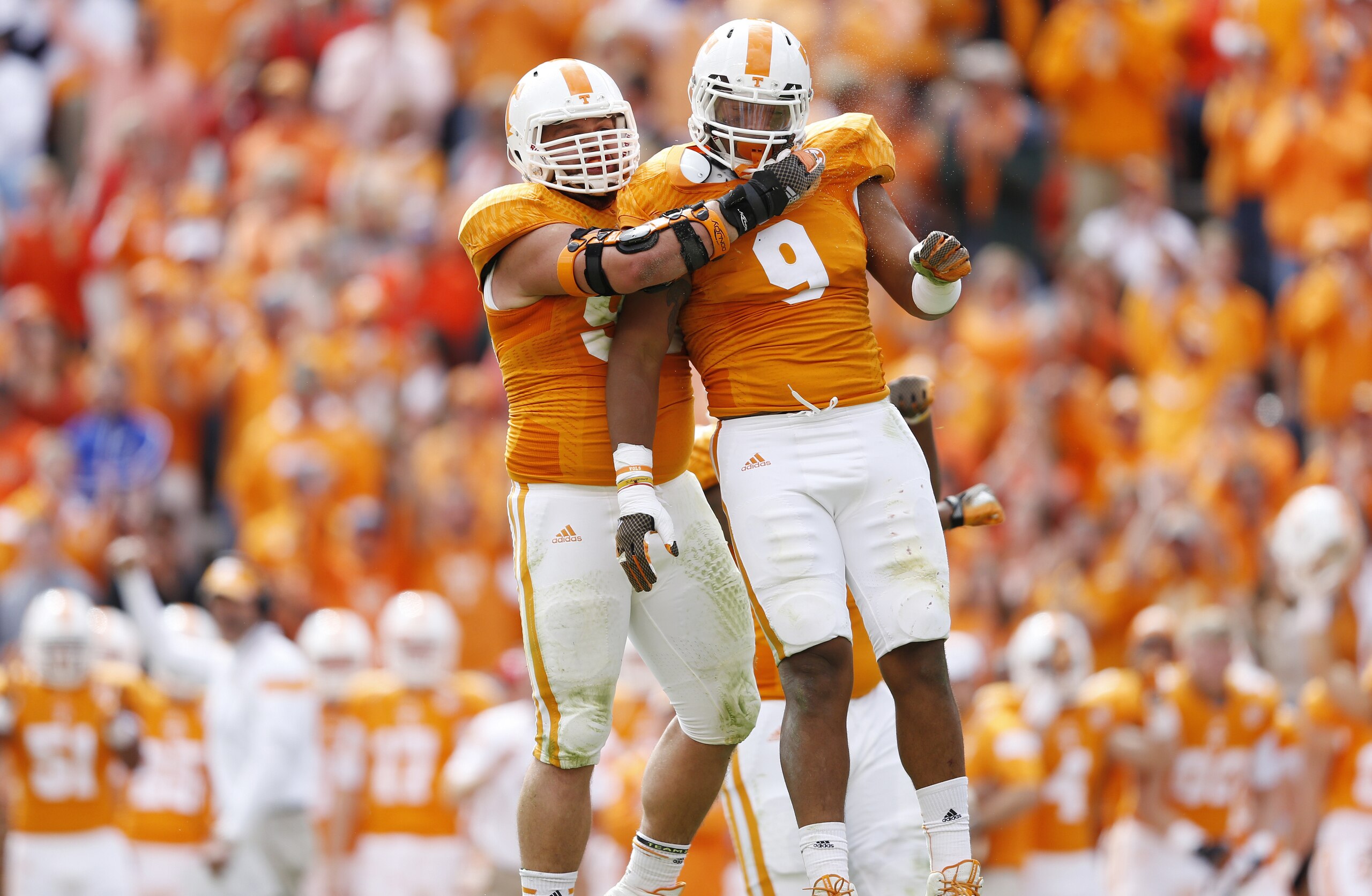
B/R Expert Scouting
"I love this kid. He is so good. He stepped in last year on a defensive line that was completely rebuilt and was a bona fide three-down force."
—Barrett Sallee
Pass Rush
Derek Barnett recorded 10 sacks and eight quarterback hurries as a true freshman. And unlike Myles Garrett, who padded his stats against nonconference opponents, his best work came in SEC play. He had three sacks at Ole Miss and three sacks plus two hurries at South Carolina—both opponents who feature strong offensive line play. His speed off the edge is dangerous and will only improve as he learns to transfer his size (6'3", 257 lbs) into power.
Run Defense
Although he doesn't always hold the edge, Barnett is a plus against the run. He led the SEC with 10.5 non-sack tackles for loss, which is a testament to his speed through the line. He has the frame to occupy blockers and free up his linebackers, and at times he did those things successfully. If he improves on a down-to-down basis—which is reasonable to expect from a sophomore—he has the tools of a very good run defender.
Motor
Barnett plays with a nonstop motor and never gives up on a play. His mindset allowed him to perform just as well (if not better) on the road than at home, which is rare for any player and especially so for a freshman. Intensity and effort travel better than technique and discipline. Barnett has the first two to spare.
Overall
Garrett was the 5-star prospect and stole headlines for breaking Jadeveon Clowney's freshman sack record. But Barnett was the best freshman in the conference, both statistically (note the tackles for loss) and on the field. With Curt Maggitt returning on the outside and Kahlil McKenzie arriving at defensive tackle, teams will not have the luxury of double-teaming Barnett, no matter how much they might want to. His numbers should improve accordingly.
15. OT Ronnie Stanley, Notre Dame
101 of 115
B/R Expert Scouting
"This kid is amazing. I think he would have been the best tackle in last year’s draft. I compared him to [Dallas Cowboys left tackle] Tyron Smith. He’s close to flawless as a left tackle."
—Matt Miller
Power
Ronnie Stanley is not as imposing—physically—as some of the other tackles on this list, but he still checks the box for his size (6'5" ½, 315 lbs) and his power. He'll need to add strength at the next level, but for now he drops low enough to protect against the bull rush and gets a strong push on short-area runs.
Lateral Quickness
Stanley is a former basketball player who played for a nationally ranked team at Bishop Gorman High School in Las Vegas. He has the nimble feet and quickness associated with former basketball players—athletes who had to run up and down a court—and parlays that into offensive line skill. You'll rarely see him beat off the line, no matter how fast his opponent.
Pass Protection
Because of that aforementioned quickness, Stanley keeps his quarterback clean. He stays on the balls of his feet, adjusts to what he sees, bends his knees and delivers aggressive hand punches. Pro Football Focus graded three Notre Dame games last season, and Stanley didn't allow a single QB pressure.
Run Blocking
Stanley improved as a run-blocker as he gained confidence throughout last season. He learned to trust his size and started sealing the edge with authority. With Malik Zaire replacing Everett Golson at quarterback, the Irish figure to run more in 2015. As long as Stanley continues his improvement, they'll have no problem running behind him.
Overall
Notre Dame charged Stanley with a difficult task: replace first-round draft pick Zack Martin. It seemed like he was being set up for failure, but while Martin went on to make the Pro Bowl for the Dallas Cowboys, Stanley made folks in South Bend forget about him (almost). And then he did the unthinkable and returned despite lofty draft projections. We'll see how that works out for his personal stock, but it couldn't have gone better for Notre Dame.
14. LB Myles Jack, UCLA
102 of 115
B/R Expert Scouting
"I love that he's not worried about playing running back anymore. It's beautiful that he realizes, his coach realizes, even UCLA fans are starting to realize that there's no need for him to waste time on offense. Please just let him only play defense because he needs to make plays on that side of the ball."
—Michael Felder
Tackling
Myles Jack finished second on the Bruins with 87 tackles last season. He's one of the best in college football at making tackles in open space, when his speed is on full display. Last year he missed only one tackle per 18.6 attempts, according to Pro Football Focus. He's a strong blend of raw tools and production.
Pass Rush
UCLA does not ask Jack to rush the quarterback, preferring to use him more as a coverage linebacker. Former teammate Anthony Barr and current teammate Deon Hollins are the pass-rushing specialists at linebacker. In two years Jack has posted one sack and three QB hurries.
Run Defense
Jack complements his speed—his greatest weapon—with a 6'1", 245-pound frame. He's added weight this offseason and should be even better at filling gaps and annihilating blocks. UCLA is at its best when other players do the dirty work, allowing Jack to run free and make tackles. But Jack doesn't mind doing anything he's asked.
Pass Coverage
Jack is the best cover linebacker in college football, and it's not all that close. Despite his size, he moves like a cornerback and can check any player in the slot. Pro Football Focus graded him the No. 1 cover linebacker in the country last season with a grade of plus-91.5.
Overall
If not for his lack of pass rushing, Jack might rank No. 1 on this list. He understands his role in UCLA's defense—which includes just about everything except pass rushing—and performs it to near perfection. He earned fame the past two years for moonlighting at running back, but now he should settle on defense. The emergence of starting running back Paul Perkins (1,575 yards), who last year led the Pac-12 in rushing, will be great for Jack's development.
13. QB J.T. Barrett, Ohio State
103 of 115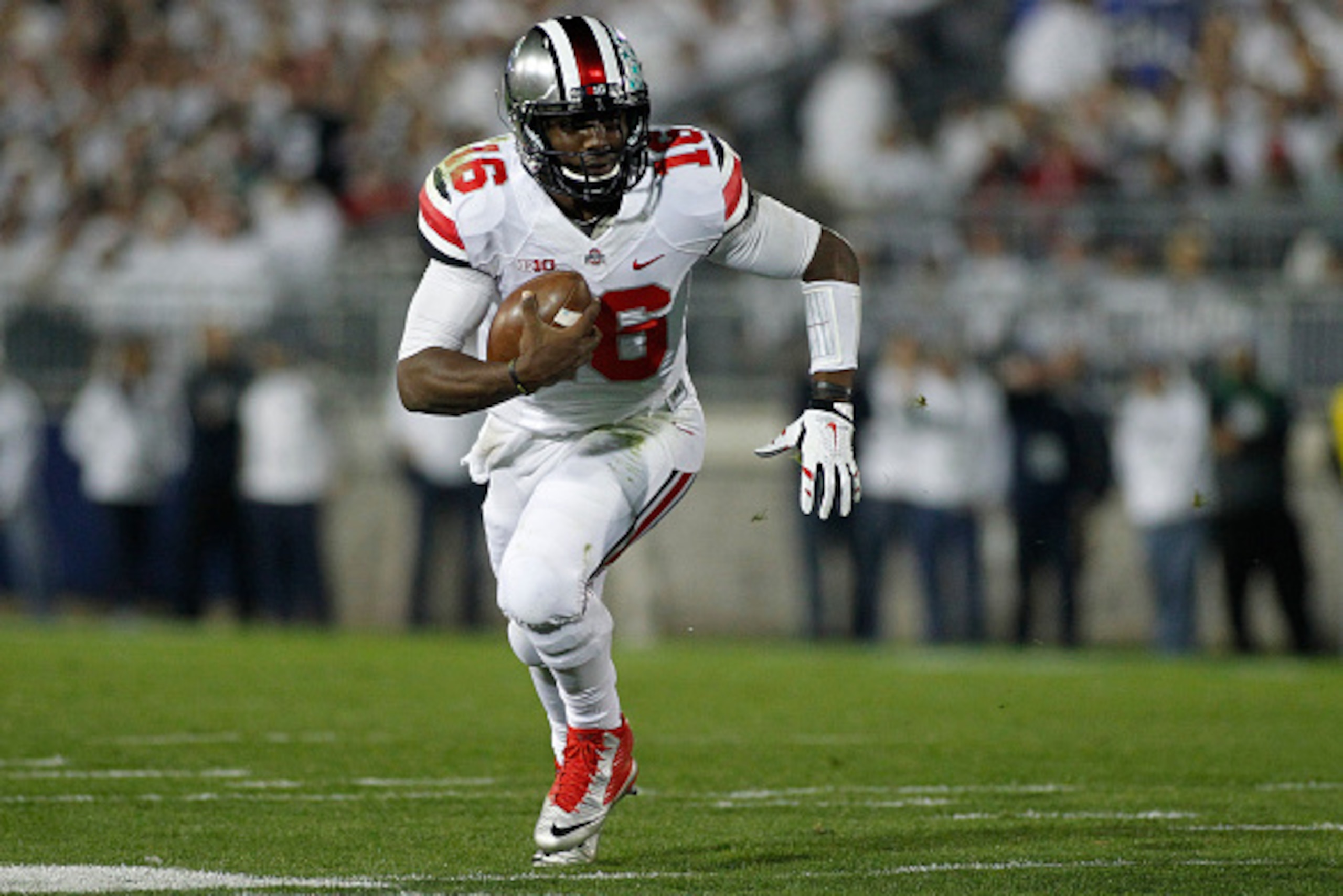
B/R Expert Scouting
"I think he's probably the most electric quarterback in college football. He's not the fastest quarterback on the roster...not the biggest arm...yet he's the best quarterback there. When I saw him in the open field, I was shocked at how easy he made it look."
—Adam Kramer
Accuracy
Most of the praise J.T. Barrett received was for his running ability, but he's pretty accurate as well. He connected on 64.6 percent of his passes as a freshman, topping 70 percent in five games, including three straight. His rate on third downs with seven or more yards to go was 66.7 percent, per CFBStats.com, showing his knack for connecting on obvious passing downs.
Arm Strength
When Barrett was running the offense, Ohio State minimized the deep ball because of the lack of power in his throws. Yet on medium routes that still need some zip, he was firing the ball very well.
Pocket Presence
For a first-year player, Barrett was a quick study when it came to figuring out what was going on around him in the pocket. After his horrible Virginia Tech game, in which he was sacked seven times, Barrett was taken down only 16 times over the next 10 games.
Mobility
When he wanted to run, Barrett had little trouble getting the necessary yards. He tallied 938 yards and 11 touchdowns in 12 games, and that includes yardage lost on sacks.
Football IQ
Barrett was 10 times better when he got hurt in November than he was when he was thrown into the fire to start the season. Few players have learned and improved as much as he did in such a short period of time.
Leadership
The fact that Barrett was a freshman had no bearing on his ability to lead the Buckeyes. He was as much a reason for Ohio State's recovery after the Virginia Tech loss as any player on the roster.
Overall
Had he not broken his ankle against Michigan, Barrett might have made a serious push for the Heisman Trophy. He rewrote the Buckeyes' record book and could break his own marks this season if he's able to beat out Cardale Jones for the starting job. But even if he has to split snaps, he'll be an integral part of the Ohio State offense.
12. CB Kendall Fuller, Virginia Tech
104 of 115
B/R Expert Scouting
"I don't know how great his production will be, because I don't know how many people will test him. But he's definitely a first-round type talent."
—Matt Miller
Speed
Fuller does not have blazing speed, but he's fast enough to track almost anyone. When he was in high school, Bleacher Report compared him to Asante Samuel, and that remains a fair comparison for Fuller's speed and quickness. It's understated, but it's there.
Ball Skills
Fuller intercepted six passes as a true freshman, including three in a close loss to Duke. Opponents learned their lesson, and in 2014 Fuller recorded only two interceptions. But it's not as if the ball skills disappeared: Fuller led the country with 10 pass breakups last August and September, and only lost that rhythm when injuries to teammates allowed opponents to avoid him.
Run Defense
Defensive coordinator Bud Foster likes defensive backs who hit and play physical. Fuller fits that description to a T. He doesn't have outlier size (6'0", 196 lbs), but he comes from a football family and relishes the dirty work in run support. He has 112 tackles in two seasons, and he contributes even when he doesn't make the play.
Pass Coverage
Fuller is the type of cornerback you can throw on an island and not worry about. He has the length and physicality to play press-man but also the fluid hips to turn and chase receivers down the field. Equally impressive is the work he does in zone coverage, where he always knows the location of his safeties and chooses his spots accordingly.
Overall
Kendall is the best Fuller brother to come through Virginia Tech—and that's saying something. His youngest older brother, Kyle, was a first-round draft pick in 2014 and enjoyed a breakout rookie season with the Chicago Bears. Despite being only a junior, Kendall should join his big bro in the pro ranks next season. He's already too good for college.
11. DT Robert Nkemdiche, Ole Miss
105 of 115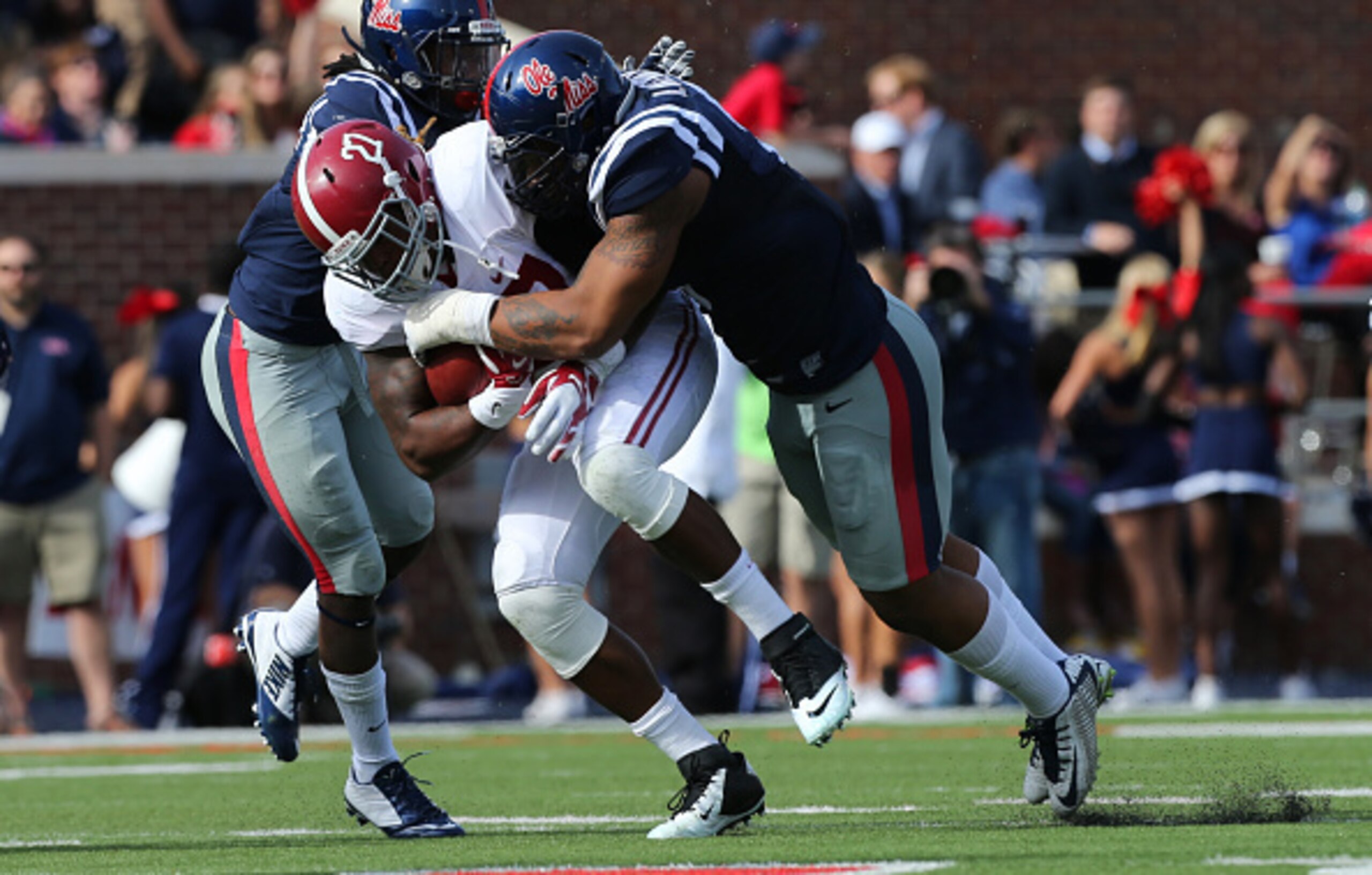
B/R Expert Scouting
"His stats do not indicate how good he is. I mean, he's facing triple-teams. It's unbelievable how much attention this dude draws."
—Barrett Sallee
Pass Rush
Don't look at the sack numbers; Robert Nkemdiche has posted just two in each of the past two seasons. Instead look at the game film; Nkemdiche has influenced a lot more than four pass attempts. He needs to work on countermoves, which would help him finish plays, but otherwise, Nkemdiche wreaks havoc. There's nothing a quarterback hates more than when a pocket collapses from the middle.
Run Defense
Again, the numbers fail to do Nkemdiche justice. He posted 35 tackles and two non-sack tackles for loss last season, but opponents double- and triple-teamed him on basically every running play. The attention he commands plays a big role in Ole Miss' run defense, which last year ranked No. 3 in the country, according to Football Outsiders' S&P+ ratings. He moves insanely well for a man his size (6'4", 296 lbs) and can win in a variety of ways.
Motor
Nkemdiche doesn't dominate as often as he should. He's been better than his numbers indicate, but those numbers should still be better than they are. He disappears too often when he could impose his will on lesser opponents. He's flashed a high motor against certain teams (Boise State comes to mind) but needs to find that gear more consistently.
Overall
The clip of Nkemdiche destroying Alabama guard Leon Brown is a microcosm of his time in Oxford. He didn't record a stat but was clearly the best player on the field. He was the No. 1 overall recruit in the 2013 class, and while he hasn't posted No. 1-recruit-type numbers, he has been No. 1-recruit-type awesome. If you look past the box score, you'll see it.
10. LB Su'a Cravens, USC
106 of 115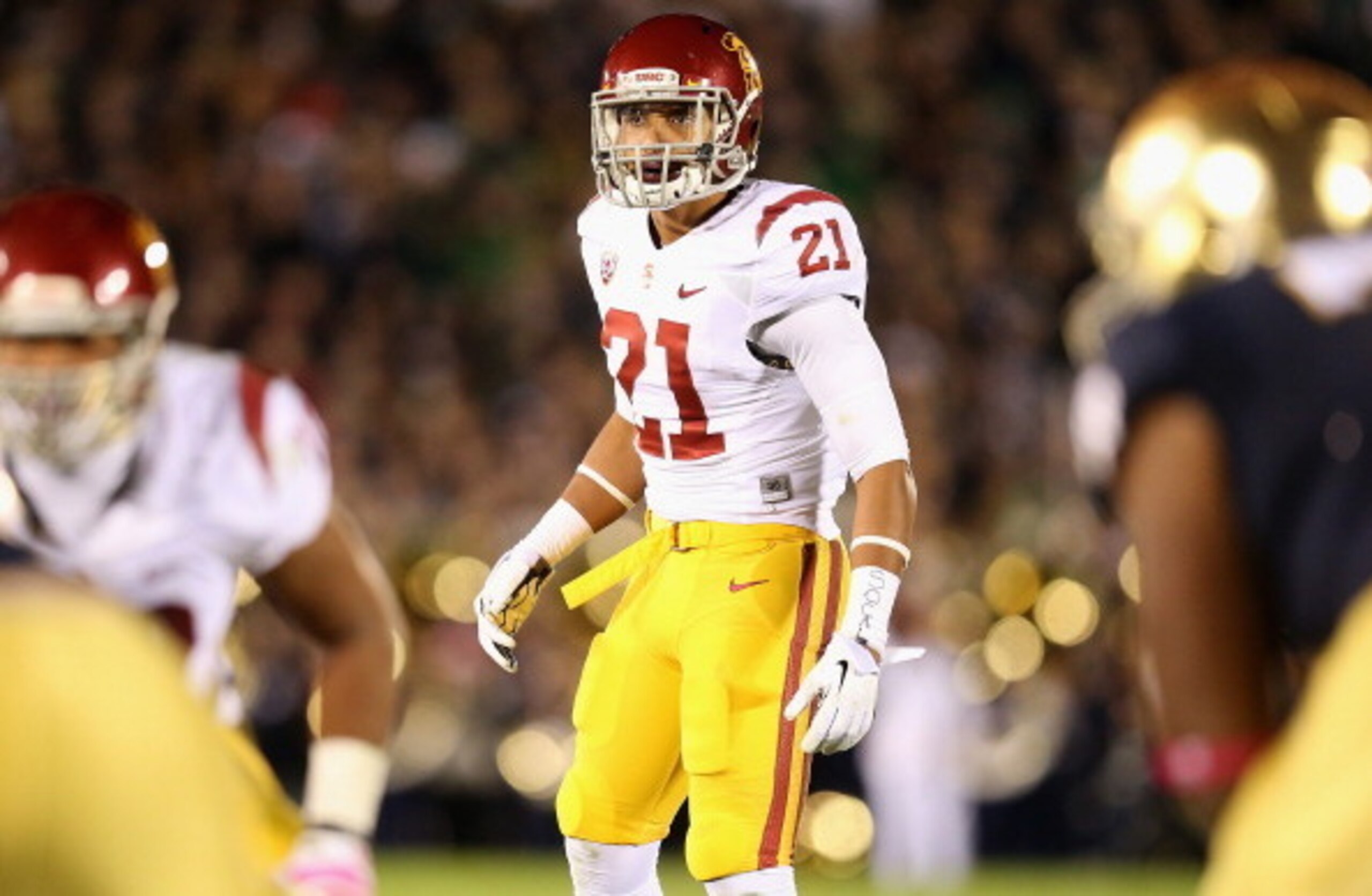
B/R Expert Scouting
"On defense I like guys who play pissed off and are a little crazy. That's why I loved [former Arizona State linebacker Vontaze] Burfict. And I think Cravens fits that mold really well."
—Matt Miller
Tackling
Su'a Cravens recorded 68 tackles last season. He started the year at safety before moving to linebacker and is still feeling out the nuance of his new position. He has great speed for a linebacker and can track offensive players from sideline to sideline; all he needs to work on is making plays in tight quarters. There's no reason to think he won't improve.
Pass Rush
USC doesn't ask Cravens to blitz much, but that doesn't necessarily impugn his pass rushing. It has more to do with something we'll cover later: his value in coverage. He still posted five sacks last season—a big improvement over zero as a freshman—so there's a chance the Trojans unleash him more in 2015. He's quick off the edge and smart, so he should be able to make an impact.
Run Defense
Cravens loves to creep toward the line, slice into the backfield and force negative plays. He finished last season with 12 non-sack tackles for loss despite the majority of his reps coming at safety. There might not be a better college player with regard to attacking downhill. USC started slow last year in run defense but allowed just 3.06 yards per rush after September.
Pass Coverage
It's redundant to say Cravens "covers like a safety" because he basically is a safety. He earned high marks in coverage as a defensive back—where the standard is even higher—and so he naturally earns high marks as a linebacker. He finished last season with three interceptions and nine pass breakups.
Overall
Cravens took well to last year's position switch and gives USC a versatile weapon. He can line up in the box and stick his nose into the running game. He can line up in the slot and cover tight ends and scatbacks. He can even line up on the outside if needed. There's nothing Cravens can't do physically, and he matches those raw tools with an aggressive mentality. It's hard to ask for more in a defender.
9. QB Trevone Boykin, TCU
107 of 115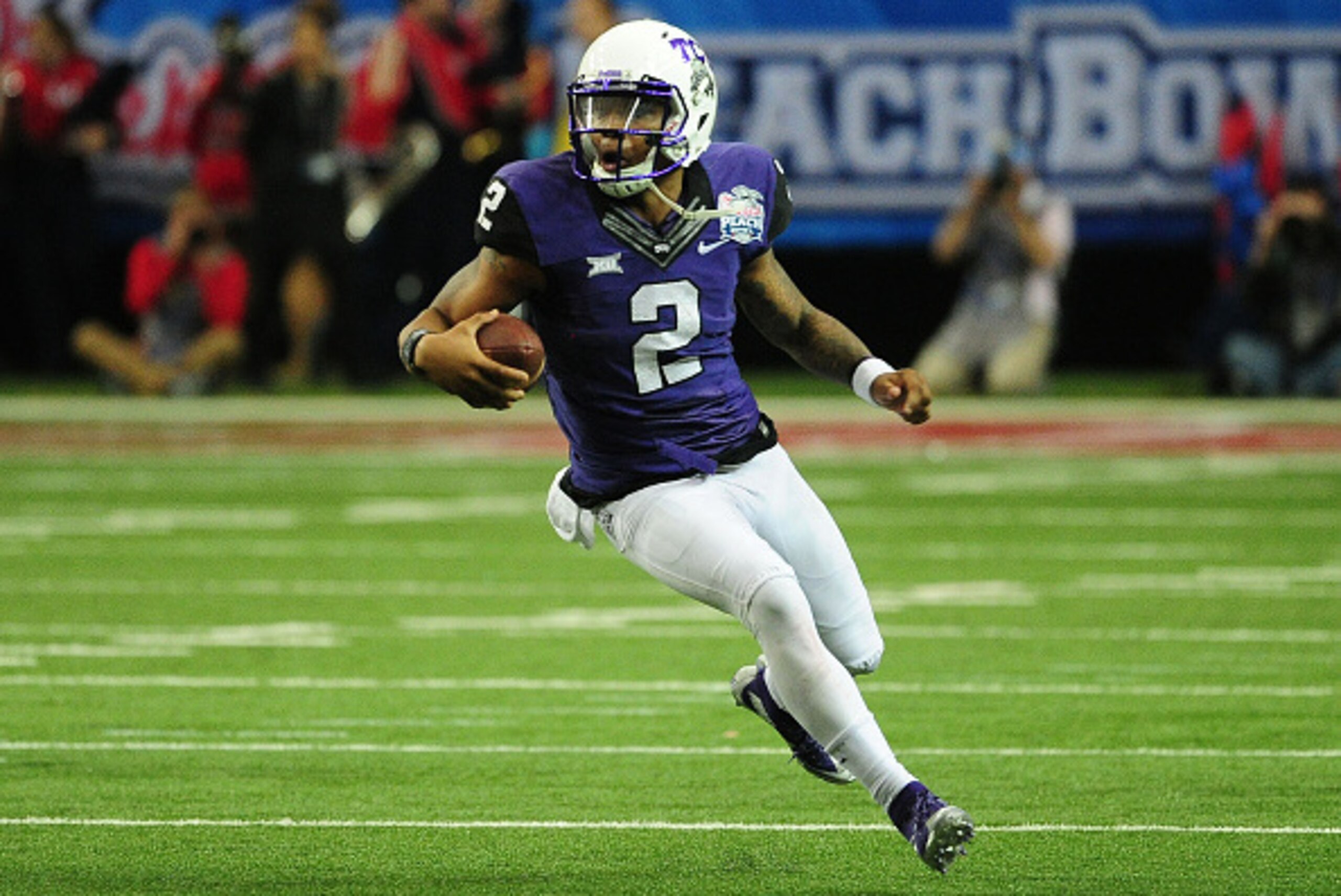
B/R Expert Scouting
"I had someone compare him to Ryan Tannehill. The decision-making is great, whether it's run or pass. I just think he's incredibly smart."
—Matt Miller
Accuracy
Trevone Boykin has steadily improved his accuracy throughout his career, going from 57.2 percent as a freshman to 59.7 in 2013 to 61.2 last season. He benefited mightily from TCU's change in scheme, though he still had small stretches during which he was badly missing targets.
Arm Strength
Though much of what the Horned Frogs did in the passing game revolved around short and intermediate throws, when Boykin got the chance to air it out, he rarely disappointed. He put great zip on the ball that kept it from wobbling.
Pocket Presence
Boykin has shown the most growth in his ability to trust those around him rather than instantly take off. This allowed him to wait for receivers to get open rather than scrap plays in hopes of creating something on the fly.
Mobility
Boykin's experience as both a receiver and running back has made him a well-rounded dual-threat passer. His moves and footwork enable him to get big chunks of yards when he breaks from the pocket.
Football IQ
Boykin still has some lapses in judgement, but overall he's become much more comfortable playing within a system and not feeling like he has to freelance or carry the team.
Leadership
The confidence that co-offensive coordinators Sonny Cumbie and Doug Meacham instilled in Boykin resulted in his transformation from someone who was afraid to lead to someone who wants others to look up to him.
Overall
How good would TCU have been without Boykin last year? The scheme change had a lot to do with the Horned Frogs' jump from 4-8 to 12-1, but Boykin was the big difference. There's a reason he's going into this season as the quarterback most likely to win the Heisman Trophy, per Odds Shark.
8. OT Laremy Tunsil, Ole Miss
108 of 115
B/R Expert Scouting
"Tunsil is the centerpiece of that team. He's the most important player on that team. He's the most indispensable player on that team. Without him, Ole Miss would not be a serious SEC contender."
—Barrett Sallee
Power
Laremy Tunsil is not the thickest offensive tackle (6'5", 305 lbs), but he generates easy power. He can trigger a push on short-yardage plays, and he's strong enough to protect against bull-rushing 3-4 ends. Most of his power comes from a wide, sturdy base, but he also uses great hand placement and leverage.
Lateral Quickness
When he's healthy, Tunsil has once-in-a-generation quickness for a player his size and with his strength. He's a lot like Jason Peters of the Philadelphia Eagles in how fluidly he slides around the field. He only grades this "low" because he broke his leg in last year's Peach Bowl. Broken legs are easier to recover from than knee injuries, so we're optimistic about his outlook, but we need to see him healthy and back in action before he push him up to 19 or 20.
Pass Protection
With a quick first step and kick slide, fantastic length to protect against the bull rush and a sophisticated understanding of footwork, Tunsil locks things down on the blind side. He bends his knees to generate power and initiates first contact against speed-rushers, knocking them off their path and often demoralizing them into stopping their pursuit. Power-rushers don't fare much better.
Run Blocking
Tunsil is Ole Miss' best run-blocker, which might not be saying much but still means something. The Rebels have struggled to run the past two seasons, but in Sallee's words, "That's not Tunsil's fault." He has strength to push defenders in the tackle box and quickness to seal the edge on outside runs.
Overall
Now that Tunsil and his stepfather have dropped the domestic violence cases against one another, only injuries stand to derail his junior season. As long as he's recovered from his broken leg—which wasn't his only injury in 2014—he's a top-five NFL draft pick waiting to happen. "He's the best offensive tackle in the country," said Sallee. "No doubt about it."
7. CB Jalen Ramsey, Florida State
109 of 115
B/R Expert Scouting
"Special. Athletically, he's probably the most gifted player in college football. I loved him as a safety, and as a corner I think he can be even better."
—Matt Miller
Speed
Ramsey is a heat-seeking missile with speed to match his motor. He can tag any receiver on the field and hit the edge to make a tackle. He clocked 10.61 seconds in the 100-meter dash for the Florida State track team, for which he also ran the leadoff leg on the 4x100-meter relay squad that won the ACC outdoor title. And he did it all with a sturdy, well-built frame (6'1", 202 lbs).
Ball Skills
At safety and in Florida State's "Star" position, Ramsey was given free rein to patrol the middle of the field and make plays. He has a nose for the football and comes up with timely interceptions, deflections, pass breakups and forced fumbles. He's expected to do more of the same at cornerback, albeit in a more confined role.
Run Defense
Ramsey plays an active role in run support and isn't afraid to throw around his weight. In fact, he's been tossed from FSU practices for bringing too much intensity and fire. He recorded 80 tackles last season, 6.5 of which were non-sack tackles for loss. If he lines up on an undersized slot receiver and the offense calls a running play, there's a good chance he'll blow it up.
Pass Coverage
It's hard to give an accurate grade here since Ramsey has spent so much time at safety. But he opened the 2013 season at cornerback—the first FSU true freshman to start there since Deion Sanders—and had the fluid hips to match his physicality. Assuming he hasn't lost his cornerback instincts, he should pick up right where he left off. His size-speed quotient is off the charts for the position.
Overall
Ramsey is one of the most gifted athletes in the country. What's scary is that even if he wasn't—even if he had just average physical tools—he would still be a great defender. It's rare to find such a strong blend of athletic gifts, football instincts and work ethic. He could easily end the season as No. 1 overall player on this list.
6. CB Vernon Hargreaves III, Florida
110 of 115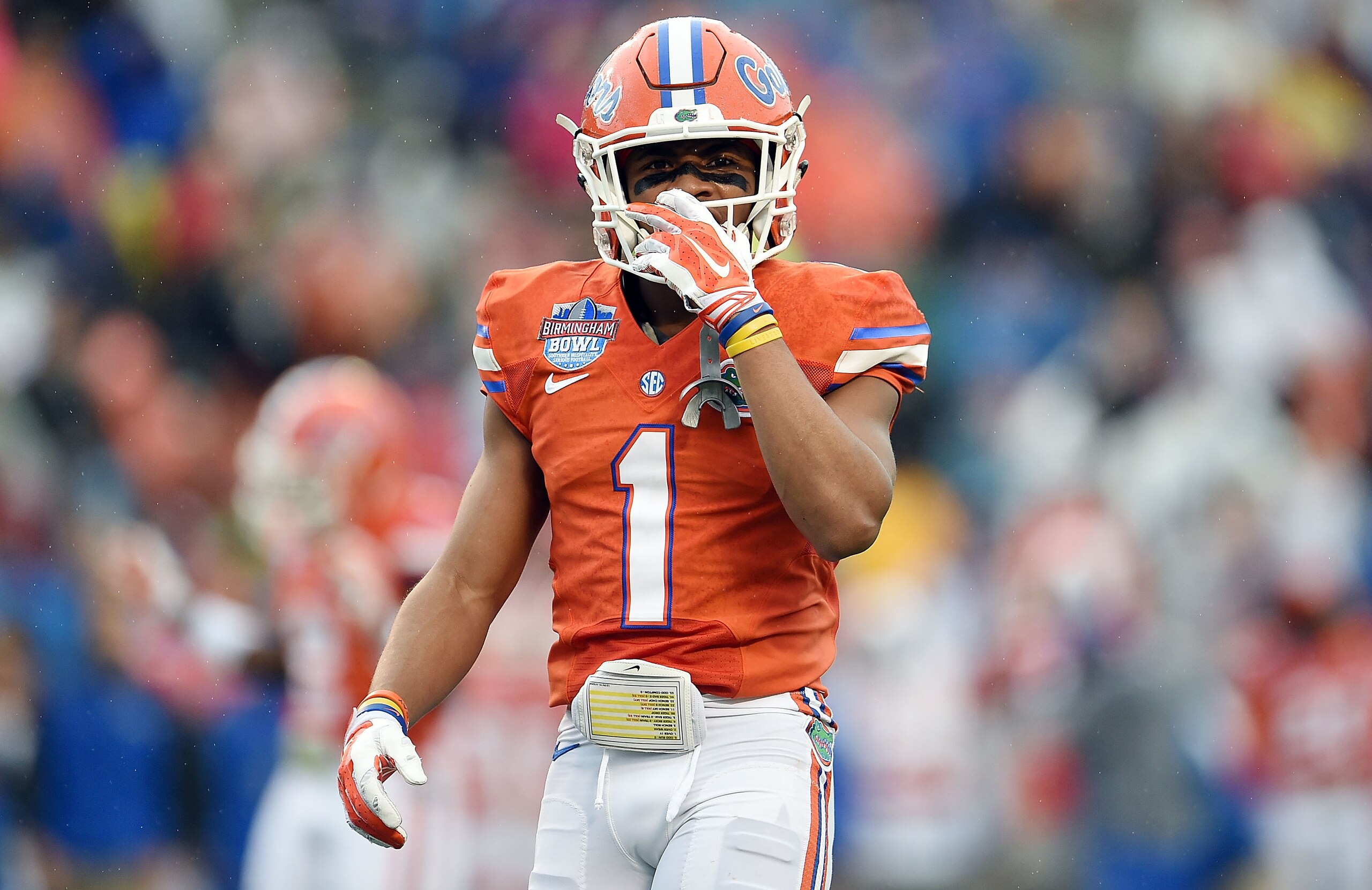
B/R Expert Scouting
"Only six interceptions for his career—I think that tells you how scared teams are of him. He's everything you want in a top-tier corner."
—Barrett Sallee
Speed
Hargreaves does not boast track speed, but he's never been too slow to guard anyone. He turns his hips and runs with receivers on deep routes and tracks them from behind on crosses. His agility is more impressive than his long speed, but agility is more important than long speed in coverage anyway.
Ball Skills
Hargreaves intercepted three passes in his first four college games. Since then he has intercepted just three passes in 20 games—but only because teams learned to avoid him. His relative lack of size (5'11", 192 lbs) can work against him and showed last year against Amari Cooper of Alabama; but unless he's playing top-10 NFL draft picks, he is good enough to win in the air.
Run Defense
The most underrated part of Hargreaves' game is his run defense. He is willing to throw his body around and knows how to wrap up. His father, Vernon Hargreaves Jr., is the linebackers coach at Arkansas, which makes sense when you watch VHIII break down and tackle. He is clearly a coach's son.
Pass Coverage
Despite his smaller frame, Hargreaves plays exceptional press coverage. He knocks receivers off their routes and then mirrors them the rest of the way. Darqueze Dennard rode a similar frame and skill set to the Jim Thorpe Award in 2013. Think of Hargreaves as a less physical Dennard with smoother hips, quicker feet, more athleticism and—by extension—a higher ceiling.
Overall
Hargreaves arrived at Florida as the No. 3 overall player in the 2013 recruiting class. The Gators have floundered since landing him, but for that Hargreaves deserves no blame. He's been every bit as good as advertised.
5. LB Jaylon Smith, Notre Dame
111 of 115
B/R Expert Scouting
"Smith is my No. 1 player right now. I think he has amazing instincts and speed and strength. He reminds me of [former Ole Miss linebacker] Patrick Willis; everyone on the field knows that he's the guy you have to account for."
—Matt Miller
Tackling
There were questions about Jaylon Smith's production after he "only" recorded 67 tackles as a freshman in 2013. He silenced those questions in a big way by recording 111 tackles in 2014. With the speed of a free safety but the size (6'2 ½", 240 lbs) of an inside linebacker, Smith has all he needs to lead the FBS in tackles. He might as well have been built in a lab.
Pass Rush
Notre Dame doesn't ask Smith to rush much, but when it has, he's done an adequate job. After finishing with no sacks and one QB hurry as a freshman, he posted 3.5 sacks and seven QB hurries in 2014. His quickness off the edge makes him dangerous, although he hasn't shown as much skill shedding tackles as he has shedding guards, centers and fullbacks in run support.
Run Defense
For emphasis: Smith shows tremendous skill shedding guards, centers and fullbacks in run support. He gets off blocks as well as any linebacker in college football, which frees him to showcase his speed and make tackles most players wouldn't dream of. As a team, Notre Dame has been merely average in run defense, but Smith is not what's holding it back.
Pass Coverage
Smith doesn't only run like a free safety; he covers like one, too. He can turn his hips and chase tight ends or slot receivers, and he exhibits impressive instincts in zone. Quarterbacks know not to throw in his direction, even if a receiver seems open, because he moves so well for a 240-pounder. Like an object in a car's rearview mirror, he is closer than he appears.
Overall
Miller ranks Smith as the No. 1 overall draft prospect in college football. Based on what Smith has shown his first two seasons, it's hard to disagree. You'd like to see Notre Dame's defense perform better on the whole, but it could have been worse considering all the injuries, suspensions, etc. Smith helped hold the pieces together and will continue to do so this season.
4. RB Ezekiel Elliott, Ohio State
112 of 115
B/R Expert Scouting
"I think he's a complete player. He's very, very special. I think he's the real deal, a top-10 player as of now."
—Matt Miller
Ball Security
Ezekiel Elliott played nearly all of last season with a broken left wrist, thus limiting him to carrying the ball on just his right side. That didn't have any effect on his play, though, as he treated the ball like a prized possession when taking a handoff, cradling it high and tight with a firmness that doesn't leave any room for it to wiggle around.
Power
Elliott's power was most evident during the postseason for Ohio State, when he became the team's workhorse and got stronger with each game. He averaged 16.4 carries per game in the regular season and 25.3 over the final three contests, muscling through tackles and pushing the pile forward.
Vision
It's rare to ever see Elliott make the wrong cut or take a bad angle. If he wants to get around you, he will, and he has a keen eye for anticipating a defender's next move.
Hands
Elliott was used in the receiving game far more often during the regular season, when his carries weren't needed as much thanks to J.T. Barrett's running ability. He handled this job well, catching at least four passes in four different games.
Speed
He doesn't outrun defenders, but thanks to great footwork and quick cutting, Elliott can juke them out and then push past in a way that makes him look faster than he is.
Balance
Elliott keeps himself from getting off-balance quite well, remaining centered and keeping his shoulders level until he's ready to make contact.
Overall
Elliott was one of the biggest reasons the Buckeyes were able to breeze through the Big Ten title game and the College Football Playoff, as he put the team on his back and dominated. He'll be the one Ohio State turns to if there's any uncertainty at quarterback, having already shown he can be a go-to player.
3. LB Scooby Wright III, Arizona
113 of 115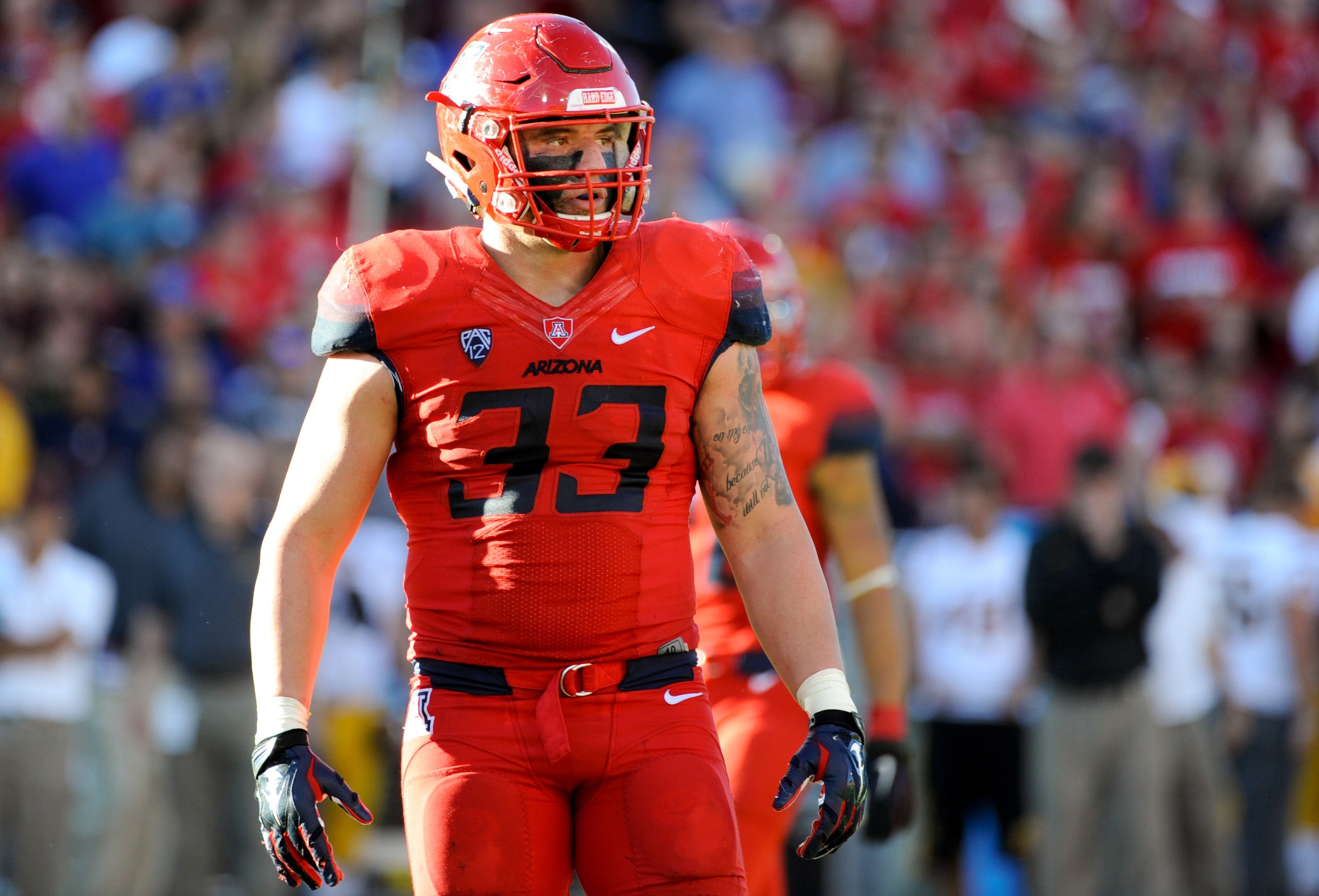
B/R Expert Scouting
"I'm interested to see him with the weight he added, because last year [former Miami linebacker] Denzel Perryman added weight, and it didn't really help what he did. But gosh, he's just so instinctive, and he's such a smart kid."
—Matt Miller
Tackling
Scooby Wright led the country with 163 tackles last season. Ninety-nine of those tackles were solo, which ranked No. 2 behind Eric Kendricks. He posted 10 games with double-digit tackles including an 18-tackle performance against California and a 19-tackle performance at UCLA. No need to break this down further—he's a machine when he gets after the ball-carrier.
Pass Rush
Wright posted 14 sacks last season, which misleadingly ranked No. 3 in the Pac-12. We call that stat misleading because it also ranked No. 3 in the country and first among returning players. As a freshman Wright posted zero sacks, but as a sophomore last year Arizona unleashed him. He paid back his coaches' confidence with four multi-sack performances—all during Pac-12 play.
Run Defense
Wright plays inside linebacker and spearheads Arizona's run defense. He has the size (6'1", 246 lbs), speed and instincts to fill gaps or scrape to the edge. He does his best work as a run-through defender and had 15 non-sack tackles for loss last season. Despite being known for its offense, Arizona finished the year with a top-25 run defense, per Football Outsiders' S&P+ ratings.
Pass Coverage
Coverage is the only aspect where Wright needs work. We hesitate to call it a "weakness"—it's not something teams actively exploit—but compared to the rest of his skill set, that's what it is. He's clunky with his hips, and agile route combinations can turn him around.
Overall
Wright swept last year's major national defensive awards and is exactly as good as advertised. The way he sheds blocks and makes plays is second to none in college football. He needs to fix his coverage to become a true three-down linebacker, but the work he does on standard downs is so good that that doesn't matter. If Arizona repeats as Pac-12 South champion, Wright will almost definitely be a Heisman Trophy finalist.
2. RB Nick Chubb, Georgia
114 of 115
B/R Expert Scouting
"He needed to be a workhorse for Georgia, and he was one. There are not many running backs in America who could have thrived in that kind of situation. The Bulldogs probably won't do that this year, but that's always in Georgia's back pocket if he's healthy."
—Barrett Sallee
Ball Security
Nick Chubb takes care of the ball as well as anyone else at his position, securing it high and tight to minimize the chance of having it poked away. He avoids putting the ball at risk when approaching contact.
Power
Chubb's 5'10", 220-pound frame is a coiled mass of strength and fury, and he uses it to his advantage on nearly every carry. He's able to muscle through tackles with a strong lower half, enabling him to keep his legs working and continue forward after he's shaken off a defender.
Vision
From his first opportunity to start, when he carried it 38 times in a shutout win at Missouri, Chubb showed amazing patience and the willingness to let his line create the opening. Once he saw a seam, he took it without hesitation.
Hands
Georgia didn't make much use of Chubb as a receiver, as he had only 18 catches, and those came across seven games. He handled screens and swing routes adequately, but they're not his strength.
Speed
Chubb's first step isn't that fast, but it's good enough when combined with the fact he can turn upfield without any slowing of his momentum. This enables him to get around defenders far more quickly than you'd expect for someone of his size.
Balance
There's no leaning or swaying in Chubb's stride; it's all about keeping centered and pushing forward. This makes it difficult to take him down on first contact.
Overall
We didn't expect to see that much from Chubb as a true freshman because of the presence of Todd Gurley at Georgia, but once Gurley was removed from the equation, Chubb wasted no time in asserting himself as one of the best rushers in the country. He's just getting started and, barring injury, will remain at or near the top of the rankings for his position.
1. DE Joey Bosa, Ohio State
115 of 115
B/R Expert Scouting
"'Prototypical.' That's the word that comes to mind when you think about him. There's not a whole lot to be upset about."
—Matt Miller
Pass Rush
Joey Bosa can rush from any spot on the defensive line. He's quick off the edge and has a library of advanced moves with his hands but also has the size (6'6", 275 lbs) and brute strength to push smaller blockers into the backfield. Check what happened at the end of last year's Penn State game when the Nittany Lions made the mistake of blocking Bosa with a running back. You think they'd like to have that one back?
Run Defense
As good as he is as a pass-rusher, Bosa's even better against the run. He disengages when linemen try to control him, then he sets the edge and funnels runs inside. But more than just helping his teammates, Bosa also makes stops on his own. He has 11 non-sack tackles for loss in his last 19 games.
Motor
Bosa is a wild man whose energy sets the tone for Ohio State's defense. He plays through the whistle and gets extra amped up for big games. The only reason he didn't shine brighter in the College Football Playoff (five tackles in two games) is because teams went to extraordinary lengths to block him. And despite that, he still found a way to contribute.
Overall
Try to find a flaw in Bosa's game. It honestly might be impossible. He led the Big Ten in sacks (13.5) last year despite being stronger as a run defender than a pass-rusher. He's 275 pounds but can still do standing backflips. He can slide into multiple positions in multiple defensive systems. The only red flag is his suspension for the season opener at Virginia Tech—but even that is a minor concern. He's the type of player defensive coaches dream about.
All QB, RB and WR sections written by Brian Pedersen. All OL, DL, LB and DB sections written by Brian Leigh.
.jpg?w=2560)
.png?w=2560)



.jpg?w=2560 "Raiders Could Start Mendoza")
.jpg?w=2560 "Rodgers Iced Out on Plane 💎")



.jpg?w=2560 "Blockbuster Trade Idea To Shake Up the Eastern Conference 🎇")