With Draft Steal Justise Winslow, Heat Could Shake Up the East...If They Want To
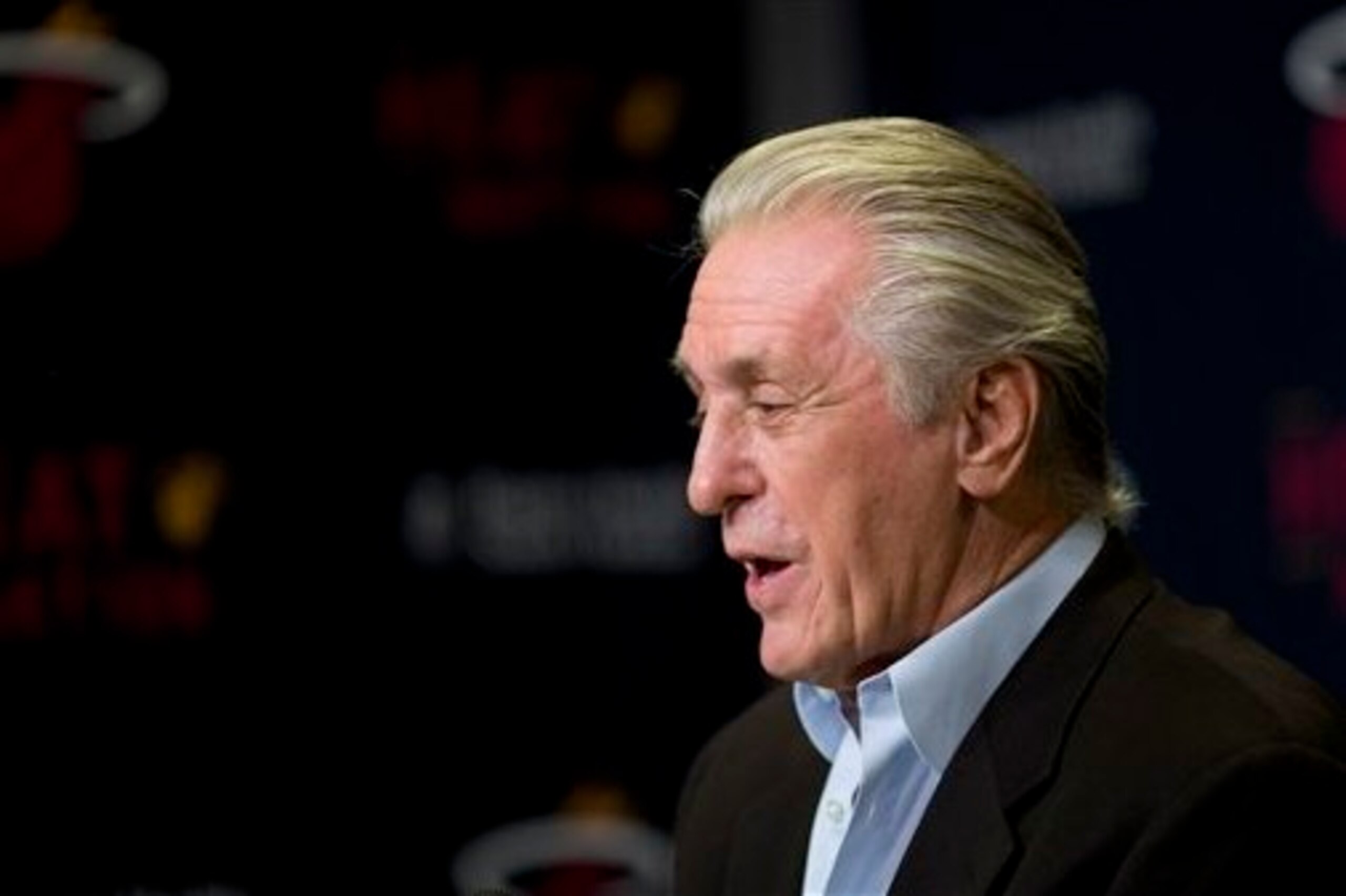
MIAMI — This was the easy part, in the same way it was relatively easy for Pat Riley and the Miami Heat to sit tight in 2002, as NBA-ready prospect Caron Butler, projected in the top six, stunningly dropped to their spot at No. 10. This was the easy part, because the only work was the waiting—the "palpitations," as Riley put it—and then, as Duke swingman Justise Winslow kept falling, the singing.
"When [Winslow] got down to 10, Micky [Arison] and Nick [Arison] started singing the Duke fight song, whatever it is, and waving the blue flags," Riley said of the Heat's managing partner and CEO, respectively, the latter a Duke alum. "But they're pretty excited."
TOP NEWS

Trades That Should've Happened During NBA Offseason 🏀

'Over-Under' Predictions for Every NBA Team's Record 🔮
Harper Seen as Spurs' No. 2
It was an exciting evening for many at Heat headquarters, largely because it was so unexpected. None of this was ever part of the plan, because this pick never seemed plausible—this shot at a versatile wingman who had seemingly soared up draft boards while excelling on the NCAA tournament stage. At their draft-night availability, the Heat handed out a sheet of 20 mock drafts by prominent NBA writers or websites, and 19 had Winslow slotted between fourth and seventh; only one writer had him as low as eighth.
That's why the Heat never hosted Winslow for a workout and why Riley had never spoken to him until becoming his boss Thursday night. They just got reports, about his commitment, about his improvement, reports they didn't believe would ever be relevant, as they, according to Riley, "locked in to a couple of guys" who were more likely to be available.
And then, when Detroit took Stanley Johnson at No. 8, their phones started ringing, with teams trying to get to their slot, to scoop up a steal. But they were staying put and taking the player they—and many observers—deemed the top talent left.
"This is an organization that wants to win right now, and that's what I'm accustomed to doing," Winslow told Miami-based media in a conference call.
It was the right thing to say.
But was it correct?
We shall soon see.
It is a reasonable notion that adding Winslow, widely deemed among the thefts of the draft, to a roster with plenty of proven, now-healthy returning talent will give the Heat a chance to shoot past an unstable set of rivals in the Eastern Conference—reshaping that conference again just one season after they were reeling from the stunning departure of LeBron James.
But now, here comes the hard part, because doing so could come in conflict with some previous plans, whether to trim a luxury tax bill or maintain maximum payroll flexibility for 2016, when Kevin Durant may be among those available.
Should the Heat change course, if those have been their primary considerations?
Absolutely, even if it comes at considerable cost, because they owe this group of players the chance to see what it can be. They owe the fans that same chance too.
"We have a good team, and we can have a great team if we can put everything together," Riley said.
They can, right now, not just in 2016-17 but also in 2015-16, at least in the East. The Cavaliers still look like the leaders even if they can't re-recruit Kevin Love, but everybody else is in flux: The Hawks may lose Paul Millsap and/or DeMarre Carroll, the Bulls must adjust to a new coach, the Wizards may need to replace Paul Pierce's toughness, the Raptors appear in retreat, the Bucks and Celtics probably aren't ready, and the Pacers couldn't get the right guy to opt out (with David West doing so, and Roy Hibbert resisting).
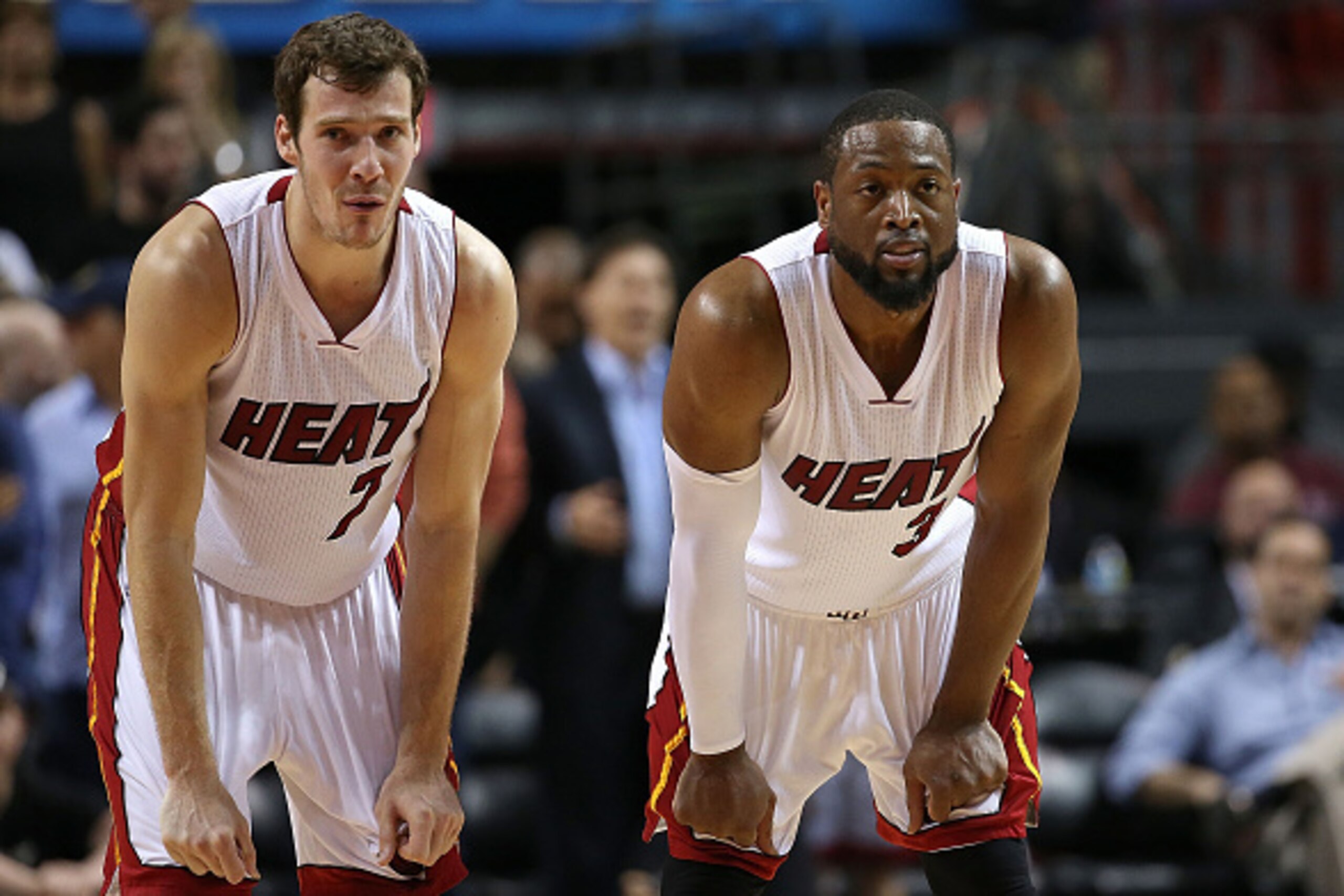
The Heat can field an instant East contender if they can convince Dwyane Wade to stay, while also retaining Goran Dragic and, to a lesser extent, Luol Deng, without sacrificing too much of their depth for luxury-tax purposes, and by supplementing the roster with another shooter, perhaps with their mid-level exception.
But will they?
That question can't get answered until July, when free agency officially opens and Deng, Dragic and possibly Wade, who seems almost certain to opt out of his $16.1 million contract by Monday, are expected to hit the open market. Riley said the right things Thursday after the draft, calling Wade "a pillar" for the franchise, adding the organization loved him and acknowledging that he has sacrificed more than anyone else.
"We want him back," Riley said. "We want him back for the rest of his career. That's obvious. And we're going to try to do everything we can do to make that happen."
Clearly, however, what they've done so far has not been enough, since Wade was rubbed the wrong way by initial conversations and hypothetical—since league rules don't allow more—offers, believing he was being taken for granted and that the team wasn't honoring previous promises.
That trust needs to be patched, and it's reasonable to wonder whether it's too late, even if Wade's other options may be limited, either by acquisitions (the Lakers drafting D'Angelo Russell), financial restrictions (the cap-strapped Cavaliers) or both, in the case of the Clippers.
Riley said he wasn't a "pessimist," taking some comfort in his belief that, when July opens, Wade will give Miami his first shot. Riley also said he wanted to retain Dragic and Deng, after Dragic already indicated he would opt out, and Deng may still do the same.
Dragic matters, but of course Wade matters most. Whether the Arisons take the luxury-tax hit by giving him a $23 million maximum this season while convincing Wade they will sort out the next two years later, or Riley sacrifices some 2016 flexibility by giving Wade a three-year deal, either of those options is far preferable to the alternative. That's even truer now—now that Winslow is on board, even if he may prove to be Wade's long-term replacement.
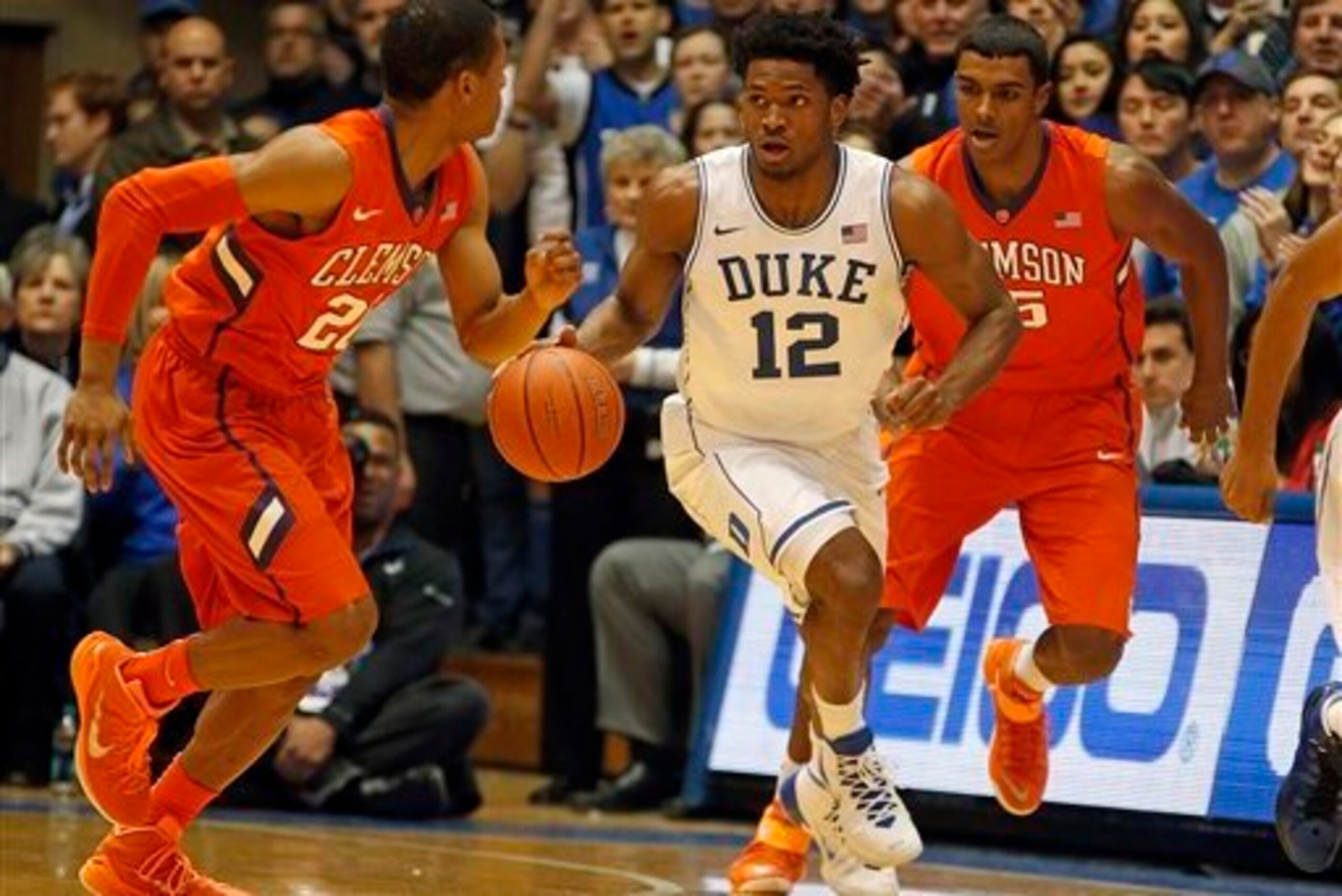
Jay Bilas, Duke alum and ESPN analyst, revealed this week on a conference call that his former coach, Mike Krzyzewski, had compared Winslow to Wade during the collegiate preseason, a high compliment especially when considering Wade starred under Krzyzewski in the Olympics and Winslow had yet to play an NCAA game.
Then Thursday, Riley, perhaps inadvertently, did the same, using a lot of the same language to describe Winslow that he used at another positive press conference, the one following the 2003 draft, when a kid named Wade was his prize.
Wade was two years older at that time than Winslow is now. Still, Riley called Winslow "very mature" and "an attacker," while adding that "what I like about him is that he defends," all language in line with his Wade characterizations a dozen years earlier. He spoke of how Winslow showed, in the NCAA tournament, "no fear of playing on that stage," which is a trait that endeared Wade to him, too, back when Wade was helping Marquette take down Riley's beloved Kentucky. And he praised Winslow's post game, which became one of Wade's strengths during the latter's NBA career and to which Winslow, three inches taller, may be even better suited to excel in that area from the start.
"I think we're going to see nothing but upside," Riley said of Winslow.
But it will be best if that rise occurs naturally, not if it's rushed, if he's the understudy to Wade, rather than the guy who must step into his sizable shoes. Wade has never, in the course of his career, had a premium talent playing behind him—someone hungry to learn his tricks, someone who can spell him when he needs some rest or maintenance. The prospect of Winslow, playing behind and at times alongside an all-time great, working his way onto a winner is the perfect scenario for Miami as it transitions into a new era.
This doesn't make Wade more expendable. Rather, it makes him irreplaceable, especially since he has embraced more of a mentor role in the past couple of seasons, after shying from leadership earlier in his career.
It makes this opportunity irresistible—to contend now, while setting a course for the future. And yet that isn't a given, not with the perception that keeping the payroll in check is at least as important to the organization as winning, at least for this season.
Riley insisted there was "not really any truth" to reports about shopping supporting players, such as Mario Chalmers and Chris Andersen, for tax reasons, adding that "we don't like to add by subtraction." Yet he also said Mike Miller wouldn't be amnestied two years ago, and then Miller was, even if he may not have had final say.
So now, only actions will speak.
Riley spoke for 20 minutes Thursday, wearily but mostly sunnily, smiling near the end when thinking back to one of the sadder nights of a depressing 2014-15 season.
"Today we got a chance to draft No. 10," Riley said. "I don't think we're a No. 10 draft pick team. I think we're better than that. But I can thank Khris Middleton, you know, in Milwaukee. That was a bad day for us. But today we can go back, and we can thank him for making that shot with 0.8 seconds to go."
That shot ended up being the difference between making the playoffs and losing this pick, or missing the playoffs and keeping it. Keeping it allowed the Heat to restock with an appealing young talent.
"But that's what happens," Riley said. "We got a break, and you need 'em in this game."
Riley got a guy who few, including himself, thought he could Thursday. That was the easy part. He took the player he should. But it only really matters if he and the Arisons and the Heat can take the next step, by getting some deals done and a couple of even more important guys back. They got a stroke of luck. Now they must get Wade, for starters, to stroke a pen.
Ethan Skolnick covers the NBA for Bleacher Report and is a co-host of NBA Sunday Tip, 9-11 a.m. ET on SiriusXM Bleacher Report Radio. Follow him on Twitter, @EthanJSkolnick.

.jpg?w=2560 "Report: Seahawks Not Signing Mixon 😯")
.jpg?w=2560 "Buyers or Sellers for NFL's Most Surprising Teams 🏈")
.jpg?w=2560 "CJGJ Shares Cryptic Post 🤔")