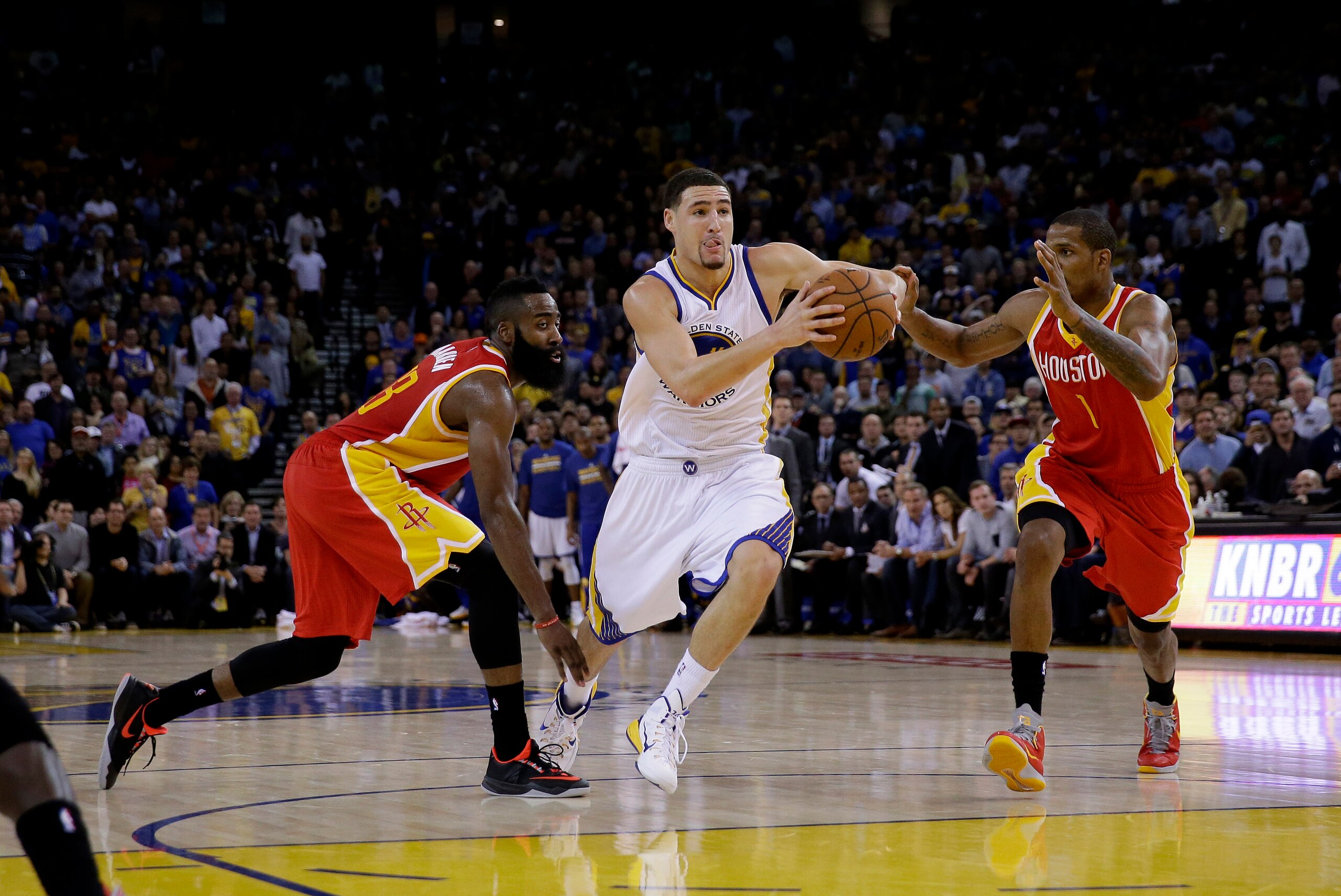

4 Keys for Golden State Warriors to Win Western Conference Finals
Now is not the time for the Golden State Warriors to ease up and assume they can just coast into the NBA Finals. There, they'll await the Eastern Conference representative and get ready to raise a championship banner into the rafters of Oracle Arena for the first time since 1975, when they still played in the Oakland-Alameda County Coliseum Arena.
But they aren't there yet. Success in the next round is probable, but it's not guaranteed. After all, the Houston Rockets are in the habit of doing the improbable this postseason.
At one point, they were down 3-1 to the Los Angeles Clippers in the Western Conference semifinals. Shortly thereafter, they were on the brink of elimination, having won Game 5 but trailing by 19 points late in the third quarter of the ensuing contest.
"We kept saying, 'We're not going to quit,'" Dwight Howard told the Associated Press (via ESPN.com) after the historic comeback kept the Rockets' championship dreams alive. "We kept believing. We never gave up on each other."
Does anyone think they're suddenly going to stop believing in one another after winning Game 7 in dominant fashion and advancing to the Western Conference Finals? They won't, even with a 67-win juggernaut set to square off against them.
The Warriors deserve to be heavy favorites heading into this penultimate round, but there are still keys they have to follow in order to move one step closer to the title. Waltzing through an NBA playoff series in late May isn't exactly advantageous.
After all, the series stands at 0-0 right now.
Adjust and Cover the 3
1 of 4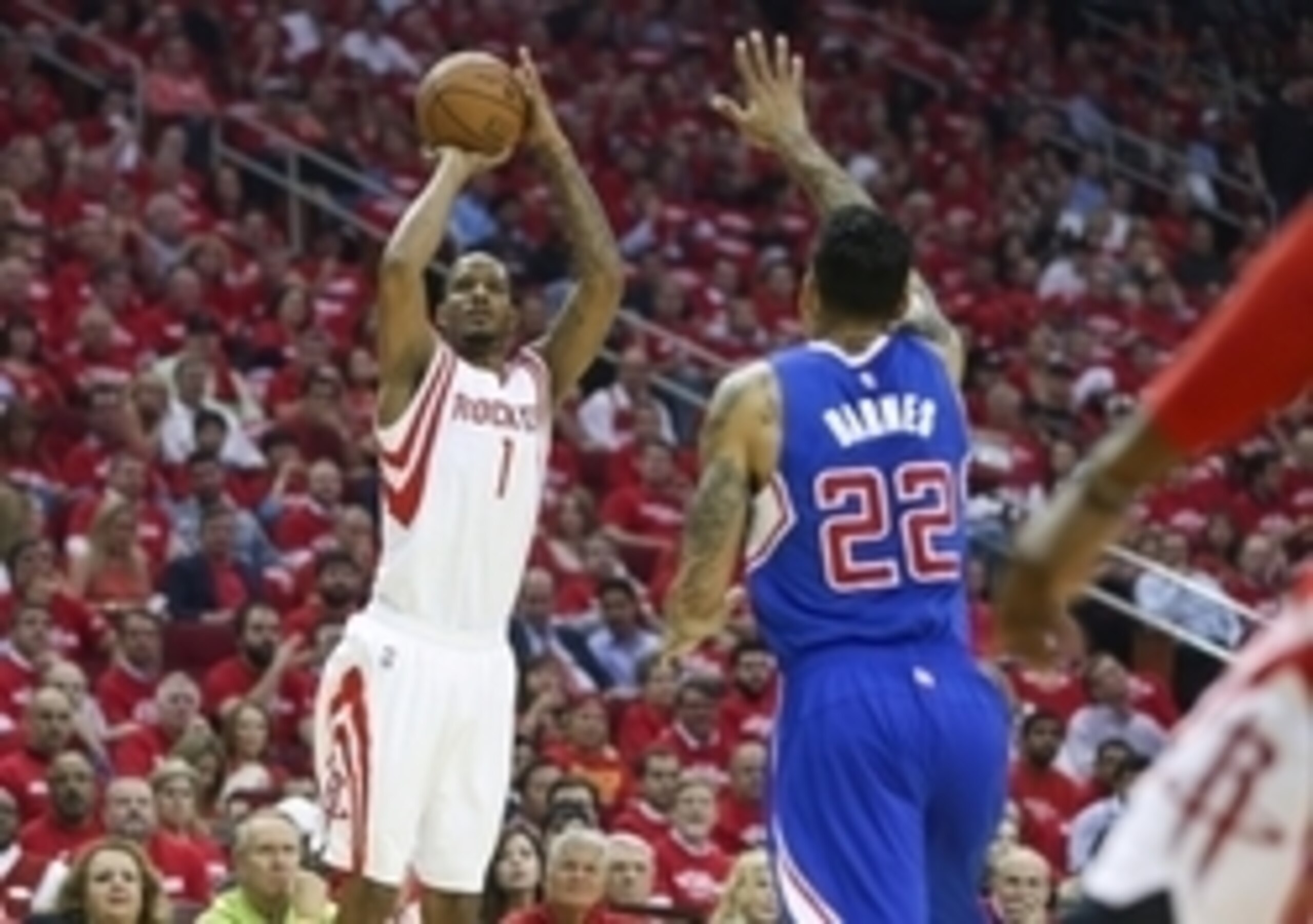
Adjusting from one team to another is always a difficult process during the playoffs, even if two squads are stylistically similar. The personnel still changes, which means that everyone has to learn new scouting reports and tendencies. They have to be prepared to cover novel sets and play at different tempos.
But transitioning from the Memphis Grizzlies to the Rockets is a completely different ballgame, as the two Western Conference squads essentially function as complete opposites on the offensive end.
When they were eliminated, the Grizz had made only 154 three-pointers during the postseason, and they'd connected from beyond the arc at a 31.2 percent clip. Their three-point rate, which shows the percentage of field-goal attempts that came from downtown, stands at a mere 0.166—rather easily the lowest mark of any playoff team. The Milwaukee Bucks are one rung above, and 20.6 percent of their field-goal attempts were triples before the Chicago Bulls eliminated them.
Where are the Rockets through the first two rounds?
With 342 makes from beyond the arc, they trail only the Atlanta Hawks (347) and Los Angeles Clippers (356), though the Clippers achieved their league-high total with two extra games. They're hitting 34.8 percent of their looks, which is barely above the average mark during the postseason but remains impressive due to the hefty volume. And Houston's three-point rate (0.377) is the No. 3 mark in the Association, behind just the Cleveland Cavaliers (0.355) and Golden State Warriors (0.366).
So, again, from a stylistic perspective, the Rockets and Grizzlies couldn't be any more opposite.
Adjusting to that quickly is vital for Golden State with the defensive strategy now completely changing. Instead of worrying about interior forces—though Dwight Howard is still a threat—staying disciplined and never straying too far from spot-up shooters is a top priority on the point-preventing end. There's no more Tony Allen to cheat off of, especially with Corey Brewer suddenly finding his stroke during the Western Conference Semifinals.
Avoid Fouling
2 of 4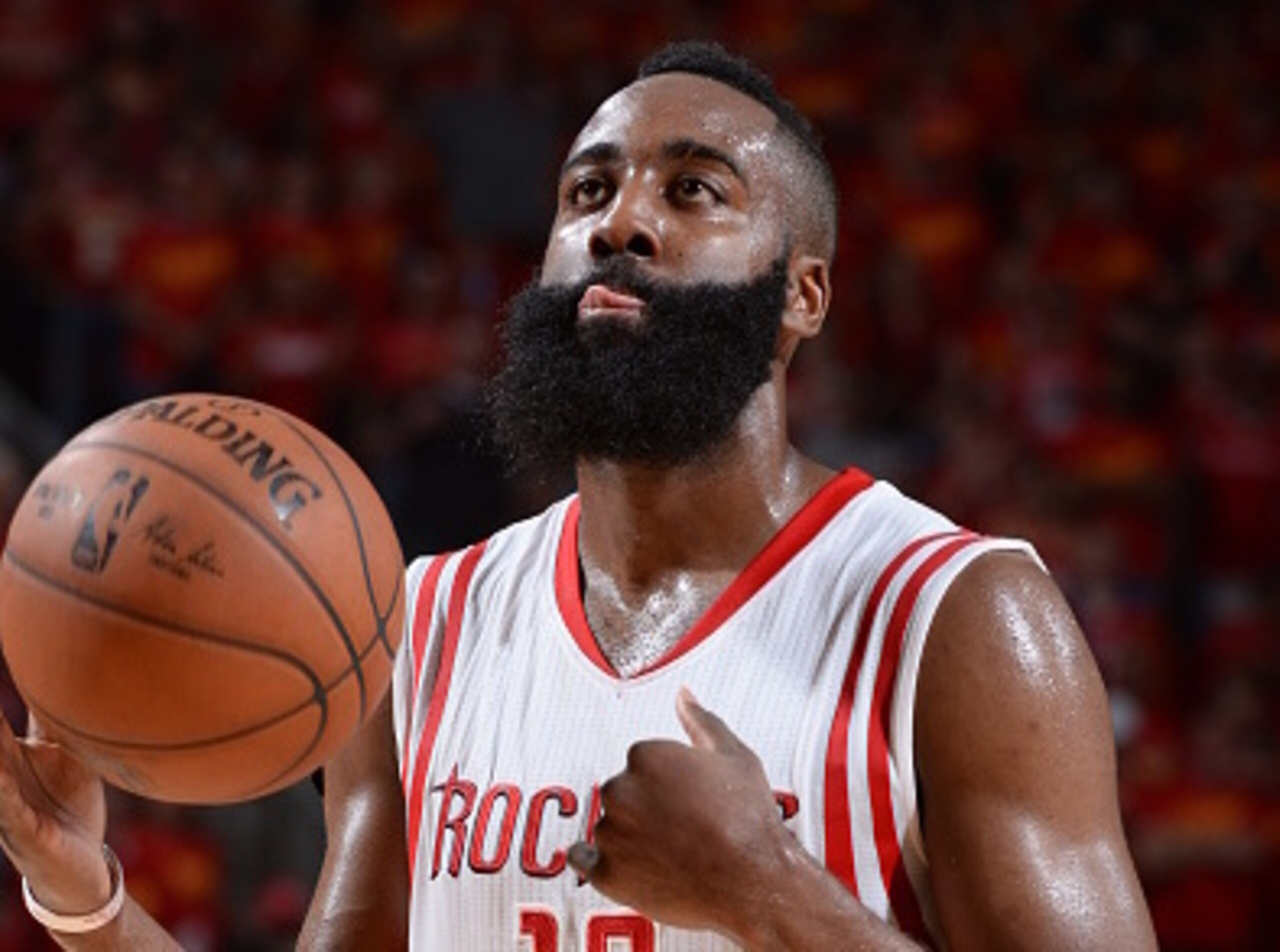
Matching up a weakness against a strength is tough, but that's one of the factors the Golden State Warriors will inevitably have to overcome as they attempt to defend their No. 1 seed against the Rockets.
Houston thrives at the free-throw line, as James Harden is one of the very best in the NBA at drawing contact, getting referees to blow their whistles and then converting at the line. Maybe he exaggerates contact a bit, but that's ultimately irrelevant, as style points don't exactly matter in the Western Conference Finals.
Though these stats are admittedly skewed by teams' penchants for hacking Dwight Howard and Josh Smith, the Rockets are currently leading the postseason field in free throws made, free throws attempted, free throw attempt rate (free throws attempted per field-goal attempt) and, despite the poor shooting percentages of some players who make many trips to the line, free throws made per field-goal attempt.
It should almost go without saying that this is a strength of the Houston organization.
And here's the scary part for Golden State: Though it's admittedly improved during the postseason—partially because it had the luxury of playing the Memphis Grizzlies and New Orleans Pelicans, neither of whom are elite free-throw-shooting teams—Golden State's primary defensive weakness throughout the regular season was its tendency to foul.
If we look at the Four Factors on both offense and defense, it's easy to see why the Warriors were such an elite team, one capable of winning 67 games and nearly going undefeated at home. They may have struggled with turnovers and rebounding, but they shot so well and contested everything, so it ultimately just didn't matter.
But they also put their opponent on the free-throw line quite often, ranking No. 22 in opponent's free throws per field goal attempt. Against Houston, that will be a major problem, unless Steve Kerr's squad suddenly gets far more disciplined and refuses to rely on excess contact as a defensive crutch.
The Rockets will end up on the line often enough already. The Warriors can't afford to do anything that will raise the frequency to even higher levels.
Exploit Guard Advantages on Offense
3 of 4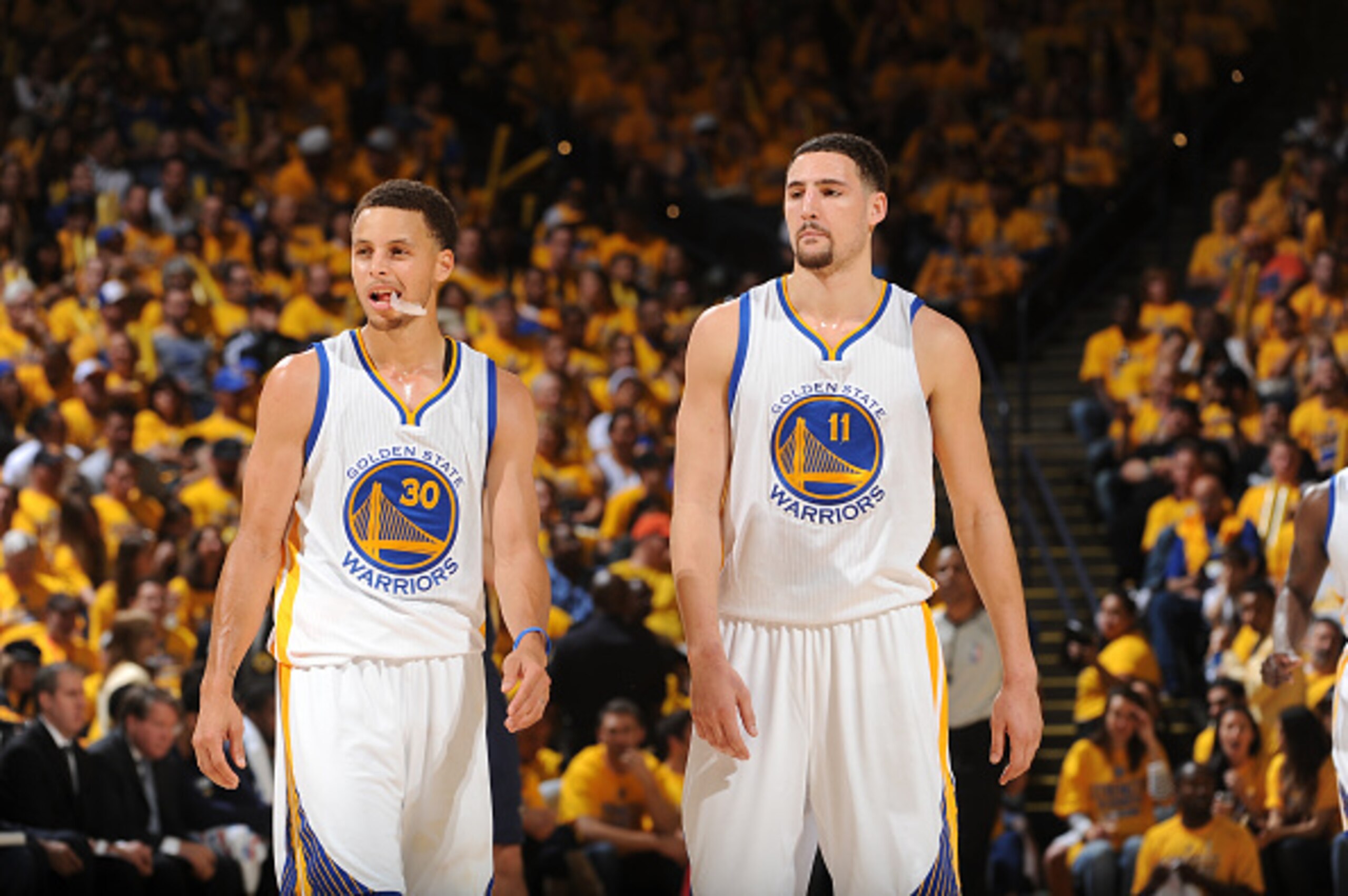
The Splash Brothers are just about unstoppable, especially for a team that doesn't have anyone on the defensive level of a healthy Tony Allen.
During the playoffs, Stephen Curry is averaging 28.2 points and 6.0 assists while shooting 43.5 percent from the field and 41.1 percent from beyond the arc. His backcourt counterpart, Klay Thompson, is experiencing a bit less success but still posting 20.7 points and 2.8 dimes during his typical contest while hitting his field goals and triples at 48.1 and 47.7 percent, respectively.
The Rockets aren't going to have many answers for them.
Harden will have to guard one of the two, unless Corey Brewer or Trevor Ariza is switching over and leaving the bearded shooting guard trailing Harrison Barnes around the perimeter. And even if Ariza is switched over onto one, who's going to take the other? Pablo Prigioni and Jason Terry?
Yikes. That doesn't seem to bode well for the Rockets.
As Grant Hughes wrote for Bleacher Report in his series preview, the matchups are likely to leave Thompson exploiting the Houston defense early and often, so long as he has enough energy left after checking Harden:
"We should expect the Rockets to slot Trevor Ariza on Stephen Curry because neither Jason Terry nor Harden has any shot to stay with the league's deadliest shooter. Those two aren't equipped to handle the MVP, and using up Harden's energy chasing Curry around endless screens would be a massive mistake.
That means Thompson is likely to see a favorable matchup on the other end.
If Houston uses the undersized Terry, Thompson, 6'7" and gifted with a perfect high release, will get uncontested shots whenever he wants them. He could punish Terry in the post and fire over him from the perimeter—covered or not.
"
Remember, we're coming off a series in which Chris Paul averaged 21.2 points and 10.0 assists while shooting 48.7 percent from the field, serving as one player the Rockets never really found an answer for. Now, they'll be dealing with two All-Stars who thrive on the offensive end.
Golden State will be looking to make the most of its backcourt advantage right away, and it should never slow down.



Don't Underestimate the Rockets
4 of 4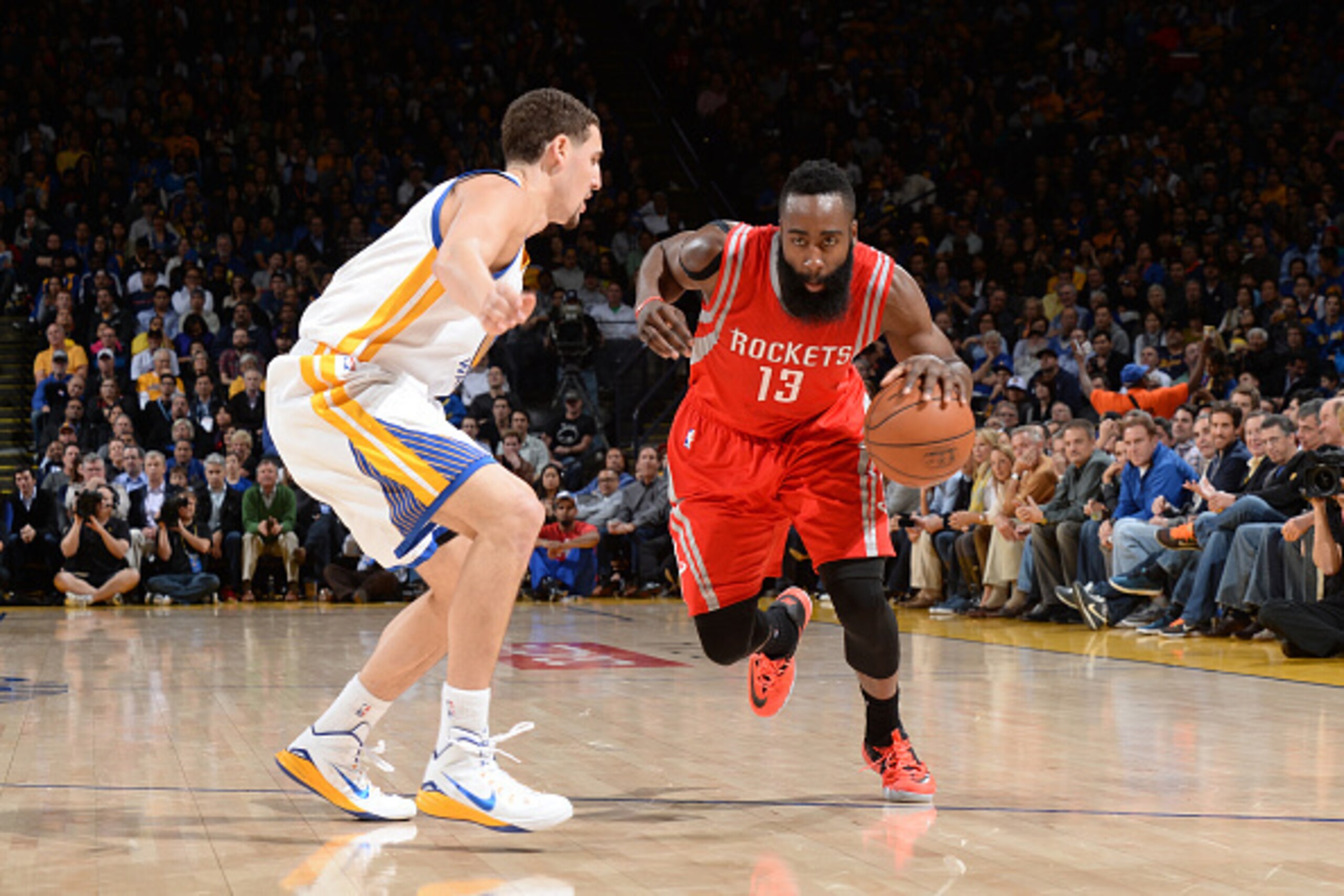
Everything points toward the Rockets being heavy underdogs during the Western Conference Finals. In fact, that can be seen pretty easily by looking at how each team arrived on this stage:
| Golden State Warriors | 110.0 (No. 2) | 101.4 (No. 3) | 8.6 (No. 1) |
| Houston Rockets | 108.7 (No. 3) | 108.8 (No. 11) | Minus-0.1 (No. 8) |
Yes, while the Dubs have outscored their opponent by more points per 100 possessions than anyone else in the league, the Rockets have actually allowed more than they've scored thus far. That's not exactly a good sign for the red-wearing organization.
According to my personal database, which has per-possession info on every team in NBA history, only 13 squads since 1984 (when the playoff field expanded to its current format) have lost in the conference finals and finished their postseason ventures with a negative net rating. Barring something very strange unfolding in the coming weeks, a loss would make Houston the 14th in those 31 years.
The Rockets are already the first since '84 to reach this stage with a negative point differential, per NBA.com's John Schuhmann.
And that's not all.
Though regular-season series don't always matter during the playoffs—see the Washington Wizards and Toronto Raptors this year—it's at least notable when the matchup was this lopsided. Just take a gander at the results over the course of the first four meetings:
- November 8: Golden State 98, Houston 87
- December 10: Golden State 105, Houston 93
- January 17: Golden State 131, Houston 106
- January 21: Golden State 126, Houston 113
That's just not even close.
Not only did the Warriors win all four games, but they never let the opposition finish within single digits of the lead. The average scores were 115 for Golden State and just 99.8 for the Rockets, which doesn't bode well for the underdogs, even given the tabula rasa they're granted heading into Tuesday night's Game 1.
In fact, Houston's best score can't even touch the No. 1 seed's average total.
But none of this matters now, and the Warriors have to realize that. It would be easy to look back on the past and underestimate an opponent that's still quite dangerous.
Doing so would be a surefire way to let the Rockets right into a series that—on paper, at least—should be as lopsided as the regular-season battle.
Note: All stats, unless otherwise indicated, come from Basketball-Reference.com and are current heading into May 19's games.
Adam Fromal covers the NBA for Bleacher Report. Follow him on Twitter: @fromal09.

.jpg?w=2560 "Raiders Could Start Mendoza")

.jpg?w=2560 "Rodgers Iced Out on Plane 💎")
.jpg?w=2560 "🚨 Week 8 AP Top 25 Poll")
.jpg?w=2560 "Packers Safety Slams Refs 🤬")
