Is an NBA Title the Only Way for Carmelo Anthony to Silence His Critics?
In the weeks and months leading up to Carmelo Anthony's free-agency decision, it became clear that self-vindicating, detractor-deadening options were first-rate fiction. If he was to silence critics and escape the shackles his naked fingers had become, he would have to deliver in other ways.
For some, that would mean playing well wherever the team went.
For Anthony, it could mean his legacy hinges on winning an NBA title.
TOP NEWS

Buzz: Bron Chopper Part of Deal 🚁

MJ Makes Record-Setting Donation 🙌
Shams: KAT, Hart Could Be Trade Names
Title or Bust?

No matter what Anthony did—whether he chose the Chicago Bulls or Houston Rockets or the New York Knicks or Los Angeles Lakers—there was no way for him to elude years-established outcry that questioned his commitment to team basketball and vilified his postseason performances and finishes.
Anthony eventually chose the transitioning Knicks—widely viewed as the worst basketball fit—signing a five-year, $124 million contract that left him, regardless of what he said, a dollar-sign champion rather than a soon-to-be NBA champion.
By staying in New York, Anthony tacitly agreed to perpetuate perceptions of his individual shortcomings. His ringless fingers loom large with the Knicks, who are further away from delivering championship spoils—that draft peers LeBron James, Chris Bosh, Dwyane Wade and even Darko Milicic enjoy—than other teams that courted him.
And so, immediately, Anthony is being judged according to his decision and the various opportunities he eschewed.
"The one who loses privileges is Carmelo," ESPN.com's J.A. Adande wrote in July. "He can't claim championships as his top priority and can't lament missing out if he never gets one. He had his chance to do something about it, and he passed."
This view that Anthony should find fault in his thinking and decision-making process is concerning. One cannot paint this as him choosing coin over hardware. To do that relies heavily on there actually having been a title-toting opportunity out there.
Not one of the teams he spurned would have vaulted into San Antonio Spurs or—thanks to James—Cleveland Cavaliers territory. All Anthony passed on, perhaps, was the opportunity to increase his title odds next season. Some of his suitors—the Lakers—couldn't even promise that much.

There's no guarantee a Rockets core, comprising James Harden, Dwight Howard, Anthony and—had general manager Daryl Morey been lucky—Chandler Parsons would do anything other than flirt with contention in the ultra-competitive Western Conference.
Likewise, the Bulls couldn't promise that Anthony, Derrick Rose and Joakim Noah would weather the test of time without repeatedly falling victim to the newly forged Cavaliers or injury bugs.
Championship campaigns for freshly formed teams that house talent unfamiliar with one another are usually crapshoots. Look at the 2012-13 star-stuffed Lakers.
James successfully sought foolproof refuge twice—yes, Cleveland counts following the Kevin Love trade—in the last four years. Good for him. Similar sanctuaries weren't available to Anthony.
If they were, if Anthony passed on the chance to join his version of the 2010-11 Heat or 2014-15 Cavaliers, then there's a championship-or-bust case to be made. But if that's not the bar he would be held to elsewhere, why should it be any different in New York?
Still Under the Gun
Non-championship-promising free-agency options aren't absolution by default. Anthony is still in this situation, positioned under the gun, for a reason.
Playoff failures have plagued him from season to season. He's made it out of the first round twice and past the second round once. He's 7-14 in the playoffs since joining the Knicks, and he's 23-43 overall.
Opposing players he calls peers have passed him by. James and Wade are each in the top seven of postseason games played since 2003-04; Anthony's 66 contests check in at 66th.
Bleacher Report's Adam Fromal, while in the course of evaluating every player to ever suit up in a playoff game based on a combination of production, longevity and team success, revealed to me that Wade and James already rank in the top 20 of postseason performers all time. Anthony checks in at No. 159, one spot behind...Mario Chalmers.
Great players find ways to make their team better, to carry them further. Despite ranking in the top 20 of win shares over the last 11 years, and despite securing 10 playoff berths in 11 seasons, Anthony has always been on the outside looking in at this greatness designation, his individual accolades—the All-Star appearances, the points, the big shots—is all he has to hold.
The biggest threat he faces between now and retirement is being remembered as a self-serving scorer, his career a cross between memorable and incomplete, like Bleacher Report's Howard Beck underscored:
"Sometime in the next three years, assuming good health, Anthony will score his 25,000th point, placing him in truly elite company. That club has just 18 NBA members—soon to be 20, with Tim Duncan and Ray Allen on pace to make it next season.
When Anthony joins them, he will rightfully be praised as one of the all-time greats. And he will be evaluated on a completely different scale.
Of those 20 players, 16 won championships. Two others (Karl Malone and Reggie Miller) made at least one Finals appearance. Two never got close: Alex English and Dominique Wilkins.
"
Winning a title would solve everything. It would allow Anthony to play out the rest of his days free from the pressure to win or adapt his game any further.
But shedding the stigma that's dogged him since his days in Denver doesn't have to be so cut and dry. Team success and personal evolution come in different forms.
Anthony has the chance to build something in New York. He'll be playing in an actual system and will be expected to do much more than create his own offense.
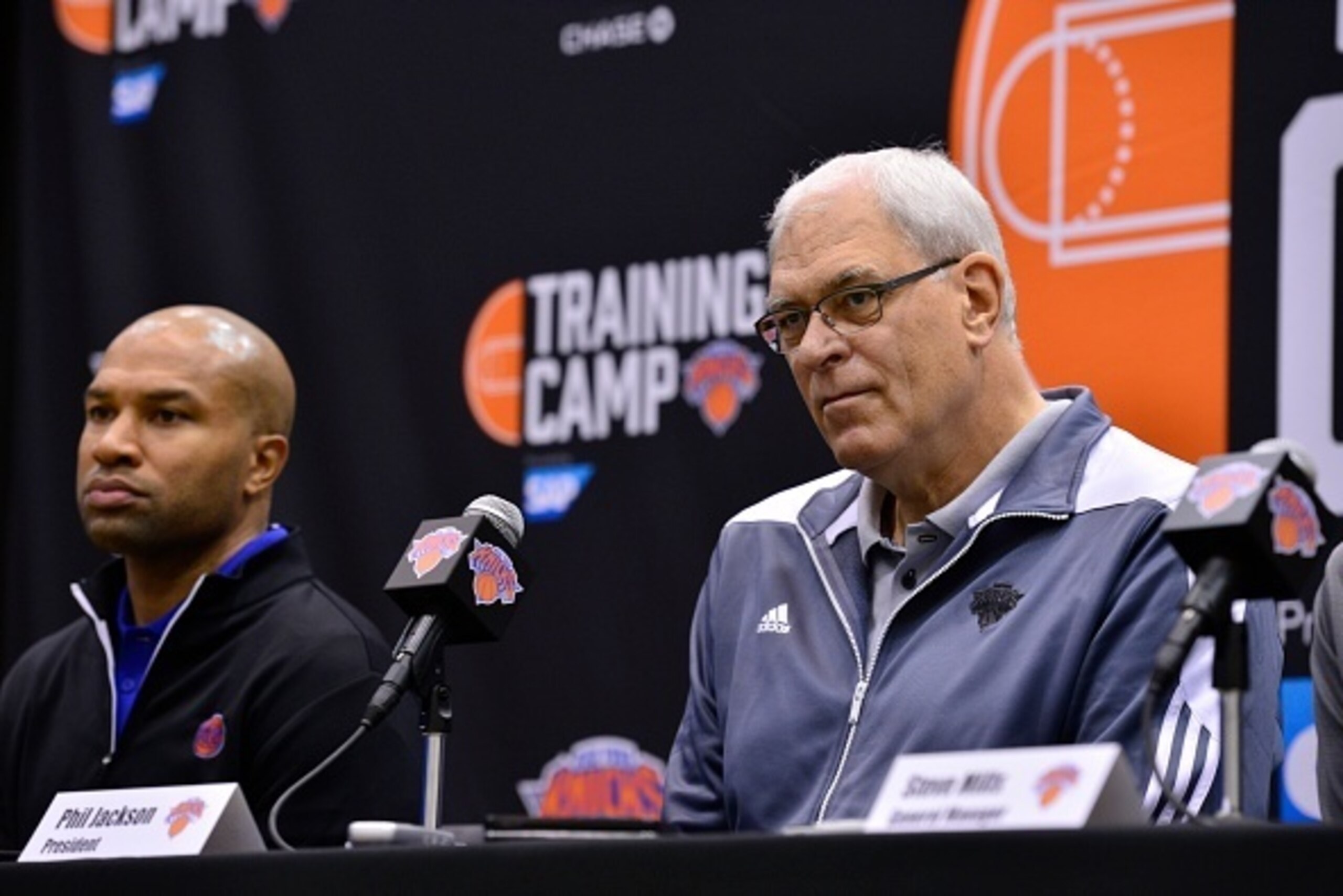
"It’ll give him opportunity to be a passer, a rebounder, and probably easier spots to score from than he’s had before," Phil Jackson told the New York Post's Steve Serby of Anthony. "I think. ... And that’s where Carmelo’s gonna move forward this year in that situation—the ball can’t stop. The ball has to continually move."
Can he be part of a team game? That's the question the Knicks are trying to answer. They're betting on yes. They're banking on him being something more than he's been.
Part of that process began last season. The Knicks won only 37 games and missed the playoffs, but Anthony—while still frequently sapping time off the clock with isolations and post-ups—morphed into a more efficient off-ball scorer, burying 39 percent of his spot-up treys, per Synergy Sports (subscription required).
Continuing to adjust and adapt is the task Jackson and new head coach Derek Fisher have put in front him. If Anthony does that, he and his teammates will be better off. If he does that, it becomes easier for the Knicks to recruit free agents in 2015.
If he does that, the wins—both in the regular season and playoffs—will come.
The Fight Isn't Over
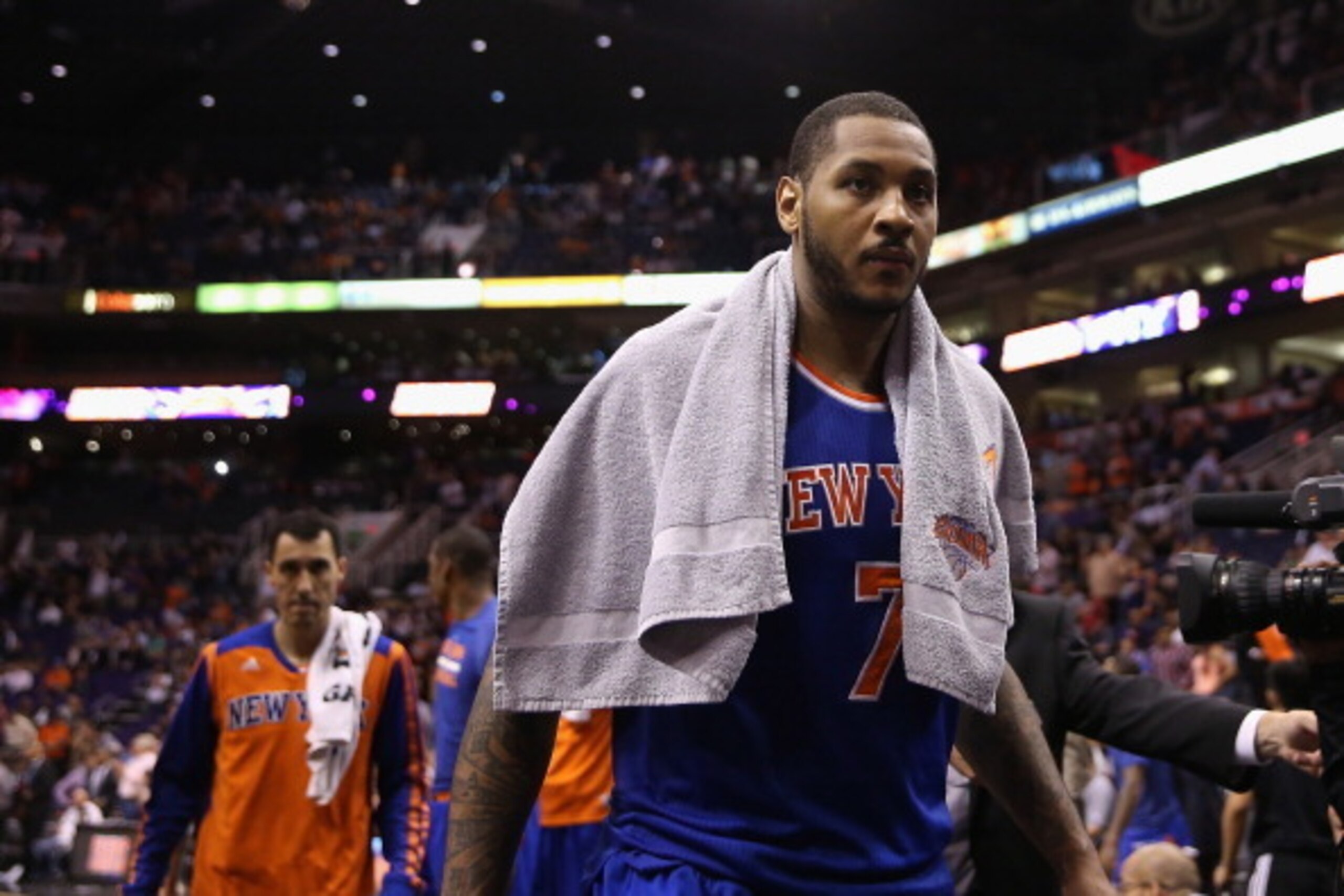
Defenses of Anthony and the choppy road that lies ahead—like this one—should not be seen as signs of remorse.
Whatever Anthony gets from here on, he deserves. He could have left, but he didn't. He could have waited to join the Knicks via free agency in 2011, but he didn't. He could have developed into the more balanced offensive player he's expected to be now, but he didn't.
All of that's on him.
But to boil his career—however it ends—down to championships isn't fair. Even the harshest critics should be smarter than that.
Steve Nash will—barring a miracle—retire without a ring. That shouldn't taint the way he's remembered.
Chris Paul and Kevin Durant still haven't won championships. Should they be remembered any less fondly if they fail to win one before walking away?
Legacies aren't founded on rings alone. Anthony is critiqued more than most because of the decisions he's made and the way he plays, but that doesn't make capturing championships any more crucial to his career resume.
Actual playoff success—in the form of sheer wins and additional advancement—is a must. Earning his paycheck is a necessity.
Doing what's being asked of him by Jackson is non-negotiable.
Retiring a champion is important not imperative.
There is a way he can redeem himself in the eyes of skeptics. It involves moving forward, confronting and combating on-court demons, turning the Knicks into something more than the decade-long disaster they've been.
Titles, while valuable and reflective of success, don't have to be part of redemption. They aren't demons you conquer or slay.
They're luxuries certain players—even some of the best—don't always have.
*Stats courtesy of Basketball-Reference.com unless otherwise cited.

.jpg?w=2560 "2 NFL Officials Suspended")

.jpg?w=2560 "Mahomes' Wife Trolls Kubiak 💀")
.jpg?w=2560 "Love's Body Already 'Tired'")